

INGRID DOWS - AN ALTERNATE STORY PART 2 - THE JET AGE by Michel Poulin - HTML preview
Download the book in PDF, ePub, Kindle for a complete version.
Florene Miller in 1943
‘’The propellers are now nearly fully stopped: let’s go greet our old sisters, girls.’
said Evelyn Sharp before starting to walk towards the foot of the aircraft cargo ramp. On their part, the nineteen women standing inside the cargo hold of the C-142T started going down the ramp at a near run, obviously as anxious to meet Evelyn’s group. The first to joyfully hug and kiss Evelyn on the cheeks was Ingrid Dows, wearing a blue Hughes Aircraft work coverall.
‘’It is so nice to be able to see you and the girls again, Evelyn. Six years is a long time.’’
‘’Indeed! And you stil look as young as you were when we last saw each other.
We wil have to celebrate our reunion tonight at the mess.’
‘’Well, that celebration wil have to be done with little or no alcohol, Evelyn: we are here for a very serious and urgent task and we can’t afford to get drunk tonight.
Let’s take the time for our two groups to exchange hugs first, then we will get to unload the cargo of missiles and parts we are bringing in for the Fifinel as.’’
269
That exchange of hugs and kisses took a good three minutes, following which the two groups of women, now thoroughly intermingled, stepped aside to let the drivers of three large forklifts go up the ramp and start bringing out the dozens of pallets contained in the cargo hold of the C-142T, to then load them on waiting flatbed trucks. Evelyn Sharp’s eyes gleamed as she read the markings on the crates and containers strapped to the pallets.
‘’So, we are going to be one of the first air groups to be equipped with air-to-air missiles. This will give us a significant advantage over any air opponent we may encounter.’
‘’And you may need it sooner rather than later, Evelyn.’’ said Ingrid, who then passed to her a large envelope taken out of a cargo pocket of her work coverall. ‘’I was asked by General Vandenberg to bring this to you at the same time as I was bringing in those missiles and parts. This is the latest info on the movement and activities of Communist forces in China, Korea and Hokkaido Island. There are indications that the Soviets and the Communist Chinese may move next against Formosa and the Okinawa Archipelago. If they indeed do such moves, then your air group may well be the first to be ordered to push them back.’
Evelyn gave Ingrid a concerned look as she took the large envelope presented by her friend and ex-commander.
‘’Is Washington real y ready to oppose the Soviets and the Communist Chinese at this time, Ingrid? In truth, we barely are starting to recover from the series of cuts and neglect inflicted on our forces by President Truman. My own air unit was cut by over fifty percent as a result.’’
‘’I know, but President Dewey has decided to put the brakes on their advances.
Having Hokkaido fall into Soviet hands, while the Communist Chinese took over the whole of the Korean Peninsula and installed a puppet government there, was already hard pills to swallow for him. Here is a piece of news that was kept highly secret up to now, Evelyn: the Soviets did manage to explode in secret their first ever atomic bomb barely three months ago. They are now more than probably working hard to produced more atomic bombs and to build up their nuclear arsenal before we react to it. Thus, we can’t anymore threaten the use of nuclear weapons against the Soviets...or their Chinese allies, without risking a nuclear exchange which would kill millions of people on both sides.’’
‘’The Soviets have the atomic bomb?! SHIT! That’s not good at all!’
270
‘’We had to expect that to happen eventual y, Evelyn. Now, this means that we will have to restrict our moves against the Soviets to conventional means, which is why the Pentagon decided to have your air group equipped with air-to-air missiles as a matter of priority, as the Fifinellas are now in the first lines against Communism in the Pacific.’
‘’So, when do you intend to start modifying our F-86 SABRE jet fighters?’’
‘’Tomorrow morning: my team just flew for half a day while flying through seven time zones and we will need some serious rest time before our brains are back to full capacity. And we will not install missile launchers only on your F-86s, Evelyn: your A-11s and EC-142Es will also be modified, so that most of your air group could be able to face Soviet Mig-15 jet fighters. In view of their critical importance, I would counsel you to split this consignment of missiles and parts into at least two separate storage sites, so that we would not lose everything to an accident...or to an act of sabotage.’
Evelyn nodded her head once, understanding what Ingrid was worried about.
‘’I will use three widely separate storage bunkers and wil post strong security teams around them. The Communists do have some sympathizers around the Philippines and I was already worried about the espionage threat against my air group. I will go pass the necessary orders on that right away. In the meantime, Florene will guide you and your team to the officers’ mess complex, where rooms have been reserved for you and your team. Once you are installed, you and I will have a meeting at my headquarters with my main staff, so that we could discuss in detail this and the situation around the Western Pacific.’
‘’Sounds fine with me, Evelyn.’’
With a military bus coming forward to collect her team, Ingrid and her technicians followed Florene Miller and the other members of the Fifinellas who had greeted them aboard the bus, which then rolled towards the base’s officers’ mess complex. Ingrid used that short trip to ask a few questions to Miller.
‘’So, how are you girls doing in the Philippines, Florene?’
The way Miller then used a reserved tone of voice to answer her both surprised and worried Ingrid.
‘’The service conditions here are okay, while the locals are most friendly with us, but we are getting increasingly frustrated by the lack of existing options for other postings and advancements, Ingrid. As you must know well, Congress is still refusing to
271
make changes to the Women’s Service Act of 1942, which allowed the creation of the Fifinellas as an all-female air combat unit. With the disbandment of the United States-bound ferrying squadrons employing female pilots during World War 2, we are now the sole remaining air unit formed up solely of women, with a single choice of posting: here in the Philippines. This means that, once you reach the top ranks in our air group, you are either stuck at the same rank for the rest of your career, or you leave the service.
Thankfully, your move to create the Air Fifinella airline company has proved to be a saving grace for our girls who were forced to leave the Air Force, by providing them with a chance to continue flying while earning a decent living. If you take for example my own career, I have now been a lieutenant colonel for over four years and could climb at most to the rank of brigadier general, if I climb all the way to the top of the Fifinellas as its next commander. As for Evelyn, she presently has nowhere to go but out after holding command here, as there are no other posts open in the Air Force for female general officers. While we know how important our contribution is here, this lack of opportunity for promotions and postings is starting to seriously erode our morale. Do you think that you could intercede in our favor in Washington and get some openings created for us in the States?’
‘’I wil certainly do my best about that once back in the States, Florene. I happen to have a good rapport with our Secretary of the Air Force, George Kenney, and with our Secretary of Defense, Dwight Eisenhower. I also believe that President Dewey is amenable to following my advice in general. The real stickler will however be with the Congress: it is still the same bunch of old-fashioned, bigoted male politicians and, unfortunately, they write the laws, not the President. Thus, I can’t promise any quick, concrete changes for the moment. Sorry about that.’
Florene Miller lowered her head in discouragement, showing to Ingrid how serious this morale problem was.
‘’I understand, Ingrid. Thanks in advance for helping us.’’
With their bus arriving at the officers’ mess complex after a few minutes, Ingrid and her technicians stepped out of it and followed Florene Miller to the accommodations office, where they drew keys to a dozen of the temporary quarters rooms of the complex and were given meal cards before being guided to their respective rooms. Ingrid’s room was understandably the biggest and most comfortable, on account of her old rank of major general. Florene left her then, promising to come back in an hour in order to lead
272
her to the air group’s headquarters for the scheduled command meeting. Ingrid used that hour to take a quick shower and to change into a fresh set of clothes, then went on the balcony of her room to look out at the panorama of Clark Air Force Base and at the surrounding jungle. She was still on the balcony when Florene Miller came back and knocked on her door. Grabbing a large, secure briefcase she had brought from California and which contained technical documents and instruction booklets concerning the Hughes AIM-1 BOLT air-to-air missile and its launch rail system, Ingrid then followed Florene downstairs to the main entrance of the mess complex, where a jeep with driver was waiting for them. A few minutes of driving brought her to the headquarters building used by the 99th Composite Air Group, a building she knew well, as it had served as her own unit headquarters for a few months during World War 2. Still accompanied by Florene Miller, Ingrid went up to the the command conference room of the Fifinellas, where she found the unit’s squadron leaders and main staff officers, all women, waiting for her. Another round of hugs and kisses followed before she sat down next to Evelyn Sharp, who introduced her in a sober tone.
‘’Ladies, while it is a pleasure and great joy to greet Ingrid again, she came here in order to fill a most important task. I will now let her explain to us what will happen in the next few days. Ingrid...’
‘’Thank you, Evelyn. Let me say first that I am very happy to see you all again.
With this said, I came in order to provide to your air group a vital new capability: guided air-to-air missiles. As far as I know, the Hughes AIM-1 BOLT is the first operational air-to-air missile to enter service around the World and it should give you a vital advantage over enemy jet aircraft, notably the Soviet Mig-15. While the AIM-1 was designed mostly for the Hughes F-9 ARROW, which is about to enter widespread service with the U.S.
Air Force, it was also designed to be easy to retrofit to all kinds of other aircraft, including the F-86 SABRE jet fighter and the A-11/B-11 attack and bomber aircraft. Right now, the assembly line at the Hughes missile plant in Canega Park is working three shifts a day in order to fill the urgent demands of our air force for something able to counter the Soviet Mig-15 and other Soviet jet aircraft to be encountered. The Fifinellas have in turn been designated as a priority recipient by the Pentagon because you are our premier frontline air combat unit in the Western Pacific and are closest to the biggest threats from Communist forces in the region. I brought with me a technical team from Hughes which will do most of the work in installing missile launch rails and control systems on your aircraft but they will also show your own technicians and pilots how to maintain and
273
use the AIM-1 BOLT. Right now, Hughes is also working on another air-to-air missile, the AIM-2, and on a heavy air-to-ground missile, the ASM-1 MJOLNIR, destined to equip our heavy bombers. However, there is still quite a lot of work and testing to be done on those two missile systems before they could be put into service, so we will concentrate for the moment on the AIM-1. I brought with me a few copies of the AIM-1 system’s user manual and maintenance manual, which I will now distribute around the table. I also brought a crate-full of those manuals, along with 700 AIM-1A missiles, 180 launch rails and ninety in-cockpit control boxes, along with specialized tools and wiring meant to modify your planes. Those documents are however classified ‘Secret’ for obvious reasons and I will urge you to be careful about their distribution and safeguard: the Soviets and others would love to learn about our AIM-1. With this said, I am going to put on the table the copies I brought with me, so that you could serve yourselves.’’
Opening her secure briefcase, Ingrid then put on the table the pamphlets on the AIM-1
system and let the leaders of the 99th Composite Air Group grab one copy each of the user and maintenance manuals.
Once the pamphlets had been grabbed, Ingrid spoke again to the women sitting around the table, reciting facts and data from memory.
‘’What your air group wil get, while being the first ever operational air-to-air missile to enter service, can in reality be described as a third-generation infrared-guided missile. I used all the information available about guided missiles I could find in the Hourglass Files, which were brought from the future by Nancy Laplante in 1940, in order to guide the work of my missile design engineers and avoid the mistakes made when the first generations of air-launched missiles were designed in Nancy’s history. What you will get is an infrared-guided air-to-air missile with a practical range of up to nine miles, depending on the atmospheric conditions and target infrared signature at launch. The AIM-1 uses a cooled infrared sensor meant to detect the thermal signature of target aircraft. The infrared sensor we developed at Hughes is vastly superior to what the first-generation missiles in Nancy’s history could achieve and can detect and tract even piston engines from all aspects. In contrast, the first generation of infrared-guided missiles known to Nancy Laplante could only target jet aircraft which presented themselves from their rear aspect. Those first-generation missiles were also blinded if pointed towards the general direction of the Sun or when fired towards the ground, on top of having low sensitivity to infrared signatures. As for the second-generation
274
missiles, which used cooled infrared sensors, they could function only for a short period of time after being activated, due to the limited capacity of their integrated cooling systems meant to cool down their guidance sensors and to make them more sensitive.
In contrast, the Hughes AIM-1 system incorporates a cooling unit within the missile launch rail assembly, a unit which can cool the sensor head of the missile at will and for an indefinite period of time once activated by the pilot. The AIM-1 BOLT, once launched, then uses its own cooling package to keep its guidance head to its maximum sensitivity level. The AIM-1 also uses a laser proximity fuse and a large high-explosive fragmentation warhead in order to be able to destroy targets via either direct hits or near misses. Finally, it stays highly maneuverable up to its maximum range thanks to a mixed propulsion system made of an initial solid-propellant rocket motor booster and a second stage ramjet motor. It will thus be able to easily out-maneuver any aircraft targeted by it. Now, I know that you will be unfamiliar with many of the technical terms I just used but don’t worry: I will make it my job to brief all of you on these new technologies during the coming days. Now, while I consider the AIM-1 as a very capable weapon, it does have its limitations, like when pointed directly at the Sun or when bad weather diminishes its effective range.’
Ingrid spoke for another good fifteen minutes, describing the AIM-1 system in detail and explaining its capabilities and limitation to the nineteen women sitting around the table. At the end of her presentation, she opened herself to questions, with the first one coming from Colonel Teresa James, the deputy commander of the air group.
‘’You mentioned another air-to-air missile system being developed by Hughes, Ingrid. Can you tell us more about it?’’
‘’Sure, Teresa! The AIM-2 will be a radar-guided air-to-air missile meant for medium to long range interception of enemy aircraft. However, like the AIM-1, it will be a lot more capable than its first- and second-generation equivalents from Nancy’s time.
Instead of using a semi-active radar system to guide itself, a mode that forces its launch aircraft to illuminate continuously the target with its onboard radar, the AIM-2 will use an autonomous active radar guidance system of its own, coupled with an inertial navigation platform. In essence, the pilot launching it will first designate a target with his aircraft radar, then will launch an AIM-2 in the general direction of that target. The missile will then fly off under rocket motor power and will use its inertial guidance platform to quickly approach the target. Then, once the ramjet engine will have taken over from the rocket
275
motor, the active radar seeker in the nose of the missile will scan the sector directly ahead of it and will then take over the final guidance to the target. If all goes well during our development work, the AIM-2 should have an operational range of over thirty miles against a fighter-sized target, or more against a heavy bomber. Once the AIM-2 will be operational, it will arm both our fighters and our bombers, the latter using it as a self-defense weapon against approaching enemy interceptors. One last important precision I wil give you now is that, in Nancy’s history, it took a good twenty to thirty years to go from first generation to third generation air-to-air missiles. You will thus understand better how important it will be for us to protect the secrets of our missiles from spies and indiscrete politicians.’
The women of the Fifinellas sucked air in and exchanged excited comments on hearing that. Ingrid answered a few more questions before ending her presentation, with Evelyn Sharp then getting up from her chair.
‘’Alright, ladies: now that Ingrid told us about her missile systems, we wil adjourn this meeting, in order to let her rest from her long trip before the installation work starts tomorrow morning. While I know that you would all love to celebrate her coming tonight at the mess, I will urge you all to stay sober: we will need our brains to be functioning to the maximum while our aircraft will be modified and while Ingrid instructs our people on how to use her missile system. You are now dismissed.’
Evelyn let her officers file out of the room, then looked soberly at Ingrid.
‘’I took the time to review the briefing package you brought from the Pentagon. I must say that it seems that we are about to experience some serious Communist threats quite soon in this portion of the Pacific. Taiwan and Okinawa in particular could become major headaches for us in the weeks to come and we sure could use your new missiles.’’
‘’That is why I pushed for your air group to be one of the first units to be equipped with my AIM-1, Evelyn. By the way, Florene told me about the mounting anxiety and frustration your girls are experiencing about the lack of promotion and rotation opportunities for them. I promised her that I will push hard for a solution to that once I am back in the United States.’
‘’That will definitely be appreciated, Ingrid. Right now, if things don’t change in the months to come, I expect a growing number of our girls to quit the service and
276
search for new careers as civilian pilots and ground crews. That would be a truly sad end to the Fifinel as.’’
Ingrid, her expression now most sober, nodded her head once in response.
‘’I know and that is why I wil use all of my political and military connections to prevent this from happening, Evelyn.’’
14:22 (Washington Time)
Thursday, February 02, 1950 ‘C’
Office of the Secretary of Defense, The Pentagon Arlington, Virginia, U.S.A.
When Ingrid was introduced into the office of Dwight Eisenhower, she found him sitting around a coffee table with George Kenney, the Secretary of the Air Force, and with General Hoyt Vandenberg. Eisenhower came to her at once and shook hands with her while smiling.
‘’Nice job you did at Clark Air Force Base, Ingrid. I feel a lot more reassured about the situation around the Pacific, now that the 99th Air Group is equipped with your air-to-air missile. If the Soviets or the Communist Chinese do some stupid moves, they wil now pay a heavy price for it.’
‘’Hopefully, common sense wil prevail and they wil refrain themselves from attacking, sir. Unfortunately, war has a habit of winning over peace in the minds of authoritarians and dictators.’’
‘’So true! But come and sit down with us, Ingrid, so that we can discuss about the problem you alerted George about.’
‘’Thank you, sir.’
Once she had sat around the low table, Eisenhower gave her a sober look before speaking again.
‘’Ingrid, George contacted me shortly after you called him two days ago to arrange a meeting with him about the personnel situation at the 99th Composite Air Group. I then reviewed with him the status of our female air force members there and was shocked by what I found. To be frank, I had thought that this state of affair had been put to rest when President Truman desegregated the armed forces three years ago. That the Congress still refuses to regularize the employment of women in air units
277
came as a severe disappointment to me. I then decided to approach the President about this and we looked at ways to correct what is a clear injustice committed against some of the most meritorious members of our Air Force.’’
‘’You discussed this with the President, sir?’’ said Ingrid, incredulous.
Eisenhower nodded his head once in response.
‘’Yes, I did and I believe that this warranted the President’s attention, something he agreed with. I know that you came with the idea of presenting suggestions about possible solutions to this problem but I decided instead to preempt you and wrote down a list of actions to be taken with George and with General Vandenberg. While the initial premise made in 1942 that servicewomen would be safer from sexual harassment and abuse only when serving in an all-female unit was essentially correct, things have changed measurably since. No, male libido and prejudices still exist but there are now enough women of senior military rank and experience available to control and prevent any abusive situation concerning our servicewomen. Also, the outstanding combat record of the 99th during World War 2 has done a lot to smash the various false assumptions floating around about the supposed uselessness of servicewomen in combat. Me, George and Hoyt looked at all that and came up with a set of recommendations, which we then presented to the President, who approved all of them at once and who promised to use his executive power to support them and turn them into reality. To make this short and sweet, we decided that, from now on, a female officer of the rank of lieutenant colonel or above will be able to be posted to any unit of the Air Force or to any joint staff position, anywhere in the World. At such a rank, someone would be quite foolish to then attempt to harass or abuse that female senior officer. The same will apply to senior female NCOs with the rank of master sergeant or up, who will be able to be posted to any air force or joint staff unit. Concurrently, female junior officers and enlisted women will initially serve with the 99th and with six other air units, whose commanders will be designated as female-only positions, so that those junior rank women will enjoy some serious protection against abuse by male personnel.
Those six air units will comprise two fighter squadrons, two bomber squadrons and two transport squadrons, with half of those squadrons based in the United States and the other half based in Europe. We will also reopen the old female training base in Sweetwater, Texas, so that female recruits could get their basic training under an all-female instruction staff. As for female candidate officer training will go, a female student section will be added to the Air Force Academy in Colorado and will be trained by female
278
staffers of senior ranks, while the deputy commander of the Air Force Academy will be designated as a female-only position.’
‘’Uh, this all sounds nice and good, sir, but what if some old fart with stars on his shoulders decides to do things his way and abuses his power and authority at the expense of our women?’’
‘’Then, he will have to deal directly with George and with me, Ingrid. I am frankly tired to see such baseless prejudices and beliefs continue to be held by our senior officers and I am resolved to either put them back on the right path or to fire them.’’
Ingrid nodded her head in approval at those words.
‘’That sounds fine with me, sir. What about the Fifinel a members who were forced to retire in 1948 because of the cuts mandated by President Truman? Some of them may be tempted to join back the Air Force once they learn of those new employment and advancement conditions.’
‘’Then, they wil be greeted with open arms and reinstated at their old ranks and seniority status. Me and George are in fact counting a lot on such volunteers for reenlistment to flesh out those female-designated positions. This actually leads me to the last subject I wanted to discuss with you: your own possible return into Air Force service.’’
‘’Me, sir? While I would love to serve my country again, the truth is that, in my present position as head aircraft designer at Hughes Aircraft, I can do a lot more good for our air force than if I would put a uniform back on. Look at what I already provided the Air Force with: a new jet fighter, a new strategic jet bomber and the first air-to-air missile system in the World. And I can promise you a lot more to come in the coming years.’
Eisenhower exchanged a side look with George Kenney, who then spoke up, addressing Ingrid.
‘’We kind of expected that answer from you and agree that your position as Hughes Aircraft’s head designer is a truly key one, so we thought of a compromise solution: you stay on as head designer at Hughes Aircraft but also reenlist as a reserve officer, with the rank of major general. That would then allow you to become active again in combat if some national emergency or threat of war forces us to mobilize again.
So, what do you think, Ingrid?’’
Ingrid didn’t need to think that over for long before she nodded her head.
279
‘’Put that way, with the condition that I would return to my work at Hughes Aircraft as soon as the situation allowed, then I accept your offer, sir.’
‘’Excellent!’ exclaimed a grinning Eisenhower. ‘’Does your old uniform stil fit you, Ingrid?’
‘’Don’t worry about that, sir: I am still as fit as ever.’ replied a grinning Ingrid.
280
CHAPTER 27 – COMMUNIST BULLYING
02:11 (Japan Time)
Sunday, March 05, 1950 ‘C’
EC-142E electronic reconnaissance aircraft
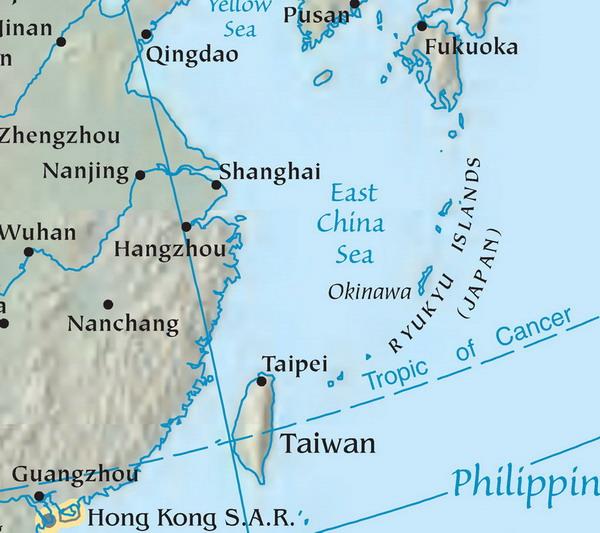
Flying at high altitude above the East China Sea Northeast of Taiwan
Alerted by an urgent hand signal from one of her radar operators, Lieutenant Colonel Jenny Kawena, who was the mission commander for this reconnaissance patrol, walked quickly to the surface search radar station and looked over the operator’s shoulder at the radar screen.
‘’What do you have, Betsy?’’
‘’What looks like a large fleet coming from the North and apparently heading towards Okinawa. It is still at the edge of my screen, so I can’t say for sure how many ships this fleet counts, but I can already see a good 26 blips of various sizes.’’
281
‘’Hmm, that can’t be a simple merchant convoy.’ said Jenny before twisting her head to look at the passive electronic warfare station of their EC-142E electronic reconnaissance and flying command post aircraft.
‘’What do you have on your detectors, Mary?’’
‘’I am starting to detect a number of radar emissions from the North, Jenny.
However, their signal strength is still way too weak to effectively paint us. What I detected is a mix of old American radar sets dating from World War 2. My bet is that this is a Soviet fleet which would include at least a couple of KIROV-Class cruisers. They could be coming from either their new naval base in Hakodate, on Hokkaido Island, or directly from the Soviet Pacific Fleet main base in Vladivostok.’
‘’I concur. Let’s wait a bit in order to affirm their numbers and heading before alerting our air group headquarters and the USS MISSOURI.’ replied Jenny before returning to her command station, where she sat down and started writing a message, leaving some spaces in it blank in order to add extra information once she would know more. Looking at a small map of the East China Sea on her desk, she thought about what this new sighting could mean in strategic terms. President Dewey had already conveyed months ago to Stalin a firm warning about not engaging in more territorial expansion around the Japanese Islands, including Okinawa. However, now that he was in possession of the atomic bomb, the Soviet dictator had apparently decided to ignore Washington’s warning. If the Soviets indeed were aiming to capture Okinawa, that would basically seal off the East China Sea to the United States and would make the situation in Taiwan, where the Nationalist Chinese of Chiang Kai-Shek had taken refuge after losing the civil war with the Communist Chinese of Mao Zedong, a lot more precarious. In fact, such a takeover of Okinawa by the Soviets would probably announce a follow-up operation to land in force in Taiwan, with Communist Chinese forces using Soviet ships to land troops there and bombard Nationalist positions. Jenny then thought about how a Soviet invasion of Okinawa could go. In truth, very little was known about the present situation of the Japanese in Okinawa. The Japanese Islands, including Okinawa and the Ryukyus, had been under tight American sea blockade since 1944, months before the British had launched two nuclear-tipped missiles on Japan, destroying Metropolitan Tokyo and the region of Osaka and sending radioactive fallouts around Honshu, the main island in the Japanese Archipelago. A number of desperate and heartbreaking radio transmissions had been intercepted by American military intelligence, coming from various locations on Honshu, transmissions which had painted
282
a horrific picture of widespread suffering and death among the Japanese population. As for the Japanese military forces in Japan, its own radio transmissions had become rarer and rarer with the years, denoting either the slow failure of Japanese radio equipment or the breakdown of the electrical power grid in Japan. The periodic high-altitude reconnaissance conducted over Japan since 1944 had also shown the gradual fading and disappearance of electric lights in Japanese cities on Honshu, another sign that Japan was dying as a working industrial country. However, Okinawa and its capital, Naha, seemed to have fared much better than Mainland Japan, with electric lights still visible there at night. Reconnaissance flights had also shown that, like Hokkaido Island, the Ryukyus had been mostly spared from the horrors of radiation fallouts. In military terms, Okinawa had apparently become mostly impotent, with the few military aircraft and ships based there not having moved for years now, probably because of a shortage of fuel. As for the state of the Japanese society and government in Okinawa, one could only speculate about what it was presently. The Soviets thus probably expected that any military resistance to a landing there would be either weak or nonexistent, one factor that may have encouraged them to attempt such a landing.
A few minutes later, her radar and passive electronic warfare operators were able to give her an update on the Soviet fleet, with Technical Sergeant Mary Takahashi reporting first.
‘’Jenny, I can now confirm via intercepted radar signals that the fleet heading towards Okinawa comprises the cruisers CHAPAYEV, KALININ and LAZAR
KAGANOVITCH, plus six LENINGRAD-Class destroyers. I also can detect a number of short-range, SG-type navigational radars used by the other large ships of that fleet.
However, the smaller ships and boats seem to have no radars.’
‘’The CHAPAYEV, you said? But we thought that it was stil under construction.’
‘’Apparently, the Soviets pushed its completion and incorporated it to this incoming fleet, Jenny.’
‘’Then, that all but confirms that this is a major naval operation on the part of the Soviets, directed at Okinawa. How many blips do you have now on your radar screen, Betsy?’’
‘’A shitload, Jenny. I have now a total of fourteen large ships of at least destroyer size, plus 39 much smaller ships and boats. My bet is that those smaller ships are a mix
283
of torpedo boats and patrol boats. They are definitely heading towards Okinawa, or Naha to be more precise.’
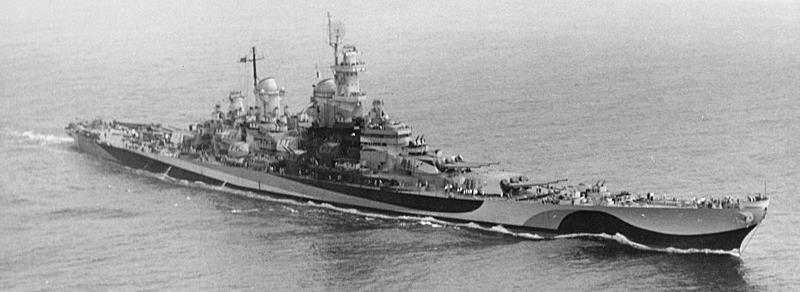
‘’Thanks! I believe that it is time for us to sound the alert. Rear Admiral Higgins, on the USS MISSOURI, will probably be happy to finally have some action to relieve the boredom of his blockade work.
02:52 (Japan Time)
Cabin of Rear Admiral John Higgins
On the battleship USS MISSOURI (BB-63)
Cruising 180 miles south-southwest of Kagoshima, Japan East China Sea
‘’Sir! Sir, please wake up! We just got a message from the Air Force electronic reconnaissance flying over the East China Sea. It has detected a large Soviet fleet now heading towards Okinawa.’’
While still half-asleep, Rear Admiral John Higgins quickly sat up in his bed and swung his legs out on hearing the words from the junior officer who had shaken him awake.
‘’How large is that Soviet fleet, Lieutenant?’’
‘’It counts over fifty ships, including three cruisers and six destroyers. The rest are assessed as either transport ships or patrol and torpedo boats.’
‘’Shit! That’s indeed a major new move by the Soviets. Alright, I will be down in our combat information center in five minutes.’
‘’Understood, sir!’ replied the lieutenant, saluting him before leaving the cabin.
Not willing to waste time by shaving first, Higgins jumped out of his captain’s bed and quickly put on his tan Summer uniform, then walked out of his cabin and made his way down to the ship’s combat information center, or C.I.C., situated below the waterline and
284
which centralized the surveillance and combat operations of the battleship. There, he found the captain of the MISSOURI, Captain Paul Stevenson, standing with two of his senior officers over a tactical tracing table. All three men saluted Higgins as he stopped next to the tracing table.
‘’At ease, gentlemen! Show me where that Soviet fleet is right now.’
‘’It is now 190 nautical miles south of the Korean Strait and is heading straight towards Okinawa and Naha, sir.’ answered Stevenson. ‘’While the Air Force EC-142E
detected that fleet through its radars and passive electronic sensors, it is due soon to head directly towards that Soviet fleet in order to visual y confirm its composition.’
‘’Has Washington been informed of this, Captain?’’
‘’Both Pearl Harbor and the Pentagon were information addressees on the warning message from the EC-142E, sir, but we have not heard a reply to it yet.
However, the commander of the 99th Air Group at Clark Airbase has signaled that it is scrambling a mix of fighters and bombers in order to support and protect their reconnaissance aircraft.’
Higgins nodded his head at that last sentence.
‘’Good! The Fifinel as are stil on top of their game, as in during the war. Let’s add some extra muscle to their effort, gentlemen. Have our task group head at top speed towards those Soviet ships: we will then position ourselves across their line of advance in order to block their path towards Okinawa. In the meantime, I will contact Pacific Fleet headquarters and obtain the permission to fire at those Soviets if they refuse to turn around. Captain, sound actions stations for all our ships.’
‘’Yes, Admiral!’
07:14 (Japan Time)
Bridge of the Soviet cruiser CHAPAYEV
300 nautical miles northwest of Okinawa