

INGRID DOWS - AN ALTERNATE STORY PART 2 - THE JET AGE by Michel Poulin - HTML preview
Download the book in PDF, ePub, Kindle for a complete version.
East China Sea
Standing on the bridge of his flagship, the commander of the Soviet Pacific Fleet, Admiral Yury Panteleyev, did his best to hide his nervousness from his subalterns manning the bridge of the CHAPAYEV. While his force heading towards Okinawa was quite powerful by any measure, it still was no match to what the American Navy could muster in the Pacific. There was also the fact that his fleet was presently out of range of
285
most Soviet aircraft based in Vladivostok and in China, while the Americans had a whole air group based in the Philippines and which was equipped with planes with enough range to get to his ships. His apprehension had also been increased by the news that a single American EC-142E electronic reconnaissance aircraft was now within radar range of his fleet and had most probably signaled his presence to the rest of the American forces in the Pacific. However, cancelling this amphibious landing operation and turning around was not a viable option for him, as Joseph Stalin would then have him executed for that. His main hope now was that of the American leadership becoming intimidated by this show of Soviet force and would not take the risk of triggering a general war in order to defend Japanese territory.
Panteleyev’s hopes were soon dashed when the captain of the CHAPAYEV
answered a telephone call from his radar room and looked at him, apprehension on his face.
‘’Admiral, a group of 28 aircraft has apparently joined that EC-142E and is now heading towards us. They apparently came from the Philippines and are some 110
nautical miles from us. They should be over us in about twenty minutes.’’
‘’Very wel ! Call the fleet to battle stations. Have our gunners ready to repel enemy aircraft. We will warn them off by radio once they are thirty nautical miles from our ships. If they don’t turn back, then we wil open fire on them the moment that they wil be within range of our guns.’
‘’Aye, sir! SOUND BATTLE STATIONS! ALL GUNNERS AT THEIR POSTS!’
Panteleyev then waited to see what the Americans would do next. Unfortunately, they kept approaching his ships at a speed of 700 kilometers per hour, forcing him to have a radio warning sent to them in English. What he got in response did nothing to reassure him.
‘’Sir, the American planes are stil heading towards us. They in turn sent their own warning message: we either turn away and return to Vladivostok now or they will attack us.’
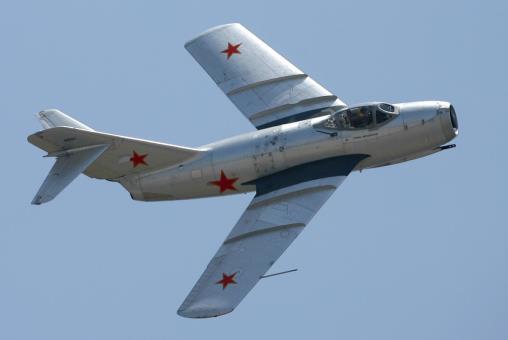
‘’Are our jet fighters presently based around Shanghai within range of us, Captain?’
‘’Barely, sir.’
‘’Then, order them to scramble at once in order to engage those American planes.’
286
‘’Yes sir!’
Panteleyev, still clinging to the hope that the Americans were simply bluffing, was disappointed when a bridge officer reported seeing a large group of aircraft appear in the distant sky, coming from the Southwest.
‘’SIR, I CAN IDENTIFY TWELVE BOMBER TYPES AND SIXTEEN FIGHTER
JETS. THE FIGHTERS ARE PROBABLE F-86 SABRE JETS, WHILE THE BOMBERS
APPEAR TO BE HUGHES A-11 OR B-11 PROPELLER AIRCRAFT.’
‘’ENGAGE AS SOON AS THEY ARE WITHIN GUN RANGE! RADIO TO OUR
OWN AIRCRAFT AND TELL THEM TO HURRY UP!’
Panteleyev barely had time to issue those orders before the cruiser’s captain gave him an alarmed look.
‘’Sir, our radar reports a group of eight ships going at high speed and apparently trying to position themselves to block our path to Okinawa. They are now some ninety nautical miles to the east of us.’’
‘’Damn! That EC-142E must have alerted the American ships blockading the Japanese islands. Signal to our P-6 torpedo boats: break off from the formation and rush East to engage those American ships. Have our main guns load armor-piercing shel s.’
‘’Yes, sir!’
In the EC-142E flying a few miles behind the SABRE jet fighters and A-11 attack aircraft from Clark Airbase, the splitting up of the Soviet fleet was noticed at once, while the long-range air surveillance radars of the plane could now detect a group of some 33
aircraft approaching quickly from the Northeast. Jenny Kawena understood at once what was at play.
‘’They are sending their smaller units
towards our battleships, while these jets must be
Mig-15 coming from Shanghai. Alright, let’s reply to these moves.’’
Connecting herself to the frequency used by her air group, she then gave a few orders by radio.
‘’From Oracle to Fifinellas: 33 probable Mig-15s are approaching from the Northeast, while twelve possible torpedo boats are now heading eastward towards our
287
approaching ships. Red Witch One, turn to heading 280 and intercept those incoming Mig-15s. Hellraiser One, send one element to pursue and sink the patrol boats and use the rest to attack the Soviet main units. Concentrate on the larger ships, over.’
‘’Red Witch One, acknowledged!’
‘’Hellraiser One, acknowledged!’
Jenny Kawena let out air as she looked at the radar screens of her aircraft.
‘’Our first real fight in five years and the first one against Soviet forces. This should be interesting.’’
In the four A-11B medium bombers now heading towards the group of Soviet torpedo boats speeding towards the MISSOURI battle group, Major Elizabeth Gardner felt a mix of excitement and anxiety as she detected the small ships on her radar: excitement from the perspective of combat; anxiety about what could follow this battle.
Would this possibly trigger a nuclear exchange between the United States and the Soviet Union? Would it also trigger a mass assault by the Soviet Army against Poland, Romania and the Baltic States? She however decided to concentrate on the immediate task facing her and gave an order by radio to her three wingmen, or ‘wing girls’, a new term the Fifinellas had adopted years ago after male pilots from other air units had derisively started to use the term ‘cuntpit’ rather than the standard term of ‘cockpit’ when talking about Fifinella aircraft.
‘’Blue callsigns, from Blue Leader: use your guns against those torpedo boats and save your bombs and rockets for follow up attacks against the main Soviet units.
Good luck and good hunting, girls!’
Elizabeth then started diving towards the Soviet boat leading the formation of twelve P-6
torpedo boats. She knew from memory that the Soviet P-6, on top of its two 533mm torpedo tubes, was armed with two twin 25mm anti-aircraft mounts, so she would have to be careful about avoiding its fire as much as possible. Thankfully, the P-6 was not known to possess any radar and only had rudimentary gun sights for its 25mm automatic cannons. Her Hughes A-11B, with its top speed of 490 miles per hour and its four nose 20mm cannons, should prove a potent adversary to a P-6 torpedo boat.
Elizabeth soon had the lead P-6 in her gunsight, a bit before the sky started filling up with 25mm tracer shells fired by the twelve torpedo boats. While she expected the shells fired at her to miss, due to the speed she was going at, she was conscious that
288
the biggest danger on a battlefield was the shel or bul et with ‘to whom it may concern’
written on it, rather than the one marked with your name. Clenching her jaws, she carefully aimed her guns at the P-6 and pressed the trigger, sending a one-second burst which straddled at once the torpedo boat, with at least two shells performing direct hits and exploding. She took the time to fire a second burst of cannon fire before zooming past the P-6 while climbing back to take some altitude. That allowed her tail gunner and radio operator, Dahlia Johnston, to pepper the torpedo boat with her twin 20mm cannons as they sped past the P-6. Dahlia was surprised to see that her shells caused the whole torpedo boat to blow up in a powerful explosion.
‘’THE P-6 JUST EXPLODED! I MUST HAVE HIT ONE OF ITS TORPEDOES.’
‘’YEAH! THAT’S ONE BEER FROM ME FOR YOU TONIGHT, DAHLIA.’ replied a happy Elizabeth. ‘’LET’S GO FOR THE NEXT P-6!’’
On the CHAPAYEV, Admiral Panteleyev tensed up as two of the attacking A-11
started diving on his cruiser, while the gunners manning the four twin 100mm and fourteen twin 37mm anti-aircraft guns of the ship fired at the two incoming aircraft. The cruisers KALININ and LAZAR KAGANOVICH were similarly under air attack, so were equally busy filling the sky with shells in a desperate attempt at shooting their attackers down. Panteleyev then whispered to himself while observing the approach of the A-11s.
‘’Where are those damn Mig-15s? We need them now, not later.’
The underwings of the A-11s then lit up, signaling the launching of heavy rockets from their wing-mounted pods. Panteleyev’s stomach knotted up at that sight and he mentally prayed that they would miss his flagship. Unfortunately for him, three of the twelve five-inch rockets fired at the CHAPAYEV performed direct hits on the cruiser: two against the hull and one against its superstructures. The blasts and shocks from those three exploding rockets sent Panteleyev down on his ass, while the back of his head hit a radar monitoring console, severely shaking him and making him swear with pain. He was still trying to recover his wits when a 500-kilo bomb hit the forward superstructures just under the bridge and exploded, killing him and the whole bridge crew. Seconds later, another bomb hit the cruiser, this time at the level of the main forward 180mm ammunition magazine. The resulting massive explosion split the CHAPAYEV in two, with the two halves then sinking quickly at the vertical.
289
While still a good forty miles away, the Soviet pilots of the 33 Mig-15 jet fighters rushing to the rescue of the Soviet fleet clearly saw the huge explosion and mushroom cloud marking the end of the CHAPAYEV. Colonel Ivan Kozhedub, a veteran ace fighter pilot from World War 2 with 64 recorded air victories, swore to himself when he understood that he was arriving too late to protect the fleet.
‘’Bozhemoi! The Americans are not holding up here. TO ALL RED SPARROW
CALLSIGNS, KEEP YOUR EYES OUT FOR ENEMY PLANES.’
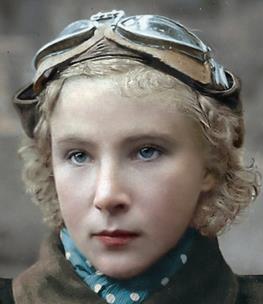
A few seconds later, Major Lydia Litvyak, another WW2 veteran and a female fighter ace with 22 recorded air victories, gave a warning on the radio.
‘’Red Sparrow Two to Leader: I can now see about a dozen dots approaching in the distance at one o’clock.’
‘’Acknowledged, Red Sparrow Two! To all Red Sparrow callsigns, take the safeties off your guns, switch to internal fuel and jettison your drop tanks.’
Kozhedub barely had time to do that himself before he saw four puffs of smoke in the distance, with the puffs turning into long and thin smoke trails which then headed straight towards him and his pilots.
‘’CHYORT24! WHAT IS THAT?’’
His blood froze in his veins when he saw that one of the smoke trails was heading directly at him at a stupendous speed. Whatever it was, it was small and was no aircraft.
He then understood in a flash that it could be only one thing: a kind of guided rocket.
‘’INCOMING ROCKETS! TAKE EVASIVE ACTIONS!’
Himself pulling on his control stick, Kozhedub went into a fast climb while rolling on his back, so that he could watch whatever was coming at him. To his shock, that rocket veered at once and climbed towards him with an agility he knew he couldn’t equal. In desperation, he reversed his climb into a dive, enduring a good seven Gs in the process.
His vision became blurred for a few seconds and he saw red. Then a nearby explosion shook his Mig-15, triggering a number of alarms on his instruments panel. Pestering to himself about his bad luck, the Soviet ace did his best to keep control of his plane and to level it off. That however caused his jet fighter to shake violently. Understanding that his control surfaces were badly damaged and that his plane could disintegrate at any moment, Kozhedub bitterly resigned himself to eject and pulled the handle of his ejection 24 Chyort : ‘Damn’ or ‘Hell’ in Russian. A common swear word.
290
seat. The relative wind hit him like a hammer when he rocketed out of his doomed Mig-15, then he felt his ejection seat detach from him and found himself free-falling at an altitude of 4,000 meters. Conscious that the air was too thin at that altitude to breathe, he waited a few seconds before pulling the opening handle of his parachute once below 3,000 meters. Thankfully, his parachute opened properly and he found himself slowly floating down towards the sea. Mortally worried about his comrade pilots, he looked around him, trying to see what was happening. What he saw was a multitude of smoke trails dissipating in the thin air, along with two flaming torches falling down towards the sea. He then saw one of his pilots fly past some four miles away, an American SABRE
jet fighter in hot pursuit. Next, he saw what looked like a rocket suspended under one wing of the SABRE fly out in a trail of flames and smoke. That rocket, watched intensely by Kozhedub, then quickly caught up with the Mig-15, turning once to follow a last attempt by the Soviet pilot to evade it. The rocket then hit the Soviet fighter near its tail pipe and exploded, breaking the Mig-15 in two and sending the two parts to fall in flame.
Kozhedub lowered his head in sadness when the debris hit the water, with the pilot failing to eject. When he raised his head again to look further around him, he froze in near terror: that SABRE jet fighter was now turning towards him. Expecting to be killed at any moment in a hail of .50 caliber heavy machine gun bullets, the Soviet ace was both surprised and relieved when the American pilot simply shook its wings and flew past him without firing his guns, clearly intent on showing mercy. Kozhedub let out a breath of relief, then thought over his predicament: he was now about to end in the sea, over 200 kilometers from any land and with no way to call for rescue. Hopefully, that American fighter pilot was going to signal him to some American ship or plane and he would then be picked up in the next few hours. While he didn’t relish the thought of becoming a prisoner of war, that still was better than ending dying of dehydration or being eaten by a shark. Resigning himself to a most uncertain future but resolved to survive as long as he could, Kozhedub prepared himself to splash into the sea. That took another couple of minutes before it happened. Quickly undoing his parachute harness while still under the surface, he then shed it and swam away from it for a few seconds, intent on avoiding his parachute canopy from smothering him and making him drown. He triggered the inflation bottle of his life jacket only once safely away from his parachute and ascended to the surface, where he was able to take a big gulp of air.
Unfortunately, his emergency gear was quite limited and he didn’t have an inflatable life raft with him, so he had to simply float on the surface of the sea, his life vest the only
291
item helping him to stay afloat. Thankfully, the sea was relatively calm at this time but the water was quite cold and he understood that hypothermia was going to be another threat to his survival. He then started to pray that someone, anyone, would find him and save him.
On her part, Lydia Litvyak survived that first missile salvo for the simple reason that none of the first four missiles targeted her Mig-15. She however was witness to the destruction of three other aircraft, while she lost sight of Kozhedub’s plane when it went in a zoom climb to evade a missile. While shocked by the revelation that the Americans had such weapons, Lydia reacted at once by abruptly rolling her fighter and launching into a punishing quarter turn, flying away from the rest of the Soviet formation for about a mile before reversing her turn and pointing her aircraft at the right flank of the incoming American fighters, which she then recognized as being F-86 SABRE jets. One of the American pilots saw her coming from one flank and turned towards her in response.
With both jets flying at speeds of over 500 miles per hour, the time their pilots had to properly aim their guns was extremely short. Yet, both Lydia and her adversary managed to achieve direct hits, proving that they were both either outstanding or very lucky pilots. Both pilots felt impacts on their planes just before they zoomed past each other. Quickly checking her instruments and the parts of her plane she could see from her cockpit, Lydia’s jaws tightened when she saw that her left side wing had been hit by at least one 20mm shell which had damaged the aileron on that wing. If it ripped away at the speed she was doing, then she would have a very hard time avoiding entering a fatal spin. She thus pulled in her engine throttle in order to slow down her wounded Mig-15 to a safer speed. Next, she started a slow and cautious turn towards the East, with the idea of trying to return to her airbase near Shanghai. However, her aileron then gave up and flew off while she was in her turn, making her jet nearly uncontrollable at once. Realizing that her plane was doomed, she resigned herself to eject from her Mig-15 and pulled the ejection handle, rocketing herself out of her fighter jet. Seat separation and parachute opening went well and she soon found herself floating under her parachute. As she scanned the sky around her, Lydia saw another parachute floating down, some two kilometers away and slightly above her.
‘’So, we both lost that air duel.’ said Lydia to herself. Looking down under her at the sea, she saw that her brief air battle and maneuvers had brought her well past the position of the Soviet fleet she had come to defend. However, that fleet was now in a
292
truly dire shape, with one cruiser sunk and the two other cruisers either in flame or sinking. A number of smaller warships had also been hit and either damaged or sunk.
Looking around in the distance, she was shocked to see another group of grey ships approach on the horizon: those ships were certainly not Soviet ones.
‘’Chyort! It looks like I am going to end up a prisoner of war after all. Wait! Are we even officially at war with each other now? After all, our fleet came here to attack the Japanese, not the Americans.’
She was still pondering that question when she belatedly noticed that the American pilot she had downed was trying to steer her parachute closer to hers.
Deciding that having an American pilot close to her once in the water could possibly help both of them to repel sharks, she also started pulling on the directional strings of her own parachute. By the time both of them hit the water, only some 200 meters separated them. Having had to parachute out a couple of time during the Great Patriotic War, Lydia managed to quickly get free from her parachute, then inflated her life vest and looked around for that American pilot. That was not exactly easy, with the waves regularly making her bob up and down in the water. She finally managed to locate the American and saw that the SABRE pilot was actually lying down on her belly in a tiny inflatable raft so small that the pilot’s legs hung out.
‘’Well, at least he had a raft with him, while I don’t.’ said Lydia to herself before starting to swim towards the American, with the latter also paddling towards her with both of his hands. There was some mutual surprise when the two pilots finally got closer to each other and realized that they were both women. Lydia continued swimming until she was able to grab one of the handles distributed around the inflated raft, then looked up with curiosity at her opponent. That American woman was a pretty brunette in her late twenties and had blue eyes, like Lydia. After a few seconds of mutually looking at each other, the American woman smiled to Lydia and spoke in English while presenting her hand for a shake.
‘’Hi! My name is Shirley Slade. And yours is?’’
While Lydia did not speak English, she did understand the gist of what Slade had said and shook her hand while telling her name and rank in Russian.
‘’Major Lydia Litvyak.’
An awkward silence fol owed as both women understood that they didn’t have a common language they could use to converse. Having seen the American battle group
293
in the distance, Shirley Slade then decided to try attracting its attention: most major American warships now embarked at least one helicopter, which could then easily fish out both her and that Soviet pilot...if it became aware about them. Taking out the signal flare launcher contained in the cargo pocket on the front of her life vest, Shirley pointed it upwards and fired one red flare high in the air, then reloaded her launcher with a fresh flare but didn’t fire it yet: those ships were stil quite far and she would have to manage her limited supply of signal flares. She smiled when Lydia then produced her own flare gun, a large and heavy model, from the pocket of her own life jacket. Shirley gestured to her to hold on for the moment and wait, with the Soviet woman apparently understanding what she meant and storing back her flare pistol in its pocket.
Waiting another fifteen minutes, Shirley then fired up a second red flare, following up with a third flare some fifteen minutes later. Her efforts were soon rewarded by the noise of an approaching helicopter. Quickly raising her launcher again, she fired her fourth flare and reloaded her launcher at once, to be ready to fire again quickly. Both she and Lydia cheered up when a U.S. Navy UH-1 light helicopter appeared and stopped to a hover above them. Shirley grabbed first the rescue sling that was soon winched down from the helicopter, not because she was being selfish but because she wanted to warn the helicopter crew not to react badly at seeing a Soviet pilot. The moment she arrived level with the door of the UH-1, she shouted to the winch operator above the din of the rotors.
‘’I HAVE A SOVIET FEMALE PILOT CLINGING TO MY RAFT. WE SHOT
EACH OTHER DOWN AND SPENT THE LAST HOUR TOGETHER. PLEASE TREAT
HER CORRECTLY.’
The Navy combat swimmer nodded his head in understanding and sent back down his sling as soon as Shirley was safely aboard. When Lydia was about to get level with the door of the helicopter, she slowly and deliberately took out of its holster her service pistol with two fingers, then threw it down in the sea, attracting an approving nod from the combat swimmer. With the swimmer soon closing the sliding door, Shirley let out a deep breath of relief, then searched in the front pocket of her life vest and pulled out a chocolate bar, which she presented to Lydia with a smile. Lydia smiled as well and accepted the chocolate bar.
‘’Spaseebah!’’
294
The combat swimmer couldn’t help smile as well when Lydia broke the chocolate bar in three pieces, giving one piece to Shirly and then the third piece to him.
‘’Spasiba!’ said the petty officer, repeating as best he could Lydia’s welcome word.
As the helicopter was flying back at low altitude to the U.S.S. MISSOURI, they saw a number of motor launches speeding towards the sites of the sinking Soviet ships, obviously intent on rescuing the Soviet sailors who had fled their doomed ships. That reassured a lot Lydia about how she could expect to be treated in American hands.
Soviet propaganda had for years painted the Americans as being barbaric and not following the laws of war or the Geneva Conventions but Lydia knew too well that most of what came out of the Kremlin was simply propaganda, often of a crude type. She had been fighting as a fighter pilot since 1941 for the protection of her homeland, not for the glory of the Soviet Communist Party. She of course had from time to time to show proper enthusiasm about the official Party lines, simply in order not to be thought of as non-patriotic by the all-powerful secret police, but the joy of flying was what sustained her most in these demanding times. Her biggest dream was to eventually be accepted as a test pilot, so that she could continue to fly but in a peaceful manner.
When the UH-1 landed on the stern deck of the battleship USS MISSOURI, Lydia and Shirley were greeted on stepping out of the helicopter by a small party composed of a young lieutenant and two armed marines. Shirley saluted back the young Navy officer when the latter saluted her, then spoke to him while pointing at Lydia.
‘’Lieutenant, this is Major Lydia Litvyak, of the Soviet Air Force. We basically shot each other down and ended up in the water together. She doesn’t speak English but has behaved well. I suppose that you don’t have women aboard this ship, apart from us, of course?’’
An amused smile appeared on the young officer’s lips.
‘’You are correct, Major: the Navy has not yet been affected by feminism, contrary to the Air Force.’
‘’Then, could I take care of searching her before you put her in a holding cell? I would hate to see men forcibly search her or making herself undress.’
‘’Your help in that matter wil be welcomed, Major. May I have your name and unit, so that we could advise your unit that you have been rescued?’’
295
‘’Of course! I am Major Shirley Slade, of the 99th Composite Air Group, based in Clark Air Force Base, in the Philippines.’
The lieutenant took the time to write that information down on a pocket notepad, along with Lydia’s name and rank, before asking them to follow him inside the ship, the two armed marines following closely behind. While they were walking down a series of passageways and went down by one deck, Shirley noticed how the sailors they passed by eyed her and Lydia with obvious interest, prompting her to make a joke about it.
‘’I see that there is stil a lot of male hormones at work on Navy ships, Lieutenant.’
The young officer, along with the two marines, had a brief chuckle at that.
‘’Well, we have been at sea for the last two months, Major. The next port call wil most probably be quite, uh, animated if I may say so. And how are the male pilots in your unit behaving with you, Major?’’
‘’The 99th Composite Air Group, better known as the Fifinellas, is an all-female unit, has been so since its formation in 1942 under then Major Ingrid Dows.’
‘’Really? Maybe our crew should pay a visit to Clark Air Force Base one fine day.’
‘’Then, you will have to fight your way through the army of Filipina prostitutes which will besiege your ship at quayside in Subic Bay, Lieutenant.’’
The Navy officer and his two marines laughed in response.
‘’Sounds like a battle worth fighting for, Major.’
‘’Indeed! Do you know if other American pilots have been rescued or have been declared missing in this battle?’
‘’I don’t know about that but I will inquire on that subject later on and will then inform you, Major.’
‘’And do you think that you could find someone who can speak Russian on this ship, Lieutenant? That would greatly facilitate the treatment of that Soviet pilot.’
‘’I am sure that our intelligence section wil find a Russian-speaker, Major.’
Shirley nodded her head at that, then mostly stayed silent until they entered a small compartment where two more marines and a senior Navy officer were waiting. Shirley exchanged salutes with the Navy lieutenant-commander, with Lydia also saluting, then repeated to him the information she had already given to the young lieutenant. The lieutenant-commander, a man in his late thirties, wrote down that information, then looked critically up and down Lydia Litvyak.
296
‘’Could you pat her down and remove her life vest for me, Major Slade?’
‘’Of course, mister.’
Signaling to a nervous Lydia to follow her to a far corner of the compartment, Shirley then made her take off her life vest, which she then handed over to the Navy senior officer, who quickly searched its equipment pocket and took out the flare pistol he found inside it. Shirley also had Lydia empty her pockets, then patted her down, removing in the process a small survival knife quite similar to the one she was herself carrying.
Once that was done, the lieutenant-commander surprised both Shirley and Lydia by addressing the Soviet pilot in good Russian.
‘’May I have your service number, Major Litvyak?’’
‘’Uh, sure! It is L44780059.’
‘’And what is your date of birth and blood type?’’
‘’I was born on August 18 of 1921, sir. My blood type is ‘A’ positive.’’
‘’And what is your unit, Major?’’
Lydia instantly stiffened at that question and her answer came out clear and firm.
‘’I wil not provide you with any further information, sir!’
‘’You may relax, Major: I wil not ask further questions of military nature to you.
You will now go to the shower stall of our brig, where you will be able to wash off that salt water and will be given a dry set of clothes until your uniform could be washed and dried before being returned to you. I will now ask Major Slade to accompany you to the shower room, so that no man wil be present while you shower.’
‘’Thank you for your consideration, sir.’
The lieutenant-commander then switched back to English while looking at Shirley.
‘’Could you please escort Major Litvyak to our shower room and watch her. I am going to get a set of clean Navy coveralls and boots for her while she showers.’’
‘’Could you also get a set of clean clothes for me as well? I wouldn’t mind taking a shower myself: this salt water is really itching me.’’
‘’No problems, Major. I wil take care of that while you both clean up. Sergeant Rawlins will show you where the shower compartment is.’
‘’Thank you, mister.’
The said marine sergeant then led Shirley and Lydia down a short passageway connected to the compartment they had been in and which was lined on one side with small cells with iron bars doors, stopping at an open door, or ‘hatch’ in Navy parlance,
297
which proved to be a small shower room with two shower stalls, a wooden bench and a small locker containing both soap and towels.
‘’Could I ask you to stack your wet clothes and those of the prisoner near the door before you get in a shower stall, ma’am, so that they could be washed and dried quickly? I should have fresh clothes for both of you by the time you finish cleaning up.’
‘’You are too kind, Sergeant.’ replied Shirley, who then entered with Lydia the small shower compartment and closed its door behind her. She then started to undress, signaling to Lydia to do the same. The petite Soviet woman followed her instructions and quickly removed her two-piece uniform, boots, socks and underwear, which Shirley stacked in a pile separate from her own clothes, then waited until Lydia was inside a shower stall and had pulled closed its curtain before half opening the door, or ‘hatch’, and putting down both piles of wet clothes on the deck of the passageway while taking care of not exposing her nudity to the marine NCO.
‘’Here you are, Sergeant.’
‘’Thank you, ma’am. I wil soon be back with some fresh clothes for both of you.’
Closing back the door of the shower compartment, Shirley then grabbed a bar of soap and a bottle of shampoo before stepping in one of the two shower stalls. She sighed with relief when the warm water started spraying down her body.
‘’Finally! This salt water on my skin was driving me nuts.’
In the interrogation room of the ship’s brig section, Lieutenant-Commander Charles Laskin grabbed Lydia’s wet uniform shirt and looked at the medal ribbons and insignias fixed to it.
‘’Hmm... She has the ribbons for Hero of the Soviet Union, the Order of the Red Banner, the Order of the Red Star and the Order of the Patriotic War. Quite impressive, I must say. However, I see no unit insignia, which is something I expected.’’
‘’Uh, that Major Slade is no slouch either, sir.’ said Sergeant Rawlins, who had unfolded Shirley’s pilot coverall. ‘’Look at all the medal ribbons she has: one Distinguished Service Cross, the Silver Star with cluster, the Legion of Merit, the Distinguished Flying Cross with three clusters, one Bronze Star, four Air Medals, the Presidential Unit Citation, the Asiatic-Pacific Campaign Medal with three battle stars, the European-African-Middle Eastern Campaign Medal with one battle star, the World War II Victory Medal, the Philippine Defense Medal, the Philippine Liberation Medal and the Philippine Presidential Unit Citation.’’
298
‘’Hell, I feel naked compared to that! We have a genuine American World War 2
hero aboard, along with a Hero of the Soviet Union, both women. Alright, go get a set of clothes for each of them, then drop their wet clothes at the officers’ laundry room. Make sure to warn the sailors there that they will hear from me if any of those clothes, particularly the underwear items, disappear in the process.’
‘’You’re afraid that someone there is into fetishism, sir?’’ asked Rawlins, grinning.
‘’You bet your ass I am, Sergeant!’
By the time that both Lydia and Shirley had finished with their showers and had dried themselves up, they found two piles of fresh clothes, along with shoes, just outside of the compartment’s door. Carrying both piles inside, Shirley found that the set for Lydia included a Navy work coverall in ‘small’ size, along with boxer shorts, a T-shirt, socks and shoes of the appropriate size. The coverall also had ‘major’ rank insignias on it, like on the Summer Tan shirt provided to Shirley. The only down side was that they were all made for men but that was easily understandable and excused. Once both were ready to walk out of the shower compartment, they met with a waiting Sergeant Rawlins and two armed marines, who saluted both of them.
‘’Ma’am, I have orders to lead you to the officers’ wardroom, where you will be able to have a hot meal and coffee. Then, I will escort back Major Litvyak to the brig, while you wil get a cabin until you can be flown back to the Philippine.’
‘’That sounds most amenable to me, Sergeant. Could I first inspect the cell meant for Major Litvyak?’’
‘’Of course, ma’am! It is this one, right next to the shower compartment.’
Looking inside that cell through its iron bars, Shirley saw that it contained a double bunk steel bed with mattress, a sink and a toilet.
‘’Uh, the toilet is in plain sight of the door, Sergeant. Could you have something fixed, so that Major Litvyak could use the toilet without exposing herself?’’
‘’I wil have someone rig something right away, ma’am.’
‘’Thank you, Sergeant: you are most useful.’
‘’Just doing my duty, ma’am. If you will now follow me to the officers’ wardroom.
When they entered the quite large compartment where the ship’s officers ate their meals and relaxed, Lydia opened her eyes wide on seeing how comfortable and well-furnished it was.
299
‘’Bozhemoi! Al this luxury is so...decadent.’’
While Shirley didn’t understand her Russian words, she did understand their meaning through her physical behavior.
‘’Well, I can sure have a plate of eggs, bacon and toasts right now. Let’s go get some food.’’
Lydia was again shocked, but in a pleasant way, when she saw what was available on the menu and, with the help of a Navy steward of Polish descent who spoke some Russian, ordered a typically American breakfast of ‘Steak and Eggs’, along with toasts with strawberry jam and a cup of coffee. The only disappointment was the coffee, which proved quite weak compared to typical Russian coffee. Still, she found little to complain about, except for the sometimes-excessive attention she drew from the officers present in the wardroom.
At the end of the meal, Shirley insisted on accompanying Lydia back to the brig before getting a cabin for herself and shook hands with her through the bars of her cell door.
‘’Good luck for your next few days, Major Litvyak. Maybe we will arrange some sort of agreement with your government in the near future that will allow you to be returned to the Soviet Union.’
Lieutenant-Commander Laskin, who was with Shirley at that time, then translated her words into Russian. He and Shirley were then surprised to see some fear appear on the Soviet woman’s face.
‘’What? Is something wrong, Major Litvyak?’’
After mentally debating her answer to that for a few seconds, Lydia decided to lie to Laskin and shook her head.
‘’No! Everything is okay for me.’
‘’Very well! If you need anything, just call one of the guards, who will then get me. Take the time to rest and sleep a bit, Major: you may be here for a few days.’’
Both Shirley and Laskin then walked out of the cell block, leaving Lydia alone. Slowly sitting down on the lower bed of her double bunk, she then thought gloomily about what she could expect once returned to the Soviet Union. Stalin’s policy was normally to send returning Soviet soldiers who had been held as prisoners of war to Siberian Gulag camps under accusations of defeatism or treason. The more prominent or higher ranking those ex-prisoners were often merited a quick execution. Lydia had heard too
300
many tales about this at the end of the war against Germany to simply dismiss those as mere fabrications. On the other hand, asking for political asylum was simply unthinkable for her, as it equated to treason in her mind.
She soon got up from the bed and used the toilet, which was now hidden from direct sight by a blanket which had been suspended from an overhead pipe, then returned to the bed and removed her shoes before lying down. It took her a couple of minutes to fully go to sleep but the physical expenditure of the last couple of hours finally won over her anxiety. She ended up sleeping a good four hours before the noise of voices and steps on the metallic deck woke her up. Sitting up and swinging her legs out, she saw Lieutenant-Commander Charles Laskin stop in front of her cell, a benevolent smile on his face.
‘’I am sorry to have awaken you up, Major, but I thought that you would like to know that another Soviet pilot was found, floating in the sea, and that he has been rescue and brought to this ship by helicopter. He is however suffering from a combination of hypothermia, dehydration and sunburns and is presently at the ship’s sick bay.’
‘’Do you have his name, sir?’’
‘’Yes! He is Colonel Ivan Kozhedub. However, our doctor says that he needs to rest and can’t receive visitors for the moment. I will advise you the moment that he will be able to see visitors.’
Laskin then walked out of the cell block, leaving Lydia alone again.
301
CHAPTER 28 – CONSEQUENCES
09:08 (Washington Time)
Tuesday, March 07, 1950 ‘C’
‘The Tank’ (conference room), National Military Command Center (NMCC) The Pentagon, Arlington, Virginia, U.S.A.
The expressions around the conference table in ‘The Tank’, the conference room attached to the National Military Command Center at the Pentagon, were mostly sober, as the gravity of the events of the day earlier near Okinawa was evident to all the participants, which included President Dewey and his top defense and foreign affairs cabinet members and advisors. Also present was Ingrid, whose presence had been requested by the President. Dewey actually opened the discussion with a question to the Chairman of the Joint Chiefs, Admiral Arthur Radford, a favorite of the Secretary of Defense, Dwight Eisenhower.
‘’So, what was the final account of losses on both sides of this battle off Okinawa, Admiral?’’
‘’On our side, our losses were quite light, even though any losses among our people are sad and painful. Overall, we lost four aircraft, with five aircrew killed and one wounded. In exchange, the Soviets lost three cruisers, five destroyers, four troop transport ships and nineteen torpedo and patrol boats, plus 23 Mig-15 jet fighters shot down. The surviving boats then withdrew with the lone destroyer which was still effective. We basically gutted the Soviet Pacific Fleet in this battle, Mister President.’
‘’An excel ent work indeed from our aviatrixes of the 99th Composite Air Group.
This should make Stalin think twice before launching such reckless adventures in the Pacific. What about the situation in Europe?’
‘’Things are quite tense right now along the borders between the Soviet Union and Poland, Romania and the Baltic States, Mister President. Even before that Soviet fleet was spotted approaching Okinawa, the Red Army had been massing divisions along their western border, which in turn had prompted us into putting our troops in Europe on full alert. Right now, it wouldn’t take much to start a general war there, Mister President.’
302
Obviously not happy about that, Dewey then looked at his Secretary of State, Henry Cabot Lodge.
‘’Have you summoned the Soviet Ambassador yet, Henry? What did he have to say about this Pacific move?’’
‘’I spoke with him yesterday evening, Mister President. Ambassador Panyushkin protested that we unjustly attacked their fleet and thus committed an act of war against the Soviet Union. He justified the Soviet attempted invasion of Okinawa as a rightful attack against Japan, which is still considered by Moscow as an enemy of the Soviet Union, even after all these years since the destruction of Tokyo and Osaka. Panyushkin demanded reparations for the losses inflicted by us on the Soviet fleet and air force and also demanded that we punish the commander of the 99th Composite Air Group, which he says ordered the attack on the Soviet fleet without authorization from Washington. I then reminded him that you and not Stalin decided what constituted a legal military move on our part.’
Dewey scoffed at that last sentence.
‘’Well said, Henry! Maybe I should punish those aviatrixes from the 99th by loading more metal on their chests. General Vandenberg, please make sure that appropriate awards are given away for the outstanding actions in that battle.’’
‘’With pleasure, Mister President. If I may, there was another hero in that battle yesterday: our new Hughes AIM-1A BOLT air-to-air missile. Nineteen of them were fired away by our SABRE jet fighters, with them downing a total of fifteen Mig-15s. It thus performed well beyond our wildest expectations and proved itself to be a new and decisive weapon for our Air Force. I thus recommend that we order even more of them than we already did and that we modify all our combat aircraft to allow them to carry and fire the AIM-1A.’
‘’Make a fast study of how many we would need, then present a supplementary budget request via Secretary Kenney, General.’ said Dewey before smiling to Ingrid. ‘’It seems that your missile production line will be even busier than it already is, Miss Dows.’
‘’It may well be, Mister President, but I am not ready yet to make a victory dance: we are still facing those dozens of Soviet divisions massed along the borders of Western Europe. Are we going to be able to stop them if Stalin gives them the order to assault us and our European allies, Mister President?’’
303
That question made the smile on Dewey’s face fade and he then looked at the Chief of Staff of the U.S. Army, General Matthew Ridgway, a tough, combat-proven leader.
‘’What is your opinion on that, General Ridgway?’’
‘’That General Dows is right to worry about our East European borders, Mister President. Our troops and those of our European allies are heavily outnumbered by the Soviet Army. Worse, we have not had the time to fully recuperate from the deep cuts effected by the Truman Administration. The training of our men suffered heavily during that time period and a lot of Army equipment got either scrapped or are suffering a lack of spare parts and ammunition. We will hurt the Soviet Army if it attacks but I am frankly not sure that we will be able to stop the tide, Mister President. As for our European allies, most of them are still rebuilding after suffering horribly during World War 2.
Frankly, I can see only one sure way to stop the Soviets from invading Western Europe: the atomic bomb, or the threat of its use.’
‘’But the Soviets also have the atomic bomb, General.’ objected at once Secretary of State Cabot Lodge. ‘’Are we ready to plunge Europe into a nuclear war simply because Stalin miscalculated in the Pacific?’’
‘’And what tells us that Stalin was not in fact planning to attack Europe after taking Okinawa, gentlemen?’’ cut in Ingrid, her tone severe. ‘’That monster wil be a threat to all of us as long as he is in power in Moscow. ‘’If we retreat or capitulate because of his saber rattling, then we will only ensure that Stalin will redouble his aggression towards us.’’
‘’Then, what do you propose that we do, General Dows?’’ asked Cabot Lodge.
Ingrid, now looking very serious, answered him in a firm voice.
‘’I may have a plan for how to deal with Stalin, Mister Secretary. It is risky but it is also bold and surprising, like most of my plans. However, we will have to execute that plan very quickly, before Stalin gives the order to his army to assault Western Europe.’’


304
CHAPTER 29 – HEAD HUNTERS
Ingrid Dows
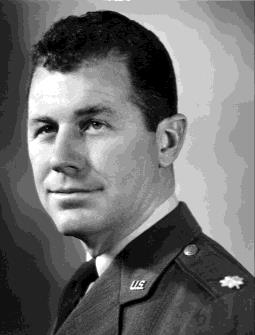
Charles Yeager
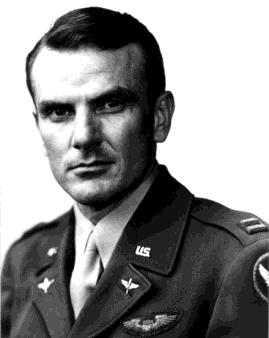
Glen Edwards