

Whispers of the Tropic Wind: Exploring the Pueblos Mágicos of Mexico’s Southeast by Scott Paton - HTML preview
Download the book in PDF, ePub, Kindle for a complete version.
Chapter 5: Quintana Roo

Everyone knows the glossy version of Quintana Roo—the turquoise waters of Cancún, the resorts of Playa del Carmen, the perfect postcard of Tulum. But beneath that shimmer lies something far older, stranger, and far more alive. The truth? This paradise was never meant for sunbeds and margaritas—it was carved by gods, guarded by ceiba trees, and whispered about in Mayan tongues long before tourists ever arrived.
Here, in the Pueblos Mágicos of Quintana Roo, paradise isn’t peaceful—it pulses. The cenotes breathe like ancient lungs. The jungle hums with stories the world forgot to hear. Step a little off the highway, and the glossy postcard curls at the edges. You start to see the real magic—the kind that gives you goosebumps before it gives you comfort.
Have you ever wondered what happens when paradise remembers its past?
Mexico’s Southeast Pueblos Mágicos © 2026 All Rights Reserved. Scott Paton Trust
81
Bacalar – The Lagoon of Seven Colors
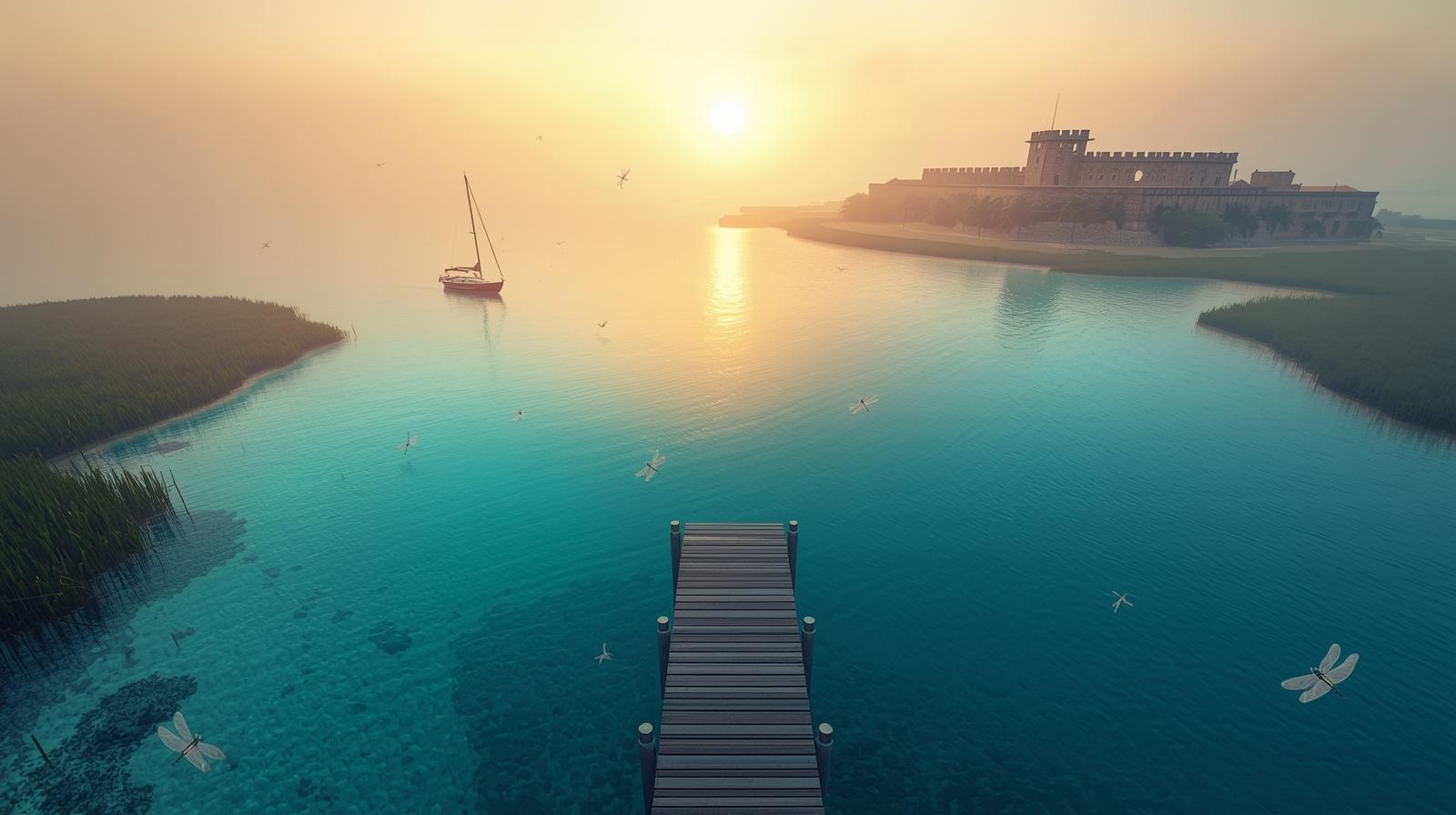
There are places in Mexico that seem painted by the gods, and then there’s Bacalar—a dream woven in turquoise and sunlight. Here, the lagoon shifts shades before your eyes: sapphire near the cenote, aquamarine at the edges, and pale jade where the shallows kiss the sky. The air hums with dragonflies, the breeze smells faintly of mango and salt, and time, somehow, forgets to move. People come to Bacalar to swim, but they stay to breathe again. Have you ever seen water so beautiful it feels alive?
History & Culture
Long before Instagram found Bacalar, the Maya called it Bakhalal—“surrounded by reeds.” It was a vital trading hub, linking the coast to inland cities through a network of canals and lagoons. Pirates, yes pirates, once lurked here in the 17th century, raiding and plundering this quiet corner of the Yucatán Peninsula. The Spanish built Fort San Felipe in 1729 to fend them off, and today its cannons still watch over the lagoon like silent guardians of another era.
But Bacalar isn’t trapped in the past. Its spirit is both ancient and fresh—Maya fishermen still mend their nets at sunrise, while young artists paint murals inspired by water and wind. Festivals fill the town square with marimba music and laughter, reminding visitors that Bacalar’s magic is not only in its lagoon, but in the people who call it home.
Getting There
Mexico’s Southeast Pueblos Mágicos © 2026 All Rights Reserved. Scott Paton Trust
82
Bacalar sits about 40 minutes north of Chetumal, near the Belize border. Travelers can fly into Chetumal International Airport and catch a taxi or shuttle straight to town. From Cancún or Tulum, buses run daily—five to six hours of highway and jungle that end in pure blue paradise. For the adventurous, renting a car offers freedom to stop at hidden cenotes and roadside fruit stalls along the way.
Where to Stay
Bacalar caters to every kind of traveler. Budget backpackers find cozy hostels with hammocks and lagoon views—think The Yak Lake House or Casa Lahar. Couples looking for boutique serenity adore Casa Bakal and Hotel Carolina Bacalar, where sunrise breakfasts come with floating decks. For luxury seekers, Habitas Bacalar blends sustainability and elegance—open-air suites, spa rituals, and quiet nights under infinite stars.
Wherever you sleep, mornings begin with the same miracle: the lagoon whispering awake, sunlight melting across seven shades of blue.
What to See and Do
Sail or Kayak the Lagoon – Glide silently across the mirror-like surface at dawn. You’ll see the famous Cenote Negro, where the deep waters turn an inky navy, and Cenote Esmeralda, glowing like a gemstone beneath the boat.
The Canal of the Pirates – Once a route for smugglers, now a favorite swimming spot. Locals smear their skin with white clay said to rejuvenate the body—nature’s spa treatment, free of charge.
Fort San Felipe – Explore its museum for tales of battles, trade, and resilience. The stone walls tell stories of cannon fire and Caribbean winds.
Los Rápidos – A natural channel where the lagoon narrows into a fast-moving current. Float lazily downstream among stromatolites—living fossils that remind us this water has seen more history than we can imagine.
Downtown Bacalar – Wander through its sleepy streets, pastel houses, and craft shops. Don’t miss the evening stroll on the plaza when locals gather for marquesitas (crispy crepes filled with cheese and Nutella) and laughter.
Food to Try
Bacalar’s cuisine tastes of the Caribbean with a Yucatán twist. Start with pescado tikin-xic—grilled fish marinated in achiote and citrus, wrapped in banana leaves. Sip agua de chaya for a refreshing local tonic, or xtabentún, the honeyed anise liqueur of the Maya gods. Try La Playita for lagoon-front dining and bohemian vibes, or Nixtamal for creative fusion that
Mexico’s Southeast Pueblos Mágicos © 2026 All Rights Reserved. Scott Paton Trust
83 celebrates local corn. And if you find a small stand selling coconut ice cream near the plaza—don’t think twice. Get two scoops.
Practical Tips
● Best time to visit: November to April, when rains ease and skies stay clear.
● Clothing: Light cotton and swimsuits are essentials, but bring a shawl—the nights near
the lagoon can cool quickly.
● Shoes: Water sandals or barefoot-friendly flip-flops will serve you well.
● Currency: Pesos preferred, though some places accept cards.
● Souvenirs: Look for handwoven hammocks, embroidered huipiles, or artisan coconut
crafts.
And please—no sunscreen before entering the lagoon unless it’s reef-safe. This fragile ecosystem depends on our care.
Closing Reflection
Bacalar doesn’t ask for attention; it rewards stillness. It’s the kind of place that teaches you how to float—not just in water, but in life. One minute you’re watching ripples fade into the horizon, and the next, you realize your worries have too. Maybe that’s Bacalar’s real magic—it gives you back the calm you didn’t know you’d lost.
Mexico’s Southeast Pueblos Mágicos © 2026 All Rights Reserved. Scott Paton Trust
84
Isla Mujeres – Where the Sun First Touches Mexico

Every morning, Isla Mujeres greets the sun before the rest of Mexico. There’s something poetic about that—a slim stretch of coral limestone kissed by the Caribbean, waking up in hues of tangerine and turquoise. Just eight kilometers from Cancún, yet it feels worlds away. The moment your feet hit its soft, white sand, you sense it: a calm that doesn’t exist on the mainland. Pelicans glide inches above the sea, golf carts hum quietly down narrow streets, and somewhere in the distance, a fisherman whistles while cleaning his catch. Isla Mujeres isn’t just another island getaway—it’s the Mexico you dream about when you close your eyes. Have you ever wondered what paradise looks like when it still feels local?
History & Culture
Long before tourists arrived with sunscreen and selfie sticks, Isla Mujeres was a sacred place. The ancient Maya dedicated it to Ixchel, the goddess of the moon, love, and fertility. Women made pilgrimages here to seek her blessing, leaving clay figurines and offerings. When the Spanish arrived in the 16th century, they found the island filled with these figures—hence the name Isla de las Mujeres, or “Island of Women.”
But Isla Mujeres’ story didn’t stop at myth. In the 19th century, it became a pirate haven (yes, real pirates), and the infamous Fermín Mundaca built his hacienda here after falling in love with
Mexico’s Southeast Pueblos Mágicos © 2026 All Rights Reserved. Scott Paton Trust
85 a local woman. His mansion, now a ghostly ruin surrounded by cactus and bougainvillea, still whispers of heartbreak and obsession.
Today, the island blends that spiritual past with a sun-soaked, laid-back vibe. Locals still celebrate the goddess Ixchel with dances and rituals each August, honoring the feminine spirit that first gave the island its name. You’ll feel it too—in the warmth of its people, the rhythm of its waves, and the way time simply refuses to rush.
Getting There
Reaching Isla Mujeres is part of the adventure. Most visitors start from Cancún, catching a ferry from Puerto Juárez. The trip takes about 20 minutes across the sparkling Caribbean—long enough to sip a cold drink and watch the skyline fade. Ferries run regularly from early morning until midnight, so whether you’re chasing sunrise or moonlight, you’ll make it.
Once you dock at the island’s pier, you can rent a golf cart (the unofficial vehicle of Isla Mujeres) or a scooter to explore at your own pace. Bicycles are another charming option if you don’t mind a little heat. Just remember—it’s small enough that you can circle the island in less than an hour, but beautiful enough to take all day.
Where to Stay
Isla Mujeres offers everything from barefoot hostels to oceanfront luxury.
● Budget: Pocna Hostel sits right on the beach and has nightly bonfires that turn strangers
into friends.
● Mid-Range: Hotel Secreto lives up to its name—a minimalist gem hidden behind palm
trees with views of the Caribbean.
● Boutique Luxury: Casa de los Sueños (“House of Dreams”) feels like it was built for
sunset lovers, with infinity pools spilling into the horizon.
If you prefer something quieter, stay on the southern end near Punta Sur, where mornings start with birdsong instead of engines.
Mexico’s Southeast Pueblos Mágicos © 2026 All Rights Reserved. Scott Paton Trust
86
What to See and Do
1. Playa Norte
Often ranked among the best beaches in the world, Playa Norte is everything you’ve seen on postcards—wide, shallow, impossibly clear. It’s perfect for swimming, sunset strolls, or simply doing nothing at all.
2. Punta Sur & Ixchel Temple
At the island’s southern tip, cliffs drop dramatically into the sea. This is where the first sunlight of Mexico lands each morning. A small temple dedicated to Ixchel still stands here, surrounded by wind-sculpted rocks and ocean spray.
3. Underwater Museum of Art (MUSA)
Diving or snorkeling through this surreal underwater gallery is unforgettable. Hundreds of submerged sculptures form an artificial reef, creating an eerie yet beautiful harmony between art and marine life.
4. Downtown & Hidalgo Street
The island’s heart beats here—colorful shops, open-air restaurants, and street musicians who make every night feel like a fiesta. Don’t miss the local artisans selling handmade jewelry crafted from shells and coral.
5. Garrafon Natural Reef Park
For a more structured adventure, this eco-park offers ziplining over turquoise waters, kayaking, and reef snorkeling—all with breathtaking Caribbean views.
Food to Try
If you come to Isla Mujeres hungry, you’re doing it right.
Start with tikin xic, a Mayan-style grilled fish marinated in achiote and citrus. Then try ceviche mixto—a refreshing blend of shrimp, octopus, and lime that tastes like summer itself. For breakfast, order huevos motuleños, topped with peas, ham, and plantains, or a simple cochinita pibil taco from a corner stand.
Craving dessert? Grab a marquesita (a crispy crepe filled with Nutella or cheese) from a street cart while strolling Hidalgo Street. Wash it all down with a chilled agua de chaya or a smoky mezcal margarita as the sun melts into the sea.
Practical Tips
Mexico’s Southeast Pueblos Mágicos © 2026 All Rights Reserved. Scott Paton Trust
87
● Best Time to Visit: November to April offers clear skies and calm seas. Avoid hurricane
season (June–October).
● What to Pack: Light clothing, sunscreen, reef-safe lotion, sandals for the beach, and
sturdy shoes for exploring Punta Sur.
● Local Transport: Golf carts are the easiest way to get around—book early during high
season.
● Souvenirs: Handwoven hammocks, shell jewelry, and colorful sarongs made by local
artisans make thoughtful keepsakes.
● Etiquette Tip: Locals value kindness and patience. A friendly “buenos días” opens every
door.
Closing Reflection
There’s a moment on Isla Mujeres—usually around sunset—when everything stands still. The sea turns to liquid gold, children’s laughter drifts from the plaza, and the air smells faintly of salt and grilled fish. It’s then you realize: this island isn’t just beautiful—it’s gentle. It doesn’t ask you to conquer or consume it, only to slow down and listen.
Isla Mujeres may be small, but it leaves an enormous imprint. It’s the kind of place that doesn’t fade when you leave; it lingers, like sunlight behind your eyelids. Maybe that’s Ixchel’s magic still at work—reminding you that beauty, like love, is something you return to again and again.
Mexico’s Southeast Pueblos Mágicos © 2026 All Rights Reserved. Scott Paton Trust
88
Isla Tulum, Quintana Roo – Where the Jungle Meets
the Sea
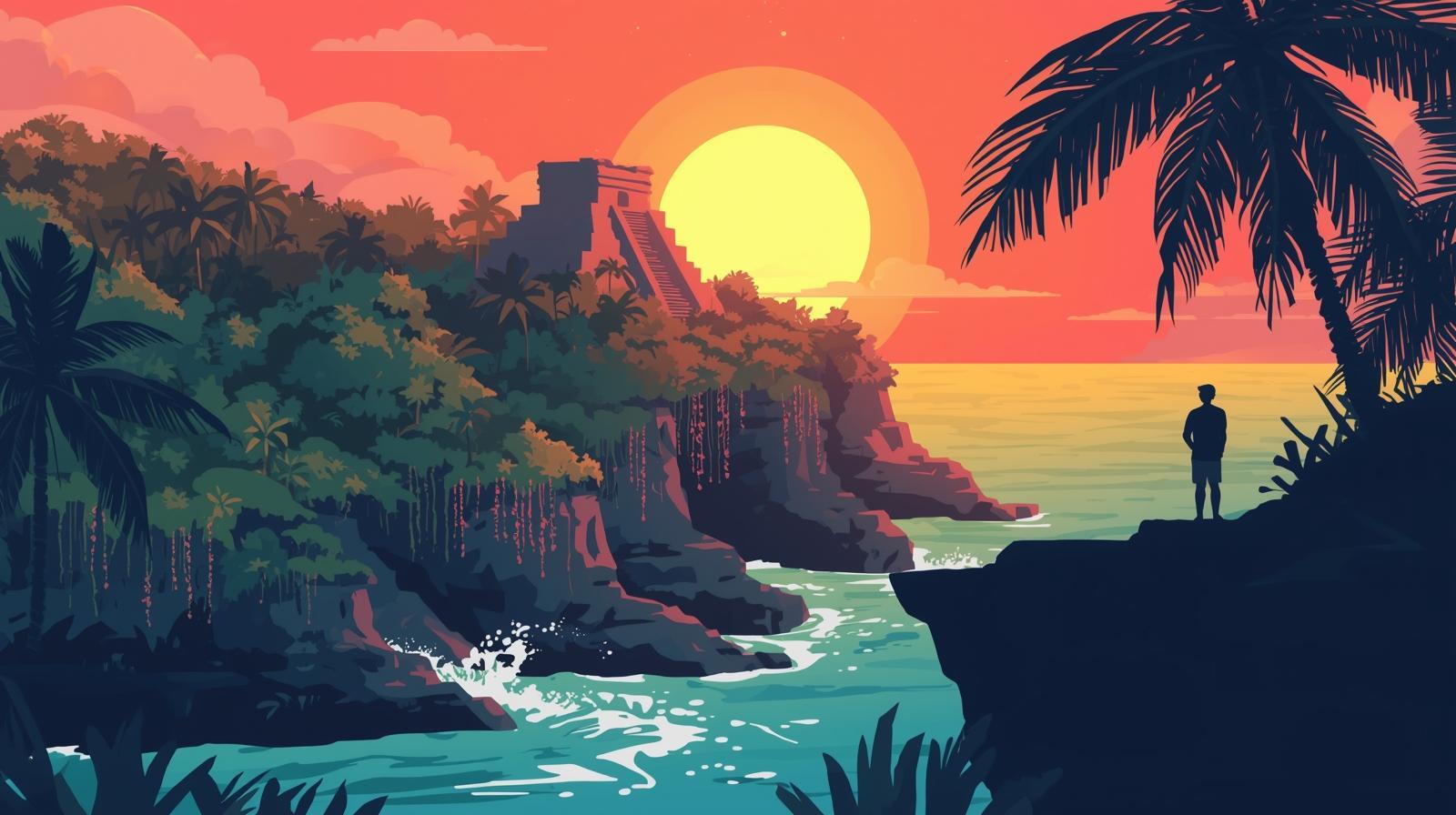
There are places that look beautiful in photos, and then there’s Tulum—where every frame feels like a screensaver you somehow stumbled into. The jungle breathes around you, the Caribbean hums beside you, and time slows to a rhythm that feels both ancient and new. Here, yoga mats and Mayan ruins coexist, smoothie bars hide behind palm fronds, and every sunset looks like the sky’s personal performance. Some say Tulum has changed—too trendy, too commercial. But stay a little longer, wander past the influencers and beach clubs, and you’ll find it: the original magic that made this place sacred long before hashtags existed. Have you ever felt a place remember its own past?
History & Culture
Tulum’s story begins on a cliff. Long before the first hammock hung from a boutique hotel, the Maya built a walled city overlooking the turquoise sea. “Tulum” means “wall” in Yucatec Maya—a reminder that this was once a fortress and a port, alive with trade and ritual. The Temple of the Wind God, perched dramatically over the Caribbean, wasn’t just decoration; it was a spiritual compass guiding sailors through reefs and storms.
When the Spanish arrived in the 16th century, they found a thriving civilization already fluent in architecture, astronomy, and trade. But disease and colonization dimmed the lights of this
Mexico’s Southeast Pueblos Mágicos © 2026 All Rights Reserved. Scott Paton Trust
89 coastal city, leaving it to the jungle for centuries. Only in the 20th century did explorers and archaeologists uncover its silent stones again.
Today, that duality still defines Tulum—ancient spirituality woven into modern hedonism. Locals still perform Temazcal (sweat lodge) rituals, and murals honor Ixchel, goddess of fertility and the moon. But alongside that sacred energy, you’ll find DJs spinning under the stars, wellness retreats promising rebirth, and artisans selling obsidian pendants beside espresso bars. Somehow, it all fits. Somehow, it all feels… Tulum.
Getting There
Reaching Tulum is part of the adventure. From Cancún International Airport, it’s about a two-hour drive south along Highway 307—a straight ribbon of asphalt through jungle and billboards promising paradise. You can take an ADO bus (comfortable, air-conditioned, and budget-friendly) to Tulum Pueblo, or hire a private shuttle if you prefer to skip the stops.
Once in town, getting around is simple: rent a bike or scooter for the day, or hop into a colectivo (shared van) to reach the beaches and ruins. Traffic can get intense during high season, but with that ocean breeze and endless blue horizon, even the delays feel less frustrating.
Where to Stay
Tulum offers two distinct worlds: the town (pueblo) and the beach (zona hotelera).
● Tulum Pueblo – For travelers who crave authenticity and affordability, the town is a
lively mix of hostels, taco stands, and local charm. Boutique stays like Casa Abanico or Mimosa Tulum blend comfort with character.
● Beach Zone – Along the coast, eco-luxury reigns. Think bamboo cabanas, candlelit
dinners, and morning yoga on sand still cool from the night. Nomade, Be Tulum, and Habitas are favorites for those chasing a “wellness with Wi-Fi” vibe.
Whichever you choose, Tulum has a way of making even the simplest hammock feel like luxury.
What to See and Do
Start with the obvious—the Tulum Ruins. Go early, before the buses arrive, and you’ll have the temples almost to yourself. Stand at the cliff’s edge as the morning sun paints the sea silver. You’ll understand why the Maya chose this view.
Mexico’s Southeast Pueblos Mágicos © 2026 All Rights Reserved. Scott Paton Trust
90
From there, dive—literally—into the Gran Cenote, a crystal-clear limestone sinkhole just minutes away. Swimming in its cool, sapphire waters feels like entering another world, sunlight slicing through stalactites as tiny fish glide by.
For a quieter experience, visit Cenote Calavera or Cenote Escondido—hidden gems where locals escape the crowds.
In town, the Parque Dos Aguas comes alive at dusk with food stalls, families, and the scent of grilled corn. And if you crave art, stroll through Aldea Zama or La Valise Art Walk, where murals bloom like tropical flowers.
Don’t miss the Sian Ka’an Biosphere Reserve, a UNESCO World Heritage site south of town. It’s raw, wild, and stunning—home to dolphins, crocodiles, and mangroves that stretch as far as the eye can see.
And when night falls? Find a beach bar, kick off your sandals, and let the drums and waves sync into one long heartbeat.
Food to Try
Tulum’s cuisine mirrors its soul: ancient roots with global flair.
● Start your morning with chilaquiles verdes or a smoothie bowl from Matcha Mama, that
little shack with the famous swings.
● For lunch, head to Taquería Honorio, where locals queue for slow-cooked cochinita
pibil—Yucatán’s beloved marinated pork wrapped in banana leaves.
● At sunset, grab a table at Hartwood, the jungle’s open-air restaurant powered entirely by
wood fire and local produce. Every dish feels alive—charred, smoky, elemental.
● End the night with mezcal under the stars. The best bars, like Gitano or Casa Jaguar,
turn sipping into ritual.
And if you ever see tamales being sold from a bicycle basket, buy them. Always.
Practical Tips
● Best Time to Visit: November to April—dry season, with perfect temperatures and
fewer mosquitoes.
Mexico’s Southeast Pueblos Mágicos © 2026 All Rights Reserved. Scott Paton Trust
91
● What to Pack: Light cotton, swimwear, biodegradable sunscreen, and bug spray.
Sandals for the beach, sneakers for the ruins.
● Money: Many places take cards, but cash (pesos) still rules in small shops and taxis.
● Etiquette: Respect the land. Avoid single-use plastics. Don’t touch stalactites or take
“souvenirs” from cenotes.
● Souvenirs: Handwoven hammocks, coconut oil, or Mayan honey make beautiful (and
sustainable) mementos.
Closing Reflection
Tulum is a paradox that works—a place where ancient stones whisper beneath electronic beats, where luxury coexists with raw nature, and where every traveler leaves with a different story. Some come for healing, others for adventure, some just to remember what sunlight on skin feels like.
And yet, for all its contradictions, Tulum remains true to its essence—a sacred meeting of jungle and sea, body and spirit, past and present.
Because maybe the real magic of Tulum isn’t what you see. It’s what you feel when you finally stop looking.
Mexico’s Southeast Pueblos Mágicos © 2026 All Rights Reserved. Scott Paton Trust
92