

Where Desert Meets the Sea: A Guide to Mexico’s Northwest Pueblos Mágic by Scott Paton - HTML preview
Download the book in PDF, ePub, Kindle for a complete version.
Chapter 5 Baja California Sur – Where
History Meets Magic
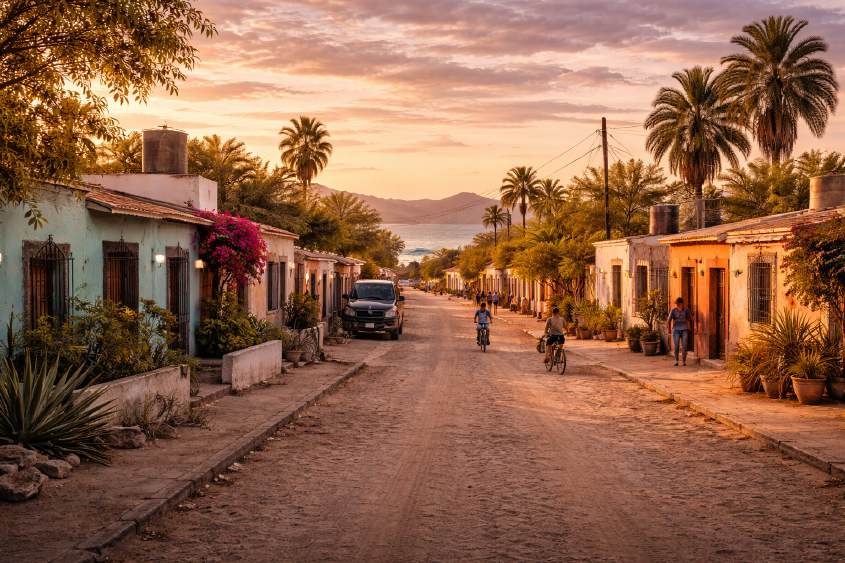
At the southern tip of the Baja California Peninsula, where desert cliffs tumble into turquoise seas, lies Baja California Sur. Today it’s famous for whales breaching off the coast, for sun-kissed beaches in Los Cabos, and for the slow rhythms of its Pueblos Mágicos. But long before surfers and travelers found their way here, this land held stories etched in stone, sung in ritual, and carried across the desert winds.
A Living History
Human presence in Baja California Sur stretches back at least 10,000 years, with the Cochimí and Guaycura peoples leaving behind breathtaking cave paintings in the Sierra de San Francisco. These murals—vivid reds, blacks, and ochres—depict deer, fish, shamans, and celestial symbols, offering glimpses into a worldview that connected earth, sky, and sea.
The Spanish arrived in the 16th century. In 1535, Hernán Cortés landed near what is now La Paz, but early colonization attempts faltered. It was not until 1697 that Jesuit priest Juan María de Salvatierra successfully founded the Mission of Nuestra Señora de Loreto, the first permanent settlement on the peninsula. From Loreto, the Jesuits expanded northward, establishing a chain of missions that would eventually reach into Alta California.
For centuries, Loreto was the capital of the Californias, until devastating hurricanes and political shifts led to La Paz becoming the capital. The state itself, however, would not be officially recognized until October 8, 1974, making it the youngest of Mexico’s 32 federal entities.
The Magic of the Pueblos
One of the most enchanting aspects of Baja California Sur today is its collection of Pueblos Mágicos—towns recognized by Mexico’s cultural program for their history, traditions, and beauty.
● Todos Santos, designated a Pueblo Mágico in 2006, is a desert oasis turned artist
haven, where colonial streets meet surf-washed beaches and legends swirl around the famous Hotel California.
● Loreto, named a Pueblo Mágico in 2012, is revered as the “Cradle of the Californias.” Its
baroque mission, built in the 17th century, stands as a symbol of the region’s deep colonial roots.
● Santa Rosalía, honored in 2023, tells a different story: a French-built mining town with
wooden houses, industrial ruins, and the iconic steel Santa Bárbara Church, designed by Gustave Eiffel.
Together, these towns embody the soul of Baja California Sur—a land where history is preserved not in glass cases but in everyday life. Here, the magic is tangible: in the murals of ancient caves, in the scent of fresh pan dulce from a French bakery, in the glow of a Pacific sunset over Todos Santos, or in the bells of Loreto’s mission calling out across the plaza.
Closing Reflection
Baja California Sur is both ancient and young—its roots reach into prehistory, yet its statehood is less than fifty years old. That paradox is part of its charm. To travel here is to move through time itself, from the first peoples who painted their visions on canyon walls, to Jesuit missionaries charting new frontiers, to French entrepreneurs building wooden homes by the sea. The Pueblos Mágicos of Todos Santos, Loreto, and Santa Rosalía are more than picturesque towns; they are living chapters of a larger story. They invite every visitor to slow down, look closer, and discover that in Baja California Sur, history and magic walk hand in hand.
Todos Santos – Where Desert Meets the Sea
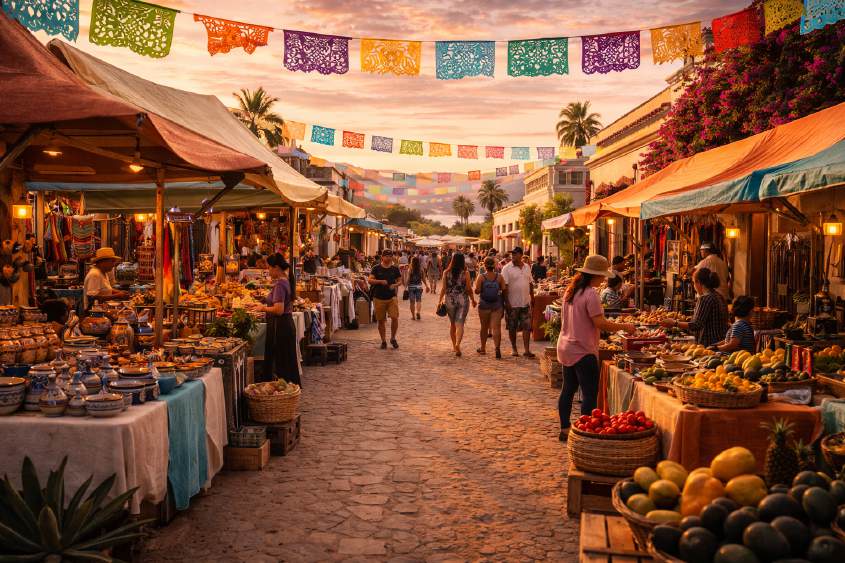
Less than an hour north of Cabo San Lucas, tucked between the Sierra de la Laguna mountains and the vast Pacific Ocean, lies a Pueblo Mágico that feels like a secret oasis. Todos Santos is not Cabo’s loud cousin—it’s the refined artist sipping mezcal in a sunlit courtyard, the surfer chasing waves at dawn, the traveler who lingers too long because the town has quietly cast its spell. Its cobblestone streets, framed by colorful colonial façades, whisper history while its thriving art galleries and farm-to-table restaurants pulse with new energy. Todos Santos isn’t just a stop—it’s a destination that surprises visitors with its balance of tradition and modern charm.
History & Culture
The story of Todos Santos begins in 1733, when Jesuit missionaries founded the Mission of Santa Rosa de Todos Santos. The town’s fertile valley, nourished by underground springs from the Sierra de la Laguna, soon became a thriving hub of sugarcane production. By the mid-19th century, eight mills were operating, and for nearly a hundred years the town’s economy revolved around sugar. Ruins of these mills can still be seen scattered around, crumbling reminders of an industry that once defined the town.
But like much of Baja California Sur, Todos Santos has endured cycles of prosperity and hardship. Epidemics, droughts, and even foreign invasions tested the town’s resilience. Yet from these struggles emerged a community that learned to reinvent itself. By the late 20th century, when the sugar industry had faded, artists began arriving—drawn by the light, the landscapes, and the tranquility. Today, Todos Santos thrives as a cultural capital, home to more than 20 art galleries and annual festivals that celebrate film, music, and gastronomy.
Of course, no conversation about Todos Santos can avoid the legend of the Hotel California. For decades, visitors believed it inspired the Eagles’ world-famous song. Though the band has denied it and even filed legal disputes, the myth persists, adding a layer of mystery to this already enigmatic town.
Getting There
Todos Santos is easily accessible yet far enough from the chaos of tourist hubs to maintain its relaxed vibe. From Cabo San Lucas, it’s about a 50-minute drive along Highway 19, a scenic coastal road that winds past beaches and desert landscapes. From La Paz, the capital of Baja California Sur, the drive takes roughly 90 minutes. Buses run regularly between these cities and Todos Santos, making it convenient for travelers without a car. Taxis and private transfers are also available, though renting a car offers the freedom to explore nearby beaches and villages at your own pace.
Where to Stay
One of the joys of Todos Santos is its variety of accommodations, from boutique hotels in restored colonial buildings to rustic RV parks and beachside casitas.
● Boutique Stays: The town center is dotted with charming boutique hotels like Hotel
California and beautifully restored guesthouses that immerse you in local history. Some, like Oystera’s adjoining boutique inn, combine modern luxury with heritage architecture.
● Casitas & Airbnb: Properties like Cien Palmas, run by local hosts, offer casitas
surrounded by lush gardens and a community vibe.
● For RV Travelers: El Litro RV Park provides basic hookups near town, while Cerritos
Beach allows beachfront camping (for a fee). Keep in mind that wild camping has become restricted in recent years due to misuse of public lands, so always follow “leave no trace” principles.
Whether you splurge on a boutique room or camp under the stars, the accommodations here share a common thread: tranquility.
What to See and Do
Todos Santos offers a blend of cultural, natural, and leisurely pursuits.
● Plaza de Armas & Historic Center: The main square, shaded by palms and anchored
by a simple kiosk, is perfect for people-watching. Nearby stands the Mission of Nuestra Señora del Pilar, consecrated in 1733, with its modest yet beautiful façade. The General Manuel Márquez de León Theater hosts cultural events, and the surrounding streets are filled with art galleries like Galería Logan and Galería de Todos Santos.
● Museo de Historia Regional: Housed in a 1920s building that once served as a
teacher’s school, this museum offers insights into local history, including indigenous heritage, colonial struggles, and the sugarcane era.
● Art Scene: Stroll the cobblestone streets and you’ll find more than 20 galleries
showcasing paintings, sculptures, and crafts. The town’s cultural energy has made it a haven for both Mexican and international artists.
● Beaches: Though Todos Santos itself sits a few kilometers inland, the coast is a short
drive away. Surfers flock to Playa Los Cerritos for consistent waves, while San Pedrito Beach offers tide pools and caves perfect for families. Punta Lobos is a working fisherman’s beach where you can watch boats return with the day’s catch—and perhaps spot sea lions lounging on the rocks.
● Hiking & Nature: Trails like the Puerto Viejo hike lead to secluded coves with turquoise
waters. Between January and March, migrating gray whales can often be spotted from coastal viewpoints. The nearby Sierra de la Laguna Biosphere Reserve offers opportunities for horseback riding, mountain biking, and hiking through a surprising mix of desert and pine forest.
Food to Try
If art defines the spirit of Todos Santos, food defines its heart. The town has become a gastronomic destination where street food and haute cuisine coexist harmoniously.
● Street Eats: Start your day with a steaming bowl of birria de res at the park in the town
center. Slow-roasted overnight, this hearty dish sells out by noon.
● Coffee Culture: Cafés like Doce Cuarenta roast their own beans and have become
community hubs where travelers and digital nomads linger over quiche and pastries. Taller 17 is another must-visit for its cinnamon rolls and cheddar scones.
● Farm-to-Table Dining: Restaurants like Jazamango Café and The Green Room
showcase the region’s fresh produce and seafood. The Green Room, especially, is famed for its sunsets, organic garden, and seafood dishes paired with mezcal cocktails. Loreto – The Cradle of the Californias
● Fine Dining: For a celebratory evening, Oystera serves oysters and seafood in a
beautifully restored colonial building, highlighting local delicacies like chocolate clams.
Practical Tips
● Weather: Todos Santos enjoys a mild climate, earning it the nickname “La Cuernavaca
of Baja California Sur.” Average temperatures hover around 22°C, dipping to 19°C in winter and rising to 28°C in summer. Rainfall is rare, concentrated in late summer and winter.
● Best Time to Visit: November to April offers cooler temperatures and whale-watching
opportunities. Summer can be hot but still pleasant due to ocean breezes.
● What to Pack: Comfortable walking shoes for cobblestone streets, light clothing, a hat,
and sunscreen for daytime explorations. If planning hikes, bring sturdy shoes and plenty of water.
● Souvenirs: Browse local galleries and artisan shops for unique crafts—handwoven
textiles, shell ornaments, and locally produced organic goods are great keepsakes.
● Stay Longer: Though many visit on a day trip from Cabo, staying two to three nights
allows you to soak in the town’s rhythm and explore its beaches at leisure.
Closing Reflection
Todos Santos is a place where time stretches. Mornings begin with the aroma of fresh coffee and the promise of art-filled streets. Afternoons drift into beachside siestas or rugged hikes, and evenings close with sunsets so dramatic they silence even the liveliest conversation. It’s a town that has reinvented itself time and again—mission outpost, sugarcane hub, artist colony—yet has always retained its soul.
For the traveler, Todos Santos offers more than a checklist of attractions; it offers a feeling. A blend of desert quiet, ocean vastness, and human creativity. You leave not just with photos but with a piece of its rhythm, a memory of a place where the desert meets the sea and whispers: stay a little longer.
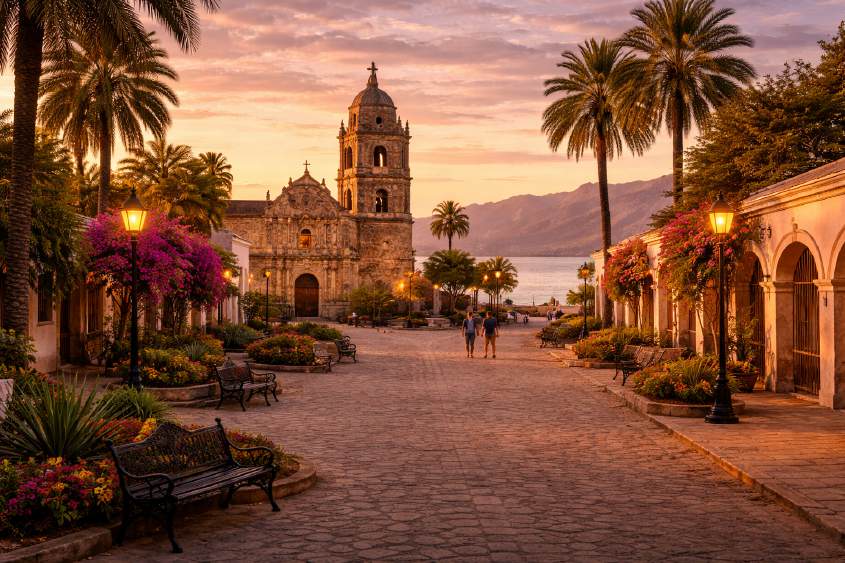
On the shores of the Sea of Cortez, framed by the rugged Sierra de la Giganta mountains, lies Loreto—a Pueblo Mágico where history and nature dance in harmony. Unlike the resort buzz of Cabo or the surf-chasing vibe of Todos Santos, Loreto whispers its magic more quietly. This is a place where fishermen cast their nets at dawn, families stroll the malecón at sunset, and travelers pause to marvel at a baroque mission that once launched the colonization of both Baja and Alta California. Here, turquoise waters lap at sandy beaches while whales breach in the distance. Loreto is not just a destination—it is a beginning, the birthplace of stories that shaped the entire peninsula.
History & Culture
Loreto holds a title few places in Baja can claim: it is the oldest human settlement on the peninsula, with evidence of habitation stretching back some 12,000 years. Indigenous groups like the Cochimí and Guaycura thrived here as nomadic hunters and gatherers, drawing sustenance from the abundant marine life and rugged canyons.
In 1697, Jesuit priest Juan María de Salvatierra established the Mission of Nuestra Señora de Loreto, marking the first successful Spanish settlement in Baja California. From this humble outpost began the great missionary expansion northward, a campaign that shaped the cultural and spiritual identity of both Baja and Alta California. Loreto remained the capital of the Californias until 1829, when hurricanes, epidemics, and shifting politics moved the capital to La Paz.
Walking through town today, visitors still feel the layers of history. Colonial architecture blends with modern resorts, while the cobblestone streets of the Plaza Salvatierra are lined with restored homes turned into shops, hotels, and cafés. At its heart stands the Mission of Nuestra Señora de Loreto, still called the “mother of all missions.” Inside, original images of the Virgin, Jesuit relics, and centuries-old paintings tell the story of devotion and endurance. Across the way, the Museum of the Jesuit Missions chronicles this history with artifacts and exhibits.
Getting There
Loreto is surprisingly accessible despite its tranquil vibe. The town is served by Loreto International Airport, with direct flights from U.S. cities like Los Angeles, Phoenix, and Dallas, as well as connections from major Mexican hubs. For those exploring Baja by car, Loreto lies along Highway 1, roughly 350 km north of La Paz and 700 km south of Tijuana. Buses also connect Loreto with nearby towns, though having your own car allows greater freedom to explore its beaches, mountains, and the surrounding islands.
Where to Stay
Loreto offers an appealing mix of accommodations that reflect its dual identity as a historic town and a nature hub.
● Colonial Charm: Stay in restored colonial-era hotels around the central plaza. Many
retain stone façades and wooden interiors that echo the town’s past.
● Resorts & Modern Comforts: South of town, in Nopoló, modern beachfront resorts
provide pools, golf courses, and luxury amenities while maintaining easy access to the sea.
● Casitas & Boutique Stays: Small guesthouses and Airbnb rentals give travelers an
intimate experience, often run by local families.
● Camping & Outdoors: Adventurous travelers can camp along certain beaches or near
the Sierra de la Giganta, but always check current regulations to ensure permitted access.
What to See and Do
Loreto is a paradise for both history lovers and outdoor adventurers.
● Plaza Salvatierra & Historic Center: Begin at the main square, with its shaded
benches and colonial buildings. Visit the Palacio de Gobierno, known as the Casa de Piedra, which now hosts art exhibitions.
● Mission of Nuestra Señora de Loreto: This baroque stone church is the crown jewel of
the town, a must-see for anyone interested in the region’s history.
● Museo de las Misiones Jesuitas: Adjacent to the mission, this museum houses
religious relics, colonial artifacts, and exhibits about missionary life.
● Mission of San Francisco Javier: Located 35 km inland, this mission is often called the
“Jewel of the Baja Missions.” Its intricate stone façade and baroque interior, with gilded wooden altars, make the journey worthwhile.
● The Malecón: A mile-long promenade along the Sea of Cortez, perfect for sunrise
walks, people-watching, or photographing fishermen returning with their catch.
● National Marine Park – Bahía de Loreto: This UNESCO World Heritage Site protects
over 2,000 square kilometers of islands, cliffs, and marine ecosystems. Take a boat tour to Coronado Island to see sea lions, or head to Isla Carmen for whale-watching between January and March. Snorkeling, diving, and kayaking reveal an underwater world rich with tropical fish, rays, and even the occasional dolphin.
● Sierra de la Giganta: Beyond the sea lies a mountain range filled with adventure. Hike
through canyons, spot wildlife like desert bighorn sheep, or visit caves adorned with prehistoric rock paintings over 10,000 years old.
Food to Try
Loreto’s cuisine celebrates both land and sea.
● Seafood: Fresh catches dominate menus—snapper, marlin, and the famous chocolate
clams, unique to the region. Many restaurants prepare them simply, grilled with garlic and butter.
● Traditional Dishes: Try machaca de res, a shredded dried beef dish often served with
eggs for breakfast.
● Street Snacks: Along walkways and markets, vendors sell shell ornaments, woven
crafts, and fresh seafood tostadas.
● Local Favorites: Restaurants near the malecón serve ceviche and fish tacos that pair
perfectly with a cold beer. Nopoló’s resort area also offers more refined dining
experiences, blending Mexican flavors with international techniques.
Practical Tips
● Weather: Loreto enjoys a desert climate with mild winters and hot summers. Average
annual temperatures hover around 22°C. Winters are perfect for exploring; summers, though hotter, are softened by sea breezes.
● Best Time to Visit: November to April is ideal for whale-watching and outdoor
adventures. Summer offers fewer crowds but hotter days.
● What to Pack: Lightweight clothing, swimwear, hiking shoes for mountain treks, and
snorkeling gear for marine exploration. Sunscreen and a hat are essential.
● Getting Around: The town itself is walkable, but a rental car or boat tour is necessary to
reach islands, beaches, and missions beyond the center.
● Souvenirs: Look for handcrafted items made of seashells, woven garments, and artwork
from local artisans.
Closing Reflection
Loreto is not a place you rush through—it’s a place you sink into. Here, history is carved in stone and whispered in mission bells, while nature unfolds in endless horizons of sea and desert. Standing on the malecón at sunrise, watching the Sea of Cortez light up in shades of gold, you understand why Loreto is called the cradle of the Californias. It is both a beginning and a continuation: the starting point of Jesuit missions, the birthplace of colonial Baja, and today, a sanctuary for travelers seeking authenticity.
To visit Loreto is to experience Mexico’s past and present intertwined—ancient cave paintings and baroque missions set against crystal waters and thriving reefs. It reminds you that some of the most extraordinary journeys don’t begin in bustling capitals or famous resorts, but in quiet towns where time has its own rhythm. Loreto is one such place: humble, enduring, unforgettable.
Santa Rosalía – A French Legacy by the Sea
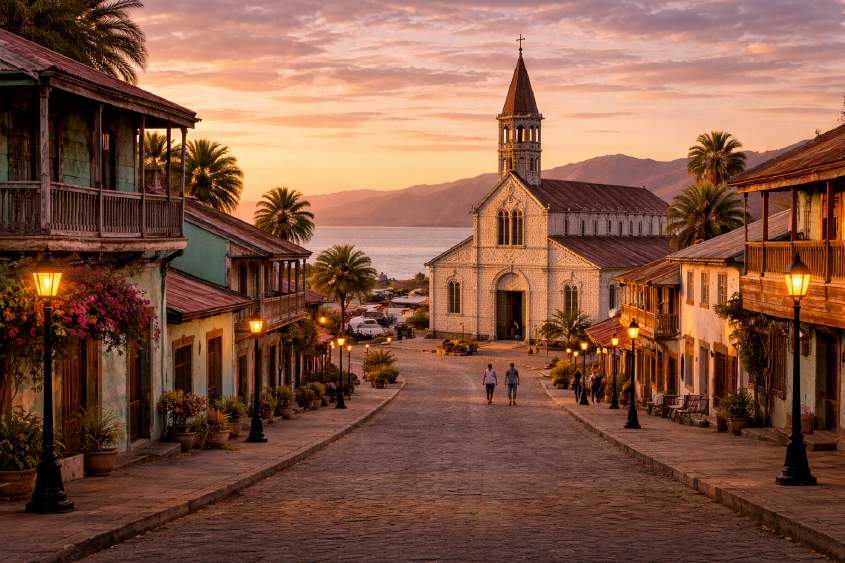
Along the rugged shores of the Sea of Cortez, where the desert meets the sea in sharp contrast, lies Santa Rosalía, a Pueblo Mágico unlike any other in Baja California Sur. While nearby towns echo with Spanish colonial charm, Santa Rosalía tells a different story—one of French miners, copper dreams, and industrial ingenuity. Its wooden houses, imported beams, and steel church designed by Gustave Eiffel give it a European flair rarely found in Mexico. And yet, this is no museum town. It is alive, shaped by its mining past, its French bakery aromas, and the warmth of its people. Santa Rosalía is not just a stop along the highway north; it is a living reminder that Baja’s history is far more diverse than most imagine.
History & Culture
Santa Rosalía’s story begins in 1705, when Jesuit priest Juan María Basaldúa established a small mission here. But it wasn’t until the late 19th century that the town truly came into its own. In 1885, as President Porfirio Díaz pushed Mexico toward modernization, French investors from the El Boleo Company struck a deal to exploit the area’s rich copper deposits. In exchange, they built the town, laying out streets, utilities, and even a road to Guaymas.
The result was a mining colony that looked more like Normandy than northern Baja. Wooden houses, French-designed offices, and industrial buildings sprang up in what had once been arid desert. At its peak, Santa Rosalía bustled with miners, engineers, and their families. Even today, walking its streets feels like stepping into another era.
One of its most enduring landmarks is the Santa Bárbara Church, designed in 1884 by none other than Gustave Eiffel, famed architect of the Eiffel Tower. Originally exhibited in Paris, the prefabricated steel church was shipped in pieces to Santa Rosalía and reassembled in 1887. Though modified over the years, it remains a striking symbol of the town’s unique identity.
Mining defined Santa Rosalía for decades. When the El Boleo Company ceased operations in 1954, the town faced decline. But rather than disappear, Santa Rosalía reinvented itself, embracing its heritage. Today, the Mining Museum tells the story of its industrial past, while festivals and cultural events keep its spirit vibrant.
Getting There
Santa Rosalía lies along Highway 1, the main artery that traverses Baja California. It’s about 200 km north of Loreto and 70 km south of San Ignacio, making it an essential stop for anyone driving the peninsula. The nearest airport is in Loreto, from which travelers can rent a car or take a bus north. Regular bus routes also connect Santa Rosalía with Mulegé, Guerrero Negro, and La Paz.
Where to Stay
Santa Rosalía’s accommodations reflect its character: modest, historic, and welcoming.
● Hotel Francés: Built in 1886 and rebuilt after a fire in 1920, this hotel is a living
museum. Its creaking floors, antique furniture, and historic charm transport guests back to the mining era.
● Local Inns & Guesthouses: Several small hotels and guesthouses offer budget-friendly
stays near the town center.
● Nearby Options: For those seeking beachfront comfort, towns like Mulegé (just north)
offer additional lodging choices along the Sea of Cortez.
What to See and Do
Despite its size, Santa Rosalía offers plenty to explore, much of it tied to its mining and French heritage.
● Santa Bárbara Church: The town’s crown jewel, this steel church designed by Gustave
Eiffel is a must-visit. Its austere yet elegant structure stands out against the Baja desert backdrop.
● Mining Museum (Museo de Historia Minera): Housed in the former El Boleo Company
headquarters, the museum features mining tools, photographs, and even one of the country’s earliest telephone systems.
● French Bakery (La Boulangerie): Founded in 1901, this bakery still produces pastries
and bread reminiscent of its European origins. Its peanut-topped muffins and rustic loaves are legendary among travelers.
● Town Walks: Wander the streets lined with wooden houses built from imported French
timber. Their creaking porches and colorful paint make for perfect photographs.
● Harbor & Marina: Down by the sea, the marina area is growing as a recreational space.
Stop at Padre Santo Brewery, a relatively new addition offering craft beer and a taste of modern Santa Rosalía.
Food to Try
Santa Rosalía’s food reflects both its Baja roots and its French influence.
● Panadería Francesa: Don’t miss the pastries, breads, and muffins at the French bakery.
This is culinary history in edible form.
● Seafood: Fresh catches from the Sea of Cortez—snapper, clams, shrimp—are prepared
simply in local eateries.
● Casual Eats: Street vendors sell tacos, hot dogs, and Mexican classics, reminding
visitors that this is still very much a Baja town despite its European flavor.
● Craft Beer: Padre Santo Brewery at the marina has quickly become a favorite, pairing
Baja cuisine with locally brewed beers.
Practical Tips
● Weather: Santa Rosalía has a desert climate—hot summers, mild winters. Plan for
average highs of 28–33°C in summer and lows around 12–18°C in winter.
● Best Time to Visit: Fall and spring bring the most comfortable weather, though winter is
also pleasant. Summer can be hot but manageable with ocean breezes.
● What to Pack: Lightweight clothing, sunscreen, and a hat for walking around town.
Comfortable shoes are recommended for exploring the uneven streets and museum
floors.
● Souvenirs: French-inspired baked goods, mining memorabilia, and photographs from
local artists make unique keepsakes.
Closing Reflection
Santa Rosalía is a town of contrasts. French wooden houses rise from Baja desert soil; a steel church gleams under a Mexican sun; the echoes of mining drills fade into the laughter of children in the plaza. It is a reminder that history is not one story, but many—woven together by chance, ambition, and resilience.
While other Pueblos Mágicos may dazzle with beaches or colonial plazas, Santa Rosalía captivates with its uniqueness. It asks you to slow down, to wander its streets, to taste its bread, to imagine the lives of miners and families who built a French village by the Sea of Cortez. You leave understanding that Baja California Sur is not defined by one culture or influence, but by the convergence of many. And that convergence—unexpected, enduring, deeply human—is the true magic of Santa Rosalía.