

Where Desert Meets the Sea: A Guide to Mexico’s Northwest Pueblos Mágic by Scott Paton - HTML preview
Download the book in PDF, ePub, Kindle for a complete version.
Chapter 3 Sonora
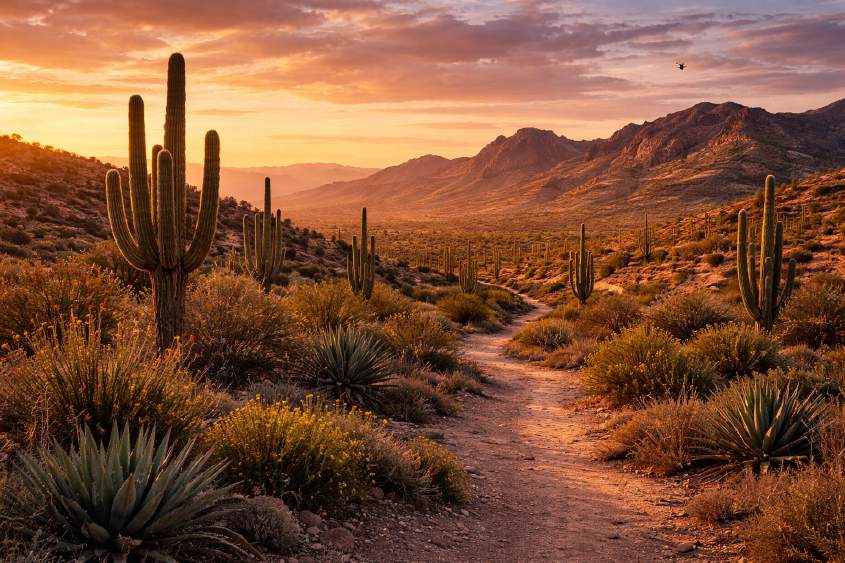
Sonora, the second-largest state in Mexico, stretches across majestic deserts, deep river valleys, and the Gulf of California coast. It's home to diverse landscapes: the eastern Sierra Madre Occidental mountains, central plains, and coastal zones—many of which are arid or semi-arid. The region has been inhabited by numerous Indigenous groups, including the Seris, Yaquis, Mayos, Cucapás, O’odham, and Opata, each contributing rich cultural legacies that live on today.
Early Colonial Era & Missions
Spanish incursions into Sonora were delayed due to its harsh terrain and resistance by indigenous communities. Jesuit missionaries, led by Father Eusebio Francisco Kino in the early 1600s, established vital missions across the region—facilitating colonization, promoting agriculture, and serving as cultural bridges.
Key Historical Milestones
● Labor and revolution: The iconic 1906 Cananea strike in Sonora marked the beginning
of significant labor activism in Mexico. In the 1920s, Sonora became a political powerhouse, producing the country’s first four presidents—Álvaro Obregón, Plutarco
Elías Calles, Adolfo de la Huerta, and Abelardo L. Rodríguez.
● Natural and economic strengths: Sonora’s economy has pivoted around agriculture,
livestock (notably beef), mining, and its strategic position along the U.S.–Mexico border. Its valuable natural heritage is showcased by the Pinacate and Gran Desierto de Altar Biosphere Reserve, a UNESCO World Heritage site since 2013.
Pueblos Mágicos: Preserving Sonora’s Living Heritage
What Are Pueblos Mágicos?
Launched in 2001 and revitalized in 2010, Mexico’s Pueblos Mágicos program celebrates towns that preserve their cultural, historical, and natural heritage—offering travelers “magical” experiences steeped in tradition, beauty, and storytelling.
Sonora’s Magical Towns
● Álamos: The first town in Sonora to receive the Pueblo Mágico designation. Formerly a
silver mining capital, its well-preserved colonial architecture and festivals now anchor its tourism appeal.
● Magdalena de Kino: The second Sonoran town to earn the title. Known for its Jesuit
mission origins, the legacy of Father Kino, and deep-rooted religious traditions, it encapsulates both cultural continuity and pilgrimage.
● Ures, and more recently San Carlos, have also joined the program—offering coastal
beauty (in San Carlos), historical significance, and living heritage to visitors seeking off-the-beaten-path treasures.
Álamos: La Ciudad de los Portales
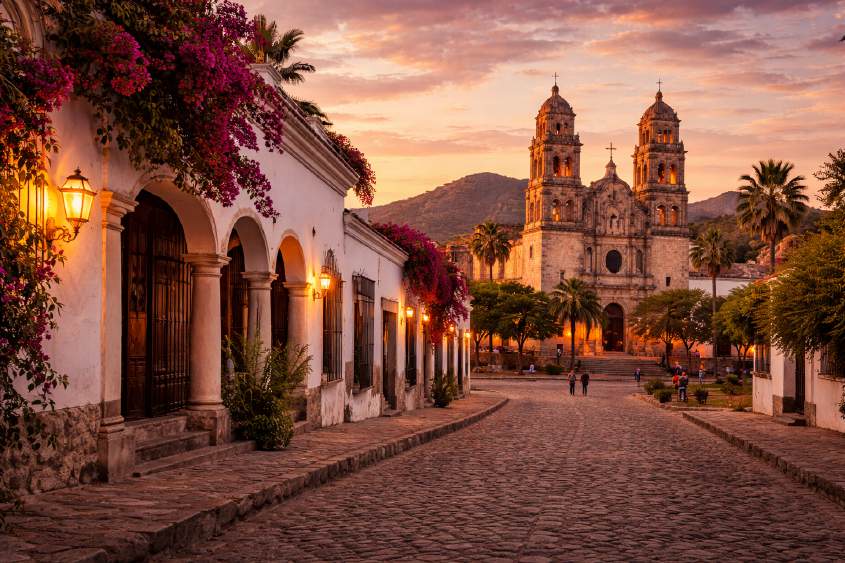
There’s something about Álamos that feels timeless, like stepping into a painting where every brushstroke is made of sunlit arches, wrought-iron balconies, and streets that whisper old stories. They call it the Ciudad de los Portales, the City of the Portals, and it doesn’t take long to see why. Colonial arcades shelter plazas and cobblestone alleys, while bougainvillea spills over whitewashed walls, softening the grandeur of baroque architecture. This Pueblo Mágico, tucked into the foothills of the Sierra Madre Occidental, has a charm that feels both elegant and deeply rooted in Sonoran tradition.
Visitors come for its beauty, but they stay for the atmosphere—a place where history lingers in every stone and where festivals, music, and food carry the pulse of the people.
History & Culture
Álamos’s story begins long before Spanish colonizers arrived. Indigenous groups thrived in this region, living in close connection with the land. That changed in the 17th century when silver was discovered in the surrounding hills. On December 8, 1682, Álamos was officially founded, and from then on, it became one of northern Mexico’s most important mining centers.
Silver wealth left its mark. Mansions with grand courtyards rose beside ornate churches, blending Spanish baroque with local craftsmanship. By the 18th century, Álamos was already known for its elegance, earning a reputation as the “most colonial city of the north.”
But Álamos is more than stone and silver. It’s also a place where history turned dramatic. In 1865, during the French Intervention, local fighters clashed with more than 300 French troops who tried to recruit indigenous people to rise against President Benito Juárez. Although Álamos lost that battle, its resilience became part of its character.
Culture continues to breathe here. Walk through town and you’ll hear the strum of guitars, smell fresh-baked pan de tres leches, or stumble upon artisans shaping clay. The Museo Costumbrista de Sonora preserves traditions through exhibits, workshops, and performances, while festivals such as the Festival Alfonso Ortiz Tirado (FAOT) fill the streets with opera, folk music, and international art.
Getting There
Álamos sits in southeastern Sonora, close to the borders with Sinaloa and Chihuahua. It’s about four and a half hours by car from Hermosillo, the state capital, or a two-hour drive from Ciudad Obregón, which has a regional airport with flights from major Mexican cities.
By bus, you can connect through Navojoa and catch a local line to Álamos. Taxis and colectivos are available for short rides within the town, but the historic center is best explored on foot. The streets are narrow, cobblestoned, and perfect for wandering.
Where to Stay
Álamos offers everything from simple guesthouses to boutique luxury.
● Hacienda de los Santos – Perhaps the crown jewel, this restored 18th-century estate
once belonged to a silver baron. Today it is a boutique hotel that feels like living inside a museum. Think hand-carved furniture, antique religious art, frescoes, and fireplaces in nearly every room. The property also has a collection of vintage airplanes, which makes for a quirky contrast to its colonial elegance.
● Hotel Los Portales – A more affordable yet charming option, located right off the Plaza
de Armas, offering colonial-style rooms with balconies overlooking the square.
● Local Guesthouses & Airbnb – For travelers who want to experience everyday
Álamos, guesthouses run by local families offer warm hospitality, homemade breakfasts, and insider tips on where to eat and what to see.
No matter where you stay, the town is compact—you’re never far from the main plaza.
What to See and Do
Álamos is best discovered slowly, wandering through streets where history and daily life overlap.
● Parroquia de la Purísima Concepción
Built between 1757 and 1804, this stone church is Álamos’s centerpiece. Its baroque and neoclassical facade is impressive, but inside you’ll find soaring arches, an ornate altar, and side chapels adorned with cantera stone. The bells ring with a solemn beauty, reminding everyone that faith shaped this town as much as silver did.
● Plaza de Armas
Surrounded by arcaded buildings, wrought-iron balconies, and shaded by centuries-old trees, the plaza is the living heart of Álamos. Sit on a forged-iron bench, buy an ice cream, and watch life unfold—children playing, couples strolling, street vendors calling out their offerings.
● Palacio Municipal
Constructed in 1899, its fortress-like design echoes medieval Spain. Today it still functions as the town’s administrative building but doubles as an architectural attraction.
● Museo Costumbrista de Sonora
More than a museum, it’s a cultural hub. Alongside exhibits about Sonoran traditions, it hosts theater, dance, and art workshops. You might even join a ceramic-making class and take home your own handmade souvenir.
● Museo María Félix
Álamos is the birthplace of María Félix, Mexico’s legendary film diva. Her museum houses portraits, costumes, and personal items that reveal her life and career. Walking through its rooms, you can almost hear the echoes of her iconic screen presence.
● Callejón del Beso
Yes, Álamos has its own version of Guanajuato’s famous kissing alley. Narrow and paved in stone, it carries its own romantic legends. Tradition says couples must share a kiss here for good luck.
● Casa de la Moneda
This mint, founded in 1828, once produced copper, silver, and gold coins—even striking coins for the U.S. and Europe. While it now serves as a secondary school, its stately architecture can still be admired from outside.
● Cerro del Perico
For the best panoramic views, hike up this hill overlooking the town. The sunset here bathes Álamos in golden light, highlighting red-tiled roofs and the church towers.
● La Aduana
Just 8 km west, this semi-abandoned mining settlement offers a ghostly glimpse into the silver boom days. Ruins of old mines, the Iglesia de la Virgen de la Balvanera, and local legends create an atmosphere both haunting and fascinating.
● Birdwatching in the Sierra de Álamos
The surrounding Sierra is a paradise for bird lovers. Trails wind through subtropical forests where over 200 bird species have been recorded. Guided tours introduce visitors to this hidden ecological richness.
Food to Try
Álamos has a culinary soul that blends Sonoran staples with sweet surprises.
● Pan de Álamos – Local bakeries serve fluffy rolls and sweet breads, often drizzled with
honey or filled with cinnamon. Don’t miss the famous pan de tres leches, moist and rich.
● Flan de coco – Creamy, tropical, and perfect after a hearty meal.
● Chiltepin-based dishes – The fiery chiltepin pepper, known as the “oro rojo de Sonora,”
is essential in Álamos cuisine. Try it in salsas, marinades, or even in costillas a la chiltepín (pork ribs marinated with chiltepin paste).
● Carne Asada – No Sonoran town is complete without it. Expect smoky, tender beef
served with tortillas de harina, beans, and guacamole.
● Jamoncillos & dulces regionales – Fudge-like milk candies and other sweets make
the perfect souvenir.
● Café de olla – Aromatic coffee spiced with cinnamon, piloncillo, and cloves. Ideal for
cool evenings in the plaza.
Practical Tips
● Weather: Álamos has a semi-arid climate with warm days and cooler nights. Winter is
mild and pleasant, while summers can be hot. Pack light clothing, but bring a sweater for evenings.
● Best Time to Visit: January is especially lively with the Festival Alfonso Ortiz Tirado,
when music and art take over the streets. Spring and fall offer comfortable temperatures
and fewer crowds.
● Shoes: Bring sturdy, comfortable shoes—the cobblestones are beautiful but unforgiving
on delicate sandals.
● Souvenirs: Look for handwoven textiles, pottery from local workshops, and chiltepin
sauces.
● Cash: While some hotels and restaurants accept cards, small shops and markets often
prefer cash.
Closing Reflection
Álamos is more than a destination; it’s an immersion into layers of Mexico’s identity. Silver mines once made it wealthy, but it’s the artistry of its people, the music in its plazas, and the warmth of its traditions that make it truly rich today.
Strolling under portales as twilight settles, you may feel the hush of centuries folding into the present. The bells of La Purísima ring, a guitar strums from a doorway, and the scent of chiltepin salsa drifts from a family kitchen. Álamos reminds you that magic isn’t always about spectacle—it’s about how a place can hold you, heart and imagination, in its embrace.
This is why Álamos is unforgettable. Once you’ve wandered its portals, you carry a piece of its magic with you, wherever you go.
Magdalena de Kino: Tierra del Padre Kino
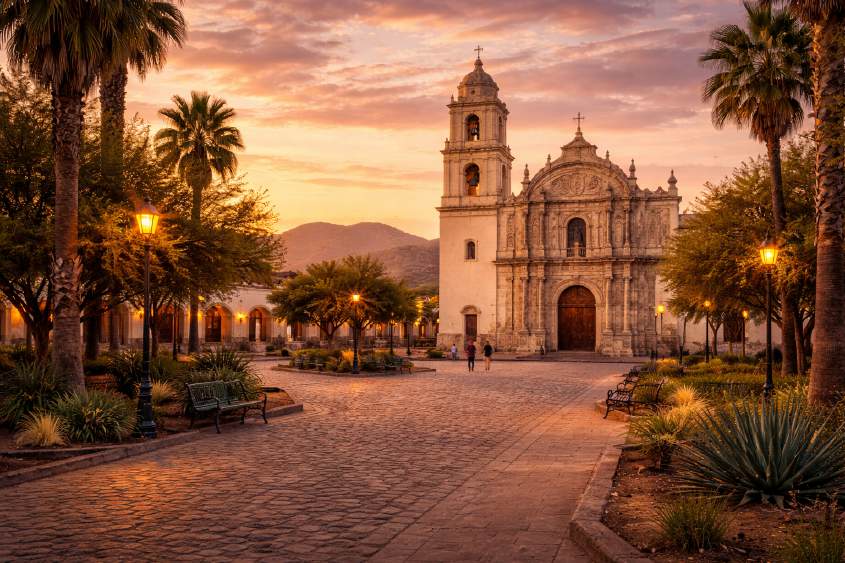
Drive north through the Sonoran desert, and eventually the landscape softens into rolling hills, orchards of membrillo, and a town that feels suspended between devotion and history. This is Magdalena de Kino, one of Sonora’s Pueblo Mágicos, and the kind of place where faith, memory, and culture intertwine so closely you can’t separate one from the other.
The cobblestone streets, shaded portales, and centuries-old chapels are reason enough to visit. But Magdalena also offers something deeper: a living connection to the Jesuit missionary who gave the town his name, to a saint venerated across northern Mexico, and to a political figure who still inspires both mourning and hope. Few towns carry their stories with such intimacy.
History & Culture
Magdalena’s origins reach back to 1687, when Eusebio Francisco Kino, a Jesuit missionary from what is now Italy, founded the Misión de Santa María Magdalena de Buquibaba. His influence was far more than religious. He introduced livestock, new crops, and irrigation methods, helping local communities like the Tohono O’odham and Pima Alto adapt to changing times. Today his remains rest in a crypt near the town plaza, a place of reverence for pilgrims and historians alike.
But the spiritual identity of Magdalena also belongs to San Francisco Javier, whose image is housed in the Templo de Santa María Magdalena. Thousands of devotees come each year, especially during the annual Fiestas de San Francisco in early October, when the town swells with pilgrims, dancers, food stalls, and music. Faith here is not only about prayer—it is celebration, resilience, and community.
Magdalena also holds more recent memories. It is the birthplace of Luis Donaldo Colosio, the presidential candidate whose assassination in 1994 left Mexico stunned. His mausoleum is now a place of reflection, a reminder of hopes interrupted but not forgotten.
Every corner of Magdalena carries pieces of these layered identities: colonial mission town, pilgrimage site, and modern historical landmark.
Getting There
Magdalena de Kino lies just 80 kilometers south of the U.S. border at Nogales and about two hours north of Hermosillo. This makes it an easy stop for travelers heading between Arizona and central Sonora.
● By car: Highway 15 connects Magdalena to Nogales and Hermosillo. The drive is
straightforward and scenic.
● By bus: Regular service runs between Hermosillo, Nogales, and Magdalena.
● On foot: Once you’re here, walking is the best way to experience its plazas, chapels,
and markets.
Where to Stay
Options in Magdalena range from simple inns to boutique hotels:
● Hotel El Toro – A local favorite, known for its warm hospitality and pool fed by spring
water.
● Boutique hotels – Some historic homes have been converted into stylish stays with
original wooden floors, antique furniture, and jacuzzis tucked into colonial courtyards. Each room feels unique, more like a home than a hotel.
● Guesthouses – Family-run options near the plaza let you experience Magdalena
through the lens of daily life, complete with homemade breakfasts.
What to See and Do
Magdalena may be compact, but it’s full of places where history and culture resonate.
● Templo de Santa María Magdalena
Built in 1832, this church houses the revered statue of San Francisco Javier. Pilgrims tie ribbons to his altar, asking for health, love, or prosperity. The air here hums with devotion.
● Capilla de San Francisco Javier
Beside the main temple, this chapel holds more images of saints and draws countless offerings from visitors around the world.
● Crypt of Father Kino
Beneath a modest structure near the plaza rest the remains of Padre Kino, rediscovered in the 1960s. A mural above depicts the missions he founded across Sonora and Arizona. Standing here, you sense how one person’s legacy still shapes this entire region.
● Palacio Municipal
This 20th-century building features vibrant murals narrating Sonora’s history—revolutions, leaders, and the cultural strength of the people.
● Casa de Miguel Latz
A mansion with a fabled garden and rumored underground tunnels said to connect different parts of town. Local legends insist the tunnels were used for secret escapes.
● Mausoleum of Luis Donaldo Colosio and Diana Laura
A site of national memory. Visitors bring flowers and stand quietly, reflecting on a political tragedy that still resonates.
● Rancho El Peñasco
On the outskirts of town, this ranch carries curious modern history—it once hosted the Subcomandante Marcos during a 2006 visit. The house preserves echoes of those days, now woven into Magdalena’s layered story.
● Los Portales
The covered arcades near the plaza are perfect for strolling, shopping for crafts, or sipping coffee while watching daily life pass by.
Food to Try
Magdalena’s cuisine reflects Sonoran tradition with local twists:
● Carne Asada & Machaca – Grilled beef and dried shredded meat, staples of northern
Mexico.
● Cajeta de Membrillo – The town’s emblematic fruit is the quince (membrillo), brought
here by Padre Kino. It’s transformed into jams, pastes, and candies, and celebrated each August during the Feria del Membrillo.
● Coyotas – Large, flaky pastries filled with brown sugar (piloncillo).
● Pozole & Caldo de Queso – Comforting dishes served in local fondas.
● Bacanora cocktails – Sonora’s regional spirit, distilled from agave, often mixed with
lime, ginger, or even jalapeño in creative drinks.
Practical Tips
● Best Time to Visit: October for the Fiestas de San Francisco, or late summer for the
Feria del Membrillo.
● Weather: Magdalena has hot summers and mild winters. Bring light clothes, but carry a
sweater for evenings.
● Walking Shoes: Streets are cobblestoned; wear comfortable shoes.
● Souvenirs: Look for quince products, artisanal textiles, and religious tokens tied to San
Francisco Javier.
● Border Travelers: If coming from Arizona, carry proper documents; the Nogales
crossing is the closest.
Closing Reflection
Magdalena de Kino is a place where memory and devotion intertwine. You can walk from the crypt of a Jesuit missionary to the altar of a beloved saint, then to the mausoleum of a modern political figure—all within a few blocks. Each stop reveals another layer of Mexico’s story: faith, resilience, tragedy, and hope.
As dusk settles over the plaza, the bells of Santa María Magdalena echo while pilgrims light candles outside. Vendors sell cajeta de membrillo, children chase each other under the portales, and musicians tune guitars. Life here is both everyday and extraordinary, rooted in history yet alive with present joy.
Magdalena doesn’t just invite you to visit—it invites you to feel, to reflect, and to remember. That’s the true magic of this Pueblo Mágico.
Ures: El Pueblo de los Corazones
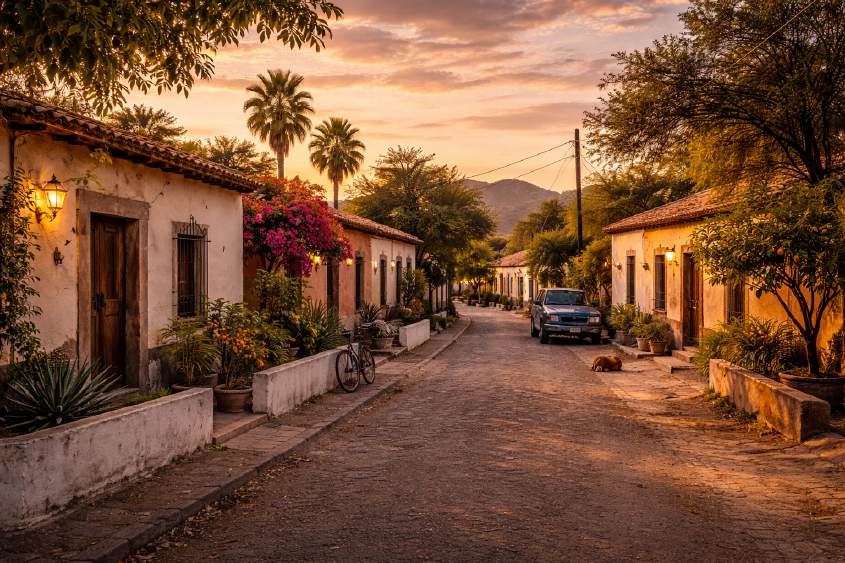
There are towns that win you over with grandeur, and then there are towns like Ures, whose magic lies in quiet dignity. Nestled along the Río Sonora, surrounded by citrus groves and ceiba trees that have shaded generations, Ures carries titles that speak volumes: Primera Capital de Sonora, Atenas Sonorense, and most poetically, Pueblo de los Corazones.
Walking its plazas, you catch the scent of azahar from orange blossoms, hear stories of battles fought on its soil, and taste sweets that melt with the simplicity of milk and sugar. Ures is not a place that shouts its history; it lets you sit with it, gently, until you realize you’ve stepped into the very heart of Sonora.
History & Culture
Long before colonists arrived, the valley was home to the tribu de los Uris, a peaceful people who welcomed Jesuit missionaries in the 17th century. By 1636, Ures became one of the earliest mission settlements in Sonora. Later, explorers like Álvar Núñez Cabeza de Vaca passed through—healing, learning, and, according to legend, receiving a tribute of 500 deer hearts from locals in gratitude. That gesture earned Ures its most enduring name: El Pueblo de los Corazones.
In 1838, Ures was officially founded as a Spanish-style town, and by the mid-19th century it rose to political prominence, serving as capital of Sonora three times. Its plazas filled with debates, its theaters echoed with plays, and its schools attracted some of the brightest teachers in Mexico. This cultural flowering earned Ures the nickname Atenas Sonorense.
But Ures also carries a heroic title. In 1866, during the French Intervention, local militias ambushed imperial forces in the plains of Guadalupe. Their victory, achieved through ingenuity more than weaponry, led Benito Juárez himself to recognize Ures as Heroica.
That mix of intellect, artistry, and bravery still defines the town today.
Getting There
Ures is located just one hour northeast of Hermosillo, making it an easy day trip or weekend escape.
● By car: From Hermosillo, take Highway 14 east, following the scenic Río Sonora route.
● By bus: Regional buses connect Ures with Hermosillo and nearby towns.
● On foot: The historic center is compact; most attractions cluster around the Plaza
Zaragoza.
Where to Stay
Ures is more about charm than luxury, but that’s part of its appeal.
● Boutique Guesthouses – Old colonial homes converted into cozy lodgings, often with
inner courtyards and traditional furniture.
● Local Inns – Family-run hotels provide basic comfort, warm hospitality, and plenty of
local tips.
● Campestre rentals – Some visitors choose countryside stays near citrus groves, ideal
for those who want quiet evenings under starry skies.
Hermosillo, just an hour away, offers larger hotels if needed—but staying in Ures means waking up to church bells and the fragrance of orange trees.
What to See and Do
● Plaza Zaragoza
The town’s central square is a leafy refuge where families gather and travelers linger. The scent of orange blossoms fills the air, especially in spring.
● Iglesia de San Miguel Arcángel
A mission-era church standing tall by the plaza. Its history dates back centuries, and inside, light spills across altars with the quiet solemnity of faith carried through generations.
● Museo Regional de Ures
Located in a former colonial house, this small but rich museum narrates the town’s history—from Cabeza de Vaca’s passage to the French Intervention battles. Its murals vividly depict Sonoran resistance and resilience.
● Teatro Jesús Ochoa
Named after Ures’s most famous son, actor Jesús Ochoa, this historic theater is being restored into a cultural hub. It speaks to the town’s deep artistic roots.
● Historic Residences
Wander the streets and you’ll find houses with thick adobe walls, wooden doors, and courtyards that whisper of Ures’s days as Sonora’s capital.
● Molino Antiguo (Old Mill)
Currently under reconstruction, this mill is set to reopen as another museum, further cementing Ures’s role as a cultural destination.
● Ruta del Río Sonora
Beyond the town itself, Ures is part of a scenic river route dotted with small ranches, citrus orchards, and hidden swimming holes.
Food to Try
Ures has a sweet tooth, and visitors should come prepared.
● Jamoncillos – The town’s signature candy, made from milk and sugar, slowly stirred
until it thickens into fudge-like perfection. Variations include chocolate, nut, or plain. Families have been making them for generations.
● Coyotas – Large, thin pastries filled with piloncillo. Though more common in Hermosillo,
Ures adds its own touch.
● Caldo de Queso – A comforting cheese soup, perfect on cooler evenings.
● Carne Asada & Pozole – Local staples that never disappoint.
● Chimichangas (or Chivichangas) – Deep-fried tortillas stuffed with beans, cheese, or
meat, served with fresh lettuce and avocado.
Pair your meal with aguas frescas of citrus or a taste of bacanora, Sonora’s fiery agave spirit.
Practical Tips
● Best Time to Visit: Spring (March–April) is magical, when the orange blossoms
perfume the entire town. Winter is mild and pleasant, while summers can be hot.
● Shoes: Cobblestones and uneven paths call for sturdy, comfortable footwear.
● Souvenirs: Take home boxes of Jamoncillos, chiltepin sauces, and local handicrafts.
● Festivities: Look out for Semana Santa traditions with fariseos (masked dancers), an
unforgettable glimpse of Yaqui heritage.
● Cash: Bring pesos—smaller shops and food stands rarely accept cards.
Closing Reflection
Ures is proof that magic doesn’t always need grandeur. Sometimes, it’s found in a plaza shaded by century-old ceibas, in the soft crumble of a jamoncillo, or in the quiet pride of townspeople who know they live in a place where Sonora itself was born.
This is a pueblo that has been capital, battlefield, classroom, and cultural salon—and yet, it wears its history lightly. Visitors come curious, but they leave touched by its warmth, its resilience, and above all, its heart.
After all, Ures isn’t called El Pueblo de los Corazones by accident. Sit on a bench in Plaza Zaragoza as evening falls, and you’ll feel it—the steady heartbeat of Sonora itself.