

Beyond the Volcano’s Shadow: Journeys Through Mexico’s Southwest Pueblos Mágicos by Scott Paton - HTML preview
Download the book in PDF, ePub, Kindle for a complete version.
Chapter 3: Michoacán
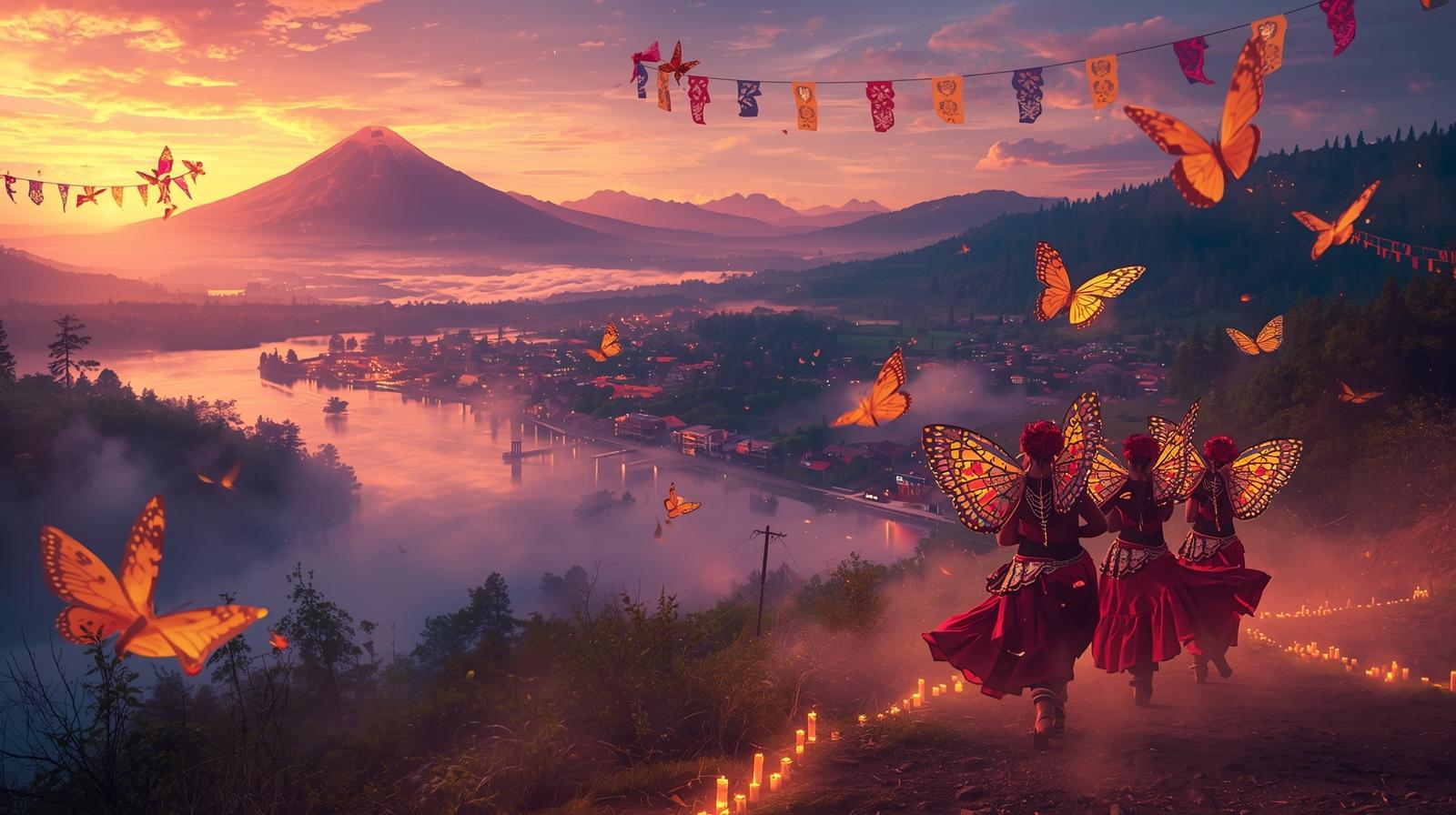
They say Michoacán was carved by fire and memory—and they’re not wrong. Beneath its serene lakes and cobblestone streets lies a land forged by volcanoes, rebellions, and saints who sometimes forgot to be holy. This isn’t the Mexico of postcards. It’s wilder, older, and more unpredictable—a place where Purépecha spirits still whisper through pine forests, where monarch butterflies return like clockwork every winter, and where every fiesta feels half sacred, half dangerous.
Here, magic isn’t just in the name—it’s in the air thick with copal smoke, in the stories murmured over mezcal, in the church bells that ring even when no one’s pulling the rope. Michoacán’s Pueblos Mágicos don’t sparkle; they burn. Are you ready to see the side of Mexico that refuses to stay quiet?
Pátzcuaro, Michoacán — Where Souls Come Home

There’s a hush that settles over Pátzcuaro just before dawn. The cobblestones are slick with dew, and the lake glows faintly under a watercolor sky. Then, from somewhere across the water, a single bell tolls. If you’ve ever wondered where Mexico hides its heart, this might be it. Pátzcuaro isn’t just a town—it’s a mirror, reflecting both life and death with uncanny grace. And when the candles of Día de Muertos flicker on the water, you realize: this place doesn’t fear the end; it celebrates the eternal return.
History & Culture
Long before the Spaniards arrived, the Purepecha people (often called Tarascans) built a thriving world around Lake Pátzcuaro. They believed it was the doorway between the living and the dead, a lake so sacred that even the gods paused to admire their reflection. When Vasco de Quiroga came in the 1500s—a Spanish bishop with a utopian dream—he didn’t just convert souls; he transformed the town into a center of art, education, and craft. Locals still call him Tata Vasco, their “beloved father,” and his vision of cooperative craft villages endures in every nearby pueblo.
Walk through the Plaza Grande, and you can almost hear centuries whisper. The adobe walls breathe history; wooden balconies sag with charm. Women in embroidered rebozos sell handmade pottery and wooden masks while old men sip atole beneath the arches. Pátzcuaro wears its past openly, like the layers of lacquer on a traditional tray—each generation adding a gleam.
Getting There
Pátzcuaro lies about an hour’s drive from Morelia, Michoacán’s capital. Buses run frequently from Morelia’s central terminal, and taxis or colectivos connect smaller lakeside villages. If you’re driving, the 15D highway is smooth and scenic, winding through pine-clad hills before descending into the lake basin. Bring a camera—you’ll want to stop for views.
Where to Stay
Accommodations here have personality. For colonial charm, Hotel Mansión Iturbe overlooks the plaza with creaky floors and candlelit courtyards that feel straight out of a 17th-century romance. Budget travelers find warmth at Casa del Refugio, where terracotta walls and embroidered pillows feel like home. If boutique is your style, Hotel Boutique Casa Encantada offers fireplaces, hand-woven textiles, and breakfasts that smell of cinnamon and orange peel.
What to See and Do
Start at Plaza Vasco de Quiroga, one of Mexico’s most beautiful squares—no grand cathedral in the middle, just open space for people to meet and music to drift. Visit the Basilica de Nuestra Señora de la Salud, a graceful church where Purepecha traditions blend with Catholic devotion. Then wander to Casa de los Once Patios, once a convent, now a maze of artisan workshops where you can watch lacquerware, copper, and textiles come to life under steady hands.
Take a boat from the dock to Isla de Janitzio, that steep island rising from the lake like a guardian. The climb to the statue of José María Morelos is worth every breathless step—inside, murals spiral upward, telling Mexico’s story in color and courage. If you come for Día de Muertos, the night transforms: canoes glide across the dark water carrying marigolds and candles, while families keep vigil among tombs covered in petals. It’s haunting, holy, and heartbreakingly human.
Food to Try
Pátzcuaro feeds both stomach and soul. Try corundas, pyramid-shaped tamales wrapped in corn leaves and served with cream and salsa. Or uchepos, sweet corn tamales best with melted cheese. Don’t miss pescado blanco, a delicate fish from the lake, usually fried and served with lime. For dessert, nieve de pasta—a local ice cream flavored with cinnamon, milk, and almonds—melts like nostalgia on the tongue. Pair it with charanda, Michoacán’s own sugarcane spirit, and you’ll understand why locals linger over every meal.
Practical Tips
● Best time to visit: Late October to early November for Día de Muertos, or spring for
cool, clear days.
● Weather: Mild but unpredictable—bring layers and a light jacket.
● Footwear: Cobblestones are charming but uneven; sturdy shoes are your friend.
● Souvenirs: Hand-lacquered trays, Purepecha textiles, wooden masks, and catrinas
crafted in nearby Capula.
● Etiquette: Ask before photographing altars or ceremonies during Día de Muertos—it’s
sacred, not spectacle.
Closing Reflection
Pátzcuaro lingers in you. Maybe it’s the scent of copal smoke curling through the air, or the way candles flicker on the lake like stars fallen to earth. Maybe it’s how life and death hold hands here, unafraid. You leave promising to return, knowing you don’t really have a choice—because places like this don’t let go easily. They call you back, softly, like a bell across the water.
Tlalpujahua, Michoacán – The Village That Glitters All
Year
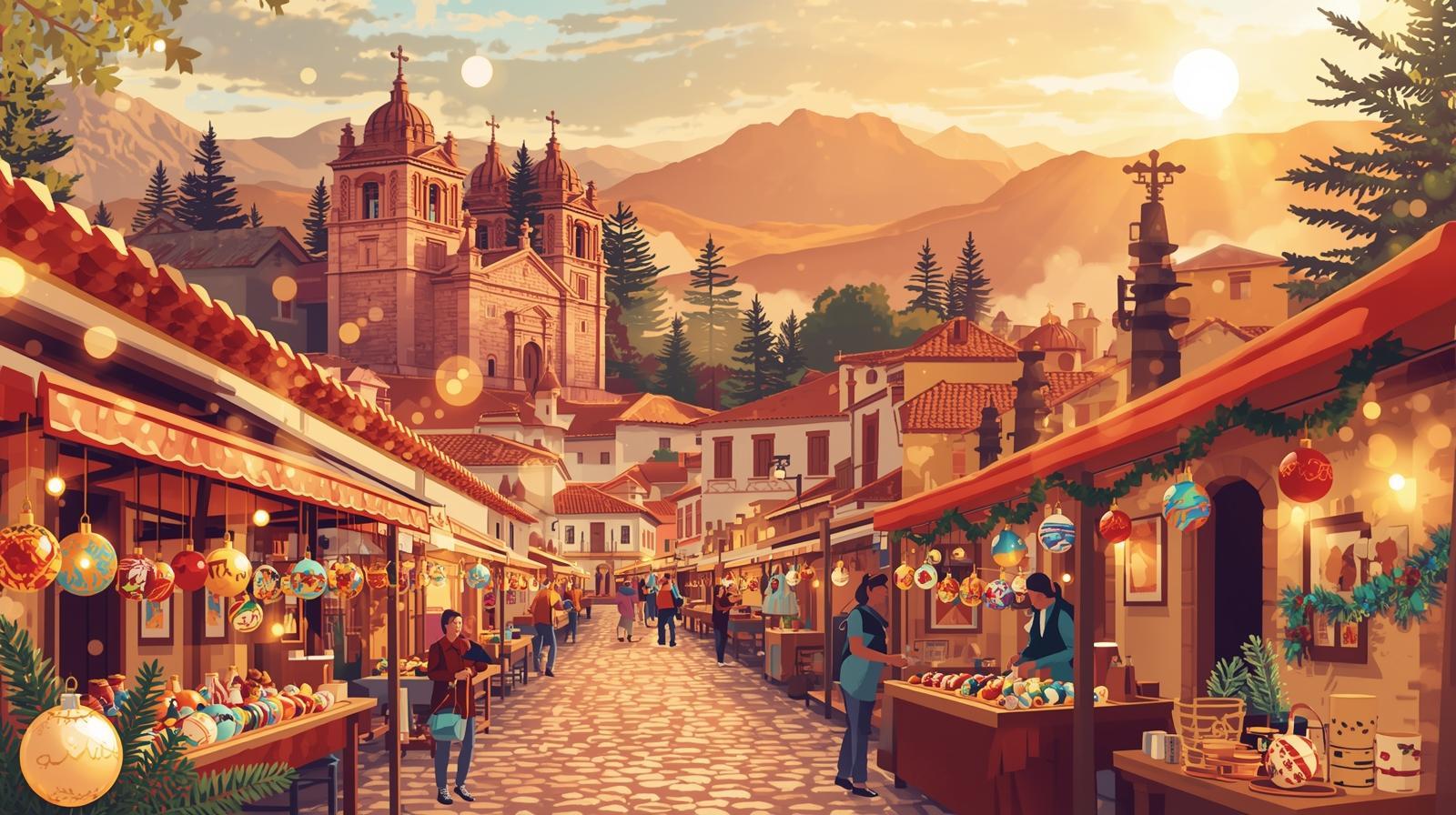
Imagine waking up to church bells echoing through misty hills, with golden sunlight spilling over terracotta rooftops. In Tlalpujahua, mornings shimmer—literally. This mountain village is world-famous for its hand-blown Christmas ornaments, crafted by artisans who work year-round to capture the magic of the season. It’s as if the town itself decided that joy shouldn’t be limited to December.
But beneath the sparkle lies a history shaped by gold, resilience, and rebirth. How did a mining town reborn from tragedy turn into Mexico’s Christmas capital? Let’s wander through its cobblestone streets and find out.
History & Culture
Tlalpujahua’s story begins deep underground. Founded in the 16th century during the Spanish colonial period, it grew prosperous from the Dos Estrellas Mine—one of the most productive gold and silver mines in Latin America. The hills around town glittered not only with metal but also with dreams of fortune.
Yet fate had other plans. In 1937, a massive landslide from the mining tailings buried part of the town, taking hundreds of lives. Locals still speak of that day in hushed tones. But like a phoenix, Tlalpujahua rose again—this time not from gold, but from glass.
In the 1960s, a local craftsman named Joaquín Muñoz Orta returned from Chicago, where he’d learned the art of making Christmas ornaments. He started teaching others, and soon nearly every household had a workshop. From tragedy bloomed tradition. Today, over 400 families craft hand-painted glass spheres, transforming Tlalpujahua into a permanent celebration of light and color.
Beyond its ornaments, the town’s cultural calendar glows with devotion. During the Festival de la Esfera (held from October to December), streets fill with twinkling stalls, music, and the scent of pine and cinnamon. There’s a sense of pride here—a quiet understanding that beauty, like faith, can be handmade.
Getting There
Tlalpujahua is tucked in the northeastern mountains of Michoacán, close to the border with the State of Mexico. From Mexico City, it’s roughly a three-hour drive (about 170 km), following the Toluca–Atlacomulco route. Buses leave from Mexico City’s Terminal Poniente (Observatorio) to Atlacomulco, where you can catch a local taxi or combi (shared van) for the final stretch.
If you’re coming from Morelia, expect a scenic two-hour drive through forested hills and picturesque valleys. Roads are well-maintained, but winding—perfect for those who enjoy mountain views and roadside cafés.
Where to Stay
Tlalpujahua’s charm extends to its accommodations—think rustic, cozy, and full of character.
● Hotel Plaza Mayor: Right in the heart of town, offering colonial-style rooms and
balconies overlooking the main plaza.
● Posada Real de Tlalpujahua: A boutique option set in a restored mansion with
courtyards and murals that tell local stories.
● Cabañas del Carmen: For those who prefer nature, these wooden cabins just outside
town come with fireplaces and forest trails.
Most hotels are small and family-run, which means personal touches—like homemade hot chocolate waiting for you after a chilly evening walk.
What to See and Do Start at Plaza Mayor, where locals gather by the fountain beneath the watchful gaze of the Santuario del Carmen, a pink-stoned church that dominates the skyline. Inside, golden altarpieces shimmer under soft light, echoing the town’s mining past.
Stroll down Calle Hidalgo, where ornament shops line the street like candy displays. You’ll see artisans blowing glass, painting delicate snowflakes, and hanging glittering spheres to dry. If you visit between October and December, the Feria de la Esfera turns this experience into a full-blown festival—music, parades, lights, and a thousand colors competing for your attention.
History lovers shouldn’t miss the Museo Tecnológico Minero Siglo XIX, located at the site of the old Dos Estrellas mine. Walking through its tunnels and exhibits feels like stepping back in time—an eerie, fascinating reminder of how the town’s wealth was literally dug from beneath its feet.
If you crave nature, the surrounding forests offer hiking trails and viewpoints like El Carmen Hill, where a lookout rewards you with panoramic views of the red-roofed town nestled in pine valleys. In winter, you can take a short trip to El Rosario Monarch Butterfly Sanctuary, one of the most magical natural spectacles in Mexico.
Food to Try
Tlalpujahua’s mountain air makes you hungry fast—and the town doesn’t disappoint.
● Carnitas and barbacoa reign supreme on weekends, served with handmade tortillas
and salsas that pack a gentle Michoacán kick.
● Atole de pinole (a warm corn-and-sugar drink) pairs perfectly with a sweet pan de
pulque from the local bakery.
● Don’t miss enchiladas mineras, a nod to the town’s mining roots, or the seasonal
rompope artesanal, a creamy eggnog made by local nuns.
For dessert, treat yourself to a churro sphere—a sweet nod to the town’s most famous product.
Practical Tips
● Best time to visit: October to December for the Christmas ornament fair and cool
weather.
● Weather: Mornings are brisk, afternoons sunny, evenings chilly—bring a sweater or light
jacket year-round.
● Footwear: The cobblestones are steep and uneven; comfortable shoes are a must.
● Souvenirs: Naturally, you can’t leave without a few hand-painted glass
ornaments—each one is unique and more affordable than you’d expect.
● Cash: Many artisans and small eateries still prefer cash over cards, so bring pesos in
small bills.
Closing Reflection
Tlalpujahua is proof that magic isn’t always born from perfection—it often rises from resilience. A town once buried by disaster now glows brighter than ever, powered by the creativity of its people. Every ornament, every glint of gold paint, is a story of rebirth told through glass.
As twilight falls and the bells of El Carmen ring again, you’ll find yourself standing in the plaza, holding a fragile glass sphere that somehow feels stronger than steel. And you’ll realize—this isn’t just Mexico’s Christmas village. It’s a place where light itself seems handmade.
Cuitzeo, Michoacán: The Lake That Remembers

There are towns that whisper their stories, and then there’s Cuitzeo—a place that hums them through the ripples of its lake. You feel it the moment you arrive: the air carries a mix of history, incense, and clay dust. The cobblestones shimmer in the afternoon light, and behind every corner waits a quiet marvel—a centuries-old convent, a handmade rebozo, or the sound of laughter from a kitchen where corundas steam in banana leaves. Cuitzeo isn’t loud about its beauty; it’s calm, grounded, and profoundly human. And maybe that’s why it feels like time slows down here—because it wants you to listen.
History & Culture
Cuitzeo’s name comes from the Purépecha word Cui-tzeo, meaning “place of water,” and its entire identity flows from the lake it borders. Long before Spanish friars arrived, the Purépecha people fished, traded, and held ceremonies on its shores. They saw the lake not as scenery but as spirit—a mirror to the sky and home to water deities.
Then came the 16th century and with it, the Augustinian friars. They built the majestic Ex Convento de Santa María Magdalena, a masterpiece of stone and silence that still stands today. Step inside and you can almost hear the echo of chants, smell the candle wax, and see sunlight filtering through arches that have seen five centuries of devotion.
But what makes Cuitzeo magical isn’t just its colonial legacy—it’s the coexistence of old and new. Indigenous embroidery lives on in every woven sash, while local festivals mix Catholic imagery with pre-Hispanic ritual. Every March, during Holy Week, the town transforms into a living theater of faith, color, and tradition. You see elders in white tunics walking barefoot in procession, teenagers balancing candles, and musicians playing melancholic hymns that seem to float over the lake.
Getting There
Cuitzeo is located about 34 kilometers north of Morelia, making it an easy day trip or a serene weekend escape. From Morelia’s bus terminal, frequent routes head north toward Salamanca or Querétaro, stopping right in Cuitzeo’s main plaza. If you’re driving, simply follow Federal Highway 43, and you’ll see the lake glinting on your left as you approach.
For the best view, stop at the Cuitzeo bridge, a narrow, photogenic causeway that crosses the lake—it’s one of those drives that make you slow down, roll down your window, and just breathe.
Where to Stay
While Cuitzeo is compact, it offers a few delightful stays that match its tranquil rhythm.
● Posada Santa María Cuitzeo – A restored colonial home with arched patios, clay-tiled
roofs, and rustic furniture. Perfect for travelers who love authenticity over luxury.
● Hotel Hacienda Cuitzeo – Just outside the historic center, with gardens, warm
Michoacán hospitality, and traditional breakfast included.
● Airbnb Casitas – Many locals rent out charming casitas near the lake; some even come
with hammocks and lake views, ideal for catching pink sunsets.
If you prefer more variety, Morelia’s boutique hotels are only 40 minutes away, offering easy access back to Cuitzeo for day exploration.
What to See and Do
1. Ex Convento de Santa María Magdalena – The heart of Cuitzeo’s soul. Built in the 1500s, it’s a UNESCO-protected monument and one of Mexico’s finest examples of Augustinian architecture. The cloister murals—faded but still majestic—depict scenes of saints, angels, and floral patterns that seem to dance across the walls.
2. Lago de Cuitzeo – Mexico’s second-largest natural lake. Early mornings here are serene: fishermen push off in wooden canoes, and flocks of white egrets cut across the pink dawn. Visit during winter when migratory birds arrive by the thousands—it’s like watching the sky land on water.
3. Plaza Principal & Kiosk – The social heart of town. Locals gather here to chat, sell crafts, and enjoy ice cream. The surrounding streets hold colonial houses with heavy wooden doors and bougainvillea spilling over balconies.
4. Museo de Cuitzeo – A small but well-curated museum that tells the story of the Purépecha people and the Augustinian friars. Don’t miss the pre-Hispanic artifacts and the exhibit of traditional textiles.
5. Rebozo Workshops – Visit family-run workshops where women still weave rebozos by hand on wooden looms. Watching the rhythmic clack of the loom feels like watching a heartbeat made visible.
6. Local Festivals – Beyond Holy Week, Cuitzeo celebrates the Fiesta de Santa María Magdalena every July with fireworks, dances, and food stalls that light up the night.
If you have time, take a short drive to the nearby town of Huandacareo, known for its thermal baths—a local secret for relaxation after a long day of exploring.
Food to Try
Michoacán’s cuisine is already legendary, but Cuitzeo adds its own flavor to the mix.
● Charales fritos – Tiny lake fish fried crisp and served with lime and salsa. They’re the
soul of Cuitzeo’s food scene—humble, flavorful, and eaten with your fingers.
● Corundas – Pyramid-shaped tamales steamed in corn leaves, often served with red
sauce and crema.
● Atole blanco – A simple corn drink with a creamy texture, often sipped in the morning
by the lake.
● Nieve de pasta – A sweet, caramelized ice cream typical of Michoacán, perfect on a hot
afternoon.
Street vendors set up near the plaza in the late afternoon, and the smell of anise bread, cinnamon, and roasted corn fills the air—it’s intoxicating.
Practical Tips
● Best Time to Visit: November to April—cool, clear skies and colorful festivals.
● Weather: Mild days (20–26°C) but cool evenings; bring a light jacket. Angangueo, Michoacán: Where Butterflies Find Their
● What to Wear: Comfortable shoes for cobblestone streets, and a hat or umbrella for
midday sun.
● Souvenirs: Handwoven rebozos, wooden toys, and ceramics painted with blue and
white lake motifs.
● Local Etiquette: Greet people with a friendly buenos días or buenas tardes—it goes a
long way here.
If you visit during festival season, remember to book early; small inns fill up fast.
Closing Reflection
Cuitzeo isn’t a place you “check off” your travel list—it’s one you return to in memory. Something about the stillness of the lake, the way the convent bells echo across the water, or the smiles of artisans weaving stories into cloth—it lingers.
Maybe that’s the real magic of Cuitzeo: it doesn’t ask to impress you; it invites you to belong, even if just for a moment. And when you finally leave, you’ll realize that a small part of you stayed—floating gently on the water, waiting for your return.
Kingdom

Some towns hum quietly with life; Angangueo flutters. It’s that kind of mountain village where orange wings fill the sky like falling confetti, and locals pause mid-conversation just to look up in awe. Perched high in the Sierra Madre mountains, Angangueo isn’t just a Pueblo Mágico—it’s a threshold between earth and air, where the Monarch butterflies return every winter in a migration so miraculous it feels mythical.
You don’t just visit Angangueo. You slow down, breathe mountain air laced with pine and ocote, and listen—to the wind, to the wings, to the whispers of miners who once dug beneath these same hills.
History & Culture
Angangueo’s story glitters—literally. The town began as a silver-mining settlement during the 18th century, when Spanish colonizers discovered precious veins in the mountains. For centuries, the hum of mining shaped everything: the narrow terraced streets, the colorful facades, even the rhythm of daily life.
When the mines finally fell silent, Angangueo might have faded into obscurity—if not for the butterflies. In the 1970s, scientists tracing the mysterious Monarch migration realized that millions of butterflies were roosting in the oyamel forests above town. Overnight, Angangueo’s destiny shifted from silver to saffron, from extraction to preservation.
Today, the community carries both legacies with pride. The mining tunnels have become historical tours, while every child knows the story of las mariposas monarcas—delicate travelers who journey thousands of kilometers from Canada to find sanctuary here. It’s a story of endurance, beauty, and homecoming—something the people of Angangueo understand deeply.
Getting There
Reaching Angangueo is half the adventure. From Morelia, it’s about a three-hour drive (roughly 160 kilometers) east through winding mountain roads that slice through pine forests and mist. Buses run daily from Morelia to Zitácuaro, and from there, colectivos or taxis can take you the remaining 40 minutes uphill to Angangueo.
If you’re driving, bring patience and a sense of wonder. The curves are sharp, but every turn rewards you with sweeping views of valleys carpeted in green. Early morning drives often mean catching sight of low-lying clouds kissing the rooftops—a prelude to the magic ahead.
Where to Stay
Angangueo’s charm extends to its lodging. Expect rustic wooden lodges, cozy guesthouses, and small boutique hotels with views of the mountains.
● Hotel Don Gabino: Family-run with warm hospitality, known for its hearty breakfasts and
proximity to the central plaza.
● Cabañas Yolihuani: Perfect for travelers seeking solitude among pine trees, complete
with fireplaces and star-filled skies.
● Hotel Margarita: Right in the heart of town—ideal if you prefer to wake up to church
bells and morning market chatter.
Wherever you stay, don’t be surprised if your host shares stories about the butterfly season. Here, everyone is part storyteller, part guardian of the monarchs.
What to See and Do
Angangueo may be small, but it’s brimming with discovery.
1. El Rosario Butterfly Sanctuary – The crown jewel of Michoacán’s natural wonders. Every winter (late November to March), millions of Monarch butterflies cover the oyamel firs in orange drapery. The air hums softly, the forest glows, and for a moment, you realize nature still believes in miracles.
2. Sierra Chincua Sanctuary – A slightly quieter alternative to El Rosario, with gentler hiking trails and fewer crowds. Ideal for families or travelers craving silence and mist-soaked woods.
3. Parish of San Simón Celador – A picturesque pink-stone church built in the 18th century. Its twin towers dominate the skyline and offer a lovely contrast against the mountain backdrop.
4. Monumento al Minero – A tribute to Angangueo’s mining past, perched on a hill that provides panoramic views of the valley.
5. Walk the Calle Real de Minas – The main street where pastel houses lean shoulder-to-shoulder, iron balconies spill with flowers, and every doorway feels like a portal to another century.
6. Local Festivals – Come in February for the Festival de la Mariposa Monarca, when the town bursts with music, parades, and butterfly-themed art.
Food to Try
Angangueo’s mountain air sharpens your appetite, and local cuisine doesn’t disappoint.
Try corundas—triangular tamales wrapped in corn leaves, usually served with salsa and cream. Or uchepos, their sweeter cousins made from tender corn. For a hearty meal, seek out enchiladas placeras, topped with carrots, potatoes, and a drizzle of sour cream.
Pair everything with a steaming cup of atole de pinole or café de olla (coffee brewed with cinnamon and piloncillo). During festival season, you’ll also find stalls selling buñuelos dusted with sugar and fried crisp—perfect for munching while watching fireworks light up the plaza.
Practical Tips
● Best Time to Visit: Late November through March for the Monarch season. If you prefer
quiet hikes and blooming wildflowers, April and May are also beautiful.
● Weather: Cool year-round, with chilly mornings and nights—pack layers and a warm
jacket.
● Footwear: Comfortable shoes for cobblestone streets and moderate hikes in the
sanctuaries.
● Souvenirs: Hand-woven textiles, butterfly-shaped silver jewelry, and locally roasted
coffee make thoughtful gifts.
● Connectivity: Expect limited signal in some mountain areas—perfect excuse to unplug.
Closing Reflection Angangueo isn’t just a town—it’s a metaphor for transformation. Once driven by the glitter of silver, it now thrives on the shimmer of wings. Standing beneath a forest draped in Monarchs, you can’t help but feel small and infinite at once.
Maybe that’s the real magic of this Pueblo Mágico: it reminds us that beauty, like the butterflies, often returns when we protect it—and that sometimes the greatest journeys end in the quietest places.
Santa Clara del Cobre, Michoacán
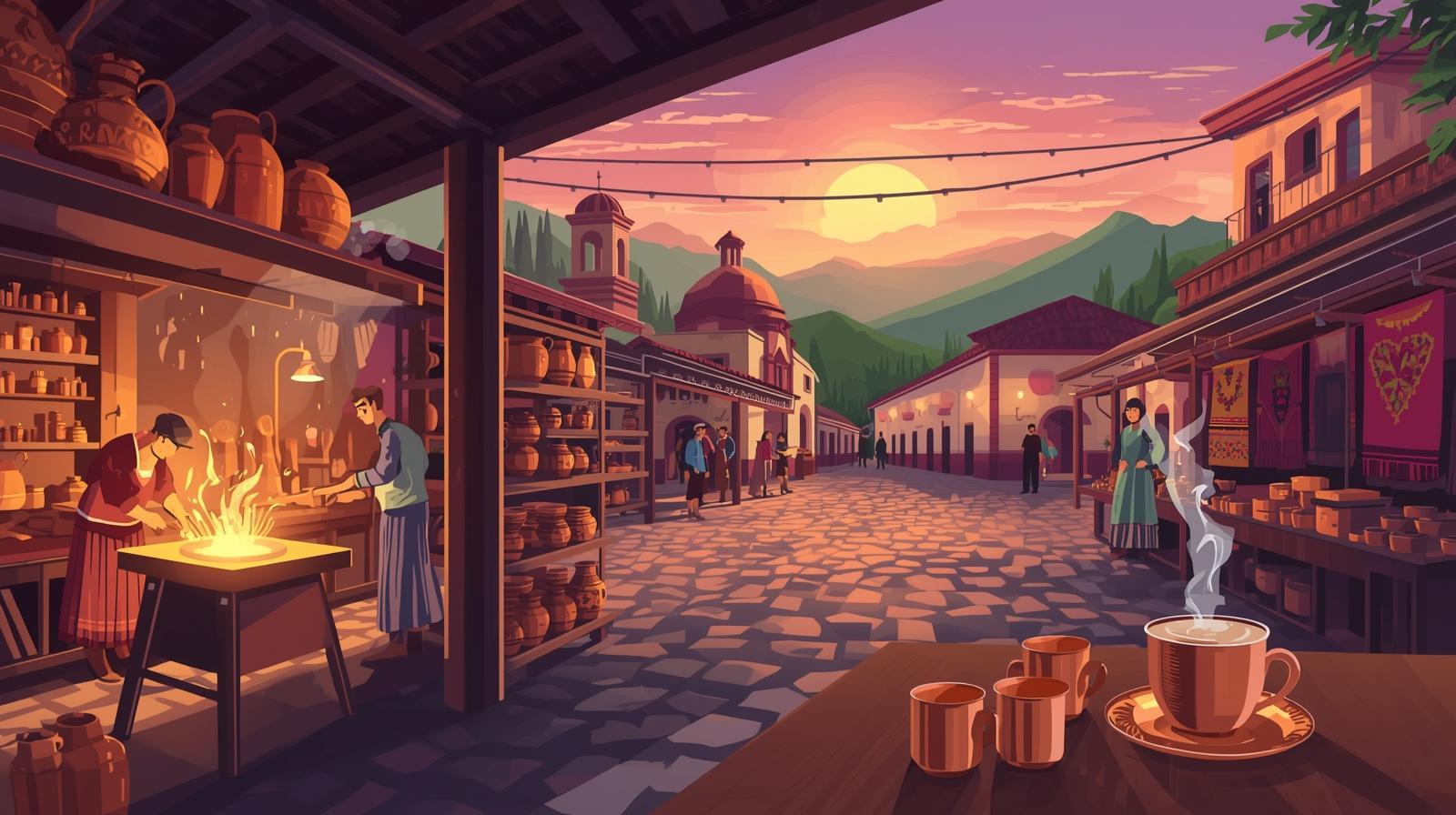
There’s a heartbeat you can hear long before you see it — the rhythmic clang of hammer against metal, echoing through cobblestone streets. In Santa Clara del Cobre, that sound is more than noise; it’s a hymn. This Pueblo Mágico, nestled in the green folds of Michoacán’s mountains, glows like the very copper it forges. Every tap, every spark, every swirl of smoke rising from a blackened forge tells a story that began centuries ago.
If you’ve ever wondered what it feels like to walk through a town where metal breathes, dances, and shines — this is where you find out.
History & Culture
Long before the Spanish arrived, the Purépecha people had already mastered the alchemy of copper. They didn’t need furnaces powered by coal or massive machines — just fire, muscle, and patience. They shaped tools, jewelry, and ritual objects, giving copper a sacred place in their culture. When the Spanish conquistadors saw their skill, they turned Santa Clara into a colonial hub for metallurgy — a legacy that still glows, quite literally, in every corner.
The town’s full name, Santa Clara del Cobre, carries its dual identity proudly: “Santa Clara” for its Catholic roots and “del Cobre” for the metal that defines its soul. Walk through its narrow streets and you’ll find workshops where time seems to pause. Men and women — sometimes entire families — gather around anvils, heating and shaping copper sheets with age-old precision. No machines hum here; only hammers sing.
Each August, the town bursts into celebration for the Feria Nacional del Cobre (National Copper Fair). Imagine an entire town shimmering with freshly polished copper — pots, vases, jewelry, sculptures, and even massive art pieces that look too perfect to have been shaped by hand. Artisans compete, but there’s no bitterness — only pride, joy, and the scent of hot metal drifting through the cool mountain air. It’s not just a fair; it’s a declaration that this town still burns with creative fire.
But Santa Clara isn’t just about metal. It’s also about the warmth of the people who shape it. Locals will tell you stories of how every artisan inherits not only tools but temperament — patience, resilience, and a quiet kind of pride. Here, art is not taught; it’s absorbed, one hammer stroke at a time.
Getting There
Santa Clara del Cobre lies about 18 kilometers south of Pátzcuaro, making it an easy day trip or overnight stop. If you’re coming from Morelia, the capital of Michoacán, it’s roughly an hour and a half by car — the kind of drive where winding mountain roads offer glimpses of lakes, pine forests, and open skies.
Buses run regularly from Morelia and Pátzcuaro. From Pátzcuaro’s main terminal, you can catch a combi (shared van) or local bus marked “Santa Clara del Cobre.” Taxis and private transfers are also available, though the local rides are part of the experience — conversations, laughter, and a window seat to Michoacán’s heartland.
If you’re driving, the road is well maintained. Just remember: this is the kind of route where you’ll want to stop often. Every curve hides a new view worth pulling over for.
Where to Stay
Santa Clara del Cobre offers an intimate stay — think boutique inns and rustic lodges, not towering hotels.
● Hotel Posada Santa Clara sits right near the main plaza. With warm terracotta walls
and hand-hammered copper lamps, it’s a perfect example of local artistry blending into hospitality.
● For something more private, Cabañas del Lago Zirahuen (a short drive away) provides
cozy cabins with lake views — ideal if you’re mixing tranquility with exploration.
● Casa del Artista, a small guesthouse run by a local artisan family, lets you experience
life behind the workshop doors. You might even end up learning how to polish copper before breakfast.
Wherever you stay, expect handmade décor — copper lamps, wooden beams, embroidered linens — and hosts who treat visitors like old friends returning home.
What to See and Do
The heart of Santa Clara beats in its plaza, framed by colonial arches, tall trees, and the scent of freshly made tamales. Start here — everything flows from this center.
Museo Nacional del Cobre
No trip is complete without visiting this museum. Housed in a 17th-century building, it showcases everything from pre-Hispanic tools to modern masterpieces. The highlight? Watching artisans work in real time — hammering glowing copper into forms so fluid they look alive.
The Workshops (Talleres de Cobre)
This is where the magic truly happens. Step inside a small workshop and you’ll find fire, hammers, and stories. Most artisans are happy to demonstrate how a plain copper disc transforms into a detailed vase or tray. The rhythmic “clink-clink-clink” of hammering is almost meditative — each strike guided by instinct, not measurement. If you’re lucky, you might even commission your own piece and watch it come to life.
Parroquia de Santa Clara
Standing gracefully at the edge of the plaza, this church honors the town’s patron saint. Inside, the altar glows — literally — with copper accents and chandeliers that catch the sunlight. During festivals, the church bells mingle with the sounds of the forges, as if heaven itself joins the celebration.
Lake Zirahuén and Surroundings
Just a 20-minute drive away, Lake Zirahuén is a serene escape surrounded by pine forests. Rent a boat, sip local coffee, or simply sit by the water and watch the reflection of clouds drift by. The air here smells of pine, wood smoke, and freedom.
Local Markets
Wander through the Mercado de Artesanías, where stalls brim with copper goods of every imaginable shape — from delicate earrings to enormous cauldrons. But don’t rush. The beauty of Santa Clara’s market lies in its slow pace. Artisans love to talk — about their craft, their families, or how each piece “chooses” its owner. Haggling feels almost disrespectful here; every peso supports a centuries-old tradition.
Food to Try
In Santa Clara del Cobre, the food feels as handcrafted as its copper.
Try sopa tarasca, a rich tortilla soup made with tomatoes, beans, and chile — a Michoacán classic that warms you from the inside out. Pair it with corundas, triangular tamales wrapped in corn leaves, often topped with cream and salsa.
If you’re wandering during breakfast hours, find a stall selling atole de grano, a corn-based drink so comforting it feels like a hug. For dessert, look for nieve de pasta, a local ice cream made from sweetened milk and cinnamon — the kind that melts slowly while you watch artisans at work.
And yes, you’ll probably drink from a copper cup. Everything here, even your mezcal or café de olla, somehow finds its way back to the town’s molten heart.
Practical Tips
● Best Time to Visit: August is prime — during the National Copper Fair — but any time
between November and April offers cool, dry weather ideal for exploring.
● What to Pack: Bring layers. The mountain air shifts from warm midday sun to chilly
evenings. Comfortable shoes are a must; the cobblestones are charming but uneven.
● Language: Spanish is widely spoken, but artisans communicate volumes through
gestures, smiles, and laughter.
● Souvenirs: Beyond the obvious copper crafts, look for smaller keepsakes — keychains,
jewelry, or utensils signed by the artisan. Each piece carries the maker’s energy, like a tangible spark of the town’s spirit.
● Cash Tips: Many workshops prefer cash. There are ATMs in town, but bring small bills
for easier purchases.
Closing Reflection
Santa Clara del Cobre isn’t just another stop on a traveler’s checklist. It’s a place that hums — with history, with artistry, with quiet pride. You don’t just see copper here; you feel it. You hear its pulse in every workshop, in every clang of a hammer that echoes through the hills.
What makes Santa Clara unforgettable isn’t its beauty — though it has plenty of that. It’s the way it reminds you that creation is sacred work. That fire and patience can shape not only metal but meaning.
When you leave, you’ll carry more than a souvenir. You’ll carry the sound of copper being born — and a little bit of its glow inside you.
Tacámbaro, Michoacán – The Balcony of Tierra
Caliente
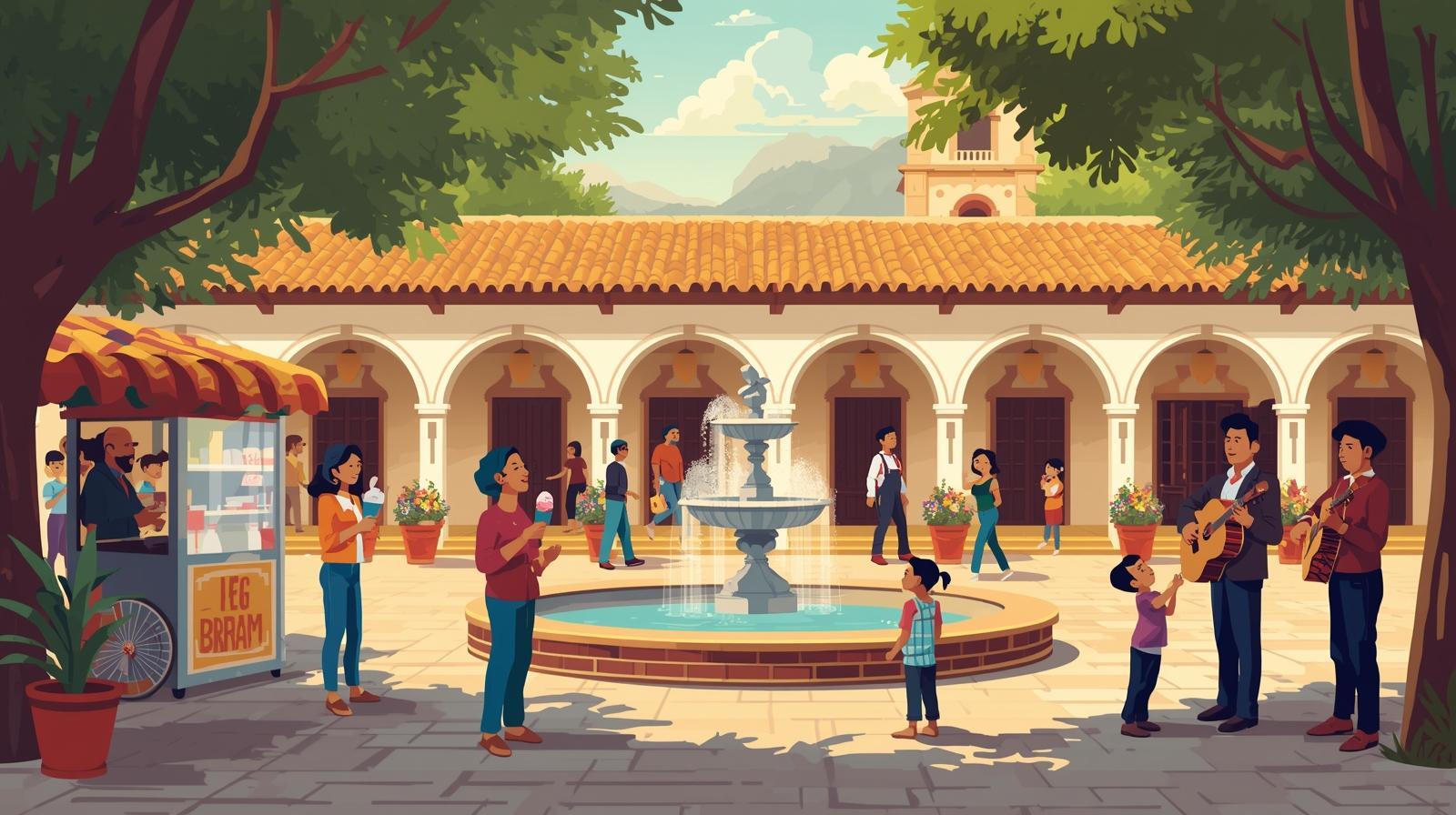
There’s a moment when the road climbs high enough that the world opens beneath you—green valleys melting into distant heat, the air cooler, cleaner, almost tasting of pine and coffee. That’s how Tacámbaro greets you. Perched on a ridge overlooking the Tierra Caliente, it feels like a balcony suspended between two worlds: mountain and lowland, mist and sun.
Some call it “El Balcón de Tierra Caliente,” others just whisper that it’s where heaven stops for a view. It’s a Pueblo Mágico that doesn’t need to shout its charm—it hums it, quietly, through its cobblestones, its jacaranda-lined plazas, and the laughter that drifts from shaded cafés.
Have you ever been to a place that feels both timeless and tender? That’s Tacámbaro.
History & Culture
Tacámbaro’s story is older than its red-tiled roofs. Long before the Spanish arrived, this region was part of the Purépecha Empire—fierce, proud, and known for its artistry in metal and clay. The name “Tacámbaro” itself comes from tacamba-iro, meaning “place of palms.” Even today, palms sway alongside pines, a symbol of how two climates—cold and warm—meet in harmony. When Franciscan friars arrived in the 16th century, they built monasteries and taught new trades, but the town’s spirit remained deeply indigenous. The colonial architecture you see today—the soft pink stone of the Cathedral of San Jerónimo, the arches of old convents—sits atop centuries of pre-Hispanic memory.
Tacámbaro played a notable role in Mexico’s wars of independence and revolution. Its people, mostly farmers and artisans, have always been quietly resilient—more likely to build than to boast. The town’s designation as a Pueblo Mágico in 2012 wasn’t just for its beauty; it was a nod to its endurance and its seamless blending of eras.
And there’s a curious balance here: the traditional jaripero (rodeo rider) in his wide-brimmed hat shares the same plaza with eco-tourists sipping fair-trade coffee. It’s rustic and refined, all at once.
Getting There
Reaching Tacámbaro feels like a pilgrimage through Michoacán’s heart.
From Morelia, the state capital, it’s about 125 kilometers southwest—roughly a two-and-a-half-hour drive. Buses leave regularly from Morelia’s central terminal to Tacámbaro de Codallos, winding through orchards and pine forests.
If you prefer a slower route, hire a private taxi or drive yourself. The road from Villa Madero to Tacámbaro is scenic but curvy—think misty mountain passes and sudden glimpses of deep valleys. Motion sickness pills might be wise if you’re prone to them, but trust me: the views are worth every turn.
Where to Stay
Tacámbaro may be small, but it knows how to host.
Hotel Finca La Huerta sits just outside town, surrounded by avocado groves and birdsong—a peaceful escape for couples. For something more central, Hotel El Molino offers colonial charm right by the main plaza, with balconies overlooking the bustling heart of town.
Budget travelers can find cozy stays at Casa Encantada or family-run guesthouses, where the owners might greet you with homemade tamales or a steaming cup of atole. The warmth of Tacámbaro isn’t just in its weather—it’s in its people.
What to See and Do
Start at the Plaza Benito Juárez, the heart of Tacámbaro. The plaza feels like an old friend—ringed by arcades, flowerbeds, and the grand Cathedral of San Jerónimo, whose twin towers dominate the skyline.
Step inside, and the cathedral surprises you with its serenity. Light filters through stained glass, bathing the carved saints in a soft glow. Locals drop in quietly to pray, but even if you’re not religious, the calm is contagious.
A short walk away lies the Santuario de la Virgen de Fátima, perched on a hill. From there, the view stretches endlessly—a sea of rooftops dissolving into green hills. At sunset, the town glows gold.
Nature lovers shouldn’t miss La Alberca, a volcanic crater lake only 10 minutes away. The legend says it’s bottomless; locals say it’s enchanted. Either way, it’s a perfect spot for picnics, rowboats, or quiet reflection.
Adventure-seekers can visit the nearby waterfalls—Cascada Arroyo Frío and Cascada de Santa Paula—hidden in lush ravines. Bring hiking shoes; the paths can be slippery but lead to postcard-worthy views.
If you’re lucky enough to visit in Semana Santa (Holy Week), the town transforms into a living stage of faith—solemn processions, candlelit streets, and music echoing through the night.
Food to Try
If Michoacán is the soul of Mexican cuisine, Tacámbaro is one of its beating hearts.
Try churipo, a rich beef stew flavored with red chiles and served with handmade tortillas. Or corundas, those triangular tamales wrapped in corn leaves, often topped with thick cream and salsa.
Local avocados are famously creamy, and you’ll find them everywhere—from street tacos to morning toast. Pair that with agua de jamaica or the region’s beloved charanda, a sugarcane spirit that rivals rum for smoothness.
Don’t skip the nieves artesanales sold in the plaza—homemade ice creams in flavors like guava, mango, and even rose petal. On a warm afternoon, it’s pure bliss.
Practical Tips Jiquilpan, Michoacán – The Cradle of Jacarandas and
● Best Time to Visit: November to April brings pleasant weather and clear skies. The
rainy season (May–October) paints everything green but makes mountain roads slippery.
● What to Pack: Comfortable walking shoes, a light jacket (nights can be cool), and a
camera—Tacámbaro is photogenic in every direction.
● Local Crafts: Look for handwoven rebozos, wood carvings, and pottery from nearby
communities.
● Climate: Though perched in the mountains, Tacámbaro enjoys a mild subtropical
climate. Mornings are crisp; afternoons can reach 28°C.
● Cash: Many small businesses still operate on a cash-only basis. Bring pesos.
Closing Reflection
Tacámbaro isn’t a town you simply “visit.” It’s a place that seeps into you quietly, like sunlight through the leaves. There’s something grounding about its pace—how life here still runs on conversation, on market bells, on the rhythm of faith and fiestas.
Stand by the lookout at dusk, and you’ll understand why locals call it the balcony of Tierra Caliente. The view stretches forever, but somehow, you feel completely at home.
Maybe that’s the real magic of Tacámbaro—it doesn’t demand your attention; it earns your affection.
Gentle Revolutions
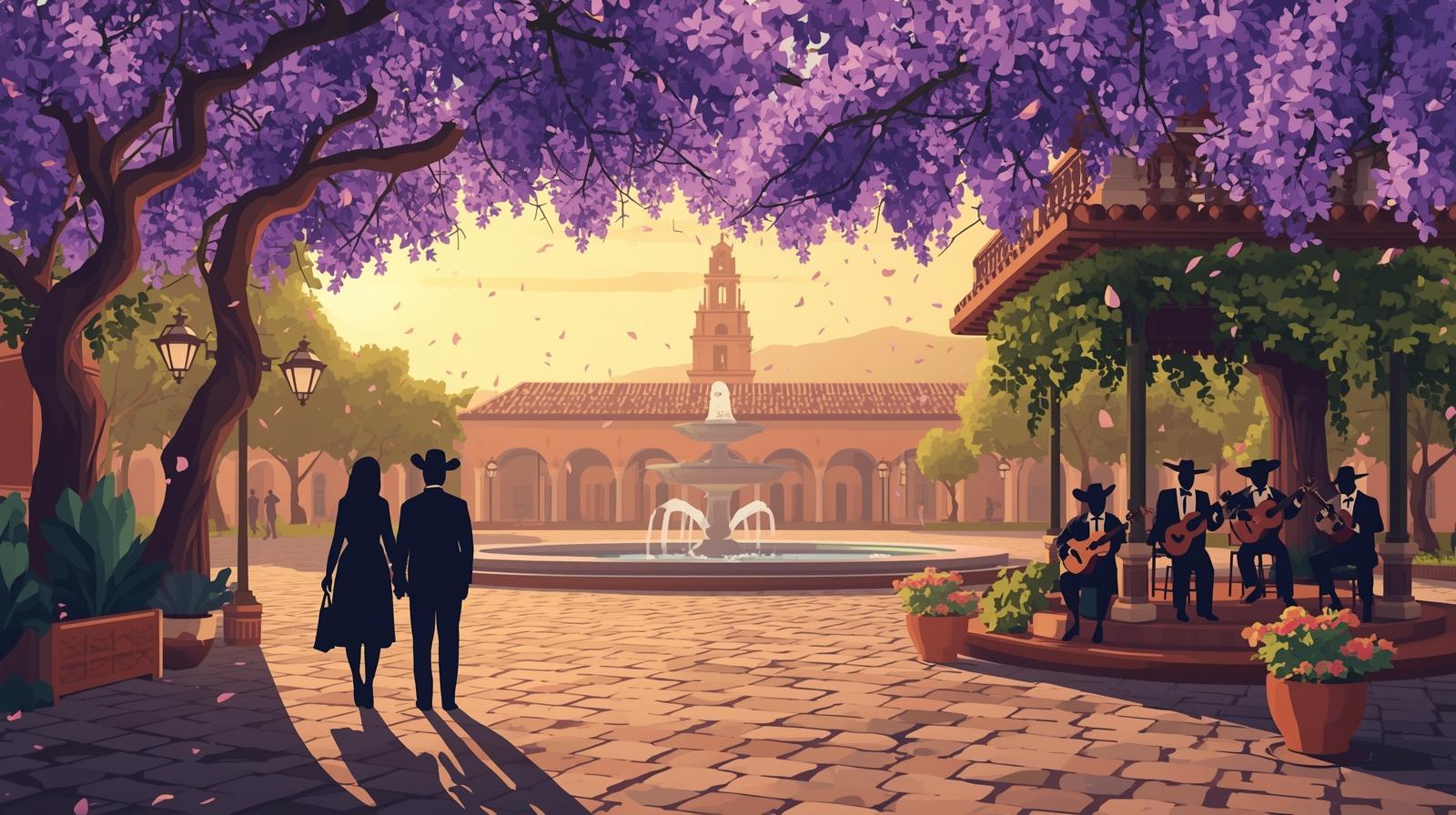
There’s something quietly intoxicating about Jiquilpan. It’s not the kind of town that announces itself with fanfare or flashing lights. Instead, it charms you with the soft rustle of jacaranda petals falling over cobblestone streets, the faint strum of a guitar drifting from a shaded plaza, and the scent of tamales steaming somewhere nearby. Locals say that Jiquilpan isn’t a place you visit—it’s a place that welcomes you home, even if you’ve never been here before.
Ever wondered what it feels like to walk through the hometown of a president, surrounded by bougainvillea, libraries, and living history? Welcome to Jiquilpan de Juárez, a Pueblo Mágico where every wall tells a story—and every corner hums with poetry.
History & Culture
Jiquilpan has deep roots. Long before it became the birthplace of Mexico’s beloved president Lázaro Cárdenas del Río, this region was home to Purépecha communities who cultivated maize and pottery along the fertile banks of the Jiquilpan River. The name itself—derived from Xiquilpan, meaning “place of colored flowers”—couldn’t be more fitting.
When the Spanish arrived in the 16th century, they built churches and laid out neat plazas, blending colonial architecture with indigenous artistry. But Jiquilpan’s true character came later, during the 20th century, when it became a cradle of reform and intellectual life. Cárdenas’ influence lingers everywhere—from the Casa Natal de Lázaro Cárdenas, now a museum, to the Centro Cultural Gilberto Owen, housed in a former Jesuit college where murals by José Clemente Orozco still blaze across the walls like living flames.
The locals are proud but unpretentious. They’ll tell you stories about “Tata Lázaro” as if he were a favorite uncle rather than a historical figure. And maybe that’s what makes Jiquilpan special—it’s a town that remembers, not just in monuments but in manners.
Getting There
Jiquilpan lies in the northwestern corner of Michoacán, close to the Jalisco border—about two hours from Morelia or one hour from Sahuayo. You can take a bus from Guadalajara, heading toward Zamora or La Barca, and hop off at the Jiquilpan terminal. The journey winds through rolling farmland, dotted with avocado groves and distant volcanic silhouettes.
If you’re driving, the route via Highway 15D offers smooth asphalt and generous views. And if you happen to come during spring, the jacarandas lining the entrance road will greet you in full purple bloom—like nature’s own confetti.
Where to Stay
For a town this peaceful, Jiquilpan offers a surprisingly wide range of stays:
● Hotel Plaza Tarasca – Right on the main square, perfect for travelers who love to wake
up to church bells and café chatter.
● Posada de la Quinta – A colonial-style inn surrounded by flowering gardens; expect
colorful tiles, hammocks, and homemade breakfasts.
● EcoHotel Vista del Lago – Just outside town near Lake Chapala, ideal for those craving
tranquility, birdsong, and views that melt stress away.
Whether you prefer a boutique charm or simple hospitality, you’ll find that most places treat you less like a guest and more like family.
What to See and Do Start your wander at the Plaza Principal, shaded by century-old trees and watched over by the Templo del Sagrado Corazón. From there, follow the cobblestones toward the Casa de la Cultura, where art exhibits, poetry readings, and guitar recitals unfold almost weekly. If you’re lucky, you might stumble into a serenata—an impromptu evening concert that feels like stepping into an old movie.
Don’t miss:
● Museo Lázaro Cárdenas – Housed in his family home, it’s filled with artifacts from his
presidency, personal letters, and photographs that trace his humble beginnings.
● Biblioteca Pública Gabino Ortiz – Once a 16th-century church, now transformed into a
public library adorned with Orozco’s murals—a striking fusion of religion, rebellion, and art.
● Parque Juárez – A botanical haven with fountains and towering trees planted during
Cárdenas’ modernization projects. Local rumor says the president himself planted the first jacaranda here.
● El Santuario del Señor de la Salud – A pilgrimage site, especially vibrant during Holy
Week, with processions and music filling the streets.
● Lake Chapala Excursion – Just a short drive away, where you can visit nearby pueblos
like Sahuayo or enjoy lakeside dining at La Palma.
And of course, take your time. Jiquilpan isn’t a place for rushing. Sit under the jacarandas, sip a cold agua de jamaica, and just let the world slow down.
Food to Try
Oh, the food! Michoacán’s culinary heritage is legendary, and Jiquilpan brings its own flair. Here, Corundas (triangular tamales wrapped in corn leaves) are a morning staple, often served with thick cream and salsa roja. You’ll find uchepos, tender sweet corn tamales, at nearly every market stall. Try the birria de chivo—a spicy goat stew slow-cooked until it practically melts—and pair it with a frosty beer.
In the afternoons, grab pan dulce from Panadería La Flor de Jiquilpan, and at night, join locals for tacos de cabeza near the plaza. If you crave something sweet, don’t skip ate de guayaba, a guava paste sold in neatly wrapped squares—a nod to the town’s abundant fruit orchards. Practical Tips
● Best time to visit: February to April for the jacarandas, or November for the Fiesta de
Cristo Rey when the town bursts into color and song.
● Weather: Mild year-round, but nights can get chilly—bring a light jacket.
● Shoes: Cobblestones demand comfort. Think sneakers or cushioned sandals.
● Souvenirs: Handwoven rebozos, guava sweets, and small ceramic figurines from local
artisans.
● Local Etiquette: Don’t rush greetings. A smile and a few kind words go a long way here.
Closing Reflection
Jiquilpan is a gentle kind of magic—the kind that doesn’t need to shout. It’s in the lilac canopy of jacarandas, in the echo of laughter spilling from a family courtyard, in the quiet pride of a town that raised one of Mexico’s greatest reformers yet never lost its humility.
You don’t just leave Jiquilpan; you carry it with you. Maybe it’s the color of the sky, maybe it’s the warmth of the people—or maybe it’s something deeper, something you can’t quite name but won’t ever forget.
Tzintzuntzan, Michoacán: Where the Hummingbirds
Remember
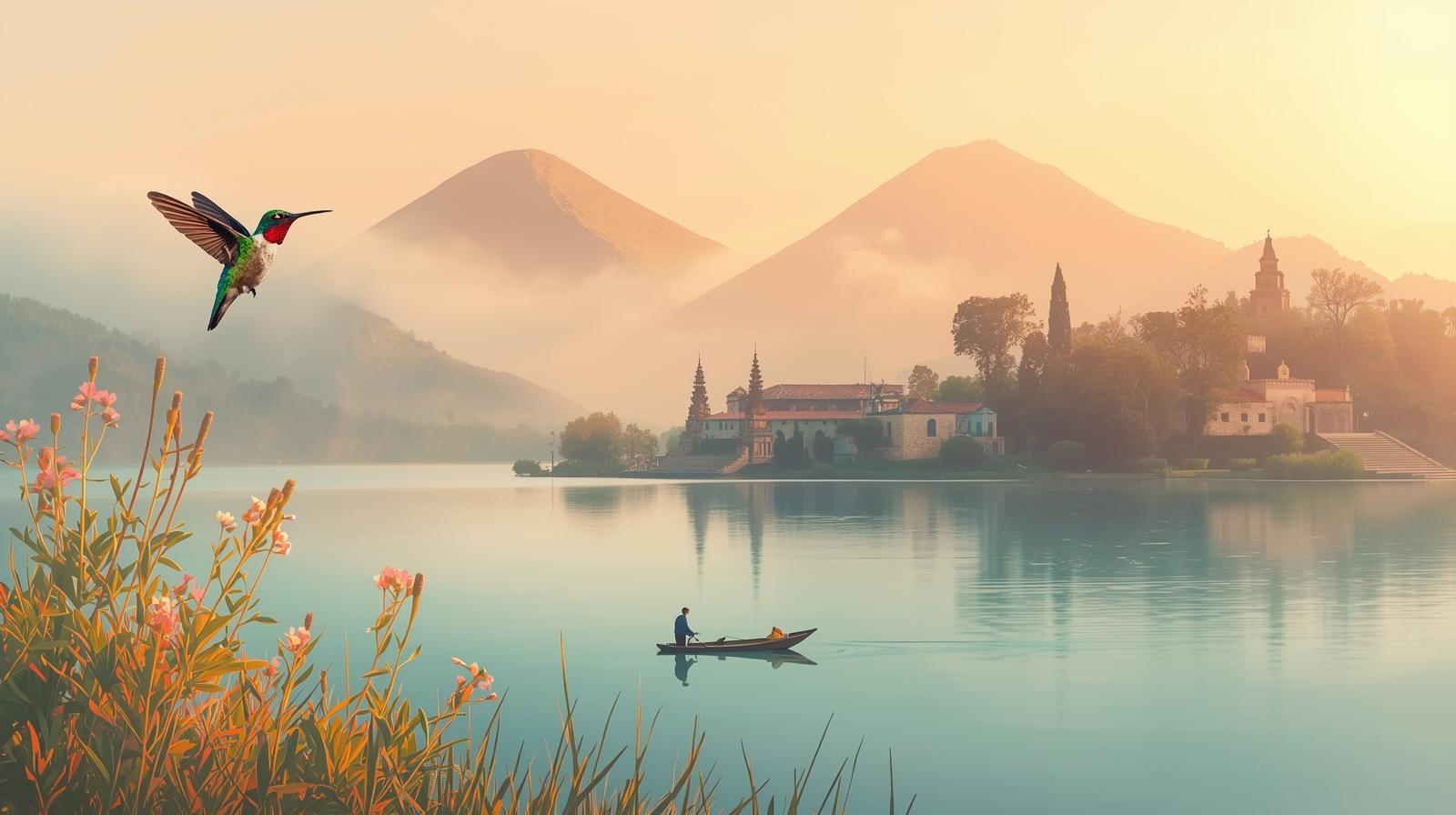
There’s a hush that falls over Lake Pátzcuaro at dawn—a mirror-still moment where fog drifts like breath over the water and the first rays of sunlight kiss the old Purépecha stones. On the far shore lies Tzintzuntzan, a town whose name means “place of the hummingbirds.” It’s poetic, isn’t it? And fitting. Because this little Pueblo Mágico hums softly with ancient echoes—of empires, of monks, of artisans whose hands still remember the rhythm of their ancestors.
You don’t just visit Tzintzuntzan. You listen to it. The rustle of tule reeds from the lake, the chime of church bells, the clink of a potter’s wheel—it’s a symphony of simplicity and soul.
History & Culture
Long before the Spanish set foot here, Tzintzuntzan was the heart of the mighty Purépecha Empire—one of the few civilizations that never bowed to the Aztecs. From the slopes above town, the rounded yácatas (stone pyramids) still gaze down, their curved terraces whispering of a time when priests offered fire and feather to the gods.
When the Spaniards arrived in the 1500s, they brought not just crosses but a new kind of beauty. Vasco de Quiroga, affectionately remembered as Tata Vasco, established hospitals, schools, and artisan workshops, blending European craft with Purépecha skill. That fusion became the soul of Michoacán’s art—the delicate pottery, the hand-woven rebozos, the carved wood saints.
Even today, you can feel that blend in every corner. Women weave at their doorsteps, their laughter mingling with the scent of masa and copal. Men shape clay in open courtyards, their thumbs guiding centuries of tradition. History here isn’t a chapter in a book—it’s still breathing.
Getting There
Tzintzuntzan sits about 18 kilometers from Pátzcuaro and 65 kilometers from Morelia, the state capital.
● By Car: The drive from Morelia takes about an hour along Highway 120; the road winds
through pine forests and lakeside villages—pure postcard material.
● By Bus: From Morelia’s Central de Autobuses, catch a local bus bound for Pátzcuaro
and ask to stop at Tzintzuntzan.
● By Taxi/Collectivo: Affordable shared taxis run between Pátzcuaro and Tzintzuntzan
throughout the day—just wave one down near the market.
If you’re the kind who likes detours (and honestly, who isn’t?), take the scenic route along the lake. You’ll pass fishermen casting butterfly nets—living art against the water.
Where to Stay
Tzintzuntzan itself is small, so most travelers stay in nearby Pátzcuaro. Still, a few charming local options exist:
● Posada Yácatas: Rustic stone inn with a garden view of the ruins—simple, serene, and
full of hummingbirds.
● Casa del Lago: A boutique guesthouse facing Lake Pátzcuaro, perfect for morning
coffee and watercolor sunsets.
● Cabañas Tata Vasco (Pátzcuaro): Ten minutes away, offering cozy cabins and
traditional Michoacán décor.
Wherever you rest your head, expect hand-embroidered linens, clay mugs of chocolate, and hospitality that feels like an embrace.
What to See and Do
This little town is proof that magic doesn’t need neon lights—it glows quietly.
The Yácatas Archaeological Site
These semi-circular pyramids, perched on a hill, are unlike anything else in Mesoamerica. Walk among them at sunrise, when mist curls around the stones, and imagine the Purépecha priests watching the same horizon centuries ago.
Convento de Santa Ana
Built by Franciscan monks in the 16th century, this complex feels frozen in time. Step inside and you’ll find weathered olive trees—planted by the friars themselves—and a quiet chapel where sunlight filters through carved wood doors. The courtyard is pure serenity.
Artisan Market
In the plaza below the convent, rows of pottery gleam in earthy reds and soft grays. The town is famed for its burnished ceramics (barro bruñido), which shimmer as if lit from within. Bargaining here isn’t about haggling—it’s about connection. Ask an artisan about their designs and you’ll walk away with stories baked into the clay.
Lake Pátzcuaro Boat Trips
Hop on a lancha to Isla de Janitzio or the lesser-known Isla Pacanda. Watch fishermen balance on their canoes like acrobats, spreading nets shaped like butterfly wings. It’s one of those scenes you think only exist in documentaries—until you see it with your own eyes.
Food to Try
Michoacán’s flavors are as layered as its history.
● Corundas: Triangular tamales wrapped in corn leaves and served with fresh cheese
and salsa.
● Uchepos: Sweet, tender tamales made from young corn—best enjoyed with a drizzle of
cream.
● Charales: Tiny lake fish, fried crisp and eaten with lime and chili—street-food perfection. Cotija de la Paz, Michoacán: Where Faith, Flavor, and
● Atole de Grano: A comforting soup of corn kernels simmered in broth and herbs, often
served in the market.
● Nieve de Pátzcuaro: Technically from next-door Pátzcuaro, but irresistible—try the
avocado flavor if you dare.
And don’t skip the local mezcal. It’s smoky, bold, and somehow tastes like the stories the elders tell at dusk.
Practical Tips
● Best Time to Visit: Late October to early November, when Día de Muertos turns the
region into a candle-lit dreamscape. The cemeteries bloom with marigolds, and Tzintzuntzan becomes a living altar.
● Weather: Mild year-round; mornings can be crisp, especially near the lake. Bring layers.
● Footwear: The cobblestones are charming but tricky—comfortable shoes are a must.
● Souvenirs: Look for hand-polished pottery, wooden masks, or embroidered blouses with
hummingbird motifs.
● Local Etiquette: Greet vendors and elders with a warm “Buenos días.” A little courtesy
opens every door here.
Closing Reflection
Some towns shout their beauty. Tzintzuntzan hums it—softly, steadily, like the wings of the bird it’s named for. Standing among the ruins at sunset, watching light spill over the lake, you realize that this place doesn’t need grandeur. Its magic lies in stillness, in the way the air carries both the past and the present in one breath.
Come here not to escape, but to remember—what endures, what hums, what refuses to be forgotten.
Tradition Age Like Fine Cheese
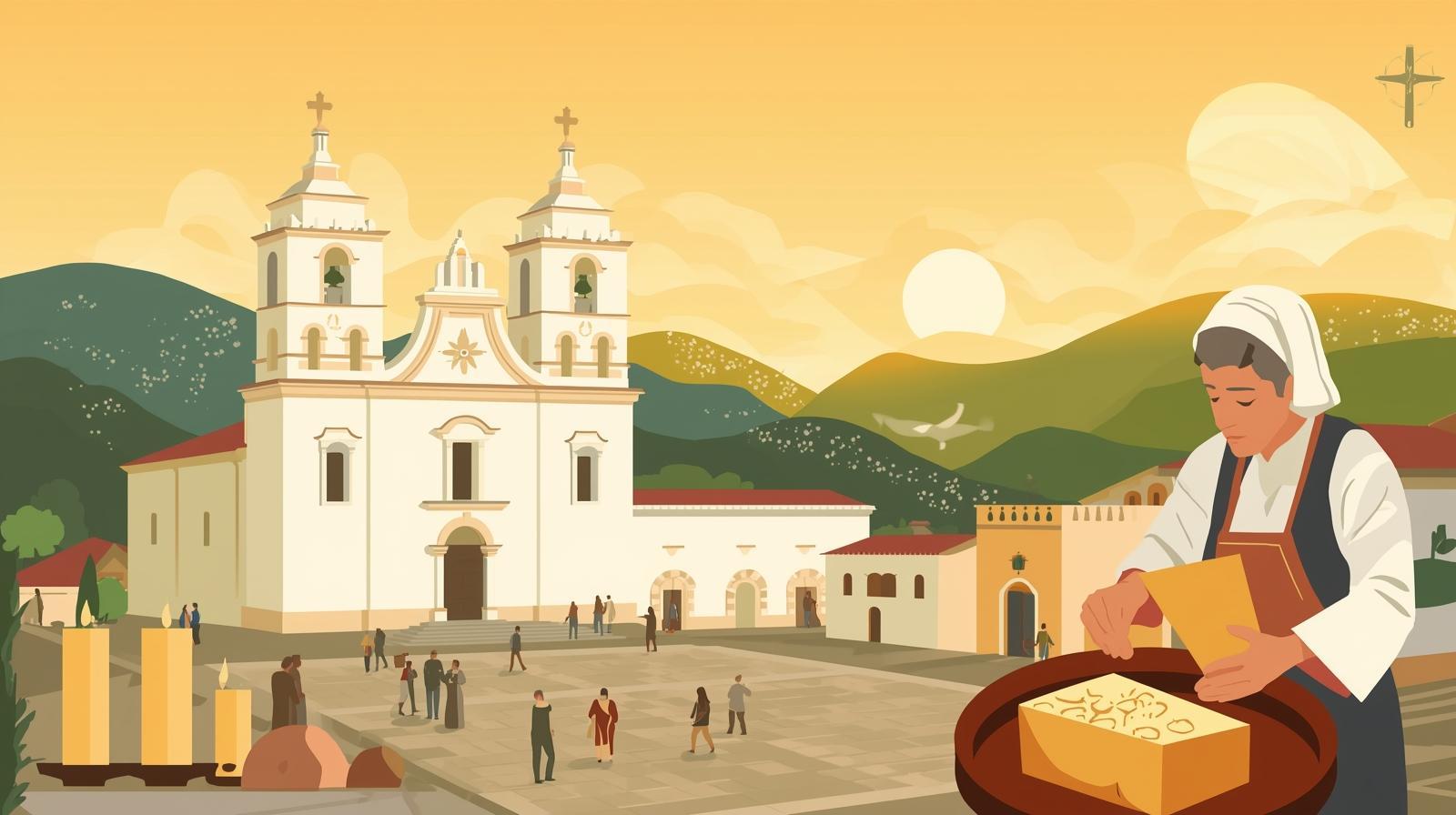
There’s a scent in the air when you arrive in Cotija — part mountain breeze, part nostalgia, and part cheese. Yes, cheese. The same crumbly, salty treasure that carries the town’s name far beyond the hills of Michoacán. But Cotija de la Paz isn’t just about dairy; it’s a town of faith and quiet pride, where time lingers like incense after Mass and locals greet you as if you’ve been away, not visiting. Have you ever stepped into a place that feels both sacred and familiar — as if your heart recognized it before your feet did?
History & Culture
Founded in 1575, Cotija de la Paz sits in a lush valley surrounded by the Sierra Madre mountains. Its story began with Spanish settlers and indigenous Purépecha communities who found common ground in faith, work, and land. The “de la Paz” in its name — “of Peace” — wasn’t just poetic; it was aspirational. The people here built not only homes of adobe and stone but also a spiritual identity centered on devotion and perseverance.
The town’s baroque-style Parroquia de San Juan Bautista, with its twin bell towers and intricate façade, stands like a sentinel over centuries of baptisms, weddings, and farewells. Every June, Cotijenses return from across Mexico and the U.S. for La Fiesta de San Juan Bautista, a week-long celebration filled with fireworks, music, and the kind of communal warmth that can only exist in small towns where everyone’s abuela knows your last name.
Cotija is also famous as the birthplace of Bishop Rafael Guízar y Valencia, canonized by Pope Benedict XVI in 2006. His legacy of compassion and service is palpable in the town’s many chapels and the calm dignity of its people. Faith here isn’t loud — it’s lived.
Getting There
Cotija de la Paz is nestled in the eastern highlands of Michoacán, near the border with Jalisco. The easiest way to reach it is via Zamora (about 90 minutes by car) or Guadalajara, roughly three hours away. Buses from both cities stop in nearby towns like Jiquilpan and Tingüindín, where taxis or local vans can take you the rest of the way. The journey winds through pine forests and avocado groves, offering glimpses of rural Mexico at its most serene.
If you’re driving, take the Morelia–Zamora–Cotija route; the roads are well-maintained, and the views — rolling hills, sunlit cornfields, and small shrines by the roadside — make the drive feel like a pilgrimage in itself.
Where to Stay
Cotija doesn’t boast large resorts, but what it offers instead is warmth and authenticity. You’ll find family-run inns where the owner greets you with coffee and pan dulce at dawn.
● Hotel San Juan Bautista – Simple, spotless, and located steps from the plaza. The kind
of place where you fall asleep to church bells and wake up to roosters.
● Posada del Quesero – A boutique-style inn that celebrates the town’s heritage, with
rustic decor, tiled courtyards, and local cheese tastings every morning.
● Casas Rurales – For a more immersive experience, several families rent out traditional
homes in the countryside, surrounded by grazing cows and misty hills.
What to See and Do
1. The Main Plaza
Cotija’s heartbeat is its plaza — shaded by laurel trees, framed by colonial arcades, and alive with chatter. On weekends, vendors sell ice cream made from local milk, and brass bands serenade sweethearts strolling beneath the lamplight.
2. Parroquia de San Juan Bautista
Marvel at the church’s neoclassical architecture, gilded altars, and centuries-old paintings. Attend Mass if you can; even for non-religious visitors, the music and incense create a sense of belonging.
3. Museo de Cotija
Housed in a former colonial residence, this small museum tells the town’s story through photographs, artifacts, and tributes to its most famous sons — including Saint Rafael Guízar.
4. Cheese Tours and Dairies
Visit a quesería, where artisans handcraft the town’s world-famous Cotija cheese. Unlike industrial cheeses, authentic Cotija is aged naturally, giving it a crumbly texture and sharp flavor that locals proudly call “el queso de los dioses.”
5. Mirador de la Paz
A viewpoint overlooking the valley, especially breathtaking at sunset when church towers and rooftops glow golden against the green hills. Bring your camera — and maybe a wedge of cheese for a picnic.
6. Day Trips
Explore nearby Tingüindín, known for its historic ex-hacienda ruins, or Los Espinos, where natural springs offer a refreshing dip. Each neighboring village adds another verse to Cotija’s story of simplicity and spirit.
Food to Try
Let’s be honest: you can’t leave Cotija without tasting its cheese in all its forms — crumbled over enchiladas, sprinkled on esquites, or served as thick slices with local honey. But the town’s culinary soul goes deeper.
● Enchiladas Cotijanas – Rolled tortillas dipped in red chile sauce, stuffed with shredded
chicken, and topped with — you guessed it — Cotija cheese.
● Birria Michoacana – Slow-cooked goat or beef stew seasoned with local chiles and
served with handmade tortillas.
● Atole de Grano – A hearty corn-based soup enjoyed in the evenings when the mountain
air cools.
● Dulces de Leche – Soft caramels made from fresh milk, slow-cooked in copper pots.
● Pair your meal with aguamiel or mezcal artesanal distilled in nearby hills.
Food here isn’t just nourishment — it’s heritage served on a plate.
Practical Tips
● Best Time to Visit: Late June for the Fiesta de San Juan Bautista, or October to March
when the weather is mild and the fields are green.
● Weather: Warm days, cool nights; bring layers and a light jacket.
● Shoes: Cobblestones and hills make for great views but tricky footing — wear
comfortable walking shoes.
● Souvenirs: Authentic Cotija cheese (vacuum-sealed for travel), handwoven rebozos,
and wood-carved saints.
● Language Tip: Locals appreciate a “buenos días” or “gracias,” and they’ll often reward
you with stories that don’t appear in any guidebook.
Closing Reflection
Cotija de la Paz is more than the birthplace of a cheese or a saint. It’s a place that teaches patience — how things of value, like good cheese or good faith, take time to mature. The streets whisper of devotion, the air smells faintly of milk and earth, and the people smile with the quiet pride of those who’ve learned to live in harmony with their land.
If you listen closely, you’ll hear it — the hum of life in perfect rhythm. In Cotija, even silence tastes like something you want to remember.