

TEMPORAL AGENT by Michel Poulin - HTML preview
Download the book in PDF, ePub, Kindle for a complete version.
CHAPTER 10 – VARNA
20:08 (Constantinople Time)
Thursday, June 1, 1854 ‘A’
Port of Varna, on the Black Sea
Bulgaria
“Look at all this activity, all these diverse costumes and uniforms!” wondered Fanny Duberly while leaning against the ship’s side and looking down at the crowded quay. Her husband Henry, standing beside her in his Hussar’s uniform, nodded his head and took her gently by the waist.
“You wanted adventure and travel, dear? Enjoy them before the killing starts. The Captain told me that we will wait until tomorrow morning to unload most of our animals and supplies, except for a small reconnaissance party that will find and delimit a campsite for the regiment.”
“Can we at least go down on the quay and do a small walk around town, Henry? I’m sick and tired of being on this ship.”
Henry smiled in sympathy at that: the five-week sea trip had been both hard and uncomfortable, to say the least.
453
“That we can do, dear. Let me just advise Major Henry first.” The paymaster was back a few minutes later as a small group of cavalrymen was riding off the ship through a large cargo ramp lowered down from a hull side opening. Fanny watched go out in succession Major Henry, Captain Heneage, Captain Smythe, RSM O’Neil and Jeanne Smythe, the latter driving her light cart and with Doctor Farrell sitting by her side on the bench seat. Jeanne was wearing her equipment vest, something that prompted Fanny to question her husband.
“Henry, what do you think of a woman who goes around armed to the teeth?” Henry replied slowly while following the reconnaissance party with his eyes.
“Normally, not much good, Fanny. However, that French woman is anything but normal. You saw her during saber and pistol practice, right?”
“Did I ever!” replied Fanny while rolling her eyes. “If she would have been a man, she would be recognized as the fencing champion of the regiment. As for her pistol shooting, I’m not sure that anyone in Europe can equal her.” Henry nodded and looked at Fanny with a strange expression.
“Correct, dear. That is not all, however.”
“By God, isn’t that enough already? I’m getting jealous of her abilities as it is.”
“Well, you remember that mid-March newspaper article about Captain Smythe killing or wounding four bandits in Hyde Park while walking with Lady Jeanne?”
“How could I forget it? It earned him a round of toasts at the Officers’ Mess on his return to Winchester.”
“Yes, and I went to congratulate him privately afterwards about that. The problem was that, instead of being flattered, he became deeply embarrassed and revealed a secret to me on the condition that I didn’t repeat it to anyone. Captain Smythe didn’t kill or wound those bandits: Lady Jeanne did.” Fanny was struck speechless for a moment, staring at her husband with utter disbelief.
“That I can’t believe, Henry! No woman could do that, ever, especially when considering that one of the bandits was a murderer and a man considered very dangerous.”
“Think what you want, dear.” replied softly Henry, shrugging. “Let’s forget this for the moment and let’s take a nice walk off this ship.”
Taking the arm he offered her, Fanny followed eagerly Henry down the gangway and onto the quay. They had to make their way through a crowd of sweating soldiers and local workers busy unloading cannon balls, shells and other supplies from the ships
454
moored to the quay. Finally setting foot on the shore, the couple hesitated on which way to go until Henry decided to follow a party of French Army officers down a main street of the port.
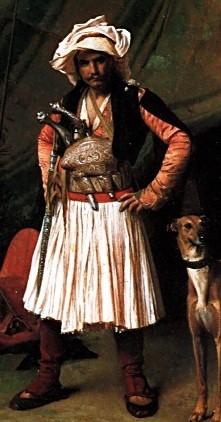
Even if the town was a dirty, impoverished one, Fanny found pleasure in being able to walk around and escape the crowded, smelly confines of the H.M.S. SANS PAREIL. It also thrilled her to see such various accoutrements and hear so many languages in one place. In the street they were walking along, Fanny could detail French Zouave soldiers from Algeria, North African Spahi cavalrymen, Ottoman soldiers from Egypt, Tunisia and Albania and even irregular Muslim volunteer cavalrymen called Bashi-Bazouks. She had a glimpse of one of those bearded, ragged men sitting under a porch and caressing the exposed breasts of an equally ragged camp follower, oblivious of the passing humanity around him. Henry saw Fanny scandalized expression then and grinned in amusement.
“War can’t be all work and no fun, dear.”
“Maybe,” replied his wife with a frown, “but don’t count on me undressing in public like this wretch.”
“Oh, I’m not asking for that much.”
That remark earned Henry a light slap on the back of his head and a snub for the next few minutes. The couple soon had to cut their promenade short, though, as it was quickly getting dark. On their return to the ship, they found out that the reconnaissance party was staying overnight at the regimental campsite. Hoping that this would be her last night in their cramped ship’s cabin for at least a few weeks, Fanny changed to a night gown and went to bed. She nearly protested at Henry’s eagerness when he cupped her right breast with one hand as soon as she lay besides him. However, the feeling that his fingers quickly arose in her nipple then reminded her that being married had its advantages too.
08:21 (Constantinople Time)
Friday, June 2, 1854 ‘A’
H.M.S. SANS PAREIL
455
Port of Varna, Bulgaria
“WOAH, BOB! CALM DOWN!”
It took Henry’s firm hands to get Fanny’s horse back under control, so excited the beast was. Most of the horses about to be disembarked were similarly agitated, anxious to be free from the confines of the ship. Only the pack mules stayed manageable. While waiting for their turn to disembark, the Duberlys watched Captain Tomkinson’s A Troop file off the ship, followed by B Troop, led by Lieutenant Wells. The Quartermaster Troop was last off the ship, with the medical wagon closing the procession. Driven expertly by Misses Champion, the big vehicle was transporting as well Misses Ward and Pearson, plus five other regimental wives who had no means of transport of their own. From what Jeanne Smythe had told her during their sea voyage about the conditions to expect in Varna, Fanny suspected that those women would not stay inactive for long. Her heart pounding with excitement, she spurred her horse to a trot, following Henry’s horse through the narrow streets of the port.
The regimental camp turned out to be a barren, rocky expanse of ground measuring about 200 yards to the side and surrounded on three sides by camps for other cavalry regiments. The free side ran along a small stream, which shoreline was lined at fifty yards intervals with bright signs mounted on pickets. Intrigued by these, Fanny galloped to the stream and examined one of the signs, reading it aloud.
“Fresh water source. No urinating, defecating or throwing of waste of any kind within fifty yards of the water. By order of Regimental Surgeon.” Looking next around her, Fanny saw Jeanne Smythe’s cart near one corner of the campsite, with the French woman hard at work nearby digging a hole with pick and shovel. The medical wagon pulled to a halt near Jeanne’s cart as Fanny stopped her horse besides the French woman and dismounted. Wearing a light sleeveless shirt, a riding skirt and cavalry boots, Jeanne was already sweating in the rising heat of the day as she was shoveling dirt out of a waist-deep hole. Jeanne smiled up at Fanny while continuing her work.
“Good morning, Fanny. It’s going to be a hot day.”
“It certainly will. What are you doing?”
“Digging a latrine for us women. Maybe our example will push our men into respecting some camp sanitation rules.”
456
“Uh, I supposed that you are planning something to hide us from the hundreds of men that will camp around us.”
“Of course! I will erect a small bell tent around it that will also protect us from rain. Another tent will be reserved for female bathing and washing.”
“Jeanne, you’re a genius!” said Fanny enthusiastically. “Can I help?” Jeanne looked at Fanny’s ankle-length fine city dress, tunic, embroidered blouse and fancy hat before smiling apologetically to her.
“I appreciate the offer, Fanny, but aren’t you kind of overdressed for the job?” Fanny had one quick look at herself and realized that Jeanne was right.
“Damn! I didn’t think about bringing informal work clothes with me.” Jeanne’s smile faded then as she looked with concern at Fanny.
“Did you at least bring warm winter clothes?”
“That I did.” answered Fanny sheepishly. “At first, I thought that your were being over pessimistic about the length of this war. Then I changed my mind.” Jeanne stopped shoveling for a moment, resting on her shovel as she stared seriously at her friend.
“May I ask what changed your mind?”
“Maybe the way you always seem to be ahead of the rest of us in so many things.”
Fanny looked downright embarrassed now as she looked down at Jeanne.
“Jeanne, at first, I thought that you were some kinds of rich eccentric with mental delusions. After watching you for a few weeks, I now realize that you mean business, deadly serious business. In fact, I’m starting to have more confidence in you than in many of our officers. I wish I knew how you ended up the way you are, though.” Jeanne was thoughtful for a moment, then spoke quietly.
“Put it on years of adversity, hard training and continuous self-education. War is also an old acquaintance of mine. Sometimes I watch those so-called officers who bought their ranks instead of earning them and am tempted to push them aside and show them how it’s done. However, I do not wish to become too conspicuous, something that would hinder my job of helping the sick and the wounded and could also hurt my husband’s career. For that same reason I would ask you to not include me in your journal. The less known I stay, the better.”
“How do you know that I am writing a journal?” asked Fanny, surprised. “Only my husband knows about it.”
457
“Fanny, just assume that I somehow know more than I should and accept me as I am.”
Fanny looked at Jeanne suspiciously for a moment, then nodded her head slowly.
“Alright, I will, but you are the strangest friend I ever had.”
“Thanks, Fanny!” replied happily Jeanne before resuming her digging work.
11:18 (Constantinople Time)
8th Hussars campsite, Varna
Henry Duberly smiled with amusement when he found his wife Fanny down to her blouse and skirt and digging a narrow ditch around a rectangular tent with the help of Misses Ward. The seven other women from the medical party were busy erecting another big rectangular tent about twenty yards away, isolated from the other tents around it. Fanny stopped digging long enough to accept a kiss from Henry, who then looked at the grounds occupied by the medical section. Apart from the big medical wagon, with its rear and side tents already deployed, five large rectangular tents were either already up or about to be erected around the wagon. The tents were not of the regulation army bell tent model and, apart from being more spacious, were made of much sturdier, better quality fabric than the army-issued ones, having been procured in London by Jeanne Smythe. Two of the tents, including the one Fanny was busy surrounding with a ditch, flanked each side of the medical wagon, while the three others were each twenty yards from it and well separated. Two solid poles were firmly planted in the ground near the wagon, to which were attached four horses and five mules. One of the horses was ‘Bob’, fanny’s mount, while another was Jeanne Smythe’s personal horse, ‘Pegasus’. The remaining horses were those for the medical wagon and the ambulance cart. Near the horse poles was parked the small wooden baggage trailer that had been towed behind the medical wagon. Of conventional construction, in contrast to the medical wagon and cart, that two-wheeled covered cart had been bought in Winchester and quickly modified so that it could be towed by the medical wagon. Overall, the regimental ambulance section now had a mobility and degree of self-sufficiency that the rest of the army could only envy.
“By God!” exclaimed Henry admiringly while looking around him. “I wish that the regimental quartermaster be this well equipped and organized. That Jeanne Smythe would have made a first class quartermaster if a man.”
458
Those words made Fanny look dubiously at him.
“You know, Henry, I’m starting to think that us women are not so weak and dependent of men after all.”
She then swept one arm towards the crowd of cavalry soldiers surrounding them.
“Look at those idiots! While the medical section is nearly finished setting up, with no thanks to men, our good officers have been busy all morning shouting useless orders around, harassing their men and wasting everybody’s time. The tent lines have been moved and realigned three times already and not a single latrine or cooking tent has been set up yet.”
Henry blushed under the vehement but well deserved criticism from his wife: the utter lack of field experience of many of the regiment’s officers was already becoming painfully obvious, attracting bitter comments from experienced troopers. What he had come to tell Fanny was thus all the more embarrassing to say.
“Uh, I’m afraid that I have two bad news for you, Fanny.”
“Not concerning us directly, I hope?”
“One, yes. I have been assigned a tent. The problem is that three other junior officers are sharing it with me.”
“WHAT?” shouted Fanny, getting angry. “And where am I supposed to sleep?”
“I don’t know yet, dear. The quartermaster has not come around yet to assigning tents to women.”
Margaret Ward, who had been discreetly listening on, then cut in politely.
“If I may, Misses Duberly, we have plenty of space left in the women’s tent. You are most welcome to move in if you wish so.”
“Hell, I think that I will do just that.” replied Fanny while staring down her husband. “So, what is that other bad news you were bringing, dear?” Wincing at the sarcastic way she had pronounced the word ‘dear’, Henry braced himself as he answered her.
“Well, C and D Troops have arrived, along with the Headquarters Troop, but they have no means of transportation for their baggage and supplies. The quartermaster, Captain McGregor, sent me to see if the doctor would be willing to spare his mules for the day in order to help.”
Fanny and Margaret exchanged a knowing look then.
“Henry,” replied Fanny with an exasperated tone, “you can tell Captain McGregor that he will get an answer after lunch: Doctor Farrell and Lady Jeanne have gone into
459
town to talk with French Army doctors and to procure supplies. Those mules are the private property of Jeanne Smythe and she has a letter signed by Lord Raglan himself certifying that the equipment and animals of the medical section cannot be requisitioned without her tacit agreement. Talking of lunch, what is on the regiment’s menu for noon?” Fanny didn’t like the way Henry tucked his head in like a turtle at her question.
“Nothing yet, dear: the cooks and their rations are still stuck aboard the ship. We were hoping for your mules to bring some ration biscuits to the men.” Margaret Ward could barely contain her laughter as Fanny Duberly bent down and leaned on her pick, looking totally discouraged.
“God, is this regiment an army unit or a traveling circus act?”
“Hey,” protested weakly Henry, “you should see the other regiments.”
“I don’t want to know!”
Fanny’s eyes then focused on something in the distance.
“Well, you are in luck after all: here is Jeanne’s cart back from town.” Looking in the same direction, Henry effectively saw the ambulance cart coming towards them, with Jeanne Smythe and Doctor Farrell sitting in the front. He didn’t like the glum look on their faces as they got nearer. Stopping her cart beside the medical wagon, Jeanne then jumped down from it with commendable agility and faced Henry and Fanny.
“I’m afraid that we have bad news: cholera cases have developed in the French camps. Our men may become infected soon.”
Everybody around Jeanne stiffened at the name of the dreaded killer disease. Fanny then looked at young Doctor Farrell, whose face reflected preoccupation. The young doctor then spoke in a glum tone.
“The best thing for us to do now is to prevent its spread through sound camp sanitation and quarantine of the sick. For the sick, we can only help them by combating dehydration, cleaning them up and keeping down the fever. Jeanne gave me a few good ideas about how to do this best.”
All eyes then turned to Jeanne, who spoke slowly.
“Don’t get this wrong, people. Cholera is a nasty, merciless disease. We probably will be swamped with patients emptying themselves constantly by both ends all over the place and who could die within hours of showing the first symptoms. We can help fight dehydration, the most dangerous aspect of cholera, by constantly giving to the sick a solution of water and minerals. A light broth or soup could do. Thankfully, the medical wagon contains a good supply of bed pans and bed sheets that will help us
460
keep the quarantine tent clean. The washing to be done will however be backbreaking, continuous work. One crucial point: everything used to treat cholera victims will have to be washed, then disinfected by boiling. Another important point is to safeguard our fresh water supply from infection. No human waste must touch the stream passing through this camp, or we will all be infected. Our next big piece of work will be to dig a sewer pit away from the river, in which we will throw all the infected waste, plus quicklime at regular intervals. I will direct the work this afternoon while Doctor Farrell alerts Lord Paget and the surgeons of the other regiments of the brigade.” Henry Duberly looked gravely at Jeanne as she spoke: Doctor Farrell may officially be in charge of the regimental ambulance but there was no mistaking who was in real control. Everything that Jeanne had said however made good, solid sense and cholera was too serious a matter to start petty power games now.
“Misses Smythe, I will talk to Captain McGregor about this to see how he can help you. I however have a pressing request from him. Could you spare your five mules so that the essential rations and supplies can be unloaded from our ships?” Jeanne shook her head dejectedly before looking back at Henry.
“Hurrah for the Commissariat’s usual incompetence! Tell Captain McGregor that he can have my mules for today, but remind him that there is a big string attached to them. In the meantime, us girls will take a well deserved lunch.”
“You have rations with you?” asked Henry, both surprised and envious. Jeanne gave him a dubious look, then went to the back of her cart and unloaded a number of wicker baskets, opening them and exposing their content.
“Alright, girls, we have fresh bread, cheese, hard-boiled eggs, smoked beef sausages and red wine. Let’s set the table!”
Henry Duberly shrank under the sarcastic look Fanny then gave him. It became even more stinging when Jeanne went back to the cart and took out of it a live lamb.
“By the way, I also secured our supper. If any of you girls want to, you can bring to your husbands a portion then.”
“Hmm, I’ll think about it.” said Fanny, grabbing one of the baskets and bringing it inside the rear tent of the medical wagon.
08:36 (Constantinople Time)
Saturday, June 3, 1854 ‘A’
8th Hussars camp
461
Varna, Bulgaria
Fanny Duberly woke up to find herself alone in the women’s tent, now well lit by daylight. She could hear outside the usual noises of an army bivouac: shouted orders; the sound of marching feet and horses hoofs; the clicking of weapons and the conversations of idle soldiers. With her muscles stiff from yesterday’s digging work, she rose from the folding camp cot lent to her by Jeanne and quickly dressed, putting on her most informal gown, which was however still overly fancy for rugged outdoors work. She emerged from the tent, intent on using the women’s latrine, only to nearly bump into a bearded man wearing civilian clothes and who was gawking at the medical wagon nearby. The man, who looked in his late thirties, quickly took off his cap and bowed politely.
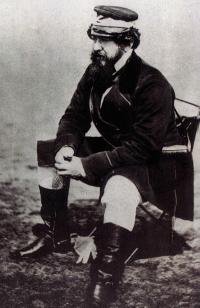
“I’m sorry for being in the way, madam. Let me present myself: William Howard Russell, correspondent for The Times of London.”
“Pleased to meet you, sir.” replied Fanny politely but now on her guard. “My name is Fanny Duberly, wife of the 8th Hussars’ paymaster. May I help you?”
“You may, madam.” said Russell, then pointing at the medical wagon. “This is a most ingenious design. Do you know how long it has been in army service?”
“In fact I do, sir. It was introduced into Hussars’ service on April ninth of this year, but you won’t find any other similar wagon in the army.”
“Oh, why? Is the design flawed?”
Fanny couldn’t help grin as she managed her effects on the journalist, who had taken out a pencil and a notepad.
“Not at all! This wagon is the best I ever saw. It was actually designed specifically for the regimental ambulance by Lady Jeanne Smythe, the wife of one of our officers. She paid for it from her own pocket, her being a rich woman. She gave it as a gift to the regiment to replace the old ambulance wagon that had been smashed in an accident.”
“That is mighty generous of this Lady Smythe. I… wait! Did you say that she designed it as well as pay for it?”
“I did.” answered Fanny, smiling at Russell’s surprise. “She also volunteered as field nurse and ambulance driver. Would you like to speak with her?”
462
“Very much so, madam.” said eagerly the journalist while scribbling on his notepad. He then followed Fanny inside the medical wagon’s rear tent, where they found Doctor Farrell disinfecting his instruments with rubbing alcohol and a clean piece of cloth.
“Aah, Doctor Farrell! May I present you Mister William Russell, correspondent of The Times of London?”
“How do you do, sir?” said timidly the young doctor while shaking hands with Russell. “I suppose that you would like a tour of the medical section.”
“I would, sir, but I was also hoping to speak to a Lady Jeanne Smythe.” Farrell then shrugged and smiled apologetically.
“I’m afraid that you are out of luck today, sir: she left early this morning with Misses Ward, one of our assistant nurses, on a three-day trip to the town of Burgas, fifty miles to the South, to get additional supplies.”
“Three days?” said Russell dejectedly. He however regained quickly his
composure and smiled to Farrell. “Well, how about that tour of your section then, Doctor?”
“I will be glad to oblige, sir.” replied Farrell while packing away his surgical instruments.
09:26 (Constantinople Time)
Quarantine tent, medical section
Russell nodded his head in approval, writing notes down quickly as Doctor Farrell finished describing the equipment of the quarantine tent, the last stop of the guided tour. By now the journalist was both jubilant and angry: jubilant that someone was at last doing the job right; angry that the rest of the army wasn’t like this regimental ambulance. Thanking the frail doctor and shaking his hand, Russell waited until Farrell was back into his medical wagon, then went quickly to the laundry tent, where a young blond woman was washing clothes. The woman, whom he had met earlier during the tour, had seemed eager to be interviewed and have her name mentioned. Mary Pearson effectively appeared pleased when Russell entered the tent. Starting with a few questions concerning her, the journalist waited until she was warmed up to get into his real subject of interest.
“…and you were then hired by Lady Jeanne Smythe, right?”
463
“Correct, sir.”
“Do you know this Lady Jeanne well, Misses Pearson?”
That made the young blonde giggle.
“Know her well? Not really, but you wouldn’t believe the stories about her. Take the time when she did saber practice with the officers of the regiment…”
11:08 (Constantinople Time)
Tuesday, June 6, 1854 ‘A’
8th Hussars camp
Varna, Bulgaria
Fanny Duberly was kneeling in front of a wooden tub full of soapy water, washing one of Henry’s shirts, when Mary Pearson ran into the laundry tent and shouted excitedly.
“Jeanne and Margaret are back! Their cart is approaching the camp.” Dropping the shirt in the tub and hurriedly drying her hands with the white apron she wore over her dress, Fanny then ran outside and looked south across the shallow stream flowing through the camp. Her heart jumped when she saw Jeanne’s ambulance cart, now less than 400 yards away and with Jeanne and Margaret waving at them. A line of loaded pack mules trailed behind the cart. Fanny looked at the two poles near the medical wagon, to which five mules and four horses were still attached, then back at the mules following Jeanne’s cart.
“Don’t tell me that she bought more mules.”
“It would make good sense, Misses Duberly.” replied Sarah Champion, standing beside Fanny. “The regiment is still sorely short of transport animals and could certainly use more mules. Besides, the way those approaching mules are loaded, I doubt that Jeanne’s cart could have taken even half of the supplies she bought.”
By the time that Jeanne Smythe drove her cart into the camp, a small crowd of idle soldiers and women had formed to greet her and Margaret Ward. The first near the cart when it stopped was Gordon Smythe, in whose arms Jeanne literally threw herself, sending both of them down in the dirt, laughing and kissing each other. Fanny Duberly was nearly pulled down by Jeanne’s weight when she lent her a hand to get up.
464
Summarily dusting herself off, Jeanne then smiled to Thomas Farrell, who stood in the front ranks of the crowd.
“I found all that we needed in Burgas, Doctor. The town has not been depleted of supplies the way Varna has been. We probably should do periodic resupply trips to that town.”
“You did excellent work, Jeanne.” replied Farrell, pleased, before shouting at the soldiers around him. “May I have volunteers to help unload those mules and the cart and to bring the supplies in the medical section’s cooking tent?” A chorus of voices answered the doctor, who soon had over twenty men to help him. Putting Sarah Champion in charge of supervising the work detail, Farrell then went to see Jeanne, who was holding hands with her husband.
“Excuse me for interrupting your reunion, but do you have a list of the supplies you procured?”
“Sure!” said Jeanne with good humor, then searching in a side pouch of her web gear and extracting a piece of paper which she handed to Farrell. “in a nutshell, I bought over two tons of dry foodstuffs, lots of white cotton cloth, cooking oil, spices, smoked fish and cleaning products. Oh, I nearly forgot: add 25 mules and a sword to the lot.” As she said those last words, she unsheathed a curved Turkish saber slung across her back and grinned at Gordon while showing him the weapon.
“I even had a chance to test this Kilij saber on my way back: four thieves tried to rob us, thinking that two women would be an easy prey. They learned otherwise the hard way.”
Jeanne then noticed a bearded civilian man that was writing furiously on a notepad while standing nearby.
“Are you intent on writing a book about me, sir?” she asked him nonchalantly. The man looked up from his notepad and smiled.
“A book, no. An article, yes. I’m William Howard Russell, correspondent for The Times of London.”
Jeanne shook hands with him, visibly not too thrilled by this encounter.
“Pardon my lack of enthusiasm, sir, but I would rather keep a low profile: celebrity would not help my job as a field nurse.”
“Can I then quote you as the rich and adventurous French wife of a Hussars officer?” asked Russell, a devilish grin on his face. Jeanne’s own face then softened.
“If worded that way, then I withdraw my objection.”
465
“How did you kill those four bandits, madam?”
“I beheaded the first one with my new sword when he made the mistake of coming close, then I shot the three others with my Colt revolver.” As the crowd around her, except for Gordon, who knew her enough by now not to be surprised, stared at her with disbelief, Jeanne cautiously passed a fingertip along her sword’s cutting edge.
“I was really lucky to find this Kilij: it is a top quality weapon, with a Damascus steel blade and great chopping power. Now, if you will excuse me, I have a few things to attend to.”
Sheeting back her saber, Jeanne then went to Doctor Farrell and whispered to him.
“Any cases of cholera yet in the regiment?”
“None in this regiment but six men from other regiments of the brigade have fallen sick with what I believe to be cholera.”
Jeanne sighed with relief, then raised her voice to a normal level.
“Do we have any patients yet?”
The frail young man hesitated for a second. If he knew Jeanne well, the French woman was not going to like the news to come.
“I have two patients at the moment: one trooper who was hit in the head by a kicking horse, plus another trooper who is recovering from a flogging.”
“WHAT?!”
Jeanne’s furious shout made heads turn around them at once, as well as making Gordon start walking towards her.
“Why? Who ordered this?” asked Jeanne in a dangerous tone, making Farrell shrink while facing her.
“Lord Cardigan caught a corporal drunk while on duty and summarily condemned him to twenty lashes. I’m sorry but this is still a legal punishment in the Army, unfortunately.”
Jeanne had to turn away from the doctor to vent her frustration with a choice series of swear words. That was when Gordon joined her, only to get a black look from Jeanne.
“I hope that you had nothing to do with this flogging, Gordon.”
“I didn’t and I assure you that I don’t like it either, dear. Unfortunately, nothing can be done about this as long as flogging is legal in the Army.” Jeanne inhaled deeply a few times to calm down, then faced back Thomas Farrell.
“I will go see our patients as soon as I have taken care of my horse and cart.”
466
“Can I come with you?” asked timidly Gordon, getting a nod from Jeanne.
Gordon ended up helping to unhook Jeanne’s pulling horse from the ambulance cart, then pushed the cart near the medical wagon while Jeanne gave some water and feed grain to her horse. The couple then accompanied Doctor Farrell inside the sick ward’s tent. The big tent contained twelve camp cots, a small iron stove with a pipe leading outside the tent through a special vent hole in the canvas, two wooden chests containing medical supplies and a small folding table and chair for use by the duty nurse. Mary Pearson sat in the chair at the time, while two men occupied camp cots. Jeanne went first to the man wearing a bandage covering his head and left eye. Despite the bandage, it was obvious that the left side of the man’s face was severely swollen. The wounded man was sleeping at the time, so Jeanne moved to the other patient after a short examination. That man lay on his belly and was obviously very much in pain. Gordon saw Jeanne’s face harden as she looked at the bloody bandages covering the man’s torso. She then muttered to herself.
“Bloody barbarians!”
She next looked at Farrell with an expression that left no room for debate.
“Doctor, I will take care personally of that patient: I have experience with flogging victims. I hope that you were planning to keep this man here for at least a couple of days, to make sure that his wounds don’t get infected.”
“Uh, of course, Jeanne.” said timidly Farrell, who had actually not thought yet about that. The few weeks he had already spent with Jeanne, both in Winchester and on the transport ship, had however showed him that she was medically far more qualified than even an experienced nurse and could nearly qualify as a surgeon, that is if a woman would ever be allowed to practice medicine, which was certainly not the case in England right now. His answer made Jeanne nod with satisfaction.
“Thank you, Doctor! You are a good man. I’m going to wash and change and I will then take the late afternoon nursing shift.”
She next faced her husband and pointed an index at him.
“You and I have an appointment tonight, alone!”
“I won’t argue with that order, dear.” replied Gordon with a grin.
17:49 (Constantinople Time)
8th Hussars camp, Varna
467
Troop Sergeant-Major James Champion found Captain Smythe discussing with Major Henry in front of the regimental command tent. Stopping at a respectable distance from the two officers, Champion waited patiently that Major Henry left to step forward and halt in front of Gordon, saluting crisply.
“Sir! May I have a word with you, sir?”
“Always, Sergeant-Major.” replied Gordon while saluting back. Champion knew from experience that Gordon was not lying then: the captain was one of the rare officers in the regiment who truly cared about his men, apart from being a competent leader and cavalry officer. Marrying a woman of unparalleled generosity had only made him even more popular with the troopers.
“Sir, the men are complaining about their rations. I have to say that, in all my years in the army, I have rarely seen such swill as this evening, sir.”
“Did you taste the food, Sergeant-Major?”
“I spat it out, sir!” replied Champion vehemently. “Some of the regimental wives came for their rations and vomited them as soon as they ate them. The cooks are arguing that they have to work with rotting food supplies, sir.” Gordon frowned at those words: for Champion to spit out army food, it had to be awful indeed.
“Alright, Sergeant-Major, let’s go to the regimental kitchen and see how bad things are.”
“Yes sir!” replied Champion, saluting Gordon before following him.
Gordon Smythe’s arrival at the field kitchen calmed somewhat the nasty mood of the soldiers lined up to get their supper. They watched on expectantly as the officer confronted the nervous chief cook, Sergeant Mack Foster.
“Show me what you have on the menu tonight, Sergeant.” The small, somewhat overweight man wiped his hands on his dirty apron before leading Gordon to a large steel pot sitting on a wood stove.
“We have a cabbage and pork soup, along with bread, sir. Unfortunately, both the cabbage and the salted pork provided by the Commissariat are somewhat…stale, to say the least, sir.”
“Alright, I will have a portion of that soup, Sergeant.”
“Uh, as you wish, sir.”
468
Gordon, busy watching Foster fill a mess tin with hot soup, didn’t notice one of the cooks running back to the kitchen, coming from the overflowing latrines used by the whole brigade and going back to work without bothering to wash his hands first. Taking a piece of dry bread as well, Gordon went to sit at a lone table besides the kitchen, followed by Champion. Searching the soup with his spoon, he caught a few small pieces of blackening cabbage and of pork that was almost all fat or gristle. His stomach nearly turned upside down when he realized that the small white things floating in the soup were dead maggots, well boiled. The smell of the soup was not much better than its sight. Throwing in disgust the soup in the dirt, Gordon then tried a bite of his small piece of bread. Swallowing it was like eating a stone. Foster started sweating as Gordon stared at him angrily.
“You have nothing better than this to feed the men, Sergeant?”
“But, sir, that is all I was provided with by means of supplies, sir. The only alternative is rationing biscuits.”
“Then issue biscuits to the men! Your soup is unfit for human consumption. I will go speak at once with Captain McGregor and Mister Grant about the rations.” Gordon was about to leave the kitchen when an idea came to him. Watched by the surprised cooks, he refilled the mess tin he had with more soup, making sure to catch a few floating dead maggots as well, then faced Sergeant-Major Champion, mess tin in hand.
“Sergeant-Major, please go see my wife and ask her on my behalf if she could help give something decent to eat to the men while I talk to those responsible for this outrage.”
“Yes sir!” shouted Champion, saluting then turning around and walking away. His tin of soup in his left hand, Gordon left the kitchen as well, walking down the long lines of tents towards the officers’ mess. Contrary to the troopers, who had to eat in the open and on the ground unless they chose to eat inside their crowded tents, the officers were furnished with a large marquee tent with tables and chairs to have their meals. Gordon spotted quickly the regimental Commissariat purveyor, Peter Grant, eating at a table with Captains McGregor, Lockwood and Fields. Politely saluting Fanny Duberly first, who was eating with her husband at a nearby table, he went directly to Grant and slammed the tin of soup on the table, in front of his plate. The officers around fell quiet as Gordon spoke with contained anger to the civil servant.
“Mister Grant, I would like you to taste what our men are given to eat.”
469
“Eat this?” asked Grant after a quick look at the soup. “Why?”
“Is it that you don’t like eating boiled maggots and rotting pork, sir?” Gordon felt satisfaction as the officers around, as well as Misses Duberly, looked with horror at the mess tin. Reddening with embarrassment, Grant stammered as he felt hostile looks targeting him from many sides.
“But…we have no choice but to use the supplies sent from England. There is nothing else available.”
Gordon had a quick look at Grant’s plate: it contained fresh broiled beef, potatoes, fresh bread and butter.
“Really? Where did you get the supplies for the officers’ mess?” Captain McGregor, the regimental quartermaster, then cut in, trying to defuse the confrontation.
“Smythe, you know as well as me that officers rations scales are separate from troopers scales. You surely don’t expect the men to share our rations?”
“And why not?” replied Gordon forcefully, getting angry. “They will fight and die for England. Doesn’t that entitle them to be treated like human beings?”
“Aw, come on, Smythe!” added Ramsay Fields, the commanding officer of D Troop. “Feed those ruffians with gentlemen’s rations? You can’t be serious.” Gordon then gave Fields a black look: the man had purchased all of his successive ranks and had never been near combat. As a cavalryman and swordsman, Fields was widely considered as marginal at best, while the men of D Troop received more than their fair share of floggings, if you could call flogging a fair military punishment.
“I am serious, Mister Fields. This is war, not some field maneuvers at home. Your life will depend on your men’s performance on the battlefield, especially since you can’t fence or shoot worth a damn by yourself.”
Fanny Duberly, listening on discreetly but carefully to this, had a hard time repressing a grin, like many around her. On his part, Fields shot up from his chair and put his right hand on his sword’s pommel.
“Are you mocking me, sir?” he shouted loudly, trying to look defiant and sure of himself. In reality he knew that Gordon would cut him to pieces in a duel. A potential fight was averted by the intervention of Lord Paget, who came to their table, displeasure on his face.
“Gentlemen, calm down! The officers’ mess is no place for a fight. You are officers and I expect you to conduct yourselves as such.”
470
“Sir,” said Gordon politely but forcefully, “what about the men’s rations? They will starve or fall sick if fed such swill as like today.”
Before answering, Paget took the tin of soup and had a good look at it, sniffing it as well. With disgust on his face, he then stared at Peter Grant.
“Good God, man! Can’t you do better than this?”
“With what, sir?” Replied Grant sheepishly. “I do not decide what kind of rations are bought in England, nor do I have the power to do so.”
“What about local purchases, sir?” suggested Gordon to Lord Paget, who thought for a moment before nodding.
“That could be a solution, Captain. The problem will be to find the funds for such purchases. I will have to talk with Lord Cardigan and Mister Fielder, the Commissary General. In the meantime, the men will have to make do with ration biscuits.”
“I already told the chief-cook to switch to biscuits, sir.” said Gordon, getting a sharp look from Captain McGregor: that should technically be the quartermaster’s call to make. Lord Paget simply nodded his head at that.
“Very well, Captain. Dismissed!”
Saluting Paget crisply, Gordon then left the mess tent, followed by the unfriendly eyes of Grant, Fields and McGregor.
“Those ex-Army of India officers!” spat Fields resentfully. “They think they know and have seen everything.”
Fanny Duberly, cutting short her supper, rose from her table and faced Fields contemptuously.
“Well, he certainly has seen a lot more than you, sir.”
The warning look Fields got from Henry Duberly prevented him from replying as Fanny walked away. Rising as well from the table where he had been eating, William Howard Russell then left the mess as well, heading for the men’s field kitchen.
Gordon arrived back at the men’s kitchen to find a number of regimental wives distributing smoked fish and dried dates to the troopers ordered in multiple lines by Sergeant-Major Champion. Gordon went to Jeanne and gave her a quick kiss on the cheek.
“I knew that I could count on you. Thanks, dear!”
“That is the least I could do, Gordon.” replied Jeanne, sullen, while giving three dried dates from a basket she held to each man passing by her. “Have you eaten yet?”
471
“Uh, no. I couldn’t in all conscience eat at the officers’ mess after this.” That earned him a tender look and a caress on the cheek from Jeanne.
“I did marry the right man, truly. Go to the ambulance’s kitchen and get some food from Mary Pearson. I will join you there shortly.”
Kissing her and getting approving comments from the soldiers around, Gordon then went to the cooking tent of the medical section, fifty yards away. He found Mary Pearson serving Emma Armstrong, Fanny Duberly’s maid, from a steaming pot warming on top of the tent’s wood stove.
“Hello, Misses Pearson. Jeanne told me to come here to get fed.”
“Well, you will certainly eat better here than at the men’s kitchen, sir.” replied the young blonde while fetching a plate and utensils from a chest for him. She then filled the plate with a ladleful from the cooking pot and handed it to Gordon, who sniffed the food.
“Hmm, this does smell good! What is it exactly?”
“Fried rice with lentils and smoked fish. Jeanne made it.” Gordon’s eyes lit up after he had a first bite of his rice.
“This is good! Maybe I should eat here all the time.”
“I don’t think so, sir.” replied Mary, smiling. “Only the medical personnel, the patients and the regimental wives of the junior ranks can eat here regularly: orders from your wife, sir.”
“Well, who am I to discuss such authority?” said Gordon jovially, getting a giggle from Mary.
Jeanne joined them fifteen minutes later, serving herself some rice before sitting at the table with Gordon and Misses Armstrong. They exchanged small talk while eating, until Emma Armstrong and Mary Pearson left the cooking tent. Gordon then bent forward and lowered his voice.
“Jeanne, those visions of the war you have, what do they tell you about what we can expect?”
Jeanne was silent for a moment, weighing her answer: as Field Agent Nancy Laplante, she was not supposed to divulge the future to anyone from the past. Her earlier bout of amnesia had however caused some serious damage in that respect, damage that would be hard to undo.
“Lots of good men will die, mostly from disease, neglect and outright incompetence. The best that we can do is to care as best we can for the men and
472
women of this regiment. Even if we do only that, then we will have done our part. The rest is beyond our control.”
Sobered up by such a bleak prediction, Gordon ate mostly in silence from then on.
09:11 (Constantinople Time)
Wednesday, June 7, 1854 ‘A’
Sick ward, 8th Hussars field infirmary Varna, Bulgaria
Jeanne was nearly finished applying clean bandages over the wounds of the flogged trooper when Captain Ramsay Fields entered abruptly the sick ward’s tent. Looking briefly around him, then at the man Jeanne was bandaging, Fields spoke gruffly to the patient.
“You rested here long enough, Trooper Harrison. Put your uniform on and return to your duties.”
“Stay right where you are, Trooper!” said at once Jeanne to the soldier before getting up and facing Fields, who now looked incensed at her having the gall to countermand his order.
“What do you think that you are doing, madam? This man is part of my troop and I will decide when he is needed on duty.”
“Wrong, Captain!” said firmly Jeanne, staring hard into Fields eyes. “This patient will leave when Doctor Farrell decides that he is medically fit for duty. Right now, his wounds are still open and could get infected if he resumes work too early.”
“Madam, I won’t let a woman interfere with my command. Get up, Trooper!”
“Stay down, Trooper!” shouted Jeanne before walking quickly to Fields, getting nose to nose with him. “Now get out of the sick ward before I throw you out, Captain Fields.”
“Ha, that would be the day!” said derisively Fields. Things then went very fast, with Fields being brutally turned around and forced to bend over before being literally thrown out of the tent and landing face first in the dirt. Stunned by both the strength and
473
speed of Jeanne, Fields got back on his feet as Jeanne shouted at him from just outside the tent.
“The next time that you try to take away a patient without the doctor’s permission, I will kick you all the way to the other side of the camp, Fields.” Enraged and humiliated at being ordered around by a woman, Fields acted without thinking, drawing his saber and pointing it at Jeanne, its tip only inches from her face.
“I’m an officer and…”
Jeanne then knocked his sword out of his hand with a lightning kick that he never saw coming.
“You are a nobody, Fields, and I will show it to all those around.” Jeanne then went on the attack, delivering a series of swift, painful punches and kicks and pummeling Fields’ face and torso despite his attempts at fighting back. The few regimental wives and the many soldiers going around the regimental infirmary at the time looked on with amazement as Jeanne deliberately chose hits that were painful but wouldn’t knock Fields out right away. One last karate punch to Fields’ jaw finally sent him down on the ground, unconscious and bleeding. After a last contemptuous look at the man, Jeanne then turned around and walked back inside the sick ward’s tent, leaving Fields in the dirt. Nobody at first came to Fields’ help until Regimental Sergeant-Major O’Neil, who had seen the fight from a distance, came at a run. Kneeling besides the unconscious officer, the RSM examined with disbelief his split lips, broken nose, bruised jaw and swelling cheeks. Looking quickly around him, he signaled four soldiers nearby to come to him.
“YOU FOUR, COME AND PICK UP CAPTAIN FIELDS!”
The four soldiers ran to him at once and surrounded the inert officer on the ground. O’Neil pointed at the nearby medical wagon, with its treatment tent deployed.
“Let’s get the captain in there, so that Doctor Farrell can treat him.” One of the soldiers nearly made a joke then but kept it to himself, knowing that pissing off the RSM was normally not a wise thing to do. The four soldiers then each grabbed an arm or a leg and carried Fields inside the treatment tent, with O’Neil leading the way. Doctor Farrell, who was checking a feverish soldier at the time, looked with surprise and incredulity at the bloodied officer, then at O’Neil.
“What the hell happened to him, RSM?”
“Your head nurse beat him up.” replied tersely the veteran NCO. “Where should we put him?”
474
“Uh, on this table here, please.”
Fields was then laid on the table covered with a white cloth that served as the treatment bed. O’Neil dismissed the four soldiers as Farrell called Mary Pearson to assist him, then himself walked out of the treatment tent. He next walked to the sick ward’s tent, entering it and facing Jeanne, who had resumed her bandaging work. She looked up calmly at him and smiled.
“What can I do for you this morning, RSM?”
“You could tell me why you just beat Captain Fields to a pulp, madam.” replied O’Neil, secretly admiring her spunk. She gave him a serious look while interrupting her work for a moment.
“He tried to take away this patient without the doctor’s permission, then pointed his saber in my face after I threw him out of the sick ward. He had it coming to him, RSM.”
O’Neil nodded once at those words: he had seen Fields brandish his saber at the French woman. Apart from being about to become the laughing stock of the regiment, Fields was going to have to explain to Lord Paget why he had pulled out a sword at an officer’s wife, something the regiment’s commander was not going to appreciate one bit. Fields was also going to be lucky if he didn’t have to contend next with Jeanne’s husband. All told, Fields’ bruises and wounds were probably going to be the least of his troubles today. O’Neil thus came to attention and saluted Jeanne.
“I’m sorry to have disturbed you, madam. Have a good day!”
“The same to you, RSM.”
O’Neil then turned around in military fashion and exited the tent. Seeing numerous small groups of soldiers congregating around the regimental infirmary and whispering to each other while watching the sick ward’s tent, O’Neil bellowed out in his strongest voice.
“WHAT THE HELL ARE YOU DOING, LOOKING LIKE A BUNCH OF SHEEP? GET BACK TO YOUR DUTIES OR I WILL FIND YOU SOME DRILL PRACTICE TO DO!”
That motivated the soldiers in dispersing quickly, either disappearing inside their tents or making a show of cleaning their weapons or uniforms.
O’Neil’s next stop was Lord Paget’s command tent, where he recounted what he had seen to his incredulous commander. As O’Neil expected, Paget didn’t like the part about Fields threatening Jeanne Smythe with his saber.
475
“Decidedly, Captain Fields is as much a ruffian and an idiot as he is a poor cavalry officer. I will have a serious talk with him…once he comes out of the infirmary. In the meantime, could you tell Captain Smythe to come see me, RSM?”
“Yes sir!” shouted O’Neil, saluting before turning around and leaving the command tent. Finding Captain Smythe took him only four minutes. Gordon Smythe broke into a grin when O’Neil told him why Lord Paget wanted to see him.
“Good old Jeanne! Always direct and to the point.”
“Direct is the correct word, sir.” replied O’Neil, hiding his own grin. “She certainly knows how to defend herself, sir.”
“Somehow, I suspect that Jeanne prefers the offensive over the defensive, RSM.” said Gordon Smythe before leaving for Lord Paget’s tent. Only once alone did O’Neil allow a grin to appear on his face. After this he was certainly going to listen more closely to the stories his wife Sarah had to say about Lady Jeanne Smythe.
Gordon managed to keep a straight face as he presented himself to Lord Paget in his tent, saluting him first.
“You wanted to see me, sir?”
“I did, Captain. Did the RSM tell you why?”
“He did, sir. If I got it right, Captain Fields got what he had coming to him, sir.”
“He certainly did.” replied Lord Paget, serious. “He should have known that he needed the doctor’s release authorization before fetching a patient out of the infirmary. As for drawing his saber at an officer’s wife, it is simply inexcusable, no matter his reasons to do so. Since I understand that your wife already gave him quite a bloody nose, I will not discipline him further and will let him live through the ridicule. As for Lady Jeanne, could you please ask her not to do this again? I don’t have too many officers to spare these days.”
“I will pass your request on to her, sir.” said Gordon, repressing a grin with difficulty. “Is there anything else, sir?”
“No, that will be all, Captain. You are dismissed!”
“Sir!” Shouted Gordon, saluting again, then pivoting on his heels and turning around before walking out of the command tent. He walked for maybe twelve yards before breaking out laughing.
15:40 (Constantinople Time)
476
8th Hussars infirmary
Light Cavalry Brigade camp
Varna, Bulgaria
Jeanne was thinking about the menu that they would prepare for supper when Margaret Ward rushed into the cooking tent, dread on her face.
“Doctor Farrell needs you at once, Jeanne: we may have our first case of cholera in the regiment.”
Jeanne hurried out of the cooking tent at once, running to the field treatment tent attached to the medical wagon. There, she found Doctor Farrell examining a young trooper sitting on the examination table, with Mary Pearson standing nearby, a bedpan ready in her hands. Seeing the trooper’s face turning sour, Mary stepped forward and presented her bedpan just in time as the soldier vomited violently. Taking a bedpan as well from a pile stacked in a corner of the tent, Jeanne joined Mary besides the examination table.
“I’ll take over from here, Mary. Please ask Sarah to start a big pot of boiling water: we will have to start applying decontamination procedures and quarantine from now on. Have Margaret boil some rice as well in lots of water: we will need rice water to be constantly available from now on. Tell her to put some salt in the water as well.”
“Rice water? What for?” asked the sick trooper. Jeanne looked at him gravely.
“If you have cholera, rice water will be the only food you will be able to ingest. It will cut your diarrhea and prevent dehydration, which is the main complication with cholera. It will taste bland but it may be the only thing that could keep you alive through this.”
“Am…am I going to die?”
“Not if we can help it, Trooper.” answered Thomas Farrell, having finished his examination. “Nurse Smythe will now lead you to the men’s washing tent so that you can be cleaned up and can change into a hospital gown. Your uniform will be washed and disinfected for you.”
The trooper had just gotten off the examination table when he gripped his stomach with both hands.
“Doc…I’m going to get sick!” he said haltingly. Not wasting one second, Jeanne grabbed him and forcefully led him to a chamber pot sitting in a corner. Quickly undoing the man’s suspenders and undoing his fly, she pulled his trousers and shorts down and
477
sat him down on the chamber pot, handing next a bedpan to the man. The trooper emptied himself from both ends at the same time, his vomit coming out like a liquid jet. Farrell shook his head at that sight.
“It’s cholera alright. Just before this man came in, I was advised that a corporal from the 11th Hussars had died a short while ago from cholera, a mere nine hours after showing the first symptoms. It seems that we are dealing with a most potent strain here.”
“Indeed!” replied Jeanne glumly. “We will have to tighten camp sanitation rules further.”
“I wish that it would be this simple.” said Farrell bitterly, making Jeanne look sharply at him. “Some of the other regimental surgeons and many unit commanders are not enforcing camp sanitation rules as they should be doing. They think that I am overreacting.”
“Overreacting? Are they mad or simply stupid?” replied Jeanne, furious. Farrell, looking embarrassed, led her away from the sick trooper and lowered his voice.
“Jeanne, I am ashamed to have to say that some of my medical colleagues here are not much more than incompetent drunks. Since I am by far the most junior surgeon of the brigade, my word doesn’t count for much outside of this regiment. We may have to deal with cholera in isolation from the rest of the brigade.”
“The idiots! This may cost us thousands of lives!”
Farrell lowered his head sadly at those words.
“I know! Look at it this way, Jeanne: at least we can take care of this regiment, of the people we know.”
Jeanne had a look at the young trooper, still sick and sitting on the chamber pot.
“You’re right, Doc. After washing and changing him, I will organize a duty rotation for the girls. This is only the beginning of it.”
Farrell nodded his head, discouraged: Jeanne was unfortunately correct in her prediction.
10:51 (Constantinople Time)
Friday, June 16, 1854 ‘A’
8th Hussars infirmary, Varna
478
Doctor Farrell had a last look at the emaciated face of the thirteen year-old trumpeter, then slowly slid the wool blanket over the boy’s head, watched by a sobbing Jeanne Smythe. Thomas had to swallow hard twice before he could speak.
“Jeanne, could you take care of his burial, please?”
Without a word, the tall French woman gently picked up in her arms and lifted the small boy’s body, still covered by the blanket, and walked out slowly of the quarantine tent. Farrell then looked at Emma Armstrong, who was waiting near him.
“Emma, have this camp cot washed and disinfected and bring in a clean cot.”
“Yes, Doctor.” Said softly the woman, tears on her face. Emma had just left the tent with the soiled cot when Doctor John Gibbons, the chief-surgeon of the Light Cavalry Brigade, came in. The graying doctor went directly to Farrell, walking cautiously past the ten occupied cots crowding the tent.
“May I speak with you outside, Thomas?” asked softly Gibbons, who had seen Jeanne Smythe bearing out the dead boy. Farrell nodded slowly, dead tired from long hours of work, then followed the chief-surgeon outside. Walking away for a few yards, Gibbons then stopped and faced Farrell, his expression sullen.
“This boy was the second patient you lost to date, correct?”
“Yes, sir.” said Farrell bitterly, feeling helpless. Gibbons then patted the young surgeon’s shoulder in encouragement.
“Don’t feel so bad, Thomas. The truth is that you are faring much better than anyone else, the French included. You only lost two patients out of 39 so far, a remarkable result indeed. In comparison, over eighty percent of the men who fell sick in the rest of the brigade died, with many more men falling sick each day. Even your sickness rate is much lower than that of the brigade. You and your nurses are doing wonders.”
Farrell looked intensely at Gibbons then.
“Are the other regiments finally going to follow the same sanitation rules as we do in the 8th Hussars, sir?”
The chief-surgeon bowed his head, acknowledging Farrell’s justified criticism.
“Look, Thomas, I was skeptical of your methods at first but the results speak for themselves. Even for Lord Cardigan, 106 dead in nine days is too much. The problem now is that the other regiments have nothing in terms of equipment and trained personnel compared to your ambulance and can’t cope with the numbers of sick.”
“Sir, you should praise Lady Jeanne Smythe for this, not me.”
479
“I know.” said Gibbons softly. “I wish that I had ten women like her. This however brings me to the reason of my visit. Two wives of the 17th Lancers just fell sick with cholera but the Lancers have no medically-trained women to care for them in a way proper for ladies. From now on, I would like your nurses to care for the women of this camp who will fall sick. I even had requests from other brigades to the same effect. Could you do it?”
“Sir,” protested Farrell at once, “my two ward tents are already crammed full with 21 patients as it is and my nurses are barely coping under the workload. Treating cholera victims involves a staggering amount of washing and disinfecting, plus a lot of equipment.”
“I realize that, Thomas.” said Gibbons sympathetically. “I got the support of Lord Raglan himself on this matter: you will get two large marquee tents before noon, along with the men to put them up and all the extra medical supplies I could scrounge for you. I also have a number of wives who volunteered to be trained as nurses.” Farrell sighed heavily as he looked down at the dirt at his feet.
“This is a heavy responsibility you are putting on our shoulders, sir.”
“I know, but you can do it, that I am sure of. By the way, I sent a
recommendation for your promotion to junior surgeon in view of your remarkable work here.”
“Then, bring in those tents as quickly as possible, sir, so that we can empty one of our ward tents and reserve it for female patients. We will do our best, sir.”
“I know that you will, Thomas. You will get the marquee tents within the hour.” Gibbons then left Farrell and started walking up the dirt road that ran through the camp. He soon met a sad procession walking down the lines of tents towards the brigade’s burial grounds. The padre of the 8th Hussars led four musicians playing ‘The Dead March’, who were in turn followed by two soldiers bearing a stretcher on which lay a small body wrapped in a blanket. Lady Jeanne Smythe and Misses Duberly closed the small procession, tears on their faces. The chief-surgeon removed his top hat and bowed his head as the funeral party passed in front of him, then hurried on his way.
04:18 (Constantinople Time)
Wednesday, June 21, 1854 ‘A’
8th Hussars infirmary, Varna
480
Mary Pearson took the now full bedpan from under Alicia Goad, gently rolling the sick woman on her side to do so, then cleaned her up with a wet rag, throwing the soiled rag in the bedpan afterwards. Following the strict routine established by Jeanne Smythe, Mary made Misses Goad drink a cup of rice water before heading out of the women’s quarantine ward, the bedpan in one hand and the now empty cup in the other. The bedpan was going to be emptied in a sewer pit nearby and rinsed before it would be washed and put in a pot of boiling water for a good twenty minutes, along with the cup. Up to now, this complicated and work-intensive procedure had paid off handsomely, with only twelve deaths occurring in the 8th Hussars’ wards compared with the hundreds of victims in the rest of the brigade. Those results had even prompted a visit by the British and French commanders of the allied expedition, Lord Raglan and Marshall Saint-Arnaud, two days ago.
Mary was halfway to the sewer pit when the first stomach cramp hit her, making her double forward. Falling on her knees, she then vomited violently. Realizing with horror what was happening to her, Mary shouted as loudly as she could towards the medical wagon.
“HELP! SOMEONE HELP ME!”
Emma Armstrong, emerging from the laundry tent, was the first by her side, closely followed by Jeanne Smythe, who had been on duty in one of the men’s wards.
“What’s wrong, Mary?” asked anxiously Emma while helping her up.
“Cholera… I caught it.”
“My poor Mary!” exclaimed Jeanne. “Quick, Emma, let’s bring her to the women’s washing tent.”
They didn’t make it to the tent before Mary involuntarily soiled her dress, groaning with the pain from atrocious intestinal cramps.
08:03 (Constantinople Time)
8th Hussars infirmary, Varna
Private John Pearson was nearly mad with apprehension when he was allowed inside the women’s quarantine tent. Kneeling besides his wife’s cot, he was about to kiss Mary when Jeanne’s firm hand stopped him.
481
“Do you want to catch cholera as well, Private? You may touch her but don’t kiss her.”
Obeying reluctantly, John put his hand on Mary’s forehead: she was feverish and her eyes had a dazed look. She didn’t appear to register his presence either. After contemplating Mary for a few minutes while holding her hands, John stood up and looked at Jeanne imploringly.
“Please tell me that you can save her, Lady Jeanne.”
“I can’t promise you that, Private Pearson.” she said with sorrow in her voice. “I will do my best for her, though. If it may reassure you, I will personally take care of Mary.”
“Thank you, Lady Jeanne. You are an angel.”
‘’You’re welcome, Private. Before you go, I want you to go to the cleaning tent to wash your hands thoroughly with soap.’’
‘’Yes maam!’’
Jeanne sighed heavily as John Pearson left the tent, then went back to Mary’s side. She wasn’t so sure that the young blonde could be saved by contemporary care alone: her fever ran very high and she was dehydrating at a faster rate than they could make her drink rice water. Jeanne could cheat and go get modern medicine from the future but the question then would be where to stop. Sadly, the only answer to that was that she could not even start doing that, on pain of risking serious distortions in history. She was going to have to rely on the means at hand and on lots of work and care. Getting up and pouring a cup of rice water from a covered pitcher on the duty nurse’s desk, Jeanne went back to Mary and, gently holding her head, made her drink as much of it as she could. Having been vaccinated repeatedly as a field agent of the Time Patrol against numerous diseases, including cholera, Nancy was not worried about falling sick from her constant contacts with cholera victims. Her brave assistant nurses however didn’t enjoy that protection, a case proven by Mary Pearson’s misfortune. Looking at Mary’s drawn face, Nancy felt guilt at having brought her here to possibly die in this miserable hole. She started sobbing quietly as she looked down at Mary.
“Hang on, Mary. Just a couple of days and you will be out of the worst of it.”
15:52 (Constantinople Time)
Friday, June 23, 1854 ‘A’
482
8th Hussars infirmary, Varna
Doctor Farrell entered the women’s quarantine tent, intent on doing his periodic visits of the wards. He immediately noticed one of the patients, standing weakly besides her cot and her back to him. The surgeon went quickly to the patient, ready to force her back down on her cot, when he stopped cold: the standing patient was Mary Pearson. The blonde then smiled weakly to him.
“I am really hungry, Doctor. Could I have something solid to eat?” Unable to believe his eyes, Farrell slowly approached Mary and touched her forehead: her fever was gone and Mary’s eyes looked focused. She was apparently well on the road to recovery.
“Do you mind if I examine you first, Mary?”
“Not at all, Doctor.”
“Then please sit on the cot.”
Examining her quickly, Farrell found her apparently well, apart from being understandably weak from dehydration and hunger. Margaret Ward, who had replaced Jeanne one hour ago and was back from a trip to the sewer pit, entered the tent as Mary was closing back her hospital gown. Looking at Mary with wide eyes, she then ran back out while shouting.
“MARY MADE IT THROUGH! SHE’S UP!”
It took less than two minutes before all the women working at the ambulance, including Jeanne, came running to the tent. Farrell had to stand in front of the entrance while raising both arms.
“STOP, ALL OF YOU! THIS IS A QUARANTINE TENT, NOT A CIRCUS!”
“What about Mary?” asked Emma Armstrong. “Is it true that she is up?”
“Yes, it is. She however still needs to rest and recuperate. Emma, prepare a bowl of soup for Mary: her stomach will be fragile for a while so we will switch to a solid diet only progressively.”
“Right away, Doc!”
“Is this all because of me?”
All heads turned towards the tent’s entrance, where Mary Pearson had stuck her head out and was smiling weakly. Still wearing only a hospital gown, she then stepped out and was mobbed by the overjoyed nurses, Jeanne being first to hug her.
483
09:46 (Constantinople Time)
Friday, August 18, 1854 ‘A’
Lord Paget’s command tent
8th Hussars camp, Varna
Lord Paget, with Doctor Gibbons sitting to the left of his work desk, gave a critical look at Doctor Farrell and Lady Jeanne Smythe as they entered his tent and stopped in front of him. Somehow, Paget suspected that the feisty Jeanne Smythe was the real responsible person in the business at hand. If she was, she certainly didn’t look one bit nervous right now, contrary to Farrell.
“At ease Doctor Farrell, Lady Jeanne.”
Paget smiled in amusement when Jeanne, as was her custom, reacted in a proper military fashion to his order. She was definitely one strange cat, albeit an impressive one. Putting on a severe expression, Paget stared at Farrell first.
“Doctor Gibbons here has notified me of an irregularity in your medical procedures, Doctor Farrell. Mainly, you have stopped sending your patients to Scutari Hospital for follow-on treatment and recuperation, and this since at least early July. What do you say to this, Doctor?”
The young surgeon swallowed hard, being much less at ease than Jeanne.
“Sir, it is true that I have not sent any of my patients to our main hospital in Scutari since the start of July, but it was a decision I took to save lives, sir.”
“To save lives? Please explain!”
“May I answer this, sir?” then cut in Jeanne politely. Paget nodded in approval, not surprised to see the French woman take the initiative. She certainly looked sure of herself as she started speaking calmly.
“It all started in the last week of June, when I and Misses Duberly left Varna by ship to escort four sick women who had been treated for cholera at our regimental ambulance and were convalescing. When we arrived at the Scutari military hospital near Constantinople, what we saw there horrified us and convinced us to avoid it at all costs. Please bear with me on this, sir: I am accustomed to rough living conditions but what we saw in Scutari was beyond description. First off, the thousands of patients crowding it are without beds and lie directly on the soiled floors of the wards. They are never washed by the hospital staff and are literally covered with vermin. They only get one meal a day, when there is something to eat, and have to eat out of their bare hands,
484
as no plates, cups or utensils are provided by the staff. There are no latrines either and the whole hospital, if you can call it by that name, stinks to high hell, apart from being nothing more than an open sewer pit. I saw patients with maggots filling their wounds, as their bandages have not been changed in weeks. Probably the worse of are the women, wives of our soldiers who got sick and were sent to Scutari. We found them confined to dark cellars and were alive with lice and other vermin, apart from being half-starved to death and reduced to pauperism. They were also at the mercy of the hospital staff and were said to be abused regularly. Infections, fevers and diseases run wild in that so-called hospital, with a mortality rate of sixty percent among the patients sent there.”
“Sixty percent?” shouted Paget, horrified. “What is the staff there doing?” Jeanne’s jaw tightened as she glanced darkly at Gibbons before answering Paget.
“Sir, the staff there consists of a few doctors who use old, crippled Chelsea pensioners as medical orderlies. Those old men, apart from knowing nothing about nursing care, are often too drunk or too sick to do anything useful apart from being deadweights themselves. Some of them have also been caught stealing from dying patients.”
“These must be wild exaggerations.” protested John Gibbons, getting a murderous look from Jeanne, who raised her voice then.
“Did you go see the conditions there by yourself, Doctor, or are you relying on the reports made by the same uncaring, criminally incompetent people who are directly responsible for this infamy? You want proofs? Then read this!” Taking hesitantly the paper thrown by Jeanne in front of him, Gibbons looked quickly at it, then looked severely at Jeanne.
“This is simply a list of names. What is your point?”
“My point, Doctor, is that this is the list of the members of this regiment sent to Scutari supposedly to be returned to full health after we here worked our asses off to treat them and keep them alive. Those with a cross besides their names died in Scutari. That accounts for 46 of the 81 men sent there. As for the 12 women we had sent there, we were lucky enough to find them still alive and we then extracted them from that hell hole to treat them ourselves in Constantinople. This is why I recommended to Doctor Farrell on my return to discontinue sending patients to Scutari until things there improve drastically.”
485
Lord Paget, visibly shaken by Jeanne’s forceful speech, grabbed the list of names from Gibbons’ hands and read it slowly, paling as he went.
“My God! My own Aide-De-Camp, Lieutenant Campbell, dead? Lieutenant Wells too? Why wasn’t I informed of this?”
“Because that hospital is in a state of total chaos, sir.” replied Jeanne. “The director of the hospital is in my opinion an incompetent buffoon who should be shot for criminal negligence and dereliction of duty. When we went to protest to him about what I and Misses Duberly had seen, he dismissed our complaints summarily and refused to do anything to correct the deficiencies in his so-called hospital. I then punched his lights out and took all our patients out of Scutari. There was no way I was going to abandon them in that…hospital!”
Jeanne had spit out that last word with a contained fury that finally convinced Lord Paget. Slowly sitting back behind his desk, the list still in his hands, he closed his eyes for a moment before looking up at young Doctor Farrell.
“Doctor, you have my express permission to keep in your infirmary any patient that you deem in need of local treatment. If you have to ship out any member of this regiment, please advise me immediately. Dismissed!”
“Yes sir! Thank you, sir!” nearly shouted Farrell happily, then leaving the tent with Jeanne Smythe. Paget next gave a less than friendly look at Gibbons.
“I do hope that you are not planning to enter a formal complaint against Doctor Farrell, sir?”
“Uh, no…not anymore.” said the chief-surgeon weakly, then looking at his hands. “God, could it really be this bad?”
10:26 (Constantinople Time)
Monday, September 4, 1854 ‘A’
8th Hussars infirmary, Varna
Cleared in first by Sarah Champion, Gordon Smythe entered the women’s living quarters to find Jeanne asleep on her cot. She had simply removed her nurse’s apron and cap before crashing to sleep. While she had kept in top shape by exercising daily and eating the ambulance’s plentiful and balanced diet that was the envy of the whole brigade, the hard, endless nursing work had taken a definite toll on her. The psychological toll had been the heaviest, though: the regiment’s burial ground may have
486
contained the remains of only eleven bodies, compared to the 473 dead suffered by the rest of the brigade, but the amount of pain and suffering Jeanne had witnessed from close by was more than anybody should have gone through. The plus side was of course the hundreds of lives she had helped save, plus the universal esteem and admiration she had gained through the camp, save of course for the men of the Commissariat Department, who both loathed and feared her. Looking at her exhausted face, Gordon decided to let her sleep and went out of the tent, going to speak instead with Doctor Farrell. He found him bidding goodbye to a woman from another regiment being released as a convalescent. Farrell noticed him and joined Gordon as soon as he was finished.
“May I help you, Captain Smythe?”
“It may be the other way around, Doctor. I am here to advise you that the brigade is embarking tomorrow morning, to set sail for Crimea.”
“Thank God! Out of this hole at last.” exclaimed Farrell while looking skyward. Gordon couldn’t help eyeing him dubiously.
“Doctor, we are going to face the Russian Army. This may well be like jumping from the frying pan into the fire.”
That cooled down the young surgeon somewhat.
“Hell, I still prefer treating a wound that I can see and touch than a disease I can only hope to counter.”
“Doc, you probably will get both of them soon, lots of them.” prophesized Gordon before walking away, leaving Farrell both discouraged and apprehensive.
487