

Journey into the Heart of Religions by N. Fakhr - HTML preview
Download the book in PDF, ePub, Kindle for a complete version.
Christianity
Sina turned to Erik and said, “So Christians must also see themselves as connected to Abraham. Is that right?”
Erik replied, “Yes. Christians also consider Abraham a very important person in the history of their faith. And this time, we really can say that this group became very large, because there are more than two billion Christians in the world, and Christianity is the world’s largest religion.”
Sina asked, “Why do Christians believe that Jesus was a prophet of God and the Messiah promised in the Old Testament?”
Erik said, “Actually, most Christians do not believe that Jesus was only a prophet of God. They believe that he is the Son of God and is also God.”
Sina looked surprised. “But he was a human being, not God.”
Erik said, “Christians have a belief called the Trinity. They say that there is only one God, but this one God exists as three ‘persons’: the Father, the Son, and the Holy Spirit.
“They do not mean that there are three gods. They also do not mean that one God sometimes appears as the Father, sometimes as the Son, and sometimes as the Holy Spirit. They believe that the Father, the Son, and the Holy Spirit are distinct from one another, but all three are the one God.
“Christians believe that the Son became human as Jesus and lived on Earth. They also believe that the Holy Spirit is God and is present among believers and in the Church, guiding them. They believe that Mary became pregnant with Jesus through the power of the Holy Spirit. So Jesus had no human father.”
Sina said, “That is very confusing. I already have lots of questions.”
Erik laughed. “Please don’t ask me all of them, because I don’t know the answers! Christians themselves describe the Trinity as one of the great mysteries of their faith and accept that it is not easy to understand completely.
“The story of Jesus is told in the New Testament. The Christian Bible has two main parts. The first is the Old Testament, which contains sacred writings from before the time of Jesus. Most of it was written in Hebrew, with smaller parts in Aramaic4. Different branches of Christianity do not all have exactly the same number of books in their Old Testament.”
Sina said, “And its first five books are the Torah.”
“Yes, that’s right,” Erik said. “The second part of the Christian Bible is the New Testament. Its books were written during the first century AD, after the life of Jesus, and Christians consider them sacred.
“The New Testament contains twenty-seven books. According to these writings, Jesus did things that his followers believed were miracles. For example, they say that he turned water into wine, brought dead people back to life, gave sight to blind people, healed sick people, and drove evil spirits out of some people.”
Sina asked, “How had evil spirits entered those people?”
Erik replied, “In the ancient world, some kinds of behavior and illnesses that we might now understand as neurological or mental illnesses were sometimes blamed on evil spirits. People thought that an evil spirit had entered a person and was controlling that person’s behavior.
“Today, doctors know that neurological and mental illnesses can have complicated causes. The brain, the body, genes, the environment, and a person’s experiences can all play a part. Many of these illnesses can also be treated or managed with medical and psychological methods.
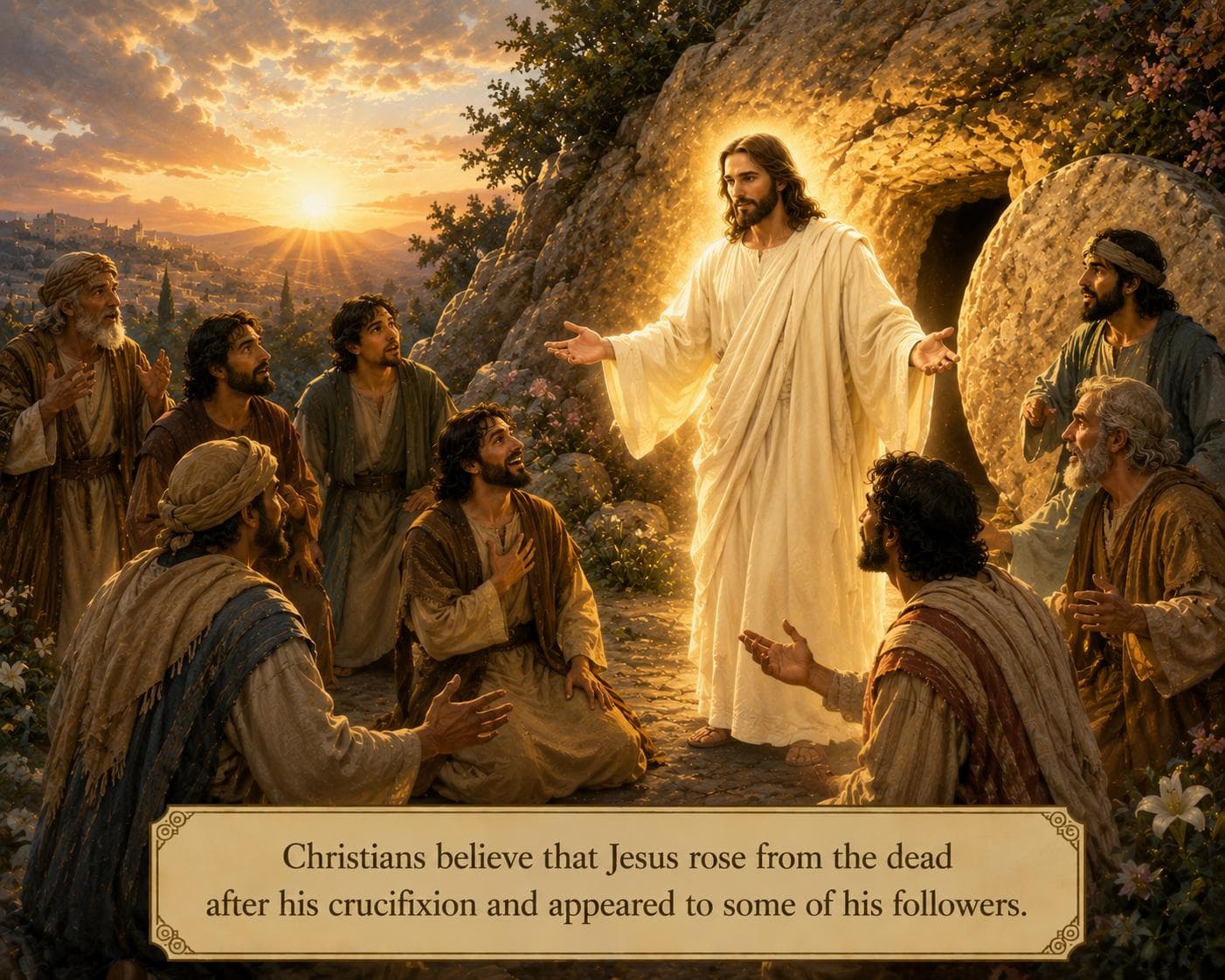
“Other miracles attributed to Jesus in the New Testament include walking on water and feeding thousands of people with a small amount of food. But most important of all, Christians believe that Jesus came back to life after he was killed.”
Sina asked, “You mean he came back to life after they crucified him?”
“Yes,” Erik said. “Belief that Jesus rose from the dead is one of the most important parts of Christian faith. This event is called the Resurrection of Jesus.”
Sina asked, “What do you mean by the most important parts of faith?”
Erik said, “Different religions have rules about how people should live and how they should treat others. Along with these rules, there are also beliefs that followers of a religion consider essential.
“For most Christians, some of the most important of these are belief in one God, in Jesus Christ, and in his resurrection. But different branches of Christianity do not completely agree about the relationship between faith, good deeds, God’s grace, baptism, and salvation. For example, the Catholic Church teaches that a person who does not know about Christ and the Church through no fault of their own, but sincerely searches for God and tries to do what is right, may still be saved.”
Sina asked, “Then why is believing in Jesus so important?”
“One reason,” Erik said, “is something Christians call original sin.”
“What original sin?”
Erik replied, “According to the Book of Genesis in the Old Testament, God created the world and placed Adam, the first human, in the Garden of Eden. God allowed him to eat from the trees in the garden except for the fruit of one particular tree. Then Eve was created. The story says that a serpent deceived Eve. She ate the forbidden fruit and gave some to Adam, and he ate it too.
“After their disobedience, Adam and Eve were driven out of the Garden of Eden. They could no longer reach the Tree of Life, whose fruit could have allowed them to live forever.
“In Christianity, this story is connected with the idea of original sin. Christians generally believe that the disobedience of the first humans damaged humanity’s relationship with God and that this damaged condition was passed on to later generations. However, different branches of Christianity have different ideas about exactly what original sin is and how its effects are passed on.”
Sina asked, “What does baptism have to do with this?”
Erik said, “Baptism is very important in many branches of Christianity. Water is used in the ceremony, and through baptism a person enters the Christian community. In the Catholic Church, baptism is believed to wash away original sin as well as any personal sins committed before baptism.”
Sina asked, “Then what did Christians in the past think happened to babies who died before they were baptized?”
Erik replied, “For centuries, that was a difficult question for Christians. Some early Christian thinkers believed that because these children had not been baptized, they could not enter Heaven. During the Middle Ages, some Catholic thinkers suggested another idea. They argued that since these babies had committed no personal sins, they should not suffer the punishments of Hell. So they spoke of a place or condition that later became known as Limbo. There was no suffering like the suffering of Hell there, but people there could not experience the full vision of God in Heaven.
“This question remained difficult for Catholic thinkers for centuries. In modern times, the Catholic Church studied it again very carefully. In 2007, an international group of Catholic theologians published a report, with the approval of Pope Benedict XVI, saying that there are strong reasons to hope that babies who die without baptism can be saved.”
Sina asked Erik, “Who is the Pope?”
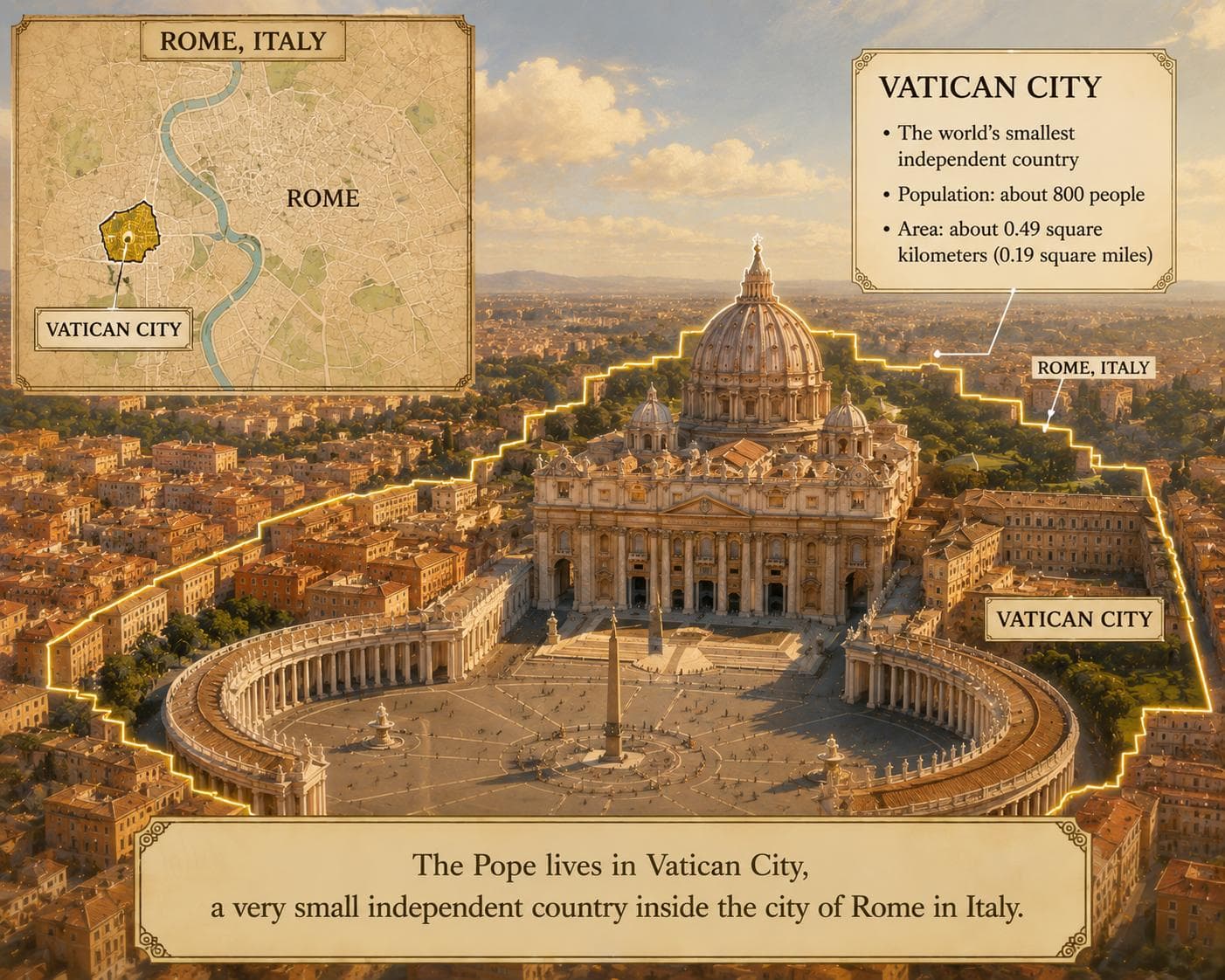
Erik replied, “Christianity has several major branches. The three largest are Catholicism, Protestantism, and Eastern Orthodoxy. The Pope is the leader of the Catholic Church. Catholics believe that the Holy Spirit guides the Church, although this does not mean that everything the Pope says comes directly from the Holy Spirit. Under certain special conditions, Catholics believe that the Pope can teach without error on matters of faith and morals.
“The Pope lives in Vatican City, a very small independent country inside the city of Rome in Italy.”
Sina asked, “Christians say that God is loving. But they also say that because of the first sin, human beings became separated from God. So how does God show love to people who have become separated from him?”
Erik replied, “Christians believe that the broken relationship between human beings and God was repaired through Jesus.
“They believe that Jesus’ death was an atonement for human sin. In simple words, they believe that through Jesus’ death, a way was opened for human beings to be forgiven and brought back into a good relationship with God.”
Sina asked, “Then why was baptism still necessary? If Jesus’ death dealt with the first sin, why did people still believe that someone who was not baptized might not go to heaven?”
Erik replied, “Different Christian churches explain this in different ways. Catholics traditionally teach that baptism frees a person from original sin and brings that person into the Christian community and into a new life with God. But they also teach that God’s mercy is not limited by the ceremony itself.
“More generally, Christians believe that salvation comes through Jesus. But different branches of Christianity disagree about exactly how faith, baptism, good actions, and God’s grace are related to salvation.”
At that moment, Sina’s father said, “I think we should get back into the car and visit a church. We can continue our conversation there.”
Stockholm was quiet, and it did not take them long to reach a church. There were very few people inside.
Sina asked Erik, “When is Jesus supposed to come back? And what will he do when he comes?”
Erik said, “The Book of Revelation, one of the books of the New Testament, describes many events connected with the end of the world and the return of Jesus. But Christians do not all agree about exactly how these events will happen.
“Throughout history, many Christians have believed that the end of the world and the return of Christ were near.
“Some Christians believe that when Jesus returns, he will rule the world for one thousand years. They believe that this will be a good and peaceful kingdom and that people throughout the world will accept Christ as their king. At the end, the dead will be raised and all people will be judged by Christ. Then it will be decided who will enter eternal life with God and who will be separated from God.
“Other Christians do not believe that the thousand years should be understood as exactly one thousand years. They see it as a symbol of Christ’s spiritual rule.”
Sina asked, “But don’t people already go to heaven or hell when they die?”
“Yes,” Erik replied. “Most Christians believe that after death the soul continues to exist. But Christians have different ideas about exactly what happens to the soul between death and the final resurrection. What most traditional Christian churches agree on is that, in the end, the dead will be raised. In other words, the final life after death is not only about the soul. There will also be a resurrection of the body.
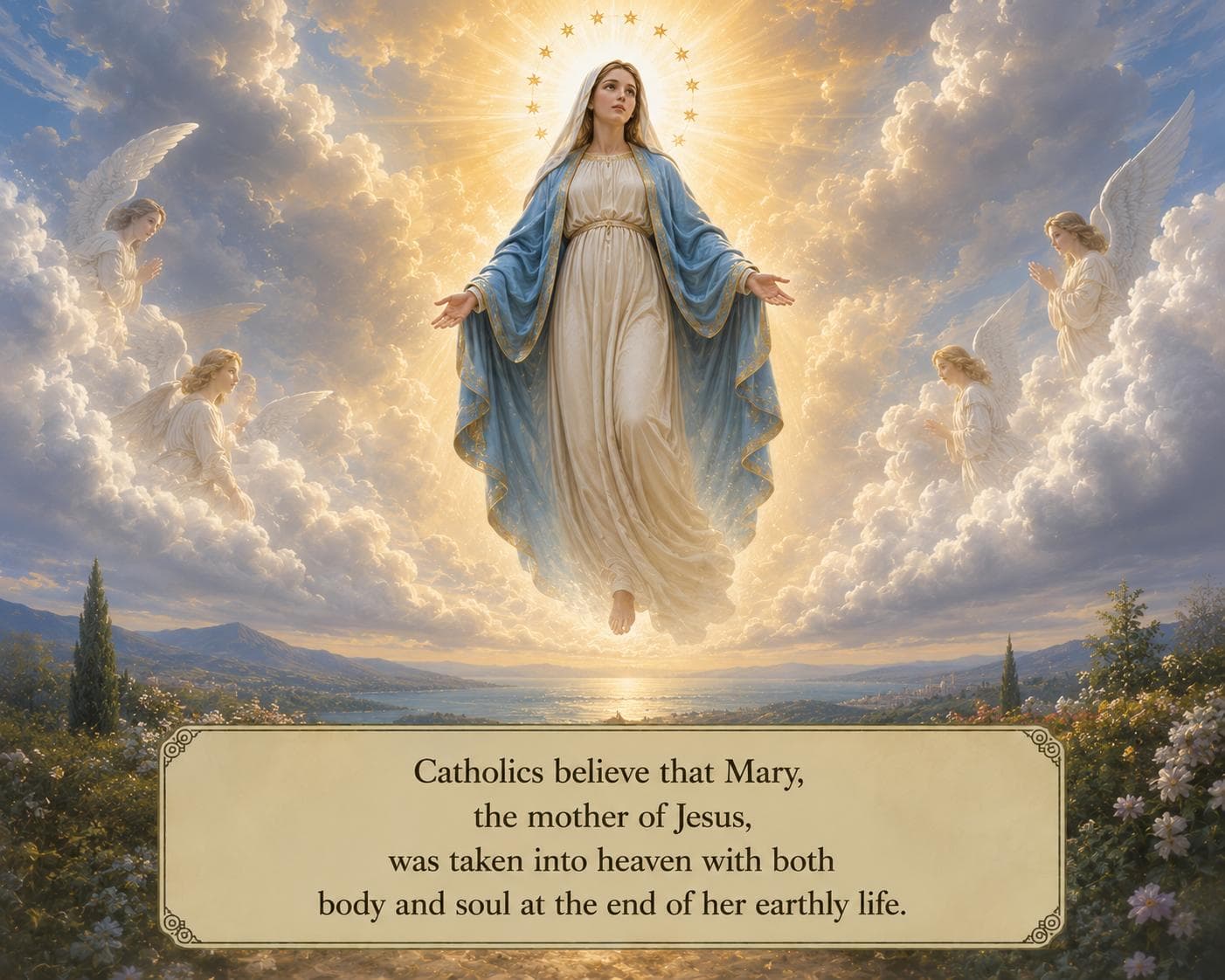
“Catholics also believe that Mary, the mother of Jesus, was taken into heaven with both body and soul at the end of her earthly life.
“Now, let me tell you about one particular Christian view of the end of the world. It is especially common among some Protestant Christians.
“They believe that before the Second Coming of Christ, there will be a terrible period of wars, suffering, disasters, and evil on Earth. This period is usually called the Great Tribulation.
“In this view, the events will finally lead to a great conflict between the forces of good and evil, often connected with a battle called Armageddon. In the end, the forces of evil will be defeated.
“Some Christians who hold this view also believe that before the Great Tribulation, Jesus will gather his true believers to himself. Those who are still alive and those believers who have died and are raised will be taken up to meet Christ. This event is commonly called the Rapture.
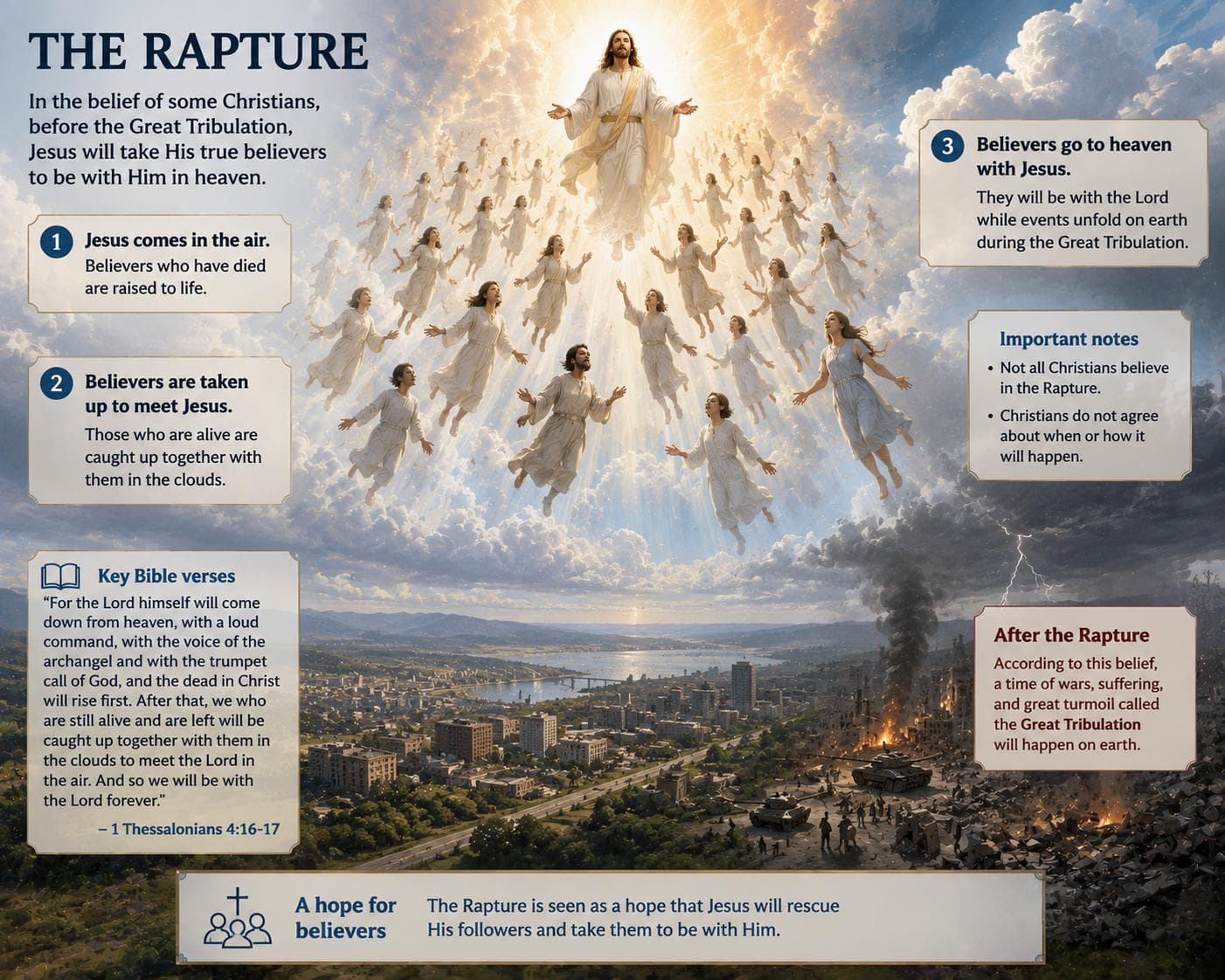
“However, not all Christians believe in the Rapture, and even among those who do, there is disagreement about when it will happen.”
Sina asked, “So what happens on Earth during the Great Tribulation?”
Erik answered, “According to some versions of this belief, a powerful enemy of God will appear near the end of history. He is usually called the Antichrist.
“The Antichrist is described by these believers as a powerful and evil ruler who will deceive many people and oppose God and Christ. Some Christians who believe that the end of the world is very near even think that the Antichrist may already be alive and that his identity will soon become known.
“Throughout history, people have accused many different persons, governments, churches, religions, and political movements of being the Antichrist or being connected with the Antichrist. At different times, political leaders and even entire countries have been given this name by their enemies.”

Erik continued, “This view of the future can also affect the way some believers think about the world today. Some of them believe that the world will become worse before Christ returns. Because of this, they may think that the most important task is not to create a perfect society, since God himself will finally put things right. Instead, they may give greater importance to spreading Christianity and preparing people for the return of Christ.
“Some followers of this view have also believed that the Church should not try to take political power in order to build God’s kingdom on Earth. But this does not mean that everyone who believes in the Great Tribulation is against helping society or improving people’s lives. Christians who hold these beliefs can have very different ideas about politics and social work.
“There are also Christians with a very different understanding of Christ’s rule. They believe that Christ’s kingdom has already begun and that Christ has been ruling spiritually since his resurrection. Some Christians have believed that, through the spread of Christianity and the work of believers, the world can gradually move toward greater peace and goodness before Christ returns.
“In different periods of history, some Christians have concluded from such ideas that the Church should take an active part in society and even in government, so that laws and people’s lives will become more closely connected with Christian teachings. But not everyone who believes that Christ is already ruling reaches this conclusion. Many Christians who believe in Christ’s present spiritual rule also support a separation between the Church and political government.
“So you can see that Christians agree that Jesus will return, but they have very different ideas about what will happen before and after his return.”
At that moment, one of the priests in the church walked toward them. After welcoming everyone, he looked at Erik and said, “Don’t you want to come back to God?”
Erik laughed and replied, “Don’t you want to give up your beliefs?”
The priest laughed too and walked away.
Sina asked, “What did that priest mean?”
Erik replied, “I’ll tell you what he meant, but first I’m going to take you to a restaurant for lunch. Before we leave, let me tell you a little about the history of this church.”
After Erik had told them about the church, he asked, “What kind of food would you like to try?”
Sina said, “I like trying any kind of food that is new to me.”
Sina’s father said, “I still prefer Iranian food, but let’s go somewhere where Sina can try some European dishes.”
Erik smiled. “I know an Iranian restaurant that serves both Iranian and European food.”