Journey into the Heart of Religions by N. Fakhr - HTML preview
Download the book in PDF, ePub, Kindle for a complete version.
Judaism
Inside the car, Erik said to Sina, “Most religious people in Europe are Christians. Would you like to learn about Christianity?”
“Yes,” Sina replied.
“Do you know anything about Judaism?” Erik asked.
“No. I don’t know much about it.”
“Then it would be better to visit a synagogue first. A synagogue is a place where Jews worship. To understand Christianity, it helps to learn about Judaism first.”
A few minutes later, they arrived at a white building that was not very large. They went inside. A man gave them small, round caps to put on their heads.
“These caps are called kippahs,” Erik explained. “People put them on before entering the synagogue.”
“Why do we have to wear them?” Sina asked.
“It is a way of showing respect in the synagogue.”

“I understand,” Sina said. “In some temples, we have to take off our shoes before entering, also as a sign of respect.”
There were not many people inside the synagogue. One man was reading from a scroll, chanting the words in a special melody. He was careful not to touch the writing with his hand. Instead, he followed the lines with a long pointer that had a tiny metal hand at its end. He was also wearing a kippah and was quite old.
“What is that man doing?” Sina asked Erik.
“He is reading the Torah,” Erik replied. “The Torah is part of the Jewish sacred scriptures, which Christians call the Old Testament. A Torah scroll is traditionally handwritten on parchment made from the skin of a kosher animal. A trained scribe writes it in a long and difficult process, and the finished parchment is rolled into a scroll.
“Because people avoid touching the writing with their fingers, they use a special pointer while reading. It has a tiny hand at its end. It is called a yad.”

“The Torah is written in Hebrew, the ancient language of the Jewish people, and it is traditionally chanted in a special way. The Torah scroll is treated with great respect. In some Jewish communities, if a Torah scroll falls to the floor, fasting may be observed as an expression of sorrow and respect.
“That old man is also a rabbi.”
“What does rabbi mean?” Sina asked.
“A rabbi is a Jewish religious teacher and leader. The word rabbi comes from Hebrew and means something like ‘my teacher’ or ‘my master.’”
When the old man finished reading the Torah, he turned toward them and welcomed them with a smile and a nod. Sina told Erik that he wanted to talk to the man about Judaism, so they all went over to him.
The old man was pleased to explain his religion to Sina, but first he asked them to go into the synagogue courtyard so that they would not disturb the quiet inside.
In the courtyard, Sina asked him, “How old is Judaism?”
“The beginnings of Judaism go back about four thousand years,” the rabbi replied.
“Excuse me, Rabbi,” Erik interrupted. “I thought Moses, the prophet of the Jewish people, lived about 3,300 years ago, not 4,000 years ago.”
The rabbi laughed. “Yes, you are right. But we trace our religious story back to the prophet Abraham, who lived about four thousand years ago.”
“Oh, yes! In that sense,” Erik said.
The rabbi continued, “We Jews believe that our story as a people begins with Abraham. We believe that there is one God. He created everything, and all goodness comes from Him. He has complete power and complete knowledge. He knows everything.
“God asked Abraham to do certain things. Abraham obeyed Him and passed God’s tests.”
“What did God ask him to do? And what were the tests?” Sina asked.
“For example, God told Abraham to leave his homeland and go to the land of Canaan. Canaan was in the region where Israel and Jerusalem are today. According to our sacred stories, Abraham was already an old man, so leaving his home and beginning a new life was not easy. God promised Abraham that if he went, He would make a great nation come from him.”
“How can one person become a great nation?” Sina asked.
“Through his children, grandchildren, and later generations,” the rabbi explained. “Abraham was very old, and his wife Sarah was also far beyond the usual age for having children. They had not had a child together. But God caused Sarah to become pregnant, and Isaac was born. In our belief, this was a miracle. It showed that God could act beyond the ordinary course of nature in order to fulfill His promise.
“Later, God tested Abraham’s obedience by commanding him to sacrifice Isaac. Abraham was prepared to obey God because of the covenant between them, but God stopped him before Isaac was harmed.”
“What covenant?” Sina asked.
“The covenant was a promise between God and Abraham. Abraham was to obey God, and God promised that a great people would come from him, that He would guide and protect them, and that He would make Abraham’s name great.”
“What does it mean to make someone’s name great?” Sina asked.
“It means that the person becomes widely known and respected for his goodness and importance,” the rabbi replied. “From Abraham’s descendants came a people called the Israelites. Later, at Mount Sinai, God made a covenant with the Israelites in the presence of Moses, continuing the covenant that had begun with Abraham.
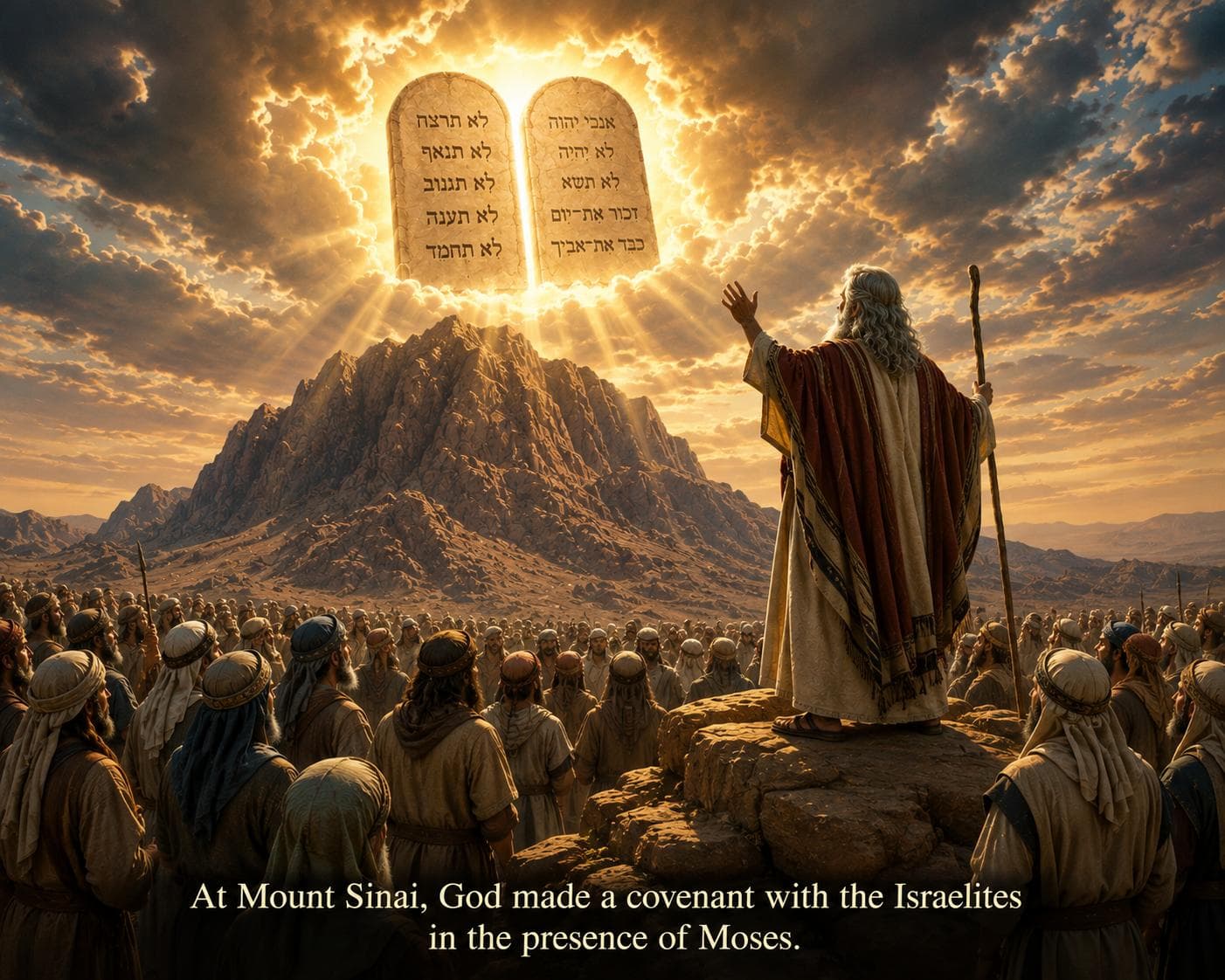
“There were two sides to this covenant. On one side were the Israelites. They were to devote themselves to serving God by following His laws and helping to make the world a better and holier place.
“On the other side was God. He promised to remain with them and never abandon them, because they were His chosen people.”
“Like the Aryan people who were chosen by the Hindu gods?” Sina asked.
The rabbi said, “I don’t know much about what you just mentioned. I only know that there is one God, and He chose the Jewish people for such a covenant.
“God gave His commandments to Moses in the Torah. The Torah is made up of five books, and these five books form the first part of the Jewish holy scriptures, called the Tanakh, or the Hebrew Bible.
“According to Jewish tradition, the Torah contains 613 commandments. Ten of the most important and well-known commandments are called the Ten Commandments.
“The Torah also tells us about the covenant between us and God.”
Sina asked, “Does that mean the whole Hebrew Bible is about the promises you and God made to each other?”
“There are many other things in it too,” the rabbi replied. “For example, the first book of the Torah, called Genesis, tells us about the creation of the world.”
Erik said, “Christians also accept the Jewish scriptures as holy books. They call these scriptures the Old Testament.”
Sina asked, “Why ‘old’? Is there a newer one?”
“Yes,” Erik said. “After Jesus, other books were written about Jesus, his teachings, and the early Christians. Christians call these books the New Testament. The Old Testament and the New Testament together form the Christian Bible.”
But Sina’s thoughts had already turned to the creation of the world. He eagerly asked the rabbi to tell him what the Torah said about it.
The rabbi said, “As I told you, the Torah itself is made up of five books. The first one is called Genesis. It describes how God created the heavens and the Earth. Some religious people understand the six days mentioned there as six stages of creation. Human beings were created on the sixth day.”
Erik did not seem completely satisfied with the rabbi’s explanation.
“But Rabbi,” he said, “the Torah itself speaks of six days, not six stages.”
Sina was not sure which explanation to accept.
“What exactly does the Torah say?” he asked.
Erik said, “When I was a child, my kind grandfather, who was a devout Christian, encouraged me to learn the first verses of Genesis. I still remember them.
“At the beginning of Genesis, it says that God created the heavens and the Earth. The Earth was empty and without form, and darkness covered it. Then God commanded light to appear. God saw that the light was good. He called the light day and the darkness night. Then came evening and morning—the first day.”
Sina asked, “What does ‘evening and morning—the first day’ mean?”
Erik replied, “For centuries, many people understood these words to mean an ordinary day, rather than a very long period of time. Of course, today some Jews and Christians understand the word day in this story differently.”
“What did God do after that?” Sina asked.
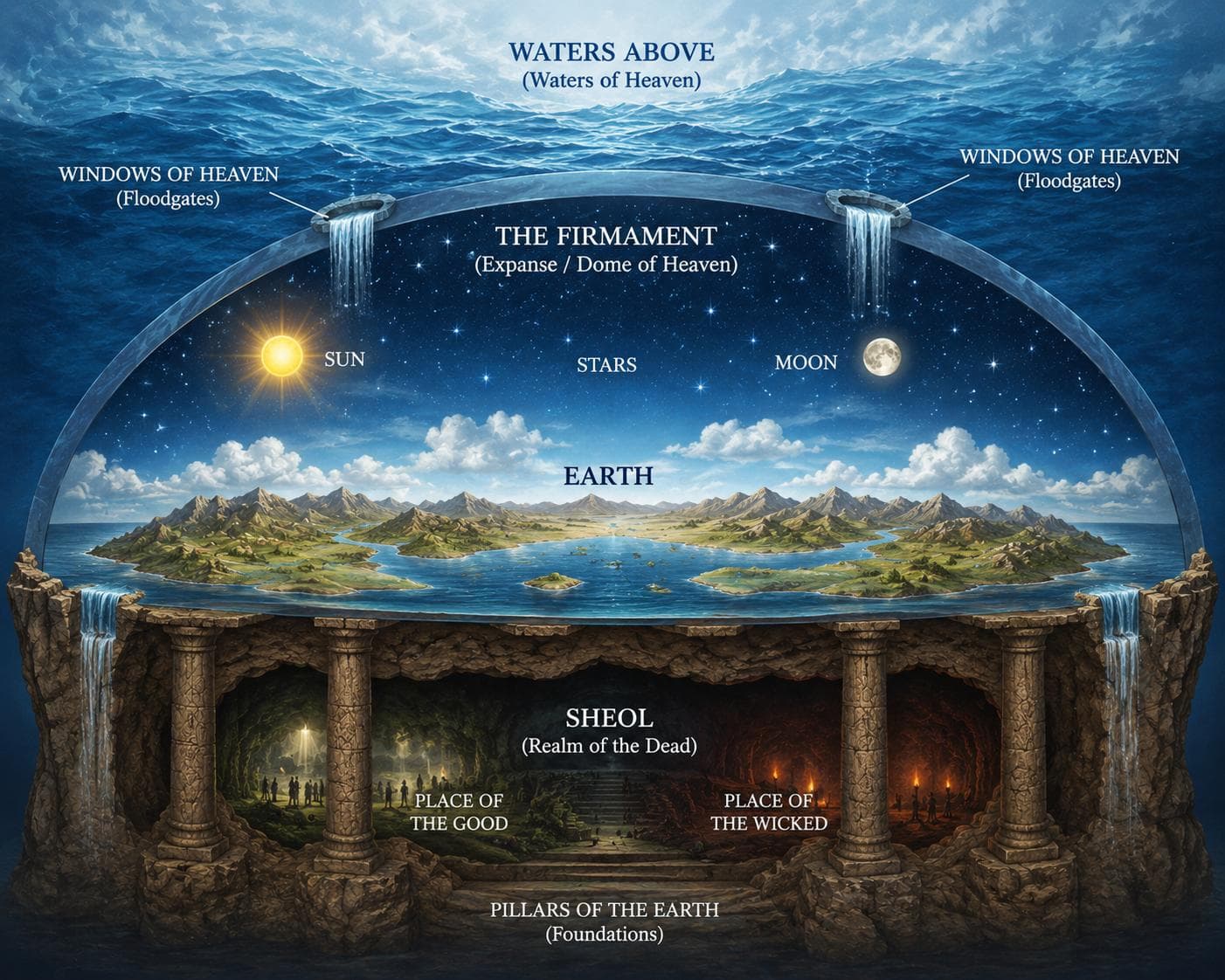
Erik continued, “Genesis says that on the second day, God made an expanse between the waters. There were waters above it and waters below it. God called this expanse the sky.
“On the third day, God commanded the waters on the Earth to gather together so that dry land would appear. He called the dry land Earth and the gathered waters seas. Then God commanded plants to grow on the land—plants that produced seeds and trees that produced fruit.
“On the fourth day, God made the lights in the sky, including the Sun, the Moon, and the stars.
“On the fifth day, God created the creatures of the sea and the birds.
“On the sixth day, He created the animals that lived on land. Then He created human beings and gave them authority over the Earth and the living things upon it.
“And at the end, God looked at everything He had made and saw that it was very good.
“All of this is described in the first chapter of Genesis. After that, the Torah tells many stories about human beings and their history, eventually leading to the story of Moses.
“For a very long time, many Jews and Christians who read the ages and generations given in the Bible as a literal history calculated from them that the world had been created only a few thousand years ago.
“But as scientists began studying rocks, fossils, and the Earth itself, they found evidence that the Earth was enormously older than that. These discoveries did not agree with a literal reading of the biblical timeline, and this led to serious disagreements among some religious believers and scientists. Today, many Jews and Christians do not understand the creation story in Genesis as a scientific description of how the universe and the Earth were formed.”
The rabbi said, “I don’t agree with the way some people reacted to those scientists. I think the Torah had been interpreted incorrectly.”
Sina asked him, “What do you mean by ‘interpreted incorrectly’?”
“Well,” the rabbi replied, “I don’t think we should have drawn such definite conclusions from those verses. We cannot be certain that God meant to say that the universe is only a few thousand years old or that He created everything in six ordinary twenty-four-hour days.”
Sina thought for a moment.
“If God didn’t want people to understand it that way,” he asked, “why didn’t He say it differently? You said God knows everything. So He must have known how people would understand those words.”
The rabbi replied, “Perhaps if God had explained the reality as we understand it today, people living thousands of years ago would not have been able to understand Him. They did not have the knowledge that you and I have today.”
Sina said, “But I’m only in school, and I didn’t need to know very much to understand that the universe is about 13.8 billion years old. My father told me that the Earth is about 4.5 billion years old and that living things gradually evolved over very long periods of time, and I could understand that too.
“Actually, I don’t think what my father told me is harder to understand than what Genesis says. Maybe it is even easier.”

The rabbi said, “If you learn the story of Moses and his people, and pay attention to what our religion says happened to them, you may better understand why Jews believe in Judaism and why we believe that Moses received God’s teachings.”
Sina said, “Please tell me their story.”
The rabbi said, “When God chose Moses as a prophet and spoke to him, He told him to go to Pharaoh, the ruler of Egypt. The Israelites were living under the rule of Pharaoh and the Egyptians and were suffering greatly. Moses was to ask Pharaoh to let them leave Egypt. If Pharaoh refused, God would punish Egypt.
“Pharaoh refused to listen to Moses. So, by God’s will, frogs came out of the Nile and spread everywhere. Pharaoh asked Moses to make the frogs go away and promised that he would let the Israelites leave. But when the frogs were gone, Pharaoh broke his promise.
“Moses went to Pharaoh again and again. Each time Pharaoh refused, another punishment came upon Egypt. After seeing the punishment, Pharaoh would ask Moses to make it stop and would promise to let the Israelites go. But afterward, he would change his mind.
“There were many such punishments: insects, swarms of flies, disease among the animals, painful boils on people and animals, hail mixed with fire, locusts, and others. But none of these finally persuaded Pharaoh to let the Israelites go.
“At last, God told the Israelites to kill lambs or young goats one night and put some of the blood on the sides and tops of the doors of their houses. They were to remain inside and eat the meat.
“God said that during that night He would pass through Egypt, and the firstborn of the Egyptians, both humans and animals, would die. But when He saw the blood on the doorway of an Israelite home, He would pass over that house, and the people inside would be safe.”

Sina asked, “But you said that God knows everything. Did He really need blood on the doors to know which houses belonged to the Israelites? And why did those poor animals have to be killed?”
The rabbi replied, “The blood was not there because God needed information. God already knew who lived in each house. It was a sign of the Israelites’ faith and obedience to God and His command. We may not understand the full meaning of everything God asks people to do.”
“Please continue,” Sina said.
The rabbi went on. “That night many firstborn children died, including Pharaoh’s firstborn son, and there was great mourning throughout Egypt. In the middle of all this, Moses led the Israelites out of Egypt.”
“I think I know what happened next,” Sina said. “Pharaoh chased the Israelites, but the sea was miraculously divided, and they escaped by passing through it.”
“Yes,” said the rabbi. “God, through Moses, led the Israelites toward the Promised Land—the land of Canaan.”
Sina asked, “How many Jews are there in the world today?”
“About fifteen to sixteen million,” the rabbi replied.
Sina thought for a moment. “Considering God’s promise to Abraham that his descendants would become a great nation, doesn’t fifteen or sixteen million seem rather small compared with the more than eight billion people living in the world today?”
The rabbi said, “Throughout history, Jewish people have suffered terrible persecution. Many times we were driven from our homes and lands, and many of us were killed. During the Nazi period and the Second World War, about six million Jews were murdered by Nazi Germany and its allies and collaborators. This terrible mass murder is called the Holocaust. Yet despite everything that has happened to us, the Jewish people have survived. We believe that God has remained with us and protected us.”
Sina said, “I think that if an all-powerful God wanted to protect a people, He could protect them better than that. He could prevent so much persecution and killing from happening to them in the first place.”
The rabbi replied, “Yes, but this is not the end of the story. Our scriptures tell us that in the future there will be an age of peace and a much greater knowledge of God. This will happen through the promised Messiah. He will gather the Jewish people, bring an end to oppression and hatred, and lead the world toward peace.”
Sina looked surprised. “Is this the same Messiah that Christians believe in?”
Erik answered, “Christians believe that Jesus was the Messiah promised in the Jewish scriptures. Jesus himself was understood by his followers as making this claim. But before those promises were fulfilled, he was crucified by the Roman authorities. According to the New Testament accounts, some Jewish religious leaders of that time also played a part in the events that led to his arrest and trial. Christians believe that Jesus will return one day and that the remaining promises will then be fulfilled.”
Sina turned to the rabbi. “Then why didn’t the Jews accept Jesus as the promised Messiah?”
The rabbi answered, “According to our understanding of the scriptures, when the Messiah comes, he will bring about the things that the prophets promised. Nations will no longer raise swords against one another, and people will no longer learn how to make war.
“He will spread the knowledge of the God of Israel throughout the world, so that people everywhere will know and worship God. The Jewish people will be gathered together again.
“If a person does not accomplish what the scriptures say the Messiah will accomplish, then from our point of view, he cannot be the Messiah. Many people after Moses have claimed to be the Messiah, and their claims were rejected.
“Christians believe that Jesus will complete these things when he returns a second time. But we Jews do not find the idea of such a second coming in these prophecies. We understand them to mean that the Messiah will accomplish these things when he comes.
“There are other difficulties as well. The Messiah is supposed to be a descendant of King David. Christians say that Jesus was born to Mary without a human father. From our point of view, this creates a problem for the claim that he was a descendant of David.
“And from our point of view, the Messiah should lead the Jewish people toward the Torah and its commandments, not away from them. Christianity later came to teach that many of the commandments of the Torah were no longer required of its followers.
“So, from a Jewish point of view, Jesus did not fulfill the things that would identify the Messiah.”
The rabbi paused and then continued.
“The coming of the Messiah is very important to us. In one of our ancient religious texts, we are told that one of the questions a person will be asked is whether he waited and hoped for redemption. One of the best ways to wait for the Messiah is to love other human beings, obey the commandments of the Torah, and encourage others to live good and righteous lives.
“I and many other religious Jews believe that perhaps the coming of the Messiah is getting closer. Jewish people have returned to the land of Israel, the land has developed greatly, and many young people are studying the Torah again. We hope every day that the promised Messiah will come, and we believe that what we do can help prepare the world for that time.”
Sina asked, “Did Jesus perform any miracles to show that he was the promised Messiah? Maybe what you understand from the scriptures about the Messiah is based on a wrong interpretation. After all, as you said yourself, for thousands of years people also misunderstood what the Torah said about the creation of the world.”
The rabbi replied, “There are stories about Jesus performing miracles. But miracles alone do not prove that someone is a prophet or the Messiah. Our scriptures warn us that even someone who gives a sign or wonder may try to lead people away from God’s commandments. So a miracle by itself is not enough.”
Sina thought for a moment.
“But wasn’t your belief in Moses also based on stories about his miracles? If miracles are not enough, how do you know that Moses himself was not someone who was trying to deceive the Israelites? And how do you know that the stories about his miracles were not simply invented?”
The rabbi answered, “Our faith in Moses is not based only on his miracles. It is based on divine revelation.”
“But the revelation happened to Moses,” Sina said. “You weren’t there when God spoke to him.”
“That is true,” the rabbi replied. “And that is exactly why, according to our tradition, God did not reveal Himself only to Moses at Mount Sinai. The whole people of Israel witnessed the revelation there. They heard God and experienced His presence.
“Our tradition even says that the souls of future generations of Jews were also present at Sinai. In this sense, the covenant was made not only with the people who were physically standing there, but also with the generations that would come after them.”
Sina looked at him curiously.
“Do you personally remember being at Mount Sinai more than three thousand years ago?”
The rabbi smiled.
“Sometimes, in my dreams, I see scenes of the covenant at Sinai. They feel to me almost like a memory.”
Sina was silent for a few moments and then said:
“If I understand you correctly, I don’t remember making a covenant at Mount Sinai. And you yourself said that it would not be reasonable to believe someone just because there are stories about his miracles. So, for me, wouldn’t the most reasonable thing be not to believe in Judaism unless I find stronger evidence for it?”
The rabbi said, “But when people follow the Jewish teachings about doing good and obey the religious laws, they may see such a change in themselves that they become deeply convinced that these teachings come from God.”
Sina asked, “What kind of laws?”
The rabbi replied, “For example, there are laws about worship, how we should treat other people, and what we may eat and drink. Believing Jews find meaning, discipline, and peace in following these laws.”
“Are there foods that Jews are not allowed to eat?” Sina asked.
“Yes. Food that is permitted under Jewish religious law is called kosher. For example, among land animals, cows, sheep, and goats are kosher because they both chew the cud and have split hooves. Pigs and camels are not kosher. Birds of prey, such as eagles and hawks, are also forbidden.
“For animals that live in water, the Torah gives another rule: they must have both fins and scales. So shellfish, octopuses, dolphins, and whales are not kosher.
“Animals whose meat is eaten must also be slaughtered according to Jewish religious law. Blood must be removed from the meat according to the rules of kashrut. There are also rules about keeping meat and dairy foods separate. They must not be cooked or eaten together.
“There are other food laws too. The Torah contains laws about giving part of certain agricultural produce as tithes. Some of these laws are especially connected with produce grown in the Land of Israel.
“There are also special rules for wine. For wine to be kosher, it must be produced according to the laws of kashrut and under proper religious supervision.”
Sina asked, “But what has following these laws and keeping the covenant with God done for the Jews who have lived until now? As you said, during the past thousands of years, Jews have suffered many times and have often been persecuted and killed.”
The rabbi answered, “Our religion does not teach that the reward for goodness must always come during this life. Jewish traditions also speak about what happens after death.
“Many Jewish teachings speak of Gan Eden, the Garden of Eden, as a state or realm of reward for the righteous after death. There they experience a happiness and closeness to God that cannot easily be described.
“Jewish tradition also speaks of Gehinnom. But Gehinnom is not necessarily understood in the same way as an everlasting hell. In many Jewish teachings, it is a temporary state in which a person’s soul is purified from the wrong things that person has done. According to an important rabbinic tradition, this process normally lasts no longer than twelve months.
“Different Jewish writings describe these things in different ways. Some old teachings even describe the suffering caused by our bad actions in the form of harmful beings created by those actions.”

Sina asked, “What happens to very bad people?”
The rabbi replied, “Jewish writings do not all give exactly the same answer. There are different ideas about the final fate of people who have done great evil. So I should not tell you that all Jews believe exactly the same thing about this.”
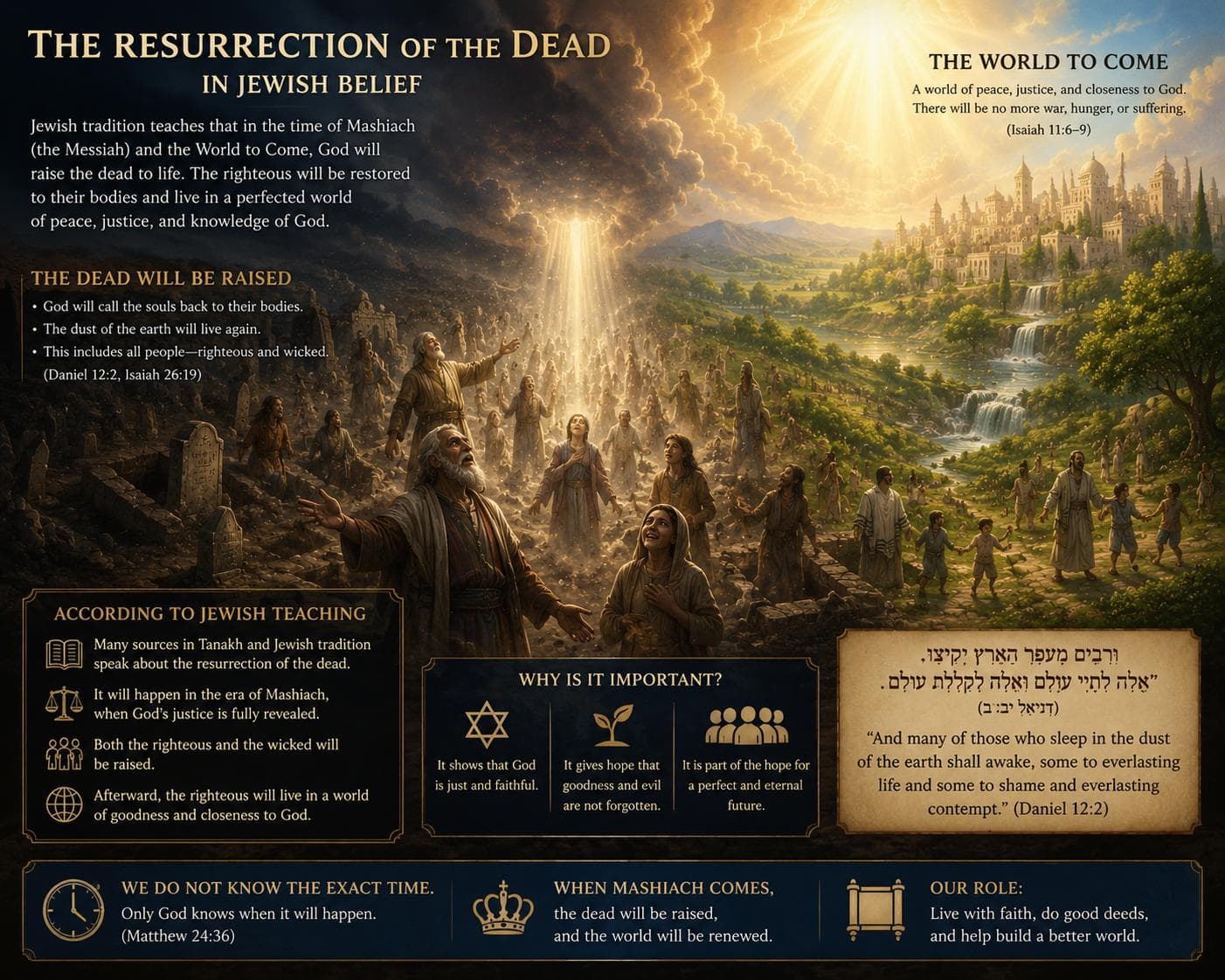
He continued, “There is also the belief in the resurrection of the dead. In traditional Judaism, there is a belief that in the future the dead will be raised. This is connected with the hope for a future age in which the world will become better and God’s justice will be more fully revealed. There are different Jewish views about exactly when this will happen and what it will be like.”
Just then, someone came out of the synagogue and said something to the rabbi in Swedish.
The rabbi told them that he had to leave.
They thanked him, said goodbye, and watched as he went back inside the synagogue.