

Journey into the Heart of Religions by N. Fakhr - HTML preview
Download the book in PDF, ePub, Kindle for a complete version.
Journey to Japan
The flight to Tokyo was very long, and Sina was getting bored. He asked his father, “What is the name of the friend you said lives in Japan?”
Father: “Mr. Maragheh-ee.”
Sina: “I mean his first name.”
Father: “Hossein. Mr. Maragheh-ee and I have been friends since high school. After high school, he went to Japan and stayed there. After a while, he came back to Iran, got married, and then returned to Japan with his wife. He has lived in Japan for many years now, and I sometimes see him when he comes to Iran.”
Sina: “Dad, you said he became a Buddhist. Didn’t he have to change his first name? People who become Muslims sometimes change their names.”
Father: “As far as I know, he didn’t change his.”
Sina: “Are all Japanese people Buddhists?”
Father: “No. Maybe around twenty percent are Buddhist. Most Japanese people are Shinto.”
Sina: “What kind of religion is Shinto?”
Father: “I don’t know exactly. I only know that it has many gods. I think Mr. Maragheh-ee can tell us more about it.”
Father looked very sleepy.
He said, “I think we’d better get some sleep so we’ll feel fresh when we arrive.”
Shinto
As they rode in a taxi toward their hotel, they noticed that Tokyo was a huge, crowded city, yet very clean and orderly.

The next morning, Mr. Maragheh-ee, who was a slightly overweight man, came to the hotel with his daughter. They all met in the hotel lobby. Mr. Maragheh-ee introduced his daughter, whose name was Sonam. She was three years older than Sina and was fifteen.
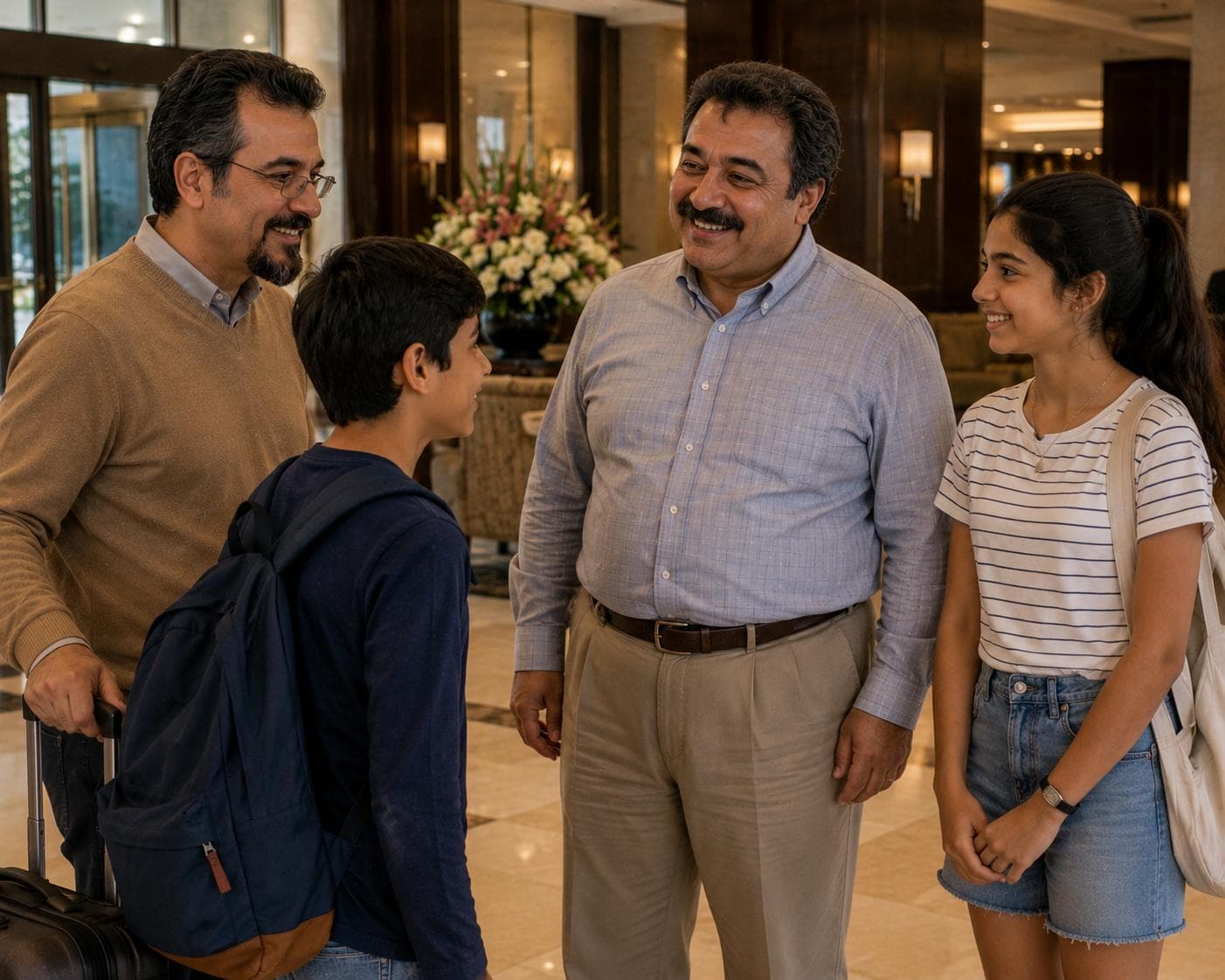
After greeting Sina and his father, Mr. Maragheh-ee turned to Sina and said, “Since you said you wanted to learn about the culture and beliefs of the Japanese people, I thought I would take you to a Shinto shrine today.”
They all got into Mr. Maragheh-ee’s car and set off.
Sina asked him, “Do you know what kind of religion Shinto is?”
Mr. Maragheh-ee said, “Shinto followers believe that there are countless spirits in the world, and these spirits are called kami. These kami are able to do many things.
“Shinto followers say that at first there was nothing. Then the first kami, called Amenominakanushi, came into existence by itself. He is the spirit of the North Star—the star that is in such a position in the sky that, as the Earth rotates, this star seems to stay still while the other stars seem to move around it. Of course, this is only how it looks. As I said, it is actually the Earth that is rotating. This star is in the northern part of the sky. This kami created the world.”
Sina: “What does ‘the spirit of the North Star’ mean?”
Mr. Maragheh-ee: “It means that he dwells in the North Star, although a kami can also dwell in other things. Shinto followers believe that if an object or an animal fills a person with a sense of wonder, this may be a sign that a kami dwells within it. It could be a tree, a rock, or a mountain.”
Sina: “How did that first kami create the world?”
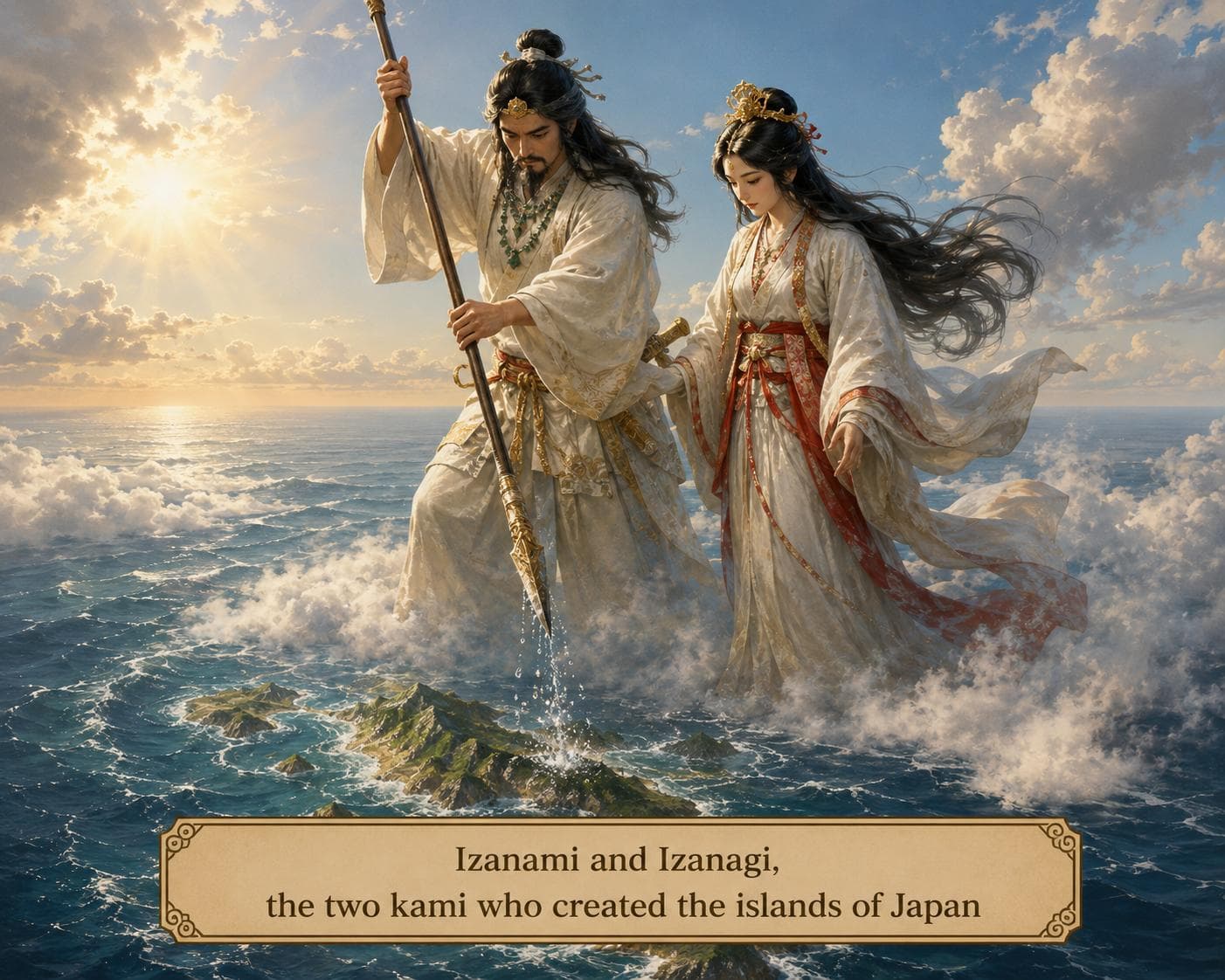
Mr. Maragheh-ee: “He and two other kami, known as the kami of creation, brought the world and other kami into existence. Two of these kami, named Izanagi and Izanami, were given the task of creating a new land with a spear that had been given to them.
“They stirred the sea with the spear, and when the last drop of water fell from its tip, a large island appeared in the sea. They lived on the island and created a palace there.
“In this palace stood a large pillar. When they wished to have children, they performed a ceremony. The male kami walked around the pillar to the left, and the female kami walked around it to the right. Whenever they met, the female kami greeted the male kami first. In this way, they had two children. These two children were actually two islands.
“As you can see, Shinto followers believe that just as a physical thing such as a mountain or a rock can have a spirit called a kami, a kami can also have a physical form—for example, the form of an island.
“The two kami saw that the two islands were not good and had not turned out as they were supposed to. They realized that they had not performed the ceremony according to the proper laws of nature.”
Sina: “I don’t think ‘the laws of nature’ in Shinto means things like gravity or the laws of physics that physicists have discovered.”
Mr. Maragheh-ee: “That’s right. By ‘laws,’ they mean certain ways of doing things that they believe can win the favor of the kami. And Shinto followers believe that the kami themselves can also affect events according to these laws.
“For example, the two kami walked around the pillar again, but this time the male kami greeted the female kami first. In this way, eight islands came into existence. These were the islands of Japan.
“They also brought several other kami into existence, but while doing this, the female kami died. In fact, they tried to do things that went against the laws of nature. This led the female kami to give birth to the god of fire, and the birth caused her death. No matter how hard the male kami tried, he could not bring his wife back to life, because that too was against the laws of nature.
“So the male kami returned to his great island. It was then that Amaterasu, the Sun Goddess, was born from his left eye, the god of the Moon came from his right eye, and Susanoo, the god of storms, was born from his nose.”
Sina: “Are these things written in a Shinto holy book?”
Mr. Maragheh-ee: “Shinto followers do not have a holy book. Shinto has existed for at least about 2,600 years, but in the eighth century AD, about 1,300 years ago, stories about the creation of the world and the creation of Japan were collected in a book called the Kojiki.
“Shinto followers believe that people must understand kannagara, the law of the natural order, in order to live happily. But they do not see the laws of the natural order as the same thing as scientific laws. What they really mean is understanding the world of the kami and how the kami affect human life and the natural world around us.
“For example, they believe that honesty, honor, and sincerity allow people to communicate with the kami and ask them for what they want. Bad deeds, lying, hypocrisy, and murder can anger the kami. If someone dies and their spirit is not shown proper respect and the proper religious ceremonies are not performed for them, their spirit may become angry with the living and harm them.”
Sina: “Do human spirits become kami too?”
Mr. Maragheh-ee: “Yes. In fact, Shinto has different ideas about what happens to the human spirit after death.”
Sina: “Do you mean there are different branches of Shinto, and each one says something different about what happens to people after they die?”
Mr. Maragheh-ee: “Something like that. Some say that after death, a person’s spirit goes to an underworld belonging to the dead. This world is separated by a river from the world of the living above it. Some believe in a heaven for the spirits of good people, and many believe that dead people become kami and can affect the lives of the living. That is why they build shrines for their dead, usually in their homes.
“According to the laws of the natural order, or kannagara, people must purify themselves in order to communicate with these kami and have their prayers answered. They do this through certain practices, such as making offerings and bringing gifts to shrines. From time to time—for example, once a year—they also ask Shinto priests to perform special ceremonies to purify and bless their workplaces. Sometimes even international companies have their branches around the world blessed, or have Shinto priests bless cars that are going to be exported.”
Sina asked, “What does ‘bless’ mean?”
His father answered, “To bless something means to try to bring more good to it—to help things go better, with more benefit and less harm.”
Sina turned back to Mr. Maragheh-ee and asked, “Are all these things part of kannagara, the laws of the natural order?”
Mr. Maragheh-ee replied, “Yes. Basically, they believe that the affairs of the world are in the hands of the kami, and kannagara tells them how they can influence these affairs in their own favor by pleasing the kami and avoiding their anger. The word kannagara means ‘the way of the kami,’ or the way in which the kami reveal themselves. And the word Shinto itself means ‘the way of the gods.’”
Sina: “Mr. Maragheh-ee, you said we’re going to a Shinto shrine. Is a shrine different from a temple?”
Mr. Maragheh-ee: “As far as I know, a temple is a place where a god is worshipped, but that god is not limited to that particular place. The place has simply been prepared for worship.
“A shrine, however, is a place where the thing being worshipped is itself present. It may not be present elsewhere, or if it is, people may not be able to communicate with it there. At least, Shinto beliefs are something like that. Of course, we can never say that everyone who visits a shrine believes that a god or spirit is limited to that one place. But since people make the effort to travel to the shrine and make their requests there, we can say that, deep down, they more or less believe that the god or spirit is more strongly present in that particular place.
“In Shinto, kami are believed to stay temporarily in particular places—for example, in a mountain, a waterfall, or a rock. Shinto shrines are built at such places.
“Certain objects are also used there because people believe they work somewhat like a lightning rod on top of a tall building, which attracts lightning and carries the electricity into the ground. In the same way, these objects are believed to attract a kami. They may be things such as a sword, shrine decorations like a rope with pieces of paper hanging from it, a doll, and most commonly, a mirror.
“In this way, portable shrines can also be made. They are carried on the shoulders of worshippers on two wooden poles during festivals. People can also have a small shrine and place of worship in their own homes. Usually, the object where the kami is believed to be present is a round mirror. These household shrines are called kamidana.”
Sina: “How do they know that a kami is present in the mirror or in some other object?”
Mr. Maragheh-ee smiled and said, “These kamidana are sold at local shrines. There, during a religious ceremony, part of the kami of that shrine—or another kami chosen by the buyer, usually one considered suitable for the buyer’s occupation—is transferred to the kamidana they buy.”
Sina said in surprise, “Shrines sell household shrines?”
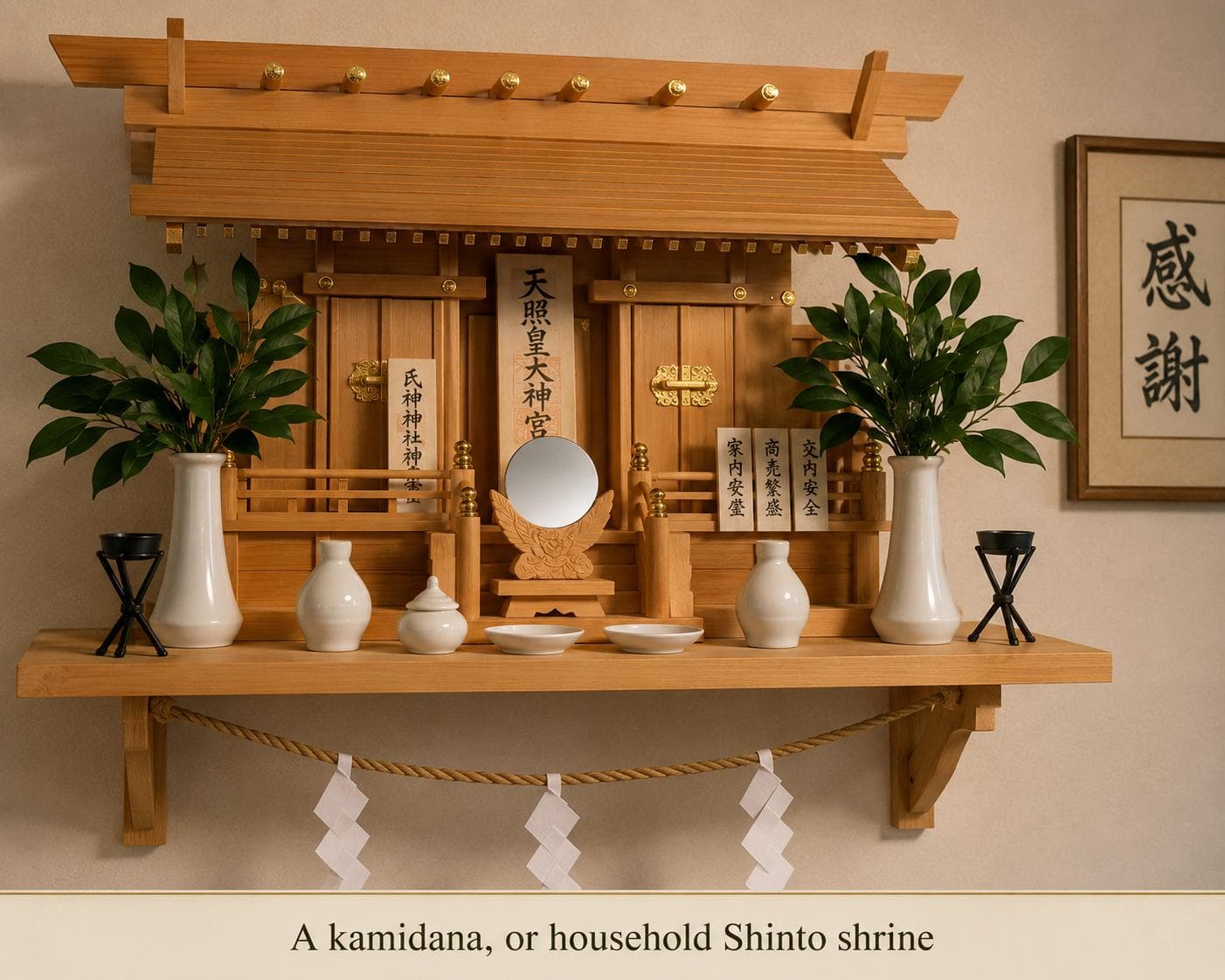
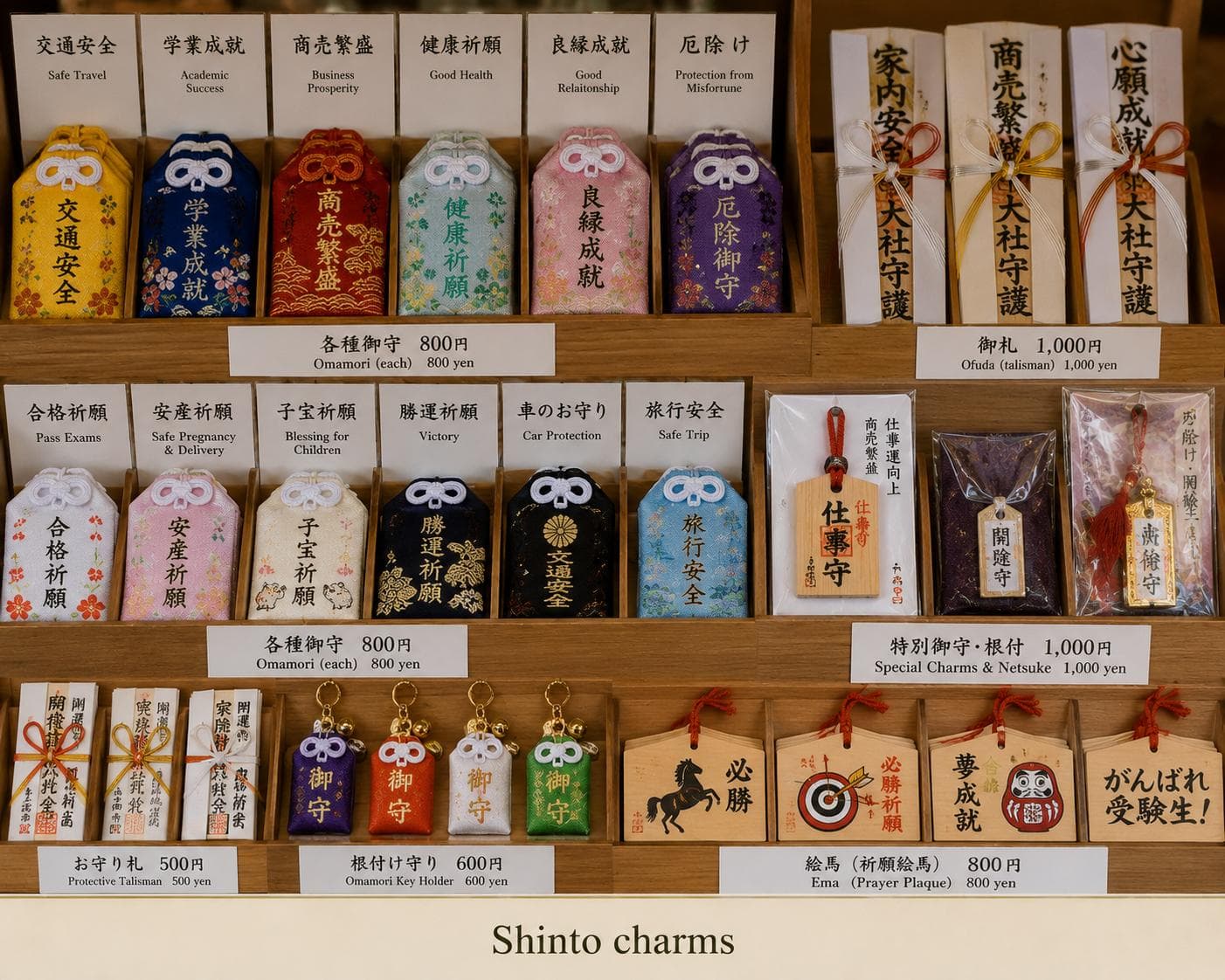
Mr. Maragheh-ee: “Yes. Shrines also sell pieces of wood, cloth, or paper with the names of kami written on them. They are used as charms for protection against misfortune. People keep them in their homes and in their kamidana, and after a year, when their power is believed to have faded, they have to be replaced. Recently, charms have also been made for things such as safe driving, success in business, and success in school.”
Sina found all this strange and asked, “Do they really believe that an object like a charm can have such effects?”
Sonam, Mr. Maragheh-ee’s daughter, who had been silent until then, said, “I don’t know about Shinto charms, but Buddhist charms really do work. I’ve tried them myself.”
Sina was about to say something about Buddhist charms when Mr. Maragheh-ee said, “We’re here. This is a Shinto shrine.”
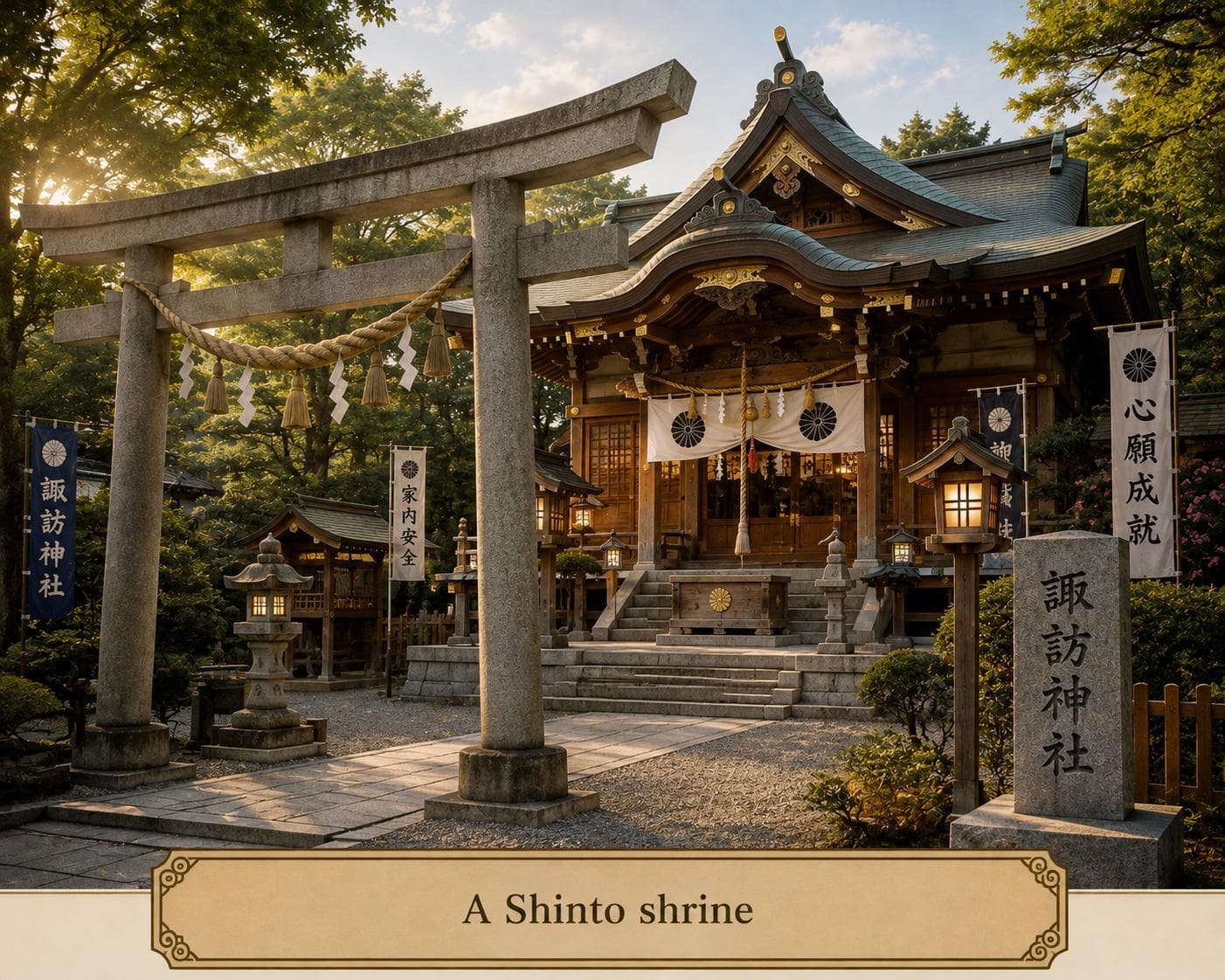
The shrine stood beside a hill. They got out of the car and entered the shrine grounds. The courtyard was surrounded by trees and flowers, and a beautiful wooden building stood on one side.
Japanese visitors who approached the building bowed at the entrance. Then they went to a small basin. With their right hand, they picked up one of the ladles beside it, filled it with water, and poured the water over their left hand. Then they did the same with the other hand. Next, holding the ladle again in their right hand, they poured some water into their left hand, brought the water to their mouth, quietly rinsed their mouth, and let the water fall back into their left hand. Finally, they filled the ladle again and tilted it so that the water ran down its handle and washed it.
Then they approached the shrine and rang a bell. They put an offering, such as money, into a box, bowed twice, and clapped their hands twice. After the second clap, they kept their hands together and prayed. At the end, they bowed twice and left.
In another part of the shrine, a group of people were sitting behind a Shinto priest dressed in white. He was facing the place of worship, with his back to them, and was praying. When his prayer ended, the people dispersed.
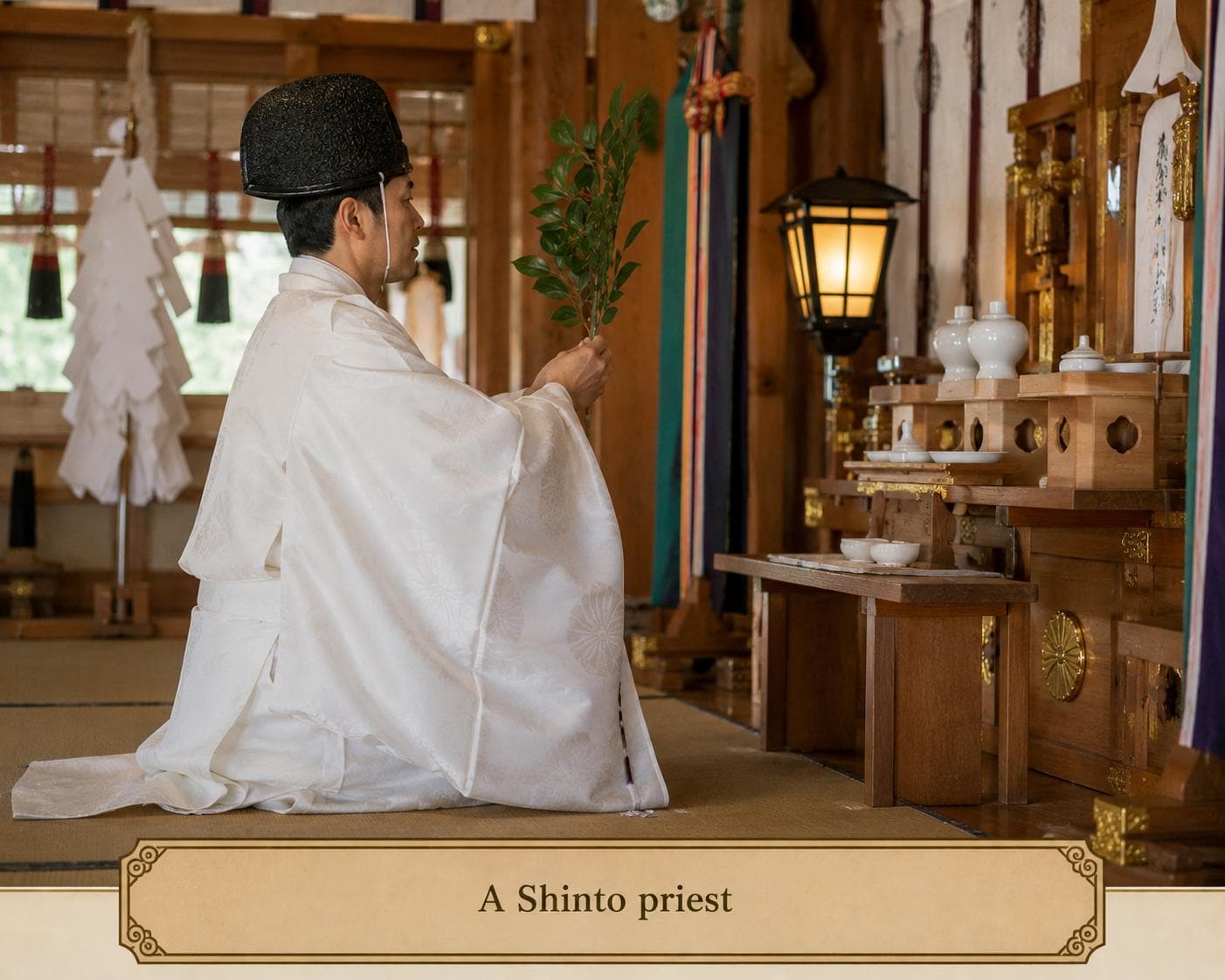
Sina asked Mr. Maragheh-ee if they could speak to the priest.
Mr. Maragheh-ee replied, “I don’t think there would be any problem. In fact, I’ve seen this priest before. A few years ago, I had an interesting experience at a gathering where he was present.”
They all walked toward the Shinto priest, who was wearing a black hat. With Mr. Maragheh-ee translating, Sina asked the priest, who looked about forty years old, “How do you know that a kami is present in an object? And how do you know that it has heard what you said?”
The Shinto priest replied, “I have experienced things that you would not understand if I simply told you about them. You would have to experience them yourself. I have spoken with kami myself, and once a kami even entered my body and spoke to people through me.”
Sina eagerly asked the priest to tell him how he had done this. The priest spoke calmly but with deep feeling.
“Following Shinto teachings, I began a period of very difficult practices. For months, I ate very little and slept very little. I bathed in cold water and repeated prayers and certain phrases again and again. In this way, I became more and more purified, and my body became ready to receive the kami that wandered around us.
“I sat in front of a kamidana, and after praying and pleading for a long time, my body began to shake. The shaking became so strong that it exhausted me and left me weak. Then I went into a trance, and a kami entered my body.”
Sina asked what a trance was.
Mr. Maragheh-ee explained, “It is a state in which a person is not fully aware of what is happening around them. Instead, they may see things or have feelings that the people around them do not experience and cannot understand.”
The priest continued, “One of my assistants asked me for the honored name of the kami.”
Sina said, “You had assistants?”
The Shinto priest replied, “Yes. In this ceremony, I could have between one and seven assistants. People had also gathered around me to ask their questions. At that time, I was not aware of my own condition. It was the kami using my tongue and mouth to speak.
“The kami gave its name, and then people asked whatever questions they wished. The kami answered them all—questions about the weather, their future careers, how an illness could be cured, how good the fishing would be in the future, or whether a certain girl would make a good wife for the person asking.”
Mr. Maragheh-ee said to the priest, “I was at that gathering too. I had come with one of my Japanese friends. At the time, my father was in a hospital in Iran. I asked you—or perhaps I should say, I asked that kami—how my father was doing. It answered that he was well.”
Sina asked, “Well, was he?”
Mr. Maragheh-ee replied, “No. In fact, my father had died around that same time.”
The Shinto priest said, “Then the kami must have meant that his spirit was doing well in the world after death.”
Mr. Maragheh-ee: “Yes. That must have been what it meant.”
Sina asked the Shinto priest, “Do you think the kami understood exactly which person Mr. Maragheh-ee meant when he asked about his father, among all the people in this huge and crowded world?”
The Shinto priest answered, “Of course! A kami’s knowledge can be very great. It certainly knew exactly which person on Earth he meant by his father.”
Sina: “Then how could it not understand that when he asked how his father was doing, he meant his father’s physical health, not the condition of his father’s spirit after death?”
The Shinto priest replied, “Sometimes kami answer us in ways that we do not understand. And sometimes they may decide that it is better not to tell us the truth.”
Sina: “Isn’t it possible that the things coming out of your mouth were actually being produced by your own mind?”
The Shinto priest: “Never! During those days, I saw things myself that left me with no doubt that they were real.”
Sina: “What kinds of things?”
The Shinto priest: “At certain moments between sleep and wakefulness, or during the short periods when I slept, I could clearly see gods whom I had never been able to communicate with before. They came to me and spoke to me. These were never dreams, because I know what dreams are. These were completely real.”
Sina’s father said, “Even now, when we can see each other so clearly and hear each other’s voices so clearly, all of this is actually images and information formed in our brains from signals sent there by our eyes and ears. In fact, even real things take shape in our brains and minds in this way.
“Perhaps, after all that chanting, praying, fasting, and thinking about the kami, your mind was able to create images much clearer than ordinary dreams. That may have made you think that because those images were different from normal dreams, they must have been real.”
The Shinto priest said, “It seems that you think what I saw was a hallucination. I invite you to a ceremony where you can learn more about the power of the kami. It will be held here at this shrine tonight. It is a ceremony in which Shinto believers walk over fire.”
Sina asked his father, “Can we come to this ceremony?”
His father replied, “Of course! That is exactly why we came here.”
Then they said goodbye to the Shinto priest and went to a restaurant for lunch.
Charms
At the restaurant, Sina asked Mr. Maragheh-ee’s daughter about the effect she had seen from her Buddhist charm.
Sonam said, “I take this charm with me to my exams, and I always get good results.”
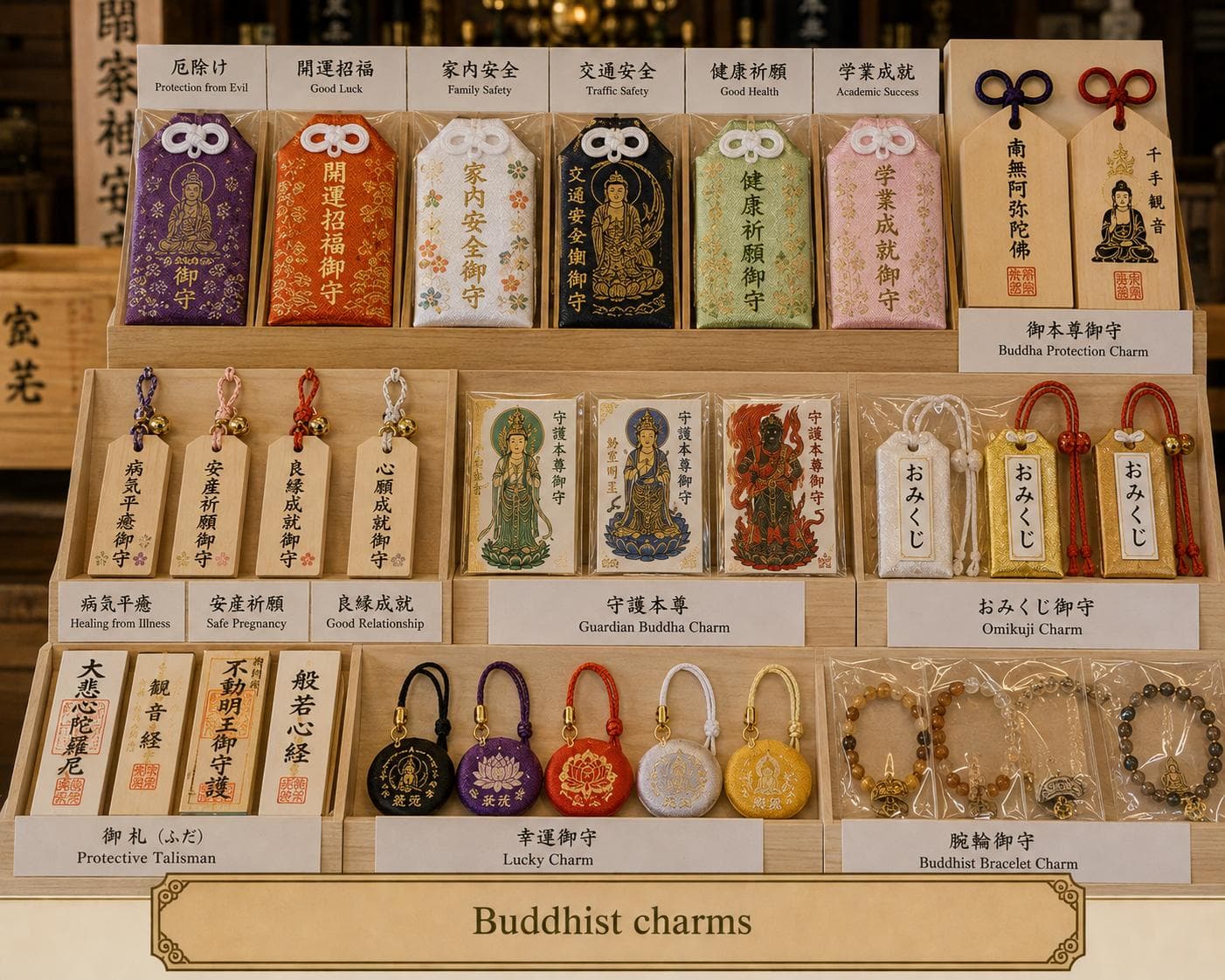
Sina asked, “Do you mean you don’t study, but when you take the charm with you, you can answer the questions?”
“Of course I study,” Sonam replied. “But this charm helps me remember the answers and stay calm.”
Sina asked, “Do you think that if I asked a student who carries a Shinto charm instead of a Buddhist one the same question, they would give me the same answer?”
“I know they would,” Sonam said, “because I’ve already asked some of my friends who have Shinto charms the same question.”
Sina asked, “Are the things written on Buddhist and Shinto charms the same?”
“No. Shinto charms have the names of kami written on them, while Buddhist charms have images or names of Buddhas, bodhisattvas, and other things written on them.”
Sina asked, “Don’t you think that the effect we believe these objects have might come from our belief in them, rather than from the objects themselves or from what is written on them?”
Sonam shrugged and said, “Well, I believe in charms anyway.”
Walking on Fire
After lunch, they visited some other sights in Tokyo and returned to the shrine near sunset.
Some ordinary people and several Shinto priests had spread hot coals along a path several meters long. The priest they had met that morning came over and said that he was happy to see them again. He then explained that heat was the spirit of the burning coals. He added that Shinto believers knew that the god of the moon was a cold being, and that the Shinto priests were trying to call upon the moon kami to drive away the less powerful kami of heat.
Meanwhile, the priests were chanting prayers and sprinkling salt over the coals. After several minutes, the priests walked barefoot along the entire path, followed by ordinary people.
The priest said, “Those who are more faithful and devoted walk more slowly.”
Sina’s father said that he had heard from Mr. Akal that Hindus also had ceremonies like this. He continued, “The water in the tissues of the soles of our feet allows people to walk on hot objects for a few seconds before serious burns occur. This is because water has a high ‘heat capacity.’ That means it can absorb more heat than many other materials, such as iron, while its temperature rises more slowly.
“For example, if we hold a one-kilogram piece of iron over a flame, its temperature rises quickly. But if we put one kilogram of water over the same flame, it can absorb the heat for a longer time before its temperature rises by the same amount.”
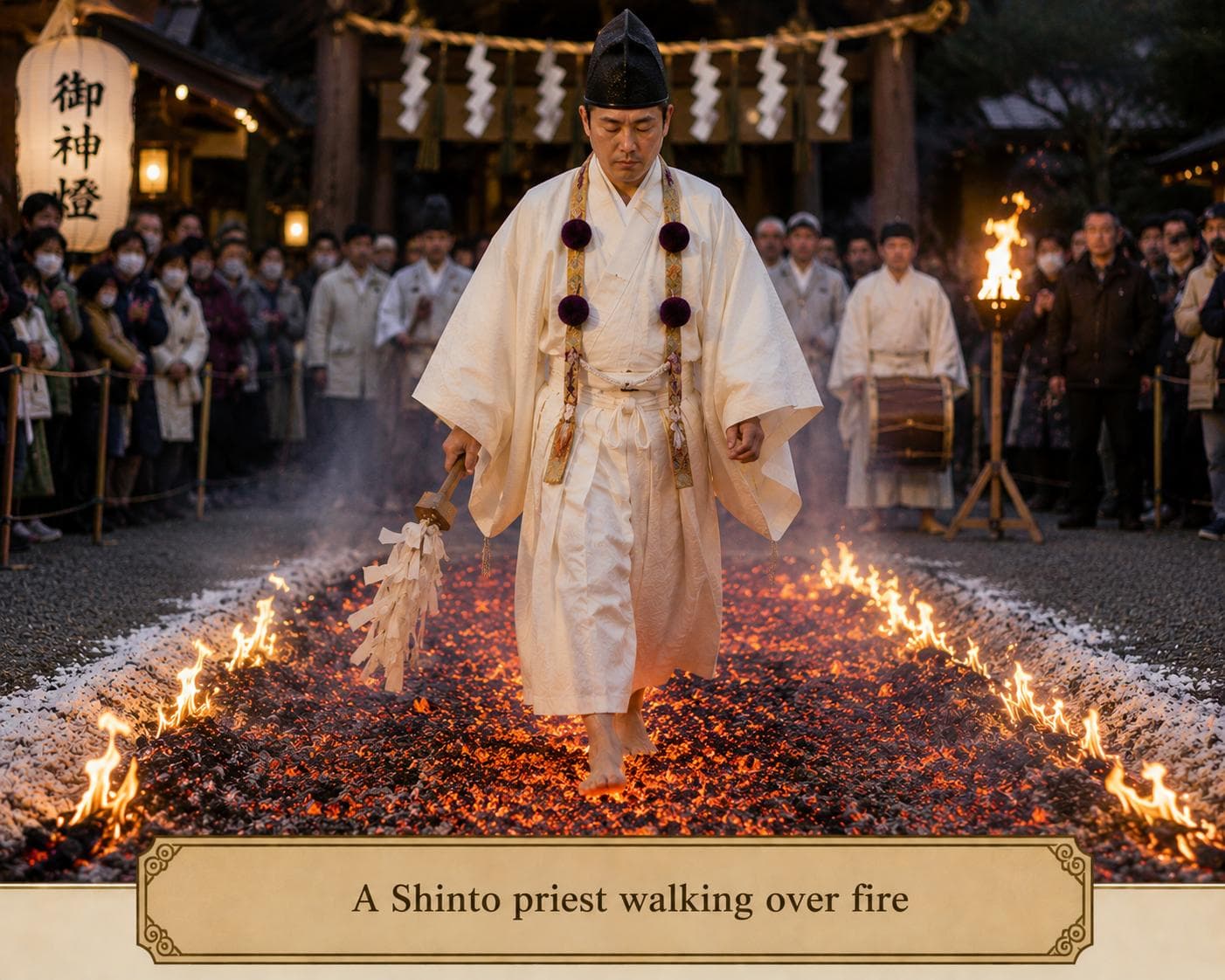
Then Sina’s father took off his shoes to walk over the hot coals. Sina and Mr. Maragheh-ee tried to stop him, but he went ahead and quickly crossed the fire behind the other people. Almost everyone experienced some pain and minor burns, but no one was seriously injured. Sina’s father’s feet also became a little red and painful.
The priest came over and asked him, “Were you hurt?”
“Not any more than the others,” Sina’s father replied.
The Shinto priest asked, “Do you believe in the power of the moon god now?”
Sina’s father replied, “If I could stand on the fire for as long as I wanted without being harmed at all, then perhaps I would think that it might be the work of the moon god and your prayers. But I still haven’t seen anything unnatural.”
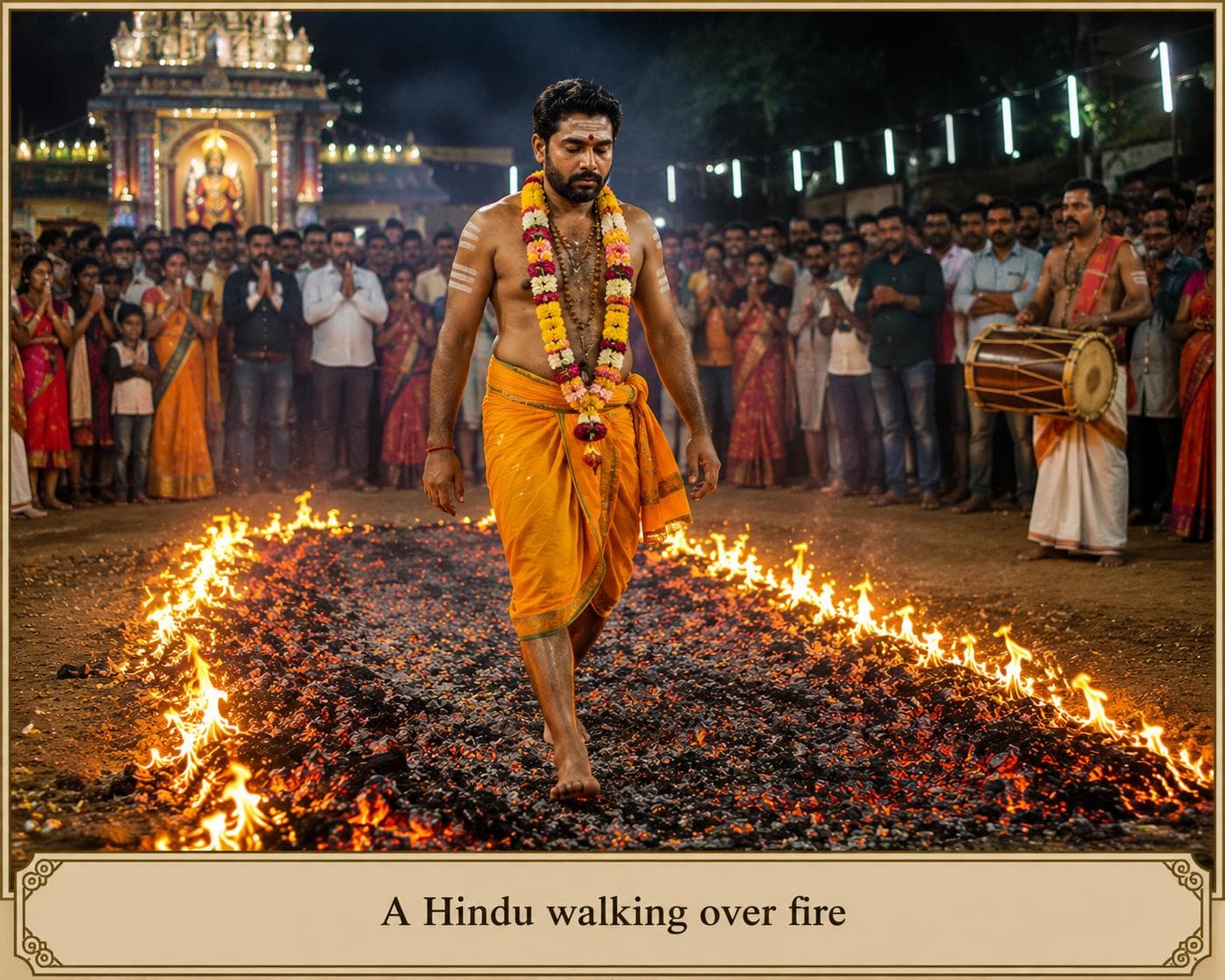
Then Sina’s father turned to Sina and Sonam and said, “I had already read about this before, and today I also saw many ordinary people of different ages and backgrounds doing it without being seriously harmed. That is why I decided to take a small risk and walk over the fire myself. But you should remember never to try dangerous things without first learning about the risks.”
Shinto and Japan’s Wars
On the way back, Sina asked Mr. Maragheh-ee, “What percentage of people in Japan are Shinto?”
Mr. Maragheh-ee said, “That is not an easy question to answer. A large part of the Japanese population takes part in Shinto ceremonies from time to time. But many of these people do not describe themselves as religious when they are asked about their beliefs. In Japan, people may take part in both Shinto and Buddhist customs without considering themselves followers of either religion.”
Sina asked in surprise, “Why? Don’t people who take part in Shinto rituals call themselves Shinto?”
Mr. Maragheh-ee replied, “Often they don’t.”
Mr. Maragheh-ee continued, “I don’t know all the reasons for this, but I do know that Shinto became closely connected with the Japanese government in the past. After 1868, the government increasingly used Shinto traditions and beliefs to unite the Japanese people around the emperor.
“Since ancient times, there had been a tradition that the emperors of Japan were descended from Japan’s first emperor, and that the imperial line ultimately descended from Amaterasu, the sun goddess.”
Sina asked, “You mean the same goddess who was born from the left eye of that male kami?”
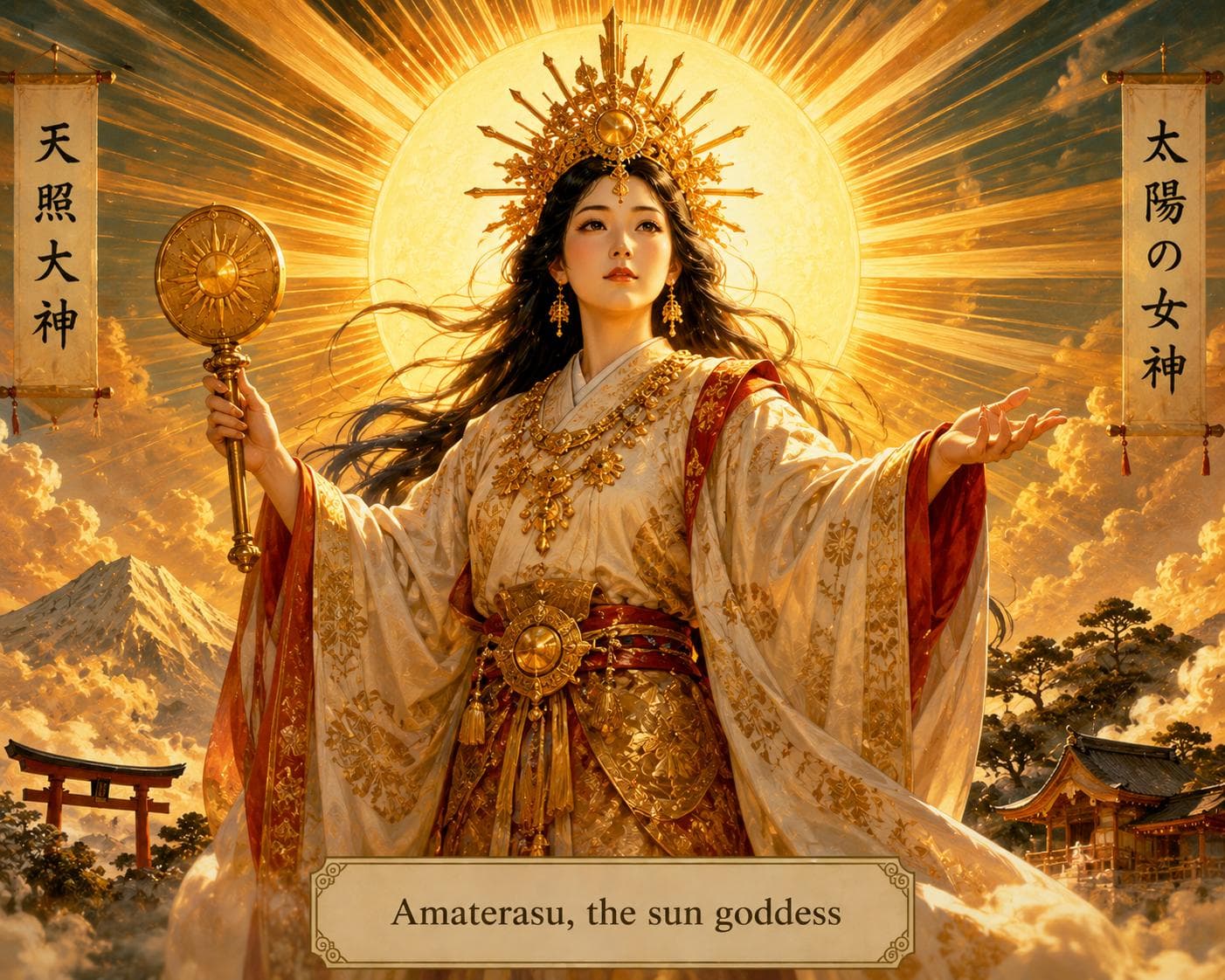
Mr. Maragheh-ee said, “Yes. In this way, the emperors of Japan were believed to have divine ancestry. From the Meiji period onward, the government placed great importance on the emperor’s sacred position and on the relationship between the imperial family and Amaterasu.
“Emperor Meiji, who ruled at that time, was presented as a sacred ruler descended from Amaterasu. The traditional term akitsumikami was used for the emperor. It means a kami who is manifest in this world. This sacred status helped strengthen the idea that loyalty and obedience to the emperor were extremely important duties.”
“The government also promoted the traditional stories about the origins of Japan and the imperial family. As I told you, according to Shinto mythology, the kami created the islands of Japan, and Amaterasu’s grandson Ninigi descended from heaven. Japan’s first emperor, Jimmu, was said to be descended from him. Traditional stories also connected many Japanese clans with other kami.
“These stories and ideas about loyalty to the emperor became part of education. The Imperial Rescript on Education, issued in 1890, became one of the most important and respected documents in Japanese schools. Students were taught loyalty and devotion to the emperor and the nation.”
“As these ideas spread through society, the emperor occupied an extremely powerful and sacred position. Under the constitution of that period, the emperor was also the supreme commander of the army and navy. Emperor Hirohito, inherited this position from the emperors before him.”

Sonam laughed and said, “How strange! Didn’t anyone think that perhaps these things weren’t true?”
Sina’s father said, “My dear, when a belief is repeated and promoted everywhere for many years, it can become sacred. Then people may stop examining it in the same way they examine ordinary claims. It may not even occur to someone that the belief could be wrong, or that a person they have been taught to regard as incapable of error might actually make a mistake.”
Mr. Maragheh-ee continued, “In 1937, Japan began a full-scale war against China. In the following years, the Japanese Empire expanded the war into other parts of Asia and the Pacific and occupied many territories, including the Philippines, French Indochina, which included present-day Vietnam and Cambodia, and the Dutch East Indies, which is now Indonesia.
“The Japanese military was extremely powerful. Japan had aircraft carriers, a strong navy, and a strong air force. During the war in China, Japanese forces used chemical weapons, and Emperor Hirohito approved their use on a number of occasions. Japan also operated secret biological-warfare units, the most notorious of which was Unit 731. Prisoners and civilians were deliberately infected with diseases such as plague, cholera, and typhus in experiments designed to develop biological weapons.”
Sina asked in horror, “They experimented on people?”
Mr. Maragheh-ee replied, “Yes. Thousands of prisoners died in these experiments, and biological weapons were also used against Chinese populations. It is impossible to know the exact number of people who died as a result. Some researchers have suggested that the total number of deaths caused by Japanese biological warfare may have reached hundreds of thousands.”
“As Japan conquered more territory, it also needed enormous numbers of workers. Millions of people in occupied territories, including Koreans, Chinese, and people from other parts of Asia, were mobilized or forced to work under Japanese rule. Many were sent far from their homes and worked under extremely harsh conditions. Large numbers died from overwork, hunger, disease, and poor living conditions.
“Japanese occupation also caused terrible civilian losses in many countries. During the Battle of Manila in the Philippines in 1945, about 100,000 civilians died. Many were massacred by Japanese troops, while others died during the fighting and bombardment of the city. In Singapore, Japanese forces carried out the Sook Ching massacre, mainly against the Chinese population. The exact number of victims is uncertain, but estimates commonly range from about 25,000 to 50,000.”
Sonam, now looking sad, asked, “Why weren’t the Japanese people upset by what their country was doing?”
Mr. Maragheh-ee said, “When people believe that their own race is superior and see other races as inferior, it can become easier for them to commit terrible crimes without feeling the same guilt they would feel toward people they consider their equals.
“In those same years, Germany was ruled by the Nazi Party. The Nazis believed that Germans belonged to a superior race and treated Jews as inferior. They invaded other countries in Europe and carried out the mass murder of millions of Jews.
“World War II in Europe began in 1939 when Germany invaded Poland. Italy entered the war on Germany’s side the following year. Germany, Italy, and Japan became the three main Axis powers. On the other side were the Allied powers, led by countries such as Britain, the Soviet Union, China, and later the United States.”
“In December 1941, Japanese aircraft launched a surprise attack on Pearl Harbor in Hawaii, where a large part of the American Pacific Fleet was based. Until then, the United States had not officially entered the war, although it had already been supporting some of Japan’s enemies and restricting trade with Japan. After the attack, the United States declared war on Japan.
“At about the same time, Japanese forces also attacked places such as Malaya, Singapore, Hong Kong, and the Philippines.
“In the spring of 1945, Germany surrendered and the war in Europe ended. But Japan continued fighting.
“During the final stages of the war, Japan used special attack pilots called kamikaze. These pilots deliberately crashed aircraft loaded with explosives into enemy ships. The word kamikaze means ‘divine wind.’
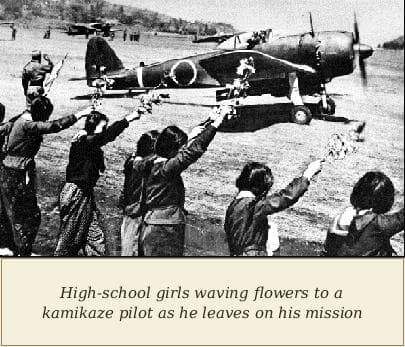
“Japanese military culture at that time strongly emphasized sacrifice for the emperor and the nation. Some pilots accepted this idea deeply.
“In August 1945, the United States dropped an atomic bomb on Hiroshima. Three days later, on August 9, it dropped another atomic bomb on Nagasaki. By the end of that year, the two bombings had killed about 140,000 people in Hiroshima and 74,000 in Nagasaki.
“On August 15, 1945, Japan announced its surrender.
“The exact number of people killed as a result of Japan’s wars and occupations in Asia is not known, but millions of soldiers and civilians died.
“After Japan’s defeat, the country adopted a new constitution. The government was no longer allowed to give special privileges to a religion or take part in religious activities.”
“In 1946, Emperor Hirohito publicly rejected the idea that the emperor was an akitsumikami—a living god or divine being in human form.
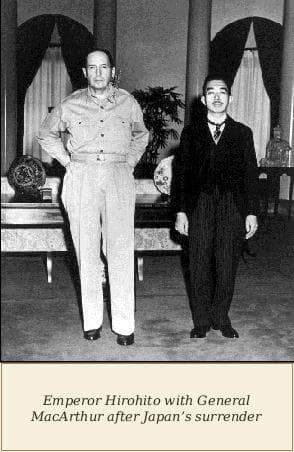
“In later years, Japanese leaders made a number of apologies for the suffering and war crimes caused by Japan during the war.”
Sina turned to Sonam and asked, “So you don’t have religious lessons at school anymore?”
Sonam said, “No. In elementary school, we had a subject called Ethics.”
Mr. Maragheh-ee added, “In Japanese public schools, teachers are not allowed to teach one particular religion as the true religion or carry out religious activities for that religion. But students can learn general information about religions. Private religious schools, such as Christian schools, are allowed to teach their own religion.”
At that moment, Mr. Maragheh-ee pulled the car over and said, “This is our home.”
He got out and went inside. A few minutes later, he came back out with his wife, and they all went to a Japanese restaurant to have Japanese food.