THE ULTIMATE GUIDE TO KICKING SUGAR by Flora Zhao - HTML preview
Download the book in PDF, ePub, Kindle for a complete version.
Chapter 3
NATURAL SUGARS: HONEY, MAPLE, AND COCONUT
and reduce food intake. Additionally, fructose in honey
2017, healthy adults who replaced 25 percent of their di-
was found to enhance the liver’s metabolic capacity for
etary carbohydrates with honey for eight consecutive
glucose.
days experienced decreased postprandial (post-meal) in-
sulin and blood sugar levels.
Honey Versus Sugar: Diabetic Effects
Using honey as a substitute for refined sugar in one’s diet offers additional benefits.
The blood sugar-lowering and antidiabetic effects of
honey have been proven in both animal and human stud-
ies.
In a 2008 study, 55 overweight or obese people were divided into two groups, with one group receiving a daily Replacing carbohydrates with honey results in decreased postprandial blood sugar and insulin levels.
intake of 70 grams of sucrose and the other receiving 70
grams of honey, both for 30 days. The results showed that
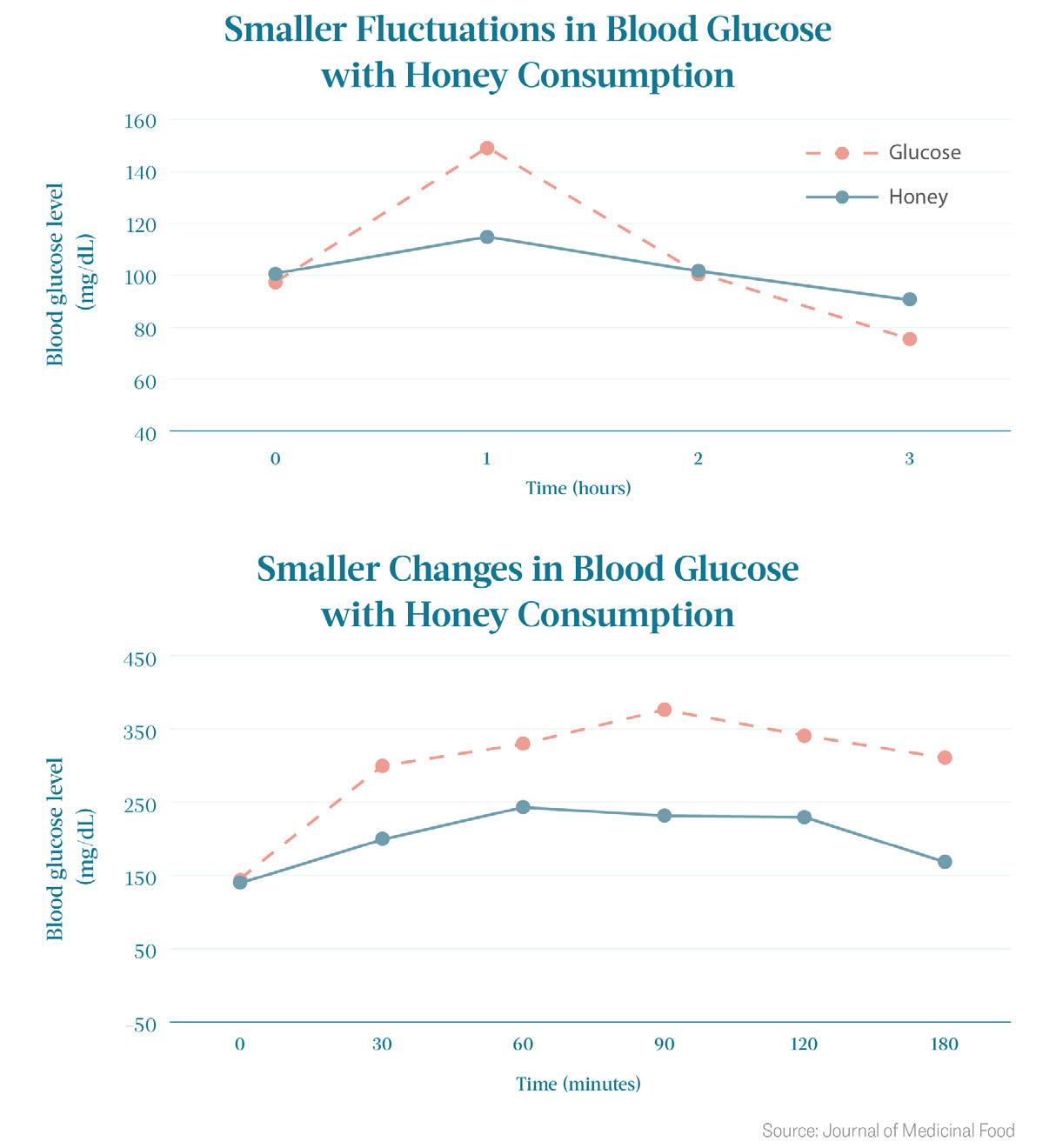
In another experiment comparing honey and glucose compared with the pre-intervention period, the group
effects on diabetic and healthy people, healthy subjects
consuming honey experienced a 4.2 percent decrease in
were given an equal quantity of honey or glucose. The re-
fasting blood sugar levels and improved insulin resistance.
sults revealed that honey intake resulted in significantly Honey also resulted in a slight reduction in body weight
smaller fluctuations in blood sugar and insulin levels than and body fat percentage by 1.3 percent and 1.1 percent,
glucose consumption. After consuming honey for 15 con-
respectively, alongside a 3 percent decrease in total cho-secutive days, healthy people experienced an average 6
lesterol, an 11 percent decrease in triglycerides, and a 3.3
percent decrease in blood sugar levels compared to their
percent increase in good cholesterol.
levels before honey consumption. Diabetic patients also
On the other hand, people who received sucrose expe-
exhibited noticeably smaller changes in blood sugar levels rienced different changes. Not only did their fasting blood when consuming honey instead of glucose.
sugar levels rise by 2.2 percent, but their body weight and In a long-term intervention trial conducted in Egypt, body fat percentage also increased.
20 participants diagnosed with diabetes drank honey wa-
According to a controlled experiment published in ter, prepared by dissolving 50 milliliters (3 tablespoons) of 46
47