

INGRID DOWS - AN ALTERNATE STORY PART 2 - THE JET AGE by Michel Poulin - HTML preview
Download the book in PDF, ePub, Kindle for a complete version.
New York City
The 101 passengers registered to board the Air Fifinella AIRBUS 2 VSTOL
jetliner due to fly out to Paris were suddenly held up by an announcement from the 21 Idlewild Airport: First name of the present John F. Kennedy International Airport, before President Kennedy’s assassination in 1963, and which was then renamed in his honor.
259
loudspeaker hooked to the bridge superstructure of the ex-World War 2 aircraft carrier, which now functioned as the control tower for the floating heliport.
‘’LADIES AND GENTLEMEN, WE WILL HAVE TO SUSPEND FOR A FEW
MINUTES ALL TAKEOFFS AND LANDINGS FOR REASONS OF AIR CONTROL
SAFETY. NOW, IF YOU ARE PRESENTLY ON THE FLIGHT DECK, BE ADVISED
THAT AN EXPERIMENTAL BOMBER PROTOTYPE ON A TEST FLIGHT WILL PASS
BY DOWN THE HUDSON RIVER AT VERY LOW ALTITUDE. FOUR AMERICAN AIR
FORCE JET FIGHTERS IN PURSUIT OF THAT PROTOTYPE BOMBER WILL THEN
PASS BY AS WELL A MINUTE LATER. PLEASE DON’T BE ALARMED, AS ALL THE
AIRCRAFT YOU WILL SEE ARE PART OF THE UNITED STATES AIR FORCE AND
ARE ENGAGED IN AN AIR DEFENSE EXERCISE. BOARDINGS AND TAKEOFFS
WILL RESUME ONCE THEY WILL HAVE FLOWN PAST US.’
One of the passengers due to fly out to Paris, a Frenchman who was a representative of Air France and who had come to the United States to arrange the possible buying of quite a few Hughes AIRBUS 2 jetliners, took a deep breath in excitement and hurried to dig out his 35mm still camera from his carry-on bag. He then stepped out of the lineup of waiting passengers and got closer to the edge of the flight deck, which had a protective handrail around it. He just had time to get in position and prepare his camera before his expert eye caught an incoming silhouette coming from the North over the Hudson River: it was indeed flying very low and also was extremely fast. Not believing his luck, René d’Argenteuil quickly raised his camera to his eyes and started taking photo after photo. However, that incoming plane was so fast that he only had time to take three pictures before it zoomed past the USS ENTERPRISE. A loud sonic boom then shook the whole ship, along with the buildings on both banks of the Hudson.
D’Argenteuil had time to take a last picture just before the fantastic aircraft rose up barely enough to clear the bridges crossing the Hudson River. He was still watching the big aircraft fly away when the noise of approaching jet engines made him look towards the North again. He then photographed a few times the four F-86 SABRE jet fighters as they vainly attempted to pursue the bomber. ‘Attempted’ was the right term, as d’Argenteuil understood that those jet fighters had been hopelessly outrunned by the bomber which had just rattled the whole of Manhattan.
‘’Mon Dieu! I wil have to show these pictures to my son at the Air Ministry in Paris.’’
260
08:43 (Washington Time)
National Military Command Center (NMCC)
The Pentagon, Arlington, Virginia
‘’I am sorry, General, but the Air Defense Command headquarters doesn’t know where the XB-12 is right now. They however believe that it was on its way to Washington after rattling New York and Philadelphia.’’
‘’They believe?’’ replied Hoyt Vandenberg, not very impressed. ‘’They are supposed to protect the continental United States from air attack and they only can guess at where one bomber penetrating our airspace is at now?’’
The brigadier general on duty at the NMCC at the time could only make an apologetic smile in response.
‘’It seems that this bomber is flying so low that our radars can’t detect it, General.
Our air defense communication network is also being heavily jammed with electronic noise from the XB-12. I have to say that, if this was an actual Soviet bomber armed with nuclear bombs, then we would be hurting like hell by now, with Washington about to go up in smoke after New York and Philadelphia, sir.’
‘’Well, thank God that it is an American plane and not a Soviet one. Still, this shows us that our air defense network has some big holes in it.’
Those last words brough a concerned expression on the face of the brigadier general, an Air Force officer.
‘’Sir, the way the XB-12 was flown on this test will mean that many of our citizens will be able to see it and will also see that our fighters failed to intercept it. This could cause a lot of public outrage and political backlash against the Air Force, for failing to protect properly our airspace.’
‘’You are most probably right, General Keanes, but I believe that this may actually turn out to be a good thing for us in the long run. Congress will have a hard time after this to pretend that we don’t need new funds to build up our continental air defenses. I am hoping on this to facilitate the funding for the acquisition programs for the Hughes F-9 and B-12 by Congress.’
‘’I also hope so, sir. We really need those new planes.’’
As Keanes said that sentence, a muffled noise from outside the Pentagon was heard, at the same time as the whole giant building shook for a second. That brought an amused grin on Vandenberg’s face.
261
‘’It seems that the XB-12 just overflew us and that we are now all dead, fictitiously of course.’
08:46 (Washington Time)
Tuesday, January 03, 1950 ‘C’
Office of the Secretary of the Navy
The Pentagon, Arlington, Virginia
Secretary of the Navy Chester Nimitz, fresh from the traditional New Year vacation period, got up from behind his desk and left his office, to go to Admiral Denfeld’s office. There, he found Denfeld on the telephone, so sat down in one of the sofas in the CNO’s office and patiently waited until Denfeld put down his receiver. The four-star admiral then gave him an apologetic look.
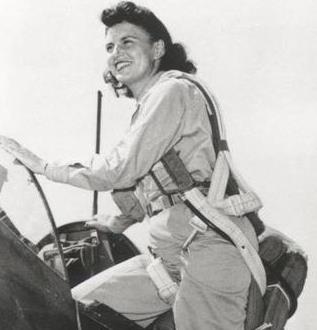
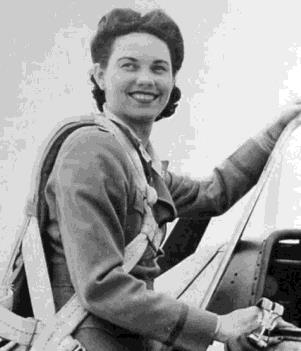
‘’Sorry to have made you wait like this, Chester: I was getting the latest news about the reactions to the XB-12 flight which rattled in succession New York, Philadelphia and Washington. If this would have been an actual Soviet bomber, then we would be in deep shit. On the other hand, I can’t blame those poor Air Force fighter pilots for failing to intercept that bomber: the Hughes XB-12, which was brilliantly piloted by Ingrid Dows, was flying supersonic at very low level while systematically jamming our radio and radar signals, making it next to impossible to intercept. On the other hand, if the Soviets would learn about the results of this exercise, they would shit in their pants at the thought of what would happen to them if we would have attacked them for real with this XB-12.’
‘’I know, and this is why I came to see you, Louis. BuAer22 has been trying to push into Navy service a number of jet aircraft for over six years now and, in my opinion, what it ended producing to date is frankly disappointing. The last exploit achieved by Ingrid Dows and Hughes Aircraft with their XB-12 makes me seriously believe that we are wasting a lot of time and resources on producing inferior aircraft for the Navy. Right now, none of our carrier-borne aircraft can break through the sound barrier, while none of the programs BuAer is presently pushing show a realistic chance for us of getting 22 BuAer: Bureau of Aeronautics. A component of the U.S. Navy charged until 1959 to develop aircraft for the U.S. Navy. That effort was completely separate from the aircraft development programs pushed by the U.S. Air Force, due to the intense rivalry between those two services.
262
soon a supersonic fighter or bomber aircraft for our Navy. Yes, we do have a number of jet fighters in Navy service, but none of them are supersonic, while a couple of them, like this damn Vought F7U CUTLASS, are death traps for their pilots. What we need to do is to swallow our pride and to get the help of Hughes Aircraft and Ingrid Dows in order to quickly get some worthy new aircraft, and damn what the BuAer could say about that. I am frankly tired of only getting promises but no concrete results from BuAer on this subject. Did you look at the draft proposal Miss Dows sent us three days ago about her navalised variant of the Hughes F-9?’’
‘’I have, Chester, and I found it most interesting as a prospective new carrier-borne jet fighter-bomber. I thus passed it on to Rear Admiral Pride, at BuAer, in order for him to look at it and then give me his opinion on it.’’
‘’And?’’ asked Nimitz.
‘’And I am stil waiting to hear from BuAer or BuShips on this.’
Nimitz repressed a gesture of impatience and frustration at that reply.
‘’More possible dithering and obfuscation? Louis, I believe that it is high time that we kick our BuAer section in the ass and force it to adopt the Hughes F-9N as our new embarked jet fighter.’
‘’What exactly do you have in mind, Chester?’’
‘’What I have in mind is for us to terminate all these BuAer projects and to go directly to Hughes Aircraft in order to get quickly some truly supersonic, top-of-the-line jet aircraft. Miss Dows already told us that she could easily modify her F-9 in order to adapt it to carrier-borne operations. She also offered us her Hughes AIM-1 BOLT air-to-air missile in order to make our fighter jets more potent.’
‘’But Grumman and Vought will cry foul for being cut out of the Navy procurement process like this. They may even raise a storm in Congress and claim that we are showing favoritism towards Hughes Aircraft.’’
‘’Screw Grumman and Vought! They were given multiple chances to develop jet fighters for us but failed to deliver really competitive designs, while the designs from Hughes Aircraft are simply crushing all the other models in service or development. As for Congress, the way the XB-12 rattled the Capitol with its sonic boom should make it think twice before it tries to push away Hughes Aircraft in favor of Grumman and Vought.
I say, let’s go see Admiral Pride, now!’
‘’Agreed, but could I raise another matter before we go visit BuAer, Chester?’’
‘’Uh, what do you have in mind, Louis?’’
263
‘’You remember those sketches and basic aircraft carrier design ideas Dows showed us during our visit to Glendale, along with her suggestion for us to go for a ballistic missile-launching submarine? Well, I passed those to one of our best ship designers at BuShips23 and asked him what he thought about them. He was actually impressed by them and promised me to seriously study them, with the idea of incorporating those ideas in our next future class of aircraft carrier. He was also going to get in touch with Rear Admiral Rickover about this missile submarine idea.’’
‘’Yeah!’’ said Nimitz, while making a grimace. ‘’With that idiot of Louis Johnson having cancelled our U.S. UNITED STATES project on order from President Truman, we definitely need something else to regrow our fleet of aircraft carriers.’
Somehow, Denfeld seemed to find his words funny, making Nimitz look at him with some confusion.
‘’What? What did I say that was funny, Louis?’’
‘’Your thing about our need to regrow our fleet of aircraft carriers. Imagine if we tried to repossess the eight carriers we sold to Hughes Enterprise, which then turned them into floating heliports for its Air Fifinella Company.’’
Nimitz shook his head while chuckling at that.
‘’We would really look like a bunch of idiots if we tried that, Louis. On the other hand, from what we personally saw about how Air Fifinella is using our old carriers, I don’t regret for us to have sold them to Hughes: over 500 Navy veterans, some of whom were previously destitute or even homeless, are now gainfully employed aboard the carriers they served aboard of during the war, being well paid and also being treated most decently and with respect by Air Fifinel a. I could kiss Miss Lamarr’s ass for that.’
‘’I myself would gladly kiss her ass, or that of Ingrid Dows!’ exclaimed Denfeld enthusiastically, making Nimitz smile and shake an index at him.
‘’I won’t repeat that to your wife Helen, Louis, but I agree. Any man would love to kiss the ass of Hedy Lamarr, or that of Ingrid Dows. What a pair of beauties they are!
Wel , enough talking: let’s go see Pride at BuAer.’
Leaving the office suite of the Chief of Naval Operations, the two men then walked to the section housing the Navy’s Bureau of Aeronautics, where a secretary 23 BuShips: Bureau of Ships. The U.S. Navy department in charge of formulating the needs of the U.S. Navy in warships and of dictating the requirements and basic design for all new Navy ships to be built. Now part of the Navy Systems Command.
264
introduced them into the office of Rear Admiral Alfred Pride, the head of BuAer. Nimitz grinned with content when he saw that Pride had been in conversation with Rear Admiral Earle Mills, the boss of BuShips, and with Rear Admiral Charles Momsen, the officer in charge of the David W. Taylor Model Basin complex in Carderock, Maryland.
‘’Aah, just the people I wanted to see! I will have some serious questions for all of you, gentlemen.’
He then noticed a large white paper sheet bearing some hand-drawn sketches, along with a number of printed documents bearing pictures of some very unfamiliar submarines and aircraft carriers, all spread on the low coffee table around which Pride, Mills and Momsen were sitting.
‘’Uh, what were you discussing about, gentlemen?’’
‘’Concepts from the future, as they are described in the classified Hourglass Files brought in 1940 by Nancy Laplante, Mister Secretary.’ answered Pride.
‘’Please, let’s drop this ‘Mister Secretary’ business: we are all or were in my case admirals. Let’s use our first names while in private. I see on your table one of the sketches Miss Dows gave to me in Glendale. Were you discussing about our next generation of aircraft carriers, by chance?’’
‘’We were, Chester.’ answered Pride. ‘’We were also discussing about our next generation of carrier-borne aircraft. I believe that the resounding demonstration just done by Miss Dows’ XB-12, following that of her XF-9, amply show us that we were missing the boat with the aircraft projects we are presently working with.’’
‘’Agreed! This is precisely the reason me and Louis came to see you, Fred. In view of the clearly superior performances of the planes designed by Miss Dows, compared to those of the other prototypes of jet aircraft we are presently testing, I have decided that we should drop the fighter designs by Grumman, Vought and Douglas and go instead with Hughes designs in order to reequip our carrier squadrons in jet fighters.
Were you discussing by chance about the proposed Hughes F-9N as one of your subjects?’’
‘’We were, Chester. Me and Earle are real y impressed with that design, which is way superior to anything else we saw from other aircraft manufacturers. We also believe that, as Miss Dows told you, her XF-9 should be fairly easy to modify in order to make it compatible with carrier service.’’
‘’We are thus all in agreement with that: excellent! Now, why do you have here a sketch Miss Dows gave me about a proposed multi-hul carrier design?’
265
‘’Because we find it to be a fascinating and very promising design, Chester.’
answered Earle Mills. ‘’After I was shown it by Louis, I then passed it on to Charles, who had a reduced scale model of it built, then tested at his model basin complex. The results were eye-opening.’
‘’You had time to build a model and test it? That was fast!’
‘’Not real y, Chester.’ replied Charles Momsen, a highly competent naval engineering expert. ‘’We simply took the model we had built to represent our defunct USS UNITED STATES carrier design and saw it in half lengthwise, then split them and fixed the halves under a flat plank representing the flight deck and hangar box structure as proposed by Miss Dows and ‘voila’, we had an instant catamaran variant of our USS
UNITED STATES design. I also had talks with some of my engineers and officers who are owners of yachts and sailing boats. What they told me about the sailing characteristics and merits of catamaran and trimaran hulls was quite encouraging, so we put our new catamaran hull to the test in our main test basin, after adding bulbous bows to each half hull in order to increase buoyancy of the bow sections.’’
‘’And?’’ asked Nimitz in an eager tone.
‘’And I could now say that a catamaran hull carrier has a number of significant advantages over that of a traditional single hull carrier design. First off, it will roll less than a single hull in bad seas would, a significant factor when trying to launch or retrieve aircraft, and showed excellent seakeeping capabilities. The second plus is the huge extra space in both flight deck width and aircraft hangar size provided by the top box structure. With the same hull length, we will be able to double the size of the aircraft hangar and we will also be able to accommodate two parallel runways on top of it. Our only limitation at this time in realizing fully the promises of multi-hull designs is the size of our actual shipbuilding drydocks. However, the drydock at Newport News which we intended to use to build the USS UNITED STATES would still be large enough to allow us to build a carrier with a waterline length of some 1,060 feet and a waterline beam of about 140 feet. The flight deck could in turn be as wide as 290 feet. We could produce an even wider carrier if we took the time to enlarge our building drydocks at Newport News and in Tacoma.’’
‘’Wow! That’s truly impressive.’’ exclaimed Louis Denfeld. ‘’Such a design could accommodate quite a large number of aircraft.’
‘’Talking of that,’ said Alfred Pride, ‘’the reading I did on those Hourglass Files made me realize how fundamentally stupid our previous approach about taking the Navy
266
into the Nuclear Weapons Age was. Apart from being mostly fueled by a desire for us to compete with the Air Force on the control of our nuclear arsenal, our insistence of building a new carrier intended solely to carry and operate a small number of large bombers able to carry nuclear bombs was myopic, to say the least. What the Hourglass Files showed to me was that our aircraft carriers are best used as multi-role ships able to project airpower, both conventional and nuclear, around the World. I personally always thought that this idea of nuclear weapons rendering our conventional forces and conventional wars obsolete was pure nonsense and my reading of those files from the future only proved me right on that. If the Navy truly wants to contribute to the defense of the United States via nuclear deterrence, then the aircraft carrier is not the proper answer: the submarine-launched ballistic missile, as proposed by Miss Dows, is the answer, especially if this submarine is propelled by nuclear power. Take a look at some of the documents concerning such missile submarines I found in the Hourglass Files and then printed.’
Pride then handed a number of documents stamped ‘Top Secret’ to Nimitz and Denfeld, who looked with big eyes at the pictures showing fantastic-looking submarines and read the specifications and statistics listed about those submarines. Pride then let Earle Mills speak as Nimitz and Denfeld read through their documents.
‘’As you know well, we added a nuclear power division to BuShips three years ago, a division headed by Rear Admiral Hyman Rickover. Rickover and his team have since made some important progress on designing a nuclear reactor able to provide electricity to a ship or submarine and he believes that he could have a working reactor prototype within two to three years. Such a nuclear powerplant would be ideal for our future aircraft carriers and for missile submarines.’
‘’But we can’t wait that long before starting to build new aircraft carriers, Earle.’
countered Louis Denfeld. ‘’And no such nuclear-tipped missile exists yet. However, the threat from the Soviets exists now.’’
‘’I agree that it wil take a few more years before we can put long-range ballistic missiles in service, Louis, but we shouldn’t waste time before starting to design nuclear-powered ships and subs. In the case of the replacement for our UNITED STATES, we could build the first ship of that class with conventional propulsion, in order to learn how to properly operate and use it, then build the follow-up ships with nuclear reactors. As for the lack of ballistic missiles, it will be up to us to push selected manufacturers into designing them with the help of the data from the Hourglass Files.’’
267
Nimitz could only nod his head at that.
‘’All of what you and Fred said made a lot of sense. Let’s all sit down and discuss in detail about new Navy construction and design programs which follow those ideas.’’
268
CHAPTER 26 – THINGS ARE HEATING UP
13:29 (Manila Time)
Tuesday, January 17, 1950
Clark Air Force Base, northwest of Manila
Island of Luzon, Philippines