

INGRID DOWS - AN ALTERNATE STORY PART 2 - THE JET AGE by Michel Poulin - HTML preview
Download the book in PDF, ePub, Kindle for a complete version.
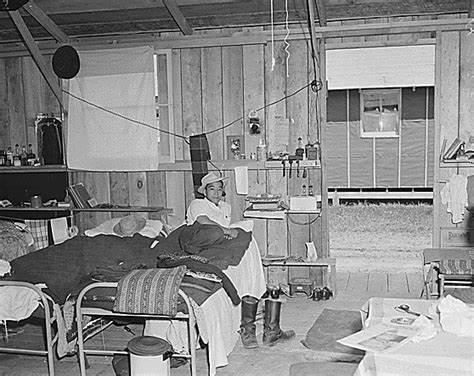
Manzanar Relocation Center
Southern California, U.S.A.
It was a rainy day with gray sky
when the UH-2 medium helicopter carrying
President
Franklin
Delano
Roosevelt
landed in the flat and empty dirt grounds of
the Manzanar Relocation Center’s main
assembly area. The camp commandant and an escort of nine armed soldiers from the California National Guard approached the helicopter once its rotors had started to slow down and stop. When Roosevelt got out through the aft cargo ramp of the UH-2, sitting in his wheelchair pushed by a Secret Service agent, the camp commandant came to attention and saluted him.
‘’Welcome to the Manzanar Relocation Center, Mister President. I am Major Frank McNeil, commandant of this camp.’’
‘’Pleased to meet you, Major.’ replied Roosevelt as he shook hands with McNeil.
‘’It looks like I chose a sad-looking day to visit your camp.’’
‘’Indeed, Mister President! The fact is that rain is rather infrequent in this part of California. The nearby mountains tend to stop the humidity from the Pacific to reach this region. What would you like to see in this camp, Mister President?’’
In response, Roosevelt turned to his wife Eleanor, who had followed him down the ramp, along with the Speaker of the House, Sam Rayburn, plus a contingent of Secret Service agents.
‘’Could you pass that list to me, Eleanor?’’
‘’Here you are, Dear.’
Taking the one-page list handed to him by his wife, Roosevelt then passed it to McNeil.
‘’While I came to visit this camp as a whole, I also wish to meet with the families of the 23 women named in this list, Major. They are young women previously held in this camp and who enrolled in the Army Air Force in 1942, when then Major Ingrid Dows
71
was doing her recruitment drive throughout the United States. I would like very much to visit their families and to thank them for the loyalty and bravery demonstrated by them in combat.’
Reading the names in the list given to him by the President, McNeil nodded his head and looked back at Roosevelt.
‘’I made preparations after receiving your warning message from Washington, Mister President. I can have these families assemble on short notice in the camp’s theatre.’’
‘’Excellent, Major! However, I would like to tour the camp first and also see in what conditions these people live here.’’
While McNeil nodded his head again at those words, he did throw a concerned look at the Secret Service agents surrounding Roosevelt, who appeared a bit tense, as if expecting trouble in the camp.
‘’I wil be happy to guide you around the camp, Mister President. Uh, could you tell your Secret Service agents to relax a bit? I can vouch for the fact that not one single hostile anti-American or pro-Japanese act or declarations have been made by the occupants of this camp since it opened in early 1942. The occupants of my camp, albeit understandably resentful about their internment and loss of their properties, have always behaved like loyal American citizens, with two-thirds of them in fact holding American citizenship.’’
‘’And the other third?’
‘’While having been denied the right to become American citizens due to a number of past laws, even when they were born in the United States, those people have been living for years and even decades in our country without causing any incident or disturbance, Mister President.’
That made Roosevelt reflect mentally on what his wife Eleanor had been telling him many times since he had signed in February of 1942 his Executive Order 9066, which had resulted in the forced relocation of all the people of Japanese descent from their homes on the West Coast, pretexting ‘military necessity’. Now that Japan was reduced to a blockaded, starving country with no Navy left to it, that pretext of ‘military necessity’
was becoming more and more evidence of simple racism, a racism that he had helped perpetuate via his executive order. He then turned his head to speak to his senior Secret Service agent.
72
‘’Ed, you can tell your men to relax: we are visiting mostly fellow American citizens and not a bunch of prisoners of war.’
‘’Er, understood, Mister President.’ said the senior agent, not sounding very convinced, before signaling to his agents to relax. The agents then followed their President as Major McNeil led their group towards one of the long, wooden barracks of the camp.
Having been warned in advance of Roosevelt’s visit, McNeil had with him three soldiers carrying a portable wooden
ramp meant to let the President’s
wheelchair go into the various buildings
of the camp. The first building they
visited was one of the residential
barracks. While the interior was
squeaky clean, Roosevelt and his wife
were struck by the basic level of
furnishing and the lack of privacy in the
long room where dozens of people of all
ages, including a few babies and toddlers, had to live. On their part, the occupants of the barrack looked at Roosevelt with unmitigated surprise, prompting Roosevelt in looking at McNeil.
‘’Did you tell those people in advance about my visit, Major?’’
‘’Er, no, Mister President. I only told the families of the servicewomen named in your list to be ready to be interviewed by a high-level government official.’
Roosevelt couldn’t help chuckle on hearing those words.
‘’A high-level government official...a nice way to describe me, Major. Actually, I like it this way, as what I will get will be the authentic initial reactions of these people to my visit. Do they all speak English, Major?’’
‘’All of them are fully proficient in spoken and written English, Mister President, even the kids. We have a school for the children in the camp.’
‘’Then, let’s meet these people. Fred, you can push me down that central aisle, then stop once we will be next to the first family.’
‘’Yes, Mister President.’ replied the agent pushing F.D.R.’s wheelchair.
73
Their first stop was next to the iron-framed beds of a family of seven, which included an elderly couple, a younger couple and three children, one of them a very cute little toddler girl who brought a tender smile on the President’s face.
‘’Hello, little one! What is your name?’
‘’Kimi, sir!’ answered the little girl in a soft, timid voice.
‘’And my name is Franklin Delano Roosevelt, President of the United States.
This is my wife, Eleanor.’
‘’Hello, Kimi!’ said Eleanor while gently shaking hands with the toddler, who may have been about five-years-old. Roosevelt then turned his attention to the parents of the girl, a couple in their mid-thirties who presented themselves as ‘John and Mary Matsumoto’. Their first names somewhat surprised Roosevelt.
‘’John and Mary? Your first names don’t sound very Japanese, I must say.’
‘’That’s because our ancestors were Christians, Mister President. In Japan, Japanese Christians have been persecuted for centuries and our great grand-parents were forced to exile themselves in order to escape those anti-Christian persecutions, Mister President.’
‘’Oh, I see! And what did you do as work went, before you were moved to this camp, Mister Matsumoto?’’
‘’I owned a small farm near San Bernardino, Mister President. However, our farm and our house were confiscated when we were forcibly relocated to this camp and we didn’t get any compensation for our losses, Mister President. Even if we were to be free to leave this camp, I don’t know where and how my family could live, or even if I would be accepted in my new area of residence. I am afraid that most of the other occupants of this camp are in the same situation as us, Mister President.’
A bit shocked by that, Roosevelt looked up at Major McNeil, who answered his silent question with a slow, sober nod of the head. Looking back at the Matsumoto, Roosevelt gave them an apologetic smile and spoke softly to them.
‘’I am pained to hear this, Mister Matsumoto. Hopefully, this war will be over soon and you will then be able to return to your old farm.’
As Roosevelt was about to be pushed further down the aisle, Mary Matsumoto hurried to ask him a question in an anguished tone.
‘’Please, Mister President, could you tell us if the news that Tokyo and Osaka were destroyed by a new kind of bomb were true?’
74
‘’They were true, Misses Matsumoto. However, it was the British who hit those two cities with a new and devastating weapon, not the United States.’
Roosevelt then signaled to the agent pushing his chair to go on, so that he could speak to another family.
A good twenty minutes later, Roosevelt and his accompanying group left that residential barrack, to find out that the rain had stopped. Before going to another building, F.D.R. looked up at Sam Rayburn, the Speaker of the House.
‘’What do you think, Sam? Is there any chance that you will be able to convince our Representatives to support the rescinding of my Executive Order 9066 and to vote an appropriation bill to compensate these people for the losses they incurred when they were forcibly relocated?’’
‘’I don’t know, Mister President.’ answered Rayburn, a Democrat and a man reputed to be incorruptible, with a solid set of moral ethics. ‘’Anti-Japanese sentiments are still strong around the country and any proposed bill could well go down to defeat in a vote in the House. I believe however that your proposed limited executive order concerning the families of the Japanese-Americans who enrolled in our armed forces and distinguished themselves in combat should not raise many objections in Washington, Mister President.’
‘’Then, let’s go meet those particular families, shal we? Major McNeil, please have the families named in my list assemble at the camp theater.’
‘’I will go get them right away, Mister President. Staff Sergeant Jennings will lead you to the theater building.’
‘’Thank you, Major.’
When Roosevelt entered the building housing the camp theater and communal convenience store, he found a long room with rows of bench seats facing a white projection screen and a lectern. Staff Sergeant Jennings spoke up as they walked along the central aisle towards the lectern.
‘’This is where General Dows, then a major, interviewed the young women of the camp wil ing to enlist in 1942, Mister President.’
‘’Oh! That’s nice to know: it means that I will be able to close a loop right here.’’
Roosevelt then wheeled himself next to the lectern, with two agents then moving one of the benches to a position a few feet behind the lectern, so that Eleanor Roosevelt and
75
Sam Rayburn could sit down on it. A few minutes later, dozens of camp residents started to come in, led by Major McNeil. F.D.R. made a point of greeting each family with handshakes before they took place on the frontmost benches. Once McNeil signaled that everybody that needed to be here had arrived, Roosevelt started speaking to them in a friendly tone.
‘’My dear citizens, let me start with an apology towards you for a grave mistake and injustice I did in 1942, when I signed the executive order that resulted into your forced relocation to this camp. At the time, the United States faced a mortal threat from the Empire of Japan, a threat soon made greater when Germany declared war on our country. Unfortunately, I then listened to those who claimed that you could be a threat to the security of the United States if you were allowed to stay along our West Coast. I have since come to regret that decision and to understand how much of an injustice my executive order represented. Now that Japan has all but been defeated and no longer represents a credible threat to the continental United States, the so-called reason of
‘military necessity’ used to justify your forced relocation can no longer be sustained.
Unfortunately, to rescind fully Executive Order 9066 and to compensate back all those who were forcibly relocated to centers like this one would take an act of Congress, an act that would probably not pass a vote in the House of Representative, even if I presented such an act for a vote. However, as your President, I do have a limited ability through executive privilege to right at least part of the wrongs made to you. You were all asked to come here this morning because one or more of your family members voluntarily enrolled in the Army Air Force in 1942, when then Major Dows came to this center, in search for volunteers for her new, all-female air combat unit. Since then, those relatives of yours have distinguished themselves in combat and demonstrated their unflinching loyalty to the United States, for which they all received at least one military combat medal and an overseas campaign ribbon. As President of the United States, it is my right and privilege to reward service in combat by a fellow citizen and, today, I will be most happy to use that privilege in order to help you. I will thus send to this center next week a federal solicitor, assisted by a team of government attorneys, who will then document the losses you suffered and then compensate you before freeing you from this center and move you to a new place of residence of your choice, including in Hawaii, where you will be able to buy new properties and find jobs. If your old homes, shops or farms prove to be still standing and available, then you will be able to return to them, as long as such a return will be deemed safe for you in terms of local social
76
climate. I wish that I could do the same for all those who were unjustly dispossessed and forcibly moved but, again, my powers in that aspect are limited. I realize that many of you here may doubt the sincerity or effectiveness of what I just announced, something that I can understand well in view of what you had to face for two and a half years now but I solemnly promise this: you will all be out of this center for good and will be on your way to new homes by the end of this month.’
As Roosevelt had expected, the collective reaction to his speech was mostly subdued, marked by a mix of stunned disbelief and doubt. That was when he decided to wheel himself up to the front benches, taking his Secret Service bodyguards by surprise, and started giving gentle words of encouragement and sympathy, even hugging a number of crying women, soon helped in that by his wife Eleanor.
08:06 (Boston Time)
Tuesday, November 07, 1944 ‘C’
Du Pont Center Gymnasium, Building # W31
M.I.T. campus, Cambridge, Massachusetts
Ingrid, accompanied by Betty, had been one of the first students to line up in the files of those wanting to vote in the presidential elections, with the voting on the M.I.T.
campus taking place in the vast gymnasium of the Du Pont Center. While eager to exercise for the first time her right to vote as an American citizen, she had to use the services of a M.I.T. counselor in order to find out for which county in the United States she was legally entitled to vote, something not evident at first. As a girl born in Germany from German parents and then adopted in England by an American man while she was still a minor, she had stepped in the United States for the first time with no officially recognized place of American residence. Then, she had moved immediately to the Philippines after marrying her husband Ken, where she had lived as a dependent of an American officer until she had returned to the United States a year later, only to be shipped back into combat in the Pacific after forming her new air group. The M.I.T.
counselor who had interviewed her last week had scratched his head on studying her personal file, before pointing two possibilities for her: either Boston or Havre, in Montana. As a minor adopted by an officer from Havre, Montana, and with the relatives of Mike Crawford still living there, a case for Montana as her legal place of voting could be made. On the other hand, Ken Dows’ family home had been in Boston and she was
77
presently a full-time resident student on the M.I.T. campus. The counselor had thus registered her as a resident of Cambridge, Massachusetts, with Ingrid agreeing to that solution. Now, with a legal voting registration card in her hand, Ingrid was about to place her first vote ever as an American citizen.
When her turn came, Ingrid walked to a first table facing her line and presented both her voting registration card and her military I.D. card, which were examined by the two school staff manning the table and compared to a list of official voters compiled for the M.I.T. Then, once her name was formally added to the voting list, she was sent to a second table, where her identity was again verified before she was given a voting bulletin listing the names of the candidates to the Presidency, in this case Franklin Delano Roosevelt, who had as his vice-presidential mate Senator Harry Truman of Missouri, opposed by the Republican candidate, Thomas Dewey, who was presently the Governor of the State of New York and whose vice-presidential mate was the Governor of Ohio, John Bricker, a man Ingrid knew basically nothing about. Having been able to judge Franklin Roosevelt as a man thanks to having met him a couple of times in the recent past, Ingrid voted for him, despite knowing that the ailing President was going to die in a few months at the most. Governor Dewey had a good reputation as an honest man and a capable administrator but the policies of his Republican Party, especially about segregation, tended to repel Ingrid. She finally dropped her folded voting bulletin in the big ballot box on the registration table, then walked to the door of the gymnasium, where she waited for Betty to join her after voting herself.
‘’So, what do we do now, Ingrid? The pol ing stations wil not close until eight tonight and the official results will not be tallied and announced until tomorrow morning.
We also have the day off from classes, thanks to the elections.’’
‘’How about going in town for a nice cup of coffee and a croissant?’’
‘’Now you’re talking! Let’s go!’’
When she woke up the next morning to prepare to go to classes, Ingrid’s first move was to switch on the portable radio-CD player she had inherited from Nancy Laplante, to listen to the latest news about the elections. Her triumphal shout when she heard that Roosevelt had won the elections with a comfortable margin finished to wake up with a startle the poor Betty Woods, who nearly fell from her bed.
78
14:15 (Atlanta Time)
Friday, July 06, 1945 ‘C’
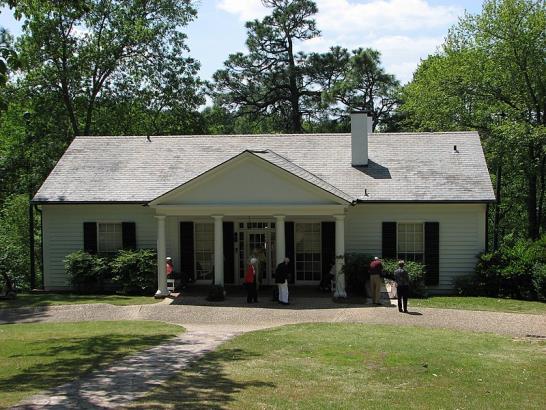
‘The Little White House’, Warm Springs
Georgia, U.S.A.
What
General
George
Marshall
encountered after his UH-1 helicopter landed
on the large lawn of what was nicknamed ‘The
Little White House’, the country residence of President Roosevelt, was a lot of long faces greeting him, something that alarmed him at once.
‘’What? Is something wrong with the President? I came from Washington to bring him a news of prime importance for the national security of the United States.’
‘’The President collapsed on his porch half an hour ago, General.’ answered the Secret Service agent who had come near the helicopter after it had landed. ‘’A doctor is presently treating him but his case is very serious.’’
‘’My God! Stil , I need to see him, to at least pass that news to him. This is truly of prime importance for this war.’
Those last words finished to convince the agent, who then led General Marshall into the small white country house which belonged to Franklin Roosevelt, guiding him to the President’s bedroom, where he saw Roosevelt’s personal physician and a distraught Eleanor Roosevelt attending to the President as he lay in bed, apparently unconscious.
On seeing Marshall, Eleanor Roosevelt got on her feet at once and blocked the way to the bed.
‘’I’m sorry, General, but my husband is in no state to receive you.’
One look at Franklin Roosevelt was enough to tell Marshall that the President was probably going to die very soon, so he looked back apologetically at Eleanor and spoke softly to her.
‘’I understand, Madam Roosevelt, but I am bringing a news of supreme importance for the war, a news he will want to hear about.’’
Eleanor hesitated for a moment before nodding her head once.
‘’Then go ahead, General, but please be brief.’
‘’I wil be, madam.’
79
With Eleanor stepping aside, Marshall approached quietly the President’s bed and put one knee down beside it, in order to be as close to Roosevelt’s head as possible, then looked at his doctor.
‘’Is he able to hear us, Doctor Bruenn?’’
‘’I think so, but I wouldn’t want to make him speak at all right now.’
‘’I understand. However, what I need to tell him won’t be long.’
Bruenn then helped Marshall by gently touching Roosevelt’s shoulder, making the President’s eyes flutter.
‘’Mister President, this is George Marshall. The ‘Trinity’ test was a success: we now have the bomb.’’
To the astonishment of Doctor Bruenn, Roosevelt found the strength to say two words in a very weak voice.
‘’Advise...Truman...’
The President’s eyes then closed for good and he let out a last breath of air, watched by a distraught Marshall, who then backed away to let Bruenn check Roosevelt. After half a minute of examination, the doctor lowered his head in sadness.
‘’The President is now gone. I am sorry, Misses Roosevelt, but I couldn’t do more for him: his case was terminal.’
As Eleanor knelt beside her dead husband and started sobbing while holding his cold hand, Marshall, himself in tears, contemplated for a long moment his dead President.
‘’He led our country out of a depression and through a World war. He wil be remembered as one of our greatest Presidents ever.’
80
CHAPTER 7 – OWNING A PATENT OR TWO...OR THREE
10:48 (Boston Time)
Thursday, April 25, 1946 ‘C’
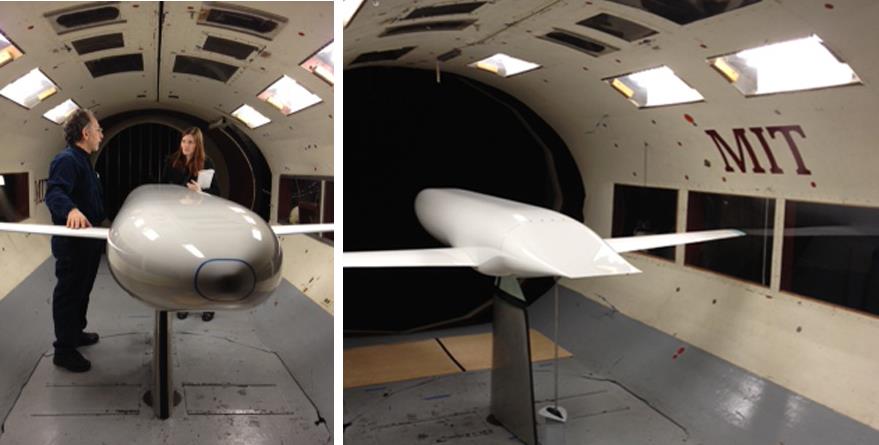
‘Wright Brothers’ test wind tunnel
Aeronautical engineering department of the M.I.T.