

INGRID DOWS - AN ALTERNATE STORY PART 2 - THE JET AGE by Michel Poulin - HTML preview
Download the book in PDF, ePub, Kindle for a complete version.
Great Britain
Margaret Woodward was alone at this late hour in the large blueprints drawing room as she swept the floor with a wide broom. The Rolls-Royce engineers and industrial drafting specialists were now gone for the weekend, leaving behind their usual mess of blueprints piles, discarded faulty blueprints, technical manuals, full ashtrays and empty tea cups. When it came to the blueprints, the directive Margaret had got from the drawing room supervisor was simple: the ones in the trash cans and on the floors were free for her to pick up and throw away, while those on the drawing tables were not to be touched. The 45-year-old janitor lady had been working at this factory for over nine years now and was well accustomed to the rather slovenly conduct of the technical and production staff, who believed that it was solely the responsibility of the night janitors to keep the place clean. Cleanliness was not however the only department in which the plant’s staff was lacking. A competent security officer would have added irresponsible classified documents handling and storage to that. And the plant managers expected her to clean by herself two such drawing rooms and ten management offices, all for a pay that was barely above minimum wages. Margaret did not expect much better in fact from the typical capitalists and exploiters running Rolls-Royce and other big British enterprises. She had gladly worked here during the war for such miserly salaries, to help the country survive the Nazi threat, as she genuinely loved England, but she had expected something a bit better once the Allies had prevailed over Germany. In that she had been bitterly disappointed. Thankfully, she had found a way to round up her salary, at the same time that she lent help to the only country in this World which seemed to care for the lowly common worker.
Finding a large discarded blueprint in a nearly full trash can that she was intent on emptying in her own big rolling garbage bin, Margaret unfolded it, curious to see what it was. It turned out to be a nearly complete blueprint of a new type of jet engine about to be put into production by Rolls-Royce. It was in fact similar to another, incomplete
48
blueprint sitting on a nearby drawing table, except for the red ink circle and hand-written note on it from a drawing supervisor which showed where the drafter had made a minor but crucial mistake. Thinking quickly, Margaret looked up from the blueprint and, not seeing any security guard close to the drafting section, folded and pocketed the blueprint. Her heart beating faster now, she resumed her sweeping while keeping an eye open for more golden opportunities like the discarded blueprint. She did find such a second treasure in the trash can of the secretary of the head design engineer, in the form of a typed technical directive that bore extensive hand-written corrections and additions. The directive itself was meant to explain in rather technical terms the innovations added in the new type of jet engine, along with their advantages over the old techniques. The head engineer had obviously thought about some extra points and had probably told his secretary to retype the directive, following which she had thrown away the old version, which bore no visible security classification. The head engineer in fact had the sloppy habit of putting on the security classification only on final, approved versions of the documents he wrote, using ink stamps rather than have it typed in. That was however all to the taste of Margaret, who folded and pocketed the discarded document. Her handler was going to be quite pleased with her tomorrow.
49
CHAPTER 4 – NUCLEAR AGE
04:50 (Japan Time)
Wednesday, June 28, 1944 ‘C’
A-11B medium bomber of the 99th Air Wing
Returning from a bombing mission on Sendai
300 km north of Tokyo, Japan
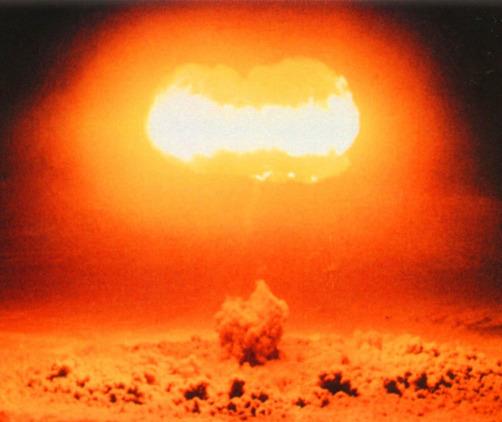
Lieutenant Colonel Helen Richey had lowered her eyes for a moment, in order to consult her instruments as she was on her way back to the Philippines and Clark Field, when an intense flash of white light from the outside made her close her eyes. Even with her eyes closed, the flash of light was so intense that she saw the skin of her eyelids turn temporarily red. At the same time Amanda Young, her navigator-bombardier, who also acted as her copilot, screamed with pain.
‘’AAAH! MY EYES!’’
Helen, worried about Amanda and about her tail gunner and radio operator, Betty Taylor, tried to open her eyes but immediately had to close them again: that blinding white flash was abnormally persistent.
‘’AMANDA, ARE YOU OKAY?’’
‘’I’M BLIND, HELEN!’
Helen’s heart sank on hearing that but she had to check on her other crewmember.
‘’BETTY, HOW ARE YOU?’’
‘’I...I think that I wil be okay in a few seconds but I am stil seeing sparkles. What the hel was that flash of light?’’
‘’Hell, I don’t know! I’m going to take the controls and pilot while looking at my instruments and avoiding to look outside until that damn flash dissipates. Amanda, are you seeing better now?’’
‘’No! I see nothing but black, Helen.’
‘’Shit! Betty, get on the radio to Clark Field and send a message saying that we just were blinded by an intense and persistent flash of white light coming from the area of Tokyo. Send in clear!’
‘’On it!’
50
Helen was finally able to look outside after a few more seconds but still had to partially shield her eyes with one hand. What she saw then froze her blood.
‘’Dear Mother of God! What could cause such a giant bal of fire?’
Putting her plane on autopilot, Helen then got off her seat and went to examine Amanda.
‘’Can you see anything now, Amanda?’’
‘’No! Everything is stil dark.’ answered her navigator-bomber, sounding close to panic, something that Helen could understand perfectly.
‘’Then, stay in your seat and keep your eyes closed while I fly us back to Clark Field. Normally, I would go investigate what happened around Tokyo but you urgently need medical care. Somebody else can come later and see what the hell happened here.’’
14:19 (Washington Time)
Thursday, June 29, 1944 ‘C’
Office of the United States Secretary of State
State Department headquarters, Washington, D.C.
Secretary of State Cordell Hull had been a busy man lately, trying to manage the abruptly degrading relationship between the United States and Great Britain. The sudden demand by the British for the American units based in England to leave by next January had only made his job even more difficult. He thus braced himself for more acrimonious discussions when his secretary announced that the British ambassador, Lord Halifax, wanted to see him. Still, as polite diplomacy called for, Hull got up from his chair and walked around his work desk in order to greet the tall and lean Lord Halifax with a handshake. He was however stricken at once by the discomfort evident on the British diplomat’s face.
‘’Good afternoon, Lord Halifax. Uh, you do not look well: are you alright, sir?’’
‘’My health is satisfactory, Secretary Hull. Thank you for asking. However, my state of mind is another matter. First off, part of my reason to come and see you is to announce to you that I will soon be replaced as Ambassador to the United States and will then fly back to Great Britain. As for the reason for my replacement, it is due to the letter I was tasked to bring to you today.’
‘’Oh? And what is the nature of that letter, Lord Halifax?’’
51
‘’It is basically a letter from Prime Minister Churchill, addressed to President Roosevelt and stating a major change in British foreign policy, Mister Secretary. Here is the letter in question.’
Hull took the sealed envelope offered by Lord Halifax, then offered him an easy chair before returning behind his work desk and sitting down. Opening the letter and extracting a two-page document from it, he then started to read it, watched intently by Lord Halifax. What he read made him snap his head up to look at the British with shock and anger.
‘’You destroyed Tokyo with a single bomb? How and why, Lord Halifax? We have been successfully blockading Japan for months now and our own bombing raids are limited to striking military targets and war-related industries. Why suddenly decide unilaterally to raze Tokyo, sir?’’
‘’Because my government has decided that the Japanese had to pay for the ignoble massacre they committed against our people which they had been holding captive, Secretary Hull. However, this is an act that I did not approve of, something I informed London of this morning. The response from London was to inform me that I will be replaced as ambassador in the coming days.’
‘’By whom, Lord Halifax?’’
‘’That I don’t know yet, Mister Secretary.’
‘’Is the possession of that new weapon the reason why your government has demanded that our units in England leave by next January, and this after we steadfastly supported Great Britain for five years, at great cost to the United States?’
Lord Halifax appeared most distressed by that question and paused before answering Hull.
‘’Yes! It is also the reason why I protested to London about the content of this letter. I am afraid that the relationship between our two countries is about to hit a bad bump on the road, Mister Secretary.’
Hull nodded his head, understanding that the British diplomat’s discontent was not faked.
‘’And I am also pained to hear this, Lord Halifax. I will transmit this letter to President Roosevelt in the hour to come. Your embassy may expect an official reply within the coming days.’’
‘’And my embassy will be waiting diligently for that reply.’ said Halifax while getting up from his chair. ‘’I fervently wished that things would not have come to this,
52
Mister Secretary. To be frank, I just do not know how things will evolve between our two countries during the coming weeks and months. Personally, I intend to retire from government service rather than being part of what is to come.’
Hull also got up and walked to the British to shake hands again with him.
‘’Thank you for your frankness, Lord Halifax. You served both of our countries wel during your tenure in Washington. May you enjoy a peaceful retirement.’
‘’Thank you, Mister Secretary.’ replied Lord Halifax before turning around and walking out. Once the British was gone, Hull returned to sit behind his desk and reread carefully the diplomatic letter brough by Halifax. The least one could say about it was that, while keeping to a polite language, it was not a very friendly one. Mainly, it reaffirmed the British belief in the grandeur of their empire while stating that Great Britain now had the means to protect and reinvigorate that empire. It also criticized the United States for not letting Great Britain ‘properly punish German aggression and war crimes’.
President Roosevelt was not going to like this letter one bit.
08:46 (Boston Time)
Saturday, July 01, 1944 ‘C’
Room 419, Bexley Hall, M.I.T. campus
Cambridge, Massachusetts
When Ingrid returned to her room after her morning jog around the oval track of the Jack Barry sports field, ready to take a good shower before going for her usual Saturday morning brunch, she was accosted at once by Betty, who showed her a copy of the morning edition of the Boston Times.
‘’Ingrid, there is a big news about the war: the British destroyed Tokyo with a new weapon called the ‘atomic bomb’. They are also ordering our units out of England by next January. Did you know about this?’’
Instead of looking surprised, as Betty had expected, Ingrid simply looked annoyed and frustrated by those news.
‘’I didn’t know about the destruction of Tokyo but I knew about the British demands that we leave England by January. So, President Roosevelt decided to publish the fact that the British want to expel us from England and thus tell the British that we are not going to let ourselves be pushed around. Good for him! It is time that we counter the British’ arrogance about their damn empire.’
53
‘’And what about that ‘atomic bomb’, Ingrid?’
‘’I know about that type of weapon, Betty: my adoptive mother, Nancy Laplante, warned me about it and described to me its effects and the danger it will pose to the whole of Humanity by its mere existence. The British are playing a mean game here by destroying Tokyo and, possibly, other Japanese cities in the days and weeks to come.
Let me just read this article in detail first before I can say more.’’
Taking the newspaper offered by Betty, Ingrid then went to sit on the edge of her bed and read quickly the three pages worth of articles dedicated to the bombing of Tokyo and the demand by the British for U.S. troops and planes to leave England.
‘’Hum, President Roosevelt is retaliating by immediately stopping the sending of more supply convoys to Great Britain. Bravo, Mister Churchill! You just succeeded in making happen what the German submarines could not achieve: to cut the maritime supply lifeline from the United States that was sustaining Great Britain. It seems that possessing a working atomic weapon went to the heads of those British politicians. I wonder what the average British citizen will think of this. Not all of them will be happy about antagonizing us.’’
‘’So, how powerful is this atomic bomb, Ingrid?’’
‘’Powerful enough, Betty. If possessed by a power-drunk dictator or, like in this case, politicians with delusions of imperial grandeur, then all of us become at risk.’
‘’Then, can’t we get that atomic bomb ourselves, so that we could counter any threat from the British?’
Ingrid looked up at Betty with a most sober look.
‘’Betty, mutual threats using atomic weapons is exactly what is most dangerous about them: any false calculation or rash move and the World can get blown up to bits.
They are that powerful and dangerous. Yes, we could and will get eventually our own atomic weapons but I sincerely hope that we will behave responsibly with them. What really intrigues me is how did the British manage to hit Tokyo, so far from any British base in the Pacific. None of their bombers have enough range to get to Japan, even if they flew out of the Canadian West Coast area. They must have used some kind of long-range missile, possibly launched from a warship in the Pacific. Wel , I’m going to take a shower and then wil go have brunch. Have you eaten yet this morning, Betty?’’
‘’No! I was waiting for you before going for brunch.’’
‘’Then I wil make it quick. Hopefully, these articles will not cut my appetite this morning.’
54
03:11 (Japan Time)
Thursday, July 06, 1944 ‘C’
EC-142E ‘Oracle One’ of the 99th Air Wing
Flying over the Pacific, 300 kilometers east of the Japanese coast
‘’Do you think that the British wil real y hit Japan with a second atomic bomb today, Jenny?’’ asked Hedy Lamarr from her electronic warfare station of their EC-142E.
‘’According to the British’ warning to Japan they broadcasted on public radio, they intended to destroy one major Japanese city every week until the Japanese surrender. We are now on the seventh day since the destruction of Tokyo, so they are due soon to strike again if they were serious about their warning to the Japanese.’
Jenny Kawena then went to the woman manning the surface surveillance radar of their command-and-control plane.
‘’Any change with that British battlegroup, Angela?’
‘’No, Jenny: they are stil holding a steady heading and speed. However, one of our task forces is soon due to get within range of the British ships and will then be able to watch them from visual range.’’
‘’That wil be helpful indeed for us. We may have a long loiter endurance but we will soon have to turn around and return to the Philippines in order to refuel and have a solid maintenance checkup.’
The woman operating their infrared sensors suddenly shouted out a warning to Jenny.
‘’I HAVE A NEW, INTENSE HEAT SOURCE COMING FROM THE HMS KING
GEORGE V! IT IS NOW CLIMBING VERTICALLY AND QUICKLY TAKING SPEED.’
Jenny hurried to that watch station and looked over the shoulders of the operator at their Infrared Search and Track system, or I.R.S.T. in short, which passively detected heat sources within line-of-sight around their plane. That new heat source, which was indeed very intense, soon leaned westward and flew at supersonic speed towards Japan.
‘’A missile, launched from the battleship KING GEORGE V. I KNEW IT! Only such a combination of ship with sea-launched missile could allow the British to hit Japan with an atomic weapon. Are we recording this, Melinda?’
‘’Yes, we are, Jenny.’
‘’Good! Let’s see where this missile will be heading to. MARY, PREPARE AN
ENCRYPTED MESSAGE FOR CLARK FIELD WITH THE FOLLOWING: MISSILE
55
LAUNCHED FROM THE BATTLESHIP KING GEORGE V AND HEADING TOWARDS
JAPAN. ONCE WE WILL HAVE SEEN WHERE IT WILL HIT, YOU WILL ADD THE
COORDINATES OF ITS LAUNCH POINT AND ITS IMPACT POINT AND TIME OF
IMPACT BEFORE SENDING THE MESSAGE.’
‘’ON IT!’ replied Mary Burchfield.
It took only a few minutes to see where that missile was going to hit, a testament to its tremendous speed. Its impact in Japan was marked by a sudden, huge thermal signature, denoting without a doubt the detonation of an atomic warhead.
‘’It’s Osaka, Jenny.’ said in a quiet voice Melinda Rondstad when she saw the thermal flash on her infrared sensors display. They had been able three days earlier to overfly the Tokyo area and to photograph in detail the destruction caused by the British nuclear bomb. What they had seen then had been truly horrifying. Jenny nodded her head, then shouted again to her radio operator.
‘’MARY, YOU CAN ADD TO OUR MESSAGE THAT OSAKA WAS HIT AT THIS
PRESENT TIME, THEN SEND IN ENCRYPTED FORM. WARN ME ONCE IT WILL
HAVE BEEN SENT AND ACKNOWLEDGED BY CLARK FIELD.’
When Mary Burchfield confirmed a few minutes later that the message had been sent and then received at Clark Field, Jenny then took a decision and used her intercom to talk with her pilot, Captain Aline Rhonie.
‘’Aline, we wil need to go take overhead photos of those British ships: we now know that they launched a missile from the KING GEORGE V, a missile which then hit and destroyed Osaka. If you could please head towards that British battleship now.’
‘’Wil do! Warn our approaching task force about our move, just in case the British get too excited about us approaching them.’
‘’Wil do!’ replied Jenny, who had that warning transmitted at once to the naval task force headed by the battleship USS WASHINGTON. The EC-142E, accelerating from its slow loiter speed to its top cruising speed of 300 miles per hour, was soon approaching the British battlegroup, which was composed of the battleships KING
GEORGE V and ANSON and of three cruisers and seven destroyers. It wasn’t long before a radio message was received from the KING GEORGE V, transmitted on the international distress frequency.
56
‘’American aircraft approaching our battlegroup from the South, turn around immediately or we will fire on you. I say again, turn around immediately or we will fire on you, over.’
Jenny, while listening on and recording thar radio exchange, let her pilot respond to the British threat.
‘’HMS KING GEORGE V, from reconnaissance aircraft approaching you: we are over international waters and we have the right to free navigation. Any hostile act on your part against us will be considered as an act of war by Great Britain against the United States and will be treated accordingly, over.’’
There was a pause of maybe fifteen seconds before the British battleship’s reply.
‘’American aircraft, I repeat again: any overfly of our flotilla will result in us firing at you. This wil be our last warning, over.’
‘’We are now in a game of chickens, girls.’ commented Jenny to the women in the watch cabin of their command-and-control aircraft, before looking at her radio operator.
‘’Mary, warn at once the USS WASHINGTON that we were just threatened by the HMS KING GEORGE V not to approach them on pain of being shot at. Then, repeat that information to Clark Field. If we have to go down, then let our people know how and why.’
‘’Understood, Jenny.’ said Mary Burchfield, understandably sounding worried.
The whole crew, now tense, hoped for the best as their aircraft steadily got closer to the British battlegroup. When they arrived within twelve miles of the British ships and were able to take good pictures of them via their nose long-range optical telescope, a lone shell burst in the sky, some 200 meters from the EC-142E.
‘’That must be a warning shot.’ judged Aline Rhonie. ‘’Jenny, warn our ships: one warning shot fired at us from the British flotilla from a distance of twelve miles.’’
She then smiled to her copilot, Captain Dawn Rochow. ‘’Time to see if those British are only bluffing, Dawn. We keep pressing on.’
‘’Okay!’
Exactly one minute later, as they were now seven miles from the British ships, six shells exploded around their aircraft, followed another fifteen seconds later by six more shells which shook the big aircraft.
57
‘’JENNY, TRANSMIT TO THE USS WASHINGTON: WE ARE NOW UNDER
SUSTAINED GUNFIRE FROM THE BRITISH.’
‘’Should we continue on, Aline?’’ asked Dawn Rochow, now gripping hard her controls.
‘’Let’s see first if this anti-aircraft fire persists or if it is only meant to scare us away. If it continues for another minute, then we will turn around. JENNY, DO WE
HAVE GOOD PICTURES OF THESE BRITISH SHIPS BY NOW?’’
‘’We have!’’ replied Jenny via their intercom system. ‘’However, overhead pictures of the KING GEORGE V would be highly desirable, so that we could study in detail the missile launching system the British use.’’
‘’Then, we will press on. Transmit continuously in real time to Clark Field what our telescope sees about the British missile system, so that our people will have something to analyze even if we get shot down. Have our people put on their parachutes, just in case.’
‘’Understood. Wil do!’ answered Jenny in a tense voice.
On the British battleship KING GEORGE V, Admiral Louis Mountbatten watched on intently over the shoulders of his radar operators the progression of the American reconnaissance aircraft.
‘’Are they stil heading our way, Lieutenant Kerrigan?’
‘’Yes sir! Those American women sure have plenty of guts, to brave our anti-aircraft fire like this. Shall we switch from timed airburst to proximity-fused shel s, sir?’’
‘’These are women, Lieutenant?’’ asked Mountbatten, struck by that information.
‘’Yes sir! They must be from the 99th Air Wing, the Fifinellas. They are still the only American all-female combat air unit in service.’’
Mountbatten, feeling bad about all this, debated what to do for another ten seconds before giving an urgent order around his officers on duty in the combat center of his battleship.
‘’CEASE FIRE! CEASE FIRE! ALL GUNS, GO ‘WEAPONS TIGHT’ NOW!’
He then added more in a low voice to his radar officer. ‘’This is not worth starting a war between us and the Americans. Our main objective has been destroyed anyway.’
In the EC-142E, both Aline Rhonie and Dawn Rochow blew air out in relief when the anti-aircraft around them stopped.
58
‘’Phew! The British chickened out first. Thank God for that!’
‘’Thank God that I put my brown panties on last night.’ replied Dawn Rochow. ‘’I am curious to see how Washington wil react to this little ‘incident’.’’
‘’Not very well, I believe. Not very well at all.’ replied Aline Rhonie.
10:41 (Washington Time)
Saturday, July 08, 1944 ‘C’
The Cabinet Room, West Wing of the White House
Washington, D.C., U.S.A.
Franklin Delano Roosevelt was far from looking happy as his wheelchair was pushed by his head steward into the Cabinet Room, where a number of men were waiting around the long conference table.
‘’Please sit down, gentlemen, so that you can brief me about this business of British atomic missiles.’’
The nine men, six in uniforms and three wearing civilian suits, sat down around the table as Roosevelt’s wheelchair was placed at the head of the table. F.D.R. then nodded his head at his military chief of staff, Admiral Leahy.
‘’We may start now, Admiral.’
‘’Thank you, Mister President. Basically, what happened some 32 hours ago is that one of our aircraft patrolling over the Pacific near the Japanese coast spotted a British battlegroup composed of the battleships KING GEORGE V and ANSON, four cruisers and seven destroyers. Our aircraft then detected the launch of a missile from the KING GEORGE V, a missile that then flew towards the Japanese city of Osaka, where it exploded in a huge nuclear blast, totally destroying the whole city and its surrounding area. When our reconnaissance aircraft, an EC-142E command and control plane with a crew of 28 onboard, approached the British fleet in order to take pictures of it, it was first warned off by the British, then was fired on when it kept on course. A total of about forty medium anti-aircraft shells were fired at our plane and exploded around it before the British ceased firing, probably because they were wary of our reactions if they destroyed our aircraft. Our aircraft then overflew the British fleet and was able to take good picture of the British ships, concentrating particularly on the battleship KING
GEORGE V. Then, our aircraft flew to Japan and overflew Osaka, or rather what was left of it, where it took more pictures, before returning to its base in the Philippines. We
59
have received yesterday their flight report, along with the pictures it took, via fax, and our specialists have been able to analyze them, Mister President.’’
Roosevelt, stung by the news that the British had fired on an American aircraft, looked at General George Kenney, the head of the Army Air Force.
‘’Was our aircraft hit by that British fire, General Kenney?’’
‘’Our EC-142E sustained some minor damage from shrapnel but, thankfully, was able to return to its base without major problems, Mister President. I must say that its crew performed admirably during that mission, as it was basically unarmed while facing a whole British battlegroup and stil pushed on to take pictures.’
‘’From what unit was that aircraft, General?’’
‘’From the 99th Air Wing, the Fifinel as, Mister President.’
Roosevelt nodded his head at that.
‘’Make sure that this crew be properly rewarded for their courage and dedication, General.’
‘’I already have rewards lined up for these women, Mister President.’
‘’Good! Now, about this business of British atomic-tipped missile: what do the pictures taken by our aircraft tell us about it?’’
‘’That the battleship KING GEORGE V was modified to carry on its stern deck four large canisters lying flat on it and hinged at the junction of the freeboard to pivot up to the vertical before missile launch. From the size of the canisters, as measured from the photos taken, the British missiles have a maximum length of about 26 feet, a maximum diameter of about three to four feet and a maximum cross-section span of seven feet. However, no pictures of the missile itself could be taken. When that missile was fired against Osaka, the KING GEORGE V was situated some 260 miles from Osaka. However, that is probably not its maximum effective range, Mister President, as its trajectory was a highly arched one. Our aircraft crew estimated that the British missile probably had a maximum range turning around 800 miles, enough to hit Berlin from British soil.’’
‘’But not enough by a long shot to hit the continental United States from Great Britain, Mister President.’ added General George Marshall. ‘’Thus, the British had to put those missiles on ships in order to hit anything but Western Europe.’’
‘’What if they put their atomic bombs on a bomber?’’ asked Roosevelt. That made Kenney shake his head in response.
60
‘’It wouldn’t change the equation for us, Mister President. While their Avro Lancaster can carry bombs weighing up to ten tons on short distances, it doesn’t have the range needed to cross the Atlantic, even when not carrying any bomb. It would have to stop for refueling in Newfoundland, and possibly as well in Iceland. Unless they design and build a longer-ranged plane, the British can’t bomb us from Great Britain.’’
‘’What if they use Canada as a jump-off point?’’ asked Admiral Nimitz, who had replaced King as Chief of Naval Operations. That made Cordell Hull vehemently shake his head.
‘’The Canadians wil never let the British bomb us from their territory, especially if the British hit us with an atomic weapon. Canada may be a member of the British Commonwealth but Prime Minister King is no puppet of Churchill and he has a good relationship with us.’
‘’Okay! So, we can assume that the United States is fairly safe from any British strike, if Churchil ever becomes crazy enough to want to attack us.’ concluded Roosevelt. ‘’How powerful was that British atomic warhead they used against Osaka and how much damage did it cause there, gentlemen?’’
This time, it was Robert Oppenheimer, the scientific head of the American atomic bomb project, who answered the President’s question.
‘’First off, Mister President, the warhead type used on both Tokyo and Osaka was a thermonuclear fusion device and not an atomic fission device. As Major General Dows told us at our previous meeting last June, the British apparently were able to jump directly from fission bomb design to thermonuclear bomb design, most probably using data stolen from the computer which belonged to the late Nancy Laplante. In this, the British thus have an advance of at least two to three years on us in terms of designing and producing nuclear weapons. Second, the power demonstrated by the weapon they used on the Japanese was downright frightful, Mister President. From the pictures taken over Osaka and, previously, over Tokyo, my rough estimate of the power of the British warhead turns around two megatons, or the equivalent of two million tons of TNT
conventional explosives. Furthermore, those photos showed us that the British set their warheads for surface detonation, rather than airburst mode.’
‘’Is that significant, Doctor Oppenheimer?’’ asked at once Roosevelt, making the nuclear physicist nod his head.
‘’Very, Mister President! Detonating their warhead in airburst mode would have increased the lethal effects of their bombs in terms of blast and thermal damage radius.
61
For them to select a surface burst mode tells me that their goal was to create as much radiation fallouts and long-term contamination as possible in Japan. Basically, their goal appears to make Japan unlivable for the next few centuries, Mister President.’
‘’Centuries? My God! How bad are these radiations you are talking about, Doctor?’’
‘’Very bad, Mister President. In fact, they are the stuff of nightmares. Those not killed outright by the explosion of these warheads would then die in quite horrific fashion within days and weeks from radiation poisoning, or will develop forms of cancers within months and years, while any pregnancies would result in severely deformed babies.’’
Roosevelt was silent for a moment, truly horrified, before looking at George Kenney.
‘’General, do you have the pictures taken over Osaka and Tokyo? Could you describe to me the damage done and the possible casualties’ figures?’
‘’I have all these in this file, Mister President.’ answered Kenney before passing a file docket marked ‘Top Secret’ to Roosevelt. Kenney, using a copy of the same file, then spoke in a subdued tone of voice as F.D.R. started looking at the photos contained in the file docket.
‘’Each of those two British nuclear warheads created a crater some one mile wide and 900 feet deep. Everything within nearly two miles of the center of the explosions was razed, including concrete buildings, while wooden and brick buildings were heavily damaged or destroyed within four miles. The heat from the bombs’ fireballs also was intense enough to put on fire houses and severely burn people up to nine miles away, while windows would have been blown at about the same range. Basically, both the Greater Tokyo and Greater Osaka areas were completely destroyed by those two missile strikes, Mister President.’
Despite considering the Japanese as enemies of the United States, Roosevelt paled on hearing that description from Kenney.
‘’And the casualties?’
‘’My experts, using the 1940 population census for Japan, evaluated the immediate, total casualties from those two missile strikes to be close to ten million people killed or severely wounded, with hundreds of thousands more to die from their wounds and from radiation poisoning in the coming days and weeks. If I may, I would like to remind everybody in this room that the great majority of these victims will be Japanese old men, women and children, as most Japanese men of fighting age in those cities are away from Japan as part of the Japanese Army and Navy.’
62
‘’Who cares about them, General?’’ replied James Forrestal, the present Secretary of the Navy, his tone blunt. ‘’They started this war and are only paying the price in return.’’
Before Kenney, enraged by Forrestal’s ignorant response, could verbally shoot back at him, Roosevelt’s fist banged on the table, making everybody look at him. Himself incensed by Forrestal’s remark, F.D.R. blasted his Secretary of the Navy in an angry tone.
‘’Babies and children are innocents, be they Japanese or not, Forrestal! Those children didn’t start this war: the Japanese militarists did and General Dows made sure that they paid for their crimes. We may be at war with Japan but the British just willfully and deliberately caused a mass extermination of millions of civilians, in mockery of any sense of decency and humanity.’
Roosevelt, still fired up, then looked at the men around the table.
‘’Gentlemen, Miss Laplante told me in 1940, when she visited us briefly, that the United States did use the atomic bomb against Japan in order to put an end to the war in the history she knew. However, that was done only after we had given a clear ultimatum to the Japanese to surrender and in order to avoid the massive casualties which would have resulted from us attempting amphibious landings in Japan. Here, the British never bothered to issue an ultimatum to Japan and they certainly were not prepared to land troops there. Thus, their missile strikes were nothing less than simple bloody-mindedness in my opinion. I also suspect that a secondary message from those strikes was to tell us that they are now ‘king of the hil ’ around the World. They may be so now but I am resolved for the United States to stay the most powerful nation on Earth while abiding by our Christian values of decency and humanity. General Groves, Doctor Oppenheimer, I want you to continue working hard at our own atomic bomb project. If you need any additional resources, just ask. We will also continue to blockade Japan and to strike at the Japanese forces still fighting in China and around Asia, but we will not put ourselves down to deliberately slaughtering masses of Japanese civilians the way the British just did. The atomic bombs we will eventually produce will serve as a deterrent to the British nuclear arsenal, rather than being used to subdue Japan. I believe that our blockade; by starving the Japanese of the resources in oil and minerals they need to continue the war, will be sufficient by itself to force the Japanese to eventually surrender. Secretary Hull, you will call in the British ambassador and tell him in no uncertain terms that we are horrified by the deliberate slaughter of civilians they
63
caused. You can also tell him that, from now on, our Navy will not allow any other British warship armed with nuclear weapons to approach to within one thousand miles from Japan and that the approach of any such warship to United States territory will be considered as a potentially hostile act.’
‘’I wil call him in this afternoon, Mister President.’
‘’Good!’’ said Roosevelt before looking at General Marshall. ‘’General, I have now little faith in British friendliness towards us. Their dreams of imperial grandeur have made them lose all common sense. Just their demand that we leave our bases in Great Britain in a hurry was certainly no friendly act on their part towards us. Our units will leave Great Britain, but not in the direction the British expect. I will be the first to admit that I never was a fan of General de Gaule but arrange with him that our troops and aircraft be able to relocate to bases within France. We will also relocate part of our units from England to the Baltic States, Poland and Romania. Make sure that these relocations are done as quickly as possible. In view of the British hardnose attitude, warn as well our units in England to be on the alert for any hostile move against them by British ground forces who could try to forcibly evince them without giving us a chance to relocate our stocks of munitions, supplies and spares. After this meeting is over, I will place a call to Prime Minister Churchill and will tell him what I think of his recent actions and decisions. This meeting is now over, gentlemen.’
As the men around the table were getting up from their chairs and walking out, Roosevelt signaled George Kenney to come to him, then spoke to him in a low voice, so that no one else could hear what he said.
‘’General, please pass the following message to Major General Dows, at the M.I.T.: If she has any idea or suggestion for me from now on, have her communicate discretely with you, then pass on to me what she will tell you. Up to now, all of her predictions have proven on the mark but, unfortunately, too many around me resent seeing her push her opinion up and are ready to dismiss her just because she is a woman.’
‘’I will pass the word to her today, Mister President. Should I inform her of the decisions taken during today’s meeting?’’
‘’Yes! I now consider her as one of my personal presidential advisors, with full access to the same classified information as I get here. You can arrange for a dependable courier to bring to her on a regular basis what I wil deem of interest for her.’
64
Kenney frowned a bit on hearing that.
‘’Mister President, General Marshall may take this badly: he already blasted once Ingrid Dows after she sent you that personal message about how to treat Japan.’
‘’I am the President, not Marshall!’ replied at once Roosevelt, his voice hardening. ‘’If Marshall doesn’t like that, then he wil be free to resign his post.’
‘’Then, I wil have a courier run arranged on a weekly basis to Boston, via the headquarters of the 33rd Air Wing, Mister President.’
‘’Excellent! Now, get our air units out of England and into France, Poland, the Baltic States and Romania as quickly as possible but make sure that they don’t leave any valuable equipment or supplies behind.’
‘’It will be done, Mister President.’ said Kenney, saluting Roosevelt before leaving the Cabinet Room. Soon, Roosevelt found himself alone in the room with his thoughts and worries. The United States may have gotten rid of one enemy by forcing Germany to accept an armistice but it also may have just lost a dependable ally in Great Britain, the result of ill-considered ideas of renewed imperial grandeur by the British.
65
CHAPTER 5 – A SOURING RELATIONSHIP
20:04 (GMT)
Wednesday, September 20, 1944 ‘C’
The Three Silver Ladies Pub, Wellingborough
Five miles east of RAF Chelveston
County of Northamptonshire, England
Sergeant Mike O’Rourke was having a pint of beer with six other members of the crew of their B-24 heavy bomber from the 305th Bomber Group (Heavy), relaxing after a day of hard physical work spent packing the ground support equipment and tools of their unit in advance of their approaching move to a new airbase in the Northeast of France, near Metz. O’Rourke and his crewmates had lived through some frightening and very tense moments during their bombing missions over Germany, that is until last January, when the Germans had agreed to an armistice, which they had then signed in March, basically ending the fighting in Western Europe. Since then, life at RAF Chelveston had been pretty quiet and uneventful, something O’Rourke had appreciated. Now, with his bomber group due to move to France in about a month and with no flying scheduled for the next few days, he was using this opportunity to have some of the good beer The Three Silver Ladies Pub served. The young and very pretty serving maid of the pub was also an attractive reason for visiting the pub.
Mike was about to order another pint of beer when a group of eleven rather raucous British soldiers entered the pub, led by a big corporal. That soldier stopped after taking a few steps in the pub and shouted out loudly at his comrades behind him.
‘’HEADS UP, MATES: WE HAVE A BUNCH OF YANKS HERE!’
That made Mike’s head snap towards the newcomers, his eyes coldly fixing the British corporal who had just shouted out. Mike’s Irish blood made him natural y sensitive to any perceived insult or bad behavior from British towards him or his comrades, something the beer he had already ingested tended to enhance. He thus watched closely the British soldiers as they sat down around three of the pub’s round tables and
66
shouted orders for beer. Then, the same loudmouth British corporal noticed that Mike was looking at his group and shouted at him in a belligerent tone.
‘’WHAT ARE YOU LOOKING AT, YANK? YOU NEVER SAW BRITISH
SOLDIERS BEFORE?’’
Despite his wish to avoid causing trouble in this pub, the British’ chal enge triggered a response in Mike, who half turned in his chair to face the loud mouth.
‘’I have seen plenty of British soldiers before, but none with a loud mouth like yours, Limey.’
Detecting the distinct Irish accent in O’Rourke’s voice, the British corporal replied at once in a mocking tone.
‘’Oooh, an Irishman who wants to intimidate me! You Yanks got scared of the Germans and made a pact with them. Now you yellow-bellied Yanks are trying to protect the yellow little bastards who murdered our soldiers and citizens around Malaysia? Fuck you, you Irish piece of cowardly shit!’
Mike could have let the ‘piece of cowardly shit’ slide by, maybe, but the addition of the word ‘Irish’ triggered him into getting up from his chair, prompting the pub barman to try calming the situation down.
‘’PLEASE, GENTLEMEN, CALM DOWN AND KEEP THE PEACE, OR I WILL
BE FORCED TO CALL THE POLICE.’
‘’YOU BETTER CALL AN AMBULANCE INSTEAD, ONCE I FINISH SERVING A PROPER LESSON TO THAT IRISH PEASANT.’’ shouted back the British corporal.
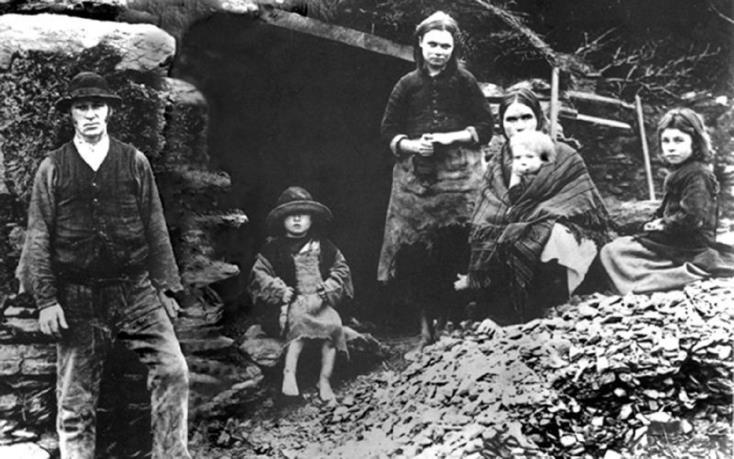
That term ‘Irish peasant’ was the
last straw for Mike, whose great
great grand-parents had died
during the devastating Potato
Famine of the mid-19th Century,
also known as ‘The Great
Hunger’. Over a million
desperately poor Irish peasants
had died of starvation during
that seven year-long famine, while another million Irish people had fled the tyranny and indifference to their suffering of their British landlords and had emigrated, mostly to the United States.
67
‘’You spew a lot of malarkey, even for an idiot like you, Limey. Why don’t you instead come face to face with me instead, so I can show to your friends how much of a gas bag you are?’
In response, the British corporal got up on his feet and advanced menacingly on O’Rourke but, as he went by a table vacated a minute before, he grabbed in passing an empty bottle of beer and held it by its top half.
‘’I wil show you what I can do to you, you Irish bastard!’
Mike’s comrades, seeing that, also got up from their chairs, ready to intervene, which in turn triggered the ten other British soldiers into getting up as well. The young waitress then showed surprising courage and character by interposing herself between Mike and the British corporal.
‘’Please, men, stay calm!’
While Mike froze at that time in order not to endanger the young woman, the British corporal, who must have already drunk a few beers at another pub, pushed the waitress away rather violently, making her backpedal before tripping and falling flat on the floor, where her head hit the wood planks with an audible ‘THUD’. That positively enraged Mike: in Ireland, or in his neighborhood in New York, a man who would physically attack a girl or a woman like this would end up with a knife in his gut. Not wasting time in swearing at the British, Mike, who practiced boxing regularly, took two quick steps before delivering a devastating right hook to the jaw of the loud mouth, hitting with a resonating
‘CLOK’. The loud mouth, whose reflexes were slowed down by alcohol, spun on the spot before falling down like a log and staying down, out for the count. The corporal’s comrades, seeing that, then rushed at Mike, ganging up on him. Mike’s comrades in turn went to his defense, some grabbing empty beer bottles and swinging them at the British. The pub, from a quiet drinking place, turned in seconds into a brawling room where fists, bottles and chairs flew around. The poor waitress barely had time to crawl out of the way in order to avoid being trampled by the soldiers and airmen swinging at each other, while the barman jumped on his telephone to call the police. By the time that two local police constables arrived, the pub was a shambles, with its front window having been shattered when a British soldier had been thrown through it and into the street by Mike O’Rourke and another American airman. Those two constables, seeing at once that they would not be able by themselves to stop the fighting, told the barman to call for police reinforcements, then bravely waded into the fighting, doing their best to stop the worst of it.
68
10:19 (GMT)
Thursday, September 21, 1944 ‘C’
Office of the commander of the 305th Bomber Group (Heavy) R.A.F. Chelveston
Colonel Curtiss LeMay harbored a stern expression on his face as the seven men of his unit involved in yesterday’s pub brawl were marched in, escorted by four military policemen and by the unit’s security officer. Sitting straight in his chair and with his forearms resting on his desk, LeMay eyed hard each of the seven men in turn while staying silent at first. LeMay had already read the police report about the incident and had also called the pub, both to present his excuses for the damage done and to get the barman’s version of what had exactly happened. Thus, it was little more than a formality when he asked his first question to the seven men lined up in front of his desk.
‘’Okay, who threw the first punch?’’
‘’I did, sir!’ answered at once Mike O’Rourke, earning mental points in LeMay’s mind for his frankness and willingness to take responsibility for his actions.
‘’And why did you throw that first punch, Sergeant O’Rourke?’
‘’Because that British Army corporal first insulted us by calling us ‘yellow-bellied Yanks’, sir. Then, that idiot advanced on me while holding an empty bottle of beer and, in the process, roughly pushed the pub’s waitress, making her fall and hit her head on the floor. That was when I saw red and punched the bastard, sir.’
‘’And what did that British corporal did in reply, Sergeant?’’
‘’Nothing, sir: he went down like a log and stayed down. However, his ten British Army friends then ganged up on me, forcing my crewmates to come to my help, sir.’
‘’I see! Any of you wish to add something at this time?’
‘’NO, SIR!’ replied in unison the six comrades of Mike O’Rourke, making LeMay nod his head.
‘’For your knowledge, that brawl resulted into some 563 Pounds of damage to the pub and its furniture. As a punishment for this fight, all seven of you will be confined to barracks until our departure for France. Your pay will also be docked this month, in order to reimburse the pub owner for the damages you and those British soldiers caused. Those British soldiers will also have to pay their portion of the damages. For your information, Sergeant O’Rourke, the man you knocked down ended up in hospital
69
with a broken jaw. I normally should strip you of your present rank for causing bodily harm to that Englishman but, since you were defending the reputation of the Army Air Force and of the United States, you wil keep your stripes. And, Sergeant...’
‘’Uh, yes sir?’’
‘’Nice hook you delivered last night.’
‘’Thank you, sir!’ replied O’Rourke, proud as a peacock.
70
CHAPTER 6 – POLITICAL READJUSTMENT
09:56 (California Time)
Saturday, September 23, 1944 ‘C’