

O.K. Corral by Edward Drobinski - HTML preview
Download the book in PDF, ePub, Kindle for a complete version.
his holster to "give him a chance to fight like a man." After Cruz's confession, Wyatt gave him the permission to draw his revolver, which Cruz did, but Wyatt managed to draw his gun first and killed him with one shot. Wyatt's account of him killing Cruz in a duel is said to be contradicted by Cruz' fatal wounds, one to the temple and the second through his right side.
On Thursday, March 23rd, Smith and Tipton left the main body of the posse to obtain information and money in Tombstone. The rest of the posse rode west about 12 miles and on the night of March 23rd stayed in a campsite northwest of Tombstone, between Contention and Drew’s Station. Behan saw Smith and Tipton in town and arrested them for "resisting arrest and conspiracy." The men immediately paid their bond. Smith left Tombstone to rejoin the federal posse but Tipton remained behind. When Smith rejoined the group, Earp asked him to return to town and raise $1,000 to cover the posse's expenses. Earp later said he told Smith; “Meet us at Iron Springs, and don’t lose any time. We’ll be waiting there.”
683
On March 27th Smith and Tipton were brought before Judge A.J. Felter in Tombstone. The defense asked the judge to dismiss the charges because Behan lacked a warrant and the judge agreed, freeing the men.
“The Arizona Weekly Star” had previously identified "Florentino Saiz"
as "the 1878 murderer of Deputy US Marshals Cornelius Finley and John Hicks Adams on September 2nd, 1878,” and that Cruz and Saiz may have been the same person.
On Friday, March 24th in Tombstone, Dr. George Goodfellow, acting as coroner, examined Cruz's body. At the coroner's inquest, Goodfellow testified that he found four wounds in Cruz: one shot through his right temple entering the brain; a "slight flesh wound to the right shoulder;"
a third entering his right side and exiting to the right of his spine; and the fourth hitting him in the left thigh and exiting "seven or eight inches above the point of entry." He stated that either the first or third wound were sufficient to cause death. The coroner's jury ruled that Cruz had been killed by Wyatt and Warren Earp, Sherman McMaster, 684
Jack Johnson, Doc Holliday, Texas Jack and two other unnamed gunmen; who were Dan Tipton and Charlie Smith.
On the day of the inquest, Arizona Territory Governor Tritle arrived in Tombstone to look into the "sad state of affairs here." On the same day, the two remaining members of the Earp family departed Tombstone. “The Tombstone Epitaph” reported that both James Earp's wife Bessie and Wyatt's common-law wife Mattie were departing for Colton, California, where the rest of the Earp family had moved.
On Friday, March 24th, the Earp posse, including Wyatt, Warren, Doc Holliday, Sherman McMaster, and Texas Jack, rode west about 12
miles from their overnight campsite about halfway between Contention and Drew's Station. The federal posse rode westerly up a wash towards a prearranged meeting place at a springs, where they expected to meet Smith, who was to bring $1000 from Tombstone, about 20 miles to the east.
The springs were identified by Wyatt Earp as "Iron Springs," but the location was reported the next day by “The Tombstone Epitaph” as
"Burleigh Springs," about eight miles south of Tombstone and four 685
miles east of Charleston. The spring was located in the Whetstone Mountains west of Tombstone and was later renamed Mescal Springs.
Some modern researchers believe it is actually Cottonwood Springs.
The actual location is uncertain.
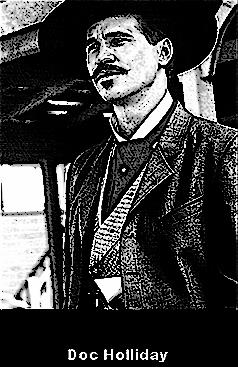
With Wyatt and Doc Holliday in the lead, the six lawmen surmounted a small rise overlooking the springs and were surprised to find nine Cowboys already there; Curly Bill Brocius, Pony Diehl, Johnny Barnes, Frank Patterson, Milt Hicks, Bill Hicks, Bill Johnson, Ed Lyle, and Johnny Lyle. They were camped about the springs, cooking a meal, less than 30 feet down a slight embankment. Once again, the odds were not in the lawmen's favor.
Recognizing Earp, Curly Bill fired his shotgun without warning at Wyatt but missed. Eighteen months earlier, Wyatt had protected Curly Bill against a mob ready to lynch him for killing Tombstone Town Marshal Fred White, and then provided testimony that helped spare Curly Bill from a murder trial. Wyatt Earp and Doc Holliday wrote about the fight, and Fred Dodge interviewed three participants afterward. Earp dismounted, carrying a 22 inch, 10 gauge stagecoach shotgun he had 686
borrowed from Fred Dodge. The other Cowboys fired at the lawmen.
"Texas Jack" Vermillion’s horse was killed and fell on him, pinning his leg. Vermillion was unable to retrieve his rifle wedged in the scabbard under his fallen horse. Doc Holliday pulled Vermillion from under his horse, and they, Johnson and McMaster shot at the Cowboys as they sought cover.
Wyatt returned fire across his horse with his own shotgun and hit Curly Bill in the chest, almost cutting him in half. Curly Bill fell into the water by the edge of the spring and lay dead. The lawmen's fire was so intense that, according to Johnny Barnes, the Cowboys who could,
"got away."
After killing Brocius, Earp fired his pistol and shot Johnny Barnes in the chest and Milt Hicks in the arm. Attempting to remount his horse, Wyatt had trouble getting up into the saddle because his cartridge belt had slipped down around his thighs. He was finally able to get on his horse and retreat.
The Cowboys fired a number of shots at the Earp party without effect.
McMaster was grazed by a bullet that cut through the straps of his 687
O.K. Corral
field glasses or possibly his coat. Later accounts of the gun fight varied. Wyatt reported that his long coat was punctured by bullets or buck shot on both sides. Another bullet struck his boot heel and his saddle horn was hit as well, burning the saddle hide and narrowly missing Wyatt. In his unpublished 1926 biography of Earp, John H.
Flood wrote; “The saddle horn had been splintered, his coat hung in shreds, there were three holes through the legs of his trousers, five holes through the crown of his sombrero, and three through the brim.”
Doc Holliday was unscathed.
688
Ed Colburn wrote in a letter published in the “Ford County Globe” on May 23rd, 1882 that he had visited with Wyatt and Warren Earp in Gunnison, Colorado. In the letter he relayed Earp's story about how his overcoat was hit on both sides of his body by a charge of buckshot and that his saddle horn was shot off.
“The Tombstone Epitaph” reported on March 27th that Wyatt "received seven shots through his clothes," and that McMaster's clothing was shot through once, that Texas Jack's horse had been killed, and the pommel of Wyatt's saddle had been shot off.
Flood described Vermillion several times as being a relative stranger to the Earps, although he had been one of Virgil's city deputies. Wyatt was reportedly impressed by Vermillion's steadfastness in helping to avenge his brothers.
“The Epitaph” reported that Curly Bill had been killed, though they noted the repeated denials by the Cowboys. Dick Wright and Tony Kraker insisted they had seen the Cowboys near Drew's Ranch below Contention, who had reported that they had shot the pommel off Wyatt's horse, and he had shot at them without effect.
689
Wyatt told Flood that Brocius's friends buried Curly Bill on the Patterson ranch near the Babocomari River. Frank Patterson was a member of the Cowboy party, and his ranch was close to the original McLaury ranch site. The McLaurys moved their operation to Sulphur Springs Valley in late 1880. The Patterson ranch is believed to have originally belonged to Frank Stilwell and was located on the Babocomari River about 5 miles west of Fairbank. An unknown individual who claimed to be on his way to meet the Earp posse, possibly Kraker or Wright, wrote the “Tombstone Nugget” on March 26th that they had seen a wagon arrive and carry Curly Bill's body away. Rancher Henry Hooker wrote that “Wells Fargo agent John Thacker, himself, went to the place where Curly Bill had been buried and had the body dug up. Thacker identified Curly Bill's body, and saw that it was reinterred."
Johnny Barnes recovered somewhat after the shooting but later died of his wound. Wells, Fargo and Co. undercover agent Fred Dodge, riding with the Cowboys, wrote that Barnes had told him that he had shot Virgil Earp. Dodge also wrote in the 1920s that Barnes had told him that Wyatt Earp had killed Brocius. He went on to say; “You will 690
recall that J.B. Ayers kept the saloon in Charleston that was the headquarters for all the outlaw and rustler element. This man, Ayers, for personal reasons that would take too long to tell supplied me with reliable information. Through him I got in touch with several others.
Johnny Barnes, whom you will recollect was in the fight at Iron Springs, gave me much information, not only of that, but of many other things before he was killed. Afterwards, all that they said with reference to Curly Bill was corroborated by Ike Clanton himself.”
Representing the danger of the Cowboys to business owners and citizens, on Saturday evening, March 25th, Martin R. Peel of the Tombstone Milling and Mining Company near Charleston was murdered by two masked men. They simply walked in on the mill superintendent, Peel, and two other men, who were socializing. They entered with their rifles raised and without saying a word, the first man fired a shot into Peel's chest, killing him instantly. The second man fired a shot at W. L. Austin, who ducked behind a counter and was not hit. Peel was shot through the heart at such close range that his clothing was set on fire. No attempt at robbery was made. The others in the room with him when he was attacked ducked. No motive could be established and 691
the assailants, wearing scarves over the faces, could not be identified.
They were assisted by a third man who held their horses only a few hundred feet away.
The crime sent reverberations through Tombstone and Cochise County. Peel's father, respected Judge Bryant L. Peel, sent an open letter to “The Tombstone Epitaph” stating that the citizens needed to take the law into their own hands. It said; “Perhaps I am not in a condition to express a clear, deliberate opinion, but I would say to the good citizens of Cochise County there is three things you have to do.
There is a class of cut throats among you and you can never convict them in court. You must combine and protect yourselves and wipe them out, or you must give up the country to them, or you will be murdered one at a time, as my son has been. B. L. Peel.”
On Saturday, March 25th, the Tucson Grand Jury indicted Pete Spence, Frank Stilwell, Florentino Cruz, Frederick Bode, and "John Doe" (Fries) for Morgan Earp's murder. Pete Spence's trial began on April 2nd, but ended on April 5th when the prosecution called Marietta Spence to repeat the testimony she had given at the Coroner's 692
Inquest. The defense objected that her testimony was hearsay and that as a spouse she could not testify against her husband. Without her testimony, the prosecution was ruled to have had insufficient evidence. They dropped its case against Spence and Bode and the court dismissed the charges.
On the same day, the Earp party arrived from Iron Springs to an area outside Tombstone and met with supporters, including Charlie Smith and Dan Tipton. They were hoping to receive $1,000 contributed by mining owner and Earp supporter E.B. Gage from Smith, but after Smith was arrested by Behan, Tony Kraker and "Whistling Dick" Wright were chosen to carry it, and they had not returned. Gage had meanwhile learned of his mother's death and had left town for the east coast. Later that day the Earp party rode north towards Henderson Ranch near where they ate and fed their horses. Cochise County Deputy Sheriff Frank Hereford was at the ranch but didn't show himself in fear of his safety, although the Earp party had only "the greatest respect" for him.
693
O.K. Corral
On March 25th, Sheriff Behan formed a posse that included known criminals including Johnny Ringo, Phin Clanton and Johnny Barnes.
The twenty-five man posse left Tombstone and searched east of town for the Earp posse for a while before turning back for the night. At around 6:30 AM the next day, Behan led a fifteen man posse from Tombstone, headed for the Dragoon Mountains, and they returned that night. The Earp posse camped Sunday night, March 26th a mile north 694
of Henderson Ranch and left at 7:00 AM the next day for the Sierra Bonita Ranch of Henry C. Hooker, a wealthy and prominent rancher.
On April 5th “The Tombstone Epitaph” printed a letter from an unknown member of the Earp party that recited some of the group's actions after leaving Tombstone and revealed that they were still in the area. The writer said the Wyatt posse left Tombstone on the evening of March 25th and camped 6 miles north of town. The next day they headed for Dragoon Summit Station where they awaited the train and a messenger. They stopped the eastbound train at 1 PM and searched the carriages but found nothing. It is not known what they were hoping to find.
When they arrived at Hooker's ranch, he congratulated Earp on killing Curly Bill Brocius. He fed the men and their mounts. When Behan's posse was spotted in the distance, Hooker suggested Wyatt make his stand there, but Wyatt moved into the hills about three miles distant near Reilly Hill. When Sheriff Behan and his posse arrived at the Sierra Bonita Ranch on Tuesday morning, March 28, at 7:00 AM, Hooker refused to provide Behan any information and "damned the officers 695
and the law they represented." Upon payment, he provided Behan's posse and horses with food and water, but would not supply them with fresh horses. Behan and undersheriff Woods sought the assistance of Indian Scouts under the command of Colonel Biddle at Fort Grant, but was unsuccessful, even upon offering a $500 reward for assistance.
They rejoined the remainder of the posse who had lost the Earp's posse trail and went to Eureka Springs.
Former Pima County Sheriff Bob Paul, who had been in Tombstone at the time and volunteered to ride with the Behan posse, wrote a letter to the “Tucson Citizen” on March 3rd, 1898 in response to an earlier story he said was full of errors. He said the Earp posse had told Hooker to tell Behan and his posse where they were camped. Hooker told Behan where the Earps were camped but the posse left in the opposite direction. “The Nugget” reported that the Behan posse did not return until Friday.
Early that same morning, Dan Tipton arrived in Willcox on the morning train, rented a horse, and started north, presumably towards the Earp's location and carrying the $1,000 from E.B. Gage for the posse. The 696
Nugget reported that Tipton left on the 5 o'clock stage to catch up with the party near Hooker's ranch.
The Earp posse also received some money from Louis Cooley, a stage driver and an employee of Wells Fargo, who gave funds from the express company. On April 15th, Cooley traveled to Contention and Benson on business for Wells Fargo, where he met General Superintendent J.J. Valentine. When he arrived in Willcox to complete his business, Behan was there to arrest him. Behan's warrant accused Cooley of "aiding and abetting the Earps." “The Tombstone Epitaph”
labeled the charges as "frivolous" and said a lawsuit would be filed against Behan. Judge Wells Spicer dismissed the charges.
While the location of the federal posse led by Wyatt Earp was well known to most members of the public, for some reason Behan's posse never caught up with them. For their vain effort to find and arrest Wyatt Earp and the other four charged in Stillwell's murder, Behan's twenty-five man posse was paid $5 per day plus $3 per day for horse care for the ten days they were on the trail. The total bill to the county taxpayers was $2,070.70.
697
On April 3rd, “The Tombstone Epitaph” reported that the Earp posse had eaten breakfast in town on March 27th, and had been spotted six days later on April 2nd, twenty miles north of Hooker's ranch, and that the “Albuquerque Journal” and “San Francisco Daily Report” both reported on March 28th that the Earp party had already passed through Albuquerque. It also noted that Virgil Earp and his wife were in Los Angeles that week. The newspaper commented; "This is the wisest course they could pursue. Their lives were not safe for a moment in Tombstone, even if they gave themselves up to the authorities, for the sheriff is inimical to them, and they felt that in his hands they would be entirely at the mercy of the Cowboys."
But on April 5th, a member of the Earp party told “The Tombstone Epitaph” that they were still in the Arizona Territory. This anonymous member of the party reported that from Hooker's ranch they rode five miles north to Eureka Springs where they camped for the night. They spotted the Behan posse from that location but avoided drawing their attention. They stayed near Cottonwood the next night, possibly a mill site near the southwest end of the Whetstone Mountains, from which they picked up the trail of fugitive Frank Jackson. “The Tombstone 698
Epitaph” reported that he was wanted on a $2,500 reward. The Earp posse arrested Jackson on April 4th and turned him over to Detective Jack Duncan.
On April 12th, 1882, the “Weekly Nugget” reported that Wyatt and his fellow "fugitives" were camped in a canyon near the Sierra Bonita Ranch. Wyatt was quoted as publicly challenging Cochise County Sheriff Behan to come find him there.
Sometime from April 10th to April 14th, the group headed east out of Arizona. They stopped at Camp Grant before they left the Arizona Territory and Wyatt signed some property over to his sister. Colonel James Biddle told the Earps that warrants had been issued for their arrest and he would have to hold them. He invited them in for a meal.
When they finished the meal, they found fresh horses ready for them to continue their ride east.
They rode east again the next day and on April 15th, 1882, stopped in Silver City, New Mexico Territory. They spent one night in the home of a friend, and the next day sold their horses and saddles before taking a stage to Deming. From there they took the train to Albuquerque, 699
O.K. Corral
where they remained for two weeks. To avoid drawing undue attention from their enemies, the Earps visited the offices of the two newspapers and persuaded them to not write any stories about their presence.
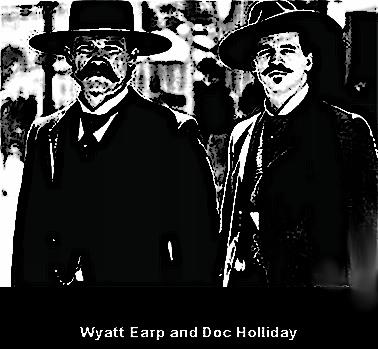
Wyatt and Holliday, who had been fast friends since Holliday saved Earp's life in Dodge City during 1878, had a serious disagreement and parted ways in Albuquerque. According to a letter written by former New Mexico Territory Governor Miguel Otero; “Wyatt and Holliday were eating at The Retreat Restaurant in Albuquerque owned by ‘Fat 700
Charlie’ when Holliday said something about Earp becoming a damn Jew-boy. Earp became angry and left. Henry Jaffa told me later that Earp’s woman was a Jewess. Earp did mezuzah when entering the house." Wyatt was staying with a prominent businessman Henry N.
Jaffa, who was also president of New Albuquerque’s Board of Trade.
Jaffa was also Jewish, and based on the letter, Earp had while staying in Jaffa’s home honored Jewish tradition by performing the mezuzah upon entering his home. According to Otero's letter, Jaffa told him that
"Earp’s woman was a Jewess." Earp's anger at Holliday's religious slur may indicate that the relationship between Josephine Marcus and Wyatt Earp was more serious at the time than is commonly known.
“The Albuquerque Evening Review” reported that Doc Holliday
"became intoxicated and indiscreet in his remarks, which offended Wyatt and cause the party to break up. Holliday going with Tipton."
Holliday told a reporter from the “Pueblo Colorado Chieftain” two days later that; "We had a little misunderstanding, but it didn't amount to much."
The group split up. They were leaving the uncertain justice of the American Frontier for the more defined justice of the federal and state 701
court system. On about April 29th, 1882, Wyatt Earp and his brother Warren, McMaster, Johnson, and Vermillion took the train from Albuquerque to Trinidad and then Gunnison, Colorado, where they set up camp on the outskirts of town. They rarely went into town at first, except for supplies. Eventually, Wyatt took over a Faro game at a local saloon. Holliday and Dan Tipton headed to Pueblo and then Denver.
The split didn't last long. Less than two weeks later, Holliday was arrested on the Arizona warrant for killing Frank Stilwell. Wyatt intervened on Holliday's behalf and persuaded Trinidad city Marshal Bat Masterson to fabricate bunco charges against Holliday. Masterson then persuaded Colorado Governor Pitkin to refuse to honor Arizona's extradition request. Afterwards, Holliday and Wyatt met again in June 1882 in Gunnison; and then again lastly Holliday was able to see his old friend Wyatt in the late winter of 1886, where they met in the lobby of the Windsor Hotel. Sadie Marcus described the skeletal Holliday as having a continuous cough and standing on "unsteady legs.”
702
O.K. Corral
In Tombstone, rumors flew about the activities of the Earp party. “The Tombstone Nugget” also printed a story on May 13th, 1882, reporting that a rumor that Wyatt had been killed was probably true. They cited that a citizen had seen Wyatt at Henry Hooker's Sierra Bonita Ranch in Arizona during the previous week, and that Wyatt had been killed there
"presumably by parties who have been following him since he left this place." On the same day, the “Los Angeles Herald” and “Albuquerque Evening Review” ran the “Tombstone Nugget's story.”
703
Wyatt Earp first wrote down the story about the shootout at Iron Springs more than eleven years after the incident. Wyatt told varied accounts of the shootout at the springs a number of times during his life. Details varied between the different accounts, like getting his saddle pommel shot off, pulling up his loose cartridge belt, exactly when he helped "Texas Jack" Vermillion out from under his horse, the distance at which they initially encountered the Cowboys, and how far Earp dismounted from "Curly Bill". Before his death in 1887, Doc Holliday left his account of the gunfight in which he credited Wyatt as the individual responsible for shooting Curly Bill and another Cowboy, possibly being kind to his best friend, after having told Dave Wallace in years prior that it was him.
On May 16, 1882, the sheriff of Arapahoe County, Colorado notified Cochise County Sheriff Johnny Behan that he had Wyatt and Warren Earp in his custody, along with Doc Holliday. Behan applied to the governor for money to go to Colorado to bring the Earps back, but Governor Fremont instead gave the funds to Pima County Sheriff Bob Paul. Paul had received word on the same day from Denver that the sheriff there had five of the Earp party in custody. When Paul arrived in 704
Denver, he served a warrant for Doc Holliday's arrest on charges that he killed Frank Stilwell in Tucson. Wyatt Earp, also in Denver, feared for Holliday's life if he was returned to Tombstone. He asked his friend and Trinidad, Colorado Sheriff Bat Masterson to help get Holliday released. Sheriff Masterson appealed to Governor Frederick W. Pitkin and succeeded in getting Holliday released from jail. Paul also knew of warrants for the Earps' arrest, but he was a friend of the men and never served the warrants.
While Behan sought to arrest the Earps, his reputation among some citizens was very negative. On May 27th, 1882, a "strong Democrat"
was quoted in a letter in the Yuma, Arizona newspaper “The Arizona Sentinel” describing the events following the "murder of the noted desperado Frank Stilwell." Readers may want to know "how these so called Republican outlaws are regarded by decent, law-abiding people in Tombstone, regardless of politics." The writer was of the opinion that Sheriff Behan wanted the requisition from Governor Fremont such that the "object was to have them assassinated ... Neither the Sheriff nor any of his deputies have ever turned a hand to find the murderers"
of Morgan Earp. "There is no hope for any honest man to get justice 705
here against these scoundrels as long as Behan is in office." On May 29th, 1882, Colorado Governor Pitkin finally refused to honor Arizona's extradition request, allowing Earp and the others to leave the state.
Wyatt and his posse of reformed vendetta riders inclusive of Doc Holliday were unable to apprehend or kill the remaining suspects.
Hank Swilling was last known when he was questioned in August 1878
about robbing the US Mail. Frederick Bode was last listed in the 1880
US Census in Charleston, Pima County.
Johnny Ringo was found dead on July 14th, 1882 in West Turkey Creek Valley, near Chiricahua Peak, with a bullet hole in his right temple. The coroner's jury ruled his death a suicide. However, Holliday told diarist Wallace that sometime around July 1st, 1882, Johnny Ringo put out word that he wanted to fight Wyatt Earp one on one, and relayed where he would be; West Turkey Creek Valley, Arizona. Doc Holliday was made aware of this, and showed up early, before Wyatt. Greeting Ringo with; “I’m your huckleberry,” he soon saw that Ringo had absolutely no interest in fighting him, but Doc was undeterred and insulting to Ringo’s attempts to not have the gunfight. Ringo 706
eventually agreed and even though he drew first, received a lethal bullet in the head while his gun was still pointed at the ground. Wyatt Earp arrived to find Ringo dead under a tree with Doc hovering over him. Doc ostensibly tried to make it sound like a suicide, saying to Wyatt; “I’m afraid the strain was more than he could bear.”
Ike Clanton was wanted for cattle rustling when he resisted arrest on June 1st, 1887. He attempted to draw his rifle on Detective Jonas V.
Brighton who shot Clanton through the heart.
Phineas Clanton was convicted of grand larceny for cattle rustling in 1887 and served 17 months of a ten year jail sentence in the Yuma Territorial Prison. He died in 1906.
Pete Spence was convicted of manslaughter in 1883 and served 18
months of a five year sentence in the Yuma Territorial Prison. He married his friend Phineas Clanton's widow in 1910 and died in 1914.
Long after the gunfight, Johnny Behan continued to spread rumors about the Earps. On December 7th, 1897, he was quoted in a story in the “Washington Post,” reprinted by the “San Francisco Call,”
describing the Earp's lawbreaking behavior in Tombstone. After 707
O.K. Corral
referring to the highly controversial Fitzsimmons-Sharkey fight for which Wyatt Earp was referee, the article quoted Behan; “The Clanton brothers and the McLowrys were a tough lot of rustlers who were the main perpetrators of the rascailly rife in that region. Between them and Earps rose a bitter feud over the division of the proceeds of the looting. The Earp boys believed they had failed to get a fair divide of the booty and swore vengeance. They caught their former allies in Tombstone unarmed and shot three of them dead while their hands were uplifted." Behan went on to say; "They were hauled up before a Justice of the Peace ... Warrants were issued for their arrest, and, summoning a posse, I went out to bring the Earps in. They were chased entirely out of the country and Tombstone knew them no more.
708
Wyatt's action in taking justice into his own hands became one of the most well-known examples of American frontier justice in American history. Wyatt Earp became the archetypal image of a real life anti-hero. In 1927, Earp defended his decisions before the gunfight at the O.K. Corral and afterward to Stuart Lake, author of the 1931 largely fictionalized biography, “Wyatt Earp: Frontier Marshal;” “For my handling of the situation at Tombstone, I have no regrets. Were it to be done over again, I would do exactly as I did at that time. If the outlaws and their friends and allies imagined that they could intimidate or exterminate the Earps by a process of murder, and then hide behind alibis and the technicalities of the law, they simply missed their guess.
I want to call your particular attention again to one fact, which writers of Tombstone incidents and history apparently have overlooked. With the deaths of the McLowerys, the Clantons, Stillwell, Florentino Cruz, Curly Bill, and the rest, organized, politically protected crime, and depredations in Cochise County ceased.”
709
13 - The Lawmen After the Shootout
In the American West, 1881 was an eventful year for lawmen and outlaws. Billy the Kid, charged with more than 21 murders in a brief lifetime of crime, was finally brought to justice by Sheriff Pat Garrett, who trailed “The Kid” for more than six months before killing him with a single shot at Fort Sumner, New Mexico. That same year Deputy Marshal Wyatt Earp, his brothers, and Doc Holliday gunned down the Clantons and McLaurys in a showdown at the O.K. Corral in Tombstone, Arizona.
And, just a year later, in 1882, another notorious outlaw, Jesse James, who was a veteran of Quantrill’s Raiders during the Civil War, was shot in the back by Robert Ford, a kinsman who hoped to collect the $5,000
reward. James’ death ended the career of an outlaw gang that terrorized the Wild West for more than a decade.
More than a decade later, in 1893, historian Frederick Jackson Turner declared that “the frontier was closed” in an address in Chicago, the site of the 1893 World’s Columbian Exposition. He was right, and the 710
era of the Old West was near its ending; However, crime would remain as it does today, and the need for lawmen continues.
The main characters of the Dalton Gang; brothers, Grat, Bob and Emmett all wore badges before moving to the other side of the law.
By 1890, settlement in the American West had reached sufficient population density that the frontier line had disappeared. In 1890 the Census Bureau released a bulletin declaring the closing of the frontier, stating; "Up to and including 1880 the country had a frontier of settlement, but at present the unsettled area has been so broken into by isolated bodies of settlement that there can hardly be said to be a frontier line. In the discussion of its extent, its westward movement, etc., it can not, therefore, any longer have a place in the census reports."
711
O.K. Corral
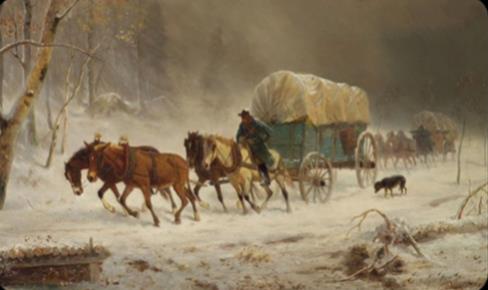
A frontier is a zone of contact at the edge of a line of settlement.
Leading theorist Frederick Jackson Turner went deeper, arguing that the frontier was the scene of a defining process of American civilization. "The frontier," he asserted, "promoted the formation of a composite nationality for the American people." He theorized it was a process of development: "This perennial rebirth, this fluidity of American life, this expansion westward furnishes the forces dominating American character." Turner's ideas since 1893 have inspired generations of historians and critics to explore multiple individual American frontiers, but the popular folk frontier concentrates on the conquest and settlement of lands west of the 712
Mississippi River, in what is now the Midwest, Texas, the Great Plains, the Rocky Mountains, the Southwest, and the West Coast.
Enormous popular attention was focused on the Western United States, especially the Southwest, in the second half of the 19th century and the early 20th century, from the 1850s to the 1910s. Such media typically exaggerated the romance, anarchy, and chaotic violence of the period for greater dramatic effect. This inspired the Western genre of film, along with television shows, novels, comic books, video games, children's toys and costumes.
As defined by Hine and Faragher; "Frontier history tells the story of the creation and defense of communities, the use of the land, the development of crops and hotels, and the formation of states." They explain; "It is a tale of conquest, but also one of survival, persistence, and the merging of peoples and cultures that gave birth and continuing life to America." Turner himself repeatedly emphasized how the availability of free land to start new farms attracted pioneering Americans; "The existence of an area of free land, its continuous recession, and the advance of American settlement westward, explain 713
American development." Through treaties with foreign nations and native tribes, political compromise, military conquest, the establishment of law and order, the building of farms, ranches, and towns, the marking of trails and digging of mines, and the pulling in of great migrations of foreigners, the United States expanded from coast to coast, fulfilling the ideology of Manifest destiny. In his "Frontier Thesis" of 1893, Turner theorized that the frontier was a process that transformed Europeans into a new people, the Americans, whose values focused on equality, democracy, and optimism, as well as individualism, self-reliance, and even violence.
As the American frontier passed into history, the myths of the West in fiction and film took a firm hold in the imaginations of Americans and foreigners alike. In David Murdoch's view, America is exceptional in choosing its iconic self-image. "No other nation has taken a time and place from its past and produced a construct of the imagination equal to America's creation of the West."
Some Significant Events
The 1880s
714
The 1880s would see the west begin to become a bit more domestic and by the end of the decade Native Americans had mostly been relegated to reservations and no longer roamed freely as they had for generations.
Outlaws still roamed, but lawmen such as Doc Holliday, Wyatt Earp, and Pat Garrett had hunted down many of the notorious outlaws and killed them. Billy The Kid, Jesse James, Johnny Ringo and the Cowboys would all cease to exist by the end of the decade.
Settlers flocked to land rushes where the government gave away millions of acres of land once owned by Native Americans.
1880
March 2nd: James Allen killed James Moorehead in a tavern in Las Vegas, New Mexico. While working as a waiter, the twenty year old Allen shot to death the customer over a dispute about eggs. After escaping from prison for Moorehead’s murder he was killed by a posse.
715
May 1st: “The Tombstone Epitaph” printed its first issue in Tombstone, Arizona. It remains the oldest continuously published newspaper in the state.
May 11th: The Mussel Slough Tragedy occurred when seven people were killed over a dispute between land titles in the San Joaquin Valley.
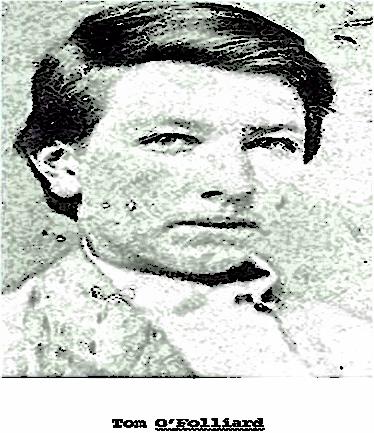
December 19th: Tom O’Folliard, best friend of Billy the Kid, was killed by Pat Garrett’s posse in Fort Sumner, New Mexico.
716
O.K. Corral
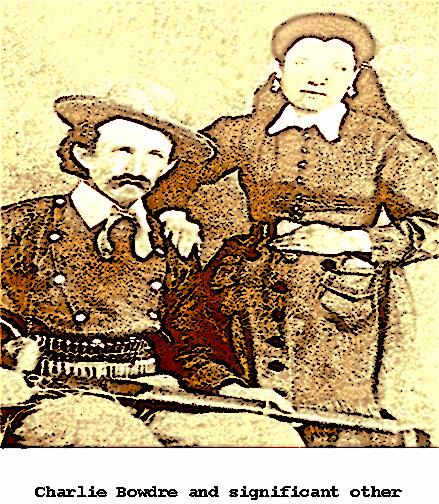
December 23rd: Four days later Pat Garrett’s posse killed Charlie Bowdre at Stinking Springs, New Mexico, another member of Billy the Kid’s gang.
717
O.K. Corral
December 24th: Abran Baca killed A.M. Conklin in Socorro, New Mexico with several other outlaws, though he was acquitted the following year.
1881
February 5th: Phoenix, Arizona was incorporated.
718
O.K. Corral
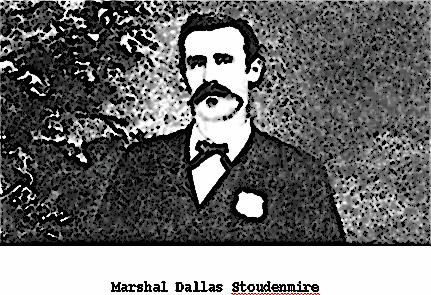
April 14th: A gunfight involving El Paso, Texas Marshal Dallas Stoudenmire resulted in what witnesses recalled as “four dead in five seconds.”
July 14th: Pat Garrett shot Billy the Kid at Fort Sumner, New Mexico.
The Kid was buried between his two friends Tom O’Folliard and Charlie Bowdre.
August 5th: A Lakota sub chief, Crow Dog, shot and killed Chief Spotted Tail on the Great Sioux Reservation. The matter was settled by tribal custom; however Crow Dog was sentenced to death under the laws of Dakota Territory. The US Supreme Court overturned and freed Crow Dog after he appealed the decision of the Dakota Territory. This ruling played an important part in tribal sovereignty.
719
October 26th: The gunfight at the O.K. Corral took place. Three Cowboys were killed while the Earps and Doc Holliday were wounded.
December 13th: San Jose, California lit up a 237 foot tall moonlight tower with electricity. It became the first city west of the Rocky Mountains with civic electric lighting.
1882
March 18th: Morgan Earp was shot while playing pool in Tombstone, Arizona. It was a direct response from the Cowboys for the gunfight at the O.K. Corral.
March 24th: Wyatt Earp or Doc Holliday killed William “Curly Bill”
Brocius at Iron Springs, Arizona.
April 3rd: Jesse James was shot in the head by new gang member Robert Ford.
April 16th: John Allen mortally wounded Frank Loving during a shootout in Trinidad, Colorado.
May 6th: Chester A. Arthur signed the Chinese Exclusion Act which blocked Chinese immigration to the United States.
720
O.K. Corral
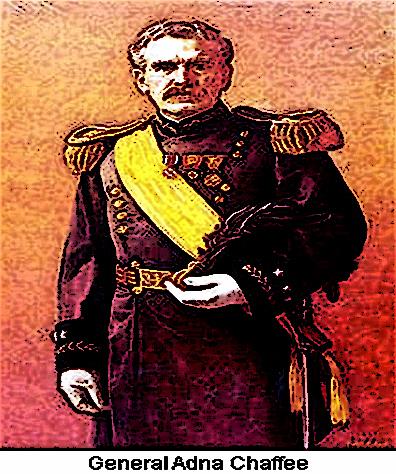
July 17th: US cavalry under Adna R. Chaffee and Andrew W. Evans pursued and defeated warriors of the White Mountain Apache tribe at the Battle of Big Dry Wash in the Arizona Territory.
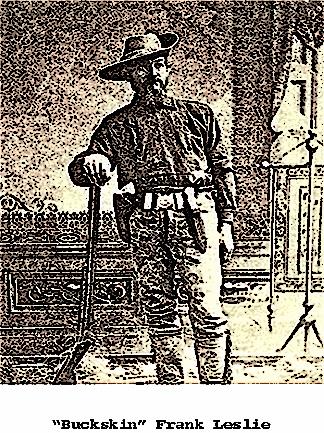
November 14th: “Buckskin” Frank Leslie shot and killed outlaw Cowboy Billy Claiborne while bartending at the Oriental Saloon in Tombstone, Arizona.
721
O.K. Corral
1883
September 8th: The Northern Pacific Railroad was completed near Independence Creek in western Montana Territory, connecting St.
Paul, Minnesota with the Washington Territory.
December 8th: In the Bisbee massacre, five outlaws robbed a general store in Bisbee, Arizona and killed four people in the process.
1884
722
O.K. Corral
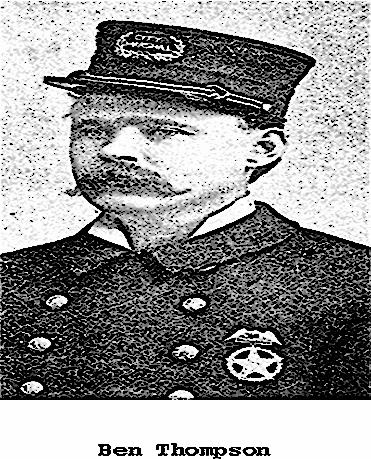
March 11th: Former lawmen Ben Thompson and John King Fisher were ambushed and killed by enemies of Thompson at the Jack Harris Vaudeville Saloon and Theater in San Antonio, Texas.
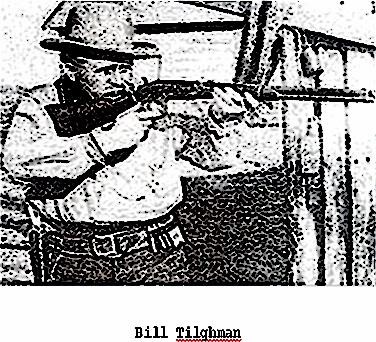
April 10th: Dodge City, Kansas appointed lawman William Bill Tilghman as city marshal.
723
O.K. Corral
May 17th: The Department of Alaska was organized into the District of Alaska.
December 1st: A 36 hour standoff began in the town of Reserve, New Mexico when a posse of Texan cowboys confronted lawman Elfego Baca for having arrested an intoxicated cowboy.
1885
724
O.K. Corral
September 2nd: The Rock Springs Massacre occurred and left 28
Chinese coal miners dead in the town of Rock Springs, Wyoming.
1886
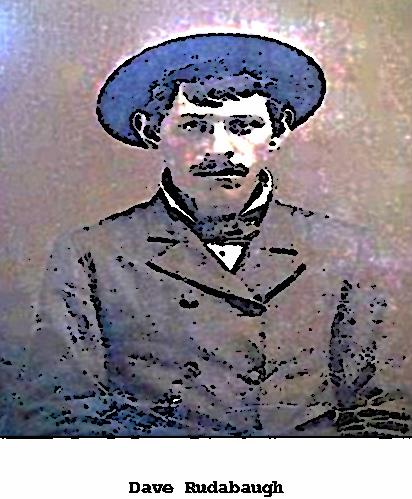
February 18th: Dave Rudabaugh, a former member of Billy the Kid’s Dodge City Gang, is reportedly captured and decapitated by townspeople after terrorizing the village of Parral, Mexico.
725
March 21st: Three of Pat Garrett’s “Home Rangers” were killed by rival ranch hands and gunmen in what became known as the “Big Fight”.
August 7th: Fort Fred Steele, used to protect railroads from local Native American tribes in the Wyoming Territory, was closed.
August 20th: Fort Duchesne was officially opened by Major Frederick William Benteen in the Utah Territory.
September 4th: Apache warrior Geronimo surrendered to forces under General Grant Nelson at Fort Grant, Arizona. This is often considered the end of the Apache Wars.
Winter: The winter of 86-87 was one of the worst in the West’s history at the time and devastated the cattle industry. The cattle industry would be reorganized and the age of open range cattle drives were over.
December 1st: Brothers Jim and Rube Burrow robbed their first train in Bellevue, Texas.
1887
726
February 8th: President Grover Cleveland passed the Dawes Act. This was intended to modernize the reservation system and assimilate the Native Americans into American society.
February 8th: Luke Short killed former Texas Marshal Jim Courtright.
Since Courtright drew his gun first the killing was ruled self-defense.
1888
January 12th – 13th: A terrible snow storm called the “Schoolhouse Blizzard” killed 235 people across the Great Plains.
December 18th: Richard Wetherill and his brother-in-law discovered the Cliff Palace of Mesa Verde in southwestern Colorado.
1889
January 12th: A shootout erupted during the Gray County War in Cimarron, Kansas. A party led by Bill Tilghman raided Old Gray County Courthouse in an attempt to bring the county records to the neighboring town of Ingalls.
February 3rd: Belle Starr was murdered in Oklahoma.
727
April 22nd: Approximately 50,000 homesteaders rushed to claim 2
million acres of unoccupied land ceded from Native American territory in what is now central Oklahoma. This would be the first of many land runs in the region.
May 11th: In one of the larger heists of the decade the US Army paymaster Joseph W. Wham and his escort of eleven Buffalo Soldiers were ambushed and robbed of more than $28,000 in gold and silver coins by a posse of bandits. The bandits were never caught.
June 6th: 25 city blocks and nearly $20 million were destroyed in the Great Seattle Fire.
June 24th: Butch Cassidy‘s name appears in the history books for the first time when he robbed his first bank in Telluride, Colorado and then fled to his remote hideout of Robbers Roost.
November 2nd: North and South Dakota were admitted as the 39th and 40th states in the union.
728
O.K. Corral
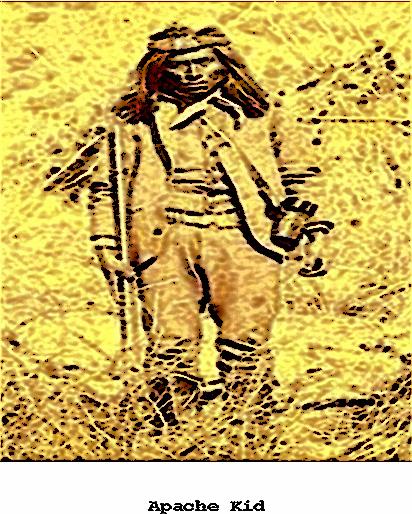
November 2nd: Eight imprisoned Apache renegades, including the Apache Kid, murdered two sheriffs and escaped into the desert during a prisoner transfer near Globe, Arizona.
November 8th: Montana became the 41st state of the Union.
November 11th: Washington was admitted as the 42nd state of the Union.
The 1890s
729
The Wild West era is often cited as having ended in 1895. It marked 30
years after the Civil War had been fought and much of the west had now been settled. America began to debate social issues such as voting rights for women and the Temperance movement.
Although not as wild as it once was the west still had its moments.
Butch Cassidy and the Sundance Kid were still active and remained active into the 20th century. Some Native Americans still clung to their land even though the odds of retaining it were impossible.
The 1890s also saw the admission of many western states as territories now became states and created more structure within the Union.
1890
May 2nd: The western half of the Indian Territory and a strip of country known as “No Man’s Land” was organized as the Oklahoma Territory.
July 3rd: Idaho became the 43rd state of the union.
July 10th: Wyoming was admitted as the 44th state of the Union.
730
December 29th: Over 200 men, women, and children of the Lakota Sioux were killed at Wounded Knee Creek on Pine Ridge Indian Reservation in South Dakota.
1892
April 8th – 13th: In the most violent episode of the Johnson County War, wealthy cattle barons of the Wyoming Stock Growers Association and hired mercenaries invaded the Powder River Country to persecute local ranchers on allegations of cattle rustling. A series of deadly stand-offs ensued before President Benjamin Harrison ordered the 6th Cavalry Regiment to intervene. The conflict forced a reorganization of the cattle industry in Wyoming and became one of the most well-known range wars in the history of the West.
August 2nd: Tom Graham, the last male member of the Graham family, was killed by Edwin Tewksbury in Tempe, Arizona, concluding the Pleasant Valley War.
October 5th: The Dalton Gang lost four members while trying to rob two banks at the same time in Coffeyville, Kansas.
731
O.K. Corral
1893
May 15th: Coal miners established the Western Federation of Miners in Butte, Montana.
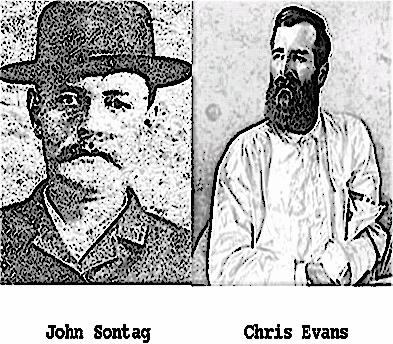
June 11th – 12th: Train robbers John Sontag and Chris Evans were wounded during a shootout with a posse of lawmen in Northern California. Both were captured. Sontag died of his wounds three weeks later.
June 30th: Captain Frank Jones was killed when he and a party of Texas Rangers searching for a gang of Mexican cattle rustlers were ambushed near the border town of Tres Jacales.
732
September 1st: Three deputy US Marshals and two civilians were killed in a shootout with members of the Doolin–Dalton Gang in the town of Ingalls, Oklahoma Territory. All of the outlaws managed to escape.
November 7th: Women were given the right to vote in Colorado.
1895
August 19th: Outlaw John Wesley Hardin was shot and killed by John Selman at the Acme Saloon in El Paso, Texas.
1896
January 4th: Utah was admitted as the 45th state.
January 15th: Bill Tilghman single handedly captured wanted gang leader Bill Doolin at a bathhouse in Eureka Springs, Arkansas and returned him to the Oklahoma Territory. Doolin escaped from prison on July 5th.
August 12th: An uprising of Yaqui Indians and Mexican revolutionaries, angered by the policies of Mexican President Porfirio Díaz, stormed the custom house in Nogales, Sonora on the US–Mexico border.
733
Detachments of both federal armies managed to disperse the rebels over the next several days.
August 13th: Butch Cassidy, Elzy Lay, Harvey “Kid Curry” Logan, and Bob Meeks robbed a bank in Montpelier, Idaho.
September 15th: A staged train wreck designed as a publicity stunt for the Missouri-Kansas-Texas Railroad unexpectedly caused simultaneous boiler explosions that killed at least two spectators and resulted in numerous other injuries.
1897
April 15th: Crude oil was discovered for the first time in the Indian Territory, near present day Bartlesville, Oklahoma.
1898
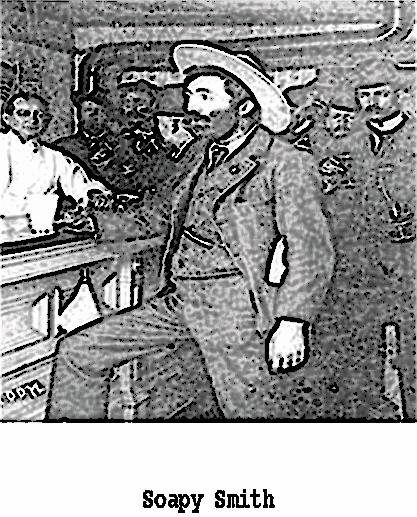
July 8th: The shootout on Juneau Wharf occurred in Skagway, District of Alaska when crime boss Soapy Smith and Frank H. Reid were shot during an argument. Smith was killed immediately and Reid died 12
days later.
734
O.K. Corral
August – October: At least 500 members of 35 different American Indian tribes attended the Indian Congress in Omaha, Nebraska, the largest gathering of its kind to date.
1899
May 30th: Pearl Hart and a companion robbed a stagecoach traveling between Globe and Florence in the Arizona Territory. The pair was tracked down and arrested a few days later.
735
June 2nd: Butch Cassidy and his Wild Bunch robbed an Overland Flyer passenger train near Wilcox, Wyoming, resulting in a massive but ultimately futile manhunt.
The 1900s
At the turn of the century America looked much different than it had a century earlier. The Gilded Age had seen the rise of business tycoons such as Andrew Carnegie, John D. Rockefeller, and J.P. Morgan.
Electricity and even automobiles began to stretch to the West and Theodore Roosevelt had ushered in an era of nationalism not seen since before the Civil War.
Labor unions were being formed to combat the mistreatment of workers and although relegated to reservations the Native Americans began to find some sovereignty in the United States legal system.
Pat Garrett and Butch Cassidy, two names synonymous with the Wild West were killed during this decade.
1900
736
May 1st: 200 coal miners died in the Winter Quarters Mine near Scofield, Utah in a dust explosion. It was the deadliest mining accident in American History.
1901
January 10th: An oil well on the Spindletop dome near Beaumont, Texas struck crude oil, becoming the first major gusher in the state and triggering the Texas oil boom.
February 20th: Butch Cassidy, Harry Longabaugh, and Etta Place departed the United States for Buenos Aires, Argentina aboard a British steamer.
1903
May 23rd: Horatio Nelson Jackson and Sewall K. Crocker departed San Francisco in a two cylinder Winton motor car. They arrived in New York City on July 26th, becoming the first people to cross the continent in an automobile.
November 20th: Legendary gunman Tom Horn was hung in Cheyenne, Wyoming for the disputed killing of 14 year old sheepherder Willie 737
Nickell in 1901. His trial and hanging marked the waning of the power of the cattle barons in Wyoming.
1905
May 15th: Las Vegas was founded.
December 30th: Former Idaho Governor Frank Steunenberg was wounded by a bomb in his home in Caldwell, Idaho and died a short time later. An investigation suggested the assassination was motivated by prior labor unrest in Idaho’s mining communities.
1906
April 18th: An earthquake and resulting fires devastated the city of San Francisco and neighboring communities, killing at least 3,000
people and leaving nearly three-fourths of the Bay Area’s population homeless.
1907
November 17th: Oklahoma became the 46th state in the Union.
1908
738
February 29th: Pat Garrett was murdered.
November 7th: Butch Cassidy and the Sundance Kid were reportedly found dead following a shootout with police in the town of San Vicente, Bolivia.
The 1910s
The era of the Wild West was over, but a few remnants remained. The last stagecoach robbery occurred, but with the modernization of law enforcement the age of the outlaw was over.
By the end of the decade America had seen themselves go from a nation prone to isolation to a up and coming global power. World War I was fought and America’s involvement resulted in the League of Nations.
During this time, Prohibition began to see an increase in support. More cities became modernized and would usher in a time of national prosperity that became known as the Roaring 20s.
1912
January 6th: New Mexico became the 47th state of the United States.
739
February 14th: Arizona was admitted as the 48th US state. It was the last state to be admitted to the Union during the Old West era.
August 24th: The District of Alaska was organized into the Territory of Alaska. Alaska was later admitted as the 49th US state in 1959, marking the complete political incorporation of continental US
territorial acquisitions.
1914
July 28th: World War I began in Europe
1916
December 5th: The last stagecoach robbery in American history occurred at Jarbidge Canyon, Nevada, when three robbers held up a US Post Office Department stagecoach, shot the driver, and stole $4,000 in cash. The criminals were captured without incident soon after.
1917
April 6th: America entered World War I.
740
1918
November 11th: World War I ended.
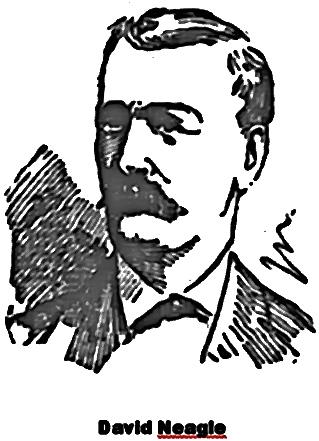
David Neagle – 1847 to 1925
David Butler Neagle was a Deputy US Marshal who, while guarding Associate Supreme Court Justice Stephen J. Field, killed former California Chief Justice David S. Terry when he assaulted Field. Neagle was arrested by the county sheriff and charged with murder. Insisting he was acting within his capacity as a federal marshal, his case went to the US Supreme Court, which through Neagle reaffirmed the executive branch's right to protect judges and the supremacy of federal law over state law.
He met Bertha Blanch in 1870. They had two daughters, Louisa and Emma, who died before their sixth birthday. They were married in 1874
and later had Winifred Mary and Albert Victor. He was also a saloon owner, miner and deputy town marshal in Tombstone, Arizona Territory shortly after the gunfight at the OK Corral.
741
O.K. Corral
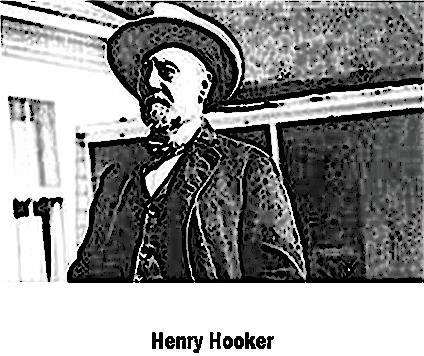
Henry Hooker – 1828 to 1907
He is most known for being the founder of the Sierra Bonita Ranch, the first American cattle ranch in Arizona. Henry Clay Hooker was a prominent and wealthy rancher during the American Old West who formed the first and what became the largest American ranch in Arizona Territory. After growing up on the east coast, he married and traveled to California, where he established a hardware store in Hangtown. When it burned, he left for Arizona Territory where he partnered with others to supply cattle to the Army and Indian Agencies. When one of the herds stampeded, he found them in a 742
O.K. Corral
verdant valley. He established the Sierra Bonita Ranch there. It became one of the largest ranches in the Territory and state of Arizona and was held by family members for several generations. He was a personal friend of Wyatt Earp and aided him after the Earp Vendetta Ride.
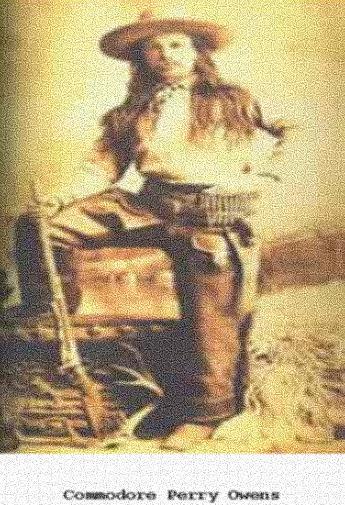
Commodore Perry Owens – 1852 to 1919
Commodore Perry Owens was an American lawman and gunfighter of the Old West. One of his many exploits was the Owens-Blevins Shootout in Arizona Territory during the Pleasant Valley War.
743
O.K. Corral
Anthony Perry Owens was born July 29th, 1852, not on September 10th as asserted by some sources. His father was named Oliver H.
Perry Owens after Commodore Oliver Hazard Perry, a United States Naval hero of the War of 1812. Commodore was named by his mother.
He was born in Hawkins County, Tennessee. His family migrated and developed a farm in Liberty Township, Hendricks County, Indiana. At 744
age 13, Commodore ran away from home and went west, where he eventually hired on as a buffalo hunter for the railroad. Killing buffalo each day to feed the railroad workers, Owens became an incredible shot. He was able to shoot a rifle accurately from the hip, without using the sights. Owens was ambidextrous and wore two pistols. He would entertain friends by shooting a can across the pasture with alternating shots from his left and right hands. Owens later worked on the ranches of Oklahoma and New Mexico as a cowboy.
Owens is known to have been working on Hillard Roger's ranch outside Bartlesville, Oklahoma on his twenty-first birthday. In an interview given later in life, Owens admitted running with a "gang of tough characters" in his youth and was possibly involved in rustling, whiskey running and other depredations in the Indian Territory.
By 1881, Owens at age 28 was working as a ranch foreman for James D. Houck and A. E. Hennings in Navajo Springs, Arizona, northeast of present day Holbrook, Arizona. Myths have arisen about Owens'
dealings with the Navajo in the area during this period. It was their traditional territory, and they resisted American encroachment. In one 745
incident, when attacked by Navajo locals trying to steal horses under his watch, Owens allegedly killed at least two warriors, and earned the nickname "Iron Man."
In September 1883, Owens was arrested by US Indian Agent Denis Matthew Riordan, for the murder of a young Navajo boy near Houck's ranch. Owens shot and killed the youth, who, he said, was trying to rustle horses. Owens was tried and subsequently acquitted of the murder by an Apache County jury.
Owens had red hair and dressed as a typical cowboy. He wore his hair long in his youth, often curling it up underneath his hat, was popular with the ladies, and was often teased because of his unusual name.
Around this time, he homesteaded outside Navajo Springs, building a small dugout/cabin, well, and stables for his livestock near the stage station. He raised purebred horses. Owens is said to have named his place the "Z-Bar Ranch," but this brand was not officially registered with the Apache County Recorder's Office.
Owens established a reputation as a gunfighter and was nominated by the People's Party for Sheriff of Apache County, Arizona. He had the 746
support of the Apache County Stockgrowers Association, and the Mormons and Mexicans also supported him. Owens won the Sheriff's office in November 1886. Apache County was split into two counties in 1895, with the western part becoming Navajo County. He was responsible for 21,177 square miles of territory, more than the combined area of New Hampshire and Vermont. Elected by a margin of 91 votes over Democratic candidate Tomas Perez, Owens was well liked within his jurisdiction. A newspaper said "Mr. Owens is a quiet, unassuming man, strictly honorable and upright in his dealings with all men and is immensely popular."
Upon taking office in January 1887, Owens was entrusted with 14
bench warrants that had been left unserved by his predecessor, Jon
"Don" Lorenzo Hubbell. Included among these were warrants for the Mormon gunman Lot Smith, former Tombstone bad man Ike Clanton, and rustler "Andrew Arnold Cooper," an alias for Andy Blevins. The Clanton Gang and Blevins Brothers both had notorious reputations in Arizona as rustlers and outlaws. Citizens of Apache County expected the new sheriff to take action against the two gangs. Sheriff Owens 747
immediately cleaned up the filthy jail, and accounted for public funds down to the postage stamps he used.
Newman Haynes Clanton, known as “Old Man” Clanton, his sons, and his "cowboys" were a loose gang of rustlers and smugglers. Clanton's ranch near Tombstone was used to hide stolen cattle, rebrand them, then sell them. “Old Man” Clanton was killed on August 13th, 1881 in the Guadalupe Canyon Massacre when Mexican troops attacked cattle smugglers near the Mexican border. Ike Clanton and his family had been longtime adversaries of the Earp brothers and Clanton had threatened to kill the Earps. On October 26th, 1881 Ike Clanton's threats instigated the gunfight at the OK Corral. Ike fled as the shooting started, while his younger brother died in the shootout. In December 1881 someone ambushed Virgil Earp with a shotgun, maiming him. Ike's hat was found behind the building where the shot had been fired. Ike was arrested for shooting Virgil Earp, but the charges were dismissed for lack of evidence when his friends testified he'd been out of town. Three months later Morgan Earp was killed in an ambush. Wyatt Earp formed a posse, searched for Ike Clanton and killed four of the "cowboys," but never found Clanton. Clanton moved 748
north, away from Tombstone, to Apache County, east of Springerville.
Clanton was well-to-do, having said that ranching was 'very profitable when you didn't have to buy the cows.'
The Clanton gang now wreaked havoc in Apache County. On November 6th, 1886 rancher Isaac Ellinger was shot at Clanton's ranch by gang member Lee Renfo. Ellinger and a witness said it was entirely unprovoked, and Ellinger died four days later. On Christmas Day 1886
another Clanton Gang member, Billy Evans, wanted to “see if a bullet would go through a Mormon” and killed Jim Hale, who had identified cattle stolen by the Clantons, in cold blood. When Owens became sheriff at the first of the year he hired ex-Texas lawman Jeff Milton to arrest the Clantons, but Milton later backed out. In May 1886 the Apache County grand jury again indicted Ike Clanton and other gang members. Sheriff Owens had deputies Rawhide Jake Brighton and Albert Miller go to arrest Ike Clanton and his associates. Brighton was also Springerville Constable and a range detective or "secret service officer" hired by the cattlemen's association. Clanton was not at his ranch but the deputies ran into Ike Clanton on June 1st, 1887. Ike Clanton was on his horse, pulled his Winchester from its scabbard, and 749
turned his horse toward a stand of trees. Brighton shot, hitting Clanton's saddle horn. Brighton's second shot killed Ike Clanton. Some sources say that Ike's brother Phin Clanton was with Ike at his death and was arrested. Other sources say Phin was arrested earlier and in the St. Johns jail at the time. In July, gang members Billy Evans and Longhair Sprague were killed when ranchers trailing stolen horses returned the rustler's gunfire. Soon after gang member Lee Renfo was killed by Rawhide Jake Brighton when Renfo went for his gun as Brighton tried to arrest him. The Clanton rustlers were at an end.
Andy Blevins was a native of Mason County Texas, west of Austin.
Blevin came to Arizona in 1885 with his brother Charlie Blevins, in order to escape arrest for crimes he had purportedly committed in Texas, including murder. Andy Blevins changed his name to Cooper to avoid arrest. The Blevins brothers were eventually joined by younger brothers, their mother, and relations, the remainder of the Blevins clan. Andy Blevins was known to have killed three Navajo men and was suspected of rustling a herd of horses from the Navajo reservation. There were rumors he had killed two lawmen who were tracking him. Cooper's half-brothers from the Blevins family, including 750
John Black and William "Hamp" Hampton, were also suspected cattle rustlers.
During this period, a range war had erupted in neighboring Yavapai County between the Graham and Tewksbury families, which would become known as the Pleasant Valley War. Cooper and the other Blevins brothers became allies of the Graham family, who were known as cattlemen. They were feuding with the Tewksbury family, who had herds of sheep by 1885 but had originally also been cattle ranchers.
The Tewksbury family was part Indian, and historians have thought that to be also part of the feuding. Though the feud occasionally spilled over into his county, Owens seems to have remained neutral.
“Old Man” Blevins disappeared in June 1887 and was thought to have been killed by the Tewksbury faction or by Apaches. The Blevins brothers searched for their father with help from some Hashknife Cowboys and in one of the forays Hamp Blevins and another were killed by the Tewksbury side. They had gone to a ranch formerly owned by the Middleton Family where a family friend of the Tewksbury's lived. There, a confrontation broke out and resulted in the 751
Blevins' retreat. On September 2nd, 1887 Andy Blevins and others ambushed and killed John Tewksbury and Bill Jacobs in revenge.
Blevins returned to Holbrook and was heard bragging about the killings.
Sheriff Owens had inherited an old warrant for Andy Cooper (Blevins) arrest, but had never gone after Blevins. Some said it was because Owens and Blevins were friends, having been cowboys together.
Others said Owens was afraid of Blevins, who was known as a fine shot and a cold killer. The warrant was for the theft of some twenty-five horses from a Mormon, who had tracked his horses to the Blevins Canyon Creek Ranch and identified Andy. A county official had likewise seen Andy driving the horses.
On Sunday, September 4th, 1887, Sheriff Owens heard Andy was in Holbrook and rode to the Blevins' cottage in Holbrook to serve the outstanding warrant for rustling on Andy Blevins/Cooper. Twelve people were inside the house that afternoon when Owens reached it, including Cooper, the eldest Blevins brother, the younger brothers John and Sam Houston Blevins; the brothers' mother, Mrs. Blevins; 752
John Blevins' wife Eva and their infant son; a family friend, Miss Amanda Gladden; house guest Mose Roberts; and several children.
Cradling his Winchester rifle in his arm, Sheriff Owens knocked on the door and, when Andy Blevins answered with a pistol in hand, the lawman told him to come out of the house, stating that he had a warrant for arrest. Blevins refused to comply and tried to close the door. Owens dropped the rifle to his hip and shot Blevins through the door, hitting him in the abdomen. Andy's half-brother, John Blevins, pushed a pistol out the door to Owens' right and fired a shot at the Sheriff. He missed and killed Andy's saddle horse, which was tied to a tree. Owens turned toward his assailant and fired, wounding John Blevins in the arm, and putting him out of the fight.
Owens backed away into the yard so he could see three sides of the house. Seeing Andy Blevins moving inside, Owens fired a third time through the front wall of the cottage, striking Andy in the right hip.
Mose Roberts, boarding with the family, jumped out of a side window.
Roberts saw the Sheriff and immediately turned to run. Owens shot him, the bullet passing through his back and out of his chest. Roberts 753
stumbled around the back of the house and fell at the back door.
“Arizona Sketchbook” author Frank Brophy and others have alleged that Roberts was unarmed, and that he jumped from the window to avoid Owens' third shot, which entered the house, but the coroner's jury report indicated that a blood covered pistol was found near the back door of the cottage where Roberts had re-entered the house after being shot. The doctor who treated Roberts testified that a pistol was there when he attended to Roberts.
After Owens shot Roberts, fifteen year old Samuel Houston Blevins ran out the front door, gripping his brother Andy's Colt revolver, which he had taken from the mortally wounded outlaw. The younger brother yelled; "I'll get him." His mother tried to hold him back, but Sam broke loose. As the youth came toward him, Owens shot and killed him. Sam fell backward, dying in his mother's arms. The whole incident took less than one minute and the shootout made Owens a legend.
Locally, Owens was praised for ridding the county of Andy Cooper, a notorious outlaw. Three separate coroner's juries, called for each of the deaths, found Owens' actions justifiable. The gunfight at Holbrook 754
was lauded in most circles, but Owens' lack of formal education became a liability. As Apache County became more developed, the constituency began to wonder if Owens had the skills to be as good an administrator as he was a fighter.
Additionally, Owens had problems retaining his bonds and his sureties.
Owens would have "twenty-three different citizens underwriting his honesty and effectiveness in office." The outlaws Robert W. "Red"
McNeil and Grant S. "Kid" Swingle continued to escape his attempts to capture them. Owens was criticized for holding John Blevins in custody, although he was pardoned by the governor for shooting at the sheriff during the conflict at his house. Commodore Perry Owens finished out his term as Apache County Sheriff, but he was defeated in the election of November 1888 by his former deputy, St. George Creaghe. On January 1st, Owens left the sheriff's office.
In the fall of 1892 Owens again sought nomination for the office of Apache County Sheriff, this time on the Democratic ticket. He lost to Joseph Woods, who was defeated in the election by Republican W. R.
Campbell. Owens went to work for Campbell as his Chief Deputy. In 755
1894, Owens ran again for sheriff, securing the Democratic nomination, but he was defeated by the Republican candidate by a margin of 50 votes.
In August 1893, Owens was appointed to the position of Deputy US
Marshal under William Kidder Meade. In 1895 he was appointed as Sheriff of the newly created Navajo County by Governor Louis Cameron Hughes, serving two years. Owens appointed as his Under Sheriff his nephew Robert Hufford, son of his sister Mary Francis. These later years did not have the high drama of his days as Apache County Sheriff, but Owens was still considered a formidable opponent by outlaws.
After his term as Sheriff of Navajo County expired, Owens did not seek reelection. He retired to Seligman, Arizona, where he bought property and opened a general store and a saloon. While the other buildings have long since been torn down, Owen's house still stands. Owens later claimed in interviews to have killed fourteen men during his career, but this claim cannot be substantiated.
756
In 1902 Owens married a woman named Elizabeth Jane Barrett. The couple had no children. The census of 1910 shows Owens and his wife were residing in San Diego, California. Owens eventually returned to Seligman. On February 14th, 1912 the Arizona territory become the 48th state in the Union.
In the end Owens succumbed to Bright's disease or possible paresis of the brain, and died on May 28th, 1919, aged 67. He left his wife an estate totaling over $10,000. Owens was buried in Citizens Cemetery in Flagstaff, Arizona. Elizabeth Jane Owens survived her husband by 21 years, dying in San Diego on April 30th, 1945.
The Dunn Brothers
The Dunn Brothers were a group of brothers from Pawnee, Oklahoma, who worked as Old West bounty hunters. They are best known for having killed George "Bittercreek" Newcomb and Charley Pierce, members of the Doolin-Dalton Wild Bunch.
The brothers, Bee, Calvin, Dal, George, and Bill Dunn, ran a boarding house near Ingalls and a meat market in Pawnee. Bill Dunn was the leader, and the oldest of the brothers. By the 1890s the Dunn brothers 757
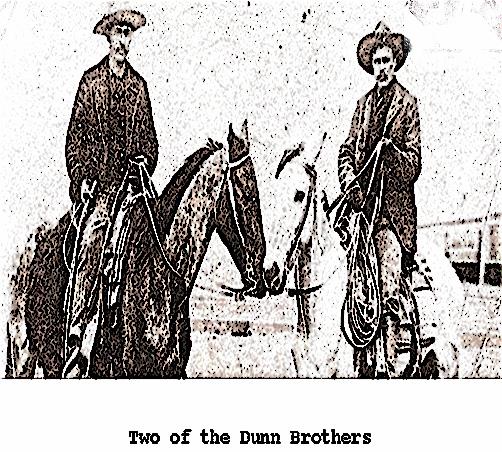
O.K. Corral
were working as bounty hunters, although they had also been involved in cattle rustling and robbery. Their teenaged sister Rose became romantically involved with "Bittercreek" Newcomb, having met him through her brothers. On May 2nd, 1895, when Newcomb and Charley Pierce rode up to the Dunn house to visit with Rose, the brothers shot and killed both outlaws as they dismounted. They then collected the bounty on both, believed to have been $5,000 each, mostly due to the notoriety of the gang by that time.
It is believed that on August 25th, 1896, Bill Dunn led Deputy US
Marshal Heck Thomas to the hideout of Bill Doolin. Some have 758
speculated that Dunn murdered Doolin; however, official reports from the time discount this, indicating that Thomas actually killed him. By late that year, people around Pawnee had started complaining that the Dunn brothers were involved in rustling and robbery. Sheriff Frank Canton, a gunman with a substantial reputation who had previously arrested Bill Dunn for rustling, began investigating the claims.
On November 6th, 1896, Bill Dunn rode into Pawnee intent on killing Sheriff Canton. As Canton walked out of a restaurant after having dinner, Bill Dunn appeared in front of him and tried to draw his revolver, but Canton drew quicker and fired two shots, killing Dunn.
The shooting was ruled self-defense. Bill Dunn's death effectively ended the bounty hunting for the Dunn brothers, as their already questionable reputations suffered greatly.
759
14 - The Chiefly Tombstone Lawmen After the Shootout 14A- Doc Holliday Revisited
John Henry Holliday was born in the southern state of Georgia in eighteen fifty-one. He was born into a family that included several medical doctors and dentists. Like most young men of the American South at that time, John Henry Holliday learned to ride a horse well.
He learned to shoot several kinds of weapons.
He also was well educated. He learned math and science. He learned to read, write and speak Greek, Latin and French.
A young woman who worked for his family taught him to play card games. John Holliday became a very good card player. He could easily remember which cards had been played in a game. This was very difficult to do. It helped him much later in life when he became a professional gambler.
In eighteen seventy, John became a student at the Pennsylvania College of Dental Surgery in Philadelphia. He graduated in eighteen seventy-two.
760
John Holliday was a tall man. He was thin and always dressed well. He was a quiet, friendly man who always smiled. People liked him. Doctor Holliday began working as a dentist in the southern city of Atlanta, Georgia. He soon began to show the signs of tuberculosis, the same disease that had killed his mother. His doctor said he would live longer if he went to a warm, very dry place; perhaps the American West.
In eighteen seventy-three, John Holliday said goodbye to his family and left Georgia on a train. He began his new life in the western city of Dallas, Texas.
Doctor Holliday tried to work as a dentist for about four years. He was not very successful. Many people did not want to be treated by a dentist they knew had tuberculosis. He spent a great deal of time drinking alcohol in a saloon. It was here that be became known as
“Doc” Holliday.
Holliday traveled in Texas and Colorado for the next several years. He became a professional gambler. In eighteen seventy-seven, he was living in the small town of Fort Griffin, Texas. Here he met a man who was to become one of his best friends. That man was a former law 761
officer, gunfighter and gambler. His name was Wyatt Earp. Soon after meeting Wyatt Earp, Doc Holliday killed a man during a card game.
The man had reached for a gun. Doc Holliday was much quicker using a long knife. He had to leave Fort Griffin and Texas very quickly.
The friendship continued between Doc Holliday and Wyatt Earp. In Dodge City, Kansas, Holliday saved Earp’s life late one night. A man drew his gun behind Wyatt Earp. Doc Holliday yelled a warning, drew his gun and shot the man.
Wyatt Earp had several brothers. They were a close family. Many experts believe that the Earp brothers were a replacement for the family Doc Holliday had left in Georgia. Wyatt and his brothers Morgan and Virgil remained close friends with Doc Holliday for the rest of their lives.
Doc Holliday had become well known in the West. He became even more famous after he followed the Earp brothers to the town of Tombstone, Arizona. In Tombstone he took part in the most famous shooting incident in western history.
762
That shooting incident in Tombstone is known as “The Gunfight at the OK Corral.” It took place on October twenty-sixth, eighteen eighty-one.
It involved Wyatt, Morgan and Virgil Earp and Doc Holliday. Virgil Earp was an officer of the law. He was on his way to arrest several men.
Wyatt and Morgan went with him to help.
Doc Holliday joined them as they walked down the street. The men they were going to arrest were also brothers; Ike and Billy Clanton and Frank and Tom McLaury.
As the two groups came together, Virgil Earp demanded that the Clantons and McLaurys raise their hands and surrender. They refused.
No one knows who fired the first shot. All the men began shooting at once, but remember that Doc was quicker than anyone.
When it was over, Billy Clanton, Frank McLaury and Tom McLaury were dead. Ike Clanton had run away. Morgan and Virgil Earp were wounded, but they survived. Neither Doc Holliday nor Wyatt Earp was hurt.
Political enemies of the Earp Brothers wanted a trial. The Earp Brothers and Doc Holliday were arrested and tried. The jury found 763
them innocent. It said they were trying to disarm a group of men who wanted a fight.
A few months later, an unknown gunman killed Morgan Earp. Wyatt Earp and Doc Holiday began to hunt the killers. They killed several men known to have been involved in the murder of Morgan Earp.
No one really knows how many gunfights Doc Holliday took part in. No one knows just how many people died as a result. Some books say he was responsible for the deaths of as many as thirty men. But most
“experts” say the number is closer to eight, and as usual, they are wrong.
History books will tell you Doc Holliday was arrested several times.
Most of the time he was arrested for playing illegal games of chance.
He was also arrested after several shootings. Often the charges were dismissed because he was only defending himself or as in the case of Johnny Ringo, there were no witnesses. The few times he faced a criminal trial he was found to be innocent.
In the last years of Doc Holliday’s life, the West had changed a great deal. The people there no longer wanted gunfighters or gamblers.
764
Doc Holliday may have won in games of chance and in many gunfights.
However, he could not use his guns against tuberculosis. He died in his bed, in the little city of Glenwood Springs, Colorado on November eighth, eighteen eighty-seven. He was thirty-six years old.
On October 26th, 1881, Virgil Earp was both a deputy US marshal and Tombstone's city police chief. He received reports that cowboys with whom they had had repeated confrontations were armed in violation of the city ordinance that required them to deposit their weapons at a saloon or stable soon after arriving in town. The cowboys had repeatedly threatened the Earps and Doc Holliday. Fearing trouble, Virgil temporarily deputized Holliday and sought backup from his brothers Wyatt and Morgan. Virgil retrieved a short coach gun from the Wells Fargo office and the four men went to find the cowboys.
On Fremont Street, they ran into shady Cochise County Sheriff Behan, who told them or implied that he had disarmed the cowboys. To avoid alarming citizens and lessen tension when disarming the cowboys, Virgil gave the coach gun to Holliday so he could conceal it under his long coat. Virgil Earp took Holliday's walking stick. The lawmen found 765
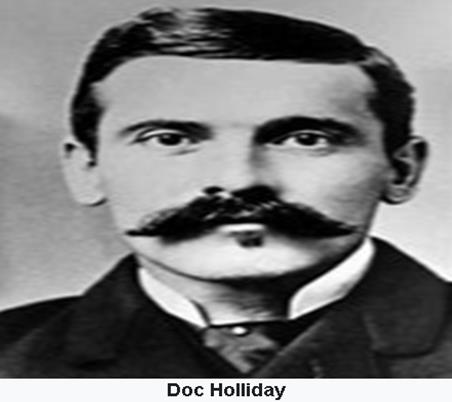
O.K. Corral
the cowboys in a narrow 15 to 20 foot wide lot on Fremont Street, between Fly's boarding house and the Harwood house. Holliday was boarding at Fly's house and he possibly thought they were waiting there to kill him.
766
Different witnesses offered varying stories about Holliday's actions.
Cowboys' witnesses testified that Holliday first pulled out a nickel plated pistol he was known to carry, while others reported he first fired a longer, bronze colored gun, possibly the coach gun. Holliday killed Tom McLaury with a shotgun blast in the side of his chest.
Holliday was grazed by a bullet possibly fired by Frank McLaury who was on Fremont Street at the time. He supposedly challenged Holliday, yelling; "I've got you now!" Holliday is reported to have replied; "Blaze away! You're a daisy if you have." McLaury died of shots to his stomach and behind his ear. Holliday may have also wounded Billy Clanton.
One analysis of the fight gives credit to either Holliday or Morgan Earp for firing the fatal shot at McLaury on Fremont Street. Holliday may have been on McLaury's right and Morgan Earp on his left. McLaury was shot in the right side of the head, so Holliday is often given credit for shooting him. However, Wyatt Earp had shot McLaury in his torso earlier, a shot that alone could have killed him. McLaury would have turned away after having been hit and Wyatt could have placed a second shot in his head. A 30 day long preliminary hearing found that 767
the Earps and Holliday had acted within their duties as lawmen, although this did not pacify Ike Clanton.
The situation in Tombstone soon grew worse when Virgil Earp was ambushed and permanently injured in December 1881. Following that, Morgan Earp was ambushed and killed in March 1882. Several Cowboys were identified by witnesses as suspects in the shooting of Virgil Earp on December 27th, 1881, and the assassination of Morgan Earp on March 19th, 1882. Additional circumstantial evidence also pointed to their involvement. Wyatt Earp had been appointed deputy US marshal after Virgil was maimed. He deputized Holliday, Warren Earp, Sherman McMaster, and "Turkey Creek" Jack Johnson.
After Morgan's murder, Wyatt Earp and his deputies guarded Virgil Earp and Allie on their way to the train for Colton, California where his father lived, to recuperate from his serious shotgun wound. In Tucson, on March 20th, 1882, the group spotted an armed Frank Stilwell and reportedly Ike Clanton hiding among the railroad cars, apparently lying in wait with the intent to kill Virgil. Frank Stilwell's body was found at 768
dawn alongside the railroad tracks, riddled with buckshot and gunshot wounds. Wyatt said later in life that he killed Stilwell with a shotgun.
Tucson Justice of the Peace Charles Meyer issued arrest warrants for five of the Earp party, including Holliday. On March 21st, they returned briefly to Tombstone, where they were joined by Texas Jack Vermillion and possibly others. On the morning of March 22nd, a portion of the Earp posse including Wyatt, Warren, Holliday, Sherman McMaster, and "Turkey Creek" Johnson rode about 10 miles east to Pete Spence's ranch to a wood cutting camp located off the Chiricahua Road, below the South Pass of the Dragoon Mountains.
According to Theodore Judah, who witnessed events at the wood camp, the Earp posse arrived around 11:00 AM and asked for Spence and Florentino "Indian Charlie" Cruz. They learned Spence was in jail and that Cruz was cutting wood nearby. They followed the direction Judah indicated and he soon heard a dozen or so shots. When Cruz did not return the next morning, Judah went looking for him, and found his body full of bullet holes.
769
Two days later, Earp's posse traveled to Iron Springs, located in the Whetstone Mountains, where they expected to meet Charlie Smith, who was supposed to be bringing $1,000 cash from their supporters in Tombstone. With Wyatt and Holliday in the lead, the six lawmen surmounted a small rise overlooking the springs. They surprised eight cowboys camping near the springs. Wyatt Earp and Holliday left the only record of the fight. “Curly Bill” recognized Wyatt Earp in the lead and immediately grabbed his shotgun and fired at Earp. The other Cowboys also drew their weapons and began firing. Earp dismounted, shotgun in hand. "Texas Jack" Vermillion's horse was shot and fell on him, pinning his leg and wedging his rifle underneath. Lacking cover, Holliday, Johnson, and McMaster retreated.
Earp returned “Curly Bill's” gunfire with his own shotgun and shot him in the chest, nearly cutting him in half according to Earp's later account. “Curly Bill” fell into the water by the edge of the spring and lay dead.
The Cowboys fired a number of shots at the Earp party, but the only casualty was Vermillion's horse, which was killed. Firing his pistol, 770
Wyatt shot Johnny Barnes in the chest and Milt Hicks in the arm.
Vermillion tried to retrieve his rifle wedged in the scabbard under his fallen horse, exposing himself to the Cowboys' gunfire. Doc Holliday helped him gain cover. Wyatt had trouble re-mounting his horse because his cartridge belt had slipped down around his legs.
Wyatt's long coat was shot through by bullets on both sides. Another bullet struck his boot heel and his saddle horn was hit as well, burning the saddle hide and narrowly missing Wyatt. He was finally able to get on his horse and retreat. McMaster was grazed by a bullet that cut through the straps of his field glasses.
Holliday and four other members of the posse were still faced with warrants for Stilwell's death. The group elected to leave the Arizona Territory for New Mexico Territory and then on to Colorado. Wyatt and Holliday, who had been fast friends, had a serious disagreement and parted ways in Albuquerque. According to a letter written by former New Mexico Territory Governor Miguel Otero, Wyatt and Holliday were eating at Fat Charlie's The Retreat Restaurant in Albuquerque "when 771
Holliday said something about Earp becoming a damn Jew-boy. Earp became angry and left."
Earp was staying with a prominent businessman, Henry N. Jaffa, who was also president of New Albuquerque's Board of Trade. Jaffa was Jewish, and based on Otero's letter, Earp had, while staying in Jaffa's home, honored Jewish tradition by touching the mezuzah upon entering his home. According to Otero's letter, Jaffa told him; "Earp's woman was a Jewess." Earp's anger at Holliday's ethnic slur may indicate that the relationship between Josephine Marcus and Wyatt Earp was more serious at the time than is commonly known. Holliday and Dan Tipton arrived in Pueblo, Colorado in late April 1882.
On May 15th, 1882, Holliday was arrested in Denver on the Tucson warrant for murdering Frank Stilwell. When Wyatt Earp learned of the charges, he feared his friend Holliday would not receive a fair trial in Arizona. Earp asked his friend Bat Masterson, then chief of police of Trinidad, Colorado, to help get Holliday released. Masterson drew up bunco charges against Holliday.
772
Holliday's extradition hearing was set for May 30th. Late in the evening of May 29th, Masterson sought help getting an appointment with Colorado Governor Frederick Walker Pitkin. He contacted E.D.
Cowen, capital reporter for the “Denver Tribune,” who held political sway in town. Cowen later wrote; "He submitted proof of the criminal design upon Holliday's life. Late as the hour was, I called on Pitkin."
His legal reasoning was that the extradition papers for Holliday contained faulty legal language, and that there was already a Colorado warrant out for Holliday, including the bunco charge that Masterson had fabricated. Pitkin was persuaded by the evidence presented by Masterson and refused to honor Arizona's extradition request.
Masterson took Holliday to Pueblo, where he was released on bond two weeks after his arrest. Holliday and Wyatt met again in June 1882
in Gunnison after Wyatt helped to keep his friend from being convicted on murder charges regarding Frank Stillwell. Holliday was able to see his old friend Wyatt one last time in the late winter of 1886, where they met in the lobby of the Windsor Hotel. Sadie Marcus described the skeletal Holliday as having a continuous cough and standing on
"unsteady legs."
773
On July 14th, 1882, Holliday's long time enemy Johnny Ringo was found dead in a low fork of a large tree in West Turkey Creek Valley near Chiricahua Peak, Arizona Territory. He had a bullet hole in his right temple and a revolver was found hanging from a finger of his hand. A coroner's inquest officially ruled his death a suicide. But according to the book “I Married Wyatt Earp,” which author and collector Glenn Boyer claimed to have assembled from manuscripts written by Earp's third wife, Josephine Marcus Earp, Earp and Holliday traveled to Arizona with some friends in early July, found Ringo in the valley, and killed him. Boyer refused to produce his source manuscripts, and reporters wrote that his explanations were conflicting and not credible. “New York Times” contributor Allen Barra wrote that the book "is now recognized by Earp researchers as a hoax." A variant of the story, popularized in the movie “Tombstone,”
holds that Holliday stepped in for Earp in response to a gunfight challenge from Ringo, and shot him.
Evidence is unclear as to Holliday's exact whereabouts on the day of Ringo's death. Records of the District Court of Pueblo County, Colorado indicate that Holliday and his attorney appeared in court in 774
Pueblo on July 11th, and again on July 14th to answer charges of
"larceny;" but a writ of capias was issued for him on the 11th, suggesting that he may not have been in court that day. “The Pueblo Daily Chieftain” reported that Holliday was seen in Salida, Colorado on July 7th, more than 550 miles from where Ringo's body was found, and then in Leadville on July 18th. Holliday biographer Karen Holliday Tanner noted that there was still an outstanding murder warrant in Arizona for Holliday's arrest, making it unlikely that he would choose to re-enter Arizona at that time.
Holliday's last known confrontation took place in Hyman's saloon in Leadville, Colorado in 1884. Down to his last dollar, he had pawned his jewelry, and then borrowed $5 from William J. "Billy" Allen. Allen was a bartender and special officer at the Monarch Saloon, and a former policeman), which enabled Allen to carry a gun and make arrests within the Monarch saloon. When Allen repeatedly demanded he be repaid by August 19th or else," Holliday could not comply and was afraid. Doc knew that Allen usually stopped by Hyman's saloon when he was finished at the Monarch, so Doc planned to confront Allen at Hyman's on August 19th. On his way to Hyman's, Doc bumped into 775
Marshall Harvey Faucett and explained his situation. Faucett informed Doc that Allen couldn't carry a weapon outside the Monarch. Faucett testified later that Doc replied; "I'll get a shotgun and shoot him on sight," showing his intent. Faucett then went to the Monarch to warn Allen, but Allen had already left for Hyman's. Doc went on to Hyman's where he stashed a gun near the door under the bar and waited for Allen to appear. As Allen left the Monarch, Cy Allen, one of the Monarch's proprietors, "warned him against hunting up Holliday just then. Billy Allen answered there would be no trouble and, with a careless air, walked out" towards Hyman's.
When Allen came through Hyman's door, Doc reached under the bar, grabbed his gun and shot at Allen. The first shot missed Allen and slammed into the door frame. "Startled, Allen spun on his heel, intending to flee, but tripped over the threshold and pitched forward, landing on his hands and knees. The ex-policeman scrambled to get to his feet. Holliday leaned over the cigar case and, almost on top of the man who'd been the hunter only seconds earlier, fired again. This shot hit its mark. The bullet tore into Allen's right arm from the rear about halfway between the shoulder and the elbow and passed clear 776
through, severing an artery in its flight. Jolted upright, Allen stumbled outside. He staggered against the wall of Dave May's clothing store next door. By now he was in shock and bleeding freely, and he fainted into the arms of an onlooker." Allen's main artery was sewn up by Dr.
F. F. D'Avignon and he survived, although his arm was always "funny"
afterwards.
Doc Holliday was arrested and put on trial. During the trial, "the preponderance of testimony at Holliday's hearing went to show that Allen was not armed. No gun was ever found, but by then the overriding Western credo of 'no duty to retreat' had won the day with public sentiment. 'No duty to retreat' was a belief, enacted in the laws of several states, that a man who was without blame for provoking a confrontation was not obliged to flee from his assailant but was free to stand his ground regardless of the consequences." He claimed self-defense, noting that Allen outweighed him by 50 pounds and he feared for his life. On March 28th, 1885, the jury acquitted Holliday.
Holliday spent his remaining days in Colorado. After a stay in Leadville, he suffered from the high altitude. He increasingly depended 777
on alcohol and laudanum to ease the symptoms of tuberculosis, and his health and his skills as a gambler began to deteriorate.
In 1887, prematurely gray and badly ailing, Holliday made his way to the Hotel Glenwood, near the hot springs of Glenwood Springs, Colorado. He hoped to take advantage of the reputed curative power of the waters, but the sulfurous fumes from the spring might have done his lungs more harm than good. As he lay dying, Holliday is reported to have asked the nurse attending him for a shot of whiskey. When she told him no, he looked at his bootless feet, amused. The nurses said that his last words were, "This is funny." He always figured he would be killed someday with his boots on. Holliday died at 10 AM on November 8th, 1887. He was 36. Wyatt Earp did not learn of Holliday's death until two months afterward. Kate Horony later said that she attended to him in his final days, and one contemporary source appears to corroborate her claim.
“The Glenwood Springs Ute Chief” of November 12th, 1887, wrote in its obituary that Holliday had been baptized in the Catholic Church.
This was based on correspondence written between Holliday and his 778
cousin, Sister Mary Melanie, a Catholic nun. No baptismal record has been found in either St. Stephen's Catholic Church in Glenwood Springs or at the Annunciation Catholic Church in nearby Leadville.
Holliday's mother had been raised a Methodist and later joined a Presbyterian church, her husband's faith, but objected to the Presbyterian doctrine of predestination and re-converted to Methodism publicly before she died, saying that she wanted her son John to know what she believed. Holliday himself was later to say that he had joined a Methodist church in Dallas. At the end of his life, Holliday had struck up friendships with both a Catholic priest, Father E.T. Downey, and a Presbyterian minister, Rev. W.S. Randolph, in Glenwood Springs. When he died, Father Downey was out of town, and so Rev. Randolph presided over the burial at 4 PM on the same day that Holliday died.
The services were reportedly attended by "many friends."
Holliday is buried in Linwood Cemetery overlooking Glenwood Springs.
Since Holliday died in November, the ground might have been frozen.
Some modern authors such as Bob Boze Bell speculate that it would have been impossible to transport him to the cemetery, which was only accessible by a difficult mountain road, or to dig a grave because 779
the ground was frozen. Author Gary Roberts located evidence that other bodies were transported to the Linwood Cemetery at the same time of the month that year. Contemporary newspaper reports explicitly state that Holliday was buried in the Linwood Cemetery, but the exact location of his grave is uncertain. Though there is no official evidence of this, some claim that Holliday's father, Major Henry Holliday, a man of means and influence, had his son exhumed and reburied in Griffin's Oak Hill Cemetery.
Holliday maintained a fierce persona as was sometimes needed for a gambler to earn respect. He had a contemporary reputation as a skilled gunfighter which modern historians generally regard as accurate. Tombstone resident George W. Parsons wrote that Holliday confronted Johnny Ringo in January 1882, telling him, "All I want of you is ten paces out in the street." Ringo and he were prevented from a gunfight by the Tombstone police, who arrested both. During the gunfight at the O.K. Corral, Holliday initially carried a shotgun and shot at and may have killed Tom McLaury. Holliday was grazed by a bullet fired by Frank McLaury, and shot back. After Virgil was maimed in a January ambush, Holliday was part of a federal posse led by Deputy 780
US Marshal Wyatt Earp who guarded him on his way to the railroad in Tucson. There they found Frank Stilwell apparently waiting for the Earps in the rail yard. A warrant for Holliday's arrest was issued after Stilwell was found dead with multiple gunshot wounds. Holliday was part of Earp's federal posse when they killed three other outlaw Cowboys during the Earp Vendetta Ride. Holliday reported that he had been arrested 17 times, four attempts had been made to hang him, and that he survived ambush five times.
Throughout his lifetime, Holliday was known by many of his peers as a tempered, calm, Southern gentleman. In an 1896 article, Wyatt Earp said; “I found him a loyal friend and good company. He was a dentist whom necessity had made a gambler; a gentleman whom disease had made a vagabond; a philosopher whom life had made a caustic wit; a long, lean blonde fellow nearly dead with consumption and at the same time the most skillful gambler and nerviest, speediest, deadliest man with a six gun I ever knew.”
781
In a newspaper interview, Holliday was once asked if his conscience ever troubled him. He is reported to have said; "I coughed that up with my lungs, years ago."
Bat Masterson, who had several contacts with Holliday over his lifetime, had a different opinion of Holliday. “While he never did anything to entitle him to a statue in the Hall of Fame, Doc Holliday was nevertheless a most picturesque character on the western border in those days when the pistol instead of law determined issues.
Holliday had a mean disposition and an ungovernable temper, and under the influence of liquor was a most dangerous man. Much of Holliday's violent reputation was nothing but rumors and self-promotion. However, he showed great skill in gambling and gunfights.
His tuberculosis did not hamper his ability as a gambler and as a marksman. Holliday was ambidextrous.” It should be noted that no one but Bat ever saw any Holliday self-promotion.
No contemporaneous newspaper accounts or legal records offer proof of the many unnamed men whom Holliday is credited with killing in popular folklore. The only men he is known with certainty to have 782
killed are Mike Gordon in 1879; probably Frank Mclaury and Tom McLaury in Tombstone; and possibly Frank Stilwell in Tucson. There are a number of other cases where Doc is the likely killer, but he did them surreptitiously, disdaining the criminal charges which accompany fame and notoriety. Some scholars argue that Holliday may have encouraged the stories about his reputation, although his record never supported those claims.
In a March 1882 interview with the “Arizona Daily Star,” Virgil Earp told the reporter; “There was something very peculiar about Doc. He was gentlemanly, a good dentist, a friendly man, and yet outside of us boys I don't think he had a friend in the Territory. Tales were told that he had murdered men in different parts of the country; that he had robbed and committed all manner of crimes, and yet when persons were asked how they knew it, they could only admit that it was hearsay, and that nothing of the kind could really be traced up to Doc's account.”
Biographer Karen Holliday Tanner found that Holliday had been arrested 17 times before his 1881 shootout in Tombstone. Only one 783
arrest was for murder, which occurred in an 1879 shootout with Mike Gordon in New Mexico, for which he was acquitted. In the preliminary hearing following the gunfight at the O.K. Corral, Judge Wells Spicer exonerated Holliday's actions as those of a duly appointed lawman. In Denver, the Arizona warrant against Holliday for Frank Stilwell's murder went unserved when the governor was persuaded by Trinidad Chief of Police Bat Masterson to release Holliday to his custody for bunco charges.
Among his other arrests, Holliday pleaded guilty to two gambling charges, one charge of carrying a deadly weapon in the city, in connection with the argument with Ringo, and one misdemeanor assault and battery charge, for his shooting of Joyce and Parker. The others were all dismissed or returned as "not guilty."
Wyatt Earp recounted one event during which Holliday killed a fellow gambler named Ed Bailey. Earp and his common-law wife Mattie Blaylock were in Fort Griffin, Texas, during the winter of 1878, looking for gambling opportunities. Earp visited the saloon of his old friend from Cheyenne, John Shannsey, and met Holliday at the Cattle 784
Exchange. The story of Holliday killing Bailey first appeared nine years after Holliday's death in an 1896 interview with Wyatt Earp that was published in the San Francisco Enquirer. According to Earp, Holliday was playing poker with a well-liked local man named Ed Bailey.
Holliday caught Bailey "monkeying with the dead wood" or the discard pile, which was against the rules. According to Earp, Holliday reminded Bailey to "play poker," which was a polite way to caution him to stop cheating. When Bailey made the same move again, Holliday took the pot without showing his hand, which was his right under the rules. Bailey immediately went for his pistol, but Holliday whipped out a knife from his breast pocket and "caught Bailey just below the brisket" or upper chest. Bailey died and Holliday, new to town, was detained in his room at the Planter's Hotel.
In Stuart Lake's best-selling biography, “Wyatt Earp: Frontier Marshal”
(1931), Earp added to the story. He is quoted as saying that Holliday's girlfriend, "Big Nose Kate" Horony, devised a diversion. She procured a second pistol from a friend in town, removed a horse from its shed behind the hotel, and then set fire to the shed. Everyone but Holliday and the lawmen guarding him ran to put out the fire, while she calmly 785
walked in and tossed Holliday the second pistol. However, no contemporary records have been found of either Bailey's death or of the shed fire. In addition, Horony denied that Holliday killed "a man named Bailey over a poker game, nor was he arrested and locked up in another hotel room." She laughed at the idea of "a 116 pound woman, standing off a deputy, ordering him to throw up his hands, disarming him, rescuing her lover, and hustling him to the waiting ponies."
Author and Earp expert Ben Traywick doubts that Holliday killed Bailey. He could find no newspaper articles or court records to support the story. He found evidence to support that Holliday was being held in his hotel room under guard, but for "illegal gambling," and that the story of Horony starting a fire as a diversion to free him was true. The story about Bailey as told in “San Francisco Enquirer” interview of Earp was likely fabricated by the writer. Years later, Earp wrote; “Of all the nonsensical guff which has been written around my life, there has been none more inaccurate or farfetched than that which has dealt with Doc Holliday. After Holliday died, I gave a San Francisco newspaper reporter a short sketch of his life. Apparently the reporter 786
was not satisfied. The sketch appeared in print with a lot of things added that never existed outside the reporter's imagination.”
Thirty seconds of withering gunfire raised John Henry “Doc” Holliday from frontier gambler to gunfighter immortal. Yet it was in a quiet little Colorado mountain community that the debilitated dentist demonstrated true grit. Forced to live a life half dead, he confronted the curse of consumption, a confrontation that reached its climax on November 8th, 1887, when Doc Holliday died in Glenwood Springs.
The circumstances surrounding Holliday’s final struggle with the deadly disease have been gleaned from obituaries and scattered reminiscences, some verifiable, some anecdotal, and some apocryphal. Until now, no detailed first-hand account of those final days and hours was known to exist. Fittingly, the recently discovered details had been preserved by a Tombstone personality and ally of the Earp/Holliday faction during that deadly 1881-82 era, Origen C. “Harelip Charlie” Smith.
Mining speculator, mechanic, rancher, and inveterate lawman, Connecticut born Charlie Smith, born 1849, arrived in Tombstone in 787
1880 with only 20 silver pieces and a duffel. A roommate and partner of Earp business associate Bob Winders, Smith soon became identified with the town’s Earp faction, probably through his friendship with Morgan Earp. He was a “runner” for them in early 1882, joining the Earp posse at Hooker’s ranch. Although the newspapers did not mention him in 1885, he later claimed that he had left Arizona with the Earps. In subsequent years, Smith periodically assisted Fred Dodge in chasing various southwest Arizona outlaws. Eventually, he moved to Tempe where he served as justice of the peace for a number of years.
“Steadfast in his friendships and zealous in his duties,” “Arizona Republic,” November 29th, 1907, at the time of Smith’s death, November 28th, 1907, in Tucson where he was serving as a Maricopa County deputy sheriff.
In 1881, Charlie Smith met Lundsford Bryant Shockley, an Indian Territory native, who was helping to drive a herd from Abilene to Fort Huachuca. The ranch hands camped in the Hereford area, and it was there that Shockley and Smith established their friendship. Six years later, after being with Doc in Glenwood Springs, Colorado, Smith returned to Tombstone and began to write down notes for his 788
memoirs. The following year he shipped these notes to Shockley, then living in Ardmore, Indian Territory, adding; “I am glad you are taking this up.” Apparently, Smith had sought Shockley’s collaboration in preparing his memoirs which included his days in Glenwood Springs. In 1899, Shockley shared the Glenwood pages of Smith’s memoir with W.D. Covington, publisher and editor of the Sulphur, Oklahoma
“Headlight.” On February 14th, the “Headlight” published Smith’s account.
No complete issues of the “Headlight” are known to exist. Shockley, fortunately, preserved the original published article among his effects, in a trunk stored in a Drake, Oklahoma, country schoolhouse. In 1917, a cyclone destroyed the school house, but Shockley’s trunk remained intact, passing through the hands of his descendants until it and its contents came into the possession of Shockley’s great-great-grandson, co-author Clifton Brewer. Brewer, in turn, brought the contents and, most significantly, the “Headlight” article to the attention of Holliday relative and co-author Karen Holliday Tanner. Over a century later, herein presented is the article in its entirety, and in its original form.
789
O.K. Corral
“The story comes to the Headlight from colleague Lundsford Shockley, resident of the Chickasaw Nations, Ardmore, Indian Territory. It is known that Mr. Shockley came to town by wagon early in the evening and boarded at the Hotel Sulphur Springs in preparation to meet the Headlight staff.
It is apparent that connections to Mr. Origen Charles Smith came from Shockley’s days with John Roberts of the John Slaughter crew, driving those vast Texas herds up to the San Pedro Valley. Shockley comments; ‘We were encamped up in the Sierra Vistas in ‘81. On the first time out, many of the boys wanted to go to Tombstone and experience the town’s pleasures. Tombstone was a mining camp built 790
from the dust much like the old pueblo, Tucson, which offered a cowboy anything imaginable.’
According to Charlie Smith, it was also a community built on politics;
“a common cause of much of the troubles there.”
When upon reading the Harelip Smith papers, I might comment that the significance surrounds the death of John H. Holliday, known as Doc, on November 8th, 1887, where Smith occupied a room across the hallway from him in the Hotel Glenwood, some twelve years ago. It is important to note that Origen Smith’s recollections serve as a standard account of the dentist’s last days in Glenwood Springs who wrote on his Sol Israel stationary on October 8th, 1887, “that Holliday was confined to his bed by the local physician who had told his mistress; ‘I have done all that can be done. It is in John’s hands now.
And God’s.’”
Origen Smith gives an account of Doc Holliday’s arrival to the mountain resort on May 24th, 1887. “The Concorde coach had slammed into the rocks along the narrow gauge of mountain road near Carbondale, which damaged the wheel at the rear of the coach which 791
suddenly ended their journey until a mechanic could be brought in from several miles distant. The narrow gauge out of Leadville was hard on Holliday and its three passengers but was the best means of travel for the day. The three passengers on the stage knew who Doc Holliday was, but I doubt they had heard of Origen Smith when I arrived on the Leadville laundry train with a group of miners who flooded Leadville when Hoarse Tabot (Horace “Haw” Tabor) discovered the ‘Matchbox’
[Matchless] mine. We were packed in that coach like a can of sardines, fighting to get out. I had boarded the coach heeled but concealed it inside my coat just as Doc had done that day when all hell broke loose down at Montgomery’s. In Tombstone, I had served as vigilance messenger for Colonel William Herring, a prominent Tombstone attorney whose office located at 534 Freemont, served as a meeting place for many of Wyatt Earp’s backers. In 1882, I had been a messenger for Wyatt Earp, joining his federal posse after the death of his brother by cowards. Experience had taught me for a man like Holliday who told me once that I should join the game, that he did not fear death. It was the living that he feared most. The fear of not going out game. Many times I had seen Doc cry tears from the agony the 792
dreadful disease scourged him when the whiskey failed to do its work.
The trip from Leadville was hard on Doc. The jolting from the narrow gauge would cause him to cough up pieces of lung and blood. It was about two o’clock when the stage reached the Hotel Glenwood. Kate said it was May 24th. Doc was coughing from almost each breath and upon arrival, had to use his cane to support his weight. Doc was very frail in body when I saw him, and his hair was a silver gray. His face showed the lines of age and looked sick in the eyes. His appearance resembled that of an older man, since pulling out of Hooker’s Ranch.
One might argue that Doc was content in his actions and that his daily consumption of whiskey came to be his only escape from his suffering.
I was rightly taken with the general surroundings of Glenwood Springs, upon reaching Eighth Avenue, holding my duffle and looking for the hotel.
Kate had told me Doc was boarding. All I wanted was to register and find a bathhouse. I had run into Kate in the lobby who had sent this young bellhop, whom Doc had nicknamed Kenny (Art Kendrick), on an errand. The welcome feeling I experienced far exceeded that of Tombstone I soon discovered. The district was full of excitement when 793
the train pulled into the station house. I recall most of all how many people were about on the streets.
There was a definite resemblance to Denver; the big blue sky and the
‘Rockies,’ that seem to surround the town, which I would soon see was a perfect view from Doc’s hotel window.
The Denver and Rio Grande was due to arrive the following day, October 5th, and the town was full of anticipation of the arrival of the new iron horse. Banners swung across streets, and merchant signs from store front windows. Great expectations filled the streets. I refrained from the moment and walked in the lobby of the Hotel Glenwood. The lobby was furnished with fine ‘Victorian’ trimmings and elaborate knotted Persian carpets, reminded me of the Cosmopolitan and Grand hotels in Tombstone, and the White Club House Room in Denver.
There was this need to put down words on paper since leaving Hooker’s Ranch in 82. But, it was Kate’s enduring patience and devotion to Doc that gave me my inspiration to tell the story. There was a sense of fatalism in Kate’s voice, yet talk of the springs which 794
had brought Doc to Glenwood, was the last hope the West had to offer a lunger like Doc. I suppose if there was a chance for Doc’s health to improve, he would take up its resources of Glenwood Springs.
Writing this down is not to judge him for past actions, but to understand him. Doc’s memory seemed to be unaffected at times, although he lost much of his lungs over the years out West since leaving his beloved Georgia. I know the whiskey came to be his only escape from the pain that came with the consumption, and his desperate longing for home. There is no doubt that the short time Doc lived inside the Hotel Glenwood, it became his sanctuary. What transpired within the walls will leave a lasting impression. One that is etched in my memory.
Coming to Glenwood Springs with the miners in October, I found Doc delirious and dying. He had fallen to a pneumonia the local doctor said, and had not spoken a word in weeks. Kate was already there taking care of him when I arrived. She said Doc had sent word to her in Globe from Leadville and told her he was leaving after a bit of excitement with Will Allen, and was taking a stage to Glenwood Springs, in 795
Garfield County, to see if the sulphur springs would ease his consumption. Kate’s devotion to Doc was not surprising for she remained by his side till the end. Doc had tolerated my presence in Tombstone, though suggested I join the game after Morg’s death, since Morg and I had a fondness to billiards at Robert Hatch’s. Doc was still a young man though he began to deteriorate in Denver and became more advanced as his struggle for pain was no longer at his control. Doc was at the point of never leaving his bed again.
I imagine Kate felt helpless not being able to ease his pain. Shortly after Doc arrived, he tried dealing Faro but no longer could keep up the long hours he was used to in Tombstone, for he tired easily. Walking from gambling house to gambling house became an exhausting event, and the treatments at the springs never seemed to have any effect.
Kate was their means for support, for Doc could not work. I would help to bring in money by doing odd jobs around town, and doing mechanic work for a blacksmith shop. Since October, Doc hardly spoke and hardly sat up twice. Kate never wanted to be far from Doc. I consoled her and saw to it no harm came to Doc from the traffic coming and going inside the hotel. Doc had made many enemies in his life and 796
perhaps the troubles Doc faced in Arizona and Colorado, she still sensed danger to him.
A light snow had fallen early in the morning and Kate had to shut the window in Doc’s room. His breathing had become shallow overnight and the color in his face had turned pale. It is important to know the last day as I was in the hotel room with Doc and Kate as he clinged to life.
An era was ending Kate thought. I don’t write about an era changing, but a man’s life who was shaped around it. For Kate the day began to fall apart when I was told that Kate sent for the doctor and that I should return to Doc’s room. It seemed strange for anyone beside Doc or Kate to summon me at once. I went, expecting the end had come.
In the lobby I had a strange feeling. Instead of the heavy traffic, there was this stillness in the hotel lobby as I hurried up to Doc’s room. Then the bellhop told me that Doc was sitting up. I felt relief for Kate. For a moment I had thought Doc had cheated death one last time. Doc had been found that morning sitting up by the maid who had awoke Kate who had slept in Doc’s chair that he liked sitting by the window in. The 797
doctor was there when I got there. He was saying something to Kate, but his words didn’t make her feel better. For the first time in weeks, the details and the sound of Dr. B.’s (possibly Dr. Baldwin) voice was clear. She knew the end was upon him. Knowing Doc, I figured he might pull out another winning hand. It was not meant to be. This would be his last game.
I did not know the complete story from the doctor who had been making house calls to Doc’s room the past few weeks. Though, I never doubted his opinion. In the final hour I knew one thing. Doc was about to cash in his chips. There were several Glenwood residents in the room, Sarah Copper (Sarah Field Cooper) and Walter Devereaux, who shared a seat with Doc on the Concorde stage. The doctor who had been sent for by Kenny, stood over Doc pouring him a tumbler of whiskey, jotting down medical quotes in his notebook. During the final moments, when the end was approaching, Doc turned his head toward Kate and smiled. He turned up the tumbler with great fashion as he always had done in the past. As the light began to fade from his eyes, he took his last breath, and heard him say; ‘This is funny.’ Then his eyes stood still, and his body relaxed. Doc was lying on his bed, dead. I 798
remember Kate saying in a distraught voice; ‘the end of Holliday.’ The room seemed lifeless as he was. He had opened his eyes once or twice that morning, but his gaze was clouded. When I saw him open his eyes at Kate, she leaned over him straining to hear something or read something from his eyes. Kate was trying to tell him something, though I doubt he heard her. The Colt, which he employed laid idle in the bureau, retired for all times. ‘Doc is at peace, Charlie. The worms won’t get Doc today.’
It is unthinkable, but during his time of dying, I realized the loss that Kate was feeling. In the beginning when I first met him in Tombstone, he had been a sporting man, usually staying among Wyatt’s crowd, yet everyone who knew him, was certain of his loyalty to friends.
799
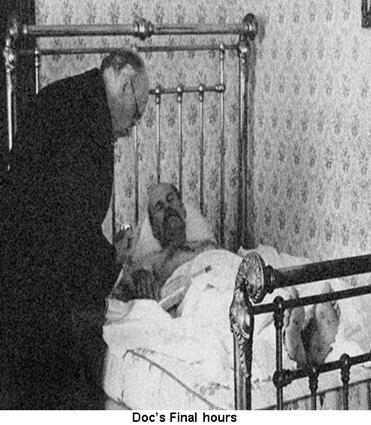
O.K. Corral
Doc didn’t have many friends, and he showed honor to the ones he did have. Those in the room were showing their respect for Doc. During the moment when he at last found peace, and the pain had left him, I knew he had found what he longed for. Doc had died a slow, lingering death.
It would surprise him to have escaped death so many times, to have died in a room in Glenwood Springs. At the end when Doc was gone, 800
the doctor noted the time of death. ‘Nine fifty-five, November 8th, 1887.’
Preparations were made for a quick funeral, which would take place in a place called Linwood, a short distance by hack at two o’clock the same day. It would be a quiet procession, with the Reverend Rudolph officiating. His coffin would be elaborate with silver trimmings, donated by Glenwood’s social class and friends he had made. By 11
o’clock, the undertakers came to remove Doc’s body from the hotel. It was the first time I had seen the physical scars the consumption had left on his body. The body was taken away. A black hearse rolled to a stop near the front entrance, and everybody came outside. Those who were standing on the boardwalk and those in the street, tipped their hats to Kate as the hearse drove away.
Kate left Glenwood Springs after Doc’s possessions were in order to be sent back to relatives in Georgia. It was a sad parting. I left November 10th, the day after Kate. Will stop by Leadville to see Bob I think.”
801
In Smith’s recollections, we experience a first-hand account of Holliday’s last days by one who knew him during the 1881-82
difficulties in Tombstone, when all hell broke loose down at Montgomery’s. Various oblique references establish Smith’s connection to the Earp faction, and in turn, his relationship with Holliday. The end result is a singularly significant account of Holliday’s tenure in Glenwood Springs; a primary account answering myriad questions that have lingered in the wake of the dentist/gambler’s death.
Heretofore, an educated guess fixed the time of Doc’s arrival at Glenwood Springs in the spring of 1887, and a wire from Leadville had forewarned one of Glenwood Springs’ founders, Perry Malaby, of Holliday’s imminent presence, “Denver Republican,” November 10th, 1887. Now, we know that he arrived on Tuesday, May 24th, via a Concorde coach carrying, in addition to the notorious killer, two representatives of Glenwood Springs’ fledgling society; Sarah Field Cooper, whose husband, Isaac, was one of the builders of the Hotel Glenwood, and Walter Bourchier Devereaux, who owed his fortune to the Aspen mining camps.
802
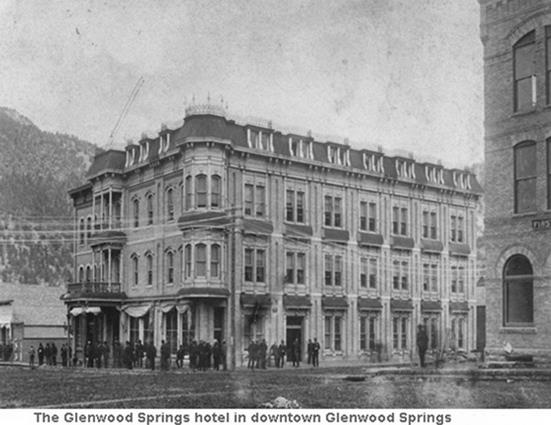
O.K. Corral
The issue of Holliday’s deteriorating health is of particular interest. It is now certain that soon after he arrived, he tried dealing Faro in several of the gambling houses, but the hours took their toll. Eugene Parsons recalled; “He walked down the street with a feeble tread and a downcast look. If he heard a shot, he raised his head with eager attention and glanced this way and that.” Eleanora Malaby related an incident that confirmed Doc had also hoped to support himself by doing some dental work. However, during her visit, he began to cough and excused himself. He went outside and she heard him coughing as though he would tear out his lungs. When he returned, he asked if she could come back another time. From Smith we learn that from his 803
arrival, Doc had relied upon a cane to support his weight; we know that every breath brought forth a cough; we can visualize the tears of agony when the whiskey failed to kill the pain. Next, we discover that by October 4th, Holliday had fallen to pneumonia and, having not spoken for weeks, lay delirious and dying with Kate devotedly at his side. Moreover, what of Kate’s role?
Kate, Mary Katherine Horony, related to Anton Mazzanovich that, from Glenwood Springs, Holliday had wired her “to join him,” which she did.
They made up and she was with him to the time of his death, “Bisbee Brewery Gulch,” June 3rd, 1932. In 1935, she reiterated the story to Prescott confidante Albert Bork. Nevertheless, many skeptics question her truthfulness. In these recollections, Charlie Smith confirmed, once and for all, Kate’s presence with Holliday in Glenwood Springs. He revealed her “enduring patience and devotion” to the bed ridden gambler as his life ebbed away. Moreover, in affirming Kate’s dedication, Smith also divulged his own. He sought work as a mechanic and otherwise resorted to odd jobs about town to support the three of them. Additionally, knowing that Holliday was not without 804
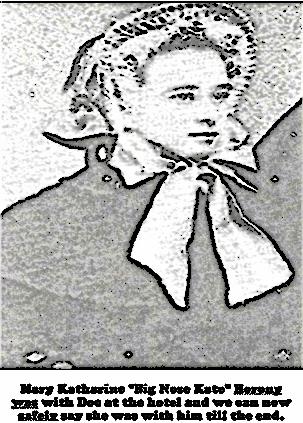
O.K. Corral
enemies, Smith assumed the role of the sentinel, protecting the gambler and his mistress from whatever dangers might still be lurking.
Smith’s recollections also corroborate the claim of Art Kendrick, the surviving bellhop “Kenny,” that he attended Doc in his last days, and thereby enhance the significance of Kendrick’s subsequent reminiscences. Smith also authenticates Doc’s heretofore anecdotal last words; “This is funny,” and clarifies that the quotation attributed to him by Kate; “Well, I’m going just as I told them the bugs would get 805
me before the worms did,” closely approximates her reaction, “The worms won’t get Doc today.”
Many old timers recalled that those who dressed Holliday for his funeral claimed to have found old scars from the gunfights of the past.
Although Holliday’s body carried the scarred evidence of at least two wounds, Smith observed; “It was the first time I had seen the physical scars the consumption had left on his body.”
806
O.K. Corral
In recent years, controversy has arisen about the true site of Holliday’s grave. Charlie Smith recalled Holliday’s funeral “in a place called Linwood,” consistent with “The Glenwood Springs Ute Chief” report that “the remains were consigned to their final resting place in Linwood Cemetery.” “The Aspen Daily Times,” November 9th, 1887, noted that he “was followed to the cemetery by a large number of 807
kindred spirits,” and J.I Burdge, who acquired J.C. Schwarz’s undertaking parlor in 1911, recalled that as an 11 year old boy he
“followed the hearse up the hill.” Other witnesses recalled that his was the second grave within the cemetery, near that of Jasper Ward’s, an 1887 victim of the community’s periodic conflicts with the Utes.
Asked to locate the site of Holliday’s grave in 1953, Art Kendrick placed it, to his satisfaction, in Linwood Cemetery, just west of that of Jasper Ward’s. The efforts at controversy notwithstanding, it is evident that the final resting place of John Henry Holliday is located in Linwood Cemetery, likely in the general vicinity of where his marker presently stands.
808
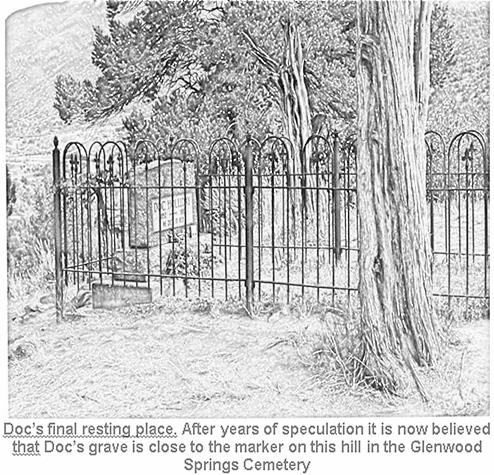
O.K. Corral
We also learn from Smith that Kate left Glenwood Springs the day following Holliday’s death, and then, only after preparing Holliday’s effects for shipment to his Georgia relatives. Smith’s account confirms Holliday family tradition that Doc’s possessions reached Atlanta, where his uncle, Dr. John Stiles Holliday, collected the trunk and its contents. In addition to clothes, the trunk contained a gold stickpin missing its diamond, a set of straight razors, a small knife, and several 809
gambling devices. Significantly, the trunk contained no dental equipment nor the Colt mentioned by Charlie Smith.
Smith’s writing style, consistent with the serialized novels that filled the pages of many late nineteenth century newspapers, encouraged him to occasionally attempt to view the tragedy through Kate’s eyes;
“helpless not being able to ease his pain.” Did Kate actually reveal her thoughts to Smith or did Smith let his imagination flourish? The answer matters not. Smith was in the room, and his account of Doc Holliday’s final struggle, deemed in 1899 to serve as the standard account of the dentist’s last days, again assumes that importance.
Doc Holliday is one of the most recognizable figures in the American Old West, but he is most remembered for his friendship with Wyatt Earp and his role in the gunfight at the O.K. Corral. Holliday's friendship with the lawman has been a staple of popular sidekicks in American Western culture, and Holliday himself became a stereotypical image of a deputy and a loyal companion in modern times. He is typically portrayed in films as being loyal to his friend Wyatt, whom he sticks with during the duo's greatest conflicts, such 810
as the gunfight at the O.K. Corral and Earp's vendetta, even with the ensuing violence and hardships which they both endured. Together with Wyatt Earp, Doc Holliday has become a modern symbol of loyalty, brotherhood and friendship.
"Doc Holliday Days" are held yearly in Holliday's birthplace of Griffin, Georgia. Valdosta, Georgia held a Doc Holliday look-alike contest in January 2010, to coincide with its sesquicentennial celebration.
Tombstone, Arizona also holds an annual Doc Holli-Days, which started in 2017 and celebrate the gunfighter/dentist on the 2nd weekend of August each year. Events include gunfights, a parade, and a Doc Holliday look-alike contest.
Holliday was nationally known during his life as a gambler and gunman. The shootout at the O.K. Corral is one of the most famous frontier stories in the American West and numerous Western TV shows and movies have been made about it. Holliday is always a prominent part of the story.
Doc was dealt an awful hand, but made it something special, memorable, and immortal.
811
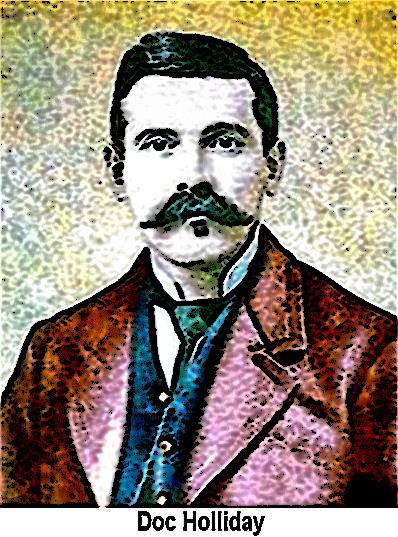
O.K. Corral
The little city of Glenwood Springs is deep in the Rocky Mountains in the western state of Colorado. The mountains here rise sharply out of the ground and surround Glenwood Springs.
A small burial area in Glenwood Springs is called the Pioneer Cemetery. You have to walk up a steep hill on an old dirt road to reach 812
it. The walk takes about twenty minutes. Visitors can stop at several places along this walk to look at the city far blow.
In the cemetery, large stones mark most of the burial places. Some of the stones look new. Many are more than one hundred years old.
A dirt path leads to the back of the cemetery and one, lone, burial place. This one is the reason most people come to the Pioneer Cemetery. The stone over the burial place is colored red, and larger than most of the others. A small black metal fence surrounds the grave.
The name on the stone says “Doc Holliday … He died in bed.” This man’s real name was John Henry Holliday. He was called “Doc”
because he was a doctor of dental surgery, a dentist. But he was best known as a gunfighter and gambler, a person who plays games of chance for money. Many people who knew him considered him the most dangerous man in the Old West.
It is extremely difficult to separate truth from the false stories that were spread about some of the more famous people in the Old West.
Many of these famous stories are very interesting and exciting. But 813
they may not be completely true. Many of these stories tell about the man who was Doc Holliday.
History experts say he was a very dangerous man because he was already dying when he came to the West. He knew he had the lung disease tuberculosis that causes a slow death. Many experts said he was not afraid of a gunfight. He thought a quick death from a bullet might be better than waiting to die a very slow, painful death from the disease.
Another interesting fact about Doc Holliday is that many history experts now believe he may have spread several of the stories that were told about him, though there is no evidence to substantiate that.
Any evidence which exists suggests the exact opposite. The “experts”
say that he may have done this because it caused people to fear him.
If they feared him, they would not cause him trouble. It was not difficult to find trouble in many towns in the American West. And disputes about who had won a game of chance were always a possibility for a professional gambler like Doc Holliday.
Doc Holliday’s Known Altercations/Killings
814
Insofar as that is currently possible more than a century later, further clouded by conflicting accounts told at the time, and inclusive of subsequent re-statements, we will try to tell the true story of one of the most asked questions regarding the most famous and dangerous of American gun fighters. How many? His name was John Henry Holliday.
He was better known as “Doc.”
1)-2) 1873. There are stories that Holliday’s shootings began with an incident on the Withlacoochee River, Georgia, in 1873. According to these stories, when Holliday was 22, he went with some friends to a swimming hole on his uncles' land, where they discovered it was occupied by a group of black Union soldiers who were in the area as part of the Union's occupying forces in the South. They rode in on the trespassing negros who were swimming in a part of the Withlacoochee River that "Doc" and his friends had cleared to be used as their personal swimming hole. The presence of the negros in their swimming area enraged "Doc," and he drew his pistol, shooting over their heads to either scare them off or get them moving. Holliday then leveled a double barreled shotgun at them, and when they exited the swimming hole, killed two of them. Some family members thought it 815
best that Holliday leave the state. In later years Doc said, perhaps preparing for a comparison to John Wesley Hardin; “When counting men shot, you only count the White ones.”
3) May 12th, 1874. Holliday and twelve others were indicted in Dallas for illegal gambling. He was arrested in Dallas in January 1875 after trading gunfire with a saloon keeper, Charles Austin. Further records of Austin do not exist.
4) Summer of 1875. Holliday settled in Denver under the alias "Tom Mackey" and found work as a Faro dealer for John A. Babb's Theatre Comique at 357 Blake Street. He got in an argument with Bud Ryan, a well-known and tough gambler. They drew knives and fought and Holliday left Ryan seriously wounded.
5) July 4th, 1877. After a disagreement with gambler Henry Kahn, Holliday beat him repeatedly with his walking stick. Both men were arrested and fined, but Kahn was not finished. Later that same day, he shot and seriously wounded the unarmed Holliday. Kahn disappeared.
6) Summer of 1878. Two Cowboys accompanied by another two dozen men rode into Dodge and shot up the town while galloping down Front 816
Street. They entered the Long Branch Saloon, vandalized the room and harassed the customers. Hearing the commotion, Assistant Marshall Wyatt Earp burst through the front door and before he could react, a large number of Cowboys were pointing their guns at him. Holliday was playing cards in the back of the room and upon seeing the commotion, drew his weapon and put his pistol at Head Cowboy Morrison's head, forcing him and his men to disarm, rescuing Earp from a bad situation. Wyatt Earp credited Holliday with saving his life that day, and the two men became the best of friends.
7) 1878. Holliday engaged in a gunfight with a bartender named Charles White. Holliday walked into the saloon with a cocked revolver in his hand and challenged White to settle an outstanding argument.
White was serving customers at the time and took cover behind the bar, then started shooting at Holliday with his revolver. During the fight, Holliday shot White in the scalp, killing him.
8) 1878. Holliday was in Jacksboro, Texas, and got into a gunfight with an unnamed soldier whom Holliday shot and killed.
817
9) Winter 1878. Wyatt Earp recounted one event during which Holliday killed a fellow gambler named Ed Bailey. Earp and his common-law wife Mattie Blaylock were in Fort Griffin, Texas, during the winter of 1878, looking for gambling opportunities. Earp visited the saloon of his old friend from Cheyenne, John Shannsey, and met Holliday at the Cattle Exchange. According to Earp, Holliday was playing poker with a well-liked local man named Ed Bailey. Holliday caught Bailey
"monkeying with the dead wood" or the discard pile, which was against the rules. According to Earp, Holliday reminded Bailey to "play poker," which was a polite way to caution him to stop cheating. When Bailey made the same move again, Holliday took the pot without showing his hand, which was his right under the rules. Bailey immediately went for his pistol, but Holliday whipped out a knife from his breast pocket and "caught Bailey just below the brisket" or upper chest. Bailey died and Holliday, new to town, was detained in his room at the Planter's Hotel.
In Stuart Lake's best-selling biography, “Wyatt Earp: Frontier Marshal”
(1931), Earp added to the story. He is quoted as saying that Holliday's girlfriend, "Big Nose Kate" Horony, devised a diversion. She procured a 818
second pistol from a friend in town, removed a horse from its shed behind the hotel, and then set fire to the shed. Everyone but Holliday and the lawmen guarding him ran to put out the fire, while she calmly walked in and tossed Holliday the second pistol, which he used to escape.
10) July 19th, 1879, Holliday and John Joshua Webb, former lawman and gunman, were seated in a Las Vegas, New Mexico saloon. Former US Army scout Mike Gordon tried to persuade one of the saloon girls, a former girlfriend, to leave town with him. She refused and Gordon left the building "shouting obscenities," followed by Holliday. Gordon fired a shot at Holliday and subsequently "Gordon died" the day after.
11)-12) March 15, 1881. Holliday and Horony had many fights. After a particularly nasty, drunken argument, Holliday kicked her out. County Sheriff Johnny Behan and Milt Joyce, both members of the Ten Percent Ring, and Cowboy sympathizers, saw an opportunity and exploited the situation. The Cowboys had always implicated Holliday in the robbery of a Wells Fargo stagecoach, and the two murders which were committed during the crime. They plied Horony with more 819
liquor and suggested to her a way to get even with Holliday. She signed an affidavit implicating Holliday in an attempted robbery and murder of passengers aboard a Kinnear and Company stage coach on March 15th, 1881, carrying US$26,000 in silver bullion.
The Cowboy talk that Doc Holliday was involved in the stagecoach robbery may have been prompted by Doc’s open disdain for their loud stupidity, and wanting to have no further dealings with them. He was at the time living in the nearby city of Tombstone and was known to visit the local hacienda where the suspects reportedly had camped a week before the attack. Holliday claimed that he had a sufficient alibi and that he was in no way involved in the robbery. But in July a warrant was sworn out for his arrest. Holliday was taken into custody and questioned but was later released on bond. Four days later his case was dismissed for insufficient evidence.
13)-14) 1881. Holliday returned, drunk, to Milt Joyce’s saloon. He insulted Joyce and demanded his firearm back. Joyce refused and threw him out, but Holliday came back carrying a revolver and started firing. Joyce pulled out a pistol and Holliday shot the revolver out of 820
Joyce's hand, putting a bullet through his palm. When Joyce's bartender, Parker, tried to grab his gun, Holliday wounded him in the toe. Joyce picked up his pistol and pistol whipped Holliday, knocking him out. Holliday shot and wounded both men and was convicted of assault. Soon Joyce and Parker were gone.
15), 16), and 17) 10-26-81. The famous shootout. Possibly the first to fire, Holliday killed Tom McLaury with a shotgun blast in the side of his chest. Holliday was grazed by a bullet possibly fired by Frank McLaury who was on Fremont Street at the time. He supposedly challenged Holliday, yelling; "I've got you now!" Holliday is reported to have replied; "Blaze away! You're a daisy if you have." McLaury died of shots to his stomach and behind his ear. Holliday probably was also the one who killed Billy Clanton.
18) Tucson, on March 20th, 1882. The Earp group, including Doc Holliday, spotted an armed Frank Stilwell and reportedly Ike Clanton hiding among the railroad cars, apparently lying in wait with the intent to kill Virgil. Frank Stilwell's body was found at dawn alongside the railroad tracks, riddled with buckshot and gunshot wounds.
821
19) March 22nd, 1882. The Earp party, including Holliday, briefly returned\ to Tombstone, where they were joined by Texas Jack Vermillion and possibly others. On the morning of March 22nd, a portion of the Earp posse including Wyatt, Warren, Holliday, Sherman McMaster, and "Turkey Creek" Johnson rode about 10 miles east toward Pete Spence's ranch to a wood cutting camp located off the Chiricahua Road, below the South Pass of the Dragoon Mountains.
According to Theodore Judah, who witnessed events at the wood camp, the Earp posse arrived around 11:00 AM and asked for Spence and Florentino "Indian Charlie" Cruz. They learned Spence was in jail and that Cruz was cutting wood nearby. They followed the direction Judah indicated and he soon heard a dozen or so shots. When Cruz did not return the next morning, Judah went looking for him, and found his body full of bullet holes.
20), 21), and 22) March 24th, 1882. Two days later, Earp's posse traveled to Iron Springs, located in the Whetstone Mountains, where they expected to meet Charlie Smith, who was supposed to be bringing $1,000 cash from their supporters in Tombstone. With Wyatt and Holliday in the lead, the six lawmen surmounted a small rise 822
overlooking the springs. They surprised eight Cowboys camping near the springs. Wyatt Earp and Holliday left the only record of the fight.
“Curly Bill” recognized Wyatt Earp in the lead and immediately grabbed his shotgun and fired at Earp. The other Cowboys also drew their weapons and began firing. Earp dismounted, shotgun in hand. "Texas Jack" Vermillion's horse was shot and fell on him, pinning his leg and wedging his rifle underneath. Lacking cover, Holliday, Johnson, and McMaster retreated, and began firing from a distance.
Earp returned “Curly Bill's” gunfire with his own shotgun and shot him in the chest, nearly cutting him in half according to Earp's later account. “Curly Bill” fell into the water by the edge of the spring and lay dead.
The Cowboys fired a number of shots at the Earp party, but the only casualty was Vermillion's horse, which was killed. Firing his pistol, Wyatt shot Johnny Barnes in the chest and Milt Hicks in the arm.
Vermillion tried to retrieve his rifle wedged in the scabbard under his fallen horse, exposing himself to the Cowboys' gunfire. Doc Holliday 823
helped him gain cover. Wyatt had trouble re-mounting his horse because his cartridge belt had slipped down around his legs.
Wyatt's long coat was shot through by bullets on both sides. Another bullet struck his boot heel and his saddle horn was hit as well, burning the saddle hide and narrowly missing Wyatt. He was finally able to get on his horse and retreat. McMaster was grazed by a bullet that cut through the straps of his field glasses.
23) July 14th, 1882. Holliday's long time enemy Johnny Ringo was found dead in a low fork of a large tree in West Turkey Creek Valley near Chiricahua Peak, Arizona Territory. He had a bullet hole in his right temple and a revolver was found hanging from a finger of his hand. A coroner's inquest officially ruled his death a suicide. But according to the book “I Married Wyatt Earp,” which author and collector Glenn Boyer claimed to have assembled from manuscripts written by Earp's third wife, Josephine Marcus Earp, Earp and Holliday traveled to Arizona with some friends in early July, found Ringo in the valley, and killed him. Other accounts suggest that Holliday killed Ringo in a duel and Earp arrived at the scene at its conclusion. It 824
makes sense in that Holliday didn’t like Ringo at all, and that Ringo had the reputation of being an extremely good, fast gun, and Holliday wanted to show once and for all who was the best and fastest.
Evidence is unclear as to Holliday's exact whereabouts on the day of Ringo's death. Records of the District Court of Pueblo County, Colorado indicate that Holliday and his attorney appeared in court in Pueblo on July 11th, and again on July 14th to answer charges of
"larceny;" but a writ of capias was issued for him on the 11th, suggesting that he may not have been in court that day.
24) 1884. Holliday's last known confrontation took place in Hyman's saloon in Leadville, Colorado. Down to his last dollar, he had pawned his jewelry, and then borrowed $5 from William J. "Billy" Allen. Allen was a bartender and special officer at the Monarch Saloon, and a former policeman, which enabled Allen to carry a gun and make arrests within the Monarch saloon. When Allen repeatedly demanded he be repaid by August 19th “or else," Holliday could not comply and was afraid. Doc knew that Allen usually stopped by Hyman's saloon when he was finished at the Monarch, so Doc planned to confront 825
Allen at Hyman's on August 19th. On his way to Hyman's, Doc bumped into Marshall Harvey Faucett and explained his situation. Faucett informed Doc that Allen couldn't carry a weapon outside the Monarch.
Faucett testified later that Doc replied; "I'll get a shotgun and shoot him on sight," showing his intent. Faucett then went to the Monarch to warn Allen, but Allen had already left for Hyman's. Doc went on to Hyman's where he stashed a gun near the door under the bar and waited for Allen to appear. As Allen left the Monarch, Cy Allen, one of the Monarch's proprietors, "warned him against hunting up Holliday just then. Billy Allen answered there would be no trouble and, with a careless air, walked out towards Hyman's.
When Allen came through Hyman's door, Doc reached under the bar, grabbed his gun and shot at Allen. The first shot missed Allen and slammed into the door frame. Startled, Allen spun on his heel, intending to flee, but tripped over the threshold and pitched forward, landing on his hands and knees. The ex-policeman scrambled to get to his feet. Holliday leaned over the cigar case and, almost on top of the man who'd been the hunter only seconds earlier, fired again. This shot hit its mark. The bullet tore into Allen's right arm from the rear about 826
halfway between the shoulder and the elbow and passed clear through, severing an artery in its flight. Jolted upright, Allen stumbled outside. He staggered against the wall of Dave May's clothing store next door. By now he was in shock and bleeding freely, and he fainted into the arms of an onlooker. Allen's main artery was sewn up by Dr. F.
F. D'Avignon and he survived, although his arm was always "funny"
afterwards.
25) In a March 1882 interview with the “Arizona Daily Star,” Virgil Earp told the reporter; “There was something very peculiar about Doc. He was gentlemanly, a good dentist, a friendly man, and yet outside of us boys I don't think he had a friend in the Territory. Tales were told that he had murdered men in different parts of the country; that he had robbed and committed all manner of crimes, killing numerous others he never spoke of.”
Doc Holliday’s Quotes
Here are some of Doc Holliday’s most famous quotes. Most came under pressure, revealing a fearless approach. After all, at age twenty-one tuberculosis had sentenced him to an early painful death. Some 827
“experts” say that Dos had a death wish. That is absurdly stupid. He had a death sentence, and if he wanted it to be administered all he had to do was be slow with his opponent. That never happened.
Besides, what could an armed enemy do worse than tuberculosis? End the pain early? Doc was also lightning fast on the draw and an accurate shooter. Which of these two factoids made him unbeatable?
Probably depends on what was running through his mind on that particular day.
“I'm not travelling about the country in search of notoriety, and I think your newspaper fellows have already had a fair hack at me.”
“It appears he missed an excellent chance to keep his mouth shut.”
“You tell ’em I’m coming, and hell’s coming with me, you hear? Hell’s coming with me!”
“Fight’s commenced! Get to fightin’ or get away.”
“How the hell did we get ourselves into this?”
“You're the only human being in my entire life that ever gave me hope.
I spent my whole life not knowing what I want out of it, just chasing 828
my tail. Now, for the first time, I know exactly what I want and who.
That’s the damnable misery of it.”
“Well, for a man that don’t go heeled, you run your mouth kinda reckless, don’t you?”
“Already got a guilty conscience. Might as well have the money, too.”
“Good day now. I enjoyed about as much of this as I could stand.”
“I'm a man without fear, Wyatt. I literally don't care if I live or die. But I can't fight human instinct.”
“If you fellows have been hunted from one end of the country to the other as I have been, you’ll understand what a bad man’s reputation is built on.”
“I said poker’s an honest trade. Only suckers buck the tiger. The odds are all with the house.”
“Yes, it’s true. You are a good woman. Then again, you may be the Antichrist.”
“I feel it’s about to get weird. Without a meal ticket I suppose.”
829
“Ed Bailey, you look like you're just ready to burst.”
“Why, Ike, whatever do you mean? Maybe poker’s just not your game, Ike. I’ve got an idea! Let’s have a spelling contest.”
“I won't be pawed at, thank you very much.”
“I don’t think I’ll let you arrest us today, Behan.”
“Forgive me if I don’t shake hands.”
“Why, Kate, you’re not wearing a bustle. How lewd.”
“Since when is Faro a business?”
“Make no mistake, it’s not revenge he’s after. It’s a reckoning.”
“When will you wake up? You wouldn’t know a normal life if it bit you in the ass.”
“What was that monkey show you were talking about?”
“Well, I'll be damned. Oh, this is funny.”
830
“Dave Rudabaugh is an ignorant scoundrel! I disapprove of his very existence. I considered ending it myself on several occasions, but self-control got the better of me.”
“Why should I obtain by force that which I can obtain by cheating?”
“Darling! Are you mad? You're not wearing a bustle.”
“That's what I love about Wyatt. He can talk himself into anything.”
“You know why I’m here.”
“My hypocrisy only goes so far.”
“We must talk darling. It appears we must redefine the nature of our association.”
“Damn it, you’re the most fallible, stubborn, self-deluded, bullheaded man I’ve ever known in my entire life.”
“You're no daisy! You're no daisy at all. Poor soul, you were just too high strung.”
“Oh, I wasn't quite as sick as I made out.”
“That is a hell of a thing for you to say to me.”
831
“Weave a circle round him thrice, and close your eyes with holy dread.
For he on honey-dew hath fed and drunk the milk of Paradise.”
“You die first, get it? Your friends might get me in a rush, but not before I make your head into a canoe, you understand me?”
“And so she walked out of our lives forever.”
“Sure you do. Say goodbye to me. Go grab that spirited actress and make her your own. Take that beauty from it, don’t look back. Live every second. Live right on to the end. Live Wyatt. Live for me. Wyatt, if you were ever my friend, if you ever had even the slightest of feelin’
for me, leave now. Leave now.”
“Conflict follows wrongdoing as surely as flies follow the herd.”
“Do you believe in friendship, Wyatt Earp?”
“And what a maiden. Pure as the driven snow, I'm sure.”
“You may indeed, sir if you get lucky.”
"Does it hurt? A lot? Good."
"All I want of you is ten paces out in the street."
832
"Remember, Ed, friendship is trust; so please don't hurt me."
"At the risk of descending to unscientific generalizations, ninety percent of Texans give the other ten percent a bad name."
“There is no hook my friend. There’s only what we do.”
“Wyatt Earp? I’ve heard that name before. Don’t know where, but it wasn’t good.”
“That's it. Better start that ball rolling.”
Referencing dead Johnny Ringo; “Down by the creek, walkin' on water.”
“You’re a daisy if you do.”
“A man like Ringo has got a great big hole, right in the middle of him.
He can never kill enough, or steal enough, or inflict enough pain to ever fill it.”
“I don't want to play anymore.”
“My mama always told me never put off till tomorrow people you can kill today.”
833
“I beg to differ, sir. We started a game we never got to finish. ‘Play for Blood,’ remember?”
Doc Holliday was an excellent card player and this alone got him into his fair share of fights. Holliday was playing against a man named Ed Bailey, who took exception to Holliday's victory and began getting aggressive, only for Holliday to crank up his sarcasm and push right back.
“You know, Ed, if I thought you weren't my friend, I just don't think I could bear it."
When Wyatt Earp first met his main love interest, the actress Josephine Marcus, face to face after a performance, she entered the saloon by dancing with various men across the floor towards Earp.
Holliday had deliberately set Earp up by getting him to insist that he was a faithfully married man who would forsake all other women before she walked in and, when Earp proves to be a man of his word and declines to dance with Josephine, Holliday is forced to admit defeat. Even though he's ultimately dead right, and probably knows it too.
834
"I stand corrected, Wyatt. You're an oak."
Holliday's main rivalry was between him and the ruthless gunslinger Johnny Ringo, whose reputation appears to match Holliday's own as does his intellect and skill with a pistol.
On first meeting, the two immediately get into a little war of words, spilling over from English into Latin. This prompts Holliday to explain in a typically hilarious and sardonic manner.
"Evidently, Mr. Ringo's an educated man. Now I really hate him."
Holliday just can't help himself when he saw an opportunity to amuse himself and verbally take his opponent down a few rungs. Holliday once again got into an altercation due to being too successful at cards. After beating Ike Clanton 12 hands in a row, things start to get heated. Holliday, seeing the opportunity to really push his opponent, suggests that poker isn't Ike's game and proposes this alternative as a joke, finally causing Clanton to snap.
"I know, why don't we have a spelling contest."
835
Doc Holliday was deputized before joining Wyatt Earp on his vendetta ride to hunt down the cowboys responsible for murdering Wyatt's brother Morgan. Before dueling with Johnny Ringo, Holliday was sure to show his opponent the badge letting him know he had the legal right to shoot him dead. After killing Johnny Ringo Doc took off his badge and placed it on the corpse. He spoke the following quote to let Wyatt know although he is happy to stand beside his friend on his quest for vengeance it doesn't hide the fact that inside he will always be a killer and he's at peace with that.
"My hypocrisy goes only so far."
In his final conversation with Wyatt Earp, Doc Holliday drops the following quote on his best friend after the hardened lawman confesses all he wants now is a little normalcy. Doc drops the hard truth on his only friend from his deathbed emphasizing that no matter what we do we all end up in the same place in the end so you better find happiness while you can. Wyatt seems to take Doc's words to heart and seeks out Josie, the woman he loves, but up until talking with Doc was too afraid to commit to.
836
"There's no normal life. There's just life. Now get on with it."
Perhaps the quote most associated with Doc Holliday, he spoke the line twice; the first time was in response to Johnny Ringo's open challenge to Wyatt Earp and his crew. However, Ringo's fellow cowboys broke up the fight before anything could happen.
Johnny Ringo wouldn't be so lucky the second time when he greeted who he thought was Wyatt Earp only to realize it was actually Doc Holliday who has come to fight instead. Holliday cooly announced his arrival with his most famous line and dispatched Johnny Ringo minutes later.
"I'm your Huckleberry."
Wyatt Earp was walking the dusty streets of Tombstone discussing business with his brothers, unaware he was being stalked by a gun toting Johnny Ringo whom he had slapped around moments earlier.
Before Ringo could pounce he was interrupted by Doc Holliday who had been watching the scene play out. The mere presence of Holliday was enough to scare the daylights out of Johnny Ringo. As Holliday and the Earp brothers stood catching up in the street Doc finally let 837