

O.K. Corral by Edward Drobinski - HTML preview
Download the book in PDF, ePub, Kindle for a complete version.
O.K. Corral
were both covering the same shooting and how they came up with two different views of what took place.
“The Tombstone Nugget,” October 27th, 1881:
“A Desperate Street Fight
Marshal Virgil Earp, Morgan and Wyatt Earp and Doc Holliday Meet the Cowboys - Three Men Killed and Two Wounded, One Seriously - Origins of the Trouble and its Tragic Termination.
The 26th of October, 1881, will always be marked as one of the crimson days in the annals of Tombstone, a day when blood flowed as 601
water, and human life was held as a shuttlecock, a day always to be remembered as witnessing the bloodiest and deadliest street fight that has ever occurred in this place, or probably in the Territory.
The origin of the trouble dates back to the first arrest of Stilwell and Spencer for the robbery of the Bisbee stage. The co-operation of the Earps and the Sheriff and his deputies in the arrest caused a number of cowboys to, it is said, threaten the lives of all interested in the capture. Still, nothing occured to indicate that any such threats would be carried into execution.
But Tuesday night Ike Clanton and Doc Holliday had some difficulty in the Alhambra saloon. Hard words passed between them, and when they parted it was generally understood that the feeling between the two men was that of intense hatred.
Yesterday morning Clanton came on the street armed with a rifle and revolver, but was almost immediately arrested by Marshal Earp, dismissed and fined by Justice Wallace for carrying concealed weapons. While in the Court room Wyatt Earp told him that as he had made threats against his life he wanted him to make his fight, to say 602
how, when and where he would fight, and to get his crowd, and he (Wyatt) would be on hand.
In reply, Clanton said: ‘Four feet of ground is enough for me to fight on, and I’ll be there.’ A short time after this William Clanton and Frank McLowry came into town, and as Thomas McLowry was already here the feeling soon became general that a fight would ensue before the day was over, and crowds of expectant men stood on the corner of Allen and Fourth streets awaiting the coming conflict.
It was now about two o’clock, and at this time Sheriff Behan appeared upon the scene and told Marshal Earp that if he disarmed his posse, composed of Morgan and Wyatt Earp, and Doc Holliday, he would go down to the O.K. Corral where Ike and James Clanton and Frank and Tom McLowry were and disarm them. The Marshal did not desire to do this until assured that there was no danger of attack from the other party.
The Sheriff went to the corral and told the cowboys that they must put their arms away and not have any trouble. Ike Clanton and Tom 603
McLowry said they were not armed, and Frank McLowry said he would not lay his aside.
In the meantime the Marshal had concluded to go and, if possible, end the matter by disarming them, and as he and his posse came down Fremont Street towards the corral, the Sheriff stepped out and said:
‘Hold up boys, don’t go down there or there will be trouble: I have been down there to disarm them.’
But they passed on, and when within a few feet of the the Marshal said to the Clantons and McLowrys: ‘Throw up your hands boys, I intend to disarm you.’
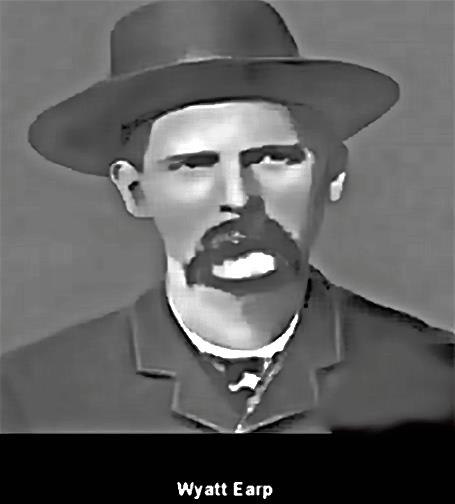
As he spoke, Frank McLowry made a motion to draw his revolver, when Wyatt Earp pulled his and shot him, the ball striking on the right side of his abdomen. About the same time Doc Holliday shot Tom McLowry in the right side using a short shotgun, such as is carried by Wells Fargo & Co.’s messengers.
In the meantime Billy Clanton had shot at Morgan Earp, the ball passing through the point of the left shoulder blade across the back, just grazing the backbone and coming out at the shoulder, the ball 604
remaining inside his shirt. He fell to the ground but in an instant gathered himself, and raising in a sitting position fired at Frank McLowry as he crossed Freemont Street, and at the same instant Doc Holliday shot at him, both balls taking effect either of which would have proved fatal, as one struck him in the right temple and the other in the left breast.
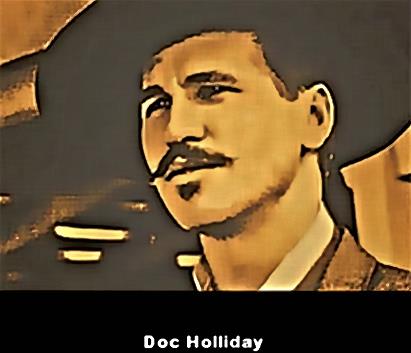
As he started across the street, however, he pulled his gun down on Holliday saying, ‘I’ve got you now.’ ‘Blaze away! You’re a daisy if you have,’ replied Doc. This shot of McLowry’s passed through Holliday’s pistol pocket, just grazing the skin.
While this was going on Billy Clanton had shot Virgil Earp in the right leg, the ball passing through the calf, inflicting a severe flesh wound.
In turn he had been shot by Morgan Earp in the right wrist and once in the left breast. Soon after the shooting commenced Ike Clanton ran through the O.K. Corral, across Allen Street into Kellogg’s saloon and thence into Toughnut street where he was arrested and taken to the county jail.
605
The firing altogether didn’t occupy more than twenty-five seconds, during which time fully thirty shots wree fired. After the fight was over Billy Clanton, who, with wonderful vitality, survived his wounds for fully an hour, was carried by the editor and foreman of the ‘Nugget’
into a house near where he lay, and everything possible was done to make his last moments easy. He was ‘game’ to the last, never uttering a word of complaint, and just before breathing his last he said,
‘Goodbye boys; go away and let me die.’ The wounded were taken to their houses, and at three o’clock next morning were resting comfortably.
The dead bodies were taken in charge by the Coroner, and an inquest will be held upon them at 10 o’clock today. Upon the person of Thomas McLowry was found between $300 and $400 and checks and certificates of deposit to the amount of nearly $3,000.
During the shooting Sheriff Behan was standing nearby commanding the contestants to cease firing but was powerless to prevent it.
Several parties who were in the vicinity of the shooting had ‘narrow 606
escapes’ from being shot. One man who had lately arrived from the east had a ball pass through his pants. He left for home this morning.
A person called ‘the Kid’ who shot Hicks at Charleston recently, was also grazed by a ball. When the Vizina (mine) whistle gave the signal that there was a conflict between the officers and cowboys, the mines on the hill shut down and the miners were brought to the surface.
From the Contention mine a number of men, fully armed, were sent to town on a four-horse carriage. At the request of the Sheriff the
‘Vigilantes,’ or Committee of Safety, were called from the streets by a few sharp toots from the Vizina’s whistle. During the early part of the evening there was a rumor that a mob would attempt to take Ike Clanton from the jail and lynch him, and to prevent any such unlawful proceedings a strong guard of deputies was placed around that building and will be so continued until all danger is past.
At 8 o’clock last evening Finn Clanton, a brother of Billy and Ike, came to town, and placing himself under the guard of the Sheriff, visited the morgue to see the remains of his brother, and then passed the night in jail in company with the other.
607
Ominous Sounds
Shortly after the shooting ceased the whistle at the Vizina mine sounded a few short toots, and almost simultaneously a large number of citizens appeared on the streets armed with rifles and a belt of cartridges around their waists. These men formed in line and offered their services to the peace officers to preserve order in case any attempt at disturbance was made, or any interference offered to the authorities of the law. However, no hostile move was made by anyone, and the quiet and order was fully restored, and in a short time the excitement died away.
At the Morgue
The bodies of the three slain cowboys lay side by side, covered with a sheet. Very little blood appeared on their clothing, and only on the face of young Billy Clanton was there any distortion of the features or evidence of pain in dying. The features of the two McLowry boys looked as calm and placid in death as if they had died peaceably, surrounded by loving friends and sorrowing relatives.
608
No unkind remarks were made by anyone, but feeling of unusual sorrow seemed to prevail at the sad occurrence. Of the two McLowry brothers we could learn nothing of their previous history before coming to Arizona. The two brothers owned quite an extensive ranch on the lower San Pedro, some seventy or eighty miles from this city, to which they had removed their band of cattle since the recent Mexican and Indian troubles. They did not bear the reputation of being of a quarrelsome disposition, but were known as fighting men, and have generally conducted themselves in a quiet and orderly manner when in Tombstone.”
It is interesting just how “The Tombstone Nugget” covered the gunfight versus how “The Tombstone Epitaph” covered it, both having access to current information at the time. It seems that they came up with two different views of what took place; showing that media bias is nothing new in the news business. Read on for “The Tombstone Epitaph” version.
“Tombstone Epitaph”
October 27, 1881
609
O.K. Corral
“YESTERDAY'S TRAGEDY
Three Men Hurled Into Eternity in the Duration of a Moment Stormy as were the early days of Tombstone nothing ever occurred equal to the event of yesterday. Since the retirement of Ben Sippy as marshal and the appointment of V.W. Earp to fill the vacancy the town has been noted for its quietness and good order.
The fractious and much dreaded cowboys when they came to town were upon their good behavior and no unseemly brawls were indulged in, and it was hoped by our citizens that no more such deeds would occur as led to the killing of Marshal White one year ago.
610
It seems that this quiet state of affairs was but the calm that precedes the storm that burst in all its fury yesterday, with this difference in results, that the lightning bolt struck in a different quarter from the one that fell a year ago.
This time it struck with its full and awful force upon those who, heretofore, have made the good name of this county a byword and a reproach, instead of upon some officer in discharge of his duty or a peaceable and unoffending citizen.
Since the arrest of Stilwell and Spence for the robbery of the Bisbee stage, there have been oft repeated threats conveyed to the Earp brothers -- Virgil, Morgan and Wyatt -- that the friends of the accused, or in other words the cowboys, would get even with them for the part they had taken in the pursuit and arrest of Stilwell and Spence.
The active part of the Earps in going after stage robbers, beginning with the one last spring where Budd Philpot lost his life, and the more recent one near Contention, has made them exceedingly obnoxious to the bad element of this county and put their lives in jeopardy every month.
611
Sometime Tuesday Ike Clanton came into town and during the evening had some little talk with Doc Holliday and Marshal Earp but nothing to cause either to suspect, further than their general knowledge of the man and the threats that had previously been conveyed to the Marshal, that the gang intended to clean out the Earps, that he was thirsting for blood at this time with one exception and that was that Clanton told the Marshal, in answer to a question, that the McLowrys were in Sonora.
Shortly after this occurrence someone came to the Marshal and told him that the McLowrys had been seen a short time before just below town.
Marshal Earp, now knowing what might happen and feeling his responsibility for the peace and order of the city, stayed on duty all night and added to the police force his brother Morgan and Holliday.
The night passed without any disturbance whatever and at sunrise he went home to rest and sleep.
612
A short time afterwards one of his brothers came to his house and told him that Clanton was hunting him with threats of shooting him on sight.
He discredited the report and did not get out of bed. It was not long before another of his brothers came down, and told him the same thing, whereupon he got up, dressed and went with his brother Morgan uptown.
They walked up Allen Street to Fifth, crossed over to Fremont and down to Fourth, where, upon turning up Fourth toward Allen, they came upon Clanton with a Winchester rifle in his hand and a revolver on his hip.
The Marshal walked up to him, grabbed the rifle and hit him a blow on the head at the same time, stunning him so that he was able to disarm him without further trouble.
He marched Clanton off to the police court where he entered a complaint against him for carrying deadly weapons, and the court fined Clanton $25 and costs, making $27.50 altogether. This occurrence must have been about 1 o'clock in the afternoon.
613
The After-Occurrence
Close upon the heels of this came the finale, which is best told in the words of R.F. Coleman who was an eye-witness from the beginning to the end. Mr. Coleman says: ‘I was in the O.K. Corral at 2:30 PM, when I saw the two Clantons and the two McLowrys in an earnest conversation across the street in Dunbar's corral. I went up the street and notified Sheriff Behan and told him it was my opinion they meant trouble, and it was his duty, as sheriff, to go and disarm them. I told him they had gone to the West End Corral. I then went and saw Marshal Virgil Earp and notified him to the same effect. I then met Billy Allen and we walked through the O.K. Corral, about fifty yards behind the sheriff. On reaching Fremont street I saw Virgil Earp, Wyatt Earp, Morgan Earp and Doc Holliday, in the center of the street, all armed. I had reached Bauer's meat market. Johnny Behan had just left the cowboys, after having a conversation with them. I went along to Fly's photograph gallery, when I heard Virg Earp say, ‘Give up your arms or throw up your arms.’
614
There was some reply made by Frank McLowry, when firing became general, over thirty shots being fired. Tom McLowry fell first, but raised and fired again before he died. Bill Clanton fell next, and raised to fire again when Mr. Fly took his revolver from him. Frank McLowry ran a few rods and fell. Morgan Earp was shot through and fell. Doc Holliday was hit in the left hip but kept on firing. Virgil Earp was hit in the third or fourth fire, in the leg which staggered him but he kept up his effective work. Wyatt Earp stood up and fired in rapid succession, as cool as a cucumber, and was not hit. Doc Holliday was as calm as though at target practice and fired rapidly. After the firing was over, Sheriff Behan went up to Wyatt Earp and said, ‘I'll have to arrest you.’
Wyatt replied: ‘I won't be arrested today. I am right here and am not going away. You have deceived me. You told me these men were disarmed; I went to disarm them.’’
This ends Mr. Coleman's story which in the most essential particulars has been confirmed by others.
615
Marshal Earp says that he and his party met the Clantons and the McLowrys in the alleyway by the McDonald place; he called to them to throw up their hands, that he had come to disarm them.
Instantaneously Bill Clanton and one of the McLowrys fired, and then it became general. Mr. Earp says it was the first shot from Frank McLowry that hit him.
In other particulars his statement does not materially differ from the statement above given.
Ike Clanton was not armed and ran across to Allen street and took refuge in the dance hall there.
The two McLowrys and Bill Clanton all died within a few minutes after being shot.
The Marshal was shot through the calf of the right leg, the ball going clear through.
His brother, Morgan, was shot through the shoulders, the ball entering the point of the right shoulder blade, following across the back, 616
shattering off a piece of one vertebrae and passing out the left shoulder in about the same position that it entered the right.
The wound is dangerous but not necessarily fatal, and Virgil's is far more painful than dangerous.
Doc Holliday was hit upon the scabbard of his pistol, the leather breaking the force of the ball so that no material damage was done other than to make him limp a little in his walk.
Dr. Matthews impaneled a coroner's jury, who went and viewed the bodies as they lay in the cabin in the rear of Dunbar's stables on Fifth street, and then adjourned until 10 o'clock this morning.
The Alarm Given
The moment the word of the shooting reached the Vizina and Tough Nut mines the whistles blew a shrill signal, and the miners came to the surface, armed themselves, and poured into the town like an invading army.
A few moments served to bring out all the better portions of the citizens, thoroughly armed and ready for any emergency.
617
Precautions were immediately taken to preserve law and order, even if they had to fight for it.
A guard of ten men were stationed around the county jail, and extra policemen put on for the night.
Earp Brothers Justified
The feeling among the best class of our citizens is that the Marshal was entirely justified in his efforts to disarm these men, and that being fired upon they had to defend themselves, which they did most bravely.
So long as our peace officers make an effort to preserve the peace and put down highway robbery -- which the Earp brothers have done, having engaged in the pursuit and capture, where captures have been made of every gang of stage robbers in the county -- they will have the support of all good citizens.
If the present lesson is not sufficient to teach the cow-boy element that they cannot come into the streets of Tombstone, in broad daylight, armed with six-shooters and Henry rifles to hunt down their 618
victims, then the citizens will most assuredly take such steps to preserve the peace as will be forever a bar to such raids.”
There you go. Who do you believe? “The Tombstone Nugget,” “The Tombstone Epitaph,” or neither. They were both covering the same shooting but came up with two different views of what took place.
Both Wyatt and Virgil believed Tom McLaury was armed and testified that he had fired at least one shot over the back of a horse. Billy Clanton and Frank McLaury exchanged gunfire with the lawmen.
During the gunfight, Doc Holliday was bruised by a bullet fired by Frank that struck his holster and grazed his hip. Virgil Earp was shot through the calf, he thought by Billy Clanton. Morgan Earp was struck across both shoulder blades by a bullet that Morgan thought Frank McLaury had fired. Wyatt Earp was unhurt. Tom McLaury, his brother Frank, and Billy Clanton were killed.
As the wounded lawmen were carried to their homes, they passed in front of the Sheriff's Office, and Johnny Behan told Wyatt Earp, "I will have to arrest you." Wyatt paused two or three seconds and replied very forcibly: "I won't be arrested today. I am right here and am not 619
going away. You have deceived me. You told me these men were disarmed; I went to disarm them." Dr. George Goodfellow treated the Earps' wounds.
Dr. Henry M. Mathews examined the dead Cowboys late that night. He found Frank McLaury had two wounds; a gunshot beneath the right ear that horizontally penetrated his head, and a second entering his abdomen one inch to the left of his navel. Mathews stated that the wound beneath the ear was at the base of the brain and caused instant death. Sheriff Behan testified that he had heard Morgan Earp yell; "I got him" after Frank was shot. However, during the gunfight, Frank moved across Fremont street, putting Holliday on Frank's right and Morgan on his left. This makes it much more likely that Holliday shot the fatal round that killed Frank.
When he examined Tom McLaury's body, Mathews found twelve buckshot wounds from a single shotgun blast on the right side under his arm, between the third and fifth ribs. The wound was about four inches across. The nature and location of the wound indicated that it could not have been received if Tom's hands were on his coat lapels 620
as the Cowboys later testified. Both Virgil and Wyatt stated that Holliday had shot Tom, which the coroner's exam supported.
Dr. George Goodfellow testified about Billy Clanton's wounds at the Spicer hearing. He stated that the angle of the wrist wound indicated that Billy's hand could not have been raised over his head as claimed by Cowboy witnesses. In his coroner's report, Mathews did not mention Billy's arm wound, but witness Keefe, who examined the arm closely, testified later that Clanton was shot through the right arm, close to the wrist joint and "the bullet passed through the arm from inside to outside," entering the arm close to the base of the thumb, and exiting "on the back of the wrist diagonally" with the latter wound larger. This indicated to the judge that Billy could not have been holding his coat's lapels open, his arms raised, as the Cowboys testified. Dr. Mathews found two other wounds on Billy's body. The first was two inches from Clanton's left nipple, penetrated his lung.
The other was in the abdomen beneath the twelfth rib, six inches to the right of the navel. Both were fired from the front. Neither passed completely through his body. The wound to Billy Clanton's right wrist 621
may have been inflicted by Morgan Earp or Doc Holliday immediately at the outset of the fight as Billy was drawing his gun.
Billy Clanton was armed with a Colt Frontier 1873 revolver in .44-40
caliber, which were identified by their serial numbers at the Spicer hearing. C.S. Fly found Billy Clanton's empty revolver in his hand where he lay and took it from him.
Frank McLaury was also armed with a Colt Frontier 1873 revolver in
.44-40 caliber, which was recovered by laundryman Fallehy on the street about 5 feet from his body with two rounds remaining in it.
Fallehy placed it next to Frank's body before he was moved to the Harwood house. Dr. Mathews laid Frank's revolver on the floor while he examined Billy and Tom. Cowboy witness Wes Fuller said he saw Frank in the middle of the street shooting a revolver and trying to remove a Winchester rifle from the scabbard on his horse. The two Model 1873 rifles were still in the scabbards on Frank and Tom McLaury's horses when they were found after the gunfight. If, as was customary, Frank carried only five rounds, then he had fired only three shots.
622
Witnesses differed about whether Tom McLaury was carrying a weapon during the shootout or not. No revolver or rifle was found near his body and he was not wearing a cartridge belt. Wyatt testified that he had arrested Tom earlier that day when he found him carrying a weapon in violation of a city ordinance. He pistol whipped him and took him to the courthouse where he was fined. Saloon keeper Mehan testified that Tom had deposited his revolver at the Capital Saloon on 4th Street and Fremont after his arrest and before the fight, between 1
and 2 PM. Several Cowboy witnesses testified that Tom was unarmed and claimed that the Earps had murdered a defenseless man.
Behan testified that when he searched Tom McLaury for a weapon prior to the gunfight, he was not thorough, and that Tom might have had a pistol hidden in his waistband. Behan's testimony was significant, since he was a prime witness for the prosecution but had equivocated on this point. Behan's sympathy to the Cowboys was well known, and during the trial he firmly denied he had contributed money to help Ike with his defense costs. However, documents were located in 1997 that showed Behan served as guarantor for a loan to Ike Clanton during the Spicer hearing. Since Wyatt planned to run against 623
O.K. Corral
Behan for County Sheriff, Behan had an incentive to help convict Wyatt.
A story by Richard Rule in the Cowboy friendly newspaper, the
“Tombstone Nugget,” told the story in the manner of the day, without attribution. Rule wrote; "The Sheriff stepped out and said (to the Earps); 'Hold up boys, don't go down there or there will be trouble; I 624
have been down there to disarm them.'" In his testimony, Behan repeatedly insisted he told the Earps that he only intended to disarm the Cowboys, not that he had actually done so. The article said that Behan "was standing near by commanding the contestants to cease firing but was powerless to prevent it." The “Tombstone Nugget” had a close relationship to Behan. It was owned by Harry Woods, who was also undersheriff to Behan, but Woods was collecting prisoners in El Paso, Texas, that day. So it is extremely likely that Rule interviewed Behan. Both Virgil and Williams testified that Behan visited Virgil Earp that evening and said; “I am your friend, and you did perfectly right.”
This corroborated the initial “Tombstone Nugget” report, which upon Wood's return was altered to a version that favored the Cowboys and which Behan later supported in his testimony at the hearing.
Though saloon keeper Andrew Mehan had seen Tom deposit his pistol after his beating by Earp and before the gunfight, none of the Earps had any way of knowing that Tom had left his revolver at the saloon.
Hotel keeper Albert "Chris" Billickie, whose father Charles owned the Cosmopolitan Hotel, saw Tom McLaury enter Bauer's butcher shop about 2:00 PM. He testified that Tom's right hand pants pocket was 625
flat when he went in but protruded, as if it contained a pistol, so he thought, when he emerged. Retired Army surgeon Dr. J. W. Gardiner also testified that he saw the bulge in Tom's pants. However, the bulge in Tom's pants pocket may have been the nearly $3,300 in cash and receipts found on his body, perhaps in payment for stolen Mexican beef purchased by the butcher.
Wyatt and Virgil Earp and Doc Holliday believed that Tom had a revolver at the time of the gunfight. Wyatt thought Tom fired a revolver under the horse's neck and believed until he died that Tom's revolver had been removed from the scene by Wesley Fuller. Witness Fallehy wrote that he saw Morgan Earp and Doc Holliday shooting at a man who was using a horse to barricade himself, and once shot the man fell. In his statement, Fallehy wrote that the man still held his pistol in his hand. Although he did not see him shoot, he thought Tom McLaury was armed.
Ruben F. Coleman also said afterward that he thought Tom was armed, though he later equivocated on this point. He was quoted in the October 27th issue of “The Tombstone Epitaph” in which he said; "Tom 626
McLaury fell first, but raised and fired again before he died." Coleman also testified at the coroner's inquest one day later. Part time newspaper reporter Howell 'Pat' Hayhurst transcribed all of the testimony from the hearing in the early 1930s as part of the Federal Writers' Project, for the Works Progress Administration. When he transcribed Coleman's second testimony, he quoted Coleman as saying; "Tom McLaury, after the first two shots were fired, ran down Fremont Street and fell. I think that the report I gave to the ‘Epitaph’
was pretty near correct as published." However, it's known that Hayhurst arbitrarily removed text that he decided was not relevant.
Author Stuart N. Lake later said Hayhurst “mutilated” the transcription. The documents were subsequently lost and are still unaccounted for.
Even if Tom wasn't armed with a revolver, Virgil Earp testified Tom attempted to grab a rifle from the scabbard on the horse in front of him before he was killed. Judge Spicer ruled afterward that; "If Thomas McLaury was one of a party who were thus armed and were making felonious resistance to an arrest, and in the melee that followed was shot, the fact of his being unarmed, if it be a fact, could not of itself 627
criminate the defendants [Earps], if they were not otherwise criminated."
Ike Clanton and Billy Claiborne both said they were unarmed when they fled the gunfight. The bodies of the three dead Cowboys were displayed in a window at Ritter and Reams undertakers with a sign;
"Murdered in the Streets of Tombstone."
The funerals for Billy Clanton, age 19, Tom McLaury, age 28, and his older brother Frank, age 33, were well attended. About 300 people joined in the procession to Boot Hill and as many as two thousand watched from the sidewalks. Both McLaurys were buried in the same grave, and Billy Clanton was buried nearby. The story was widely printed in newspapers across the United States. Most versions favored the lawmen. The headline in the “San Francisco Exchange” was; "A Good Riddance."
Three days after the shootout, the ruling of the Coroner's Jury convened by Dr. Henry Matthews neither condemned nor exonerated the lawmen for shooting the Cowboys. "William Clanton, Frank and Thomas McLaury, came to their deaths in the town of Tombstone on 628
O.K. Corral
October 26th, 1881, from the effects of pistol and gunshot wounds inflicted by Virgil Earp, Morgan Earp, Wyatt Earp, and one Holliday, commonly called 'Doc Holliday'."
Four days after the shootout, Ike Clanton filed murder charges against Doc Holliday and the Earps. Wyatt and Holliday were arrested and brought before Justice of the Peace Wells Spicer. Morgan and Virgil were still recovering at home. Only Wyatt and Holliday were required to post $10,000 bail, which was paid by Wyatt’s attorney Thomas 629
Fitch, local mine owner E.B. Gage, Wells Fargo undercover agent Fred Dodge, and other business owners appreciative of the Earps' efforts to maintain order. Virgil Earp was suspended as town marshal pending the outcome of the trial. Justice Spicer convened a preliminary hearing on October 31st to determine if there was enough evidence to go to trial.
The prosecution was led by Republican District Attorney Lyttleton Price, assisted by John M. Murphy, James Robinson, and Ben Goodrich. They were joined by William McLaury, Frank and Tom's older brother, he also being an able attorney, who played a key role on the prosecutor's team. The Earps' attorney Thomas Fitch was an experienced trial lawyer and had earned a reputation as the "silver-tongued orator of the Pacific."
Spicer took written and oral testimony from a number of witnesses over more than a month. Accounts, both by participants and eye witnesses were contradictory. Those loyal to one side or the other told conflicting stories and independent eyewitnesses who did not know the participants by sight were unable to say for certain who shot first.
630
Cochise County Sheriff Johnny Behan testified on the third day of the hearing. During two days on the stand, he gave strong testimony that the Cowboys had not resisted but either threw up their hands or turned out their coats to show they were not armed. Behan's views turned public opinion against the Earps and Doc Holliday, who were free on bail. He and other prosecution witnesses testified that Tom McLaury was unarmed, that Billy Clanton had his hands in the air, and that neither of the McLaurys were troublemakers. They portrayed Ike Clanton and Tom McLaury as being unjustly bullied and beaten by the vengeful Earps on the day of the gunfight. On the strength of the prosecution case, Spicer revoked the bail for Doc and Wyatt Earp and had them jailed on November 7th. They spent the next 16 days in jail.
Defense accounts contradicted the testimony of Behan, Claiborne and Allen, who all said that a man had fired a nickel plated pistol first.
Claiborne and Allen both said it was Holliday. Virgil, Wyatt and other witnesses testified that Holliday was carrying a shotgun. Morgan remained bedridden throughout the trial and did not testify. The prosecution's scenario would have required Holliday to fire with his 631
pistol first, switch to the shotgun to shoot Tom McLaury, then switch back again to his pistol to continue firing.
Three witnesses gave key evidence that swayed Justice Spicer to hold that Virgil had acted within his capacity as town marshal and that there was insufficient evidence to indict the Earps and Doc Holliday for murder.
H.F Sills was an Atcheson, Topeka,and Santa Fe Railroad engineer who had just arrived in town and knew none of the parties involved. He testified that he saw "the marshal go up and speak to this other party.
I ... saw them pull out their revolvers immediately. The marshal had a cane in his right hand at the time. He throwed up his hand and spoke. I did not hear the words though. By that time Billy Clanton and Wyatt Earp had fired their guns off." Grilled by the prosecution, he corroborated virtually all of the defense's testimony.
Addie Bourland was a dressmaker whose residence was across Fremont Street from Fly's Boarding House. She testified that she saw both sides facing each other, that none of the Cowboys had held their 632
hands up, that the firing was general, and that she had not seen Billy Clanton fall immediately as the Cowboys had testified.
Judge J.H. Lucas of the Cochise County Probate Court had offices in the Mining Exchange Building about 200 feet from the shootout. Lucas corroborated Addie Bourland's testimony that Billy Clanton was standing throughout the fight, which contradicted prosecution witnesses who maintained he went down immediately after being shot at close range in the belly. Spicer noted that no powder burns were found on his clothing.
These witnesses' testimony, especially that of H.F. Sills, a disinterested party, discredited much of the testimony given by Sheriff Johnny Behan, Ike Clanton and the other Cowboy witnesses.
After hearing all the evidence, Justice Spicer ruled on November 30th that Virgil, as the lawman in charge that day, had acted within his office and that there was not enough evidence to indict the men. He described Frank McLaury's insistence that he would not give up his weapons unless the marshal and his deputies also gave up their arms as a "proposition both monstrous and startling!" He noted that the 633
prosecution claimed that the Cowboys' purpose was to leave town, yet Ike Clanton and Billy Claiborne did not have their weapons with them.
Spicer noted that the doctor who examined the dead Cowboys established that the wounds they received could not have occurred if their hands and arms had been in the positions that prosecution witnesses described. Spicer did not condone all of the Earps' actions and criticized Virgil Earp's use of Wyatt and Holliday as deputies, but he concluded that no laws were broken. He said the evidence indicated that the Earps and Holliday acted within the law and that Holliday and Wyatt had been properly deputized by Virgil Earp.
The public perception of the Earp brothers' actions at the time were widely divergent. Even today, the event and its participants are viewed differently by opinionated admirers and detractors. The controversy still stimulates ongoing interest in the gunfight and related events. A hand drawn sketch of the gunfight was made by John Flood with Wyatt Earp's assistance on September 15th, 1921. It was sold at auction in October 2010 for $380,000. The map describes the position of a number of witnesses and all of the participants with the exception of Ike Clanton, who fled from the gunfight.
634
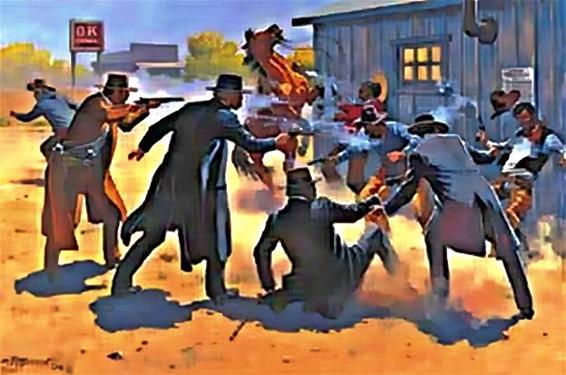
In 1952, Victor Clyde Forsythe, a popular painter of desert scenes and cowboy artist, painted “Gunfight at O.K. Corral,” a 43 by 60 inches oil painting. Forsythe's father William Bowen Forsyth and uncle Ira Chandler owned the store Chandler and Forsyth C.O.D. at 328 Fremont Street, west of the back entrance to the O.K. Corral and half a block from the site of the gunfight. They claimed that they had been present and witnessed the shootout. Newspaper accounts of the painting reported that Forsythe had interviewed Tombstone residents and examined many of the existing buildings before beginning to plan his painting. In May 1988, his studio printed and sold a limited edition of 390 copies of the painting.
John Gilchriese became friends with John Flood, who had been Wyatt Earp's secretary, confidante, and friend for many years. When Earp died, Flood inherited many of his personal belongings. Flood in turn willed them to Gilchriese, who amassed over a number of years one of the largest collections of personal items belonging to Wyatt and Virgil Earp, along with many unpublished photos of them and their family.
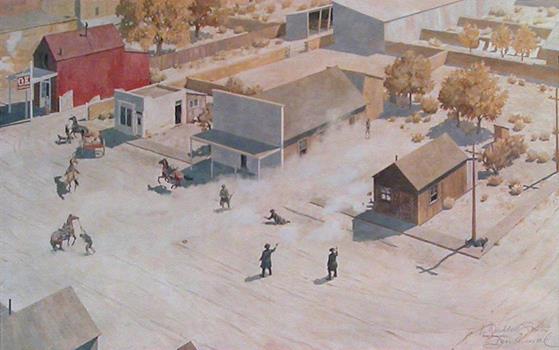
Gilchriese opened the Wyatt Earp Museum in Tombstone in 1966 and commissioned Western artist Don Perceval to paint the gunfight at the 635
O.K. Corral
O.K. Corral. The oil on masonite painting titled “The Street Fight” is 6
feet 4 inches by 4 feet 0 inches. It was the largest work ever executed by Perceval. He referred to original documents in Gilchriese's collection, including Wyatt Earp's own diagram of the shootout, and unpublished notes made by John Flood, to create what is regarded as the most accurate depiction of the shootout. Gilchreise had 500
lithographic prints reproduced from the original, which Perceval signed. The prints were sold by the museum for $10.
After Gilchriese closed his museum, the painting and other contents of the museum were sold at auction by John's Western Gallery of San Francisco. The estimated auction price for the painting had been 636
$200,000 to $300,000. The final sale price on June 25th, 2004, was $40,250. It was put up for auction again on June 14th, 2014, with an estimated selling price of $40,000–$60,000 but failed to sell.
Less than a month after the shootout, the event was described by a local newspaper as the "Gunfight at The O.K. Corral." William Breakenridge in his 1928 book “Helldorado: Bringing Law to the Mesquite,” described it as "the incident near the O.K. Corral." Stuart Lake titled his chapter about the conflict "At the O.K. Corral" in his popular book “Wyatt Earp: Frontier Marshal.” But it was the popular movie “Gunfight at the O.K. Corral” that cemented the incident and its erroneous location in popular consciousness. The movie and accompanying mythologizing also altered the way that the public thought of the Earps and the outlaws. Prior to the movie, the media often criticized the Earps' and Holliday’s actions in Tombstone. In the movies, they became the good guys, always ready to stand for what is right.
The incident has become a fixture in American history due to the personal nature of the feud between the Earps and the McLaury and 637
Clanton brothers and the symbolism of the fight between lawmen and the Cowboys. The Cowboys maimed Virgil and murdered Morgan but escaped prosecution, and Wyatt's extra legal campaign for revenge captured people's attention. The gunfight and its aftermath stand for the change overcoming America as the Western frontier ceased to exist, as a nation that was rapidly industrializing pushed out what had been a largely agrarian economy.
The town of Tombstone has capitalized on interest in the gunfight. A portion of the town is a historical district that has been designated a National Historic Landmark and is listed in the National Register of Historic Places by the US National Park Service. A local company produces daily theatrical re-enactments of the gunfight.
With the widespread sales of televisions after World War II, producers spun out a large number of Western oriented shows. At the height of their popularity in 1959, there were more than two dozen "cowboy"
programs on each week. At least six of them were directly or indirectly connected with Wyatt Earp; “The Life and Legend of Wyatt Earp,” “Bat Masterson,” “Tombstone Territory,” “Broken Arrow,” “Johnny Ringo,”
638
and “Gunsmoke.” Hugh O'Brian portrayed Earp on the namesake show
“Wyatt Earp” which ran for six seasons, and he was forever associated with that role.
A 2003 episode of Discovery Channel's “Unsolved History” used modern technology to attempt to re-enact the gunfight. They utilized a movie set to recreate a space similar to the lot where the original gun fight took place. They confirmed that the front to back wrist wound suffered by Billy Clanton could only have occurred if his arm was raised in the manner of one holding a pistol, and that the black powder may have obscured the shooters' view of each other. The episode concluded that the three eyewitnesses for the prosecution; Sheriff Behan, Ike Clanton, and Billy Claiborne; likely offered perjured testimony. They found that Tom McLaury may have been hit by the shotgun round under his armpit as he reached over his horse for a rifle in his scabbard, as the horse turned away from him at the same time.
The stories about the gunfight written in the 20th century affected American culture. Numerous dramatic, fictional, and documentary 639
works have been produced about or in reference to the event, with widely varying degrees of accuracy. These works include:
“Law and Order” (1932) with Walter Huston, the first film to depict the gunfight.
“Tombstone, the Town Too Tough to Die” (1942) with Richard Dix.
“My Darling Clementine” (1946) with Henry Fonda.
“The Life and Legend of Wyatt Earp” (1955–1961), TV series with Hugh O'Brian, season 6 episode.
“Gunfight at the O.K. Corral” (1957) with Burt Lancaster and Kirk Douglas.
“The Gunfighters” (1966), a Doctor Who serial.
“Hour of the Gun” (1967) with James Garner.
"Spectre of the Gun" (1968), an original Star Trek episode.
“Doc” (1971) written by Pete Hamill.
"Showdown at O.K. Corral" (1972), an Appointment with Destiny episode that was nominated for an Emmy Award.
640
"Ghost Fight at the O.K. Corral" (1987), The Real Ghostbusters season 2 episode.
“Tombstone” (1993) with Kurt Russell.
“Wyatt Earp” (1994) with Kevin Costner.
"Shootout at Fly's Photographic Studio," a History Bites episode.
"Rule of the Gun" (2004), an episode of Days That Shook the World.
“Tombstone Rashomon” (2017), a film by Alex Cox.
In print:
“Saint Johnson” (1930), a novel by W.R. Burnett. A thinly fictionalized depiction of the conflict between the outlaws and the law officers.
“Who Rides with Wyatt” (1955), a novel by Will Henry.
“Warlock” (1958), a novel by Oakley Hall.
“Bloody Season” (1987), a novel by Loren D. Estleman, a carefully researched depiction of events leading up the shootout and gunfight itself.
641
“Frontier Earth” (1999), a sci-fi/western novel by actor Bruce Boxleitner, about the events leading up to the gunfight.
“The Return of Little Big Man” (1999), in which novelist Thomas Berger's wandering protagonist Jack Crabb becomes a witness to the event.
“Gunman's Rhapsody” (2001), by Robert B. Parker
“Telegraph Days” (2006), a novel by Larry McMurtry, includes a representation of the gunfight, told by a fictional journalist and eyewitness.
“Territory” (2007), a novel by Emma Bull offers a fantasy retelling of the events leading up to the fight.
“The Buntline Special” (2010), by Mike Resnick, a Steampunk re-imagining of the gunfight.
“The Last Kind Words Saloon” (2014), by Larry McMurtry, culminates with a version of the gunfight.
“Epitaph: A Novel of the O.K. Corral” (2015), by Mary Doria Russell tells Wyatt Earp's story.
642
“Tombstone: The Earp Brothers, Doc Holliday, and the Vendetta Ride from Hell” (2020), by Tom Clavin
643
O.K. Corral
11– The Trial, Lawsuit, and Investigation
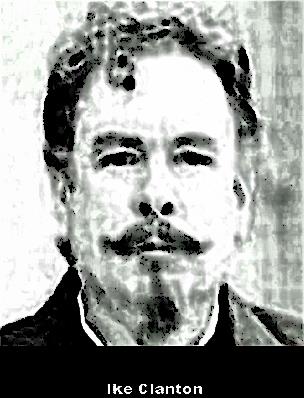
Ike Clanton subsequently filed murder charges against the Earps and Holliday. After a thirty day preliminary hearing and a brief stint in jail, the defendants were shown to have acted lawfully.
All four lawmen were charged with murder by Ike Clanton, who had run from the gunfight. During a month long preliminary hearing, Judge Wells Spicer exonerated the men, concluding they had been performing their duty.
644
Much of what is known of the event is based on month long preliminary hearings held afterward, generally known as the Spicer hearings. Reporters from both newspapers, “The Tombstone Epitaph”
and the “Tombstone Nugget,” covered the hearings and recorded the testimony there and at the coroner's inquest, but only the reporter from the “Tombstone Nugget” knew shorthand. The testimony recorded by the court recorder and the two newspapers varied greatly.
According to the Earps' version of events, the fight was in self defense because the Cowboys, armed in violation of local ordinance. They had defied a lawful order to hand over their weapons and drew their pistols instead. The Cowboys maintained that they raised their hands, offered no resistance, and were shot in cold blood by the Earps. Sorting out who was telling the truth was difficult then and remains so to this day.
Traditionally opposing each other in their depiction of events, reporting by both the “Epitaph” and the “Tombstone Nugget” once again printed divergent accounts of the same event. Woods, the publisher of the pro-Cowboy “Tombstone Nugget,” was out of town during the hearings, and an experienced reporter, Richard Rule, wrote 645
the story. The “Tombstone Nugget” staff had a close relationship with Behan, but Rule's story, as printed in the “Tombstone Nugget” the day after the shootout, did make the “mistake” of backing up the Earps'
account to a certain extent. This varied widely from Behan's and the Cowboys' later court testimony. Subsequent stories about the gunfight published in the “Tombstone Nugget” after that day did an about face and fully supported Behan's and the Cowboys' view of events. Other stories in the “Epitaph” countered the “Tombstone Nugget's” later view entirely and supported the lawmen without reservation. In addition, Dr. George Goodfellow, who examined the Cowboys after their deaths, told the court that the angle of the wound in Billy Clanton's wrist indicated that his hands could not have been in the air, or holding his coat open by the lapels, as witnesses loyal to the Cowboys testified.
Part time newspaper reporter Howell "Pat" Hayhurst transcribed the testimony from the hearings in the early 1930s as part of a Federal Writers' Project, which was part of the Works Progress Administration.
According to one report, Hayhurst was a friend of the Behan family.
646
After he completed his transcription, he kept the original document in his home, where it was destroyed in a house fire.
On October 27th, 1881, just one day after the gunfight at the O.K.
Corral that left Billy Clanton and Tom and Frank McLaury dead and Morgan and Virgil Earp wounded, Ike Clanton filed murder charges. A preliminary hearing was convened by Judge Wells Spicer on October 31st. The Earps chose Tom Fitch, "the Silver Tongued Orator of the Pacific Slope" as their lead attorney. Doc Holliday was defended by United States Court Commissioner Thomas J. Drum.
The preliminary hearing turned into a month long dramatic courtroom confrontation, the longest in Arizona history. The legal purpose of the hearing was to determine whether a crime had actually been committed, and whether there was "sufficient cause" to bring the four defendants to trial. Fitch was forty-three when he arrived in Tombstone early in 1881. He brought a wealth of trial experience in criminal law from his time in California, Nevada, and Utah. Fitch also contributed US$10,000 to Wyatt Earp's defense fund.
647
The prosecution presented considerable evidence in an attempt to bind the Earps and Holliday over for trial. On the second day of the hearings, William Allen testified for the prosecution that "the firing commenced by the Earp party. I think it was Doc Holliday who fired first." Doc later told diarist Dave Wallace that; “It may well have been me that fired first. But I wasn’t the one who drew first. Three or four people beat me to that, Billy Clanton first, and three of them paid for it.”
Johnny Behan testified that he tried to prevent the confrontation, saying; “I told them that I was down there for the purpose of disarming the Clantons and McLaurys. They (the Earps and Holliday) wouldn't heed me, paid no attention. And I said, 'Gentleman, I am Sheriff of this County, and I am not going to allow any trouble if I can help it.' They brushed past me." He said Cowboys had put up their hands or thrown open their coats to show they weren't armed, and that Doc Holliday had fired first, not specifying who drew first. He testified that the first five shots had come from the Earp group. He clearly blamed the Earps and Doc Holliday for instigating the shootout.
648
Fitch had seen Judge Wells Spicer as an attorney try to defend John D.
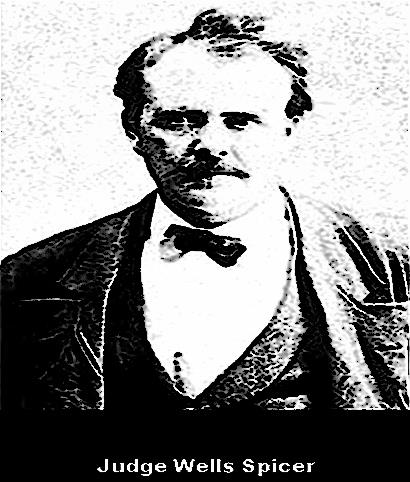
Lee in the notorious 1875 Mountain Meadows Massacre, and it was likely that he had developed a deep appreciation for the judge. The two men had a great deal in common. Both had practiced criminal law, had written for newspapers, and both were Republicans. Fitch may have based his defense on what he saw as Spicer's repugnance of the perjured testimony and unjust outcome in Lee's case. In a preliminary hearing, the attorneys usually do not reveal their entire defense strategy. Fitch may have chosen to use the hearing as a forum to expose the entire case because he thought Spicer held considerably skepticism about the prosecution's case and would allow Fitch considerable latitude. Judge Spicer made several rulings favorable to the defense.
649
O.K. Corral
Fitch had Wyatt Earp prepare a written statement, as permitted by Section 133 of Arizona law, which would not allow the prosecution to cross-examine him. The prosecution vociferously objected. Although the statute wasn't specific about whether it was legal for a defendant to read his statement, Spicer allowed his verbal testimony to proceed.
Fitch was very successful in cornering many witnesses into offering conflicting testimony or saying they did not remember. In several instances, he obtained testimony from prosecution witnesses and 650
followed up with statements corroborated by others that conflicted with the prior testimony. Prosecution witnesses repeatedly stumbled when Fitch asked them questions, in many instances replying weakly;
"I don't remember." Tombstone's chief prosecutor was Republican Lyttleton Price, who was aided by Ben Goodrich and, three days into the hearing, by co-counsel Will McLaury, brother to the dead Cowboys Frank and Tom McLaury. Will McLaury left his Texas law practice and his children with a caretaker to help prosecute the Earps and Doc Holliday. He summed up his attitude towards the Earps in a letter to a law partner; "I think I can hang them."
Cochise County Sheriff Johnny Behan’s testimony for the prosecution crumbled under Fitch's questioning. Behan testified that he had seen Doc Holliday holding a shotgun prior to the gunfight. He then offered an improbable scenario. Doc Holliday had first fired a nickel plated pistol, then fired the shotgun, and then resuming shooting with the pistol. Another influential witness for the defense was Deputy District Attorney Winfield Scott Williams. In earlier testimony, Behan denied telling Virgil on the night after the gunfight that Virgil had acted properly. Williams testified that Sheriff Behan had inaccurately 651
reported that conversation during which, according to Williams, Behan told Virgil that one of the McLaury brothers drew his gun first, and
"You did perfectly right." Behan denied that he said anything resembling this. Fitch's ability to impeach the testimony of the County Sheriff and key witness probably influenced Judge Spicer, who had been subject to perjured testimony in the John D. Lee case that resulted in his client's execution.
Fitch was able to damage Ike Clanton's credibility through skillful questioning. In response to his questioning, Clanton denied seeking confirmation from Wyatt Earp about the reward offered by Wells, Fargo and Co, "dead or alive," for the stage robbers. When shown the telegram confirming the reward would be paid in either circumstance, he denied having ever seen it before. On November 12th, he got Clanton to testify that he had never spoken to Ned Boyle on the morning of the gunfight, and on November 23rd, Boyle's testimony contradicted Clanton's. During Ike Clanton's testimony under cross-examination by Fitch, he said; "I don't remember" fourteen times. This and other contradictions impugned Clanton's testimony.
652
After a month of testimony from thirty witnesses, Spicer concluded that there was not enough evidence to indict the men. In his ruling, he noted that Ike Clanton had the night before, while unarmed, publicly declared that the Earp brothers and Holliday had insulted him, and that when he was armed he intended to shoot them or fight them on sight.
On the morning of the shooting Ike was armed with a revolver and Winchester rifle. Spicer noted that; “Witnesses for the prosecution state unequivocally that William Clanton fell or was shot at the first fire and Claiborne says he was shot when the pistol was only about a foot from his belly. Yet it is clear that there were no powder burns or marks on his clothes. And Judge Lucas says he saw him fire or in the act of firing several times before he was shot, and he thinks two shots afterwards.”
Spicer specifically noted that Ike Clanton claimed the Earps were out to murder him, yet while unarmed had been allowed by the Earps to escape unharmed from the fight. He wrote; "The great fact, most prominent in the matter, to wit, that Isaac Clanton was not injured at all, and could have been killed first and easiest." He described Frank McLaury's insistence that he would not give up his weapons unless the 653
marshal and his deputies also gave up their arms as a "proposition both monstrous and startling!"
Spicer said that Virgil in "calling upon Wyatt Earp, and J. H. Holliday to assist him ... committed an injudicious and censurable act, and although in this he acted incautiously and without due circumspection," in the end "the Earps acted wisely, discretely and prudentially, to secure their own self-preservation." Spicer went onto say; "He needed the assistance and support of staunch and true friends, upon whose courage, coolness and fidelity he could depend ..."
Spicer noted that if Wyatt and Holliday had not backed up Marshal Earp, then he would have faced even more overwhelming odds than he had, and could not possibly have survived. He invited the grand jury to confirm his findings, and two weeks later, it agreed with Spicer's finding and also refused to indict the men.
654
O.K. Corral
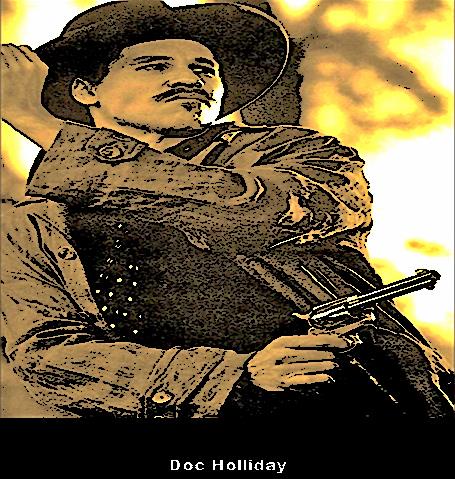
Doc Holliday’s lawyer, Thomas J. Drum, had little to do as Fitch made his case for him. Doc later said to Wallace; “Look. It was four against six, who had openly threatened the four. ...... The six were kind of stupidly inept on every level. In pace requiescat. Wouldn’t you say?”
655
12 – Subsequent Retribution
After a long simmering feud and increasing animosity and threats, Tombstone town Marshal Virgil Earp, Assistant Town Marshal Morgan Earp, and temporary deputy marshals Wyatt Earp and Doc Holliday confronted outlaw Cowboys Billy Claiborne, Ike and Billy Clanton, and Tom and Frank McLaury in the gunfight at the O.K. Corral on October 26th, 1881. The 30 second gunfight is generally regarded as the most famous gunfight in the history of the American Wild West. The lawmen killed three of the Cowboys during the gunfight. Ike Clanton filed murder charges, and after a month long preliminary hearing, Justice of the Peace Wells Spicer found that the lawmen had acted within their duty. But Spicer's finding did not end the matter for Clanton and other Cowboys.
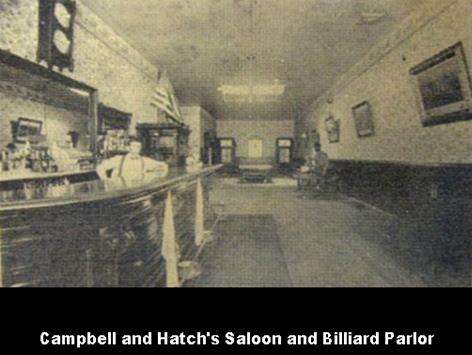
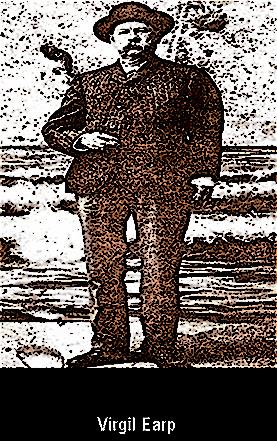
The gunfight and the Spicer trial were not the end of the conflict. On December 28th, 1881, Virgil Earp was ambushed and maimed by a shotgun blast which left his left arm useless, in a murder attempt by the Cowboys. On March 18th, 1882, a Cowboy fired from a dark alley through the glass door of Campbell and Hatch's Saloon and Billiard 656
O.K. Corral
Parlor, killing Morgan Earp. The suspects in both incidents furnished alibis supplied by other Cowboys and were not indicted. Wyatt Earp, newly appointed as Deputy US Marshal in Cochise County, then took matters into his own hands in a personal vendetta. He was pursued by county sheriff Johnny Behan, who had received a warrant from Tucson for Wyatt's killing of Frank Stilwell.
Two months after the exoneration of the Spicer trial on December 28th, 1881 friends of the slain outlaws retaliated, ambushing Virgil.
They shot him in the back, hitting him with three shotgun rounds, shattering his left arm and leaving him permanently maimed. The 657
Cowboys suspected were let off for lack of evidence. His brother Morgan Earp was assassinated in March 1882. Charges against those suspected were dismissed on a technicality. Wyatt Earp, appointed as deputy US Marshal to replace Virgil, concluded he could not rely on civil justice and decided to take matters into his own hands. Wyatt assembled a federal posse that included their brother Warren Earp and set out on a vendetta to kill those they felt were responsible. Virgil left Tombstone to recuperate from his wounds in Colton, California where his parents lived.
At about 11:30 PM on December 28th, 1881, just over two months after the gunfight at the O.K. Corral, three men ambushed Virgil Earp as he walked in Tombstone from Schieffelin Hall back to the Cosmopolitan Hotel, where the Earps had moved for mutual support and protection.
He was hit in the back and upper left arm by about 20 buckshot pellets, shattering his humerus. Dr. George Goodfellow, who treated him, had to remove 5.5 inches of bone. Wyatt telegraphed U.S. Marshal Crawley Dake. He requested appointment as Deputy U.S. Marshal for eastern Pima County and authority to form a posse.
658
Commenting on Earp's request to Dake, the “Weekly Arizona Miner”
wrote on December 30th, 1881 about the repeated threats received by the Earps and others; “For some time, the Earps, Doc Holliday, Tom Fitch and others who upheld and defended the Earps in their late trial have received, almost daily, anonymous letters, warning them to leave town or suffer death, supposed to have been written by friends of the Clanton and McLaury boys, three of whom the Earps and Holliday killed and little attention was paid to them as they were believed to be idle boasts. But the shooting of Virgil Earp last night shows that the men were in earnest.”
Dake replied affirmatively by telegraph, and Deputy US Marshal Wyatt Earp deputized Warren Earp, Doc Holliday, Sherman McMaster, Jack
"Turkey Creek" Johnson, Charlie "Hairlip Charlie" Smith, Daniel "Tip"
Tipton, and John "Texas Jack" Vermillion to protect the family and pursue the suspects, paying them $5 a day.
McMaster and Johnson were known as tough men who knew how to use their guns. McMaster had seen service with the Texas Rangers in 1878–1879 when his unit captured and held Curly Bill Brocius prisoner 659
for five months. In Tombstone, McMaster had also been accused of stealing US Army mules and robbing a stage with outlaw Charles
"Pony" Diehl. Fluent in Spanish, McMaster used his inside knowledge of the Cowboys to assist the Earps in their search. He also liked fine horses.
Jack "Turkey Creek" Johnson, whose real name according to Wyatt Earp was John William Blount, was a native of Missouri who was raised in the lead mining area near Neosho. Blount was forced to flee Missouri in 1877 after he and his brother were involved in a violent street battle. During May 1881, his brother Bud killed a man in a quarrel in Tip Top, Arizona Territory, and was sent to Yuma Territorial Prison. John Blount adopted the alias Jack Johnson and went to Tombstone seeking Wyatt Earp's help to get his brother pardoned.
Wyatt helped by writing a petition to Governor Fremont, whom Wyatt knew, and Bud Blount was eventually freed. As a way to repay his debt, Johnson joined the posse.
Charlie Smith had a long time connection to the Earp family, and was fluent in Spanish after spending several years in Texas working in 660
saloons. While in Fort Worth he had been associated with barman James Earp, and participated in at least two gunfights there, and was seriously wounded in 1878. Arriving in Tombstone in 1879 with Robert J. Winders, Smith immediately became associated with the Earps.
Winders and the Earps partnered on the Mountain Maid mine.
Daniel "Tip" Tipton arrived in Tombstone in March 1881. He had a shady reputation earned during the early days of the mining boom in Virginia City, Nevada Territory. Tipton, a former Union seaman in the Civil War, was tattooed on his hands and forearms, and took up mining and gambling after the war. In 1879 he was in the Gunnison district of Colorado before traveling to Tombstone at the request of his friend Lou Rickabaugh, also a friend of the Earps. Smith and Tipton were gamblers who supplemented their income with mining ventures.
John "Texas Jack" Vermillion, a Virginian, joined the vendetta ride after Frank Stilwell was killed, and was never indicted for Stilwell's murder, but he was with the Earps when Florentino "Indian Charlie"
Cruz was killed. Although closer to friend and fellow Southerner Doc Holliday than the Earps, Vermillion remained by Wyatt Earp's side 661
during the shootout at Iron Springs with Curly Bill Brocius. A veteran of the Civil War on the Confederate side who rode with J.E.B. Stuart's Virginia cavalry, Vermillion was an accomplished horseman and pistoleer.
U.S. Marshal Dake visited Tombstone in late January 1881 with acting Governor John J. Gosper. Dake had previously and unsuccessfully requested financial assistance from the United States Attorney General, Wayne MacVeagh, to help track down and arrest the Cowboys. Dake's superior told him he must reduce his official debt below the penalty bond of $20,000 before an additional appropriation could be made. In September 1881, Governor Gosper told Secretary of Interior Kirkwood that Arizona contained "a small army of outlaws well armed and fully able to cope with the ordinary civil powers of our counties." Not believing that the federal bureaucracy would provide funds, Dake borrowed $3,000 from Wells Fargo and Company, promising that the Department of Justice would repay it. He deposited money, variously reported as either $300 or $3000, to an account in the Hudson and Company Bank, minus $15, for use "to arrest all parties committing crimes against the United States." The following 662
O.K. Corral
day John Thacker from Wells Fargo went with Wyatt to the bank to authorize his use of the funds. Dake was later accused, although not convicted, of spending $300 on gambling and prostitutes while in Tombstone and misappropriating most of the rest of the money.
In January 1882, Wyatt Earp sought and received warrants from Judge William H. Stilwell for the arrest of the men thought responsible for ambushing Virgil. Judge Stilwell was among a number of Cochise County citizens unhappy with Sheriff Behan's failure to stop the Cowboys' ongoing criminal activity.
663
On January 17, 1882, Johnny Ringo and Doc Holliday had traded threats, resulting in their arrest by Tombstone's chief of police, James Flynn. Both were fined and Judge Stilwell noted that charges were still outstanding against Ringo for a robbery in Galeyville. Ringo was rearrested and jailed on January 20th. Doc would later tell Dave Wallace; “It was obvious to me that Ringo was just putting on a show for the crowd. But, he really inspired my hatred when he waved his pistol right in my face. I didn’t flinch as I knew that he wasn’t looking to fight me, but rather wanted to get Wyatt involved, thinking he could beat him. Ringo had no illusions about being able to beat me. When the day came and I showed up for the shootout in Wyatt’s place, Ringo tried to get out of it saying it was a joke. When I pressed him, saying that I wasn’t joking, he finally agreed to fight me. That’s the only respectable thing the loudmouth ever did, as far as I’m concerned. I was afraid for a while that I’d have to shoot a pleading daisy. But, he drew first and I put a bullet in his head while his gun was still pointing at the ground.”
On January 23rd, Wyatt rode with his deputized posse, consisting of his brothers Morgan and Warren, Doc Holliday, "Texas Jack" Vermillion 664
and four others, to Charleston, Arizona where Ike Clanton, his brother Phin, and Pony Diehl were known to stay. Ringo, still in jail, learned that the Earps had warrants and were headed for Charleston. He arranged for bail and Sheriff Behan released him before the bail payment arrived. James Earp immediately filed an affidavit saying Ringo was "an escaped prisoner" and charged that Ringo intended to interfere with Wyatt's execution of the warrants. Ringo immediately rode to Charleston to warn his Cowboy friends.
On the way to Charleston, Earp's posse was joined by thirty more riders from Tombstone. They found Ben Maynard, a known Cowboy associate, outside Charleston and arrested him. With Maynard in front, the posse took over the small town and went door to door looking for the Clantons and Diehl. Ringo was rearrested in Charleston, but not before he warned the Clantons and Diehl, who left town. The next day the posse scouted the countryside, eventually stopping at a camp near Tombstone known as "Pick-em-up". Complicating matters, a Tombstone deputy sheriff rode out to Pick-em-up and served a warrant on McMaster, who was accused of stealing two horses from the Contention mine. The Earp posse rode back into Tombstone where 665
Sherman McMaster made bail. He and Charlie Smith took a room at the Cosmopolitan Hotel near the Earps.
On January 30th, Ike and Phin Clanton surrendered to Wells Fargo agent Charley Bartholomew and were jailed in Tombstone. They learned that the warrant was not for armed robbery as they thought, but for "assault with intent to commit murder,” the specific offense being the waylaying and shooting of Virgil Earp some weeks ago.
On February 2nd, the Clantons were tried before Judge Stilwell. Ike's hat had been found at the scene and McMaster testified that he had heard Ike talk about the shooting in Charleston later that evening. He said that when Ike learned that Virgil had survived the shooting, Ike said he "would have to go back and do the job over." However, Charleston constable George McKelvey, saloon owner J. B. Ayers, and five others testified that Ike Clanton had been in Charleston and could not have taken part in the shooting. The charges were dismissed for lack of evidence. Wyatt said later that Judge Stilwell told him; "Wyatt, you'll never clean up this crowd this way; next time you'd better leave your prisoners in the brush where alibis don't count."
666
Ike Clanton refiled murder charges against the Earps and Doc Holliday in Contention, Arizona for their killing of his brother and the McLaury brothers. When he could not provide new evidence, the charges were dismissed. On February 13th, Wyatt mortgaged his home to lawyer James G. Howard for $365, but was never able to repay the loan and in 1884 Howard foreclosed on the house. On February 17th, the Earp posse left Tombstone heavily armed and with a warrant for the arrest of "Pony" Diehl, who was suspected in a January 1882 stage robbery.
Unsuccessful, they returned to town a few days later, hearing rumors that the Cowboys were plotting further revenge.
The Longhorn Restaurant is located in what used to be the Bucket of Blood Saloon, the Holiday Water Company, and the Owl Cafe and Hotel. Virgil Earp was shot from the second floor while the building was under construction.
On Saturday evening, March 18, 1882, Tombstone's Scheifflin Hall was host to “Stolen Kisses,” a play by William Horace Lingard and Company. Despite having received death threats earlier that day, Morgan, Doc Holliday, and Dan Tipton attended. Wyatt and Benjamin 667
Goodrich cautioned against attending. Afterward, Doc went to his room and Morgan and Tipton headed for Hatch's Saloon and Billiard Parlor, which had become their unofficial headquarters after the Oriental Hotel was sold. Morgan and Bob Hatch began a game of pool and Wyatt, Tipton, and McMaster watched. The table was near the back door.
At 10:50 PM, someone fired two shots through the window of the back door. One bullet passed through Morgan, shattered his spine, and then lodged in the thigh of George A. B. Berry. Another bullet struck the wall over Wyatt's head. Wyatt, McMaster and Tipton pulled Morgan out of the line of fire while Hatch dashed outside looking for the shooters.
Morgan died within the hour.
While Wyatt and James were traveling to Contention with Morgan's body, Coroner Dr. D.M. Mathew held an inquest into Morgan's death.
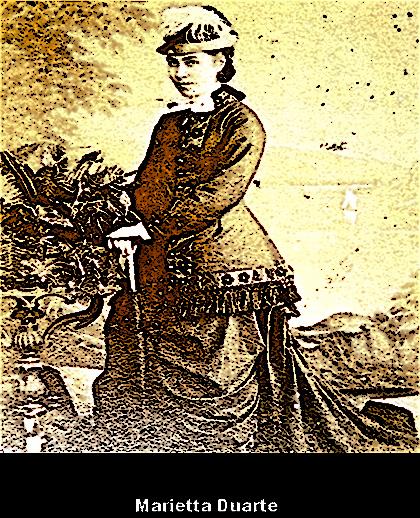
During the Coroner's Inquest, Pete Spence's wife, Marietta Duarte, implicated her husband and four other men in Morgan's murder. She testified that along with her husband, Frank Stilwell, a man named
"Fries," later identified as Frederick Bode, and two Indians, later 668
identified as Hank Swilling and Florentino Cruz, took part in the killing.
She testified that four days before the shooting she and her mother were standing at Spence's house when Morgan walked by. "The Indian then started down the street, and got ahead of him to get a good look at him." She also stated that on the night of the shooting she and her mother heard the shots, and a few minutes later Stilwell and "Indian Charley" came into her home, followed shortly by Spence, Bode and the other Indian.
Marietta Duarte recalled that the men were excited, and the next morning her husband threatened her with violence if she told what she knew. "Spence didn't tell me so, but I know he killed Morgan Earp", she said. Additional witnesses said they saw Frank Stilwell running from the scene.
669
O.K. Corral
Like the gunfight three months earlier, Morgan's murder was national news. “The Angeles Herald” reported; “Tombstone, A. T., March 23.
The coroner's jury find that Morgan Earp came to his death at the hands of Frank Stillwell, who was killed next day in Tucson, Pete Spence, one Freis, and two half-breed Indians. Pete Spence's wife exposes the plot. A Sheriffs posse, consisting of 20 men, mostly cow-670
boys, left this morning for the Dragoon mountains, where the Earps are supposed to be at present. The Sheriff made a weak attempt to arrest them at the Cosmopolitan Hotel before they left, but Wyatt Earp told him he didn't want to see him; that he had seen him once too often, and thereupon the Earp party mounted their horses and rode away.
There is a very uneasy feeling among the cow-boy element, as the Earps are rendered desperate by the attempted assassination of Virgil Earp and the cold-blooded murder of Morgan Earp. The coroner's jury concluded that Spence, Stilwell, Fries, and "two half-breed Indians"
were responsible for Morgan's murder.”
Unknown to Wyatt, three of the Cowboys he sought were in Behan's jail. After the Coroner's Jury ended, Spence immediately turned himself in, protected in Behan's jail. On the day of the inquest, two of Behan's deputy sheriffs arrested two more suspects for other reasons.
Cochise County Deputy Sheriff William Bell brought Indian Charlie from Charleston and placed him under arrest in the Tombstone jail for shooting a man in Charleston. Separately, Cochise County Deputy Sheriff Frank Hereford arrested "John Doe" Freeze. They were all later released with no charges filed.
671
When Wyatt Earp learned of the judge's ruling, he felt he could not rely on the court system for justice. Stilwell had previously been acquitted of two homicides and a stage robbery, and in Wyatt Earp's opinion, he and other Cowboys had gotten away with murder again. Wyatt decided to take matters into his own hands, concluding that the only way to deal with Virgil's and Morgan's attackers, and the continued threat against the entire Earp family, was to kill the responsible Cowboys.
On Sunday, March 19th, the day after Morgan's murder, Deputy US
Marshal Wyatt Earp, his brother James, Doc Holliday, and a group of friends prepared to accompany Virgil and his wife, along with Morgan's body, to the rail head in Benson. From there James would accompany them to the family home in Colton, California. Morgan's wife and parents waited to bury him. Wyatt borrowed a 10 gauge double barreled Spencer shotgun from Fred Dodge.
On Monday, Wyatt received information that Frank Stilwell, Ike Clanton, Hank Swilling, and another cowboy were watching the passenger trains in Tucson intending to kill Virgil Earp. He thought getting the still invalid Virgil through to Tucson safely would require 672
extra help. Wyatt, accompanied by Warren Earp, Doc Holliday, "Turkey Creek" Jack Johnson, and Sherman McMaster, guarded Virgil and Allie. In Contention City they stabled their horses and picked up an extra wagon. They rode in the wagon to the rail head in Benson, where they caught the next train to Tucson.
They were all heavily armed with shotguns or rifles, except Virgil who had a pistol. Nathan W. Waite of Ash Canyon in the Huachuca Mountains was on the train with the Earp party. He said the Earp men were all armed and McMaster was wearing two cartridge belts.
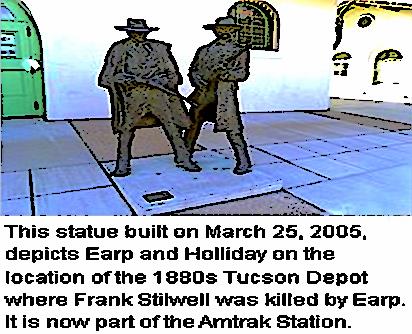
In Tucson, the party was greeted at the train station by Deputy US
Marshal Joseph W. Evans. Virgil and other witnesses later reported that they saw Stilwell, Ike Clanton, and other Cowboys at the train station. "Almost the first men we met on the platform there were Stilwell and his friends, armed to the teeth," Virgil later told the “San Francisco Examiner.” "They fell back into the crowd as soon as they saw I had an escort, and the boys took me to the hotel to supper."
Watched over by the well-armed Wyatt and his posse, Virgil and Allie 673
had dinner in Tucson at Porter's Hotel. Marshal Evans saw Holliday deposit two shotguns at the railroad station office.
After the Earp group finished dinner at Porter's Hotel they returned to the train. Holliday asked someone to get his shotguns. Wyatt escorted Virgil and Allie aboard the train. A passenger told Virgil he saw men lying on a flatcar near the engine. Wyatt saw them too and slipped between the tracks, looking for the men. As the train pulled away from the Tucson station at about 7:15 PM, six or seven shots were heard.
Witnesses gave differing accounts, but Frank Stilwell's body was found on the morning of March 21st about 100 yards from the Porter Hotel alongside the tracks riddled with two buckshot and three gunshot wounds. George Hand, who saw the body, said Stilwell was "the worst shot up man I ever saw."
Coroner Dr. Dexter Lyford found a single bullet wound through Stilwell's body under his armpits; a wound from a rifle through the upper left arm; a buckshot wound that passed through the liver, abdomen, and stomach; another buckshot wound that fractured his left leg; and a rifle wound through the right leg. The coroner concluded 674
that Stilwell had been shot by five different weapons. Either the gun shot under his arm or through the abdomen could have been the cause of death.
“The Tombstone Epitaph” reported the next day that Stilwell had been shot six times. They reported that the round of buckshot in the torso had struck him at such close range that six buckshot left holes within a radius of 3 inches, leaving powder burns on his coat. Many years later, Wyatt told his biographer Flood that he and his party had seen Clanton and Stilwell on the tracks with weapons, and he had shot Stilwell. Doc told Wallace; “Sure, Wyatt did. But he wasn’t alone, and didn’t carry a shotgun.”
The federal deputies looked hard for another man, whom Wyatt identified as Ike Clanton, but he got away. Ike claimed in a newspaper interview afterward that he and Stilwell had been in Tucson to respond to a federal subpoena for interfering with a US mail carrier when he allegedly robbed the Sandy Bob line of the Bisbee stage on September 8th, 1881. The federal charges had been filed by Virgil Earp after 675
O.K. Corral
Stilwell was acquitted for lack of evidence on the state charges of robbery.
Clanton said he had heard that the Earps were coming in on a train to kill Stilwell. According to Clanton, Stilwell left the hotel and was last seen walking down the railroad tracks away from the Porter Hotel, towards where his body was later found on the tracks. Virgil later told the “Examiner,” "One thing is certain. If I had been without an escort they would have killed me."
676
The next day, the newspapers were full of news about Frank Stilwell's death. “The Arizona Star” reported; “ ... without any provocation a band of four or five slayers pursued a lonely man in the dark and without a word of warning murdered him in cold blood and then hid to their stamping grounds as unconcerned as though they had when out on a hunting expedition, or like so many blood thirsty Apaches rejoice over their crime.”
The Coroner's Jury in Tucson found that Stilwell had died at the hands of Wyatt and Warren Earp, Holliday, McMaster, and Johnson. Tucson Justice of the Peace Charles Meyer issued arrest warrants for the five men.
On the night of March 20th, after killing Stilwell in Tucson, and verifying that the train was on its way to California with the rest of their family, the Earp party was afoot. They walked 15 miles southeast back along the Southern Pacific tracks out of Tucson to the Papago freight stop. The station was later renamed Esmond and was the site of a head on train crash in 1903 at the current location of the Desert 677
Sky Middle School in Tucson. At the Papago stop they flagged down the night freight train back to the terminal in Benson.
Once in Benson they hired a wagon back to Contention where they picked up their stabled horses. They rode into Tombstone around 11:00 AM on Tuesday, March 21st. Once in Tombstone they learned of Marietta Duarte's testimony during the coroner's inquest into Morgan's death. She told the jury that her husband Pete Spence and several others who she identified had talked about the murder in her home.
The Earps returned to their rooms upstairs at the Cosmopolitan Hotel, where they had lived in close company and used as their temporary headquarters since the first attack on Virgil in December.
Wyatt and Warren Earp, J.H. Holliday, Texas Jack, "Turkey Creek"
Johnson, and Sherman McMaster were now wanted men due to the outstanding warrants. Tucson, where the Earps had killed Stilwell, though was in the jurisdiction of Pima County Sheriff Bob Paul, a friend of the Earps. In an effort to cover his ass, he and District Attorney Alex Campbell sent a telegram to Behan in Tombstone asking him to arrest the Earps, as if Behan had the ability. The telegraph office manager 678
was a friend to the Earps and showed the message to Wyatt before it was delivered to Behan. The operator agreed to delay delivering the message to Behan long enough to allow the Earps and their associates to make ready to leave town Tuesday evening. The Earps sent instructions to Montgomery's stable to get their horses saddled.
Early in the evening Behan received the delayed telegram. He gathered his deputies and Tombstone City Marshal Dave Neagle. They met in front of the Cosmopolitan Hotel, preparing to arrest the five men. Behan encountered the heavily armed Earp lawmen as they passed through the lobby of the Cosmopolitan Hotel, getting ready to pick up their horses from the stable and leave town. Cochise County Sheriff Behan told the Deputy US Marshal, "Wyatt I want to see you."
Wyatt replied with a sneer and without stopping; "Johnny, if you're not careful, you'll see me once too often."
“The Tombstone Epitaph” reported; "The Sheriff made a weak attempt to arrest them at the Cosmopolitan Hotel before they left, but Wyatt Earp told him he didn't want to see him; that he had seen him once too often, and thereupon the Earp party mounted their horses and rode 679
away." One of Behan's deputies, Billy Breakenridge, claimed Wyatt and his men resisted arrest and even pulled their guns on Behan and Dave Neagle, one of Wyatt's friends, to prevent their arrest. In a story published on May 14th, 1893, Wyatt told a reporter for the “Denver Republican;” “The sheriff called on me to surrender, and I told him I would not do it. He assembled a posse about the door of my room to take me in, but I walked through the men, and none of them offered to lay a hand upon me.”
Wyatt and Warren Earp, Doc Holliday, Johnson and McMaster were joined by "Texas Jack" Vermillion, Dan Tipton, Charlie Smith, Fred Dodge, Johnny Green, and Louis Cooley to form a federal posse under Wyatt's authority as the Deputy US Marshal. Continuing to ignore Behan, the Earp posse rode out of town the same evening of Tuesday, March 21st.
The next morning Behan formed a posse consisting of a number of deputized Cowboys, friends of Frank Stilwell and Ike Clanton, including Johnny Ringo, Phineas Clanton, Johnny Barnes and about 18 more men. They rode after the federal posse and the five men wanted for 680
Stilwell's murder. Paul was on his way to Tombstone the next day when he ran into Behan and his posse on the road 5 miles outside of town. He joined the posse and rode with them to Contention that night and on to Tombstone the next day. Without sleep for two days, Paul told Behan to wake him if he got news of the Earp's location, but Behan left without him. In 1898, Paul wrote the “Tucson Republican”
that the Earps had spied Stillwell "standing on a gravel car peeking into the window of the car that Virgil Earp was in."
On the morning of March 22nd, a portion of the Earp posse including Wyatt, Warren, Doc Holliday, Sherman McMaster and "Turkey Creek"
Johnson rode about 10 miles east to Pete Spence's ranch and woodcutting camp off the Chiricahua Road, below the South Pass of the Dragoon Mountains.
According to Theodore Judah, who witnessed events at the wood camp, the Earp posse arrived around 11:00 AM and asked him about the location of Pete Spence and Florentino "Indian Charlie" Cruz. He told them Spence was in jail in Tombstone and that Cruz was cutting wood nearby. They followed the direction Judah indicated and Judah 681
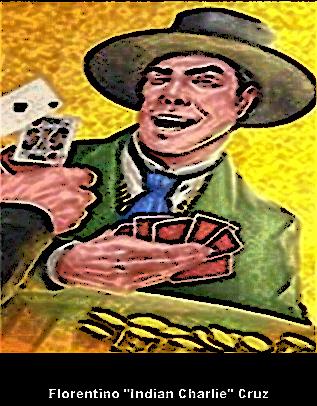
O.K. Corral
soon heard ten or twelve shots fired. Judah looked for Cruz that night without success. The next morning he went looking for him again and found his body full of bullet holes.
One apocryphal account says that after the party recognized Cruz, they chased him down and a gunfight ensued. The party managed to capture a fatally wounded Cruz and he confessed to have taken part in Morgan's murder, and that he identified Stilwell, Hank Swilling, Curly Bill and Johnny Ringo as the others who killed Morgan. During that time, in Wyatt's own account, he allowed Cruz to keep his revolver in 682