

O.K. Corral by Edward Drobinski - HTML preview
Download the book in PDF, ePub, Kindle for a complete version.
the cowardly Johnny Tyler off the hook by effectively dismissing him with the above line, which actually means something like; “I’m the man for the job.” In later years he told diarist Wallace that he didn’t ever want to embarrass Wyatt by saying that he thought he’d lose to Ringo. “Rather, I just quietly stepped in to take the place of my best friend. And I did hold a grudge for Ringo’s Cowboys saying that I robbed a stagecoach. Besides, I wanted to show everyone that I was the best gun fighter; fastest and deadly accurate.”
"Johnny, I apologize. I forgot you were there."
Besides gun fighting and poker, Doc Holliday had another destructive hobby; drinking. As he got older and the effects of tuberculosis began to worsen Holliday relied even more on alcohol to soothe his pain.
While playing poker and winning hand after hand against Ike Clanton, Doc began to insult the slow witted cowboy. Ike responded with threatened violence before Wyatt Earp intervened and apologized on Holliday's behalf, blaming his actions on being drunk. But no one knew his own limits like Doc Holliday, who assured everyone with the above quote that he was just getting started.
838
"I've not yet begun to defile myself."
The sadistic cowboy known as Johnny Ringo had challenged Wyatt Earp to a duel to the death but it was Doc Holliday who showed up instead. As confident as Ringo was it was hard to ignore the fact that Holliday was a well-known killer with legendary speed. Johnny Ringo couldn't help but show his inner fear at the sight of the former dentist and his doubts about his ability to beat him bubbled to the surface.
Holliday had obviously seen that look before in many of his past opponents and the above comment simply pointed out what was clearly written over Ringo's face.
"Why Johnny Ringo, you look like somebody just walked over your grave."
After shooting and killing Johnny Ringo in their climactic duel, which was supposed to take place between Ringo and Wyatt Earp before Doc showed up to save Earp, as he confirmed to Earp before the duel that Wyatt could not beat Ringo, Earp arrived late to find Holliday kneeling over Ringo's body. Before Earp's arrival, Doc lamented rather sarcastically that Ringo was just too "high-strung" and added this 839
explanation when Earp walked over. This, like the manner in which Ringo dies, is in reference to the theory that the real Johnny Ringo may have actually committed suicide.
"I'm afraid the strain was more than he could bear."
Upon meeting Johnny Ringo Doc Holliday immediately insulted him. In an attempt to broker peace, Wyatt Earp apologizes on Doc's behalf attributing his behavior to being drunk to which Doc replies in Latin,
"In Vino Veritas," or "In wine there is truth." Doc Holliday is simply pointing out that just because he is drunk does not mean he's not speaking the truth. Ringo too is an educated man and the two gunslingers had a tense conversation completely in Latin. You don't need to understand what they are saying to know these two are on a collision course to war. In one Latin based sentence Holliday told Ringo; “It’s your funeral.”
"In vino veritas.”
One evening, Doc had been playing piano after a night of drinking and poker. He is interrupted when Wyatt finds himself surrounded by a group of cowboys wanting to free their leader who is accused of 840
murder. Doc wanders into the street to help his friend when one of the cowboys refers to him as "the drunk piano player," and tells him he's so drunk he's probably seeing double. Never at a loss for words the deadly shootist pulls out both pistols and remarks;
"I have two guns, one for each of you."
During the Gunfight at the O.K. Corral Doc found himself in the sights of cowboy Frank McLaury who barked; "I've got you now, you son of a bitch." Always cool under pressure, Holliday simply replied; "You're a daisy if you do," and watched as McLaury was shot by Morgan Earp.
According to witnesses of the gunfight, Doc Holliday actually uttered the now iconic line when he found himself in the crosshairs of Frank McLaury which only adds to the legendary outlaw's legacy.
"You're a daisy if you do."
Even at his lowest point, Doc Holliday was capable of delivering the goods. The following line was Doc's response to his best and only friend Wyatt Earp. The lawman had come for one of his regular visits with Holliday who was nearing the end of his battle with tuberculosis.
Doc was laid up in bed at a Colorado sanatorium. Wyatt casually asked 841
Doc how he was doing. Holliday just as casually replied, keeping his amazing sense of sarcasm with him until the very end.
"I'm dying. How are you?"
One reported exchange when Doc Holliday first met Johnny Ringo produced a few quotes worthy of note. They are in a bar in Tombstone and Doc is sitting at a gambling table.
Johnny Ringo steps up to Doc; “And you must be Doc Holliday.”
Doc Holliday: “That's the rumor.”
Johnny Ringo: “You retired too?”
Doc Holliday coughs and says: “Not me. I'm in my prime.”
Johnny Ringo: “Yeah, you look it.”
Doc Holliday: “And you must be Ringo.” Speaking to Mary Katharine
"Big Nose Kate" Horony, Doc says; “Look, darling, Johnny Ringo. The deadliest pistoleer since Wild Bill, they say. What do you think, darling? Should I hate him?”
Kate: “You don't even know him.”
842
Doc Holliday: “Yes, but there's just something about him. Something around the eyes, I don't know, reminds me of ... me. No. I'm sure of it, I hate him.”
Wyatt Earp says to Ringo: “He's drunk.”
Doc Holliday: “In vino veritas,” which is Latin for; “When I drink, I say the truth.”
Johnny Ringo: “Age quod agis,” which is Latin for; “Do what you do best.”
Doc Holliday: “Credat Judaeus apella, non ego,” which is Latin for;
“Drinking is not what I do best.”
Johnny Ringo pats his gun and says; “Eventus stultorum magister,”
which is Latin for; “Fools must learn from experience.”
Doc Holliday smiles while saying; “In pace requiescat,” which is Latin for; “It's your funeral.”
843
14B- Virgil Earp Revisited
During the O.K. Corral gunfight, Billy Clanton and two of the McLaury brothers were killed, most likely by Doc Holliday. Virgil was shot through the calf, he thought by Billy Clanton. Three days after the O.K.
Corral gunfight, the city council suspended Virgil as city marshal pending outcome of the preliminary hearing. Virgil was eventually exonerated of wrongdoing, but his reputation suffered thereafter.
After the gunfight at the O.K. Corral the Earps relocated their families to the Cosmopolitan Hotel for mutual support and protection. At about 11:30 PM on December 28th, 1881, Virgil was ambushed as he walked from the Oriental Saloon to his room. “The Sacramento Daily Record-Union” reported that; "He was fired upon with double barreled shotguns, loaded with buckshot, by three men concealed in an unfinished building diagonally across on Allen street."
Virgil was hit in the back and left arm by three loads of buckshot from about 60 feet. The Crystal Palace Saloon and the Eagle Brewery beyond Virgil were struck by nineteen buckshots. Three passed 844
O.K. Corral
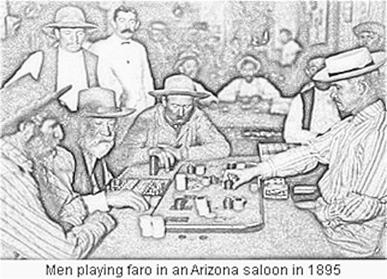
through the window and one about a foot over the heads of some men standing by a Faro table.
George Parsons wrote that he heard; "four shots in quick succession."
Critically wounded, Virgil staggered into the hotel.
Earp's upper arm was longitudinally fractured, and Dr. George E.
Goodfellow removed four inches of shattered humerus bone and his elbow, leaving his arm permanently crippled. Virgil told his wife Allie;
"Never mind, I've got one arm left to hug you with." Virgil was also shot through the back above the hip, and Goodfellow removed twenty buckshots that penetrated his body and lodged near the hip bone above the groin. “The Los Angeles Daily Herald” reported that; “The Cowboys are bent on vengeance for the slaughter of their companeros 845
a few weeks ago. The doctor says there are four chances in five that he (Virgil) will die."
George W. Parsons, who had been treated by Goodfellow for an injury he received, was staying in Goodfellow's office while he recuperated.
He kept a journal, in which he recorded; “Longitudinal fracture, so Virgil's elbow joint had to be taken out today and we've got that and some of the shattered bone in the room. The patient is doing well. It is surmised that Ike Clanton, Curly Bill Brocius, and Will McLaury did the shooting. Bad state of affairs here. Something will have to be done.”
Wyatt, assuming that Virgil was dying, telegraphed US Marshal Crawley Dake asking him to name him as Virgil's replacement as deputy US marshal. “Tombstone, Arizona Territory, December 29th, 1881. Virgil Earp was shot by concealed assassins last night. His wounds are fatal. Telegraph me appointment with power to appoint deputies. Local authorities are doing nothing. The lives of other citizens are threatened. Wyatt Earp.”
Commenting on the telegram received by Dake, the “Weekly Arizona Miner” wrote about the repeated threats received by the Earps and 846
others. “For some time, the Earps, Doc Holliday, Tom Fitch and others who upheld and defended the Earps in their late trial have received, almost daily, anonymous letters, warning them to leave town or suffer death, supposed to have been written by friends of the Clanton and McLaury boys, three of whom the Earps and Holliday killed and little attention was paid to them as they were believed to be idle boasts.
But the shooting of Virgil Earp last night shows that the men were in earnest.”
“The Los Angeles Herald” reported on December 30th that; "The local authorities are doing nothing to capture the assassins so far as is known ... Judge Spicer, Marshal Williams, Wyatt Earp, Rickabaugh and others are in momentary danger of assassination."
The suspected shooters were later identified as Phin Clanton, Ike Clanton, Johnny Barnes, Johnny Ringo, Hank Swilling, and Pete Spence. On Tuesday, January 31st, 1882 Ike and Phin were brought before Judge William H. Stilwell on suspicion of shooting Virgil. The district attorney asked that bail be set at $5,000, but the judge 847
released both men on $1,500 bond, indicating he thought the prosecution's case was weak.
Although a hat that Wyatt later claimed belonged to Ike Clanton was found near the shooting, the evidence was deemed circumstantial.
Sherman McMaster provided the most convincing evidence. He testified that he saw Ike later that night in nearby Charleston. He said he asked Clanton about the shooting, to which Clanton replied that he
“would have to go back and do the job over." On February 2nd, Clanton's attorney brought in seven witnesses who provided an alibi for Clanton. They all testified that Clanton had been in Charleston at the time of Virgil's shooting. Spicer was compelled to release Clanton.
After his shooting, Virgil spent the next three months recuperating. He was just starting to get back on his feet when on Saturday, March 18th, 1882, Virgil's younger brother Morgan Earp was killed in another ambush.
On Monday, March 20th, Virgil and Allie were escorted by Wyatt and deputies Warren Earp, Doc Holliday, Sherman McMaster, and "Turkey Creek" Jack Johnson to Contention, where they drove two wagons to 848
the Arizona and New Mexico Railroad terminal 25 miles away in Benson. Wyatt and his deputies had initially planned to travel only as far as Benson. Wyatt reported later that he received word in Contention that Ike Clanton, Frank Stilwell, Hank Swilling, and another cowboy were watching the passenger trains in Tucson with the aim to kill Virgil. Wyatt and the rest of the posse remained with Virgil and Allie through to Tucson.
The men were well armed with pistols, rifles and shotguns. McMaster wore two cartridge belts. Allie wore Virgil's pistol belt during the journey so it would be handy. Virgil told the “San Francisco Examiner”
two months later that upon getting off the train in Tucson; "Almost the first men we met on the platform there were Stilwell and his friends, armed to the teeth. They fell back into the crowd as soon as they saw I had an escort, and the boys took me to the hotel for supper."
Guarded by his brothers and the deputies, Virgil and Allie had dinner at Porter's Hotel in Tucson. Virgil was so weak he had to be carried up the steps of the train. Once they were safely seated, the rest of the guards kept watch for the Cowboys.
849
Virgil and Allie along with James Earp accompanied Morgan's body to the Earp family home in Colton, California. As Virgil's train was pulling out of Tucson on its way to California, gunfire was heard. The Earps were armed after leaving Porter's Hotel and witnesses saw men running with weapons but could not identify anyone in the dark. Wyatt said later that he and his deputies spotted Frank Stilwell and another man he believed to be Ike Clanton armed with shotguns lying on a flatcar.
When Wyatt and his men approached, the two men ran. Stilwell may have stumbled or been wounded, allowing Wyatt to reach him. Wyatt later said he shot Stilwell as Stilwell attempted to push the barrel of Earp's shotgun away. Wyatt, quoted in the Denver Republican, said; "I ran straight for Stilwell. It was he who killed my brother. What a coward he was! He couldn't shoot when I came near him. He stood there helpless and trembling for his life. As I rushed upon him he put out his hands and clutched at my shotgun. I let go both barrels, and he tumbled down dead and mangled at my feet."
850
He said Stilwell cried "Morg!" before he was killed. Stilwell's body, riddled with buckshot from two shotgun rounds, one in his leg and the second in his chest with powder burns, and four other bullet wounds, was found the next morning near the tracks. Ike Clanton got away.
When the Tucson sheriff learned who was responsible for Stilwell's death, he issued warrants for the lawmen's arrest.
Clanton gave an interview afterward to the newspapers in which he claimed that he and Stilwell had been in Tucson to respond to federal charges about interfering with a US mail carrier, stemming from his alleged involvement in robbing the Sandy Bob line of the Bisbee stage on September 8th, 1881. Clanton said that they had heard that the Earps were coming via the train and they had plans to kill Stilwell.
According to Clanton, Stilwell disappeared from the hotel before he was found several blocks away, shot dead by the tracks.
After Virgil was ambushed and maimed in Tombstone, he and Allie moved to his parents' home in Colton, California, to recover from his wounds, which took almost two years. He sought treatment for his wounds in San Francisco and was interviewed on the Southern Pacific 851
train by a reporter whose story was printed in the “San Francisco Examiner: on May 27th, 1882. The reporter described Virgil's appearance; “His face, voice and manner were prepossessing. He is close to six feet in height, of medium build, chestnut hair, sandy mustache, light eyebrows, quiet, blue eyes and frank expression. He wore a wide brimmed, slate colored slouch hat, pants of a brown and white stripe, and a blue diagonal coat and vest, both the latter with bullet holes in them, bearing testimony of a recent fight when he was shot in the back, the bullet coming out of the front of his vest. His left arm was carried in a sling, also a memento of his last fight, when he received a bullet in his arm, since causing the loss of about six inches of bone which crippled him for life. The wounded arm is the cause of his visit to this city, where he seeks surgical aid in hope of so far recovering its use that he may be able to dress himself unaided.”
Despite the use of only one arm, Virgil was hired by the Southern Pacific Railroad to guard its tracks in Colton's famous "battle of the crossing." Virgil carried a top break revolver that could be reloaded with one hand. Southern Pacific was attempting to stop the California Southern Railroad, a subsidiary of the Atchison, Topeka and Santa Fe 852
Railway, from installing a crossing over the Southern Pacific tracks in Colton to gain access to California, which resulted in the frog war.
Governor Waterman deputized a posse from San Bernardino, California and came down in person to enforce construction of the crossing, ending the Southern Pacific's railroad monopoly in Southern California.
In 1884 Earp's father, Nicholas Porter Earp was elected justice of the peace in Colton. Two years later, Virgil Earp opened a private detective agency, which by all accounts he had quit by 1886, when he was elected village constable in July.
When Colton was incorporated as a city, Earp was elected as Colton's first City Marshal on July 11th, 1887. He was paid $75 a month and was re-elected to another term in 1888. Among other duties, he was reported to have cleared blocked sewers and kept track of the electric light bulbs. Virgil and Allie Earp's Colton home still stands at 528 West
"H" Street.
In 1888 Earp resigned as city marshal and he and Allie left Colton for San Bernardino. Five years later, in 1893, he and his wife moved to the short lived mining town Vanderbilt, California. He owned and operated 853
the only two story building in town, Earp's Hall, a saloon and meeting hall used for public gatherings and even the town's church services.
His business success in Vanderbilt was not matched by his success in politics, and he lost the election for town constable in 1894.
In 1895, Virgil and Allie traveled to Cripple Creek, Colorado, where they met Virgil's brother Wyatt. They stayed briefly and soon moved back to Prescott in Yavapai County, Arizona, where Virgil became involved in mining. Virgil started mining in the Hassayampa district in partnership with W.H. Harlon. They leased the Grizzly mine owned by W.C. Hanson. “The Prescott Weekly Journal-Miner” reported on November 8th, 1896 that the day before "a serious accident had occurred at this mine. Virgil Earp and W. H. Harlon were working in a tunnel. The ground caved catching Mr. Earp and pinning him to the ground. He was unconscious for several hours and Dr. Abbott, was called to dress his wounds." The doctor told Earp he had dislocated his right hip. Both his feet and ankles were badly crushed, he had a serious cut on his head and bruises all over his body. The doctor said it would be several weeks before Virgil would be able to move around again, but it took him much longer to recover. They moved south after 854
that and began ranching in the Kirkland Valley. Virgil was nominated as a candidate for Yavapai County, Arizona sheriff in 1900, but pulled out of the election for health reasons.
In 1898 Earp received a startling letter from a Mrs. Levi Law. At the end of the Civil War, his wife Ellen was told by her family that Virgil had been killed. Her family had been against their marriage. They took her and the baby daughter Nellie to Walla Walla, Washington, where she later married Thomas Eaton. She had four more children. Mrs. Levi Law was Virgil's daughter, Nellie. The next year, encouraged by his wife, Virgil traveled to Portland, Oregon, where he was reunited with Ellen and Nellie Jane Law. On April 22nd, 1898, “The Oregonian”
reported that Earp "is now enjoying a very pleasant visit with her and his two grandchildren at her home, which is near that of Mrs. Eaton, in North Portland." He also met three grandchildren he never knew existed. Later that year, according to her letter to The Oregonian, Nellie Jane visited Virgil and Allie Earp at their home in Arizona.
Before 1904, Virgil and Allie returned to Colton, where city records show that he along with three others unsuccessfully petitioned the 855
city leaders to repeal a temperance law that allowed only one saloon in town. In 1904, they left California for the last time and moved to the boom town of Goldfield in Esmeralda County, Nevada, where Virgil planned to open a saloon. He quickly discovered there was plenty of competition and realized he didn't have the capital required. Virgil and Allie were down to their last dollar so he took up gambling, at which he had been good. In November 1904 Virgil took a job as a special officer at the National Club. He was responsible for watching over the high stakes gambling tables.
In January 1905 he was hired as a deputy sheriff for Esmeralda County, and he continued his duties at the National Club. Virgil caught pneumonia in February 1905. His brother Wyatt was also living in Goldfield, and visited with him. Earp slowly got better and attended an Order of Eagles meeting in May.
The serious injuries he had sustained during the mine cave in several years earlier had left him debilitated and he never recovered his full health. Earp's recovery from pneumonia did not last and in early 856
October he had a relapse. On October 19th, 1905 Earp died at St.
Mary's hospital in Goldfield.
In her memoirs, Allie wrote that Virgil's last words were, "Light my cigar, and stay here and hold my hand." His brother Wyatt was the last surviving participant of the gunfight at the O.K. Corral. Virgil was also survived by his father Nicholas, brothers James and Newton, wife Allie, and daughter Nellie.
At the request of his daughter, Nellie Jane Bohn, Allie sent his body to Portland, Oregon, and he was buried in the River View Cemetery there.
857
14C- Wyatt Earp Revisited
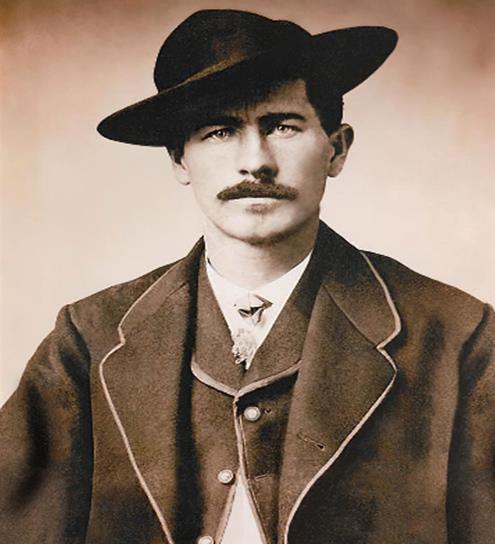
The Earp – Holliday conflict with the Cowboys escalated, culminating in the shootout at the O.K. Corral on October 26th, 1881, where the Earps and Doc Holliday killed three Cowboys. During the next five months, Virgil was ambushed and maimed, losing the use of his left arm, and Morgan was assassinated. Wyatt, Warren Earp, Doc Holliday, and others formed a federal posse which killed three more Cowboys whom they thought responsible. Wyatt was never wounded in any of the gunfights, unlike his brothers Virgil and Morgan or Doc Holliday, which added to his mystique after his death.
858
O.K. Corral
After leaving Tombstone, Earp went to San Francisco where he reunited with Josephine Marcus, and they lived as husband and wife.
They joined a gold rush to Eagle City, Idaho, where they owned mining interests and a saloon. Back in San Francisco, Wyatt raced horses again, but his reputation suffered irreparably when he refereed the Fitzsimmons vs. Sharkey boxing match and called a foul which led many to believe he fixed the fight. Earp and Marcus joined the Nome Gold Rush in 1899. He and Charlie Hoxie paid US$1,500 for a liquor license to open a two story saloon called the Dexter and made an estimated $80,000. Around 1911, Earp began working several mining 859
claims in Vidal, California, retiring in the hot summers with Josephine to Los Angeles. He made friends among early Western actors in Hollywood and tried to get his story told, but he was portrayed only very briefly in one film produced during his lifetime; “Wild Bill Hickok”
(1923).
Earp died on January 13th, 1929. Known as a Western lawman, gunfighter, and boxing referee, he had earned notoriety for his handling of the Fitzsimmons–Sharkey fight and his role in the O.K.
Corral gunfight. This changed only after his death when the extremely flattering biography “Wyatt Earp: Frontier Marshal” by Stuart N. Lake was published in 1931, becoming a bestseller and creating his reputation as a fearless lawman. Since then, Earp's fame and notoriety have been increased by films, television shows, biographies, and works of fiction. Long after his death, he has many devoted detractors and admirers. His modern reputation is as the Old West's toughest and deadliest gunman.
The tension came to a head between the Earps and the Cowboys on Wednesday, October 26th, 1881. Ike Clanton, Billy Claiborne, and other 860
Cowboys had been threatening to kill the Earps for several weeks, and Tombstone city Marshal Virgil Earp learned that they were armed and had gathered near the O.K. Corral. He asked Wyatt and Morgan Earp and Doc Holliday to assist him, as he intended to disarm them. Wyatt had been deputized by Virgil a few days prior as a temporary assistant marshal and Morgan was a deputy city marshal.
Around 3 PM, the Earps and Holliday headed towards Fremont Street, where the Cowboys had been gathering. They found five Cowboys in a vacant lot adjacent to the O.K. Corral's rear entrance on Fremont Street. The lot was narrow between the Harwood House and Fly's Boarding House and Photography Studio. The two parties were initially only about 6 to 10 feet apart. Ike Clanton and Billy Claiborne fled, but Tom and Frank McLaury and Billy Clanton stood their ground and were killed. Morgan was clipped by a shot across his back that nicked both shoulder blades and a vertebra. Virgil was shot through the calf, and Holliday was grazed by a bullet.
Ike Clanton filed murder charges against the Earps and Holliday on October 30th. Justice Wells Spicer convened a preliminary hearing on 861
October 31st to determine whether enough evidence existed to go to trial. In an unusual proceeding, he took written and oral testimony from about 30 witnesses over more than a month. Sheriff Behan testified that the Cowboys had not resisted but had thrown up their hands and turned out their coats to show that they were not armed. He said that Tom McLaury threw open his coat to show that he was not armed and that the first two shots were fired by the Earp party. Behan insisted that Holliday had fired first using a nickel plated revolver, although other witnesses reported seeing him carrying a messenger shotgun immediately beforehand.
The Earps hired experienced trial lawyer Thomas Fitch as defense counsel. Since Virgil was confined to bed due to his wounds, Wyatt testified in a written statement that he drew his gun only after Clanton and McLaury went for their pistols. He detailed the Earps' previous troubles with the Clantons and McLaurys and explained that they had intended to disarm the Cowboys, and that his party had fired in self-defense. Fitch produced contradictory testimony from prosecution witnesses during cross-examination, or they appeared to dodge his questions or said that they could not remember.
862
Justice Spicer ruled on November 30th that there was not enough evidence to indict the men. He said that the evidence indicated that the Earps and Holliday acted within the law and that Virgil had deputized Holliday and Wyatt. The Earps and Holliday were free but their reputations had been tarnished. The Cowboys in Tombstone looked upon the Earps as robbers and murderers and plotted revenge.
Virgil was ambushed on December 28th while walking between saloons on Allen Street in Tombstone. He was maimed by a shotgun blast which struck his left arm and shoulder. Ike Clanton's hat was found in the back of the building across Allen Street from where the shots were fired. Wyatt wired US Marshal Crawley P. Dake asking to be appointed deputy US marshal with authority to select his own deputies. Dake granted the request in late January and provided the Earps with some funds that he borrowed from Wells Fargo, variously reported as between $500 and $3,000.
In mid-January, Earp's ally Rickabaugh sold the Oriental Saloon to Earp's adversary Milt Joyce, so Wyatt sold his gambling concessions at the hotel. The Earps also raised some funds from sympathetic 863
business owners in town. Wyatt and Virgil submitted their resignations to Dake on February 2nd, 1882, being tired of the criticism leveled against them, but he refused to accept them because their accounts had not been settled. On the same day, Wyatt sent a message to Ike Clanton that he wanted to reconcile their differences, which Clanton refused. Clanton was also acquitted that day of the charges against him in the shooting of Virgil, when the defense brought in seven witnesses who testified that Clanton was in Charleston at the time of the shooting. The Earps needed more funds to pay for the extra deputies and associated expenses, as contributions from supportive business owners were not enough. On February 13th, Wyatt mortgaged his home to lawyer James G. Howard for $365. He was never able to repay the loan and Howard foreclosed on the house in 1884.
Morgan Earp was murdered on March 18th while playing billiards, shot by gunmen firing from a dark alley through a door window into the billiard room. He was struck in the right side. The bullet shattered his spine, passed through his left side, and lodged in the thigh of George A. B. Berry, while another round narrowly missed him. A doctor was summoned and Morgan was moved from the floor to a nearby couch, 864
while the murderers escaped in the dark. He died 40 minutes later.
Wyatt felt that he could not rely on civil justice and decided to take matters into his own hands to kill the murderers himself.
The day after Morgan's murder, Deputy US Marshal Wyatt Earp formed a posse made up of his brothers James and Warren, Doc Holliday, Sherman McMaster, Jack "Turkey Creek" Johnson, Charles "Hairlip Charlie" Smith, Dan Tipton, and Texas Jack Vermillion to protect the family and pursue the suspects, paying them $5 a day. They took Morgan's body to the railhead in Benson, and James accompanied it to the family home in Colton, California, where Morgan's wife and parents waited to bury him. The posse guarded Virgil and Allie to Tucson, where they had heard that Frank Stilwell and other Cowboys were waiting to kill Virgil. The next morning, Frank Stilwell's body was found alongside the tracks, riddled with buckshot and gunshot wounds.
Wyatt and five other federal lawmen were indicted for murdering him, and Tucson Justice of the Peace, Charles Meyer, issued warrants for their arrest.
865
The Earp posse briefly returned to Tombstone where Sheriff Behan tried to stop them, but was brushed aside. Hairlip Charlie and Warren remained in Tombstone, and the rest set out for Pete Spence's wood camp in the Dragoon Mountains. Spence was absent, but they found and killed Florentino "Indian Charlie" Cruz. Two days later, they stumbled onto the wood camp of William Brocius, Pony Diehl, and other outlaw Cowboys near Iron Springs in the Whetstone Mountains.
According to reports from both sides, the two sides immediately exchanged gunfire. The Earp party withdrew to find protection from the heavy gunfire, except for Wyatt, Doc Holliday, and Texas Jack Vermillion, whose horse was shot.
Curly Bill fired at Wyatt with a shotgun but missed. Wyatt had protected Curly Bill against a mob ready to lynch him 18 months earlier, and he provided testimony that helped spare Curly Bill from a murder trial for killing Marshal Fred White. Wyatt returned Curly Bill's gunfire with his own shotgun, hitting him in the chest from about 50
feet away, causing him to fall into the water's edge of the spring and die. Wyatt then fired his revolver, mortally wounding Johnny Barnes in the chest and wounding Milt Hicks in the arm. Vermillion tried to 866
retrieve his rifle wedged in the scabbard under his fallen horse, exposing himself to the Cowboys' gunfire, but Holliday helped him get to cover.
Earp told biographer Stuart Lake that both sides of his long coat were shot through, and another bullet struck his boot heel. Ed Colburn wrote in a letter published in the “Ford County Globe” on May 23th, 1882, that he'd visited with brothers Earp in Gunnison, Colorado. In the letter, he relayed Earp's story about how his overcoat was hit on both sides of his body by a charge of buckshot and that his saddle horn was shot off. John Flood wrote; "The saddle horn had been splintered, his coat hung in shreds, there were three holes through the legs of his trousers, five holes through the crown of his sombrero, and three through the brim."
Earp was finally able to get on his horse and retreat with the rest of the posse. Earp told several versions of the story in which he had trouble remounting his horse because his cartridge belt had slipped down his legs. He was never wounded in any of his confrontations, which added to his mystique.
867
The posse left the Cowboys behind and rode north to the Percy Ranch, but they weren't welcomed by Hugh and Jim Percy, who feared the Cowboys. They left around 3 AM on March 27th after a meal and some rest. They arrived near Tombstone and met with supporters, including Hairlip Charlie and Warren Earp. That same day, the posse arrived at the Sierra Bonita Ranch owned by Henry Hooker, a wealthy and prominent rancher. That night, Dan Tipton caught the stagecoach out of Tombstone and headed for Benson, carrying $1,000 from mining owner and Earp supporter E. B. Gage for the posse. Hooker congratulated Earp on killing Curly Bill, and Wyatt told him that he wanted to buy new mounts. Hooker was known for his purebred stallions and ran more than 500 brood mares which produced horses that were renowned for their speed, beauty, and temperament. He provided Wyatt and his posse with new mounts but refused to take their money. Behan's posse was then observed in the distance, and Hooker suggested that Earp make his stand there, but Earp moved into the hills about 3 miles distant near Reilly Hill. Earp's posse wasn't found by the local posse, led by Cochise County Sheriff John Behan, although Behan's party trailed them for many miles. In the middle of 868
April 1882, the Earp posse left the Arizona Territory and headed east into New Mexico Territory and then into Colorado.
The coroner reports credited the Earp posse with killing Frank Stilwell, Curly Bill, Indian Charlie, and Johnny Barnes in their two week long ride. In 1888, Earp gave an interview to California historian Hubert Howe Bancroft, during which he claimed to have killed "over a dozen stage robbers, murderers, and cattle thieves" in his time as a lawman.
The gunfight in Tombstone lasted only 30 seconds, but it ended up defining Earp for the rest of his life. His movements began to receive national press coverage after he killed Frank Stilwell in Tucson, and he left Arizona with his brother Warren, Holliday, McMaster, "Turkey Creek" Jack Johnson, and Texas Jack Vermillion. They stopped in Albuquerque, New Mexico where they met up with Earp's friend Deputy US Marshal Bat Masterson. Masterson went with them to Trinidad, Colorado where he opened a Faro game in a saloon and later became marshal.
Earp dealt Faro at Masterson's saloon for several weeks; then left for Gunnison, Colorado, in May 1882 with McMaster, Vermillion, and 869
Warren Earp. The Earps and Texas Jack set up camp on the outskirts of Gunnison, where they remained quietly at first, rarely going into town for supplies. They reportedly pulled a "gold brick scam" in Gunnison on a German visitor named Ritchie by trying to sell him gold-painted rocks for $2,000. Earp and Holliday had a serious disagreement when Holliday accused him of becoming "a damn Jew-boy," and they parted ways in Albuquerque. Holliday and Earp met again in June 1882 in Gunnison after Earp intervened to keep his friend from being arrested on murder charges which they all had pending against them for killing Frank Stillwell in Tucson. Earp saw Holliday for a final time in the late winter of 1886, where they met in the lobby of the Windsor Hotel. Josephine Marcus described the skeletal Holliday as having a continuous cough and standing on "unsteady legs."
“The San Diego Union” printed a report from the “San Francisco Call”
on July 9th, 1882, that Virgil Earp was in San Francisco receiving treatment for his shattered arm, and that Wyatt was expected to arrive from Colorado that day. Wyatt took a job managing a horse stable in Santa Rosa. Earp developed a reputation as a sportsman and gambler.
He was reputed to own a six horse stable in San Francisco.
870
O.K. Corral
Following Wyatt's return to San Francisco, Josephine began using the name "Josephine Earp." Josephine was Earp's common-law wife for 46
years until his death. Wyatt and Josie remained in San Francisco for about nine months until early 1883, when they left for Silverton, Colorado where silver and gold mining were flourishing. It was the first of many mining camps and boomtowns in which they lived. However, he still owned a house in Tombstone with his former common-law wife Mattie, who had waited for him in Colton where his parents and Virgil were living. During mid-1882, she sent him a letter saying that she wanted a divorce. She had met a gambler from Arizona and he had asked her to marry him. Earp did not believe in divorce and therefore 871
refused, but she ran away with the gambler anyway. The gambler abandoned her in Arizona, so she moved to Pinal City, Arizona where she resumed life as a prostitute. She struggled with addictions and committed suicide by opium poisoning on July 3rd, 1888 at age 37-38.
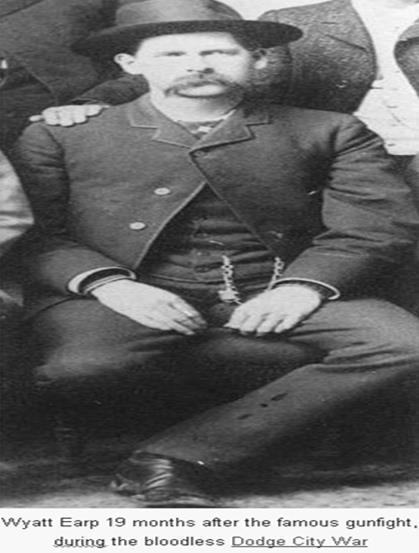
Earp's friend Luke Short was part owner of the Long Branch saloon in Dodge City, but the mayor tried to run him out of business and out of town during the Dodge City War. Short appealed to Masterson, and Masterson contacted Earp on May 31st, 1883. Earp and Josephine went with Masterson, Johnny Millsap, Shotgun John Collins, Texas Jack Vermillion, and Johnny Green to Dodge City to help Short, and they were sworn in as deputies by constable Dave Marrow. Governor George W. Glick arranged a 10 day cooling off period to allow Short to sell the saloon, but Short, Earp, and the others refused to compromise.
Seeking to avoid a confrontation with the deputized gunmen, and under pressure from Governor Glick and the Santa Fe Railroad, which conducted a lot of business in Dodge, the mayor and city council backed down. They allowed the gambling halls, dance halls, and saloons to reopen, including the Long Branch, and the Dodge City War ended without a shot being fired.
872
O.K. Corral
Earp arrived in Eagle City, Idaho, in 1884 along with Josephine, his brothers Warren and James, and James's wife Bessie. Eagle City was another new boomtown growing from the discovery of gold, silver, and lead in the Coeur d'Alene area. It is now a ghost town in Shoshone County, Idaho. Earp joined the crowd looking for gold in the Murray-873
Eagle mining district, and they paid $2,250 for a 50 foot diameter white circus in which they opened a dance hall and saloon called The White Elephant.
Earp was named deputy sheriff in the area, including newly incorporated Kootenai County, Idaho, which was disputing jurisdiction of Eagle City with Shoshone County. There were a considerable number of disagreements over mining claims and property rights which Earp had a part in. On March 28th, a miner named Bill Buzzard was constructing a building when Earp's partner Jack Enright tried to stop him. Enright claimed that the building was on part of his property, and the two men began to argue. Buzzard fired several shots at Enright with his Winchester; then allies of both sides took defensive positions behind snowbanks and began shooting at one another. Earp and his brother James stepped into the middle of the fray and helped peacefully resolve the dispute before anyone was seriously hurt.
Around April 1885, Earp reportedly used his badge to join a band of claim jumpers in Embry Camp, later renamed Chewelah, Washington.
Within six months, their substantial stake had run dry, and the Earps 874
left the Murray-Eagle district. About ten years later, a reporter hunted up Buzzard after the Fitzimmons-Sharkey fight and extracted a story from him which accused Earp of being the brains behind lot jumping and a real estate fraud, further tarnishing his reputation.
The Coeur d'Alene mining venture died out by 1887, so Earp and Josephine went to San Diego, California where the railroad was about to arrive and a real estate boom was underway. They stayed for about four years, living most of the time in the Brooklyn Hotel. Earp speculated in San Diego's booming real estate market, and he bought four saloons and gambling halls between 1887 and around 1896, all in the "respectable" part of town. They offered 21 games, including Faro, blackjack, poker, keno, pedro, and monte. At the height of the boom, he made up to $1,000 a night in profit. He also owned the Oyster Bar located in the first granite faced building in San Diego, the four-story Louis Bank Building at 837 5th Avenue, one of the more popular saloons in the Stingaree district. One of the reasons that it drew a good crowd was the Golden Poppy brothel upstairs, owned by Madam Cora. Each room was painted a different color, such as emerald green, 875
summer yellow, or ruby red, and each prostitute was required to dress in matching garments.
Earp had a long standing interest in boxing and horse racing, and he refereed boxing matches in San Diego, Tijuana, and San Bernardino. In the 1887 San Diego City Directory, he was listed as a capitalist or gambler. He won a race horse named Otto Rex in a card game and began investing in race horses, and he also judged prize fights on both sides of the border. He was one of the judges at the county fair horse races held in Escondido, California, in 1889. The boom came to an end as rapidly as it had started, and the population of San Diego fell from a high of 40,000 in 1885 when Earp arrived to only 16,000 in 1890.
The Earps moved back to San Francisco in 1891 so that Josephine could be closer to her half-sister Henrietta's family, and Earp developed a reputation as a sportsman and a gambler. He held on to his San Diego properties, but when their value fell, he could not pay the taxes and was forced to sell the lots. He continued to race horses, but he could no longer afford to own them by 1896, so he raced them on behalf of the owner of a horse stable in Santa Rosa which he 876
managed. In Santa Rosa, Earp personally competed in and won a harness race. From 1891 to 1897, the couple lived in at least four different locations in the city: 145 Ellis St., 720 McAllister St., 514A Seventh Ave., and 1004 Golden Gate Ave.
Josephine wrote in her memoir that she and Earp were married in 1892
by the captain of multimillionaire Lucky Baldwin's yacht off the California coast. Raymond Nez wrote that his grandparents witnessed their marriage, but no public record has been found for the marriage.
Baldwin was a horse breeder and racer who also owned the Santa Anita race track in Los Angeles which Earp frequented.
Earp's relationship with Josephine was tempestuous at times. She gambled to excess and he had adulterous affairs. He knew that she preferred being called "Josephine" and detested "Sadie," but he had a mischievous sense of humor and began calling her Sadie early in their relationship. Earp's good friends in the Welsh family did not appreciate Josephine's gambling habits, and they noted that she received an allowance from her half-sister Rebecca and gambled it away, often leaving her husband hungry.
877
In the 1920s, Earp gave Josephine signed legal papers and filing fees to a claim for an oil lease in Kern County, California. She gambled away the filing fees and lied to him about what happened to the lease, which later turned out to be valuable. He distrusted her ability to manage her finances and made an arrangement with her sister Henrietta Lenhardt. He put oil leases in Henrietta's name with the agreement that the proceeds would benefit Josephine after his death.
In February 1926, the oil well was completed and producing 150
barrels a day, but Henrietta's three children refused to keep the agreement after their mother's death and kept the royalties to themselves. Josephine sued her sister's estate in an attempt to collect the royalties.
Josephine later developed a reputation as a shrew who made life difficult for Earp. She frequently griped about his lack of work and financial success and even his character and personality, and he often went on long walks to get away from her. He was furious about her gambling habit, during which she lost considerable sums of money; each may have engaged in extramarital affairs. Josephine could also be controlling, and a relative of Wyatt joked that nobody could convict 878
him of cold blooded murder because he had lived with her for almost 50 years.
Earp was a last minute choice as referee for a boxing match on December 2nd, 1896, which the promoters billed as the heavyweight championship of the world, when Bob Fitzsimmons was set to fight Tom Sharkey at the Mechanics' Pavilion in San Francisco. Earp had refereed 30 or so matches in earlier days, though not under the Marquis of Queensberry rules but under the older and more liberal London Prize Ring Rules. The fight may have been the most anticipated fight on American soil that year. Fitzsimmons was favored to win, and the public and even civic officials placed bets on the outcome.
Fitzsimmons dominated Sharkey throughout the fight, and he hit Sharkey with his famed "solar plexus punch" in the eighth round, an uppercut under the heart that could render a man temporarily helpless.
Then, at Fitzsimmons' next punch, Sharkey dropped, clutched his groin, and rolled on the canvas screaming foul. Earp stopped the bout, ruling that Fitzsimmons had hit Sharkey below the belt, but virtually no 879
one witnessed the punch. Earp awarded the fight to Sharkey, whom attendants carried out as "limp as a rag." The 15,000 fans in attendance greeted his decision with loud boos and cat calls. It was widely believed that no foul had occurred and that Earp had bet on Sharkey. Several doctors verified afterward that Sharkey had been hit hard below the belt, but the public had bet heavily on Fitzsimmons and they were livid at the outcome.
Fitzsimmons went to court to overturn Earp's decision, and newspaper accounts and testimony over the next two weeks revealed a conspiracy among the boxing promoters to fix the fight's outcome.
Newspapers across the United States republished the stories from the San Francisco papers and looked for local angles. On December 14th, 1896, the “San Francisco Call” quoted a story from the “New York Journal” by Alfred H. Lewis, who accused the Earp brothers of being
"stage robbers,", and Earp was parodied in editorial caricatures by newspapers across the country. Stories about the fight and Earp's contested decision were distributed nationwide to a public that knew little of Wyatt Earp prior to that time.
880
On December 17th, Judge Sanderson finally ruled that prize fighting was illegal in San Francisco and the courts would not determine who the winner was. Sharkey retained the purse, but the decision provided no vindication for Earp. Until the fight, Earp had been a minor figure known regionally in California and Arizona; afterward, his name was known from coast to coast. The boxing match left a smear on his public character which followed him until he died and afterward. Eight years later, Dr. B. Brookes Lee was accused of treating Sharkey to make it appear that he had been fouled by Fitzsimmons, and Lee admitted that it was true. "I fixed Sharkey up to look as if he had been fouled," he confessed. "I got $1,000 for my part in the affair."
While in Yuma, Wyatt heard of the gold rush in the Alaska Yukon. On August 5th, 1897, Wyatt and Sadie left for San Francisco. Earp was reported to have secured the backing of a syndicate of sporting men to open a gambling house there. They intended to catch a ship to Alaska, but their departure was delayed for seven weeks when Wyatt fell while getting off Market Street streetcar and bruised or broke his hip. Sadie got pregnant too, and she thought she could persuade Earp from heading to Alaska. He was in agreement, but Sadie, who was 37, 881
miscarried soon after. They finally boarded the steamship Rosalie on September 21, 1897. They arrived in Dawson in the Yukon on late September, where Wyatt planned to open a Faro game. Wyatt and Josephine spent only a month in Dawson.
When they returned north, Wyatt was offered a job as the marshal in Wrangell, Alaska, but he served for only 10 days. Sadie learned she was pregnant again, and they returned to San Francisco on October 11th aboard the steamship City of Seattle. But Sadie miscarried again.
The Earps spent the winter in Wrangell before setting out in the spring for Dawson on board the Governor Pingree via the Yukon River. By the time they reached Rampart on the Yukon River, freeze up had set in.
The Earps rented a cabin from Rex Beach for $100 a month and spent the winter of 1898–1899 there.
In 1898, they got as far as Rampart before the Yukon River froze in place for the winter. Rampart was a friendly place, but far from the real action. They left with the spring thaw and headed for St. Michael, on the Norton Sound, a major gateway to the Alaskan interior via the Yukon River. Wyatt managed a small store during the spring of 1899, 882
selling beer and cigars for the Alaska Commercial Company. But Wyatt's friend Tex Rickard sent him a number of letters belittling Wyatt's steady but small income in St. Michael as "chickenfeed" and persuaded him to relocate to Nome.
At the time of the Earps' arrival, Nome was two blocks wide and five miles long. The best accommodations Wyatt and Sadie could find was a wooden shack a few minutes from the main street, only slightly better than a tent. The river was an open sewer. Typhoid, dysentery and pneumonia were common. In September, Earp and partner Charles E. Hoxie built the Dexter Saloon in Nome, the city's first two story wooden building and its largest and most luxurious saloon. The second floor had 12 "clubrooms" decorated with fine mirrors, thick carpets, draperies, and sideboards. Trading on Earp's name, the Dexter was a success. It was used for a variety of purposes because it was so large; 70 by 30 feet with 12 feet ceilings. Earp used the club rooms upstairs as a brothel, another fact that Sadie worked hard to see was omitted from stories about him. Sadie justified the services upstairs because the Dexter was a "better class" saloon and served an "important civic purpose."
883
The Dexter drew anyone famous who visited Nome. Wyatt rubbed elbows with future novelist Rex Beach, writer Jack London, playwright Wilson Mizner, and boxing promoter Tex Rickard, with whom Earp developed a long lasting relationship. Rickard was a partner in the Northern Saloon and gambling house in Nome. Both the Dexter and the Northern Saloon competed for business with more than 60 other saloons in town serving an estimated 20,000 residents. Wyatt told others he made his money by "mining the miners." He was arrested twice in Nome for minor offenses, including being drunk and disorderly, although he was not tried. Most members of law enforcement were corrupt or otherwise engaged.
In November 1899, Earp left Alaska on the 258 foot iron steamer Cleveland. The ship was infested with lice and was struck by a storm on the Bering Sea, making for a difficult trip. It took nine days to reach Seattle, Washington.
On July 6th, 1900, Wyatt's brother Warren was shot and killed in a saloon in Willcox, Arizona. Wyatt learned about his death soon after, and although some modern researchers believe he went to Arizona to 884
avenge his brother's death, the distance and time required to make the trip made it unlikely, and no contemporary evidence has been found to support that theory.
Earp arrived in Seattle with a plan to open a saloon and gambling room. On November 25th, 1899, the “Seattle Star” described him as "a man of great reputation among the toughs and criminals, inasmuch as he formerly walked the streets of a rough frontier mining town with big pistols stuck in his belt, spurs on his boots, and a devil may care expression upon his official face." “The Seattle Daily Times” was less full of praise, announcing in a very small article that he had a reputation in Arizona as a "bad man," which in that era was synonymous with "villain" and "desperado."
He faced considerable opposition to his plan from John Considine, who controlled all three gaming operations in town. Although gambling was illegal, Considine had worked out an agreement with Police Chief C. S.
Reed. Earp partnered with an established local gambler named Thomas Urguhart, and they opened the Union Club saloon and gambling operation in Seattle's Pioneer Square. “The Seattle Star”
885
noted two weeks later that Earp's saloon was earning a large following. Considine unsuccessfully tried to intimidate Earp, but his saloon continued to prosper. After the city failed to act, on March 23rd, 1900, the Washington state attorney general filed charges against several gamblers, including Earp and his partner. The club's furnishings were confiscated and burned. The Earps returned briefly to San Francisco in April 1900, but soon continued on back to Seattle.
Newspapers in Seattle and San Francisco falsely reported on Wyatt's wealth which prompted a stampede to Nome to seek similar riches.
Nome was advertised as an "exotic summer destination" and four ships a day left Seattle with passengers infected with "gold fever."
On June 14th, 1900, Wyatt and Sadie boarded the steamer SS Alliance in Seattle, bound for Nome. They brought many luxurious accessories with them to decorate The Dexter. Within weeks Nome had grown to a city of over 20,000 inhabitants. In 1900, the major business there "was not mining, but gambling and saloon trade. There were 100 saloons and gambling houses, with an occasional restaurant." Losses of $10,000 per hand in poker were not extraordinary. Prize fighting 886
became the sport of choice and Wyatt's income soared with side bets.
He often refereed bouts himself at The Dexter.
In November 1901, at age 40, Sadie got pregnant again, and she and Wyatt decided to leave Alaska. They sold their interest in the Dexter to their partner, Charlie Hoxie.
Wyatt and Sadie left Alaska on board the SS Roanoke and arrived in Los Angeles at the Hollenbeck Hotel on December 13th, 1901. They had an estimated US$80,000, a relative fortune. Sadie miscarried and lost the baby. Three months later, in February 1902, they arrived in Tonopah, Nevada, known as the "Queen of the Silver Camps," where silver and gold had been discovered in 1900 and a boom was under way. Wyatt and Sadie opened the Northern Saloon in Tonopah and he served as a deputy US marshal under Marshal J.F. Emmitt. His saloon, oil, and copper mining interests produced some income for a period.
After Tonopah's gold strike waned, they moved in 1905 to Goldfield, Nevada, where his brother Virgil and his wife were living. Tex Rickard was also already there and had opened a second Northern Saloon. He hired Wyatt as a pit boss. Wyatt also staked mining claims just outside 887
Death Valley and elsewhere in the Mojave Desert. In 1906, he discovered several deposits of gold and copper near the Sonoran Desert town of Vidal, California, on the Colorado River and filed more than 100 mining claims near the Whipple Mountains. While in Los Angeles, they lived in at least nine small Los Angeles rentals as early as 1885 and as late as 1929.
In 1910, when he was 62, the Los Angeles Police Department hired Wyatt and former Los Angeles detective Arthur Moore King at $10 per day to carry out various tasks "outside the law" such as retrieving criminals from Mexico, which he did very capably. This led to Wyatt's final armed confrontation. In October 1910, he was asked by former Los Angeles Police Commissioner H. L. Lewis to head up a posse to protect surveyors of the American Trona Company who were attempting to wrest control of mining claims for vast deposits of potash on the edge of Searles Lake held in receivership by the foreclosed California Trona Company. Wyatt and the group he guarded were regarded as claim jumpers and were confronted by armed representatives of the other company. King wrote; "It was the nerviest thing he had ever seen." With guns pulled, Wyatt came out of his tent 888
with a Winchester rifle, firing a round at the feet of Federal Receiver Stafford W. Austin. "Back off or I'll blow you apart, or my name is not Wyatt Earp." The owners summoned the US marshal, who arrested Earp and 27 others, served them with a summons for contempt of court, and sent them home. Earp's actions did not resolve the dispute, which eventually escalated into the "Potash Wars" of the Mojave Desert.
On July 23rd, 1911, Earp was arrested in Los Angeles and charged with attempting to fleece J. Y. Peterson, a realty broker, in a fake Faro game. Since money had not changed hands, the charge against Earp was reduced to vagrancy and he was released on $500 bail.
The Earps bought a small cottage in Vidal, the only home they ever owned. Beginning in 1911 and until Wyatt's health began to fail in 1928, Wyatt and Sadie Earp summered in Los Angeles and spent the rest of the year in the desert working their claims. The "Happy Days"
mine was located in the Whipple Mountains a few miles north of Vidal.
Wyatt had some modest success with the Happy Days gold mine, and 889
they lived on the slim proceeds of income from that and oil wells in Oakland and Kern County.
In about 1923, Charles Welsh, a retired railroad engineer and friend that Earp had known since Dodge City, frequently invited the Earps to visit his family in San Bernardino.
When the Welsh family moved to Los Angeles, the Earps accepted an invitation to stay with them for a while in their top floor apartment until the Earps found a place to rent. After Earp and Sadie moved into a bungalow nearby, Charlie Welsh's daughter, Grace Spolidora, recalled that Sadie, who had never had many domestic skills, did very little housekeeping or cooking for Wyatt. She and her sister Alma were concerned about the care Sadie gave Wyatt. Though he was at times very ill, she still did not cook for him. Spolidora, her sisters, and her mother brought in meals.
While living in Los Angeles, Earp became an unpaid film consultant for several silent cowboy movies. In 1915, Earp visited the set of director Allan Dwan's movie, “The Half-Breed,” starring Douglas Fairbanks. In his autobiography, Dwan recalled; "As was the custom in those days, 890
he [Earp] was invited to join the party and mingle with our background action."
Earp became friends with William S. Hart and later Tom Mix, the two most famous movie cowboys of their era. Hart was a stickler for realism in his depictions of Western life, and may have relied on Earp for advice. Earp later frequently visited the sets of movie director John Ford, whose movies starred Harry Carey. Ford's son Patrick later wrote; "My dad was real friendly with Wyatt Earp, and as a little boy I remember him."
In 1916, Earp went with his friend Jack London, whom he knew from Nome, to visit the set of former cowboy, sailor, and movie actor turned film director Raoul Walsh, who was shooting at the studio of Mutual Film conglomerate in Edendale, California. Walsh took the two men to dinner at Al Levy's Cafe on Main and Third Street. During the meal, the highest paid entertainer in the world, Charlie Chaplin, dropped by to greet Wyatt Earp. Chaplin was impressed by both men, but particularly the former Tombstone marshal.
891
In the early 1920s, Earp was given the honorary title of deputy sheriff in San Bernardino County, California. On January 25th, 1926, Wyatt's brother James died of cerebral apoplexy in San Bernardino, California.
Earp tried to persuade his good friend, well-known cowboy movie star William S. Hart, to help set the record straight about his life and get a movie made. "If the story were exploited on the screen by you," he wrote Hart, "it would do much toward setting me right before a public which has always been fed lies about me." Hart encouraged Earp to first find an author to pen his story.
In 1925, Earp began to collaborate on a biography with his friend and former mining engineer John Flood to get his story told in a way that he approved. Flood volunteered his time and attempted to write an authorized biography of Earp's life, based on Earp's recollections. The two men sat together every Sunday in the kitchen of Earp's modest, rented bungalow. While Wyatt sipped a drink and smoked a cigar, they tried to tell Earp's story, but Josephine was always present. She often interrupted and insisted; "You can't write that! It needs to be clean."
She also demanded that they add more "pep" to the manuscript, which 892
in her mind meant including the word "CRACK!" in all capitals. In the chapter about the shootout, the manuscript includes 109 uses of
"CRACK". She thought Earp needed to be shown as a hero, and the manuscript includes a chapter titled "Conflagration" in which Earp saves two women, one a cripple, from a Tombstone fire.
Spolidora as a teenager had visited the Earps many times near her family home in Needles, California, and she sometimes went to San Diego with them. In an interview with the San Bernardino historical society in 1990, she attributed the highly exaggerated stories about Wyatt Earp to Josephine. Josephine "would always interfere whenever Wyatt would talk with Stuart Lake. She always interfered! She wanted him to look like a church going saint and blow things up. Wyatt didn't want that at all!"
Flood's writing was "stilted, corny, and one dimensional," and the manuscript, completed some time in early 1926, never found a publisher. In February 1927, editor Anne Johnston of Bobbs Merrill wrote back and was highly critical of the "stilted, florid, and diffuse"
writing. She wrote; "Now one forgets what it's all about in the clutter 893
of unimportant details that impedes its pace, and the pompous manner of its telling."
Hart tried to help. In February 1926, he wrote “The Saturday Evening Post” and encouraged them to publish Flood's biography so "that the rising generation may know the real from the unreal," but Flood was a horrendous writer, and publisher after publisher rejected the manuscript. Several copies were made and sold in 1981, and the original carbon copy of the typed manuscript, found among Josephine Earp's papers, was given by Glenn Boyer to the Ford County Historical Society.
Wyatt Earp was the last surviving Earp brother and the last surviving participant of the gunfight at the O.K. Corral when he died at home in the Earps' small rented bungalow at 4004 W 17th Street, in Los Angeles, of chronic cystitis on January 13th, 1929, at the age of 80.
“The Los Angeles Times” reported that he had been ill with liver disease for three years. His brother Newton had died almost a month prior on December 18th, 1928. Wyatt was survived by Josephine and sister Adelia Earp Edwards. He had no children. Charlie Welsh's 894
daughter Grace Spolidora and his daughter-in-law Alma were the only witnesses to Wyatt's body's cremation. Josephine was apparently too grief stricken to assist.
Two years before his death, Earp defended his decisions before the gunfight at the O.K. Corral and his actions afterward in an interview with Stuart Lake, author of the 1931 largely fictionalized biography
“Wyatt Earp: Frontier Marshal;” “For my handling of the situation at Tombstone, I have no regrets. Were it to be done over again, I would do exactly as I did at that time. If the outlaws and their friends and allies imagined that they could intimidate or exterminate the Earps by a process of murder, and then hide behind alibis and the technicalities of the law, they simply missed their guess. I want to call your particular attention again to one fact, which writers of Tombstone incidents and history apparently have overlooked. With the deaths of the McLaurys, the Clantons, Stillwell, Florentino Cruz, Curly Bill, and the rest, organized, politically protected crime and depredations in Cochise County ceased.”
895
Tall like his brothers, Wyatt Earp was 6 feet when the average height was about 5 feet 6 inches. He was described in 1887 by the “Los Angeles Herald” as "quiet, unassuming, broad shouldered, with a large blonde mustache. He is dignified, self-contained, game and fearless, and no man commands greater respect." He weighed about 165 to 170
pounds, was long armed, and muscular, and was very capable of using his fists instead of his weapon to control those resisting his authority.
Among his peers near his death, Wyatt was respected. His deputy Jimmy Cairns described Wyatt's work as a police officer in Wichita, Kansas. "Wyatt Earp was a wonderful officer. He was game to the last ditch and apparently afraid of nothing. The cowmen all respected him and seemed to recognize his superiority and authority at such times as he had to use it." He described Wyatt as "the most dependable man I ever knew; a quiet, unassuming chap who never drank and in all respects a clean young fellow."
When citizens of Dodge City learned the Earps had been charged with murder after the gunfight, they sent letters endorsing and supporting the Earps to Judge Wells Spicer.
896
Wyatt was reputed to be an expert with a revolver. He showed no fear of any man. “The Tombstone Epitaph” said of Wyatt; "Bravery and determination were requisites, and in every instance he proved himself to be the right man in the right place."
Wyatt was lucky during the few gun fights he took part in from his earliest job as an assistant police officer in Wichita to Tombstone, where he was briefly deputy US marshal. Unlike his lawmen brothers Virgil and James, Wyatt was never wounded, although once his clothing and his saddle were shot through with bullet holes.
897
14D- Morgan Earp Revisited
Friends and members of the outlaws Cowboys retaliated for the killings at the O.K. Corral, and on December 29th, 1881 Cowboys ambushed Virgil, leaving him maimed, his left arm useless. Two and a half months later, on March 18th, 1882, they ambushed Morgan, shooting him at night through the window of a door while he was playing billiards and killed him. The Cowboys suspected in both shootings were let off on technicalities or lack of evidence. Wyatt Earp felt he could not rely on the criminal justice system and decided to take matters into his own hands. He concluded the only way to get justice for his murdered brother was to avenge his death. Wyatt assembled a posse that included their brother Warren Earp and Doc Holliday and set out on a vendetta to kill those they felt were responsible.
Morgan married Louisa Alice Houston sometime in the 1870s. They lived in Montana before joining his brothers in Tombstone. Louisa was staying with his parents in California when Morgan was murdered.
898
After Morgan's murder, she married Gustav Peters in 1885 and died in 1894 in Long Beach, California.
On Wednesday, October 26th, 1881, the tension between the Earps and the Cowboys came to a head. Ike Clanton, Billy Claiborne, and other Cowboys had been threatening to kill the Earps for several weeks. Tombstone town Marshal Virgil Earp learned that the Cowboys were armed in violation of a city ordinance and had gathered near the O.K. Corral. Morgan was a deputy to his brother Virgil and on October 26th, 1881, responded with Virgil and Wyatt to reports that Cowboys were armed on the streets of Tombstone. Ike Clanton had repeatedly threatened the Earps and he was backed up by Cowboys Tom McLaury, Frank McLaury, and Billy Clanton. Virgil asked Wyatt and Morgan and Doc Holliday to assist him, as he intended to disarm them.
At approximately 3:00 PM the Earps headed towards Fremont Street where the Cowboys had been reported to be gathering.
They confronted five Cowboys on Fremont Street in an alley between the Harwood House and Fly's Boarding House and Photography Studio, the two parties were initially only about 6 to 10 feet apart. Ike Clanton 899
and Billy Claiborne fled the gunfight. Tom and Frank McLaury, along with Billy Clanton, were killed. Morgan was clipped by a shot across his back that nicked both shoulder blades and a vertebra, although he was able to continue firing his weapon. Virgil was shot through the calf and Holliday was grazed by a bullet.
The Earp brothers moved into the Cosmopolitan Hotel for safety and hired several men to help protect the family. Two months after the gunfight at the O.K. Corral, in December 1881, Virgil Earp was seriously wounded in an assassination attempt that left him with a permanently crippled left arm. By February 1882, Morgan grew wary of the danger to the Earps in Tombstone and sent Louisa to live with his parents in Colton, California. Morgan remained in Tombstone to support his brothers.
At 10:50 PM on Saturday, March 18th, 1882, after returning from a musical at Schieffelin Hall, Morgan was ambushed. He was playing a late round of billiards at the Campbell and Hatch Billiard Parlor against owner Bob Hatch. Dan Tipton, Sherman McMaster, and Wyatt watched, having received threats that same day.
900
The assailant shot Morgan through the upper half of a four pane windowed door. The bottom two windows had been painted over. The door opened onto a dark alley that ran through the block between Allen and Fremont Streets. Morgan, about 10 feet from the door, was struck by a bullet in the back which injured his spine then exited his front and entered the thigh of mining foreman George A. B. Berry.
Another bullet lodged in the wall near the ceiling over Wyatt's head.
Several men rushed into the alley but found the shooter had fled.
After Morgan was shot, his brothers tried to help him stand, but Morgan said; "Don't, I can't stand it. This is the last game of pool I'll ever play." They moved him to the floor near the card room door. Dr.
William Miller arrived first, followed by Drs. Matthews and George Goodfellow. They all examined Morgan. Goodfellow, who would earn recognition in the United States as the nation's leading expert at treating abdominal gunshot wounds, concluded that Morgan's wounds were fatal; “He was in a state of collapse resulting from a gunshot, or pistol wound, entering the body just to the left of the spinal column in the region of the left kidney emerging on the right side of the body in the region of the gall bladder. It certainly injured the great vessels of 901
the body causing hemorrhage which, undoubtedly, causes death. It also involved the spinal column. It passed through the left kidney and also through the loin.”
In the book “Wyatt Earp: Frontier Marshal,” author Stuart Lake wrote that Wyatt said that Morgan, before dying, whispered to Wyatt; "I can't see a damned thing." Wyatt said that they had promised each other to report visions of the next world when at the point of death. They moved him to a lounge and Morgan's family, Wyatt, Virgil, and James, along with Allie and Bessie, gathered around him. Morgan's wife Louisa was in Colton with his parents, and Warren Earp was out of town. Morgan died less than an hour after he was shot.
After his death, Morgan was laid out in a blue suit belonging to Doc Holliday. The family held his funeral in the Cosmopolitan Hotel. Wyatt learned that Frank Stilwell and others were waiting for them in Tucson, and assembled several deputies who guarded Virgil, Maddie, Ally and James. The Earps took Morgan's body by wagon the next day to Benson, where they hired a wagon to get to the New Mexico and Arizona railroad station in Contention.
902
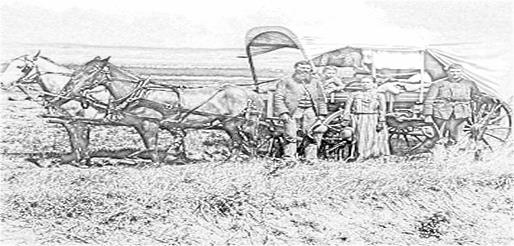
O.K. Corral
From Contention, they caught a train to Tucson. While waiting for the next train in Tucson, they saw Frank Stilwell apparently lying in wait and killed him. From Tucson, James accompanied Virgil, Maddie, Ally and Morgan's body to Colton, California where Morgan's wife and parents were waiting. Morgan was first buried in the old city cemetery of Colton, near Mount Slover. When the cemetery was moved in 1892, Morgan's body was reburied in the Hermosa Cemetery in Colton.
While Wyatt and James were traveling to Contention with Morgan's body, Coroner Dr. D. M. Mathew organized a Coroner's Jury to conduct an inquest into Morgan's death. Suspect Pete Spence's wife, Marietta Duarte, was ready to talk to the Coroner's Jury. She had been abused 903
by her husband and may have had motivation to implicate him. She implicated her husband and four other men in Morgan's murder.
She testified that the day before, her husband and Indian Charlie were on the front porch, when they saw Morgan Earp walk by. She said Pete Spence told Indian Charlie, A/K/A Florentino Cruz; "That's him, that's him," and the Indian walked ahead of Earp to get a good look at him.
The night of the shooting, her husband was away. Around midnight, Cruz and Frank Stilwell showed up, armed with pistols and carbines, and her husband arrived soon after with Freis, A/K/A Frederick Bode and a fifth unidentified man, later identified as Hank Swilling, all carrying rifles. They talked in low and excited tones. The next morning, her husband struck both her and her mother, and threatened to shoot Marietta if she told what she knew. Witnesses said they saw Frank Stilwell running from the scene.
The Coroner's jury concluded that Spence, Stilwell, Frederick Bode, and "Indian Charlie" were the prime suspects in Morgan Earp's death.
“Morgan Earp came to his death in the city of Tombstone on the 18th day of March, 1882 by reason of a gunshot or pistol wound inflicted at 904
the hands of Pete Spence, Frank Stilwell, a party by the name of Freis, and two Indian half-breeds, one whose name is Charlie, but the name of the other not ascertained.”
When the prosecution called Marietta Duarte to testify at the preliminary hearing, the defense objected because her testimony was hearsay and because a spouse could not testify against her husband.
The judge agreed and the charges were dismissed.
On May 27th, 1882, a "strong Democrat" was quoted in a letter in the Yuma, Arizona newspaper “The Arizona Sentinel” describing the events following the "murder of the noted desperado Frank Stilwell."
Readers may want to know "how these so called Republican outlaws are regarded by decent, law abiding people in Tombstone, regardless of politics." The writer was of the opinion that Cochise County Sheriff Behan wanted the warrant from Governor Fremont only with the object to have it unenforced. “Neither the Sheriff nor any of his deputies have ever turned a hand to find the murderers" of Morgan Earp. "There is no hope for any honest man to get justice here against these scoundrels as long as Behan is in office."
905
Wyatt Earp finally concluded that he could not rely on the court system for justice and decided to take matters into his own hands. He concluded that the only way to deal with Virgil's shooters and Morgan's murderers was to find and kill the Cowboys he believed were responsible. He gathered a band of loyal men and deputized them.
They rode out to find those responsible.
Unknown to Wyatt, three of the Cowboys he sought were in Behan's jail. After the Coroner's Jury ended, Spence immediately turned himself in, protected by being in Behan's jail. On the day of the inquest, two of Behan's deputy sheriffs arrested two of the suspects for other reasons. Cochise County Deputy Sheriff William Bell brought Indian Charlie from Charleston and placed him under arrest in the Tombstone jail for shooting a man in Charleston. Separately, Cochise County Deputy Sheriff Frank Hereford arrested "John Doe" Freeze.
They were all later released, and not charged with anything.
While accompanying his brother Virgil to the rail head in Tucson, Wyatt spotted Frank Stilwell lying in wait. He was a suspect in Morgan's assassination. Wyatt and others pursued Stilwell and killed him. Earp 906
then assembled and deputized a federal posse. They set out to track down others they believed responsible for shooting Virgil and killing Morgan. During the Earp Vendetta Ride, the federal posse looked for Pete Spence but found he was already in jail. They killed Florentino
"Indian Charlie" Cruz, who had been identified by Pete Spence's wife as taking part in ambushing Virgil. They also accidentally came upon Curly Bill Brocius at a spring and Wyatt killed him with a single shotgun blast. Wyatt shot Johnny Barnes in the same gunfight and he died soon after.
Wyatt and his brothers were unable to apprehend or kill the other suspects in Morgan's death. Hank Swilling was last known when he was when questioned in August 1878 about robbing the US Mail.
Frederick Bode was last listed in the 1880 US Census in Charleston, Pima County. Johnny Ringo was found dead on July 14th, 1882 with a gunshot through the temple. The coroner's jury ruled his death to be a suicide. Ike Clanton was wanted for cattle rustling when he resisted arrest on June 1st, 1887. He attempted to draw his rifle on Detective Jonas V. Brighton who shot Clanton through the heart. Phineas Clanton was convicted of grand larceny for cattle rustling in 1887 and 907
served 17 months of a ten year jail sentence in the Yuma Territorial Prison. He died in 1906. Pete Spence was convicted of manslaughter in 1883 and served 18 months of a five year sentence in the Yuma Territorial Prison. He married his friend Phineas Clanton's widow in 1910 and died in 1914.
908
14E- Warren Earp Revisited
Warren was at his parents' home in Colton, California at the time of the gunfight at the O.K. Corral on October 26th, 1881. On December 28th, 1881, the Cowboys ambushed Virgil Earp, maiming him. Warren returned to Tombstone and was deputized by Wyatt. On March 18th, 1882, Morgan Earp was murdered while playing billiards. On March 20th, 1882 Warren joined a posse guarding Virgil and Allie as they were transported to Tucson to catch a train for California. At the station, Frank Stilwell was spotted lying in wait for Virgil and was killed. Pima County Justice of the Peace Charles Meyer issued warrants for the arrest of Warren, Wyatt, Doc Holliday, "Turkey Creek"
Jack Johnson, and Sherman McMaster. The men returned to Tombstone where Cochise County Sheriff Johnny Behan found the men in the lobby of the Cosmopolitan Hotel, heavily armed, getting ready to leave town. He told Wyatt he wanted to see him. Deputy Marshal Wyatt replied; "Johnny, if you're not careful you'll see me once too often." On Friday the Tucson Grand Jury returned indictments naming all five men. The men were never tried or convicted. They left Tombstone that night and during the next week killed three more Cowboys they 909
believed responsible for attacking their brothers in a vendetta across Cochise County.
Following the vendetta ride, Warren left Arizona for a time. He returned in 1891, and worked as a mail stage driver on the route between Willcox and Fort Grant. He may have worked briefly as a range detective for rancher Henry Hooker in Cochise County, Arizona.
Modern depictions of Warren Earp portray him as being slightly naive and youthful. After the shootout in Tombstone, he gained a reputation as a bully, playing off the reputation of his older brothers.
His brother Virgil feared that Warren's temper would get him killed.
Virgil was reunited in 1898 with his first wife Ellen and daughter Nellie who had been told he had been killed in the Civil War. They visited twice, and Nellie told “The Oregonian” that during their visit; "My father said then, 'If Warren ever dies he will be shot. He is too hasty, quick tempered and too ready to pick a quarrel. Besides he will not let bygones be bygones, and on that account, I expect that he will meet a violent death.'"
910
On July 6th, 1900, Warren became involved in an argument with Hooker's range boss, Johnny Boyett, inside Brown's Saloon in Willcox.
Boyett and Warren had been involved in verbal disputes before that night, and rumor was that their mutual dislike stemmed from affections for the same woman, possibly a local prostitute. However, the “Tombstone Epitaph” said that the incident began out of Earp's constant bullying of Boyett.
Later that night, the two men, both drunk, began arguing. Bystanders said they "never heard any man take such abuse." Warren Earp is alleged to have said "Boyett, get your gun and we'll settle this right here. I've got mine, go and get yours." Boyett left and returned shortly thereafter with two .45 caliber Colt handguns. Boyett called out for Earp, who walked in from another doorway. Immediately upon seeing Earp, Boyett fired two rounds, but both missed.
Earp stepped calmly outside of the saloon onto the street without producing a weapon, just as Boyett fired two more rounds, missing again with both. Earp entered the saloon again and walked towards Boyett, opened his coat and vest. "I have not got arms. You have a 911
good deal the best of this." Earp continued walking toward Boyett, talking the entire time. Boyett warned him several times to halt, Boyett appearing slightly frightened but angry. When Earp did not stop, Boyett fired a fifth round, this time striking Earp in the chest, killing him almost instantly. Boyett claimed that he feared for his life, and that by allowing Warren Earp to get too close, he believed his life was in danger. Warren Earp was found to have no gun, though he had an open pocket knife in his fist. No arrest was made.
Lynn R. Baily, the daughter of rancher Henry Hooker, wrote in “Henry Clay Hooker and the Sierra Bonita,” that "Virgil Earp sneaked into Willcox under an assumed name, checked into the hotel near Brown's Saloon, and began interviewing witnesses. He concluded his brother's death was "cold blooded murder even if Warren was drunk and abusive at the time."
“The Tombstone Epitaph” reported on July 9th, 1900; "Warren Earp, the youngest of the four Earp brothers whose names twenty years ago were synonymous with gun fighting on the Arizona frontier, died with 912
his boots on here. He was shot through the heart in a saloon by Cowboy Johnny Boyett, and died almost instantly."
Boyett was arrested for the shooting. The coroner's inquest confirmed that he killed Earp. Boyett sought protection from the local sheriff, fearing retribution from the Earp brothers. He returned to work on Hooker's ranch, staying out of Willcox for a long period of time. Wyatt did not get involved in the incident, nor did James or Newton. It was later falsely reported that the Earps avenged Warren's death by killing Boyett. Boyett eventually retired in Redlands, California. He later died in Texas. Warren Earp was buried in Willcox, Arizona in the Pioneer Cemetery.
913
14F- Bat Masterson Revisited
Masterson spent the remainder of 1880 in Kansas City and Dodge. On February 8th, 1881, he left Dodge City and joined Wyatt Earp in Tombstone, Arizona Territory, where he met Luke Short for the first time. Earp, Short, and Masterson worked as Faro dealers, or "look outs," at Tombstone's Oriental Saloon. Masterson had only been in Tombstone for two months when he received an urgent telegram that compelled him to return to Dodge City. His brother Jim had a partnership with Alfred James "A.J." Peacock in Dodge City's Lady Gay Saloon and Dance Hall. Albert "Al" Updegraff was Peacock's brother-in-law and bartender. Updegraff was a drunk, and Jim thought him dishonest. Jim had demanded that Peacock fire Updegraff, but Peacock refused. Their disagreement grew until threats were made, prompting the telegram.
914
O.K. Corral
Masterson arrived in Dodge City on April 16th, 1881, where he accosted Updegraff and Peacock. Recognizing Masterson, Updegraff and Peacock retreated behind the jail and exchanged gunfire with him.
Who had fired first is not clear. Citizens ran for cover as bullets ripped through the Long Branch Saloon. Other individuals began firing in support of both sides until Updegraff was wounded. Mayor A.B.
Webster arrested Masterson. Afterward, Masterson learned that his brother Jim was not in danger. Updegraff recovered from his wounds, 915
but the shooter who hit him could not be identified, so Masterson was fined $8 and released. Citizens were outraged and warrants were issued, but Bat and Jim Masterson were permitted to leave Dodge City.
Bat Masterson became more widely known as a gunfighter as a result of a practical joke played on a gullible newspaper reporter in August 1881. Seeking copy in Gunnison, Colorado, the reporter asked Dr. W.S.
Cockrell about man killers. Dr. Cockrell pointed to a young man nearby and said it was Masterson and that he had killed 26 men. Cockrell then regaled the reporter with the story of Ed Masterson's death and how Bat responded fearlessly and heroically against his brother's killers.
The story was published in “The Sun” newspaper in New York on November 7th, 1881, and was also widely reprinted in papers all over the country. Cockrell subsequently apologized to Masterson, who insisted he was not in Gunnison at the time.
Masterson was appointed city marshal of Trinidad, Colorado, on April 17th, 1882. He had hardly settled into his $75 a month marshal's job when Wyatt Earp requested his help to prevent the extradition of Doc Holliday from Colorado to Arizona. Masterson took his case directly to 916
Colorado Governor Frederick W. Pitkin, who listened to Masterson's appeal and finally refused to grant Holliday's extradition. However, Masterson's rescue of Doc Holliday, as well as his nightly
"moonlighting" as a Faro dealer, spelled doom for his career as city marshal of Trinidad. On March 28th, 1883, a local paper noted; "There are now two 'bankers' running for city offices; Mr. Taylor of the Las Animas County Bank, and Mr. Masterson of the bank of 'Fair O.' Both have a large number of depositors. One of time depositors and the other receives his deposits for keeps." On April 3rd, 1883, Masterson was defeated by a lopsided vote of 637 to 248.
Masterson's term as city marshal of Trinidad ended just in time for him to come to the aid of his friend, Luke Short, who had been run out of Dodge City by the mayor and Masterson's long time enemy, Larry Deger. Within weeks, a group of gunfighters recruited by Masterson and Earp descended upon Dodge City to resolve what became known as the "Dodge City War." The result of this gathering reinstated Luke Short in Dodge. Before disbanding on June 10th, 1883, Short, Masterson, Earp, and five other notable men from frontier history posed for a group portrait that was soon labeled "The Dodge City 917
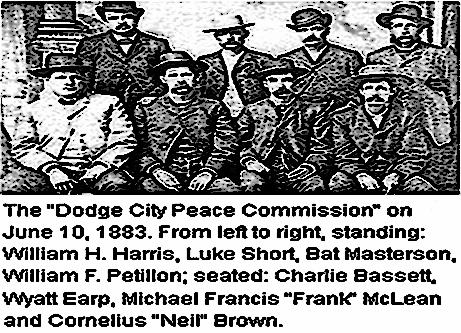
O.K. Corral
Peace Commission." The photo became an iconic image of the Old West.
Masterson was back in Dodge City on November 1st, 1884, where he issued a small newspaper called “Vox Populi” which was devoted to local political issues. Three days after its appearance, he received a flattering and prophetic review of his journalistic effort from another 918
Dodge City paper which observedl "We are in receipt of the first number of ‘Vox Populi,’ W.B. Masterson, editor, which in appearance is very neat and tidy. The news and statements it contains seem to be of a somewhat personal nature. The editor is very promising. If he survives the first week of his literary venture, there is no telling what he may accomplish in the journalistic field." Editor Masterson did not survive his first week. Vox Populi folded after printing just one issue and almost another 20 years would pass before he made journalism a full time profession in New York City.
Masterson finally left Dodge City and made Denver, Colorado, his center of interest, where he soon became involved in a divorce scandal. The trouble began in a Denver theater on September 18th, 1886, when a comedian named Lou Spencer, who was performing on stage, spotted his wife, Nellie, seated in the audience on Masterson's knee. Spencer cut short his routine and confronted Masterson, who hit Spencer across the face with his pistol. Nellie Spencer watched from the wings while the two men slugged it out. Finally, they were arrested, fined, and released a short time later. In its account of the incident, the “Rocky Mountain News” described Masterson as one 919
"who pleases the ladies," and Nellie McMahon Spencer as "a beautiful woman, with a fine wardrobe and a sweet voice." Three days later, Nellie filed for divorce and the Denver papers were quick to report that Nellie had "eloped" with Masterson. No record has been found of the two ever getting married, and she soon disappeared from Masterson's life.
Masterson dealt Faro for "Big Ed" Chase at the Arcade gambling house. In 1888, he managed and then purchased the Palace Variety Theater. There, Masterson probably first met an Indian club swinger and singer, Emma Moulton. The pair subsequently lived together and they were widely reported to have married in Denver on November 21st, 1891. The only known source for that date was given by Masterson's brother, Thomas Masterson, years after Bat had died.
Emma was not divorced from her first husband, Edwin Winford Moulton, until November 9th, 1893. When they were later enumerated in the 1910 US Census, Bat and Emma claimed that they had been married for 17 years, suggesting a marriage date of 1893. Masterson's biographer has raised the possibility that they were married on November 21st, 1893, two weeks after Emma's divorce from Edwin 920
O.K. Corral
Moulton. The two were traveling through the eastern states at that time, but an actual marriage record has not been found.
It was in Denver that Masterson met and began a long term friendship with the infamous confidence man and crime boss Soapy Smith. In 1889, the two were involved in election scandal involving fraudulent registration ballot casting.
921
Masterson maintained an interest in prizefighting and other sports, and was known as a frequent attendee at boxing matches across the country. He frequently placed bets on the fights and occasionally served in an official capacity as a second or a timekeeper. He knew and was known by the heavyweight champions of the era, from John L.
Sullivan and James J. "Gentleman Jim" Corbett to Jack Johnson and Jack Dempsey. The sports minded Masterson was ringside during the John L. Sullivan – Jake Kilrain heavyweight championship fight at Richburg, Mississippi, on July 8th, 1889. He was the designated timekeeper for Kilrain and came under fire from some sources for how he handled his role. Reportedly, Masterson saw to it that Luke Short, Johnny Murphy, and "twelve other good men were scattered around the ring where they would do the most good in case of an emergency."
In early 1892 Masterson moved to the silver boom town of Creede, Colorado where he managed the Denver Exchange gambling club until the town was destroyed by fire on June 5th, 1892. On September 7th, 1892, Masterson, Short, and Charlie Bassett attended the Sullivan –
Corbett championship fight in New Orleans. According to a Dodge City paper, Masterson bet on the winner, Corbett, while noting; "Charlie 922
Bassett and Luke Short were among the notables in attendance.
Bassett bet his money on Sullivan." Masterson was in Jacksonville, Florida, on January 25th, 1894, acting as a second for Charlie Mitchell during Mitchell's heavyweight title shot at the champion, James J.
"Gentleman Jim" Corbett. Mitchell was knocked cold in three rounds.
Masterson moved to New York City in 1895 to briefly serve as a bodyguard for millionaire George Gould. He wrote to his Denver friends glowing accounts of fishing trips "with the Goulds on their yacht," and announced his intention to remain in New York City indefinitely. On June 6th, 1895, a Denver paper quoted a friend of Masterson's, who observed that; "Bat has at last fallen into a dead easy game."
Masterson returned to Denver for several more years. On April 6th, 1897, serving as a deputy sheriff of Arapahoe County, he got into a dispute on election day with a Tim Connors. Masterson drew his pistol and Connors attempted to seize it. During the scuffle, the gun discharged and C.C. Louderbaugh was shot in the left wrist.
On April 9th, 1899, Masterson became a partner in a boxing club called the Colorado Athletic Association. Within a few days, Masterson was 923
excluded from the organization by his partners. Masterson retaliated on April 18th by founding a rival club, the Olympic, with himself as president. Masterson received favorable media coverage from a Denver newspaper called “George's Weekly,” where he was employed as sports editor.
In September 1900, Masterson sold his interest in the Olympic Athletic Club and made another visit to New York City. Masterson had decided to settle in New York City, but had a sudden change of heart and returned to Denver, with humiliating results. Two conflicting versions are given for what caused his final departure from Denver. Masterson's story was that an irate woman belted him with an umbrella on May 2nd, 1902, when she took exception to an "undesirable" such as Masterson trying to cast his ballot at a local election. An alternate version states that Masterson had become a dangerous drunk who was run out of Denver for being a public nuisance. Whatever actually happened, Masterson left Denver and never returned.
Masterson and Emma moved to New York City on June 5th, 1902. The next day, Masterson was having his shoes shined at a public stand 924