

O.K. Corral by Edward Drobinski - HTML preview
Download the book in PDF, ePub, Kindle for a complete version.
On July 3rd, 1893, he became an Inspector at Port of Customs at El Paso, Texas. On March 12th, 1894, he received a 50 percent pay increase and was elevated to the position of Chinese Exclusion Inspector. Behan had been a founding member of the "Anti-Chinese League" in Tombstone. For the next several years he traveled throughout the southwest arresting illegal Chinese immigrants. In 1897 he worked in the US Patent Office, until at the outbreak of the Spanish–American War, Behan volunteered for and became corral 1190
master or quartermaster at Tampa, Florida. When this conflict ended, trouble in the Far East began, and in 1900 he served overseas during the Boxer Rebellion.
In 1901, he was living in Willard's Hotel at 1400 Pennsylvania Avenue in Washington DC. The census gave his occupation as "Promoter."
After the war ended, he returned to Tucson in 1901, where he became the business manager for the “Tucson Citizen.” He then moved to El Paso, Texas, where he worked as a purchasing agent for Texas Bitulithic, a paving company. While in El Paso during 1908, he campaigned for sheriff but lost. On December 14th, 1910, the acting governor of Arizona Territory gave him a commission as a railroad policeman in Arizona. He followed that with work supervising survey parties repairing levee breaks on the lower Colorado River. During 1911–12, he was head of the commissary for the Arizona Eastern Railroad.
Long after the gunfight, Behan continued to spread rumors about the Earps. On December 7th, 1897, he was quoted in a story in the
“Washington Post” which reported that he was staying at the Riggs 1191
House, a local hotel. The story was reprinted by the “San Francisco Call,” which quoted Behan describing the Earp's lawbreaking behavior in Tombstone. "The Clanton brothers and the McLaurys were a tough lot of rustlers who were the main perpetrators of the rascality rife in that region. Between them and Earps rose a bitter feud over the division of the proceeds of the looting. The Earp boys believed they had failed to get a fair divide of the booty and swore vengeance. They caught their former allies in Tombstone unarmed and shot three of them dead while their hands were uplifted." Behan went on to say;
"They were hauled up before a Justice of the Peace. Warrants were issued for their arrest, and, summoning a posse, I went out to bring the Earps in. They were chased entirely out of the country and Tombstone knew them no more."
Behan died at St. Mary's Catholic Hospital in Tucson, Arizona, on June 7th, 1912. His funeral was conducted by the Arizona Pioneers Historical Society, and their eulogy declared; "He held positions of public trust, and in all was active, faithful, and honest." Any intended sarcasm was hidden. The cause of death was arterial sclerosis, and secondarily syphilis, which he had contracted thirty years earlier, in 1192
1882, while sheriff in Tombstone. The source of some of the information on the death certificate was Behan's son, Albert.
John Behan was buried on the day after his death in Tucson's Holy Hope Cemetery. Enthusiasts of old west history placed a commemorative plaque near the site in 1990.
1193
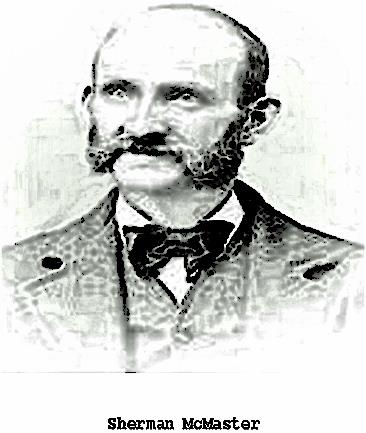
17B- Sherman McMaster Revisited
Some accounts have since indicated that Sherman McMaster was possibly working undercover for the Rangers to break up the outlaw Cowboys. By the time the clash between the Earps and the Cowboys came about, McMaster's allegiance was with the Earps.
He played an important role in the vendetta. Once a member of the Cowboys, an outlaw gang, he later changed his views and sided with the Earps. He had, by all accounts, previously met and become friends with Wyatt Earp and Doc Holliday in Dodge City, Kansas. He assisted Wyatt Earp in taking his revenge on the outlaw gang for the death of Wyatt's brother, Morgan Earp, and the shooting of his other brother Virgil Earp, all following the gunfight at the O.K. Corral. Among the other participants in the Vendetta were Wyatt and his younger brother Warren Earp, Doc Holliday, "Turkey Creek" Jack Johnson, and Texas Jack Vermillion.
In a letter written to his father, Will McLaury wrote that McMaster had been killed by the Cowboys. Wyatt Earp claimed in the Flood manuscript that McMaster had been killed in 1898 in the Philippines 1194
O.K. Corral
while serving as a soldier in the Spanish–American War. However, official records do not list him as a soldier. A probate record filed by his siblings in 1906 listed his death in Colorado in 1892.
1195
O.K. Corral
18- Subsequent Tombstone
Tombstone – the TV Show
1196
O.K. Corral
“Tombstone Territory” – the TV show
Starring: Pat Conway
1197
O.K. Corral
Also starring: Richard Eastham and Gilman Rankin
Narrated by: Richard Eastham
Theme music composer: William M. Backer
Opening theme song: "Whistle Me Up a Memory" performed by Jimmy Blaine
1198
Number of seasons: 3
Number of episodes: 91
Production:
Executive producer: Frederick W. Ziv
Producers: Frank Pittman and Andy White
Cinematography: Monroe P. Askins
Editors: W. Duncan Mansfield and Joseph Silver
Running time per episode: 30 minutes
Production company: Ziv Television Programs
Distributor: MGM Television
Sony Pictures Television
Original release: October 16, 1957 – July 8, 1960
“Tombstone Territory” was an American Western series starring Pat Conway and Richard Eastham. The series' first two seasons aired on ABC from 1957 to 1959. The first season was sponsored by Bristol-1199
Myers and the second season by Lipton and Philip Morris. The third and final season aired in syndication from 1959 until 1960. The program was produced by Ziv Television.
This program took place in the boom town of Tombstone, Arizona Territory, one of the Old West's most notorious towns and the site of the shootout known as the gunfight at the O.K. Corral. Located south of Tucson, Tombstone was then known by the sobriquet "the town too tough to die." The program's theme song, "Whistle Me Up a Memory,"
was written by William M. Backer and performed by Jimmy Blaine.
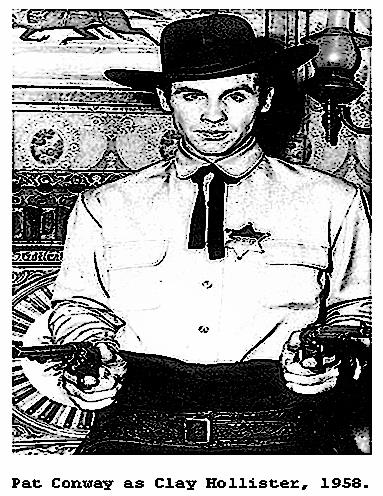
The series did not consistently deal with real characters in the history of Tombstone in the 1880s, such as Wyatt Earp, Doc Holliday, or the Clanton gang, with the exception of Curly Bill Brocius who appeared in the first season. It was about fictional characters in the American Southwest. The first episode opens, according to the narrator, on August 4th, 1881. Conway played Sheriff Clay Hollister. Eastham, the only other actor besides Conway to appear in all the episodes, played Harris Claibourne, editor of “The Tombstone Epitaph,” an actual newspaper that still exists in limited form. Eastham, originally a singer 1200
in opera and on Broadway, who also narrated the series in a deep baritone voice, describing each episode as an actual report from the newspaper's archives.
The Ziv TV series aired on Wednesdays on ABC in the 1957-1958
season opposite Robert Young's sitcom “Father Knows Best,” then broadcast on NBC. It was returned to the ABC schedule for 12 new episodes on March 13th, 1959, followed by summer rebroadcasts. It replaced the first season of Charles Bronson's “Man with a Camera” on Friday evenings at the 9:00 PM Eastern time slot, preceding the popular detective series “77 Sunset Strip.” After the network run,
“Tombstone Territory” was placed in syndication and ran mostly outside prime time in selected markets until it ceased production.
Conway and Eastham appeared in all 91 episodes.
Gerald Mohr played Doc Holliday in the first season “Tombstone Territory” episode titled "Doc Holliday in Durango," initially broadcast in 1958. The previous year, Mohr had portrayed Holliday in an episode of “Maverick” titled "The Quick and the Dead" starring James Garner 1201
and Marie Windsor. Mohr's version of Holliday was identical in both series.
The ending credits indicate, "This series is produced with the full cooperation of Clayton A. Smith, Editor of “The Tombstone Epitaph”
and D'Estell Iszard, Historian."
Cast:
Pat Conway as Sheriff Clay Hollister – Conway was born on January 9th, 1931, in Los Angeles, California. Patrick (Pat) Douglas Conway was the son of Hollywood "royalty;" film actor/director/producer Hugh ("Jack") Ryan Conway and his second wife, Virginia C. Bushman Conway, daughter of famous silent screen star Francis X. Bushman.
Pat was a real cowboy, growing up on his father's 125 acre Pacific Palisades ranch where he learned to ride and rope before he was 10, helping with his father's cattle herd. After graduating from Menlo Junior College at San Francisco, he studied acting at the Pasadena Playhouse, then traveled to London to study Shakespearean theater for six months at the famous Old Vic. He served a hitch in the US
Marine Corps before returning to Hollywood and a contract with MGM.
1202
Pat played a number of roles in several movies and television shows in the early 1950s. Then at the age of 26, the handsome 6'3", blue eyed, dark haired, 175 pound actor landed the role for which he is best known, that of Sheriff Clay Hollister, the young, tough but fair sheriff of Tombstone in pre-statehood Arizona in the weekly TV series
"Tombstone Territory." He was originally cast to play the deputy in the series but was promoted to the starring role when the director saw his potential. They had to reshoot the first episode as a result. The series ran from October 16th, 1957, through July 1960; and Conway starred in all 91 episodes. Published interviews from the era describe the young actor as "nice," "shy," and "serious" about his acting. His hobbies included reading, cooking, music, sailing and skin diving. He admitted to being a solitary individual, ostensibly obsequiously deferring to those who find fault with that. When "Tombstone Territory" ended, he was busy making guest appearances in many of the western series then populating the airwaves, including "Gunsmoke," "Rawhide," and
"Bonanza." He also appeared in two movies; "Geronimo" in 1962 and
"Brighty of the Grand Canyon" in 1967. His final appearances were in 1975 in "The Streets of San Francisco" and the television movie "The 1203
Abduction of Saint Anne." He died on April 24th, 1981, in Santa Barbara County, California, at the age of 50.
Richard Eastham as Harris Clayton Claibourne and editor of “The Tombstone Epitaph” – was another in the long line of 1950s and 1960s character actors whose face was oh so familiar but not the name.
Richard Eastham was originally headed for a musical career.
He was born Dickinson Swift Eastham in Opelousas, Louisiana, on June 22nd, 1916. A student at Washington University, he was gifted with a fine sturdy baritone and performed with the St. Louis Grand Opera in the days before World War II. After finishing his wartime four year army service, Eastham moved to New York and studied at the American Theatre Wing.
Richard's musical peak came after understudying singer Ezio Pinza as plantation owner "Emile DeBecque" in "South Pacific," sharing the stage in the role with the likes of Mary Martin and later Janet Blair while using the name Dickenson Eastham. He also co-starred in an Ethel Merman production of "Call Me Madam" in the early 1950s and made his minor non-singing film bow with Merman in the Fox film 1204
musical “There's No Business Like Show Business” (1954). His TV
debut came with a musical appearance on “The Ed Sullivan Show”
(1948) in 1949.
A strong, masculine presence with slick blond hair and prominent cheekbones, he changed his stage name to "Richard Eastham" and switched gears to film and TV acting in the late 1950s, shifting quite easily from playing men of integrity to outright heavies in crime stories and westerns. Although he was an erratic presence in films, he made solid appearances in “Man on Fire” (1957), Disney's “Toby Tyler or Ten Weeks with a Circus” (1960), “That Darn Cat!” (1965), “Not with My Wife, You Don't!” (1966), “Murderers' Row” (1966), “Tom Sawyer”
(1973), and “McQ” (1974), among others.
TV would be a different story altogether. A frequent guest on “Perry Mason” (1957) as both prosecutor and suspect, he appeared with great regularity on such series as “Bat Masterson” (1958), “Ripcord” (1961),
“Bonanza” (1959), “The F.B.I.” (1965), “Kojak” (1973), “Barnaby Jones”
(1973), and “The Waltons” (1972). As a regular, he introduced and narrated the western series “Tombstone Territory” (1957); played Red 1205
Wilson in the daytime soap “Bright Promise” (1969); appeared as General Phil Blankenship on “Wonder Woman” (1975) starring Lynda Carter; and joined the “Falcon Crest” (1981) cast in his last recurring TV role as Dr. Howell.
He settled in Los Angeles and was married to his wife, Betty Jean, for 60 years until her death in 2002. He suffered from Alzheimer's disease in his final years and died from complications at age 89 on July 10th, 2005.
Gilman Rankin starred as Deputy Charlie Riggs in eight episodes of
“Tombstone Territory,” only appearing in the first season. Spanning from April 17th, 1911 – October 31st, 1993 Rankin was a film and television actor. He was most known for playing Deputy Charlie Riggs in the first season of the American western television series
“Tombstone Territory,” and for playing Woodsy Niles in the 1969 film
“Midnight Cowboy.”
Rankin was born in Boston, Massachusetts. He began his career in 1949, first appearing in the film “Bride of Vengeance,” where he played 1206
the uncredited role of a scout. He continued his career mainly appearing in film and television programs.
Later in his career, Rankin appeared in television programs including
“Gunsmoke,” “The Adventures of Kit Carson,” “Cheyenne,” “Two Faces West,” “Tales of Wells Fargo,” “Riverboat,” “State Trooper,” “The Life and Legend of Wyatt Earp,” “My Three Sons,” “Perry Mason,” and
“Shotgun Slade.” He also appeared in films such as the aforementioned “Midnight Cowboy,” “Fort Algiers,” “Roar of the Crowd,” “The Greatest Show on Earth,” “Ghost Town,” and “Black Patch.” Rankin's last credit was in the film “Assault on Precinct 13.”
Rankin died in October 1993 in Orange County, California, at the age of 82.
Recurring:
Robert Foulk appeared as Curly Bill Brocius. He was a character actor widely seen in film and television during the 1950s and '60s. Born in Philadelphia, Pennsylvania on May 5th, 1908, to railroad agent Miller Foulk and his wife, the former Alice Casselberry, Robert Foulk attended the University of Pennsylvania as an architecture student.
1207
While in school, he became interested in theatre and by the age of 23
had made his Broadway debut as Jake Canon in "As Husbands Go." He reprised the role two years later, and supplemented his acting work by helping cast road companies of Broadway hits and by working with the press agents of various shows. He became friendly with legendary Broadway director-producer-actor George Abbott while playing Watson Brown in "John Brown," a Broadway flop about the abolitionist leader, played by Abbott. Foulk began a long period of employment under Abbott in a string of Broadway hits; "Boy Meets Girl," "Brother Rat,"
and "Room Service," in which Foulk understudied Eddie Albert. An encounter with Bette Davis led to Foulk's hiring by Warner Brothers, not as an actor, but as a dialog director. He moved to Hollywood in 1939 and worked in that capacity on a number of films including “The Sea Hawk” (1940) and “The Maltese Falcon” (1941). In 1942, he enlisted in the US Army Air Forces and was assigned to make training films with the First Motion Picture Unit in Culver City, California.
Discharged in 1946, he worked for Cecil B. DeMille as dialog director on “Unconquered” (1947) and then made his non-military film debut in
“Road House” (1948). He quickly became a familiar face in movies, 1208
playing police officers, Western sheriffs, thugs, and many other types, often of a none too bright intelligence. He had recurring roles on numerous TV series including “Lassie” (1954), “Bonanza” (1959), “The Rifleman” (1958), “Father Knows Best” (1954), and as Curly Bill Brocius on “Tombstone Territory” (1957). Foulk continued his avocation of architecture, designing houses, including one for playwright Sam Spewack. He worked in local theatre in and around Los Angeles, though he never returned to Broadway. He was married briefly in 1933 to actress Alice Frost. He married actress Barbara Slater in 1947. They had one daughter, June Landis Foulk, born July 20th, 1948. Robert Foulk died February 25th, 1989.
Quentin Sondergaard was cast as Deputy Sheriff Quint in 11 episodes of the two later seasons. Lasting from January 11th, 1925 – February 15th, 1984, he was a film and television actor. He was best known for his work in “Tombstone Territory.”
Sondergaard began his career in 1951, first appearing in the film
“Badman's Gold,” where he played Rambo. Later in his career, Sondergaard guest starred in television programs including 1209
“Gunsmoke,” “Zane Grey Theatre,” “Wagon Train,” “Death Valley Days,” “The Life and Legend of Wyatt Earp,” “Bat Masterson,” “The Wild Wild West,” and “Bonanza.” He also appeared and co-starred in films, such as, “The Miracle,” “This Property Is Condemned,” “Five Guns to Tombstone,” and “Gunfight in Abilene.” Sondergaard retired in 1982, last appearing in the film “The Ghost Dance,” where he played the campus guard.
Sondergaard died in February 1984 in Riverside County, California, at the age of 59.
Dennis Moore appeared as "Deputy" in five segments. A dark haired, durably handsome and dependable cowboy actor equipped with a strong stance and taciturn seriousness both on and off camera, Dennis Moore was cast as both hero and villain in his three decade long career. A player in well over 200 "B" level oaters and serials during the 1930s, 1940s and 1950s, Moore never reached the rugged heights of top flight stardom but did manage to find steady employment until only a few years before his death at age 56.
1210
Moore was born Dennis Price Meadows on January 26th, 1908, in Fort Worth, TX, the son of Texas born Dennis Wesley Meadows and Tennessee born Bessie Bebe Price Meadows. His initial interest in show business may have been sparked while employed as an usher at a movie theater. He eventually learned the tools of the trade performing on the dramatic stage in Texas and in stock companies in the early 1930s. His film career began in 1932 with uncredited appearances for a time in a variety of cliffhangers and westerns as various henchmen and cowhands, and he even worked as a stuntman on occasion. Billed first as Denny Meadows, he changed his stage name to the more catchy, marquee friendly Dennis Moore by 1936, and legally changed his last name to Moore in the early 1950s. An avid flyer who was once a transport pilot and flight instructor, a few of his roles reflected this passion. He played a pilot in the “Tailspin Tommy”
(1934) serial and, while signed at Warner Brothers for a time, played Humphrey Bogart's flight engineer in “China Clipper” (1936).
By the 1940s he was freelancing at various minor studios and was occasionally given the action lead, such as in “Fangs of the Wild”
(1939). He also appeared opposite stalwart cowboys Gene Autry, 1211
Buster Crabbe and Buck Jones, among others, and was seen in both the "Three Mesquiteers" and "Rough Riders" series.
Moore hit his peak in films during WW II when many of the big stars had enlisted or been drafted into the military. Serious injuries incurred in a plane crash rendered him ineligible for military service. During this productive period he co-starred with Ray Corrigan and Max Terhune in the "Range Buster" series at Monogram Pictures and then co-starred with Tex Ritter and Jimmy Wakely in some of their popular western entries. He also was front and center in the “Raiders of Ghost City”
(1944) and “The Purple Monster Strikes” (1945) serials, among others.
In mid-career, Moore turned from granite jawed heroes to black hatted bad guys and henchmen in many "Poverty Row" westerns, yet still snagged a couple of leads and co-leads in serials every now and then, including “Perils of the Wilderness” (1956) and “Blazing the Overland Trail” (1956). He also was seen quite frequently on TV western series;
“Tombstone Territory” (1957), “Sky King” (1951), “The Adventures of Rin Tin Tin” (1954), and “Bat Masterson” (1958)) in standard guest spots. One of his last was a recurring part in Disney's “The New 1212
Adventures of Spin and Marty” (1957) on the "Mickey Mouse Club"
series. He pretty much hung up his gun belt shortly thereafter.
A highly private man who was considered a loner by nature, little is known about his private life. He was married more than once, perhaps up to four times according to surviving relatives. His final marriage, in 1947 to Marilyn Mason, produced one daughter, Linda, and lasted until his death. He subsequently moved to Big Bear Lake, CA, where he operated a gift shop for the last few years of his life. He died on March 1st, 1964, at age 56 of rheumatic heart disease combined with circulatory problems.
Robert J. Wilke, John Doucette, and Warren Oates all appeared three times, as Burt Foster, Apache Chief Geronimo, and Bob Pickett, respectively, as well as occasional other roles.
Guest stars:
Fred Aldrich - December 23rd, 1904 – January 25th, 1979, was a character actor of both film and television. Born in New York, he would break into the film industry in 1939, appearing in two films that year in small roles, including the notable, “Confessions of a Nazi Spy,” which 1213
starred Edward G. Robinson and George Sanders. In the course of his thirty year career he would appear in over 170 films, in small and bit roles. With the advent of television, Aldrich would work in that medium as well, making his first small screen appearance on “I Love Lucy,” on which he would appear multiple times over the life of the series.
His television credits include appearances on such shows as “The Rifleman,” “Have Gun - Will Travel,” “Bat Masterson,” “The Untouchables,” “Gunsmoke,” “Rawhide,” “Tombstone Territory,” and
“Perry Mason.” Aldrich died on January 25th, 1979 in Los Angeles, California, at the age of 74.
Lee Allen – is known for “Funny Girl” (1968), “The Breakup Artist”
(2004) and “Preview Tonight” (1966), which is to say that he is not well known.
John Anderson - October 20th, 1922 – August 7th, 1992, was a character actor who performed in hundreds of stage, film, and television productions during a career that spanned over four decades.
1214
Anderson was born and raised in Clayton, Illinois. He served in the United States Coast Guard during World War II. Anderson held a master's degree in drama from the University of Iowa.
Anderson started out on Broadway, and later worked primarily in film and television. Standing 6 feet 2 inches tall, he bore a strong resemblance to US President Abraham Lincoln, whom he portrayed three times. He appeared in Alfred Hitchcock's “Psycho” (1960) as
"California Charlie," the used car salesman who helps Marion Crane; A/K/A Janet Leigh. On television, he appeared in such series as “The Rockford Files,” “Dick Powell's Zane Grey Theatre,” “Gunsmoke,”
“Tombstone Territory,” “The Rifleman,” “Laramie,” “Have Gun – Will Travel.” “The Alfred Hitchcock Hour,” “The Virginian,” “The Life and Legend of Wyatt Earp,” “The Californians,” “Johnny Ringo,” “Bonanza,”
“Little House on the Prairie,” “Trackdown,” “The Big Valley,” “Tales of Wells Fargo,” “Emergency!,” “The Incredible Hulk,” “MacGyver,” and
“Voyage to the Bottom of the Sea.”
On June 8th, 1946, Anderson married Patricia A. Cason in the rectory of St. Boniface Catholic Church. They moved to Iowa City, Iowa, where 1215
Anderson studied in the liberal arts college at the University of Iowa and earned his master's degree in drama. Anderson was married to Patricia Ann Cason until her death on February 18th, 1989. Three years later, Anderson suffered a fatal heart attack at his home in Sherman Oaks, California, at the age of 69.
Rayford Barnes - October 23rd, 1920 – November 11th, 2000, was a film and TV character actor from Whitesboro, Texas. Barnes was born in Dallas, Texas, and attended the University of Texas. He acted in plays at the university and at little theaters in Dallas and San Antonio.
After he moved to Oakland, California, he performed at the Pasadena Community Playhouse.
In 1950, Barnes gained membership in Actors Equity and began to act on stage in Repertory Theater productions, including “Three's a Family” and “Hasty Heart.” He also worked off stage there, creating staging and scenes for two other plays.
Barnes appeared in films, mainly westerns, such as “Hondo,” “The Burning Hills,” “Fort Massacre,” “The Wild Bunch,” “The Hunting Party,” and “Cahill U.S. Marshal.”
1216
Barnes also appeared on dozens of TV series most notably “The Life and Legend of Wyatt Earp” in which he portrayed Ike Clanton. Other series he appeared in include “Father Knows Best,” “Bat Masterson,”
“Highway Patrol,” “Racket Squad,” “The Untouchables,” “Cheyenne,”
“Tombstone Territory,” “Maverick,” “Have Gun - Will Travel,” “The Twilight Zone,” “The Big Valley,” “Daniel Boone,” “The High Chaparral,” “Bonanza,” “Gunsmoke,” “Rawhide,” “Wonder Woman,”
“Little House on the Prairie,” “Fantasy Island,” “The Dukes of Hazzard,”
and “Walker, Texas Ranger.” His final role was on the NBC medical drama “ER” in 1996.
James Best - appeared twice on NBC's western television series,
“Frontier.” He was born Jules Guy July 26th, 1926 in Powderly, Kentucky. He died April 6th, 2015, at the age of 88.
Between 1950 and 2015 he worked in film, television, as a voice actor, artist, acting coach, college professor, singer, songwriter, and guitarist. He is best known for his starring role as bumbling Sheriff Rosco P. Coltrane in the CBS television series “The Dukes of Hazzard.”
1217
Peter Breck – born Joseph Peter Breck, March 13th, 1929 – February 6th, 2012, was a character actor. The rugged, dark haired Breck played the gambler and gunfighter Doc Holliday on the ABC/Warner Bros. Television series “Maverick” as well as Victoria Barkley's (Barbara Stanwyck) hot tempered middle son Nick in the 1960s ABC/Four Star Western, “The Big Valley”. Breck also had the starring role in an earlier NBC/Four Star Western television series entitled
“Black Saddle.”
He was born in Rochester, New York and grew up living with his grandparents in Haverhill, Massachusetts, because they felt they could provide a more stable home environment than his father, who often traveled as a jazz musician. He attended the University of Houston, where he studied English and drama.
After post-World War II United States Navy service in the 1940s on the aircraft carrier USS Franklin D. Roosevelt, Breck played professional basketball for the Rochester Royals during the 1948–49 season. He then worked as a ranch hand while studying drama at the University of 1218
Houston, and went on to make his on screen debut in a 1958 film that was eventually released under the title “The Beatniks.”
As well as performing in live theatre, Breck had several guest starring roles on a number of popular series, such as “Tombstone Territory,”
“Wagon Train,” “Have Gun – Will Travel,” and “Gunsmoke.”
When Robert Mitchum saw Breck in George Bernard Shaw's play “The Man of Destiny” in Washington, D.C., he offered Breck a role as a rival driver in “Thunder Road” (1958). Mitchum helped Breck to relocate to Los Angeles, California. As Breck then did not have his own car, Mitchum lent him his Jaguar.
From 1965 to 1969, Breck starred on “The Big Valley” as Nick Barkley, foreman of the Barkley ranch and son to Barbara Stanwyck's character, Victoria Barkley. The second of four children, Nick was hotheaded, short tempered, and very fast with a gun. Always spoiling for a fight and frequently wearing leather gloves, Breck's character took the slightest offense to the Barkley name personally and quickly made his displeasure known, as often with his fists as with his vociferous shouts. Having been a Barbara Stanwyck admirer since the 1219
1940s, when he was a teenager, Breck developed an on and off screen chemistry with her, practicing longer lines and even being a ranch foreman on the set. After the series was canceled, he stayed close to her until her death.
In the mid-1980s, Breck moved to Vancouver, British Columbia, Canada, with his wife Diane and their son, Christopher. Breck married dancer Diane Bourne in 1960. They had a son, Christopher, who died of leukemia at age 30.
In June 2010 Breck's wife Diane announced on his website that the actor had been suffering from dementia and could no longer sign autographs for fans, although she said that he still read and enjoyed their letters. Despite this diagnosis, she said he was still physically healthy and did not require medication.
Thereafter, Diane Breck reported that her husband was hospitalized on January 10th, 2012. On February 6th, 2012, Peter Breck died from his illness at the age of 82 in Vancouver, British Columbia.
Diane Brewster - March 11th, 1931 – November 12th, 1991, was a television actress most noted for playing three distinctively different 1220
roles in television series of the 1950s and 1960s; confidence trickster Samantha Crawford in the Western “Maverick,” pretty young second grade teacher Miss Canfield in “Leave It to Beaver,” and doomed wife Helen Kimble in “The Fugitive.” Brewster was a direct descendant of William Brewster, a Pilgrim and Governor of the Plymouth Colony.
Brewster's father was Phillip Sloan Brewster, a trial lawyer in Missouri, her mother was Geraldine (née Craddock); older brother, Paul. She was born in Kansas City, Missouri and went to Shawnee Mission High School.
Brewster moved to Los Angeles from the Kansas City area around 1955. Her first job in entertainment was as MC for a teenage radio program. Work in commercials, fashion commentary, and even weather programs soon followed. In 1956, Brewster was the announcer on “The Ina Ray Hutton Show,” a variety program on NBC
television.
On “Maverick,” Brewster's character is a gorgeous gambling con artist who often affects a southern accent to convince marks of her 1221
reliability, but is ultimately likable. Brewster first played the character in a 1956 episode of “Cheyenne.”
In 1957, she co-starred with George Montgomery in the Western film
“Black Patch,” playing his former and future love interest. On January 31st, 1959, Brewster played Lisa Caldwell in the episode "Runaway Train" of NBC's “Cimarron City” Western television series starring George Montgomery. That same year, Brewster appeared in “The Young Philadelphians” playing the mother of Paul Newman's character. Newman was six years her senior.
She made almost 50 appearances in various other television and film roles, including episodes of “Crusader” starring Brian Keith, “Wanted: Dead or Alive” with Steve McQueen, “Tombstone Territory,” “Tales of Wells Fargo” with Dale Robertson, and “Harbor Command” with Wendell Corey.
She appeared in two episodes of “Death Valley Days,” a 1966 episode of “Family Affair,” and an installment of “Ironside” (1968) before retiring.
1222
In California, Brewster married Jabe Z. Walker, an oral surgeon from Allegheny County, Pennsylvania. They had a son, Dean C. Walker, and a daughter, Lynn D. Walker. Both children were born in Los Angeles.
Jabe Walker died in February 2013. Brewster died from heart failure in 1991, aged 60.
Harry Carey Jr. - After leaving the Navy, Carey attempted a singing career to avoid acting but was unsuccessful. He began acting in the John Ford Stock Company with his father. Carey collaborated frequently with director John Ford, who was a close friend. He appeared in such notable Ford films as “Three Godfathers” (1948),
“She Wore a Yellow Ribbon” (1949), “The Searchers” (1956), and
“Cheyenne Autumn” (1964). Both of his parents had appearances in Ford's films as well. He can be seen in a very early episode of “The Lone Ranger.” He became a respected character actor like his father.
Carey appeared in many Westerns. He made four films with director Howard Hawks. The first was “Red River,” which featured both Carey and his father in separate scenes, followed by “Monkey Business,”
“Gentlemen Prefer Blondes,” and “Rio Bravo.”
1223
Carey also collaborated with John Wayne with whom he made nine films. He got to work with Wayne first in “Red River” and last in “Cahill U.S. Marshal.” He also starred in nine films alongside Ben Johnson including “Rio Grande” and “Cherry 2000.” Between 1955 and 1957, Carey appeared as ranch counselor Bill Burnett in the serial “Spin and Marty,” seen on Walt Disney's “Mickey Mouse Club.” In the 1960s, Carey appeared on many western TV series such as “Have Gun - Will Travel,” “Tombstone Territory,” and “The Legend of Jesse James.”
On April 29, 1962, Carey was cast as Mitch Evers in the episode "Cort"
of the ABC-WB Western series, “Lawman,” with John Russell and Peter Brown. In the story line, Cort Evers, who is much younger than he appears, seeks revenge against his brother Mitch, whom he mistakenly blames for betraying six Union Army prisoners from their hometown during the American Civil War. Mitch is compelled to confront Cort in a shootout during which he explains that it had been Cort himself, under the influence of a fever, who betrayed the prisoners. Cort fainted to the ground as he remembered the startling truth of his brother's words.
1224
John Carradine – While he had many movies to his credit, some examples of television series on which he appeared include “My Friend Flicka,” “Johnny Ringo” as the Rain Man, “Place the Face,” NBC's
“Cimarron City’ as the foreboding Jared Tucker in the episode "Child of Fear" and on William Bendix's “Overland Trail” in the 1960 episode
"The Reckoning," on “Harrigan and Son” starring Pat O'Brien in the episode "A Matter of Dignity," “Maverick” in "Red Dog" starring Roger Moore and Lee Van Cleef, “Sugarfoot,” “The Rebel,” and “The Legend of Jesse James,” on the syndicated adventure series “Rescue 8” with actor Jim Davis and in two episodes of the western TV series
“Bonanza,” "Springtime" and "Dead Wrong." John Carradine also appeared in 1959 as the mind reader in “The Rifleman” episode of the same name.
Anthony Caruso - April 7th, 1916 – April 4th, 2003, was a character actor in more than one hundred American films, usually playing villains and gangsters, including the first season of Walt Disney's “Zorro” as Captain Juan Ortega. Caruso was born in Frankfort, Indiana. While acting at the Pasadena Playhouse, he met Alan Ladd, beginning a friendship that continued as they made 11 films together.
1225
Caruso played Ash, on an early episode of CBS's “Gunsmoke,” and again in 1960 as Gurney, a cowboy. He also played Lone Wolf in a 1961
episode entitled “Indian Ford.”
Among Caruso's Western credits was 1954's “Cattle Queen of Montana” starring Barbara Stanwyck and Ronald Reagan. In 1957, he appeared in “Have Gun – Will Travel,” “Buckskin,” “Wanted: Dead or Alive,” and “Tombstone Territory.”
Lon Chaney Jr. - Selected television appearances follow. “Hawkeye and the Last of the Mohicans” (1957). Chaney was a regular on this television series, portraying the role of Chingachcook; “Along the Mohawk Trail” (1957); “The Redmen and the Renegades” (1957); “The Pathfinder and the Mohican” (1957); “Tombstone Territory” as Marshal Daggett in "The Black Marshal from Deadwood" (1958); “Rawhide” as Jesse Childress in "Incident on the Edge of Madness" (1959) and as Rock in "Incident at Spider Rock" (1963); “Border Patrol” as a racketeer in "The Homecoming" (1959); “Wanted: Dead or Alive” as Sheriff Lon Paulson in "The Empty Cell" (1959); “The Rough Riders” as Ben "Pa" Hawkins in "An Eye for an Eye" (1959); “Have Gun – Will 1226
Travel,” two episodes, 1959 and 1963; “Johnny Ringo” as Ben Rafferty in "The Raffertys" (1960); “Wagon Train,” two episodes (1960–1961);
“Bat Masterson” as Rance Fletcher in "Bat Trap" (1961); “The Deputy”
as Tom Arnold in "Brother in Arms" (1961); “Klondike” as Macfin in
"The Hostages" (1961); “Stagecoach West” as Ben Wait in "Not in Our Stars" (1961); “Lawman” as Jess Bridges in "The Tarnished Badge"
(1962); and “The Rifleman” as Charlie Gordo in "Gunfire" (1962).
James Coburn - Coburn was a capable, rough-hewn leading man, whose toothy grin and lanky physique made him a perfect tough guy in numerous leading and supporting roles in Westerns and action films, such as “The Magnificent Seven,” “Hell Is for Heroes,” “The Great Escape,” “Charade,” “Our Man Flint,” “In Like Flint,” “The President's Analyst,” “Hard Times,” “Duck, You Sucker,” “Pat Garrett and Billy the Kid,” and “Cross of Iron.” In addition he did a fair amount of TV, the Westerns being; “Wagon Train,” “The Restless Gun,” “The Rifleman,”
“Tales of Wells Fargo,” “Black Saddle,” “The Rough Riders,” “Johnny Ringo,” “Tombstone Territory,” “The Life and Legend of Wyatt Earp,”
“Dead or Alive,” “Bat Masterson,” “Have Gun – Will Travel,” “Wanted: Dead or Alive,” “Dick Powell's Zane Grey Theatre,” “Laramie,”
1227
“Bonanza,” “The Texan,” “Sugarfoot,” “The Deputy,” “Death Valley Days,” “Lawman,” “Klondike,” “Cheyenne,” “The Tall Man,”
“Stagecoach West,” “Rawhide,” “Draw!” “The Wildest West Show of the Stars,” and “The Cherokee Kid.”
Fred Coby – Frederick G. Beckner Jr., March 1st, 1916 – September 27th, 1970, was a character actor born in California. He was best known for playing Pony Deal in the American western television series
“The Life and Legend of Wyatt Earp,” which starred Hugh O'Brian.
Russ Conway - April 25th, 1913 – January 12th, 2009, was a Canadian-American actor and he is best known for playing Fenton Hardy, the father of The Hardy Boys in the 1956 “The Mickey Mouse Club” serial.
Elisha Cook Jr. - was an American character actor famed for his work in films noir. Cook appeared in a total of 21 films noir, more than any other actor or actress. He played cheerful, brainy collegiates until he was cast against type as the bug eyed baby faced psychopathic killer Wilmer in the 1941 version of “The Maltese Falcon.” He went on to play deceptively mild mannered villains. Cook's acting career spanned more than 60 years, with roles in productions including “The Big 1228
Sleep,” “Shane,” “The Killing,” “House on Haunted Hill,” and
“Rosemary's Baby.” He appeared in a few TV westerns, “Gunsmoke,”
an apparent favorite.
Don Devlin – was born February 26th, 1930, in the Bronx, N.Y. He was a graduate of De Witt Clinton High School, Bedford Park, Bronx, N.Y. He served in United States Army service 1947-1948. He was a member of Greenwich Village Dramatic Workshop, 1950; an actor including TV
Westerns from 1955 to 1960; and was a writer-producer 1960 to 1990.
Don died of lung cancer at age 70, December 11, 2000.
Angie Dickinson - In August, 1953 she was one of five winners in a beauty contest sponsored by NBC and appeared in several TV variety shows. She got her first bit part in a Warner Brothers movie in 1954
and gained television fame in the TV series “The Millionaire” (1955) and got her first good film role opposite John Wayne and Dean Martin in “Rio Bravo” (1959). Her success then climbed until she became one of the nation's top television and movie stars. She appeared in many TV westerns and is perhaps best known for her 1974-1978 lead role of Sgt. Suzanne “Pepper” Anderson in “Police Woman.”
1229
John Doucette - Stocky, balding American character actor with a rich, deep voice, equally adept at Western bad guys and Shakespeare. He began his career in films in minor roles, primarily as gangland henchmen, and progressed to become widely familiar as a figure in a variety of dramas and occasional comedies. Although a stalwart and reliable supporting player, he was not of a type to essay leading roles in films, but remained a well-respected actor whose face, if not name, is familiar to a generation of film and television viewers.
Andrew Duggan - Born in Franklin, Indiana on December 28th, 1923, he was raised in Texas and went to college at Indiana University. There, on a speech and drama scholarship, he began to act and perform.
However this was interrupted by being called into the service. In World War II where he saw action overseas, he was befriended by actor Melvyn Douglas, who led his division. With such encouragement, as well as meeting and becoming familiar with some Broadway folks, Duggan went into acting. From 1953 onward, he was a fixture in both movies and television.
1230
Most notably, he played General Ed Britt on “12 O'Clock High” (1964), he was Cal Calhoun in “Bourbon Street Beat” (1959) and his most famous role as Murdoch Lancer in “Lancer” (1968) and the original John Walton opposite Patricia Neal in “The Homecoming: A Christmas Story” (1971). He was Howitzer Al Houlihan, the father of Hotlips Houlihan (Loretta Swit) in “M*A*S*H” (1972). In 1954, he wed Broadway actress Elizabeth "Betty" Logue. After their deaths, they were cremated and their ashes scattered at Lake Arrowhead, California.
Jack Elam - Colorful American character actor equally adept at vicious killers or grizzled sidekicks. Despite being White, as a child he worked in the cotton fields. He attended Santa Monica Junior College in California and subsequently became an accountant and, at one time, manager of the Bel Air Hotel. Elam got his first movie job by trading his accounting services for a role. In short time he became one of the most memorable supporting players in Hollywood, thanks not only to his near demented screen persona but also to an out of kilter left eye, sightless from a childhood fight. He appeared with great aplomb in 1231
Westerns and gangster films alike, and in later years played to wonderful effect in comedic roles.
Bill Erwin – December 2nd 1914 – December 29th, 2010; age 96, was the bit actor who hung on long enough to get some degree of short lived fame by portraying Doctor Dalen Quaice in the “Star Trek: The Next Generation” fourth season episode "Remember Me." Sorry Bill, we hardly do. A veteran of film and television, Erwin appeared on numerous "theater programs" of the early 1950s, including “Science Fiction Theater” and “Zane Grey Theatre.”
Margaret Field – was born Margaret Morlan, and for three decades she was featured in films and television under the name Margaret Field and was the mother of two time Oscar winner actress Sally Field.
During World War II, she moved to Pasadena, California, was discovered by a talent scout, took a screen test and was signed to a contract by Paramount Pictures. She soon started appearing in such films as “The Big Clock” (1948), “Samson and Delilah” (1949), the cult classic “The Man from Planet X” (1951), “So This Is Love” (1953),
“Inside Detroit” (1956) and many others. For television, she racked up 1232
more than 70 credits, appearing in shows including “The Lone Ranger,”
“Perry Mason,” “The Twilight Zone,” “Wagon Train,” “Tombstone Territory,” and “The Virginian,” before retiring from acting to focus on her family. She died of cancer at age 89, on her daughter Sally's 65th birthday.
Constance Ford - began her career in television in the 1950s, performing in live television dramas on “Studio One,” “Armstrong Circle Theatre,” “Goodyear Playhouse,” and other acclaimed series, and playing recurring characters in four afternoon serials; Rose Peabody in “Search for Tomorrow,” Lynn Sherwood in “Woman with a Past,” Eve Morris" in “The Edge of Night,” and Ada Davis Downs Hobson in “Another World.” Ford's assertive style made her a favorite of TV casting directors, and she was often featured in episodes of
“Ponds Theater,” “Bat Masterson,” “Rawhide,” “Gunsmoke,” and
“Tombstone Territory.”
Bruce Gordon - was born on February 1st, 1916 in Fitchburg, Massachusetts. He was an actor, known for “Piranha” (1978), “Tower of London” (1962), and “The Buccaneer” (1958). He was married to 1233
Mary Jane Farrar Falvey and Marla Gordon. He died on January 20th, 2011 in Santa Fe, New Mexico.
Leo Gordon – was a big, burly character actor, one of the toughest of screen heavies. New York born Leo Gordon's combination of a powerful physique, deep, menacing voice and icy, withering glare was guaranteed to strike fear into the heart of even the bravest screen hero. Director Don Siegel, who used Gordon in his prison film “Riot in Cell Block 11” (1954), once said that; "Leo Gordon was the scariest man I have ever met," this coming from a man who had directed John Wayne, Clint Eastwood and Bette Midler. Siegel wasn't talking about just Gordon's screen presence. As a "heavy," Gordon was the real deal.
Dabbs Greer - Dabbs Greer was a very familiar face in films and especially on TV. He was a sort of "everyman" in his roles and played merchants, preachers, businessmen, and other "pillars of the community" types as well as assorted villains. With his plain looking face, wavy hair and mellow, distinctive voice he was a solid supporting actor. He was born on April 2nd, 1917, in Fairview, 1234
Missouri, but reared in Anderson, Missouri. He was the only child of a pharmacist father and a speech therapist mother. His first acting experience was on stage in a children's theatre production when he was eight years old.
Virginia Gregg - Virginia Gregg was born on March 6th, 1916 in Harrisburg, Illinois, USA. She was an actress, known for “Operation Petticoat” (1959), “Two on a Guillotine” (1965) and “Police Story”
(1973). She was married to Jaime Del Valle. She died on September 15th, 1986 in Encino, Los Angeles, California.
Raymond Guth - was born on May 29th, 1924 in Oil City, Pennsylvania.
He was an actor, known for “Silver Streak” (1976), “Emperor of the North” (1973) and “The Incredible Petrified World” (1959). He was married to Martha and Nancy, reportedly not at the same time. He died on December 17th, 2021 in La Verne, California.
Herman Hack - was born on June 15th, 1899 in Panola, Illinois. He was an actor, known for “The Tia Juana Kid” (1935), “Outlaws of Stampede Pass” (1943) and “Arizona Trails” (1935). He was married to Signe 1235
Hack. He died on October 19th, 1967 in Hollywood, Los Angeles, California.
Ron Hagerthy - was born on March 9th, 1932 in Andover, South Dakota.
He is an actor, known for “The Horse Soldiers” (1959), “The Lineup”
(1954), and “Tombstone Territory” (1957).
In the 1960s and '70s, he lived on Chapala Drive in the Huntington Palisades section of Pacific Palisades.
Alan Hale Jr. - Hale appeared in more than 200 films and television roles starting in 1941. He appeared primarily in Westerns, portraying the Sundance Kid in “The Three Outlaws” (1956) opposite Neville Brand as Butch Cassidy, performing with Kirk Douglas in “The Big Trees” (1952), Audie Murphy in “Destry” (1954), Ray Milland in “A Man Alone” (1955), Robert Wagner in “The True Story of Jesse James”
(1957), and Hugh Marlowe in “The Long Rope” (1961).
Allison Hayes - Anyone who loves B-movies of the 1950s appreciates this lovely actress. She was born Mary Jane Hayes on March 6th, 1930
in Charleston, West Virginia. The raven haired beauty was the 1949
Washington, D.C. entry into the Miss America pageant. Shortly 1236
afterwards, Mary Jane adopted the familiar first name of Allison. She got her start on local Washington television before heading to Hollywood in the early 1950s. Allison began her career with Universal Pictures. The studio groomed her, but only on the path of B-movies. In her film debut, “Francis Joins the WACS” (1954), she was a supporting actress to the speaking mule, which had the title role. She played the devilishly alluring "Livia" in “The Undead” (1957).
Ron Hayes - was born on February 26th, 1929 in San Francisco, California. He was an actor, known for “Everglades!” (1961), “The Invaders” (1967), and “Dallas” (1978). He was married to Carol Capek, Caroline Muir, Betty Endicott and Joan Sturgess. He died on October 1st, 2004 in Malibu, California.
Myron Healey – was an actor and occasional screenwriter. One of the most frequently seen heavies in films and television programs of the 1950s, his name is nevertheless well known only to buffs. Occasionally he played minor leads and sympathetic characters, but his stern good looks and rich deep voice made him a memorable villain, particularly in Westerns.
1237
Thomas Browne Henry - If you've ever seen a war picture, sci-fi epic or western from the 1940s or 1950s, then you've seen Thomas Browne Henry, and more than once. Along with Morris Ankrum, Henry is probably the army officer most responsible for helping Earth drive off hordes of invading outer space monsters, aliens and other unwelcome intruders. His stocky build, sharply etched face, commanding voice and no-nonsense, get down to business style were just right for the scores of generals, colonels, bankers, political leaders and other authority figures he played over his long and prolific career. Born in California, he had a very successful career as a stage actor and director, and was closely associated with the renowned Pasadena Playhouse, before breaking into films in 1948 and played a succession of cops, sheriffs, district attorneys, professors and, of course, army officers over the next 20+ years. He finally retired in 1970 and went back to his first love, the theater, again back to the Pasadena Playhouse. He died in 1980. He was born November 7th, 1907 and died June 30th, 1980.
Ed Hinton - Character actor, Edgar Latimer Hinton, Jr. was one of three persons killed when a single engine amphibious plane hit a cliff and 1238
plunged into Toyon Bay, Santa Catalina Island. The plane took off from the bay, circled once, and hit a 40 foot cliff in front of the exclusive Toyon Bay Boat Club. Hinton was a guest at the club with his wife, Marilynn and their three children. He had been summoned abruptly to the mainland and was due in Utah the next day to begin a movie. The crash occurred in full view of Hinton's family who had come down to the boat club pier to wave goodbye. The aircraft, a Republic Seabee, had taken off about 4 PM from Orange County Airport. The pilot, Vince Pardue, had been trying to organize a charter air service from Orange County Airport to Santa Catalina Island. Toyon Bay Boat Club manager Bob Robb said that Pardue had contacted the club about the charter and when Hinton heard that Pardue was returning to the mainland he arranged for a ride. The single engine amphibian headed out to sea, then apparently returned at low altitude so that Hinton could wave to his wife and three children standing on the dock. The plane suddenly lost altitude, smashed into a cliff and fell to the rocky beach.
Bern Hoffman - was born on February 17th, 1913 in Baltimore, Maryland. He was an actor, known for “Li'l Abner” (1959), “Nocturne”
1239
(1946), and “Zorro” (1957). He was married to Diana Victory Kraft. He died on December 15th, 1979 in Sherman Oaks, California.
Rodolfo Hoyos Jr. - was born on March 14th, 1916 in Mexico City, Distrito Federal, Mexico. He was an actor, known for “The Little Savage” (1959), “Zorro” (1957) and “Villa!!” (1958). He died on April 15th, 1983 in Los Angeles.
Don Kennedy - was born on September 3rd, 1921 in Los Angeles, California. He was an actor, known for “You Are There” (1953), “The Stunt Man” (1980), and “Zane Grey Theatre” (1956). He died on April 3rd, 2013 in Del Mar, California.
Douglas Kennedy - A tall, powerfully built man, Douglas Kennedy entered films after graduating from Amherst. Making his debut in 1940, he appeared in many westerns and detective thrillers, often as a villain. World War II interrupted his career, and he spent the war years as a Signal Corps officer and an operative in the OSS and US Army Intelligence. After the war he returned to Hollywood, where he began playing supporting roles in larger films and an occasional lead in a lower budget film. He is most fondly remembered, though, by 1240
audiences of the 1950s for his western TV series “Steve Donovan, Western Marshal” (1955).
Brett King - was born on December 29th, 1920 in Ocean Beach, New York. He was an actor, known for “Battleground” (1949), “The Racket”
(1951), and “Yancy Derringer” (1958). He died on January 14th, 1999 in Palm Beach, Florida.
Wright King - Prolific supporting actor, arguably best known for his two guest appearances on Rod Serling 's “The Twilight Zone” (1959). In one of his later roles he played the chimpanzee veterinarian Dr. Galen in “Planet of the Apes” (1968) which was also co-scripted by Serling.
Wright King studied drama at the St. Louis School of Theater, graduating in 1941. During the Second World War he served for three years with the US Navy, stationed in the South Pacific. After being honorably discharged he continued his drama studies in New York at the Actors Studio and at the American Theatre Wing. He did not make his screen debut until 1949. A string of walk on parts was followed by a critically acclaimed supporting role in the original Broadway production of “A Streetcar Named Desire” (1947-49) as well as in the 1241
subsequent motion picture. King enjoyed a lengthy career, featuring in stage plays on both sides of the Atlantic and popping up in numerous television episodes, especially westerns. In one season of “Wanted: Dead or Alive” (1958) he played the sidekick of bounty hunter Josh Randall, played by Steve McQueen (1960).
A close friend of Eileen Heckart until her death in 2001, King left the acting profession in 1987. With his wife June, he retired to Portland, Oregon. More recently, he resided in Woodland Hills, California, where he died at the venerable age of 95 on November 25th, 2018. His son is actor Meegan King.
Ethan Laidlaw - Born in Butte Montana just before the turn of the century, Ethan Laidlaw worked as a steam fitter, bus driver, mechanic, salesman, and policeman, before moving to the Los Angeles in the early 1920's. Laidlaw's tall, lean frame and chiseled features made him a natural for gangster pictures, Westerns, and for any role that required a villain, heavy, or tough guy. While he seldom had a substantial speaking park, he found steady work for almost four decades.
1242
Between the movies and the proliferation of TV Westerns in the 1950's, Laidlaw kept busy from 1925 until his death from a heart attack in 1963. All told, he had almost 450 known appearances in movies, and about 400 on TV. He was one of Hugh O'Brian's regulars on "The Life and Legend of Wyatt Earp," which included Jimmy Noel, Buddy Roosevelt, Bill Coontz, and Phil Schumacher, with over 130
appearances on that series alone.
An avid biker, Laidlaw could be seen traveling the countryside on his motorcycle during the few times he wasn't working. Laidlaw lived in the Whitley Hills area of Hollywood, not far from the studios, from the early 1940's until his death.
Michael Landon - Landon's first starring appearance was on the television series “Telephone Time,” in the episode "The Mystery of Casper Hauser" (1956) as the title character. Other parts came; movie roles in “I Was a Teenage Werewolf” (1957), “Maracaibo” (1958), “High School Confidential” (1958), “God's Little Acre” (1958), and “The Legend of Tom Dooley” (1959), as well as many roles on television, such as “Crossroads,” “The Restless Gun,” “Sheriff of Cochise,”
1243
“Crusader,” “Frontier Doctor,” “The Rifleman” in "End of a Young Gun"
1958, “The Adventures of Jim Bowie,” “Johnny Staccato,” “Wire Service,” “General Electric Theater,” “The Court of Last Resort,” “State Trooper,” “Tales of Wells Fargo,” “The Texan,” “The Tall Man,”
“Tombstone Territory,” in the episodes "The Man From Brewster," with John Carradine and "Rose of the Rio Bravo," with Kathleen Nolan),
“Trackdown,” and “Wanted Dead or Alive,” starring Steve McQueen.
Landon also appeared in at least two episodes of Dick Powell's “Zane Grey Theater” including "Gift from a Gunman" in 1957 and "Living is a Lonely Thing" in 1959.
Landon can be seen in two uncredited speaking roles as a cavalry trooper in a 1956 episode of the ABC/Warner Brothers television series
“Cheyenne,” an episode titled "Decision." Two years later, Landon returned to that same series as White Hawk in "The White Warrior".
In 1959, at the age of 22, Landon began his first starring TV role as Little Joe Cartwright on “Bonanza,” one of the first TV series to be broadcast in color. Also starring on the show were Lorne Greene, Pernell Roberts, and Dan Blocker. During Bonanza's sixth season, 1244
1964–1965, the show topped the Nielsen ratings and remained number one for three years.
Receiving more fan mail than any other cast member, Landon negotiated with executive producer David Dortort and NBC to write and direct some episodes. In 1962, Landon wrote his first script. In 1968, Landon directed his first episode. In 1993, “TV Guide” listed Little Joe's September 1972 two hour wedding episode, "Forever," as one of TV's most memorable specials. Landon's script recalled Little Joe's brother, Hoss, who was initially the story's groom, before Dan Blocker's death. During the final season, the ratings declined, and NBC
canceled “Bonanza” in November 1972. The last episode aired on January 16th, 1973.
Along with Lorne Greene and Victor Sen Yung, Landon appeared in all fourteen seasons of the series. Landon was loyal to many of his
“Bonanza” associates including producer Kent McCray, director William F. Claxton, and composer David Rose, who remained with him throughout “Bonanza” as well as “Little House on the Prairie” and
“Highway to Heaven.” The year after “Bonanza” was cancelled, Landon 1245
went on to star as Charles Ingalls in the pilot of what became another successful television series, “Little House on the Prairie.”
Keith Larsen - was born on June 17th, 1924 in Salt Lake City, Utah, USA. He was an actor and director, known for “Night of the Witches”
(1970), “Mission Batangas” (1968), and “Trap on Cougar Mountain”
(1972). He was married to Trang Thu Nguyen, Vera Miles and Susan Cummings. He died on December 13th, 2006 in Santa Barbara, California.
Harry Lauter – was a character actor specializing in villainous roles.
Born in White Plains, New York to Herman E. and Franceska Lauter, he was raised in Denver, Colorado. Although it has been suggested that he appeared briefly in a couple of films during the Thirties, his real movie career began in 1946. He came to be a familiar presence in low budget films, serials, and television programs in the 1950s, though he only once really came close to stardom, as one of the leads in the television series “Tales of the Texas Rangers” (1955). Most of his career was spent as a serviceable second lead or heavy, though he continued to play bit parts in larger pictures. The son of an artist, he 1246
devoted much of his energy late in life to his own painting and running an art gallery. He died in 1990.
Karl Lukas - was born on August 21st, 1919 in Lowell, Massachusetts.
He was an actor, known for “Tora! Tora! Tora!” (1970), “State Trooper”
(1956), and “Hennesey” (1959). He was married to Stephanie. He died on January 16th, 1995 in Westlake Village, California.
Herbert Lytton - was born on December 9th, 1897 in Falmouth, Kentucky. He was an actor, known for “The Cosmic Man” (1959), “The Twilight Zone” (1959), and “McHale's Navy” (1962). He died on June 26th, 1981 in Las Cruces, New Mexico.
Ken Mayer - was born on June 25th, 1918 in San Francisco, California.
He was an actor, known for “Little Big Man” (1970), “Space Patrol”
(1950), and “Death Valley Days” (1952). He died on January 30th, 1985
in North Hollywood, California.
Patrick McVey - was born on March 17th, 1910 in Fort Wayne, Indiana.
He was an actor, known for “North by Northwest” (1959), “Bang the Drum Slowly” (1973), and “Manhunt” (1959). He was married to 1247
Courteen Landis. He died on July 6th, 1973 in New York City, New York.
Tyler McVey - was born on February 14th, 1912 in Bay City, Michigan.
He was an actor, known for “Night of the Blood Beast” (1958), “Day of Triumph” (1954), and “Man's Favorite Sport?” (1964). He was married to Esther Geddes, Rita Ann Stickelmaier and Loraine Budge. He died on July 4th, 2003 in Rancho Mirage, California.
Joyce Meadows - was born in Arrowwood, Alberta. Meadows was a winner of the Miss Sacramento pageant, where she was the second runner up. She later was Miss Hollywood, after Meadows had moved to Hollywood, California. She studied acting there under Jeff Corey, earning her scholarship from the Pasadena Playhouse. Meadows moved to Los Angeles, California, where she began her film and television career, appearing in the film “Flesh and the Spur,” in 1956.
She continued her career, mainly appearing in film and television programs.
Later in her career, Meadows guest starred in numerous television programs, including “Bachelor Father,” “77 Sunset Strip,” “Harbor 1248
Command,” “Perry Mason,” “Alfred Hitchcock Presents,” “Wagon Train,” “Tales of Wells Fargo,” “The Restless Gun,” “Highway Patrol,”
“Wanted: Dead or Alive,” “The Millionaire,” “Kraft Suspense Theatre,”
“The Man and the Challenge,” and “Maverick.” She also starred in the short lived television series “Two Faces West.” Meadows also starred and co-starred in films such as “The Brain from Planet Arous,”
“Frontier Gun,” “The Girl in Lovers Lane,” “Walk Tall,” and “Zebra in the Kitchen.” Meadows retired in 1995.
Jan Merlin – was a character actor specializing in villainous types, much in television. A native of New York City, Merlin studied at P.S.
15, Mangin Junior High School, Grace Church Choir School for Boys, and Stuyvesant High School. During the Second World War, he served as a torpedo man in the U.S. Navy in both Atlantic and Pacific Fleets.
Upon return to civilian life, he entered the Neighborhood Playhouse School of the Theatre, became active in summer stock theatres and on Broadway, which brought him to Hollywood in 1954 for his first film
“Six Bridges to Cross” (1955), though Merlin had appeared in earlier television programs.
1249
Gerald Mohr - Bearing a strong resemblance to Humphrey Bogart certainly helped in typecasting the handsome, hairy chested Gerald Mohr into "B" film noir. Born in New York City in 1914, he was the son of Sigmond Mohr and Henrietta Noustadt, a Viennese singer. In 1920
his father was killed in a tragic accident while at work when Mohr was five years old, and he was raised primarily by his mother and maternal grandfather, who was a psychologist and associate of Dr. Sigmund Freud, the famed psychoanalyst. Mohr became a fervent student of Freud as a result of this association. He was taught to ride and play piano at an early age and attended the prestigious Dwight Preparatory School in New York. Even as a teen, Mohr possessed a smooth vocal delivery and landed a job as a staff broadcaster for CBS Radio, which in turn opened the door for him to Orson Welles and his Mercury Theatre. Mohr made his Broadway debut in the minor role of a gangster in "The Petrified Forest," the same play that put Bogart on the map.
His first starring role in films came with the serial “Jungle Girl” (1941), in which he played principal villain Slick Latimer. However, because of his pleasant, distinctive baritone voice, it was radio that became 1250
Mohr's meal ticket during the 1940s, and he signed on for a number of popular suspense thrillers such as "The Adventures of Philip Marlowe"
and "The Whistler." In 1949, "Radio and Television Life" magazine named Mohr as the Best Male Actor on Radio.
After a number of bit parts, he finally won a noticeable role in “Lady of Burlesque” (1943) with Barbara Stanwyck, after Welles referred him to the film's director, William A. Wellman. Following WWII service with the Air Force, Mohr returned to acting and found his niche in intrigue, playing the title role in “The Notorious Lone Wolf” (1946) and its two sequels, along with “Passkey to Danger” (1946), “Dangerous Business”
(1946), and “The Truth About Murder” (1946). As much as he wanted to extricate himself from this trenchcoat stereotype, he continued to chug along in the 1950s with the same type of roles represented by
“The Sniper” (1952), “Invasion, U.S.A.” (1952), and “Guns, Girls and Gangsters” (1959). His final leads were in “This Rebel Breed” (1960) and the low grade sci-fi thriller “The Angry Red Planet” (1959). In 1954-55 he starred as Christopher Storm in 41 episodes of the Swedish made TV series “Foreign Intrigue” (1951).
1251
Finding film work scarce in the following decade, he found regular work on TV, guest starring in over 100 dramas, ranging from TV
westerns like “Maverick” (1957), “Bronco” (1958), “Cheyenne” (1955), and “Bonanza” (1959) to action/courtroom series such as “77 Sunset Strip” (1958), “Hawaiian Eye” (1959), and “Perry Mason” (1957), among many others.
Gerald Mohr played Doc Holliday in the first season “Tombstone Territory” episode titled "Doc Holliday in Durango," initially broadcast in 1958. The previous year, Mohr had portrayed Holliday in an episode of “Maverick” titled "The Quick and the Dead" starring James Garner and Marie Windsor. Mohr's version of Holliday was identical in both series.
His last movie role came in the top-notch musical “Funny Girl” (1968) starring Barbra Streisand and Omar Sharif, in which Mohr was featured as Tom Branca, one of Nicky Arnstein's cronies, who offers to help Fanny Brice out by giving the proud but debt ridden gambler a prime casino job.
1252
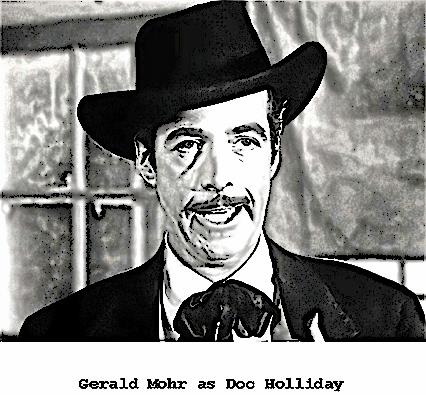
O.K. Corral
Mohr was overseas in Stockholm, Sweden, where he had just completed filming the pilot of a new TV series called "Private Entrance" when he suddenly died of a heart attack at the age of 54.
Donald Murphy - was born on January 29th, 1918 in Chicago, Illinois.
He was an actor, known for “Frankenstein's Daughter” (1958), “Lord Love a Duck” (1966), and “Cavalcade of America” (1952). He died on May 19th, 2008 in Santa Fe, New Mexico.
1253
Anna Navarro - was born on August 18th, 1933 in Winter Park, Orange, Florida. She was an actress, known for “Last Action Hero” (1993),
“Topaz” (1969), and “The First Deadly Sin” (1980). She was married to George Pappas and Thomas F. Foley. She died on December 27th, 2006
in Studio City, California.
Ed Nelson - was aiming for a career in the legal profession until he caught the acting bug during his second year of college. In 1952, he headed off to New York City, where he studied direction and production at the School of Radio Technique. He returned to his native New Orleans where he worked as an assistant director at WDSU-TV.
He also narrated and sometimes wrote episodes of the New Orleans made TV series “N.O.P.D.” (1955) with Stacy Harris. Nelson made the acquaintance of Roger Corman when the maverick movie maker came to Louisiana to shoot the feature “Swamp Women” (1956).
Leonard Nimoy - was famed for playing Spock in the “Star Trek”
franchise for almost fifty years. This included originating Spock in
“Star Trek” in 1965, then “Star Trek: The Animated Series,” the first six Star Trek films, and “Star Trek: The Next Generation.” Nimoy also 1254
directed films, including “Star Trek III: The Search for Spock” (1984) and “Star Trek IV: The Voyage Home” (1986), and appeared in several films, television shows, and voice acted in several video games. His final role as Spock was in 2013.
Prior to the establishment of that franchise Nimoy appeared four times in ethnic roles on NBC's “Wagon Train,” the number one rated program of the 1961–1962 season. He portrayed Bernabe Zamora in "The Estaban Zamora Story" (1959), Cherokee Ned in "The Maggie Hamilton Story" (1960), Joaquin Delgado in "The Tiburcio Mendez Story" (1961), and Emeterio Vasquez in "The Baylor Crowfoot Story" (1962).
Nimoy appeared in “Steve Canyon” (1959), “Bonanza” (1960), “The Rebel” (1960), “Two Faces West” (1961), “Laramie” (1961), “Rawhide”
(1961), “The Untouchables” (1962), “The Eleventh Hour” (1962), “Perry Mason” (1963), “Combat!” (1963, 1965), “Daniel Boone,” “The Outer Limits” (1964), “The Virginian” (1963–1965); first working with Star Trek co-star DeForest Kelley in "Man of Violence", episode 14 of season 2, in 1963, and “Get Smart” (1966). He appeared in the 1995
1255
“Outer Limits” series. He appeared on “Gunsmoke” in 1961 as Grice, in 1962 as Arnie, and in 1966 as John Walking Fox.
Jimmy Noel - was born May 15th, 1903 in Haverhill Massachusetts, the youngest of four children, and son of Walter and Annie Noel. After graduating from high school, Noel worked in entertainment as a theater actor, musician, and singer. Proficient on piano, guitar, drums, banjo, and as a singer, he worked briefly for Paul Whiteman in the early 1930's.
Kathleen Nolan - spent most of her career on television, making her debut in an episode of “The Philco Television Playhouse.” She had a regular role as the teenaged cousin Liz in the 1953-1954 sitcom
“Jamie,” starring Brandon de Wilde in the title role.
Nolan made other appearances over the years on such series as
“Gunsmoke,” “The Lloyd Bridges Show,” “The Millionaire,” “The Untouchables,” “Breaking Point,” “Crossing Jordan,” “Ally McBeal,”
“Chicago Hope,” “All My Children,” “Jacqueline Susann's Valley of the Dolls,” “Murder, She Wrote” 1991 episode "The Prodigal Father,"
“Magnum, P.I.” episodes "The Ugliest Dog in Hawaii" (1981) and 1256
"Double Jeopardy" (1982), “The Incredible Hulk,” “Quincy M.E.,” “The Love Boat,” “Charlie's Angels,” “The Rockford Files,” “The Bionic Woman,” “Kolchak: The Night Stalker,” “Love, American Style,”
“Bewitched,” “The Big Valley,” “The Alfred Hitchcock Hour,” “Thriller,”
“Burke's Law,” “Meet McGraw,” and “Ben Casey.”
Nolan appeared with fellow guest star Michael Landon in the 1958
episode "Rose of the Rio Bravo" on the series “Tombstone Territory”
and on the interview program “Here's Hollywood.”
Nolan's best known television role was as Kate, the wife of Luke McCoy (Richard Crenna), on the popular sitcom “The Real McCoys.” On February 23rd, 1961, she was thrown from a horse and injured during the filming of an episode. She then missed four months of work and was "in and out of the hospital many times" before returning to the series to perform in the episode broadcast on June 15th, 1961. Nolan left “The Real McCoys” before its final season in 1962-1963. At the time, the series also switched networks from ABC to CBS. The time slot for “The Real McCoys” changed as well in the switch to CBS, moving from Thursday evenings to Sunday evenings opposite NBC's 1257
“Bonanza.” In the revamped story for the series, Nolan's character was said to have died.
Nolan appeared on “McHale's Navy,: which resulted in her own spin-off series “Broadside,” in which she led a cast that included Edward Andrews, Dick Sargent, Sheila James, Lois Roberts, Joan Staley, George Furth, Arnold Stang, and Jimmy Boyd. “Broadside” had good ratings, but Universal Studios dropped the series after a single season.
Beyond television, she appeared as Burt Reynolds's love Claudia in the 2017 film “The Last Movie Star.”
Warren Oates - was best known for his performances in several films directed by Sam Peckinpah, including “The Wild Bunch” (1969) and
“Bring Me the Head of Alfredo Garcia” (1974). Another of his most acclaimed performances was as officer Sam Wood in In “The Heat of the Night” (1967). Oates starred in numerous films during the early 1970s that have since achieved cult status, such as “The Hired Hand”
(1971), “Two Lane Blacktop” (1971), and “Race with the Devil” (1975).
Oates also portrayed John Dillinger in the biopic “Dillinger” (1973) and as the supporting character US Army Sergeant Hulka in the military 1258
comedy “Stripes” (1981). Another notable appearance was in the classic New Zealand film “Sleeping Dogs” (1977), in which he played the commander of the American forces in the country.
When Oates first moved to Los Angeles in the 1950s, he began to establish himself in guest roles in weekly television Westerns, including “Wagon Train,” “Tombstone Territory,” “Buckskin,”
“Rawhide,” “Trackdown,” “Tate,” “The Rebel,” “Wanted Dead or Alive,”
“The Virginian,” “Have Gun – Will Travel,” “Lawman,” “The Big Valley,”
“Bat Masterson,” and “Gunsmoke.” Oates first met Peckinpah when he played a variety of guest roles in “The Rifleman” (1958–1963), a popular television series sometimes directed by Peckinpah. He also played a supporting role in Peckinpah's short lived series “The Westerner” in 1960. The collaboration continued as he worked in Peckinpah's early films “Ride the High Country” (1962) and “Major Dundee” (1965).
"There were forty Western series, and I went from one to the other. I started out playing the third bad guy on a horse and worked my way up to the number one bad guy," Oates once quipped.
1259
Larry Pennell - was born on February 21st, 1928 in Uniontown, Pennsylvania. He was an actor, known for “Bubba Ho-Tep” (2002),
“Quantum Leap” (1989), and “Our Man in Jamaica” (1965). He was married to Patricia Throop. He died on August 28th, 2013. Contrary to the popular misconception, his death was not the result of terminal embarrassment at his best known movies.
Joe Ploski - was born on April 16th, 1904 in New Jersey. He was an actor, known for “Dr. Goldfoot and the Bikini Machine” (1965), “M
Squad” (1957), and “Li'l Abner” (1959). He died on May 17th, 1993 in Los Angeles, California.
Mala Powers - The daughter of a United Press executive, Mala Powers attended the Max Reinhardt Junior Workshop as a kid and fell in love with acting the first time she set foot on a stage. She made her film debut in Universal's 1942 “Tough As They Come” (1942) before actress Helene Thimig (Max Reinhardt's wife) convinced her to continue studying rather than become a child actress. Powers worked in radio;
"Cisco Kid." "Red Ryder," "This Is Your F.B.I.," "Lux Radio Theater,"
"Screen Guild on the Air," and met actress Ida Lupino while working on 1260
the latter show. Lupino auditioned and approved Powers for the top role in “Outrage” (1950), made by Lupino's Filmmakers production company. Powers' promising career was derailed by illness in the early
'50s. When she resumed work, it was as the "B queen" of Westerns and sci-fi flicks, and much TV. For many years she has been lecturing on and teaching the Michael Chekhov acting technique throughout the US.
Andrew Prine - was born in Jennings, Florida. After graduation from Miami Jackson High School in Miami, Prine attended the University of Miami and performed at the acclaimed Jerry Herman Ring Theatre.
Prine made his acting debut three years later in an episode of “United States Steel Hour.” His next role was in the 1959 Broadway production of Thomas Wolfe's “Look Homeward, Angel.” In 1962, Prine was cast in Academy Award nominated film “The Miracle Worker” as Helen Keller's older brother James.
In 1962, Prine landed a lead role with Earl Holliman in the 28 episode series “Wide Country,” a drama about two brothers who are rodeo performers. After the cancellation of “Wide Country,” Prine continued 1261
to work throughout the 1960s and 1970s, and in such television series as “Gunsmoke,” “Bonanza,” “The Virginian,” “Wagon Train,” “Dr.
Kildare,” “Cannon,” “Barnaby Jones,” “Baretta,” “Combat!,” “Hawaii Five-O,” “Twelve O'Clock High,” and “The Bionic Woman.” He played Dr. Richard Kimble's brother Ray in an important first-season episode of “The Fugitive.”
During the 1960s and 1970s, Prine appeared in supporting roles in a number of films. Prominent among these were three films he made for director Andrew V. McLaglen; “The Devil's Brigade” (1968),
“Bandolero!” (1968), and “Chisum” (1970).
Denver Pyle - appeared in “Tombstone Territory’s” “Crime Epidemic” as Will Gunther. Pyle guest starred 14 times between 1951 and 1953 on the syndicated television series “The Range Rider” with Jock Mahoney and Dick Jones, and appeared as an outlaw in a 1951 episode of the television series “The Lone Ranger.”
Pyle appeared twice each on the CBS Western series “My Friend Flicka” and NBC's “The Restless Gun” with John Payne. He guest starred with Grant Withers in the 1959 episode "Tumbleweed Ranger"
1262
of Tris Coffin's syndicated Western series “26 Men,” billed as true stories of the Arizona Rangers. He appeared seven times on Richard Boone's CBS Western “Have Gun – Will Travel,” his final appearance on the show in 1960 as the character Croft in "The Puppeteer."
He guest starred in 1960 in several other Westerns, including “Pony Express,” “The Man from Blackhawk,” and “Tombstone Territory.” He guest starred in the episode "Trail of the Dead", the story of five missing prospectors, of Rod Cameron's modern Western syndicated series “State Trooper.” He appeared with Sammy Jackson in the episode "Resurrection" of the syndicated American Civil War drama,
“The Gray Ghost.” He was cast as Big Red in the 1959 episode
"Woman in the River" of the ABC/Warner Bros. detective series
“Bourbon Street Beat,” starring Andrew Duggan and Richard Long. He made several appearances as Briscoe Darling Jr. on “The Andy Griffith Show.”
Pyle was cast in a number of Western movies by John Ford, including
“The Horse Soldiers” with William Holden and “The Man Who Shot Liberty Valance.” He played a Tennessee soldier called Thimblerig in 1263
John Wayne's “The Alamo” (1960). He portrayed Sam Houston in several episodes of CBS's “The Adventures of Jim Bowie.” He guest starred as a law enforcement officer in Jim Davis' other syndicated series, “Rescue 8,” and appeared, as well, in an episode of the ABC
sitcom, “The Real McCoys.”
Mike Ragan – is Los Angeles born Holly Bane, who later changed his name to the more macho sounding Mike Ragan, and didn't start out to be an actor. He wanted to be a big band musician. That didn't work out for him, unfortunately, so he wound up getting a job as an office boy at MGM at age 15. From there he worked his way into the makeup department, working on such productions as “The Good Earth” (1937) and under the tutelage of famed make-up artist Jack Dawn. He soon began working in front of the camera, first in bit parts in action pictures, but service in the US Marine Corps during World War II put the brakes on his acting career. Upon his return to civilian life at war's end he went back to his make-up job, but eventually decided to trade it for work as a full time actor. His stocky build and somewhat menacing attitude got him a lot of work in westerns as a heavy, usually a gunfighter or henchman, often at Republic Pictures.
1264
He actually divided his time between acting and make-up work, and in the 1960s, when westerns began to fade from the scene, he went back to make-up full time, eventually working on many prominent TV shows, such as “Welcome Back, Kotter” (1975), “Barney Miller” (1975), and
“Fish” (1977).
He died in 1995 in Los Angeles of complications from emphysema.
Rhodes Reason - was born in Glendale, California on April 19th, 1930.
He was the younger brother of Rex Reason. Rhodes made his professional debut at the age of 18 in a stage production of “Romeo and Juliet” under the direction of Charles Laughton. His career has spanned nearly 40 years and he appeared in over 230 roles in television, movies and stage. He starred in the series “White Hunter”
(1957) in England, and was cast as Sheriff Will Mayberry in the TV
series “Bus Stop” (1961). His numerous guest appearances included
“Death Valley Days” (1952), “Here's Lucy” (1968), “Maverick” (1957),
“77 Sunset Strip” (1958), “The Time Tunnel” (1966), “Perry Mason”
(1957), and “Star Trek” (1966), among many others. In the early 1980s he starred in the Broadway musical "Annie," playing Daddy Warbucks 1265
for nearly three years. He was an active member of the Academy of Motion Picture Arts and Sciences.
Richard Reeves - was born on August 10th, 1912 in New York City, New York. He was an actor, known for “Target Earth” (1954),
“Adventures of Superman” (1952), and “Day of Triumph” (1954). He died on March 17th, 1967 in Northridge, California.
Paul Richards - was born on November 23rd, 1924 in Hollywood, California. He was an actor, known for “Beneath the Planet of the Apes” (1970), “Zorro” (1957), and “Monkey on My Back” (1957). He was married to Monica Keating. He died on December 10th, 1974 in Culver City, California.
Pernell Roberts - was a stage, film, and television actor, and singer. In addition to guest-starring in over 60 television series, he was best known for his roles as Ben Cartwright's eldest son Adam Cartwright on the Western television series “Bonanza” (1959–1965), and as chief surgeon Dr. John McIntyre, the title character on “Trapper John, M.D.”
(1979–1986).
1266
Bing Russell - Although best known as the deputy on “Bonanza” (1959) and Robert in “The Magnificent Seven” (1960), Russell was also well known on a national level as the owner of the Portland Mavericks Baseball Club. Helming the only independent team in the class A Northwest League, Russell was an innovator. Before “Bull Durham”
(1988), there were the Mavericks. Russell kept a 30 man roster because he believed that some of the players deserved to have one last season in the sun.
Milan Smith - was born on April 27th, 1923 in Ree, South Dakota, USA.
He was an actor, known for “Stagecoach to Dancers' Rock” (1962),
“Rawhide” (1959), and “Wagon Train” (1957). He died on May 2nd, 2001
in Victorville, California,
Fay Spain - was your prototype of a B movie drive in bad girl; sometimes blonde, sometimes brunette, always bodacious. A tease, a taunt, and a temptress throughout most her career, Fay Spain was born in Phoenix, Arizona, in 1932, as Lona May Spain to R.C. Spain and Arminta Frances Cochran. She headed to New York where she initially found summer stock work and a bit of television exposure. One of her 1267
earliest TV appearances was not as an actress but as a contestant on
“You Bet Your Life” (1950), starring Groucho Marx. By 1956, this fetching starlet was winning episodic roles on the more popular shows of the day.
Guy Stockwell - began his acting career on the stage, working in the Broadway productions “Innocent Voyage” with his brother Dean and
“Chicken Every Sunday.” That affinity for the stage would later inspire him to become a co-founder of the Los Angeles Art Theater. He then went on to hold the recurring role of Chris Parker from 1961 to 1962 in twenty-six episodes of the ABC series “Adventures in Paradise,”
starring Gardner McKay as the skipper of a sailing vessel set in the South Pacific.
Stockwell was also cast in episodes of “The Roaring 20s,” “Perry Mason,” “Quincy, M.E.,” “Simon and Simon,” “Knight Rider,” “Tales of the Gold Monkey,” “The Eddie Capra Mysteries,” “Magnum, P.I.,”
“Murder, She Wrote,” “Columbo,” “Quantum Leap,” “Bonanza,” “Land of the Giants,” “Tombstone Territory,” “Combat!,” “The Richard Boone Show,” “Gunsmoke,” “Wagon Train,” “The Virginian,” and “Return to 1268
Peyton Place.” He had important roles in several major motion pictures including “The War Lord” co-starring with Charlton Heston, “The Plainsman,” the leading role in “Beau Geste,” “Tobruk,” “The Monitors,” “It's Alive,” and “Santa Sangre.”
Liam Sullivan - Liam Sullivan was schooled at Illinois College while having his first fling with the acting profession in regional theater. He then studied drama at Harvard, made his way to New York and first appeared on Broadway in "The Constant Nymph" in 1951. He later returned to the West Coast to perform in an LA stage production of
"Mary Stuart." By the early 1950s, he began appearing in television, his Romanesque features and precisely modulated voice ideally suited to smoothly roguish, arrogant or cynical gents, adept at caustic or witty repartee. He was a familiar presence across all genres, from western to science fiction.
Ralph Taeger - The name may not be familiar but for one brief shining moment in the 1960s, this handsome, firm jawed, sober looking actor had his "15 minutes plus" of fame on TV and film. Ralph Adolph Taeger was born of German speaking parents on July 30th, 1936 in Richmond 1269
Hill, New York. Very shy as a youngster, he took public speaking to try and overcome his social handicap. He went so far as to pursue acting roles in college plays and in summer stock. An aspiring pro baseball player, he stayed for a time on a Dodger farm team but knee injuries forced him to rethink his future plans.
He enrolled instead at the American Academy of Dramatic Arts in New York, attending classes and finding work as a male model on the sly.
He migrated to the West Coast where a stage performance at the Beverly Hills Playhouse caught the eye of an MGM talent scout. Signed briefly, he made an uncredited appearance in the film “It Started with a Kiss” (1959) before he was let go.
He found himself freelancing on TV, finding the small screen more productive and accepting medium. Showing potential as a strong but silent, clean cut, adventurous type, he gravitated toward crime and western series including "Highway Patrol," "Manhunt", "Tombstone Territory" and "Sea Hunt." His first series lead was as rugged Mike Halliday in “Klondike” (1960), an action show that took place during the Alaskan gold rush of 1897. It co-starred James Coburn and barely 1270
lasted half the season. He and Coburn seemed to have some chemistry, however, so they simply changed the locale, updated the time to present-day Mexico and called their new adventure series
“Acapulco” (1961). This time he played studly Patrick Malone, a former Korean War vet turned beachcomber assigned to protect a criminal lawyer from rampant gangsters. This show did even worse and died after only two months on the air.
Taeger earned a last chance at TV stardom with the title role in
“Hondo” (1967), which was based on the 1953 John Wayne western. As cavalry scout Hondo Lane, Taeger experienced a more interesting character, a lonely, embittered man whose Indian bride was slain during an army massacre. Though he and it showed definite potential, it didn't arouse enough of an audience and dissolved after only three months.
Despite a lead role in the feature film “X-15” (1961) co-starring Mary Tyler Moore and support parts in “Stage to Thunder Rock” (1964), “A House Is Not a Home” (1964), and the glossy George Peppard/Carroll Baker star vehicle “The Carpetbaggers” (1964), he was pretty much 1271
finished in Hollywood. It didn't help that he had also gained a reputation for being difficult on the set. He left the screen altogether after filming guest appearances on such shows as "Quincy" in 1982
and "Father Murphy" in 1983.
Selling cars and working as a tennis pro at one point, he married Linda Jarrett in 1967 and the couple had one son, Richard. As a wholesaler of firewood, the family operated Taeger's Firewood Company in northern Placerville, California and appeared in local theater productions every now and then. He died at age 78 on March 11th, 2015, following an extended illness.
Kent Taylor – was born Louis William Weiss on May 11th, 1907. He was a modestly popular "B" actor of the 1930's and 1940's. The tall, dark and handsome leading man who sported rugged looks, a slick, pencil thin mustache and solid physique, was star material with the potential and durability of Clark Gable and Errol Flynn, but lacked their consistent leading man quality and charisma. An avid outdoorsman, Taylor churned out over 110 films during his lengthy career, appearing 1272
in a number of quality "A" pictures as a second lead. Born just southeast of Nashua, Iowa, he was a son of farmers.
Regis Toomey – was a quite competent actor for many years.
Ostensibly disdainful of fame, he acted in a few TV Westerns including
“Tombstone Territory.”
Brad Trumbull - was born on November 25th, 1924 in Canoga Park, California. He was an actor, known for “Paratroop Command” (1959),
“Diff'rent Strokes” (1978), and “Flight That Disappeared” (1961). He died on November 25th, 1994 in Los Angeles, California, Lee Van Cleef – had a difficult start to his career including a debilitating auto accident. Sergio Leone revived him with his
“spaghetti Westerns" and he became the time’s quintessential villain.
After acting on stage in regional theatre, he made his film debut in the Oscar winning Western “High Noon” (1952) in a non-speaking outlaw cast role. With distinctive, angular features and a taciturn screen persona, Van Cleef was typecast as minor villain and supporting player in Westerns and crime dramas. After suffering serious injuries in a car crash, Van Cleef's acting career started to decline. However, he 1273
achieved unexpected stardom when director Sergio Leone offered him the co-leading role in “For a Few Dollars More.” The film proved to be a huge hit and cited him as a box office draw, largely in Europe.
Van Cleef went on to appear in such films as Leone's “The Good, the Bad and the Ugly” (1966), “Death Rides a Horse” (1967), “Day of Anger”
(also 1967), “Sabata” (1969), and its sequel “Return of Sabata” (1971),
“El Condor” (1970), “The Magnificent Seven Ride” (1972), “Mean Frank and Crazy Tony” (1973), “Take a Hard Ride” (1975), “The Octagon”
(1980), “Escape from New York” (1981), and “Speed Zone” (1989). He also played the lead role of John Peter McAllister on the martial arts television series “The Master” (1984).
After leaving the Navy, Van Cleef received his first acting role as a reader for the play “Our Town” at the Little Theater Group in Clinton, New Jersey. From there, he continued to meet with the group and audition for parts. The next biggest part was that of the boxer, Joe Pendleton, in the play “Heaven Can Wait.” During this time, he was observed by visiting talent scouts, who were impressed by Van Cleef's stage presence and delivery. One of these scouts later took him to 1274
New York City talent agent Maynard Morris of the MCA agency, who then sent him to the Alvin Theater for an audition. The play was
“Mister Roberts.”
Van Cleef's screen debut came in “High Noon.” During a performance of Mister Roberts in Los Angeles, he was noticed by film producer Stanley Kramer, who offered Van Cleef a role in his upcoming film.
Kramer originally wanted Van Cleef for the role of the deputy Harvey Pell, but as he wanted Van Cleef to have his "distinctive nose" fixed.
Van Cleef declined the role in favor of the part of the silent gunslinger Jack Colby. He was then cast mostly in villainous roles, due to his sharp cheeks and chin, piercing eyes, and hawk-like nose, from the part of Tony Romano in “Kansas City Confidential” (1952), culminating 14 years later in Sergio Leone's “The Good, the Bad and the Ugly”
(1966).
Aside from Westerns and the science fiction films, three of his early major roles were in noir films, “Kansas City Confidential” (1952), “Vice Squad” (1953), and “The Big Combo” (1955).
1275
In 1952, he made his television debut when he was cast in the episode
"Formula for Fear" of the Western aviation series “Sky King.” Van Cleef appeared six times between 1953 and 1955 on the children's syndicated Western series “The Adventures of Kit Carson,” starring Bill Williams. He was cast three times, including the role of Rocky Hatch in the episode "Greed Rides the Range" (1952), of another syndicated Western series, “The Range Rider.” He appeared in episode 82 of the TV series “The Lone Ranger” in 1952. In 1954, Van Cleef appeared as Jesse James in the syndicated series “Stories of the Century.”
In 1955, he was cast twice on another syndicated Western series,
“Annie Oakley.” That same year, he guest starred on the CBS Western series “Brave Eagle.” In 1955, he played one of the two villains in an episode of “The Adventures of Champion the Wonder Horse.” He played Cherokee Bob in the NBC Western series “Tales of Wells Fargo”
in 1957. In 1958, he was cast as Ed Murdock, a rodeo performer trying to reclaim the title in the event at Madison Square Garden in New York City, on “Richard Diamond, Private Detective.”
1276
Van Cleef played different characters on four episodes of ABC's “The Rifleman,” with Chuck Connors, between 1959 and 1962, and twice on ABC's “Tombstone Territory.” In 1958, he was cast as Deputy Sid Carver in the episode "The Great Stagecoach Robbery" of another syndicated Western series, “Frontier Doctor,” starring Rex Allen. In 1959, Van Cleef appeared as Luke Clagg in the episode "Strange Request" of the NBC Western series “Riverboat” starring Darren McGavin, as Jumbo Kane in the episode "The Hostage" on the CBS
Western series "Wanted Dead or Alive" starring Steve McQueen, and in an episode of “Maverick” titled "Red Dog" in 1961 starring Roger Moore and John Carradine.
Van Cleef played a sentry on an episode of the ABC sitcom “The Real McCoys,” with Walter Brennan. Van Cleef was cast with Pippa Scott and again with Chuck Connors in the 1960 episode "Trial by Fear" of the CBS anthology series “The DuPont Show” with June Allyson. A young Van Cleef also made an appearance on “The Andy Griffith Show”
and as Frank Diamond in “The Untouchables,” in an episode entitled
"The Unhired Assassin." He also appeared in an episode of the ABC/Warner Brothers Western series “The Alaskans.”
1277
Van Cleef guest starred on the CBS Western series “Have Gun – Will Travel,” on the ABC/Warner Bros. series “Colt .45,” on the NBC Western series “Cimarron City” and “Laramie,” and on Rod Cameron's syndicated crime dramas “City Detective” and “State Trooper.” He guest starred in an episode of John Bromfield's syndicated crime drama “Sheriff of Cochise.” Van Cleef starred as minor villains and henchmen in various Westerns, including “The Tin Star” and “Gunfight at the O.K. Corral.” His film characters died in many of his Westerns and gangster portrayals.
In 1960, he appeared as a villainous swindler in the “Bonanza”
episode, "The Bloodline" - December 31, 1960, and also made an appearance on “Gunsmoke.” In 1961, he played a role on episode 7,
"The Grave," of the third season of “The Twilight Zone” starring Lee Marvin. He played a villainous henchman of Lee Marvin's titular character in the 1962 John Ford movie “The Man Who Shot Liberty Valance” starring John Wayne and James Stewart. In 1963, he appeared on “Perry Mason” - episode: "The Case of the Golden Oranges." That same year, he appeared in "The Day of the Misfits" on
“The Travels of Jaimie McPheeters.”
1278
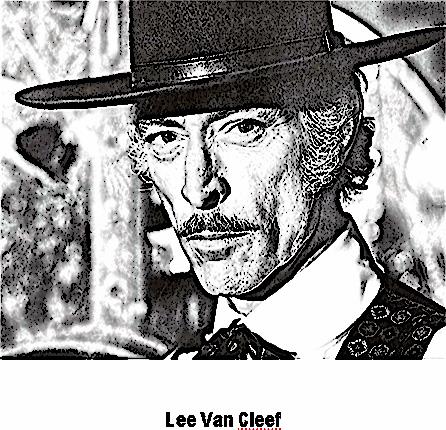
O.K. Corral
In 1965, Sergio Leone cast Van Cleef, whose career had yet to take off, as a main protagonist alongside Clint Eastwood in “For a Few Dollars More.” Leone then chose Van Cleef to appear again with Eastwood, this time as the primary antagonist, Angel Eyes, in the now seminal Western “The Good, the Bad and the Ugly” (1966).
With his roles in Leone's films, Van Cleef became a major star of spaghetti Westerns, playing central, and often surprisingly heroic, roles in films such as “The Big Gundown” (1966), “Death Rides a Horse” (1967), “Day of Anger” (1967), and “The Grand Duel” (1972). He 1279
played the title role in “Sabata” (1969) and “Return of Sabata” (1971), and co-starred in an Italian-American co-production, “Take a Hard Ride” (1975). In two of his final westerns he co-starred with Leif Garrett in “God's Gun” (1976) and “Kid Vengeance” (1977), both of which were filmed mainly in Israel.
Van Cleef later had a supporting role in John Carpenter's cult film
“Escape from New York” (1981). He slipped out of the limelight in his later years. In 1984, he was cast as a ninja master in the NBC
adventure series “The Master,” but it was canceled after thirteen episodes. In all, Van Cleef is credited with 90 movie roles and 109
television appearances over a 38 year span.
John Vivyan - was born John R. Vukayan on May 31st, 1915 in Chicago, Illinois to Serbian immigrant parents. He served in the US
Army during the Guadalcanal campaign for the 132nd Infantry Regiment, Company "E" in World War II, where he was wounded in his leg. After attending the American Academy of Dramatic Art under the GI Bill of Rights, he changed his last name to Vivyan, and he first appeared on stage in the late 1940's before taking film and television 1280
roles. His first screen role was in the 1949 episode “Two Sharp Knives” in the anthology “Studio One.” Later, he guest starred in a wide variety of television series, but primarily in Westerns.
Patrick Waltz - The younger son of two male children born to Frank and Lucy Leona (Dugan) Waltz, he had an elder brother, Frank. Patrick married Phyllis Dolores Showalter, born September 27th, 1923 and died March 5th, 1981, on September 27th, 1941 in Summit County, Ohio by the deputy clerk in the office of Probate Judge Dean Fay.
Waltz was 16 years old and it was Showalter's 18th birthday but both are listed as being 17 years old. The license was taken out on September 23rd, 1941. The daughter of Earl W. and Bertie (Calvert) Showalter, her parents are listed as giving their consent for their still minor age daughter. The union was apparently childless and ended in divorce on September 22nd, 1954. He married, secondly, to co-star Lisa Davis on June 28th, 1958. The couple had three children. The marriage ended in divorce in 1971, one year before Waltz's death at age 47.
1281
Peter Whitney – had an over powering frame, swarthy looks, bushy brows and a maniacal look in his eye which made him one of the most fearsome character actors to lump around in 1940s-60s film and TV.
Born on May 24th, 1916 in New Jersey of German ancestry, Peter King Engle was educated at Exeter Academy. He eventually moved to the Los Angeles area and trained with the Pasadena Community Playhouse, gaining valuable experience in summer stock as well. He made a play for films in the early 1940s, deciding also to use his wife Adrienne's middle name for his own stage moniker. He felt his real name sounded too German.
Robert J. Wilke – was a prolific character actor of primarily villainous roles. The son of German parents, Cincinnati feed-store manager August Wilke and his wife Rose, Robert Joseph Wilke grew up in Cincinnati. He worked as a lifeguard at a Miami, Florida, hotel, where he made contacts in the film business. He was able to obtain work as a stuntman and continued as such until the mid-'40s, when he began getting actual roles in low budget westerns and serials. A prominent appearance as one of the heavies in “High Noon” (1952) led to further work in higher quality films. He worked extensively in television as 1282
well as movies, and became an enormously familiar face, though a fairly anonymous one to the general public. His weathered visage made him a perfect western bad guy, but he occasionally played sympathetic parts as well, as in “Days of Heaven” (1978). An expert golfer, he was said by his friend Claude Akins to have earned more money on the golf course than he ever did in movies. He died in 1989.
Tony Young - As the son of radio, TV and film character actor Carleton G. Young, dark, dexterous and good looking Tony Young was exposed early on to the machinations of the Hollywood industry. Born in New York in 1937, he was raised in Hollywood after his father's on camera character work increased. Although Tony was offered some film roles in the early 1950s while still a teen, his father insisted that Tony receive a proper education first before putting together any kind of acting career. Following a hitch with the US Air Force, Tony attended Los Angeles City College. Working initially as an NBC page, his interest in acting had not flagged after all.
1283
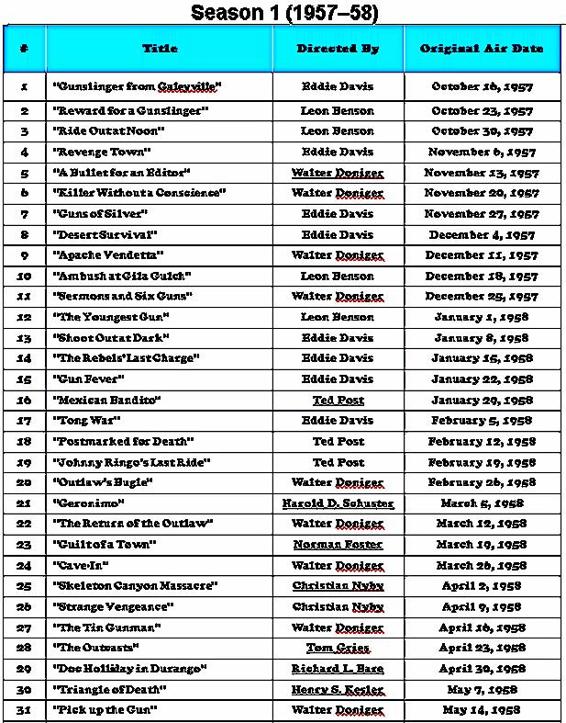
O.K. Corral
1284
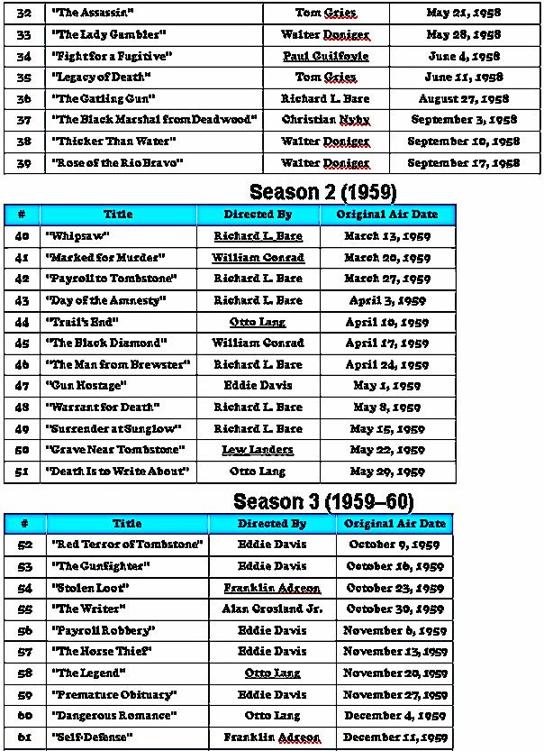
O.K. Corral
1285
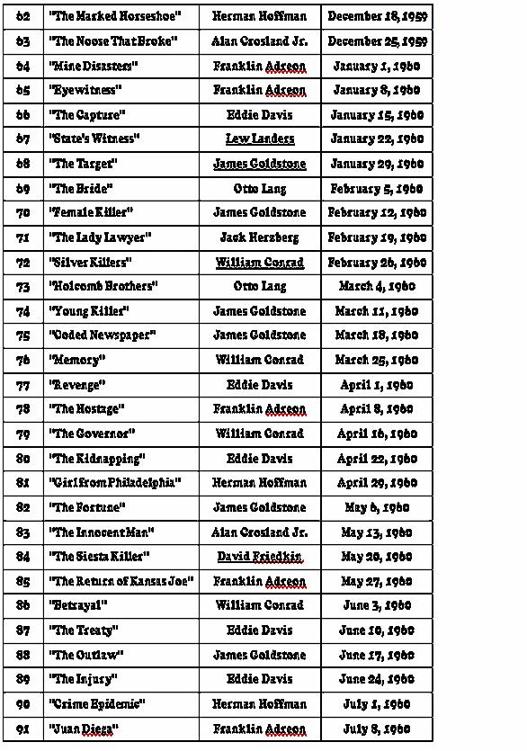
O.K. Corral
1286
Releases:
Home media: On April 2nd, 2013, Timeless Media Group released season I on DVD in Region 1.
As of late 2014, the complete series of all 91 episodes has been released on DVD.
Syndication: As of 2022, reruns of the show are aired daily on GritTV
as a part of its daytime schedule.
Merchandising: The TV show was also adapted into a comic book by Dan Spiegle, distributed by Dell Comics.
“Tombstone” – the movie
Directed by George P. Cosmatos.
Written by Kevin Jarre.
Produced by James Jacks, Sean Daniel, and Bob Misiorowski.
Starring; Kurt Russell, Val Kilmer, Michael Biehn, Powers Boothe, Robert Burke, Dana Delany, Sam Elliott, Stephen Lang, Joanna Pacula, 1287
Bill Paxton, Jason Priestley, Michael Rooker, Jon Tenney, Billy Zane, and Charlton Heston.
Cinematography; William A. Fraker.
Edited by Frank J. Urioste, Roberto Silvi, and Harvey Rosenstock.
Music by Bruce Broughton.
Release date; December 25, 1993.
Running time; 130 minutes.
Budget; $25 million.
Box office; $73.2 million.
“Tombstone” is a 1993 American Western film directed by George P.
Cosmatos, written by Kevin Jarre, who was also the original director, but was replaced early in production, and starring Kurt Russell and Val Kilmer, with Sam Elliott, Bill Paxton, Powers Boothe, Michael Biehn, and Dana Delany in supporting roles, as well as narration by Robert Mitchum.
1288
The film is loosely based on real events that took place in the 1880s in Tombstone, Arizona, including the gunfight at the O.K. Corral and the Earp Vendetta Ride. It depicts several Western outlaws and lawmen, such as Wyatt Earp, William Brocius, Johnny Ringo, and Doc Holliday.
“Tombstone” was released by Hollywood Pictures in theatrical wide release in the United States on December 25th, 1993, grossing $73.2
million worldwide. The film was a financial success, and for the Western genre, it ranks number 16 in the list of highest grossing films since 1979. Six months later, the similarly themed film “Wyatt Earp”
was released with far less commercial success. Critical reception was generally positive, with the acting, directing, and story receiving praise. Particular praise went towards Val Kilmer's memorable performance as the hard drinking Doc Holliday, who received various awards and nominations despite not getting an Oscar nomination. The film has become a cult classic since its release.
1289
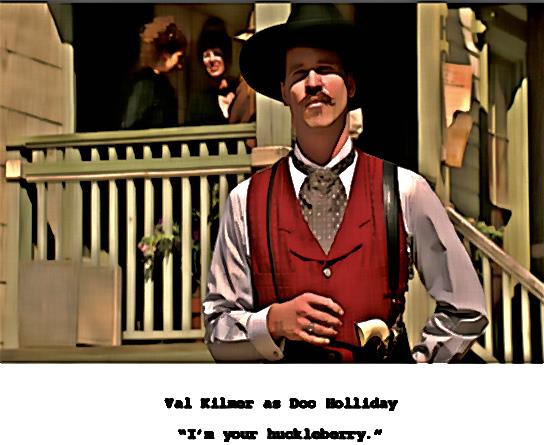
O.K. Corral
In 1879, members of an outlaw gang known to wear red sashes called the Cowboys, led by "Curly Bill" Brocius, in the absence of spiritual and real leader Johnny Ringo, ride into a Mexican town and interrupt a local police officer's wedding. They then proceed to massacre the assembled policemen in retribution for killing two of their fellow gang 1290
members. Shortly before being shot, a local priest warns them that their acts of murder and savagery will be avenged, referencing the biblical fourth horseman.
Wyatt Earp, a retired peace officer with a notable reputation, reunites with his brothers Virgil and Morgan in Tucson, Arizona, where they venture on toward Tombstone to settle down. There they encounter Wyatt's long-time friend Doc Holliday, who is seeking relief in the dry climate from his worsening tuberculosis. Josephine Marcus and Mr.
Fabian are also newly arrived with a traveling theater troupe.
Meanwhile, Wyatt's common-law wife, Mattie Blaylock, is becoming dependent on laudanum. Wyatt and his brothers begin to profit from a stake in a gambling emporium and saloon when they have their first encounter with the Cowboys.
As tensions rise, Wyatt is pressured to help rid the town of the Cowboys, though he is no longer a lawman. Curly Bill begins shooting at the sky after a visit to an opium den and is told by Marshal Fred White to relinquish his firearms. Curly Bill instead shoots the marshal dead and is forcibly taken into custody by Wyatt. The arrest infuriates 1291
Ike Clanton and the other Cowboys. Curly Bill stands trial but is found not guilty due to a lack of witnesses. Virgil, unable to tolerate lawlessness, becomes the new marshal and imposes a weapons ban within the city limits. This leads to a gunfight at the O.K. Corral, in which Billy Clanton and the McLaury brothers are killed. Virgil and Morgan are wounded, and the allegiance of county sheriff Johnny Behan to the Cowboys is made clear. As retribution for the Cowboy deaths, Wyatt's brothers are ambushed; Morgan is killed, while Virgil is left handicapped. A despondent Wyatt and his family leave Tombstone and board a train, with Ike Clanton and Frank Stilwell close behind, preparing to ambush them. Wyatt sees that his family leaves safely, and then surprises the assassins. He kills Stilwell but lets Clanton live to send a message. Wyatt announces that he is a US marshal and that he intends to kill any man he sees wearing a red sash. Wyatt, Doc, a reformed Cowboy named Sherman McMasters, Texas Jack Vermillion, and Turkey Creek Jack Johnson form a posse to seek revenge.
Wyatt and his posse are ambushed in a riverside forest by the Cowboys. Wyatt walks into the creek, miraculously surviving the enemy fire, and kills Curly Bill along with many of his men. Curly Bill's 1292
previously absent leader, Johnny Ringo, becomes the functioning head of the Cowboys. When Doc's health worsens, the group is accommodated by Henry Hooker at his ranch. Ringo lures McMasters into the Cowboys' clutches under the pretense of parley and then sends a messenger, dragging McMasters' corpse, to tell Wyatt that he wants a showdown to end the hostilities and Wyatt agrees. Wyatt sets off for the showdown, not knowing that his best friend Doc Holliday also was privy to Ringo’s message, and has already arrived at the scene. Doc confronts a surprised Ringo, who was expecting Wyatt, and challenges him to a duel to finish their "game," which Ringo eventually accepts after a few put off attempts. Doc and Ringo have already had a couple of stand offs in Tombstone that were ultimately broken up or deferred. Wyatt runs when he hears a gunshot, only to encounter Doc, who has killed Ringo. They then press on to complete their task of eliminating the Cowboys, although Clanton escapes their vengeance by renouncing his red sash. Doc is sent to a sanatorium in Colorado, where he dies of his illness. At Doc's urging, Wyatt pursues Josephine to begin a new life.
Cast;
1293
Kurt Russell as Wyatt Earp
Val Kilmer as Doc Holliday
Sam Elliott as Virgil Earp
Bill Paxton as Morgan Earp
Powers Boothe as "Curly Bill" Brocius
Michael Biehn as Johnny Ringo
Charlton Heston as Henry Hooker
Jason Priestley as Billy Breakenridge
Jon Tenney as Sheriff Johnny Behan
Stephen Lang as Ike Clanton
Thomas Haden Church as Billy Clanton
Dana Delany as Josephine Marcus
Paula Malcomson as Allie Earp
Lisa Collins as Louisa Earp
1294
John Philbin as Tom McLaury
Dana Wheeler-Nicholson as Mattie Blaylock
Joanna Pacuła as Big Nose Kate
Michael Rooker as Sherman McMasters
Harry Carey Jr. as Marshal Fred White
Billy Bob Thornton as Johnny Tyler
Tomas Arana as Frank Stilwell
Paul Ben-Victor as Florentino "Indian Charlie" Cruz Frank Stallone as Ed Bailey
Robert John Burke as Frank McLaury
Billy Zane as Mr. Fabian
John Corbett as Johnny Barnes
Buck Taylor as "Turkey Creek" Jack Johnson
Terry O'Quinn as Mayor John Clum
1295
Peter Sherayko as John "Texas Jack" Vermillion Wyatt Earp III as Billy Claiborne
Robert Mitchum as Narrator
Production;
The film was shot primarily on location in Arizona. Shooting began in May 1993. The film was supposed to be screenwriter Kevin Jarre's first job as director but he was quickly overwhelmed by the job, failing to get needed shots and falling behind the shooting schedule. A month into filming, he was fired by producer Andrew Vajna and replaced with George P. Cosmatos. Michael Biehn, a close friend of Jarre, considered quitting. Biehn recalled feeling director Cosmatos " ... had no understanding or appreciation of the screenplay." By the time of Cosmatos' arrival, though, all actors stayed on board. The new director brought a demanding, hard-nosed sensibility to the set, which led to conflicts with some of the crew members. Meanwhile, Kurt Russell worked quickly with producer James Jacks to pare down Jarre's sprawling script, deleting subplots and emphasizing the relationship between Wyatt and Doc.
1296
Russell has stated that it was he, and not Cosmatos, who effectively directed the film, as Jarre's departure led to the studio's request.
Russell stated that Cosmatos was brought in as a "ghost director" as a front man because Russell did not want it to be known that he was directing. Co-star Val Kilmer has supported Russell's statements about working heavily behind the scenes and stating that Russell
"essentially" directed the film, but stopped short of saying that Russell did the actual directing. Biehn stated that Russell never directed him personally.
Cosmatos was highly focused on accurate historical detail, including the costumes, props, customs, and scenery, to give them authenticity.
All the mustaches in the movie were real. Val Kilmer practiced for a long time on his quick draw speed and gave his character a genteel Southern accent. Two locations were used to make the town of Tombstone look bigger. The scene in which Wyatt throws an abusive card dealer, played by Billy Bob Thornton, out of a saloon was to show that Wyatt was a man who used psychology to intimidate. Thornton's lines in the scene were ad-libbed, as he was only told to "be a bully."
1297
The original motion picture soundtrack for “Tombstone” was originally released by Intrada Records on December 25th, 1993. On March 16th, 2006, an expanded two disc version of the film score was also released by Intrada Records. The score was composed and produced by Bruce Broughton, and performed by the Sinfonia of London. David Snell conducted most of the score, although Broughton normally conducts his own scores, union problems mandated another conductor here, while Patricia Carlin edited the film's music.
The score contains strong echoes of Max Steiner's music for John Ford's “The Searchers” (1956) with variations on the “Indian Traders”
theme used midway through the Ford movie. The album begins with the Cinergi logo, composed by Jerry Goldsmith and conducted by Broughton.
Following its cinematic release in theaters, the film was released on VHS video format on November 11th, 1994. The Region 1 Code widescreen edition of the film was released on DVD in the United States on December 2nd, 1997. Special features for the DVD only include original theatrical trailers. A director's cut of Tombstone was 1298
also officially released on DVD on January 15th, 2002. The DVD version includes a two disc set and features "The Making of Tombstone"
featurette in three parts; "An Ensemble Cast," "Making an Authentic Western," and "The Gunfight at the O.K. Corral." Other features include an audio commentary by director George P. Cosmatos, an interactive
“Tombstone” timeline, the director's original storyboards for the O.K.
Corral sequence, the “Tombstone Epitaph;" an actual newspaper account, the DVD-ROM feature "Faro at the Oriental: Game of Chance", and a collectible Tombstone map. This DVD release is also THX
certified and features a DTS 5.1 audio track, whatever the relevance of that.
The widescreen, high definition, and timely Blu-ray Disc edition of the theatrical cut was released on April 27th, 2010, featuring the making of “Tombstone,” director's original storyboards, trailers, and TV spots.
A supplemental viewing option for the film in the media format of video-on-demand is available, as well.
“Tombstone” premiered in movie theaters six months before Lawrence Kasdan's “Wyatt Earp,” on December 24th, 1993, in wide release 1299
throughout the United States. During its opening weekend, the film opened in third place at the US box office behind “The Pelican Brief”
and “Mrs. Doubtfire,” grossing $6,454,752 in business showing at 1,504
locations. The film's revenue increased by 35% in its second week of release, earning $8,720,255. For that particular weekend, the film stayed in third place, screening in 1,955 theaters. The film went on to gross $56,505,065 in total ticket sales in the United States and Canada. It ranks 20th out of all films released in 1993, a list led by
“Jurassic Park.” Internationally, it grossed $16.7 million for a worldwide total of $73.2 million.
Rotten Tomatoes reported that 72% of 47 sampled critics gave the film a positive review, with an average score of 6.30/10. The site's critical consensus “cleverly” reads; "If you're seeking a stylish modern western with a solid story and a well-chosen ensemble cast,
‘Tombstone’ is your huckleberry." Following its cinematic release in 1993, “Tombstone” was named "one of the five greatest Westerns ever made" by “True West Magazine.” The film was also called "One of the year's 10 best!" by KCOP-TV in Los Angeles, California.
1300
Gene Siskel and Roger Ebert of Siskel and Ebert originally thought they would have to miss reviewing the film, as they could not get a screening, but as Ebert explained, " ... a strange thing started to happen. People started telling me they really liked Val Kilmer's performance in Tombstone, and I heard this everywhere I went. When you hear this once or twice, it's interesting, when you hear it a couple of dozen times, it's a trend. And when you read that Bill Clinton loved the performance, you figured you better catch up with the movie."
Ultimately, Ebert recommended the movie while Siskel did not.
Ebert would later refer to “Tombstone” in future reviews, comparing it favorably to Kevin Costner's “Wyatt Earp.” "It forced the comparison upon me." And, in his review of “Wild Bill,” he singled out Val Kilmer's portrayal as "the definitive saloon cowboy of our time." In his review of Kurt Russell's “Dark Blue,” he stated; "Every time I see Russell or Val Kilmer in a role, I'm reminded of their “Tombstone,” which got lost in the year-end holiday shuffle and never got the recognition it deserved."
As if the Wild West had no enterprising women, Stephen Holden of
“The New York Times” said; “Grafted onto this traditional framework, 1301
the film's meditative aspects are generally too self-conscious to fit comfortably. Especially when the movie tries to imagine a more enlightened role for women in the Old West, the screenplay begins to strain.”
Perhaps indicative of undiagnosed ADD, in a mixed review, Chris Hicks writing in the “Deseret News” said, "Aside from Russell and Val Kilmer's scene stealing, sickly, alcoholic Doc Holliday, there are so many characters coming and going, with none of them receiving adequate screen time, that it becomes difficult to keep track of them all." But he did comment; "Some very entertaining moments here, with Russell spouting memorable tough guy lines." Overall, he felt; "Taken on its own terms, with some lowered expectations, Western fans will have fun." Emanuel Levy of “Variety” believed the film was a "tough-talking but soft hearted tale" which was "entertaining in a sprawling, old fashioned manner." Regarding screenwriter Jarre's dialogue, he noted; "Despite the lack of emotional center and narrative focus, his script contains enough subplots and colorful characters to enliven the film and ultimately make it a fun, if not totally engaging experience."
He also singled out Val Kilmer as the standout performance. The film 1302
was not without its detractors. James Berardinelli writing for
“ReelViews” offered a negative review, recalling how he thought; "The first half of “Tombstone” isn't an example of great filmmaking, but it is engaging. There's a sense of growing inevitability as events build to the shoot-out at the OK Corral. The melodramatic ‘serious’ moments are kept to a minimum, and the various gunfights are choreographed with style and tension. Then, at the one hour ten minute mark, the Clanton gang and the Earps square off. From there, things get progressively worse. Not only is the last hour anticlimactic, but it's dull. Too many scenes feature lengthy segments of poorly scripted dialogue, and, in some cases, character motivation becomes unclear.
The gunplay is more repetitious than exciting. The result is a cobbled together morass of silly lines and shoot outs and doesn't work well."
Stephen Holden writing in “The New York Times” saw the film as being a "capacious Western with many modern touches, the Arizona boom town and site of the legendary O.K. Corral has a seedy, vaudevillian grandeur that makes it a direct forerunner of Las Vegas." He expressed his satisfaction with the supporting acting, saying; "The most modern psychological touch is its depiction of Josephine (Dana 1303
Delany), the itinerant actress with whom Wyatt falls in love at first sight, as the most casually and comfortably liberated woman ever to set foot in 1880s Arizona." Critic Louis Black, writing for “The Austin Chronicle,” viewed “Tombstone” as a "mess" and that there were "two or three pre-climaxes but no climax. Its values are capitalist rather than renegade, which is okay if it's metaphoric rather than literal.
Worse, as much as these actors heroically struggle to focus the film, the director more successfully hacks it apart." Owen Gleiberman of
“Entertainment Weekly” gave the film a C− rating, calling it
"preposterously inflated" at "135 minutes long." He observed the film as being a "three hour rough cut that's been trimmed down to a slightly shorter rough cut" with "all that holds the film together is Kurt Russell's droll machismo." Author Geoff Andrew of “Time Out”
negatively commented that; “There was a misguided romantic subplot and the ending rather sprawls," but ultimately exclaimed the film was
"'rootin,' tootin' entertainment with lots of authentic facial hair."
Richard Harrington of “The Washington Post” highlighted the film's shortcomings declaring; "Too much of Tombstone rings hollow. In retrospect, not much happens and little that does seems warranted.
1304
There are so many unrealized relationships you almost hope for redemption in a longer video version. This one is unsatisfying and unfulfilling." Alternately though, columnist Bob Bloom of the “Journal and Courier” openly remarked that the film "May not be historically accurate, but offers a lot of punch for the buck." He concluded by saying it was "A tough, guilty pleasure Western."
Although Val Kilmer’s performance as Doc Holliday was highly praised by many, he did not get an Oscar nomination for Best Supporting Actor. He was nominated for Best Male Performance and Most Desirable Male at the MTV Movie Awards.
Tombstone – the More or Less “Actual” Place
Tombstone is now best known as the site of the gunfight at the O.K.
Corral and presently draws most of its revenue from tourism. It also houses the highest rated brewery in the state of Arizona.
1305
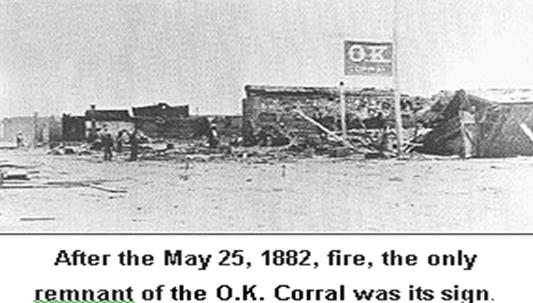
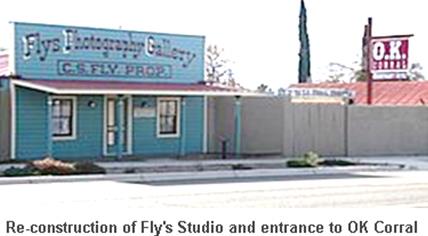
O.K. Corral
-
Due to poor building practices and poor fire protection common to boomtown construction, Tombstone was hit by two major fires. On June 22nd, 1881, the first fire destroyed sixty-six businesses making 1306
up the eastern half of the business district. The fire began when a lit cigar ignited a barrel of whiskey in the Arcade Saloon.
On May 25th, 1882, another, more destructive fire started in a Chinese laundry on Fifth Street between Toughnut and Allen Streets. It destroyed the Grand Hotel and the Tivoli Saloon before it jumped Fremont Street, destroying more than 100 businesses and most of the business district. Lacking enough water to put out the flames, buildings in the fire's path were dynamited to deny the fire fuel. Total damages were estimated to be $700,000, far more than the estimated $250,000 insurance coverage. But rebuilding started right away nonetheless.
In March 1883, along one short stretch of Allen Street, there were drinking establishments in two principal hotels, the Eagle Brewery, Cancan Chop House, French Rotisserie, Alhambra, Maison Dore, City of Paris, Brown's Saloon, Fashion Saloon, Miners' Home, Kelly's Wine House, the Grotto, the Tivoli, and two more unnamed saloons.
The Tough Nut Mine first experienced seepage in 1880. In March 1881, the Sulphuret Mine struck water at 520 feet. A year later, in March 1307
1882, miners in a new shaft of the Grand Central Mine hit water at 620
feet. The flow wasn't at first large enough to stop work, but experienced miners thought the water flow would increase, and it did.
Soon constant pumping with a four inch pump was insufficient. The silver ore deposits they sought were soon underwater.
Several mine managers traveled to San Francisco and met with the principal owners of the Contention Mine. They talked about options for draining the mines, and found the only system available for pumping water out of mines below 400 feet was the Cornish engine which had been used at the Comstock Lode in the 1870s. They bought and installed the huge Cornish engines in the Contention and Grand Central mines. By mid-February 1884, the engines were removing 576,000 US gallons of water every twenty-four hours. The city merchants celebrated the continued success of mining and the transfer of funds to their businesses. The Contention and the Grand Central found that their pumps were draining the mining district, benefiting other mines as well, but the other companies refused to pay a proportion of the expense.
1308
On May 26th, 1886, the Grand Central hoist and pumping plant burned.
The fire was so intense that the metal components of the Cornish engine melted and warped. The headworks of the main mine shaft were also destroyed. Shortly afterward, the price of silver slid to 90
cents an ounce. The mines that remained operational laid off workers.
Individuals who had thought about leaving Tombstone when the mine flooding started now took action. The price of silver briefly recovered for a while and a few mines began producing again, but never at the level reached in the early 1880s.
The US census recorded fewer than 1,900 residents in 1890 and fewer than 700 residents in 1900. Tombstone was saved from becoming a ghost town partly because it remained the Cochise County seat until 1929, when county residents voted to move county offices to nearby Bisbee. The classic Cochise County Courthouse and adjacent gallows yard in Tombstone are preserved as a museum.
Currently, tourism and western memorabilia are the main commercial enterprises; a July 2005 CNN article notes that Tombstone receives approximately 450,000 tourist visitors each year. This is about 300
1309
O.K. Corral
tourists per year for each permanent resident. In contrast to its heyday, when it featured saloons open 24 hours and numerous houses of prostitution, Tombstone is now a staid community with few businesses open late. Tombstone and surrounding areas have a variety of lodging options, restaurants, and attractions. The town is located near other historic sites of interest, including Bisbee and the San Pedro Riparian area. Tombstone is a short drive away from Sierra Vista, which is considered the shopping hub of Cochise County.
1310
O.K. Corral
East Allen Street is the center of Tombstone's tourist attractions, featuring three blocks of shaded boardwalks lined with gift shops, saloons, and eateries. Allen Street's historic district is closed to motor traffic from 3rd Street, the location of the city park and OK Corral, to 6th Street, where the Bird Cage Theatre is located. Additional sites of interest can be found throughout the city, even out on Highway 80, where Boothill Cemetery is found.
1311
O.K. Corral
Performance events help preserve the town's Wild West image and expose it to new visitors. The historic O.K. Corral has been preserved but is now surrounded by a wall. Fremont Street, which is modern Arizona Highway 80, where portions of the gunfight took place, is open to the public. Mannequins are used to depict the location of the participants as recorded by Wyatt Earp. Visitors may pay to see a reenactment of the gunfight. Helldorado Days is Tombstone's oldest festival and celebrates the community's wild days of the 1880s.
According to Guinness, the world's largest rosebush was planted in Tombstone in 1885 and still flourishes in the city's sunny climate. The Lady Banksia rose originated in Scotland. Mary Gee was the wife of 1312
mining engineer Henry Gee, who worked for the Vizina Mining Co.
Mary's family sent the homesick bride a box of rooted cuttings from her home country. She planted one of the roses by the patio of the Vizina Mining Company's boarding house, the first adobe building in town, located at 4th and Toughnut Street across from the later site of the railroad depot. She and Henry lived in the boarding house when they first arrived in Tombstone.
The building was later renamed the Cochise House Hotel, and from 1909 to 1936 it was known as the Arcade Hotel. By the 1930s, the rose bush had grown to shade the entire patio and became a popular site for tourists. The hotel was later renamed the Rose Tree Inn and then the Rose Tree Inn Museum. The museum curator tells visitors that all Banks roses growing in the US today are descendants of the Tombstone rose.
In 1940, the Lady Banksia rose covered about 4,000 square feet. As of 2014, the rose bush covered more than 8,000 square feet of the roof and garden trellis of the inn, and has a 12 foot circumference trunk.
The rose bush is walled off, and the inn charges admission to view it.
1313
The Tombstone Historic District is a National Historic Landmark District. The town's focus on tourism has threatened the town's designation as that National Historic Landmark District, a designation it earned in 1961 as "one of the best preserved specimens of the rugged frontier town of the 1870s and '80s." In 2004, the National Park Service declared that the Tomb's historic designation was threatened, and asked the community to develop an appropriate stewardship program.
1314
O.K. Corral
The National Park Service noted inappropriate alterations to the district which included; 1) Placing "historic" dates on new buildings, 2) Failing to distinguish new construction from historic structures, 3) Covering authentic historic elevations with inappropriate materials, 4) Replacing historic features instead of repairing them, 5) Replacing missing historic features with conjectural and unsubstantiated materials, 6) Building incompatible additions to existing historic 1315
structures and new incompatible buildings within the historic district, 7) Using illuminated signage, including blinking lights surrounding historic signs, and 8) Installing hitching rails and Spanish tile covered store porches when such architectural features never existed within Tombstone.
Picky, picky, picky. One can’t help but wonder how long any member of the National Park Service would have lasted in old Tombstone.
Historical buildings include Schieffelin Hall, the opera house built by Al Schieffelin in 1881, and the Cochise County Courthouse. The courthouse was largely unused and then vacant after the county seat was moved to Bisbee. An attempt was made to turn it into hotel in the 1940s, and when that failed it stood empty until 1955. The Tombstone Restoration Commission acquired the courthouse and developed it as a historical museum that opened in 1959. It features exhibits and thousands of artifacts documenting Tombstone's past.
The Crystal Palace Saloon, including its 45 feet long mahogany bar, was rebuilt based on photographs of the original saloon was restored 1316
in May 1964 to its 1881 condition. This included large Victorian ceiling lamps and the inlaid patterned wood floor.
The Tombstone District located at 31°42′57″N 110°3′53″W, sits atop a mesa, elevation 4,539 feet, in the San Pedro River valley between the Huachuca Mountains and Whetstone Mountains to the west, and the Mules and the Dragoon Mountains to the east. According to the United States Census Bureau, the city has a total area of 4.3 square miles, all land.
The silver bearing Tombstone Hills around the city are caused by a local upheaval of porphyry through a limestone capping.
When actively mined, the silver vein of argentiferous galena, more often called silver bearing lead, was large and well defined. The silver and lead was easily milled and smelted. The lead content sometimes was as much as 50 per cent of the ore, and assays proved the silver content ran as high as $105 per ton in 1881 dollars.
The underlying basement rocks are fine grained Pinal Schist which is intruded by gneissic granite. The outcrop is in a small area south of the principal mines. The overlying Paleozoic quartzite and limestones 1317
rock lies on an unconformity with a total thickness ranging from 4,000
to 5,000 feet, and contains 2,500 to 3,500 feet of Mississippian Escabrosa Limestone and the Naco Formation limestone of Pennsylvanian age in the upper formations.
Overlying the Naco Limestone is an unconformable Mesozoic series of conglomerate, thick bedded quartzites, and shales, with two or three lenses of soft, bluish gray limestone. Into these formations intrude intruded great bodies of quartz monzonite and by dikes of quartz monzonite-porphyry and diorite-porphyry. Structural faulting occurs throughout the district especially immediately south of Tombstone, where the strata are closely folded.
Tombstone District ores have been produced geologically in three or more ways. They may have been formed in argentiferous, or silver bearing lead sulfide containing spotty amounts of copper and zinc.
These deposits are usually deeply oxidized and enriched by irregular replacement bodies along mineralized fissure zones and anticlinal rolls cut by Paleozoic and Mesozoic sedimentary formations. Ore bodies are 1318
often closely associated with newer cross cutting intrusive dikes of Laramide.
Ore deposits were formed by base metal mineralization occurs with oxidation found in fault and fracture zones in Laramide volcanics and quartz latite porphyry intrusive.
Silver ore was also formed in manganese oxides with some argentiferous deposits in lenticular or pipe like replacement bodies along fracture and fault zones, usually in Pennsylvanian-Permian age Naco Group limestones.
Tombstone has a typical Arizona semi-arid climate with three basic seasons. Winter, from October to March, features mild to warm days and chilly nights, with minimum temperatures falling to under 32 °F on 28.4 nights, although snowfall is almost unknown, with the median being zero and the heaviest monthly fall being 14.0 inches in January 1916, of which 12.0 inches fell on January 16th. The coldest temperature record in Tombstone has been 3 °F on December 8th, 1978.
1319
The summer season from April to June is extremely dry and gradually heats up. The hottest temperature on record is 112 °F on July 4th, 1989, before the “monsoon” season from July to September brings the heaviest rainfall, averaging 6.39 inches out of an annual total of 14.10
inches. The wettest month has been July 2008 when 11.53 inches fell and fifteen days saw at least 0.04 inches of rainfall, though the record for the most such days in a month stands at eighteen, in July 1930.
Since 1893, the wettest calendar year has been 1905, with 27.84
inches and the driest was 1924, with 7.36 inches.
As of the census of 2000, there were 1,504 people, 694 households, and 419 families residing in the city. The population density was 349.8
inhabitants per square mile. There were 839 housing units at an average density of 195.1 per square mile. The racial makeup of the city was 87.4% White, 0.6% Black or African American, 1.0% Native American, 0.3% Asian, 8.2% from other races, and 2.5% from two or more races. 24.1% of the population were Hispanic or Latino of any race.
1320
Of the 694 households, 20.2% had children under the age of 18 living with them, 47.6% were married couples living together, 7.9% had a female householder with no husband present, and 39.5% were non-families. 32.9% of all households were made up of individuals, and 15.3% had someone living alone who was 65 years of age or older. The average household size was 2.17 and the average family size was 2.73.
In the city, the age distribution of the population shows 19.3% under the age of 18, 4.9% from 18 to 24, 19.9% from 25 to 44, 32.5% from 45
to 64, and 23.3% who were 65 years of age or older. The median age was 49 years. For every 100 females, there were 94.3 males. For every 100 females age 18 and over, there were 91.0 males.
The median income for a household in the city was $26,571, and the median income for a family was $33,750. Males had a median income of $26,923 versus $18,846 for females. The per capita income for the city was $15,447. About 13.0% of families and 17.4% of the population were below the poverty line, including 22.6% of those under age 18
and 13.1% of those age 65 or over. In 2010, the total population declined to 1,380 people.
1321
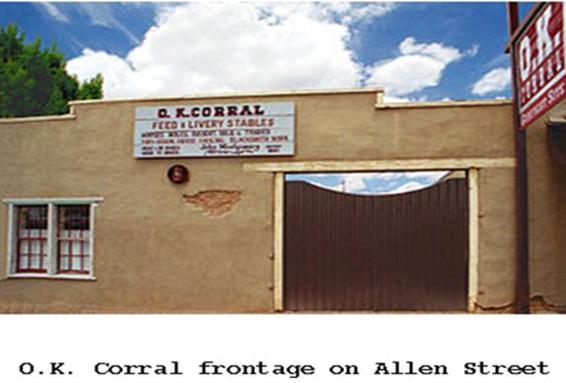
O.K. Corral
Tombstone Unified School District serves Tombstone. The district schools in Tombstone are Walter J. Meyer Elementary School and Tombstone High School. Tombstone is within the Cochise Technology District which assists in the development of career and technical education programs for high school students.
Several properties in Tombstone have been included in the National Register of Historic Places. The following are images of some of these properties.
1322
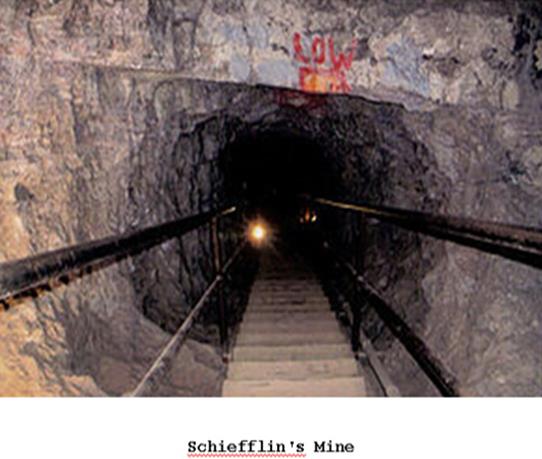
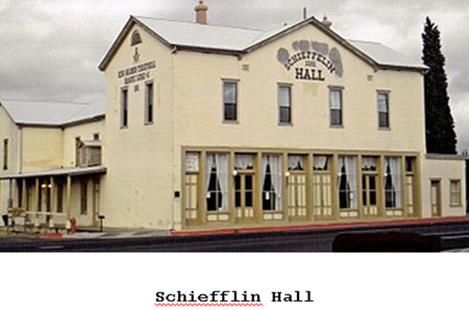
O.K. Corral
1323
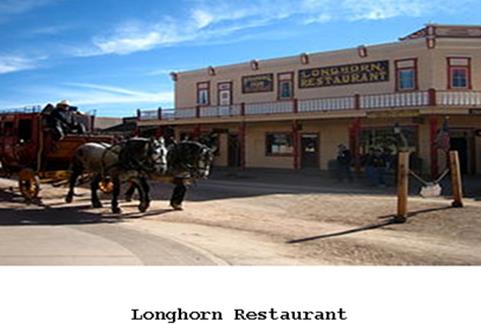
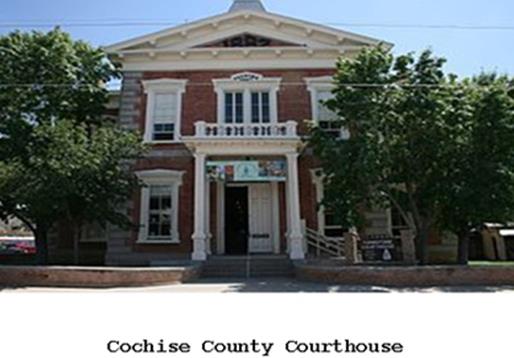
O.K. Corral
1324
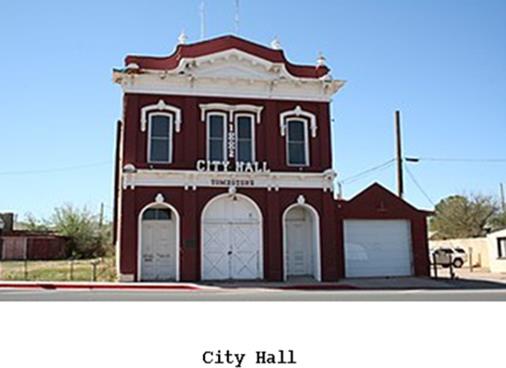
O.K. Corral
1325
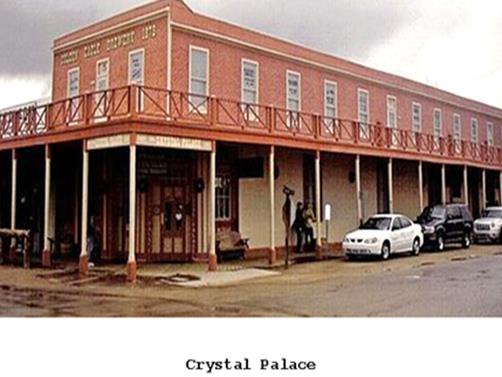
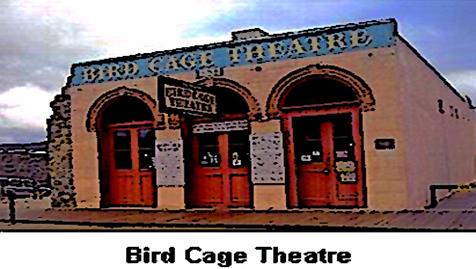
O.K. Corral
1326
O.K. Corral
The aforementioned 1957–1960 television series “Tombstone Territory” is set in Tombstone. It followed the adventures of fictional 1327
Sheriff Clay Hollister (Pat Conway) as he preserved peace in and around the town. Each episode was introduced and narrated by the fictional editor of “The Tombstone Epitaph,” Harris Claibourne (Richard Eastham).
The 1966 “Doctor Who” third season serial “The Gunfighters” is set in Tombstone. In it, the time traveling First Doctor (William Hartnell) and his companions become involved with the events leading up to the gunfight at the O.K. Corral.
The 1969 “Death Valley Days” episode "The Angel of Tombstone"
features a fictional depiction of Tombstone restaurant proprietor Nellie Cashman (Grace Lee Whitney).
The 2011 “Fact or Faked: Paranormal Files” episode "Old West Hauntings/Freeway Flyer" features an investigation into the alleged appearance of a coffin shaped apparition in a mirror at Tombstone's Bird Cage Theatre.
Set in Tombstone was the heavily fictionalized TV series “The Life and Legend of Wyatt Earp,” starring Hugh O'Brian in the title role. Steve 1328
Brodie played Behan in nine episodes of the series. Douglas Fowley played Doc.
1329
19- This is the End
The shootout at the O.K. Corral was clearly on the cusp of a turning point for the old Wild West. While the Wild West is more or less defined as from roughly 1865 to 1924, it began to get much tamer after this event of October 26, 1881. Subsequently, most cowboys turned away from gunplay and toward exponentially growing federal law enforcement or entertainment. Those who ignored the influx of the
“law and order” feds and/or didn’t like show business and bucked the trend, like the Doolins and the Daltons generally had an increasingly hard time.
So, if not the shootout at the O.K. Corral, what other candidates are there for “When did the end of the Wild West begin?” The early date of Buffalo Bill’s touring shows is the most potentially correct answer possible.
The Wild West is commonly used as a more nebulous term than you may think, so when the era ended is largely up for debate among those who ascribe to a hazy view. That also pertains to when it started. All attempts at razor sharp definitions of anything always leave one 1330
knowing less than they did before they looked it up, while those not seeking “expert” delineations, just know without knowing that they know.
For those doomed to the devil’s precision, Meriam-Webster defines
“Wild West” as “the western US in its frontier period characterized by roughness and lawlessness.” Most people understand this to include cowboys leading great cattle drives, saloon shootouts in dusty towns, wars between the US Army and Native Americans, stagecoach robberies, and general mayhem in a land beyond normal law enforcement.
Defining the beginning and ending of the Wild West is subject to debate. In its beginning, one can argue that the Wild West started as early as the settlement at Jamestown, Virginia in 1607. The Wild West just migrated west as European settlement grew.
When the Wild West ended is also tricky. Was it when quick draw duels stopped? Was it when the last Native Americans were subjugated? Or was it when there was no longer a frontier?
1331
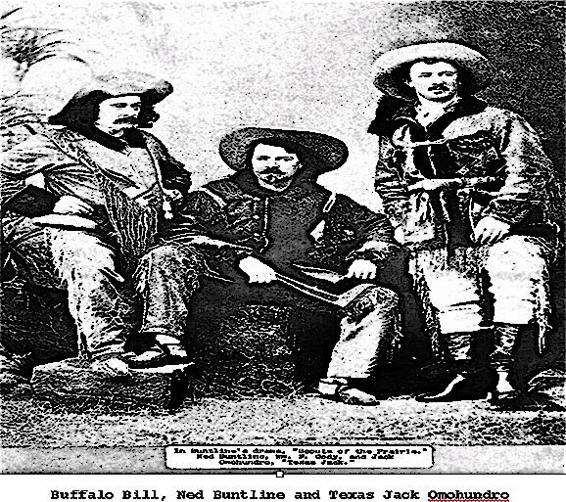
O.K. Corral
Choosing a date is a subjective act, but since we all like to be subjective whether we admit it or not, let’s take a look at some of the possible dates for when the Wild West really ended.
1883: Success of Buffalo Bill’s Wild West Show
1332
Though stage entrees commenced in 1873 he earliest date to consider as significant or successful is 1883. It was in this year, on May 19th, that William F. “Buffalo Bill” Cody popularized the very first of his own famous Wild West shows in Omaha, Nebraska.
While Bill’s Wild West wasn’t the first Wild West type exhibition, it certainly was the most popular. According to the “Buffalo Bill Center of the West,” Cody teamed up with the dentist and deadeye shooter Dr.
W.F. Carver to create a genre of entertainment that gave attendees a spectacle of a certain version of the Wild West.
“The Encyclopedia of the Great Plains” details how these shows included Plains Indians, cowboys, and the frontier scout. The shows depicted Native Americans as savages always on the attack against white settlers. Some of the simulated fights included “The Burning of Trapper Tom’s Cabin,” “The Fight at Wounded Knee,” “Capture of the Deadwood Mail Coach,” and “The Battle of the Little Big Horn.” In all they showed the audience how the west was won. In doing so, it began the popular modern depiction of the Wild West.
1333
“The Wild West Show” was a marker in time of how it was believed that the United States achieved its manifest destiny. Usually you don’t depict a historical event until the event is over. With Cody, the Wild West became a sentimental feature of the past.