

O.K. Corral by Edward Drobinski - HTML preview
Download the book in PDF, ePub, Kindle for a complete version.
1887: The Great Die Up
The image of the cowboy leading great cattle drives on the open range are certainly indelible icons of the Wild West. The vast expanses of open land in Wyoming, Montana, and the Dakotas meant plenty of free space to run cattle.
Between the years 1866 and 1885 some 5.7 million head of cattle were driven across the ranges to northern markets or to other lands in the north. However, according to the “Smithsonian,” disaster struck in the winter of 1887.
After the Civil War, Texas cattle owners discovered the economic advantages of driving stock north to rail heads for shipping to high priced Eastern markets. Early on, profits could be amazing. Beef shortages back East drove prices skyward, and Texas longhorns 1334
actually got fatter as they grazed their way to Kansas and points north.
Like our own era, it was a period of economic expansion. The wealthy had idle money. Why not put it to work in the blazingly profitable cattle industry of the romantic West? The stock raising business relied on trained professionals. But that didn't matter then, no more than it seems to matter now. You just employed on-site cattle bosses;
“experts” to handle that.
A herd of 19th century writers tracked bullish on cattle. At its frenzy in the three years after 1883, money poured into the Western cattle business. Elegant stock clubs such as the Cheyenne Stock Growers Association offered sumptuous facilities to visiting owners. Literally millions of beeves filled the Great Plains to bursting.
By 1885 cattle town newspapers were predicting disaster. Overgrazing made feed scarce, while beef prices fell in the St. Louis and Chicago markets. In increasingly risky speculation, managers of the huge but high risk cattle outfits put on the happy face expected of them. They chronically underreported years of attrition and winter stock losses 1335
O.K. Corral
and over reported increases. Cattle dealers overestimated the size of herds they sold. Eastern investors didn't know the difference.
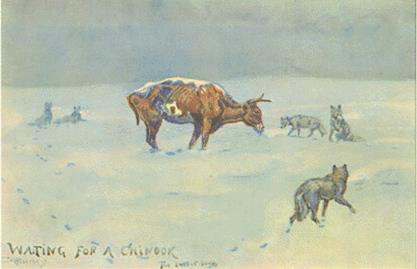
The crash, the "big die-off," came the winter of '86-87. A harsh winter after a dry summer left little for range cattle expected to rustle their own winter feed. When the lands thawed millions of cattle lay dead. It is estimated that this “Great Die Up” killed about 90% of the cattle on the plains. What was left the next spring many remember in a single picture by C.M. Russell; an emaciated cow entitled "The Last of 5,000"
or “Waiting for a Chinook.”
That single winter's cattle die off may not have been as bad as that.
Managers took the opportunity offered by nature to tote up unreported 1336
losses of several years on one income statement and balance sheet.
The numbers shocked imprudent investors. Some of the largest and most famous operations went broke. Theodore Roosevelt may have gotten his strength from North Dakota, as he said, but he certainly did not increase his fortune there.
The die off crushed the frenzy of speculation in cattle. Few absentee financiers survived. Local ranchers filled the void to make the industry reasonably profitable for those who knew what they were doing and had modest expectations. Ranchers reduced their cattle stock while at the same time increased their agricultural production in order to better be prepared for another hard winter.
Lands started to become fenced as people preferred to defend what they had near grain supplies rather than risk the open range. The year 1887 in many ways was the end of the open and Wild West and the beginning of a new age of boundaries marked by barbed wire.
1887: Doc Holliday’s Death
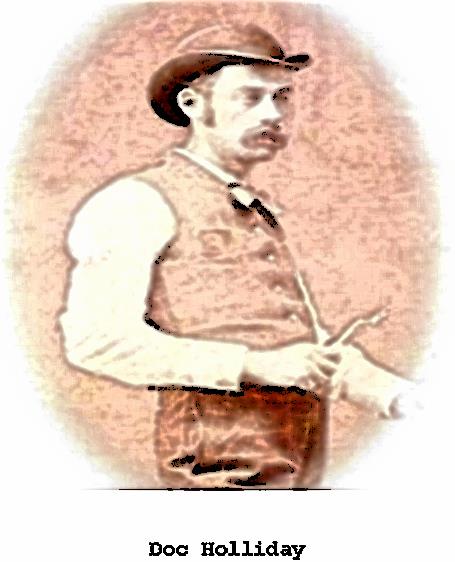
No other figure commanded more respect, adulation, and fear than Doc Holliday. How, with death the possible penalty for an error, he 1337
O.K. Corral
fearlessly stood up for his friends in their times of peril is virtually unmatched in reality.
He is the true vision of the Wild West which most fans seek in the fiction which the entertainment industry provides and capitalizes on.
One of the best recognized characters of the American Old West, Doc Holliday is remembered for his friendship with Wyatt Earp. In an 1896
article, Wyatt Earp said of Holliday; “I found him a loyal friend and good company. He was a dentist whom necessity had made a gambler; 1338
a gentleman whom disease had made a vagabond; a philosopher whom life had made a caustic wit; a long, lean blonde fellow nearly dead with consumption and at the same time the most skillful gambler and nerviest, speediest, deadliest man with a six gun I ever knew.”
1890: The Closing of the Frontier and Wounded Knee
The year 1890 has two seminal events that make it a strong runner for the official end of the Wild West. The first occurred on December 29th at the Wounded Knee Massacre.
In this action, the US 7th Cavalry, led by Colonel James F. Forsyth, had been dispatched to suppress Plains Indians near the Wounded Knee Creek. In particular, alarms were raised over the spread of the Ghost Dance, a North American Indian religious cult of the second half of the 19th century, which was based on the performance of a ritual dance that, it was believed, would drive away white people and restore the traditional lands and way of life. It was seen by White Americans as a sign of insurrection. Advocated by the Sioux chief Sitting Bull, the cult was central to the uprising that was crushed at the Battle of Wounded Knee.
1339
In the terrible action that followed, up to 300 Miniconjou Lakota were killed, nearly half of which were women and children. Twenty five US
soldiers died. Wounded Knee was a seminal event which marked the end of organized resistance by Native Americans against Whites.
The second event came the next year when the US Census declared that there was no longer any frontier. It declared; “Up to and including 1880 the country had a frontier of settlement, but at present the unsettled area has been so broken into by isolated bodies of settlement that there can hardly be said to be a frontier line.”
Without there being a settlement line and the great wilderness that lay beyond it, it marked the end of an epoch. The writer Frederick Jackson Turner would state; “The frontier has gone, and with its going has closed the first period of American history.”
1895 and 1900: Arbitrary Wild West Dates
1340
O.K. Corral
Many different sources tend to give one of two different dates as the end of the Wild West period; 1895 or 1900. One textbook, “The American West,” states; “By 1895 the problems of lawlessness were gradually being sorted out.”
However, the text doesn’t cite anything in particular that happened in 1895. “The Old West in Fact and Film” does the same. Likewise, if you were to search the web, there are numerous sites that state generally that 1895 is largely considered the end of the Wild West.
1341
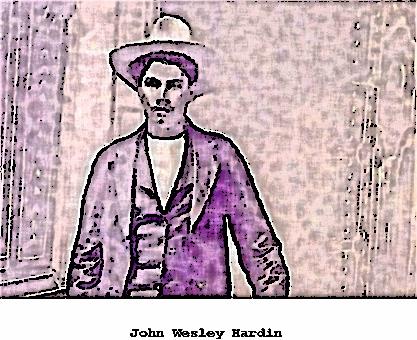
But there is no reason given. In fact, looking at events of 1895 the only thing that is notable is that the murderer John Wesley Hardin was shot dead while playing dice in a saloon. That hardly seems like the end of the Wild West.
Similarly, 1900 is also cited as being the end of the Wild West. Again, same problem. The only notable thing which happened in that year is the Scofield Mine Disaster in which 200 miners were killed after an explosion. But as tragic as this may be, it hardly seems to put a period on the Wild West.
So where does the “Library of Congress” come up with the 1900 end date? No reason is given leaving us to assume it is because it is the turn of the century; an easy date. Likewise, the same may be thought of for 1895 which was thirty years after the Civil War. Both are arbitrary dates, but nice round years.