

O.K. Corral by Edward Drobinski - HTML preview
Download the book in PDF, ePub, Kindle for a complete version.
Shooter Bill,” was frequently arrested in Guthrie for drunkenness and disorderly conduct, while his older brother, known as “Six-Shooter Jack,” was a known professional gambler, who would be later killed in a saloon in Texline, Texas in 1891.
Somewhere along the line, Nathaniel acquired the nickname of “Zip”
from a man who lived near Fort Smith, Arkansas, and was best known throughout his life by that moniker, or by his alias, Dick Yeager.
Zip’s mother, Rachel, died in February 1890 and the following year, Zip married a woman named Annie Bailey near Mulhall, Oklahoma. The pair had one daughter. However, life for his wife and child would be far from “normal,” as on June 3rd, 1891, Zip shot up the town of Mulhall, wounding two citizens, and fled north to the Cherokee Outlet, before making his way to Kansas.
With a warrant out for his arrest, Zip made his way to Kiowa County, Kansas where he stole some riding gear in Greensburg. Deputy Sheriff Andrew Balfour soon tracked down the outlaw to Pryor’s Grove, Kansas, about ten miles north of Greensburg, where he attempted to arrest the fugitive, only to be shot in the abdomen, with the bullet 1105
striking the officer in the spine and killing him. However, the deputy rallied before he died, shooting Wyatt twice, but only wounding him slightly in the hand on his left side. Deputy Sheriff Balfour left a wife and six children.
With yet another warrant on his head and a $1,000 reward for his capture, Zip fled to his native Indiana, where he hid out with relatives.
Several months later however, he was apprehended and after a long extradition proceeding, Zip was returned to Guthrie, Oklahoma to face charges on his spree in Mulhall. The outlaw was able to escape from jail once but was quickly recaptured. Undaunted, he tried again on December 31st, 1892, and this time, was successful.
He soon joined up with Ike Black and the two formed a gang, making numerous robberies in the area, including the robbery of the Hightower Store and post office in Arapaho, Oklahoma in November 1893. As Black and Wyatt hid out in the Gypsum Hills, they were often aided by their wives, who brought them food and supplies. The gang was soon blamed for almost every crime committed in the territory, and a reward was placed on Wyatt’s head of $5,000 for his capture.
1106
On January 20th, 1895, Fred Hoffman, the treasurer of D County, now Blaine County, Oklahoma was killed and though it could never be proven, the gun that killed the treasurer was reportedly traced to Zip Wyatt.
Around this same time, Zip Wyatt and Ike Black were thought to have joined up with the Doolin-Dalton Gang, participating in the Rock Island train robbery in Dover, Oklahoma on April 3rd, 1895.
On June 3rd, 1895, an outlaw gang robbed the store and post office at Fairview, Oklahoma, taking everything of value and three horses. The outlaws were quickly pursued by US Deputy Marshals, Gus Hadwinger and J. K. Runnels, and Woods County Sheriff Clay McGrath and Deputy Marion Hildreth. Catching up with the robbers the following day, they surprised the gang who were hiding in a cave near the county line. In the ultimate gunfight that broke out, Ike Black was hit in the foot and Zip took a shot in the left arm, but the outlaws were able to escape.
The pressure continued from the lawmen, which now numbered almost 200 looking for the pair.
1107
On July 26th, the outlaw pair robbed the Oxley, Oklahoma post office and store, but only gained about $35 and some supplies. However, during this robbery, they were recognized and the next day a posse went after them, tracking them to a site near Salt Creek, about six miles northwest of Oxley. When gunfire erupted once again, Black received a flesh wound to the head, but both men were able to escape once again, however, their horses had run off and they were now afoot.
The following day, they had made their way to a farm about five miles west of Okeene, Oklahoma, where they stole some horses and a cart.
Another posse was formed, led by Robert Callison, the constable of Forrest Township, and the men once again went after Black and Wyatt.
Tracking them to a canyon on July 28th, the guns blazed once again and posse member, Frank Pope was shot in the right leg. However, the
“lucky” outlaws were able to escape. By this time, the original posse was joined by another from Alva, Oklahoma, led by Deputy Sheriff Hildreth, who pursued the fugitives southeast.
1108
Black and Wyatt took refuge in a shack about four miles east of Cantonment, present day Canton, and when the posse caught up with them on August 1st, Black was shot in the head and killed. Zip was also shot in the left side of his chest but escaped the posse. He then headed to a doctor’s house a mile away and forced the doctor to give him a horse and tend to his wound. Riding off on the horse for about seven miles, the wounded Wyatt, soon let the horse go as the pain of his chest wound was two intense. He then waylaid a small wagon near Homestead, forcing the young driver to take him some 25 miles northeast. After crossing the Cimarron River, he let the boy go and continued in the cart.
On the afternoon of August 3rd, Zip was spied crossing the Rock Island railroad at Waukomis, just five miles south of Enid. When Garfield County Sheriff Elzie thralls got word of Zip’s location, he put together a posse and went after the desperate bandit. Zip deserted the horse and cart about miles east of the railroad at Skeleton Creek Valley and once again traveled afoot. That evening, Wyatt came across a small cabin owned by John Daily and ordered the owner to 1109
O.K. Corral
provide him a horse and come with him. Later, Wyatt let Daily go and the freed man quickly raised the alarm as to Zip’s last known location.
The dawn the following morning on August 4th, a final posse from the Anti-Horse thief Association from Sheridan, Oklahoma, went after the elusive outlaw. By 10:00 AM, they were joined by another posse from Enid. Tracking Wyatt to a site about five miles southeast of Marshal, the men split up and surrounded the outlaw. When the deputies ordered the outlaw bandit to throw up his hands, Wyatt went for his gun and Deputies Ad Polk and Tom Smith both fired on him, striking him once in the pelvis and once in his stomach. Finally, Zip Wyatt surrendered. The outlaw was then taken to a church in Sheridan where 1110
he was treated by two doctors. That same day, Zip was transferred to Enid and jailed. John Daily and the Sheridan posse would split the reward for his capture.
As various jurisdictions argued over where Wyatt would be tried, local doctors intervened telling authorities that Zip was a dying man.
However, for the next three days, Wyatt would “hold court” in his jail cell, as numerous people came to see the now infamous outlaw.
Enjoying the attention, Wyatt boasted of having killed eleven men and getting away with numerous crimes.
When John T. Wyatt, Zip’s father, arrived to visit him on August 7th, he told reporters that his son was 24 or 25 years old, had not participated in the Doolin Gang robbery in Dover, Oklahoma and had never been a regular companion of either Bill Doolin or Bill Dalton.
John’s testimony was amusing in a few ways. That he didn’t know the exact age of his purported son suggests a lack of closeness which would likely exclude him from having any knowledge of Zip’s whereabouts at any time, including his presumptions that Zip did not 1111
participate in the Dover, Oklahoma robbery, as well as if he had made the acquaintances of Bill Doolin or Bill Dalton.
Zip Wyatt continued to linger in the jail, pumped up on morphine for his pain until by the end of August, he had been reduced to little more than a skeleton. He finally died on September 7th, 1895.
The following day, his sister, Mrs. Pricket appeared to claim his effects, but not to claim the body. However, the sheriff refused to turn over his personal possessions. On September 9th, 1895, Wyatt was buried in a cheap pine coffin, without a marker in a pauper’s field south of the city without a funeral nor any family members present.
Years later, many of the bodies in the old cemetery were moved but Wyatt’s was already lost and remained where it was, in what is today a residential development in Enid.
1112
16 - The Chiefly Tombstone Cowboys After the Shootout 16A– Johnny Ringo Revisited
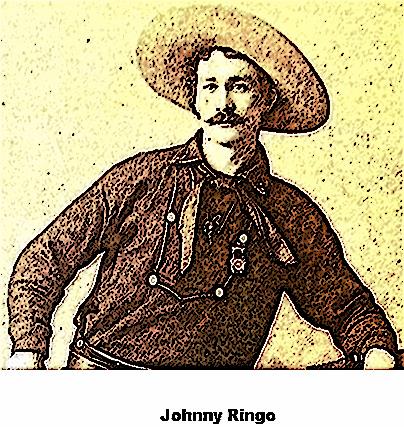
On January 17th, 1882, Johnny Ringo and Doc Holliday traded threats and seemed headed for a gunfight. Both men were arrested by Tombstone's chief of police, James Flynn, and hauled before a judge for carrying weapons in town. Both were fined. Judge William H.
Stilwell followed up on charges outstanding against Ringo for a robbery in Galeyville and Ringo was re-arrested and jailed on January 20th for the weekend. Ringo was suspected by the Earps of taking part in the December 28th, 1881, ambush of Virgil Earp that crippled him for life, and the March 18th, 1882, murder of Morgan Earp while he was shooting pool in a Tombstone saloon.
1113
O.K. Corral
Deputy US Marshal Wyatt Earp and his posse killed Frank Stilwell in Tucson on March 20th, 1882. After the shooting, the Earps and a federal posse set out on a vendetta to find and kill the others they held responsible for ambushing Virgil and Morgan. Cochise County Sheriff Johnny Behan received warrants from a Tucson judge for arrest of the Earps and Holliday. Deputized Ringo and nineteen other men, many of them friends of Stilwell and the Cochise County Cowboys, pursued but never found the Earps' posse.
1114
During the Earp Vendetta Ride, Wyatt Earp killed one of Ringo's closest friends, "Curly Bill" Brocius, in a gunfight at Iron Springs, later called Mescal Springs, about 20 miles from Tombstone. Earp told his biographer, Stuart Lake, that a man named Florentino Cruz confessed to being the lookout at Morgan's murder and identified Ringo, Stilwell, Swilling, and Brocius as Morgan's killers, though modern researchers doubt Earp's story.
During Tombstone's Fourth of July festivities, Ringo drank heavily. He left town two days later, taking several bottles of liquor for the ride.
Deputy Billy Breakenridge saw him two days later near Dial's Ranch in the South Pass of the Dragoon Mountains. He later wrote that; "Ringo was very drunk, reeling in the saddle." He encouraged Ringo to follow him back to the Goodrich Ranch, but "he was drunk and stubborn and went on his way. I think this was the last time he was seen alive." At about 3 PM on July 13th, ranch hands at a nearby ranch heard a shot.
A teamster named James Yoast was hauling wood when he found Ringo's body on July 14th seated in "a bunch of five large black jack oaks growing up in a semi-circle from one root, and in the center of 1115
them was a large flat rock which made a comfortable seat." He was
"not more than 700 feet from Smith’s house" in West Turkey Creek Valley, near Chiricahua Peak in Arizona Territory. His body had already turned black from the desert heat.
His feet were wrapped in strips of cloth torn from his undershirt. Ringo had lost his horse with his boots tied to the saddle. The coroner's report noted that; "He had evidently traveled but a short distance in this foot gear." There was a bullet hole in his right temple and an exit wound at the back of his head. The fatal wound was upward at a 45
degree angle between the right eye and ear. His revolver was still in his right hand.
According to the coroner's report, Ringo's Colt single action army .45
revolver held five cartridges; the hammer rested on the empty chamber. A knife cut was found at the base of his scalp, as if
"someone had cut it with a knife." His horse was found eleven days later about two miles away with Ringo's boots still tied to the saddle.
A coroner's inquest officially ruled his death a suicide.
1116
Ringo's body is buried near the base of the tree where it was discovered. The grave is located on private land. A gate on a nearby road permits visitors to view the site. Despite the coroner's ruling and contemporaneous newspaper reports that Ringo had "frequently threatened to commit suicide, and that the event was expected at any time," alternative theories of doubtful plausibility about Ringo's death have been proposed over the years. Some assert that the lack of a powder burns on his head suggest he was shot from a distance. The coroner’s jury report does not mention the presence or absence of powder burns. Furthermore, Ringo's body was already turning black due to decomposition.
Robert Boller, a member of the coroner's jury, wrote in 1934; "I showed James Yoast where the bullet had entered the tree on the left side.
Blood and brains were oozing from the wound and matted his hair.
There was an empty shell in the six shooter and the hammer was on that. I called it a suicide fifty-two years ago, I am still calling it suicide. I guess I’m the last of the coroner’s jury."
1117
According to the book “I Married Wyatt Earp,” which author and collector Glen Boyer claimed to have assembled from manuscripts written by Earp's third wife, Josephine Marcus Earp, Earp and Doc Holliday returned to Arizona with some friends in early July and found Ringo camped in West Turkey Creek Valley. As Ringo attempted to flee up the canyon, Earp shot him with a rifle. Boyer refused to produce his source manuscripts, and reporters wrote that his explanations were conflicting and not credible. “New York Times” contributor Allen Barra wrote that; “’I Married Wyatt Earp’ is now recognized by Earp researchers as a hoax."
Tombstone historian Ben T. Traywick believed the Earp theory credible, reasoning that only Earp had sufficient motive, he was probably in the area at the time, and near the end of his life he told one historian "in circumstantial detail how he killed John Ringo." Earp was interviewed in 1888 by an agent of California historian Hubert H.
Bancroft, and in 1932 by Frank Lockwood, who wrote “Pioneer Days in Arizona.” Earp told both of them that he killed Ringo as he left Arizona in March 1882, almost four months before Ringo died. He included other details that do not match what is known about Ringo's death.
1118
Earp repeated his story to at least three other people. In an interview with a reporter in Denver in 1896, Earp denied that he had killed Ringo; but later, privately, claimed once again that he had.
The Doc Holliday theory is similar to the Earp theory, except that Holliday is alleged to have killed Ringo. A variant, popularized in the movie “Tombstone,” asserts that Holliday stepped in for Earp in response to a gunfight challenge from Ringo and shot him. Records of the Pueblo County, Colorado District Court indicate that Holliday and his attorney appeared in court on July 11th, 14th, and 18th, 1882 to answer charges of "larceny." However, a writ of capias was issued for him on the 11th, suggesting that he did not in fact appear in court on that date. Ringo's body was found on the 14th. Six days before Ringo's death, the “Pueblo Daily Chieftain” reported that Holliday was in Salida, Colorado, about 670 miles from Turkey Creek, Arizona; and then in Leadville, about 700 miles distant, on July 18th. There was still an arrest warrant outstanding on Holliday in Arizona for his part in Frank Stilwell's murder, making it unlikely that he would have entered Arizona at that time.
1119
Some accounts attribute Ringo's death to Michael O'Rourke, an itinerant gambler who was arrested in Tucson in January 1881 on suspicion of murdering a mining engineer named Henry Schneider.
Wyatt Earp is said to have protected him from being lynched by a mob organized and led by Ringo. O'Rourke escaped from jail in April 1881
and never stood trial on the murder charges.
The last documented sighting of O'Rourke was in the Dragoon Mountains near Tombstone during May 1881, "well-mounted and equipped," and presumably on his way out of the territory. From then on he is referenced only in unsubstantiated rumors and legends.
According to one, a combination of the debt he owed Earp and the grudge he held against Ringo prompted him to return to Arizona in 1882, track Ringo down, and kill him. While some sources consider the story plausible, others point out that O'Rourke, like Holliday, would have been reluctant to re-enter Arizona with a murder warrant hanging over his head, particularly to commit another murder.
While in the Yuma Territorial Prison for killing his wife, Buckskin Frank Leslie reputedly confessed to a guard that he had killed Ringo. Few 1120
believed his story, and some thought he was simply claiming credit for it to curry favor with Earp's inner circle, or for whatever notoriety it might bring him.
1121
16B– Ike Clanton Revisited
Clanton filed legal charges against the Earps and Holliday over the Cowboy deaths at the O.K. Corral. Clanton was implicated in the attempted assassination of Virgil Earp on December 30th, 1881 but other Cowboys provided an alibi and he was released. Six years later Clanton was killed attempting to flee when he was shot by a lawman seeking to arrest him for cattle rustling.
Clanton had told others that Doc Holliday, Virgil Earp, Wyatt Earp, and Morgan Earp had all confided in him that they had actually been involved in the Benson stage robbery. On October 25th, 1881, while Clanton was in Tombstone, drunk and very loud, Holliday accused him of lying about the Benson stagecoach robbery. Tombstone City Marshal Virgil Earp intervened and threatened to arrest both Holliday and Clanton if they did not stop arguing, and Holliday went home.
After the confrontation with Clanton, Wyatt Earp took Holliday back to his boarding house at Camillus Sidney "Buck" Fly's Lodging House to sleep off his drinking, then went home and to bed. Tombstone Marshal Virgil Earp played cards with Clanton, Tom McLaury, Cochise County 1122
Sheriff Johnny Behan and a fifth man unknown to Clanton and to history, until morning.
At about dawn on October 26th, the card game broke up and Behan and Virgil Earp went home to bed. Clanton testified later that he saw Virgil take his six shooter out of his lap and stick it in his pants when the game ended. Not having rented a room, McLaury and Clanton had no place to go. Shortly after 8:00 AM barkeeper E. F. Boyle spoke to Clanton, who had been drinking all night, in front of the telegraph office. Boyle encouraged him to get some sleep, but Clanton insisted he would not go to bed. Boyle later testified he noticed Clanton was armed and covered his gun for him, recalling that Clanton told him;
"’As soon as the Earps and Doc Holliday showed themselves on the street, the ball would open that they would have to fight.' I went down to Wyatt Earp's house and told him that Ike Clanton had threatened that when him and his brothers and Doc Holliday showed themselves on the street that the ball would open." Clanton said in his testimony 1123
afterwards that he remembered neither meeting Boyle nor making any such statements that day.
Later in the morning, Clanton picked up his rifle and single action revolver from the West End Corral, where he had stabled his wagon and team and deposited his weapons after entering town. By noon that day, Clanton, drinking again and armed, told others he was looking for Holliday or an Earp. At about 1:00 PM, Virgil and Morgan Earp surprised Clanton on 4th Street where Virgil pistol whipped him from behind.
Disarming him, the Earps took Clanton to appear before Judge Wallace for violating the city's ordinance #9 against carrying firearms in the city. Virgil Earp went to find Judge Wallace so the court hearing could be held."
Clanton reported in his testimony afterward that Wyatt Earp cursed him. He said Wyatt, Virgil, and Morgan Earp offered him his rifle and to fight him right there in the courthouse, which Clanton declined.
Clanton also denied ever threatening the Earps. Clanton was fined $25
plus court costs and after paying the fine left unarmed. Virgil Earp told Clanton he would leave Clanton's confiscated rifle and revolver at the 1124
Grand Hotel which was favored by Cowboys when in town. Clanton testified that he picked up the weapons from William Soule, the jailer, a couple of days later.
At around 1:30–2:00 PM, after Tom McLaury had been pistol whipped by Wyatt, Clanton's 19 year old younger brother Billy Clanton and Tom's older brother Frank McLaury arrived in town. They had heard from their neighbor, Ed Frink, that Clanton had been stirring up trouble in town overnight, and they had ridden into town on horseback to back up their brothers. They arrived from Antelope Springs, 13 miles east of Tombstone, where they had been rounding up livestock with their brothers and had breakfasted with Clanton and Tom McLaury the day before. Both Frank McLaury and Billy Clanton were each armed with a revolver and a rifle, as was the custom for riders in the country outside Tombstone. Apache warriors had engaged the US Army near Tombstone just three weeks before the O.K. Corral gunfight, so the need for weapons outside of town was well established and accepted.
Billy and Frank stopped first at the Grand Hotel on Allen Street, and were greeted by Doc Holliday. They learned immediately after of their 1125
brothers' beatings by the Earps within the previous two hours. The incidents had generated a lot of talk in town. Angrily, Frank said he would not drink, and he and Billy left the saloon immediately to seek Tom. By law, both Frank and Billy should have left their firearms at the Grand Hotel. Instead, they remained fully armed. The city statute was not specific about how far a recently arrived visitor might "with good faith, and within reasonable time" travel into town while carrying a firearm. This permitted a traveler to keep his firearms if he was proceeding directly to a livery, hotel or saloon.
A man named Coleman told Virgil that the Cowboys had left the Dunbar and Dexter Stable for the O.K. Corral and were still armed, and Virgil decided they had to disarm them. The three main Tombstone corrals were all west of 4th street, a block or two from where Wyatt saw the Cowboys buying cartridges.
Cochise County Sheriff Johnny Behan, a friend to the Cowboys, later testified that he first learned of the trouble while he was getting a shave at the barbershop after 1:30 PM, which is when he had risen after the late night game. Behan stated he immediately went to locate 1126
the Cowboys. At about 2:30 PM he saw both Clantons and both McLaurys gathered off Fremont street in a narrow 15–20 feet wide empty lot or alley immediately west of 312 Fremont Street, which contained Fly's 12 room boarding house and photography studio. The lot was six lots removed from the rear entrance to the O.K. Corral.
When Virgil Earp learned that Wyatt was talking to the Cowboys at Spangenberg's gun shop he picked up a 10 gauge or 12 gauge, short, double barreled shotgun from the Wells Fargo office around the corner on Allen Street. To avoid alarming Tombstone's public, Virgil returned to Hafford's Saloon carrying the shotgun under his long overcoat. He gave the shotgun to Doc Holliday who hid it under his overcoat. He took Holliday's walking stick in return. From Spangenberg's, the Cowboys moved to the O.K. Corral where witnesses overheard them threatening to kill the Earps. They then walked a block north to an empty lot next to C. S. Fly's boarding house where Doc Holliday lived.
Virgil Earp was told by several citizens that the McLaurys and the Clantons had gathered on Fremont Street and were armed. He decided he had to act. Several members of the citizen's vigilance committee 1127
offered to support him with arms, but Virgil said no. He had previously deputized Morgan and Wyatt and also deputized Doc Holliday that morning. Wyatt spoke of his brothers Virgil and Morgan as the
"marshals" while he acted as "deputy."
Witnesses later testified that Ike Clanton had spent all day, even after his arrest and disarming, threatening to gun down the Earps. However, when the gunfight broke out, Clanton ran forward and grabbed Wyatt, exclaiming that he was unarmed and did not want a fight. To this protest Wyatt said he responded; "Go to fighting or get away!" Clanton ran through the front door of Fly's boarding house and escaped, unwounded.
In the days before the gunfight, Clanton had enlisted the help of fellow Cowboy Billy Claiborne, who was reputed to be good with a gun.
Claiborne, who was also unarmed, fled the gunfight. Tom and Frank McLaury and Billy Clanton were killed.
After the gunfight in Tombstone, during which the McLaury brothers and Billy Clanton were killed, Ike Clanton filed murder charges against the Earps and Doc Holliday. They were arrested and released on bail.
1128
During a month long preliminary hearing before Judge Wells Spicer, Clanton told a story of abuse that he had suffered at the hands of the Earps and Holliday the night before the gunfight. He denied having threatened the Earps. He testified that the Clantons and Frank McLaury raised their hands after Virgil's command, and Tom thrust open his vest to show he was unarmed. Clanton said Wyatt shoved his revolver in his belly, telling him; "You son of a bitch, you can have a fight!"
Clanton backed up Cochise County Sheriff Johnny Behan's testimony that Holliday and Morgan Earp had fired the first two shots and that the next several shots also came from the Earp party. Under cross-examination, Clanton told a story of the lead up to the gunfight that did not make sense. He said the Benson stage robbery was concocted by the Earps and Holliday to cover up money they had "piped off" to pay bribes. Clanton also claimed that Doc Holliday and Morgan, Wyatt, and Virgil Earp had separately confessed to him their role in the Benson stage holdup, or else the cover-up of the robbery by allowing the robbers' escape.
1129
Clanton proved a better witness for the defense than the prosecution.
He said that Doc Holliday, Virgil Earp, Wyatt Earp, and Morgan Earp had all confided in him that they had actually been involved in the stage robbery. He further claimed that Holliday had told him that Holliday had "piped off" money from the stage before it left, although no money was missing, and the stage had not been successfully robbed. Clanton also said Holliday had confessed to him about killing the stage driver. Murder was a capital offense, and given their relationship, it was unlikely Holliday would confide in Clanton. Clanton testified that Earp had threatened to kill his confederates because he feared they would reveal his part in the robbery. Clanton said he feared that Wyatt wanted to kill him because he knew of Wyatt's role.
These and other inconsistencies in Clanton's testimony lacked credibility. By the time Clanton finished his testimony, the entire prosecution case had become suspect.
Judge Spicer exonerated the lawmen. In his ruling, he noted that Clanton had the night before, while unarmed, publicly declared that the Earp brothers and Holliday had insulted him, and that when he was armed he intended to shoot them or fight them on sight. On the 1130
morning of the shooting Virgil Earp had arrested him for carrying a revolver. At the gunfight, he was unarmed. Spicer noted that Clanton had claimed the Earps were out to murder him, yet on both occasions that day the Earps had not killed him, and allowed him to escape unchallenged during the fight. Spicer wrote; "The great fact, most prominent in the matter, to wit, that Isaac Clanton was not injured at all, and could have been killed first and easiest."
Clanton was later accused, along with his brother, Phin Clanton, and friend Pony Diehl, of attempting to kill Virgil Earp on December 30th, 1881, a shooting which left Virgil with a crippled left arm. Though Ike Clanton's hat was found at the scene where the ambushers waited, a number of associates stood up for him, saying that he had been in Contention that night, and the case was dismissed for lack of evidence.
On Saturday, March 18th, 1882, Morgan Earp was killed by a shot through a door window facing a dark alley while playing billiards at Hatch's Saloon in Tombstone. Wyatt was shot at and missed. Wyatt Earp concluded that he could not rely on civil justice and decided to 1131
take matters into his own hands. He concluded that only way to deal with Morgan's murderers was to kill them.
Deputy US Marshal Wyatt Earp led a federal posse that escorted Virgil Earp to the railroad, bound for his parents’ home in Colton, California.
Wyatt shot and killed Frank Stilwell, who was lying in wait at the Tucson, Arizona rail yard. A few days later Wyatt gathered a larger posse and set out on a vendetta, determined to mete out justice that had evaded him. Wyatt never located Clanton, although they killed three other outlaw Cowboys, and the Earps and Holliday left the Arizona Territory in late April, 1882.
By 1885, the Clanton gang included Lee Renfro, G.W. “Kid” Swingle, Longhair Sprague, Billy Evans, and Clanton's brother-in-law, Ebin Stanley. They moved their operations to a ranch they named the Cienega Amarilla, near Springerville, Arizona. On November 6th, 1885, local rancher Isaac Ellinger and Pratt Plummer had dinner with the Clanton brothers and Lee Renfro. After the meal, Ike, Renfro, and Ellinger went into a cabin on the Clanton ranch when for unknown reasons Renfro shot and killed Ellinger.
1132
Ellinger's older brother William Ellinger was one of the biggest cattlemen in the West with ranches in several states and territories.
William learned that his brother had lived four days, long enough to call the shooting “cold blooded murder.” William and Isaac were members of the Apache County Stock Association and William had a lot of political clout.
On December 25th, 1886, Christmas Day, Evans, wanting to see “if a bullet would go through a Mormon,” shot and killed Jim Hale in cold blood.
In April 1887, the Apache County Stock Association met and hired a Pinkerton detective to track down the outlaws. They also hired Jonas
"Jake" V. Brighton as a “secret service” officer. Brighton was a constable in Springerville and a range detective.
In April, 1887, Phin Clanton was arrested for rustling and jailed in St.
Johns. During May and June 1887, several grand jury indictments were brought against the Clantons and their friends. The indictments included charges of cattle rustling and murder for the death of Isaac Ellinger.
1133
Brighton pursued Clanton. After three days, he spent the night of May 31st, 1887 at Jim "Peg Leg" Wilson's Ranch on Eagle Creek, south of Springerville. The next morning Clanton rode up and Brighton recognized him. Clanton turned his horse to run and drew his rifle from his scabbard. Brighton fired his rifle first, shooting Clanton through the left side, the bullet exiting out the right. Clanton died before he hit the dirt.
A reporter who corresponded with Brighton in late June 1887 relayed Brighton's story about the arrest and shooting; “The next morning, while they were at breakfast, Ike Clanton came riding up to the front door. Mr. Brighton got up from the table, walked to the door, and was familiarly saluted by him. Just at this time, Mr. Miller stepped to the door, to be ready to render any assistance needed, and when Ike saw him he wheeled his horse and attempted to get under cover of the thick cover which grows close to Wilson's home, at the same time pulling his Winchester from its scabbard. Both Brighton and Miller ordered him to halt but instead of doing so, when about twenty yards distant where the trail took a turn to the left, he threw his rifle over his left arm attempting to fire. At this instance Detective Brighton fired, 1134
the ball entering under the left arm and passing directly through the heart and out under the right arm. Ike reeled in his saddle and fell on the right side of his horse, his rifle falling on the left. Before the fall, Brighton fired a second shot which passed through the cantle of the saddle and grazed Ike's right leg. When Brighton and Miller walked up to where Ike lay they found he was dead. Mr. Wilson, at whose ranch the shooting occurred, notified the nearest neighbors and four men came over and identified the deceased and assisted in giving him as decent a burial as circumstances would admit.”
A conflicting source stated that his body was left where it fell for several days until nearby Mormon ranchers buried him in an unmarked grave in the Mormon cemetery southeast of Eagar, Arizona on what is today called "The 26 Bar Ranch." Some modern writers wonder if Brighton simply used resisting arrest as an excuse to explain his assassination of Clanton.
In late June 1996 a Clanton family descendant, Terry "Ike" Clanton, along with former Citadel professor and grave expert James A.
Browning, searched the area near Eagle Creek in what is now 1135
Greenlee County, Arizona, where Ike was reportedly buried. They quickly discovered a shallow grave under a large tree that they believe contains the remains of Ike Clanton. Since their discovery, Terry has unsuccessfully tried to interest Tombstone city officials in exhuming the remains and re-interring them in Tombstone's famous Boot Hill graveyard.
1136
16C– Billy Clanton Revisited
On October 26th, 1881, Billy, Tom McLaury, and Frank McLaury were partakers in the gunfight at the O.K. Corral in the town of Tombstone.
His brother Ike was unarmed and ran from the gunfight. The shootout was his only gunfight. Billy was killed by Doc Holliday or Wyatt Earp.
Ike subsequently filed charges against the Earps.
1137
O.K. Corral
1138
O.K. Corral
Ike had repeated confrontations with the Earps and Doc Holliday. On October 26th, 1881, events came to a head when Billy and Ike got together with Billy Claiborne and brothers Tom and Frank McLaury at the Dexter Corral. When they were seen in town "heeled" (armed), anxious citizens warned the Earps. Upon attempting to disarm the Cowboys, a shootout broke out, later named the gunfight at the O.K.
Corral.
There remain today conflicting versions of what actually happened and who fired first. Ike Clanton and Billy Claiborne ran away in the opening moments. Billy Clanton emptied his gun during the fight and was killed along with both McLaurys. Doc Holliday, Virgil and Morgan Earp were wounded in the shootout.
1139
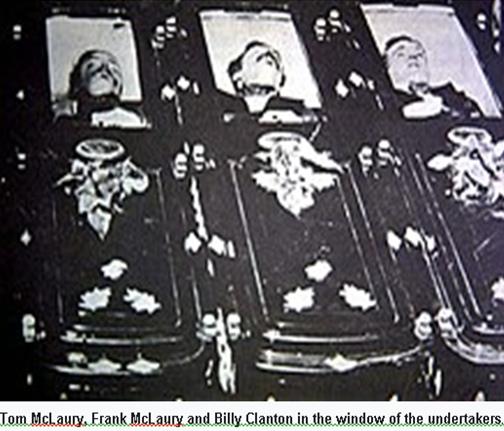
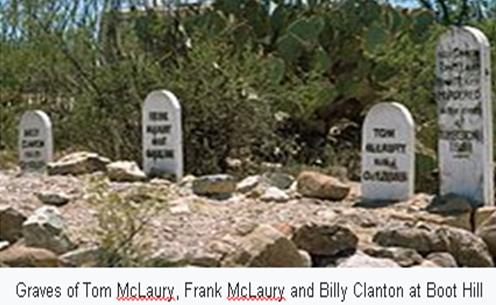
The town was divided, with many supporting the Clantons, and others supporting the Earps. The funeral that followed was the largest in Tombstone's history, with more than 300 people following the hearse and 2,000 watching from the city's sidewalks. The three Cowboys were buried in the Boot Hill cemetery. William McLaury, Frank and Tom's brother, tried to indict the Earps for killing the Cowboys. He wrote in a letter during the preliminary hearing that the two brothers and Billy Clanton were preparing to come to Fort Worth, Texas to visit after selling their cattle.
1140
16D– Frank McLaury Revisited
On October 26th, 1881, the McLaury brothers were in Tombstone to conclude a cattle deal. Tensions between the Earps and Cowboys had escalated. Ike Clanton had been cited earlier in the day for carrying a weapon in town, after which Tom McLaury had arrived to get Ike.
Wyatt Earp and McLaury had a heated exchange and Wyatt later testified he saw a pistol in Tom's waistband and buffaloed Tom.
Later in the day the Clantons and McLaurys, along with Billy Claiborne, faced off against the Earps and Doc Holliday in the gunfight at the O.K.
Corral. Some witnesses testified that Frank and Billy Clanton drew their weapons first, while others loyal to the Cowboys supported their version of events in which Tom opened his coat to show he was unarmed. The Earps and Holliday killed Frank and Tom McLaury along with Billy Clanton. All three were buried in Tombstone's Boot Hill cemetery. Their brother William McLaury spent most of his finances in pursuing charges against the Earps and Doc Holliday. Tom left his pistol at a nearby saloon at some point that afternoon, but the Earps had no way of knowing that.
1141
Tom McLaury had $3,000 in his possession when he died during the shootout, a fact that the prosecution emphasized during the preliminary hearing that followed the shootout. His brother William, who joined the prosecution team, wrote in a letter home to Texas that his brothers had just sold their herd of cattle and were leaving Tombstone shortly to come be with him in Fort Worth. He said that they were in Tombstone on business, with plans to depart shortly afterward to visit him in Texas. They may have been arranging a cattle deal with their neighbor E. B Frink with butchers Bauer & Kehoe.
Although modern historians have called him a gunfighter, others say he was not. The gunfight at the O.K. Corral is believed to have been his only violent confrontation.
1142
16E– Tom McLaury Revisited
By October 1881, tensions between the Earps and Cowboys had increased dramatically. Ike Clanton, a good friend of Tom's, had repeatedly threatened the Earps. On October 26th he had been drinking most of the previous night and that morning. He was armed and told others he was looking for Holliday or an Earp. At about 1:00
PM, Virgil and Morgan Earp surprised Ike on 4th Street and Virgil buffaloed/pistol-whipped him from behind. Disarming him, Virgil took Ike to appear before Judge Wallace for violating the city's ordinance against carrying firearms in the city. While Wyatt waited with Clanton, Virgil went to find Judge Wallace so the court hearing could be held.
On the morning of October 26, 1881, the McLaury brothers were also in Tombstone and armed in violation of a city ordinance prohibiting carrying weapons in town.
It is not known who started shooting first. Accounts by both participants and eye-witnesses were contradictory. Those loyal to one side or the other told conflicting stories and independent 1143
eyewitnesses who did not know the participants by sight were unable to say for certain who shot first.
Most witnesses reported the first two shots were so close together that they could barely be distinguished. Some witnesses testified that Morgan and Doc fired across one another at Billy and Frank, respectively. Wyatt later testified that he and Billy Clanton fired the first two shots. Virgil said one of the first shots was Billy Clanton's. All witnesses agreed that general firing almost immediately commenced.
Witnesses could not agree on whether Tom McLaury was armed.
On October 30th, 1881, Ike Clanton filed murder charges against the Earps and Doc Holliday. Justice of the Peace Wells Spicer convened a preliminary hearing to determine if the charges had merit.
Various witnesses offered conflicting testimony about whether Tom was armed. When the gunfight ended, a gun was not found near Tom McLaury or on his body. Wyatt Earp later insisted that someone had removed Tom's weapon and that the Cowboys lied during the O.K.
Corral hearing. At the time, “The Tombstone Epitaph” was loyal to the business owners and the Earps, while the “Tombstone Nugget” favored 1144
rural interests and the Cowboys. Wyatt testified afterward that he saw Billy Clanton and Frank McLaury in Spangenberger's gun and hardware store on 4th Street filling their gun belts with cartridges.
Clara Spalding Brown, the wife of mining engineer Theodore Brown, was a correspondent for the “San Diego Union” and other California newspapers. She wrote that Tombstone residents were divided about the justification for the killings. Based on the initial testimony given by Ike Clanton during the preliminary hearing, she reported to the “San Diego Union” that only two of the Cowboys were armed. Saloon owner Andrew Mehan testified that an hour before the gunfight Tom McLaury had checked his pistol with him at Mehan’s Saloon.
Wyatt Earp testified that Tom McLaury fired one or two rounds at them from behind a horse, and that if he was unarmed he did not know it. In an 1896 interview with the “San Francisco Examiner,” Earp further claimed that Tom McLaury had shot Morgan Earp from behind the horse. In two of Wyatt Earp's three biographies he indicated that Tom McLaury fired the first shots. However, some historians have 1145
suggested that Wyatt Earp's claims about his deeds were often flawed and could not be corroborated.
One eyewitness, Mrs. J.C. Colyer, was only a short distance away sitting in a buggy when the shootout took place. Although never called to testify at the subsequent inquest, her account of the shooting was published in the “Epitaph” a few weeks after the event. In her recount of the events she witnessed she said that it was in fact the Cowboys who fired first, and in that interview she said that one Cowboy used a horse as a barricade, firing from under the horse’s neck. It has since been confirmed that neither Billy Clanton nor Frank McLaury ever came near a horse during the shootout, so if her statement is to be believed, it could only have been Tom McLaury to which she was referring. She knew none of those involved, and was only in Tombstone to visit her sister, therefore making her an unbiased witness.
Another eyewitness, laundryman Peter H. Fellehy, testified that he saw Morgan Earp and Doc Holliday shooting at a man who was using a 1146
horse to barricade himself, and once shot the man fell. Fellehy said after the man fell he still held his pistol in his hand.
Though saloon keeper Andrew Mehan had seen Tom deposit his pistol after his beating by Earp and before the gunfight, none of the Earps had any way of knowing that Tom had left his revolver at the saloon.
Hotel keeper Albert "Chris" Billickie, whose father Charles owned the Cosmopolitan Hotel, saw Tom McLaury enter Bauer's butcher shop about 2:00 PM. He testified that Tom's right-hand pants pocket was flat when he went in but protruded, as if it contained a pistol, so he thought, when he emerged. Retired army surgeon Dr. J. W. Gardiner also testified that he saw the bulge in Tom's pants. However, the bulge in Tom's pants pocket may have been the nearly $3,300 in cash and receipts found on his body, perhaps in payment for stolen Mexican beef purchased by the butcher.
Frank McLaury had told others that he had decided to remain in town to take care of some business. His brother Will McLaury, a judge in Fort Worth, Texas, claimed in a letter he wrote during the preliminary hearing after the shoot out that Tom and Frank were planning to 1147
conduct business before leaving town to visit him in Fort Worth. He wrote that Billy Clanton, who had arrived on horseback with Frank, intended to go with the McLaurys to Fort Worth. Author Paul Johnson believes that the McLaurys were about to leave for Iowa to attend the wedding of their sister, Sarah Caroline. Tom and Frank were especially close to Sarah, one of their fourteen siblings and half-siblings.
1148
16F– Billy Claiborne Revisited
On the morning of October 26th, 1881 Ike Clanton was carrying his rifle and revolver in violation of a city ordinance. At about 1:00 PM, Virgil and Morgan Earp surprised Ike on 4th Street and Virgil buffaloed him from behind. Disarming him, the Earps took Ike to appear before Judge Wallace. Wallace wasn't in the courthouse, and Wyatt waited with Clanton while Virgil went to find Judge Wallace.
Wyatt spotted Tom McLaury outside the courthouse and thought he was armed. Wyatt confronted McLaury, demanding to know, "Are you heeled or not?", but McLaury denied it. Wyatt later testified that he saw a revolver in plain sight on the right hip of Tom's pants. As an unpaid deputy town marshal, assisting his brother and Town Marshal Virgil Earp, Wyatt habitually carried a pistol in his waistband, as was the custom of that time. Witnesses reported that Wyatt drew his revolver from his coat pocket and buffaloed Tom McLaury with it twice, leaving him prostrate and bleeding on the street.
At around 1:30–2:00 PM, Ike's 19 year old younger brother Billy Clanton and Tom's older brother Frank McLaury arrived in town. They stopped 1149
at the saloon in the Grand Hotel on Allen Street. Claiborne told them about their brothers' beatings at the hands of the Earp brothers within the previous two hours. The incidents had generated a lot of talk in town. Angrily, Frank said he would not drink, and he and Billy left the saloon immediately to seek Tom and Ike. By law, both Frank and Billy should have left their firearms at the Grand Hotel. Instead, they remained fully armed.
Frank and Billy found Ike and Tom. They went to Spangenberg's gun shop, where Frank and Billy purchased ammunition. Ike wanted to buy a gun, but seeing the bandage on Ike's head, the proprietor refused.
The McLaurys left to collect some money due them for cattle they had sold. Claiborne and Billy Clanton went to get Clanton's horse. They met the others a few minutes later at the O.K. Corral. Witnesses overheard them threatening the Earps.
Virgil Earp was told by several citizens that the McLaurys and the Clantons had gathered on Fremont Street, were threatening the Earps, and were armed. He decided he had to act. Meanwhile, Cochise 1150
County Sheriff Johnny Behan, a friend to the Cowboys, had heard of the trouble and he immediately went looking for the Cowboys.
In Hafford's Saloon, Behan found City Marshal Virgil Earp, who asked Behan to help him disarm the Cowboys. Instead, Behan offered to talk to the Clantons and McLaurys on his own to see if they would give up their arms. Behan left and Virgil waited several minutes when local furniture dealer John Fonck told Virgil that the Cowboys were on Fremont Street. Virgil said he did not want to interfere if they were on their way out of town, but if they were armed while in town he would have to arrest them. Fonck responded; "Why, they're all down on Fremont Street now."
At about 2:30 PM the Earps and Holliday found Frank and Tom McLaury and Ike and Billy Clanton gathered near the front of an empty lot off Fremont street, next to C.S. Fly's Boarding House and Photography Studio. Behan said he attempted to persuade Frank McLaury to give up his weapons, but Frank insisted that he would only give up his guns after City Marshal Virgil Earp and his brothers were disarmed.
1151
The Earps and Holliday walked north on Fourth Street and then west, down the south side west of Fremont Street, looking for the Cowboys.
They passed the rear entrance to the O.K. Corral and then Bauer's butcher shop.
Sheriff Behan saw the Earps and Holliday approaching. He left the Cowboys and went to the lawmen, though he looked nervously backward several times. Virgil testified later that Behan told them;
"For God's sake, don't go down there or they will murder you!" Wyatt said Behan told him and Morgan; "I have disarmed them." Behan testified afterward that he'd only said he'd gone down to the Cowboys
"for the purpose of disarming them," not that he'd actually disarmed them.
Wyatt testified afterward that he saw "Frank McLaury, Tom McLaury, and Billy Clanton standing in a row against the east side of the building on the opposite side of the vacant space west of Fly's photograph gallery. Ike Clanton and Billy Claiborne and a man I don't know (Wes Fuller) were standing in the vacant space about halfway 1152
between the photograph gallery and the next building west." Wes Fuller was towards the back of the lot.
When the shooting commenced nobody could be certain who fired first. Ike Clanton ran towards Wyatt and pleaded that he was unarmed and did not want a fight. To this Wyatt said he responded; "Go to fighting or get away!" Clanton ran through the front door of Fly's boarding house and escaped. Billy Claiborne ran out the back of the lot.
Chronicles of the life of Nashvile Franklin "Buckskin Frank" Leslie made the assertion that Billy Claiborne was William Floyd Claiborne, born October 21st, 1860 in Yazoo County, Mississippi.
The Cochise County, Arizona Coroners Report for Billy Claiborne is number 39 for the year 1882. The report reads; "In the matter of the inquest held on the body of Wm Claiborne, deceased. Inquest held by H. M. Mailthews, Coroner. Proceedings: Nov 14 - inquest held. Nov 20 -
filed. Cause of death, "gun shot wounds."
Billy Claiborne is buried on Boot Hill cemetery. This headstone is a simple wooden plank inscribed with the words; "Wm Claiborne. 1882.
1153
Shot by Frank Leslie." There is no evidence on his tombstone marker to provide an identity.
William Floyd Claiborne of Yazoo County can be ruled out as Billy Claiborne. William Floyd Claiborne married Hattie Barnton on January 27th, 1887 in Yazoo County, Mississippi. He later appears on the 1910
Census as a widower with his children. Since William Floyd Claiborne of Yazoo County, Mississippi is still alive and still living in Yazoo five years after Billy Claiborne died, it is not possible for Billy to be William Floyd.
When the Reverend Endicott Peabody announced he would preach a sermon in Charleston in early February, 1882, against alcoholism, Claiborne wrote warning him to stay away from the subject. Peabody replied that he would preach on any subject he chose at any time and heard no more from the bullying Claiborne.
After running from the O.K. Corral shoot out, Claiborne's reputation fell. He testified at the O.K. Corral Spicer hearing, and then left Tombstone for several months. He went to Globe and got a job in the mines. He told a friend that he was "working double shifts to get 1154
enough money to go to Tombstone and kill Frank Leslie." Billy blamed Leslie for killing his friend Johnny Ringo. Billy returned to Tombstone on November 14th, 1882.
"Buckskin" Frank Leslie was tending bar at the Oriental Saloon on November 14th, 1882 when Claiborne, who was very drunk, began using insulting and abusive language. Leslie asked Claiborne to leave, but Claiborne continued his foul and abusive speech. Leslie later testified; “I was talking with some friends in the Oriental Saloon when Claiborne pushed his way in among us and began using very insulting language. I took him to one side and said; ‘Billy, don't interfere, those people are friends among themselves and are not talking about politics at all, and don't want you about.’ He appeared quite put out and used rather bad and certainly very nasty language towards me. I told him there was no use of his fighting with me, that there was no occasion for it, and leaving him I joined my friends. He came back again and began using exceedingly abusive language, when I took him by the collar of his coat and led him away, telling him not to get mad, that it was for his own good, and that if he acted in that manner he was liable to get in trouble. He pushed away from me, using very hard 1155
language, and as he started away from me, shook a finger at me and said; ‘That's all right, Leslie, I'll get even on you,’ and went out of the saloon.”
Within a few minutes, two men told Leslie there was a man waiting outside to shoot him. When Leslie stepped outside, he saw "a foot of rifle barrel protruding from the end of the fruit stand." He told Claiborne; "Don't shoot, I don't want you to kill me, nor do I want to have to shoot you," but Claiborne, still drunk, raised his rifle and fired the weapon, missing Leslie. Leslie returned fire and hit Claiborne in the chest. "I saw him double up and had my pistol cocked and aimed at him again. I advanced upon him, but did not shoot, when he said,
'Don't shoot again, I am killed.'” Claiborne was taken to a doctor by friends, where he died six hours after being shot. His last words were reportedly; "Frank Leslie killed Johnny Ringo, I saw him do it." He was buried in Tombstone's Boothill Cemetery.
Leslie was found to have acted in self-defense and was not charged.
1156
16G– Frank Stilwell Revisited
Frank Stillwell was closely involved in the events leading up to and following the gunfight at the O.K. Corral on October 26th, 1881, and was suspected in the murder of Morgan Earp on March 18th, 1882.
Two days after Morgan's death, Frank Stilwell was killed by Deputy US
Marshal Wyatt Earp in a Tucson train yard.
Arrest warrants were issued for Earp and four others in his gang suspected of murdering Stilwell. Murder indictments were issued at Pima County for Wyatt Earp, Doc Holliday, Warren Earp, Sherman McMaster and John Johnson. Earp agreed to turn himself in but instead fled the Arizona Territory for Colorado. Wyatt Earp admitted late in his life to killing Stilwell at close range with a shotgun, though it is more likely that Doc Holliday ended the life of the Cowboy.
The day after Morgan Earp's assassination, Coroner Dr. H. M. Mathews held an inquest in which Pete Spence's wife, Marietta Duarte, stated that her husband and Frank Stilwell, “Indian Charlie,” Frederick Bode and an unnamed half breed had returned home only one hour after the shooting, and that her husband had threatened her with violence if she 1157
told what she knew. Witnesses said they saw former Cochise County Sheriff's Deputy Frank Stilwell running from the scene. The Coroner's jury concluded that Spence, Stilwell, Frederick Bode, a man named Fries, and Florentino "Indian Charlie" were suspected in Morgan Earp's assassination. Spence immediately turned himself in so that he would be protected in Behan's jail. Wyatt Earp felt he could not rely on the court system and decided to take matters into his own hands. He concluded that the only way to deal with Virgil and Morgan's attackers was to kill them.
On March 20th, Deputy US Marshal Wyatt Earp received information that Frank Stilwell, Ike Clanton, Hank Swilling, and another cowboy were watching the passenger trains in Tucson intending to kill Virgil Earp. Wyatt and his assistant deputies Warren Earp, Doc Holliday,
"Turkey Creek" Jack Johnson, and Sherman McMaster accompanied Virgil and Allie to the rail head in Benson. Fearing another attack, they decided to stay with Virgil and his wife aboard the train to Tucson, armed with pistols, rifles and shotguns. McMaster wore two belts of cartridges. Virgil said later that he had Allie wear his pistol belt where he could easily have access to the weapon if he should need it. Virgil 1158
and Allie were scheduled to catch a train in Tucson for Colton, California, where the Earp's parents lived.
Upon their arrival in Tucson, the Earp posse spotted Stilwell and other Cowboys. "Almost the first men we met on the platform there were Stilwell and his friends, armed to the teeth," Virgil later told the “San Francisco Examiner.” "They fell back into the crowd as soon as they saw I had an escort, and the boys took me to the hotel to supper."
Watched over by the well-armed Wyatt and his posse, Virgil and Allie had dinner in Tucson at Porter's Hotel, before re-boarding the train. As the train pulled away from the station, gunfire was heard. Witnesses said they saw men running with weapons but could not identify anyone. Wyatt later told his biographers that he saw Frank Stilwell, and another man he believed to be Ike Clanton, armed with shotguns lying on a flatcar. When Wyatt and his men approached, the two men ran. Stilwell stumbled, allowing Wyatt to catch him. In a story published on May 14th, 1893, Wyatt told a reporter for the “Denver Republican” that he shot Stilwell as he attempted to push the barrel of Earp's shotgun away.
1159
“I ran straight for Stilwell. It was he who killed my brother. What a coward he was! He couldn't shoot when I came near him. He stood there helpless and trembling for his life. As I rushed upon him he put out his hands and clutched at my shotgun. I let go both barrels, and he tumbled down dead and mangled at my feet.”
Ike Clanton escaped. Afterward, he gave interviews to the newspapers in which he claimed that he and Stilwell had been in Tucson to respond to federal charges of interfering with a US mail carrier, stemming from Stilwell's alleged participation in robbing the Bisbee stage on September 8th, 1881. According to Ike, Stilwell disappeared from the hotel before he was found shot dead by the tracks several blocks away. Ike said they heard that the Earps were coming via train and had plans to kill Stilwell. Other accounts reported that Clanton and Stilwell went to the train depot to meet a witness named McDowell who was to appear before the grand jury. Only upon their arrival at the depot did they learn the Earps were in Tucson.
Stilwell's body was found the next day alongside the tracks riddled with two rounds of buckshot, one in his leg and the other in his chest 1160
marked with powder burns, along with four other bullet wounds. His own pistol had not been fired. George Hand, who saw the body, said Stilwell was "the worst shot up man I ever saw."
In a 1926 interview with biographer John H. Flood, Wyatt said that they spotted Stilwell and Clanton armed on a flatcar in the train yard, apparently waiting to ambush the Earps. Both men ran after being confronted by the armed Earp party. Stilwell dropped his weapon and stumbled as he ran in the dark train yard, and Wyatt caught up to him and killed him with a point blank shotgun blast under the ribs as Stilwell tried to fend off Earp's weapon. Wyatt reported that Stilwell's last words were "Morg! Morg!" probably referring to Morgan Earp.
Wyatt credited himself as the one who fatally shot Stilwell with a shotgun, although Holliday may have likely killed him as he was the only one of them documented to have carried a shotgun at that time.
In a March 1882 interview with the “Arizona Daily Star,” Virgil Earp told the reporter; "Before Stilwell died he confessed that he killed Morg and gave the names of those who were implicated with him. When my brothers were leaving Arizona they got dispatches from Tucson saying 1161
that Stilwell and a party of friends were watching all the railroad trains passing that way, and they were going through them in search of all Earps and their friends, carrying shotguns under their overcoats and promising to kill on sight. Our boys were bound to look out for themselves, and when they got near Tucson were very cautious. They found Stilwell near the track and killed him."
Frank's brother "Comanche Jack" Stilwell soon heard of his brother's death and went west with hopes of avenging him, but he never reached Tombstone and soon went back without doing so.
J.W. Evans witnessed Doc Holliday getting off the train with two shotguns and walk towards the railroad station office and then return without them. He talked to Wyatt Earp at the Porter Hotel near the station and shook hands with Virgil when he arrived. He testified at the inquest that the Earps were not armed, but that he had seen Stilwell, and thought he saw a bulge under his coat that indicated a pistol. He also said he saw Ike Clanton at the depot. Witness David Gibson also saw the Earps and Doc Holliday at the station. He said that when they walked from Porter Hotel to the station, they appeared 1162
to be looking for someone. He said Holliday was carrying a pistol holster over his shoulder and the two Earps were each carrying a short messenger shotgun. He watched the Earps get on the train and one of them inspected the far side of the train, looking up and down the tracks. They first walked towards the rear of the train and then towards the front.
Alman J. Hinckley witnessed the shooting from a distance. He saw gun flashes and six to ten men standing on the south side of the track at 7:30 PM near where Stilwell's body was later found. He did not see where the men went afterward.
Dr. Dexter Lloyd examined Stilwell's body and found a bullet wound that passed through his entire body from arm pit through the upper portion of his lungs and out the other arm pit. A second rifle bullet wound had passed through his upper left arm. One round of buckshot left six holes within a radius of three inches, and penetrated his liver, stomach, and abdomen, leaving powder burns on his coat. A second round of buckshot had hit his left leg, breaking the bone, and a rifle shot had struck the fleshy portion of his right leg. Either the shot 1163
through the lungs or the buckshot in the abdomen was sufficient to kill him. The coroner reported that Stilwell had been shot by five different weapons.
The Tucson court issued arrest warrants for Wyatt Earp, Warren Earp, Doc Holliday, Jack Johnson, and Sherman McMaster. On May 16th, 1882, the sheriff of Arapahoe County, Colorado notified Cochise County Sheriff Johnny Behan that he had Wyatt and Warren Earp in his custody, along with Doc Holliday. Behan applied to the governor for money to go to Colorado to bring the Earps back, but Governor Fremont instead gave the funds to Pima County Sheriff Bob Paul. Paul had received word on the same day from Denver that the sheriff there had five of the Earp party in custody. When Paul arrived in Denver, he served a warrant for Doc Holliday's arrest on charges that he killed Frank Stilwell in Tucson. Wyatt Earp, also in Denver, feared for Holliday's life if he was returned to Tombstone. He asked his friend in Trinidad, Colorado, Sheriff Bat Masterson, to help get Holliday released. Sheriff Masterson appealed to Governor Frederick W. Pitkin and succeeded in getting Holliday released from jail. Paul knew of 1164
warrants for the Earps' arrest, but he was a friend of the men and never served the warrants.
“The Tucson Weekly Citizen” reported on March 28th, 1882, that Stilwell "was buried this afternoon, the coffin being conveyed to the grave in an express wagon, unfollowed by a single mourner." Stilwell was originally buried in the old Tucson City cemetery, but when the cemetery was moved, most of the residents were reburied in a mass grave in the Evergreen Cemetery in Tucson.
1165
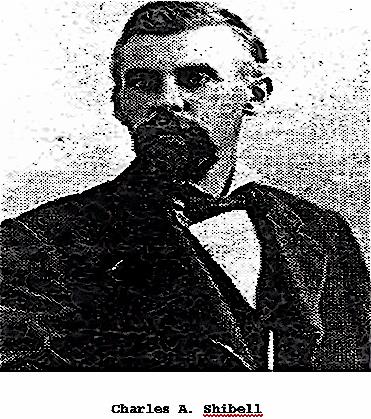
16H- Charles A. Shibell Revisited
When his term as Sheriff ended, Shinell bought and ran the Palace Hotel, later renamed the Occidental Hotel. In 1884, he opened a store until 1887 when he was once again appointed deputy sheriff under Sheriff Eugene O. Shaw. He was deputy sheriff until January 1st, 1889.
On February 22nd, 1888, Shibell along with US Deputy Marshal William K. Meade and deputies pursued men suspected of robbing a Southern Pacific train deep into Mexico. When they finally notified Mexican authorities of their purpose in Mexico, they were arrested for entering the country illegally.
1166
O.K. Corral
It was during his second appointment as deputy sheriff that Shibell challenged an old friend, a former guide and scout for the US Army named Albert Franklin Banta, the reputed discoverer of Meteor Crater, to track down a fugitive 900 miles into Old Mexico and back. He returned with his prisoner, saying he "had one horse shot; missed being assassinated three or four times, but I am here yet, telling the story."
1167
In 1888, Shibell was elected as the Pima County Recorder, a position he held until 1902. Shibell died in Tucson on October 21st, 1908.
1168
16I- Pete Spence Revisited
At 10:50 PM on Saturday, March 18th, 1882, Morgan Earp was shot by assailants who fired through a glass windowed, locked door at the Campbell and Hatch Billiard Parlor in Tombstone. At the time, Morgan was playing a late round of billiards against owner Bob Hatch. The shooters narrowly missed Wyatt Earp, who was watching the game.
Spence's wife, Marietta Duarte, testified at the coroner's inquest that her husband, Frank Stilwell, Frederick Bode, Florentino "Indian Charlie" Cruz, and a half-breed named Fries bragged about shooting Morgan. Her husband had threatened her with violence if she told what she knew. Marietta must have concluded that she’d be better off with Pete Spence in jail than acquiescing to his threats, as she was quite willing to testify.
The coroner's jury concluded that Spence and his accomplices were the suspects in Morgan's assassination. When she was called to testify at Spence's preliminary hearing, the defense objected because her testimony was hearsay and because a spouse could not testify against her husband. The judge agreed and dismissed the charges.
1169
However, when Wyatt Earp learned of the coroner's jury findings, he took action on his own. After escorting the still recuperating Virgil to the rail road in Tucson, he found Frank Stilwell lying in wait and killed him. Assembling a federal posse, he set out to find and kill the remaining Cowboys whose friends' alibis or legal technicalities had gotten them off. Spence owned a ranch and woodcutting camp at South Pass in the Dragoon Mountains, where he employed Indian Charlie Cruz. Cruz was the lookout during the Morgan Earp shooting.
On March 20th, 1882, Wyatt Earp and a federal posse arrived at Spence's camp and asked for him. But Spence had turned himself in to Cochise County Sheriff Johnny Behan figuring he was safer behind bars. When the Earp posse learned Spence was in jail, they asked about Cruz. They soon found him and killed him.
In June 1883, Spence was working as a deputy sheriff in Georgetown, New Mexico, when he severely pistol whipped Rodney O’Hara, killing him. He was convicted of manslaughter and sentenced to a five year term in the Arizona Territorial Penitentiary. Less than 18 months later he was granted a full pardon by the territorial governor.
1170
Effectively pardoned, exonerated, or forgotten about by the Earp posse, he operated a goat ranch south of Globe, Arizona near the Galiuro Mountains with his long-time friend, Phin Clanton, and ran mule teams to bring supplies into the Globe area. Phin Clanton died in 1906, and Spence married Phin's widow four years later on April 2nd, 1910, using his real name of Elliot Larkin Ferguson. He died in 1914 and is buried in the Globe, Arizona cemetery, in an unmarked plot next to Phin Clanton.
1171
O.K. Corral
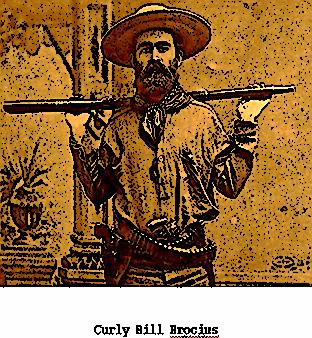
16J- Curly Bill Brocius Revisited
Following the gunfight at the O.K. Corral on October 26th, 1881, Curly Bill Brocius robbed the Tombstone–Bisbee stagecoach on January 6th, 1882, and the Tombstone-Benson stage the next day. Deputy US
Marshal Wyatt Earp gathered a posse and rode after the men, but was unable to find them in the Chiricahua Mountains. Brocius returned to Tombstone on March 17th.
He was named by Pete Spence's wife Marietta Duarte as a participant in the assassination of Morgan Earp. Justice of the Peace Wells Spicer 1172
disallowed her testimony because it was hearsay and because she could not testify against her husband. Lacking evidence, the prosecution dropped all charges against the Cowboys. Deputy US
Marshal Wyatt Earp killed outlaw Cowboy Frank Stilwell in Tucson on March 20th, 1882, while guarding his brother Virgil en route to California.
On March 24th, 1882, the Earp party was expecting to meet Charlie Smith at Iron Springs, later called Mescal Springs, in the Whetstone Mountains. Smith was bringing cash from Tombstone about 20 miles to the east to help pay posse expenses. As they surmounted the edge of a wash near the springs, they stumbled upon Brocius, Pony Diehl, Johnny Barnes, Frank Patterson, Milt Hicks, Bill Hicks, Bill Johnson, Ed Lyle, and Johnny Lyle, cooking a meal alongside the spring.
According to Wyatt Earp, and an anonymous report to “The Tombstone Epitaph,” he was in the lead of the posse when they suddenly came upon the Cowboys' camp at the springs from less than 30 feet behind an embankment. The Cowboys began firing just as Earp dismounted, and thought for a moment they had shot him, but had hit his saddle 1173
horn instead. Texas Jack Vermillion, whose horse was killed, remained cool under fire and stuck close to Wyatt during the fight. Doc Holliday, Johnson, and McMaster fired their weapons and sought cover. Warren Earp was away on an errand at the time.
Eighteen months prior, Wyatt Earp had protected Brocius against a mob ready to lynch him for killing Town Marshal Fred White, and then provided testimony that helped spare him from a murder conviction.
Now Brocius fired at Earp with his shotgun from about 50 feet, but missed. Earp returned fire over his horse using a 22 inch, 10 gauge shotgun. He killed Brocius with a load of buckshot to the stomach, nearly cutting him in half. Brocius fell into the water at the edge of the spring.
The Cowboys fired a number of shots at the Earp party, but the lawmen's fire was so intense that those Cowboys who could, left.
Earp's long coat was punctured by bullets on both sides. Another bullet struck his boot heel and his saddle horn was hit, as well, burning the saddle hide and narrowly missing Wyatt. Firing his pistol, Earp shot Johnny Barnes in the chest and Milt Hicks in the arm.
1174
Vermillion tried to retrieve his rifle wedged in the scabbard under his fallen horse, exposing himself to the Cowboys' gunfire. Doc Holliday helped him gain cover. Earp had trouble remounting his horse due to a cartridge belt that had slipped down his legs. He was finally able to get on his horse and retreat. McMaster was grazed by a bullet that cut through the straps of his field glasses.
Earp biographer John Flood wrote that the Cowboys buried Brocius'
body on the nearby ranch of Frank Patterson near the Babocomari River. This is close to the original McLaury ranch site about five miles west of Fairbank, before the McLaurys moved to the Sulphur Springs Valley in late 1880, and is believed to have originally belonged to Frank Stilwell. Brocius's grave site has never been identified.
Fred J. Dodge, an undercover operative for Wells Fargo in Tombstone, asked Curly Bill's associates about his death. He wrote that he talked to J. B. Ayers, a saloonkeeper in Charleston where the outlaws and rustlers headquartered, who told him that the men who were in the fight told him that Wyatt Earp killed Curly Bill and that they took the body away that night and that they buried him on Patterson's ranch on 1175
the Babocomari. “The Tombstone Nugget” first put up a $1,000 reward for proof Curly Bill lived, and “The Tombstone Epitaph” countered with a $2,000 reward. Neither was ever collected. Brocius was not wanted by the law in Arizona and if he was not dead had no reason to disappear. He also was unlikely to return to Texas, where according to Wyatt Earp's recollection, he was probably still wanted for murder.
Because of his nickname, "Curly Bill" Brocius has been confused with
"Curly Bill" Graham, a different outlaw of the same geographical region and time period. Graham was killed in a gunfight by Deputy Sheriff James D. Houck on October 17th, 1887, and buried in Young, Arizona, and is not considered by historians to be the same Curly Bill of Charleston and Tombstone. Brocius' birth date, birth name, and birthplace are not known.
In newspapers of the time, Brocius was known alternately as "Curly Bill" and "Curley Bill." His surname has also been spelled as
"Brocious," although Brocius is the spelling used for his mail drop in Arizona Territory, according to one published letter of the time.
1176
Historical research into Brocius' death turned up two possible earlier identities. Denis McLoughlin in “The Encyclopedia of the Old West”
reports that Brocius was from Missouri and named William B. Graham.
He said Brocius rode for various Texas cow outfits and was known in Kansas.
While on the way to Tucson, Brocius asked Wyatt Earp to recommend an attorney. As reported in “The Tombstone Epitaph;” “The facts leaked out in this way. On the road to Tucson, Brocius asked Earp where he could get a good lawyer. Earp suggested that Hereford and Zabriskie were considered a good firm. Broscius said that he didn't want Zabriskie, as he had prosecuted him once in Texas. Wyatt looked into the story about Brocius' time in Texas and learned that Brocius had been convicted of robbery in El Paso, Texas, during which a man had been killed. Zabriskie had prosecuted Brocius for the crime, and
‘he was tried and sentenced to the penitentiary, but managed to make his escape shortly after being incarcerated.’"
“The El Paso Daily Times” speculated that he was the man whom Texas Ranger Thomas Mode shot in the right ear.
1177
Modern researchers have linked Brocius with a man known as William
"Curly Bill" Bresnaham, who was convicted in a robbery attempt in Texas in 1878, along with another known cowboy of the Tombstone area named Robert Martin. The men were convicted and sentenced to five years in prison, but both escaped, presumably to the southwest Arizona Territory. Since both Robert Martin and Curly Bill became known as leaders of the rustlers in Arizona Territory, they are likely the same Robert Martin and Curly Bill of the Texas crime.
According to historian Robert M. Utley, Robert Martin was a member of the Jesse Evans gang of outlaws in New Mexico during the mid to late 1870s. Billy the Kid briefly joined this group before going to work for John Tunstall. Evans's gang, a loose knit consortium of desperadoes known as "The Boys," ended up fighting against the "Regulators"
during the Lincoln County War. Because of the time frame, the location, and his friendship with Martin, Curly Bill Brocius may have been a member of the Evans gang, as well.
In his journal written in October 1881, George Parsons referred to Brocius as "Arizona's most famous outlaw," a statement which 1178
obviously has less truth than to it than claims to a valid and fair election run by outlaw Democrat operatives.
1179
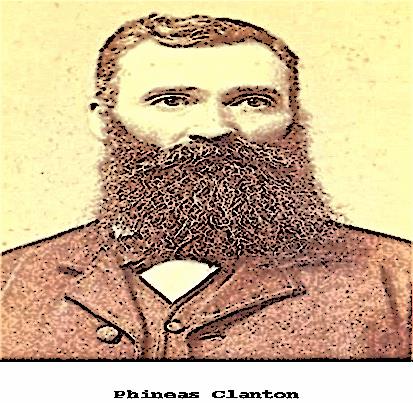
16K- Phineas Clanton Revisited
Ike and Phin were accused of attempting to murder Virgil in December and assassinating Morgan Earp two months later, but Cowboy friends vouched for their presence in Contention, 12 miles away.
Phin had numerous other brushes with the law during his life. He and his brother Ike moved to northern Arizona near their sister and her husband, Eben Stanley. The three men developed a reputation for stealing livestock. The grand jury indicted them and Ike was killed while resisting arrest. Phin served one year and five months of his ten year prison term. He married late in life and four years later died after contracting pneumonia.
1180
O.K. Corral
1181
O.K. Corral
17– The Unclearly Aligned After the Shootout
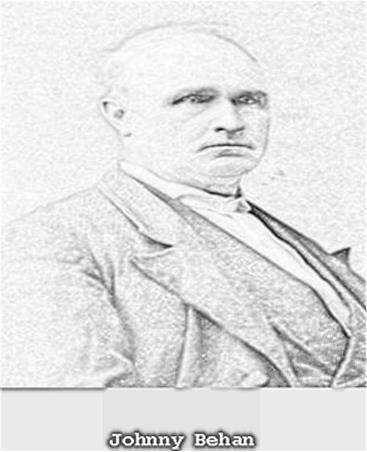
17A– Johnny Behan Revisited
At the Earps’ trial, Johnny Behan supported the Cowboys' statements that they had raised their hands and offered no resistance, and that the Earps and Doc Holliday had murdered three cowboys.
After the Earps were exonerated, Deputy US Marshal Virgil Earp was maimed in an ambush on December 28th, 1881, and assistant deputy 1182
Morgan Earp was killed by assassins on March 18th, 1882. The outlaw Cowboys named as suspects in both shootings were either let go on a technicality or were provided alibis by fellow Cowboys. As part of the
“Revenge Posse” of Earps and Doc Holliday, Wyatt Earp is credited as having killed one of the suspects, Frank Stilwell, in Tucson; though more likely the shots came from Doc Holliday, as he was the only posse member with a shotgun. Deputy US Marshal Wyatt and his federal posse set out after other suspects, pursued by Behan, who had issued a warrant for their arrest, and his county posse composed mostly of Cowboys.
Behan's posse never caught up with the much smaller federal posse.
The Earps left Tombstone under a cloud of suspicion. Sadie left Tombstone for San Francisco in early 1882, and Wyatt Earp followed her to San Francisco, where they began a lifelong relationship that lasted 46 years. Behan was arrested for graft and later failed to win reelection as sheriff. He later was appointed as the warden of the Yuma Territorial Prison and had various other government jobs until his death in 1912.
1183
In August 1881, Behan fired deputy Frank Stilwell for "accounting irregularities." Stilwell was arrested by a combined federal and sheriff's posse a month later for a Bisbee stage robbery, an action that would indirectly contribute and ultimately lead to Doc Holliday’s zeal for the O.K. Corral gunfight.
Behan was a key player in the events immediately preceding the shootout at the O.K. Corral on October 26th, 1881. Behan went down to try to disarm the Cowboys carrying weapons in violation of the city ordinance. Behan attempted to persuade Frank McLaury to give up his weapons, but Frank insisted that he would only give up his guns after City Marshal Virgil Earp and his brothers were disarmed. While Ike Clanton was planning to leave town, Frank McLaury said he had decided to remain behind to take care of some business. A letter written afterward by their older brother, William McLaury, a judge in Fort Worth, Texas, claimed that both Frank and Tom were planning to conduct business before leaving town to visit him in Fort Worth. Billy Clanton, who had arrived on horseback with Frank, intended to go with the McLaurys to Fort Worth.
1184
After Behan talked to the Cowboys, he saw the Earps and Holliday walking down Fremont Street. He walked about "22 or 23 steps" and intercepted them at Bauer's Butcher Shop. Wyatt said he gave them conflicting information. First, he told Virgil; "For God's sake don't go down there or you will get murdered." When Virgil replied; "I am going to disarm them," Behan said; "I have disarmed them." Later on Behan insisted he had said he went to see the Cowboys only "for the purpose of arresting and disarming them." Behan didn’t elaborate on how the Cowboys were going to murder the Earps and Holliday while being
‘disarmed.”
The lawman killed three Cowboys; Tom McLaury, Billy Clanton and Frank McLaury. Virgil, Morgan, and Doc Holliday were wounded. As the lawmen were carried to their homes, they passed in front of the Sheriff's Office, and Johnny Behan told Wyatt Earp; "I will have to arrest you." Wyatt paused two or three seconds and replied very forcibly; "I won't be arrested today. I am right here and am not going away. You have deceived me. You told me these men were disarmed. I went to disarm them."
1185
As provided by territorial law, Ike Clanton filed murder charges against the four lawmen. Behan testified for the prosecution during the preliminary hearing, supporting the Clanton's version of events.
According to the prosecution, the Cowboys had offered no resistance.
Behan gave strong testimony that the Cowboys had not resisted but had thrown up their hands and turned out their coats to show they were not armed. He told the court that he heard Billy Clanton say;
"Don't shoot me. I don't want to fight." He also testified that Tom McLaury threw open his coat to show that he was not armed and that the first two shots were fired by the Earp party.
Behan testified that from the time the Earps passed him by to confront the Cowboys, he had watched them closely. Under cross-examination by attorney Thomas Fitch, he admitted seeing Holliday carrying the messenger shotgun towards the confrontation. All the witnesses testified that Holliday had been seen with a shotgun. Behan also testified he was concentrating on the Earps during the gun fight, but he did not see the shotgun used. He insisted that Holliday fired the first shot from a nickel plated revolver. But the coroner had already testified that Tom McLaury was killed by a shotgun blast. For Behan's 1186
"testimony to make any sense, the court would have to believe that Holliday marched down Fremont Street carrying a shotgun; put it aside in order to pull out his pistol; fired the first shot, presumably at Billy Clanton; and then picked up the shotgun in order to kill Tom McLaury, all in the space of a few seconds." How the Earps and Holliday received gunshot wounds from unarmed Cowboys was apparently not mentioned.
Behan's sympathy to the Cowboy was well known, and documents were located in 1997 that showed Behan served as guarantor for a loan to Ike Clanton during the Spicer hearing. Three defense witnesses gave key evidence that discredited Behan's testimony. One of the most notable witnesses was H. F. Sills, an Atchison, Topeka, and Santa Fe Railroad engineer who had just arrived in town and knew none of the parties involved. The second key witness was Addie Bourland, a dressmaker whose shop was across the street from the gunfight, and the third was Judge J.H. Lucas of the Cochise County Probate Court, who corroborated Addie Bourland's testimony. Justice Wells Spicer ruled on November 30th that there was not enough evidence to indict the men.
1187
On December 28th, 1881, Virgil Earp was ambushed and maimed. On March 18th, assassins shot through a window and killed Morgan Earp.
The Cowboys who were identified as suspects in both cases got off on either legal technicalities or were provided alibis by men who said they were in Charleston at the time Morgan was shot. Wyatt felt he had no choice but to take the law into his own hands.
On March 20th, while escorting Virgil and his wife Addie through Tucson to catch a train, new Deputy US Marshal Wyatt Earp and Warren Earp, Doc Holliday, Johnson and Sherman McMaster shot Frank Stilwell as he was lying in wait in the train yard. Justice of the Peace Charles Meyer issued arrest warrants for the Earp posse. He sent a telegram to Tombstone telling Behan they were wanted in Tucson for killing Stilwell. The telegraph office manager was a friend to the Earps and delayed delivery long enough to allow the Earps and their associates to get ready to leave town Tuesday evening. Behan got the telegram in the early evening. He found the men in the lobby of the Cosmopolitan Hotel, heavily armed. He told Wyatt he wanted to see him. Wyatt replied; "Johnny, if you're not careful, you'll see me once too often."
1188
In September 1882, after the Earp Vendetta Ride, Behan had a feud with his own deputy, Billy Breakenridge. An investigation found that Behan had somehow set aside $5,000 in funds while he was sheriff from unknown sources. Due to public and legislative unhappiness with Behan's performance, he was last on the Democratic Party's list of nominees for sheriff, an unusual result for a seated sheriff. Behan failed to gain the nomination and thus left office at the end of his term, in November 1882.
Behan lived primarily in Tombstone through 1886. In 1887, he moved to Yuma, where he became the assistant superintendent of the Yuma Penitentiary. He killed one of several prisoners who died during a large escape attempt, saving a guard's life. On April 7th, 1888, he was promoted to prison superintendent, serving until July 1890. His management of the prison was marked by prison disorder and mismanagement of public funds, generating complaints by the press.
“The Arizona Republic” noted that $50,000 had passed through prison official's hands without any accounting. He faced censure for misuse of public funds and for running the prison in a "coarse and brutal manner" in 1890. The complaint against him specifically cited the 1189
prison conditions afforded Manuela Fimbres, a woman incarcerated in the Yuma Prison. She was allowed to roam free within the prison, and she became pregnant, delivered a child, and got pregnant again while he was warden. Former Tombstone resident and writer George W.
Parsons commented that he thought Behan was "on the wrong side of the bars."
After twenty-seven years in Arizona, Behan moved east, and in 1891
was in Philadelphia, Pennsylvania, and by 1892 was in a commission business in Washington, D.C. He worked in various government and commissary capacities to the end of his life.