

The Career Switch Playbook into Product Management by Nkeonye Akumah - HTML preview
Download the book in PDF, ePub, Kindle for a complete version.
Chapter 1: Understanding the World of Product
Before building a career in product, you must first understand what a product truly is and what working in product really means. Many people use the word “product” casually. In business, however, it has a deeper meaning. A product is not just something that is sold. It is something that solves a problem for someone in exchange for value.
This chapter will help you see the bigger picture clearly.
What Is a Product?
At its core, a product is a solution. It exists because someone has a need, a frustration, or a goal. The product helps bridge the gap between the current situation and a better one.
Physical vs Digital Products
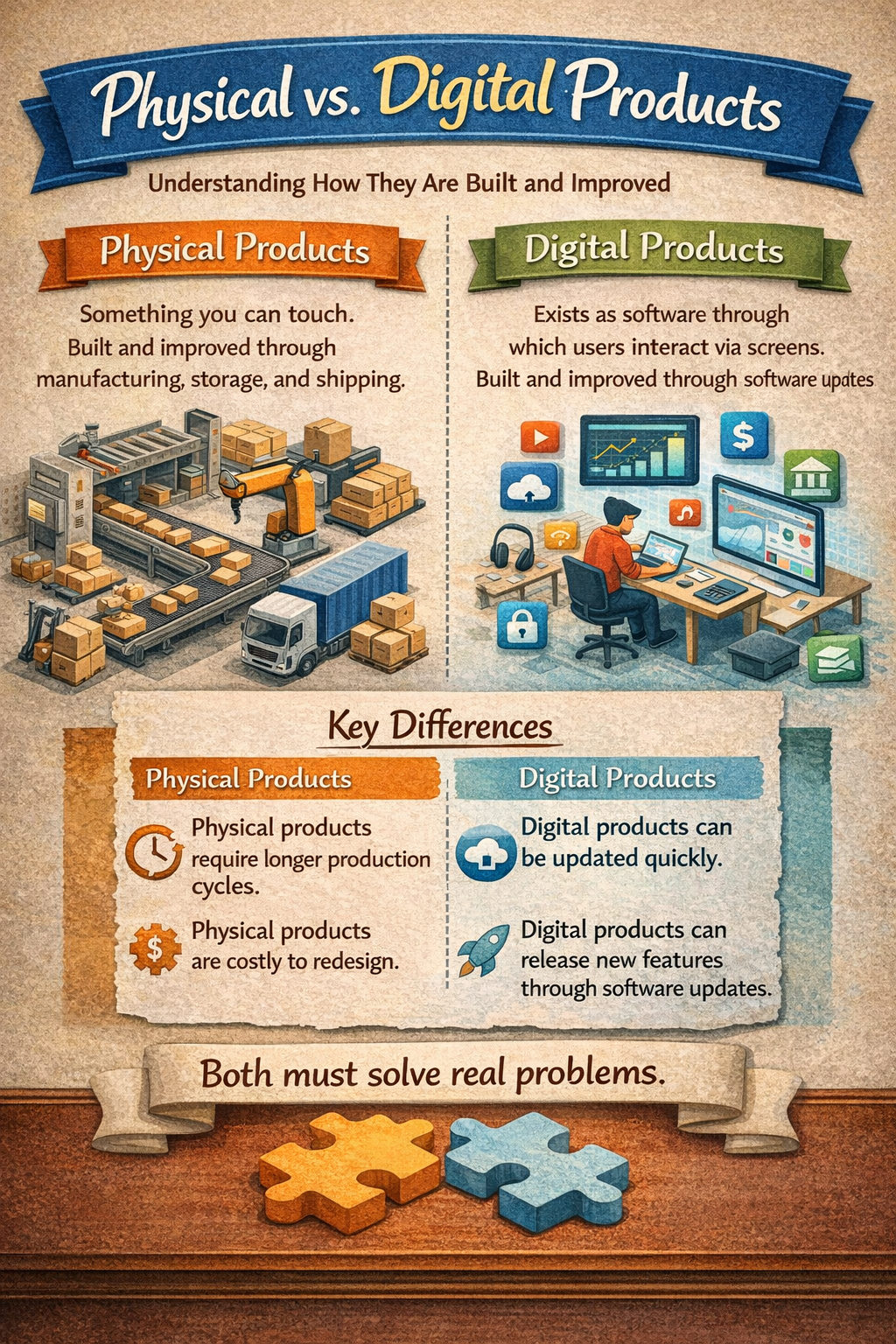
A physical product is something you can touch. Examples include clothing, furniture, packaged food, medical devices, and electronics. These products go through manufacturing, storage, shipping, and retail distribution. Their design involves materials, durability, and production cost.
A digital product, on the other hand, exists in software form. Mobile apps, websites, streaming platforms, online banking systems, and educational tools are digital products. You cannot hold them physically, but you interact with them through screens.
The main difference between physical and digital products lies in how they are built and improved.
• Physical products require longer production cycles.
• Digital products can be updated quickly.
• Physical products are costly to redesign.
• Digital products can release new features through software updates.
However, both types share the same foundation: they must solve real problems.
In recent years, digital products have expanded rapidly because they scale easily. A single app can serve millions of users without building new factories. This scalability increases business potential, which is why many companies focus on digital innovation.
Still, physical products remain essential. In fact, many successful companies combine both. For example, a fitness brand may sell equipment (physical product) and also provide a training app (digital product). Together, they create a stronger experience.
Services as Products
Many people forget that services are also products. A hospital appointment, a flight booking, a legal consultation, or a food delivery service — all of these are products because they deliver value to customers.
Service products focus heavily on experience. Since they are not physical objects, customers judge them based on speed, reliability, quality of interaction, and trust.
For example, a ride-hailing app is not just software. It provides transportation, safety, payment processing, and customer support. The full journey is the product.
Understanding services as products is important because modern businesses blend products and services together. A bank offers accounts (service), mobile banking (digital product), and debit cards (physical product). All must work smoothly together.
Product professionals often manage this entire ecosystem, not just one small feature.
Product Lifecycle
Every product goes through stages. This is called the product lifecycle. Understanding it helps you see how decisions change over time.
1. Ideation – The product idea is born. A problem is identified, and possible solutions are explored.
2. Development – The team designs and builds the product.
3. Launch – The product is introduced to the market.
4. Growth – Users increase. Feedback is collected. Improvements are made.
5. Maturity – Growth slows. The focus shifts to optimization and retention.
6. Decline or Reinvention – The product either loses relevance or evolves into something new.
Not every product moves smoothly through these stages. Some fail early. Others adapt and grow stronger.
Product professionals must understand which stage their product is in. A new startup product requires experimentation. A mature product requires efficiency and refinement. Decisions depend on context.
What Does a Product Professional Do?
Many people imagine product roles as simple coordination jobs. In reality, they involve structured thinking, difficult trade-offs, and continuous learning.
Let us break down the core responsibilities.
Problem Solving
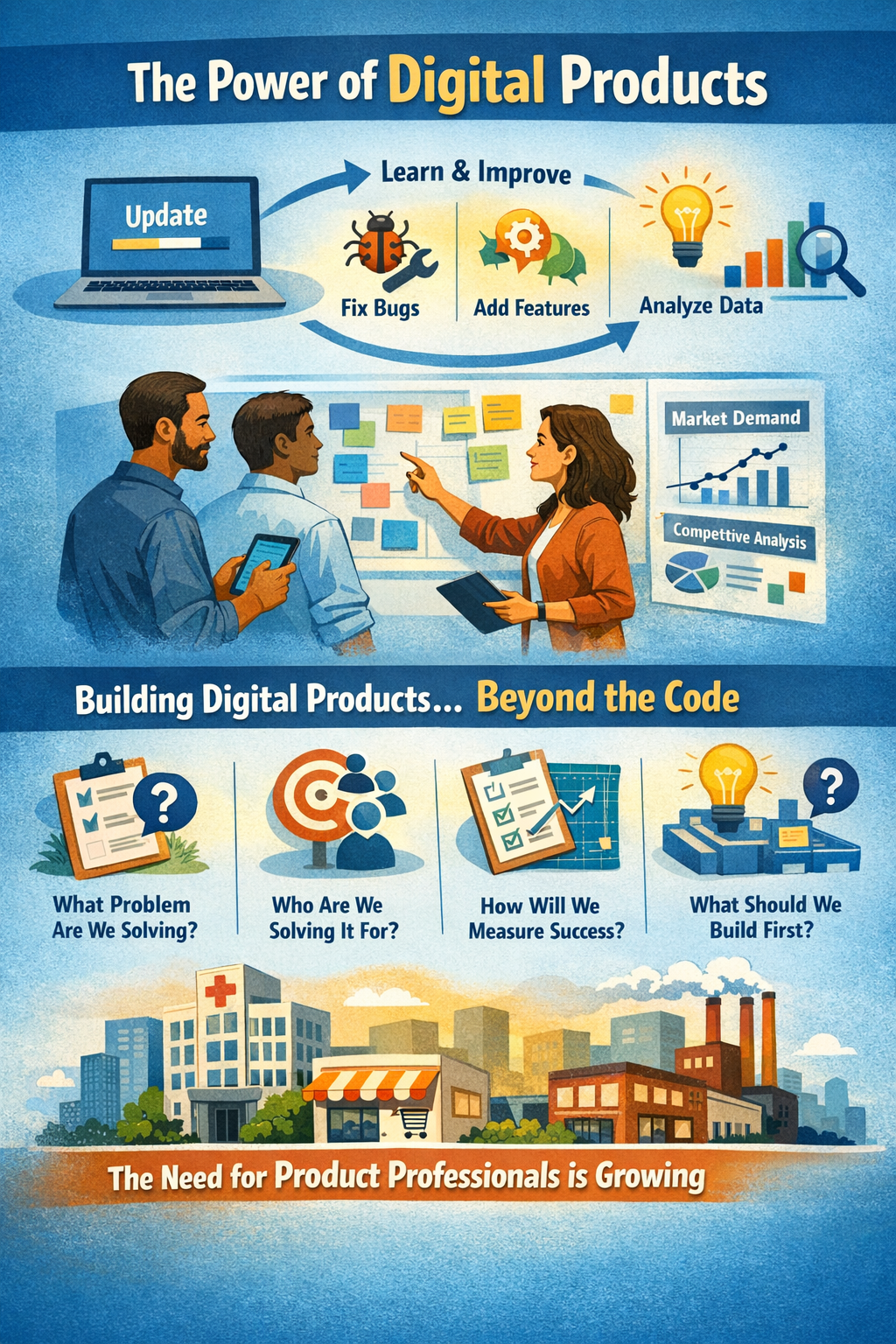
At the heart of product work is problem solving. A product professional constantly asks:
• What problem are we solving?
• Is it important enough?
• Who is affected by it?
• What is the root cause?
Instead of jumping to solutions, strong product thinkers first define the problem clearly. A poorly defined problem leads to wasted effort.
For example, if users are leaving an app quickly, the problem may not be “we need more features.” It might be confusing onboarding, slow loading speed, or unclear value.
Problem solving requires curiosity and patience. It involves research, interviews, data analysis, and observation.
Decision Making
Every day in product involves decisions. Some are small, such as adjusting a button color. Others are large, such as entering a new market.
Decisions often come with incomplete information. Rarely will you have perfect data. Product professionals must weigh risks and benefits carefully.
Good decision-making includes:
• Reviewing available data
• Considering customer impact
• Estimating business outcomes
• Listening to team expertise
• Evaluating long-term consequences
Strong product professionals are comfortable with uncertainty. They accept that not every decision will be perfect, but each must be thoughtful.
Prioritization
Resources are always limited. Time, budget, and team capacity cannot support every idea.
Prioritization means deciding what to work on now, what to delay, and what to reject. This can be challenging because different stakeholders have different preferences.
For example:
• Marketing may want new promotional features.
• Engineering may want technical improvements.
• Sales may want client-specific changes.
• Customers may request multiple enhancements.
The product professional must balance these demands and focus on what creates the most value overall.
Clear prioritization protects the team from overload and confusion.
Stakeholder Communication
Product roles sit between many departments. This means communication is critical.
Stakeholders may include:
• Engineers
• Designers
• Marketing teams
• Sales teams
• Executives
• Customers
Each group speaks slightly differently and has different goals. A product professional translates vision into clear direction for each audience.
Communication includes:
• Writing clear product documents
• Running planning meetings
• Presenting updates to leadership
• Listening to feedback
• Managing expectations
Without strong communication, even a good strategy can fail.
Key Product Roles
Product is not one single job title. It includes multiple roles with different responsibilities.
Product Manager
The Product Manager (PM) is often responsible for defining what should be built and why. They create product strategy, set priorities, and align teams.
They focus on customer needs, business goals, and feasibility. The PM ensures that development efforts lead to meaningful outcomes.
This role requires balance — between vision and execution, data and intuition, short-term delivery and long-term strategy.
Associate Product Manager
An Associate Product Manager (APM) is usually an entry-level position. It is ideal for graduates or career switchers.
APMs support senior product managers. They may conduct research, analyze data, write documentation, and coordinate tasks.
This role is a strong starting point because it allows learning without full responsibility for major strategic decisions.
Product Owner
The Product Owner role is common in Agile environments. While similar to a Product Manager, it often focuses more on execution.
Product Owners manage the product backlog, clarify requirements for engineers, and ensure tasks align with priorities.
They work closely with development teams to deliver features efficiently.
Product Analyst
A Product Analyst focuses heavily on data. They track metrics, measure performance, and provide insights.
For example, they may analyze user retention rates, feature adoption, or conversion funnels.
Their work supports decision-making by providing evidence.
UX Researcher
A UX Researcher studies user behavior and preferences. They conduct interviews, usability testing, and surveys.
Their goal is to understand how users experience the product and where improvements are needed.
UX research strengthens empathy within the team and prevents assumptions.
Day in the Life of a Product Manager
Many imagine product management as constant strategic thinking. In reality, it is a mix of planning, communication, and analysis.
Here is what a typical day may include.
Meetings
Product Managers attend multiple meetings:
• Sprint planning
• Stakeholder updates
• Design reviews
• Strategy discussions
While meetings may seem routine, they are essential for alignment. Without alignment, teams move in different directions.
Strategy Work
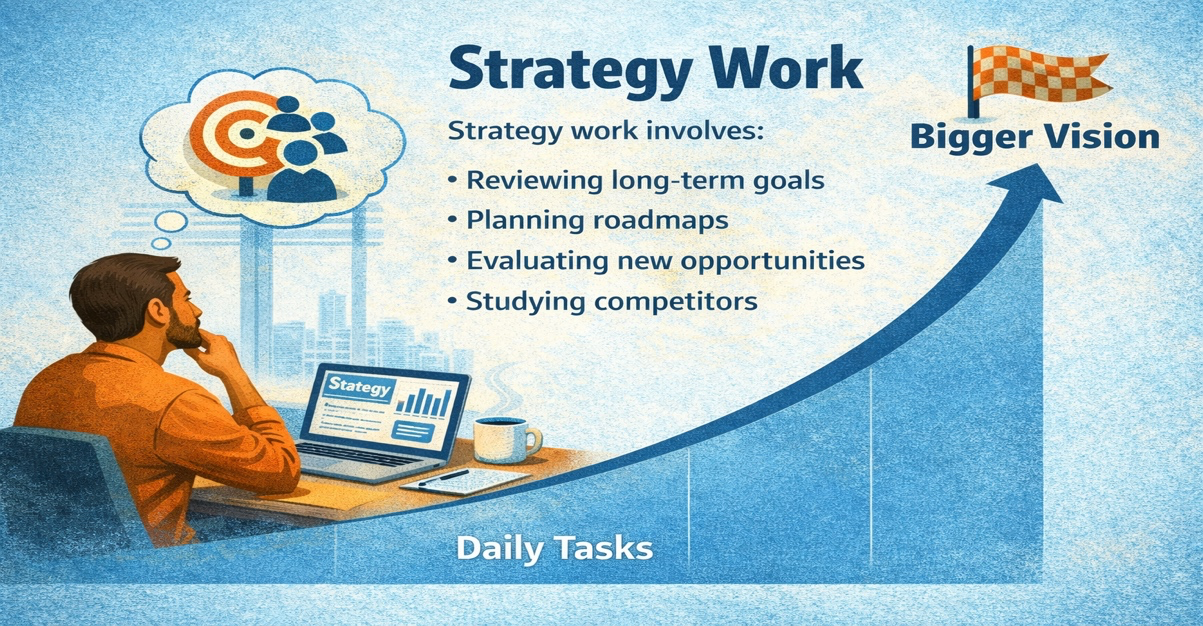
Strategy work involves:
• Reviewing long-term goals
• Planning roadmaps
• Evaluating new opportunities
• Studying competitors
This work often requires quiet thinking time. It connects daily tasks to bigger vision.
Data Review
Product Managers regularly review metrics such as:
• User growth
• Engagement rates
• Revenue impact
• Feature performance
Data helps determine whether recent releases are working or need adjustment.
Team Coordination
Coordination includes checking progress, removing obstacles, and clarifying priorities.
Sometimes this means resolving conflicts. Sometimes it means simplifying complex requirements.
The Product Manager acts as a bridge — ensuring that everyone understands the goal and moves forward together.
Final Thoughts
The world of product is dynamic and demanding. It requires structured thinking, empathy, discipline, and collaboration.
Understanding what a product truly is — whether physical, digital, or service-based — lays the foundation. Recognizing the responsibilities of product professionals prepares you for realistic expectations.
Product careers are not about authority. They are about clarity. They are about guiding teams toward meaningful outcomes.
As you continue through this book, you will begin developing the mindset and skills needed to step confidently into this field.