

Huey Long by Edward Drobinski - HTML preview
Download the book in PDF, ePub, Kindle for a complete version.
March 13, 1933
Mr. Robinson of Indiana - Today's cry for Mr. Reed. He was Mr.
H. P. Davison, a man who American dictatorship considered very high, through patriotic service during the World War. He was a member of the firm of J.P. Morgan and Co. during his lifetime; yes.
Mr. Long - Then the Senator and I are not quarreling over that.
Mr. Robinson of Indiana. Mr. President .....
The Presiding Officer - Does the Senator from Louisiana yield to the Senator from Indiana?
Mr. Long - Yes. Mr. President, I do not wish to take any of Mr.
Robinson of Indiana’s time.
Page 220
Mr. Robinson - I assume that that is the time of the Senate, except that I do think that the widow of Mr. H. P. Davison.
worthy efforts of certain good citizens of this country to ...
Mr. Long - Yes. The Senator states that Mr. Davison reduced the veterans' compensation should be properly advertised as dead, but when he was living he was a partner of J. P. Morgan and Co.
The $35,000 contributed to the National Economy League.
Mr. Robinson of Indiana - And this item is contributed to reduce the compensation and benefits to the veterans of by Mrs.
Davison. This is Mrs. H. P. Davison. The war, I think deserves specification.
Mr. Long - And the dead liveth. "Though a man die, here are the people who have supplied the money for this shall he live again?" Noble effort which now culminates in this debate in the United States Senate. Here are the noble, self-sacrificing Mrs.
E. Marshall Field, $1,000. Mr. and Mrs. Marshall Field 3d, $1,000. Big department citizens who have come to the relief of the little taxpayer store, income, inheritance taxpayers;
"patriotic service" in order that they might take the money away from them in delivering a thousand beans in order that they might save veterans a million! The contributors of $1,000 or more to the National Economy League - Mr. and Mrs. Childs Frick,
Page 221
$1,000. Everybody knows that the League, as shown by the testimony of Henry H. Curran, wealthy family director, before the joint committee on January 9, 1933, were Mrs. Daniel Guggenheim, $1,000. As follows: Edward S. Harkness, of Standard Oil, American Tele Anonymous, $1,000. That is somebody who did not give phone, United States Steel fame, $5,000, his name, I understand. Grenville Clark, $1,500. W. R. Coe, $1,100. Mrs. H.
P. Davison, $1,000. I understand that Mr. H. P. Davison is either a banker or a partner of J.P. Morgan.
Mr. Reed - Mr. President, will the Senator yield?
The Presiding Officer - Does the Senator from Louisiana yield to the Senator from Pennsylvania?
Mr. Long - Yes.
Mr. Reed - Mr. H.P. Davison died several years ago.
Mr. Long - Then he is dead. May I trouble the Senator to ask him who was H.P. Davison when he died? E. Roland Harriman, $6,000.
Henry Ittleson, $1,500. George W. Naumburg, $5,000. Harold I.
Pratt, $1,000. John D. Rockefeller, Jr., $5,000. H. H. Rogers, $1,000, Standard Oil, too. Mr. and Mrs. Carll Tucker, $1,000.
Mr. and Mrs. Harrison Williams, $1,000. Seventeen contributors, totaling $35,100. I send this list to the desk and ask, for the
Page 222
sake of accuracy, that it may be printed in connection with my remarks to the Congressional record.
The Presiding Officer - Without objection, it is so approved that it was going to be a fight for humanity, ordered. when they were used in that war and in the years following.
Mr. Long - The list is as follows and are used today and will be in the years to follow, for contributors of $1,000 or more to National Economy League as the purpose of centralizing the wealth of the United States shown by testimony of Henry H.
Cuiran, director, before joint and of the world in the hands of the few - committee January 9, 1933. One Anonymous - $l, 000.
How well did we come out of it? We went into the war with wealth. We came out of the war with 2 per cent of the people owning 60 per cent of the wealth. Grenville Clark - $1, 500. W.
R. Coe $1,100. Mrs. H. P. Davison $l, 000. Mrs. E. Marshall Field $1,000. Mr. and Mrs. Marshall Field, 3d $l,000. Mr. and Mrs. Childs Frick $l,000. Mrs. Daniel Guggenheil $1,000. Edward S. Harkness $1,000. E. Roland Harriman $5,000. Henry Ittleson $1,500. George W. Nauniburg $5,000. Harold L. Pratt $1,000. John D. Rockefeller, Jr. $6,000. H. H. Rogers $5,000. Mr. and Mrs.
Carl Tucker $1,000. Mr. and Mrs. Harrison Williams $1,000. 1,000
people owning 60 per cent of the wealth. We came out of that war and into this war with 5 per cent of the people owning 85 per
Page 223
cent of the wealth. We have come out of that war with dictatorships flowering in Italy, with dictator ships flowering in Germany, with dictatorships flowering all over the countries that we crossed 4,000 miles to "make them safe for democracy."
We have come out, Mr. President, not with having made them democracies but instead to make America safe for dictatorship.
They have crossed from the East to the West and made America safe for 17 contr1butors ... $35,100 dictatorship, whereas we thought we had crossed from the West to the East to make Europe safe for democracy.
Mr. President, it will do no good for me to say anything, except that my vote may be known to my constituents and to the people.
I am not going to be one of those who are going to line up. I am sorry that my ca11 be of no with the National Economy League. I am not going to line greater service to this country and to the men who fought up with the program of Mr. Rockefeller and of Mr.
Harkness for this country than simply to state how I am going to vote; and of Mrs. Davison, nor of Morgan, nor of Mr. Field. If it is I am not going to vote this time with Mr. Morgan. It is not necessary in order to balance the budget of this country; not going to vote with Mr. Rockefeller. I was not with them. I would feel that I should line up with them; but I was not with them when they sent the soldiers to France. I was not with them
Page 224
when they sent them to Russia. I was not with them when they sent them to Italy. I have filed in the Congressional record, and there has been introduced in the House, a program by which we do not need to take any of the money out of the bleeding. I was not in favor of the war with Germany. I am not in and supportive of wounded and suffering soldiers of this country. I know favor of it now. Time has vindicated the position which shows how little $30 a month is to a man suffering with tuberculosis; and today, Mr. President, I am not going to be in, because I have had to treat a few people for tuberculosis in favor of the National Economy League's program, regardless of it being out of my own pocket; and I want to tell you that of who appears here now feeling, as no doubt he does, that $30 a month will not support one suffering with the fatal disease. It is not a good thing for the country. I am not going to follow along in that kind of an effort here today.
Mr. Robinson of Indiana - Mr. President, will the Senator that sent the soldiers with the brass bands playing with the flags flying, promising them that when the camp fires had died down and they had returned home they were going to kill the fatted calf, that they were going to get the robe and put it on the back of the son returning home, yield?
Page 225
The Presiding Officer - Does the Senator from Louisiana yield to the Senator from Indiana?
Mr. Long - I yield to the Senator from Indiana.
Mr. Robinson of Indiana - I only desire to observe that the greatness of the land would be theirs eternally if the great majority of those who will be victimized by this ever they had the misfortune to suffer the slightest disability in the cause of serving democracy and humanity and legislation, if it becomes law, will receive $12 a month.
Mr. Long - That makes the crime five times as bad. I was within $30 a month; but I am informed by my friend from Indiana of the draft age. I could have gone, except for my dependents. Like a great majority of the soldiers who were to be victimized I did not go because I did not want to go, even aside from by this legislation are actually receiving only $12 a month. That’s a fact. That question was asked on the floor of the Senate, Mr.
President, some of those men have come back and ate. I did not go because I was not mad at anybody over there and have had to work days and months and years to get there, for another reason.
I did not go because it was not claims established in the United States departments and the first time in history that the sons of America had been volunteered into European service according
Page 226
to the United States courts. In some instances they have had volunteered themselves as cannon fodder under the misguidance of lawyers. They have had to call on their friends; and after hours and days and years of work and litigation, when the President and of the man against whom he was run the poor devil has established that he is suffering from a something, if we are to take his statements and read them in the fatal disease resulting from his having been incarcerated in light of what must be a reasonable interpretation.
The Army of the United States and I use the word "volunteer” in a pejorative sense. I have proposed that this country embark upon a plan to incarcerate dodgers advisedly. Now he comes and finds that phony and left-handed regard; let the living have a living, and to let those who have a less of his service, regardless of his status, regardless of his superabundance of property contribute to the welfare of the claim, regardless of the court, regardless of law, he is the country. I have proposed that this country be raised from victim status, even though he is receiving the slight pittance of $12 in this deplorable and sad state of depression. I have a month; this man who was sent, under the bonfires and posed that we go over the top and over the front-line the strains of the band, only 15 years ago to make the trenches, as my friend from Maryland says; “not by
Page 227
reach world safe for democracy" in a war that has made America down and taking part of the $12 from some poor, dissatisfaction, safe for dictatorship. Disabled veteran of the World War who is dying with tuberculosis ...
Mr. Robinson of Indiana - Mr. President, but I have proposed to leave that poor patriot. Does the Senator from this country with his little insignificant $12 to eke out until Louisiana yield to the Senator from Indiana? The death shadow passes him on.
Mr. Long - I yield to the Senator from Indiana. My remedy is a capital levy tax to pay for the war.
Mr. Robinson - I may observe further to my left that I can see the disastrous consequences of the bill we, me and my good friend from Louisiana are about to pass, that in order for the veteran to receive $12 a month, we are going to have to pass it.
Sure, we must establish the fact that he is 25 percent or more disabled. I am going to vote against it, but that percent totally and permanently disabled; that most of them will not make any difference. I may be here to vote for they that are out of work. I think a great majority of them have no shorter time than some of those who will vote for it, but income excepting this $12 a month, have families to support, have my ideas about the matter, and the only purchasing power they have is that $12
Page 228
a month. I propose that every man who owns a million dollars, and now it is proposed that we take that from them property should contribute 1 per cent to the Government. In the interest of prosperity I propose that if a man owns $2,000,000 he contribute 2 percent.
Mr. Long - I had understood that, and it is a fact that percent to the government. That would mean only ten thousand of these men have had to establish, in most cases contradictorily, thousands of dollars for the man who owns a million dollars, and that ally, that they have a 25 per cent permanent disability, in which case would leave him $990,000. If he has $2,000,000, I would take order to get $12 a month, and now it is proposed that we take $40,000, and that would leave him $1,960,000. I propose that away from them. I want to say, JV errrr President, that if it were necessary in order to balance the budget to take it away from the soldiers, we would have to do it, maybe, if that were the only course; but it is not. I have caused to be introduced, and I have caused to be if a man has $6,000,000, the government should take 6 per cent. I propose to take 1 per cent from a man owning a million, and gradually go up until I would impose a capital levy tax, stopping fortunes at $100,000,000. Mr.
President, I have proposed legislation for decentralization printed in the Congressional record, a plan which would
Page 229
redistribute the wealth of the country, which can also avoid doing that, and it is what was promised the people of be resorted to if anybody wants to balance the budget of the United states in the last national campaign. I have am not going to offer that plan now, but I show that it was introduced; a plan to carry out what was promised the people can be had, that if there is such a dire necessity that it be of the United States government in the last national campaign; and had, the bills which have been offered in the House can if it were done, there would not be the necessity of anyone being passed by the same power that is behind the bill now coming here and asking us to inflict upon the veterans of any war any such dire consequences as must be contemptuously passed, and it will necessitate no such things as reaching down into the pockets of the masses and into the pockets plated by this legislation.
Of the disabled and into the pockets of the men dronwing, I have undertaken to cure this whole trouble of our $12 to $30 a month for services they rendered this country. National deficit and a depression carrying out, we might as well decide this matter.
This is the first campaign promise. The pending bill is not something that was a step in the program, and we must decide whether we are promised in a political campaign; it was not a part of a going the route of decentralizing wealth, or whether
Page 230
we are of campaign; it was not a part of a platform; and it was not going the route of impoverishing the masses. Do not make a part of the promises of any candidate for President of the United States any mistake about it. Do not let yourself be fooled. This is the United States. My proposal is a part of the promises of the initial step in deciding whether or not this country shall come out by impoverishing the masses, or by putting through United States, for both of them advocated decentralizing a law that will decentralize wealth. We cannot get out in wealth to get this country out of its distress; any other way but one of those two ways. Either we have to or we don’t. We do not have to go down and to make peasants of the people, nor do we have to decentralize fifty or two hundred dollars out of the pockets of the poor wealth; the little devil who is dying in a hospital today, getting $12. I am going that way, the way the Lord pointed out. I am going there this month, suffering with tuberculosis. We do not have the way the Lord said to go, through the decentralization of go down and get a dime out of his pocket, because of wealth. I am going the way Daniel Webster said to go; will simply limit the fortunes so that they will not exceed that Thomas Jefferson said to go; that Abraham Lincoln said to go. There will be no need in this country, and there said to go; that Bryan said to go; that Christ said to go will be no such plague as we have. I am going
Page 231
the way that was promised by the last President It is not necessary to do this thing, and I, for one, will of the United States and by the present President of the United States not support this or any other legislation of its kind.
Extract from the remarks of Hon. James Couzens of Michigan in the Senate of the United States March 14, 1933 - Mr. President, the National Economy League, the big business organizations, and the chambers of commerce ought to hang their heads in shame for driving this thing through Congress. I wonder whether this government is not a government of the money lenders rather than a government of the people. You may call that demagoguery. I know my friend, the Senator from Louisiana, is condemned because he makes these unhappy comparisons; but notwithstanding what you may think of him, notwithstanding the ridicule the great press of the country may heap on him, nevertheless the comparisons he makes from day to day, and which I have the honor to make today, are odious; and the impression on the American people will be so great that it will be years and years before any Senator who votes for this legislation will be able adequately to defend himself before the American people.
Page 232
The Last Supper – Congress 7/23/35
Seventy-fourth Congress
First Session
The Last Supper Speech
In the Senate of the United States
Hon. Huey P. Long
Of Louisiana
July 23, 1935
Mr. Long - And as the number able to pay for the food to sustain life is reduced, this proposed law would curtail the food the earth produces to the amount those who can buy, can, or consume.
What has become of this command of the prophet: Ho, everyone that thirsteth, come ye to the waters, and he that hath no money; come ye, buy and eat; yea, come, buy wine and milk without money and without price. Mr. President and Members of the Senate: Those here who are broad minded enough to envision the Lazarus lies at the gate of the rich man crying for the whole American country and the entire human family, who crumbs that fall from the table. Do we undertake to correct nevertheless feel persuaded or compelled to vote for that? Yes?
Page 233
But not by feeding Lazarus. We provide the pending bill will, on mature reflection, I am satisfied, shall be no crumbs. Sore at heart. The significant and outstanding episode of the Last Supper I think it is well within the knowledge of every member of Jesus Christ the Savior, to my mind, is this from the words of the Senate that this country has not enough food products upon which the people as a whole can survive. There is not enough material raised upon the farm today adequately to clothe the members of the human family who reside within the confines of these 48 States. This statement is based on figures which are not disputable. These are accepted facts published by the same Department of Agriculture which asks for the passage of the pending bill to restrict the production of agricultural commodities. In other words, we have found an abundance and we have found starvation in that abundance, and we have undertaken to correct the condition by destroying the abundance or restricting what might be sufficient to care for the human family. This policy has grown to such a degree that those of us who undertake to oppose it are almost from necessity compelled to try to get the people under that faulty shelter. The Son of Man goeth as is written; but woe unto that man by whom the Son of Man is betrayed! It had been good for that man if he had not been born. How wide is the application of "that man by whom the Son of Man is betrayed?" That it may be understood, I read the
Page 234
words of the Savior which immediately preceded the Last Supper: Then shall they also answer Him, saying, Lord, when we saw Thee hungered, or athirst, or a stranger, or naked, or sick, or in prison, and did not minister unto Thee? Then shall He answer them, saying, Verily, I say unto you, inasmuch as ye did it not to one of the least of these, my children, ye did it not to me.
We undertake to secure distribution, but the learned and humanity, therefore, confronts us in the person of our scholarly men of the Senate have directed their results to Savior; mankind is the Lord. In the life of a being placed the side pocket. They have apparently been unable to get on this earth in the image of God, there is the Son of Man. anything done or to carry themselves along on the course deny that person food to eat, and you have starved that which might mean distribution in the country of our Lord; take from that person, however low or ragged he may abundance. So the feast of the Lord, to which all have been be, the shelter which protects life and gives comfort, and invited, has been made impossible for the many, for you have turned the Lord into darkness. Our Savior is with table is emptied or partly emptied, so there will be no food us now left upon the table except for those able to pay the price. He has told us where he may be found and how he may be served, when and how he is denied or abandoned. “Jesus, the same yesterday, today, and forever." It is all in the duty which one performs or
Page 235
fails to perform to the creatures of God on earth. He who has committed a man, woman, or child to misery or want has betrayed the Father. "It would have been good for that man had he not been born." Palaces abound in our land that once was fair. The milk and honey has flowed here in all the abundance promised by the Almighty. In the midst of the Lord's splendor humanity began to find its most severe discomfort; the cry of the starving was loudest, the nakedness was greatest. People struggled; they cried; many of them have fallen. God was betrayed! "Inasmuch as ye did it not to one of the least of these, ye did it not to me." But the accusing eyes of the Savior looked and still looked further, then as now, into the hearts of men, the betrayers of Christ. Whosoever asks, "Is it I?” hears the answer: "As ye did it not to one of the least of these." The creatures of God on earth, men, women, and children, cry in their woe. The eyes of the multimillionaire and the billionaire and of the kings and rulers reflect the stare and re-echo the words of Judas: "Is it I? ", while the misery of the millions answers, "Thou hast said." The few have all; the many have nothing. Starvation persists in the land that can have too much for all. America!
Christian nation! What? We read of the starving, of the naked, and of the homeless; the misery of the beggar which makes the rich greater. The money changer is not driven from the temple.
No! He is who stands before the bar most accursed for this
Page 236
crime? Here. He drives the Lord from his own shelter. The least.
The government of the United States. The rulers in money and affairs use our organized society to glorify their greed. The shelter erected for the weak has become the fort of the mighty.
From that position of vantage they hurl their decrees at the downtrodden. The world yet visions aghast the plight of Judas at that Passover! We read into the lines of the Scripture the downcast and convicted Judas as the Savior's eyes pierced into his soul. We echo the words from Judas: "Is it I?, answered by the Lord: "Thou hast said." Of these! Can we longer claim our existence as a nation in the name of Christ our Savior? What mockery are our public prayers! How idle, how cruel the gesture!
How ignorant our cries at the Judas who betrayed the Savior 2,000 years ago! That Judas has hanged himself in repentance.
But our scions of wealth and power, our overlords who have betrayed the Savior and turned Him away in destitution, hang the victim rather than to emulate the one virtue of Judas, to hang themselves in repentance.
Page 237
11- Assassination
After the election of Long ally Oscar K. Allen to the governorship of Louisiana in 1932, Huey continued to exercise de facto control of state government and made frequent trips to Baton Rouge to push his bills through the legislature.
After death threats, arson attempts, and a drive-by shooting at his New Orleans home, Huey beefed up his personal security, surrounding himself with armed bodyguards from the state police.
Huey also worried about his family’s safety and was concerned that his children may be kidnapped. The threats only strengthened his resolve to crush his political opponents.
Completely stymied by Long's political maneuvers and legislative victories, his enemies formed a paramilitary organization called the Square Deal Association to plot armed insurrection. The movement likened itself to the 1874 white supremacist uprising against the state’s Reconstruction government.
In January 1935, 200 armed Square Dealers stormed the East Baton Rouge Parish courthouse, prompting Governor Allen to call out the National Guard and declare martial law.
In July, Huey declared that he had discovered an assassination plot against him. Long’s associates had eavesdropped on a secret meeting in New Orleans, which included four Louisiana
Page 238
congressmen, New Orleans Mayor Walmsley, and former Governors Parker and Sanders. Another man, identified as “Dr. Wise,” was introduced at the gathering.
Greggory Davies, retired Winn Parish Deputy Sheriff said; “I was very lucky in knowing and being a close friend with an old eccentric gentleman in Winnfield who as a young man, was invited to a secret meeting. He said at the time he had no idea what the meeting was about. He only knew the close friend who invited him was a well-known doctor who was born and raised in Winn Parish and a person he trusted.
After having met the man in Shreveport, he was blindfolded and taken to an unknown location where he had to take an oath on a Bible that he would not reveal what was going on.
The meeting was actually a Huey Long 'assassination club'
meeting. The members were doctors, attorneys, businessmen ...
upper class folks. He said he had never told that story until he told me about it, as he did not want any part of it, even though his family were strong anti-Longs. But he did like Earl.”
On September 8, Huey was in the State Capitol in Baton Rouge for a special session of the Louisiana legislature, pushing through a number of bills including a measure to gerrymander opponent Judge Benjamin Pavy out of his job. According to the generally
Page 239
accepted version of events, Pavy’s son-in-law, Dr. Carl Weiss, approached Huey in a corridor and shot him at close range in the abdomen. Huey’s bodyguards immediately opened fired on Weiss as Huey ran away from everyone looking for safety. Long had initially survived the shooting and was able to walk alone down a flight of stairs and across the grounds of the Capitol and then hail a car to take him to the hospital.
Weiss was killed instantly, and Huey was rushed to a nearby hospital, where emergency surgery failed to stop internal bleeding.
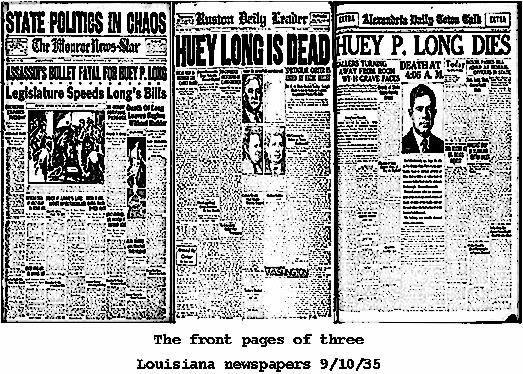
Huey died two days later on September 10, 1935, eleven days after his 42nd birthday. His last words were, “God, don’t let me die. I have so much to do.”
That’s the simple, officially selected story.
Huey Long
Page 240
Page 241
12– Differing Assassination Theories While it seems abhorrent to dwell on the negative, giving undue attention to any wrongdoer, it also seems of some unexplained significance that Huey Long, after being shot once or twice, chose to run away from his entourage of paid protectors.
At 9:22PM on September 8, 1935, Long, then a US Senator, was shot while walking down one of the building’s corridors. He died two days later, at 4:06 in the morning, only 42 years old and still generally considered to be the most powerful politician in Louisiana’s history.
The official version of Long’s death is that it was an assassination carried out by a 29 year old, well respected Baton Rouge physician named Carl Weiss. Weiss, the story goes, was angry that Huey P. Long had orchestrated the ouster of his father-in-law, Benjamin Pavy, from a judicial seat in St. Landry Parish. The Pavy family were outspoken opponents of Long, and according to unsubstantiated rumors, Long had once claimed the Pavys had “Negro blood,” which some speculate had also driven the young physician to confront Long that night. Whatever the precise case, it is incredulous that an armed, non-supporter of Long with known personal issues against him was allowed to get so close to the threatened Kingfish with all his “security.”
Page 242
For the past eight decades, students of Louisiana history have been taught that Carl Weiss approached Huey P. Long, exchanged some heated words, and then pulled out a gun and shot him once in the abdomen. Long’s bodyguards immediately returned fire and killed Weiss, shooting him 61 times.
Long had initially survived the shooting and was able to walk down a flight of stairs and across the grounds of the Capitol and then hail a car to take him to the hospital. He lived for another 32 hours, and many believe that he only died because of incompetent or sabotaged medical care. Remember, doctors were generally not fans of Huey.
The assassination of Huey Pierce Long has earned a central place in the mythos of Louisiana. It ensured he would not merely be remembered as a powerful and ruthless politician but as a man who had sacrificed his own life in service to the people of Louisiana. The word assassination is reserved only for a select few, and in a macabre way, the term itself is an expression of respect for the victim.
Only a leader can be assassinated, and only when their life was taken by someone opposed to them for political or religious reasons. In that respect, an assassination is also a political
Page 243
statement, a way of intimidating and silencing those who supported and respected the fallen leader.
Nearly a century after Huey P. Long’s death, we should acknowledge a compelling body of evidence that suggests the story we have told about Huey P. Long’s death is wrong, even if the true story diminishes the mystique of the Kingfish. Huey P.
Long wasn’t assassinated by Carl Weiss.
More likely than not, he was killed accidentally/on purpose by a stray bullet fired by one of his bodyguards, likely either Joe Messina or Murphy Roden, as it was later determined that Weiss’
gun could not have fired the bullet(s) that were in Huey.
There are bullet holes from that night still visible in the Capitol’s marble walls. But more significantly, there are holes in the government’s story about who is responsible for causing the death of Huey P. Long, and some of those holes have only come into view in the past twenty years.
Ten years ago, at a symposium held in the Old State Capitol, Dr.
Carl Weiss, Jr., who was only an infant when his father died and who has spent much of his life researching the events of that night and retracing his father’s steps, spoke for the first time at length about his long held belief that his father did not
Page 244
actually shoot Huey P. Long. In fact, he asserts his father wasn’t even carrying a gun that night.
Carl Weiss, Sr. did confront Long. He was angry, though the exact reasons why are unknown and will probably always remain unknown. His son dismisses the long standing theory that the confrontation had anything to do with defending his father-in-law. “I don’t think it makes any conceivable sense that a person would carry out an attack like that on behalf of a father-in-law who was ready to retire anyway,” his son contended.
“The other reason is equally fuzzy, but it’s suggested that Huey may have made some kind of racial slur, which my father interpreted wrong and chose to avenge himself. Again, I don’t think that’s the least bit likely.”
Weiss may have not carried out an attack on behalf of his father-in-law, but historian Ed Reed believes the most likely explanation is that he simply wanted to plead his father-in-law’s case. According to Reed, Carl Weiss had attempted to talk with Long three times, stationing himself in plain view outside of the door to the governor’s office, and each time, he was rebuffed. Several other historians agree and argue that the likeliest story is that after Huey P. Long made an insulting
Page 245
comment to Weiss, the young doctor punched him in the face. At that point, Long’s bodyguards opened fire.
This theory is bolstered substantially by the sworn affidavit of Jewel O’Neal, a nurse who had attended to Long that night.
According to O’Neal, Long told her, “That’s where he hit me,”
while she was treating his bruised lip. Another nurse confirmed O’Neal’s account.
Decades later, Carl Weiss, Jr. had his father’s body exhumed, and according to a forensic analysis, there was evidence of a small fracture in one of his hands consistent with the type of injury received from throwing a hard punch.
If Weiss had planned on killing Huey P. Long that night, he made no indication of his motives to anyone who knew him. The Weiss family home, it’s worth noting, was on Lakeland Drive, very near the state Capitol. “My father’s daily route home literally took him through the parking lot of the Capitol,” his son explained.
That day, Weiss had attended to a man named Morgan, who later told police investigators that the physician was not acting unusual and did not seem disturbed at all. He also made plans to perform surgery the following morning, and at dinner that night, he tried to cool the temper of an uncle who was arguing about politics.
Page 246
His actions that day did not seem like those of a man who was plotting to kill the most famous man in Louisiana.
There is also significant evidence that police engaged in a hasty cover-up in order to place a weapon in Weiss’ possession.
His brother, Tom Ed Weiss, arrived at the scene within an hour and discovered that police had moved the doctor’s Buick from where it had been originally parked and had also pilfered through the car’s glove compartment, which is where Weiss kept his gun, a .32 caliber pistol he had purchased on a vacation in France years prior.
A security guard on duty that night, Elois Sahuk, told the historian Ed Reed; “One of the bodyguards, who is now dead, told me that he felt that that gun was a ‘throw down gun,’ that one of the bodyguards had gone out to the car that Carl Weiss had driven up in, had gotten that pistol and had thrown it next to the body.”
There was a gun next to Weiss’ body, but curiously, his car keys were missing.
When surgeons operated on Long, they were able to recover a .38
caliber bullet, the same caliber as the weapons carried by his bodyguards. Weiss’ .32 caliber pistol was never a match, and for decades, the weapon was nowhere to be found.
Page 247
Then, in 1991, a researcher hired by James Starrs, a professor of law and forensic sciences at George Washington University, made an astonishing discovery. The weapon was owned by Mabel Guerre Binnings, the daughter of Louis F. Guerre, the man who headed up the investigation into Long’s death.
“It is submitted that there is significant scientific evidence to establish grave and persuasive doubts that Carl Austin Weiss was the person who killed Sen. Huey P. Long,” Starrs announced at a meeting of the Academy of Forensic Scientists in 1992.
A year later, in 1993, the son of Huey P. Long, the late US
Senator Russell Long, met the son of Carl Weiss. Russell Long had steadfastly maintained his public belief that his father was assassinated by Carl Weiss, but privately, he wasn’t always as adamant.
Five years ago, the writer Jonathan Alter unearthed a letter that Russell Long sent to Tom Ed Weiss, Carl’s brother. “We shared a personal tragedy,” he said of himself and Carl Weiss, Jr. “It was my fortune to know some of the eyewitnesses and respect them,” he wrote about his father’s bodyguards. “I do not want to do anything to cast doubt on what they testified under oath. Yet I remain of the view that only the Eternal could know all that happened and why it happened as it did.”
Page 248
Something else happened in 1993. Colonel Frances Gravemberg, who served as the Superintendent of the Louisiana State Police in the 1950s and a man who earned a sterling reputation for his work against organized crime, stated in a sworn affidavit that he knew the identities of the men who were responsible for shooting Huey P. Long.
Two troopers who were eyewitnesses to the shooting had told Colonel Gravemberg they watched Long’s bodyguards plant a gun on the unarmed Weiss shortly after accidentally wounding Long; the fatal bullet was aimed at Weiss but ricocheted off of a marble wall and struck the Kingfish.
In the late 1990s, the Louisiana State Police reviewed their investigation on Huey P. Long’s death, an investigation which, by all accounts, was flawed from the very beginning. “On September 16, 1935, a sham inquest was held, in which only fervent Long loyalists, including a puppet judge who later admitted he hadn’t seen the shooting, were allowed to testify and no autopsy or ballistics tests were conducted,” Jonathan Alter explained.
Despite the substantial evidence that Carl Weiss was not the shooter; indeed, could not have been the shooter, the police did not change their ruling. “We believe from a law enforcement
Page 249
standpoint that he had motive. We believe he had opportunity.
And we believe he had the means to do the job. And we know that he was there,” they wrote then, a position that, presumably, they still hold.
The story of Huey P. Long will be told in Louisiana for generations to come, but hopefully, someday soon, we will tell the truth about the final chapter.
June 6, 1992 NY Times
New Inquiry, Old Findings in Huey Long's Killing By The Associated Press
The authorities today closed their investigation of Senator Huey P. Long's assassination, reaching the same conclusion they reached 57 years ago: Louisiana's "Kingfish" was slain by a doctor out to right a family wrong.
"He was shot once, the bullet passing completely through his body and exiting through his back," said Donald R. Moreau, the state police lieutenant who headed the renewed inquiry. "There was one assassin. That assassin was Dr. Carl A. Weiss."
Senator Long, a former Governor who had continued to rule Louisiana through a handpicked successor and a rubber stamp
Page 250
Legislature, was a potential Presidential candidate when he was gunned down in the State Capitol on September 8, 1935.
Seven witnesses identified Dr. Weiss as the gunman, and the Senator, who lived for two days after the shooting, never suggested that anyone other than Dr. Weiss had attacked him.
But theories abounded that Mr. Long had been killed in a plot, although whose plot was never clear, to remove him from power, perhaps because he posed too great a threat to President Franklin D. Roosevelt. It was as a result of those theories that the inquiry was reopened last year.
The theories were unfounded, Lieutenant Moreau said today.
"The Long machine was still in power after Long died," he said.
"They immediately dubbed their opponents the 'Assassination Ticket.' Believe me, if they had found any evidence of a conspiracy connected with Weiss, they would have shouted it from the rooftops."
There had been bad feelings between the Senator and Dr. Weiss.
The feud sprang from Dr. Weiss's belief that Mr. Long had kept Dr. Weiss's father-in-law from getting a job and had implied that some members of the doctor's family were black.
Page 251
After firing at Mr. Long, Dr. Weiss was shot to death by the Senator's bodyguards, and some theories later held that the Senator had actually been killed by a ricocheting bullet fired by one of the guards.
The case was clouded by the fact that no autopsies were ever performed on either Mr. Long or Dr. Weiss and by the disappearance in 1940 of crucial evidence: records of the original investigation and the gun found on Dr. Weiss after the shooting.
But the records and the gun were eventually found in the possession of Mabel Guerre Binnings, the daughter of the man who had headed the original inquiry. That evidence, including photographs of the clothes Mr. Long had been wearing, backed the conclusion that he had been shot in the abdomen by Dr. Weiss, Lieutenant Moreau said today.
********
Controversy, mystery still surround the death of Huey P. Long“The Times-Picayune” - Sep 8, 2010 - Updated Jun 25, 2019
State Capitol tour guides shepherd visitors through the corridor where Louisiana Senator Huey Long was fatally shot, pausing to
Page 252
point out a bullet hole in the cold marble column to mark the spot where the Kingfish met his end 75 years ago Wednesday.
But like much that once was etched in stone about Long's death, the indentation is less than it appears. State Police investigators say it is a mundane imperfection in the marble, not a relic of the infamous shooting on September 8, 1935.
Other flaws in the story have emerged through the years, raising questions that challenge, but do not refute, the official version of the shooting; that a young doctor named Carl Weiss, possibly angered by Long's political and personal attacks on his in-laws, put a bullet through Long, who died 31 hours later.
Weiss was killed immediately by Long's bodyguards.
"I don't believe that he fired a fatal shot or indeed that he carried a gun into the state Capitol that night," Carl Weiss Jr.
said of his father during a Baton Rouge symposium recently. "I don't think my father was a bad apple."
After the shooting, the biggest public controversy was whether Weiss was part of an assassination plot with Long's enemies, not whether he actually shot the Senator. The Long political faction had many incentives to push theories of conspiracy and martyrdom. They faced a gubernatorial election and many of
Page 253
Long's top supporters had been targeted for tax evasion and other federal crimes.
The Longites labeled their opponents the "Assassination Party"
and won the election. They made peace with President Franklin Roosevelt, who had become Long's top political target. The federal probe cooled off and a proposal for a state investigation of the shooting was withdrawn.
The Long faction's propaganda machine was capable of dominating the discussion. For example, for 50 cents in late 1935, you could pick up a copy of the 50 page booklet, "Why Huey Long Was Killed!!" and learn "The Full Story" and "Startling Accusations"
about a "deep laid plot conceived in iniquity and completed in sin."
A countervailing theory that Weiss had only punched Long and that both men had been killed in a hail of bullets, or a ricochet, fired by the Senator's overly enthusiastic bodyguards was quickly dismissed.
Harvey Fields, a Long supporter and once the head of the state Democratic Party, wrote a book in 1944 titled, "A True History of the Life, Works, Assassination and Death of Huey Pierce Long." It lavishes praise on Long and his cohorts and devotes minimal attention to the counter-theory.
Page 254
"All of this story that it could have been and was a stray bullet of a bodyguard is as untrue as it would be to say that Lincoln was killed by a gun that dropped from his pocket and went off accidentally, instead of being assassinated," Fields wrote. "It would be just as easily proven that the Saviour was not crucified."
Conflicting Stories
The 1946 publication of Robert Penn Warren's famous novel based loosely on Long's life, "All the King's Men," didn't help Weiss'
reputation. At the book's climax, a distraught young doctor resembling Weiss assassinates the governor in a state capitol.
Weiss Jr. laments that Warren's fictional account "has eclipsed reality."
The official version of Long's shooting seemed impregnable until 1960, when a reporter for The Associated Press named David Zinman realized that no real investigative reporting had been done about Weiss and his motives. He proceeded to interview Weiss' surviving relatives and others with knowledge of the events, something that no journalist had pursued before with real vigor.
In 1963 Zinman published "The Day Huey Long Was Shot," a carefully balanced presentation of the story that reads like a
Page 255
murder mystery. Although Zinman did not provide a definite conclusion of what happened, his work exposed serious doubts about the official version and gave the counter-theorists a more level debating field.
That same year, a journalist from the Long era who was an unabashed Kingfish fan, Hermann Deutsch, published "The Huey Long Murder Case," an adoring portrait of Long that reinforced the official version of the shooting. A somewhat more objective account based on extensive interviews was T. Harry Williams'
1969 Pulitzer Prize winning biography, "Huey Long," which concluded that Weiss shot Long and missteps by the doctors who treated Long finished him off.
Accidental Death
Huey Long's life insurance policy made the news in 1985.
Prompted by the publicity surrounding the 50th anniversary of Long's shooting, MONY Life Insurance Co. released a report filed by its Bureau of Investigation on November 9, 1936, to look into the cause of the Senator's death. Written by company investigator K.B. Ponder, the report notes the political maelstrom surrounding the incident.
"Naturally there have been any number of rumors in connection with this case, documentary evidence had been destroyed, or else
Page 256
it was set up in the beginning to represent conditions in the light most favorable to the insured and to those who expected to profit most by the political control the insured had established over the State of Louisiana," the report said.
Probing the immediate cause of death, the report came to startling conclusions; "There is no doubt that Weiss attacked Long, but there is considerable doubt that Weiss ever fired a gun. There is no doubt that his death was accidental, but the consensus of more informed opinion is that he was killed by his own guard and not by Weiss."
By determining the death was accidental rather than murder, the report meant that the policy would pay double indemnity to Long's widow. It was a $20,000 claim, according to Ponder.
The Two Bullet Theory
In 1986, Louisiana political analyst and public relations consultant Ed Reed offered a blockbuster interpretation with his book, "Requiem for a Kingfish: The Strange and Unexplained Death of Huey Long."
The traditional view of the shooting was that a single bullet from Weiss' gun ran through Long's abdomen. Using hospital and FBI records and interviews, Reed focused on the theory that at least two bullets were fired into Long's body. He examined the
Page 257
medical procedures in the Our Lady of the Lake Hospital operating room, which during the surgery was crowded with Long's political allies and doctors arriving from New Orleans and elsewhere to assist with the emergency care.
Reed provides evidence that Long's urine was checked repeatedly, contrary to the popularized notion that the lead doctor, Coleman Vidrine, had failed to check for fatal signs of urinary bleeding. But more importantly, Reed says the doctors that night pulled a bullet out of Long's body and did not report it. A second bullet was left in the body, he claimed.
The most significant evidence presented for this theory is a story related by Merle Welsh, the funeral director who served as mortician for both Weiss and Long. In an interview with Reed 50
years after the incident, Welsh said one of the operating room doctors came to the funeral home late at night, reopened Long's sutures and probed the corpse until he pulled out a bullet. Reed tracked down the funeral home assistant who claimed to have the bullet on a key ring as a memento.
Soon after the release of Reed's book, the writer Zinman also interviewed Welsh and heard essentially the same story but said the mortician, then in his eighties, was clearly losing his memory.
Page 258
Reed backed up his two shots theory with several references. If true, his version of events suggests that someone other than Weiss may have fired a shot or two into Long. A bodyguard? An unidentified assassin? Reed couldn't say for sure, but he concluded that the official theory of the shooting "must now be relegated to that graveyard of hoaxes, frauds and fairy tales."
The Gun Surfaces
A new line of investigation opened in 1985 when Carl Weiss Jr., who was 3 months old at the time his father was shot, had a cordial lunch with Long's son, US Sen. Russell Long. Weiss said he learned at that meeting of the existence of his father's gun, which had gone missing for 50 years. Weiss and James Starrs, a lawyer and scientist at George Washington University known for his forensic work on historic crimes, began seeking the weapon.
It was kept in a safety deposit box of Mabel Guerre Binnings of New Orleans, the daughter of the late Gen. Louis Guerre, the state's head of crime investigations in 1935. After a long legal battle overseen by then Civil District Judge Revius Ortique, Binnings in 1991 had to give up possession of the box, which was filled with memorabilia.
The Guerre box contained three things of great interest; a .32
caliber automatic pistol of the type Weiss owned; a .32 caliber
Page 259
bullet that had been fired and had a blunt tip from an impact; and photos identified as Long's coat and clothing showing bullet holes.
The gun was identified as the one owned by Weiss. The court ruled the gun belonged to his son, who has allowed the pistol to sit on display in the Old State Capitol Museum in Baton Rouge.
State Police investigators fired a test bullet from the Weiss pistol and compared it under a microscope with the blunt nosed bullet. The conclusion was that the spent .32 caliber bullet found in Guerre's collection was not fired by the Weiss gun. It also probably was not fired by one of the bodyguards, who carried larger caliber automatic handguns. No one has ever produced a bullet as evidence of the one that killed Long.
State Police investigators determined that the photos supported the official one shot version of events. The hole in the front of Long's coat was consistent with a very close range shot from a .32 caliber handgun. The hole in the back of the clothing was consistent with a bullet exit wound.
While the State Police was examining the Guerre evidence, Starrs exhumed Weiss' body in search of new clues. He details his investigation in the 2005 book, "A Voice for the Dead," which
Page 260
found nothing conclusive to support any particular theory but continued to raise unanswered questions about the whodunit.
"So in the end, neither the Starrs probe nor the State Police investigation really settled very much," Zinman said recently at a Baton Rouge symposium of the subject. "The enigmatic bullet pointed to Weiss's innocence. The photographs of Long's clothing tilted toward his guilt. Both are suspect as evidence because no one knows what happened to them over the years."
In recent years, the trail of evidence has grown meager. Both sides have presented many second and third hand accounts to support their arguments. Noteworthy among these is an affidavit from Francis Grevemberg, head of State Police in the early 1950s, who was told by some of Long's former security officers that the Weiss gun was taken from the doctor's car and planted at the shooting scene. Grevemberg said he was thwarted in his attempt to investigate.
State Police Captain Don Moreau, who is now with the Baton Rouge coroner's office, led the investigation into the Guerre evidence and filed a report in 1992 that concludes; "All observations made of the photographic and other evidence was supportive of the official version of the shooting. A careful examination of
Page 261
literary sources and historical information provides no credible contradictions."
Of all the versions of the shooting, Moreau's is perhaps the simplest and the least inspired by speculation. The seven witnesses closest to Long at the fateful moment described essentially the same chain of events and they stuck with their testimony for the rest of their lives, Moreau said.
He said the accidental ricochet theory is weak because in reality the bullets would not have tended to bounce around in that hallway and, if they did, they most likely would have struck one of the many other people standing nearby. No one was hit but Long, Weiss and possibly one of the guards who had his wristwatch knocked off.
The version of the story, in which Weiss quickly stepped forward and got off one or maybe two shots before being knocked backward and shot by the bodyguards, is the one that has the most evidence to support it, Moreau said.
"I think Weiss acted alone," Moreau said.
As to the doctor's motive that night? "We could speculate about that all day," Moreau said.
Page 262
The simpler truth is that when so many people want a public figure dead, money goes to many operatives, and the possibilities approach infinity. Evidence disappears, leaving all but the impossible official story with any “credibility.”
Why has there never been an investigation of Greggory Davies, retired Winn Parish Deputy Sheriff’s story. He said; “I was very lucky in knowing and being a close friend with an old eccentric gentleman in Winnfield who as a young man, was invited to a secret meeting.” He said at the time he had no idea what the meeting was about. He only knew the close friend who invited him was a well-known doctor who was born and raised in Winn Parish and a person he trusted.
After having met the man in Shreveport, he was blindfolded and taken to an unknown location where he had to take an oath on a Bible that he would not reveal what was going on.
The meeting was actually a Huey Long “assassination club”
meeting. The members were doctors, attorneys, businessmen ...
upper class folks. “He said he had never told that story, except to me, as he did not want any part of it.”
We’ve heard this type of story many times before, though it was rather new on September 8, 1935. This has all the intrigue and players as does the Kennedy hit, as well as the suppressed
Page 263
evidence, and now we know of the FBI involvement. Huey Long was upsetting many people including politicians dependent on donations from the rich and their monopoly businesses. Not only was he espousing and popularizing the Populist principles of
“Share Our Wealth;” Huey was also against US involvement in Europe, thereby making an enemy of the military-industrial complex, though that term did not exist until former General and then President Eisenhower said to beware it.
Page 264
13- Huey’s Take on his Assassination Hear what Huey Long said about it himself, from a little known speech before Congress. Following is the exact "The Plan of Robbery, Murder, Blackmail, or Theft," of Senator Huey P. Long, from the “Congressional Record,” August 9, 1935, pp 12786-12791.
The "Plot Speech"
Of Senator Huey Long
"The Plan of Robbery, Murder, Blackmail, or Theft"
Huey's speech is not exactly what you might think. Not much has been made of the speech Huey Long gave on August 9, 1935. You might find an article or two about how Huey stood up and revealed a plot to murder him that was hatched in the DeSoto Hotel. Rarely do any of the historians tell what Huey's speech actually said. The gentlemen gathered at the hotel certainly made remarks that today would be most ill-advised and would likely prompt; if not a full investigation then at least a polite visit of inquiry from the FBI and Secret Service.
It would be nice if we had the full transcript of the meeting.
Huey said he turned his notes over to the Senate secretary. But if the transcript survives it's probably buried deep in the recesses of some government basement.
Page 265
Senator Long speaks:
The Plan of Robbery, Murder, Blackmail, or Theft I have a record of an anti-Long conference held by the anti-Long Representatives from Louisiana in Congress. Someone at some time slipped a dictaphone into the room. The representatives of the President of the United States have just been to New Orleans to hold a conference. The boys did not have enough money to buy more than one dictograph so we were able to get a record of what occurred only in one room. If we had had a lot more money we could have gotten it all. It is an expensive proposition to buy these dictographs. The Federal Government keeps one hanging around us wherever we go. Mr. Roosevelt has money enough to buy all the dictographs he needs. The one we had was a little old
"dootinkered" outfit but it was pretty good even at that.
Mr. President, you have read in the public press that the faithful Roosevelt Congressmen had gone to Louisiana to put the Long crowd out; that they had gone down there to give battle.
They rented a room down there and one of our friends put a dictograph in it. I did not have anything to do with putting the dictograph there, any more than I had anything to do with the dictograph they had been putting around my rooms.
Page 266
Here is what happened among the Congressmen representing Roosevelt "the Little" himself, representing Franklin Delano Roosevelt the first, the last, and the littlest: Conference. Sunday, July 21. 1986. about 10AM, Room 506, De Soto Hotel
The personnel of the conference changed from time to time, but the following persons are known to have been present at various times:
Moreland Meadows; T. Semmes Walmsley. Numa Montet; John Sandlin; M. H. Sandlin; Oscar Whilden-He is the head of the Square Deal League with which they are affiliated.
Warren Jefferson -
He was the man who distributes the Government funds and is now on the Government payroll.
Rufus Fontenot -
He is the collector of internal revenue who tells how he will blackmail them with the income tax. It is all here, just how the blackmail is going to be carried on. This is a very important government document I am satisfied the President will soon send
Page 267
another message asking that this be printed as a public document so it can be sent out without the payment of postage.
He is the State manager of the P. E. R. A., the man who had to resign as president pro tempore of the senate in order to avoid being thrown out under charges.
Then is given the name "Judge Sanchcz." There are so many men by that name that I do not know who this particular one is.
Then there is the name "Blanc." That is a common name in our State. It may be Le Blanc and Blanc-somebody, but I do not know just who is this.
Judge Stephens Thomas Major somebody. This is all the gentlemen could take down over the dictograph.
Shortly after 10 o'clock discussion got underway.
Here is Oscar Whilden, who is the head of the Square Deal League, who is apparently presiding:
Whilden: I am out to murder, kill, bulldoze, steal or anything else to win this election.
I wonder if the Presidents representatives dissented to this? ln a few minutes we will find out Here it is - the gentleman who is
Page 268
heading the President's conference down there. Here is what the gentleman said who is heading that conference: I am out to murder, kill, bulldoze, steal or anything else to win this election.
He will have a chance to do some of that maybe. I hope not. The people of Louisiana have never been afraid of anything Mr, Roosevelt sends down there, nor anything else that may be sent down there. These Government employees undertook to keep the school children from collecting money with which to ran the schools, but we managed to get by them one time, and I imagine we will get by the balance of these fellows.
I will read along further:
I am out to murder, kill, bulldoze, steal or anything else to win this election. We had a wonderful meeting in Gretna the other night. Lots of working men there.
Yes, they had about 30, and we sent 20 of them over there.
A funny thing happened
I skip a little and read:
Page 269
We had at least 2,000. We had a little trouble getting the right kind at speakers; and who do you think we had? Walmsley Francis Williams (laughter)-
The notes which I am reading show "laughter." Walmsley and Williams are two Roosevelt leaders down there; Williams, who got beaten twice in the same year in the election. He was beaten for mayor and then for public service commissioner, and is now on the pay roll of the Federal Government down there dispensing Federal money.
There was some talk about the meeting, and shortly afterward Walmsley came into the room. Seven congratulated him on his fight. Walmsley says: "I have to go in the other room (apparently John Sandlin's bedroom -
John Sandlin is a congressional leader down there who is in charge of things until next election, after which he will be among the missing up this way, unless he be given a government job in the meantime.
Which was on other side, adjoining the parlor in which the conference was being held.) I will have to go in Sandlin's room and get my coat.
A Voice. "Why, Semmes."
Page 270
That refers to Walmsley
"I thought Huey Long had gotten your coat and pants, both."
(This remark caused a great deal of laughter.) Walmsley left soon after that.
A Voice
- They cannot identify the man -
"Gentlemen, the time was never more opportune to rid the State of Long than it is right now. The entire resources of the United States are at our disposal." Is not that a nice thing? Here they are, with their conference, with the Government's agents sitting in and the Congressmen from Washington sitting in.
The entire resources of the United States are at our disposal.
And they are. If they will send them there, nobody need worry about the rest of the United States. They can spend their whole $5,000,000,000 down there and they will still need some more.
They have not even got them up a ticket yet and God pity It when they do get it up.
All we have to do is to put the right we men in the jobs and then must be careful to account for every penny Government
Page 271
money. If they are not right, don't hire them; and if they don't stay rignt, fire them.
This is in line with President Roosevelt's declaration that there must be no politics in the spending of the relief money -
what is said by these Congressmen down there -
This win put them in better standing with Mr. Roosevelt.
Then they say:
Then we have the income-tax indictments.
This is good stuff. Then we have the income-tax indictments and there will be some more convictions. They tell me O. K. Allen will be the next to be indicted.
That is the Governor of Louisiana. Send them down there culprits and thieves and thugs who openly advocate murdering people, and who have been participants in the murder of people and in the undertaking to murder others. Send them down these thugs and thieves and culprits and rascals who have been placed upon Government pay rolls drawing from five to six thousand dollars a year, to carry on and wage war in the name of the sacred flag, the Stars and Stripes. That is the kind of government to which this administration has attached itself in the State of Louisiana.
Page 272
Go down a little further. They go on talking about how they are going to use the income tax blackmail people in the State: A Voice. The first thing we must do is pick a candidate for governor. We need a spokesman, and someone everybody can rally around he to be generalissimo of everything in the state.
A Voice. Stanley must be on the ticket.
That is the man who recently resigned as district attorney.
Another Voice. Some of the boys from the third district, over in Montent's room, were for Stanley for governor.
Peterman speaks up, the administrator of the fund: That would be a serious mistake. Stanley would be better somewhere else on the ticket -
Sandlin -
Here comes the Representative, the first time we have heard of him. I cannot quote his words. but I can quote the effect of the. Here comes the maw who recognized as a dispenser of the patronage:
Give the b----- hell.
I guess he is referring to me -
Page 273
I have a copy at the Program
That is a paper that our friends put, the American programs. But I have had time to read it.
This is Representative Sandlin talking -
You know, the people don't read newspapers, but they'll read every pamphlet Long puts out and they'll read the damn Progress.
Hodges would make a strong candidate.
That is from Mr. Sandlin. "The people do not read the newspapers, but they will read anything Long puts out and they will read the Progress." They do not need to read any more. They will take care of his case this fall.
Mr. Peterman says: Come in. gentlemen. Meet Mr. Warren Jefferson. Mr. Jefferson is connected with our New Iberia office.
Mr. Jefferson is running the thing over there; these particulars will show just how -
Sometime ago we went over to the Lafayette office. One relief worker afterward told me -
This is Peterman talking:
Page 274
"That fellow (meaning Jefferson) can get anybody fired. He came on our office and talked to the boss, and I saw him count off four of his fingers. And in about 15 minutes four of us got fired." [General laughter.]
Several expressed approval by saying. "That's the way to do it,”
etc.
Another Voice. We must tell the workers, when they get their checks, that these are Roosevelt checks, and that it is Roosevelt money, and that they have to be Roosevelt men. They have to talk Roosevelt and cuss Long.
Well, we have them doing that now. About 85 percent of those on their pay roll are Long men right now. We have them "cussing"
Long and talking Roosevelt, but you wait until you count the votes.
A Voice. Now. on this question of commissioners, how are we going to get our votes counted? As I understand it, the commissioners can seal up the boxes and take them to Baton Rouge without even counting the votes, and then count them in Baton Rouge.
There never was any such law as that.
Page 275
Some of you gentlemen who are lawyers know more about than I do.
Can you enlighten me?
Goff. Well, now, I'll you: I made a study of that 1aw. I took all of the old acts and laid them side by side on my table. I compared them with the latest law. and noted all them changes.
There is nothing In the law that would give them that right.
Sandlin. Well, Montet -
That is another Representative
- and some of the others have a plan, but it is so confidential that I don't think it would be well to discuss it now.
Another Voice. Well, that's all right. I just wanted to know it is being given some thought.
Peterman. I do not think we can get an even break with commissioners.
Someone asked how far the President could be expected to go.
... One party gave it as his opinion that the only time the President can call out troops -
They are going to call out the United States Army to steal the Louisiana election, according to this conversation - the only
Page 276
time the President can call out troops by Executive order is to suppress insurrection.
I skip.
Another Voice. Gentlemen, the time was never more opportune.
Long has annihilated the old regulars for us and removed a stone from our necks. Stanley is honest and honorable, but he has no more right to be governor than one of us has.
Another voice says:
Williams. Walmsley. Sullivan. and Rightor are only waiting orders. And by God, we'll give them orders, and they'll carry them out. I'm damn sick and tired of coming down here and asking what's Walmsley going to do, what's Sullivan going to do.
Rightor is for anybody. All he wants is a candidate.
A Voice. Stanley against Proterie would be under no handicap in north Louisiana.
Another Voice. No; and If we ran him for Governor, Long would claim Stanley was so rotten he had to put him out of office.
He'd make capital of it.
As to this particular Stanley, who was in the conference, it was shown by written confessions in the file of the district attorney's office that the brother-in-law of his first assistant
Page 277
had robbed the Maison Blanche dry goods store, and had signed a confession as to the articles which he had stolen and that this man had prevented the case ever going before the grand Jury or the guilty person from being indicted until prescription had run; and he was made to resign the office when the time came that we passed laws making the assistants accountable to the attorney general of the state. He is about the best man they have in the gang at that. He is better than most of them.
Goff says: "Have Dean " -
This is another representative
Have Dean to make a trip around the State to see his friends and then announce that the people want him to run for Governor and no one will know about this arrangement here, and make the campaign solely on returning the government to self-government, and. as you all know, we must all keep all of this a secret and not even tell our own families of what is being done here."
Another Voice. You know, it is going to take money to win this election. Someone asked if $25,000 would do it. We can't expect the President to do everything. He wants us to do what we can and then he will help. That's why I think we should run Cleveland Dear. If we put up one of their kind, then it will be up to them to raise some money. It will put them on the spot.
Page 278
Peterman. What about Dear's labor record?
Sandlin. It Is O. K.
Another Voice. We should make fellows like Farley and Roosevelt and the suffering corporations like Standard Oil Co.. Louisiana Refining Co.. and the big lumber men cought up enough to get rid of that fellow.
Yes: we should make the Standard Oil Co. and the "suffering corporations" cough up enough. They are paying several million dollars more a year to educate and take care of the people of Louisiana; and they are "suffering corporations" says Mr.
Sandlin and this other voice that is talking there.
Then Chasez spoke, another one of the high men working there in the relief headquarters. Chasez said: Whenever anybody comes to me and asks for a job or anything, I'll tell them to see the campaign manager for Cleveland Dear and find out if they can get it.
In other words. Mr. Cleveland Dear they will run for Governor; and Mr. Chasez, who is the assistant of Mr. Peterman, says: When they come to me for a job, I will say to them: "Get your O.
K. from campaign headquarters of the anti-Long campaign for Governor before you get anything here."
Page 279
A Voice. Have the Congressmen to see President Roosevelt and have the President to advise everyone in authority to give out no jobs except in this way.
Peterman. I was up in Alexandria and there is a very unsatisfactory situation up there.
He could have gone anywhere else and found that very unsatisfactory situation to them, I might add.
I had a conference with Dr. McDonald, and I was not satisfied.
You know in that movement the Government just puts up the money.
There are no Federal tick-eradication laws, and any prosecutions would have to be under the State statutes.
They cannot prosecute the farmers out there under the Federal laws, and he says it is a very unsatisfactory condition,
"We have not the right to prosecute the farmers out there.
Prosecutions have to be under State law" and there have been no prosecutions under State laws." That would be dangerous," says Mr. Peterman.
A Voice. You know it is peculiar the way some of our own friends feel about that. I had a good friend of ours, a man 100 percent anti-Long, come to me and ask what was going to be done about eradication, and in the course of our conversation he said. "You
Page 280
know it is more important to get rid of the ticks than it is to get rid of Long."
[Laughter.]
He said, "You know it is funny how our friends feel. Actually those damn fools up there, instead of having them all hung or put in a penitentiary, thought it was better to let Huey Long eradicate the ticks than not to do it and get votes. Isn't that funny?"
No doubt they will direct another letter to the President and ask that that situation be corrected, as this record indicates.
He said, "Can you conceive of anybody feeling that way?" It is better to get rid of the cattle ticks than it is to get rid of us.
Peterman. Dr. Hilderith's -
This is Peterman, the State administrator, talking: Dr. Hilderith's plan was to advise the appointment in his department one-fourth Long men and three-fourths anti-Long men -
could be arranged to give the anti-Long man 30 days' work and the Long man no work at all.
Page 281
Mr. President, I am going to teach my friends in the Senate how to lick this kind of corruption. I am going to show them how to lick it to a shirt tail finish, how to run it high and dry. I am going to try to give a lesson in this country, where they say they are coming down to murder, beg, steal, and do everything else. I am going to give you a lesson in January, if you will watch me and my friends long enough, to show you that the crookedness and rottenness and corruption of this Government, however ably financed and however many big corporations join in it, will not get to first base.
Chasez said:
Stanley told me a week or so ago, when I met him at lunch one day, that he would Just as soon run against the "guy" himself I guess that means me.
Voice. We want to save Montet to beat Wade Martin.
Montent, the Congressman, to beat Wade Martin, who is the public service commissioner on the Long ticket, who licked their man the last time to a shirt tail finish.
Voice. Will the President endorse our candidate?
Sandlin speaks up, right out of the White House, right off the griddle:
Page 282
He told me he would send a Cabinet officer any time to help campaign. You know Wallace hesitated to come down here. He was afraid he would have a hostile audience. He called up the President and asked him if he would come and the President told him "If Sandlin wants you to go ahead and go, that is if you want to," and Wallace was agreeably surprised at his reception.
Voice. Dear's candidacy will give the people assurance of Washington's connection with the ticket, but If Sandlin holds back on the Senate It will create doubt of such connection.
Sandlin is the man they talk about to run against me. He has not yet gotten up the nerve to get his feet quite out in the water.
This may help him.
If Sandlin lacks courage to run against Long, there is something rotten in Denmark. It is just a question of yes or no.
It takes more than courage, Mr. President. He withdrew from the race down there 2 or 3 years ago until I got down there and put him back in the race.
Voice. Well, he could refuse to run by issuing the proper statement.
Page 283
Voice. The trouble with Sandlin is he doesn't like to decide and he will not announce for an office until he is convinced that he can win.
(Sandlin had apparently left the meeting before the above exchange took place. But It Is not known at what part at the proceedings he left.)
Everybody left about 1:15PM.
Sunday afternoon. July 31. 1935, from about 2:30PM.
At this conference among those known to be present were: Paul Chasez, John Fred Odom, T. O. Harris, Billikin Howell, O'Rourke Frank Petermann -
Practically all of them Government employees and Government agents.
A man named Martin, Harry Gamble. Sr., Numa Montet; one Hatcher or Thatcher -
I identify that man as being Hatcher, whom they pat down there to run the school department in the State, a department of education inside of the State -
Jordan, Red River, Baton Rouge teacher, who formerly taught at Junction City
Page 284
They could not tell who he was. I have not looked him up, because he is not important.
Montet said:
We may want to issue a statement tomorrow. You know he has drawn us into this with what he said about us. The best answer to what he said would be to announce our candidate.
Voice. I think it would be a good idea to tell every E. R. A.
worker making over $75 per month that he has to buy a shotgun and then hold regular target practice. Montet, what would be the psychological effect of, say, a hundred men lined up with guns practicing shooting?
(If Montet answered, it was lost in the noise.) Chasez. I never saw a politician all day. [Laughter]
Soil erosion was discussed. Someone mentioned the fact that there were some good technical jobs in the department and stated some of them paid as much as $300 per year.
The discussion got around to candidates and the campaign again.
There was a short discussion of a candidate for superintendent of education. The names of Mrs. MerrIman, Walter Burke, Fisher, at Arcadia, and Houston, secretary of Teachers' Association of Baton Rouge, a Long hater, were mentioned.
Page 285
Voice. I talked 3 hours with Stanley yesterday, and I told him to make his campaign to go around with the candidate for Governor, and use just "good old horse language," and I also talked with Ned Rightor, and Ned Rightor is for someone from the country.
Voice. Long doesn't have any good speaker and we ought to get good speakers, such as Val Irion, George Hardy, Varies, and Porteous.
Voice (Thatcher?)
I know it is Hatcher from what is said.
You know I am working on an educational program involving about $1,500,000. If the projects cannot be improved by the P. W. A.
Is it possible to have this done to Washington?
All educational money must be spent for politics down there.
Voice. This is the man they are planning to run for superintendent. I hope they run him; that is. I hope they put his name on the ballot. That will be the last of his case!
Voice. You gentlemen miss the psychological effect of this thing. We should have the candidate blame Long for the lack of jobs and have some good speakers on the radio like J. Y., Jr. -
Page 286
That is J. Y. Sanders, Jr., who is a Representative, whom my father was the author of the Watson-Williams toll bridge, where it cost $8.40 to come in and out of the city and I put a free bridge beside it -
and others explain to these fellows who are out of work that Huey Long stopped all federal funds from coming into Louisiana and that is why their wives and children are hungry. And hold back and let them sweat. That will hurt Huey. Then you can try to get the projects transferred.
In other words, this was apparently accepted, as the letter from the sewerage and water board indicates, to hold back all things in Louisiana and blame Huey Long for it. This is the high council here, with the mayor of New Orleans, and the Congressman, and the man in charge of the P. W. A. and others, in a holy meeting.
O'Rourke -
O'Rourke was the man who refused to testify on the ground that he would incriminate himself, when a man appeared and swore that he had been held by O'Rourke to commit murder in Baton Rouge. I was the man he was to kill, so there was not much said about it, except that he refused to testify on the ground that he would
Page 287
incriminate himself whereupon Roosevelt employed him. He was qualified and he was appointed.
O'Rourke. Put on a crusade and arouse the people.
Harry Gamble. I was up in Shreveport not long ago and saw -
He refers to a man whose name I will not recall who happens to be a relative of mine -
You know he and I used to be closely associated.
I will not read the Senate four lines about members of my family of whom he speaks. If any Senator wishes to read them. I will be glad to give him the page to show that I have nothing to conceal.
I read further:
Conference. July 22, 1935. Room 506. DeSoto Hotel, beginning at 10:10AM.
Anong those known to be present at various times were the following : Jack Williamson -
He is a State representative, then on the pay roll -
Goff, John Sandlin. Judge Stephens, Judge Calvin Schwing, Oscar Whilden -
Page 288
He is the "square deal" head Vance Plauche, Renegar or Rendegar
That name must be Vandegar, a man in Sabine parish who used to be clerk of the court-Dear, George Hardy -
Former mayor of Shreveport. who was beaten -
Lee -
Former candidate for judge, whom we beat.
Voice. Who Is In town from the eighth district Voice. Well. I know McInstosh and Vandergoff (?) are here.
That proves that was the name they had. I want Senators to get this. All of them are present whose names, I have read. I have got two very fine citizens of Louisiana whose words will be accepted by 999 men out of a thousand, and I think a thousand out a thousand who were present and listened to this dictograph.
Voice. I would draw in a lottery to go out and kill Long. It would only take 1 man. 1 gun. and 1 bullet.
Voice. Single handed?
Page 289
Voice. Yes; that's the only way to do it. I once told his brother-in-law I would do it if he interfered with my law practice -
They never were able to identify who this was -
Voice. Dear is satisfactory to the third district.
Voice. Roosevelt wants Dear to run I guess they mean Judge Sandlin there, when they put down "Judge" -
Voice. How do you know Roosevelt wants Dear? Is there anything definite?
Judge. No.
Voice. Then how do you arrive at your assumption?
Judge -
I guess that is Judge Sandlin they are talking about.
Judge. Well, the four other Congressmen are for him, and they reflect Roosevelt wishes. The President is much interested in this election as we are and he wants us to ask him for his support and we have his assurance it will be forthcoming
Page 290
Voice. Long is potentially beaten right now has never been able to beat Dear. J. Y., Jr., is trying his his best right now to get Dear to run.
J. Y., Jr., is a Congressman. So Is Dear -
Voice. Long is potentially beaten right now. Sixty percent of the people want him in the Gulf of Mexico weighted with chains.
The trouble is getting the various elements together. Many meetings have been held in Alexandria, but no results because each district has its own candidate. We must present a united front. Will all rally around Dear?
Voice. I think J. Y. Jr.. is the best material for a candidate that we have. That's why I asked If Dear is the only man satisfactory to Roosevelt or that Roosevelt will support. If there is another man who will make a better candidate than Dear I think it is a mistake to settle on Dear now.
Voice. People object to having offices handed down, and J. Y.
Jr. would have to overcome this. Gentlemen, we must win )over some of Long's following or we can't get 50 percent of the vote.
Stanley will fit in better elsewhere on the ticket. Dear's fight has not been as bitter as Stanley's and J. Y., Jr.'s. We must center on the candidate. Don't let the public know we picked him, but let him go around the State and then announce.
Page 291
Voice. All I am interested in is beating Long. It's touch and go with me as between J. Y., Jr.. and Dear. I'd be more enthusiastic though for Sanders.
Voice. What's wrong with old J. Y.? Nothing. Some of friend's have taken up Long's cry and if we let it influence our decision we are a bunch of G-- damn fools.
Voice. I have the greatest affection for Sanders. but I tell you uou'll find opposition all over the State against J. Y.. Jr..
because of his father. Dear does not have this handicap. We need crusader to go out and meet them on their own basis.
Another Voice. The main objective is to put Long out of business. I have been for Sanders in the past but Dear is the timber. I recognize the feeling against the name Sanders and Long will make capital of it.
(All parties agreed to Dear and it was moved that a committee be appointed to go and get Dear.)
George Hardy, Lee, and Judge Stephens were appointed.
Judge Calvin Schwing arrived during absence of committee.
Voice. People vote against, not for.
I guess that was Schwlng who was talking
Page 292
Jones. Ten percent to fifteen percent want to vote for a winner.
(Stanley was discussed and there was general praise of him.) Voice. I haven't the slightest doubt but that Roosevelt will pardon anyone who killed Long.
[Laughter.]
And this gets even funnier.
I want Senators to hear the succeeding line. This gets even funnier. I read the language after midnight when I was alone in my room, when I got a little bit more shaky, but it is funny in daylight I will read that line again: Voice. I haven't the slightest doubt but that Roosevelt will pardon anyone who killed Long.
Voice. But how could it be done?
Voice. The best way would be to just hang around Washington and kill him right in the Senate.
[Laughter.]
This is a great meeting of the higher element that is sent from Washington, D. C, with assurance that they had the right to indict anybody they wanted to, to hire anybody they wanted to, to fire anybody they want to, with all the money they needed. It
Page 293
is a great meeting they held for the President of the United States down in New Orleans.
I will read that last line:
Voice. The best way would be to just hang around Washington and kill him right in the Senate.
Now here is where I get a lease on life. Here is something to show Senators where something comes in and gives me a break: Voice. I once thought that was necessary but I don't think so now.
So it seems like temporarily I got a respite on this matter.
Voice. Many will vote for the first time because of the free poll taxes and we have to figure on them.
That is a new law which we passed down there which doubles our voting strength.
Caddo will be 90 percent against any Long candidate, but we must get our vote counted, and I cannot guarantee that. ...
Oh. We will get ours counted.
Dear enters
Page 294
The Congressman comes back after the committee had been sent to escort him in
Dear enters. Hello, Governor (greeted thus by several of those present).
Voice. Governor , we have voted unanimously to support your candidacy.
Dear. Thank you. gentlemen. (There was little enthusiasm and all left shortly after.)
Afternoon.
Voice. How do you do, Mr. Renegar.
That is Vandegar from Sabine Parish.
Voice. I want you all to get first hand on this resettlement business and what it can do.
Resettlement. I understand that must mean moving persons from one place to another. I later investigated and found out that the Government was sending to Louisiana offering to move as many Long farmers as could be found, to Alaska or other places, and had assured them that if they could move out 15,000 farmers and their wives that they would take 25,000 Long votes out of the State who would materially help the ticket. Well, I want to say
Page 295
that 25,000 of them will not hurt us. We will give them that many more if it will help them. Just let the Long men stay there. Do not take them away to foreign lands, but give them the money and we will give them 25,000 votes to spare. We will spare them that much. If we cannot lick them more than 25,000 votes we do not want them. I
Voice. I want to see that red headed fellow from the eighth district.
Voice. Hello. Clarence. I was not able to identify who that Clarence was.
Vance Plauche arrived. Oscar Whilden present. Jack Williamson also present.
Voice. We have no bureau of publicity.
This is Monday afternoon, and I am about to conclude it Voice. We have no bureau of publicity or means of disseminating information. They have.
I do not know what it is.
Why, people in my parish believe long tried to pass an old age pension at the last session of the legislature. (This party mentioned St. Lantry and Evangeline.)
Page 296
Voice. Hello. Everett.
Voice. I came down with Philo Coco.
Voice. So long, Mr. Will, good luck to you.
Voice. Mighty glad you've got a man in your parish that can and will help whip Long.
Voice. Good bye, Joe. Good luck.
So, Mr. President, I have given the benefit of this conference to the United States Senate, and, I hope, to the country. I hand these pages from which I read to the official reporter. I will give the names of the witnesses who sat in the room while these things were being taken down, nine gentleman whom I first will mention is Mr. Herbert W. Christenberry, who is a brother of the secretary whom I have in my office, and the other one is a gentleman by the name of Cason, who is the secretary of the State senate: and regardless of their identification, I will venture the word of myself and everyone I know, that there is not a man in Louisiana who will in confidence tell you but what anything that either Christenberry or Cason will tell you they heard is genuine and true. Mr. Christenberry is himself a stenographer, and took these remarks down, as much as he could get them, over the dictograph in company with the others.
Page 297
Furthermore, I have delayed handing these sheets in because I wanted sufficient verification to give out to the public in order that the truthfulness of them might be well ascertained.
Since that time. Senators, I wish to say that they have announced having had their conference; I wish to say that they have taken their action against the sewerage and water board; I wish to say that Mr. Ickes has made his announcement in concert with their announcement and the things they have predicted, and I wish to announce further they have sent additional inspectors and various other bureaucrats down in the State and have begun their resettlement to move certain people outside of the State of Louisiana.
There has been such verification of practically everything given, and the Congressmen who went there having now returned and taken their seats, we await their announcing this unexpected candidacy of the man who is to take the trip around the State and find out that the people want him as the candidate for Governor.
Meantime all this activity, all these various and sundry things, are occasioned by an administration. I might say, which could well have avoided it if it would keep its pledges and its promise, it would not be worried about anyone of my standing, nor would it need to be worried that I should have a standing
Page 298
today, had it not violated every promise upon which it rode into office. Had it kept the word given to the people, its cohorts would not need to discuss either the personnel or the political murder or suicide of anyone connected with an opposition. It is today using these tactics, blind-siding the true vote of the Congress on the Frazier-Lemke character of legislation which it kept from coming up in the other legislative body. That bill cannot be heard, it says. It undertook to tell the people, “We are going to deliver, we are going to employ, we are going to say" - whereas the thing goes the other way - and the expedients adopted by these men. I might say, in moments when they are not exactly sound, at least, in some of their urgings, are adopted in this atmosphere of desperation. The State of Louisiana has no fear whatever of any kind of tactics thus agreed upon and thus imposed. The State of Louisiana will remain a State. When you hear from the election returns in the coming January, whether or not Rhode Island was sincere in its repudiation of this blackmail. nonetheless, on due notice and after due thought of the standards of democracy, Louisiana will not have a government imposed upon it that represents murder, blackmail, oppression, or destitution.
Page 299
14- Quotes
Corrupted by wealth and power, your government is like a restaurant with only one dish. They’ve got a set of Republican waiters on one side and a set of Democratic waiters on the other side. But no matter which set of waiters brings you the dish, the legislative grub is all prepared in the same Wall Street kitchen.
We said that all of our trouble and woe was due to the fact that too few of our people owned too much of our wealth. We said that in our land, with too much to eat, and too much to wear, and too many houses to live in, too many automobiles to be sold, that the only trouble was that the people suffered in the land of abundance because too few controlled the money and the wealth and too many did not have money with which to buy the things they needed for life and comfort. So I said to the people of the United States in my speeches which I delivered in the United States Senate in the early part of 1932 that the only way by which we could restore our people to reasonable life and comfort was to limit the size of the big man’s fortune and guarantee some minimum to the fortune and comfort of the little man’s family.
Page 300
Anybody that lets his public policies be mixed up with religious prejudice is a plain fool.
I would rather see my laws passed than be President.
When fascism comes to America, it will come under the guise of anti-fascism.
A man is not a dictator when he is given a commission from the people and carries it out.
The trouble is we’ve got too many men running things in this country that think they’re smarter than the Lord.
I do not want the voice of people shut out.
Whenever this administration has gone to the left I have voted for it, and whenever it has gone to the right I have voted against it.
My voice will be the same as it has been. Patronage will not change it. Fear will not change it. Persecution will not change it. It cannot be changed while people suffer. The only way it can be changed is to make the lives of these people decent and respectable. No one will ever hear political opposition out of me when that is done.
Page 301
I’m a dyed in the wool party man. I don’t know just what party I am in right now, but I am for the party.
Speaking to the Senate - A mob is coming here in six months to hang the other ninety-five of you damned scoundrels, and I’m undecided whether to stick here with you or go out and lead them.
Speaking of the KKK’s Hiram Evans - Quote me as saying that that Imperial bastard will never set foot in Louisiana, and that when I call him a son of a bitch I am not using profanity, but am referring to the circumstances of his birth.
I was born into politics, a wedded man with a storm for a bride.
Communism? Hell no! ... This plan is the only defense this country's got against communism.
Everything I did, I’ve had to do with one hand, because I’ve had to fight with the other.
We shall have to say right here and now that the hand of imperial finance shall not go farther into its strangulation of the American people and that the hand of imperialistic banking control shall be decentralized instead of centralized in America.
Page 302
I don’t know much about Hitler. Except that last thing, about the Jews. There has never been a country that put its heel down on the Jews that ever lived afterwards.
It ain’t enough to get the breaks. You gotta know how to use em.
We’ve got everything our people need. Why not let all have their fill and lie down in the ease and comfort God has given us?
I will not participate in the Democratic victory tonight. I do not care for my share in a victory that means that the poor and the downtrodden, the blind, the helpless, the orphaned, the bleeding, the wounded, the hungry, and the distressed will be the victims.
We ought to take care of every single one of the sick and disabled veterans, every man that wore the uniform of this country is entitled to be taken care of, and there is money enough to do it.
Raise all the hell you want to, print what you want to. But we’re going to have that medical school and every qualified poor boy can go.
You will find that you cannot do without politicians. They are a necessary evil in this day and time. You may not like getting money from one source and spending it for another. But the thing
Page 303
for the school people to do is that if the politicians are going to steal, make them steal for the schools.
Hard work is as overrated as monogamy.
I’d rather violate every one of the damn conventions and see my bills passed than sit back in my office, all nice and proper, and watch’em die.
I have never held a public office in my life during which I was not under some kind of threat of removal or impeachment from the day I went into politics until the present day. I have tried for about sixteen years to have it some other way, and it has never been any other way, so now I have stopped trying to have it any other way.
I can frighten or buy ninety-nine out of every one hundred men.
We are either going to apply the laws which were given from Heaven, or country is not going to last.
I’ll tell you how to get rid of Longism. See that building over yonder. Get some dynamite and blast that down. Then tear up the concrete roads, destroy the bridges I have built.
You may have covered up the grave, but you have not buried the corpse very deep.
Page 304
I used to get things done by saying please. Now I dynamite ’em out of my path.
The only difference I ever found between the Democratic leadership and the Republican leadership is that one of them is skinning you from the ankle up and the other, from the ear down.
I would describe a demagogue as a politician who don’t keep his promises.
A perfect democracy can come close to looking like a dictatorship, a democracy in which the people are so satisfied they have no complaint.
Your tears in this country have lasted for generations. Give me the chance to dry the eyes of those who still weep here.
Always take the offensive – the defensive ain’t worth a damn.
The trouble is, Roosevelt hasn’t taken all of my ideas; just part of them. I’m about one hundred yards ahead of him. We’re on the same road, but I’m here and he’s there.
The people of this country want relief, and they do not have to eat a whole side of beef to tell when it is tainted. They have bitten off the hoof of this situation in the United States. They know. We have given them no place to go.
Page 305
You are giving a little man a biscuit to eat, and you put a barrel of flour more taxes on top of his head to carry.
They kept on hollering, and I simply had to put my foot down. I said, “I’m the governor and I say the ignorant in this state have to learn.” And they learned.
The time has come for good men to rise above principle.
Our majorities were much better when we didn’t have any patronage. I wish I didn’t have a job on earth. You give a job to one man and you make nine mad. Our support is from the poor devils in the forks of the creek who appreciate what we have done for them.
If they got to leave, they can go to Hell and stay there.
The Bible’s the greatest book ever written. But I sure don’t need anybody I can buy for six bits and a chew of tobacco to explain it to me.
In a political fight, when you’ve got nothing in favor of your side, start a row in the opposition camp.
I’m for the poor man. They all gotta have a chance. They gotta have a home, a job, and a decent education for their children.
“Every man a king” – that’s my slogan.
Page 306
I do not want the voice of people shut out.
You sometimes fight fire with fire. The end justifies the means.
I would do it some other way if there was time or if it wasn’t necessary to do it this way.
Not a single thin dime of concentrated, bloated, pompous wealth, massed in the hands of a few people, has been raked down to relieve the masses.
Asked; “Do you think we will ever have Fascism in America?” the Kingfish said; “Sure, only we’ll call it anti-fascism."
I have so many things to do and not enough time to do them. I may not live long enough to do everything I want to do.
We started them to school. They learned to read. They learned to work simple arithmetic problems. Now some of our plantation owners can’t figure the poor devils out of everything at the close of each year.
God told you what the trouble was. The philosophers told you what the trouble was; and when you have a country where one man owns more than 100,000 people, or a million people, and when you have a country where there are four men, as in America that have got more control over things than all the 120 million people together, you know what the trouble is.
Page 307
God, don’t let me die. I have so much to do. – the last thing Mr. Long said.
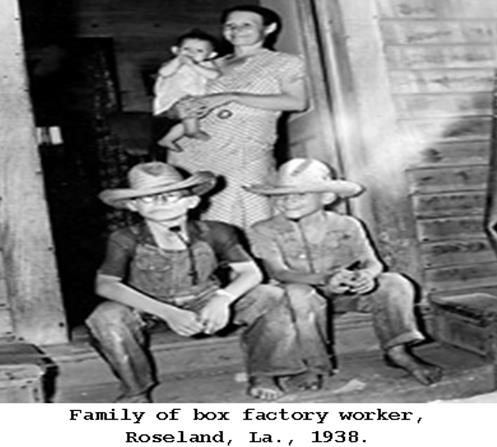
Huey Long
Page 308
15- The Final Wrapup
Virtually by himself, Huey Long transformed the economic reality in Louisiana from a system stacked against its rural poor citizens to a system that offered opportunity and tools for advancement. By 1936, Long’s programs and progressive policies saved the average Louisiana family more than $425 a year in daily living expenses (equivalent to $5,100 today). Coupled with free education and easier mobility, people on every step of the economic ladder received a chance to get ahead, especially the poor.
Page 309
Prior to Huey Long’s administration, the cost of living in Louisiana was high for everyone, especially Louisiana’s poor majority. Individuals were required to pay for everything the state did not provide; education for their children, tolls for ferry crossings where no bridges existed, annual fees required for the privilege of voting, and taxes on every form of personal property.
The disenfranchised poor eked out a meager existence, doing without the necessities that would provide a better quality of life, and paying taxes every year for services they never received. To add insult to injury, unregulated utilities and businesses charged top dollar for basic goods and services. At the very onset of the Great Depression, already desperate families in Louisiana risked losing what little they had.
Long shifted the public’s perception of what they should expect from their government. The state soon provided free education, roads, bridges, and infrastructure and reduced burdensome property taxes, fees, and utility rates. By 1936, the average family saved more than $425 a year in living expenses, or $5,100
today, which enabled hundreds of thousands of citizens to invest in a better future.
Page 310
With the state providing free schools, buses, and textbooks, the average family with three children saved $30 a year on books alone, or $360 today. Individual parishes no longer taxed residents to maintain the few public schools that previously existed, and higher education tuition was reduced as the state’s public universities tripled enrollment.
The free hard surfaced roads and bridges saved the average family $150 a year in tolls and ferries, or $1800 today. Reduced gas consumption and wear and tear saved car owners another $118
a year, or $1,416 today.
Personal property taxes were reduced by the “Homestead Exemption,” which eliminated taxes on every household’s first $2,000 of property. In 1928, most homes were worth less than $2,000, saving the average family $65 annually, or $780 today.
Eighty percent of all homeowners paid no personal property taxes under the new system. The “Homestead Exemption” remains a popular tax exemption in Louisiana.
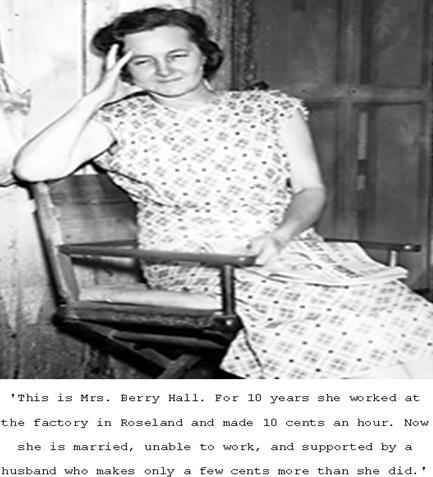
Huey Long
Page 311
Automobile license fees were slashed.Rates on trucks were cut from $28 to $3, and rates on cars fell from $15 to $6. Personal property taxes on cars were eliminated, The average farmer saved $20 a year, and the average family saved $9.
The poll tax was eliminated,allowing individuals to vote without paying the required fee of $2 over two years. This tax, which was due every Christmas, prevented a whole class of citizens from participating in the elective process. When the tax was
Page 312
repealed, 278,000 people registered to vote for the first time, nearly doubling the sie of the electorate.
Utility rates were reduced. Telephone rates fell 20 to 25
percent, saving the average family $12 a year. Electricity rates were also cut, saving the average family $27 a year.
To protect families from losing their homes during the Great Depression, Long created the Debt Moratorium Act, which stopped foreclosures and gave families a grace period to pay mortgages and settle debts, saving thousands of Louisians families from losing their homes and lifetime investments in their property.
When the state seized prpoerty due to failure to pay property taxes, families were allowed to regain it without paying back taxes.
Long’s state banking policies and personal intervention prevented bank closures, saving thosands of Louisianians from pre-FDIC insurance financial losses. Of the nation’s 4,800 banks that collapsed between 1929 and 1932, unly seven were in Louisiana.
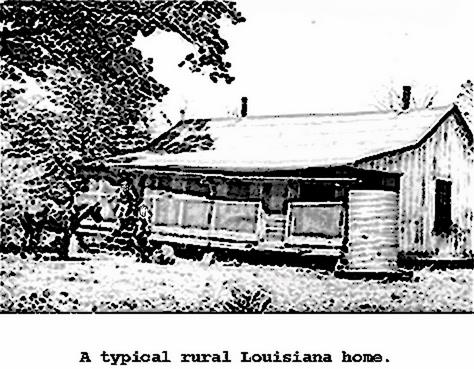
Huey Long
Page 313
People might ask how did Long pay for his programs?
Long's ambitious road building program was funded by bond measures that were voter approved and backed by a gasoline tax.
Long's education programs were funded by increasing the severance tax on natural resources extracted from the state by various industries based on quantity, which increased state revenue particularly from the oil industry and Rockefeller’s Standard Oil. The funds for hospitals and other institutions came from taxing carbon black at one-half cent per pound.
Conversely, Huey slashed personal property taxes and fees, shifting the burden of government financing from the public to industry. Despite the Louisiana government’s bonded debt, Louisiana's total government operating costs, state and local, were $41.97 per capita; third lowest among the states. During
Page 314
Long's governorship, overall taxes rose 2.2%, mostly paid by industry, compared with a national average of 4.7%.
On a national level there is little doubt that the audacious commentary coming from new Senator Huey Long forced the “New Dealer” to the defensive left. After all, in 1935, the Supreme Court had shut down FDR’s ridiculous “National Recovery Act” of 1933, leaving him with little more than useless federally funded make-work projects and no demonstrated results.
When he considered the growing chorus of criticism leveled against his administration in 1934 and 1935, President Franklin Roosevelt may have been thinking of Huey when he recalled the old adage; “No good deed goes unpunished.” The burst of new legislation rolling through Congress during the “First 100 Days”
of his presidency had not yet begun to take effect across the nation to lift the clouds of doubt that could not be dispelled simply by his “nothing to fear” inaugural address. Though the Treasury Department and the Federal Reserve Board had reopened the banks by shelving the weakest ones and reorganizing others.
The nation’s commercial banking structure, once on the verge of collapse, had been saved. The same old crew, now FDR’s moneyed buddies had their fortunes saved.
Page 315
The National Recovery Act’s Public Works Administration launched infrastructure projects that put scores of desperate, skilled craft workers back to building bridges, tunnels, and transit networks. The emergency Civil Works Administration, targeted largely at the unskilled and the poorest workers, paid the food and heating bills for many during the harsh winter of 1933-1934.
The Civilian Conservation Corps took the young unemployed off the city streets and gave them hot meals, new clothes, and a paycheck in return for clearing firebreaks and planting trees in the country. The Tennessee Valley Authority broke ground for new hydroelectric dams and transmission towers to bring cheap electricity to the most impoverished areas of the Old South.
Conversely, with the Agricultural Adjustment Act, the federal government paid farmers growing staple crops and livestock to reduce acreage and destroy millions of animals in order to raise prices even though people were going hungry. The central core of Huey’s program, the wealth tax never came to be.
But amid the sporadic hopeful signs that the country had turned a corner from the numbing despair of 1932-1933, there could also be found growing doubts about the future. Twenty percent of the labor force, or 10 million people, remained out of work at the end of 1934 despite the PWA, CWA, and CCC. Harry Hopkins, chief of the CWA, received pessimistic intelligence from one of his
Page 316
most astute observers, who had crisscrossed the country: “I’ve hardly met a single person who seemed confident and cheerful.
Relief loads are mounting. They can’t see any improvement.
Nobody seems to think any more that the thing (the New Deal) is going to work.”
Among those who thought Roosevelt’s programs had failed by the late summer of 1934 was a group of Democratic Party elders who had been displaced by the President’s more youthful advisors.
With a platoon of wealthy capitalists, they gathered to form the American Liberty League, a group dedicated to saving America from what they perceived to be a drift toward state socialism and unchecked Presidential power. The League’s first chair, Jouett Shouse, a former member of Congress from Kansas and treasury secretary under Woodrow Wilson, called on its members to “defend and uphold the constitution of the United States” and
“to teach the necessity of respect for the rights of persons and property . . . and to preserve the ownership and lawful uses of property when acquired.”
The group counted among its leaders John J. Raskob, the former chair of the Democratic Party, who, like Shouse, had been active in the repeal of national Prohibition and was a dedicated supporter of former New York governor Al Smith, himself now a League spokesperson and a bitter critic of the New Deal. The
Page 317
League’s funding, which totaled $1.2 million over its six years of existence, rested in the wallets of its corporate sponsors, especially the Dupont family, which contributed approximately 30% of its total income. Among the half dozen bankers, businessmen, and industrialists who contributed more than half the League’s bankroll and served on its executive or advisory committee were the likes of Alfred P. Sloan of General Motors, J. Howard Pew of Sun Oil Company, and Sewell Avery of Montgomery Ward.
The League found little to like about the New Deal. In its pamphlets, monthly bulletins, and press releases, usually printed versions of speeches and radio broadcasts, the organization’s leaders branded the Agricultural Adjustment Act (AAA) “a trend toward Fascist control of agriculture” and argued that the proposed Social Security bill of 1935 would “mark the end of democracy.” The administration’s tax proposals of that same year and the pending National Labor Relations Act inspired equally vehement protests; the latter produced constitutional challenges before the Supreme Court, argued by the organization’s best lawyers.
The League’s alarming messages against the New Deal touched a broad audience concerned about the growth of the federal government. The League boasted a national membership of more
Page 318
than 120,000 on the eve of the 1936 election, miniscule compared to Huey’s “Share Our Wealth” clubs, and counted the formation of 300 local chapters on college and university campuses with 10,000 supporters. When it lost both the 1936 election and the constitutional battles of 1937 the League’s chief financial backers and its rank and file cadres completely collapsed.
In retrospect, Roosevelt faced a more formidable challenge on his left flank, from individuals and groups who believed the New Deal had not gone far enough in using the full resources of federal and state governments to cure the problems of unemployment, relief, recovery, and reform. Upton Sinclair, the old muckraking novelist, received 870,000 votes in his losing campaign for the California governorship, run on a program called EPIC; “End Poverty in California,” that had promised to find work for the unemployed in the state’s idle factories and farms. Minnesota voters returned Floyd Olson to the governor’s office for a third time on a Farmer-Laborite ticket that vowed to establish state control of most productive assets. “I am not a liberal,” Olson boasted. “I am a radical. You might say I’m radical as hell.”
However, the most troubling of all his opponents, from Roosevelt’s perspective, was the former Governor and now US
Senator from Louisiana, Huey Long, called “the Kingfish,” who
Page 319
had campaigned for Roosevelt in 1932 but now ridiculed the President. Early in 1934, Long founded his Share Our Wealth Society, which a year later boasted nearly 30,000 local chapters with eight million members. Unlike Sinclair, Olson, and the Socialist leader Norman Thomas, Long scorned state ownership of business, but he called for a massive redistribution of wealth through graduated income taxes, a wealth tax, and inheritance taxes intended to limit personal earnings to $1.8 million a year.
In Long’s plan, the rich would finance a guarantee of a
“homestead allowance” of $5,000 for every American family plus an annual income of $2,500, thus realizing what he had promised in his 1935 book “Every Man a King.” Denouncing Roosevelt as
“Prince Franklin,” who lived on an inherited income, the Kingfish boasted that he could defeat the President; “He’s scared of me. I can out promise him, and he knows it.” It is unlikely that Long could have stolen the Democratic Party nomination from Roosevelt in 1936, but one poll showed him with enough popular support as an independent candidate to tip the election to the Republicans. That threat vanished in September 1935 when, in the hallway of Louisiana’s state capitol, an assassin’s bullet ended Long’s life.
Page 320
A third party challenge to Roosevelt remained, however, with Gerald L. K. Smith, former Klansman and part time preacher, taking over control of the Share Our Wealth organization and linking arms with the organizers of the National Union Party, Father Charles E. Coughlin and Dr. Francis Townsend. Like Long, they had been peddling their own cure-all recipes for economic recovery for several years. Coughlin, a 43 year old Catholic priest from Royal Oak, Michigan, a Detroit suburb, catapulted to national celebrity when CBS gave him a national radio show in 1930. He reached perhaps 35 million listeners on Sunday evenings with “The Golden Hour of the Little Flower,” a program that combined homilies on the gospel with attacks on the evils of communism and the malignant influence of Wall Street bankers who had brought about the Depression by their devotion to the gold standard.
Coughlin’s solution urged devaluing gold and expanding the money supply by undertaking the unlimited recoinage of silver, like William Jennings Bryan said at the turn of the century, to cause inflation. Unlike more savvy Huey Long, believing that Roosevelt supported his radical monetary schemes, the priest campaigned for him in 1933 and told his supporters “the New Deal is Christ’s Deal.” By 1934, although Roosevelt and Congress had devalued the dollar by about 25 percent, that was not enough for
Page 321
Coughlin, who announced the formation of his National Union for Social Justice. At the same time, he stridently denounced the New Deal as a conspiracy of communists, Wall Street, and the president’s Jewish advisors. Roosevelt had become “Franklin double crossing Roosevelt,” the country’s “great betrayer and liar.”
Unlike Coughlin, Francis Townsend did not mention the Jews, but by 1935, his simplistic Old Age Revolving Pension Plan had spread like wildfire from California, through a nationwide network of Townsend clubs that deluged members of Congress with 20 million petitions urging its immediate enactment. Townsend’s plan called for every person older than 60 years to receive a government pension of $200 a month, upon condition that they retire from work and spend the entire sum within 30 days. A two percent tax on business transactions would allegedly finance this security net for the elderly and open up new job opportunities for the young. Townsend was incredulous when critics pointed out that his proposed payments to the old would consume nearly half the nation’s income. Precisely why it worked in California, but would not elsewhere in the nation remained unexplained.
In 1935-1936, Roosevelt’s second burst of programs, which are often termed “The New Deal II,” including the Social Security
Page 322
Act, the Wagner Act, the Banking Act, and tax reform, had taken the wind out of the sails of his opponents on the right and the left and propelled him to a second term. During the second term, however, Republicans and southern Democrats continued to mount increased opposition to the New Deal. They were emboldened by the unpopularity of Roosevelt’s court packing plan and a severe recession that fell after only a few years of miniscule
“recovery.” In the end, the shift of the administration’s focus from the domestic front to the war largely meant the end of reform.
Focusing on Europe’s war and “fascism” across the waters was very convenient for FDR, as nationwide in this nation, the one he was supposedly most concerned with, abysmal economic conditions continued. Most notably unemployment settled in at 20%. Though down from the peak 25% level, this was still an abomination. Huey Long had years before in effect warned of the doomed failure of any such approach, like FDR’s. A popular phrase became imbedded among the people. No matter how many movie stars were paid to say things like “Prosperity is right around the corner” and “I’m a patriot and spend all my money,”
the people said; “Don’t buy it today. It will be cheaper tomorrow.”
Page 323
Huey had said; “We said that all of our trouble and woe was due to the fact that too few of our people owned too much of our wealth. We said that in our land, with too much to eat, and too much to wear, and too many houses to live in, too many automobiles to be sold, that the only trouble was that the people suffered in the land of abundance because too few controlled the money and the wealth and too many did not have money with which to buy the things they needed for life and comfort. So I said to the people of the United States in my speeches which I delivered in the United States Senate in the early part of 1932 that the only way by which we could restore our people to reasonable life and comfort was to limit the size of the big man’s fortune and guarantee some minimum to the fortune and comfort of the little man’s family.” - Huey P. Long, Radio Speech: Share Our Wealth, March 7, 1935
By now you might be wondering why anyone brings up the congenital failure exhibited and endorsed by purchased and financially for sale politicians. It’s not likely to do any good unless somebody figures out how to bring back and protect Huey Long.
Understand that almost a century ago Huey invented the way to defeat the forces of Depression, how to run a political campaign, and which political philosophy works best for by far
Page 324
the greatest number, that exceeding 99.9%. He was absolutely amazing; an inventive genius; and a revolutionary. And he would still be a revolutionary in 2023. While many of his ideas have become almost standard operating procedure for the US, at least rhetorically, one hasn’t. Populism. Huey spread and indeed added to the political philosophy first seen in late 19th century.
Misunderstood then as well as now, Huey gave it a more concrete form; and one which had demonstrated success in Louisiana. It was probably Huey’s ignored central core, as he named his program “Share Our Wealth,” not share our income, not share our land, not share our bums; but for the productive entrepreneurs and workers to “Share Our Wealth.” The US has still not done that, and perhaps for fear of death, no politician seriously proposes taking from the obscene levels of holdings of Bezos, Musk, Zuckerberg, Soros (Schwartz), Buffet, Gates, Bush, Bloomberg, the Rothschilds, Ronald Perelman, Carl Icahn, George Kaiser, Joseph Safra, Sheldon Adelson, James Simons, German Khan, Serge Dassault, Len Blavatnik, David and Simon Reuben, et al.
Sure, its briefly mentioned by someone once every year, while not using the term “Populist,” which the demons and their main stream press have made into a pejorative term; ostensibly the working people’s majority wishes are ”un-democratic,”
Page 325
demagoguery whatever that means, and even fascist. The few quickly forgotten proposals are ignored by the federal government and not followed up on at all, thereby dropped until some professional politician wants a day or two of cheap publicity the following year. In the meantime the people of 2023
are experiencing circumstances which mirror those of 1929 if one is aware that the homeless population as well as all others not on the currently collecting list are not counted in the official federal government unemployment statistics, while there is no increasing popular Populist like Huey Long around to force the supposedly free US to move in the right direction for its own majority good.
One might say that they didn’t listen to him then and wouldn’t now. That’s not entirely true, as now like then that would not be possible. The relentless force of Huey Long’s dynamic personality, genius, and plan for prosperous Populism, would now like then, have coerced the politicos to at least legislate much of it. And if the people got lucky the UniParty crooks would be coerced in fear of the loss of their political life to further legislate the wealth tax on the Rockefellers, the Zuckerbergs, the Schwartzes, etc., etc., et al.
Huey Long
Page 326
Huey Long
Page 327
Huey Long and “Mr. President (Have Pity on the Working Man)” by Randy Newman; property of the author, the latter under both the “fair use” and “transformative” doctrines.
“Corrupted by wealth and power, your government is like a restaurant with only one dish. They’ve got a set of Republican waiters on one side and a set of Democratic waiters on the other side. But no matter which set of waiters brings you the dish, the legislative grub is all prepared in the same Wall Street kitchen.” – Huey Long
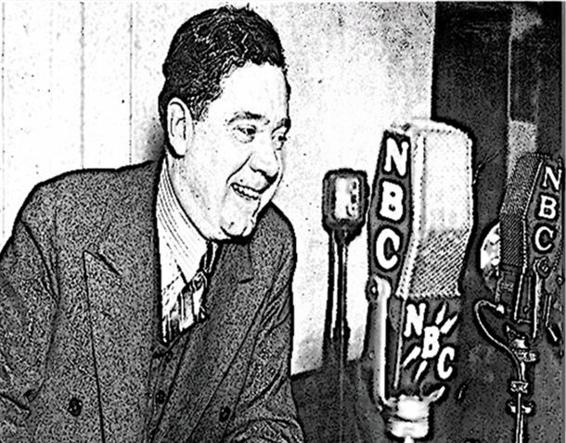
Huey Long
Page 328
THE LIVING END
Page 329
You may also like...
-
Mordecai Brown Biography by Edward DrobinskiMordecai Brown
Reads:
6Pages:
199Published:
Feb 2026Mordecai Brown was perhaps the best baseball pitcher of all time. He was certainly the most overlooked. He was the most integral and overworked part of the 19...
Formats: PDF, Epub, Kindle, TXT
-
Damn Yankees Biography by Edward DrobinskiDamn Yankees
Reads:
22Pages:
402Published:
Jun 2025What baseball team won the most consecutive pennants and World Series championships? Please tell me why they are excluded from the “expert’s” all-time-greates...
Formats: PDF, Epub, Kindle, TXT
-
Vanished: The Disappearance of Jack O'Sullivan Biography by Dylan HunterVanished: The Disappearance of Jack O'Sullivan
Reads:
25Pages:
20Published:
Mar 2025On March 1, 2024, Jack O’Sullivan vanished without a trace. A bright law student with a promising future, his disappearance in Bristol sent shockwaves through...
Formats: PDF, Epub, Kindle, TXT
-

Crazy Horse Biography by Edward DrobinskiCrazy Horse
Reads:
47Pages:
318Published:
Feb 2025In 1840 a mystical outsider Lakota child is born in the Black Hills. He would later become known as the great warrior, Crazy Horse. His vision quests showed h...
Formats: PDF, Epub, Kindle, TXT