

Baseball Trailblazers by Edward Drobinski - HTML preview
Download the book in PDF, ePub, Kindle for a complete version.
John Dwight Chesbro, June 5, 1874 - November 6, 1931, was a professional baseball pitcher. Nicknamed "Happy Jack," Chesbro played for the Pittsburgh Pirates, the New York Highlanders, and
Baseball Trailblazers Page 773
the Boston Red Sox of major league caseball. Chesbro finished his career with a 198-132 win-loss record, a 2.68 earned run average, and 1,265 strikeouts. His 41 wins during the 1904
season remains an American League record. Though some pitchers have won more games in some seasons prior to 1901, historians demarcated 1901 as the beginning of “modern era” major league baseball.
He was born John D. Chesbro in Houghtonville, a village in North Adams, Massachusetts. He was the fourth of five children of Chad Brown Chesebrough, a shoemaker, and Martha Jane Fralensburgh.
In 1892, Chesbro began playing for a sandlot ball team in Houghtonville. He worked in 1894 as an attendant at the Middletown State Homeopathic Hospital in Middletown, New York in order to play for the Asylums, the team representing the mental hospital. There, an inmate gave Chesbro the nickname "Happy Jack," due to his pleasant demeanor.
Chesbro began his professional career in minor league baseball in 1895. That year, he pitched for the Albany Senators of the New York State League until they folded, at which point he joined the Johnstown Buckskins. When the league disbanded during the season, he joined the Springfield Maroons of the Eastern League. In 1896, Chesbro pitched for the Roanoke Magicians of
Baseball Trailblazers Page 774
the Virginia League, until it disbanded. He pitched the remainder of the 1896 season in Cooperstown, New York for the Cooperstown Athletics.
Chesbro pitched for the Richmond Bluebirds of the Atlantic League from 1897 through 1899. After the 1898 season, he was drafted by Ned Hanlon of the Baltimore Orioles. However, Hanlon took a job with the Brooklyn Superbas and the Orioles were fully contracted, resulting in Chesbro not signing with Baltimore, as Hanlon allowed the option to lapse. He returned to Richmond for the 1899 season.
Chesbro was sold by Richmond to the Pittsburgh Pirates on July 7, 1899, for $1,500. He made his major league baseball debut with the Pirates on July 12, 1899. He recorded a 6-9 win-loss record for the 1899 Pirates. After the season, on December 8, 1899, Chesbro was traded with George Fox, Art Madison, John O'Brien, and $25,000 to the Louisville Colonels for Honus Wagner, Fred Clarke, Bert Cunningham, Mike Kelley, Tacks Latimer, Tommy Leach, Tom Messitt, Deacon Phillippe, Claude Ritchey, Rube Waddell, Jack Wadsworth, and Chief Zimmer. The Louisville club dissolved that offseason, and Chesbro, Fox, Madison and O'Brien were assigned to Pittsburgh in March as the National League reduced from 12 to eight teams.
Baseball Trailblazers Page 775
After going 15-13 for the 1900 Pirates, Chesbro won 21 games for the 1901 Pirates, while leading the NL with six shutouts. He went 28-6 with a 2.17 earned run average for the 1902 Pirates, leading the NL in wins and shutouts. The Pirates won the National League pennant in 1901 and 1902.
At the end of the 1902 season, the upstart American League began to entice NL stars to join their league by offering competitive salaries. Chesbro agreed to sign with a new AL franchise, the New York Highlanders, for the 1903 season, for a $1,000 bonus.
The news broke when Jesse Tannehill, who also agreed to join the Highlanders, told Pirates owner Barney Dreyfuss about the planned defection while under the influence of pain medication.
When he refused to participate in a postseason series, Dreyfuss released Chesbro from the Pirates.
Chesbro pitched the Highlanders' first game. He finished the 1903 season with a 21-15 record. Chesbro began throwing a spitball in the 1904 season, which he learned from Elmer Stricklett. Chesbro also began working on a "slow ball." That year, he started 51 games and finished 48 while posting a 1.82
ERA, striking out 239 batters, and recording 41 wins over 454
innings pitched, setting majorleague records for wins, complete games, and innings pitched in a season. That year, no other pitcher in the league won more than 26. Chesbro won 14 straight
Baseball Trailblazers Page 776
games from May 14 through July 4, a New York franchise record that stood until 2001. His 239 strikeouts remained a team record until 1978. On the last day of the season, in a game against the Boston Americans, he threw a wild pitch in the top of the ninth inning, allowing the winning run to score from third base and causing the Highlanders to lose the pennant to Boston. The ruling on this play was controversial. Even after Chesbro's death in 1931, his widow, with the support of former Highlanders manager Clark Griffith, continued to claim that the pitch was a passed ball, and blamed the winning run on catcher Red Kleinow.
Before the 1905 season, Chesbro announced that he had created a pitch he called the "jump ball." He struggled during the season, registering a 19-15 record. Chesbro was involved in the first squeeze play in baseball. At third base, Chesbro mistakenly thought he had received a steal sign from manager Clark Griffith, while Willie Keeler bunted for a hit. As Chesbro scored, Griffith made a note of the play and taught it in spring training the following season.
Many baseball observers expected Chesbro to return to form in 1906. That season, Chesbro registered a 23-17 record while leading the AL in earned runs allowed. He was removed from his starts 16 times, the most in the AL.
Baseball Trailblazers Page 777
Chesbro announced he would work on keeping his weight down prior to the 1907 season, but also announced his intentions to retire in February 1907. In March 1907, he announced he would return, but not at a pay cut. He signed a new contract two weeks into the 1907 season, in which he went 10-10.
After the 1907 season, Chesbro announced that he was giving up the experimental spitball, intending to return to the "old style of pitching" in 1908. He finished the 1908 season with a 14-20
record.
Prior to the 1909 season, Chesbro was assigned to the Indianapolis Indians of the American Association, a minor league affiliate of the Highlanders. However, Chesbro threatened to retire if transferred there, and did not report to the Highlanders at first. Chesbro made nine appearances for the Highlanders in 1909, before he was waived and claimed by the Boston Red Sox in September 1909. Chesbro pitched one game for the Red Sox, the season finale against the Yankees. The Red Sox returned Chesbro to the Highlanders prior to the 1910
season, but he was placed on the ineligible list after he refused to report to the minor leagues.
Chesbro returned to Massachusetts during the 1910 major league baseball season, where he worked on a farm in Conway,
Baseball Trailblazers Page 778
Massachusetts, that he purchased a decade prior. He pitched for a semi-professional baseball team in Whitinsville, Massachusetts, leading them to a championship. Chesbro coached for Massachusetts Agricultural College in 1911 and continued to pitch for semipro clubs in Massachusetts.
Chesbro met with Highlanders owner Frank J. Farrell and new manager Harry Wolverton in February 1912 about attempting a comeback. Wolverton agreed to give Chesbro a chance at pitching for the Highlanders. However, before leaving for camp he reconsidered and released Chesbro. Chesbro's request for reinstatement as a free agent was granted in March, while the Highlanders granted him his unconditional release. Chesbro decided to travel to Hot Springs, Arkansas, where teams participated in spring training, in an attempt to find a team willing to give him a chance at a comeback. He worked out with Brooklyn and Pittsburgh, but both teams passed on him.
Chesbro appeared in an old timers game at Braves Field, sponsored by “The Boston Post” to benefit Boston Children's Hospital on September 11, 1922. He served as a Washington Senators coach in 1924, which was managed by his former Highlanders manager, Clark Griffith. However, he and Ben Egan were let go when the Senators hired Al Schacht on June 1. In
Baseball Trailblazers Page 779
1927, he managed a minor league team in South Deerfield, Massachusetts, pitching for the team on occasion.
Chesbro married Mabel Suttleworth of Conway, Massachusetts, in 1896. After his retirement, Chesbro farmed and raised poultry in Conway, where he died on November 6, 1931, of a myocardial infarction.
Baseball Trailblazers
Page 780
Jake Daubert
Baseball Trailblazers
Page 781
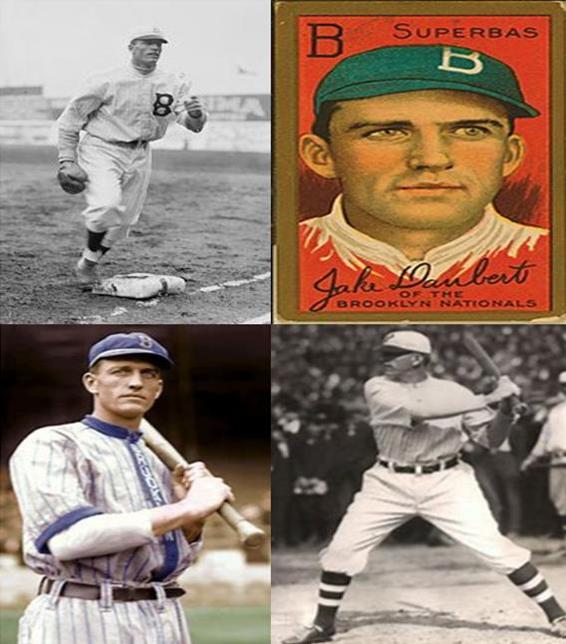
Jacob Ellsworth Daubert, April 7, 1884 – October 9, 1924, was a first baseman in major league baseball who played for the Brooklyn Superbas and Cincinnati Reds. His career lasted from 1910 until his death in 1924. Daubert was born in Shamokin,
Baseball Trailblazers Page 782
Pennsylvania to Jacob and Sarah Daubert. The lack of child labor laws enabled Daubert to go to work early in his life. In 1895, at the age of eleven, the young Daubert joined his father and two brothers at work in the local coal mines.
In 1906, Daubert left his job at the mines and signed a contract with a baseball team in Lykens, Pennsylvania. He was originally a pitcher on the team before he converted to first base. At the end of the 1906 season, Daubert left Pennsylvania and traveled west to Ohio. There, he spent the 1907 season on a team in Marion, Ohio.
In 1908, Daubert was signed by the Cleveland Indians. However, Daubert never played for Cleveland as they released him shortly thereafter. He left Cleveland and signed with the Nashville club of the Southern Association. He spent the remainder of the season with Nashville.
Daubert returned to Ohio for the start of the 1909 season. After playing the first part of the season with Toledo of the American Association, Daubert went back to Tennessee and joined the Memphis club. Like Nashville, Memphis's team played in the Southern Association. While playing for Memphis, Larry Sutton, a scout for the Brooklyn Dodgers, observed his play. Shortly
Baseball Trailblazers Page 783
thereafter, the Dodgers purchased Daubert's contract and brought him to Brooklyn for the 1910 season.
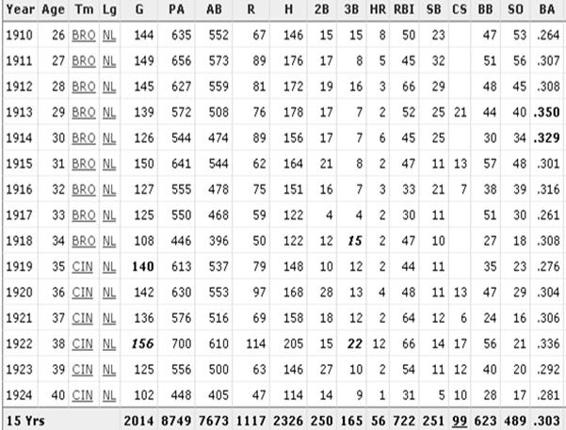
While Daubert hit just .264 in 1910, he hit over .300 in each of the next six seasons. On May 6, 1910, Daubert recorded 21
putouts in a single game, one short of the major league record.
In 1911 and 1912, Daubert placed ninth and eighth in the Chalmers Award voting. The following year, he won the award. On August 15, 1914, Daubert tied Cy Seymour's major league baseball record with four sacrifice bunts in one game. In 1916 he batted
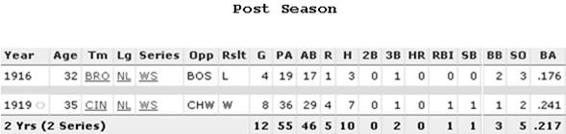
.316 and Brooklyn won their first NL pennant. His season ended in disappointment, however, after he hit only .176 in the 1916
World Series and Brooklyn lost the series to the Boston Red Sox.
Daubert hit .261 in 1917, but the following year he hit .308 and led the NL in triples. When the season was cut short due to World War I and the Spanish flu epidemic, major league owners prorated player salaries. Daubert, who had been among the founding members of the Players' Fraternity, sued for the balance of his salary. Eventually, Jake recovered most of the $2,150 he was due. After the dispute started, Brooklyn owner Charles Ebbets traded him to Cincinnati for outfielder Tommy Griffith. Once in Cincinnati, Daubert served as the Reds'
captain for the remainder of his career.
Baseball Trailblazers Page 784
In 1919, although he hit only .276, Daubert was second in the league in runs scored and third in triples. The Reds won their first pennant since the inaugural season of the American Association in 1882. In the 1919 World Series, noted for the Black Sox Scandal, he batted .241. In the 9-1 game one victory, he had three hits, including a triple, and he had two hits and scored twice in the final 10-5 victory in the decisive game eight.
Daubert hit over .300 in the next three seasons. In 1922, Daubert hit for a .336 average, led the NL in triples and had a career high 12 home runs. By 1923, at age 39, he was the oldest regular position player in the major leagues, and he hit .292
that season.
Daubert also excelled in sacrifice hits. His career total of 392
sacrifice hits is second in major league history, behind only Eddie Collins.
In his career, he had 56 home runs, 1,117 runs, 722 runs batted in, 250 doubles, 165 triples and 251 stolen bases. He recorded a
.991 fielding percentage. Daubert compiled a .303 lifetime batting average. At the time of his death, he ranked among the major league career leaders in games - 4th with 2,001, putouts -
4th, assists - 5th, total chances - 4th, and double plays - 3rd,
Baseball Trailblazers Page 785
at first base. He was also among the NL's leaders in hits -
7thwith 2,326, triples - 9th with 165, at bats - 9th with 7,673, games played - 10th with 2,014, and total bases - 10th with 3,074.
Daubert was recognized throughout his career for his performance on the field. He won the 1913 and 1914 National League batting titles and the 1913 Chalmers Award as the National League's Most Valuable Player. Between 1911 and 1919, “The Baseball Magazine”
named him to their All-American team seven times.
Daubert was a trailblazer in baseball's unionization movement, a controversial role that may have been a factor in his omission from the Hall of Fame. In 1913, he served as vice president of the Baseball Players' Fraternity, which petitioned the National Baseball Commission for improved labor conditions. The petition included the following requests; 1) permission for players to negotiate with any team following their unconditional release, 2) a guarantee that clubs would provide players with 10 days'
notice before releasing them unconditionally, 3) a guarantee that clubs would inform players of the terms of their contract when they are sent to another team, 4) a guarantee that a veteran player would not be sent to the minor leagues when his services are of interest to another major league club, 5) a guarantee that clubs would furnish uniforms and shoes to players free of charge, 6) a guarantee that clubs would provide
Baseball Trailblazers Page 786
traveling expenses to players between their homes and spring training camps, and 7) that players should receive written notice concerning any fine or suspension levied against them.
Although Daubert was unsuccessful in pressuring the commissioners to accept the terms of the fledgling baseball union's petition, he lobbied continuously for his own interests as a player, thereby earning a reputation as a "troublemaker"
within the baseball establishment. A salary dispute with Charles Ebbets, owner of the Dodgers, was a major factor in Daubert's transfer to Cincinnati in 1919.
While Daubert was in Brooklyn, he was nominated for city Alderman. He also spent time as a businessman and invested in several ventures. His holdings included a pool hall, a cigar business, a semi-pro baseball team, a moving picture business, and a coal breaker. His most profitable business was reportedly the coal breaker, which was located in his hometown of Shamokin.
Daubert left the Reds late in the 1924 season after falling ill during a road trip to New York. Against his doctor's advice, he returned to play in the team's final home game of the season. On October 2, he had an appendectomy performed by Dr. Harry H.
Hines, the Reds' team doctor. Complications from the operation arose, and a blood transfusion did not improve his health. He
Baseball Trailblazers Page 787
died in Cincinnati one week after the operation, with the doctor citing "exhaustion, resulting in indigestion, as the immediate cause of death." It was later discovered that Daubert suffered from a hereditary blood disorder called hemolytic spherocytosis, which contributed to his death. Daubert was survived by his wife Gertrude, his son George, and his daughter Louisa.
Baseball Trailblazers
Page 788
Tommy Bond
Baseball Trailblazers
Page 789
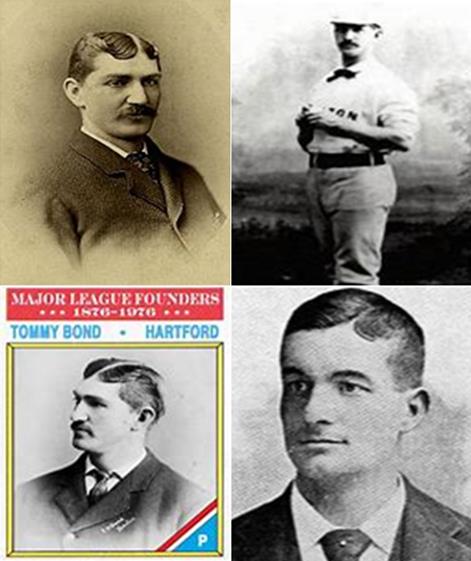
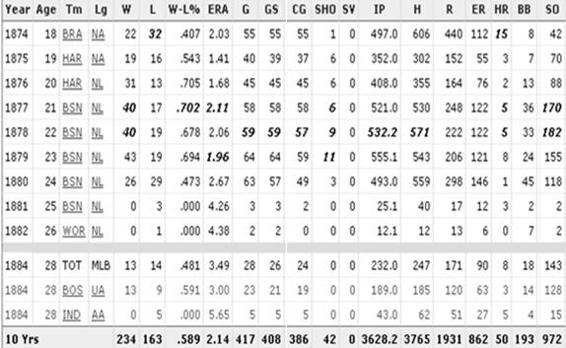
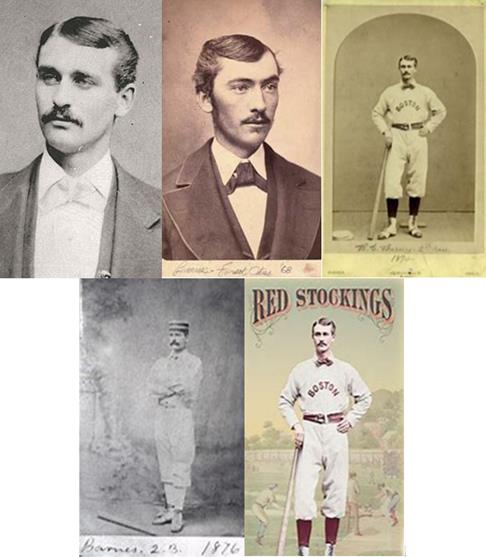
Thomas Henry Bond, April 2, 1856 – January 24, 1941, was a major league baseball pitcher and right fielder a total of ten seasons. A native of Granard, Ireland, he is the first man born in Ireland to play major league baseball. Bond played for six teams during his career; the Brooklyn Atlantics in 1874, the Hartford Dark Blues from 1875–76, the Boston Red Caps from 1877–
81, the Worcester Ruby Legs in 1882, the Boston Reds in 1884, and the Indianapolis Hoosiers, also in 1884.
During his 10 season career, he was a three time 40 game winner, played for two National League pennant winning clubs, and regularly finished in the top ten in many pitching categories.
Baseball Trailblazers Page 790
In 1877, he was the first winner of baseball's Pitching Triple Crown, leading the NL in wins - 40, earned run average - 2.11, and strikeouts - 170. His career statistics include a record of 234-163, 386 complete games in 408 starts, 42 shutouts, and an ERA of 2.31. He was a two time NL wins leader in 1877 and 1878; two time NL ERA leader in 1877 and 1879, and two time NL
strikeout leader in 1877 and 1878. Bond also played 92 games in the outfield, a few more in the infield, and batted .238 with 174 RBI and 213 runs scored.
Bond died the age of 84 in Boston, Massachusetts.
Baseball Trailblazers
Page 791
Ross Barnes
Baseball Trailblazers
Page 792
Charles Roscoe Barnes, May 8, 1850 – February 5, 1915, was one of the stars of baseball's National Association from 1871–1875
and the early National League from 1876–1881, playing second base and shortstop. Born in Mount Morris, New York, he played for the dominant Boston Red Stockings teams of the early 1870s, along with Albert Spalding, Cal McVey, George Wright, Harry Wright, Jim O'Rourke, and Deacon White. Despite playing for these star studded teams, many claim that Ross was the most valuable of them.
From 1868 to 1870, Ross starred for the Rockford Forest Citys, along with Albert Spalding, attaining professional status in the second year. When the National Association was formed in 1871,
Baseball Trailblazers Page 793
Harry Wright signed both men to his new team in Boston. Barnes'
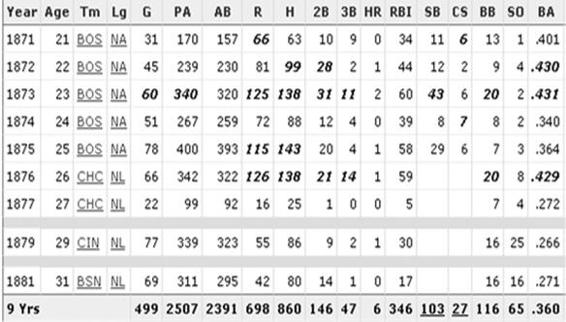
major league career thus started when he was 21. He split time between second base and shortstop for the Boston Red Stockings of the new National Association. Barnes led the league with 66
runs scored and 91 total bases, finishing second in batting average at .401.
In 1872, he led the Association with a .432 batting average, a
.585 slugging percentage, 99 base hits, 134 total bases, and 28
doubles. The Red Stockings began a four year dominance of the Association, with Barnes a key player each year. Barnes again led the Association in 1873, hitting .425, as well as leading in on base percentage - .456, slugging percentage - .584, base hits
- 137, runs scored - 125, total bases - 188, doubles - 29, bases on balls - 28, and stolen bases - 13. His .340 BA in 1874 was good enough for eighth in the league, while his .364 was good for second in 1875, while leading again in runs scored, base hits, and on base percentage.
Before the 1875 season ended, Barnes and four other Boston players signed contracts with the Chicago White Stockings. When word leaked out in Boston before the end of the season, Barnes and his teammates were reviled by Boston fans, being called
"seceders," a strong epithet just a decade after the Civil War.
It was likely that the National Association would void the
Baseball Trailblazers Page 794
signing, but Chicago owner William Hulbert preempted the move by forming the National League and causing the NA to disband.
Barnes' new team finished first in the NL's first season with a 55–12 record, while Boston fell to fourth. Ross led the National League batting - .429, on base percentage - .462, slugging -
.562, runs - 126, hits - 138, total bases - 190, doubles - 21, triples - 14, and walks - 20. In the 1876 season, Barnes also established the single season record for runs per game of 1.91, a mark which still stands. Barnes also has the distinction of having hit the first home run in National League history, on May 2, 1876.
In 1877, Barnes fell ill with what was then only described as an
"ague," played only 22 games, and did not play well when he was in the lineup. The illness robbed Barnes of much of his strength and agility, and shortened his career.
The remainder of his career was an effort to return to glory ending in mediocrity. He played for the Tecumseh team in the International Association, arguably baseball's first minor league, in 1878, returned to the National League with the Cincinnati club in 1879, sat out all of 1880, and finished his professional career in 1881, playing his last season in Boston, the site of his former glory. After 1876, he never hit better
Baseball Trailblazers Page 795
than .272, and his other totals were barely half of those from his glory days. He retired at age 31. He finished his career with 859 hits, 698 runs, and a .360 average. His 1.4 runs per game played remains the best of all time. He is also the only person to have hit over .400 four times.
During the late 19th and early 20th century, Barnes was highly regarded by many baseball observers. In 1903, sportswriter Tim Murnane wrote that Barnes was the “king of second baseman, as well as the finest batsman and run getter of all time.”
A bachelor for most of his life, Barnes married Ellen Welsh in 1900. Barnes held a variety of white collar jobs in the Chicago area after his baseball career ended until his death from heart disease in 1915.
Baseball Trailblazers
Page 796
Larry Corcoran
Baseball Trailblazers
Page 797
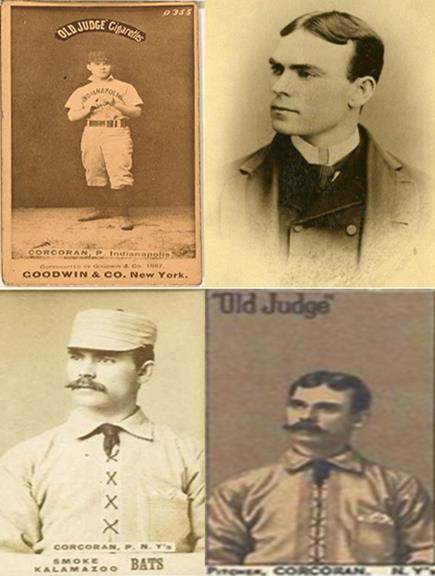
Lawrence J. “Larry” Corcoran was born on August 10, 1859 in Brooklyn, New York, to William and Ann (Boylan) Corcoran, Irish immigrants. William worked as a butcher. He had six siblings: older brothers William and Michael, younger sisters Frances, Margaret, and Mary, and a younger brother, Thomas.
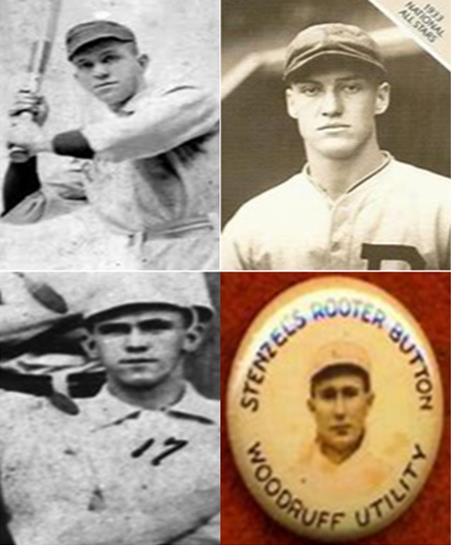
Larry Corcoran was a dominant pitcher in the early 1880s despite a 5 foot 3, 127 pound frame that gave him the nickname “Little Corcoran.” One of baseball’s early curveball masters, Corcoran was a part of three pennant winning Chicago teams. He was a true
Baseball Trailblazers Page 798
workhorse, averaging 456 innings pitched and 34 wins per season for five years, until his arm burned out.
Corcoran pitched in the spring of 1877 for two non-professional Brooklyn teams, Chelsea and the Mutuals. No pitching records exist for those days, but “The Brooklyn Eagle” reported that the Mutuals had “an excellent pitcher in Corcoran; a player well worthy a position in a strong professional nine.” In June Corcoran moved on to play for the Livingston Club of Genesco, New York. The June 30, 1877, “Clipper” noted that “Corcoran, their new pitcher, made his first appearance with them in this game, and played well.”
Corcoran joined the Springfield, Massachusetts club in 1878. “He is a swift, effective pitcher, one of the best curves in the business, a sure infielder and excels in watching the bases. His only fault is too great an anxiety not to give his opponents a hit, which causes him to pitch wildly and to put too much work upon himself and the catcher” wrote the “Springfield Republican.” In August Corcoran moved to the Buffalo Bisons, at the time an independent minor league team. He returned to Springfield in 1879 because no catcher in Buffalo could be found who could handle his pitching. Corcoran may have thrown a no hitter on May 14, 1879 as the “Springfield Republican” reported;
“Not a base hit was made from Corcoran’s pitching.” The
Baseball Trailblazers Page 799
Springfield Club disbanded on September 6, 1879, and Corcoran was briefly with the Holyoke, Massachusetts club, before being released on the 23rd. He joined the Worcester, Massachusetts club for just a few days and was asked to join the major league Chicago White Stockings on a trip to California in October.
Chicago pitcher Terry Larkin had a sore arm, giving Corcoran a chance in the major leagues.
“He was a very little fellow,” Chicago manager Cap Anson recalled of Corcoran in his memoirs, “with an unusual amount of speed, and the endurance of an Indian pony. As a batter he was only fair, but as a fielder in his position he was remarkable, being as quick as a cat and as plucky as they made them.”
Despite his height, Corcoran was a tough scrapper. “I remember a set to that he had one night in the old clubhouse with Hugh Nichols, in which he all but knocked Hughie out, greatly to that gentleman’s surprise, as he had fancied up to that time that he was Corcoran’s master in the art of self-defense,” Anson recalled.
As the White Stockings gathered for the start of the 1880
season, the “Chicago Tribune” mentioned that their new pitcher, Corcoran, “has developed into a left handed pitcher, and it is expected that his double method of delivery will prove extremely puzzling to batsmen.” He threw with both hands.
Baseball Trailblazers Page 800
Corcoran won his first major league start, on Opening Day, May 1, in Cincinnati; a game called “one of the most exciting ever seen here.” Chicago rallied in the ninth inning for a 4-3 win.
Corcoran pitched the first five games of the season, and Fred Goldsmith pitched the next four games. Beginning on May 18, manager Cap Anson alternated the two pitchers in 15 of the next 16 starts, the very first formation of a pitching rotation in professional baseball. The two pitchers started 84 of 86 games, Corcoran throwing 536 innings and Goldsmith 210. Anson liked the contrast between Corcoran, a hard throwing pitcher, and Fred Goldsmith, a “slow-baller.”
“The Tribune” called the White Stockings-Providence Grays game on June 4 “the most extraordinary game of ball ever played.”
Corcoran and John Montgomery Ward of Providence pitched all 16
innings before the game was ended by darkness with the teams tied, 1-1. On August 5 Corcoran threw a two hitter against Boston, outdueling Tommy Bond. On August 10 he pitched a one hitter against Providence. “The Tribune” said; “The heavy hitters of the visiting team were completely baffled by Corcoran’s slow and swift curves.” The win put Chicago in first place by 12 games over the Grays.
On August 19, in the days before the phrase “no hitter” was used, Corcoran defeated the Boston Red Stockings who, as the
Baseball Trailblazers Page 801
“Tribune” put it, “obtained neither a tally nor a base hit,”
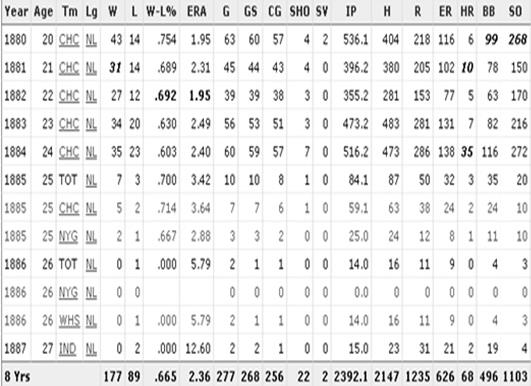
adding; “Corcoran was never in such form before, and Silver Flint caught him superbly.” Corcoran finished the season 43-14
with a 1.95 ERA. His 268 strikeouts, 4.5 strikeouts per nine innings, and 99 walks, the fewest, led the league, and Chicago easily won the pennant.
Corcoran and Goldsmith again formed a two man starting rotation in 1881. Corcoran shut out Cleveland on May 3, allowing only three hits, and pitched a three hitter against Providence on June 24. On August 4 he pitched a two hitter against Buffalo in what the “Tribune” called “perhaps the best game of all his life,” adding; “His headwork and his consummate control of the ball never abated for an instant.” Corcoran pitched a four hit, 5-1 victory over Buffalo on August 17. Corcoran and Goldsmith were said to be trying a “snake ball,” as their curves were dominating the league. On August 23 Goldsmith sprained an ankle in the third inning, so Corcoran came “in from the turnstile”
and pitched the rest of the game with Chicago defeating Detroit in the 12th inning. The White Stockings easily won the pennant again, and Corcoran was 31-14 with a 2.31 ERA in 396 innings pitched. His 31 victories tied Boston’s Jim “Grasshopper”
Whitney for the league lead, but Whitney lost 33 games.
Baseball Trailblazers Page 802
Chicago struggled in the early part of the 1882 season, falling to 12-14 and fifth place on June 15. Corcoran hit a grand slam on June 20 against Worcester, “a tremendous drive to the seats in center field,” according to the “Tribune,” and “driving in seven of the 13 runs Chicago scored.” Then the White Stockings got hot, going 21-6, and at the end of July were 33-20. Chicago scored six or more runs in 23 of Corcoran’s 40 starts. Corcoran won 10 consecutive starts from June 29 to July 29, including wins of 23-4, 35-4, and 17-1.
Chicago went on an Eastern road trip from July 27 to August 24
and didn’t return home until August 29. By the time the White Stockings returned home, Corcoran was a married man. The exact date is unknown. After a 15-4 pounding of the White Stockings by Worcester on August 23, the Cincinnati Enquirer wrote; “Corcoran was off being married, and Goldsmith is Chicago’s only pitcher.”
“The Boston Herald” on August 29 wrote that Corcoran was
“enjoying his honeymoon, having been recently married.” His bride was Gertrude Grork of Newark, New Jersey.
At the end of August, Chicago trailed first place Providence by 2 games, and then went on a 16-2 streak. Corcoran again won 10
straight starts, including his second no hitter, against Worcester on August 20. The day was “raw and disagreeable” with 1,500 spectators, wrote the “Tribune,” and “play began at 3:30
Baseball Trailblazers Page 803
sharp in order to enable the Worcesters to take an early train for the East.” The 90 minute, 5-0 win showed that Corcoran “has been pitching a great game of late; perhaps the best of his life.” Corcoran finished the season 27-12 with a league best 1.95 ERA in 355 innings pitched, and Chicago won its third straight pennant, by three games over Providence.
On May 22, 1883, a freezing cold day, Corcoran defeated Boston 4-3 to put the White Stockings a half-game ahead of Providence in first place. The game featured the debut of Chicago left fielder Billy Sunday, who struck out in all four at bats.
Chicago swooned in June, tumbling out of first place on June 11
and falling seven games behind on the 23rd. Corcoran threw shutouts on June 9, July 18, a one hitter versus Boston, and August 29.
Chicago won 11 in a row from August 22 to September 8, including 10 straight home victories, and moved into first place one and one half games over Boston. Then the White Stockings traveled to Boston for a four game series. They dropped the first game. The next day Corcoran pitched hitless ball through four innings in a duel with Jim Whitney. Two runs in the ninth inning gave the Beaneaters the 3-2 win and sole possession of first place, a lead they did not relinquish as they won the pennant. Corcoran finished 34-20 with a 2.49 ERA in 473 innings pitched. This was
Baseball Trailblazers Page 804
the first year in which he did not league the league in wins, ERA, or strikeouts.
For 1884 the White Stockings offered Corcoran a contract for $2,100, a raise of $300 from 1883. He wanted $4,000. This was
“an outrageous demand,” wrote Chicago’s “Inter Ocean” on December 9. Corcoran demanded his release, but was refused, so he threatened to sit out the 1884 season. Go ahead and sit out, the club said. Corcoran reconsidered and accepted the $2,100.
“The National League is to be congratulated on the wisdom displayed in the adoption of this reserve rule,” the “Inter Ocean” commented, “for without it the position of pitcher or catcher would soon command a higher salary than the President of the United States receives.”
But Corcoran wrote to team president Albert Spalding that he was withdrawing his request and had signed with the Chicago team in the new Union Association. The National League expelled Corcoran. The New York Clipper published a letter from Corcoran explaining his actions. He wrote; “I asked the large salary not because I thought I would get it, but in hopes of inducing the management to give me my release. After a short consideration Mr. Spalding informed me he would pay me no such exorbitant salary, and, as we could not come to satisfactory terms, I started for my home without signing.” Corcoran entertained an
Baseball Trailblazers Page 805
offer from the Chicago Unions president, Albert H. Henderson.
Then he saw a story in a Boston paper claiming he was in a conspiracy with fellow White Stockings Silver Flint and George Gore to grab higher salaries from management, which Corcoran denied. The story said Chicago would do just fine without Corcoran, prompting him to sign with Henderson. “For four years I have fulfilled my contracts to the letter and have worked hard and faithfully for the Chicago Club, but as my contracts never spoke of a reserve rule or made any mention of one, I do not feel I am breaking my word in any way to that club. Leaving the public to judge my action, I am, respectfully, Lawrence J.
Corcoran.” Henderson’s contract to Corcoran was said to be $3,000.
But Spalding threatened to blacklist Corcoran if he failed to sign by January 6, 1884, so on January 4 Corcoran re-signed with the White Stockings for $2,100. Apparently Corcoran wasn’t too perturbed at the new contract because six days later he was pitching in a baseball game played on ice skates in Brooklyn.
The team captains were Henry Chadwick and George Taylor, and players were both amateur and professional. It was played at the Washington Skating Park in South Brooklyn and “the diamond was laid out on the Fourth Avenue and Third Street corner, there
Baseball Trailblazers Page 806
being a clear space for the regular skaters in front of the grand-stand.” Corcoran’s team won 41-12.
The White Stockings had a forgettable 1884 season. They were 5-14 on May 26. Injuries contributed to the slow start. “A nine composed about one-third of ‘has-been’ material will not win the championship this year,” whined the “Tribune.” Chicago never spent a day in first place, finishing 62-50 in fourth place, 21
games behind. Corcoran won only two of his first 12 starts before pitching a one hitter on May 23.
On June 16, with Goldsmith in Canada, Corcoran, suffering a sore pitching hand, alternated his left and right hands in a desperate attempt to pitch a game in Buffalo. The Buffalo Commercial Advertiser said Corcoran had a “felon” on his right index finger and had “no business in the box. Why in the name of common sense Anson permitted Goldsmith to go to Canada and persist in playing Corcoran, when the little man was suffering excruciating pain, is a question no one can answer. It was an act at once brutal and stupid. Larry used his right and left hands alternately, but it was no go.” He was removed after four innings.
Corcoran came back to throw a no hitter against Providence on June 27. “The fact that Chicago has at least one pitcher was
Baseball Trailblazers Page 807
demonstrated very plainly in yesterday’s game,” wrote the
“Tribune,” “in which the Providence team, composed of the heaviest batters in the league, failed to earn a single base in nine innings.” It was Corcoran’s third no hitter and a 6-0
victory. Corcoran was the first pitcher to throw three no hitters. Corcoran also pitched shutouts on July 1 and 7.
“The Chicagos, thinking they could win with any pitcher, presented a brother of Larry Corcoran’s and the home team made him think he had better sign with amateurs,” wrote the “Inter Ocean” on July 16 after the White Stockings lost to Detroit, 14-0, the day before. Corcoran’s older brother, Mike, made his debut against Detroit and pitched a complete game giving up 16
hits, seven walks, five wild pitches, and 14 earned runs. It was Mike Corcoran’s only major league appearance.
Larry Corcoran finished the 1884 season 35-23 with a 2.40 ERA, his fifth straight year of 27 plus wins, and the fourth year out of five in which he won over 30 games. He pitched 516 innings, his most since 1880, as Goldsmith pitched only 188 and was released on August 7. Both pitchers, not surprisingly, suffered from tired arms. Goldsmith had pitched 1,516 innings in five years for Chicago, Corcoran 2,279. Goldsmith was 107-63, Corcoran 170-83, but the days of the first pitching rotation were over. Newcomer John Clarkson, who was 10-3 with a 2.14 ERA
Baseball Trailblazers Page 808
in 14 games, “already ranks as one of the foremost of league pitchers, and Corcoran will have to look to his laurels next season,” wrote the “Tribune.”
Corcoran pitched his last shutout on May 14, 1885, at Philadelphia, one of the last highlights of his career. Anson began using Clarkson as the predominant starting pitcher, abandoning any sort of rotation. Corcoran’s last Chicago start was an 11-10 win at Boston on May 26, in which he surrendered 15
hits and in the sixth inning handed the ball to Fred Pfeffer and refused to be hammered any longer. “Corcoran was nursing a sore arm and was impatient to get into his uniform, and says he is quite confident of being able to take the field within a few days’ time,” reported the “Tribune” on June 22. But he was only 5-2 with a 3.64 ERA in 59 innings, and was released on July 11,
“ordered to keep his arm in a sling for two months,” wrote the
“Inter Ocean,” adding; “He will leave for his home in Newark, N.J., this evening, and will be seen no more upon the ball field for a time.” Corcoran complained that Chicago had not paid him for the 41 days he had been out injured. Spalding replied; “I paid him $750 for the seven games in which he played. I bought him his railroad ticket from Chicago to New York and I loaned him $100 on my personal account, and he was profuse with his thanks.”
Baseball Trailblazers Page 809
Corcoran quickly signed with the New York Giants. “It is insinuated that Corcoran’s arm is as good as it ever was, and that the ‘sore arm’ business was simply an excuse to get his release,” the “Inter Ocean” complained. “This is a wise move,”
the “New York Times” commented. “In condition Corcoran is a first class pitcher.” New York was in second place, trailing first place Chicago by 2 games. Corcoran started three games at the end of the season, pitching well, going 2-1 with a 2.88 ERA.
He got his last major league win on October 8 at St. Louis. He left the game in the eighth inning with a sprained ankle.
Corcoran never again pitched for New York, and played in only one game as an outfielder for the Giants in 1886. He was
“loaned” to the Washington Nationals for $2,200 to use him while the New Yorks could get along without his services.
“I feel in good condition. I think I will get a good chance to show that I can curve a ball with as much skill as I did when I was a member of the Chicago Club,” Corcoran told the “Times.”
Corcoran played shortstop for nine games and the outfield for 11
games, batting .185. He pitched in two games for the Nationals in 1886, losing 10-4 in Kansas City on July 6. “Corcoran pitched for Washington,” the “Washington Daily Critic” wrote, “and demonstrated that his best days are over. We don’t want any more of New York’s cast off players.” In early August, Corcoran was
Baseball Trailblazers Page 810
released, and spent the winter focusing on becoming a full time left handed pitcher in 1887.
On March 22, 1887, Corcoran signed with Nashville of the Southern League. He pitched in three games and fell into controversy. Memphis players Bob Black and John Sneed were paid by gamblers to coax Corcoran to a bar and get him drunk.
Corcoran failed to appear for his start on June 30, and betting was high on Memphis. Nashville manager George Bradley was on to the scheme and pitched the game, beating Memphis. Corcoran was fined $50 and suspended. On May 9, however, he was on his way back to the major leagues, signed by the Indianapolis Hoosiers, who paid $1,000 to Nashville for his release, and gave Corcoran a $2,000 salary. “He says that he is in first class form, physically,” the “Indianapolis News reported,” “and thinks he is as capable of pitching effectively as he ever was. At least he is going to try it.”
Indianapolis was playing a three game series in Chicago, so Corcoran went straight there to pitch on May 11. It was a rude homecoming. “‘Little Larry’ who used to twirl for us down on the Lake-Front faced the champions, and when he stepped into the box it was plain to be seen that he had a great many admirers among the spectators,” wrote the Tribune. “He lost most of them, before the game was over.” Corcoran surrendered 11 runs on 12
Baseball Trailblazers Page 811
hits and 10 walks in the Hoosiers’ 11-6 defeat. “Corcoran labored under the fatigue of a long ride from Nashville,” wrote the “Indianapolis News.”
Corcoran made his last major league start on May 17 at New York.
“A study of the score is suggestive of profanity,” commented the
“Indianapolis News” on the Giants’ 26-6 win. Ironically, he was
“presented a floral harp by his eastern admirers.” “It was a sad day for Larry Corcoran,” wrote the “New York Herald,” “The little favorite was a rattling good pitcher — once.” Corcoran played in center field on May 20, his last major league game, and was released by the end of the month.
In 1888 Corcoran signed with the London (Ontario) Tecumsehs of the International Association. He played in 28 games, pitching in only six and playing 22 in left field. He was again fined and suspended for intoxication, then was in a fight with teammate Shorty Howe, biting Howe’s finger so badly that the fingernail came off. Both players were released, and Corcoran’s baseball career was over. “Sporting Life” noted at the end of 1888,
“Larry Corcoran has come to that dernier resort of decayed ball players; bar-tending. He hands out drinks in a Newark saloon.”
Corcoran umpired in the Atlantic League in 1890 and the Illinois-Iowa-Indiana League in 1891, but stepped down due to
Baseball Trailblazers Page 812
poor health. The fledgling Brotherhood of Professional Base Ball Players, an early and unsuccessful attempt to organize a baseball players union, was able to send $300 to Corcoran “in his last days,” “Sporting Life” reported.
Corcoran died on October 14, 1891, at the age of 32 at his home at 24 Cherry Street in Newark after suffering for several months from Bright’s disease, a kidney ailment that today is called nephritis. He was survived by Gertrude and four children, Margarete, Walter, Mary, and Sarah Corcoran. Corcoran died broke and was buried in an unmarked grave in Holy Sepulchre Cemetery in Newark.
Corcoran finished with a 177-89 win–loss record, a 2.36 earned run average, and 1,103 strikeouts. He was the NL wins leader in 1881, NL ERA leader in 1882, the NL strikeout leader in 1880, and he pitched three no hitters - 1880, 1882, and 1884. In 1882, Corcoran became the first pitcher to throw two no hitters in a career. Two seasons later, he became the first pitcher to throw three no hitters, setting a record that would stand until 1965.
He is also famous for being one of baseball's very few switch-pitchers. He is credited with creating the first method of signaling pitches to his catcher, which consisted of moving a wad of chewing tobacco in his mouth to indicate what pitch would be thrown. “Flint and Corcoran had funny signals for changes of
Baseball Trailblazers Page 813
curves,” recalled Tommy Burns, a teammate of catcher Frank
“Silver” Flint and pitcher Larry Corcoran of the Chicago White Stockings of the 1880s. “Corcoran invariably carried a mammoth chew of tobacco in his mouth, and when he chewed he shifted it about with a movement that resembled the actions of an elephant begging peanuts of a crowd of children. Flint noticed this peculiarity and one day suggested to Larry that he make his curve signals by shifting the chew. It worked to a charm, and many an old timer was fooled.”
Baseball Trailblazers
Page 814
Jake Stenzel
Baseball Trailblazers
Page 815
Jacob Charles Stenzel, June 24, 1867 – January 6, 1919, was a center fielder in major league baseball from 1890 to 1899 for the Chicago Colts, Pittsburgh Pirates, Baltimore Orioles, St.
Louis Browns / Perfectos, and Cincinnati Reds.
Stenzel was born in Cincinnati, Ohio. He started his professional baseball career in 1887 in the Ohio State League and batted .387 in 41 games. He then spent the next two seasons in the Tri-State League. In 1890, Stenzel hit .311 for the Texas League's Galveston Sand Crabs and also made his major league debut with the Chicago Colts. He went back to the minors after the season. In 1892, while playing for the Portland Webfeet, he led the Pacific Northwest League in batting average, at .339. He
Baseball Trailblazers Page 816
joined the National League's Pittsburgh Pirates toward the end of the season and went hitless in nine at bats.
Stenzel appeared in 60 games for the Pirates in 1893 and batted
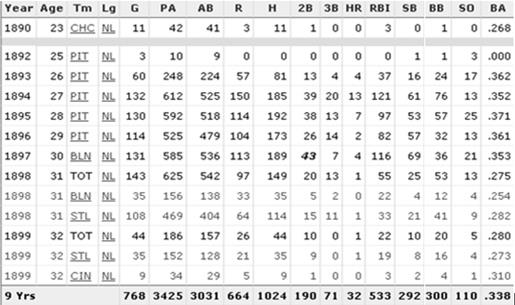
.362 to establish his reputation as a strong hitter. Over the following three seasons, he was the team's regular center fielder. He posted the best statistics of his career in 1894, when he hit .352 with 13 home runs and 121 runs batted in in 131
games. His 148 runs scored in 1894 remains the Pirates single-season franchise record. In 1895, Stenzel raised his batting average to .371. In 1896, he hit .361 to lead the Pirates in batting average for the third straight season. He became the first Pittsburgh player to collect six hits in a game, which he accomplished on May 14.
In November 1896, Stenzel was traded to the Baltimore Orioles.
He had another solid season in 1897, batting .353 and led the NL
with 43 doubles. He also hit .381 in the post season Temple Cup series, which Baltimore won over the Boston Beaneaters. In 1898, Stenzel was batting .254 in June when he was traded to the St.
Louis Browns. He finished the year with the Browns and then played briefly for the Browns and the Cincinnati Reds in 1899
before his professional baseball career ended.
Baseball Trailblazers Page 817
Over his nine year major league baseball career, Stenzel had 1,024 hits and a .338 batting average in 761 games. He has the 21st highest lifetime batting average in baseball history.
Stenzel had a wife and two children. After his baseball days were over, he ran a bar in Cincinnati until he sold it during World War I. He then went to work as a night watchman in a factory. Stenzel died in 1919 in Cincinnati.
Baseball Trailblazers
Page 818
Edd Roush
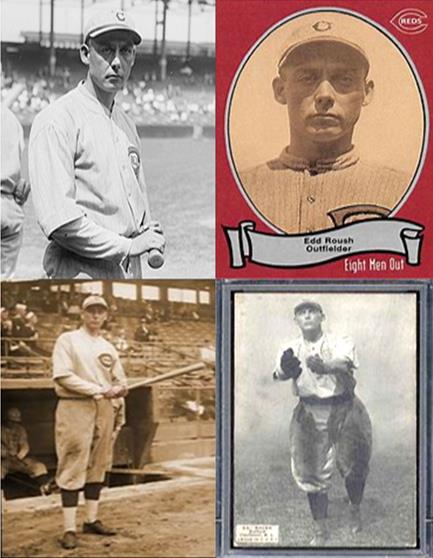
Edd J. Roush, May 8, 1893 – March 21, 1988, was a professional baseball center fielder. He played in major league baseball for the Cincinnati Reds, New York Giants, Chicago White Sox, Newark Peppers and Indianapolis Hoosiers from 1913 to 1931. Roush won
Baseball Trailblazers Page 819
the National League batting title two times and had a career batting average of .323.
Roush was born in Oakland City, Indiana, to parents Laura and William Roush. A twin, he and his brother Fred each shared a middle initial of J, which was not short for any name. A son of a dairy farmer he worked on the farm throughout childhood. He grew up left handed, but learned to throw and bat right handed early in his career due to the fact that gloves for left handers were hard to find in Oakland City.
He received the opportunity to play for the local semipro Oakland City Walkovers in 1909 after their regular outfielders failed to show up. After collecting two hits the first game he became a starting outfielder. In 1911, after he learned that other players were receiving $5 per game, he went to the rival Princeton, Indiana team. In 1912 he played for the Evansville, Indiana team in the KITTY league. He performed well with the team and hit .284 in 1912 and .300 in 1913 when his contract was bought by the Chicago White Sox.
Roush made his major league debut on August 20, 1913, for the Chicago White Sox. After nine games he was sent to the minors to play for Lincoln Railsplitters of the Western League. After only ten games he quit and returned to Oakland City.
Baseball Trailblazers Page 820
Roush joined the Indianapolis Hoosiers of the Federal League in 1914 and hit .325 through 74 games as the Hoosiers won the pennant. The Hoosiers became the Newark Peppers in 1915 and Roush continued to play outfield for the team under manager, and fellow 1962 Hall of Fame inductee Bill McKechnie. After the Federal League disbanded in early 1916, the Giants picked up Roush, McKechnie and Bill Rariden. Midway through the 1916
season, the Giants traded Roush, McKechnie, and Christy Mathewson to the Cincinnati Reds.
Roush played only 69 games with the Reds in 1916 and finished second in team batting average with .287, behind Hal Chase. 1917
was Roush's first full season with the Reds and by the end of August his batting average of .347 topped Rogers Hornsby who was in second place. At season's end, Roush led the National League in batting average and finished third in hits with 178, only 4
behind leader Heinie Groh.
In 1918, Roush finished the season with a .333 average, .002
behind Hall of Famer Zack Wheat. On April 29, 1918, the Reds originally beat the St. Louis Cardinals, but a protested play caused the game to be replayed on August 11. The play in question involved Roush, who slid to make a catch in the outfield. After he juggled the ball, he secured it in his glove to make the out and threw to third base as the runner left
Baseball Trailblazers Page 821
before the catch was made. The Cardinals protested the play stating that the runner did not have to wait until the ball was settled into Roush's glove to begin running. They presented this to National League President John Heydler and won. The game was then replayed on August 11. This is significant because Roush went 2–3 in the initial game, and 1–4 in the replayed game. If the initial game stood then Roush would have finished the season 146 for 434, a .336 batting average, instead of 145 for 435, a
.333 batting average. This would have made him batting champion for the second straight year.
Roush won his second batting title in 1919, when he led the league with a batting average of .321, and led the Cincinnati Reds to the World Series. The Reds won the 1919 World Series, known for the Black Sox Scandal, by winning five of the eight games. Throughout his life Roush would state that the Reds were the better team, and would have won the Series either way. Roush showed up for spring training in 1920, an occurrence rare enough that “The Sporting News” reported on it. Roush would usually hunt quail and rabbits at his home in Oakland City, Indiana right until a week before opening day. On June 8, 1920, a lengthy argument took place on the field, and Roush fell asleep in the outfield. After infielder Heinie Groh was unsuccessful at waking Roush up, Roush was ejected for delay of game. Roush hit
Baseball Trailblazers Page 822
.339, and set career highs in hits, doubles, triples, RBI, and total bases.
1921 would be the first of many holdouts that Roush would start.
After his stellar 1920 where he led the team in hits, triples, RBI, stolen bases and average, he argued that his salary of $15,000 was not enough. He failed to show up to spring training and continued to hold out until April 30 when he reached an agreement with the Reds. The Reds played poorly in 1921, and by the end of May they were 14–28. Roush had been sidelined a couple of times during the season with leg injuries, but he finished the year batting .385 over the last 37 games of the season to finish with a career high .352 batting average, second only to Rogers Hornsby.
Before the 1922 season would start, Roush entered negotiations with the Reds for the second straight year, this time demanding a 3 year contract for $18,000 per year. After the initial demand, Roush held out for months prompting “The Sporting News”
to say; “He is the best silence keeper in baseball. Just says real early what he wants and then closes up. No gabbing or elaborate explanations. Transacts business the way he plays ball; no fuss, but exceedingly effective.”
Baseball Trailblazers Page 823
On July 26 Roush met with team president Gary Herrmann to negotiate a ten week contract that would expire at the end of the season. After the contract was signed he put on a uniform and joined the in progress game against the Philadelphia Phillies. Over the 49 games he played in 1922 he hit for a .352
average. 1923 would start similarly to the previous two years with a new holdout by Roush. This time he demanded a $25,000
salary. The Reds countered with the salary he was making the previous season and began to fine him $50 per day of missed training camp. On April 15 the two sides reached an agreement.
He missed time due to a fractured rib from August 29 to September 14, although it is still disputed when he broke the rib. He finished the year with a .351 average and led the league in doubles with 41.
In the off season before Opening Day in 1924 Roush signed a three year $19,000 contract. During spring training, manager Pat Moran fell ill on the train ride to their training facilities in Florida, and on March 7, 1924, he died. In April Roush strained his side when he swung and missed at a pitch and was sidelined for eight games and would again be sidelined for nine games after he strained a muscle in his leg in St. Louis. Roush would finish the year with a .348 average and led the league with 21
triples. Roush became team captain of the Reds in 1925 and led
Baseball Trailblazers Page 824
the team to a third place finish, a disappointing end to the season as the Reds’ pitchers led the league in ERA for the third year in a row.
On July 21, 1926, team officials celebrated "Roush Day" at Redland Field in honor of Roush and his decade spent with the team. At the end of the season it was clear that with three younger outfielders, Curt Walker, Cuckoo Christensen and Rube Bressler, the Reds would part ways with the 34 year old Roush.
In February 1927 Roush was traded to the Giants for George Kelly and an undetermined amount of cash. From 1917 to 1926 Roush had hit .339 and collected over 1,600 hits.
Roush's career with the Giants started with a contract dispute.
The Giants offered $19,000, and Roush rejected the offer, demanding $30,000. Roush met with John McGraw, the Giants manager, in a hotel room in Chattanooga, Tennessee to work out the details of the contract. After a back and forth discussion about how Roush did not really want to play in New York, the two sides agreed to a three year $70,000 contract.
In 1927 Roush had a down year for the third place Giants, and batted only .304, the lowest average since 1916. The following year he suffered torn muscles in his abdomen and only appeared in 46 games. After receiving surgery on the torn muscles in
Baseball Trailblazers Page 825
February, he returned to form and hit .324 over 115 games for the Giants.
In early 1930 Roush threatened to retire rather than to receive a pay cut. After the two sides could not agree on a number Roush held out for the whole season. When the Great Depression hit in late 1929, the Roush family was largely unaffected due to his frequent holdouts and salary demands. Roush spent the season with his family and played in benefit baseball games in Oakland City and Princeton. As the next season began, Roush refused to play for the Giants and retired from baseball. He was contacted by Reds President Sidney Weil to play for the team in 1931.
After a short negotiation, both sides agreed to a one year contract worth $15,000. Roush struggled in his last season in baseball, only managing to hit .271 in 101 games. In his final game he went 2–3 with a triple in a 5–3 loss against the pennant winning Cardinals.
Roush finished his 18 year career with a .323 lifetime average, 268 stolen bases and 182 triples. He never struck out more than 25 times in a season and had 30 inside the park home runs. Roush used a 48 ounce Louisville Slugger, the heaviest bat used in baseball.
Baseball Trailblazers Page 826
At the time of his retirement in 1931, he was second place behind Bid McPhee for hits and triples in Cincinnati Reds history. Hall of Fame pitcher Pete Alexander wrote of Roush; "Of all the batters I have faced, Edd Roush and Ross Youngs are the trickiest. I won't say they are the hardest hitters but they are the trickiest, smartest."
Roush served one season as the Reds coach alongside his good friend, manager Bill McKechnie, who had previously been his teammate. During his career he had saved his money and was able to retire after he finished playing. He built a house in Bradenton, Florida, and used it as a winter residence. He frequently attended spring training and told stories of the old days. Roush spent most of his time in his hometown of Oakland City, where he served on the town and school boards and ran the Montgomery cemetery for 35 years.
Considered the greatest player in Reds' history at the time, Roush was invited to throw out the first ball at the last game at Crosley Field on June 24, 1970. Joe Morgan called Roush "the best of us all." Roush died at the age of 94 on March 21, 1988, in Bradenton, Florida. At the time of his death he was the last surviving Federal League participant and the last surviving 1919
World Series participant.
Baseball Trailblazers
Page 827
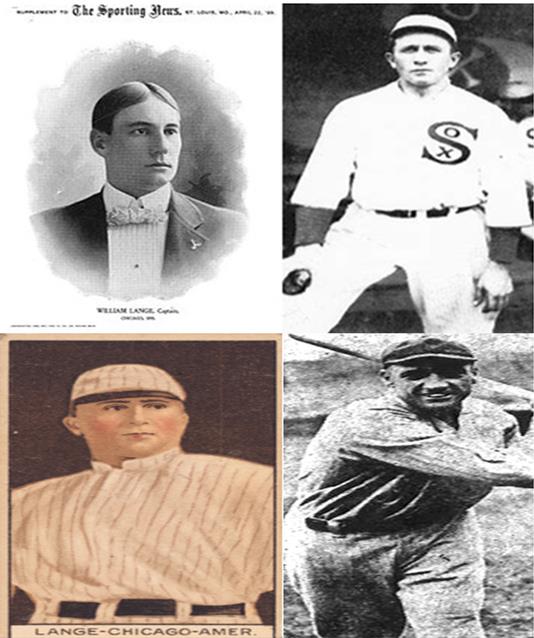
Bill Lange
Baseball Trailblazers Page 828
William Alexander Lange, June 6, 1871 – July 23, 1950, also known as "Little Eva," was a major league baseball center fielder, who played his entire seven year career for the Chicago Colts and Orphans from 1893 to 1899. During his time in the Majors, he once led the National League in stolen bases, and was among the seasonal leaders in several other offensive categories including home runs, and batting average.
Born in the Presidio District of San Francisco, California, he ran away from home while still in grammar school to live with his brother in Port Townsend, Washington. It was from there that he moved up to play Minor League Baseball for the Seattle Reds of the Northwestern Baseball League in the early 1890s. When the Northwestern League folded, Lange return the Bay area to play for the Oakland Colonels of the California League. He played one season for the Colonels, then was signed by the Chicago Colts of the National League.
Lange made his Major League debut on April 27, 1893 for the Colts, and enjoyed a successful inaugural Major League season.
He scored 92 times, hit eight home runs, had 88 runs batted in, while also finishing seventh in stolen bases with 47, and batted
.281. This was the only time he batted under .300 during his Major League career. In the field that season, he played at second base, in right field, and center field. He did not start
Baseball Trailblazers Page 829
playing center field exclusively until the following season.
Lange continued his success in 1894 by raising his batting average to .328 and finishing fifth in the league with 65 stolen bases.
Lange achieved his highest league rankings in 1895. His .389
batting average was fifth in the league and is still the top individual season average in Chicago Cubs's history. He also finished second in the league in stolen bases with 67, fifth in home runs with 10, fifth in on base percentage with .456, hit 16
triples, scored 120 runs, and batted in 98 runs.
Lange had several notable moments during the 1896 season. On July 4, he stole five bases in one game against the Louisville Colonels, During a game on August 31, he entered baseball lore with a feat that he never actually performed. The game was scoreless in the bottom of the 10th inning when Lange made a diving catch in center field to keep the game scoreless. Later in the inning, Chicago's first baseman, George Decker attempted to field a thrown ball from third baseman Barry McCormick, but it bounced off and broke his wrist instead. In an effort to get Decker to the hospital adjacent the ballpark, his teammates knocked down several wooden slats of the outfield fence to expedite his journey. However, the two events were confused and it became legend that Lange had crashed through the fence making
Baseball Trailblazers Page 830
that acrobatic catch in the tenth. Lange finished the season with a .326 batting average, while also stealing 84 bases, second in the league, and finished eighth in league with 16
triples.
His success continued into the 1897 season, as he batted .340, scored 119 runs, and led the league in stolen bases for the only time in his career. His production dropped his last two seasons in the Majors as his runs scored fell to 79 in 1898 and 81 in 1899, although he still kept his batting average high at .319
and .325 respectively.
While he was very popular, his career as a baseball player was not without controversy. He was ejected from a game on at least two occasions, one of which occurred on May 23, 1897 when he had an on field fight with Washington Senators second baseman John O'Brien. On September 16, 1899, in a game against the Brooklyn Superbas, umpire Ed Swartwood called the game because of darkness with Brooklyn up by two runs. Lange, and other Chicago players surrounded Swartwood and proceeded to "knock him around," with Lange notably "tweaking" the umpire's ear.
Lange finished his career on October 15, 1899, having announced a few days earlier his intention to retire after the season. His team played a doubleheader that day, winning 7–0 against the St.
Baseball Trailblazers Page 831
Louis Perfectos, then losing to the Louisville Colonels later that day in a game shortened by darkness.
He retired from the game at age 28, during the prime of his career, so he could marry a woman whose father forbade her to marry a baseball player. In the eyes of the 19th century public, baseball players were popular, but were often looked upon as low class. Lange's future wife was from his hometown of San Francisco, and her family was very well to do. Also, with the prospect of entering into the world of real estate and insurance, he could make much more money than he did as a ball player. Though the marriage ended in a divorce a short time later, he would not take any offers to return to Major League Baseball, despite Chicago's salary offer of $3,500 that would have made him the highest paid player in the league. Although his career lasted only seven years, he finished as the decade leader among 1890s Chicago players in batting average, on base percentage, slugging percentage, and stolen bases.
In 813 games over seven seasons, Lange posted a .330 batting average, 1056 for 3202, with 691 runs, 39 home runs, 579 RBI, 400 stolen bases and 350 bases on balls.
Lange became successful in both real estate and insurance in his hometown of San Francisco after he retired from baseball. Lange
Baseball Trailblazers Page 832
is also credited in several sources, as being the person who discovered future Chicago Cubs first baseman, manager, and Hall of Famer, Frank Chance, after having watched him play for the local Fresno, California team during the off season of 1897.
Later, John McGraw of the New York Giants enlisted Lange as his chief European baseball scout, hoping to discover any hidden talent in that untapped market. In 1919, Ban Johnson, the American League president enlisted Lange as his chief organizer of baseball teams in Europe, mainly in England, France, Belgium, and Italy. Johnson's plan was for Lange to evaluate talent and establish an International Baseball League that could compete against the American League pennant winning team in an effort to generate greater interest in the game. Lange became part of the board of directors at the YMCA, which helped fund the expedition. Additionally, Washington Senators owner Clark Griffith donated $40,000 worth of equipment to assist in supplying the new league. Lange eventually concluded that Europe was not a baseball hotbed.
Lange died at the age of 79 in his hometown of San Francisco.
Lange was noted for having a combination of great speed and power. His 6 foot 1 inch, 190 pound frame was considered large for his era. He is best known for retiring from baseball during
Baseball Trailblazers Page 833
the prime of his career to get married, as his future father-in-law forbade his daughter to marry a baseball player.
Baseball Trailblazers
Page 834
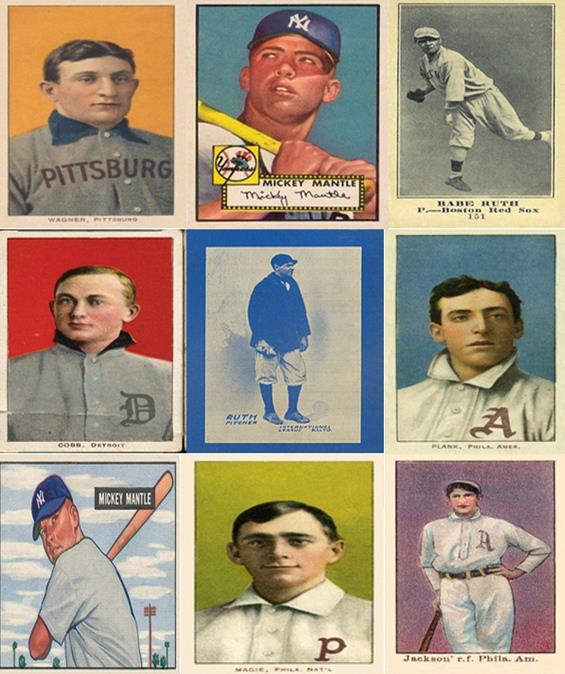
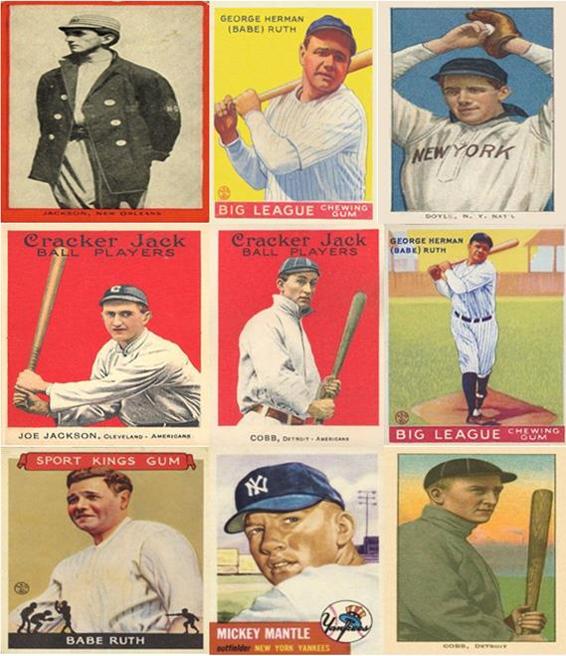
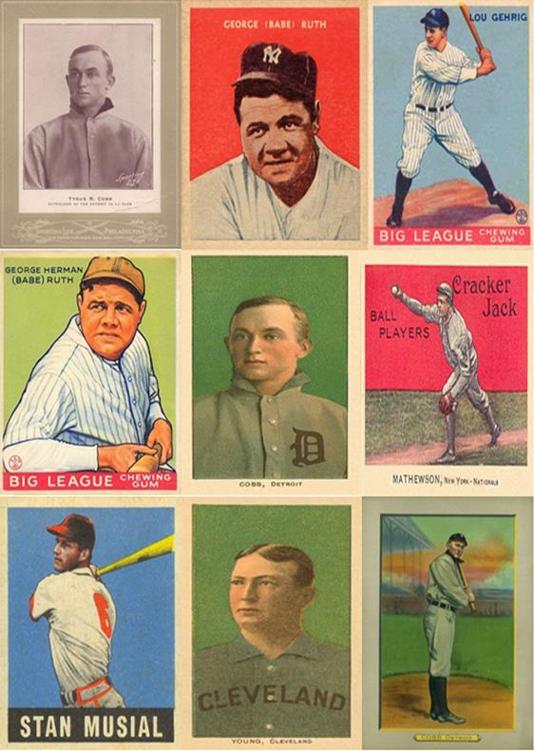
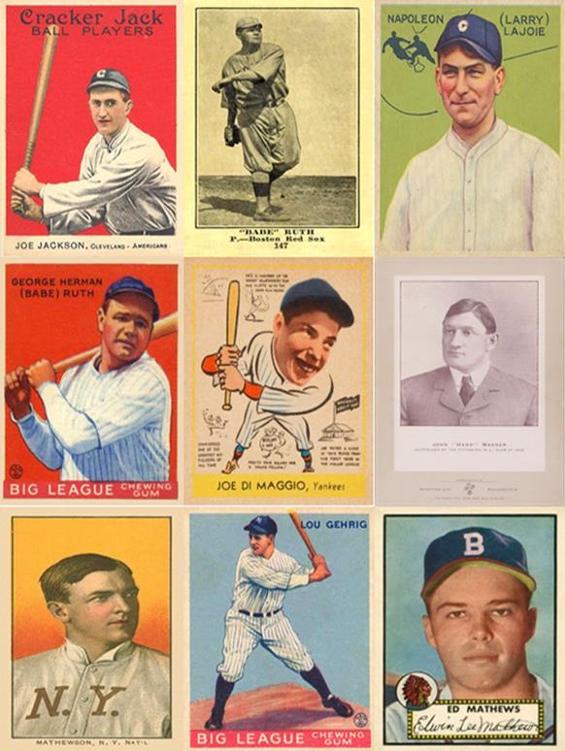
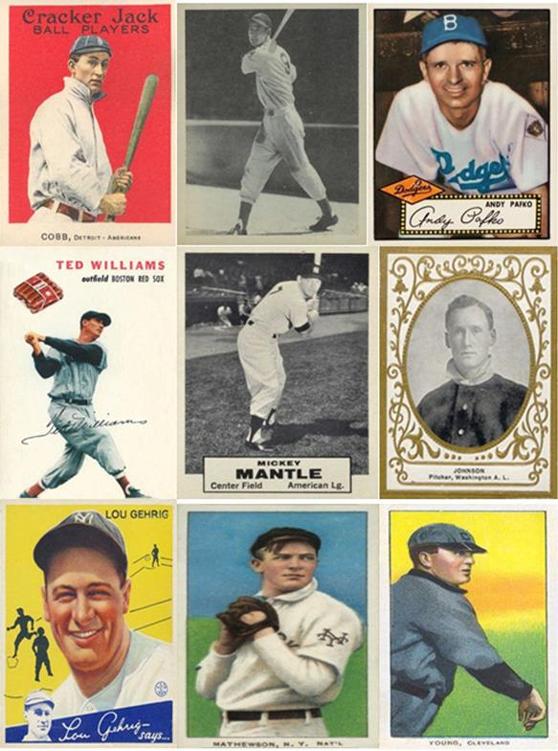
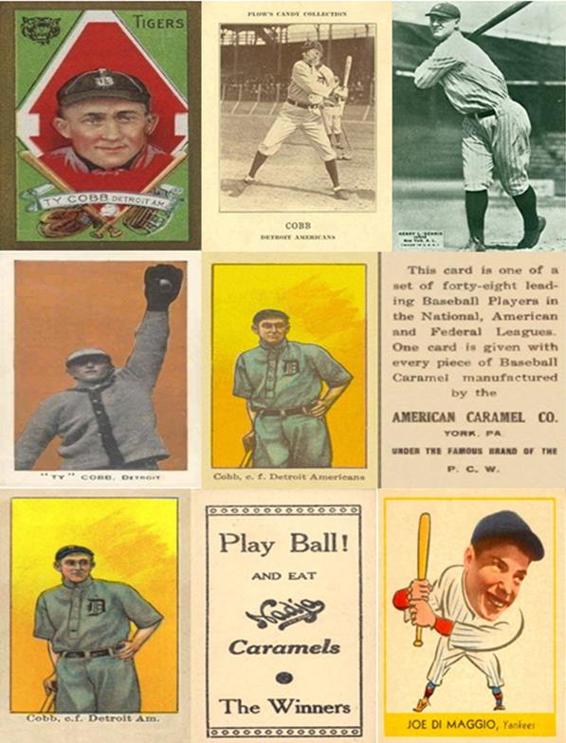
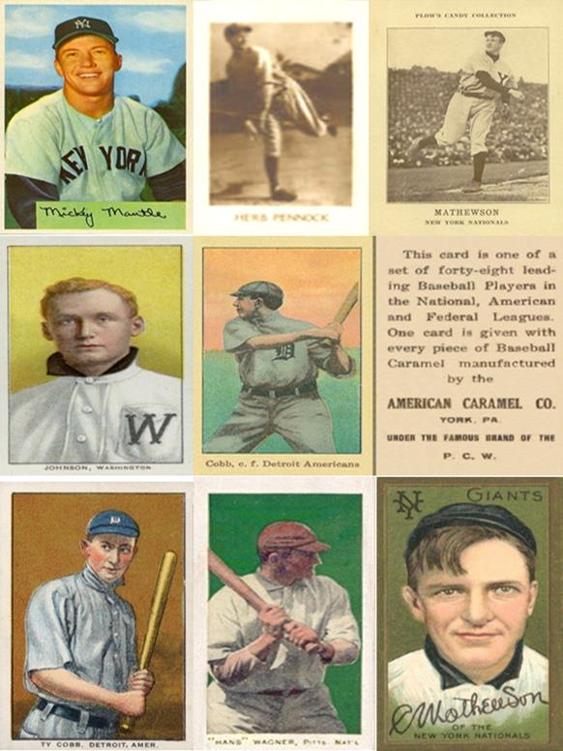
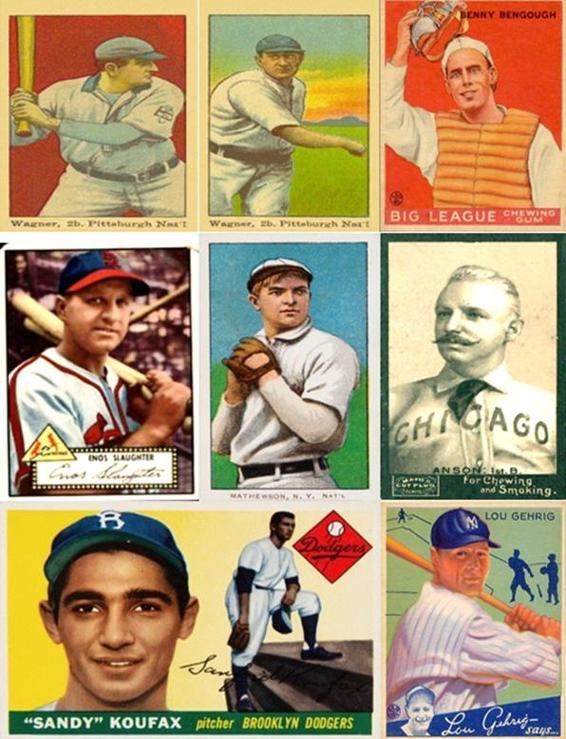
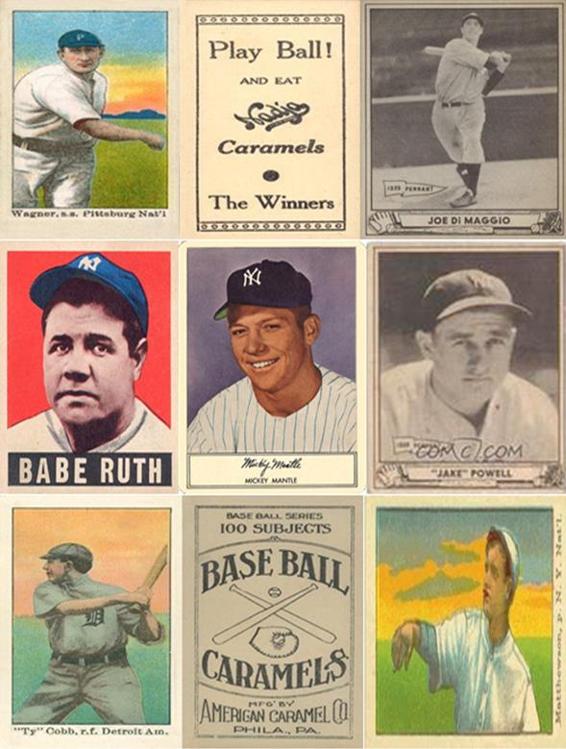
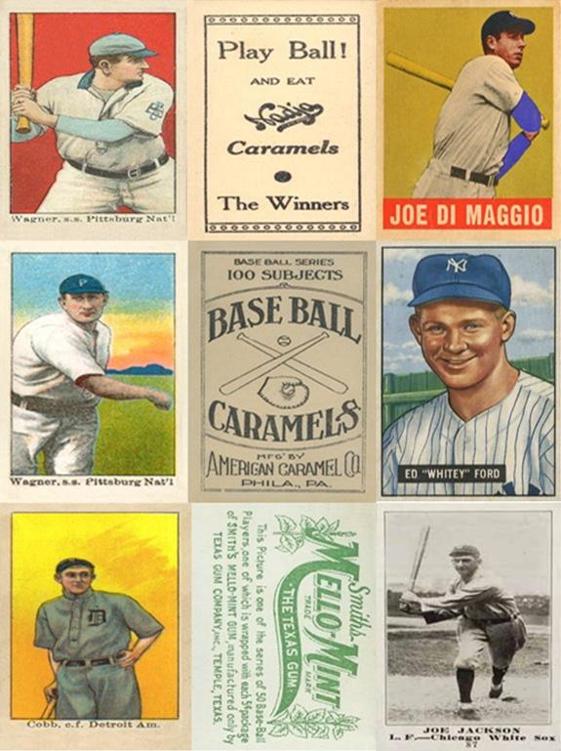
Time Out – Most Valuable Baseball Cards
Baseball Trailblazers
Page 835
Baseball Trailblazers
Page 836
Baseball Trailblazers
Page 837
Baseball Trailblazers
Page 838
Baseball Trailblazers
Page 839
Baseball Trailblazers
Page 840
Baseball Trailblazers
Page 841
Baseball Trailblazers
Page 842
Baseball Trailblazers
Page 843
Baseball Trailblazers
Page 844
Baseball Trailblazers
Page 845
Baseball Trailblazers
Page 846
Baseball Trailblazers
Page 847
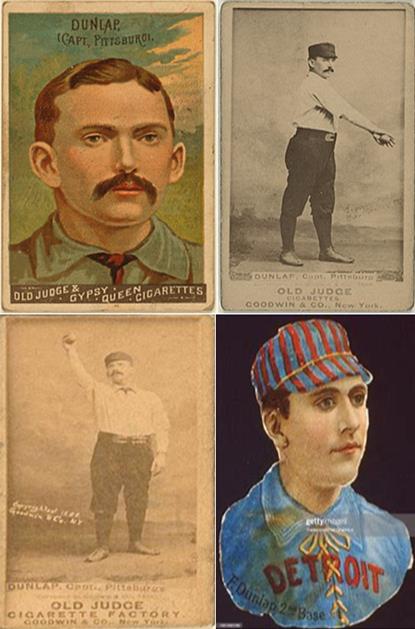
Fred Dunlap
Frederick C. "Sure Shot" Dunlap, May 21, 1859 – December 1, 1902, was a second baseman and manager in major league baseball
Baseball Trailblazers Page 848
from 1880 to 1891. He was the highest paid player from 1884 to 1889. He has also been rated by some contemporary and modern sources as the greatest overall second baseman of the 19th century. He earned the nickname "Sure Shot" for the strength and accuracy of his throws to first base, and was also sometimes referred to in the 1880s as the "King of Second Basemen."
Dunlap was born in Philadelphia, Pennsylvania. Both of his parents died when he was 10 years old. Dunlap did not attend school after his parents died and spent his youth playing baseball. Lacking formal education, Dunlap remained illiterate throughout his life.
Dunlap began playing semi-pro baseball at age 15 in 1874 for the Gloucester Club in Gloucester City, New Jersey. In 1875, he started the season with the Greighers of Camden, New Jersey, then joined the Kleinz Club of Philadelphia. He played for Chester at the start of the 1876 season before joining the Quicksteps of Wilmington, Delaware, as a pitcher. In 1877, he began playing professional baseball as a second baseman for the Auburns of Auburn, New York. In 1878, he played for teams in Hornellsville and Albany, New York. He remained with Albany in 1879.
Baseball Trailblazers Page 849
In May 1880, Dunlap began a 12 year career in major league baseball with the Cleveland Blues. In his first season, Dunlap immediately established himself as one of the game's best players. For the 1880 season, Dunlap led the National League in doubles – 27, and ranked second in extra base hits – 40, and times on base – 132, while serving as the team's leadoff hitter.
He also made a strong debut on defense, leading the National League in assists by a second baseman - 290. Dunlap remained with the Blues for four seasons and consistently ranked as one of the leading hitters and defensive second basemen in the National League. In 1881, he compiled 156 total bases, the second most in the NL, and had a .325 batting average and .444
slugging percentage, ranking fifth in the NL in both categories.
In 1882, he led the NL's second basemen with 297 assists.
In his final year in Cleveland, Dunlap had a .326 batting average, a .361 on base percentage, and a .452 slugging percentage, ranking among the league's leaders in each of those categories. Defensively, he led the league's second basemen in putouts, and ranked third in assists and fielding percentage.
Dunlap was the star of the Cleveland team in the early 1880s. So key was he to the Blues that one writer observed, "The Maroons (his next team) without Dunlap are like the play of Hamlet without the melancholy Dane."
Baseball Trailblazers Page 850
Dunlap was known during his baseball career by the nicknames
"Sure Shot" and "King of Second Basemen." Most accounts indicate that the "Sure Shot" nickname arose from Dunlap's powerful and accurate throws to first base. King Kelly reportedly gave Dunlap the "Sure Shot" nickname after watching him throw. One account described Dunlap's throwing prowess as follows; "Endless practice made him adept as a monkey at grabbing a sizzling ground ball in either hand and firing it off from the very spot he seized it. His whistling throws, which seemed to clear the grass by no more than half a foot, never seemed to lose more than an inch or two."
Alfred Henry Spink, who saw Dunlap play, wrote that Dunlap could chase down a ball in the outfield and throw it to home plate
"with such fearful speed and accuracy that the ball seemed to sing as it flew." Dunlap was known for his range in getting to balls that others of his era could not, and he was reportedly able to dive for a ball and throw while lying on the ground with enough velocity to sting the first baseman's hand. Dunlap was ambidextrous and was able to catch and throw a baseball with the same skill and accuracy with either hand. Moreover, Dunlap reportedly never wore a glove.
In November 1883, Dunlap signed a contract to play for the St.
Louis Maroons in the new Union Association. He was the biggest
Baseball Trailblazers Page 851
star lured to the new league. His contract paid Dunlap a salary of $3,400, the highest salary paid to any baseball player at that time. He remained the highest paid baseball player every year from 1884 to 1889.
Dunlap played second base for the St. Louis Maroons from 1884 to 1886 and also served as the team's manager for portions of those seasons. During the 1884 season, the Maroons and Dunlap dominated the Union Association. The team compiled a record of 94-19, and Dunlap led the new league in most significant offensive and defensive categories. His .412 batting average was 56 points higher than any other player in major league baseball.
He also led the league in on base percentage - .448, slugging percentage - .621, runs scored - 160, hits - 185, total bases -
279, home runs - 13, extra base hits - 60, assists by a second baseman - 300, putouts by a second baseman - 341, range factor at second base, and fielding percentage at second base - .926.
Dunlap's .412 batting average in 1884 was the highest ever recorded in any of the major leagues up to that time. His 160
runs scored in 1884 remains one of the highest single season totals in major league history, while it was accomplished in only 101 games.
In 1885, the Union Association was disbanded after only one year, and the St. Louis Maroons joined the National League.
Baseball Trailblazers Page 852
Although his batting average dropped 142 points to .270 in 1885, Dunlap continued to be one of the best defensive second basemen in the major leagues. He led the National League's second basemen in fielding percentage and ranked second in assists, putouts, and range factor. Dunlap spent a third season with the Maroons in 1886, and hit for the cycle on May 24. However, the Maroons were in financial distress, and rumors spread that the team might disband.
In early August 1886, Dunlap was sold to the Detroit Wolverines for $4,700, the most expensive purchase price at the time. In addition to the sum paid to the Maroons to grant the release, the Detroit team signed a contract to pay Dunlap $4,500 a season for two seasons, with an advance of $1,500 on the first day of November 1886 and 1887, respectively. The mid-season sale led to concerns about the Maroons; "The transfer of Dunlap to Detroit is a small thing in itself, but its bearing on the entire baseball world is so great as to almost revolutionize the present order of things. He was the king pin of the St. Louis Club and his sale makes a certainty of the dissolution of the Maroons." The Detroit management was praised for their "pluck and enterprise" in making the bold "business stroke." “The Sporting News” wrote at the time; "Dunlap has joined the Detroits and now that team will fly the League pennant just as
Baseball Trailblazers Page 853
sure as time flies and the world grows. From the day the old St.
Louis Union team went out of existence Dunlap has been anything but a favorite in St. Louis. Still there was no one in the world but was willing to concede that he was the greatest second baseman America has ever known."
Dunlap, too, expressed delight at the move, noting that he had
"tried for two seasons to get away from the Maroons." While the reaction to the acquisition was overwhelmingly positive in Detroit, the “Detroit Free Press” expressed some concern over Dunlap's reputation as a "disorganizer" and "mischief maker."
For the 1886 season, Dunlap led the National League with a career high 393 assists, more than any NL player at any position. In 1887, Dunlap's defensive play at second base helped lead the Detroit Wolverines to the NL pennant with a record of 79-45. Dunlap again led the NL's second basemen in fielding percentage, while also ranking second in range factor. He also played in 11 games of the 1887 World Series against the American Association champions, the St. Louis Browns. Detroit won the series 10 games to 5. At the end of the 1887 season, “Sporting Life” praised Dunlap's contributions to Detroit's championship team; "Dunlap is the king of second basemen, and a first-class all-round player. His fielding average in 1886 was .931, ranking third. This season he ranks first, with .949. Dunlap is one of
Baseball Trailblazers Page 854
the most active men on the field, and is of great value to a team on account of his ability as a kicker and coacher."
Before the last game of the World Series had been played, rumors spread that Detroit, which had amassed an all-star lineup with a commensurate payroll, was in negotiations to unload Dunlap's high salary by selling him to Pittsburgh. Dunlap announced in November 1887 that he would not consent unless the Detroit club paid him half of the sum it was to receive from Pittsburgh to secure his release. He said at the time; "I am sick and tired of being sold without gaining anything by it, and it is about time that my bank account was benefited by these transfers." He told a reporter for “The New York Times” that he was not penniless and would refuse to play unless his demands were met. He told the reporter that the Detroit club had three choices; "Give me half of the money secured for my release, allow me to go where I please, or fulfill the contract made with me last year."
In January 1888, Dunlap finally consented to the sale and received $2,000 of the $5,000 sales price paid to Detroit. His total annual compensation on signing with Pittsburgh was $6,000, making him the highest paid player in baseball history to that time. “The Detroit Free Press” congratulated the "cranks" of Pittsburgh for their team's acquisition of "no less than the king second baseman of the country."
Baseball Trailblazers Page 855
Dunlap played for the Pittsburgh Alleghenys from 1888 to 1890, and served as manager of the Alleghenys for a portion of the 1889 season. During his three years in Pittsburgh, Dunlap's offensive performance declined. His batting average for the Alleghenys went from .262 in 1888 to .235 in 1889. At the same time, he remained one of the leading defensive second basemen in the game. In 1888, Dunlap ranked second among the league's second basemen in fielding percentage - .940 and range factor, and in 1889, Dunlap's last full season in the major leagues, his
.950 fielding percentage led the National League and was a career high for Dunlap.
Before the start of the 1890 season, Dunlap engaged in protracted salary negotiations with President Nimick of the Alleghenys. In late March 1890, the “Pittsburg Dispatch”
reported that the two sides had reached a resolution, "and it now seems certain that Dunlap will play his old position in the Pittsburg league club." Nimick said at the time; "I had a long talk with Mr. Dunlap, and we agreed to terms for him to play with us this season. Of course the terms were below those of last year, that is, he will play for much less than $5,000. He did not sign a contract, for reasons that were quite satisfactory to me. We know he is a good player and he is quite willing to remain with us."
Baseball Trailblazers Page 856
In the first 17 games of the 1890 season, Dunlap's batting average fell to .172, and as a result he was released by the Alleghenys on May 15. Aside from his batting average, disagreements with Pittsburgh's manager, Guy Hecker, reportedly contributed to the decision. “The Pittsburgh Dispatch” quoted manager Hecker as saying; "Dunlap is certainly the worst man to get along with that I ever met. He has had everybody in hot water during our entire western trip." Others speculated that Dunlap's release was motivated by his $3,500 salary and the fact that Pittsburgh's backup second baseman, Henry Youngman, had signed for a salary of only $1,050.
Dunlap jumped to the New York Giants of the Players' League in late May 1890. At the time, the Washington correspondent for
“Sporting Life” predicted that Dunlap would bring bad luck to his new team. He wrote; "Fred is a great player, but the hoo-doo that seems to shadow him will make itself felt wherever he may go. There are a number of people in this vicinity who have watched his course with more than ordinary interest, and they do not hesitate to declare him a Jonah." Dunlap appeared in only one game for the Giants and announced in July that he would play no more in 1890 and that he would spend the remainder of the summer at Atlantic City, New Jersey, with plans to return in 1891 "and play the game of his life."
Baseball Trailblazers Page 857
Dunlap concluded his baseball career in 1891 with the Washington Statesmen in the American Association. He appeared in only eight games for the Statesmen before breaking his leg sliding into a base on April 20, 1891. In early June 1891, the Washington management notified him that it would discontinue his salary payments. Dunlap returned the notice and filed a grievance, contending he should have been continued at least on half pay since he was disabled while sliding into a base. Washington refused to pay, and he never played professional baseball again.
In 965 games over 12 seasons, Dunlap posted a .292 batting average, 1159 for 3974, with 759 runs, 224 doubles, 53 triples, 41 home runs, 366 RBI, 85 stolen bases, 283 bases on balls, a
.340 on base percentage and a .406 slugging percentage. He finished his career with a .924 fielding percentage.
When he retired from baseball, Dunlap was reported to have $100,000 in savings. He went into the building business in Philadelphia during the 1890s, and owned various properties in the city. “The Sporting Life” reported that Dunlap "dropped out of the game in 1892 to follow the racing game, at which he lost the respectable fortune he accumulated in baseball." Another account indicated that Dunlap lost everything on stock market investments. In July 1902, the “Philadelphia Times” reported that Dunlap was "clean broke." In December 1902, Dunlap died
Baseball Trailblazers Page 858
penniless and alone at age 43. According to “The Sporting Life,”
the "last two years of his life were spent in abject poverty and mental gloom" in a Philadelphia boarding house. According to several accounts, a policeman at the morgue saw the body and believed it to be Dunlap. Lave Cross was called to the morgue and confirmed that the body was Dunlap. His funeral was poorly attended by his former baseball colleagues, and one former player who did attend observed; "There were not enough friends of Dunlap at his funeral to bury him and we had to call on the hack drivers to make up the list of active pall bearers."
Following Dunlap's death, William A. Phelon, Jr., editor of
“Sporting Life” wrote; "So Fred Dunlap has passed into the great beyond, and the man whose salary figure marked the high water limit of the long ago is gone! What a ball player this Dunlap was and what an artist in getting the fat salaries! Dunlap was a real infielder of the type so popular ten years ago; one of the solid, bulky style through whom no grounder seemed able to pass, but who could nevertheless wave the hot ones goodbye with graceful ease when occasion demanded. With the gloves now in use to aid, Dunny would have been even a bigger wonder now than then."
In a 2008 book using modern sabermetric methods, author William F. McNeil concluded that Dunlap was the best offensive second
Baseball Trailblazers Page 859
baseman, the second best defensive second baseman, and the best overall second baseman of the 19th century.
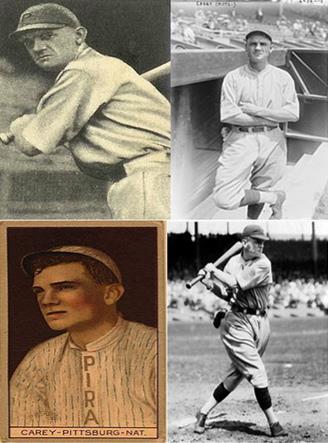
Baseball Trailblazers
Page 860
Max Carey
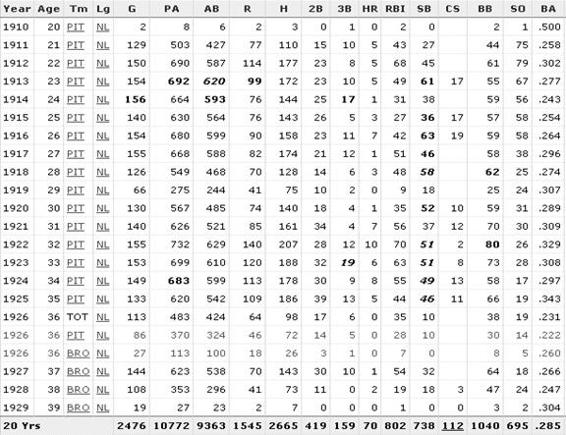
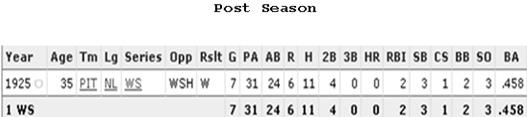
Baseball Trailblazers
Page 861
Maximillian George Carnarius, January 11, 1890 – May 30, 1976, known as Max George Carey, was a professional baseball center fielder and manager. Carey played in major league baseball for the Pittsburgh Pirates from 1910 through 1926 and for the
Baseball Trailblazers Page 862
Brooklyn Robins from 1926 through 1929. He managed the Brooklyn Dodgers in 1932 and 1933.
Carey was born in Terre Haute, Indiana, his father a Prussian soldier and swimming teacher. He had emigrated to the United States after the Franco-Prussian War and worked as a contractor.
Carey's parents wanted their son to become a Lutheran minister.
He attended Concordia College in Fort Wayne, Indiana, studying in the pre-ministerial program. He also played baseball, and was a member of the swimming and track and field teams. After graduating in 1909, he went to Concordia Seminary in St. Louis, Missouri.
In the summer of 1909, Carey attended a game of minor league baseball's Central League between the Terre Haute Hottentots and the South Bend Greens. South Bend was without a starting shortstop, as they had sold theirs to another team. Carey found Aggie Grant, South Bend's manager, and convinced Grant to give him the opportunity to fill in for the remainder of the season, based on his track and field skills. He used the name "Max Carey" in order to retain his amateur status at Concordia College. He had a .158 batting average and committed 24 errors in 48 games.
Baseball Trailblazers Page 863
Carey returned to play for South Bend in the 1910 season. The team had a new shortstop, Alex McCarthy, so Carey agreed to play as their left fielder. He had a .298 batting average with 86
stolen bases in 96 games. He also recorded 25 assists. Able to make a career in baseball, Carey decided to drop out of Concordia.
The president of the Central League recommended Carey to the Pittsburgh Pirates of major league baseball's National League towards the end of the 1910 season. The Pirates bought Carey and McCarthy from South Bend on August 15. Carey made his debut with the Pirates, appearing in two games as a replacement for Fred Clarke during the 1910 season.
In 1911, Carey played in 122 games as the Pirates' center fielder, replacing Tommy Leach. He had a .258 batting average on the season. The next year, he succeeded Clarke as the Pirates'
left fielder on a permanent basis. In 1913, Carey led the National League in stolen bases with 61 and runs scored with 99.
In 1914, he led the National League in triples with 17. He led the National League in steals in 1915 - 36, 1916 - 63, 1917 -
46, and 1918 - 58, while also leading the league with 62 walks in 1918. After the 1915 season, Carey went on a barnstorming tour with Dave Bancroft.
Baseball Trailblazers Page 864
Carey missed much of the 1919 season with an injury, but returned to form in the 1920 season. He again led the National League in steals in 1920 with 52, in the 1922 season with 51, in the 1923 season with 51, in the 1924 season with 49, and in the 1925 season with 46. In the 1922 season, he was only caught stealing twice.
In 1924, Carey altered his batting stance based on Ty Cobb's. He had a .343 batting average in the 1925 season, and the Pirates won the National League pennant that year. In the deciding game of the 1925 World Series, Carey had four hits, including three doubles off Walter Johnson. Carey's .458 batting average led all players in the series, and the Pirates defeated the American League's Washington Senators. He hit for a batting average over
.300 three seasons in a row from 1921 to 1923. He led the league in stolen bases eight times, including each season between 1922
and 1924. He regularly stole 40 or more bases and maintained a favorable steal percentage. He also stole home 33 times in his career, second best only to Ty Cobb's 50 on the all-time list.
In 1926, Clarke, now the team vice president, was also serving as an assistant to manager Bill McKechnie. Clarke would sit on the bench in full uniform and give advice to McKechnie. Carey ended up in a slump that summer and one day Clarke commented to McKechnie that they should replace Carey, even if they had to
Baseball Trailblazers Page 865
replace him with a pitcher. When Carey found out about the remark, he called a team meeting, along with Babe Adams and Carson Bigbee, who were also discontented with Clarke. The players voted on whether Clarke should remain on the bench during games. The players voted 18–6 in favor of Clarke remaining on the bench. Clarke found out about the meeting and ordered that the responsible players were to be disciplined.
Adams and Bigbee were released, while Carey was suspended. The Pirates placed Carey on waivers and he was claimed by the Brooklyn Robins. Carey played his final three and a half years with the Robins, but he was aging and no longer the same player.
Carey retired in 1929.
His final statistics included a batting average of .285, 2665
hits, 70 home runs, 802 runs batted in, and 738 stolen bases.
Carey was nicknamed "Scoop" for his ability to catch fly balls in front of him. His mark of 738 stolen bases, leading the league ten times, remained a National League record until 1974.
Carey returned to the Pirates as a coach for the 1930 season.
After sitting out the 1931 season, he became the manager of the Dodgers before the 1932 season, succeeding Wilbert Robinson. He traded for outfielder Hack Wilson, and traded Babe Herman, also an outfielder, for third baseman Joe Stripp. Behind Wilson, Brooklyn finished in third place in the National League in 1932.
Baseball Trailblazers Page 866
However, the team struggled in the 1933 season, leading to outrage when the club renewed his contract for 1934 in August.
Receiving criticism by Brooklyn newspapers, he was replaced before the 1934 season by Casey Stengel, and remarked that he became "the first manager fired by the newspapers." The organization stated that they fired Carey due to his inability to get along with his players.
Carey worked as a scout for the Baltimore Orioles and served as a minor league manager. He was the manager and general manager of the Miami Wahoos of the Florida East Coast League in 1940 and 1941. In 1944, Carey became the manager of the Milwaukee Chicks in the All American Girls Professional Baseball League. That year, Milwaukee won the AAGPBL pennant. Beginning in 1945, he spent several years as the league's president. He then spent three seasons managing the league's Fort Wayne Daisies.
Carey moved to Florida, and became involved in real estate.
Carey lost more than $100,000 in the 1929 stock market crash. He became a writer in the 1950s and self-published a book on baseball strategy and authored magazine articles for publications such as Esquire. He also served on the Florida State Racing Commission.
Baseball Trailblazers Page 867
Carey died on May 30, 1976, at age 86 in Miami, Florida. He was survived by his wife, Aurelia, and a son, Max Jr.
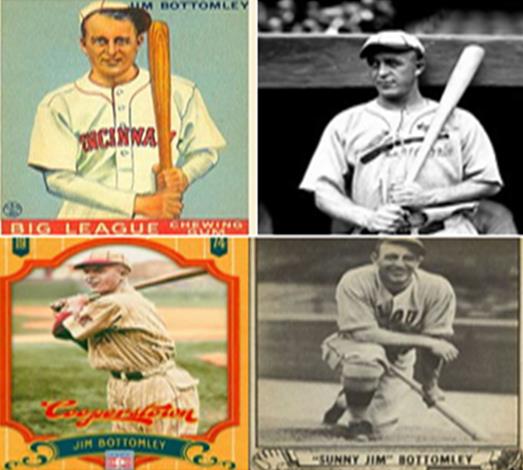
Baseball Trailblazers
Page 868
Jim Bottomley
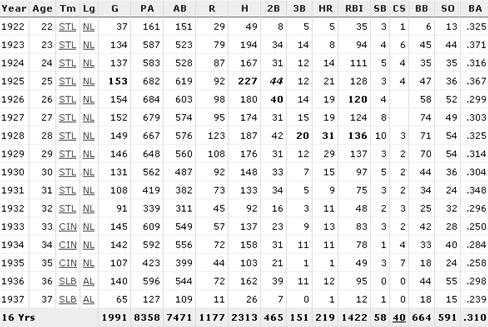
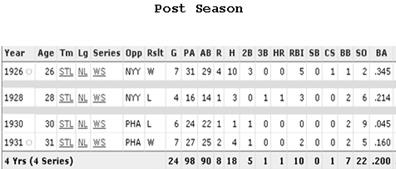
Baseball Trailblazers
Page 869
James Leroy Bottomley, April 23, 1900 - December 11, 1959, was a professional first baseman. Bottomley played in major league baseball from 1922 through 1937 for the St. Louis Cardinals, Cincinnati Reds, and St. Louis Browns.
Bottomley was born to Elizabeth (née Carter) and John Bottomley in Oglesby, Illinois. His family later moved to Nokomis, Illinois, where Bottomley enrolled in grade school and Nokomis High School. He dropped out when he was 16 years old in order to
Baseball Trailblazers Page 870
help support his family financially. Bottomley worked as a coal miner, truck driver, grocery clerk, and railroad clerk. His younger brother, Ralph, died in a mining accident in 1920.
Bottomley also played semi-professional baseball for several local teams to make additional money, earning $5 a game. A police officer who knew Branch Rickey, the general manager of the St. Louis Cardinals, saw Bottomley play, and recommended Bottomley to Rickey.
Rickey dispatched scout Charley Barrett to investigate Bottomley. The Cardinals decided to invite Bottomley to a tryout in late 1919, and signed him to a $150 a month contract.
Bottomley began his professional career in minor league baseball in 1920. That year, Bottomley played for the Mitchell Kernels of the Class D South Dakota League, posting a .312 batting average in 97 games, as Barrett continued to scout him. He also played six games for the Sioux City Packers of the Class A Western League. During his time in the minor leagues, the media began to call Bottomley "Sunny Jim," due to his pleasant disposition.
The next season, Bottomley played for the Houston Buffaloes of the Class A Texas League. Bottomley suffered a leg injury early in the season which became infected, and impeded his performance during the season. Bottomley managed only a .227 batting average
Baseball Trailblazers Page 871
in 130 games and struggled with his fielding. Unable to sell Bottomley to Houston for $1,200 after the season, Rickey sold Bottomley to the Syracuse Chiefs of the Class AA International League for $1,000. Fully recovered from his leg injury in 1922, Bottomley batted .348 with 14 home runs, 15 triples, and a .567
slugging percentage for the Chiefs. After the season, the Cardinals purchased Bottomley from the Chiefs for $15,000.
Bottomley made his major league baseball debut for the St. Louis Cardinals on August 18, 1922. Replacing Jack Fournier, Bottomley batted .325 in 37 games. The Cardinals named Bottomley their starting first baseman in 1923. As a rookie, Bottomley batted
.371, finishing second in the National League behind teammate Rogers Hornsby, who batted .384. His .425 on base percentage also finished second in the NL behind Hornsby, while he finished sixth in slugging percentage, with a .535 mark. His 94 runs batted in were tenth best in the league.
Bottomley posted a .316 batting average in 1924. In a game against the Brooklyn Dodgers on September 16, 1924, Bottomley set the major league record for RBIs in a single game, with 12, breaking Wilbert Robinson's record of 11, set in 1892. Robinson was serving as the manager of the Dodgers at the time. Bottomley had two home runs, a double and three singles as he went 6 for 6
at the plate. He finished the season with 111 RBIs, placing
Baseball Trailblazers Page 872
third in the NL. Bottomley's 14 home runs were seventh best in the NL, while his .500 slugging percentage was good for tenth.
Bottomley hit .367 in 1925, finishing second in the NL to Hornsby again. He led the NL with 227 hits, while his 128 RBIs were third best, and his .413 on-base percentage was seventh best in the league. Bottomley batted .298 during the 1926
season, with an NL leading 120 RBIs. His 19 home runs placed second in the NL, behind Hack Wilson's 21, while his .506
slugging percentage was sixth best. He batted .345 in the 1926
World Series, as the Cardinals defeated the New York Yankees.
In 1927, Bottomley finished the season with 124 RBIs, fourth best in the league, and a .509 slugging percentage, finishing sixth. Bottomley hit .325 with 31 home runs and 136 RBIs in 1928, leading the league in both categories. That year, he won the League Award, given to the most valuable player of the NL.
The Cardinals reached the 1928 World Series, and Bottomley batted .214 as they lost to the New York Yankees.
In 1929, Bottomley hit 29 home runs, finishing seventh in the NL, while his 137 RBIs were fifth best, and his .568 slugging percentage placed him in eighth. After having what manager Gabby Street considered a "poor year" in 1930 at.304, Bottomley struggled in the 1930 World Series, batting .045 in 22 at bats,
Baseball Trailblazers Page 873
as the Cardinals lost to the Philadelphia Athletics. Following the series, Bottomley described his World Series performance as
"a bust as far as hitting goes."
Amid questions about Bottomley's status with the Cardinals heading into the 1931 season, he demonstrated renewed hitting ability during spring training. Despite the presence of Ripper Collins, a superior fielder who transferred to the Cardinals from the Rochester Red Wings of the International League, Street announced that Bottomley would remain the starting first baseman. However, Bottomley suffered an injury and struggled early in the 1931 season after returning to the game, and it appeared that he might lose his job to Collins, who filled in for Bottomley during his injury. Bottomley returned to form after his return, and he finished the season with a .3482
batting average, placing third behind teammate Chick Hafey's
.3489 and Bill Terry's .3486, the closest batting average finish in major league baseball history. His .534 slugging percentage was the sixth best in the league. The Cardinals reached the 1931
World Series, with Bottomley batting .160, as the Cardinals defeated the Athletics. That offseason, other teams began to attempt to trade for either Bottomley or Collins. Bottomley batted .296 in 1932, though he only played in 91 games.
Baseball Trailblazers Page 874
After the 1932 season, the Cardinals traded Bottomley to the Cincinnati Reds for Ownie Carroll and Estel Crabtree, in an attempt to partner Bottomley with Chick Hafey in developing a more potent offensive attack. Bottomley had also sought Cincinnati's managerial position that offseason, which instead went to Donie Bush.
Bottomley threatened to quit baseball in a salary dispute with the Reds, as he attempted to negotiate a raise from his $8,000
salary, a reduction from the $13,000 salary he earned with the Cardinals the previous year. He and the Reds eventually came to terms on a one year contract believed to be worth between $10,000 and $13,000. Bottomley finished eighth in the NL with 83
RBIs in 1933, and ninth with 13 home runs. In three seasons with the Reds, Bottomley failed to hit higher than .283 or record more than 83 RBIs in a season. Bottomley left the Reds during spring training in 1935 due to a salary dispute, deciding to return to the team in April.
Before the 1936 season, the Reds traded Bottomley to the St.
Louis Browns of the American League, who were managed by Hornsby, for Johnny Burnett. During a July road trip, Bottomley announced his retirement as a result of an injured back.
However, he changed his mind and decided to remain with the team. Bottomley batted .298 for the 1936 season.
Baseball Trailblazers Page 875
Bottomley decided to return to baseball in 1937. When the Browns struggled, beginning the season with a 25-52 win-loss record, the Browns fired Hornsby and named Bottomley their player-manager. Bottomley led the Browns to 21 more victories, as the team finished the season in eighth place, with a 46-108 record.
The Browns trailed the seventh place Athletics by nine games, and were 56 games out of first place. As a player, Bottomley batted .239 in 65 games during the 1937 season. Bottomley was among the ten oldest players in the AL that year.
The Browns did not retain Bottomley after the 1937 season, replacing him with Street, who served as his first assistant during the 1937 season. In 1938, Bottomley served as the player-manager of Syracuse. After a bad start to the season, and with team president Jack Corbett not adding capable players, Bottomley resigned and was replaced with Dick Porter. Bottomley also indicated that he did not want to continue playing.
In 1,991 games over 16 seasons, Bottomley posted a .310 batting average, 2,313 for 7,471, with 1,177 runs, 465 doubles, 151
triples, 219 home runs, 1,422 RBI, 58 stolen bases, 664 bases on balls, a .369 on base percentage and a .500 slugging percentage.
Defensively, he recorded a .988 fielding percentage as a first baseman. In 24 World Series games over four Series, he batted just .200, 18 for 90, with one home run and 10 RBI.
Baseball Trailblazers Page 876
Bottomley married Elizabeth "Betty" Browner, who operated a St.
Louis beauty parlor, on February 4, 1933. The couple had no children. After he retired from baseball in 1938, Bottomley and his wife moved to the Bourbon, Missouri, area, where he raised Hereford cattle. In 1939, Bottomley became a radio broadcaster, signing a deal with KWK, an AM broadcasting station, to broadcast Cardinals and Browns games.
Bottomley returned to baseball as a scout for the Cardinals in 1955. In 1957, he joined the Chicago Cubs as a scout and managed the Pulaski Cubs of the Class D Appalachian League. While managing in Pulaski, Bottomley suffered a heart attack. The Bottomleys moved to nearby Sullivan, Missouri. “Sunny Jim”
Bottomley died of a heart ailment in December 1959.
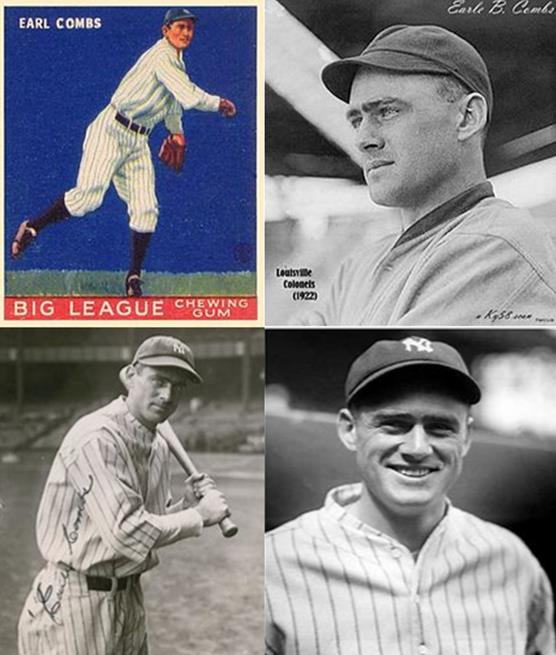
Baseball Trailblazers
Page 877
Earle Combs
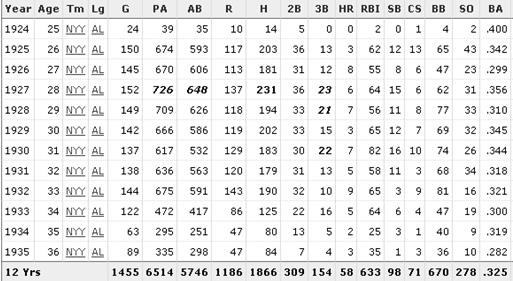
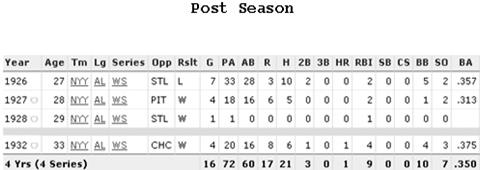
Baseball Trailblazers
Page 878
Earle Bryan Combs, May 14, 1899 – July 21, 1976, was a professional baseball player who played his entire career for the New York Yankees; 1924–1935. Combs batted leadoff and played center field on the Yankees' fabled 1927 team, often referred to as Murderers' Row. He is one of six players on that team who have been inducted into the Baseball Hall of Fame; the other five are Waite Hoyt, Herb Pennock, Tony Lazzeri, Lou Gehrig and Babe Ruth.
Baseball Trailblazers Page 879
Combs was born in Pebworth, Owsley County, Kentucky. As a child, he played baseball games with tree limbs as bats and with baseballs made out of string and the material of old shoes.
Combs left Pebworth in 1917 to enter Eastern Kentucky State Normal School in Richmond. In those early days, Eastern prepared its students to become teachers. On completion of a two year program, graduates were often employed in rural one room schools. They were often responsible for forty or more students, ranging in age from six to teenage, and in grades from one through eight, so the work required much management skill.
In his first year at Eastern, Combs put on a stellar performance in a faculty-student baseball game and was encouraged to join the school team by Dr. Charles Keith, Dean of Men and baseball coach. He hit .591 at Eastern during his last season. After graduating from Eastern, Combs went back to his native Owsley County and taught in one room schoolhouses in both Ida May and Levi.
Combs continued to play baseball in his spare time. He played for High Splint Harlan County coal company team in the Pine Mountain League in the summer of 1921 and hit .444. He also played semi-pro baseball for the Lexington Reos of the Bluegrass League. It was in Lexington in 1922 that Combs drew the attention of the Louisville Colonels of the American
Baseball Trailblazers Page 880
Association. After scouting him, Louisville offered him a contract which provided a salary that exceeded the $37 per month he made as a teacher in Owsley County.
His Louisville debut was unsettling; he committed several outfield errors. The last one gave the opposition the two runs they needed to win the game. Distraught afterward, Combs said;
"As I went after the dropped ball I was tempted to keep right on going, climb the fence and not stop running until I got to Pebworth." He had married Ruth McCollum, his high school sweetheart, the year before and was concerned about his future.
Joe McCarthy, the manager of the Colonels and later his manager with the Yankees, knew what Combs could do and told him; "Look, if I didn't think you belonged in center field on this club I wouldn't put you there, and I'm going to keep you there." Combs soon found his stride, hitting .344 in 1922 and .380 in 1923 for the Colonels and also earning a reputation for speedy ball hawking in the outfield and reckless base stealing on offense.
In 1924, the New York Yankees won a spirited bidding war and bought Combs' contract for $50,000. This was a rather large sum at that time, but it bore fruit for the Yankees as Combs proved an immediate success in New York. In his rookie season, the summer of 1924, Combs played center field and hit .400 before
Baseball Trailblazers Page 881
breaking an ankle sliding into home plate at Cleveland's League Park on June 15. Except for one pinch hitting appearance, he saw no more action that rookie season.
The following year, manager Miller Huggins made Combs the Yankees' leadoff hitter. He held this position for the remaining eleven years of his playing career. He hit .342 and scored 117
runs in 1925. In his best year, 1927, he hit .356 with 231 hits, 131 runs scored, 36 doubles and a league leading 23 triples. He led the league in triples again the next year, batting .310 and finishing sixth in Most Valuable Player voting. He hit .345 in 1929, then .344 in 1930, again leading the league in triples.
Combs suffered a serious accident in July 1934. On a 100+ degree day at St. Louis' Sportsman's Park, he crashed into the outfield wall going for a fly ball, sustaining a fractured skull, a broken shoulder and a damaged knee. He was reportedly near death for several days, and was hospitalized for more than two months.
The next season, he attempted a comeback but suffered another serious injury. That injury, coupled with the knowledge that the Yankees were set to bring up a rookie center fielder named Joe DiMaggio the next season, led to Combs' decision to retire at the age of 36.
Baseball Trailblazers Page 882
For his career Combs hit .325, had an on base average of .397
and averaged nearly 200 hits, 75 walks and only 31 strikeouts a season. He was a part of three World Series championships in 1927, 1928, and 1932. He hit no lower than .282 in any of his eleven seasons, and scored no fewer than 113 runs from 1925
through 1933. In four World Series, Combs hit .350 with a .443
on base average.
Miller Huggins once said; "If you had nine Combs' on your ball club, you could go to bed every night and sleep like a baby."
Joe McCarthy, another longtime Yankee manager, said; "They wouldn't pay baseball managers much of a salary if they all presented as few problems as did Earle Combs." Said Babe Ruth;
"Combs was more than a good ballplayer. He was always a first class gentleman." American sportswriter and baseball historian Fred Lieb wrote of Combs; "If a vote were taken of the sportswriters as to who their favorite ballplayer on the Yankees would be, Combs would have been their choice."
After his retirement as a player, he remained in the game as a coach for almost two decades. He was offered a coaching job with the Yankees in 1936, and started his new position by instructing his replacement, DiMaggio, on the nuances of Yankee Stadium's outfield. He coached for the Yankees through 1944, for the St.
Louis Browns in 1947 and for the Boston Red Sox from 1948–1952.
Baseball Trailblazers Page 883
When he announced his retirement from the Boston coaching staff in March 1953, he said that he was going to spend more time with family and his Kentucky farm. He returned to coaching for the Philadelphia Phillies in 1954.
After retiring from baseball in 1954, Combs returned to his 400
acre farm in Madison County. He served as the Kentucky state banking commissioner during Governor, and former Baseball Commissioner, A. B. “Happy” Chandler's second administration from 1955 to 1959, and on Eastern's Board of Regents from 1959
to 1975. In November 1962, he laid the foundation stone for Earle B. Combs Hall, a dormitory at Eastern. In June 1970, the Little League field at Irvine-McDowell Park in Richmond was named in his honor. In 2006, he was inducted as a charter member of Eastern's Athletics Hall of Fame, and the university provides an athletic scholarship in his honor each year.
Combs was selected for induction into the Hall of Fame in 1970
by the Veterans Committee. When he learned of the honor, he said
"I thought the Hall of Fame was for superstars, not just average players like me."
Combs and his wife Ruth (1901–1989) had three sons, Earle Jr, Charles and Donald. After a long illness, he died on July 21, 1976, age 77, in Richmond, Kentucky.
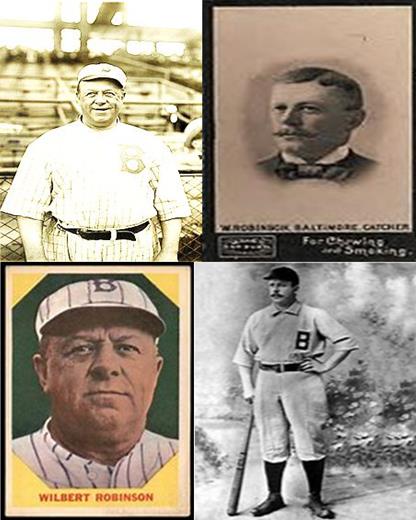
Baseball Trailblazers
Page 884
Wilbert Robinson
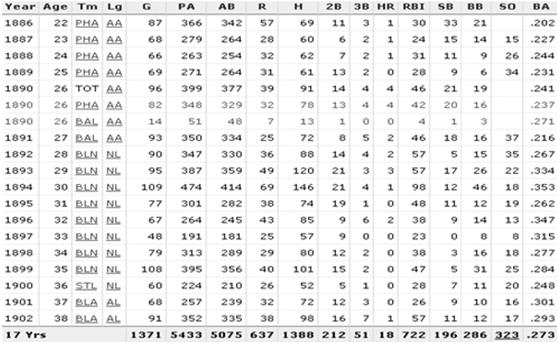
Baseball Trailblazers
Page 885
Wilbert Robinson, June 29, 1864 – August 8, 1934, nicknamed
"Uncle Robbie," was a catcher, coach and manager in major league baseball. He played for the Philadelphia Athletics, Baltimore Orioles, and St. Louis Cardinals. He managed the Orioles and Brooklyn Robins.
Born in Bolton, Massachusetts, Robinson was a catcher in the minor New England League in 1885 and made it to the major leagues in 1886 with the Philadelphia Athletics of the American Association, where he remained until 1890. He lasted in the majors until 1902, playing much of his career with two separate Baltimore Orioles franchises; from 1890 to 1899 with the Orioles
Baseball Trailblazers Page 886
team which folded after the 1899 National League season, and in 1901–02 with the American League team which moved to New York City in 1903 and became the Yankees. He also spent one season, 1900, with the St. Louis Cardinals.
Over the course of his career, Robinson played 1,316 games as a catcher, which prepared him for his second baseball career as a manager. The star catcher of the Orioles dynasty which won three straight titles from 1894 to 1896, he compiled a career batting average of .273, with a peak of .353 in the 1894 season. Durable behind the plate, he caught a triple header in 1896, followed by a double header the following day. He also was the first catcher to play directly behind the batter at all times, as the previous practice had been to play farther back when there were fewer than two strikes. A highlight of his career was a seven hit game June 10, 1892. He also batted in 11 runs in that game. On September 16, 1924, as manager of the Brooklyn Dodgers, he saw that record eclipsed as Jim Bottomley of the St. Louis Cardinals batted in 12 runs. Robinson, whose team was in contention for the pennant at the time, lamented; "Why did he have to save all those hits for us? Couldn't he have made some of them against McGraw?"
Robinson and McGraw joined as business partners in the Baltimore Orioles, a team that would debut in the new American League in
Baseball Trailblazers Page 887
1901. McGraw served as player-manager of the AL Orioles in 1901
and the beginning of the 1902 season, at which point he departed to the New York Giants. There were rumblings of a move to New York City to counter the Giants to help the fledgling league before the season had started, but nothing came to pass yet. The 1902 season was the last for the Orioles in the American League.
Robinson took over after McGraw had gone 26–31 to manage the last 83 games. He won 24 while losing 57, with two ties. The team had been plagued by debt suffered by owner John Mahon.
Andrew Freedman and John T. Brush, principal owners of the Giants and Cincinnati Reds, respectively, purchased the team and raided the roster by releasing certain players to be claimed by the two teams. AL President Ban Johnson seized control of the Orioles not long after and loaned several players from other AL
teams, but the damage was done. After the season, McGraw enticed Robinson to be his pitching coach from 1903 to 1913, although he would also do some coaching at third base, during which time the Giants won five NL pennants and a World Series title in 1905. As for the Orioles, they moved to New York for 1903. An argument between the two after the 1913 World Series over alleged bad coaching by either man in a saloon, meant to reunite old Oriole teammates, was the beginning of a feud between the two that never formally healed, and Robinson left to manage Brooklyn in 1914.
Baseball Trailblazers Page 888
Robinson would return to managing in 1914, when he took over the Brooklyn franchise in the National League. The team was known by various nicknames, including Bridegrooms, Superbas, and Dodgers, but during Robinson's managerial tenure, which lasted until 1931, the club was as often referred to as the "Robins" in honor of their manager, who had acquired the nickname "Uncle Robbie."
The frequently error-prone Dodger teams of this era were also sometimes derisively known as "Uncle Robbie's Daffiness Boys."
The Dodgers had finished the previous year with a 65-84 record that was buoyed by stars such as Zack Wheat and Jake Daubert, with the latter having won the National League's MVP award.
Robinson would lead them to a 75-79 record for 1914, 19 games behind first while finishing 5th for the first time since 1907.
He followed it up with a 80-72-2 second season that had them finish third in the League while acquiring future Hall of Fame pitcher Rube Marquard from New York.
By the halfway point of the 1916 season, the Robins were already 15 games above .500. By the time of October, the Robins were holding firm with 91 wins and a bare lead over the Philadelphia Phillies. Facing New York for the final four game series, they won three to clinch the pennant. It was the first time Brooklyn had won the pennant since 1900, and they would compete in their first ever World Series. They would face the Boston Red Sox,
Baseball Trailblazers Page 889
managed by Bill Carrigan that had future Hall of Famers with Babe Ruth and Harry Hooper while making their fourth appearance in the World Series in thirteen years. The Red Sox would win the title, which was the third in four that they would win from 1912
to 1918. Marquard was outmatched in game 1 by Ernie Shore, as Boston had a 6-1 lead before Brooklyn came close to rallying in the ninth inning, when Carl Mays was brought in to quell a bases loaded situation that led to Brooklyn scoring four runs but falling one run short. Boston then won game 2 in fourteen innings, which featured no scoring for ten straight innings until Boston had a walk off single. Brooklyn scored in the first inning of that game and promptly did not score again until the 3rd inning of the next game. Brooklyn held on to bounce back in game 3 after nearly blowing a 4-0 lead, but Boston rallied in game 4 with a three run, inside the park home run by Larry Gardner proving the difference in a 6-2 game. Game 5 featured Boston scoring four unanswered runs after Brooklyn had a brief lead in the second inning as Boston won the series in five games. They batted .238 for the series, but Brooklyn batted
.200. Brooklyn slumped in the next three seasons, finishing 70-81-5 for a seventh place finish in 1917 before finishing 5th in the next two years, although a trade for Burleigh Grimes, a fellow future Hall of Famer, in 1918 would be a helping hand. In 1920, Robinson led them to a 24 game improvement with 93 wins in
Baseball Trailblazers Page 890
155 games for a seven game cushion over New York for Brooklyn's second pennant in four years. However, the Cleveland Indians, led by player/manager Tris Speaker, would win the World Series five games to two in a series that saw no lead changes at any point, as the team that scored first won each game, with Cleveland scoring as early as the first inning twice and as late as the sixth in game 6. Brooklyn was outscored 21-8.
Robinson continued to manage the Robins for eleven more seasons, five of them winning. His best finish was the 1924 team, which finished 2nd with a 92-62 record while being buoyed by NL MVP
Dazzy Vance, who had completed the Pitcher’s Triple Crown in leading the NL in wins - 28, strikeouts – 262, and ERA - 2.16.
The Robins had a slow run going into August, which included being down by as many as 13 games for first on the 9th. However, the Robins went on a 13 game winning streak from August 25 to September 6, and they were tied for the NL lead three times in the month. On September 23, with four games to play, the Robins were tied for the lead with the Giants before facing the Chicago Cubs, soon tabbed to finish 5th in the standings, and the Boston Braves, the league doormat, for two games each, with Vance tabbed to start two of them. However, they would win and lose twice, which included a 10th inning home run off Vance by Gabby
Baseball Trailblazers Page 891
Hartnett on the 23rd that doomed the Robins. The Giants finished at 93-60 to finish one and one-half games in first.
The Robins also had their share of struggles, which included seven times of finishing in the second division, including five in a row from 1925 to 1929, which coincided with Robinson serving as both manager and team president, having been named after owner Charles Ebbets had died. Robinson finished his career with two fourth place finishes in 1930 and 1931. He closed out his career on September 27, 1931 in Ebbets Field, fittingly against McGraw and his New York Giants. Robinson's Robins won 12-3. He was replaced by Max Carey as manager while hunting at his camp in Brunswick, Georgia.
In his 18 years at the helm of the Robins, Robinson compiled a record of 1,375–1,341–19, including National League championships in 1916 and 1920; Brooklyn's only pennants between 1901 and 1940. His 1,375 NL victories were, at the time, the 3rd highest total in National League history, trailing only the totals of John McGraw and Fred Clarke.
Robinson was highly regarded for his ability to draw outstanding performances from his pitching staffs, a result of his many years as a catcher. Among the pitchers he guided to success were Joe McGinnity with both Orioles teams and the Giants, Rube
Baseball Trailblazers Page 892
Marquard with the Giants, and Dazzy Vance and Burleigh Grimes with the Dodgers. Another pitcher who would later recall Robinson's excellent advice, although they never played together during a regular season, was John Tener, who in the 1910s served simultaneously as NL president and Governor of Pennsylvania.
After his retirement from managing, Robinson became the president of the Atlanta Crackers minor league team. He suffered a fall in his hotel room in August 1934 that meant a broken arm to go with a hit head. On August 8, he suffered a brain hemorrhage and died in Atlanta, Georgia at the age of 71.
On March 13, 1915, at spring training in Daytona Beach, Florida, Robinson decided to try to set a record of sorts by catching a baseball dropped from an airplane being flown 525 feet overhead, being inspired by aviator Ruth Law's penchant for dropping golf balls from the plane onto the nearby golf course. This wasn't the first stunt involving catching a fly ball from a considerable distance, as Gabby Street had caught a ball dropped from the Washington Monument on August 21, 1908, after fourteen misses. Law and team trainer Fred Kelly would be on the plane for the stunt. However, Law had somehow forgot to bring the baseball and instead dropped a grapefruit, which splattered all over the manager. The grapefruit made such a mess that Robinson thought he had lost his eye because of the acid and the
Baseball Trailblazers Page 893
bloodlike splatter that covered him, and he began screaming before his teammates soon laughed at the sight of a grapefruit covered teammate. He quickly realized that it was a joke when he saw his teammates burst out in laughter. From this point on, Robinson referred to airplanes as fruit flies and according to legend it is the reason that the spring training Grapefruit League collected its nickname.
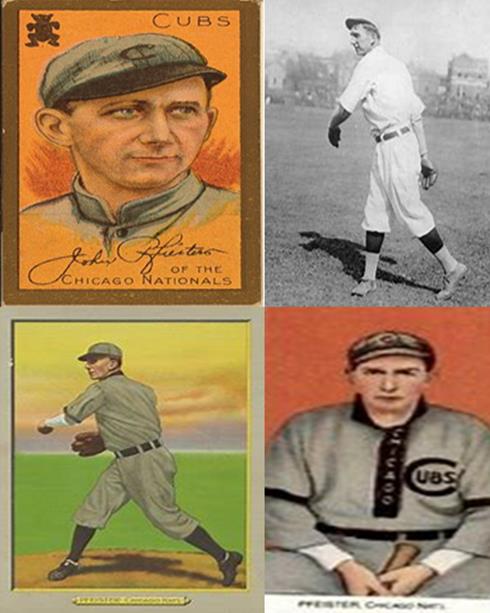
Baseball Trailblazers
Page 894
Jack Pfiester
John Albert Pfiester, May 24, 1878 – September 3, 1953, was a professional baseball player who pitched in the major leagues from 1903 to 1911. Pfiester was born in Cincinnati, Ohio.
Baseball Trailblazers Page 895
In his rookie season in 1906, Pfiester finished with a 1.51 ERA, and he went on to finish with a 1.15 ERA in 1907. On September 23, 1908 against the New York Giants he pitched a complete game, which involved Giant first baseman Fred Merkle’s infamous boner, which resulted in the game ending in a tie, allowing five hits, all with a dislocated tendon in his pitching forearm. He had to be assisted off the field a few times after throwing curve balls. As soon as the game ended he went to Ohio to be treated, and his tendon was snapped back into place by trainer Bonesetter Reese.
Although Bonesetter got Pfiester throwing again, it would prove to be only a matter of time before the wear and tear got to Pfiester. In 1909, Pfiester posted 17 wins and a 2.43 ERA in his last full season. Over the next two years he would make 20 more appearances as a major league pitcher, and by the age of 33 he was done.
His career ERA was 2.02, the 3rd lowest among pitchers with 1,000+ innings thrown, and he had a .617 winning percentage with 71 wins and 44 losses. He pitched for the Pittsburgh Pirates in 1903 and 1904, and the Chicago Cubs from 1906–1911. He was twice a World Series champion – 1907 and 1908, and NL ERA leader –