

Essentials of geology a comprehensive manual with 1300+ MCQs, answers, feedbacks, and illustrative figures by Ali Kareem Neamah - HTML preview
Download the book in PDF, ePub, Kindle for a complete version.
-------------------------------------------------------------- Rainfall provides water for chemical reactions can all increase the chemical weathering rate.
716. What is the name for soils that are rich to occur. Temperature affects the rate of
in calcium: chemical reactions. Organic acids produced by
a) Laterites. plants and bacteria can dissolve minerals in
b) Evaporates. rocks. Chemical weathering is an important
c) Pedocals. process in the rock cycle and soil formation.
d) Pedalfers. --------------------------------------------------------------
719. Which of the following minerals would
Feedback: Pedocals are a specific type of soil be most likely to form a clay mineral during
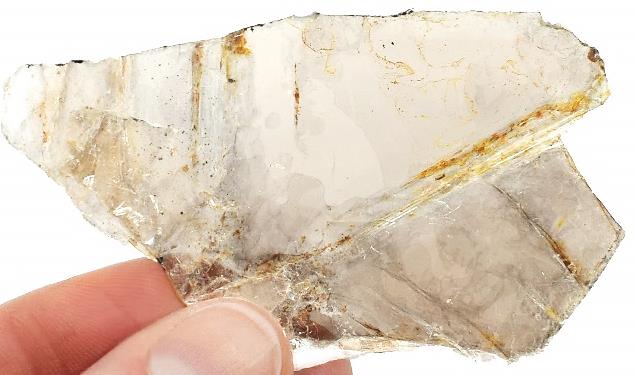
order in the Soil Taxonomy classification chemical weathering? system. They are characterized by the a) Iron oxide. accumulation of calcium carbonate (lime) in the b) Mica. soil profile. This accumulation of calcium c) Calcite. carbonate often leads to the formation of d) Quartz. distinctive soil horizons, such as calcic or
petrocalcic horizons. Laterites (a) are soils Feedback: Mica is most likely to form a clay formed in tropical regions with intense mineral during chemical weathering. Mica
weathering, evaporates (b) refer to minerals minerals, such as biotite and muscovite, are
formed by evaporation of water containing primary minerals commonly found in many
141
rocks. They are particularly susceptible to exposed surface area of rocks, making them
chemical weathering, breaking down into clay more susceptible to both chemical and physical
minerals through processes like hydration and weathering processes. hydrolysis. This transformation of mica into clay --------------------------------------------------------------
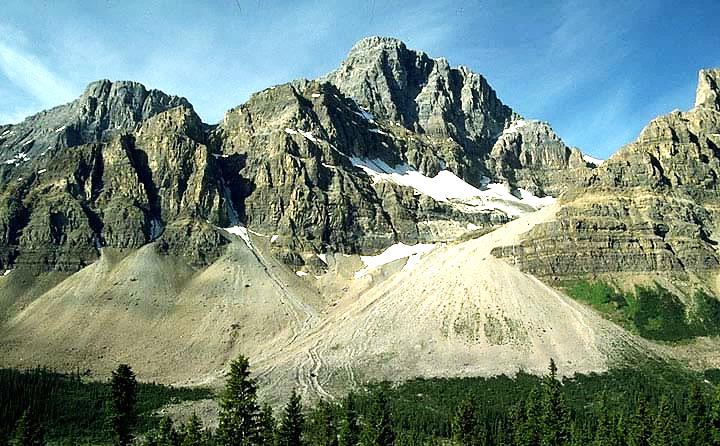
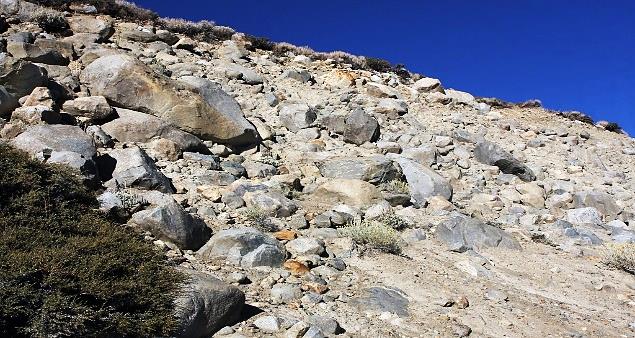
minerals contributes to the creation of clay-rich 722. One expects talus cones to be most soils. Iron oxide (a), calcite (c), and quartz (d) abundant in areas: are generally more resistant to weathering and a) Where abundant rainfall is available to less likely to form clay minerals. dissolve limestone.
b) In tropical areas where thick soil and

abundant vegetation occurs.
c) In high mountains that have many days of
sub-freezing temperatures.
d) None of the above.
Feedback: Talus cones, also known as scree slopes or debris cones, are most abundant in
high mountains that have many days of sub-
freezing temperatures. These cones are
720. Which of the following conditions down the slopes of mountains due to processes promotes slow chemical weathering? like freeze-thaw weathering, landslides, and a) Cold temperatures. erosion. In areas with frequent freezing and -------------------------------------------------------------- fragments and debris that have fallen or slid formed from the accumulation of rock
b) Thick soils. thawing, rocks can be dislodged by the c) High rainfall. expansion of water as it freezes in cracks and d) Fracturing. crevices. Over time, these dislodged rocks accumulate at the base of slopes, forming talus Feedback : Cold temperatures generally cones. This process is more common in high promote slow chemical weathering. Chemical mountain regions with sub-freezing reactions tend to occur more slowly at lower temperatures, where the freeze-thaw cycles temperatures because lower temperatures are pronounced. reduce the energy available for the reactions to
take place. In contrast, warm temperatures can
increase the kinetic energy of molecules,
leading to faster reaction rates and more rapid
chemical weathering. Thick soils (b), high
rainfall (c), and fracturing (d) can all enhance
chemical weathering by providing more surface
area for reactions and facilitating the movement
of water and chemical agents, which can
increase the rate of weathering.
721. -------------------------------------------------------------- --------------------------------------------------------------
Which of the following human activities
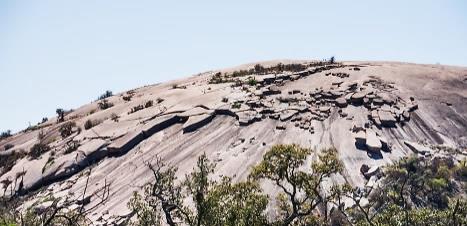
has resulted in increased rates of 723. Exfoliation domes form from:
a) b) Pressure release. The release of sulfur and nitrogen oxides Hydrolysis. weathering? a) Frost wedging.
that cause acid rain. c)
b) d) Root wedging. The physical disintegration of rocks during
c) Feedback: Exfoliation domes form primarily construction and mining.
Feedback as a result of the removal of overlying rock : Both human activities listed (a) and layers, which releases pressure that was (b) have resulted in increased rates of previously confining the underlying rocks. This weathering: pressure release causes the outer layers of a) The release of sulfur and nitrogen oxides into rock to expand and crack in a process known the atmosphere from activities like burning as exfoliation. Over time, sheets or slabs of rock d) from pressure release, which is also known as Neither A nor B. "unloading." These geologic features develop Both A and B.
fossil fuels can lead to the formation of acid
rain. Acid rain contains acidic components that may peel away from the main rock mass,
can accelerate the chemical weathering of creating rounded or dome-like structures
rocks and minerals, especially those that known as exfoliation domes. This process is
contain calcium carbonate. common in areas with large temperature
b) variations, as daily heating and cooling cycles Physical disintegration of rocks during
construction and mining activities increases the
142
can contribute to the expansion and contraction foraminifera. These organisms extract calcium
of rocks, facilitating exfoliation. carbonate from the surrounding seawater to
build their shells and skeletons, and over time,
these remains can accumulate and lithify into
limestone rock.

--------------------------------------------------------------
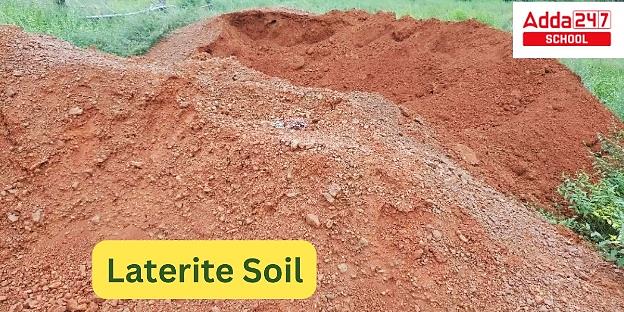
724. Laterite soils:
a) Are red in color.
c) -------------------------------------------------------------- b) Are formed in tropical climates.
Often contain high concentrations of
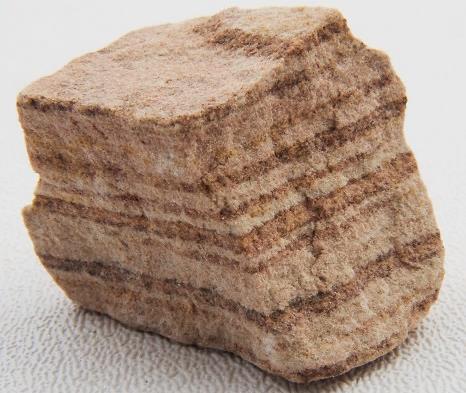
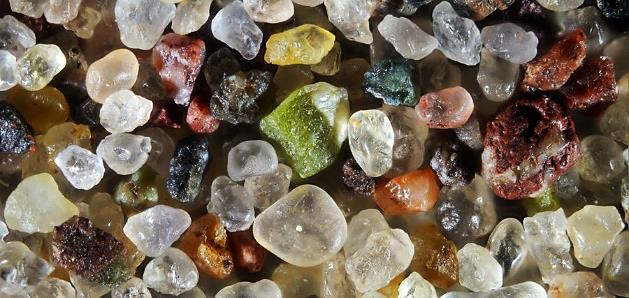
d) measuring between 1/16 and 2 mm is All of the above. a) aluminum. 726. A rock made up of detrital particles
being red in color, formed in tropical climates, Rhyolite. Schist. d) and often containing high concentrations of e) Migmatite. aluminum. These soils develop in warm and humid tropical regions with intense weathering Feedback b) Chert. : Laterite soils are characterized by c) Sandstone.
aluminum compounds in the soil undergo measuring between 1/16 and 2 mm is typically referred to as sandstone. Sandstone is a and leaching processes. The iron and Feedback: A rock made up of detrital particles
characteristic red color. Additionally, the sized grains that have been compacted and cemented together over time. The range of leaching processes can lead to the particle sizes in sandstone falls within the accumulation of aluminum and other minerals rainfall and temperature, leading to the sedimentary rock composed primarily of sand- various chemical changes due to the high
in laterite soils. specified measurements of 1/16 to 2 mm, which corresponds to the size range of sand grains.
--------------------------------------------------------------
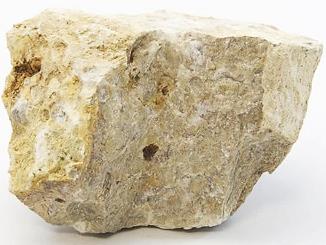
725. Most limestones have a large
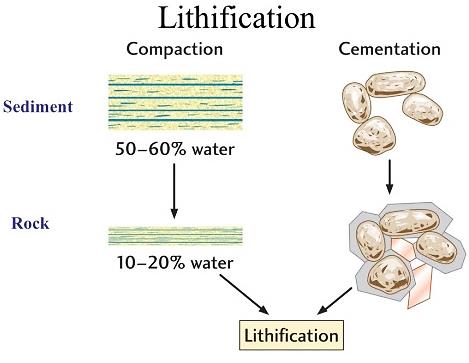
e) Organic matter is converted into granite. Dynamic metamorphism. d) Rocks are altered by heat at the margin of a pluton. Feedback : Limestone most commonly forms in e) Sediment is converted into sedimentary clear, warm, shallow marine waters. It is usually rock. an organic sedimentary rock that forms from the accumulation of shell, coral, algal, and fecal Feedback : Lithification is the process whereby debris. It can also be a chemical sedimentary loose sediments, such as sand, silt, and clay, rock formed by the precipitation of calcium are compacted and cemented together to form carbonate from lake or ocean water. solid sedimentary rock. This process involves b) Lava cools and forms an aphanitic texture. Melting. b) Atoms of two different elements join c) Weathering. together. d) Organisms. c) a) 727. Lithification is the processes whereby: Evaporation. a) from seawater by: component of calcite that was extracted --------------------------------------------------------------
Limestone is a sedimentary rock primarily the removal of pore spaces between sediment composed of the mineral calcite (calcium particles and the binding of the particles carbonate). Many types of limestone are through the deposition of minerals from formed from the accumulation of calcite-rich groundwater. As a result of lithification, shells and skeletal remains of marine sedimentary rocks are created from the organisms such as corals, mollusks, and
143
accumulation and transformation of sediment minerals from solution or the accumulation of
over time. organic material.
--------------------------------------------------------------
730. Particles of sediment from 1/16 to 2
millimeters in diameter are of what size?
a) Gravel. b) Sand. c) Silt. d) Clay.

--------------------------------------------------------------
728. Although silicates are the most
important because they are the main common minerals, the _________ are also --------------------------------------------------------------
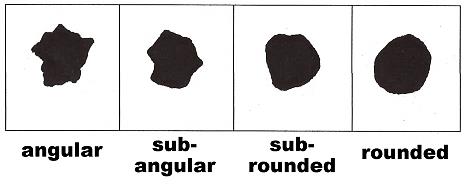
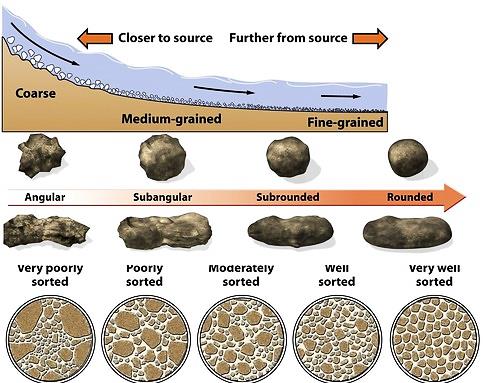
b) The grinding away of sharp edges and Sulfides. corners of rock fragments during c) Carbonates. transportation. d) Hydroxides. c) a) a) The rounding of a grain to a spherical shape. Oxides. b) components of limestone and dolostone. 731. Rounding is:
e) A type of mineral. Phosphates. d) None of the preceding.
Feedback: Carbonates, such as calcite Feedback: Rounding, in the context of (CaCO 3 ) and dolomite (CaMg(CO 3 ) 2 ), are sedimentary processes, refers to the grinding minerals that form from the accumulation of away of sharp edges and corners of rock shells and skeletal remains of marine fragments as they are transported by various organisms or through chemical precipitation. agents like water, wind, or ice. This process These minerals are the primary constituents of occurs through abrasion, where particles limestone and dolostone, which are collide and rub against each other during sedimentary rocks composed predominantly of movement, resulting in smoother and more carbonate minerals. rounded shapes over time. This characteristic rounding is a common feature of sediments and sedimentary rocks.
-------------------------------------------------------------- -------------------------------------------------------------- 729. Which is NOT a chemical or organic 732. Compaction and cementation are two sedimentary rock? common processes of: a) Rock salt. a) Erosion. b) Sandstone. b) Transportation. c) Limestone. c) Deposition. d) Gypsum. d) Lithification.
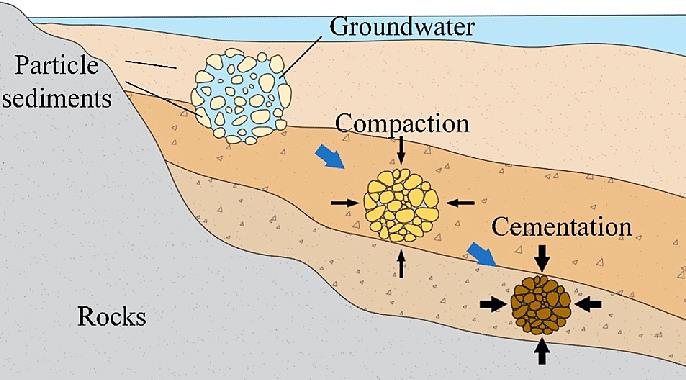
Feedback: Sandstone is not a chemical or Feedback: Compaction and cementation are organic sedimentary rock. It is a clastic two common processes of lithification. sedimentary rock. Sandstone is composed of Lithification refers to the processes by which mineral grains, primarily sand-sized particles loose sediments are compacted and cemented that are cemented together. Clastic together to form solid sedimentary rock. sedimentary rocks, including sandstone, form Compaction involves the reduction of pore from the accumulation and lithification spaces between sediment particles due to the (compaction and cementation) of mineral and weight of overlying material, while cementation rock fragments. Chemical or organic involves the deposition of minerals from sedimentary rocks are formed through groundwater that bind the sediment particles processes involving the precipitation of
144
together. These processes are fundamental in during transport, which depends on the
the formation of sedimentary rocks. distance and mode of transport from the source
area.
--------------------------------------------------------------
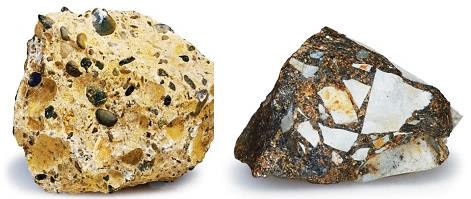
735. The major difference between breccia
and conglomerate is:
a) Size of grains. b) Rounding of the grains. c) Composition of grains. d) All of the preceding.

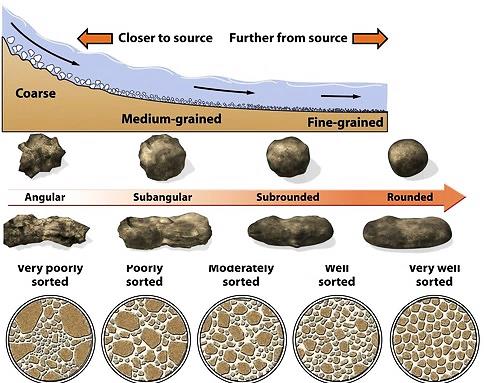
Feedback: The major difference between
-------------------------------------------------------------- breccia and conglomerate is the rounding of the
733. Which is NOT a type of sandstone? grains. Breccia is composed of angular or a) Quartz sandstone. sharp-edged rock fragments, indicating that the
b) Arkose. fragments have not been transported far from
c) Greywacke. their source. Conglomerate, on the other hand,
d) Travertine. is composed of rounded rock fragments that
have been transported and rounded by the
Feedback: Travertine is not a type of action of water or other agents.
sandstone. Travertine is a type of limestone
that forms in caves or around hot springs
through the precipitation of calcium carbonate
from dissolved minerals in water. It often has a
characteristic porous and banded appearance.
The other options mentioned - quartz
sandstone (a), arkose (b), and greywacke (c) -
are types of sandstone. Quartz sandstone is
composed primarily of quartz grains, arkose
contains a significant amount of feldspar, and --------------------------------------------------------------
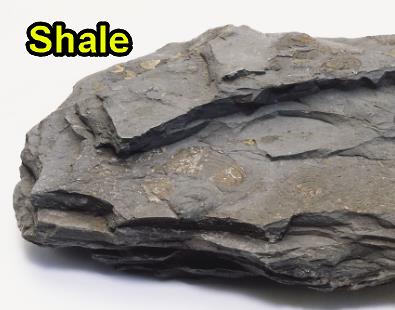
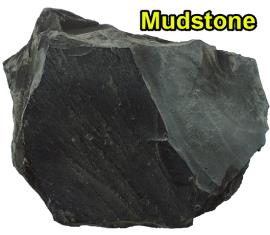
greywacke is a sandstone with a significant 736. Shale differs from mudstone in that:
amount of clay and other rock fragments in its a) Shale has larger grains. composition. b) Shale is visibly layered and fissile;
mudstone is massive and blocky.
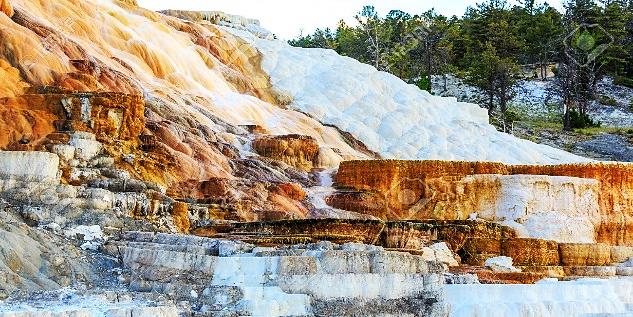
c) Shale has smaller grains. d) There is no difference between shale and
mudstone.
Feedback: Shale differs from mudstone in that shale is visibly layered and fissile, meaning it
can be easily split into thin layers along the
-------------------------------------------------------------- developed, fine-grained layers due to the alignment of clay minerals during deposition. bedding planes. Shale typically has well-
a) blocky in appearance, lacking the pronounced The composition of the sediment. layering and fissility of shale. Both shale and b) Sedimentary structures. mudstone are fine-grained sedimentary rocks c) 734. Clues to the nature of the source area of sediment can be found in: On the other hand, mudstone is massive and
d) primarily composed of clay and silt-sized Rounding of sediment.
All of the preceding.
particles.
Feedback: Clues to the nature of the source area of sediment can be found in the
composition, sedimentary structures, and
rounding of sediment. The composition of
sediment reflects the type of rocks that were
eroded and weathered at the source area, as
well as the chemical and biological processes
that affected the sediment during transport and --------------------------------------------------------------
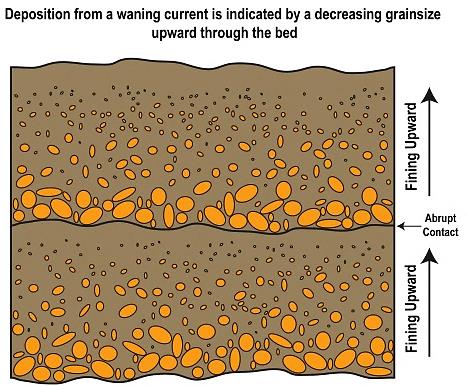
deposition. Sedimentary structures, such as 737. In a graded bed, the particle size: cross-bedding, ripple marks, and graded a) Decreases upward. bedding, indicate the direction and energy of b) Decreases downward. the currents that carried and deposited the c) Increases in the direction of the current. sediment. Rounding of sediment reflects the d) Stays the same. degree of abrasion and sorting that occurred
145
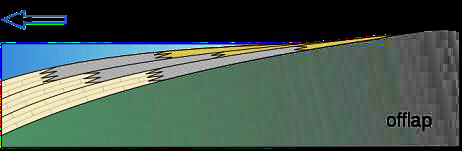
Feedback: Graded bedding occurs when refers to a situation where the shoreline moves
sediment is deposited by a fluid (such as water seaward due to a decrease in sea level or an
or wind) that is carrying particles of different uplift of the land. As sea level falls, areas that
sizes. As the energy of the transporting fluid were previously underwater become exposed,
decreases, larger and heavier particles settle and the coastline moves landward. This can
out first and are deposited at the bottom of the lead to the exposure of previously submerged
layer. Smaller and lighter particles settle out sediments and the development of new
later and are deposited on top. This results in a landforms. Transgression (c) is the opposite
sequence of layers with the largest particles at scenario, where a rise in sea level causes the

the base and progressively smaller particles shoreline to move landward. towards the top.
--------------------------------------------------------------
740. The chemical element found in
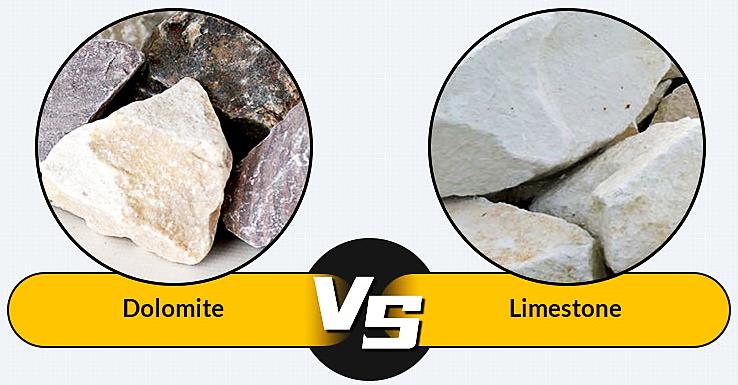
dolomite not found in limestone is:
a) Ca b) Mg c) C d) O e) Al
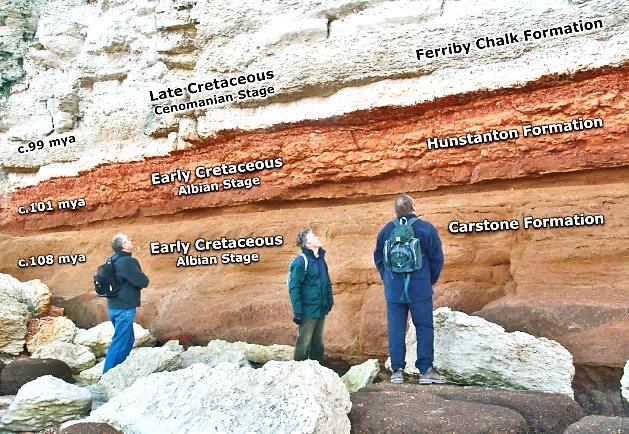
738. A body or rock of considerable Feedback: Dolomite is a mineral that contains thickness with characteristics that --------------------------------------------------------------
distinguish it from adjacent rock units is composition (CaMg(CO both calcium (Ca) and magnesium (Mg) in its
3 2 )). Limestone, on the
a) Formation. carbonate (CaCO3). So, the chemical element Contact. called a/an: other hand, primarily consists of calcium
b) found in dolomite that is not found in typical
c) Bedding plane. limestone is magnesium (Mg). The other
d) Outcrop. elements mentioned - Ca, C, O, and Al - are
Feedback: Formations are fundamental units -------------------------------------------------------------- present in both dolomite and limestone.
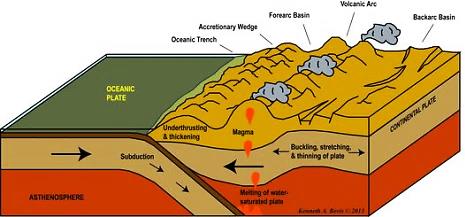
of rock classification in geology and represent 741. Thick accumulations of graywacke and distinctive rock packages that can be volcanic sediments can indicate an ancient:
recognized based on their lithology, a) Divergent plate boundary. sedimentary structures, and other features. b) Convergent boundary. They are often used to map and describe the c) Transform boundary. distribution of different rock types in a specific
area. Feedback: Thick accumulations of graywacke
and volcanic sediments are often associated
with ancient convergent plate boundaries.
Graywacke is a type of sandstone that contains
a significant proportion of clay and silt-sized
particles along with sand-sized particles. It
typically forms in environments where sediment
is rapidly deposited, such as in the vicinity of
subduction zones or continental collision
zones. These environments are often
characterized by the intense tectonic activity
and volcanic activity associated with
-------------------------------------------------------------- convergent plate boundaries. 739. If sea level drops or the land rises, what
is likely to occur?
a) A flood.
b) A regression.
c) A transgression.
d) No geologic change will take place.
Feedback: If sea level drops or the land rises, a regression is likely to occur. Regression --------------------------------------------------------------
146
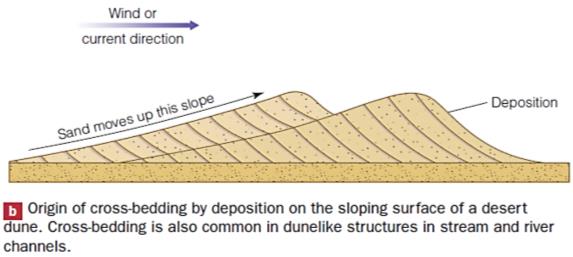
742. A sedimentary rock made of fragments analyzing the orientation of cross-beds,
of preexisting rocks is: geologists can infer the direction of water flow
a) Organic. in the past. b) Chemical.
c) Detrital.
Feedback: Detrital sedimentary rocks are composed of particles that have been
weathered, eroded, transported, and then

deposited to form a new rock. These particles,
often referred to as clasts, can be derived from
the breakdown of other rocks through --------------------------------------------------------------
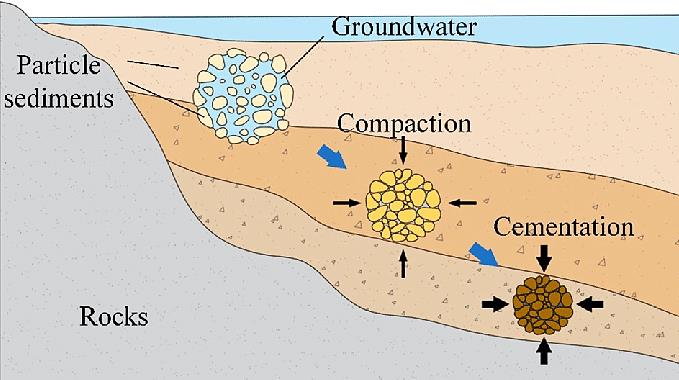
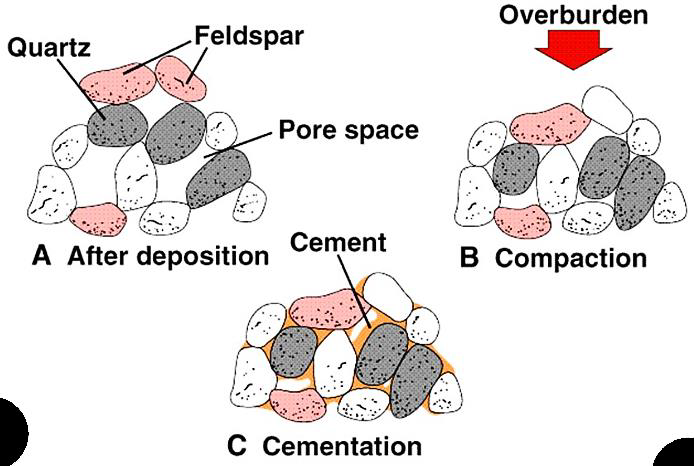
mechanical weathering processes. The clasts 745. Lithification involves compaction and: are then compacted and cemented together to a) Oxidation. create the new rock. Organic sedimentary rocks b) Carbonization. (a) form from the accumulation of organic c) Cementation. materials, while chemical sedimentary rocks (b) d) Graded bedding. are formed from the precipitation of minerals e) Degradation. from solution.
-------------------------------------------------------------- Feedback: Lithification involves compaction 743. Dolostone forms from limestone when: and cementation. Compaction refers to the a) Horizon A is eroded leaving horizon B process in which sediments are compressed
exposed. and pore spaces are reduced due to the weight
b) Magnesium replaces some of the calcium in of overlying material. Cementation, on the other
limestone. hand, involves the precipitation of minerals from
c) Organic matter accumulates in a swamp. groundwater that fill the remaining pore spaces
d) Volcanic rocks are adjacent to sedimentary between sediment particles and bind them
rocks. together. These processes work together to
e) Seawater evaporates and calcium sulfate is transform loose sediment into solid
deposited. sedimentary rock during lithification.
Feedback: Dolostone forms from limestone when magnesium replaces some of the calcium
in the limestone's mineral composition. This
process is known as dolomitization. Dolostone
is a type of sedimentary rock that is similar to
limestone but contains a significant amount of
the mineral dolomite (CaMg(CO3)2). The replacement of calcium by magnesium can
occur through various diagenetic processes in
which magnesium-rich fluids interact with --------------------------------------------------------------
limestone, causing some of the calcium 746. In chronological order, which of the
carbonate to be replaced by calcium following lists the processes that a rock must
-------------------------------------------------------------- a) Weathering-deposition-erosion-compaction and cementation. magnesium carbonate (dolomite). go through to become a sedimentary rock?
744. Which one of the following sedimentary
structures would allow you to determine b) Weathering-compaction and cementation-
a) c) Erosion-weathering-deposition-compaction Cross-beds. cementation. ancient current directions? deposition-erosion.
c) d) Weathering-cementation-erosion-Evaporites. compaction-deposition. b) Mud cracks.
e) e) Weathering-erosion-deposition-compaction d) Wave-formed ripples.
Caliche.
and cementation.
Feedback: Cross-beds are sedimentary structures that allow you to determine ancient Feedback: This sequence results in the
current directions. Cross-beds are inclined formation of sedimentary rock from preexisting
layers of sediment within a larger sedimentary materials. Option e accurately describes the
unit. They are typically formed in environments correct chronological order of these processes.
with moving water, such as rivers, deserts, or --------------------------------------------------------------
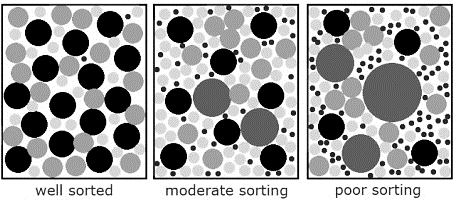
underwater sand dunes. The angle of the cross- 747. A deposit of sand in which all of the
the direction of the ancient currents that characterized as: Well sorted. bedding can provide valuable information about particles are nearly the same size is
transported and deposited the sediment. By a)
147
b) Carbonate. Recrystallization refers to the process of c) Angular. minerals within the rock growing in size or
d) Spheroidal. changing in crystal structure. While it can
e) Moderately lithified. contribute to a decrease in porosity, it is not a
primary process that affects pore spaces to a
Feedback: Well sorted sedimentary deposits significant degree. have a narrow range of particle sizes, indicating Collectively, these processes work to lithify
that the particles were sorted by a specific sediment and transform it into solid
transport mechanism before being deposited. sedimentary rock, which usually results in a

This often occurs in environments where the reduction of pore space and an increase in rock
sediment was subjected to consistent and density. efficient sorting processes, such as water
currents or wind. In contrast, poorly sorted
sediment would have a wide range of particle
sizes, indicating a mixture of particles
transported by varying energy conditions.
--------------------------------------------------------------
750. Shale is far more common than other
-------------------------------------------------------------- sedimentary rocks. 748. Lithification refers to the processes by a) True
which unconsolidated sediments are b) False transformed into solid sedimentary rocks.
a) True Feedback: Shale is a fine-grained sedimentary b) False rock composed primarily of clay and silt-sized
particles. It is often formed from the
Feedback: Lithification is the process by which accumulation of mud and other fine-grained
unconsolidated sediments are transformed into materials in environments like quiet water
solid sedimentary rocks. It is caused by bodies such as lakes and deep marine settings.
compaction and cementation. Compaction is Shale is abundant in the Earth's crust and is
the process by which the weight of overlying one of the most common types of sedimentary
sediments squeezes out the pore spaces rock. It's important to note that while shale is
between sediment grains. Cementation is the more common in terms of volume, other
process by which minerals precipitate from sedimentary rocks like sandstone and
solution and fill in the pore spaces between limestone may be more prominent in specific
sediment grains. Lithification occurs over environments or settings. millions of years and is an important process in
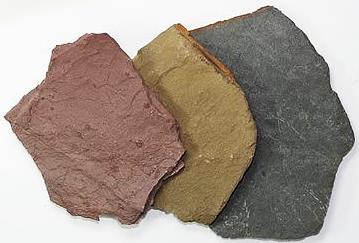
the rock cycle.
--------------------------------------------------------------
749. Compaction, cementation, and
recrystallization typically increase the pore
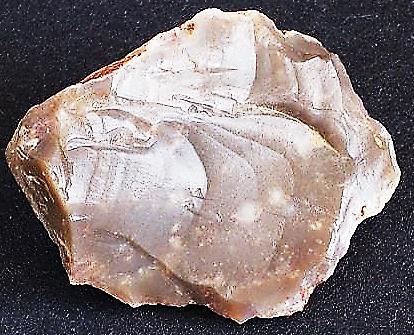
space within a sedimentary rock.
a) True
b) False
--------------------------------------------------------------
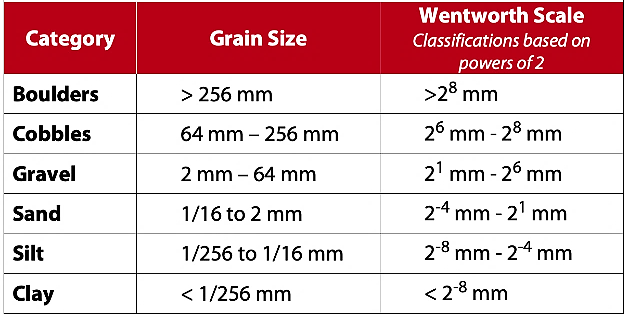
Feedback: Compaction, cementation, and 751. What is the primary basis used to recrystallization do not typically increase the classify detrital sedimentary rocks? pore space within a sedimentary rock. In fact, a) Chemical composition. these processes generally reduce pore spaces b) Mineral composition. within the rock. c) Particle size. Compaction involves the squeezing of d) Clay content. sediment grains together due to the weight of e) Silica content. overlying material. This reduces the pore
spaces between particles. Feedback: Detrital sedimentary rocks, also Cementation involves the filling of remaining known as clastic sedimentary rocks, are
pore spaces between sediment particles with classified based on the size of the sediment
minerals that precipitate from groundwater. particles they contain. Common categories
This process also reduces pore spaces. include gravel, sand, silt, and clay, and the
classification of the rock is determined by the
148
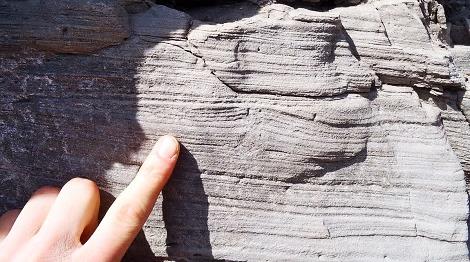
dominant size of the particles present. For a) Beds. example, conglomerate and breccia are types b) Layers. of detrital rocks classified as gravel-sized, c) Cleavages. sandstone is classified as sand-sized, and d) Laminae. mudstone or shale is classified as silt- to clay- e) None of the above. sized.
Feedback: Laminae are the thin, planar layers within sedimentary rocks like shale. They are
often much thinner than the bedding layers

(beds) and can be indicative of subtle changes
in sedimentation, such as variations in
sediment type, sedimentation rate, or
environmental conditions.
--------------------------------------------------------------
752. The sedimentary rock conglomerate
consists of large angular particles.
a) True
b) False
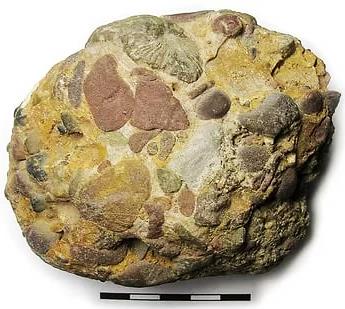
Feedback: The sedimentary rock -------------------------------------------------------------- conglomerate consists of large rounded 755. What is the predominant mineral in particles, not angular ones. Conglomerate is a most sandstone? type of detrital sedimentary rock that is a) Feldspar. composed of rounded gravel-sized particles (>2 b) Quartz. mm) known as clasts. These clasts are typically c) Mica. well-rounded due to the effects of transportation d) Olivine. in water or by other agents, which smooth out e) None of the above. their edges and corners. The rounded nature of
the clasts in conglomerate sets it apart from Feedback: Quartz is the predominant mineral other rock types like breccia, which contains in most sandstone, because it is the most
angular clasts. resistant mineral to weathering and erosion at
the Earth’s surface. Quartz grains can survive multiple cycles of sedimentation and
diagenesis, and retain their shape and size.
Quartz also forms the cement that binds the
sand grains together in many sandstones.
Feldspar is the second most common mineral
in sandstones, but it is less abundant than
quartz. Mica and olivine are less common
minerals in sandstones.
--------------------------------------------------------------
-------------------------------------------------------------- 756. Mineral composition is the primary 753. Which one of the following sedimentary basis for distinguishing among the various
rocks is composed primarily of silt and clay? detrital sedimentary rocks.
a) Sandstone. a) True b) Shale. b) False c) Conglomerate.
d) Limestone. Feedback: Particle size is the primary basis for e) Breccia. distinguishing among various detrital
sedimentary rocks. The size of the
Feedback: Shale is a sedimentary rock particles in a detrital rock indicates the energy
primarily composed of silt and clay-sized of the medium that transported them. For
particles. It is characterized by its fine-grained example, gravels are moved by swiftly flowing
nature and ability to split into thin layers along rivers, whereas less energy is required to
bedding planes. Shale forms from the transport sand. accumulation of mud and other fine-grained --------------------------------------------------------------
sediments in environments like quiet water 757. Which of these statements is NOT true bodies. of chemical sedimentary rocks? -------------------------------------------------------------- a) They are formed from material that is carried 754. Very thin layers of silt and clay that in solution.
often occur in shale are frequently referred b) They may be formed through organic or to as inorganic processes.
149
c) Examples include salt, chert, and limestone. Feedback: Limestone is the most abundant d) They generally consist of quartz and chemical sedimentary rock. It is composed
feldspar. chiefly of the mineral calcite, which is a form of
e) They are generally formed in water-rich calcium carbonate. Limestone is formed from
environments. the shells and skeletons of marine organisms,
such as corals, clams, and algae. It is also
Feedback: Chemical sedimentary rocks do not formed from the precipitation of calcium
generally consist of quartz and feldspar. Quartz carbonate from solution in seawater. and feldspar are the most common minerals in --------------------------------------------------------------

clastic sedimentary rocks, which are formed 761. During the formation of coal, oxygen-from the weathering and erosion of other rocks. deficient stagnant swamp water prevents
Chemical sedimentary rocks are formed from the complete decay of plant material. the precipitation of minerals from solution, and a) True they typically do not contain quartz and b) False feldspar.
-------------------------------------------------------------- Feedback: Coal is a fossil fuel that is formed 758. Limestone deposits __________. from the remains of plants that lived millions of a) Are composed primarily of calcite. years ago. The plants died in swampy
b) Contain abundant quartz. environments and were buried under layers of
c) Form most frequently on continents. sediment. The oxygen-deficient stagnant
d) Contain few fossils. swamp water prevented the complete decay of
e) Do all of the above. the plant material, allowing it to accumulate and
eventually form coal. The process of coal
Feedback: Limestone deposits are composed formation is called coalification. Coalification
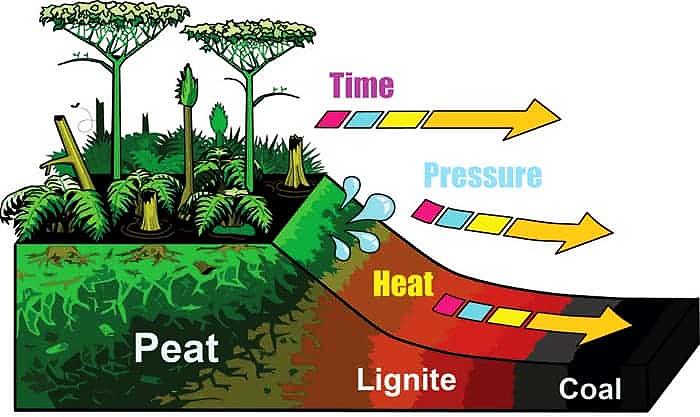
primarily of calcite, a mineral form of calcium occurs in three stages: carbonate (CaCO 3). Calcite is created when Peat: This is the first stage of coalification. In calcium and carbonate ions in water combine to this stage, the plant material is converted into
form a solid. Limestone can form in a variety of peat, which is a soft, brown material that is high
environments, but it is most common in marine in water content. environments. Lignite: This is the second stage of -------------------------------------------------------------- coalification. In this stage, the peat is further
759. Chert consists of _________. compacted and heated, and the water content a) Microcrystalline silica. is reduced. Lignite is a brown coal that is still
b) Flint. relatively soft. c) Calcite. Bituminous coal: This is the third and final d) Sand grains. stage of coalification. In this stage, the lignite is
e) Iron oxide. further compacted and heated, and the water
content is further reduced. Bituminous coal is a
Feedback: Chert is a type of sedimentary rock black coal that is hard and brittle. that is composed of microcrystalline silica. The amount of time that it takes for coal to form
Microcrystalline silica is a type of quartz that is depends on the thickness of the sediment that
made up of very small crystals. Chert is typically covers the plant material, the temperature of
formed from the precipitation of silica from the environment, and the amount of oxygen that
solution in seawater. It can also be formed from is present. Coal can take millions of years to
the accumulation of the remains of siliceous form. organisms, such as diatoms and radiolarians.
-------------------------------------------------------------- -------------------------------------------------------------- 760. Limestone, composed chiefly of the 762. What is the main criterion for mineral calcite, is the most abundant classifying chemical sedimentary rocks? chemical sedimentary rock. a) Color. a) True b) Amount of carbon. b) False c) Grain size.
150
d) Mineral composition. d) Oolitic. e) Both color and grain size. e) Well-sorted.
Feedback: The main criterion for classifying Feedback: A sedimentary rock that contains chemical sedimentary rocks is the mineral randomly distributed clay, sand, and pebble
composition. Chemical sedimentary rocks are clasts is referred to as being poorly sorted.
formed from the precipitation of minerals from Poorly sorted sedimentary rocks have a wide
solution, and the type of mineral that range of particle sizes, indicating that the
precipitates depends on the composition of the particles were not sorted or separated by size

solution. For example, limestone is formed from during deposition and sedimentation. This is
the precipitation of calcium carbonate, while often associated with environments where
salt is formed from the precipitation of sodium there is a mix of different sediment sources and
chloride. energy levels, leading to a diverse mixture of
-------------------------------------------------------------- particle sizes. 763. Which of the following sedimentary
rocks could result from the weathering and
erosion of granite?
a) Conglomerate.
b) Sandstone.
c) Shale.
d) Only conglomerate and sandstone.
e) All of the above.
Feedback: The weathering and erosion of granite can produce a variety of sedimentary
rocks, including conglomerate, sandstone, and
shale. The type of sedimentary rock that is
formed depends on the size of the weathered
fragments, the distance that the fragments are
transported, and the environment in which the --------------------------------------------------------------
fragments are deposited. 766. There are locations on Earth where
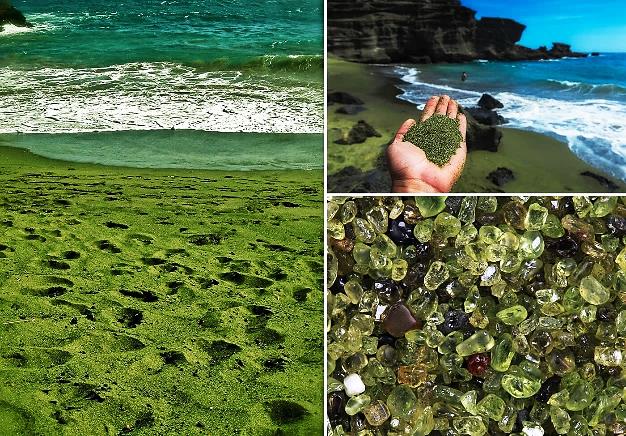
764. exists. Where would you expect to find such Which one of the following is NOT a a deposit? -------------------------------------------------------------- sediment composed of green olivine sand
a) a) On a beach near a volcano composed of Sylvite. mafic rocks. component of evaporate deposits?
c) b) In a stream bordering a swamp. b) Gypsum.
d) c) In the talus on the slopes of a cinder cone. Halite. In a river delta, far from mountain ranges. Sodium chloride.
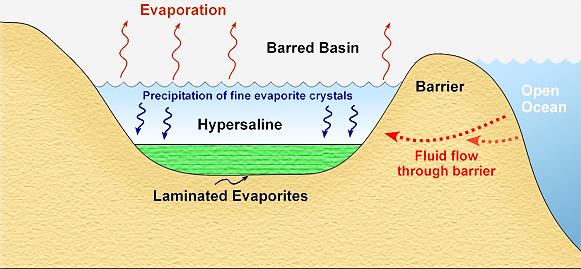
e) d) Feldspar. On the side of tropical coral reef. e) Feedback: Evaporate deposits are formed when water evaporates, leaving behind Feedback: Green olivine is a common mineral
dissolved minerals. The most common found in mafic (or basaltic) volcanic rocks.
evaporate minerals are halite (sodium When these rocks are weathered and eroded,
chloride), gypsum (calcium sulfate), and sylvite olivine grains can be transported by water and
silicate mineral that is not soluble in water. sediment composed of green olivine sand on a beach near a volcano composed of mafic rocks (potassium chloride). Feldspar is a type of accumulate on nearby beaches. So, finding
is a likely scenario.
--------------------------------------------------------------
765. A sedimentary rock that contains
randomly distributed clay, sand, and pebble
clasts is referred to as being __________.
a) Poorly-sorted.
c) -------------------------------------------------------------- b) Well-rounded.
Biogenic.
151
767. Match each sedimentary rock with the 770. Rock salt and rock gypsum are
most likely size of the particles that compose examples of evaporites. it. a) True
(1/16 to 2 mm , greater than 2 mm , b) False
various sizes , less than 1/16 mm)
a) Breccia. (greater than 2 mm) Feedback: Rock salt and rock gypsum are both b) Sandstone. (1/16 to 2 mm) evaporites. Evaporites are sedimentary rocks c) Shale. (less than 1/16 mm) that form when water evaporates, leaving d) Limestone. (various sizes) behind the dissolved minerals. Rock salt is -------------------------------------------------------------- formed from the evaporation of seawater, while

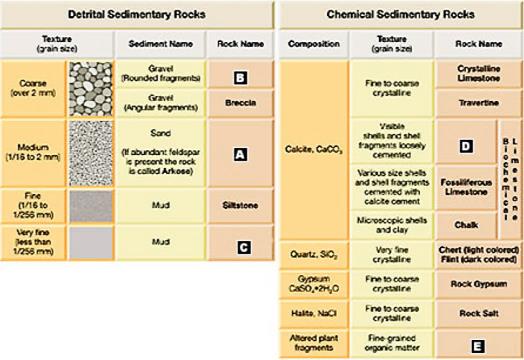
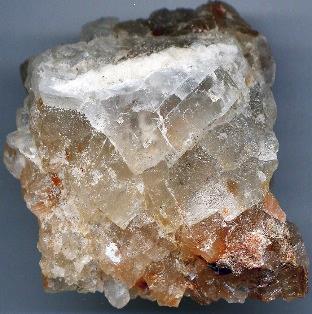
768. Identify the indicated sedimentary rock rock gypsum is formed from the evaporation of
by selecting the correct response. inland saline waters. Evaporites are often found
in arid regions, where the rate of evaporation
exceeds the rate of precipitation. Evaporites
can also form in closed basins, such as lakes
and seas, where the water cannot flow out.
a) Shale. C -------------------------------------------------------------- b) Sandstone. A 771. Turbidity currents are generally c) associated with which one of the following Conglomerate. B
d) sedimentary features? Coquina. D
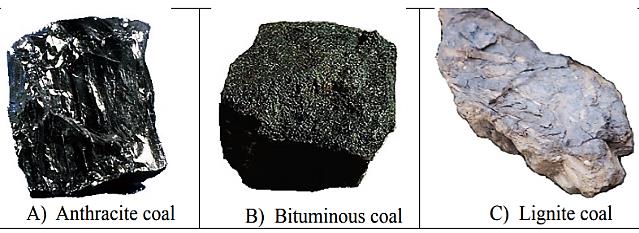
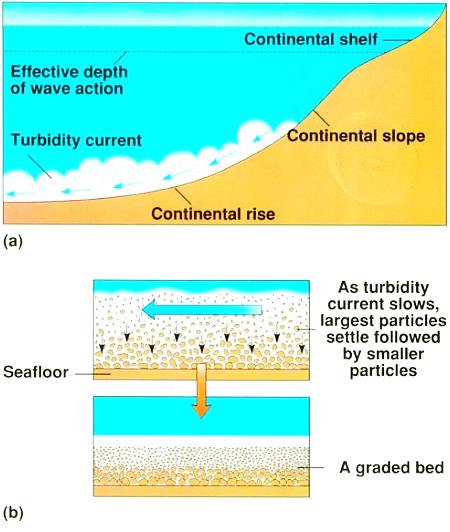
e) Bituminous Coal. E a) Cross-bedding. -------------------------------------------------------------- b) Conglomerates. 769. Lignite and bituminous coals are c) Graded beds.
sedimentary rocks; however, anthracite is a d) Ripple marks. metamorphic rock. e) Mud cracks.
a) True
b) Feedback: Turbidity currents are generally False
associated with graded beds, which are
Feedback sedimentary features that show a gradual : Lignite and bituminous coals are
sedimentary rocks; however, anthracite is a change in grain size from coarse at the bottom
metamorphic rock. Lignite and bituminous coals to fine at the top. Graded beds are formed when
are formed from the accumulation of plant turbidity currents lose velocity and deposit their
debris in specialized environments, such as sediment load according to the settling velocity
swamps or peat bogs. They are composed of of each grain size. Graded beds are common in
carbon, hydrogen, oxygen, nitrogen, sulfur, and deep-sea environments, where turbidity
other elements. Lignite is the lowest rank of currents flow down submarine slopes and
coal, with a low carbon content and a high canyons. Turbidity currents are rapid, downhill
moisture content. Bituminous coal is a higher flows of water caused by increased density due
rank of coal, with a higher carbon content and a to high amounts of sediment. Turbidity currents
lower moisture content. can be triggered by earthquakes, collapsing
Anthracite is the highest rank of coal, with the slopes, and other geological disturbances.
highest carbon content and the lowest moisture Turbidity currents can erode large areas and
content. Anthracite is formed from bituminous create underwater canyons, as well as deposit
coal that has been subjected to high huge amounts of sediment in fan or lobe
temperature and pressure during regional patterns. metamorphism. Anthracite is harder, denser,
and more lustrous than bituminous coal.
-------------------------------------------------------------- --------------------------------------------------------------
152
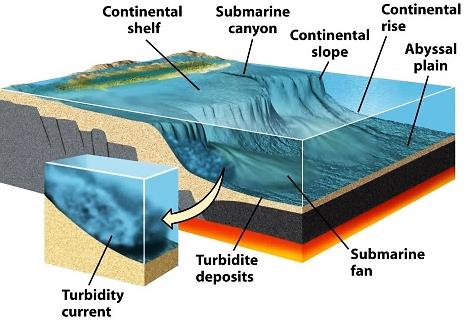
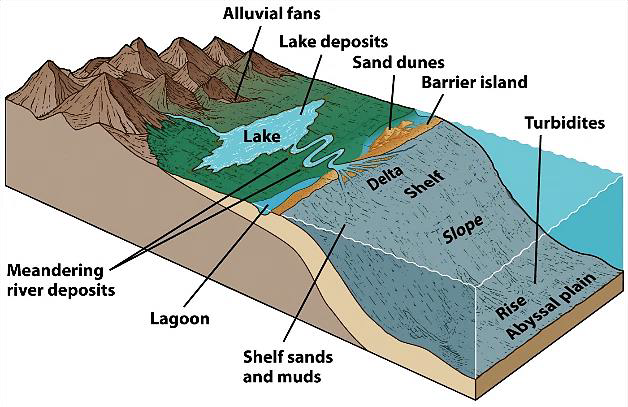
772. Common examples of rocks with non- sedimentary structures, and the formation of
clastic textures are those deposited when fossils. seawater evaporates. --------------------------------------------------------------
a) True 775. Which one of the following is b) False considered a transitional sedimentary
environment?
Feedback: Common examples of rocks with a) Floodplain. non-clastic textures that are deposited when b) Alluvial fan. seawater evaporates include rocks like c) Tidal flat. limestone and gypsum. These rocks form d) Coral reef. through chemical processes rather than the e) Sand dune. accumulation of clastic particles, which is

characteristic of non-clastic textures. Feedback: A tidal flat is an example of a -------------------------------------------------------------- transitional sedimentary environment, which
773. Marine depositional environments are lies between terrestrial (land) and marine
divided according to depth. (ocean) environments. A tidal flat is an area that
a) True is exposed to air at low tide and submerged at
b) False high tide, and is characterized by fine-grained
sediments, mudcracks, and symmetric ripples.
Feedback: Marine depositional environments Tidal flats produce mostly detrital or clastic
are divided according to depth, as well as other sedimentary rocks, such as shale, mudstone,
factors such as proximity to land, water energy, and siltstone. and biological activity. Depth affects the amount
of light, temperature, pressure, and oxygen in
the water, which in turn influence the type and
abundance of marine organisms and the rate
and nature of sedimentation. Marine
depositional environments can be broadly
classified into three depth zones: shallow
marine (from the shoreline to the edge of the
continental shelf), deep marine (from the
continental slope to the abyssal plain), and --------------------------------------------------------------
pelagic (the open ocean above the seafloor) 776. Of all the rock types, sedimentary rocks
are most likely to contain fossils.
a) True b) False
Feedback: Of all the rock types, sedimentary rocks are most likely to contain fossils, which
are the preserved remains or traces of ancient
organisms. Fossils are mostly found embedded
in sedimentary rocks because they form when
sediments cover the remains of organisms and
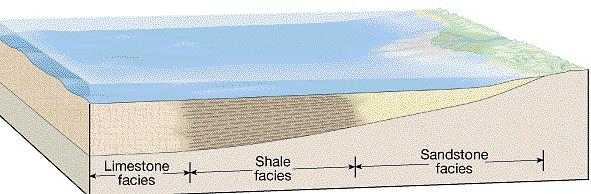
774. Facies is a collective term for all of the cemented into sedimentary rocks over time, chemical, physical, and biological changes preserving the fossils within them. The most that take place after sediments are common sedimentary rocks that contain fossils -------------------------------------------------------------- sediments then become compacted and prevent them from decomposing. The
deposited during and after lithification. are shale, limestone, and sandstone.
a) True
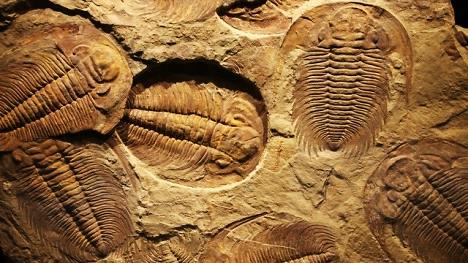
b) False
Feedback: Facies is a collective term for all of the observable characteristics of a rock,
including its composition, texture, and
sedimentary structures. It can be used to
describe rocks of any age, from recently
deposited sediments to ancient sedimentary
rocks. The chemical, physical, and biological
changes that take place after sediments are -------------------------------------------------------------- deposited and lithified are called diagenesis. 777. Which of these sedimentary rocks Diagenesis is a complex process that can would most likely form in the deepest water? involve the alteration of the mineral composition a) Breccia. of the rock, the development of new
153
b) Sandstone. These features are valuable tools for geologists
c) Limestone. to interpret the geological history and past
d) Conglomerate. environments in which sedimentary rocks were
e) Arkose. formed.
Feedback: Limestone is the sedimentary rock that is most likely to form in the deepest water.
Limestone is primarily composed of calcium
carbonate, which can accumulate on the

seafloor in deep marine environments where
there is relatively low energy and minimal
sediment input. Over time, the accumulation of
calcium carbonate-rich shells and other organic
debris can form limestone deposits in deep
marine settings. Other sedimentary rocks like
breccia, sandstone, conglomerate, and arkose
are more commonly associated with shallower
water or terrestrial environments where there is
higher energy and larger-sized sediments are
deposited.
--------------------------------------------------------------
779. Tidal flats, lagoons, and deltas are
examples of transitional environments.
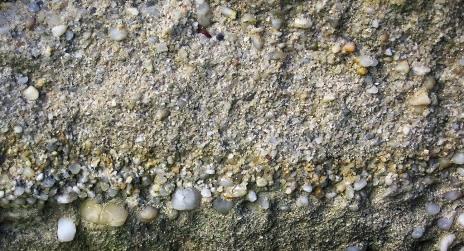
a) True b) False
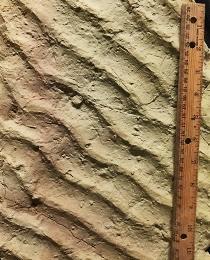
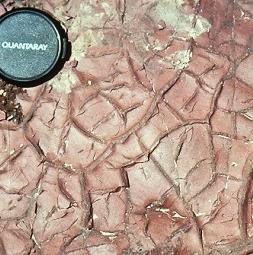
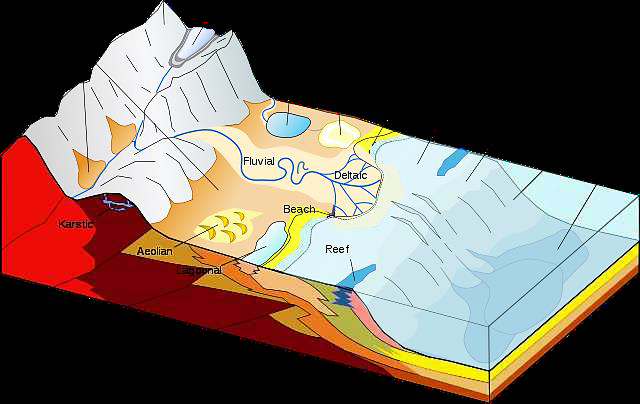
-------------------------------------------------------------- Feedback: Transitional environments are 778. Features found in sedimentary rocks areas where two different environments meet, that give clues to past environments include such as the land and the ocean. These ripple marks, mud cracks, and graded environments are characterized by the mixing bedding. of two different sets of physical and chemical a) True conditions. Tidal flats are areas of land that are b) False covered by seawater at high tide and exposed to the air at low tide. Lagoons are shallow Feedback : Features like ripple marks, mud bodies of water that are separated from the cracks, and graded bedding are found in ocean by a barrier island or reef. Deltas are sedimentary rocks and provide valuable clues areas where a river meets the ocean and the about the past environments in which these sediment carried by the river is deposited. The rocks formed. Here's a brief explanation of mixing of seawater and freshwater in tidal flats, each: lagoons, and deltas can create unique Ripple Marks: Ripple marks are small-scale environments that are home to a variety of features on the surface of sedimentary rocks organisms. These environments are also that indicate the direction and strength of important for the deposition of sediment and the ancient currents or water flow. They can tell formation of sedimentary rocks. geologists whether the rocks were formed in a --------------------------------------------------------------river, a lake, a beach, or a shallow marine 780. Match each of the following environment. sedimentary rocks with the most appropriate Mud Cracks: Mud cracks are polygonal response. patterns that form when fine-grained sediment (Chemically altered plant , Fissility , Poorly like mud or clay dries and contracts. They are cemented shells , Feldspar , Calcium-indicative of environments that experienced magnesium , Evaporite , Cave deposits , alternating wet and dry conditions, such as tidal Microcrystalline silica) flats or drying ponds. Graded Bedding: Graded bedding is a feature a) Shale. Fissility where sedimentary layers change from coarse b) Arkose. Feldspar grains at the bottom to finer grains at the top. c) Coquina. Poorly cemented shells This is often seen in sedimentary rocks d) Rock gypsum. Evaporite deposited by underwater turbidity currents, e) Dolostone. Calcium-magnesium which are sudden underwater flows of f) Travertine. Cave deposits sediment. Graded bedding can indicate g) Flint. Microcrystalline silica underwater deposition in deep marine h) Coal. Chemically altered plant environments. --------------------------------------------------------------
154
781. Each sedimentary environment is 783. The single most common and
characterized by a particular combination of characteristic feature of sedimentary rocks
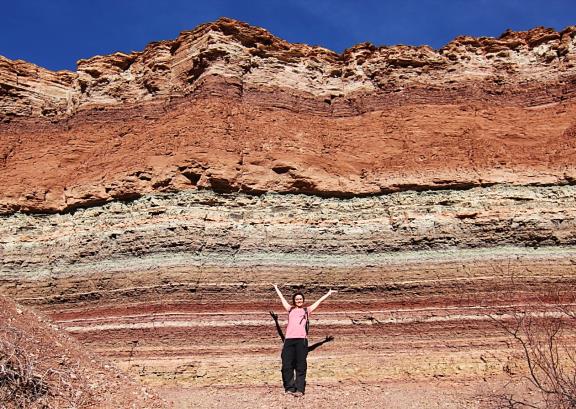
geologic processes and environmental are layers, called strata, or beds. conditions. a) True
a) True b) False b) False
Feedback: The single most common and
Feedback: Each sedimentary environment is characteristic feature of sedimentary rocks is
characterized by a particular combination of indeed the presence of layers, which are often

geologic processes and environmental referred to as strata or beds. These layers form
conditions. These processes and conditions as sediments accumulate over time, with newer
include factors like the type of sediment being sediments being deposited on top of older
deposited, the energy level of the environment ones. The distinct layering or stratification in
(e.g., calm water vs. fast-moving currents), the sedimentary rocks is a result of the different
presence of organisms, and the climate at the types of sediment, their grain sizes, and the
time of deposition. For example, a river environmental conditions under which they
environment will have distinct characteristics were deposited. This stratification is a key
from a beach or a deep marine environment, feature used by geologists to interpret the
and geologists use these characteristics to geological history of sedimentary rock
interpret the history of sedimentary rocks and formations and to understand the past
the conditions in which they formed. environments in which these rocks were
formed.
--------------------------------------------------------------
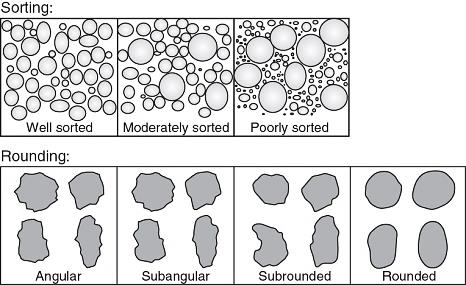
782. The origin and history of sandstone can
often be deduced by examining the sorting, --------------------------------------------------------------
roundness, and mineral composition of its 784. Shale refers to a rock formed from:
a) b) Plant remains. True c) constituent grains. a) Sand sized material. b) Clay minerals. False d) Carbonate.
Feedback: These characteristics provide : Shale is a sedimentary rock Feedback valuable information about the processes and primarily composed of clay-sized particles and conditions under which the sandstone was clay minerals. It is often characterized by its formed and how it has been transported and fine-grained texture and tendency to split into weathered over time. By analyzing these thin layers. Shale forms from the compaction characteristics, geologists can make informed and cementation of clay and mud-sized interpretations about the geological history and particles, and it is one of the most common the environmental conditions in which the sedimentary rocks found in the Earth's crust. sandstone was deposited and later modified.
--------------------------------------------------------------
785. A clastic rock is: a) A rock formed from the cementation of
transported grains.
b) A rock formed from evaporation of sea
water.
c) Transformed by heat into limestone.
-------------------------------------------------------------- d) Transformed by pressure into limestone.
155
Feedback: A clastic rock is a sedimentary rock 788. Which of the following types of currents that forms from the accumulation and can transport sand grains? cementation of transported mineral or rock a) Rivers. fragments, called clasts. These clasts can be of b) Wind. various sizes, such as sand, gravel, or even c) Ocean waves. larger pieces. The cementing material binds d) All of these. these clasts together to form a solid rock.
Clastic rocks include sandstone, conglomerate, Feedback: All of the listed types of currents can and shale, among others, and they are the transport sand grains: result of the lithification process of sediments. Rivers: Rivers can transport sand grains in -------------------------------------------------------------- their flowing water, especially during periods of

786. Which one of the following is a higher flow and flooding events.
biochemical sedimentary rock? Wind: Wind can transport sand grains in a
a) Sand sized material. process called aeolian transport. This is how
b) Coal. sand dunes are formed in deserts and coastal
c) Shale. areas. d) Conglomerate. Ocean Waves: Ocean waves can move and
transport sand grains along coastlines and
Feedback: Coal is a biochemical sedimentary beaches, contributing to the formation and
rock that forms from the remains of plant reshaping of coastal features. material (mostly dead vegetation) that So, sand grains can be transported by a variety
accumulates in swampy environments. Over of currents, both terrestrial and marine, as well
millions of years, heat and pressure cause the as by wind. partial decomposition and transformation of this
organic material into coal. This process is
commonly called 'coalification'. It is a valuable
energy resource and represents an example of
a biochemical sedimentary rock.
--------------------------------------------------------------
789. Which of the following types of
sediments are most abundant?
a) Coarse clastics. b) Fine clastics.
-------------------------------------------------------------- d) c) Chemical. Biochemical.
a) NOT associated with sedimentary rocks? Feedback: Fine clastics, which include fine-Bedding. 787. Which one of the following features is
c) Fossils. These fine-grained sediments can be found in d) All may be associated with sedimentary various environments, including riverbanks, rocks. lake bottoms, ocean floors, and even in the air b) Foliation. abundant type of sediments on Earth's surface. grained particles like silt and clay, are the most
with metamorphic rocks, not sedimentary time, making them more prevalent than coarse rocks. Foliation refers to the alignment of clastics, chemical sediments, or biochemical mineral grains in a parallel fashion, creating sediments. Feedback: Foliation is a feature associated wind and water and tend to accumulate over as dust particles. They are easily transported by
distinct layers or bands within the rock. This -------------------------------------------------------------- alignment typically occurs due to the application 790. The tendency for variations in current of heat and pressure during the metamorphic velocity to segregate sediments on the basis process. Sedimentary rocks, on the other hand, of particle size is called _____. are characterized by features like bedding, a) Lithification. fossils, and stratification, but they do not exhibit b) Compaction. the foliated texture commonly seen in c) Metamorphism. metamorphic rocks. d) Sorting.
Feedback: Sorting is a common process in sedimentary environments, where fast-moving
currents can transport and sort sediments
based on their size and weight. Well-sorted
sediments have particles of similar size, while
--------------------------------------------------------------
156
poorly sorted sediments have a mix of particle 792. Which of the following environments is sizes. Sorting is an important factor that an example of a shoreline/transitional
influences the characteristics of sedimentary environment? rocks. a) Alluvial.
b) Continental shelf. c) Deltaic. d) Organic reef.
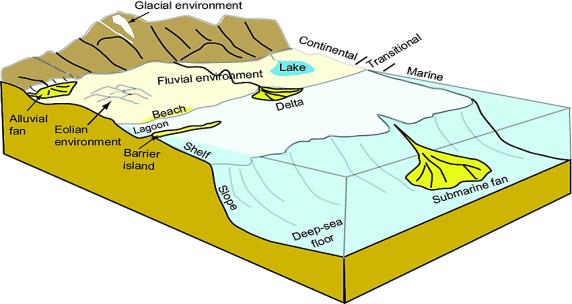
Feedback: A deltaic environment is an example of a shoreline/transitional

environment, which is a zone of complex
interactions caused by ocean water hitting land.
A deltaic environment is formed when a river
deposits its sediment load at the mouth of the
sea or a lake, creating a fan-shaped landform
called a delta. A deltaic environment is
-------------------------------------------------------------- swamp deposits, and can produce sedimentary rocks such as sandstone, shale, and coal. characterized by channelized sand, mud, and
791. In which of the following sedimentary
environments would you expect the sand
deposits to be poorly sorted?
a) Alluvial.
b) Beach.
c) Desert.
d) Glacial.
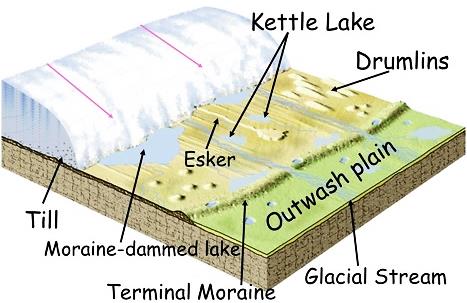
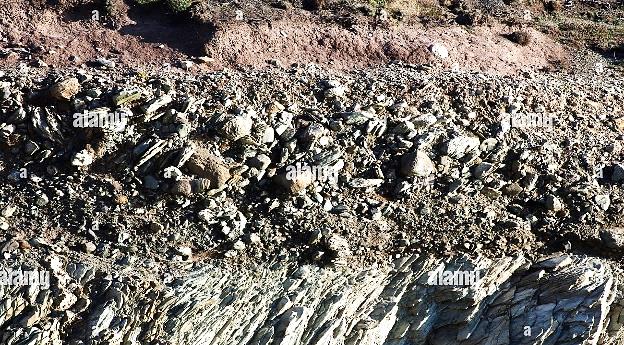
Feedback: In a glacial sedimentary environment, you would expect the sand
deposits to be poorly sorted. Glaciers are --------------------------------------------------------------
powerful ice masses that can transport a wide 793. Most shells of marine organisms are range of sediment sizes, from clay to large composed of ________. boulders. As glaciers move, they can mix and a) Silica. incorporate sediments of various sizes, b) Calcium carbonate. resulting in poorly sorted deposits called “Till”. c) Calcium phosphate. These deposits often contain a mixture of fine d) Calcium sulfate. silt, sand, gravel, and even larger rocks,
creating a wide range of particle sizes within the Feedback: Most shells of marine organisms, sediment, which is characteristic of poor such as mollusks (e.g., clams, snails, and
sorting. Till or glacial till is unsorted glacial oysters) and many types of corals, are
sediment. Till is derived from the erosion and composed primarily of calcium carbonate.
entrainment of material by the moving ice of Calcium carbonate is a common mineral in the
a glacier. It is deposited some distance down- shells and skeletons of marine organisms, and
ice to form terminal, lateral, medial and ground it plays a crucial role in the formation of various
moraines. sedimentary rocks, such as limestone, when
these organisms die and their remains
accumulate over time.
--------------------------------------------------------------
794. Coarse clastic material can be
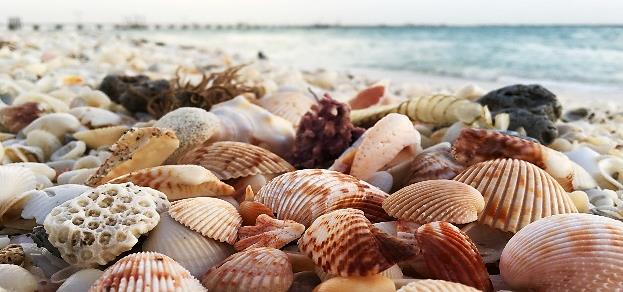
transported into a deep marine environment
by ____.
a) Rivers. b) Wind. c) Turbidity currents. d) All of these.
--------------------------------------------------------------
157
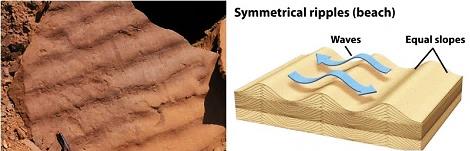
Feedback: Coarse clastic material, such as 796. In which of the following environments sand and gravel, can be transported into a deep would you expect to find oscillation or
marine environment by turbidity currents. symmetrical ripples? Turbidity currents are powerful underwater a) Alluvial. currents that flow along the ocean floor, often b) Beach. carrying sediment with them. These currents c) Deep-sea. can transport and deposit coarser sediments in d) Desert. deep marine settings, contributing to the
formation of sedimentary layers and features in Feedback: In a beach environment, you would the deep-sea environment. While rivers and expect to find oscillation ripples, which are

wind primarily transport coarse clastic material small ridges of sand formed by wave action on
in shallower environments, turbidity currents the floor of a sea or a lake. Oscillation ripples
are specifically associated with transporting are symmetrical and have rounded troughs and
such materials in deeper marine settings. crests, as they are formed by the circular
motion of water particles in waves. Oscillation
ripples are also called wave ripples or wave-
formed ripples.
--------------------------------------------------------------
797. Which of the following processes is
NOT an important cause of subsidence during the development of a sedimentary
basin?
a) Cooling and contraction of the crust. b) Deposition of sediments. c) Erosion of sediments. d) Tectonic down faulting.
795. Marine sediments deposited in water Feedback: Erosion of sediments is not an depths greater than about 12,000 feet --------------------------------------------------------------
a) Carbonate shells. removes material from the surface and reduces Silica-rich shells. b) the load on the underlying crust. Erosion of c) Fine grained material transported by the sediments can actually cause uplift or isostatic usually lack ________. development of a sedimentary basin, as it important cause of subsidence during the
d) wind. rebound of the crust, as it reduces the All of these. gravitational force that pulls the crust
Feedback: Carbonate shells do dissolve in -------------------------------------------------------------- downward.
the availability of carbon dioxide (CO2). Here's a) Sandstone, siltstone, conglomerate. how it works: b) Sandstone, conglomerate, siltstone. Pressure: As you go deeper into the ocean, the c) it's primarily driven by increased pressure and order of decreasing particle size? deep water due to a combination of factors, but 798. Which of the following lists is written in Conglomerate, sandstone, siltstone.
water pressure increases. Increased pressure d) Siltstone, sandstone, conglomerate. can enhance the solubility of calcium carbonate
which can react with calcium carbonate to form 2 the largest grains, sandstone has medium- dissolves, it forms carbonic acid, sized grains, and siltstone has the smallest soluble bicarbonate ions. grains among the three rocks. Conglomerate is CO allows more CO2 to dissolve in the water, and decreasing particle size, as conglomerate has when CO in seawater. This is because higher pressure Feedback: This list is written in order of
contains more dissolved CO 2 Deeper ocean water typically Availability: a sedimentary rock that consists of rounded 2 , which increases clasts larger than 2 mm in diameter, such as the concentration of carbonic acid. Carbonic pebbles, cobbles, or boulders. Sandstone is a acid can react with calcium carbonate, causing sedimentary rock that consists of sand-sized it to dissolve. This dissolution process is clasts between 1/16 and 2 mm in diameter, particularly significant in the deep ocean where such as quartz, feldspar, or mica. Siltstone is a there is less biological activity to remove CO 2 . sedimentary rock that consists of silt-sized --------------------------------------------------------------
158
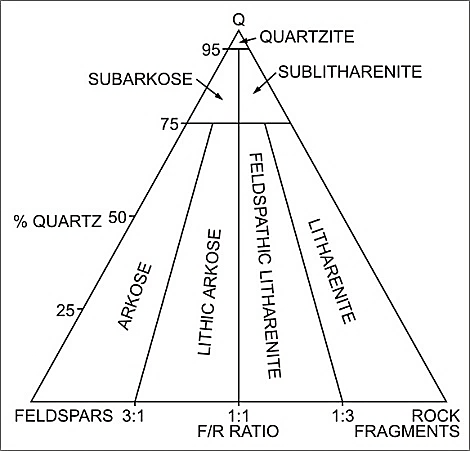
clasts between 1/256 and 1/16 mm in diameter, Feedback: Arkose is a detrital sedimentary such as clay minerals or quartz. rock, specifically a type of sandstone containing
-------------------------------------------------------------- at least 25% feldspar minerals, along with
799. What is the difference between a quartz and other rock fragments. Arkose is
breccia and a conglomerate? generally formed from the weathering of
a) Breccias are coarse grained and feldspar-rich igneous or metamorphic most
conglomerates are fine grained. commonly granitic rocks, which are primarily
b) Conglomerates are coarse grained and composed of quartz and feldspar.
breccias are fine grained.

c) Breccias have rounded fragments and
conglomerates have angular fragments.
d) Breccias have angular fragments and
conglomerates have rounded fragments.
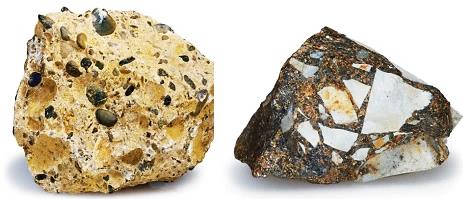
Feedback: Breccia and conglomerate are both types of sedimentary rocks that are composed
of fragments larger than two millimeters in
diameter. The difference is in the shape of the
fragments: breccia has sharp, angular pieces, --------------------------------------------------------------
while conglomerate has smooth, rounded 802. A sandstone with abundant rock pieces. This difference in shape reflects how fragments and clay minerals is a(n) ____ .
the fragments were transported and deposited a) Arkose. by water or gravity. Breccia fragments are b) Litharenite. usually formed by processes that break up the c) Quartz arenite. parent rock without much transport, such as d) Shale. landslides, rock avalanches, or fault
movements. Conglomerate fragments are Feedback: A litharenite is a sandstone with usually formed by processes that transport and abundant rock fragments and clay minerals, as
smooth the parent rock over long distances, well as quartz and feldspar. A litharenite is also
such as rivers, glaciers, or waves. known as a lithic sandstone or a lithic arenite. A
litharenite is formed from the erosion and
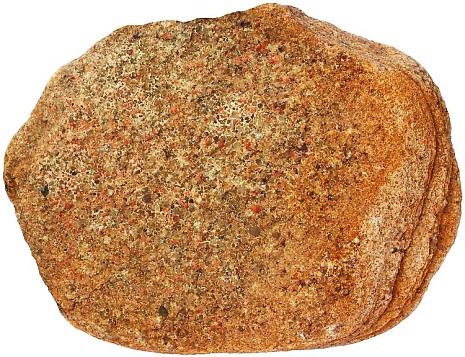
deposition of volcanic or metamorphic rocks,
and it indicates a short transport distance and a
tectonically active source area.
--------------------------------------------------------------
800. The most common lithification process
for fine clastics is _______.
a) Cementation.
b) Compaction.
Feedback: The most common lithification process for fine clastics (such as silt and clay-
sized particles) is compaction. Compaction
occurs as the weight of overlying sediments
compresses and squeezes together the
particles in the sediment, reducing pore space
and causing the sediments to become more
compacted and solidified. Cementation can --------------------------------------------------------------
also occur but is more common in coarser- 803. Which of the following rocks is
grained sediments like sandstone, where deposited only by non-biological, chemical
minerals precipitate and act as a cementing precipitation? agent to bind the grains together. a) Halite. -------------------------------------------------------------- b) Limestone. 801. c) Chert arenite. A feldspar-rich sandstone is called
a(n): d) Coal.
b) Feedback: Halite, also referred to as rock salt, Litharenite. is the source of common table salt. It is the a) Arkose.
c) Quartz arenite.
d) principle solute in sea water. Halite is found in Shale.
159
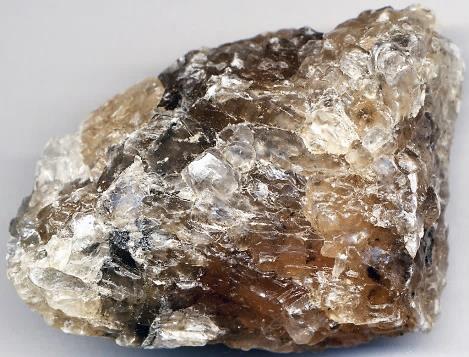
many modern evaporite deposits where it 806. The term "aeolian" refers to transport crystallizes out of evaporating brine lakes. and deposition by:
a) The wind. b) Streams. c) Ocean waves. d) Pocket gophers.
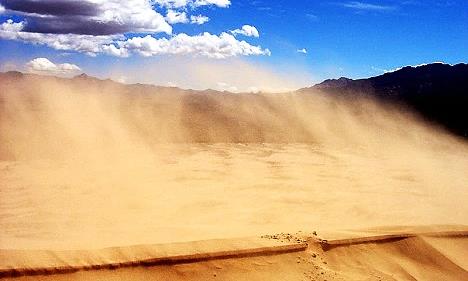
Feedback: The term "aeolian" is used to describe processes related to the wind,

including the transport and deposition of
sediments by wind action. Aeolian deposits are
materials deposited and transported by the
wind. Wind can indeed cause erosion by lifting
and carrying sand and dust particles, which can
804. Which of the following lists is written in dunes, sand sheets, and loess in other areas. the order of increasing temperature? -------------------------------------------------------------- then be deposited in various landforms like
The abrasive effect of wind-driven sand grains
b) Diagenesis, sedimentation, metamorphism. sculpting landscapes in regions where wind is a Sedimentation, diagenesis, metamorphism. a) Sedimentation, metamorphism, diagenesis. can lead to the erosion of rocks and stones,
c) dominant geological agent. Metamorphism, diagenesis, sedimentation. d)
Feedback: Sedimentation is the process of deposition of sediments by water, wind, ice, or
gravity. Sedimentation occurs at or near the
surface of the Earth, and does not involve high
temperatures. Diagenesis is the process of
physical and chemical changes in sediments
after their deposition but before their final
lithification (conversion to rock). Diagenesis
occurs at temperatures in excess of 150 °C
(300 °F), and often also at elevated pressure or --------------------------------------------------------------
in the presence of chemically active fluids. 807. With time, sediment transported by a Metamorphism is the process of transformation fluvial system ________. of existing rock (the protolith) to rock with a a) Becomes rounded. different mineral composition or texture. b) Becomes smaller. Metamorphism takes place at temperatures in c) Becomes rounded and smaller. excess of 200 °C (392 °F), and usually also at d) None of these. high pressures.
Therefore, sedimentation occurs at the lowest Feedback: Sediment transported by a fluvial temperature range, followed by diagenesis, and system undergoes a process of abrasion, which
then metamorphism. is the wearing down of particles by friction and
-------------------------------------------------------------- impact with other particles and the stream bed.
805. Which of the following processes does Abrasion tends to reduce the size and
not occur during diagenesis? angularity of sediment particles, making them
a) Compaction. more rounded and smaller with time. The
b) Cementation. degree of abrasion depends on several factors,
c) Lithification. such as the distance traveled, the velocity and
d) Metamorphism. turbulence of the flow, the hardness and shape
of the particles, and the nature of the stream
Feedback: Metamorphism is a geological bed process that occurs after diagenesis and
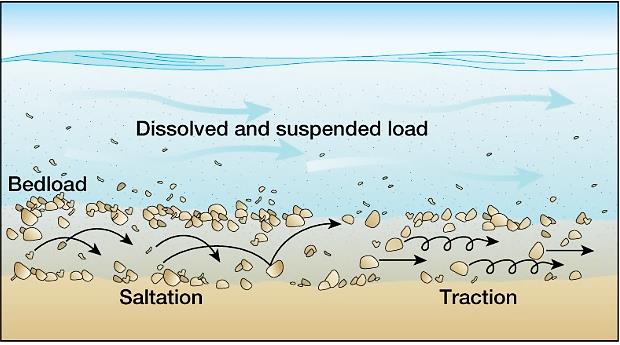
involves high temperatures and pressures,
which cause changes in the mineralogical and
textural characteristics of rocks. Diagenesis
includes processes like compaction,
cementation, and lithification, which occur at
lower temperatures and pressures and
contribute to the formation of sedimentary
rocks. Metamorphism, on the other hand, is a
separate process that happens later in a rock's
history and involves more significant changes
due to higher temperatures and pressures.
-------------------------------------------------------------- --------------------------------------------------------------
160
808. In which of the following sedimentary material. Over millions of years, plant debris
environments would you least expect to find accumulates in swampy environments and
gravel? undergoes a process of diagenesis, where heat
a) Active margin beach. and pressure cause the organic material to
b) Alluvial fans. transform into coal. This transformation
c) Glacial. process is driven by the slow decomposition of
d) Deep marine. plant matter under anaerobic (low oxygen)
conditions.
Feedback: In a deep marine sedimentary environment, you would least expect to find

gravel. Deep marine environments are
characterized by relatively low energy levels,
and the coarsest sediment that is typically
transported and deposited there is fine to
medium sand. Gravel-sized particles are too
large and heavy to be transported to and
deposited in deep marine settings. Gravel is
more commonly associated with high-energy
environments like alluvial fans, glacial deposits,
or active margin beaches where larger particles
can be transported and deposited due to the --------------------------------------------------------------
greater energy of the transporting agents, such 811. Which of the sand grains below has as rivers, glaciers, or waves. been transported the furthest?
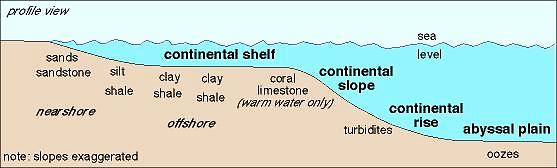
a) 1 b) 2
-------------------------------------------------------------- c) 3 809. With time, sediment transported by d) 4
glaciers:
a) Becomes rounded. Feedback: Roundness is a direct measure of b) Becomes smaller. the degree of smoothing of sedimentary
c) Becomes rounded and smaller. particles due to abrasion during transportation.
d) None of these. It reflects the distance the particle has traveled
and the level of abrasion it has experienced.
Feedback: Sediment transported by glaciers More rounded particles have typically traveled
does become smaller over time due to the greater distances and have undergone more
grinding and abrasion caused by the glacier's intense abrasion, while less rounded particles
movement. While rounding can occur in some may have been transported shorter distances
cases, the primary effect is the reduction in or experienced gentler transport conditions.
particle size as rocks and sediments are --------------------------------------------------------------
mechanically broken down by the glacier's 812. In the cross section of a sand dune motion. given below, the wind was blowing?
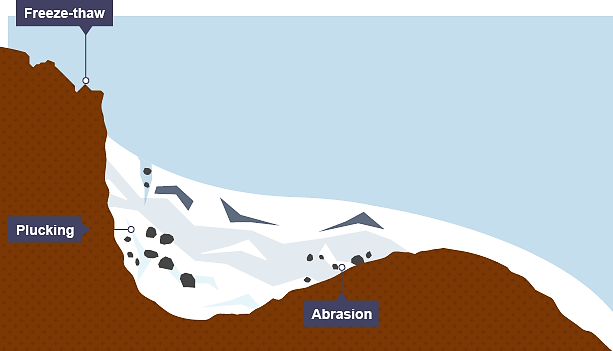
a) b) c) d) Cannot determine direction from information
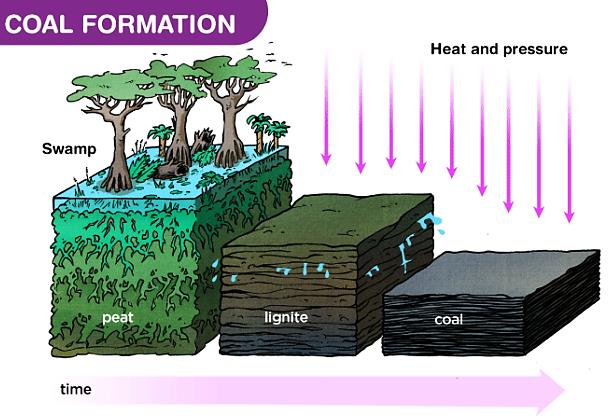
given.

--------------------------------------------------------------

810. Coal is formed from ______. gravel and mud? Natural gas. a) a) Active margin beach. b) Oil. b) Alluvial fans. c) -------------------------------------------------------------- environments is characterized by sand, 813. Which of the following sedimentary
Limestone. c) Glacial.
d) Preserved plant material. d) Deep marine.
Feedback: Coal is primarily formed from the Feedback: The sedimentary environment preserved and compressed remains of plant characterized by sand, gravel, and mud is
161
typically associated with glacial environments. migration of sand dunes or ripples. As wind or
Glacial environments often feature a wide water transports and deposits sediment, it
range of sediment sizes, including fine mud- creates inclined layers that move in the
sized particles, sand, and gravel, as glaciers direction of the current or wind. The resulting
can transport and deposit various sediments as cross beds provide valuable information about
they move and melt. the direction and dynamics of the ancient
environments in which they formed, such as
deserts, riverbeds, or coastal areas.
--------------------------------------------------------------

816. Siliceous environments, named for the
silica-rich shells deposited in them, occur:
a) In an evaporite environment. b) In a swamp environment. c) In a reef environment. d) In a deep-sea environment.
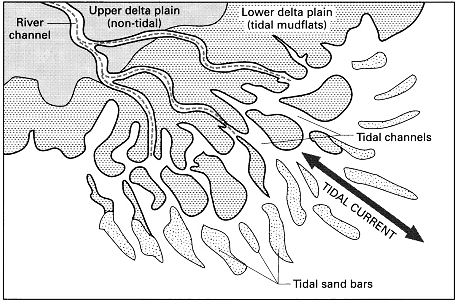
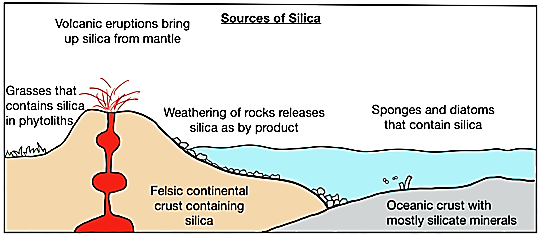
-------------------------------------------------------------- Feedback: Siliceous environments are 814. Which of the following sedimentary depositional environments that occur in the environments is dominated by waves and deep sea, where the water is cold and nutrient-tidal currents? rich. Siliceous environments are named for the a) Glacial. silica-rich shells of microscopic organisms, b) Alluvial fans. such as diatoms and radiolarians that c) Deltaic. accumulate on the seafloor. These shells are d) Deep marine. made of biogenic silica (SiO 2 ), which is also known as opal. Siliceous environments are also Feedback : Deltaic environments are called siliceous oozes or biogenic oozes. depositional environments that form at the mouths of rivers, where they empty into the sea
or a lake. Deltaic environments are dominated
by waves and tidal currents, which rework and
redistribute the sediments carried by the river.
The shape and size of a delta depend on the
balance between the river’s sediment supply
and the wave and tidal energy of the receiving
basin. --------------------------------------------------------------
817. What is the most abundant biochemical
precipitate in the oceans?
a) Halite. b) Limestone. c) Chert. d) Coal.
Feedback: Limestone is the most abundant biochemical precipitate in the oceans.
-------------------------------------------------------------- mainly of calcium carbonate (CaCO 3), which is derived from the shells and skeletons of marine Limestone is a sedimentary rock composed
815. In the cross section of a sand dune organisms, such as corals, foraminifera, given below, the diagonal layers are coccolithophores, and mollusks. Limestone called_____. forms in warm, shallow, clear, and calm waters, where these organisms thrive and accumulate.

Limestone can also form by chemical
precipitation of calcium carbonate from
a) Cross beds. seawater. Limestone accounts for about 10% of
b) Graded beds. the total volume of all sedimentary rocks. c) Point bars.
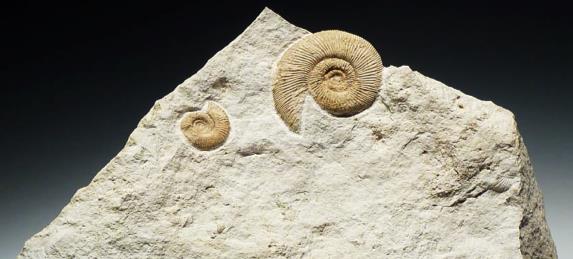
d) Ripple marks.
Feedback: Cross beds are inclined layers or laminations within a sedimentary rock, and they
are particularly common in sandstone. These
inclined layers form at an angle to the horizontal
bedding plane of the rock. The formation of
cross beds is typically associated with the --------------------------------------------------------------
162
818. Ripples occur: geothermal gradient, the heat flow, the thermal a) On sand beneath the waves at beaches. conductivity, and the surface temperature. One
b) On underwater sandbars in streams. way to estimate the temperature of a sediment
c) On the surface of windswept dunes. at a given depth is to use the following formula:
d) All of these can have ripples. T=Ts+(G×z)
where T is the temperature of the sediment, Ts
Feedback: Ripples are small-scale is the surface temperature, G is the geothermal sedimentary structures that form on the surface gradient, and z is the depth. of loose sediments by the action of water or Assuming that the surface temperature is 20

wind. Ripples are characterized by a series of degrees C, the geothermal gradient is 25
ridges and troughs that are roughly parallel to degrees C/km, and the depth is 3 km, we can
the direction of the flow. Ripples can occur in plug these values into the formula and get: various environments, such as on sand T=20+(25×3) beneath the waves at beaches, on underwater T=95 degrees C sandbars in streams, and on the surface of Therefore, the approximate temperature of the
windswept dunes. Ripples can indicate the sediment at 3 km depth is 95 degrees C, which
direction and velocity of the flow, as well as the is close to option b) 100 degrees C. grain size and sorting of the sediment.
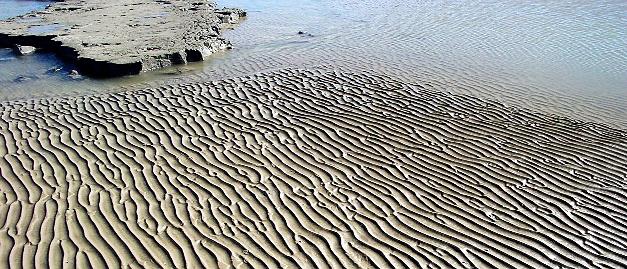
--------------------------------------------------------------
819. Which of the following processes
b) 821. Which of the following is an example of Cementation. c) a physical, as opposed to a chemical, d) All may occur. diagenetic process? a) a) Recrystallization. -------------------------------------------------------------- Compaction. occurs during lithification?
Feedback: Lithification is the process by which b) Recrystallization. Compaction.
sediments are transformed into sedimentary c) Cementation. rocks. It can occur through three main d) All are physical in nature. processes: recrystallization, compaction, and
simultaneously or in sequence during physical diagenetic process. It involves the lithification. The specific processes that occur cementation. These three processes can occur Feedback: Compaction is an example of a
depend on the type of sediment and the spaces between sediment particles due to the mechanical squeezing and reduction of pore
environmental conditions. weight of overlying sediments. This process is
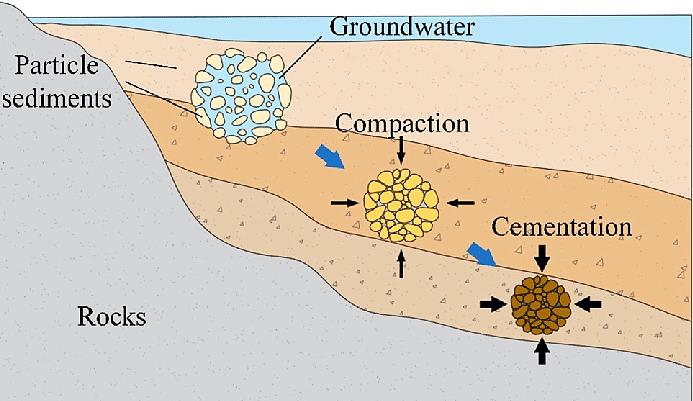
primarily physical in nature because it does not
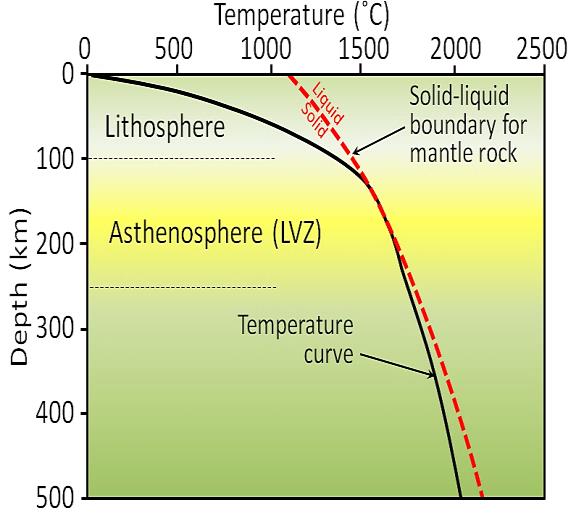
involve a chemical change in the mineral
composition of the sediment.
Recrystallization (option a) can involve
changes in mineral structure, which is both
physical and chemical in nature. Cementation
(option c) typically involves the precipitation of
minerals from pore fluids, which is a chemical
process, although it has physical effects on the
-------------------------------------------------------------- sediment. So, while some diagenetic processes can have both physical and chemical aspects, 820. What is the approximate temperature compaction is primarily physical. of a sediment that is buried to a depth of 3 -------------------------------------------------------------- km? 822. What is the porosity of newly deposited a) 0 degrees C. mud? b) 100 degrees C. a) Less than 5%. c) 300 degrees C. b) Between 5% and 25%. d) 1000 degrees C. c) Between 25% and 50%. d) > 50%. Feedback : The temperature of a sediment depends on several factors, such as the
163
Feedback: Porosity is the percentage of void weathering processes can release feldspar
space in a rock or sediment, where fluids such grains into the sediment, which may then
as water, oil, or gas can be stored or become part of the arkose sandstone. transmitted. Porosity depends on several
factors, such as the size, shape, sorting,
packing, and cementation of the grains.
Porosity can also change over time due to
compaction, diagenesis, or fracturing. Newly
deposited mud is a type of unconsolidated

sediment that consists of very fine-grained
particles (clay and silt) that are loosely arranged
and poorly sorted. Newly deposited mud has a
pore space between the grains. The porosity of high porosity because of the large amount of --------------------------------------------------------------
80%, depending on the source and composition is most likely to form by the mechanical and intense chemical weathering of a granite? newly deposited mud can range from 60% to 825. Which of the following sandstone types
823. b) Litharenite. What type of sandstone is depicted in c) -------------------------------------------------------------- of the mud. a) Quartz arenite.
the illustration below? Arkose. d) Shale.
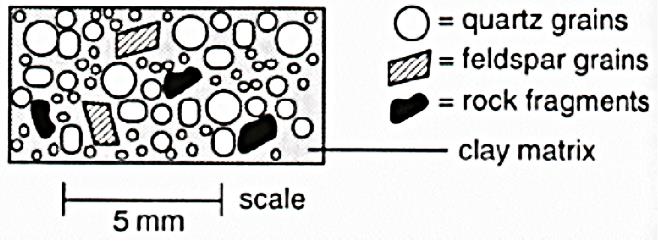
Feedback: Quartz arenite is a type of sandstone that is primarily composed of quartz
grains and typically forms by the intense
weathering and erosion of source rocks like
b) Litharenite. minerals in the granite are broken down and Arkose. c) removed, leaving behind a concentration of d) This is a granite. durable quartz grains. This quartz-rich a) Quartz arenite. chemical weathering, the less resistant granite. In the process of mechanical and
or litharenites, are sandstones with a significant weathering contributes to the removal of other (>5%) component of lithic fragments, minerals, resulting in a sandstone primarily though quartz and feldspar are usually present composed of quartz. Feedback: Lithic sandstones, or lithic arenites, arenite sandstone. The intense chemical sediment can then become lithified into quartz
as well, along with some clayey matrix.
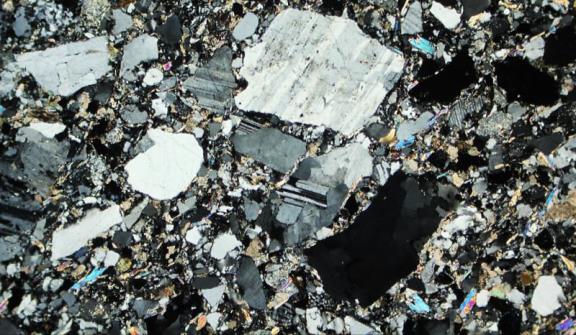
824. a) Which of the following sandstone types solution. is most likely to form by the mechanical b) By the cementing together of loose grains of weathering of a granite? preexisting rock. -------------------------------------------------------------- 826. Sedimentary rocks can form: By precipitation of minerals from water -------------------------------------------------------------- b) c) From shell fragments or carbon-rich relicts a) Quartz arenite.
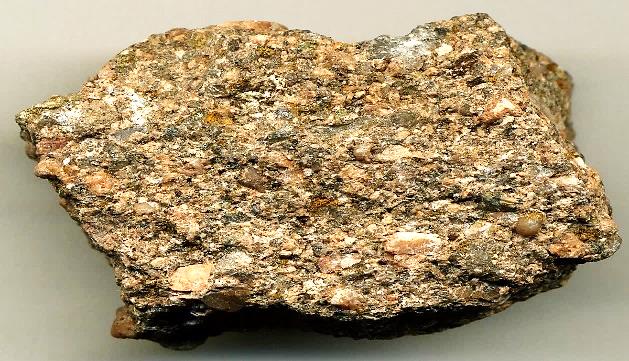
c) of plants. Litharenite.
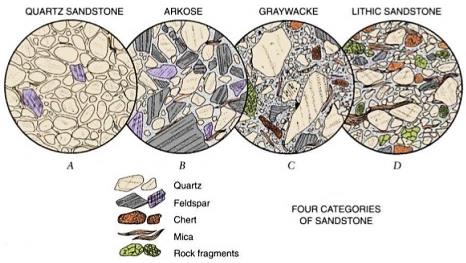
d) d) All the proposed answers are correct. Arkose.
Shale.
Feedback Feedback: Sedimentary rocks can form by : Arkose is a type of sandstone that precipitation of minerals from water solution, by is most likely to form by the mechanical the cementing together of loose grains of weathering of granite. It contains abundant preexisting rock, and from shell fragments or feldspar grains along with quartz and other carbon-rich relicts of plants. Sedimentary rocks minerals. The presence of feldspar, which is a are the most common type of rock on Earth's common mineral in granitic rocks, is a surface. They are found in all environments, distinguishing feature of arkose. The from deserts to oceans. Sedimentary rocks can breakdown of granite through physical
164
be used for a variety of purposes, including e) All the possible answers are correct. construction, agriculture, and energy
production. Feedback: Clasts or detritus are the collective -------------------------------------------------------------- terms used to describe the individual pieces or
827. Which of the following groups fragments of rock or mineral material that result
represent the most abundant sedimentary from the physical weathering of rocks. These
rocks? clasts can vary in size and are often transported
a) Limestones and dolomites. and eventually lithified to form clastic
b) Sandstones and conglomerates. sedimentary rocks like conglomerates or

c) Cherts and evaporites. sandstones. d) Mudstones and shales. --------------------------------------------------------------
830. Lithification is a general term used to
Feedback: Mudstones and shales are among describe all the physical, chemical, and
the most abundant sedimentary rocks on biological processes that make a
Earth's surface. They are composed of fine- sedimentary rock from sediments. grained sediments, primarily clay-sized a) True particles, and are often associated with quiet, b) False low-energy environments like lake bottoms,
deep marine settings, and floodplains. These Feedback: Lithification is the process by which rocks make up a significant portion of the sediments are transformed into sedimentary
Earth's sedimentary record due to their rocks. It is caused by physical, chemical, and
widespread deposition in various environments biological processes. Physical processes:
over geological time. compaction and cementation -------------------------------------------------------------- Chemical processes: dissolution and
828. Choose the proper listing of detritus reprecipitation. Biological processes: activities
terms, going from smallest to largest. of bacteria and other microorganisms.
a) Sand, silt, pebbles. Lithification is an important process in the rock
b) Mud, silt, sand. cycle, as it allows sedimentary rocks to be
c) Silt, mud, sand. recycled and reused. d) Sand, cobbles, pebbles. --------------------------------------------------------------
e) Mud, sand, silt. 831. The presence of mud cracks indicates
the sediments lithified in water.
Feedback: Detritus is a term used to describe a) True the solid particles that are transported and b) False deposited by natural agents, such as water,
wind, ice, or gravity. Detritus can be classified Feedback: The presence of mud cracks in by its size, shape, composition, and origin. sedimentary rocks indicates that the sediments
Clastic particle sizes range from smallest to were exposed to air and underwent desiccation
largest: mud, silt, sand, pebbles, cobbles, and (drying out) rather than lithifying underwater.
boulders. Mud cracks form as muddy sediments dry out
and contract, causing cracks to develop on the
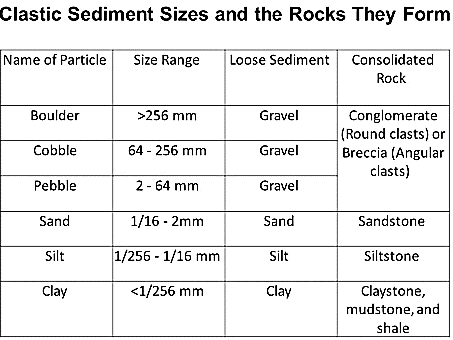
sediment surface. These cracks are preserved
when the sediments become lithified into rock.
So, mud cracks are typically associated with
sediments that were exposed to the air during
their deposition, not those that lithified
underwater.
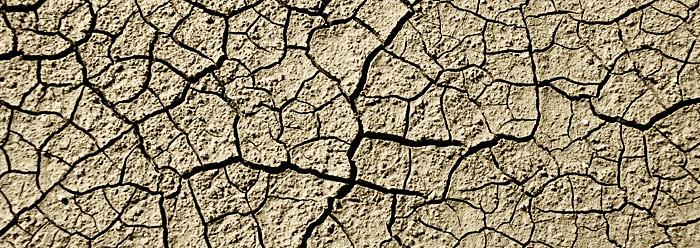
b) size. indicates the top of a sedimentary bed, or bed-surface, marker? Pieces of broken rock produced by physical a) Scour marks. weathering are collectively called clasts or b) Fossil footprints. detritus. c) Graded bedding. c) a) Identify the TRUE statement: 832. Which of the following features Conglomerates consist of a single grain 829. -------------------------------------------------------------- --------------------------------------------------------------
A well-sorted clastic rock is made up of
different-sized particles. d) Mud cracks.
d) e) All the possible answers are correct. An immature clastic rock has well-sorted,
resistant grains.
165
Feedback: Scour marks, fossil footprints, growth of travertine deposits. So, crystallization
graded bedding, and mud cracks are all bed- is associated with the formation of travertine.
surface markers that can be used to indicate
the top of a sedimentary bed.
Scour marks: Grooves or depressions formed by currents or waves on the surface of a
sedimentary bed.
Fossil footprints: Impressions left in the sediment by animals walking or crawling on the

surface of a sedimentary bed.
Graded bedding: A type of bedding in which the grain size of the sediment decreases from
Mud cracks: Cracks that form in the surface of 835. the bottom of the bed to the top. --------------------------------------------------------------
By identifying bed-surface markers, geologists rocks? can determine the top of a sedimentary bed, a) Micrite. which can be used to reconstruct the b) mud when it dries out. shell debris could become which of these A mud of fine calcite and/or aragonite
Travertine.
depositional environment and to interpret the c) Chert.
-------------------------------------------------------------- e) stratigraphic sequence of rocks. d) Tephra. Shale.
833. A nonmarine clastic sedimentary rock
a) accumulation and lithification of very fine- Conglomerate. b) grained calcareous (calcium carbonate-rich) c) Turbidite. particles, often including the microscopic d) by matrix is: sedimentary rock that forms from the Breccia. composed of angular fragments surrounded Feedback: Micrite is a type of chemical
e) Fossiliferous limestone. remains of shells and other calcium carbonate Arkose. precipitates. As these particles accumulate and
Feedback: A nonmarine clastic sedimentary rock. become compacted, they can form solid micrite rock composed of angular fragments
surrounded by a finer-grained matrix is called
"breccia." Breccia forms when angular rock
fragments are cemented together after being
transported by processes like landslides or
alluvial fans.
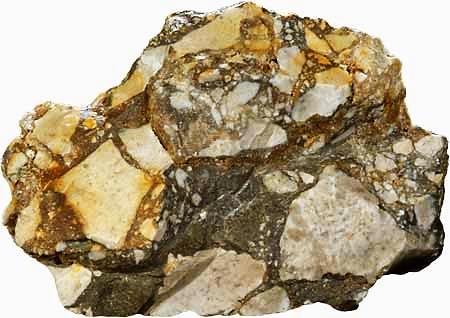
--------------------------------------------------------------
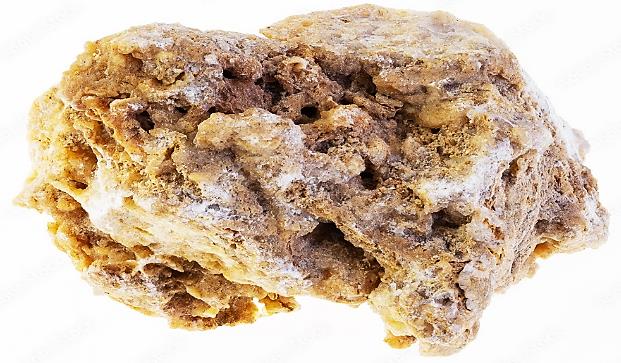
836. A clastic sedimentary rock with clay
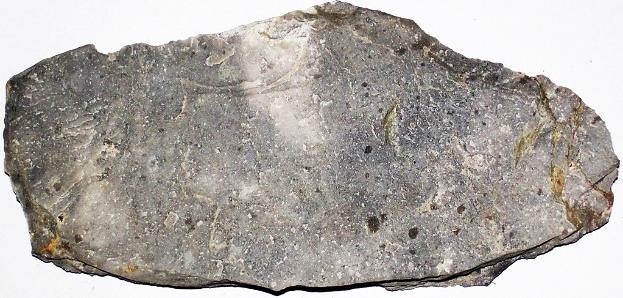
and silt-sized grains that breaks in thin
sheets is called:
a) Mudstone. b) Shale.
-------------------------------------------------------------- d) Graywacke. e) c) Siltstone. 834. Micrite. Which of the following words is
a) associated with the formation of travertine? Feedback: Shale is characterized by its fine-Deposition. grained texture and fissility, which means it b) Lithification. easily splits into thin layers or sheets. It is c) Compaction. composed primarily of clay and silt-sized d) Cementation. particles and is one of the most common types e) Crystallization. of sedimentary rocks.
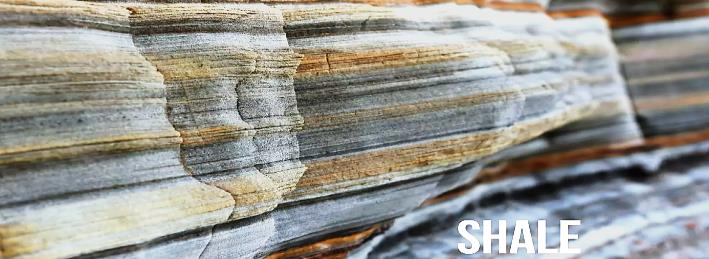
Feedback: Travertine is a chemical sedimentary rock that forms from the
precipitation of calcium carbonate (usually as
calcite) from water, often in the form of mineral-
rich groundwater in caves or around hot
springs. The process involves the crystallization
of calcium carbonate from the dissolved
minerals in the water, leading to the gradual --------------------------------------------------------------
166
837. Which term has nothing to do with the processes, and can be either crystalline or non-
mineral calcite? crystalline in texture.
a) Chert.
b) Fossiliferous limestone.
c) Chalk.
d) Micrite.
e) Aragonite.
Feedback: Chert has nothing to do with the mineral calcite. Chert is a sedimentary rock

composed mainly of microcrystalline quartz
(silica) (i.e., it’s siliceous), not calcite. The other
options, such as fossiliferous limestone, chalk, -------------------------------------------------------------- micrite, and aragonite, all involve calcite as a 840. Flint and jasper were prized in early primary mineral component. human cultures because: a) Large outcrops of them often contained caves to live in. b) They are translucent minerals and were useful for windows. c) They were rare and pretty and used as trade items. d) They dissolved in water readily, contributing minerals that made healthy drinking water. e) They broke with conchoidal fracture and -------------------------------------------------------------- thus made good cutting tools. 838. An organic sedimentary rock originated as decaying plant matter is: Feedback : Flint and jasper are varieties of the a) Peat. siliceous rock chert, which is composed mainly b) Coal. of silica (SiO 2 ). Flint and jasper have a property c) Chert. called conchoidal fracture, which means that d) Oil shale. they break with smooth, curved surfaces that e) Dolostone. resemble shells. Conchoidal fracture occurs
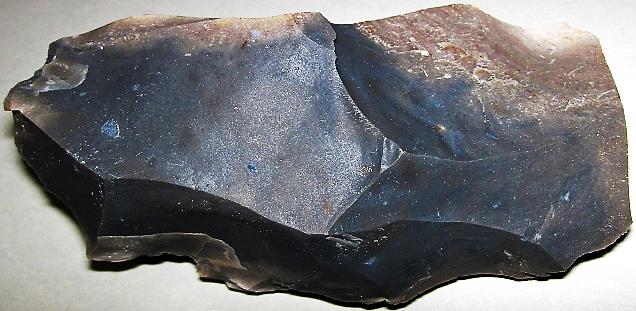
Feedback when a material lacks cleavage planes or : Both peat and coal originate from crystal structure, and is brittle and decayed plant matter, but peat is not a rock, homogeneous. Conchoidal fracture produces while coal is a rock. Peat is not considered a sharp edges and points that are ideal for rock; it's an accumulation of organic material, making cutting tools, such as knives, primarily plant matter. In contrast, coal is an arrowheads, axes, and scrapers. Flint and organic sedimentary rock that forms from the jasper were prized in early human cultures compaction and alteration of peat over because they were widely available and easy to geological time. shape into useful tools. Flint and jasper tools were used for hunting, skinning, butchering, woodworking, and fire-making. Flint and jasper tools are also durable and can be resharpened
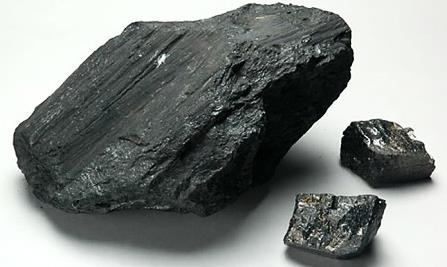
when needed.
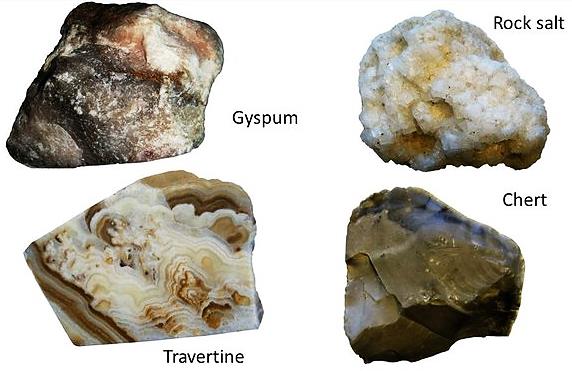
--------------------------------------------------------------
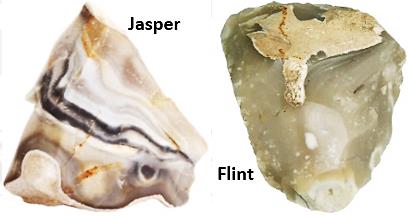
b) 841. Ripple marks on a bedding plane: Flint, jasper, agate, and petrified wood are a) Suggest you’re looking at an old delta. all varieties of the siliceous rock chert. b) Are parallel to the current direction that c) Gypsum and halite are evaporite minerals. created them. d) Chemical sedimentary rocks are crystalline c) a) Both chert and limestone may have either -------------------------------------------------------------- chemical or biochemical origin. 839. Identify the TRUE statement:
e) in texture. Could suggest an ancient stream bed or a seashore. All the possible answers are correct. d) Are a sure sign the area had periodic drought. Feedback : Chemical sedimentary rocks can e) All the possible answers are correct. form through chemical or biochemical
167
Feedback: Ripple marks on a bedding plane most likely to have been formed in a glacial
are typically parallel to the current direction that valley environment. This type of deposit is
created them. They can suggest an ancient known as glacial till or moraine. Glacial
stream bed or a seashore, as they are processes involve the movement of ice and the
commonly formed by the action of flowing entrainment of a wide range of sediment sizes,
water, whether in rivers, streams, or along resulting in unsorted and unstratified deposits.
coastlines. The direction of the ripples provides Glacial valleys are characterized by the
valuable information about the past deposition of such material when glaciers
depositional environment and the direction of retreat or melt, leaving behind a mixture of

water flow. sediments of various sizes.
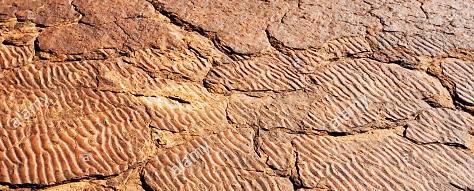
--------------------------------------------------------------
842. What is the most logical past
environment to have produced a deposit --------------------------------------------------------------
consisting of layers of well-sorted sandstone 844. The structure that may form where a
e) Has nearly horizontal silty bottomset beds Glacial valley. on the lake floor. e) All the possible answers are correct. Feedback : A deposit consisting of layers of well-sorted sandstone with cross beds several Feedback : The structure that may form where meters high is most likely to have been formed a stream enters a lake is called a delta. Deltas in a sand dune environment. Cross beds are typically consist of all these components. These inclined layers of sediment within the dune, and various components make up a deltaic system they are characteristic of the internal structure and can be associated with the deposition of of sand dunes. The wind action in desert or sediment as a river or stream enters a standing b) b) Sand dunes. of gravel. c) Shallow-water carbonate area. c) Has sloping foreset beds of gravel and sand. d) Small-lake environment. d) a) a) Is called a delta. Alluvial fan along a mountain front. Has nearly horizontal topset beds composed with cross beds several meters high? stream enters a lake:
Sand dunes can be quite large and can produce body of water like a lake. aeolian environments can create such features. extensive deposits of well-sorted sandstone
with cross beds when preserved as
sedimentary rocks.
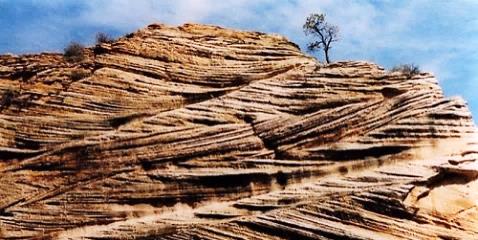
--------------------------------------------------------------
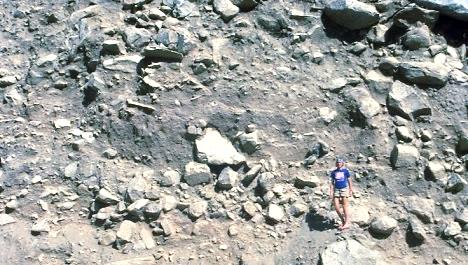
-------------------------------------------------------------- 845. This diagram shown below is a profile 843. What is the most logical past of:
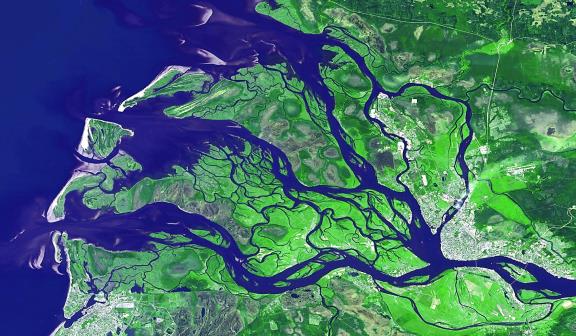
environment to have produced a deposit

consisting of layers of unsorted, unstratified
sedimentary clasts, clay-sized to boulder-
a) sized? a) Ripple marks created by water flowing from Floodplain. A to B. b) Sand dunes. b) Ripple marks created by water flowing from c) Shallow-water carbonate area. B to A. d) Small-lake environment. c) Sand dunes created by wind blowing from A e) Glacial valley. to B. d) Sand dunes created by wind blowing from B Feedback : A deposit consisting of layers of to A. unsorted, unstratified sedimentary clasts, e) Graded bedding in a submarine trench. ranging from clay-sized to boulder-sized, is --------------------------------------------------------------
168
846. What is the most logical past sediments are typically associated with turbidity
environment to have produced a deposit currents, which are powerful underwater
consisting of very little sand and mud, but sediment flows. Turbidity currents can carry a
instead lots of broken-up carbonate shells of mixture of sediment sizes, and as they slow
marine organisms? down or come to rest, they deposit these
a) Delta. sediments in layers, resulting in the alternating
b) Sand dunes. shale and sandstone beds. These deposits are
c) Shallow-water carbonate area. commonly found in deep-sea environments and
d) Small-lake environment. submarine canyons, and they provide valuable

e) Glacial valley. insights into past submarine sedimentary
processes.
Feedback: A deposit consisting of very little sand and mud but lots of broken-up carbonate
shells of marine organisms is most likely to
have been produced in a shallow-water
carbonate environment. Shallow marine
environments, such as coral reefs or shallow
carbonate platforms, are characterized by the
accumulation of carbonate sediment primarily
composed of the remains of marine organisms
like corals, mollusks, and foraminifera. These
organisms produce carbonate shells that can
become fragmented and contribute to the
sediment, resulting in deposits rich in broken --------------------------------------------------------------
carbonate shells. 848. Which of the following sedimentary
features is the surest indicator that the past
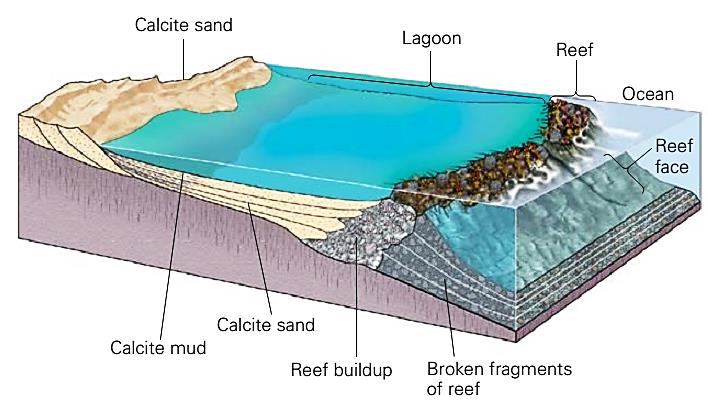
environment was deep water?
a) Turbidites. b) Mud cracks. c) Scour marks. d) Fossil marine clam shell imprints. e) They are all indicators of a subaerial land
surface.
Feedback: Turbidites are the surest indicator among the options provided that the past
environment was deep water. Turbidites are
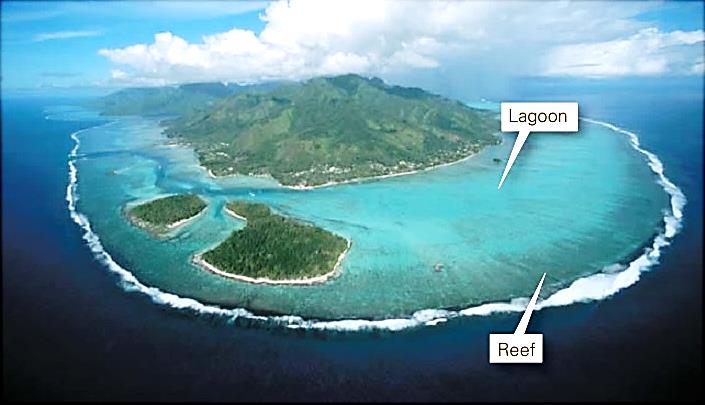
sedimentary deposits formed by underwater
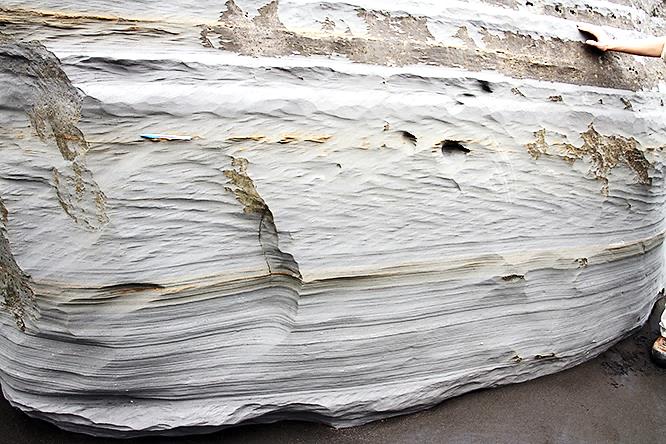
turbidity currents in deep-sea environments.
These currents transport a mixture of sediment
sizes and deposit them in deep marine settings.
Mud cracks (b), scour marks (c), and fossil
marine clam shell imprints (d) are more
indicative of shallow-water or subaerial (land-
based) environments and would not typically be
found in deep water.
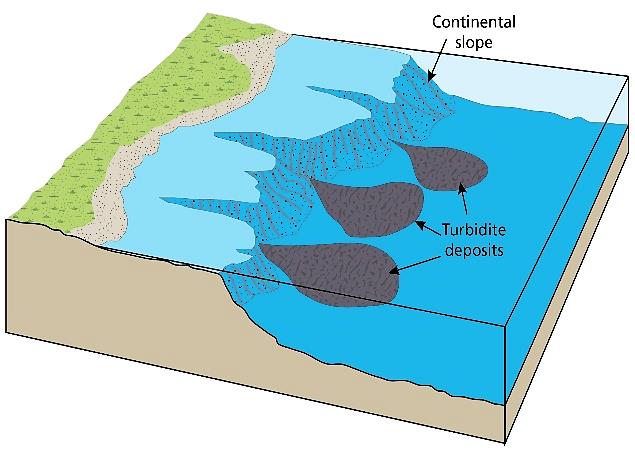
--------------------------------------------------------------
847. Geologists find a thick sequence of
alternating shales and sandstones. The
probable depositional environment and
interpretation of these are:
a) Deep-marine deposits near the continental
shelf.
b) The foreset beds of a river delta.
c) A high latitude or high-elevation lake that
froze over each winter.
d) Evaporates.
e) The seaward side of a volcanic arc. --------------------------------------------------------------
Feedback: Turbidite deposits are rocks in that sedimentary rocks can never be 849. Sedimentary rocks differ from igneous
characterized by alternating shales and crystalline in texture and igneous rocks
sandstones, often with a great thickness. These always are crystalline.
169
a) True weathered material to a different location. They
b) False are distinct processes with specific meanings in
geology.
Feedback: Sedimentary rocks can have a crystalline texture. Sedimentary rocks can be
classified based on their texture, which includes
crystalline textures. For example, some
sedimentary rocks like evaporites, such as rock
salt (halite) or gypsum, can exhibit crystalline

textures where mineral crystals have
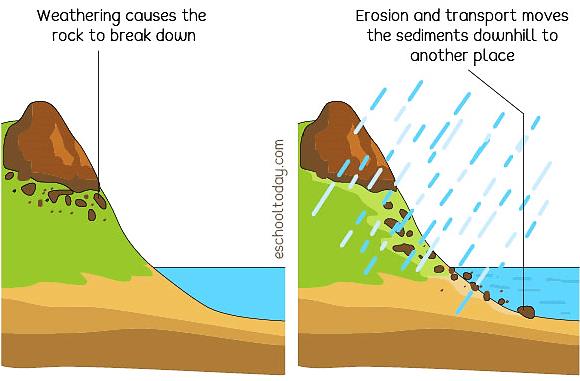
precipitated from solution and grown together.
However, igneous rocks are more commonly
associated with a crystalline texture, as they
form from the cooling and solidification of
molten rock (magma or lava), which often --------------------------------------------------------------
results in the formation of mineral crystals. 852. Graywacke and conglomerate are Igneous rocks can indeed have non-crystalline examples of well-sorted rocks; claystone
or amorphous textures. Obsidian is a prime and siltstone are examples of poorly sorted
example, as it is a type of igneous rock that rocks. lacks a crystalline structure and is essentially a a) True natural glass. The presence or absence of b) False crystalline texture can vary in both igneous and
sedimentary rocks, depending on their Feedback: Graywacke and conglomerate are composition and formation conditions. examples of poorly sorted rocks, not well-sorted
-------------------------------------------------------------- rocks. Claystone and siltstone are examples of
850. Sedimentary rocks form only at or near fine-grained sedimentary rocks, and they are
Earth’s surface, never at great depths. typically well-sorted among the fine particles
a) True they contain, as they are composed primarily of
b) False clay-sized and silt-sized grains.
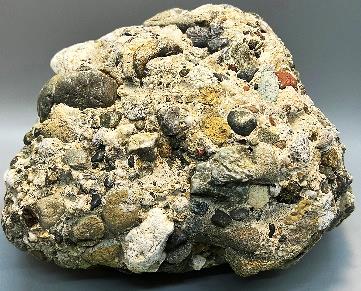
Feedback: Sedimentary rocks can form at or near Earth's surface, but they can also form at
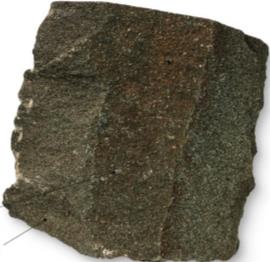
great depths. This is because sedimentary
rocks can be buried and compacted by
overlying rocks. Over time, the pressure and
heat from the overlying rocks can transform the
sedimentary rocks into metamorphic rocks.
An example of a sedimentary rock that can form -------------------------------------------------------------- at great depths is graywacke. Graywacke is a 853. The word “ fluvial ” means lake. type of sandstone that is formed from the rapid a) True deposition of sediment in a deep-water b) False environment. The pressure from the overlying rocks compacts the sediment and transforms it Feedback : The words for lake are lacustrine or into graywacke. Another example of a pluvial (or playa, for dry lakes). Fluvial means sedimentary rock that can form at great depths river. is limestone. Limestone is formed from the -------------------------------------------------------------- accumulation of shells and other skeletal 854. A rock with large, angular fragments fragments of marine organisms. If the limestone and lots of feldspar is classified as is buried and compacted by overlying rocks, it immature; a rock with smaller, rounded can be transformed into marble, a metamorphic grains and not much feldspar is classified as rock. mature. -------------------------------------------------------------- a) True 851. The words weathering and erosion are b) False synonyms; they can be used
a) True the terms "immature" and "mature" are often interchangeably. Feedback: In sedimentary rock classification,
b) False used to describe the degree of sorting and the
Feedback: The words "weathering" and rock: characteristics of the sediment grains within the
they are not synonyms, and they cannot be fragments and may contain a significant "erosion" are related concepts in geology, but Immature rocks typically have larger, angular
used interchangeably. Weathering is the amount of feldspar. These rocks have not breakdown of rocks at their original location, undergone extensive weathering and while erosion involves the transportation of the
170
transportation, so the sediments within them Feedback: Diagenesis and metamorphism retain their original characteristics, including both alter the texture and mineral composition
angularity. of rock, but metamorphism is the higher
Mature rocks, on the other hand, have smaller, temperature process. According to the web
well-rounded grains and often contain less search results, diagenesis refers to the physical
feldspar. These rocks have experienced more and chemical changes that occur in
weathering and transportation, resulting in the sedimentary rocks under relatively low
rounding of grains and the removal of less temperatures and pressures, while
stable minerals like feldspar. metamorphism refers to the changes that occur

-------------------------------------------------------------- in rocks due to high temperatures and
855. The formation of dolostone, due to the pressures, usually associated with deep burial
introduction of magnesium into limestone, is or tectonic activity. Diagenesis preserves the
an example of diagenesis. original sedimentary features of the rocks, while
a) True metamorphism destroys them and forms new
b) False mineral assemblages and foliation.
Feedback: Diagenesis refers to the physical, chemical, and biological changes that occur in
sedimentary rocks after they are initially
deposited. In the case of dolostone formation,
the process involves the replacement of some
or all of the calcium carbonate (CaCO3) minerals in limestone with magnesium
carbonate (MgCO3) minerals, resulting in the transformation of limestone into dolostone. This
process typically occurs at relatively shallow --------------------------------------------------------------
burial depths within the Earth's crust and is 858. A sequence of sedimentary beds,
considered a diagenetic alteration of the traceable across a region and distinctive
original sedimentary rock. Dolostone is a good enough to be recognized as a unit is called
example of the recrystallization of an existing a stratigraphic formation. sedimentary rock. a) True -------------------------------------------------------------- b) False 856. Obvious sandstone beach deposits
overlain by marine mudstone indicate Feedback: Formations are fundamental units
a) based on their lithology, characteristics, and True geological history. Formations can vary in transgression of the sea. used to describe and categorize rock layers
b) False
thickness and composition and serve as
Feedback essential building blocks for understanding the : Sandstone beach deposits indicate
a nearshore, high-energy environment, while geological history and stratigraphy of a region.
marine mudstone indicates a deeper, lower --------------------------------------------------------------
energy environment. When sandstone is 859. Which of the following is NOT one of
overlain by mudstone, it means that the the major classes of sedimentary rocks? shoreline has moved toward higher ground and a) Clastic. the sea level has risen relative to the land. This b) Biochemical. is the definition of a marine transgression. c) Chemical.
d) Intrusive. e) Organic.
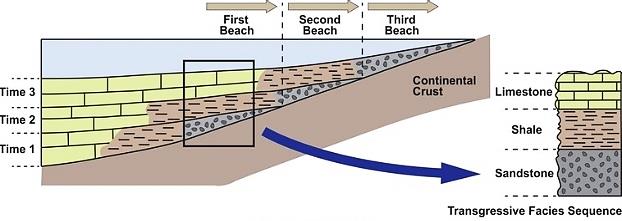
Feedback: Intrusive rocks are not a class of sedimentary rocks; they are a type of igneous
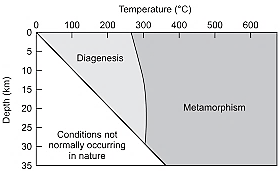
rock. The major classes of sedimentary rocks
are clastic, biochemical, chemical, and organic.
Clastic sedimentary rocks are formed from the
accumulation of mineral and rock fragments,
-------------------------------------------------------------- biochemical sedimentary rocks are derived
857. Diagenesis and metamorphism both from the remains of organisms, chemical
alter the texture and mineral composition of sedimentary rocks form from the precipitation of
rock; metamorphism is the higher minerals from water, and organic sedimentary
temperature process. rocks are composed of organic material like
a) True plant debris and peat. Intrusive rocks, on the
b) False other hand, are igneous rocks that solidify from
magma below the Earth's surface.
--------------------------------------------------------------
171
860. Formation of a clastic sedimentary rock e) All the possible answers are correct.
involves five stages. Which of the following
describes lithification? Feedback: Clastic sediments increase in
a) Disintegration of bedrock into separate maturity as they are transported farther from
particles. their point of origin. Along the way, they
b) Compaction and cementation of loose become smaller, increasingly well-rounded,
particles to form solid rock. and well-sorted, and easily weathered grains
c) Separation of rock or regolith from its are gradually destroyed.
substrate.

d) Process by which particles settle out of
transport medium.
e) The movement of sedimentary particles by
water, wind, or ice.
Feedback: Lithification is the process by which loose sedimentary particles, such as sand and
gravel, are compacted and cemented together
to form a solid rock. This stage involves the
squeezing of the sediment under the weight of --------------------------------------------------------------
overlying layers and the binding of grains 863. Rocks formed dominantly from the through minerals precipitated from pore fluids, calcium carbonate shells of marine
resulting in the consolidation of the sediment organisms are classified as _____ and
into a coherent rock. called _____.
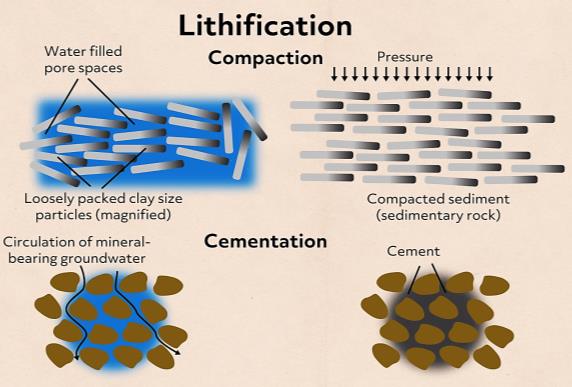
a) Clastic; arkose. b) Organic; coal. c) Biochemical; limestone. d) Chemical; travertine.
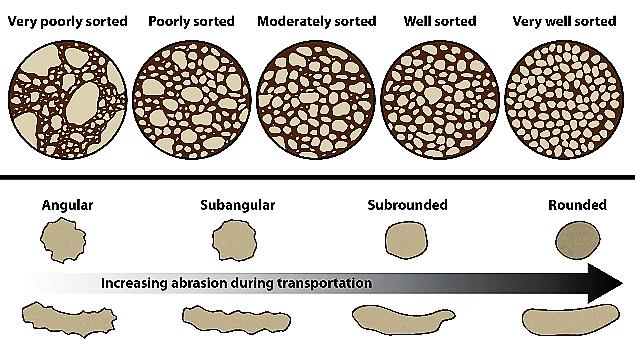
Feedback: Rocks formed dominantly from the calcium carbonate shells of marine organisms
are classified as biochemical rocks, because
they are produced by the biological activity of
living creatures. Limestone is the most common
type of biochemical rock, and it is mainly
composed of calcium carbonate precipitated by
-------------------------------------------------------------- these organisms. 861. Ripple marks, dunes, and cross
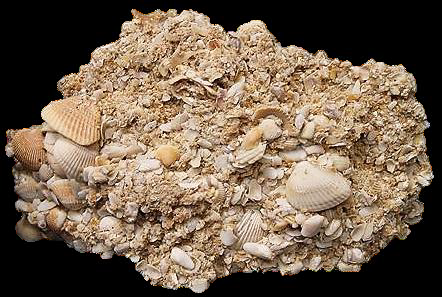
bedding are useful indicators of:
a) Water depth.
b) Flow velocity.
c) Sediment source.
d) Lithification process.
e) Current direction.
Feedback: Ripple marks, dunes, and cross bedding are all sedimentary structures that
provide valuable information about the direction
of current or flow at the time the sediment was --------------------------------------------------------------
These structures form perpendicular to the down-dropped crustal blocks bordered by direction of the current and can help geologists narrow mountain ranges and alluvial fans, is reconstruct the paleoenvironment and called a: current direction in ancient sedimentary rocks. continental lithosphere is stretched, causing deposited. They are used as indicators of 864. A sedimentary basin that forms when
understand the flow conditions in ancient a) Rift basin.
-------------------------------------------------------------- c) settings. b) Passive margin basin. 862. As sediment is transported d) Intracontinental basin. Foreland basin.
downstream, away from its point of origin, e) None of the possible answers are correct.
a) Smaller. Feedback: Rift basins typically develop in b) the particles found in the stream become:
c) Rounder. areas where the Earth's lithosphere is Better sorted by size. undergoing extension, causing the crust to thin d) Of greater resistance. and create space for the deposition of
172
sedimentary rocks in the down-dropped blocks. preexisting terrestrial sediments. This
Rift basins are often associated with the initial process is called: stages of continental rifting, which can a) Rifting. eventually lead to the formation of new ocean b) Uplifting. basins if the rifting process continues. c) Transgression. Passive-margin basins form on the edges of d) Subsidence. continents and continue long after rifting has e) Regression. ended; intracontinental basins are similar to rift
basins, but form over much larger areas for Feedback: When sea level rises, causing the much longer time periods; foreland basins lie on shoreline to migrate inland and flooding the

the continent side of a mountain front formed land, depositing coastal sediments over
due to continental collision. preexisting terrestrial sediments, this process is
called transgression. It's the opposite of
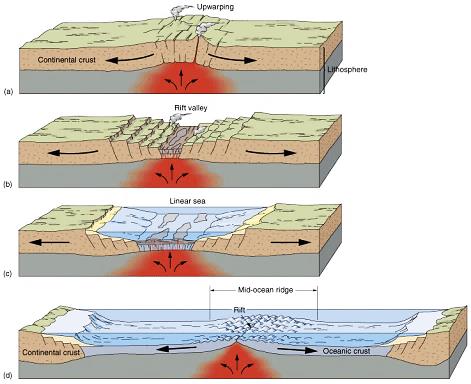
regression, where the shoreline moves
seaward due to falling sea levels.
Transgression can result from factors like
global sea-level rise or tectonic subsidence of
the land.
--------------------------------------------------------------
865. Sediments in a passive-margin basin
are primarily fluvially derived but can also
a) -------------------------------------------------------------- include carbonates.
b) 867. Braided streams deposit mostly: True
False
from plate boundaries and arc volcanism. Turbidity current sequences. Limestone and pelagic ooze. d) Passive margins are areas where the tectonic e) Submarine fans. plates are moving apart. This creates a region where sediment can be deposited without being Feedback b) Evaporites. : Passive-margin basins form away c) a) Sheets of sand and gravel.
passive margins is typically derived from rivers, coarse sediment, such as sand and gravel, in the form of bars and channels. These disturbed by tectonic activity. The sediment in Feedback: Braided streams deposit mostly
are typically found in the shallower parts of the are often well-sorted and contain distinctive sedimentary structures like cross-bedding. basin, where the water is warmer and more Braided streams form where the stream has a conducive to the growth of carbonate-producing organisms. The carbonates in passive margins sediments form coarse-grained deposits that but it can also include carbonates from marine
organisms. The fluvial sediments are typically high sediment load and a low gradient, which causes the flow to split and rejoin around the found in the deeper parts of the basin, where bars. the water is cooler and less conducive to the growth of carbonate-producing organisms.
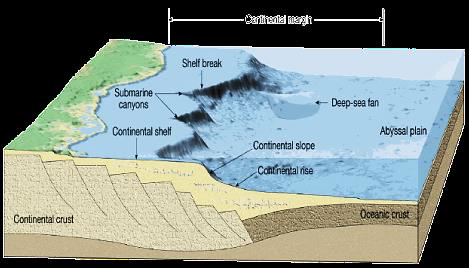
--------------------------------------------------------------
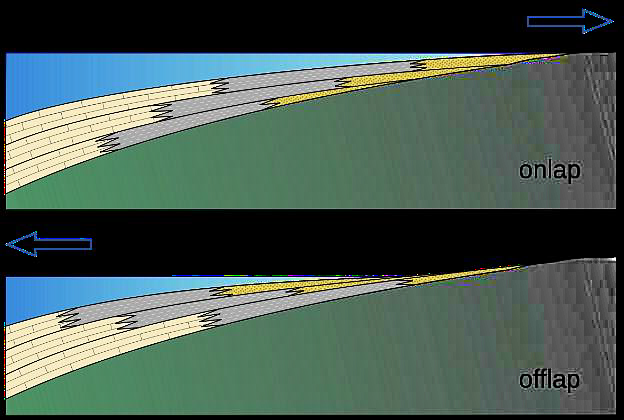
866. When sea level rises, the shoreline --------------------------------------------------------------
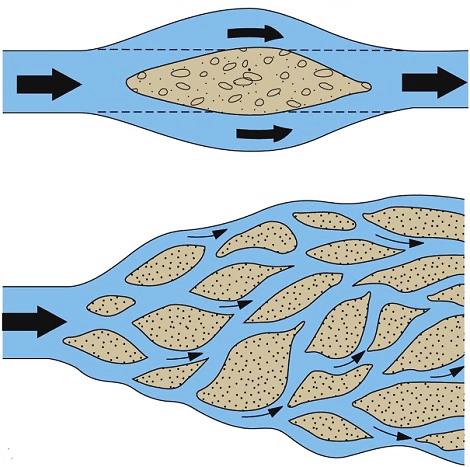
migrates inland, flooding the land and 868. The process whereby organisms depositing coastal sediments over burrow through and thoroughly mix
sediment is:
173
a) Lithification. Feedback: Deltas typically form where a fluvial b) Sedimentation. system, such as a river, flows into a standing
c) Bioturbation. body of water, such as a lake, sea, or ocean.
d) Sorting. As the river's velocity decreases upon entering
e) Rounding. the still water, it loses its capacity to transport
sediment. Consequently, the sediment carried
Feedback: Bioturbation is defined as the by the river is deposited at its mouth, leading to
reworking of soils and sediments by animals or the formation of a delta. Deltas are
plants. These include burrowing, ingestion and characterized by their triangular or fan-shaped

defecation of sediment grains. Bioturbating appearance and are associated with a complex
activities have a profound effect on the network of distributary channels. environment and are thought to be a primary
driver of biodiversity. This activity of burrowing
organisms can have a significant impact on the
physical and chemical properties of sediments,
including their texture, composition, and the
distribution of organic matter. Bioturbation is an
important aspect of sedimentary environments
and can affect sedimentary structures and the
preservation of fossils.
--------------------------------------------------------------
871. Cross-beds that dip in opposite
-------------------------------------------------------------- directions are found in environments. 869. A well-sorted detrital sedimentary rocks a) Desert.
is one in which: b) Tidal flat.
a) 50% of the grains are more than 2 mm c) Playa lake.
across. d) Meandering stream.
b) At least four minerals are present. e) Alluvial fan. c) Micrite and shell fragments are found in
equal amounts. Feedback: Playa lakes often form in arid or
d) Most of the grains are of about the same semi-arid regions and are characterized by
size. being ephemeral, meaning they fill with water
e) Magnesium replaced the calcium in only during transient or occasional periods.
limestone. These intermittent wetting and drying cycles
can lead to unique sedimentary features,
Feedback: A well-sorted detrital sedimentary including cross-beds with dips in opposite
rock is one in which the majority of the sediment directions. grains are of a similar size, indicating that the
sorting process has separated the grains by
size, and there is little variation in grain size
within the rock.
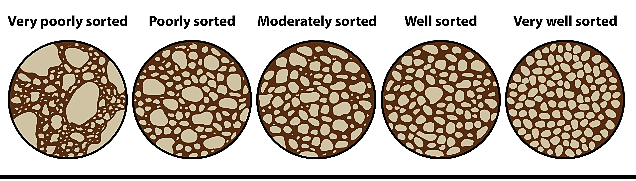
-------------------------------------------------------------- 872. Much of the graded bedding in the geologic record is accounted for by --------------------------------------------------------------
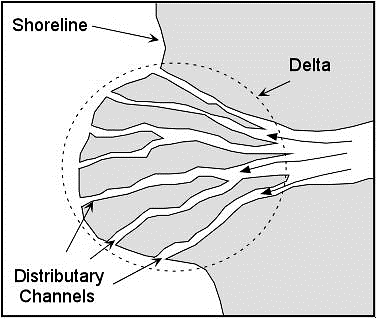
a) deposition by(on): The shells of microscopic organisms settle Tidal currents. 870. Deltas form where:
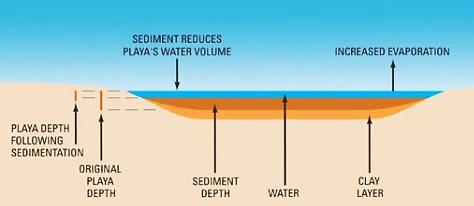
b) b) Mud settling from suspension. Rivers and streams spread across their Point bars. from suspension. a)
c) d) Turbidity currents. Glaciers deposit till and outwash. Wave-dominated deltas. floodplains. c) d) e) Sediment is transported through submarine
e) Feedback: Graded bedding is often associated canyons.
of water. with turbidity currents, which are underwater A fluvial system flows into a standing body
sediment flows that transport and deposit
174
sediments in a graded manner, with the largest Rounding in sedimentary rocks refers to the
particles settling out first and the finer particles smoothing of corners and edges of sedimentary
settling later. Turbidity currents commonly particles due to abrasion during transportation.
occur in submarine environments, such as It does not necessarily mean that the particles
deep-sea fans and slopes, where sediment- become perfectly spherical; rather, it indicates
laden water descends due to gravity, creating that they have been worn down and have less
distinct layers of sediment with a graded angularity. texture.

-------------------------------------------------------------- --------------------------------------------------------------
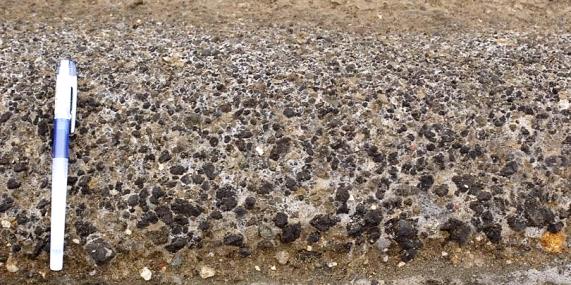
873. Which one of the following is NOT a 875. The alternating dark- and light-colored
sedimentary structure? laminations that form in glacial lakes are:
a) Outwash. a) Graded beds. b) Ripple mark. b) Current ripples. c) Mud crack. c) Tidal flat muds. d) Cross-bed. d) Varves. e) Lamination. e) Tills.
Feedback: Outwash, alternative Titles: Feedback: Varves are annual layers of glacial outwash, glaciofluvial deposit, meltwater sediment that are typically found in glacial lake
deposit. Outwash, deposit of sand and gravel deposits. These layers often represent
carried by running water from the melting ice of seasonal variations in sediment deposition,
a glacier and laid down in stratified deposits. with darker layers usually representing the
deposition of fine-grained sediment during the
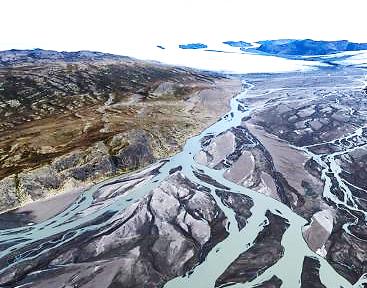
winter and lighter layers representing coarser
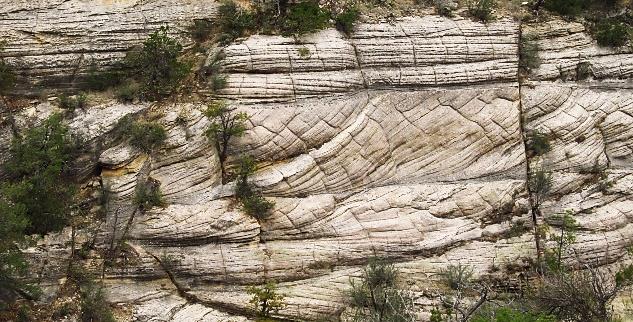
sediment deposited during the summer melt.
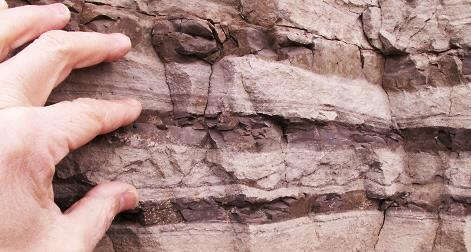
--------------------------------------------------------------
874. Which one of the following statements
is -------------------------------------------------------------- CORRECT ?
a) 876. A sand body with a blanket geometry Rounding refers to how nearly spherical
sedimentary grains are. that has large-scale cross beds, wave-
b) formed ripple marks, and bioturbation The sand in desert dunes is poorly sorted.
c) probably was deposited on(in): The deep seafloor is covered by sand and
gravel. a) A braided stream system.
d) b) Desert dunes. Cross-beds are good indicators of ancient
current directions. c) Inner continental shelf.
e) d) Barrier island complex. Limestone made up of broken shells is
called micrite. e) Submarine fans.
Feedback Feedback: A sand body with a blanket : Cross-beds are sets of inclined
sedimentary layers that are deposited by geometry that has large-scale cross beds,
moving currents, such as wind, water, or ice. wave-formed ripple marks, and bioturbation
The direction of the cross-bedding reflects the indicates that the sediment was deposited in a
direction of the current that transported and shallow marine environment with wave and
deposited the sediment. Cross-beds can be current action, as well as biological activity. The
used to reconstruct the paleoenvironment and inner continental shelf is the part of the
paleogeography of ancient sedimentary basins. continental margin that extends from the shore
175
to the edge of the continental slope, where deforms it in stress direction causing layering or
water depth is typically less than 200 m. banded appearance on the rock. The foliated
structure is the platy, sheet-like structure that
shows the color of the minerals in the rock.
Foliation in metamorphic rocks cannot occur if
there is uniform pressure from all sides or there
is a lack of minerals with distinctive growth.
Some examples are Gneiss, Slate,
Amphibolites, etc.

--------------------------------------------------------------
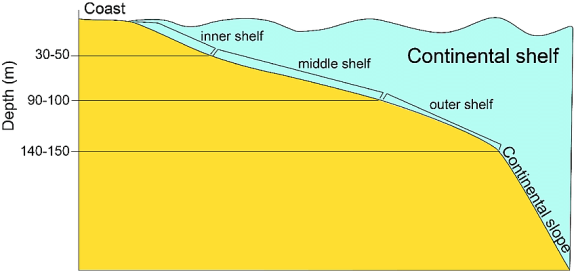
877. Any rock that has been altered from a
previous state by heat, pressure, and
a) Plutonic. -------------------------------------------------------------- Metamorphic. chemical fluids is a _______ rock.
b) 880. Which of these is regarded as a low-
d) Sedimentary. a) Migmatite. Evaporite. c) Ferromagnesian. grade metamorphic rock? e) b) Schist.
Feedback: Metamorphic rocks are formed from d) Gneiss. pre-existing rocks (either igneous, sedimentary, c) Slate.
changes in temperature, pressure, and grade metamorphic rock. It forms from the chemical composition, often deep within the or other metamorphic rocks) that undergo Feedback: Slate is typically considered a low-
metamorphism of shale or mudstone through
Earth's crust. These changes result in the low-grade regional metamorphism and exhibits
formation of new minerals and textures, giving well-developed foliation, but the degree of
metamorphic rocks their distinctive metamorphism is relatively low compared to
characteristics. rocks like schist or gneiss.
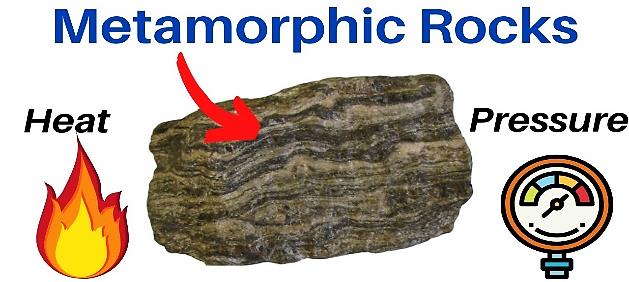
-------------------------------------------------------------- --------------------------------------------------------------
878. Another term for parent rock is: 881. Which of the following metamorphic a) Starter. rocks displays a foliated texture? b) Primer. a) Marble. c) Protolith. b) Quartzite. d) Sediment. c) Greenstone.
d) Schist.
Feedback: The protolith is the original rock e) Hornfels. from which a metamorphic rock forms through
the process of metamorphism. Feedback: The metamorphic rock that displays
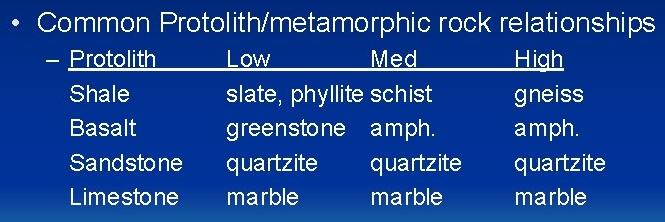
a foliated texture among the options provided is
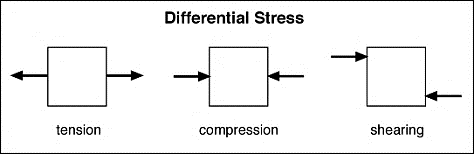
Schist. Schist is a foliated metamorphic rock
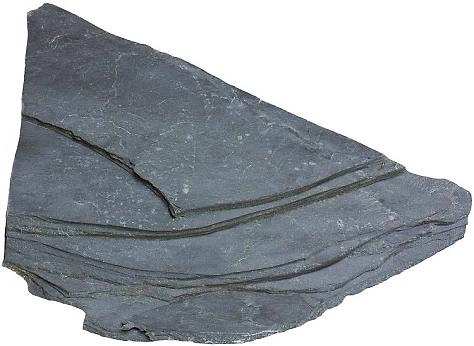
characterized by the alignment of its mineral
grains into parallel layers or bands.
--------------------------------------------------------------
882. Limestone recrystallizes during
-------------------------------------------------------------- metamorphism into: 879. Foliation forms as a result of: a) Hornfels. a) Confining pressure. b) Marble. b) Lithostatic pressure. c) Quartzite. c) Differential stress. d) Schist. d) Contact metamorphism.
Feedback: Marble is a metamorphic rock
Feedback: Foliation occurs when differential formed when limestone is exposed to high
stress is applied to a metamorphic rock due to temperatures and pressures. Limestone is a
extreme heat and directed pressure that sedimentary rock primarily composed of calcite