

Essentials of geology a comprehensive manual with 1300+ MCQs, answers, feedbacks, and illustrative figures by Ali Kareem Neamah - HTML preview
Download the book in PDF, ePub, Kindle for a complete version.
176
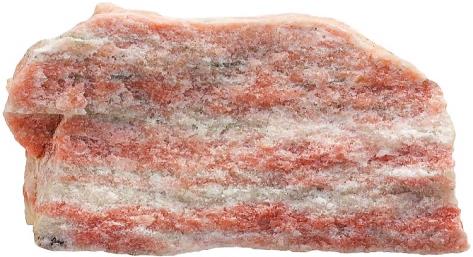
or dolomite minerals. When limestone 885. Metamorphic rocks are classified undergoes metamorphism, it can transform into primarily on: marble. This transformation involves the a) Texture, the presence or absence of recrystallization of the original minerals in the foliation. limestone into larger, interlocking crystals of b) Mineralogy, the presence or absence of calcite or dolomite. The result is a non-foliated quartz. metamorphic rock known as marble. c) Environment of deposition.
d) Chemical composition.

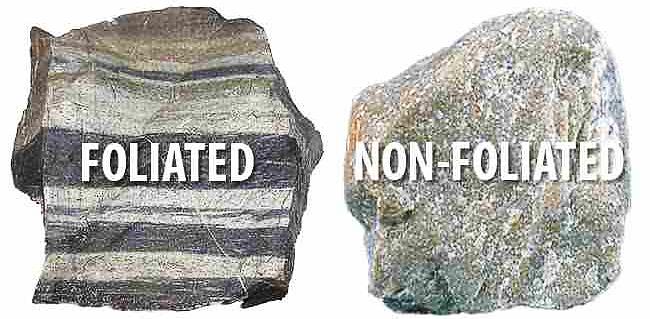
Feedback: Metamorphic rocks are primarily classified based on their texture, specifically the
presence or absence of foliation. Foliation
refers to the alignment of mineral grains in
parallel layers or bands within a metamorphic
rock. This texture is a key characteristic used to
-------------------------------------------------------------- classify metamorphic rocks. Mineralogy,
883. Which is NOT regarded as a low-grade environment of deposition, and chemical
metamorphic rock? composition are also important factors but are
a) Greenschist. often considered in conjunction with texture
b) Phyllite. when classifying these rocks. c) Slate.
d) Gneiss.
Feedback: Gneiss is a high grade metamorphic rock, meaning that it has been
subjected to higher temperatures and
pressures than schist. It is formed by the
metamorphosis of granite, or
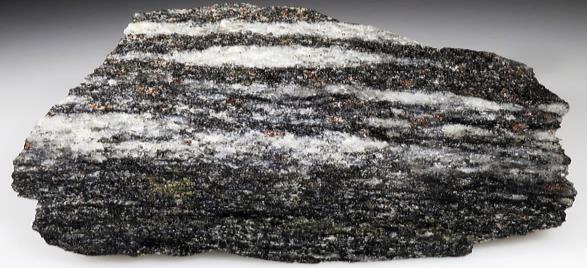
sedimentary rock. Gneiss displays distinct --------------------------------------------------------------foliation, representing alternating layers 886. Quartz sandstone is changed during
composed of different minerals. metamorphism into:
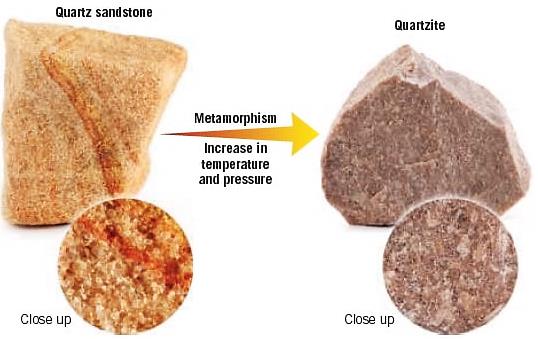
a) Hornfels. b) Marble. c) Quartzite. d) Schist.
Feedback: Quartzite is a non-foliated metamorphic rock that forms from the
metamorphism of quartz-rich sandstone. This
884. Which is NOT a foliated metamorphic very hard and durable rock composed almost rock? entirely of quartz. Quartzite often exhibits a a) Gneiss. granular texture and is known for its resistance -------------------------------------------------------------- quartz grains in the sandstone, resulting in a process involves the recrystallization of the
b) Schist. to weathering and abrasion, making it a popular c) Phyllite. choice for construction and decorative d) Hornfels. purposes.
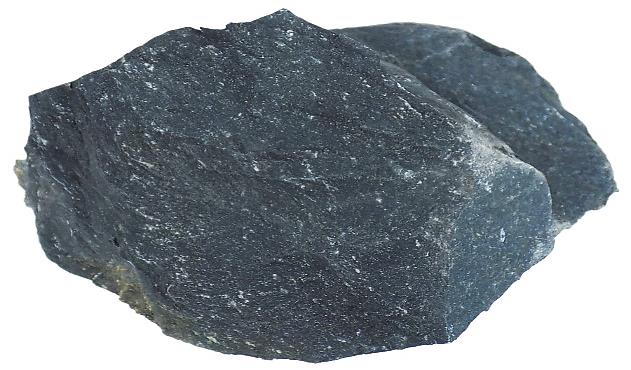
Feedback: Hornfels is a fine-grained metamorphic rock that forms from contact
metamorphism, when a rock is heated by a
nearby magma body. Hornfels does not have
any foliation, because it does not experience
any significant pressure or deformation during
its formation.
--------------------------------------------------------------
887. A foliated metamorphic rock, with very
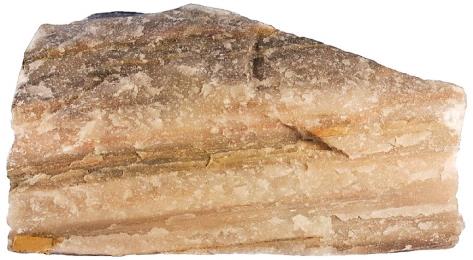
small crystals of mica creating a crinkled,
silky appearance, would be called:
a) Hornfels. b) Phyllite. c) Quartzite. d) Schist.
--------------------------------------------------------------
177
Feedback: Phyllite is a foliated metamorphic stable in subduction zones at depths of 30–60 rock that is made up mainly of very fine-grained km. mica. The surface of phyllite is typically lustrous
and sometimes wrinkled, giving it a crinkled,
silky appearance. Phyllite is intermediate in
grade between slate and schist. Schist is a
foliated metamorphic rock with larger crystals of
mica than phyllite, and often has other minerals
such as garnet or amphibole.

--------------------------------------------------------------
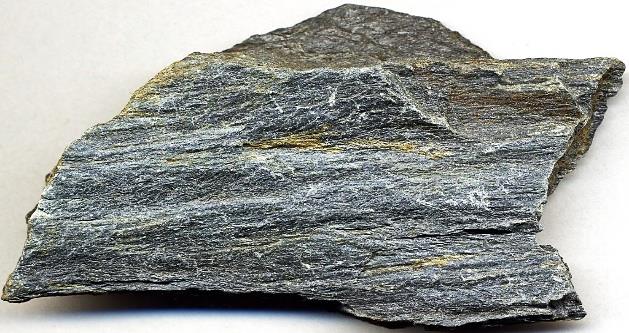
890. The major difference between
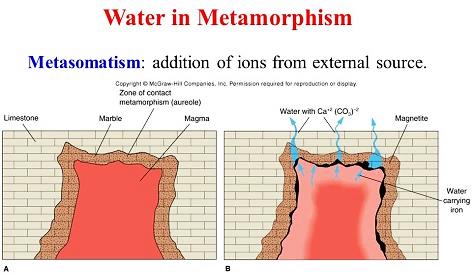
metamorphism and metasomatism is:
-------------------------------------------------------------- a) The temperature at which each takes place. b) The minerals involved. 888. A foliated metamorphic rock, with c) The area or region involved. clearly visible crystals of mica creating a d) Metasomatism is metamorphism coupled fish-scale appearance, would be called: with the introduction of ions from an external a) Hornfels. source. b) Phyllite. c) Quartzite. Feedback : The major difference between d) Schist. metamorphism and metasomatism is that metasomatism is metamorphism coupled with Feedback : Schist is a foliated metamorphic the introduction of ions from an external source. rock with clearly visible crystals of mica that In other words, while both processes involve create a fish-scale appearance. Schist is higher changes in the mineral composition of rocks, in grade than phyllite, and often has other metasomatism specifically involves the addition minerals such as garnet or amphibole. or exchange of mineral components from an external fluid or source. Metamorphism, on the
other hand, primarily involves changes in rocks
due to heat, pressure, and recrystallization of
their existing mineral constituents.
--------------------------------------------------------------
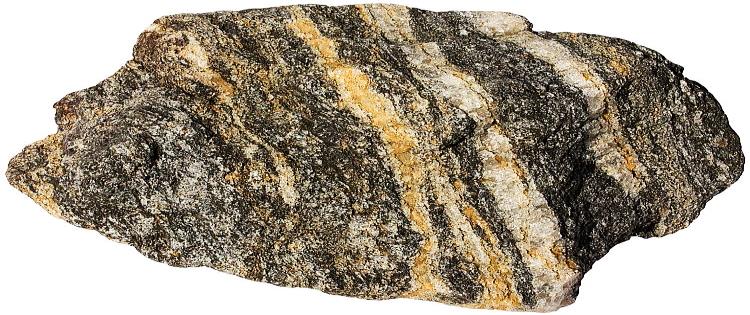
889. A schist that developed in a high-
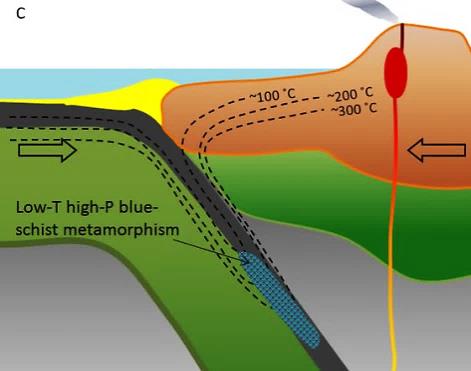
pressure, low-temperature environment
likely formed:
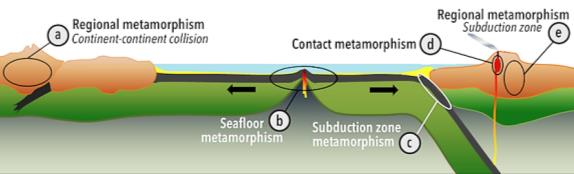
d) In a mid-oceanic ridge. 891. From which of the following rock Near a contact with a magma body. groups can metamorphic rocks form? a) Plutonic. Feedback : A schist that developed in a high-b) Sedimentary. pressure, low-temperature environment likely c) b) In a subduction zone. -------------------------------------------------------------- c) a) In the lower part of the continental crust.
formed in a subduction zone. A subduction Metamorphic. d) Volcanic. zone is a region where one tectonic plate slides e) All of these. under another, creating a deep trench and a
high-pressure, low-temperature environment. Feedback: Metamorphic rocks can form from In this environment, basalt and other rocks with any of the other rock groups, including plutonic similar composition can be metamorphosed (igneous), sedimentary, and volcanic (igneous) into blueschist, also called glaucophane schist, rocks. The process of metamorphism involves which is characterized by the presence of high-the alteration of pre-existing rocks (regardless pressure, low-temperature index minerals like of their origin) through changes in temperature, glaucophane, lawsonite, aragonite, jadeite, and pressure, and mineral composition. deerite. Blueschist is a type of schist that is --------------------------------------------------------------
178
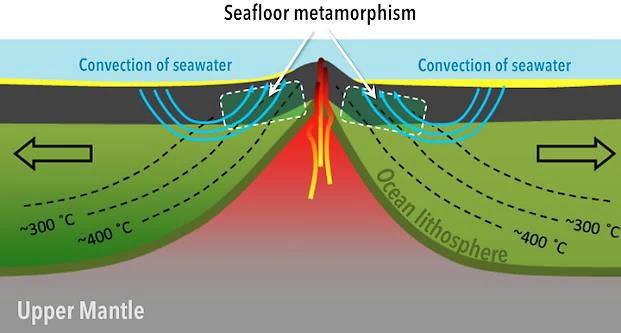
892. Hydrothermal metamorphism is formation of valuable mineral deposits like
especially important at: sulfide ores in these tectonic settings.
a) Mid-oceanic ridges.
b) Continental collision zones.
c) Impact craters.
d) Fault zones.
Feedback: Hydrothermal metamorphism is a type of metamorphism that involves changes in

the chemical composition and mineralogy of
rocks due to the interaction of hot water and
rock1. Hydrothermal metamorphism can occur
at various settings, such as near magmatic
intrusions, along fault zones, at mid-oceanic --------------------------------------------------------------
ridges, and in geothermal areas 895. A metamorphic rock that has
undergone partial melting to produce a
mixed igneous-metamorphic rock is a:
a) Gneiss. b) Hornfels. c) Schist. d) Migmatite.
Feedback: A migmatite is a type of metamorphic rock that has experienced partial
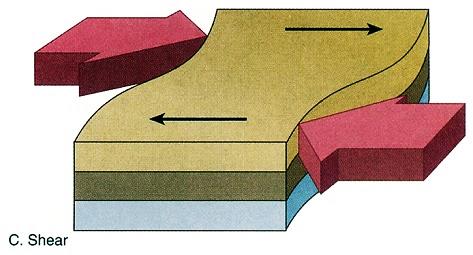
893. metamorphic rock. This process can cause the Shearing is a type of: rock to have both igneous and metamorphic -------------------------------------------------------------- melting, resulting in a mixed igneous-
a) Compressive stress.
b) characteristics, creating unique and complex Confining pressure.
c) textures. Lithostatic pressure.
d) Differential stress.
Feedback: Shearing is a type of differential stress that occurs when forces act parallel to
one another but in opposite directions, causing
rocks to deform by sliding past each other
horizontally. This type of stress often leads to
the development of faults and shear zones in
rocks.
--------------------------------------------------------------
896. Which is the correct metamorphic
sequence of increasingly coarser grain
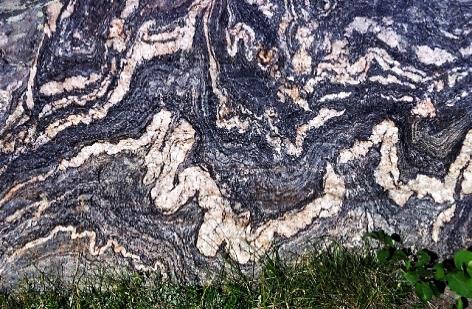
size?
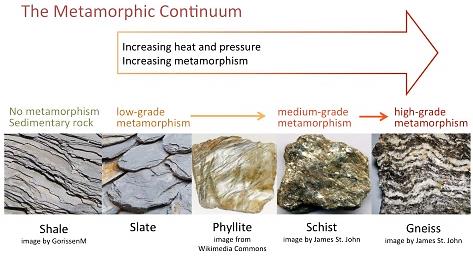
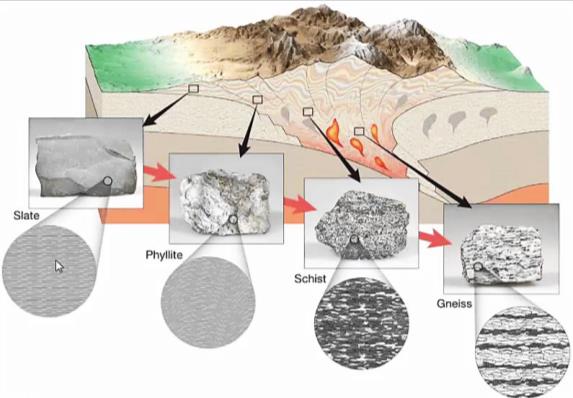
a) Gneiss schist phyllite slate. b) Phyllite slate schist gneiss. c) Schist slate gneiss phyllite. d) Slate phyllite schist gneiss. e) Slate schist phyllite gneiss.
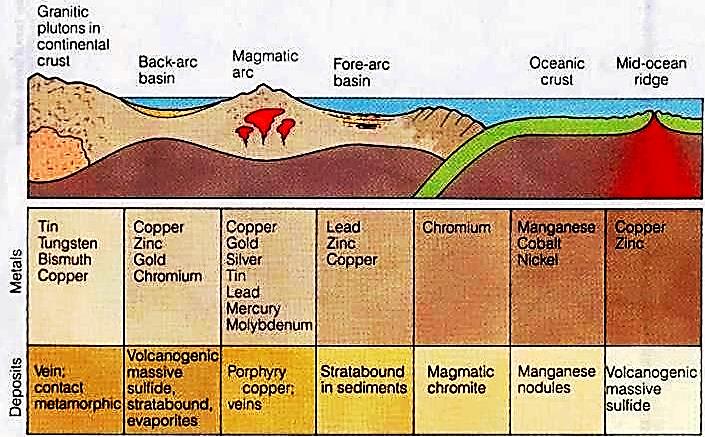
-------------------------------------------------------------- Feedback: This is the metamorphic sequence 894. Ore bodies at divergent plate of increasingly coarser grain size for foliated
boundaries can be created through: metamorphic rocks, which are metamorphic
a) Contact metamorphism. rocks that have a characteristic banded or
b) Regional metamorphism. striped pattern, which is caused by the
c) Hydrothermal processes. alignment of minerals under high pressure and
temperature. Slate is the finest-grained foliated
Feedback: Ore bodies at divergent plate metamorphic rock, which forms from the low-
boundaries are often created through grade metamorphism of shale or mudstone.
hydrothermal processes. This involves hot, Phyllite is slightly coarser than slate, and has a
mineral-rich fluids circulating through fractures lustrous and wrinkled surface due to the
and openings in rocks near mid-ocean ridges. presence of very fine-grained mica. Schist is
As these fluids cool, they can deposit valuable coarser than phyllite, and has clearly visible
minerals, forming ore bodies. Hydrothermal crystals of mica that create a fish-scale
processes are a common mechanism for the appearance. Gneiss is the coarsest-grained
179
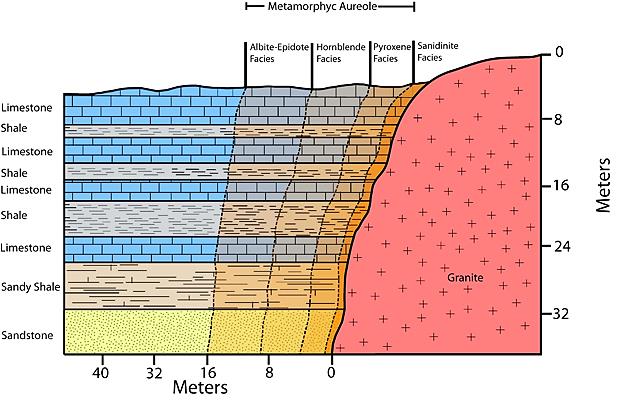
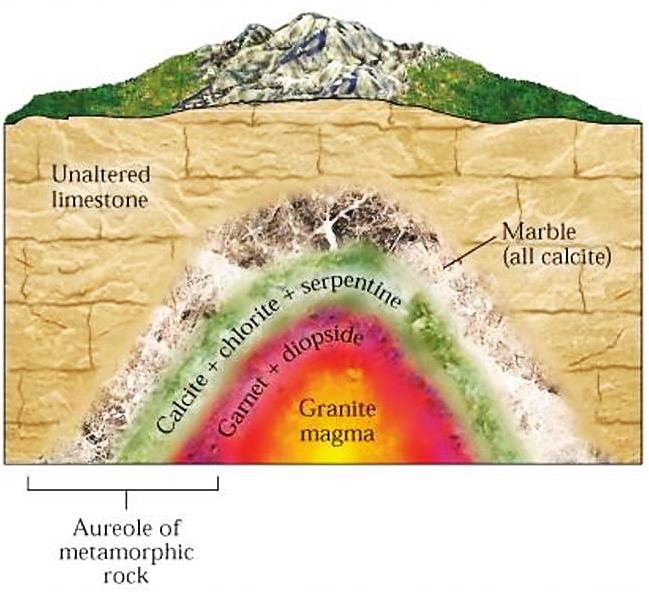
foliated metamorphic rock, which has (magma) into surrounding rock cause changes alternating light and dark bands of minerals in the mineral composition and texture of the such as quartz, feldspar, biotite, and garnet. surrounding rocks. These changes result in
distinct mineral zones or aureoles around the
igneous intrusion.

--------------------------------------------------------------
897. To which metamorphic facies do
metamorphic rocks formed under low-
temperature, low-pressure conditions
a) 899. The metamorphic rock formed from Granulite. limestone or dolostone is called: belong? -------------------------------------------------------------- c) a) Quartzite. b) Zeolite.
d) b) Marble. Amphibolite.
e) c) Hornfels. Blueschist.
Eclogite.
d) Greenstone.
Feedback e) Schist. : Metamorphic facies are groups of metamorphic rocks that have similar mineral
pressure and temperature conditions. Zeolite is metamorphic rock that is produced from the metamorphism of limestone or dolostone. assemblages and formed under similar Feedback: Marble is a non-foliated
near the surface or in shallow water. Zeolite is rocks that are mainly composed of calcium carbonate (CaCO characterized by the presence of zeolites, 3 ) or calcium magnesium carbonate (CaMg(CO which are hydrated aluminosilicate minerals temperature, low-pressure conditions, typically Limestone and dolostone are sedimentary a metamorphic facies that forms under low-
that have a porous structure and can exchange the conditions of metamorphism, the carbonate minerals in the limestone or dolostone 3 2 )), respectively. Under associated with volcanic rocks or sediments recrystallize to form a rock that is a mass of cations with water. Zeolites are often
groundwater. is often used for sculpture and as building material because it takes high polish and has that have been altered by seawater or interlocking calcite or dolomite crystals. Marble
various colors and patterns.
--------------------------------------------------------------
898. Concentric zones surrounding an --------------------------------------------------------------
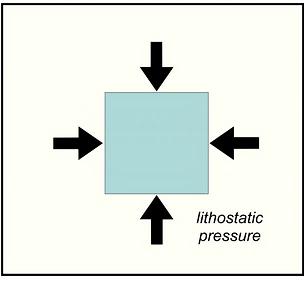
igneous intrusion and characterized by 900. Pressure resulting from deep burial and distinctive mineral assemblages are: applied equally in all directions on a rock is
a) Thermodynamic rings. a) Directional. b) Hydrothermal regions. b) Differential. c) Metamorphic layers. c) Lithostatic. d) Regional facies. d) Shear. e) Aureoles. e) Unilateral.
Feedback: Aureole is a ring around an igneous Feedback: Overburden pressure, also intrusion. Deep magma bodies cool very slowly called lithostatic pressure, confining and turn into coarse-grained, plutonic rocks like pressure or vertical stress, is
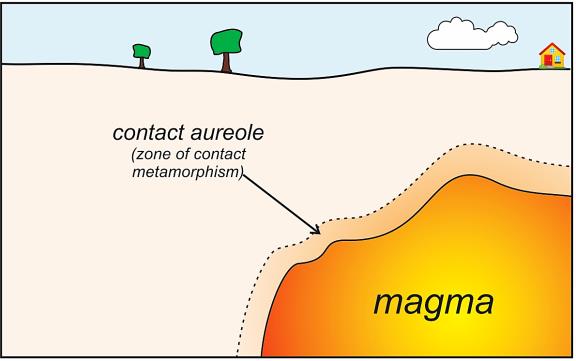
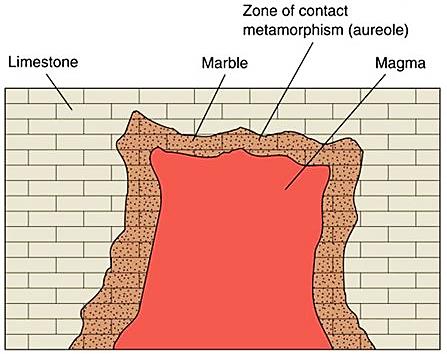
granite and gabbro. During this time they bake the pressure or stress imposed on a layer a zone, or aureole, of contact metamorphism in of soil or rock by the weight of overlying the country rock. Aureoles are areas of contact material. Lithostatic pressure is the pressure metamorphism where the heat and chemicals exerted on a rock due to the weight of the released by the intrusion of molten rock overlying material, and it is applied equally in all
180
directions. This pressure increases with depth c) Contact. as the weight of the overlying rocks increases. d) Regional. It is not directional or differential because it acts e) Thermodynamic. uniformly on all sides of the rock, compressing
it from all directions. Feedback: Contact metamorphism is the type
of metamorphism where magmatic heat and
fluid activity are the primary agents of change.
This occurs when rocks are subjected to high
temperatures and pressures due to the

intrusion of molten rock (magma) from the
Earth's mantle.
--------------------------------------------------------------
901. Metamorphic rocks with a planar
texture (the constituents of the rock are
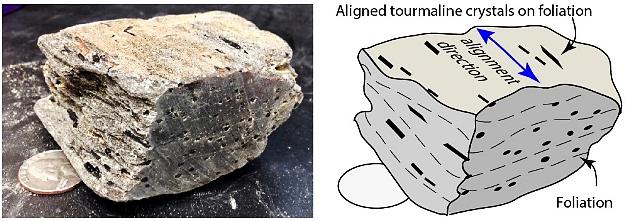
c) Discordant. Divergent. a) d) Nonfoliated. b) Transform. c) Aseismic. Feedback : Foliation forms when pressure d) b) 904. Along what type of plate boundary is Foliated. metamorphism most common? a) parallel to one another) are said to be: -------------------------------------------------------------- Concordant.
squeezes the flat or elongate minerals within Convergent. e) Lithospheric. a rock so they become aligned. These rocks develop a platy or sheet-like Feedback : Metamorphism is most commonly structure that reflects the direction that pressure associated with convergent plate boundaries. was applied in. Slate, schist, and gneiss are This is because convergent boundaries involve all foliated metamorphic rocks. the collision or subduction of tectonic plates,
which can subject rocks to high pressures and
temperatures, leading to metamorphism. The
intense pressure and heat generated at
convergent boundaries make it a favorable
environment for the formation of metamorphic
rocks.
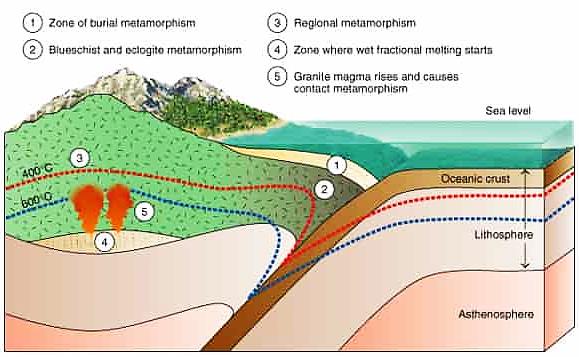
--------------------------------------------------------------
902. Which of the following is NOT an agent
of metamorphism?
a) Pressure.
b) Heat.
c) Fluid activity.
d) Gravity.
e) None of these.
Feedback: Gravity is not typically considered an agent of metamorphism. The main agents of --------------------------------------------------------------
activity, which work together to change the "change form." metamorphism are pressure, heat, and fluid 905. Metamorphism literally means to
-------------------------------------------------------------- b) mineral composition and texture of rocks. a) True. False.
903. In what type of metamorphism are
agents of change? refers to the process of changing the mineral magmatic heat and fluid activity the primary Feedback: Metamorphism, in geological terms,
a) Dynamic. composition, texture, and sometimes the b) Lithostatic.
181
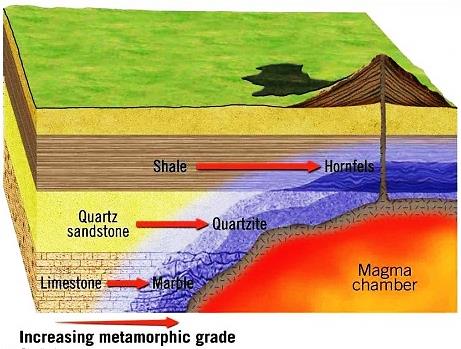
structure of rocks in response to changes in 909. Contact or thermal metamorphism temperature, pressure, and chemical occurs in association with igneous
environment. The term "metamorphism" is intrusions. derived from the Greek words "meta," meaning a) True. "change," and "morph," meaning "form." b) False. --------------------------------------------------------------
906. Which of the following is an agent of Feedback: Contact metamorphism is a type of
metamorphism? metamorphism that occurs when rocks are
a) Electromagnetism. heated by the intrusion of hot magma. It is a

b) Heat. localized process that occurs in the immediate
c) Chemically active fluids. vicinity of an igneous intrusion. Contact
d) All of the above. metamorphism can transform rocks such as
e) Only heat and chemically active fluids. limestone, sandstone, and shale into marble,
quartzite, and hornfels, respectively.
Feedback: Electromagnetism is not an agent of metamorphism because it does not cause
significant changes in the form and composition
of rocks. Electromagnetism is a force that acts
between electrically charged particles, but it
does not affect the bonding or arrangement of
atoms in minerals.
--------------------------------------------------------------
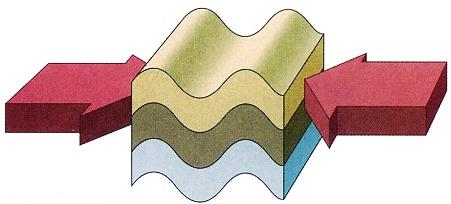
907. What type of stress is illustrated in the
following figure?
--------------------------------------------------------------
910. Hydrothermal solutions are responsible
for producing large-scale regional
metamorphism.
a) True. b) False.
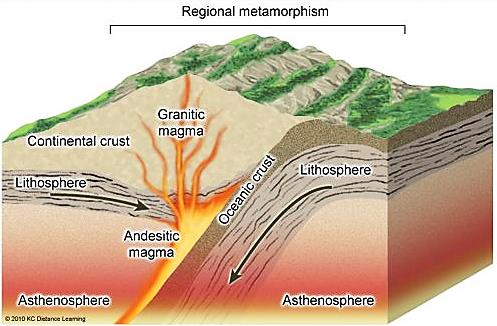
a) Slaty cleavage. Feedback: Hydrothermal solutions are typically b) Tensional. associated with contact metamorphism rather c) Shear. than large-scale regional metamorphism. d) Compressional. Regional metamorphism is often driven by the e) Folding. combination of high temperature and pressure over extensive areas, typically associated with Feedback : Compressional stress is a type of tectonic forces in the Earth's crust. differential stress that occurs when forces push against each other, causing rocks to deform by shortening or decreasing in volume. This type of stress commonly occurs at convergent plate
boundaries, where tectonic plates collide. It can
lead to the folding and faulting of rocks,
resulting in the creation of mountain ranges and
other geological features.
--------------------------------------------------------------
908. Most metamorphism takes place ___. a) At Earth's surface.
e) In Earth's core. 911. A zone of alteration that often Where a rock is subjected to conditions surrounds an emplaced magma is called unlike those in which it formed. a(n) ________. a) Regional emplacement. Feedback c) In young sediments. -------------------------------------------------------------- d) b) Only at a significant depth below the surface.
where a rock is subjected to conditions such as : Metamorphism typically occurs b) Facies. c) Thermal zone. high temperature, high pressure, or chemically d) Hornfels alteration. active fluids that are unlike the conditions in e) None of the above. which it initially formed. This can happen both
at significant depths below the Earth's surface Feedback: A zone of alteration that often and in some cases, at or near the surface. surrounds an emplaced magma is called a --------------------------------------------------------------
182
contact metamorphic aureole. Contact a) Shear stress. metamorphism is a type of metamorphism that b) Differential stress. occurs when a body of magma intrudes into the c) Tensional stress. upper part of the crust and transfers heat to the d) Confining pressure. surrounding rock. The size and intensity of the e) Geothermal gradient. contact metamorphic aureole depend on the
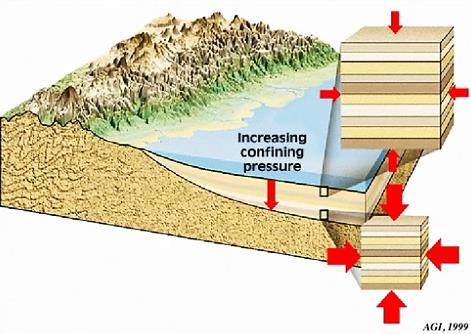
temperature and size of the magma body, and Feedback: The force exerted on a buried rock the type and composition of the country rock. by the weight of material above is
Contact metamorphism produces non-foliated called confining pressure. Confining pressure is

metamorphic rocks such as hornfels, marble, a type of pressure that is equal in all directions
and quartzite. and due to the weight of the overlying rocks.
Confining pressure affects the shape and
volume of rocks and minerals, but does not
create any preferred orientation or foliation.
--------------------------------------------------------------
912. The agents of metamorphism include
a) 915. __________ solutions are ion-rich True. fluids associated with large magma bodies heat, pressure, and chemically active fluids. --------------------------------------------------------------
b) False.
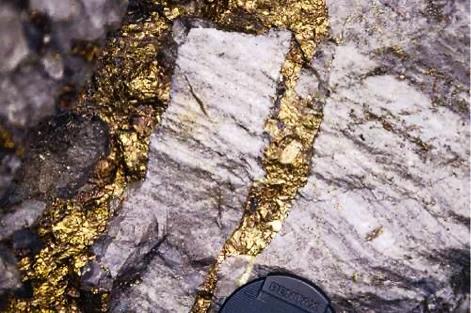
leading to the formation of metamorphic rocks. Heavy. None of the above. e) --------------------------------------------------------------913. During extreme metamorphism, the Feedback : Hydrothermal solutions are ion-rich transformation may be so complete that the fluids associated with large magma bodies that parent rock cannot be determined. can lead to the formation of various a) True. economically important mineral deposits. b) False. These solutions are often responsible for the precipitation of minerals like gold, silver, Feedback : The parent rock is the original rock copper, and many others in hydrothermal veins include heat, pressure, and chemically active Magma. Ore. b) fluids. These factors can alter the mineral c) Hydrothermal. composition, texture, and structure of rocks, d) Feedback economically important mineral deposits. : The agents of metamorphism a) that eventually may form a variety of
a metamorphic rock. Extreme metamorphism, and ore bodies. that undergoes metamorphism and gives rise to often associated with high pressure and
temperature conditions, can lead to the
complete recrystallization and transformation of
the parent rock to the extent that its original
characteristics are obscured, making it difficult
to determine the parent rock. For example,
eclogite is a very high-grade metamorphic rock
that forms under very high-temperature and
very high-pressure conditions, typically in the
deep mantle or at the base of subduction
zones. Eclogite is characterized by the
presence of green minerals such as omphacite --------------------------------------------------------------
eclogite can form from various parent rocks, metamorphism is heat. such as basalt, gabbro, peridotite, or granulite, and red minerals such as garnet. However, 916. The most important agent of
a) True.
and it may be difficult to determine its origin b) False.
-------------------------------------------------------------- Feedback: Heat is the most important agent of 914. based on its appearance alone.
the weight of material above is called: The force exerted on a buried rock by metamorphism because it provides the energy that drives the chemical reactions responsible
183
for mineral and textural changes during and iron) undergoes low-grade metamorphism
metamorphism. Heat can come from different in the presence of water. sources, such as the geothermal gradient,
magmatic intrusions, or friction along faults.
--------------------------------------------------------------
917. The parent rock of a marble is ______. a) Shale.
b) Limestone.
c) Granite.

d) Slate.
e) Sandstone.
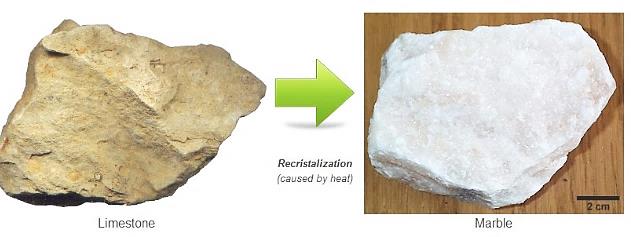
Feedback: Marble is a metamorphic rock that --------------------------------------------------------------
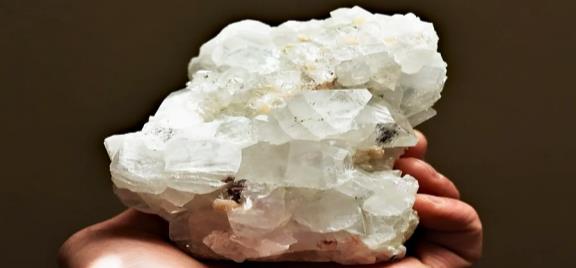
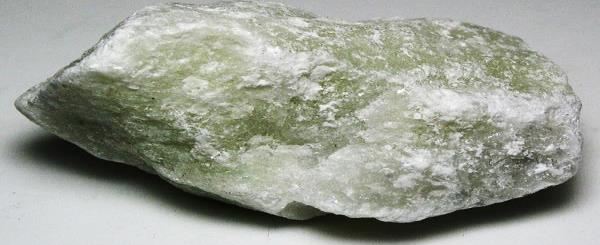
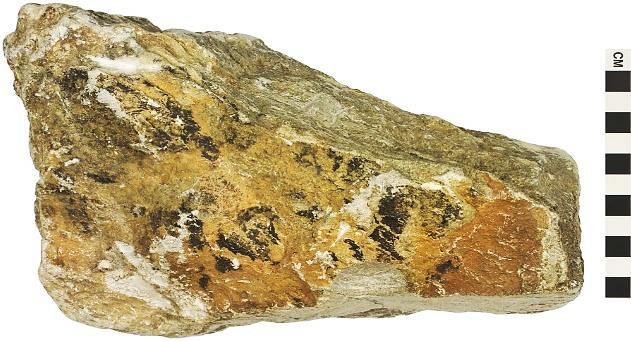
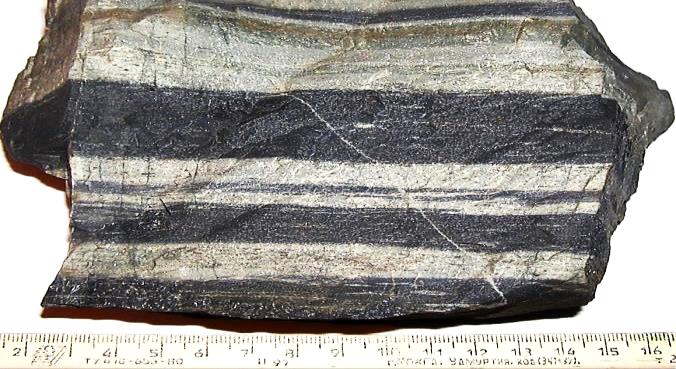
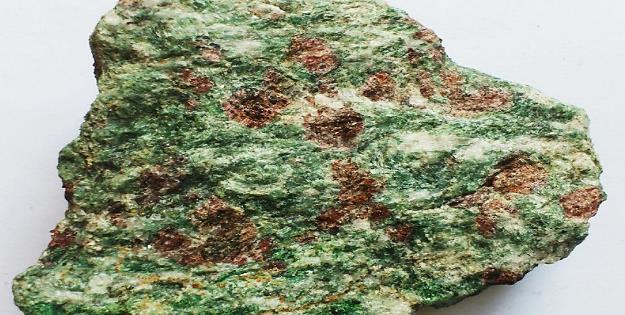
forms from the metamorphism of limestone. 919. The following close-up image is of a Limestone is the parent rock, and the metamorphic rock called __________. metamorphic process that leads to marble
involves the recrystallization of the original
calcite minerals in limestone into larger,
interlocking crystals of calcite or dolomite.
918. c) Which of these is NOT a common type d) Gneiss. of schist? e) Marble. a) Kyanite schist. b) -------------------------------------------------------------- b) Slate. Schist. a) Greenstone. c) Feedback: Gneiss is a metamorphic rock Mica schist.
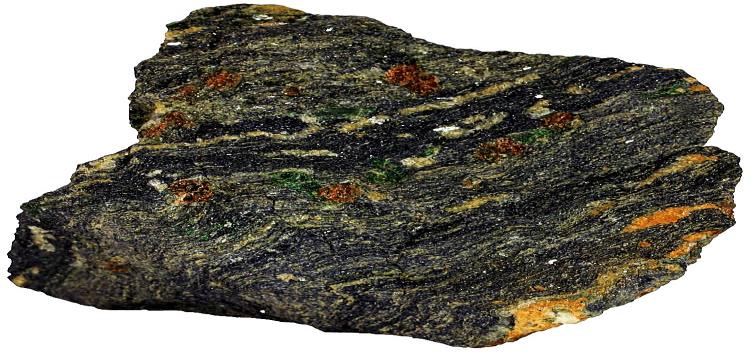
d) characterized by a distinctive banding or Garnet schist.
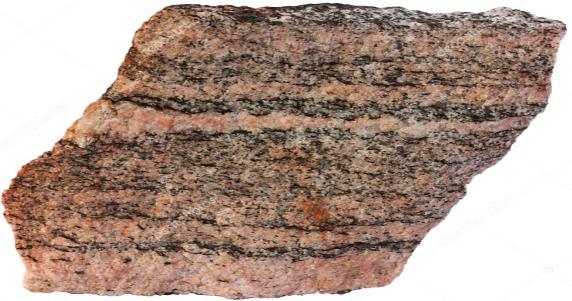
Olivine schist.
Feedback metamorphism of pre-existing rocks, such as : Schist is a type of metamorphic rock igneous or sedimentary rocks, under conditions layering of minerals. It forms through the
undergone significant physical and chemical in the original rock recrystallize and reorganize, giving gneiss its unique texture and changes due to heat, pressure, and other appearance. geological processes. Schist is usually named distinct layers or bands of minerals that have of high temperature and pressure. The minerals that has a foliated texture, which means it has
after the dominant mineral or minerals present --------------------------------------------------------------
in it, such as mica schist, garnet schist, or 920. What is the texture of the following
staurolite schist. Olivine schist is not a common metamorphic rock? type of schist. Schists are typically named
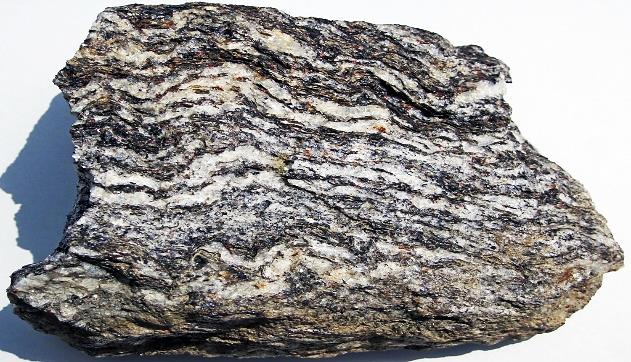
based on the dominant mineral or minerals
present in them, and olivine is not a common
mineral found in schist rocks. Olivine is a green mineral that belongs to the nesosilicate group,
which means it has isolated tetrahedra of silicon
and oxygen atoms. Olivine is commonly found
in igneous rocks such as basalt and peridotite,
where it crystallizes from magma at high
temperatures. Olivine is not a common mineral a) Foliated. found in schist rocks, because olivine is highly b) Not foliated. susceptible to disintegration by weathering or c) No texture exists. alteration by metamorphism. Olivine tends to --------------------------------------------------------------
react with water and carbon dioxide to form 921. What is the approximate temperature serpentine, talc, or carbonate minerals, which and depth of formation of most slate? are more stable at lower temperatures and a) 100 degrees C, 20 kilometers. pressures. Therefore, olivine schist is a rare b) 200 degrees C, 10 kilometers. type of schist that forms under very specific c) 500 degrees C, 2 kilometers. conditions, such as when an ultramafic rock (a d) 800 degrees C, 400 kilometers. rock that has very high content of magnesium e) 1000 degrees C, 100 kilometers.
184
Feedback: Slate is a type of metamorphic rock calcite, garnet, pyroxene, and various ores of
that has a fine-grained texture and a foliated metals such as iron, copper, zinc, lead, gold,
structure, which means it has thin layers or and tungsten. Skarns are usually classified by
sheets of minerals that are parallel to each the dominant metal or mineral present in them,
other. The approximate temperature and depth such as Fe-skarns (iron), Cu-skarns (copper),
of formation of most slate are 200 degrees C, W-skarns (tungsten), Au-skarns (gold), and
10 kilometers. This is because slate is a product Mo-skarns (molybdenum). The largest skarns
of low-grade metamorphism, which means it are of d) Fe-skarns type. Fe-skarns are skarns
forms under relatively low temperatures and that contain large amounts of iron minerals,

pressures compared to other metamorphic such as magnetite, hematite, pyrite, and
rocks. The temperature and pressure siderite. Fe-skarns are usually associated with
conditions for slate formation are usually within granitic intrusions that have high iron content
the range of 150-300 degrees C and 5-15 and low silica content. Fe-skarns can form
kilometers, respectively. These conditions are massive deposits that can be hundreds of
typical of the upper part of the crust, where meters thick and several kilometers long. shale or mudstone can be buried and heated by
the geothermal gradient or by tectonic
movements.
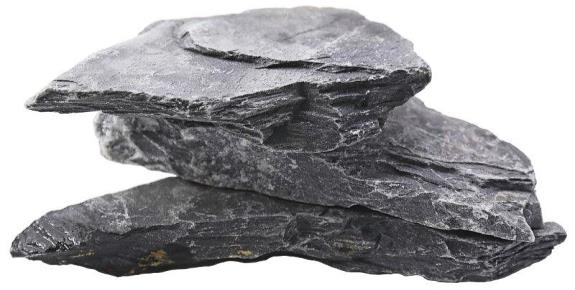
--------------------------------------------------------------
922. When rocks exhibit ductile behavior,
their mineral grains tend to flatten and --------------------------------------------------------------
elongate when subjected to differential 924. When shale is subjected to low-grade stress. metamorphism, its minerals align
a) True. themselves and the metamorphic rock
b) False. __________ is formed.
a) Quartzite.
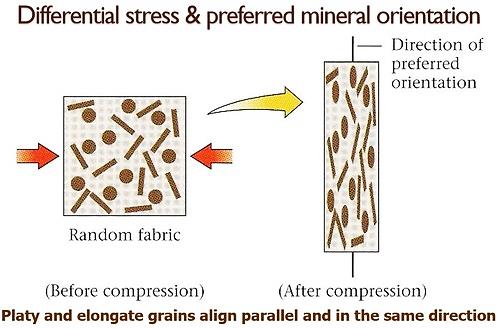
Feedback: Ductile behavior is the ability of a b) Marble. material to deform plastically without breaking c) Slate. or fracturing under stress. Differential stress is d) Gneiss. a type of stress that is unequal in different e) Amphibolite. directions and due to tectonic forces.
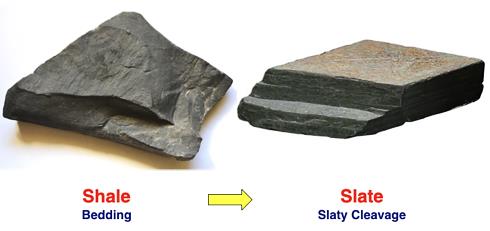
Feedback: When shale is subjected to low-grade metamorphism, the metamorphic rock
slate is formed. Slate is characterized by its
fine-grained texture and the alignment of its
mineral grains, which gives it a foliated
appearance.
--------------------------------------------------------------
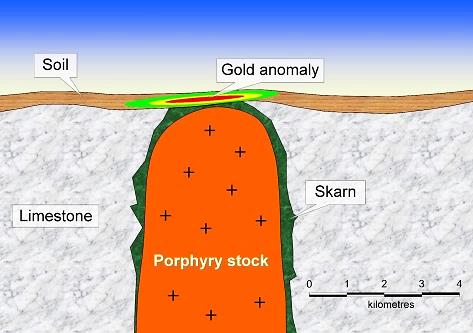
923. The largest skarns are of what type? a) W-skarns
b) Au-skarns --------------------------------------------------------------
c) Mo-skarns 925. What two minerals are most commonly d) Fe-skarns. present in a skarn? e) None of the above. a) Plagioclase and pyroxene.
b) Garnet and pyroxene.
Feedback: Skarns are metamorphic rocks that c) Calcite and olivine. form from the interaction of magmatic fluids and d) Plagioclase and garnet. carbonate rocks, such as limestone or dolomite. e) None of the above. Skarns are often rich in minerals such as
185
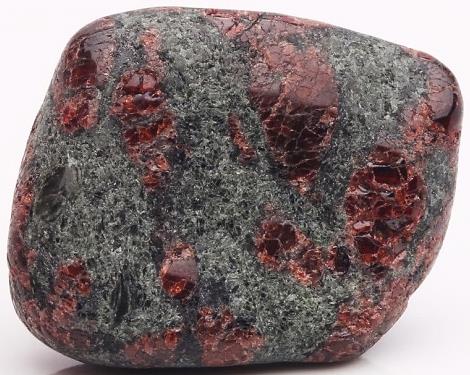
Feedback: The two minerals that are most d) Hydrothermal. commonly present in a skarn are garnet and e) None of the above. pyroxene. Garnet and pyroxene are silicate
minerals that form from the replacement of Feedback: Hornfels is most often associated carbonate minerals by magmatic fluids that are with contact metamorphism. Contact rich in silica, iron, magnesium, calcium, and metamorphism occurs when rocks are
aluminum. Garnet is a group of minerals that subjected to high temperatures and pressures
have a cubic crystal structure and a wide range due to the intrusion of molten magma (igneous
of colors, such as red, green, yellow, or black. intrusion). The heat from the magma causes

Pyroxene is a group of minerals that have a the surrounding rocks to undergo metamorphic
chain-like crystal structure and a dark color, changes without significant pressure from deep
such as black, green, or brown. Garnet and burial. Hornfels can form from various types of
pyroxene are often the main constituents of rocks, including shale, limestone, and other
skarns, and they can form various shapes and sedimentary or igneous rocks. The specific
textures, such as massive, nodular, or banded. minerals present in hornfels depend on the
The picture below shows Almandine Garnets in original rock composition and the temperature
Pyroxene. conditions during metamorphism.
-------------------------------------------------------------- --------------------------------------------------------------
926. The various types of foliation depend 928. Mineral alignment in a metamorphic
upon the grade of metamorphism and the rock usually gives the rock a foliated texture.
mineralogy of the parent rock. a) True.
a) True. b) False. b) False.
Feedback: Mineral alignment in a metamorphic
Feedback: The various types of foliation in rock often results in a foliated texture, where the
metamorphic rocks depend on factors such as minerals are arranged in parallel layers or
the grade of metamorphism, the mineralogy of bands. Foliation is a common feature of many
the parent rock, and the specific conditions metamorphic rocks, such as slate, schist, and
under which the metamorphism occurred. gneiss, and it occurs due to the directed
Foliation is the alignment of mineral grains in pressure and heat during the metamorphic
parallel layers or bands, and different foliation process. types can develop based on these factors.
Common types of foliation include slate,
schistosity, and gneissic foliation, and they are
associated with different degrees of
metamorphism and mineral compositions.
--------------------------------------------------------------
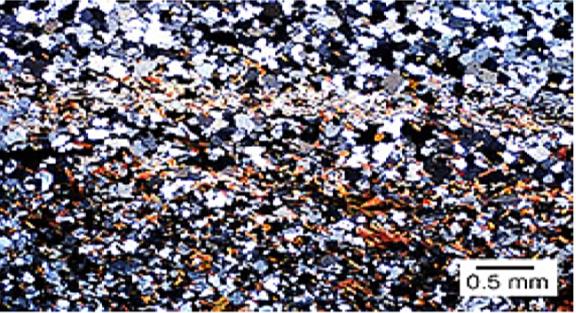
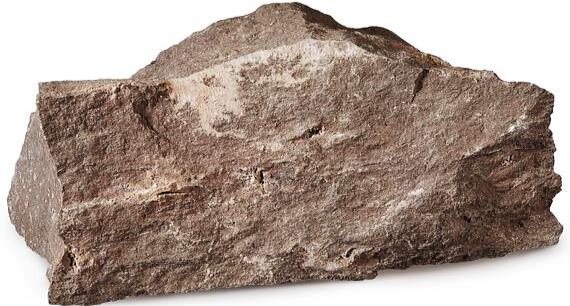
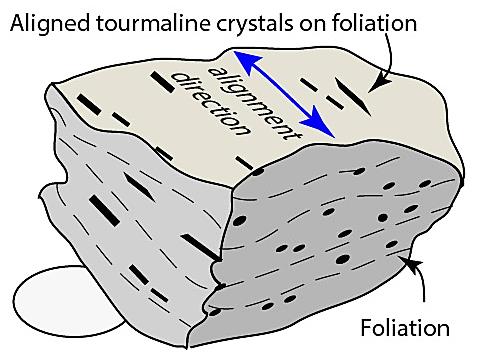
927. The following microphotograph is of the
rock hornfels. With what type of
metamorphism is the rock most often
associated with?
--------------------------------------------------------------
929. The parent rock of "soapstone"
(talc/chlorite) is ________.
a) Peridotite. b) Sandstone. c) Granite. d) Limestone. e) Basalt.
b) Fault-related. Feedback: The parent rock of “soapstone” c) a) Regional.
Contact. (talc/chlorite) is peridotite. Soapstone is a type
186
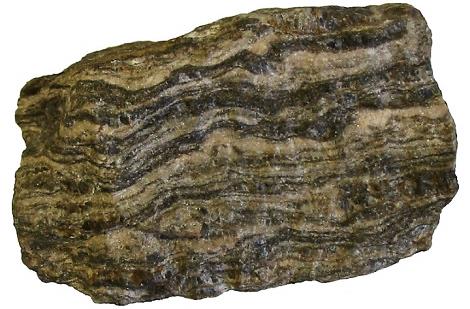
of metamorphic rock that is composed mainly d) Preferred orientation. of talc and chlorite minerals, which give it a soft e) Gneissic texture. and greasy texture. Soapstone is often used for
carving, sculpture, and as a material for Feedback: Gneiss is a foliated metamorphic countertops, sinks, and stoves. Peridotite is a rock characterized by the segregation of light
type of igneous rock that is rich in magnesium and dark minerals into distinct bands or layers,
and iron, and has a dark green color. Peridotite which gives it a banded appearance. This is a
is the main constituent of the upper part of the result of intense heat and pressure during
Earth’s mantle, and it can be brought to the metamorphism, causing the minerals to

surface by tectonic movements or volcanic reorganize and segregate into their respective
eruptions. Peridotite can be metamorphosed layers. into soapstone by the action of water and
carbon dioxide, which can dissolve and replace
some of the minerals in peridotite, such as
olivine and pyroxene, with talc and chlorite. This
process is known as serpentinization, and it can
occur at low to moderate temperatures and
pressures.
--------------------------------------------------------------
932. Most regional metamorphism occurs:
a) In areas of active mountain building. b) In the lower mantle. c) Around magmatic intrusions. d) Around volcanoes. e) On the seafloor.
-------------------------------------------------------------- Feedback: Most regional metamorphism 930. When subjected to pressure, occurs in areas of active mountain building or in
metamorphosed rocks often exhibit a regions where tectonic forces lead to significant
layered or banded texture called ________. crustal deformation and the deep burial of
a) Foliation. rocks. This type of metamorphism typically
b) Slating. occurs over large areas and is associated with
c) Bedding. the high pressures and temperatures found
d) Facies. deep within the Earth's crust during the process
e) None of the above. of mountain building and plate tectonics.
Feedback: Foliation refers to repetitive layering in metamorphic rocks. Each layer can be as thin
as a sheet of paper, or over a meter in
thickness, results from the alignment of mineral
pressure and deformation during the grains in parallel layers or bands due to directed --------------------------------------------------------------
metamorphic process. 933. Regional metamorphism produces the
greatest volume of metamorphic rock.
a) True. b) False.
Feedback: Regional metamorphism typically produces the greatest volume of metamorphic
rock on Earth. This type of metamorphism
occurs over large areas, often related to
tectonic plate boundaries, mountain-building
processes, or deep burial of rocks. The
widespread nature of regional metamorphism
means that it can affect large volumes of rock,
-------------------------------------------------------------- leading to the formation of extensive
931. Following high-grade metamorphism, metamorphic terrains. Localized or contact
the segregation of minerals into separate metamorphism, on the other hand, affects
bands is referred to as __________. smaller volumes of rock and is associated with
a) Schistocity. igneous intrusions or other localized heat
b) Slaty cleavage. sources. c) Rock cleavage. --------------------------------------------------------------
187
934. One type of metamorphic rocks that e) Chlorite.
form in fault zones are termed __________.
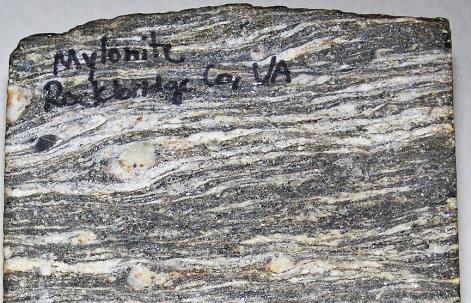
a) Fault breccias. Feedback: Sillimanite is one of three b) Mylonites. aluminosilicate polymorphs, the other two being
c) Conglomerates. andalusite and kyanite. Both the fibrous and
d) Migmatites. traditional forms of sillimanite are common in
e) None of the above. metamorphosed sedimentary rocks. Sillimanite
is a mineral that is most commonly associated
Feedback: Mylonites are a type of with high-grade metamorphism. It forms under

metamorphic rock that forms in fault zones. conditions of high temperature and pressure
They are characterized by their fine-grained, and is an indicator of the high-grade
foliated texture and are the result of intense metamorphic conditions where rocks have
mechanical deformation along fault lines. The experienced significant heat and pressure deep
rocks within fault zones experience shearing, within the Earth's crust. Biotite, garnet, and
crushing, and recrystallization, leading to the muscovite are also metamorphic minerals, but
formation of mylonites during a process termed sillimanite is typically associated with higher
cataclastic or dynamic metamorphism. grades of metamorphism than the others.
Chlorite, on the other hand, is more commonly
found in lower-grade metamorphic rocks.
--------------------------------------------------------------
935. Migmatites serve to illustrate the fact
that some rocks are transitional and do not
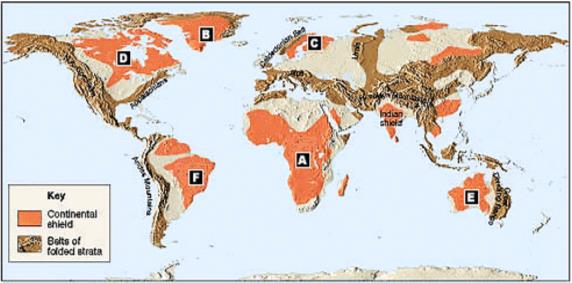
a) 937. Identify the indicated continental True. shields by selecting the correct response. rock groups. clearly belong to any one of the three basic --------------------------------------------------------------
b) False.
Feedback: Migmatites are indeed rocks that serve to illustrate the transitional nature of
certain geological processes. They are not
clearly classified into any one of the three basic
rock groups (igneous, sedimentary, or
metamorphic) because they are a mixture of
both igneous and metamorphic components.
Migmatites form under conditions of high a) African shield (A) temperature and pressure, often during the b) Brazilian shield (F) later stages of metamorphism, where rocks c) Baltic shield (C) start to partially melt. As a result, migmatites d) Canadian shield (D) can contain both melted (igneous) and re-e) Greenland shield (B) crystallized (metamorphic) components, f) Australian shield (E) making them transitional and unique in their -------------------------------------------------------------- composition. 938. In regional metamorphism the source of increased temperature and pressure is:
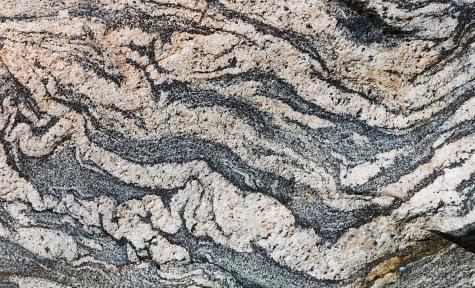
a) A local intrusive heat source. b) Impact metamorphism. c) The increase in temperature with increasing
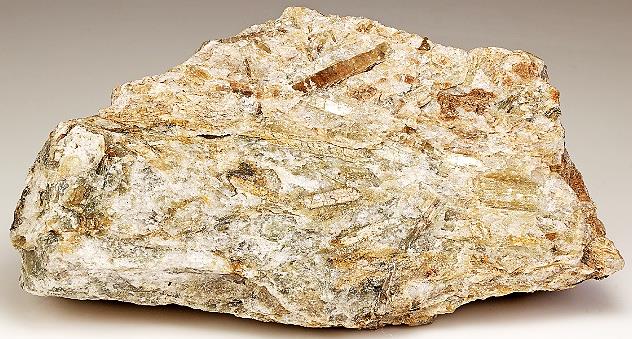
depth of burial.
d) Due to increased rate of radioactive decay.
-------------------------------------------------------------- source of increased temperature and pressure Which of the following minerals is most Feedback: In regional metamorphism, the
936. is primarily the result of the increase in
associated with high-grade metamorphism? temperature with increasing depth of burial
b) Garnet. deeper in the Earth's crust, they experience Muscovite. a) Biotite. within the Earth's crust. As rocks are buried
c) higher temperatures and pressures due to the
d) Sillimanite. geothermal gradient and the overlying rock
188
layers. This leads to the metamorphic changes 941. A combination of shallow earthquakes, that characterize regional metamorphism. tension, and contact metamorphism
Unlike contact metamorphism, which is driven characterizes ___________. by a local intrusive heat source, regional a) Transform fault margins. metamorphism occurs on a larger scale and is b) Spreading centers. associated with tectonic forces and the deep c) Continent/continent margins. burial of rocks. d) Subduction type margins. --------------------------------------------------------------
939. A migmatite is a __________. Feedback: Spreading centers are tectonic a) Low-grade metamorphic rock containing plate boundaries where two plates are moving

garnet. apart from each other. As the plates separate,
b) Rock that has been metamorphosed to such tensional forces create shallow earthquakes.
high degrees that it has partially melted. Additionally, the heat generated by the
c) Metamorphic rock that forms from separation of the plates can lead to contact
sandstone. metamorphism as hot mantle material comes
d) Type of meteorite that has undergone into contact with the overlying oceanic crust.
metamorphism. This contact metamorphism can result in the
e) None of the above. alteration of rocks in the vicinity of the
spreading center.
Feedback: A migmatite is a metamorphic rock that has undergone such high-grade
metamorphism that it begins to partially melt.
This unique rock type contains both re-
crystallized minerals characteristic of
metamorphic rocks and a partial melt that is
more akin to an igneous rock. Migmatites are
often found in areas of intense geological
activity and represent a transitional stage
between metamorphism and partial melting. --------------------------------------------------------------
942. In contact metamorphism there is a:
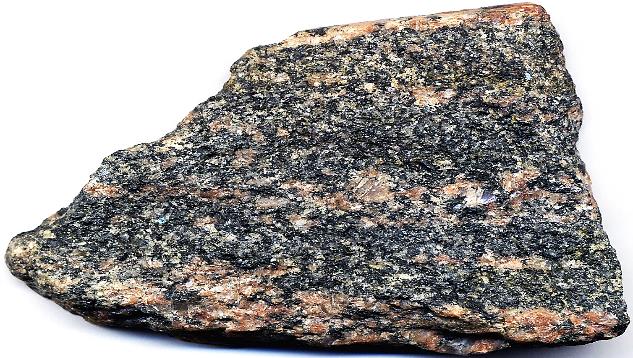
a) Local heat source. b) Frictional heat source. c) Regional heat source.
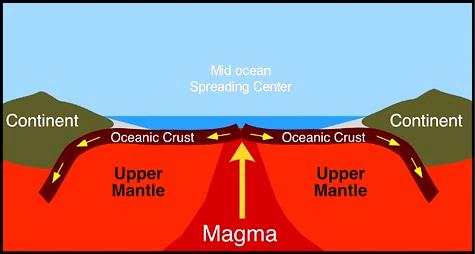
Feedback: In contact metamorphism, the primary heat source is a local one, typically in
the form of a nearby intrusive igneous body
(such as a magma chamber or pluton) that
heats the surrounding rocks. This type of
-------------------------------------------------------------- metamorphism occurs in a localized area near
a) metamorphism result from which three into contact with the molten or hot intrusive forces? body. The internal heat of the Earth, the weight of 940. the heat source, and it leads to changes in the The pressure and heat that drive mineralogy and texture of the rocks that come
overlying rocks, and horizontal pressures
developed as rocks become deformed.
b) The weight of the overlying rocks, solar
heating, and nuclear fusion.
c) Horizontal pressures developed as rocks
deform, bonding, heat released during
crystallization.
d) Internal heat of the Earth, nuclear fission,
heat released during chemical weathering.
Feedback: The pressure and heat that drive metamorphism are primarily the result of the
internal heat of the Earth, the weight of
overlying rocks, and horizontal pressures --------------------------------------------------------------
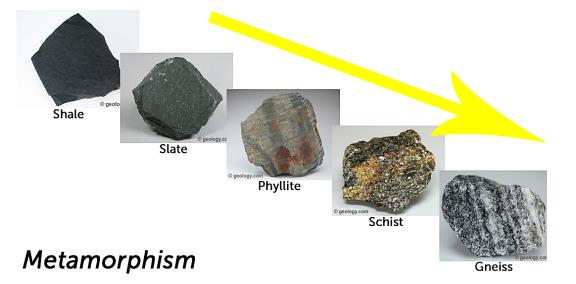
developed as rocks become deformed due to 943. Within a 50 mile traverse you walk from tectonic forces. These factors combine to a shale into a slate into a phyllite. You are
create the conditions necessary for the walking in the direction of _________. metamorphism of rocks. a) Increasing metamorphic grade. -------------------------------------------------------------- b) Decreasing metamorphic grade.
189
c) Increasing degree of contact history. By examining the minerals and their
metamorphism. compositions, geologists can infer the thermal
history of the rock and gain insights into the
Feedback: When you walk from shale to slate temperature conditions it has been subjected to
to phyllite within a 50-mile traverse, you are during its geological evolution. moving in the direction of increasing --------------------------------------------------------------
metamorphic grade. Shale is a low-grade 946. During metamorphism, changes in the metamorphic rock, slate represents a higher bulk composition of a rock occur primarily as
grade of metamorphism, and phyllite is even a result of __________? higher on the metamorphic grade scale. The a) Increases in pressure. rocks are becoming more metamorphosed as b) Increases in temperature. you progress, indicating an increase in c) Reaction with hydrothermal fluids. temperature and pressure conditions. d) All of these.

Feedback: Hydrothermal metamorphism takes place when hot, volatile solutions percolate into
and react with the protolith, or the original rock.
The heat of the intrusive igneous body and the
hot volatile fluids serves to catalyze
metamorphic reactions in the host rock. Much
hydrothermal metamorphism occurs at the
boundaries of oceanic plates. Plates which are
-------------------------------------------------------------- moving apart allow seawater to percolate
944. Which type of pressure will result in the through the oceanic crust. As the seawater
alignment of metamorphic minerals? migrates, it heats and reacts with the host rock.
a) Contact pressure. --------------------------------------------------------------
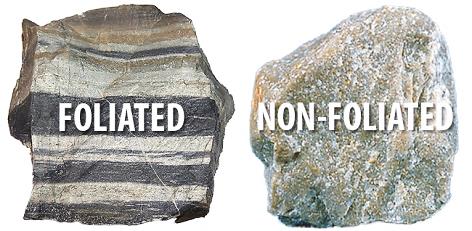
b) Directed pressure. 947. What is the most prominent textural c) Confining pressure. feature of regional metamorphic rocks? d) Chemical pressure. a) Foliation.
b) Bedding.
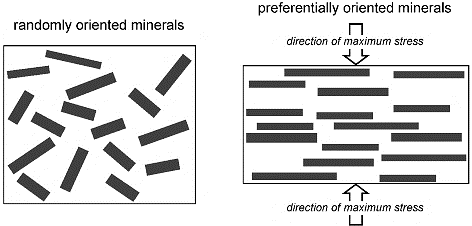
Feedback: The alignment of metamorphic c) Cataclasis. minerals typically results from directed d) Ripples. pressure. Directed pressure is a type of stress
where the forces act in a specific direction, Feedback: Most foliated metamorphic rocks, causing the minerals within the rock to align such as slate, phyllite, schist, and gneiss, do
themselves parallel to the direction of the form during regional metamorphism, which
pressure. This alignment is a common typically involves high temperature and
characteristic of foliated textures in pressure conditions over a large area. During
metamorphic rocks. regional metamorphism, rocks can become
ductile, which means they can deform and flow
like soft plastic when subjected to high pressure
and elevated temperatures, even though they
are still in a solid state. This ductile behavior
allows for the reorientation of mineral grains,
leading to the development of foliation in these
rocks. Slate, phyllite, schist, and gneiss are all
examples of foliated rocks that exhibit varying
945. A geothermometer is? of the metamorphic conditions they experienced. -------------------------------------------------------------- degrees of foliation depending on the intensity
a) A device that measures temperature in deep
drill holes.
b) A device that measures current rock
temperatures at the surface.
c) A mineral assemblage that can reveal the
minimum temperature attained during
heating.
d) The range of temperatures experienced by
a rock during its geologic history. --------------------------------------------------------------
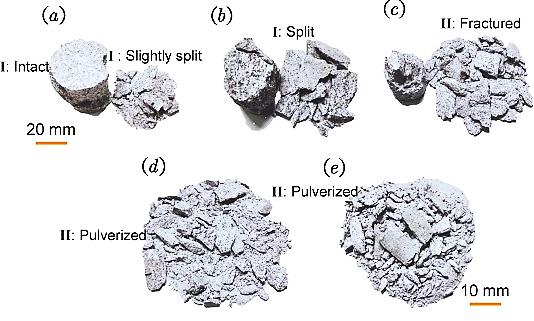
948. A rock that has undergone cataclastic
Feedback metamorphism would most likely display : A geothermometer is a mineral
assemblage or set of minerals found in a rock which of the following? that can be used to estimate the minimum a) Preserved sedimentary layering. temperature the rock experienced during its b) Pulverized rock fragments.
190
c) New minerals.
d) Large olivine crystals. Feedback: This statement is false because
with increasing metamorphism, the grain size of
Feedback: A rock that has undergone the minerals gets larger, not smaller. This is
cataclastic metamorphism is characterized by because as the temperature and pressure
the grinding, fracturing, and pulverization of increase, the clay minerals in shale break down
rock fragments due to intense mechanical and recrystallize to form larger crystals of mica,
deformation. It typically does not display quartz, feldspar, and other minerals. The larger
preserved sedimentary layering, new minerals, crystals have more stable structures and lower

or large crystals like olivine. Instead, cataclastic surface energy than the smaller clay particles.
metamorphism results in the crushing and The increase in grain size also reflects the
fragmentation of the original rock material. increase in metamorphic grade, which is a
measure of the intensity of metamorphism.
--------------------------------------------------------------
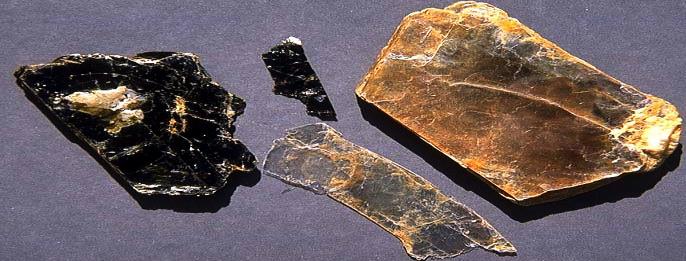
951. Which mineral is responsible for the
strong foliation in a schist?
a) Quartz. b) Calcite. c) Mica. d) Foliate.
Feedback: Mica minerals, such as muscovite
-------------------------------------------------------------- and biotite, are responsible for the strong
949. foliation typically observed in schist. These What type of metamorphism is caused
by high temperature and high pressure minerals have a platy or sheet-like structure,
imposed over a large volume of crust? and their alignment in parallel layers within the
a) rock gives schist its distinct foliated texture. The Burial.
b) alignment of mica minerals is a result of the Contact.
c) directed pressure and deformation that occur Regional.
d) during the metamorphic process, leading to the Cataclastic.
development of foliation in schist.
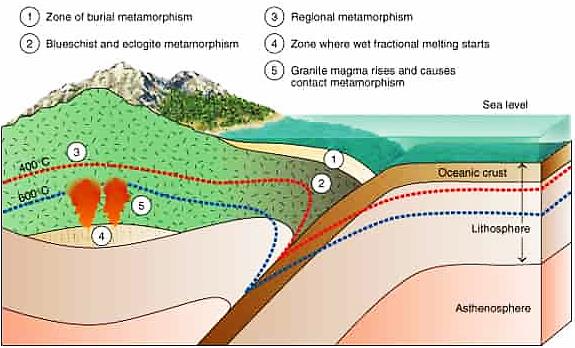
Feedback: Metamorphism caused by high temperature and high pressure imposed over a
large volume of crust is known as "regional
metamorphism." This type of metamorphism
typically occurs in the deeper parts of the
Earth's crust and is associated with tectonic
processes, such as mountain building and the
collision of tectonic plates. Regional
metamorphism can affect extensive areas and --------------------------------------------------------------
leads to the formation of foliated metamorphic 952. Which of the following processes will rocks like slate, schist, and gneiss. cause metamorphism?
a) A change in the chemical environment. b) An increase in temperature. c) An increase in pressure. d) All of these.
Feedback: Metamorphism can be caused by a combination of processes, including changes in
the chemical environment, an increase in
temperature, and an increase in pressure.
950. Which of the following statements the formation of metamorphic rocks. about metamorphism of a shale is FALSE ? Additionally, the duration of exposure to these a) With increasing metamorphism, the clay processes also plays a role in the extent and minerals breakdown to form micas. type of metamorphism that occurs. b) -------------------------------------------------------------- combination to alter the mineralogy, texture, and structure of pre-existing rocks, leading to These factors can act independently or in
c) 953. Which of the following metamorphic With increasing metamorphism, foliation rocks size of the minerals gets smaller. With increasing metamorphism, the grain --------------------------------------------------------------
d) a) Schist. With increasing metamorphism, the amount b) develops. cannot form from a shale?
of water decreases. Marble.
191
c) Hornfels. location, composition, and temperature of the
d) Slate. rocks. Due to the weight of overlying rocks,
pressure increases with depth in Earth's crust
Feedback: Marble is a metamorphic rock that at a rate of approximately 300-400 bar/km. So,
primarily forms from the metamorphism of at a depth of 15 kilometers, the pressure is
limestone or dolostone, not from shale. Shale is around 5000 bar, which is equivalent to
a sedimentary rock, and while it can undergo approximately 5000 times atmospheric
metamorphism to become slate, phyllite, or pressure. schist, it does not typically transform into --------------------------------------------------------------

marble. Marble forms when limestone or 956. ______ is the process where rocks dolostone undergoes metamorphism at high previously metamorphosed under high-
temperatures and pressures, resulting in the grade conditions are later metamorphosed
recrystallization of the original carbonate under low-grade conditions. minerals into the coarse-grained, crystalline a) Metasomatism. structure characteristic of marble. b) Cataclasis.
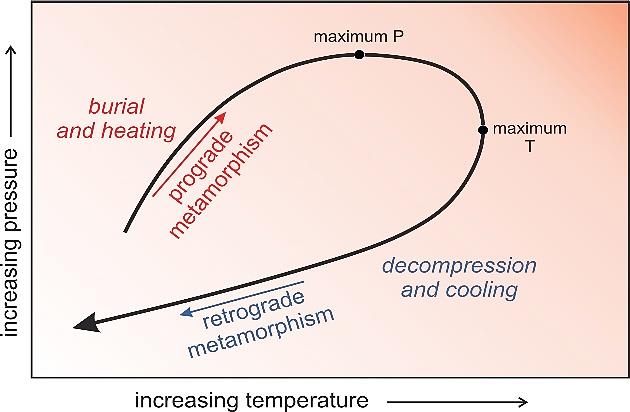
c) Foliation. d) Retrograde metamorphism.
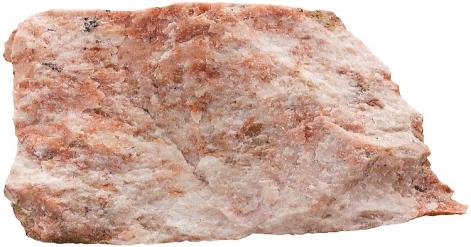
Feedback: Retrograde metamorphism is the process where rocks that were previously
subjected to high-grade metamorphic
conditions are later subjected to lower-grade
conditions. This can result in the alteration or
-------------------------------------------------------------- breakdown of minerals formed during the initial
954. Which of the following metamorphic high-grade metamorphism and the
rocks is not paired with its true parent rock? development of new minerals or textures
a) Greenstone-basalt. consistent with the lower-grade conditions.
b) Quartzite - quartz arenite. Retrograde metamorphism occurs when rocks
c) Schist – shale. are exposed to decreasing temperature and
d) Hornfels – dolomite. pressure conditions after undergoing an earlier
episode of more intense metamorphism.
Feedback: Hornfels is a metamorphic rock that can form from a variety of parent rocks,
including shale, siltstone, sandstone, and
limestone, but it does not typically form from
dolomite. Dolomite itself can undergo
metamorphism to become a different type of
rock, such as marble, but hornfels is more
commonly associated with the metamorphism
of other types of sedimentary rocks.
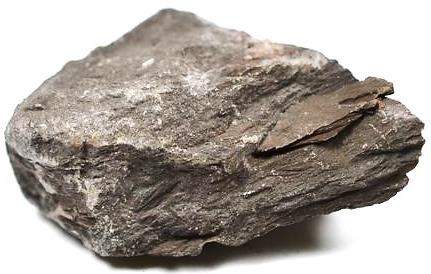
--------------------------------------------------------------
957. Metamorphism occurs ______. a) Adjacent to igneous intrusions. b) Along faults. c) In subduction zones. d) In all of these settings.
--------------------------------------------------------------
955. What is the pressure on a rock at 15 Feedback: Metamorphism can occur adjacent
kilometers depth? to igneous intrusions (contact metamorphism),
a) along faults (fault zone metamorphism), in About 5 times atmospheric pressure.
b) subduction zones (subduction zone About 50 times atmospheric pressure.
c) metamorphism), and in many other geological About 500 times atmospheric pressure.
d) settings. It's a process that involves changes in About 5000 times atmospheric.
the mineralogical and textural properties of
Feedback rocks in response to changes in temperature, : A bar is a unit of pressure that is
equal to 100,000 pascals (Pa) or 0.1 pressure, and chemical environment, and it can
megapascals (MPa). The atmospheric occur in a wide range of geological conditions.
pressure at sea level is about 1 bar or 0.1 MPa. --------------------------------------------------------------
Therefore, 5000 bar is equivalent to 5000 times 958. Metasomatism is ________. atmospheric pressure. The pressure gradient in a) The change in the bulk composition of a rock the Earth’s crust varies depending on the during metamorphism.
192
b) Metamorphism caused by nearby intrusions. 960. The parallel alignment of mica in a c) Metamorphism caused by tectonic metamorphic rock is an example of ______.
movements along faults. a) Porphyroblasts.
d) The parallel alignment of minerals in a b) Bedding.
metamorphic rock. c) Metasomatism.
d) Foliation.
Feedback: Metasomatism is a type of metamorphism that involves changes in the Feedback: Foliation is a type of planar chemical composition and mineralogy of rocks structure that is commonly found in

due to the interaction of chemically active fluids metamorphic rocks. It is caused by the parallel
and rock. It results in the replacement of one alignment of platy or elongate mineral grains,
rock by another of different mineralogical and such as mica, amphibole, and chlorite. This
chemical composition, with the dissolution of alignment is a result of the stress and heat that
some minerals and the deposition of new the rock is subjected to during metamorphism.
minerals in their place.
--------------------------------------------------------------
961. Which of the following is NOT used to
classify foliated rocks?
959. b) The texture of the parent rock. In which of the following metamorphic The degree to which minerals are -------------------------------------------------------------- a) Crystal size.
environments would you expect to find c) bedding and other sedimentary structures to segregated into lighter and darker bands.
be preserved. d) The metamorphic grade.
a) Burial metamorphism.
b) Feedback: Foliated rocks are classified by Along faults.
c) different criteria, such as crystal size, the Contact metamorphism.
d) degree of mineral segregation, and the Regional metamorphism.
metamorphic grade. However, the texture of the
Feedback parent rock is not used to classify foliated rocks. : Burial metamorphism occurs when
sediments are buried deeply within the Earth's This is because the texture of the parent rock,
crust. The overlying pressure and temperature which is the original rock that undergoes
conditions are typically relatively uniform and metamorphism and gives rise to a metamorphic
do not involve significant deformation or rock, does not affect the type or intensity of
recrystallization. As a result, sedimentary foliation that develops in the metamorphic rock.
structures like bedding can often be preserved The texture of the parent rock refers to the size,
in this environment. In contrast, regional shape, and arrangement of the grains or
metamorphism, contact metamorphism, and crystals that make up the rock. The texture of
deformation-related metamorphism (such as the parent rock can vary widely, depending on
along faults) are more likely to cause the the origin and composition of the rock. destruction or obliteration of sedimentary --------------------------------------------------------------
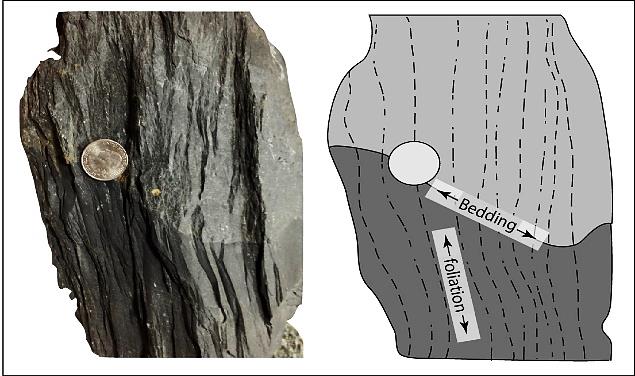
structures due to higher temperatures, 962. What is the relationship between
pressures, and deformation processes. metamorphic foliation and sedimentary
bedding?
a) Sedimentary bedding is required in order for
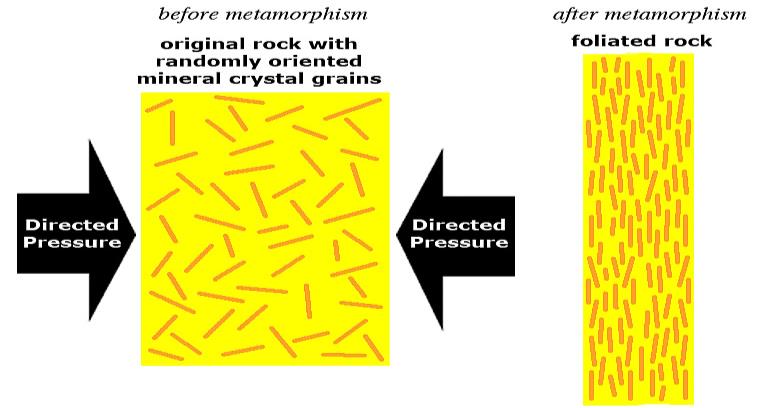
a rock to develop metamorphic foliation.
b) Sedimentary bedding and metamorphic
foliation are two terms for the same
phenomenon.
c) Sedimentary bedding and metamorphic
foliation are generally parallel.
--------------------------------------------------------------
193
d) There is no regular relationship between d) Gneiss.
sedimentary bedding and metamorphic
foliation. Feedback: During metamorphism, a quartz
arenite, which is a sedimentary rock composed
Feedback: Metamorphic foliation and primarily of quartz grains, will typically change sedimentary bedding are two different into quartzite. Quartzite is a metamorphic rock
phenomena that can occur in rocks, but they that forms from the recrystallization of quartz
are not necessarily related. Metamorphic grains under high temperature and pressure
foliation is a characteristic banded or striped conditions. This process transforms the loose

pattern in metamorphic rocks, which is caused sand grains of the quartz arenite into a solid and
by the alignment of minerals under high often hard rock composed almost entirely of
pressure and temperature. Sedimentary interlocking quartz crystals. Slate, schist, and
bedding is a layering or stratification of gneiss are other types of metamorphic rocks
sedimentary rocks, which is caused by the but are typically derived from different parent
deposition of sediments in different rocks and have different mineral compositions.
environments.
--------------------------------------------------------------
965. A normal geothermal gradient is
approximately _________.
a) 3000 degrees C per km.
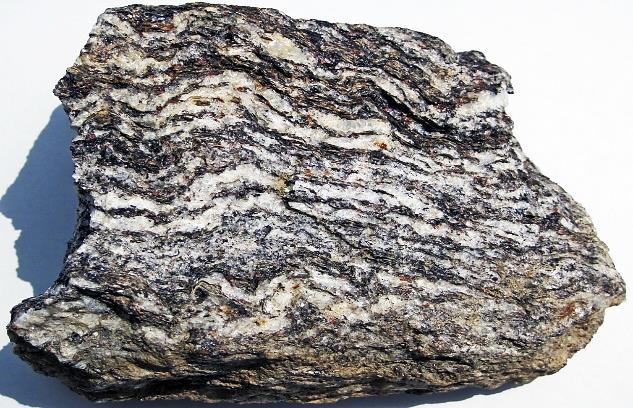
-------------------------------------------------------------- b) 300 degrees C per km. 963. Which of the following rocks represents c) 30 degrees C per km.
the highest metamorphic grade? d) 3 degrees C per km.
a) Slate.
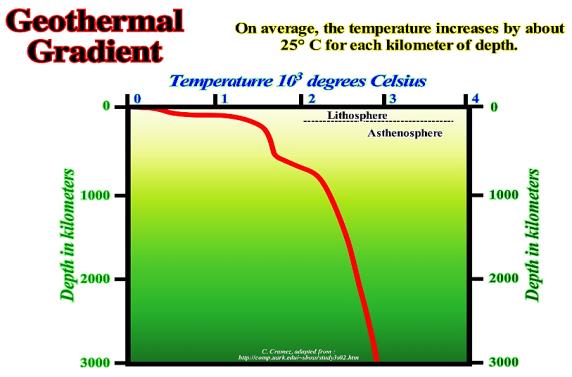
b) Schist. Feedback: Geothermal gradient is the rate of c) Phyllite. increasing temperature with respect to
d) Gneiss. increasing depth in the Earth's interior. Away
from tectonic plate boundaries, it is about 25–
Feedback: Gneiss represents the highest 30 °C/km of depth near the surface in most of
metamorphic grade among the options the world. provided. In the sequence of metamorphic
rocks from low to high grade, it typically follows
slate, phyllite, and schist. Gneiss is
characterized by a well-developed foliation and
the segregation of minerals into distinct light
and dark bands, often with a high degree of
metamorphic recrystallization and mineral
segregation. It is associated with high-
temperature and high-pressure conditions,
making it a high-grade metamorphic rock.
--------------------------------------------------------------
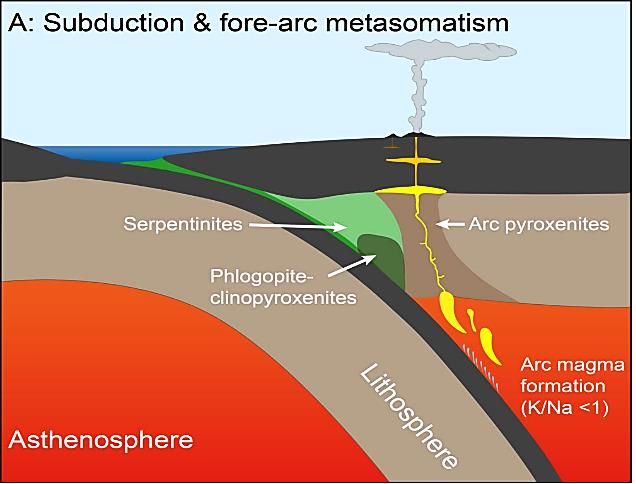
966. Which of the following metamorphic
rocks forms in the fore-arc of a subduction
zone?
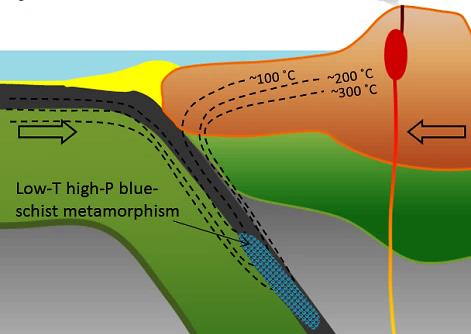
a) Amphibolite. b) Blueschist. c) Quartzite. d) Gneiss.
--------------------------------------------------------------
964. During metamorphism a quartz arenite Feedback: Blueschist is a metamorphic rock
will change into what type of rock? that typically forms in the forearc of a
a) Slate. subduction zone. It is characterized by its blue-
b) Schist. green minerals, such as glaucophane and
c) lawsonite, and is associated with high- Quartzite.
194
pressure, low-temperature metamorphism
conditions that are often found in the cold
subduction zones. Blueschist is an indicator of
the unique metamorphic conditions that occur
in subduction zones.

a) Garnet. b) Chlorite. c) Biotite. d) Quartz.
-------------------------------------------------------------- 970. In the figure below, the C isograd is the _________ isograd. --------------------------------------------------------------
967. For the Barrovian sequence given
below intensity of metamorphism:
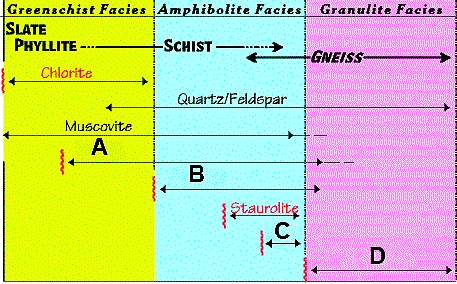
a) Increases from left to right. a) Kyanite. b) Increases from right to left. b) Muscovite. c) Cannot be determined from the diagram. c) Staurolite. -------------------------------------------------------------- d) Sillmanite. 968. In the figure below, the A isograd is the --------------------------------------------------------------
________ isograd. 971. In the figure below, zone D should
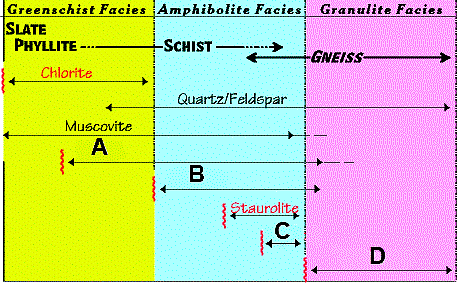
contain which of the following minerals?
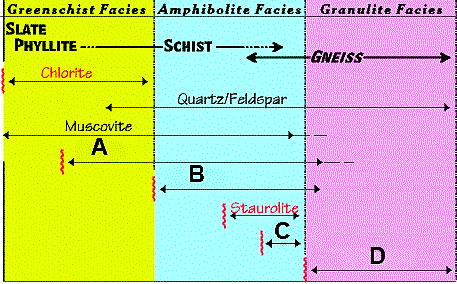
a) Amphibole.
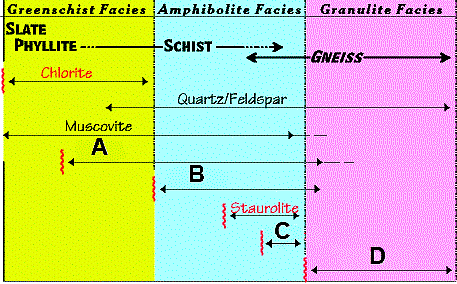
b) Muscovite. a) Amphibole. c) Biotite. b) Sillmanite. d) Garnet. c) Calcite. -------------------------------------------------------------- d) Kyanite. 969. In the figure below, the B isograd is the --------------------------------------------------------------
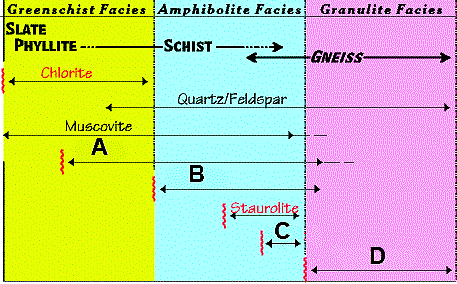
________ isograd. 972. Metamorphic rocks with segregated
light and dark minerals are called _______.
a) Slate. b) Schist. c) Phyllite. d) Gneiss.
195
Feedback: Gneiss is characterized by its banded appearance, with alternating light and
dark layers or bands of minerals. This mineral
segregation is a prominent feature of gneiss
and sets it apart from other metamorphic rocks
like slate, schist, and phyllite.
--------------------------------------------------------------
973. A rock rich in garnet and pyroxene that
forms at extremely high pressures and

moderate to high temperatures is called
a(n):
a) Amphibolite.
b) Hornfels.
c) Granulite.
d) Eclogite.
Feedback a) Area A. : Eclogite is a high-pressure, high-b) Area C. temperature metamorphic rock that typically c) Area E. forms in subduction zones or deep within the d) Area G. Earth's crust. It is characterized by its distinct -------------------------------------------------------------- mineral composition, which includes garnet and 976. In the figure below, the greenschist pyroxene, and it is an important indicator of facies occurs in which pressure-temperature deep-seated metamorphism. regime?
--------------------------------------------------------------
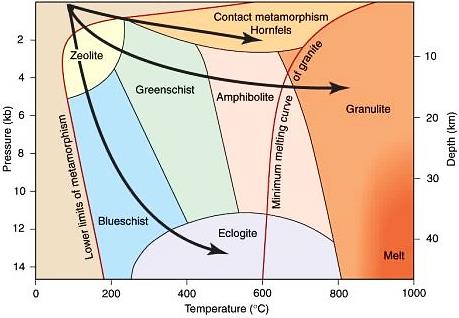
974. In the figure below, the zeolite facies
occurs in which pressure-temperature
regime?
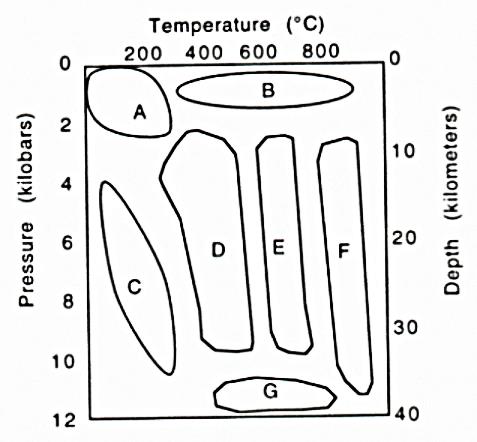
a) Area C. b) Area D. c) Area E. d) Area F.
Feedback: Metamorphic facies are specific assemblages of minerals that are stable under
certain combinations of temperature and
pressure conditions. They provide insights into
the metamorphic history of rocks and can help
geologists understand the pressure, depth, and
temperature conditions that rocks have
experienced during metamorphism. There are
several common metamorphic facies, each
associated with specific pressure and
a) Area A. temperature ranges: b) Area B. Zeolite Facies: This facies forms at low c) Area C. pressures and low to moderate temperatures. It
d) Area D. typically involves the alteration of volcanic rocks
-------------------------------------------------------------- and is characterized by minerals like zeolites,
975. In the figure below, the eclogite facies chlorite, and prehnite.
occurs in which pressure-temperature Blueschist Facies: Blueschist facies occurs at regime? low temperatures but high pressures, often in
subduction zones. Minerals like glaucophane,
lawsonite, and epidote are stable in this facies.
196
Greenschist Facies: Greenschist facies is Metaconglomerate forms under low
characterized by moderate temperatures and temperatures and pressures, typically less than
moderate pressures. Common minerals found 300 degrees C and 2 kilobars. Gneiss with mica
in this facies include chlorite, actinolite, and is a type of metamorphic rock that forms from
albite. It's often associated with low-grade the high-grade metamorphism of various parent
regional metamorphism. rocks, such as shale, granite, or basalt. Gneiss
Amphibolite Facies: This facies involves has a foliated texture, which means it has
higher temperatures and pressures than the distinct layers or bands of minerals that are
greenschist facies. It's characterized by parallel to each other. Gneiss with mica has

minerals like amphibole and plagioclase alternating light and dark bands of minerals
feldspar. Amphibolite facies is associated with such as quartz, feldspar, biotite, and muscovite.
medium to high-grade metamorphism. Gneiss with mica forms under high
Granulite Facies: The granulite facies forms at temperatures and pressures, typically between
high temperatures and high pressures. 500-800 degrees C and 5-10 kilobars. Gneiss
Minerals like pyroxene and garnet are stable in without mica is a type of metamorphic rock that
this facies. It's associated with high-grade forms from the higher-grade metamorphism of
metamorphism. gneiss with mica or other parent rocks. Gneiss
Eclogite Facies: Eclogite facies represents the without mica has a similar foliated texture as
highest pressures and moderate to high gneiss with mica, but it lacks mica minerals. temperatures. It is characterized by minerals --------------------------------------------------------------
like garnet and pyroxene. Eclogite facies is 978. Identify the FALSE statement: typically found in subduction zones at great Hydrothermal fluids: depths. a) May consist of hot water, steam, and These metamorphic facies provide geologists supercritical fluid. with valuable information about the geological b) Are chemically active solutions, not pure history of a region, including the conditions of water. metamorphism, the tectonic setting, and the c) Change a rock’s chemical composition, a depth of burial. They are important tools for process known as exhumation. understanding the processes that have shaped d) Can be derived from groundwater or the Earth's crust over geological time scales. magma, or can be the product of
metamorphic reactions.
e) Can pick up some dissolved ions and drop
off others as they circulate through a rock.
Feedback: Hydrothermal fluids do change the chemical composition, but the process is known
as metasomatism. Exhumation refers to the
process of bringing deeply buried rocks to the
Earth's surface due to tectonic forces or
erosion. Hydrothermal fluids do not directly
cause exhumation. Instead, they can alter the
-------------------------------------------------------------- chemical composition of rocks through
977. processes like dissolution and precipitation of Choose the listing that shows the rocks
in increasing degrees of metamorphism minerals, but they do not themselves cause
(from lower- to highergrade). rocks to be brought to the surface.
a) Migmatite, metaconglomerate, gneiss with --------------------------------------------------------------
mica, gneiss without mica. 979. Which of the following locations could
b) Metaconglomerate, gneiss with mica, gneiss not possibly be part of a shield?
without mica, migmatite. a) Hawaii.
c) Metaconglomerate, gneiss with no mica, b) Canada.
gneiss with mica, migmatite. c) Southern Greenland.
d) Gneiss with no mica, gneiss with mica, d) Siberia.
migmatite, metaconglomerate. e) India.
e) It makes no difference; they’re all examples
of high-grade metamorphism. Feedback: A shield is a large area of exposed
Precambrian crystalline igneous and
Feedback: Metaconglomerate is a type of metamorphic rocks that form the ancient cores
metamorphic rock that forms from the low- of continents. Shields are usually very stable
grade metamorphism of conglomerate, which is and have low relief, because they have
a sedimentary rock that consists of rounded undergone a long history of erosion and
pebbles or gravel cemented together by finer tectonic activity. Shields are also rich in mineral
material. Metaconglomerate retains the clastic resources, such as gold, iron, nickel, and
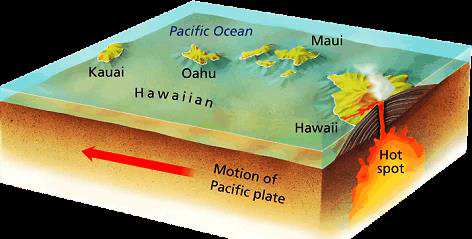
texture of conglomerate, but it has more uranium. Hawaii is not part of a shield, because
compact and recrystallized grains. it is not a continental core, but a volcanic island
197
chain that formed from the movement of the Feedback: The FALSE statement is d). Pacific Plate over a hotspot. A hotspot is a Extremely high heat of metamorphism is not
region where magma rises from the mantle and necessary to form chlorite. Chlorite is a group
erupts on the surface, creating volcanoes. of common sheet silicate minerals that form
Hawaii is composed of basaltic lava flows that during the early stages of metamorphism, often
are much younger than the Precambrian rocks occurring in the greenschist facies. Chlorite
that form shields. minerals typically form through a process called
metamorphism, which involves the alteration of
pre-existing rocks under specific temperature

and pressure conditions. The formation of
chlorite is associated with low to moderate
metamorphic conditions. Chlorite minerals are
also found as retrograde minerals in igneous
and metamorphic rocks that have been
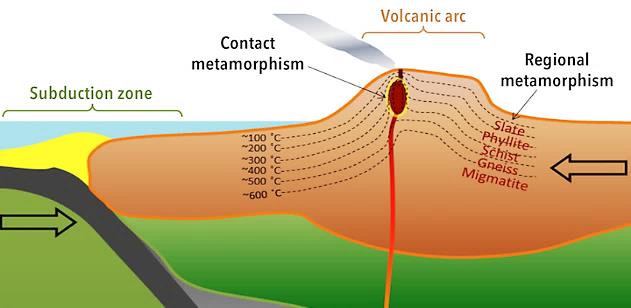
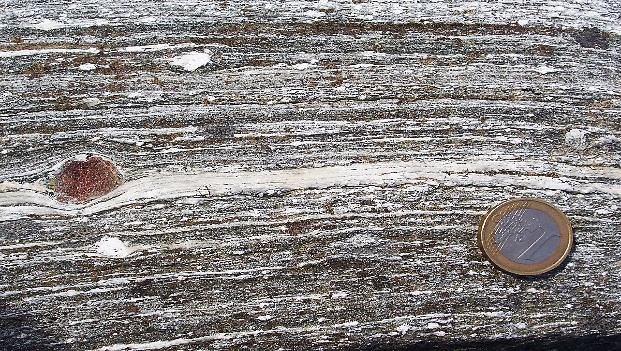
980. Mylonite: Identify the FALSE statement: A a) Forms by recrystallization in a fault zone. metamorphic rock: b) Is produced by shear stress on softened a) May be composed of different minerals than rock. -------------------------------------------------------------- -------------------------------------------------------------- 982. weathered.
b) c) Has pronounced foliation parallel to the its protolith.
e) Feedback: Mylonite is a type of metamorphic May have preferred mineral orientation rock that forms as a result of intense shearing caused by differential stress. or faulting. It is produced by shear stress on softened rock and often exhibits pronounced Feedback : Metamorphism can occur at a wide foliation parallel to the direction of faulting. range of temperatures, and it is not limited to Mylonites form due to dynamic metamorphism, temperatures above 1200°C. Metamorphic which involves the mechanical deformation and processes can take place at lower recrystallization of rocks along fault zones or temperatures, especially in the presence of shear zones. elevated pressures, which can significantly c) d) Forms due to dynamic metamorphism. Cannot be formed below 1200°C. e) All the possible answers are correct. d) Took thousands to millions of years to develop. interlocking grains. direction of faulting. May have developed metamorphic texture of
affect the mineralogical and textural changes in
rocks. The specific temperature range for
metamorphism can vary depending on factors
such as pressure, rock composition, and the
geological context. The upper limit of the
metamorphic range is approximately 1200°C.
Most metamorphism occurs between 200°C
and 850°C.
--------------------------------------------------------------
983. Identify the FALSE statement: Shock
metamorphism:
a) Involves high temperatures and
981. Causes quartz to recrystallize into coesite. Identify the FALSE statement: d) Involves sudden compression. Extremely high heat of metamorphism: e) Can turn calcite into its polymorph dolomite. a) May be as high as 1200°C. b) -------------------------------------------------------------- b) Can be caused by meteorite impact. c) compressional stress.
grade. metamorphism can turn calcite into its polymorph dolomite is FALSE. Shock metamorphic rocks to be drier than low-Drives off water, causing high-grade Feedback: The statement that shock
d) metamorphism can indeed involve high c) Is necessary to form migmatite.
e) temperatures and compressional stress, and it Is necessary to form chlorite.
become feldspar or some other water-free can be caused by meteorite impacts, but it Causes mica to react, lose its identity, and
mineral. primarily affects minerals like quartz and can cause the recrystallization of quartz into
198
coesite. Dolomite and calcite are not commonly with interlocking quartz crystals. It does not
transformed into each other through shock exhibit the separation or breakage around
metamorphism; they are different minerals with individual grains that some other rocks might
distinct chemical compositions and crystal display. structures.

--------------------------------------------------------------
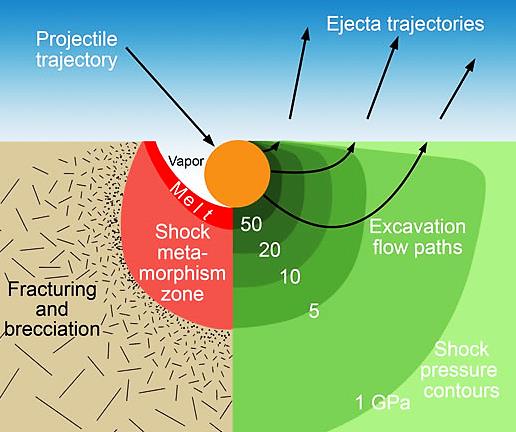
986. Identify the TRUE statement:
Metasomatism:
a) Does not require heat in order to occur. b) Requires hot fluids in order to occur. c) Cannot occur in cold, dry conditions.
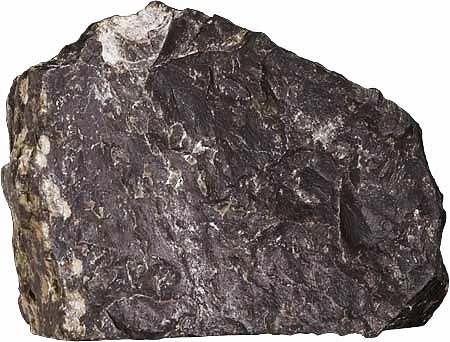
-------------------------------------------------------------- d) Results in a partially melted rock. 984. Pick out the rock that is nonfoliated. e) Requires very high pressure, but needs only a) Hornfels. low temperatures to occur. b) Phyllite.
c) Slate. Feedback: Metasomatism is a metamorphic d) Schist. process that involves the alteration of a rock's
e) Gneiss. mineral composition due to the introduction of
chemically active fluids, often at elevated
Feedback: Hornfels is a nonfoliated temperatures. These fluids play a crucial role in
metamorphic rock. Nonfoliated rocks do not changing the mineralogical and chemical
exhibit the layering or alignment of mineral composition of the rock, and their elevated
grains (foliation) that is characteristic of foliated temperature is typically a key factor in
rocks like phyllite, slate, schist, and gneiss. facilitating these changes. Hornfels typically forms from the --------------------------------------------------------------
recrystallization of rocks under high 987. Identify the TRUE statement about temperature and pressure conditions without metamorphic rocks and their characteristic
developing a distinct foliation, it was formed in environments: the absence of differential stress. a) Gneiss is most common in metamorphic
aureoles surrounding plutons.
b) Mylonites are found along convergent-plate
boundaries where magma is rising.
c) Slate, phyllite, schist, and gneiss are found
in areas of continental collision.
d) Blueschists form near mid-ocean ridges. e) All the possible answers are correct.
-------------------------------------------------------------- are commonly associated with the high- pressure, high-temperature conditions that Feedback: These types of metamorphic rocks
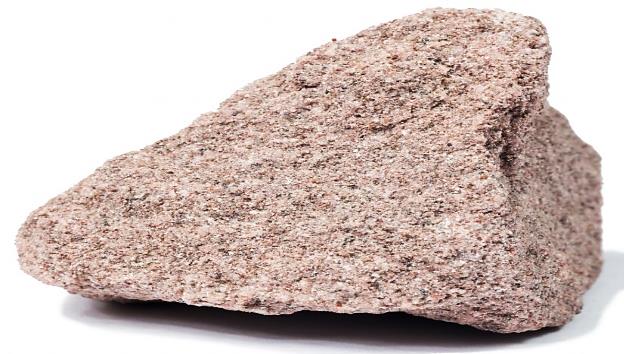
a) occur during continental collision and Is basically a solid mass of interlocking mountain-building processes. 985. Identify the TRUE statement: Quartzite:
quartz crystals.
b) Breaks around the separate grains of quartz
that make it up.
c) Is always either white or gray.
d) Always shows strong compositional
banding.
e) All the possible answers are correct.
Feedback: Quartzite is a nonfoliated (no banding) metamorphic rock that may be white,
gray, purple, or green. Quartzite is a
metamorphic rock primarily composed of quartz
grains that have been recrystallized and fused
together, creating a very hard and dense rock --------------------------------------------------------------
199
988. Identify the FALSE statement 990. Which of the following processes
Metamorphic facies: results in the exposure of deeply buried
a) Are identical to metamorphic mineral rocks at the Earth’s surface?
assemblages. a) Exhalation.
b) Are sets of metamorphic mineral b) Metasomatism.
assemblages indicative of specific ranges of c) Ductile deformation. pressure and temperature. d) Diagenesis.
c) Each contain several metamorphic rock e) Exhumation.
types with different mineral content.

d) Are subdivided into seven major categories. Feedback: Exhumation is the process that e) Are more reliable indicators of metamorphic results in the exposure of deeply buried rocks
conditions than index minerals are. at the Earth's surface. It typically occurs due to
tectonic forces, erosion, or a combination of
Feedback: This statement is false because geological processes that bring rocks from
metamorphic facies and metamorphic mineral greater depths to shallower depths or the
assemblages are not the same thing. surface. This process can involve uplift,
Metamorphic mineral assemblages are the faulting, and erosion and is responsible for
specific combinations of minerals that occur in exposing rocks that were previously buried
a metamorphic rock, depending on the deep within the Earth's crust. chemical composition of the parent rock and the
metamorphic conditions. Metamorphic facies
are broader categories that include several
metamorphic mineral assemblages that share
similar pressure and temperature ranges. For
example, the greenschist facies includes
metamorphic rocks that have chlorite,
muscovite, quartz, albite, and epidote as
common minerals, but these minerals can
occur in different proportions and textures -------------------------------------------------------------- depending on the parent rock. 991. Which is NOT a common process by -------------------------------------------------------------- which metamorphic rocks are formed? 989. Identify the FALSE statement: Shields: a) Pressure solution. a) Are composed of the oldest rock on Earth. b) Plastic deformation. b) Are composed of extensive areas of c) Phase change. sedimentary layers laid down on lava flows. d) Recrystallization. c) Are large areas where the ground surface is e) Schistosity. metamorphic rock. d) Make up large areas of Canada, northern Feedback : Schistosity is not a process by Europe, and South America. which metamorphic rocks are formed. It is a e) Are composed of rocks that were textural feature found in certain metamorphic metamorphosed during Precambrian rocks, specifically in schist, which is mountain-building events. characterized by the alignment of platy minerals such as mica in preferred orientations, giving Feedback : Shields are typically composed of the rock a foliated or layered appearance. The ancient, stable, and often crystalline rocks, formation of schistosity is a result of the including metamorphic rocks, but they are not recrystallization and alignment of minerals primarily made up of sedimentary layers laid during metamorphism but is not a separate down on lava flows. Shields are more process for the formation of metamorphic rocks. commonly associated with the exposure of The other processes listed (pressure solution, Precambrian rocks that have undergone plastic deformation, phase change, and extensive metamorphism during ancient recrystallization) are common processes in the geological events. formation of metamorphic rocks.
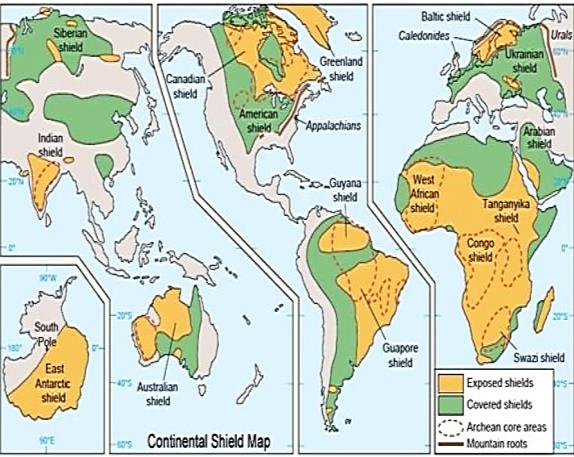
-------------------------------------------------------------- --------------------------------------------------------------
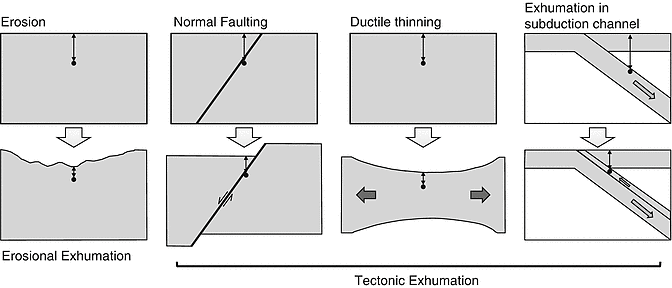
200
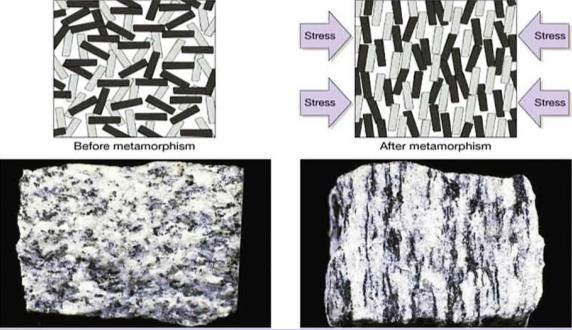
992. Identify the FALSE statement: The lattice where they are more stable under the
sediments in a subsiding sedimentary basin: hotter conditions.
a) Experience increased pressure and a) True.
temperature. b) False.
b) Undergo diagenetic changes when they’re
at shallow depth. Feedback: Recrystallization is a common
c) Undergo burial metamorphism when they process in metamorphism where minerals in a
reach depths greater than 8 to 15 km. rock undergo changes in their crystal structure
d) Can become metasomatized to migmatite. and arrangement due to the application of heat

e) Lose any oil they might contain because and pressure. It occurs because thermal energy
metamorphic conditions destroy organic causes atoms to vibrate more rapidly, which
molecules. can break existing chemical bonds and allow
the atoms to migrate to new positions on the
Feedback: Migmatite is a type of metamorphic crystal lattice where they are more stable under
rock that forms through partial melting of pre- the altered conditions of temperature and
existing rocks, typically under high-grade pressure. This process results in the formation
metamorphic conditions. Metasomatism can of new minerals or the growth of existing ones
alter the mineral composition of rocks, but it in a more stable configuration. does not typically lead to the formation of --------------------------------------------------------------
migmatite. The other statements correctly 995. Shear is the opposite of compression, describe various processes and changes that it is to pull something apart (tension). can occur in sediments within a subsiding basin a) True. during burial and diagenesis. b) False. --------------------------------------------------------------
993. Mountain building due to convergent- Feedback: Shear is not the opposite of
margin tectonics and to continental collision: compression; it is a different type of stress.
a) Can send surface rock to great depths. While compression involves forces pushing
b) Can metamorphose former surface rock by together or squeezing an object, shear stress
proximity to magma. involves forces acting parallel to each other but
c) Can metamorphose former surface rock by in opposite directions, causing one part of the
increased pressure. material to slide or shift relative to another part.
d) Can metamorphose former surface rock by Tension, on the other hand, involves forces
differential stress generated by plate pulling apart. So, shear and tension are
interactions. different types of stresses, and shear is not the
e) All the possible answers are correct. opposite of compression.
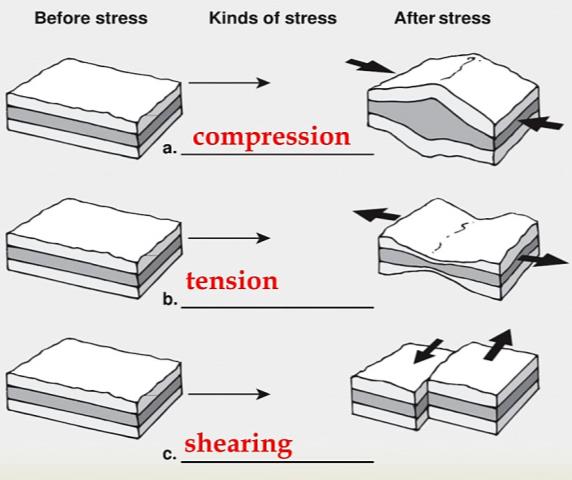
Feedback: The correct answer is e). All the possible answers are correct. Mountain
building due to convergent-margin tectonics
and to continental collision involves various
processes that can affect the surface rock in
different ways. Some of these processes are:
Subduction of oceanic crust beneath
continental crust, which can send surface rock
to great depths and expose it to high
temperature and pressure conditions.
Formation of volcanic arcs and igneous
intrusions along the continental margin, which
can metamorphose former surface rock by
proximity to magma.
Compression, folding, and thrusting of --------------------------------------------------------------
continental crust, which can metamorphose 996. The mineral sillimanite indicates former surface rock by increased pressure and higher-grade metamorphism than staurolite.
differential stress generated by plate a) True. interactions. b) False. Collision of two continental plates, which can
crumple, thicken, and uplift the crust, forming Feedback: Sillimanite, staurolite, and kyanite high mountain ranges. are polymorphs of aluminum silicate, and each
-------------------------------------------------------------- has a defined pressure-temperature field of
994. Recrystallization occurs because stability. The presence of sillimanite in a
thermal energy causes atoms to vibrate metamorphic rock typically indicates a higher-
rapidly, break existing chemical bonds, and grade of metamorphism compared to staurolite.
migrate to new positions on the crystal These minerals are both index minerals
commonly used by geologists to estimate the
201
temperature and pressure conditions at which a such as biotite and muscovite, among other
rock underwent metamorphism. Sillimanite minerals. The presence of these micas
forms at higher temperatures and pressures contributes to the foliated texture of schist,
than staurolite, so if sillimanite is present, it which typically exhibits a preferred orientation
suggests a more advanced stage of of mineral grains, giving it a banded or layered
metamorphism. appearance. Micas are common in the mineral
assemblages of schist and are important
components in its formation.

-------------------------------------------------------------- --------------------------------------------------------------
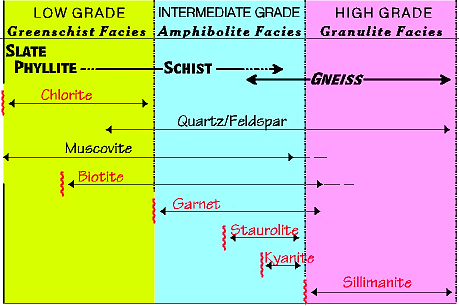
997. Roofers use the rock schist to shingle 999. Which is NOT a cause of banding in
roofs because its foliation, called schistosity, gneiss? causes it to break in convenient size. a) Preferential orientation.
a) True. b) Original bedding in a preexisting rock. b) False. c) Extensive shearing.
d) Migmatite formation.
Feedback: Roofers typically do not use schist e) Metamorphic differentiation. as a roofing material. Schist is a metamorphic
rock that exhibits a strong foliation or Feedback: Preferential orientation is not a schistosity, which makes it prone to splitting cause of banding in gneiss. Gneiss typically
along the planes of foliation. This characteristic forms through the metamorphic differentiation
would make it an unsuitable choice for roofing and reorganization of minerals under high
because it would not provide a durable and temperature and pressure conditions. Banding
weather-resistant surface. Roofing materials in gneiss is primarily a result of differences in
are typically chosen for their ability to shed mineral composition and the alignment of
water and withstand environmental conditions, mineral grains, not preferential orientation.
and materials like asphalt shingles, clay tiles, Preferential orientation can impart foliation to a
slate, or metal roofing are more commonly used rock, but it does not cause the compositional
for roofing purposes. Roofers do use slate as a banding that defines a gneiss. roofing material because of its cleavage, which
allows it to break into suitable thicknesses for
use as roof shingles. Slate's cleavage planes
make it easy to split into thin, flat sheets that are
ideal for roofing due to their durability and
resistance to water and environmental
conditions.
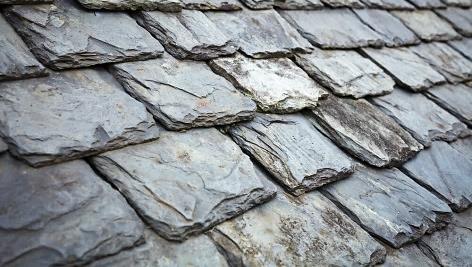
--------------------------------------------------------------
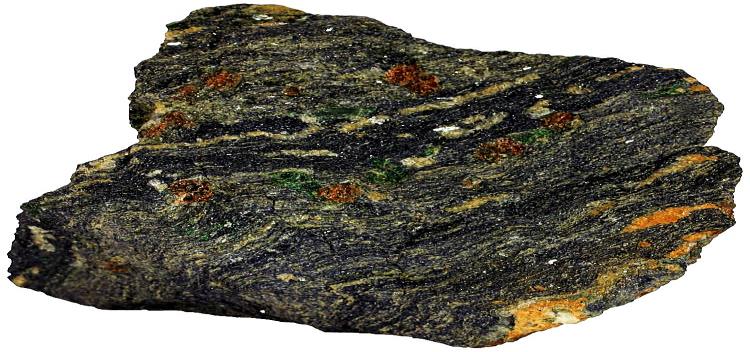
1000. If the intrusion of magma (a pluton)
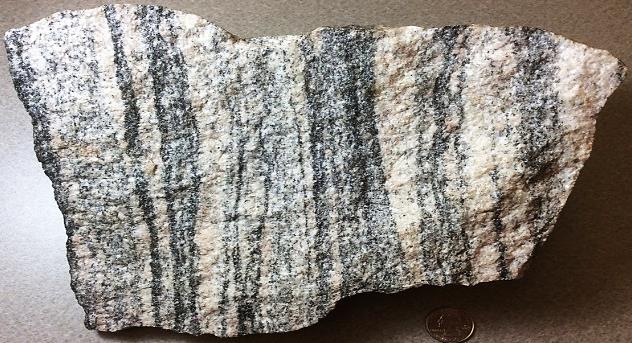
melts mafic country rock, the resulting
metamorphic rock is a schist or gneiss.
a) True. b) False.
--------------------------------------------------------------
998. Feedback: This was a sneaky question, as the Schist is a medium-grade foliated
metamorphic rock that should contain process described involves the melting of rock
micas. due to the intrusion of magma, which results in
a) the formation of igneous rock rather than True.
b) metamorphic rock. Metamorphic rocks result False.
from the alteration of pre-existing rocks through
Feedback heat and pressure without melting. : Schist is a medium-grade foliated metamorphic rock that often contains micas, --------------------------------------------------------------
202
1001. Marble is a favorite material of 1003. Metamorphic zones are regions
sculptors because of its relative softness, between isograds named after the index
and uniform texture. minerals that occur within them.
a) True. a) True. b) False. b) False.
Feedback: Marble is a favored material among Feedback: Metamorphic zones are areas sculptors for several reasons, including its where, as a result of metamorphism, the same
relatively soft and workable nature, as well as combination of minerals occur in the bedrock.

its uniform and fine-grained texture. Marble is These zones occur because most metamorphic
composed mainly of the mineral calcite, which minerals are only stable in certain intervals of
allows for precise carving and sculpting with temperature and pressure. Isograds are planes
relatively simple tools. Its consistent texture and that connect points with the same metamorphic
elegant appearance have made it a popular grade, and they form lines on a geologic map.
choice for sculptures and architectural details Index minerals are minerals that are
for centuries. characteristic for a certain metamorphic grade
and mark the first or last appearance of a
metamorphic reaction. Metamorphic zones are
often named for the most characteristic index
mineral of the zone, such as the garnet zone or
the kyanite zone. However, the occurrence of a
certain index mineral also depends on the
composition of the rock itself, so different
lithologies may have different metamorphic
zones at the same grade.
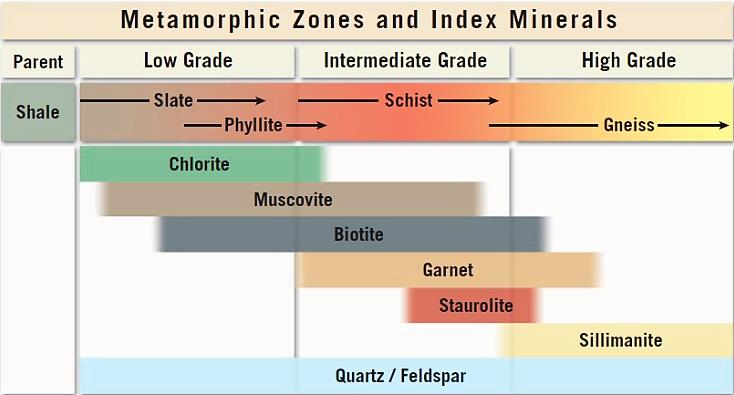
--------------------------------------------------------------
1002. When geologists say metamorphic --------------------------------------------------------------
grade, they’re referring to the general 1004. Blueschist is a common metamorphic degree of metamorphism of a rock; when rock of continental shields. they say facies, they mean a subset of the a) True. broad temperature and pressure conditions b) False. in which metamorphism can occur.
a) True. Feedback: Blue-schist is not a common b) metamorphic rock of continental shields. False.
Blueschist is typically associated with
Feedback: When geologists refer to accretionary prisms adjacent to subduction
"metamorphic grade," they are talking about the zones under the high-pressure, low-
general degree of metamorphism that a rock temperature conditions found there. It forms
has undergone. This typically relates to the from the metamorphism of oceanic crust as it is
temperature and pressure conditions it has subducted beneath another tectonic plate.
experienced, with higher metamorphic grade Continental shields, on the other hand, are
indicating more intense metamorphism. stable regions of continental crust that have not
On the other hand, when geologists use the experienced recent tectonic activity or
term "metamorphic facies," they are referring to subduction-related metamorphism. a subset of the broad range of temperature and
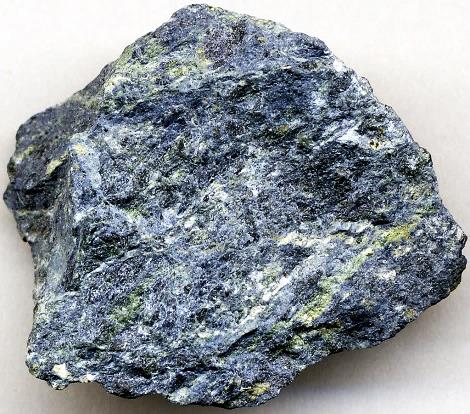
pressure conditions in which metamorphism
can occur. Each facies represents a specific set
of conditions and mineral assemblages that are
characteristic of certain metamorphic
environments. So, metamorphic facies provide
more specific information about the
metamorphic conditions a rock has undergone
within the broader concept of metamorphic
grade.
-------------------------------------------------------------- --------------------------------------------------------------
203
1005. Metamorphic aureoles typically contain variety of geological settings, including
nonfoliated rock like hornfels, because the sedimentary, diagenetic, and low-grade
pluton intrusion provides heat but not the metamorphic environments. shearing stress necessary for foliation. --------------------------------------------------------------
a) True. 1007. A supercritical fluid permeates rock b) False. very thoroughly because it has
characteristics of both liquid and gas.
Feedback: Metamorphic aureoles typically a) True. contain nonfoliated rocks like hornfels because b) False. the intrusion of a pluton provides heat but does

not necessarily provide the shearing stress Feedback: A supercritical fluid does permeate necessary for foliation. The heat from the rock very thoroughly because it exhibits
intrusion causes the surrounding rocks to characteristics of both a liquid and a gas. In the
undergo recrystallization and metamorphism, supercritical state, a substance is at a
leading to the formation of nonfoliated rocks like temperature and pressure above its critical
hornfels, which lack the pronounced layering or point, which causes it to have properties of both
alignment of mineral grains seen in foliated phases. Supercritical fluids have a high
rocks. Foliation is typically associated with the diffusivity and can penetrate porous rock or
shearing stress and differential pressure mineral structures more effectively than either a
experienced in other metamorphic settings. pure liquid or gas. This property is often
exploited in various geological processes and
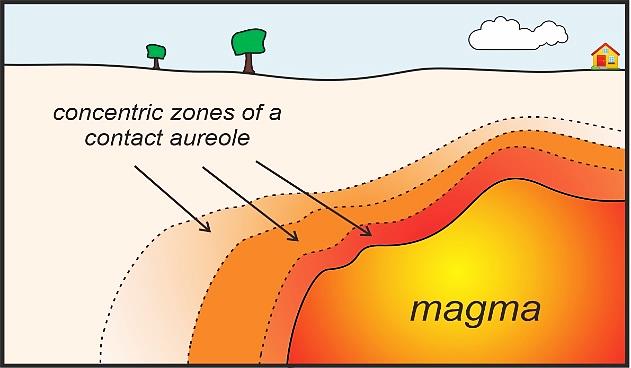
industrial applications.
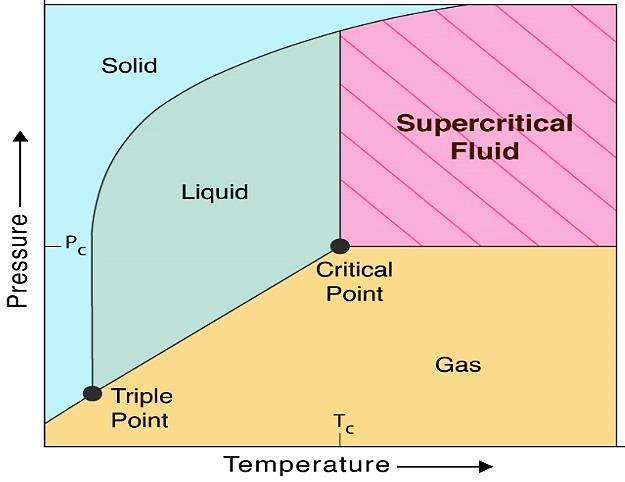
--------------------------------------------------------------
1006. Which of the following is NOT required
for pressure solution to occur?
a) Uneven (differential) stress.
b) The presence of fluid.
c) Grain-to-grain contact. --------------------------------------------------------------
d) Migration of atoms or ions. 1008. The sequence of increasing e) Greenschist-facies conditions or higher. metamorphism of the protolith shale (a
sedimentary rock) is slate, phyllite, schist,
Feedback: Pressure solution, also known as and gneiss. pressure dissolution, can occur at relatively low a) True. metamorphic grades and does not require b) False. greenschist-facies conditions or higher. The
key factors for pressure solution to occur are: Feedback: The sequence of increasing Uneven (differential) stress: Pressure metamorphism for the protolith shale, a
solution typically occurs in areas of differential sedimentary rock, typically progresses from
stress where some parts of a rock experience slate to phyllite, schist, and gneiss. This
greater stress than others. represents a range of increasing metamorphic
The presence of fluid: The presence of water grades, with each stage characterized by
or other fluids is essential for pressure solution changes in mineral composition, texture, and
because it facilitates the dissolution and foliation. Slate is the lowest-grade metamorphic
migration of ions. rock in this sequence, while gneiss is the
Grain-to-grain contact: Pressure solution highest-grade metamorphic rock among them.
occurs at grain boundaries where mineral
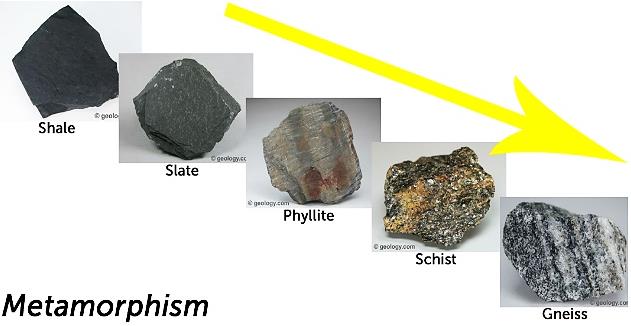
grains are in direct contact with each other.
Migration of atoms or ions: The dissolution of minerals at grain boundaries and the migration
of dissolved ions are central to the process of
pressure solution.
The metamorphic grade, such as greenschist-
facies conditions or higher, is not a requirement
for pressure solution to occur. It can occur in a --------------------------------------------------------------
204
1009. Dynamothermal metamorphism hydrothermal fluids or other geological
(regional metamorphism) produces processes. These mineral-filled veins can be
metamorphic rocks in the depths of valuable sources of economic minerals and are
mountain ranges, which erosion eventually also of interest to geologists studying the
exposes as "mountain roots" hundreds of history of fluid interactions within rocks. kilometers wide and thousands of kilometers
long.
a) True.
b) False.

Feedback: Dynamothermal metamorphism, also known as regional metamorphism,
typically occurs in the depths of mountain
ranges or along tectonic plate boundaries. Over
geological time scales, the uplift and erosion of
these mountain ranges can expose the once --------------------------------------------------------------
deeply buried metamorphic rocks at the Earth's 1011. The alignment of equant grains results surface, creating vast regions of "mountain in preferred orientation. roots" that can be hundreds of kilometers wide a) True. and thousands of kilometers long. These b) False. regions often contain a variety of metamorphic
rocks formed under high-pressure, high- Feedback: The alignment of equant grains temperature conditions, and they provide does not typically result in preferred orientation.
valuable insights into the geological history of a Preferred orientation, also known as foliation or
region. cleavage, usually occurs when platy or
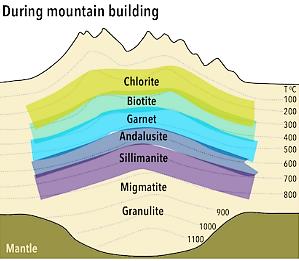
elongated minerals align themselves parallel to
each other due to the application of pressure
during metamorphism. This alignment creates
a parallel arrangement of mineral grains, giving
the rock a layered or banded appearance.
Equant grains, on the other hand, are typically
more isotropic (lacking preferred orientation)
and do not exhibit the same level of alignment
seen in rocks with foliation. Equant grains are
often randomly oriented within the rock, and
their arrangement does not lead to the
development of preferred orientation like in
foliated rocks.
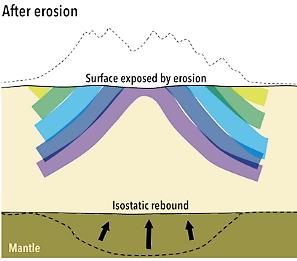
1010. Dissolved ions freed during the process -------------------------------------------------------------- of metasomatism can precipitate to form --------------------------------------------------------------
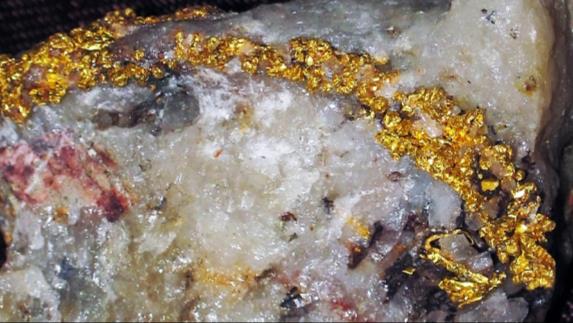
a) a) True. True. b) mineral-filled cracks called veins. 1012. Foliation occurs along bedding planes.
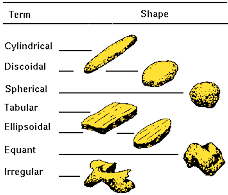
b) False. False.
Feedback Feedback: Foliation is a planar arrangement of : Dissolved ions that are released structural or textural features in any rock type, during the process of metasomatism can but particularly that resulting from the alignment precipitate and fill fractures or cracks in rocks, of constituent mineral grains of a metamorphic forming mineral-filled structures known as rock. Bedding planes are the primary layering veins. Veins are common features in many in sedimentary rocks that form during types of rocks and can contain a variety of deposition. Foliation and bedding planes are minerals that have precipitated from
205
not necessarily parallel to each other, and they Feedback: Uniformitarianism is a fundamental can have different origins and compositions. concept in geology that suggests that the same
Foliation can occur in different types of rocks, natural laws and processes that operate in the
such as metamorphic, igneous, or sedimentary, present day have also operated in the past, and
depending on the processes that cause the they can be used to explain geological features
alignment of minerals or features. For example, and events in Earth's history. This idea
foliation can be caused by shearing forces, contrasts with the earlier concept of
metamorphic differentiation, or flow structures. catastrophism, which proposed that Earth's
Bedding planes are specific to sedimentary features were primarily the result of sudden,

rocks and reflect the original layering of short-lived, and violent events.
sediments or changes in grain size, Uniformitarianism was popularized by
composition, or texture during deposition. geologists like James Hutton and Charles Lyell
in the 18th and 19th centuries and has become
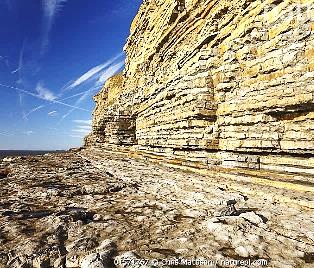
a foundational principle in the field of geology.
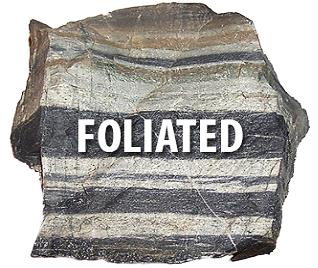
--------------------------------------------------------------
a) --------------------------------------------------------------1013. Contact metamorphism occurs when: Two or more minerals that were stable under
unstable (and react) during metamorphism sedimentary rocks, the layers get younger going from bottom to top” is the principle of a former temperature and pressure are 1015. “Within a sequence of undisturbed
b) a) Original horizontality. Hydrothermal fluids precipitate minerals into b) at a different temperature and pressure. :
c) c) Cross-cutting. Hydrothermal fluids alter rock chemistry by Unconformities. joints or other spaces. Superposition.
removing or adding constituents. d)
d) Two masses of rock slide by one another
e) states that in a sequence of undisturbed A mass of rock is affected by the heat of a sedimentary rocks, the oldest rocks are at the along a fault plane. Feedback: The principle of superposition
magma.
bottom and the youngest rocks are at the top.
Feedback This principle is based on the observation that : Contact metamorphism is a type of sedimentary layers are deposited horizontally metamorphism that occurs when rocks are over the sea floor, and newer layers cover the subjected to high temperatures and low older ones. pressures due to their proximity to molten magma. This heat from the magma causes the surrounding rocks to undergo changes in
mineral composition and texture without
significant changes in pressure.
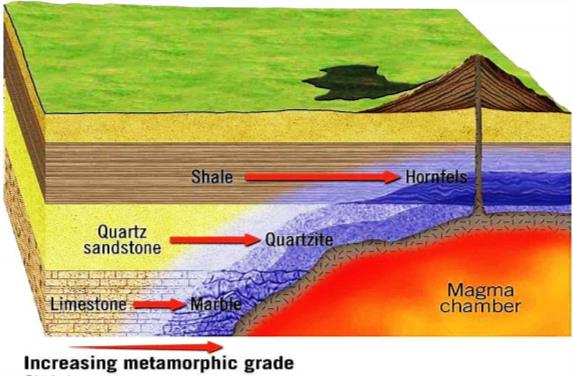
--------------------------------------------------------------
1016. Which process would you most expect
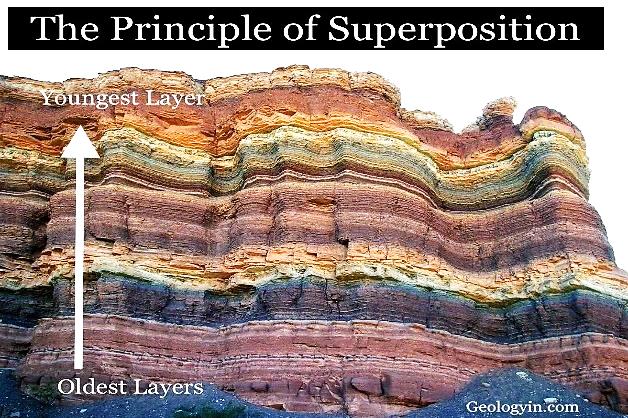
-------------------------------------------------------------- during hydrothermal metamorphism near a
1014. “Geological processes operating at a) mid-ocean ridge?
present are the same processes that have b) Pressure solution. operated in the past” is the principle of : c) Foliation.
b) Correlation. d) Metasomatism. Catastrophism. e) a) Dynamothermal metamorphism. Dynamic metamorphism.
c) Uniformitarianism.
d) Absolutism. Feedback: Metasomatism is the process of
chemical alteration of rocks by hydrothermal
206
fluids. Near mid-ocean ridges, there are often c) A nonconformity. hydrothermal vents where hot water rich in d) A sedimentary contact. minerals interacts with the surrounding rocks,
leading to the alteration of the rock's mineral Feedback: A disconformity is a contact composition through the addition or removal of between parallel sedimentary rock layers that
constituents. This is a common process in such represents a gap or missing period of geologic
geologic settings and is associated with the time in the rock record. formation of mineral deposits and unique rock
types.

--------------------------------------------------------------
1017. If rock A cuts across rock B, then rock
B is _____ rock A.
a) Younger than.
b) The same age as.
c) Older than.
Feedback: In the context of relative dating, if --------------------------------------------------------------
rock A cuts across rock B, it means that rock A 1021. Which is NOT a type of unconformity? is younger than rock B. So, rock B is older than a) Disconformity. rock A. b) Angular unconformity.
c) Nonconformity. d) Triconformity.
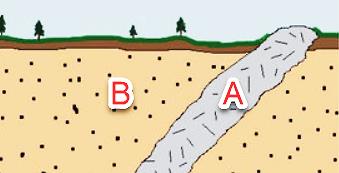
Feedback: "Triconformity" is not a recognized type of unconformity in geology. The three
common types of unconformities are:
disconformity, angular unconformity, and
nonconformity.
--------------------------------------------------------------
1018. If rock A cuts across rock B, then rock
A is ____ rock B.
a) Younger than.
b) The same age as.
c) Older than. --------------------------------------------------------------
1022. A geologist could use the principle of
Feedback: If rock A cuts across rock B, it inclusion to determine the relative age of:
means that rock A is younger than rock B in a) Fossils. relative dating terms. b) Metamorphism.
c) Shale layers. d) Xenoliths.
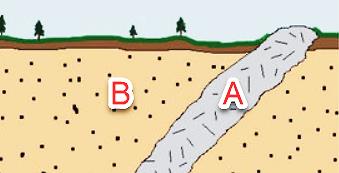
Feedback: The principle of inclusion is a geological principle that states that inclusions or
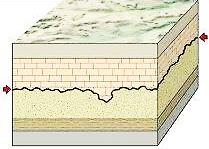
fragments within a rock layer must be older than
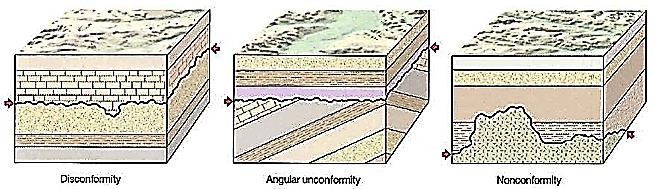
the rock layer itself. So, a geologist could use
1019. Eras are subdivided into: fragments of rock that are included within Periods. a) another rock during its formation. Since the b) Eons. xenoliths are older than the host rock that c) -------------------------------------------------------------- relative age of xenoliths. Xenoliths are the principle of inclusion to determine the
Ages. incorporated them, this principle can be used to
d) Epochs. establish their relative ages.
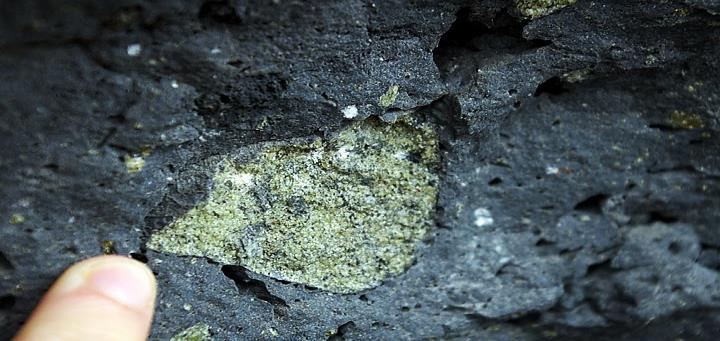
Feedback: In the geological timescale, eras are the second-largest units of time, and they are
further divided into periods. The hierarchy
typically goes like this: Eon > Era > Period > Epoch > Age.
--------------------------------------------------------------
1020. A contact between parallel sedimentary
rock layers that records missing geologic
time is:
a) A disconformity.
b) An angular unconformity. --------------------------------------------------------------
207
1023. Periods are subdivided into: record of past life and can be used to date rocks
a) Eras. relative to one another. b) Epochs.
c) Ages.
d) Time zones.
Feedback: An epoch is a unit of geological time during which a rock series is deposited. It is a
subdivision of a geological period, and the term

is capitalized when used in a formal sense,
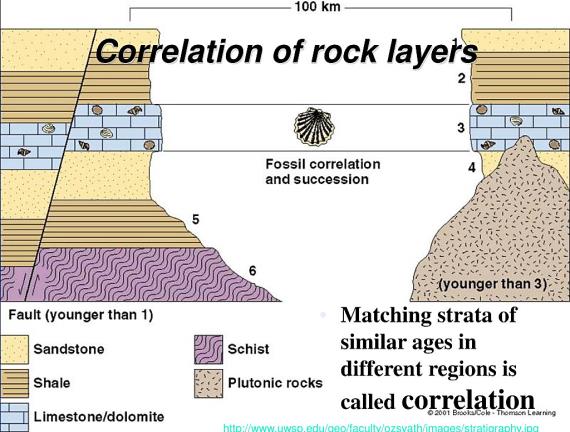
such as the Pleistocene Epoch. Epochs are
characterized by certain distinctive features
and events, and they can be further divided into
ages For example, the Cainozoic era is divided
into three periods, which are further broken
Oligocene, Miocene, Pliocene, Pleistocene, down into epochs like the Palaeocene, Eocene, --------------------------------------------------------------
and study the Earth's history in a structured Precambrian. b) Paleozoic. manner. They allow for the precise definition of c) Mesozoic. global units of the International d) they help geologists and scientists understand longest? a) and Holocene. Epochs are significant because 1025. Which division of geologic time was the
or "Lower" along with their period name. majority of Earth's existence, from about 4.6 billion years ago to approximately 541 million "Upper" refers to the youngest part of the period years ago. It includes several geological and "Lower" refers to the oldest part of the periods and spans a tremendous amount of period time, during which many significant events in -------------------------------------------------------------- Earth's history occurred. 1024. Which is a method of correlation? a) Physical continuity. b) basis for the units of the International Geologic : The Precambrian eon is by far the Feedback Time Scale. Epochs tend to last several million longest eon in Earth's history, covering the vast years. They are often titled "Upper", "Middle", Chronostratigraphic Chart, which forms the Cenozoic.
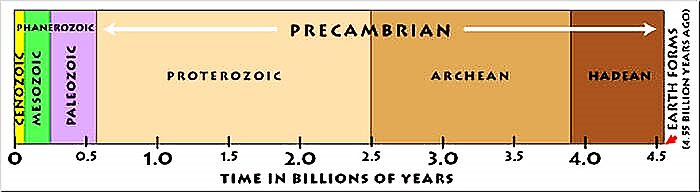
Similarity of rock types.
c) Fossils.
d) All of the preceding.
Feedback: Correlation is the process of --------------------------------------------------------------
establishing a relationship between rock layers 1026. The greatest mass extinction ever to in different locations. It helps geologists occur on Earth took place at the end of the:
determine the relative ages of rocks and a) Cambrian. understand the geological history of a region. b) Mesozoic. Physical continuity: This method involves c) Paleozoic. tracing rock layers physically from one location d) Cretaceous. to another. If a rock layer can be followed from
one place to another without interruption, it Feedback: The greatest mass extinction event suggests that the layers are of the same age in Earth's history took place at the end of the
and were deposited in a continuous manner. Paleozoic. This mass extinction event is known
Similarity of rock types: Geologists compare as the Permian-Triassic (P-T) extinction event
the types of rocks, their mineral compositions, or the Great Dying. It occurred about 252 million
and their overall characteristics in different years ago and had a profound impact on Earth's
locations. If two rock layers in separate biodiversity, resulting in the loss of a large
locations have similar lithology (rock type) and percentage of species on the planet. characteristics, it indicates that they are likely of The exact cause of this event, is still a subject
the same age and were formed under similar of scientific research and debate. However,
conditions. several contributing factors are believed to
Fossils: Fossils are remnants of ancient have played a role in this catastrophic event:
organisms preserved in sedimentary rock Volcanic Activity: Enormous volcanic layers. The presence of similar fossils in rock eruptions, known as the Siberian Traps,
layers from different locations is a strong occurred during the late Permian period. These
indicator that those rock layers are of the same eruptions released massive amounts of
age. Fossils are particularly useful for volcanic gases, including carbon dioxide and
correlating rock layers because they provide a sulfur dioxide, into the atmosphere. This
208
contributed to global warming, ocean 1028. Which is a useful radioactive decay acidification, and environmental changes. scheme? Climate Change: The massive release of a) 238U 206Pb.
a significant increase in global temperatures, c) 40K 40Ar. 87 making the Earth's climate inhospitable for greenhouse gases from volcanic activity led to b) 235U 207Pb.
d) Rb 87Sr.
many species. This rapid and extreme climate e) All of the preceding.
extinction event. Feedback: All of the options provided (a) 238U 206 Ocean Acidification: change likely played a major role in the The increased levels of Pb, (b) 235U 207Pb, (c) 40K 40Ar, and (d) 87Rb

carbon dioxide in the atmosphere led to the 87Sr are important radioactive decay schemes acidification of the oceans, which had used in various geochronological methods for
detrimental effects on marine life, particularly dating rocks and minerals. These decay
organisms with calcium carbonate shells. schemes are essential tools in the field of
Reduced Oxygen Levels: Geological geology for determining the ages of geological
evidence suggests that oceanic anoxia (lack of materials, and they each have specific
oxygen) was prevalent during the extinction applications depending on the type of sample
event, leading to the death of many marine being studied. organisms. --------------------------------------------------------------
Impact Events: Some scientists propose that 1029. C-14 dating can be used on all of the one or more asteroid or comet impacts may following except: have contributed to the extinction event, a) Wood. although the evidence for this is not as well- b) Shell. established as the volcanic activity. c) The Dead Sea Scrolls. The combination of these factors likely created d) Granite. a "perfect storm" of environmental stresses, e) Bone. making it extremely challenging for many
species to survive. Feedback: C-14 dating, also known as
radiocarbon dating, is a method for determining
the age of an object containing organic material
by using the properties of radiocarbon, a
radioactive isotope of carbon. The method was
developed in the late 1940s at the University of
Chicago by Willard Libby. C-14 dating can be used on objects that contain carbon that was
originally in the atmosphere, such as plants and
animals. Wood, shell, the Dead Sea Scrolls,
and bone are all examples of organic materials
that can be dated by C-14 dating. Granite, however, is an igneous rock that forms from the
-------------------------------------------------------------- cooling and solidification of magma. Granite
1027. does not contain any carbon that was in the The oldest abundant fossils of complex
multicellular life with shells and other hard atmosphere, and therefore cannot be dated by
parts date from the: C-14 dating.
a) Precambrian.
b) Paleozoic.
c) Mesozoic.
d) Cenozoic.
Feedback: The Paleozoic era is known for the emergence of complex multicellular life with
hard parts, including organisms with shells,
such as trilobites and brachiopods. This era
began around 541 million years ago and ended
approximately 252 million years ago.
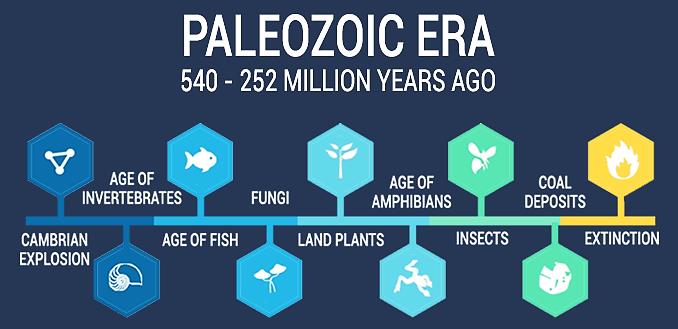
--------------------------------------------------------------
1030. Because of the heat and pressure
exerted during metamorphism, daughter
atoms were driven out of a mineral being
analyzed for a radiometric date. The date
obtained from this mineral will therefore be
-------------------------------------------------------------- _______ its actual age of formation.
209
a) Younger than. original amount left. After three half-lives, there
b) Older than. will be 1/8 of the original amount left, and so on.
c) The same as. The general formula for the fraction of parent
d) It can’t be determined. material remaining after n half-lives is: e) None of these.
Feedback: Radiometric dating is a technique In this question, the half-life of the radioactive that uses the decay of radioactive isotopes to element is 16 million years, and the time measure the age of rocks and other materials. elapsed is 96 million years. Therefore, the The rate of decay is constant and known as the number of half-lives that have passed is: half-life, which is the time it takes for half of the

parent atoms to decay into daughter atoms. By
comparing the ratio of parent to daughter atoms
in a sample, one can estimate its age. However, Using the formula above, we can calculate the
radiometric dating assumes that the sample fraction of parent material remaining after 6
has not been altered by any processes other half-lives: than radioactive decay. If some of the parent or
daughter atoms are added or removed from the
sample, the ratio will change and the age -------------------------------------------------------------- estimate will be inaccurate. This can happen 1032. Concentrations of radon are highest in during metamorphism, which is the alteration of areas where the bedrock is: rocks under high temperature and pressure. a) Granite. Metamorphism can cause some of the daughter b) Gneiss. atoms to escape from the mineral, making it c) Limestone. appear that less decay has occurred. This will d) Black shale. result in a younger age estimate than the actual e) Phosphate-rich rock. age of formation of the mineral f) All of the preceding.
Feedback: Radon is a radioactive gas that is produced by the decay of uranium in rocks. The

concentration of radon in the air is highest in
areas where the bedrock is made up of rocks
that contain uranium, such as granite, gneiss,
limestone, black shale, and phosphate-rich
rock.