

Essentials of geology a comprehensive manual with 1300+ MCQs, answers, feedbacks, and illustrative figures by Ali Kareem Neamah - HTML preview
Download the book in PDF, ePub, Kindle for a complete version.
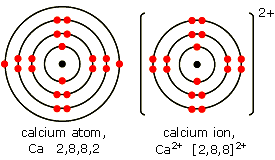
Ca, has two valence electrons, which it can
easily lose to form Ca2+ ions. These ions can bond with various anions, such as carbonate,
phosphate, or sulfate, to form different --------------------------------------------------------------
compounds, such as calcium carbonate, 358. Large crystals with well-formed faces calcium phosphate, or calcium sulfate. tend to form when:
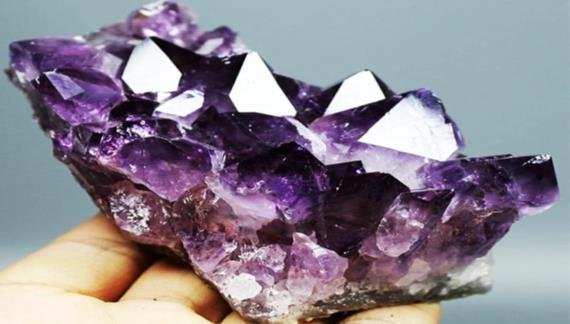
a) Molten rock cools quickly. b) Rocks undergo melting. c) Minerals have the space to grow such as in
open cavities and the time to grow slowly.
d) Volcanoes erupt explosively.
Feedback: Large crystals with well-formed faces tend to form when minerals have the
space to grow and the time to grow slowly. This
can happen in open cavities in rocks, such as
-------------------------------------------------------------- geodes and vugs. It can also happen in rocks
71
that have cooled slowly, such as intrusive 360. The chemical formula (Mg,Fe)2SiO4 igneous rocks. describes which of the following minerals?
a) Feldspar. b) Mica. c) Olivine. d) Pyroxene.
Feedback: The chemical formula (Mg,Fe)2SiO4 describes the mineral olivine. Olivine is a

silicate mineral that is rich in magnesium (Mg)
and iron (Fe) and has the mentioned chemical
formula. Olivine is a common mineral in the
-------------------------------------------------------------- Earth's mantle and is also found in certain types
359. of igneous rocks. The growth of a solid from a material
whose atoms can come together in the --------------------------------------------------------------
proper chemical proportions and crystalline 361. Iron and magnesium ions are similar in arrangement is called: size and both have a +2 charge. Therefore,
a) we would expect: Density.
b) a) Iron and magnesium to bond easily. Bonding.
c) b) Iron and magnesium to share electrons. Melting.
d) c) Iron and magnesium to be polymorphs. Crystallization.
d) Iron and magnesium to substitute for each
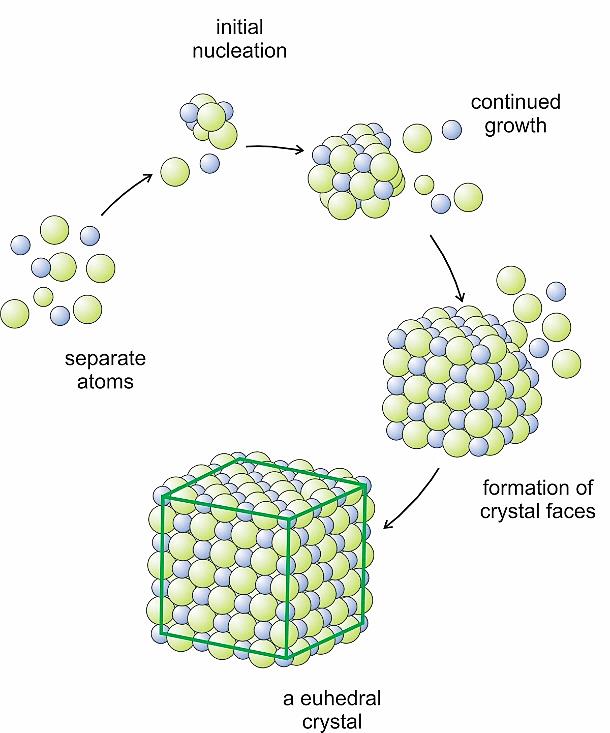
Feedback other in minerals. : Crystallization is the process by which a solid forms from a liquid or gas. It is a
multi-step process that begins with the Feedback: Iron and magnesium ions are formation of nucleation sites. Nucleation sites similar in size and both have a +2 charge. This
are small clusters of atoms or molecules that means that they can easily substitute for each
have arranged themselves in a regular pattern. other in minerals. This is because the size and
Once a nucleation site has formed, other atoms charge of an ion are two of the most important
or molecules can begin to attach to it and grow factors that determine how it will fit into a
the crystal. The growth of a crystal is mineral's crystal structure. For example, the
determined by the chemical composition of the mineral olivine can contain either iron or
material and the conditions under which the magnesium ions, or a combination of both. This
crystallization is taking place. For example, the is because the iron and magnesium ions can
temperature and pressure can affect the rate of easily substitute for each other in the olivine
crystallization and the size and shape of the crystal structure. crystals. Crystallization is an important process --------------------------------------------------------------
in many industries, including the production of 362. Most common rock-forming minerals food, pharmaceuticals, and materials. It is also are: used in the laboratory to purify substances and a) Carbonates. to grow crystals for scientific research. b) Oxides.
c) Silicates. d) Sulfides.
Feedback: Silicates are the most abundant group of minerals in the Earth’s crust, making
up about 95% of it. They are composed of
silicon and oxygen, along with other elements
such as aluminum, iron, magnesium, calcium,
sodium and potassium. Some examples of
silicate minerals are quartz, feldspar, mica,
olivine, pyroxene and amphibole.
--------------------------------------------------------------
363. The mineral pyroxene is an example of
a ____ silicate:
a) Framework. b) Single chain. c) Sheet. d) Ring.
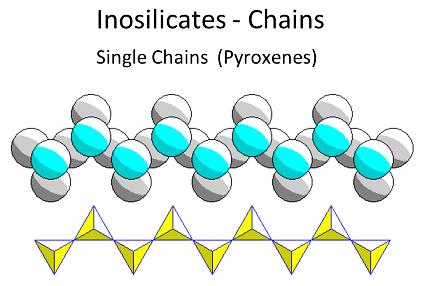
Feedback: The mineral pyroxene is an example of a single-chain silicate. Pyroxene
belongs to the group of inosilicate minerals, and
-------------------------------------------------------------- its crystal structure is characterized by single
72
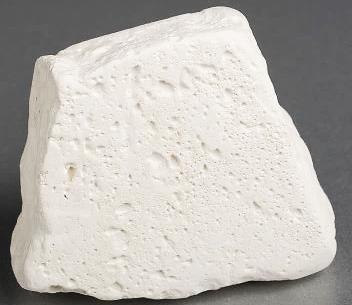
chains of linked silicate tetrahedra. This important industrial mineral that is used to make
arrangement results in the formation of a single brick, pottery, tile and kaolin (china clay) chain silicate structure.

--------------------------------------------------------------
367. Which mineral has the greatest
364. b) What type of mineral is calcite? c) Quartz. a) Carbonate. d) Talc. b) Single chain silicate. c) -------------------------------------------------------------- a) Corundum. Feldspar. hardness? d) Feedback: Corundum has the greatest Double chain silicate.
Ring silicate.
hardness among the options provided. It is a
Feedback very hard mineral and is often used as a : Calcite is a carbonate mineral, benchmark for hardness on the Mohs scale. which means it is composed primarily of Corundum has a Mohs hardness of 9, making it calcium carbonate (CaCO 3 ). It belongs to the one of the hardest minerals. Quartz has a carbonate mineral group and has a trigonal hardness of 7, feldspar typically has a hardness crystal structure. Calcite is a relatively common ranging from 6 to 6.5, and talc is the softest of mineral and is found in various geological the options with a hardness of 1. environments, including sedimentary, metamorphic, and igneous rocks. -------------------------------------------------------------- 365. Which of the following minerals does not exhibit cleavage? a) Feldspar. b) Calcite. c) Quartz. d) Halite.
Feedback: Quartz is a mineral that does not exhibit cleavage. This means that it cannot be
split along certain planes into smooth, flat
surfaces. Quartz is a very hard mineral, and its
lack of cleavage makes it difficult to break.
--------------------------------------------------------------
368. Which of the following mineral
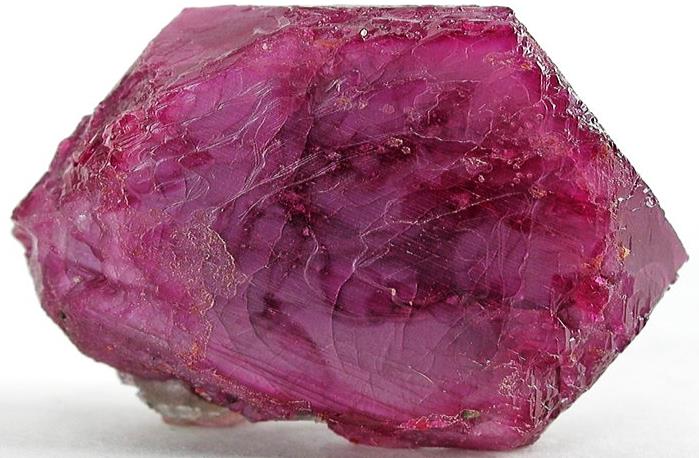
properties is the least reliable clue to its
identity?
a) Hardness. b) Cleavage. c) Color.
-------------------------------------------------------------- d) Density. 366. Which of the following minerals is a
common clay mineral used for making Feedback: Color is the least reliable clue to a pottery? mineral's identity because many different
a) Feldspar. minerals can have the same color. For
b) Kaolinite. example, quartz can be colorless, white, pink,
c) Olivine. purple, yellow, or black. d) Pyroxene. --------------------------------------------------------------
369. The shape in which an individual
Feedback: Kaolinite is a clay mineral that is crystal grows is called the mineral's crystal:
composed of hydrated aluminum silicate a) Cleavage. (Al2Si2O5(OH)4). It forms from the chemical b) Habit. weathering of feldspar or other aluminum c) Density. silicate minerals. It is usually white, but can d) Streak. have other colors due to impurities. It is an
73
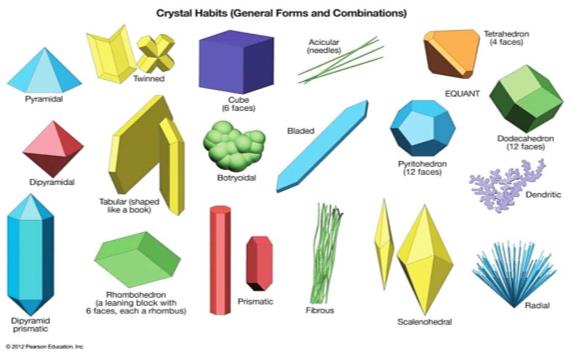
Feedback: Crystal habit is the characteristic 372. Which of the following is considered a external shape of an individual crystal or mineral? aggregate of crystals. It is determined by the a) Seawater. crystal's crystallographic form and growth b) Rock salt. conditions. Some common crystal habits c) Cast iron. include: d) Vegetation. Equant: Crystals that are approximately the same size in all dimensions. Feedback: A mineral is a naturally occurring, Bladed: Crystals that are thin and flat, like inorganic solid with a definite chemical

blades of grass. composition and an orderly crystalline
Prismatic: Crystals that are long and slender, structure. Rock salt, also known as halite, is a
like prisms. mineral that is made up of sodium and chloride
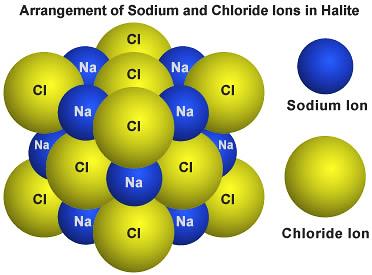
Acicular: Crystals that are very thin and ions. It has a definite chemical composition and
needle-like. an orderly crystalline structure. Tabular: Crystals that are flat and plate-like. Dendritic: Crystals that branch out like trees.
--------------------------------------------------------------
-------------------------------------------------------------- 373. Identify the FALSE statement: 370. Which of the following is NOT a mineral Formation of table salt:
property? a) Is, in mineralogical terms, formation of the
a) Isotopic composition. halide halite. b) Hardness. b) Takes place when a solution has become c) Cleavage. saturated. d) Streak. c) Is an example of solidification of a melt.
d) Needs a seed crystal to begin.
Feedback: Mineral properties typically include e) Results in cubic crystals. hardness, cleavage, and streak, but isotopic
composition is not a property in the same Feedback: Table salt (sodium chloride, or sense. Isotopic composition refers to the NaCl) is typically formed from the evaporation
specific arrangement of isotopes within a of seawater or brine. This is not an example of
mineral, which can be a valuable tool for solidification of a melt, as NaCl does not have a
isotopic dating but isn't considered a standard melting point at the temperatures and
mineral property like hardness or cleavage. pressures that are typically found on Earth.
-------------------------------------------------------------- Instead, NaCl crystals form directly from a
371. Which of the following statements is saturated solution.
FALSE? --------------------------------------------------------------
a) Pyroxenes and amphiboles are both 374. Calcite is a mineral that can constitute
silicates. oyster shells, and, in such cases, is an
b) Pyroxenes and amphiboles have cleavages example of which method of mineral
at different angles. formation?
c) Pyroxenes and amphiboles are polymorphs. a) Solidification of a melt. d) Pyroxenes and amphiboles consist of b) Precipitation from a solution.
chains (1 or 2) of silicate tetrahedral. c) Solid-state diffusion.
d) Biomineralization.
Feedback: Pyroxenes and amphiboles are e) Fumerolic mineralization. both inosilicates, meaning that they have a
chain structure. However, they are not Feedback: When calcite constitutes oyster polymorphs, which are minerals with the same shells, it is an example of biomineralization,
chemical composition but different crystal specifically the biogenic mineralization process.
structures. Pyroxenes have single chains of Biomineralization refers to the process by which
silicate tetrahedra, while amphiboles have living organisms, such as mollusks like oysters,
double chains. are able to produce minerals within their tissues
-------------------------------------------------------------- to create hard structures like shells, skeletons,
74
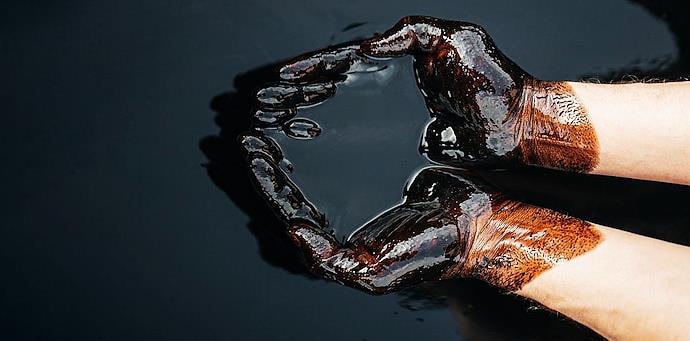
or other protective coverings. In the case of 378. Which of the following is NOT a oyster shells, the oysters actively incorporate mineral? calcium carbonate (predominantly in the form of a) Glacial ice, because ice isn’t a rocky calcite) from their environment to build and material. maintain their shells. The calcium carbonate is b) Salt, because it’s not crystalline. extracted from the surrounding water and then c) A gold nugget, because it’s a native metal. deposited in layers within the shell structure, d) Pyrite, because it’s a chemical compound. creating a strong and protective covering for the e) Oil, because it’s a liquid, not a solid. soft body of the oyster.

-------------------------------------------------------------- Feedback: Oil is not considered a mineral 375. Silicates: because it is a liquid, and minerals are defined a) Have the silicon-oxygen tetrahedron as their as naturally occurring inorganic solids with a
structural unit. definite chemical composition and ordered
b) Are a major component of continental crust. internal structure. Oil does not fit this definition,
c) Are classified on the basis of how the as it is a complex mixture of hydrocarbons and
tetrahedrons join and share oxygen atoms. other organic compounds, and it exists as a
d) Are a huge category of minerals and include liquid at normal temperatures and pressures.
the common minerals quartz and feldspar.
e) All the possible answers are correct.
--------------------------------------------------------------
376. Identify the FALSE statement:
Crystals:
a) Have an orderly internal arrangement of
atoms patterned as if attached to an
d) Are formed by the high-temperature, 379. The tendency of a mineral to break and extremely rapid process known as solid-produce smooth, curving shell-shaped state diffusion. surfaces is termed: Display symmetry. a) Luster. b) b) Grow outward from a seed. -------------------------------------------------------------- c) imaginary framework called a crystal lattice.
occurs through processes like slow cooling, : The formation of crystals often c) Conchoidal fracture. d) Feedback Fibrous fracture. Streak.
evaporation, or precipitation, which allow for the e) Perfect cleavage. orderly arrangement of atoms within the crystal
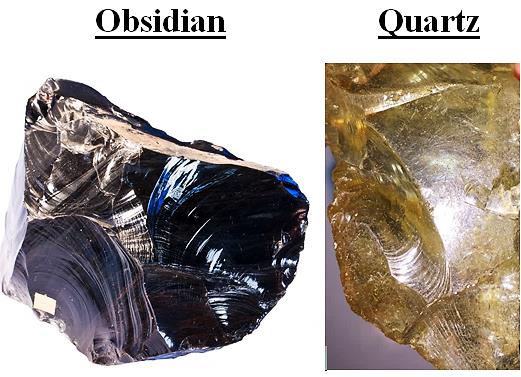
lattice. Solid-state diffusion is not a common Feedback: Conchoidal fracture refers to the process for crystal formation. tendency of a mineral to break and produce -------------------------------------------------------------- smooth, curving shell-shaped surfaces, similar 377. Which of the following is a mineral? to the way glass breaks. This type of fracture is a) Amber (tree sap). typically seen in minerals like quartz. b) Ice. c) Sugar (formula C 6 H 12 O 6 ). d) Ivory (from animal tusks). e) Coral (from reefs).
Feedback: Ice is a mineral. It meets the criteria for being a mineral, including being naturally
occurring, inorganic, solid, having a definite
chemical composition (H2O), and a specific crystal structure. Ice forms from the freezing of
water and is found in various environments on
Earth. Amber, sugar, coral, and ivory have --------------------------------------------------------------
organic origins. 380. There are two physical properties of
minerals that both result in smooth, flat
surfaces with specific angles between them.
The first property is the result of how the
mineral forms; the second is the result of
breaking a sample of the mineral. These
properties are called, respectively:
a) Hardness and cleavage. b) Cleavage and hardness. c) Cleavage and crystal habit. d) Crystal habit and hardness.
--------------------------------------------------------------
75
Feedback: Cleavage refers to how a mineral 383. An unknown mineral scratches glass, breaks along smooth, flat surfaces with specific has only average specific gravity, and
angles between them, and it's a result of the shows no cleavage but does show
mineral's internal atomic structure. Crystal conchoidal fracture. Which of the following
habit, on the other hand, describes the overall could it be? shape and appearance of the mineral, which is a) Quartz. influenced by how the mineral forms. Option (a) b) Talc. incorrectly pairs the properties, while option (b) c) Halite. pairs them in reverse order. Option (d) d) Mica. incorrectly pairs hardness with crystal habit. e) Galena. --------------------------------------------------------------

381. Graphite is: Feedback: Quartz is known for its hardness, a) The polymorph of galena. which allows it to scratch glass, and it exhibits
b) Harder than glass. conchoidal fracture. Talc, halite, mica, and
c) Pure silicon. galena do not generally scratch glass or have
d) The lead in the pencil you write with. conchoidal fracture as distinctive properties.
e) Composed of carbon atoms, arranged as --------------------------------------------------------------
tetrahedrons, and held together with strong 384. The expression 24 karat must mean covalent bonds. that:
a) You’re talking about the biggest diamond
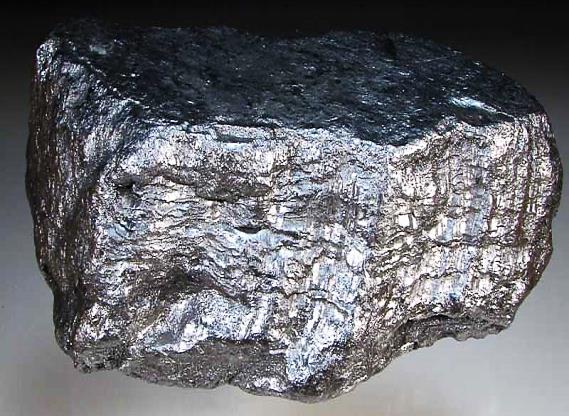
Feedback: Graphite is a mineral consisting of ever found. carbon atoms arranged in stacked layers of b) The gemstone is flawed by impurities. graphene. It is polymorph of diamond. It is the c) There are 24 cleavage planes present. most stable form of carbon under standard d) The gold is 100% pure. conditions and has many uses in pencils, e) The gold weighs 24 ounces. lubricants, and electrodes. Graphite forms
when carbon is subjected to high pressure and Feedback: Karat (often spelled "carat" outside temperature in metamorphic and igneous of the United States) is a unit of measurement
rocks. Graphite has a hexagonal crystal used to indicate the purity of gold in jewelry and
structure and is extremely soft and lightweight. other precious metal items. It's a measure of the
proportion of pure gold content compared to
other metals or alloys that might be present in
the material. Karat is commonly used to
express the fineness of gold used in jewelry and
is denoted by the symbol "K" or "kt."
--------------------------------------------------------------
382. Which is NOT a physical property
commonly used in the lab or field to identify --------------------------------------------------------------
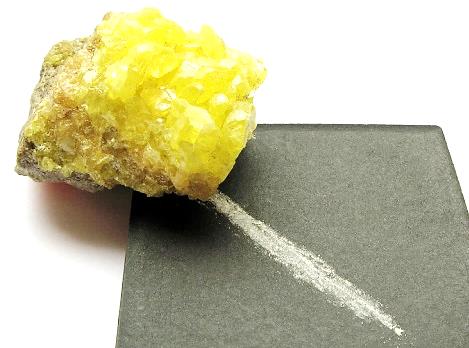
minerals? 385. When you scrape a mineral along a
a) Color. ceramic plate to observe the color of its
b) Streak. powder, you are checking the physical
c) Luster. property known as: d) Diffraction. a) Streak. e) Specific gravity. b) Luster.
c) Cleavage.
Feedback: Diffraction is not a direct physical d) Specific gravity. property that is commonly used in the lab or e) Fracture. field to identify minerals. Diffraction is a
phenomenon that occurs when waves Feedback: The color of a mineral's powder encounter obstacles or openings, and it's when scraped on a ceramic plate is known as
particularly important in understanding the its streak. Streak is a useful diagnostic property
atomic arrangement within crystalline to differentiate minerals that may have the
materials, as seen in X-ray diffraction (XRD) same external color. Luster is the appearance
techniques. While XRD is an essential tool in of the mineral's surface in reflected light,
mineralogy for determining crystal structures, cleavage refers to the way a mineral breaks
it's not a simple direct property used in mineral along planes of weakness, specific gravity is
identification. the density of the mineral relative to the density
--------------------------------------------------------------
76
of water, and fracture describes the way a dilute hydrochloric acid. This property and its
mineral breaks when it doesn't have cleavage. hardness fit calcite.
--------------------------------------------------------------
388. Which of the following groups of silicate
minerals exhibits a single strong cleavage in
one direction?
a) Framework silicates. b) Sheet silicates. c) Independent tetrahedral silicates. d) Single-chain silicates. e) Double-chain silicates.

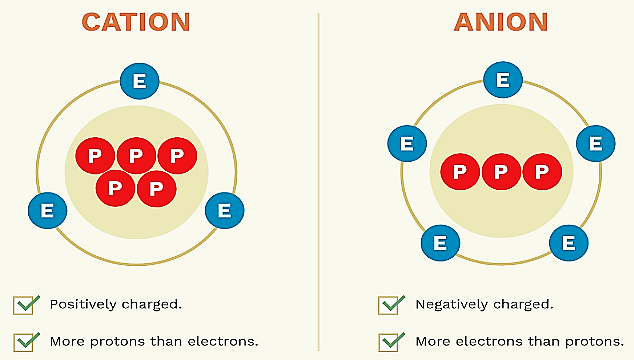
-------------------------------------------------------------- Feedback: Sheet silicates, also known as 386. Identify the FALSE statement: phyllosilicates, exhibit a single strong cleavage a) There is an angle of 120° between each in one direction due to the sheets of crystal face of the hexagonal column of a interconnected tetrahedra in their crystal quartz crystal. structure. The sheets are weakly bonded b) Crystals can be a variety of geometric between them, making cleavage along this shapes, including cubes, trapezoids, plane prominent. Minerals like mica (e.g., pyramids, octahedrons, hexagons, muscovite and biotite) are examples of sheet columns, blades, needles, and obelisks. silicates. c) Negative ions (cations) have more protons than electrons; positive ions (anions) have more electrons than protons. d) The faces of a crystal need not be the same size throughout the crystal, but the angle of
intersection between comparable faces is
the same throughout.
e) Crystals have symmetry.
Feedback: Negative ions (anions) have more electrons than protons, resulting in a net
negative charge, while positive ions (cations)
have fewer electrons than protons, leading to a
net positive charge. This is a fundamental
concept in chemistry, particularly when
discussing ions and their charges. --------------------------------------------------------------
389. Glass is not a mineral because it
doesn’t have crystal lattice structure.
a) True b) False
Feedback: Glass is not considered a mineral because it does not have a crystal lattice
structure. A crystal lattice is an orderly
arrangement of atoms in a repeating pattern,
which is a defining characteristic of minerals.
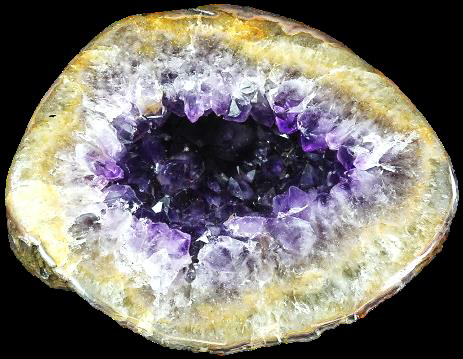
387. An unknown mineral sample can be glass does not meet the criteria to be classified scratched by a copper penny and will as a mineral. scratch the penny. It reacts with dilute -------------------------------------------------------------- hydrochloric acid to produce carbon dioxide 390. A geode is filled with anhedral crystals gas. Which of the following could it be? -------------------------------------------------------------- amorphous solid, meaning its atoms are rigidly fixed but not in an orderly pattern. Therefore, Glass, on the other hand, is classified as an
a) on its walls. Calcite. a) True b) Fluorite. b) False. c) Talc. d) Gypsum. Feedback : A geode is typically filled with e) None of the above. euhedral or subhedral crystals on its walls, not anhedral crystals. Euhedral crystals are well-Feedback : The unknown mineral has a formed and display distinct crystal faces, while hardness of three, but the most specific and subhedral crystals are partially developed and useful property in classifying it is reaction with may have some well-defined faces. Anhedral
77
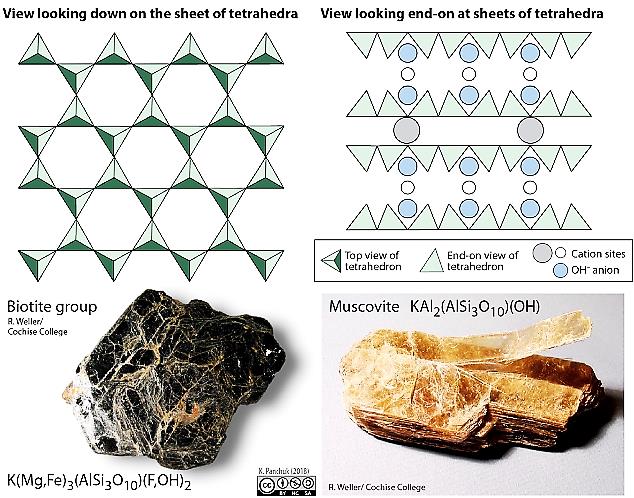
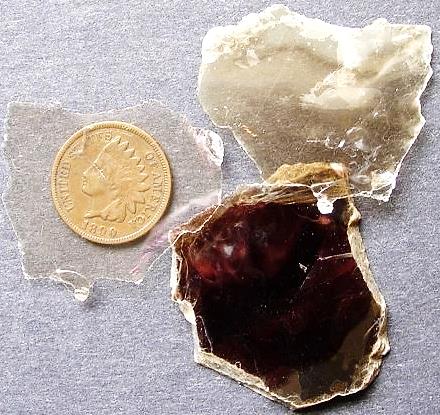
crystals lack well-defined faces altogether and sheets are weak and the chemical bonds
often form in confined spaces where there isn't within sheets are strong. enough room for crystal growth. Geodes are a) True known for their beautiful interior crystal b) False formations, often exhibiting euhedral or
subhedral crystals that have grown within the Feedback: Mica minerals, such as muscovite cavity. and biotite, exhibit perfect cleavage in one
direction due to weak chemical bonds between
sheets (sheets of aluminum, oxygen, and

hydroxide ions) and strong covalent bonds
within the sheets. This results in the ability of
mica to peel apart in parallel sheets or layers.
--------------------------------------------------------------
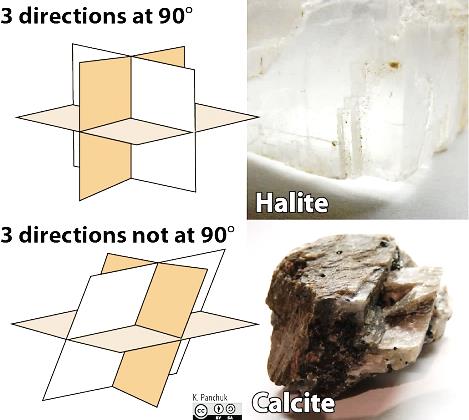
391. Calcite and halite both have one
direction of cleavage.
a) True
b) False
Feedback: Both have three cleavage
cleavage, meaning it can be easily broken directions. Calcite has perfect rhombohedral --------------------------------------------------------------
has perfect cubic cleavage, meaning it can be melt. a) along three planes that form a rhombus. Halite 394. Ice crystals form by solidification of a
easily broken along three planes that form a True b) False cube.
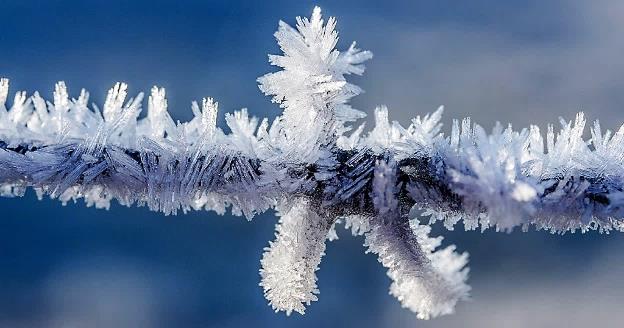
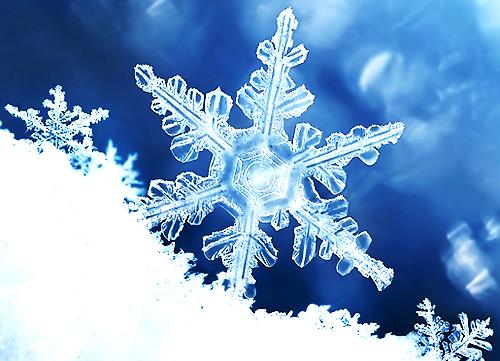
Feedback: Ice crystals form when liquid water (melt) solidifies upon freezing. This process
involves the rearrangement of water molecules
into a crystalline structure as they lose heat
energy.
--------------------------------------------------------------
392. Minerals generally can be destroyed by
heating, dissolution or other chemical
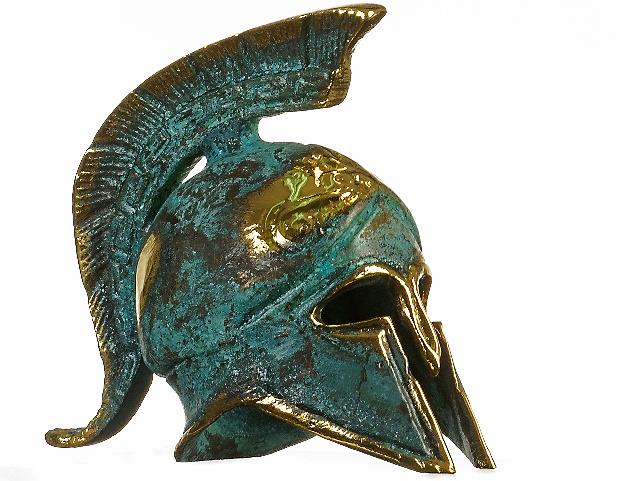
a) reaction. -------------------------------------------------------------- True 395. The mineral bronze is produced when b) False humans melt copper and tin together. a) True Feedback : Probably every mineral known can b) False be destroyed by heating, dissolution or reaction with specific chemicals. Metamorphism is a Feedback : Bronze is not a mineral, but an process that breaks down nearly all minerals alloy. A mineral is a naturally occurring, under geologically occurring conditions of inorganic, crystalline solid with a definite changed temperature, pressure or presence of chemical composition and structure. An alloy is other chemicals. a mixture of two or more metals, or a metal and -------------------------------------------------------------- a nonmetal that are melted and combined to 393. Mica peels apart in parallel sheets form a new material with different properties. because the chemical bonds between Bronze is an alloy traditionally composed of
78
copper and tin, but it can also contain other 398. Gold and copper can both be found as metals or nonmetals, such as aluminum, native metals. manganese, nickel, phosphorus, silicon, a) True arsenic, or zinc. b) False
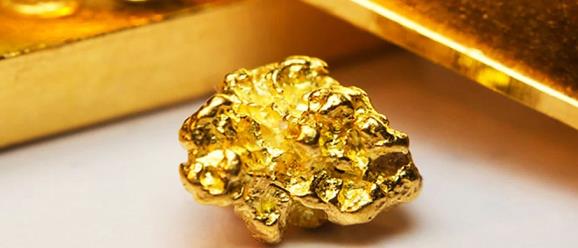
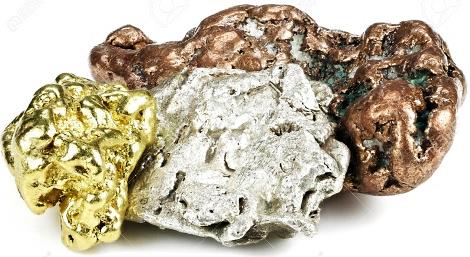
Feedback: Gold and copper are among the native metals, meaning they can be found
naturally in their metallic form without
combining with other elements or minerals.

Gold, in particular, is well-known for its
occurrence as nuggets or flakes in various
geological settings, while copper can also be
found in its native form, often associated with
ore deposits.
--------------------------------------------------------------
396. Which of these is a special property
that is NOT useful in differentiating most minerals from one another?
a) Cleavage.
e) Habit. 399. All precious and semiprecious stones Magnetism. must be transparent. a) True Feedback : Magnetism is not a commonly b) False observed property in most minerals and therefore is not typically used as a means of c) Hardness. -------------------------------------------------------------- d) b) Streak.
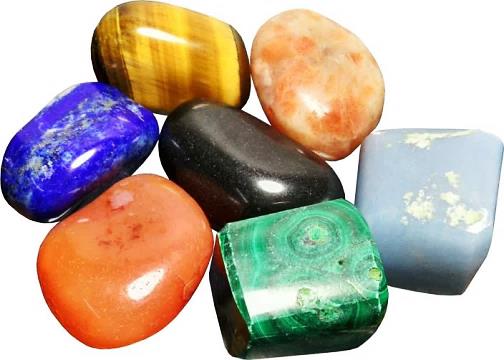
is not a widespread characteristic and is not as many gemstones, it is not a requirement for a reliable or commonly used as properties like stone to be classified as precious or cleavage, streak, hardness, and crystal habit. semiprecious. Some gemstones, like opal, -------------------------------------------------------------- turquoise, lapis, malachite, and jade are valued 397. few minerals do exhibit magnetic properties, it stones need to be transparent. While transparency is a desirable characteristic for mineral identification or differentiation. While a Feedback: Not all precious and semiprecious
a) physical properties used to identify quartz. Color and cleavage are two very useful for their unique colors, patterns, and textures even if they are not fully transparent. Different True gemstones have diverse appearances and b) False properties, and their value is determined by factors such as color, clarity, rarity, and cultural Feedback : Color and cleavage are not significance in addition to transparency. particularly useful properties for identifying
quartz. Quartz is typically colorless or appears
in a variety of colors, so color is not a reliable
identifying feature. Cleavage in quartz is absent
or not easily seen, as it typically exhibits
conchoidal (shell-like) fracture. Instead,
hardness and crystal habit (hexagonal prisms
with pointed terminations) are more reliable
properties for identifying quartz.
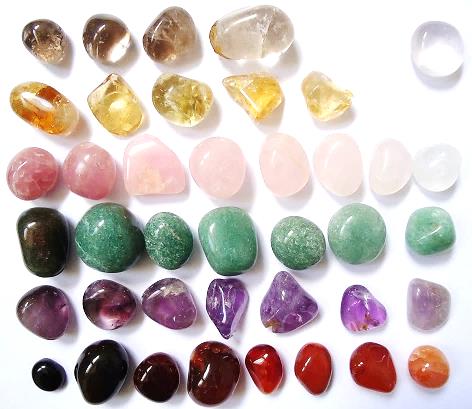
--------------------------------------------------------------
400. Ore minerals are often sulfides and
oxides of metallic elements.
a) True b) False
Feedback: Many metallic elements bond with sulfur and oxygen in the environment to
produce sulfides and oxides. Ore minerals are
-------------------------------------------------------------- These minerals contain valuable metals and often sulfides and oxides of metallic elements.
79
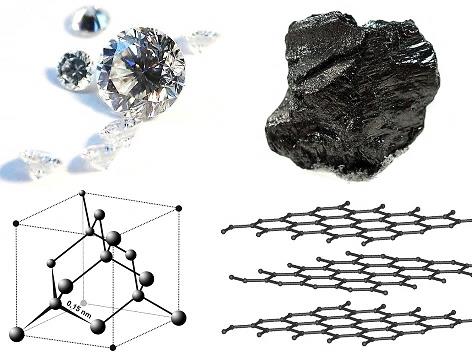
are economically important as they are c) Graphite and mica. extracted and processed to obtain the metals d) Diamond and topaz. they contain. Sulfide minerals like galena (lead e) Graphite and diamond. sulfide), chalcopyrite (copper iron sulfide), and
pyrite (iron sulfide) are examples of ore Feedback: Polymorphs have identical minerals. Oxide minerals such as hematite (iron chemical compositions but different
oxide), cassiterite (tin oxide), and magnetite crystallographic structures. Graphite and
(iron oxide) are also commonly found as ore diamond are both carbon but have differing
minerals. crystallographic structures, as well as being on

-------------------------------------------------------------- opposite ends of the Mohs scale of hardness.
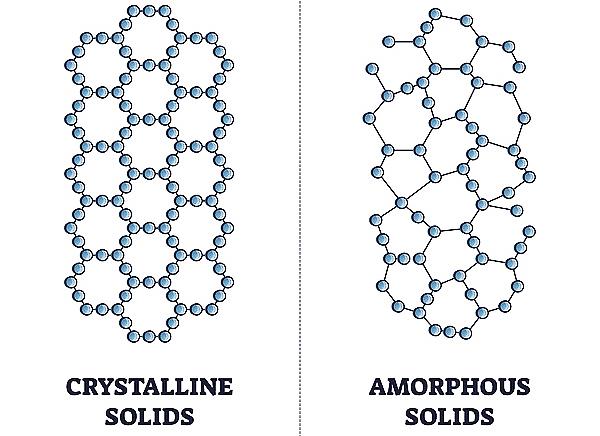
401. A mineral can exist in a crystal lattice
framework or as glass, an amorphous solid.
a) True
b) False
Feedback: Minerals can exist in either a crystalline (having a repeating atomic structure)
or amorphous (lacking a repeating atomic
structure) form. While crystalline minerals have
a well-ordered internal arrangement of atoms,
amorphous minerals, such as glass, have a
disordered or random atomic structure. Both
crystalline and amorphous forms are --------------------------------------------------------------
considered minerals, as long as they meet the 404. Which mineral group composes more other criteria of being naturally occurring, than 95% of the minerals of the continental
inorganic, and having a definite chemical crust? composition. a) Carbonates.
b) Sulfates. c) Sulfides. d) Silicates. e) Sulfates and sulfides when considered as
one group.
Feedback: Silicate minerals make up the overwhelming majority of minerals in the
continental crust, accounting for more than 95%
of the Earth's crust. Silicate minerals are
characterized by their silicon-oxygen
tetrahedral structures and can have various
chemical compositions, leading to the diversity
-------------------------------------------------------------- of silicate minerals found in the Earth's crust.
402. For which of the following reasons is Carbonates, sulfates, and sulfides, while
the methane within natural gas not a important in their own right, are not as abundant
mineral? as silicate minerals in the continental crust.
a) It’s naturally occurring. --------------------------------------------------------------
b) There may have been biological processes 405. What do mica and graphite have in
involved in its formation. common?
c) It has a specific composition. a) Both are silicate minerals. d) It is formed by geologic processes. b) Both have three directions of cleavage. e) It lacks a crystalline structure. c) Both are semiprecious stones.
d) Both break in one preferential direction.
Feedback: Minerals are naturally occurring, e) Both react with hydrochloric acid (HCl) to inorganic solids with a definite chemical "fizz" (bubble and produce carbon dioxide).
composition and a crystalline structure.
Methane, on the other hand, is a non-crystalline Feedback: Mica and graphite both exhibit gas. It is a hydrocarbon with the chemical cleavage in one preferential direction. Cleavage
formula CH4. It is formed by the decomposition is the tendency of minerals to break along
of organic matter under anaerobic conditions. specific planes of weakness in their crystal
-------------------------------------------------------------- structure. In the case of mica, it breaks along
403. Which pair of minerals listed below are sheets or layers, resulting in thin, flat fragments.
polymorphs? Graphite, similarly, breaks along its crystal
a) Calcite and dolomite. planes, producing thin, flat sheets. This
b) Quartz and halite. property is distinct from minerals that break
80
randomly or exhibit cleavage in multiple equal size and clearly visible to the eye with or
directions. without a hand lens or binocular microscope. --------------------------------------------------------------
406. Why are cleavage and habit often
confused?
a) They both exhibit an identical and otherwise
unique pattern when examined by X-ray
diffraction.
b) They both relate to the chemical destruction

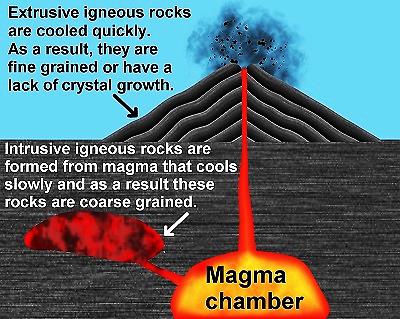
Feedback: Habit is indeed related to the three- Chemical composition. c) Type of minerals. dimensional shape that a mineral crystal or d) All of the preceding. aggregate will grow into under ideal conditions, while cleavage pertains to how a mineral crystal Feedback : Intrusive igneous rocks form when will break along specific planes due to its magma cools and solidifies beneath the Earth's internal atomic arrangement. surface, within the crust. As the magma cools -------------------------------------------------------------- slowly in the subsurface environment, larger 407. If you were to encounter an igneous mineral crystals have time to grow, resulting in rock in which the minerals were clearly a coarse-grained texture. Extrusive igneous visible, you would be justified in concluding rocks, on the other hand, form when magma that the rock is: reaches the Earth's surface and cools rapidly a) Detrital. due to exposure to air or water. This rapid e) Both are exhibited strongly by sulfides but 409. The major difference between intrusive no other mineral families. igneous rocks and extrusive igneous rocks Both can result in a mineral crystal having is: planar sides. a) Where they solidify. b) c) They are both terms for conchoidal fracture. -------------------------------------------------------------- d) of minerals.
b) Foliated. cooling prevents the growth of large mineral c) Plutonic. crystals, resulting in a fine-grained or glassy d) Metamorphic. texture. e) Extraterrestrial.
Feedback: Plutonic rocks, also known as intrusive rocks, form beneath the Earth's
surface from slowly cooling magma. The slow
cooling allows for the growth of visible mineral
crystals, resulting in a coarse-grained texture.
The term "plutonic" is often used
interchangeably with "intrusive" to describe
igneous rocks that solidify below the surface
and have large, well-formed mineral crystals.
--------------------------------------------------------------
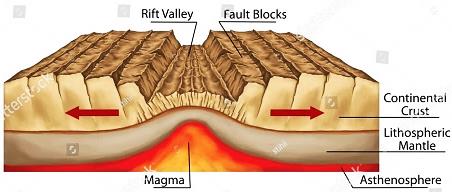
410. Mafic magma is generated at divergent
boundaries because of:
408. Which one of the following is a Magmatic underplating. d) Melting of the lithosphere. phaneritic igneous rock? a) Gabbro. Feedback-------------------------------------------------------------- b) Decompression melting. c) a) Water under pressure.
b) Sandstone. : Mafic magma is generated at divergent boundaries because of c) Coal. decompression melting. As the plates separate, d) Phyllite. the pressure on the underlying mantle e) Dolostone. decreases, leading to a reduction in the melting point of the mantle rocks. This reduction in Feedback : Phaneritic texture is one of the six pressure allows the mantle to partially melt, main textures of rocks. Phaneritic rocks are generating mafic (basaltic) magma. intrusive igneous rocks with coarse crystals of --------------------------------------------------------------
81
411. Which is NOT an intrusive igneous
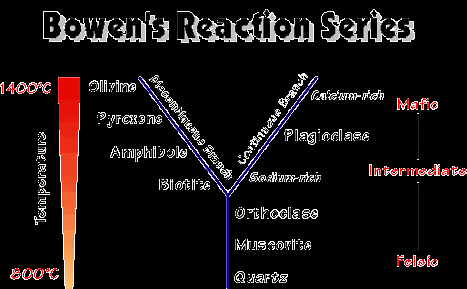
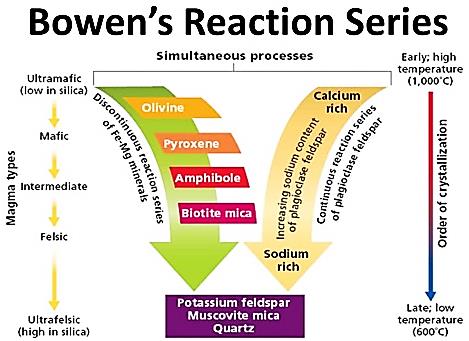
rock? Feedback: The continuous branch of Bowen’s
a) Gabbro. reaction series represents the minerals that
b) Diorite. form continuously as temperature decreases.
c) Rhyolite. These minerals are felsic (light-colored) and
d) Peridotite. mainly composed of plagioclase, which is a
group of silicate minerals that have a variable
Feedback: Rhyolite is an extrusive igneous composition of sodium and calcium.
rock with very high silica content. It is usually Plagioclase forms a solid solution series,

pink or gray in color with grains so small that meaning that it can have different proportions
they are difficult to observe without a hand lens. of sodium and calcium in its crystal structure. At
Rhyolite is made up of quartz, plagioclase, and higher temperatures, plagioclase is more
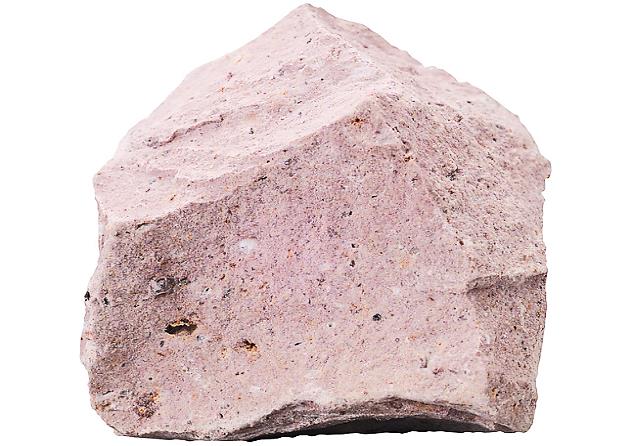
sanidine, with minor amounts calcium-rich, while at lower temperatures, it is of hornblende and biotite. Trapped gases often more sodium-rich. produce vugs in the rock. These often contain --------------------------------------------------------------
crystals, opal, or glassy material. 414. The discontinuous branch of Bowen’s
reaction series contains the mineral:
a) Pyroxene. b) Amphibole. c) Olivine. d) All of the above.
Feedback: The discontinuous branch of Bowen’s reaction series represents the
minerals that crystallize at distinct temperature
intervals. These minerals are mafic (dark-
colored) and mainly composed of pyroxene,
-------------------------------------------------------------- amphibole, and olivine. Pyroxene is the first
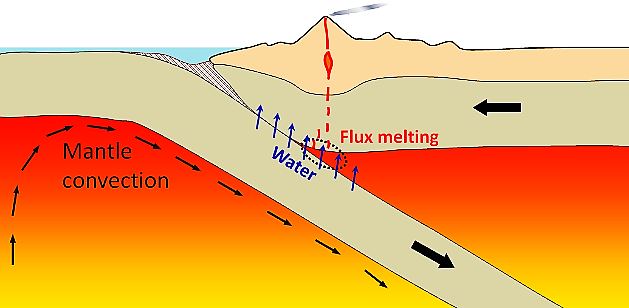
412. Flux melting occurs when: mineral to crystallize at high temperatures, a) followed by amphibole at lower temperatures, Water is added to the asthenosphere.
b) A mantle plume increases the temperature and finally olivine at the lowest temperatures.
of the asthenosphere. These minerals have different crystal structures
c) Mantle material undergoes depression. and compositions, and they do not form a
d) continuous solid solution series like Mantle material flows downward to greater
depths and higher temperatures. plagioclase.
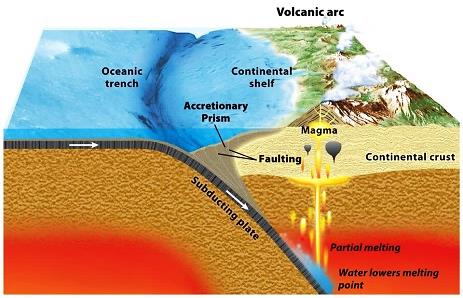
Feedback: Flux melting occurs when water or another volatile component is added to the
mantle, particularly in the subduction zone
settings. Subduction zones are areas where
one tectonic plate is being pushed beneath
another into the Earth's mantle. As the
subducting plate descends into the mantle, it
carries water and other volatiles with it. These
volatiles lower the melting point of mantle rocks,
causing partial melting and the generation of
magma. This magma can then rise to the --------------------------------------------------------------
surface and lead to volcanic activity. 415. Which is NOT a source of heat for
melting rock?
a) Geothermal gradient. b) The hotter mantle. c) Mantle plumes. d) Water under pressure.
Feedback: The geothermal gradient is not a source of heat for melting rock; it is a measure
of how temperature changes with depth in the
-------------------------------------------------------------- Earth's crust. The geothermal gradient
413. The continuous branch of Bowen’s represents the average rate at which
reaction series contains the mineral: temperature increases as you go deeper into
a) Pyroxene. the Earth. It is not a direct heat source but rather
b) Plagioclase. a result of the Earth's internal heat and the way
c) Amphibole. it conducts through the Earth's layers. d) Quartz. --------------------------------------------------------------
82
416. A change in magma composition due to 418. A discordant shallow intrusive structure
melting of surrounding country rock is is called a: called: a) Stock.
a) Magma mixing. b) Dike. b) Assimilation. c) Sill. c) Differentiation. d) Laccolith. d) Partial melting.
Feedback: A discordant shallow intrusive
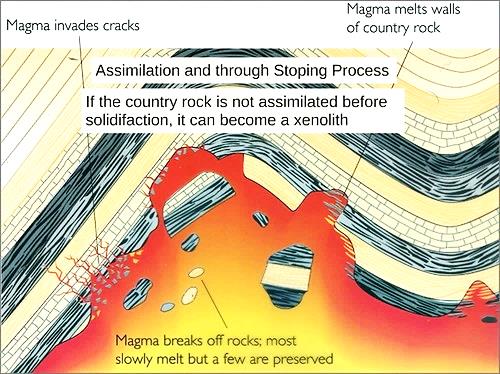
Feedback: A change in magma composition structure is called a dike. Dikes are tabular

due to the melting and incorporation of bodies of igneous rock that cut across the pre-
surrounding country rock is referred to as existing rock layers or structures in the
assimilation. Assimilation occurs when magma surrounding country rock. They are formed
comes into contact with and incorporates the when magma forces its way into fractures or
minerals and elements from the rocks it passes cracks within the Earth's crust and solidifies
through or interacts with. This process can alter underground. the composition of the original magma, leading
to changes in its chemistry.
--------------------------------------------------------------
419. The most common igneous rock of the
continents is:
-------------------------------------------------------------- a) Basalt. 417. By definition, stocks differ from b) Granite.
batholiths in: c) Rhyolite.
a) Shape. d) Peridotite. b) Size.
c) Chemical composition. Feedback: Granite is the most common d) Age. igneous rock of the continents, and it is formed
by the slow cooling of magma beneath the
Feedback: Both stocks and batholiths are earth’s surface. Granite is composed of quartz
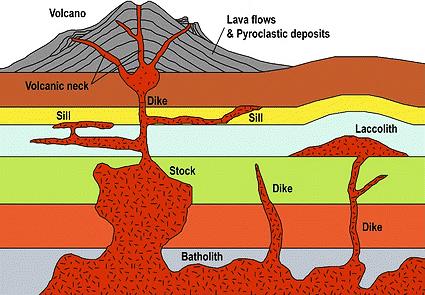
intrusive igneous bodies, meaning that they and feldspar minerals, and it has a light color
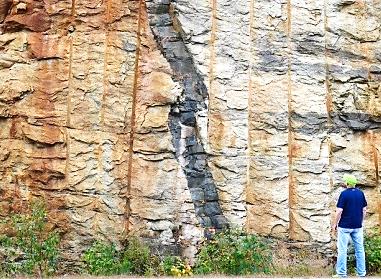
formed from magma that cooled and solidified and a coarse-grained texture. beneath the Earth's surface. However, stocks
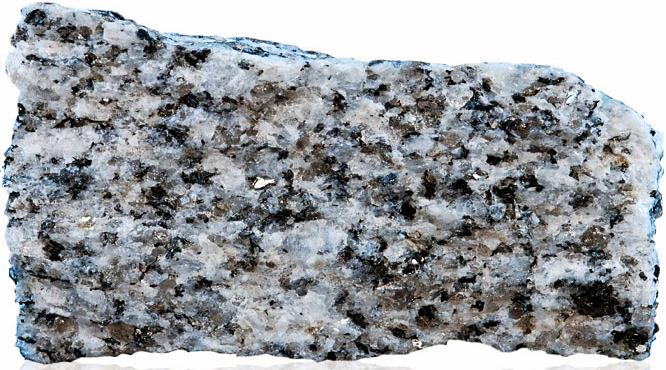
are smaller than batholiths. A stock is defined
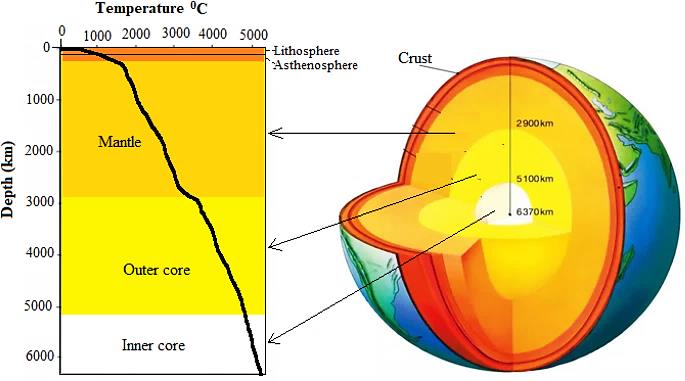
as an intrusive igneous body with an exposed
surface area of less than 100 square
kilometers, while a batholith is defined as an
intrusive igneous body with an exposed surface
area of greater than 100 square kilometers.
Stocks and batholiths can be of any shape, and
they can have any chemical composition. They
can also be of any age.
--------------------------------------------------------------
420. The geothermal gradient is, on the
average, about:
a) 1°C/km. b) 10°C/km. c) 25°C/km. d) 50°C/km.
Feedback: The geothermal gradient is, on average, about 25°C (45°F) per kilometer of
-------------------------------------------------------------- depth. This means that for every kilometer you
83
descend into the Earth's crust, the temperature grained texture or even a glassy texture in the
increases by about 25°C. The geothermal case of rapid cooling. gradient can vary in different geological settings
and regions, but this average value gives a
general idea of how temperature changes with
depth in the Earth's interior.

421. Granitic magmas are associated with Convergent. a) ________ plate boundaries. b) Divergent. a) Convergent. c) Transform. b) Divergent. c) -------------------------------------------------------------- 423. Basaltic magma is associated with _______ plate boundaries: --------------------------------------------------------------
Transform.
Feedback divergent plate boundaries. In these settings, : Granitic magmas are associated the mantle material can rise to fill the gap Feedback: Basaltic magma is associated with
and other volatiles into the mantle, which lowers mantle material undergoes decompression melting due to the reduced pressure at the melting point of the overlying mantle rocks. shallower depths, leading to the generation of This can lead to the generation of granitic subduction of oceanic crust introduces water created by the separating plates. This rising with convergent plate boundaries. The
(felsic) magmas, which are more silica-rich and basaltic (mafic) magmas. These magmas are more fluid and have a lower silica content, less dense than mafic magmas. Granitic which allows them to flow more easily and often magmas are commonly associated with lead to volcanic activity along mid-ocean ridges volcanic arcs and mountain-building processes and rift zones at divergent boundaries. at convergent boundaries.
--------------------------------------------------------------
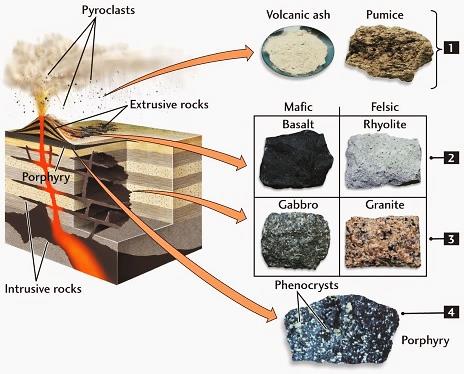
424. Which one of the following is a tabular
422. a) Batholith. The difference in texture between b) -------------------------------------------------------------- discordant pluton?
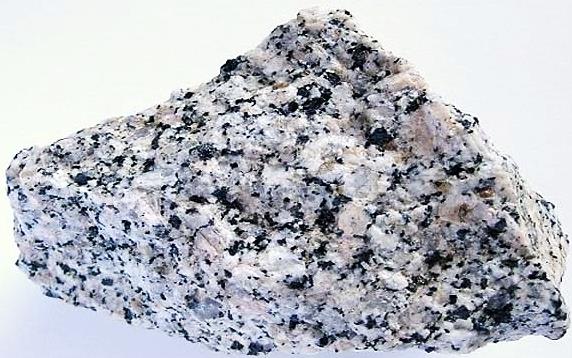
: A dike is a tabular discordant
Feedback: The difference in texture between pluton, meaning that it is a sheet-like body of intrusive igneous rock that cuts across the intrusive (plutonic) and extrusive (volcanic) existing structure of the country rock1. Dikes rocks is primarily due to different rates of are typically vertical or steeply inclined, and cooling and crystallization. Intrusive rocks cool they can vary in thickness and length. Dikes and solidify slowly beneath the Earth's surface, form when magma rises through cracks or allowing larger mineral crystals to form. This fractures in the crust, and they can feed results in a coarse-grained texture. Extrusive volcanic eruptions or other types of intrusions rocks, on the other hand, cool and solidify -------------------------------------------------------------- rapidly at or near the Earth's surface, which 425. An igneous rock such as granite with does not provide sufficient time for large minerals large enough to see without crystals to develop. This results in a fine- magnification has a ______ texture. a) Different mineralogy. Dike. e) Stock. b) Different rates of cooling and crystallization. c) Different amounts of water in the magma. Feedback intrusive and extrusive rocks is primarily due c) Sill. to: d) Laccolith.
a) Assimilated.
84
b) Phaneritic. 428. One process that brings about c) Volcanic. chemical changes in magma is: d) Pyroclastic. a) Magma mixing. e) Clastic. b) Crystal inversion.
c) Discordant separation.
Feedback: Phaneritic textures indicate that the d) Mafic differentiation. rock's mineral crystals are visible to the naked e) Ultramafic accumulation. eye. Granite is an example of a phaneritic
igneous rock, and it typically consists of coarse- Feedback: Magma mixing is a process that grained crystals of minerals like quartz, brings about chemical changes in magma. It

feldspar, and mica. This is in contrast to occurs when two or more separate magmas
aphanitic textures, where the mineral crystals with different compositions mix together. This
are too small to be seen without magnification. can lead to changes in the overall chemical
composition of the resulting magma, as well as
the formation of new minerals and textures.
--------------------------------------------------------------
429. Islands such as the Hawaiian chain
form at hot spots that overlie a:
a) Volcanic neck. b) Convergent plate boundary. c) Divergent plate boundary. d) Granite batholith.
-------------------------------------------------------------- e) Mantle plume. 426. Magma characterized as intermediate: a) Flows more readily than mafic magma. Feedback: Islands such as the Hawaiian chain b) Has between 53% and 65% silica. form at hot spots that overlie a mantle plume. A
c) Crystallizes to form rhyolite. mantle plume is a rising column of hot mantle
d) Is one from which ultramafic rocks material that originates from deep within the
crystallize. Earth's mantle. As the plume rises and reaches
e) Makes up most of the mantle. the lithosphere, it can create volcanic activity on
the overlying tectonic plate. The Hawaiian
Feedback: Magma characterized as Islands are a classic example of an island chain intermediate has a silica content between 53% formed by the movement of the Pacific Plate
and 65%. This composition places it between over a stationary mantle plume, which has
mafic (low-silica) magma and felsic (high-silica) generated a series of volcanic islands over
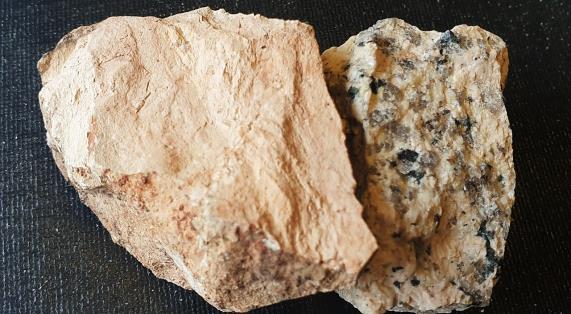
magma. Intermediate magma often gives rise to time. volcanic rocks like andesite, which have
properties and mineral compositions that reflect
their intermediate silica content.
--------------------------------------------------------------
427. Which pair of the following igneous
rocks has the same composition?
a) Diorite-andesite.
b) Peridotite-pegmatite.
c) Gabbro-rhyolite.
d) Basalt-granite.
e) Obsidian-scoria.
Feedback: Diorite and andesite have similar -------------------------------------------------------------- compositions in terms of their mineral content 430. Which one of the following statements and silica content. Both are intermediate in about batholiths is CORRECT ? composition, containing moderate amounts of a) They are mostly concordant. silica. Diorite is a coarse-grained intrusive rock, b) They are made up of basalt and gabbro. while andesite is a fine-grained extrusive rock. c) They form mostly at convergent plate boundaries. d) They formed from a single huge mass of magma. e) They have a mushroom-like geometry and are concordant.
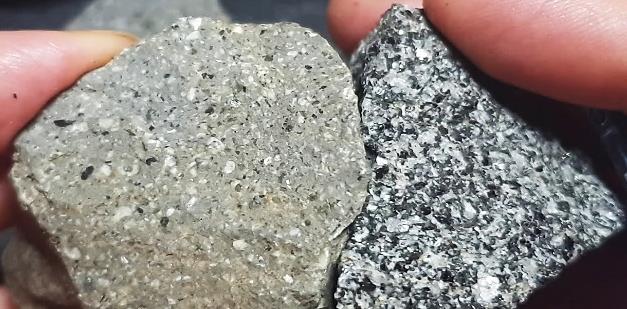
Feedback: Batholiths are large masses of intrusive igneous rock that form from cooled
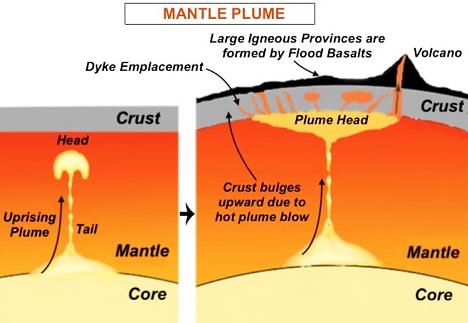
-------------------------------------------------------------- magma deep in the Earth’s crust. They are
85
commonly composed of felsic or intermediate 433. The phenomenon by which pieces of rock types, such as granite or granodiorite. country rock are detached and engulfed by
They form mostly at convergent plate rising magma is: boundaries, where subduction zones create a) Assimilation. large volumes of magma that rise and solidify in b) Crystal settling. the crust. c) Stopping.
d) Bowen's reaction series. e) Viscosity.

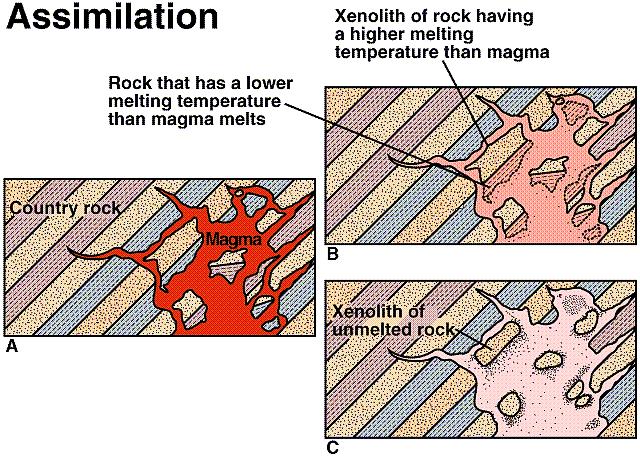
Feedback: Assimilation occurs when the magma comes into contact with and
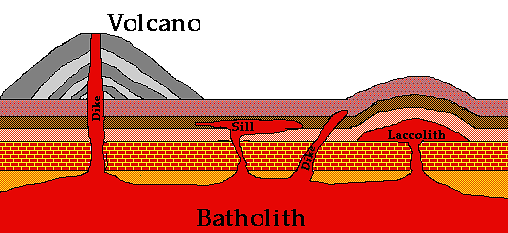
incorporates surrounding rocks as it rises
through the Earth's crust. The incorporated
country rock can chemically react with the
-------------------------------------------------------------- magma, leading to changes in the composition
431. of the resulting rock. This process contributes The igneous rock tuff is composed of:
a) to the diversity of rock compositions found in Pyroclastic materials.
b) igneous complexes. Calcium-rich plagioclase and pyroxene.
c) Obsidian and pumice.
d) Granite and vesicles.
e) Phenocrysts.
Feedback: The igneous rock tuff is composed of pyroclastic materials. Pyroclastic materials
are fragmented volcanic debris, including ash,
lapilli (small rock fragments), and volcanic
bombs, that are ejected during explosive
volcanic eruptions. Tuff forms when these
pyroclastic materials are deposited and
subsequently compacted and cemented
together. Tuff can have a wide range of --------------------------------------------------------------
textures, from fine-grained to coarse-grained, 434. A fluid's resistance to flow is called its: depending on the size of the pyroclastic a) Plutonic inertia. fragments. b) Composition.
c) Texture. d) Melting point. e) Viscosity.
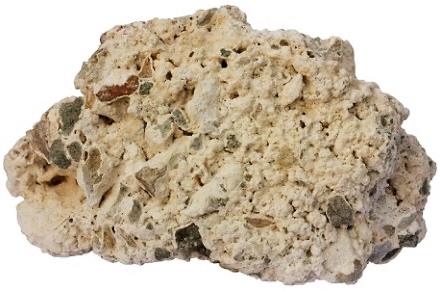
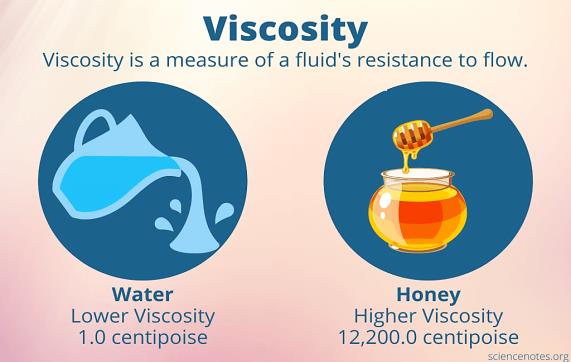
Feedback: Viscosity is a measure of how thick or resistant a fluid is to flowing. High-viscosity
fluids are thick and flow slowly, while low-
viscosity fluids are thinner and flow more easily.
Viscosity is influenced by factors such as
temperature, pressure, and the composition of
the fluid. It is an important property in
-------------------------------------------------------------- understanding the behavior of fluids, including
432. The origin of magma is well liquids and gases.
understood.
a) True
b) False.
Feedback: The composition of magma depends on the rock it was formed from (by
melting), and the conditions of that melting.
Magmas derived from the mantle have higher
levels of iron, magnesium, and calcium, but
they are still likely to be dominated by oxygen
and silicon. All magmas have varying
carbon, and Sulphur, which are converted into proportions of elements such as hydrogen, --------------------------------------------------------------
gases like water vapor, carbon dioxide, and 435. Magma is _________.
-------------------------------------------------------------- which on cooling solidifies to form an igneous rock. hydrogen sulfide as the magma cools. a) Completely or partially molten material,
86
b) Completely or partially molten material,
which on cooling liquefies to form a lava
tube.
c) An igneous rock, which on melting becomes
completely or partially lava.
d) A lava fountain that completely or partially
cools and solidifies to form molten rock.
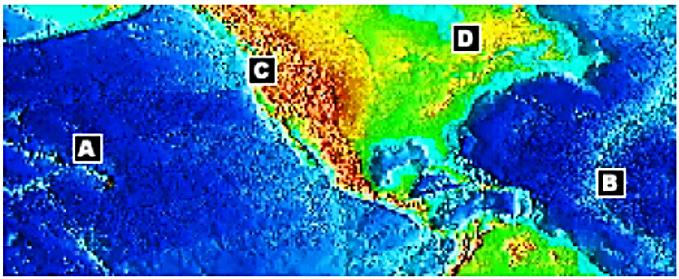
Feedback b) : Magma is the term used for molten a) Mid-ocean ridge basalt. (B) Recent andesite. (C) rock material that exists beneath the Earth's c) Intraplate (hot-spot) basalt. (A) surface. It can contain a mixture of liquid, d) Ancient granite. (D) crystals, and dissolved gases. When magma -------------------------------------------------------------- cools and solidifies, it forms igneous rocks. If 439. What is meant by “extrusive” and this solidification occurs beneath the surface, “intrusive”? the resulting rocks are referred to as intrusive a) Igneous rocks that cooled at the surface or plutonic rocks. If the magma reaches the (volcanic) and interior to the surface surface and cools quickly, it forms volcanic or (plutonic) of the Earth, respectively. extrusive rocks. b) Sedimentary rocks that cooled at the surface (volcanic) and interior to the surface

(plutonic) of the Earth, respectively.
c) Metamorphic rocks that cooled at the
surface (volcanic) and interior to the surface
(plutonic) of the Earth, respectively.
d) All of these.
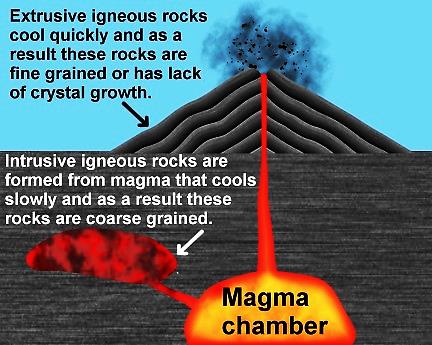
Feedback: Extrusive and intrusive are terms that describe how igneous rocks form from
-------------------------------------------------------------- molten material, also known as magma or lava.
436. Igneous rocks that form at depth are Extrusive rocks form when lava cools and
referred to as intrusive or plutonic rocks. solidifies on the surface of the Earth, such as
a) True during a volcanic eruption. Intrusive rocks form
b) False when magma cools and solidifies within the
crust of the Earth, such as in a magma
Feedback: Igneous rocks that form at depth, chamber. beneath the Earth's surface, are referred to as
intrusive or plutonic rocks. These rocks cool
and solidify slowly, allowing for the
development of larger mineral crystals.
--------------------------------------------------------------
437. What is the difference between a
tholeiitic basalt and an alkali basalt?
a) A tholeiitic basalt contains more
conspicuous plagioclase and pyroxene
crystals.
b) A tholeiitic basalt contains no olivine.
c) An alkali basalt contains potassium feldspar. d) An alkali basalt contains more conspicuous
plagioclase and pyroxene crystals.
crystals compared to a tholeiitic basalt. Alkali True b) False basalts are characterized by the presence of higher proportions of alkali feldspar (potassium Feedback: Granite is not an extrusive igneous feldspar) and sometimes more prominent rock; it is an intrusive igneous rock. Basalt is the pyroxene crystals, while tholeiitic basalts are most common type of extrusive igneous generally richer in plagioclase feldspar and may rock and the most common rock type at the have a different pyroxene composition. Feedback 440. The most common extrusive igneous : An alkali basalt typically contains rock is granite. more conspicuous plagioclase and pyroxene a) e) None of the above is true. --------------------------------------------------------------
-------------------------------------------------------------- Earth's surface. -------------------------------------------------------------- 438. Identify the type of igneous rock you 441. The only factor that determines the would expect to find at each of the indicated texture of an igneous rock is the amount of locations by selecting the correct response. silica present in the magma.
87
a) True 444. The large crystals in an igneous rock b) False with a porphyritic texture are referred to as
phenocrysts.
Feedback: The texture of an igneous rock is a) True determined by various factors, and the amount b) False of silica (silicon dioxide) in the magma is just
one of those factors. Other factors that Feedback: In an igneous rock with a porphyritic influence the texture of an igneous rock include texture, the larger crystals embedded within a
the cooling rate of the magma, the mineral finer-grained matrix are referred to as

composition, the presence of gases and phenocrysts. Porphyritic texture is
volatiles, and the rate of crystallization. These characterized by the presence of two distinct
factors collectively contribute to the size, shape, crystal sizes: phenocrysts, which are larger and
arrangement, and interlocking of mineral formed earlier in the cooling history of the
crystals within the rock, resulting in a variety of magma, and the groundmass, which is the
textures, such as coarse-grained, fine-grained, finer-grained matrix that surrounds the
glassy, porphyritic, and vesicular, among phenocrysts. This texture indicates a two-stage
others. cooling process, where the magma initially
-------------------------------------------------------------- cools slowly to form the phenocrysts, followed
442. A slowly cooled magma will most likely by rapid cooling to form the groundmass.
result in a rock with which one of the
following textures?
a) Phaneritic.
b) Pyroclastic.
c) Glassy.
d) Aphanitic.
e) Porphyritic.
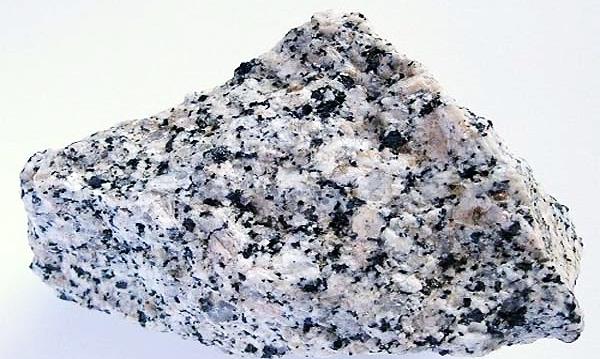
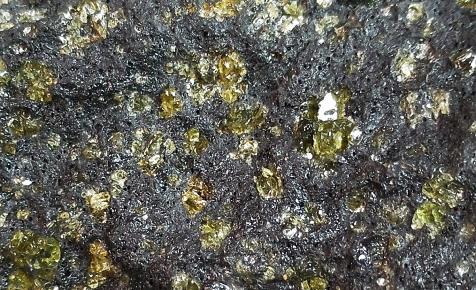
Feedback: A slowly cooled magma will most likely result in a rock with a phaneritic texture. --------------------------------------------------------------
Phaneritic texture refers to a coarse-grained 445. For igneous rocks, crystal size is texture in which the individual mineral crystals interpreted to imply which of the following?
are visible to the naked eye. This texture forms a) How the magma felt during cooling. when magma cools slowly beneath the Earth's b) Time allowed for cooling of the magma/lava. surface, allowing ample time for the growth of c) Temperature of the magma. relatively large mineral crystals. As a result, d) Chemistry/composition of the magma. rocks with a phaneritic texture, such as granite
and diorite, have a coarse appearance due to Feedback: The crystal size of igneous rocks the well-developed crystals. depends on how quickly or slowly the magma
or lava cools. The slower the cooling, the larger
the crystals can grow. The faster the cooling,
the smaller the crystals are or no crystals form
at all.
--------------------------------------------------------------
446. Granitic rocks contain about 70 percent
silica and are major constituents of the
continental crust.
-------------------------------------------------------------- b) a) True False
443. The fine grained volcanic equivalent of
a) True granitoids or felsic rocks, typically contain granite is basalt. Feedback: Granitic rocks, also known as
b) False around 70 percent silica and are major
equivalent of granite is not basalt; it is rhyolite. composed mainly of quartz, feldspar, and mica. Granite and rhyolite are compositionally similar These rocks are characterized by their light igneous rocks, with granite being the intrusive color due to the abundance of minerals like Feedback: The fine-grained volcanic for example, is a common granitic rock constituents of the continental crust. Granite,
(plutonic) equivalent and rhyolite being the quartz and feldspar, and they play a significant extrusive (volcanic) equivalent. Both rocks are role in the composition of continental crust. felsic in composition, rich in silica, and often -------------------------------------------------------------- contain similar minerals. Basalt, on the other 447. As the silica content of magma hand, is the fine-grained volcanic equivalent of increases, the viscosity decreases. the coarse-grained intrusive rock gabbro. a) True --------------------------------------------------------------
88
b) False composed mainly of quartz, potassium
feldspar, and plagioclase feldspar, the most
Feedback: As the silica content of magma likely mineral to compose the phenocrysts in a
increases, the viscosity (resistance to flow) of granite porphyry would be potassium feldspar.
the magma actually increases, not decreases. Potassium feldspar is one of the major minerals
Silica-rich magmas have a higher viscosity, in granite and can develop larger crystals if the
making them thicker and less fluid. This high magma undergoes a two-stage cooling
viscosity can lead to more explosive volcanic process, resulting in a porphyritic texture. eruptions as gases are trapped within the --------------------------------------------------------------

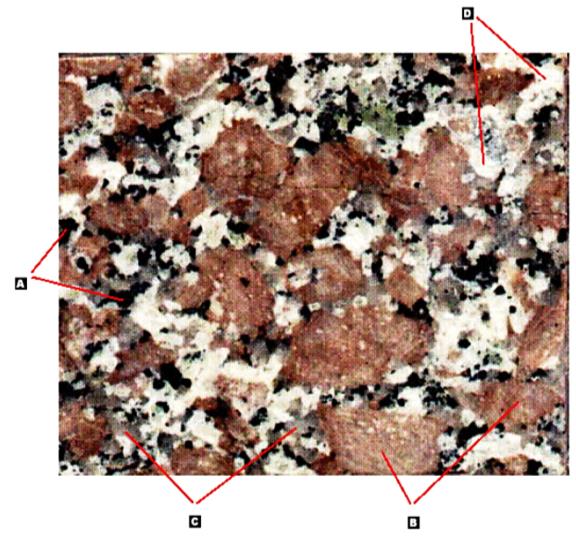
magma and have difficulty escaping. Silica- 451. The term "sialic" refers to igneous poor (mafic) magmas are less viscous, allowing rocks with a(n) __________ them to flow more easily and result in less a) Composition. explosive eruptions. b) Basaltic (mafic). -------------------------------------------------------------- c) Granitic (felsic). 448. Identify the minerals in this close up d) Intermediate.
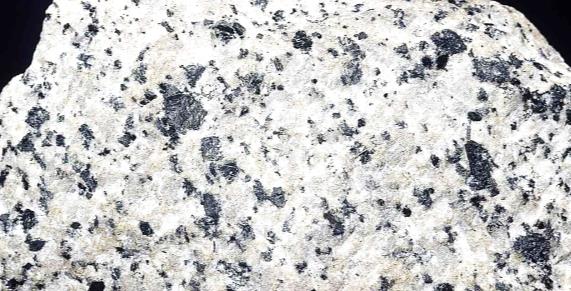
view of granite by selecting the correct e) None of the above. response.
Feedback: The term "sialic" refers to igneous rocks with a granitic (felsic) composition. Sialic
rocks are rich in silica and aluminum, and they
have a lower density compared to mafic rocks.
Sialic rocks are typically associated with
continental crust and have a higher proportion
of minerals like quartz, feldspar, and muscovite
mica. The term "sial" is derived from the
chemical elements silicon (Si) and aluminum
(Al), which are abundant in these granitic rocks.
--------------------------------------------------------------
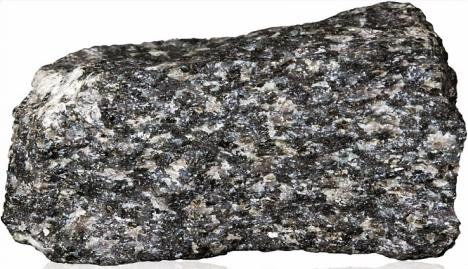
452. Identify the minerals in this close up
view of gabbro by selecting the correct
response.
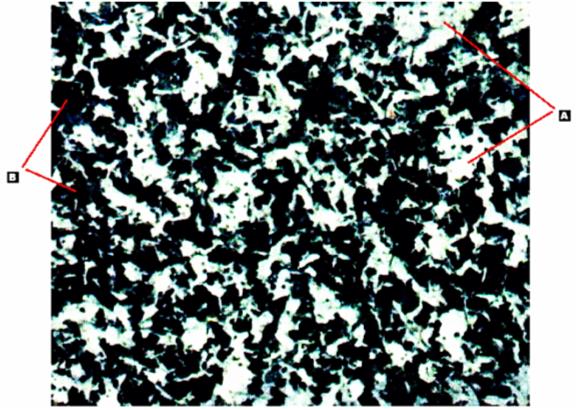
a) plagioclase feldspar (D)
b) quartz (C)
c) potassium feldspar (B)
d) biotite mica (A)
--------------------------------------------------------------
449. Igneous rocks that contain substantial
dark silicate minerals and calcium-rich
plagioclase feldspar (but no quartz) are said
to have a basaltic, or mafic, composition.
a) True
b) False a) Plagioclase feldspar. (A)
b) Pyroxene. (B)
Feedback: Basaltic rocks are characterized by --------------------------------------------------------------
their higher content of iron and magnesium, 453. Which one of these rock textures was which gives them their darker color and lower created by a period of slow cooling, then
silica content compared to felsic rocks. Mafic uplift and rapid cooling. rocks, including basalt, are typically associated a) Phaneritic. with oceanic crust and volcanic activity. b) Aphanitic. -------------------------------------------------------------- c) Porphyritic-phaneritic. 450. What mineral is most likely to compose d) Porphyritic-aphanitic.
the phenocrysts in a granite porphyry? e) None of the above.
a) Potassium feldspar.
b) Olivine. Feedback: Porphyritic-aphanitic texture is a c) Quartz. type of igneous rock texture that shows two
d) Pyroxene. distinct sizes of crystals: large crystals
e) Muscovite mica. (phenocrysts) embedded in a fine-grained
matrix (groundmass). This texture indicates
Feedback: In a granite porphyry, the that the rock underwent two stages of cooling:
phenocrysts are the larger crystals embedded a slow cooling stage deep within the crust,
within a finer-grained matrix. Since granite is where the phenocrysts grew, and a rapid
89
cooling stage near or at the surface, where the b) False groundmass solidified.
-------------------------------------------------------------- Feedback: The intrusive equivalent of the 454. Which one of the following rock types igneous rock basalt is gabbro. Both basalt and
has an aphanitic texture? gabbro have a similar mineral composition, with
a) Granite. basalt being the extrusive or volcanic
b) Basalt. equivalent, and gabbro being the intrusive or
c) Gabbro. plutonic equivalent. d) Peridotite. --------------------------------------------------------------

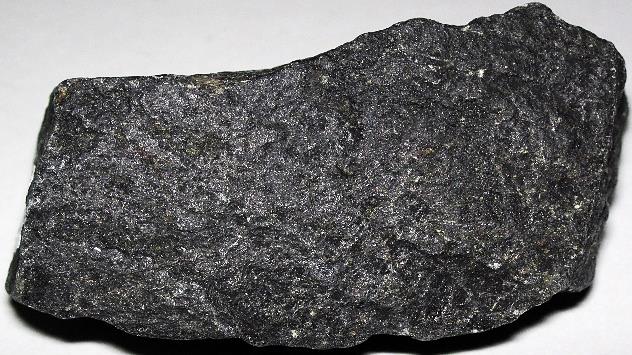
e) Diorite. 457. Bowen demonstrated in his
experiments that minerals crystallize from
Feedback: An aphanitic texture refers to a fine- magma in a systematic fashion. grained texture where individual mineral a) True crystals are too small to be visible without the b) False aid of a microscope. Basalt is an example of an
aphanitic rock. It forms from rapid cooling of Feedback: Norman L. Bowen's experiments in magma at or near the Earth's surface, resulting the early 20th century demonstrated that
in fine-grained crystals that are not easily minerals crystallize from magma in a
distinguishable with the naked eye. Granite, systematic fashion according to their melting
gabbro, peridotite, and diorite, on the other points and chemical compositions. This
hand, typically have a phaneritic texture with sequence of mineral crystallization is known as
visible crystals due to slower cooling and larger Bowen's reaction series. The minerals that form
crystal growth. first are those with higher melting points and
tend to be more mafic (rich in iron and
magnesium), while the minerals that form later
have lower melting points and tend to be more
felsic (rich in silica and aluminum). Bowen's
work contributed significantly to our
understanding of how different minerals form in
magmas as they cool and solidify.
--------------------------------------------------------------
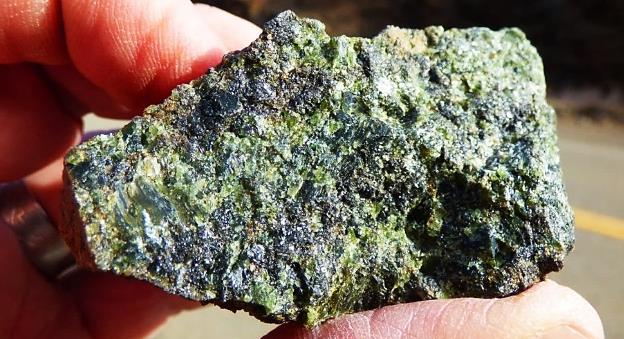
455. Which one of the following rocks is an
ultramafic?
a) Rhyolite.
b) Peridotite.
c) Basalt.
d) Diorite.
e) Gabbro.
Feedback: Peridotite is an ultramafic rock. Ultramafic rocks are composed mainly of
minerals rich in iron and magnesium, such as --------------------------------------------------------------
olivine and pyroxene. Peridotite is often found 458. According to Bowen's reaction series, in the Earth's mantle and is considered a major quartz is often the last mineral to crystallize
constituent of the mantle rock. The other from a melt. options listed (rhyolite, basalt, diorite, gabbro) a) True are not ultramafic rocks; they have varying b) False compositions and mineral content that differ
from peridotite. Feedback: According to Bowen's reaction
series, quartz is often the last mineral to
crystallize from a melt. This series describes
the order in which minerals crystallize from a
cooling magma or lava, and quartz typically
forms at lower temperatures, making it one of
the last minerals to crystallize.
--------------------------------------------------------------
459. The first minerals that form in a cooling
-------------------------------------------------------------- group. magma are primarily members of the sulfide
456. The intrusive equivalent of the igneous a) True rock basalt is gabbro. b) False a) True
90
Feedback: The first minerals that form in a a) The type of dissolved gases in the magma. cooling magma are not primarily members of b) The rate at which the magma cools. the sulfide group. Instead, the first minerals to c) The composition of the magma. crystallize are typically olivine, pyroxene, and d) The type of rock surrounding the magma. calcium-rich plagioclase feldspar. These e) The time of the year the rock forms. minerals are part of the silicate mineral group.
Sulfides, which include minerals like pyrrhotite Feedback: The texture of an igneous rock is and chalcopyrite, tend to crystallize later in the primarily determined by the rate at which the
cooling process after silicate minerals have magma cools. This cooling rate affects the size

already formed. and arrangement of mineral crystals within the
-------------------------------------------------------------- rock. Rapid cooling, as seen in volcanic
460. Water vapor, carbon dioxide, and sulfur eruptions, often results in fine-grained textures,
dioxide are the most common gases found while slow cooling, as observed in intrusive
in magma. rocks, leads to coarse-grained textures. The
a) True other factors listed can influence the
b) False composition and specific characteristics of
igneous rocks but are not as directly related to
Feedback: Water vapor (H2O), carbon dioxide texture. (CO 2), and sulfur dioxide (SO2) are indeed --------------------------------------------------------------
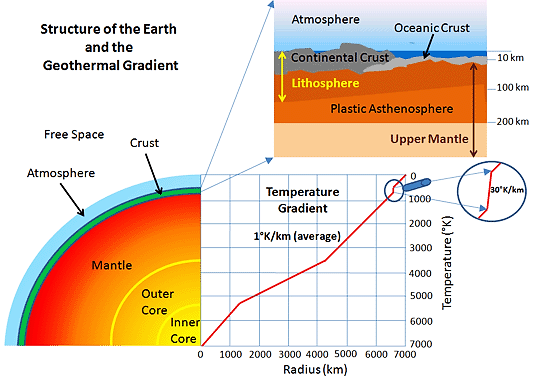
among the most common gases found in 463. The geothermal gradient ______. magma. These gases are released during a) Is the change in temperature with depth. volcanic eruptions and contribute to the b) Averages 20 to 30 degrees C per kilometer explosive nature of some volcanic events. in the upper crust. Water vapor, in particular, is a significant c) Varies with depth. component of magmatic gases and plays a d) Is all of the above. crucial role in volcanic activity.
Feedback: The geothermal gradient refers to the change in temperature with depth within the
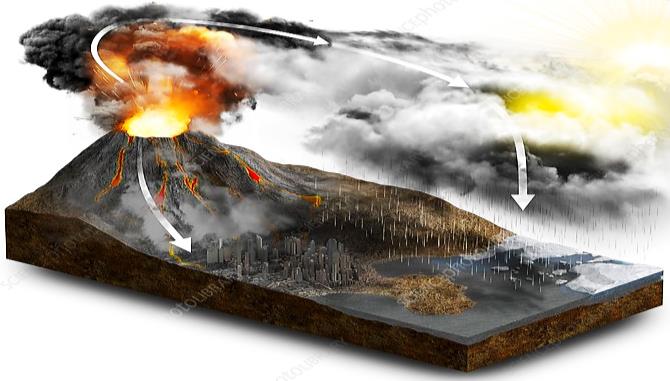
Earth's crust. It does vary with depth, and in the
upper crust, it generally averages around 20 to
30 degrees Celsius per kilometer. Therefore, all
of the statements provided are correct and
describe aspects of the geothermal gradient.
--------------------------------------------------------------
461. Both temperature and pressure play
important roles in the formation of magma.
a) True
b) False
Feedback: The formation of magma is influenced by a variety of factors, including --------------------------------------------------------------
temperature and pressure. In the Earth's crust 464. Most basaltic magmas probably and mantle, rocks experience different originate from partial melting of the
temperature and pressure conditions. As rocks ultramafic rock peridotite, the major
move deeper into the Earth, they are subjected constituent of the upper mantle. to increasing temperature and pressure. The a) True combination of these factors can cause rocks to b) False undergo partial melting, leading to the formation
of magma. Temperature is a key factor, as Feedback: Most basaltic magmas likely higher temperatures reduce the melting point of originate from the partial melting of the
rocks and make them more likely to melt. ultramafic rock peridotite, which is a major
Pressure also plays a role, and the two factors constituent of the upper mantle. When
are interrelated. Therefore, both temperature peridotite partially melts, it produces basaltic
and pressure are critical in the formation of magma, which is a common source of volcanic
magma within the Earth's interior. rocks and is associated with mid-ocean ridges
-------------------------------------------------------------- and hot spots. 462. Which one of the following factors is --------------------------------------------------------------
most important in determining the texture of 465. Because magma's density is greater an igneous rock? than the surrounding rocks, it works its way
91
to the surface over time spans from basaltic magmas and the more silica-rich
thousands to millions of years. components of Earth's crust.
a) True a) True b) False b) False
Feedback: Magma's density is generally lower Feedback: This process is known as magmatic than that of the surrounding rocks in the Earth's differentiation or assimilation. When basaltic
crust. Due to this difference in density, magma magmas rise through the Earth's crust, they can
has a tendency to rise toward the surface over assimilate and melt the surrounding rocks,

extended time spans, ranging from thousands including sedimentary, metamorphic, and
to millions of years. The process of magma granitic rocks. This assimilation process leads
rising to the surface is a result of the buoyancy to changes in the composition of the magma,
created by the density contrast between increasing its silica content and resulting in the
magma and the surrounding rocks. This formation of andesitic and granitic magmas.
buoyancy, combined with the pressures and This is one of the mechanisms that contribute
tectonic forces within the Earth's crust, to the diversity of magma compositions and
contributes to the movement of magma and its igneous rocks on Earth. eventual eruption at the surface as volcanic --------------------------------------------------------------
activity. 469. Which rock and environment has the -------------------------------------------------------------- highest concentration of rare elements?
466. "Wet" rock buried at depth has a much a) Pegmatite, crystallized from a water-rich,
greater melting temperature than does "dry" highly-differentiated, residual magma. rock of the same composition and under the b) Basalt dike, crystallized and solidified in a same confining pressure. vertical fracture at shallow depth.
a) True c) Pumice, crystallized at depth in a mass of b) False intrusive rock.
d) Peridotite, crystallized at depth in the upper
Feedback: "Wet" rock, or rock containing water mantle. or other volatile components has a lower
melting temperature than "dry" rock of the same Feedback: Pegmatites are known for having composition and under the same confining some of the highest concentrations of rare
pressure. The presence of water and volatiles elements and minerals. They often form from
in the rock reduces the melting point of minerals the crystallization of residual magmas that are
and facilitates partial melting. This is a critical enriched in volatile components and rare
factor in generating magma and igneous rock elements. The slow cooling and differentiation
formation. of these magmas in a late-stage crystallization
-------------------------------------------------------------- process lead to the development of large
467. Identify the most likely magma type at crystals and the accumulation of rare minerals
each indicated location by selecting the and elements. Pegmatites are particularly
correct response. significant as sources of valuable minerals and
gemstones due to their enriched compositions.
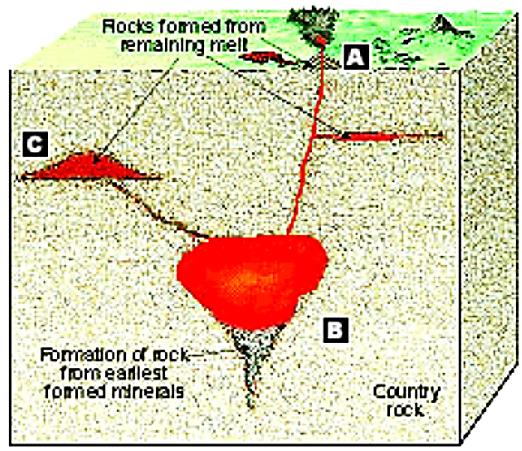
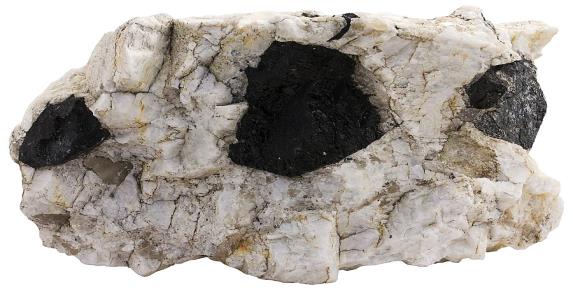
--------------------------------------------------------------
470. The rate of cooling of a magma or lava
a) b) The magma here is probably most silica- a) Mineralogy. is reflected by the ________ of the rock.
b) rich. (A) c) Color. The magma here is intermediate in d) Texture. Density.
c) The magma here is probably most rich in Feedback: The rate of cooling of a magma or iron and magnesium. (B) composition. (C)
-------------------------------------------------------------- lava is reflected by the texture of the rock. The
468. There is strong evidence that andesitic arrangement of the minerals or crystals within texture refers to the size, shape, and
and granitic magmas originate from the the rock. Different rates of cooling lead to the interactions between mantle-derived
92
formation of specific textures, such as opposite chemical affinities and are rarely found
phaneritic (coarse-grained), aphanitic (fine- together. grained), porphyritic, glassy, or vesicular --------------------------------------------------------------
textures. The texture provides valuable 474. The fine grained (aphanitic) equivalent information about the conditions under which of a granite is a: the rock formed. a) Rhyolite. -------------------------------------------------------------- b) Gabbro. 471. The temperature (at least a minimum c) Andesite.
estimate) from which the melt cooled is d) Basalt. reflected by the _________ of the rock.

a) Mineralogy. Feedback: Rhyolite is a fine-grained b) Texture. (aphanitic) igneous rock that has the same
c) Color. felsic composition as granite, which is a coarse-
d) Density. grained (phaneritic) igneous rock. Both rhyolite
and granite are rich in silica, potassium, and
Feedback: Different minerals have specific sodium, and contain minerals such as quartz,
temperature ranges at which they crystallize potassium feldspar, and plagioclase. The
from magma. By identifying the minerals difference in texture is due to the different
present in an igneous rock, geologists can cooling rates of the magma from which they
make inferences about the temperature at formed. Granite formed from magma that
which the rock formed. For example, minerals cooled slowly deep within the crust, allowing
that require higher temperatures to crystallize large crystals to grow. Rhyolite formed from
would suggest that the magma was initially lava that cooled rapidly on or near the surface,
hotter. This information helps geologists preventing large crystals from forming. understand the thermal history of the rock and
the conditions under which it solidified.
--------------------------------------------------------------
472. Where would you expect to find the
largest crystals in a lava flow?
a) Near the top surface of the flow.
b) In the center of the flow.
c) Near the bottom of the flow.
d) The crystals would have the same grain size
throughout the flow.
--------------------------------------------------------------
Feedback: The largest crystals in a lava flow 475. The last mineral (assuming that the are generally found in the center of the flow, composition is appropriate) to crystallize
where the cooling is slower due to insulation by from a magma is: the already solidified outer portions of the flow. a) Plagioclase. This allows more time for crystal growth, b) Olivine. resulting in larger crystals. As you move c) Quartz. towards the edges of the flow, the cooling is d) Pyroxene. faster, leading to the formation of smaller
crystals. Feedback: Quartz is the last mineral to -------------------------------------------------------------- crystallize from a magma, assuming that the
473. According to Bowen's reaction series, magma is silica-rich enough to allow quartz
which of the following pairs of phases are formation. Quartz is a silicate mineral that has
likely to be incompatible? a high silica content (SiO2) and a low melting
a) Quartz and alkali feldspar. point (around 750°C to 800°C). According to
b) Ca-Plagioclase and olivine. Bowen’s reaction series, quartz is the final
c) Quartz and olivine. product of the continuous branch, which
d) Na-plagioclase and amphibole. represents the minerals that form continuously
as temperature decreases. Quartz crystallizes
Feedback: According to Bowen’s reaction after plagioclase, potassium feldspar, and
series, quartz and olivine are incompatible muscovite mica, which are also felsic (light-
phases, meaning that they do not coexist in the colored) minerals. same igneous rock. This is because quartz and --------------------------------------------------------------
olivine have very different crystallization 476. The coarse grained equivalent of a temperatures and compositions. Quartz is the basalt is a: last mineral to crystallize at low temperatures, a) Rhyolite. and it is rich in silica (SiO2). Olivine is the first b) Gabbro. mineral to crystallize at high temperatures, and c) Andesite. it is poor in silica but rich in iron and d) Basalt. magnesium. Therefore, quartz and olivine have
93
Feedback: Gabbro is a coarse-grained partial melting of crustal rocks, generating
(phaneritic) igneous rock that has the same magmas that are enriched in silica and
mafic composition as basalt, which is a fine- aluminum. These magmas are more likely to
grained (aphanitic) igneous rock. Both gabbro produce granitic or rhyolitic compositions when
and basalt are rich in iron, magnesium, and they solidify. calcium, and contain minerals such as --------------------------------------------------------------
plagioclase, pyroxene, and olivine. The 479. Describe the plate tectonic settings difference in texture is due to the different where you would expect to find basaltic
cooling rates of the magma from which they rocks: formed. Basalt formed from lava that cooled a) Subduction zone. rapidly on or near the surface, preventing large b) Continent/continent collision. crystals from forming. Gabbro formed from c) Spreading center. magma that cooled slowly deep within the crust, d) Transform boundary. allowing large crystals to grow.

Feedback: Basaltic rocks are commonly associated with spreading center plate tectonic
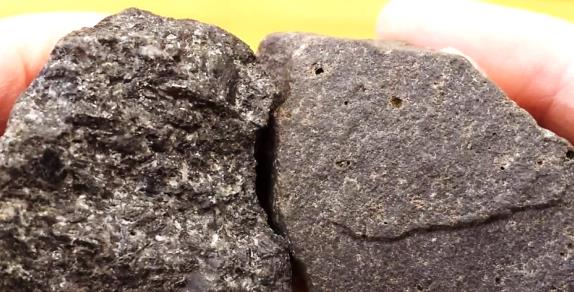
settings, also known as mid-ocean ridges. At
these underwater ridges, new oceanic crust is
formed as magma rises from the mantle and
solidifies at the surface. The magma that forms
basaltic rocks is derived from partial melting of
the mantle, which is relatively rich in iron and
magnesium. As the magma cools and solidifies
-------------------------------------------------------------- rapidly in the cold ocean water, it forms basaltic
477. rock with a characteristic aphanitic texture. Describe the plate tectonic settings
where you would expect to find andesites: Spreading centers are known for producing
a) extensive volcanic activity and the creation of Subduction zone.
b) oceanic crust. Continent/continent collision.
c) Spreading center.
d) Transform boundary.
Feedback: Andesite rocks are typically associated with subduction zone plate tectonic
settings. In a subduction zone, an oceanic plate
is being pushed beneath a continental or
another oceanic plate. As the subducting plate
sinks into the Earth's mantle, it undergoes
partial melting due to the increased --------------------------------------------------------------
temperature and pressure. The resulting 480. Which should offer the least resistance magma is typically intermediate in composition to flow? (between mafic and felsic), giving rise to a) A basaltic lava. andesitic rocks when it solidifies. These rocks b) An andesitic liquid. contain minerals like plagioclase feldspar and c) A rhyolitic liquid. amphibole, making them characteristic of
subduction-related volcanic activity. Feedback: Basaltic lavas have lower
viscosities compared to andesitic and rhyolitic
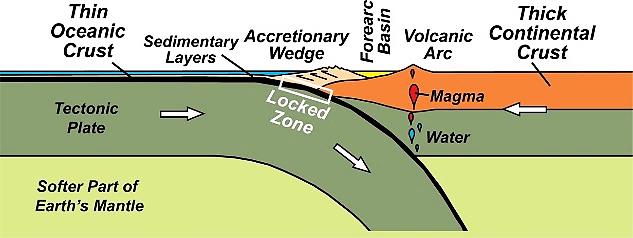
liquids due to their lower silica content and
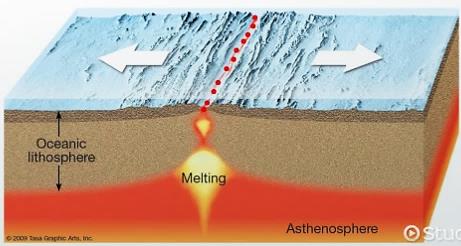
higher temperature. This lower viscosity allows
basaltic lava to flow more easily and cover
longer distances before solidifying. Andesitic
and rhyolitic liquids have higher viscosities due
to their higher silica content, making them
-------------------------------------------------------------- thicker and less fluid, resulting in more
478. Describe the plate tectonic settings resistance to flow.
where you would expect to find
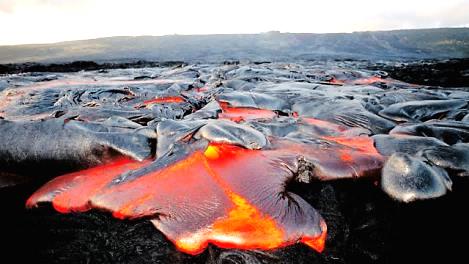
granitic/rhyolitic rocks:
a) Subduction zone.
b) Continent/continent collision.
c) Spreading center.
d) Transform boundary.
Feedback: When two continental plates collide, they create intense compression and crustal
thickening. This can lead to the subduction and --------------------------------------------------------------
94
481. Which is more likely to form? around 7,700 years ago. The collapsed area a) A granite dike. later filled with water, creating the stunning
b) A diorite dike. Crater Lake within the caldera. c) A gabbro dike.
Feedback: Gabbro is a mafic igneous rock, and mafic magmas have lower viscosity and are
more fluid, making them more likely to intrude
into fractures and form dikes. Diorite and

granite are intermediate to felsic compositions,
and their magmas are generally more viscous,
making them less likely to form dikes compared
to gabbroic magmas. --------------------------------------------------------------
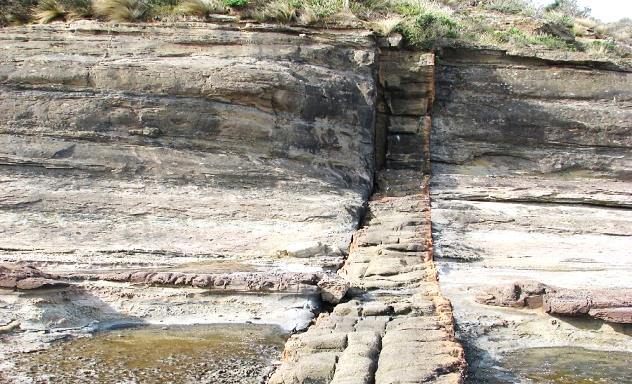
484. Residents at the base of which one of
the following would face the greatest danger
of a nuee ardente?
a) Shield volcano. b) Cinder cone. c) Geyser. d) Stratovolcano.
Feedback: Residents at the base of a cinder cone volcano would face the greatest danger of
a nuee ardente, also known as a pyroclastic
482. Which of the following minerals might and hot gases. Pyroclastic flows can occur be found in a granite dike? during these eruptions and pose a significant a) Amphibole. threat to areas surrounding the volcano.-------------------------------------------------------------- by the explosive ejection of volcanic ash, rocks, flow. Cinder cone eruptions are characterized
b) Muscovite.
c) Biotite.
d) All of these.
Feedback: A granite dike is a sheet of igneous rock that cuts across older rock beds. It is
formed when magma fills a fracture in the older
beds and then cools and solidifies. Granite
dikes are usually composed of quartz, feldspar,
biotite, and hornblende, which are dark
minerals rich in iron and magnesium.
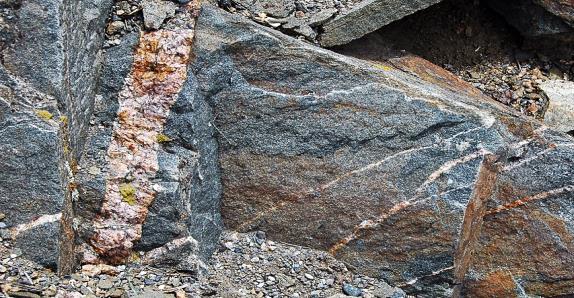
-------------------------------------------------------------- --------------------------------------------------------------
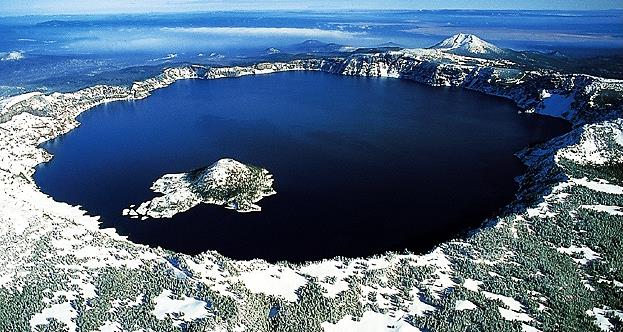
483. Crater Lake, Oregon, is a lake within a: 485. The oceanic crust is most like ____. a) Sill. a) Granite. b) Crater. b) Rhyolite. c) Caldera. c) Basalt. d) Volcanic neck. d) Gabbro.
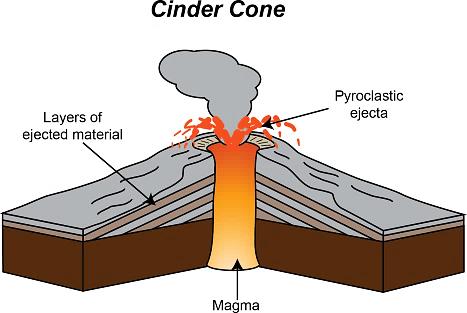
Feedback: Crater Lake, Oregon, is a lake Feedback: Basalt is a mafic igneous rock that within a caldera. A caldera is a large volcanic forms the majority of the oceanic crust. It has a
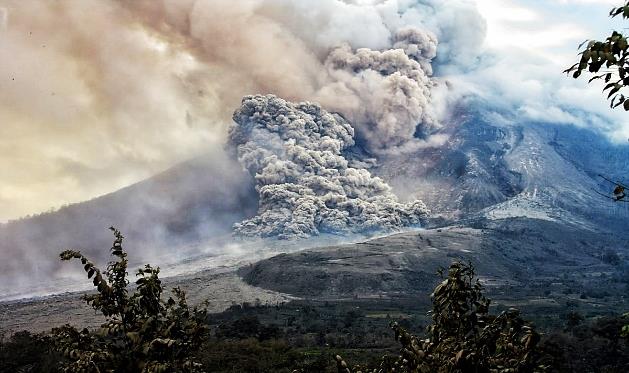
crater that typically forms following a volcanic composition similar to the volcanic rocks found
eruption, when the empty magma chamber on the ocean floor. Gabbro, while also mafic, is
collapses into the void left behind. Crater Lake the intrusive equivalent of basalt and is typically
was formed by the collapse of the volcano found deeper beneath the oceanic crust. Mount Mazama during a massive eruption --------------------------------------------------------------
95
486. What type of volcanic rock contains a crystals form later. This phenomenon is part of
large number of cavities (bubbles) that form Bowen's reaction series, which describes the
when gases escape from the molten rock? sequence in which minerals crystallize from a
a) Granite. cooling magma. b) Obsidian.
c) Pumice.
d) Basalt.
Feedback: Pumice is a type of volcanic rock that contains a large number of cavities

(bubbles) that form when gases escape from
the molten rock during a volcanic eruption.
These cavities give pumice a very porous and
lightweight texture, often causing it to float on
water. Granite, obsidian, and basalt are
volcanic rocks as well, but they do not have the
same high concentration of cavities as pumice. --------------------------------------------------------------
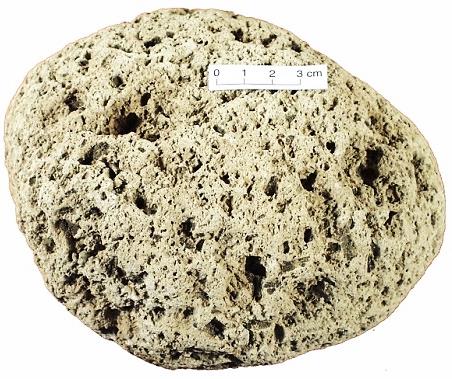
489. Which of the following is a concordant
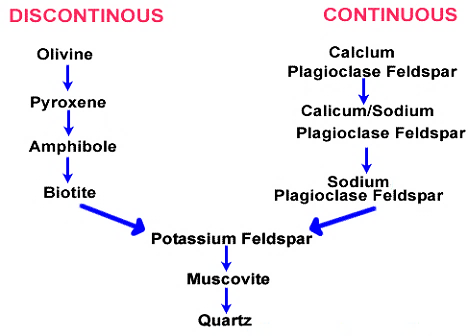
intrusive rock?
a) Dike. b) Sill. c) Stock. d) Batholith.
Feedback: A sill is a concordant intrusive rock. Concordant intrusions are those that are
-------------------------------------------------------------- parallel to the layering or bedding of the pre-
487. What is the effect of water on melting existing rock into which they intrude. Sills are
(assuming the rock does not contain any tabular bodies of igneous rock that are injected
hydrous minerals)? between existing layers of sedimentary or
a) Water raises the melting temperature of volcanic rock. Dikes (a), stocks (c), and
rock. batholiths (d) are also types of intrusive rocks,
b) Water lowers the melting temperature of a but they do not exhibit the same parallel
rock. orientation with existing rock layers as sills do.
c) Water neither raises nor lowers the melting
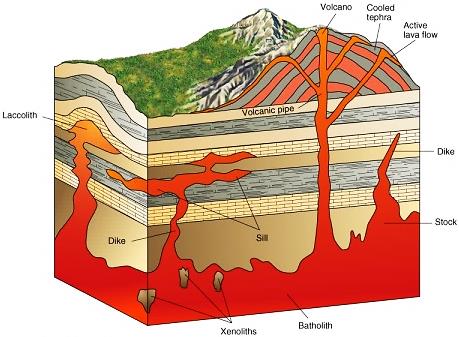
temperature.
Feedback: Water has a significant effect on the melting temperature of rocks. When water is
present, it acts as a flux that helps break the
chemical bonds in minerals, reducing the
viscosity and increasing the mobility of the
magma. This lowering of viscosity and melting
temperature allows the rock to melt at lower
temperatures than it would without the
presence of water. As a result, even a small
amount of water can have a significant impact --------------------------------------------------------------
on the behavior of magma and the type of 490. At about what temperature do olivine volcanic activity that occurs. and Ca-rich plagioclase crystallize from a
-------------------------------------------------------------- magma? 488. a) 500 degrees C. During crystallization of a melt
plagioclase becomes richer in ________. b) 1000 degrees C.
a) Potassium. c) 1500 degrees C. b) Sodium. d) 2000 degrees C. c) Calcium.
d) Feedback: Olivine and Ca-rich plagioclase Krypton.
(anorthite) typically crystallize from a magma at
Feedback: Plagioclase feldspar is a mineral temperatures around 1000 degrees Celsius.
group that includes both sodium-rich and The specific temperatures at which minerals
calcium-rich varieties. As magma cools and crystallize can vary depending on factors such
solidifies, the sodium-rich plagioclase crystals as the composition of the magma and the
tend to form earlier in the crystallization pressure conditions, but 1000 degrees Celsius
process, while the calcium-rich plagioclase is a commonly referenced temperature for the
96
crystallization of these minerals from a cooling composed mainly of quartz, feldspar (usually
magma. alkali feldspar), and mica minerals. The coarse-
-------------------------------------------------------------- grained texture of granite is due to its slow
491. What type of igneous rock would cooling and crystallization deep within the
contain 10 mm long plagioclase crystals Earth's crust, allowing larger mineral crystals to
surrounded by 0.5 mm long crystals? form.
a) Porphyry.
b) Obsidian.
c) Phaneritic.

d) Aphanitic.
Feedback: Porphyry is a textural term for an igneous rock consisting of large-
grained crystals such as feldspar or quartz --------------------------------------------------------------
dispersed in a fine-grained silicate rich, 494. Which of the following best describes a generally aphanitic matrix or groundmass. The basalt? larger crystals are called phenocrysts. a) A dark-colored, fine-grained igneous rock
rich in silica.
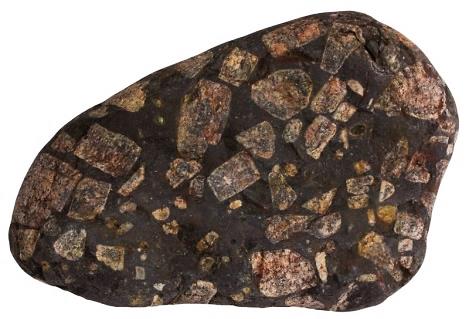
b) A dark-colored, fine-grained igneous rock
poor in silica.
c) A dark-colored, coarse-grained igneous
rock rich in silica.
d) A dark-colored, coarse-grained igneous
rock poor in silica.
-------------------------------------------------------------- Feedback: Basalt is a dark-colored, fine- grained igneous rock that is relatively low in 492. Which of the following pairs of intrusive silica. It is composed mainly of mafic minerals and extrusive rocks have the same chemical like plagioclase feldspar and pyroxene. Basaltic composition? rocks often have a relatively low viscosity due a) Granite and andesite. to their low silica content, which contributes to b) Diorite and basalt. their ability to flow easily during volcanic c) Gabbro and basalt. eruptions. d) Gabbro and rhyolite.
Feedback: Gabbro and basalt are a pair of intrusive and extrusive rocks that have the
same chemical composition. Gabbro is the
coarse-grained equivalent of basalt. Both
gabbro and basalt are mafic rocks composed
mainly of plagioclase feldspar, pyroxene, and
sometimes olivine. The other options (a, b, and --------------------------------------------------------------
d) involve pairs of rocks with different chemical 495. Most igneous rocks contain compositions or mineralogies. _______SiO2 by weight.
a) Less than 40%. b) Between 40% and 70%. c) Between 70% and 90%. d) Greater than 90%.
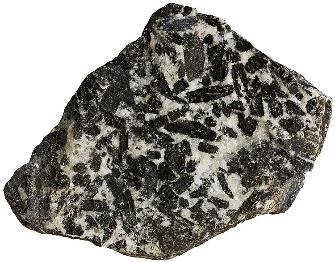
Feedback: Most igneous rocks contain between 40% and 70% SiO2 (silica) by weight.
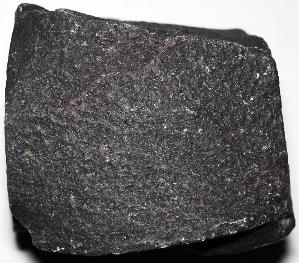
-------------------------------------------------------------- This range corresponds to the classification of
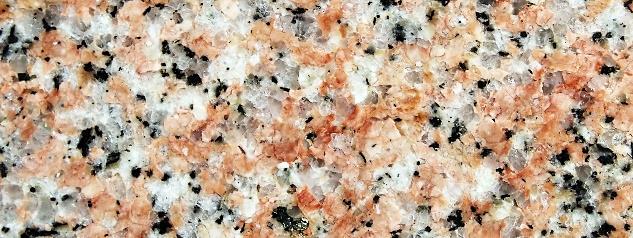
493. Which of the following best describes a igneous rocks as being either mafic (lower silica
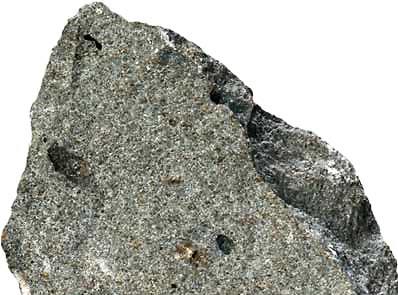
granite? content) or intermediate/felsic (higher silica
a) A light-colored, fine-grained igneous rock content). The specific silica content can vary
rich in silica. depending on the type of rock and its mineral
b) A light-colored, fine-grained igneous rock composition.
poor in silica. --------------------------------------------------------------
c) A light-colored, coarse-grained igneous rock 496. Which of the following minerals is the
rich in silica. most abundant mineral in ultramafic rocks?
d) A light-colored, coarse-grained igneous rock a) Amphibole.
poor in silica. b) Olivine.
c) Sodium plagioclase.
Feedback: Granite is a light-colored, coarse- d) Quartz. grained igneous rock that is rich in silica. It is
97
Feedback: Olivine is the name of a group of 500. Which of these minerals is commonly rock-forming minerals that are typically found in found in both mafic and felsic rocks? mafic and ultramafic igneous rocks such as a) Quartz. basalt, gabbro, dunite, diabase, and peridotite. b) Alkali feldspar. They are usually green in color and have c) Plagioclase feldspar. compositions that typically range between d) Olivine. Mg2SiO4 and Fe2SiO4.
Feedback: Plagioclase feldspar is commonly found in both mafic and felsic rocks. It is a

versatile mineral that occurs in various igneous
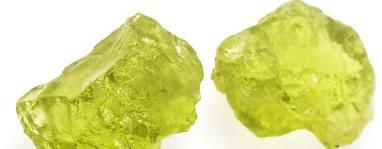
rock types. While the specific composition of
plagioclase feldspar may vary, it is present in
both mafic (basaltic) and felsic (granitic) rocks.
--------------------------------------------------------------
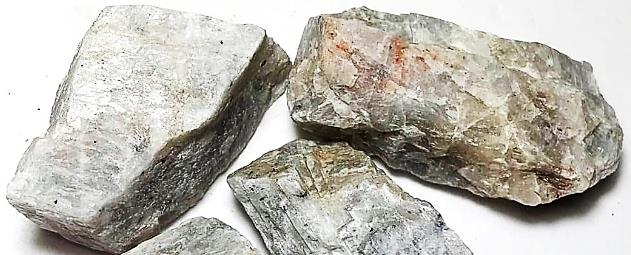
497. Which of the following statements
about mafic rocks is TRUE?
a) Mafic rocks are richer in silica than felsic
rocks.
b) Mafic rocks crystallize at higher
rocks, are characterized by their high content of Obsidian. d) Granite. magnesium (Mg) and iron (Fe) and lower silica content compared to felsic rocks. Because they Feedback : Granite is an example of an have lower silica content, they tend to intrusive igneous rock, which is formed by the crystallize at higher temperatures than felsic cooling of magma below the surface of the rocks. Mafic rocks are also darker in color due Earth. to their higher concentration of dark minerals -------------------------------------------------------------- like pyroxenes and olivine. 502. Felsic Intermediate Mafic -------------------------------------------------------------- Which of the following properties increases in 498. Which of the following igneous rocks the direction of the arrows in the sentence crystallizes near the Earth's surface? above? a) Basalt. a) d) 501. Which of the following is NOT an Mafic rocks tend to be lighter in color than extrusive igneous rock? felsic rocks. a) Basalt. b) Andesite. Feedback : Mafic rocks, also known as basaltic c) c) Mafic rocks are more viscous than felsic -------------------------------------------------------------- rocks. temperatures than felsic rocks.
b) Gabbro. Melting temperature. b) Potassium content. c) Diorite. c) Silica content. d) Granite. d) Viscosity.
Feedback: Basalt is an extrusive igneous rock Feedback: Felsic materials have lower melting that crystallizes near the Earth's surface. It points than mafic materials because they have cools relatively quickly, resulting in fine-grained different compositions and structures. Felsic texture. Gabbro, diorite, and granite are materials are rich in silica (SiO 2 ), which forms intrusive rocks that form deeper within the long chains of molecules that are linked by Earth's crust, where cooling is slower, leading oxygen atoms. These chains are flexible and to coarser-grained textures. can bend and twist easily, which lowers the -------------------------------------------------------------- melting point. Mafic materials are rich in iron 499. What is the approximate silica content (Fe) and magnesium (Mg), which form smaller of a granite? and simpler molecules that are packed tightly a) 20% together. These molecules are rigid and hard to b) 50% break apart, which raises the melting point. You c) 70% can think of felsic materials as being like wax, d) 100% which melts easily, and mafic materials as
Feedback being like metal, which melts with difficulty. : Granite is a felsic igneous rock with -------------------------------------------------------------- a high silica content, typically around 70%. This 503. What type of magma forms at mid- high silica content contributes to the light color ocean ridges? and mineral composition commonly associated a) Basalt. with granite. b) Andesite. -------------------------------------------------------------- c) Ultramafic.
98
d) Granite. intrusive igneous rock with a phaneritic texture,
and the presence of phenocrysts suggests that
Feedback: Magma at mid-ocean ridges the magma had some periods of slower cooling
primarily consists of basaltic composition. This before fully crystallizing. type of magma is associated with the oceanic
crust and the formation of new oceanic
lithosphere through volcanic activity at mid-
ocean ridges. Basaltic magmas are relatively
low in silica, rich in iron and magnesium, and

tend to have low viscosity, making them well-
suited for the eruption at these divergent plate
boundaries.
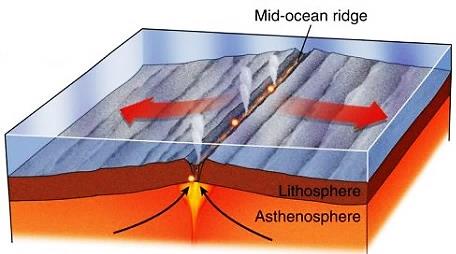
--------------------------------------------------------------
506. What is the dominant rock type on most
of the Hawaiian Islands?
a) Basalt.
-------------------------------------------------------------- c) Ultramafic. d) b) Andesite. 504. Granite. A porphyritic igneous rock contains
a) Andesite porphyry. through the accumulation of basaltic lava flows b) Basalt porphyry. that erupted from underwater volcanoes. Over c) Gabbro porphyry. time, these lava flows built up to create the d) Rhyolite porphyry. islands, and the ongoing volcanic activity continues to contribute to their growth. This is a __________? the Hawaiian Islands is basalt. The Hawaiian Islands are volcanic in origin and were formed plagioclase in an aphanitic groundmass. phenocrysts of olivine and calcium-rich Feedback: The dominant rock type on most of
Feedback: In a porphyritic igneous rock, when -------------------------------------------------------------- you have olivine and calcium-rich plagioclase 507. What is the dominant rock type at the phenocrysts in an aphanitic (fine-grained) center of the Sierra Nevada Mountains? groundmass, it's typically a basalt porphyry. a) Basalt. Basalt is an extrusive rock that forms from the b) Andesite. rapid cooling of lava, resulting in a fine-grained c) Ultramafic. texture, and the presence of phenocrysts d) Granite. indicates that the magma had some periods of slower cooling before eruption, allowing these Feedback : The dominant rock type at the larger crystals (phenocrysts) to form within the center of the Sierra Nevada Mountains is finer groundmass. granite. The Sierra Nevada is a mountain range in California, USA, and it is known for its granitic rocks. These rocks formed through a
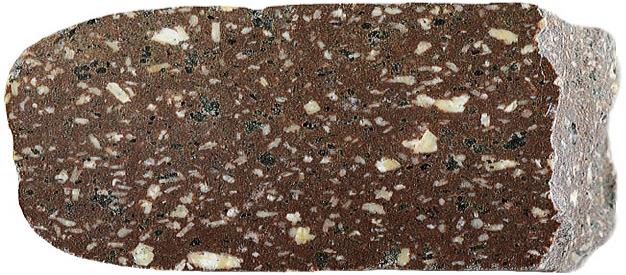
combination of plutonic intrusions and
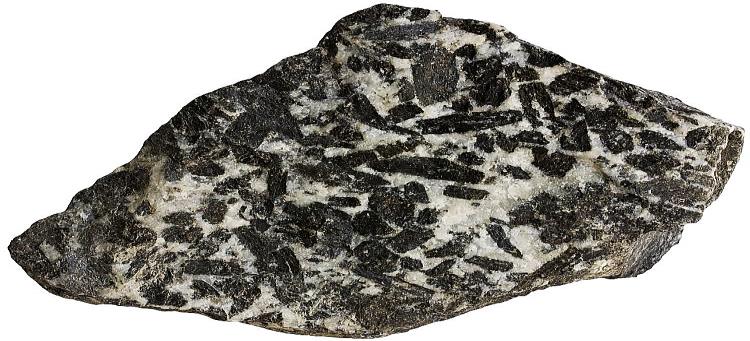
subsequent uplift and erosion, exposing the
granitic cores of ancient mountain ranges.
Granite is a common rock type in many
mountainous regions and is characterized by its
coarse-grained texture and high silica content.
-------------------------------------------------------------- --------------------------------------------------------------
505. A porphyritic igneous rock contains 508. What is the effect of water on melting?
phenocrysts of olivine and calcium-rich a) Water raises the melting temperature of a plagioclase in a phaneritic groundmass. rock. This is a __________? b) Water lowers the melting temperature of a
a) Andesite porphyry. rock. b) Basalt porphyry. c) Water does not change the melting c) Gabbro porphyry. temperature of a rock. d) Rhyolite porphyry. d) This depends on how much water is
present.
Feedback: In this case, with olivine and calcium-rich plagioclase phenocrysts in a Feedback: The presence of water can phaneritic (coarse-grained) groundmass, it's significantly lower the melting temperature of a
typically a gabbro porphyry. Gabbro is an rock. Water acts as a flux, reducing the
99
viscosity and increasing the mobility of the Plagioclase is a type of feldspar that has a
minerals within the rock, which facilitates the hexagonal crystal system and a low Al/Si ratio.
melting process. This is why subduction zones, It reacts with the liquid magma in a continuous
where water-rich oceanic lithosphere is manner, meaning that it changes its phase
subducted into the mantle, often lead to the gradually and remains in equilibrium with the
generation of magmas due to the lower melting magma until it reaches its reaction temperature.
temperatures caused by the presence of water. The continuous reaction series is another
-------------------------------------------------------------- sequence of mineral reactions that takes place
509. Which of the following scenarios would at different temperatures during the cooling of a

lead to melting of Albite plus Water? magma.
a) Raise the Pressure (P).
b) Raise the Temperature (T).
c) Either raise the Pressure (P) or raise the
Temperature (T).
d) Decrease either the Temperature (T) or
Pressure (P).
Feedback: Albite (a type of plagioclase feldspar) melting can be induced by either
raising the pressure or raising the temperature.
In certain geological conditions, an increase in
pressure or temperature can lead to the
breakdown of minerals like albite and the
initiation of melting. This process is relevant in --------------------------------------------------------------
zones or beneath mountain ranges, where lava flow? various tectonic settings, such as subduction 512. How can a sill be distinguished from a
significantly. lava flow. pressure and temperature conditions change a) A sill is generally coarser-grained than a
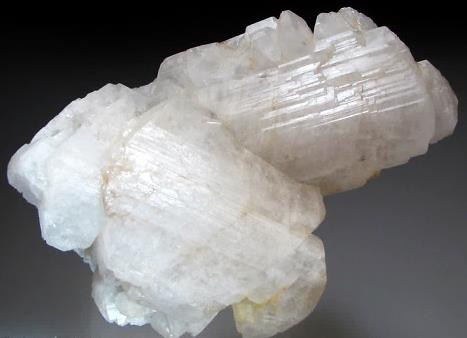
b) The rocks above and below a sill will show
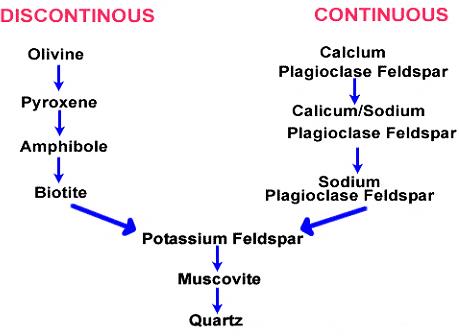
evidence of heating but only the rocks below
a lava flow will show evidence of heating.
c) Sills generally do not have vesicles; lava
flows generally have vesicles.
d) All of these.
Feedback: A sill and a lava flow are both types
510. Which of the following minerals and characteristics. A sill is a sheet of magma that intrudes between layers of sedimentary or -------------------------------------------------------------- of igneous rocks, but they have different origins
a) crystallizes first from a basaltic magma? metamorphic rocks underground. A lava flow is Quartz. a layer of molten rock that erupts on the surface b) Biotite. of the earth. c) Pyroxene. d) Olivine.
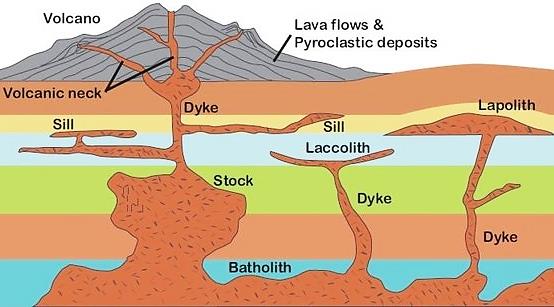
Feedback: Olivine is the mineral that crystallizes first from a basaltic magma as it
begins to cool and solidify. Olivine has a
relatively high melting temperature compared to
other minerals commonly found in basaltic
magmas, so it starts to crystallize at higher
temperatures. As the magma continues to cool,
other minerals like pyroxene and plagioclase -------------------------------------------------------------- feldspar will begin to crystallize as well. 513. At about what temperature do olivine -------------------------------------------------------------- and calcium-rich plagioclase crystallize from 511. Which mineral is NOT part of the a melt? (Answers are in degrees centigrade) discontinuous reaction series? a) 500 a) Plagioclase. b) 1000 b) Olivine. c) 1500 c) Pyroxene. d) 2000 d) Amphibole.
Feedback series, olivine and calcium-rich plagioclase are : The mineral that is not part of the Feedback: According to the Bowen reaction discontinuous reaction series is plagioclase.
100
the first minerals to crystallize from a magma, 516. As a magma changes from mafic to and they do so at temperatures between felsic, which of the following elements
1200°C and 1300°C. Therefore, the closest decreases? option to this range is 1000°C. a) Sodium. -------------------------------------------------------------- b) Potassium. 514. How does a magma make space for c) Silicon.
itself in order to rise through the crust? d) Iron.
a) By wedging open the overlying rock.
b) By breaking off large blocks that sink into the Feedback: One of the elements that decreases

magma chamber. as a magma changes from mafic to felsic is
c) By melting the surrounding rocks. Iron. Iron is one of the main components of
d) All of these. mafic minerals such as olivine and pyroxene,
which crystallize at high temperatures and tend
Feedback: Magma can create pathways for to settle at the bottom of the magma chamber.
itself by wedging, breaking, and melting the As the remaining magma becomes more felsic,
crustal material above the magma chamber. All it contains less iron and more silica and
three processes can accommodate the rising feldspar. magma.
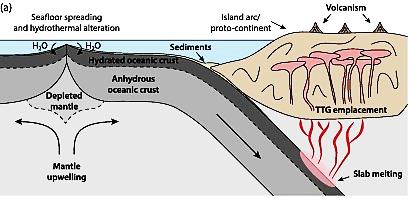
--------------------------------------------------------------
517. Which of the following statements is
FALSE?
515. What type of silicate minerals on the b) Mafic magmas are hotter than felsic discontinuous side of the reaction series magmas. crystallize at the highest temperatures? c) -------------------------------------------------------------- magmas. a) Mafic magmas are more viscous than felsic a) Isolated tetrahedral. felsic magmas. Mafic magmas contain more calcium than
b) Single chain. d) Mafic magmas contain less silicon than c) Sheet. felsic magmas. d) Framework.
Feedback high in iron and magnesium. They are hotter : The discontinuous side of the Feedback: Mafic magmas are low in silica and reaction series is the left-hand branch of the Y- and less viscous than felsic magmas, which are shaped diagram that shows the order of mineral high in silica and low in iron and magnesium. crystallization from cooling magma. The Mafic magmas can flow easily and form thin minerals on this side are olivine, pyroxene, lava flows, while felsic magmas tend to be thick amphibole, and biotite. They are called and sticky and form explosive eruptions. discontinuous because they change completely from one mineral to another as the temperature drops. The type of silicate minerals on the discontinuous side that crystallize at the highest
temperatures are isolated tetrahedral. These
are silicate minerals that have one silicon atom
surrounded by four oxygen atoms in a
tetrahedral shape. The tetrahedra do not share
any oxygen atoms with each other, so they are
isolated. Olivine is an example of an isolated
tetrahedral silicate mineral. --------------------------------------------------------------
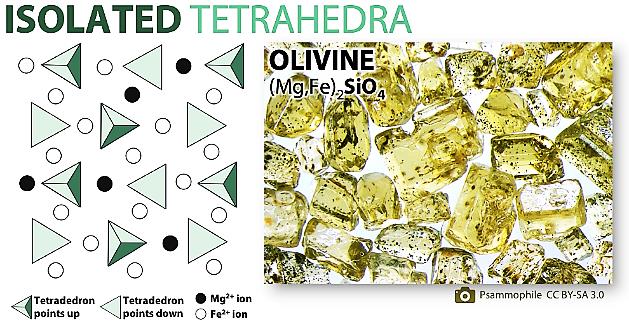
518. Which of the following properties does
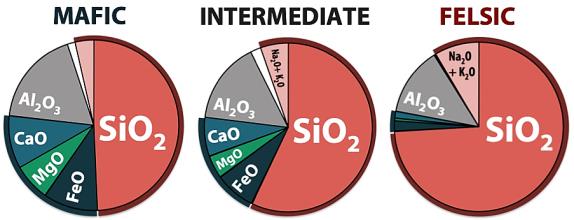
not depend on the chemical composition of
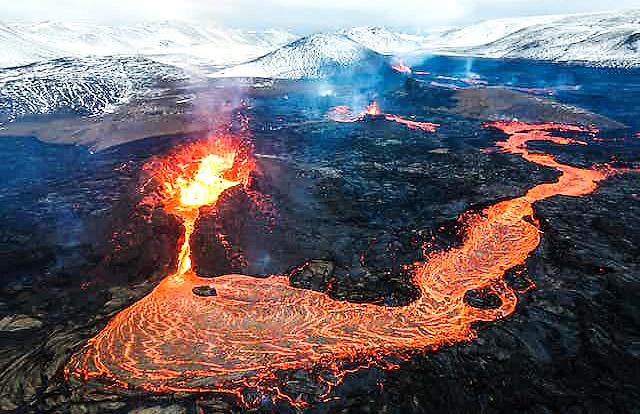
an igneous rock?
a) Grain size. b) Melting temperature. c) Mineralogy. d) Viscosity.
Feedback: The property that does not depend
-------------------------------------------------------------- on the chemical composition of an igneous rock
101
is Grain size. Grain size refers to the size of the atmosphere. These materials can then
crystals that make up the rock. It depends on accumulate and compact to form pyroclastic
the cooling rate of the magma or lava from rocks. which the rock formed, not on its chemical
composition.
--------------------------------------------------------------
519. Compared to felsic magmas, mafic
magmas are relatively enriched in:
a) Calcium.

b) Iron.
c) Magnesium.
d) All of the above.
Feedback: Mafic magmas are relatively
compared to felsic magmas. This is because 522. The presence of phenocrysts in an mafic magmas have lower silica and higher iron igneous rocks indicate: enriched in calcium, iron, and magnesium --------------------------------------------------------------
and magnesium content than felsic magmas. a) A lava cooling on the surface of the Earth. Mafic magmas also have more calcium-rich b) Violent, explosive volcanic eruption. minerals such as plagioclase feldspar. c) A magma cooling slowing in the subsurface.
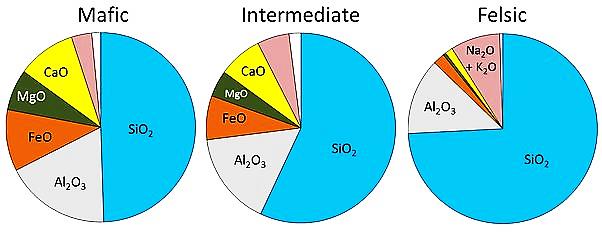
d) Two phases of cooling, one fast and one
slow.
Feedback: Phenocrysts are large crystals that are surrounded by a finer-grained matrix in an
igneous rock. They are usually the first crystals
-------------------------------------------------------------- to form from a cooling magma, and therefore
d) Slow followed by rapid cooling. the minerals to crystallize gradually. However, None of the above. if the magma is erupted or intruded into a cooler environment, the remaining melt will cool Feedback : A glassy texture in rocks indicates rapidly and form smaller crystals or glass. This that they have no or almost no grains at all, and results in a contrast between the size of the are formed by rapid cooling of magma or lava. phenocrysts and the groundmass. This prevents the formation of minerals and a) Very rapid cooling. porphyritic texture. Phenocrysts form when a b) Slow cooling. magma cools slowly in the subsurface, allowing c) 520. have sufficient room to grow to a large size. The A glassy texture indicates: presence of phenocrysts gives the rock a
results in a glassy or vitreous rock texture.
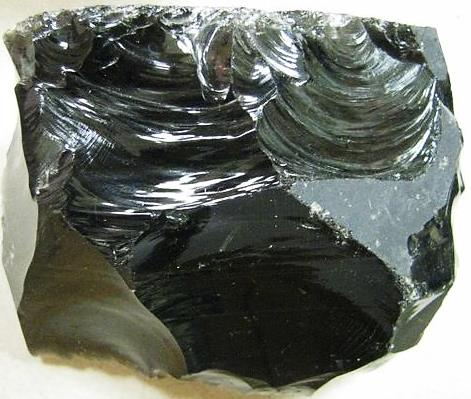
-------------------------------------------------------------- --------------------------------------------------------------
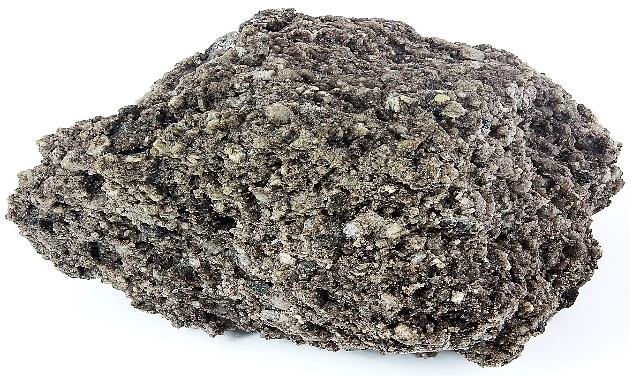
521. Pyroclastic rocks form by: 523. The discontinuous branch of Bowen's a) reaction series consists of minerals with A lava cooling on the surface of the Earth.
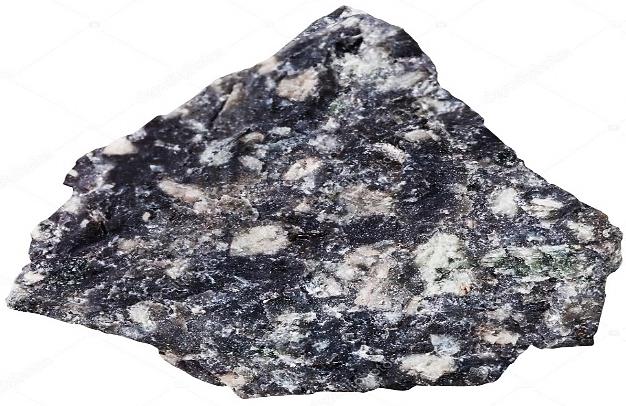
b) ________ structures. Violent, explosive volcanic eruption.
c) A magma cooling slowing in the subsurface. a) Isolated tetrahedral. d) b) Single chains. Two phases of cooling, one fast and one
slow. c) Double chains.
d) All of the above.
Feedback: Pyroclastic rocks, also known as pyroclastics or volcaniclastic rocks, form as a : The discontinuous branch of Feedback
result of explosive volcanic activity. During such Bowen’s reaction series consists of minerals
eruptions, fragmented volcanic material with different types of silicate structures, which
including ash, lapilli (small rock fragments), and change completely from one mineral to another
volcanic bombs are ejected into the as the temperature drops. The minerals on this
102
branch are olivine, pyroxene, amphibole, and large enough to be seen with the naked eye.
biotite. They have isolated tetrahedral, single Fine-grained igneous rocks, which have small
chain, double chain, and sheet structures crystals that are not visible, are called aphanitic.
respectively. --------------------------------------------------------------
-------------------------------------------------------------- 527. A rock has a medium-gray, fine-grained 524. Vesicles in an igneous rock form from: groundmass with large crystals of a) Escaping gases. plagioclase. Which of the following
b) Phenocrysts settle to the bottom of the statements about it is FALSE?
magma chamber. a) It could logically be porphyritic andesite.

c) Falling ash. b) The lava flow that produced it got quenched d) All of the above. in ocean water.
c) The plagioclase crystals are called
Feedback: Vesicles are small cavities in phenocrysts. igneous rocks that form from Escaping gases. d) It began to crystallize at depth from When magma or lava cools, the dissolved intermediate-composition magma, then rose
gases in it expand and create bubbles. These to the surface and became a lava flow. bubbles are preserved as vesicles when the e) Its chemical composition is intermediate, not rock solidifies. felsic or mafic.
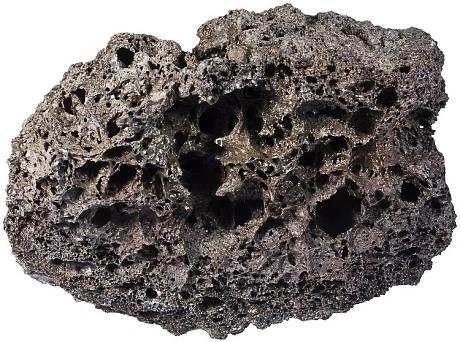
Feedback: Fine-grained rocks with large crystals (phenocrysts) in a groundmass
typically form from magma that has undergone
slower cooling and crystallization. Quenching in
ocean water would result in a different texture
and mineral assemblage.
--------------------------------------------------------------
-------------------------------------------------------------- formed at a tectonic setting similar to “A” in the figure below? 528. Which of the following volcanic chains
525. Batholiths are associated with:
a) Plateau basalts.
b) Oceanic islands.
c) Folded mountains.
d) All of the above.
Feedback: Batholiths are large intrusive igneous bodies that are often associated with a) Aleutian Islands. folded mountain ranges. They form deep within b) Andes Mountains. the Earth's crust and are exposed over time c) Cascade Range. through erosion, contributing to the formation of d) Hawaiian Islands. mountain ranges.
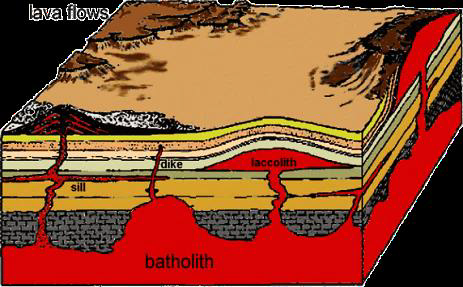
Feedback: The Aleutian Islands are a chain of volcanic islands located in the Northern Pacific
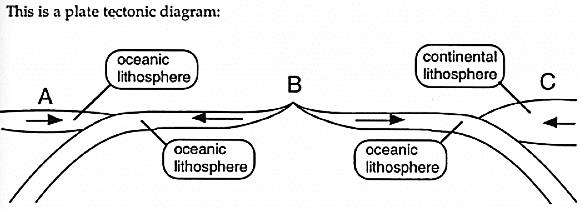
Ocean, stretching westward from the southern
coast of Alaska towards Russia's Kamchatka
Peninsula. These islands form part of the larger
Aleutian Arc, which is a volcanic arc associated
with subduction. The subduction zone along the
Aleutian Trench is where the Pacific Plate is
-------------------------------------------------------------- -------------------------------------------------------------- 529. subducting beneath the North American Plate.
526. What type of lava is most likely to erupt Identify the FALSE statement: Igneous at tectonic setting "B" in the figure below? rocks:
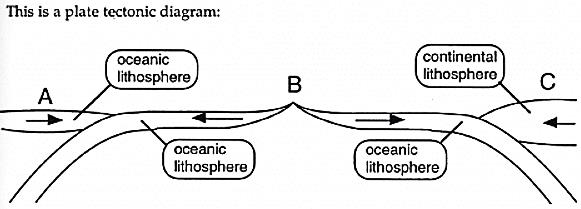
a) Form from the freezing of either lava or
magma.
b) Form in great quantity along the mid-ocean
ridge.
c) Were the first rocks to exist on Earth.
d) Are coarse-grained if they’re intrusive.
e) Are termed phaneritic if they’re fine-grained. a) Andesitic.
b) Basaltic.
Feedback: Phaneritic is a term used to c) Rhyolitic. describe igneous rocks that have coarse- d) None of the above. grained texture, meaning that their crystals are
103
Feedback: At a spreading center, such as a d) Ultramafic. divergent boundary, hot mantle rock moves
upward by convection and partially melts due to Feedback: Ultramafic rocks are a category of decompression. The resulting magma is rich in igneous rocks that are rich in mafic minerals
silica and has a low viscosity, which allows it to and have very low silica content. These rocks
flow easily. Therefore, basaltic lava is most are primarily composed of minerals that are rich
likely to erupt at a spreading center in magnesium (Mg) and iron (Fe), such as
-------------------------------------------------------------- olivine and pyroxene. Ultramafic rocks have a
530. A rock is porphyritic. Which of the high density and are often associated with

following words could NOT be used to mantle-derived magmas. describe it? --------------------------------------------------------------
a) Groundmass. 533. In the basalt sample depicted below, b) Phenocryst. the vesicles (small spherical cavities) most
c) Plagioclase. likely formed by ___________. d) Andesite.
e) All the possible answers are correct.
Feedback: All of the words listed in the answer choices are commonly used to describe
porphyritic rocks. Porphyritic rocks are igneous
rocks that have a distinct difference in the size
of mineral crystals, with the larger crystals a) The escape of gas bubbles dissolved in the known as phenocrysts. The groundmass is the lava during eruption. matrix of finer-grained minerals or glass that b) The weathering and erosion of olivine surrounds the phenocrysts. Phenocrysts are crystals after the eruption. the larger crystals that formed earlier in the c) Air bubbles entrained in the flow during the crystallization sequence of the magma. eruption. Plagioclase is a common mineral found in d) Vaporization during underwater eruption. porphyritic rocks, along with other minerals such as feldspar, quartz, and mica. Andesite is Feedback : As basaltic lava reaches the Earth's a type of porphyritic rock that is intermediate in surface during volcanic eruptions, it contains composition between felsic and mafic. dissolved gases, such as water vapor, carbon -------------------------------------------------------------- dioxide, and sulfur dioxide. When the lava 531. Which of the following rock types is rapidly cools and solidifies, these gases may be depicted in the diagram below? trapped in the rock, forming vesicles. The size and abundance of vesicles can provide insights into the volcanic environment, eruption
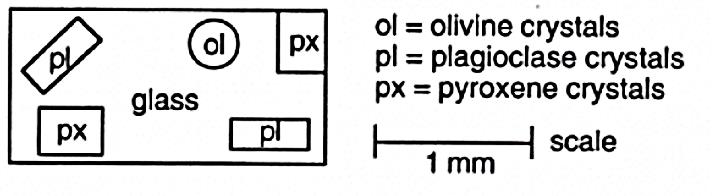
dynamics, and the specific properties of the
Be broken off during a process called
Feedback stoping. : Basalt is a common dark-colored c) Melt entirely and thus change the chemical extrusive igneous rock with a fine-grained composition of the intruding magma. texture, resulting from the rapid cooling of d) Not melt but instead remain as recognizable basaltic lava or magma. It typically consists of blocks called xenoliths. plagioclase feldspar and pyroxene, giving it a e) All the possible answers are correct. dark gray to black color. Basalt is found in volcanic environments such as mid-ocean Feedback : Solid blocks of wall rock (or country ridges, oceanic islands, and rift zones. rock) may be affected by the intrusion of -------------------------------------------------------------- magma in several ways. Magma can break off 532. Which of the following rock types is and incorporate blocks of wall rock as it rises to depicted in the diagram below? the surface, a process called stoping. As b) Solid blocks of wall rock (sometimes Rhyolite. called country rock) may: c) Gabbro. a) Be broken off by intruding magma. d) Diorite. b) a) -------------------------------------------------------------- Basalt. 534. magma.
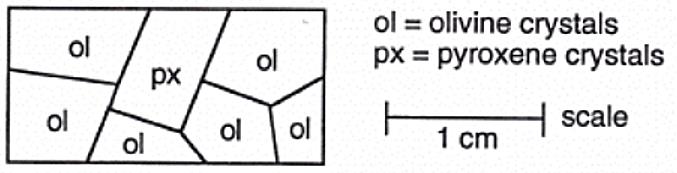
magma intrudes into the wall rock, it may melt
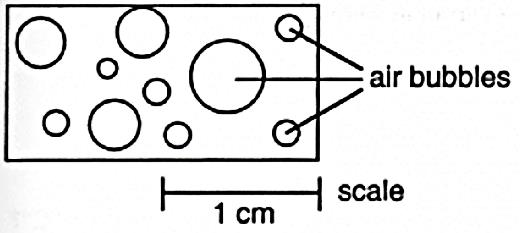
the wall rock entirely, changing the chemical
composition of the magma, a process known as
assimilation. Solid blocks of wall rock can also
a) Felsic. be broken off by intruding magma and carried
b) Intermediate. to the surface during volcanic eruptions,
c) Mafic. forming recognizable blocks called xenoliths.
104
Therefore, solid blocks of wall rock can be 537. What mineral occurs at point II of affected by the intrusion of magma in various Bowen's Reaction Series (below): ways, including stoping, assimilation, and the
formation of xenoliths.
--------------------------------------------------------------
535. Granite:
a) Is a phaneritic rock.
b) Is felsic in composition.
c) Logically could be found in a batholith.

d) Is the coarse-grained equivalent of rhyolite. e) All the possible answers are correct.
Feedback: Granite is a phaneritic rock because it has visible crystals. It is felsic in composition,
meaning it is rich in feldspar and quartz. Granite
is commonly found in batholiths, which are
large, intrusive igneous rock formations. It is a) Na-rich plagioclase. indeed the coarse-grained equivalent of b) Ca-rich plagioclase. rhyolite, which is an extrusive rock with similar c) Olivine. mineral composition but finer grain size. d) Quartz.
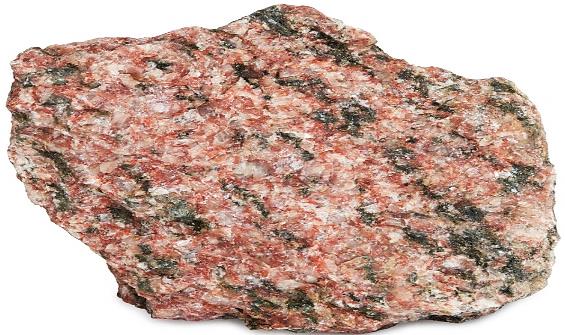
Feedback: In the continuous branch of Bowen's Reaction Series, as the magma cools,
plagioclase feldspar starts to crystallize.
Plagioclase feldspar is a solid solution series
between sodium-rich albite (NaAlSi 3O8) and calcium-rich anorthite (CaAl2Si2O8). As the magma cools, the plagioclase crystals that form
initially are usually more sodium-rich (Na-rich)
-------------------------------------------------------------- and become progressively more calcium-rich
536. as the cooling continues. What mineral occurs in box I of
Bowen's Reaction Series (below): --------------------------------------------------------------
538. What mineral occurs in box III of
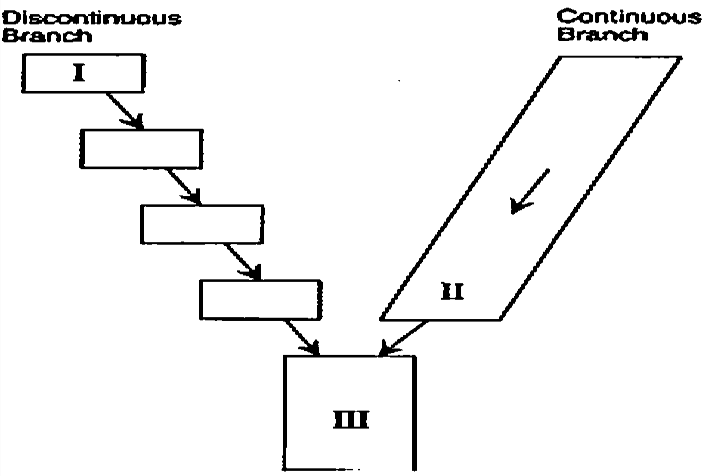
Bowen's Reaction Series (below):
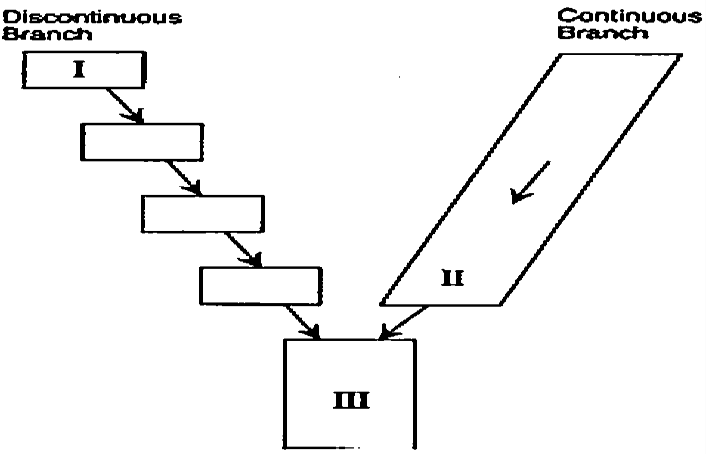
a) Amphibole.
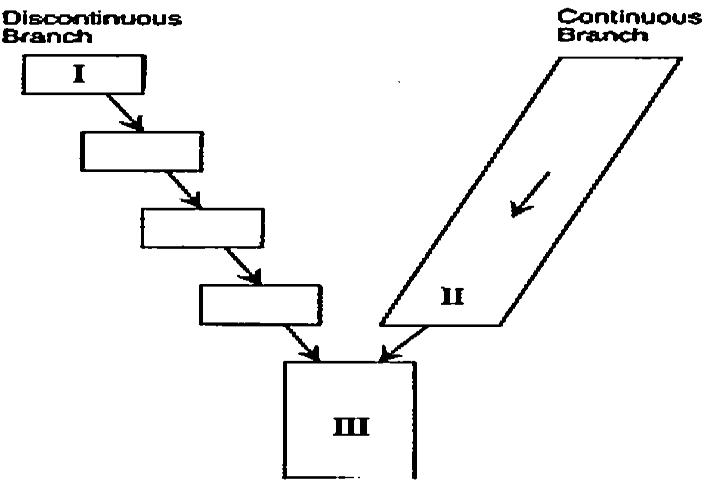
b) Ca-rich plagioclase.
c) Olivine. a) Na-rich plagioclase. d) Quartz. b) Muscovite.
c) Olivine.
Feedback: In the discontinuous branch of d) Quartz. Bowen's Reaction Series, the crystallization
sequence includes minerals (olivine, pyroxene, Feedback: Quartz typically forms later in the amphibole, biotite (mica)). Olivine is one of the crystallization process, often after the minerals
earliest minerals to crystallize from a cooling listed in Bowen's Reaction Series. It is a
magma, and it is found at higher temperatures common mineral in continental crust and is
in the series. As the magma cools, olivine associated with a variety of geological settings,
crystals form first, followed by the sequential including granite and pegmatite intrusions, as
crystallization of other minerals in the series. well as sedimentary rocks. While not part of
-------------------------------------------------------------- Bowen's Reaction Series, quartz plays a
105
significant role in various geological processes high vesicle (gas bubble) content. It is formed
and has diverse industrial applications. during explosive volcanic eruptions when frothy
-------------------------------------------------------------- magma cools and solidifies rapidly, trapping
539. Which of the following igneous rocks gas bubbles within the rock's structure. This
does NOT have a glassy texture? results in its characteristic light-gray
a) Tachylite. appearance and buoyant nature. b) Obsidian.
c) Scoria.
d) Pegmatite.

e) Pumice.
Feedback: Pegmatite is an intrusive igneous rock that has a coarse-grained texture due to
the presence of very large crystals. It does not
have a glassy texture. The other options
mentioned (Tachylite, Obsidian, Scoria, and
Pumice) can exhibit glassy textures under --------------------------------------------------------------
certain conditions. 542. Which is NOT a setting for igneous
activity?
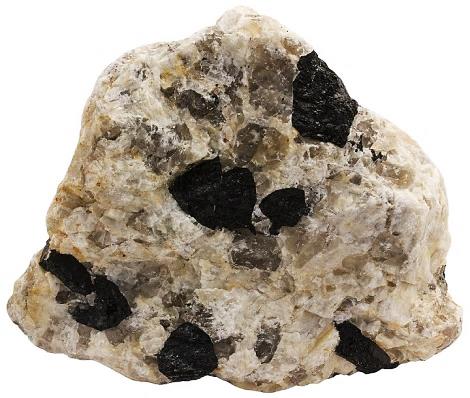
a) Hot spots. b) Continental rifts. c) Continental transform-fault zones. d) Volcanic arcs bordering ocean trenches. e) Mid-ocean ridges.
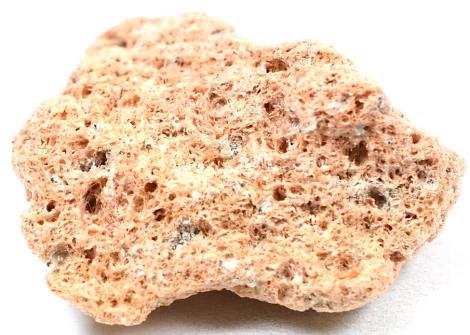
Feedback: Continental transform-fault zones are not typically associated with igneous
-------------------------------------------------------------- strike-slip faults where two tectonic plates slide past each other horizontally. While these activity. These zones are characterized by
a) products: crustal deformation, they are not known for significant volcanic activity. May comprise roughly 15% of the magma present. 540. Identify the FALSE statement: Volatiles that come out of the Earth as volcanic regions can experience earthquakes and
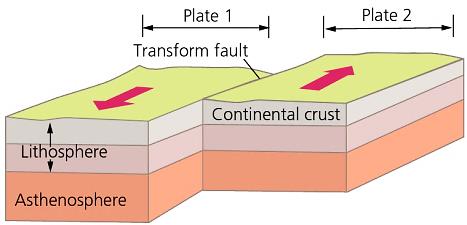
b) Usually consist of 50% sulfur dioxide.
c) Include water, carbon dioxide, nitrogen,
hydrogen, and sulfur dioxide.
d) Contribute to Earth’s atmosphere and
oceans.
e) Were dissolved in the molten rock and
released as the surrounding pressure
lessened. --------------------------------------------------------------
543. Intrusive igneous rocks:
Feedback: Volatiles that come out of the Earth a) Are volcanic rocks. as volcanic products do not usually consist of b) Are fine-grained because they cooled 50% sulfur dioxide. While sulfur dioxide can be slowly. a significant component of volcanic gases, it is c) Are never seen by humans because they not the sole or most common volatile form and remain deep within the Earth. component. The composition of volcanic gases d) Are rocks like basalt, andesite, and rhyolite. can vary, and they typically include water, e) Cool slowly and are coarse-grained. carbon dioxide, nitrogen, hydrogen, sulfur
dioxide, and other trace gases. Feedback: Intrusive igneous rocks form from -------------------------------------------------------------- magma that cools and solidifies beneath the
541. After an explosive volcanic eruption on Earth's surface. Because they cool slowly
an island, the surrounding sea is full of light- within the Earth, intrusive rocks typically have a
gray floating rock. What must it be? coarse-grained texture, meaning that their
a) Rhyolite. mineral crystals are large and easily visible.
c) Obsidian. 544. Identify the FALSE statement: Volcanic Basalt. b) Pumice. --------------------------------------------------------------
d) arcs: e) Scoria. a) Form where subduction takes place.
b) Are long, curving mountain chains adjacent
Feedback: Pumice is a light-colored, porous to deep-ocean trenches. volcanic rock that can float on water due to its
106
c) Can be continental or island. e) Batholith. d) Make up the Ring of Fire circling the Atlantic
Ocean. Feedback: Only basaltic sill fits the description;
e) Occur at convergent-plate boundaries. granite would be light-colored, a dike would cut
across existing layers, and a batholith is a
Feedback: The Ring of Fire is a term used to massive, not tabular, intrusion. describe a horseshoe-shaped ring of intense --------------------------------------------------------------
earthquake and volcanic activity that encircles 547. Bowen’s reaction series: the Pacific Ocean. It is not associated with the a) Shows the sequence in which different Atlantic Ocean. The Ring of Fire is silicate minerals form during the progressive

characterized by numerous subduction zones, cooling of a mafic melt. volcanic arcs, and deep ocean trenches, and it b) Has a discontinuous track in which each is a result of the movement of tectonic plates step yields a different class of silicate
along the boundaries of the Pacific Plate. mineral.
c) Has a continuous track in which there’s a
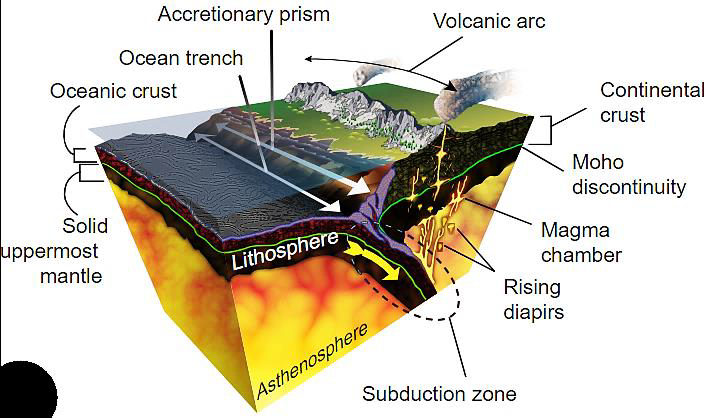
progressive change from calcium-rich to
sodium-rich plagioclase.
d) Was established by laboratory experiments
in which mafic melt was quenched in
mercury.
e) All the possible answers are correct.
Feedback: Bowen's reaction series describes the sequence in which silicate minerals form
-------------------------------------------------------------- during the cooling of a mafic melt. It includes
c) Allows a geologist to predict what minerals plagioclase feldspar. The series was will be grouped in igneous rocks. established through laboratory experiments in Is an attempt to explain the logic of formation which mafic melt compositions were rapidly of sedimentary rocks. cooled. d) Explains why some compounds use ionic -------------------------------------------------------------- bonds and others have covalent bonding. 548. Identify the FALSE statement: Mafic e) All the possible answers are correct. minerals: a) Shows that minerals crystallize in a random and a continuous track showing the progressive order, with no particular pattern involved. change from calcium-rich to sodium-rich b) 545. both a discontinuous track where different Bowen’s reaction series: classes of silicate minerals form at each step
Feedback a) Freeze at a higher temperature than silicic : Bowen's reaction series is a minerals do. concept in igneous petrology that helps b) Are those rich in iron and magnesium. geologists understand the sequence in which c) Would be at the top of Bowen’s reaction minerals crystallize from a cooling magma. It series, crystallizing first out of the melt. allows for predicting the order of mineral d) Form rhyolite and granite. crystallization based on the composition of the e) Form black or dark-gray rocks. magma and the temperatures at which different minerals form. Feedback : Rhyolite and granite are felsic rocks, which are rich in silica and light-colored
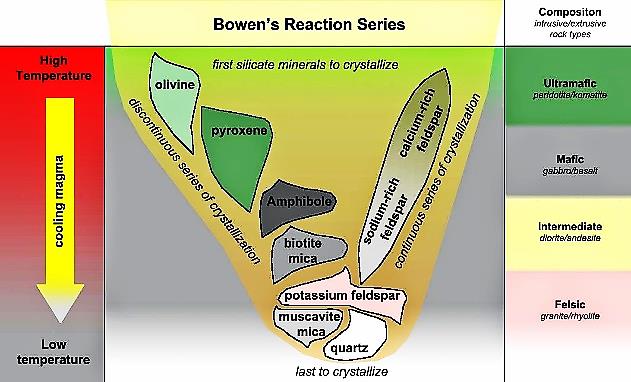
minerals. Mafic minerals are those that are rich
in iron and magnesium, and they form dark-
colored rocks such as basalt and gabbro
--------------------------------------------------------------
549. Identify the FALSE statement: Large
igneous provinces (LIPs):
a) Are places where huge amounts of mafic