

Essentials of geology a comprehensive manual with 1300+ MCQs, answers, feedbacks, and illustrative figures by Ali Kareem Neamah - HTML preview
Download the book in PDF, ePub, Kindle for a complete version.
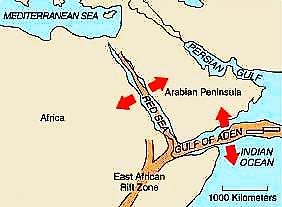
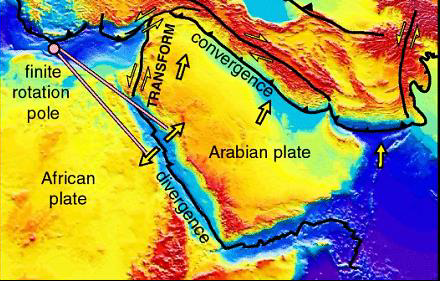
mantle as it descends beneath an overriding Arabian Plate, which are moving away from
plate. each other. The seafloor is spreading apart in
a) Transform. the Red Sea region due to the divergence of
b) Divergent. these two plates, leading to the formation of a
c) Transitional. rift valley and a new oceanic basin. d) Gradational.

e) None of the above.
Feedback: The description above referring to the convergent plate boundary.
--------------------------------------------------------------
185. The Aleutian, Mariana, and Tonga
islands are examples of ____________.
a) Transform boundaries.
b) Abyssal plains.
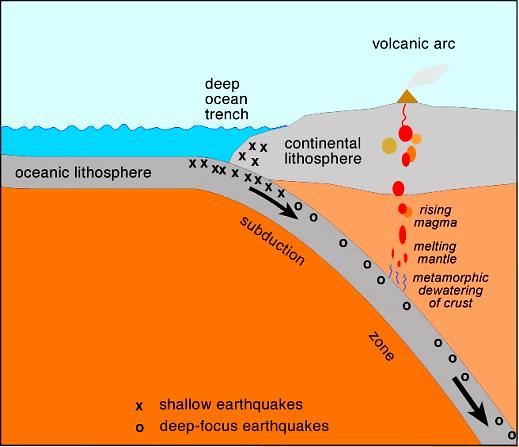
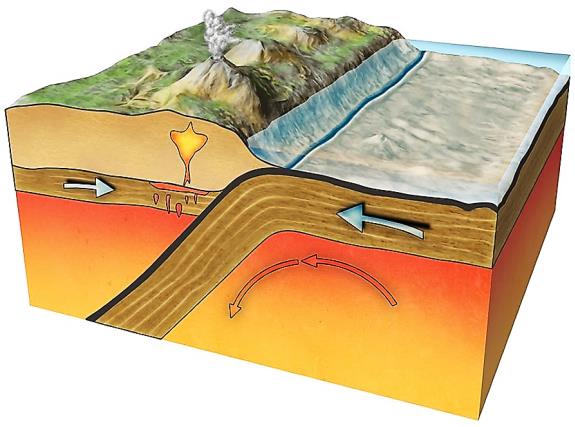
e) 188. None of the above. association with ____________. a) Oceanic ridge systems. Feedback: The Aleutian, Mariana, and Tonga b) d) -------------------------------------------------------------- Volcanic island arcs. Most deep-focus earthquakes occur in c) Hot spots.
islands are examples of volcanic island arcs. Ocean trenches. These island chains are formed at convergent c) Transform boundaries. plate boundaries where an oceanic plate is d) Abyssal plains. subducting beneath another oceanic plate or e) Hot spots. beneath a continental plate. The subduction
process leads to the formation of volcanic Feedback: Most deep-focus earthquakes
-------------------------------------------------------------- These earthquakes are typically generated by the subduction of one tectonic plate beneath islands along the subduction zone. occur in association with ocean trenches.
186. The best approximation of the true outer boundary of the continents is the another in convergent plate boundaries. As the
a) generate seismic activity at great depths, which Deep-ocean trench. are referred to as deep-focus earthquakes. seaward edge of the _________. descending plate sinks into the mantle, it can
b) Continental shelf.
c) Mid-ocean ridge.
d) Present-day shorelines.
e) Abyssal plain.
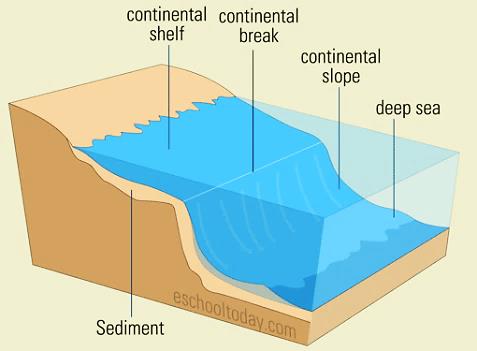
Feedback: The seaward edge of the continental shelf is the best approximation of
the true outer boundary of the continents. This
is where the continent transitions into the
oceanic crust, and the water depth begins to
increase significantly.
--------------------------------------------------------------
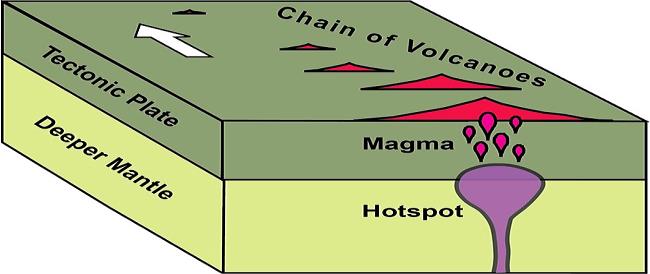
189. Hot spots are __________. a) Centers for the extrusion of granitic magma. b) Believed to represent plumes of heat that
rise from the lithosphere.
-------------------------------------------------------------- d) Always located at plate boundaries. None of the above. c) Stationary, but the lithospheric plates move. 187. e) The Red Sea is believed to be the site
a) Feedback: Hotspots are regions of volcanic of a recently formed ____________.
b) activity that are thought to be caused by plumes Convergent boundary. of hot mantle material rising from the Earth's Ocean trench.
c) Transform boundary.
e) relative to the Earth's core, but the lithospheric Hot spot. plates move over them. As a result, chains of d) core-mantle boundary. Hotspots are stationary Divergent boundary.
37
volcanoes form as the plates move over the 192. The Red Sea is believed to be the site hotspot. of a recently formed convergent plate
boundary.
a) True b) False
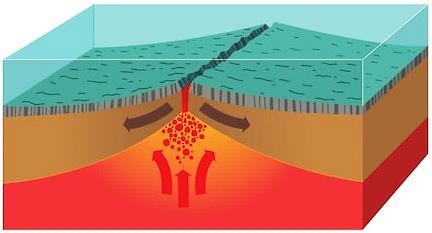
Feedback: The Red Sea is not the site of a recently formed convergent plate boundary. It is
actually the result of a divergent plate boundary

where the African and Arabian plates are
190. The age of the deepest sediment in an spreading, and it is not associated with ocean basin ____________ with increasing convergent plate boundaries where plates distance from the oceanic ridge. move together. -------------------------------------------------------------- This process is an example of seafloor moving apart, causing the Red Sea to open up.
a) Increases.
b) Remains the same.
c) Decreases.
d) Varies.
Feedback: The age of the deepest sediment in an ocean basin increases with increasing
distance from the oceanic ridge. This is
because oceanic crust is continually formed at
mid-ocean ridges and then moves away from
the ridge as new crust is created. As it moves
away, it accumulates sediment on its surface.
The sediment thickness and age increase as --------------------------------------------------------------
you move farther from the ridge. 193. Hot spot volcanics in the oceans (e.g., -------------------------------------------------------------- Hawaii) consist almost entirely of mafic
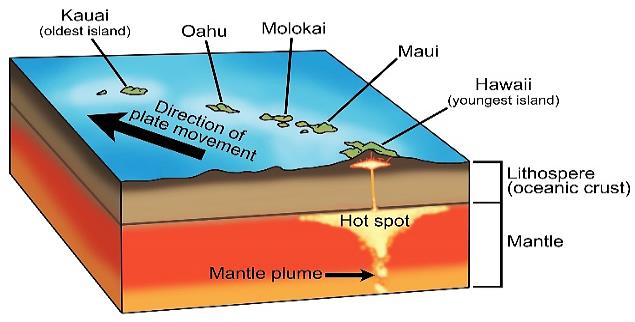
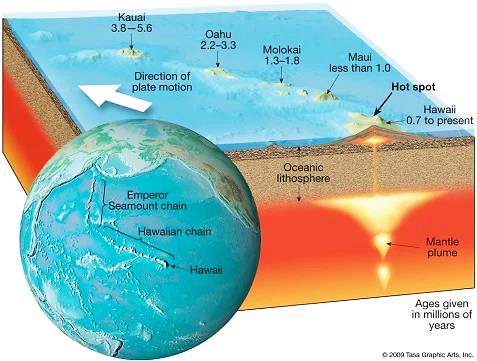
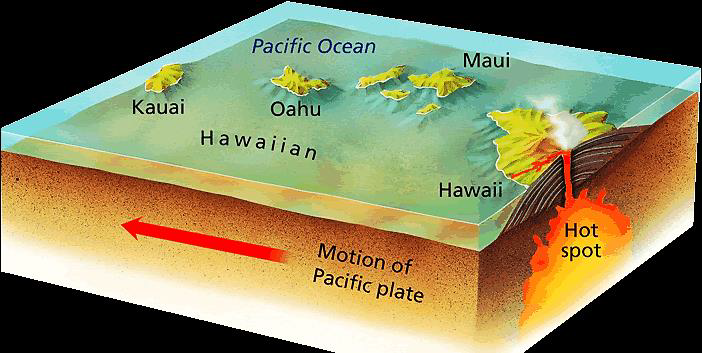
191. rocks, but on the continents (e.g., The Hawaiian Islands become younger
to the east-southeast (Hawaii is the Yellowstone) the material consists of a mix
youngest, while the seamounts to the west- of mafic and felsic rocks. The reason for this
northwest are oldest). Assuming the hot difference is that __________. spot is stationary, and the entire chain of a) Continental hot spots have deeper sources. islands was formed by this hot spot, which b) The originally mafic magma mixes with direction is the Pacific plate moving? some felsic continental material while it is
a) West-northwest. traveling to the surface. b) North. c) Oceanic hotspots originate in the c) lithosphere. South.
d) East-southeast. d) The original magma forming continental hot e) None of the above. spots is more mafic.
e) None of the above.
Feedback: The Hawaiian Islands are the result of a volcanic hot spot that lies under the Pacific Feedback: The reason for the difference in the plate. As the plate moves over the hot spot, new composition of volcanic rocks at hot spots
islands are formed by eruptions of lava. The between oceanic and continental settings is
islands become older and farther away from the often attributed to the process of magma
hot spot as the plate moves. Therefore, the mixing. In oceanic hot spots like Hawaii, the
direction of the plate movement is opposite to magma is typically mafic (rich in magnesium
the direction of the island chain. The Hawaiian and iron). In contrast, continental hot spots like
Islands form a chain that runs from the Yellowstone involve the mixing of mafic magma
northwest to the southeast, so the Pacific plate from the mantle with felsic (rich in silica)
is moving from the southeast to the northwest. continental material as it ascends to the
surface. This mixing results in a broader range
of rock compositions, including both mafic and
felsic rocks.
--------------------------------------------------------------
194. There is a close association between
deep-focus earthquakes and ocean ridges.
a) True b) False
--------------------------------------------------------------
38
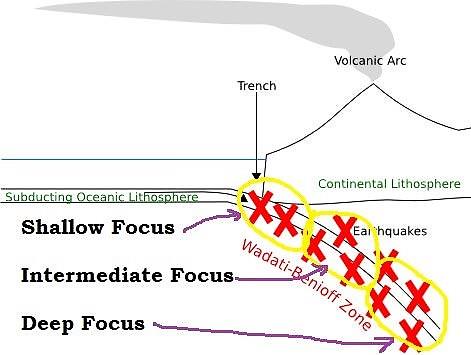
Feedback: Deep-focus earthquakes are and the formation of island arcs. The
typically associated with subduction zones, not subduction process is often associated with
ocean ridges. In subduction zones, one tectonic deep ocean trenches and volcanic arcs in these
plate is forced beneath another, creating convergent plate boundary settings. intense pressure and conditions conducive to --------------------------------------------------------------
deep earthquakes. Ocean ridges, on the other 197. Oceanic lithosphere is consumed at hand, are associated with shallow-focus convergent plate boundaries. earthquakes and volcanic activity related to the a) True divergence of tectonic plates. The interaction of b) False tectonic plates at subduction zones is more

likely to generate deep-focus earthquakes. Feedback: At convergent plate boundaries,
oceanic lithosphere is often subducted or
consumed beneath another plate, typically
continental or oceanic, due to its higher density.
This process is a key mechanism in plate
tectonics and the recycling of Earth's
lithospheric material.
--------------------------------------------------------------
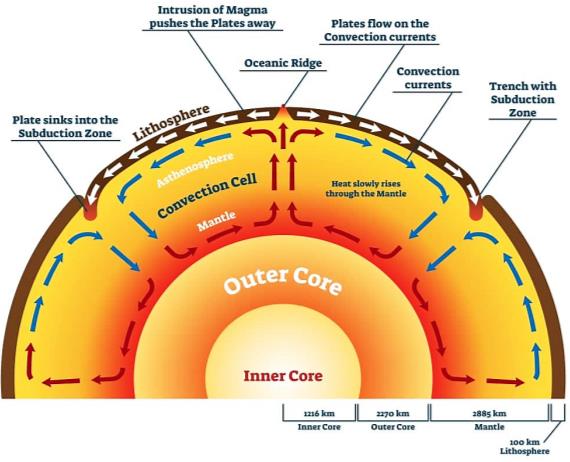
195. The unequal distribution of heat inside
Earth generates some type of thermal
convection in the crust which ultimately
drives plate motion.
a) True
Feedback: 198. Most large tectonic plates containing The unequal heat distribution within continental crust also contain oceanic crust. Earth drives mantle convection, not crustal a) b) False --------------------------------------------------------------
True
convection, which powers plate tectonics b) False globally.
Feedback: While large tectonic plates may have a dominant type of crust (continental or
oceanic), it's rare for them to exclusively contain
one type. The majority of large plates are
actually composite structures harboring a mix of
both continental and oceanic crust due to their
complex geological history and ongoing plate
interactions.
--------------------------------------------------------------
196. The Aleutian, Mariana, and Tonga
islands are volcanic island arcs associated
with oceanic-oceanic plate convergence.
a) -------------------------------------------------------------- True
b) 199. Most deep-focus earthquakes are False
associated with subduction zones.
Feedback: a) True The Aleutian Islands, Mariana Islands, and Tonga Islands are examples of b) False volcanic island arcs formed as a result of
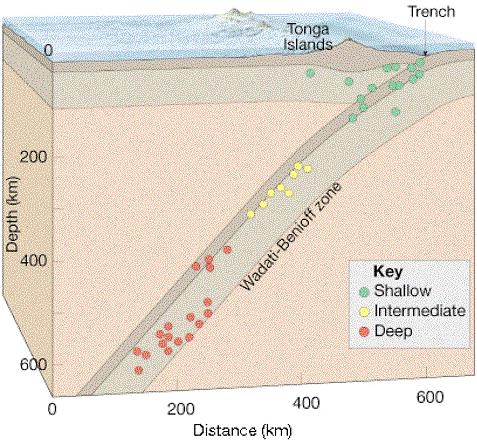
oceanic-oceanic plate convergence. In these Feedback: Most deep-focus earthquakes, regions, one oceanic plate is subducted which occur at depths greater than 300
beneath another, leading to volcanic activity kilometers (about 186 miles), are indeed
39
associated with subduction zones. Subduction the current continents and the configuration of
zones are convergent plate boundaries where landmasses we observe today. one tectonic plate is forced beneath another --------------------------------------------------------------
into the Earth's mantle. The intense pressure 202. What two scientists proposed the and friction in these subduction zones can theory of seafloor spreading in the early
generate earthquakes at considerable depths. 1960s? The downward movement of the subducting a) Charles Darwin and James Hutton. plate into the mantle is a key factor contributing b) Harry Hess and Robert Dietz. to the occurrence of deep-focus earthquakes. c) John Butler and Arthur Smite.

d) F. Vine and D. Mathews.
Feedback: The theory of seafloor spreading was proposed by Harry Hess and Robert Dietz
in the early 1960s. They suggested that new
oceanic crust is formed at mid-ocean ridges
and spreads away from the ridge crest,
eventually being subducted at deep-sea
trenches. This theory played a crucial role in the
development of the broader concept of plate
tectonics.
--------------------------------------------------------------
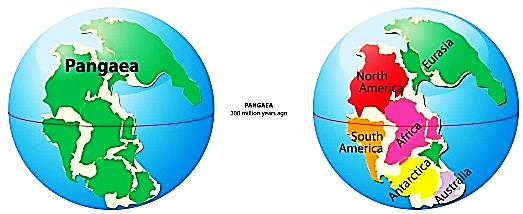
200. What is the name of the Mesozoic
supercontinent that consisted of all of the
a) Eurasia 203. present continents? --------------------------------------------------------------
c) Pangaea a) The end of the 19th century. d) Gondwanaland b) About 1950. c) b) Laurasia widely accepted by _________. The theory of plate tectonics was Feedback: The Mesozoic supercontinent that d) About 1960. About 1970.
consisted of all of the present continents is
the current configuration of continents. Laurasia earlier ideas contributed concepts, plate and Gondwana were the two main landmasses tectonics as a complete theory was not broadly into which Pangaea split, and they further accepted until the late 1960s and early 1970s. during the Jurassic period, eventually leading to widespread acceptance around 1970. While called Pangaea. Pangaea began to break apart Feedback: The theory of plate tectonics gained
fragmented into the continents we recognize --------------------------------------------------------------
today. 204. The Hawaiian Islands formed at a:
a) Convergent boundary. b) Divergent boundary. c) Transform boundary. d) None of these.
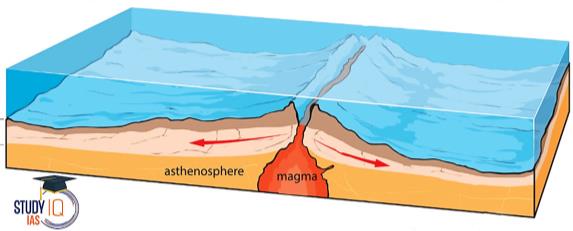
Feedback: The Hawaiian Islands were formed by such a hot spot occurring in the
-------------------------------------------------------------- middle of the Pacific Plate. 201. When did the supercontinent Pangaea --------------------------------------------------------------
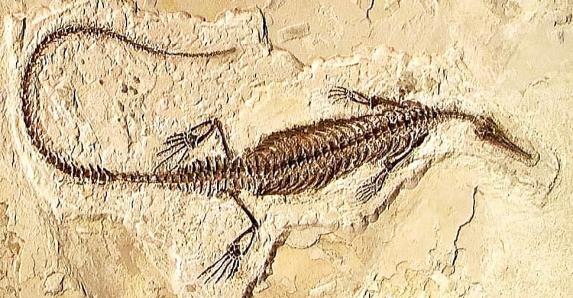
begin to break apart? 205. What age are the fossils of the reptile
a) About 10,000 years ago. Mesosaurus found in Africa and South
b) About 10 million years ago. America that suggested that the two
c) About 200 million years ago continents were once together? d) About 570 million years ago. a) Early Cenozoic.
b) Late Mesozoic.
Feedback: Pangaea began to break apart c) Early Mesozoic. during the Mesozoic Era, specifically during the d) Late Paleozoic. Late Triassic and Early Jurassic periods, which
occurred approximately 200 million years ago. Feedback: Mesosaurus fossils are found in This breakup eventually led to the formation of rocks dating back to the Early Permian period,
within the Late Paleozoic era. This period
40
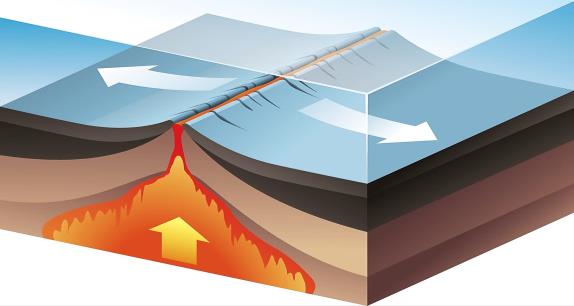
spanned roughly from 300 to 250 million years Feedback: New oceanic lithosphere forms at ago. The discovery of the same reptile species divergent plate boundaries. These boundaries
on both continents in the Southern Hemisphere are characterized by the separation of tectonic
was one of the key pieces of evidence that plates, and as magma rises from the mantle to
supported the theory of continental drift, later fill the gap, it solidifies to create new oceanic
replaced by the theory of plate tectonics. crust. This process occurs at mid-ocean ridges,
where tectonic plates are moving away from
each other.

--------------------------------------------------------------
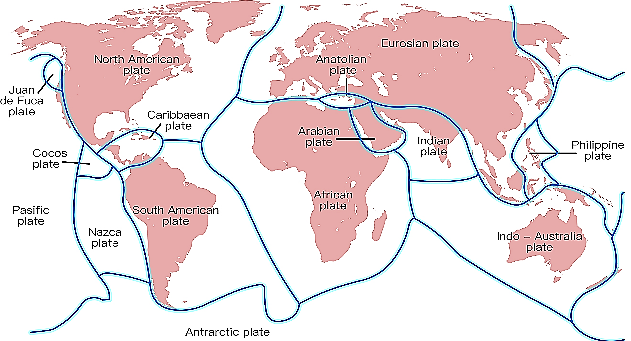
206. Approximately how many lithospheric
plates are there? --------------------------------------------------------------
a) About 3 209. Which of the following is NOT a
c) About 12. a) The Great Rift Valley of East Africa. About 24 b) About 6 divergent plate boundary? d) b) The East Pacific Rise.
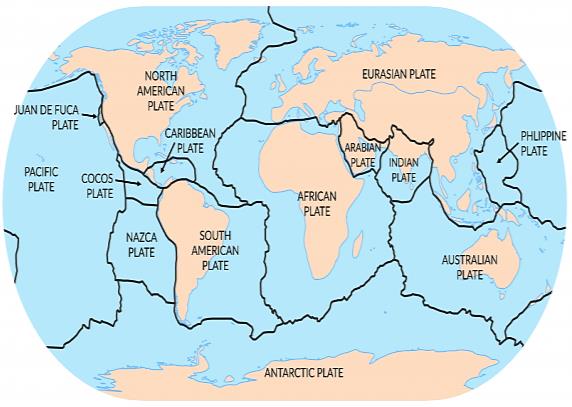
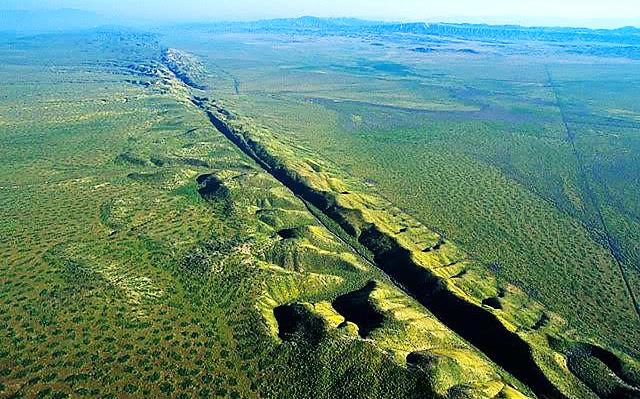
Feedback: There are approximately 12 major d) The Mid-Atlantic Ridge. lithospheric plates on Earth. These plates c) The San Andreas fault. include the Pacific Plate, North American Plate, Feedback: The San Andreas fault is not a South American Plate, Eurasian Plate, African divergent plate boundary; it is a transform plate
Plate, Antarctic Plate, Indo-Australian Plate, boundary. Transform plate boundaries involve
and several others. Additionally, there are the horizontal sliding past each other of two
numerous smaller plates and microplates. The lithospheric plates. In the case of the San
interactions and movements of these plates at Andreas fault, the Pacific Plate and the North
plate boundaries are central to the theory of American Plate are sliding horizontally past
plate tectonics. each other. Divergent plate boundaries, on the
other hand, involve the pulling apart or rifting of
lithospheric plates, leading to the formation of
new crust. The Great Rift Valley of East Africa,
the East Pacific Rise, and the Mid-Atlantic
Ridge are examples of divergent plate
boundaries.
--------------------------------------------------------------
207. How old are the oldest oceanic crustal
basalts?
a) About 20 million years old.
b) About 4.0 billion years old.
c) About 200 million years old.
continuous sections of oceanic crust known to Divergent plate boundaries. b) Ocean-ocean convergent plate boundaries. exist today are estimated to be around 200 c) Ocean-continent plate boundaries. million years old. These are found in the west d) All of these. Pacific and north-west Atlantic. -------------------------------------------------------------- Feedback: Partial melting and magma 208. New oceanic lithosphere forms at: production are processes that can take place at Feedback: 210. Partial melting and the production of While Earth's crust as a whole is magma takes place at ________ . much older (around 4.0 billion years), the oldest a) d) About 570 million years old. --------------------------------------------------------------
a) Divergent plate boundaries. divergent boundaries, ocean-ocean convergent b) Convergent plate boundaries. boundaries, and ocean-continent convergent c) Transform plate boundaries. boundaries. d) All of these are possible. --------------------------------------------------------------
41
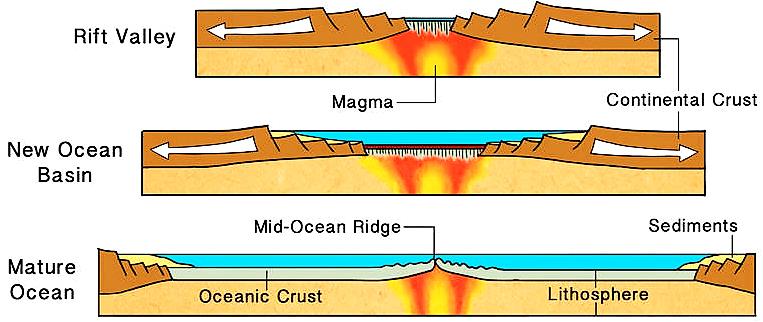
211. At what type of plate boundary do Feedback: Rift valleys are typically associated
shallow-focus earthquakes occur? with divergent plate boundaries, where tectonic
a) Convergent. plates are moving away from each other,
b) Divergent. causing the Earth's crust to stretch and create
c) Transform. a rift. Convergent plate margins are
d) All of these. characterized by deep-focus earthquakes,
island arcs, and deep-sea trenches, where
Feedback: Shallow-focus earthquakes can tectonic plates are colliding or subducting into
occur at all types of plate boundaries: the mantle. convergent, divergent, and transform. These

earthquakes are often associated with the
movement and interaction of tectonic plates.
Convergent boundaries involve the collision or
subduction of plates, creating compressional
forces that can lead to shallow-focus
earthquakes. Divergent boundaries involve the
generate shallow-focus earthquakes. rifting and pulling apart of plates, which can also --------------------------------------------------------------
Transform boundaries involve horizontal sliding 214. Transform faults ___________. past each other, leading to strike-slip a) Often offset spreading centers. earthquakes, which can be shallow-focus as b) Can cut across continents. well. c) Involve horizontal movement.
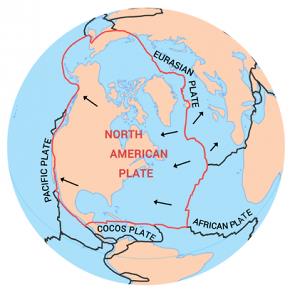
212. The North American plate is bounded Feedback: Transform faults often exhibit the by _________ plate boundaries. following characteristics: a) -------------------------------------------------------------- d) All of these.
c) Transform faults are commonly found in Transform. association with mid-ocean ridges, where they b) Convergent. They can offset spreading centers: Divergent.
Feedback: tectonic plates. The North American plate is They can cut across continents: Transform bordered by various types of plate boundaries, faults are not limited to oceanic regions; they d) Convergent, divergent, and transform. help accommodate the horizontal movement of
boundary with the Pacific Plate along the west can also cut across continental crust. including convergent boundaries (e.g., the
Atlantic Ridge), and transform boundaries (e.g., Transform faults are characterized by horizontal slip along the fault plane, facilitating coast), divergent boundaries (e.g., the Mid- They involve horizontal movement:
the San Andreas Fault).
lateral movement between tectonic plates.
--------------------------------------------------------------
215. The east coast of North America
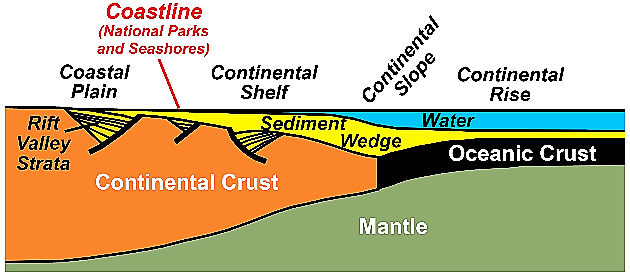
represents a _________.
a) Convergent boundary. b) Divergent boundary. c) Transform boundary. d) None of these
Feedback: The east coast of North America represents a passive margin, with no active
tectonics.
--------------------------------------------------------------
213. Which of the following are NOT
associated with convergent plate margins? --------------------------------------------------------------
a) 216. What are ophiolite suites? Deep-focus earthquakes.
b) a) Fragments of oceanic lithosphere emplaced Rift valleys.
d) b) Groups of seafloor magnetic anomalies. Deep-sea trenches. Wedge-shaped packages of sediments that c) on a continent. Island arcs.
c)
form at passive margins.
42
d) Micro-continents that have traveled a long d) Transform boundaries.
distance.
Feedback: Compressive stresses, granitic
Feedback: An ophiolite is a section of the magmas, and intermediate depth earthquakes
Earth's oceanic crust and the underlying upper are typically associated with subduction zones
mantle that has been uplifted and exposed or convergent plate boundaries, where one
above sea level and often emplaced tectonic plate is being pushed beneath another
onto continental crustal rocks. Their great into the Earth's mantle. This process can lead
significance relates to their occurrence within to the melting of continental crust, generating

mountain belts such as the Alps and the granitic magmas and causing earthquakes at
Himalayas, where they document the existence intermediate depths within the subducted plate.
of former ocean basins that have now been --------------------------------------------------------------
consumed by subduction. This insight was one 219. Shearing stresses and shallow of the founding pillars of plate tectonics, and earthquakes are associated with: ophiolites have always played a central role in a) Subduction zones plate tectonic theory and the interpretation of b) Continent/continent convergence ancient mountain belts. c) Spreading centers
d) Transform boundaries
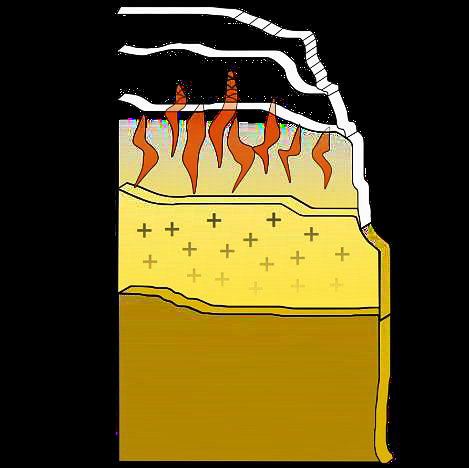
Feedback: Shearing stresses and shallow earthquakes are associated with Transform
boundaries. Transform boundaries are where
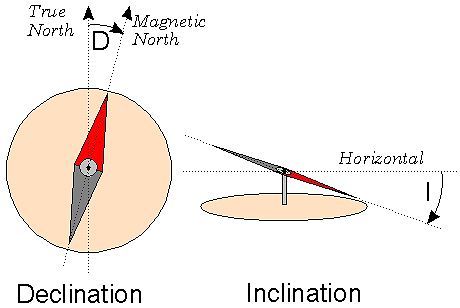
two lithospheric plates slide past each other
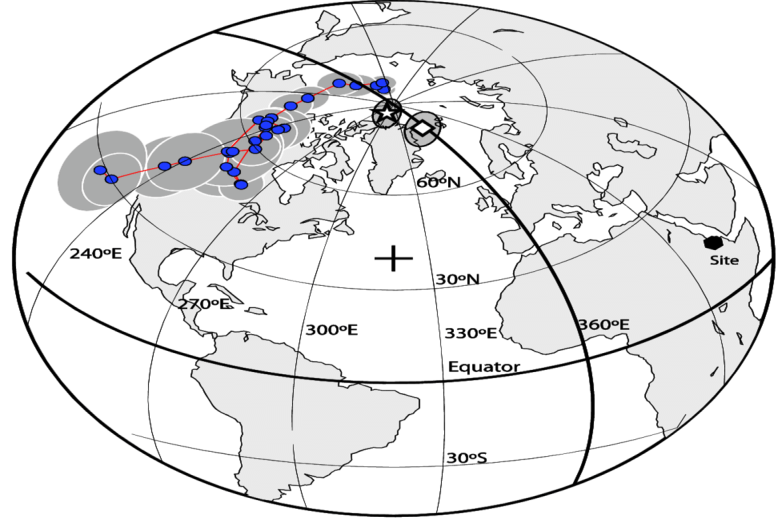
horizontally, causing shearing stresses along
the boundary. This motion can result in shallow
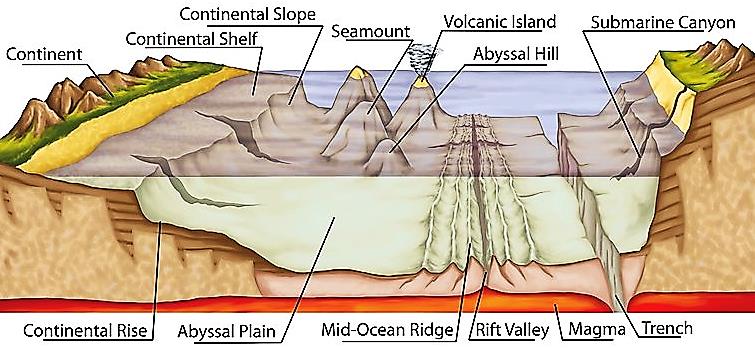
earthquakes along the fault lines.
217. ------------------------------------------------------------- -------------------------------------------------------------- At convergent plate boundaries where 220. Stretching stresses, basaltic lavas, and oceanic and continental crust meet ______. shallow earthquakes are associated with: a) No associated volcanism occurs. a) Subduction zones. b) Oceanic crust is subducted. b) Continent/continent convergence. c) Continental crust is subducted. c) Spreading centers. d) Oceanic crust is created. d) Transform boundaries.
Feedback: Feedback: When oceanic crust converges Stretching stresses, basaltic lavas, with continental crust, the denser oceanic and shallow earthquakes are associated with plate plunges beneath the continental plate. spreading centers or divergent plate This process, called subduction, occurs at boundaries, where tectonic plates are moving the oceanic trenches. The entire region is away from each other. This movement leads to known as a subduction zone. Subduction zones the formation of new oceanic crust and the have a lot of intense earthquakes and volcanic upwelling of molten basaltic material, resulting eruptions. in the characteristics mentioned.
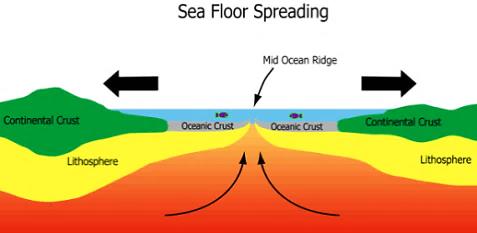
--------------------------------------------------------------
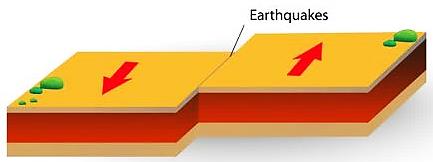
218. Compressive stresses, granitic
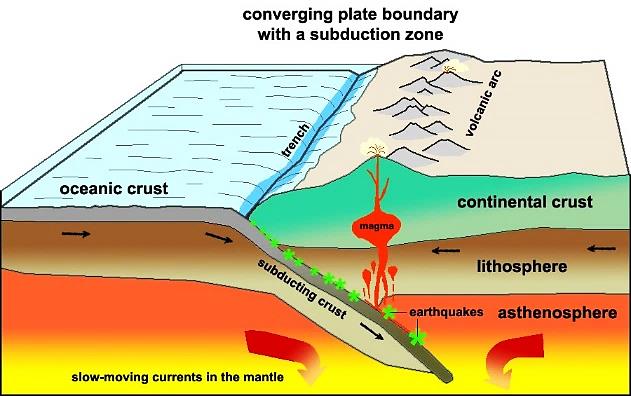
magmas, and intermediate depth
earthquakes are associated with ________: --------------------------------------------------------------
a) 221. One remarkable realization associated Subduction zones.
b) with the discovery of seafloor spreading was Continent/continent convergence.
c) that: Spreading centers.
43
a) The crust of the continents is more dense a lack of continuous bedding and the inclusion
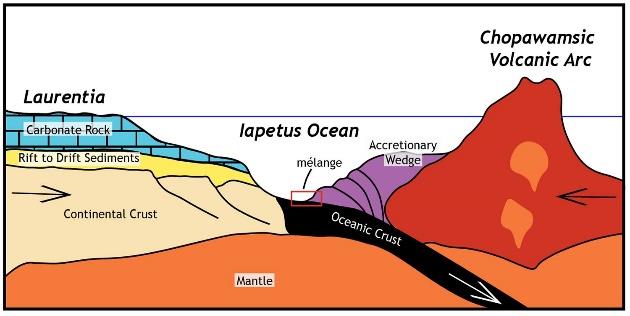
than the crust of the ocean. of fragments of rock of all sizes, contained in a
b) The crust of the oceans is very young fine-grained deformed matrix. The mélange
relative to the age of the crust of the typically consists of a jumble of large blocks of
continents. varied lithology. Both tectonic and sedimentary
c) Mountains are more dense than then processes can form mélange. Mélange
mantle. occurrences are associated with thrust
d) The rotational poles of the Earth have faulted terranes in orogenic belts. A mélange is
migrated. formed in the accretionary wedge above

a subduction zone.
Feedback: The discovery of seafloor spreading revealed that new oceanic crust is continuously
formed at mid-ocean ridges through volcanic
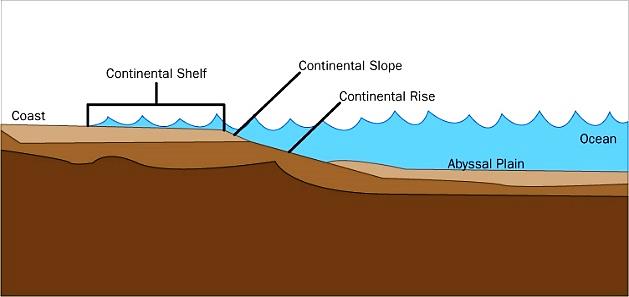
activity. As this new crust forms, it pushes older
crust away from the ridge, creating a conveyor
belt-like mechanism. The result is that the
oceanic crust is relatively young compared to
the much older continental crust. This
realization was a significant contribution to our
understanding of Earth's dynamic processes
-------------------------------------------------------------- 224. Which of the following increases with distance from a mid-ocean ridge? and the concept of plate tectonics. --------------------------------------------------------------
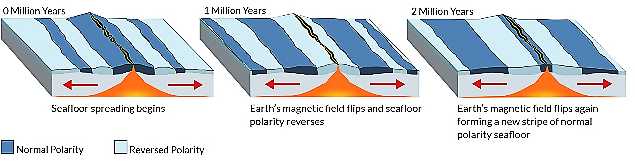
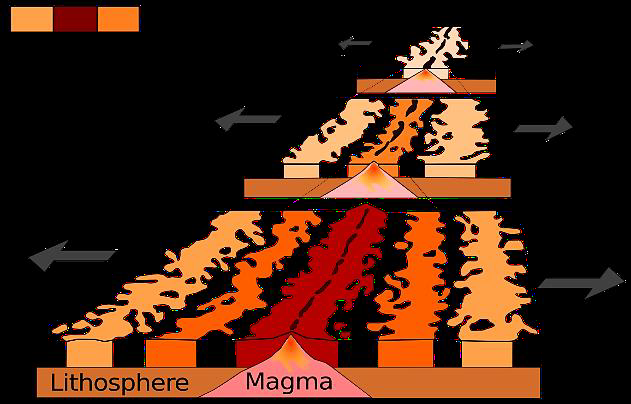
222. Which of the following is not a chain of
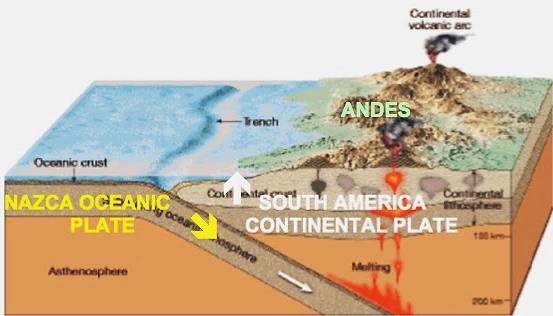
volcanic islands associated with ocean- a) The age of oceanic lithosphere.
a) c) The thickness of the lithosphere. The Aleutian Islands. d) ocean convergence? b) The depth to the sea floor.
Feedback: As you move The Hawaiian Islands are not away from a mid-ocean ridge, the oceanic associated with ocean-ocean convergence. lithosphere becomes older. The youngest They are formed by a hot spot, where magma oceanic crust is found at the ridge, and its age from the mantle creates a chain of volcanic increases with distance. islands as the Pacific Plate moves over the The depth to the sea floor: The depth to the stationary hot spot. In contrast, the other sea floor increases with distance from a mid- options (Aleutian Islands, Mariana Islands, and ocean ridge. The ridge is a high point, and as c) The Mariana Islands. All of the given options increase Feedback: d) The Philippine Islands. with distance from a mid-ocean ridge: The age of oceanic lithosphere: b) All of the above. The Hawaiian Islands.
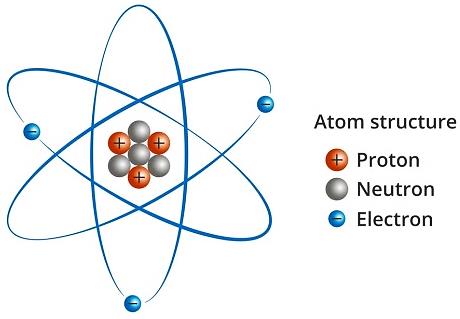
island arcs formed at ocean-ocean convergent you move away, the ocean floor gets deeper. Philippine Islands) are examples of volcanic
beneath another. thickness of the lithosphere also increases with distance from a mid-ocean ridge. This is boundaries where one oceanic plate subducts The thickness of the lithosphere: The
because the lithosphere thickens as it ages and
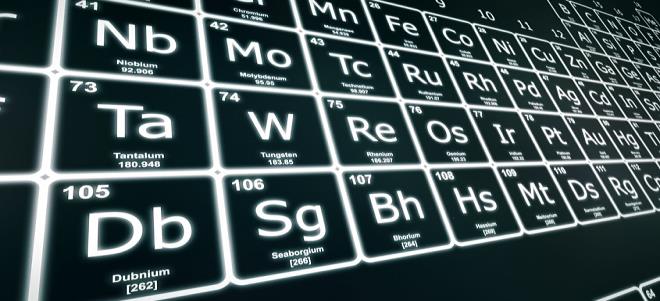
moves away from the ridge.
--------------------------------------------------------------
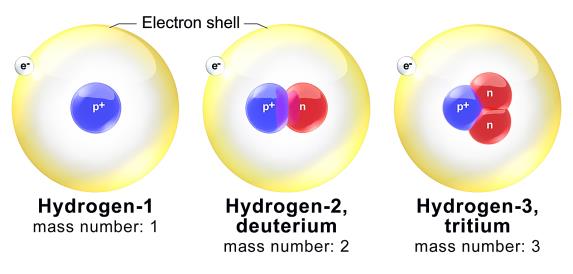
225. If the Atlantic Ocean is widening at a
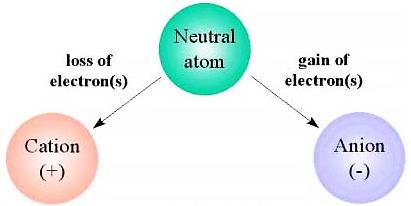
rate of 3 cm per year how far (in kilometers)
will it spread in a million years?
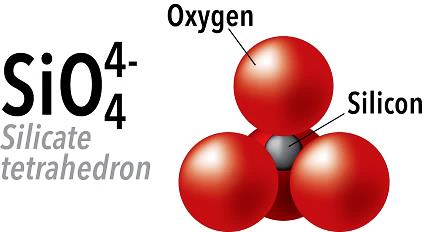
a) 300 kilometers. b) 30 kilometers. c) 30 miles. d) 3 kilometers.
Feedback: To calculate how far the Atlantic
a) Divergent boundaries. Distance = Rate × Time b) Subduction margins. Distance = 3 cm/year × 1,000,000 years c) Transform boundaries. First, convert centimeters to kilometers (since 1 d) All of these. kilometer = 100,000 centimeters): 3 cm/year × (1 kilometer / 100,000 cm) × 223. Melange deposits are associated with: widening at a rate of 3 cm per year, you can use the following calculation: -------------------------------------------------------------- Ocean will spread in a million years if it is
Feedback: In geology, a mélange is a large- 1,000,000 years scale breccia, a body of rock characterized by Distance = 30 kilometers
44
So, the Atlantic Ocean will spread b) Isotopes. approximately 30 kilometers in a million years c) Isochrones. at this rate. d) Isostasy. --------------------------------------------------------------
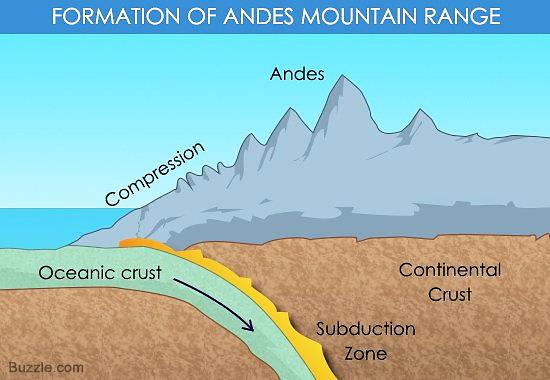
226. Which of the following mountains did Feedback: Lines on the seafloor that connect
not form as a result of collision between two rocks of the same age are called isochrones.
continents? These lines are often identified through the
a) Appalachians study of marine magnetic anomalies or by
b) Urals dating the rocks. Isochrones provide valuable

c) Andes information about the spreading rates and
d) Himalayas patterns of movement at mid-ocean ridges,
contributing to our understanding of seafloor
Feedback: The Andes Mountains did not form spreading and plate tectonics. as a result of the collision between two
continents. Instead, they formed as a result of
the subduction of the Nazca Plate beneath the
South American Plate, which created the
Andean volcanic arc. The Appalachian
Mountains, Urals, and Himalayas, on the other
hand, all formed as a result of the collision of --------------------------------------------------------------
tectonic plates carrying continents. 229. The east coast of North America
represents a:
a) Convergent plate boundary. b) Divergent plate boundary c) A transform plate boundary. d) The east coast of North America is not a
plate boundary.
Feedback: The east coast of North America is not associated with a plate boundary. It is part
of the North American Plate, and there is no
active tectonic boundary or plate interaction
along this coastline. Plate boundaries, such as
convergent, divergent, or transform, are
-------------------------------------------------------------- typically characterized by significant geological
227. Crustal blocks that occur within activity, and the east coast of North America is
orogenic belts whose rocks and structures not currently undergoing such tectonic
contrast sharply with adjacent provinces are processes. called: --------------------------------------------------------------
a) Ophiolites 230. The diagram below represents an b) Sutures ophiolite suite, which of the following rock
c) Microplates types would you least expect to find in layer
d) Island arcs 1?
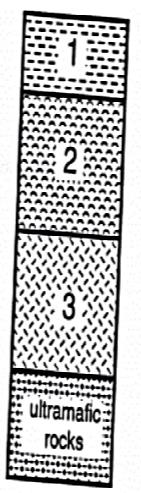
Feedback: Microplates are small tectonic plates that exist within the Earth's lithosphere.
They are typically much smaller in size
compared to the major tectonic plates that
make up the Earth's crust. Microplates can be
found along plate boundaries, and they are
associated with complex geological features.
These small plates can play a significant role in
the Earth's tectonic processes, and they are
often associated with localized geological
activity, such as earthquakes, volcanic
eruptions, and the deformation of the Earth's
crust. Microplates can interact with larger a) Chert. tectonic plates and influence the overall b) Limestone. movement and deformation of the Earth's c) Sandstone. lithosphere. d) Shale. -------------------------------------------------------------- --------------------------------------------------------------
228. Lines on the seafloor that connect
rocks of the same age are called:
a) Isograds.
45
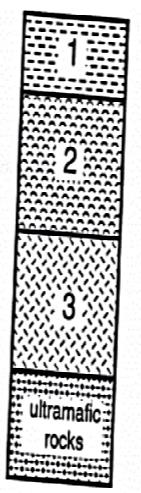
231. What type of rocks make up layer 2 in mantle, such as harzburgite, dunite, peridotite,
the diagram below of an ophiolite suite? and pyroxenite. The Moho lies between layer 3
and the ultramafic rocks, where there is a
transition from mafic to ultramafic composition.

b) Gabbro. -------------------------------------------------------------- c) a) Basalt.
d) Granite. 234. Which two layers have the same Ultramafics. chemical composition in the diagram below -------------------------------------------------------------- of an ophiolite suite? 232. What type of rocks make up layer 3 in the diagram below of an ophiolite suite?
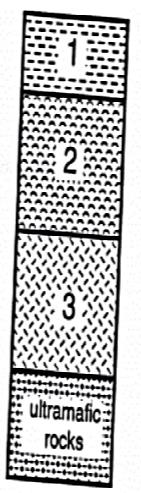
b) Gabbro. Layers 2 and 3. d) Layer 3 and the ultramafics. c) Granite. d) Ultramafics Feedback: a) b) Layers 1 and 3. Basalt. c) a) Layers 1 and 2.
233. Where is the Moho in the diagram have the same chemical composition of mafic rocks, mainly composed of plagioclase and -------------------------------------------------------------- Layers 2 and 3 of an ophiolite suite
below of an ophiolite suite? clinopyroxene. Layer 2 consists of pillow
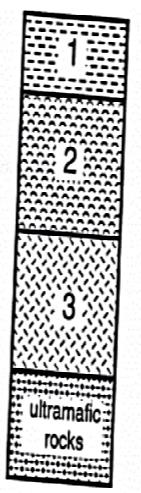
basalts, which are volcanic rocks that form
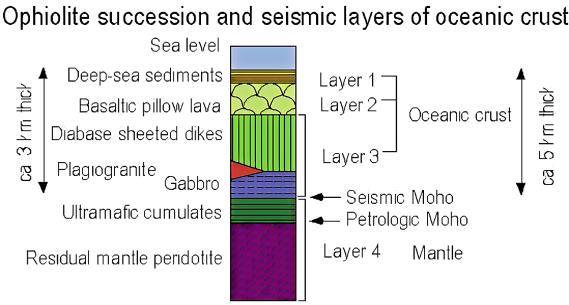
when lava erupts underwater and cools rapidly
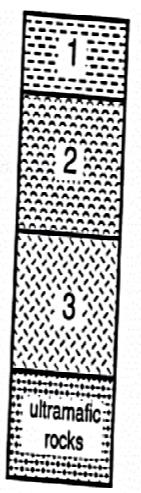
into spherical shapes. Layer 3 consists of
sheeted dikes, which are vertical, parallel
intrusions that fed the lavas above. Both layers
are derived from the same magma chamber
that crystallized into gabbros in layer 4.
--------------------------------------------------------------
235. How wide are the crystal mush zones
(magma chambers) beneath mid-ocean
a) Between layers 1 and 2. ridges? b) Between layers 2 and 3. a) 1 kilometer c) Between layer 3 and the ultramafic rocks. b) 10 kilometers. d) Beneath the ultramafics. c) 100 kilometers
d) 500 kilometers
Feedback: The Moho is the boundary between the crust and the mantle, where there is a Feedback: Crystal mush zones are regions of significant change in the density and seismic partially molten rock that form beneath mid-
velocity of the rocks. An ophiolite suite is a ocean ridges, where new oceanic crust is
sequence of rocks that represents a slice of generated by the upwelling and melting of the
oceanic crust and upper mantle that has been mantle. These zones are also known as magma
thrust onto continental crust by tectonic forces. chambers, and they feed the volcanic eruptions
An ophiolite suite typically consists of four and intrusions that shape the ridge.
layers: (1) sedimentary rocks, (2) pillow basalts, Seismological studies reveal that the crystal
(3) sheeted dikes, and (4) gabbros. These mush zones have a low-velocity zone, which
layers represent the oceanic crust, which is indicates the presence of melt, and a half-width
underlain by the ultramafic rocks of the upper of approximately 5 to 10 kilometers1. The width
46
of the crystal mush zones may vary depending kilometers. The Mariana Trench, located in the
on the spreading rate, the mantle temperature, western Pacific Ocean, is the deepest oceanic
the magma supply, and the tectonic stress. trench and contains the Challenger Deep, the
Earth's deepest known point.
Trenches play a crucial role in the process of
plate tectonics, facilitating the recycling of
oceanic crust back into the mantle. They are
often associated with intense seismic activity
and volcanic arcs on the overriding plate.

--------------------------------------------------------------
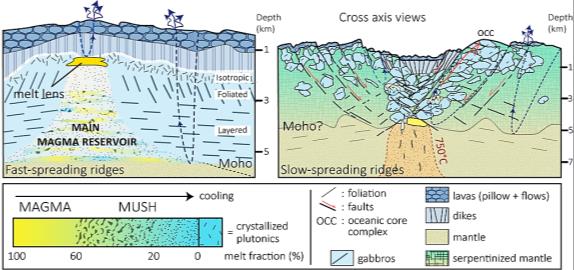
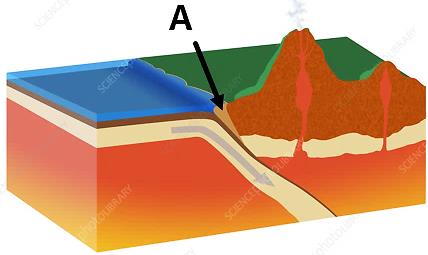
-------------------------------------------------------------- a __________, and consists of chaotically mixed and deformed rocks. 238. Feature A in the diagram below, called
236. Sedimentary rocks laid down in a
slowly subsiding basin along a receding
continental margin are called:
a) Continental shelf deposits.
b) Ophiolite suites.
c) Melange deposits.
d) Fluvial deposits.
Feedback: As the continental margin recedes, sediment accumulates in the subsiding basin,
forming layers of sedimentary rocks. This a) Forearc basin. process is common in passive continental b) Melange (Accretionary wedge). margins, where the continent is gradually c) Suture. moving away from an oceanic plate. d) Turbidite.
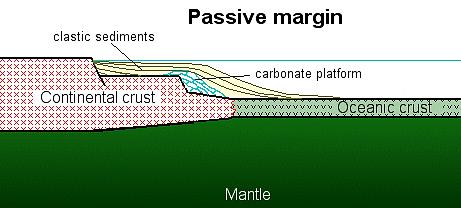
Feedback: A melange, also known as an accretionary wedge, is a geological formation
that consists of a mixture of various rock types
and sedimentary materials. It forms at
convergent plate boundaries, particularly in
subduction zones, where one tectonic plate is
forced beneath another. The accretionary
wedge is created by the intense deformation
-------------------------------------------------------------- and stacking of rocks and sediments at the
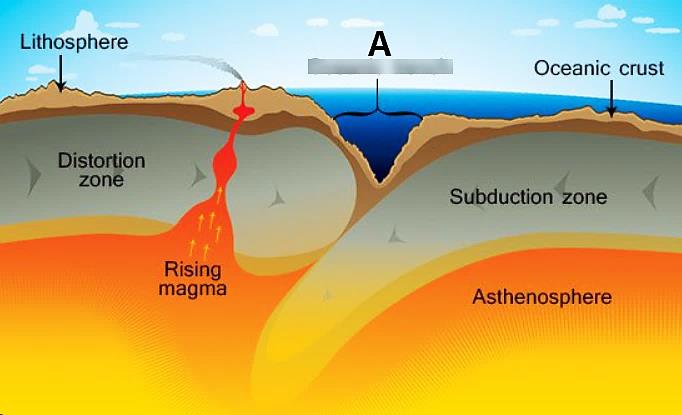
237. What is the topographic feature at A leading edge of the overriding plate.
called: --------------------------------------------------------------
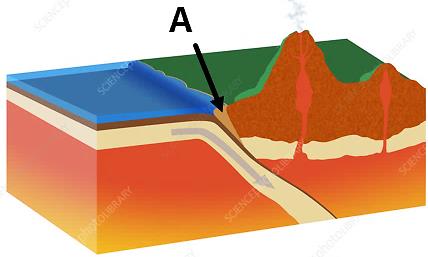
239. What type of metamorphism occurs in
region A in the diagram below?
a) Oceanic basin.
b) Oceanic rift. a) High temperature, low pressure. c) Spreading center. b) Low temperature, high pressure. d) Oceanic trench. c) High temperature, high pressure.
d) Low temperature, low pressure.
Feedback: An oceanic trench is a long, narrow, and deep depression in the ocean floor that Feedback: Low-temperature, high-pressure forms as a result of the subduction of one metamorphism is a specific type of
tectonic plate beneath another. These trenches metamorphic process that occurs under
are typically associated with convergent plate conditions of relatively low temperature but high
boundaries, where an oceanic plate is forced pressure. This type of metamorphism is
beneath another plate, either oceanic or commonly associated with subduction zones,
continental, in a process known as subduction. where an oceanic plate is forced beneath a
Oceanic trenches are the deepest parts of the continental or another oceanic plate. ocean and can extend for thousands of --------------------------------------------------------------
47
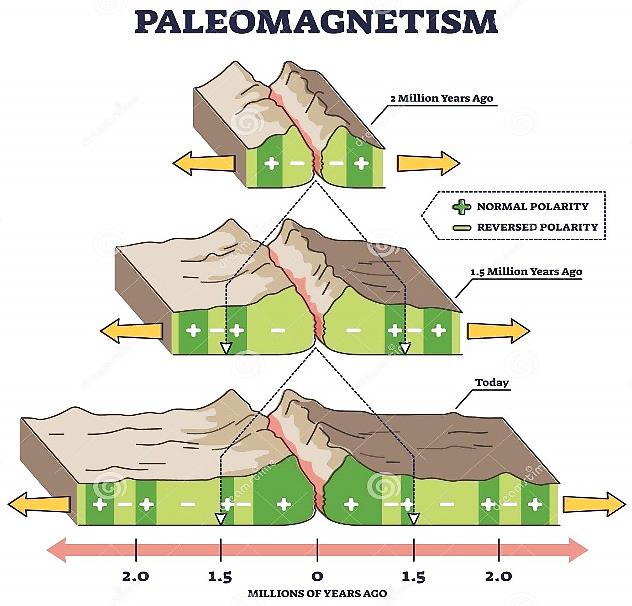
240. Which of these was NOT a line of e) The magnetic inclination and declination
evidence for the original proposal of the imprinted on a rock at the time of its
supercontinent Pangaea? formation.
a) Closely matching coastlines of several
continents, if arranged together. Feedback: Paleo means past.
b) Radiometric age-dating of similar types of Paleomagnetism is the study of past magnetic
rocks on several continents. field orientations recorded by igneous rocks as
c) The types and distributions of fossils in they cool below a certain temperature. This field
similar rocks on several continents. of study has been instrumental in

d) Traces of past glaciations on now far- understanding the Earth's magnetic history and
separated and, in some cases, subtropical the movement of tectonic plates over geological
or equatorial lands. time scales. Paleomagnetic data recorded in
e) Inferred similarities of past climates made rocks can provide valuable insights into the past
from rocks on continents with now very positions and movements of continents, helping
different climates. scientists reconstruct the Earth's geological
history.
Feedback: Radiometric age-dating, while an important method for determining the ages of
rocks and geological events, was not one of the
main lines of evidence used by Wegener in his
initial proposal of Pangaea. The other options
listed were significant pieces of evidence that
contributed to the development of the concept
of the supercontinent.
--------------------------------------------------------------
241. Why was the man who first advocated
the idea of continental drift scoffed at by
geoscientists in the 1920s?
a) He had no explanation for what was causing
subduction.
b) He could not provide a mechanism to move
the continents or show that they were
moving.
c) He was misusing paleomagnetic data.
d) He had neither graduated from nor attended
a university.
e) All the possible answers are correct.
--------------------------------------------------------------
Feedback: 243. Who was Alfred Wegener? The main reason why the man who first advocated the idea of continental drift, a) A pioneer of paleomagnetism. Alfred Wegener, was initially scoffed at by b) A desert explorer. geoscientists in the 1920s was that he could not c) The first geoscientist to provide geologic
provide a plausible mechanism to explain how observations supporting a vastly different
continents could move or demonstrate the past arrangement of the continents. process of their movement. While Wegener d) One of several men in the 1960s who
presented compelling evidence, such as the fit developed the basic theory of plate
of the continents, fossil distributions, and rock tectonics. formations across continents, he lacked a e) All the possible answers are correct. convincing mechanism for the drift. It wasn't
until the development of the theory of plate Feedback: Wegener was a German explorer
tectonics in the 1960s that a mechanism, and geologist who combined information from
involving the movement of tectonic plates on multiple continents to support the idea that they
the Earth's surface, was proposed, providing a had at one time been assembled together in a
comprehensive explanation for continental drift. specific arrangement.
242. 244. The angle of the Earth’s magnetic field What is paleomagnetism? down into the ground toward the North -------------------------------------------------------------- --------------------------------------------------------------
a) The study of the magnetic fields of fossils b) magnetic pole is called the: The study of magnetic tools and navigation
c) b) Polar wander. The effects of continental drift on the Earth ’ s Geothermal gradient. of early humans a) Stratification.
magnetic field c)
d) d) Declination. The effects of the Earth ’ s mantle upon the
Earth e) Inclination. ’ s magnetic field in the past
48
Feedback: Inclination and declination are the d) 1.5 km and 4 km two parameters that define the orientation of e) 11 km and 3 km lines of the magnetic field near the Earth’s surface. Feedback: Abyssal plains are underwater
plains on the deep ocean floor, usually found at
depths between 3,000 and 6,000 meters (9,800
and 19,700 feet). Mid-ocean ridges are
underwater mountain ranges that form at
divergent plate boundaries, rising to an average

depth of 2,400 meters (8,000 feet). The
average depths of these features vary
depending on the location and the spreading
rate of the plates, but generally, abyssal plains
are deeper than mid-ocean ridges.
--------------------------------------------------------------
-------------------------------------------------------------- 248. Identify the TRUE statement: A chain of 245. Why were the apparent histories of seamounts and a mid-ocean ridge:
polar wander later discarded as nearly a) Both have active volcanism at many meaningless? locations.
a) The Earth’s magnetic field has sometimes b) Both are volcanic in origin.
had multiple north and south magnetic poles c) Both have coral reefs. at the same time. d) Both are locations where crustal plates are
b) created. The records of apparent past polar wander
are affected by the passage of seismic e) Both are produced by isolated spots of waves. mantle upwelling.
c) No single reference point or area could be
relied upon as having remained in the same Feedback: While both are formed by place on the planet’s surface. volcanoes, a chain of seamounts is typically left
d) Inundation of rocks by flooding or rising by the periodic eruption of a single point (a hot
groundwater can erase the paleomagnetic spot) through the lithosphere as it is carried
record. over the asthenosphere and the hot spot.
e) Glaciers have lasting effects upon the --------------------------------------------------------------
paleomagnetic records of rocks over which 249. Identify the TRUE statement: Mid-they pass. ocean ridges:
a) Are formed by the collision of oceanic crust
Feedback: The apparent path of polar wander within convergent plate boundaries. varies because each tectonic plate has had a b) Are formed predominantly of granites. unique journey across the Earth’s surface, and c) Are formed where plates slide by one so most plates suggest differing locations for another over the Earth’s surface. the Earth’s magnetic poles in rocks of the same d) Are zones of little or no earthquake activity. age. e) Have higher geothermal gradients -------------------------------------------------------------- compared to most other areas of oceanic
246. crust. The variability in the depths of oceans
and seas is called:
a) Topography. Feedback: Mid-ocean ridges are underwater b) mountain ranges formed by the upwelling of hot Density.
c) Salinity. mantle material at divergent plate boundaries.
d) Isotropy. These regions indeed have higher geothermal
e) Bathymetry. gradients because of the proximity to the
mantle, which results in increased heat flow and
Feedback: Topography and bathymetry are geothermal activity. both terms for the shape, extents and --------------------------------------------------------------
elevations of the interface of solid earth material 250. Which of the following is a key feature (i.e., rock or sediment) with fluid. Topography is of ocean bathymetry but NOT a key feature the shape of the land surface with the fluid (gas) of plate tectonics? atmosphere. Bathymetry is the shape of the a) A deep-sea trench. seafloor with the overlying bodies of water. b) An abyssal plain. -------------------------------------------------------------- c) A mid-ocean ridge. 247. What are the average depths below the d) A volcanic arc.
ocean surface to the abyssal plains and the e) A chain of seamounts. mid-ocean ridges, respectively?
a) 4.5 km and 2.5 km. Feedback: While abyssal plains are important b) 6 km and 9 km components of ocean bathymetry, they are not
c) 2 km and 5 km directly associated with the movement of
49
tectonic plates. Abyssal plains are relatively flat a result of Earth's magnetic field. The Van Allen
and featureless regions on the ocean floor, radiation belts, on the other hand, are belts of
primarily composed of sediment deposits, charged particles (mostly electrons and
whereas the other options are directly related to protons) trapped by Earth's magnetic field and
plate tectonics. are primarily associated with the Earth's
radiation environment.
--------------------------------------------------------------
253. The majority of undersea mountains
are comprised of seamounts.

a) True b) False
251. Scientists believe that Earth has material along divergent plate boundaries. sometimes had two or more north magnetic Seamounts are underwater mountains, but they poles, based upon the differing are typically smaller in scale and less common paleomagnetic history (records of polar compared to mid-ocean ridges. wander) of each continent. -------------------------------------------------------------- mountains are the lengthy mid-ocean ridges, which are formed by the upwelling of molten Feedback: The majority of undersea
a) True
b) False
Feedback: Scientists do not believe that Earth has had multiple north magnetic poles
simultaneously. The concept of polar wander is
related to the movement of the magnetic poles
over geological time, but it does not imply the
existence of multiple north magnetic poles at --------------------------------------------------------------
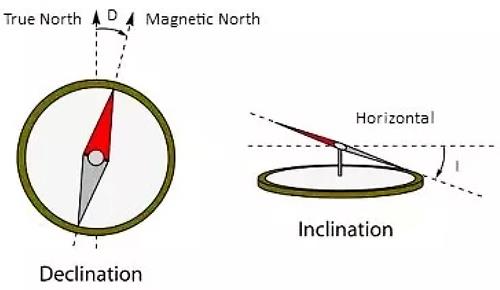
the same time. The Earth's magnetic field has 254. Magnetic declination is the angle undergone reversals in which the magnetic between true north and the direction along
poles switch places, but these reversals involve the Earth’s surface in which a compass a single north magnetic pole and a single south needle points. magnetic pole. a) True
b) False
Feedback: Declination is an angle within a horizontal plane, and inclination is an angle
within a vertical plane.
--------------------------------------------------------------
-------------------------------------------------------------- 255. Oceanic lithosphere extends further 252. Paleomagnetism as well as the down into the mantle than continental
behavior of compasses and lodestones are lithosphere. due to the Van Allen radiation belts. a) True
a) True b) False b) False
Feedback: Oceanic lithosphere is typically
Feedback: Paleomagnetism and the behavior thinner and extends to a shallower depth in the
of compasses and lodestones are not due to mantle compared to continental lithosphere.
the Van Allen radiation belts. Paleomagnetism Oceanic lithosphere is usually about 100
is the study of past magnetic field orientations kilometers thick, whereas continental
recorded by rocks as they cool and solidify, and lithosphere can be up to 250 kilometers thick.
it's related to the Earth's magnetic field. The This is due to differences in density and
behavior of compasses and lodestones is also
50
composition between oceanic and continental
crust.
--------------------------------------------------------------
256. Lithosphere is recycled into the mantle
at divergent-plate boundaries.
a) True
b) False
Feedback: Lithosphere is not recycled into the mantle at divergent plate boundaries. It is

typically at convergent plate boundaries where --------------------------------------------------------------
lithosphere is subducted and recycled into the 260. Continental margins that coincide with mantle. At divergent boundaries, new plate boundaries are termed active margins.
lithosphere is formed as plates pull apart, and a) True the mantle material wells up to create new b) False crust.
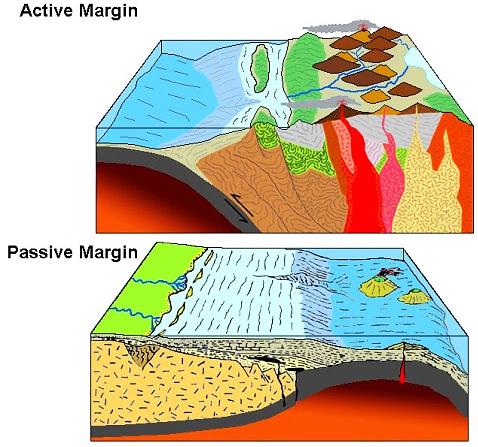
-------------------------------------------------------------- Feedback: Continental margins that coincide
257. with plate boundaries, where tectonic activity is Earthquakes are generated when rock
moves along faults. occurring, are termed active margins. These
a) active margins are often associated with True
b) geological phenomena such as earthquakes, False
volcanic activity, and the formation of mountain
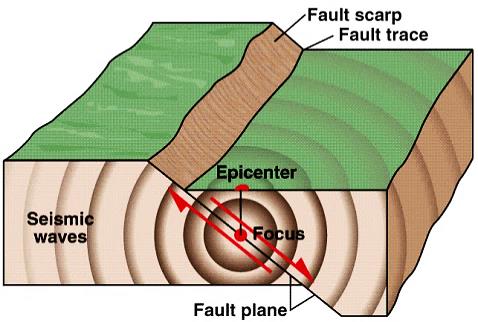
Feedback: ranges. Most earthquakes are caused by the rapid dislocation of rock masses on
opposing sides of a fault.
-------------------------------------------------------------- -------------------------------------------------------------- 258. Earthquakes are the best geologic 261. The highest portions of the mid-ocean marker for the three types of plate ridges are the center of the ridges. boundaries. a) True a) True b) False b) False
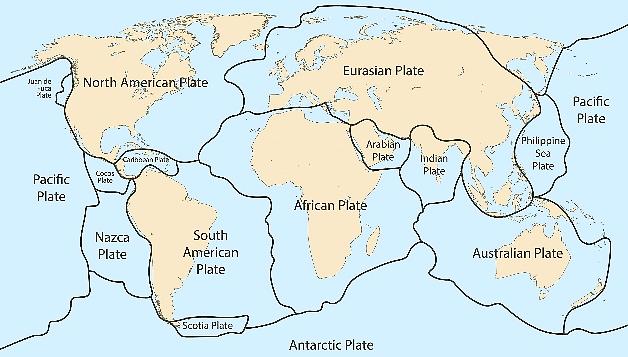
Feedback: are actually valleys, not elevated features. Most earthquakes are caused by Feedback: The centers of mid-ocean ridges the deformation occurring at plate boundaries. These valleys are typically 1 to 2 kilometers Earthquakes serve as a reliable geologic deeper than the adjoining flanks of the ridge. marker for identifying and studying plate The highest portions of mid-ocean ridges are boundaries. They provide valuable information actually the flanks of the ridges, and the centers about the dynamic processes occurring at of the ridges are typically deeper valleys. these intersections between tectonic plates. -------------------------------------------------------------- 259. The major tectonic plates are nearly all the same size. a) True b) False
Feedback: The major tectonic plates are not all the same size. They vary in size and shape,
with some being much larger than others. For
example, the Pacific Plate is significantly larger --------------------------------------------------------------
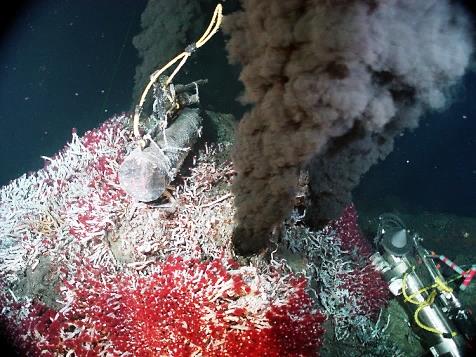
than the North American Plate. Plate 262. Black smokers are undersea springs of
boundaries are where these tectonic plates hot water rich in mineral precipitate. interact with each other. a) True
51
b) False oceanic plate at convergent plate boundaries.
The denser oceanic lithosphere is pulled
Feedback: Hot water rich in dissolved ions downward into the mantle by the force of
flows from cracks in the sea floor into the cold gravity, initiating the subduction process. seawater, reacting to form small mineral grains. --------------------------------------------------------------
The hot water rises through the cold ocean 266. Lithosphere and crust are water and carries tiny mineral grains with it, synonymous. giving it an appearance of black smoke when lit a) True by the bright lights of small submarines or b) False remotely operated vehicles.

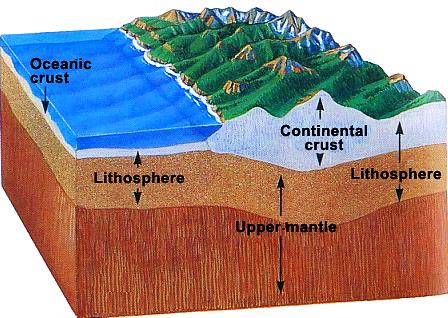
Feedback: Lithosphere and crust are not synonymous. The lithosphere includes both the
crust and the uppermost part of the mantle,
while the crust refers specifically to the
outermost layer of Earth.
--------------------------------------------------------------
263. Mantle rock becomes soft enough to
flow at about 1,280°C.
a) True
b) False
Feedback: In the Earth's mantle, which is predominantly composed of solid rock, the
mantle rock becomes soft and begins to exhibit --------------------------------------------------------------
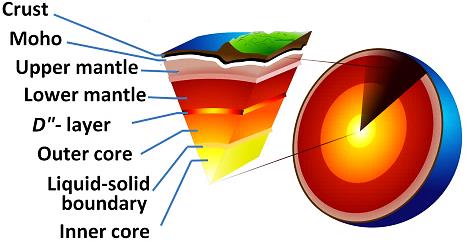
a form of flow behavior at elevated 267. The Moho separates the lithosphere
temperatures. This behavior is often described from the asthenosphere. as ductile deformation. Around 1,280°C, or a) True approximately 2,336°F, the mineral b) False components in the mantle can exhibit this
plastic flow. This property allows the solid Feedback: The Moho is the crust-mantle
timescales, contributing to the movement of boundary. The lithosphere is comprised of both crust and upper mantle. The Moho only defines mantle to slowly convect over geological boundary, not the lithosphere-asthenosphere
flows, it drives the motion of lithospheric plates the lithosphere-asthenosphere boundary Earth's tectonic plates. As the mantle gradually
and leads to the dynamic processes we beneath mid-ocean ridges. observe on the Earth's surface, such as plate
tectonics, volcanism, and earthquakes.
--------------------------------------------------------------
264. The most abundant rock in both
continental and oceanic lithosphere is
peridotite.
a) True
b) False
Feedback: Peridotite is an ultramafic rock and -------------------------------------------------------------- comprises the uppermost portion of the mantle. 268. Because the majority of Earth ’ s crust is -------------------------------------------------------------- oceanic, the oldest crustal rocks will likely be 265. Oceanic lithosphere subducts because igneous rocks of the sea floor. it is thinner than continental lithosphere. a) True a) True b) False b) False
Feedback: Oceanic lithosphere is subducted
Feedback: Oceanic lithosphere subducts not beneath continental lithosphere where the two
because it is thinner but because it is denser converge. This decreases the probability that
than continental lithosphere. The key factor in old oceanic crust will remain intact and none
subduction is the density contrast between the subducted, and the oldest sea-floor rocks are
two types of lithosphere. Oceanic lithosphere, roughly 1/10th the age of the oldest crustal
being denser, tends to subduct beneath less rocks. dense continental lithosphere or another --------------------------------------------------------------
52
269. The lithosphere - asthenosphere 271. Lithosphere can be both created and
boundary is defined by pressure. destroyed at transform-plate boundaries.
a) True a) True b) False b) False
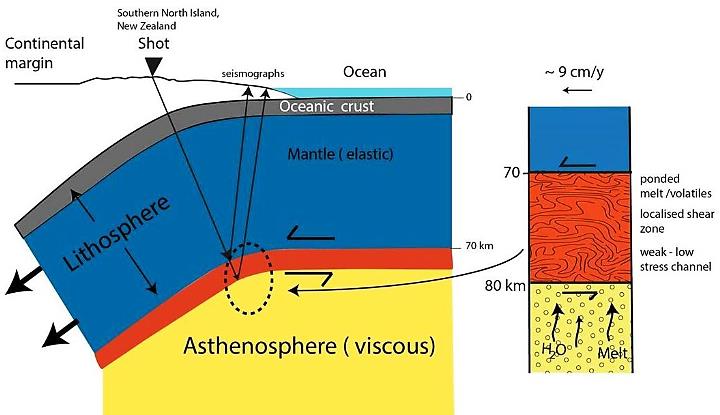
Feedback: The lithosphere-asthenosphere Feedback: The lithosphere is neither created boundary is not primarily defined by pressure; it nor destroyed at transform-plate boundaries.
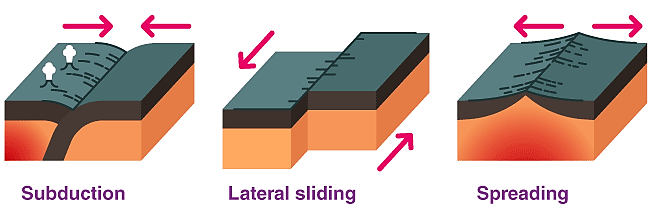
is defined by the mechanical properties of the Transform boundaries are primarily Earth's mantle. The lithosphere is the rigid outer characterized by horizontal movements, where

layer of the Earth, consisting of the crust and tectonic plates slide past each other
the uppermost part of the mantle. The horizontally. These boundaries do not involve
asthenosphere, on the other hand, is a semi- the creation or destruction of lithosphere;
fluid, ductile layer of the mantle beneath the instead, they are primarily responsible for the
lithosphere. lateral movement of lithospheric plates along
the Earth's surface. The creation and
destruction of lithosphere typically occur at
divergent and convergent plate boundaries,
respectively.
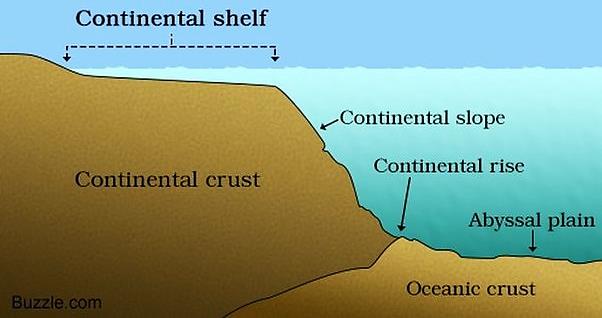
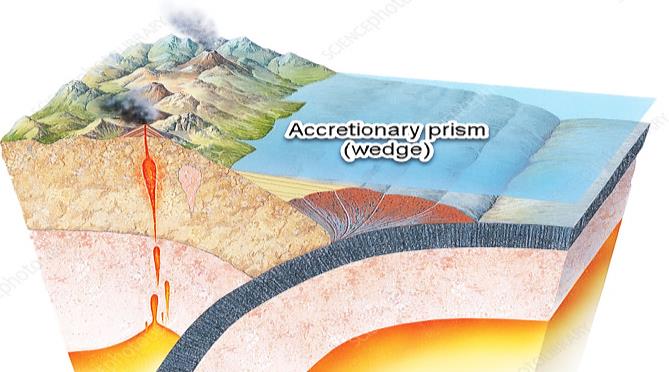
-------------------------------------------------------------- -------------------------------------------------------------- 272. An accretionary prism forms where 270. The regions of sea floor that are magma from rising mantle material solidified relatively flat-lying, adjoin the continents, beneath each side of a mid-ocean ridge. and are no deeper than approximately ½ km a) True (500 m) are the continental shelves. b) False a) True b) False Feedback: An accretionary prisms are geological features that typically form at Feedback: The continental shelf is an subduction zones where one tectonic plate is underwater extension of a continent that being pushed beneath another. They are stretches from the shoreline to a marked created by the accumulation and deformation of increase in slope, which is called the sediments and rocks at the leading edge of the continental slope. It is a relatively shallow, flat, overriding plate as it is subducted beneath the and gently sloping area of the seabed, typically other plate. The formation of accretionary extending from the coastline to depths of prisms is associated with intense tectonic around 200 meters (656 feet) but sometimes compression and the sedimentary material deeper. Continental shelves are composed of scraped off the subducting plate. continental crust, similar to what you find on land. They are known for their relatively shallow and stable waters, making them important for various activities like fishing, oil and gas
exploration, and scientific research. These
regions are often teeming with marine life and
serve as important areas for various
ecosystems.
--------------------------------------------------------------
273. The Himalayas and the U.S.’s Basin
and Range province represent regions of
convergence and rifting within continental
lithosphere, respectively.
a) True b) False
-------------------------------------------------------------- Feedback: The Himalayas represent a region
of convergence where the Indian plate is
53
colliding with the Eurasian plate, causing the Earth's surface. This process creates a chain of
uplift of the Himalayan mountain range. The volcanic islands or seamounts, with the
Basin and Range province in the United States youngest volcanic feature located above the
is characterized by rifting and extension within current location of the hot spot, and older
the continental lithosphere, resulting in a series features extending along a track indicating the
of elongated mountain ranges and valleys. past movement of the tectonic plate. The
-------------------------------------------------------------- Hawaiian Islands and Hawaiian-Emperor
274. Volcanic island arcs form on Seamount Chain have formed because the
continental crust, inboard from subduction Pacific Plate has been moving northwestward

zones. over a mantle hot spot.
a) True
b) False
Feedback: Volcanic island arcs typically form on the oceanic crust, not continental crust. They
are a result of volcanic activity associated with
subduction zones where an oceanic plate is
being subducted beneath another oceanic plate
or a continental plate. As the subducting plate
descends into the mantle, it can cause melting
in the overlying plate, leading to the formation --------------------------------------------------------------
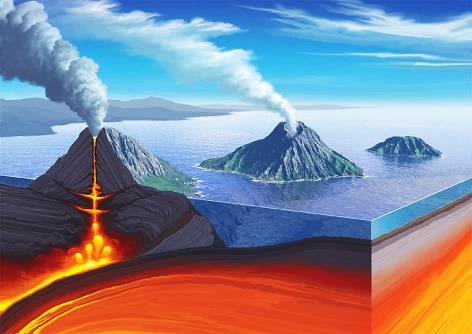
continental crust. exist in the early 1960s? a) Isotopic age-dating that has verified the distribution of sediment and sea-floor often found in the open ocean, rather than on identifying both plate boundaries and the relative motions of plates did not of volcanic island arcs. These island arcs are 277. Which of the following key methods for
igneous rock ages.
b) Global positioning system (GPS) data. c) A method for accurately determining the
locations at which earthquakes occurred.
d) The ability to accurately determine both
paleomagnetic declination and inclination.
e) All the possible answers are correct.
-------------------------------------------------------------- (GPS), which relies on a network of satellites, became fully operational in the late 20th century Feedback: The Global Positioning System
275. Transform-plate boundaries are found
only between segments of mid-ocean (starting in the 1970s and 1980s). It provides
a) positions of points on Earth’s surface. GPS data True allow scientists to track the movement of ridges. accurate and continuous measurements of the
b) False
tectonic plates with high precision. By
Feedback: monitoring the positions of GPS receivers Transform plate boundaries are not located on different plates, researchers can found only between segments of mid-ocean determine plate velocities and relative motions. ridges. While they are commonly associated Prior to the availability of GPS, other methods with mid-ocean ridges, transform boundaries (such as paleomagnetic studies, seismicity can also occur on the seafloor away from mid- patterns, and isotopic age-dating) were used to ocean ridges, on continents, or in other tectonic study plate tectonics, but they did not provide settings. These boundaries are characterized real-time or continuous information about plate by the horizontal motion of tectonic plates as movements. Therefore, GPS data significantly they slide past each other, and they are not enhanced our understanding of plate motions limited to mid-ocean ridge segments. and boundaries after the early 1960s. -------------------------------------------------------------- 276. A hot spot track is formed by the periodic eruption of material from a mantle hot spot through a plate that is migrating

over the Earth’s surface.
a) True
b) False
Feedback: A hot spot track is formed by the periodic eruption of material from a mantle hot
spot through a plate that is moving over the --------------------------------------------------------------
54
278. Magnetic surveys of the ocean basins b) In lava flows.
indicate that: c) In sedimentary deposits.
a) The oceanic crust is youngest adjacent to d) Through metamorphism.
mid-oceanic ridges.
b) The oceanic crust is oldest adjacent to mid- Feedback: Metallic ores are often created at
oceanic ridges. divergent plate boundaries through
c) The oceanic crust is youngest adjacent to hydrothermal processes. In these areas, hot
the continents. water enriched with minerals circulates through
d) The oceanic crust is the same age fractures in the oceanic crust. As the water

everywhere. cools, it can precipitate metallic minerals,
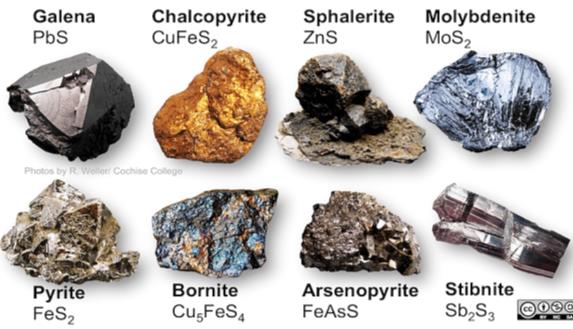
e) Answers b and c. creating ore deposits like pyrite (iron sulfide)
and galena (lead sulfide). This process is
Feedback: Magnetic surveys of the ocean particularly associated with mid-ocean ridges
basins have shown that the oceanic crust is and their hydrothermal vent systems. youngest adjacent to mid-oceanic ridges. As
new crust forms at the ridges, it records the
Earth's changing magnetic field. This creates a
pattern of alternating magnetic stripes on the
ocean floor, with the youngest stripes closest to
the ridges and the oldest farther away.
--------------------------------------------------------------
281. Which of these is NOT part of the
definition of a mineral?
a) Organic. b) Crystalline. c) Specific chemical composition. d) Naturally occurring.
--------------------------------------------------------------
279. Feedback: Mineral is a naturally occurring, The Andes Mountains are a good
example of what type of plate boundary? inorganic, solid, crystalline substance which
a) has a fixed structure and a chemical Continental – continental.
b) composition which is either fixed or which may Oceanic – oceanic.
c) vary within certain defined limits. Oceanic – continental.
d) -------------------------------------------------------------- Divergent.
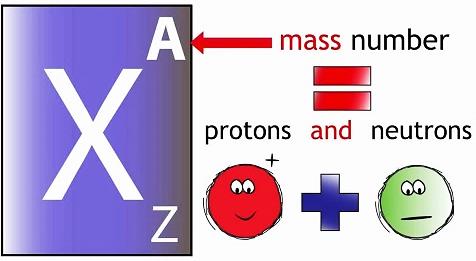
e) 282. An atom with 6 protons and 8 neutrons Transform.
has an atomic mass number of:
Feedback: a) 14 The Andes Mountains are a good example of a convergent plate boundary b) 2 between an oceanic and continental plate. This c) 6 means that the Nazca Plate is subducting d) 8 beneath the South American Plate, creating a e) 48 high mountain range. Convergent plate
boundaries are common in the Ring of Fire, a Feedback: The mass number of the atom (M)
zone of volcanic and seismic activity around the is equal to the sum of the number of protons
Pacific Ocean. and neutrons in the nucleus.
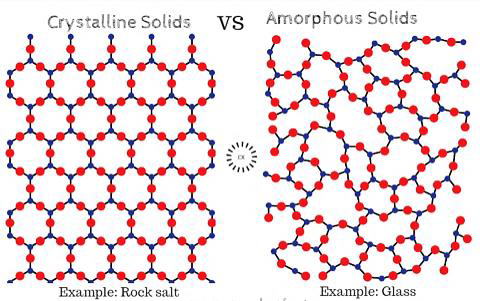
-------------------------------------------------------------- -------------------------------------------------------------- 283. If a naturally occurring, solid substance 280. Metallic ores are created at divergent has all of is atoms arranged in a specific plate boundaries: three-dimensional framework it is said to be a) Through hydrothermal processes. a) Covalently bonded.
55
b) Crystalline. 285. A substance that cannot be broken c) Porphyritic. down into other substances by ordinary
d) Biochemical. chemical methods is a(n): e) Sedimentary. a) Crystal.
b) Element.
Feedback: When a naturally occurring, solid c) Molecule. substance has all of its atoms arranged in a d) Acid. specific three-dimensional framework, it is
referred to as being "crystalline." This means Feedback: An element is a substance that that the substance has a regular, repeating cannot be broken down into simpler substances

atomic or molecular structure, characteristic of by ordinary chemical methods. Elements are
crystalline solids. The other options, such as the fundamental building blocks of matter and
covalently bonded, porphyritic, biochemical, are composed of atoms with the same number
and sedimentary, do not describe this specific of protons in their atomic nuclei. Each element
arrangement of atoms. is represented by a unique chemical symbol,
such as H for hydrogen, O for oxygen, and Fe
for iron. Elements combine to form molecules
and compounds, but they themselves cannot
be further broken down chemically into simpler
substances.
--------------------------------------------------------------
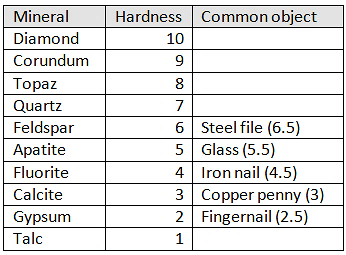
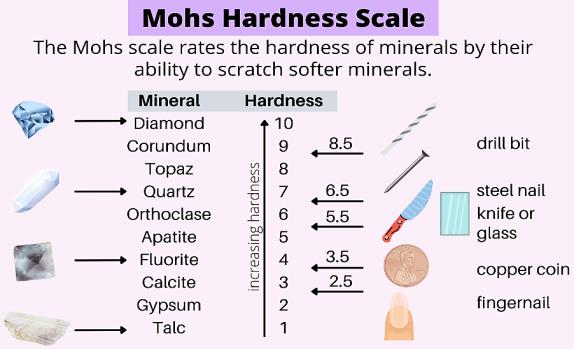
284. On Mohs’ hardness scale, a fingernail
b) 286. The subatomic particle that contributes 3 – 4. a single negative electrical charge is the: a) has a hardness of about: -------------------------------------------------------------- 2 – 3.
d) a) Proton. c) 5–6.
7–8.
b) Neutron.
Feedback c) Electron. : On Mohs’ hardness scale, a
hardness scale is a rough measure of the contributes a single negative electrical charge is the electron. Electrons orbit the nucleus of an resistance of a smooth surface to scratching or atom and play a fundamental role in the abrasion, expressed in terms of a scale devised close to the hardness of gypsum Feedback: The subatomic particle that . Mohs’ fingernail has a hardness of about 2.5, which is
by the German mineralogist Friedrich Mohs in electrical behavior of atoms and molecules. Protons, on the other hand, carry a positive 1812. The scale consists of 10 minerals that charge, and neutrons are electrically neutral. have been given arbitrary hardness values, from 1 (talc) to 10 (diamond). The hardness of
a mineral is determined by observing whether
its surface is scratched by a substance of
known or defined hardness. The scale is useful
for identifying minerals in the field, but not for
measuring the absolute hardness of materials.
--------------------------------------------------------------
287. Atoms of an element containing
different numbers of neutrons but the same
number of protons are called:
a) Ions. b) Covalent. c) Isotopes. d) Neutral.
--------------------------------------------------------------
56
Feedback: Isotopes are atoms of the same ion (Cl-), and these ions are held together by
element that contain different numbers of electrostatic attraction. neutrons but the same number of protons. Ions
have gained or lost electrons and have an
unequal number of protons and electrons, while
covalent refers to a type of chemical bond.
"Neutral" is not a specific term related to atoms
in this context.
--------------------------------------------------------------

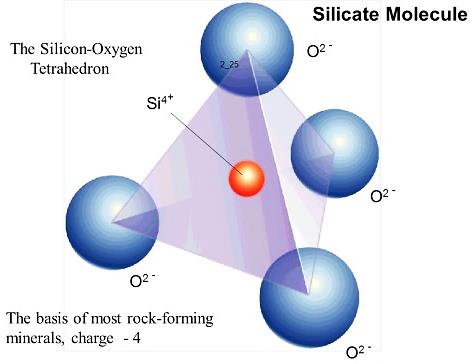
290. Which is not true of a single silicon-
oxygen tetrahedron?
a) The atoms of the tetrahedron are strongly
bonded together.
b) It has a net negative charge. c) The formula is SiO4. d) It has four silicon atoms.
-------------------------------------------------------------- Feedback: Each individual tetrahedron only 288. Atoms with either a positive or a contains one silicon atom at the center, bonded negative charge are called: to four oxygen atoms - not four silicon atoms. a) Compounds. b) Ions. c) Elements. d) Isotopes.
Feedback: Atoms with either a positive or a negative charge are called ions. Ions are
formed when atoms gain or lose electrons. If an
atom loses one or more electrons, it becomes a
positively charged ion (cation), and if it gains
electrons, it becomes a negatively charged ion
(anion). Compounds are substances formed
when two or more elements chemically
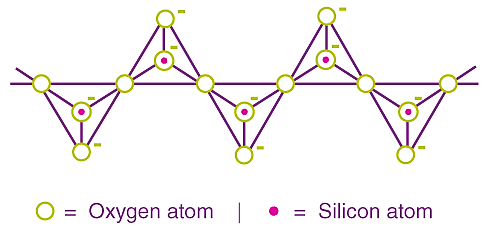
combine. Elements are pure substances -------------------------------------------------------------- composed of only one type of atom. Isotopes 291. In a single chain silicate, how many of are atoms of the same element with different the oxygen atoms in each silica tetrahedron numbers of neutrons. are shared with neighboring silica tetrahedral? a) One b) Two c) Three d) Four
Feedback: In a single chain silicate, each silica
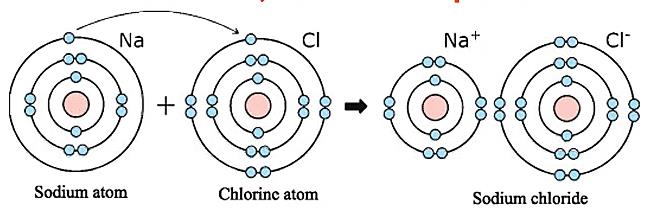
289. The bonding between Cl and Na in not shared and are bonded to cations, such as halite is: magnesium or iron, in octahedral sites. Single a) Ionic. chain silicates are also known as inosilicates, b) Covalent. and they include minerals such as pyroxenes c) -------------------------------------------------------------- neighboring tetrahedra, forming a linear chain of tetrahedra. The other two oxygen atoms are tetrahedron shares two of its oxygen atoms with
Metallic. and wollastonite.
Feedback: In halite, which is common table salt (NaCl), the bonding between sodium (Na) and
chlorine (Cl) is ionic. In ionic bonding, electrons
are transferred from one atom to another,
resulting in the formation of positively charged
ions (cations) and negatively charged ions
(anions) that are attracted to each other.
Sodium loses an electron to become a
positively charged ion (Na+), and chlorine gains --------------------------------------------------------------
that electron to become a negatively charged 292. Crystalline substances are always:
a) Ionically bonded.
57
b) Minerals. Feedback: Gypsum is a soft sulfate c) Made of repeating patterns of atoms. mineral composed of calcium sulfate
d) Made of glass. dehydrate, with the chemical
formula CaSO4·2H2O.
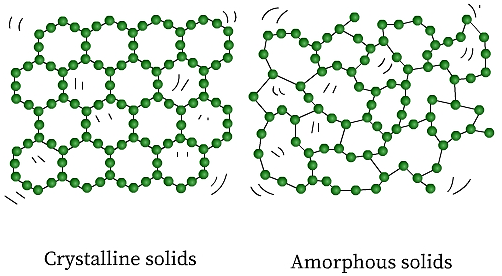
Feedback: Crystalline substances are characterized by the regular and repeating
arrangement of atoms or molecules in a three-
dimensional lattice structure. This ordered
structure is a fundamental characteristic of

crystalline materials, and it is what
distinguishes them from non-crystalline or
amorphous substances like glass. While many
minerals are crystalline, not all crystalline
substances are necessarily minerals, as they --------------------------------------------------------------
lattice structure. Fracture. b) Crystal form. c) Hardness. d) elements, and materials that exhibit a crystal preferred directions is called: a) can include various types of compounds, 295. The ability of a mineral to break along
Cleavage.
Feedback: Cleavage is a property related to the internal arrangement of atoms in a mineral's
crystal structure. It is different from fracture,
which is the way a mineral breaks when no
preferred direction is present, resulting in
irregular or rough surfaces. Cleavage is often
-------------------------------------------------------------- described by the number of planes and the angles between them along which the mineral 293. Which of these minerals commonly tends to cleave. forms as an evaporate (precipitate from evaporating water)? a) Quartz b) Hematite c) Halite d) Feldspar
Feedback: Halite is a mineral that commonly forms as an evaporite, meaning it precipitates
from water as it evaporates. Halite is composed
of sodium and chlorine (NaCl) and is commonly
known as rock salt. This mineral often forms in
areas where there are large bodies of water
with high salinity, such as salt flats, salt pans,
or salt lakes, and it can accumulate as the water
evaporates, leaving behind the halite crystals. -------------------------------------------------------------- In contrast, quartz, hematite, and feldspar are 296. Which is NOT a type of silicate not typically associated with evaporitic origins. structure?
a) Isolated. b) Single chain. c) Double chain. d) Sheet. e) Framework. f) Pentagonal.
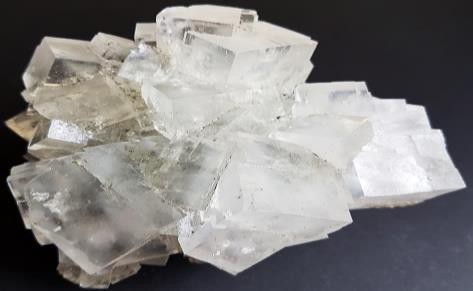
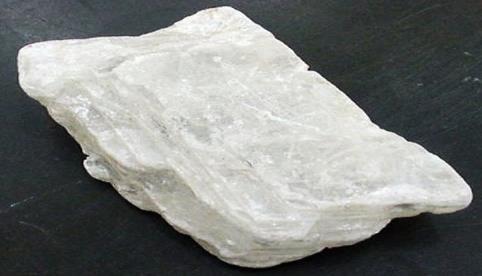
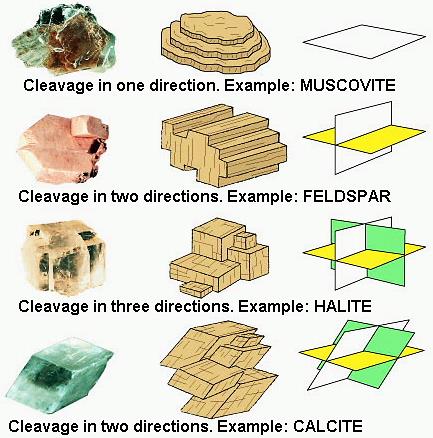
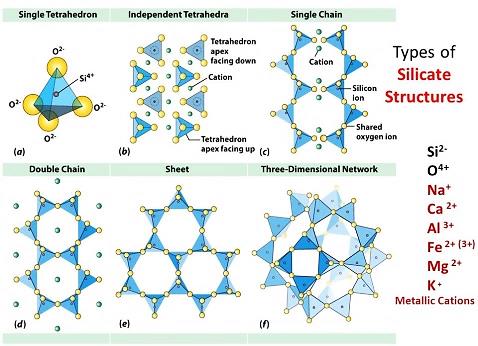
Feedback: The given options describe various types of silicate structures. Silicates are
-------------------------------------------------------------- minerals that make up a significant portion of
294. the Earth's crust, and they are based on the Which of these common minerals is
NOT silicon-oxygen (Si-O) tetrahedral structure. The a silicate?
a) types listed are: Quartz
b) Isolated silicate structure: These are Feldspar
c) individual silicate tetrahedra that are not Gypsum
d) connected to each other. Mica
58
Single-chain silicate structure: Silicate tetrahedra form a chain.
Double-chain silicate structure: Silicate tetrahedra form two chains.
Sheet silicate structure: Silicate tetrahedra arrange in a sheet-like structure.
Framework silicate structure: Silicate tetrahedra create a three-dimensional
framework.

"Pentagonal" does not represent a type of
silicate structure; it is not a recognized category
of silicate structures. --------------------------------------------------------------
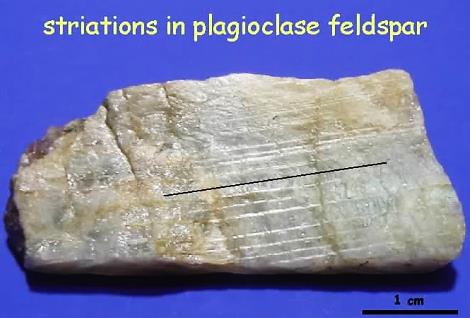
299. Striations are associated with: a) Quartz. b) Mica. c) Potassium feldspar. d) Plagioclase.
Feedback: Striations are often visible on plagioclase, and resemble very fine (almost
microscopic) parallel lines cut into the face of a
mineral fragment. All feldspars which
have striations are plagioclase, but not
all plagioclase has striations.
--------------------------------------------------------------
297. Which of the common minerals is NOT
a silicate?
a) Quartz.
a) Calcite.
b) Pyroxene.
c) Feldspar.
d) Biotite.
Feedback: Calcite is a carbonate mineral and the most stable polymorph of calcium --------------------------------------------------------------
carbonate (CaCO3). 300. Glass is:
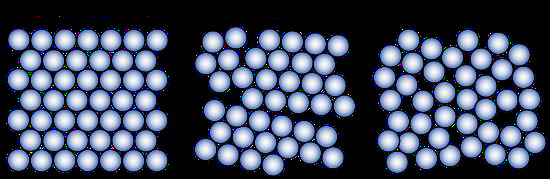
a) Atoms randomly arranged. b) Crystalline. c) Ionically bonded. d) Covalently bonded.
Feedback: Glass does not have a repeating and ordered atomic structure, which is a
characteristic of crystalline substances.
Instead, the atoms in glass are randomly
-------------------------------------------------------------- arranged, making it an amorphous or non-
298. On Mohs’ hardness scale, ordinary crystalline material. This disordered atomic
window glass has a hardness of about: arrangement gives glass its unique properties,
a) 2–3 such as transparency and the ability to be
b) 3–4 molded when heated. c) 5–6
d) 7–8
Feedback: The Mohs scale ranks minerals from 1 (very soft) to 10 (very hard) based on
their ability to scratch other minerals:
Talc is 1, gypsum is 2, calcite is 3, fluorite is 4, --------------------------------------------------------------
apatite is 5. Window glass, made mostly of 301. A pyramid-shaped molecule made up silica sand (SiO2), can scratch apatite so it is of four oxygen atoms and one silicon atom
harder than 5. But glass is softer than common is a/an: quartz at 7. So ordinary window glass falls a) Calcium carbonate cube. between apatite at 5 and quartz at 7 on the b) Silica tetrahedron. Mohs scale. c) Oxide triangle.
d) Sulfide polygram.
59
e) Ionic bond. composed of calcium carbonate (CaCO3) and
often exhibits rhombohedral cleavage and can
Feedback: Silica tetrahedron is a fundamental effervesce when in contact with dilute
building block in the structure of silicate hydrochloric acid. minerals, which are the most common group of --------------------------------------------------------------
minerals on Earth. The silica tetrahedron 304. The quality and intensity of light consists of a silicon atom at its center reflected from a mineral is called its: surrounded by four oxygen atoms arranged in a a) Density. tetrahedral shape. This structure is the basic b) Specific gravity. unit in various silicate minerals, forming c) Hardness. different arrangements and structures d) Atomic number. depending on the type of silicate. e) Luster.

Feedback: Luster refers to the quality and intensity of light reflected from a mineral's
surface. It describes how a mineral's surface
appears when light shines on it, and it can be
used as a diagnostic property to help identify
minerals. Minerals can have various types of
luster, such as metallic, vitreous (glassy),
pearly, and more, depending on their reflective
-------------------------------------------------------------- properties. 302. The two most abundant elements in
Earth's crust are:
a) Iron and magnesium.
b) Potassium and chlorine.
c) Aluminum and calcium.
d) Oxygen and silicon.
e) Carbon and phosphorous.
Feedback: The two most abundant elements in Earth's crust are oxygen and silicon. They make
up a significant portion of the minerals that form
the Earth's solid crust. The most common
minerals, such as quartz and feldspar, are
composed of oxygen and silicon, often --------------------------------------------------------------
combined with other elements to form various 305. Minerals that possess the property of silicate minerals. cleavage:
a) Are composed of the noble gases. b) Are noncrystalline solids. c) Break along planes of weakness. d) Are denser than minerals without cleavage. e) Exhibit double refraction.
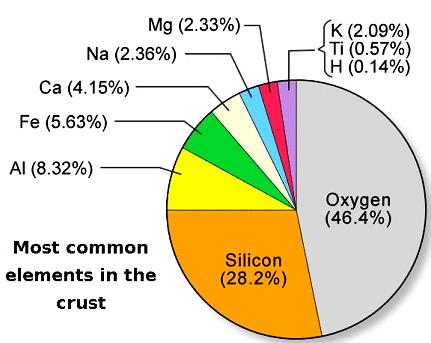
Feedback: Cleavage is a mineral's ability to break along specific planes or directions,
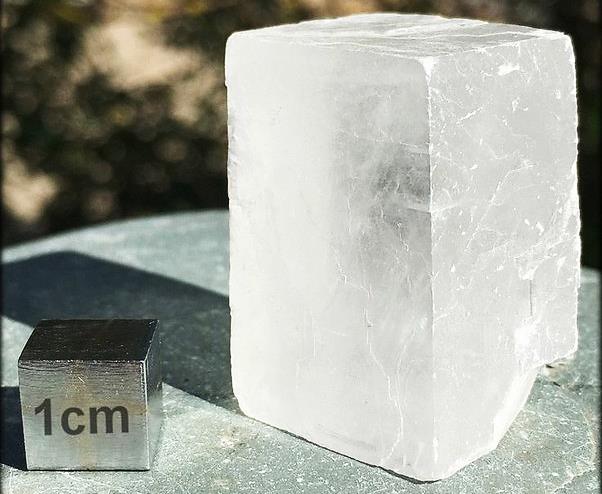
producing smooth, flat surfaces. The presence
and quality of cleavage are determined by the
internal arrangement of atoms in the mineral's
crystal structure. Minerals with cleavage exhibit
this property due to the tendency of their crystal
-------------------------------------------------------------- lattice to break along particular planes. 303. Which one of the following is a common
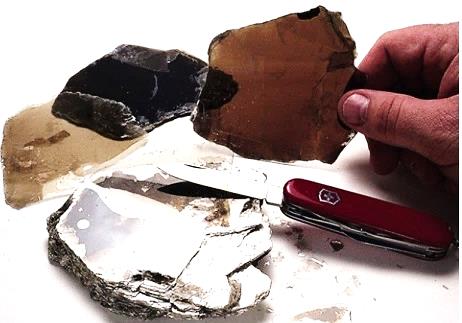
carbonate rock-forming mineral?
a) Calcite.
b) Quartz.
c) Biotite.
d) Muscovite.
e) Galena.
Feedback: Calcite is a common carbonate mineral that is a major constituent of
sedimentary rocks, such as limestone. It is --------------------------------------------------------------
60
306. The chemical formula for olivine is 308. Minerals composed of only one
(Fe,Mg) 2SiO4, which means that: chemical element are known as:
a) Silicon and oxygen may or may not be a) Sulfides.
present. b) Native minerals.
b) Ferromagnesian silicates are denser than c) Phosphates.
nonferromagnesian silicates. d) Hydroxides.
c) Iron and magnesium can substitute for one e) Carbonates.
another.
d) Olivine is a nonferromagnesian silicate. Feedback: Minerals composed of only one e) Olivine contains iron or magnesium but chemical element are known as native

never both. minerals. Native minerals are relatively rare and
typically consist of a single element in its pure,
Feedback: The chemical formula for olivine, uncombined form. Examples include native
(Fe,Mg)2SiO4, indicates that iron (Fe) and copper, native sulfur, and native gold, where
magnesium (Mg) can substitute for one another the mineral consists solely of one element
within the mineral's crystal structure. Olivine is rather than a compound. a group of minerals, and the specific
composition can vary along the solid solution
series between forsterite (Mg2SiO4) and fayalite (Fe2SiO4). The parentheses and commas in the formula indicate that either iron or magnesium
ions can occupy the same crystallographic sites
in the mineral's structure.
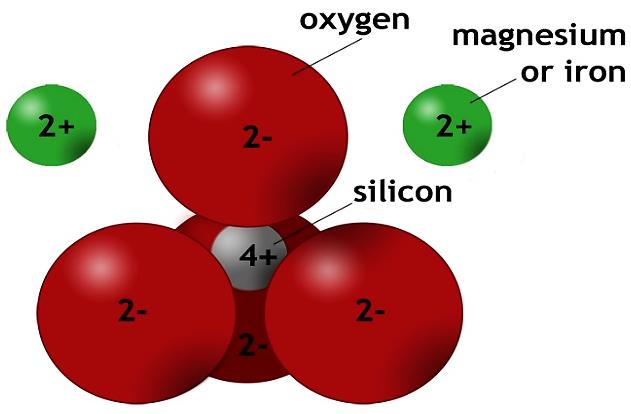
--------------------------------------------------------------
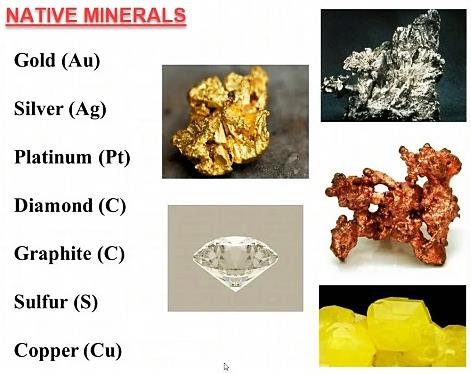
309. The atomic number of an element is
determined by:
a) The number of protons in its nucleus. b) How many electrons it loses during bonding. c) Its color and density. d) The amount of oxygen present.
307. What are the four criteria used to define Feedback: The atomic number of an element is a “mineral”? a fundamental property of that element and is a) -------------------------------------------------------------- e) Whether or not it is crystalline.
b) nucleus of its atoms. It is a unique identifier for Artificial, organic, solid, distinct chemistry. each element on the periodic table. c) Natural, organic, crystalline, indistinct chemistry. chemical composition. determined by the number of protons in the Natural, inorganic, crystalline, distinct
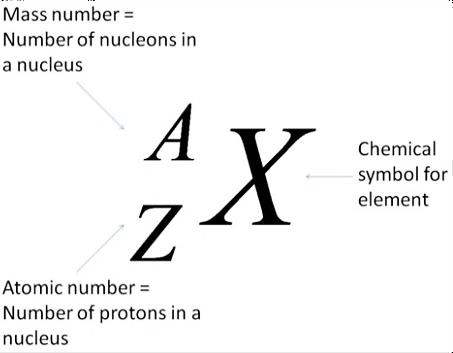
d) None of these.
Feedback: To be classified as a mineral, a substance must meet four criteria:
Naturally Occurring: Minerals are naturally formed, rather than being synthetic or artificial.
Inorganic: Minerals are not derived from living organisms. They are typically inorganic
compounds or elements.
Crystalline Structure: Minerals have a regular and repeating atomic arrangement, leading to a
Distinct Chemical Composition: Each -------------------------------------------------------------- mineral has a specific and well-defined specific crystal structure.
chemical composition, although there can be 310. In what type of chemical bonding are
some variations due to impurities or a) Octahedral. substitutions. b) electrons shared by adjacent atoms?
These four criteria collectively define what a c) Covalent. mineral is in the field of geology. d) Polymorphic. -------------------------------------------------------------- Ionic.
61
e) Silicate.
Feedback: The atomic number of an element is
Feedback: Covalent bonding occurs when a fundamental property of that element, and it
electrons are shared by adjacent atoms, represents the number of protons in the nucleus
resulting in the formation of molecules. In of an atom. Since all atoms of the same element
covalent bonds, electrons are shared to have the same number of protons, they also
achieve a more stable electron configuration for have the same atomic number. This is a key
each atom involved in the bond. This type of principle in the periodic table of elements,
bonding is common in many minerals and where elements are arranged by increasing

compounds, particularly in non-metallic atomic number. elements and covalent compounds. --------------------------------------------------------------
313. All atoms of the same element have the
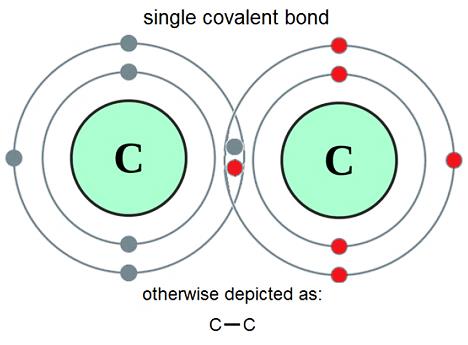
same atomic mass.
a) True b) False
Feedback: Atoms of the same element can have different atomic masses due to the
presence of isotopes. Isotopes are atoms of the
same element that have the same number of
protons (and therefore the same atomic
number) but different numbers of neutrons.
Since atomic mass takes into account the sum
-------------------------------------------------------------- of protons and neutrons, isotopes of an element will have slightly different atomic masses. For 311. Which of these is NOT found in the example, Carbon contains three isotopes are: nucleus of an atom? a) Proton. b) Positive charge. c) Electron. d) Neutron.
Feedback: Electrons are not found in the nucleus of an atom. Electrons are negatively
charged subatomic particles that orbit the
nucleus of the atom in electron shells or energy -------------------------------------------------------------- levels. The nucleus of an atom contains protons 314. Which of these is correct for isotopes of and neutrons, which are responsible for the an element? atom's mass and positive charge. Electrons a) Same number of electrons, different number move around the nucleus in electron cloud of protons. regions, and their behavior is responsible for b) Different number of neutrons, same number chemical bonding and the physical properties of of protons. elements. c) Different number of protons, same number of neutrons. d) Different number of electrons, same number of neutrons.
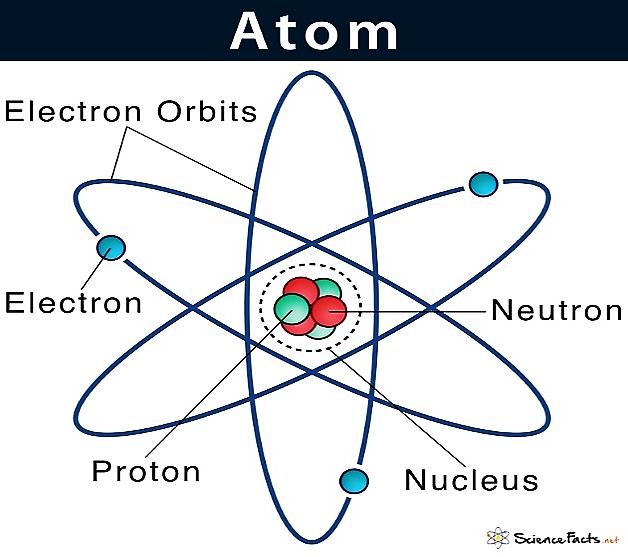
Feedback: Isotopes of an element have the same number of protons (which determines the
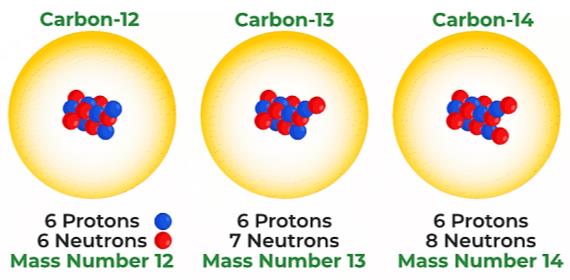
element) but different numbers of neutrons.
This variation in the number of neutrons leads
to differences in atomic mass and, in some
cases, radioactive properties.
--------------------------------------------------------------
315. Positive ions are atoms that have
gained electrons during a chemical reaction.
a) True b) False
-------------------------------------------------------------- Feedback: Atoms that lose electrons acquire a 312. All atoms of the same element have the positive charge as a result because they are left same atomic number. with fewer negatively charged electrons to a) True balance the positive charges of the protons in b) False
62
the nucleus. Positively charged ions are called
cations.

--------------------------------------------------------------
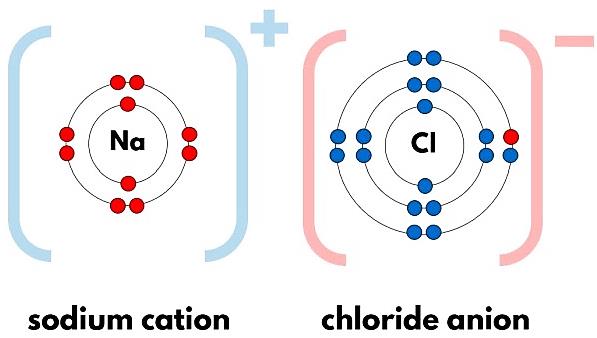
316. Match the following aspects of atoms
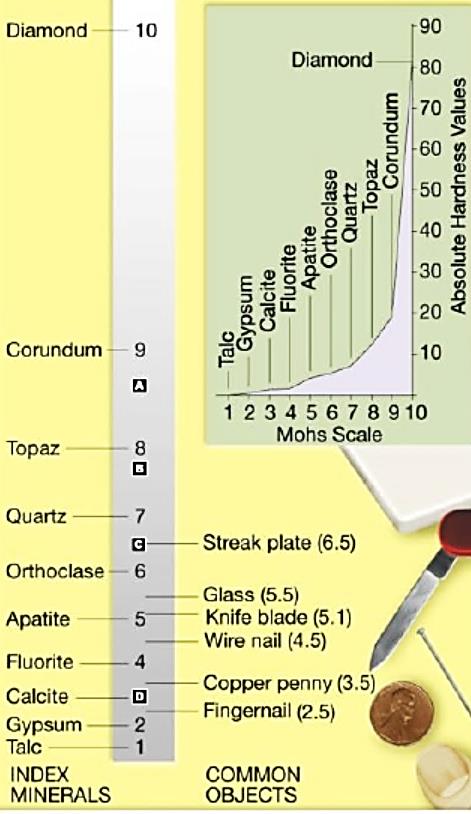
and elements with the appropriate
response. (Nucleus, electron, proton, hydrogen)
a) The first and lightest element on the periodic
chart. (Hydrogen)
b) Massive, positively charged nuclear atomic
particle. (Proton)
c) Least massive particle that occupies space
in an atom outside the nucleus. (Electron)
d) Tiny, but very massive central part of an
atom. (Nucleus)
--------------------------------------------------------------
317. Match the following terms to the
(Fracture, diamond, gold, streak, luster, quartz. appropriate physical property of minerals. a) Mineral scratches glass but is scratched by calcite) b) (C)
a) Mineral that occupies the highest position but scratches a fingernail. Mineral is scratched cannot scratch glass
(highest hardness) on Mohs scale of (D) hardness. (Diamond) c) Mineral scratches quartz and topaz. (A)
c) (Streak) 320. Which of the following is a Readily reacts with acids such as dilute HCl. characterization of ferromagnesian (Calcite) silicates? d) High specific gravity, metallic luster. (Gold) a) b) The color of a mineral in powdered form. -------------------------------------------------------------- d) Mineral scratches quartz but not topaz. (B)
e) Light reflecting off the surface of a mineral. green in color. Contain iron and magnesium, black to dark-
f) Manner of a mineral’s breaking where no flat to light green in color. (Luster) b) Contain magnetite and hematite, colorless
b) “Dark” silicate, platy cleavage, one of the Feedback: Ferromagnesian Silicate minerals mica group. (Biotite) in which cations of iron and magnesium form Hard, no cleavage, common mineral in essential chemical components. The term is sandstone and granite. (Quartz) used to cover such minerals as the olivines, c) Fool’s gold, brassy-yellow, metallic luster, pyroxenes, amphiboles, and the micas biotite used in making sulfuric acid. (Pyrite) and phlogopite. d) Native element mineral, very soft, used for --------------------------------------------------------------pencil lead. (Graphite) 321. Which of the following is not true about e) Potassium feldspar, major mineral in the the two minerals graphite and diamond? rock granite. (Orthoclase) a) 318. Match the mineral with the appropriate d) Contain iron and magnetite, dark in color, description. (Hornblende, biotite, quartz, metallic luster. orthoclase, pyrite, graphite) a) -------------------------------------------------------------- magnesium and aluminum. planes are produced. (Fracture) c) Mostly clear and colorless, contain f) “Dark” silicate, cleavage at 60 and 120°, b) Diamond is “harder”.
commonly found in some igneous rocks. c) Same chemistry but different crystal (Hornblende) structures. Both are composed of carbon atoms.
-------------------------------------------------------------- d) Same crystal structure but different 319. Insert the appropriate mineral in the chemistry. four indicated positions on Mohs scale of hardness.
63
Feedback: Both graphite and diamond are Feedback: The silica tetrahedron is a chemical composed of carbon atoms, so option b) is true. unit that forms the basis of all silicate minerals,
They also have different crystal structures: such as quartz, feldspar, and olivine. It consists
diamond has a three-dimensional symmetry of a silicon atom surrounded by four oxygen
with each carbon atom bonded to four other atoms, with each oxygen atom sharing one
carbon atoms, while graphite has a layered electron with the silicon atom. structure with each carbon atom bonded to
three other carbon atoms in a hexagonal ring.
So option c) is also true. Option a) is true as

well, because diamond is much harder than
graphite due to its stronger bonds and more
compact structure. That leaves option d) as the
only one that is not true. Graphite and diamond
have the same chemistry, since they are both
made of carbon, but different crystal structures.
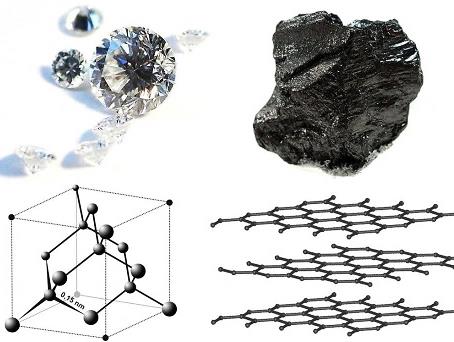
--------------------------------------------------------------
324. Match the following minerals with their
silicate structure (group). (Pyroxene, clay, feldspar, olivine)
--------------------------------------------------------------
322. Which describes the geometry of a
tetrahedron?
a) 6 plane faces, each a square, 12 edges, 8
corners.
b) 6 plane faces, each a rectangle, 4 edges, 8
corners.
c) 8 plane faces, each an equilateral triangle,
12 edges, 6 corners.
d) 4 plane faces, each an equilateral triangle, 6
edges, 4 corners.
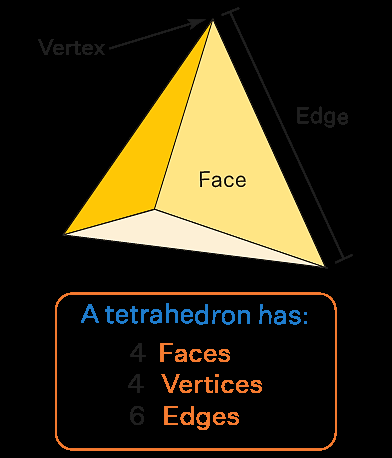
a) Sheets of tetrahedral. (Clay) b) Isolated (island) tetrahedral. (Olivine) c) Three-dimensional networks of tetrahedral.
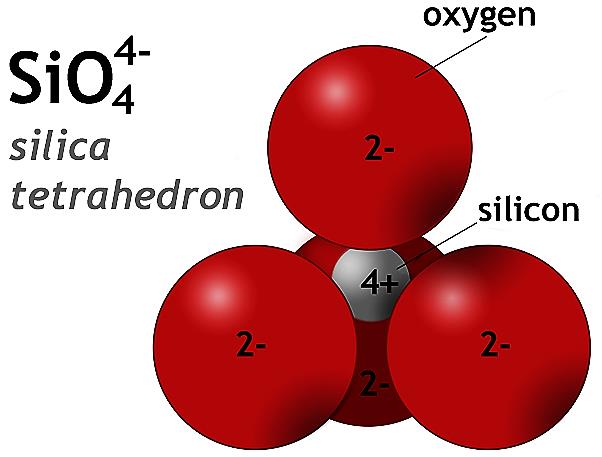
(Feldspar)
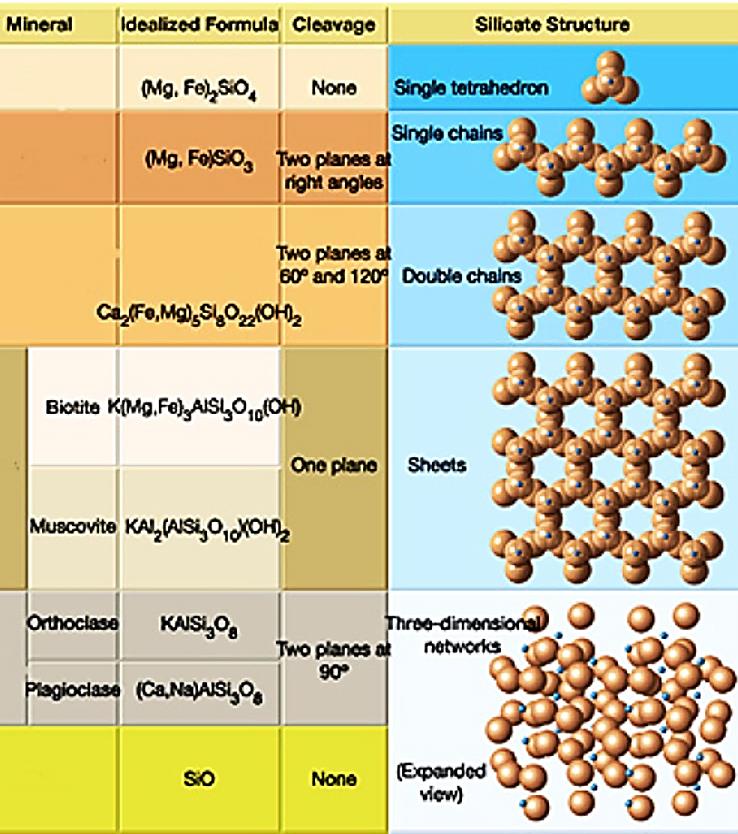
d) Single chains of tetrahedral. (Pyroxene) --------------------------------------------------------------
325. Plagioclase feldspars contain
significant, variable percentages of which
elements?
a) Calcium and magnesium.
-------------------------------------------------------------- b) Sodium and calcium. 323. Which are found surrounding the c) Sodium and sulfur.
center of the silica tetrahedron? d) Iron and magnesium.
a) 6 oxygen ions.
b) 6 silicon ions. Feedback: Plagioclase feldspars contain c) 4 silicon ions. significant, variable percentages of sodium
d) 4 oxygen ions. (Na) and calcium (Ca). The composition of
plagioclase feldspars spans a solid solution
series between two end-members: albite, which
64
is rich in sodium, and anorthite, which is rich in ferromagnesian minerals are olivine, pyroxene,
calcium. The intermediate compositions amphibole, biotite and phlogopite. contain varying proportions of both sodium and --------------------------------------------------------------
calcium. 328. Orthoclase and plagioclase feldspars
have quite different forms of cleavage.
a) True b) False
Feedback: The feldspars have similar physical properties and typically have a luster ranging

from glassy to pearly. They have two planes
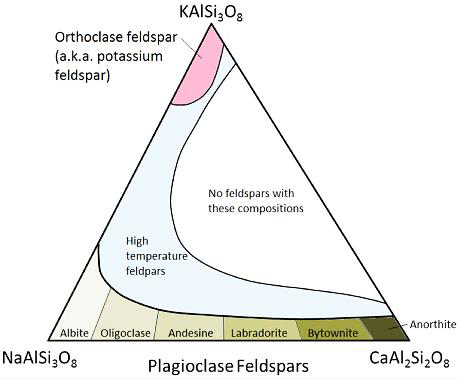
of cleavage meeting at or near 90° and are
relatively hard, having Mohs hardness of about
6.
--------------------------------------------------------------
326. What is the most likely reason why
inhalation of asbestos dust promotes
diseases such as glaucoma?
a) Fibrous form of these minerals. --------------------------------------------------------------
b) The chemical composition of these 329. Why does the mineral halite dissolve in
minerals. water?
c) Blocky form of these minerals. a) Na and Cl precipitate from water to form d) All of these. halite.
b) Water naturally separates the cation Na
Feedback: Asbestos is a term used to refer to from the anion Cl. six naturally occurring silicate minerals. All are c) Water is corrosive, and is a weak acid to composed of long and thin fibrous crystals, halite. each fiber being composed of many d) Water acts as a solvent, reacting with halite microscopic 'fibrils' that can be released into the and placing more Na and Cl onto the
atmosphere by abrasion and other processes. mineral. Asbestos is a well-known health hazard, and
use of it as a building material is now banned in Feedback: When halite (sodium chloride) is many countries. Inhalation of the fibers can lead dissolved in water, the water molecules
to various lung conditions, surround and separate the sodium (Na+) including asbestosis and cancer. cations from the chloride (Cl-) anions,
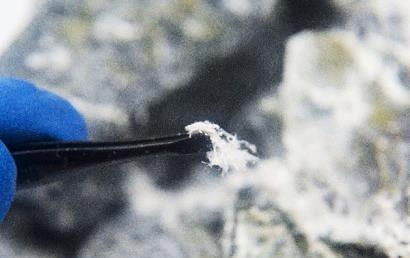
effectively dissolving the mineral. Water's polar
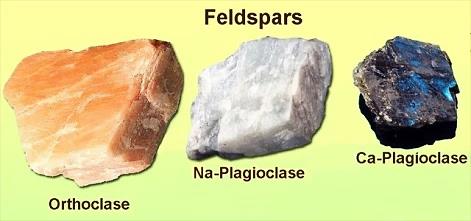
nature and its ability to interact with charged
ions facilitate the dissolution process.
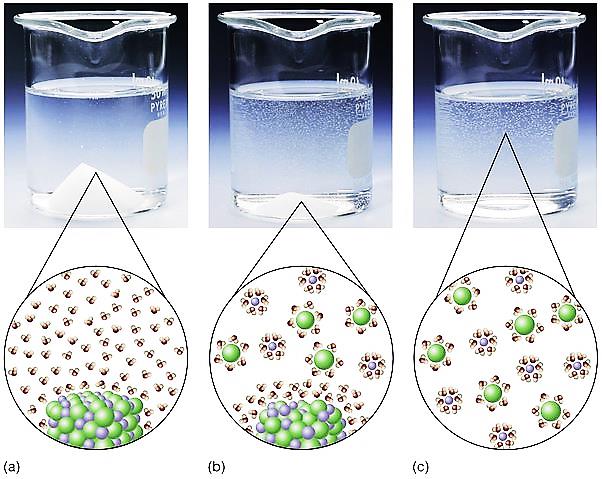
--------------------------------------------------------------
327. Ferromagnesian minerals generally
exhibit:
a) One perfect cleavage and are colorless.
b) Light color, metallic luster.
c) Dark color, specific gravity higher than
quartz.
d) Light color, non-metallic luster. --------------------------------------------------------------
330. Which carbonate mineral reacts readily
Feedback: Ferromagnesian minerals are with cool, dilute hydrochloric acid to produce
silicate minerals that contain iron and an effervescence (a fizz)? magnesium as essential chemical components. a) Gypsum. They are usually dark-colored and have b) Dolomite. relatively high densities. Some examples of c) Plagioclase.
65
d) Calcite. minerals that fall in this range are fluorite (4),
apatite (5), and orthoclase (6).
Feedback: When cool, dilute hydrochloric acid (HCl) is applied to calcite, it reacts readily
because calcite is composed of calcium
carbonate (CaCO3). The acid reacts with the calcium carbonate, breaking it down into its
constituent parts, calcium (Ca), carbon (C), and
oxygen (O), while releasing carbon dioxide

(CO 2) gas. This reaction causes the effervescence or fizz that is characteristic of
calcite's reaction to acid.
This effervescence test is a useful tool for
and distinguishing calcite from other minerals, geologists and mineralogists when identifying --------------------------------------------------------------
as it's a distinctive property of calcite. It's a 333. How many neutrons are in an atom of
simple yet effective way to determine the ? presence of calcite in various geological a) 6 samples. b) 18
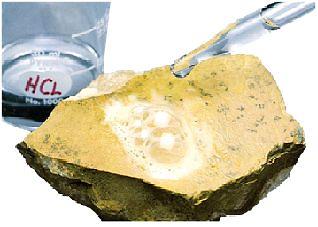
c) 12 d) Not enough information.
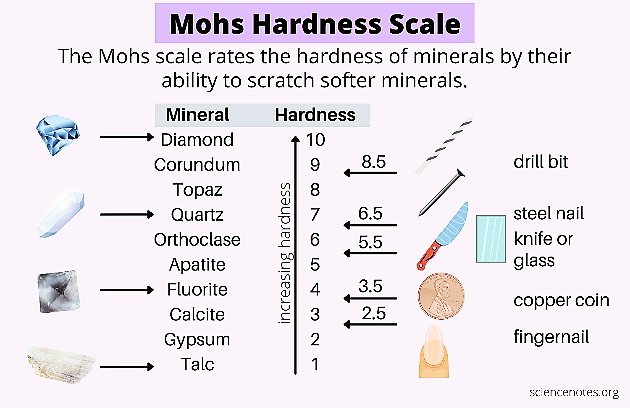
Feedback: In an atom, the number of protons 12 determines the element. The number 12 in C denotes the atomic mass number, which is the

sum of protons and neutrons in the nucleus.
Carbon (C) always has 6 protons (which
defines it as carbon). So, in the case of 12C, the most common isotope of carbon, there are 6
neutrons (12 - 6 = 6). Thus, there are 6 neutrons
-------------------------------------------------------------- in an atom of 12C. 331. Match the mineral with the chemical --------------------------------------------------------------
composition and/or commercial uses. 334. How many electrons are in a neutral
a) Oxide mineral, ore mineral of iron. atom of ? (Magnetite) (Gypsum, Magnetite, galena, calcite)

b) Carbonate mineral in limestone, used in the b) a) 6 18

d) Sulfate mineral, used in plaster and Feedback: A neutral atom of Carbon-14 (C-14) plasterboard. (Gypsum) contains six electrons. This is because in a -------------------------------------------------------------- neutral atom, the number of protons equals the 332. According to the Mohs scale of number of electrons. Carbon always has 6 hardness, what would be the range in protons, so a neutral atom of carbon also hardness for a mineral that scratches c) Sulfide mineral, ore mineral of lead. d) Not enough information. (Galena) manufacture of cement. (Calcite) c) 12

calcite, but not quartz? In fact, quartz of neutrons and hence irrespective of the scratches the mineral. contains 6 electrons, irrespective of the number

b) Greater than 4 but less than 6. 335. Solids that do not possess an orderly Greater than 5 but less than 7. c) 3D arrangement of atoms are called_____. d) Greater than 7 but less than 10. a) a) Greater than 7. -------------------------------------------------------------- isotope of Carbon.

e) Greater than 3 but less than 7. b) Polymorphs. f) Less than 3. c) Amorphous. Crystalline.

d) Minerals.
Feedback: According to the Mohs scale of hardness, a mineral that scratches calcite, but Feedback: Solids that do not possess an
and 7. Calcite has a hardness of 3, so any amorphous. Unlike crystalline solids, which mineral that is harder than 3 can scratch it. not quartz, must have a hardness between 3 orderly 3D arrangement of atoms are called
Quartz has a hardness of 7, so any mineral that arrangement, amorphous solids lack a regular have a well-defined and repeating atomic
is softer than 7 cannot scratch it. Therefore, the and organized structure. Examples of
range of hardness for such a mineral is greater
than 3 but less than 7. Some examples of
66
amorphous solids include glass and certain In this case, the mass number is 44 and the
types of plastics. atomic number is 21. Therefore, the number of
neutrons is:
N= 44−21
N=23
--------------------------------------------------------------
338. The atomic (weight) mass number of
an element is the _____.
-------------------------------------------------------------- b) a) Number of protons. 336. What is the most common structural c) Number of neutrons. Number of protons plus neutrons.

b) A silicon-oxygen tetrahedron. Feedback: The atomic mass number of an c) A silicon-aluminum tetrahedron. element is the total number of protons and d) A silicon-nitrogen tetrahedron. neutrons in an atom's nucleus. It is represented a) element of the silicate mineral group? d) Number of electrons. A silicon-oxygen octahedron.
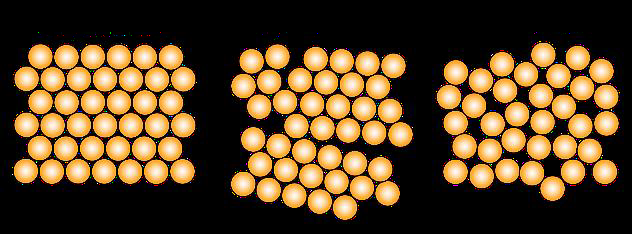
Feedback atom is the atomic number (represented by : The most common structural by the letter " A". The number of protons in an element of the silicate mineral group is the " Z "), and the sum of protons and neutrons gives silicon-oxygen tetrahedron. It consists of a the atomic mass number. central silicon ion bonded to four oxygen ions in a tetrahedral arrangement. This tetrahedral
structure is the building block for various silicate
minerals, which make up a large portion of
Earth's crust. The way these tetrahedra are
arranged and linked together in different
combinations gives rise to the diverse types of
silicate minerals.
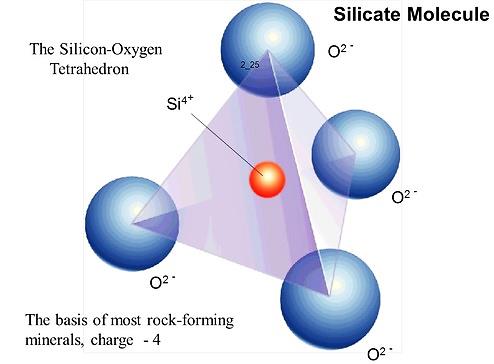
--------------------------------------------------------------
339. Quartz has a hardness of 7 and will
scratch all minerals with a hardness of 8 and
higher.
a) True b) False
Feedback: Quartz has a hardness of 7 on the Mohs scale. It can scratch minerals with a
-------------------------------------------------------------- Minerals with a higher hardness, such as corundum (hardness of 9) and diamond hardness of 7 and lower, not 8 and higher.
337. For the element below, how many neutrons are present in the nucleus of an (hardness of 10), can scratch quartz.
atom?

a) 21
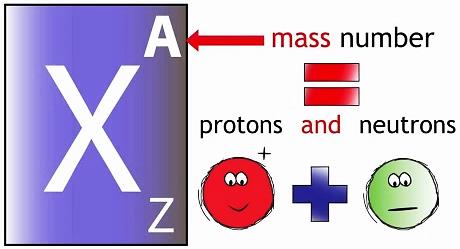
b) 44
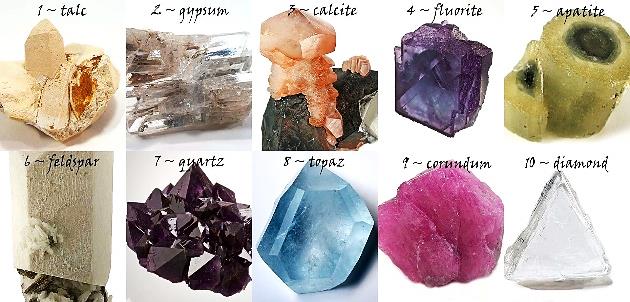
c) 23
d) 65
Feedback -------------------------------------------------------------- : To find the number of neutrons in 340. ______ is a common nesosilicate - an atom, you need to know its atomic number single tetrahedron. and its mass number. The atomic number is the a) Olivine. number of protons in the nucleus, and the mass b) Quartz. number is the sum of protons and neutrons in c) Alkali feldspar. the nucleus. You can use the following formula d) Pyroxene. to calculate the number of neutrons: N=M−Z Feedback : Olivine is a common nesosilicate where N is the number of neutrons, M is the mineral. It is a single tetrahedron, meaning that mass number, and Z is the atomic number. its silicon-oxygen tetrahedra are not linked to any other tetrahedra. Olivine is a mafic mineral,
67
meaning that it is rich in iron and magnesium. It b) Polymorphism. is a common constituent of mafic and ultramafic
rocks, such as basalt and peridotite. Feedback: Polymorphism refers to the
occurrence of two or more crystalline phases of
a substance with the same chemical
composition but different crystal structures. In
other words, a polymorphic substance can exist
in multiple solid forms, each with a distinct
crystal lattice arrangement. This phenomenon

is common in various materials, including
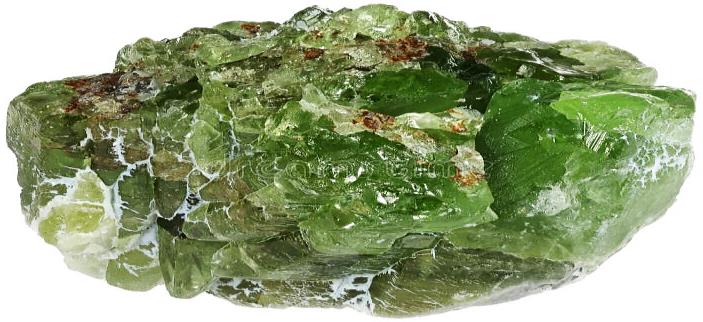
minerals and chemical compounds, and it can
have significant effects on their physical
properties and behaviors under different
-------------------------------------------------------------- conditions. Solid solution, on the other hand,
341. typically involves the mixing of different ______ is the most abundant cation in
the continental crust. substances at the atomic or molecular level
a) Aluminum. within a single crystal structure. b) Iron.
c) Oxygen.
d) Silicon.
Feedback: Silicon is the most abundant cation in the continental crust. It is found in a wide
variety of minerals, including quartz, feldspar,
and clay minerals.
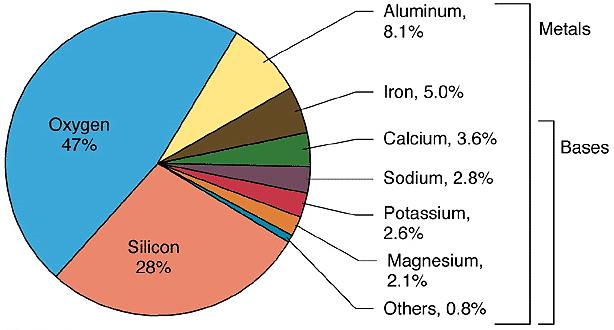
--------------------------------------------------------------
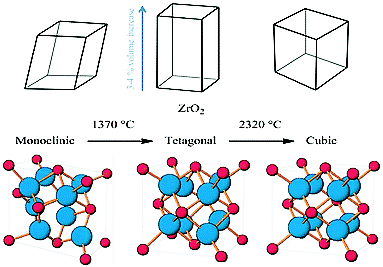
344. _______ describes two atoms with the
same atomic number but different mass
numbers.
a) Solid solution.
-------------------------------------------------------------- b) Polymorphism. 342. Which of the following statements c) Isotopes.
about graphite and diamond is false?
a) Graphite and diamond have the same Feedback: The atoms of a chemical element
density. can exist in different types. These are called
b) isotopes. They have the same number of Graphite and density have different mineral
structures. protons (and electrons), but different numbers
c) Graphite and diamond are both made of of neutrons. Different isotopes of
carbon atoms. the same element have different masses.
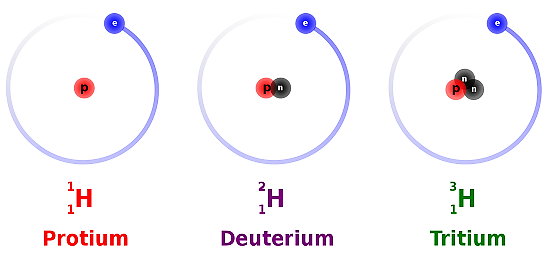
d) Graphite is stable in the crust whereas
diamond is stable in the mantle.
Feedback: The key point to understand here is that although both graphite and diamond are
made of carbon atoms, they have significantly
different structures at the atomic level, leading
to distinct physical properties, including density.
In graphite, carbon atoms are arranged in --------------------------------------------------------------
layers, while in diamond, they are arranged in a 345. _______ describes two solid phases three-dimensional, tightly bonded crystal (minerals) which can mix in all proportions.
lattice. This atomic-level structural difference a) Solid solution. results in diamond being much denser than b) Polymorphism. graphite, despite both being composed of c) Isotopes. carbon.
-------------------------------------------------------------- Feedback: Solid solution refers to a type of 343. _______ refers to two or more mixture in which two or more minerals or
crystalline phases with the same substances can mix together in all proportions
composition but different structures. while maintaining a solid state. This means that
a) Solid solution. the minerals or substances are able to form a
68
homogeneous mixture at the atomic or Calcite has rhombohedral cleavage, meaning molecular level. Solid solutions are commonly that it can split into rhomboids. observed in minerals, alloys, and other Cleavage is an important property for
crystalline materials. geologists and mineralogists, as it can be used
to identify minerals and to understand the
forces that have acted on rocks.

--------------------------------------------------------------
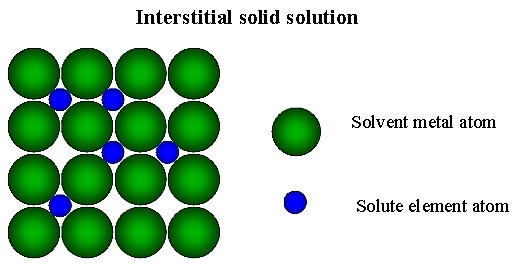
346. Clay minerals are common examples
of _______ silicate structures.
a) Framework.
b) Single chains.
c) Sheet silicates.
d) Isolated tetrahedral.
Feedback: Sheet silicates, like clay minerals, are characterized by their unique crystal
structure, which consists of alternating layers of
tetrahedral and octahedral sheets. In these --------------------------------------------------------------
minerals, the tetrahedral sheets are composed 348. Which of the following statements
of silicon (Si) and oxygen (O) atoms, while the regarding the density of minerals is FALSE?
sheets gives clay minerals their distinctive Density depends on the closeness of the atomic packing. properties, such as their ability to absorb water c) Density decreases with increasing pressure. and expand, making them essential d) oxygen (O) atoms. The arrangement of these ions in a mineral. b) octahedral sheets contain aluminum (Al) and a) Density depends on the atomic weight of the
components in various applications, including Density decreases with increasing temperature. soil science and the ceramics industry.
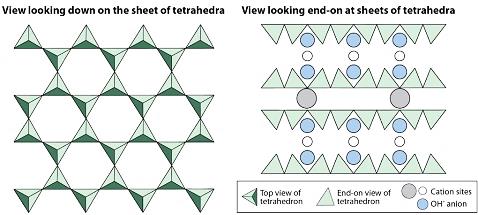
Feedback: Density is a measure of mass per unit volume. It is a property of matter that is
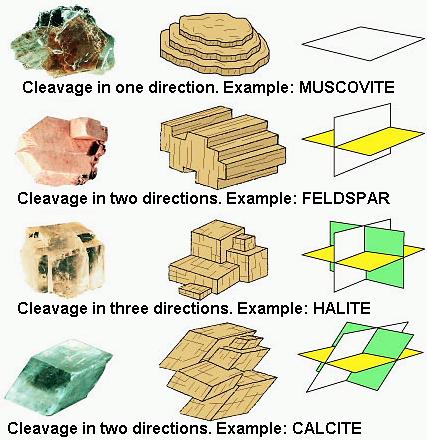
determined by the number of atoms in a given
volume and the mass of those atoms. The
density of minerals can vary depending on a
number of factors, including the type of atoms
that make up the mineral, how those atoms are
b) Splitting of a mineral along planar surfaces. is more likely to form at higher pressures: Development of irregular fractures when a c) a) The mineral with the highest hardness. mineral is broken. b) The mineral with the lowest hardness. d) The density or specific gravity of a mineral. c) The mineral with the lowest density. d) The mineral with the greatest density. Feedback : Cleavage is the tendency of a mineral to split along certain planes. These Feedback : Density is a measure of how closely planes are determined by the arrangement of packed the atoms in a mineral are. At higher atoms in the mineral's crystal structure. pressures, atoms are more likely to be packed 347. The property "cleavage" refers to: -------------------------------------------------------------- a) Development of crystal faces during mineral 349. Given two minerals with the exact growth. same chemical composition, which minerals -------------------------------------------------------------- pressure. packed together, and the temperature and
Cleavage is a useful property for identifying closer together. Therefore, the mineral with the minerals, as it is consistent for each mineral greatest density is more likely to form at higher species. Here are some examples of minerals pressures. Hardness is a measure of how with different cleavage patterns: resistant a mineral is to scratching. It is not Halite (table salt) has cubic cleavage, meaning directly related to density. that it can split into cubes. -------------------------------------------------------------- Mica has basal cleavage, meaning that it can 350. Carbon has an atomic number of 6 and split into thin sheets. an atomic weight of 12.011. This means that:
69
a) Carbon atoms have 6 protons and 12.011 liquid rapidly, which prevents the atoms from
neutrons. arranging themselves in a regular pattern.
b) Carbon atoms have 6 protons and a density Glasses are typically transparent or translucent,
of 12.011 grams per cubic centimeter. and they can be made from a variety of
c) Carbon atoms have 6 neutrons and 12.011 materials, including silica, soda ash, and lime.
protons.
d) Carbon atoms have 6 protons and a varying
number of neutrons.

Feedback: Atomic number is the number of protons in an atom. Atomic weight is the
average mass of the atoms of an element,
taking into account the different isotopes of the
element. Carbon has an atomic number of 6,
which means that every carbon atom has 6
protons in its nucleus. Carbon has an atomic
weight of 12.011, which means that the average
mass of a carbon atom is 12.011 atomic mass
units (amu). The number of neutrons in an atom --------------------------------------------------------------
can vary depending on the isotope of the 352. Atoms that have gained or lost
element. The most common isotope of carbon electrons are no longer electrically neutral
is carbon-12, which has 6 neutrons in its and are called: nucleus. However, there are also other isotopes a) Polymorphs. of carbon, such as carbon-13 and carbon-14, b) Ions. which have different numbers of neutrons. c) Isotopes.
d) Isobars.
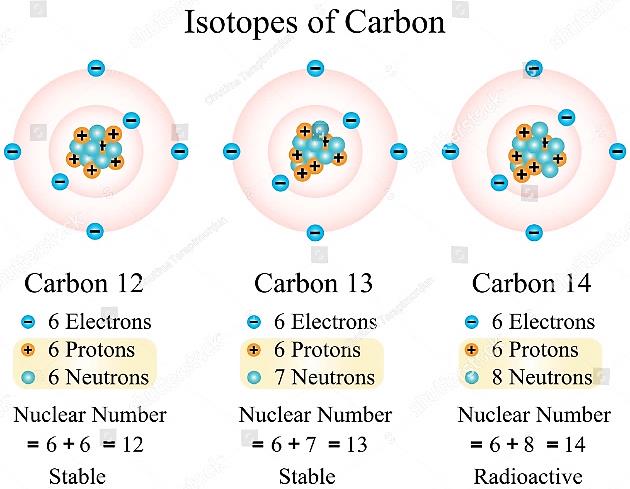
Feedback: Atoms that have gained or lost electrons are no longer electrically neutral and
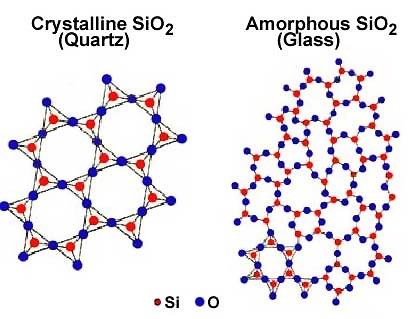
are called ions. When an atom gains electrons,
it becomes negatively charged and is called an
anion. When an atom loses electrons, it
becomes positively charged and is called a
cation. Ions are important in many chemical
reactions and biological processes. For
example, ions are used in batteries to generate
electricity, and they are used by plants to
absorb nutrients from the soil.
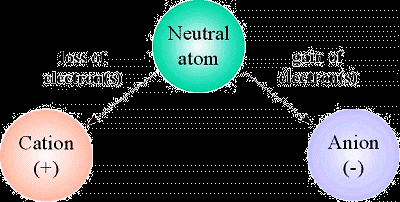
--------------------------------------------------------------
2. Each element has a unique number of:
a) Protons.
b) Neutrons.
c) Electrons.
d) All of these.
Feedback: Each element has a unique number
of protons in the nucleus of its atoms. This -------------------------------------------------------------- number is called the atomic number. The 353. Chemical substances that have exactly atomic number is what determines the identity the same chemical formula but different of an element. For example, all carbon atoms crystal structures are called: have 6 protons in their nuclei, and all hydrogen a) Ions. atoms have 1 proton in their nuclei. b) Polymorphs. -------------------------------------------------------------- c) Electrons. 351. Solid materials that do not possess an d) Isotopes. orderly arrangement of atoms are called: a) Glasses. Feedback : Chemical substances that have b) Minerals. exactly the same chemical formula but different c) Crystals. crystal structures are called polymorphs. d) Polymorphs. Polymorphism is a phenomenon in which a
Feedback substance can exist in multiple crystal : Glasses are solids that do not structures or forms. These different structures
possess an orderly arrangement of atoms. This result in variations in physical properties such is because glasses are formed by cooling a
70
as density, hardness, and thermal stability while 356. Which of the following elements maintaining the same chemical composition. commonly forms anions? -------------------------------------------------------------- a) Hydrogen. 354. In the periodic table of the elements, as b) Silicon.
one goes from left to right along a row: c) Oxygen.
a) The number of electrons in the outer shell d) Iron.
increases.
b) The atomic number decreases. Feedback: Among the options provided, c) The number electrons in the outer shell Oxygen commonly forms anions. Anions are

decreases. atoms or radicals (groups of atoms), that have
d) The number of isotopes increases. gained electrons. Since they now have more
electrons than protons, anions have a negative
Feedback: The periodic table is arranged in charge. Nonmetals like Oxygen typically form
rows and columns. The rows represent the anions. This is because they have more
energy levels of the electrons in an atom. The valence electrons (electrons in the outermost
columns represent the number of electrons in shell) and they can gain electrons to achieve a
the outer shell of the atom. As you move from stable electron configuration. left to right across a row of the periodic table,
the atomic number increases. This means that
the number of protons in the nucleus of the
atom increases. The number of electrons in an
atom must equal the number of protons in the
nucleus in order for the atom to be electrically
neutral. Therefore, as the atomic number
increases, the number of electrons in the outer
shell must also increase.
--------------------------------------------------------------
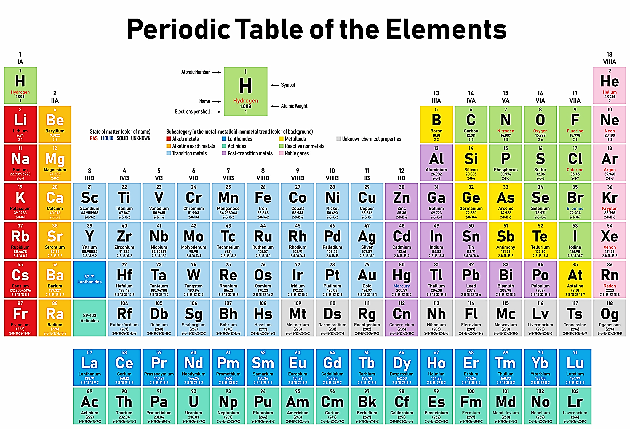
357. Diamond is an example of what type of
bonding?
a) Covalent. b) Ionic. c) Metallic. d) Bail.
Feedback: Diamond is an example of covalent bonding. Covalent bonding is a type of chemical
bond in which atoms share electrons. In
diamond, each carbon atom shares four
-------------------------------------------------------------- electrons with four other carbon atoms. This creates a very strong bond that makes diamond 355. What does the symbol Ca +2 stand for? the hardest natural substance on Earth. a) A calcium electron. b) A calcium cation. c) A calcium anion. d) A calcium isotope.
Feedback: A cation is a positively charged ion that has lost one or more electrons. Calcium,