

Essentials of geology a comprehensive manual with 1300+ MCQs, answers, feedbacks, and illustrative figures by Ali Kareem Neamah - HTML preview
Download the book in PDF, ePub, Kindle for a complete version.
1. The division of geology concerned with billion years old, a conclusion supported by a
Earth materials, changes in the surface and variety of scientific evidence. interior of the Earth, and the dynamic forces
that cause those changes is:
a) Physical geology.
b) Historical geology.
c) Geochemistry.
d) Paleontology.

Feedback: Physical geology is a foundational --------------------------------------------------------------
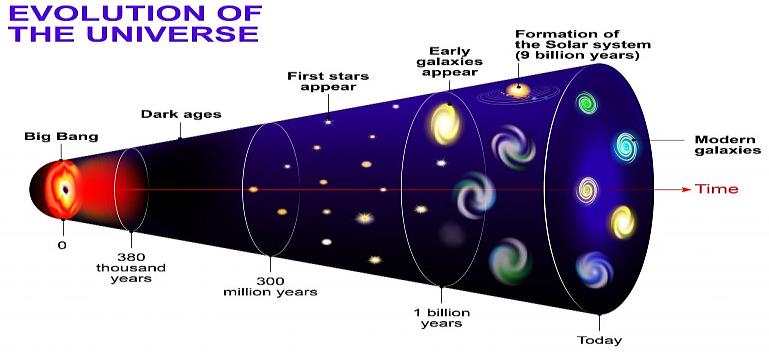
field of geology that deals with a wide range of 3. Which of the following indicates that Earth is topics, including: a dynamic planet? Earth Materials: This involves the study of a) Volcanism. minerals, rocks, and soils, as well as their b) Seismicity. properties, composition, and origin. c) Erosion. Plate Tectonics: Physical geology explores d) None of these. the movement of Earth's lithospheric plates, e) All of these. which leads to phenomena like earthquakes,
volcanic eruptions, and the creation of Feedback: Earth’s dynamic nature is a result of mountain ranges. the interplay between geological, atmospheric,
Earth's Interior: It delves into the composition and environmental processes that constantly
and structure of the Earth's interior, including reshape its features, influence its climate, and
the core, mantle, and crust. drive its ongoing evolution. Surface Processes: This area of study involves understanding various surface
processes like erosion, weathering, deposition,
and the formation of landforms like valleys,
canyons, and coastal features.
Natural Hazards: Physical geologists play a crucial role in assessing and mitigating natural
hazards such as earthquakes, volcanoes,
landslides, and tsunamis.
Environmental Geology: It addresses issues related to groundwater resources,
contamination, and land use planning.
Geological Time: Physical geologists use principles of stratigraphy and dating methods to
determine the age of rocks and fossils,
contributing to our understanding of Earth's
Mineral Resources: They study the formation -------------------------------------------------------------- and distribution of valuable minerals and history.
Energy Resources: This includes the pressure, and the chemical activity of fluids exploration of fossil fuels, geothermal energy, are: and other natural energy sources. a) resources in the Earth's crust. rocks, usually beneath the surface, by heat, 4. Rocks that result from the alteration of other
Igneous.
with applications ranging from understanding c) Metamorphic. the Earth's past and predicting its future to d) Physical geology is a diverse and dynamic field, b) Sedimentary. Volcanic.
practical uses in resource exploration and e) Answers a and d.
a) The age of the Earth is approximately: alteration of pre-existing rocks, which can be 4,550 years. either igneous, sedimentary, or other b) 4,550,000 years. metamorphic rocks. This alteration occurs c) -------------------------------------------------------------- Feedback: Metamorphic rocks result from the 2. environmental management.
d) 4,550,000,000 years. beneath the Earth's surface due to heat, 4,550,000,000,000 years. pressure, and the chemical activity of fluids. The original rock, known as the protolith, Feedback: The age of earth was pieced undergoes changes in mineral composition, together through a combination of geological texture, and structure, leading to the formation observations, the understanding of radioactive of metamorphic rocks. Examples of decay, and the development of radiometric metamorphic rocks include marble (from dating methods. These efforts ultimately limestone), schist, and gneiss. Igneous rocks revealed that our planet is approximately 4.5
1
originate from the solidification of molten fossils, rocks, and stratigraphy, to reconstruct
material, while sedimentary rocks form from the the Earth's past and understand its geological
accumulation and lithification of sediments. history. While other fields like astronomy,
Volcanic rocks are a type of igneous rock that astrobiology, physical geology, and
forms from volcanic activity. paleontology are related to Earth sciences,
-------------------------------------------------------------- historical geology specifically deals with the
5. The change in frequency of a sound wave Earth's long-term history and the events that
caused by movement of its source relative have shaped it. to an observer is known as the: --------------------------------------------------------------

a) Curie point. 7. That all living organisms are the b) Hubble shift. descendants of different life-forms that
c) Doppler effect. existed in the past is the central claim of: d) Quasar force. a) The principle of fossil succession. e) None of these. b) Plate tectonics.
c) The principle of uniformitarianism.
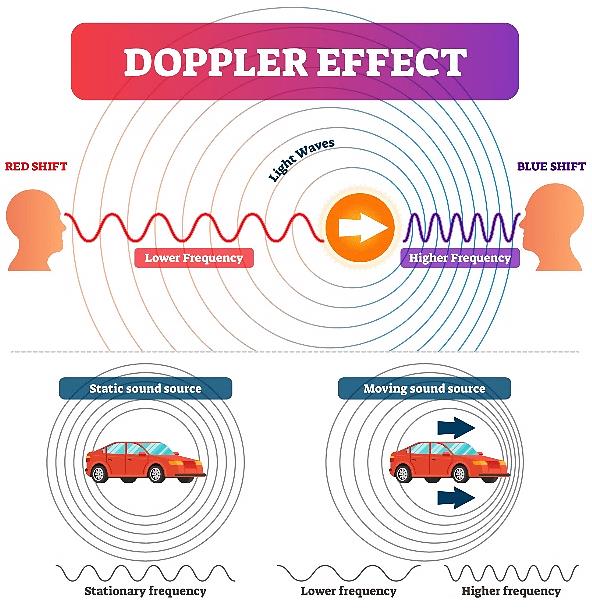
Feedback: The Doppler effect, also known as d) Organic evolution. the Doppler shift, is the change in frequency or e) None of these. wavelength of a wave in relation to an observer --------------------------------------------------------------
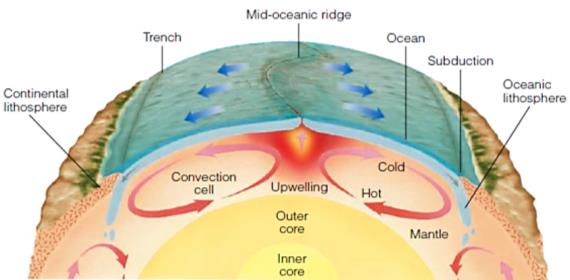
moving relative to the source of the wave. This 8. The movement of plates is thought to result effect is commonly experienced with sound from: waves, where the pitch of a sound appears to a) Density differences between the inner and change as an object emitting the sound outer core. approaches or moves away from an observer. b) Rotation of the mantle around the core. The Doppler effect is also relevant in the study c) Gravitational forces. of light waves and is used in various scientific d) The Coriolis Effect. and technological applications, including in e) Convection cells. astronomy to determine the motion of celestial
objects and in medical imaging, such as Feedback: Mantle convection is the slow Doppler ultrasound. creeping motion of Earth's solid silicate mantle
caused by convection currents carrying heat
from the interior to the planet's surface.
--------------------------------------------------------------
9. A combination of related parts interacting in
an organized fashion is:
a) A cycle.
b) A combination of related parts Historical geology. interacting in an organized fashion is referred to c) Astrobiology. as a system. In various fields, systems can be d) Physical geology. conceptualized as a set of elements or e) Paleontology. components that are interconnected and work together to achieve a common purpose or Feedback: Historical geology is the branch of function. The concept of a system is geology that focuses on the study of Earth's fundamental in science, engineering, and other origin, evolution, and development over disciplines, as it allows for the study of complex geologic time. It involves examining the interactions and relationships within organized 6. A hypothesis. The study of the origin and evolution of Earth e) A system. is: a) Astronomy. Feedback:-------------------------------------------------------------- c) Uniformitarianism. d) b) A theory.
occurred in Earth's history, including the structures. processes, events, and changes that have formation of rocks, minerals, landforms, and the --------------------------------------------------------------
development of life forms. Historical geologists 10. Which of the following statements about a
use evidence from the geologic record, such as scientific theory is not true?
2
a) It is an explanation for some natural 12. The concentric layer that makes up most of
phenomenon. Earth’s volume is the:
b) Predictive statements can be derived from it. a) Inner core. c) It is a conjecture or guess. b) Outer core. d) It has a large body of supporting evidence. c) Mantle. e) It is testable. d) Asthenosphere.
e) Crust.
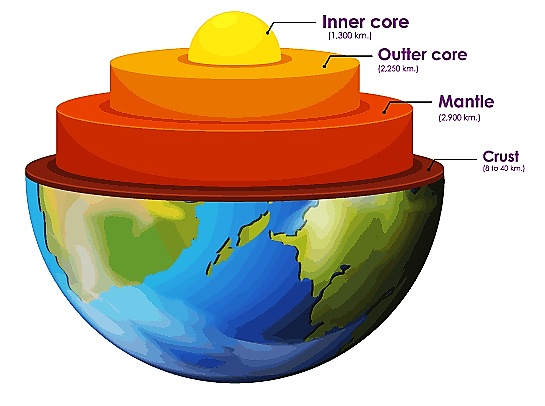
Feedback: A scientific theory is not a conjecture or guess. In the scientific context, a Feedback: The Earth's interior is composed of theory is a well-substantiated explanation of several concentric layers, and the mantle is the

some aspect of the natural world that is based layer that makes up most of Earth's volume. It
on empirical evidence and has stood up to lies beneath the Earth's crust and extends down
repeated testing and scrutiny. Scientific to a depth of about 2,900 kilometers (1,800
theories are supported by a large body of miles). The mantle is primarily composed of
evidence, are testable, and can be used to solid rock, but it exhibits some degree of
make predictions. They are a fundamental part plasticity in its upper part, known as the
of scientific understanding and represent the asthenosphere. This plasticity allows for the
best explanations for observed phenomena movement of tectonic plates. Below the mantle
based on current knowledge. is the outer core, which is partially liquid, and
-------------------------------------------------------------- the innermost layer is the solid inner core. The
11. What two observations lead scientists to crust is the Earth's outermost layer and is
conclude that the Big Bang occurred relatively thin compared to the mantle and core.
approximately 14 billion years ago?
a) A steady-state universe and 2.7 K
background radiation.
b) A steady-state universe and opaque
background radiation.
c) An expanding universe and opaque
background radiation.
d) An expanding universe and 2.7 K
background radiation.
e) A shrinking universe and opaque
background radiation.
Feedback: The two key observations that led --------------------------------------------------------------
scientists to conclude that the Big Bang 13. The two broad areas of geology are physical occurred approximately 14 billion years ago geology and structural geology. are: a) True An expanding universe: Edwin Hubble b) False observed that galaxies are moving away from
each other, indicating that the universe is Feedback: Geology is a very broad field that expanding. This observation suggests that, if can be divided into many more
we rewind the expansion, it implies a point in specific branches. Traditionally, geology has
the past when everything was extremely close been divided into two main subdivisions:
together, leading to the concept of a Big Bang. physical geology and historical geology. 2.7 K background radiation: The discovery of --------------------------------------------------------------
the cosmic microwave background radiation, 14. The premise that present-day processes with a temperature of approximately 2.7 Kelvin, have operated throughout geologic time is
provided strong evidence for the Big Bang. This the principle of: radiation is a remnant of the early hot and a) Organic evolution. dense phase of the universe and was predicted b) Plate tectonics. by the Big Bang theory. c) Uniformitarianism.
d) Geologic time. e) Scientific deduction.
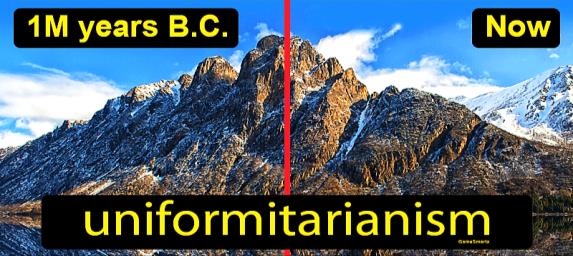
Feedback: Uniformitarianism is the geological principle that states that the same natural
processes that occur today have always
occurred throughout Earth's history. In other
words, the processes we observe today, such
as erosion, sedimentation, volcanic activity, and
tectonic plate movement, can be used to
interpret past geological events. This principle,
-------------------------------------------------------------- often summarized as "the present is the key to
3
the past," was popularized by geologist James 17. Uniformitarianism is a fundamental principle Hutton and is fundamental to the science of of geology that states that the physical,
geology. It helps geologists understand the chemical, and biological laws that govern
Earth's history and past geological events by geological processes remain unchanged
studying the processes that have shaped the through time. planet over millions of years. a) True
b) False --------------------------------------------------------------
18. The principle of uniformitarianism indicates

that ______.
a) Geologists must wear uniforms b) Tomorrow is the "key" to the past c) The present is the "key" to the past d) The past is the "key" to the present
-------------------------------------------------------------- --------------------------------------------------------------
15. More than 2300 years ago, Aristotle's keen 19. The geologic time scale was developed
observations and experiments helped the using principles of relative dating. early Greeks “correctly explain” many things a) True about the natural world. b) False
a) True
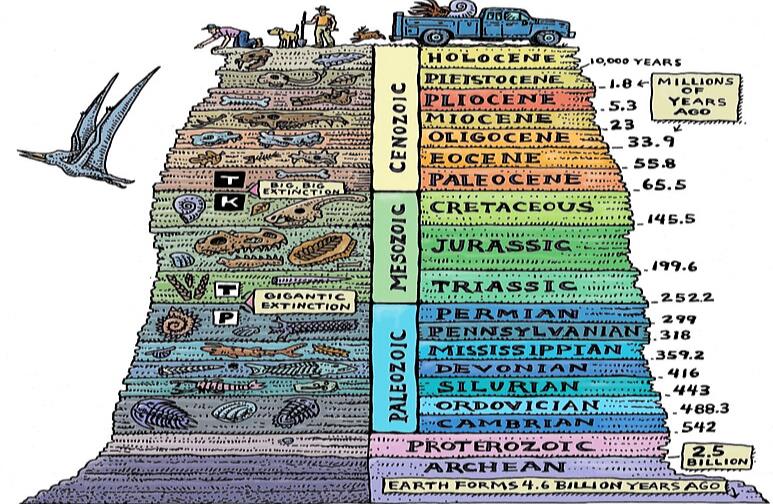
b) False Feedback: The geologic time scale was
developed after scientists observed
Feedback: While Aristotle made significant changes in the fossils going from oldest to
contributions to early natural philosophy and youngest sedimentary rocks. They
biology, his methods were more focused on used relative dating to divide Earth's
observation and classification rather than past in several chunks of time when similar systematic experimentation. Aristotle's ideas organisms were on Earth. and explanations were foundational for his time,
but some of his conclusions were later found to
be inaccurate as scientific methods and
understanding advanced. The scientific method
as we understand it today, which includes
systematic experimentation and hypothesis
testing, developed later in history.
--------------------------------------------------------------
16. During the seventeenth and eighteenth
centuries, catastrophists believed that
Earth's landscapes had been shaped
primarily by great disasters.
a) True
b) False
Feedback: During the seventeenth and eighteenth centuries, many scientists and --------------------------------------------------------------
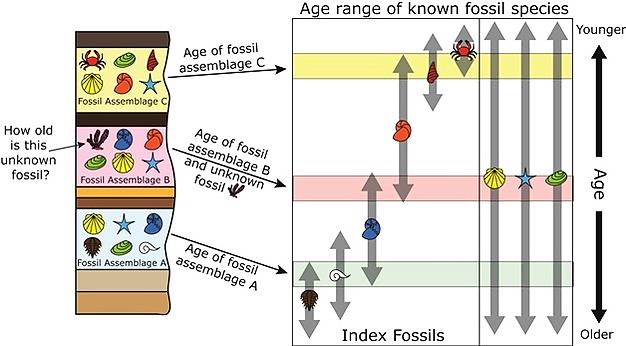
catastrophist view, which proposed that Earth's fossil succession are each used for relative dating. natural philosophers adhered to the 20. The law of superposition and the principle of
landscapes had been shaped primarily by
sudden and catastrophic events, such as a) True floods, earthquakes, and volcanic eruptions. b) False This perspective was in contrast to
accepted in the nineteenth century and posits fundamental principle that states that in a sequence of undisturbed sedimentary rocks or uniformitarianism, which became more widely Feedback: The Law of Superposition is a
periods of time. One of the most prominent top, while the oldest rocks are found at the bottom. This principle helps geologists interpret proponents of catastrophism was Georges the relative ages of rock formations and the Cuvier, who studied fossils and suggested that continuous processes that operate over long rock layers, the youngest rocks are found on that Earth's features are the result of gradual,
the Earth had experienced a series of events that have shaped Earth's history. The principle of fossil succession, also known as the catastrophic events followed by periods of principle of faunal succession, is a fundamental extinction and repopulation by new species. concept that states that fossilized organisms in However, with the development of modern a sequence of sedimentary rocks or strata geology, the uniformitarian principle became follow a predictable order. This order is due to the prevailing concept in the field. the evolution of life forms over time and can be --------------------------------------------------------------
4
used to correlate and date rock layers in b) False different locations.
Feedback: The statement is true. Science is indeed based on the assumption that the
natural world operates in a consistent and
predictable manner, and that these natural
processes can be understood through
systematic and careful study. This fundamental
principle underlies the scientific method and

forms the basis for scientific inquiry and
discovery. It allows scientists to make
observations, conduct experiments, and
-------------------------------------------------------------- develop theories to explain natural phenomena.
21. The theory of plate tectonics provides --------------------------------------------------------------
geologists with a comprehensive model of 24. The geological time scale has been Earth's internal workings. constructed based upon which of the
a) True following? b) False a) Global correlation of strata.
b) "Superposition" relations.
Feedback: The theory of plate tectonics is a c) The fossil succession record. comprehensive model that explains the d) All of these. movement of Earth's lithospheric plates on the
planet's surface. It provides a framework for Feedback: The geological time scale has been understanding various geological phenomena, constructed based on a combination of factors,
including the formation of mountains, including global correlation of rock strata
earthquakes, and the distribution of volcanoes. (geological layers), the principle of
The theory is supported by a wealth of "superposition" (which states that in any
evidence, including the fit of continents, the sequence of undisturbed sedimentary rocks,
distribution of earthquakes and volcanic the youngest rocks are at the top and the oldest
activity, and the magnetic striping on the ocean rocks are at the bottom), and the fossil
floor. succession record. These elements, along with
radiometric dating techniques, have been used
to create a comprehensive framework for
understanding the history of Earth and the
relative ages of different geological events and
rock layers.
--------------------------------------------------------------
25. A scientific hypothesis is a tentative (or
untested) explanation.
a) True b) False
-------------------------------------------------------------- Feedback: A scientific hypothesis is indeed a 22. The age of Earth is about 6.4 billion years. tentative or untested explanation that is
a) True proposed as a starting point for further
b) False investigation and experimentation. It serves as
a testable proposition that can be used to make
Feedback: The age of Earth is estimated to be predictions and design experiments to gather
approximately 4.5 billion years, not 6.4 billion evidence in support of or against the
years. This estimate is based on various dating hypothesis. Scientists use hypotheses to
methods, including radiometric dating of rocks explore and understand natural phenomena,
and minerals. The 4.5 billion-year estimate is and the results of experiments and
widely accepted by the scientific community observations help either support or reject these
and is supported by substantial evidence. It hypotheses. reflects the age of the Earth since its formation --------------------------------------------------------------
from the solar nebula, a cloud of gas and dust 26. Scientific theories that explain a large from which the solar system formed. number of interrelated aspects of the natural
-------------------------------------------------------------- world are called paradigms. 23. All science is based on the assumption that a) True
the natural world behaves in a consistent b) False and predictable manner that is
comprehensible through careful, systematic Feedback: Scientific theories that explain a study. large number of interrelated aspects of the
a) True natural world and have withstood extensive
5
testing and scrutiny are often referred to as of gas and dust called the solar nebula. This
paradigms. Paradigms represent well- process is described by the nebular hypothesis,
established and widely accepted frameworks which is a widely accepted scientific
for understanding various phenomena within a explanation for the origin of our solar system.
particular field of science. According to this hypothesis, the solar system's
-------------------------------------------------------------- planets, including Earth, formed from the
27. As the Earth was forming, an early period of material within the solar nebula over billions of
chemical segregation established the basic years. divisions of its interior.

a) True
b) False
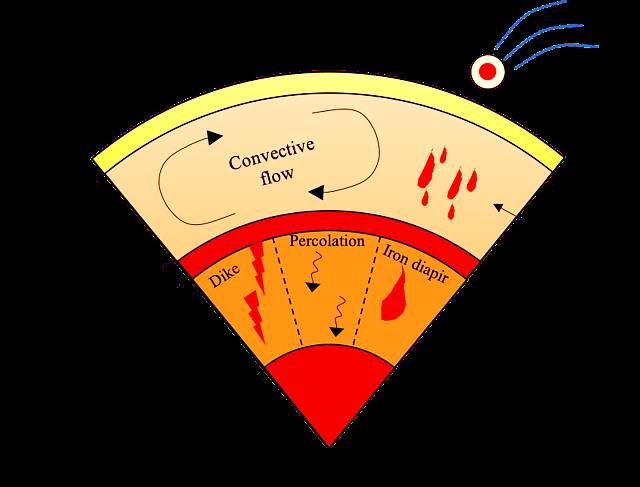
Feedback: This early period of chemical segregation and differentiation played a crucial
role in shaping Earth's interior structure and
continues to influence geological processes on
the planet's surface, such as plate tectonics,
volcanism, and earthquakes. It also has
significant implications for Earth's magnetic
field and overall geophysical behavior.
--------------------------------------------------------------
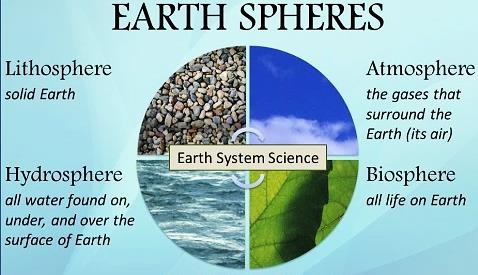
30. Earth can be thought of as consisting of four
spheres: the hydrosphere, the atmosphere,
solid Earth, and biosphere.
a) True b) False
Feedback: Earth can indeed be divided into four major spheres:
The hydrosphere: This sphere includes all of Earth's water, including oceans, rivers, lakes,
groundwater, and even water vapor in the
28. There is a fixed path that scientists always we breathe and in which weather occurs. follow that leads unerringly to scientific Solid Earth: This sphere comprises the Earth's knowledge. rocky and geologic features, including the crust, a) True mantle, and core. b) False Biosphere:-------------------------------------------------------------- The atmosphere: This sphere encompasses the layers of gases surrounding Earth, which atmosphere.
This sphere includes all living
scientists always follow to obtain scientific the other spheres and is responsible for the knowledge. While the scientific method diversity of life on our planet. provides a general framework for conducting Understanding these four interconnected Feedback: organisms on Earth, from microorganisms to There is no fixed or rigid path that plants, animals, and humans. It interacts with
scientific investigations, the process of spheres is crucial in studying Earth's systems scientific inquiry is often flexible and iterative. and processes. Scientists may follow various approaches and methods, and their research can involve experimentation, observation, data analysis,
hypothesis testing, and more. Additionally,
scientific knowledge is subject to revision and
refinement as new evidence emerges, so it is
not an unerring, static process.
--------------------------------------------------------------
29. The Earth and the other planets formed at
a) 31. A system is a group of interacting or True interdependent parts that form a complex cloud called the solar nebula. the same time from an enormous rotating --------------------------------------------------------------
Feedback: a) True The formation of Earth and the b) False other planets in our solar system is widely believed to have occurred from a rotating cloud b) False whole.
6
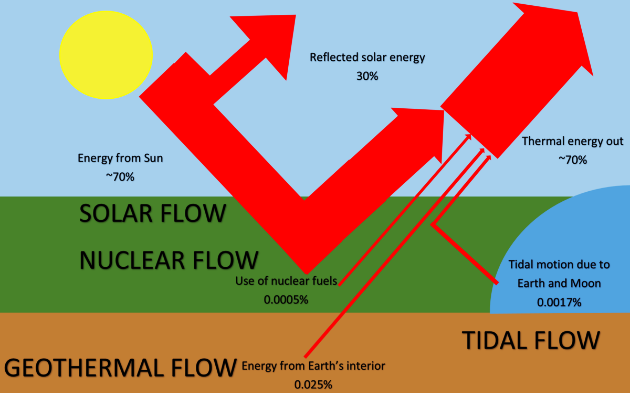
Feedback: In various scientific disciplines, the combination of solar energy and internal heat
concept of a system is used to describe creates a complex and interconnected system
organized structures or entities composed of that drives various geological, atmospheric, and
interconnected components that work together biological processes on the planet. to achieve a specific purpose or function. This
definition holds true in fields such as physics,
biology, engineering, and environmental
science.
--------------------------------------------------------------

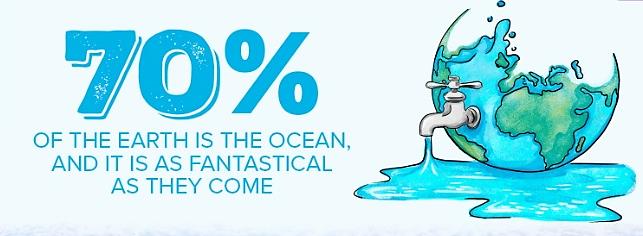
32. Approximately how much of the Earth's
surface is covered by oceans?
a) 70%
b) 20%
c) 90%
d) 50% --------------------------------------------------------------
e) 65% 35. All of the following are fundamental Earth
systems except _______.
Feedback: Approximately 70% of the Earth's a) Chemosphere surface is covered by oceans, making them a b) solid Earth dominant feature of our planet. Oceans play a c) atmosphere vital role in regulating the Earth's climate, d) hydrosphere supporting marine life, and influencing weather e) biosphere patterns. Understanding the oceans is essential
for comprehending Earth's complex systems Feedback: The term "chemosphere" is not and processes. typically used as a fundamental Earth system
component in the same way as the others
mentioned (solid Earth, atmosphere,
hydrosphere, and biosphere).
--------------------------------------------------------------
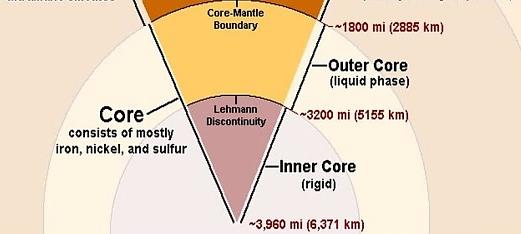
36. The composition of Earth's core is thought to
be an iron-nickel alloy with minor amounts of
-------------------------------------------------------------- oxygen, silicon, and sulfur. a) True 33. Humans are not considered parts of the b) False Earth system. a) True Feedback: Earth's core is indeed thought to be b) False primarily composed of iron and nickel, with minor amounts of other elements like oxygen, Feedback: Humans are indeed considered a silicon, and sulfur. This composition is based on part of the Earth system. The Earth system scientific studies and models of Earth's interior, encompasses all the interacting components of including seismic data and the behavior of our planet, including the geosphere (solid materials under high pressure and temperature Earth), hydrosphere (water bodies), conditions. While the exact composition of the atmosphere (air and gases), and biosphere core is not directly observable, these models (living organisms). Humans, as a species, are and data support the idea of an iron-nickel alloy an integral component of the biosphere and at the core, which is consistent with our have a significant influence on various Earth understanding of planetary formation and the system processes through activities such as behavior of materials at extreme depths within land use, resource extraction, and the release the Earth. of greenhouse gases into the atmosphere. Understanding human interactions with the
Earth system is crucial for addressing
environmental and sustainability challenges.
--------------------------------------------------------------
34. The Earth system is powered by two parts:
the Sun, and heat from burning fossil fuels.
a) True
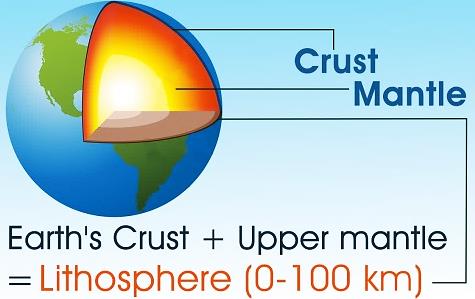
Feedback: 37. Earth's outermost layer, consisting of the The Earth system is powered by crust and upper mantle, is called the energy from two major sources: the Sun and lithosphere. b) False --------------------------------------------------------------
the planet's internal heat. Both sources of a) True energy play essential roles in shaping Earth's b) False geology, climate, and overall dynamics. The
7
Feedback: The lithosphere is indeed Earth's continents and represent some of the Earth's
outermost layer, which includes both the crust most stable and old geological formations.
and the uppermost part of the mantle. This layer These areas have experienced minimal
is relatively rigid and behaves as a single unit in tectonic activity and are typically not prone to
the context of tectonic plate movements. The significant mountain-building or volcanic
lithosphere is involved in the interactions activity. between Earth's tectonic plates, which lead to
various geological processes such as plate
boundaries, earthquakes, and mountain

formation.
--------------------------------------------------------------
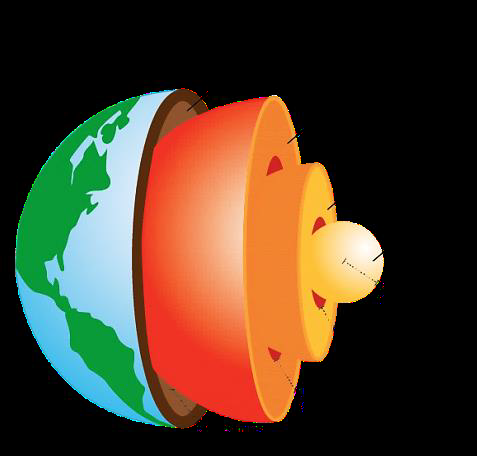
41. As defined by composition, Earth's internal
structure consists of the core, mantle, and
crust.
a) True b) False
--------------------------------------------------------------
38. Earth's outer core is liquid, whereas the
inner core is solid.
a) True
b) False
Feedback: Earth's outer core is composed of molten iron and nickel, making it a liquid layer.
In contrast, the inner core, although at
extremely high temperatures and pressures, is
primarily solid due to the immense pressure it
experiences, despite being composed of iron
and nickel. This distinction between the liquid
outer core and solid inner core plays a crucial
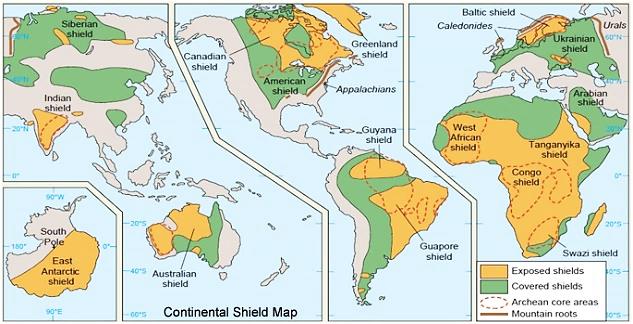
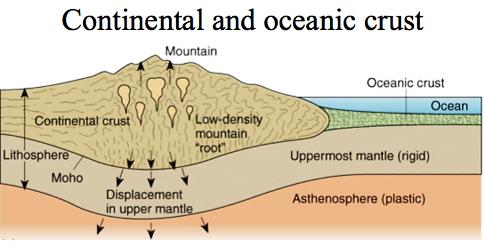
role in Earth's geodynamics, including the -------------------------------------------------------------- generation of the planet's magnetic field 42. On average, continental rocks are more through the geodynamo process in the liquid dense than the rocks of the oceanic crust. outer core. a) True -------------------------------------------------------------- b) False 39. Over 82 percent of Earth's volume is contained in the crust. Feedback: The continental crust is the layer of a) True granitic, sedimentary and metamorphic rocks b) False which form the continents and the areas of shallow seabed close to their shores, known as Feedback: Over 82 percent of Earth's volume continental shelves. It is less dense than the is not contained in the crust. The Earth's crust material of the Earth's mantle and thus "floats" is relatively thin compared to the rest of the on top of it. Continental crust is also less dense planet, making up only a small fraction of its than oceanic crust, though it is considerably volume. Most of Earth's volume is contained in thicker; mostly 35 to 40 km versus the average the mantle and core, with the mantle being the oceanic thickness of around 7-10 km. About largest layer by volume. 40% of the Earth's surface is now underlain by -------------------------------------------------------------- continental crust. 40. Shields (flat expanses composed largely of crystalline rocks), are parts of stable
continental interiors.
a) True
b) False
Feedback: Shields are indeed parts of stable continental interiors. They are characterized by
flat expanses composed largely of ancient
crystalline rocks, such as granite and gneiss.
Shields are often found in the interior regions of --------------------------------------------------------------
8
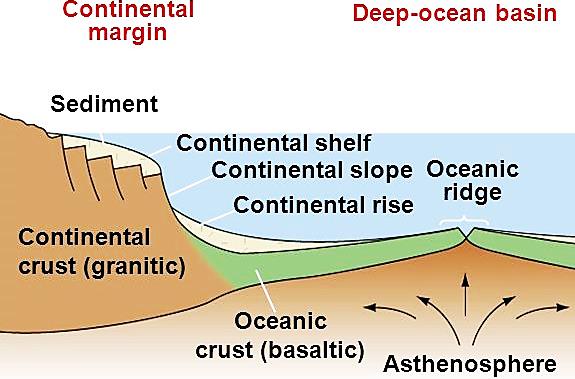
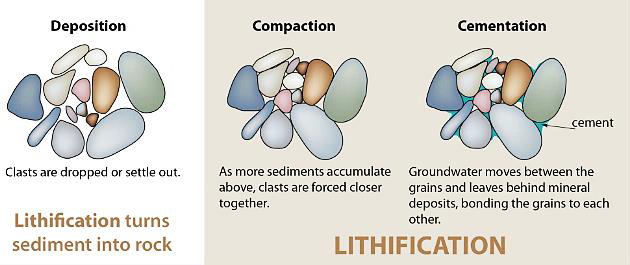
43. The boundary between the continents and 46. Lithification is a term that means
the deep-ocean basins lies along the "conversion into rock." continental shelf. a) True
a) True b) False b) False
Feedback: Lithification is a term used in
Feedback: Boundary between continents and geology to describe the process of transforming
deep-ocean basins lies along the continental sediments or loose particles into solid rock. This
slope. It is a steep drop-off that extends from process typically involves compaction,

the outer edge of the continental shelf to the cementation, and the hardening of sediments
floor of the deep ocean. over time, resulting in the formation of
sedimentary rocks.
--------------------------------------------------------------
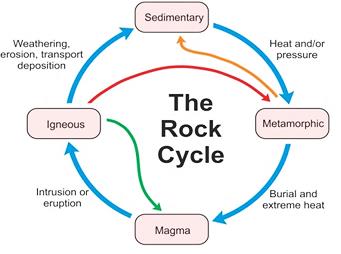
47. The rock cycle illustrates the origin of the
-------------------------------------------------------------- geologic processes in transforming one rock type into another. three basic rock types and the role of various
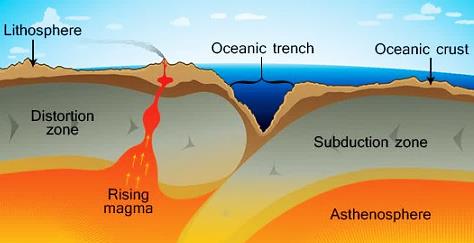
44. Extremely deep, relatively narrow
depressions on the ocean floor are called a) True abyssal plains. b) False
b) Feedback: The rock cycle is a fundamental a) True
False
Feedback: basic rock types (igneous, sedimentary, and Oceanic trenches are metamorphic) are interconnected and can be concept in geology that illustrates how the three
relatively narrow in width, but very long. transformed from one type to another through various geologic processes. topographic depressions of the sea floor,
These oceanographic features are the deepest
parts of the ocean floor. Oceanic trenches
typically extend 3 to 4 km below the level of the surrounding oceanic floor.
--------------------------------------------------------------
45. Magma is molten material that forms in --------------------------------------------------------------
Earth's interior where temperatures and 48. The Earth system is powered by energy pressures are such that rock melts. from two sources: _______ and _______.
a) True a) The Sun/Earth's interior. b) False b) The Sun/internal combustion.
c) Friction/wind.
Feedback: Magma is molten material that d) Tidal power/fossil fuels. forms in Earth's interior where temperatures e) None of the above. and pressures are such that rock melts. This
molten rock can eventually cool and solidify to Feedback: The Earth system is primarily form igneous rocks when it reaches the Earth's powered by energy from the Sun, which drives
surface or intrudes into existing rock processes such as weather, climate, and the
formations. Magma plays a crucial role in the water cycle. Additionally, Earth's interior heat,
formation of various geological features, generated by radioactive decay and residual
including volcanoes and igneous rock heat from its formation, also plays a role in
formations. geological processes. -------------------------------------------------------------- --------------------------------------------------------------
9
49. Geology is the science that pursues an plate boundaries, creating new oceanic crust as
understanding of __________. magma rises from below the Earth's surface
a) Planet Earth. and solidifies at the ridges. This process is a
b) Earth's biosphere. fundamental part of plate tectonics and
c) Earth's atmosphere. contributes to the reshaping of Earth's surface
d) The solar system. over geological time scales. Well done! e) None of the above.
Feedback: Geology is the scientific study of the Earth, its composition, structure, processes,

and history. It focuses on understanding the
origin and evolution of our planet.
--------------------------------------------------------------
52. According to the principle of
uniformitarianism:
a) Geologic processes we observe today have
operated in the past.
b) Geologic process in the past operated at the
same rate as they do today.
c) All of the planets formed from a uniform
-------------------------------------------------------------- solar nebula. 50. Earth's outermost layer, consisting of the d) Early Earth was covered by a uniform
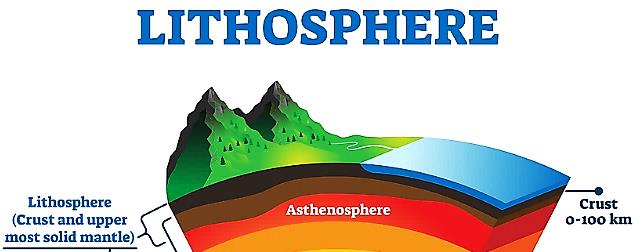
crust and uppermost mantle, is a relatively magma ocean. cool, rigid shell called the __________.
a) Core Feedback: The principle of uniformitarianism, b) Lithosphere. often summarized as "the present is the key to
c) the past," asserts that the same natural Asthenosphere.
d) Mesosphere. processes observed today have been at work
e) "D" layer. throughout Earth's history. It implies that by
studying present-day processes, scientists can
Feedback: The lithosphere is Earth's gain insights into past geological events and
outermost layer, which includes the rigid crust understand the Earth's history. and the uppermost part of the mantle. It is --------------------------------------------------------------
relatively cool and solid compared to the 53. Approximately how long ago did the Big underlying layers. Bang take place?
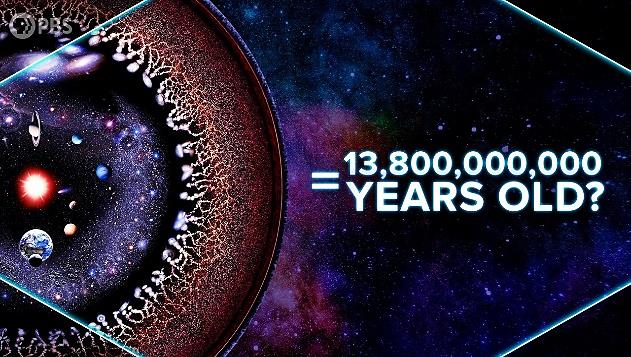
a) 10-15 thousand years ago. b) 10-15 million years ago. c) 100-150 million years ago. d) 10-15 billion years ago.
Feedback: The most widely accepted estimate for the age of the universe, based on
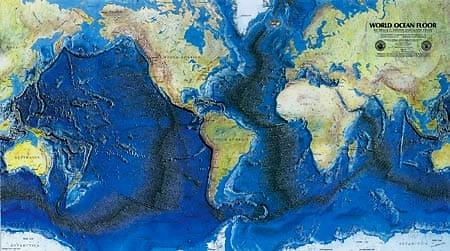
51. background radiation, is approximately 13.8 The __________ form(s) a continuous belt billion years. This aligns with the concept of the -------------------------------------------------------------- observations such as the cosmic microwave
(43,000 miles) around the globe. Big Bang, which is the prevailing cosmological model explaining the origin and expansion of that winds for more than 70,000 kilometers
a) Oceanic ridge system.
b) the universe. Himalayas.
c) Deep-ocean trenches.
d) Alps.
e) Mississippi River system.
Feedback: A mid-ocean ridge is a seafloor mountain system formed by plate tectonics. It
typically has a depth of approximately 2,600
meters and rising about two kilometers above
the deepest portion of an ocean basin. Seafloor
spreading occurs at mid-ocean ridges, where
tectonic plates move apart along divergent --------------------------------------------------------------
10
54. Which of the following statements regarding 56. What are the two most abundant elements
the scientific methods is true? in nebula (gas clouds) in the universe?
a) A hypothesis must be agreed upon by more a) Nitrogen and oxygen.
than one scientist. b) Oxygen and silicon.
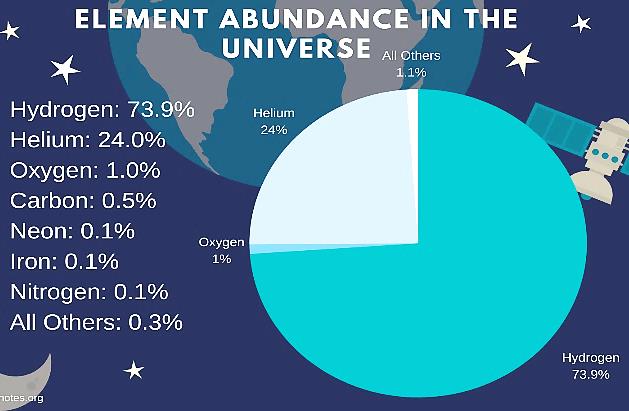
b) A theory is a hypothesis that has withstood c) Hydrogen and helium.
many scientific tests. d) Iron and nickel.
c) A theory is proven to be true, and therefore
may not be discarded. Feedback: Hydrogen and helium are the two
d) A hypothesis cannot predict the outcome of most abundant elements in the universe,

scientific experiments. especially in nebulae (gas clouds) where stars
form. They make up the vast majority of the
Feedback: In the scientific method, a elemental composition of the cosmos. Nitrogen,
hypothesis is a proposed explanation for a oxygen, silicon, iron, and nickel are also
phenomenon that can be tested through present in the universe but in much smaller
experimentation or observation. A theory, on quantities compared to hydrogen and helium.
the other hand, is a well-substantiated
explanation of some aspect of the natural world
that is based on a body of evidence that has
withstood repeated testing and scrutiny. The
term "theory" in science does not mean a mere
guess or hypothesis but rather a
comprehensive and robust explanation
supported by a substantial body of evidence.
Theories can be modified or discarded if new
evidence contradicts them, as science is a
dynamic process that continually seeks to
55. 57. The heat that caused melting in the Earth's temperature, hydrogen atoms combine to early history was supplied from which of the form helium. This process is called: following events or causes? a) -------------------------------------------------------------- -------------------------------------------------------------- Under intense pressure and high refine our understanding of the natural world.
b) Nuclear fission b) Solar heating and volcanic activity. Metamorphism Nuclear fusion a) Volcanic activity and radioactivity. c) c) A large impact event and radioactivity. d) Convection d) A large impact event and solar heating.
Feedback: Nuclear fusion is the process by Feedback: The heat that caused melting in which hydrogen atoms combine to form helium Earth's early history was primarily supplied by under intense pressure and high temperature, two main events or causes: which releases a tremendous amount of Accretion: During the process of planet energy. This process is what powers the sun formation, Earth accumulated material from the and other stars, where hydrogen nuclei surrounding protoplanetary disk. As numerous (protons) fuse together to create helium nuclei. small particles and planetesimals collided and It is the opposite of nuclear fission, where heavy merged, their kinetic energy was converted into atomic nuclei split into smaller nuclei. heat. This heat, generated by the energy of Metamorphism and convection are geological impact and accretion, led to the melting of processes unrelated to nuclear fusion. materials in the growing planet. Deuterium and tritium are isotopes of hydrogen, Radioactive Decay: Another significant source meaning they are variants of the hydrogen atom of heat was the radioactive decay of certain with different numbers of neutrons. isotopes present in Earth's composition. Radioactive isotopes, such as uranium, thorium, and potassium, undergo decay
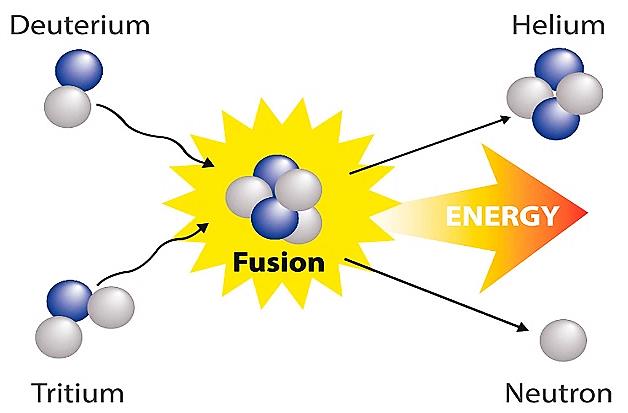
processes that release heat as a byproduct.
This radioactive decay contributed to the overall
heat budget of Earth and played a role in
maintaining the planet's molten state early in its
history.
These two processes, along with residual heat
from the planet's formation, led to the
differentiation of Earth's interior and the
formation of its core, mantle, and crust. The
heat generated by accretion and radioactive
decay was responsible for the initial melting of
--------------------------------------------------------------
11
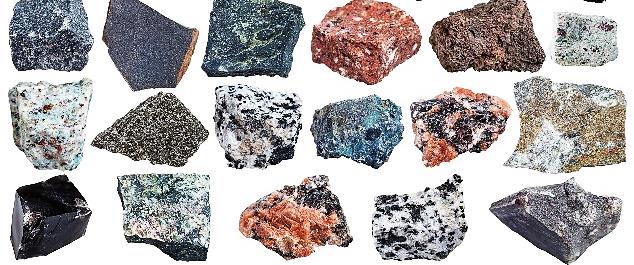
materials and the subsequent differentiation of molten material. They form by the crystallization
Earth's layers. of solids from a liquid (magma or lava) and can
-------------------------------------------------------------- be produced under both high and low-pressure
58. The process by which an originally conditions, depending on the specific
homogeneous Earth developed a dense geological circumstances. core and a light crust is called:
a) Metamorphism.
b) Differentiation.
c) Accretion.

d) Compression.
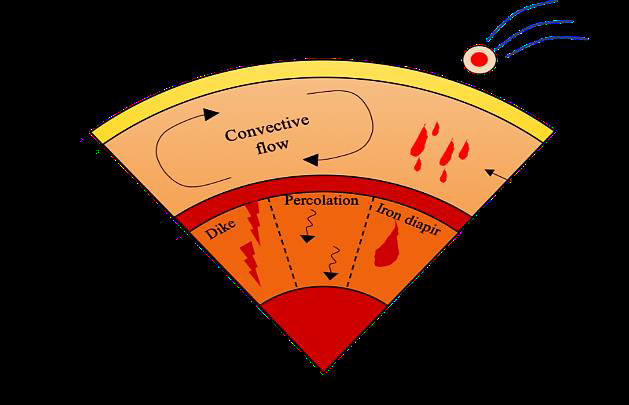
Feedback: "Differentiation" refers to the
undergoes a separation and sorting of its process by which a planet or celestial body --------------------------------------------------------------
constituent materials based on their density. 61. Minerals: This process typically occurs during the early a) Can form by life-processes – organic. stages of planetary formation when the body is b) Are crystalline solids. in a partially molten or liquid state. On Earth, for c) Have a unique chemical composition. example, differentiation played a crucial role in d) Can be any state (solid, liquid, or gas) as
formed from dust and gas in the early solar Minerals a naturally occurring, Feedback: system, heat from accretion and the decay of inorganic, solid, crystalline substance which radioactive isotopes caused melting and shaping the planet's interior structure. As Earth long as that state occurs naturally.
differentiation to occur. The densest materials, has a fixed structure and a chemical composition which is either fixed or which may primarily iron and nickel, sank toward the center vary within certain defined limits. to form the core, while lighter silicate minerals rose to form the mantle and crust.
--------------------------------------------------------------
62. Metamorphic rocks are changed rocks.

Which of the following rock types could be
-------------------------------------------------------------- a) Sedimentary. b) the "parent" of a metamorphic rock?
a) How thick is the crust of the Earth? c) Metamorphic. About 4 miles. d) 59. Igneous. b) All of the above.
c) About 40 km. Feedback: Metamorphic rocks can be derived d) About 4 km.
(about 18-31 miles) beneath the continents and changes in mineral composition, texture, and about 4 kilometers (about 2.5 miles) beneath structure, resulting in the formation of the ocean floors. This variation in thickness is metamorphic rocks. due to the different types of crust found in these -------------------------------------------------------------- regions. 63. _______involves transfer of heat by the -------------------------------------------------------------- physical movement of the material: 60. In general, igneous rocks: a) Conduction. a) Feedback: The average thickness of the sedimentary, igneous, or even other metamorphic rocks. When subjected to high Earth's crust is approximately 30-50 kilometers heat and pressure, these rocks can undergo About 400 km. from any of the three primary rock types:
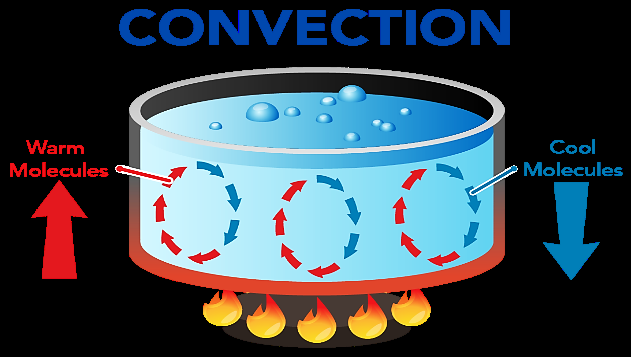
b) Form at relatively high temperatures b) Convection. Form by crystallization of solids from a c) Metamorphism. liquid. d) Radiation. c) Form at high and low pressures. d) All of the above. Feedback: Convection involves the transfer of heat through the physical movement of a Feedback: Igneous rocks do indeed form at material, typically in a fluid (liquid or gas). It relatively high temperatures, typically from occurs when warmer, less dense material rises
12
and displaces cooler, denser material, creating b) Subduction. a continuous cycle of heat transfer. This c) Divergence zone. process is common in Earth's mantle and plays d) Contraction fault. a significant role in plate tectonics and other
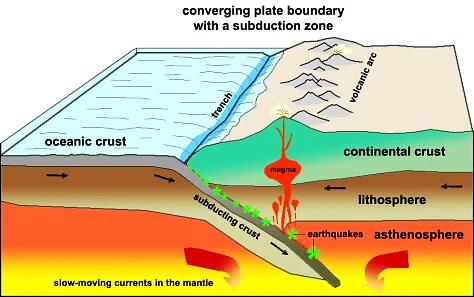
geological phenomena. Feedback: The descent of oceanic lithosphere
into the mantle is the process of subduction.
Subduction occurs at convergent plate
boundaries where one tectonic plate is forced
beneath another plate. This process is

responsible for the recycling of old oceanic
crust and contributes to the formation of deep-
sea trenches, volcanic arcs, and earthquakes in
subduction zones.
--------------------------------------------------------------
64. ________is called the "father" of geology. a) John Butler.
b) Art Smith.
c) James Hutton.
d) Alfred Wegner.
Feedback: James Hutton was a Scottish geologist, physician, chemical manufa
cturer, naturalist, and -------------------------------------------------------------- experimental agriculturalist. He contributed to 67. Which of the following features is not what was later called uniformitarianism a associated with a convergent plate
fundamental principle of geology that explains boundary? the features of the Earth's crust by means of a) A mid-ocean ridge natural processes over geologic time. Hutton's b) Earthquakes. work helped to establish geology as a science, c) A deep-sea trench zone. and as a result he is often referred to as the d) Volcanic activity. "Father of Modern Geology".
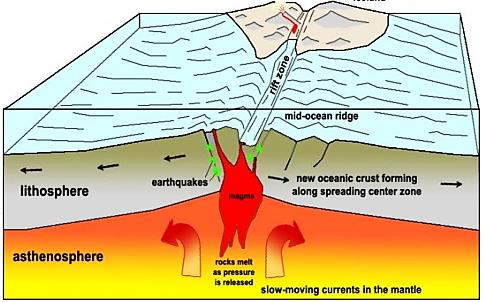
-------------------------------------------------------------- Feedback: A mid-ocean ridge is an underwater 65. mountain range, formed by plate tectonics. This New seafloor is created at a _______?
a) uplifting of the ocean floor occurs when Deep-sea trench.
b) convection currents rise in the mantle beneath Mid-ocean ridge.
c) the oceanic crust and create magma where two Subduction zone.
d) tectonic plates meet at a divergent boundary. Transform fault.
--------------------------------------------------------------
Feedback: New seafloor is created at mid- 68. The greatest threat to our environment is: ocean ridges, where tectonic plates are a) Volcanoes. diverging or moving away from each other. At b) Earthquakes. these underwater mountain ranges, magma c) Humans. rises from the Earth's mantle to the ocean floor, d) Bacteria. solidifies, and forms new oceanic crust. This
process is a key component of plate tectonics Feedback: The greatest threat to our and contributes to the continuous renewal and environment is often considered to be human
recycling of the Earth's crust. activities. Human actions, such as
deforestation, pollution, overpopulation, and
the burning of fossil fuels, have had a significant
impact on the environment and have
contributed to issues like climate change,
habitat destruction, and biodiversity loss. While
natural disasters like volcanoes and
earthquakes can be destructive, they are
typically less frequent and widespread in their
effects compared to the cumulative impact of
human activities.
--------------------------------------------------------------
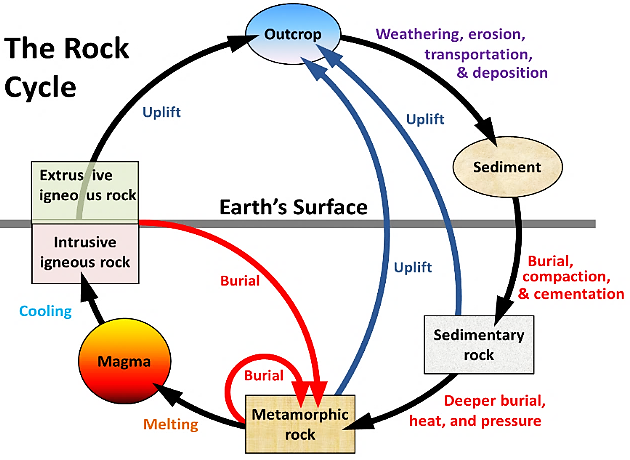
-------------------------------------------------------------- 69. Earth materials always trace the complete 66. The descent of oceanic lithosphere into the rock cycle from sediment through igneous
mantle is the process of _______? rocks.
a) Accretion. a) True
13
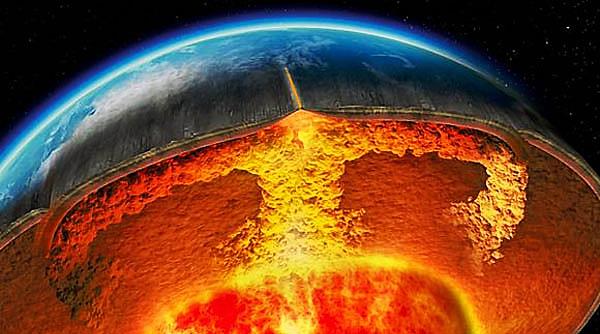
b) False Feedback: Mantle: is the part of the earth
between the core and the crust. It is about 2,900
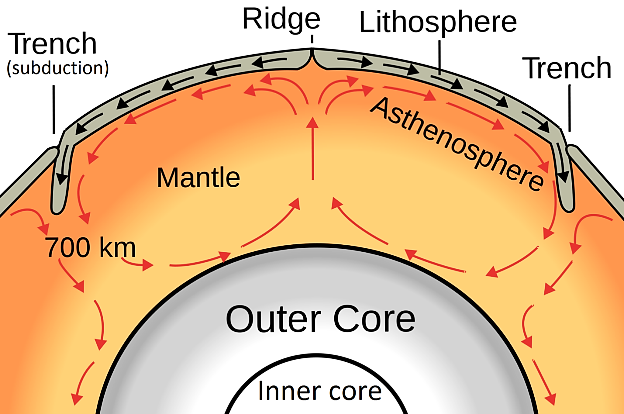
Feedback: Earth materials do not always trace km thick and makes up nearly 80 percent of the the complete rock cycle from sediment through Earth's total volume. The mantle is made up of igneous rocks. The rock cycle is a conceptual magma and rock. Asthenosphere: zone model that describes the various processes of Earth’s mantle lying beneath through which rocks can be formed, the lithosphere and believed to be much hotter transformed, and reformed over geological and more fluid than the lithosphere. The time. It involves three main types of rocks: asthenosphere extends from about 100 km to igneous, sedimentary, and metamorphic. While about 700 km below Earth’s surface.

the rock cycle outlines the potential pathways Convection currents generated within the
that rocks can take, not all rocks go through asthenosphere. every stage of the cycle. Some rocks may
directly transform from one type to another,
skipping certain stages.
--------------------------------------------------------------
72. Because we rarely witness dramatic
changes in the Earth, we can conclude that
the Earth is not changing very much.
a) True
b) True necessarily imply that the Earth is not changing False very much. Earth is a dynamic and constantly evolving planet, but many of its changes occur Feedback: The crust (whether continental or over long timescales that are beyond the scope oceanic) is the thin layer of distinctive chemical of human observation. Geological processes, composition overlying the ultramafic upper such as plate tectonics, mountain building, mantle. The base of the crust is defined 70. The terms crust and lithosphere are Feedback: The fact that we rarely witness synonymous. dramatic changes in the Earth does not a) -------------------------------------------------------------- b) False
seismologically by the Moho discontinuity, erosion, and climate changes, often operate slowly and gradually over millions of years. about 35 - 40 km thick. The lithosphere While some changes, such as earthquakes and includes the crust (whether continental or volcanic eruptions, can be more sudden and oceanic) and the uppermost part of the upper noticeable, they still represent just a small mantle. It thins to a few kilometers at ocean portion of the ongoing geological activity. spreading centers, thickens to about 100 - 150 Moreover, Earth's surface is influenced by a km under the older parts of ocean basins, and wide range of natural processes and is up to 250 - 300 km thick under continental interactions that may not always result in shield areas. dramatic or easily observable changes. -------------------------------------------------------------- 73. The crust of the Earth is static and stable. a) True b) False
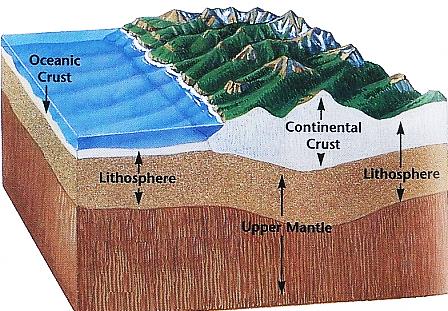
Feedback: The crust of the Earth is not static and stable; rather, it is dynamic and constantly
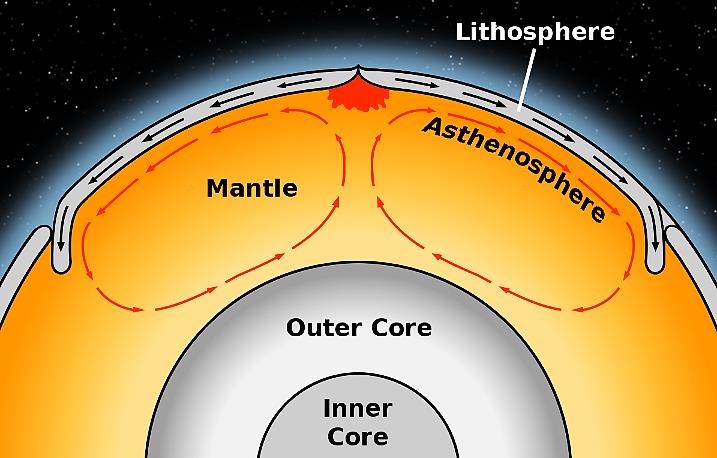
changing due to various geological processes.
The Earth's crust is divided into tectonic plates
-------------------------------------------------------------- beneath them. These plates are in motion, driven by the convective currents in the mantle. that float on the semi-fluid asthenosphere
71. The terms Mantle and Asthenosphere are --------------------------------------------------------------synonymous. 74. Features useful in defining plate boundaries a) True include all except: b) False a) Shorelines between continents and oceans.
14
b) Distribution of volcanoes. a) The recognition that processes still active c) Distribution of earthquakes. today could produce almost any known rock
d) Distribution of mountain ranges. type. e) All are correct. b) The description of plausible processes for
converting one rock type to another.
Feedback: Shorelines are not useful in defining c) A change in outlook on Earth processes plate boundaries, because they do not reflect from a catastrophic to a uniformitarian one.
the underlying tectonic activity. Plate d) All of the above. boundaries are defined by the relative motion e) None of the above. and interaction of the lithospheric plates that --------------------------------------------------------------

make up the Earth’s crust and upper mantle. 78. One of geology's greatest contributions to Features that are useful in defining plate human thought is: boundaries include the distribution of a) The realization that the world is round. volcanoes, earthquakes and mountain ranges, b) The realization that the sun not the Earth is which are associated with different types of the center of the solar system. plate boundaries such as divergent, convergent c) The recognition of the long span of time and transform. For example, volcanoes are involved in Earth history. common along divergent boundaries where d) The recognition that the Earth is the center plates move apart and new crust is formed, of the solar system. such as the Mid-Atlantic Ridge. Earthquakes
are frequent along convergent boundaries Feedback: One of geology's greatest where plates collide and subduct, such as the contributions to human thought is the
Pacific Ring of Fire. Mountain ranges are recognition of the vast and extended timescales
formed along convergent boundaries where involved in Earth's history. This understanding
plates collide and uplift, such as the Himalayas. emerged through the work of geologists like
-------------------------------------------------------------- James Hutton, who promoted the concept of
75. The motions of the three types of plate deep time and uniformitarianism. It was a
boundaries would be described as crucial shift from earlier ideas that often
divergent, convergent, and static. perceived Earth's history within a much shorter
a) True timeframe. Recognizing the immense age of
b) False the Earth has profound implications for
understanding geological processes, the
Feedback: There are three kinds of plate evolution of life, and the development of the
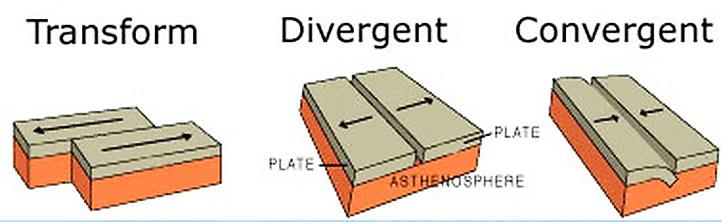
tectonic boundaries: divergent, convergent, planet as a whole. and transform plate boundaries. --------------------------------------------------------------
79. Evidence of uniformitarian change includes: a) Glacial deposits in areas where no glaciers
are presently found.
b) Fossils of marine animals found at high
elevation.
c) Continents covered by sediments deposited
76. All of the above. The age of the Earth is currently thought to f) None of the above. be: a) About 6,000 years old. Feedback:-------------------------------------------------------------- d) Wide canyons cut by small streams. e) in an ocean.
b) Evidence of uniformitarian change About 6 billion years old. includes all of the listed examples. These c) About 4,500,000 years old. geological features and phenomena support d) About 4,500,000,000 years old. the idea that Earth's surface has undergone e) None of the above. significant changes over long periods of time,
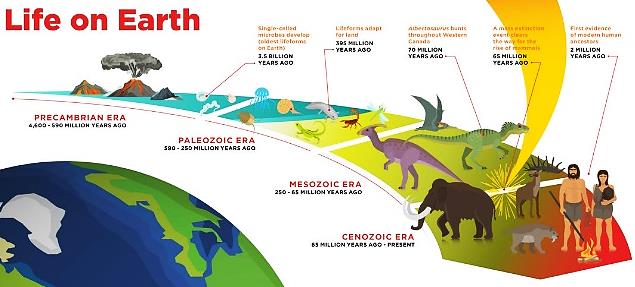
Feedback: consistent with the principles of The current scientific consensus, uniformitarianism. based on various dating methods and evidence -------------------------------------------------------------- from geology, astronomy, and other fields, 80. Living organisms have been on Earth for supports an estimate that the Earth is ______ of Earth's history? approximately 4.5 billion years old. This a) Less than 1%. estimate takes into account the age of the b) About 20%. oldest rocks on Earth, the ages of meteorites, c) About 50%. and other data related to the formation and d) About 80%. evolution of our planet. -------------------------------------------------------------- Feedback: Living organisms have been on 77. The contribution made to geology by James Earth for about 80% of Earth’s history, which is Hutton was: estimated to be 4.54 billion years old. The
15
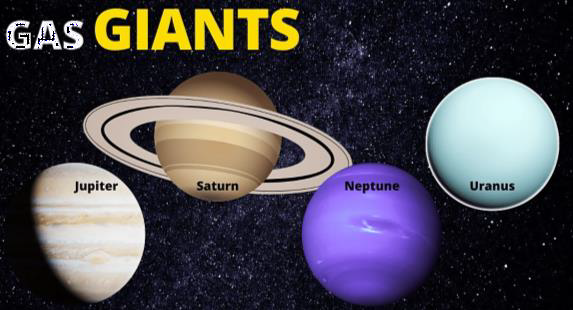
earliest known life forms on Earth are believed Feedback: The outer planets, also known as to be fossilized microorganisms found in gas giants, are fascinating celestial bodies.
hydrothermal vent precipitates, considered to They are primarily composed of hydrogen and
be about 3.42 billion years old. helium, which are the two lightest elements in
the universe. These planets have massive
atmospheres consisting mainly of these gases,
and they lack a solid surface like terrestrial
planets. Instead, they transition from gas to
denser materials in their interiors as you move

towards their cores.
--------------------------------------------------------------
81. Humans have been on Earth for _______ of
Earth's history:
a) Less than 1%.
b) About 20%.
c) About 50%.
d) About 80%.
Feedback: -------------------------------------------------------------- Humans have been on Earth for a 84. The name of the layer of the Earth that very short time compared to the age of the separates the crust from the core is the: planet. The first human on Earth was Homo a) Magma. sapiens, which evolved approximately 200,000 b) Lithosphere. years ago in East Africa, which is less than c) Asthenosphere. 0.005% of Earth's estimated age of d) Mantle. approximately 4.5 billion years. Therefore, humans have been on Earth for less than 1% of Feedback: The layer of the Earth that Earth’s history. separates the crust from the core is called the -------------------------------------------------------------- mantle. The mantle is located between the 82. What caused dust and condensing material Earth's crust and the outer core. It is composed to accrete into planetesimals? of solid rock that can flow over geological a) Heating of gases. timescales, and it plays a crucial role in various b) Gravitational attraction and collisions. geological processes, including convection c) Nuclear fusion. currents that drive tectonic plate movement. d) Rotation of the proto-sun. -------------------------------------------------------------- 85. The Earth's external heat engine is not Feedback: Planetesimals, which are small responsible for which of the following: celestial bodies that served as building blocks a) Climate. for planets, formed through the gravitational b) Erosion. attraction of dust and condensing material in c) Tides. the protoplanetary disk. Collisions between d) Winds. these particles played a crucial role in their accretion into larger objects. Feedback: The Earth's external heat engine is not responsible for tides. Tides are primarily

caused by the gravitational interactions
between the Earth, the Moon, and the Sun. The
gravitational pull of the Moon and the Sun
creates tidal forces that result in the rise and fall
of ocean water, causing tides. Climate, erosion,
and winds, on the other hand, are influenced by
the Earth's external heat engine, which includes
solar radiation and the heat distribution patterns
in the atmosphere and oceans.
-------------------------------------------------------------- 86. What powers the Earth's internal heat engine? --------------------------------------------------------------
83. The outer planets are composed mostly of: a) Radioactivity. a) Rocks and ice. b) Solar energy. b) Oxygen and nitrogen. c) Volcanoes. c) Hydrogen and helium. d) Ocean tides. d) Helium and krypton.
16
Feedback: The Earth's internal heat engine is d) In the 1960s. primarily powered by radioactivity. Radioactive
decay of isotopes within the Earth's mantle and Feedback: The theory of plate tectonics is a core generates heat. This heat is a significant relatively modern scientific concept that
contributor to the thermal energy that drives revolutionized our understanding of the Earth's
geological processes such as mantle surface and geological processes. While ideas
convection, plate tectonics, and the formation of and observations related to the movement of
volcanic activity. While solar energy does play continents and geological features date back to
a role in heating the Earth's surface, it is not the the mid-1800s and early 1900s, the

primary source of heat for the planet's internal comprehensive theory of plate tectonics as we
processes. know it today began to take shape in the mid-
20th century. The 1950s and 1960s were
particularly significant decades for the
development and acceptance of the theory.
One of the key pieces of evidence supporting
plate tectonics was the discovery of mid-ocean
ridges and deep-sea trenches, as well as the
mapping of magnetic anomalies on the ocean
floor. This research was conducted in the 1950s
and 1960s. The term "plate tectonics" was
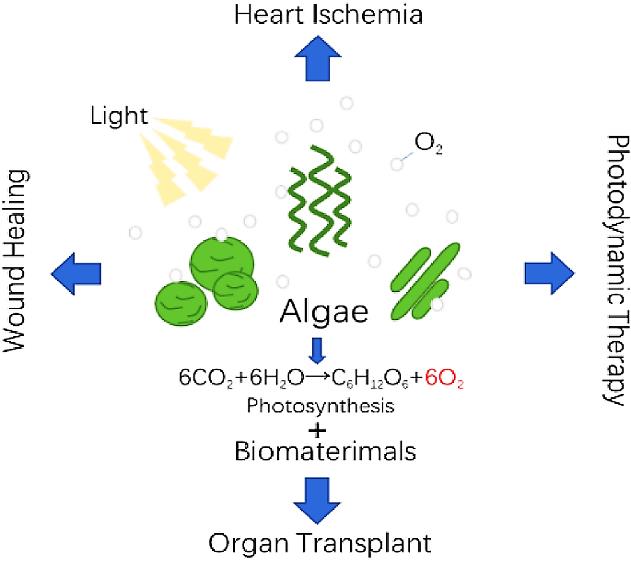
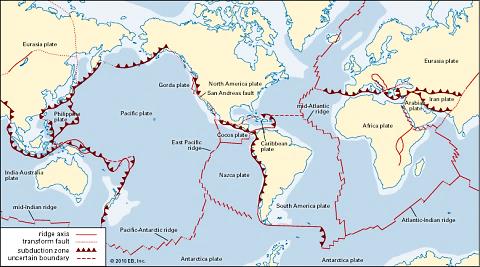
d) Algae and other organisms employed The Earth's lithosphere is broken into 89. photosynthesis. approximately ______ large, rigid plates. Oxygen settled on Earth from planets further a) 2 from the sun. b) 12 c) 50 Feedback: Oxygen built up in the Earth's d) 100 atmosphere because algae and other photosynthetic organisms released oxygen as Feedback: The Earth's lithosphere is divided a byproduct of photosynthesis. These into approximately 12 large, rigid plates. These organisms converted carbon dioxide and water plates are called tectonic plates and they float into glucose and oxygen using sunlight as an on the semi-fluid asthenosphere beneath them. energy source. Over time, the oxygen they The interactions and movements of these produced accumulated in the atmosphere, a) because: proposed the concept of continental drift earlier The oceans separated from the crust. in the 20th century, contributed to the b) Rocks weathered and released their foundation of plate tectonics theory. oxygen. -------------------------------------------------------------- c) 87. Oxygen built up in the Earth's atmosphere the scientific community during the 1960s. Researchers like Alfred Wegener, who -------------------------------------------------------------- coined and the theory was widely accepted in
leading to the oxygen-rich atmosphere we have plates are responsible for many geological phenomena, including earthquakes, volcanoes, today. and the formation of mountain ranges.
--------------------------------------------------------------
90. The lithosphere is approximately ______
kilometers thick.
a) 1-2 b) 5-10
-------------------------------------------------------------- d) c) 50-100 100-200
88. When did geologists develop the theory of
a) In the mid 1800s. 50-100 kilometers thick. The lithosphere plate tectonics: Feedback: The lithosphere is approximately
b) In the early 1900s. includes the Earth's crust and the uppermost In the 1950s. c) part of the mantle. It is divided into tectonic
17
plates, which are rigid segments that move and d) Random circulation occurs. interact with each other on the Earth's surface.
The thickness of the lithosphere can vary Feedback: Convection currents involve the beneath the oceanic and continental regions. movement of fluids (liquids or gases) due to
-------------------------------------------------------------- differences in temperature. When a fluid is
91. The asthenosphere is _________. heated, it becomes less dense and rises,
a) Cool and strong. displacing cooler and denser fluid. As the
b) Cool and weak. heated fluid rises, it cools down and eventually
c) Hot and strong. sinks, creating a continuous circular motion.

d) Hot and weak. This is the fundamental mechanism behind
convection and plays a significant role in
Feedback: The asthenosphere is a layer in the various Earth processes, including the
upper mantle of the Earth that is relatively hot movement of tectonic plates in the mantle. and contains partially molten material. This
makes it weaker and more ductile compared to
the cooler and more rigid lithosphere above it.
The asthenosphere plays a significant role in
the movement of Earth's tectonic plates.
--------------------------------------------------------------
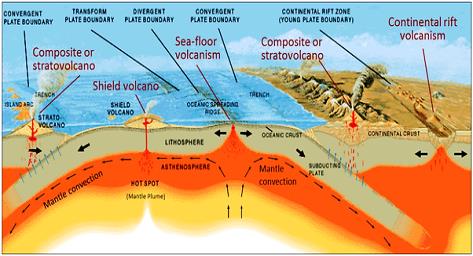
92. A __________ plate boundary is illustrated
in the figure show below.
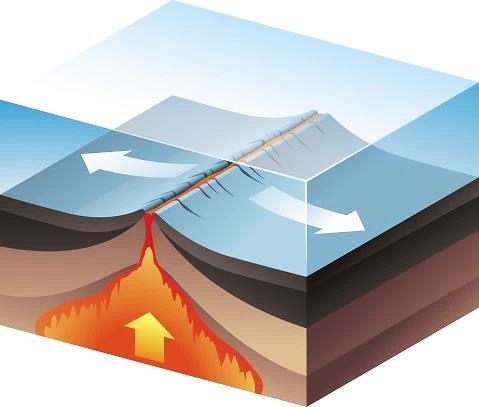
--------------------------------------------------------------
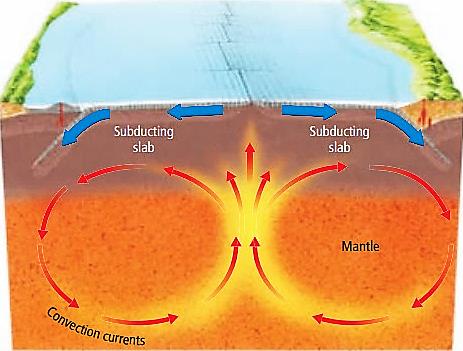
95. Which of the following is NOT a type of plate
boundary?
a) Convergent. b) Divergent. c) Transform fault. d) All of these are plate boundaries. --------------------------------------------------------------
b) Divergent. a) 1 km c) Convergent – subduction. b) 10 km d) Convergent - continent/continent collision. c) a) Transform fault. are deep-sea trenches? 96. Approximately how deep (below sea level) -------------------------------------------------------------- d) 100 km 1000 km
93. Approximately how fast does an Earth
a) lithospheric plate move? Feedback: Deep-sea trenches are typically 8 to Several centimeters per year. 10 km (5 to 6 miles) deep. The deepest known b) Several centimeters per day. depression of this kind is the Mariana Trench, c) Several centimeters per hour. which reaches 11,034 meters (36,200 feet) at d) Several centimeters per second. its deepest point.
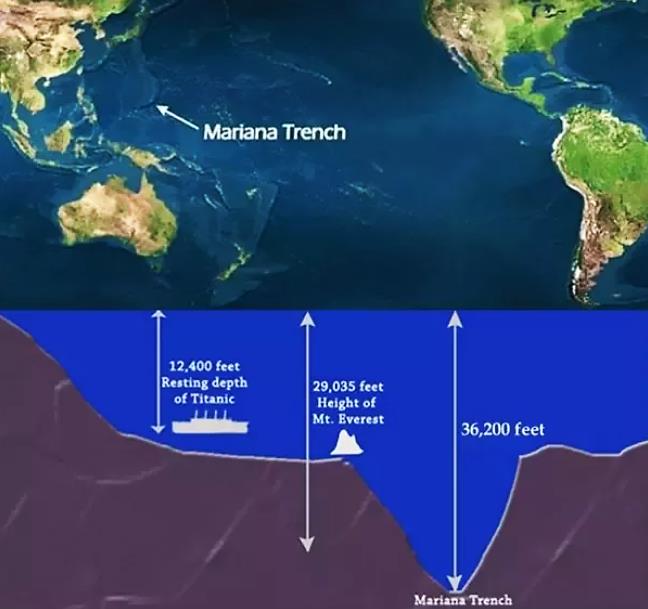
Feedback: Earth's lithospheric plates move at a relatively slow pace, typically several
centimeters per year. This movement is driven
by the underlying convection currents in the
semi-fluid asthenosphere beneath the plates.
While this rate might seem slow, over
geological time scales, it leads to significant
changes in the positions of continents and the
shapes of ocean basins. This process is a
fundamental aspect of plate tectonics.
--------------------------------------------------------------
94. Which of the following statements about
convection currents is true?
a) Heat is transferred from hot material to cool
b) material without inducing a flow. -------------------------------------------------------------- Cool material flows upward and displaces 97. Which of the following features is associated hot material. with a transform plate boundary? c) Hot material flows upward and displaces a) A mid-ocean ridge. cool material. b) Earthquakes.
18
c) A deep sea-trench. b) Divergent. d) Volcanic activity. c) Transform.
d) They are not related to a plate boundary.
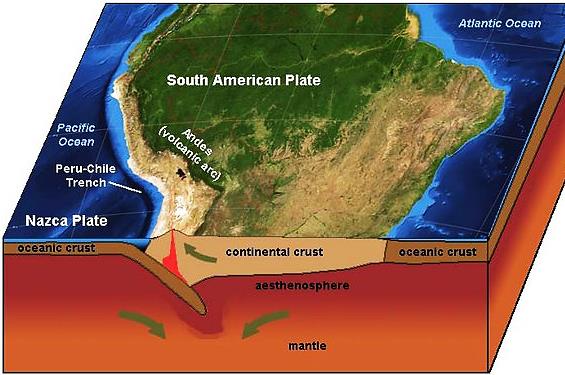
Feedback: Transform plate boundaries are characterized by the sliding or lateral Feedback: The Andes Mountains of South movement of tectonic plates past each other. America are primarily the result of a convergent
This horizontal movement is often marked by plate boundary. Specifically, the Andes are
transform faults. Earthquakes are common formed where the Nazca Plate is subducting
along transform faults as the plates grind beneath the South American Plate. This

against each other. Mid-ocean ridges are subduction process leads to intense tectonic
associated with divergent boundaries, deep- activity, including the formation of mountain
sea trenches with convergent boundaries, and ranges and volcanoes along the boundary. So,
volcanic activity can be found at both the Andes Mountains are a classic example of
convergent and divergent boundaries but is not a convergent plate boundary in action. a typical feature of transform boundaries.
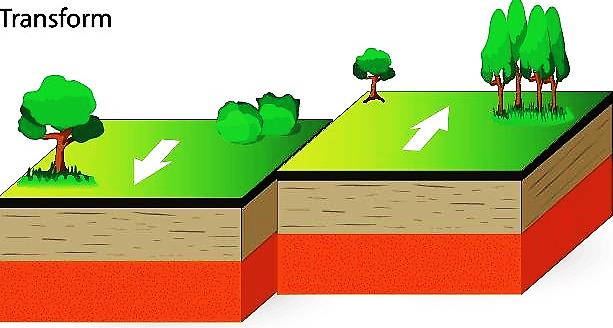
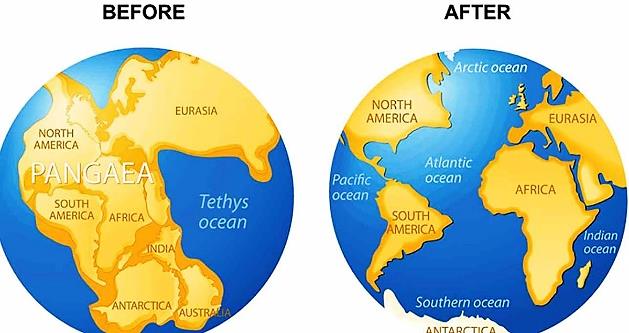
a) 100. What is the name of the large Convergent plate boundaries. supercontinent that existed 200 million b) Divergent plate boundaries. years ago when all of the continents were c) Transform fault plate boundaries. together? d) Divergent and convergent plate boundaries. a) 98. Volcanism is associated with which of the -------------------------------------------------------------- following types of plate boundaries? --------------------------------------------------------------
from each other. As they separate, magma from Pangaea was the name of the large supercontinent that existed approximately 335 the mantle rises to fill the gap, creating new to 175 million years ago during the late crust and often forming volcanic features. This Paleozoic and early Mesozoic eras. It was a process is known as seafloor spreading and is time when all the major continents were joined responsible for the formation of mid-ocean together as one landmass before they began to ridges. break apart and move to their current positions Convergent Plate Boundaries: At convergent due to the process of plate tectonics. Alfred boundaries, tectonic plates are colliding or Wegener first proposed the concept of subducting beneath each other. The intense Pangaea as part of his theory of continental divergent and convergent plate boundaries: Indian. d) Pangaea. Divergent Plate Boundaries: At divergent boundaries, tectonic plates are moving apart Feedback: Feedback: b) Andian. Volcanism is associated with both c) San Andreas.
pressure and heat generated at these drift. boundaries can lead to the melting of crustal material and the formation of volcanoes. Volcanic arcs and mountain ranges are often associated with convergent plate boundaries.
--------------------------------------------------------------
101. Why is our vulnerability to natural
-------------------------------------------------------------- a) Because the frequency of volcanic eruptions is increasing. disasters growing?
99. The Andes Mountains of South America are b) Because the human population is a result of which type of plate boundary? increasing. a) Convergent.
19
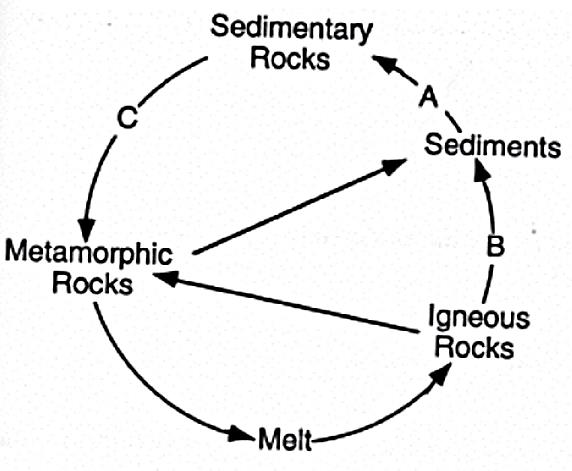
c) Because the number of earthquakes each 104. Referring to the diagram below, path B
year is increasing. is:
d) Because the number of floods each year is
increasing.
Feedback: Our vulnerability to natural disasters is growing primarily because the
human population is increasing and more
people are living in areas prone to natural

disasters. This population growth leads to
urbanization and the development of
infrastructure in vulnerable regions, making
more people and property at risk when natural
disasters occur. Additionally, climate change
can exacerbate the frequency and intensity of
some natural disasters, such as hurricanes and
102. b) The theory of plate tectonics was not Melting, crystallization, heat and pressure. c) initially widely accepted because ______. d) Deposition, lithification and crystallization. a) Land bridges would have blocked plate -------------------------------------------------------------- -------------------------------------------------------------- a) Uplift, weathering and erosion, deposition. Deposition, heat and pressure, weathering. wildfires, further increasing our vulnerability.
b) 105. Referring to the diagram below what Rocks of the Earth's crust were considered factor(s) are responsible for path C? movement.
too stiff for continents to move through them.
c) Fossils on South America and Africa did not
match.
d) Ocean floor mapping showed that older
rocks occur away from mid-ocean ridges.
Feedback: The theory of plate tectonics was not initially widely accepted because scientists
initially believed that the rocks in Earth's crust
were too rigid and immovable for continents to
move through them. This view began to change
with the development of evidence and research
that supported the idea of continental drift and
the movement of tectonic plates. Other factors
the development and acceptance of plate Melting. a) tectonics, but the idea of rigid rocks was a mentioned in the options also played a role in
103. Burial and lithification. Referring to the diagram below, path A -------------------------------------------------------------- is: 106. Choose the list that shows rock composition decreasing in silica and -------------------------------------------------------------- c) Heat and pressure. d) significant barrier to its acceptance initially. b) Crystallization.
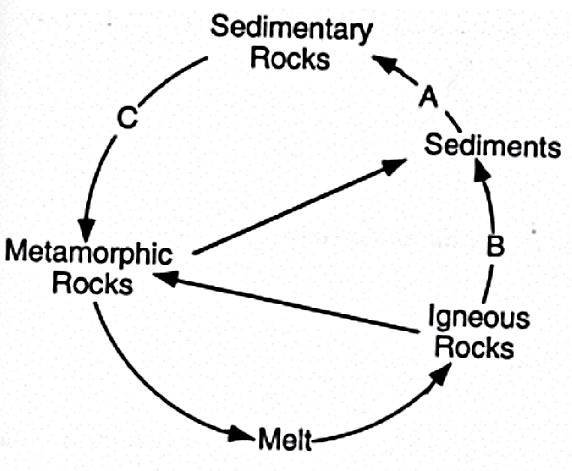
increasing in iron and magnesium.
a) Granite, basalt, peridotite. b) Peridotite, basalt, granite. c) Basalt, peridotite, granite d) Granite, peridotite, basalt e) The question is invalid; they’re all equally
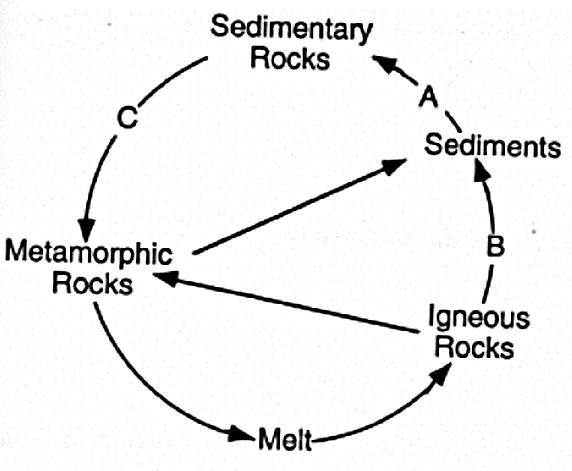
rich in iron and magnesium.
Feedback: This list shows rock composition decreasing in silica and increasing in iron and
magnesium content as you go from granite to
basalt to peridotite.
a) is rich in silica (composed mainly of quartz and Cooling and crystallization. feldspar) and has lower iron and magnesium Granite: Granite is a type of igneous rock that
c) content. It is a continental rock and is less Weathering and deposition. dense than basalt and peridotite. b) Burial and lithification.
d) Cooling and uplift.
--------------------------------------------------------------
20
Basalt: Basalt is another igneous rock that is 109. Identify the FALSE statement: The formed from solidified lava. It has a lower silica categories of materials that constitute Earth
content compared to granite, making it richer in include: iron and magnesium. Basalt is commonly found a) Glasses; solids in which atoms are not in in oceanic crust. any orderly pattern. Peridotite: Peridotite is an ultramafic igneous b) Volatiles; materials that easily become rock with the lowest silica content and the gases at ordinary Earth surface
highest iron and magnesium content among the temperatures. three. It is typically found in the Earth's mantle c) Organic chemicals; all carbon-containing and is rarely exposed at the surface. compounds, including oil, protein, carbon

-------------------------------------------------------------- dioxide, and calcium carbonate. 107. Identify the FALSE statement: d) Alloys; mixtures of more than one type of a) The Moho marks the boundary between the metal atom.
lithosphere and the asthenosphere. e) Melts; solid materials that have melted due
b) Continental crust can be four times as thick to heat.
as ocean crust.
c) Continental crust is less mafic than ocean Feedback: Organic chemicals are a category
crust. of Earth material, but they include only the
d) Ocean crust is denser than continental carbon compounds that occur in living
crust. organisms. Carbon dioxide and calcium
e) Ocean crust consists of basalt and gabbro; carbonate are not considered organic
continental crust consists of a great variety chemicals, even though they contain carbon.
of rock types. --------------------------------------------------------------
110. Identify the FALSE statement: Earth’s
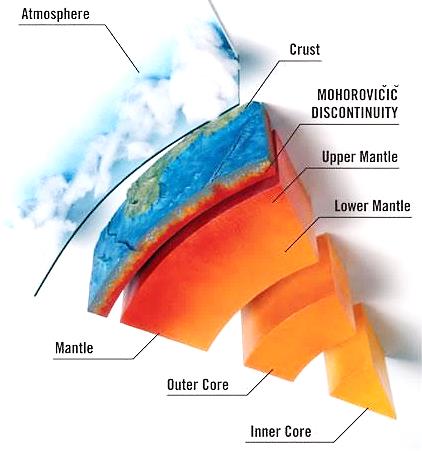
Feedback: The Moho (Mohorovičić surface varies in composition and elevation: discontinuity) marks the boundary between the a) 70% is surface and subsurface water (the Earth's crust and the underlying mantle, not hydrosphere). specifically between the lithosphere and b) Extensive regions are ice covered (the asthenosphere. cryosphere).
c) The topography (ups and downs of the land
surface) varies from 1,300 feet below sea
level to 29,035 feet above sea level.
d) Most land lies less than 1 km (0.6 miles)
above sea level.
e) Only the sea floor is a relatively flat surface.
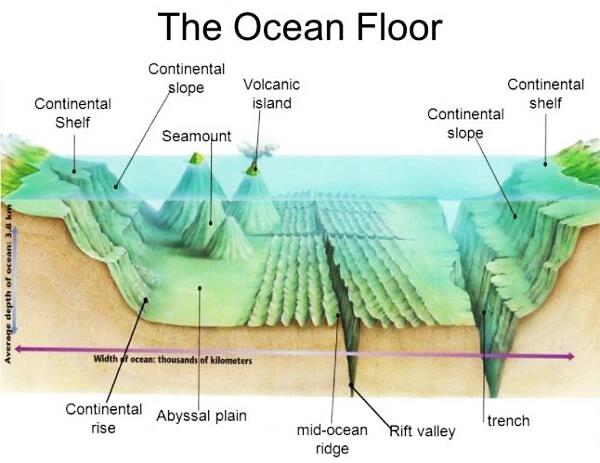
Feedback: The sea floor is not a relatively flat surface, but has significant underwater
topography like mountains, canyons, trenches,
etc. The sea floor actually has abundant relief
and is far from flat. It has as much diverse
topography as the land, including underwater
mountain ranges.
--------------------------------------------------------------
108. Identify the FALSE statement:
a) The crust is the top of the mantle that has
cooled and hardened.
b) The upper portion of the crust contains
microscopic pores that contain groundwater.
c) The crust plus the upper part of the mantle
make up the lithosphere.
d) There are two different types of crust:
oceanic and continental.
e) The crust-mantle boundary occurs at
different depths in different locations.
Feedback: The crust is not the top of the 111. -------------------------------------------------------------- mantle. The Earth's crust and mantle are covered by oceans and seas. Roughly 50% of Earth’s surface is distinct layers, with the crust being the a) True outermost layer and consisting of solid rock. b) False The mantle lies beneath the crust and extends
miles) below the Earth's surface. covered by oceans and seas. These vast to a depth of about 2,900 kilometers (1,800 Feedback: Roughly 70% of Earth’s surface is
--------------------------------------------------------------
21
bodies of saltwater contain about 96.5% of all continental crust has an average thickness of
Earth’s water. The remaining three percent of 30-50 km. The deepest drill hole is the Kola
Earth’s surface water is found in glaciers, Superdeep Borehole in Russia, which reached
snowy mountains, ice caps, and other a depth of 12.3 km. No drill hole has ever
freshwater sources. Without the hydrosphere, penetrated deeper than 10-15 km into the
life on Earth would not exist, as water plays a continental crust. Therefore, drill holes have
crucial role in supporting life. only sampled the uppermost fraction of the
-------------------------------------------------------------- continental crust, not anywhere close to the
112. The Van Allen radiation belts serve as upper half.

a trap for cosmic rays and thus shield life on
Earth from excessive radiation.
a) True
b) False
Feedback: The Van Allen radiation belts are zones of energetic charged particles (such as
protons and electrons) that surround the Earth.
These particles are captured by and held
around our planet by its magnetic field. Earth
the outer belt. These belts extend from an has two main Van Allen belts: the inner belt and --------------------------------------------------------------
by physicist James Van Allen in 1958 using True b) False data transmitted by the U.S. Explorer satellite. The trapped particles in these belts act as a Feedback: the Earth’s surface moves along faults. . The belts were discovered a) altitude of about 640 km to 58,000 km above 114. Earthquakes are generated when rock
protective shield against harmful cosmic rays Earthquakes are generated when there is movement along geological faults. and high-energy particles from space. Cosmic These movements can result in the release of rays, which originate from sources beyond our energy in the form of seismic waves, causing solar system, can be extremely damaging to the ground to shake. This is a fundamental living organisms. They can cause mutations in concept in seismology and the study of DNA, disrupt cellular processes, and increase earthquakes. the risk of cancer. The Van Allen belts effectively prevent many of these cosmic rays
from reaching the Earth’s surface. Additionally, the belts help protect astronauts and spacecraft
during space missions by reducing their
exposure to radiation.
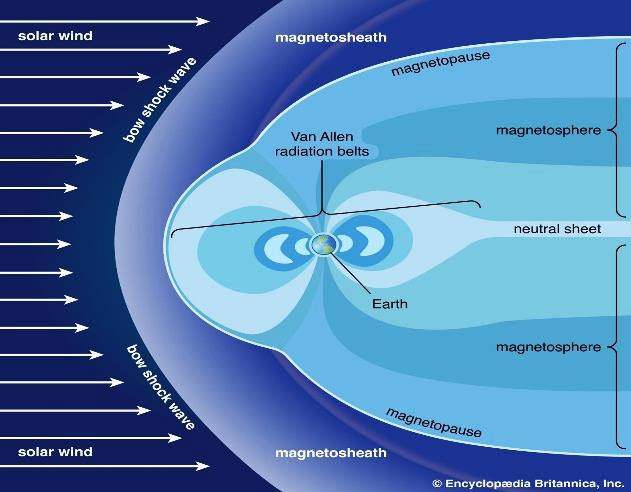
--------------------------------------------------------------
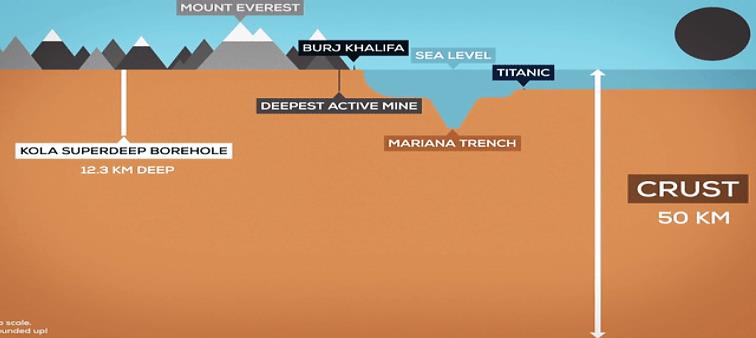
115. Earth is round because: a) Erosion over time has worn down the jagged
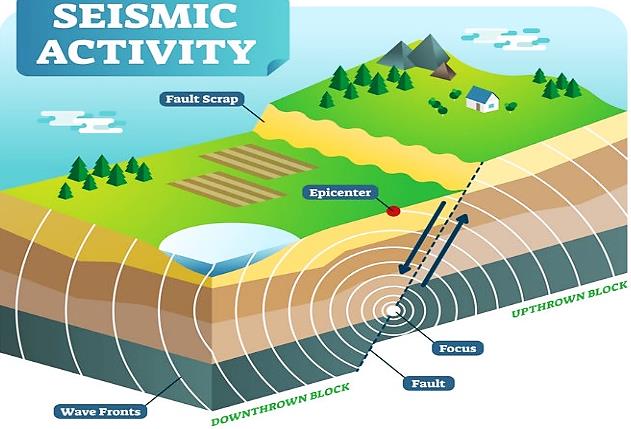
edges of its planetesimals.
b) Its interior rock is warm enough to flow
slowly in response to gravity.
c) Solar wind has shaped it. d) The gravitational tug of the Moon has worn
113. e) The gravitational tug of the Sun has worn The deepest well ever drilled down the jagged edges. -------------------------------------------------------------- down the jagged edges.
penetrates the upper half of the continental
a) crust. Feedback: The Earth is round primarily True because its interior rock, particularly the b) False partially molten asthenosphere, is warm enough to flow slowly in response to gravity. Feedback: The deepest drill holes have only This flow over geological time scales helps to penetrated the uppermost part of the smooth out irregularities on the planet's surface continental crust, not the upper half. The and leads to the spherical shape observed
22
today. The other options are not accurate 118. The asthenosphere is largely liquid and explanations for the Earth's round shape. flows at rates of 10 km to 15 km per year.
-------------------------------------------------------------- a) True 116. The inner core is so hot, it’s liquid, and b) False
therefore some seismic waves can’t travel through it. Feedback: The asthenosphere is not largely
a) True liquid, nor does it flow at rates as fast as 10-15
b) False km per year. It is located in the upper mantle,
below the lithosphere, between depths of ~100-

Feedback: The outer core, not the inner core, 700 km. The asthenosphere consists of solid
is liquid and impedes travel of some seismic rock that is close to its melting point. It has only
waves. The inner core of the Earth is actually a small percentage of melt (less than 1% partial
solid, not liquid, despite the extremely high melt). This allows it to flow like a very viscous
temperatures it experiences. Seismic waves plastic, but it does not actually have large
can travel through the solid inner core, but they volumes of liquid. Its flow rates are estimated to
behave differently when passing through it be 50-200 mm/year, not 10-15 km/year. In
compared to other parts of the Earth's interior. summary, the asthenosphere is primarily solid
rock with a small melt percentage that makes it
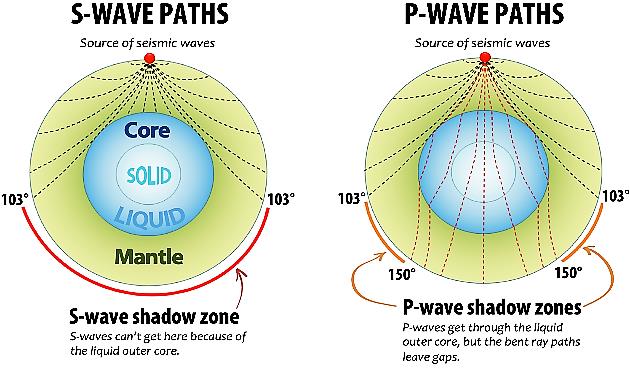
weakly flow like a plastic, not a liquid layer. Its
flow rates are in the centimeter per year range,
rather than 10s of km per year.
--------------------------------------------------------------
117. Silicon is by far the most abundant
element of Earth’s crust; oxygen is the
second most abundant.
a) True --------------------------------------------------------------
b) False 119. The Moho lies below the lithosphere-
asthenosphere boundary.
Feedback: Oxygen, not silicon, is the most a) True abundant element in Earth's crust. Oxygen b) False comprises 46.6% of the mass of the crust.
Silicon is the second most abundant element at Feedback: Since the Moho is the boundary 27.7% of the crust by mass. Aluminum (8.1%), between the crust and the mantle, and the
iron (5%), calcium (3.6%), sodium (2.8%), lithosphere consists of the crust and the top part
potassium (2.6%) and magnesium (2.1%) are of the mantle (down to the asthenosphere), the
other major elements. Silicon is abundant but Moho must lie above the lithosphere-
makes up less than half of the mass of oxygen asthenosphere boundary. in the crust. So while both oxygen and silicon
are very abundant in the continental crust,
oxygen is significantly more abundant than
silicon. Oxygen makes up nearly half the crust's
mass, whereas silicon is less than 30%.
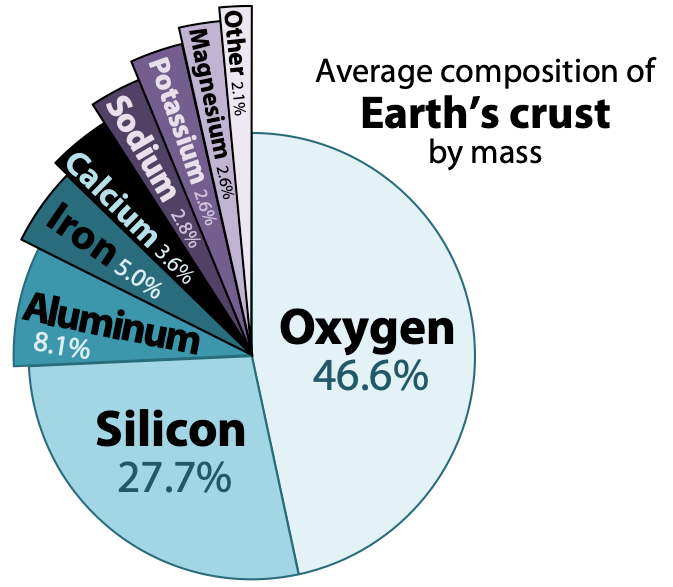
--------------------------------------------------------------
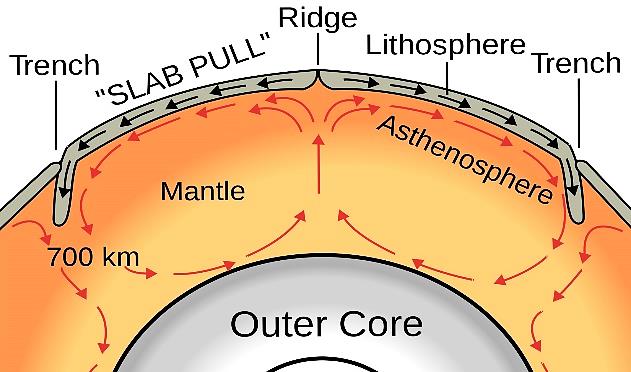
120. Very large atoms, with atomic numbers
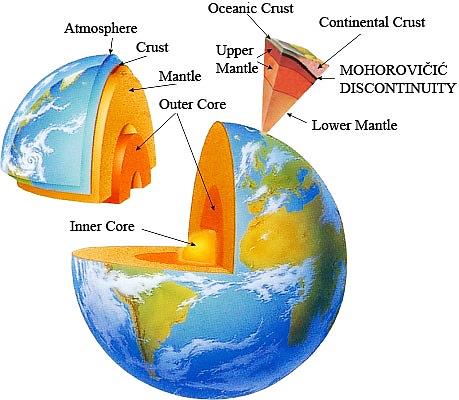
greater than iron, generally form in later-
generation stars.
a) True
--------------------------------------------------------------
23
b) False e) Nitrogen (N2), 78%, and oxygen (O2), 21%.
Feedback: The lightest elements up to iron are Feedback: Earth's atmosphere is composed formed through fusion in the cores of early mainly of nitrogen (about 78%) and oxygen
stars. Heavier elements are created in fusion (about 21%), with trace amounts of other
processes which occur in late-stage stars or gases, including argon, carbon dioxide, neon,
during supernova explosions. These fusion methane, ozone, carbon monoxide, and sulfur
events allow creation of very heavy elements dioxide, among others. These minor
like uranium, curium, plutonium, etc. Atoms components play important roles in various

larger than iron cannot be formed through atmospheric processes, including greenhouse
fusion in early stars, as that process stops at gas effects, ozone layer protection, and air
iron. Therefore, very large atoms are quality. Some of these gases, such as carbon
synthesized in subsequent generations of stars dioxide and methane, are crucial for regulating
or during supernovas. Earth's climate, while others, like ozone, help
shield the planet from harmful ultraviolet
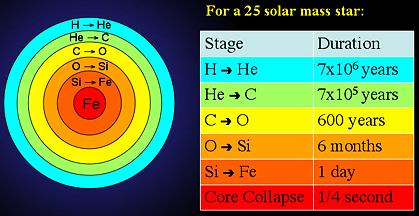
radiation. Understanding the composition of the
atmosphere is vital for studying Earth's climate,
weather, and overall environmental conditions.
--------------------------------------------------------------
121. To avoid confusion, cosmologists use
the term ice to mean only frozen water,
other frozen gases are called plasma.
a) True
Feedback: 123. The core accounts for most of the Cosmologists do not use the term volume of Earth. "plasma" to refer to other frozen gases. Plasma a) b) False --------------------------------------------------------------
True
is actually the fourth state of matter, distinct b) False from solids, liquids, and gases. It is a high-
energy state in which atoms or molecules have Feedback: The core of the Earth, which some or all of their electrons stripped away, includes both the inner core and outer core, resulting in a charged mixture of ions and free accounts for most of the Earth's mass, but not electrons. Plasma is typically associated with its volume. The mantle, which is located above high temperatures and is not a term used to the core, contributes significantly to the Earth's describe frozen gases. Ice refers to water and volume. The Earth's core is primarily composed to any frozen volatile, including hydrogen, of iron and nickel and is responsible for helium, methane, ammonia, and carbon generating the planet's magnetic field through monoxide. geodynamic processes.
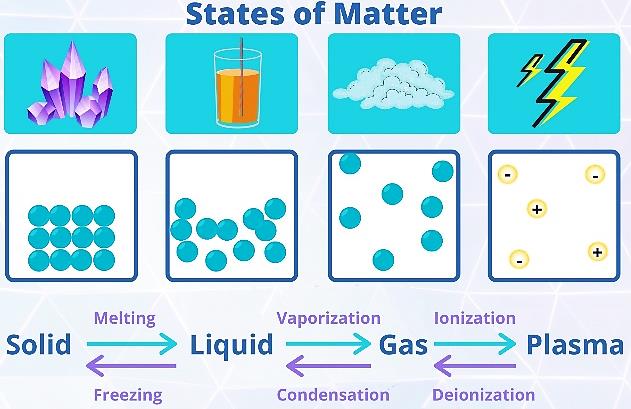
--------------------------------------------------------------
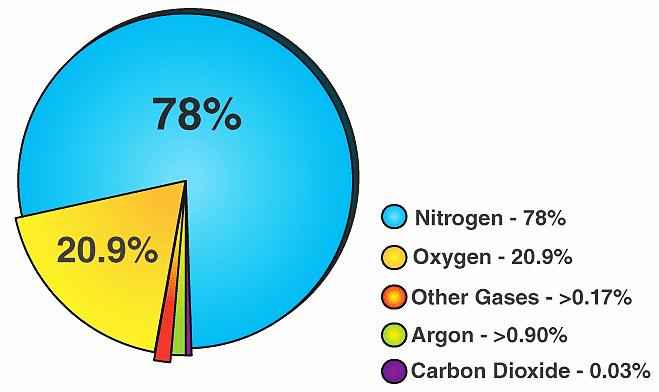
124. Iron, oxygen, silicon, and potassium
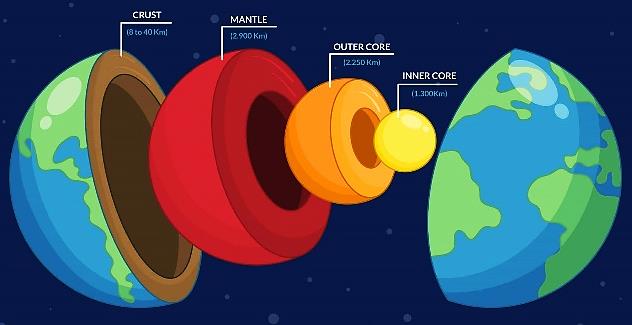
-------------------------------------------------------------- make up most of the mass of the whole
122. The two most common gases of Earth’s Earth.
atmosphere and their percentages are: a) True
a) Carbon dioxide (CO2), 21%, and oxygen b) False
(O2), 78%.
b) Water (H2O), 21%, and oxygen (O2), 78%. Feedback: While iron is the most abundant c) Oxygen (O2), 21%, and carbon dioxide element in the Earth's core and oxygen is the
(CO 2), 78%. most abundant element in the Earth's crust,
d) Nitrogen (N2), 21%, and oxygen (O2), 78%. they do not make up most of the mass of the
24
whole Earth. The Earth's composition by mass d) Is very rich in iron and magnesium, very is primarily silicate-based, with silicon and poor in silica. oxygen being the most abundant elements e) All the possible answers are correct. overall. So, silicon and oxygen, along with other
elements like magnesium, aluminum, and Feedback: Peridotite is the most abundant rock calcium, make up most of the mass of the entire on Earth, making up about 85% of the mantle.
Earth. It's found deep underground but is rare on the
surface due to weathering. It's an ultramafic
rock, meaning it's low in silica and rich in iron

and magnesium.
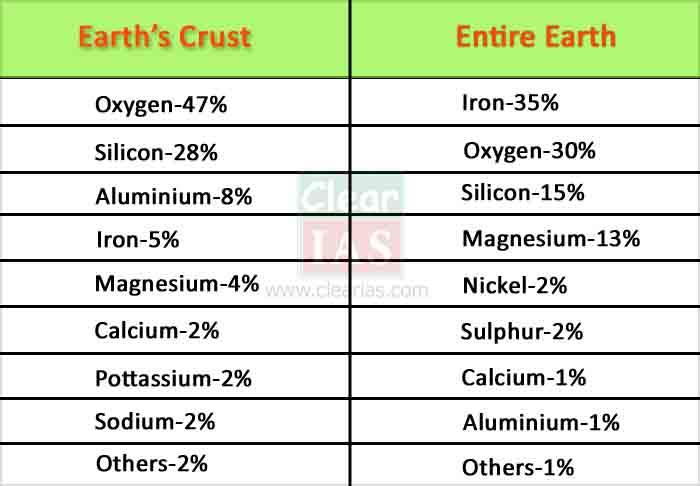
d) Is 93 million miles away from Earth. b) Hot molten rock that cools and hardens Is 4.3 light-years away from Earth. produces igneous rocks. e) Has a composition similar to Earth’s core . c) Sedimentary rocks form when preexisting rock grains are cemented together. Feedback: The leading scientific hypothesis for d) Magma is the term for very hot rock that is the formation of the Moon is the Giant Impact molten; when it cool s and hardens, it’s called Hypothesis. According to this hypothesis, a lava. Mars-sized protoplanet, sometimes referred to as "Theia," collided with the early Earth about Feedback: Both magma and lava are terms 4.5 billion years ago. This impact caused a that denote molten rock. Magma is the term tremendous amount of debris to be ejected into used for molten rock beneath the Earth's space, and over time, this debris came together surface. When magma erupts onto the Earth's to form the Moon. The collision was a pivotal surface, it is then referred to as lava. The b) Was formed by the collision of Earth with a 127. Identify the FALSE statement: Mars-sized protoplanet. a) Metamorphic rocks form when preexisting Was a separate small planet before it was rocks undergo changes in response to heat captured by Earth’s gravity . and pressure. c) 125. Our Moon: -------------------------------------------------------------- a) --------------------------------------------------------------
event in the early history of our solar system terminology is specific to the location of the and had a significant impact on the formation molten rock — magma being underground, and and evolution of both the Earth and the Moon. lava being on the surface. This hypothesis is supported by various lines of
evidence, including the similarities in isotopic
compositions of certain elements between the
Earth and the Moon, as well as computer
simulations of planetary formation.
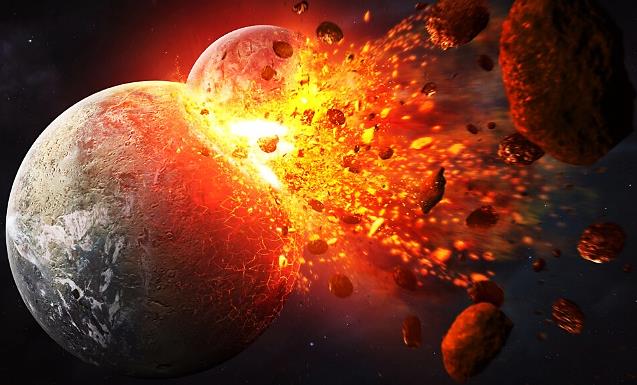
--------------------------------------------------------------
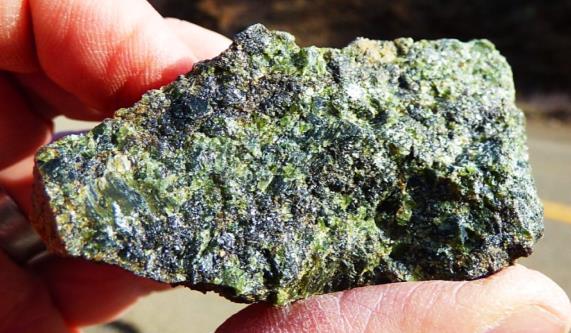
128. Which of the following is caused by the
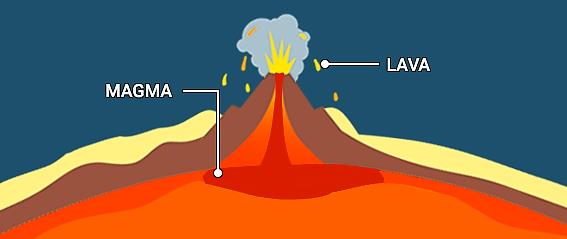
interaction of the solar wind with magnetic
lines of force and gases in Polar Regions?
a) The Van Allen belts. b) The aurorae. c) A vacuum. d) A dipole.
-------------------------------------------------------------- e) The heliosphere. 126. Identify the TRUE statement,
Peridotite: Feedback: The aurorae are the beautiful
a) Is rare at Earth’s surface. displays of lights that occur in the polar regions
b) Is the most abundant rock of Earth. of Earth when charged particles from the solar
c) Is ultramafic. wind interact with the Earth’s magnetic field and
atmosphere. The solar wind is a stream of
25
charged particles that flows from the Sun and known as geophysics and is crucial for
constantly bombards the Earth. The Earth’s understanding the planet's internal dynamics.
magnetic field protects us from most of these --------------------------------------------------------------
particles, but some of them can enter the polar 131. A cross-section cut through the Earth regions and collide with gas molecules in the would reveal a very thin atmosphere
upper atmosphere. This causes some of the surrounding a thin crust of low-density rock,
gas molecules to lose their electrons and all shifting around slowly on an internal sea
become ions, which then emit light as they of semi-liquid rock (magma.) move through different layers of the a) True atmosphere. b) False

Feedback: There is no "internal sea of semi-liquid rock (magma)" that the entire planet is

floating on. A cross-section of the Earth would
show distinct layers with varying compositions
and properties. From the outermost layer to the
innermost layers, it would generally be as
follows:
Atmosphere: The Earth's atmosphere is a relatively thin layer of gases that surrounds the
-------------------------------------------------------------- planet. It consists of various gases, such as
129. nitrogen, oxygen, carbon dioxide, and trace A rock is a solid organic substance in amounts of other gases. The atmosphere which atoms are arranged either in an extends several hundred kilometers above the orderly pattern (crystalline) or as irregularly surface. shaped grains; a mineral is an aggregate Crust:
Feedback: A rock is a solid substance tens of kilometers beneath the continents. composed of minerals or mineral-like materials. Mantle: Below the crust is the mantle, which Rocks are made up of minerals, but they are not extends to a depth of about 2,900 kilometers organic. Rocks can consist of a single mineral (1,800 miles). The mantle is composed of semi-type or a combination of several minerals. On solid to solid rock and is responsible for the other hand, a mineral is a naturally convective currents that drive plate tectonics. occurring, inorganic solid substance with a Outer Core: Beneath the mantle is the outer specific chemical composition and a regular core, which is composed mainly of liquid iron atomic arrangement. Minerals are the building a) True oceanic crust. It is composed of various b) False minerals and rocks and can vary in thickness from a few kilometers beneath the oceans to (mixture) of rocks. layer and consists of both continental crust and The Earth's crust is the outermost solid
a) Boundaries between Earth’s layers: inner core, primarily composed of iron and Are unreachable to humans, so they must nickel. It is under immense pressure and be studied by indirect methods. temperature and is also responsible for b) Are defined by abrupt changes in contributing to the Earth's magnetic field. earthquake-wave velocities. c) Are places where there’s abrupt change in the density of rock. d) various minerals. motion. -------------------------------------------------------------- Inner Core: The innermost layer is the solid 130. blocks of rocks, and rocks are composed of Earth's magnetic field through convective and nickel. It is responsible for generating the
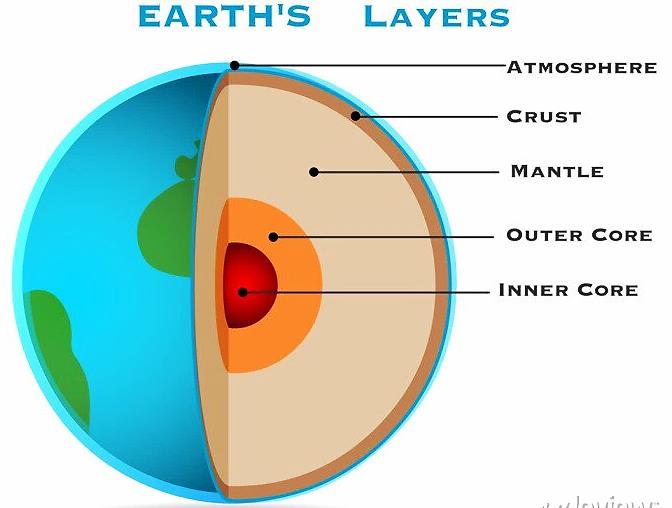
Divide the Earth into three major layers
(crust, mantle, and core) and several
sublayers.
e) All the possible answers are correct.
Feedback: The Earth is composed of several layers, each with distinct properties and
characteristics. These layers are defined by
their composition, physical properties, and
behavior. It's important to note that the
boundaries of these layers are not always
distinct lines but rather zones where certain --------------------------------------------------------------
physical properties change gradually over a 132. In the early Universe, the only two specific depth range. The study of these elements in existence were carbon and
boundaries and the behavior of Earth's layers is hydrogen.
26
a) True lithosphere, which consists of the crust (both
b) False continental and oceanic) and the uppermost
part of the mantle. These plates float and move
Feedback: In the early Universe, the only two on the semi-fluid asthenosphere beneath them.
elements in existence were hydrogen and Option (a) correctly identifies the components
helium, not carbon and hydrogen. Hydrogen of the plates. and helium were the first elements to form --------------------------------------------------------------
shortly after the Big Bang, which marked the 135. The southern supercontinent is called: beginning of the Universe. These two elements a) Gondwana. were created during the initial stages of b) Pangaea. nucleosynthesis, when extremely high c) Laurasia. temperatures and pressures allowed for the d) Glossopteris. fusion of protons and neutrons. Carbon and

other heavier elements formed later in the Feedback: Gondwana was a large landmass Universe's history through processes occurring that existed in the southern hemisphere and
in the cores of stars and during stellar included the continents of South America,
explosions, such as supernovae. These Africa, Antarctica, Australia, and the Indian
processes, known as stellar nucleosynthesis, subcontinent. produced elements like carbon, oxygen,
nitrogen, and many others.
--------------------------------------------------------------
133. Identify the FALSE statement, The Big
Bang:
a) Occurred more than 13 billion years ago. b) Cataclysmically exploded matter outward. c) Began with all matter and energy
concentrated in an infinitesimally small
point.
d) Theory states that at the instant of
explosion, everything had so much thermal
energy even the smallest atomic pieces
couldn’t exist. --------------------------------------------------------------
e) Is the explanation for how our Solar System 136. In cross section, the plates are part of
developed. a rigid outer shell of the Earth called the:
a) Lithosphere.
Feedback: The Big Bang theory explains the b) Asthenosphere. origin of the universe as a whole, not the c) Crust. development of our Solar System specifically. d) Mantle. The formation of our Solar System occurred
billions of years after the Big Bang through a
process known as solar nebula theory.
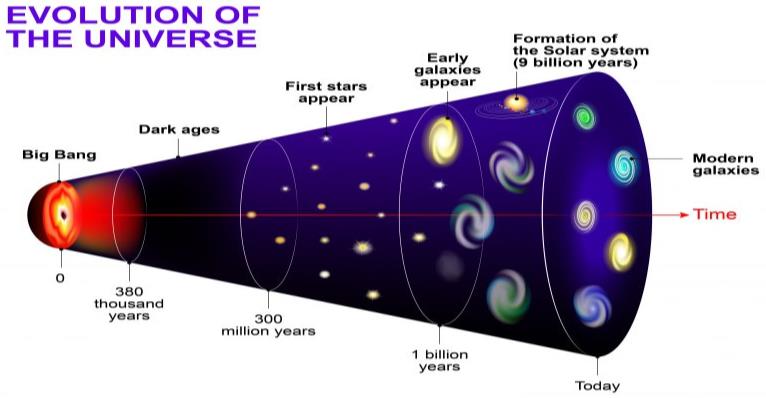
--------------------------------------------------------------
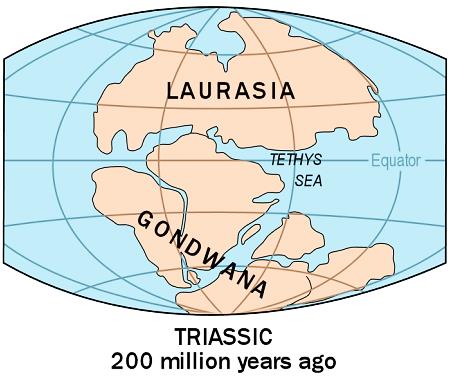
137. The Vine-Matthews hypothesis
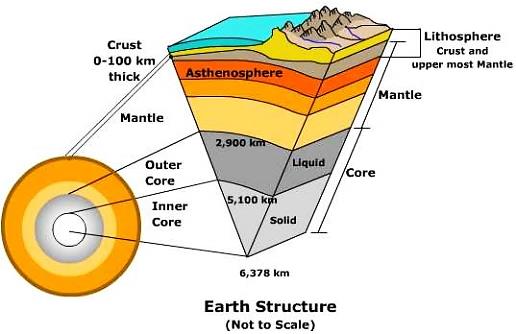
explains the origin of:
a) Polar wandering.
-------------------------------------------------------------- c) Continental drift. Plates are composed of: b) Seafloor magnetic anomalies. 134. d) Mid-oceanic ridges. a) The crust and upper mantle.
b) The asthenosphere and upper mantle. Feedback: The Vine-Matthews hypothesis is c) The crust and asthenosphere. an explanation for the origin of seafloor
d) Continental and oceanic crust only. magnetic anomalies. It proposes that the
e) The core and mantle. alternating patterns of magnetic polarity
observed in the oceanic crust are the result of
Feedback: Plates, in the context of plate seafloor spreading and the periodic reversal of
tectonics, are composed of the Earth's Earth's magnetic field. This hypothesis provides
27
strong evidence for plate tectonics and the
movement of lithospheric plates.
--------------------------------------------------------------

140. Mantle rock becomes soft enough to
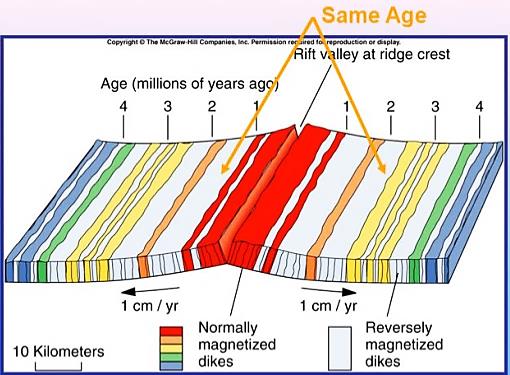
flow at about 1,280°C.
a) True b) False
--------------------------------------------------------------
138. What would you most expect to find at Feedback: Mantle rock does become soft
ocean-ocean convergence? enough to flow at high temperatures, and the
a) Suture zone. upper part of the mantle, known as the
b) Island arc. asthenosphere, exhibits this behavior due to
c) Mid-ocean ridge. the combination of high temperature and
d) None of the above. pressure. This is a key characteristic of the
Earth's mantle, allowing for the flow of solid rock
Feedback: At ocean-ocean convergent over long geological timescales. boundaries, one tectonic plate is subducted --------------------------------------------------------------
beneath another. The most likely feature to be 141. What would you most expect to find at found at ocean-ocean convergence is a continent-continent convergence? subduction zone, where one oceanic plate is a) Magmatic arc. forced beneath the other. This process often b) Suture zone. leads to the formation of a deep trench, and c) Island arc. sometimes it can also result in volcanic activity. d) Mid-ocean ridge. Island arcs are often formed at ocean-ocean
convergent boundaries due to volcanic activity Feedback: A suture zone refers to a boundary associated with the subduction of one oceanic or region where two tectonic plates have
plate beneath another. collided, leading to the closure of an ocean or
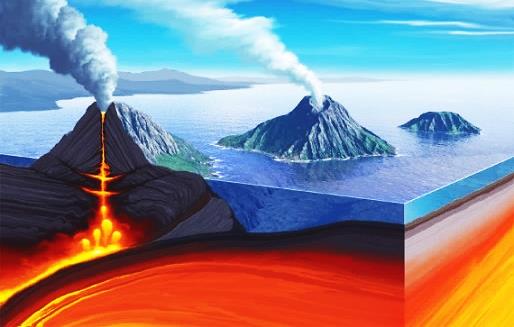
the merging of two continental masses. Suture
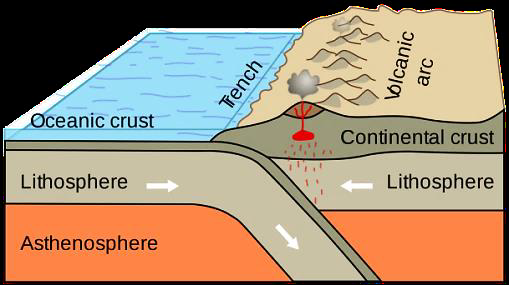
zones are characterized by complex geological
features and a history of intense tectonic
activity. Suture zones provide important
insights into the Earth's tectonic history and the
processes that have shaped the planet's
continents and ocean basins over millions of
years. They are also areas of scientific interest
for studying the dynamics of plate tectonics,
-------------------------------------------------------------- crustal evolution, and the formation of mountain
139. ranges. What would you most expect to find at
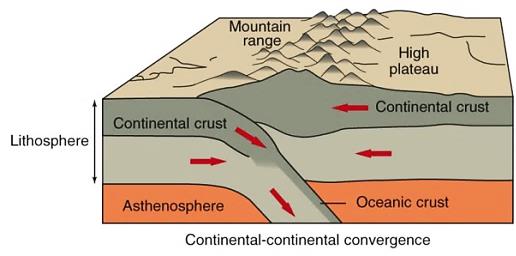
ocean-continent convergence?
a) Magmatic arc (Volcanic arc).
b) Suture zone.
c) Island arc.
d) Mid-ocean ridge.
Feedback: At ocean-continent convergent boundaries, one oceanic plate is typically
subducted beneath a continental plate. The
most likely feature to be found at ocean- --------------------------------------------------------------
continent convergence is a magmatic arc or 142. Passive continental margins are
volcanic arc. This is due to the volcanic activity created at: associated with the subduction of the oceanic a) Divergent plate boundaries. plate beneath the continental plate. The melting b) Transform faults. of the subducted plate in the mantle can lead to c) Convergent plate boundaries. the formation of magma that rises to the
surface, resulting in the creation of a volcanic Feedback: Passive continental margins are
arc. geological features found along the edges of
tectonic plates where oceanic crust is adjacent
28
to continental crust. These margins are tectonic plates move at a rate of a few
characterized by their relatively gentle and centimeters to tens of centimeters per year.
broad topography compared to active --------------------------------------------------------------
continental margins, which are associated with 145. Which of the following is a geologic tectonic activity and features like subduction hazard? zones and deep ocean trenches. Key a) Earthquake. characteristics of passive continental margins b) Volcano. include: c) Mudflows. Absence of Tectonic Activity d) Floods. Sedimentary Deposition e) Wave erosion at coastlines. Broad Coastal Plains f) Landslides. Rifted Basins g) All of the preceding. Exposure to Erosion

Feedback: Geologic hazards are natural phenomena or processes that have the
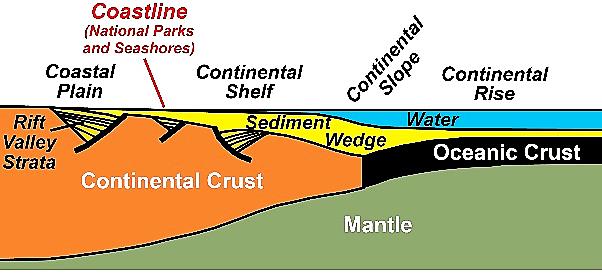
potential to cause significant harm to human
life, property, and the environment. These
hazards arise from the dynamic and complex
nature of the Earth's geological processes.
--------------------------------------------------------------
143. The Hawaiian Islands are thought to be
the result of:
a) Subduction.
b) Mid-ocean ridge volcanics.
c) Mantle plumes.
d) Ocean-ocean convergence.
Feedback: A mantle plume is a proposed --------------------------------------------------------------
mechanism of convection of abnormally hot 146. Plate tectonics is a result of Earth’s rock within the Earth's mantle. Because the internal heat engine, powered by: plume head partly melts on reaching shallow a) The magnetic field. depths, a plume is often invoked as the cause b) The Sun. of volcanic hotspots, such c) Gravity. as Hawaii or Iceland, and large igneous d) Heat flowing from Earth’s interior outward. provinces such as the Deccan and Siberian
traps. Some such volcanic regions lie far Feedback: Plate tectonics is a result of Earth's from tectonic plate boundaries, while others internal heat engine, which is powered by the
represent unusually large- heat flowing from the Earth's interior outward.
volume volcanism near plate boundaries or This process is primarily driven by the heat
in large igneous provinces. generated from the decay of radioactive
isotopes in the Earth's mantle and core. As this
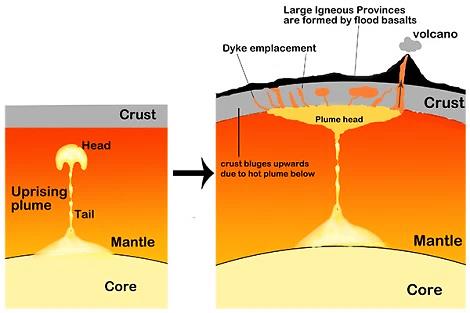
heat moves towards the surface, it creates
convection currents within the semi-fluid
asthenosphere beneath the rigid lithospheric
plates.
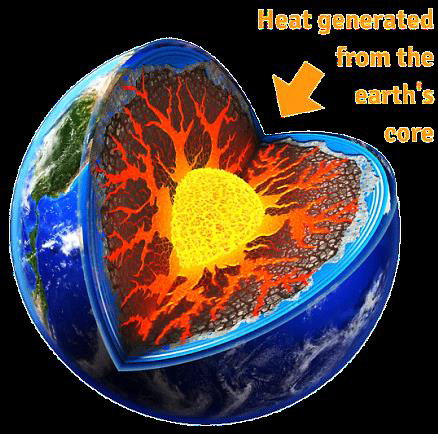
--------------------------------------------------------------
144. A typical rate of plate motion is:
a) 3 - 4 meters per year.
b) 1 kilometer per year.
c) 1 - 10 centimeters per year.
d) 1,000 kilometers per year.
Feedback: The typical rate of plate motion can vary significantly depending on the specific
plate boundary and location. On average, most --------------------------------------------------------------
29
147. Volcanic island arcs are associated the processes such as earthquakes and
with: volcanic activity associated with plate
a) Transform boundaries. interactions. b) Divergent boundaries. --------------------------------------------------------------
c) Ocean-continent convergence. 151. Erosion is a result of Earth’s external d) Ocean-ocean convergence. heat engine, powered by:
a) The Sun.
Feedback: Volcanic island arcs are a result of b) Gravity. the geological processes that occur at ocean- c) Heat flowing from Earth’s interior outward. ocean convergent boundaries, where one d) The Earth’s magnetic field. oceanic plate is subducting beneath another.

This subduction and subsequent volcanic Feedback: Solar energy from the Sun is a activity contribute to the formation of these major driver of Earth's processes, including
distinctive island chains. weathering and erosion. The Sun's energy
plays a crucial role in the water cycle, wind
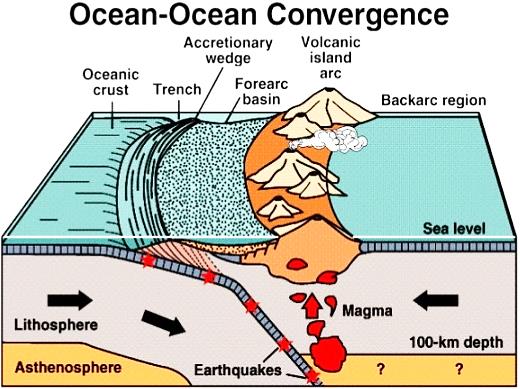
patterns, and other atmospheric processes that
contribute to erosion. Gravity is involved in the
transportation phase of erosion, but the primary
source of energy driving Earth's external
processes is the Sun.
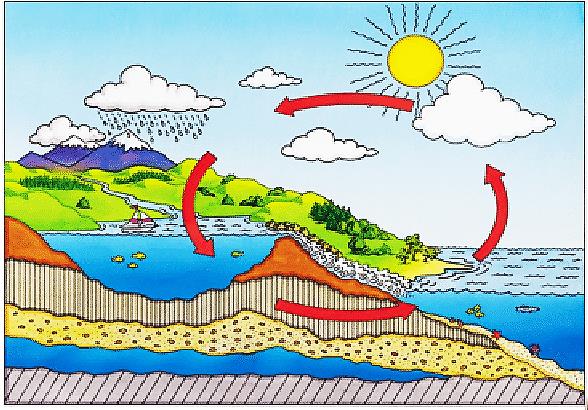
--------------------------------------------------------------
148. Oceanic and continental crust differ in: a) Composition.
b) Density.
c) Thickness.
d) All of the preceding.
Feedback: Oceanic and continental crust are --------------------------------------------------------------
two distinct types of Earth's crust that exhibit 152. The lithosphere is: several differences in terms of composition, a) The same as the crust. thickness, age, density, and behavior. b) The layer beneath the crust. -------------------------------------------------------------- c) The crust and uppermost mantle. 149. The forces generated inside Earth that d) Only part of the mantle.
cause deformation of rock as well as vertical
and horizontal movement of portions of Feedback: The lithosphere includes both the Earth’s crust are called: Earth's crust and the rigid uppermost part of the
a) Erosional forces. mantle. It is the outermost shell of the Earth,
b) Gravitational forces. and it is divided into tectonic plates. These
c) Tectonic forces. plates can move and interact with each other
d) All of the preceding. due to the underlying, partially molten layer
known as the asthenosphere.
Feedback: Tectonic forces are associated with --------------------------------------------------------------
the movement and interactions of tectonic 153. The man credited with developing the plates, which make up the Earth's lithosphere. continental drift hypothesis is: Tectonic forces lead to various geological a) Wilson. phenomena such as earthquakes, volcanic b) Wegener. activity, and the creation of mountain ranges. c) Hess. -------------------------------------------------------------- d) Du Toit. 150. Plate tectonics is a(n): e) Vine. a) Conjecture.
b) Opinion. Feedback: The continental drift hypothesis was c) Hypothesis. proposed by the German meteorologist and
d) Theory geophysicist Alfred Wegener in the early 20th
century. Wegener first introduced this idea in
Feedback: Plate tectonics is a scientific theory. his 1912 book titled (The Origin of Continents
The theory of plate tectonics explains the and Oceans). In this work, Wegener suggested
movement of the Earth's lithospheric plates, the that the continents were once part of a single
formation of various geological features, and supercontinent called Pangaea, which
30
gradually drifted apart to their current positions 156. Along what type of boundary does on the Earth's surface. Wegener supported his subduction occur? hypothesis with various lines of evidence, a) Divergent. including the apparent fit of the continents' b) Transform. coastlines, similarities in rock formations and c) Convergent. mountain ranges across continents, matching d) Answers a and b. fossil distributions, and the occurrence of e) Answers a and c. glacial deposits in regions that are now located
near the equator. Feedback: Subduction zones are a type of

convergent plate boundary where one tectonic
plate is forced beneath another. This process
leads to the subduction of oceanic plates
beneath continental plates or the subduction of
one oceanic plate beneath another. Subduction
zones are associated with deep ocean
trenches, volcanic arcs, and seismic activity.
--------------------------------------------------------------
154. Continental–continental. The southern part of Pangaea, b) Oceanic – oceanic. consisting of South America, Africa, India, c) Oceanic – continental. Australia, and Antarctica, is called: d) -------------------------------------------------------------- what type of plate boundary? a) 157. The Himalayas are a good example of
a) Divergent. Laurasia. e) Transform. b) Gondwana. c) Panthalassa. Feedback: The Himalayas were formed as a d) Laurentia. result of the collision between the Indian Plate e) Pacifica. and the Eurasian Plate. Both plates involved in this collision are continental plates, leading to the uplift and formation of the Himalayan
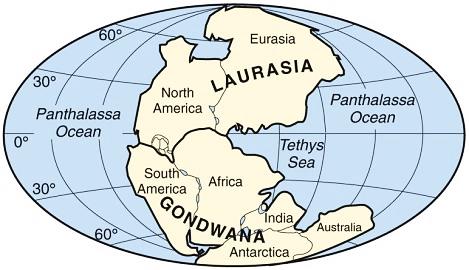
mountain range.
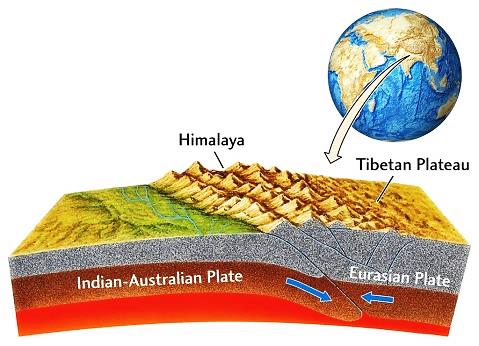
--------------------------------------------------------------
155. Hot spots and aseismic ridges can be
used to determine the:
a) Location of divergent plate boundaries.
b) Absolute motion of plates. --------------------------------------------------------------
c) Location of magnetic anomalies in oceanic 158. The most common biotic province
crust. boundaries are:
d) Relative motion of plates. a) Geographic barriers. e) Location of convergent plate boundaries. b) Biologic barriers.
c) Climatic barriers.
Feedback: Hot spots are areas of volcanic d) Answers a and b. activity that are thought to be caused by e) Answers a and c. upwelling mantle plumes. The motion of
tectonic plates over these fixed mantle plumes Feedback: The most common boundaries leaves a trail of volcanic islands or seamounts, between different communities of living things
and by studying the age progression of these (biotic provinces) are formed by a combination
volcanic features, scientists can infer the of physical barriers like mountains and oceans
absolute motion of tectonic plates. (geographic barriers) and climate variations like
Aseismic ridges, also known as mid-ocean temperature and rainfall (climatic barriers).
ridges, are underwater mountain ranges formed While biological factors like diseases and
by plate tectonics. The study of magnetic competition can play a role locally, they are less
anomalies in the oceanic crust along these widespread than the other two. So, remember,
ridges can also provide information about the it's a mix of geography and climate that mainly
absolute motion of tectonic plates. shapes these ecological boundaries. -------------------------------------------------------------- --------------------------------------------------------------
31
159. Magnetic surveys of the ocean basins 161. Iron-bearing minerals in magma gain
indicate that: their magnetism and align themselves with
a) The oceanic crust is youngest adjacent to the magnetic field when they cool through
mid-oceanic ridges. the:
b) The oceanic crust is oldest adjacent to mid- a) Curie point.
oceanic ridges. b) Magnetic anomaly point.
c) The oceanic crust is youngest adjacent to c) Thermal convection point.
the continents. d) Hot spot point.
d) The oceanic crust is the same age e) Isostatic point.

everywhere.
e) Answers b and c. Feedback: Iron-bearing minerals in magma
gain their magnetism and align themselves with
Feedback: Magnetic surveys of the ocean the Earth's magnetic field when they cool
basins reveal patterns of magnetic striping through a critical temperature called the Curie
parallel to mid-oceanic ridges. These patterns point. Above this temperature, these minerals
are due to the alternating polarity of Earth's are not magnetic, but as they cool below the
magnetic field over time. The youngest oceanic Curie point, they acquire a permanent
crust is found at mid-oceanic ridges, where new magnetization aligned with the prevailing
crust is continually formed through volcanic magnetic field. This process is crucial in
activity. As the crust moves away from the explaining the creation of magnetic anomalies
ridge, it records the changing magnetic field, in the oceanic crust and is used as evidence in
creating magnetic striping that helps scientists plate tectonics and seafloor spreading. determine the age of the oceanic crust. --------------------------------------------------------------
162. One of the main objections to
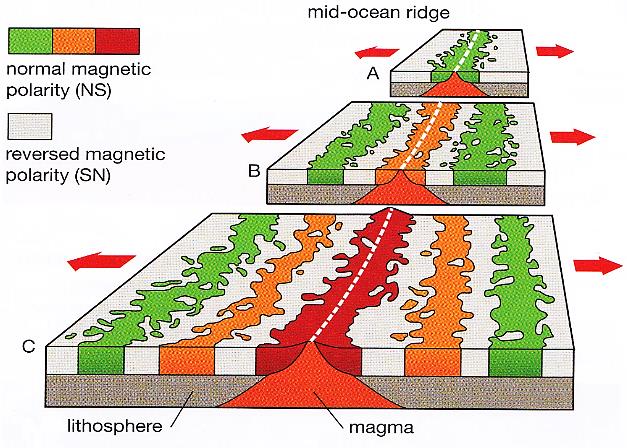
Wegener's hypothesis was his inability to
provide an acceptable _________ for
continental drift.
a) Place. b) Mechanism. c) Direction. d) Rate. e) Time.
Feedback: Wegener proposed the idea that continents were once connected in a
-------------------------------------------------------------- supercontinent called Pangaea and had drifted
160. Convergent plate boundaries are areas apart, but he lacked a plausible explanation for
where: the driving forces behind this movement. It
a) New continental lithosphere is forming. wasn't until the development of the theory of
b) New oceanic lithosphere is forming. plate tectonics in the 1960s that a mechanism
c) Two plates come together. for continental drift was provided, with the
d) Two plates slide past each other. recognition of the movement of tectonic plates
e) Two plates move away from each other. driven by processes in the Earth's mantle.
--------------------------------------------------------------
Feedback: Convergent plate boundaries are 163. What mechanism did Alfred Wegener areas where two tectonic plates move toward use to explain the breakup of Pangaea?
each other. This convergence can lead to a) A meteor impact cracked the continent up. various geological features, such as subduction b) Wegener did not try to explain a mechanism zones where one plate is forced beneath the for plate tectonics. other, resulting in the destruction of oceanic c) Centrifugal force caused by the rotating lithosphere, or continental collision zones Earth. where two continental plates collide, leading to d) A plume of magma erupted in the middle of the formation of mountain ranges. the continent, causing it to break into smaller
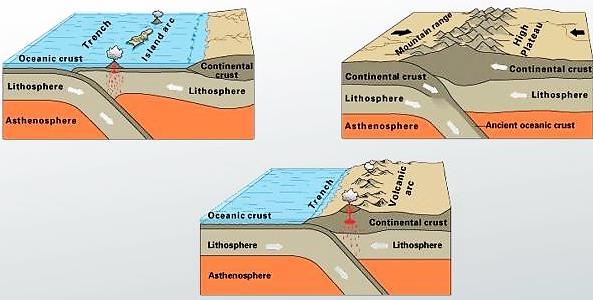
pieces.
Feedback: Alfred Wegener proposed the idea of continental drift, suggesting that the
continents were once part of a supercontinent
called Pangaea. He hypothesized that
centrifugal force caused by the Earth's rotation
played a role in the breakup of Pangaea.
However, it's important to note that Wegener's
-------------------------------------------------------------- specific mechanism was later found to be insufficient and was not widely accepted. The
32
development of the theory of plate tectonics in of a continental landmass. They are usually
the 1960s provided a more comprehensive and covered with a layer of sand, silts, and silty
accepted explanation for the movement of muds, and their surfaces exhibit some relief,
continents. featuring small hills and ridges that alternate
-------------------------------------------------------------- with shallow depressions and valley-like
164. The San Andreas Fault is an example troughs. Continental shelves are narrow, rough,
of what type of plate boundary? and steep off mountainous coasts but broad
a) Divergent. and comparatively level offshore from plains.
b) Convergent. By tracing the outer boundary of a continent's

c) Transform. continental shelf, one can better understand the
d) Oceanic–continental. true shape and size of the continent e) Continental–continental. --------------------------------------------------------------
167. Seafloor spreading is the mechanism
Feedback: The San Andreas Fault is an that has produced the floor of the Atlantic
example of a transform plate boundary. It is a Ocean. strike-slip fault where the Pacific Plate and the a) True North American Plate slide past each other b) False horizontally. The motion along this transform
fault is primarily horizontal, and it is associated Feedback: Seafloor spreading is indeed the with frequent seismic activity in the region. geological mechanism responsible for the
formation of the ocean floor, including the floor
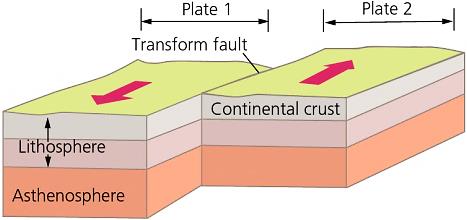
of the Atlantic Ocean. This process occurs at
mid-ocean ridges, where tectonic plates are
moving apart. As the plates separate, magma
rises from the mantle to create new oceanic
crust. Over time, this process results in the
widening of the ocean basins and the formation
165. In 1929 Arthur Holmes devised a mid-ocean ridges, strongly supports this theory. theory that plate tectonics is driven by the: a) Gravitational force of the Moon. b) Mantle convection. c) -------------------------------------------------------------- spreading, including magnetic striping and the age progression of seafloor rocks away from of new seafloor. The evidence for seafloor
Gravitational force of the Sun.
d) Ocean tides.
e) None of the above.
Feedback: Mantle convection is the slow creeping motion of Earth's solid silicate mantle
from the interior to the planet's surface. caused by convection currents carrying heat --------------------------------------------------------------
168. Magnetic minerals lose their
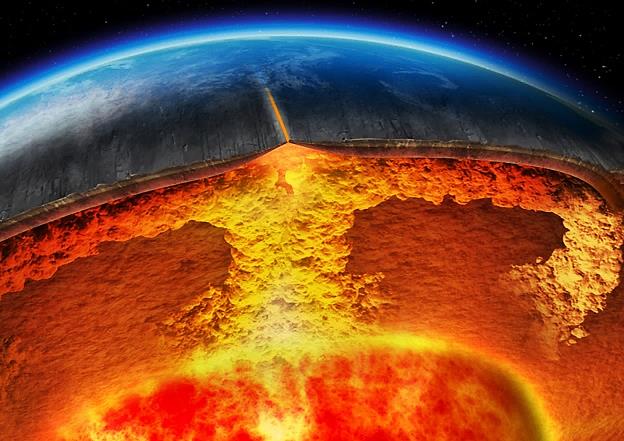
magnetism when heated to a temperature
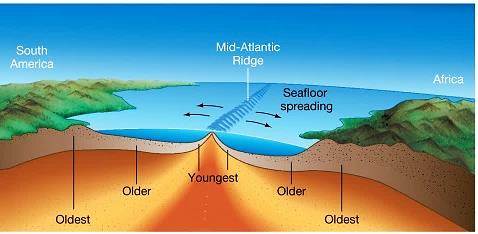
above the mineral's ___________.
a) Bechtel point. b) Curie point. c) Magneto point. d) Break point. e) Melting point.
Feedback: The Curie point (also known as the Curie temperature) of a mineral is the
temperature at which the mineral undergoes a
phase transition, changing its magnetic
-------------------------------------------------------------- properties. Above the Curie point, the mineral
166. The best way to determine the true loses its permanent magnetism and becomes
shape of a continent is to trace the outer demagnetized. This transition occurs because
a) True disrupts the alignment of the mineral's magnetic False boundary of its continental shelf. the thermal energy at or above the Curie point
b) domains. Different minerals have different
Feedback: This statement is true. Continental scientists to study the history of Earth's Curie points, and these points can be used by
shelves are broad, relatively shallow submarine magnetic field and the movement of tectonic terraces of continental crust that form the edge plates. One of the key applications of the Curie
33
point is in paleomagnetism, which is the study around the Pacific Rim, such as those in North
of ancient magnetic fields recorded in rocks. and South America, Asia, and Oceania, are
-------------------------------------------------------------- particularly prone to geological activity due to
169. The apparent movement of Earth's their proximity to the "Ring of Fire."
magnetic poles over geological time is
referred to as:
a) Perturbation.
b) Polar spreading.
c) Magnetic drift.

d) Polar wandering.
e) Subduction.
Feedback: It's important to note that polar wandering is not a result of the actual
movement of the geographic poles (the points
where the Earth's rotational axis intersects its
surface), but rather a result of the movement of --------------------------------------------------------------
over time. Rocks and minerals that form in the they are said to possess reverse polarity. Earth's crust record the direction and intensity a) True of the magnetic field at the time of their b) Earth's magnetic field is not fixed and can vary magnetism as the present magnetic field magnetic poles relative to the continents. The 172. When rocks exhibit the same
False
formation. By studying the magnetization of
locations, scientists can track the historical magnetism as the present magnetic field, they rocks of different ages and from various Feedback: When rocks exhibit the same
positions of the magnetic poles. are said to possess normal polarity, whereas
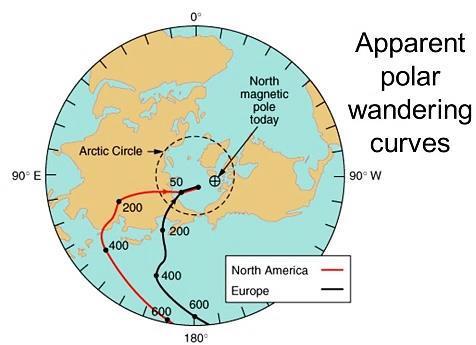
rocks exhibiting the opposite magnetism are
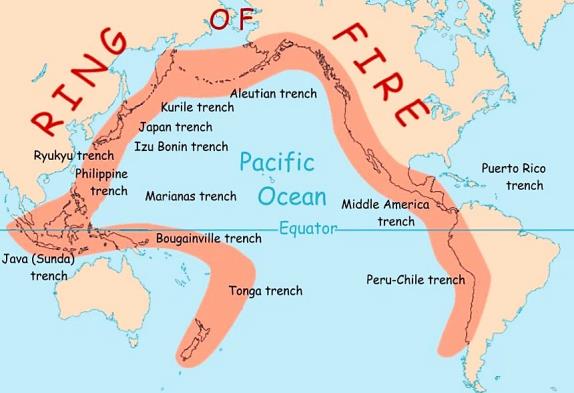
said to have reverse polarity.
--------------------------------------------------------------
173. The largest single rigid slab of Earth's
outer shell is the Pacific plate.
a) True b) False
Feedback: The Pacific Plate is an oceanic tectonic plate that lies beneath the Pacific
Ocean. It is one of the largest tectonic plates. It
is estimated to cover an area of about 103
-------------------------------------------------------------- the largest tectonic plates on Earth. It million square kilometers, which makes it one of
170. Older portions of the sea floor are encompasses much of the Pacific Ocean, and carried into Earth's core in regions where its movement plays a significant role in shaping trenches occur in the deep ocean floor.
the geology and tectonics of the Pacific region.
a) True This plate is known for its interactions with other
b) False neighboring plates, leading to features such as
Feedback: Older portions of the sea floor are earthquakes. subduction zones, volcanic activity, and typically subducted beneath younger portions
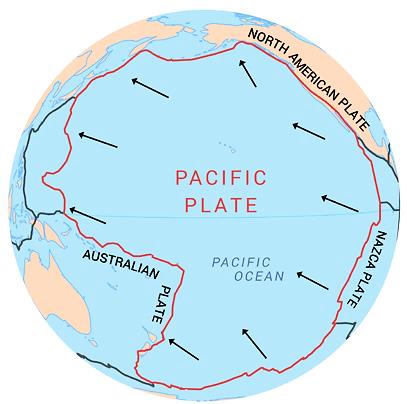
at convergent plate boundaries, which often
include trenches. Subduction is the process by
which one tectonic plate is forced beneath
another into the Earth's mantle.
--------------------------------------------------------------
171. The "Ring of Fire" is an area of
earthquake and volcanic activity that
encircles the Pacific Ocean basin.
a) True
b) False
Feedback: This region is characterized by numerous active volcanoes and frequent
earthquakes, and it is associated with various
subduction zones where tectonic plates interact
around the edges of the Pacific Plate. Countries --------------------------------------------------------------
34
174. The oldest oceanic crust is located at they cover: African, Antarctic, Eurasian, Indo-
ocean ridge crests. Australian, North American, Pacific and South
a) True American1. Each plate has its own shape, size,
b) False composition, and movement patterns. The
plates interact with each other at their
Feedback: The oldest oceanic crust is found at boundaries, where they can collide, separate,
the subduction zones, mostly located at the slide past, or transform. These interactions
edges of continents. cause various geological phenomena such as
-------------------------------------------------------------- mountains, volcanoes, earthquakes, and ocean

175. As oceanic crust moves away from a basins.
spreading center, it becomes cooler and
less dense.
a) True
b) False
Feedback: Oceanic crust slowly moves away from mid-ocean ridges and sites of seafloor
spreading. As it moves, it becomes cooler,
more dense, and more thick. Eventually, older
oceanic crust encounters a tectonic boundary -------------------------------------------------------------- with continental crust. 178. Along some divergent plate boundaries, oceanic crust is being
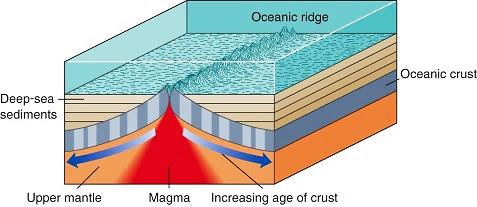
consumed in subduction zones.
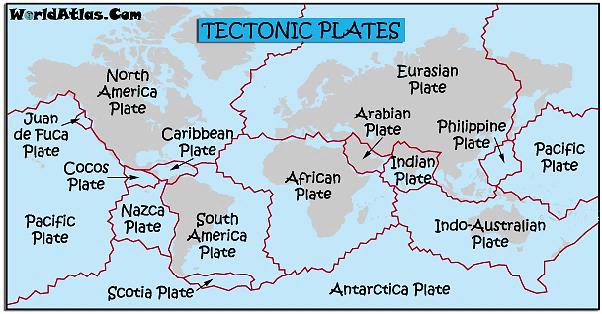
a) True b) False
Feedback: Divergent plate boundaries are
176. All major interactions among individual solidifies at mid-ocean ridges. It is along lithospheric plates occur along their convergent plate boundaries, not divergent, boundaries. where oceanic crust is typically consumed in a) True subduction zones. In subduction zones, one b) -------------------------------------------------------------- plates, leading to the creation of new oceanic crust as magma rises from the mantle and characterized by the separation of tectonic
False
Feedback: the subducted plate descends into the Earth's The interactions among individual mantle, eventually being partially or completely tectonic plate is forced beneath another, and
interactions can include plate convergence formation of deep ocean trenches and volcanic arcs. (colliding boundaries), plate divergence -------------------------------------------------------------- (spreading boundaries), and plate transform boundaries, known as plate boundaries. These melted. This process is associated with the lithospheric plates primarily occur along their
boundaries are the locations where significant the total surface area of Earth is decreasing. a) motion (sliding past each other). These plate 179. As a consequence of plate tectonics,
geological activity, such as earthquakes, True b) False volcanic eruptions, and the creation of
177. The theory of plate tectonics holds that boundaries must be balanced by the Earth's rigid outer shell consists of about destruction of plate material elsewhere _____ major. at destructive (convergent) plate boundaries. a) Lithospheric plates. b) -------------------------------------------------------------- constant, therefore the generation of new plate material at constructive (divergent) plate movement and interactions of tectonic plates. mountain ranges, takes place due to the Feedback: The Earth's surface area is
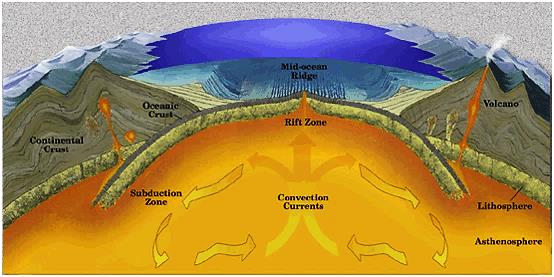
Two.
c) Five.
d) Seven
e) Eleven.
f) Sixteen.
Feedback: The theory of plate tectonics holds that Earth’s rigid outer shell consists of about
seven major plates, which are the largest and
most recognizable pieces of the lithosphere.
These plates are named after the continents --------------------------------------------------------------
35
180. Along divergent plate boundaries, the c) Random trends.
upwelling of material from the mantle d) Hot spots. creates new sea floor. e) Parallels of latitude.
a) True
b) False Feedback: Plate boundaries are the regions
where tectonic plates interact with each other,
Feedback: Along divergent plate boundaries, leading to various geological phenomena such
tectonic plates move away from each other. as earthquakes, volcanic eruptions, and the
This movement allows magma from the mantle formation of mountain ranges. Plate boundaries

to rise and solidify at the mid-ocean ridges, are dynamic zones of Earth's crust and upper
creating new oceanic crust. The upwelling of mantle, and they play a crucial role in shaping
material from the mantle at these divergent the planet's surface features. boundaries is responsible for the formation of
new seafloor. As the magma solidifies, it adds
to the oceanic crust, and the process
contributes to the widening of ocean basins.
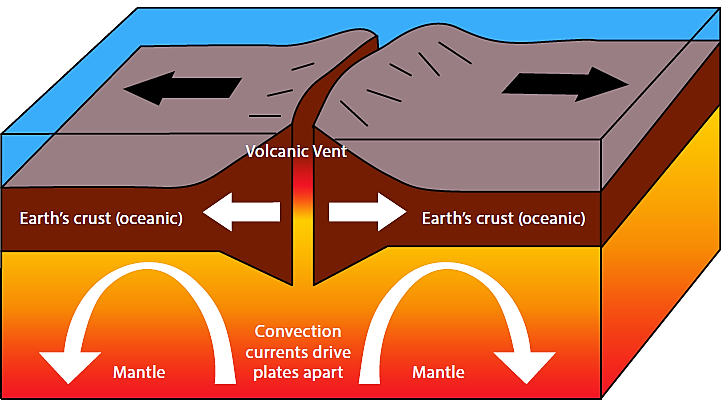
--------------------------------------------------------------
183. Complex mountain systems such as
the Alps, Appalachians, and Himalayas are
-------------------------------------------------------------- the result of _________. 181. Transform fault boundaries are located a) Oceanic-oceanic convergence.
where plates grind past each other without b) Island arcs. either generating new lithosphere or c) Oceanic-continental convergence. consuming old lithosphere. d) Hot spots.
a) True e) Continental-continental convergence. b) False
Feedback: Complex mountain systems such
Feedback: Transform fault boundaries are as the Alps, Appalachians, and Himalayas are
locations where two plates slide past one the result of the collision of two continental
another horizontally, without creating or plates, which creates intense folding, faulting,
destroying any lithosphere. At transform fault uplift, and metamorphism of the crustal rocks.
boundaries, the plates do not diverge or Continental-continental convergence is a type
converge, but rather shear along a fracture of convergent plate boundary, where two plates
zone known as a transform fault. Most move toward each other and collide.
transform faults are found in the ocean basin, Continental-continental convergence does not
where they offset segments of mid-ocean involve subduction, because both plates are too
ridges. A few transform faults are found on land, buoyant and thick to sink into the mantle.
such as the San Andreas Fault in California or Instead, the plates crumple and deform,
the Alpine Fault in New Zealand forming high mountain ranges and deep crustal
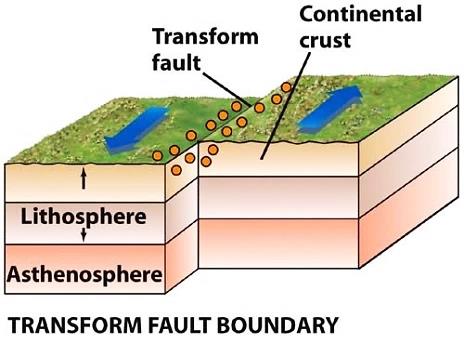
roots. Continental-continental convergence
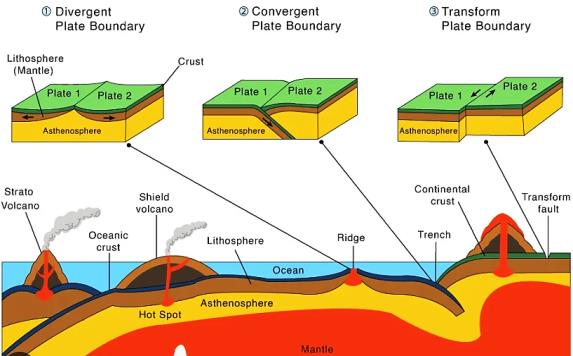
also produces large-scale deformation and
magmatism in the surrounding regions, such as
foreland basins, back-arc basins, and suture
zones.
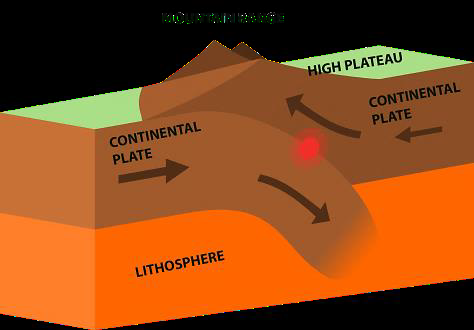
--------------------------------------------------------------
182. Most of Earth's seismic activity,
volcanism, and mountain building occur
along ______.
a) Plate boundaries.
b) Lines of magnetism. --------------------------------------------------------------
36
184. A ________ plate boundary is where Feedback: The Red Sea is believed to be the
plates move together, causing one of the site of a recently formed divergent boundary. It
slabs of lithosphere to be consumed into the is located along the African Plate and the