

The Desclergues of la Villa Ducal de Montblanc, Second Edition Omnibus by Nico Declercq - HTML preview
Download the book in PDF, ePub, Kindle for a complete version.
The return journey of Charlemagne’s army through the Pyrenees culminated in disaster. Using their knowledge of the terrain, the
© 2024 Nico F. Declercq
The Desclergues of la Villa Ducal de Montblanc, 2nd ed., Omn., VOL. I
95
Vascons launched a surprise attack on the Frankish rearguard. Despite the superior arms and valor of the Franks, the Vascons’
tactical advantage and lighter armor led to a decisive defeat for Charlemagne’s forces. Key figures, including Roland, the prefect of the Breton March, and other high-ranking officials, were killed.
Einhard’s "Vita Karoli Magni" provides a detailed account of the ambush, emphasizing the rugged terrain and the inability of the Franks to retaliate due to the Vascons’ swift dispersion into the surrounding forests.
The defeat at Roncevaux had significant implications for the Frankish control over the Spanish March, a buffer zone established to protect the southern borders of the Carolingian Empire. The loss weakened Charlemagne’s position in the region and highlighted the challenges of maintaining control over distant territories.
As the prefect of the Breton March, Roland held a crucial role in securing the western borders of the Frankish Empire against potential threats from the Breton territories. His death at Roncevaux not only had immediate military consequences but also entered the realm of legend, symbolizing the heroism and sacrifice of the Frankish knights.
The Carolingians faced ongoing resistance from the Bretons. In 753, Pepin the Short recaptured the county of Vannes from the Bretons, solidifying Frankish control over the region. The Breton March served as the staging ground for further campaigns to subdue the Bretons and integrate their territories into the Frankish realm.
13.3.3 Administrative and Military Structure
The administrative structure of the Breton March was similar to that of the Spanish March. It comprised several counties—Nantes, Vannes, and Rennes—each governed by a count. The counts of these territories were responsible for maintaining defense, administering justice, and collecting taxes. The prefect of the Breton March, often the count of Nantes, held overall command and coordinated military operations.
The March was also supported by the Duchy of Maine (Ducatus Cennomanicus), which served as a base for logistical support, including providing troops and supplies. This interconnected system ensured that the Breton March could function effectively as a defensive buffer and a platform for launching military expeditions into Breton territory.
13.3.4 Key Figures and Conflicts
Throughout its history, the Breton March was governed by several notable figures who played crucial roles in its defense and administration. After Roland, another significant leader was Audulf, who led a military campaign to subdue the Bretons in 786.
In 799, Gui, a member of the Widonid family, was appointed as the March’s prefect. Gui and his brother Frodald, who governed Vannes, were instrumental in maintaining Frankish control over the region.
The 9th century saw numerous conflicts between the Franks and the Bretons. In 818, a major Frankish expedition penetrated Breton territory, reaching Corophes in the former Osismii lands. However, Breton resistance persisted, exemplified by the rebellion led by Wiomarc’h between 822 and 825, which prompted Emperor Louis the Pious to intervene personally.
13.3.5 Decline and Transformation
The decline of the Breton March began in the mid-9th century due to internal Frankish conflicts and external pressures. In 831, the March was effectively disbanded when Louis the Pious restructured the territories, appointing the Breton leader Nominoë as the Duke of Brittany and the Count of Vannes. This reorganization marked the beginning of greater autonomy for the Bretons.
The final phase of the Breton March occurred between 840 and 851. After the death of Louis the Pious in 840, Charles the Bald faced renewed Breton resistance. In 841, Charles appointed Renaud d’Herbauges as the count of Nantes, who was subsequently defeated and killed by Nominoë in 843. The Battle of Ballon in 845, where Nominoë decisively defeated Charles the Bald, marked the de facto independence of Brittany, formalized by the Treaty of Angers in 851. This treaty granted Nominoë’s son, Erispoë, the titles of Duke and King of Brittany and incorporated the counties of Nantes and Rennes into the Breton realm.
13.3.6 The Second Breton March
In response to the loss of the original Breton March, Charles the Bald established a second Breton March in 861. This new March was centered on Touraine, Anjou, and Maine counties, with Robert the Strong appointed its marquis. The primary purpose of this latest March was to defend against further Breton incursions and to counter the growing threat of Viking invasions. However, the second Breton March faced significant challenges. The Treaties of Louviers (856), Entrammes (863), and Compiègne (868) saw the gradual cession of territories to the Breton rulers Erispoë and later Salomon. These treaties reflected the shifting power dynamics and the inability of the Carolingians to maintain a stable frontier in the face of external pressures.
13.3.7 Stabilization of Borders
The death of Robert the Strong in 866 at the Battle of Brissarthe marked the end of significant Carolingian attempts to re-establish a robust Breton March. The subsequent period saw increasing Viking activity and internal Breton conflicts. By the late 9th century, under the leadership of Alain Barbe-Torte, the Bretons successfully repelled the Vikings and consolidated control over their territory. The boundaries of Brittany were eventually stabilized to correspond roughly with the modern departments of Côtes-d’Armor, Finistère, Ille-et-Vilaine, Morbihan, and Loire-Atlantique.
13.4 Consolidated Marches
13.4.1 Introduction
The establishment and evolution of the Spanish and Breton Marches were crucial in shaping the medieval political landscape of their respective regions. Through a combination of military conquest, strategic governance, and the gradual assertion of autonomy, the counties of the Spanish March laid the foundation for the emergence of Catalonia as a distinct political and cultural entity. The Breton March, meanwhile, played a vital role in defining the frontier between the Carolingian Empire and the independent Breton kingdoms, ultimately contributing to the formation of the Duchy of Brittany.
Both marches served as buffer zones, protecting the Carolingian heartlands from external threats and facilitating further expansion.
The Desclergues of la Villa Ducal de Montblanc, 2nd ed., Omn., VOL. I
© 2024 Nico F. Declercq
CHAPTER 13. BRITTANY, OCCITANIA AND CATALONIA
The complex relationships between local and Frankish nobility, the strategic military operations, and the gradual move towards regional autonomy highlight the broader strategies employed by the Carolingians in managing their empire’s borders.
13.4.2 The Counties of the Spanish March
The Spanish March consisted of several key counties, each governed by influential counts who played significant roles in the defense and administration of the region:
13.4.2.0.1 Barcelona One of the most critical counties, it was initially governed by Bera, whom Bernard of Septimania later replaced. Guifred the Hairy (Wilfred) eventually established a hereditary dynasty here.
13.4.2.0.2 Girona It was submitted to the Franks in 785 and was a crucial part of the frontier defense.
13.4.2.0.3 Cerdanya It was governed by local nobles like Borrell, who also managed Urgell and Ausona.
13.4.2.0.4 Urgell Another county under the control of Borrell and later Sunifred contributed significantly to the region’s defense.
13.4.2.0.5 Ausona Part of Borrell’s domain was critical in the consolidation of Carolingian power.
13.4.2.0.6 Empúries It is governed by Sunyer, which is related to the house of Carcassonne and contributes to the region’s unification.
13.4.2.0.7 Roussillon It is also governed by the House of Carcassonne, playing a key role in the overall defense strategy.
These counties were overseen by a mix of local and Frankish nobility, who ensured the region’s stability and security. Notable figures included William of Gellone, who played a central role in early defensive campaigns and Guifred the Hairy, who later unified several counties under his rule.
13.4.3 The Counties of the Breton March
The Breton March encompassed several counties, each with its strategic significance and governed by influential counts: 13.4.3.0.1 Nantes It was a vital county often governed by the prefect of the March, including notable leaders like Roland and later Gui from the Widonid family.
13.4.3.0.2 Vannes Initially part of the March, it was eventually integrated into the Breton kingdom under leaders like Nominoë.
13.4.3.0.3 Rennes Another critical county for the defense against Breton incursions, governed by counts such as Lambert.
The Breton March faced constant conflicts and adjustments, reflecting the dynamic nature of the Carolingian frontier policy. Key figures like Roland, Audulf, and later members of the Widonid family played crucial roles in maintaining control and organizing military campaigns.
13.4.4 The Transition to Autonomy
By the late 9th century, the Spanish and Breton Marches saw a shift towards greater local autonomy. In the Spanish March, counts like Guifred the Hairy established hereditary control, reducing reliance on Frankish authority. This trend culminated in 988 when Borrell II of Barcelona refused to renew his oath of allegiance to the Capetian king, marking a significant step towards Catalonian independence.
Similarly, in the Breton March, the restructuring under Louis the Pious and subsequent treaties with Breton leaders like Nominoë and Erispoë signaled a shift towards independence. The Treaty of Angers in 851 and subsequent agreements gradually eroded Frankish control, leading to the full integration of Nantes and Rennes into the Breton kingdom.
The meticulous administration and the dynamic interplay of local and imperial interests within these frontier zones underscore the intricate processes that led to the emergence of distinct regional identities within the Carolingian Empire. For the Desclergue family, originating from Empúries and later prominent in various regions, including Septimania and Catalonia, the historical context of the Spanish March provides essential insights into their ancestral legacy and the broader forces that shaped their roles in medieval European history.
The Carolingian strategy of establishing marches as buffer zones was instrumental in protecting the empire’s borders and facilitating expansion. These regions’ successful management and eventual autonomy highlight the local nobility’s adaptability and resilience in navigating the medieval period’s complex political landscape. The Spanish and Breton Marches, with their unique histories and critical figures, exemplify the broader Carolingian efforts to maintain control over a vast and diverse empire while laying the groundwork for the emergence of new political entities in medieval Europe.
© 2024 Nico F. Declercq
The Desclergues of la Villa Ducal de Montblanc, 2nd ed., Omn., VOL. I
The Reconquista: A Brief Analysis of Historical and
Cultural Dimensions
14.1 Introduction
The Reconquista, spanning from 722 to 1492, was a pivotal era in the history of the Iberian Peninsula. It was a complex process in which not every portion and aspect was significant to our ancestry. Here, a very general approach is provided, while a more detailed explanation specifically focusing on our ancestry is given in Chapters 17.2, 17.3, 17.4 and 17.5.
The shifting balance of power in the Iberian Peninsula took a significant turn with the rise of the Frankish conquests, gradually pushing Islamic forces back. A critical moment in this process was the Battle of Tours in 732, where Charles Martel led the Franks to a decisive victory, halting the northward advance of Islamic armies. By the late 8th century, the Franks had regained control over substantial territories, including Septimania.
During this transformative period, the Desclergues family reverted to their ancestral roots, discarding the Islamic names Hakim and Hakin and reclaiming their original Roman family name, Clergue. Under Frankish rule, they continued to prosper, leveraging their historical reputation as trusted allies and respected figures within the community. More details of the name evolution of the Desclergues are given in Chapter 15.
This period witnessed the gradual reclamation of territories under Muslim control by the Christian kingdoms of medieval Spain and Portugal. Reconquista, often called the "Reconquest," signifies more than mere military campaigns; it encapsulates complex socio-political, cultural, and religious transformations that redefined the region’s identity.
14.2 Historical Context and Phases
14.2.1 Early Resistance and Formation of Christian Kingdoms
The initial phase of the Reconquista is marked by the Battle of Covadonga in 722, where Pelagius (Pelayo), a noble Visigoth, achieved a symbolic victory against the Muslim forces in the Cantabrian Mountains. This victory established the Kingdom of Asturias, precedenting future resistance. The strategic withdrawal and consolidation in the northern mountainous regions allowed the Christian forces to regroup and develop strongholds, which later became the foundation for southward expansion.
14.2.2 The Role of Christian Kingdoms
The Reconquista was not a monolithic endeavor; it involved various Christian kingdoms, including Asturias, León, Castile, Aragon, Navarre, and Portugal. Each kingdom had its dynamics and phases of expansion, often marked by intermittent periods of truce and conflict. Notable milestones include the capture of Toledo by Alfonso VI of Castile in 1085, which was a significant cultural and strategic victory.
14.2.3 The Almoravid and Almohad Interventions
The Christian advances were periodically challenged by the intervention of North African Muslim dynasties, namely the Almoravids and later the Almohads. These interventions reinvigorated Muslim resistance and temporarily halted Christian expansion. However, internal divisions and the eventual weakening of these dynasties facilitated renewed Christian offensives.
14.3 The Concept of Reconquista: Historiographical Debates
The term "Reconquista" itself has been a subject of historiographical debate. Coined in the 19th century, it reflects a nationalist perspective that aimed to construct a continuous narrative of Christian reclamation. Some historians argue that this term imposes a teleological framework on disparate events. Others emphasize the "restoration" of Christian Visigothic rule, suggesting a return to a pre-Muslim political and religious order. However, the Reconquista was also marked by the establishment of new political entities and social structures significantly different from the Visigothic period.
14.4 Cultural and Religious Dynamics
14.4.1 Coexistence and Conflict
The cultural and religious landscape of the Reconquista was characterized by periods of coexistence and conflict. In the early phases, Muslim rulers often allowed Christian and Jewish communities to maintain a degree of autonomy under the dhimmi system.
Conversely, the Christian kingdoms employed similar systems for the Muslim populations in the conquered territories, known as the Mudéjars. This coexistence, however, was often fraught with tensions and periodic violence.
The Desclergues of la Villa Ducal de Montblanc, 2nd ed., Omn., VOL. I
© 2024 Nico F. Declercq
CHAPTER 14. THE RECONQUISTA: A BRIEF ANALYSIS OF HISTORICAL AND CULTURAL
98
DIMENSIONS
14.4.2 The Role of Military Orders and Crusading Ideology
Military orders, such as the Knights of Santiago, Calatrava, and Alcántara, played crucial roles in the Reconquista, blending religious zeal with military objectives. These orders were instrumental in defending and expanding Christian territories. The Reconquista was also intertwined with the broader crusading movement, receiving papal support and attracting knights from across Europe who sought indulgences and spiritual rewards.
14.5 Socio-Economic Transformations
14.5.1 Repopulation (Repoblación)
As territories were reconquered, the Christian kingdoms implemented policies of repopulation (repoblación) to solidify their control and promote economic stability. This involved settling new Christian populations, often from the north, into the newly acquired lands. The process varied significantly, with some regions experiencing significant demographic and economic shifts while others retained large Muslim populations who continued to cultivate the land.
14.5.2 Economic Integration and Urban Development
The Reconquista also led to the economic integration of the Iberian Peninsula into the broader European economy. Key cities, such as Toledo, Seville, and Valencia, became vibrant trade and cultural exchange centers. Introducing new agricultural techniques and crops influenced by Muslim practices contributed to economic growth and urban development.
14.6 The End of the Reconquista and Its Legacy
14.6.1 The Fall of Granada
The culmination of the Reconquista was marked by the capture of Granada in 1492 by the Catholic Monarchs Ferdinand II of Aragon and Isabella I of Castile. This victory ended Muslim rule in Iberia and symbolized the completion of the Christian reconquest. The subsequent Treaty of Granada initially guaranteed the religious and cultural rights of the Muslim population. Still, these promises were soon violated, leading to forced conversions, expulsions, and the establishment of the Spanish Inquisition.
14.6.2 Long-term Impacts
The legacy of the Reconquista extends beyond the medieval period. It shaped the national identities of Spain and Portugal, influencing their expansionist policies in the New World. The religious and cultural homogenization policies set precedents for future European colonial endeavors. The narrative of the Reconquista continues to influence contemporary political and cultural discourses in Spain and beyond.
© 2024 Nico F. Declercq
The Desclergues of la Villa Ducal de Montblanc, 2nd ed., Omn., VOL. I

Chapter 15
The Name Desclergue: A Socio-Historical and
Genealogical Study
Figure 15.1: A historical scene in Spain around 700 AD during the period of Moorish
control. The image features a scribe, a Jewish scholar, and a Muslim scholar. Lacking ac-
tual paintings of such scenes, this image was made with AI (DALL·E 2024-05-22 19.33.58)
In Chapter 12.8 and Chapter 14, a transition has already been mentioned from Clericus or Clergue to Hakim or Hakim. Here, a more profound analysis is provided.
In exploring and delineating one’s ancestry, it is imperative to establish a clear understanding of the concept of ancestry itself. From a strictly biological standpoint, ancestry is characterized by the genetic transmission from an egg cell and a sperm cell, leading to the emergence of offspring. This biological framework serves as the basis for the examination conducted within this scholarly work.
However, it is essential to acknowledge the existence of alternative conceptions of ancestry, often entailing a fusion of biological and socio-cultural elements. For instance, ancestral lineage can be traced by perpetuating a family name, which may not necessarily adhere strictly to a patrilineal lineage. Instances abound where family names are passed down through maternal lines or adopted via lordships, where the name’s bearer may not always be the biological progenitor.
Within the context of our lineage, substantial evidence suggests a biological descent tracing patrilineally from Bertrand Du Guesclin, who descended from Hakim, who was a Desclergue, as further outlined in Chapter 19.11. Nevertheless, the trajectory of our familial nomenclature has undergone several alterations across generations, transitioning from Clericus to Clergue and Hakim and then to Desclergue and Du Guesclin (and its various iterations, such as De Glerquin, described in Chapters 19.26.4 and 75) to Torró in the 14th century, Desclergue in the 15th century, and Declercq in the 17th century. The transition from Torró to Desclergue in the 15th century notably precipitated the designation of our House in Montblanc as ’Desclergue.’ However, it is crucial to recognize that the etymology of this family name has its roots in maternal inheritance despite the patrilineal bloodline of Du Guesclin from Hakim-Clergue. Thus, our lineage denoted by the name Desclergue unfolds as a two millennium-spanning narrative spanning from Montblanc through Barcelona and Mallorca to the Languedoc region in the County of Toulouse, particularly the city of Albi and to Islamic Spain, Roman and Greek Epuries.
The surname Desclergue1 is deeply embedded in the historical landscape of the Languedoc region of France, tracing back to the flourishing House of Clergue during the early Middle Ages. The evolution of this name from Clergue reflects a linguistic shift and 1Lope Garcia de Salazar, ’Origen de 300 Apellidos Castellanos y Vascongados; Estudio al que preceden algunos comentarios al libro titulado ’Bienan-danzas e Fortunas’ , Tip. de Emeterio Verdes Correo, num 9, Bilbao, Año 1916, pages 23-24
The Desclergues of la Villa Ducal de Montblanc, 2nd ed., Omn., VOL. I
© 2024 Nico F. Declercq
CHAPTER 15. THE NAME DESCLERGUE: A SOCIO-HISTORICAL AND GENEALOGICAL STUDY
a socioeconomic transformation within medieval society. Originating from Languedoc, the surname Clergue is distinct from typical toponymic or patronymic names. Its etymology is tied to the ancient profession of the escribano, shown in Figure 12.1, predating the formal establishment of notaries. An escribano was a learned individual who was well-versed in legal matters, adept at writing, and knowledgeable in scholastic studies. These individuals, often prominent in towns and cities, wielded influence and amassed wealth through their expertise. Unlike the later connotations of the term ’clergy,’ the Clergues were not ecclesiastical figures but esteemed members of the burgeoning bourgeoisie.
As the Clergue family history unfolded, their status as escribanos granted them financial prosperity and societal esteem. In medieval society, they occupied a position of honor within the bourgeoisie, a class characterized by commercial activity and civic engagement.
However, their aspirations transcended mere bourgeois status; they sought entry into the ranks of the nobility, driven by a desire for further recognition and prestige.
The path to nobility for the Clergues was paved through strategic alliances forged by marriage. The customary arrangement often involved a symbiotic exchange: one party brought wealth and financial resources, while the other contributed their noble lineage.
Through such unions, the Clergues navigated the intricate web of medieval social hierarchy, ascending to the ranks of the nobility.
Attainment of noble status heralded a transformation in social standing and a consolidation of power and influence. The newfound prestige elevated the Clergues and their descendants to prominent positions within their communities. Their wealth and noble pedigree secured their place among the elite, ensuring a legacy of privilege and distinction for generations to come.
The journey from escribano to noble exemplifies medieval Europe’s dynamic interplay between socioeconomic forces and familial aspirations. The evolution of the Clergue name from its humble origins to a symbol of aristocratic privilege underscores the fluidity of social mobility and the enduring allure of nobility in the medieval imagination. Through strategic alliances and wealth accumulation, the Clergues transcended their bourgeois roots, carving out a place of prominence within the annals of history.
Before the arrival of the Moors on the Iberian Peninsula, Catalonia, along with much of what is now Spain, was part of the Visigothic Kingdom. The Visigoths were a Germanic tribe that invaded the Iberian Peninsula in the 5th century AD and established their kingdom there. Catalonia was not explicitly delineated as a distinct political entity during this time. Instead, it was part of the broader territory ruled by the Visigothic kings. The Visigothic Kingdom’s capital was initially located in Toulouse, in what is now southern France, but it was later moved to Toledo in Spain. A consequence of this fact is that it is inevitable that there must have been members of the Clergue family in Catalonia before the Moors arrived, just as there were members of that family in Toulouse and other parts of Occitania.
The Hebrew word for Clergue, in its meaning before it was used for religious clergymen, is Hakham, which essentially means ’wise.’
In Arabic, it is Hakim. When the Moors conquered the Iberian Peninsula in the early 8th century, diverse populations already inhabited the region, including Visigoths, Hispano-Romans, Jews, and various indigenous groups. Hakim was a title in the Western Caliphate judicial system, comparable to Clergue or a Juror. This was similar to the role held by Raymond Desclergue and Francesc Desclergue in Mallorca in the 13th century and resembles the positions held by later Desclergues. The Caliph administered justice in person, but as a rule, the cadis exercised this function in small villages by hakims. At their head stood the qadi of the qadis, established at Cordova. A special judge, the Sahib-ash-shura or Sahib-al-madina, heard criminal and police cases under a procedure simpler than the qadi. The zabalaquen or hakim carried out the sentences of the qadi.
Christian Müller2 states that Hakim is a judicial magistrate and the title is also used to denote a judge who is not a qadi. In other words, Hakim overlaps significantly with the positions of Clergue before the term was used for religious clergypersons, i.e., jurors, judicial magistrates, and notaries. In modern-day Turkish, Hakim is also a judge.
Jean-Pierre Van Staëvel published a study3 on the judiciary system of Al-Andalus and discovered, too, the relevance of Hakim in Moorish Spain. He writes that they served as justice auxiliaries, instrumental witnesses, notaries, or experts and constituted judicial personnel such as notaries. Their role was influential in the mediation of law and judgment. Van Staëvel confirms that there were secondary magistrates, ¯akim, or ¯aib al-ak¯am, subordinate to the qadis in large towns.
The arrival of the Moors marked a significant shift in the socio-political landscape of Iberia, leading to complex interactions and transformations among the existing populations. One of the primary effects of the Moorish conquest was the gradual Islamization of the Iberian Peninsula. While some indigenous peoples and rulers embraced Islam voluntarily, motivated by economic, social, or political factors, others continued to practice their existing religions, including Christianity and Judaism. Conversion to Islam was not universally enforced, and different regions experienced varying religious tolerance under Moorish rule. Those who converted to Islam and those who allied with the Moors often adopted Arabic names and cultural practices. This phenomenon was particularly prominent among the urban elite and administrative class, who sought to integrate themselves into the new ruling structures established by the Moors. However, many aspects of pre-existing cultures and identities persisted alongside Islamic influences, contributing to the rich culture of al-Andalus, the Islamic territory in Iberia.
Communities of Christians and Jews, known as Mozarabs and Sephardic Jews, respectively, continued to exist under Moorish rule, albeit subject to specific social and legal restrictions. These communities often maintained religious and cultural practices while adapting to al-Andalus’s evolving political and social dynamics. Following the Moorish conquest of the Iberian Peninsula in the 8th century, the fate of clerics, administrators, scribes, and governors who already resided in Iberia varied depending on various factors, including their religious affiliation, social status, and regional circumstances. The Moorish rulers established a new administrative system in al-Andalus, drawing upon existing administrative structures while introducing Islamic institutions and practices. A scene involving a scriber in Muslim Spain is shown in Figure 15.1.
For many clerics, administrators, and scribes who were Christians or adherents of other religions, the transition to Moorish rule necessitated adaptation to the new political and cultural realities, such as adopting a new name to better fit into the new tradition.
Some individuals could retain their positions within the administrative apparatus, notably if they demonstrated loyalty to the new rulers or possessed valuable skills and expertise. In some instances, Christian clerics and administrators continued to serve under Moorish governors, albeit subject to the authority of Islamic law and governance. People identified as Clergue would, under Arabic rule, become Hakim, an expression with several meanings, such as wise man, governor, ruler, prefect, judge, magistrate, administrative, or master. Hakim is also used in Arabic to refer to the alderman, constable, sultan, or province governor.
Arabic names were changed according to local interpretation in parts of Europe that were not under Islamic rule. Famous examples are Avicenna for Ibn Sina, or Saladin for Salah ad-Din Yusuf ibn Ayyub. Another word that serves as a good example is Imam, often appearing as Inam in Western literature and chronicles. The alteration of m into n in that process is not unique. Other 2Christian Müller. Administrative tradition and civil jurisdiction of the Cordobán ¯aib al-ak¯am (I). Al-Qanara : revista de estudios árabes , 2000, 21
(1), pp.57-84. ff10.3989/alqantara.2000.v21.i1.403ff. ffhalshs-04144926f
3p. 47-80, in Staëvel, Jean-Pierre Van. "Institution judiciaire et production de la norme en al-Andalus aux ixe et xe siècles." Regards sur al-Andalus (VIIIe- XVe siècle), édité par François Géal, Casa de Velázquez, 2006.1483. The chapter is part of Géal, François, éditeur. Regards sur al-Andalus (VIIIe-XVe siècle). Casa de Velázquez, Éditions Rue d’Ulm, 2006.
© 2024 Nico F. Declercq
The Desclergues of la Villa Ducal de Montblanc, 2nd ed., Omn., VOL. I
examples include Ibn al-Haytham, which was transformed into Alhazen. The name Hakim often appears in Western historical texts as Hakin due to transliteration differences and variations in spelling conventions over time. For instance, Ibn Sina often appears as Avicenna al-Haki and Avicenna al-Hakin. Another example is Al-Hakim bi-Amr Allah, who often appears as Al-Hakin bi-Amr Allah, or Hakim ibn Hizam, who appears as Hakin ibn Hizam.
The case of Hakim appearing as Hakin is essential in the context of Bertrand Du Guesclin, who claimed patrilineal descent from a Mediterranean Aquin. The latter can only have been Hakin or Hakim, Arabic for Clergue. Suppose Bertrand Du Guesclin descends from a Clergue in Spain with the Moorish version of his name Hakim or Hakin. In that case, this theory is consistent with his claim that he descended from an Aquin from the Mediterranean and with the fact that his name in Bretagne and France was sometimes spelled as de Glerquin, De Glerquino, De Guerclin, Du Clerquin, De Clequin, De Clequino, De Glerquin, De Glerquino, du Glearquin, as explained in Chapter 75, and, in Spain, Glesquin, de Glerquin, de Claquin, du Guerclin, du Guerclin, or Claquin, as outlined in Chapter 19.26.4. Literally, Des Clergue is Al-Hakim in Arabic.
Therefore, there may be some ground of truth in the legend that Bertrand Du Guesclin used to claim for his ancestry, outlined in Chapter 19.7, in that his ancestor may have been a certain Aquin, but not a King. If so, then this Hakim or Hakin should have had, given De Guesclin’s Y-DNA, a Desclergue as an ancestor, dating back from the time before the Arabic invasion of Iberia and the same clan as our Desclergue ancestors in Occitania, outlined in Part V.
The Desclergues of la Villa Ducal de Montblanc, 2nd ed., Omn., VOL. I
© 2024 Nico F. Declercq
CHAPTER 15. THE NAME DESCLERGUE: A SOCIO-HISTORICAL AND GENEALOGICAL STUDY
© 2024 Nico F. Declercq
The Desclergues of la Villa Ducal de Montblanc, 2nd ed., Omn., VOL. I
Chapter 16
The Powerful Clergues Clan in Occitania
16.1 Introduction
The Desclergues trace their origins to Empuries during Greek and Roman times. Throughout the turbulent periods marked by conflicts with the Visigoths, the establishment of Byzantine rule in southern Spain and Mallorca, described in Chapter 11,
subsequent Arab conflicts and rule, outlined in Chapter 12, and finally, the arrival of the Franks with the formation of the Spanish March, described in Chapter 13, and the steady Reconquista, explained in Chapter 18, progressing southwards from Barcelona, the Desclergues dispersed across what is now Catalonia and Occitania. In Catalonia, under Arab rule, they would have been known as
’Hakim’ or ’Hakin,’ while those in Catholic regions such as Occitania were called Clergue. Apart from the lineage detailed in Part
VI, our ancestors were based in Albi, with clan members also located in nearby areas, such as Castres. From Albi, they participated in the Reconquista of Nova Catalunya and the Conquest of Mallorca, described in Chapter 18.
The Desclergues were notaries and bankers in Catalonia and Occitania. Finding out who was precisely related to whom and how was impossible. We can, however, be sure that the clans are connected and, therefore, to us.
Jairo Eduardo Cortés Rosal informed the author that the clans in Occitania must have been linked a long time ago to the Desclergues in Catalonia. Indeed, in the Albiguense period, or the Crusade against the Cathars in the Languedoc region, some nobles called
’nobles des Clergue.’ The use of ’des’ as an article in family names, such as Despujol or Despuig, occurred in some surnames in the Catalano-Occitan language spoken in that area closest to Montpellier. The Clergue family was very noble in Languedoc and involved in the conflict of the Albigensian Crusade in the 12th century.
According to Cortés Rosal, the etymology of our last name is very interesting. The name evolved from cultured Latin to vulgar Latin and from there to Occitan and ancient Catalan like ’Clerc’ to ’Clergue.’ It denoted someone important in the early Middle Ages dedicated to the profession of law and writing, someone scholarly in academic studies, and someone who could write. The scribes and then the clerks were very cultured people.
Cortés Rosal believes that the family name Desclergue originates from the French side of the Pyrenees because, on the other side, most, if not all, were Arab in the twelfth century.
Indeed, in Chapter 15, we explained carefully how the name originates from early scribers, who, in the Arab region were called
’Hakim’ or ’Hakin.’ At the same time, in Catholic areas, they were ’Clergue’ or ’Clericus.’ Both names were equivalent.
16.2 Cathars
Catharism, a medieval Christian dualist movement that emerged in the Languedoc region of France in the 12th century, is often viewed through various lenses, and perspectives on what is considered noble or admirable can vary. Cathars emphasized spiritual purity and asceticism. They rejected materialism and sought simple lives dedicated to spiritual growth and moral integrity. This commitment to purity and simplicity can be seen as noble.
Cathars adhered to a strict doctrine of non-violence, refraining from participation in warfare or violence of any kind. Their commitment to peace and pacifism is admirable in a medieval context marked by frequent warfare and bloodshed.
Catharism was relatively progressive in its view of gender roles compared to the broader medieval society. Women could hold positions of authority within the movement, such as being Perfects (the highest rank of Cathar clergy), which was rare in medieval Christianity.
Catharism was known for its intellectual rigor and theological sophistication. Cathar Perfects engaged in debates with Catholic theologians, showcasing a commitment to reasoned discourse and theological inquiry.
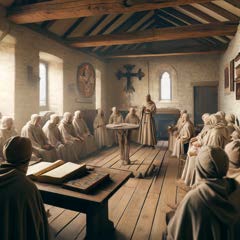
Cathars opposed the wealth and corruption of the Catholic Church, criticizing its hierarchy and sacraments. Their rejection of the Church hierarchy’s luxury and emphasis on personal spirituality over institutional authority resonated with some individuals Figure 16.1: A depiction of a Cathar gathering, created using AI (DALL·E, 2024-05-24 11:24:42) Cathar
masses, known as "consolamentum" ceremonies, were
likely characterized by their simplicity and spiritual fo-
cus. Held in modest settings, such as private homes or
secluded locations, these gatherings lacked elaborate rit-
uals and opulent decorations typical of Roman Catholic
services. The central element was the laying on hands by
the "Perfects" (spiritual leaders), symbolizing the Holy
Spirit’s descent and the recipient’s purification and en-
try into a state of spiritual purity. Prayers, readings
from sacred texts, and hymns emphasized themes of du-
alism, the rejection of materialism, and the aspiration
for a pure, ascetic life. The ceremony fostered a sense
of community and spiritual solidarity among the partic-
ipants.
The Desclergues of la Villa Ducal de Montblanc, 2nd ed., Omn., VOL. I
© 2024 Nico F. Declercq
104
CHAPTER 16. THE POWERFUL CLERGUES CLAN IN OCCITANIA
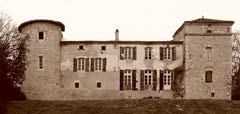
Figure 16.2: The Château de Linardié is a castle located
in Senouillac, in Tarn (France) and is the historic home
of the de Clergue family.
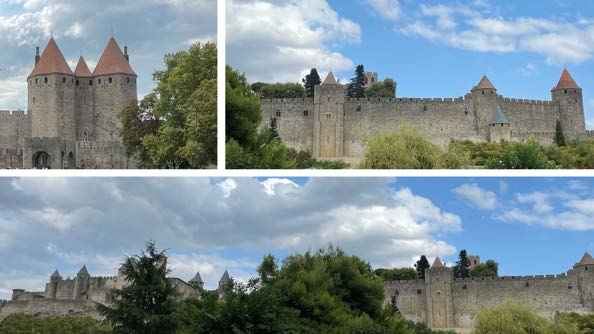
Figure 16.3: Carcassonne, 2022. Carcassonne, a UNESCO World Heritage site, is a fortified medieval city in southern France’s Aude department of the Occitanie region. Nestled strategically between the Atlantic Ocean and the Mediterranean Sea, Carcassonne’s origins date back to the Gallo-Roman period, with its impressive fortifications constructed mainly during the 12th century. This historic citadel was crucial in the Albigensian Crusades, a 13th-century campaign to eliminate the Cathar heresy in Occitania. Carcassonne’s double-walled fortifications and 52 towers are a testament to medieval military architecture. Today, Carcassonne is celebrated for its historical significance and its picturesque beauty, drawing visitors from around the world to explore its ancient ramparts and cobblestone streets. (Declercq de Silva Archive)
seeking a more authentic religious experience.
However, it’s important to note that Catharism was also viewed unfavorably by many contemporary authorities, particularly the Catholic Church, which condemned it as heretical. Some critics argue that Catharism’s strict dualism and rejection of vital Christian sacraments, such as baptism and the Eucharist, were seen as problematic and misguided. Additionally, historical records suggest that Cathars faced persecution, including violent suppression by the Catholic Church and secular authorities.
In modern times, perspectives on Catharism can vary widely, with some viewing it as a courageous and noble expression of spiritual dissent and others critiquing its theological positions and the social consequences of its beliefs.
The main difference between Catharism and the belief of the Catholic Church lies in their theological doctrines, particularly regarding the nature of good and evil, the material world, and the role of the Church and sacraments. The primary theological difference that sets Catharism apart from Catholicism is its dualistic worldview.
Catharism embraced a dualistic cosmology, believing in the existence of two opposing forces: the spiritual realm of reasonable, associated with God, and the material realm of evil, associated with Satan. This dualism led Cathars to reject the material world as inherently corrupt and evil, viewing it as Satan’s creation. They believed life’s goal was to transcend the material world and attain spiritual purity.
In contrast, the Catholic Church espouses a monotheistic worldview, affirming the existence of one God, the creator of both the spiritual and material realms. While Catholicism acknowledges the presence of evil in the world due to humanity’s fall, it does not adhere to a strict dualism that posits an inherent evil in the material world itself. Instead, Catholicism teaches that the material world is fundamentally sound, as God creates it.
This difference is significant because of its theological implications for understanding the nature of reality, humanity, and the divine.
The Catholic Church’s rejection of dualism allows for a more integrated understanding of existence’s spiritual and material aspects, emphasizing the sacramental nature of creation and the potential for redemption within the material world. In contrast, Catharism’s dualistic worldview can lead to a more radical rejection of material existence and a focus on spiritual transcendence.
Furthermore, the theological differences between Catharism and Catholicism had significant social and political implications during the medieval period. Catharism’s rejection of the authority of the Catholic Church and its sacraments challenged the power and legitimacy of the Church hierarchy, leading to conflict and persecution by ecclesiastical and secular authorities. Thus, the theological differences between Catharism and Catholicism were not only matters of doctrinal dispute but also profoundly affected the balance of power and social order in medieval Europe.
© 2024 Nico F. Declercq
The Desclergues of la Villa Ducal de Montblanc, 2nd ed., Omn., VOL. I
16.3. OUR ROOTS IN ALBI AND CASTRES, FRANCE
105
16.3 Our Roots in Albi and Castres, France
Due to the subsequent association with the Roman Catholic Church through their affiliation with the Knights Templar, it is evident that our ancestors were not Cathars. Nonetheless, certain members of their clan were adherents of Catharism. Consequently, there were indeed Desclergues who were Cathars, depicted in Figure 16.1 on page 103, and related to our ancestors, who were devout Roman Catholics. This religious divergence within the Desclergues clan likely created internal tensions. It may have been a significant factor influencing our ancestor, Ramon Desclergue (Raymond Clergue), to align with the King of Aragon in his conquest of Mallorca.
The Cathars, also known as Albigensians, were adherents of a religious movement that emerged in the Languedoc region of southern France during the 12th century. The origins of Catharism are complex and intertwined with various religious and social factors of the time.
The Cathar belief system was rooted in dualism, positing two opposing cosmic principles: one representing good and spiritual purity and the other representing evil and material corruption. Cathars believed that the material world, including the human body, was inherently corrupt and created by the evil principle, while the spiritual realm was pure and divine. This dualistic worldview influenced their rejection of material wealth, hierarchy within the Church, and sacraments such as marriage and baptism.
The spread of Catharism can be attributed to various factors, including disillusionment with the Catholic Church’s corruption and wealth, the appeal of a simpler and more ascetic lifestyle, and the influence of earlier dualistic movements like Manichaeism.
Albi and Castres were significant centers of Cathar activity in the Languedoc region. The nobility of these regions, particularly the powerful Counts of Toulouse, were known to be sympathetic to Cathar beliefs, providing protection and support to Cathar communities.
However, the growing influence of Catharism alarmed the Catholic Church, which saw it as a heretical threat to its authority and orthodoxy. In response, Pope Innocent III launched the Albigensian Crusade in 1209, aimed at suppressing Catharism and reclaiming control over the Languedoc region.
The Albigensian Crusade resulted in a brutal and protracted conflict marked by military campaigns, sieges, and massacres. One of the most infamous incidents was the siege of Béziers in 1209, where thousands of inhabitants, both Cathars and Catholics, were slaughtered indiscriminately.
Despite the persecution, Catharism persisted in pockets throughout the region for several decades. However, the Inquisition, established by the Church to root out heresy, intensified its efforts to eradicate Catharism through measures such as mass trials and executions. Facing persecution and death, many Cathars sought refuge in remote mountainous areas and neighboring regions beyond the reach of the Inquisition. Some migrated to regions like Catalonia in Spain, where Cathar sympathizers provided sanctuary.
Others fled to areas such as Lombardy in northern Italy, where Cathar communities remained in secrecy for some time.
Ultimately, the Cathar movement gradually dwindled due to a combination of persecution, internal divisions, and assimilation into other religious groups. By the 14th century, Catharism had largely disappeared as an organized religious movement, but its legacy endured in the memories of those who sought spiritual alternatives to mainstream Christianity.
With the name ’Albi’ in mind, the name ’Montisalbi,’ synonymous with Montblanc, should ring a bell, as introduced in Chapter 5.
16.4 Montaillou
Amidst the zenith of Albi’s illustrious Cathar culture, the lineage of the Clergues exhibited a remarkable propensity for dispersal, particularly in times of fervent Cathar persecution. Our progenitors sought sanctuary in the enclaves of Aragon, notably in the resplendent realms of Barcelona and the Balearic Isles. At the same time, parallel branches of our ancestral tree took root in the bastion of Montaillou, where they ascended to eminence as the formidable Clergue dynasty.
A critical book highlighting a Clergue clan in Montaillou is written by Ladurie E. Le Roy.1 We have taken most of the information below from that reference, in particular, "Chapter III A dominant house: the Clergue family"
The Montaillou community comprised individuals from diverse social and economic backgrounds. Within the village, some households enjoyed relative affluence, like the Benets, the Belots, and the Clergues. Conversely, there were less prosperous households, or those perceived as such, including the Maurys, the Bailles, the Testaniéres, the Pellissiers, and certain Martys. Families with lower incomes probably constituted a significant minority in the village. Although the absence of land records makes it challenging to provide exact statistics, various sources indicate a substantial difference of approximately fifty to one between the most prosperous non-noble astal in the parish, exemplified by the Clergue brothers, and the possessions of a needy individual. Wealthier residents often owned between eight to ten hectares of land and meadows per household, while those with fewer means might possess one or two hectares or even less.
These disparities did not necessarily hinder social interaction but could occasionally create tension, even without overt class conflicts.
Distinctions in local wealth manifested in various aspects of life, such as the amount of cash a person had at their disposal—ranging from minor to none. Nevertheless, land ownership and sheep ownership were the primary determinants. Someone who owned a few dozen sheep was considered relatively well-off. However, even at a lower level of prosperity, nearly every family, except the destitute widows, maintained a few ewes, providing a level of security to the household and a basic level of dignity to their domus.
Other significant indicators of economic status included the presence of oxen in the stable, possession of at least one mule or donkey for plowing and transportation purposes, whether there were live-in servants, whether children were apprenticed as shepherds or domestic help, whether the house had multiple floors, the availability of kitchen utensils, and the presence of stocks of hay, grain, and tools. Illegitimate children and those who were not heirs often ended up in roles as servants or shepherds, gradually slipping down the social ladder and eventually leading a less prosperous domus.
The criteria for distinguishing between wealth and poverty in Montaillou were multifaceted and broader in scope than the later contrast between farmers and day laborers in northern France, who were differentiated by their possession of plowing horses. This geographic distinction can be explained by the absence of extensive tenant farming in Montaillou, where sheep-raising is more critical than arable farming. Additionally, plowing was typically conducted using oxen, mules, and donkeys, which were more indicative of farming on a smaller scale.
At the apex of this social and economic hierarchy and the core of the structure known as domus, there resided, akin to a spider within its web, the leading ’ostal’ of the Clergue family. In terms of demographics, the Clergue households held sway over the village.
According to the available, albeit incomplete, data extracted from the Fournier records, Montaillou counted at least twenty-two individuals bearing the Clergue surname. Following them, there were the Maurs (thirteen), the Martys (eleven), the Bailles, Belots, 1Le Roy Ladurie E. - Montaillou. Cathars and Catholics in a French Village 1294-1324
The Desclergues of la Villa Ducal de Montblanc, 2nd ed., Omn., VOL. I
© 2024 Nico F. Declercq
CHAPTER 16. THE POWERFUL CLERGUES CLAN IN OCCITANIA
Benets, and Azémas (ten each), the Pellissiers (eight), the Rives and the Argelliers (seven), the Authiés and the Forts (six), and the Bars and the Vitals (four). However, in isolation, these statistics fail to convey the complete picture. What contributed to the dominance of a domus were factors such as wealth, influence, and connections formed through patronage and ’friendship.’ The Clergue domus possessed all these attributes. While it would be enlightening to explore this domus in detail, we must, for now, rely on a glimpse offered through the eyes of Fabrisse Rives, a wine seller from the village. On a day when she found herself short of measures for dispensing wine, she borrowed one from her neighbors, the Clergues. At the entrance to their ostal, she encountered three elderly local matrons basking in the sun. Mengarde Clergue, the priest’s mother, and her two companions, Guillemette Belot and Na Roqua, are all stalwart pillars of Catharism. Fabrisse proceeded inside and ascended to the anteroom (aula) on the first floor above a small partially subterranean shed (sotulum). Later in the day, Fabrisse crossed paths with Pierre Clergue. In his room, she noticed the renowned wine measure on the table and the secretive presence of Guillaume Authié. The Clergue residence, with its anteroom, first floor, entrance, and individual bedrooms, stood as one of the most substantial structures in the village. Ample land holdings accompanied it. Bernard Clergue, the ’bailiff’ and brother of the priest, not only cultivated his agricultural land but also managed land confiscated from heretic peasants of Montaillou by the Comte de Foix, which, by extension, fell under the control of the ’bailiff,’ who exploited it for profit. Bernard harbored a deep affection for the Pays d’Aillon, the estate he oversaw for the Comte. It was ’his’ land, and even while incarcerated by the Inquisition, he would gaze longingly at it from afar as he soaked in the sun atop the Tour des Allemands in Pamiers. On his part, Clergue, the priest, oversaw the land holdings of all his relatives, acting as a proxy for his niece when her husband, Bernard Malet of Prades, purchased land once owned by Raymond Malet, the son-in-law of Raymond Pierre. The Clergue domus also evidently possessed herds of pigs and sheep. Bernard Clergue took measures to protect his garden from damage by his pigs, and during his imprisonment, he gifted three fleeces of wool to Carnot, the prison sergeant, who then catered to Bernard’s requests within the prison. The sergeant’s wife, Honors entrusted Bernard with the keys to the prisoners’
rooms. Beyond simply having financial resources, the Clergues possessed either money or credit. To secure the release of his beloved brother Pierre, the bailiff was willing to expend 14000 sous in bribes to influential individuals. However, wealth was just one facet of their influence. In the case of the Clergue family, although they were peasants by origin, their affluence was accompanied by a degree of power and valuable connections. Bernard Clergue was acquainted with influential figures in the Comte de Foix’s court and did not hesitate to employ financial incentives to sway them. The family wielded a threefold influence: within the court of Foix, the regional Church, and the village and its environs. The priest Clergue’s influence was recognized as extensive, with Guillaume Maurs stating, "He has great power at the Court of the Comte de Foix and in the Church." There was even a sense of fear that he could wield his influence to have people apprehended and harmed, as articulated by Guillaume Maurs when he said, "One of these days, he can have us taken and destroy us." This fear led some to flee their homeland, seeking refuge elsewhere. Beyond the borders of the Comté de Foix, a region subject to the Kingdom of France, the Clergues’ influence extended to Carcassonne, where the Inquisition occasionally sought their assistance and considered their opinions. Bernard Clergue, addressing Bernard Benet, once said, "If you go and confess to the Inquisitor in Carcassonne the misdeeds which I have suggested to you, I will pay the expenses of your journey and get the Inquisitor to annul the sentence which condemned you to wear the yellow crosses." However, these alleged misdeeds were likely fabricated, illustrating the priest’s willingness to circumvent Inquisitorial law to protect his parishioners. This dual role allowed him to act as their guardian and a protector of his power. Pierre Maury, a shepherd who had been a fugitive from justice for a considerable period, offered a categorical perspective. However, it’s worth noting that Maury might have held leverage over Clergue due to their previous associations with Catharism: "If the priest of Montaillou had wanted to catch me, he would have done so a long time ago!" Maury recounted an encounter with the priest when he came to collect tithes at his father’s house.
Despite this opportunity, Clergue did not have Maury arrested. Although the Clergues had once been implicated in Catharism, they were part of a domus that possessed significant resources and managed to defy the odds for many years, both for themselves and their associates. Yet, this game was fraught with danger, and ultimately, they faced defeat. The local authority wielded by the Clergue household entailed a multifaceted and ambivalent relationship with the local peasants. At times, the Clergue house asserted its superiority over the rustic domus, eventually leading to a rupture in their connections.
When I fell ill in Varilhes," recounted Béatrice de Planissoles, "the clergyman came to visit me and remarked, ’I’ve got the people of Montaillou right where I want them, thanks to the Inquisition.’ In response, I inquired, ’Why do you persecute the devout Christians when you used to hold them in high regard before?’ The clergyman replied, ’I haven’t changed. I still hold the devout Christians in high regard. But I seek retribution against the Montaillou peasants who have wronged me, and I will exact revenge in any way I can. After that, I’ll settle matters with God.’ In Montaillou, the term ’peasant’ or ’rustic’ was considered an insult, even though farmers and shepherds inhabited the village. When conversing with Béatrice, the clergyman referred to his fellow Montaillou citizens as peasants or rustics, aiming to diminish them and distinguish them from his family. However, this attempt was in vain.
The domus of the Clergues was closely linked through family ties and blood relations with other domus in the parish. The Clergues had strong connections through marriage or kinship, and sometimes both, with the Benets, Belots, Rives, Martys, Liziers, and Forts.
Additionally, we shouldn’t overlook the numerous temporary unions involving the active male members of the Clergue family, with Pierre, the priest, leading in this regard, just as in all other aspects. This was common among all the women in Montaillou, from the poorest to the chatelaines. They all held affection, deloused, and admired the Clergues. These kinship, marriage, or cohabitation bonds provided crucial support or collaboration for the Clergue family, both in their prosperous times and during their decline.
However, these connections didn’t preclude later conflicts or intense animosity with certain domus, such as the Benets, even though they were indirectly linked to the Clergues through a chain of marriages. There was also the crucial complicity in heresy. Before his ultimate acts of betrayal motivated by revenge rather than ideological conversion, Pierre Clergue was a staunch advocate of Cathar beliefs, which he shared with members of other influential families. ’If only all the priests in the world were like the priest of Montaillou,’ sighed Guillaume Authié in 1301, expressing trust in every member of the Clergue domus. Pierre and Bernard Clergue unquestionably demonstrated their loyalty to the heretics during their turbulent youth, as confirmed by Guillaume Maurs.
One evening in Montaillou, during an episode when the Inquisition was taking drastic actions, the local priest aided two heretics in escaping from the Belot family’s residence. These fugitives were directed to find refuge in the wilderness known as A la Cot. In a separate incident, as recounted by Alazais Fauré, Pierre Clergue stood guard at a location called la Paredeta to ensure the safety of a delicate situation while Prades Tavernier, disguised as a traveling merchant dealing in leather and wool, provided solace to a dying Montaillou resident. Alazais Azéma brought attention to Bernard Clergue’s previous associations, highlighting how Bernard collected grain as tithes and discreetly placed a portion on the low roof of Raymond Belot’s house, instructing Raymond to deliver it to the heretics. The Clergue family’s influence in Montaillou rested on four pillars: wealth, familial connections, heretical beliefs, and power. This influence was deeply embedded in the local institutions.
Pierre Clergue held the position of the village priest, although his numerous extracurricular activities sometimes hindered his fulfillment of religious duties. He divided his time and attention between mistresses and his pastoral responsibilities. Nevertheless, superficially, Pierre appeared to be a conscientious priest, regularly hearing confessions, celebrating mass on Sundays and feast days
© 2024 Nico F. Declercq
The Desclergues of la Villa Ducal de Montblanc, 2nd ed., Omn., VOL. I
107
(even while in mortal sin), attending diocesan gatherings, and collecting tithes. He also distinguished himself as one of the few educated individuals in the village, possessing a rare collection of books. Notably, he had access to the Cathar calendar, which blended folklore and liturgy, loaned to him by the Authié brothers. Pierre occasionally acted as a notary, overseeing essential documents related to his friend Béatrice’s dowry. Moreover, he served as an official representative of the Carcassonne Inquisition, using this position for protection and oppression. Local opinions about Pierre were mixed; after many years, Béatrice remembered him as a competent and good-hearted man, sentiments shared by many in the region.
In Montaillou, the Clergue family, particularly Pierre and Bernard, wielded spiritual and temporal authority. Pierre served as the priest, while Bernard acted as the bailiff. Working together, they collected tithes on different occasions. Bernard also functioned as a magistrate and collected dues for the Count, who held significant political power in the village. In his de facto role as the Inquisition’s bailiff, Pierre collaborated with his brother Bernard, who served as the local Justice of the Peace and police commissioner for the Count. Bernard apprehended individuals accused of heresy and, when necessary, confiscated their livestock.
The Clergue brothers frequently combined their efforts, leveraging feudal and manorial authority. For example, Raymond Clergue, alongside Jacques Alsen, the vice-chastelain of Montaillou, pursued Guillaume Maurs, once a personal adversary and now a family foe, through the Pedorres Pass in the Pyrenees at Puymorens. Regrettably, their mission proved unsuccessful, encountering only the outlawed shepherd Pierre Maury, whom they allowed to escape after obtaining some provisions from him.
During the significant Inquisition roundup in August 1308, Pierre Clergue confined all parishioners over twelve or thirteen within the chateau of Montaillou. Some of these individuals were later released, following a selective process of liberation. Within his parish, Pierre was referred to as ’the castle’s man,’ a position he exploited for personal gain until a twist of fate led to an illicit relationship with the chatelaine (or former chatelaine). The Clergues and their rivals in the village took turns wielding local offices, such as seigneur, bailiff, and chatelain, at the peasant level, all to control these positions for their objectives. After 1320, as the influence of the Clergue family began to decline, their adversaries, including Pierre Azéma of Montaillou (cousin of Bishop Fournier), Raymond Triahl (vicar of Montaillou and Prades), and Bernard Marty (consul of Montaillou), used the secular arm of the local castellani against the Clergues and their associates. For instance, Pierre Azéma, a humble peasant, ordered the lieutenant of the Count de Foix’s chatelain to imprison Bernard Benet, a temporary and unwitting accomplice of the Clergues, in the chateau’s dungeons without seeking permission. Pierre Azéma also directed the confiscation of Benet’s livestock, placing them in the Count’s custody.
These specific events exemplify the intricate dynamics of the village far more effectively than any theoretical charter.
This marks the solitary instance in the Foumier Register where a consul in Montaillou is mentioned. Subsequently, Montaillou had consuls, who were ostensibly appointed through a free election by the municipal assembly of family heads. However, their role in Montaillou’s ’group struggle,’ rather than a ’class struggle,’ was relatively minor. For the various rural factions involved, including the Clergue ’domus,’ the primary objective was not so much to resist oppression from the seigneurie and castellani but rather to assert control (sometimes alternately) over the local authorities of the seigneurie, ’bailie,’ and castellani to suppress rival clans.
Consequently, the authority of these institutions was less perceived as a result of their oppression and more as a means through which competing interests sought to exert influence.
Having provided an overview of the Clergue house and its place in the domus system in Montaillou, we must now introduce its members. Firstly, there’s a question of titles and leadership. After the patriarch Pons’ passing, Alazais Azéma referred to the Clergue domus as the house of Pons Clergue’s sons. Fabrisse Rives, the wine-seller, mentioned the priest’s house and his brothers’
residence. Alazais Fauré, sister of Guilhabert the heretic, called it Bernard Clergue’s house. Raymonde Arsen, who served the Belots and is a valuable source of information, used both expressions interchangeably: the house of Bernard Clergue and his brothers and the people of the priest’s house. Theoretically, Pierre and Bernard held equal leadership roles within the Clergue domus, though one was somewhat more prominent. When Pierre Clergue passed away, his brother Bernard, who admired him and acknowledged his superiority, referred to him as ’my God,’ ’governor,’ and capdelador.
Even with the strong cohesion among members of the Clergue house, they sometimes shared different views or trusted each other completely. Even the patriarch, Pons Clergue, a staunch Cathar, eventually grew concerned about his son Pierre’s moral decline and espionage activities. Pierre, the priest, had suggested to Raymond Maury that he should bring back his long-outlawed son, Pierre Maury, to Montaillou for heretical activities and other ’crimes.’ Upon learning this, Pons became furious and he warned Raymond Maury not to trust the treacherous priest. He advised, ’Do not believe a word of that deceitful priest. Tell Pierre Maury,
"You are at the Pass of the Seven Brothers, near Montaillou; flee to the Marmara Pass; if you’re at the Marmara Pass, continue fleeing to the Pass of Puymorens, where the Pamiers diocese borders end. Do not stay there, but flee even further!"’
Did Pierre Clergue know about this warning? If he did, he showed no ill will. He regarded his father’s remains as the repository of the domus fortune, having taken hair and nail clippings from it to preserve the family’s well-being. Pierre had a deep attachment, simultaneously Cathar and Catholic, to his mother, Mengarde. When village gossips, including Alazais Azéma, Guillemette Belote, and Alazais Rives, criticized Mengarde after her funeral, claiming she had given birth to a vicious brood and that all her sons were terrible men, Pierre paid them no heed.
He defended his mother, stating to Béatrice, ’My mother was a virtuous woman. Her soul rests in Heaven. She did many good deeds for the "good Christians" and sent parcels of food to the Montaillou heretics imprisoned, such as old Na Roqua and her son Raymond Roques.’ Despite his devotion to his Cathar mother’s memory, Pierre hedged his bets and had Mengarde buried near the Virgin’s altar in Notre Dame de Carnesses, the pilgrim chapel in Montaillou. Pierre Maury found this burial location disgraceful, alluding sympathetically to Mengarde’s sinful past. Emersende Marty, another Montaillou heretic, paradoxically commented, ’If the Bishop of Pamiers knew about the priest’s worthy mother’s past, he would have her remains exhumed and ejected from the church where she lies buried.’
Pierre Clergue was a dutiful son but an unsatisfactory priest. He took pride in having Mengarde buried near the Virgin’s altar, but he also told Béatrice, ’Mary is not the mother of God; she is the vessel in which Jesus Christ was ’foreshadowed.’’ Pierre remained faithful to his mother’s memory, making Raymonde Guilhou his confidante, occasional lover, and regular delouser. Raymonde had been converted to Catharism by Mengarde while she was alive. While the Clergue brothers got along well with their parents, did they maintain unity among themselves despite occasional disagreements? There were sporadic signs of surface tension. When Bernard Clergue wanted to provide grain to the heretics, he concealed it from his brothers or some of the four. However, this was a mere episode and didn’t jeopardize the fundamental unity of the domus, preserved by its male members and several loyal relatives, including Bernard Gary of Laroque d’Olmes. This dedicated nephew proved instrumental in assisting the Clergues during the challenging times that accompanied their decline.
The decline occurred after an extended period of dominance. Initially, around the year 1300, Pierre and Bernard Clergue held influential positions as a priest and a bailiff, respectively. They acted as local liaisons for the Authié brothers and, along with the other two Clergue siblings who remained less prominent, they served as the guardians of a village marked by heretical beliefs. Pierre and Bernard, although harboring some sinful inclinations themselves, maintained strong connections with the Catholic Church in The Desclergues of la Villa Ducal de Montblanc, 2nd ed., Omn., VOL. I
© 2024 Nico F. Declercq
CHAPTER 16. THE POWERFUL CLERGUES CLAN IN OCCITANIA
the lowlands and skillfully played various sides against each other. Bernard collected tithes from the Church of Rome and discreetly shared a portion with the Cathars, ensuring their activities remained concealed. On the other hand, Pierre secured a prominent social standing in the village through his association with the former chatelaine and his scholarly reputation, fostered by his interactions with the Authié brothers and his role as an educator to a student.
This student, Jean, held Cathar’s sympathies, and Clergue employed him to convey affectionate letters and, on occasion, act as an intermediary during his rendezvous with Béatrice de Planissoles. However, the Clergue family’s secure dominance was unsustainable in the long run. The Carcassonne Inquisition began scrutinizing Montaillou, forcing the Clergue family to decide whether to renounce heresy or face its consequences. Pierre and Bernard eventually betrayed the Albigensian beliefs they may have only half-heartedly embraced by this point. In such situations, former sect members often perceive them as renegades, while they believe they have seen the light.
Pierre Clergue may have already started informing others as early as 1300. Before his affair with Béatrice concluded, the outspoken Cathar women of Montaillou were already accusing him of destroying the region. In any case, in the first decade of the 14th century, the villagers and the heretical community of Montaillou became aware of the snake in their midst. A new side of Pierre Clergue emerged, painted in detail by the scribes of Pamiers. He appeared as a sophisticated and arrogant man, driven by pride, desire, vengeance, and the characteristic toughness of his region. There are two versions of Pierre Clergue’s significant betrayal: his own, which we will explore later, and that of the people he betrayed—some of whom were his friends and family, including the Maurys, Benets, Belots, and even the Maurs. These proud mountain families, now oppressed, unanimously accused the priest and his domus of switching allegiances and becoming instruments of the Inquisitors.
For instance, Guillaume Belot told Raymonde Arsen bluntly during one of their meetings at La Calm: "The people from the priest’s household and the priest himself are responsible for many inhabitants of Montaillou being summoned by the Lord Inquisitor of Carcassonne, shown in Figure 16.3 on page 104. It’s high time the people from the priest’s household faced the same fate as the other Montaillou residents and ex-heretics." Indeed, Clergue, once a Cathar and still partly an Albigensian at heart, did not spare his parishioners. Thanks to the priest’s influence, the Maurs, rivals of the Clergues, were either imprisoned or banished to Catalonia.
Pons Clergue tried to justify his son’s actions by citing the inevitable necessities imposed by cooperation with France. Pierre Clergue behaved like a typical collaborator. Disowned by some of his people, he believed he could mitigate his losses by keeping his friends and clients beyond the reach of the colonizing power and the Carcassonne Inquisition. Within this context, the tragedy of August 1308 unfolded as Clergue stood by as an accomplice while the Inquisition’s agents detained his congregation.
All Montaillou residents, males, and females aged twelve or older, were apprehended. This action may have been based on the confessions of Gaillarde Authié, the wife of Guillaume Authié, a heretic who faced questioning by the Inquisition in Lent of 1308.
The revelations made by Pierre Authié’s nephews, known as the de Rodés, who hailed from Tarascon and included a Dominican in Pamiers, were even more decisive. The roundup itself was highly dramatic. The feared Poloniac oversaw the Carcassonne Inquisition’s agents and effortlessly captured all eligible Montaillou inhabitants. Fortunately, Pierre Maury had remained in the Qyériu Pass; a messenger carrying flour informed him of the village’s lockdown. A few Montaillou women escaped, taking loaves of bread and posing as agricultural migrants from elsewhere. The fortunate escapees and fugitives settled in Spain’s Catalan or Saracen border regions. Temporarily, the village became a haven for children and sheep. The adults and adolescents from Montaillou, initially detained in the chateau, were later transported to the Carcassonne prison. Some faced execution by burning, while others spent a prolonged period, segregated by gender, in communal cells within the prison, where they received food parcels ("victuals") from their families. The rest of the prisoners were released relatively quickly, with the Inquisition allowing them to return to Montaillou.
There, they lived under the simultaneously protective and perilous authority of the Clergue family. The village, or what remained of it, reluctantly rallied around its priest, aging amid debauchery and accusations. Yellow crosses marked the scarred village, the symbols former heretics wore.
Pierre Clergue seized this opportunity to settle old scores with his adversaries, particularly the Maurs, who had suffered during the roundup. Mengarde Maurs insinuated that the priest’s past might not be devoid of heresy, and we know the consequences she faced.
Pierre Clergue’s self-perception was somewhat less damning than his victims’ image of him. He saw himself not as a renegade but as an avenger of injustices, someone executing his sense of justice.
Around the same time, in 1308 or thereabouts, when Béatrice, twice widowed, fell seriously ill in Varilhes, Pierre, traveling to attend a diocesan council, made a final visit to his former mistress. She remained a dear friend to him. Sitting at her bedside, he inquired about her health and emotional state, held her hand, and stroked her arm. Béatrice confided her fears about their previous heretical discussions, admitting that she had never dared to confess them to a priest. With more courage, she asked Pierre why he was persecuting his former friends, the heretics. In response, as we’ve seen, he conveyed that he still had goodwill toward the good Christians (the heretics) and that his actions aimed to exact revenge on the Montaillou peasants who had wronged him.
To demonstrate his unwavering commitment to his Cathar beliefs, which had remained intact despite his condemnation in Carcassonne, Pierre reiterated one of the theories he had once shared with his former lover. He stated, "Only God can forgive sins, and there is no need for confession." Eight years prior, when he was still a Cathar without being deeply involved in espionage, he elaborated further: "The only valid confession is the one people make to God; He knows the sin before it is committed, and He can grant forgiveness." A comparison of these two statements reveals that in 1308, Clergue was more than ever acting as a double agent while his true Cathar beliefs persisted. Pierre also aimed to maintain his role as a leader and protector within his network of acquaintances in the village and the surrounding region. Despite the inevitable inconsistencies during these challenging times, his behavior before and after 1308 was consistent. Depending on the circumstances and without expecting anything in return, Pierre shielded specific local individuals from the authorities in Carcassonne. One day, as he basked in the sun at his church’s entrance, Fabrisse Rives approached him, divulging the recent sinful activities, or perhaps denouncing them, on her deathbed, concerning Alazais Benet. Pierre reacted angrily, advising Fabrisse to remain silent, asserting, "There are no heretics in these parts, and even if there were, they would be swiftly rooted out."
Despite Fabrisse’s revelations, Pierre managed to manipulate the Carcassonne Inquisition by only denouncing personal enemies of his clan, thus keeping them ignorant of Fabrisse Rives’ situation, and the idea of summoning her never crossed their minds. After the 1308 crackdown, Pierre Clergue found it increasingly challenging to continue protecting his friends, clients, or acquaintances involved in sinful activities. However, he did not entirely relinquish his protective duties. As we have witnessed, on two occasions, Pierre Clergue and members of his domus aided the outlawed Pierre Maury in evading capture, even providing him with financial support. In 1320, just before his downfall, Clergue, for a fee of two ’silver tournois,’ had Guillaume Mondon of Ax rid of his yellow crosses. But even those who appeared to defend the Church but were former heretics in Montaillou were uncovered in 1320 by Jacques Fournier.
The Clergue faction met the same fate as those they had previously reported. Desperate, two rival groups turned against each other, ultimately dividing Montaillou. The Azéma-Guilhabert clan, represented by Alazais Fauré, née Guilhabert, sought to dismantle the
© 2024 Nico F. Declercq
The Desclergues of la Villa Ducal de Montblanc, 2nd ed., Omn., VOL. I
16.5. CORTÉS ROSAL’S REFLECTIONS
109
Clergue clan. Alazais accused Esclarmonde, Raymond Clergue’s wife, of attending the heretical gathering of Guillaume Guilhabert.
The Clergues retaliated vigorously, with Pierre, the priest, finally imprisoned by Jacques Fournier, attempting to leverage his remaining influence with the Carcassonne Inquisition. Through his relatives still residing in the village, he tried to coerce Bernard Benet into providing false testimony against the Guilhabert-Azémas.
However, despite the efforts of the priest’s family, their endeavors were futile, and it was the turn of the Clergue brothers to languish and perish in captivity. Yet, Pierre Clergue chose to remain silent for reasons unknown to us. This man, who possessed a wealth of information, departed this world without divulging any secrets, or if he did, such revelations were not documented by the scribes.
One would like to believe that, rightly or wrongly, he did not betray others, in stark contrast to the numerous unfortunate victims of the Inquisition who did.
This account of the activities of the Clergue clan leads us to contemplate more broadly the nature and exercise of power in Montaillou. Reference to feudalism and the manorial system holds some relevance due to the intricate web of obligations that enveloped the village’s microcosm and its inhabitants. However, in Montaillou, power was effectively wielded and transmitted at a level beneath the formal feudal and manorial structures. While official relationships exhibited hierarchy, such as those linking the bailiff as the Comte’s representative to the Comte’s humble dependents or the connections between the priest and his parishioners, these relationships gained significance from the underlying bonds of friendship, family, patronage, and sometimes even vendetta and enmity.
The Clergue domus served as the convergence point for all these interconnections. Although the Clergues lacked noble status and manorial rights, they assumed the roles of both "bailiff" and priest, concurrently occupying positions as friends, lovers, patrons, co-sponsors, and influential kin to many village residents. Their status was above nobility because they had purple blood. Simultaneously, they played the roles of oppressors and adversaries to another segment of the population.
For an extended period, Bernard Clergue and, more prominently, his brother Pierre governed Montaillou through alliances forged by blood or marriage. However, as Montaillou became the target of persecution, power gradually waned as it also became corrupt.
The local adversaries of the Clergue clan, long suppressed, eventually gained the upper hand. During his influential period, the priest established a veritable network of friends, family, co-sponsors, and mistresses across his parish, encompassing the entire Pays d’Aillon and Sabarthés regions. When bribed, the priest would secure exemptions from the requirement to wear the yellow cross for former heretics. Alternatively, he might coerce a woman by saying, "Either you have an intimate relationship with me, or I will ensure that you are reported to the Inquisition in Carcassonne."
The Clergues, acting as intermediaries between village society and the larger surrounding society, depended on higher-level intermediaries and protectors who possessed access to the highest authorities in the region, including the court of Foix, the diocese, and the Inquisition. While we are aware of only a few of these upper-level intermediaries, most of them, although not all, were local nobles, priests, manorial magistrates, or prévôts. Bernard Clergue attempted unsuccessfully to activate this protection network through bribery when his brother, the priest, was imprisoned. Similar means secured Pierre Maury’s acquittal. Throughout Occitania, groups consisting of priests, bailiffs, minor local nobility, prosperous peasants, and friends of friends endeavored, sometimes successfully, to counter the Inquisition and the oppressive forces of the French state and the Church.
Nevertheless, their successes were only partial, as profound tensions existed between the system based on friendship, marriage, and patronage that prevailed in the village of Montaillou and the system rooted in political authority and ecclesiastical oppression emanating from the surrounding society. A significant discrepancy existed between the values held by the Cathars and the peasants and those of the Catholics and the urban population. Additionally, the geographical proximity of Carcassonne and Pamiers to Montaillou and Sabarthes heightened the risk of conflict.
Montaillou, which was far from a monolithic entity, had to utilize all its resources of secrecy and ingenuity to deflect external threats.
Ultimately, the convergence of two divergent systems led to their breakdown.
16.5 Cortés Rosal’s Reflections
And about the etymology of the surname that comes from clerics or doctors with academic studies and scribes (notaries). This noble and ancient Clergue family from Languedoc was always dedicated to notary writing and was rich in land.
According to Cortés Rosal, The Maison des Clergue in the Frankish county of Montpellier is very interesting because they wanted to erase it from history due to the issue of the Albigensians, Cathars, and then the Order of the Hospital of Jerusalem and the Templars. This family acts in the 12th century and 13th century in all these conspiracies. Cortés Rosal imagines that the Desclergue family would be unique in the region of Montblanc in Catalonia. Everyone in that century must have been cousins. The Clergue of the area of Gascon Occitania and Catalan Occitania were nobles. All the affluent families, those in power, and those with doctors of academic studies, such as scribes, also called notaries, were noble. The Occitan, Gascon, or Aquitaine nobility was of exceptional blood. The origin of its nobles and counts has been hidden and tried to be erased. These Clergue from the Occitan village of Montaillou were a branch of the Clergue stem family of Languedoc.
Obviously, there were more branches in other parts of Occitania. The Occitan lineages frequently crossed the Pyrenees or the Hispanic March towards Navarre, Aragon, or Catalan counties due to dissensions or divisions or family conflicts; due to political conflicts, for services to any County House, or to serve in the Christian Cause against the Arabs. They continually changed their coats of arms, also called signs of lineage. However, on many occasions, they preserved something of the coat of arms or related derivations, colors, metals, pieces, etc. The heraldic relationship between pieces and exact colors is fascinating: blue or azure and gold. A heraldic exercise is shown in Figure 17.9
16.6 Château de Linardié
Other traces of the Clergues are, for instance, found in Linardiés. The Château de Linardié, shown in Figure 16.2 on page 104, is a fortress in Senouillac, located within the Tarn region of France. Its origins trace back to the 15th century, making it a cherished historical residence for the de Clergue family. Between 1996 and 2006, it became a hub for contemporary art exhibitions before eventually falling into abandonment. The tale of the Linardié castle unfolds in the annals of history, with its first mention dating back to the 15th century, documented in a court record. It was under the ownership of the noble Clergue family during this period, with Manaud de Clergue notably serving as the lord of Linardié. Generations of Clergue descendants continued to steward the property, as evidenced by records dating back to 1672, which cited François de Clergue as the possessor of the "castle, garden, meadows, land, woods, vineyard, stable, dovecote, farmyard, soil, and pasture" in Linardié, along with a house in the nearby hamlet.
The Desclergues of la Villa Ducal de Montblanc, 2nd ed., Omn., VOL. I
© 2024 Nico F. Declercq
CHAPTER 16. THE POWERFUL CLERGUES CLAN IN OCCITANIA
The castle’s connection to the Clergue family dates to 1400, firmly establishing their nobility. The family held legal rights and levied taxes, such as the pesade tax on livestock. During the tumultuous era of the Wars of Religion, Linardié did not escape the regional turmoil. Two figures, Georges de Clergue, and Captain Jean de Linardie, are often intertwined in historical accounts. It’s essential to clarify a recurring misconception: the name of the Linardié lords has occasionally been erroneously linked to the defense of the Protestant faction. The confusion arises from another family with the same name who fought for the Huguenots. Conversely, the lords of Linardié staunchly supported the Catholic cause during the conflict that raged in Senouillac. In 1587, the lord of Linardié negotiated on behalf of the bishop of Albi with the inhabitants of Campagnac, promising them peace and security.
Captain de Clergue did not oversee the strongholds from the castle of Linardié but rather from the tower of La Bonnette. This tower briefly fell into the hands of the Protestants in 1575 but was swiftly reclaimed, thanks to its strategic location, which spared it from reprisals. Despite the tumultuous religious and political landscape, the de Clergue family persisted in Linardié. The final lord of Linardié, Jean-Felix de Clergue, passed away towards the end of 1789. His brother, Joseph de Clergue de Durefort, faced arrest in Albi in 1793 but was soon released due to his advanced age. The castle changed hands at this juncture, becoming the property of the Rességuier family. In 1823, Félix-Joseph-François de Rességuier, in possession of the estate through inheritance from his maternal grandmother, Marie-Anne de Clergue, concluded a sale of the Château de Linardié to Abraham Mercadier, a merchant in Senouillac. This transaction marked the end of ten generations of the de Clergue family’s custodianship of Linardié.
16.7 Béatrice de Planisolles
The Cluergues family from the Occitania region also appears in the narrative of Béatrice de Planisolles. Béatrice de Planisolles, who was born in 1274 in Caussou and passed away in Varilhes, Ariège, was the chatelaine of Montaillou. She faced accusations of witchcraft and heresy by the inquisitor Jacques Fournier due to her connections with the Clergue family and Catharism. Her case is frequently cited among the entries in Fournier’s inquisition register.
Béatrice’s journey began when she married her first husband, Bérenger de Roquefort, around 1291. At approximately 17 years old, she assumed the role of chatelaine of Montaillou in the Aillou region. Records indicate that Guillaume Authier d’Ax, a notary and future Perfect, attended their wedding. The Authier family played a pivotal role in the revival of the Cathar faith during the 1290s, being part of the "ric borzes" (wealthy bourgeoisie) mentioned by Guillaume de Tudèle in his song "Cançon de la Crosada" ("Song of the Crusade"). This song suggested that their association with heresy would lead to them losing their wealth. In 1294, Béatrice had two children and was expecting a third. During this period, she endured unwelcome advances from her husband’s steward, Raymond Roussel. He attempted to persuade her to accompany him to Lombardy, where Cathars still practiced, but she declined.
Subsequently, in January or February 1297, she was sexually assaulted by Pathau Clergue, who publicly claimed her as his mistress in February 1297 following the death of Berenger de Roquefort.
Béatrice then entered into a two-year affair with the priest Pierre Clergue, who happened to be the cousin of Pathau Clergue. She later married her second husband, Othon de Lagleize, adopting the name Béatrice de Lagleize. After Othon’s passing, she engaged in a romantic liaison with the teacher of her daughters, another priest named Bartholomew Amilhac.
In Languedoc, she continued to be known as Béatrice de Planisoles. On Saturday, July 26, 1320, she faced accusations of heresy, witchcraft, and blasphemy before inquisitor Jacques Fournier. Interestingly, Fournier questioned her without requiring her to take an oath initially. He showed significant interest in the Clergues de Montaillou. This family had played a pivotal role in the Cathar resurgence a quarter of a century earlier, although they managed to evade capture due to their influence in the region. The Cathar heresy had been effectively suppressed in Sabartès by the inquisitor Geoffroy d’Ablis since 1303, later joined by Bernard Gui in 1307. However, a few heretics persisted in Catalonia.
Following her leadership of the remaining Cathar resistance fighters in Catalonia, Arnaud Sicre offered to deliver the most influential Perfect in the region to the bishop.
16.8 Lord of Guimerie
We also find the Clergues in Henri Graule2 writes the following statements.
"Out of five daughters that Pierre de Lescure had, three had embraced the religious state; among the three boys. Gabriel, the youngest of the family, also followed the voice of God, who called him to the ecclesiastical state. The Lord of Guimerie, Pierre de Clergue, a neighbor of the lords of Lescure, wanted to join this illustrious family and married Anne de Lescure, the seventh child of Pierre and Marie Rabastens."
"Around 492, John had inherited from his great-uncle William of Lescure. This one, to maintain a high reputation of the barony, had left to his great-nephew the greatest portion of his property. With the considerable fortune he owned, Jean compromised by deeds of August 47 and February 22, 1512, with his uncles and aunts, Gabriel de Lescure, Anne de Lescure, widow of Pierre de Clergue, lord of the Guimerie, and Jeanne de Lescure, also widow of Jean de Lemozy, concerning their legitimate rights."
Interestingly, though probably a coincidence, there was also a connection between a Clergue and a Du Puich in Occitane, just like in the 17th century we found a connection between a Du Puich and a Desclergue in Harelbeke. It concerns a testament that reads as follows:
1491-1519 Lausime by Alexis Dupuy, lord of Cabrilles and Montcuquet — Sale of censives by Isarn de Quercy to Jean Desmonts, of the castle of Labessière-de-Burens. — Lausimes by noble and venerable Jean de Voisins, priest, as rector of the church of Mont-lausine, castle of Lautrec. — Acts relating to the guardianship of noble Jean de Capriol, son and universal heir of Guillaume de Capriol, bachelor in both rights, by Guillaume de Lafont, de Fenayrols, administrator of the property of the said minor. —
Lausimes by Isarn Cavayer, merchant in Lautrec, — by Fortanier de Solomiac, bourgeois of the said Lautrec, — and by Antoine de Villespassans, lord of Saint-Amancet and the castle of Laboulbène, represented by Pierre de Villespassans, monk of Saint-Benoît de Castres. — Testament of noble Catherine Clergue, widow of Pierre Dupuy, buried in the Saint-Pierre chapel of the church of the Minor Brothers of Lautrec, near her husband. She made her son Alexis universal heir. His daughters Sabine Dupuy (Puega), wife of Guillaume de Solomiac, and Jeanne, wife of nobleman Pierre d’Hugues, of Castres, are named in this will, as well as Pierre de Clergue (Clerici), brother of the testatrix. Physical description: (Register.) — In-folio, 271 leaves, paper.
2Henri Graule, "Histoire de Lescure; ancien fief immédiat du Saint-Siège et de ses seigneurs," Paris, Téqui, 1895.
© 2024 Nico F. Declercq
The Desclergues of la Villa Ducal de Montblanc, 2nd ed., Omn., VOL. I
The Desclergues’ Return to Spain
The Desclergues of la Villa Ducal de Montblanc, 2nd ed., Omn., VOL. I
© 2024 Nico F. Declercq
Chapter 17
Historical Events Marking this Period
Figure 17.1: The Virgin of the Consellers, by Lluis Dalmau (around 1444), oil on oak, Museo Nacional d’ art de Catalunya, Barcelona. p
17.1 Purpura de la Patria
The Purpura de la Patria stand out as a distinct class of individuals, occupying a position of prominence within the societal hierarchy. Originating from the Latin term purpura, meaning purple, these individuals were vested with the authority to wield the quill, serving as scribes, notaries, and officials in the administrative machinery of the era. Their designation as Purpura de la Patria denotes their dual role as both guardians of the homeland and custodians of legal and bureaucratic affairs.
In ancient European history, the roots of the nobility class of Purpura de la Patria, found in Chapter 11 and illustrated in Figure
11.1 on page 87, surpassed all others in prestige and influence. Their origins could be traced back to the opulent courts of the Byzantine Empire, where the purple dye adorning the robes of emperors symbolized not only imperial power but also aristocratic lineage of the highest order.
These noble families, descended from ancient Roman patricians, Germanic chieftains, or Frankish royalty, were the custodians of tradition and the guardians of ancestral estates. Their genealogies intertwined with those of kings and queens, granting them a divine legitimacy and a sense of ancestral pride that permeated every aspect of their existence.
At the heart of their identity lay a myriad of privileges and responsibilities. Their exclusive access to land, wealth, and resources ensured their economic dominance, while feudal obligations such as military service and the administration of justice within their domains solidified their position atop the feudal hierarchy.
Yet, alongside their privileges came weighty burdens. As stewards of their ancestral lands, they were tasked with upholding law and order, fostering economic prosperity, and defending their territories from external threats. Their role extended beyond governance to encompass cultural patronage, religious piety, and diplomatic endeavors, shaping the socio-political landscape of medieval Europe.
The influence of the textitPurpura de la Patria extended far beyond the confines of their feudal domains. Through lavish patronage of the arts, sponsorship of religious institutions, and the construction of grandiose palaces and castles, they fostered a vibrant cultural renaissance characterized by opulence, refinement, and religious fervor.
Moreover, their impact on the political landscape was profound. They forged alliances, brokered treaties, and participated in dynastic marriages to safeguard their interests and augment their power. Their legacy endured through the ages, influencing subsequent generations of nobility and leaving an indelible mark on European society.
The Desclergues of la Villa Ducal de Montblanc, 2nd ed., Omn., VOL. I
© 2024 Nico F. Declercq
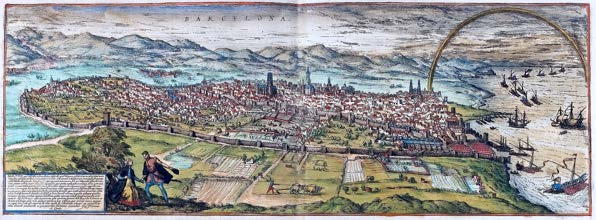
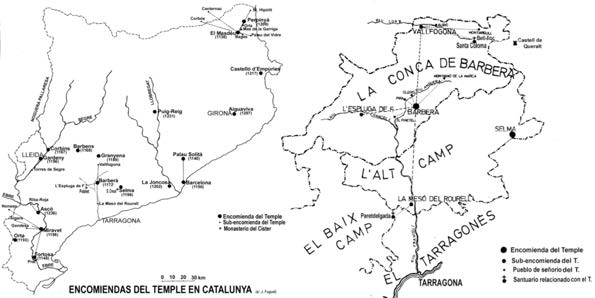
114
CHAPTER 17. HISTORICAL EVENTS MARKING THIS PERIOD
Figure 17.2: Barcelona by Georg Braun and Frans Hogenberg, Civitates Orbis Terrarum, Band 1, 1572. p
Figure 17.3: The Encomiendas of the Templars in Catalonia (left) and, specifically, the Conca Barberà (right). The maps were taken from Joan Fuguet Sans and Carme Plaza Arqué.1
Though their influence waned with the dawn of the Renaissance and the onset of modernity, the legacy of the textitPurpura de la Patria persists as a testament to the enduring allure of ancient aristocracy, their tales woven into the fabric of European history, their noble lineage forever enshrined in the annals of time.
As evidenced by the subsequent analysis, exemplified in Figure 18.3 on page 130 and in Figure 18.5 on page 131, the Desclergues were affiliated with the Purpura de la Patria.
17.2 The Catalan Genesis of the Desclergue Family
The Desclergue family’s odyssey traverses epochs marked by religious discord, political turbulence, and economic vicissitudes, offering a window into the socio-economic fabric of medieval Europe. Originating from the Albigensian tradition, a family member embarked on a journey as a Templar during the Conquest of Mallorca under James I of Aragon, laying the groundwork for their multifaceted pursuits in the centuries to come. Another took part in the conquest of Nova Catalunya.
Transitioning into commerce and finance, the Desclergue family emerged as influential figures in Catalan society, wielding their expertise as merchants and bankers. Holding esteemed roles such as jurado and síndico, they bolstered the economic vitality of their surroundings, contributing to the region’s prosperity.
The economic downturn of the 14th century catalyzed a significant shift for the Desclergue family. Faced with the aftermath of Mallorca’s decline and broader European crises, they sought refuge in Catalonia, particularly in the Penedés area, where they reaffirmed their entrepreneurial spirit and laid the groundwork for future success.
Navigating through subsequent epochs, the Desclergue family adapted to evolving socio-economic landscapes. Expanding their endeavors, they secured footholds in notarial offices, ecclesiastical circles, academics, and burgeoning markets like Andalusia and the Americas, diversifying their pursuits and consolidating their influence.
The rise of the House of Austria and the ascendancy of Flanders as a commercial hub heralded a paradigm shift in the family’s trajectory. Embracing migration once more, they seized new opportunities and horizons, navigating the dynamic currents of global commerce with agility and foresight. Exploring the Catalan genesis of the Desclergue family unveils resilience, adaptability, and entrepreneurial fervor. From the tumultuous backdrop of medieval Europe to the thriving markets of Catalonia and beyond, their saga embodies the enduring human quest for prosperity and kinship amidst the ebb and flow of history. Though obscured by time, their legacy is a testament to the indomitable spirit of exploration and enterprise.
© 2024 Nico F. Declercq
The Desclergues of la Villa Ducal de Montblanc, 2nd ed., Omn., VOL. I
17.3. TOULOUSE COUNTY AND LA MARCA, ARAGON AND BARCELONA
115
17.3 Toulouse County and La Marca, Aragon and Barcelona
Our ancestors, who bore the names ’Clergue’ and later ’Desclergue’ and ’Declercq,’ can be traced back to Toulouse, a beacon county northeast of the Pyrenees. Their shield underwent an evolution over time, shown in Figure 17.9 on page 127, but first appeared when the family was flourishing in Occitania.
The County of Toulouse is located in the Occitan area of southern France. It has a rich history and, in the past, had frequent conflicts and political intrigue. From its establishment in the early medieval era until its ultimate incorporation into the Kingdom of France, Toulouse served as a stronghold of authority, civilization, and resistance amid the chaotic environment of medieval Europe.
The County of Toulouse can be linked to the events that unfolded in the aftermath of Charlemagne’s military campaigns against the Vascons in 778. The county’s origin was shaped by the military necessities of the Carolingian Empire during a period of intense struggle. To strengthen his control over the land he had acquired and provide protection against future attacks, Charlemagne created the county and incorporated it into the emerging Kingdom of Aquitaine.
The creation of Toulouse was accompanied by the formation of the Marca, South of the Pyrenees, as a protection corridor against the Moors. In this Marca, we expect to find the patrilineal ancestry of Bertrand Du Guesclin, as described in Chapter 19.8.
The Marca Hispanica, sometimes known as la Marca, was a geographical area created by Charlemagne, the Frankish monarch, and Holy Roman Emperor, in the 8th century to serve as a protective barrier. The Marca was strategically located south of the Pyrenees mountain range and functioned as a military barrier against the Moorish invasions into Frankish territory. It was vital in protecting Charlemagne’s dominion from the spread of Islamic power in the Iberian Peninsula. After the Umayyad Caliphate conquered the Iberian Peninsula in the early 8th century, Charlemagne initiated a series of military campaigns called the Carolingian Reconquista.
These expeditions were intended to regain control over lands in the region. Charlemagne constructed the Marca Hispanica to protect the border of his dominion against Moorish encroachment.
Charlemagne designated reliable nobles and military leaders to administer the Marca Hispanica and supervise its protection.
The individuals referred to as ’marcher lords’ or ’marquises’ were given significant rights and jurisdiction to govern the province and defend against any Moorish invasions. The Marca’s advantageous geographical position enabled Frankish armies to initiate counteroffensives into areas controlled by Muslims while simultaneously serving as a secure shelter for Christian refugees escaping from Islamic governance. La Marca created stability for Toulouse and Aquitaine.
Nevertheless, Aquitaine’s stability was limited since internal conflicts and foreign pressures fragmented it by the middle of the 9th century. Toulouse became a significant hub in regional power dynamics as the center of power changed. The Counts of Rouergue, who exercised dominion over Toulouse, inherited power, establishing the groundwork for the county’s future political panorama.
Toulouse’s past is intriguing as it contains stories of dynastic conflicts, territorial disputes, and monumental fights. Raymond of Saint-Gilles’s rise signified a pivotal moment as he skillfully maneuvered through the complex challenges of succession conflicts and foreign dangers, establishing the foundation for a formidable principality.
However, the possibility of violence seemed imminent, as the Counts of Toulouse were entangled in a prolonged battle against the Dukes of Aquitaine and the Counts of Barcelona. Catharism, a rebellious movement, emerged during this time and challenged the church’s power significantly. It also challenged the political skills of the rulers of Toulouse. Finally, the murder of the papal legate Pierre de Castelnau sparked the Albigensian Crusade, a momentous event that profoundly altered the fate of Toulouse. Although the county put up a brave fight, it ultimately fell victim to the strategic actions of the King of France, resulting in its incorporation into the kingdom in 1271.
During its independence, however, while the Desclergues were thriving in the county and the town of Albi, the government of Toulouse revolved around a complex network of family connections, political alliances, and feudal responsibilities that shaped its social structure. The count, a crucial element of Toulouse’s power system, had powers beyond simple administrative tasks. In some ways, the county was also very progressive during its time. Indeed, despite lacking a formal title, the countess had significant power and often used her family ties to further the county’s objectives. Similarly, the establishment of primogeniture, which included the oldest son inheriting the whole realm, emphasized the significance of ancestry and the passing down of power in preserving Toulouse’s heritage. After all, Toulouse was not a republic.
The aristocracy of Toulouse, consisting of powerful vassals, barons, lords, and knights, constituted a strong group that revolved around the count’s court. Although sometimes challenged by conflicting loyalties and aspirations, their allegiance acted as the foundation of Toulouse’s military might and political stability.
The territory controlled by Toulouse was characterized by a complex network of fiefdoms, where loyalties and land ownership were constantly changing and disputed. From the regions of Albi and Béziers to Rouergue and Carcassonne, each territory saw changes in power as counts sought to expand their influence and strengthen their control over the area.
The administrative machinery of Toulouse was built upon its territorial subdivisions, which included Quercy, Rouergue, Carcassonne, Foix, and Couserans. The several areas of Toulouse, each characterized by its own cultural and traditional elements, have greatly enriched its identity. These regions have formed solid connections and a sense of loyalty that surpasses geographical limitations.
It cannot be denied that the County of Toulouse has a significant position in medieval history, serving as a pivotal center of authority and sway that greatly influenced the future of southern France. Toulouse’s heritage persists as a tribute to the perseverance and fortitude of its people, from its turbulent beginnings to its ultimate integration into the Kingdom of France. Our ancestors, however, did not take part in that integration because they migrated to Barcelona, Mallorca, and Aragon.
Indeed, modern texts view Toulouse as a French area that was ultimately incorporated into the country of France. However, that is false. Toulouse was neither French nor Spanish. It had an independent identity, like Bretagne, for instance. Toulouse, located geographically between the burgeoning powers of France to the north and the kingdoms of Aragon and the County of Barcelona to the south, significantly influenced the dynamics of the area. The relationships of Toulouse, Aragon, and Barcelona were marked by an intricate network of alliances, rivalries, and family connections, which had significant consequences for these institutions’
political, cultural, and economic progress.
Similar to several aristocratic lineages of that era, the Counts of Toulouse often tried to strengthen their authority through strategic matrimonial unions and alliances. As a result, marriages occurred between the royal families of Toulouse, Aragon, and Barcelona, creating strong family connections that significantly impacted the political situation in the area.
An essential link between Toulouse and Aragon was established through the union of Alfonso II of Aragon and Sancha of Castile.
Sancha was the daughter of Alfonso VII of Castile and Urraca of León, who in turn was the daughter of Alfonso VI of León and Castile and Constance of Toulouse, who was the daughter of William IV of Toulouse. This alliance strengthened the bonds between the House of Barcelona and the House of Toulouse while establishing a link to the reigning dynasties of Castile and León.
Moreover, the Counts of Barcelona and the Kings of Aragon often pursued partnerships with Toulouse to counteract the growing dominance of the Kingdom of France in the area. Toulouse was a protective barrier between the French monarchy and the regions The Desclergues of la Villa Ducal de Montblanc, 2nd ed., Omn., VOL. I
© 2024 Nico F. Declercq
CHAPTER 17. HISTORICAL EVENTS MARKING THIS PERIOD
of Aragon and Barcelona. Forming alliances with the Counts of Toulouse acted as a defensive measure against any invasions from the north.
The County of Toulouse was also pivotal in trade and economy, a crucial link between the Mediterranean region and northern Europe. Its strategic location along major trade routes encouraged the interchange of commodities, ideas, and cultural practices across Europe’s many areas. The economic dynamism of Toulouse and its surrounding areas significantly promoted wealth and facilitated cultural interaction and innovation.
Toulouse was well recognized for its dynamic troubadour culture, which thrived in the medieval era. Artists hailing from Toulouse and nearby areas, including troubadours, poets, and musicians, played a crucial part in molding the cultural environment of southern France and Catalonia. Their poetic verses and musical creations exalted the principles of courtly love, chivalry, and gallantry, exerting a profound influence on cultural trends throughout Europe.
17.4 The Knights Templars, Juanista and Mary Magdalene
17.4.1 A general Perspective
The Encomiendas of the Templars in Catalonia are shown in Figure 17.3 on page 114.
The Knights Templar, a medieval Christian military order founded in the early 12th century, has a rich and complex history that has captivated historians, scholars, and conspiracy theorists. Within this historical context, numerous expressions and symbols have emerged, each carrying significant historical weight and layers of interpretation. It is interesting to identify terms such as the
’Juanist’ faction, the symbolism of Mary Magdalene, and the veneration of Saint John.
The term ’Juanist’ is derived from the Spanish word ’Juanista,’ which refers to a purported faction within the Knights Templar associated with the veneration of Saint John the Baptist. This factional divide, believed to have emerged during the 12th and 13th centuries, is a subject of much speculation and debate due to the scarcity of primary sources and the passage of time. Its origins remain obscure but form part of the broader discussions on the Templars’ religious beliefs and practices.
To grasp the significance of Saint John within Templar mythology, we must delve into the esoteric traditions and symbolic landscape of medieval Christianity. Saint John the Baptist held a central position in Christian iconography, revered as the precursor to Jesus Christ and the herald of his coming. In Templar symbolism, Saint John often represented spiritual purification, initiation, and the quest for divine knowledge. The order’s dedication to Saint John was evident in the establishment of numerous churches, chapels, and preceptories bearing his name across Europe and the Holy Land.
The figure of Mary Magdalene, too, features prominently in Templar lore, albeit in a more enigmatic capacity. Legends and speculation intertwine Mary Magdalene with the Templars through narratives of her purported presence in the Holy Land following Christ’s crucifixion. Some theories suggest that the Templars unearthed relics or secret knowledge associated with Mary Magdalene during their excavations beneath the Temple Mount in Jerusalem. These conjectures draw inspiration from medieval legends surrounding Mary Magdalene, which portray her as a figure of mystical wisdom, spiritual revelation, and, in some traditions, even divine lineage.
The confluence of Saint John and Mary Magdalene within Templar symbolism invites interpretations ranging from the symbolic to the speculative. Some scholars propose that the Templars synthesized Christian, Gnostic, and Hermetic mysticism elements, weaving them into esoteric knowledge and spiritual practice. Within this framework, Saint John and Mary Magdalene may symbolize complementary aspects of divine revelation and inner illumination, embodying the Templars’ quest for spiritual enlightenment amidst the tumult of crusades and conflicts.
Yet, separating fact from fiction presents a formidable challenge amid Templar symbolism and mythology. Historical sources offer tantalizing glimpses into the order’s beliefs and practices but often need to be completed and subject to interpretation. The Templars’ eventual downfall in the early 14th century, marked by charges of heresy, blasphemy, and conspiracy, further shrouded their legacy in mystery and controversy.
In the following centuries, the Templars became the subject of myth, legend, and speculation, their enigmatic legacy perpetuated by novels, films, and esoteric traditions. To recognize possible appearance of Templar families, one must look for Saint Mary Magdalene or Saint John connected to hospitals, for instance, symbols of the two Juanist orders.
17.4.2 The Templar’s Chapel of Metz
Metz is far from Spain, but belonged to the network of the Knight Templars. The author visited the chapel often, hence this chapter. The grandness in simplicity of the Chapel is shown in Figure 17.7 on page 125 and in Figure 17.8 on page 126.
The Templar’s Chapel of Metz stands as a singular testament to the architectural prowess and historical significance of the Knights Templar in medieval Europe. Situated in the Arsenal district of Metz, France, this chapel is the sole surviving vestige of a once-thriving Templar commandery established in the 12th century. Its rich history, architectural uniqueness, and the remnants of its artistic interior provide a fascinating glimpse into the world of the Templars and their enduring legacy.
The Templar presence in Metz dates back to 1133, making it the oldest known Templar establishment in the Holy Roman Empire.
The Knights Templar, a religious and military order founded in 1129, played a crucial role during the Crusades, safeguarding pilgrims and defending the Holy Land. In Metz, their initial domain was granted by Agnes, the abbess of Sainte-Glossinde, and was located in what is now Rue des Augustins.
By the end of the 12th century, around 1180, the Templars relocated to the site of the present-day citadel, near the Saint-Pierre-aux-Nonnains church. This move marked the establishment of a more substantial commandery, of which the octagonal chapel is the most notable surviving structure. The Templar’s influence in Metz grew amidst a landscape shared with other prominent military orders such as the Hospitaliers and the Teutonic Knights.
Following the dissolution of the Templar Order in 1312, their properties were divided between the Order of the Hospitaliers of Saint John and the Teutonic Knights. The Metz commandery was not immune to these changes, but uniquely, many Templars in the region were absolved and even allowed to retain their lands and titles.
Constructed between 1180 and 1220, the Templar’s Chapel of Metz is an exemplar of late Romanesque architecture with distinct Gothic influences. Its octagonal plan, reminiscent of the Holy Sepulchre in Jerusalem and the Palatine Chapel in Aachen, is characteristic of Templar ecclesiastical buildings. The chapel’s design features thick Romanesque walls with narrow, round-arched windows, combined with Gothic ribbed vaults that enhance its verticality.
The interior is adorned with frescos that date back to the first half of the 14th century, although many were restored or recreated in the early 20th century by Hermann Schaper. Noteworthy is the sculpted keystone depicting the Holy Spirit as a dove, and the
© 2024 Nico F. Declercq
The Desclergues of la Villa Ducal de Montblanc, 2nd ed., Omn., VOL. I
17.5. TEMPLARS IN OCCITANIA AND IN ARAGÓN
117
sculpted capitals adorned with fleur-de-lis motifs.
The chapel’s octagonal form, measuring 8.30 meters in diameter, includes a square chancel ending in a semi-dome apse. This unique layout aligns it with other notable Templar structures in Europe, reinforcing its architectural and symbolic significance.
Over the centuries, the chapel has undergone various transformations. Following the French acquisition of Metz in 1556, a citadel was constructed, leading to the demolition of most of the Templar commandery except for the chapel and a chapter house, the latter being destroyed in the early 20th century.
The chapel’s historical value was recognized early on, leading to its classification as a historical monument in 1840. This status helped preserve it during the construction of the Metz Arsenal in 1861, a feat attributed to Prosper Mérimée, the then Inspector General of Historical Monuments.
In the modern era, the chapel served various purposes, including a military telegraph station and a powder magazine. After its acquisition by the City of Metz in 1905, it underwent several restorations, including a significant effort in 1908. Today, the chapel is used as an exhibition hall, having been restored to reflect its original appearance as much as possible.
The Chapel of Metz stood model for the one in Laon, shown in Figure 29.73 on page 405.
17.5 Templars in Occitania and in Aragón
The Enigmatic Origins of the Desclergue Family are interwoven with the history of the Knight’s Templars.
The Desclergue family, though not as renowned as some medieval aristocratic houses, harbors a captivating history intertwined with the enigmatic Order of the Templars and the dynamic political landscape of the Kingdom of Aragon. Delving into historical records unveils a narrative that spans medieval France and the Mediterranean, revealing the origins and trajectory of this intriguing lineage.
The earliest threads of the Desclergues trace back to Albi, a bustling center of commerce and culture in southern France. Here, amidst a mosaic of merchants and notaries, our earliest known ancestor emerged from the Clergue family. However, it is not merely the family’s commercial pursuits that capture attention, but rather their affiliation with the Templar order, a network that held sway over medieval Europe.
The Templars, renowned for their martial prowess and religious devotion, provided sanctuary for individuals facing persecution, such as adherents of the Cathar belief system. Within this context, our Clergue ancestor found refuge, joining the Templars and leveraging their influence to navigate the turbulent currents of medieval society. As the Templars aligned themselves with the Crown of Aragon, our ancestors became embroiled in the grandeur of Mediterranean conquests.
The conquest of Mallorca is a testament to the symbiotic relationship between the Templars and the Aragonese monarchy. Templar knights, including our ancestors, played a pivotal role in this maritime campaign, expanding the dominion of the Crown across the Mediterranean. Meanwhile, the Templar headquarters in Albi facilitated interactions between local families and the order, shaping the regional dynamics of Templar influence.
While other Clergue families existed in regions like Castres, their lack of involvement with the Templars underscores the localized nature of Templar influence and the unique trajectory of the Desclergue lineage. Through their association with the Templars and service to the Crown of Aragon, the Desclergue family navigated the complexities of medieval geopolitics, leaving an indelible mark on their familial legacy.
In unraveling the Desclergue family, we gain insight into the multifaceted dynamics that shaped medieval noble houses. Their story serves as a poignant reminder of the interplay between individual agency, institutional affiliations, and geopolitical exigencies in the annals of history.
The Order of the Temple, often called the Templars, operated from 1129 to 1312 and had significant influence in Occitania and Aragón, including Barcelona and Mallorca, during its duration.
The Templars gained popularity in the region of Occitania, including some territories of present-day France, due to their strong affiliation with the religious zeal and the Christian Crusades that took place throughout the 12th century. The Templars were established with the primary objective of safeguarding Christian pilgrims en route to the Holy Land. However, their involvement in ensuring the security of pilgrimage routes resulted in a rapid accumulation of power and wealth, augmenting their dominance.
As a result, significant land gifts and financial contributions were received from European nobles.
Within the region of Occitania, the Templars established commanderies, which functioned as localized centers of operation responsible for the administration and oversight of their extensive properties and assets. The commanderies were dispersed around the region, with a particular concentration seen in regions like Provence and Languedoc. The Templars’ military acumen and organizational proficiencies facilitated the accumulation of riches and authority, establishing their prominence as influential people within Occitanian society.
The business endeavors of the Templars transcended their military and religious obligations. The Templars actively participated in banking and financial services, assuming a role akin to that of medieval bankers, thus increasing their economic importance within Occitania. Both pilgrims and aristocrats placed their confidence in the Templars, who were responsible for issuing letters of credit and facilitating financial transactions across vast distances. This played a significant role in fostering economic growth within the area.
The Templars also had a significant position throughout the Crown of Aragón, which consisted of Aragón, Catalonia (including Barcelona), and the Balearic Islands (including Mallorca). The emergence of the Templars in this geographical area was intricately linked to the Crown’s territorial expansion and the Reconquista, which denotes the Christian endeavor to reclaim the Iberian Peninsula from Islamic dominion.
The Templars played an active role in military operations aimed at reclaiming Muslim-controlled territory in the Iberian Peninsula, engaging in significant battles, and strengthening strategically essential positions. The Aragonese monarchs and provincial aristocracy held the Almogavars in high regard due to their military prowess and tremendous contributions to the Reconquista.
The Templars strategically created commanderies and obtained land concessions from the Crown in Barcelona and Mallorca, consolidating and fortifying their influence within these regions. The individuals in question effectively administered agricultural estates, fortifications, and infrastructure projects, making significant contributions to the economic advancement and overall stability of the area.
The military and economic dominance of the Templars in Aragón played a pivotal part in consolidating the Crown’s authority. The financial services offered by the entity, including the facilitation of loans and the provision of financial guidance, had a significant role in fostering the economic expansion of the region of Aragón, bolstering its position as a prominent hub for trade throughout the Mediterranean.
Nevertheless, as the Templars’ economic prosperity and political power expanded, they encountered increasing scrutiny and envy The Desclergues of la Villa Ducal de Montblanc, 2nd ed., Omn., VOL. I
© 2024 Nico F. Declercq
CHAPTER 17. HISTORICAL EVENTS MARKING THIS PERIOD
from secular governing bodies and other religious factions. The final demise of the Templars occurred when King Philip IV of France and Pope Clement V took action to repress the order throughout the early 14th century, ultimately resulting in the dissolution of the Templars in 1312.
In brief, the growth of the Templars in Occitania and Aragón throughout their operational period spanning from 1129 to 1312 was distinguished by their significant military engagements, extensive land purchases, diverse commercial endeavors, and provision of financial services. The group had a substantial role in fostering economic growth within the territories and solidifying governmental authority, eventually leaving a durable historical impact despite their final downfall.
17.6 Ramon Llull was Francesc Desclergues’ Acquaintance
Francesc Desclergue, described in more detail in Chapter 18.11, was not only a contemporary in Mallorca; given his social position, he knew Ramon Llull, shown in Figure 17.6 on page 125, very well.
Ramon Llull, a towering figure in the intellectual landscape of the Middle Ages, left an indelible mark on history through his multifaceted contributions as a philosopher, theologian, missionary, and visionary thinker. Born in the vibrant cultural milieu of Palma de Mallorca around 1232, Llull’s life journey unfolded against the backdrop of a world marked by religious, cultural, and political upheavals. His legacy, spanning centuries, continues to captivate scholars and enthusiasts alike, embodying the essence of intellectual curiosity, religious fervor, and visionary innovation.
From his early years as a courtier in the entourage of King James I of Aragon to his transformative spiritual awakening around the age of thirty, Llull’s life was characterized by a profound quest for truth and meaning. His encounter with Christ manifested through visionary experiences precipitating a radical departure from his erstwhile worldly pursuits, leading him to dedicate himself to serving God and humanity.
Central to Llull’s mission was his relentless pursuit of the conversion of Muslims and Jews, a task he approached with unparalleled zeal and ingenuity. In his seminal works, such as the "Book of Contemplation of God" and the "Ars Compendiosa," Llull crafted a philosophical framework imbued with theological insights, aiming to engage minds across religious divides. Through intricate combinations of theological principles and logical deductions, he sought to demonstrate the truth of Christian doctrine to believers and non-believers.
Llull’s linguistic prowess and literary innovation further underscored his significance as a cultural luminary. As one of the pioneers of literary Catalan, he wielded language as a potent tool for conveying philosophical, scientific, and spiritual insights. His writings, whether in Arabic, Latin, or Catalan, served as a bridge between diverse intellectual traditions, laying the groundwork for the emergence of a rich literary heritage in the Catalan language.
Beyond his literary and theological endeavors, Llull’s visionary spirit extended to politics and diplomacy. His engagement with European powers and ecclesiastical authorities attests to his role as a shrewd political strategist, navigating the complex dynamics of medieval power structures with foresight and understanding. From advising monarchs and popes to advocating for crusades and missionary endeavors, Llull’s influence transcended geographical and temporal boundaries, leaving an indelible imprint on the trajectory of European history.
Ramon Llull’s enduring legacy resonates in his visionary insights into artificial intelligence and logical reasoning. Anticipating future developments in mathematics and computer science, he conceived a "logical machine" to facilitate intellectual inquiry and theological debate. His innovative approach to combining theological doctrines with logical methodologies foreshadowed modern advancements in computational thinking, earning him recognition as an artificial intelligence pioneer.
Despite facing opposition and skepticism in his lifetime, Llull’s enduring impact on Western thought and culture is undeniable.
From his pioneering efforts in interfaith dialogue to his visionary conceptions of linguistic and philosophical inquiry, he inspires generations of scholars and seekers alike. As we reflect on the life and legacy of Ramon Llull, we are reminded of the transformative power of intellectual curiosity, spiritual conviction, and visionary innovation in shaping the course of human history.
The tales of great philosophers often overshadow the silent heroes who supported and sacrificed alongside them. Such is the story of Blanca Picany, the wife of Ramon Llull. Born into a noble Mallorcan family in 1232, Blanca’s life journey intertwined with Ramon’s, leaving an indelible mark on the fabric of their time.
Blanca’s early years were steeped in the privileges and responsibilities of her lineage. Her family had settled in Mallorca following James I’s conquest in 1229. The Picany family enjoyed prominence, a position connecting Blanca with Ramon Llull, a young philosopher destined for greatness.
In 1257, at age twenty-five, Blanca entered into matrimony with Ramon Llull. Their union was not merely a joining of two individuals but a merging of destinies as they embarked on a journey of love, partnership, and shared purpose. Ramon’s position as seneschal of the king of Mallorca’s court ensured a comfortable life for the couple, allowing them to focus on their familial and societal duties.
Their marital bliss bore fruit in the form of two children: Domènec and Magdalena. As Ramon immersed himself in philosophical pursuits and intellectual endeavors, Blanca devoted herself to nurturing their children and managing their household affairs. She stood as the steadfast anchor, providing support and stability amidst the upheavals of her husband’s restless mind.
However, the tides of fate would soon alter Blanca’s life. In 1263, at thirty, Ramon Llull experienced a profound spiritual awakening, catalyzing a radical transformation in his life’s purpose. He embarked on a pilgrimage to Rocamador, seeking divine guidance and enlightenment. Torn between her loyalty to her husband and her responsibilities as a mother and steward of their estate, Blanca faced a momentous decision.
With Ramon’s departure, Blanca assumed the mantle of leadership, navigating the complexities of domestic affairs and safeguarding their family’s legacy. She sought assistance from Pere de Caldes, the mayor of Mallorca, imploring him to appoint an administrator to manage their temporal possessions. Blanca’s pragmatic approach underscored her resilience and pragmatism in adversity.
Blanca’s bond with Ramon endured as the years passed, transcending physical distance and temporal concerns. Though separated by circumstance, their hearts remained intertwined, united in their shared devotion to each other and their family. Despite the challenges and sacrifices, Blanca remained steadfast in her commitment to her husband’s vision, a testament to the enduring power of love and partnership.
In 1313, as Ramon Llull penned his final will at eighty-one, Blanca’s absence from the document hinted at the passage of time and the inevitable march of mortality. While her fate remains uncertain, her legacy lives on in the echoes of history, a testament to the quiet strength and unwavering resolve of a noble Mallorcan wife who stood by her philosopher-husband’s side through the trials and triumphs of life.
© 2024 Nico F. Declercq
The Desclergues of la Villa Ducal de Montblanc, 2nd ed., Omn., VOL. I
17.7. THE TEMPLARS OF MALLORCA
119
17.7 The Templars of Mallorca
In the complexity of medieval politics and warfare, the Templars of Mallorca345678 found themselves entwined not only in matters of faith and defense but also in the machinations of powerful secular rulers. Their presence on the island was not merely a consequence of military conquest but also a reflection of strategic alliances and patronage from the highest echelons of European nobility.
Central to the Templars’ endeavors in Mallorca was the support of the Count of Barcelona and the King of Aragon, whose patronage played a pivotal role in shaping the order’s fortunes in the region. As the paramount ruler of Catalonia and Aragon, the Count of Barcelona held sway over vast territories, including the Balearic Islands. His alliance with the Templars provided them with military backing and diplomatic leverage, ensuring their continued prominence in Mallorca.
Similarly, the King of Aragon, James I, emerged as a critical benefactor of the Templars following the conquest of Mallorca in 1229.
Recognizing their contributions to the Reconquista and unwavering loyalty, James I granted the Templars lucrative land grants and strategic fortresses, consolidating their position on the island. Moreover, the Templars’ participation in the king’s military campaigns further solidified their bond with the Aragonese crown, cementing their role as stalwart defenders of Christian dominion in the Mediterranean.
Beyond the confines of Mallorca, the Templars’ influence extended to Occitania and Languedoc, regions in what is now southern France. Templar encomiendas in these territories served as vital nodes in the order’s expansive network, facilitating the flow of resources and manpower to support their endeavors in the Mediterranean. Templars from Occitania and Languedoc, drawn by a sense of duty and adventure, journeyed to Mallorca to join their brethren in the defense of Christendom and the pursuit of divine glory.
However, the Templars’ involvement in Mallorca was not solely motivated by martial aspirations. As adept administrators and stewards of land, they assumed responsibility for managing vast estates and agricultural holdings across the island. Through their efficient management practices and farming innovations, the Templars contributed to the economic prosperity of Mallorca, fostering trade and commerce within their domains.
Despite their manifold contributions, the Templars’ fate in Mallorca mirrored that of their brethren across Europe. Accusations of heresy and financial malfeasance, instigated by political rivals and opportunistic monarchs, culminated in the dissolution of the order by Pope Clement V in 1312. The commandery of Mallorca, along with its assets and personnel, fell into the hands of secular authorities, marking the end of an illustrious chapter in medieval history.
Today, the legacy of the Templars in Mallorca endures, preserved in the annals of history and etched into the island’s landscape. The Castell del Temple, though weathered by time and tumult, stands as a testament to their indomitable spirit and martial prowess.
The Altarpiece of Saint Bernard, once a focal point of worship within the commandery’s chapel, serves as a poignant reminder of the Templars’ devotion to God and their quest for spiritual enlightenment.
As historians and scholars continue to unravel the mysteries surrounding the Templars’ enigmatic past, the Commandery of the Temple of Mallorca remains a beacon of inspiration and intrigue, beckoning us to delve deeper into the annals of medieval history and uncover the truths that lie buried beneath the sands of time.
17.8 Mallorca and the Nobility from Occitana
The historical narrative of Mallorca from 1000 AD to 1400 AD encompasses a multifaceted interplay of cultural, political, and social dynamics that had a significant influence on the island’s trajectory of growth and evolution. During this historical period, there were notable transformations in political power, leading to the transfer of Mallorca from being under Islamic rule to being a Christian dominion. Additionally, Mallorca actively participated in complex alliances and trades with its bordering territories.
During the first period of this historical epoch, the island of Mallorca, akin to a substantial segment of the Iberian Peninsula, came under the control of the Umayyad Caliphate. This historical era established the foundation for a culturally varied fusion, marked by the confluence of many influences. Mallorca had significant growth as a center for agricultural and commercial activities, resulting in the development of a diverse population consisting of Muslims, Christians, and Jews who managed to cohabit relatively amicable manner. The island’s agriculture sector, well-known for its almond farming and wine production, is crucial in supporting its economy.
During the period spanning from the 10th to the 13th century, the island of Mallorca had a series of Islamic dynasty regimes, such as the Taifa of Dénia and the Almoravids. These consecutive rulers facilitated a significant cultural interchange and contributed to the economic flourishing of the region. Nonetheless, a significant shift occurred in 1229 when King James I of Aragon instigated the Christian Reconquista of Mallorca, signifying the culmination of Islamic governance.
After the successful conquest, the island of Mallorca was included in the Kingdom of Aragon. However, it maintained regional autonomy as stipulated in the Treaty of Capdepera. The autonomy of Mallorca was consolidated by King James II of Aragon by the establishment of the Kingdom of Mallorca in 1276, which bestowed to the island the privileges of self-governance and formal recognition. During this temporal period, the urban settlement of Palma flourished, undergoing a significant transformation into a thriving and affluent metropolis.
However, the 14th century brought about significant changes and presented tremendous obstacles. The Kingdom of Mallorca underwent a process of reintegration into the Crown of Aragon in the year 1343, as directed by Peter IV of Aragon, terminating its independent status. Although Mallorca saw periods of economic expansion and success as a prominent Mediterranean trading center, it was not impervious to the catastrophic consequences of the Black Death during the mid-14th century, which led to a substantial decrease in its population. Moreover, the 1391 anti-Jewish pogroms, which were prevalent across the Crown of Aragon, had significant implications for the Jewish community in Mallorca, serving as a prime illustration of the complex sociopolitical dynamics of that period.
Concurrently, the involvement of Occitanian fighters hailing from the southern region of France in the Reconquista of Mallorca, which took place in the 13th century, exemplified the interdependence of the medieval Mediterranean realm. The participation of Occitania may be attributed to political alliances, family connections, and strategic goals, mostly stemming from the historical 3Fuguet Sans, Joan (2005). Templers i hospitalers, IV. Guia de la Catalunya Vella, el Penedès, els comtats del Rosselló i Mallorca. Barcelona: Rafael Dalmau Ed.
4Llompart, Gabriel (1987). La pintura gòtica a Mallorca. Barcelona. Ed. Polígrafa
5Lluis Salvador d’Austria (1897). Die Balearen. Geschildert in Wort und Bild. Vol. 1. Würzburg / Leipzig: Woerl 6Rotger y Capplonch, Mateo (1897-1906). Historia de Pollensa. Vols 1, 2 i 3. Palma: Amengual y Muntaner 7Sastre, Joan Carles (2004). Documentació sobre l’orde del temple a l’Arxiu de Santa Clara. Bolletí de la Societat Arqueològica Lul·liana, núm. 60
8FTorres Orell, Francesca (2010). Les torres del Temple. Bolletí de la Societat Arqueològica Lul·liana, núm. 66
The Desclergues of la Villa Ducal de Montblanc, 2nd ed., Omn., VOL. I
© 2024 Nico F. Declercq
CHAPTER 17. HISTORICAL EVENTS MARKING THIS PERIOD
associations between the Crown of Aragon and Occitania.
The Conquest of Mallorca in 1229, led by King James I of Aragon, emerged as a significant event in Occitanian involvement. The Aragonese monarchy actively sought the backing of nobles from Occitania, particularly the Counts of Toulouse and Montpellier.
These nobles responded to the appeal and allied themselves with the Aragonese expeditionary army. The contribution of the party mentioned above was of great significance, as it offered indispensable military reinforcement, substantial financial assets, and essential naval assistance, all of which played a pivotal role in the victorious conquest of Mallorca. The successful conquest represents a significant milestone within the larger context of the Reconquista movement. It resulted in the expansion of Christian dominion over the western Mediterranean region and the establishing of authority over crucial trade routes.