

The Desclergues of la Villa Ducal de Montblanc, Second Edition Omnibus by Nico Declercq - HTML preview
Download the book in PDF, ePub, Kindle for a complete version.
1556
CHAPTER 71. THE ARDAN-ROUYE-LAMMENS-DECAESTECKER ANCESTRY LINE
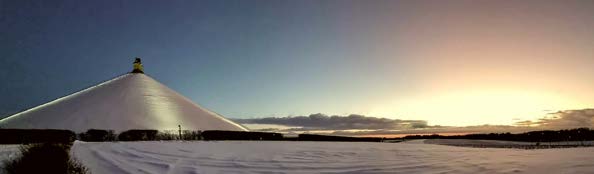
Figure 71.69: The Lion of Waterloo is a majestic monument near Waterloo, Belgium, commemorating the Battle of Waterloo and the defeat of Napoleon on June 18, 1815. Constructed between 1820 and 1826 by King William I of the Netherlands, the monument consists of a cast iron lion perched atop an artificial hill, or ’butte,’ which stands 40 meters high. The lion, sculpted by Jean-Louis Van Geel, faces France, symbolizing the vigilance and strength of the allied forces that overcame Napoleon. This iconic monument marks where the Prince of Orange was wounded during the battle, a powerful reminder of the historic conflict and its significance in European history.
Following the French army’s successful occupation of Vienna on November 13, 1805, Napoleon aggressively pursued the retreating Austrian and Russian forces into Moravia. This maneuver was part of his broader strategic aim to decisively defeat the Third Coalition, which sought to curtail his expanding influence across Europe.
Napoleon’s strategic brilliance was evident in his orchestration of a tactical feint. By deliberately withdrawing his troops from the Pratzen Plateau, he lured the Coalition forces into a false sense of security. The plateau, a high ground of significant tactical advantage, was thus occupied by the Austrian and Russian troops. Napoleon’s apparent retreat was a calculated maneuver designed to weaken the enemy’s defensive posture and provoke an overconfident offensive.
On the morning of December 2, 1805, under the cover of dense fog, the Coalition armies commenced their assault from the Pratzen Plateau, believing they had the upper hand. Unbeknownst to them, Napoleon had meticulously planned his counter-offensive. As the fog lifted, revealing the battlefield in what came to be known as le Soleil d’Austerlitz (the Sun of Austerlitz), the French forces launched a surprise attack to recapture the plateau.
Napoleon’s forces, including the renowned 45th Regiment, part of the Hanover Corps, executed a brilliantly coordinated assault.
They split the Coalition armies into two isolated segments by seizing the high ground. This decisive action disrupted the enemy’s command and control and sowed chaos and disarray among their ranks.
The main tactic employed by Napoleon in the days leading up to the battle was the deliberate exposure of apparent vulnerabilities to the Austrian and Russian commanders. This stratagem was intended to instill a false sense of superiority within the Coalition leadership, encouraging them to commit to an ill-fated offensive. Napoleon’s understanding of psychological warfare and his ability to anticipate and manipulate enemy actions were pivotal to the French success at Austerlitz.
The Battle of Austerlitz shows Napoleon’s military genius, characterized by his adept use of deception, rapid maneuvering, and precise execution of battlefield tactics. The victory at Austerlitz not only solidified Napoleon’s dominance over Europe but also showcased the effectiveness of his innovative approach to warfare, which combined strategic foresight with bold, decisive action.
71.7.3.3 The battles of Crewitz and Lübeck
The Battle of Lübeck, illustrated in Figure 71.52, occurred on November 7, 1806. Lübeck, a significant harbor town in the north of Germany, became the focal point of this crucial engagement between the retreating Prussian forces and the pursuing French army. This battle was a direct consequence of the preceding engagements at Jena and Auerstedt, where the Prussians had suffered a severe defeat at the hands of Napoleon’s forces.
The Battle of Jena-Auerstedt fought on October 14, 1806, was a pivotal moment in the War of the Fourth Coalition. Under Napoleon Bonaparte’s command, the French army decisively defeated the Prussian forces, leading to a rapid and disorderly retreat of the latter. Under the leadership of Gebhard Leberecht von Blücher and other commanders, the remnants of the Prussian army sought refuge in the fortified town of Lübeck, hoping to regroup and resist the advancing French forces.
Lübeck, situated on the Baltic coast, was a vital commercial and strategic location due to its significant harbor and well-fortified defenses. The town’s geographical position offered a potential escape route by sea, making it an attractive refuge for the beleaguered Prussian troops. However, the French army, determined to capitalize on their earlier victory, relentlessly pursued the retreating forces.
On November 7, 1806, the French forces, Marshal Bernadotte and General Soult, led a coordinated assault on Lübeck. Despite being outnumbered and demoralized, the Prussian defenders mounted a fierce resistance. The urban setting of Lübeck, with its narrow streets and fortified structures, provided a challenging battleground for both sides. Utilizing their superior tactics and morale, the French troops gradually overwhelmed the Prussian defenses. Street-by-street fighting ensued, characterized by brutal close-quarters combat. The Prussian attempts to hold strategic points within the town proved futile against the determined French assault.
The fall of Lübeck marked the effective end of organized Prussian resistance in the campaign. The capture of the town resulted in significant casualties for the Prussians, along with the capture of many soldiers and officers, including Blücher himself. This defeat further demoralized the Prussian army and solidified French control over northern Germany.
71.7.3.4 The battles of Ostrelenka and Friedland
The Battle of Ostrołęka, fought on February 16, 1807, was a significant engagement between the French and Russian forces during the War of the Fourth Coalition. The battle took place in what is now modern-day Poland. This confrontation was marked by the strategic prowess of the French forces, which ultimately secured a victory over the Russians.
The War of the Fourth Coalition had seen numerous engagements across Europe, with the French and Russian armies vying for dominance in the eastern territories. Ostrołęka, situated on the Narew River, became a critical location for both sides due to its
© 2024 Nico F. Declercq
The Desclergues of la Villa Ducal de Montblanc, 2nd ed., Omn., VOL. VI
71.7. CLEMENS LAMMENS (ARLD06) & NATALIA JULIANA DECAESTECKER (C02)
1557
strategic importance in controlling the surrounding region.
Under Marshal Jean Lannes’s command, the French forces engaged the Russian troops in a fierce battle. The French army demonstrated superior tactics and coordination despite the challenging winter conditions. The Russian forces, although resilient, were unable to withstand the determined French assault.
Following the French victory at Ostrołęka, the weather conditions deteriorated rapidly, with temperatures plunging to freezing levels.
Both armies were compelled to cease their military activities and seek shelter from the harsh winter. This unexpected weather shift significantly impacted the logistics and operational capabilities of the French and Russian forces, leading to a temporary cessation of hostilities.
The Battle of Friedland, illustrated in Figure 71.53, occurred on June 14, 1807, near Friedland, now known as Pravdinsk, in the Kaliningrad Oblast of Russia. This battle was a crucial engagement between the French army, including the renowned 45th Regiment as part of the First Corps of ’La Grande Armée,’ and the Russian forces.
In the lead-up to Friedland, both armies maneuvered for advantage, with the French forces seeking to decisively defeat the Russian military and force a conclusion to the hostilities. The strategic positioning of the French troops under the direct command of Napoleon Bonaparte was a testament to the organizational efficiency and tactical flexibility of ’La Grande Armée.’
The French and Russian forces clashed near the Alle River on the day of the battle. The French troops dispersed, maintaining effective communication and mutual support, and executed a series of coordinated maneuvers that overwhelmed the Russian defenses.
The Russian army, unable to withstand the sustained French assault, retreated across the Alle River.
The Battle of Friedland was a definitive demonstration of the French military’s organizational prowess. The ability of French units to operate independently while remaining in supportive proximity allowed for rapid response to battlefield developments and mutual reinforcement. This flexibility was a key factor in the French victory, showcasing the effectiveness of Napoleon’s military reforms.
Following the Russian retreat, a truce was established between the French and Russian forces. This cessation of hostilities marked a significant turning point in the War of the Fourth Coalition, leading to the eventual signing of the Treaties of Tilsit in July 1807.
These treaties redefined the political landscape of Europe and solidified French influence over the continent.
The battles of Ostrołęka and Friedland are notable for their strategic outcomes and the participation of critical military units and individuals. Among them was Eugene Dewanckele (H01), whose involvement in these engagements is detailed in Chapter 65.16.4.2.
His experiences provide valuable insights into these historic battles’ operational dynamics and human elements.
71.7.3.5 The period 1808-1809
The 45th regiment was part of the first corps of La Grande Armée, Les armées d’ Espagne and the 2nd corps of l’ armée du Rhin, during this period. The Spanish battles are often referred to as the ’Spanish Napoleonic Wars.’
Besides Pierre Joseph Dewanckele, Eugene Dewanckele (H01), described in Chapter 65.16.4.2, also participated in this period’s battles.
The battle of Espinosa de Los Monteros occurred on November 10 and 11, 1808, in the mountains of Cantabria. It was an engagement between French troops and the Army of Galicia. The French won this battle by cutting the left wing of the opposing army in two, which scattered them and forced a retreat up until León.
The Battle of Alcantara took place on May 14, 1809, between the French and the Portuguese. It resulted in a storming of the famous bridge of Alcantara, shown in Figure 71.54, which forced the Portuguese to retreat. This event came after the Portuguese had tried to blast the bridge. The construction was so durable that it withstood the blast and allowed the French to cross quickly.
It’s improbable that Pierre Joseph Decaestecker operated on two fronts almost simultaneously. Therefore, we are still determining if he contributed to the Aspern-Essling and Wagram battles. It is known that the French army needed to be more assertive in Austria because most men had been transferred to the Iberian peninsula.
The battle of Aspern-Essling occurred on May 21-22 at Lobau in Vienna on the Donau River. The campaign was a defeat for the French. However, the retreat by the French was so well-done that the army was strong.
Later that summer, the Battle of Wagram occurred on July 5 and 6, 1809. The French won this battle because of extensive preparation, and the numerous reinforcements sent back from the Iberian Peninsula.
Napoleon, who regularly went after the enemy army rather than cities, decided to use his soldiers to occupy Vienna rather than going further after the Austrian army. The prize was too big to lay aside.
Later this year, the French army concentrated again on the Iberian Penisula. The battle of Talavera took place on July 27 and 28, 1809, just outside Talavera de la Reina in Spain, in the Tagus valley. The French stood against a coalition of Spanish and British troops. Both sides played it very well, and as a result, the French were defeated. Still, they could again evacuate their unwounded military efficiently and were not very weakened.
It is fascinating to know that Arthur Wellesley led the British of that day. Because of his victory, he was exalted soon after and became the first Duke of Wellington. It’s precisely this ’Wellington’ who would be the British adversary of Napoleon at Waterloo in 1815 and would, together with his coalition, defeat the Emperor.
The battle of Almonacid was fought on August 11, 1809, between the Spanish and French armies, which had retreated from Talavera.
The French were victorious on that day, thanks to the efforts of the Polish Uhlans (a Polish light cavalry with lances). It shows again how strategic the French army was. They had anticipated an attack by the Spanish and decided to confront the Spanish early in the morning while still preparing. However, the French were too weak to go after the Spanish, which allowed them to escape to Andalusia.
71.7.3.6 The period 1810-1813
The 45th regiment was part of la Grande Armée and of l’ Armée des Pyrénées during that time.
The Battle of Barrosa, sometimes referred to as the Battle of Chiclana, shown in Figure 71.54, or the Battle of Cerro del Puerco, took place on March 5, 1811, and was an attempt by the Spanish and the British to rescue the besieged city of Cadiz. To those unfamiliar with Spain, Cadiz has long been considered the most important harbor in the world because of its protected location and easy access to the rest of the world. The Zero-Meridian has long been Cadiz before it was transferred to Greenwich near London.
A modern reader, unfamiliar with the winds, may question the importance of specific locations in the world. However, before the era of motorized ships, routes similar to maritime highways had to be followed to reach the destination successfully. Those routes were season-dependent and were crucial for the successful seafarer. Cadiz, shown in Figure 71.55, was geographically located on the most critical hub of those routes.
The battle, which took place on Playa de la Barrosa in Spain, along the beach near Cadiz, was somewhat indecisive, even though the allies of the Spanish and British defeated two French divisions and captured the Regimental Eagle. The story is very famous in The Desclergues of la Villa Ducal de Montblanc, 2nd ed., Omn., VOL. VI
© 2024 Nico F. Declercq
CHAPTER 71. THE ARDAN-ROUYE-LAMMENS-DECAESTECKER ANCESTRY LINE
Great Britain. Indeed, Ensign Keogh took the eagle first, but the French quickly killed him; they didn’t want to lose their treasure.
After seven more attempts, Sergeant Patrick Masterson captured the eagle and shouted,
’Bejabbers, boys, I have the cuckoo!.’
The 87th division that had won the eagle is still called ’The Eagle Catchers.’ Since then, the eagle, called ’he Barossa Eagle,’ would later be stolen from Chelsea Hospital in 1852.
The author still vividly remembers his train ride from Madrid to Cordoba, Sevilla, and Cadiz to attend a congress as a PhD student.
It was a fascinating ride in the hot sun of June. Also, Cadiz, shown in Figure 71.55, was very impressive, given its history and surrounding areas. The train stops the atmosphere in each station and then, finally, Cadiz itself. One can make many journeys, though only a few will leave a deep impression. This journey was one of them. The author, however, did not know at that time that one, probably two, of his ancestors had been there in 1811 in a military campaign.
The Battle of Fuentes de Ońoro took place from 3 to May 5, 1811, and resulted from an attempt by the French army of Portugal to relieve besieged Almeida. The conflict occurred between the army of the Duke of Wellington and the army under André Masséna.
The battle had no decisive outcome besides the numerous casualties on both sides. The location was Fuentes de Oñoro in Castile and León in Spain.
The next battle was Albuera, near Badajoz in the Spanish Estremadura. The French lost the battle.
There was the Siege of Cadiz by the French during this period, from February 5, 1810, until August 24, 1812. Cadiz had become the seat of power after the Spanish had lost Sevilla to the French. The Spanish defended Cadiz and later the British and Portuguese.
The number of military members responsible for protecting the city was around 2000, but it steadily increased to 10000. The Spanish attempted to relieve the town, first by a landing at Fuengirola (well-known to modern tourists) in 1810 and later at Tarifa (well-known to wind-sports fanatics) in 1811. Even after the battle of Barossa, the Siege was not lifted.
The French finally gave up the Siege when their armed forces were in danger of being cut off from the rest of the French army after the Allies had gained successes at Salamanca, Madrid, and Burgos. The French burst 600 of their guns by overcharging before they left Cadiz. Interestingly, the tactic of besieging and relieving cities, which occurred so often at the border between France and the Spanish Netherlands in the 17th century, was repeated on the Iberian peninsula. Napoleon had read numerous books about military campaigns and tactics before becoming the man as we know him, so he must have read books such as the one written by Carlos Coloma, which is also referred to in chapters about our Spanish ancestors in the 16th and 17th centuries.
After the battle of Salamanca of July 1812 and the ensuing French evacuation of Madrid and occupation by Wellington on August 12, the latter besieged Burgos. Wellington had to end the Siege and pulled back from Madrid by the end of October under the regained pressure of the French army. The British retreated to Portugal to avoid encirclement by the French. The French military on the peninsula at that time was overwhelmingly strong. Nevertheless, it was reduced the following winter to reinforce the rest of the French territories after the disaster of Napoleon in Russia. It significantly weakened the French on the peninsula. On June 23, 1813, the Anglo-Spanish forces won the battle of Vitoria, shown in Figure 71.56, against the French in the Basque Country in Spain.
The battle of the Pyrenees, shown in Figure 71.56, took place from July 25 until August 2, 1813. It consisted of a large-scale French assault on the Allied forces to relieve the besieged cities of Pamplona and San Sebastian. Specific engagements took place at Reconcesvalles, Maya, and Sorauren. The French losses were huge, and the Allies won the battle.
71.7.3.7 The battles of Bayonne, Orthez and Toulouse
On November 10, 1813, a significant battle occurred at the Nivelle River. This engagement followed the successful Siege of San Sebastián by the Allied forces, who sought to press their advantage by attacking the French rear. The battle was part of the Peninsular War, which saw the British, Portuguese, and Spanish forces, under the command of the Duke of Wellington, relentlessly pursuing the retreating French army led by Marshal Soult.
The Nivelle River battle was a critical step in the Allies’ campaign to push the French forces out of Spain and into southwestern France. The French defensive lines, constructed to protect their territory, were breached by the Allied forces, demonstrating the weakening French position in the region.
Following the harsh winter of 1813-1814, another notable engagement occurred at Bayonne on April 14, 1814. Unlike typical battles characterized by intense combat, the Battle of Bayonne is often remembered as an unusual fraternization episode between French and Allied troops. This event occurred amid news that Napoleon Bonaparte was about to abdicate, as depicted in Figure 71.57.
The impending abdication of Napoleon had a profound impact on the morale and behavior of the troops. The French soldiers, recognizing the inevitability of their leader’s downfall, engaged in friendly interactions with their erstwhile enemies. This rare moment of camaraderie amidst conflict underscores the war-weariness and the desire for peace among the soldiers on both sides.
Meanwhile, another significant battle occurred at Orthez in southern France on February 27, 1814. This engagement saw the Allied forces, again under the Duke of Wellington, clash with the French army commanded by Marshal Soult. The battle was part of the Allies’ continued efforts to advance into French territory and force a conclusion to the Peninsular War.
The Battle of Orthez was characterized by intense fighting and strategic maneuvering. Wellington’s forces successfully outflanked the French positions, compelling Soult to withdraw. This victory further demonstrated the diminishing defensive capabilities of the French army and bolstered the Allies’ advance towards the interior of France.
Just days before the Battle of Bayonne, the conflict at Toulouse occurred on April 10, 1814. This engagement was notable for its contested outcome, with the French and Allied forces claiming victory. The battle occurred as the Allied forces continued their push into French territory, encountering determined resistance from the French troops.
71.7.3.8 The Battle near Waterloo
The Battle of Waterloo is a subject extensively covered in historical literature. Figure 71.58 depicts key figures from this pivotal battle. Following his catastrophic defeat in the Russian campaign, Napoleon Bonaparte was exiled to the island of Elba in 1814.
His son was taken from him to be raised under a false name by the Austrian Imperial Court, a personal blow that likely fueled Napoleon’s determination to reclaim his throne. This motivation is explored in the vast body of literature on the Battle of Waterloo, with recent scholarly works providing nuanced insights free from the immediate post-battle propaganda that often skewed earlier accounts.
The Battle of Waterloo, fought on June 18, 1815, near the village of Mont-Saint-Jean, was Napoleon’s final bid to restore his empire. After he escaped from Elba and returned to France in March 1815, he rapidly reassembled an army. The Seventh Coalition, comprising the United Kingdom, Prussia, the Netherlands, Hanover, Brunswick, and Nassau, mobilized to oppose him. The French
© 2024 Nico F. Declercq
The Desclergues of la Villa Ducal de Montblanc, 2nd ed., Omn., VOL. VI
71.8. EUDOXIE ROMANIE LAMMENS (ARLD07-C03) & EMILE THEOPHILE LESAGE
1559
forces were led by Napoleon himself, along with his trusted Marshal Michel Ney. The Coalition forces were commanded by the Duke of Wellington (Arthur Wellesley), Gebhard Leberecht von Blücher, and Willem of Orange (Willem II, Prince of Orange).
The Battle of Waterloo was marked by intense combat and strategic maneuvers. Wellington, long fascinated by Napoleon, played a crucial role in the Coalition’s victory. He later purchased a property that had belonged to Napoleon, reflecting his complex relationship with his adversary. The battle saw around 50000 casualties out of the 200000 soldiers who participated. Despite national biases, modern historians generally agree that Wellington was indeed the victor of Waterloo, although the contributions of the Dutch and other allied forces were significant.
The French army, restructured after Napoleon’s first abdication, was poised for one last offensive. The old 45th Regiment, combined with remnants of the 154th, formed the new 42nd Regiment. Napoleon reverted to the original numbering of regiments and recalled reserve troops to bolster his forces. His strategy focused on defeating Belgium’s Dutch, British, and Prussian forces in the "Battle near Mont-St-Jean." The name "Battle of Waterloo" was popularized by Wellington for its ease of pronunciation and memorability.
At the same time, the Prussians called it the "Battle of La Belle Alliance," after the inn where Napoleon had his headquarters during the campaign.
A critical moment in the battle was the charge of the British cavalry against the 1st French Corps. During this charge, Sergeant Charles Ewart of the Scots Greys captured the flag and the eagle of the 45th Regiment of French Line. This act earned the 2nd Royal North British Dragoons (Royal Scots Greys) the nickname "Bird Catchers," and the captured eagle is still displayed at the Edinburgh Castle Museum.
After his defeat at Waterloo, Napoleon fled across France to evade capture. He ultimately sought asylum with the British but was not permitted to set foot on British soil. Instead, he was exiled to the remote island of Saint Helena, where he endured a slow, harsh decline under the watch of Hudson Lowe. Napoleon died on May 5, 1821, and was initially buried on the island. In 1840, his remains were exhumed and reinterred in the magnificent Dôme des Invalides in Paris, as shown in Figure 71.59.
The reader is encouraged to explore the extensive literature on the Battle of Waterloo to understand this historic event comprehensively. Recent works offer more balanced perspectives, incorporating information not highlighted immediately after the battle.
These sources correct nationalistic exaggerations, such as the overstated role of Wellington by British accounts or the inflated claims of Willem van Oranje Nassau’s contributions by Dutch narratives. Additionally, the involvement of Belgian soldiers, often overlooked due to the country’s lack of official status at the time, is an area ripe for further research. The enigmatic role of Pierre Joseph Decaestecker, who remained loyal to Napoleon but whose fate post-battle remains unclear, also warrants investigation in Dutch archives.
71.7.3.9 La Médaille de Sainte Hélène
The medal of Sainte Hélène in Figure 71.59, created by Napoléon III, rewarded the soldiers who were still alive in 1857, who had been in combat with Napoleon I during the wars between 1792 and 1815; this included Pierre Joseph Decaestecker, who would die in 1868. This was done per the testament of Napoleon on April 15, 1821.
71.7.3.10 The Parents of Pierre Joseph Decaestecker (C01)
71.7.3.10.1
The Parents, Pierre Joseph Decaestecker Senior and Catherine Rose Develter
Pierre Joseph De-
caestecker senior was the son of Pierre Jacques Decasestecker, born in Passchendaele, and Maria Theresia Vandenbriele, born in Langemark. He was born in Passchendaele in 1816, in Figure 71.60.
He married Catherine Rose Develter in Passchendaele in 1772 in Figure 71.61.
71.7.3.11 The Death of Petrus Josephus Decaestecker
Pierre Joseph Decaestecker (C01) died in 1868 in Zonnebeke, in Figure 71.62, long after the Napoleon era.
71.7.3.12 His Marriage with Coleta Francisca Debrabander
She was the wife of Pierre Joseph Decaestecker (C01) and was born in Lendelede in 1799, in Figure 71.63.
They married in Passchendaele in 1818, in Figure 71.64.
Coleta Francisca de Brabandere died in Zonnebeke in 1873, in Figure 71.65.
71.7.3.13 The Uncle of Pierre Joseph Decaestecker (C01)
Bernard Joseph Ignace Decasestecker was the uncle of Pierre Joseph Decaestecker. He has been a student at the Catholic University of Leuven. His inscription can be found on January 17, 1776. His enrollment at the university is shown in Figure 71.68 on page
71.7.4 Marriage and Offspring
Clemens Lammens (ARLD06) and Natalia Juliana Decaestecker (C02) married at Zonnebeke in 1864, in Figure 71.66, where they would also settle as landed gentry farmers.
Natalia Juliana Decaestecker was the 2nd wife of Clemens Lammens.
71.7.5 Their Acquaintances
Some acquaintances are shown in Figure 71.67.
71.8 Eudoxie Romanie Lammens (ARLD07-C03) & Emile Theophile Lesage
71.8.1 Eudoxie Romanie Lammens
Eudoxie Romanie Lammens was raised in Zonnebeke, in Figure 71.70, and is the daughter of Clemens Lammens and Natalia Juliana Decaestecker. She is primarily described in Chapter 64 as Emile Theophile Lesage’s wife and the author’s great-grandmother.
She is equally referred to in the following chapters: Chapter 65, as the great-great-great-great-granddaughter-in-law of Adrienne de The Desclergues of la Villa Ducal de Montblanc, 2nd ed., Omn., VOL. VI
© 2024 Nico F. Declercq
1560
CHAPTER 71. THE ARDAN-ROUYE-LAMMENS-DECAESTECKER ANCESTRY LINE
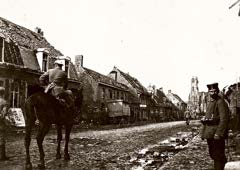
Figure 71.70: Langemarkstraat in Zonnebeke, in 1916-
1918. Eudoxie Lammens lived in Oudezeele at the time
and would have been shocked to see the German military
in her village if she had been able to visit.
Patin (DP12); Chapter 66.2, as the great-great-great-granddaughter-in-law of Marie Jeanne Christine Benoit; and Chapter 68, in the ’t Kint ancestry line.
71.8.2 Emile Theophile Lesage
Emile Theophile Lesage is the son-in-law of Clemens Lammens and Natalia Juliana Decaestecker and is primarily described in Chapter 64 as the author’s great-grandfather.
He is equally referred to in the following chapters: Chapter 65, as the great-great-great-great-grandson of Adrienne de Patin (DP12); in Chapter 66.2 as the great-great-great-grandson of Marie Jeanne Christine Benoit; and in Chapter 68, the ’t Kint ancestry line.
71.9 Irma Helena Lesage & Michel Achiel Renatus Declercq (DC15)
71.9.1 Michel Achiel Renatus Declercq (DC15)
Michel Achiel Renatus Declercq (DC15) is a grandson-in-law of Clemens Lammens and is primarily described in Chapter 45 as a descendant of the Desclergues and grandfather of the author.
He is equally referred to in the following chapters: Chapter 64, as the husband of Irma Helena Lesage; Chapter 65, as the husband of Irma Helena Lesage, and as the great-great-great-great-great-grandson-in-law of Adrienne de Patin (DP12); Chapter 66.1, as the great-great-great-grandson of Barbara Benoit; Chapter 66.2, as the husband of Irma Lesage, who was a great-great-great-great-granddaughter of Maria Jeanne Christine Benoit; and Chapter 68, in the ’t Kint ancestry line.
71.9.2 Irma Helena Lesage
Irma Helena Lesage is the granddaughter of Clemens Lammens and Natalia Juliana Decaestecker. She is primarily described in Chapter 45.2 as the wife of Michel Achiel Renatus Declercq and the author’s grandmother.
She is equally referred to in the following chapters: Chapter 64, as the daughter of Emile Theophile Lesage; Chapter 65, as the great-great-great-great-great-granddaughter of Adrienne de Patin (DP12); Chapter 66.1, as the great-great-great-granddaughter-in-law of Barbara Benoit; Chapter 66.2, as the great-great-great-great-granddaughter of Maria Jeanne Christine Benoit; and Chapter
68, in the ’t Kint ancestry line.
71.10 Maurice Alois Declercq (DC16) & Nelly Maria Vangheluwe
71.10.1 Maurice Alois Declercq (DC16)
Maurice Alois Declercq (DC16) is the great-grandson of Clemens Lammens and is primarily described in Chapter 46 as a descendant of the Desclergues and father of the author.
He is equally referred to in the following chapters: Chapter 64, as the son of Irma Helena Lesage; Chapter 65, as the great-great-great-great-great-great-grandson of Adrienne de Patin (DP12); Chapter 66.1, as the great-great-great-great-grandson of Barbara Benoit; Chapter 66.2, as the great-great-great-great-great-grandson of Maria Jeanne Christine Benoit; Chapter 67, as the son-in-law of Anna Den Dauw; Chapter 68, in the ’t Kint ancestry line; and Chapter 69, as great-grandson-in-law of Marie Nathalie Surmont.
71.10.2 Nelly Maria Vangheluwe
Nelly Maria Vangheluwe is a great-granddaughter-in-law of Clemens Lammens and is primarily described in Part X as the daughter of René Vangheluwe and Anna Den Dauw and as the mother of the author.
She is equally referred to in the following chapters: Chapter 64, as the daughter-in-law of Irma Helena Lesage; Chapter 65, as the great-great-great-great-great-great-granddaughter-in-law of Adrienne de Patin (DP12; Chapter 66.1, as the great-great-great-great-granddaughter-in-law of Barbara Benoit; Chapter 66.2, as the great-great-great-great-great-granddaughter-in-law of Maria Jeanne Christine Benoit; Chapter 67, as the daughter of Anna Den Dauw; Chapter 68, in the ’t Kint ancestry line; Chapter 69, as the great-granddaughter of Marie Nathalie Surmont; and in Chapter 72, the maternal (mt-DNA) ancestry line of the author, as his mother.
71.11 Nico Felcien Declercq (DC17) & Shirani O. de Silva
Nico Felicien Declercq (DC17) is this book’s author and is Clemens Lammens’s great-great-grandson.
He is primarily described in Chapter 47 as a descendant of the Desclergues, and also in Part X.
He is equally referred to in the following chapters: Chapter 64, as the grandson of Irma Helena Lesage; Chapter 65, as the great-great-great-great-great-great-great-grandson of Adrienne de Patin (DP12); Chapter 66.1, as the great-great-great-great-great-grandson of Barbara Benoit; Chapter 66.2, as the great-great-great-great-great-great-grandson of Maria Jeanne Christine Benoit; Chapter 67,
© 2024 Nico F. Declercq
The Desclergues of la Villa Ducal de Montblanc, 2nd ed., Omn., VOL. VI
71.11. NICO FELICIEN DECLERCQ (DC17) & SHIRANI O. DE SILVA
1561
as the grandson of Anna Den Dauw; Chapter 68, in the ’t Kint ancestry line; Chapter 69, as the great-great-grandson of Marie Nathalie Surmont; and in Chapter 72, the maternal (mt-DNA) ancestry line of the author.
Furthermore, he is referred to in Part XII as the husband of Shirani Oluphathage de Silva.
71.11.1 Shirani Olupathage de Silva
Shirani Olupathage de Silva is a great-great-granddaughter-in-law of Clemens Lammens. She is first described as the author’s wife in Chapter 47.3.
She is equally referred, in much detail, in Part XII, and also in the following chapters: Chapter 64, as the granddaughter-in-law of Irma Helena Lesage; Chapter 65, as the great-great-great-great-great-great-great-granddaughter-in-law of Adrienne de Patin (DP12); Chapter 66.1, as great-great-great-great-great-granddaughter-in-law of Barbara Benoit; Chapter 66.2, as the great-great-great-great-great-great-granddaughter-in-law of Maria Jeanne Christine Benoit; Chapter 67, as the granddaughter-in-law of Anna Den Dauw; Chapter 68, in the ’t Kint ancestry line; and Chapter 69 as the great-great-granddaughter-in-law of Marie Nathalie Surmont.
The Desclergues of la Villa Ducal de Montblanc, 2nd ed., Omn., VOL. VI
© 2024 Nico F. Declercq
CHAPTER 71. THE ARDAN-ROUYE-LAMMENS-DECAESTECKER ANCESTRY LINE
© 2024 Nico F. Declercq
The Desclergues of la Villa Ducal de Montblanc, 2nd ed., Omn., VOL. VI
The Maternal (mt-DNA) Ancestry Line of N F
Declercq
72.1 Introduction
The maternal ancestry line is the one through which Mitochondrial DNA is transmitted. From that DNA, we know that this ancestry is Irish. The problem with maternal ancestry is the changing family name generation after generation. Therefore, it is challenging to know precisely which generation came from Ireland. The oldest documents refer to Berlans or Perlans. The family name Berland, with some derivatives, exists in Flanders, too. Family names with close resemblance often merge upon integration, either by the person himself or the local administration. Our Irish origin may be older than the Berland generation we found, although there are indications that it’s not. When looking for possible paternal ancestry of Berland on the British isles, one must include the following possibilities, some of which are known to be alternative versions of one another: Byland, Biland, Byrlan, Byre, Birland, Bearland, Barland, Byren, Biren, McByre, McParen, McParlen, Barlen, Baren, Baron, Barone, McParland, McParkland, McParlan, McParlin, McPerlan, Parlan, Perlan, Parlin, Partlin, Partland, Partlan, McPerland, Perland, MacFarlan, and McFarlane. When investigating those names, it’s important not to rely on the standard Oxford English pronunciation but also the Scottish, Welsh, and Irish. Indeed, phonetics was most important when dealing with ordinary people, such as regular soldiers and their families.
Indeed, we know that there was an Irish and Scottish military regiment in Flanders until the oldest Berland generation we found, belonging to the Spanish army. They were Catholic and recruited because they belonged to Spanish-held regions or wanted to defend Flanders against the protestants.
In what follows, one must consider the earliest described generations as hypotheses. We have found all documents until now, beginning with the couple Petronilla Berland (McParland) & Gebrielus Depraetere.
72.2 Mitochondrial DNA Analysis
The mtDNA Haplogroup of N. F. Declercq is H1c3, which is a sub-Haplogroup of H1c. Both hardly exist in Belgium and the Netherlands. There are two essential regions where these Haplogroups appear: Germany: 14% of the known H1c and 5% of the known H1c3; The British Isles: 31% of the known H1c and 19% the identified H1c3. We can explain the appearance in Belgium according to 3 possible causes:
-The Anglo-Saxon settlement of Britain around 410 AD: German tribes settles on the British Isles
- Battle of Hastings in 1066 AD and the Norman invasion of the British Isles
- Irish regiments (soldiers with their families) arrived in Flanders as soldiers of the Flemish Army of Spain from 1587 AD onwards.
Other explanations can also be found and would make sense. However, they only represent percentages of less than unity, such as origin in France or Spain, an occasional immigrant in Flanders, etc.
Genetic studies assume that H1c3 appeared between 100 and 1000. The Anglo-Saxon settlements, around 410, fall in that span.
A statistically relevant explanation could be that H1c arrived on the British Isles (England, Ireland, Scotland, Wales) with Anglo-Saxon settlements and then returned to Flanders with Irish regiments in the Spanish army. Before this happened, the sub-Haplogroup H1c3 had already formed and spread in both regions. For one reason or another, H1c3 has spread more widely on the British Isles than in Germany.
If HVR1 and HVR2 are checked for matches, the matches also H1c3 are all Irish or English, Scottish or Welsh, with a slight majority of Irish. More substantial evidence is impossible. Therefore, based on Genetics and based on the fact that we have Flemish genealogical records up until the 1650s, we have good reasons to believe that the maternal ancestry line before 1650 should be found in Ireland and very likely appeared in Flanders due to Irish regiments in the Spanish army between 1587 and 1640.
It makes little sense to list the family names of the appearing matches because they switch from generation to generation since family names are transmitted from father to son or daughter and never from mother to daughter or son. Still, here is the complete list is taken from FamilyTreeDNA®: Daley, Eldridge, Williams, Sharp, Prescott, Meade, Bartol, Arthur, Thompson, Baker, Caperton, Callow, Ballaugh, Sandefur, Boardman, Hynes, Callahan, Molamphy, Devine, Geddie, Terwiske, Madigan, Lloyd Vacca, Askin, Land, Tierney, Lyons, Warren, Trabold, Ray, Sladek, Finch, Coakley, Rubin, Bazzoon, Downey, McIntosh, Rock, Lay, Seagroatt, Graham, Jones, Watkins, Quigley, McLeod, Lay, Love, Caperton, Nigh, Downey, Doherty, Owen, Callow, Davis, Lundy, Morgan, McGrail, Tomlison, Cottey.
72.3 Autosomal DNA analysis
The reader may be interested in reading the beginning of Chapter 73 and Chapter 73.10.3.7 first.
Interestingly, the autosomal DNA of N. F. Declercq, compared to the immense database of GEDmatch®, matches a significant number of times with O’ Driscoll and Driscoll from Ireland and several McParland, McFarlan etc.
For instance1: Driscoll (9; 9; 7.3; 7.1, 7), O’ Driscoll (7.7), McFarlane (8.2; 8.2; 7.5; 7.1), Farlane (7.7), McFarland (11.7).
Interestingly, in 1623, in Figure 72.1 (and Figure 34.60 on page 545), there are Irish soldiers in Harelbeke, of whom Margaret Driscoll serves as godmother to a child of Amente and Ruisdan.
1centiMorgans between brackets
The Desclergues of la Villa Ducal de Montblanc, 2nd ed., Omn., VOL. VI
© 2024 Nico F. Declercq

1564
CHAPTER 72. THE MATERNAL (MT-DNA) ANCESTRY LINE OF N F DECLERCQ
Figure 72.1: Harelbeke, 1623, the baptism of Joana Armente, daughter of
Gherardys and Cecilia Ruisdan, the godfather was David O’ Brien (’Breene’),
godmother was Margareth Driscoll (’dryescole’), all soldiers from the military
post of Lyre (’omnes Irlandi presidiarum milites in lyre’).
72.4 Genealogy
It’s not a random guess to assume an Irish or Catholic English couple McParland – Driscoll or Barlen – Driscoll had a daughter with the family name McParland or Barlen and is the Belgian maternal ancestor of N. F. Declercq. As a matter of fact, from other genealogists, we learned that at Ostend, a family Beerens-Dryscol lived, who had the following children: Cornelia, born in 1629 (folio 117); Petronella, born in 1631 (folio 132); Theodora, born in 1631 (folio 159). It is possible that Perlan (a form of McParland) or even Parlan, Farlane, Parlane, etcetera became Beerens at Ostend and that the daughter Petronille, when she lived at Ingooigem, used the name Berland as a form of integration.
One generation later, we also found at Klemskerke near Ostend the birth of Cornelius Barlen, son of Philip Barlen and Maria Verbrurgh, on March 28, 1650. The reader can find the folios mentioned above in the alphabetical list of births at Ostend or as preserved baptism certificates at Klemskerke. The actual documents at Ostend can no longer be read because they were destroyed by flooding2. Therefore, objective evidence may never be found, and we need to trust DNA in this case. We found no trace of the three mentioned children of Beerens-Driscoll, other than their appearance in the list of baptisms. We also searched name variants, including ’Berland,’ and found no further trace except Petronella Berland. It is possible that Margareth Driscoll, mentioned as godmother in 1623 at Harelbeke, was the mother of Petronella McParland / Berland.
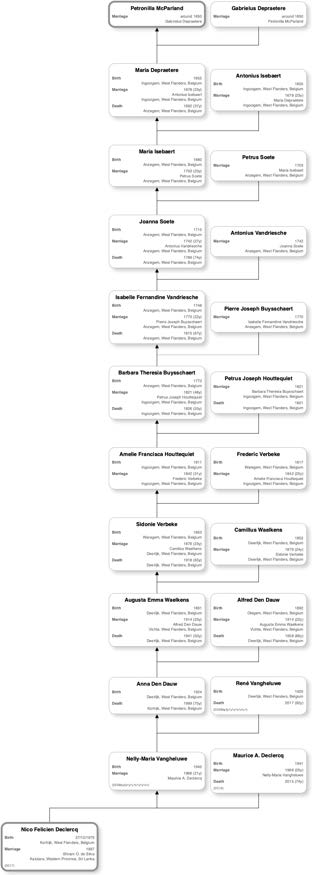
We will take what follows as a hypothesis. We researched in a reversed sense; therefore, there is no uncertainty after the earliest generation(s), and everything is perfectly correct. The mitochondrial line, including the uncertain very first generation, is shown in Figure 72.2.
Apart from several online sources on the different forms of McParlane, we can also refer to Patrick Hanks et al.3. The name did not exist in Flanders at that time. Therefore, a local spelling is not a surprise at all. As we find elsewhere in this book, Priests were always tempted to interpret what they heard phonetically or associate this with a local name rather than spelling a foreign name they had never heard. In Ireland, name variants of McParland are McParkland, McParlan, McParlin, McPerlan, Parlan, Perlan, Parlin, Partlin, Partland, Partlan, McPerland, Perland, MacFarlan, McFarlane, etc. When the ’Mc’ is dropped, more variations exist, as listed in the previous section. Petronilla McParland had three children from 1652 until 1655 with Gabrielus Depraetere at Ingooigem.
Two of them married later at Ingooigem. Because we found no traces of Petronilla McParland after 1655, we assume she must have died shortly after that year. Because her children appear to have settled at Ingooigem, neither her husband, Gabrielus Depraetere, lived longer. He resided at Ingooigem, or the Depraetere family, and raised the children after the parent’s death. DNA shows that it is inevitable that her mother was of Irish maternal descent, one way or another.
72.4.1 The Hypothesis of Margareth Driscoll, the Wife of Peter McParland
The hypothesis is that Margareth Driscoll was the wife of Peter McParland and the mother of Petronella. Margareth Driscoll served as godmother at Harelbeke in 1623. The document is shown in Figure 72.1, on page 1564 (and Figure 34.60, on page 545).
Therefore she existed.
As mentioned, McParland-Driscoll or Barlen-Driscoll possibly had children at Ostend carrying the name ’Beerens’ (on the survived alphabetical list) from 1629-1631. The first name of the husband of Margareth Driscoll is induced by the fact that Peter McParland/Barlen served as godfather to her eldest child, Petrus Depraetere, in 1652, in Figure 72.3, as described below.
It would be logical that Peter McParland was the child’s grandfather, although he could also have been an uncle. Therefore, the reader should consider our hypothesis and study further.
72.4.2 Petronilla McParland, the Wife of Gabrielus Depraetere
The first child of this couple is reported in Figure 72.3. The family name McParland is based on the hypothesis in Chapter 72.4.1.
We only found the Flemish ’Berland’ version of her name as documented and must, therefore, be careful. All the generations after Petronilla, however, until the present, are fully documented and correct.
We assume or consider it possible that Petronilla was born at Ostend in the parish of Saint-Peter / Saint-Paul in 1631 as Petronella Beerens. She was married to Gabrielus Depraetere between 1649 and 1655. She had children between the ages of 21 and 27 and probably died soon after that. As shown in Figure 72.3, it is interesting to observe that Petrus Berland served as godfather to Petrus Depraetere, son of Petronilla McParland, in 1652. On September 5, 1650, in Figure 72.4, at Beveren-Leie (walking distance from Ingooigem), a ’Petrus Beerens,’ married Maria Devust, had a child Arnoldus baptized. The godfather was Arnold Lancelot.
Petrus Berland may have been Petronilla’s father or perhaps an elder brother whose baptism we have not retrieved.
Lancelot’s name is known on the British Isles and in France. Therefore, we must not make quick conclusions about the origins of the godfather Arnold Lancelot. Indeed, he may have been Irish or English, but that’s not guaranteed.
72.4.3 Maria Depraetere, the Wife of Antonius Isebaert
Maria Depraetere was the daughter of Petronilla McParland and was married to Antonius Isebaert at Ingooigem in 1678, in Figure
72.6. She was born in 1655 in Figure 72.5, at Ingooigem, and died in Anzegem in 1692, in Figure 72.7.
Antonius was born at Ingooigem in 1655, in Figure 72.8. We were unable to find the death of Anthonius Isebaert. When we look at the baptism of Maria Depraetere in 1655 in Figure 72.5, we can see that the priest adjusted the first character of her name. First, it 2private communication with the archives of Ostend.
3Patrick Hanks, Richard Coates, Peter McClure, ’The Oxford Dictionary of Family Names in Britain and Ireland,’ Oxford University Press, November 17, 2016.
© 2024 Nico F. Declercq
The Desclergues of la Villa Ducal de Montblanc, 2nd ed., Omn., VOL. VI
72.4. GENEALOGY
1565
Figure 72.2: Maternal ancestry line from Petronilla McParland
up until the author.
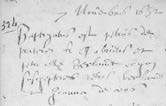
Figure 72.3:
Ingooigem, November 7, 1652. Peter McParland
(’Petrus Berlandt’) served as a godparent, with Joanna de Vos, to
Petrus Depraetere, son of Gabrielus Depraetere and Petronilla Mc-
Parland (’Petronella Berlandt’).
The Desclergues of la Villa Ducal de Montblanc, 2nd ed., Omn., VOL. VI
© 2024 Nico F. Declercq

1566
CHAPTER 72. THE MATERNAL (MT-DNA) ANCESTRY LINE OF N F DECLERCQ
Figure 72.4: Beveren-Leie, September 5, 1650, the baptism of
Arnold McParlane or Barlen (’Beerens’), son of Peter McPar-
lane/Barlen and Maria De Vust. The Godfather was Arnold
Lancelot (’Landzelot’), and the Godmother was Francisca Verselle.
Figure 72.5: The baptism of Maria Depraetere, July 14, 1655, at
Ingooigem. The mother was Petronella McParland (spelled as ’Perlans’
or ’Berlans’). Her family name is not 100% clear, as discussed in
Figure 72.9 and the text below.
Figure 72.6: Ingooigem, April 30, 1678, the marriage of Maria De-
praetere and Antonius Isebaert. The witnesses were Carolus Eeckhout
(’Echoud’) and Judocus Coulembier (’Coulenbier’).
Figure 72.7:
Anzegem, November 26,
1692, the death of Maria Depraetere, wife
of Anthonius Isebaert.
Figure 72.8: Ingooigem, August 15, 1655, the baptism of Antonius
Isebaert (’Anthonius Issebart’). His mother was Maria Valcke, and he
would later serve as godmother to his daughter Maria Isebaert. The
godparents were Antonius Isebaert and Judoca Verstraete.
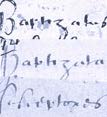
Figure 72.9: Different examples of the character ’P’ in the handwriting of the same
priest who registered the baptism of Maria Depraetere in 1655 at Ingooigem. We see
’Baptizatus,’ ’Baptizata,’ and ’Susceptores’ with a ’P’ much closer to that in ’Perlans’
than this priest’s ’B,’ ’L,’ ’C,’ and ’K’ ever is.
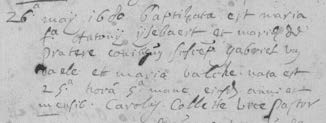
Figure 72.10: Anzegem, May 26, 1680,
the baptism of Maria Isebaert. She was the
daughter of Antonius Isebaert and Maria
Depraetere. The godparents were Gabruel
Van Daele and Maria Valcke.
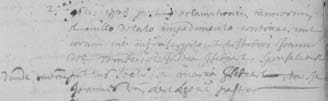
Figure 72.11: Anzegem, November 25,
1703, the marriage of Maria Isebaert and
Petrus Soete. The witnesses were Jean
Destombe (’Joannes Det Tombe’) and Ju-
doca Isebaert.
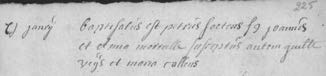
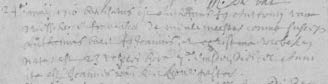
Figure 72.12: Moen, January 11, 1673,
the baptism of Petrus Soete, son of
Joannes Soete and Maria Morelle. The
godfather was Veys, and the godmother
was Maria Callens. We are not entirely
sure that Petrus Soete also married Maria
Isebaert, but it is possible. If so, on his
death, in Figure 72.13, he was 47 years old
and not 42, as the priest wrote.
© 2024 Nico F. Declercq
The Desclergues of la Villa Ducal de Montblanc, 2nd ed., Omn., VOL. VI


72.4. GENEALOGY
1567
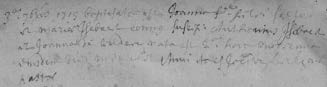
Figure 72.13:
Anzegem, December 12,
1720, the death of Petrus Soete. The priest
wrote that he was 42 years old. We assume
that this must either be 47 (i.e., the priest
made a typo) or else the birth certificate
we found at Moen in 1673 in Figure 72.12
is wrong.
Figure 72.14:
Anzegem, September 3,
1715, the baptism of Joanna Soete, the
daughter of Petrus Soete and Maria Ise-
baert. The godparents were Antonius Ise-
baert and Joanna Devildere or Devoldere.
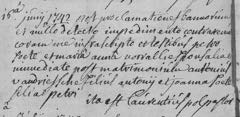
Figure 72.15: Anzegem, June 16, 1742, the marriage of
Joanna Soete and Antonius Vandriessche. Petrus Soete
and Maria Anna Noreille (’Norrallie’) were witnesses.
The groom’s father was Antonius Vandriessche, the fa-
ther of the bride was Petrus Soete.
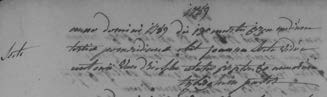
Figure 72.16:
Anzegem, March 12 of
the revolutionary year 1789, the death
of Joanna Soete, wife of Antonius Van
Driessche and daughter of Petrus Soete
and Maria Isebaert. She died at the age
of 73 years and 127 days.
Figure 72.17: Anzegem, May 24, 1710,
the baptism of Anthonius Vandriessche.
His father was Antonius Van Driesche
and his mother was Francisca De Meule-
meester. The godparents were Anthonius
Baert, son of Joannes, and Christina Ver-
beke.
Figure 72.18: Anzegem, April 23, 1764,
the death of Anthonius Vandriessche, hus-
band of Joanna Soete.
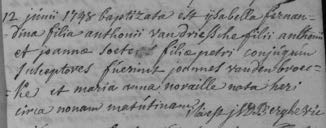
Figure 72.19: Anzegem, June 12, 1748,
the baptism of Isabelle (’ Ysabella’ )
Fernandina Vandriessche.
Her parents
were Anthonius Vandriessche and Joanna
Soete, daughter of Petrus Soete.
The
godparents were Joannes Vandenbroucke
(’Vandenbroecke’) and Maria Anna Nor-
eille (’Noraille’).
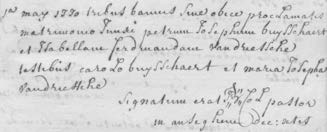
Figure 72.20: Anzegem, May 1, 1770,
the marriage of Isabelle (’ Ysabella’ ) Fer-
nandina Vandriessche and Petrus Jose-
phus Buysschaert. The witnesses were
Carolus Buysschaert and Maria Josepha
Vandriessche.
The Desclergues of la Villa Ducal de Montblanc, 2nd ed., Omn., VOL. VI
© 2024 Nico F. Declercq
1568
CHAPTER 72. THE MATERNAL (MT-DNA) ANCESTRY LINE OF N F DECLERCQ
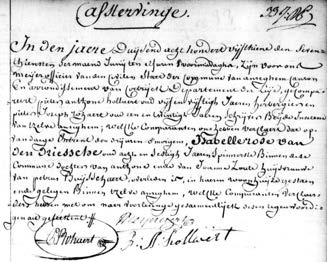
Figure 72.21: Anzegem, June 17, 1815,
the death of 68-year old Isabelle (’Ys-
abella’ ) Fernandina Vandriessche (erro-
neously registered as ’ Isabelle Rose Van
den Driessche’ ), daughter of Anthonius
Vandriessche and Joanna Soete (’Zoute’).
She was the wife of Petrus Buysschaert.
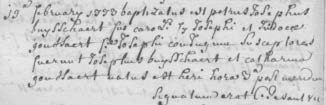
Figure 72.22:
Anzegem, February 19,
1773, the baptism of Pierre Joseph Buyss-
chaert. His parents were Charles Buyss-
chaert and Judoca Goesaert, daughter of
Joseph Goesaert. The godparents were
Joseph Buysschaert and Catharina Goe-
saert.
was ’B,’ but then he changed it to what may be a ’P.’ We compared the first character with anything else we could find written by the same priest (different forms of B, C, L, K, and P) and also compared it with other handwriting. He likely wrote ’Perlans’ where his ’P’ probably corrected the ’B’ he first wrote. Indeed, this Priest’s B and L are always more curly (as in ’Jully’ and ’Gabrielis’
on the same page).
Figure 72.9 shows different forms of the word baptizatus written by the same priest, where his ’P’ is seen as similar to what he used for ’Perlans.’
72.4.4 Maria Isebaert, the Wife of Petrus Soete
She was the daughter of Maria Depraetere and was married to Petrus Soete at Anzegem in 1703, in Figure 72.11. Maria was born at Anzegem in 1680, in Figure 72.10.
Petrus Soete was born in Moen in 1673, in Figure 72.12, and died at Anzegem in 1720, in Figure 72.13. We did not find any death certificate of Maria Isebaert.
72.4.5 Joanna Soete, the Wife of Antonius Vandriesche
She was the daughter of Maria Isebaert and was married to Antonius Vandriesche in Anzegem in 1742, in Figure 72.15. She was born in Anzegem in 1715, in Figure 72.14, and died in 1789, in Figure 72.16.
Antonius Vandriesche was born in Anzegem in 1710, in Figure 72.17 and died in Anzegem in 1764, in Figure 72.18.
72.4.6 Isabelle Fernandine Vandriesche, the Wife of Pierre Joseph Buysschaert
She was the daughter of Joanna Soete and was married to Pierre Joseph Buysschaert in Anzegem in 1770, in Figure 72.20. Isabelle was born at Anzegem in 1748, in Figure 72.19, and died in 1815, in Figure 72.21.
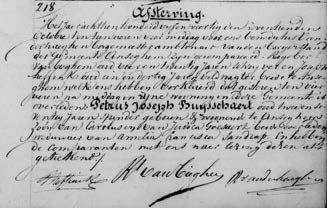
After Isabelle Fernandine Vandriessche’s death, Pierre Joseph Buysschaert married again at Anzegem on July 18, 1824. His bride was Amelie-Francisca Sandrap, born at Anzegem on January 22, 1790. The wedding certificate states that Pierre Joseph was born at Anzegem on February 19, 1773, in Figure 72.22, and that his father was Charles Buysschaert. The latter died on December 16, 1787, while his mother was Judoca Goesaert. His new wife’s parents were Antonius Sandrap (who died on September 19, 1807) and Genoveva Houttequit (who died on April 1, 1807).
Figure 72.23:
Anzegem, October 17,
1845, the death of 72-year-old Petrus
Joseph Buysschaert, born and residing at
Anzegem, son of Charles Buysschaert and
Judoca Goesaert and widower of Amelie
Françoise Sandrap.
© 2024 Nico F. Declercq
The Desclergues of la Villa Ducal de Montblanc, 2nd ed., Omn., VOL. VI
72.4. GENEALOGY
1569
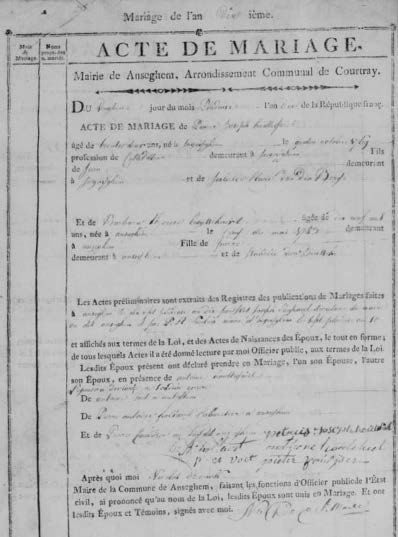
Figure 72.24: Anzegem, September 2, 1802 (20 pluviôse de l’ an X). The wedding
of Barbara Thérèse Buysschaert, born at Anzegem on May 5, 1783, with Pierre
Joseph Houttequiet, a farmer (’cultivateur’) who was born at Ingooigem on October
4, 1769. The groom’s father was Jean Houttequiet, and the mother was Isabelle-
Clara Vandenberghe. The bride’s father was Pierre Buysschaert, and the mother was
Isabelle Vandriessche. The witnesses were Antoine Houttequiet and Pieter Coudyser.
Amelie-Francisca Sandrap died at 55 on July 11, 1844, at Anzegem. Pierre Joseph was still alive then.
Petrus Joseph Buysschaert died in Anzegem in 1845, in Figure 72.23.
72.4.7 Barbara Theresa Buysschaert, the Wife of Pierre Joseph Houttequiet
She was the daughter of Isabelle Fernandine Vandriesche and was married to Petrus Joseph Houttequiet at Ingooigem in 1802, in Figure 72.24. Barbara Theresa was born at Anzegem in 1783, in Figure 72.26, and died at Ingooigem in 1826.
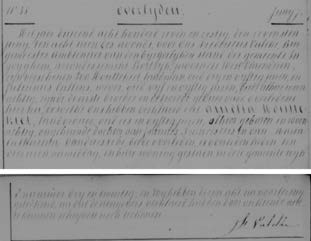
Pierre Joseph Houttequiet was born in Ingooigem in 1769, in Figure 72.28, and died in Ingooigem in 1821, in Figure 72.29. Barbara Thérèse Buysschaert married again in 1821, in Figure 72.25.
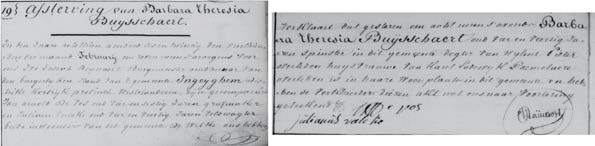
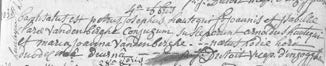
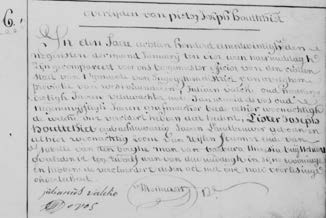
Barbara Theresia Buysschaert died at the age of 44, in Figure 72.27, less than two weeks after the birth of her daughter Rosalia Paemelaere (born on February 5, 1826 at Ingooigem). She can also be found in the archives of Kortrijk4.
72.4.8 Amelie Francisca Houttequiet, theWife of Frederic Verbeke
She was Barbara Theresa Buysschaert’s daughter and married Frederic Verbeke at Ingooigem in 1842. DNA evidence is given in Chapter 73.8 on page 1590.
Amelie Francisca was born at Ingooigem in 1811. Frederic Verbeke was born in Waregem in 1817.
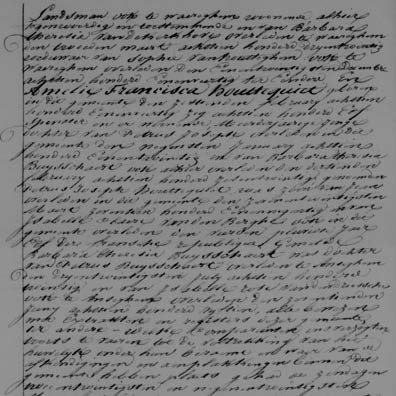
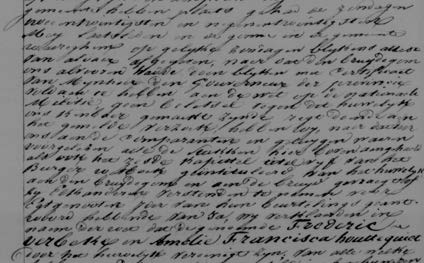
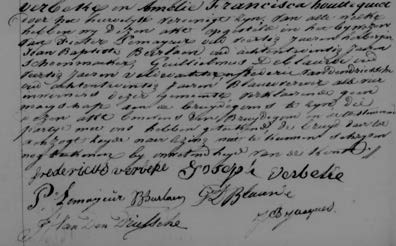
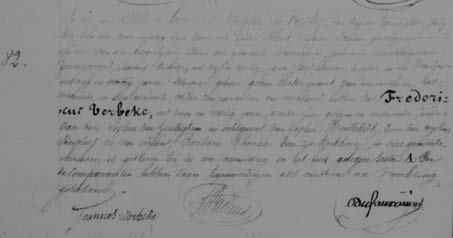
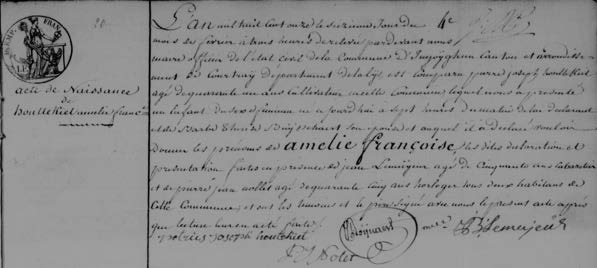
The wedding of Amelia Francisca Houttequiet and Frederic Verbeke took place at Ingooigem on June 7, 1842, in Figures 72.30,
72.31, 72.32 and 72.33. Amelia was born on February 16, 1811, in Figure 72.35, at Ingooigem. Frederic was born on March 13, 1817, at Waregem and was a farmer.
The groom’s father was Joseph Verbeke, farmer, age 67; the mother was Barbara Theresia Vandekerkhove, who died at Waregem on March 2, 1823. The bride’s father was Petrus Joseph Houttequiet, dead at Ingooigem on January 9, 1821, and the mother was Barbara Theresia Buysschaert, dead at Ingooigem on February 13, 1826.
Frederic Verbeke had been married before to Sophie Vanhoutteghem, who died at Waregem on December 21, 1841. Frederic Verbeke was born in Waregem in 1817, in Figure 72.37, and died in Waregem in 1859, in Figure 72.34.
Amelie Francisca Houttequiet died in Ingooigem in 1867, in Figure 72.36.
4Archief Kortrijk, erfenisaangiften Inv.nummer: Film nummer: 144 Volgnummer: 3334 Item nummer: 084305.
The Desclergues of la Villa Ducal de Montblanc, 2nd ed., Omn., VOL. VI
© 2024 Nico F. Declercq
1570
CHAPTER 72. THE MATERNAL (MT-DNA) ANCESTRY LINE OF N F DECLERCQ
Figure 72.25:
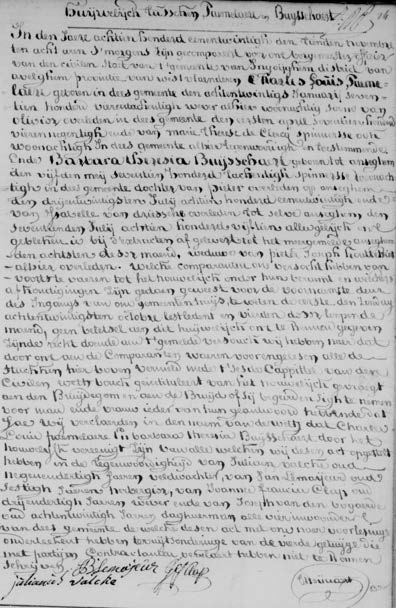
Second marriage of Barbara Thérèse Buysschaert. Ingooigem,
November 10, 1821, the wedding of Barbara Thérèse Buysschaert, born on May
5, 1783 (The registrar wrote ’seventien honderd tachentigh’ , which should have been
’seventien honderd dryen tachentigh’ ; therefore, the year 1780 is wrong and should
have been 1783) at Anzegem, and Charles Louis Paemelaere, born at Ingooigem on
January 28, 1784. The Groom’s father was Olivier Paemelaere, who died on April 1,
1794; the mother was Marie-Thérèse Declercq. The bride’s father was Pieter Buyss-
chaert, dead on July 23, 1821, and the mother was Isabelle Vandriessche, dead on
July 17, 1815.
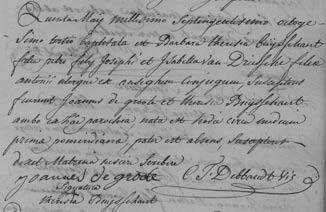
Figure 72.26: Anzegem, May 5, 1783,
the baptism of Barbara Theresia Buyss-
chaert. Her parents were Petrus Buyss-
chaert, son of Joseph; and Isabelle Van
Driessche, daughter of Anthonius. The
godparents were Joannes De Groote and
Thérèse Buysschaert. The father was ab-
sent for the baptism.
© 2024 Nico F. Declercq
The Desclergues of la Villa Ducal de Montblanc, 2nd ed., Omn., VOL. VI
72.4. GENEALOGY
1571
Figure 72.27: Ingooigem, February 14, 1826, the death of 44-year-old Barbara Theresia Buysschaert, daughter of Petrus Buysschaert and wife of Charle Louis Paemelaere.
Figure 72.28:
Ingooigem, October 4,
1769, the baptism of Pierre Joseph Houtte-
quiet, son of Joannes Houttequiet and Is-
abelle Claire Vandenberghe. The godpar-
ents were Arnoldus Houttequiet and Maria
Joanna Vandenberghe.
72.4.9 Sidonie Verbeke, the Wife of Camillus Waelkens
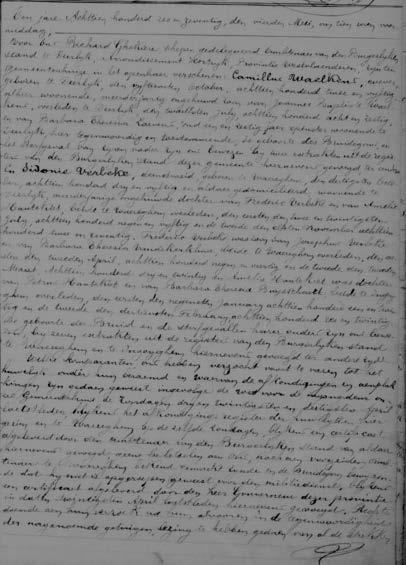
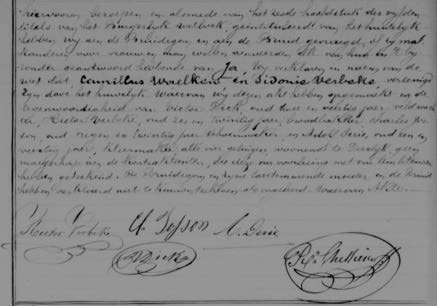
Sidonie was the daughter of Amelie Francisca Houttequiet and was married to Camillus Waelkens at Deerlijk in 1876, in Figures
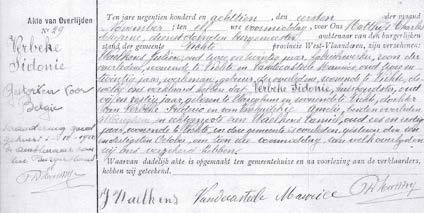
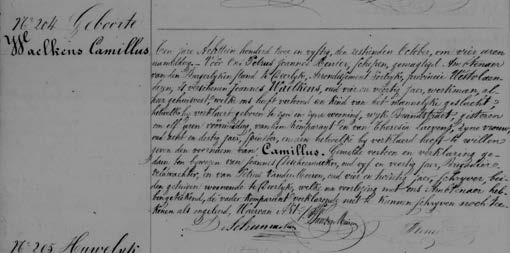
72.42 and 72.43. She was born in Waregem on October 30, 1853, in Figure 72.38 and died at Vichte on October 20, 1918, in Figure
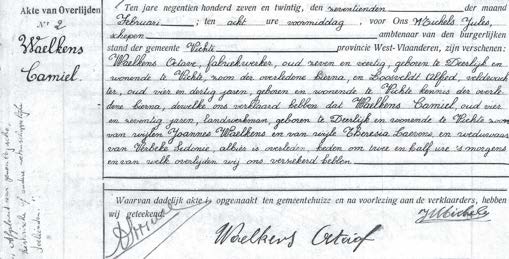
72.39. Camillus was born in Deerlijk in 1852, in Figure 72.40. Camillus Waelkens died in Vichte on February 17, 1927, in Figure
72.41 (and Figure 67.84 on page 1380) at the age of 74. Sidonie Verbeke died at Vichte on October 20, 1918. She ’died for her country,’ as indicated on her death certificate.
We want to warn other genealogists that another Sidonie Verbeke was also born at Waregem in 1853, on June 3. That is the same place and year as our Sidonie Verbeke. Interestingly, she also died in the same year, namely in 1918, on October 17, 3 days before our Sidonie Verbeke died.
Her death was at Saint-Louis in Deerlijk, where the daughter of our Sidonie Verbeke, namely Augusta Emma Waelkens, would live and die.
This is a remarkable coincidence. The other Sidonie Verbeke was married to a Mr. Deknudt, and she equally received recognition from the Belgian government, ’dead for her country.’
According to Derlike5, she died by a British shell exploded at her doorstep. Our Sidonie probably died of a similar cause. Several obituary cards of 1918 in Deerlijk indicate death by shootings on October 20, 1918, including, for instance, that of Prudentia Galleyn, born in Zedelgem and died at the age of 26 in Deerlijk on October 1918.
72.4.10 Augusta Emma Waelkens, the Wife of Alfred Den Dauw
Augusta Emma was the daughter of Sidonie Verbeke and was married to Alfred Den Dauw at Vichte in 1914. Augusta Emma was born in Deerlijk in 1891, in Figure 72.45, and died at Sint Lodewijk - Deerlijk in 1941, in Figures 72.46 and Figure 67.87 on page
1381. Alftred Den Dauw was born in Otegem in 1892 an died in Deerlijk in 1958.
Most information about this family, and in particular the ancestors of Alfred Den Dauw, can be found in Chapter 67, devoted to the ancestry line Den Dauw.
72.4.11 Anna Den Dauw, the Wife of René Vangheluwe
She was the daughter of Augusta Emma Waelkens and was married to René Vangheluwe in Deerlijk. She was born in Deerlijk in 1924 and died in 1999. Anna Den Dauw is primarily described in Part X as the wife of René Vangheluwe, a descendent of the Desclergues along a maternal line.
Being a ’Den Dauw,’ she is also listed in Chapter 67. René Vangheluwe is primarily described in Part X as the son of Zozyma Verhaeghe and Gerard Vangheluwe and as the father of Nelly Maria Vangheluwe. He is equally referred to in the following chapters: Chapter 67, as the husband of Anna Den Dauw, and Chapter 69, as the grandson of Maria Nathalie Surmont.
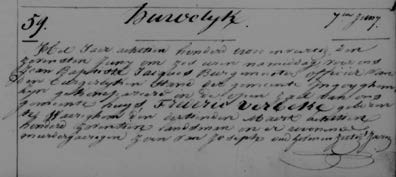
Figure 72.29:
Ingooigem, January 9,
1821, the death of Pieter Joseph Houtte-
quiet. He was born in Ingooigem, was 48
years old, was a farmer, and was the son
of Joannes Houttequiet and Isabelle Van-
denberghe. His wife was Barbara-Theresa
Buysschaert.
5Derlike XXVII, 3 (2005) p 87
The Desclergues of la Villa Ducal de Montblanc, 2nd ed., Omn., VOL. VI
© 2024 Nico F. Declercq
1572
CHAPTER 72. THE MATERNAL (MT-DNA) ANCESTRY LINE OF N F DECLERCQ
Figure 72.30: Ingooigem, June 7, 1842, the marriage of Amelia Francisca Hout-
tequiet and Frederic Verbeke (sheet 1).
Figure 72.31: Ingooigem, June 7, 1842, the marriage of Amelia Francisca Hout-
tequiet and Frederic Verbeke (sheet 2).
Figure 72.32: Ingooigem, June 7, 1842, the marriage of Amelia Francisca Houttequiet
and Frederic Verbeke (sheet 3).
© 2024 Nico F. Declercq
The Desclergues of la Villa Ducal de Montblanc, 2nd ed., Omn., VOL. VI
72.4. GENEALOGY
1573
Figure 72.33: Ingooigem, June 7, 1842, the marriage of Amelia Francisca Hout-
tequiet and Frederic Verbeke (sheet 4).
Figure 72.34: Waregem, July 22, 1859, the death of 47-year-old Frederic Verbeke. He can
also be found at the Archives of Kortrijk (Erfenisaangiften, Regio: Harelbeke Inv.nummer: 34
Film nummer: 25 Volgnummer: 4460 Item nummer: 014426). He was a widower of Sophia
Vanhouteghem and husband of Sophia Houttequiet. His parents were Joseph Verbeke and Barbara
Theresia Van de Kerkhove.
Figure 72.35: Ingooigem, February 16, 1811, the birth of Amelie Francisca Houttequiet, daughter of 41-year-old farmer Pierre-Joseph Houttequiet and Barbe Thérèse Buysschaert.
The Desclergues of la Villa Ducal de Montblanc, 2nd ed., Omn., VOL. VI
© 2024 Nico F. Declercq
1574
CHAPTER 72. THE MATERNAL (MT-DNA) ANCESTRY LINE OF N F DECLERCQ
Figure 72.36: Ingooigem June 7, 1867, the death of 56-year-old
Amelie Francisca Houttequiet, farmer, born at Ingooigem, daugh-
ter of Joannes Franciscus Houttequiet and Maria Catharina Van-
dendriessche.
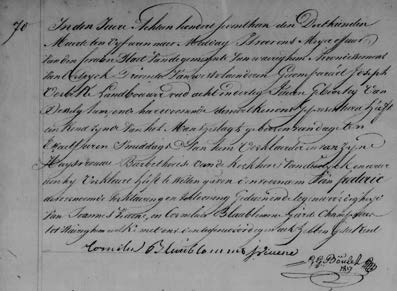
Figure 72.37: Waregem, March 13, 1817, was the birth of Frederic Verbeke, son
of 38-year-old farmer Joseph Verbeke, born in Desselgem and of Barbe Thérèse Van
de Kerkhove.
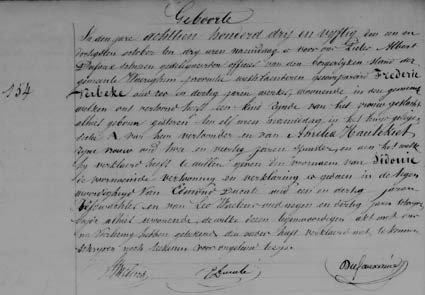
Figure 72.38: Waregem, October 30, 1853, the birth of Sidonie Verbeke. Her father was
36-year-old, Frederic Verbeke. Her mother was 42-year-old Amelie Houttequiet.
© 2024 Nico F. Declercq
The Desclergues of la Villa Ducal de Montblanc, 2nd ed., Omn., VOL. VI
72.4. GENEALOGY
1575
Figure 72.39: Vichte, October 31, 1918, the death of 65-year-old Sidonie Verbeke. She
died for her country. Her death was reported by her 22-year-old son Julien Waelkens.
Sidonie was born in Waregem and resided in Vichte. She was the daughter of Frederic
Verbeke and Amelie Houttequiet. Her husband was 66-year-old Camille Waelkens.
Figure 72.40: Deerlijk, October 15, 1852, the birth of Camillus Waelkens, son of 44-year-old Joannes
Waelkens. He was born in Brandstraat in Deerlijk. The mother was Thérèse Laevens.
Figure 72.41: Vichte, February 17, 1927, the death certificate of 74-year-old Camille Waelkens, father of Augusta Emma Waelkens. Octave Waelkens, his son, reported the death. Camille Waelkens was born in
Deerlijk, resided in Vichte, and was the son of Joannes Waelkens and Thérèse Laevens. He was a widower of Sidonie Verbeke.
The Desclergues of la Villa Ducal de Montblanc, 2nd ed., Omn., VOL. VI
© 2024 Nico F. Declercq
1576
CHAPTER 72. THE MATERNAL (MT-DNA) ANCESTRY LINE OF N F DECLERCQ
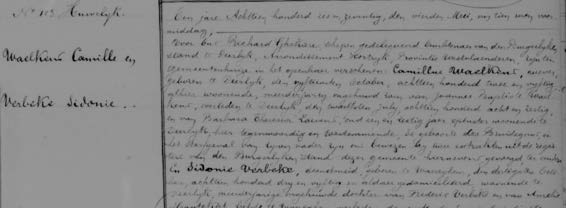
Figure 72.42: Deerlijk, May 4, 1876, the marriage of Sidonie Verbeke and Camille Waelkens. The groom was born in Deerlijk on October 15, 1852, as the son of Jean Baptiste Waelkens, who died in Deerlijk on July 12, 1868, and of 61-year-old Barbara Theresia Laevens. The bride was born in Waregem on October 30, 1853, where her official address was, despite residing in Deerlijk. Her father was Frederic Verbeke, who died in Waregem on July 22, 1859, and her mother was Amelie Houttequiet, who died in Waregem on November 11, 1872. Frederic Verbeke was the son of Joseph Verbeke, who died in Waregem on January 9, 1821, and Barbara Thérèse Vandekerkhove, who died in Waregem on February 13, 1826. (heading)
Figure 72.43: Deerlijk, May 4, 1876, the marriage of Sidonie Verbeke and Camille
Waelkens. (sheet 1)
© 2024 Nico F. Declercq
The Desclergues of la Villa Ducal de Montblanc, 2nd ed., Omn., VOL. VI
72.4. GENEALOGY
1577
Figure 72.44:
Deerlijk, May 4, 1876, the marriage of Sidonie Verbeke and Camille
Waelkens. (sheet 2)
72.4.12 Nelly Maria Vangheluwe, the Wife of Maurice Alois Declercq
She is the daughter of Anna Den Dauw and René Vangheluwe and was married to Maurice Alois Declercq. She was born in Deerlijk in 1945.
She is the mother of Nico F. Declercq. Nelly Maria Vangheluwe is primarily described in Part X as the daughter of René Vangheluwe and Anna Den Dauw and as the author’s mother.
She is equally referred to in the following chapters: Chapter 64, as the daughter-in-law of Irma Helena Lesage; Chapter 65, as the great-great-great-great-great-great-granddaughter-in-law of Adrienne de Patin (DP12; Chapter 66.1, as the great-great-great-great-granddaughter-in-law of Barbara Benoit; Chapter 66.2, as the great-great-great-great-great-granddaughter-in-law of Maria Jeanne Christine Benoit; Chapter 67, as the daughter of Anna Den Dauw; Chapter 68, in the ’t Kint ancestry line; Chapter 69, as the great-granddaughter of Marie Nathalie Surmont; and Chapter 71, as the great-granddaughter-in-law of Clemens Lammens. The mitochondrial DNA investigation was performed on her son Nico F. Declercq, the author.
The Desclergues of la Villa Ducal de Montblanc, 2nd ed., Omn., VOL. VI
© 2024 Nico F. Declercq

1578
CHAPTER 72. THE MATERNAL (MT-DNA) ANCESTRY LINE OF N F DECLERCQ
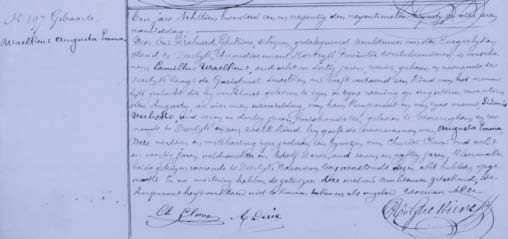
Figure 72.45: Deerlijk, August 17, 1891, the birth of Augusta Emma Waelkens, daughter of 38-year-old
Camille Waelkens and 37-year-old Sidonie Verbeke from Waregem. She was born in Deerlijk in the street
’Gaaistraat.’
Figure 72.46:
Deerlijk, March 28, 1941 the death of Augusta Emma
Waelkens, wife of Alfred Den Dauw.
© 2024 Nico F. Declercq
The Desclergues of la Villa Ducal de Montblanc, 2nd ed., Omn., VOL. VI
The Desclergues of la Villa Ducal de Montblanc, 2nd ed., Omn., VOL. VII
© 2024 Nico F. Declercq
Genetics
The Desclergues of la Villa Ducal de Montblanc, 2nd ed., Omn., VOL. VII
© 2024 Nico F. Declercq

Chapter 73
DNA Analysis of N. F. Declercq
73.1 Introduction
Because le sang est plus épais que l’eau, this chapter’s DNA analysis focuses on three critical aspects: the paternal ancestry line corresponding to the Y-DNA, the maternal ancestry line corresponding to mtDNA, and, finally, autosomal DNA analysis. The YDNA analysis targets the direct paternal line, providing insights into male ancestors’ deep ancestral origins and migration patterns.
Y-DNA markers are passed virtually unchanged from father to son, making this analysis a powerful tool for tracing lineage over many generations. Similarly, mtDNA analysis focuses on the maternal line, tracing the matrilineal ancestry.
Mitochondrial DNA, inherited exclusively from the mother, offers a unique perspective on maternal heritage, often revealing connections that span thousands of years.
Autosomal DNA analysis, which examines the 22 non-sex chromosomes, offers a broader perspective on genetic inheritance. Commercial DNA databases, such as those we utilized, proudly offer various accolades, such as the badge we received, as shown in Figure 73.1, or diplomas depicted in Figures 73.3, 73.4, and 73.7. Autosomal DNA is often called the genetic soup linked to all our relatives on the ancestry tree. While it does not provide specific information about individual family lines, it reveals the distribution of populations from which we descend and identifies individuals across existing databases with whom we share DNA, indicating at least one common ancestor.
The higher the autosomal DNA match, the more recent the common ancestor, enabling us to estimate the generational distance between ourselves and our genetic relatives. This method has illuminated numerous links to Spain and, to a lesser extent, Brittany in France. This geographic distribution aligns with historical records of our lineage, notably Du Guesclin, from whom we descend.
Du Guesclin resided in Brittany before the bloodline settled in Montblanc, Spain, as Desclergues.
In subsequent sections, our autosomal DNA is rigorously analyzed across several databases. These analyses demonstrate our ancestors’ genetic links and migration patterns, corroborating historical documentation and oral histories. The extensive connections to Spain are particularly significant, suggesting a robust genetic and cultural heritage that has persisted through centuries. Moreover, the lesser yet notable links to Brittany underscore the migratory paths and regional interactions that have shaped our family history.
Through this comprehensive DNA analysis, we gain a clearer understanding of our ancestral origins.
73.2 Y-DNA and mt-DNA
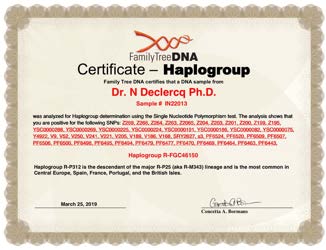
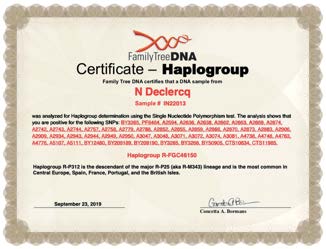
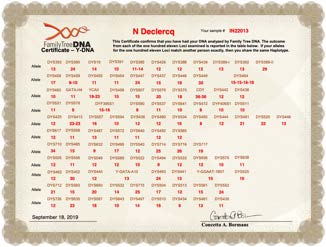
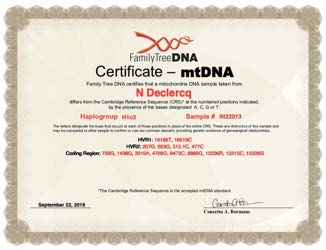
In the documents in Figures 73.1, 73.2, 73.3, and 73.4, one can find two shreds of evidence of our Haplogroup. We also have our Y-STR values (111), shown in Figure 73.5.
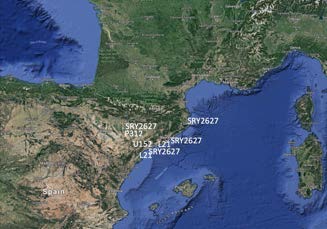
We have investigated links through our Y-STR values, and one exciting result can be found in Figure 73.6, obtained from old data on Y-Full®.
We have checked for samples with the same first 17 Y-STR values and found perfect matches in the Catalonia area. However, more than seventeen values are required to determine an associated Y-Haplogroup based on probabilistic analysis, certainly in the R1B
Celtic Haplogroup.
Therefore, it is unsurprising that some matches are SRY2627 (like ours), but others are different (P312, U152, L21, U152). It shows that Y-STR alone is not enough to find one’s Haplogroup.
Therefore, a more thorough, specific Haplogroup analysis must be performed, which we did. Interesting is that those matches exist in Catalonia. The map in Figure 73.6 was our first clue during this research, apart from genealogy, that we had ancestors in that region, and this clue came before we knew with certainty what our Haplogroup was.
In FamilyTreeDNA®, 31 entries in the database correspond to the mtDNA Haplogroup H1c3. We have checked their origins based on the family names that appear. Thirteen are from the British Isles without Ireland. Thirteen are Irish. This means that only five of them are not from the British Isles. The 13 names we identified as British but less probably Irish are Callow, Sandefur/Boardman, Prescott, Arthur, Baker/Caperton, Askin, Land, Lay, Ray, Adams/Williams, Hynn, McLeod, and Finch. We identified the 13 names as Irish: Callahan, Molamphy, Devine, Geddie, Tierney, Warren, Keefe, Quigley, Hynes, Meade, Thompson, Madigan and Daley.
The other entries, which we assumed have no known links to the British Isles, just based on the name, are Krissansen, Bartol, Vacca, Sladek, Trabold/Marinelli.
The old saying goes: ’All the proofe of a pudding, is in the eating.’1
One can make an as impressive as imaginable ancestry tree, but without DNA proof, it means nothing. . . . The author had his Figure 73.1:
2019-09-23 FamilyTreeDNA® badges
showing the Haplogroups of N.F. Declercq. The location
on the human genetic ancestry tree is shown in Figure
1The original phrase is first recorded in the early 17th century, in a work by the English writer William Camden, titled "Remains Concerning Britain"
(1605). The phrase was used to convey the idea that the true value of something is determined by experiencing it.
The Desclergues of la Villa Ducal de Montblanc, 2nd ed., Omn., VOL. VII
© 2024 Nico F. Declercq
1584
CHAPTER 73. DNA ANALYSIS OF N. F. DECLERCQ
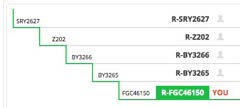
Figure 73.2: Position of our Y-DNA-Haplogroup on
the genome tree. We are FGC46150 and descend from
SRY2627. The image is taken from our account on Fam-
ilyTreeDNA®.
Figure 73.3: This certificate is given by
FamilyTreeDNA® (March 2019), which
clearly shows our Haplogroup and a list of
specific SNPs that will be used to further
specify the detailed Haplogroup down the
human Haplotree.
Figure 73.4: This is the updated certifi-
cate given by FamilyTreeDNA® (Septem-
ber 2019), which clearly shows our Hap-
logroup and a list of specific SNPs that will
be used in the future further to specify the
detailed Haplogroup down the human Hap-
lotree.
Figure 73.5:
Y-STR values certificate
given by FamilyTreeDNA® (September
2019).
© 2024 Nico F. Declercq
The Desclergues of la Villa Ducal de Montblanc, 2nd ed., Omn., VOL. VII
73.2. Y-DNA AND MT-DNA
1585
Figure 73.6: Map of perfect matches for
17 Y-STR values before we even knew our
Haplogroup. This was the first genetic in-
dication that we descended from a Span-
ish paternal ancestor. The map shows each
matching sample’s location and the actual
Haplogroup of each sample. We are a sub-
branch of SRY2627.
Figure 73.7: 2019-09-22 mtDNA certifi-
cate of N.F. Declercq.
DNA tested after discovering genealogical evidence that his ancestors were Spanish. The scientific results confirmed this conclusion.
The evidence is so strong that even without genealogy, it is clear that we have a Catalan origin. As Nikola Tesla once said, "If you do not know how to observe the natural phenomena, they will give you clear answers and inspiration." In our case, the inspiration came from genealogy. Genealogy is most rewarded when the historical records match DNA analysis.
Indeed, Declercq’s Haplogroup and specific Y-STR profile are Celtic, and the typical pattern in North-Eastern Spain, just south of the Pyrenees, is even checked. His Haplogroup is SRY2627; more precisely, and on the genetic tree of humans: M173 - M343(=R1b)
- L754 - L389 - M297 - M269 - L23 - L51 - L151 - P312 - DF27 - Z195 - Z198 - ZS312 - Z267 - SRY2627(=RM-167) - Z202 - R-BY3266
- R-BY3265 - R-BY50905 (with FGC46150+, FGC46152+, FGC82414+, FGC64911+, FGC82428+, FGC82439+, FGC46173+).
The earliest roots can be found 3000 years ago, based on what is generally accepted, in the Valle de Aran in the Spanish Pyrenees, where the Haplogroup appears with its highest concentration.
The Haplogroup SRY2627 is typical for Catalonia. However, over the centuries, it has spread over Spain and also other regions in Europe. Therefore, it is essential to look at the refined sub-Haplogroups, the most minor refinement being the FGC46150
Haplogroup characteristic and the Y-STR values compared to others who are of the same SRY2627 Haplogroup. As more samples will become available, an even more refined determination will be possible.
Before continuing, however, we may also repeat that N. F. Declercq has an mtDNA Haplogroup H1c3, which means that his maternal line is located on the British Isles, most likely in Ireland.
His autosomal DNA exhibits genes found chiefly East and West of the North Sea, appearing in Spain, Portugal, the Azores, Malta, Sicily, and Brittany in France.
Figure 73.8 shows a population map with analysis. A detailed analysis is performed further for every region and name of interest.
Of particular importance is the presence of shared genes with the Scottish family Patton, as in Figure 73.10, which may be genetic evidence of Declercqs relationship to the ’de Patin’ family and proof that this family descends from Normans of which individual branches crossed the Channel to the British Isles after the Battle of Hastings in 1066. Indeed, this is what the Patton clan claims, based on records. Specific genetic evidence of de Patin ancestry is, for instance, found in Chapter 73.8.
Moreover, when we examine the human Haplotree more closely, we find BY3266 (with no further mutations) nowadays only in two places in the world in the existing databases: a village south of Valladolid (Crown of Castile) and in the Kingdom of Murcia, in a town just south of Alicante (the Crown of Castile, close to the border with the Crown of Aragon), in Spain.
Olalde et al.2 have placed our ancestral DNA in a historical context. Around 4500 years ago, all original Iberian DNA was replaced by DNA from new invaders, including people arriving from the Pyrenees. In particular, there is a sample mentioned, called
’esp005.SG,’ labeled as ’C-IberiaCA-Stp,’ with Y-DNA Haplogroup R1b1a1a2a1a2a (= DF27) and, more specifically, a subgroup R1b1a1a2a1a2a5 (=R-Z225). Our DNA SRY2627 is also a subgroup of DF27 and has split off the D27 much later than the Z225
branch. Nevertheless, the sample from which the DNA was extracted is a tooth of a skeleton that was carbon-dated at 1400 BC
and was discovered in Cueva de Los Lagos, Aguilar de Alhama, La Rioja, in Spain. It agrees with other works published in the literature and confirms that SRY2627 originated in Spain as a side branch, did not develop elsewhere, and then moved into Iberia.
Before continuing, a crucial fact, based on several platforms that tested our DNA, is that we have never found any match with persons carrying the name Declercq (in any of its formats). It is evidence that our Declercq ancestors are not representative of the many Declercq tribes in Belgium or anywhere else. As extensively studied in this book, the family originated in Northern Spain and 2Olalde et al., ’The genomic history of the Iberia Peninsula over the past 8000 years,’ Science 363, 1230-1234, March 15, 2019.
The Desclergues of la Villa Ducal de Montblanc, 2nd ed., Omn., VOL. VII
© 2024 Nico F. Declercq
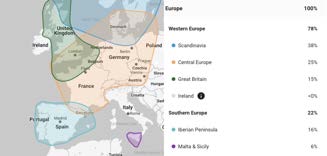
1586
CHAPTER 73. DNA ANALYSIS OF N. F. DECLERCQ
Figure 73.8: MyOrigins 3.0 ® autoso-
mal population cluster estimation by Fam-
ilyTreeDNA®. The North-Sea basin is
clear, but there is also a 22% Southern Eu-
rope estimation, i.e. 16% Iberia and 6%
Sicily and Malta.
was ’injected’ into the North Sea Bassin around 1600. The family is not connected through paternal ancestry, with other families with similar names.
73.3 Nearest Y-DNA Haplogroup Matches
As described further in Chapter 19.27.1 and more specifically in Chapter 19.27.3, a Du Guesclin has the same Y-DNA Haplogroup as the author. Furthermore, on the human Y-DNA-Haplotree, the person in the global database closest related to the author is ’de Sierra,’ a man from Guatemala with paternal roots in Spain. His sample number in FamilyTreeDNA® is 35928, and his Haplogroup is R-FGC82423, a sub-Haplogroup of the author’s R-FGC46150.
Only some people in the DNA database have entirely determined the Y-DNA Haplogroup. Persons who tested positive for the R-M269 Haplogroup may be R-FGC46150 or between. Interestingly, the Y-STR values can be checked for those persons and compared with the author’s Y-DNA to reasonably estimate how far they may be genetically related patrilineally.
FamilyTreeDNA®has Mr. Robichon, with old roots in Brittany as R-M269, tested for 37 Y-STR markers and a distance of 2 with the author. We similarly find Aguirre from Spain. Another one from Spain, Chavez, tested for 67 markers, two steps away from the author, while Castillo tested for 111 markers, one step away from the author. Finally, Torres Martinez (with patrilineal forefather Cantero Quero from Lopera near Jaen and Cordoba) tried 700 markers with a 2-step distance from the author.
Then, in Portugal, we found Garcia, who tested for 700 markers two steps away from the author, and Silveira and Leal, who tested for 37 markers, respectively, two and one step away.
Finally, in Mexico, we find again a Castillo who tested 111 markers and is two steps away from the author.
To conclude, the R-M269 investigations expose potential candidates with a common forefather in Brittany, Spain, or both.3
A more extensive investigation is provided in Chapter 73.6.
73.4 DNA and Family Names in Catalonia, with Strong Evidence of Tarragona
as the Ancient Origin
In this context, it is worthwhile referring to a scientific paper on Catalan family names concerning DNA analysis by Solé-Morata et al.4. The paper aims to investigate genetic differences in paternal DNA for people with the same family names.
Having the same family name does not always mean that the name originates from the same forefather. Such investigations can determine clusters of genetically related families with the same family name.
Desclergue does not appear on the list because nobody in modern Spain descends from the old Desclergue family or families. It is unfortunate.
Nevertheless, one can extract some interesting facts. The paper lists samples with Y-Haplogroup and 17 Y-STR values5. When we select only the SRY2627 Haplogroup samples from the entire list, we find around 300 entries. None of those samples have the same Y-STR values as ours. However, four samples differ only in 1 Y-STR value with a value difference of only 1. Having the same Y-Haplogroup and having 16/17 Y-STR values in common is a safe condition to state that those four people most probably have a common forefather in recent history, i.e., 500 - 1500 years ago.
More specifically, the samples are of people having the following family names: ’Sabater’ from Girona, ’Ferrer’ from Barcelona,
’Ferrer’ from the province of Tarragona, and ’Taberner’ from Alicante. Those family names likely originate from the Roman period in Tarragona and represent professions. Indeed, Hispania Tarraconensis and later Hispania were Roman from around 27 BC until the 5th century AD, and the Visigoths took over after 476 AD and established/confirmed a nobility’s societal structure. Before, the area had been Greek. Around 713, Tarragona was captured by the Muslims.
As indicated in the cited article in the European Journal of Human Genetics, the Desclergues of Montblanc have nobility roots in the Visigoth period. However, they were not genetically Visigothic but Celtic from the Eastern Pyrenees. Concerning the Du Guesclin bloodline, who are ancestors of the Desclergues of Montblanc, it is therefore plausible that they ultimately descended from Spanish nobility during the Visigoth period in the North-East of Spain and arrived in Brittany as in the myth concerning their origins during the Frankish period.
The story is described in Part VI. Note that our Ferrer ancestry is described in Chapter 26.0.2 on page 291.
73.5 Genetic Connection with the Counts of Barcelona and the Royal House
of Aragon
On Geneanet®, there is a 7.1 centiMorgan DNA link found between Declercq and Krister Eriksson Gallon from Denmark. This person is a descendant of Ramon Berenguer IV (1113-1162), count of Barcelona, and shown in Figure 19.48 on page 211. The latter married Petronila II, queen regnant of Aragon (1136-1174), and had a daughter, Dulcia Aldonza Aragon (1159-1198). The count’s 3The Brittanic link has roots in Spain
4Neuls Solé-Morata, Jaume Bertranpetit, David Comas, Francesc Calafell, ’Y-Chromosome diversity in Catalan surname samples: insights into surname origin and frequency,’ European Journal of Human Genetics 23, 1549-1557 (2015).
5the Y-STRs are 456, 389I, 390, 389II, 458, S19, 385, 385B, 393, 391, 439, 635, 392, H4, 437, 438 and 448.
© 2024 Nico F. Declercq
The Desclergues of la Villa Ducal de Montblanc, 2nd ed., Omn., VOL. VII
73.6. Y-STR CLOSEST CONNECTIONS WITHIN THE R-M269 Y-DNA-HAPLOGROUP
(FAMILYTREEDNA®)
1587
parents were Ramon Berenguer III of Barcelona (1080-1131) and Douce I of Gévaudaun of Provence (1095-1190), who married in Huesca in Aragon in 1137.
Dulcia Aldonza Aragon (1159-1198) married Sancho I Martino of Portugal (1154-1212), and they had Berengaria of Portugal (1194-1221) as a daughter. The latter married Valdemar II Sejr Valdemarsson (1170-1241) from Denmark. It is through their descendants that Krister Eriksson Gallon, with whom we share DNA, stems.
This is further outlined in Chapter 19.27.2 on page 211. Other indications can be found in Chapter 27.2 on page 301.
More Genetic links are described in Chapter 74.12.3 on page 1618.
Documented evidence of this connection is also described through the Cortés family in Chapter 27.2 on page 301.
73.6 Y-STR within R-M269 (FamilyTreeDNA®) - The Spanish Connection
The following persons, registered with FamilyTreeDNA®), have an unspecified Y-DNA sub-Haplogroup within R-M269. The Haplogroup of the Desclergues is a sub-Haplogroup of R-M269, and, therefore, this investigation may reveal potential candidates for our Haplogroup, should they undergo a complete analysis. The names are listed as they appear in FamilyTreeDNA®). Based on the given genetic distance, while only considering the tested Y-STR values, the listed persons may have a patrilineal ancestor in common with us in the 16th century AD. We also refer to Chapter 73.3 for the most prominent samples.
73.6.1 Y-12 Tested Samples
Persons who tested Y-12 and are at 0 distance from our Y-STR values:
Mr. Luis Manuel Fernandes Ph.D; Rui Leal;Emanuel Machado de Medeiros; Jose Antonio Álvarez; Manuel L. Lovato;Mr. Pablo Iván Reyes Marrero;Clarence Kelly Duarte;reynold montes (Montes de Oca);Fernando Mengo;Diego Tenorio Villas Silva;Mr. Maurício de Salles Abreu;Mr. Jorge Luis Bravo Álvarez Sr; Mr. Jon Goitia Leniz;Alexis Rivas;Mr. Felicito Francisco López;Mr. Carlos Roberto Escobar;Mr. Roberto Eduado Ariel Pedraza Ruiz Jr; Diego Tenorio Villas Silva;Mr. Maurício de Salles Abreu;Mr. Roberto Eduado Ariel Pedraza Ruiz Jr; Mr. Jorge Luis Bravo Álvarez Sr; Javier Lacomba;Adelino Manuel Victoria Goncalves Mare;Timothy Orteg;Erlantz Veganzones Salvador;Ricardo Antonio Mediano;Santiago Laverde;Horacio J.
Lopez;Thomas Anthony Souza;C Gutierrez;Mr. Francisco Quilez;Mr. Edward Redondo - Barcelo Ortiz;Mr. Robert Daniel Quintero;Adriano Eva;Edgar Rodriguez;Mariano Lopez-Linares Lopez;Mateo Querol Carceller;Enriquillo Marti;John Jaiden Porter;Carlos Sandoval;Dr. José Manuel Pessoa de Amorim Durão;Mr. Carl Cruz;Jordi Basanta Mañé;Mr. Jeffrey Justin Bernal;Dr. Robert Avila Cervantes Ph.D; Enriquillo Marti;Dexter Lindo;Fortunato Manuel de la Cerda Gomes Garcia; Antonio Marcelino da Terra;Gordon Munro;Manuel Scott Carrasco;Frank Humberto Galicia;Wayne Rodarte;Mr. Artur Joaquim Lopes Pereira;David Meza;Mr. Dale Russel Otero;Mr. Hiram Duque;Esteban G. Bolado;Mr. Jeffrey Justin Bernal;Mr. Luis Linares;Evaristo Ortega;Mr.
Wilfredo Ignacio Fleites;Evaristo Ortega;Mr. Wilfredo Ignacio Fleites;Mr. Dale Russel Otero;Mr. Hiram Duque;Mr. Jacques Gauguin I;Robert Carlos Silveira;Mr. George Nelson Campos;Josep Mulet;Mr. Neil Francis Mendoza;Mr. Neil Francis Mendoza;Esteban G. Bolado;Steven Trujillo;Mr. Carlos Álvarez Bravo Sr; Mr. Francisco González Jr; Mr. Jesus Ordonez;Mr. Antonio J Heras Sr; Mr. Jose Raul Garcia de Paredes;Mr. Carlos Álvarez Bravo Sr; Mr. Francisco González Jr; Mr. Jesus Ordonez;Mr. Antonio J Heras Sr; Mr. Jose Raul Garcia de Paredes;Juan Francisco Panizo Sánchez;Jorge Iribarren; Sir Daniel Mario Brieba; Jose Albert Lopez.
73.6.2 Y-25 Tested Samples
Persons who tested Y-25 and are at 1 distance from our Y-STR values:
Robert Carlos Silveira; Jose María Castillo.
73.6.3 Y-37 Tested Samples
Javier Torres Martinez is at 2 steps distance from our Y-STR values. Therefore, he has a common ancestor 24 generations ago, with a 92% certainty.
Other samples in a similar situation are:
Robert Carlos Silveira, Portugal, 1 step.
Fuentes, 2 steps.
Vicente Calero, 2 steps, Nicaragua.
Juan Antonio Aguirre, 2 steps, Spain.
Rui Leal, 2 steps, Portugal.
Leon Antole Monte, 2 steps, Tarragona, Spain.
73.6.4 Y-67 Tested Samples
Leslie de Frere, 2 steps, South of France.
Hermie Chavez, 2 steps, Spain.
Farrand, 2 steps, French Catalonia.
Georgia Carl Fuentes, 2 steps.
73.6.5 Y-111 Tested Samples
Elias Farfan, 1 step, Valladolid and Toledo.
Jose Maria Castillo, 1 step, Spain.
Antonio Henrique Bittencourt Cunha Bueno, 2 steps, Brazilian politician, son of Antônio Sílvio Cunha Bueno.
Laurini, 2 steps.
André Garcia, 2 steps, Portugal.
Luciano Castillo, 2 steps, Mexico.
The Desclergues of la Villa Ducal de Montblanc, 2nd ed., Omn., VOL. VII
© 2024 Nico F. Declercq

1588
CHAPTER 73. DNA ANALYSIS OF N. F. DECLERCQ
Figure 73.9: Juan Ponce de Leon, with whose descendants we share DNA, lived from 1474 until 1521. He was born in Valladolid, Santervás de Campos in Spain, and died in Habana, Cuba. He is buried in San Juan, Puerto Rico. He is not our ancestor, but some of his descendants must have married our ancestors’ blood relatives, hence the DNA match. Ponce de Leon has been the governor of Puerto Rico, with interruptions, from 1508 until 1519. He joined Christopher Columbus’ second voyage in the New World in 1493. In 1513, he found La Florida, named after Pascua Florida, the flowered Easter season in Spanish, the season of their arrival. His ships discovered the Gulf Stream, which the Spanish later used as a fast return route to Iberia. The picture shown here was taken in Florida, at the Orlando airport in 2006. One of the most well-known places in modern-day Florida is Cape Canaveral. During one of our visits, we received this picture in 2009, which is shown right.
NASA’s Spaceshuttle program lasted from 1972 until 2011, with the first flight in 1977. The author remembers the Challenger accident in 1986 very well because he watched it live, or pre-recorded, in school in Deerlijk. In the middle is a picture of the author’s two eldest children, taken at Kennedy Space Center in 2009. (Declercq de Silva Archive)
73.6.6 R Haplogroup Samples
In the database collected by FTDNA of people in the R-Haplogroup, the closest R-M269 participants with not yet further refined Haplogroup information, are Bonifacio Mendez from Paraguay (IN53516), Hernaán Martin Serrano from Spain (957841), Manuel Ventura from Honduras (MK52954) and two Spanish adoptions, samples (609304 and IN73049).
73.7 Autosomal DNA (FamilyTreeDNA®) - The Spanish connection
In FamilyTreeDNA®, autosomal DNA comparisons with persons who have a match statistically equivalent to around a 5th cousin or eight generations back in time or closer, carrying the following family names, showed significant overlap (database consulted December 2018-2023):
Sarante / Ruvolo (ancestry links in Sicily and Catalonia) (59 centiMorgans, 18122 matching SNPs),
Pajor (with maternal ancestors from Spain, namely Gil from Quero-Toledo, Garcia from La Calahorra-Granada, Moreno from La Calahorra-Granada, Hernández from Granada and Ortiz-Villajos from Quero-Toledo) (55 centiMorgans, 16977 matching SNPs),
Del Rey (the United States with Spanish roots) (55 centiMorgans, 16524 matching SNPs),
Barra (52 centiMorgans, 17559 matching SNPs),
Martin (Spain and France) (51 centiMorgans, 12637 matching SNPs),
Carvalho/Carvallo (probable origins Portugal, Spain or Italy) (49 centiMorgans, 11900 matching SNPs),
Pedrosa / Petrusa (Northern Spain and Lombardy) (48 centiMorgans, 11463 matching SNPs),
Saenz (46 centiMorgans, 14975 matching SNPs),
Dinan (Bretagne, maybe a link through Du Guesclin) (46 centiMorgans, 14379 matching SNPs),
Bosa / Bosque (44 centiMorgans, 11605 matching SNPs),
Ponce de Leon (43 centiMorgans, 8800 matching SNPs), see also Figure 73.9,
Ocha (43 centiMorgans, 11172 matching SNPs),
La Guerra / De la Guerra (41 centiMorgans, 12861 matching SNPs),
Elias (with Spanish autosomal links) (40 centiMorgans, 9754 matching SNPs),
Cordova (38 centiMorgans, 9882 matching SNPs),
Carrico / Rosa (38 centiMorgans, 10399 matching SNPs),
La Hera (38 centiMorgans, 7925 matching SNPs),
Rodrigo (37 centiMorgans, 8456 matching SNPs),
Bové (can be Catalan or Italian) (36 centiMorgans, 8295 matching SNPs),
Sainz (35 centiMorgans, 6277 matching SNPs),
Colomer (35 centiMorgans, 10759 matching SNPs),
Cueva/Cuevas (35 centiMorgans, 9922 matching SNPs),
La Guarda (34 centiMorgans, 8100 matching SNPs),
Quintanilla (33 centiMorgans, 6686 matching SNPs),
Azaria (A jewish family which originates in Aragon and was expelled from Spain) (33 centiMorgans, 15173 matching SNPs), Cobas (32 centiMorgans, 6096 matching SNPs),
Dickey, with numerous Iberian names in his immediate ancestry tree (to name a few: Pacheco, Mendes, Alvares, Botelho, Cabral, Costa, Correia, Correa, Carvalho, Carneiro, Carneiro da Costa, Quintanilna, Quintaniha, de Mattos, da Costa, de Pimentel, de Medeiros, de Araujo, de Fontes, de Sousa, de Lima, de Oliveira, da Ponte, do Rego Marecos, da Silva, de Sousa, da Mota de Medeiros, da Ponte, de Quental, de Mello, Dias, Furtado, Ferreira, Piquete, Ribeiro, Rosa, Rodrigues) (32 centiMorgans, 6863 matching SNPs),
Savilla / de Savilla (32 centiMorgans, 8800 matching SNPs),
Coloni/Colona/Coloma (30 centiMorgans, 7700 matching SNPs),
Redaelli with ancestors Braca / Bracco / Massola / Bertoni / Sereto/ Cereto / De Maria / Ferri / Rato / Serona / Serrano /Tacca / Vali / Val (Spanish and / or Italian) (30 centiMorgans, 7296 matching SNPs),
Sampson with Anglo-Saxon roots and Iberian roots Este / Seño, Erro, de Almas, Trego, Pate/Pathe/Patet, Miner, Pelle/Pelet, Chaves (30 centiMorgans, 12522 matching SNPs),
Rodriguez (individual 1) (29 centiMorgans, 5600 matching SNPs),
Rodriguez (individual 2)(29 centiMorgans, 5600 matching SNPs),
© 2024 Nico F. Declercq
The Desclergues of la Villa Ducal de Montblanc, 2nd ed., Omn., VOL. VII
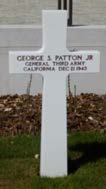
73.8. AUTOSOMAL DNA (FAMILYTREEDNA®) - THE NORTH SEA BASIN AND THE FLEMISH
CONNECTION
1589
Figure 73.10: The tombstone of General George S. Patton Jr. in Luxemburg (2015).
(Declercq de Silva Archive)
Vivas/Graciano/Jordán (29 centiMorgans, 6896 matching SNPs),
Chavez (28 centiMorgans, 5459 matching SNPs),
Cardoso Rodrigues (28 centiMorgans, 6796 matching SNPs),
Nucifora (mostly found in Sicily) (28 centiMorgans, 6259 matching SNPs),
Perez (27 centiMorgans, 4265 matching SNPs),
De Porria (individual 1) (27 centiMorgans, 6596 matching SNPs),
Rodriguez (individual 3) (27 centiMorgans, 5800 matching SNPs),
Nucifora (from Sicily) (27 centiMorgans, 5759 matching SNPs),
Palet (27 centiMorgans, 4100 matching SNPs),
Martinez (individual 1) (27 centiMorgans, 11795 matching SNPs),
Oliva (36 centiMorgans, 11963 matching SNPs),
Font/Fontan (26 centiMorgans, 7305 matching SNPs),
Martinez (individual 2) (25 centiMorgans, 3984 matching SNPs),
Rodriguez (25 centiMorgans, 9151 matching SNPs),
Smith with Iberian names in his immediate ancestry tree (Botelho, Barranco, Correia, Freitas, Ferriera, Gomez, Laeonfesat, Lourenco, Mattos, Mariscal, Morales, Ortega, Pimentel, Soares) (25 centiMorgans, 4359 matching SNPs),
Landa (24 centiMorgans, 1496 matching SNPs),
Perez (24 centiMorgans, 5200 matching SNPs),
Llorca (24 centiMorgans, 5796 matching SNPs),
Lopez (23 centiMorgans, 5200 matching SNPs),
Mata (23 centiMorgans, 4900 matching SNPs),
Foenander with Iberian names in his immediate ancestry tree (Correa, de Silva, Rosaria, De Costa, Ferrera, Medes, Rodrigo, Collom. Our Ferrer ancestry is described in Chapter 26.0.2 on page 291.)(22 centiMorgans, 2600 matching SNPs), Fantin appears in Spain but mainly in Italy near Bologna, maybe an old link via the Crown of Aragon (22 centiMorgans, 7463 matching SNPs), Cobian-Dorta (20 centiMorgans, 4944 matching SNPs),
Cardoso Rodrigues (18 centiMorgans, 6796 matching SNPs),
Torres (Amie Torres) (18 centiMorgans)
Pinto (14 centiMorgans),
de Poch (13 centiMorgans),
Mirtyl Bigot, who has a Spanish grandfather, Manuel Casanova de Alozza. Manuel’s parents are Manuel Noel Muiguillion and Guadalupe Antonia Casanova Y lazaso de Alcaine. Guadalupe’s parents are Jorge Casanova y Royo Casanova y Royo and Alexia Lazaso y Alquezar de Alloza. Importantly, Alcaine and Alloza are places near Teruel not very far from Montblanc. Manuel Noel Muiguillion’s parents are Jose Noel y Valozes and mrs Muiguillon y Carpanan. The family Carpanan is from the region between Tarragona and Zaragoza (14 centiMorgans),
Esther Woods, with ancestors Dominguez, Torres, Lopez, Leavitt, Ortega, Aragon, Gallegos, Baca, Chavez, and Sandoval Y Ortega (11 centiMorgans), Bailey Oland, with ancestors Moreno, Delgado Rivera, Sanchez, Ramos, Gonzalez, Manrique, Cervera, Garcia, Ibarra, Gazca, Carpio, Gerrero, Hernandez, and Guerra (11 centiMorgans),
Dorta (11 centiMorgans),
Martinez (10 centiMorgans),
Barros (9 centiMorgans),
Gordon with grandparents Baca and Garcia from Spain (8 centiMorgans).
Many Spanish DNA matches appear at a relatively high relationship level, i.e., 4th cousin and 5th cousin in the user-friendly FamilyTreeDNA® system, which is meaningful. Technical literature on this matter tells that one may expect 6 to 20 centiMorgans in common with a fifth through the eighth cousin.
Because we find many values in the range that is double that high (20-50), and because of the cumulative nature of centiMorgans, a reasonable explanation is that we descend through 2 lines, originating at the 8th cousin level (10 generations before the author), which are combined in the author, through his mother and father. If so, then this is a limited form of endogamy.
Indeed, the common ancestors through two lines are Antoni Declerque (DC07) and Martina De la Cruz. The two lines are the author’s paternal line and the line through the De Vos family, both clearly described and documented in Chapter 22 onwards and Part X.
The autosomal DNA matches also show that Antoni Declerque (DC07) and Martina De la Cruz were of Spanish descent. Most appearing names point at the Crown of Aragon (The Kingdom of Aragon and the Principality of Catalonia), with some Castile and Leon hits. Knowing where the Desclergues came from and, as extensively documented in this book, knowing that the family circle and acquaintances in the 17th century were all linked to the Spanish army and the Spanish administration in Belgium, in particular in Flanders, makes perfect sense.
The Desclergues of la Villa Ducal de Montblanc, 2nd ed., Omn., VOL. VII
© 2024 Nico F. Declercq
CHAPTER 73. DNA ANALYSIS OF N. F. DECLERCQ
73.8 Autosomal DNA (FamilyTreeDNA®) - The North Sea basin and the
Flemish connection
Of specific interest to our ancestry tree are persons who have names or immediate ancestors with names that appear in our ancestry tree and have a match that is statistically equivalent to around a 5th cousin or eight generations back in time or closer. The ones found in December 2018-2021 on FamilyTreeDNA® are listed below:
de Nieulant, Douchy (42 centiMorgans, 12600 matching SNPs),
De Seyn / Seyns (42 centiMorgans, 11743 matching SNPs),
Pattinson ( Patton) (38 centiMorgans, 10955 matching SNPs),
Patton (individual 1) (49 centiMorgans, 8345 matching SNPs),
Lombaerde (49 centiMorgans, 13874 matching SNPs),
Dael (48 centiMorgans, 8963 matching SNPs),
Demere, Debruyne (38 centiMorgans, 9079 matching SNPs),
Ulrich (with ancestors Claeys, de Meulenaere , de Pierpont, De Vos, Hynderick , Meyer, Rivière, Verlinden) (38 centiMorgans, 13277 matching SNPs), Patterson ( Patton) (individual 1) (36 centiMorgans, 8924 matching SNPs),
Allen (British, originates, just like Patton, from the battle of Hastings) (36 centiMorgans, 12392 matching SNPs), Calmeyn (37 centiMorgans, 7090 matching SNPs),
Brons (with ancestors Alende, De Vos, de Poorter, de Vinck, De Vos, Loncke, Lammens, Maes, Taja/Tack, Van Driesche, Van Daele, Van Hille, Vander-haeghen, Verbeke, Vereecke.) (36 centiMorgans, 14800 matching SNPs),
Lapeyre (with ancestors Benoit, Cassiers, Lecluyse, Verschaeve, Vermeersch, Depraetere) (34 centiMorgans, 11800 matching SNPs), Patterson ( Patton) (individual 2) (30 centiMorgans, 4677 matching SNPs),
Baert (30 centiMorgans, 4400 matching SNPs),
Patton (individual 2) (29 centiMorgans, 6000 matching SNPs),
Verbeke (29 centiMorgans, 2700 matching SNPs),
Van Hulle (28 centiMorgans, 4996 matching SNPs),
de Meire (individual 1) (26 centiMorgans, 4600 matching SNPs),
de Meire (individual 2) (26 centiMorgans, 4100 matching SNPs),
Laevens (23 centiMorgans, 2744 matching SNPs),
Patterson ( Patton) (individual 3) (22 centiMorgans, 3798 matching SNPs),
du Vivier (22 centiMorgans, 3200 matching SNPs),
Vynckier (18 centiMorgans, 3849 matching SNPs).
Particularly interesting samples are the following:
Pattyn (10 centiMorgans); This concerns Freddy Pattyn, a descendant of Adrianus Pattyn, son of Jacobus Pattyn (a son of Pierre de Patin and Marie Douchy).
Deladru (20 centiMorgans); This concerns Celine Deladrue, descendant of Dewanckele from Geluwe. Her grandmother was Maria Dewanckele, the daughter of Arsenius Dewanckele and Pelagie Hoorens. Arsene was the son of Pieter Jan Dewanckele and Maria Theresia Verbrugge. Pieter Jan was the son of Pierre Charles Dewanckele and Cecilia Cornette. Pierre Charles was the son of Charles Ignace Dewanckele and Joanna Clara Vermeersch, the author’s ancestors. Particluarly, Charles Ignace was the son of Pierre Dewanckele and Maria Joanna Camerteyn. On the other hand, Joanna Clara Vermeersch was a daughter through the de Patin branch.
73.9 Autosomal DNA (FamilyTreeDNA®) - The Irish connection
We have also found many autosomal links with Ireland and the rest of the British Isles. As stated earlier, some of them appear to have a connection with Patton or Patin. Some may also be due to other Flemish soldiers and families involved in the Battle of Hastings. Others, however, may form a link with the mtDNA results as described in Chapter 73.10.3.7.
Indeed, the mitochondrial DNA is Irish, which is highly likely due to an Irish family in the Spanish army in the 17th century residing in Harelbeke-Deerlijk-Waregem. The fact that many autosomal links appear with Ireland and the British Isles can probably partially be explained by the assumption that some branches, for which we have retrieved no records older than 1700, may have been similar cases of families in the Irish contingents of the Spanish army.
Here is a list of autosomal DNA matches. From all the existing matches, we have picked the ones with a family name likely of Irish origin, for which the name distribution on the island was higher in Ireland than in Northern Ireland. We must warn the reader that many Irish immigrants in the USA take DNA tests to find their ancestry. Therefore, it is customary to find a more significant number of matches proportionally from Ireland than from countries with fewer immigrants.
Thus, the results should be interpreted as verification rather than quantification. We have limited the range of shared centiMorgans from 40 to 76. The names are, in order of shared centiMorgans, with the highest first:
McFarland, McKittrick, Fitzpatrick, Fitzhenry, Curry, Cafferky, Quirk, Thomson, Quigley, Jones, Thomas, Warren, Johnson, King, Kent, Daniel, Wood, Waller, Mortimer, Bell, O’ Neil, Bowen, Stewart, Martin, Smith, Rowe, Taylor, Fuller, Ward, Dyer, McDonald, Philips, Roberts, Case, Cooley, Holmes, Dale, Barker, Keane, Downing, Alexander, Doyle, Hurst, Shaw, Cain, Doherty, Lamb, McParland and O’ Brien.
Of particular interest, linked to the Mitochondrial bloodline, is the appearance of autosomal matches with people carrying the family names Roberts, Alexander, and McParland. Contemplation on these matters is exposed early in Chapter 72, while further analysis is found in Chapter 73.10.3.7.
73.10 GEDmatch® Results as a ’Proof of the Pudding’
73.10.1 Population matches
The DNA sample of Nico F. Declercq, analyzed by FamilyTreeDNA® , was submitted to GEDmatch® as ’Kit YT7724759’ in December 2019 to double-check the conclusions while making comparisons with a much more extensive database. This investigation is purely autosomal and may, therefore, indeed be considered as proof of the pudding. The Eurogenes K13 tool to compare the autosomal DNA with different populations in the world (with a higher resolution focus on Europe but not excluding the other continents) was run and gave the following results, in total agreement with the genealogy presented in this book and the other DNA
© 2024 Nico F. Declercq
The Desclergues of la Villa Ducal de Montblanc, 2nd ed., Omn., VOL. VII
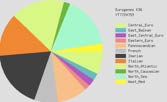
73.10. GEDMATCH® RESULTS
1591
Figure 73.11: Distribution according to Eurogenes K36.
Basque
0.2%, Central Europe 7.3%, East Balkan 2.26%, East-Centra Eu-
rope 2.17%, East Europe 1.74%, Fennoscandian 9.28%, French 7.51%,
Iberian 18.31%, Italian 13.73%, Malayan 0.33%, North Atlantic
16.89%, North Caucasian 1.78%, North Sea 16.58%, West Mediter-
ranean 1.9%. (Courtesy of GEDmatch® and Polako Davidski of the
Eurogenes Genetic Ancestry Project).
Figure 73.12: The European part of the Spanish Empire
during the reign of H.M. King Philip IV (orange and dark
green color). The red lines showed the Spaniards’ route
when they traveled back and forth between Spain and our
region. A trip from Barcelona to Brussels took about
six weeks. One can imagine this as caravans on foot,
with soldiers and their families, horses, carts, priests,
notaries, bankers, and personnel. Of the author’s auto-
somal DNA links not located in the North Sea region,
most are located in Spain, Malta, Sicily, and Milan. You
can take out the above card, as it were. (Image and trans-
lated quote from ’Las pérdidas del siglo XVII’ , Instituto
Cartográfica Latino.) p
investigations we have done earlier.
Admix Results (sorted from high to low): North_Atlantic (49.72%), Baltic (19.87%), West_Med (15.77%), East_Med (8.12%), West_Asian (3.96%), East_Asian (1.58%), Sub-Saharan (0.87%), Siberian (0.1%).
Single Population Sharing (sorted from close to distant, the ’distance’ normalised concerning the nearest): Southeast_English (1), South_Dutch (1.17), Southwest_English (1.2), West_German (1.43), Spanish_Castile_Y_Leon (1.5), East_German (1.64), Southwest_French (1.68), Spanish_Cantabria (1.7), Orcadian (1.78), West_Scottish (1.83), French (2), Irish (2.26), North_Dutch (2.66), Danish (2.88), North_German (2.94), Norwegian (3.15), Swedish (3.17), Spanish_Cataluna (3.27), Austrian (3.3), Spanish_Galicia (3.3).
Mixed Mode Population Sharing (sorted from close to distant, the ’distance’ normalized with respect to the nearest): 80.2% Southeast_English + 19.8% Spanish_Murcia (1);
77.6% Southeast_English + 22.4% Spanish_Cataluna (1.04);
80.6% Southeast_English + 19.4% Spanish_Valencia (1.05);
79.4% Southeast_English + 20.6% Spanish_Castile_Y_Leon (1.08);
82.8% Southeast_English + 17.2% Spanish_Andalucia (1.08);
81.7% Southeast_English + 18.3% Spanish_Aragon (1.09);
81.4% Southeast_English + 18.6% Spanish_Castile_La_Mancha (1.11);
82.2% Southeast_English + 17.8% Spanish_Extremadura (1.13);
80.7% Southeast_English + 19.3% Portuguese (1.14);
81.3% Southeast_English + 18.7% Spanish_Cantabria (1.2);
81.3% Southeast_English + 18.7% Spanish_Galicia (1.2);
71.4% Orcadian + 28.6% Spanish_Murcia (1.21);
71.5% Orcadian + 28.5% Spanish_Valencia (1.21);
67.6% Orcadian + 32.4% Spanish_Cataluna (1.21);
65.2% West_Scottish + 34.8% Spanish_Cataluna (1.22);
69.2% West_Scottish + 30.8% Spanish_Valencia (1.23);
67.5% Danish + 32.5% Spanish_Aragon (1.23);
85.9% Southeast_English + 14.1% North_Italian (1.24);
67.9% Southeast_English + 32.1% French (1.24);
69.3% West_Scottish + 30.7% Spanish_Murcia (1.26);
A more recent test was run by ’Eurogenes K36 Admixture Proportions’ in February 2020 on the modernized and extended GEDmatch® database. The result is shown in Figure 73.11 and reveals that notable links are found with the regions that match our genealogical study. Iberia and Basque show up as 18.5%, Italian as 13.7%, and French as 7.5%. These are linked to the Spanish origins and the history of the Crown of Aragon, partially due to the roots of Desclergue, through Du Guesclin, in Brittany. When we add up all the regions linked to the Crown of Aragon, we obtain 33.94%. Therefore, 1/3 of the DNA is connected to the Crown of Aragon. We also find the North Sea 16.6%, typical for someone from Belgium. The Malayan 0.33% must be due to the Portuguese in Malaka. The migration of populations can explain the links to Scandinavia and Eastern Europe until 1000 AD, and perhaps partially due to Vikings. The North Atlantic link is related to the Norman Conquest of Britain (1066 AD), which also involved Flemish and the Irish maternal ancestry line.
73.10.2 Spanish Matches
As was done in the above analysis based on FamilyTreeDNA®, we also checked individual matches using GEDmatch®, which deals with a much more extensive database than FamilyTreeDNA®. We focussed primarily on Spain and Bretagne. The database returned more than 17000 matches in a range from 7 to 31 centiMorgans. In what follows, we list the names from that list, linked to Spain and Brittany, followed by a few other possible interesting entries to our genealogy.
The selected entries are studied from Chapter 73.10.3.1 until Chapter 73.10.3.17.
The Desclergues of la Villa Ducal de Montblanc, 2nd ed., Omn., VOL. VII
© 2024 Nico F. Declercq
CHAPTER 73. DNA ANALYSIS OF N. F. DECLERCQ
73.10.3 Detailed Autosomal Analysis in the Framework of the Ancestry Tree
Because of the GEDmatch® database’s extent, we have performed several critical studies as gentle confirmations of the ancestry tree of N. F. Declercq. In the complete analysis found below, we only focus on DNA sections of individuals that overlap with N.
F. Declercq’s DNA. Whenever two individuals are mentioned with overlapping DNA, that DNA also overlaps with N. F. Declercq.
Other DNA sequences are ignored in this study. It must be repeated here that one should never use autosomal DNA to make complex, genealogical conclusions. The reason is that autosomal DNA is like a soup of information, and one does not know from which ancestors it comes, certainly if one has not investigated large numbers of close blood relatives. So, any evidence found in autosomal DNA should be considered an element of proof, not a stand-alone.
Autosomal DNA can indicate whether individual branches are probably part of one’s ancestry tree. Below, we list a couple of studies for which we found positive results in the autosomal DNA, and we begin with the oldest connections.
73.10.3.1 The Brittany Cluster
We are trying to answer an essential question of whether or not the Desclergues of Montblanc have old roots in Brittany (Bretagne).
In this context, the reader may also be interested in reading Chapter 19.27.1 and Chapter 73.10.4.7. We checked the entire list of DNA links for names that are very much associated with Brittany. Specifically, we found Jourdan, Dinan, Le Borgne, Le Bihan, Dol, and Broons. In particular, the two last are known to be part of the ancestry of Du Guesclin. The samples with an indication of how much DNA they have in common with N. F. Declercq (kit YT7724759) are:
Dinan (M666634, 7.7cm), Jourdan (T147390, 7.1cm), Le Borgne (DH1773876, 9cm), Le Bihan (MH1126194, 7.6cm), A. Dole (A489777, 7.1cm), L. Dole (JV4422155, 10.7cm), B. Brons (NS7424339, 8.2cm), L. Bronx (AZ3690232, 7.1cm).
Except for chromosome 18, DNA appearances are in common with one or more of the samples mentioned above. In particular, on Chromosome 2, there is an overlap between AZ3690232, A489777, and NS7424339 of around 300 SNPs. On Chromosome 3, there is an overlap between DH1773876, A489777, and AZ3690232 of about 200 SNPs.
On Chromosome 6, there is an overlap between M666634 and A489777 of about 280 SNPs. On Chromosome 7, there is an overlap between MH1126194 and DH1773876 of about 200 SNPs. On Chromosome 14, there is an overlap between A489777 and AZ3690232
of about 800 SNPs. As mentioned above, it is impossible to draw hard conclusions from these results, except that the involved persons have something in common with N. F. Declercq. The Brittany connection of N. F. Declercq, through Du Guesclin, was 700
years ago.
Therefore, one should expect a maximum of a few traces.
On the other hand, if this connection happened over several centuries, the chances of still finding traces are more extensive because there must be a more significant population in Brittany with DNA links. Nowadays, individuals may exhibit common DNA sequences which have been passed through several of their branches.
Therefore, the non-negligible numbers of the order of 200 common SNPs are perhaps not a surprise.
Note that on FamilyTreeDNA®, after the GEDmatch® research was done, we also found a person ’Envik’ with ancestors Gastebois and Lagogue, both names linked to the North of Brittany, where Du Guesclin originated from (31 centiMorgans, 6371 matching SNPs). On Geneanet®, we found Quellec-Riou (16.8 centiMorgans). Another fascinating example is F. Guézénnec, an entire family ancestry tree in Brittany (18.7 centiMorgans). The latter is also described in Chapter 19.27.8 in the chapter about Du Guesclin.
Important information is also given in Chapter 73.10.4.3.
73.10.3.2 The Soria Cluster
Research of the Soria cluster happened to check traces of the presence of Du Guesclin in Soria and the fact that he had children there with a given Doña Torró. Readers may be fascinated to read Chapter 19.15.7 in this context. It means that some local DNA may have been passed along with the subsequent generations, or some DNA of Du Guesclin may have been passed onto the locals by him or his descendants, which means it may not be impossible to find such traces in N. F. Declercq (kit YT7724759).
Such traces were found in specific cases throughout the current chapter. Next, we investigate Soriano.
73.10.3.2.1 Genes in common with Soriano There are three Soriano entries in the database, but they are probably from the same family, given that our sample matches precisely the same with each of them. Therefore, we will only consider one example, namely kit CF2828033. On chromosome 12, there is a significant overlap between this sample and that of N. F. Declercq, 12.5cm (324 SNPs), with a total share of 22.8cm over the entire DNA.
For chromosome 12, kit YT7724759 shares (B37 start 644337 until B37 end 4696801, i.e., 324 shared SNPs or 12.5cm) with kit CF2828033.
For chromosome 14, kit YT7724759 shares (B37 start 26716700 until B37 end 31989902, i.e., 240 shared SNPs or 6.6cm) with kit CF2828033.
The numbers are minimal but not zero. According to the International Society of Genetic Genealogy (ISOGG), these numbers are equivalent to what the 6th or 7th cousins share. Two 7th cousins share a great-great-great-great-great-great-grandparent.
Therefore, amounts between 2 and 3cm are not insignificant and should be interpreted as follows: With the two tested persons, N.
F. Declercq shares, for sure, a distant common ancestor (impossible to tell along which genealogical line) who is further separated than a common ancestor for 7th cousins.
In our genealogy framework, we may interpret this as follows: N. F. Declercq has a common ancestor with somebody who may have lived in the area of Soria because the sample with DNA in common is from a Soriano. This name indicates that this person must have had distant ancestors who lived there.
Unfortunately, we cannot make any more persuasive conclusions than this for Soriano.
73.10.3.3 Genes in common with de Montoya
As can be found in Chapter 29, the author’s paternal ancestor, Jeroni Joan Desclergue y Cortés (DC05), was married to Felipa de Montoya. In old documents in Flanders, we see her mostly appearing as Toy, Toya, de Thoy, de Thoy, and even Duthoo or Duthou.
It would be interesting to show that, indeed, there are Montoya genes in the DNA of N. F. Declercq, and, in some cases, a Spanish Montoya may have had a legacy in Flanders as Toy. The latter would not mean that every Toy, Toye, or Dutoit would descend from a Montoya. Indeed, in the GEDmatch® database, we found several samples with DNA in common with N. F. Declercq (kit YT7724759).