

The Desclergues of la Villa Ducal de Montblanc, Second Edition Omnibus by Nico Declercq - HTML preview
Download the book in PDF, ePub, Kindle for a complete version.
The regiment’s notable participation in the Yser Battle from October 17 to 31, 1914, saw two battalions distinguish themselves at Diksmuide, Oudstuivekenskerke, and Pervijze. Post-1916, the regiment continued its commendable service, although Lesage was no longer part of these endeavors due to his untimely death.
After World War I, the 2nd Chasseurs à Pied was stationed in Charleroi and remained there until World War II. During the Second World War, they played a critical role in combat along the Lys River, attempting to impede the German advance.
The Desclergues of la Villa Ducal de Montblanc, 2nd ed., Omn., VOL. V
© 2024 Nico F. Declercq
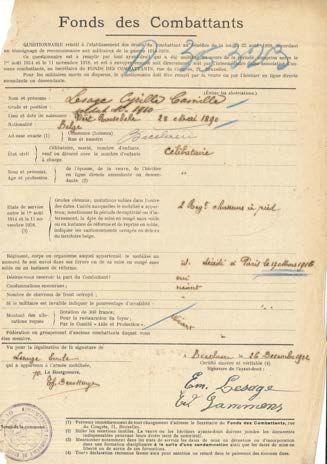
1232
CHAPTER 64. THE LESAGE ANCESTRY LINE
Figure
64.86:
The military records
of
Cyrille
Lesage,
file
number
20180302085626394. (sheet 5)
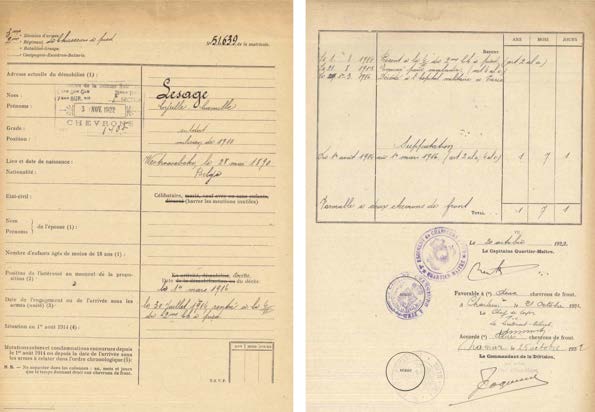
Figure 64.87: The military records of Cyrille Lesage, file number 20180302085626394. (sheets 6 and 7)
© 2024 Nico F. Declercq
The Desclergues of la Villa Ducal de Montblanc, 2nd ed., Omn., VOL. V
64.7. THE OFFSPRING OF EMILE LESAGE AND EUDOXIE LAMMENS
1233
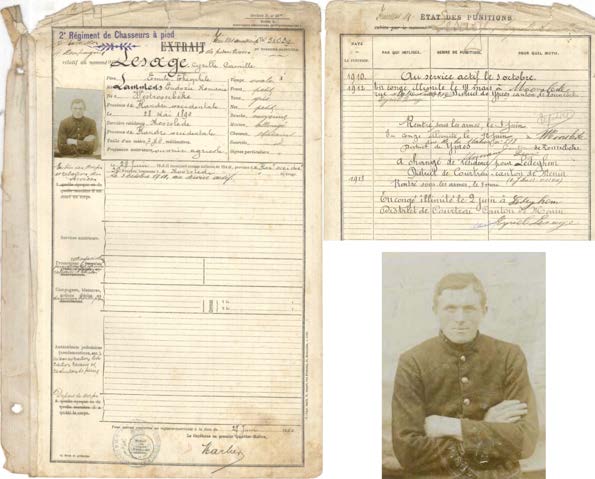
Figure 64.88: The military records of Cyrille Lesage, file number 20180302085626394 (sheets 8 and 9). Cyrille Lesage’s picture is separately shown in the lower right corner, very likely at the end of his term as a soldier, June 1913, i.e., a year before he joined the army again in 1914.
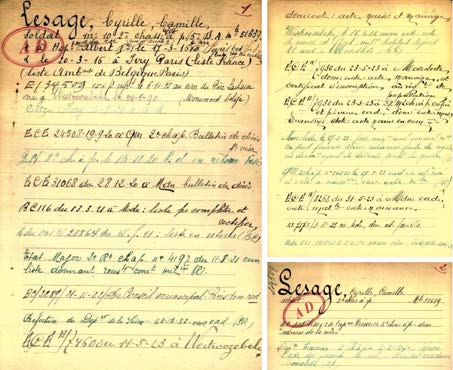
Figure 64.89: Cyrille Lesage fiche militaire 19857, parts 1-3. (The military records of Cyrille
Lesage, file number 20180302085626394)
The Desclergues of la Villa Ducal de Montblanc, 2nd ed., Omn., VOL. V
© 2024 Nico F. Declercq
1234
CHAPTER 64. THE LESAGE ANCESTRY LINE
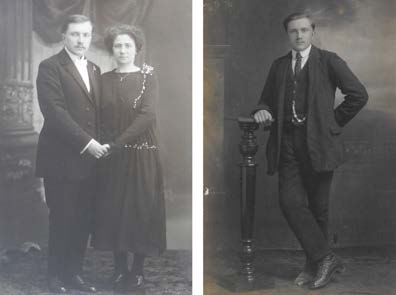
Figure 64.90: This photograph depicts Cyrille Lesage circa 1913-1914, alone and
with his fiancée around 1914. Tragically, he never married as he perished during
World War I. (Declercq de Silva Archive)
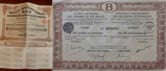
Figure 64.91: These are shares in the Railway industry, dated 1912.
The Belgians were very proud of their railways. Therefore, it must have
been painful to use them to run into the Germans or when they noticed
they employed them to transport goods and military during WWI. Also,
after two world wars, trust in the Railway system survived. (Declercq
de Silva Archive)
The heroic journey of Cyrille Lesage and the 2nd Chasseurs à Pied is meticulously detailed in Commandant Willy Breton’s book.14
This source, among others, provides invaluable insights into their courageous service during the tumultuous years of World War I.
64.7.1.6.1 The Mobilization On July 29, 1918, the Belgian government mobilized its army. The Guillaume Barracks in Mons, also known as the Caserne des P’tits Chasseurs, became a focal point of activity. Until this point, the inhabitants of Mons had not believed their soldiers would ever need to fight the Germans. They assumed, as in 1870, that tensions between France and Germany would be resolved on battlefields outside Belgium.
However, early on August 1, 1914, the government announced a general army mobilization. This proclamation brought a sudden and grave concern to the inhabitants, who now faced the imminent possibility of conflict. At the barrack gates, poignant scenes unfolded as mothers, wives, and loved ones bid farewell to soldiers joining or rejoining the Chasseurs à Pied. The officers could scarcely hide their apprehension regarding the seriousness of the situation. Despite the ominous atmosphere, the soldiers displayed remarkable courage. According to Breton, they expressed defiance with statements like,
"So what? Let them come. We guarantee that we will properly welcome them"!
Clearly, the threat would come from the Germans, not the French.
This German threat had been a common topic of conversation in the months leading up to August. Consequently, the Belgians were not surprised by the prospect of a sudden German invasion. Yet, due to Belgium’s neutrality, its army had to defend every border, including that with France. On August 1 and 2, the 2nd and 5th Chasseurs formed the 16th Brigade and marched south towards Mons. Although many did not fully grasp the severity of the situation, there was widespread curiosity about the southward movement, as an invasion from France seemed unlikely.
Nevertheless, the 2nd and 5th Chasseurs à Pied took defensive positions south of Mons, guarding the canal from Mons to Condé-sur-l’Escaut and the Canal du Centre. They also monitored every road originating from Valenciennes, Bavay, Maubeuge, and Beaumont. Similarly, the 3rd and 6th Chasseurs à Pied from the Tournai garrison guarded the territory between Valenciennes and Lille.
The surveillance of the French border was abruptly interrupted. On August 3, the situation changed dramatically. Meanwhile, the Chasseurs enjoyed a brief period of joy, welcomed by enthusiastic inhabitants along their route. When questioned by concerned civilians, the soldiers assured them they were merely practicing large maneuvers.
On August 3, soldiers near the German border received news that the German army had issued an ultimatum demanding free passage through Belgium to France. According to Breton, no Belgian considered acquiescing to this demand, understanding that it unequivocally meant war. The announcement stirred immediate hatred toward the Germans.
The 2nd Chasseurs à Pied were eager to move east and confront the German invaders. Some officers, reflecting this urgency, exclaimed,
"Bastards!What the hell are we still doing here?’
Orders soon arrived for the entire 16th Brigade to embark on trains from Mons to Perwez, where the 5th Division of the Belgian army would assemble. On the evening of August 3, the soldiers abandoned their surveillance positions and returned to Mons, ready to depart by 10 p.m. Led by General Geerts and preceded by the fanfare of the 2nd Chasseurs, the troops marched from the barracks to the train station via la Grand Rue and la Rue de la Station. They marched to the tune of Doudou, the famous song of the inhabitants of Mons, who greeted them with enthusiastic support. The lyrics of Doudou are :
Refrain
C’ est l’ Doudou c’ est l’ mama
C’ est l’ poupée, poupée, poupée.
C’ est l’ Doudou, c’ est l’ mama
C’ est l’ poupée St Georg’ qui va.
Les gins du rempart riront comm’ des kiards
14Willy Breton, "Un Régiment Belge en Campagne - les fastes du 2e Chasseurs à pied, Aout 1914 - Janvier 1915," published by Librarie Militaire Berger-Levrault, Paris/Nancy, 1916.
© 2024 Nico F. Declercq
The Desclergues of la Villa Ducal de Montblanc, 2nd ed., Omn., VOL. V
64.7. THE OFFSPRING OF EMILE LESAGE AND EUDOXIE LAMMENS
1235
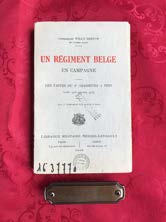
Figure 64.92: The famous book written by Willy Breton, from which
we could extract much information about the adventures of the Chas-
seurs à Pied. Note that it was published in 1916 and is incomplete
and flavored with propaganda against the Germans. (Declercq de Silva
Archive)
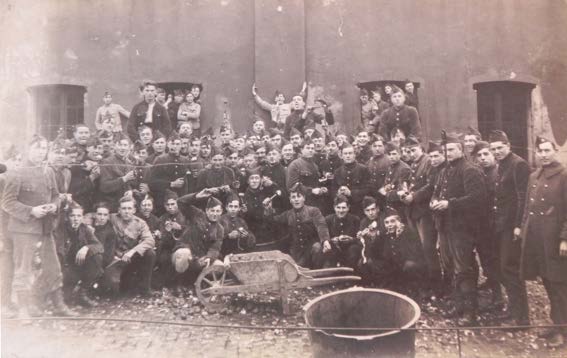
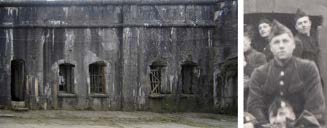
Figure 64.93: This photograph, taken in 1914, depicts Belgian soldiers at the Fortress of Breendonk near Antwerp.
Cyrille Lesage is seen being carried on the shoulders of a fellow soldier. (Declercq de Silva Archive) Figure 64.94:
A recent picture of the
Fortress of Koningshooikt near Antwerp
was taken from the left, but the perspec-
tive was digitally rectified for comparison.
Although this looks like the location where
the photo in Figure 64.93 was taken, it is
similar to Breendonk. We can see Cyrille
Lesage in 1914 at the fortress of Breen-
donk (from Figure 64.93). (Declercq de
Silva Archive)
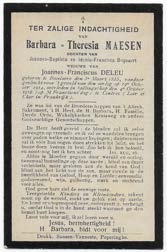
Figure 64.95: The mortuary card of Barbara Theresia Maesen, the
daughter of Joannes-Baptista Maesen and Idona-Francisca Bequaert,
and widow of Joannes Franciscus Deleu. She was born at Beselare in
1835 and died in France (Loir et Cher) in 1916 while she resided there
as a Belgian refugee. (Declercq de Silva Archive)
The Desclergues of la Villa Ducal de Montblanc, 2nd ed., Omn., VOL. V
© 2024 Nico F. Declercq
1236
CHAPTER 64. THE LESAGE ANCESTRY LINE
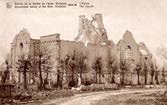
Figure 64.96: The ruins of the church of Vladslo.
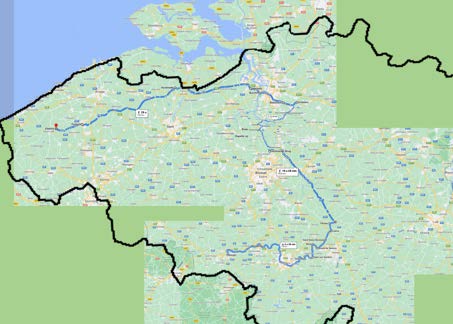
Figure 64.97: The 1914 journey of the 2nd Chasseurs à Pied, with Cyrille Lesage, from Mons,
at the beginning of WWI, until they arrived in Vladslo. The map is courtesy of Googlemaps ®.
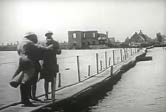
Figure 64.98: This photograph, taken on or after October 21, 1914,
during World War I, depicts the inundation of the Yser River.
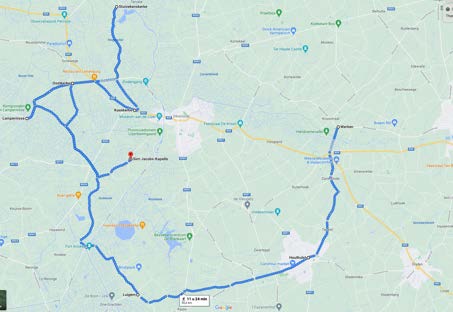
Figure 64.99:
Cyrille Lesage’s maneuver from Werken to Sint-Jacobs-Kapelle and nearby
Nieuwkapelle after the Vladslo passage. Courtesy of Googlemaps ®.
© 2024 Nico F. Declercq
The Desclergues of la Villa Ducal de Montblanc, 2nd ed., Omn., VOL. V

64.7. THE OFFSPRING OF EMILE LESAGE AND EUDOXIE LAMMENS
1237
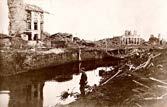
Figure 64.100:
In 1914, a German soldier gazes intently at the
Handzame Canal in Diksmuide.
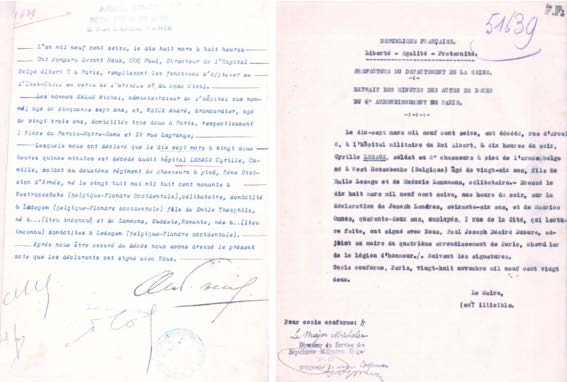
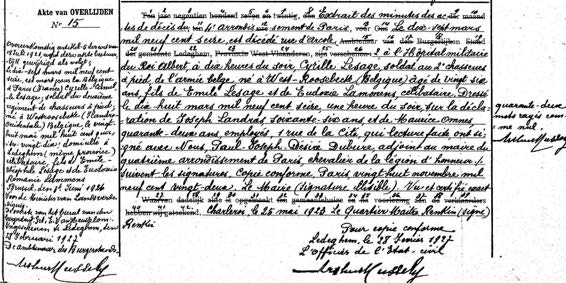
Figure 64.101: Paris, March 18, 1916, the medical and the administrative death certificates of Cyrille Lesage Figure 64.102: There is still a trace of Cyrille Lesage in the French archives,
namely about his first individual grave, before he was moved to the monument at
Père Lachaise.
The Desclergues of la Villa Ducal de Montblanc, 2nd ed., Omn., VOL. V
© 2024 Nico F. Declercq


1238
CHAPTER 64. THE LESAGE ANCESTRY LINE
Figure 64.103: The Monument for the Belgian Military who died in France during WWI. Cyrille Lesage was buried in the monument, located on the Père Lachaise cemetery in Paris. The author’s children Benjamin, Lambert and Anna-Laura are in the middle photo, taken in 2013. (Declercq de Silva Archive)
Figure 64.104: Ledegem, the civil death certificate of Cyrille Lesage.
Figure 64.105: Monuments outside and inside the church of Ledegem. Cyrille and Hector Lesage are listed as ’Lesaege Ceriel ’and ’Lesaege Hector.’ (Declercq de Silva Archive)
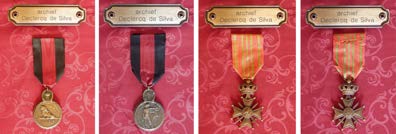
Figure 64.106: Cyrille Lesage received the Yser Medal and a Knight Cross of the
order of Leopold II. (Declercq de Silva Archive)
© 2024 Nico F. Declercq
The Desclergues of la Villa Ducal de Montblanc, 2nd ed., Omn., VOL. V
64.7. THE OFFSPRING OF EMILE LESAGE AND EUDOXIE LAMMENS
1239
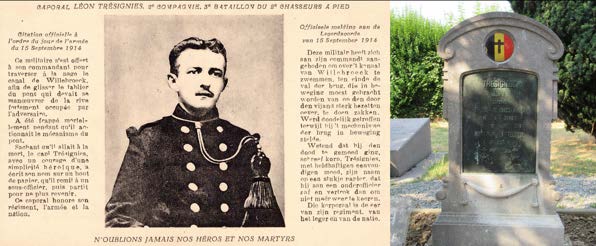
Figure 64.107: Corporal Leon Trésignies displayed remarkable bravery by swimming the canal at Pont-Brulé to manually lower the bridge. Prior to this act, he entrusted an officer with a piece of paper bearing his name, fully aware of the high likelihood of fatal consequences.
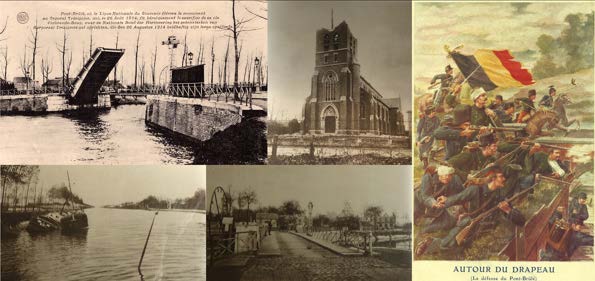
Figure 64.108: Pont-Brulé, the site of a valiant engagement by the 2nd Chasseurs against German forces, is where Corporal Tresignies, along with many others, tragically lost his life.
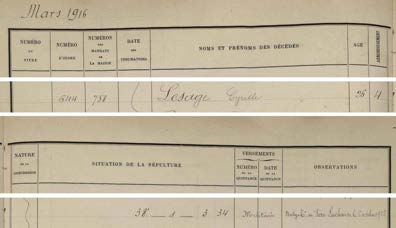
Figure 64.109: The register of the Père Lachaise cemetery in Paris, showing that
Cyrille Lesage was buried there. Close to his grave is that of his distant cousin René
Charles François Cotteau de Patin, shown in Figure 70.115 on page 1505
The Desclergues of la Villa Ducal de Montblanc, 2nd ed., Omn., VOL. V
© 2024 Nico F. Declercq
1240
CHAPTER 64. THE LESAGE ANCESTRY LINE
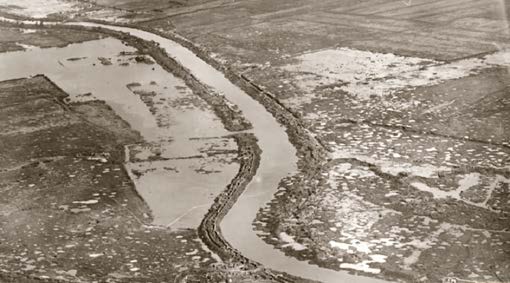
Figure 64.110: This aerial photo captures the desolate landscape of the Yser River in Belgium during
World War I, redrawn by bomb craters and widespread flooding. The area became a treacherous no-man’s-
land, with the Germans occupying one side of the river and the Belgians holding the other. Soldiers faced the horror of relentless artillery bombardments, debilitating diseases, and the grim reality of trench warfare.
Among the Belgian soldiers enduring these harsh conditions were Cyrille Lesage and Maurice Florimond
Verhaeghe, who bravely held their ground in this war-torn region.
Dé vir’ tant de carottes,
Les gins du culot riront comm’ des sots
Dé vir’ tant de carotts’ à leu’ pots.
Couplets
Nos irons vir l’ Car d’ Or
A l’ Procession de Mon,
Ce s’ ra l’ poupée St Georg’
Qui nos suivra de long.
El’ Vieill’ Matante Margritte
Trousse ses falbalas,
Pou fair’ bouilli l’ marmite
Et cuir’ ses biaux p’ tits pois.
Les Dames du chapitre
N’ auront pas du gambon
Parce qu’ ell’s n’ ont nié fait
El tour d’ el procession.
Voici l’ Dragon qui vient !
Ma mère sauvons-nous !
Il a mordu Grand’ mère,
I vos mordra itou.
V’ là qué Lum’ çon commence
Au son du Carillon,
Saint Georg’ avec sa lance
Va combat’ el Dragon.
Dragon, Sauvag’s et Diâb’ s,
Saint Georg’ éïé Chinchins,
Ess’ tourpin’ dédins l’ sâbe
On tire, c’ est l’ grand moumint.
V’ là l’ Dragon qui trépasse
In v’ là co pou ein an,
Asteur faisons Ducasse
A tabe mes infants.
The soldiers, as Breton recounts, set off with a resolute determination to confront ’the pigs who had declared war.’ This was a time of unbridled patriotism, with hearts brimming with love for their country. In the square before the station, a throng gathered to shake hands, embrace, and voice their admiration. A similar scene unfolded within the train station, marking the beginning of a journey that would test their mettle and reshape their lives.
Amidst this, thunder and lightning cracked through the warm, humid atmosphere of the day. At midnight, under torrential rain, the first train departed amidst a cacophony of cries, with the crowd shouting, ’Vive la Belgique, Leve de Koning!’15
None anticipated that the bloodiest war was on the horizon, one that would claim the lives of countless young and vigorous men.
This scenario was replicated across Europe that month. Young men, in their innocence, envisioned war as a football match: intense, brief, and exhilarating, a stark contrast to the grim reality that awaited them.
Upon the trains’ arrival at Manage, the frantic activity of the preceding hours yielded to a tranquil silence. Exhausted, many soldiers dozed off in the stifling train. Summer’s early dawn light illuminated the horizon as the first convoy reached Tamines. They proceeded to Ham-Sur-Sambre to switch tracks towards Gembloux. Midway, the 16th Brigade was ordered to disembark between the Sambre River and Gembloux, specifically at Mazy, where the main road runs from Namur to Nivelles. A drizzly rain greeted the troops as they disembarked, still groggy. At Mazy, near the road to Namur, the forces convened. Early arrivals rested while waiting for the others. By 9 a.m., all members of the 2nd and 5th Chasseurs had assembled, weapons and equipment in hand. They received final orders from General Geerts, Colonel Van Grasdorf, and Lieutenant-Colonel Sults.
The organized ranks of soldiers, with bayonets glinting in the morning sun, then dispersed, ready to face the unknown.
15This means, ’Long live Belgium! Long live our King!’
© 2024 Nico F. Declercq
The Desclergues of la Villa Ducal de Montblanc, 2nd ed., Omn., VOL. V
64.7. THE OFFSPRING OF EMILE LESAGE AND EUDOXIE LAMMENS
1241
The Chasseurs marched to Saussin along the Route de Namur. From Saussin, they headed north towards Perwez via Saint-Denis16
and Liernu. At Bovesse, they encountered soldiers from the 13th Line out of Namur. The distance from Mazy to Perwez is approximately 20 km. The soldiers arrived in Perwez by afternoon and spent the night there. In Perwez, local inhabitants warmly welcomed them. They were joined by Commander Reynaert’s artillery (82nd, 83rd, and 84th batteries) and two sections with Hotchkiss machine guns under Lieutenants Boucau and Desmedt.
Thus, Perwez was occupied by the 16th Mixed Brigade, centrally located within the 5th Division’s cantonments. The other two battalions, the 1st and 17th, were stationed at Aische-en-Refail and Liernu. The divisions moved towards the center of Namur, deploying outposts to Méhaigne, where they remained until August 7. That morning, the King of Belgium visited his troops, returning the Belgian flag to the 5th Chasseurs. He marched with the soldiers from Perwez to Grand-Rosières17, subsequently joining the 16th Brigade in the area between Grand-Rosière and Noville-Sur-Méhaigne. His Majesty’s presence boosted the soldiers’
morale immensely.
The King’s message was unequivocal:
"Do what you must do until the end!"
On August 6, news of the bloody repulse of the first German attacks in Liège spread rapidly, further bolstering the soldiers’ spirits.
The rumors of their heroics transformed into tales of invincibility, filling the soldiers with premature scents of glory and victory.
Some even fantasized about marching east into Prussia to slay every German soldier with their bayonets.
However, on the afternoon of August 7, the 5th Division was ordered to leave Perwez and move to Jodoigne to position itself along the Gette River. The soldiers felt disheartened, believing that occupying the Gette would mean the Germans would flee, robbing them of their chance for direct confrontation.
64.7.1.6.2 The Gette River The next evening, the 2nd Chasseurs à Pied, strategically positioned near Grand-Rosière, left for Jodoigne-Souveraine. They were to remain in that region, allocated to the 5th Division, for 12 days. This district formed the army’s right wing, tasked with defending the critical access road from Hannut to Leuven. To their left was the 1st Division, responsible for protecting the Tirlemont (Tienen) area. Between them was the 3rd Division, which had already engaged in combat in Liège and was eager to share its experiences with the other Belgian troops on either flank.
From the assembly point near the Hannut road occupied by the 16th Brigade, the Chasseurs, like many other Belgian troops, observed elements of the valiant 12th Brigade marching by. The Chasseurs, still reeling from the formidable enemy’s mortal blows, admired the resilience of the so-called ’Iron Division.’ This Division had withstood German assaults for two days and two nights, launching several decisive counterattacks despite suffering heavy casualties and eventually abandoning Liège.
The Chasseurs, like other Belgian troops, considered them victors, as they had proven it was possible to resist and strike back against the German superpower. This morale-boosting example encouraged others. The Belgians also relied on a belt of intact fortresses to further hinder the Germans. Once the troops had recovered, their uniforms still covered in dust from recent battles, they were eager to reengage the enemy. Having seen the Germans retreat on several occasions, the Belgians believed they could achieve victory. The enthusiasm of the Iron Division soon infected all the other troops, elevating morale significantly.
The Chasseurs praised the passing troops and took pride in the courage displayed by their comrades, though perhaps with a hint of envy for the glory showered upon them. The Chasseurs of Mons enjoyed the spectacle, noting the distinctive details of Uhlan helmets, spears, and guns held aloft by the passing ranks and the colorful display of artillerymen and horse riders.
Captain Tasner, inspired by the curiosity of his men, had a bright idea.
Riding a major’s horse at a gallop, he approached the moving column and exchanged a beautiful 20-franc note for a German helmet brandished by an infantryman. He then proudly paraded in front of the Chasseurs, wearing the gloomy trophy, fist on hip. The Chasseurs, recovering from their surprise, laughed and clamored to see the helmet up close. This marked the Chasseurs’ first trophy captured from the Germans, a moment that would be remembered and retold among the troops. The Chasseurs would fight fiercely and acquire many more trophies in subsequent bloody battles. Captain Tasner would earn a promotion on the battlefield and receive the Cross of the Legion of Honor at the Yser.
From August 8 onwards, a grueling and physically demanding period began for the Chasseurs and the rest of the Belgian army.
Stationed as outposts at the Gette, they had to monitor every German movement and defend their line as long as possible, hoping for reinforcement from Allied forces positioned along the Meuse. Always on guard for surprise attacks, the Chasseurs endured exhausting conditions.
Meanwhile, stationed in Waremme under General de Witte’s command, the cavalry division patrolled the areas around Liège and Visé. Although the Germans remained immobilized just below Liège, various army divisions took positions at every access road, ready to counter any enemy attack. In addition to the physically draining task, the high temperatures of August compounded their difficulties. Their haircuts, uniforms, shakos, and luggage were ill-suited for such harsh conditions. The soldiers, anxious and puzzled by the Germans’ inactivity, were constantly alert, speculating about German plans. Minor skirmishes occurred regularly when Belgian and German cavalry patrols encountered each other.
Typically, the Germans fled swiftly, sometimes entire platoons retreating before a handful of Belgians. Occasionally, Belgians returned with German helmets, swords, and horses as trophies.
With their well-organized army adhering to a strict ’War by Timetable’ doctrine, the Germans avoided confrontations unless prepared but struck decisively when they were. Day and night, the Chasseurs spotted German patrols, engaging them in gunfire.
Sleep was scarce as they remained vigilant against potential attacks, often resting in the cold and subsisting on minimal rations.
Cannon fire from the direction of Liège indicated that the city had not yet fallen, though details were scarce. At night, German bullets fired upon them kept the inexperienced Chasseurs in a state of constant fear and vigilance, struggling to rest under enemy fire.
On August 12, the situation abruptly changed when a rumor spread of an imminent German attack that morning. The area around Jodoigne, where the 2nd Chasseurs were stationed, soon came under cannon fire from the north. The artillery at Halen, where the Belgian cavalry of Waremme had been sent to Diest, countered a German assault consisting of 4000 cavalry, 2000 infantry, and 18
cannons.
The Battle of the Silver Helmets at Halen, which occurred on August 12, 1914, was meticulously planned based on the cavalry’s previous successes under Frederick the Great. The engagement was designed for the German Fourth Cavalry Division to achieve a glorious victory with their sabers clanging. However, the Germans faced significant losses: twenty-four officers, 468 troops, and 843
horses fell during at least eight successive charges that day. According to the well-known Schlieffen Plan, the entire right wing of the Imperial German Army comprised just nine horse brigades; this battle effectively eliminated two of those brigades. The Battle 16Saint-Denis-Bovesse
17Grand-Rosière-Hottomont
The Desclergues of la Villa Ducal de Montblanc, 2nd ed., Omn., VOL. V
© 2024 Nico F. Declercq
CHAPTER 64. THE LESAGE ANCESTRY LINE
of the Silver Helmets marked the end of a century-long cavalry tradition. It became clear that large-scale cavalry charges on the Western Front would never again be attempted. The artillery decisively defeated the Germans and four battalions of the 4th Mixed Brigade, commanded by General de Witte. The next day, 3000 German bodies were buried.
The Chasseurs realized that this German attack was a precursor to an assault on their positions, prompting heightened vigilance.
Occasionally, a German airplane was visible in the sky.
In the days that followed, nothing occurred except for the passage of refugees fleeing the Germans. The local inhabitants were terrified due to rumors of atrocities committed by the Germans, such as those at Barchon, Evegnée, and Chaudfontaine. Subsequent accounts even understated the actual outrages and brutalities that transpired.
On August 17, a buildup of German troops in the vicinity became apparent. More refugees arrived, all declaring that the Germans were advancing.
Indeed, only a few hours later, on August 18, the Chasseurs of the 16th Brigade, stationed west of Jodoigne and protected by outposts on the Gette, heard the first cannon fire. The Germans attacked a reconnaissance squadron at Budingen and then along the frontline from Halen to Diest. Consequently, the 1st Division of the Belgian Army, located near Tienen, came under attack.
Before noon, the 3rd Line Regiment at Haekendover was struck, followed by the 22nd Line Regiment from Neerlinter to Grimbe.
The Chasseurs could hear the Belgian cannons returning fire. The positions of the 22nd Line Regiment at Sint-Margriete-Houtem and the 3rd Battalion near Grimbe faced the heaviest fire but remained calm. Near Jodoigne, only skirmishes occurred. A platoon of the 1st Company of the 2nd Chasseurs, guarding an elevated barricade on the main road just before Jodoigne, was suddenly attacked by a company of German cyclists. The first arrivals were shot down immediately, while the rest retreated. Lieutenant Delhaye, the platoon leader, was severely wounded with a perforated thigh and would not rejoin his troops until the Battle of the Yser in 1915.
The Chasseurs remained vigilant throughout the evening, hearing uninterrupted cannon fire from the direction of Tienen. By around 6 pm, the battlefield seemed to move west. The 22nd Line Regiment and sections of the 2nd had received orders to pull back after heroically defending their positions, and the 3rd Battalion at Grimbe also retreated.
The Germans captured Tienen and continued westward until they encountered the next line of defense. The 3rd Battalion of the 2nd Line Regiment took positions in trenches 900 meters northwest of the town, blocking the roads to Leuven and Sint-Joris-Winge.
They were ordered to hold their positions at all costs. Despite heavy attacks and numerous losses, they placed the Germans under precise and effective fire. The Germans finally abandoned their attack on the trenches at 8:30 pm, retreating into the night.
Soon, Tienen, Sint-Margriete-Houtem, and Kontich were set ablaze due to the fierce battles on August 18. Hoegaarden was shelled in the evening and night, as were Sint-Katelijne-Waver and Aalst,18 where elements of the 1st Mixed Brigade had assembled. The 2nd Chasseurs, still awaiting new orders west of Jodoigne, saw the villages burning in the distance. Mills and farms east of the Gette appeared like torches in the night sky.
Deep into the night, the exhausted Chasseurs were directed to Mélin19 via Beauvechain.20 There, they finally found some rest.
Early the following day, they and all other Belgian troops were ordered to retreat to Antwerp due to being vastly outnumbered by German forces. Through the morning mist, they marched to Willebroek via Hamme-Mille and Kortenberg, arriving on August 20
without any information on the reasons for their retreat. According to Breton, the soldiers remarked,
"Since we fall back, it is because the enemy is too strong, and we can do nothing against him!"
They heard cannon fire near Aarschot on the 19th, suggesting the Germans closely followed them during their retreat. They were discouraged and uncertain about the outcome of the conflict.
Fortunately, the Chasseurs were warmly welcomed by locals as they passed through various towns.
The knowledge of strong fortifications protecting them boosted their morale as they neared Antwerp. According to Breton, the Chasseurs, who referred to the Germans as Boches (translated as Moffen in Flemish), proclaimed,
"If the Boches ever come here, we will cook them!"
64.7.1.6.3 The Fortifications of Antwerp From August 21, 1914, the Chasseurs played a crucial role in the defense of Antwerp during the early stages of World War I. Positioned in the 4th sector, they manned the fortresses between the Schelde and Dijle rivers, integrating with the 5th Division of the Belgian army. The 16th Brigade, in particular, was tasked with the defense of Willebroek and both flanks of the Fortress of Breendonk, a pivotal stronghold designed to protect the approaches to Antwerp.
The area was systematically covered by guard posts, and the Chasseurs, true to their reputation, conducted extensive surveillance and patrols. They fearlessly explored the terrain between the fortresses and the villages of Malderen, Ramsdonk, and Kapelle-op-den-Bos, often coming face-to-face with German scouts. This was a perilous task, as these patrols frequently encountered German scouts, leading to regular exchanges of gunfire. The persistent threat of skirmishes added to the already tense atmosphere as the Chasseurs worked to gather intelligence and disrupt enemy movements.
The Chasseurs also faced the heart-wrenching sight of civilians fleeing towards Antwerp, seeking refuge from the advancing German forces. The Belgian army was in a precarious position, with the risk of being severed by the enemy. The German troops were establishing themselves along a line from Merchtem to Kessel-Loo,21 threatening to encircle the Belgian defenders and isolate Antwerp from the rest of the country.
From August 24 onwards, the Chasseurs finally engaged the Germans directly, driven by a mixture of frustration and determination.
They understood their pivotal role was not to achieve decisive victories against the numerically superior Germans but to hinder their advance as effectively as possible. This involved engaging in hit-and-run tactics, leveraging their mobility and familiarity with the local terrain to inflict maximum disruption.
One of the critical challenges for the Chasseurs was the ever-present danger of being forced to retreat to Antwerp and potentially being cut off from the rest of the Belgian army. This scenario was a grim reality that the Chasseurs had to prepare for, knowing that such a retreat could result in their isolation and possible destruction. Despite these dire circumstances, the Chasseurs were willing to accept this sacrifice, fully aware that their efforts might not bring personal glory. Still, they were vital for the broader strategic defense of Belgium.
The defense of Antwerp during this period was a testament to the resilience and bravery of the Belgian forces, particularly the Chasseurs. Though often overshadowed by larger battles, their actions played a significant role in delaying the German advance and providing critical time for the Allies to regroup. The Chasseurs’ efforts exemplified the spirit of resistance that characterized Belgium’s response to the German invasion in World War I, highlighting the importance of tenacity and tactical ingenuity in the 18Aalst near Sint Truiden.
19Mélin, also known as Malen, near Jodoigne, equally known as Geldenaken.
20Beauvechain or Bevekom.
21the line Merchtem-Wolvertem-Humbeek-Eppegem-Hofstade-Haacht-Wijgmael-Kessel-Loo.
© 2024 Nico F. Declercq
The Desclergues of la Villa Ducal de Montblanc, 2nd ed., Omn., VOL. V
64.7. THE OFFSPRING OF EMILE LESAGE AND EUDOXIE LAMMENS
1243
face of overwhelming odds.
64.7.1.6.4 Eppeghem The first significant engagement of the Chasseurs à Pied during the Great War was the Battle of Eppeghem, a clash steeped in ferocity and historical significance. In Breton’s detailed account, one can almost see, smell, and feel the chaos and heroism that unfolded. Here, we will delve into the events at Eppeghem, drawing on Breton’s vivid descriptions, and we will continue to do so for future battles.
The Belgian army tasked the 5th Division with a counteroffensive against the advancing German forces, aiming to push them back toward their homeland. Breton’s narrative, written during the war, is marked by a palpable hostility towards the Germans, reflecting the sentiments of the time. His depiction of German atrocities, while harrowing, must be viewed in the context of wartime experiences and should not lead to blanket condemnations of all German soldiers or the German populace.
The battle commenced on the afternoon of August 24, under the command of Major Tack, supported by the 5th Artillery Division’s cannons. The afternoon start time indicated a strategic move by the Belgians to catch the Germans off guard and prevent them from preparing for an attack the next day. The 3rd Chasseurs were dispatched to Impde (or Imde), where they faced heavy casualties.
Concurrently, the 2nd Chasseurs moved to Nieuwenrode to support the 3rd, launching attacks towards Beyghem and Humbeek.
This maneuver aimed to divert German attention, as the primary assault was planned for the center, involving other divisions.
Indeed, the 5th and 1st Divisions were positioned between the Willebroek Canal and the Zenne River, while the 6th Division advanced between the Zenne and the Dyle. On the left flank, the army aimed towards Boortmeerbeek, with the cavalry division pushing towards Haacht. This multi-pronged strategy sought to maximize the disruption of German forces.
The 2nd Chasseurs took up positions at Kapelle-op-den-Bos from Nieuwenrode, spending the night there to prepare for further actions on August 25. The following day, they participated in the 5th Division’s assault on Eppeghem, advancing south towards
Laar22 and Spilt, following scouts closely. Breton describes their advance in gripping detail: moving step by step, attacking when possible, seeking shelter when necessary, sometimes upright, other times with their noses to the ground, firing upon the officer’s whistle amidst a hail of bullets and bombs.
The German defenses in the area were disorganized, likely because their main forces were concentrated in Eppeghem itself. Both sides suffered heavy casualties. Breton poignantly captures the soldiers’ psyche, who relied on their trust in comrades amidst the chaos of battle, following each other’s footsteps as they pursued the Germans. This relentless pursuit culminated in the Belgian forces driving the Germans out of Eppeghem. That evening, the Belgian army reorganized, and it became clear that the Germans had also been expelled from Zemst and Weerde.
Major Verbrugghe (III/Chasseurs) was directed towards Pont-Brulé (Verbrande-Brug) on the opposite bank of the canal to join the main forces. Breton vividly recounts the Germans’ wanton destruction, including the senseless wrecking of furniture and ornaments within homes, questioning how such actions aligned with the Germans’ self-proclaimed cultural superiority ("hochkultur").
As the Chasseurs captured Eppeghem, villagers emerged from their shelters, bewildered and terrified, unsure of the unfolding events and fearful of a German return. Many fled to Antwerp, recounting German atrocities against civilians. Breton highlights a dramatic moment when a German soldier, captured by a Chasseur, pleaded for his life, crying, "Nicht kaput!" The Chasseur’s retort, "Shut up your face, gangster! We are not murderers, not us!" underscores the moral high ground the Belgians perceived themselves to hold.
The night of August 25-26 was relatively calm. The Chasseurs of the 16th Brigade passed through the Eppeghem-Houtem region, while Verbrugghe’s battalion was near Verbrande-Brug. However, the following day brought a fierce German counterattack. The Belgians, lacking the heavy weaponry of their adversaries, faced a daunting challenge. News of the Allied retreat from the Sambre River further complicated their position, compelling a strategic withdrawal towards Antwerp.
Nevertheless, intense skirmishes erupted at Houthem, forcing the Chasseurs of the 16th Brigade to take shelter at Eppeghem, where they faced heavy fighting. Despite a barrage of German artillery, the Belgians managed a controlled, step-by-step retreat. Captain Deudon’s company endured severe losses from German shellfire, while Captain Pirard’s company launched a courageous assault on German machine guns, vital for protecting the retreating forces. The bicycle company of Captain Demart, designed for efficient terrain reconnaissance, tenaciously held onto Eppeghem station on August 26, suffering a quarter of its men yet maintaining their position as long as possible.
The Battle of Eppeghem stands as a testament to the resilience and strategic understanding of the Belgian forces. Through Breton’s evocative prose, the horror and heroism of the conflict are brought to life, offering a poignant reminder of the sacrifices made and the complex human dimensions of warfare.
64.7.1.6.5 Pont Brulé On the evening of the 25th, the 2nd Chasseurs arrived at the Pont-Brulé 23. The Germans awaited on the other side of the river, poised to prevent the Belgians from advancing. The Chasseurs planned to cross the bridge and pursue the Germans, but the enemy had fortified their position. They kept the bridge under heavy fire and had partially raised it, effectively blocking the Belgians’ passage. The Germans did not destroy the bridge, intending to use it for their deeper invasion into Belgium and France, making the drawbridge strategically crucial.
Lowering the bridge was imperative, but the controls were located on the German side of the Willebroek canal. Having previously dug trenches on the Belgian side, the Germans had repositioned themselves on the far bank, leaving the bridge half-open. The 2nd Company of Captain Hellin’s Battalion was tasked with this dangerous mission.
Sergeant-Major Wery led one platoon into the trench on the east bank, north of the bridge, while Lieutenant De Vos’s detachment occupied the houses lining the road in front of the bridge. Delbauve’s company covered the northern operation, while Bradfer’s company shielded the southern approach. Major Verbrugghe was assigned to destroy the houses on the opposite side of the canal where the Germans were entrenched.
Aware of the Belgian preparations, the Germans called for reinforcements, signaled by releasing smoke24. Intense combat erupted between the bridge and Eppeghen. Despite fierce fighting, the half-raised bridge remained impassable. The Belgian forces were stalled until a courageous soldier, Trésignies, depicted in Figure 64.107 on page 1239, volunteered to swim across the canal and lower the bridge. A militia soldier from 1906, married with children, Trésignies successfully reached the other side and located the mechanism to lower the bridge. Tragically, he was shot dead in the attempt. His success came at the cost of his life, and it remains unknown if he saw the bridge lower before he died. The Germans swiftly reinforced their positions, and despite the bridge being lowered, the Belgians could not cross and were forced to retreat in an orderly manner, leaving Trésignies behind on the German side.
22Zemst-Laar.
23Verbrande-brug
24Smoke was a sign that they requested reinforcements.
The Desclergues of la Villa Ducal de Montblanc, 2nd ed., Omn., VOL. V
© 2024 Nico F. Declercq
CHAPTER 64. THE LESAGE ANCESTRY LINE
Breton notes that the Germans, recognizing his heroism, treated Trésignies’s body respectfully, although this claim remains unverified. The Belgians were outraged by his death, fueling their resolve. The scene is depicted in Figure 64.108 on page 1239.
The Belgian army’s staunch defense and the civilians’ resistance against the German invasion deeply frustrated the enemy. Breton vividly describes, as do numerous history books, the atrocities committed by the Germans: civilian massacres, arson, and the destruction of homes in Visé, Liege, Andenne, Dinant, Eppeghem, Zemst, Weerde, Elewyt, and Hofstade. The German strategy sought territorial conquest without winning hearts and minds, a grievous miscalculation.
Meanwhile, the Belgian armed forces moved towards Dendermonde, while the 5th Division pushed south from the north towards Buggenhout, tasked with defending Antwerp. They relied on the numerous fortresses forming Antwerp’s defensive belt. Within this context, Cyrille Lesage’s 16th Brigade, assembled at Pullaer, west of Willebroek, was ordered on September 4 to shift to the defensive line near the Fortress of Breendonk.
Figures 64.93 and 64.94 show photographs of these fortresses.
The Belgian fortress line, robust and capable, posed a significant challenge to the advancing Germans, who retaliated by burning Kapelle-Op-Den-Bos and killing civilians, unable to accept the Belgians’ determined defense of their homeland.
Cyrille Lesage and his company arrived at Breendonk, finding temporary respite and the opportunity to take photographs. Whether the photo in Figure 64.93 was taken immediately or after the subsequent assault on Kattemeuterbos remains uncertain.
For the next chapter in the saga of the 2nd Chasseurs à Pied, we turn to the Kattemeuterbos. Following their fortification at Breendonk, the Chasseurs were dispatched to this forest, which straddles the Willebroek canal in Grimbergen and Zemst, where the Laarbeek Creek originates. In 1914, a fierce battle had already been waged here. The Germans had fortified the forest, creating a formidable defense. The Allies needed to seize control of the forest to protect their advancing troops in Eppegem and Weerde.
The assault began with the Allies bombarding the forest’s western edge, followed by an infantry charge. The Belgian forces faced a harrowing advance, crossing several hundred meters of open fields under heavy German fire. Despite significant casualties, they moved men and artillery into the forest, eventually wresting control from the Germans.
The rationale behind this daring counterattack lay in the broader context of events in France. The Allies, under General Joffre, aimed to deliver a decisive blow to the Germans before September 6. This plan culminated in the Battle of the Marne, where Manoury’s army struck von Kluck’s forces. The Belgian offensive was intended to prevent German reinforcements from reaching the Marne, compelling German troops already moving south to divert back towards Antwerp. Additionally, a German division en route to the Aisne River was immobilized for two days, determining whether to proceed south or return north. The Belgian actions played a crucial role in safeguarding Paris from a German takeover in September 1914.
Given this context, it is fitting that Cyrille Lesage, who perished in 1916, is memorialized at Père Lachaise in Paris.
Breton’s account provides further details of the attack on the Kattemeuterbos. On September 9, the Belgian offensive against the Germans commenced. The left-wing secured the Dyle and the Demer rivers, while the 5th Division departed from the 4th sector and moved southward. Most of the forces advanced westward to the right bank of the Willebroek canal, then proceeded south. The 16th Brigade operated near the canal, with the 17th Brigade focusing on Eppeghem.
On September 10, the 2nd Chasseurs à Pied encountered the enemy along the geographical line of Nieuwenrode-’t Sas-Spilt-Bosch.
This confrontation swiftly escalated into a bitter fight, as the Germans were well-prepared and organized after their previous encounters at Eppeghem. The Germans, upon spotting a Chasseur, immediately opened fire with heavy machine guns. The Chasseurs, seasoned by their earlier experiences, were undeterred despite the intense combat. Rain poured down as the Germans lay in the mud, carefully aiming at the advancing Belgians. By evening, the Chasseurs had successfully pushed back the Germans along the entire line, with the 16th Brigade, including Cyrille Lesage, facing a particularly well-organized enemy beyond.
The Germans consistently selected advantageous defensive positions throughout the war, such as higher ground, dry areas, or forests. They had entrenched themselves within the Kattemeuterbos, and Cyrille Lesage’s company confronted a well-concealed and formidable foe within this dense woodland. Ironically, four years later, Cyrille’s brother Hector would face a similar ordeal in the Houthulst forest during the final Belgian offensive. Tragically, Hector would be killed at Jonkershove, whereas Cyrille would survive the ordeal at Kattemeuterbos.
The battle for the Kattemeuterbos spanned two harrowing days. This forest squeezed between the canal and residential dwellings, had to be taken head-on, as flanking maneuvers were impossible. The combat was so fierce, and the casualties so numerous, that the Chasseurs shivered for months at the memory. The actual assault on the forest began on September 11. By nightfall, the ground in front of the forest was soaked with blood and littered with the bodies of fallen soldiers. Under the cover of darkness, the Belgians retrieved their dead.
The following day, the Chasseurs faced a reinforced enemy. The Germans had formed a robust front line extending from the Kattemeuterbos to Leuven, bolstered by all available military resources. This forest held significant strategic value, drawing concentrated German attention. The Chasseurs of Mons, including Cyrille Lesage, endured relentless attacks yet maintained their positions from the forest to Eppeghem despite facing heavy artillery and machine gun fire. The Chasseurs inflicted substantial casualties on the Germans, but their losses were considerable. The forest capture was only possible with the crucial support of Belgian artillery, particularly the 84th battery under Captain Cheville. The intense artillery and German gunfire claimed the lives of numerous Belgian soldiers, officers, and horses.
By September 13, the Belgians concluded the battle, recognizing the impossibility of pushing the Germans further back. The primary objective was to compel the Germans to reinforce their lines near Antwerp rather than deploying all their forces south towards Paris. The Chasseurs successfully achieved this goal, forcing the enemy into a defensive posture, allowing the Belgians to withdraw without further losses or German assaults.
This narrative also highlights significant tactical errors from a modern perspective. The Belgian and French armies often relied on defending with fortresses or along rivers. In contrast, the Germans effectively utilized various defensive positions, such as forests, private homes, barns, and small ditches. During the Second World War, the Germans applied this knowledge to rapidly conquer vast territories by neutralizing fortresses.
An enemy in fortified positions can be targeted directly, but an enemy dispersed across forests, homes, ditches, hills, rocks, and barns presents a far more complex challenge. Effective warfare necessitates optimal use of natural terrain, which varies widely.
It is noteworthy that King Leopold III recognized this principle. At the onset of WWII, the Belgian army, constrained by political directives, focused on administrative borders rather than natural ones, failing to learn from the events of 1914. Later in 1914, the Belgian army effectively utilized natural terrain by inundating the landscape, a tactic historically employed during the wars between the Spanish Netherlands and the Northern Netherlands, as well as during conflicts with France.
After the soldiers withdrew from the Kattemeuterbos forest, they returned to their fortresses on the evening of September 13th, satisfied with their achievements despite the soaking rain. They immediately resumed surveillance tasks, which were crucial as the outermost soldiers frequently encountered Germans, leading to sporadic skirmishes. While these engagements were not strategically
© 2024 Nico F. Declercq
The Desclergues of la Villa Ducal de Montblanc, 2nd ed., Omn., VOL. V
64.7. THE OFFSPRING OF EMILE LESAGE AND EUDOXIE LAMMENS
1245
significant, they kept the Belgian soldiers perpetually vigilant, denying them proper rest. As Breton notes in his book, the Chasseurs remained resilient and motivated.
In France, General Joffre’s persistent offensives against the Germans instilled a strong belief among the Belgian forces that their turn to drive the enemy back from the fortresses towards Germany was imminent. The Chasseurs held a steadfast conviction in the impregnability of the Antwerp fortresses, including Breendonk, where they were stationed. This confidence set the stage for their renewed engagement in battle ten days later. It is possible that during this period of heightened morale, the photograph in Figure
64.93 was taken, though the exact timing remains uncertain.
On September 24th, in response to French efforts to expel the Germans from the Reims and Roye regions, the Belgian armed forces were poised to exert additional pressure on the Germans in the north. The plan was to launch a large-scale offensive to push the Germans back behind the Zenne. However, intelligence reports of a significant impending German attack on the fortresses altered this strategy. The Chasseurs encountered no German resistance during their initial advance until they reached Willebroek. At this point, they had to hastily return to their defensive positions as a full-scale German assault on Antwerp commenced.
No further Belgian offensives could be mounted as the fortifications themselves came under relentless German attacks in the tragic days that followed. The siege of Antwerp by the Germans saw the Chasseurs fiercely defending the city, their resilience and determination a testament to their unyielding spirit in the face of overwhelming odds.
On September 28, 1914, the first German shells struck the Waelhem (Walem) and Sint Katelijne Waver fortresses near Antwerp.
The German high command had determined that the stronghold around Antwerp needed to be neutralized, as it continually hindered their advance through Belgium. With the fall of Maubeuge, the Germans could position their heavy artillery, crafted by Krupp, within range of Antwerp. These formidable guns had already demolished the older fortresses of Liège and Namur, but the fortifications around Antwerp were modern and robust, defended by the entire Belgian army. Nevertheless, the sheer size and power of the German shells traumatized both soldiers and civilians with their deafening blasts and devastating impacts, which seemed designed to obliterate the entire Belgian defense. To the troops, it felt as if the devil himself had descended and unleashed hell.
The entire Belgian army, except for the 5th Division of the Chasseurs, manned the defensive lines25. Due to their elite status and mobility, the Chasseurs were kept in reserve, ready to be deployed where and when needed, akin to Napoleon’s elite forces in the early 19th century. As the German threat intensified in the 3rd sector, the Chasseurs were sent there, where any further German success would have catastrophic consequences for the Belgians.
The battle raged for a week, day and night, with the 3rd sector repeatedly halting each German assault. The 5th Division of the Chasseurs was constantly called upon to reinforce every breach in the line. There was no rest, no time to eat, and the ground continually trembled under the ceaseless bombardment. The sound of collapsing buildings occasionally punctuated the deafening roar of artillery and gunfire. At times, when the Germans nearly overwhelmed the Chasseurs, they desperately called for reinforcements.
On October 4, the beleaguered Chasseurs were finally rescued after the main Belgian defense line had been breached. The British arrived to help, sending 3000 men to bolster the Chasseurs, providing much-needed relief.
On the following day, October 5, the combined efforts of the Chasseurs and the British prevented a German breakthrough at Ivy.
However, they were unable to push the Germans back due to the enemy’s overwhelming strength. The Germans had crossed the Nete River between Lier and Duffel, reaching a critical point that made the fall of Antwerp inevitable. To preserve hope for Antwerp and with the knowledge that more British reinforcements were coming, the Belgians needed to push the Germans back behind the Nete River at all costs.
In the afternoon of October 5, a counterattack was ordered. At noon, the 1st and 3rd Battalions of the 2nd Chasseurs were instructed to join other troops moving towards Pullaar, between Lint and Lier. The 2nd Battalion was already stationed at Emblem26,
northeast of Lier, occupying trenches on the west bank of the Nete River alongside the British marines. The 1st and 3rd Battalions were transported to the railway level at Herentals, crossing to reach Hulst. Suddenly, they were subjected to intense artillery fire, resulting in numerous casualties. Despite this, they continued their advance. By 2 p.m., the 1st Battalion had occupied trenches south of Hulst, while the 3rd Battalion remained in reserve, concealed in the forest just west of Hulst.
However, the German advance was relentless, supported by continuous heavy artillery. They moved from Duffel northward along the northern bank of the Nete River, capturing Lachenen27, southwest of Hulst, and threatened to outflank the Chasseurs. In response, the 1st and 4th Companies of the 1st Battalion, led by Captains Tasnier and Tremont, launched an attack. Almost immediately, 40 Belgian soldiers were killed, but the attack succeeded in securing the outskirts of Lachenen by nightfall, forcing the Germans to retreat slightly.
Nevertheless, the success was incomplete; the Germans needed to be driven back across the river to secure a decisive victory.
During the night of October 5-6, under darkness, the Belgians launched a massive surprise attack between Duffel and Lier. The close-quarters battle required silent, deadly work with knives and bayonets, as gunfire was prohibited to maintain the element of surprise.
At 2 a.m. on October 6, Colonel Tiéchon, leading the 2nd Chasseurs, commanded the central attack column comprised of his regiment’s 1st and 3rd battalions and the 2nd Carabineers. The order was clear and unwavering:
"One must conquer or die!"
The first target was the castle of Lachenen-Hof28. The Belgians formed three successive battalions in front of platoons, preceded by a screen of scouts. As they crossed the edge of a small forest, raucous cries of agony shattered the silence—the first Germans were being killed. This signaled the rest to lower their bayonets and rush forward.
Through a curtain of musketry and machine gun fire, the Belgians advanced, a figure carrying the Belgian flag at the center. The assault slowed as the Germans’ heavy defense took its toll. Confusion ensued when someone shouted,
"It’s the British, it’s the British!"
For a moment, the Belgians hesitated, uncertain whether to cease fire or continue. But then the order rang out,
"No, it’s the Germans, continue to attack!"
In the pitch darkness, such confusion was likely.
The ensuing battle was chaotic and brutal. Machine gun fire mowed down Belgian soldiers by the hundreds. Despite this, the attack continued, with soldiers using their bayonets, stumbling over the dead and wounded. The scene was horrific, driving some soldiers to madness amid the mutual slaughter. By dawn, corpses littered the battlefield. The Germans had yielded, except near Lier, where the Boomlaer forest provided a natural obstacle. As daylight broke, the Germans renewed their assault with heavy 25The regiment of Maurice Verhaeghe, described in Chapter 48.9.5.4.3, was also there and would retreat to Antwerp on October 2 and subsequently move towards the Yser River, the final defense line near France.
26Emblem
27Hoog-Lachenen in Lier.
28Villa Hof van Lachenen or Lachenen Kasteel, Mechelsesteenweg 309, Lier
The Desclergues of la Villa Ducal de Montblanc, 2nd ed., Omn., VOL. V
© 2024 Nico F. Declercq
CHAPTER 64. THE LESAGE ANCESTRY LINE
artillery, forcing the Belgian army to retreat again.
The order to pull back reached the 2nd Battalion of the 2nd Chasseurs, led by Major Leblanc, in the trenches of Emblem29, where they had successfully resisted all German attacks. On October 6, it became painfully clear that the Krupp cannons had triumphed, and Antwerp was lost.
The tragic counterattack, in which the 2nd Chasseurs played a crucial role, marked one of the final defeats of the Belgian defense during World War I. This desperate and valiant effort symbolized the resilience and courage of the Belgian forces, even in the face of overwhelming odds.
64.7.1.6.6 Retreat to the Coast After the harrowing night of October 5-6, the scattered remnants of the Chasseurs managed to regroup at Boechout by the evening of October 6. These men had been without respite since September 26. Having narrowly escaped the clutches of hell, they found no solace as their orders directed them to the Schelde riverbanks they reached the following day. At the break of dawn on October 7, they crossed the bridge at Burcht30, continuing their grueling march. After ten arduous hours, they arrived in Melsele near Beveren-Waas, utterly exhausted, with rifles in hand, collapsing into a fitful sleep. The early hours of Thursday, October 8, brought no relief. At 3 am, a state of emergency jolted the soldiers awake; they had to flee swiftly to evade encirclement by the relentless German advance. Every minute counted. The march became a near-’march of death.’ After an excruciating 20-hour trek covering 50 kilometers without rest, the 2nd Chasseurs reached Assenede. The following day, they were crammed into train wagons at the station on October 9, bound for Torhout.
In Torhout, a semblance of respite awaited the troops. They could finally shower and enjoy proper meals. Yet, this brief sanctuary was fleeting. By Monday, October 12, they were retreating again, this time along roads teeming with fleeing civilians, reminiscent of the chaos depicted in Figure 64.95. Their next destination was Vladslo.
For Cyrille Lesage, this leg of the journey must have been laden with personal significance. His mother, Eudoxie Lammens, hailed from this region (Ichtegem - Koekelare - Vladslo). Though not a genealogist, Cyrille likely knew that Vladslo, shown in Figure
64.96, was the ancestral home of his mother’s family. Perhaps he encountered relatives along the way or managed to communicate with his parents, Emile Lesage and Eudoxie Lammens, who lived a mere 24 kilometers away. It is conceivable that he sent them a message urging them to flee to France. Indeed, Eudoxie, along with most of her children, did escape to France. At the same time, Emile and one son stayed behind to safeguard their farm and livestock31. Vladslo’s proximity to Westrozebeke, Cyrille’s birthplace, only 16 kilometers away, and Houthulst-Jonkershove, where Cyrille’s younger brother Hector would be killed in September 1918, only 10 kilometers away, underscored the poignancy of this retreat32.
As the Belgian forces retreated behind the Yser River, this last vestige of Belgian territory offered a slim hope of resisting the German onslaught. The strategic area south of the Yser was bolstered by wetlands and the river, with a floodplain capable of inundation with seawater if necessary.
In Vladslo, Breton’s account describes how the soldiers finally found true rest amidst the serene countryside, even enjoying a beautiful autumn sunset. The fresh sea breeze rekindled their appetite. For Cyrille, being back in familiar territory must have stirred profound emotions. He was home, and the urge to reunite with friends and family, to recount his harrowing experiences and ensure their safety, must have been overwhelming.
On Tuesday, October 13, the soldiers received the crucial news: their retreat had ended. This was their final stand. From this point onward, they would dig in and prepare to fight to the death, defending the last remaining corner of Belgium. Here, they would form a defensive line alongside their allies, the French and the British, to halt the German advance. Vladslo, in particular, needed to be heavily fortified, serving as the first outpost to attempt to stop the Germans. Having lost much equipment in Antwerp, they had to scavenge for anything usable: rifles, cannons, vehicles, horses, food supplies, and communication lines.
The soldiers found encouragement in the news that they would no longer stand alone. The presence of the French and British on their flanks bolstered their morale. They also learned that His Majesty King Albert was safe and on their side of the line, vowing they would successfully halt the Germans from this point forward.
Due to the heavy casualties, it was decided on October 14 to merge the 2nd and 5th Chasseurs into a single regiment. These units had fought side by side, shedding blood together in the preceding weeks and battles. The group led by Reynaert also joined them, forming the 16th Mixed Brigade under the command of Colonel Sults.
This moment instilled a renewed sense of confidence in Cyrille Lesage.
The name Reynaert, shared by his great-grandmother Barbara Theresia Reynaert, born in Passchendaele in 1781, resonated deeply.
Little did Cyrille know that Passchendaele would later become synonymous with one of the most horrific battles between the British and the Germans in the years to come.
The journey of the 2nd Chasseurs à Pied, from Mons at the beginning of the war to their arrival in Vladslo, is depicted in Figure
In the context of our genealogical framework, it is essential to highlight that the group led by Colonel Sults was tasked with protecting the archives and the administration. On August 3, they transferred the documents to Kontich while the armed forces defended the Gette River.
Master quartermaster Radelet and his secretaries remained in Kontich to safeguard the archives until October 2, when they moved everything and everyone by train to Ostend, settling in the premises of the Volksbond. On October 12, they received orders to transport the documents by sea on the Langston steamer to Boulogne in France. After a two-day, two-night journey, they finally disembarked at Calais. From then on, the administration of Belgium operated from Calais. However, it is crucial to note that numerous archives were lost during the war, often falling victim to enemy fire or the ensuing military violence before they could be evacuated. This loss frustrates genealogists, who encounter gaps in their ancestral records due to these missing documents.
64.7.1.6.7 The Yser Battle The Belgian Army Reaches the Yser River
As the beleaguered Belgian Army reached the Yser River, their numbers had dwindled to a mere 80000 men, with only 48000 rifles at their disposal. Despite these dire circumstances, they were tasked with defending a 36 km front stretching from the coast to the French border at Boesinghe. Beyond this line, French soldiers continued the defense.
Between October 15 and October 18, the 5th Belgian Division held positions near the Ieperlee River, just south of Diksmuide.
The 2nd Chasseurs executed a successful maneuver to Werken, then advanced to the northern edge of the Houthulst Forest. Unbeknownst to the soldiers, this area would later witness a climactic battle four years hence. By then, Cyrille Lesage would have 29Emblem
30Burcht in Zwijndrecht.
31More information can be found in Chapter 64.6.1.5 and Chapter 64.6.2.5
32Refer to Chapter 64.7.6 for details
© 2024 Nico F. Declercq
The Desclergues of la Villa Ducal de Montblanc, 2nd ed., Omn., VOL. V
64.7. THE OFFSPRING OF EMILE LESAGE AND EUDOXIE LAMMENS
1247
perished, leaving his younger brother, Hector Lesage, and Zozyma Verhaeghe’s brother, Maurice Florimond Verhaeghe, to fall in the final push for victory. Gerard Lesage, another brother of Cyrille, would survive the harrowing conflict. These individuals are portrayed in depth in Chapters 48.9.5.4 , 64.7.6, and 64.7.5.
Early Encounters and Strategic Movements
On October 15, the Belgian forces encountered British marines at Jonkershove, where Hector Lesage would meet his end four years later.
This meeting with the Marines lifted the spirits of the Belgian and French soldiers, who viewed it as a pivotal moment that would bolster their fighting capabilities. However, this newfound optimism would soon be shattered by the grim realities of trench warfare in the trenches of Diksmuide.
On the night of October 16, the first sighting of the German enemy occurred when an armed vehicle attacked Belgian soldiers of the 16th Brigade as they patrolled on bicycles. The 2nd Chasseurs were compelled to retreat to the Ieperlee River, where they established a bridgehead at Luigem. They spent the next two days fortifying their position, digging trenches in anticipation of imminent conflict, only to be redeployed before facing direct hostilities in that sector.
The Onset of the Battle
On Sunday, October 18, the 2nd Chasseurs, alongside the 5th Division, advanced northwards from Reninge towards Oostkerke, passing through Lampernisse and Loo. That day, the distant roar of gunfire and cannons from Keiem marked the onset of the Battle of the Yser. The Germans launched a fierce assault on Keiem that morning, meeting with tenacious Belgian resistance.
Though Keiem fell to the Germans, the Belgians recaptured it the same day. Anticipating further large-scale German offensives, the Belgian high command remained on high alert.
On the morning of October 19, the 2nd Chasseurs received orders to proceed to the Stuivekenskerke region to support the beleaguered 11th Division. However, they were soon redirected to Kaaskerke to relieve Belgian soldiers trapped and under intense German attack. This began a relentless and bloody struggle defining the Yser front, with soldiers like Cyrille Lesage caught in the vortex of one of the Great War’s most brutal theaters.
Flank Attacks and Retreats
The strategic plan was to organize a flank attack on the advancing German forces targeting Keiem and Beerst. This operation commenced from Diksmuide and was executed in coordination with the British marines. The Belgian troops successfully crossed the Yser, advancing via Dixmuide to Esen, while other battalions launched concurrent assaults.
Despite the initial success, the arrival of substantial German reinforcements from Roeselare necessitated a tactical retreat. The Belgians and British marines were forced to withdraw behind the Yser, fortifying the left bank. By midnight, the 2nd Chasseurs had retreated to Lampernisse. During this retreat, they witnessed the inferno at Vladslo.
This sight must have been particularly distressing for Cyrille, knowing his mother, Eudoxie Lammens, had ancestral roots and living relatives there.
The Horrors of Trench Warfare
On October 20, the 2nd Chasseurs repositioned at Oostkerke station, designated as a reserve force to bolster any weakened points along the front. That same day, at 2 pm, they were dispatched to defend the region of Sint-Jacobs-Kapelle under the command of Major Delbauve, aiming to counter the German offensive on Diksmuide bolstered by reinforcements from Roeselare.
From this point, the two battalions of the 2nd Chasseurs diverged. The 1st Battalion engaged in combat at Sint-Jacobs-Kapelle and Pervijze, while the 2nd Battalion focused on defending Diksmuide. In response to the escalating threat, the Belgians initiated a deliberate inundation of the area from October 21 onwards, as shown in Figure 64.98.
The journey from Werken to Sint-Jacobs-Kapelle and Niewkapelle, just described, is depicted on a modern map in Figure 64.99.
To appreciate the suffering of the Belgian soldiers during WWI in the Yser area, an aerial view, shown in Figure 64.110 on page
1240, is helpful.
The Intensity of the Battle and the Relentless Struggle
On October 21, the 1st Battalion entrenched near Nieuwkapelle, tasked with defending a 400-meter front along the Sint-Jacobs-Kapelle to Woumen line. That night, amidst the persistent threat, soldiers found a brief respite, frying fish knocked out by bomb blasts in the river. However, this fleeting relief was shattered on October 22, when the Germans, recognizing the futility of capturing Diksmuide and Nieuwpoort, redirected their efforts towards breaching the Belgian defenses at Tervate.
The German offensive commenced at 7:30 am on October 24, targeting Stuivekenskerke. The village soon became a blazing battleground, with Belgian soldiers falling in droves. As the front line became untenable, the Belgians retreated behind the railway, shielded by the 4th company. They held these trenches on October 25 and 26, enduring relentless German bombardments. The soldiers, entrenched in mud and constant fear, faced the omnipresent threat of death from the German machine guns a mere 500
meters away. For a week, they endured these dire conditions with scant food, contaminated water, and unrelenting enemy fire. The village of Pervijze was obliterated under continuous German bombardment, reducing it to rubble.
Counterattacks and Exhaustion
On the morning of October 27, following another night repelling German attacks, the 1st Battalion moved south of Pervijze along the railway bed to make way for arriving French reinforcements. By evening, the Belgians received orders to defend the Pervijze station and crossing at all costs. The 1st Battalion, exhausted and battle-worn during this intense occupation, was finally relieved on October 28, allowing them a much-needed respite from the brutal frontlines.
These detailed accounts of the Yser Battle reveal the tactical maneuvers, the intense combat scenarios, and the personal toll on soldiers like Cyrille Lesage, encapsulating both the strategic and human elements of this significant WWI confrontation.
The Story of the 2nd and 3rd Battalions
On the morning of October 20, the German forces unleashed a massive bombardment on Diksmuide. After several unsuccessful attempts, they commenced a determined advance at 3 pm. The ensuing struggle was fierce, necessitating the deployment of the 11th Division, previously held in reserve, in a desperate bid to halt the German onslaught.
Meanwhile, the battalions of the 12th Division, which had been entrenched on the front lines since the previous day, were in dire need of relief. The 11th Division, fully committed to repelling the German advance, had no reserves for this task. Consequently, The Desclergues of la Villa Ducal de Montblanc, 2nd ed., Omn., VOL. V
© 2024 Nico F. Declercq
CHAPTER 64. THE LESAGE ANCESTRY LINE
the 5th Division’s reserves, specifically the 2nd Chasseurs, received urgent orders on the night of October 20-21. While the 1st Battalion of the 2nd Chasseurs had already moved to Nieuwkapelle, the 2nd and 3rd Battalions were now tasked with the critical mission of holding the line.
The Chasseurs Hold the Line
On October 21, the soldiers of the 2nd and 3rd Battalions took up their positions. In small groups, they traversed perilous ground, often exposed to direct German rifle fire. Some had to cross Diksmuide’s main square to reach their designated positions. The 3rd Battalion’s companies departed from the ’Grand Cambron’ farm, moving along an elevated road toward the Diksmuide cemetery.
As daylight broke, the remaining companies followed.
By 11 am, the intensity of the bombardments increased. Advancing soldiers frequently dove into ditches or hit the ground to avoid nearby explosions. Despite the barrage, they managed to cross the bridge. By noon, the 2nd Chasseurs had successfully reached and fortified their positions in the southern sector of the bridgehead. The 3rd Battalion entrenched themselves from the cemetery to the Esen road. A company of British marines was positioned between the 1st and 4th Companies of the 2nd Chasseurs. Two reserve companies remained in Diksmuide, stationed at the train station and the inn ’In ’t Tafelrond.’ The 2nd Chasseurs’ command post was established 300 meters south of Diksmuide’s Main Square at a strategic crossroads. Additional units were positioned north of Diksmuide at Keizershoek.
Navigating through the Main Square, the Chasseurs had to maneuver around craters created by German artillery. Upon reaching the Beerst road, a massive explosion rocked the area as a shell struck Diksmuide’s city hall. The impact collapsed much of the building, trapping members of the 16th Mixed Brigade inside. One room, although heavily damaged, allowed the men to survive.
However, their escape route led them to an adjacent room, destroyed, with around 50 men either killed or grievously wounded. The horrific scene is vividly recounted in Breton’s detailed chronicles.
Holding the Line at Diksmuide
The situation in the southeast of Diksmuide was equally dire. The Chasseurs occupied trenches between the Esen and Woumen roads, with orders to hold these positions at all costs amid relentless bombardment.
In the early afternoon of October 21, German infantry advanced from Esen, engaging the 2nd Chasseurs. The Belgian defenders, known for their marksmanship, utilized machine guns to maintain control over the road, successfully repelling the German assault after inflicting heavy casualties.
Despite halting the infantry advance, the Germans maintained their artillery barrage, particularly devastating the area near the cemetery. The constant shelling signaled the likelihood of another imminent assault.
During these bombardments, neither the Chasseurs nor the British marines, interspersed among them, could return fire. They were forced to remain prone in the muddy trenches, enduring the harrowing ordeal and hoping to survive the continuous onslaught.
The Horror Continues
The Germans intensified their bombardment on the cemetery area, expanding their assault northward to reach full force by 11
pm. The Chasseurs, although outnumbered three to one, steadfastly held their positions. The Germans launched luminous flares intermittently, illuminating the devastated landscape before the Belgians. The 2nd Chasseurs fired so relentlessly that their rifles became scorching hot, causing burns, and some rifles malfunctioned due to the heat. In such cases, they took up fallen comrades’
weapons to continue fighting. Their primary need became a steady supply of cartridges, each soldier firing an average of 400
rounds—equivalent to seven boxes of ammunition—throughout the night.
Periodically, the German soldiers would shout "Hoch!" and charge towards the Belgian trenches, leading to brutal hand-to-hand combat with bayonets. The situation remained precarious throughout the night. Fortunately, French marines arrived to bolster the Belgian defense, and together they launched a counterattack against the Germans.
Aftermath of the Battle
As dawn broke, the devastation of the previous night became visible. Soldiers were drenched in blood and mud, their uniforms torn, and trenches shattered. Amid the wreckage, Belgian, French, and German soldiers gathered every usable weapon, many still fitted with bayonets, some broken, others stained with blood. The Chasseurs discovered numerous corpses both in front and behind their lines, evidence of the Germans breaking through at times during the night. Wounded soldiers, including 49 Germans, were evacuated to medical units south of Diksmuide. However, German snipers targeted those attempting to rescue the wounded, which the Belgians viewed as a cowardly act.
The continuous German machine-gun fire forced the Belgians to repair their trenches under duress and continue evacuating the wounded. Most were taken to the Saint John Hospital, a tall building marked with a Red Cross, clearly visible. Breton recounts a German soldier, fearful and wounded, nearly hit by a shell from his side, crying out,
"Nicht hier! Nicht hier! Boom! Alles kaput,"
as he believed the hospital was targeted and begged to be moved elsewhere.
The Chasseurs’ Suffering
The 2nd Chasseurs, still entrenched south of Diksmuide, faced continuous German gunfire and the constant threat of an assault.
They scavenged the battlefield for rifles and ammunition, acquiring two machine guns and 150 rifles, along with helmets and cartridges.
Amidst the battle, the 2nd Chasseurs also endured hunger and thirst. Young men like Cyrille Lesage, accustomed to the hearty meals of farm life, found sustenance scarce as the priority was ammunition, not food. They joked about their hunger and dreams of what they wished to eat. Occasionally, they ventured into partially demolished houses searching for provisions, finding salted pork in a nearby farmhouse cellar. As in many wars, plundering became a grim necessity for survival.
Desperation and Relief
On the night of October 22, anticipating further nocturnal attacks, the 2nd Chasseurs set fire to piles of straw in the surrounding fields, creating enough light to detect any approaching enemy forces. Throughout the night, they witnessed the ongoing destruction of Diksmuide, with home after home succumbing to flames. The once grand Town Hall and beautiful church were reduced to ruins, and despite the precautions, the night remained relatively quiet.
On the morning of October 23, the Germans resumed their shelling of the 2nd Chasseurs. New casualties occurred, and previously buried bodies were unearthed by the fresh bombardments. The shelling persisted until evening, subjecting the soldiers to 60 hours
© 2024 Nico F. Declercq
The Desclergues of la Villa Ducal de Montblanc, 2nd ed., Omn., VOL. V
64.7. THE OFFSPRING OF EMILE LESAGE AND EUDOXIE LAMMENS
1249
of relentless fire in the trenches. Finally, on the evening of October 23, the Meiser Brigade arrived to relieve the beleaguered 2nd Chasseurs. Late that night, the surviving Chasseurs reached Oostkerke, exhausted but alive.
A Brief Respite
There, they were reunited with their comrades who had been relieved from the Keizershoek sector that same evening. They were granted 48 hours of rest and recovery, which, as history would show, was a fleeting hope. The horrors of war seldom granted such luxuries, and the next day, they were thrust back into the vortex of conflict for another grueling three days.
At Oostkerke, in the early hours of Saturday, October 24, 1914, a novel cannonade began and raged with relentless ferocity north of Diksmuide.
As the 2nd Chasseurs were still in the process of recovery and equipment restoration, an ominous rumor spread through the ranks: the Germans had succeeded in crossing the Yser River at Diksmuide, and the beleaguered Belgian forces were struggling to halt their advance. This rumor, far from baseless, held a grim truth. The Germans, leveraging their overwhelming firepower and strategic positioning, were exerting immense pressure on the Belgian defenses beyond Tervate. Under the cover of a devastating storm of artillery fire, they pushed inexorably towards the railroad, threatening to sever critical supply lines and outflank the Allied positions.
The Belgian Army, though brave, found itself outnumbered and outgunned. The German forces, employing innovative military tactics and superior logistical support, demonstrated their capability to orchestrate a coordinated assault that combined infantry, artillery, and pioneering use of machine guns. The Battle of the Yser thus became a testament to the fierce resistance of the Belgian soldiers, who, despite facing impossible odds, managed to hold the line and prevent a complete German breakthrough. Their efforts would symbolize national resilience and a critical juncture in the broader context of the Great War, influencing subsequent military strategies and engagements.
Like many of his compatriots, Cyrille Lesage bore witness to the sheer brutality and chaos of this confrontation. The exhaustion etched on the faces of his fellow soldiers, the deafening roar of the cannonade, and the ever-present specter of death became the defining elements of their existence. The Yser, a once serene river, now stood as a bloody testament to the sacrifices made for freedom and sovereignty.
Renewed Struggle
The Yser River represented the last line of defense for the beleaguered Belgian forces during the Great War. Recognizing the strategic importance of holding this line, the Belgian command committed every available man to halt the advancing German forces. Among these reinforcements were the 2nd Chasseurs, who were redeployed to the front lines to support the counterattack efforts. On the morning of October 24, the 2nd and 3rd battalions of the 2nd Chasseurs were dispatched to Oud-Stuivekenskerke, a key position due to its large church tower, which served as a critical observation post.
From Oud-Stuivekenskerke, the Belgians aimed to launch an offensive against German positions at the farms Den Toren and Vandewoude, located on the left bank of the Yser. These farms had been pivotal support points for German attacks. The Chasseurs’
right flank was bolstered by 1st-line troops and French or British Marines, and the assault was also supported by Belgian artillery.
The Chasseurs Push Forward
The 2nd Chasseurs were driven by a mixture of duty and defiance, believing their sudden reappearance would catch the Germans off guard. Breton captures the sentiment of the troops through the words of one soldier:
"They think they have killed us; well, now they will have to kill us a second time!"
Their advance was initially unopposed as they reached the crossroads at Lettenberg Cabaret, where the road from Diksmuide to Pervijze intersected with the path to Oostkerke. However, as they moved forward, they came under heavy artillery fire from German positions west of Beerst. The Germans’ strategic placement of heavy cannons allowed them to bombard the Belgian-held territory near the railway, turning the area into a deadly gauntlet for the advancing Chasseurs.
A Desperate Advance
Scouts led the way, followed by the main force. Despite facing continuous skirmishes and artillery barrages, the 2nd Chasseurs pressed on. The terrain was unforgiving, and the troops were forced to move erratically under the relentless shellfire and machine-gun bursts. Breton describes the scene vividly, noting how each soldier sought cover wherever possible, sometimes crawling through ditches or taking shots from behind scant cover.
Casualties were high, with soldiers falling by the dozens. Direct hits from German shells occasionally obliterated entire squads.
Yet, despite the chaos and carnage, the Chasseurs continued their advance, driven by training, resilience, and sheer determination.
The Capture of Oud-Stuivekenskerke
By 11 am, the 2nd Chasseurs had reached the western edge of Oud-Stuivekenskerke. Supported on their right flank by Marines, they began clearing the village of German forces. Despite fierce resistance, the Germans eventually retreated, leaving the church tower inexplicably untouched and locked. The cost of recapturing the village was steep, with the Belgians suffering 300 casualties among the regular troops and losing 13 officers.
Pushing Towards the Farm
The German strategy soon became apparent. After abandoning the village, they subjected it to intense artillery bombardment, reducing Oud-Stuivekenskerke to ruins, with only a sliver of the once-massive church tower remaining. Undeterred, the Belgians, now reinforced by French troops, pressed on towards the farm Vanderwoude. Under heavy gunfire and supported by their artillery, they crossed the small river or creek Vliet, advancing through the mud.
Exhaust and despair set in as they approached within 600 meters of the farm. The relentless days of combat had drained their strength, and they found themselves mired in mud, struggling to advance. Despite their physical and emotional fatigue, the 2nd Chasseurs had successfully pushed the Germans back to the banks of the Yser.
A Crucial Position
Having penetrated deeply into German-held territory, the 2nd Chasseurs faced urgent logistical challenges. Establishing command from a small farm north of Oud-Stuivekenskerke, east of the Vliet creek, they found themselves precariously positioned. The only supply route, a bridge, was constantly threatened by German scouts positioned a mere 350 meters away. The high vulnerability of this supply line forced the Belgians to ration their ammunition.
As night fell, the soldiers of the 2nd Chasseurs were forced to endure the harsh conditions in their trenches, with water up to their The Desclergues of la Villa Ducal de Montblanc, 2nd ed., Omn., VOL. V
© 2024 Nico F. Declercq
CHAPTER 64. THE LESAGE ANCESTRY LINE
knees, suffering from fever, hunger, and exhaustion. The battle at the Yser had tested their limits, yet their efforts had been crucial in holding the line against the German onslaught.
The Encirclement
Diksmuide, in Figure 64.100, was a smoldering inferno on their right, its silhouette marred by the flames that consumed it. The little town of Kaaskerke burned lugubriously, with the towering spire of its church standing like a solitary torch above the humble homes engulfed by fire. Closer still, the Yser River carried torrents of black smoke from the fiery petrol released by the tanks at
’Pillar 16.’ This thick, acrid fume snaked toward the Vliet creek, casting an ominous pall over the landscape.
Behind the beleaguered Chasseurs, a similar current of dense smoke moved slowly, illuminated intermittently by the flames that devoured Oud-Stuyvekenskerke. To their left, Stuyvekenskerke and Pervyse writhed in agony, trapped in flames that completed a colossal circle of fire and death. This infernal ring burst with misery, encircling the heroic battalions and transforming the night into a tableau of horror.
The strategic significance of the Yser Front in World War I cannot be overstated. It was a battleground where the Belgian Army faced relentless German offensives alongside French and British forces. The Allies aimed to halt the German advance through Belgium and prevent them from gaining control of key ports along the English Channel. The Battle of the Yser fought between October 16 and October 31, 1914, was crucial in establishing the Western Front’s trench warfare, which would define much of the conflict.
Hopelessness and Stubborn Defence
On the morning of Sunday, October 25, the soldiers were gripped by hopelessness. Supplies had dwindled to nothing; there was neither food nor drink. The Germans, equally exhausted, ceased their relentless attacks, resorting instead to sporadic shelling of the Belgians’ supply routes. The 2nd Chasseurs stoically held their ground, realizing that any movement would spell certain death.
Silence reigned among them; they spoke only in whispers. When a comrade fell, they murmured,
"No more suffering for him."
The grim reality of war was laid bare in the makeshift infirmary housed in a dilapidated barn. Here, the wounded were gathered, awaiting an evacuation that seemed impossible. Nurses, doctors, and chaplains moved among them, offering what solace they could.
Those who were feverish and ill were provided with heated water boiled over a small fire to make it potable. The rain that fell that evening relieved those outside, softening the edges of their suffering.
Their unyielding defense exemplified the heroism of the Belgian soldiers against overwhelming odds. Despite being outnumbered and outgunned, they managed to hold the line, inspired by the leadership of figures like King Albert I, who took personal command of his troops. The Belgian strategy of flooding the Yser Plain, a desperate measure to halt the German advance, played a pivotal role in their defense, creating a natural barrier that impeded the enemy’s progress.
The Major’s Fate and Continued Struggle
In his memoirs, Breton vividly recounts the fate of the heroic Majors and Captains, though he often overlooks the ordinary soldiers.
As we have mentioned Major Delbauve earlier in this chapter, we report his demise with a heavy heart. News arrived that he had been killed the day before at Pervijze, alongside almost his entire unit. In Pervijze, many soldiers from the other two battalions remained in the trenches, enduring yet another night of torrential rain, without food or water, and submerged in icy water.
The dawn of October 26 revealed new German preparations at the ruined farms of Den Toren and Vandewoude, sending waves of panic through the Belgian ranks. The thought of being subjected to another barrage of German shells from these positions was terrifying. Yet, the officers managed to maintain discipline, compelling the soldiers to stay in their trenches. In response, Belgian artillery sprang into action, targeting and demolishing these farmhouses to prevent the Germans from using them as launching points for further attacks.
The Battle of the Yser was a testament to the resilience and determination of the Belgian Army. Despite facing superior German forces, the Belgians held their ground, aided by the strategic use of the Yser River and the flooded plains. The successful defense of the Yser Front marked a significant turning point in the early stages of World War I, preventing the Germans from breaking through to the French Channel ports and altering the course of the war.
The legacy of the Battle of the Yser and the bravery of soldiers like Cyrille Lesage endure as poignant reminders of the sacrifices made during World War I. Their steadfastness in the face of overwhelming adversity is a testament to the human spirit’s capacity for courage and resilience.
Restoring Hope
A relentless barrage of gunfire marked the Belgian offensive. The Chasseurs sometimes expended their last cartridges, driven by the urgent need to eradicate the German outpost. Resupplies were anticipated later that day, but until then, every shot counted.
The Belgians transformed the attic of a small farm into an observation post despite the scary environment where bullets seemed omnipresent. From this vantage point, they could observe the beleaguered Germans, similarly entrenched near their farms, subjected to the precise bombardments of the Belgian artillery.
As the German resistance waned, the 2nd Chasseurs seized the opportunity to advance toward Oostkerke once the rain ceased on October 26. The procession that ensued was a harrowing sight—a column of exhausted and wounded men, their uniforms tattered and muddied, traversing the desolate landscape scarred by shellfire. The wounded were either carried or struggled to walk, while the dead were borne alongside on improvised stretchers fashioned from doors, shutters, and planks salvaged from shattered homes.
Some Chasseurs, driven to the brink of madness by the horrors they had witnessed, seemed scarcely aware of their surroundings or their destination.
Regrouping and Reforming
From Oostkerke, the remnants of the two battalions moved to Alveringhem, finally out of the deadly zone, to recuperate and regroup. On the morning of October 29, they were joined by the survivors of the Delbauve battalion, who had escaped the inferno of Pervyse. A new regiment was formed out of the shattered remnants to continue the fight.
At the outset of their journey from Mons, the 2nd and 5th Chasseurs comprised 57 officers and 4500 soldiers. Three grueling months later, at the end of the Yser battle, a mere 19 officers and just over 2000 men remained combat-ready, a stark testament to the ferocity of the conflict.
Winter of 1914 and Beyond
© 2024 Nico F. Declercq
The Desclergues of la Villa Ducal de Montblanc, 2nd ed., Omn., VOL. V
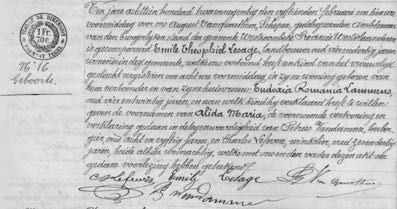
64.7. THE OFFSPRING OF EMILE LESAGE AND EUDOXIE LAMMENS
1251
The historian Breton recounts another notable engagement of the 2nd Chasseurs during the Yser campaign in the winter of 1914. On December 20, they were tasked with establishing a bridgehead on the German side of the Yser, south of Diksmuide. The operation was carried out under darkness, showcasing the Chasseurs’ determination and strategic insight.
Throughout the winter, the Belgian Army seized the opportunity to reorganize and fortify the last stretch of unoccupied Belgian territory behind the Yser River, transforming it into a bastion of resistance.
Aftermath
Breton’s report concludes here, yet the war raged on until the autumn of 1918, culminating in Germany’s defeat. Between January 1915 and Cyrille Lesage’s death on March 18, 1916, the 2nd Chasseurs continued their relentless struggle.
In early March 1915, King Albert of Belgium visited the troops and delivered a rousing speech at Alveringhem in the presence of the 2nd Chasseurs. By April 15, 1915, the Chasseurs were stationed west of Lovaart, near Lo-Reninge.
April 22 witnessed the first German gas attack at Steenstrate, situated between Lo-Reninge and Ypres, a grim milestone in the annals of warfare. On May 9, the Belgians captured a bridgehead, with the 2nd Chasseurs tasked with defending the positions vacated by the advancing forces. The following day, they repelled a massive German assault and captured a house within the German-held bridgehead on the opposite side of the Yser. Another fierce German attack ensued on May 11.
As spring turned to summer, the battlefield became a breeding ground for flies and mosquitoes, the air thick with the stench of decomposing bodies, a haunting reminder of the ceaseless carnage.
64.7.1.7 His Death in Paris and Burial at Père Lachaise in Paris
Cyrille’s obituary card is shown in Figure 64.77, on page 1228.
On August 12, 1915, the Germans launched a gas attack on the Belgians at Noordschote, situated just southeast of Lo (Lo-Reninge).
Subsequently, on August 21, 1915, Cyrille was evacuated from the front due to an illness resulting from the gas attack. It is unclear whether he had the opportunity to see his mother or family after his evacuation, as they were residing in northern France during the war.
However, it is known that he died in Paris in March 1916. The relevant certificates are displayed in Figures 64.101 and 64.102. He succumbed to lung tuberculosis, a condition exacerbated by the damage to his respiratory system caused by the gas attack.
His grave at Père Lachaise Cemetery in Paris is depicted in Figures 64.103. His civil death certificate is shown in Figure 64.104.
The records from Père Lachaise Cemetery are presented in Figure 64.109.
Cyrille is interred near his distant cousin, René Charles François Cotteau de Patin. The register entry for René is illustrated in Figure 70.115 on page 1505 and further discussed in Chapter 70.8.1.2.2.
64.7.1.8 Other Memorials Honoring Cyrille Lesage
The other memorials can be found in Ledegem in Belgium, where the Lesage-Lammens family lived when WWI began, and are shown in Figure 64.105.
64.7.1.9 The Medals of Cyrille Lesage
His military records reveal that he received the Yser Medal,33 a Knight Cross of the order of Leopold II and the War Cross (Croix de Guerre).34
He also received two front chevrons. The medals are shown in Figure 64.106.
64.7.2 Alida Lesage
In Figure 64.111, Alida was born as the second child of Emile Lesage and Eudoxie Lammens. Her elder brother was Cyrille Lesage.
Unfortunately, Alida lived for merely one month.
After her death, in Figure 64.112, ten more registered children would be born, the first being Martha.
Figure 64.111: Westrozebeke February 15, 1892, the birth of Alida Maria Lesage,
daughter of 34-year-old farmer Emile Theophile Lesage and 24-year-old Eudoxie
Romanie Lammens.
33KB/AR nr 9172, April 19, 1921.
34KB/AR nr 5490, April 20, 1917.
The Desclergues of la Villa Ducal de Montblanc, 2nd ed., Omn., VOL. V
© 2024 Nico F. Declercq
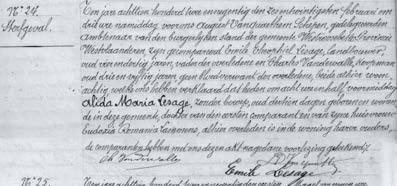
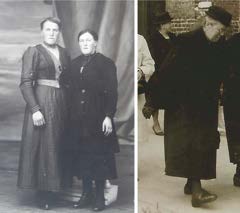
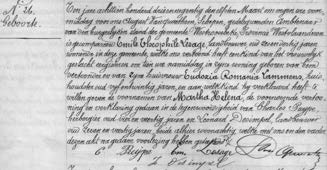
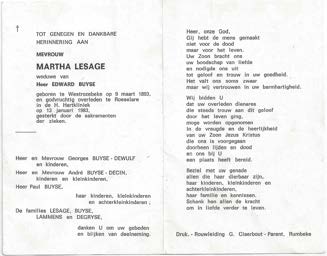
1252
CHAPTER 64. THE LESAGE ANCESTRY LINE
Figure 64.112: Westrozebeke February 26, 1892, the death of 13-days-old Alida
Maria Lesage.
Figure 64.113: Martha and Godelieve Lesage (left to
right). The other photo shows Martha Lesage at the
funeral of Michel Declercq at Saint-Louis, Deerlijk, in
1963. (Declercq de Silva Archive)
Figure
64.114:
Westrozebeke March
9, 1893, the birth of Martha Helena
Lesage, daughter of 37-year-old farmer
Emile Theophile Lesage and 25-year-old
Eudoxie Romanie Lammens.
Figure 64.115:
The obituary card of
Martha Lesage, wife of Edward Buyse
(1983). (Declercq de Silva Archive)
© 2024 Nico F. Declercq
The Desclergues of la Villa Ducal de Montblanc, 2nd ed., Omn., VOL. V
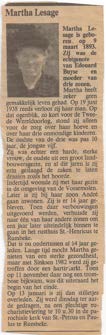
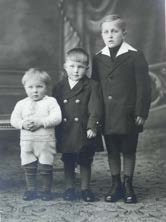
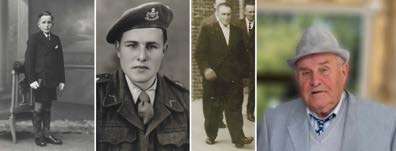
64.7. THE OFFSPRING OF EMILE LESAGE AND EUDOXIE LAMMENS
1253
Figure 64.116: An article about Martha Lesage in the newspaper just after her
death. (Declercq de Silva Archive)
Figure 64.117:
1938, from left to right; Pauwel (’Paul’) Michel
Buyse, born in 1933; Andreas (’André’) Edward Buyse, born in 1931;
Joris Rogier Buyse, born in 1928. They were the children of Martha
Lesage. The picture was taken just after they lost their father. (De-
clercq de Silva Archive)
Figure 64.118: André Buyse. The studio pictures were taken by the photo studio
Decancq, Zuidstraat 46, Roeselare h.r. Kortrijk 17.914, and A. Vantomme, Kerk-
straat 60, Oekene. We can also see his appearance at the funeral of Michel Declercq,
the author’s grandfather, in Saint-Louis, Deerlijk, in 1963. The color photo is taken
from his obituary card. (Declercq de Silva Archive)
Figure 64.119:
The obituary card of
André Buyse, 2020. (Declercq de Silva
Archive)
The Desclergues of la Villa Ducal de Montblanc, 2nd ed., Omn., VOL. V
© 2024 Nico F. Declercq
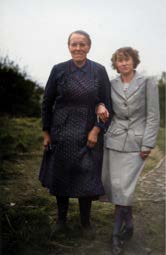
1254
CHAPTER 64. THE LESAGE ANCESTRY LINE
Figure 64.120: Martha Lesage with her daughter-in-law Geneviève
Henriette Dewulf (French-born). MyHeritage® colorized this photo.
(Declercq de Silva Archive)
Figure 64.121: The obituary card of Paul
Buyse, son of Martha Lesage and husband
of Agnes Decin, shown in Figure 64.122,
1994. (Declercq de Silva Archive)
64.7.3 Martha Lesage
64.7.3.1 Introduction
Images of Martha Lesage are shown in Figure 64.113.
64.7.3.2 Her Birth and Youth
Martha Helena Lesage (Westrozebeke, March 9, 1893 - Roeselare, January 13, 1983) was the 3d child of Emile Lesage and Eudoxie Lammens. Her birth is shown in Figure 64.114. Still, since her elder sister had died after one month, she was born with only one sibling, namely her elder brother Cyrille, three years older.
Later, Martha would have many more brothers and sisters, namely Amandine, Gerard, Hector, Maria, Paul, Godelieve, Irma, Oscar, and Daniel. The family initially lived in Westrozebeke but moved to Moorslede before 1898, near the train station in Satiestraat 518.
In July 1912, the family moved to Ledegem to a farm at Kortwagenstraat 33. Everything went well until WWI started in the summer of 1914. During the invasion of Belgium by the Germans, Martha, with her mother Eudoxie and most of her siblings, fled to Oudezeele in the North of France, close to the Belgian border. Emile Lesage stayed at the farm in Ledegem with Paul while Cyrille was in the military. Later, the other sons, Gerard and Hector, would also join the military.
Martha lived with the Secq family at Route des Trois Rois 77, the road from the village center to Café des Trois Rois, located near the village center. The home was designated number 49 on the list of homes of refugees at Oudezeele during WWI. The family consisted of 2 adults, namely Martha and her mother Eudoxie, and the other siblings except Cyrille and Paul.
On September 30, 1921, the family changed significantly, shifting its official address from Ledegem to Beselare, Spilstraat 12 on Keiberg, at the junction with Slangemeersstraat. This move marked a new chapter in Martha’s life as she transitioned from her early years in Ledegem to a new home in Beselare.
Martha appears on the census of Beselare of 1920-1930, for Keiberg - Spilstraat 12, but not in the consecutive census of 1930-1940.
Indeed, she must have married by then and lived somewhere else with her husband and family.
64.7.3.3 Her Death
Her mortuary card and a newspaper article when she died are shown in Figures 64.115 and 64.116.
64.7.3.4 Her Descendants
Martha Lesage had three children. They are shown in Figures 64.117, 64.118 and 64.119. The author was deeply moved by the comforting words sent by André Buyse after the loss of his father, Maurice Declercq (DC16), in 2015.
Lisa Dejonghe, a granddaughter of André, has a wonderful and captivating family and is still in contact with the author. It’s a poignant reminder of the enduring nature of our connections to imagine how Emile Lesage and Eudoxie Lammens would have felt,
© 2024 Nico F. Declercq
The Desclergues of la Villa Ducal de Montblanc, 2nd ed., Omn., VOL. V
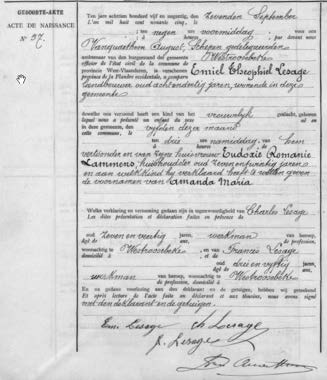
64.7. THE OFFSPRING OF EMILE LESAGE AND EUDOXIE LAMMENS
1255
Figure 64.122:
The obituary card of
Agnes Decin, daughter-in-law of Martha
Lesage and widow of Paul Buyse, 2022.
(Declercq de Silva Archive)
Figure 64.123:
The death announce-
ment of Paul Buyse, son of Martha Lesage,
1994. (Declercq de Silva Archive)
Figure 64.124:
Westrozebeke Septem-
ber 7, 1895, the birth of Amanda Maria
Lesage, the daughter of 38-year-old farmer
Emile Theophile Lesage and 27-year-old
Eudoxie Romanie Lammens.
The Desclergues of la Villa Ducal de Montblanc, 2nd ed., Omn., VOL. V
© 2024 Nico F. Declercq
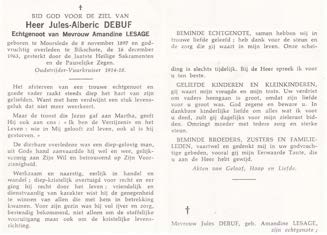
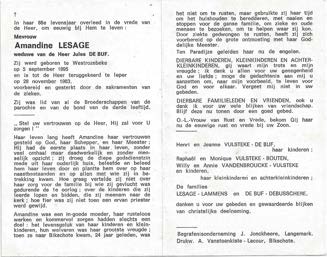

1256
CHAPTER 64. THE LESAGE ANCESTRY LINE
Figure 64.125:
The obituary card of
Jules-Alberic de Buf, husband of Aman-
dine Lesage, 1963, the same year that
Michel Declercq died. (Declercq de Silva
Archive)
Figure 64.126:
The obituary card of
Amandine Lesage, the widow of Jules de
Buf, 1983. (Declercq de Silva Archive)
knowing that such bonds would persist long after their time.
A poignant photo of Martha is featured in Figure 64.120, and cherished mementos of Paul Buyse in Figures 64.121 and 64.123.
64.7.4 Amandine Lesage
64.7.4.1 Her Birth and Early Life
When Amanda (Amandine) Maria Lesage was born in Westrozebeke on September 5, 1895, she entered a bustling family with an elder brother, Cyrille, and an elder sister, Martha. Over time, she would welcome eight younger siblings, making her the last child born in Westrozebeke before the family relocated to Moorslede, near the train station on Statiestraat 518.
By the time World War I erupted, Amanda was 19 years old, and her sister Martha had just reached adulthood. Amanda and her mother Eudoxie, Martha, and her younger siblings fled to Oudezeele in northern France, seeking refuge. Paul, one of her brothers, stayed behind with their father Emile in Ledegem, where the family had moved in July 1912, residing at Kortwagenstraat 33.
The eldest brother, Cyrille, was already a soldier when the war began. While in Oudezeele, two more brothers, Gerard and Hector (both born in 1898), joined the Belgian army. Tragically, Hector and Cyrille lost their lives during the war, while Gerard survived but endured lifelong lung problems caused by gas attacks.
In Oudezeele, Amanda and her family lived with the Secq family at Route des Trois Rois 77, near the village center. Their home was listed as number 49 among the refugee residences in Oudezeele during WWI. On September 30, 1921, the Lesage family officially changed their address from Ledegem to Beselare, moving to Spilstraat 12 on Keiberg, at the junction with Slangemeersstraat. Paul remained in Ledegem, becoming a harness manufacturer after injuring his arm during a bombardment on July 23, 1917.
The 1920-1930 census of Beselare for Keiberg - Spilstraat 12 confirms Amanda’s residence there. However, she disappears from the census records in the following decade. Amanda had only one child, marking the next chapter in her life.
Amanda Maria Lesage passed away on November 28, 1983, in Ypres, leaving behind a legacy of resilience and strength through the tumultuous times of her youth.
64.7.4.2 Her Marriage and Death
Her husband’s obituary card is shown in Figure 64.125. Her mortuary card is shown in Figure 64.126.
64.7.5 Gerard Medard Lesage
Figure 64.127: The signature of Gerard Lesage on the marriage certificate in Figure 45.63 on page 836, of Irma Lesage and Michel Declercq, Beselare, April 6, 1932.
© 2024 Nico F. Declercq
The Desclergues of la Villa Ducal de Montblanc, 2nd ed., Omn., VOL. V

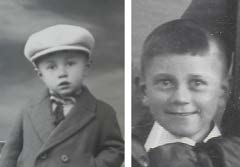
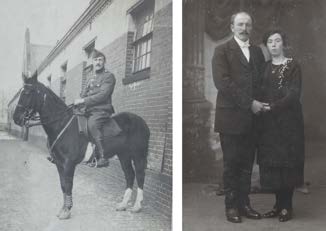
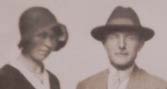



64.7. THE OFFSPRING OF EMILE LESAGE AND EUDOXIE LAMMENS
1257
Figure 64.128: Moorslede 1897, the birth
of Gerard Medard Lesage in the register.
Figure 64.129: Gerard Lesage as a child. (Declercq de
Silva Archive)
Figure 64.130:
The left shows Gerard
Lesage as a soldier. He has two front
chevrons on his arm. The right shows his
wedding to Magdalena Meersseman. Af-
ter his death, she married his youngest
brother, Daniel Lesage. (Declercq de Silva
Archive)
Figure 64.131: Gerard Lesage and Magdalena Meersseman in 1931.
(Declercq de Silva Archive)
Figure 64.132:
Moorslede, 1898, the
birth of Hector Alidor Lesage in the reg-
ister.
Figure 64.133: Hector Lesage as a child. (Declercq de Silva Archive)
Figure 64.134: This is the military registration of Hector Lesage just after WWI, in the list of ’Lichting van 1918’ , Nationale Militie, Provincie Westvlaanderen, 36ste militiekantoor, gemeente Ledegem. He was a farmer, born in Moorslede on October 9, 1898, and resided in Ledegem when WWI began. His father was Emile Lesage from Westrozebeke, and his mother was Eudoxie Lammens from Zonnebeke. Hector had six younger siblings.
The Desclergues of la Villa Ducal de Montblanc, 2nd ed., Omn., VOL. V
© 2024 Nico F. Declercq
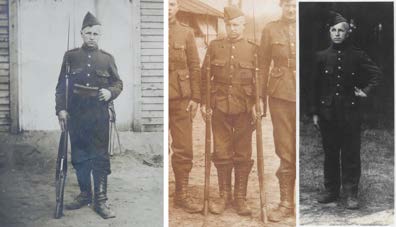
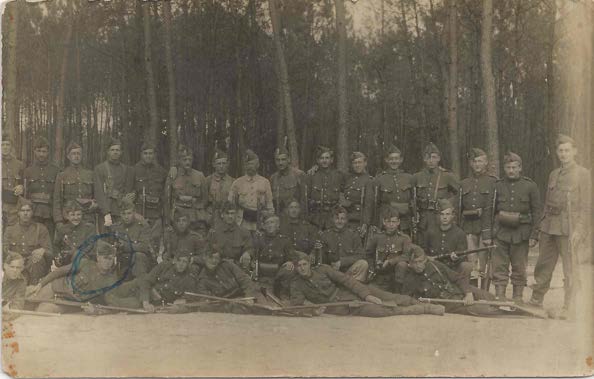
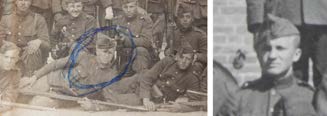
1258
CHAPTER 64. THE LESAGE ANCESTRY LINE
Figure 64.135:
Though not tall, Hector Lesage was an avid soccer enthusiast
and drawn to the army’s prestigious image. Inspired by his elder brothers, Cyrille
and Gerard Lesage, who were already soldiers, Hector aspired to follow in their
footsteps. Despite his stature, he was accepted during recruitment, as the imminent
final offensive necessitated enlisting as many recruits as possible. (Declercq de Silva
Archive)
Figure 64.136: Hector Lesage posing with his fellow soldiers. He is the encircled person, zoomed in on Figure 64.137.
(Declercq de Silva Archive)
Figure 64.137: After his training, Hec-
tor lost weight. The picture probably dates
from August or September 1918. Right,
Hector Lesage, close-up of Figure 64.136.
(Declercq de Silva Archive)
© 2024 Nico F. Declercq
The Desclergues of la Villa Ducal de Montblanc, 2nd ed., Omn., VOL. V
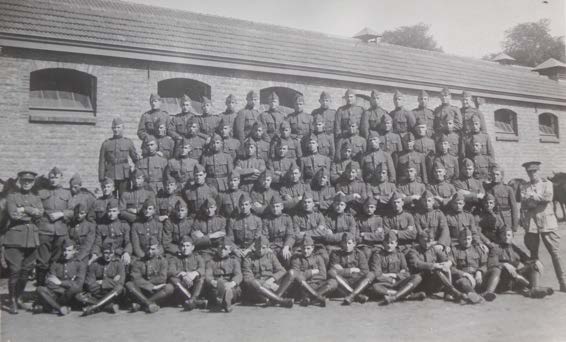

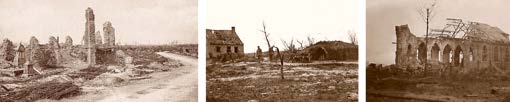
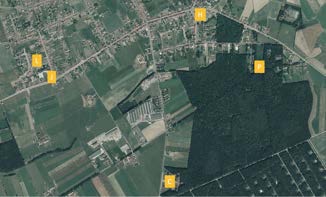
64.7. THE OFFSPRING OF EMILE LESAGE AND EUDOXIE LAMMENS
1259
Figure 64.138: The Belgian army posed before they were sent to the Yser front in 1918. Hector is also on the image and is shown separately in Figure 64.137. (Declercq de Silva Archive)
Figure 64.139: Hector Lesage in a newspaper after the
war. He was not yet officially declared dead at that time.
Burgerlijke stand der overleden Militairen, Ministerie
van Landsverdediging, Dienst der Militaire Grafsteden,
De Iseghemnaar, Katholiek weekblad voor Iseghem en
omliggende, voor Godsdienst, Taal en Vaderland, vierde
jaar nr 3, 15 c. zaterdag 20 Jan 1923. (Declercq de Silva
Archive)
Figure 64.140: Left, we see Merkem just after the final assault in 1918. The ruins of the church are still visible, and there is also one tombstone. The castle completely disappeared. On this spot, Hector Lesage reported for the last time. The middle is Jonkershove in 1917, partially destroyed and occupied by the Germans. Right is the church of Jonkershove, which must have been the last reference Hector Lesage had seen before he died.
Figure 64.141: Aerial view in the 1970s.
Merkem, where Hector Lesage reported for
the last time, is located 4 km Southwest of
the picture. ’J’ is Jonkershove and consists
of one junction. Hector Lesage died 300 m
Northeast of the intersection, on the loca-
tion ’L.’ He was buried nearby but has been
exhumed and reburied at the Belgian mili-
tary cemetery ’C.’ The church of Houthulst
is ’H,’ and the castle that used to belong
to Caroline de Patin, described in Chap-
ter 70.8.1.1, is ’P.’ The forest south of
Houthulst is called ’Vrybosch’ and was dif-
ficult for the Belgians to take. Since WWI,
the Southern part of that forest has been a
Belgian military zone.
The Desclergues of la Villa Ducal de Montblanc, 2nd ed., Omn., VOL. V
© 2024 Nico F. Declercq
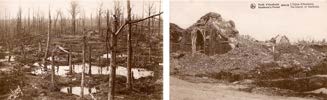
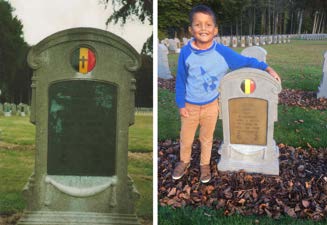
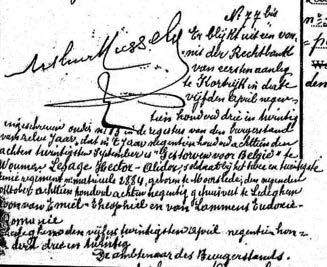
1260
CHAPTER 64. THE LESAGE ANCESTRY LINE
Figure 64.142:
Left was the Forest of
Houthulst in November 1918. Right is the
destroyed church of Houthulst at the end
of WWI. A distant blood-relative of Hec-
tor Lesage, Caroline de Patin, described
in Chapter 70.8.1.1, was buried in this
church.
Figure 64.143: Left is a picture taken
by Daniel Lesage in 1986 of his brother
Hector Lesage’s grave at the Belgian War
Cemetry of Houthulst.
Right is Octo-
ber 2018, when Lambert (the author’s
youngest son) visited the grave of Hector
Lesage. (Declercq de Silva Archive)
64.7.5.1 Introduction
Gerard Medard Lesage’s story has been largely forgotten for several reasons, which is a disservice to his memory. After the war, as the eldest surviving son, Gerard likely felt disconnected from his younger siblings, who had either not served in the military or were significantly younger. He died without children, leaving no descendants to carry forward his story. His widow remarried his youngest brother, erasing Gerard’s presence from family history.
This chapter seeks to revive Gerard’s memory, an endeavor that has proven challenging. We know that Gerard served in the military and suffered lung problems due to a gas attack at the front. There is a photograph of him in military uniform, astride a horse, displaying two front chevrons as proof of his frontline service. However, Belgian military archives do not have his records. They may be lost, or perhaps he served in the French military during the war, a plausible scenario given that some Belgians joined the French forces as foreign soldiers. Gerard’s residence in France at the war’s outset supports this theory, as does the connection between the Lesage family and the French military, detailed in Chapters 44.8.4 and 64.7.8.5. During WWI, such decisions were not considered treasonous, as Belgium and France were allies.
Our research into the other Lesage children found their appearances on the Beselare census. Gerard appears on the 1920-1930
census, residing at Keiberg - Spilstraat 12, Beselare, but he is absent from the 1930-1940 census. His wife, Magdalena Meersseman, is also not listed, indicating they married after September 30, 1921, and moved elsewhere. Possible locations include Passchendaele, near the border with Moorslede, Vossemolen, or Koekuithoek-Zilverberg. These places were significant to his youngest brother, Daniel Lesage, who later married Gerard’s widow.
A cherished memento of Gerard’s life is the photograph shown in Figure 64.127, taken from the 1932 marriage certificate of his youngest sister, Irma Lesage, and Michel Declercq. This chapter honors Gerard Lesage by bringing his story back to life, ensuring his contributions and experiences are not forgotten.
64.7.5.2 Birth and Childhood
When he was born, Gerard Medard Lesage (Moorslede 1898—Moorslede 1933) had one elder brother and two elder sisters, Cyrille, Martha, and Amanda. He was the first child of the family born at Moorslede after moving there from Westrozebeke. Later, more siblings would be born, namely Hector, Maria, Paul, Godelieve, Irma, Oscar, and Daniel.
Gerard Lesage’s birth is shown in Figure 64.128. Childhood images are presented in Figure 64.129.
Figure 64.144: Ledegem, 1918, a brief
death certificate in the registers.
© 2024 Nico F. Declercq
The Desclergues of la Villa Ducal de Montblanc, 2nd ed., Omn., VOL. V
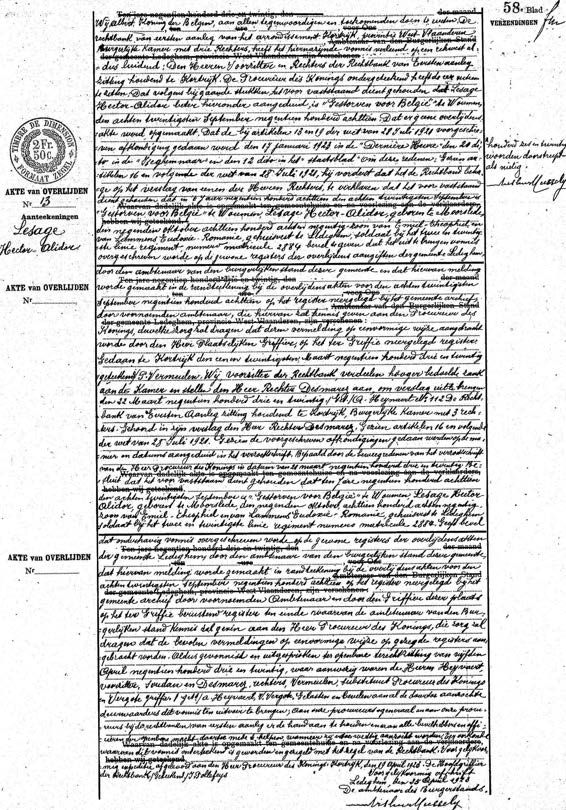
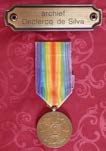
64.7. THE OFFSPRING OF EMILE LESAGE AND EUDOXIE LAMMENS
1261
Figure 64.145: The extensive death certificate of Hector Lesage. He was declared dead, but his body had not yet been found.
Figure 64.146: Hector Lesage, Victory Medal. (Declercq de Silva Archive)
The Desclergues of la Villa Ducal de Montblanc, 2nd ed., Omn., VOL. V
© 2024 Nico F. Declercq
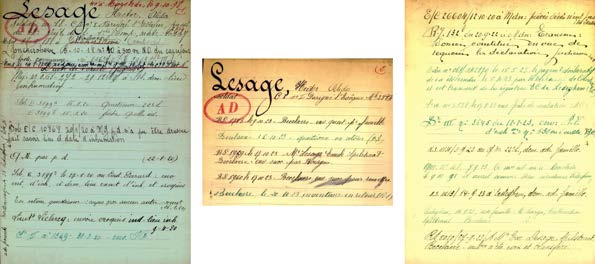
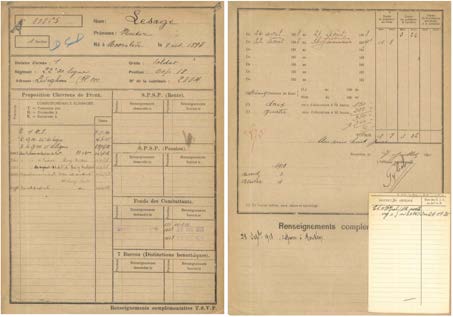

1262
CHAPTER 64. THE LESAGE ANCESTRY LINE
Figure 64.147: The military records of Hector Lesage (fiche militaire 19859), sheets 1-3.
Figure 64.148: The military records of Hector Lesage (militair dossier 20180302085414090)
(sheet 1 and 2)
Figure 64.149:
The military records
of Hector Lesage (militair dossier
20180302085414090), sheet 3.
© 2024 Nico F. Declercq
The Desclergues of la Villa Ducal de Montblanc, 2nd ed., Omn., VOL. V
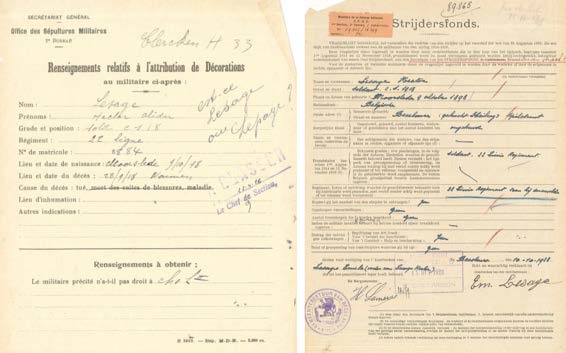
64.7. THE OFFSPRING OF EMILE LESAGE AND EUDOXIE LAMMENS
1263
Figure 64.150: The military records of Hector Lesage (militair dossier 20180302085414090), sheets 4-5.
64.7.5.3 His Military Career
Gerard Medard Lesage’s military career was nothing short of remarkable. Born in Moorslede, Gerard moved with his family to Ledegem in July 1912. When World War I erupted, 16-year-old Gerard fled with his mother, Eudoxie, and most of his siblings to Oudezeele, France. They found refuge with the Secq family at Route des Trois Rois 77, near the village center, a home designated number 49 on the list of refugee homes in Oudezeele during the war.
Gerard’s eldest brother, Cyrille, was already a soldier and tragically died in 1916. Motivated by his brother’s sacrifice, Gerard joined the military, where he demonstrated exceptional bravery. He served in a cavalry regiment or as an equestrian scout, as indicated by a photograph of him in uniform on horseback (Figure 64.130). Experts deduce from his dark collar flaps and pre-1916 uniform style that he was not a lancer and might have served in the Belgian or French army.
During his service, Gerard endured a harrowing German gas attack, which he narrowly survived. This attack left him with chronic lung problems, a condition that plagued him for the remainder of his life. Despite his weakened state, Gerard continued to exhibit courage and resilience. His brother Hector, inspired by Gerard, also joined the military and was killed in action in October 1918.
Gerard’s post-war life was marked by ongoing health struggles due to the gas attack. His compromised lungs made him vulnerable to pneumonia, which ultimately led to his untimely death in 1933 at the age of 35.
Gerard Medard Lesage’s legacy as a war hero deserves to be celebrated. His commitment to his country, his bravery in the face of adversity, and the sacrifices he made highlight the profound impact he had on those who knew him and the history of his family.
This chapter aims to honor his memory, ensuring that his heroic contributions are never forgotten.
64.7.5.4 His Marriage with Magdalena Meersseman
After WWI, Gerard was probably a soldier for a little longer but would join his parents when they moved to Beselare on September 30, 1921.
After he married Magdalena Meersseman, shown in Figures 64.130 and 64.131, he lived at Passchendaele near the border with Moorslede. The couple would have no children.
After his death, his widow Magdalena married Gerard’s youngest brother, Daniel Lesage.
64.7.6 Hector Alidor Lesage
64.7.6.1 Introduction
The existence of Hector Lesage has always been apparent to any of his siblings’ descendants because he is buried at the Belgian Military cemetery not far from his family’s residences. Unlike his brother Cyrille, who was much older and took part in the heroic onset of the war and the battles at the Yser River, Hector’s story is more pitiful. He was not tall, was too young for such responsible decisions, and joined the army at the end of the war mainly because he was seduced by the camaraderie he had noticed of the soccer-playing recruits at Oudezeele, his village in France. He wanted to be one of them, and so he signed up. After a short training, his first engagement was the final assault in October 1918. He was killed after a few days at a few hundred meters from the church of Jonkershove. His destiny was not immediately apparent to his family after the war. He was missing, probably dead, but it took time for the administration to find him in the temporary graves spread over the entire front.
64.7.6.2 Birth and Childhood
When Hector Alidor Lesage (Moorslede, October 9, 1898 - Jonkershove October 4, 1918) was born, in Figure 64.132, he had two brothers, Cyrille and Gerard, and two sisters, Martha and Amanda.
Hector and his two brothers were the three musketeers, all soldiers during WWI.
Cyrille died in 1916, Hector died in 1918, and Gerard died in 1933 after more than a decade of health problems due to a gas attack during the war.
The Desclergues of la Villa Ducal de Montblanc, 2nd ed., Omn., VOL. V
© 2024 Nico F. Declercq
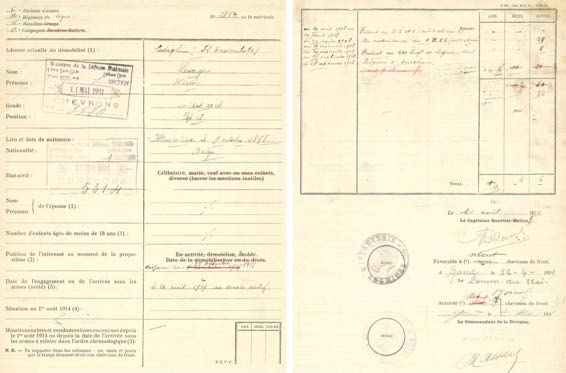
1264
CHAPTER 64. THE LESAGE ANCESTRY LINE
Figure 64.151: The military records of Hector Lesage (militair dossier 20180302085414090), sheets 6-7.
Before the war, in July of 1912, the family had moved to Ledegem and resided at a farm at Kortwagenstraat 33. Hector as a child is shown in Figure 64.133.
64.7.6.3 His Residence at Oudezeele in France
When the war began, Cyrille was a military man, and Hector moved with his family to the north of France with the Secq family to Route des Trois Rois 77, the road from the village center to Café des Trois Rois. The house was located near the village center.
The home was designated number 49 on the list of refugee homes at Oudezeele during WWI.
64.7.6.4 His Military Career
Hector Lesage, a valiant World War I hero, is steeped in familial sacrifice and personal resolve. His elder brother, Cyrille, had already laid down his life in the conflict, and another brother, Gerard, was severely incapacitated by a gas attack. This tragic backdrop compelled the military to call upon Hector. It is plausible that the drive to avenge his brothers’ suffering propelled Hector to join the ranks. His family later reflected that Hector was motivated by the same ideals that drew many young men to the military: camaraderie, a sense of duty, and a passion for soccer.
Hector was part of a large family, with three younger sisters—Maria, Godelieve, and Irma—and three younger brothers—Paul, Oscar, and Daniel. Paul remained at home in Ledegem during the war with their father, Emile.
Hector Lesage enlisted in the First Army Division on April 26, 1918, in Parigné l’Evêque, located in the Sarthe Department of France. He was subsequently assigned to the 22nd Regiment of the Army, First Company, bearing 2884. Born on October 9, 1898, in Moorslede to Emile Lesage and Eudoxie Lammens, Hector’s official residence was in Ledegem. His military records denote him as a Soldier Class II in 1918.
On September 28, 1918, Hector participated in the final assault on the Germans at the village of Woumen. Initially, it was believed that he died on that day; however, it was later discovered that he was active until October 4, succumbing to his injuries in Jonkershove after being grievously wounded in the abdomen. He was ultimately laid to rest in the Military Cemetery of Houthulst.
Photographs of Hector depict a young man of modest stature whose life was tragically cut short. These images, referenced in several figures, immortalize his youthful visage and the indomitable spirit that characterized his brief but impactful military service. The presence of horses and stables in these photographs suggests that Hector served as a cavalry soldier, adding another valor to his story.
Photos of Hector as a soldier show that he was not tall and way too young to die, as shown in Figures 64.135, 64.136, 64.138, and
Hector did not register for his draft, which led to the later discovery that he had died by the end of WWI.
The documentation reveals a poignant and somewhat confusing account of the Lesage family’s military involvement, as detailed in Figure 64.134. The records indicate that the family had two soldiers—one deceased and one missing—though Gerard had also served. It is likely that these numbers should include Hector, suggesting that the family actually had three soldiers: one killed (Cyrille), and two (Hector and Gerard) considered missing at various points.
Gerard, possibly still recovering in France from his lung injury after a gas attack, might not have been counted. Another possibility is that Gerard was a soldier in the French army, as indicated in Chapter 64.7.5, despite appearing post WWI, in a Belgian uniform in photographs.
64.7.6.5 His Death and Burial at Houthulst Military Cemetery
Hector’s obituary card is poignantly displayed in 64.77, on page 1228. His fate became shrouded in uncertainty, shown in Figure
64.139, after he last reported for duty at Woumen on September 28, 1918. For a time, his whereabouts remained a mystery. It was
© 2024 Nico F. Declercq
The Desclergues of la Villa Ducal de Montblanc, 2nd ed., Omn., VOL. V
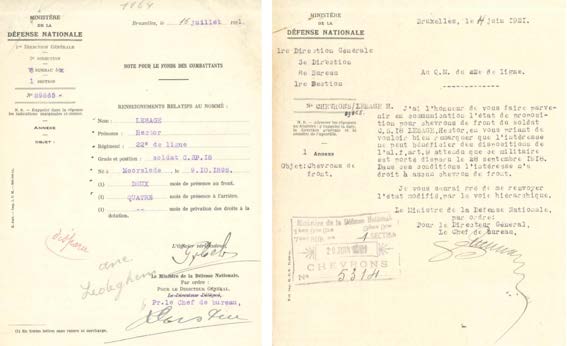

64.7. THE OFFSPRING OF EMILE LESAGE AND EUDOXIE LAMMENS
1265
Figure 64.152: The military records of Hector Lesage (militair dossier 20180302085414090), sheets 8-9.
later confirmed that Hector met his end at Jonkershove, in Figure 64.140, just a few hundred meters northeast of the local church, at the sole junction in the vicinity.
The early confusion surrounding Hector’s demise is evident in conflicting reports. One document dated April 22, 1921, suggested he perished in Merkem, in Figures 64.140 and 64.141, while another claimed his death occurred at Woumen on September 28.
The truth was finally pieced together through the testimony of his father, Emile, who meticulously detailed Hector’s death at Jonkershove. He stated that Hector fell 300 meters northwest of the junction and was buried on the spot in grave number 10.
The Belgian military later exhumed Hector and reinterred him at the military cemetery in Houthulst. Near the forest, this sacred ground features a commemorative monument honoring the 2nd and 22nd line regiments, which endured heavy casualties during the decisive offensive on September 28, 1918.
Hector’s final days are now clearly documented, dispelling the initial confusion. On that fateful September day in 1918, he was stationed at Woumen, ready to join the final assault against the Germans. Tragically, he succumbed to grievous wounds to the lower abdomen on October 4. His initial burial took place on the same day, 300 meters northwest of the Jonkershove junction, in a mass grave designated as ’3963 J A F R 3963 G III.’ His whereabouts were only confirmed after the mass grave was exhumed, providing closure for his family.
It wasn’t until August 14, 1923, that Hector was exhumed and laid to rest once more at the Military Cemetery of Houthulst, as depicted in Figures 64.142 and 64.143, in grave number 528 N. The arduous process took five long years, during which his family awaited the chance to bid a proper farewell to their beloved son. Hector’s death registration, a solemn testament to his sacrifice, is shown in Figures 64.144 and 64.145.
The tale of Hector Alidor Lesage’s final stand and final resting place is a stark reminder of the chaos and relentless toll of the Great War, capturing the enduring grief and heroism of those who fought and fell.
64.7.6.6 His Distinctions
He served 1 month and 8 days at the front after spending 3 months and 26 days in the army. Because of this short duration, he has not received any front stripes (chevrons). On November 27, 1925, he received, posthumous, a Knighthood35 and the Croix de Guerre (reference 20761). Having contributed to the final attack on the Germans, he also received the Victory Medal in Figure
64.7.6.7 His Military Records
His military records are found in Figures 64.147, 64.148, 64.149, 64.150, 64.151 and 64.152.
64.7.7 Maria Magdalena Lesage
64.7.7.1 Introduction
Maria Magdalena Lesage (Moorslede, March 18, 1900 - Ypres, July 27, 1980), shown in Figure 64.154, had five siblings when she was born, Cyrille, Martha, Amanda, Gerard and Hector. Later, she would have more siblings, namely Paulus, Godelieve, Irma, Oscar and Daniel. At Moorslede, she lived near the train station in Statiestraat 518.
In July 1912, the family moved to Ledegem to a farm at Kortwagenstraat 33. Everything went well until WWI started in the Figure 64.153: Moorslede 1900, the birth
of Maria Magdalena Lesage.
35Chevalier dans l’ordre de Leopold II, with palm
The Desclergues of la Villa Ducal de Montblanc, 2nd ed., Omn., VOL. V
© 2024 Nico F. Declercq
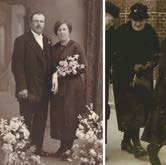

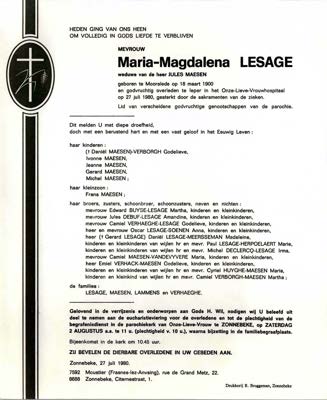
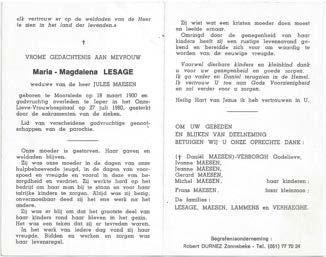
1266
CHAPTER 64. THE LESAGE ANCESTRY LINE
Figure 64.154: The marriage of Maria Magdalena Lesage and Jules
Maesen. The couple would have five children and only one grandchild,
Frans, who sadly died in a dramatic car accident. The other photo
was taken in 1963 and shows Maria Lesage at the funeral of Michel
Declercq in Saint-Louis, Deerlijk. (Declercq de Silva Archive)
Figure 64.155: Jules Maesen received the Croix de Feu after WWI. (Declercq de Silva Archive)
Figure 64.156:
The death announce-
ment of Maria Magdalena Lesage, widow
of Jules Maesen, 1980. (Declercq de Silva
Archive)
Figure 64.157:
The obituary card of
Maria Magdalena Lesage, 1980. (Declercq
de Silva Archive)
© 2024 Nico F. Declercq
The Desclergues of la Villa Ducal de Montblanc, 2nd ed., Omn., VOL. V
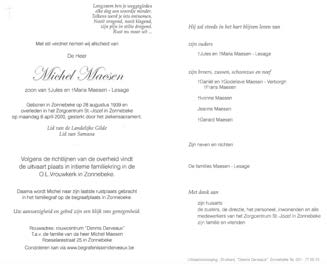
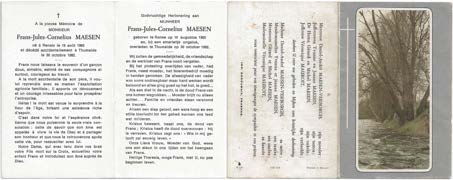
64.7. THE OFFSPRING OF EMILE LESAGE AND EUDOXIE LAMMENS
1267
Figure 64.158:
The obituary card of
Michel Maesen, son of Maria Magdalena
Lesage, 2020. (Declercq de Silva Archive)
Figure 64.159: The tomb of Daniel Maesen (1926 - 1976) and Godelieve Verborgh
(1932 - 2012) at Moustier. (Declercq de Silva Archive)
summer of 1914.
During the German invasion of Belgium, she fled to Oudezeele in the North of France, close to the Belgian border, with her mother and most of her siblings. Her father, Emile Lesage, stayed at the farm in Ledegem with Paul while Cyrille was in the military.
Later, the other sons, Gerard and Hector, would also join the military after moving with their mother to Oudezeele.
In Oudezeele, they lived with the Secq family at Route des Trois Rois 77, the road from the village center to Café des Trois Rois, the house near the village center. The home was designated number 49 on the list of refugee families at Oudezeele during WWI.
On September 30, 1921, the family changed its official address from Ledegem to Beselare, Spilstraat 12 on Keiberg, at the junction with Slangemeersstraat.
Maria can be found in the census of Beselare for the period 1920-1930 and equally the period 1930-1940.36
64.7.7.2 Her Birth
Maria Lesage was born in Moorslede in 1900, in Figure 64.153.
64.7.7.3 Marie Magdalena Lesage and her Husband, Jules Maesen
A wedding photo is shown in Figure 64.154. Jules Maesen was born in Zonnebeke and received the ’Croix du feu’ (Vuurkruis), as in Figure 64.155, after WWI for his role in the war37.
Figure 64.160: The obituary card of Frans Maesen, son of Daniel Maesen and Godelieve
Verborgh, 1982. (side 1) (Declercq de Silva Archive)
36This is strange because she had her first child in 1926 and should appear on the census with her husband. Perhaps the other Maria Lesage, who would marry Joseph Ziller, stayed with the family before she married. Maybe she was a cousin of the Lesages and was welcomed into the family. We don’t know. Joseph Ziller is described in Chapter 64.7.8. Even more intriguing is a ’Godelieve Maria Lesage,’ born in Ledegem on June 21, 1908. Her father was also called Emile Theophile Lesage, a 40-year-old farmer born in Moorslede and residing in Ledegem. The mother was Elodie Tailleu, a 39-year-old farmer born in Moorslede and equally living in Ledegem. It concerns another family, but the name similarities are surprising. This Godelieve Maria Lesage even had a sister, Martha Bertha Lesage, born at Ledegem in 1907. Perhaps this ’Maria Lesage’ also stayed with Eudoxie in Oudezeele during WWI, and maybe this is how a family bond was created with another Maria Lesage. They were perhaps just close acquaintances in Ledegem, and that’s how they knew each other. Maria Lesage married Joseph Ziller, who was described further as someone who had a very close bond with our family.
37reference Livre d’ Or des Cartes du Veu - Vétéran de guerre 14-18.
The Desclergues of la Villa Ducal de Montblanc, 2nd ed., Omn., VOL. V
© 2024 Nico F. Declercq
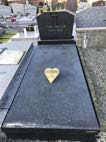
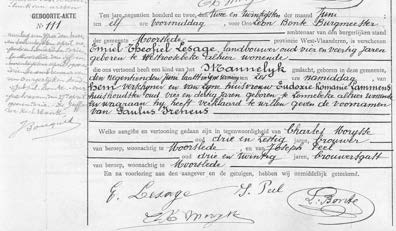
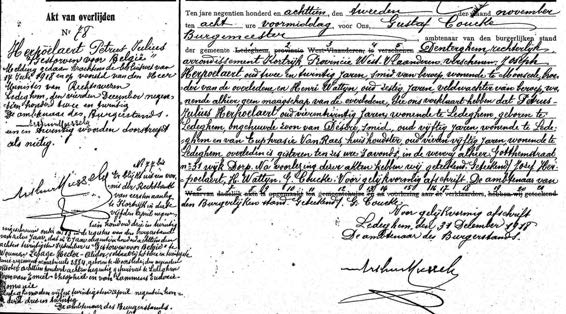
1268
CHAPTER 64. THE LESAGE ANCESTRY LINE
Figure 64.161: The tomb of Frans Maesen, son of Daniel Maesen and Godelieve
Verborgh. Moustier, 2018. (Declercq de Silva Archive)
Figure 64.162: Moorslede, June 19, 1902, the birth of Paul Lesage (’Paulus Ireneus
Lesage’), son of 44-year-old farmer Emile Theophile Lesage and 34-year-old Eudoxie
Romanie Lammens.
Figure 64.163: This is quite interesting. In the same sheet, we find the civil record of the death of soldier Hector Alidor Lesage, brother of Paul Lesage, and the registration of the death of Paul Lesage’s brother-in-law, Petrus Julius Herpoelaert. In particular, the record says that he died for his country, like Hector Lesage, on November 1, 1918, at noon, in Dentergem, in Gottemstraat 31, in the village center. He was 24 years old and a resident of Ledegem, where he was also born. He was the son of 50-year-old blacksmith Désiré Herpoelaert and 54-year-old Euphrasie Van Raes. The death was reported by his 22-year-old brother and blacksmith, Joseph Herpoelaert.
© 2024 Nico F. Declercq
The Desclergues of la Villa Ducal de Montblanc, 2nd ed., Omn., VOL. V
64.7. THE OFFSPRING OF EMILE LESAGE AND EUDOXIE LAMMENS
1269
Figure 64.164:
Ledegem, February 2,
1926, the marriage of Paulus Ireneus
Lesage (’Paulus’), harness maker, residing
in Rumbeke, born at Moorslede on June
19, 1902, son of 68-year-old farmer Emile
Theophile Lesage and 57-year-old farmer
Eudoxie Romanie Lammens, residing in
Beselare and both present for the wed-
ding; and Maria Magdalena Herpoelaert,
residing in Ledegem, where she was born
on March 16, 1897, daughter of 57-year-
old blacksmith Désiré Herpoelaert, residing
in Ledegem, present for the wedding, and
Eustasie Euphrasie Vanraes, who died in
Ledegem on January 2, 1923. Their mar-
riage contract was with notary Arthur Eu-
gene Leo Mussely at Ledegem.
64.7.7.4 Her Death