

The Desclergues of la Villa Ducal de Montblanc, Second Edition Omnibus by Nico Declercq - HTML preview
Download the book in PDF, ePub, Kindle for a complete version.
The Desclergues of la Villa Ducal de Montblanc, 2nd ed., Omn., VOL. IV
© 2024 Nico F. Declercq
CHAPTER 56. STRATEGIC STRONGHOLDS OF BALANA, THUMPANA, AND DEEWALKANDA
Before that, other researchers tried to find clocks in the night sky. One can indeed observe that moons are circling Jupiter. They act as clocks that can help, if correctly followed, to determine the reference time. However, seeing Jupiter’s moons is not easy; it is not at sea and impossible in cloudy weather. Furthermore, Jupiter is not always only sometimes. It depends on the planet’s orbit compared to Earth’s and its spin.
56.6.2 The Blood-Relatives of de Silva who became involved in the Quest for India and Sri
Lanka
The de Silva family became involved in 1505 through their blood relative Francisco de Almeida.
Indeed, in 1505, King Manoel despatched Francisco de Almeida to India to enforce Portuguese presence at key locations along the route from Portugal to India. The purpose was to block as many Arabs in the Indian Ocean as possible.
He strengthened, for instance, the outpost of Kilwa and bombarded Mombasa in modern Kenya. In India, he allied with the Raja of Cochin against the Zamorin of Calicut. The beautiful island of Sri Lanka would be discovered by Lorenzo de Albuquerque, Francisco’s son, who also found the Maldives.
In 1506, Alfonso de Albuquerque left Portugal in April to build a fortress along the East African coast on the island of Socotra to block the Red Sea and stop the Arabs from entering the Indian Ocean.
On this voyage, Tristan de Cunha was with Albuquerque, discovered the island named after him, and explored Madagascar.
By August 1507, Albuquerque seized the Gulf of Oman and established Persian trade with Europe. The operation cannot be regarded as a success because the Portuguese needed to build a fortress at Ormuz but guarded the coastline with ships. Muscat would be taken in 1515, however.
Meanwhile, Francisco de Almeida defeated a Calicut fleet in India. However, his son, Lourenço, would be beaten and killed by an Egyptian fleet near Chaul, south of Bombay, in 1508. Francisco de Almeida was shocked by his son’s death.
When Albuquerque wanted to take over India’s affairs after arriving in Cochin in December 1508, Francisco refused and wanted to wait until he had had a chance to avenge his son’s death. Indeed, de Almeida won over the combined Egyptian and Calicut fleets in 1509 near the island of Diu. This victory assured Portuguese control of the sea route between Portugal and India.
Francisco de Almeida would die in weird circumstances. He was murdered by Hottentot tribe members at Table Bay (Cape Town) in March 1510 while trying to enter his ship to return to Portugal. One goal that de Almeida had yet to achieve was the Malacca seizure. However, he had secured the sea route towards Malacca during his reign, which was an achievement that resulted in enormous implications later on.
While Francisco de Almeida had been Viceroy of India, he favored a fortification at Colombo in Sri Lanka, which could become the center of Government for the Portuguese territories on the island. Indeed, Colombo had a water supply and a harbor, which were both essential conditions.
Also, Colombo was located on the route to Malacca and was, therefore, of strategic importance. However, the plans could not be carried out because of his activities in India.
Nevertheless, after his death, Albuquerque was the next Viceroy and had to make essential choices on where the seat of Government would be located. Colombo was indeed an option, and so was Cochin, but he finally chose Goa.
It was indeed so that the winds pushed Portuguese ships more efficiently, and first, to the coast of Goa, and they typically had to pass the southern Indian coast to reach Colombo.
Therefore, Colombo could only be sufficiently safeguarded if the Portuguese ruled South-East India’s coast rather than vice versa.
It was, hence, more natural and safer to choose Goa rather than Colombo.
At that time, Goa was not yet in the hands of the Portuguese but was ruled by Muslim princes. Alfonso de Albuquerque successfully seized Goa in March of 1510 and was soon expelled from Goa but regained it in November. He then took Goa to the seat of Government.
Alfonso de Albuquerque established a policy of mixed marriages between Portuguese men and local Indian women. There were several reasons for this policy.
First, Portugal needed more inhabitants to expand the world considerably. Second, in the first decades, the Portuguese who sailed to India were men, not women. To broaden the Portuguese presence, it appeared only natural to marry local women and have many children. These children would then be loyal to Portugal and the outpost on which they were born and raised. The Portuguese believed this would be the best guarantee of establishing a global Portuguese empire.
Furthermore, the mixed marriages would also create sacred bonds between Portuguese and local Indians and would best guarantee long-lasting peace. Perhaps Albuquerque was inspired by the Greek Alexandre the Great, who imposed this policy upon his men.
56.6.3 The Arrival of the de Silva Family in Goa
All these events took place before the arrival of the de Silva family in India, although their relatives, through de Almeida, had already been involved. Indeed, Juan Carvalho de Silva, son of Maria de Silva, would arrive in Goa, shown in Figure 56.22, probably with Vasco da Gama in 1524.
Although da Gama died of Malaria at Cochin at the end of 1524, he established a new order in India. He received the title of Viceroy, which had yet to be given since Francisco de Almeida. Juan de Silva’s son, Antonio, of an Indian mother, would become involved in the Portuguese activities in Sri Lanka, as explained further.
To return to Francisco de Almeida, he received the title of Viceroy of India in July of 1511, after his successful seizure of Malacca, which turned the center of the Molukkes Portuguese and granted Portuguese access to spices and many other goods from the Far East. De Almeida set up trading posts at Malacca. During his voyage, Goa had been besieged. Still, de Almeida could relieve Goa in 1512 on his return from Malacca and, therefore, established considerable control over the total trade of goods in the Indian Ocean.
Conquering Malacca demanded great respect from the Hindu rulers who recognized Portuguese presence from then onwards. Later, he would not successfully capture Aden, and, therefore, renewed economic competition grew between the Portuguese route and the land route from the east through Egypt into the Mediterranean Sea. The competition also continued after the Ottomans conquered Egypt in 1517.
However, Albuquerque would always continue competing for the abovementioned route and tried to establish a third route through Persia, so, in 1515, he conquered Ormuz and Muscat in the Persian Gulf with 26 ships.
Albuquerque died a depressed man, however, when, while being sick on his way back to Goa, he had heard that Goa’s governance had been given to his enemy, Lopo Soares de Albergaria. Albuquerque died aboard the ship in December 1515, close to Goa. Even
© 2024 Nico F. Declercq
The Desclergues of la Villa Ducal de Montblanc, 2nd ed., Omn., VOL. IV
56.6. THE APPROACH AND ARRIVAL OF PORTUGUESE UNTIL ESTABLISHMENT OF THE
PORTUGUESE KINGDOM OF KOTTE
1109
after five centuries, Alfonso de Albuquerque still received enormous respect and is considered the best and most crucial ruler Asia has ever had by some. Together with de Almeida, he entered history as one of the most extraordinary men who ever lived.
After Albuquerque’s era, King Manoel would further expand the Portuguese empire:
Bengal and Siam were reached, Fernao Pires de Andrade reached Canton, and by 1594, the Portuguese received exclusive entrance into the market of the Ming dynasty emporium through Lampo, also known as Ning-Po.
The Portuguese would lease Macao in 1557 to improve their trade with the Far East. In 1542, Japan was reached by merchants and Saint Francis Xavier.
56.6.4 The Arrival of the de Silva Family in Sri Lanka
We will now focus more on the Portuguese presence in Sri Lanka. Remember that Belgium was Spanish when the Portuguese got involved in Sri Lanka. Trade flourished between Lisboa and Antwerp and, of course, also Cadiz and Antwerp.
Before the Dutch revolt and long before Amsterdam gained importance, the VOC would conquer many parts of the world. In Antwerp, in (nowadays) Belgium, the demand for Sri Lankan treasures such as gemstones, as in Figure 56.33, pearls, cinnamon, and other goods snowballed. Other cities such as Florence, Venice, Spain, and Portugal became interested in these goods. The Pope was also involved in the new territories, including India and the island of Sri Lanka.
It should, therefore, not be a surprise that the Portuguese attempted to settle in Sri Lanka too. Their naval ambitions and experiences almost entirely determined the Portuguese identity and are indicated everywhere, such as in Figure 56.23. Even early on, related to Francisco de Almeida’s journey, Sri Lanka (Ceylam) was targeted as described above.
A quote in the book of da Silva shows that de Almeida had received the following instructions (sic, translated by da Silva):
’You send a pair of a caravel or whatever else shall seem suitable, and you can well spare, to discover Ceylam, and Pegu and Malacca and any other places and things of those parts, sending in the said vessels that you thus send a person who shall have the chief charge of them, and one who will do it very well and with all regard to and security of our service, and in the said places and all others and any ports and countries that they shall discover they place our padraos of stone, with our royal arms and the cross of Christos at the top, which padraos you shall order to stone-cutters who go to make them.’
Indeed, thanks to such padraos (granite stone pillars), most of the claims of discoveries by the Portuguese have been confirmed in the 20th century after archaeological excavations in many places in the world, such as the mouth of the Congo River in Africa.
Lorenzo de Almeida, instructed by his father Francisco, undertook the task partially. He had to block the sea route between Sri Lanka and the Maldives through which Muslim merchants naturally passed to reach the island, Malacca, Bengal, and other places.
The first voyage of Lorenzo de Almeida to Sri Lanka is important for Sri Lanka, India, and Portugal, but it also shines a light on Christopher Columbus’s identity.
De Almeida left Cochin in 1505, accompanied by regular soldiers and Fidalgos (knights) such as Fernao Cutrim and Payo de Souza, his father’s ambassadors. Also, an interpreter and even Friar Vincente were on board, and they would later play an essential role in the early Christianisation of Sri Lanka.
Because of a massive storm, the fleet arrived further south than expected, namely in Galle. As soon as the weather permitted, they left Galle and sailed north to arrive at Colomtota.
Galle is shown in Figures 56.24, 56.25, 56.26, 56.27, 56.28, 56.29, 56.31 and 56.32, and is still an important harbor.
Modern scholars believe that the word Colomtota or Colontota has a similar structure, such as places like Hambantota, Angurwatota, Bentota etc. It would, therefore, come from the Harbor of Kelaniya (’Kelani-Tota’). Kelani is a river, and the site is at the mouth of that river. So, it consists, apparently, of the words Colom and Tota.
Still, in Chapter 52, the author described the possibility that the word may come from ancient Greek and may refer to local fish found or sold in that place during an encounter with the Greeks.
Lorenzo de Almeida immediately transformed it to Columbo, which sounds similar to the word Colambu as the Arabs called the place or the other name of the area, Colompura or Colomtota.
Very likely, de Almeida associated the word Colom8 with Columbo. It makes sense that the Portuguese named the harbor after Christopher Columbus, conveniently similar to its original name.
However, the harbor had flourished way before the Portuguese arrival and had been inhabited by Arab merchants for several centuries. The harbor was regularly visited by ships from Bengal, Gujerat, Malacca, Ormuz, and India’s Coromandel coast.
The Arabs traded in many places in Asia and the Middle East, including Sri Lankan cinnamon, areca nuts, coconuts, small elephants, timber, gold, silver, cotton, silk, and Persian wines. Throughout the island’s history, it’s characteristic that the Sri Lankans have always been suppliers of goods but have yet to merchandise themselves in other areas.
Sri Lanka’s economy and military defense have always relied on foreign enterprises, such as the Arabs and Indians, the Portuguese, the VOC, the British, the Soviets, the tourists, and the Chinese. These enterprises have enriched Sri Lanka’s culture and DNA but have yet to reveal their capacity to become self-reliant.
An island with limited resources can only partially become independent. Still, the vast supplies of possible energy harvesting sources, such as dams, sea waves, and wind, may turn the tide if they want to. In recent times, significant efforts were undertaken by Priyantha Dissanayake in Figure 56.40 on page 1105.
Duarte Barbosa described the event of Lorenzo de Almeida reaching Colombo9. We can cite his description:
’Leaving the Island of Mahaldiva further on towards the east, where the cape of Comory is doubled and thirty-eight leagues from the cape itself, there is a huge and beautiful island which the Moors, Arabs and Persians and our people call Ceylam, and the Indians call Ylinarim. It is a rich and luxuriant land inhabited by Gentiles and ruled by a Gentile king. Many Moors live in large quarters in the island’s seaports, and all the inhabitants are great merchants. There are fifty leagues of the channel towards the northeast from the cape until the island of Maylepur is passed. Both Moors and Gentiles are well-made men, almost white and mostly stout, with large stomachs and luxurious. They do not understand nor possess arms. They are all given to trade and good living. They go bare from the waist upwards and below that cover themselves with good clothes of silk and cotton, caps on their heads, and the ears pierced with large holes, in which they wear many gold rings and jewelry, so much that their very ears reach to their shoulders and many rings and precious jewels on their fingers, they wear belts of gold richly adorned with precious stones. Their language is partly Malabar and partly Cholomendel, and many Malabar Moors come to live on this island because it is so luxuriant, abundant, and very healthy. Men live longer here than in India.’
We may assume that Barbosa meant, by gentiles, people or tribes who were neither Arabs nor Jews.
8Colom is Catalan for Columbus, but one must not conclude that he was Catalan since, in those days, it was common to use local versions of names, even when the person was from a different area or country.
9Duarte Barbosa, in Hak. Soc. MCMXXI, p 117 and Royal Asiatic Society (Ceylon Branch), vol XIX Nr 59, page 379.
The Desclergues of la Villa Ducal de Montblanc, 2nd ed., Omn., VOL. IV
© 2024 Nico F. Declercq
CHAPTER 56. STRATEGIC STRONGHOLDS OF BALANA, THUMPANA, AND DEEWALKANDA
Interestingly, they were wearing ’caps.’ This refers to the traditional caps or plates, typically made of metal, worn by the Karava of Sri Lanka. Still, it may also refer to hats usually worn by Muslims.
Later sources also infer a big Arack and Opium consumption in Colombo, which is probably typical for such international harbors.
Several sources indicate that such manners existed before the Portuguese’ arrival and were even hated by the Portuguese. Thus, one should not blame Western decadence for the alcohol consumption in Sri Lanka.
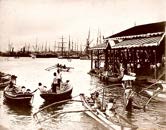
When the Portuguese first arrived in Colombo, along the coast from Galle, as in Figure 56.34, the Kingdom of Kotte did not know how to react. They had allied with the Arabs, who used to possess a monopoly on trade, but soon, they figured out that the Portuguese would be too strong to fight. As in Figure 56.36, the Sri Lankan ships alone were no match against the Portuguese.
Soon, a Portuguese delegation was sent from the fleet to the Kotte palace. The Singhalese kept Don Lorenzo de Almeida hostage to ensure that the Portuguese would not harm him, while the escort led the Portuguese from the fleet to the Kotte palace along a circuitous route that took three days.
The long, winding path gave the impression that the Palace was far from the fleet. There is still a proverb in Sri Lanka referring to this event: Paranyiya Kotte giyawage, which is used when describing a long and winding route from one place to another and means ’as the Portuguese went to Kotte.’
However, the Singhalese could not fool the Portuguese because their ships fired a gun every hour, which allowed them to keep track of time and orientation. The Portuguese in charge of the escort to the Palace was Cutrim.
A second delegation led by Payo de Souza would be majestic and include elephants sent by Dharma Parakrama Bahu.
Queiroz wrote about Payo de Souza’s meeting with the King of Kotte, which was cited in da Silva’s book, which we have rephrased for clarity.
’He met the King in a large and dim hall, ornamented with Persian carpets. The King was dressed in a white ’cabaya’ , and he was seated on a throne of ivory, delicately wrought, on a dais of six steps, covered with a cloth of gold. On his head was a kind of mitre of brocade, garnished with precious stones and large pearls. The mitre had two points of ’sausatos’ of first-rate craft falling on his shoulder. He was girt with a cloth of silver, the ends of which fell on his feet. His feet were shod with sandals studded with rubies.
On his fingers were a vast number of rubies and also diamonds and emeralds. His ears were pierced and fell to his shoulders with earrings of great value. Around the King were many silver scones and torch stands, which shed light to dispel the building’s darkness.
On each side of the hall, a row of men brightly clad in their fashion with naked swords hanging and shields on their arms. Between the two rows, the ambassadors advanced, dressed in green velvet with loops of silver and carrying a sword of the same metal. The King opened the meeting with a long introductory speech in which he ensured that the King of Portugal was not more powerful than the greatest Pagode and then came to business. . . ’
It is known that a treaty was signed between the Singhalese and the Portuguese in 1518.
Several writers, such as Castaneda, Queiroz, Silva, Barro, and Correa, have different opinions on whether or not a treaty was formed when Payo de Souza met the King, whether Lorenzo de Almeida established an agreement when he landed in Galle or whether no deal ever existed before 1518.
56.6.5 The Portuguese Settling in Sri Lanka
Anyhow, Correa mentions that,
’Diogo de Almeida (who was the emissary of Lorenço de Almeida and likely his uncle), told that the Portuguese established a friendship with the King of Kotte and that, in return for that friendship, they promised to protect the harbors and waters of the Kotte Kingdom against any hostility from other nations. In return, the King of Kotte provided gifts in a few shiploads of cinnamon and two elephants.’
One must conclude that there must have been, at least, a verbal agreement between the monarch and the Portuguese. Historians argue that the King of Kotte must have been so willing towards the Portuguese because he had heard of their military strength shown before and that he believed such a strong ally would guarantee the safety of Kotte and preserve its access to world trade.
The Portuguese decided to construct their feitoria on the southwest side of the bay. They built a chapel there of San Lourenço, named after the patron saint of Lourenço de Almeida. San Lourenço has been the patron of Colombo ever since. Just as anywhere else the Portuguese ’landed,’ a padrao was cut by a stonecutter,10 the Portuguese shield was engraved, the Cross of Christ as well.
This padrao, shown in Figure 56.37, would later be excavated near Colombo’s breakwater in 1898 and was located in the Gordon Gardens in the 1990s. We wonder if it is still located there.
56.6.6 The First Portuguese arrival in Sri Lanka in 1506
Experts assume that the events took place between September 1505 and May 1506. The padrao indicates on its right-hand side
’ISOI,’ which probably stands for ’Iesus Salvator Orientalium Indiorum’
Not indicating a year on the padrao was no exception. For instance, the padrao of Sunda Kalapa in Jakarta dates from 1522, but there is no date written on it. Instead, there is ’OSPOR .ESFERa/Mo,’ which stands for ’O Senhor de Portugal. Esfera/Espera do Mundo.’
The padrao at the mouth of the Congo River, from 1485, does not indicate a year, but rather,
’Aqui chegaram os navios do esclarecido rei D.Joao II de Portugal - Diogo Cao, Pero Anes, Pero da Costa.’
Chandra R. de Silva11 reported a thorough overview of the existing literature concerning the first arrival date of the Portuguese in Sri Lanka, which we summarize her. He writes that Donald Ferguson12 argued that the advent of the Portuguese, led by Dom Lourenco de Almeida, could not have occurred in 1505 as is commonly believed, but in 1506. Ferguson noted that had the Portuguese arrived in Sri Lanka in 1505, correspondence regarding this discovery would have been sent to Portugal aboard the S. Gabriel, which sailed from India in February 1506 and arrived in Lisbon in late 1506 or early 1507, departed India in February 1506.
If this is the case, it is difficult to explain why the King of Portugal delayed his correspondence with the Pope until September 1507 regarding this ’finding,’ deemed significant enough to necessitate a parade in Rome on December 21, 1507. As Chandra R. de Silva13 states, Ferguson also noted that the absence of any mention of the first interaction in 1505 by Viceroy Dom Francisco de Almeida in his December 16, 1505 letter to King Manuel raises concerns.
In addition, it was emphasized to him that the directives sent to the Portuguese Viceroy mandated the start of exploratory 10The stonecutter was Gonçalo Gonçalvez, according to da Silva
11Chandra R. de Silva, "Portugal and Sri Lanka: The Historiography Today", April 20, 2021.
12D. W. Ferguson, “ The Discovery of Ceylon by the Portuguese in 1506,” Journal of the Ceylon Branch of the Royal Asiatic Society, XIX, 1907, pp.
284-320 (with a supplement of documents pp. 321- 385)
13Chandra R. de Silva, "Portugal and Sri Lanka: The Historiography Today", April 20, 2021.
© 2024 Nico F. Declercq
The Desclergues of la Villa Ducal de Montblanc, 2nd ed., Omn., VOL. IV
56.6. THE APPROACH AND ARRIVAL OF PORTUGUESE UNTIL ESTABLISHMENT OF THE
PORTUGUESE KINGDOM OF KOTTE
1111
expeditions only after the vessels were loaded with goods destined for Portugal. This was unfinished until the early 1506s.
Moreover, two envoys purportedly sent to the King of Kotte were unlikely to be there in 1505. In 1505, Payo de Souza, one of the envoys, was still en route to India.
In contrast, Ferno Cotrim, writes that, until the middle of the twentieth century, 1505 was widely accepted as the date of the first interaction between historians and the general populations of Sri Lanka and Portugal. He explains in more detail that Ferno de Queyroz’s account primarily supports the assertion that the first meeting occurred in 1505.
Queyroz’s publication, first published in Portuguese in 1914 and then translated into English in 1930, is the most authoritative Portuguese account of the sixteenth- and seventeenth-century interactions between Sri Lanka and Portugal.14 Queyroz produced literary works during the 1680s.
Nonetheless, Chandra R. de Silva15 states it is plausible that he acquired his knowledge from the works of Diogo do Couto, a notable author whose career began in the 1590s.
Both parties may have relied on the account given by Ferno Lopes de Castaneda, a writer from the 1540s, who stated that the first encounter occurred in 1505.16
Ferguson deemed Gaspar Correia, the only chronicler whose writings gestured at the potential of a Portuguese entry in 1506, unreliable.
De Silva reintroduced the 1506 date proposed by Ferguson to the ongoing discussion.17 He drew attention to a source from the same period that provided information regarding the precise date of the Portuguese landing in Sri Lanka.
The primary source under consideration is a pamphlet written in Spanish by Juan Augur and published for the first time in Salamanca in 1512.
Martin Fernandes de Figueroa’s first-hand account of the events in the Eastern region served as the primary source. The report provides a chronicle of Dom Lourenco de Almeida’s activities until March 1506. The text then states that on August 8, Dom Lourenco, the Viceroy’s son, set sail with a fleet of seven ships. This expedition’s objective was to investigate the islands near Cochin.
The fleet reached Ceylon, an island known for its cinnamon production,18 despite confronting severe cyclones and unfavorable conditions and anchored there.
As evidenced by several academic sources,19 1506 has since been widely accepted as a plausible alternative. This date is gaining acceptance among historians, whereas 1505 remains significant in conventional historical accounts.
In 1980, Genevieve Bouchon analyzed a Portuguese stone inscription in Colombo that read "1501." Based on her findings, Genevieve Bouchon posited that the initial encounter may have occurred before de Almeida’s arrival. This prospective encounter may have involved a ship from Joo da Nova’s first armada, which arrived in the Indian Ocean.20 This idea has garnered minimal to negligible support. There have been suggestions that the inscription should be read as "JSOI" instead of "1501," signifying Jesus Salvator Orientalium Indiorum or ’Jesus, Savior of the East Indies.’21
According to Jorge Flores, the 1501 thesis needs more support from the available data due to the absence of a reference to the
’discovery’ of Sri Lanka in a contemporary account of Joo da Nova’s voyage. More evidence supporting the concept of ’discovery’
needs to be provided in the articles published between 1501 and 1505.
King Manuel ordered Dom Francisco de Almeida in 1505 to ’discover’ Ceylon, although Joo da Nova’s ships had already sighted the island.
Flores asks astutely why King Manuel issued these orders, given that Joo da Nova’s ships had already observed the island.22
Scholars like Chandra R. de Silva23 therefore reject 1501 and instead assume, based on more solid evidence, that the first visit occurred in 1506.
56.6.7 The First ’Feitoria’ in Colombo
The first factor of the first Portuguese feitoria in Colombo was Jane Mendes Cardosa. He was in charge, together with a small Portuguese group. After this primordial visit, the Portuguese fleet left Sri Lanka, and the promised goods, including the elephants, were taken with them. One elephant would ultimately arrive in Portugal and was the first Indian Elephant ever to come to Europe.
The success in Sri Lanka by Lourenço de Almeida and his compatriots was duly celebrated in Cochin in India by his father, Francisco de Almeida, the Viceroy of India, and a celebration included bullfights.
The Viceroy ratified the treaty between the Kingdom of Kotte in Sri Lanka and Portugal. The Viceroy’s nephew, Diego de Almeida, mentioned above, was sent to Portugal as an eyewitness to the discovery of Sri Lanka. This must indeed be considered evidence that the characters found on the padrao in Sri Lanka may not have been ’1501 ’ but ’ISOI,’ as stated by da Silva.
Historian Correa wrote that Diego de Almeida had been the first ambassador to Kotte and likely joined the second delegation to arrive later in Sri Lanka. Some impressions of Colombo are shown in Figure 56.36. Undoubtedly, the harbor and town would have been very different had the Portuguese not been in charge.
On November 7, 1506, in Rome, under the title ’Gesta proxima per Portugalenses, in India, Ethiopia et allis orientalibus terris,’
the letter of King Manoel to the Pope’s representative in Portugal, Cardinal Alpedrinha, archbishop of Oporto, was published, describing the King’s activities in Asia. The King expressed his desire to expand Portugal’s influence globally as far as Ceylao (Sri 14Fernão de Queyroz, The Temporal and Spiritual Conquest of Ceylon, S. G. Perera, trans. (Colombo:1930).
15Chandra R. de Silva, "Portugal and Sri Lanka: The Historiography Today", April 20, 2021.
16Fernão Lopes de Castanheda’s Historia do Descobrimento e Conquista da India pelos Portugueses, Manuel Lopes de Almeida, ed. (Porto: 1979).
Castanheda left Portugal for India in 1528.
17C. R. de Silva, “The First Visit of the Portuguese to Ceylon 1505 on 506,” Senerath Paranavithana Commemoration Volume, Prematilleke, Indrapala and Lohuizen van Leeuw, ed. (Leiden: 1978) pp. 218-220; Genevieve Bouchon in “Les Rois de Kotte au debut du XVI siecle,” Mare Luso-Indicum, Vol.
II, 1971, p. 74 had also used Augur as a source and assumed that the date of the first encounter was 1506, though nine years later in 1580, she offered 1501 as an alternative.
18Reprinted in Documentos sobre as Portugueses em Moçambique a na Africa Central, 1497-1540; Documents on the Portuguese in Mozambique and Central Africa, 1497-1540, Vol. III, (Lisbon: 1964) pp 586-633.
19See Martin Quere, Christianity in Sri Lanka under the Portuguese Padroado, 1597-1658 (Colombo: 1995) p. 1; Risiman Amarasinha, Sitawaka Rajadhaniye op. cit., pp. 34; Jorge Manuel Flores, Os Portugueses e O Mar de Ceilao, op. cit., pp. 111-116. C. R. de Silva himself left the question of 1505 open in the University of Peradeniya: History of Sri Lanka, op. cit., p. 16 and O. M. da Silva Cosme opted for 1505 in his Fidalgoes in the Kingdom of Kotte, Sri Lanka 1505-1656 (Colombo: 1990) pp. 19-20.
20Genevieve Bouchon, “A propos l’inscription de Colombo [1501]. Quelques observations sur le premier voyage de João da Nova dans l’Ocean Indien,”
Revista da Universidade de Coimbra, 28, 1980, pp. 233-270.
21O. M. da Silva Cosme, Fidalgoes in the Kingdom of Kotte, op. cit. p 20. Another possibility is that this was a later inscription with an erroneous date.
22Jorge M. Flores, Os Portugueses e O Mar de Ceilão.
23Chandra R. de Silva, "Portugal and Sri Lanka: The Historiography Today," April 20, 2021.
The Desclergues of la Villa Ducal de Montblanc, 2nd ed., Omn., VOL. IV
© 2024 Nico F. Declercq
CHAPTER 56. STRATEGIC STRONGHOLDS OF BALANA, THUMPANA, AND DEEWALKANDA
Lanka).
In March of 1506, he wrote a letter to India’s Viceroy to build a fortification in Sri Lanka, acting as a Seat. The reason was linked to its strategic location, which was necessary for military bases, and its richness in spices, etc. However, it would take another decade before the fortification would be constructed.
The letter of King Manoel, written in March, was finally dispatched to the Viceroy of India on December 27, 1506.24 The letter was sent with Cide Barbudo, and a summary would later appear in Albuquerque’s cartas. A translation of one passage in the letter is as follows:
’Dom Lourenço de Almeida discovered Ceylon, a point similar to Cananor where a fortress can be constructed. In that location, there is plenty of water, and there is an excellent port. This place is to be chosen and not Coulam. Furthermore, Ceilam is on the direct course to Malaca, Pegu, Cametra, and Coromandel. From the latter to Ceilam is seventy leagues.’
Consequently, on September 25, 1507, a letter from the Portuguese city of Abrantes was written in Latin to Pope Julius II. The letter addresses a laudatio to several people, including Payo de Souza in particular, which mentioned a detail about the King of Kotte, namely,
’. . . On the throne was the King, who, according to the fashion of his country, was wearing a diadem on his head, adorned with precious stones found on the island.’
Such a wreath must have been fashionable in the community of Kotte. Undoubtedly, the Karava caste was wearing it, too, though probably without the precious stones.
Later, a procession was held in Rome on December 21, 1507, in honor of Portugal’s discoveries.
That Colombo was considered a Portuguese town can be uncovered in certain remains at the National Museum of Sri Lanka, such as in Figure 56.37.
56.6.8 The First Troubles between the Portuguese and the Locals
When the Portuguese landed in Sri Lanka and a partnership was formed with the King of Kotte, the Sri Lankans depended on the Portuguese for trade and military protection. Nevertheless, the first months were challenging for the early settlers. The new balance of power was not exactly according to the desires of the Muslim traders who had lost their monopoly of trade and commerce. They poked the Sinhalese to discomfort the Portuguese. For this reason, the Portuguese pulled back from their newly established factory in Colombo in 1507. This was done without hard feelings towards the people and the King of Kotte because the Portuguese knew that the discomfort had not been intended by them but was organized by the Moors. The withdrawal did not please the King of Portugal because he wanted Sri Lanka to become a vital outpost along the route to Malacca. For this reason, he ordered Diogo Lopes de Sequeira to solidify the journey to Malacca by mapping it out and fortifying different posts as needed. He was explicitly asked to support the Viceroy in defending each fortress and the subjects residing there. De Sequeira concluded that the Sri Lanka settlement was necessary and required essential support from Portugal, which helped the Viceroy of India re-initiate a fortification.
The letter of de Almeida, written in the Fall of 1508 to the King of Portugal, stated,
’regarding Ceylao, I have already informed your Highness that men who went there, and that those who have now come from there, found the country quiet, and that there is a padrao standing there, placed by my son. I have said to Your Highness that a fortress would be good there because all the vessels that come from the south, that is, from all parts of Malacca, Çamatra, Pedir, Bengala, and Pegu, cannot reach the northern region without passing close to this island of Ceylao, and even have to navigate with certainty and obliged to come in sight of it, and that, if necessary, half a dozen ships could stop this route to them. The fortress could be made without danger on a point that overlooks the port. At Cananor, there is an excellent water well. May it please God to direct us to do this to the increase in your service.’
The Viceroy of India, de Almeida, lost his son Lourenço de Almeida in a battle with the Moors, particularly the Egyptians. The Red Sea and the Persian Gulf, as in Figure 56.38, were crucial locations then. Indeed, the early years in India also provoked hostilities by the regime of the Zamorin of Calicut.
The actions of Cabral and Vasco de Gama had not precisely made him happy. Also, the alliance with neighboring Cochin and Cannanore, the substitution of the Muslims’ trade monopoly, and so on led to a coalition against the Portuguese between the zamorin of Calicut and the Muslims. First, the Portuguese fortress of Cannanore was besieged. It was soon relieved by the fleet of Tristao de Cunha, after which Almeida destroyed the Zamorin fleet. Consequently, an Egyptian fleet sailed for Diu, from where it intended to attack the Portuguese navy. To counter this attack, viceroy de Almeida sent a fleet North to engage in a fierce battle just South of Bombay for two days with the Egyptians. The Egyptians won this battle, in which the Viceroy’s son, Lourenço de Almeida, was also killed.
The Viceroy avenged his son’s death by launching a massive attack on the Egyptian and the Calicut fleet in February of 1509, which expelled the Egyptians and restored Portugal’s supremacy. De Almeida had to transfer his power to Albuquerque, which he refused until he had avenged his son’s death in the just-mentioned battle. This refusal then forced Affonço de Albuquerque, appointed as the new Viceroy, to take de Almeida prisoner for a while. Affonço de Albuquerque conquered Goa, Malaca and Ormuz. However, he did not make much effort to build a fortress in Sri Lanka. Indeed, he preferred Cochin as the Portuguese empire’s seat in the region and later chose Goa. Some historians assume he was not interested in Sri Lanka because he considered it a treasure of his rival de Almeida.
In contrast, others state that Sri Lanka’s situation was not sufficiently clear and robust in that period as the Kingdom of Kotte went through a disputed succession of the throne.
56.6.9 The Construction of the First Fortress in Colombo in 1518
The Portuguese fortress of Colombo is shown in Figure 56.39 on page 1105.
It would take until late 1518 for Lopo Soarez de Albergaria, Albuquerque’s successor, to follow the royal instructions again by erecting a fortress in Sri Lanka. Indeed, he instructed Joao de Silveira25, his nephew residing in Bengal, to secretly inspect the port of Colombo and make specific plans for the construction.
Then, in September 1518, a massive armada of about 25 vessels left Cochin and dispatched around 1500 European cavaliers, soldiers, seamen, stonemasons, and Goan quarrymen, together with munitions and material, to Colombo to construct a fortress there.
To preserve peace with the King of Kotte, Joao Froles was sent to assure the King that the fortress had to be built to protect Kotte and the Portuguese factory. Against the King of Kotte’s will, there has been resistance to the Portuguese arrival, mainly inflicted 24Anecdotally, this is exactly 469 years to the date before the author’s birth.
25Royal Asiatic Society (Ceylon Branch) vol XIX, No. 59, p 384
© 2024 Nico F. Declercq
The Desclergues of la Villa Ducal de Montblanc, 2nd ed., Omn., VOL. IV
56.6. THE APPROACH AND ARRIVAL OF PORTUGUESE UNTIL ESTABLISHMENT OF THE
PORTUGUESE KINGDOM OF KOTTE
1113
by and from the suburbs of Colombo inhabited by the Muslims. These hostilities were followed by heavy Portuguese gunfire. The King of Kotte has apologized for the confrontations and sent local masons to help with the fortress’s construction.
A fortress was constructed of mud, wood, and stone on the rock, chosen by the Portuguese. The rock was protected from the rest of Colombo by digging water canals. The roof of the fortress was made of cadjan. The fort would be named Santa Barbara26 after it had first been named ’Nossa Senhora das Virtudes.’ It appears as Santa Barbara in Correa’s
textitLendas de India. The fortress had a triangular-shaped wall. On each corner, there was a two-story tower. In the center was another tower. It was very likely that the middle tower was used as a gunpowder mill, somewhat similar to the one that would later be built at Uduwara, described in Chapter 61.4.4. Da Silva writes that the warehouses and the quarters for the soldiers and officials adjoined the central tower. Interestingly, this is similar to what can be found at the fortress of Uduwara. The workers were housed in huts outside this significant construction.
After the fortress’s construction, a new treaty was established between the Portuguese and the Kingdom of Kotte. Gifts were exchanged as well.
Satisfied by everything that had been established, Governor Albergaria departed from Sri Lanka in October 1518 and left a fortress packed with provisions, ammunition, and artillery. The King of Kotte was extremely friendly towards the Portuguese and their presence on the island. The King also promised to provide the Portuguese residents with goods regularly.
The fortress of Colombo was now an official Portuguese entity, and men were appointed to take leadership roles. From Bengal’s return, da Silveira was appointed captain of the fort. Antonio de Miranda de Azevedo would be captain-major of the seas and was responsible for guarding the port and scanning the waters for vessels. Diogo de Lemos was appointed factor. Besides, a chaplain remained at Colombo for spiritual matters.
Soon after, the fortress was attacked several times by coalitions of Sinhalese and Calicut supporters who found the Portuguese presence a disadvantage for their economic and political establishments. In 1519, for instance, the alliance penetrated the fortress and was led by Vijaya Bahu but was repelled by da Silveira’s leadership. Also, battles took place at sea between Antonio de Miranda de Azevedo and the Zamorin fleet.
56.6.10 The Construction of a Stronger Fortress in Colombo in 1519
Consequently, Governor Diogo Lopez de Sequeira decided to upgrade the fortress in Colombo to a more substantial fortification capable of easily withstanding similar attacks. Additionally, he planned to replace the officials in Colombo with more competent men.
In late 1519, Lopo de Brito arrived as the new captain of the fort, tasked with overseeing the upgrade. He brought with him 400
skilled workers, including carpenters and stonemasons. Oyster shells were obtained from the Pearl Fishery of Kilakari in the Gulf of Mannar to produce lime for the walls. Besides constructing a better-fortified fortress, several houses were also built. In response to continued local attacks and economic sanctions, the Portuguese retaliated by setting homes on fire along what is now known as the Leyden-Bastain road in Colombo.27
Supported by the local population and aware that food shortages and possibly disease had weakened the fortress’s community, Vijaya Bahu attacked the fort on May 21, 1521, with a large army. Assistance from Goa was impossible due to the Monsoon.
Despite this, the fort withstood the attack, enduring a five-month siege before being saved by the Portuguese. They executed a surprise attack from within the fort, supported by troops from Goa under the command of Antonio de Lemos.
Simultaneously, Colombo was subjected to continuous bombardment, with scenes of destruction similar to those depicted in Figure
56.36. During the conflict, the Muslim quarters were burned, and the mosques were destroyed. Vijaya Bahu eventually surrendered, leading to the establishment of a new peace agreement.
56.6.11 The Portuguese and their Involvements in the Kingdom of Kotte
The fortress of Colombo within the Kingdom of Kotte might have maintained a status quo if not for the kingdom’s internal political problems related to the succession of the throne. These issues ultimately paved the way for the Portuguese to gain influence over the Kingdom of Kotte.
A dispute among the King’s descendants led to assaults and, ultimately, the King’s death. Subsequently, the ministers selected the eldest son, Bhuvaneka Bahu, as the new King of the reduced Kingdom of Kotte, leaving two smaller kingdoms to the other princes.
The regions of Raigam, Pasdun, and Wallawiti Corrales, which lost their seaports, became known as Raigam Bandara and were given to Prince Paraja Singha. The areas of Denawaka, the four Corrales, and some Corrales around the Sitawaka Ganga were named Sitawaka and went to Prince Mayadunne.
Although smaller than before, the Kingdom of Kotte remained the most abundant region in Sri Lanka. However, this was not the end of internal strife, as more assaults from family members ensued.
The succession wars in Sri Lanka allowed de Brito to strengthen the fortress of Colombo. To avoid entanglement in the troubles of Kotte, de Brito’s successor, Fernão Gomes de Lemos, convinced the Portuguese King to limit their presence in Sri Lanka to just the factory, foregoing any territorial ambitions. De Lemos feared that maintaining a stronger position in Sri Lanka would require excessive resources and efforts, which would impede their activities along the Malabar coast and control over the seas to Malacca.
Thus, additional measures to strengthen their hold in Sri Lanka were avoided to focus on their broader strategic interests.
56.6.12 The Dismantling of the Fortress in 1524 to Preserve the Peace with Kotte
Governor Duarte de Menezes agreed and emphasized that only the cinnamon trade would maintain the Portuguese interest in the region.
The strategic and diplomatic reasons mentioned above led to Vasco da Gama, serving as the second Viceroy of India, to dismantle the fortress of Colombo in 1524 by the order of King João III. The primary purpose was to re-establish good relations with the Sri Lankans while preserving the lucrative cinnamon trade.
After the fortress was dismantled, the factor Nuno Freyre de Andrade remained at the factory with a clerical assistant and 20
soldiers for protection, operating under the aegis of Bhuvaneka Bahu, the King of Kotte. The disappearance of Colombo’s fortress brought mixed reactions.
On the one hand, it was a relief for the King as he knew that the residents did not favor the fort, and its demise meant that Muslims 26Santa Barbara was typical for Spanish fortifications and ammunition stores and was also found in Belgium, for instance, in Melin near Jodoigne 27That is, of course, the modern designation.
The Desclergues of la Villa Ducal de Montblanc, 2nd ed., Omn., VOL. IV
© 2024 Nico F. Declercq
CHAPTER 56. STRATEGIC STRONGHOLDS OF BALANA, THUMPANA, AND DEEWALKANDA
could no longer incite the populace against him. However, this also made the Kingdom of Kotte more vulnerable to attacks from abroad and within the kingdom.
Despite the absence of the fortress, Kotte and Colombo became increasingly influenced by the Portuguese through the exchange of knowledge and cultural integration, including mixed marriages. An interesting recent example of this cultural blend can be seen in Figure 56.36, depicting a scene in Portugal that strikingly resembles Sri Lanka.
56.6.13 The Weakened Colombo was under Attack by Muslims from 1525 onwards
The Muslims in Kotte immediately re-established their ties with the Malabar coast. In February 1525, they invited the naval commander Ali Hassan of the Zamorin of Calicut, who promptly ordered the remaining Portuguese to surrender.
The Portuguese, supported by the Sinhalese under Salappu Aratchie, launched a surprise attack, causing the men of the Zamorin to flee. Some retreated to Calicut, while others sought refuge in Sitawaka.
Ali Hassan later returned, demanding the Portuguese’s surrender once again. However, this attempt was also thwarted by the combined forces of the Portuguese and Sinhalese, this time commanded by Virapuli Aratchie. In the ensuing conflict, four Calicut ships were captured. The King of Kotte invited the wounded Portuguese to recuperate and receive treatment at his hospital.
Distrustful of the Muslims due to their perceived betrayal and encouragement of troublemakers, King Bhuvanaka Bahu, expelled them from Kotte. Accusations of treason led to their banishment.
In response, the Muslims allied against the Kingdom of Kotte, including Sitawaka and Calicut. They promised to cede some of Sri Lanka’s ports and transform the island into a vassal state of Calicut. Da Silva suggests that the King of Sitawaka agreed to this alliance not out of opposition to the Portuguese but to usurp the throne of Kotte from his brother. This ambition is evident as he later chose to become a vassal of the Portuguese.
For a decade, Sri Lanka was embroiled in a struggle between the Calicut-Sitawaka and the Kotte-Portuguese alliances. Upon hearing about the potential invasion by the Calicut-Sitawaka alliance and the preparations being made at the naval base of Ponani, just south of Calicut, King Bhuvanaka Bahu urgently requested military assistance from Goa. This request should be seen as a continuation of the longstanding conflict between the Portuguese and Calicut, driven by the Zamorin’s desire to maintain control over trade with the Red Sea and the Persian Gulf.
From 1530 onwards, spices from Ceylon no longer arrived in Spain or Portugal but instead in Antwerp in the Spanish Netherlands (Belgium). This shift facilitated more straightforward trade and shipment to the rest of Europe. Interestingly, specific trades like tobacco still pass through Antwerp today.
56.6.14 Rescue of Kotte by the Portuguese from Goa in 1538
The Calicut-Sitawaka alliance ordered the surrender of Kotte and besieged the Kingdom. The Portuguese, who had an agreement of protection with Kotte enforced by several treaties, sent Martim Afonso de Melo Jusarte with an expeditionary force to help Kotte in 1538. Martim Afonso de Sousa also came to aid from Chale. He had previously assisted in early 1537 when Mayadunne and Ali Ibrahim besieged Kotte on behalf of the Zamorin of Calicut.
In defense of the city of Kotte, the Portuguese used and taught many European techniques. It is even said that alligators were used to protect the lakes around the city from trespassing. Whenever possible, an advantage was taken of the Monsoon, as in Figure
56.36, to flood certain parts just as the Europeans in Belgium and the Netherlands used to do.
Soon, the territories that once belonged to the extensive Kingdom of Kotte had been cut from the remaining smaller Kingdom. The latter was in dire straits because there was no suitable successor for King Bhuvaneka Bahu. It was the year 1538, and it was clear that a collapse was nearby. The King had a daughter with his chief Queen named Samudra Devi. The King wanted her to marry Yogo Bandara, but soon this person was murdered by Vidya Bandara, who had a relationship with Samudra Devi. Therefore, the couple had a love marriage soon after, which would typically have secured the succession of the throne if a male son were born out of this marriage. However, this possibility was considered a direct threat by the King’s brother Mayadunne, who had hoped that no successor would be found and he would inherit the throne. The couple soon had a boy, Dharmapala, who would become the next, and as it would turn out, the last King of Kotte.
Returning to 1538, Mayadunne soon attacked the Kingdom of Kotte with Zamorin’s help because he saw his position as a possible heir to the throne endangered by the new developments. At this decisive moment, the Portuguese, both military and civilians, saved Kotte. The Portuguese army was quickly reinforced by new contingents from Goa, led by Miguel Ferreira, a nobleman from Alcobaça in Portugal. Ferreira captured the Calicut fleet in the estuary of Negombo and burned it. When Mayadunne noticed he could not withstand the Portuguese force, he retreated. The King of Kotte realized that Mayadunne would always be dangerous to his throne and asked the Portuguese to go after him. A force of 300 Portuguese and 7000 Kotte troops, followed by even more soldiers, was directed towards Sitawaka along the Kelani River.
Mayadunne was not entirely crushed by his brother and the Portuguese but was spared after rather excessive surrender actions, which included killing allies from Calicut, offering his 8-year-old son as a hostage, and more.
Had the Kingdom of Kotte not been able to count on help from the Portuguese at this moment, the country may have been crushed, and Calicut and their Muslim allies would have ruled half of Sri Lanka.
However, having been rescued by the Portuguese made the King of Kotte a vassal of the Portuguese instead of an ally. There were several complaints in the period that followed, sent to the King of Portugal by the Kingdom of Kotte, about the behavior of some Portuguese, their disrespect of the locals, and their denial of fair trade rules, which would have been natural if each party had treated the other as equals.
The introduction of the Christian religion resulted in the King of Kotte slowly losing feudal power over his subjects. Later, when the King’s heir, Dharmapala, died and there were no other heirs, the Portuguese expressed interest in taking over the rule of the Kingdom of Kotte.
56.6.15 The Crown of Portugal steadily became the heir of the Throne of Kotte
In 1541, the grandson of the King of Kotte was still alive, and the King sought to secure his succession. Despite the diplomatic drawbacks stemming from hostility towards the Portuguese from neighboring kingdoms and some factions within Kotte, he proposed that the Portuguese make his grandson Dharmapala the new King of Kotte.
Consequently, a golden effigy was sent to Lisbon with ambassadors Sri Radaraksa Panditer and Sallupu Aratchie, where it was crowned. Thus, Dharmapala officially became the King of Kotte and a feudal vassal of Portugal’s King João III. Seizing this opportunity, the King of Portugal dispatched more Christian missionaries to Sri Lanka. The delegation returned to Kotte in 1543,
© 2024 Nico F. Declercq
The Desclergues of la Villa Ducal de Montblanc, 2nd ed., Omn., VOL. IV
56.7. ABOUT SAMARA DE CUNHA Y RALA (’SAMARAKOON’)
1115
including seven Franciscan missionaries.
After 1553, the balance of power in Sri Lanka was strained as various parties sought Portuguese support to gain control over more parts of the country, including the Kingdom of Kandy. Internal rivalries and defense weaknesses in different regions also became apparent. Christianity was often used to gain favor with the Portuguese by converting for favors and establishing new balances across the island. During this period, several prominent Sri Lankans were baptized and received Portuguese first names preceded by ’Dom,’ such as Dom João, Dom Manoel, and Dom Luís.
Later, Portuguese family names were added upon conversion to Christianity. Examples include Dom João de Castro, Martin Affonço, Nuno Álvares, Pero Vaz, and André de Souza. These names and family names were those of the godfathers during the respective baptisms. Many such baptisms took place at the highest levels in the Kingdom to appease the Portuguese and ensure they had no religious reasons to invade the Kingdom, under the motto "better to be friends than enemies." However, this conversion did not exclude Buddhism. Even though the King of Kandy became a Christian, Buddhist monuments continued to be constructed.
The Portuguese soon assumed that the King of Kandy was not a practicing Christian but had only converted to please them. They believed, however, that the King would wholeheartedly become a Christian and convert his entire Kingdom once the Governor of Portuguese India visited and once he became King of every part of Sri Lanka except the Kingdom of Kotte.
Soon, the Portuguese learned that the King of Kandy was dishonest and had misused his promise of conversion to gain more power.
After several spies informed him of his plans, Barreto was the first to see through the King’s intentions.
The Kingdom of Kotte, under King Bhuvanekabahu VII, was a vassal state of the Portuguese. However, besides Kotte and Kandy, there was still Mayadunne, who sought to take Kotte since he had been unable to conquer the Kingdom of Kandy. In the following sections, we will highlight the lives of Mayadunne and his son Rajasinghe I, who played essential roles in opposing the Portuguese and their Kingdom of Kotte.
We will also examine the Kings of Kotte before the arrival of the Portuguese, the lineage of the Kings of Sitawaka who descended from them, and how they eventually became Kings of Kandy, forming the opposition against the Portuguese and later the VOC.
Before discussing Portuguese Ceylon in detail, we will focus on Samarakoon Rala, who commanded the army of Kotte and was responsible for establishing the fortress of Uduwara.
56.7
About Samara de Cunha y Rala (’Samarakoon’)
. Fernando Samara de Cunha y Rala, commonly known as Samarakoon or Samarakoon Rala in Sri Lankan history, was a figure of notable significance due to his military and social contributions.
His name, Samarakoon, adopted by the Sinhalese for its ease of pronunciation, also connoted his status as a war hero in their language.
Samarakoon was of mixed heritage, encompassing Spanish, Sri Lankan, and Indian ancestry, which played a pivotal role in his identity and affiliations.
As a critical commander on the Portuguese side during the Battle of Uduwara, Samarakoon Rala oversaw the construction of a fortress, which became a strategic military installation. His prowess and loyalty to the Portuguese crown earned him the favor of de Acevedo, a prominent Portuguese figure of the time.
His leadership was a testament to his military acumen and his deeply ingrained pro-Portuguese sentiments. Born a Christian, Samarakoon’s lineage was a blend of Portuguese and Sinhalese heritage, underscored by his father’s identity, Edirille Aratchie, who was also a Christian.
Samarakoon’s social circle and familial ties further cemented his alignment with the Portuguese. He was closely associated with the de Silva family, notable for their mixed Portuguese-Sinhalese lineage. This association extended to marriage bonds; his sister’s marriage to Balthazar Moniz and his cousins Joao Vaz de Araujo and Luis de Carvalho, both aristocrats, reflect the intertwining of familial and political alliances.
The legacy of the de Silva family, particularly through Antonio Carvalho de Silva, is intricately connected to Samarakoon’s story.
Antonio, a patrilineal ancestor of Shirani de Silva, later reinforced the wooden fortress at Uduwara, originally established by Samarakoon, into a stone fortification. This transformation marked a significant development in the fort’s history, depicting the enduring mark of these intertwined clans.
Samarakoon’s brother, Dom Diogo Samarakoon Rala, or Don Diego Samara de Cunha y Rala, also played a critical role in the historical narrative.
Diogo’s valor was epitomized during the Battle of Uduwara, where he saved King Dharmapala and his queen from being slaughtered by the armies of Domingos Correa and Appuhamy from Rayigam Korale. This act of bravery is commemorated in the central building of the fortress, now a Buddhist temple, symbolizing the intersection of military history and religious transformation.
The mingling of these familial lines is evidenced in the DNA, as discussed in Chapter 74.14, highlighting the genetic legacies that persist through generations. Thus, the tale of Fernando Samara de Cunha y Rala, Samarakoon Rala, is not only one of military strategy and heroism but also of cultural and genetic fusion.
56.8 Portuguese Ceylon
Dom João Dharmapala Peria Bandara was the last King of Kotte. His death on May 27, 1597, marked a significant transition as the Kingdom of Kotte became entirely governed by the Portuguese, initiating the era known as ’Portuguese Ceylon.’
This territory extended as a narrow strip along the southwest coast of Sri Lanka.
Portuguese Ceylon experienced fluctuating periods of stability, conflict, and political upheaval, with its military engagements and high-level political maneuvers prominently documented in historical records and scholarly works. However, for the coastal Sri Lankan population, this period signified cultural expansion, the formation of biological family ties with the Portuguese, and integration into the vast Iberian empire.
Unlike subsequent European settlers, the Portuguese did not inherently disdain the local population. Any social stratification or lack of respect stemmed from class distinctions similar to those in Portugal rather than race, language, or color.
The Portuguese found it natural to intermarry with locals, establishing deep familial bonds that have left a lasting legacy.
Despite subsequent colonization by the Dutch (VOC) and the British and the impacts of decades of independence and civil war, traces of Portuguese influence remain evident in Sri Lanka. This legacy illustrates that Sri Lanka once stood at the forefront of the modern era when global exploration, trade, and cultural exchange flourished.
The Portuguese influence persists in the Sri Lankan linguistic landscape. For example, the word tamai, meaning ’also’ in Portuguese, The Desclergues of la Villa Ducal de Montblanc, 2nd ed., Omn., VOL. IV
© 2024 Nico F. Declercq
1116
CHAPTER 56. STRATEGIC STRONGHOLDS OF BALANA, THUMPANA, AND DEEWALKANDA
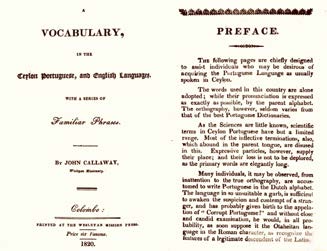
Figure 56.41: The front and first page of
John Callaway, Wesleyan Missionary, ’a
vocabulary in the Ceylon Portuguese and
English Languages, with a series of Famil-
iar Phrases,’ printed at the Wesleyan Mis-
sion Press, Colombo, 1820 (price = ’six
Fanams’).
is still used in Sinhala. The genetic legacy of the Portuguese, along with other European and Asian influences, is visible in the faces of contemporary Sri Lankans.
The impact of Portuguese music is also evident. The rhythmic foundations of Portuguese music are present in Sri Lankan Baila music, much like in Konkani Baila music in Goa.
While Portuguese Fado music often reflects nostalgia, Sri Lankan Baila has evolved into a vibrant celebration of life.
The 1960s saw a revival and modernization of Baila music in Sri Lanka, spearheaded by Wally Bastiansz (1914-1985). He transformed Baila into a lively genre by incorporating popular musical instruments. His song ’Irené Josephine’ exemplifies the fusion of traditional Baila rhythms with modern, singable lyrics.
Today, Baila is indispensable at Sri Lankan celebrations, with artists like Anton Rodrigo (d. 2008) and Mahagamage Samson Fernando (1931-1994) staple at any festive gathering.
In exploring the Portuguese-Sri Lankan ancestry, we find notable figures such as Carvalho, who served as the factor of Colombo in 1546, as documented by O. M. da Silva Cosme in his book on the Fidalgos of Kotte.
Numerous texts written by Catholic monks or priests introduce Sinhala, Tamil, and even Ceylonese Portuguese. It highlights the deep cultural interconnections established during Portuguese Ceylon, as shown in Figure 56.41.
The Portuguese period in Sri Lanka is a multifaceted chapter marked by military and political narratives and profound genetic, cultural, and social exchanges that have shaped the island’s heritage in lasting ways.
© 2024 Nico F. Declercq
The Desclergues of la Villa Ducal de Montblanc, 2nd ed., Omn., VOL. IV
The Establishment of Uduwara in the Kingdom of
Kotte by Antonio Carvalho de Silva
57.1 Uduwara: Echoes of the Douro and the Kalu Ganga
Once a formidable bastion in the defense of Kotte, Uduwara stands as a testament to the strategic military prowess of its era.
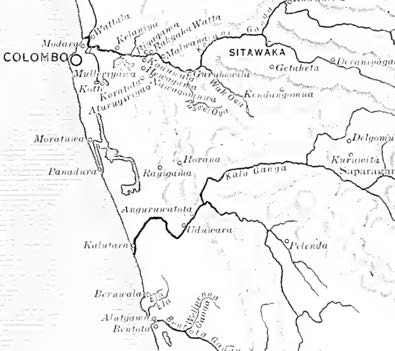
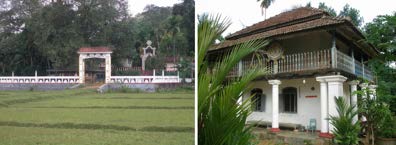
Located on the banks of the Kalu Ganga River, as depicted in Figures 57.1, 57.2, and 57.3, Uduwara is situated in what is now the Kalutara District. Historically, it marked the border between the Kingdom of Kotte and the Sitawaka kingdom. This area, visible from the sea and surrounded by notable landmarks such as Deewalkanda and Adam’s Peak, held immense strategic significance.
A solid, though incomplete, historical overview of Ceylon can be found in the work of M. G. Francis2.
The construction of a fortress at Uduwara is well-documented in historical texts. For instance, O. M. da Silva Cosme’s work,
’Fidalgos in the Kingdom of Kotte (Sri Lanka: 1505 - 1656),’3 reveals that Antonio de Silva was responsible for its construction.
This Antonio Carvalho de Silva, an ancestor of O. Shirani de Silva, died in December 1614, as recorded in the same text. Further details can be found in Chapter 61.3.
The name Uduwara likely predates the Portuguese arrival, though its etymology may reflect Greek or Portuguese influences. The Portuguese may have named it au Douro due to its resemblance to the Douro River in Portugal, highlighting similar geographical features between Kalutara’s Kalu Ganga and Porto’s Douro. The strategic importance of the region is underscored by historical battles, such as the 1595 conflict involving Diego Samara de Cunha y Rala.
During the Kotte period, Sinhalese social structures were distinct from European traditions. Honorable services were recognized with gifts like gold chains, swords, and land grants called ’Nindagam,’ often documented on copper or palm leaves. High-born individuals received courtesy titles, and ceremonial honors were highly valued. The European influence introduced new dimensions to these practices, blending Sinhalese and Portuguese traditions.
The Portuguese incursion into Sri Lanka in the early 16th century aimed to control trade routes and resources, particularly spices.
Early successes were facilitated by alliances with local rulers, but maintaining control proved challenging. Between 1560 and 1595, the Portuguese faced significant military and logistical difficulties. Despite constructing forts and strategic efforts by commanders like Dom Jerónimo de Azevedo, internal betrayals and diseases hampered their progress.
King Dharmapala’s reign (1551-1597) was heavily influenced by Portuguese support, which stabilized his rule but also created dependencies. Facing an heir crisis, Dharmapala bequeathed the Kingdom of Kotte to the Portuguese crown in 1580. Despite administrative challenges and Portuguese interference, his strategic foresight ensured the kingdom’s Christian legacy, marking a significant shift in Sri Lanka’s governance and religious landscape.
The late 16th century saw intensified Portuguese efforts to conquer Sri Lanka, notably the failed attempts to control Kandy (Can-dea). Key victories, such as installing a favorable king on Jaffna’s throne, and strategic fortifications underscored their approach.
However, continuous challenges like malaria outbreaks and local resistance complicated their efforts. This conquest period was marked by relentless military campaigns and strategic fortifications.
The Portuguese period in Kotte was characterized by political upheaval and conflict. Following the death of Rajasinghe I, Portuguese-backed leaders like Dom Joao Dharmapala Peria Bandara vied for control. Portuguese military campaigns, strategic alliances, and internal power struggles defined this era. Figures like Dom Fernando Samara de Cunha y Rala (Samarakoon), described in Chapter
56.7, played pivotal roles in these conflicts.
Dom Jerónimo de Azevedo’s tenure (1594-1612) as Portuguese governor was marked by aggressive military campaigns and stringent administration. His efforts included fortifying key locations and integrating local rulers into the colonial system. Despite initial successes, internal betrayals and persistent resistance from local forces highlighted the complexities of maintaining colonial control.
The early Portuguese presence in Sri Lanka aimed to dominate the spice trade and establish control over key regions like Kotte.
Initial alliances soon gave way to conflicts, exemplified by battles like Danture (1594). Local leaders such as Mudaliyar Dom Fernando Samara de Cunha y Rala (Samarakoon) demonstrated significant influence, leveraging military successes to build resistance against Portuguese rule.
The late 16th century was marked by mutinies and internal conflicts within Portuguese ranks, exacerbated by figures like Domingos Correa. His temporary rise to power highlighted the volatile political landscape. The Portuguese, under leaders like Diego Samara de Cunha y Rala (Samarakoon), faced ongoing challenges in maintaining control, culminating in military confrontations and strategic fortifications.
Under Dom Jerónimo de Azevedo’s governance, Portuguese exploitation of resources and administrative abuses led to widespread discontent. Military efforts to suppress revolts, such as those led by Domingos Correa, were met with persistent local resistance.
The Portuguese employed various strategies, including strategic retreats and resource destruction, to maintain their foothold.
Between 1596 and 1598, the Portuguese focused on fortifying their positions and capturing key rebels to stabilize their control.
Despite military successes, they faced continuous pressure from Sinhalese forces. Efforts by leaders like Salvador Pereira de Silva exemplified the ongoing conflict and the complexities of pacifying the island.
The early 17th century saw strategic religious and political efforts by leaders like Wimala Dharma to restore Buddhist clergy and 2M. G. Francis, ’History of Ceylon, an abridged translation of Prof. Peter Courtenay’s work’ , Mangalore, Printed at the Codialbail Press, 1913, ISBN
81-206-1406-2.
3O. M. da Silva Cosme, ’Fidalgos in the Kingdom of Kotte (Sri Lanka: 1505 - 1656), The Portuguese in Sri Lanka’ , Limited edition of 350 copies, copy no. 31 and signed by the author, published in Colombo, Sri Lanka, in 1990, by Harwoods Publishers, 38 1/1/, Dudley Senanayake Mawatha, Colombo 8, and printed by Evangel Press Limited, 490/8 Havelock Road, Colombo 6, Sri Lanka.
The Desclergues of la Villa Ducal de Montblanc, 2nd ed., Omn., VOL. IV
© 2024 Nico F. Declercq

CHAPTER 57. THE ESTABLISHMENT OF UDUWARA IN THE KINGDOM OF KOTTE BY ANTONIO
1118
CARVALHO DE SILVA
Figure 57.1: A map of South-West Ceylon during the Portuguese era, showing
Colombo, Kalutara, and Uduwara.1
Figure 57.2: Left, the author with Jeanette Verbrugge and Mrs Munasingha, in
1985, on a rock on the Kalu Ganga not far from Uduwara. Right, Kalutara, the
mouth of the Kalu Ganga River, in 1987. The author was catching some fish. (De-
clercq de Silva Archive)
enhance political influence. The death of King Dharmapala in 1597 led to the consolidation of Portuguese control. The Sinhalese response varied, with some accepting Portuguese rule while others resisted, highlighting the complexities of colonial governance.
Following King Dharmapala’s death, the Portuguese formalized control over Kotte through strategic fortifications and military engagements. Leaders like Diego Samara de Cunha y Rala (Samarakoon) played crucial roles in securing the region. Despite challenges, Portuguese efforts to establish control involved significant military and administrative strategies.
The late 16th century marked the decline of Portuguese control, characterized by internal betrayals and strategic fortifications.
Key figures like Manuel Dias exemplified the treacherous dynamics. Portuguese efforts to maintain control faced persistent local resistance and strategic setbacks.
From 1594 to 1598, Portuguese colonial authorities engaged in resource exploitation and administrative abuses, leading to significant challenges. Efforts to curb exploitation and restore order were met with mixed success. The period highlighted the difficulties of maintaining effective colonial governance.
The establishment of Portuguese provinces (1597-1612) marked significant administrative and military efforts to consolidate control.
Leaders like Fernando Samara de Cunha y Rala (Samarakoon),described in Chapter 56.7, played crucial roles in managing these territories. The period saw significant cultural and economic changes due to Portuguese colonization.
The year 1597 marked significant military and political changes following King Dharmapala’s death. Portuguese efforts to consolidate control faced severe challenges, including internal conflicts and local resistance. Key military engagements highlighted the ongoing struggle for dominance.
In 1601, the Seven Korales region became a battleground for resistance against Portuguese rule. Local uprisings and Portuguese military responses highlighted the persistent conflict. Strategic military operations and internal challenges underscored the complexities of maintaining control.
The early 16th century marked the beginning of significant Portuguese-Sinhalese interactions. Initial peaceful trade relations soon gave way to military conflicts and resistance. Key figures and events during this period highlighted the complexities of colonial encounters and local resistance.
The Portuguese period (1505-1658) left a lasting legacy on Sri Lanka’s cultural, religious, and socio-economic landscape. The introduction of Christianity, architectural influences, and new crops significantly impacted the island. Persistent resistance and strategic alliances underscored the resilience of the local population in the face of colonial dominance.
Before Portuguese arrival, Sri Lanka had a rich socio-political structure with prominent kingdoms like Kotte, Kandy, and Jaffna.
The Portuguese arrival in 1505, initially marked by trade, soon led to ambitions for dominance, significantly altering local power
© 2024 Nico F. Declercq
The Desclergues of la Villa Ducal de Montblanc, 2nd ed., Omn., VOL. IV
57.1. UDUWARA: ECHOES OF THE DOURO AND THE KALU GANGA
1119
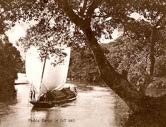
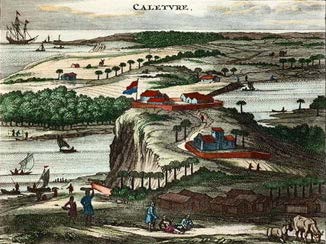
Figure 57.3: Sailboats were used to transport goods on the Kalu Ganga
River. In particular, water coming from Adam’s peak could significantly
swell the river during the Monsoon season.
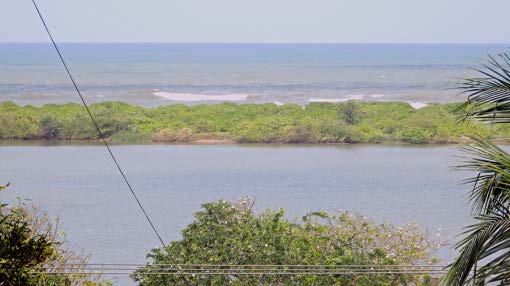
Figure 57.4: Beyond some modern buildings that do not belong at that historical spot, it’s possible to see the ocean from the Portuguese church, behind the estuary of the Kalu Ganga River, which served as a harbor to the Sri Lankans, the Portuguese, the VOC and later also the British. (2014) (Declercq de Silva Archive) Figure 57.5: A view from South to North
of Kalutara in the 17th century turned to
the VOC. The church on the slope and the
fortress at the top, with a VOC flag, are
visible.
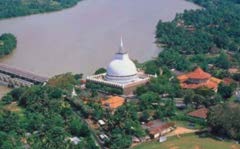
Figure 57.6: Kalutara, in modern days. The Buddhist
temple is located on the foundations of the old fortress,
and two bridges now connect the riverbanks. (Courtesy of
the Sri Lanka Tourism Development Authority). Before
the Portuguese built the fortress on that spot, there was
already a Buddhist temple.
The Desclergues of la Villa Ducal de Montblanc, 2nd ed., Omn., VOL. IV
© 2024 Nico F. Declercq

CHAPTER 57. THE ESTABLISHMENT OF UDUWARA IN THE KINGDOM OF KOTTE BY ANTONIO
1120
CARVALHO DE SILVA
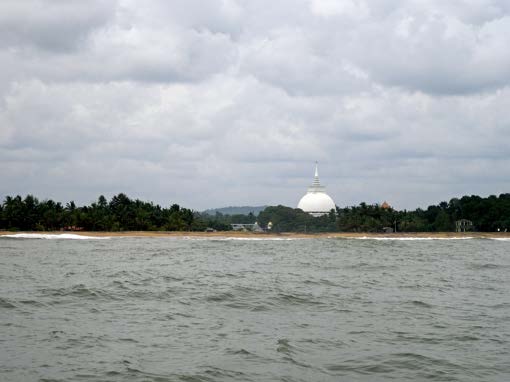
Figure 57.7: The temple of Kalutara in 2007, seen from the sea. One can easily imagine how strategic its location was while it served as a fortress. It protected the sea, the harbor, and the river. (Declercq de Silva Archive)
Figure 57.8: Different views of the Portuguese church of Kalutara, 2014. The Portuguese built
their magnificent church on a rock. Not far from this location was the Portuguese fortress, also
on a rock at the river. It is now a superb Buddhist temple. (2014) (Declercq de Silva Archive)
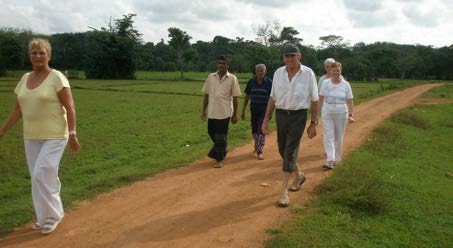
Figure 57.9: 2007, from left to right, the author’s mother, father, and foster mother. Behind
them are Mariette, David de Silva (Shirani’s Loku Appa), and our brother-in-law. This is the
road as it used to be, between rice fields, from the fortress of Uduwara to the cemetery. Along
the road is, on one side, the old home of the de Silvas, while on the other side is the temple of
Kapuella, which used to be a Portuguese chapel (2007) (Declercq de Silva Archive)
© 2024 Nico F. Declercq
The Desclergues of la Villa Ducal de Montblanc, 2nd ed., Omn., VOL. IV
57.2. UDUWARA: A CONFLUENCE OF CULTURES
1121
Figure 57.10: The temple of Kapuella. Some construction dates back to the Por-
tuguese era when it was a chapel. Unlike the fortress of Uduwara, it has been better
preserved thanks to its continuous use. It’s now a Buddhist monastery but used to
belong to a chapel on this spot. (2007) (Declercq de Silva Archive)
Figure 57.11: The harbor of Colombo.
dynamics. Their alliances and military strategies gradually eroded the autonomy of local kingdoms, particularly Kotte.
From 1610 to 1617, diplomatic and military engagements defined Portuguese efforts to consolidate control. Strategic alliances with the Dutch and local resistance highlighted the complexities of maintaining dominance. Persistent conflicts and internal strife within Kandy further complicated the political landscape. The period from 1638 to 1654 was marked by continuous Portuguese military efforts and local resistance. The Battle of Diagam in 1654 highlighted the intense struggle for control. Portuguese aggression and strategic maneuvers underscored their relentless pursuit of dominance.
The mid-17th century marked the decline of Portuguese power and the rise of Dutch influence. The Dutch, driven by commercial interests, formed alliances with local kingdoms like Kandy. The fall of Colombo in 1656 symbolized the end of Portuguese dominance and the beginning of Dutch control.
The Portuguese period in Sri Lanka (1505-1658) significantly influenced the island’s cultural and socio-economic landscape. The introduction of Christianity, architectural styles, and new crops left a lasting legacy. The period is remembered for both its cultural contributions and the intense local resistance against colonial rule. The complex interactions between colonial powers and local populations during this era continue to shape the historical narrative of Sri Lanka.
57.2 Uduwara: A Confluence of Cultures
The locality of Uduwara likely bore its name long before the arrival of the Portuguese, although concrete evidence remains elusive, save for a potential link to the Greeks as elaborated in Chapter 52. The term ’Uduwara’ might have resonated with the Portuguese as ’au Douro,’ meaning ’at the Duro River.’ The Douro River, known as Doura or Duero, is the most significant river in Portugal, flowing from Spain to Porto, originating in the Extremadura, the cradle of the de Silva family. The word Extremadura signifies ’at the extremity of the Duro River.’ To the Greeks, this term could have implied a vantage point for observing the river, as discussed in Chapter 52.
In Kalutara, depicted in Figures 57.5, 57.6, 57.7, 57.8, and 57.2, at the mouth of the Kalu Ganga River—which flows through Uduwara—there remains a stretch of beach known as Cálido beach, shown in Figure 57.4. The term Cálido translates to ’hot’ or
’warm’ in Spanish, aptly describing the beach strip that offers no respite from the intense sun in Kalutara. A similar expanse of land exists at the mouth of the Douro River in Porto. However, storms and floods occasionally modify the landscape in Kalutara and its estuary. For instance, the appearance in 2021 differed significantly from that in 1985 or 2007.
There is little doubt that the Portuguese would have noticed the striking similarities between the Kalu Ganga’s mouth and that of the Douro in Porto. It is plausible that they nicknamed the river after the Douro and perhaps named Uduwara in its honor. Further research is needed to substantiate this hypothesis, though an older Greek origin remains plausible, as illustrated in Chapter 52.
The renowned Battle of Diego Samara de Cunha y Rala (Diego Samara de Cunha y Rala (Samarakoon)) in 1595 at Uduwara took place on and around the rock known as ’Deewalkanda.’ This rock lies behind the Kapuella temple, which once housed a Portuguese chapel (hence its name), approximately 800 meters from the Fortress of Uduwara and a few hundred meters from the cemetery where Shirani de Silva’s parents are buried. The area is illustrated in Figures 57.9 and 57.10.
This historical tapestry, woven from Portuguese, Greek, and local threads, enriches the narrative of Uduwara, inviting further exploration and scholarly inquiry.
57.3 Honors, Hierarchies, and Social Dynamics in Sinhalese Society During
the Kotte Period
In the study of the Sinhalese social structure during the Kotte period of Ceilao, it is evident that the system of honors and rewards diverged significantly from European traditions. Unlike European societies, which established orders of knighthood or formalized groups of notable men under a common emblem, the Sinhalese approach to recognizing service to the king or state was more individualistic. Distinguished service was rewarded with tokens such as gold chains, jewels, swords, and land assignments. These rewards were typically temporary, reverting to the crown upon the recipient’s death unless explicitly designated as hereditary.
The Desclergues of la Villa Ducal de Montblanc, 2nd ed., Omn., VOL. IV
© 2024 Nico F. Declercq
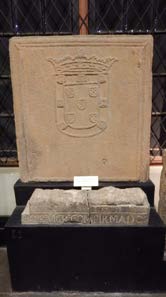
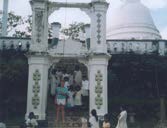
CHAPTER 57. THE ESTABLISHMENT OF UDUWARA IN THE KINGDOM OF KOTTE BY ANTONIO
1122
CARVALHO DE SILVA
Figure 57.12: A slab with the Portuguese Royal emblem from the fort
of Menikkadavara, 1505-1658. The National Museum of Sri Lanka,
Colombo, August 8, 2014. (Declercq de Silva Archive)
Figure 57.13: 1987, the author at Malasne Rajamaha Viharaya tem-
ple and school in Wadduwa, between Uduwara and Kalutara. (Declercq
de Silva Archive)
Figure 57.14: A Pilgrimage to Sri Padha during a rainy night and two days in August 2007. A picnic during the night (tea, bread, butter, jam) at the top of Adam’s Peak was an unforgettable event. The person wearing a red sweater is Santos de Silva (’O. Santa de Silva’), a patrilineal descendant of Juan Carvalho de Silva and the author’s brother-in-law. Upon sunrise at Adam’s Peak, the author respected Lord Buddha’s footprint and rang the bell. Then, the world was viewed from the top of Adam’s Peak just after sunrise. Although the author climbed Sri Pada several times, this was the only time the scene was so beautiful. (Sri Lanka, 2007) (Declercq de Silva Archive)
© 2024 Nico F. Declercq
The Desclergues of la Villa Ducal de Montblanc, 2nd ed., Omn., VOL. IV
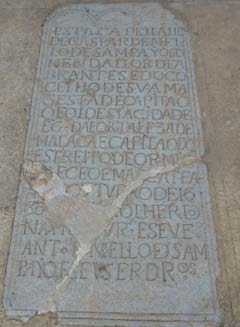

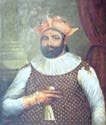
57.3. HONORS, HIERARCHIES, AND SOCIAL DYNAMICS IN SINHALESE SOCIETY DURING THE
KOTTE PERIOD
1123
Figure 57.15: Grave inside the Saint Augustin Church
(established in 1602) at Goa Velha, of Gaspar de Mello
in 1636. The inscription mentions that he was a Major-
Captain at Sri Lanka (’Celho’) and Malaca. (Goa, India,
2019) (Declercq de Silva Archive)
Figure 57.16: The author’s parents, Maurice Declercq
and Nelly Maria Vangheluwe were in Dambulla in the
Northern hills of Sri Lanka in 2007. (Declercq de Silva
Archive)
Figure 57.17: A visit to the Eastern University of Sri Lanka, at
Batticaloa, August 9, 2019. (Declercq de Silva Archive)
Figure 57.18: Sydney Harbor, in 2010. The port is comparable to
the one at Trincomalee in Sri Lanka and is suitable for deep vessels.
(Declercq de Silva Archive)
Figure 57.19: King Sri Wickrama Rajasinghe, the last King of Kandy (1798-1815).
He was the last Sri Lankan King in Sri Lanka but was not the King of Sri Lanka
because Sri Lanka as a nation did not exist. The National Museum of Sri Lanka,
Colombo, August 8, 2014. (Declercq de Silva Archive)
The Desclergues of la Villa Ducal de Montblanc, 2nd ed., Omn., VOL. IV
© 2024 Nico F. Declercq
CHAPTER 57. THE ESTABLISHMENT OF UDUWARA IN THE KINGDOM OF KOTTE BY ANTONIO
1124
CARVALHO DE SILVA
The land grants, known as ’Nindagam,’ were particularly significant as they conferred both income and social status. These grants were meticulously documented on copper sheets or palm leaves, authenticated by the royal signature Sri. The falsification of such documents was a capital offense, underscoring their importance. The recipient, known as the Rala or Lord, governed the village, maintaining order and overseeing agricultural and economic activities.
In Sinhalese society, addressing high-born individuals by their given name was considered disrespectful. Courtesy titles were used, a practice noted by Robert Knox during his captivity in Ceilao. This respect for names extended to the conferral of honorific titles by the king, reflecting the individual’s merits and achievements in various fields. The ceremonial bestowment of a golden thread through the hair by the king symbolized the highest honor. Lesser honors used cheaper materials and were presented by royal officers.
European influence introduced new dimensions to the system of titles and honors in Sinhalese society. The case of Edirille Arachchi’s son, baptized as Domingos Correa, illustrates this blend of traditions. Initially known by his father’s name and rank, Correa’s military successes earned him the title of Mudaliyar. His valor against Wimala Dharma Surya’s forces led to the honorific Wikramasinha (Blessed Lion), granted by Dharmapala. However, Correa’s ambitions extended beyond these honors. He ultimately adopted the royal title Edirille Bandara, asserting his status in the presence of an army. This amalgamation of Sinhalese and Portuguese practices created a unique socio-political environment where traditional and colonial influences coexisted, shaping the identities and ambitions of local leaders.
The Rodi, often marginalized in historical narratives, played a significant role in the social fabric of Ceilao. P. E. Peiris describes them inaccurately as people of the dirt, a term reflecting his misunderstanding of their historical status. Originally part of the royal court, the Rodi were outcast after a conquest, placing them closer to the status of Roman slaves rather than a despised caste.
Restricted from engaging in agriculture, carrying water, or entering places of worship, the Rodi lived in isolated hamlets, surviving through begging, prostitution, and theft. Despite their untouchable status, higher castes interacted with them, particularly in matters of prostitution, highlighting societal hypocrisy.
The Rodi’s ostracism was severe; they were required to avoid public roads when others were present to prevent any chance of contact. Their shadows were believed to taint food, rendering it unfit for consumption. Their only permitted work was dealing with cattle carcasses, and from the hides, they made ropes. The tragic story of Pusella Mudaliyar’s wife, condemned to join the Rodi and choosing to drown herself, illustrates the harsh realities faced by those cast out of mainstream society.
Peiris idealizes Sinhalese Buddhist courage, rooted in their belief in reincarnation. For Sinhalese Buddhists, death was merely a transition to another life, with the quality of the next life determined by one’s karma. This belief system fostered a relative fearless-ness towards death. The king held the exclusive power to impose the death penalty, but a fate worse than death was being rendered casteless. The caste system in Ceilao was less rigid than in other South Asian contexts, functioning more as tribal associations than strict hierarchies. The king could not elevate an individual to a higher caste, but he could ostracize them, stripping them of their caste identity. This punishment was considered more severe than death, emphasizing the importance of social belonging over individual status.
57.4 Military Campaigns and Political Intrigue: Portuguese Strategies in Kotte
and Beyond
The Portuguese incursion into Sri Lanka in the early 16th century marked the beginning of a protracted period of conflict, cultural exchange, and political maneuvering that significantly shaped the island’s history. The initial Portuguese expeditions were driven by the lucrative prospects of establishing trade relations, particularly for spices such as cinnamon and pepper. The island’s strategic position along the maritime routes between Europe and Asia, coupled with its wealth in spices and other valuable commodities, rendered it a highly coveted territory for colonial powers.
The Portuguese commenced their conquest by seizing key coastal areas, erecting forts, and forging alliances with local rulers. These initial efforts laid the foundation for their expanding influence over the island. Their success was partially attributed to alliances with local chieftains and kings, though these alliances were often precarious and motivated by immediate benefits rather than enduring loyalty.
The period between 1560 and 1595 was marked by significant challenges for the Portuguese, particularly under the command of Dom Jerónimo de Azevedo. Despite his competence and determination, Azevedo’s efforts were hampered by insufficient resources.
His request for relief from the Viceroy was denied, compelling him to persevere with limited support. Key figures like Simao Pinhao played crucial roles in containing the enemy, though these efforts were insufficient for decisive victories. The return of Simao Correa, who had initially defected but later repented and was reintegrated into Portuguese ranks, revitalized military campaigns and led to frequent attacks and counter-attacks along the borders.
In 1599, the construction of a fort in Menikkadawara represented a strategic initiative to facilitate operations against Kandy.
However, the Portuguese efforts were complicated by internal betrayals and shifting alliances. Pusella Mudaliyar’s desertion to the Portuguese and his subsequent execution by Wimala Dharma’s forces exemplified the volatile political landscape. Secret correspondence between Dom Jerónimo de Azevedo and Wimala Dharma highlights the intricate political maneuvers of the period.
Wimala Dharma’s proposal to support Simao Pinhao’s claim to the lowlands in exchange for military cooperation, and the planned clandestine exchange of proxies and oaths of fidelity, underscore the ruthless tactics employed by both parties in their quest for power.
The Portuguese faced numerous obstacles in their attempts to advance to Kandy. The region of Maha Oya, notorious for its unhealthy conditions, posed significant health risks. An outbreak of malaria decimated the garrison at Etgalatota, overwhelming the hospital in Colombo with patients. Despite these setbacks, the Portuguese remained resolute in their goal to establish control over Kandy, viewing it as a critical strategic objective.
Dom Jerónimo de Azevedo’s leadership during this period was multifaceted, encompassing diplomacy, reconstruction, and military strategy. He successfully rebuilt previously destroyed areas and fortified key locations to secure Portuguese interests. His strategic acumen was demonstrated through the appointment of commanders to control various territories and the construction of garrisons and securing of rivers to maintain supply lines and transportation routes. The construction of a wooden fence at Ruanwella and a fortress at Uduwara, along with the reinforcement of Galle fort initially built in 1589, exemplify his focus on securing vital waterways and controlling the surrounding Korale.
The execution of Domingos Corea, also known as Edirille Rala, in 1595, marked a significant event in the Portuguese consolidation of power. Captured and interrogated by Dom Jerónimo, Corea remained unyielding even after a 40-day postponement, leading to his public execution on July 14, 1595. Conducted with elaborate ceremonies befitting Corea’s rank, the execution was intended as
© 2024 Nico F. Declercq
The Desclergues of la Villa Ducal de Montblanc, 2nd ed., Omn., VOL. IV
57.5. KING DHARMAPALA’S STRATEGIC ALLIANCE AND THE DONATION OF KOTTE TO
PORTUGAL
1125
a deterrent to others who might consider betraying the Portuguese. Corea’s calm demeanor during the interrogation and execution underscored the complex interplay of honor, loyalty, and resistance that characterized this turbulent period in Sri Lanka’s history.
The Portuguese era in Sri Lanka was thus defined by a series of military challenges, strategic alliances, and political maneuvers, all of which played crucial roles in the broader context of colonial ambitions and local resistance. The enduring impact of this period is evident in the historical, cultural, and socio-political fabric of Sri Lanka.
57.5 King Dharmapala’s Strategic Alliance and the Donation of Kotte to Por-
tugal
King Dharmapala’s ascension to the throne of Kotte in 1551 occurred during a tumultuous period marked by both internal dissension and external threats. His reign was pivotal as he sought to consolidate his power amidst the complexities introduced by Portuguese influence, which had begun to take root in Sri Lanka in the early 16th century. The strategic alliance with the Portuguese provided Dharmapala with much-needed military and political support, stabilizing his reign but also creating new dependencies and dynamics that would shape the kingdom’s future.
By the late 1570s, King Dharmapala faced a critical issue: the absence of an heir. This personal dilemma was compounded by broader political and religious considerations. Educated by Franciscan missionaries and a devout Christian, Dharmapala believed that only the Portuguese could secure the continuation of his Christian legacy on the throne. His gratitude for their support and disdain for local factions that had rebelled against him further motivated his decision to donate the Kingdom of Kotte to the Portuguese crown.
On August 12, 1580, Dharmapala formally arranged to transfer the kingdom to Dom Henrique of Portugal and his heirs, an arrangement accepted by the capitao of Colombo, Manoel de Souza Coutinho. This donation was not an act of desperation but a strategic move to ensure the kingdom’s future under Christian rule. The death of Dom Henrique in 1583 necessitated an adjustment, and on November 4, 1583, the donation was restructured in favor of King Felipe of Portugal and Spain and his successors. This act was publicly ratified, securing the transfer of power upon Dharmapala’s death, barring the birth of any heirs.
Throughout his reign, King Dharmapala faced significant challenges in maintaining control over the kingdom’s financial resources. He protested against external interference with his treasury, insisting that trade proceeds be securely managed under strict supervision.
His administrative challenges were compounded by Portuguese officials who often acted autonomously, undermining his authority.
In response, Dharmapala proposed establishing a select cabinet comprising a Sinhalese representative, a Portuguese appointee by the King of Portugal, and a Franciscan, aiming to balance power and ensure the execution of his orders.
Dharmapala’s appeals to King Felipe II of Spain (also King Philip I of Portugal) were persistent, seeking protection against the abuses and exploitation by Portuguese officials in Sri Lanka. He requested the appointment of a trustworthy Portuguese secretary and capitao as his guardians, individuals independent of the local Portuguese authorities in Colombo. These measures were intended to protect his interests and maintain his sovereignty amidst the growing influence of Portuguese settlers and their aggressive proselytizing efforts, which created significant friction within the kingdom.
Despite the numerous challenges and opposition he faced, King Dharmapala’s reign was marked by his strategic foresight and determination to secure his legacy. The donation of the Kotte Kingdom to the Portuguese, while controversial, was a calculated move to ensure the continuity of Christian rule and reflect his profound gratitude and strategic acumen. Dharmapala’s reign left an indelible mark on the history of Sri Lanka, demonstrating a complex interplay of personal, political, and religious factors that shaped the kingdom’s trajectory during a critical period.
57.6 From Conquest to Control: Portuguese Expansion in Ceilao
In the late 16th century, the Portuguese embarked on an ambitious endeavor to conquer Ceilao, now known as Sri Lanka. Under directives from Lisbon and Madrid, their primary objectives were to establish dominance over the island and convert local rulers to Christianity, thereby facilitating easier control. This marked the beginning of a series of expeditions characterized by both military engagement and strategic alliances.
The Portuguese initially attempted to control the Kingdom of Kandy in 1591 by installing a Christian client, D. Filipe Yamasinha, on the throne. This attempt, however, proved unsuccessful, reflecting the challenges the Portuguese faced in exerting influence through local proxies rather than direct rule. Despite this setback, the Portuguese achieved a significant victory in Jaffna the same year. André Furtado de Mendonça successfully placed Ethirimanna Cinkam, a king favorable to the Portuguese, on the throne, thus securing their influence in the northern part of the island.
The political landscape of Ceilao underwent a significant transformation in 1593 with the death of King Rajasinha I of Sitawaka.
As a principal adversary of Kotte, his death removed a major obstacle to Portuguese expansion. Consequently, the Portuguese launched new military campaigns to consolidate their power. In 1594, Pero Lopes de Sousa led an expedition to conquer Kandy and install Dona Catarina Kusumasanadevi, sister of D. Filipe Yamasinha, on the throne. This campaign culminated in the disastrous Battle of Danture, reinforcing the position of Vimaladharmasuriya, the Buddhist King of Kandy, who subsequently married Dona Catherine.
Between 1594 and 1612, Dom Jeronimo de Azevedo served as the general commander in Ceilao, overseeing extensive efforts to establish and secure Portuguese control. This period saw the construction of numerous fortifications, including key fortresses in Ruwanwella, Galle, and Uduwara, designed to maintain control and block access to hostile regions, particularly Kandy. By 1597, strongholds were established in various strategic locations, marking a robust network of Portuguese fortifications across the island.
The death of King Dom Joao in 1597 led to the formal integration of the Kingdom of Kotte into the Catholic Monarchy of H.M.
Felipe II. This political shift spurred further Portuguese efforts to reclaim lost territories and conquer additional kingdoms. Following the conquest of the Four and Seven Corales, additional fortifications were constructed in strategic locations, further stabilizing the newly conquered territories and impeding access to Kandy.
During this period, a significant administrative effort was undertaken to inventory the lands of Kotte. The first register, compiled in 1599, documented the ownership of farms, reflecting the Portuguese endeavor to systematically manage and control the agricultural resources of the island. This process continued until 1614-1617, marking a critical step in consolidating Portuguese administrative control.
The Portuguese conquest of Ceilao must be viewed within the broader context of their colonial ambitions in Asia. Driven by the goals of expanding their empire, controlling lucrative trade routes, and spreading Christianity, the Portuguese employed both The Desclergues of la Villa Ducal de Montblanc, 2nd ed., Omn., VOL. IV
© 2024 Nico F. Declercq
CHAPTER 57. THE ESTABLISHMENT OF UDUWARA IN THE KINGDOM OF KOTTE BY ANTONIO
1126
CARVALHO DE SILVA
military and diplomatic means to exert their influence over Ceilao. Their period of rule left a lasting legacy, characterized by the introduction of Christianity, the establishment of fortifications, and significant cultural exchanges. Despite their eventual decline, the Portuguese impact on the island’s history is undeniable, influencing subsequent colonial and local rulers.
The transition from Portuguese to Dutch rule in the mid-17th century was shaped by the foundations laid during the Portuguese period. The fortifications and administrative systems established by the Portuguese were adapted and expanded by the Dutch, continuing the legacy of European colonial influence on the island. Thus, the Portuguese conquest of Ceilao stands as a pivotal chapter in the island’s history, offering rich insights into the dynamics of early colonial ambitions and their enduring effects on Sri Lanka’s historical trajectory.
57.7 Conflict and Diplomacy: The Portuguese and the Kingdom of Kotte
The early interactions between the Portuguese and the Kingdom of Kotte initiated a period of significant political upheaval and conflict, deeply influencing the island’s historical trajectory. Rajasinghe I, also known as Tikiri Bandara, emerged as a pivotal figure during this era, his rule extending over Sitawaka, Raigama, and Kandy. The death of Rajasinghe I in 1592 marked a crucial turning point, precipitating a succession crisis that was a frequent occurrence in Sri Lankan monarchies.
In the wake of Rajasinghe I’s demise, Dom Joao Dharmapala Peria Bandara of Kotte, with substantial Portuguese backing, positioned himself to seize power. This period was characterized by intricate power struggles and shifting allegiances. Historian O. M.
da Silva Cosme details the instrumental role the Portuguese played in shaping the political landscape of Sri Lanka during these formative years.
The Portuguese, intent on consolidating their influence, saw the capitao of Colombo, Pedro Homem Pereyra, dispatch a reconnaissance squadron under Dom Fernando Samara de Cunha y Rala, also known as ’Diego Samara de Cunha y Rala (Samarakoon),’ into Alutkuru Korale. This squadron, consisting of 400 lascarins, aimed to assess the political atmosphere and secure allegiances. Diego Samara de Cunha y Rala (Samarakoon)’s efforts bore fruit as he persuaded two influential Mudaliyars, Panniki and Kuruppu, to support Dharmapala.
Simultaneously, the ascension of Nikapitiya Bandara to the throne of Sitawaka further complicated the political dynamics. Skirmishes ensued, with Diego Samara de Cunha y Rala (Samarakoon) securing victories at Orutota and Alutkuru Korale. However, the Sitawaka army, led by Aritta Kivendu Perumal, successfully repelled the combined force of lascarins and Portuguese. Notable casualties included Wickramasinghe, also known as Diogo de Silva, while the Portuguese commander Francisco de Silva Castelhano narrowly escaped. Perumal’s ambitions grew, leading him to propose marriage to the young King of Sitawaka’s sister, which incited internal friction within the royal family. Sensing the danger, Perumal retreated to Negombo, aiming to capture it from the Kotte army.
Despite setbacks, Aritta Kivendu Perumal remained ambitious, seeking to become the new King of Sitawaka through an alliance with the Portuguese. He kidnapped Francisco de Silva Castelhano under the guise of a hunting expedition and used him as leverage to negotiate with the Portuguese, proposing their assistance in conquering Sitawaka in exchange for Castelhano’s release. Pereyra agreed to this plan, formally recognizing Perumal as the new King of Sitawaka, bestowing upon him the royal name Jayavira Bandara.
This alliance faced immediate challenges as an opposing Sitawaka army attacked, forcing King Jayavira Bandara to seek refuge in Colombo on September 1, 1593. Desperate, Jayavira Bandara pledged total allegiance to Dharmapala of Kotte, vowing to support Kotte in reclaiming its territories and conquering Sitawaka. This commitment catalyzed a concerted military effort, culminating in the reconquest of Sitawaka by the end of 1593, marking a significant triumph for Portuguese Ceilao.
The Portuguese period in the Kingdom of Kotte was thus marked by complex power struggles and strategic alliances. The death of Rajasinghe I triggered a series of events that reshaped Sri Lanka’s political landscape. Through a combination of military prowess and diplomatic maneuvering, the Portuguese significantly influenced these transformations. Key figures such as Dom Fernando Samara de Cunha y Rala, Aritta Kivendu Perumal, and Dom Joao Dharmapala Peria Bandara played central roles, each striving for dominance in this tumultuous era. This narrative underscores the intricate dynamics of succession and power during the Portuguese period in Sri Lanka, offering a detailed examination of the significant developments that defined this chapter in the island’s history.
57.8 Dominion and Dissent: Dom Jerónimo de Azevedo’s Governance in Sri
Lanka
The Portuguese presence in Sri Lanka during the late 16th and early 17th centuries marks a significant period of military, political, and cultural interactions, epitomized by the leadership of Dom Jerónimo de Azevedo. His tenure, spanning eighteen years from December 1594, when he arrived in Colombo to replace Pero Lopes de Sousa as the Portuguese governor, was characterized by aggressive military campaigns and stringent administrative measures that deeply influenced the trajectory of Sri Lankan history.
Dom Jerónimo de Azevedo’s arrival in Colombo marked the beginning of a new chapter in the Portuguese strategy on the island.
Immediately after his arrival, Azevedo launched a campaign towards Sitawaka, a city that had once been the capital of King Raja Sinha I but was now desolate. This campaign was not merely a military maneuver but also a symbolic act of retribution and consolidation. The partially restored city was intended to host King Dharmapala, who accompanied the Portuguese forces. This set the tone for Azevedo’s rule, characterized by severe retribution and calculated strategies to consolidate Portuguese power. Notably, Diego Samara de Cunha y Rala (Samarakoon), a key local figure, was redirected from fort-building in Galle to lead operations against the resistance led by Wimala Dharma, although his success was limited.
In consolidating Portuguese control, Azevedo’s administration was marked by significant events such as the capture of the young king Nikapitiya Bandara, who was baptized as Dom Felipe and sent to Goa for education. This strategy of integrating local rulers into the Portuguese colonial framework exemplified the broader effort to establish dominance over the island. Additionally, the Portuguese reinforced their presence through fortifications and by requesting additional troops. For instance, recognizing the threat posed by King Wimala Dharmasuriya of Kandy, Colombo’s capitao sought reinforcements from Goa. Key figures like Antonio Carvalho de Silva and other Portuguese settlers were instrumental in these efforts, particularly in the construction of a fortress at Uduwara around 1600.
The Battle of Danture stands out as a pivotal event during Azevedo’s tenure. In early 1594, a significant military reinforcement led by Pero Lopez de Souza arrived from Goa, bolstering the Portuguese forces with 1200 seasoned soldiers and fidalgos. This force aimed to subdue King Wimala Dharmasuriya and was supported by local allies, including Jayavira (formerly Aritta Kivendu
© 2024 Nico F. Declercq
The Desclergues of la Villa Ducal de Montblanc, 2nd ed., Omn., VOL. IV
57.9. FROM INVASION TO RESISTANCE: THE PORTUGUESE CAMPAIGNS IN SRI LANKA
1127
Perumal) and his 15000-strong army. Despite initial advancements through challenging terrain and adverse weather, the Portuguese campaign faced critical setbacks. Internal betrayals and the desertion of mercenary forces, exacerbated by the monsoon rains, severely hampered their progress.
A decisive turning point occurred when Wimala Dharmasuriya offered the crowns of Kotte and Sitawaka to Jayavira, disrupting Portuguese plans. The discovery of Jayavira’s betrayal led to his execution by Portuguese soldiers, resulting in the disintegration of their allied forces and leaving the Portuguese militarily vulnerable. This betrayal significantly weakened their position and exemplified the complex interplay of local politics and colonial ambitions.
Azevedo’s rule left a profound impact on Sri Lanka, marked by both temporary control and significant resistance. His military policies and stringent administration sowed fear and established a fragile dominance. The Portuguese presence during his leadership brought about notable cultural and social changes, including the spread of Christianity and the introduction of European administrative practices. The integration of local rulers into the colonial system and the construction of fortifications had lasting effects on Sri Lankan society.
Historians, including P.E. Peiris, provide critical insights into this era, highlighting both the accomplishments and the brutal methods employed by the Portuguese. The period of Dom Jerónimo de Azevedo’s leadership remains a complex chapter in Sri Lankan history, reflecting the broader dynamics of colonial expansion and indigenous resistance.
In conclusion, Dom Jerónimo de Azevedo’s tenure as the Portuguese governor in Sri Lanka was characterized by aggressive expansion, consolidation, and conflict. His military campaigns, administrative strategies, and significant events such as the Battle of Danture shaped the Portuguese influence on the island. This examination of his leadership offers a nuanced understanding of the complexities of colonial rule and its enduring legacies in Sri Lankan history.
57.9 From Invasion to Resistance: The Portuguese Campaigns in Sri Lanka
The Portuguese first set foot in Sri Lanka in the early 16th century, driven by the allure of controlling the lucrative spice trade.
Their arrival marked the beginning of a complex period of interaction, conflict, and cultural exchange that would shape the island’s history for centuries. The Kingdom of Kotte, due to its strategic location and political significance, became a central focus for the Portuguese. Initially, they forged alliances with local rulers, but tensions soon escalated as their ambitions grew.
A pivotal event in this period was the Battle of Danture on October 5, 1594. Faced with dwindling support, de Souza marched with 300 loyal lascarins towards Gannoruwa to secure provisions. However, a detachment of 150 Portuguese and lascarins sent to Halloluwa encountered unexpected resistance, leading to the infamous confrontation at Danture. This battle, also known as the Battle of Gannoruwa, is remembered for its political implications rather than its military tactics. Outnumbered and ill-equipped, the Portuguese forces, led by de Souza, succumbed to the larger Kandyan army, resulting in a decisive defeat and the capture of de Souza and his son.
Following the Portuguese defeat, Wimala Dharmasuriya’s strategic marriage to Queen Dona Catherina, after hijacking her at Balana (see also Chapter 56), marked a pivotal shift in power. This union established a new dynasty and centralized resistance against Portuguese dominance in Senkadagala. The defeat at Danture sparked widespread revolts across Sri Lanka, revealing the underlying dissatisfaction with European interference. The retreat of Portuguese forces to Colombo and the subsequent reorganization under new commanders indicated the beginning of a prolonged struggle for control.
Local leaders played a crucial role during this period. Mudaliyar Dom Fernando Samara de Cunha y Rala (Samarakoon) demonstrated significant influence and agency in the resistance against Portuguese rule through his discovery of Rajasinghe’s treasure and strategic maneuvers. Similarly, Domingos Correa leveraged the recovered treasures to build a formidable lascarin army, rising to power as Wickramasinghe. These figures underscored the shifting power dynamics and the importance of local alliances in the broader context of resistance.
The broader implications of the Portuguese defeat at Danture are profound. Had the Portuguese succeeded, Sri Lanka’s history might have been markedly different, potentially precluding Dutch and British colonization. The immediate aftermath of the Portuguese defeat saw a temporary calm, attributed to the population’s satisfaction with the existing power balance. However, subsequent revolts financed by stolen treasures and led by figures like Akaragama Appuhamy highlighted ongoing instability and the complex interplay of local and foreign interests.
In response to the crisis, Don Jeronimo de Azevedo arrived in Colombo, shown in Figure 57.11, on Christmas Eve, 1594, with substantial reinforcements, marking the beginning of a new phase in the Portuguese campaign in Sri Lanka. His experience as capitao-major of the Malabar coast brought renewed vigor to the beleaguered Portuguese forces. The arrival of Azevedo and the reorganization of Portuguese forces signaled a continued commitment to maintaining their foothold in Sri Lanka. The ensuing years saw further conflicts and shifting alliances as both local and foreign powers vied for control of the island.
The Portuguese period in Sri Lanka was marked by a series of conflicts, strategic marriages, and shifting alliances that left a lasting impact on the island’s history. The complex interplay of local resistance and foreign ambition during this time set the stage for the subsequent phases of colonial influence, shaping the cultural and political landscape of Sri Lanka for generations to come. The narrative of the Portuguese period in Sri Lanka provides insights into the intricate dynamics that characterized this era, illustrating the profound and lasting effects of early European colonial endeavors on the island’s history.
57.10 The Rise and Fall of Domingos Correa: Political Intrigue and Military
Struggle in Late 16th Century Sri Lanka
During the late 16th century, Sri Lanka’s history was profoundly shaped by internal conflicts and political maneuvering, particularly involving the Portuguese colonial forces and local leaders. The Portuguese presence on the island was characterized by strife and power struggles, which were intensified by mutinies among their soldiers and the emergence of key local figures such as Domingos Correa. This narrative explores the tumultuous period marked by Correa’s rise, his subsequent coup, and eventual downfall, providing a detailed examination of the political and military dynamics that defined this era.
In 1595, the Portuguese forces in Sri Lanka were beset by mutinies, creating a challenging environment for Commander Azevedo, who struggled to maintain discipline. The mutinies stemmed from a combination of dissatisfaction with leadership, harsh conditions, and conflicts over resources and authority. To quell the unrest, Azevedo enlisted the help of Domingos Correa and the lascarins, local soldiers allied with the Portuguese. This decision, while effective in restoring order, further alienated Azevedo from his men, as the reliance on local forces exacerbated existing tensions within the Portuguese ranks.
The Desclergues of la Villa Ducal de Montblanc, 2nd ed., Omn., VOL. IV
© 2024 Nico F. Declercq
CHAPTER 57. THE ESTABLISHMENT OF UDUWARA IN THE KINGDOM OF KOTTE BY ANTONIO
1128
CARVALHO DE SILVA
Domingos Correa’s military prowess became evident during his campaign in the strategically vital region of the Four Korales, where he successfully captured a significant portion of the Prince of Uva’s army. This victory not only showcased Correa’s capabilities as a commander but also elevated his status among both the local populace and the Portuguese. Correa’s ability to navigate the complex political landscape, balancing his loyalty to the Portuguese with his ambitions, positioned him as a formidable leader and set the stage for his dramatic rise to power.
The political landscape of Sri Lanka was dramatically altered on November 17, 1595, when Correa declared himself King at Atulugama, near the Portuguese fortress of Menikkadawara. This bold coup d’état challenged the existing power structures and triggered a series of military confrontations. In the aftermath, Fernando Samara de Cunha y Rala, known as Diego Samara de Cunha y Rala (Samarakoon), emerged as a crucial figure in responding to Correa’s declaration. A staunch pro-Portuguese leader with deep familial and social ties to the Portuguese, Diego Samara de Cunha y Rala (Samarakoon) played a pivotal role in safeguarding Portuguese interests and protecting King Dharmapala and his Queen from Correa’s advancing forces.
Diego Samara de Cunha y Rala (Samarakoon) led the efforts to evacuate the royals and consolidate Portuguese power, which involved a strategic retreat from Menikkadawara and Ruanwella to Sitawaka and eventually to Colombo. The evacuation was fraught with challenges, including blocked roads and fierce fighting. However, with the support of local allies like Appuhamy from the Rayigam Korale, the evacuation was successfully executed. The situation reached a critical point at Horana, where timely reinforcements led by Diego Samara de Cunha y Rala (Samarakoon)’s brother, Diego Diego Samara de Cunha y Rala (Samarakoon), repelled Correa’s forces, ensuring the royals’ safety. To prevent further incursions, a fortress was constructed near the rock at Deewalkanda, in Chapter 56, by Antonio Carvalho de Silva, playing a key role in securing the area.
The Royals were therefore saved at Uduwara. Correa’s armies were stopped there, and on their route more back to Colombo, further help would be offered by Fernando Samara de Cunha y Rala (Samarakoon) along the road from Uduwara to Colombo. This road may have passed by Wadduwa in Figure 57.13, depending on the road system at that time.
Despite his initial successes, Correa’s fortunes began to wane as he faced significant defeats in subsequent military engagements.
His forces suffered losses at Beligal Korale and Udugama, losing valuable resources and further weakening his position. The capture of Correa’s brother Simao marked a turning point, forcing Correa to retreat to Senkadagala. His downfall was ultimately sealed by his betrayal by a local woman, leading to his capture by Diego Samara de Cunha y Rala (Samarakoon). Correa was taken to Colombo and executed on July 14, 1596, marking the end of his tumultuous reign and the restoration of Portuguese control.
Correa’s execution did not fully resolve the mysteries of his reign, particularly the locations of hidden treasures looted from churches.
Nonetheless, Fernando Samara de Cunha y Rala (Samarakoon) emerged as a celebrated hero, recognized for his role in capturing Correa and restoring order. His efforts solidified his status as a key military and political figure in the region, illustrating the intricate and often violent interplay of local and colonial forces in shaping Sri Lanka’s history during this period.
57.11 Dom Jerónimo de Azevedo’s Governance: Exploitation, Rebellion, and
Retreat
The period of Portuguese rule in Sri Lanka, particularly under the governance of Dom Jerónimo de Azevedo from 1594 to 1612, was characterized by profound exploitation and systemic corruption, which significantly impacted the local economy and exacerbated tensions between the Portuguese and the Sinhalese.
Dom Jerónimo de Azevedo, alongside his capitao, Tomé de Sousa de Arronches, exerted tight control over the local economy by appointing their allies to critical positions such as factors and escrivaes or scribes. This manipulation ensured that the considerable revenues, estimated to be around 900000 cruzados annually, were siphoned off for personal enrichment rather than supporting the kingdom’s public or military expenses. Azevedo and his associates monopolized the areca nut trade, a lucrative sector that could rival the import duties in revenue, channeling its profits exclusively to a handful of Portuguese officials. This economic exploitation diverted funds from essential public services, leading to widespread discontent and destabilization among the local populace.
The local Sinhalese population, who initially saw potential cooperation with the Portuguese, found themselves increasingly marginalized and oppressed due to the administration’s corruption. The diversion of resources intended for public and military use, coupled with the brutal enforcement methods employed by Azevedo and his men, intensified grievances and set the stage for continued conflicts and revolts.
The period from 1595 to 1596 witnessed significant revolts, notably led by Domingos Correa. Correa’s initial success against the Prince of Uva provided a fleeting victory for the Portuguese, but in November 1595, with support from Wimala Dharma Surya, Correa rebelled against Dharmapala, crowning himself King of Sitawaka. This insurrection forced Dharmapala and the Portuguese army to retreat to Colombo, revealing the fragile nature of Portuguese control over the island.
In response to these revolts, the Portuguese employed various military strategies to reassert their dominance. Salvador Pereira de Silva orchestrated a successful night attack on the enemy camp near Kuruvita, resulting in substantial enemy casualties and the capture of prisoners and loot. Despite this tactical victory, it was insufficient to quell the widespread unrest. The Portuguese forces, though outnumbered, utilized superior military tactics and fortified positions to fend off the Sinhalese forces. Nevertheless, the ongoing skirmishes and the persistent threat of renewed revolts underscored the precariousness of their rule.
From 1595 to 1597, the Portuguese faced mounting difficulties in defending their territories, necessitating strategic retreats and resource destruction to impede enemy advances. Dom Jerónimo de Azevedo ordered the evacuation of key strongholds such as Menikkadawara and Ruwanwella, relocating garrisons to more defensible positions in Sitawaka and ultimately Colombo. The retreating forces blocked roads with trees and barricades, creating obstacles for both Portuguese and Sinhalese forces alike. In a bid to deny resources to the enemy, the Portuguese destroyed food supplies and left behind booby traps, including poisoned candied fruits and casks of gunpowder. However, the effectiveness of these traps remains debatable among historians.
As the Portuguese forces retreated, they were incessantly harassed by the Sinhalese. The journey towards Gurubewila was particularly grueling, with repeated attacks leading to significant Portuguese losses, including the deaths of 23 soldiers from their already depleted ranks. The use of war elephants by Sinhalese forces added to the ferocity of the assaults.
These strategic retreats and resource destruction efforts were desperate measures aimed at preserving the Portuguese strongholds in Galle and Colombo. However, they also highlighted the tenuous nature of Portuguese control over Sri Lanka and the enduring resistance of the Sinhalese, who remained a formidable adversary throughout this tumultuous period.
© 2024 Nico F. Declercq
The Desclergues of la Villa Ducal de Montblanc, 2nd ed., Omn., VOL. IV
57.12. PACIFICATION AND POWER: THE PORTUGUESE MILITARY STRATEGY IN SRI LANKA’S
TURBULENT ERA
1129
57.12 Pacification and Power: The Portuguese Military Strategy in Sri Lanka’s
Turbulent Era
In the late 16th century, the Portuguese colonial endeavors in Sri Lanka were marked by persistent efforts to pacify and control the island amidst widespread turmoil and local revolts. The period between 1596 and 1598 was particularly significant as the Portuguese implemented a series of strategies to consolidate their dominance and counter the resistance from the indigenous Sinhalese forces.
To secure their foothold on the island, the Portuguese undertook strategic fortifications, especially near the borders of the Kandyan Kingdom. These fortifications were bolstered by mixed garrisons comprising Portuguese soldiers and lascarins, aimed at preventing incursions by Sinhalese forces and stabilizing Portuguese-controlled territories. Key military figures were appointed to oversee these efforts: Salvador Pereyra de Silva was named capitao-major of the army by de Acevedo, Gaspar Correa established camps on the frontiers, Fernando Diego Samara de Cunha y Rala (Samarakoon) was responsible for Matara in the south, and Lourenço Perez de Carvalho managed military operations in Galle.
The Portuguese efforts to pacify the island also involved the capture and punishment of key rebels. Among these was Simao Correa, who had fled to Kandy and taken the name Navaratne Bandara, continuing to pose a significant threat to Portuguese rule until his eventual capture by Pereyra de Silva. Diogo Diego Samara de Cunha y Rala (Samarakoon), the ambitious younger brother of Fernando Samara de Cunha y Rala, faced imprisonment twice but was repeatedly pardoned by de Acevedo. To neutralize his disruptive potential, de Acevedo eventually decided to send him to Portugal via Goa.
The conflict persisted through 1596 and 1597, characterized by significant military engagements and the fluctuating fortunes of various leaders. In the summer of 1596, Wimala Dharma launched another campaign, supported by the King of Uva and Simao Correa. This campaign aimed to challenge Portuguese control by targeting strategic regions like Matara. The Sinhalese forces, including a formidable number of musketeers and armed elephants, advanced on the Portuguese fortress of Corvite (Kuruvita).
Despite being heavily outnumbered, the Portuguese under the command of Salvador Pereira de Silva managed a successful defense. A bold night raid on the Sinhalese camp inflicted significant casualties on the enemy, providing a temporary respite for the Portuguese.
However, these successes did not ease the continuous pressure from Sinhalese forces. Strategic retreats and resource destruction were necessary to hinder the enemy’s advance but also underscored the precariousness of the Portuguese position.
The ongoing skirmishes and the looming threat of renewed revolts highlighted the formidable challenges faced by the Portuguese in maintaining their control over Sri Lanka. The period was marked by relentless conflict, strategic fortifications, and the complex dynamics of colonial military leadership, underscoring the turbulent nature of Portuguese efforts to pacify the island.
57.13 Portuguese Ascendancy and the Restoration of Buddhism in Kotte
The political and religious landscape of Sri Lanka at the turn of the 16th century was marked by significant maneuvering, both by local rulers and colonial powers. A key figure in this era was Wimala Dharma, whose strategies in 1597 were crucial in both restoring the Buddhist clergy and solidifying his political position. His initiatives were primarily driven by the need to address the grievances resulting from Raja Sinha’s previously hostile attitude towards the Buddhist clergy. To restore the priestly succession, Wimala Dharma dispatched an ambassador to Myanmar (then known as Pegu), successfully bringing back priests to Sri Lanka.4
This culminated in a solemn ordination near the capital, which marked a significant step in re-establishing the religious order.
In addition to religious restoration, Wimala Dharma enhanced his spiritual and political influence by installing the sacred tooth relic (Danta Dhatu ), a potent symbol of Buddhist legitimacy, at Senkadagala. This relic was housed in a three-story building adorned with gold and precious stones, underscoring its significance. Wimala Dharma’s pilgrimage to venerate the Footstep on Samanala Kanda (Adam’s Peak, shown in Figures 57.14) and the installation of a replica of this Footstep near his palace further bolstered his standing among his subjects, intertwining his religious devotion with political authority.
The year 1597 also marked a pivotal transition of power with the death of King Dharmapala. His demise on May 27 led to the Portuguese consolidating their control over the Kingdom of Kotte, acting on behalf of the King of Portugal. This transition was formalized through oaths of allegiance from key figures, including Thomé de Souza d’ Arronches, Dom Antao, Dom Constantino, and Dom Jorge. Thus, the distant King of Portugal was officially recognized as the King of Kotte, a significant shift in the island’s governance.
Dom Jerónimo de Azevedo emerged as a prominent authority figure, effectively overseeing the Portuguese administration in Sri Lanka. Known as the King of Malwana, Azevedo’s power was reinforced through various measures, including tax collection and the establishment of a strong military presence. His leadership played a crucial role in consolidating Portuguese authority on the island.
The Sinhalese response to this new governance structure between 1597 and 1612 varied. While many accepted Portuguese rule, focusing on the immediate local representatives rather than the distant King of Portugal, there were instances of resistance. Local leaders, recognizing the benefits of aligning with the Portuguese, often cooperated with the colonial authorities to secure their positions. This pragmatic approach enabled them to navigate the new power dynamics and ensure their survival in a rapidly changing political environment.
The Portuguese period in Sri Lanka was thus characterized by intense conflicts, political maneuvering, and significant shifts in governance. The era witnessed the rise and fall of leaders like Domingos Correa and strategic efforts by the Portuguese to maintain control over the island. Through a combination of military strength and strategic alliances, the Portuguese established a lasting presence in Sri Lanka, profoundly shaping its history. The internal conflicts, revolts, and political strategies of this period provide a comprehensive understanding of the challenges faced by both the Portuguese colonizers and the Sinhalese, highlighting the complex and tumultuous nature of this era.
57.14 Conquest and Consolidation: Portuguese Fortifications and Battles in
Kotte (1597-1600)
The year 1597 marked a significant turning point in the history of the Kingdom of Kotte, initiated by the death of King Dharmapala.
His passing not only ended a monarch’s reign but also triggered a major political transition. Dharmapala, having no heirs, had bequeathed his kingdom to the Crown of Portugal, a decision influenced by his conversion to Christianity and close ties with the Portuguese. This act set the stage for a new era of direct Portuguese rule in Sri Lanka, then known as Ceilao.
4Interestingly, DNA research on Sri Lankans and an investigation of family names revealed that several families have ancestors in Myanmar.
The Desclergues of la Villa Ducal de Montblanc, 2nd ed., Omn., VOL. IV
© 2024 Nico F. Declercq
CHAPTER 57. THE ESTABLISHMENT OF UDUWARA IN THE KINGDOM OF KOTTE BY ANTONIO
1130
CARVALHO DE SILVA
The formal transition to Portuguese rule was solidified through the convention at Malwana on September 29, 1597. This event was crucial, as Portuguese authorities gathered to officially transfer the Kingdom of Kotte to the Crown of Portugal. Representatives from various Korales (districts) participated in the event, which took place in the scenic village of Malwana by the Kelani Ganga River. They negotiated the terms of allegiance, emphasizing the importance of Portuguese officials respecting and upholding Sinhalese laws and customs. The oath-taking ceremony was symbolic, with eight predominantly Christian representatives swearing loyalty to King Felipe II of Portugal. This ceremony, marked by the carrying of the Royal Standard of Portugal through the main streets by Dom Antao, signaled the commencement of Portuguese governance and cultural influence in Kotte.
The period following the transition was marked by significant military engagements and fortification efforts. Salvador Pereira de Silva, the capitao major, oversaw the kingdom’s defense against external threats from neighboring kingdoms. A prominent figure during this period was Fernando Samara de Cunha y Rala, also known as Diego Samara de Cunha y Rala (Samarakoon), whose military acumen and leadership earned him a knighthood in the prestigious Order of Christ, making him the first non-European to receive this honor. His mixed Iberian and Sinhalese heritage symbolized the cultural fusion of this era.
To protect Kotte, the Portuguese undertook extensive fortification efforts, fortifying key locations such as Alawwa in the Seven Korales. Commanders like Simao Correa led these efforts, creating a defensive network capable of withstanding assaults from the Kingdom of Kandy. Reinforcements from Goa bolstered the Portuguese military presence, enabling them to open new frontlines on the Uva frontier and stabilize the region.
However, internal power struggles added another layer of complexity to this period. Domingos Correa and Diego Samara de Cunha y Rala (Samarakoon) were involved in a conflict that culminated in the decisive battle at Uduwara on September 25, where Diego Samara de Cunha y Rala (Samarakoon)’s forces achieved a brilliant victory. This triumph solidified Diego Samara de Cunha y Rala (Samarakoon)’s reputation and earned him further honors, including a substantial land grant. Despite Correa’s strategic maneuvers and simultaneous attacks from multiple directions, the Portuguese, under commanders like Diego Samara de Cunha y Rala (Samarakoon) and Simao Pinhao, managed to repel these assaults and maintain their hold over Kotte.
Fernando Samara de Cunha y Rala (’Samarakoon’) had acquired a reputation for his hostilities against the King of Jaffna in 1591.
The physical description given by Peris is significant in the context of the archaeological findings at Uduwara, shown in Figure 61.23
on page 1170: He was 35 years old, had a sturdy body and was very strong. He had a large round head, and he was blind in one eye.
He enjoyed such prestige that he was found worthy of being rewarded by Dona Maria Pereira’s hand, Raja Sinha’s granddaughter, and he had succeeded Edirille Rala as commander of the lascarins.
King Wimala Dharma of Kandy played a central role in resisting Portuguese rule, organizing several army groups to launch coordinated attacks on Portuguese positions. His strategy involved using the rugged terrain to his advantage and conducting guerrilla warfare to disrupt Portuguese control. In response, the Portuguese, under Governor Dom Jerónimo de Azevedo, prioritized the construction of strong forts in strategic locations, such as Manicaware and Saffragam, to serve as bases for operations against Kandy. Despite facing supply shortages and logistical challenges, Portuguese troops managed to launch successful counterattacks, destroying rebel-held cities, conquering fortresses, and subduing rebellious Korales. Dom Jerónimo’s efforts culminated in a decisive victory on the borders of Kandy, further consolidating Portuguese control over the region.
Maintaining Portuguese control over Ceilao required a substantial military presence and effective logistical support. An army of 20000 men, including 1000 Europeans, was stationed in garrisons across the kingdom and at strategic coastal points to guard against both internal and external threats. Despite numerous challenges, including logistical difficulties, local resistance, and occasional internal dissent, the Portuguese demonstrated remarkable resilience. Through strategic fortifications, effective military leadership, and tactical responses to threats, they managed to establish and maintain their rule over the Kingdom of Kotte during this tumultuous period.
In conclusion, the period of Portuguese rule in Kotte from 1597 to 1600 was marked by significant military engagements, strategic fortifications, and the complex interplay of local and colonial powers. The transition to Portuguese rule, defense against external threats, and internal power struggles all contributed to shaping the historical landscape of Sri Lanka during this era. The resilience and adaptability of both the Portuguese and the local Sinhalese were crucial in navigating the challenges of this transformative period.
57.15 Betrayal and Fortification: The Tumultuous Decline of Portuguese Con-
trol in Sri Lanka
The decline of Portuguese control in Sri Lanka during the late 16th century is a compelling illustration of the complex interplay between colonial forces and local resistance, marked by betrayal, strategic maneuvering, and intermittent victories. A significant narrative in this period revolves around the figure of Manuel Dias, whose story encapsulates the treacherous dynamics of the era.
Manuel Dias’s journey began as a member of the Portuguese army under Pere Lopes de Sousa. Captured by the Sinhalese following Sousa’s defeat, Dias managed to win the favor of Wimala Dharma, a prominent Sinhalese leader. This unexpected shift in allegiance positioned him as a figure of influence within the Sinhalese camp. His adeptness in navigating the colonial politics of the time became evident when he convinced Dom Jerónimo de Azevedo of his capability to assassinate Wimala Dharma. Azevedo, enticed by the prospect of eliminating a significant adversary, promised Dias high honors in return. This alliance was cemented through a dramatic display of loyalty; Dias returned to the Sinhalese camp with Portuguese banners and severed heads, successfully reducing suspicion about his true intentions.
The culmination of Dias’s duplicity came with the planned assassination of Wimala Dharma. However, the intricate web of deceit he had woven began to unravel, as trust eroded within both camps. Dias’s eventual downfall highlighted the perilous nature of such treacherous endeavors, underscoring the volatile interplay between colonial powers and local resistance.
By 1597, the Portuguese were engaged in a desperate struggle to maintain their foothold in Sri Lanka. Sinhalese resistance, led by figures such as Edirille Rala, employed guerrilla tactics that strained Portuguese resources and morale. These relentless assaults depleted Portuguese ammunition and weakened their defensive positions. Amidst this turmoil, reinforcements led by Dom Diogo, brother of Fernando Samara de Cunha y Rala (Samarakoon), arrived. These fresh troops, including five hundred Christian topazes from Colombo, provided a critical boost to the beleaguered Portuguese forces. Their timely intervention inflicted significant casualties on the Sinhalese, including the death of key leaders like Iddagado Rala.
The arrival of Dom Diogo’s forces marked a pivotal shift in momentum. The exhausted Portuguese soldiers, having withstood three days of relentless attacks, found a brief respite. This moment of deliverance allowed them to regroup and prepare for the subsequent phases of their campaign. Following these initial victories, the Portuguese launched a determined pursuit of Edirille Rala, who had sought refuge with Wimala Dharma Surya. The arrival of additional troops from India enabled Dom Jerónimo de Azevedo to
© 2024 Nico F. Declercq
The Desclergues of la Villa Ducal de Montblanc, 2nd ed., Omn., VOL. IV
57.16. ADMINISTRATIVE CORRUPTION AND STRATEGIC CHALLENGES: THE PORTUGUESE RULE
IN CEILAO (1594-1598)
1131
mount a renewed offensive. Fernando Samara de Cunha y Rala (Samarakoon) played a crucial role in this campaign, constructing strategic fortifications in Uduwara and Rayigam Korale to consolidate Portuguese control.
The construction of these fortifications, initially of wood and later upgraded to stone by Antonio Carvalho de Silva, was a strategic masterstroke. These structures not only served as defensive strongholds but also symbolized the enduring Portuguese presence in the region. Edirille Rala’s capture, facilitated by the betrayal of a local woman driven by poverty, marked a significant turning point.
Brought before the Mudaliyar, Edirille Rala was treated with a mix of respect and strategic triumph. His capture underscored the effectiveness of Portuguese military strategy and local intelligence networks.
Dom Jerónimo de Azevedo’s reflections on this improbable victory revealed the complex emotions and strategic considerations underlying such triumphs. The Portuguese, despite their military prowess, were acutely aware of the precariousness of their control. The victory, achieved through a combination of strategic reinforcements and local betrayals, highlighted the fragile nature of colonial dominance. The capture of Edirille Rala and the establishment of new fortifications had profound implications for Portuguese efforts to maintain control over Sri Lanka. These victories provided a temporary respite but also foreshadowed ongoing conflicts and resistance. The strategic importance of these fortifications, coupled with the psychological impact of such victories, bolstered Portuguese resolve in their colonial endeavors.
This narrative underscores the tumultuous and often precarious nature of Portuguese colonial rule in Sri Lanka, marked by a complex interplay of loyalty, betrayal, and strategic maneuvering, reflecting the broader dynamics of colonialism and local resistance in the region.
57.16 Administrative Corruption and Strategic Challenges: The Portuguese
Rule in Ceilao (1594-1598)
Between 1594 and 1598, Portuguese colonial authorities in Ceilao (now Sri Lanka) engaged in severe mismanagement and exploitation of resources, leading to significant administrative abuses. This period of rampant corruption and exploitation drew the ire of King Felipe II of Spain, who faced considerable challenges in maintaining effective colonial governance.
Reports sent to King Felipe II highlighted the exploitation of resources by Dom Jerónimo de Azevedo and other Portuguese officials.
They notably misused ships for personal gain rather than military purposes and engaged in illicit extraction of gemstones, including a ruby allegedly the size of a small chicken egg. This level of exploitation epitomized the corruption permeating the administration.
In response to these abuses, Felipe II enacted a series of stringent measures aimed at curbing exploitation and restoring order.
However, his efforts were often thwarted by the entrenched interests of local Portuguese officials, revealing the broader difficulties inherent in colonial administration. The King’s directives to his Viceroy to address these issues met with mixed success, reflecting the complexities and resistance within the colonial framework.
During this same period, King Dharmapala of Kotte faced increasing pressure from both the Portuguese and local factions. Desperate to curb Azevedo’s authority, Dharmapala repeatedly sought the intervention of the Viceroy. His pleas highlighted the broader issues of resource mismanagement and administrative inefficiency under Portuguese rule. Reckless deforestation for shipbuilding and other abuses prompted Dharmapala to request experienced judges to assist in governance. These appeals underscored the significant challenges of maintaining effective colonial administration amidst local resistance and internal corruption.
The aggressive expansionist policies of the Portuguese during this period further exposed their strategic vulnerabilities. The scarcity of troops and resources from Goa rendered it difficult for the Portuguese to maintain their hold over Ceilao, especially against a well-informed and strategically patient adversary like Wimala Dharma. This era demonstrated the inherent weaknesses in the Portuguese colonial strategy.
Compounding these issues, the hardships of the campaign, including disease and malnutrition, pushed the Portuguese garrison to the brink of mutiny. The internal challenges faced by the garrison, combined with external threats from the Sinhalese resistance, highlighted the fragile nature of Portuguese control over the island. These difficulties were exacerbated by the aggressive policies and strategic missteps of the colonial administration, further illustrating the precariousness of Portuguese colonial endeavors in Ceilao.
In summary, the period between 1594 and 1598 was marked by severe administrative and resource mismanagement by Portuguese authorities in Ceilao, leading to widespread exploitation and corruption. The subsequent royal response, local resistance, and strategic vulnerabilities collectively underscored the significant challenges and fragile nature of Portuguese colonial rule in the region.
57.17 The Formation and Impact of Portuguese Provinces in Sri Lanka (1597-
1612)
The period between 1597 and 1612 marked a pivotal era in the colonial history of Sri Lanka, characterized by the establishment of Portuguese provinces on the island. Following the death of King Dharmapala, the Portuguese embarked on a significant reorganization of their territorial control, aiming to consolidate their dominance and streamline governance. This restructuring led to the division of the conquered territories into four major provinces (also known as disawani): Matara, Saparagamuwa, Four Korales, and Seven Korales. Each of these provinces, known as Disawanis, was governed by a Disawa, who was entrusted with overseeing administrative, judicial, and military affairs.
The administrative structure established by the Portuguese was hierarchical, with the Disawas at the helm, responsible for maintaining order, collecting taxes, and ensuring the smooth functioning of the colonial administration. This system was designed to solidify Portuguese control over the island and manage the complexities of colonial governance effectively. Matara emerged as the most important province due to its fertile lands and strategic location, while the other provinces, representing the Maya Rata, also played crucial roles in the Portuguese colonial strategy. Notable leaders, such as Fernando Samara de Cunha y Rala (Samarakoon), were instrumental in managing these territories, balancing the demands of colonial governance with the intricacies of local politics.
The establishment of these provinces marked a significant period in Sri Lanka’s colonial history, laying the groundwork for future conflicts and the eventual decline of Portuguese power in the region. The strategic and administrative decisions made during this period had long-lasting effects on the island’s socio-political landscape, shaping the future of Sri Lanka’s colonial history. The Disawas were crucial in overseeing governance and judicial administration within their respective provinces, resolving local disputes, enforcing colonial laws, and maintaining order. The judicial system during this period often reflected a blend of Portuguese legal principles and local customs, highlighting the complexities of colonial governance.
The Desclergues of la Villa Ducal de Montblanc, 2nd ed., Omn., VOL. IV
© 2024 Nico F. Declercq
CHAPTER 57. THE ESTABLISHMENT OF UDUWARA IN THE KINGDOM OF KOTTE BY ANTONIO
1132
CARVALHO DE SILVA
Economically, the Portuguese administration focused on exploiting the resources of their provinces, particularly gemstones and spices, which were critical to the colonial economy. This exploitation often led to conflicts with local populations, who resented the disruption of their traditional economic practices. The military organization of the provinces was also a key aspect of Portuguese control, with local militias composed of recruits supplemented by Portuguese soldiers. These forces were responsible for defending the territory against both internal resistance and external threats from neighboring kingdoms.
Culturally, the Portuguese presence in Sri Lanka led to significant exchanges between the colonizers and the local population. The introduction of Christianity, European art and architecture, and new agricultural practices were notable changes brought about by Portuguese colonization. However, these cultural exchanges also led to conflicts, as the Sinhalese sought to preserve their traditions and autonomy. The legacy of Portuguese colonization in Sri Lanka is complex and multifaceted, characterized by both the introduction of new technologies and cultural practices, as well as significant social and economic disruptions.
In summary, the period of Portuguese colonization in Sri Lanka from 1597 to 1612 was marked by significant administrative, economic, and cultural changes. The establishment of Portuguese provinces and the governance strategies employed during this time had profound and lasting impacts on the island’s socio-political landscape, influencing subsequent colonial powers and shaping the modern history of Sri Lanka.
57.18 The Fall of Kotte: Portuguese Consolidation and Local Resistance in
1597
The year 1597 stands as a pivotal moment in the history of Sri Lanka, then known as Ceilao, marking the culmination of Portuguese consolidation and the end of native rule with the death of King Dharmapala. Dharmapala, the last monarch of the Kingdom of Kotte, passed away in 1597, bringing a significant shift in the island’s governance. His reign had been deeply intertwined with Portuguese interests, as evidenced by his conversion to Christianity, a move that further isolated him from his predominantly Buddhist subjects. His death, marked by Christian burial rites at the Convento de São Francisco, symbolized the growing influence of the Portuguese and the end of an indigenous royal lineage.
Dharmapala’s tenure as king was fraught with familial power struggles and an increasing dependency on Portuguese military support, which alienated him from his people. Despite the complex and often adversarial dynamics of his reign, Dharmapala was honored posthumously with the title The Most Highly Frost Dom Joam, by the Grace of God King of Ceilam, Perea Pandar, reflecting the Portuguese efforts to legitimize their rule through the deceased monarch’s Christian identity.
The same year also witnessed severe hardships for the Portuguese forces stationed in Sri Lanka. Following Dharmapala’s death, the Portuguese faced a relentless siege that underscored the dire circumstances and formidable resistance they encountered. At Gurubewila, the Portuguese garrison endured extreme scarcity of food, receiving only a plate of rice daily for two weeks—a stark contrast to the customary three rice meals of the Sinhalese. This blockade made even the simple act of fetching water a perilous endeavor, illustrating the severe constraints under which the Portuguese operated.
Faced with starvation and the imminent threat of annihilation, the Portuguese forces decided to break the siege. This desperate retreat was characterized by a display of solidarity, as the ailing Dom Jerónimo de Azevedo chose to travel on foot with his men.
Their journey was fraught with peril, navigating through enemy territory and facing constant harassment from Sinhalese forces. A significant ambush resulted in the death of the rear guard capitao and the loss of the Portuguese standard, delivering a severe blow to their morale.
Over the course of three grueling days and nights, the Portuguese forces endured relentless attacks. Domingos Correa, supported by elephants, launched a determined assault on the Portuguese vanguard, resulting in a chaotic melee where friend and foe were indistinguishably entangled. The Portuguese suffered substantial casualties, with only a fraction of their original force remaining able-bodied. The turning point came when Correa was severely injured, leading to a temporary reprieve for the beleaguered Portuguese. Dom Jerónimo de Azevedo seized this opportunity to signal a retreat, underscored by the haunting sound of their remaining musical instruments.
The Portuguese retreat, marked by the abandonment of their dead and mortally wounded, highlighted the severe challenges they faced in maintaining their foothold in Sri Lanka. The relentless pursuit by Iddagoda Rala, who took command after Correa’s injury, underscored the ongoing resistance against the Portuguese presence. Despite managing to evade capture near the desecrated temple of Horana, the Portuguese ordeal in 1597 underscored the immense difficulties of colonial conquest and the fierce resistance from the local population.
These events of 1597 were crucial in shaping the colonial history of Sri Lanka. The death of King Dharmapala and the ensuing consolidation of Portuguese power marked the end of native rule and set the stage for continued conflicts over control of the island.
The hardships faced by the Portuguese highlighted the intense local resistance and the complex interplay of power, culture, and survival that characterized this period. This narrative of 1597, therefore, not only marks a significant chapter in the history of Portuguese Ceilao but also provides a poignant reminder of the resilience and enduring spirit of the Sinhalese people in the face of colonial ambitions.
57.19 Conflict, Alliance, and Strategic Dynamics in Early 17th Century Sri
Lanka
The early 17th century in Sri Lanka was a period marked by significant conflicts and strategic alliances, deeply influenced by the actions of prominent figures and the shifting dynamics of European colonial powers. The Karava caste played a pivotal role during this era, with notable leaders such as Don Fernando Samara de Cunha y Rala (commonly known as Diego Samara de Cunha y Rala (Samarakoon)) and Kuruvita Rala (also referred to as Antonio Barreto). Their leadership and contributions have been extensively documented by historians such as Abeyasinghe,5 C. R. de Silva,6 and Raghavan.7 Another influential Karava leader, Don Manuel Dias d’Anderado, notably received substantial rewards from the Dutch in the mid-17th century, highlighting the fluid nature of loyalties and the strategic recognitions bestowed by European powers on local leaders.
One of the key military engagements of this period was the Siege of Talampitiya in 1603. This Portuguese fortress was besieged by Kandyan forces, leading to severe hardships for the Portuguese defenders, who suffered from disease and severe shortages of food 5Tikiri Abeyasinghe, ’Portuguese Rule in Ceylon, 1594-1612’ , 1966, Lake House Investments; 1st edition, pp. 20, 50-1, 80-1, 116
6Chandra Richard De Silva, ’The Portuguese in Ceylon, 1617–1638’ , Colombo: H. W. Cave and Company, 1972
7M. D. Raghavan, ’The Karava of Ceylon: Society and Culture’ , K. V. G. De Silva & Sons, Colombo, 1961, pp. 36-7
© 2024 Nico F. Declercq
The Desclergues of la Villa Ducal de Montblanc, 2nd ed., Omn., VOL. IV
57.20. COLONIAL AMBITIONS AND LOCAL RESISTANCE: THE PORTUGUESE INFLUENCE IN EARLY
17TH CENTURY SRI LANKA
1133
and water. The siege culminated in Captain Francisco Maçedo de Silva surrendering to the 10000 Kandyan troops. The Kandyan forces were supported by the Dutch, under the command of Vice-Admiral Seebald de Weert. However, this alliance was fraught with tension due to cultural misunderstandings and insults,8 resulting in the execution of de Weert by the Kandyans and the subsequent withdrawal of Dutch support.
The desperation of King Wimala Dharmasuriya during this tumultuous period led to heinous acts against Portuguese prisoners, including torture and mutilation. These atrocities underscore the intense animosity and desperation that characterized the conflict between the Kandyans and the Portuguese.
From 1605 to 1613, the Portuguese administration in Sri Lanka faced ongoing conflicts and significant changes in command. Military leaders such as Azevedo and Salvador Pereira de Silva were heavily criticized by authorities in Goa for their failures. This criticism led to a restructuring of the army by Azevedo, resulting in the reassignment of Samara de Cunha y Rala (Diego Samara de Cunha y Rala (Samarakoon)), who eventually ascended to the position of capitao of Ormuz, illustrating the shifting fortunes within the Portuguese military ranks.
Sri Lanka’s strategic importance to the Portuguese was paramount, particularly in the context of the Mughal threat to Goa. Viceroy Don Francisco da Gama underscored the island’s value as a critical stronghold and potential fallback position for the recapture of Goa if necessary. However, in January 1605, the Portuguese King ordered a suspension of the war in Sri Lanka due to its exorbitant costs. The focus was then shifted towards expelling the Dutch from the Moluccas and the East coast of Sri Lanka, with patrolling the seas becoming a priority to thwart Kandyan trade.
This period in Sri Lanka’s history reflects the complex interplay of local leadership, European colonial ambitions, and the strategic significance of the island, set against a backdrop of intense military conflict and shifting alliances.
57.20 Colonial Ambitions and Local Resistance: The Portuguese Influence in
Early 17th Century Sri Lanka
In the early 17th century, Sri Lanka was a battleground for power, marked by the strategic maneuvers of both local and colonial forces. The ascension of Ayres de Saldanha as Viceroy in 1600 set the stage for renewed Portuguese efforts to consolidate their control over the island. Upon his appointment, de Saldanha was confronted with the defiance of the King of Jaffna, who had allied with Wimala Dharma in breach of a treaty with the Portuguese. To address this insubordination, de Saldanha dispatched Manuel Barreto da Silva to subjugate Jaffna. Despite the King’s formidable army of 12000 men, efforts by Frei Manuel of Sao Matias to mediate and avert conflict underscore the period’s complex interplay of diplomacy and military might.
The Portuguese, under the command of Dom Jerónimo de Azevedo, reinforced their positions with additional troops, enabling rapid advancements that secured strategic locations such as Ganetenna and the high pass entrance to the mountains. However, internal discord between Azevedo and Salvador Pereira da Silva, former allies, complicated the Portuguese campaigns, illustrating the fractious nature of colonial military leadership.
The fort of Balana, in Chapter 56, perched atop a mountain range, emerged as a pivotal stronghold due to its natural defenses and control over access to the Sinhalese kingdom. The fort’s impregnable position rendered it a critical military asset, with dominance over Balana signifying broader strategic control over Sri Lanka’s mountainous terrain.
The mid-17th century saw further turmoil as the Portuguese and Dutch vied for dominance. The Battle of Diagam in 1654, notably documented by Joao Ribeiro and P.E. Peiris,910 highlighted the fierce struggle for Caltura (Kalutara). This conflict emphasized the strategic value of regions such as Uduwara and showcased the prominent role of local families like the de Silvas in the ongoing colonial contest.
Portuguese rule in Sri Lanka also precipitated profound cultural and social transformations. The introduction of Christianity, driven by an aggressive campaign to establish churches and convert the local populace, left an indelible mark on Sri Lankan society. While some communities embraced Christianity, others resisted, leading to a syncretic religious landscape where multiple faiths coexisted.
The Portuguese influence extended beyond religion, permeating the linguistic and cultural fabric of the island. The introduction of the Portuguese language and customs blended with indigenous traditions, fostering a unique cultural synthesis. Portuguese architectural styles, particularly in fortifications and ecclesiastical buildings, became entrenched in Sri Lanka’s built environment, contributing a lasting architectural legacy.
In summary, the Portuguese era in Sri Lanka was characterized by relentless conflicts, strategic alliances, and significant cultural exchanges. This period of colonial rule not only defined the political landscape but also deeply influenced the cultural and social development of the island. The enduring impacts of Portuguese colonization are evident in the religious, linguistic, and architectural imprints that continue to shape Sri Lankan society. As the first European colonial power to establish a foothold on the island, the Portuguese set the stage for subsequent colonial encounters, embedding a legacy that would influence the trajectory of Sri Lanka’s history for centuries.
57.21 Resistance and Retribution: The Seven Korales Uprising and Portuguese
Struggles in Kotte
In 1601, the Seven Korales region of Sri Lanka emerged as a critical battleground in the struggle for control, with Manuel Gomes, an officer among the Portuguese, playing a central role. This period of conflict began with an uprising led by the local inhabitants of the Seven Korales, who launched a devastating campaign along the coastal area from Chilaw to Negombo. They targeted churches, killed priests, and appropriated holy vessels, displaying their vehement opposition to Portuguese rule. In retaliation, the Portuguese executed a ruthless campaign against the villagers, executing those they deemed guilty. However, they failed to capture Gomes, who became a symbol of the resistance. Simultaneously, Sinhalese forces attacked Portuguese outposts, engaging in fierce battles, and transforming the entire district into a relentless war zone.
The conflict escalated until May 1601, culminating in the ambush and death of Manuel Gomes. Despite the intense fighting and significant casualties on both sides, a semblance of peace was restored, although some regions like Etgalatota remained restless.
This turbulent period highlighted the region’s volatility and the ongoing resistance against Portuguese dominance.
8The Dutch mentality is such that arrogance is not a sin, but a quality. The insult must have been a natural consequence of this open mouth mentality.
9Joao Ribeiro and P.E. Peiris, ’The historic tragedy of the island of Ceilao’ , from the original dedicated ’to his most serene majesty Dom Pere II’ , King of Portugal, written by Captain Jao Ribeiro, Colombo, 1909, ISBN 81-206-1334-1
10P.E. Peiris, ’Ceylon and the Portuguese 1505-1658’ , published by American Ceylon Mission Press, Tellippalai, Ceylon, 1920.
The Desclergues of la Villa Ducal de Montblanc, 2nd ed., Omn., VOL. IV
© 2024 Nico F. Declercq
CHAPTER 57. THE ESTABLISHMENT OF UDUWARA IN THE KINGDOM OF KOTTE BY ANTONIO
1134
CARVALHO DE SILVA
In the subsequent years, the Portuguese faced further challenges in their attempts to consolidate control. Under the command of Dom Jerónimo de Azevedo, the Portuguese meticulously planned a military operation to secure a decisive victory. This operation involved posting detachments along the route from Colombo, with sealed orders directing all soldiers to converge on Ganetenna on a predetermined day. The operation was strategically timed for Easter night, with the expectation of a triumphal entry into Senkadagala.
However, the advancing Portuguese forces encountered unforeseen obstacles. An encounter with a wild elephant, which attacked the soldiers, resulted in injuries and fatalities, serving as an ominous sign of the unpredictable challenges they faced. Contemporary accounts imbued this incident with symbolic meaning, reflecting the broader difficulties confronting the Portuguese.
At Balana Fort, in Chapter 56, Portuguese plenipotentiaries were allowed entry but were quietly arrested by Sinhalese forces lying in ambush. The pre-agreed signal for a Portuguese attack was delayed by Simao Pinhao, who advised waiting until dawn. Before dawn, three lascarins, along with the arrested plenipotentiaries, brought news of the ambush. This setback forced the Portuguese to retreat and return their garrisons to their initial positions.
In the aftermath of the failed coup, the Portuguese experienced a significant retrenchment. In a gesture of gratitude for his loyalty and service, King Wimala Dharma appointed Manuel Dias as Maha, or Chief Mudaliyar. This appointment underscored the strategic acumen and resilience of the Sinhalese resistance, marking a significant setback for Portuguese ambitions in the region.
This period in Sri Lanka’s history illustrates the intense resistance against foreign intervention and the complex dynamics of colonial warfare. The Seven Korales uprising and the subsequent military confrontations reveal the determination of the local population to resist foreign domination and assert their sovereignty. The Portuguese, despite their military prowess, faced significant challenges in subduing the Sinhalese resistance, ultimately highlighting the resilience and strategic ingenuity of the local forces.
57.22 Colonial Encounters and Indigenous Resistance: Portuguese-Sinhalese
Relations in the 16th Century
In the early 16th century, the Portuguese arrived in Sri Lanka, marking the beginning of a significant period in the island’s history characterized by strategic military and economic maneuvers aimed at controlling the lucrative spice trade and extending their dominance over the Kingdom of Kotte. Initially establishing a foothold in the coastal regions, the Portuguese gradually expanded their influence, leveraging their superior naval capabilities and advanced weaponry. This era saw the Kingdom of Kotte becoming a focal point of Portuguese ambitions, with the coastal regions being particularly vulnerable to their expansionist policies.
The Portuguese presence in Sri Lanka, however, was met with persistent and organized resistance from the local Sinhalese leaders and the broader population. This resistance was not merely sporadic but was indicative of a deep-seated discontent with foreign domination. Among the various uprisings, the rebellion led by Manuel Gomes in the Seven Korales stands out. Gomes, who held a significant position within the Portuguese ranks, emerged as a prominent figure in the local resistance movement. His rebellion, though ultimately resulting in his death, significantly disrupted Portuguese control and galvanized further resistance efforts across the region. The Seven Korales uprising became emblematic of the broader struggle against the Portuguese, showcasing the determination and resilience of the Sinhalese people in the face of foreign encroachment.
Another critical figure during this period was Dom Jerónimo de Azevedo, whose campaigns exemplified the Portuguese efforts to consolidate their power through military might. Azevedo’s aggressive strategies aimed at quelling resistance and securing Portuguese dominance were met with varying degrees of success. His failure during the coup attempt at Balana Fort highlighted the limitations and challenges faced by the colonial forces, despite their technological and strategic advantages. This failure not only underscored the resilience of the indigenous resistance but also exposed the vulnerabilities within the Portuguese colonial enterprise.
The broader context of Portuguese-Sinhalese relations during this period is thus marked by a dynamic interplay of conquest and resistance. The Portuguese, driven by economic and strategic interests, sought to impose their control over Sri Lanka’s rich resources, particularly its spice trade. In response, the Sinhalese leaders and populace engaged in continuous and organized resistance, striving to preserve their sovereignty and way of life. This period of Sri Lankan history is a testament to the complexities and multifaceted nature of colonial encounters, where the aspirations of European powers clashed with the determined efforts of local populations to resist subjugation and maintain their autonomy. The legacies of these interactions have left an indelible mark on the historical trajectory of Sri Lanka, shaping its socio-political landscape in profound ways.
57.23 Transformations and Turmoil: The Portuguese Legacy in Sri Lanka
The Portuguese period in Sri Lanka, spanning from 1505 to 1658, stands as a pivotal era that brought profound cultural and social transformations to the island. This period was marked by aggressive attempts at religious conversion, significant socio-economic shifts, and enduring resistance that have left a lasting legacy on the nation’s identity and historical consciousness.
One of the most notable aspects of Portuguese influence was their zealous effort to convert the local population to Christianity. The Portuguese established numerous churches and missions throughout the island, aiming to supplant the deeply entrenched Buddhist and Hindu practices with Catholicism. However, these missionary activities were not met with passive acceptance. Instead, they often led to violent confrontations, epitomized by the resistance in regions such as the Seven Korales. The imposition of a foreign religion catalyzed a series of rebellions and conflicts, underscoring the local population’s resistance to abandoning their traditional beliefs and practices.
In addition to religious upheaval, the Portuguese colonial administration implemented economic policies that disrupted existing trade networks and altered the island’s socio-economic landscape. The Portuguese focused heavily on the lucrative spice trade, particularly cinnamon, which was in high demand in Europe. They established monopolies and introduced taxation systems that redirected the economic benefits towards the colonial rulers, thereby undermining traditional economic structures. This shift not only reoriented trade patterns but also impacted the societal hierarchies and livelihoods of the local population, embedding a colonial economic legacy that would influence Sri Lanka for centuries.
Despite the imposition of foreign rule and the disruptions it caused, the period is equally remembered for the fierce and enduring resistance it engendered among the Sri Lankan people. Figures such as Manuel Gomes emerged as symbols of this resistance, challenging Portuguese dominance through various acts of defiance, including the notable but ultimately unsuccessful coup at Balana Fort. These acts of resistance were not merely isolated incidents but part of a broader, cohesive struggle against colonial oppression. They have since been enshrined in Sri Lankan national consciousness as emblematic of the island’s enduring spirit of resilience and autonomy.
The Portuguese era in Sri Lanka offers crucial lessons on resilience and the complex dynamics of colonial encounters. It underscores
© 2024 Nico F. Declercq
The Desclergues of la Villa Ducal de Montblanc, 2nd ed., Omn., VOL. IV
57.24. TURBULENT ALLIANCES AND POWER STRUGGLES: PORTUGUESE AND DUTCH
INTERACTIONS IN EARLY 17TH CENTURY SRI LANKA
1135
the capacity of the Sri Lankan people to adapt, resist, and ultimately reclaim their autonomy in the face of foreign domination.
The resistance movements during this period are celebrated as foundational episodes that contribute to the narrative of national pride and identity. They provide invaluable insights into the strategic and tenacious efforts of the local population to maintain their cultural and political integrity.
In essence, the Portuguese period in Sri Lanka is a testament to the island’s complex history of colonial interaction. It highlights the profound cultural and socio-economic changes brought about by European colonialism and the enduring legacy of resistance that these changes provoked. Understanding this period is crucial for comprehending the broader historical trajectories of Sri Lankan identity and the continuous struggle for self-determination.
57.24 Turbulent Alliances and Power Struggles: Portuguese and Dutch Inter-
actions in Early 17th Century Sri Lanka
The history of Sri Lanka during the Portuguese period is marked by intense conflict, political intrigue, and the involvement of various European powers. The Portuguese arrival and subsequent interactions with the local kingdoms, particularly Kandy, set the stage for a turbulent era characterized by shifting alliances, military campaigns, and the eventual emergence of Dutch influence.
This narrative explores the key events and dynamics of this period, focusing on the Portuguese efforts to consolidate power and the responses from local rulers and other European entities.
In 1602, the Franciscan monopoly over missionary activities in Ceilao was dismantled, allowing Jesuits, Augustinians, and Dominicans to enter the scene. This diversification of religious influence coincided with renewed military efforts by the Portuguese to exert control over the island. However, the Portuguese campaign to consolidate power faced significant challenges. An expedition led by Azevedo in 1603 aimed to subjugate Kandy but ended in failure. This setback led to the disintegration of the initial Portuguese territorial domination system. The accession of King Senarat to the throne of Kandy in 1604 prompted another reconquest effort by the Portuguese in 1605, but despite persistent attacks, they failed to achieve definitive success.
The period from 1605 to 1617 saw continued conflicts and revolts. A significant revolt led by Nikapitiya Bandara in the mid-1610s forced a peace agreement between the Portuguese and the Kingdom of Kandy in 1617, where the King of Kandy became a vassal of the Portuguese Crown. This treaty exemplified the complex power dynamics of the period, with local rulers leveraging alliances and rebellions to navigate the foreign presence.
Simultaneously, the arrival of Dutch forces began to reshape the geopolitical landscape. Responding to requests for more troops, Viceroy Ayeres de Saldanha dispatched around 1100 Portuguese soldiers in November 1602, i.e. 300 from Goa and 40 from Cochin, together with voluntary casados, reinforcing the Portuguese position against Kandy. However, the Dutch East India Company (VOC) started exploiting the instability in Sri Lanka. Joris van Spilbergen, representing the VOC, arrived in 1602 and met with King Wimala Dharmasuriya of Kandy, offering European gifts and seeking an alliance against the Portuguese. This marked the beginning of Dutch involvement in Sri Lanka.
Following Van Spilbergen, another VOC expedition led by Vice-Admiral Seebald de Weert arrived, with the King of Kandy seeking Dutch assistance in defeating the Portuguese, promising harbor access in return. This engagement highlighted the increasing Dutch interest and influence in the region, setting the stage for future conflicts.
Seebald de Weert, a Dutch captain for the VOC (Dutch East India Company), arrived in Sri Lanka in 1602. His arrival was part of the VOC’s efforts to establish a presence and gain control over the spice trade in the region. However, his mission ended tragically.
De Weert and his crew were killed by the forces of King Vimaladharmasuriya I of Kandy due to misunderstandings and escalating tensions.
The Sinhalese were very moderate in alcohol use11. Indeed, two thousand years of Buddhism, with its prohibition on alcoholic beverage consumption, made the Sinhalese, almost a people of abstainers. ’They despise drunkenness,’ Robert Knox wrote, who lived in Ceylon for many years in the seventeenth century, ’Neither are there many who surrender to it.’ Many spirits are distilled from coconut palms (toddy), the juice drained from flowering coconut palms, mainly for export. Men from higher castes do not touch alcohol because this is socially unacceptable, and the possibility that women would consume alcohol does not come into Sinhalese’s head12. Note that in the 21st century, many of these traditions have changed, however, although it remains taboo.
Water, in the past, was the standard beverage. The Sinhalese enjoyed craving a stimulant or sedative with the chewing of betel leaves obtained from plants belonging to the pepper family. This bulat witte 13 is chewed together with a slice of healthy areca nuts and a little lemon, sometimes tobacco is added. The chewing of betel leaves is common in all social classes of the Sinhalese society, just as drinking tea in Japan is standard practice.
’Betelblad gives a virgin to her lover,’ as they say in Sri Lanka. The refreshment is offered to each guest and accompanies every invitation to participate in the harvest or attend a wedding. It often hides the bribe with which a citizen tries to establish a conversation with an official. The nobleman is accompanied on his journey by a page with long hair carrying a large embellished betel bag over his shoulder while bearing a richly decorated box of gold or silver filled with lemon in his hand. This mild stimulating substance replaces the desire for alcoholic drinks that annoys the Orientals.
The arrival of Seebald de Weert (Antwerp 1567 - Batticaloa 1603) and his drunken sailors marked a new period in the history of Ceylon. The exact details of the tragedy that followed are not known. It annoyed Wimala Dharma that Portuguese sailors of four Portuguese vessels taken by Seebald de Weert in Batticaloa’s vicinity had been released by the Dutch in contrast to his orders. Still, he nevertheless allowed Seebald de Weert a formal audience, on which the Emperor pressured to visit his ships. But the Emperor had no appetite for this. Next, the Dutch vessels’ attack on Galle was discussed, and the Emperor urged the Dutch to sail to Galle.
Then, he said, he must return to the capital, where he left the Empress alone. Seebald de Weert, who was under the influence of liqueur, declared in clear terms that if the Emperor did not visit his ships, he would not sail to Galle in his turn and ended with a rude remark to the Empress. The agitated monarch proudly turned his back on the drunken sailor and commanded the waiting noblemen to ’tie that dog.’ Four of them lay their hands on him, at which point he took his rifle and shot for help. He tried to escape from the room, but one of the noblemen grabbed him by the hair while another drew his sword and shut his head. The Emperor had not witnessed what happened, and he was despondent when he heard about it, but the doom could not be reversed, and it was decided, now that the leader had been killed, to kill all others as well. Orders were given to chasing the drunken Dutch out of the houses. Consequently, over fifty were killed with the sword. Some managed to escape by swimming to the ships. A young 11That is the assumption made by Peiris.
12This may have been so when Peiris wrote his book.
13the author did not analyse the etymology properly, but ’bulat’ means leaf, i.e. ’blad’ in Dutch, while ’witte’ or ’witta’ must have been associated with white chalk used, i.e. ’wit’ in Dutch
The Desclergues of la Villa Ducal de Montblanc, 2nd ed., Omn., VOL. IV
© 2024 Nico F. Declercq
CHAPTER 57. THE ESTABLISHMENT OF UDUWARA IN THE KINGDOM OF KOTTE BY ANTONIO
1136
CARVALHO DE SILVA
man was saved and hired by the Emperor. The news of the event, no less tragic than unexpected, caused fear on board the ships, but the Dutch were convinced that there had been a misunderstanding, and the following day they sent a Sinhalese ashore with a letter. Shortly after that, a message from the Emperor was received. ’He who drinks wine,’ wrote the king, ’is disgusting. God has made the right to prevail. If you wish peace, there will be peace. If you want war, there will be war.’
The Dutch promptly sent a submissive reply to the Emperor, who was already on his way back to his capital, and fourteen days later, a messenger arrived at the Dutch ships. He had a letter from Wimala Dharma with him. The Emperor assured that his attitude towards the Dutch remained unchanged and that he invited the sailors to assist him in the conquest of Colombo and Galle.
Negotiations did not lead to an agreement, and on July 28, the fleet sailed away without having done anything. The folly of a drunken Dutchman had prevented the removal of the Portuguese from Ceylon.
Portuguese military campaigns towards Kandy faced significant challenges. In January 1603, Acevedo intensified efforts to capture Kandy, anticipating Dutch support for the Kandyans. Despite additional Portuguese troops, the campaign faced challenges, including desertion by lascarins, leading to a retreat and subsequent regrouping for another attempt. At the Balana hill, in Chapter 56,
Dom Fernando Samara de Cunha y Rala (Samarakoon) joined Acevedo, but the renewed assault faced stiff resistance. Antonio Barreto, a Karava lascarin, distinguished himself during this period, but the Portuguese faced setbacks, including a siege of Sitawaka.
On March 23, 1603, Captain-Major Pereira de Silva led a defense of Sitawaka, showcasing Portuguese resilience but underscoring the complexity of their military engagements and reliance on local allies.
The Portuguese period in Sri Lanka was characterized by relentless military campaigns, strategic alliances, and the growing influence of other European powers like the Dutch. Despite their efforts, the Portuguese faced continuous resistance from local kingdoms and shifting dynamics due to the involvement of the VOC. The period from 1602 to 1617 encapsulates a crucial phase in Sri Lankan history, marked by conflict, negotiation, and the intricate interplay of regional and European forces.
For the rest of 1603, nothing significant took place in Ceylon because the people were too exhausted to resume the battle. In 1604
the state of affairs changed by Wimala Dharma’s death. Continuous exposure to the struggle had not missed its influence on this man of steel, and frequent fever attacks warned him that he did not have much longer to live. The weary King began to put his household in order. He summoned his ministers into his room and presented them to his cousin Senerat, who had stripped his priesthood and assumed the regent position while his son, Astana Bandara, was still a minor. He asked them to swear support and loyalty. The elderly chiefs stood immobilized while the tears flew over their faces drawn by the war, while the prime minister made the desired promise on behalf of all. They retreated, and the still youthful Queen and her young children were called and solemnly entrusted to the regent’s concerns.
’A mile north of the modern city of Kandy is the hill of Asgiriya. The curious visitor who dares to approach through the miserable environment will see a little bit aside a narrow path that runs through bare grass. Also, there are some old trees with heavily smelling ivory-colored flowers, which overshadow a small temple of massive stones. Behind it is a railway tunnel from which clouds of sooty smoke sometimes escape and close to a Christian school, which can perhaps be seen as a possibility to bring a doomed people back to life,’ says Peiris.
It is at this place that centuries ago, the rulers of Senkadagala were cremated. Here, a large pyre was set up, loaded with the wealthiest oriental spices. Accompanied by the shrill wailing of the flutes and the gloomy drums on the funerary drums, Wimala Dharma’s body, in a slow procession in which thousands walked, who had known the hairy-faced tall figure of the monarch, was brought to the stake. After a few hours, there was merely ashes left, but, as they say, if one touched it, the heart of the deceased, the brave soul that had beaten so many years leading the country, appeared to be unblemished by the fire.
A sigh of gratitude rose from Portuguese Asia when the ’Sword of the State’ had passed into the hesitant grip of Senarat, the former priest.
There was now a dark veil over Kandy’s issues. During the next seven years, hardly any glimpse would be seen of whatever was happening behind it. King Filipe II of Portugal was more than tired of the war. He proposed to distribute the Island of Ceylon among the Sinhalese, with Prince Dom Joao, who was still being raised at one of Goa’s colleges, becoming one of the rival kings of Ceylon. This idea was, however, not accepted. On the contrary, the prince was sent to Europe shortly after that. In return, the Viceroy was busy organizing a large expedition to withstand the Dutch’s rising power in the southern seas and told Dom Jerónimo de Azevedo to hold himself until he went to Colombo and returned to Galle.
In the meantime, there was bitterness and, not without reason, complaining about the oppression and tyranny of the indigenous population by Portuguese officials. They had expected more justice from them than they were accustomed to getting from their people. The pearl fishing proceeds were correctly calculated, and ammunition for warfare was systematically smuggled into enemy territory, even from the Portuguese settlements on the south of India’s shores. Above all, there was the ever-present fear of the Dutch’s intrigues, whose ships had already been seen on the west coast of Ceylon and provided with information by spies in Colombo.
With the death of Wimala Dharma, however, things were changing. The general let King Felipe III know that the politics of concentration, recommended by the Viceroy, would have a disastrous influence on the Sinhalese spirit, who remained loyal to the Portuguese power. He also said that this policy would, at the same time, inform the Dutch of a possibility to obtain support in the center on the Island. Instead, he trusted that the immediate addition of three hundred soldiers to his army would allow him to conquer Ceylon once and for all. King Felipe III agreed. The conquest’s work had already cost so much blood and money that it was no longer possible to withdraw. A strict investigation was carried out into the behavior of officials who did not comply with the law. Simultaneously, instructions were issued that the departure of ships from suspicious ports would be carefully controlled.
The coast from Manar to Galle would be blocked to prevent the foreigners from getting contact with Sinhalese. Because of these measures, the Sinhalese remained devoid of necessary goods that the Island itself did not produce.
Clothing was the most important of these; by far, the most clothing that Ceylon needed was imported from the Dutch East Indies.
Opium came in second place, which was consumed in large quantities by the Sinhalese. Although drug abuse was not widespread, they found it a powerful contraceptive against various diseases that lie in wait in a hot and very humid country. People in the highland mainly needed salt, which was, at that time, not sufficiently found in Ceylon and was primarily obtained from the salt pans beyond the Walawe Ganga River. Another salt supply source was the Chilaw district, while there were also large quantities at Trincomalee and Jaffna. This local salt, transported to Kandy on the back of oxen in the dry season, was usually obtained by evaporating seawater, a standard method in China and taken over centuries ago. However, the demand for salt was higher than the supply, which is why shiploads of salt were brought in from the south of the Dutch East Indies. The Portuguese believed that if the offer of three necessary products were cut off for three years, the Sinhalese would be forced to submit, and King Felipe III ordered this plan to be carried out with vigour.
It was instructed to strengthen the fortifications of both Galle and Colombo without delay. The port of Galle, the first most southern port in Asia, was of the utmost importance for trade in the Southern Seas, and it was feared that the Dutch would attempt to
© 2024 Nico F. Declercq
The Desclergues of la Villa Ducal de Montblanc, 2nd ed., Omn., VOL. IV
57.24. TURBULENT ALLIANCES AND POWER STRUGGLES: PORTUGUESE AND DUTCH
INTERACTIONS IN EARLY 17TH CENTURY SRI LANKA
1137
conquer it. King Felipe was committed to building a yard and an arsenal in Galle, but this was thwarted by the local authorities, who could not agree on the necessary steps. The customs duties, the proceeds of Manar and the debts owed by various Indian Princes were made available to Dom Jerónimo de Azevedo for making expenses for warfare. The Bishop of Cochin, under whose spiritual jurisdiction Ceylon was placed, was invited to visit the Island, not so much to encourage the soldiers, but to see that the indigenous people were treated fairly and mildly by the officials, strictly forbidden to leave with the trade.
Senerat was not the only enemy. ’Satan’ also had to be fought, because the possession of land with vast resources was important, not only for the ’Império Português do Oriente,’ but also for the souls of thirty thousand professing Christians whose redemption could be endangered if they fell into the hands of infidels, or into those of unbelieving brothers of the heretical Dutchmen. One of the matters ordered was that no Sinhalese might be baptized until he was adequately taught the catechism because the King knew that Pro-forma baptisms did not produce real Christians. Six years earlier, his predecessor had ordered many priests to be sent to the Island. They would subsequently be deployed to teach the faith and the proclamation of the Gospel. Therefore, they had to familiarize themselves with the national language since interpreters in the past had not been successful. As a result, the Jesuits, who settled in India in 1540, sent a few members to Ceylon. They were welcomed by Dom Jerónimo de Azevedo, whose own brother was a very prominent member of the Societas Jesu, despite opposition from the Franciscans. The general built a casa for them in Colombo, where they opened their Colégio in 1605. He assigned them the 62 villages that formerly belonged to the Munnesseram Temple, together with some valuable royal communities. Soon after, the Jesuits, the Dominicans and Augustinians came to Ceylon. An attempt was made to divide the Island among the four monastic orders, but nothing happened in practice.
More was needed to preserve Ceylon for the Portuguese than missionary enthusiasm. Still, Goa’s political authorities could not offer this because all available resources had been assigned to the personal expedition of vice-minister Dom Afonso de Castro in 1606 to the Southern Seas. The voyage of the Viceroy was joined by Fernando Samara de Cunha y Rala (’Samarakoon’), to whom the King had tried to provide relief for the great injustices he received from the hands of Dom Jerónimo de Azevedo. Orders were issued that the Singhalese nobleman had to be treated with all due care, that all his confiscated belongings must be returned, and that all his demands and those of his family must be honored. He was even named Capitao of Goa, a position that provided him with a seat in the Concelho do Estado da India of the Viceroy. This award would probably never be given to an Oriental in the next 300 years by any European government. Again, the primordial reason was that he was of Portuguese descent.
The fleet with which the Viceroy left was the largest fleet ever out of Goa. A series of problems ended in the Portuguese’s total failure to reach their goal, and the Viceroy himself died in June 1607 of a heart problem in Malacca.
Aid from Goa was desperately needed in Sri Lanka. The board members of Colombo wrote to the King to inform him. In the three years that preceded 1609, Colombo received only fifty men from India. Dom Jerónimo was only capable of sending two expeditions to combat the enemy for one year. They received orders to kill every animal they encountered and bring back all the food they could lay their hands on. Simao Pinhao and Simao Correa and Dom Constantino Navaratna, a descendant of the royal family who succeeded Fernando Samara de Cunha y Rala (’Samarakoon’) in Matara, were usually at the head of these expeditions. Still, despite all the efforts, the Portuguese were starving.
Dom Jerónimo de Azevedo’s disappointment manifested itself in more cruelty, while he left his non-commissioned officers’ actions to the population, to themselves. Because of this, everyone acted as he saw fit. There was lawlessness. The Sinhalese community was subjected to terribly severe extortion; their temples were ruthlessly destroyed. While the services of loyal Sinhalese, such as Samarakoon, were poorly rewarded, apostates of the kind from Simao Correa were welcomed with open arms and promoted to high power and responsibility positions. Colombo’s fortifications were so neglected that cattle could easily find their way over the walls; there was no hospital worthy of the name. The soldiers died of hunger and distress because their salary was not paid. The military walked around in clothes that were little better than raw animal skins. The Frenchman François Pyrard de Laval, who visited Ceylon in 1608, has left a report. He wrote that the Portuguese soldiers were primarily criminals and exiles, and that only women with a bad name were sent to Ceylon. He added that,
’the Sinhalese do not want to kill their Portuguese prisoners, but send them back with their nose cut because they did not want to pollute their land with the bodies of strangers’14. It was typical for Portuguese soldiers who had committed a crime to take sides with the Sinhalese to escape their sin’s consequences. To avoid this, a sanctuary was built in Colombo, followed in 1610 by a shrine in Galle. The criminals who sought refuge in such shelter could not be arrested there, except in cases of high treason, falsification of currency or the murder of a judge.
In the 20 years preceding 1610, 12000 Portuguese lived on the Island, and it had cost the treasury half a million cruzados, but the end seemed to be further away than ever. In a secret letter that someone wrote to King Felipe, he says,
"I declare that the main cause is that we, the Portuguese, are evil Christians who have little fear of God."
Under such circumstances, it was not surprising that the King expressed his bitter disappointment about a company’s failure that had looked so promising. There could scarcely be a more favourable occasion to complete the task, for, in 1609, the Twelve Years’ Truce was agreed with the United Provinces. In the same year, Senerat married the Queen-widow, ceased all opposition to the Portuguese, and consolidated his position by ascending the throne. The truce meant a formal recognition of the latter’s independence because hostility towards the VOC and their allies were forbidden.
In 1611, the Portuguese government in India made 700 Portuguese soldiers available to Dom Jerónimo de Azevedo. In August of that year, he went to war with 700 Portuguese soldiers and 25000 lascarins. When crossing the Mahaweli Ganga River, the Sinhalese offered some resistance. But when the Portuguese began to recede at a particular moment, Frei Gaspar de la Madalena, a Franciscan monk, jumped into the river, raised a cross and called the men to follow him. Challenged by religious enthusiasm and excitement, they attacked and soon expelled the enemies from their defences. The Portuguese took the deserted capital of Kandy and set it on fire. After destroying the surrounding country and housing a garrison of two companies, commanded by António Costa Monteiro, in Balana, the Portuguese retreated to Colombo, followed by enemies who attacked the rearguard and killed many men.
After his defeat, Wimala Dharma submitted to the Portuguese and handed both his sons to some Franciscan monks’ hands to be raised as Catholics. A treaty was formed with the King of Kandy, and in a letter to King Felipe III, Wimala Dharma congratulated the monarch on his accession to the throne.
Since the death of Wimala Dharma, King Senerat lived in the right relationship with the Dutch. On March 8, 1612, the under-factor Marcellus Boschouwer arrived with the ’Black Lion’ in Ceylon. He travelled to the court, armed with letters from the States-General and Prince Maurice of Orange, addressed to ’The Most Illustrious and Most Noble Emperor of Ceylon, Our Beloved Weapon Brother.’ His visit was so successful that on May 11, a treaty was concluded between Sinhalese and Dutchmen, whereby the two contracting parties agreed to support each other against the Portuguese, while the Dutch were allowed to build a fortress 14In this context, we must not forget that the French had put an eye on Iberia during those days and began to hamper Spain and Portugal wherever and whenever they saw an opportunity. Laval must, in this context, be seen as a source of propaganda by the French.
The Desclergues of la Villa Ducal de Montblanc, 2nd ed., Omn., VOL. IV
© 2024 Nico F. Declercq
CHAPTER 57. THE ESTABLISHMENT OF UDUWARA IN THE KINGDOM OF KOTTE BY ANTONIO
1138
CARVALHO DE SILVA
in Kottiyar on the east coast of the Island, giving them control over the beautiful port of Trincomalee15. Between the Dutch and the Sinhalese, unlimited trade was permitted, while their officers would punish misbehavior. The Emperor also agreed to give the Dutch the monopoly on cinnamon business, precious stones and pearls, although he reserved the right to mint coins. They also decided that two Dutchmen would be included in the Emperor’s War Council.
Marcellus Boschouwer was so popular with Emperor Senerat that he could not decide to let him leave. He received a golden headband from a dignitary with whom he deliberated. He took place between the nobles at the court of Senerat, under the name
’Migamuwe Rala of the seaport Negombo, given to Marcellus Boschouwer for his support.’ The Emperor also gave him a Sinhalese princess as a wife.
57.25 Strategic Fortifications and Military Campaigns: Portuguese Efforts to
Consolidate Control in Kotte (1607-1613)
The Portuguese period in Kotte is characterized by a series of leadership changes and strategic maneuvers aimed at consolidating control over Sri Lanka, reflecting a period of intense military campaigns and political machinations from 1607 to 1613. This narrative explores the key events and strategies employed by the Portuguese during this tumultuous time, highlighting the complexities of their efforts to dominate the region.
In 1607, the King of Portugal shifted his focus towards the ongoing war in Sri Lanka, implementing policies designed to secure loyalty and strengthen Portuguese influence. This included offering lands to loyal subjects, whether Portuguese, Sinhalese, or of mixed heritage, and sending orphan girls from Portugal to marry local Sri Lankans. This policy of fostering blended families within the fortresses was seen as a solution to previous disloyalty issues, echoing strategies employed by De Albuquerque a century earlier.
The Portuguese embarked on extensive fortification efforts from 1607 onwards, constructing new fortresses in key locations such as Colombo, Negombo, Panadura, Kalutara, Alutgama, Galle, Weligama, and Matara. These fortifications were crucial in strengthening their strategic positions and preparing for renewed military campaigns against the Kandyan kingdom. The renewed focus on military campaigns saw the Portuguese launching a series of attacks on the Kandyans, beginning in the spring of 1609. Notably, in February 1610, Major Dom Francisco de Menezes and Simao Correa led an invasion of Kandy through Rakgahawatta and the Seven Korales via Matale. A famous place in the Matale district is Dambulla, shown in Figure 57.16. By August 1611, the Portuguese, alongside lascarins and approximately 700 soldiers from Goa, attacked Kandy again, this time avoiding the Balana pass. Prominent figures such as Domingos Carvalho Cam, Luis Gomes Pinto, and Luis Cabral de Faria played significant roles in these campaigns.
Despite some successes, the Portuguese faced significant challenges. The capital, Senkandagala, was abandoned and burned by King Senarat, who relocated to Diyatilaka. Carvalho Cam became the capitao of Balana, but his efforts were hampered by insufficient supplies from Goa, which was preoccupied with the siege of Malacca and the Achin war. Again, it is essential to note that all this took place during the 12-year truce between Spain (which then included Portugal) and the Netherlands, described in Chapter
34.5.2, and that the VOC made use of this opportunity to expand in Asia. This abuse of trust would lead to an end of the truce, described in Chapter 34.5.6. Nevertheless, Carvalho Cam managed a surprise attack on Senarat, forcing the Kandyans to retreat to Kandy. Defending Malacca became the highest priority. That this has been taken seriously can be found in the inscription in Figure 57.15.
The period from 1612 to 1613 witnessed further leadership changes and strategic adjustments. In December 1612, Acevedo left Sri Lanka to become Viceroy at Goa, and Dom Francisco de Menezes Roxo succeeded him as the capitao-general in Sri Lanka. Roxo’s tenure, however, was marked by ineffectiveness and exploitation by King Senarat. Subsequently, Manoel Mascarenhas Homem, formerly the commander at Malacca, took over as capitao-general.
Acevedo, drawing from his experience, recommended an economic embargo against Kandy rather than a direct military confrontation. The embargo aimed to isolate Kandy by sealing off the harbors of Batticaloa, in Figure 57.17, Trincomalee, and Kottiyar, thereby cutting off trade, particularly with India. . The harbor of Trincomalee, just like Sydney, in Figure 57.18, in Australia, is a natural deep-water harbor, excellent for large ships, including submarines. Despite its strategic intent, the embargo proved ineffective as foreign vessels, particularly those of the VOC, managed to bypass the blockade. Acevedo also advised Homem to continue military campaigns against Kandy, emphasizing the need for more disciplined and capable leadership. Leaders like Simao Correa and Luis Gomes Pinto were recommended for their proven abilities, with the goal of executing more professional and strategic attacks to maintain pressure on the Kandyan kingdom.
The period from 1607 to 1613 was marked by significant military and strategic efforts by the Portuguese to establish control over Sri Lanka. Despite facing numerous challenges and setbacks, the Portuguese leadership continued to adapt and refine their strategies.
The ongoing conflicts and adjustments during this period highlight the complexities of colonial ambitions and the resilient resistance of the local kingdoms. The Portuguese fortification efforts, combined with their aggressive military campaigns and strategic embargoes, reflect a determined yet often challenged pursuit of dominance in the region.
57.26 The Portuguese Influence on Sri Lankan Socio-Political Dynamics
Before the arrival of the Portuguese, Sri Lanka was a vibrant island with a rich history and a complex socio-political structure.
The island was divided into several kingdoms, with Kotte, Kandy, and Jaffna being among the most prominent. These kingdoms engaged in trade with various Asian and Middle Eastern countries, contributing to a diverse cultural and economic landscape.
The Age of Exploration in the 15th and 16th centuries saw European powers like Portugal, Spain, and later the Netherlands and England, seeking new trade routes and territories. The Portuguese, in particular, aimed to control the spice trade and establish a maritime empire stretching from Africa to Asia.
The Portuguese first arrived in Sri Lanka in 1505, led by explorer Lourenço de Almeida. Initially, their presence was marked by peaceful trade negotiations with the local Sinhalese rulers. However, the strategic importance of Sri Lanka in controlling the Indian Ocean trade routes soon led to Portuguese ambitions for dominance. The Portuguese established a fort at Colombo and entered into a treaty with the Kingdom of Kotte. This treaty allowed the Portuguese to secure trading privileges and establish a foothold on the island. The Portuguese traded in spices, precious stones, and other local goods. They also introduced new crops and animals to the island, impacting the local economy and agriculture.
Over the next few decades, the Portuguese solidified their presence through a combination of military conquests and strategic mar-15A similar event occurred in the early 21st century by donating control of the harbor to the Chinese.
© 2024 Nico F. Declercq
The Desclergues of la Villa Ducal de Montblanc, 2nd ed., Omn., VOL. IV
57.27. DIPLOMACY AND CONFLICT: THE STRUGGLE FOR DOMINANCE IN SRI LANKA (1610-1617)
1139
riages. They built fortresses along the coast and took control of key trade routes, gradually eroding the autonomy of local kingdoms.
The Kingdom of Kotte, weakened by internal strife and Portuguese manipulation, eventually fell under Portuguese control. The conversion of King Dharmapala to Christianity and his subsequent vassalage to the Portuguese crown marked a turning point in Sri Lanka’s history. The Portuguese established an administrative system that integrated local practices with European governance models. They appointed local chieftains as intermediaries, ensuring their rule extended into the interior regions.
King Dharmapala of Kotte, heavily influenced by the Portuguese, adopted Christianity and became a vassal of the Portuguese crown.
This alliance significantly altered the power dynamics in the region, leading to internal strife and external threats. Dharmapala’s conversion to Christianity and the subsequent persecution of Buddhists created deep divisions within Kotte. The Portuguese used religion as a tool to consolidate their power, often at the expense of local traditions and practices. The Portuguese engaged in numerous military campaigns to suppress rebellions and expand their territory. They formed alliances with local chieftains, using them to control rebellious regions and ensure the flow of tribute.
The Portuguese exploited internal divisions within Kotte, manipulating local politics to their advantage. This period was characterized by betrayals and shifting alliances as the Portuguese sought to strengthen their control over the kingdom. The Kingdom of Kandy, under the leadership of King Senarat, emerged as a major center of resistance against Portuguese rule. Senarat’s efforts to forge alliances with the Dutch and other European powers highlight the complex geopolitical landscape of the time. The Portuguese imposition of Christianity and European customs met with varying degrees of resistance and adaptation. Local populations navigated these changes, leading to a syncretic blend of traditions in some areas.
57.27 Diplomacy and Conflict: The Struggle for Dominance in Sri Lanka
(1610-1617)
During the period from 1610 to 1617, Sri Lanka experienced a complex interplay of diplomatic maneuvers and military confrontations as various powers sought to assert their influence over the island. This era is marked by the intricate efforts of Senarat of Kandy to secure his kingdom against Portuguese domination through strategic alliances, most notably with the Dutch East India Company (VOC).
Amid the broader context of the Twelve Years’ Truce between Spain (and its Portuguese territories) and the Netherlands, the VOC
endeavored to extend its reach into Asia, including Sri Lanka. Recognizing the potential for a formidable alliance, Senarat initiated diplomatic overtures toward the Dutch. Key figures in these negotiations included Captain Willem Janssen (a ship’s captain of the Dutch vessel Eendracht, anchored off Batticaloa) and Charles de Lannoy, who initially approached these proposals with caution.
Nevertheless, these efforts bore fruit in 1610 with the establishment of a commercial treaty, marking the beginning of a tentative alliance between Kandy and the Dutch.
The Portuguese, vigilant of Dutch encroachments, responded with a mix of diplomacy and coercion. They sought to undermine the burgeoning Dutch-Kandyan relations by negotiating a ceasefire with Senarat. A pivotal figure in these negotiations was Friar Gaspar da Madanela, whose mediatory efforts culminated in a peace treaty ratified in 1617. Despite this formal agreement, sporadic conflicts persisted, reflecting the fragile nature of peace in the region.
Throughout this period, the Dutch continued to cultivate their relationship with Kandy, as evidenced by the correspondence between Marcellus de Boschouwer and Portuguese officials. This ongoing diplomatic engagement facilitated the Dutch’s establishment of a fortress at Kottiyar, a strategic move that underscored their intent to solidify their foothold on the island. However, this expansionist ambition inevitably led to friction with the Portuguese, who were discontented with the Dutch presence and demands.
The tension between the Dutch and Portuguese escalated into military confrontations. One notable incident involved an expedition led by Simão Correa to Kottiyar, resulting in the killing of Boschouwer’s men. This violent clash exemplified the volatile nature of the rivalry between the European powers in Sri Lanka.
Concurrently, Senarat’s kingdom was beset by internal strife, further complicating the political landscape. The suspicious death of one of Senarat’s sons and the queen’s abortive attempt to defect to the Portuguese—an effort that ended in her death in 1613—exacerbated the instability within the Kandyan court. These internal challenges undermined Senarat’s authority and weakened his position against external threats.
In summary, the period from 1610 to 1617 in Sri Lanka was characterized by a series of diplomatic and military engagements involving the Kandyans, the Dutch, and the Portuguese. The strategic alliances, treaties, and conflicts of this era reflect the complex dynamics of power and resistance that shaped the island’s history. The interplay of external pressures and internal discord during these years set the stage for the continued struggle for dominance in Sri Lanka.
57.28 The Struggle for Sovereignty: Portuguese Aggression and the Battle for
Control (1638-1654)
The period from 1638 to 1654 in Sri Lanka’s history was marked by persistent conflicts and the struggle for control between the Portuguese and the local Sinhalese population, alongside emerging Dutch interests. Portuguese aggression was characterized by continuous military expeditions and efforts to consolidate control over the island, despite the limitations imposed by scarce resources from Lisbon. The imposition of Christianity by the Portuguese administration exacerbated tensions, further alienating the predominantly Buddhist Sinhalese populace.
One notable episode during this period was the ill-fated expedition led by Pere Lopes de Sousa to Kandy. This endeavor highlighted the ongoing conflict and the significant challenges faced by the Portuguese, including logistical difficulties and robust resistance from local forces. The expedition’s failure underscored the complexities of imposing foreign rule in a region deeply resistant to external control.
Religious and cultural tensions were a significant aspect of the Portuguese administration’s rule. The favoritism shown towards Christianity by the colonial rulers fostered deep-seated resentment among the Buddhist Sinhalese. This religious favoritism fueled a desire among the Sinhalese to restore a native king to power, thus intensifying local resistance against Portuguese dominance.
The Battle of Diagam in 1654 was a critical event in the broader Dutch-Portuguese conflict over Sri Lanka. This battle, aimed at recapturing Kalutara from the Dutch, was meticulously documented by historians Joao Ribeiro and P.E. Peiris. Their accounts provide a detailed narrative of the tactics employed and the outcomes of the battle, offering valuable insights into the period’s military strategies and the complex interplay between local and colonial forces.
The strategic importance of Uduwara and its surroundings was evident in the ongoing contest between the Dutch and Portuguese.
The Desclergues of la Villa Ducal de Montblanc, 2nd ed., Omn., VOL. IV
© 2024 Nico F. Declercq
CHAPTER 57. THE ESTABLISHMENT OF UDUWARA IN THE KINGDOM OF KOTTE BY ANTONIO
1140
CARVALHO DE SILVA
Control over these areas was crucial for maintaining dominance in the region. The Battle of Diagam not only highlighted the tactical significance of Uduwara but also underscored the broader struggle for supremacy between European colonial powers in Sri Lanka.
Through detailed accounts by Ribeiro and Peiris, the intricacies of the battle are brought to light, revealing the multifaceted nature of the conflict. These narratives underscore the significant impact of colonial ambitions on the local population and the enduring resistance against foreign domination. The period from 1638 to 1654 thus stands as a testament to the relentless pursuit of control by the Portuguese, the strategic maneuvering by the Dutch, and the persistent struggle of the Sinhalese to reclaim their sovereignty.
57.29 The Transition of Power: From Portuguese to Dutch Dominance in Sri
Lanka
The transition of power in Sri Lanka during the late 16th and early 17th centuries was marked by rapid geopolitical changes and the emergence of the Dutch East India Company (VOC) as a dominant force. This period saw the decline of Portuguese influence and the rise of Dutch power, profoundly impacting the island’s socio-political landscape.
In 1598, Felipe III ascended to the throne of Spain, initiating a period of political and commercial decay in Portugal, which had been ruling Sri Lanka. This decline was a pivotal moment, coinciding with the Dutch beginning their maritime expeditions to the East. By 1602, the VOC was established, and Joris van Spilbergen led a significant Dutch expedition to Sri Lanka. His arrival on May 31, 1602, marked the beginning of Dutch engagements with the island.
Spilbergen’s diplomatic efforts with the Sinhalese, particularly with Emperor Wimala Dharma Suriya of Kandy, were crucial. The reception Spilbergen received was ceremonious and involved numerous negotiations. The Emperor, impressed by the Dutch envoy, offered him all the pepper and cinnamon from his imperial warehouses, signaling the beginning of a trade relationship that would be pivotal for the VOC’s interests.
The Dutch were keen observers of local customs and dietary practices, noting the Sinhalese’s largely vegetarian diet influenced by Buddhist teachings and their unique use of spices. This cultural exchange extended to the presentation of European-style banquets, reflecting the Emperor’s familiarity and appreciation of Portuguese customs despite the hostilities.
The early 1600s were marked by significant military engagements between the Sinhalese and the Portuguese. The Portuguese attempts to consolidate their power, as evidenced by Dom Jerónimo’s campaigns, met with varying success. However, the Dutch, under leaders like Seebald de Weert, capitalized on these conflicts. De Weert’s arrival in 1603 and his subsequent interactions with the Emperor were indicative of the complex alliances forming in the region.
Joris van Spilbergen, upon his departure, left two musicians, Hans Rempel and Erasmus Martsberger, with the Emperor, reflecting the Emperor’s appreciation for Western music. This gesture symbolized the Dutch’s diplomatic strategy of using cultural exchanges to strengthen alliances. Additionally, Spilbergen captured several Portuguese ships, further straining Portuguese resources and demonstrating Dutch naval prowess.
De Weert’s arrival in November 1602 was significant. He engaged in negotiations with Wimala Dharma, promising to assist in military campaigns against the Portuguese. Despite initial successes, including capturing large quantities of cinnamon and pepper, de Weert’s mission ended tragically. His disrespectful behavior towards the Emperor and the Empress led to his execution and the massacre of his men. This incident highlighted the volatile nature of early Dutch-Sinhalese relations.
The mid-17th century marked the decline of Portuguese power in Sri Lanka, culminating in the fall of Colombo in 1656. The siege of Colombo was a protracted and intense confrontation. The Dutch employed a combination of naval blockades and relentless land assaults, which eventually forced the Portuguese to surrender. This victory was a turning point, solidifying Dutch control over Sri Lanka and ending over a century of Portuguese dominance.
During this period, significant figures included Dom Jerónimo de Azevedo, the Portuguese general whose military campaigns and harsh policies against the Sinhalese marked the last efforts of Portuguese resistance. The Sinhalese noble Fernando Samara de Cunha y Rala, known as Samarakoon, played a complex role. Initially allied with the Portuguese, he later faced imprisonment and exile due to his shifting allegiances and the volatile political environment.
The transition to Dutch rule brought significant administrative changes. The VOC implemented new governance structures aimed at maximizing resource extraction, particularly in the lucrative spice trade. However, this period was not without resistance. Local populations, wary of yet another foreign dominion, often resisted Dutch policies, reflecting the island’s complex colonial history.
The Dutch influence in Sri Lanka extended beyond politics and economics. Their presence left a lasting imprint on the island’s cultural and social fabric. The Dutch introduced various administrative and architectural innovations, many of which have endured.
Additionally, their interactions with local populations led to a blending of cultures, evident in the lasting influence of Dutch customs and practices.
Marcellus Boschouwer’s arrival in 1612 marked another pivotal moment. He successfully negotiated a treaty with Emperor Senerat, granting the Dutch significant commercial privileges and the right to build a fortress in Kottiyar. Boschouwer’s integration into the Sinhalese court, including receiving a Sinhalese princess as a wife and the title "Migamuwe Rala," underscored the deepening Dutch-Sinhalese relations.
In conclusion, the early Dutch influence and the establishment of the VOC in Sri Lanka were marked by strategic diplomacy, military engagements, and significant cultural exchanges. The transition from Portuguese to Dutch control reshaped the island’s geopolitical landscape, setting the stage for subsequent colonial interactions and the enduring struggle for sovereignty that has defined much of Sri Lanka’s history. The detailed accounts of early Dutch expeditions, alliances, and military strategies, involving key figures such as Joris van Spilbergen, Seebald de Weert, Dom Jerónimo de Azevedo, and Marcellus Boschouwer, provide a nuanced understanding of this transformative period in Sri Lankan history.
57.30 Enduring Imprints: The Portuguese Legacy in Sri Lanka
The Portuguese period in Sri Lanka, spanning from the early 16th century to the mid-17th century, constitutes a significant chapter in the island’s history, marked by profound conflicts, dynamic alliances, and notable cultural exchanges. This era’s enduring impact is reflected in the architectural, religious, and cultural imprints that persist in Sri Lanka to this day.
The Portuguese arrival in Sri Lanka was primarily driven by their quest for dominance in the spice trade, particularly cinnamon, which was highly prized in Europe. Their initial contact was relatively peaceful, with the Portuguese establishing trading posts and forging alliances with local kingdoms, such as Kotte. However, as their ambitions grew, so did their military engagements, leading to protracted conflicts with various Sinhalese kingdoms and other colonial powers.
© 2024 Nico F. Declercq
The Desclergues of la Villa Ducal de Montblanc, 2nd ed., Omn., VOL. IV
57.30. ENDURING IMPRINTS: THE PORTUGUESE LEGACY IN SRI LANKA
1141
One of the most enduring legacies of the Portuguese period is the introduction of Christianity and European customs to Sri Lanka.
The Portuguese missionaries were fervent in their efforts to convert the local population to Roman Catholicism. This religious zeal led to the construction of numerous churches, some of which still stand today, bearing testimony to this cultural and religious influence. The integration of Portuguese architectural styles is evident in these structures, showcasing a blend of European and local design elements.
The influence of the Portuguese extended beyond architecture and religion. They introduced new crops, such as chili and pineapple, which have since become integral to Sri Lankan cuisine. Additionally, the Portuguese language left a linguistic legacy, with several Portuguese words being assimilated into the Sinhala and Tamil languages.
Historians and scholars continue to scrutinize the Portuguese period in Sri Lanka, offering diverse interpretations of its impact. This era provides a rich tapestry of interactions between colonial powers and local kingdoms, contributing to the broader understanding of colonialism and resistance. The Portuguese faced formidable resistance from the Sinhalese and Tamil kingdoms, which employed both military and diplomatic strategies to counter the European encroachment. The complex interplay of these forces underscores the resilience and agency of the local populations in the face of colonial aggression.
In contemporary Sri Lanka, reflections on the Portuguese period are characterized by a mixture of pride and ambivalence. While the colonial period brought about significant cultural and economic changes, it also entailed considerable hardship and disruption for the local populace. The fortresses and churches, while architecturally significant, are also reminders of a tumultuous era of conquest and resistance.
The Portuguese period is thus a pivotal chapter in Sri Lanka’s history, shaping the island’s trajectory towards the present. This period set the stage for subsequent colonial encounters, first with the Dutch and later with the British, each leaving their own distinct legacies. The Portuguese influence, however, remains uniquely significant due to its early introduction of European cultural elements and its role in the broader narrative of global maritime empires.
In conclusion, the Portuguese era in Sri Lanka represents a time of intense cultural and political change, leaving a lasting imprint on the island’s heritage. The continued study of this period by historians and scholars not only enriches the understanding of Sri Lanka’s past but also highlights the complexities of colonial interactions and their enduring legacies.
The Desclergues of la Villa Ducal de Montblanc, 2nd ed., Omn., VOL. IV
© 2024 Nico F. Declercq
CHAPTER 57. THE ESTABLISHMENT OF UDUWARA IN THE KINGDOM OF KOTTE BY ANTONIO
1142
CARVALHO DE SILVA
© 2024 Nico F. Declercq
The Desclergues of la Villa Ducal de Montblanc, 2nd ed., Omn., VOL. IV
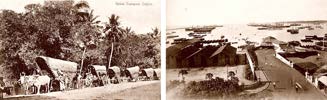
Chapter 58
The Critical Voice
58.1 Portuguese propaganda
In the past decade, newspapers in Sri Lanka have reported historical research revealing that the first Portuguese were not fond of the King of Kotte and his entourage. In letters, they claimed that the Sinhala King Bhuvanaka Bahu III of Kotte was involved in practices of sodomy, and the Portuguese were frightened to live there. It is impossible to know to what extent this was true or not, but the letters, dating back to 1547, exist.
Indeed, in a letter by the Portuguese of Ceylon to Joao de Casto dated ’Ceylon, 27th November 1547,’ the Governor of Goa speaks of the abominable crime of the king of Ceylon.
58.2 McGilvray on the Portuguese in Sri Lanka
Not every author writes positively about the Portuguese period of Sri Lanka. To compensate for any possible glorification of that period, we can refer to a paper by someone from the University of Colorado in Boulder.1
The work seems somewhat negatively biased, but the level at which it is written is so high that it reads so fluently that the paper’s bias and lack of references appear somewhat disguised. Nevertheless, a ’second opinion’ does not hurt.
McGilvray writes about Portuguese and Dutch Burghers but needs to state how he determined such status. Was it based on what people told about themselves, or did he check their registration, or was it just an assumption based on their looks and religion? It needs to be clarified. So, we will not comment on modern Burghers’ judgment because it is not defined, but we will focus on his statements about the past.
He writes that,
’the Portuguese Burghers, within the Burgher community, are considered the great Burgher residuum: poorer, darker, more numerous and less European.’
He also states,
’that all the burgers are urbanites,’
which, of course, depends on his definition of Burghers.
Many people are of Portuguese descent, but they do not all call themselves Burghers but rather part of the entire communities of Tamils or Singhalese or belong to a specific caste or village, rather than seeking the title Burgher. Most people of Portuguese descent do not even know their origins. This is natural everywhere in the world. Our memories typically span up to four generations.
Then, he refers to Dutch and English literature to conclude that the Portuguese have lower jobs than Dutch burghers. This is a mistake because such writing was merely propaganda, attempting to assure loyalty to the new occupiers rather than the former Portuguese rulers by feeding the population and everyone interested with lousy talk about the Portuguese. McGilvray should have known this when he used those references.
He then writes about the Lusitanian Libido. This is a fascinating topic in his paper for different reasons.
First of all, the Dutch and the British again exaggerated the Portuguese’ libido to destroy their reputation. However, such a rumor may explain the numerous people in Sri Lanka carrying a Portuguese family name, apart from the massive baptisms.
As is described elsewhere in this book, there is a myth in Sri Lanka that Portuguese family names were given when people converted to Christianity. This may be true in many cases, but not all. It is also described why this is not possible. Indeed, given names can be Christian after conversion, but the Portuguese would never have accepted the random use of their cherished family names. It may even have been illegal because some of such names were noble.
So, if so many people carry a Portuguese family name, who was the first to have received this name along their ancestral line?
Different options exist. It could have been a married couple’s child, where the father was Portuguese, and the mother was local. It may also have been a child of a local woman who descended from Portuguese and carried a Portuguese name, with a husband who did not have such a name, so the Portuguese name was transmitted to the child.
This may explain the large number of people carrying a Portuguese name.
However, more than this may be required. So, the Portuguese had many more children than the locals in Sri Lanka, making sense if they were more prosperous and could feed their children better.
Besides, many extramarital children of a local mother with a Portuguese father or a father of Portuguese descent existed. All such options were possible and occurred effectively.
The latter assumption is exploited to its fullest extent by McGilvray in his paper when he calls it the Lusitanian Libido. He writes Figure 58.1: Left, Transportation in Sri
Lanka in the 19th century. Right, the har-
bor of Colombo, ages ago.
1Dennis B. McGilvray, ’Dutch Burghers and Portuguese Mechanics: Eurasian Ethnicity in Sri Lanka,’ Comparative Studies in Society and History 24(2): 235-263 (April 1982).
The Desclergues of la Villa Ducal de Montblanc, 2nd ed., Omn., VOL. IV
© 2024 Nico F. Declercq
CHAPTER 58. THE CRITICAL VOICE
that,
’there is no doubt that, from the outset, the Portuguese conquests in Africa, Brazil, and India were accompanied by widespread and frequent sexual relationships between Portuguese men and local women, causing rapid growth of racially mixed populations in virtually every Portuguese settlement.’
Mixed children were called mestiço and were considered higher in rank by the Portuguese regime than the locals.
Of the persons who originally came from Portugal, there were only three kinds: Soldados, Casados and Padres (respectively, soldiers, people who were no longer soldiers or had never been and could settle and establish their own families, and priests).
There were no European women, except, at some point, orphans sent to Ceylon. This is also found in Charles R. Boxer’s work2.
Then, McGilvray writes that most Portuguese who arrived overseas, including Ceylon, were exiles and criminals from the great Lisbon prison, the Limoeiro, whose sentences had been communicated to military service abroad. This is also found in Charles R.
Boxer’s work3. McGilvray uses this knowledge to explain why many Portuguese were not Catholic and, therefore, subject to their
’Lusitanian Libido.’
He also mentions the classification into five categories of the Portuguese Ceylon population: ’European-born Portuguese’; ’Indian-born Portuguese’; castiços (they had a European father and a Eurasian mother); mestiços (they had a European father and a native mother); ’natives.’
Sometimes mixed children were also called topaz, a word derived from an Indian language (probably from the Goa region) and meant ’bilingual.’ Many topaz worked for the Kandyan king as mercenaries when the Dutch had taken over the Portuguese areas of Sri Lanka4.
McGilvray also mentions that the Portuguese established a local creole language, the island’s lingua Franca of government, commerce, and religion.
The author also says that VOC employees who married in Sri Lanka typically did this with Portuguese descendants because the locals were rather hostile towards such marriages, mainly due to their caste system.
We are still determining whether this is true or false.
Furthermore, although the Dutch imposed their language as the official lingua Franca, Portuguese Creole was commonly spoken in the marketplace and in households. Even marriage ceremonies took place in Creole.
2Charles R. Boxer, ’Race Relations in the Portuguese Colonial Empire,’ 1415-1825 (Oxford: Clarendon, 1963).
3Charles R. Boxer, ’An Introduction to Joao Ribeiro’s ’Historical Tragedy of the Island of Ceylon’ 1685,’ Ceylon Historical Journal. 3:3, 4 (1954), 247.
4C. M. Fernando, ’History of Ceylon,’ in Twentieth-Century Impressions of Ceylon, Arnold Wright, ed. (London: Lloyd’ s, 1907), 51.
© 2024 Nico F. Declercq
The Desclergues of la Villa Ducal de Montblanc, 2nd ed., Omn., VOL. IV
Encyclopedic Overview of the Caste Systems in India
and Sri Lanka: Historical Context, Structure, and
Contemporary Dynamics
59.1 Introduction
If the Indian caste system were projected onto European history, the Desclergues would be Brahmins. However, the caste system of India and Sri Lanka is far more complicated.
The caste systems of India and Sri Lanka represent complex social hierarchies that have shaped these regions’ socio-economic and cultural landscapes for centuries. Rooted in ancient traditions and religious doctrines, these systems have evolved through historical influences, including colonial interventions, and continue to impact contemporary society despite various legal reforms and social movements. This chapter provides an encyclopedic overview of the caste structures in both countries, highlighting their historical origins, hierarchical frameworks, and the enduring legacy of caste-based distinctions. By comparing the Indian and Sri Lankan systems, this comprehensive examination offers insights into the similarities and differences that define the caste dynamics within these neighboring nations. The analysis covers the distinct caste hierarchies among the Sinhalese and Tamils in Sri Lanka, the rigid and complex varna and jati systems in India, and the ways in which colonial and post-colonial developments have influenced these social structures.
59.2 The Indian Caste System
59.2.1 Historical Origins
The caste system is believed to have originated around 1500 BCE with the arrival of the Indo-Aryans, who introduced the Vedic religion. The Rigveda, one of the oldest Vedic texts, mentions the concept of varna (color), which later evolved into the caste system.
The Purusha Sukta hymn in the Rigveda describes the creation of the four varnas from the cosmic being Purusha: Brahmins (priests and teachers) from his mouth, Kshatriyas (warriors and rulers) from his arms, Vaishyas (merchants and farmers) from his thighs, and Shudras (laborers and service providers) from his feet. This hierarchical ordering symbolically represented different societal functions.
59.2.2 Varna System
59.2.2.1 Brahmins
Brahmins were priests, scholars, and teachers at the top of the hierarchy. Their primary duties were to perform religious rituals, study and teach the Vedas, and guide other members of society in spiritual and ethical matters. The high status of Brahmins was linked to their supposed purity and their role as intermediaries between the divine and human realms.
59.2.2.2 Kshatriyas
The warrior and ruler class, Kshatriyas, were responsible for protecting and governing the society. They were kings, soldiers, and administrators. Their duties included warfare, maintaining law and order, and governance. They were considered second only to Brahmins in the social hierarchy.
59.2.2.3 Vaishyas
This varna comprised merchants, traders, and farmers. Their primary role was to manage commerce, agriculture, and cattle-rearing.
The economic backbone of the society, Vaishyas, was expected to ensure the community’s prosperity through trade and business activities.
59.2.2.4 Shudras
Shudras were the laboring class responsible for serving the other three varnas. They were artisans, laborers, and service providers.
Their position at the bottom of the varna hierarchy was justified by their involvement in manual labor and activities considered less pure.
59.2.3 Jati System
The varna system provided a broad framework, but the actual social structure was much more complex due to the existence of jatis (sub-castes). Jatis are endogamous groups with specific occupations, regional affiliations, and social customs. There are thousands of jatis, and they determine social interactions, marriage, and professional roles. The relationship between varna and jati is complex, with jatis often being associated with a particular varna but only sometimes fitting neatly into the varna categories.
The Desclergues of la Villa Ducal de Montblanc, 2nd ed., Omn., VOL. IV
© 2024 Nico F. Declercq
CHAPTER 59. ENCYCLOPEDIC OVERVIEW OF THE CASTE SYSTEMS IN INDIA AND SRI LANKA:
1146
HISTORICAL CONTEXT, STRUCTURE, AND CONTEMPORARY DYNAMICS
59.2.4 Social Mobility and Rigidity
Historically, the caste system was rigid, with strict rules governing interactions between castes. Inter-caste marriage and dining were often prohibited. Occupations were hereditary, and mobility between castes was limited. However, there were periods and regions where these boundaries were more fluid.
59.2.5 Colonial and Post-Colonial Impact
The British colonial period (1757-1947) had a significant impact on the caste system. The British administrators codified and rigidified the caste distinctions, using them to structure their policies and governance. They conducted extensive surveys and censuses that categorized Indian society along caste lines, reinforcing caste identities. Post-independence, the Indian constitution abolished "untouchability" and enshrined the principle of equality. The government introduced affirmative action policies (reservations) to improve the socio-economic status of historically disadvantaged groups, particularly Scheduled Castes (formerly known as untouchables or Dalits) and Scheduled Tribes.
59.2.6 Contemporary Caste Dynamics
Today, while legal frameworks and affirmative action policies have challenged the traditional caste hierarchy, caste identities and discrimination persist, particularly in rural areas. Urbanization, economic development, and education have contributed to social mobility and reconfiguring caste relations. However, caste-based discrimination and violence remain significant issues in contemporary India.