

The Desclergues of la Villa Ducal de Montblanc, Second Edition Omnibus by Nico Declercq - HTML preview
Download the book in PDF, ePub, Kindle for a complete version.
In the 17th century, Hulste was associated with the families de Liedekerke and Van der Gracht, all related to Carlos Coloma, the superior of Antoni Desclergue II (DC06) and a companion of Jeroni Joan Desclergue y Cortés (DC05), Antoni’s father.
Additionally, the De Vos (Vosa) branch of the Desclergue family, discussed in Part X, descendants of Antoni Desclergue (III) (DC07), was established in Hulste.
Of particular interest is that, in 1803, priest van der Helst was vicar in Oekene, just west of Izegem. Renier Declercq (DC10) was still alive at this time. Renier Declercq was active as a witness at births and weddings in Izegem-Ingelmunster-Hulste-Kuurne, indicating geographical proximity to van der Helst. They were likely contemporaries, as they died around the same time; Renier was born in 1740 and died in 1808, while van der Helst died in 1807 or 1808.
It is reasonable to speculate that van der Helst attempted to obscure the chapel’s links to Spain to protect it and the associated family from potential repercussions from the French or Austrian authorities.
In Chapter 44.8, we discuss the connection with Deerlijk maintained by Ernest Constant Declercq (DC14). Furthermore, in Chapter 45.5, we explore how Michel Declercq (DC15), born in Wielsbeke, sought refuge near the chapel in Deerlijk after facing severe financial difficulties due to the flax financial crises in the 1930s.
49.13.6 The Chapel’s Second Miracle in 1884
On April 2, 1884, Octavie Vangheluwe, born on May 1, 1845, and who would pass away on May 7, 1893, experienced a miraculous healing. After being bedridden for two and a half years, she suddenly recovered and presented herself to her neighbors to demonstrate her newfound health. This event not only astonished the entire village, but it also sparked a wave of hope and faith, as they witnessed what they perceived to be a miracle.
In the context of this book, it is noteworthy that Octavie Vangheluwe was the grand-aunt of Gerard Vangheluwe, the author’s great-grandfather. She is further described in Chapter 69.8.2.2. The chapel is a classified and protected monument in Deerlijk and can be found as item 86341 in the inventory of ’onroerend erfgoed Vlaanderen.’ 145
143L. Van Acker, ’De oorsprong. . . ,’ 1955, p. 99
144PJ. De Cuyper, ’Bijdrage. . . ,’ 1979, p. 325
145Agentschap Onroerend Erfgoed 2018: Kapel Onze-Lieve-Vrouwe ter Ruste,86341
The Desclergues of la Villa Ducal de Montblanc, 2nd ed., Omn., VOL. IV
© 2024 Nico F. Declercq
CHAPTER 49. THE CHAPEL OF NUESTRA SEÑORA DEL REPOSO OR DE KAPEL VAN ONZE LIEVE
1034
VROUW TER RUSTE, IN DEERLIJK
© 2024 Nico F. Declercq
The Desclergues of la Villa Ducal de Montblanc, 2nd ed., Omn., VOL. IV
Chapter 50
The Church of Saint Louis or Sint Lodewijk in Deerlijk
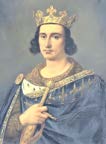
Figure 50.1: Louis IX, whose feast is on August 25, acceded to the throne of France
at the age of 12, under the regency of his mother, Blanche de Castille, in 1226. In
1234, he married Marguerite de Provence, who gave him 11 children. His spirituality
as a Franciscan tertiary led him to care for the poor and be faithful to reciting the
hours of the divine office that punctuated his days. After the conquest of Jerusalem
by the Sultan of Egypt, he promoted the 7th Crusade and, on his return, built the
Sainte-Chapelle to house the Crown of Thorns, purchased from Beaudoin II, Emperor
of Constantinople. He died during the 8th Crusade in 1270. Canonized in 1297, he
remains the living model of the lay saint.
50.1 Introduction
The evidence suggesting involvement in constructing a second chapel in Deerlijk, which would later evolve into the Church of Saint Louis, remains inconclusive but cannot be disregarded. This analysis, while somewhat speculative, is grounded in logical inference.
Antoni Desclergue (DC06), a military figure or retired officer of significant age, as detailed in Chapter 34, possessed the requisite moral and social authority that could have facilitated such involvement.
Specifically, we hypothesize his influence in the early veneration of Saint Louis, coinciding with or shortly following the chapel’s establishment. This period aligns with the French invasion during the War of Devolution (1667-1669), as detailed in Chapter 34.10,
which likely inspired the local populace to dedicate the church to Saint Louis later. Furthermore, it is crucial to consider the probable Spanish influence in the initial naming of the hill on which Saint Louis is situated.
A pivotal figure in this narrative is Adriaan Andries. Both Adriaan and his ancestors maintained a longstanding acquaintance with the Declercq family, including Beatrice Declercq. Furthermore, they were also connected to Antoni Desclergue (DC06) and his father, Jeroni Joan Desclergue y Cortés (DC05).
50.2 The Origins of Saint Louis
Saint Louis1, a southern suburb of Deerlijk, developed later than the village’s northern site.
Initially, the area was predominantly forested and used as a hunting ground for the nobility. By the end of the 16th century, Saint Louis began to develop more steadily, achieving an average population density by the 17th century. Despite this growth, there was no chapel or church at that time.
The earliest known name for the entire area was likely Male. Within the Male region of Deerlijk, two notable toponyms were Olijbeerch (Olieberg) and Keesebeerch (Keesberg).2
In its early development stages, the suburb comprised only a few homes and farms. The community was likely largely illiterate, which may explain the name Bottenhoek, with ’bot’ resembling ’illiterate,’ though this interpretation remains controversial.
The area was also referred to as Pladyshoek, probably named after the Pladys family who lived in Deerlijk, or, as suggested by Guido Gezelle, after the fish Pladijs, which was consumed by people experiencing poverty in Medieval times, possibly alluding to the impoverished residents of the forest before the Spanish era.
By the 1700s, the name Keyselberg also appears.3
It is conceivable that the hill of Saint Louis was called Monte Queso by the Spanish who governed the area from 1556, perhaps due to the presence of cattle farmers producing cheese or because the clay soil reminded them of cheese. The term Queso closely aligns with the old phrase Keese in Keesebeerch, mentioned in 1572, and may have been later reinterpreted as Keyselberg.
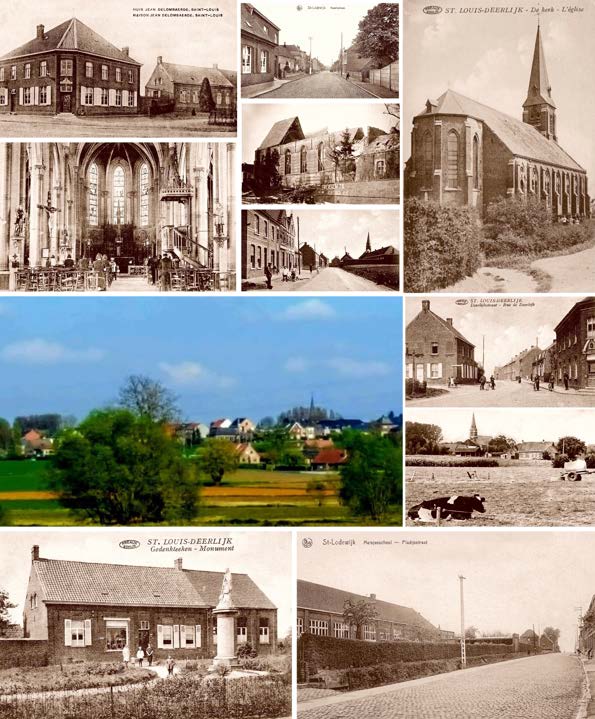
The establishment of the church of Saint Louis in Deerlijk, as depicted in Figures 50.2, is the culmination of three significant phases better understood after reading Chapter 34.10.3.
The origins of the parish’s choice of the name Saint Louis remain unknown. A plausible theory emerges from the early history of the chapel.
In 1666, a chapel was founded for the Immaculate. The following year marked the beginning of the Devolution War, described in Chapter 8.12 and Chapter 34.10. Notably, there was an attack on Kortrijk on July 13, 1667, and King Louis XIV of France stayed one night in Harelbeke on August 29, 1667. The French army utilized former Spanish barracks, as detailed in Chapter 29.12, near Overacker at Harelbeke along the Beveren Creek, just south of the town.
The French headquarters where Louis XIV slept were between Harelbeke town and Kortrijk.
The Spanish troops, followed by the French, retreated to Ghent, a military stronghold housing the famous Spaniard Castle. This retreat likely followed the Leie River, proceeding inland to Deinze and Ghent, or via Oudenaarde to Deinze and Ghent. One of the inland routes from Harelbeke to the Deinze-Oudenaarde region passed by the Keyselberg hill in Deerlijk (present-day Saint Louis) 1Saint Louis, transformed to Sellewie by the locals, is officially known by its administrative name Sint Lodewijk.
2This is demonstrated by Filip Benoit in ’Deerlijk volgens het Twintigste Penningkohier van 1572,’ Derlike, 20ste jaargang, nr 1, 1997, based on information found in Stadsarchief Gent, Twintigste Penningkohier, reeks 28, bundel 11/51, Deerlijk, anno 1572.
3A similar name, Keyselberg, exists in Marke near Kortrijk.
The Desclergues of la Villa Ducal de Montblanc, 2nd ed., Omn., VOL. IV
© 2024 Nico F. Declercq
1036
CHAPTER 50. THE CHURCH OF SAINT LOUIS OR SINT LODEWIJK IN DEERLIJK
Figure 50.2: Saint Louis, or Sint Lodewijk, in Deerlijk, represents the suburb where the author established his roots following his birth in Kortrijk in 1975. This locale was the nucleus of his existence, around which his universe revolved. His intimate familiarity with every street, corner, and resident underscored his deep connection to the area.
However, marital discord between his parents, exacerbated by the interference of his paternal aunts, necessitated a temporary relocation to the center of Deerlijk, specifically to Leon Defraeyeplein. This tumultuous period accelerated the author’s maturation, compelling him to assume adult responsibilities and make autonomous life decisions by the tender age of nine.
It was at this juncture that the author’s granduncle, Pierre Vangheluwe, extended a life-altering invitation. This pivotal moment marked a transformative chapter in the author’s life, as Pierre stepped into the role of a foster father, providing a nurturing environment that fostered the author’s academic and personal growth.
Amidst these changes, the author’s relationships with his biological parents remained steadfast and positive. In fact, the author was fortunate to have the support and guidance of not just two but four parental figures, including his foster father, Pierre Vangheluwe.
The compilation illustrates the interior of the Saint Louis Church, offering a glimpse into the author’s spiritual and communal experiences. Additionally, it features views of the church from various childhood vantage points frequented during his walks and bicycle rides. The collection further includes scenes from Pladijsstraat, the site of the original chapel, Church Square, Kapellestraat, among other significant locales.
© 2024 Nico F. Declercq
The Desclergues of la Villa Ducal de Montblanc, 2nd ed., Omn., VOL. IV
50.3. CONNECTIONS WITH THE DESCLERGUES
1037
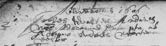
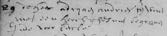
Figure 50.3: Kortrijk, St Martin church, February 2, 1606, the bap-
tism of Adriaen Andries, son of Wautier Andries and grandson of Adri-
aen Andries, who also served as godfather. The godmother was Martine
Volke. Adriaen’s mother was, according to Derlike XXVIII, 2 (2005)
p. 49, Catharina Eelbo.
Figure 50.4:
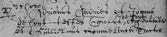
Kortrijk, St Martin church, February 27, 1631, the
wedding of Adriaen Andries with Joanna D’ Hondt, daughter of bailiff
Charles D’ Hondt, who was a witness with Guilelmus Cromelinck.
and extended to Oudenaarde, then to Ghent, or alternatively to Deinze and from Deinze to Ghent.
The French military’s advance towards Ghent was marked by rapid progress. In June 1667, Turenne’s French army captured Tournai, Aath, and Charleroi. By July, they had taken Douai. On August 17, 1667, Lille fell to the French. Another French contingent captured Sint Winoksbergen and Veurne in June 1667, and in July, they secured Kortrijk, as illustrated in Figures 50.3,
50.4, and 50.5, and Oudenaarde. By September 1667, the French had advanced to Aalst.
The Spanish defenders of Kortrijk, unable to resist 10000 French troops, retreated towards Harelbeke. From Harelbeke, they further withdrew to the better-protected Ghent, pursued by the French. The numerous burials at the Spanish castle of Ghent during this period suggest significant losses due to malice.
The precise details of the early chapel’s history are not documented. Still, it is plausible that the local inhabitants, seeking protection, dedicated their chapel to Saint Louis, a royal predecessor of King Louis XIV. This dedication may have occurred when the King stayed at Harelbeke and passed by the area en route to Oudenaarde, or perhaps the chapel already housed a statue or image of Saint Louis. Believing in a miraculous intervention that spared them destruction, the locals may have attributed their safety to Saint Louis, notably a French. This belief might have been reinforced a few years later when the Castellany of Kortrijk came under French control in 1667, while Ghent remained Spanish.
The French captured fortified Ghent in 1678, which likely felt like a permanent shift to the locals. However, unexpectedly, the French withdrew from Ghent and returned the area, including the castellany of Kortrijk, to Spanish control in 1679. This sudden change might have been perceived as another miracle attributed to Saint Louis.
Unaware of the broader geopolitical stakes, the locals did not realize that France’s withdrawal was part of a larger strategy to consolidate its global position through the Peace of Nijmegen.
Although the exact origins of Saint Louis’ adoration in Deerlijk are unclear, this theory remains plausible.
The third significant phase in the church’s development occurred much later, with the replacement of the chapel by an actual church.
A chapel was initially constructed in Saint Louis on September 30, 1666, by Adriaen Andries, son of Wautier, and his wife Joanna D’Hondt from Kortrijk, to honor Our Lady Immaculate. The location was described as,
’op de plaets ghenaempt den Pladijshoek up het uiterste van Derlick.’
It was intended for the worship of,
’den dienst van de onbevlekt ontfanghenisse van H. moeder Godts Maria.’
The chapel was situated at the north corner of Kapelstraat and Kerkstraat.
By 1747, the chapel appeared on maps as Capelle te Keijselbergh.
The chapel was enlarged in 1777, closed during the French era in 1797, and reopened in 1802.
According to records in Derlike4, Adriaen Andries, a bailiff in Kortrijk born on February 2, 1606, was a blauwverver in Kortrijk, operating a business that dyed clothes with indigo dye. This process was economically significant, as textile dyeing was essential for refurbishing costly textiles, and black dye was commonly used for mourning attire. Adriaen Andries married Johanna D’Hondt on January 27, 1631. He died on May 20, 1670, and was buried in the church of Saint Martin in Kortrijk. His brother, Oste, was a Recollet monk in Ghent, and his son became a Canon at the Notre Dame church in Kortrijk. Adriaen Andries inherited properties in Deerlijk in 1652, where he constructed the chapel. The establishment records date back to September 30, 1666, with a subsequent record on August 27, 1668.
His baptism record corroborates his lineage as a grandson of Adriaen Andries and indicates connections to Jeroni Joan Desclergue y Cortés (DC05) and Antoni Desclergue (DC07).
Chapter 29.8.7 recollects the connections between the Desclergues and Andries. Chapter 34.13 also exposed contacts between Andries and Declercq through Beatrice’s ancestors, Antoni’s wife.
More connections are given in Chapter 50.3.
50.3 Connections with the Desclergues
The hypothesis that Antoni Desclergue (DC06) played a role in the construction of the chapel at Sint Lodewijk in Deerlijk is not only intriguing but also a fascinating avenue for exploration. While grounded in several indicative elements, the following discussion needs more definitive evidence.
Nevertheless, such churches and chapels often carry with them a layer of mystical history, suggesting a potential, albeit unverified, involvement, in this case, of Desclergue. This speculation invites readers to consider the possibility of his influence, sparking a sense of curiosity and wonder.
The chapel’s establishment may have involved Antoni Desclergue (DC06), possibly in collaboration or under his advisement, with the intention of honoring his father, Jeroni Joan Desclergue y Cortés (DC05). This hypothesis, while intriguing, rests on the assumption that Jeroni (DC05) was born exactly 100 years before the chapel’s establishment—an assumption that remains unconfirmed due to the lack of precise birth records. Jeroni’s birth around that time, while plausible, remains speculative, adding a sense of mystery to the narrative.
The references within the chapel to Saint Anna and Saint Rochus are characteristic of Deerlijk, and the original name ’the Im-Figure 50.5: Kortrijk, St Martin church, May 20, 1670, the burial of
Adriaen Andries, son of Wautier.
4Derlike, 1ste jaargang, nrs 1-2, 1978
The Desclergues of la Villa Ducal de Montblanc, 2nd ed., Omn., VOL. IV
© 2024 Nico F. Declercq
CHAPTER 50. THE CHURCH OF SAINT LOUIS OR SINT LODEWIJK IN DEERLIJK
maculate’ likely stemmed from Adriaen Andries and his wife. This naming could be linked to the fact that 500 years before 1666, Emperor Manuel Komnenos had elevated the celebration of the Immaculate Conception to an official Catholic holiday.
Despite this, the potential signs pointing to Antoni (DC06) and his father, Jeroni (DC05), add a layer of wonder to the narrative, inviting readers to delve deeper into these potential influences and connections.
The Manor of Overacker (Harelbeke) supported the Spanish military towards the end of the 16th century and in the first half of the 17th century by providing land for military barracks. Antoni Desclergue (DC06) and his brother Miguel (DC06b) were inhabitants of this manor by their mother, Felipa de Montoya, and their stepfather, Jan Declercq (DK03), as detailed in Chapter 34.13.7.
The manor owned lands in several locations within Deerlijk, some of which were near the Chapel at Saint Louis, though the exact properties owned by the Desclergue family are unknown.
Examining Jeroni Desclergue’s (DC05) connections, particularly in Chapter 29.8.7, reveals ties with several prominent families, including the Andries family. Church records from Kortrijk in 1591 and 1593 demonstrate Jeroni’s association with the family of Adriaen Andries, the uncle of the Adriaen Andries who established the Chapel at Saint Louis in Deerlijk in 1666.
The historical figure Saint Louis, King Louis IX of France, was the son of Blanca de Castilla and Louis VIII le Lion. Blanca de Castilla was the daughter of Alfonso VIII de Castilla. Alfonso, born in Soria in 1188, connects intriguingly with Du Guesclin, a historical figure who resided in Soria in 1360, as discussed in Chapter 19.26.
The Desclergue family originates from Montblanc, making the veneration of Saint Louis in Spain not necessarily an indication of admiration for France.
The original Chapel at Saint Louis measured 31 feet long and 13 feet wide, dimensions noted by Guido Gezelle and referenced in Derlike.5 Assuming these measurements used local feet rather than Castilian feet, one could whimsically interpret this as evidence of Antoni Desclergue (DC06) and his son (DC07)’s involvement. The numerals ’1’ and ’3’ could correspond to ’A’ and ’C’ in the Latin alphabet, albeit this remains speculative. Notably, the chapel was established on September 30, the day of Saint Hieronymus.
Moreover, the chapel’s orientation towards Ostend, where Jeroni Joan Desclergue y Cortés (DC05) died in 1604, and the subsequent construction of the modern church parallel to the original chapel, both pointing towards Ostend, are remarkable facts.
These observations, while not proving Desclergue’s involvement, suggest potential allegiances. The precise role of Antoni Desclergue (DC06) in these events remains elusive, leaving us with intriguing possibilities rather than definitive conclusions.
5Derlike, eerste jaargang, nr 3, 1978-1979.
© 2024 Nico F. Declercq
The Desclergues of la Villa Ducal de Montblanc, 2nd ed., Omn., VOL. IV
The ancestry of de Silva with roots in Byzantine,
Iberia, India and Sri Lanka
The Desclergues of la Villa Ducal de Montblanc, 2nd ed., Omn., VOL. IV
© 2024 Nico F. Declercq
The Island of Sri Lanka, Pearl of the Indian Ocean
For anyone delving into the history of Sri Lanka, the diversity and quality of available sources pose a significant challenge. It’s crucial to note that there are three primary types of historical works in Sri Lanka. The first type, often viewed through the lens of the uninformed Westerner, tends to assume that Sri Lanka’s history began with the arrival of the Portuguese.
These sources, while acknowledging the existence of pre-Portuguese inhabitants, often portray them as uncultivated, focusing on their religious beliefs in certain gods or the Lord Buddha. This underscores the need for critical evaluation of historical sources.
On the opposite end of the spectrum, the second type of source places Sri Lanka at the center of the universe, asserting that it was an exceptionally advanced cultural society.
For those with a genuine interest in history, a third category of sources proves more valuable. These are works based on archaeology, historical records, and the broader context of global history, particularly along the coasts of the Indian Ocean. These sources, unlike the first two types, provide a more accurate understanding of Sri Lankan history, highlighting the importance of these types of sources in historical analysis.
However, there remains to be a quality problem. A considerable amount of literature on Sri Lanka is authored by individuals who need to be more educated or highly biased, resulting in imaginative but factually deficient works. Some authors may deeply understand Sri Lanka but need knowledge of the wider world. This leads to egregious errors when placing Sri Lanka within a global framework.
Consulting high-quality works reveals that Sri Lanka has a vibrant history that is far from isolated. Numerous waves of trade, cultural exchanges, invasions, and alliances characterize the Island’s history. Regarding Sri Lanka as a unified nation, whether genetically or culturally, would be inaccurate. The term that best describes Sri Lanka is diversity, which is immediately apparent in its languages and religions. What unites Sri Lankans is that they all inhabit the same beautiful Island.
Anthropologists and geneticists alike recognize the diversity of Sri Lanka’s population. The faces of Sri Lankans reflect a mixture of European, East Asian, Arabian, Persian, Afghan, Indian, and Veddha ancestries.
The Veddhas, the Island’s original inhabitants, are classified as aboriginal tribes, similar to those found on the Nicobar Islands, Andaman Islands, Timor, and Australia. They form the Island’s genetic foundation, which has since been enriched by numerous waves of DNA from other parts of the world, primarily India. This genetic diversity is evidence of Sri Lanka’s long and dynamic history.
It’s important to clarify for the non-Sri Lankan reader that Sri Lanka has historically not been a single nation but an island comprising several countries or Kingdoms. When the Portuguese allied with Sri Lanka, their primary alliances were with the Kingdoms of Kotte and Jaffna, the most significant kingdoms at the time from the perspective of global trade. The relationship between Portugal and Kotte, for instance, was not purely colonial domination but a form of integration. Sri Lankan women were considered ideal marriage partners by the Portuguese men who arrived on the Island without bringing brides from their homeland.
This understanding of the political structure of Sri Lanka is crucial for a comprehensive understanding of its history.
The term ’colonization’ is a modern concept that became relevant after the Dutch East India Company (VOC) period, implying a superior power governing a subordinate race. The VOC viewed their overseas territories as manufacturing and trading entities, while the post-VOC era was characterized by racial domination.
In contrast, the Portuguese regarded their overseas areas as independent feudal counties ruled by a king but considered no less respectable than other counties in the Iberian Peninsula or Europe. The King of Portugal was seen as the highest-in-rank feudal lord, but the people were viewed as equals within the human society. Some islanders held higher ranks than the Portuguese, while others were of lower grades, similar to the social structure in Portugal. The Island’s surplus income was sent to the King of Portugal as tax, akin to the taxes paid by other Portuguese counties. In return, the Portuguese protected their territories from foreign invasions.
Furthermore, as indicated, the Portuguese intermarried with local women, and their descendants were considered Portuguese. Initially, this mestizo population was not deemed inferior by the mainland nobility, although such perceptions may have evolved later.
The characteristic feature of the Island’s inhabitants is their recurrent response to dissatisfaction with a ruler by inviting another ruler. This pattern persisted into the twentieth century; when the British left the Island, the Sri Lankans sought Soviet influence, and later, they turned to China for economic support.
Sri Lanka can resist such external influences if guided by a long-term vision. A focus on maximizing the Island’s educational potential and harnessing its natural resources—such as wind, solar, and oceanic energy—could significantly bolster its self-sufficiency. The agricultural capacity of Sri Lanka is sufficient to sustain the entire nation without reliance on imports. Additionally, its strategic location along critical global trade routes should secure substantial revenue without the necessity of ceding control of its harbors to foreign entities.
Before the Portuguese arrived, the Island experienced numerous invasions where one ruler overthrew another, often resulting in significant loss of life.
The latter part of the 20th century saw heightened polarization within the country due to attempts at unification, leading to the emergence of Sinhalese and Tamil nationalism and, ultimately, a protracted and bloody civil war. True unification lies in embracing the Island’s diversity—not merely as two distinct populations but as a mosaic of hundreds of tribes, castes, religions, and dialects.
It is imperative to downplay these distinctions and foster a shared identity rooted in the commonality of living on and loving the Island.
A rudimentary understanding of history might lead Western readers to erroneously believe that the Portuguese ’discovered’ the Island several centuries ago. This notion needs to be revised and supported by informed historians. The Portuguese discovered the maritime route to India and Sri Lanka around Africa, but the lands bordering the Indian Ocean were already well-known to them.
The Desclergues of la Villa Ducal de Montblanc, 2nd ed., Omn., VOL. IV
© 2024 Nico F. Declercq
1042
CHAPTER 51. THE ISLAND OF SRI LANKA, PEARL OF THE INDIAN OCEAN
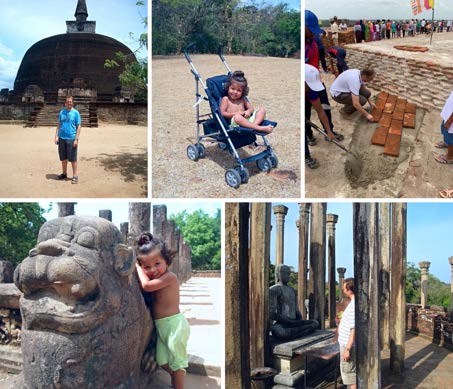
Figure 51.1: The author visited Anuradhapura and Polonnaruwa several times, even as a
child. Here, a stupa is seen in 2007 at Polonnaruwa, and the author’s daughter, Anna-Laura,
also enjoyed the site. Note that Sri Lankans primarily built constructions out of wood. Structures
of significant importance, such as temples, usually had stone pillars, which were the ones that
survived. In another picture, the author laid bricks on the new Pagoda of Anuradhapura in
2019, 34 years after his first visit to the country and 22 years after his wedding to a Sri Lankan.
(Anuradhapura, 2019) (Declercq de Silva Archive)
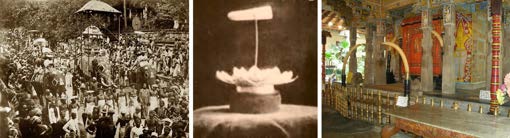
Figure 51.2: This picture of the sacred tooth of Buddha at Kandy was taken in 1920 p. We can also
observe the elephant carrying the sacred casket in which the tooth of Buddha is located during the Esala Peraherra at Kandy in 1885 p. Furthermore, we see the shrine of the sacred tooth of Lord Buddha in
Kandy. (2007) (Declercq de Silva Archive)
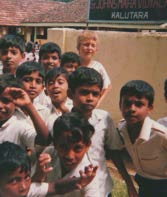
Figure 51.3: Since 1985, the author has visited Sri Lanka numerous
times. This picture was taken at St John’s Maha Vidyalaya College in
Kalutara in 1986. At that time, the author was very much into learning
the Sinhala language. (Declercq de Silva Archive)
© 2024 Nico F. Declercq
The Desclergues of la Villa Ducal de Montblanc, 2nd ed., Omn., VOL. IV
1043
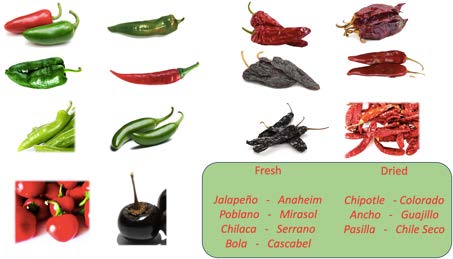
Figure 51.4: Sri Lanka would not have chilies if it were not for the Spanish. The peppers were
brought back to Spain from Mexico and spread quickly all over Iberia and the Mediterranean,
including the Spanish and Portuguese territories such as Sri Lanka. The image shows the most
famous varieties still found in Mexico, most of which also exist in Sri Lanka.
Indeed, Ptolemy included a relatively accurate depiction of Sri Lanka on his world map in the second century.
Sri Lankan historians have valid reasons to believe in ancient trade connections with the Mediterranean, supported by evidence such as the presence of cinnamon in ancient Egyptian sites. A well-developed trade network stretched from Persia to Cambodia, intersecting with Sri Lanka and underscoring its historical significance in commerce, culture, and religion.
Nevertheless, these trade routes likely involved indirect exchanges where goods passed through multiple hands before reaching destinations like the Mediterranean.
In their quest for evidence, historians sometimes overreach, making dubious claims that Sri Lanka was the fabled Atlantis or Tarshish. These assertions often begin as speculative possibilities, then morph into probabilities and, eventually, false certainties.
The primary challenge is that Sri Lanka’s history is interconnected with global narratives, yet only some specialists possess comprehensive expertise in all relevant areas.
On-site archaeological research and local scholars’ study of written sources form the backbone of Sri Lankan historiography. These findings require further scholarly examination to build a more robust understanding.
Early historical texts, primarily authored during the British colonial period, often need proper referencing despite their detailed accounts. This omission might have been acceptable in that era but could have been more satisfactory for modern readers who demand substantiated claims.
Nevertheless, we must work with the available resources. While not exhaustive, contemporary historical texts adopt a more scientific methodology. Anton Sebastian’s book, A Complete Illustrated History of Sri Lanka,1 is a commendable effort, though it lacks depth.
Despite this, it covers the entirety of Sri Lankan history and is thus praiseworthy. The foreword of Sebastian’s book reads:
’Dedicated to the present and future generations of Sri Lanka in the hope that this book may awaken them to the realities of the past, challenges of the future, and bring a closer understanding and harmony between the communities, so that they may stand together in restoring the glory and the integrity of the island.’
However, Sebastian does not specify the period he envisions in the final part of his statement. One hopes he refers to the era preceding the Civil War rather than a distant, idealized past that never truly existed.
Historically, the Island has always been home to multiple polities.
Glorifying a particular period invariably undermines others and fails to achieve its intended purpose. The continuous intermingling of peoples over centuries means that no one in Sri Lanka today can claim pure descent from any historical population, be it from the Polonnaruwa, shown in Figure 51.1, Anuradhapura, shown in Figure 51.1, or Kandyan Kingdom in Figure 51.2.
This manuscript references several other standard works on Sri Lankan history.23 The theories of Dr. Tuan M. Zameer Careem Khan, a Sri Lankan of recent Afghan (Pashtun) descent, exemplify the scientific rigor needed in this field. Dr. Khan’s meticulous documentation and insightful analysis elevate historical scholarship and highlight the necessity of detailed and precise historical research. The Colombo Telegraph has recently featured his work, emphasizing its importance and potential to advance our understanding of Sri Lanka’s complex past.
Here, we primarily focus on the history of the de Silva family in Sri Lanka.
Over the past 400 years, numerous indigenous alliances have shaped our lineage. A comprehensive history would ideally include descriptions from the earliest periods; however, due to time constraints, our efforts are to trace the paternal ancestry line’s arrival from Portugal and Goa to the Island. Readers can refer to other scholarly works for a detailed study of the Island’s ancient history.
Sri Lanka’s history is complex and lengthy, with a filled prehistoric period followed by Indo-Aryan invasions that preceded the Anuradhapura period, traditionally dated from 377 BC to 1017 AD. The subsequent Polonnaruwa period spans from 1056 to 1232
AD. The era from 1232 until 1505 is often termed a transitional period, a label as misapplied as the Middle Ages.
This period saw the rise of numerous island kingdoms, including the Jaffna and Kotte Kingdoms. The segmentation of historical periods, particularly from the 13th century onwards, is heavily influenced by modern nationalistic thought and warrants qualified scholars re-examining. A nuanced understanding of Sri Lanka’s history, embracing its diversity and complexity, is essential. Sim-1Anton Sebastian, ’A complete illustrated History of Sri Lanka,’ revised second edition, 2018 and published by Vijitha Yapa Publications, Unity Plaza, Colombo 4, Sri Lanka.
2Recently, the author discovered the theories of Dr Tuan M. Zameer Careem Khan, a Sri Lankan of recent Afghan (Pashtun) descent and hopes many Sri Lankan historians will elevate their knowledge and scientific approach to Dr Khan’s level. Persons like him bring science to the next stage. Dr Khan also describes many facts the author discovered and has an excellent memory to pinpoint exact facts and examples to support his theories. The Colombo Telegraph recently reported on his work
3Tanmaya Das, ’Story of the Last Ceylonese Afghans and Their Struggle to Survive,’ Colombo Telegraph, November 3, 2020
The Desclergues of la Villa Ducal de Montblanc, 2nd ed., Omn., VOL. IV
© 2024 Nico F. Declercq
CHAPTER 51. THE ISLAND OF SRI LANKA, PEARL OF THE INDIAN OCEAN
plistic approaches need to capture the true nature of an island at the crossroads of global interactions.
In this book, we focus on Sri Lanka’s genealogical history, specifically during the Portuguese period. However, it will become evident that Sri Lanka’s history is deeply embedded within a broader context of global trade and influence, extending far beyond the Portuguese era. The Island’s historical significance was recognized by great powers such as the Persians, Greeks, and Chinese, and later by the Arabians and the people of Malacca.
When the Portuguese arrived, they entered a world interconnected through the Arabian Sea with the Arabian Peninsula and beyond.
Spices and goods from India and Sri Lanka were known in Europe, albeit expensive and largely inaccessible due to blocked trade routes.
The Portuguese arrival disrupted these monopolies, introducing another religion to Southeast Asia’s diverse landscape. It is a misconception to view Southeast Asians as well-paid for their goods or independent before the Portuguese arrival; Sri Lanka had already endured trade monopolies imposed by other nations long before European contact. Before European colonization, the Island was neither a Heaven nor a Paradise.
Before delving into our narrative on the Garden of Eden, as Ceylon is often referred to, we introduce a linguistic notion to illustrate the cultural exchanges that have enriched the Island.
For instance, the Sinhalese word for ship, Nave, is of Portuguese origin, exemplifying the linguistic influences absorbed over centuries.
Sinhalese, a highly cultivated and ancient language, has incorporated multiple foreign elements. The author, having studied the language to some extent during childhood and again in 1997, acknowledges the time and opportunity constraints that have limited deeper exploration, with hopes to continue in retirement.
This study aims to provide a nuanced understanding of the de Silva family’s place within Sri Lanka’s rich historical tapestry, acknowledging the broader global influences that have shaped the Island’s past.
© 2024 Nico F. Declercq
The Desclergues of la Villa Ducal de Montblanc, 2nd ed., Omn., VOL. IV
Chapter 52
Greeks in Sri Lanka
Sri Lanka has a notable cohort of esteemed academics, either hailing from the country or possessing Sri Lankan heritage, who have produced exceptional literary works and scholarly articles about certain epochs within Sri Lankan history.
There are signs suggesting the presence of Greek influence in the historical context of Sri Lanka; however, the author has yet to come across any scholarly work that effectively synthesizes and consolidates these discoveries.
However, several writers of lesser expertise posit a potential Greek link without substantiating their claims with concrete evidence, relying only on the fact that Alexander the Great ventured into India and that certain Indian tribes still adhere to a religious tradition that exhibits ties to Greece.
The author posits that a thorough investigation of place names in Sri Lanka by highly knowledgeable researchers competent in ancient Greek may provide significant evidence connecting the Island with ancient Greek civilization. This proposition is based on the existence of an old map associated with Ptolemy, which is believed to portray Sri Lanka.
The author’s study was not conducted with a high level of thoroughness, and their proficiency in Greek is lacking. Nevertheless, the individual discovered evidence that potentially establishes a connection between the location of significance mentioned in this literary work and the ancient Greek civilization.
The town of Kalutara potentially derives its name from Greek origins, signifying a ’beautiful marvel’ ( is beautiful; is marvel). On the other hand, the name Horana may have been bestowed upon it due to its association with a military outpost situated along the access ridge connecting the coastal region to the hill country (v denotes a military post and incorporates the term ). The locality known as Diagama close to the Kalu Ganga River might got its name from the Greek term , denoting ’through.’ Similarly, the Kalu Ganga River, often believed to be called after the Sinhala word kalu for ’black,’ could have been bestowed with this appellation due to its association with the Greek word , meaning ’beautiful.’
The location known as Uduwara, where the Portuguese constructed a fortification to oversee the Kalu Ganga River, whose source is located at Adam’s Peak, shown in Figure 52.1, maybe derived its name from a comparable purpose it previously served, namely as a vantage point for seeing the river ( is to observe the road).
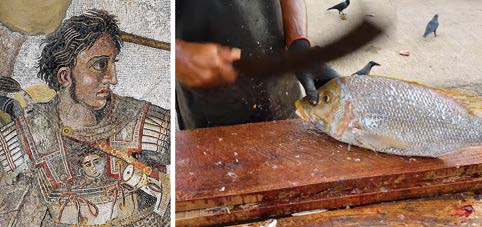
It is possible that the name Colombo may have been derived from the Greek language, maybe about the renowned Sri Lankan Sweetlip fish, shown in Figure 52.2 and scientifically known as Plectorhinchus ceylonensis in Latin or referred to as Boraluwaa in Sinhala. The term , or grunts, refers to the fish species that are considered holy to Hermes due to the grunting sound it produces.
On the other hand, signifies sustenance, food, or culinary preparation. Hence, it is plausible that the ancient Greeks referred to the location where they engaged in fishing activities or procured Sweetlip fish as . Modern scholars typically assume that the name Colombo is derived from Sinhalese words referring to ’the harbor of the Kelani River,’ coming from Kolon Totha. Still, it would be weird that the word Totha in other places remained (such as Hambantota) while it was absorbed in the word Colombo. It is, therefore, doubtful that the origins of Colombo are to be found in the word Tota.
Persistent rumors in Sri Lanka suggest that Alexander the Great may have visited Adam’s Peak. Through "The Island Saturday Magazine (Colombo) of 4 January 2003" and the author S.S.M. Nanayakkara, it is possible to provide a condensed overview of the available narratives.
Sri Pada, often referred to as Adam’s Peak in early Western accounts, has been a prominent feature from prehistoric times, predating the documented history of the Island. Legends pertaining to the revered mount existed before the advent of the Christian period. The act of worshiping deities in elevated locations has been a fundamental practice among human beings from ancient times. Throughout history, elevated and remote locations have been regarded with profound reverence and admiration, particularly in early religious practices centered on nature worship. The cult maintained its presence within the pagan society until the early periods of Greek and Roman civilizations and continued to exist even in subsequent eras. As a result, Mount Olympus in Greece was consecrated as a sacred site for worshiping the Greek pantheon.
To this day, the Tibetans and Nepalese continue to hold Chomolungma, which translates to ’Goddess Mother of the World’ in Tibetan, along with many other peaks in the Himalayan range, including the iconic Mount Everest, in high reverence. According to historical records, during the renowned 1953 expedition to Mount Everest, Norkay Tensing and his fellow Sherpa companions, who accompanied Edmund Hillary, engaged in a ceremonial offering of sustenance to the revered mountain deity Chomolungma. This ceremonial gesture was performed to seek the deity’s favor and bestow blessings upon the expedition, ultimately contributing to its triumphant outcome. Hillary buried a miniature crucifix bestowed upon him by Colonel John Hunt, the esteemed commander.
The persistence of tradition is formidable.
It is widely claimed that Alexander the Great, the renowned Greek warrior king and empire builder from Macedon, visited Sri Pada Figure 52.1: This is the source of the Kalu Ganga River at the summit
of Sri Pada (Adam’s Peak) in Sri Lanka. (Declercq de Silva Archive)
The Desclergues of la Villa Ducal de Montblanc, 2nd ed., Omn., VOL. IV
© 2024 Nico F. Declercq
1046
CHAPTER 52. GREEKS IN SRI LANKA
Figure 52.2: Alexander the Great, found in Pompei; and a Sweetlip fish being cut on a Sri Lankan
fish market. (Declercq de Silva Archive)
about 324 B.C. when the Peak was already highly revered. Following his conquest of the Persian kingdom and its dependents, Alexander led his military troops into India, crossing the Indus River and reaching the historic city of Taxila. Finally, Porus, the Indian monarch, with his contingent of well-trained war elephants, successfully confronted him. The Greek cavalry encountered these giant creatures, which posed a daunting and terrible challenge because of their unfamiliarity. The horses, overwhelmed by fear, initiated a stampede and proceeded to disperse in unmanageable distress. Due to concerns of potential rebellion within his army, Alexander strategically decided to negotiate with Porus, addressing his generals’ representation.
Following his encounter with the Indian monarch, Alexander, driven by a sense of restlessness, decided to deviate from his original path and go down the southwestern coast of India. He intended to explore the southern regions since he had been informed of the existence of the remarkable Island of Sri Lanka, referred to by the ancient Greeks as Taprobane. The user was drawn to rumors about the holy hill of Sri Pada, which was once devoted to the Hindu god Saman and referred to as Samanthakuty. The summit, with its prominent top offering a captivating view, was irresistible to Alexander, who was driven by his desire for pleasure.
The subject of discussion pertains to ancient artifacts. In his literary work titled ’Zaffer Namah Skendari,’ Ashraff, a Persian poet and chronicler from the 15th century, provides a detailed account of Alexander the Great’s journey to Sri Pada. Upon arrival on the Island, the individual proceeds to engage in lavish festivities and debauchery with his entourage, embarking on exploring the Island’s marvels. Alexander is said to have enlisted the aid of Bolinas, a renowned Greek philosopher, occultist, and magician, in his endeavor to ascend the revered summit that several divine beings believed to be vigilantly protected.
One of the methods used to scale the almost unattainable summit was the utilization of substantial iron chains fastened to stanchions composed of the same metallic material, which were securely attached to the exposed surface of the rock. The chains were affixed to the stanchions using iron and bronze rivets. The remnants of these artifacts are still extant. The first pilgrims who ascended to the top relied on the aid of these chains to elevate themselves to the summit.
The notion of Alexander’s arrival to Sri Pada predates Ashraff’s time. Ibn Batuta, a renowned 14th-century pilgrim traveler from Tangiers in Morocco, embarked on a journey to the Island where he visited the revered climb. During his trip, he saw a grotto situated at the base of the Peak, with the inscription Iskander. The titles Iskander and Skendari used by Ashraff are synonymous since they pertain to the renowned historical figure Alexander the Great. According to Batuta’s memories, the ancient individuals created stairs on the vertical rock surface. These steps are equipped with iron stanchions and hanging chains, allowing pilgrims to go to the summit conveniently and with reduced hazards. The manifestation of the Divine’s foot is discernible on a dark and towering boulder situated in an unobstructed area at the Peak.
Except for limited and delayed historical accounts from Arab sources, there is a notable absence of information spanning more than seventeen centuries on Alexander’s visit to the Island and his expedition to Sri Pada. The lack of mention of it in the Great Dynastic Chronicle Mahawamsa or other notable historical records is evident. The focal point of Alexander’s endeavors mostly revolved around Persia and its empire. Consequently, the tales and traditions of the ancient Persians were naturally transmitted to their Arab descendants.
Regarding the ancient artifacts found in Sri Pada, Robert Percival, an Englishman stationed with the British army in Colombo during the early 19th century, provides his observations.
The iron chains affixed to the rock face of Adam’s Peak exhibit characteristics suggestive of an ancient origin. The identity of the individuals responsible for their installation and the intended objective behind their placement is a matter of considerable uncertainty and eludes conclusive determination. The indigenous population’s beliefs and superstitions pose challenges. The available data strongly suggests that the Peak had garnered significant attention prior to the documented historical period of the Island.
© 2024 Nico F. Declercq
The Desclergues of la Villa Ducal de Montblanc, 2nd ed., Omn., VOL. IV

Chapter 53
Fortresses and Settlements in Goa and Sri Lanka and
the Appearance of Iberian Names
53.1 Introduction
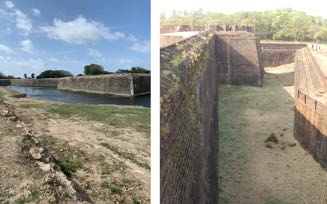
Self-explanatory images are presented in Figures 53.2, 53.3, 53.4, 53.5, 53.6, 53.7, 53.8, 53.9 and 53.10.
A report to the King of Kotte upon the arrival of Don Lorenço de Almeida and the Portuguese states:
’There is in our harbor of Colombo a race of people fair of skin and comely withal. They don jackets of iron and hats of iron; they rest not a minute in one place; they walk here and there; they eat hunks of stone and drink blood; they give two or three pieces of gold and silver for one fish or one lime; the report of their cannon is louder than thunder when it bursts upon the rock ’Yugandhara.’
Their cannon balls fly many a ’gawwa’ and shatter fortresses of granite.’
This citation can be found in Rajavaliya 73 and was also reported by M. D. Raghavan1.
The most substantial Karava conversion from Buddhism and Hinduism to Christianity occurred in 1556. Over 70000 Careas and their Pantagatim (i.e., their leader) from seaport areas along the southwest coast of Sri Lanka were converted and baptized by the San Francisco missionaries.
Under the guidance of Friar Francisco de Chaves, they formed a religious order, receiving applause from King Dom João III of Portugal. This event occurred during the tenure of Afonço Pereyra de Lacerda, the Captain of Ceylon, sent by the Viceroy Dom Pedro Mascarenhas.
M. D. Raghavan2 notes that following this example, many more Karava and Salagama inhabitants from the Kotte Kingdom, including the king, converted to Christianity. Their good relationship with the King of Kandy and their Christian faith made them loyal either to the Portuguese, the King of Kandy, or both. Consequently, during conflicts, they alternated their allegiance between the Kandyan King and the Portuguese.
The ease of conversion to Christianity might be attributed to the Karava and Salagama not being deeply embedded in the Sri Lankan caste system. At that time, being recent newcomers, they enjoyed greater social freedom. However, by the end of the Portuguese rule and definitively during the VOC period, the Karava and Salagama became more strictly integrated into the caste system.
This was necessitated by the colonial economic structure, which required individuals to belong to specific groups with designated roles, such as fishermen or cinnamon cultivators.
Raghavan mentions several known Patangatim in Sri Lanka from that era, some bearing Portuguese names. The standard interpretation is that these Patangatim were Sinhalese who received Portuguese names during baptism. While this is often true, it is not universally the case. DNA analysis would be required to confirm such claims. Examples include Dom Gaspar de Cruz, Afonço Pereira, Don Simao, and Thome Rodriguez.
Raghavan also references a particular soldier, Antonio Barreto, who became the guardian of Dona Catherina, Queen of Kandy. The Queen adopted a Christian first name, while the soldier had a Portuguese first name and surname, suggesting potential Portuguese descent.
Upon their arrival in Sri Lanka, the Portuguese brought with them a long-standing tradition of naming children, which had significant social implications. Typically, an individual received one or more Christian names, serving as first names or given names, in Figure 53.1: Business class travel may offer comfort, but to truly experience a country, one must embrace a more modest mode of travel. In 2008, the author embarked on an extraordinary train journey through India, visiting esteemed institutions from Nepal to the southernmost parts of the country. Notable among these were the University of Allahabad, Banaras Hindu University (Varanasi), the Indian Institute of Technology Madras (Chennai), and the Indian Institute of Science (Bangalore).
A profound respect for ancient cultures and history is essential for nurturing the next generation of global engineers and scientists. The Indian Institute of Science in Bangalore, where C.V. Raman was the first director, stands as a beacon of scientific achievement. Raman is renowned for the Raman Effect, which has become fundamental in modern Raman spectrometers. His collaborative work with Nagendra Nath in the field of Acousto-Optics further underscores his contributions to science. The Taj Mahal, depicted in Figure 4.2 on page 20, epitomizes the convergence of history, culture, religion, science, and engineering. While the world boasts many beautiful landmarks, the Taj Mahal and the Alhambra in Granada stand unparalleled in its splendor. (Declercq de Silva Archive)
1M. D. Raghavan, ’The Karava of Ceylon, society and culture,’ K. V. G. De Silva Sons, Colombo, 1961
2M. D. Raghavan, ’The Karava of Ceylon, society and culture’
The Desclergues of la Villa Ducal de Montblanc, 2nd ed., Omn., VOL. IV
© 2024 Nico F. Declercq
CHAPTER 53. FORTRESSES AND SETTLEMENTS IN GOA AND SRI LANKA AND THE APPEARANCE
1048
OF IBERIAN NAMES
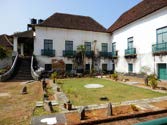
Figure 53.2: The exterior of the old Portuguese building at Goa,
where the Catholic museum is now housed, is next to the Se Cathedral.
(Goa, 2019) (Declercq de Silva Archive)
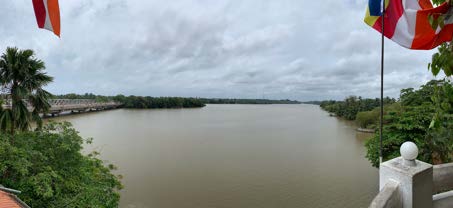
Figure 53.3: Inland view on the Kalu Ganga from the Portuguese fortress of Kalutara. Nowa-
days, it is a magnificent Buddhist temple and landmark in Sri Lanka. There are claims that it
was also a temple before the construction of the Portuguese fortress. (Sri Lanka, 2004) (Declercq
de Silva Archive)
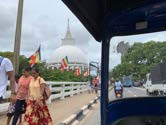
Figure 53.4: Kalutara fortress with temple viewed from a three-wheel
on the Kalu Ganga River bridge (Sri Lanka, 2019). (Declercq de Silva
Archive)
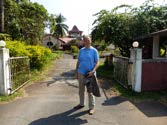
Figure 53.5: Goa University, just before visiting the President’s office
for a meeting. (Fall, 2019) (Declercq de Silva Archive)
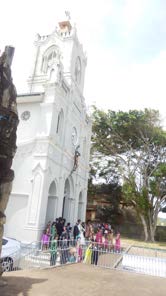
Figure 53.6: A wedding occurred in the Portuguese church of Ka-
lutara, near the old fortress. (Sri Lanka, 2004) (Declercq de Silva
Archive)
© 2024 Nico F. Declercq
The Desclergues of la Villa Ducal de Montblanc, 2nd ed., Omn., VOL. IV
53.1. INTRODUCTION
1049
Figure 53.7:
The fortress of Jaffna is
very similar to Spanish fortresses in the
former Spanish Netherlands (Belgium and
North of France) (Sri Lanka, 2019). One
can also see the Portuguese Fort Aguada
at Goa, which was built similarly (Goa,
2019). (Declercq de Silva Archive)
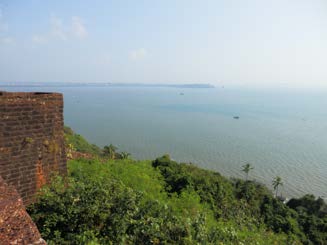
Figure 53.8: View on the Mandovi River
mouth from Fort Aguada. (Goa, 2019)
(Declercq de Silva Archive)
addition to the family name, which was generally passed down from father to child.
Occasionally, the family name could also be transmitted from mother to child, especially if the mother’s family name was of higher nobility. This naming tradition, with its European influence, played a role in shaping individual identities and social structures during the Portuguese colonial period.
Historical sources consistently report that when a person was baptized and converted, they adopted the full name of their godfather or godmother. They would precede their name with Dom or Dona if of sufficiently high social status.
Initially, only the first names (e.g., Diego, Catarina) were adopted, but later family names were included as well. This practice became particularly prevalent after 1553, when the Kingdom of Kotte became a vassal state of Portugal. Consequently, possessing a Portuguese family name does not necessarily indicate Portuguese ancestry along the paternal bloodline. A DNA test would be required to confirm or refute Portuguese lineage.
However, it can be assumed that nearly every Sri Lankan has, in one ancestral branch or another, at least one Portuguese, Spanish, or other European ancestor, highlighting the country’s complex and diverse cultural heritage.
How did individual children in Sri Lanka acquire Portuguese family names when it was not the result of conversion? The answer is straightforward.
Generally, a child would receive a Portuguese family name if his father was Portuguese or had been given a Portuguese family name.
This practice was not restricted to situations where the father and mother were married. Numerous examples in Western baptism certificates from that period show children being baptized and receiving their father’s family name, even when the documents indicate that the parents were unmarried, rendering the child illegitimate.
Thus, when a person in contemporary Sri Lanka has a name such as Perera or de Silva, it signifies either a patrilineal ancestor from Portugal or an ancestor who adopted the name upon conversion to Christianity.
Because almost no women arrived from Iberia3, receiving a Portuguese family name from a mother could have occurred, for instance, in situations where the mother was already a mixed child of a Portuguese father and a Sri Lankan mother.
Sri Lanka is not unique in this matter. The literature on Goa provides further clarification. For instance, Palash Ghosh4 wrote an insightful article, from which we quote:
’Portugal’s long presence in India led to the emergence of ’Luso-Indians,’ that is, people of mixed Indian and Portuguese descent, primarily the progeny of Portuguese men and local Indian women. Also, Portugal sent thousands of ’Orfas del Rei’ (young female orphans) to India to marry them to Portuguese men or Indians of high social rank. But not all Indians with Portuguese surnames have European blood flowing in their veins. Many Indians, like the ancestors of Indian film starlet Freida Pinto, acquired European names only after converting to Catholicism.’
Regarding Goa, there is also an illuminating article by Gauree Malkarnekar5 that delves deeper into the origins of Goan family names, which are not always and not necessarily Portuguese. Some family names can be understood by examining pre-Portuguese history, while others originated later.
Interestingly, the article shows that Goans have been quite flexible in their naming conventions. Indeed, new names could be easily adopted when old names were disadvantageous in certain situations, such as during persecution.
Malkarnekar’s article also states:
’As far as surnames of Goa’s Christian families go, Friar Victor Ferrao, a researcher and dean at the Rachol Seminary, states,
’During the baptism to Christianity, a person of European origin was made the godfather and all those converted would get his name.
3Exceptions included female orphans of sufficient age who came from Iberia to find husbands among the Portuguese or high-class Sri Lankans.
4Palash Ghosh, ’Why Do So Many Indians Have Portuguese Surnames,’ International Business Times, August 7, 2013.
5Gauree Malkarnekar, ’Goan Family Names: A Journey Through History,’ Times of India, April 24, 2016.
The Desclergues of la Villa Ducal de Montblanc, 2nd ed., Omn., VOL. IV
© 2024 Nico F. Declercq
CHAPTER 53. FORTRESSES AND SETTLEMENTS IN GOA AND SRI LANKA AND THE APPEARANCE
1050
OF IBERIAN NAMES
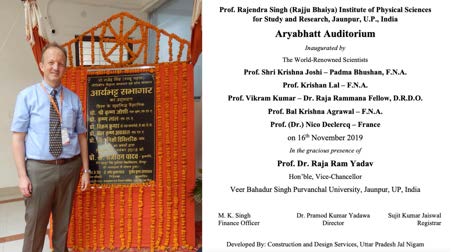
Figure 53.9: The author has a special affection for India. This plaque, now located at the
entrance of an auditorium at Jaunpur, reveals his name. The translation is shown right.
In some cases, the village head or ’gaunkar’ decided that his village should convert. And there are instances where an entire town has taken the same surname.’ Furthermore, he mentions ’that sometimes families did not convert all at once, leading to different members of the same family receiving different Portuguese names.’
During the Portuguese era in Sri Lanka, certain individuals were conferred honorific titles such as Don or Dom. These titles occasionally appear in Sri Lankan family names, either in their original form or appended to the end of the term. Such practices were standard during the VOC period, as the administration and the individuals sought to maintain connections with the former Portuguese rulers.
For example, Shirani de Silva’s grandmother, Jeethnona/Jeethdona, exemplifies this phenomenon. As a competitor of the Portuguese, the VOC likely prioritized the rights of Portuguese burghers over those of the general population. Thus, holding or assuming a Portuguese title often indicated close ties with the Portuguese and suggested a higher probability of Portuguese ancestry, even if such ancestry resulted from extramarital relations or love affairs.
A comprehensive DNA analysis of every Sri Lankan would likely yield astonishing results. An experienced traveler can observe the beauty and genetic diversity of the Sri Lankan people, recognizing traits from Europeans, Asians, Indians, and Moors in their appearances.
Unlike regions such as Cuba, there is a noticeable absence of African features, except perhaps those from North-East Africa.
Many individuals still exhibit characteristics reminiscent of tanned Portuguese ancestry.
The Portuguese in Sri Lanka appear to have primarily integrated with families from two specific castes: the Karava caste and the Salagama caste (also known as Saliya or Hali), predominantly found in the regions of Kosgoda, Balapitiya, Negombo, Heenatiyana, Talalla, Rathgama, Dadalla, Matara, Kalutara, and Waskaduwa.
Members of the Karava caste often possess a ’ge-name,’ sometimes in conjunction with a Portuguese name. In contrast, individuals from the Salagama caste typically do not have a ’ge-name’ but have frequently adopted Portuguese names. These low-country castes (as opposed to hill-country castes) are sometimes referred to as ’the fishermen’ for the Karava and the ’Cinnamon farmers’
for the Salagama. Such labels are misleading but stem from the historical involvement of many Salagama families in cinnamon cultivation during the Portuguese and the VOC periods.
In contrast, many fishermen at that time were indeed Karava. The Karavas were among the first to encounter the Portuguese and played a role in the marine protection of the country. Yet, it is essential to note that most Karava were not fishermen.
Similarly, misleading generalizations are made about the Goyigama caste. While many Goyigama were farmers and possessed land for cultivation, they often depicted themselves as ’landowners’ during the British period to align themselves with British lords.
When assessed through Western standards, the caste system becomes particularly problematic, where differences are immediately perceived as ’better versus worse’ or ’higher versus lower.’ A more accurate approach would be to acknowledge that people from different castes have distinct family histories, recognizing that mixed marriages were common. Many children were born out of wedlock and assumed to belong to one caste, while their ancestors may have originated from another. In essence, the caste system should be viewed as a cultural phenomenon rather than a value system.6
Fortunately, most young people in Sri Lanka today are not well-versed in the caste system and do not consider it a significant factor in choosing marriage partners.7
It is noteworthy that many people remain silent about the caste system, either because they are reluctant to disclose their caste or deem it inappropriate to classify individuals.
Over the past century, many families have changed their names to suggest affiliation with a particular caste, which may also contribute to their reticence.
Perhaps they find it inappropriate to discuss such matters with a foreigner. Consequently, gathering information on the subject took a lot of work for this author. Most of the facts this book presents regarding this topic are derived from the literature.
Modern studies on the interactions between the Portuguese and the Sri Lankans can be found in the works of scholars such as Jorge
Fort Aguada, depicted in Figure 53.7, is a Portuguese fortress completed in 1606. Situated on the northern shore of the Mandovi River in Goa, India, its name means ’water,’ referencing the vital water sources at this location essential for provisioning passing ships and warranted protection at all costs. From the fortress, the Portuguese had a strategic vantage point with a clear view of 6The author is convinced that a person must be valued for their personal qualities and not for the merits of the social rank, caste, or race behind which they hide.
7Note that astrology is still an important reason, in Sri Lanka, to accept or refuse a marriage partner.
8Jorge Flores, ’Re-exploring the Links: History and Constructed Histories between Portugal and Sri Lanka,’ Wiesbaden: Harrassowitz, 2007. xv, 359
S. Abb. 8° = Maritime Asia, 18. Hartbd.
© 2024 Nico F. Declercq
The Desclergues of la Villa Ducal de Montblanc, 2nd ed., Omn., VOL. IV
53.1. INTRODUCTION
1051
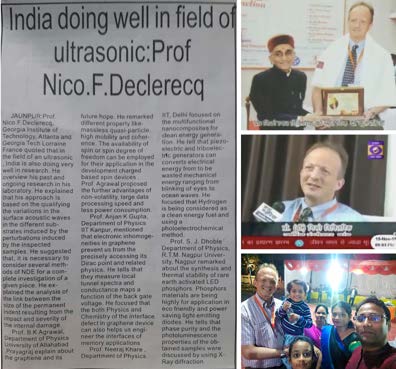
Figure 53.10: Left is an article in an Indian Newspaper in Jaunpur, India, in
2019. Further, a snapshot of India’s television in the fall of 2019 is shown. The
image captures when the author was awarded by The Dean of the University, Prof.
Dr Raja Ram Yadav. An interview on Indian television on November 19, 2019,
is also shown. Finally, the most memorable events occur behind the scenes when
everyone acts like human beings and lets their personalities shine. It is the most
prominent aspect of a person, which the author appreciates very much. Of the many
beautiful examples of this particular event in India in 2019, the author selected one
picture with Prof. Manish Kumar Gupta’s family and Prof. Neelam Soni. (Declercq
de Silva Archive)
the river mouth, as illustrated in Figure 53.8, enabling them to defend Goa against incoming hostile ships.
Before the construction of Fort Aguada, the Portuguese had established other strongholds, notably those built by Reis Magos and Gasper Dias.
However, in 1604, the Dutch VOC blockaded the Mandovi River with seven ships for a month, employing a strategy similar to the one used to cut off sea access for Antwerp in Belgium. This event shocked the Portuguese, as their cannons at the time, positioned at the existing fortresses, could not reach the Dutch ships. Consequently, Fort Aguada was constructed to ensure the entire mouth of the Mandovi River could be adequately defended.
The Desclergues of la Villa Ducal de Montblanc, 2nd ed., Omn., VOL. IV
© 2024 Nico F. Declercq
CHAPTER 53. FORTRESSES AND SETTLEMENTS IN GOA AND SRI LANKA AND THE APPEARANCE
1052
OF IBERIAN NAMES
© 2024 Nico F. Declercq
The Desclergues of la Villa Ducal de Montblanc, 2nd ed., Omn., VOL. IV
Chapter 54
Recent Family History of Shirani de Silva
54.1 Introduction
Shirani Olupathage de Silva is first described in Chapter 47.3 as the author’s wife. She is equally referred to in the following chapters: Part X as a ’t King in-law-descendant; Chapter 64 as granddaughter-in-law of Irma Helena Lesage; Chapter 65 as great-great-great-great-great-great-great-granddaughter-in-law of Adrienne de Patin (DP12); Chapter 66.1 as great-great-great-great-great-granddaughter-in-law of Barbara Benoit; Chapter 66.2 as a great-great-great-great-great-great-granddaughter-in-law of Maria Jeanne Christine Benoit; Chapter 67 as granddaughter-in-law of Anna Den Dauw; Chapter 68; Chapter 69 as great-great-granddaughter-in-law of Marie Nathalie Surmont; Chapter 71 as great-great-granddaughter-in-law of Clemens Lammens; and Chapter 72 as the wife of the author.
In what follows, we focus on the genealogy and family of Shirani with attention to the last handful of generations.
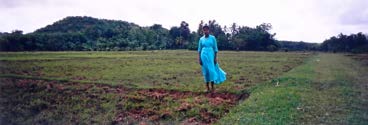
Figure 54.1 is a sweet memory of the rice fields of Uduwara, while Figure 54.2 reveals a view of those fields from Deewalkanda.
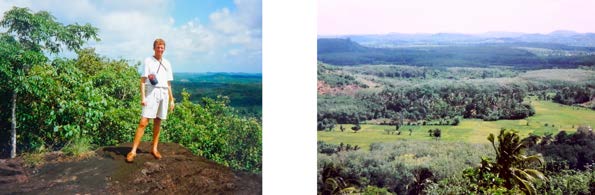
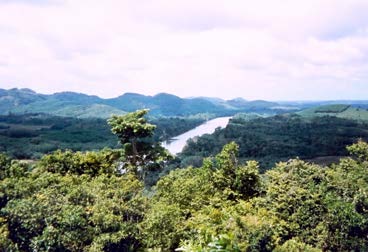
In the opposite direction, in Figure 54.2 and Figure 54.3, the Kalu Ganga is visible up until Kalutara. On a clear day, the rock can be seen from the sea, and vice versa. The hill was easily accessible in the past, and the author regularly visited it when in Sri Lanka, as shown in Figure 54.2.
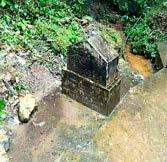
A small Kapuella (Capela is Portuguese for ’chapel’) temple after which the area is named can also be seen from the rock, and also the tomb of Shirani’s father Belin de Silva, in Figure 54.5.
Shirani is a granddaughter of Dom Olupathage Perez de Silva (also known as Peiris and Pedro) and Doña Sia Doris Hami on her father’s side and of Dom Olupathage Domis de Silva and Doña Demuni Sara Neris Jeeth Hami (also known as Demuni Jeeth-nona) on her mother’s side. Domis is a name that was introduced during the VOC period.
She is the daughter of Olupathage Belin de Silva and Olupathage Pia Wetty de Silva (also known as Piyawathie).
Her uncles are Olupathage David, Gilman, and Premachandra, and her auntie is Evelyn. Her brothers are Piyal Losantos (also known as Piyal Lasantha) and Sunil Santos (also known as Sunilsanta). At the same time, her sisters are Chula Wetty (also known as Chulawathie; Chula means handsome in Hispanic dialects), Juanita (also known as Suneeta), and Romani (also known as Ramani).
Shirani has an elder auntie, Olupathage Soma Wetty (also known as Somawathi) de Silva, on her mother’s side, who died in 2019.
Shirani descends from the House of de Silva (la casa de Silva) with which one of her Iberian ancestors, namely Carvalho, married.
De Silva is an ancient Iberian family in the Kingdom of Portugal where they sometimes appeared as Da Silva, originating from Leon in Spain, later mixed during the Portuguese colonization of Ceylon (Ceilao) with a Singhalese Karava or Salagama caste house called Olupathage and before that at Goa in India.
A famous de Silva is shown in Figure 54.6.
An etymological study, including archaeological investigations, concluded that the name Olupathage means ’the House of the Heads’
and is described in detail in the following chapters. Olupathage was recently given, likely in the 18th century, because it is not widespread. Most persons carrying this name are from the area around Uduwara. The construction after which the name was given is still there.
Both parents are blood-related, which can be seen in the family names in the recent ancestry tree. Indeed, besides the genealogical evidence of this statement and an expectation due to a tradition to marry within the caste, a GEDmatch® analysis was undertaken to find equal segments from each parent. Specifically, on Chromosome 3, a sequence of 12.3 cm was found; on Chromosome 12, a sequence of 8.9 cm was found; on Chromosome 14, a sequence of 11.1 cm was found; on Chromosome 17, a sequence of 21.4 cm was found; and on chromosome 20, a sequence of 17.5 cm was found.
Genealogical research in Sri Lanka is challenging for several reasons, including the Sinhalese language. However, some certificates are in English, Dutch, or Portuguese, depending on the period and the person’s preference. DNA, legacy, and archaeology are our fundamental (re)sources. Nevertheless, we have been able to do extensive research on a limited fraction of old administrative documents photographed by the Genealogical Library of Utah,1 in the 1980s and the 1990s.
We have retrieved fractions of the paternal ancestry line that match the available legacy on paper.
As we go back in time, certificates have deteriorated. They may be stored at different locations, such as the VOC archives in Figure 54.1: Shirani de Silva on her father’s rice fields at Uduwara in 1997.
(Declercq de Silva Archive)
1The Genealogical Library of Utah, Salt Lake City, Utah, USA.
The Desclergues of la Villa Ducal de Montblanc, 2nd ed., Omn., VOL. IV
© 2024 Nico F. Declercq
1054
CHAPTER 54. RECENT FAMILY HISTORY OF SHIRANI DE SILVA
Figure 54.2: Left is the author of Deewalkanda in 1997. Right is a view of Kapuella at Uduwara from the Deewalkanda in 1997, with the rice fields in front. The cemetery is in the far left of the image, while the old de Silva home is slightly visible in the middle of the picture. The ancient fortress of Uduwara with its ’Olupathage’ is off the image to the right. (Declercq de Silva Archive)
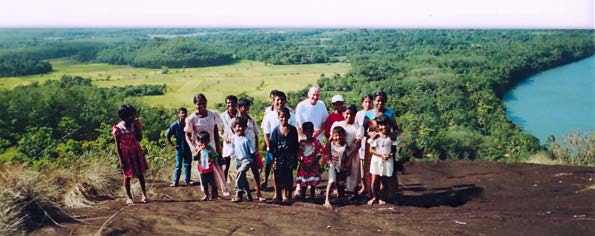
Figure 54.3: Maurice Declercq at Deewalkanda in 2000. (Declercq de Silva Archive)
Figure 54.4: The Kalu Ganga River seen from Deewalkanda in 1997. (De-
clercq de Silva Archive)
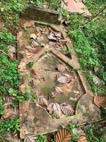
Figure 54.5: The remains of the grave of Olupathage Belin de Silva on the old
graveyard of Uduwara at the foot of the Deewalkanda where Diego Samara de Cunha
y Rala, better known in Sri Lanka as ’ Diogo Samarakoon Rala’ had his victory
for the Kingdom of Kotte, at 200 m from the old Portuguese chapel, or ’capela,’
nowadays a Buddhist monastery called ’Kapuella’ and at 800 m from the Portuguese
fortress along the Kalu Ganga, built after the battle. A chevron on the tombstone,
called ’asna’ in Portuguese, is a family tradition. The chevron is a Greek ’Lambda’
and represents ’Lusiàdas,’ which means ’Portuguese.’ For instance, the symbol also
appears in the Portuguese Marine Corps’ coat of arms, established in 1614. The
appearance of rounded corners is also a Portuguese tradition of the 17th century. The
grave of Vasco Da Gama, for instance, has it too. Also, at Goa, rounded corners and
ornaments are standard on the old Portuguese graves. (Declercq de Silva Archive)
© 2024 Nico F. Declercq
The Desclergues of la Villa Ducal de Montblanc, 2nd ed., Omn., VOL. IV
54.1. INTRODUCTION
1055
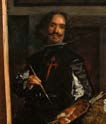
Figure 54.6: Perhaps the world’s most famous ’de Silva,’ over the centuries, has
been Diego Rodríguez de Silva y Velázquez (Sevilla 1599 - Madrid 1660).
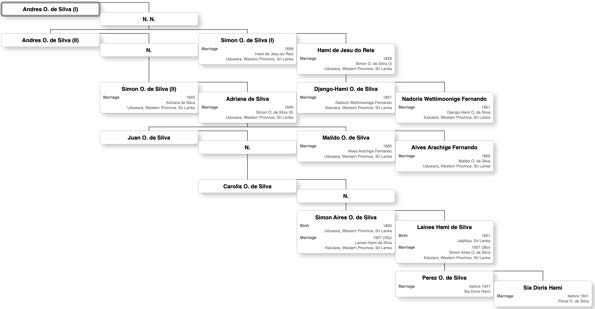
Figure 54.7: Descendants of Olupathage Don Andres (I) de Silva, who was born at the end of the VOC period, until Olupathage Don Perez de Silva was born around 1925.
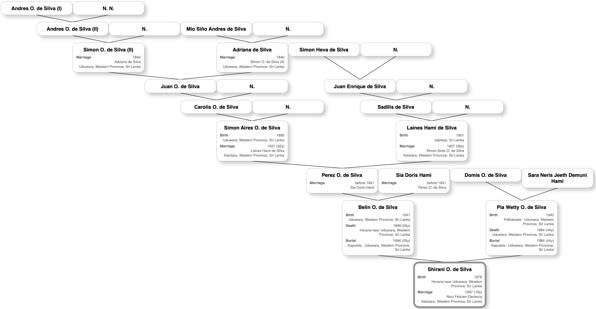
Figure 54.8: Eight generations of Shirani de Silva’s ancestors, spanning from the end of the VOC period until 1978.
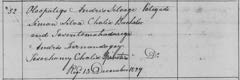
Figure 54.9: Uduwara, December 13, 1829 (or 1827),
the wedding of Olupathage Don Simon de Silva and Hami
de Jesu do Reis.
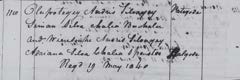
Figure 54.10: Uduwara, May 19th of 1840, the wed-
ding of Olupathage Don Simon (II) de Silva and Doña
Adriana de Silva.
The Desclergues of la Villa Ducal de Montblanc, 2nd ed., Omn., VOL. IV
© 2024 Nico F. Declercq
1056
CHAPTER 54. RECENT FAMILY HISTORY OF SHIRANI DE SILVA
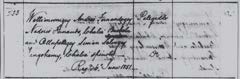
Figure 54.11: Uduwara, June 1, 1851, the wedding of
Wettimoonige Nadoris Fernando and Olupathage Doña
Django-Hami de Silva.
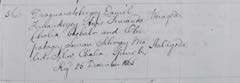
Figure 54.12: Uduwara, December 25, 1865, the wed-
ding of Alves Arachige Fernando with Olupathage Doña
Malido de Silva.
Figure 54.13: Kalutara, May 2, 1927, the wedding of
Olupathage Don Simon Aires de Silva with Laines Hami
de Silva.
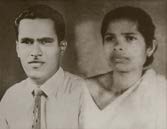
Figure 54.14:
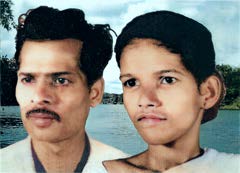
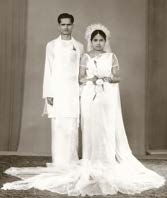
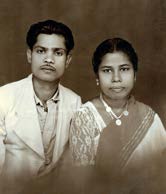
Olupathage Belin de Silva and Olu-
pathage Pia Wetty de Silva, parents of Shirani. MyHer-
itage® colorized this photo. (Declercq de Silva Archive)
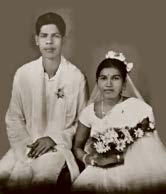
Figure 54.15: Oluptathage Gilman de Silva, brother of O. Belin de
Silva, and Sila Wetty (’Silawathi’) Manathunga. (Declercq de Silva
Archive)
© 2024 Nico F. Declercq
The Desclergues of la Villa Ducal de Montblanc, 2nd ed., Omn., VOL. IV
54.1. INTRODUCTION
1057
Figure 54.16: Olupathage David de Silva, brother of O. Belin de Silva,
and N. Gnana Wetty (’Gnanawathi’). (Declercq de Silva Archive)
Figure 54.17: Olupathage Evelyn de Silva, sister of O. Belin de Silva,
with her husband Demuni Siril de Silva. (Declercq de Silva Archive)
Figure 54.18: Olupathage Premachandra de Silva, brother of O. Belin
de Silva, and S. Melany Silva. (Declercq de Silva Archive)
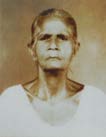
Figure 54.19: Photograph of Doña Sia Doris Hami, wife of Don Olupathage Perez
de Silva and mother of Olupathage Belin de Silva. (Declercq de Silva Archive)
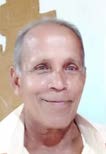
Figure 54.20: Photograph of Siri Sena Olupathage de Silva in 2020, uncle of Shirani
de Silva through her mother Pia Wetty O. de Silva. He is the son of Domis O. de
Silva and Sara Neris Jeeth Demuni Hami. His other siblings are Isa Wetty O. de
Silva and Soma Wetty O. de Silva. Before he retired, he was a gem excavator and
merchant. (Declercq de Silva Archive)
The Desclergues of la Villa Ducal de Montblanc, 2nd ed., Omn., VOL. IV
© 2024 Nico F. Declercq
1058
CHAPTER 54. RECENT FAMILY HISTORY OF SHIRANI DE SILVA
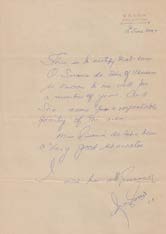
Figure 54.21: This letter was written by K. Norbert F. Silva, Jus-
tice of the Peace of Uduwara, in 1997. Mr Norbert would become an
excellent friend of the author in the years to come. (Declercq de Silva
Archive)
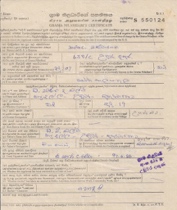
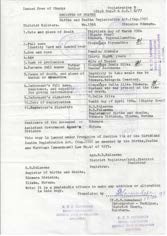
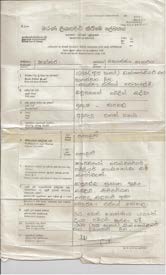
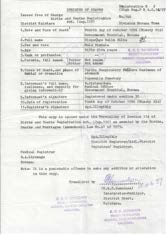
Figure 54.22: Grama Niladhari’s certificate of O. Shirani de Silva
(original, front) (Declercq de Silva Archive)
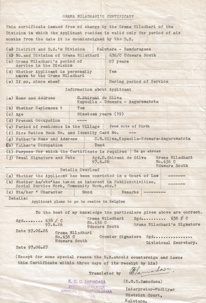
Figure 54.23: Grama Niladhari’s certificate of O. Shirani de Silva
(translation, front) (Declercq de Silva Archive)
Figure 54.24: Front of the death certificate of Olupathage Piyawathie
de Silva, wife of Olupathage Belin de Silva, Uduwara, March 13, 1984.
(Declercq de Silva Archive)
© 2024 Nico F. Declercq
The Desclergues of la Villa Ducal de Montblanc, 2nd ed., Omn., VOL. IV

54.1. INTRODUCTION
1059
Figure
54.25:
The translated death certificate of Olupathage
Piyawathie de Silva, wife of Olupathage Belin de Silva, Uduwara,
March 13, 1984. Note that her age is wrong because of a typo. She
was born on March 14, 1940, instead of 1946, as can be seen on the
birth certificate of Shirani. (Declercq de Silva Archive)
Figure 54.26: Front of the death certificate of Olupathage Belin de
Silva, Hospital of Horana, October 4, 1996, husband of Olupathage
Piyawathie de Silva. (Declercq de Silva Archive)
Figure 54.27: The translated death certificate of Olupathage Belin
de Silva, Hospital of Horana, October 4, 1996, husband of Olupathage
Piyawathie de Silva. (Declercq de Silva Archive)
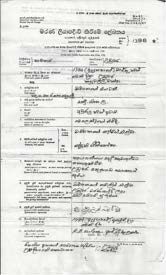
Figure 54.28: This compilation, partially blurred for privacy reasons, shows the following
documents of Shirani de Silva. The birth certificate, February 25, 1978, Horana (nearest hospital
to Uduwara). The translated birth certificate. The marriage certificate of Shirani Olupathage de
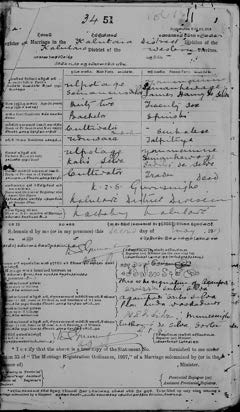
Silva and Nico F. Declercq, Kalutara, June 6, 1997. The translated marriage certificate . The
transcript of the marriage of Shirani Olupathage de Silva and Nico F. Declercq in the registration
records of Deerlijk in Belgium. (Declercq de Silva Archive)
The Desclergues of la Villa Ducal de Montblanc, 2nd ed., Omn., VOL. IV
© 2024 Nico F. Declercq
CHAPTER 54. RECENT FAMILY HISTORY OF SHIRANI DE SILVA
Jakarta, the Portuguese archives at Goa, and the Portuguese archives in Spain.
Note that almost all Portuguese files of the Estado da India Portuguesa period, stored in Portugal, have disappeared in a fire.
The investigations were fascinating because they are consistent with the knowledge that the family is an old Chalia family of Uduwara and that the name Olupathage originated locally.
Interestingly, the Olupathage clan consisted of de Silva’s and Fernandes, Perrera, and Reis. There were also cases without Portuguese surnames. We, therefore, assume that every Olupathage family originates from families at and around the Uduwara fortress. The collection of these specific names associated with the clan name of Olupathage is almost direct evidence that the earliest clan members originated from Goa in India, with Portuguese roots, except those without Portuguese surnames. Indeed, these Portuguese names, in particular, are much more common in Goa than in Sri Lanka.
Thanks to a family tradition, we know the most recent generations of the family tree in reasonable detail. On-site genealogy has provided us with, as far as possible, a few registration certificates for confirmation. Later research, if more documents surface, may add more details or make minor corrections. Summaries are given in Figures 54.7 and 54.8.
The earliest documented ancestor at Uduwara, found in recent history, was Olupathage Don Andres (I) de Silva.
Earlier generations at Uduwara must have appeared in documents during the VOC and Portuguese periods, but those documents have been lost or have yet to surface.
Olupathage Don Andres (I) de Silva was married and had a son Olupathage Don Andres (II) de Silva, who had a son Olupathage Don Simon (II) de Silva, married to Doña Adriana de Silva in 1840.
Olupathage Don Andres (I) de Silva also had a son, Olupathage Don Simon (I) de Silva, who married Hami de Jesu do Reis in 1829. The last couple would have a daughter, Django-ham, who married Nadoris Wettimoonige Fernando in 1851.
Nadoris Wettimoonige Fernando was a son of Andres Wettimoonige Fernando. Hami de Jesu do Reis was a daughter of Andres Fernando do Reis, a son of Jacintho Mateus do Reis.
Andres (II) ’s son, Simon (II), and Adriana had two known children, Olupathage Don Juan de Silva and Olupathage Doña Malido de Silva. Juan would have a son, Olupathage Don Carolis de Silva, while Malido would marry Alves Arachige Fernando in 1865.
Alves’ father was Daniel Arachige Fernando, son of Diego Arachige Fernando.
Carolis had a son, Olupathage Don Simon Aires de Silva, born in 1905, who married, in 1927, to Laines Hami de Silva, born in 1901 and from Jalpitiya. This couple had a son, Olupathage Don Perez de Silva, who married Doña Sia Doris Hami. The couple were the parents of Belin de Silva and the father of Shirani de Silva.
Laines Hami de Silva was the daughter of Sadilis de Silva, the son of Juan Enrique de Silva, and the son of Simon Heva de Silva.
Note that in the 19th century, it was customary to form names that included the family name, the father’s name, and sometimes even the grandfather’s name. The expression ’-ge’ or ’-gey’ represents the genitive in such a case.
The wedding certificate, in Figure 54.9, of December 13, 1829 (or 1827), of Uduwara in the district of Kalutara administration, is that of Olupathage Don Simon de Silva (’Oloopatege Siman Silva’), bachelor and son of Olupathage Don Andres (II) de Silva (’Oloopatege Andris Silva’), from the Chalia caste (i.e. the Salagama caste), who married Hami de Jesu do Reis, spinster and daughter of Andres Fernando do Reis and granddaughter of Jacintho Mateus do Reis (’Jasintomatiadurige Jisohami’). The bride was from Uduwara. The groom was from Pategade (neighboring Uduwara).
The marriage certificate, in Figure 54.10 of May 15, 1840, of Uduwara in the district of Kalutara administration, is that of Olupathage Don Simon (II) de Silva, bachelor and son of Olupathage Don Andres (II) de Silva, from the Chalia caste, who married Doña Adriana de Silva, spinster and daughter of Don Mio Siño Andres de Silva (’Miusinghe Andris de Silva’), from the Chalia caste. The groom was from Pategade (neighboring Uduwara), and the bride was from Halgoda (neighboring Uduwara).
The wedding certificate, in Figure 54.11, of Uduwara in the district of Kalutara administration, of January 6, 1851, is that of Wettimoonige Nadoris Fernando, bachelor and son of Wettimoonige Andres Fernando, from the Chalia caste, with Olupathage Doña Django-Hami de Silva (’O. Jangohamy de Silva’), spinster and daughter of Olupathage Don Simon (I) de Silva, from the Chalia caste (Simon (I) was married to Hami de Jesu do Reis in 1829).
The marriage certificate, in Figure 54.12, of December 25, 1865, of Uduwara in the district of Kalutara administration, is that of Alves Arachige Fernando, bachelor and son of Daniel Arachige Fernando and grandson of Diego Arachige Alves Fernando (’Diaguaratchige Awis Fernando’), with Olupathage Doña Malido de Silva, spinster and daughter of Olupathage Don Simon (II) de Silva. The groom was from Weragoda, and the bride was from Halgoda (neighboring Uduwara).
Figure 54.13 is a Kalutara administration certificate from May 2, 1927. It shows the wedding of Olupathage Don Simon Aires de Silva (’Olupathage Samenaris de Silva’), born in 1895, a bachelor from Uduwara and son of farmer Olupathage Don Carolis de Silva, with Laines Hami de Silva from Jalpitiya, born in 1901, daughter and spinster of deceased merchant Sadilis de Silva and granddaughter of Juan Enrique de Silva, son of Simon Heva de Silva (’Yaneninne Simanhewage Sadilis de Silva’). They registered their marriage later than the wedding itself, also reflected by their respective age. This was probably done to buy a property.
It is important to remember that childbirth registration was obligatory shortly after birth, but the marriage was valid without registration.
In the 19th century, there were numerous birth certificates of ’unmarried’ parents, although both parents were named on the certificate in most cases. Many birth certificates also mention ’said to be married’ or ’married according to their customs.’
We can refer, for instance, to Arnold Wright’s book2, stating,
’The low-country Sinhalese, like the Tamils, the Burghers, and Europeans, are subject to the general law, which is now contained in ordinance N0. 2, 1895 (as amended by Ordinance N0. 19, 1900). Registration is not indispensable to marriage’s validity but is usually availed of by well-to-do classes and universally by the Europeans and Burghers.’
Figures 54.14, 54.15, 54.16, 54.17 and 54.18 show the wedding photos of Dom Olupathage Perez de Silva and Doña Sia Doris Hami’s children. Pictures were very uncommon before WWII, and the ones that were taken were typically lost in later decades, either by natural disasters, deterioration, or elsewhere. Fungus in a tropical country often damage pictures, even more so for modern photo-paper portraits.
Doña Sia Doris Hami is shown in Figure 54.19, and Siri Sena Olupathage de Silva in 54.20.
Certificates of recent times are shown in Figures 54.21, 54.22, and 54.23 in low resolution to preserve our privacy.
Olupathage Belin de Silva’s identity card shows that he was born in Uduwara on November 23, 1941. His death is shown in Figures
54.24, 54.25, 54.26 and 54.27.
Shirani de Silva’s birth is shown in low resolution in Figure 54.28.
For genealogical reference to anyone who would work further on the ancestry of Olupathage Shirani de Silva, we can mention the following found appearances of near or distant blood relatives in the recent Sri Lankan records, even though we don’t know exactly 2Arnold Wright, ’Twentieth Century Impressions of Ceylon: Its History, People, Commerce, Industries, and Resources,’ First published in London in 1907.
© 2024 Nico F. Declercq
The Desclergues of la Villa Ducal de Montblanc, 2nd ed., Omn., VOL. IV
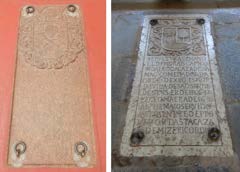
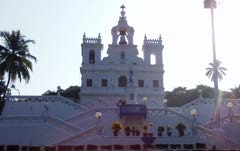
54.2. THE APPEARANCE OF LAMBDA AND DELTA IN TOMBSTONES, BUILDINGS AND CHURCHES
AT GOA
1061
Figure 54.29: Two typical Portuguese graves on the
floor inside a church (St Cajetan church of Goa, approx-
imately 1650), and the Se Cathedral at Goa, where the
four corners are (in this case ’functionally’) ornamented
with metal rings to raise the tombstone quickly when
needed. The head is an ornament (a shield in this case),
with the description on the lower part. (Goa, 2019) (De-
clercq de Silva Archive)
Figure 54.30: Se Cathedral at Goa. It’s remarkable
how the Delta and Lambda appear everywhere. (Goa,
2019) (Declercq de Silva Archive)
how they are related:
Register of Births 14250, Western Province, Kalutara District, Kalutara Town division: On August 11, 1929, was born at Kalutara North Dansi Nona, daughter of trader Olupathage Velis Silva and Vethige Nimel Hamy, married. The informant was the father, Olupathage Velis Silva, from Kalutara North. The child was registered on August 14, 1929.
Register of Births, 7813 or 7814, Western Province, District Kalutara, Division Kalutara Town: born on September 22, 1942, at 259 Main Road Kalutara, Kanalawathie, daughter of Walimmi Indras, a soldier, and Olupathage Raisa de Silva. The informant was Olupathage Carolis de Silva, a family member of the mother of 259 Main Road Kalutara.
For future reference, we would like to notify the reader that Olupathage Somawathi de Silva told, in August 2014, that Olupathage Babo Siño de Silva was the father of Olupathage Belin de Silva. This is not according to the documents and contradicts what all other family members recalled. Hence, we believe that her old age caused her to confuse names. Nevertheless, it is worth mentioning because if she is confused with another person, then Babo Siño may also appear in still-to-be-found administrative documents of the family as a brother or uncle. For instance, around 1930, we found in Kalutara children of an Olupathage Podi Siño de Silva, as shown further below.
Register of Births, 7579, Western Province, District of Kalutara: born on April 4, 1912, at Horana’ Gnaup,’ was Dona Alice (’Alice
Nona’)3, daughter of Babo Siño (’Bampy Sinno’)4, a driver, and of Dona Casa (’Casa Nona’), who were both Sinhalese and married
’according to their rites and laws of their community.’ The child was registered on May 13, 1912, by informant His M Haselden Cawley, with birth registration upon the informant’s report as the superintendent of Estate under section 16.1.
Register of Births, 8319, Western Province, District of Kalutara: born on January 14, 1913, at Mirishena, William, son of Babu Siño and Podina. The informant was L.P. Gapp, superintendent of Estate under Section 16.1, and the registration was done on February 28, 1913.
Register of Births, 13378, Western Province, District of Kalutara, division of Kalutara Town: born on November 25, 1927, at Kalutara North, was Jhenoris, son of Olupathage Podi Siño Silva and Hekkini Nona Sela, married. The informant was the father, Olupthage Podi Siño Silva, from Kalutara North. The child was registered on November 23, 1927.
Register of Births, nr 14138, Western Province, Kalutara district, Kalutara town division: On May 18, 1929, was born at Kalutara North: Devail Silva, son of Olupathage Pody Siño Silva and Hakkini Dela Nona, married. The informant was Olupathage Podi Siño Silva, from Kalutara North, the father. The child was registered on May 22, 1929.
Register of Births, 4135, Western Province, District Kalutara, Division Kalutara Town: born on September 2, 1938, at Kalutara Hospital, Salson Sirisena Siño, son of motor car driver Olupathage Wilbert Siño and his wife Seeki Arachchige Adin Nona Silva.
The registration was on September 5, 1938, upon the informant Antonyge Mary Fernando of Kalutara Hospital’s report.
54.2 The Appearance of Lambda and Delta in Tombstones, Buildings and
Churches at Goa
Note that Belin de Silva’s tombstone, in Figure 54.5 on page 1054, shows a delta sign with quarter-circle ornaments on the corners.
Such symbolism is very typical for Goa as can be found in Figures 54.29, 54.30, 54.31, 54.32, 54.33, 54.34 and 54.35. Note that Lambda stands for Lusiadas, which means Portuguese, while Delta stands for Deus, or ’God.’ Therefore, Lambda and Delta’s appearance in many constructions can be considered a reference to God and Country for the Portuguese.
54.3 Alvaro de Carvalho, the Son of Alvar Garcia Bejarano and Mencia Gon-
zalez de Carvalho, the Eldest Known Paternal Ancestor of Shirani de
Silva
Before we describe Honorato de Carvalho’s ancestors, it’s interesting to read Chapter 74 where we learn that Shirani de Silva shares autosomal DNA with Goncalves, Salinas, Mendoza, Castile, Vasquez, Bejarano, etc. These are all names that also appear in the 3Perhaps this was Olupathage Dona Alice de Silva
4Maybe this was Olupathage Babi Siño de Silva, which means he could have been O. Belin de Silva’s grandfather The Desclergues of la Villa Ducal de Montblanc, 2nd ed., Omn., VOL. IV
© 2024 Nico F. Declercq
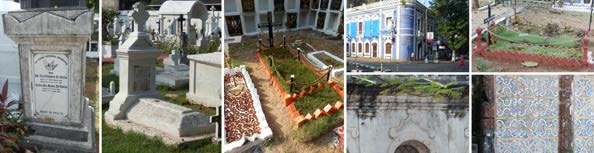
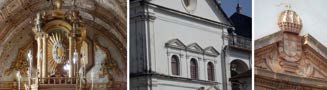
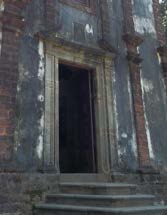
1062
CHAPTER 54. RECENT FAMILY HISTORY OF SHIRANI DE SILVA
Figure 54.31: The Delta or Lambda symbols, such as building ornaments, tombs, and ceramics, are frequently found in Goa.
The selected locations include the Santa Inez Goa cemetery and Saint Augustine’s church. (Goa, 2019) (Declercq de Silva Archive)
Figure 54.32: The Franciscan Hospitaller Sisters con-
vent of Saint John of God at Goa looks like a typical
Iberian building in Brazil or the Caribbean. (Goa, 2019)
(Declercq de Silva Archive)
Figure 54.33: A church behind the Se Cathedral. The front wall is
covered by Lambda and Delta symbols. Significantly above the portal,
the crown of Portugal is carried by 2 Lambdas on top of another. (Goa,
2019) (Declercq de Silva Archive)
Figure 54.34: The Se Cathedral (1615)
of Goa exposes the delta sign everywhere.
We also see one of the altars inside, where
the experienced eye finds the Lambda sym-
bol several times. Right, the Portuguese
crown and shield are shown in the mid-
dle of the Se Cathedral’s front side (1615)
of Goa. Note the appearance of the Delta
symbol and the ornamented and gently
squeezed Lambda symbol.
(Goa, 2019)
(Declercq de Silva Archive)
Figure 54.35: Santa Catarina Chapel at Goa. The Portuguese who
constructed the chapel placed a shield above the entrance but did not give
up the Delta or Lambda shape. Here, they found a compromise. Afonso
de Albuquerque built the chapel to commemorate his entry into the city
on Santa Catarina’s day and was later further enlarged by Governor
George Cabral in 1550. (Goa, 2019) (Declercq de Silva Archive)
© 2024 Nico F. Declercq
The Desclergues of la Villa Ducal de Montblanc, 2nd ed., Omn., VOL. IV
54.3. ALVARO DE CARVALHO, THE SON OF ALVAR GARCIA BEJARANO AND MENCIA GONZALEZ
DE CARVALHO, THE ELDEST KNOWN PATERNAL ANCESTOR OF SHIRANI DE SILVA
1063
Figure 54.36: Throughout Andalusia, one finds qualitatively good guitarists and
flamenco singers on every corner. Sometimes, their performances are of such impec-
cable quality that they feel like a private concert. The author took this picture at a
restaurant in Cadiz in June 2003, where the music was superb, besides the terrific
fish dish. (Declercq de Silva Archive)
Figure 54.37: The Mexican branch of de Carvalho, therefore very distant patrilineal relatives of Shirani de Silva, is described in the literature. Courtesy of the Jewish Library.
ancestry of Honorato de Carvalho. The bloodline is based on several ancestry trees on Geneanet®.
It is essential to note that an extensive investigation on the available ancestry trees of Geneanet®, has not revealed any still living patrilineal descendants of this particular family. However, other families in Spain and other world areas always carry this family name.
Variants of this family name are Carvajal, Carabajal, Caravajal, Carbajal, Carvalho, Carvalhal, Carvalho, and Curbello. Many families must exist indeed because when we check for this name on FamilyTreeDNA®, we find a large variety of Y-DNA Haplogroups, including the rather typical European R-DF27, R-S933, R-M153, the rather usual for the area of Persia and Andalusia I-M170, the typical Native American Q-M346, Q-M242, the typical North-African E-M2, the Sephardic J-M172, J-M267, T-M70, T-CTS6507
and also E-M35, R-M269, R-M267, Q-M242, etc. Note that the E-M35, A-M242, R-M269, R-M267, J-M267, J-M172, and T-M70
Haplogroups also appear in Pilgrims in the database of the earlier mentioned scientific report of Begoña Martinez-Cruz et al. They originate from tribes of whom some passed their character into Flamenco music, as illustrated in Figure 54.36.
The maternal line originates from a high caste in India. Indeed, a reference marker in the de Silva DNA is that the mtDNA is R31
and is known to stem from the Kshatriya caste in Rajasthan and Gujarat, the Brahmins from Uttar Pradesh, and the Reddy from Andhra Pradesh.
The R31 mtDNA Haplogroup is relatively rare, is more than four thousand years old, and appears mainly in the North-West of
India5. The Kshatriya caste comprises ancient warriors and is the second-highest caste in India, just below the Brahmin.
The R31 mtDNA is described by Monika Karmin6 and in The American Journal of Human Genetics. 7
Thus, the mtDNA may have been in the de Silva ancestors before their departure to the West and must involve marriages with blood relatives or mixed with the bloodline after they arrived from Iberia in Goa. The latter is likely correct because the R31
Haplogroup has yet to be reported among Iberians.
Therefore, the archaeological evidence below confirms that the first paternal ancestor who arrived in Goa married a woman from one of the highest castes in India.
A brief reconstruction of the paternal migration path appears in Chapter 74.2. They arrived in Iberia through the Byzantine migration path between 224 and 1300.
5Larruga et al., ’Carriers of mitochondrial DNA macroHaplogroup R colonized Eurasia and Australasia from a southeast Asia core area,’ BMS
Evolutionary Biology 17, 115, 2017.
6Monika Karmin, ’Human mitochondrial DNA Haplogroup R in India: Dissecting the Phylogenetic tree of South Asian-specific lineages,’ Ms. Thesis supervised by Dr. Ene Metspalu, University of Tartu, 2005.
7The American Journal of Human Genetics. 75(6): 966–78: ’Phylogeny of Mitochondrial DNA MacroHaplogroup N in India, Based on Complete Sequencing: Implications for the Peopling of South Asia.’
The Desclergues of la Villa Ducal de Montblanc, 2nd ed., Omn., VOL. IV
© 2024 Nico F. Declercq
CHAPTER 54. RECENT FAMILY HISTORY OF SHIRANI DE SILVA
When we check where the samples closest to the Y-DNA Haplogroup H-Z34561 on the Indian continent originate from, we find Gujarat, along the Byzantine migration path out of India.
FamilyTreeDNA® shows the appearance of the branch H-SK1225 with all sub-branches (including H-Z34561) in the following countries today: Spain (1), Finland (2), Scotland (2), Ireland (1), England (1), France (1), Slovakia (1), Bulgaria (1), Moldova (1), Iraq (1), Pakistan (1). Like many tribes that originated in India, the Carvalho ancestors arrived in Iberia as pilgrims or chalanes.
The latter referred to their possession and trade of horses.
As detailed in Chapter 74, they left North-West India before 500 and migrated to Afghanistan and Persia, where they resided between approximately 800 and 1000. They migrated further through Armenia into Asia Minor and arrived in the Peloponnese and Byzantium between 1100 and 1300.
There are documents from the 1200s in Byzantium that show that the Indian tribes were taxed there.
Like the Visigoths before them, some tribes migrated fairly quickly to Iberia. They were welcomed as Pilgrims on the Camino de Santiago, probably disguised as Catholic Greeks (Graciano or de Grecia).
When they settled in Trujillo near Cáceres, it was on the Pilgrimage route from Sevilla to Salamanca and Leon along the East-West pilgrimage route from Barcelona to Pamplona and further West to Santiago de Compostela.
During their stay in the Byzantine and the Peloponnese, they got accustomed to pilgrimage because they resided on the route from Western Europe to the Holy Land and appeared in written reports about pilgrimages. In 1499, perhaps too many tribes had arrived in Iberia, and therefore, there was a royal edict in Spain forced those tribes who continued to live as nomads to settle.
By then, the tribes that had arrived in 1200-1400 had long been integrated with the Iberian societies and possibly even did not associate with the new arrivals at the end of the 15th century and later. The massive expansion of Spain during the Reconquista coincided with those early arrivals and encouraged them to settle in the newly conquered territories as Spaniards.
An interesting study appeared in the Jewish encyclopedia on the Sephardic Carabajal family in Mexico8 which dates from a century later. Catalina de Leon y de la Cueva, daughter of Francisco Rodriguez de Matos and Francisca Nunez de Carvajal, was born in Benavente, Portugal, in late 1565 or early 1566. She married Antonio Diaz de Caceres in Feb 1586 in Panuco, New Spain (Mexico).
Her maternal uncle was Luis de Carvajal y de la Cueva, named Nuevo Reino de Leon governor on May 31, 1579. She was burned at the stake in Mexico City in the Auto de Fe of 08 Dec 1596.
Still, it is an interesting case because the branch is associated with Jews. It is consistent with our discovery that the family passed through the Middle East while migrating from North India through Byzantine to Iberia. A mixed marriage and the matrilineal importance of Judaism explain how a branch became Sephardic rather than Catholic. It also explains fractions of DNA common with Jews in Chapter 74.12.2. The Mexican branch, therefore, very distant patrilineal relatives of Shirani de Silva, as described in the literature, is shown in Figure 54.37.
There are family names associated with the descendants of the Carvalho branch in Mexico that also appear with common DNA, such as Nunez, de Leon, Diaz, de Medina, Rodriguez, Salas, de las Duenas, Miranda, Ortiz, Villegas, Romero, de Pimentel, de Silba, de Soto, etc.
54.3.1 Alvaro de Carvalho & Leonor de la Torre
Notably, Alvaro de Carvalho, the son of Alvar Garcia Bejarano (señor de Orellana de la Sierra) and Mencia Gonzalez de Carvalho, adopted the name ’de Carvalho’ due to its higher social status compared to his father’s name ’Bejarano.’ This decision reflects the complex social dynamics of the time, where the choice of a surname could signify one’s social standing.
The surnames Carvajal and Carvalho, both derived from the term ’oak’ in Spanish and Portuguese respectively, have a strong geographical connection. ’Carvajal’ is a topographic name, indicating someone who lived near an oak grove, or a habitational name from places named Carvajal in Spain. Similarly, ’Carvalho’ is a topographic name for someone living near an oak tree or oak grove.
Some Carvalho lineages in Portugal have origins linked to families with the surname Carvajal in Spain.
Alvar Garcia Bejarano was from Trujillo and was born around 1322. The area had been in the hands of Castile since around 1165.
His heraldic shield was a lion similar to de Silva’s but not crowned. The literature about older ancestors needs to be clarified and probably embedded in fantasy.
Interestingly, Bejarano is on the list of often-used names by the Pilgrims, as explained in Chapter 74. So we may safely assume that Alvar Garcia Bejarano stems from parents who had migrated over several hundreds of years from India to Spain, through the Byzantine migration route as described in Chapter 74.2 and confirmed by DNA analysis in Chapter 74.
As indicated, the shield of Bejerano was,
’En campo de plata un león rampante al natural y cuatro cabezas de dragones de sinople lampasados de gules, movientes,’ and, therefore, resembled the de Silva shield, which may have been an additional reason to assimilate later with the de Silva family through a maternal line.
The name Bejarano or Vejarano may have more than one origin. Some claim that it comes from Bet-Haran, which is Hebrew and is found in the Tora9. Bet-Haran is located North-East of the Dead Sea in nowadays Jordan and is called ’Tall el-Hammam.’ Alvar Garcia Bejarano may, therefore, have inherited the name from an ancestor along the Byzantine migration path. Settlers of Indian origin often took an existing local name or used the name of a locality to gain better acceptance.
Indeed, the term can also stem from ’Beja’ in Portugal or ’Béjar’ in Spain. The latter is perhaps the most reasonable as it’s near Salamanca, between Trujillo and Leon, and may have been the first settlement place of the family on the Iberian Peninsula, along the Camino. Béjar has been Morish from 713 until the 11th century.
Scholars have yet to agree on where the name comes from, although they tend to assume it’s of pre-Roman origin.
54.3.2 Diego de Carvalho & Elvira de Toledo
Diego de Carvalho was born in 1502 in Trujillo in the Extremadura province of Salamanca in Leon, as the son of Alvaro de Carvalho and Leonor de la Torre. He was married to Elvira de Toledo (who died in 1532). Diego de Carvalho had been married before to Beatriz de Vargas from Salamanca in 1522, who was the daughter of Juan de Vargas Carvalho and Maria de Sotomayor. Interesting is the fact that Diego de Carvalho was Correo Mayor de las Indias y Tierra Firme (2ndo, 1527); he was also the Lord of the cities of Puerto and Valhonda, he was the ’regidor’ of Trujillo, alcaide of Fortaleza (1527), Knight in the order of Santiago. Diego de Carvalho died in Lima, Peru, around 1567. One of his sons was Diego de Vargas Carvalho, who had high positions in Lima and 8Cyrus Adler, George Alexander Kohut, ’Carabajal (variously spelled Carabal, Caraballo, Caravajal, Carbajal, and Carvajal, the name Carvalho being identical), pages 568-569
9The Tora, XXXII.36.
© 2024 Nico F. Declercq
The Desclergues of la Villa Ducal de Montblanc, 2nd ed., Omn., VOL. IV
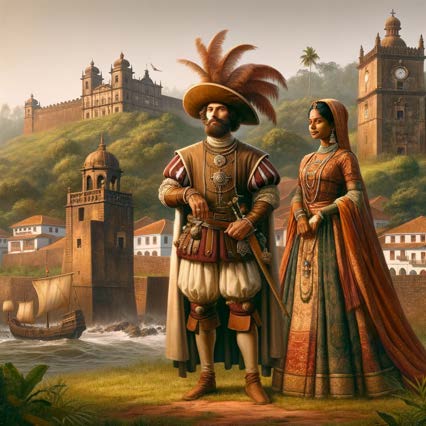
54.4. CONCERNING THE CARVALHO FAMILY IN THE EXTREMADURA AND GOA
1065
Figure 54.38: A Flamenco dancer in Granada in June 2003 (left)
(Declercq de Silva Archive), who looked precisely like Kajol, the Indian
Bollywood actress (right).
was buried in the Church of the Convento de San Francisco el Grande in Lima after he died in 1593. Genetic evidence linking to our de Silva ancestry is shown in Chapter 74.6 on page 1610.
54.3.3 Antonio de Carvalho & Teresa de Mendoza
Antonio de Carvalho is the son of Diego de Carvalho and Elvira de Toledo (who died in 1532). He was married to Teresa de Mendoza, the daughter of Honorato de Mendoza and Francisca de Silva (who died in 1534). Honorato de Mendoza was a son of Juan Hurtado de Mendoza and Ines Manrique. Francisca de Silva was the daughter of Juan de Silva (the count of Cifuentes, who died in 1464) and Inés de Ribeira.
54.3.4 Honorato de Carvalho & Maria de Silva
Honorato de Carvalho is the son of Antonio de Carvalho and Teresa de Mendoza. He became the Lord of Salinas in 1552. He married Maria de Silva. The couple had the following children: Fernando (Lord of Salinas in 1583 and married Germana de Luna y Loaysia), Honorato Carvalho de Silva, and Juan Carvalho de Silva. Honorato Carvalho de Silva died in Namen, Belgium 1613 in the Army of Flanders. Juan de Silva, as described further in the book, would be the progenitor of the de Silva branch of Uduwara through his son Antonio. The latter, known as Antonio Carvalho de Silva or Antoni de Silva, died in Sri Lanka in 1617 and had constructed the fortress of Uduwara the decade before. He was an army captain and Shirani de Silva’s earliest Sri Lankan paternal ancestor. His wife was either Luso-Indian, Luso-Sri Lankan, or Sri Lankan. His descendants, of course, intermarried with other Sri Lankans, which is evident from DNA analysis.
54.4 Concerning the Carvalho family in the Extremadura and Goa
Figure 54.39: A historical scene in Goa of a Portuguese conquistador and his local wife.
This image was made with AI (DALL·E 2024-05-22 20.20.47).
Geneanet’s® investigation revealed essential links between the Carvalho family through marriages and several family names associated with Pilgrim families. One such connection is, as shown above, the patrilineal link to a Bejarano, who must have been a child of immigrants in Spain in the early 14th century of so-called Pilgrim clans who migrated to Spain over several hundreds of years from Byzantine. Also, in later times, the Carvalho clan related to families who were likely of Pilgrim descent and Iberians of other origins. Their most ancient roots, before their Byzantine period, can be found in India, just like that of Flamenco dancers, illustrated in Figure 54.38.
We may mention Diego de Carvalho y Vargas, born around 1480, 4th Lord of Valero, who was married to Elvira Contreras y Carillo de Mendoza and who was the son of Sancho de Carvalho and Ines Calderon. This Sancho de Carvalho was a son of Diego Gonzales The Desclergues of la Villa Ducal de Montblanc, 2nd ed., Omn., VOL. IV
© 2024 Nico F. Declercq
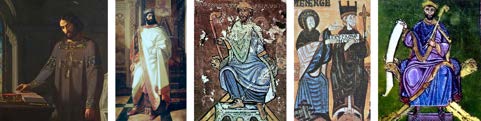
1066
CHAPTER 54. RECENT FAMILY HISTORY OF SHIRANI DE SILVA
Figure 54.40: From left to right, we see Bermudo I de Silva, el Diácono (Museo del Prado); Ramiro
I de Silva de Asturias (Museo del Prado); Ordoño I de Silva de Asturias; Alfonso III de Silva de
Asturias with Jimena, medieval miniature; and a miniature of Fruela II de Silva el Leproso, King of
Léon.
de Carvalho and of Juana Garcia de Ulloa. The latter, Diego Gonzales, was the son of Alonso Garcia de Vargas and Sevilla Lopez.
We also find links between the Carvalho family and Guzmán, Silva (as described in this book), Suarez, Meneses, Loyola, and de la Cueva.
The surname Carvajal, with its origins in the scenic Portuguese town of Penacova, nestled at the foot of the Carvalho Mountains, and its notable presence in the Spanish enclave of Carballo, near the Portuguese border in the province of Galicia, carries a rich geographical significance that adds depth to its historical context.
The Carvajals represent a fusion of Spanish and Portuguese heritage.101112 While branches residing in Portugal or its overseas territories typically adopted the spelling ’Carvalho,’ counterparts in Spain or Spanish overseas territories favored the "Carvajal"
variant.
Historically, the early Carvalhos were a diverse group, hailing from various backgrounds, such as converted Jews, Moors, Gypsies, and other migrants who journeyed from Eastern regions to the Iberian Peninsula. Recent DNA investigations have confirmed this lineage diversity, revealing that variations like Carabal, Caraballo, Caravajal, Carbajal, Cavajal, Caravalho, and Carvalho all trace their roots back to the expansive Carvajal clan. Patrilineal DNA analysis, covering Haplogroups E, G, I, J, Q, R, T, and H, further underscores this genetic amalgamation, highlighting matrilineal influences on family nomenclature.
Delving deeper into Carvalho’s genealogy, connections with the de Silva lineage emerge, tracing back to Leon, specifically in Carbajal de Fuentes and Carbajal de Rueda. Noteworthy alliances with the House of Leon include the marriage of Don Pelayo Fruela de Carvalho, nephew of King Fruela II, to Aldonza Ordonez and the union of King Fruela II with Acenera de Carvalho. Signifying their Leonese affiliations, family members such as Don Antonio de Carvalho, stationed in Tenochtitlan, Mexico, displayed coats of arms featuring rampant lions clasping a golden crown. Commonly, the Carvalho emblem features a sabre-adorned golden field, symbolizing the etymological association with ’Carvajo,’ meaning ’oak.’
Further afield, Carvalho kin ventured to Goa and Sri Lanka, adopting a distinct emblem featuring a star encircled by four crescent moons—a motif typically associated with Carvajal lineages. The utilization of this emblem by Carvalhos in Goa underscores the interchangeable nature of the Carvajal and Carvalho designations, emblematic of Spanish and Portuguese variants of the same ancestral lineage. An impression of a mixed couple in Goa is shown in Figure 54.39.
The Carvajal legacy extends to New Spain, particularly in Nueva Leon, where figures like Luis Carvajal played pivotal roles in shaping colonial history. Luis Carvajal’s pivotal role in establishing the Kingdom of Nuevo Leon and facilitating the migration of numerous Spanish families, many of whom were converted Jews, underscores the enduring influence of the Carvajal lineage in shaping global history.13141516.
In exploring the intricate historical entanglements between the Goan populace and the Iberian cultural influences, particularly manifested through surnames, a nuanced understanding emerges. Despite the apparent semblance in name origin between ’Carvajal’
or ’Carbajal’ and ’Carvalho,’ the Goans exhibited a pronounced identification with the latter. This assertion finds substantiation in the meticulous examination of their heraldic shields adorning their final resting places. These visual emblems serve as markers of familial lineage and poignant reflections of cultural allegiance.
The distinct preference for ’Carvalho’ among the Goans diverges notably from the conventions observed by Spanish chroniclers of the era. A recurrent practice among these chroniclers was the deliberate Castilization, or Spanification, of Portuguese names within their literary works. This inclination toward linguistic assimilation often led to the transformation of Portuguese surnames, such as ’Da Silva,’ into the Castilian variant, ’De Silva.’ Similarly, the appellation ’Carvalho’ assumed a modified guise as ’Carvajal’ in the annals of Spanish chroniclers. Alvaro de Carvalho, described in Chapter 54.3, the son of Alvar Garcia Bejarano and Mencia Gonzalez de Carvalho, the eldest known paternal ancestor of Shirani de Silva, therefore, also appears in the literature as Alvaro de Carvajal.
54.5 The Ancestors of Maria de Silva and her Family Connection in Portuguese
India
54.5.1 Maria de Silva & Honorato de Carvalho
As described above, Shirani de Silva descends from Maria de Silva, and it is due to her that the family has this name. Maria de Silva was a paternal descendant of Pere de Cantabria, who died in 730 and was the Duque of Cantabria. His son was Fruela Pérez 10Dictionary of American Family Names 2nd edition, 2022
11Cyrus Adler, George Alexander Kohut, ’Carabajal,’ in Jewish Encyclopedia, 1906.
12Joseph Jacobs, George Alexander Kohut, Gotthard Deutsch, A. Rhin, ’Caceres,’ in Jewish Encyclopedia, 1906.
13Luis Carvajal signed, on May 31, 1579, with King Felipe II of Spain, the documents for creating the Kingdom of Nuevo Leon in Mexico. To establish the new state, he facilitated the migration of around 100 families from Spain to Mexico and populated the area. Many of them were converted Jews.
14Samuel Temkin, ’The Urca of Carvajal and its Passengers,’ Humanities Magazine, Monterrey Technology, 31-32, 2011, pages 181-210.
15Eugenio del Hio, ’History of the New Kingdom of Lion 1577-1723,’ 1972.
16Israel Cavazos, ’Asiento y Capitulación de Felipe II con el Capitán Luis de Carvajal sobre el descubrimiento y población del Nuevo Reino de León 1579’ , Monterrey, Nuevo León, Mexico : Foro Pro- Cultura y Convex, 2005.
© 2024 Nico F. Declercq
The Desclergues of la Villa Ducal de Montblanc, 2nd ed., Omn., VOL. IV
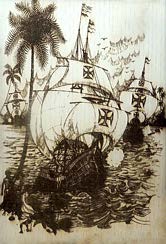
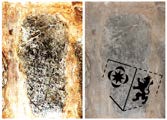
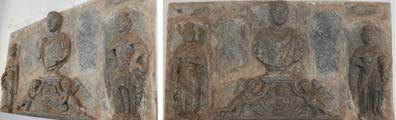
54.5. THE ANCESTORS OF MARIA DE SILVA AND HER FAMILY CONNECTION IN PORTUGUESE
INDIA
1067
Figure 54.41: Sculpture of Juan Carvalho de Silva in the convent’s
wall next to the Cathedral de Se at Goa in India. (Goa, 2019) (Declercq
de Silva Archive)
Figure 54.42: If we imagine that the journey from Portugal to India
took one year, it’s hard to believe how nowadays we reach the other side
of the world in hours. Here is Benjamin in the cockpit of a plane in
Orlando, Florida, at the gate, ready to fly to Atlanta in July of 2006.
(Declercq de Silva Archive)
Figure 54.43: Facsimile of old printed artwork, burned in a sheet
of wood. The author received this gift when he visited Goa in 2019.
The image depicts the arrival of the Portuguese in Goa. The ships are
carracks. (Declercq de Silva Archive)
Figure 54.44: On the right-hand side of the Juan Carvalho de Silva
sculpture in the convent wall next to the Cathedral de Se at Goa in
India, the heraldic shield of Juan Carvalho de Silva is visible. However,
it has been partially vandalized in the past. On the left, we placed a
version of the image with exceeded contrast; on the right, we used the
original image and added the visible lines and symbols in black. On the
maternal side, the symbol of Carvalho is visible; on the paternal side,
the crowned lion of de Silva. (Goa, 2019) (Declercq de Silva Archive)
Figure 54.45: This plaque, at the archaeological museum of Goa,
dates from 1644 and is filled with symbols, such as the Portuguese
shield, the appearance of the head of an angel underneath, two young
boys holding a flag, one with IHS, the other with the Knight’s cross, a
globe depicted, and a swan. (Goa, 2019) (Declercq de Silva Archive)
Figure 54.46: The shield of Carvalho de Silva is carved on the central figure’s left-
hand side (i.e., right on the image). On the other side, there was probably another
carving, but it’s not identifiable. The peacock sculpture underneath that of Juan
Carvalho de Silva is also found extensively at the main building of the fortress of
Uduwara, in Figure 61.21 on page 1170 (Goa, 2019). (Declercq de Silva Archive) The Desclergues of la Villa Ducal de Montblanc, 2nd ed., Omn., VOL. IV
© 2024 Nico F. Declercq
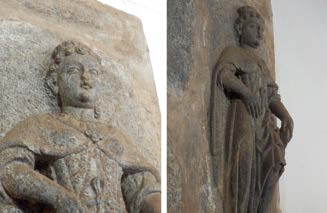
1068
CHAPTER 54. RECENT FAMILY HISTORY OF SHIRANI DE SILVA
Figure 54.47: Close-up of Figure 54.46,
of one of the sons of Juan Carvalho de
Silva, equally depicted at Uduwara in Fig-
ure 61.2 on page 1160 (Goa, 2019). This
is Antonio Carvalho de Silva, the progen-
itor of the Uduwara branch. (Declercq de
Silva Archive)
Figure 54.48: A digitized artistic transformation of Belin de Silva’s
profile picture after he passed away, with a profile picture of Juan Car-
valho de Silva. Facial similarities and proportions are striking. (De-
clercq de Silva Archive)
de Cantabria. The reader can find the entire genealogy leading to Maria de Silva in Don Luis de Salazar y Castro’s book17. Most referred persons also appear in other contemporary books and emerge as the spouses of persons of different noble families.
Our records indicate that Maria de Silva, born between 1470 and 1480, was the daughter of Fernando de Silva y Rivera and Maria de Zuñiga. She was married to Honorato de Carvalho, and she married Honorato de Carvalho. The couple had three children: Fernando Carvalho de Silva (Signore di Salinas 1583, married to Germana de Luna y Loaysia), Honorato Carvalho de Silva, and Juan Carvalho de Silva.
It is through Juan Carvalho de Silva that Shirani de Silva’s lineage is traced, as previously mentioned. Notably, Juan Carvalho de Silva embarked on a journey to Goa between 1510 and 1520, a significant period during the reign of Afonso de Albuquerque.
To return to Maria de Silva’s eldest ancestor and the linkage between the two, we refer primarily to the famous and pervasive work mentioned above by Don Luis de Salazar y Castro of 1685 and to other works we consulted for confirmation. The family line was thus reconstructed until 750 and is described in the following sections.
54.5.2 Pere de Cantabria
According to the literature, the oldest known ancestor of Shirani O. de Silva, along the de Silva bloodline, must have been Duque Pere de Cantabria. He is the oldest known paternal ancestor of Maria de Silva, who married Honorato de Carvalho. So we will start with him and descend to Portugal’s ancestors, particularly the mentioned Maria de Silva. Duque Pere de Cantabria died in 730 and was Duque (Dux) of Cantabria. His son was Fruela Pérez de Cantabria.
54.5.3 Fruela Pérez de Cantabria & Ozenda
Fruela de Cantabria (Fruela Pérez) was born around 758. He was the brother of King Alfonso I de Asturias, the son of Duque Pere de Cantabria, and the father of King Aurelio and King Bermudo I.
54.5.4 Bermudo I de Asturias & Uzenda Nunilona
Bermudo I de Asturias was King of Asturias from 789 until 791, as shown in Figure 54.40. He was born in 750 at Oviedo and died in 797. He was the son of Fruela de Cantabria and Ozenda. His son was Ramiro I of Asturias.
54.5.5 Ramiro I of Asturias & Urraca
Ramiro I of Asturias, shown in Figure 54.40, was King of Asturias from 842 until 850. He was born in 790 and died in 850. He was married to Urraca and is the son of Bermudo I el Diácono and Uzenda Nunilona. His son was Ordoño I de Asturias. Genealogists dispute Urraca; therefore, it is not conclusive that this was her name.
54.5.6 Ordoño I de Asturias & Nuña
Ordoño I de Asturias, shown in Figure 54.40, was born in 821 at Oviedo as the son of Ramiro I and Urraca. He was married to Nuña. He was King of Asturias from 850 until 866 and was buried in the Pantheon of Kings of the Cathedral of Oviedo. His son was Alfonso III de Asturias.
54.5.7 Alfonso III de Asturias & Jimena de Asturias
Alfonso III de Asturias, exposed in Figure 54.40, was born around 852 as the son of Ordoño I de Asturias and was King of Asturias from 866 until he died. He was married to Jimena de Asturias. His son was Fruela II de Leon, described in Chapter 54.5.8.
Another son was Ordoño II, King of Leon from 914 until 924 and King of Galicia from 910 until 914. The latter was married to Elvira Menéndez, and the couple had a son, Ramiro II of Leon, King of Leon from 931 until 951 and husband of Urraca Sánchez.
17Don Luis de Salazar y Castro, ’Historia Genealogica de la casa de Silva,’ in 12 volumes, 1685.
© 2024 Nico F. Declercq
The Desclergues of la Villa Ducal de Montblanc, 2nd ed., Omn., VOL. IV
54.5. THE ANCESTORS OF MARIA DE SILVA AND HER FAMILY CONNECTION IN PORTUGUESE
INDIA
1069
Ramiro II and Urraca Sánchez had a son, Ordoño III of Leon, married to Urraca Fernández. Ordoño III was King of Leon from 951 until 956.
Ordoño III and Urraca Fernández had a son, Bermudo II of Leon, King of Leon from 985 until 999. Bermudo II married Elvira Garcia, and the couple had a son, Alfonso V of Leon, King of Leon from 999 until 1028.
Alfonso V was married to Elvira Menéndez, and the couple had a daughter, Sancha Afonsez of Leon, born around 1018 and died in 1067. Sancha Afonsez of Leon married Fernando I of Leon, King of Leon, from 1037 until 1065.
Fernando I and Sancha Afonsez had a son, Alfonso VI of Leon, King of Leon from 1065 until 1072, and married Constanza de Borgoña.
Alfonso VI and Constanza de Borgoña had a daughter, Urraca I of Leon, Queen of Leon from 1109 until 1126. Urraca I of Leon married Raymond of Bourgogne, and their son was Alfonso VII of León, who married Richezza de Pologne.
Alfonso VII and Richezza de Pologne had a daughter, Sancha of Castilla, who married Alfonso II of Aragon.
Sancha of Castilla and Alfonso II of Aragon had a daughter, María Sánchez of Navarra, who married Gil Podavila. Doña María Sánchez de Navarra and Don Gil Podavila were the parents of Doña Urraca Gil, named in honor of her famous great-grandmother, the Queen, heir to the Crown of León, Doña Urraca de León. Doña Urraca Gil married her cousin Don Pedro Sánchez, lord of Barillas (as a holder), and they were parents of Don Sancho Pérez de Barillas (Varillas Castilianized), who married Doña Estefanía Ruiz de Azagra. The latter couple are ancestors of the author, as described in Chapter 27.2 on page 301. Evidence is shown through DNA in Chapter 74.12.3 on page 1618.
54.5.8 Fruela II de Leon
Fruela II de Leon, seen in Figure 54.40, born around 874 as the son of Alfonso III de Asturias, King of Leon (924-925) and Asturias (910 - 924) and also Galicia, has been buried in the Cathedral of Leon (925-986) and was re-buried in the Pantheon of the Kings of the Cathedral of Oviedo in 986. Don Fruela II had five children: Alonso, King of Leon; Ordoño; Anznar Fruela; Ramiro. His Queen was Acenera de Carvalho, from the Carvalho family that would later marry a Pilgrim and transmit its name, described in Chapter 54.5.23. Later, he would marry into the de Silva family and form the ancestors of Shirani de Silva.
54.5.9 Anznar Fruela
El Infante Don Anznar Fruela had 2 children: El Infante Don Pelayo Fruela and Don Ximeno Fruela.
54.5.10 Ximeno Fruela
Don Ximeno Fruela had six children: Count Don Pere Pelaez, Don Ordoño Pelaez, Count Munio Pelaez, Don Pelayo Pelaez, La Infante Doña Christina, and La Infanta Dona Teresa, countess of Carrion.
54.5.11 Pelayo Pelaez
Don Pelayo Pelaez had two children: Count Don Congzalo Pelaez, Lord of Cisneros, and Don Gutierre Pelaez, Lord of Alderete y de Silva.
54.5.12 Gutierre Pelaez, the Lord of Alderete y de Silva
Don Gutierre Pelaez had one child: Don Pelayo Gutierrez de Silva, Lord of the House of de Silva, a rich man and Adelantado mayor of Portugal.
54.5.13 Pelayo Gutierrez de Silva
Don Pelayo Gutierrez de Silva had seven children: Don Pere Paez de Silva, a wealthy man in Portugal; Count Don Gomez Paez de Silva; Don Mendo Paez; Don Payo Paez; Doña Mayor Paez de Silva, Dame of Butriande; Don Pere of Porto; Doña Gontiña Paez de Silva, Countess of Refoyos.
54.5.14 Gomez Paez de Silva
Count Don Gomez Paez de Silva had four children: Martin Gomez de Silva (who had two daughters: Doña Aldonza Martinez de Silva, Dame of Honour de Mancilla, and Doña Estefania), Pelayo Gomez de Silva (IV), Dońa Maria (Dame of the house of Correa), and Doña Veraca (married to Don Gomez Mendez de Briteros, a wealthy man).
54.5.15 Pelayo Gomez de Silva & Maria Fernandes de Novoa
Pelayo Gomez de Silva (IV) (1170 - 1258) was married to Maria Fernandes de Novoa. She had three children: Gomez Paez de Silva (II) (Alcayde Mayor de Guimaraes, Signore di Torre de Silva, Alerte, and Porto da Figueira, Alcalde di Castelo de Santa Eulalia), Gonzalo Paez de Silva and Estevan Paez de Silva.
54.5.16 Gomez Paez de Silva (II) & Maria Ruiz de Caldelas
Gomez Paez de Silva (II) was married to Maria Ruiz de Caldelas. She had six children: Martin Gomez de Silva (Lord of the House of de Silva), Gonzalo Paez de Silva, Doña Sancha Gomez de Silva, Juan Gomez de Silva, Doña Maria, and Doña Aldonza.
54.5.17 Martin Gomez de Silva & Teresa Garcia de Seabra
Martin Gomez de Silva was born around 1300, was married to Teresa Garcia de Seabra and had six children: Aires Gomez de Silva the older (Lord of the house of de Silva, Alferez Mayor of Portugal), Alfonso Gomez de Silva (a wealthy man and Alcayde Mayor of Coimbra), Fernan Gomez de Silva (Lord of Oboa), Doña Juana, Doña Aldonza, Doña Mencia de Silva (Dame of Abreu).
The Desclergues of la Villa Ducal de Montblanc, 2nd ed., Omn., VOL. IV
© 2024 Nico F. Declercq
CHAPTER 54. RECENT FAMILY HISTORY OF SHIRANI DE SILVA
54.5.18 Aires Gomez de Silva & Urraca Tenorio
Aires Gomez de Silva (1320 -1365) was married to Urraca Tenorio and had two children: Alfonso Tenoria de Silva (Lord of Barcience and Adelantado of Cazoria), and Doña Beatriz (Dame of Orgàz).
54.5.19 Alfonso Tenoria de Silva & Guiomar de Meneses
Alfonso Tenoria de Silva (1365 - 1430) was married to Guiomar de Meneses and had three children: Don Pere (Obispo of Orence and Badajòz, who died in 1479), Don Juan (I) (Lord of Cifuentes), Doña Maria (Dame of Puensalida) (1410 - 1470).
54.5.20 Don Juan (I) de Silva & Leonor de Acuña
Don Juan (I) (1399 - 1464) had five children: Don Alonso (II) (Lord of Cifuentes), Don Leonor de Silva, Don Juan de Rivera (Lord of Montemayor), Don Pere (Lord of Villa Luenga), Doña Francisca de Silva.
The known descendants up to two generations of Don Juan (I) de Silva have been meticulously traced and added below. This information has been extracted from reliable sources such as Geneanet registered, the book mentioned above, and other credible sources. This comprehensive research will enable future genealogists to confidently link Portuguese records, files dating from the VOC, and documents dating from the British period to the historical ancestry tree.
Juan de Silva was Count of Cifuentes from 1456 until 1464 and Lord of Montemayor, Villaluenga Barcience, Cuetos, Reguilla, Vilila, and Torreccilla. He was born in 1399 in Toledo, Castile La Mancha, and died in 1464. Don Juan was married twice: first in 1428
to Leonor de Acuña and second to Ines de Rivera after Leonor’s death in 1436.
With Leonor de Acuña, he had two children: Alonso de Silva and Leonor de Silva. With Ines de Rivera, he had three children: Juan de Rivera y Silva, Pere de Silva, and Francisca de Silva y Rivera.
54.5.20.1 Alonso de Silva (Conde de Cifuentes 1429-1469)
He married twice. With Isabel de Castañeda (Signora di Palos, who died in 1463), he had the following descendants: Juan de Rivera y Silva, described in Chapter 54.5.21.
54.5.20.1.1 Juan de Silva & Catalina Alvarez de Toledo Juan de Silva (Conde de Cifuentes 1452 - 1512 married in 1473
to Catalina Alvarez de Toledo) who had the following children: Alonso de Silva (died in 1512), Fernando I de Silva (Conte di Cifuentes 1480 - 1546), Juan de Silva (Lord of Torrequadrada, who died in 1521), Isabel de Silva (died in 1556), Catalina de Silva (born in 1475), Maria de Silva (1494-1544).
54.5.20.1.2 Rodrigo de Silva y Castañeda He was the Lord of Las Hormazas, married to Maria de Contreras y Portugal, and had the following daughter: Juana de Silva y Castañeda.
54.5.20.1.3 Alonso de Silva He died in 1512.
54.5.20.1.4 Pere de Silva He died in 1506.
54.5.20.1.5 Lope de Silva He was Signore di Honor de Sedano.
54.5.20.1.6 Leonor de Silva She was a nun.
54.5.20.1.7 Maria Gomez de Silva She was married to Luis de la Cerda, the Lord of Villoria, who died in 1469. They had the following daughter: Juana de la Cerda y Castañeda. Consequently, Alonso de Silva married in 1465 to Beatriz Pacheco (Signora di Villarejo de Fuentes 1440 - 1490) and had the following children: Luis Pacheco de Silva, Juan Pacheco, and Ana de Silva.
54.5.20.1.8 Luis Pacheco de Silva He was the Lord of Villarejo de Fuentes, who died in 1530 and married in 1496 to Anna Condulmer. They had the following children: Diego Lopez Pacheco de Silva (who died in 1538), Juana Pacheco de Silva (Signora di Alvaladejo, who died in 1571), Beatriz Pacheco, Maria de Silva (Priora di Monastero della Madre de Dios a Toledo), Ana Condelmario, Juan Pacheco de Silva (the Lord of Villarejo de Fuentes, who died in 1585), Luis Pacheco de Silva (Lord of Villarejo de Fuentes, who died in 1530), and Alonso Pacheco de Silva.
54.5.20.1.9 Juan Pacheco He lived from 1468 until 1469.
54.5.20.1.10 Ana de Silva She lived from 1469 until 1479.
54.5.20.2 Leonor de Silva
She remained childless.
54.5.20.3 Pere de Silva
He had no known children.
54.5.20.4 Francisca de Silva y Rivera
Francisca de Silva y Rivera married Onorato de Mendoza, and they had the following children: Juan Hurtado de Mendoza, Diego Hurtado de Mendoza, Rodrigo de Mendoza, Pere Gonzales de Mendoza, Garcia Manrique, Francisco de Mendoza, Maria de Mendoza, Ines Manrique de Mendoza, Juana de Mendoza, and Teresa de Mendoza.
54.5.20.4.1 Juan Hurtado de Mendoza
© 2024 Nico F. Declercq
The Desclergues of la Villa Ducal de Montblanc, 2nd ed., Omn., VOL. IV
54.5. THE ANCESTORS OF MARIA DE SILVA AND HER FAMILY CONNECTION IN PORTUGUESE
INDIA
1071
54.5.20.4.2 Diego Hurtado de Mendoza He was the Marquis of Cañete and lived from 1490 until 1542.
54.5.20.4.3 Rodrigo de Mendoza
54.5.20.4.4 Pere Gonzales de Mendoza He married Maria de Silva.
54.5.20.4.5 Garcia Manrique He was the Governor of Piacenza and married Isabel Briceño y Arevalo. They had the following children: Pere Gonzales de Mendoza y Briceño (the Count of Binasco), Jorge Manrique (The Count of Desio), Juan Manrique (The Governor of Finale), Cristobal de Mendoza, Fernando de Mendoza, Francesc de Mendoza (The Canon of Cuenca), Isabel de Mendoza, Isabel Manrique, and Maria Maximiliana Manrique de Lara y Mendoza (1538 - 1608).
54.5.20.4.6 Francisco de Mendoza He was the Prior of Aroche.
54.5.20.4.7 Maria de Mendoza She married Sancho de Cordoba, the Lord of the House of Palma.
54.5.20.4.8 Ines Manrique de Mendoza She was married to Pere Ladron de Vilanova y Pallars, the Viscount of Chelva, who died in 1522.
54.5.20.4.9 Juana de Mendoza She was a nun at the Monastery of Madre de Dios a Toledo.
54.5.20.4.10 Teresa de Mendoza She married Antonio de Carvalho y Toledo, the Lord of Sobrinos.
54.5.21 Juan de Rivera y Silva
He was the Lord of Montemayor (1450-1515) and was married to Juana de Herrera y Toledo (Signora di Galves). They had ten children: Juan de Silva y Rivera, Garcia de Toledo, Alonso Suarez de Toledo, Alonso Suarez de Toledo, Pere de Silva, Diego de Rivera de Toledo, Fernando de Silva, Francesc Suarez de Toledo y Silva, Ines de Rivera y Silva, Francisca de Silva, Guiomar de Silva. Juan de Silva y Rivera was a son of Juan de Rivera y Sylva (Marchese of Montemayor, 1471 -1538) and married in 1491 to Maria Manrique de Toledo, Signora di Mejorada; they had the following children: Juan de Silva y Rivera (Count of Montemayor 1492 - 1566), Diego de Silva, Pere de Silva (Archdeacon of Carvalleda), Francesc de Silva, Alfonso de Silva, Fernando de Silva y Rivera (Lord of Corral, he died in 1571, and is referred to further below), Manrique de Silva (born in 1500); Juan de Silva y Rivera later married to Beatriz de Mendoza and had no children with her. He also married Maria Florin, and their daughter was Juana de Silva. Juan de Silva also married another partner and had a son, Guiomar de Silva, a priest at el Monastero della Madre de Dios in Toledo.
54.5.21.1 Garcia de Toledo
He married in 1483 to Maria Manrique de Toledo, Signora di Mejorada. His children are listed below, and his son Fernando de Silva y Rebera is described in Chapter 54.5.22.
54.5.21.2 Alonso Suarez de Toledo
He was the Lord of Galves.
54.5.21.3 Pere de Silva
54.5.21.4 Diego de Rivera de Toledo
He was the bishop of Mallorca and died in 1543.
54.5.21.5 Francesc Suarez de Toledo y Silva
He was the Lord of Galves.
54.5.21.6 Ines de Rivera y Silva
She married Pere Lopez de Ayala, the Count of Fuensalida, who died in 1537.
54.5.21.7 Francisca de Silva
She was married to Mateo Ribadeneyra, Signore di Caudilla.
54.5.21.8 Guiomar de Silva
54.5.22 Fernando de Silva y Rivera & Maria de Zuñiga
Fernando de Silva y Rivera was the Lord of Corral. He died on June 17, 1571. He was the son of Juan de Silva y Rivera (Marquis of Montemayor (1st), Lord of Lagunilla and Villaseca, born on November 11, 1471, and deceased on August 5, 1538) and Maria Manrique de Toledo (Dame of Mejorada).
Fernando de Silva y Rivera’s personal life was marked by his marriage to Maria de Zuñiga, born on February 26, 1547. Together, they had the following children : Pere de Silva y Rivera, Maria de Silva, Isabel de Silva, and Francisca de Silva. His legacy, a testament to his life and family, can also be found in Historia de la Muy Ilustre Casa de Sousa 18.
18Historia de la Muy Ilustre Casa de Sousa, Capitulo XVI. Señores del Corral y los Tejares. Señores del Corral y los Tejares. Page 276.
The Desclergues of la Villa Ducal de Montblanc, 2nd ed., Omn., VOL. IV
© 2024 Nico F. Declercq
CHAPTER 54. RECENT FAMILY HISTORY OF SHIRANI DE SILVA
54.5.22.0.1 Pere de Silva y Rivera & Elvira Portocarrero y Guzmán Pere de Silva y Rivera, Signor de Corral married Elvira Portocarrero y Guzmán and had the following children: Fernando de Silva, Luis Fernando de Silva y Rivera (Lord of Corral, married to Antonia Niño de Villena; they had the following sons: Pere de Silva y Rivera (died in 1635), Alonso de Silva, Juan de Silva y Rivera, Pere III de Silva y Manrique (married to Costanza Fernandez de Cordoba amo had two children: Pere IV de Silva y Rivera (Governatore di Almagro, 1670) and Isabel de Silva), Diego de Silva, Maria de Silva, Sancha de Guzmán (married to Luis Pantoja Portocarrero, Lord of Mocejon), Luisa de Silva (married to Pere de Lanuz y Perellos, Conte di Plasencia), Francisca de Silva (a nun at Monastero di Santo Domingo el Real di Toledo), Juana de Acuña (a nun at Monastero di Santo Domingo el Real di Toledo).
54.5.22.0.2 Isabel de Silva & Manuel Gomez de Porrez y Valmediano Isabel de Silva married Manuel Gomez de Porrez y Valmediano, Signore di Tremeroso. She had the following children: Pere Gomez de Porrez y Valmediano (Lord of Tremeroso), Maria de Porres Silva y Valmediano (married to Juan Hurtado de Mendoza and had one daughter, Isabel de Mendoza y Porres, Dame of Fresno).
54.5.22.0.3 Francisca de Silva & Juan de Ribadeneyra y Mendoza Francisca de Silva married in 1561 to Juan de Ribadeneyra y Mendoza.
54.5.22.0.4 Maria de Silva, who is described below
54.5.23 Maria de Silva & Honorato de Carvalho
Maria de Silva was the daughter of Fernando de Silva y Rivera and Maria de Zuñiga. She entered into matrimony with Honorato de Carvalho, Lord of Salinas, and bore several children: Fernando Carvalho de Silva, who succeeded as Lord of Salinas in 1583 and was married to Germana de Luna y Loaysia; Honorato Carvalho de Silva; and Juan Carvalho de Silva. It is noteworthy that Honorato de Carvalho hailed from a lineage that had previously intersected with the de Silva line, a detail elaborated in Chapter 54.5.8.
Specifically, Chapter 54.3 outlines the ancestry of Honorato de Carvalho, revealing that the eldest paternal ancestor bore the name Bejarano. The historical context of the Iberian Union (1580-1640), a period of significant political and cultural change, is crucial in understanding the migratory patterns and nomenclature preferences of the de Silva family. This was a time when the crowns of Portugal and Spain were unified, and it greatly influenced the de Silva ancestors’ decision to migrate to Goa and subsequently to Sri Lanka. This historical backdrop also sheds light on their preference for the Spanish ’de Silva’ over the Portuguese ’da Silva,’ a preference that was in contrast to earlier arrivals who favored ’da Silva.’ In Brazil, both ’Silva’ and ’da Silva’ are more prevalent, while families bearing the name in Belgium, who arrived with the Spanish, typically used ’de Silva.’ The surname Carvalho, a name with a rich and complex history, is a variant of Carballo, with numerous spellings and forms, including Carvallo, Carbello, Carbalho, Caraballo, Carbajo, Carvajal, Caballo, and Carbralo. The way the name was written varied depending on the country: in Spain, it was commonly written as Carvajal, whereas in Portugal, even for the same individuals, it was systematically recorded as Carvalho. This linguistic diversity is a testament to the family’s diverse origins and travels. Upon the family’s arrival in Goa, the name was likely recorded as Carvalho da Silva, although subsequent generations retained only the ’da Silva’ part, adapting the spelling to ’de Silva’ in accordance with their original nomenclature preferences.
Further details regarding the ancestors of Carvalho can be found in Chapter 54.3.
54.5.24 Juan Carvalho de Silva
As described above, Juan Carvalho de Silva, depicted in Figure 54.41, was one of Maria de Silva and Honorato de Carvalho’s sons.
Here, we focus on his link to Goa and, later, Sri Lanka. He left for Goa in India with his uncle Pere de Silva y Rivera (around 1570).
Such journeys were immense challenges, very different from modern-day travel, as in Figure 54.42. We can imagine the arrival in Goa or Sri Lanka as in Figure 54.43.
The branch established in Uduwara was Juan Carvalho de Silva, the son of Maria de Silva and nephew of Pere de Silva y Rivera.
The latter served as viceroy at Goa. He was the viceroy of India at an old age, from 1635 to 1639. Pere de Silva y Rivera was born around 1570 and died in Goa on June 24, 1639.
He also served as the 2nd Lord of Corral19. It was Juan Carvalho de Silva’s son, Antonio, in Figure 54.47 on page 1068, who established the stone fortress of Uduwara and is the ancestor of Shirani de Silva.
From the genealogical records summarised above, we know that Pere de Silva y Rivera was married to Elvira Portocarrero y Guzmán. They had two sons, Fernando and Luis Fernando, and one daughter, Sancha. Of their sons, Luis Fernando de Silva y Rivera became the 3rd Lord of Corral and married Antonia Niño de Villena, while Pedro de Silva would become the 5th Lord of Corral. They had several children, including Pere de Silva, who died in 1635, Alonso de Silva, Juan de Silva, and another Pere de Silva, Diego de Silva.
In Figure 54.41, we see that children-like heads are also sculptured (in the form of angels), while Juan Carvalho de Silva is depicted with a dress that reminds the reader of Roman emperors. Below the sculpture, mostly hidden behind a temporary exhibition panel, are two children supporting the sculpture with in-between (likely) a Lion, symbolizing de Silva. On the horizontal banner just below the statue, the naked eye, on-site, can still identify the last part of the engraving ’DOMJUAN CARVALHODESILVA’20. The Carvalho de Silva shield remains are also found on the right of this image, shown in Figure 54.44.
It’s not clear if Juan Carvalho de Silva died in Goa or returned to Iberia, where the ancestral family lived at that time in Toledo (Talavera de la Reina). Spanish records typically refer to him as Juan Carvajal y de Silva.
54.5.25 The two sons of Juan Carvalho de Silva
The establishment of the Uduwara branch by Antonio Carvalho de Silva, one of the sons, holds significant importance in our historical research. Juan Carvalho de Silva had two sons, depicted in Figure 54.46 as a built-in sculpture with their father at the convent next to the Cathedral de Se at old Goa, where the Archeological Museum is currently housed.
One of them is consequently also depicted on the Olupathage House in the fortress of Uduwara, shown in Figure 61.2 on page 1160.
The gender may not be immediately apparent through Western eyes, so the author consulted several well-educated Indians, who 19’Selections from the letters, despatches, and other state papers preserved in Bombay Secretariat: home series (Volume 2)’ by Sir George Forrest, 1887.
20The author’s observation, confirmed by the Archeological Museum director, during his visit in 2019.
© 2024 Nico F. Declercq