

The Desclergues of la Villa Ducal de Montblanc, Second Edition Omnibus by Nico Declercq - HTML preview
Download the book in PDF, ePub, Kindle for a complete version.
© 2024 Nico F. Declercq
CHAPTER 49. THE CHAPEL OF NUESTRA SEÑORA DEL REPOSO OR DE KAPEL VAN ONZE LIEVE
996
VROUW TER RUSTE, IN DEERLIJK
SN1604. Spaniards from Montblanc saw a connection with their home city.
The appearance of flashes of light is also a story that has long lived among the population in Deerlijk. Leon Defraeye wrote some testimonials, such as: "The chapel was haunted, and in the evening, people saw the light in the chapel and heard looms working."120
The legitimacy of paranormal phenomena can be debated; however, observing and recounting such experiences may be influenced by a tradition where narratives from Montblanc intertwine with those concerning the chapel in Deerlijk. Those anticipating manifestations, such as light flashes, within these stories might perceive them as genuine.
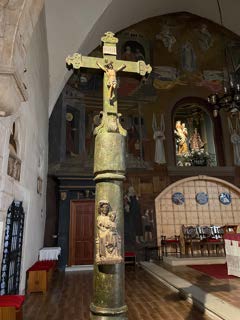
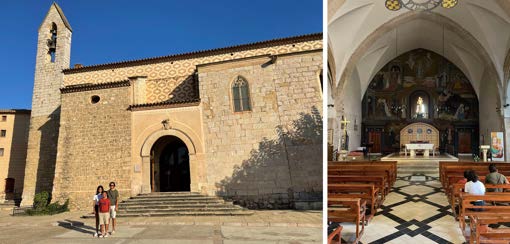
La Cru Verdà is now located inside the Sanctuary and Monastery of la Serra in Montblanc, and it is shown in Figure 49.87.
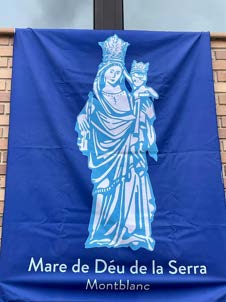
Figure 49.89 shows how, in modern days, the legend lives on.
49.9 Marguerite Kelduwier as the chapel’s proprietary
49.9.1 À propos on Marguerite Kelduwier
The author initially underestimated the role of Marguerite Kelduwier due to a lack of documents and references.121
With Antoni Desclergue’s (DC06) appearance in Deerlijk and his involvement in establishing a chapel, local historians can now consider their research from a Spanish perspective, potentially uncovering more facts. It is time to explore the surviving Spanish archives and collaborate with Iberian local and global historians. Much remains to be discovered about Deerlijk’s Spanish period and that of the nearby places such as Harelbeke and Kortrijk.
Antoni Desclergue, a witness to the miracle of 1634, aimed to honor his parents by establishing a chapel. In contrast, Marguerite Kelduwier, with local roots and financial means, sought to elevate her power and that of her descendants by establishing a chapel with benefice and a chaplaincy.
Antoni used Marguerite for her finances, while Marguerite used Antoni for his connections within the Spanish regime, linking the initiative to the Spanish victory at Ostend in 1604 and the artwork described in Chapters 49.3 and 49.4.
As detailed and shown in Figure 49.1 on page 977, the miracle occurred before a figurine of La Mare de Déu de la Serra de Montblanc in Deerlijk, originating from the Desclergues’ hometown, Montblanc in Tarragona.
Ultimately, as the owner, Marguerite is remembered through official documents, while Antoni’s memory became legendary, later transformed into a myth, with the person of de Cassina replacing his name.
The thought of Spanish influence in the chapel’s erection might be controversial to locals, but the evidence presented in this book is undeniable. The aim is to honor our ancestors by revealing the truth.
As a patrilineal descendant of Antoni Desclergue (DC06), the author defends his case and revives Antoni’s memory. Marguerite Kelduwier’s role and her past in Deerlijk are well known, carefully studied, and further investigated by the Benoit family, including Filip Benoit and Karl Uyttenhove, and others of the Historical Fraternity of Dorp en Toren in Deerlijk. The author does not contest their work; after all, Marguerite owned the chapel, and her descendants were in charge.
Nevertheless, the initiation, the miracle, the art from Spain, and the desire to honor his parents were Antoni’s work. The miracle, occurring in front of a souvenir from Montblanc, likely brought by Jeroni Joan Desclergue y Cortés (DC05), cannot be denied.
Disregarding these facts constitutes a profound violation of scholarly integrity.
According to the society Stichting Behoud van Oud, the family name Kelduwier derives from the old French ’cueillerie,’ or harvest, appearing in various forms in France and Flanders.122 The various forms include: Delcoeuillerie, Delcoeullerie, Delcueillerie, Del-ceuillerie, Delecoeuillerie, Delecueillerie, Delculerie, Quellerie, Quellerye, Quelerij, Quellery, Quelderie, Queldry, Heldines, Kelder-wiers, Keldewiers, Kuelduis, Keldewier, Kelduwier, Kellewiers, Callewier, Caluwier, Keylewier, Keylewiers, Keilewier, kelkewier, Caluwyer, Keldewyer, Gueldewier, Heldevent, Kelduyier.
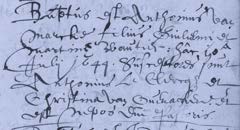
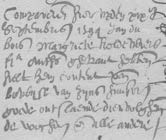
Marguerite Kelduwier123 was the daughter of Antheunis Kelduwier (1538-1578) and Judoca Vanderplancke (deceased in 1579). She appears in several documents, including the Orphan’s deed after her father’s death (Figure 49.90).
Marguerite, born in Deerlijk, was wealthy and married Jean du Bois124 from Lille, later becoming his widow. They were wealthy bankers from Lille, with Jean an acquaintance of Jan Declercq (DK03), Antoni Desclergue’s (DC06) stepfather, and Jeroni Joan Desclergue’s (DC05) friend, as shown in Figure 34.243 on page 605.
Comparing Antoni Desclergue (DC06) with this wealthy family reveals significant differences. In Catalonia, typically, one son inherited everything, while the others made their way through military service or overseas ventures.
Antoni’s father and his brothers came to Flanders around 1590, while their brother Francesc stayed in Montblanc, inheriting every-
Soldiers hoped to gain titles through military performance, earning little but expecting rewards after critical victories and campaigns. Hence, neither Jeroni (DC05) nor Antoni (DC06) were wealthy; they were soldiers engaging in other activities during the winter months. This was typical for a Spanish noble family, where one child, the heir, inherited everything, and the others had to fend for themselves.
Recent documents claim that Bishop Vilain de Gand approved the miracle in Deerlijk on November 23, 1639, though a signed 120Hugo Defraeye, ‘Deerlijkse volksverhalen’, Deerlijke, 1ste jaargang, nr 3, 1978-1979, pagina 42.
121Science is a continuous transition of successive models and theories. Subatomic particles were often predicted theoretically for symmetry reasons before being discovered experimentally. When Urbain Le Verrier predicted, from an abnormal motion of the planet Uranus measured by Alexis Bouvard, on mathematical grounds, assuming that Isaac Newton had correctly formulated the laws of motion in physics, that there must be another hidden planet
’Neptune,’ Johann Gottfried Galle and Heinrich Louis d’Arrest looked where the theory predicted it. They observed the new planet on September 24, 1846. The discovery confirmed the assumption that Newton’s laws encompassed nothing but the whole truth and explained the motion of planets, stars, and galaxies just as they described the trajectory of a projectile or a falling apple. However, after Albert Einstein emerged with a new paradigm that the time-space curvature determines the motion of objects by the existence of mass and not by a mathematical formula describing an inexplicable force, it was Eddington who, during the solar eclipse on May 29, 1919, observed that the mass deflects light and that time-space is, therefore, curved. Insight is a non-linear process of proposing models and verifying them, as well as deduction through already-made observations. We must allow the functions of human discovery by all means to obtain insight.
122Based on ’Stichting Behoud van Oud’ and collected documents by the Benoit family.
123Establishing Marguerite Kelduwier’s entire ancestry tree remains to be done. Filip Benoit and Karl Uyttenhove will likely focus on this in the coming years, having already made significant progress.
124The investigation into the Flemish variant of the name "Du Bois," such as "Van den Bosche," represents a credible avenue for local historians exploring the ancient Flemish or Germanic origins of their village’s history. However, it would not be surprising for the author to discover in the future that Jean Du Bois was, in fact, Joan Desbosch, a Catalan banker or someone of Catalan descent.
125The grandfather in Montblanc was Bonaventura Desclergue y Cortés (DC04), described in Chapter 28. After two marriages, he had four sons and one daughter: Antoni Desclergue y Ratera, described in Chapter 32, Francesc Desclergue y Ratera, described in Chapter 28.3.1, Francisca Desclergue y Ratera, described in Chapter 28.3.3, Enric Desclergue y Cortés, described in Chapter 33, and Jeroni Joan Desclergue y Cortés (DC05), described in Chapter 29. Three brothers came to Flanders around 1590, while a fourth brother, Francesc, stayed in Montblanc, where he would inherit everything.
© 2024 Nico F. Declercq
The Desclergues of la Villa Ducal de Montblanc, 2nd ed., Omn., VOL. IV
49.9. MARGUERITE KELDUWIER AS THE CHAPEL’S PROPRIETARY
997
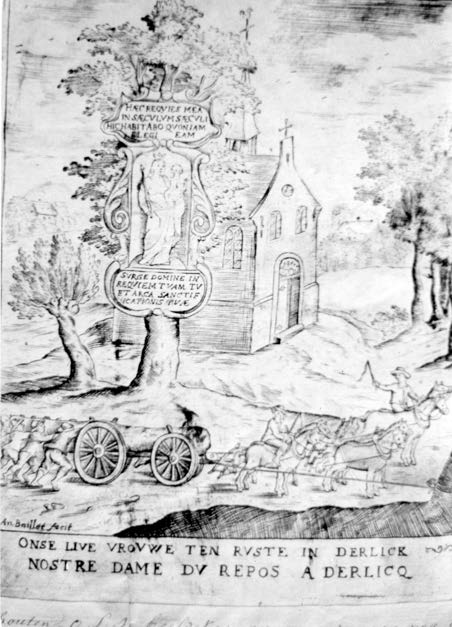
Figure 49.8: Antoine Baillet, drawing of ’Kapel-ter-Ruste’ , 17th century (A. Baillet, Archive
Leon Defraeye, photo 18.897). A smaller version of this image is also shown in Figure 49.6
The Desclergues of la Villa Ducal de Montblanc, 2nd ed., Omn., VOL. IV
© 2024 Nico F. Declercq

CHAPTER 49. THE CHAPEL OF NUESTRA SEÑORA DEL REPOSO OR DE KAPEL VAN ONZE LIEVE
998
VROUW TER RUSTE, IN DEERLIJK
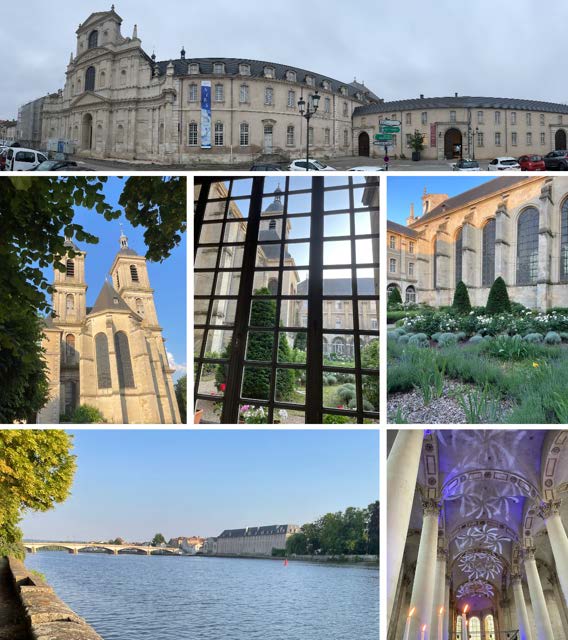
Figure 49.9: The ’Abbaye des Prémontrés de Pont-à-Mousson’ is also known as ’Sainte-Marie-Majeure,’ or, in Spanish,
’Santa Maria la Mayor,’ the same as the main church of Montblanc. The construction dates from the 18th century but was preceded by a smaller version at the beginning of the 17th century. Its location is near the University of Pont-à-Mousson. The University was founded by the Duke of Lorraine in 1572 and immediately entrusted to the Jesuits, and the college received 1575 its charter of university foundation from Gregory XIII. The photos were taken in 2021 and 2023. (Declercq de Silva Archive)
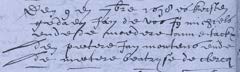
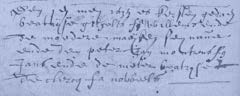
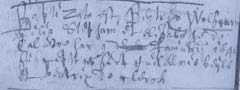
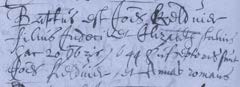
Figure 49.10: Deerlijk, September 9, 1638, the bap-
tism of Jan de Vos, son of Michael de Vos and Anne
Tacx (’Tanne’ , but from other records, we know it was
’Anne’). The godfather was Jan Montens, and the god-
mother was Beatrice Declercq (DK02byx).
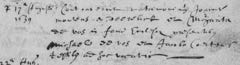
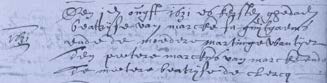
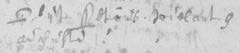
Figure 49.11: Beveren-Leie, August 17, 1639, the wed-
ding of Margarita De Vos and Jan Montens from Deer-
lijk. The witnesses were Jacques Coertens and Michael
De Vos.
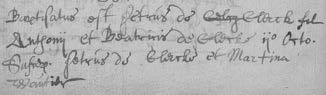
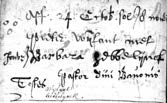
Figure 49.12: Vichte, May 22, 1640, the
baptism of Margriet Montens, daughter of
Jan Montens, son of Jan, and Margriet
de Vos, daughter of Pieter. The godfather
was Pieter de Vos from Beveren-Leie, and
the godmother was Margriet Schieters from
Deerlijk.
© 2024 Nico F. Declercq
The Desclergues of la Villa Ducal de Montblanc, 2nd ed., Omn., VOL. IV



49.9. MARGUERITE KELDUWIER AS THE CHAPEL’S PROPRIETARY
999
Figure 49.13:
Sint Denijs Zwevegem,
1648, April 15, the wedding of Joannes
Stalins and Joanna Kelduwier (’Quel-
lerie’).
The witnesses were Gerard
Froedeure (he married Margarita Ver-
couter) and Jean Morets. The document
is also found as Figure 29.153 on page 432
Figure 49.14: Deerlijk, May 1, 1635, the baptism of
Beatrijs Gilyct, daughter of Willem Gilyct and Maria
Seynaeve. The godfather was Jan Montens, son of Jan,
and the godmother was Beatrice Declercq (DK02byx),
daughter of Noel (’Noweels’).
Figure 49.15: Deerlijk, August 1, 1631,
the baptism of Beatrice Van Marcke,
daughter of Willem Van Marcke and Mar-
tine Wautier. The godfather was Marcus
Van Marcke, and the godmother was Beat-
rice Declercq (DK02byx).
Figure 49.16:
1640, Deerlijk, the bap-
tism of Pere Declerque (DC07d) (’Petrus
Desclerg y Clerck’), son of Antoni Descle-
rgue (II) (DC06) and Beatrice Declercq
(DK02byx). Godfather was Pieter De-
clercq (DK03dyb) (’Petrus de Clercke’),
godmother was Martina Wautier.
Figure 49.17:
Deerlijk, January 12, 1644, the bap-
tism of Judocus Deckere, son of Martinus Deckere and
of Magdalena Kelduwier (’De Caluwe’), with Judo-
cus van Oosthuyse the godfather and Beatrice Declercq
(DK02byx), the godmother.
Figure 49.18: Deerlijk, January 9, 1646, the baptism
of Beatrijs Wolfcarius, daughter of Stephanus Wolcarius
and Elisabeth de Kelduwier (’de Caluudue’). The godfa-
ther was Willem Beyls, and the godmother was Beatrice
Declercq (DK02byx).
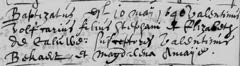
Figure 49.19:
Deerlijk, May 10, 1640, the baptism
of Valentinus Wolfcarius, son of Stephanus Wolfcarius
and Elisabeth Kelduwier (’Decaluwe’). The godfather
was Valentin Bekaert (’Bekaet’), and the godmother was
Magdalena Amaye.
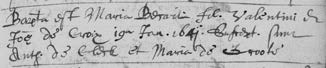
Figure 49.20:
Deerlijk, January 19,
1641, the baptism of Maria Bekaert,
daughter of Valentin Bekaert and Joanna
de Croix (perhaps Juana de la Cruz). The
godfather was Antoni Desclergue, and the
godmother was Maria de Groote.
Figure 49.21: Harelbeke, December 17,
1619, the marriage of Jan Montens and
Joana Bekaert. The witnesses were Claes
(’Nicolaes’) Montens and Arnoldus Van-
houtte.
Figure 49.22: Harelbeke, December 12,
1600, the baptism of Anna Decoop, daugh-
ter of Joannes Decoop. The godfather was
Nicolaes Montens, and the godmother was
Anna Vanpoucke, the wife of Dionysius
Vanpoucke.
The Desclergues of la Villa Ducal de Montblanc, 2nd ed., Omn., VOL. IV
© 2024 Nico F. Declercq


CHAPTER 49. THE CHAPEL OF NUESTRA SEÑORA DEL REPOSO OR DE KAPEL VAN ONZE LIEVE
1000
VROUW TER RUSTE, IN DEERLIJK
Figure 49.23: Harelbeke, April 15, 1640,
the baptism of Maria Decostere, daugh-
ter of Egidius Decostere and Catarina
Vermandere. The godmother was Maria
Ducx, and the godfather was Willem Ver-
mandere (’Vermandele’).
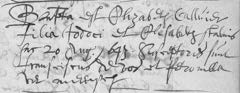
Figure 49.24: Deerlijk, August 20, 1643, the baptism
of Elisabeth Kelduwier (’Calluier’), daughter of Judocus
Kelduwierand Elisabeth Stalins. Her godfather was Fran-
ciscus de Vos, and the godmother was Petronella Ver-
meersch.
Figure 49.25: 1644, November 20, Deerlijk, the bap-
tism of Jean Kelduwier (’Kelduier’), son of Jose Kel-
duwier and Elisabeth Stalins. The godfather was Joannes
Kelluwier, and the godmother was Annabel Roman. The
document is also found in Figure 29.155 on page 432.
Figure
49.26:
Ypres, January 29,
1655, the marriage of Isabella Stalins and
Philippe Albert la Motte Baraffe. Only the
lists of that period have survived WWI;
therefore, we cannot access the original
record. The document is also found in Fig-
Figure 49.27: Deerlijk, August 9, 1666, the burial of
Pieter Wielandt.
Figure 49.28: Ghent, Sint Nicolas church, October 24, 1620, the
wedding of Pieter Wielandt and Barbara Hebbelynck.
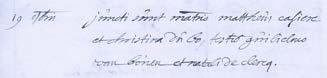
Figure 49.29: Harelbeke, November 19,
1621, the wedding of Mathieu Casiere and
Christina du Bois (’du Bo’). The wit-
nesses were Willem van Bonen and Noel
Declercq (’Natalis’).
Figure 49.30:
Deerlijk, July 10, 1644, the baptism
of Anthonius van Marcke, the son of Willem (’Guilel-
mus’) van Marcke and Martine Wautier; godmother was
Ghuilelma van Ounackere.
© 2024 Nico F. Declercq
The Desclergues of la Villa Ducal de Montblanc, 2nd ed., Omn., VOL. IV
49.9. MARGUERITE KELDUWIER AS THE CHAPEL’S PROPRIETARY
1001
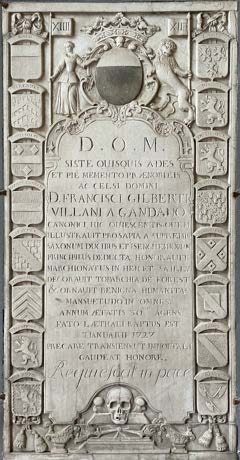
Figure 49.31: François Gilbert Vilain de Gand, 1677-
1727, the son of François Gilbert Vilain de Gand (1638-
1713) and Marie Anne de Lannoy. His grandparents
were Jacques-Philippe Vilain de Gand (1612-1674) and
Michelle Françoise de Varennes. Jacques Philippe was
the brother of Maximilien Vilain De Gand, the one who
was involved in the establishment of the chapel in Deer-
lijk. This tomb can be found in the Cathedral of Tournai
(Photo taken in 2023) (Declercq de Silva Archive).
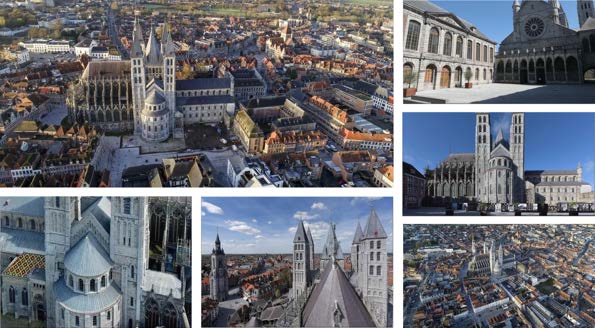
Figure 49.32: The Cathedral of Tournai, a stunning example of Romanesque and Gothic architecture, was founded in the 12th century. Over the centuries, it has witnessed significant historical events and remains a symbol of the city’s rich heritage.
We extend our gratitude to the people of Tournai, the city, and the city council for generously sharing these photographs, allowing us to appreciate the cathedral’s enduring beauty and cultural significance.
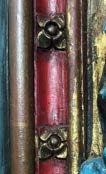
Figure 49.33: Thirteen templar flowers, i.e., ornamented Knight’s crosses, are de-
picted on the panels in the chapel. The number 13 stands for Antoni. The image can
be compared with Figure 29.16 on page 375 and Figure 29.17 on page 375. Possibly, they also refer to the Ros family as explained in Figure 23.1 on page 247, and in Figure 23.5 on page 250. They can also be found in Metz, in Figure 17.8 on page
126. The rose is also a reference to Sant Jordi of Montblanc. (Declercq de Silva
Archive)
The Desclergues of la Villa Ducal de Montblanc, 2nd ed., Omn., VOL. IV
© 2024 Nico F. Declercq
CHAPTER 49. THE CHAPEL OF NUESTRA SEÑORA DEL REPOSO OR DE KAPEL VAN ONZE LIEVE
1002
VROUW TER RUSTE, IN DEERLIJK
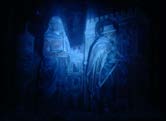
Figure 49.34: The Montblanc panel was photographed during a UV
fluorescence experiment. (Declercq de Silva Archive)
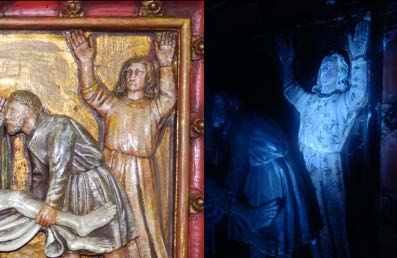
Figure 49.35: Panel 7, left in normal light, right in UV light. Bright letters are
visible in a style of the first half of the 17th century. (Declercq de Silva Archive)
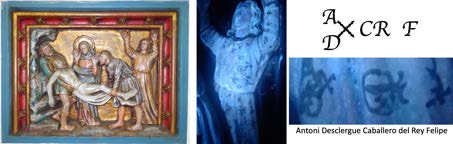
Figure 49.36: Left is Panel 7 at the Chapel in Deerlijk, in daylight. Right is Antoni Desclergue’s
signature on the 7th panel, seen under ultraviolet fluorescence. The other initials are shown in
Figure 49.37. (Declercq de Silva Archive)
© 2024 Nico F. Declercq
The Desclergues of la Villa Ducal de Montblanc, 2nd ed., Omn., VOL. IV
49.9. MARGUERITE KELDUWIER AS THE CHAPEL’S PROPRIETARY
1003
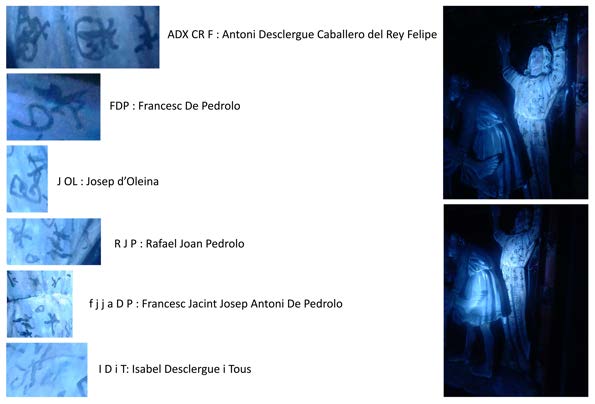
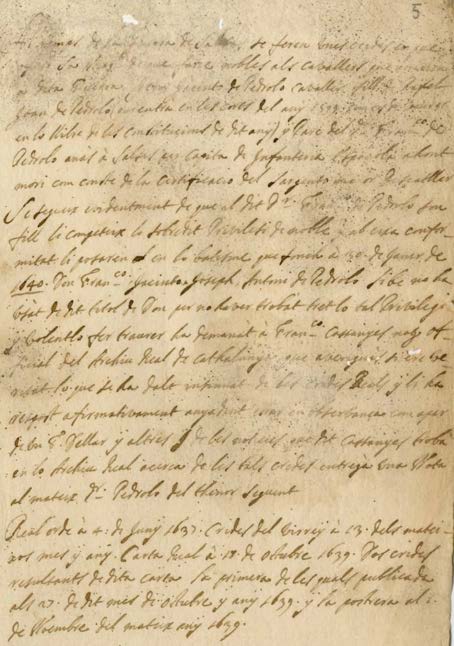
Figure 49.37: The initials are found on the 7th panel, one of which is also shown in Figure 49.36. To identify the persons behind the acronyms, we refer to Figure 49.38 of the Pedrolo Archives, describing the events in 1637, 1639 and 1640 related to the noble title of the de Pedrolo family and the baptism of Francesc Jacint Josep Antoni de Pedrolo, son of Isabela Desclergue.
(Declercq de Silva Archive)
The Desclergues of la Villa Ducal de Montblanc, 2nd ed., Omn., VOL. IV
© 2024 Nico F. Declercq
CHAPTER 49. THE CHAPEL OF NUESTRA SEÑORA DEL REPOSO OR DE KAPEL VAN ONZE LIEVE
1004
VROUW TER RUSTE, IN DEERLIJK
Figure 49.38: This document describes the events in 1637, 1639, and 1640 connected to the
noble title of Francesc De Pedrolo after his father’s death, Jacinth. Also, it shows the child’s
complete name and baptism on January 30, 1640, in the presence of Antoni Desclergue (DC06).
The document is also shown in Figure 28.27 on page 361 (Source: Arxiu Comarcal Urgell De Pedrolo document 1640; Courtesy of Arxiu Comarcal Urgell and the de Pedrolo family)
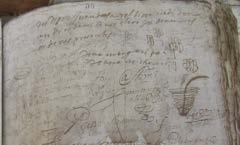
Figure 49.39: A blend of artistic signatures, modern
looking signatures and acronyms on a notarial document
of around 1650, ’Dibujos de Cerfate Hinojosa, ca. 1650’a
acitation taken from Aude Argouse, ’Prueba, información
y papeles. Hacia una plena inclusión del escribano y de sus
agencias en la historia de la justicia en Hispanoamérica (Chile,
siglos XVII-XVIIIa) in Dossier. El papel de los procesos ju-
diciales y administrativos en las prácticas de justicia (siglos
XVII-XX)’ .
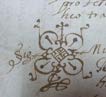
Figure 49.40: A typical signature of a notary on a testament at Montblanc in the
17th centurya, where his initial ’F’ is used below a typical notarial sign.
aThe document is found at Santa Maria la Mayor of Montblanc. The image is taken, as
citation, from Jordi Anglès i Sanahuja, ’Catàleg dels testaments del segle XVII conservats a
l’ Arxiu Parroquial de Santa Maria de Montblanc’ , Podall, 2012.
© 2024 Nico F. Declercq
The Desclergues of la Villa Ducal de Montblanc, 2nd ed., Omn., VOL. IV
49.9. MARGUERITE KELDUWIER AS THE CHAPEL’S PROPRIETARY
1005
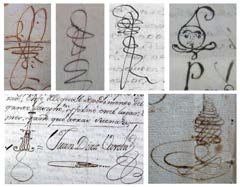
Figure 49.41: A collection of signatures found in Span-
ish documents in the 16th and 17th centuries.
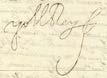
Figure 49.42: The signature of His Majesty King Felipe IV of Castile: ’Yo el Rey
F’ .
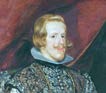
Figure 49.43: 1631, His Majesty King Felipe IV of Castile, painted by Diego Ro-
dríguez de Silva y Velázquez.
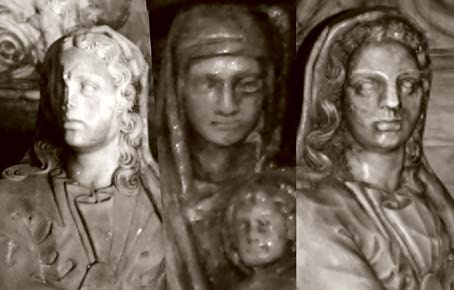
Figure 49.44: Left and right are photos of Santa Magdalena by Andreu Ramírez, while the
photo in the middle comes from panel 3 in Deerlijk. The facial similarities indicate that the
Catalan school of Andreu Ramírez likely influenced the artist who fabricated the polychromatic
panels in Deerlijk.
The Desclergues of la Villa Ducal de Montblanc, 2nd ed., Omn., VOL. IV
© 2024 Nico F. Declercq
CHAPTER 49. THE CHAPEL OF NUESTRA SEÑORA DEL REPOSO OR DE KAPEL VAN ONZE LIEVE
1006
VROUW TER RUSTE, IN DEERLIJK
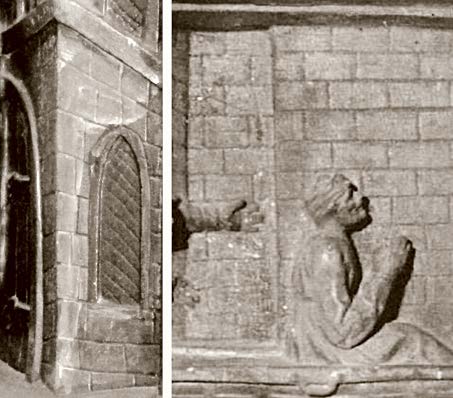
Figure 49.45: Left is the sculpture of bricks in the Montblanc panel in Deerlijk; Right are
similarities found in the Sant Andreu retable of the Santa Maria church of Cervera, in particular,
the panel fo the Resurrection of the Dead, of 1648, by Francesc Puig I and Jacint Reguer49
© 2024 Nico F. Declercq
The Desclergues of la Villa Ducal de Montblanc, 2nd ed., Omn., VOL. IV
49.9. MARGUERITE KELDUWIER AS THE CHAPEL’S PROPRIETARY
1007
Figure 49.46: Dos plafons del retaule del Sant Nom de Jesus de Tamarit. Benet Baró (abans
de 1634). Museu Diocesa de Tarragona. (Foto Joan Farré). Photo citation, page 205, Sofia
Mata de la Cruz, "L’escultor Benet Baró, autor dels retaules dels Sant Nom de Jesús de Tamarit
i la Pobla de Montornès (1634)", Quaderns d’història tarraconense, 1996, Núm. 14, p. 197-207.
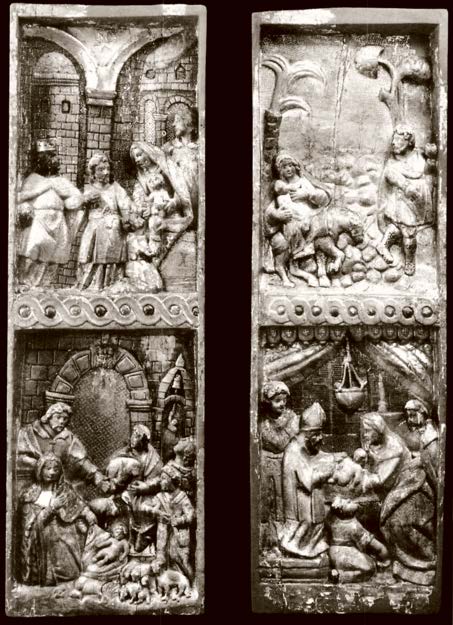
The works of Benet Baró show similarities in style and (lack of) quality, as the retable in the
Chapel in Deerlijk of which the panels have been installed as alcoves in the interior side walls.
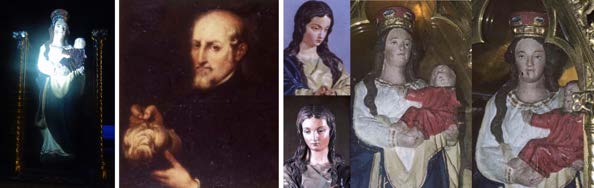
Figure 49.47: Left, the miraculous Maria statue in the chapel ’Kapel ter Ruste,’ seen under illumination with ultraviolet light. Only the underlying gesso lights up. Second from the left is a portrait of Alonso Cano p. Then, we see two perspectives on the figure, created by Alonso Cano in 1655, in Spain, of ’Immaculada de facistol,’ which is still found in the cathedral of Granada. The facial similarities are striking, as shown by the miraculous statue at the chapel of Deerlijk, which is shown right. (Declercq de Silva Archive)
The Desclergues of la Villa Ducal de Montblanc, 2nd ed., Omn., VOL. IV
© 2024 Nico F. Declercq
CHAPTER 49. THE CHAPEL OF NUESTRA SEÑORA DEL REPOSO OR DE KAPEL VAN ONZE LIEVE
1008
VROUW TER RUSTE, IN DEERLIJK
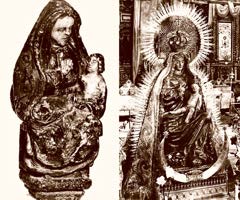
Figure 49.48: Typically, the ’Virgen del Reposo’ covers
her breast with her hand, symbolizing ’ rest’ after feeding
Jesus. Left is an ancient sculpture dating from the 1500s
at Valverde del Camino; right was constructed for the
same church in the 1600s and was destroyed in 1936.
The statues at Deerlijk and Sevilla of the ’Virgen del
Reposo’ do not cover their breasts with their hands. p.
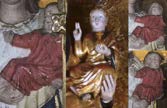
Figure 49.49: The infant Jesus was held by his mother, Mary. It
enables a comparison between the statue at Deerlijk (red) and that of
’Nuestra Senora de Seu’ at the Cathedral of Mallorca (Santa Iglesia
Catedral de Mallorca).
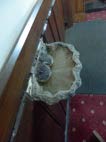
Figure 49.50: This is the holy water tank at the chapel. We don’t know if it is
the original from 1641, but it looks ancient and is likely made of Tournai bluestone
and may have been donated by the Bishop of Tournai, Maximilien II Vilain de Gand.
(Declercq de Silva Archive)
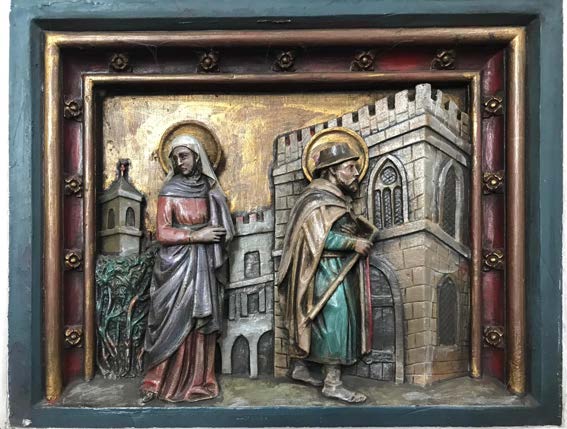
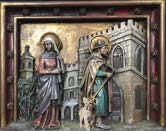
Figure 49.51: The Polychrome relief in the Chapel at Deerlijk depicts the Main square of Montblanc. The panel was refurbished and recycled. The lion at the extremity of the stick, held by the male figure, has broken off and was concealed with new paint. He is also holding a book in his left arm and wearing a sombrero, typical indications all referring to Sant Jeroni. The scene has been poorly repainted over the centuries. (Declercq de Silva Archive)
© 2024 Nico F. Declercq
The Desclergues of la Villa Ducal de Montblanc, 2nd ed., Omn., VOL. IV
49.9. MARGUERITE KELDUWIER AS THE CHAPEL’S PROPRIETARY
1009
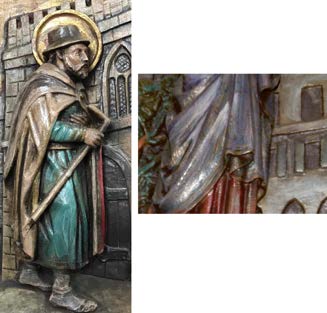
Figure 49.52:
Close-ups of Panel 3
(Montblanc), where it can be seen (right)
that Mary’s (who has initially been Santa
Felipa) dress was overpainted. Originally,
her dress was Spanish green with a gold
motif. Left, an object (a lion) was removed
at the end of Sant Jeroni’s stick. He holds
the stick in his right hand and the script
in his left hand, just as Saint Hierony-
mus, shown at the beginning of Chapter
29. The male figure has the face of Hernán
Cortés, a relative of Jeroni Joan Descler-
gue y Cortés. A reference to Cortés also
appears in another panel, shown in Figure
49.76 on page 1014, to be compared with
Figure 49.93 on page 1022. (Declercq de
Silva Archive).
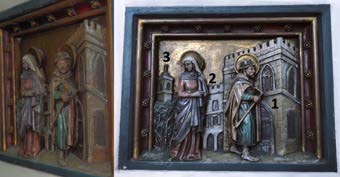
Figure 49.53: A side view of the Montblanc panel clearly shows that
there is enough space to hold a lion. Right, the three buildings appear
in the correct order and at the proper distance compared to what an
observer would have seen at Montblanc, on the Plaza Mayor, just right
of the Townhall, when looking Southeast. The trees, which were probably
also prevalent on the market square for cooling in summer, can be seen.
(Declercq de Silva Archive)
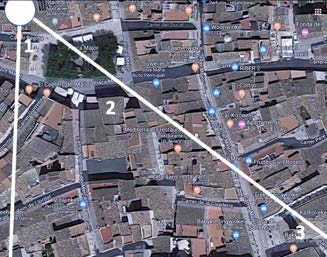
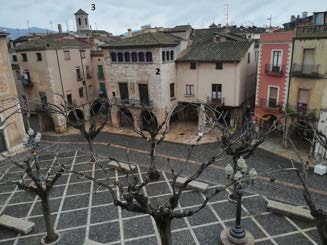
Figure 49.54: Google Maps® image of
the center of Montblanc with the position
of the observer and with the three buildings
in view: Cal Malet (1), Casal dels Descle-
rgues (2), Church of San Miguel (3).
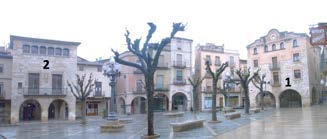
Figure 49.55: The main square of Mont-
blanc with the buildings numbered as they
appear in the image at Deerlijk (p, pub-
lished on Wikimedia®)
The Desclergues of la Villa Ducal de Montblanc, 2nd ed., Omn., VOL. IV
© 2024 Nico F. Declercq
CHAPTER 49. THE CHAPEL OF NUESTRA SEÑORA DEL REPOSO OR DE KAPEL VAN ONZE LIEVE
1010
VROUW TER RUSTE, IN DEERLIJK
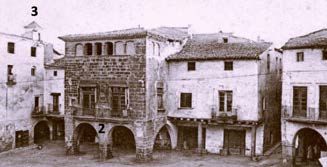
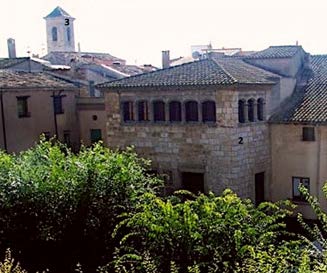
Figure 49.56: The main square of Mont-
blanc with the buildings numbered as they
appear in the image at Deerlijk (p)
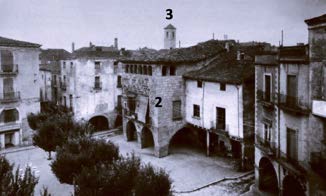
Figure 49.57: The main square of Mont-
blanc with the buildings numbered as they
appear in the image at Deerlijk (p)
Figure 49.58: Montblanc, picture taken
during the Covid-19 outbreak in March
2020: a view from the Mayor’s office.
(Courtesy of Josep Andreu).
Figure 49.59:
Montblanc, summer: a
view from the Mayor’s office (Courtesy of
Eduard Contijoch)
© 2024 Nico F. Declercq
The Desclergues of la Villa Ducal de Montblanc, 2nd ed., Omn., VOL. IV
49.9. MARGUERITE KELDUWIER AS THE CHAPEL’S PROPRIETARY
1011
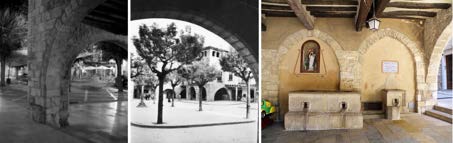
Figure 49.60: The color photo is of ’Mesures oficials de la vila als porxos de Cal Malet , a la
plaça Major de Montblanc, Conca de Barberà, Tarragona’ . (the area underneath the building
(1), i.e., its ground floor, viewed from East to West). The picture was taken by Santi Gomà
in 2012, p. The remains of the openings, seen in the back of the photograph, are visible as
windows on the side of the building (1), depicted at the Chapel in Deerlijk. The two photos on
the left are views from the Main Square of Montblanc through the arches of the Cal Malet. Left:
recent image, the viewer is positioned where Jeroni is located on the Montblanc panel; right:
century-old image from inside the Cal Malet construction, with a clear view of the Casal dels
Desclergue. An analysis done in 2022 is shown in Figure 49.61.
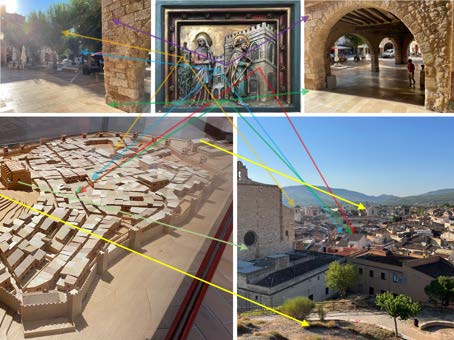
Figure 49.61: As in Figure 49.60, the constructions depicted in the artwork found in Deerlijk are compared to Montblanc based on photos taken in 2022. Montblanc’s model can be found at
the Museum of la Conca Barbera. A colored arrow indicates every construction to compare with
the polychromatic panel found in Deerlijk.
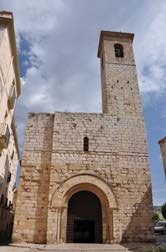
Figure 49.62: Montblanc, Sant Miquel Church, dating from the 13th
century. Image credit: Catalan Art & Architecture Gallery by Josep
Bracons from Barcelona. The creator placed the image in the public
domain on Wikimedia on September 12, 2015, on Wikimedia®.
The Desclergues of la Villa Ducal de Montblanc, 2nd ed., Omn., VOL. IV
© 2024 Nico F. Declercq
CHAPTER 49. THE CHAPEL OF NUESTRA SEÑORA DEL REPOSO OR DE KAPEL VAN ONZE LIEVE
1012
VROUW TER RUSTE, IN DEERLIJK
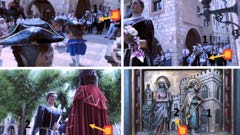
Figure 49.63: The main square of Montblanc, during a
Festa Major with the dancing ’Gegants i Nanos de Mont-
blanc’ and with the buildings numbered as they appear on
the image at Deerlijk, including an indication of the spot
of the observer and the direction of observation. (Cour-
tesy of Gegants i Nanos de Montblanc.)
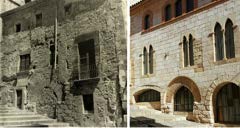
Figure 49.64: Montblanc, the Museum of Conca de
Barbera; right: the current view after a restoration; left
: the old view before the renovation. (credit Museum
Conca de Barbera)
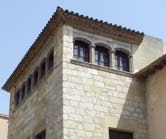
Figure 49.65: This is a close view of the upper windows of the Casal
Dels Desclergue. They were installed relatively recently. Also, above
the first-floor windows, the stones in the wall indicate that windows
have been there, as in the image on the Montblanc panel found in the
chapel at Deerlijk. (Declercq de Silva Archive)
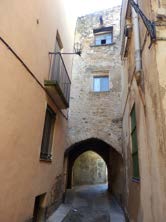
Figure 49.66: Montblanc: The backside of the Desclergue house has
windows that better resemble the 17th-century original.
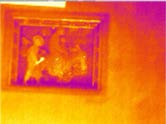
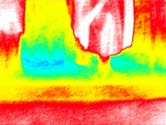
Figure 49.67: This is the infrared image of panel 2, which depicts the
flight to Egypt. The edge of the carved alcove is visible on the bottom
left and right. (Declercq de Silva Archive)
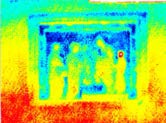
Figure 49.68: The first panel represents Jesus’s presentation. The
added patch between the relief and the alcove edge is also visible here.
(Declercq de Silva Archive)
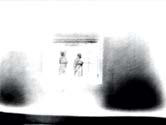
Figure 49.69: Grey-scale of an infrared image during the cooling pro-
cess on which the alcove edge becomes visible around the Montblanc
panel. (Declercq de Silva Archive)
© 2024 Nico F. Declercq
The Desclergues of la Villa Ducal de Montblanc, 2nd ed., Omn., VOL. IV
49.9. MARGUERITE KELDUWIER AS THE CHAPEL’S PROPRIETARY
1013
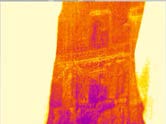
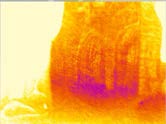
Figure 49.70: Detailed structures are visible in the sculpture of the
’Casal dels Desclergue’ under the paint of the Montblanc panel. (De-
clercq de Silva Archive)
Figure 49.71: The sculpture of the ’Casal dels Desclergue’ shows
detailed structures under the paint of the Montblanc panel. (Declercq
de Silva Archive)
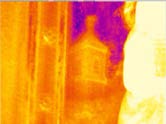
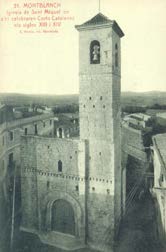
Figure 49.72: Detailed structures are visible in the sculpture of the
Saint Michael’s church tower under the paint of the Montblanc panel
and can be compared with Figure 49.73. (Declercq de Silva Archive)
Figure 49.73: This is an old postcard showing the Saint Michael’s
church of Montblanc, to compare with Figure 49.72.
Figure 49.74: Under Hieronymus’s foot on the Montblanc panel, one
can observe a spot that also shows where the lion must have been at the
end of the broken stick. (Declercq de Silva Archive)
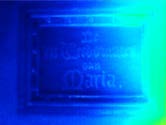
Figure 49.75: Infrared image of the panel on which ’The VII Wee-
dommen van Maria’ is written. The heat source with infrared rays was
on the right. The panel behaves thermally like the rest of the wall,
which differs significantly from the polychrome reliefs. (Declercq de
Silva Archive)
The Desclergues of la Villa Ducal de Montblanc, 2nd ed., Omn., VOL. IV
© 2024 Nico F. Declercq

CHAPTER 49. THE CHAPEL OF NUESTRA SEÑORA DEL REPOSO OR DE KAPEL VAN ONZE LIEVE
1014
VROUW TER RUSTE, IN DEERLIJK
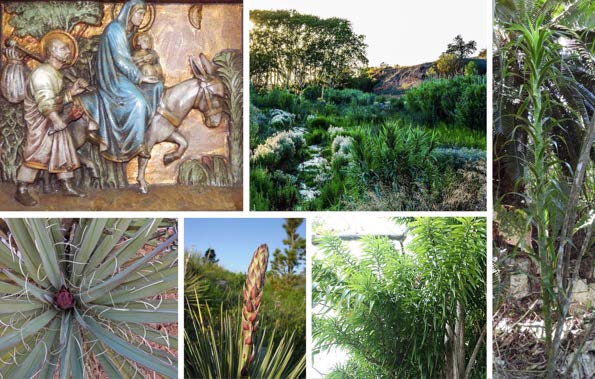
Figure 49.76: The top-left photo is the Flight from Egypt, part of the retable that Antoni Desclergue brought from Spain.
On that panel, the plants at the bottom right are Mexican and, therefore, unrelated to Egypt. It concerns the Mexican Yucca and the Draecana Americana, both indigenous plants from Mexico, the land that was conquered by Hernán Cortés, a relative of Antoni Desclergue (DC06).
The Yucca from Mexico is called ’Nahuatl,’ in the Iczotl language of the Aztecs. In Central and South America, the species Dracaena Americana is often called the ’tree of happiness’ due to its association with an ancient Aztec myth about a young soldier who had romantic feelings for the daughter of the High Priest. The paternal figure inserted a wooden rod into the soil.
It imposed a deadline of five days upon the prospective partner to facilitate the growth of foliage on said rod on the condition that failure to do so would result in the termination of the young gentleman’s life. The soldier diligently continued to rinse the piece of the Dragon Tree, resulting in a favorable resolution to the tense circumstance.
The two photos on the right at the bottom show the Draecana Americana in Mexico. The top middle photo shows Spanish reeds along the Francoli River in Montblanc (courtesy of Montblanc Medieval) with, in the front, also Draecana Americana, which is evidence that the Spanish imported the species to Iberia after the conquest of the New World.
The two bottom-left photos show the Yucca in bloom.
Another panel, shown in Figure 49.52 on page 1009 also refers to Hernán Cortés and can be compared with Figure 49.93 on page 1022.
The attentive reader with travel experience or adept navigation abilities will see that a vertical crescent shape is not found near the equator, Egypt or Palestine, but manifests in the northernmost regions. In summary, although the casual reader may interpret the panel as depicting the departure from Egypt, a more discerning observer would recognize it as portraying the departure of Felipa de Montoya and her child Antoni from Barcelona to the North in 1602.
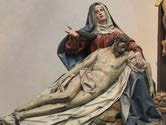
Figure 49.77: Sexta Angustia, 1616-1617, Gregorio Fernández (1576-
1636). Museo Nacional de Escultura, Valladolid. Photography by Luis
Fernández Garcia, 2014. (copied file from wikimedia® with permis-
sion)
Figure 49.78: This is an example of a Spanish Baroque wooden frame.
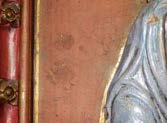
Figure 49.79: Close up of relief 5 where the textured gesso is visible,
covered by ’assiette à dorer,’ but with a disappeared gilded layer. Also,
one can see that Mary’s dress has been repainted; initially, it had gilt
embroidery. (Declercq de Silva Archive)
© 2024 Nico F. Declercq
The Desclergues of la Villa Ducal de Montblanc, 2nd ed., Omn., VOL. IV
49.9. MARGUERITE KELDUWIER AS THE CHAPEL’S PROPRIETARY
1015
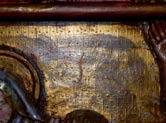
Figure 49.80: This is a close-up of the top-right area of panel 7.
Through a scratch, the underlying wood is visible. This substrate is
covered by a textured gesso and further covered by red ’assiette à dorer’
and a gilded layer on top. One can also see that Mary’s dress was
overpainted. (Declercq de Silva Archive)
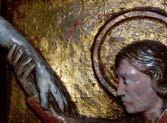
Figure 49.81: Close-up of panel 7, where the different layers are again
visible and where it can also be seen how clumsily someone added a coat
of paint to the personage. (Declercq de Silva Archive)
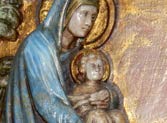
Figure 49.82: Close-up of panel 2, where the faces of Jesus and Mary
have been overpainted clumsily, and also the beautiful dress of Mary
with gilt embroidery. Still, the flat area reveals the textured gesso with
a red and gold layer. (Declercq de Silva Archive)
Figure 49.83: An impression of the Montblanc panel as it may have
looked before the lion figure was removed. Note that we have not at-
tempted to reconstruct the original colors covered by the paint added
over the centuries. (Declercq de Silva Archive)
The Desclergues of la Villa Ducal de Montblanc, 2nd ed., Omn., VOL. IV
© 2024 Nico F. Declercq
CHAPTER 49. THE CHAPEL OF NUESTRA SEÑORA DEL REPOSO OR DE KAPEL VAN ONZE LIEVE
1016
VROUW TER RUSTE, IN DEERLIJK
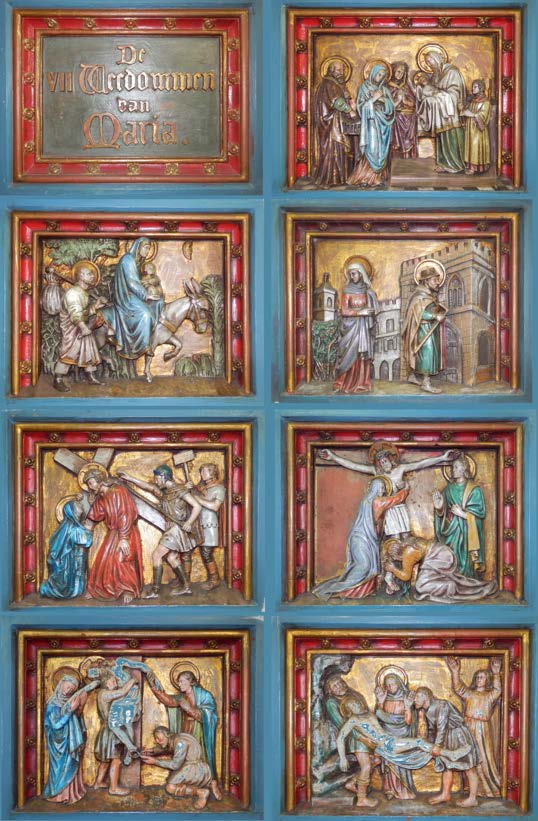
Figure 49.84: These are the panels in Spanish Baroque from 1640, which nowadays constitute the seven sorrows of Mary. The reliefs each have 13 flowers on their frame, symbolising Antoni, while the recently added panel differs. (Declercq de Silva Archive)
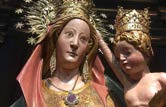
Figure 49.85: The image of La Mare de Déu de la Serra de Mont-
blanc is taken from Albert Oliva’s article to show that the child Jesus
has golden or blond hair. The issue is discussed in Chapter 49.4.1.3.
Courtesy of Albert Olivaa
aAlbert Oliva, ’La incògnita del dit de la Mare de Déu de la Serra de
Montblanc,’ in Catalunya Diari, September 9, 2019.
© 2024 Nico F. Declercq
The Desclergues of la Villa Ducal de Montblanc, 2nd ed., Omn., VOL. IV
49.9. MARGUERITE KELDUWIER AS THE CHAPEL’S PROPRIETARY
1017
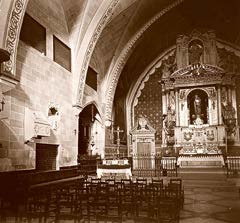
Figure 49.86: The church interior of Mare de Déu de
la Serra in 1923. This is where the original sculpture,
represented in Figure 49.8 on page 997, can be admired.
Courtesy of Josep Salvany, Biblioteca de Catalunya.
Figure 49.87: La Cru Verda inside the Sanctuary and
Monastery of la Serra in Montblanc, in 2022
Figure 49.88: The author’s children at the Convent and Sanctuary of la Serra in Montblanc in 2022.
The Desclergues of la Villa Ducal de Montblanc, 2nd ed., Omn., VOL. IV
© 2024 Nico F. Declercq
CHAPTER 49. THE CHAPEL OF NUESTRA SEÑORA DEL REPOSO OR DE KAPEL VAN ONZE LIEVE
1018
VROUW TER RUSTE, IN DEERLIJK
Figure 49.89: In Montblanc, as in Deerlijk,
the legend continues. "Amb motiu de la Novena
i la Festa Major, us animem a penjar els domas-
sos de la Mare de Déu de la Serra als vostres
balcons i finestres."
Figure 49.90: Extract from an Orphan’s deed from 1579 when Mar-
griet Keluwier’s father Antheunis died (Rijksarchief Kortrijk, Weesreg-
ister 58, Deerlijk, folio 5v, Anthuenis Keldewier, 1579). The extract is
evidence that Marguerite Kelduwer was married to Jean Du Bois and
was the daughter of Anthonius (’Anthuenis’). Courtesy of Filip Benoit
and Heemkring Dorp en Toren.
© 2024 Nico F. Declercq
The Desclergues of la Villa Ducal de Montblanc, 2nd ed., Omn., VOL. IV
49.9. MARGUERITE KELDUWIER AS THE CHAPEL’S PROPRIETARY
1019
document is yet to be discovered. Thus, we cannot confirm its completeness or the Bishop’s approval. The only indisputable records are related to finance and ownership, which naturally provide us with the names of Marguerite Kelduwier and her Du Bois descendants.
Marguerite Kelduwier, undoubtedly Catholic and likely supporting the Counter-Reformation, witnessed the terror during the Protestant Ghent republic (1577-1584) before Jeroni Desclergue’s arrival. Powerful as Jean du Bois’ widow, her son François Lamoral succeeded his father at the Court of Auditors in Lille, while her other son, Walrand du Bois, was a priest.
Establishing a chapel close to Deerlijk’s village church required Spanish regime support, which Antoni (DC06) provided. Antoni brought a statue by Cano, an artist at the Spanish King’s court, which may have been decisive. The Bishop would not have ignored a miracle before a Catalan statue of Our Lady, regardless of Marguerite’s wealth.
The power of Kelduwier’s descendants and various foreign regimes in later eras, such as the Austrians and the French, alongside the Cassina family, have impacted Antoni Desclergue’s legacy in Deerlijk.
However, the villagers have always remembered the story, as described in Chapter 49.12, of the nobleman who established the chapel and the episode of the horses refusing to move. Antoni’s initials on one of the retable panels in the chapel’s alcoves and the oldest surviving depiction of the miracle (Figure 49.8 on page 997), showing La Mare de Déu de la Serra de Montblanc, persist.
Each recorded witness of the Deerlijk miracle, similar to that of the Mary figurine in Montblanc, was known to Antoni Desclergue (DC06), as outlined in Chapter 49.2.2.3.
As described in Chapter 18.10.1, the Desclergues of Catalonia share a longstanding historical alliance with the Desbosch family, originating with Rénovard Desbosch’s companionship with Raymond Clergue in Mallorca. Consequently, the presence of Antoni Desclergue and the widow of Joan Desbosch, or Jean Du Bois, within the context of a chapel is a readily apparent and predictable occurrence, further explored in Chapter 49.9.2.
49.9.2 À propos on Marguerite Kelduwier’s Husband Jean Du Bois
Jean du Bois was an acquaintance of Jan Declercq (DK03), the stepfather of Antoni Desclergue (DC06), as evidenced in Figure
Another connection between Declercq and du Bois is documented in Figure 34.442 on page 632 in Chapter 34.13.8.12.
Bernard Beghyn provides further information, noting that du Bois’ descendants were du Bois de Sebbe, established in Lille and Béthune in the 17th century. This designation originated because Jean du Bois was Lord of Wollebeyt and Sebbe. He passed away in 1616 or 1617 and served as the receiver of Lille. He married Marguerite Kelduwier around 1599-1600. It is presumed that François Lamoral du Bois de Chocques et de Sebbe (also called Soble, Seble, Zeble) was their son.
It is plausible that this Jean du Bois was born in Wicres, between Lille and Béthune. Records mention a Maître Jean du Bois, son of Louis du Bois from Wicres and Aliénor de Michel from the same village, who married Michelle Carrez. They had one child, Jacqueline du Bois, who married Jean Dutriez in 1629, suggesting that Michelle Carrez likely died in childbirth. Jean du Bois from Wicres had a brother, Antoine du Bois, who was the Notaire, Greffier, and Receveur de la Seigneurie de Couppigny in Wicres.
Other siblings included Barbe du Bois, Jeanne du Bois, and Isabeau de Bois. If Jean du Bois, who married Marguerite Kelduwier after the death of his first wife Michelle Carrez, is indeed the one born in Wicres, then he was not identified as Jan Van de Bossche, but genuinely as Jean du Bois in French.
It is essential to avoid hastily associating historical figures with modern national identities. For example, some might assume that Jean du Bois was Jan Van den Bossche or Jan Van Houtte to align with a modern Flemish identity, preferring the chapel of Deerlijk to be considered Flemish rather than French. Such assumptions overlook the broader historical context and the possibility that ancestors might have originated from different regions, spoken different languages, or been influenced by external factors. The perception of the Spanish period as an occupation filled with violence, primarily shaped by 16th and 17th-century Dutch propaganda, continues to influence modern Belgian education and nationalist sentiments, overshadowing the era’s significant historical contributions.
Further research is necessary to identify Jean du Bois conclusively, but this task is beyond the scope of this book.
For additional insights, Chapter 18.10.1 discusses the connection between the Desclergues and the du Bois family in ancient times.
49.9.3 Narrative of the Chapel’s Foundation
The process of founding a chapel is a complex and significant undertaking, comparable to a holy trinity. It involves the approval of a foundation deed by the Bishop, the physical construction requiring various earthly actions, documents, and resources, and the organization of the benefice and chaplaincy or patronage. This final step is crucial, as it involves managing the operation, covering expenses, securing resources, and granting the owner significant power, including the ability to nominate a chaplain and access clerical privileges. Once these arrangements are in place, the mission is accomplished.
The patron of a chapel is a worldly individual with the power to choose the chaplain to be nominated by the Bishop. In the case of the Du Bois family, their ownership of the chaplaincy, which provided them with ultimate ecclesiastical power, was a source of contention until 1690, the year Antoni Desclergue (DC06) passed away. His resistance was likely the final effort to prevent the chapel from entirely falling into the hands of the Du Bois family.
For the Du Bois family, owning a chapel was a prestigious achievement that might have caused a significant nuisance to Antoni, a devout Spanish Knight who lost his father in a notable Spanish victory and risked his life protecting Catholic Flanders from Protestants. The 1634 miracle occurred before a figurine brought by the Desclergues from Montblanc, and the new figurine, created by Cano, was brought by Antoni Desclergue (DC06) in 1639.
In the case of the chapel at Deerlijk, the lists of patrons and chaplains have been published in earlier works or will be included in the forthcoming works by the historians of Deerlijk. One notable patron was Eugene Lamoral du Bois (1754), the Lord of Chocques (modern-day Northern France) and an heir of Marguerite Kelduwier, widow of Jean du Bois, Eugene Lamoral’s great-grandfather.
The chapel at Deerlijk was established by Marguerite Kelduwier, who financed the chaplaincy from 1641 onward. Eugene Lamoral Du Bois (Seigneur de Chocques et de Sebbe 1659-1702), married to Marie Waresquiel (Dame de Thérissart en Avelin 1651-1719), was a notable figure in the chapel’s history.
Their daughter, Marie Eugenie Du Bois (Dame de Sebbe et de Chocques), passed away on August 28, 1723, in Béthune, Northern France. She married Jacques François Du Puich in 1706, and they had several children, including Antoine François Joseph Du Puich (Ecuyer, seigneur de Mesplau, de Maurepas. 1707-1766).
Antoine signed the chapel’s patronage in Deerlijk in 1753-1755, transferring it to the Du Puich family. The name Du Puich is also spelled as Dupuis and, in Flemish, as Vandeputte, or even Steenput.
The Desclergues of la Villa Ducal de Montblanc, 2nd ed., Omn., VOL. IV
© 2024 Nico F. Declercq
CHAPTER 49. THE CHAPEL OF NUESTRA SEÑORA DEL REPOSO OR DE KAPEL VAN ONZE LIEVE
1020
VROUW TER RUSTE, IN DEERLIJK
In 1701, Maria Declercgz (DC08d), discussed in Chapter 37.9.1, granddaughter of Antoni Desclergue (II) (DC06), married Egidius Vandeputte (Gilles Du Puich), born in 1663 as the son of Mathias Vandeputte (Mathieu Du Puich) and Joanna Van Rumbeke.
This family likely connects to the Du Puich family mentioned earlier, originating from or appearing in Cambrai as bourgeois in the 1600s. A Mathieu Du Puich is recorded as a bourgeois of Cambrai in 1633.
Further research is needed to establish a definitive connection with Jacques François Du Puich, who married Marie Eugénie du Bois in Lille in 1706, daughter of François Lamoral du Bois, son of Marguerite Kelduwier and Jean du Bois, and Marie Cardon.
Additional possible relatives of Marguerite Kelduwier have been found in Northern France, which also requires further investigation.
Antoine de Le Quellerye, the Lord of La Cantereine (in Haubourdin126), lived in Douai and appeared in a 1627 deed in Carnières alongside Robert du Puich, a merchant and bourgeois of Cambrai.127 Antoinette de Le Quellerye, married to Robert de Heranguière, also appears in this deed.
Carlos Coloma de Saa, governor of Cambrai from 1617 to 1632, participated in the 1595 French conquest of Cambrai by Spanish troops, including Jeroni Joan Desclergue y Cortés (DC05). Jeroni was severely wounded in battle and treated in the Sint-Jans-Hospital of Cambrai, where the future Bishop of Tournai served as a priest. In 1641, Antoni Desclergue donated to that hospital on behalf of his father.
Antoni Desclergue lived in Cambrai early in his military career, with his first wife.
In the mid-18th century, the Du Bois family continued as patrons, followed by the Du Puich or Vandeputte family. The archives indirectly suggest the involvement of the Desclergues. For instance, Jeroni Desclergue appears, in Chapter 29.8.3.1, once in documents from the Loos abbey near Lille from 1575-1605, visiting Dom Pierre Carpentier.128 Guillaume du Puich also appeared on nine visits before Jeroni. Jeroni resided in Kortrijk for a few years and is listed in the archive as ’Jerôme Leclercq, de Courtrai.’
On April 17, 1611, a wedding took place in the Spaniard’s Castle of Ghent between Miguel De Villanueba (from Alcorissa in Caragera, Spain) and Isabel du Puich from Haubourdin near Lille (Figure 29.125 on page 426).
Marguerite Kelduwier reserved the rent from two farms for the chapel, imposing an obligation for weekly services and additional services on Saint Mary’s and Saint Joseph’s days.129
It is assumed that Antoni Desclergue imposed this obligation to honor his father, Jeroni Desclergue, killed at Ostend in 1604, and his mother, Felipa de Montoya. Mary and Joseph symbolically represent his parents.
49.10 On Antoni Desclergue’s Motives to Honor his Parents Jeroni Joan De-
sclergue y Cortés (DC05) and Felipa de Montoya
49.10.1 Introduction
The connection with Antoni Desclergue’s (DC06) parents, Jeroni Joan Desclergue y Cortés (DC05) and Felipa de Montoya, and the Main Square of Montblanc with the House of Desclergues clearly visible, is described and shown in Chapter 49.4.2 and Chapter
Incorporating one’s parents in ecclesiastic art is not evident and was done, by Antoni Desclergue (DC06), through representing saints carrying his parents name130.
There are, however, additional elements pointing at Antoni’s parents, described below.
49.10.2 Jeroni Joan Desclergue y Cortés (DC05) is Visible in the Montblanc Panel (nr 3)
inside the Chapel
From a study of this panel, covered in Chapter 49.4.2 and Chapter 49.4.3, we know that the male figure originally represented the Saint Jerome of Stridon, also known as Saint Jerome of Bethlehem. A later removed lion at the end of the cane/leash is typical for Jerome’s depictions. Hieronymus is representative of Jeroni Joan Desclergue y Cortés (DC05), father of Antoni (DC06), and described in Chapter 29. Hieronymus holds a book under his arm, as it fits a Church Father. However, a book (or a pen) represents Jeroni’s last name, Desclergue (Clergue, Clericus).
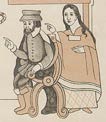
The face used for Jeroni is that of Hernàn Cortés (1485-1521) and is almost identical to an image well-known in the 17th century to Spaniards, in Figure 49.93 on page 1022.
Indeed, we refer to the one at ’Tenochtitlan, the Entrance of Hernàn Cortés’ from 1550, where Cortés is seen with his Mexican wife, La Malinche.
Jeroni’s (DC05) full name was Jeroni Joan Desclergue y Cortés. His blood-relationship with Hernàn Cortés is described in Chapter
27.2, Chapter 25.1.3.2, and Chapter 27.20 and revealed in Figure 49.91 and Figure 49.92.
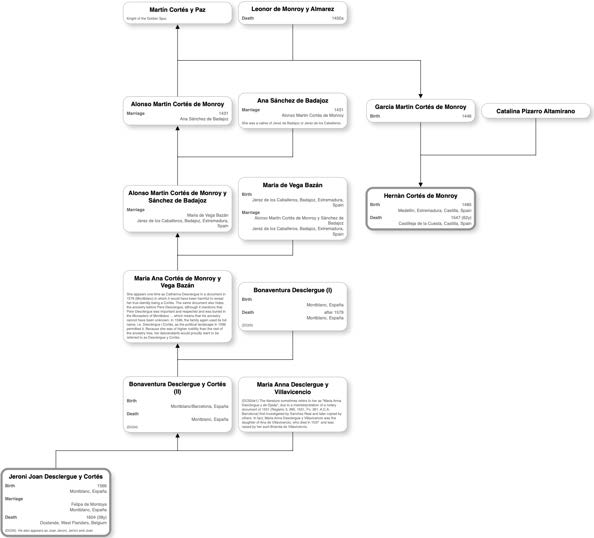
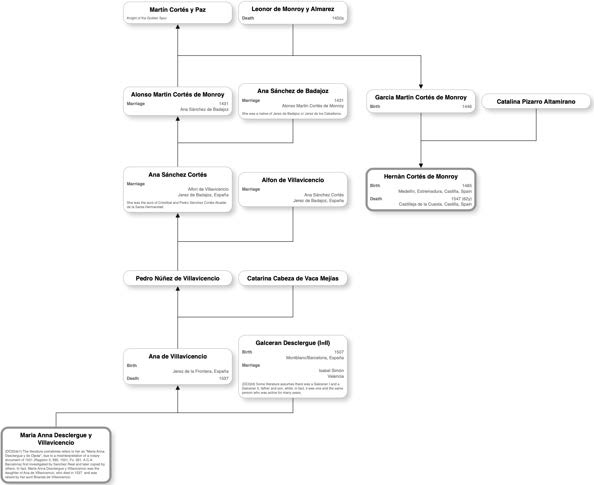
Indeed, his grandmother Maria Ana Cortés de Monroy y Vega Bazán was a cousin of Hernán Cortés, while his mother was related too. Antoni, who likely could not remember his father’s face in 1640, must have ordered a look-alike of Hernán Cortés for the panel construction. Perhaps he has been told that his father looked like Hernán. In the flight from Egypt, another panel exposed in the Chapel, other references to Hernán Cortés are depicted, as shown in Figure 49.76 on page 1014.
Next to Jerome is a depiction of Saint Felipa (Beata Filippa Mareri or Felipa Mareri, +1236), representative of Felipa de Montoya, mother of Antoni, who died in 1628. She is covered in Chapter 49.10.3.
A characteristic feature used by Francisco de Zurbaran in Spain around 1640 is visible. The stick, held by Saint Jerom, appears in paintings by Zurburan, e.g., ’Asher,’ in the series of the sons of Jacob, painted in the 1640s and still found at Durham, in the Auckland Castle Trust131. Zurbaran has made several paintings of Saint Jerome (San Jerónimo), always with a beard and hat, always with a book in his hand, often in the presence of the lion. He even painted Saint Jerome in the company of other saints (e.g., Saint Jerome with Saint Paula and Saint Eustochium, 1640-1650, oil on fabric, by Francisco de Zurbarán). Although we do not 126See also Chapter 29.8.3.3
127Pierre Pietresson de Saint-Aubin, AD Nord Inventory - Series G2, 1968, page 453.
128Mémoires de la Société d’ Emulation de Cambrai, Tome XXVII - 2ieme partie, Présidence de M. Alc. Wilbert, Cambrai 1862, Imprimerie de Simon, rue St Martin 18. , pp. 539-543.
129It is of culinary importance to note that the famous Crema Catalana is also called Crema de Sant Josep because it was traditionally consumed on the day of Sant Josep. It is widely documented in Catalan literature and recipes from the fourteenth and sixteenth centuries, so it is considered one of the oldest desserts in Europe and finds its origin in the traditional custard. Saint Josep’s day is still an official holiday in Madrid and Extremadura, on March 19, while Saint Mary is always celebrated on August 15, Asunción de la Virgen, in Belgium and entire Spain and perhaps most European countries.
130In Spain, a person celebrated two birthdays, namely his own and that of the Saint carrying his name.
131This work is also known as Las doce tribus de Israel or Los hijos de Jacob.
© 2024 Nico F. Declercq
The Desclergues of la Villa Ducal de Montblanc, 2nd ed., Omn., VOL. IV
49.10. ON ANTONI DESCLERGUE’S MOTIVES TO HONOR HIS PARENTS JERONI JOAN
DESCLERGUE Y CORTÉS (DC05) AND FELIPA DE MONTOYA
1021
Figure 49.91: Relationship between Antoni Desclergue’s (DC06) father Jeroni Joan Desclergue y Cortés (DC05) and Hernán Cortés de Monroy via Jeroni’s grandmother Maria Ana Cortés de Monroy y Vega Bazán. The latter is described in Chapter
27.20 and Chapter 25.1.3.2. We also refer to Figure 49.92
claim that Zurbarán made the sculpture in Deerlijk, it is made in the original colors and style we would expect of artists inspired by the school of Zurbaràn from around 1640.
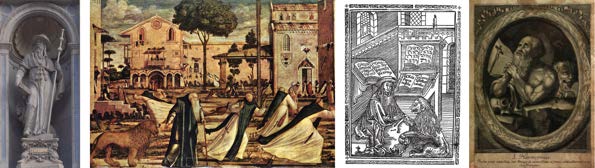
Typical Saint Hieronymus images are given in Figure 49.94. Sant Jeroni is also known as Eusebius Sophronius Hiëronymus, Eusebio Hierónimo, and even Geronimo of Stridon. He is one of the four Grand Church Fathers and appears commonly on retables in Spain in the Baroque period. Sant Jeroni is typically depicted with a bible in his hand; he often wears a sombrero, and in his other hand, he either has a stick or a cross and sometimes an entire church. He is typically depicted with a beard and a lot of hair.
A polychrome oak figurine of Saint Hieronymus is shown in Figure 29.4 on page 369, made in the 16th century in Brabant. More images appear around page 369, namely Figure 29.4.
49.10.3 Felipa de Montoya is Visible on the Montblanc Panel (nr 3) inside the Chapel
Unlike Saint Hieronymus, the female figure in Figure 70.31 is not immediately apparent. It cannot have been Mary because a church is visible in the background. She’s covering her heart underneath her veil and depicts Blessed Filippa Mareri (Beata Filippa Mareri or Felipa Mareri). Santa Felipa, who died in 1236, is often depicted holding a heart in her hand, but those images date from after the excavation in 1706 when it was found that her heart miraculously had not been lost with time. Before the excavation, she was remembered, apart from the miracles attributed to her, for not wanting to give her heart to a husband because she said she was already totally devoted to God and wanted to die as a virgin. On the Montblanc panel, she covers her heart with her hand to express that her love has already been reserved. There are other depictions of Santa Felipa where a bible replaces the heart.
Felipa was also the name of the mother of Antoni Desclergue (DC06), described in Chapter 29.10.
The image of Montblanc in Figure 70.31, with the house of Desclergue visible and with Jeroni (DC05) and Felipa in the foreground, was so chosen by Antoni Desclergue (DC06).
Filippa Mareri, who served as a reference to represent Felipa de Montoya, was from Petrella Salto and was considered a Saint a decade after her death in the 13th century (she was beatified by una bolla di Innocenzo IV nel 1247 ) and appears on old fresco’s having an aureole as saints do. Petrella Salto was in the northern part of southern Italy’s territory held by Felipe II of Spain in the 16th century, so the Spanish knew her.
The Desclergues of la Villa Ducal de Montblanc, 2nd ed., Omn., VOL. IV
© 2024 Nico F. Declercq
CHAPTER 49. THE CHAPEL OF NUESTRA SEÑORA DEL REPOSO OR DE KAPEL VAN ONZE LIEVE
1022
VROUW TER RUSTE, IN DEERLIJK
Figure 49.92: Relationship between Antoni Desclergue’s (DC06) father Jeroni Joan Desclergue y Cortés (DC05) and Hernán Cortés de Monroy via Jeroni’s mother Maria Anna Desclergue y Villavicencio. The latter is described in Chapter 27.20 and Chapter 27.2. We also refer to Figure 49.91
Figure 49.93: ’Tenochtitlan, the Entrance of Hernan Cortés’ . Cortés and his
de facto wife, La Malinche, meet Moctezuma II on November 8, 1519. Image from
’Lienzo de Tlaxcala’ , created by the Tlaxcalans to remind the Spanish of their loyalty
to Castile and the importance of Tlaxcala during the Conquest. (around 1550 AD,
p). References to Hernán Cortés are also seen in Figure 49.76 on page 1014 and Figure 49.52 on page 1009.
Figure 49.94: From left to right, the following versions of Saint Jerome are shown. A 19th-century statue of S Hieronimus in Budapest, Hungary, on Square Szent István. (Picture taken from Globetrotter19 on Wikicommons®, with copyright release, cut and rectified for better view). The symbols of Sant Jeroni are a stick, a sombrero, the bible and a lion, and sometimes also a church. Second, we see Vittore Carpaccio’s painting of 1502, ’San Girolamo e il leone nel convento,’ p. Third is ’San Jerónimo rodeado de códices en griego, hebreo y latín, quitándole la espina a un león’ , in ’la portada del libro de Pedro de la Vega’ , Hystoria nueva , Zaragoza by Jorge Coci in 1528. Right is Saint Hieronymus in a bible (Versio Vulgata) based on the work of Hieronymus in the 16th century.
© 2024 Nico F. Declercq
The Desclergues of la Villa Ducal de Montblanc, 2nd ed., Omn., VOL. IV
49.10. ON ANTONI DESCLERGUE’S MOTIVES TO HONOR HIS PARENTS JERONI JOAN
DESCLERGUE Y CORTÉS (DC05) AND FELIPA DE MONTOYA
1023
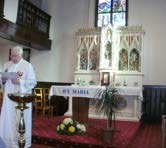
Figure 49.95: 2011, Priest Michiel Declercq of Deerlijk (who is not
a blood relative of the Desclergues), at Kapel-ter-Ruste in front of the
altar, in which the appearance of Mary in a tree is depicted. The picture
was taken during the baptism of the author’s youngest son Lambert.
(Declercq de Silva Archive)
49.10.4 Sancti Eusebii Hieronymi Stridonensis Presbyteri Opera Omnia
On the chapel, a direct reference was made to Jeroni and his wish to continue his life in Deerlijk, die there, and be buried there:
’Haec requies mea in saeculum saeculi; hic habitabo, quoniam elegi eam.’
This is a quote from Psalmi 131 Biblia Sacra Vulgata, also known as ’Sancti Eusebii Hieronymi Stridonensis presbyteri Opera omnia, Volume 10,’ and is the work of the ecclesiastic father Saint Hieronymus (Jeroni). One can loosely translate the text as
’I want to rest here because I have found my place here.’
The inscription can still be retrieved on the oldest images of the chapel, such as Figure 49.8 on page 997 where we can also find La Mare de Déu de la Serra de Montblanc.
Below, we cite Psaml 131 of Biblia Sacra Vulgata132 of which lines 8 and 14 were written on the chapel, or at least above and below the figurine of La Mare de Déu de la Serra de Montblanc in Deerlijk.
(1) Memento, Domine, David, et omnis mansuetudinis ejus:
(2) sicut juravit Domino; votum vovit Deo Jacob:
(3) Si introiero in tabernaculum domus meae; si ascendero in lectum strati mei;
(4) si dedero somnum oculis meis, et palpebris meis dormitationem,
(5) et requiem temporibus meis, donec inveniam locum Domino, tabernaculum Deo Jacob.
(6) Ecce audivimus eam in Ephrata; invenimus eam in campis silvae.
(7) Introibimus in tabernaculum ejus; adorabimus in loco ubi steterunt pedes ejus.
(8) Surge, Domine, in requiem tuam, tu et arca sanctificationis tuae.
(9) Sacerdotes tui induantur justitiam, et sancti tui exsultent.
(10) Propter David servum tuum non avertas faciem christi tui.
(11) Juravit Dominus David veritatem, et non frustrabitur eam: De fructu ventris tui ponam super sedem tuam.
(12) Si custodierint filii tui testamentum meum, et testimonia mea haec quae docebo eos, et filii eorum usque in saeculum sedebunt super sedem tuam.
(13) Quoniam elegit Dominus Sion: elegit eam in habitationem sibi.
(14) Haec requies mea in saeculum saeculi; hic habitabo, quoniam elegi
eam. (15) Viduam ejus benedicens benedicam; pauperes ejus saturabo panibus.
(16) Sacerdotes ejus induam salutari, et sancti ejus exsultatione exsultabunt.
(17) Illuc producam cornu David; paravi lucernam christo meo.
(18) Inimicos ejus induam confusione; super ipsum autem efflorebit sanctificatio mea.
This passage is a prayerful reflection and plea that draws upon the legacy of David, emphasizing his dedication and the covenant with God.
The text commences with a poignant call to remember David’s humility and his solemn vow to God. It accentuates his resolute commitment to find a dwelling place for the Lord. The narrative then shifts to the compelling account of the search for, and the eventual discovery of, a sacred site in Ephrata. This significant event leads to the establishment of a chosen tabernacle and the subsequent worship at this hallowed place.
The invocation for God to arise and enter His resting place, along with the Ark, underscores the sanctity of the location. The plea continues with a request for righteousness to clothe the priests and joy to fill the saints. It references God’s promise to David: to place his descendants on his throne, contingent on their adherence to God’s covenant and teachings.
God’s selection of Zion as His eternal dwelling is unequivocally affirmed. The passage then bestows blessings upon the widows, the poor, the priests, and the saints, promising sustenance and salvation. The passage culminates with a vivid and powerful prophetic vision of David’s line flourishing, his enemies being shamed, and sanctity blossoming from his lineage, painting a vivid picture of the future.
This text, rooted in the tradition of the Psalms, reflects the intertwining of divine promise and human responsibility, which is central to the Davidic covenant and Zion’s religious significance.
In particular, The Knights Templar derived their name from the Temple of Solomon in Jerusalem, where they were initially headquartered. The text’s reference to finding a dwelling place for the Lord resonates with the Templars’ association with the sacred Temple Mount.
A translation of the lines referring to Jeroni, including lines 8 and 14, which appeared on the chapel, goes as follows: (3) If I shall enter into the tabernacle of my house;
(7) We will go into his tabernacle: We will adore in the place where his feet stood.
(8) Arise, O Lord, into thy resting place: thou and the ark133, which thou hast sanctified.
(13) For the Lord hath chosen Sion: he hath chosen it for his dwelling.
(14) This is my rest forever and ever: here will I dwell, for I have chosen it.
(15) Blessing, I will bless her, the widow;
(18) His enemies I will clothe with confusion: but upon him will my sanctification flourish.
132Psalmi 131, Biblia Sacra Vulgata, also known as ’Sancti Eusebii Hieronymi Stridonensis presbyteri Opera omnia, Volume 10,’ by Saint Hieronymus (San Jeronimo). Line (14) was written on the Chapel at Deerlijk.
133Note that the word ark was ’ˇarôn’ in Hebrew and referred to casket or coffin and was not always used to refer to the covenant ark.
The Desclergues of la Villa Ducal de Montblanc, 2nd ed., Omn., VOL. IV
© 2024 Nico F. Declercq
CHAPTER 49. THE CHAPEL OF NUESTRA SEÑORA DEL REPOSO OR DE KAPEL VAN ONZE LIEVE
1024
VROUW TER RUSTE, IN DEERLIJK
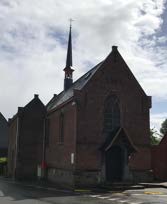
Figure 49.96: The chapel in 2019, Northwest corner. (Declercq de
Silva Archive)
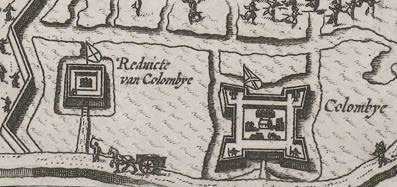
Figure 49.97: This is Fort Colombye in 1602 near Ostend, where the Desclergues
stayed. The chapel at Colombye was that of San Miguel. It looks indeed similar to
the later chapel at Deerlijk. (map of Ostend, 1602, Rijksmuseum Amsterdam)
It is clear that several fractions in Jeronimo’s 131st Psalm refer to Antoni Desclergue’s father, Jeroni Joan Desclergue, to Montblanc and the choice of Deerlijk as a place of residence and perhaps as Jeroni’s final resting place. Line 3 refers to the Casal Desclergue on the Plaza Mayor of Montblanc. Line 7 refers to the fact that Jeroni came from Montblanc. Line 13 refers to the hill of Sion,134 which also symbolizes the mountain of the town of Montblanc. Line 14 refers to Jeroni’s choice of Deerlijk as a residence and even Antoni’s choice. Line 15 refers to Antoni’s mother, Felipa de Montoya, who was the widow of Jeroni Desclergue. Line 18
refers to the ambiguity in the use of the name Desclergue, Le Clercq, and Declercq as a function of the circumstances while, on the one hand, having the Flemish identity and, on the other hand, the Catalan or Spanish identity. If we translate line 8 literally, we have ’Come to your resting place in your coffin, my father.’
Hieronymus Pslam 131 was mainly known in Spain, as seen in a letter written by Martín Garayzábal Jiménez (Nalda, Spain 1583 -
Monte Carmelo, Israel, 1653). He was better known as Próspero del Espíritu Santo and wrote his letter to the Provincial of Naples, Fr. Philip of St. James, in which he wrote: ’All I desire is to love God, serve Him and suffer for His love, thank Him all my life and die here on this holy mountain. Haec requies mea in saeculum saeculi. Hic habitabo quoniam elegi eam.’ Indeed, he used the same Latin expression written in 1639 on the Chapel of Deerlijk. He likely chose this Psalm because it referred to Sion’s hill, as Próspero del Espíritu Santo settled on Monte Carmelo in 1631 and justified his decision. Interestingly, this choice was a consequence of literature in the 16th century by Juan de la Cruz, who wrote the book Subida al Monte Carmelo. Juan de la Cruz’s real name was Juan de Yepes Álvarez (Avila, Spain, 1542 - Ubeda, Jaen, Spain, 1591).
Perhaps of even higher importance is the legend, described at the beginning of Chapter 29 about Saint Hieronymus’s life. He is known for removing a thorn from a lion’s leg, as in Figure 29.4 on page 29.4, just like Jeroni Joan Desclergue y Cortés (DC05) initiated the assault, described in Chapter 29.5.28, which resulted in a final Belgian-Spanish accomplishment to remove the thorn from the Leo Belgicus. The thorn was ’occupied Ostend’ , while the Leo Belgicus represented the Spanish Netherlands. The close-to-the-heart association by Antoni (DC06) of his father with Saint Hieronymus, revealed in the chapel in Deerlijk, is sound and precise and goes further than only the similarity of their names.
49.11 Noteworthy Curiosities
49.11.1 Numerology, Size and Orientation
Perceived patterns in numerology are often coincidental or the result of cognitive biases, such as the human tendency to find meaning in random data. Consequently, this chapter does not advocate for numerology.
Furthermore, we do not intend to delve extensively into encoded messages, although such an exploration would undoubtedly be fascinating. Nevertheless, some striking observations have been made; some may be coincidental, while others may be more substantial.
In earlier chapters, we have facts such as the existence of the Montblanc Panel, the presence of an S in the facade, and the chapel’s construction in 1639. These facts are incontrovertible. Here, however, we examine more meticulous observations, some of which may be disputed while others are irrefutable.
Masons were esteemed craftsmen and men of honor. While human error is inevitable, these artisans ensured no mistakes were made 134During the Crusades, Mount Zion or Sion held strategic and symbolic importance. The Crusaders, including the Templars, venerated Mount Zion as a key location in their religious and military campaigns.
© 2024 Nico F. Declercq
The Desclergues of la Villa Ducal de Montblanc, 2nd ed., Omn., VOL. IV
49.11. NOTEWORTHY CURIOSITIES
1025
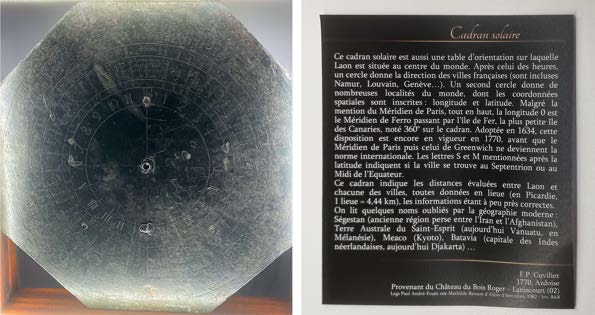
Figure 49.98: Historical Geocentric Sundial at Laon. This sundial doubles as an orientation table, positioning Laon at the world’s center. It features two concentric circles: the inner circle indicates the direction and approximate distances to French cities (including Namur, Leuven, and Geneva), while the outer circle details global localities with their longitudinal and latitudinal coordinates. Notably, the sundial adheres to the Meridian of Ferro as longitude 0, recognized until the international adoption of the Paris and subsequently the Greenwich Meridian. The sundial also marks cities with ’S’ or ’M’ to denote their placement relative to the Equator and measures distances in leagues based on the Picardy standard (1 league = 4.44
km). Additionally, the dial records several now-obsolete geographic names such as Segestan, Southern Land of the Holy Spirit (current Vanuatu), Meaco (Kyoto), and Batavia (now Jakarta), reflecting a blend of historical and geographical knowledge circa 1770.
in constructing a holy chapel. Any deviation from the traditional eastward orientation of a chapel was intentional and purposeful, as will be discussed in detail below.
49.11.1.1 Indicators in the Montblanc Panel
In the Montblanc panel, the perspective view highlights only the buildings of interest. The building on the right appears as a distinctive corner, standing out from the rest of the frame. This triangular representation might symbolize the Greek Delta, the first letter in ’Desclergue.’ However, the Delta has three sides, hence the importance of the number 3.
The number 3 is also prevalent in the image: there are three buildings, three divisions in the Gothic window of the structure on the right, three gates visible in the Casal dels Desclergue, three feet, three sides of the frame instead of four, Felipa counting three on her visible hand (starting with her thumb), only three of the probably ten battlements visible on the Desclergue building and the side of the structure on the right, and three levels in the Desclergue building. The alphabet’s third letter is C, which stands for
’Clergues.’
To the observer, the bottom of the building forms a V-shape, while the top creates a Delta shape. The ’V’ stands for ’B’ (as in Veatrix = Beatrix; referencing the Christian martyrs Simplicius, Faustinus, and Veatrix, who died around 203 AD) and may have represented Beatrice Declercq (DK02byx), wife of Antoni Desclergue (DC07), possibly at her insistence.
Ten is the number of battlements on each side of the right building, and probably also on the middle building, which may represent the Greek ’Kappa,’ the 10th character of the Greek alphabet. As there was no ’C’ in Greek, unlike in Latin, the Greek Kappa also stands for ’C’ in ’Clergue.’
That building contains 2x10 layers of stones, which may symbolize two instances of Kappa, one for Desclergue, i.e., Antoni, and one for Declercq, i.e., Beatrice.
49.11.1.2 The Prominent S character
The presence of the letter S on the façade of the chapel presents a noteworthy observation. While the evidence is inconclusive, it is a compelling indicator warranting further examination. Some interpretations may be speculative but provide an intriguing basis for scholarly exploration.
The use of fish bladders as ornaments in Gothic and neo-Gothic architecture is not unique, though typically, three are used together rather than two.
The neo-Gothic façade window above the entrance was constructed later, replacing the original design, which featured two rectangular (possibly gently curved) windows with a circular one above. The new window was installed in 1884, as evidenced by a photograph taken during the chapel’s reconstruction (Figure 49.111, page 1031). The letter ’S’ inclusion during this reconstruction likely aimed to preserve an existing feature, as there is no other apparent reason for its addition.
It is important to note that the chapel became the property of Astère Vercruysse in 1903. Vercruysse later changed his name to Vercruysse de Solart in 1912, indicating that the ’S’ does not relate to ’Solart.’135
Several plausible explanations for the ’S’ can be proposed.
The most straightforward interpretation is that ’S’ stands for ’Spagnien,’ the old Flemish term for ’Spain.’
The circular shape of the original window might symbolize ’Ostend.’ Additionally, a close inspection reveals that the ’S’ comprises a straight and a reversed ’C’ character. In classical Latin, this combination represented ’CD’ or ’1000.’ As a descendant of notaries, 135However, Vercruysse might have been inspired to add a name extension beginning with ’S’ because of the ’S’ on the chapel he purchased.
The Desclergues of la Villa Ducal de Montblanc, 2nd ed., Omn., VOL. IV
© 2024 Nico F. Declercq
CHAPTER 49. THE CHAPEL OF NUESTRA SEÑORA DEL REPOSO OR DE KAPEL VAN ONZE LIEVE
1026
VROUW TER RUSTE, IN DEERLIJK
Antoni would likely have been aware of this notation. In his era, modern Latin was in use, where ’1000’ is denoted as ’M,’ possibly indicating ’Montblanc’ or ’Miles’ (soldier).
Furthermore, Freddy Byttebier noted in October 2020 that the anchor plates on either side of the chapel’s front window also feature S-shapes. A bibliographic investigation reveals that such a design is uncommon in Belgium but more prevalent in England and Spain (e.g., Galicia).
49.11.1.3 The Year 1639
The chapel’s most prominent feature is the inscription 1639 on the west wall above the entrance, as depicted in Figure 49.103 on page 1029. This year, 1639, was likely chosen deliberately by Antoni Desclergue, whose Spanish heritage includes notaries, scribes, and Knights Templar—individuals often associated with mysticism.
The year 1639 may serve as a numerical acronym, 1639 = AFCI, derived from Anthonius filius capitanei Ieronimi, translating to
’Antoni, the son of Captain Jeroni.’ In Castilian, this reads Antonio, el hijo del capitán Jerónimo, and in Catalan, Antoni, el fill del capità Jeroni. Notably, in the 17th century, the letter J was commonly written as I. For instance, Chapter 29 on Jeroni Joan Desclergue y Cortés (DC05) mentions his death in 1628, with his name spelled as Don Ieronimo de Cleriges. This intentional choice of the year 1639 may indicate the actual patron of the chapel or the individual who provided significant support for its construction.
Moreover, the chapel’s interior width, as accurately depicted in Despriet’s article, measures 16 pies, considering the Castilian foot measurement (1 pie = 0.278635 m). Before its extension, the chapel’s original length was 39 pies. While it cannot be confirmed that the ’S’ symbol has always been at the same height on the west façade, it currently resides at 20 pies, which translates to 16
and 4 pies. This measurement is symbolic of the year 1604, marking Ostend’s liberation and Jeroni Desclergue’s death.
49.11.1.4 The Chapel’s Ostend-Montblanc Orientation
The orientation of the chapel, in Figure 49.96, is remarkable. It is not entirely East-West and North-South, such as the St. Columba church, but is the geodetic direction, to a 0.1-degree precision from Ostend, where Jeroni died, to Montblanc, where the Desclergues were from.
The coordinates of the Casal dels Desclergue are 41.376826, 1.161664, while those of Paul and Peter’s church in Ostend are 51.229734, 2.921268.
To find the direction from one place to another, we need to check a Mercator Projection map on the globe. Alternatively, there are tools on the internet to work out the geodetic problem. For instance, for the given coordinates, ’planetcalc dot com’ offers the following result: distance in km: 1103.525 km. Azimuth: 187 deg 1min 41 sec, compass point in degrees 185 deg 37 min 30 sec and compass point in decimal degrees 185.625 degrees.
The direction between both places is 5.625 degrees off the North-South axis. On Google Maps®, the chapel (coordinates 50.850920, 3.353844) is clearly and visibly drawn.
Based on this map, the chapel’s rotation angle is 5.6 +/- 0.1, which means that the chapel’s facade is oriented perfectly parallel to the axis Montblanc-Ostend.
Interestingly, the chapel where we believe a service must have been held in Ostend after the death of Jeroni Desclergue, shown in Figure 49.97, shows similarities with the one in Deerlijk, constructed almost 35 years later.
In 1639, geolocation was well-established, and navigators and the military knew how to find directions to distant cities.
For instance, the Astrolabe, Predating the solar quadrant, is one of the most significant ancient instruments that combined astronomical, geographic, and navigational uses. Originating possibly as far back as the 2nd century BC with the Greeks and later developed significantly by Islamic scholars during the medieval period, astrolabes could be used to determine the time during the day or night, locate and predict the positions of the Sun, Moon, planets, and stars, and in some designs, to identify the direction and distance to various cities.
The Mariner’s Astrolabe is a practical adaptation of the traditional astrolabe. It was explicitly designed for use at sea and was in use by the early 15th century. This instrument was crucial for navigation by the Portuguese and Spanish during the Age of Exploration, demonstrating its real-world applications and importance in historical navigation.
A testament to the Islamic world’s rich cultural and scientific heritage, Islamic scholars and astronomers refined several types of quadrants. The Sine quadrant and the Horary quadrant are notable examples, used as early as the 10th century. These instruments were not just tools for navigation and timekeeping, but also cultural artifacts, some of which were inscribed with the coordinates or directions to significant cities within the Islamic world.
While not a quadrant, the Erdapfel, known as the Nuremberg Terrestrial Globe of 1492 by Martin Behaim, is an exciting example of an instrument providing geographical orientation. It features an extensive depiction of known and speculative geography, complete with distances and directions relative to Nuremberg.
The postulation that the Flemish and Spanish within the region possessed an understanding of the bearings to distant urban centers is not solely inferred from the navigational competencies historically attributed to that era. Tangible artifacts further corroborate the assertion.
An example of a century-later solar quadrant, around 1770, found at the archaeological museum in Laon is shown in Figure 49.98.
The Laon solar quadrant provides azimuthal information to proximate and remote municipalities, including locales perceived as exotic and situated on the antipodal side of the Earth, and facilitates the determination of solar time. This instrument embodies a critical intersection of maritime science and geographic exploration, reflecting an advanced understanding of solar positioning mechanisms pertinent during that era.
49.12 À Propos about the Legend
The renowned legend has been previously discussed in Chapters 49.2.2 and 49.5. Echoing Bruggeman’s perspective, we assert that legends invariably contain elements of veracity.
We agree that enduring legends cannot be founded on falsehoods. While narratives may become embellished or altered over time, the foundation of a legend is invariably rooted in truth. Enduring legends cannot be founded on falsehoods. While narratives may become embellished or altered over time, the foundation of a legend is invariably rooted in truth. When the core of a legend involves a knight, his wife, and child and references a saw (Serra), with the earliest depictions illustrating Montblanc’s ’La Mare de Déu de la Serra,’ this core origin must be grounded in truth. Even more so, when the legend’s core continues to be narrated by the people of Deerlijk, despite changes in the official written accounts over time, its persistence affirms its truth.
© 2024 Nico F. Declercq
The Desclergues of la Villa Ducal de Montblanc, 2nd ed., Omn., VOL. IV
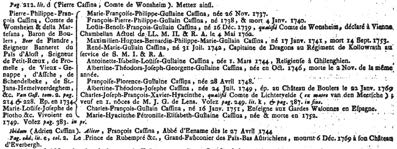
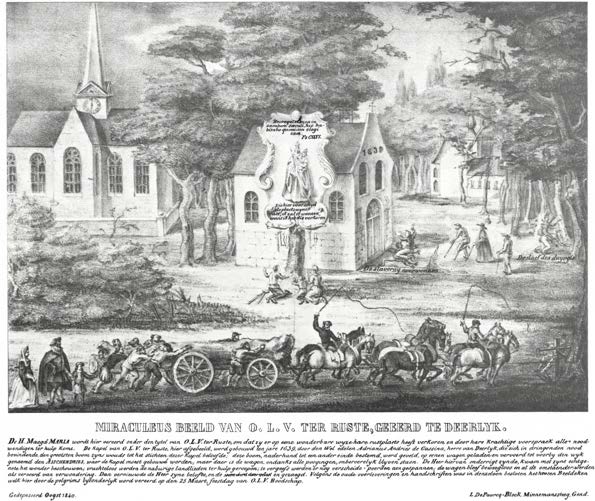
49.12. À PROPOS ABOUT THE LEGEND
1027
Figure 49.99: Facsimile from the book on the Genealogy of Coloma, where the
Cassina family is described.
Figure 49.100: This (re-)print, fabricated in 1840 by De Pourcq-Block in Ghent, depicts the Chapel’s legend. Although the artist may have intended to illustrate the de Cassina family, everything indicates that the persons seen behind the carriage are Beatrice Declercq (DK02byx), Antoni Desclergue (DC06), and their son Antoni (DC07). Something as crucial as the relative position of the church of Deerlijk and the Chapel appears wrong and assumes that the image was once sketched and mirrored, while other details are remarkably correct. In particular, their clothes resemble Spanish in the 1630s. Also, the clock indicates 00:34, which may be the artist’s indication of the year 34 of the 17th century. The clock does not appear mirrored. The chart is pulled by five horses, with two additional ones attached in the front. God’s eye, appearing in the church, is also a custom initiated in that period, although the symbol is much older.136 In contrast to the earliest image of the Chapel, the child Jesus carries a globe in this sketch. Indeed, as time progressed, a globe was depicted rather than the script, likely to seek consistency with a statuette at Deerlijk exposing the same. It was in the oldest, therefore most correct, depiction that the statue of Mary with Jesus perfectly resembled that of la Mare de Deu de la Serra of Montblanc. Two paintings exist, too, from relatively recent times, shown in Figure 49.101 and Figure 49.102.
The Desclergues of la Villa Ducal de Montblanc, 2nd ed., Omn., VOL. IV
© 2024 Nico F. Declercq
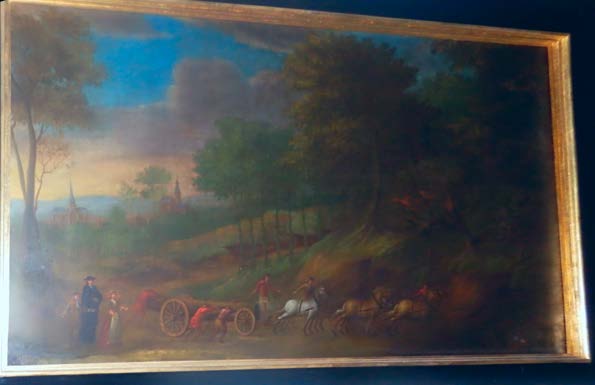
CHAPTER 49. THE CHAPEL OF NUESTRA SEÑORA DEL REPOSO OR DE KAPEL VAN ONZE LIEVE
1028
VROUW TER RUSTE, IN DEERLIJK
Figure 49.101: Image from 1761 or 1786 in the Sint-Columbakerk in Deerlijk, by Dominicq Rathel. It depicts the legend of the Chapel of Our Lady of Rest, which the de Cassina family probably commissioned through the chapel’s chaplain.
Similarities with the one in Montblanc are shown in Chapter 49.6.
In the 18th-century legend, Lord Cassina is erroneously portrayed as the nobleman involved in Deerlijk’s 1634 Chapel history.
However, research reveals the existence of Piere Philippe François Cassina, Lord of Wonsheim, who married Marie-Louise Josephe de Plotho in 1734, and Adrien Cassina, born François Cassina, who became an Abbé at Eename from 1744 onwards. The first member of the Cassina family documented in Deerlijk is Philippe Guillaume de Cassina137, who in 1707 acquired approximately 60% of the territory known as ’Asschendries’ and the church of Deerlijk, thus earning the title ’Lord of Deerlijk.’ Before this, around 1639, the Manor of Deerlijk was owned by Simon de Lamotte (Lord of Baraffe, Bourgenbray, and Deerlijk). Consequently, the Cassina family played no role in the foundational history of the Chapel of Deerlijk.
The Cassina family, originating from Italy, had substantial connections to Spain and Austria, which may explain their interest in the Chapel during the early 18th century, possibly due to their awareness of its Spanish origins. The legend in Figure 49.100 refers to Adrianus Andries de Cassina, but this is not the oldest extant illustration. Historical evidence shows that Adrianus Andries was responsible for constructing another chapel around 1666 in Sint Lodewijk (Saint Louis), previously known as Pladijshoek, Keyselberge, or Bottenhoek. This Chapel served as the predecessor of the current church in Sint Lodewijk, located 200 meters from the Declercq de Silva family grave, as detailed in Chapter 50.
The residents of Deerlijk likely conflated Adrianus Andries with their knowledge of a southern Knight involved in the Chapel’s establishment, mistakenly associating this historical figure with the Cassina family of the 18th century. Additionally, Antoni Desclergue (DC06) was well-acquainted with all the miracle witnesses. At the time of the miracle in 1634, Antoni was married to Beatrice Declercq (DK02byx) and had a son, Antoni (DC07), who was around ten. The oldest depictions of the Chapel showing the miracle feature a man, his wife, and a son of the correct age. The man is portrayed wearing a Spanish collar, a fashion introduced in Flanders by the Spanish and popular among noblemen between 1550 and 1640.
Therefore, Figure 49.100 does not depict the de Cassina family but rather Antoni (DC06), Beatrice, and their son Antoni (C07). A more significant depiction of the Chapel and the miracle is found in Figure 49.8 on page 997, where the horses are shown stopping in front of la Mare de Déu de la Serra de Montblanc, illustrated in Figure 49.1 on page 977, with text referencing Jeroni Joan Desclergue y Cortés (DC05), the father of Antoni Desclergue (DC06), as discussed in Chapter 49.10.4.
It would not be surprising if Jeroni Joan Desclergue y Cortés (DC05) and Felipa de Montoya were buried beneath the Chapel, where a tree once stood. The land between the trees might have served as a cemetery for the Spanish military residing in Deerlijk around 1600. Spanish soldiers and their families were not disposed of in rivers upon death; therefore, there must have been designated burial sites. However, the literature remains silent on the specific locations of these burial grounds.
49.13 The Chapel’s History After the Spanish Period, Further Connections
with the Desclergues and a Miracle in 1884
49.13.1 The Chapel’s Earthly Service and Renovations
Between 1759 and 1773, the chapel, under the watchful eye of Petrus de Backer, underwent significant renovations, with new furniture being introduced. In 1797, the chapel was seized by the French and sold, only to be acquired by Joseph Eeckhout, a man with a vision for its preservation. From 1802, religious activities resumed, and the chapel was then taken over by Van der Elst, although it remained closed to visitors. The ’Armendis’ inherited the chapel, but it lay dormant until 1819 when architect Vancaeneghem transformed it into a ’Spinschool.’ The chapel served as a school until 1848.
137There were no ’de Cassina’ inhabitants in Deerlijk in the 17th century. For those interested in the ’de Cassina’ lineage, the 17th-century registers of Nederboelare should be consulted. Refer to Figure 49.99.
© 2024 Nico F. Declercq
The Desclergues of la Villa Ducal de Montblanc, 2nd ed., Omn., VOL. IV
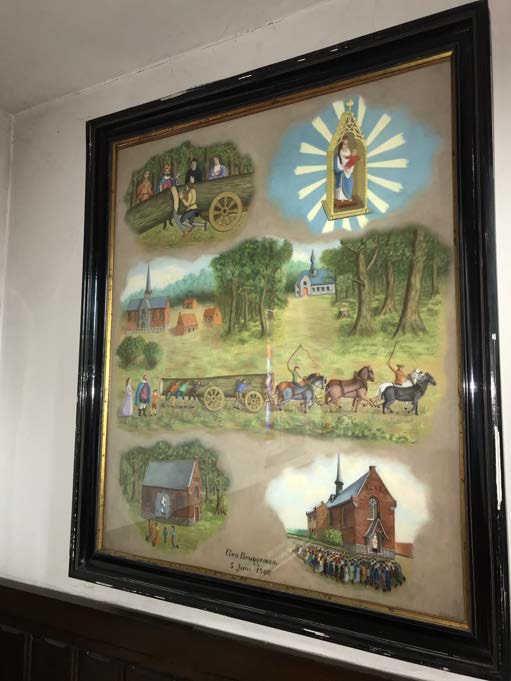
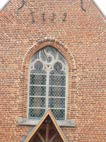
49.13. THE CHAPEL’S HISTORY AFTER THE SPANISH PERIOD, FURTHER CONNECTIONS WITH
THE DESCLERGUES AND A MIRACLE IN 1884
1029
Figure 49.102: An image from 1944 can be found in the chapel Onze-Lieve-Vrouw ter Ruste. It is strongly modernized in function of the contemporary appearance of the chapel and only depicts the miraculous statue that is now in the chapel.
Figure 49.103: A close look reveals where the old windows were. Although they
have been professionally filled with similar bricks to the original ones (perhaps they
were reused from the new window’s location), one can see the original areas and zones
where bricks have been squeezed in. Also, the vertical edges of the new window clearly
show signs of bricks placed after the initial construction of the chapel. (Declercq de
Silva Archive)
The Desclergues of la Villa Ducal de Montblanc, 2nd ed., Omn., VOL. IV
© 2024 Nico F. Declercq
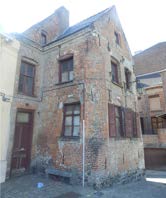
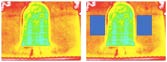
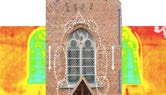
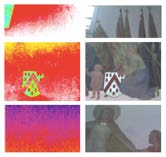
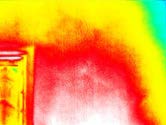
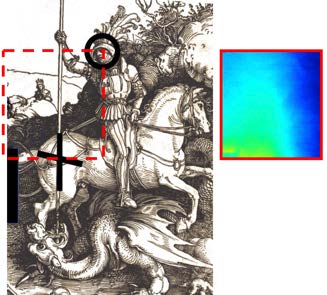
CHAPTER 49. THE CHAPEL OF NUESTRA SEÑORA DEL REPOSO OR DE KAPEL VAN ONZE LIEVE
1030
VROUW TER RUSTE, IN DEERLIJK
Figure 49.104: A home at Cassel in La Flandre in France, con-
structed in 1631 (September 13, 2020) (Declercq de Silva Archive)
Figure 49.105: On the left is an infrared image of the west facade
inside the chapel. The location of the two original windows, particularly
the left, is still clearly visible on the thermographic images. To the right
are the original windows, represented by filled rectangles, as a reference.
(Declercq de Silva Archive)
Figure 49.106: This is a horizontally flipped infrared picture cut in
the middle and added left and right to the corresponding sides of the
above-shown image of the outer view of the wall with a window above
the chapel entrance. There is a correspondence between the original
windows located by infrared inside and examining the brick stacking
outside. (Declercq de Silva Archive)
Figure 49.107: These are three photoshoots of frescoes in the church
’Sint Columba’ in Deerlijk. The infrared representation is on the left,
and the visual appearance is on the right. The gilt parts are detectable
with infrared as colder regions than the surrounding surfaces: the Deer-
lijk coat of arms and the halo. The latter appears as a bright cir-
cle on the infrared image. Other materials are sometimes visible as
warmer objects, such as the cross in the upper figure. (Declercq de
Silva Archive)
Figure 49.108: Infrared image to the right of the Montblanc panel: a
perspective image is visible of ’a cross’ that glows warmer than the envi-
ronment and, therefore, may not be gilded. (Declercq de Silva Archive)
Figure 49.109: At the top right, about
one meter away from the Montblanc panel,
a circle can be seen that may indicate
a hidden golden halo since this lights up
colder than the surroundings. (Declercq de
Silva Archive). We compare the same sur-
face in the red rectangle with an example
of a possible composition with San Jordi
killing the dragon, which could match the
found geometries under the paint to the
right of the Montblanc panel. The photo is
based on an engraving from 1504 (Albrecht
Dürer)
© 2024 Nico F. Declercq
The Desclergues of la Villa Ducal de Montblanc, 2nd ed., Omn., VOL. IV
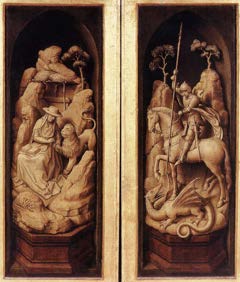
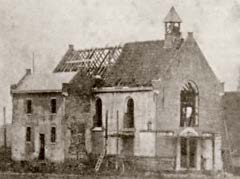
49.13. THE CHAPEL’S HISTORY AFTER THE SPANISH PERIOD, FURTHER CONNECTIONS WITH
THE DESCLERGUES AND A MIRACLE IN 1884
1031
Figure 49.110: Painting by Rogier van der Weyden at
Museum voor Schone Kunsten, Brussels.
Figure 49.111: This picture was taken during restora-
tions of the chapel in 1884 p.
After a typhus outbreak in 1847, the chapel was repurposed as a hospital, a role it held until it became a school for textile weavers.
The school’s success led to its relocation to a better facility, and the chapel then served as a ’textile weave school for women’ until 1883.
The chapel, after a period of closure, was purchased by the parish of Deerlijk with the aid of local crowdfunding and the support of Felix Loquet and Adolf de Bien. From 1884, the chapel was once again a Catholic church, thanks to the restoration efforts of Jan van Ruymbeke. He renewed the roof, the tower, and installed neogothic tracery, while also renovating the interior. The old statue of Mary was reinstalled, and the chapel was rededicated with a Marian poem or song composed by Guido Gezelle.
In 1902, Astère Vercruysse purchased the chapel, though it remained under the parish’s practical ownership. Vercruysse beautified the chapel and whitened the interior walls. After his death, the chapel reverted to the parish. In 1965, the chapel was repainted, and war damage was repaired. Regarding the original retable, one panel depicted the Main Square of Montblanc in Spain, indicating that the chapel became a spin school after the 1819 reconstruction. The original retable was likely dismantled for this purpose and stored, or it may have been incorporated into the Onze-Lieve-Vrouw Ter Ruste Chapel in the Saint Columba Church of Deerlijk before returning to the chapel.
In 1884, the chapel was restored by Jan Van Ruymbeke from Kortrijk and resumed its function as a chapel on March 25, 1884.
Van Ruymbeke renewed the interior furniture and likely installed a new retable, reusing parts of the old one as panels for the seven sorrows of Mary. Installing the seven sorrows required restoring the reliefs and placing them in newly constructed shallow alcoves, necessitating the collection of 1200 francs. This amount was approximately 60% of the funds needed to replace the chapel’s small tower, including the bell, totaling 2000 francs.
It suggests that the panels’ purchase was not included in the donated amount, as it would have significantly increased the cost. The bell138139 likely cost no more than 200 francs, indicating that the little tower without the bell was around 1800 francs.
Thus, constructing eight alcoves and properly placing the seven reliefs, along with fabricating an additional panel with text, cost 65% of the amount needed for the small tower, which is logical and would not have been feasible if the baroque reliefs had been newly sculpted in 1884.
Further evidence in Chapter 49.4 supports that the panels were originally present in the 1600s, having been part of the demolished retable in 1819-1820 when the east façade was opened to expand the chapel.
Specifically, the Montblanc panel depicting Sant Jeroni and Santa Felipa was repurposed to represent Joseph and Mary searching for the lost Jesus in the temple. The relief was partially overpainted, and the lion at the end of Jeroni’s staff was removed to resemble Joseph better.
However, Jeroni still wears a sombrero, and the scene includes a church, making it clear that it could not depict Mary and Joseph during Jesus’ lifetime. Additionally, the buildings’ gothic style does not represent the 1st century.
49.13.2 The Original Architecture Revealed with the Naked Eye
A house in Cassel, located in La Flandre, France, erected in 1631 during the period when the town was under Spanish control, serves as a comparative reference to the Chapel at Deerlijk in Figure 49.103.
As depicted in Figure 49.104, the craftsmanship of the masons and the materials used in both constructions share notable similarities, particularly in using bricks. However, there are significant differences as well. The date anchors of the chapel are positioned higher 138André Lehr, "De prijs door de eeuwen heen van klokken, geschut en bronzen beelden, een eerste oriëntering."
139The exchange rate of gulden and francs.
The Desclergues of la Villa Ducal de Montblanc, 2nd ed., Omn., VOL. IV
© 2024 Nico F. Declercq
CHAPTER 49. THE CHAPEL OF NUESTRA SEÑORA DEL REPOSO OR DE KAPEL VAN ONZE LIEVE
1032
VROUW TER RUSTE, IN DEERLIJK
and narrower compared to those in Cassel. While both structures employ stones to form the foundation upon which bricks are laid, the attention to symmetry and proportions is less pronounced in Cassel.
A distinctive feature of the chapel is a circular opening with the letter ’S,’ typical of Spanish architectural influence, situated at the same height in both the original and current versions of the chapel. This contrasts with the rectangular upper window found in the Cassel house. Additionally, the gutters in Cassel are constructed using natural stone, whereas those in the chapel are built on wooden supports. The Cassel house also features supporting beams on its unseen side, a technique not employed at Deerlijk.
The architectural similarities between the house in Cassel and the chapel in Deerlijk suggest that the masons may have originated from the southern region of Flanders, which is now part of northern France. This region includes towns such as Douai, Béthune, and Cambrai, which align with the historical context of the chapel’s establishment discussed earlier in this chapter.
49.13.3 The Original Architecture Revealed with Infrared Imaging
Chapter 49.4.3 details infrared investigations in the chapel.
Although the experiments140 were conducted using simple methods, they yielded new and significant information. The procedure involves gently heating a wall (by a few degrees Celsius at most) and then allowing it to cool to ambient temperature. Photographs are taken with a heat camera (infrared camera) during the cooling phase. This technique can reveal structural variations in the wall or its coverings, provided there are differences in thermal properties. For example, wood absorbs and releases heat at a different rate than stone, causing slight temperature differences between the materials that can be observed with a heat camera.
The precision of the infrared images, as demonstrated in Figures 49.105, 49.106, 49.107, 49.108, and 49.109, has been optimized to make measurable variations visible. These results, which confirm the alignment of the chapel’s original architecture with the oldest known images, provide a strong foundation for our findings. Furthermore, the installation of the panels in later fabricated alcoves after being recycled from the original retable is a testament to the meticulousness of our research.
The author has not underestimated the potential of the technique of detecting hidden frescoes with an infrared camera. As a reference, three infrared images of uncovered frescoes in the Sint-Columba church in Deerlijk are shown in Figure 49.107. These images, while not revealing much, highlight the striking gold-plated parts, which have significantly different thermal properties compared to the underlying and surrounding paint and lime. This aspect, which can be utilized in Kapel-ter-Ruste to trace any hidden frescoes, is a testament to the potential of our research.
Initially, it was hoped that frescoes might be found under the chapel’s white paint in Kapel-ter-Ruste, but this was not immediately observed. Given the findings in the church of Sint Columba, this is unsurprising. However, circles were found in various places in the images. These circles are possibly, if not probably, halos and may, therefore, indicate hidden frescoes beneath the paint. The location of the assumed frescoes suggests they decorated the chapel walls before the panels with the polychrome reliefs141 were placed as alcoves in the side walls.
Along the Southern wall, to the right when entering the chapel, between the holy water tank and the Montblanc panel, two possible indications of structures under the paint were found in the infrared images. These may be part of a hidden fresco, as shown in Figures 49.108 and 49.109.
The combination of a gilded halo with a cross-shaped structure at the bottom left may represent a fraction of an image of Saint Gregory, who, either sitting on a horse or standing with a spear, is depicted killing a dragon. This hypothesis is plausible since San Jordi is the patron saint of Catalonia and is particularly associated with the town of Montblanc. However, we cannot be certain purely based on these two visible elements, and some imagination is involved here, as illustrated in Figure 49.109.
Finally, we conclude this section by presenting two paintings by Rogier van der Weyden (1400-1464) in Figure 49.110. The exterior of the Sforza Triptych, housed in the Museum voor Schone Kunsten, Brussels, depicts Saint Hieronymus with a lion on the left and Saint George (San Jordi) on the right, killing the dragon.
49.13.4 Restoration and Colors
Throughout the centuries, the chapel has undergone numerous repairs and restorations. In 1760, J. Dooms from Harelbeke painted the interior walls, possibly concealing older frescoes. He utilized chalk from Tournai and notably employed Spanish green ceruse.
This tasteful restoration, which included the use of Spanish green, suggests the presence of green ornaments in the church. As described above, the panels of Mary’s Seven Sorrows depict figures dressed in Spanish green attire beneath the new layer of paint, reminiscent of la Mare de Déu de la Serra de Montblanc. This indicates that these panels were part of the retable in 1760. Their re-installation on the sidewalls in 1884 followed a period of refurbishment and redesignation.
In 1819, the chapel underwent a significant transformation when Pierre Rosseel from Harelbeke converted it into a spinning school.
This adaptive reuse of the building not only preserved its structure but also served a new purpose. Subsequent restorations in 1884, led by Jan van Ruymbeke from Kortrijk, further enhanced the chapel’s appearance, replacing the tower and installing tracery.
Despite these changes, relics from the past, as shown in Figure 49.103, still remain visible on the façade, adding to the chapel’s historical charm.
Figure 49.111, depicting the chapel in 1884, reveals that the original tower had been replaced and all modern tracery was absent.
The roof had also been renewed. Since then, the chapel’s exterior has remained largely unchanged, undergoing repairs only when necessary. In 1903, a new chapter in the chapel’s history began when Astère Vercruysse acquired the building. He commissioned Hilaire Degezelle to repaint the walls and install a new stained glass window on the east side. This window, featuring a letter ’M’
for ’Maria’ and the Vercruysse family shield, was a testament to the Vercruysse family’s connection to the chapel. It was installed before their ennoblement as Vercruysse de Solart, marking a significant period in the chapel’s history.
Further repairs were conducted on the chapel in 1965, ensuring its continued preservation.
49.13.5 Later Desclergue Connections
Philippe Despriet142 documents a significant historical fact. When Petrus De Backer, the owner of the chaplaincy, died on August 1, 1773, the chaplaincy was inherited by Frans Cornelis van der Helst. Van der Helst had access to extensive archives and had 140On Friday, February 28, 2020, experiments were conducted using an infrared camera with a temperature resolution of 50 mK in the Kapel-ter-Ruste and the church of Saint Columba. The experiments involved an infrared source and an infrared camera. They were conducted in the presence of Priest Marc Messiaen, Luc Beke, Frans Declercq, Marc Vergote, Antoon Vanhoutte, and Lambert Declercq.
141The polychrome reliefs originally belonged to a retable located in the original chapel’s front (East wall).
142Philippe Despriet, ’De Kapel van O.-L.-Vrouw Ter Ruste Te Deerlijk,’ in Derlike, Driemaandelijks tijdschrift van de heemkring ’Dorp en Toren,’
Deerlijk, 6de jaargang, nr 4, april-mei-juni 1984.
© 2024 Nico F. Declercq
The Desclergues of la Villa Ducal de Montblanc, 2nd ed., Omn., VOL. IV
49.13. THE CHAPEL’S HISTORY AFTER THE SPANISH PERIOD, FURTHER CONNECTIONS WITH
THE DESCLERGUES AND A MIRACLE IN 1884
1033
served as vicar in Harelbeke, Lauwe, and Beveren-bij-Roeselare.
In compliance with a mandate issued by Maria Theresia of Austria, he was required to formally declare the origins of the chapel in 1786-1787. At that time, he was serving as the chaplain of the Chapel at Deerlijk and as the vicar of Hulste. Van der Helst stated that he did not know the exact founder of the chapel and noted that the foundation deed was located in Tournai, and possibly also with the contemporary owner of the chapel, Eugene Joseph Du Puich de Bouclier (Lord of Mesplau).143
The following year, van der Helst informed Frans Joseph Cooreman, the Dean in Kortrijk, that the chapel was constructed in 1639
by Walrand du Bois and that one mass per week was obligatory.144
It is reasonable to assume that the chapel’s actual foundation deed, stored in Tournai, likely contains the name of Antoni Desclergue (II) (DC06), who was a witness to the miracle in 1634. The first financial records charge Marguerite Kelduwier, whose contribution is thus indisputable.
Returning to Frans Cornelis van der Helst, his tenure as vicar of Hulste both before and after 1786 is noteworthy. This period coincides with the life of Renier Declercq (DC10), discussed in Chapter 40, who was married to Marie Anne Thérèse Lombaerde (born in Hulste in 1750) and was the great-grandson of Antoni Desclergue (III) (DC07).
Renier Declercq resided in Hulste while his father, Joan Declercq (II) (DC09), mentioned in Chapter 39, was born in Deerlijk in 1706.