

The Desclergues of la Villa Ducal de Montblanc, Second Edition Omnibus by Nico Declercq - HTML preview
Download the book in PDF, ePub, Kindle for a complete version.
She appeared in Ghent as a witness in Figure 34.437.
81Personal research and private communication with genealogists Regi de Meirsman and Jan Caluwaerts.
The Desclergues of la Villa Ducal de Montblanc, 2nd ed., Omn., VOL. II
© 2024 Nico F. Declercq
CHAPTER 34. ANTONI DESCLERGUE Y DE MONTOYA (DC06)
© 2024 Nico F. Declercq
The Desclergues of la Villa Ducal de Montblanc, 2nd ed., Omn., VOL. II
Chapter 35
Pedro de Clerque (DK02by2), the Brother-in-law of
Antoni Desclergue (II) (DC06)
35.1 Introduction
Pedro Declercq, locally known as ’Pieter Declercq (DK02by2),’ appears in 1635 in Kortrijk to pay the debt of his father Natalis Declercq (DK02by). The event is shown in Figure 34.234 on page 598.
The Spanish army consisted of a minority of Iberians and was primarily international; most militaries were Flemish, Walloon, Burgundian, German, and Milanese. Pedro de Clerque, or Pieter Declercq, was a Flemish military in the Spanish army. Despite the similarity of the name, there is no blood relationship between the Desclergues and ’Declercq .’ Antoni Desclergue (DC06) was married to Beatrice Declercq (DK02byx). Both are our ancestors, and Beatrice was the daughter of Noel Declercq or Natalis Declercq (DK02by). Lists of Bourgeois foraines suggest that Natalis was a son of Oste, which is also evidenced in Figure 34.234 on page 598.
35.2 His Bloodline
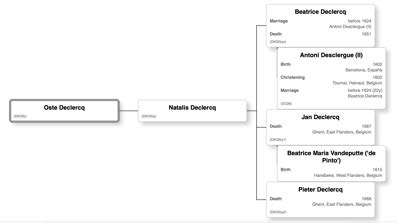
As indicated in the introduction, based on the found evidence, Pieter was a son of Noel or Natalis and a grandson of Oste. His descendants are shown in Figure 35.1 on page 637.
35.3 His Military Career
Pieter Declercq, son of Noel Declercq and brother of Beatrice Declercq (DK02byx), appears on the ’bourgeoisie foraine’ list of Kortrijk at Deerlijk in Figures 35.3, 35.4, 35.5, 35.6, 35.7, 35.8, 35.9, 35.10, 35.11, 35.12, 35.13, 35.14, 35.15 and 35.16.
He was absent in 1634, 1639, 1640, 1644, 1647, and after 1650. He may have died in 1650 or moved somewhere else. A regular absence may have resulted from dispatching to distant lands during those years. His brother-in-law, Antoni Desclergue (DC06), was equally absent in 1639-1640.
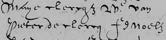
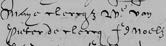
We believe we found his death certificate at the military hospital Bijloke in Ghent in 1668, in Figure 35.2.
Contextual indications:
1634: Carlos Coloma went to Spain this year. Therefore, there have been some rearrangements in the Flemish leadership and reorganizations of the army.
1644: From 1643 onwards, there was a war between France and the Spanish Netherlands. So it is possible that Pieter Declercq was involved in the military in the period around 1644 and did not reside in Deerlijk.
1647: Kortrijk was in French hands, which may be why he was not registered this year.
1650: Manel Güell1 mentions unrest in Catalunya, followed by the Siege of Barcelona from July 1651 until October 1652.
Indeed, in Chapter 34.8, we described that Antoni Desclergue (DC06) participated in the Siege of Barcelona with his two brothers-in-law, Pedro and Juan. Juan is described in Chapter 36.4.
Figure 35.1: Descendants’ chart of Oste Declercq (DK02b). He was the grandfather
of Beatrice, wife of Antoni Desclergue (DC06). It shows the relationship between
Antoni and his brothers in law.
1Manel Güell, ’Juan de Garay, capità general de l’ exèrcit de Catalunya (1649-1650)’
The Desclergues of la Villa Ducal de Montblanc, 2nd ed., Omn., VOL. II
© 2024 Nico F. Declercq













CHAPTER 35. PEDRO DE CLERQUE (DK02BY2), THE BROTHER-IN-LAW OF ANTONI DESCLERGUE
638
(II) (DC06)
Figure 35.2:
Ghent, military hospi-
tal Bijloke, January 30, 1668, the death
of Pieter Declercq (Pieter De Clerck)
(DK02by2) from the Company of Monroy.
Figure 35.3: 1631, Pieter Declercq (son of Noel Declercq (DK02by)
and brother of Beatrice Declercq (DK02byx)) on the list of ’la bour-
geoisie foraine’ of Kortrijk at Deerlijk.
Figure 35.4: 1632, Pieter Declercq (son of Noel Declercq (DK02by)
and brother of Beatrice Declercq (DK02byx)) on the list of ’la bour-
geoisie foraine’ of Kortrijk at Deerlijk.
Figure 35.5: 1633, Pieter Declercq (son of Noel Declercq and brother
of Beatrice Declercq (DK02byx)) on the list of ’la bourgeoisie foraine’
of Kortrijk at Deerlijk.
Figure 35.6: 1635, Pieter Declercq (son of Noel Declercq and brother
of Beatrice Declercq (DK02byx)) on the list of ’la bourgeoisie foraine’
of Kortrijk at Deerlijk.
Figure 35.7: 1636, Pieter Declercq (son of Noel Declercq and brother
of Beatrice Declercq (DK02byx)) on the list of ’la bourgeoisie foraine’
of Kortrijk at Deerlijk.
Figure 35.8: 1637, Pieter Declercq (son of Noel Declercq and brother
of Beatrice Declercq (DK02byx)) on the list of ’la bourgeoisie foraine’
of Kortrijk at Deerlijk.
Figure 35.9: 1638, Pieter Declercq (son of Noel Declercq and brother
of Beatrice Declercq (DK02byx)) on the list of ’la bourgeoisie foraine’
of Kortrijk at Deerlijk.
Figure 35.10: 1641, Pieter Declercq (son of Noel Declercq and brother
of Beatrice Declercq (DK02byx)) on the list of ’la bourgeoisie foraine’
of Kortrijk at Deerlijk.
Figure 35.11: 1643, Pieter Declercq (son of Noel Declercq and brother
of Beatrice Declercq (DK02byx)) on the list of ’la bourgeoisie foraine’
of Kortrijk at Deerlijk.
Figure 35.12: 1645, Pieter Declercq (son of Noel Declercq and brother
of Beatrice Declercq (DK02byx)) on the list of ’la bourgeoisie foraine’
of Kortrijk at Deerlijk.
Figure 35.13: 1646, Pieter Declercq (son of Noel Declercq and brother
of Beatrice Declercq (DK02byx)) on the list of ’la bourgeoisie foraine’
of Kortrijk at Deerlijk.
Figure 35.14: 1648, Pieter Declercq (son of Noel Declercq and brother
of Beatrice Declercq (DK02byx)) on the list of ’la bourgeoisie foraine’
of Kortrijk at Deerlijk.
Figure 35.15: 1649, Pieter Declercq (son of Noel Declercq and brother
of Beatrice Declercq (DK02byx)) on the list of ’la bourgeoisie foraine’
of Kortrijk at Deerlijk.
Figure 35.16: 1650, Pieter Declercq (son of Noel Declercq and brother
of Beatrice Declercq (DK02byx)) on the list of ’la bourgeoisie foraine’
of Kortrijk at Deerlijk.
© 2024 Nico F. Declercq
The Desclergues of la Villa Ducal de Montblanc, 2nd ed., Omn., VOL. II
The children of Antoni Desclergue (DC06)
36.1 Introduction
Upon examining our paternal lineage, it is evident that this generation marks the first occurrence of Desclergues born in Belgium.
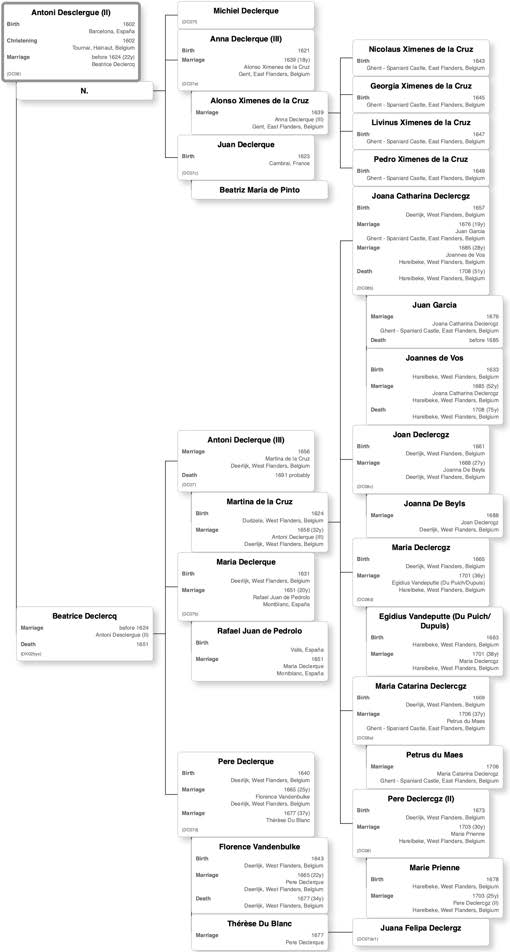
To preserve a good overview of the descendants of Antoni Desclergue (DC06) and Beatrice Declercq (DK02byx), we present four generations of descendants in Figure 36.1.
36.2 Antoni Declerque (DC07), the Son of Antoni Desclergue (DC06)
The study of ancestors occurred from the present to the past. We, therefore, studied Antoni (DC07) before the older ancestors. His generation brought us the necessary indications of foreign ancestry, which happened many years before writing the current book and DNA testing. We redirect the reader to Chapter 37.
36.3 Anna Declerque (DC07e), the Daughter of Antoni Desclergue (DC06)
She may have been the reason for her brother Antoni (DC07) to Mary Martina de la Cruz. Ana Declerque (DC07e) was born in 1621 to Antoni Desclergue’s (DC06) first wife. At 18, she married Alonso Ximenes de la Cruz at the Spaniard Castle of Ghent in 1639, shown in Figure 36.2.
In 1656, her brother Antoni Desclergue (DC07), described in Chapter 36.2, would marry Martina de la Cruz, a relative of Alonso, at Deerlijk. Note, however, that the Ximenes de la Cruz and the Desclergues were also distantly related through the Montoya family.
This is described in a section devoted to Martina de la Cruz, Chapter 37.4, and Felipa de Montoya, Chapter 29.10.
The baptism of Ana Declerque’s (DC07e) children are shown in Figures 36.3, 36.4, 36.5 and 36.6.
36.4 Juan Declerque (DC07c), the Son of Antoni Desclergue (DC06)
36.4.1 Introduction
Juan Declerque (DC07c) was a Flemish soldier in the Spanish army, born in Cambrai around 1623. His father was Antoni Desclergue (DC06), and his mother was Antoni’s first wife. Juan passed away in Ghent in 1667.
At some point in his life, he pursued higher education. In 1643, as shown in Figure 37.3 in Chapter 37, he was enrolled as a student at the University of Leuven.
As a person from Cambrai, part of the Spanish Netherlands at the time, Juan might have been drawn to the Catholic University of Leuven due to its prestigious reputation as a leading center for Catholic education and intellectual thought. The university was known for its rigorous academic programs and alignment with the Spanish Habsburg rulers’ religious and political values, making it an attractive destination for young men seeking education and advancement within the Spanish territories.
36.4.2 His Military Career
Being a son of Antoni (DC06) provided easy access to the army and vice versa; it should have been easy for the military to recruit them.
In Chapter 34, concerning Antoni Desclergue (DC06), we find that he took part in the Siege of Barcelona in 1651. Juan Declerque
’s (DC07c) wife was Beatrice Maria Du Puich or Vandeputte. She would call herself Beatriz Maria de Pinto in Spain, as described in Chapter 34.8.
Around the probable time of his recruitment in the 1640s, several church documents clearly indicate a significant military presence in the region just north of Cambrai, an area frequently under French attack. This evidence is detailed in Chapter 34.
To gain insight into the life and career of Juan Declerque, we can examine the published Spanish archives.
He is found as Arquero (Archer) number 184, under the name of Juan Declerque (DC07c), on page 57 in ’La nobleza en las armas: Noble Guardia de Arqueros de Corps’ , by Federico Navarro et al.1, in one Decree and in three petitions: 1.Rl. Decreto haciendo gracia a Juan Declerque (DC07c) y a Juan Miguel Sem, arqueros, de las campañas que les quedan por cumplir en conformidad con la sentencia del R1. Bureo. 1652, diciembre 28.
Translation:
Decree making grace to Juan Declerque (DC07c) and Juan Miguel Sem, archers, of the campaigns that remain to be fulfilled under the ruling of R1. Bureo. 1652, December 28.
2/8. Petición por parte del citado Clerque de que se le hagan buenos los gajes del tiempo que estuvo en la campaña de Cataluña, por sentencia del Bureo, y certificación expedida por el Furrier Cornelio Luidynex, de estos servicios y guardas pagados al que le sustituia en el servicio en Madrid. 1654, agosto 17; 1655, abril 5.
Translation:
1Federico Navarro, Conrado Morterero and Gonzalo Porras, ’La nobleza en las armas: Noble Guardia de Arqueros de Corps’ , published by Hidalguia, Madrid, 1995, Deposita Legal: M.30.871-1995, ISBN 84-87204-75-9, on page 57.
The Desclergues of la Villa Ducal de Montblanc, 2nd ed., Omn., VOL. II
© 2024 Nico F. Declercq
640
CHAPTER 36. CHILDREN OF ANTONI DESCLERGUE (DC06)
Figure 36.1: Three descending generations of Don Antoni Desclergue (II) (DC06)
© 2024 Nico F. Declercq
The Desclergues of la Villa Ducal de Montblanc, 2nd ed., Omn., VOL. II
36.5. MARIA DECLERQUE (DC07B) THE DAUGHTER OF ANTONI DESCLERGUE (DC06)
641
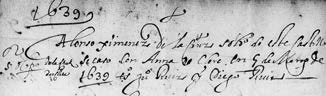
Figure 36.2:
1639, March 5, Ghent
Spaniard Castle, the wedding of Alonso
Ximenes de la Cruz, a soldier at the cas-
tle, with Ana Declerque (DC07e) (’Ana
De Clerc’), witnesses were Juan Ruiz and
Diego Ruiz.
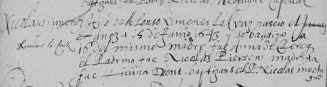
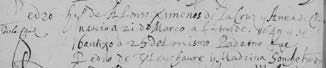
Figure 36.3:
1643, June 15, Ghent
Spaniard Castle, the baptism of Nicolaus
Ximenes, son of Alonso Ximenes de la
Cruz and Anna Declerque (DC07e) (’Anna
De Clercgz’). The godfather was Nico-
las Piersens, and the godmother was Liv-
ina Dhont. The baptist was Nicolas Mon-
taigne.
Petition by the aforementioned Clerque to make good the risks of the time he was in the Catalonia campaign, by the Bureau’s ruling and certification issued by the Furrier Cornelio Luidynex, of these services and paid guardians to the one who replaced him in the service in Madrid. 1654, August 17; 1655, April 5.
9. Petición para que le conceda una prórroga de licencia para pasar a Flandes para asuntos de la Compañia. 1662.
Translation:
Request to grant an extension of license to move to Flanders for matters of the Company. 1662
We assume that Jan Declercq indeed returned to Flanders, where he would die in the period 1663-1676 as indicated in the following document, the 3rd petition:
10/13. Petición por parte de su viuda doña Beatriz Maria de Pinto, de certificación de los gajes dejados a deber a su marido y que se le conceda la merced de los gajes de la plaza de arquero. 1663. abril 18: 1676, noviembre 9.
Translation:
Petition by his widow Beatriz Maria de Pinto, certification of the risks left to duty to her husband and to be granted the mercy of the gajes of the position of an archer. 1663. April 18: 1676, November 9.
Juan Declerque (DC07c) died at the military hospital Bijloke in Ghent, and his death was reported under the name ’Jan Cleer,’
shown in Figure 36.7.
Because Juan Declerque (DC07c) was appointed guardian in 1651, we know that he must have been born before 1626. This means he was at least 41 years old when he died, probably 43.
36.4.3 Beatrice Maria Vandeputte, the wife of Juan Declerque (DC07c)
As indicated above, Beatrice Maria Vandeputte would be called Beatrice Maria De Pinto in Spain. We believe she may have been born in Harelbeke in 1615, given the baptism certificate shown in Figure 36.8.
36.5 Maria Declerque (DC07b) the Daughter of Antoni Desclergue (DC06)
She was baptized in Deerlijk in 1631, in Figure 36.9.
Around the time of the Siege of Barcelona of 1651, she joined her parents in Spain. She married, either at Valls or Montblanc, Rafael Juan de Pedrolo, who was a trustee of the family and had been appointed as guardian to Francesc de Pedrolo y Desclergues after the death of Francesc Desclergue (DC05e). More details are also found in Chapter 28.5.
About Francesc de Pedrolo y Desclergues, we found the following citation2:
’Pedrolo, originari d’ una nissaga cerverina, pertanyia a la branca familiar de Valls, i era fill de Rafael Joan de Pedrolo, cavaller, natural de Valls, i de Maria Desclugues (o Desclergue), dama de Montblanc.’ in a description of ’Pau d’ àger, comanador de l’
orde de Sant Joan de Jerusalem (1659-1662).’
This reference confirms that Rafael Juan de Pedrolo of Valls (Tarragona), son of Gabriel de Pedrolo and Magdalena Monfar of Barcelona, had married Maria Declerque (DC07b) around 1651, around the time of the Siege of Barcelona, when she visited Spain with her father Antoni Desclergue (II) (DC06) and her mother, Beatrice Declercq (DK02byx).
Maria Desclergue (DC07b) and Rafael Juan de Pedrolo of Valls had no children. She returned to Flanders before 1673.
36.6 Joan Declerque (DC07g), the Son of Antoni Desclergue (DC06)
The child was born in Deerlijk in 1634, in Figure 36.10, and we found little information about him. Perhaps he never married or died early.
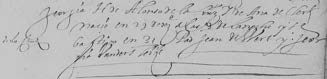
Figure 36.4: 1645, December 29, Ghent
Spaniard Castle, the baptism of Georgia de
la Cruz, daughter of Alonso Ximenes de
la Cruz (’Alonso de la Cruz’) and Anna
Declerque (DC07e) (’Ana de Clerk’). The
godfather was Jan de Weert (’Jean de
Wert’), and the godmother was Francisca
Vanderslenghe.
2in ’enciclopedia dot cat’
The Desclergues of la Villa Ducal de Montblanc, 2nd ed., Omn., VOL. II
© 2024 Nico F. Declercq


642
CHAPTER 36. CHILDREN OF ANTONI DESCLERGUE (DC06)
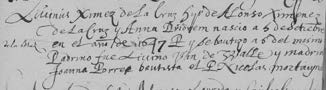
Figure 36.5: 1647, December 5, Ghent
Spaniard Castle, the baptism of Livi-
nus Ximenez de la Cruz, son of Alonso
Ximenez de la Cruz and Anna Declerque
(DC07e) (’Anna’). The godfather was Liv-
inus Van de Walle, and the godfather was
Joanna Dorre.
The baptist was priest
Nicolas Montaigne.
Figure 36.6: 1649, Ghent Spaniard Cas-
tle, the baptism of Pedro Ximenes de la
Cruz, son of Alonso Ximenez de la Cruz
and Anna Declerque (DC07e) (’Anna de
Cler.’). The godfather was Pedro de De
Vierschaure, and the godmother was Sonye
Heden.
Figure 36.7: Ghent, military hospital Bijloke, December 16, 1667, the
death of Juan Declerque (DC07c) (’Jan Cleer’), from the Company of
Tharntoy.
Figure 36.8: 1615, March 23, Harelbeke, the baptism of Beatrice Maria (’Beat-
rix’) Vandeputte, daughter of Joannes Vandeputte and Joanna Tanghe, the wit-
nesses were Mathias Vandeputte and Beatrice Verbeke.
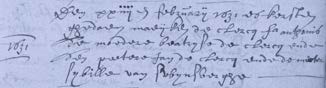
Figure 36.9:
February 24, 1631, the
baptism of Maria Declerque (DC07b)
(’maeyke Declercq’) at Deerlijk, daughter
of Antoni Desclergue (DC06) and Beat-
rice Declercq (DK02byx). The godfather
was Jan Declercq (DK03), who was An-
toni Desclergue’s stepfather, and the god-
mother was Sybille Van Wynsberghe, likely
a relative of Beatrice Declercq (DK02byx)
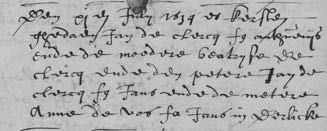
Figure 36.10: July 11, 1634, Deerlijk,
the baptism of Joan Declerque (DC07c)
(’Jan Declercq’), son of Antoni Descle-
rgue (DC06) (’Anthuenijs’) and Beat-
rice Declercq (DK02byx) (’Beatrijse De-
clercq’). The godfather was Jan Declercq
(DK03dya), son of Jan Declercq (DK03),
the godmother was Anna de Vos daughter
of Jan de Vos from Deerlijk.
© 2024 Nico F. Declercq
The Desclergues of la Villa Ducal de Montblanc, 2nd ed., Omn., VOL. II

36.7. PERE DECLERQUE (DC07D), THE SON OF ANTONI DESCLERGUE (DC06) AND SOLDIER
643
36.7 Pere Declerque (DC07d), the Son of Antoni Desclergue (DC06) and Sol-
dier
He was born in 1640 at Deerlijk. His baptism in Figure 36.25 is also described in Chapter 34.5.13. Pere Declerque (DC07d) married Florence Vandenbulke at Deerlijk in 1665 at the age of 22, in Figure 36.27. Florence Vandenbulke ’s baptism in 1643 is shown in Figure 36.26, and her funeral in 1677 is in Figure 36.28. Pere Declerque (DC07d) remarried Thérèse Du Blanc, De Buck, or De Bick soon after.
The couple named their first child, in Figure 36.29 after Pere’s grandmother Felipa de Montoya, namely Juana Felipa Declergz (’Joanna Philippa De Clercgz’). Because the family was in the middle of a struggle with the French army and had to move from one place to the other continually, they baptized their daughter on their passage through Sint Eloois Vijve on April 5, 1678.
Sint Eloois Vijve switched sides frequently between the French forces and the Spanish coalition forces. Therefore, it was likely disadvantageous to inform the priest that the father was from Deerlijk and was in French hands. So, the information was limited to ’the father is a wandering soldier’ (’militis vagantis’). The area Waregem-Sint-Eloois-Vijve indeed became alternatingly Spanish and French.
In the same year, just after the summer, we found, for instance, a baptism in Figure 36.30 of a child of Spanish soldier Juan Sanz.
Pere Declerque (DC07d) also appeared on ’la bourgeoisie foraine’ of Kortrijk at Deerlijk, shown in Figures 36.11, 36.12, 36.13, 36.14,
36.15, 36.16, 36.17, 36.18, 36.19, 36.20, 36.21, 36.22, 36.23, and 36.24.
He first appeared in 1670, and in the following years, he was missing: 1673-1677, 1679-1683, 1688, 1690-1705, 1710-1712. Some of these absences are likely due to his military career.
Our ancestor Pere Declercgz (DC08), born in 1673, was named after him, although he was absent upon the baptism due to his military career.
36.8 Michiel Declerque (DC07f), the Son of Antoni Desclergue (DC06) and
Merchant
In 1656, Michiel Declerque (DC07f), the son of Antoni Desclergue (DC06), was a merchant in Kortrijk. This information is documented in the records shown in Figure 36.31 on page 645.
These records provide valuable insight into his professional activities and status within the commercial community of Kortrijk during that period.
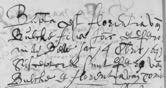
Figure 36.11: 1670, Pere Declerque (DC07d) on the list of ’la bour-
geoisie foraine’ of Kortrijk at Deerlijk.
The Desclergues of la Villa Ducal de Montblanc, 2nd ed., Omn., VOL. II
© 2024 Nico F. Declercq













644
CHAPTER 36. CHILDREN OF ANTONI DESCLERGUE (DC06)
Figure 36.12: 1671, Pere Declerque (DC07d) on the list of ’la bour-
geoisie foraine’ of Kortrijk at Deerlijk.
Figure 36.13: 1672, Pere Declerque (DC07d) on the list of ’la bour-
geoisie foraine’ of Kortrijk at Deerlijk.
Figure 36.14: 1678, Pere Declerque (DC07d) on the list of ’la bour-
geoisie foraine’ of Kortrijk at Deerlijk.
Figure 36.15: 1684, Pere Declerque (DC07d) on the list of ’la bour-
geoisie foraine’ of Kortrijk at Deerlijk.
Figure 36.16: 1685, Pere Declerque (DC07d) on the list of ’la bour-
geoisie foraine’ of Kortrijk at Deerlijk.
Figure 36.17: 1686, Pere Declerque (DC07d) on the list of ’la bour-
geoisie foraine’ of Kortrijk at Deerlijk.
Figure 36.18: 1687, Pere Declerque (DC07d) on the list of ’la bour-
geoisie foraine’ of Kortrijk at Deerlijk.
Figure 36.19: 1689, Pere Declerque (DC07d) on the list of ’la bour-
geoisie foraine’ of Kortrijk at Deerlijk.
Figure 36.20: 1706, Pere Declerque (DC07d) on the list of ’la bour-
geoisie foraine’ of Kortrijk at Deerlijk.
Figure 36.21: 1707, Pere Declerque (DC07d) on the list of ’la bour-
geoisie foraine’ of Kortrijk at Deerlijk.
Figure 36.22: 1708, Pere Declerque (DC07d) on the list of ’la bour-
geoisie foraine’ of Kortrijk at Deerlijk.
Figure 36.23: 1709, Pere Declerque (DC07d) on the list of ’la bour-
geoisie foraine’ of Kortrijk at Deerlijk.
Figure 36.24: 1713, Pere Declerque (DC07d) on the list of ’la bour-
geoisie foraine’ of Kortrijk at Deerlijk.
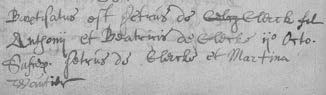
Figure 36.25: Deerlijk, October 2, 1640,
the baptism of Pere Declerque (DC07d),
son of Antoni Desclergue (II) (DC06)
and Beatrice Declercq (DK02byx). The
godfather was Pieter Declercq (DK03dyb)
(’Petrus de Clercke’), godmother was Mar-
tina Wautier. This particular baptism is
interesting. The father, Antoni Descle-
rgue (DC06), was absent, and therefore
the priest was confused about the involved
names. The child’s correct Spanish name
would have been Pere or Pedro Desclergue
y Declercq. The priest first wrote ’De Celcg
Clerck’ , then changed it to ’Clerck’ , and
was then confused about the mother’s name
and decided to spell hers as ’De Clercke’ .
The baptism is also shown in Figure 34.49
on page 544.
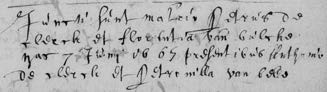
Figure 36.26: 1643, October 4, Deerlijk, the baptism of Florence Van-
denbulke, daughter of Joannes Vandenbulke and Petronilla Van Belle.
The godfather was Petrus Vandenbulke, and the godmother was Flo-
rence Van Tombe.
© 2024 Nico F. Declercq
The Desclergues of la Villa Ducal de Montblanc, 2nd ed., Omn., VOL. II

36.8. MICHIEL DECLERQUE (DC07F), MERCHANT SON OF ANTONI DESCLERGUE (DC06)
645
Figure 36.27:
1665, June 7, Deerlijk
, the marriage of Florence Vandenbulke
and Pere Declerque (DC07d) (’Petrus De
Clerk’). The witnesses were Antoni De-
sclergue (DC06) (’Anthonio De Clerk’)
and Petronilla Van Belle.
Figure 36.28: 1677, May 6, Deerlijk, the
burial of Florence Vandenbulke.
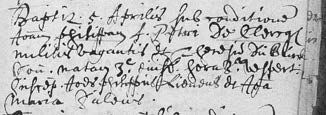
Figure 36.29: Sint Eloois Vijve, April 5,
1678, the baptism of Juana Felipa Declergz
(’Joanna Phillippa De Clergz’) named af-
ter her father’s grandmother Felipa de
Montoya. She was the daughter of Pere
Declerque (DC07d) (’Petrus De Clergz’)
and Thérèse de Blanc or Du Buck. The
father is described as ’militis vagantis’ ,
and the child had been born on the 3rd.
The godfather was well-chosen to carry a
name similar to Felipa, namely Joannes
Philippus Lievens, while de godmother was
Joana Maria Salens.
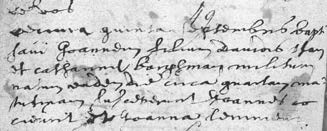
Figure 36.30:
Waregem, September 5,
1678, the baptism of Juan Sanz, son of
soldier David Sanz and Catherine Borgh-
man. The godfather was Joannes Corein
and Joanna Lemmens.
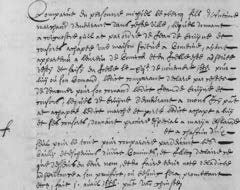
Figure 36.31: Kortrijk, April 1, 1656. Michiel De-
clerque (DC07f), son of Antoni Desclergue (DC06)
("Michiel Leclercq fs Antoine"), merchant in Kortrijk,
purchased (by order of Jean Debruijne in Mons) a house
in Cominnes, having belonged to Leurein Deconinck. He
names for his command the said Jean De Bruijne who
gives Marijn Elslande the power to appear before the al-
dermen of Comines. Source: Oud Stadsarchief Kortrijk,
Akten en Contracten, 8825, 1076029, arch 118, 14v.
The Desclergues of la Villa Ducal de Montblanc, 2nd ed., Omn., VOL. II
© 2024 Nico F. Declercq
CHAPTER 36. CHILDREN OF ANTONI DESCLERGUE (DC06)
© 2024 Nico F. Declercq
The Desclergues of la Villa Ducal de Montblanc, 2nd ed., Omn., VOL. II
Chapter 37
Antoni Declerque (DC07) & Martina de la Cruz
37.1 Introduction
Don Antoni Declerque (III) (DC07) is a patrilineal ancestor.
There are indications that Antoni Declerque (DC07) has also been a military. Indeed, his frequent absence as a Bourgeous Forain in Kortrijk, shown in Chapter 37.3, may be due to temporary warfare involvement. For instance, Antoni (DC07) likely joined his father Antoni (DC06) in Spain to recruit military in 1668 or was otherwise involved, as described in Chapter 34.10.
Antoni’s (DC07) siblings were equally involved in the military directly or as spouses, as described in Chapter 36.
It shows that the Desclergues had military involvement and were mainly in touch with other Spanish descendants until the 18th century.
Antoni Declerque (DC07) died in 1699-1700, just before the Spanish Succession War, described in Chapter 8.12.2. As we have not found any burial records, we assume he had his funeral in a military chapel, just like his Spanish ancestors in Belgium.
37.2 Antoni Declerque (III) (DC07), the Son of Don Antoni Desclergue (II)
(DC06) and Beatrice Declercq (DK02byx)
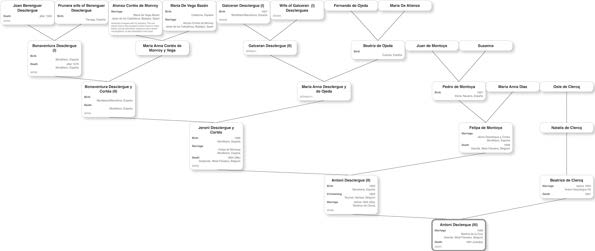
Antoni Declerque’s (DC07) ancestry is shown in Figure 37.1.
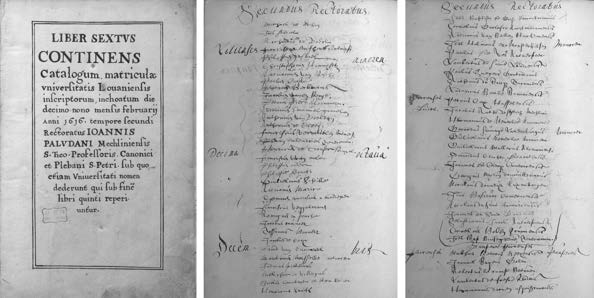
He was also retrieved, shown in Figure 37.3, in 1643, enrolled as a student at the University of Leuven.
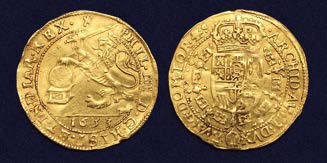
Figure 37.2 displays a coin from this era.
The orphan’s deed of Antoni Desclerque’s (DC07) mother, Beatrice Declercq (DK02byx), in 1651, as referenced in Chapter 34.8
and detailed in Chapter 34.12.3, is a significant piece of evidence. This legal document suggests that Antoni (DC07) had not yet turned 25 in 1651, indicating that he was born after 1626.
Therefore, both the orphan’s deed and the University of Leuven enrollment align, confirming that Antoni (DC07) was born after 1626.
Antoni Declerque (III) (DC07) married in 1656, aged 30 or less, in Deerlijk, Belgium, to Martina Vercruyce / De la Cruz, 31. The wedding, therefore, took place four years after the great fire at Montblanc. His father, Antoni (II) (DC06), witnessed the wedding.
Antoni (DC07) and Martina’s children were Joanna (DC08b)(1657), Joan (DC08c)(1661), Maria (DC08d)(1665), Maria Catarina (DC08e)(1669) and Pere (II) (DC08) (1673). The latter is our paternal ancestor. Antoni Declerque (III) (DC07) was a Doncel.
37.3 Antoni Declerque (III) (DC07) on the List of ’la Bourgeoisie Foraine’ of
Kortrijk at Deerlijk
Antoni Declerque (DC07) was a Bourgeois Forain of Kortrijk at Deerlijk from 1657 until 1699, shown in Figures 37.4, 37.5, 37.6,
37.7, 37.8, 37.9, 37.10, 37.11, 37.12, 37.13, 37.14, 37.15, 37.16, 37.17, 37.18, 37.19, 37.20, 37.21, 37.22, 37.23, 37.24, 37.25, 37.26,
37.27, 37.28, 37.29 and 37.30.
We assume that he died around 1700. He must have been buried in a military chapel, like his ancestors, because we have not found his death certificate in any regular churches.
He was absent in specific years, namely in 1659, 1663, 1668-1669, 1673-1677 (French occupation of Kortrijk), 1679-1680, 1682, 1688, Figure 37.1: Five ascending generations of Antoni Declerque (III) (DC07)
The Desclergues of la Villa Ducal de Montblanc, 2nd ed., Omn., VOL. II
© 2024 Nico F. Declercq










648
CHAPTER 37. ANTONI DECLERQUE (DC07) & MARTINA DE LA CRUZ
Figure 37.2:
A coin pressed at Tour-
nai in 1633 during King Felipe IV of
Castile.
The coin states ’PHIL IIII
D G HISP ET INDIAR REX 1633/
ARCHID AVST DVX BVRG DOM TOR’
(source: numisantica and shared through
Wikipedia® under the creative commons
attribution - Share-Alike 3.0)
Figure 37.3: 1643, registrations at the Old University of Leuven, of Juan (DC07c) and Antoni Declerque (DC07), sons of Antoni Desclergue (DC06) and his first wife and second wife, respectively. At the beginning of Antoni Desclergue’s military career, he lived with his first wife in Cambrai, where Carlos Coloma was governor. This is also evident from this registration.
The book of entries starts from 1616, as shown on the front page, left.
Figure 37.4: 1657, Antoni Declerque (III) (DC07) on the list of ’la
bourgeoisie foraine’ of Kortrijk at Deerlijk.
Figure 37.5: 1658, Antoni Declerque (III) (DC07) on the list of ’la
bourgeoisie foraine’ of Kortrijk at Deerlijk.
Figure 37.6: 1661, Antoni Declerque (III) (DC07) on the list of ’la
bourgeoisie foraine’ of Kortrijk at Deerlijk.
Figure 37.7: 1662, Antoni Declerque (III) (DC07) on the list of ’la
bourgeoisie foraine’ of Kortrijk at Deerlijk.
Figure 37.8: 1664, Antoni Declerque (III) (DC07) on the list of ’la
bourgeoisie foraine’ of Kortrijk at Deerlijk.
Figure 37.9: 1665, Antoni Declerque (III) (DC07) on the list of ’la
bourgeoisie foraine’ of Kortrijk at Deerlijk.
Figure 37.10: 1666, Antoni Declerque (III) (DC07) on the list of ’la
bourgeoisie foraine’ of Kortrijk at Deerlijk.
Figure 37.11: 1667, Antoni Declerque (III) (DC07) on the list of ’la
bourgeoisie foraine’ of Kortrijk at Deerlijk.
Figure 37.12: 1670, Antoni Declerque (III) (DC07) on the list of ’la
bourgeoisie foraine’ of Kortrijk at Deerlijk.
Figure 37.13: 1671, Antoni Declerque (III) (DC07) on the list of ’la
bourgeoisie foraine’ of Kortrijk at Deerlijk.
© 2024 Nico F. Declercq
The Desclergues of la Villa Ducal de Montblanc, 2nd ed., Omn., VOL. II



37.4. THE ANCESTRY OF MARTINE VERCRUYCE OR MARTINA DE LA CRUZ, WITH ROOTS IN
SPAIN
649
Figure 37.14: 1672, Antoni Declerque (III) (DC07) on the list of ’la
bourgeoisie foraine’ of Kortrijk at Deerlijk.
Figure 37.15: 1678, Antoni Declerque (III) (DC07) on the list of ’la
bourgeoisie foraine’ of Kortrijk at Deerlijk.
1697.
As described in Chapter 34.11, Antoni’s (DC07) father, Antoni Desclergue (DC06), visited Spain in 1679 for a wedding after the Peace of Nijmegen. Likely, Antoni Declerque (DC07) went too.
37.3.1 Etymology of de la Cruz
The surname de la Cruz means ’from the cross.’ There is evidence of name variations being used interchangeably, particularly in regions with linguistic diversity. For example, in Flemish, de la Cruz can translate to Vercruysse or Vandercruyssen. These translations often happened as families migrated and adapted to different languages and cultures. The use of the name de la Cruz began in the medieval period, likely around the time of the Crusades, which influenced many surnames of the era. The name was prominently established in Spain before spreading to other regions through migration and colonial expansion.
37.4 The Ancestry of Martine Vercruyce or Martina de la Cruz, with Roots
in Spain
In Chapter 29.10.6, the relationship between Martina de La Cruz and Felipa de Montoya is revealed.
Apart from this relationship, we have also found numerous other connections between the Desclergues and Ximenes de la Cruz’s clan, observed in baptisms and weddings.
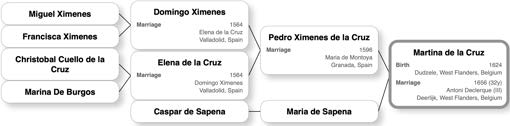
Interestingly, Martina’s father-in-law, Antoni Desclergue (DC06), was a stepbrother of her godmother’s husband, Jan Declercq (DK03dya). The family Ximenes de la Cruz, whose presence can be traced in locations of historical significance for the defense of Flanders, is found in Damme (with residence in Dudzele), the Spaniard Castle of Ghent, and Sint Eloois Vijve. Martina’s ancestors, who played a crucial role in these historical events, are shown in Figure 37.31.
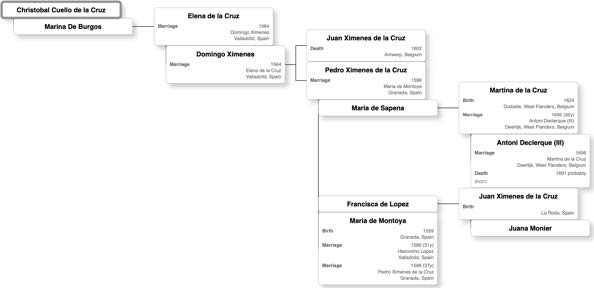
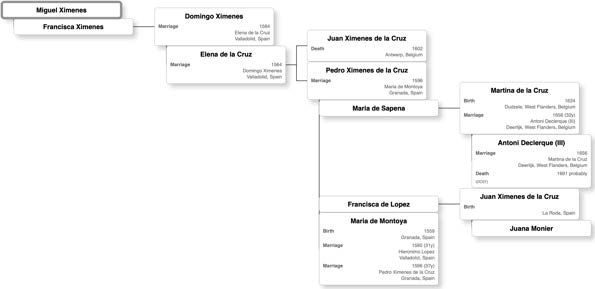
To better understand her family, we have added to the descendency trees of two of her ancestors in Figures 37.32 and 37.33 of Christobal Cuello de la Cruz, respectively Miguel Ximenes.
On certificates, such as her baptism in Figure 37.34, Martina Ximenes de la Cruz appears as Cruz/Cruys, and in the Flemish colloquial version Vercruce, Vercruyce and Vercruysse. The Spanish version of her name was De la Cruz, or if we assume the entire inheritance of her father’s name, even Ximenes de la Cruz.
The author’s autosomal DNA also shares several sequences with persons carrying the name de la Cruz, shown in Chapter 73.10.3.5.
Martina has been a genealogical puzzle. It has taken a significant amount of time and effort to unearth her roots. From, for instance, the baptism in Harelbeke, of Martina Vercruyce’s granddaughter Maria Anna De Vos, we can identify that Martina Vercruyce (de la Cruz) was the daughter of Petrus Vercruyce (de la Cruz) and that Antoni Declerque (III) (DC07) was the son of Antoni Declerque (II) (DC06). This discovery had helped us rule out other possible roots (e.g. Deerlijk or Waregem or neighboring villages) when we investigated this ancestry early.
Simultaneously, it also confirmed that indeed Antoni Declerque (II) (DC06), who was a witness to his wedding in Deerlijk in 1656, was, in fact, Antoni’s (DC07) father.
Martina, the person we focus on here, was baptized in Dudzele on December 5, 1624. Her godfather was Paulus Deckers, described in Chapter 49.5 and Chapter 49.2.2, and her godmother was Martina, wife of 42-year-old Jan Declercq (DK03dya), described in Chapter 34.13.8.1 and step-nephew of Antoni Desclergue (DC06), Martina’s future father in law.
Jan’s (DK03dya) daughter-in-law Elizabeth de Laere, wife of Antonius Declercq (DK03dyay1), would later also serve as godmother to Elizabeth Loncke, the daughter of Joannes Loncke and Margareta Vercruysse.
Jan Declercq (DK03dya) was the stepbrother of Antoni Desclergue (DC06). Elizabeth de Laere served as godmother to Joan Declercgz (DC08c), Martina de la Cruz, and Antoni Declerque’s (DC07) son.
Therefore, Jan Declercq (DK03dya) and his daughter-in-law have always been important to Martina de la Cruz. Very likely, Jan Declercq (DK03dya) had also been a military, which is how he knew the family Ximenez de la Cruz and how the contact remained, either in Dudzele, Sint Eloois Vijve or Deerlijk. Jan Declercq (DK03dya) was related to the Ximenes de la Cruz family by marrying his stepmother’s sister, Maria de Montoya, to Pedro Ximenes de la Cruz, father of Martina de la Cruz. Later, Martina would marry Antoni’s (DC06) son, Antoni Declerque (DC07).
In other words, Martina married the grandson of her stepmother’s sister.
37.4.1 Father and son Carlos Ximenes de la Cruz at Sint Eloois Vijve
In the Middle Ages, a fortress in Sint Eloois Vijve was found in Figure 37.35. Its strategic location along the Leie River, with a side branch to Ingelmunster and the road from Kortrijk to Ghent, required a small stronghold, even in Spanish times and later during the troubles with France. It’s also where the Gaverbeek Creek used to reach the Leie River, connected to Waregem, Deerlijk, and Harelbeke.
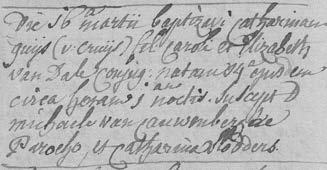
Carlos Ximenes de la Cruz was the son of Carlos Ximenes de la Cruz and was baptized at the Spanish stronghold in Sint Eloois Vijve in 1636, in Figure 37.37.
Carlos Senior was likely the eldest brother of Martina de la Cruz or her uncle. We have yet to find his baptism. He was stationed at Sint Eloois Vijve, where there was a Spanish fortress. We discovered that Carlos Senior died in Sint Eloois Vijve in 1638, shown in Figure 37.38, two years after the birth of his son Carlos Junior. Life in the military was not without risks. Carlos Ximenes de la Cruz senior resided at the Spanish stronghold at Sint Eloois Vijve and married Judoca Van Dale. His son Carlos Junior was Figure 37.16: 1681, Antoni Declerque (III) (DC07) on the list of ’la
bourgeoisie foraine’ of Kortrijk at Deerlijk.
The Desclergues of la Villa Ducal de Montblanc, 2nd ed., Omn., VOL. II
© 2024 Nico F. Declercq



650
CHAPTER 37. ANTONI DECLERQUE (DC07) & MARTINA DE LA CRUZ
Figure 37.17: 1683, Antoni Declerque (III) (DC07) on the list of ’la
bourgeoisie foraine’ of Kortrijk at Deerlijk.
Figure 37.18: 1684, Antoni Declerque (III) (DC07) on the list of ’la
bourgeoisie foraine’ of Kortrijk at Deerlijk.
married to Elizabeth Van Dale. Their children are shown in Figures 37.40, 37.41 and 37.42.
Carlos Senior was likely Martina de la Cruz’s uncle, or he may have been her eldest brother. A connection with Dudzele, probably with persons involved with Damme’s defense, still existed in the 1650s.
More records of interest are shown in Figures 37.43, 37.44 and 37.45.
His uncle was Jose Ximenez de la Cruz, equally residing at the fortress of Sint Eloois Vijve, who married a local in 1641, in Figure
The family Roose or Rosa, shown in Figure 37.39, was also linked with the Ximenes de la Cruz when they resided in Dudzele.
In Dudzele, the village where Martina de la Cruz was born, Carlos Ximenes de la Cruz junior appeared as godfather in 1655 of the child Carolus Helsmoortel in Figure 37.46, son of Joannes Helsmoortel and Catarina van Wiepe. Note that Wiepe and Helsmoortel were prevalent names at Ostend before the Siege of Ostend, so those families probably fled and settled in Dudzele after the Siege.
He also served as a witness on the wedding of Petronilla Ximenes de la Cruz in Figure 37.47, possibly his sister or a cousin in replacement of his father, Carlos Ximenes de la Cruz senior, who was dead.
The situation is complicated, as in Deerlijk, in the life of Carlos junior, there is also ’Charles Vercruysse’ who has children with Beatrix Coucke (1658, 1660, 1663) and is, in fact, Carlos junior, but here is also a Charles Vercruysse who has children with Beatrix Huyge (1667) and Beatrix Beckaert (1670). Either this is a coincidence, or Charles Vercruysse always married women with the name Beatrix.1 Beatrix Coucke, who married Carlos Junior, was from Vichte. She married Charles Vercruysse (Carolus Antonius Vandercruyce) at Vichte in 1657. Neither he nor Martina are found on baptism lists or certificates at Vichte, so they were not from Vichte. The priest at Vichte even indicated Charles’ foreign origin because he wrote ’Vandercruyssen,’ whereas, for all others at Vichte, he wrote ’Vercruysse.’ The local Vercruysse records are shown in Figures 37.48, 37.49, 37.50, 37.51 and 37.52.
Evidence that this is the correct family is found in one of the birth certificates of the children of Joannes Loncke and Margareta Vercruysse. On their daughter Elizabeth Loncke’s baptism at Deerlijk, on February 3, 1666, in Figure 37.53, Elizabeth De Laere served as godmother. Elizabeth de Laere was the wife of Antonius Declercq (DK03dyay1), son of Jan Declercq (DK03dya) and Jossine Nooters, step-siblings of Antoni Desclergue (DC06), and related with his wife, Beatrice Declercq (DK02byx). This family is found in Chapter 34.13.7. Jan Declercq (DK03dya) was also related to the Ximenes de la Cruz family through his stepmother, as described at the beginning of this chapter.
This baptism in Figure 37.54 proves the connection between Loncke and Coucke. Margareta Vercruysse must have been a de la Cruz, but we could not reveal her roots precisely. Her husband, Joannes Loncke, was the brother of Martina Loncke, wife of Renatus De Poortere, and mother of Antonia de Poortere. The latter married Petrus Prienne, and their daughter, Marie Prienne, married Pere Declercgz (II) (DC08) in 1703. The Loncke family would also marry de Desclergues later on through the marriage of Leo Bernard Declercq (DC12) and Thérèse Loncke in Wielsbeke in 1840.2
37.4.2 On Martina’s Ancestors
The father of Martina de la Cruz was Pedro Ximenes de la Cruz. Maria de Montoya, a sister of Felipa de Montoya, was his wife before he married Maria de Sapena, Martina’s mother.
For this reason, Martina de la Cruz would marry the grandson of her step-auntie.
Maria De Sapena, or Sopena, Martina’s mother, was Don Caspar De Sapena’s daughter, a colonel, listed in Figure 37.55, who died during the Siege of Ostend. On February 1, 1598, as shown in Chapter 29.5.25, Caspar Sapena, had endorsed Jeroni Joan Desclergue y Cortés (DC05) in Mechelen for his qualities as a military, described in Chapter 29.5.25.
The Spanish records show that Pedro Ximenez de la Cruz married Maria de Montoya in Granada on May 8, 1596, in Figure 37.56.
Maria de Montoya was born on August 15, 1559, at San Gil y Santa Anna in Granada, the daughter of Pedro de Montoya and Maria Ana Diaz (possibly with Portuguese roots). Pedro de Montoya was born in Navarra and baptized on July 26, 1527, in Santa Maria, Viana, the son of Juan de Montoya and Susana.
So, Martina de la Cruz was Pedro de la Cruz’s daughter, or in full, ’Pedro Ximenes de la Cruz senior.’ As a military, he had been stationed chiefly in Northern Belgium, i.e., Antwerp’s area to Damme.
Martina’s mother was Maria De Sapena.
Martina was born in Dudzele, next to Damme, in 1624, where she is registered with a Spanish name, ’Cruz / Cruys.’ In Houtave, between Ostend and Damme, Petrus and Maria married on May 25, 1621.
In San Martin y San Benito El Viejo, Valladolid, Spain, we found the wedding of Domingo Ximenez and Elena de la Cruz on November 19, 1564. Domingo was a son of Miguel Ximenes and Francisca, and Elena was a daughter of Christoval Cuello de la Cruz and Marina de Burgos. Note that Domingo Ximenes was the governor of Nieuwpoort and testified about the military qualities of Enric Desclergue in 1623, as shown in Chapter 33.
Pedro Ximenes de la Cruz senior was their son and was born probably shortly after 1564.
Pedro Ximenes de la Cruz senior was first married to Francisca de Lopez. They have lived a while at La Roda in Spain. After Francisca’s death, Pedro remarries Maria de Montoya. From that first marriage stemmed a son, Juan Ximenez de la Cruz, who married at the Spaniard Castle of Ghent to Juana Monier on October 5, 1610, in Figure 37.57.
Pedro Ximenes de la Cruz senior was likely a brother of Lorenço de la Cruz, a Spanish soldier. He died at the Spaniard Castle of Ghent in 1605 and was buried there in December, ’por amor de dios’ stated by the priest.
Figure 37.19: 1685, Antoni Declerque (III) (DC07) on the list of ’la
bourgeoisie foraine’ of Kortrijk at Deerlijk.
1In Sint Eloois Vijve, we also found a person Huyge or Huyse who turns out to be Ximenez; Therefore, perhaps Beatrix Huyge was Beatrix Ximenez.
There is no evidence to confirm.
2The early connections with Loncke and Prienne are intriguing because the family later married those families. Future genealogists may search for connections between the early ones and the later ones.
© 2024 Nico F. Declercq
The Desclergues of la Villa Ducal de Montblanc, 2nd ed., Omn., VOL. II











37.4. THE ANCESTRY OF MARTINE VERCRUYCE OR MARTINA DE LA CRUZ, WITH ROOTS IN
SPAIN
651
Figure 37.20: 1686, Antoni Declerque (III) (DC07) on the list of ’la
bourgeoisie foraine’ of Kortrijk at Deerlijk.
Figure 37.21: 1687, Antoni Declerque (III) (DC07) on the list of ’la
bourgeoisie foraine’ of Kortrijk at Deerlijk.
Figure 37.22: 1689, Antoni Declerque (III) (DC07) on the list of ’la
bourgeoisie foraine’ of Kortrijk at Deerlijk.
Figure 37.23: 1690, Antoni Declerque (III) (DC07) on the list of ’la
bourgeoisie foraine’ of Kortrijk at Deerlijk.
Figure 37.24: 1691, Antoni Declerque (III) (DC07) on the list of ’la
bourgeoisie foraine’ of Kortrijk at Deerlijk.
Figure 37.25: 1692, Antoni Declerque (III) (DC07) on the list of ’la
bourgeoisie foraine’ of Kortrijk at Deerlijk.
Figure 37.26: 1693, Antoni Declerque (III) (DC07) on the list of ’la
bourgeoisie foraine’ of Kortrijk at Deerlijk.
Figure 37.27: 1694, Antoni Declerque (III) (DC07) on the list of ’la
bourgeoisie foraine’ of Kortrijk at Deerlijk.
Figure 37.28: 1695, Antoni Declerque (III) (DC07) on the list of ’la
bourgeoisie foraine’ of Kortrijk at Deerlijk.
Figure 37.29: 1696, Antoni Declerque (III) (DC07) on the list of ’la
bourgeoisie foraine’ of Kortrijk at Deerlijk.
Figure 37.30: 1699, Antoni Declerque (III) (DC07) on the list of ’la
bourgeoisie foraine’ of Kortrijk at Deerlijk.
Figure 37.31: Three ascending generations of Martina de la Cruz.
Figure 37.32: Three descending generations of Christobal Cuello de la Cruz, ancestor of Martina de la Cruz.
The Desclergues of la Villa Ducal de Montblanc, 2nd ed., Omn., VOL. II
© 2024 Nico F. Declercq

652
CHAPTER 37. ANTONI DECLERQUE (DC07) & MARTINA DE LA CRUZ
Figure 37.33: Three descending generations of Miguel Ximenes, ancestor of Martina de la Cruz.
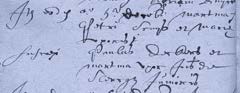
Figure 37.34: 1624 Dudzele, December 5, the baptism
of Martina de la Cruz (’Cruys’), the daughter of Pedro
de la Cruz (’Petrus Cruys’) and his wife ’Maria’ , the
godfather was Paulus Deckers, and the godmother was
Martina, wife of Jan Declercq (DK03dya) (’Joannes De
Clercgz junior’). Jan Declercq (DK03dya) was a son of
Jan Declercq (DK03), stepfather of Antoni Desclergue
(DC06).
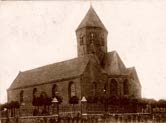
Figure 37.35: The church of Sint Eloois Vijve.
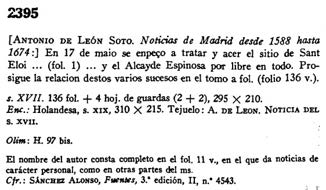
Figure 37.36:
A reference possibly to
Sint Eloois Vijve on page 106 (2395-2396)
of Inventario General de Manuscritos de
la Biblioteca Nacional, VII (2375-2474).
Antonio de Leon Soto died in 1622. It
may, however, also be Sant Eloi in Tar-
rega, Lleida.
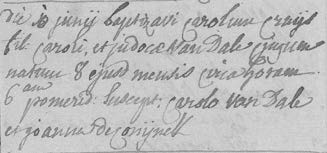
Figure 37.37:
Sint Eloois Vijve, June
10, 1636, Carlos Ximenes de la Cruz ju-
nior (’Carolus Cruys’) was baptized. He
was the son of Carlos Ximenes de la Cruz
senior and Judoca Van Dale and was born
on June 8. The Godparents were Charles
Van Dale and Joanna de Coninck.
Figure 37.38: Sint Eloois Vijve, Decem-
ber 1638, the death of Carlos Ximenez de
la Cruz senior (’Carolus Huys’), husband
of Judoca Van Daele.
© 2024 Nico F. Declercq
The Desclergues of la Villa Ducal de Montblanc, 2nd ed., Omn., VOL. II
37.4. THE ANCESTRY OF MARTINE VERCRUYCE OR MARTINA DE LA CRUZ, WITH ROOTS IN
SPAIN
653
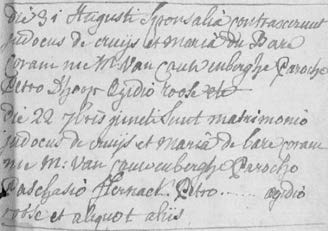
Figure 37.39:
Sint Eloois Vijve, Au-
gust 31 and September 22, 1641, the mar-
riage of Jose Ximenes de la Cruz (’Judo-
cus de Cruys’) and Maria du Bare. The
witnesses on both events were the priest
Michel Van Cauwenberghe, Pierre Dhoop,
Egidius Roose and others; and Pascasiun
Frenot (’Fernaet’), Pedro (Ximenes de la
Cruz, father of Martina de la Cruz)...,
Egidius Roose and many others.
Figure 37.40: Sint Eloois Vijve, March
16, 1642, Carlos Ximenes de la Cruz Ju-
nior (’Carolus Huys (vero Cruys)’) and
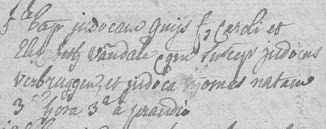
his wife Elizabeth Van Dale baptized their
daughter Catharina Ximenez de la Cruz.
The Godparents were the priest Michel
Van Cauwenberg from Sint Eloois Vijve
and Catarina Blader. The priest was not
sure if he would write a ’b’ or ’v’ at the
beginning of ’Blader’ , which was a typi-
cal problem when dealing with Spanish per-
sons. Blader is a Catalan family.
Figure 37.41: Sint Eloois Vijve, Febru-
ary 3, 1651, the baptism of Judoca
Ximenes de la Cruz (’Judoca Huys’), the
daughter of Carlos Ximenes de la Cruz
(’Carolus Huys’) and Elizabeth Van Daele.
The godparents were Judocus Verbruggen
and Judoca Thomas.
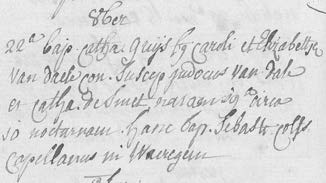
Figure 37.42: Sint Eloois Vijve, October
22, 1653, the baptism of Catarina Ximenes
de la Cruz (’Catharina Huys’), the daugh-
ter of Carlos Ximenes de la Cruz (junior)
and Elizabeth van Daele. The godparents
were Judocus Van Daele and Catharina de
Smet.
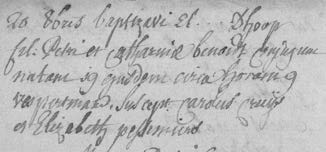
Figure 37.43: Sint Eloois Vijve, Octo-
ber 20, 1641, Carlos Ximenes de la Cruz
(’Carolus Cruys’) is godfather to Elizabeth
Dhoop, the daughter of Pierre Dhoop and
Catharina Benoidt.
The Desclergues of la Villa Ducal de Montblanc, 2nd ed., Omn., VOL. II
© 2024 Nico F. Declercq
654
CHAPTER 37. ANTONI DECLERQUE (DC07) & MARTINA DE LA CRUZ
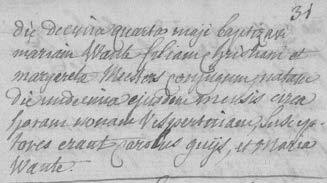
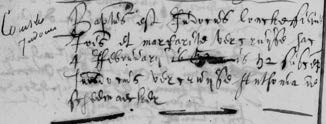
Figure 37.44: Sint Eloois Vijve, May 24,
1645, Carlos Ximenes de la Cruz (’Carolus
Huys’) is the godfather on the baptism of
Maria Wante, the daughter of Christiaen
Wante and Margareta Meesters.
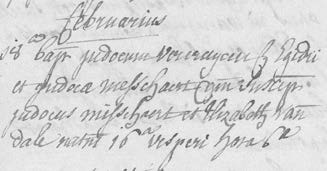
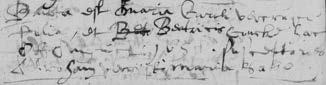
Figure 37.45: Sint Eloois Vijve, Febru-
ary 18, 1652, the baptism of Jose Ximenes
de la Cruz (’Judocus Vercruycen’), the son
of Egidius and Judoca Meschaert. The
godparents were Judocus Meschaert and
Elizabeth van Dale (Carlos Ximenes de la
Cruz junior’s wife).
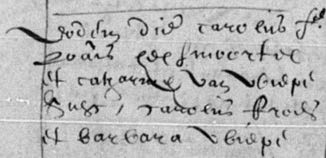
Figure 37.46: Dudzele, May 18, 1655,
the baptism of Carolus Helsmoortel, son
of Joannes Helsmoortel and Catharina
Wiepe.
The godparents were Carlos
Ximenes de la Cruz junior (’Carolus
Krois’) and Barbara Wiepe.
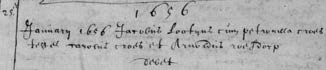
Figure 37.47:
Dudzele, January 25,
1656, the marriage of Petronilla Ximenes
de la Cruz (’Croes’) and Jacobus Lootyns.
The witnesses were Arnoldus Lootyns and
Carlos Ximenes de la Cruz junior (’Caro-
lus Croes’).
Figure 37.48:
Deerlijk, February 4,
1652, the baptism of Judocus Loncke, son
of Joannes Loncke and Margerita Ver-
cruysse.
The godparents were Judocus
Vercruysse and Antonia De Scheemacker.
Figure 37.49: Deerlijk, August 8, 1658,
the baptism of Maria Vercruysse, the
daughter of Carolus Vercruysse and Beat-
rijs Coucke. The godparents were Abra-
ham Vercruysse and Maria Sabbe.
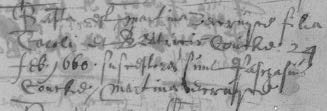
Figure 37.50: 1660 Deerlijk, Martina de
la Cruz (’Vercruyce’) is godmother to Mar-
tina Vercruysse, daughter of Charles Ver-
cruysse and Beatrice Coucke, the godfather
was Paschasius Coucke.
© 2024 Nico F. Declercq
The Desclergues of la Villa Ducal de Montblanc, 2nd ed., Omn., VOL. II
37.4. THE ANCESTRY OF MARTINE VERCRUYCE OR MARTINA DE LA CRUZ, WITH ROOTS IN
SPAIN
655
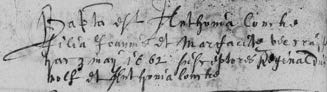
Figure 37.51: Deerlijk, May 3, 1662, the
baptism of Anthonia Coucke, the daugh-
ter of Joannes Coucke and Margarita Ver-
cruysse. The godparents were Reginald
Nolf and Anthonia Lonke.
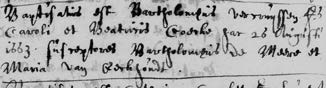
Figure 37.52: Deerlijk, August 26, 1663,
the baptism of Bartholomeus Vercruysse,
son of Carolus and Beatrijs Coucke. The
godparents were Bartholomeus de Meere
and Maria van Eeckhoudt.
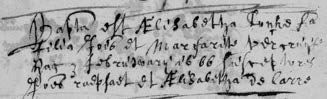
Figure 37.53:
Deerlijk, February 3,
1666, the baptism of Elisabeth Loncke,
daughter of Joannes Loncke and Margareta
Vercruysse. The godparents were Joannes
Raepsaet and Elizabeth de Laere.
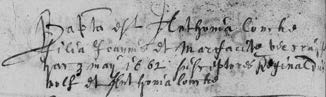
Figure 37.54:
Deerlijk, May 3, 1662,
the baptism of Antonia Coucke, the daugh-
ter of Joannes Coucke and Margareta Ver-
cruysse. The Godparents were Reginaldus
Nolf and Antonia Loncke.
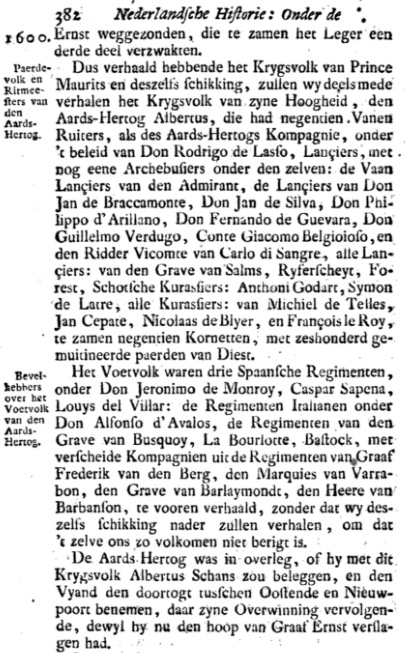
Figure 37.55:
citation of page 382 by
Emmanuel van Meteren ’Historie van de
oorlogen en geschiedenissen der Nederlan-
den vol 7’ , 1755, Gorichem.
A list
of intersting names is shown, which in-
cludes men like de Silva, de Sapena etc.
In Pierre-Victor Palma Cayet 1525-1610,
’Chronologie septenaire de l’ histoire de la
paix entre les roys de France et d’ Espagne’
, Paris, 1605, we also find Colonel Don
Caspar de Sapena. Even the Monroy fam-
ily appears, distant relative of the Descler-
gues through their link with Hernán Cortés
de Monroy.
The Desclergues of la Villa Ducal de Montblanc, 2nd ed., Omn., VOL. II
© 2024 Nico F. Declercq


656
CHAPTER 37. ANTONI DECLERQUE (DC07) & MARTINA DE LA CRUZ
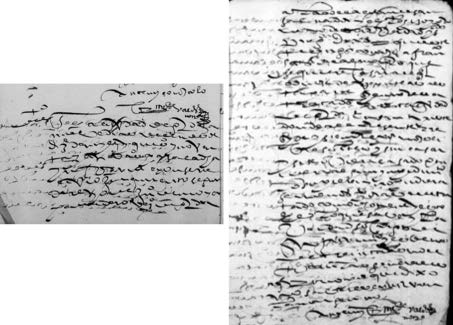
Figure 37.56: 1596, May 8, Diocesis de Granada, Granada, España, marriage (’casado’) of
Pedro Ximenez de la Cruz with Maria de Montoya.
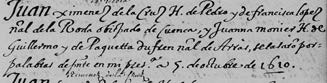
Figure 37.57: 1610, October 5, Ghent
Spaniard Castle, the wedding of Juan
Ximenes de la Cruz (son of Pedro
and Francisca Lopez; Juan was born
at La Roda not far from Cuenca in
Spain, province of Murcia) and Juana
Monier (daughter of Guillaume and Pa-
quetta Dufren, born at Arras in nowadays
France).
Figure 37.58: 1602, March 15, Antwerp San Felipe de Castile, soldier Joannes de la Cruz
died. We assume he was Martina de la Cruz’s uncle.
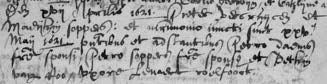
Figure 37.59:
Houtave 1621, May 25,
the wedding of Pedro Ximenes de la
Cruz (’Pieter Vercruycen’) and Maria De
Sapena (’Maeykin Sappena’), the witness
for the groom was Petrus Daens, the wit-
ness for the bride was Pedro De Sapena
(’Petro Soppena’), the third witness was
Bethina de Roo who was the wife of
Lenaert Rollefoort. We also refer to Chap-
ter 48.4 concerning the families de Roo
and Rollefoort.
Figure 37.60: 1601, March 6, Antwerp San Felipe de Castile, the baptism of Juan de la Cruz, son
of Petrus and Maria (de Montoya). Godfather was Martino de Santillana, and godmother was Juana
Cantillens.
© 2024 Nico F. Declercq
The Desclergues of la Villa Ducal de Montblanc, 2nd ed., Omn., VOL. II

37.4. THE ANCESTRY OF MARTINE VERCRUYCE OR MARTINA DE LA CRUZ, WITH ROOTS IN
SPAIN
657
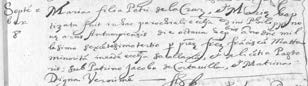
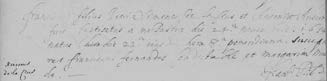
Figure 37.61:
1603, September 8, Antwerp San Felipe de
Castile, the baptism of Maria de la Cruz, daughter of Pedro de la
Cruz and Maria (de Montoya). Godfather was Jacobo de Corav-
illa, and godmother was Digna Vernimé.
Figure 37.62:
1648, June 28, Ghent
Spaniard castle, the marriage of Pedro
Ximenez de la Cruz, a soldier of the cas-
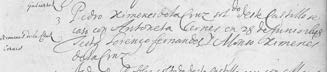
tle, with Antoneta Cernes or Sarva. The
witnesses were Lorenço Fernandes and
Alonso Ximenes de la Cruz.
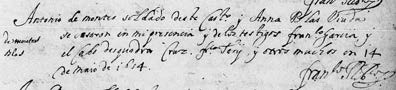
Figure 37.63: 1654, May 14, Ghent Spaniard Castle, the marriage of Antonio de
Montis, a soldier of the castle and widow Anna Blas. Francisco Garcia; the corporal
Francisco Tery of de la Cruz’s squadron, and many others were witnesses.
Figure 37.64:
Ghent Spaniard Castle, 1649, June 15, the baptism of Andres
Ximenez de la Cruz, son of Pedro Ximenez de la Cruz and Antonia de Cerne. The
godfather was Joannes Lefevre, and the godmother was Joanna De pre. The baptist
was priest Juan Fernandez Garcia.
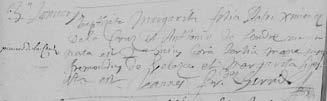
Figure 37.65:
1651, Ghent Spaniard
Castle, the baptism of Margarita Ximenes
de la Cruz, daughter of Pedro Ximenes de
la Cruz and Antonia de la Sierra. The
Godfather was Juan Fernandez De Lara,
and the godmother was Margarita Hes.
The baptist was Juan Fernandez Garcia.
An encounter with Hes is also indicated in
Figure 34.123 on page 560. An entangle-
ment between de la Cruz and Huys was also
shown in Figure 37.40 on page 653.
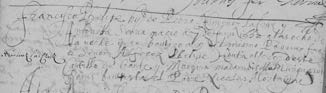
Figure 37.66:
1652, Ghent Spaniard
Castle, the baptism of Francisco Felipe
Ximenez de la Cruz, son of Pedro Ximenez
de la Cruz and Antonetta de la Sierra
(’Sorria’). The godfather was señor Al-
farez Phelipe Houtin, alferez of the castle,
and Madamme Isabelle Guyot. The baptist
was Nicolas Mortaigne, the old chaplain of
the Spaniard castle as explained by Griet
Maréchal in ’De vergeten Gentse parochie
- Het Spaans Kasteel in de 17de eeuw.
Figure 37.67: 1654, November 24, Ghent
Spaniard Castle, the baptism of Fran-
cisco Ximenes de la Cruz, son of Pedro
Ximenes de la Cruz and Antonia de la
Sierra (’Ansert’). The godfather was Fran-
cisco Fernandez Condestable and Mar-
garita Masse.
The Desclergues of la Villa Ducal de Montblanc, 2nd ed., Omn., VOL. II
© 2024 Nico F. Declercq






658
CHAPTER 37. ANTONI DECLERQUE (DC07) & MARTINA DE LA CRUZ
Figure 37.68: 1657, February 25, Ghent
Spaniard Castle, the baptism of Maria
Theresia Ximenes de la Cruz, daughter of
Pedro Ximenes de la Cruz and Antonia
de la Sierra. The godfather was Francisco
Fernandes, and the godmother was Maria
Pinon.
Figure 37.69: 1659, October 23, Ghent
Spaniard Castle, the baptism of Balthasar
Guillermo, son of Pedro Ximenes de la
Cruz and Antonia de la Sierra (’Carida’).
The godfather was Balthasar Guillelmus
Alaert, and the godmother was Joanna
Margareta du Selis.
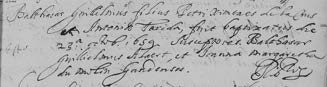
Figure 37.70: 1661, July 17, Ghent Spaniard Castle, the baptism of Juana Mar-
garita Ximenez de la Cruz, daughter of Pedro Ximenes de la Cruz and Antonia de
la Sierra (’Serre’).
Figure 37.71: 1663, October 31, Spaniard Castle of Gent, the burial of Antoneta
Cernes or Antonia de Sarva, wife of sergeant Pedro Ximenes de la Cruz.
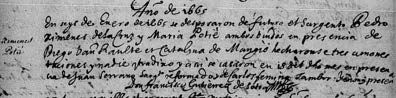
Figure 37.72: 1665, January 16, Ghent Spaniard Castle, the wedding of Pedro
Ximenez de la Cruz and Maria Poitiè (pronounced as Potier in French). Diego
Vanderhaute, Catalina de Mangero, Sergeant Juan Serrano, Carlos Femina, and
don Francisco Gutierrez de Soto were witnesses.
Figure 37.73: 1667, Spaniard Castle in Ghent, the death of Petrus Ximenes de la
Cruz’s son and daughter.
Figure 37.74: 1655, March 21, Ghent Spaniard Castle, the marriage of soldier
Juan Alvares del Valle and Anna de la Cruz.
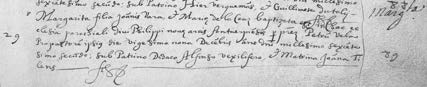
Figure 37.75: 1638, the baptism at San Felipe de Castile in Antwerp, of Elizabeth,
daughter of Francisco Rodrigues from the regiment of Luis de Zuniga, and his wife,
Catharina de la Cruz. The godfather was Don Francisco Gonzales Cortés, and the
godmother was Elisabetha Paez de Mondaca.
© 2024 Nico F. Declercq
The Desclergues of la Villa Ducal de Montblanc, 2nd ed., Omn., VOL. II


37.4. THE ANCESTRY OF MARTINE VERCRUYCE OR MARTINA DE LA CRUZ, WITH ROOTS IN
SPAIN
659
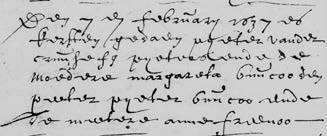
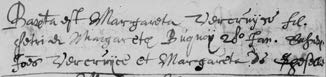
Figure 37.76:
Deerlijk, February 7,
1637, the baptism of Pedro Ximenes de la
Cruz (’Pyeter Vandercruyse’), the son of
Pedro Ximenes de la Cruz (’Pyeter Van-
dercruyse’) and Marguerite Bucquoy. The
godfather was Pierre Bucquoy, and the
godmother was Anne Frenot (’Frenoo’).
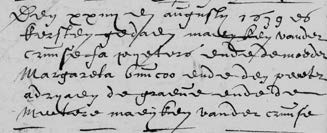
Figure 37.77: Deerlijk, August 24, 1639,
the baptism of Maria Ximenes de la Cruz
(’Maeyken Vander Cryuse), the daughter
of Pedro Ximenes de la Cruz (’Peyeter’)
and Marguerite Bucquoy. The godfather
was Adrianus de Graeve (’Adryaen’), and
the godmother Maria Ximenes de la Cruz
(’Maeyken Vander Cruuse’ , born in 1603
and elder sister of Martina de la Cruz).
Figure 37.78:
Deerlijk, January 28,
1641, the baptism of Margarita Ximenes
de la Cruz (’Margareta Vercruyce’), the
daughter of the daughter of Pedro Ximenes
de la Cruz (’Petrus Vercruyce’) and Mar-
guerite Bucquoy (’Margareta Buquoy’).
The godparents were Juan Ximenes de la
Cruz (’Joannes Vercruyse’ , elder brother
of Martina de la Cruz, born in 1601) and
Margareta de Gheselle.
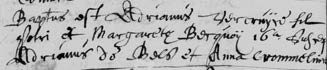
Figure 37.79:
Deerlijk, November 16,
1642, the baptism of Adriano Ximenes de
la Cruz (’Adrianus Vercruyce’), the son of
Pedro Ximenes de la Cruz (’Petrus Ver-
cruyce’) and Marguerite Bucquoy (’Mar-
gareta Becquoy’). The godparents were
Adrianus de Beyls (’de Bels’) and Anna
Crommelinx. The de Bucquoy family is
also connected to de Vos and Taja, as seen,
for instance, in Figure 34.102 on page 557.
Figure 37.80: Spaniard Castle in Ghent, December 19, 1655, the marriage of Juan
de Alarcon, a corporal ’cabo de esquadro’ in the company of Vaandrig Don Duarte
Correa and Anna Declerque (DC07e) (’Ana de Clerc’).
Figure 37.81: 1602, December 29, Antwerp San Felipe de Castile, the baptism of Mar-
garita Vargas, daughter of Juan Vargas and Maria de la Cruz (perhaps a sister of Pedro
de la Cruz). Godfather was Alfonso Vexilifero, and godmother was Martina Juana Tilens
or de Tila.
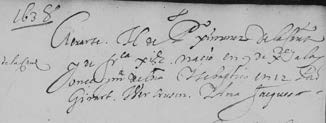
Figure 37.82:
1617, Ghent Spaniard
Castle, the baptism of Alonso Ximenez de
la Cruz, son of Juan (perhaps an uncle of
Martina de la Cruz). His godfather was
Don Alonso de Aranda, and his godmother
was Juana Desclergue (DC06c) (’Juana
Skerkem’).
The Desclergues of la Villa Ducal de Montblanc, 2nd ed., Omn., VOL. II
© 2024 Nico F. Declercq


660
CHAPTER 37. ANTONI DECLERQUE (DC07) & MARTINA DE LA CRUZ
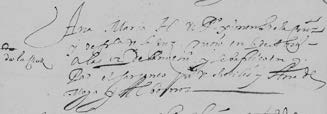
Figure 37.83:
1624, Ghent Spaniard
Castle, the baptism of Margarita Ximenes
de la Cruz, daughter of Juan Ximenez de
la Cruz and Juana Maniera. The godfather
was Alonso Herbas, and the godmother was
Margarita de Bodin (’Bodni’).
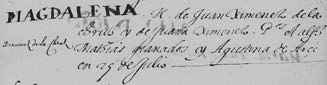
Figure 37.84:
1629, July 29, Ghent
Spaniard Castle, the baptism of Magdalena
Ximenes de la Cruz, daughter of Juan
Ximenes de la Cruz and Juana Ximenes.
The godfather was Alfonso Mateo Grana-
dos, and the godmother was Aguanna de
Arce.
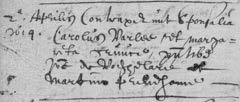
Figure 37.85: Damme, April 2, 1614, the announce-
ment of Margarita de la Cruz (’Margareta Cruuce’) and
Charles Varlée’s wedding. The witnesses were Joannes
de Waghelaere and Martin Seynaeve.
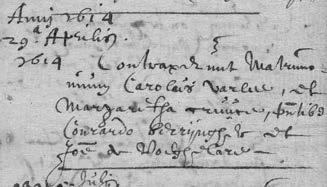
Figure 37.86: Damme, April 29, 1614,
the wedding of Margarita de la Cruz
(’Margaretha Cruuce’) and Charles Var-
lée. Conrad Berenger (’Conrardus Berryn-
gher’) was a witness with Joannes de
Waghelaere.
Figure 37.87:
1663 Kortrijk, March,
the baptism of Joanna Margarita Dallio,
daughter of Spanish soldier (’milites his-
pani’) Fausto Dallio and Selena Fernan-
des. The godfather was Nicolao de Orosco
Signifero, and the godmother was Mar-
garita de la Cruz (’de lecruz’).
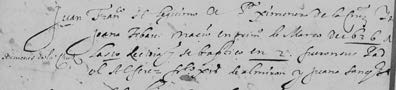
Figure 37.88: 1636, March 1, Ghent Spaniard Castle, the baptism of Juan Fran-
cisco, son of Pedro Ximenez de la Cruz and Joana Tibau. The godfather was Alferes
Francisco Ximenez de Almixan, and the godmother was Juana Sangui.
Figure 37.89: 1638, December 9, Ghent
Spaniard Castle, the baptism of Alexandro,
son of Pedro Ximenes de la Cruz and Fran-
cisca Ximenes. The godfather was Gerardo
de la Cruz (’Girart Vercrusen’), and Anna
Jacobs (’Ana Jacques’) was the godmother.
Figure 37.90: 1641, December 12, Ghent
Spaniard castle, the baptism Anna Maria
Ximenes de la Cruz, daughter of Pe-
dro Ximenes de la Cruz and Francisca
Ximenez de la Cruz. The godfather was
Pedro de Setiles, and the godmother was
Ana de Montoya y Gomez.
© 2024 Nico F. Declercq
The Desclergues of la Villa Ducal de Montblanc, 2nd ed., Omn., VOL. II


37.4. THE ANCESTRY OF MARTINE VERCRUYCE OR MARTINA DE LA CRUZ, WITH ROOTS IN
SPAIN
661
Figure 37.91: 1663, February 28, Kortrijk baptism Theresa Bilarino daughter of
Spanish soldier (’milites Hispani’) Antonio Bilarino and Thérèse Cock, the godfather
was Franciscus de Satiey, godmother was Teresia Pinedes.
Figure 37.92: 1666, March 26, Ghent Spaniard castle, the wedding of Joannes de
los Rios with Maria Francisca Gregori witnesses were Petrus Ximenez de la Cruz
and Guillelmus Dinghelinc (possibly this was ’Willem de Ghellinck’ ).
His father may have been Juan de la Cruz, who died in Antwerp in 1602, in Figure 37.58.
Pedro Ximenes de la Cruz senior was married twice to a ’Maria’ after his first wife Francisca died. The first was Maria de Montoya, and the second was Maria De Sapena or Sopena, with whom he married, in Figure 37.59, on May 25, 1621, at Houtave.
Pedro had children at the end of the 16th century in Spain before he went to Belgium, then in Antwerp early in the 17th century, followed by more children at Dudzele (including Martina) in the 1620s. At an old age (on April 26, 1635), he married Francisca Fibau at the Spaniard castle of Ghent (witnesses were Guillermo Gra and Juan Ruiz), but we have not retrieved any further children.
So, he has married two Francisca’s and two Marias.
In Chapter 34 about Antoni Desclergue (DC06), we also find that the family de Orozco was linked to Martina de la Cruz’s family, who married Antoni Declerque (III) (DC07) at Deerlijk in 1656. Indeed, Martina’s full name was Martina Ximenez de la Cruz, where Ximenez was her grandfather’s and De la Cruz was her grandmother’s.
Martina’s cousin, uncle, or father’s cousin (we could not find any closer identification) was Joan Jeroni de la Cruz y Orozco, a captain in the Spanish army who lived until 1677. He married Gracia de Bermudez, the daughter of Luis Cordobes y Hurtado de Mendoza and Maria de Melo Cabral y Martin Lozano. A baptism is shown at Harelbeke, in 1650, of Maria Joanna de Benaventa, Dona Anna de Orozco’s daughter, in Figure 34.106 on page 557.
There were many Orosco’s at the Parish of San Felipe de Castilla in Antwerp decades before.
37.4.3 On Martina’s Siblings
In Antwerp, Pedro Ximenes de la Cruz senior and Maria de Montoya had the following children:
-Juan Ximenes de la Cruz, born in 1601, his godfather was Martino de Santillana, and his godmother was Juana Cantillens;
- Maria Ximenes de la Cruz, born in 1603, her godfather was Jacobo de Coravilla, and her godmother was Digna Vernimé.
Elsewhere, they had the following child:
-Catharina Ximenes de la Cruz was born around 1615.
In Dudzele, Pedro Ximenes de la Cruz senior and Maria De Sapena had the following children:
-Pedro Ximenes de la Cruz or ’Petrus,’ who would have a military career at the Spaniard Castle of Ghent as Pedro Ximenes de la Cruz junior and marry Antonia Sarva. Pedro was born in Dudzele in 1623, and his godfather was Joannes Wterwulghe, his godmother Elisabeth Soppers or de Sapena;
-Martina Ximenes de la Cruz, the person we are focussing on here, was born in Dudzele in 1624. Her godfather was Paulus Deckers, and her godmother was Martina, wife of Jan Declercq (DK03dya). She is described above, at the beginning of Chapter 37.4.
-Lorenzo Ximenes de la Cruz (’Lauretius’), born in Dudzele in 1627, his godfather was Joannes Van Heysterghem, and his godmother Lauretia Rose or Rosa;
-Anna Ximenes de la Cruz, born in Dudzele in 1628, her godfather was Franciscus Soppers or de Sapena, and her godmother Catharina Gheleyns,
-Antonia Ximenes de la Cruz, born in Dudzele in 1630, her godfather was Antonius Vanden Borne, and her godmother Paulina, wife of Jacobus de Meijer,
When stationed in Harelbeke, Pedro Ximenes de la Cruz married Margarita Bucquoy and had the following children baptized in Deerlijk:
- Pedro Ximenes de la Cruz was baptized in Deerlijk on February 7, 1637. His parents were Pedro Ximenes de la Cruz and Marguerite Bucquoy. His godparents were Pierre Bucquoy and Anne Frenoo.
-Maria Ximenes de la Cruz was born in Deerlijk on August 24, 1639, as the daughter of Pedro Ximenes de la Cruz and Marguerite Bucquoy. Her godparents were Adrianus de Graeve and Maria Ximenes de la Cruz. The family de Graeve also appears in Figure
48.35 on page 904, in descendants of Martina de la Cruz.
-Margarita Ximenes de la Cruz was born in Deerlijk on January 28, 1641, as the daughter of Pedro Ximenes de la Cruz and Marguerite Bucquoy. Her godparents were Juan Ximenes de la Cruz and Margareta de Gheselle.
-Adriano Ximenes de la Cruz was baptized in Deerlijk on November 16, 1642, as the son of Pedro Ximenes de la Cruz and Marguerite Bucquoy. The godparents were Adrianus de Beyls and Anna Crommelinx.
The nearest family at that time were their relatives at the Spanish fortification of Sint Eloois Vijve, described in Chapter 37.4.1.
37.4.3.1 Joannes Ximenes de la Cruz
Juan de la Cruz was the son of Petrus and Maria de Montoya. His baptism is shown in Figure 37.60.
The Desclergues of la Villa Ducal de Montblanc, 2nd ed., Omn., VOL. II
© 2024 Nico F. Declercq
662
CHAPTER 37. ANTONI DECLERQUE (DC07) & MARTINA DE LA CRUZ
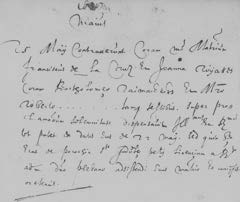
Figure 37.93: Brussels, Saint Jacques op de Couden-
berg, May 25, 1638, the marriage of Francisco de la Cruz
and Joanna Royakes.
37.4.3.2 Maria Ximenes de la Cruz
Maria was the daughter of Pedro Ximenes de la Cruz senior and Maria de Montoya and was a half-sister of Martina de la Cruz, our ancestor. She was born in Antwerp in 1603, in Figure 37.61.
37.4.3.3 Pedro Ximenes de la Cruz
Pedro was a son of Pedro Ximenes de la Cruz senior and Maria De Sapena and was Martina de la Cruz’s brother. He was born in Dudzele in 1623 and married at Ghent in 1648 to Antoneta Cernes, in Figure 37.62.
We discovered Pedro Ximenez de la Cruz, known as el cabo dequadra, playing a pivotal role as the witness of a momentous wedding on May 14, 1654, at the Spaniard Castle in Gent. The wedding was between Antonio de Montis and Anna Blas, as depicted in Figure 37.63. The other witness was Francisco Garcia. We found several children of Pedro Ximenez de la Cruz and Antoneta Cernes or Sarva: Andres (1649, in Figure 37.64), Margarita (1651, in Figure 37.65), Francisco Felipe (1652, in Figure 37.66), Francisco (1654, in Figure 37.67), Maria Theresia (1657, in Figure 37.68), Balthasar Guillermo (1659, in Figure 37.69) and Juana Margarita (1661, in Figure 37.70). The mother’s name appears difficult for the priest because it is written inconsistently: Cernes, Sarva, Cerne, de la Sierra, Ansert, Carida, and Serre.
Antoneta Cernes or Antonia Sarva, wife of Pedro Ximenes de la Cruz junior, died in October 1663 at the Spaniard Castle of Gent in Figure 37.71.
On January 18, 1665, Pedro Ximenez de la Cruz married again, in Figure 37.72, when he was already a sergeant, this time to Maria Poitié, at the Spaniard Castle of Ghent. The witnesses were Juan Serrano and Carlos Femina. Maria Poitié was probably Marie Putiers, a local form of Marie Du Puich or Maria Vandeputte, as is explained in Chapter 29.8.3 in the context of the construction of the chapel at Deerlijk.
In 1667, a heart-wrenching tragedy befell Pedro’s family, claiming the lives of two of his beloved children, as shown in Figure 37.73.
The cause of this devastating loss could have been a disease or the brutalities of warfare. The latter seems more plausible as this was during the devolution war, as detailed in Chapter 8.12.1 and Chapter 34.10.
37.4.3.4 Anna Ximenes de la Cruz
Anna de la Cruz, sister of Martina, married at Gent, in the Spaniard Castle, in 1655, to Juan Alonso del Valle, a soldier, in Figure
37.4.3.5 Catarina Ximenes de la Cruz
Catarina was born around 1615 as the daughter of Pedro Ximenes de la Cruz senior and Maria de Montoya. She was a half-sister of Martina. Her daughter Elizabeth was baptized in 1638 in Antwerp in Figure 37.75.
37.4.3.6 Pedro Ximenes de la Cruz
Pedro Ximenes de la Cruz was baptized in Deerlijk on February 7, 1637, in Figure 37.76. His parents were Pedro Ximenes de la Cruz and Marguerite Bucquoy. His godparents were Pierre Bucquoy and Anne Frenoo. The family Frenoo/Frenot also appeared as a witness at Sint Eloois Vijve at the wedding in 1641, in Figure 37.39 on page 653, of Jose Ximenez de la Cruz.
37.4.3.7 Maria Ximenes de la Cruz
Maria Ximenes de la Cruz was born in Deerlijk on August 24, 1639, in Figure 37.77, as the daughter of Pedro Ximenes de la Cruz and Marguerite Bucquoy. Her godparents were Adrianus de Graeve and Maria Ximenes de la Cruz.
37.4.3.8 Margarita Ximenes de la Cruz
Margarita Ximenes de la Cruz was born in Deerlijk on January 28, 1641, in Figure 37.78, as the daughter of Pedro Ximenes de la Cruz and Marguerite Bucquoy. Her godparents were Juan Ximenes de la Cruz and Margareta de Gheselle.
37.4.3.9 Adriano Ximenes de la Cruz
Adriano Ximenes de la Cruz was baptized in Deerlijk on November 16, 1642, in Figure 37.79, as the son of Pedro Ximenes de la Cruz and Marguerite Bucquoy. The godparents were Adrianus de Beyls and Anna Crommelinx. The family de Beyls would reappear later because Joan Declergz (DC08c) would later, in 1688, marry Joanna De Beyls. One of their sons, born in Deerlijk in 1706, would consequently be called ’Adrianus Declercq’ (DC08cy3).
© 2024 Nico F. Declercq
The Desclergues of la Villa Ducal de Montblanc, 2nd ed., Omn., VOL. II
37.5. MARRIAGE OF ANTONI DESCLERGUE (DC07) AND MARTINA DE LA CRUZ
663
37.4.4 An Early Connections Between the de la Cruz and Desclergue Families
As described above, in 1624, when Martina de la Cruz was born, her godmother was Martina, Jan Declercq’s (DK03dya) wife, a stepbrother of Antoni Desclergue (DC06). Even earlier, we found a connection between Desclergue and de la Cruz. Indeed, as can be read in Figure 37.82 (or 29.141 on page 430), Juana Desclergue (DC06c), sister of Antoni (DC06), served as godmother to Alonso, a son of Juan Ximenez de la Cruz. This Alonso would marry in 1639, at the place of his baptism, Ana Declerque (DC07e), a daughter of Antoni (DC06), described in Chapter 36.3. This Ana, born in 1621, would, in 1656, become the sister-in-law of Martina de la Cruz.
Ana (DC07e) would later marry again, after Alonso’s death, to Juan de Alarcon, a corporal, in 1656 at the Spaniard Castle of Ghent, in Figure 37.80.
37.4.5 Other Relatives of Martina
In 1602, we found Maria de la Cruz in Figure 37.81. Interestingly, the de Tila family also appears in 1644 in Figure 37.111 on page
Juan Ximenes de la Cruz has a son, Alonso, for whom Juana Desclergue (DC06c) served as godmother in 1617, in Figure 37.82.
This Alonso would marry in 1639, at the place of his baptism, Ana Declerque (DC07e), explained in Chapter 36.3. Note that this Ana would, in 1656, become the sister-in-law of Martina de la Cruz.
As shown in Chapter 37.4.3.3, before his death, Alonso Ximenes de la Cruz had been a witness on Pedro Ximenes de la Cruz’s wedding with Antoneta Cernes or Sarvas, together with Lorenço Fernandez, at the Spaniard Castle of Gent, on June 28, 1648.
Juan Ximenes de la Cruz, the father of Alonso (1617), had two daughters, Margarita (1624) and Magdalena (1629). Their baptism is shown in Figures 37.83 and 37.84.
Martina de la Cruz’s father may have had a sister, Margarita de la Cruz. This Margarita married at Damme on April 29, 1614, as ’Margaretha Cruuce’ to Charles Varlée, in Figures 37.85 and 37.86. Conrad Beringer (’Conrardus Berryngher’), Joannes de Waghelaere, and Martinus Seynaeve were witnesses.
Margarita de la Cruz appeared in Kortrijk in 1663 as godmother to the child of a Spanish soldier in Figure 37.87.
In the same year, 1667, when Pedro Ximenes de la Cruz, explained above, lost two children, there were many casualties at the Spaniard Castle. For instance, Anna Rustine died on May 16. She was the wife of Juan Durán, who, ten years earlier, served as a witness with Pedro Ximenez de la Cruz on the wedding of Domingo Rey and Maria Schelebeqe on August 17, 1653, at the Spaniard Castle.
We found more records of interest that we could only sometimes situate precisely. They are shown in Figures 37.88, 37.89, 37.90
and 37.91. The latter reveals a link between the Montoya family and De La Cruz.
In Figure 37.92, we find Willem de Ghellinck, husband of Maria Seynave and an acquaintance of Jan Montens and Antoni Desclergue, as described in Chapter 49 about the chapel in Deerlijk and found in the baptism of his daughter Beatrice de Ghellinck at Deerlijk on May 1, 1635, to whom Beatrice Declercq (DK02byx), wife of Antoni Desclergue, served as godmother.
Francisco de la Cruz married Joanna Royakes in Brussels in 1638, shown in Figure 37.93 on page 662.
IKIZITHIER
37.5 Marriage of Antoni Desclergue (DC07) and Martina de la Cruz
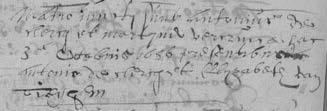
Figure
37.94:
Deerlijk, October 3,
1656, the wedding of Antoni Declerque
(III) (DC07) (’Antonius de clercg’) and
Martina Vercruyce (’Martyne Vercruice’),
Deerlijk, 1656. The witnesses were Antoni
Desclergue (II) (DC06) (’Antonio de cler-
cgz’) and Elizabeth van Tieghem (’Elyza-
bete van Tiyhem’).
The wedding of Antoni Declerque (DC07) and Martina de la Cruz in Figure 37.94, was in 1656 at Deerlijk, Belgium. Don Antoni Declerque’s (III) (DC07) father, Don Antoni Desclergue (II) (DC06), was a witness together with Elizabeth Van Tieghem.
Although Martina de la Cruz resided in Deerlijk or Harelbeke with her father, Pedro Ximenes de la Cruz, and stepmother, her nearest family resided in Sint Eloois Vijve at the Spanish fortress. Her witness, Van Tieghem, came from there. Later, she would also have a godparent for one of her children, called ’Tila,’ also from Sint Eloois Vijve.
Elizabeth van Tieghem married at Deerlijk in 1649, in Figure 37.95, to Judocus De Meere; witnesses were Bartholomeus De Meere and Anna De Mayer. In 1656, at Deerlijk, Martina Vercruyce was godmother to Petrus De Meere, son of Judocus De Meere and Elizabeth Van Tieghem. We have not found death certificates or wedding certificates in Deerlijk for these De Meeres and Van Tieghems. Probably, they lived only temporarily at Deerlijk, shown in Figure 37.96. There were Vercruysses and Van Tieghems in the area of Deerlijk, but we did not find any connections. Elizabeth Vantieghem likely lived in Sint Eloois Vijve, as we saw this family there, too, in a relationship with the de la Cruz family. For instance, on May 7, 1654, Margareta Van Tieghem served as a Godmother to Carlos Tila (’Carolus Tydthadt’). On March 30, 1651, Judocus Vantieghem served as godfather, again at Sint Eloois Vijve, of David Vermees. Initially, however, Vantieghem likely originated in Kortrijk.
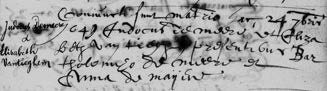
Figure
37.95:
Deerlijk, September
24, 1649, the marriage of Elizabeth
Vantieghem and Judocus de Meere. The
witnesses were Bartholomeus De Meere
and Anna de Maye.
The Desclergues of la Villa Ducal de Montblanc, 2nd ed., Omn., VOL. II
© 2024 Nico F. Declercq
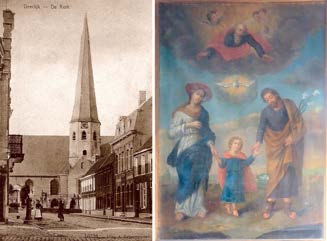
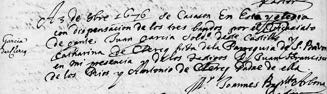
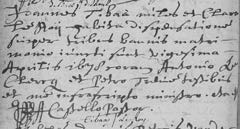
664
CHAPTER 37. ANTONI DECLERQUE (DC07) & MARTINA DE LA CRUZ
Figure 37.96: Deerlijk, ’Kerkplein’ with
Saint Columba church. Right, we observe
a painting of the Holy Family with angels,
(17th-century painting), inside the church.
(Declercq de Silva Archive)
Figure
37.97:
November 3, 1676,
Spaniard Castle in Ghent.
Marriage
of Joana Catharina Desclerque (DC08b),
daughter of Antoni Declerque (DC07),
with a Spanish soldier Juan Garcia. The
witnesses were Don Juan Francisco de
Los Dios and Antoni Declerque (DC07)
(’Antonio De Clerq’) or Antoni Desclergue
(DC06).
37.6 Their Residence in Ghent during the French Occupation of the Castellany
of Kortrijk and the Dutch War (1672-1679)
In Chapter 34.10, we previously introduced Antoni’s father, Antoni Desclergue (DC06), focusing on the Kortrijk-Harelbeke-Deerlijk area. Here, we turn our attention to Ghent, where the Desclergue family resided until the city was conquered by Louis XIV of France in 1678. Evidence of their presence and the events during this period is depicted in Figures 37.97 and 37.98.
Throughout this book, the Desclergue family maintains close ties with the Spaniard Castle of Ghent. When the French forces captured the Castellany of Kortrijk, the Desclergues retreated to Ghent, returning only after peace was established. This fragile peace was disrupted by the outbreak of the Dutch War in 1672, which had significant repercussions for the Spanish presence in Ghent.
During this conflict, there were numerous casualties in Ghent, including relatives of Martina de la Cruz, the wife of Antoni Declerque (DC07). As detailed in Chapter 37.4, 1667 was a challenging year for Spanish soldiers in Ghent. Martina de la Cruz lost several relatives, including two descendants of Pedro Ximenes de la Cruz, who died in hostilities between the French and the Spanish near the border between France and the Spanish Netherlands.
The Dutch War (1672-1679) saw the Castellany of Kortrijk under French control. The Spanish allied with the Dutch to repel the French forces.
During this period, the records of Antoni Desclergue (DC06) and his son Antoni Declerque (DC07) disappear, suggesting they fled to Ghent. They remained there until the French forces withdrew in 1679, residing near the Spaniard Castle at Sint Bavo. Notably, the eldest daughter of Antoni Declerque (DC07) and Martina de la Cruz married Juan Garcia in 1676 at the Spaniard Castle (Figure
37.97). Following Garcia’s death, she married Joannes de Vos in Harelbeke in 1685.
In 1672, hostilities between France and the Dutch States resumed, with the Spaniards and the Southern Netherlands siding with the Dutch. By autumn 1673, Flanders was engulfed in the war. According to a decree from the French king on March 14-15, 1673, Harelbeke and other regions were required to provide substantial logistical support to reinforce Kortrijk and supply provisions.
André Woestijn extensively documents this information in his work on Harelbeke during the Spanish period3.
In May 1673, King Louis XIV camped near Harelbeke with 46000 French soldiers, positioning his headquarters between Kortrijk and Harelbeke.
The French forces frequently attacked Spanish-held areas, creating significant turmoil. On September 11, 1673, Harelbeke was permitted to confiscate supplies to support French troops, reflecting the strained resources and tensions of the period. By 1676, Harelbeke faced fines and the imprisonment of its officials for withholding Spanish soldiers.
The French and Spanish armies levied contributions, exacerbating the economic strain on local communities. Payments to Spain were made in Ghent, while contributions to the French were made in Kortrijk. The financial burdens and wartime pressures on notable families were immense, with local officials like Rooze and the mayor’s son facing imprisonment due to late payments.
In May 1678, Juan de Montoya, a relative of Felipa de Montoya, drowned in the Leie River at Sint Eloois Vijve, an incident detailed Figure 37.98: Wedding certificate, at Ghent on April
20, 1678, of Clara Le Roy and soldier (miles) Joannes
Tibau. The witnesses were Petrus Treue and Antoni De-
sclergue (DC06) or Antoni Declerque (DC07) (Antonio
Le Clercg)
3André Woestijn, ’Harelbeke in de Spaanse tijd, 1585-1713,’ De Roede van Harelbeke (De Leiegouw), nr 14, 1994.
© 2024 Nico F. Declercq
The Desclergues of la Villa Ducal de Montblanc, 2nd ed., Omn., VOL. II
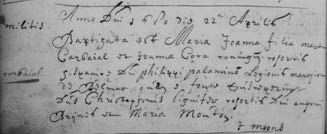
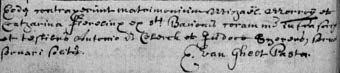
37.7. THE FRENCH RAID OF 1681-1685
665
Figure 37.99:
1680, April 20, Kor-
trijk, Saint Martinus Church, the baptism
of Maria Joanna Carbaial, the daughter
of Spanish soldier Martin Carbaial (this
family is also described in Chapter 54.3)
and Joanna Costa. Martin was a sol-
dier in the Spanish regiment of Philippus
Palamino in the legion of Marojion de Bel-
mar. The godfather was Christoforius Sig-
nifero from Antoni O’ Brien’s company
(’Antonius Brynes’), and the godmother
was Maria de Montoya (’Maria Montoy’).
Figure 37.100: Ghent, June 30, 1686, at Saint Bavo, the wedding
of Catharina Fierlinx from Saint Bavo, with Miguel Monroy (’Michael
Morroy’). The witnesses were Antoni Declerque (DC07) (’Antonius De
Clerck’) and Judocus Scherens.
in Chapter 29.10.8.1. Around the same time, Pere Declerque (DC07d) had his daughter Juana Felipa Declergz (DC07dx1) baptized in Sint Eloois Vijve during a passage through the village amidst the war.
By November 1678, Harelbeke negotiated the quartering of French soldiers from the Duke of Trymolle, providing supplies to avoid further conflict. Tax records from this period show substantial military expenses, with war costs consuming a significant portion of the city’s budget.
Louis XIV’s strategic capture of Ghent in 1678 is described in detail by Ronald de Buck4. To understand this event, we must consider the broader context of the Franco-Dutch War.
In 1672, France attacked the Dutch Republic, targeting critical cities like Maastricht and Utrecht. Despite initial successes, the French faced setbacks, including the Dutch capture of Bonn in 1673.
By 1677, Louis XIV learned of William III of Orange’s marriage to Mary Stuart, positioning him as a future King of England. To preemptively weaken the Dutch, Louis XIV aimed to capture Ghent, a strategic and economic hub. He orchestrated diversions by besieging Ypres and Saint-Ghislain, spreading Spanish forces thin and leaving Ghent vulnerable.
Ghent’s defense, led by Francisco de Pardo with just 500 men, was quickly overwhelmed by a French force of 67 battalions and 84
cavalry squadrons. The French siege began on March 3, 1678, and the city surrendered on March 9. Despite efforts to flood the surrounding areas, Ghent’s defenses crumbled under the French onslaught, and the Spaniard Castle held out only slightly longer.
Following the capture, the French occupation pressured the Dutch into signing a separate peace treaty at Nijmegen on August 10, 1678. The Spanish followed suit on September 17, ending the conflict and allowing the Desclergue family to return to their homes.
As detailed in Chapter 34.11, Antoni Desclergue (DC06) visited Montblanc for a wedding in 1679, although it is unclear if his son Antoni (DC07) accompanied him.
The detailed account of Ghent’s capture by J. E. Neve5 highlights the recurring nature of French occupations in Flanders. By 1680, the Spanish military presence around Kortrijk was evident again, as shown in Figure 37.99.
This historical narrative underscores the tumultuous period the Desclergue family endured and provides a comprehensive understanding of their movements and challenges during the late 17th century.
37.7 The French Raid of 1681-1685
As chronicled by André Woestijn in his work 6, the late 17th century was a tumultuous period for Harelbeke. In 1681, French forces from the garrisons of Menin and Ypres looted the municipalities of Ingelmunster and Harelbeke. This led to the extended guarding of Harelbeke for four additional months between 1681 and 1682. On December 2, 1681, French troops captured key civic leaders, including the bailiff, provost, mayor, and alderperson in Menin, Cambrai, and Lille. The city made a lump sum payment for their release. However, it wasn’t until July 13, 1685, that the town and parish sought compensation from Spain’s intendant for the French reprisal of 1681, indicating the city’s ongoing struggle.
On March 5, 1682, a loan of £150 was granted to the city. By September 4, 1683, the situation had deteriorated further as French troops under Duke De Boufflers occupied Harelbeke, destabilizing the surrounding countryside. That same month, after a Te Deum service in Kortrijk (which had not yet fallen into French hands), armed civilians moved outside the new gate (Gentpoort next to the citadel) and discharged large artillery on the French forces in Harelbeke.
The military actions escalated on November 3, 1683, when a significant French army of 40000 men, led by Marshal d’Humières, approached Kortrijk, forcing its surrender by November 4. Only the citadel of Kortrijk remained under Spanish control, but it, too, fell on November 6. Kortrijk would remain under French occupation until 1685.
On November 13, a report by Velhoen and Theodore Corture detailed the extensive war damage in Harelbeke. The Grote Kalseide road was destroyed, its sides eroded by the prolonged presence of French troops and heavy rains. Additional mud was used to reinforce the edges. Three wells were demolished, the lead gutter from the town hall was stolen by soldiers, and many roof slates were shattered. The Leiestraat turned into a mud puddle, worsened by horses going to drink at the horse trough, which was also damaged.
In response to these calamities, the inhabitants began selling furniture stolen and abandoned by soldiers. The dire conditions and 4Ronald de Buck, ’La (sur)prise de Gand: Louis XIV bezet Gent onverhoeds (1678-1679),’ Ghendtsche Tydinghen 26(1), 1997.
5J. E. Neve, ’Gand sous l’occupation de Louis XIV, 1678-1679, 1701-1706, 1708,’ Gand, 1929.
6André Woestijn, ’Harelbeke in de Spaanse tijd, 1585-1713,’ De Roede van Harelbeke (De Leiegouw), nr 14, 1994.
The Desclergues of la Villa Ducal de Montblanc, 2nd ed., Omn., VOL. II
© 2024 Nico F. Declercq
CHAPTER 37. ANTONI DECLERQUE (DC07) & MARTINA DE LA CRUZ
the theft of much of the church’s silverware and ornaments prompted the city to borrow 6000 guilders, for which the bishop granted permission on May 17, 1686.
During this period, the city also experienced additional raids. On May 23, 1684, some Spaniards raided the houses of Proost Van Cauteren and Canon Vercruysse at 3 a.m., taking them as prisoners to Ghent. Between 1683 and 1685, Harelbeke required guarding for another 119 days.
There were also reports of cattle disease in and around Harelbeke. On August 11, 1685, the church’s chalices and sacred vessels were stolen and never recovered. In 1685 and 1686, Harelbeke continued to experience problems with soldiers from the regiment of Baron Saint-Jean and Simon Vandenbulke, causing disturbances, notably in Adriaen Lemayeur’s inn D’ halve Maan.
The Peace of Regensburg concluded on August 16, 1686, and finally brought a semblance of reconciliation. During this period, Antoni Declerque (DC07) is believed to have appeared as a witness at the wedding of a Monroy distant relative in Ghent in 1686, an event illustrated in Figure 37.100.
This historical account of Harelbeke during the Spanish period underscores the severe impact of military conflicts on local communities. It highlights the resilience and challenges faced by its inhabitants amidst the broader geopolitical struggles of the era.
37.8 The Nine Year War of 1688-1697
André Woestijn’s valuable work7 provides a detailed account of the turbulent period during the Nine Years’ War (1688-1697), highlighting the significant impact on the castellany of Kortrijk and, particularly, Harelbeke. Despite its indirect involvement, the region faced numerous challenges, including military encampments, contributions to occupying forces, and widespread looting and destruction.
The Nine Years’ War began in 1688, resulting in extensive troop movements and encampments in the Castellany of Kortrijk. Although the region remained relatively quiet compared to other areas, it was compelled to contribute to Spanish and French forces due to its occupied status. On April 21, 1689, the chapter of Harelbeke was informed of the renewed hostilities between France and Spain, leading to the suspension of council meetings the following day. Subsequently, the church’s most valuable documents were relocated to Kortrijk and Ghent for safekeeping.
In August 1689, the Allied forces of Spain, Bavaria, Germany, Savoy, and the Dutch States camped near Kortrijk, imposing significant burdens on Harelbeke’s citizens for provisions. From September 1-5, 1689, the Allies occupied the home of Rogier Decock, the city’s clerk, who later sought compensation for storing tents and supplying firewood and straw. During this period, Joos Boudré was on guard duty for 127 days due to the threat of ’roguish’ individuals.
The Allies departed on June 15, 1690, only to be replaced by French troops under Marshal d’Humières, who demanded forage and horses from Ingelmunster Castle. On June 20, 1690, Marshal d’Humières left Harelbeke for Oostrozebeke, leaving behind seven burnt houses, including notable inns such as the French Shield (’Het Frans Schild’) and the Swan (’De Zwaan’).
French forces continued to pose a threat, exemplified by the looting at Heule on September 25, 1692, and subsequent actions to protect church property. On October 28, 1692, the council decided to use the choir and crypt of St. Peter’s for storing clergy furniture, while the Chapel of Our Lady was reserved for chaplains.
In January 1693, a division under Duke de Villars briefly occupied Harelbeke, demolishing houses for firewood before leaving. By July 21, 1693, the existing bridges were destroyed by order of Vauban, necessitating the construction of a new bridge, which fell into disrepair by 1695, leading the council to implement a ferry service.
The situation remained unstable through 1694, with the Count of Luxembourg’s troops camping in the region and requiring preservation letters to safeguard the church and refugees’ furniture. The town and chapter sought a Sauvegarde from the French Duke de Luxembourg, and war expenditures constituted a significant portion of the city’s budget. The town imposed fees on strangers seeking refuge with their animals to offset the costs.
In late August 1694, French soldiers occupied the Harlembois estate, engaging in widespread looting. By October 15, 1694, the Allied army’s withdrawal from Kruishoutem indicated the imminent departure of the French forces.
On January 25, 1696, Harelbeke reported significant losses to the castellany of Kortrijk, including damage to property and supplies provided to Marshal de Villeroy’s guards. Serious arson incidents occurred in 1696 and 1697, adding to the town’s woes. On Saint Hubert Day, Betken Stalins was killed in the church, highlighting the pervasive violence.
In July 1697, the French De Catinat garrison caused further damage before departing for Kortrijk. The Peace of Rijswijk, signed on September 20, 1697, temporarily ended the conflict, with France ceding the Southern Netherlands to Austria. However, the peace was short-lived, and the region would soon face new challenges.
In 1698, the bridge in Harelbeke, previously demolished by French troops under Marshal Boufflers’ orders, was repaired, marking a small step towards recovery.
The Nine Years’ War had a profound impact on Harelbeke and its surroundings, with the region enduring significant hardships, including military occupation, economic strain, and widespread destruction. Woestijn’s meticulous documentation provides invaluable insight into this tumultuous period, highlighting the resilience and fortitude of the local population in the face of relentless conflict.
37.9 Their Offspring
Antoni Declerque (III) (DC07) and Martina de la Cruz had the following children:
Joanna Declercgz (DC08b) (1657), Joan Declercgz (DC08c) (1661), Maria Declercgz (DC08d) (1665), Maria Catherina Declercgz (DC08e) (1669) (She died at Deerlijk in 1684) and Pere (DC08) (1673).
The descendants are shown in Figure 37.101.
So, Martine Vercruyce (de la Cruz), born in 1624, married in 1656 at the age of 32, and had five children from 1657, at the age of 33, one every four years, until 1673, at the age of 498. Furthermore, she appears as a witness on her adult children’s certificates until 1693 at 69.
Her children’s godfathers were, respectively, Don Antoni Desclergue (II) (DC06), Abraham Veriest, Bartholomeus De Meere, Pere Declerque (DC07d), and Charles Vercruysse.
Their Godmothers were Joanna Suchet or Sucaet, who probably had Spanish roots, Elizabeth De Lara, Maria Declercq (DK03dybx2
or DK03dybx5), Catherine Vanwinsberghe and Maria Declercq (DK03dybx2 or DK03dybx5).
7André Woestijn, ’Harelbeke in de Spaanse tijd, 1585-1713,’ De Roede van Harelbeke (De Leiegouw), nr 14, 1994.
8The age of 49 is at the very high end of the Gaussian curve of mothers’ age in our ancestry tree, but it is not unique.
© 2024 Nico F. Declercq
The Desclergues of la Villa Ducal de Montblanc, 2nd ed., Omn., VOL. II
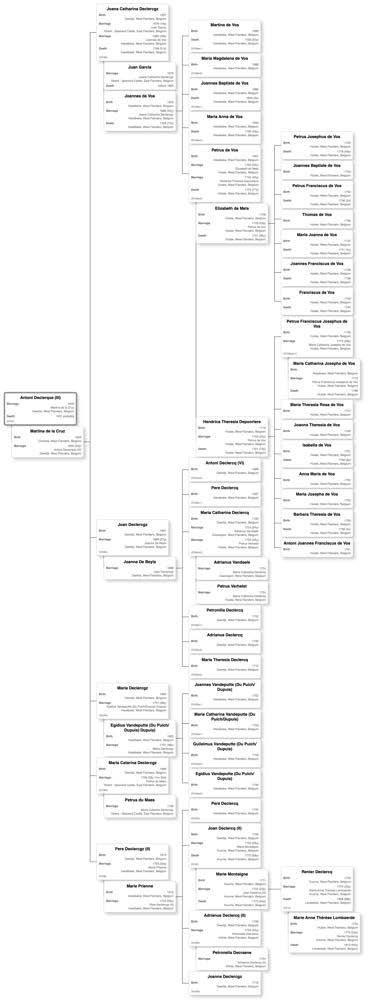
37.9. THEIR OFFSPRING
667
Figure 37.101:
Three descending generations of Antoni Declerque (III)
(DC07).
The Desclergues of la Villa Ducal de Montblanc, 2nd ed., Omn., VOL. II
© 2024 Nico F. Declercq
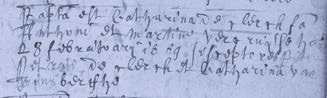
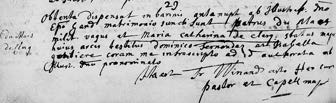
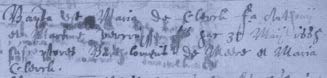
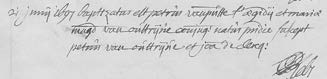
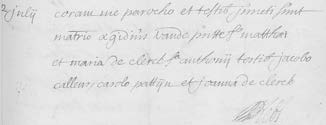
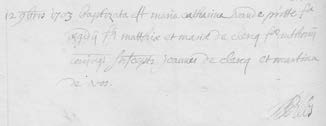
668
CHAPTER 37. ANTONI DECLERQUE (DC07) & MARTINA DE LA CRUZ
Figure 37.102:
Deerlijk, 1669, Febru-
ary 28, the baptism of Maria Catarina
Declercgz (DC08e), daughter of Antoni
Declerque (DC07) and Martine de la
Cruz, the godfather was Pere Declerque
(DC07d), the godmother was Catharina
Vanwinsberghe.
Figure 37.103: 1706, September 29, Ghent Spaniard Castle, the wed-
ding of Pedro Masse (’Petrus Du Maes’) with Maria Catarina Declergz
(DC08e) (’Maria Catharina De Clerq’). The witnesses were Dominico
Fernandez and Isabelle Gutierre. The marriage is also shown in Figure
29.135 on page 427 in Chapter 29.8.4.
Figure 37.104: Deerlijk, May 30, 1665,
the baptism of Maria Declercgz (DC08d)
(’Maria de Clerck’), daughter of An-
toni Declerque (DC07) (’Anthonius De
Clerck’) and Martina de la Cruz (’Mar-
tine Vercruysse’).
The godfather was
Bartholomeus De Meere, and the god-
mother was ’Maria Clerck’ , probably
not Maria Declerque (DC07b) because the
priest used a different spelling. Perhaps
the godmother was related to Beatrice De-
clercq (DK02byx), the grandmother of the
child.
Figure 37.105:
Harelbeke, June 21,
1697, the baptism of Pierre Du Puich
(’Petrus Van Putte’), son of Egidius Du
Puich and his first wife, Maria Mag-
dalena Van Outtryve. The godfather was
Pierre Van Outtryve, and the godmother
was Joana Catharina Declercgz (DC08b)
(’Joanna Declercq’).
Figure 37.106: July 2, 1701, Harelbeke,
the marriage of Maria Declercgz (DC08d)
(’Maria De Clerck’) and Egidius Du Puich
(’Egidius Vande Putte’). Jacques Callens,
Charles Patin and Joana Catharina De-
clercgz (DC08b) (’Joanna De Clerck’) were
witnesses.
Figure 37.107:
Harelbeke 1703, the
baptism of Maria Catharina Vandeputte
(DC08dx1) (Du Puich), daughter of Egid-
ius Vandeputte (Du Puich), son of
Matheus Vandeputte (Du Puich), and
Maria Declercgz (DC08d), daughter of An-
toni Declerque (III) (DC07); the godfather
was Joan Declercgz (DC08c), and the god-
mother was Martina De Vos (DC08bx1).
© 2024 Nico F. Declercq
The Desclergues of la Villa Ducal de Montblanc, 2nd ed., Omn., VOL. II
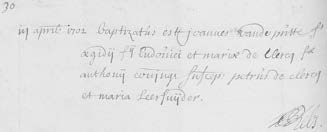
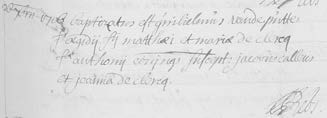
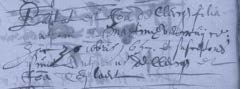
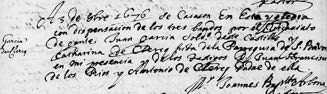
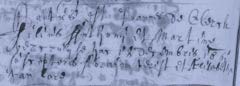
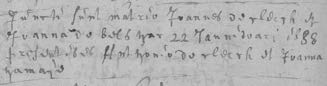
37.9. THEIR OFFSPRING
669
Figure 37.108: Harelbeke 1702, the bap-
tism of Joannes Vandeputte (DC08dy1)
(Du Puich), son of Egidius Vandeputte
(Du Puich), son of Ludovicus Vandeputte
(either a mistake or else second name
of Matheus Vandeputte (Du Puich)), and
Maria Declercgz (DC08d), daughter of An-
toni Declerque (III) (DC07); godfather was
Pere Declercgz (II) (DC08), godmother
was Maria Leersnijder.
Figure 37.109: Harelbeke 1706, Septem-
ber 26, the baptism of Guilelmus Van-
deputte (DC08dy2) (Du Puich) son of
Egidius Vandeputte (Du Puich), son of
Matheus Vandeputte (Du Puich), and
Maria Declercgz (DC08d), daughter of
Antoni Declerque (III) (DC07); godfa-
ther was Jacobus Callens, godmother was
Joanna Declercgz (DC08b). Jacobus Cal-
lens was related, through the Vandeputte
(Du Puich) family.
Figure 37.110: Harelbeke 1709, the baptism of Egid-
ius Vandeputte (DC08dy3) (Du Puich) son of Egidius
Vandeputte (Du Puich), son of Matheus Vandeputte (Du
Puich), and Maria Declercgz (DC08d), daughter of An-
toni Declerque (III) (DC07); godfather was Pere De-
clercgz (II) (DC08), godmother was Joanna Callens.
Joanna Callens was a relative through the Vandeputte
(Du Puich) family.
Figure 37.111: 1657, Deerlijk, the baptism of Joanna
Catharina Declercgz (DC08b), daughter of Antoni De-
clerque (III) (DC07) and Martina de la Cruz (’Ver-
cruyce’). Godfather was Antoni Desclergue (II) (DC06)
(’Anthonius Declercgz’), godmother was Joanna De Tila
(’Teylaet’). Likely, Joanna Tila had relatives in the for-
tification of Sint Eloois Vijve, where we find them as ’ty-
dgaet’ and connected to ’Van Tieghem’ . We also refer
Figure
37.112:
November 3, 1676, Spaniard Castle
in Ghent. The marriage of Joanna Catharina Declercgz
(DC08b), daughter of Antoni Declerque (DC07), with Spanish
soldier Juan Garcia. Antoni (DC07) was also the witness.
Figure 37.113: Deerlijk, December 18, 1661, the bap-
tism of Joan Declercgz (DC08c), son of Antoni Declerque
(DC07) and Martina de la Cruz. The godfather was
Abraham Verriest, and the Godmother was Elisabetha
van Lare, which must have been Elizabeth de Laere. The
spelling ’Van Lare’ , typically transformed in Deerlijk to
’de Lare’ , indicates that she was possibly from Ghent.
Figure 37.114:
Deerlijk, January 22,
1688, the marriage of Joan Decler-
cgz (DC08c) (’Joannes De Clerck’) and
Joanna De Beyls (’Joanna de Bels’), the
witnesses were Antoni Declerque (DC07)
(’Anthonio de Clerck’) and Juanna Amaya
(’Hamaye’).
The Desclergues of la Villa Ducal de Montblanc, 2nd ed., Omn., VOL. II
© 2024 Nico F. Declercq
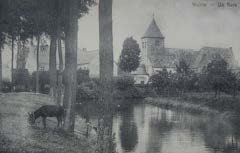
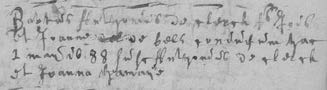
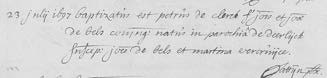

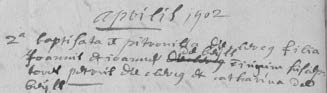




670
CHAPTER 37. ANTONI DECLERQUE (DC07) & MARTINA DE LA CRUZ
Figure 37.115: Vichte church around 1900.
Figure 37.116: May 2, 1688, Deerlijk,
the baptism of ’Anthonius De Clerck’ , son
of Joan Declercgz (DC08c) and Joanna De
Beyls (’Joanne de Bels’). The godfather
was Antoni Declerque (DC07) (’Anthonius
De Clerck’), and the godmother was Juana
Amaya (’Joanna Hamaye’).
Figure 37.117:
1697, July 23, Harel-
beke, the baptism of Pere Declercq (’Petrus
De Clerck’) born in Deerlijk, son of
Joan Declercgz (DC08c) and Joanna de
Beyls (’Joane de Bels’), the godfather was
Joannes de Beyls (’Joannes de Bels’), and
the godmother was Martina de la Cruz
(’Martina Vercruyce’).
Figure 37.118: 1700, August 29, Deer-
lijk, the baptism of Maria Catharina De-
clercq (DC08cx3) (’Klerck’), daughter of
Joan Declercgz (DC08c) and Joanna de
Beyls (’Joane de Bels’). The godfather was
Adrianus Degezelle, and the godmother
was Maria Declercgz (DC08d) (’Maria De
Klerck’).
Figure 37.119:
1702, April 2, Deer-
lijk, the baptism of ’Petronilla Declercq’ ,
daughter of Joan Declercgz (DC08c) and
Joanna de Beyls. The godfather was Pere
Declercgz (DC08) (’Petrus Declercq’), and
the godmother was ’Catharina De Beyls’ .
Figure 37.120:
1706, June 29, Deer-
lijk, the baptism of Adrianus Declercq
(’Adrianus Declercq’), son of Joan De-
clercgz (DC08c) and Joanna de Beyls,
the godfather was Adrianus Declercq
(DK03dyay1y2) ’Adrianus Declercq’ , and
the godmother was Judoca de Beyls. Note
that the godfather was a distant relative,
though not a blood-relative, through Jan
Declercq (DK03). He was in touch with
the family through circumstances, see for
instance the earlier shown record at the
Spaniard Castle in Ghent.
Figure 37.121: 1712, July 9, Deerlijk,
the baptism of Maria Theresia Declercq
(DC08cx2), daughter of Joan Declercgz
(DC08c) and Joanna de Beyls. The godfa-
ther was Pere Declercgz (DC08), the god-
mother was Joanna Naessens.
Figure 37.122: 1692, Joan Declercgz (DC08c) on the list of ’la bour-
geoisie foraine’ of Kortrijk at Deerlijk.
Figure 37.123: 1693, Joan Declercgz (DC08c) on the list of ’la bour-
geoisie foraine’ of Kortrijk at Deerlijk.
© 2024 Nico F. Declercq
The Desclergues of la Villa Ducal de Montblanc, 2nd ed., Omn., VOL. II



37.9. THEIR OFFSPRING
671
Figure 37.124: 1694, Joan Declercgz (DC08c) on the list of ’la bour-
geoisie foraine’ of Kortrijk at Deerlijk.
Figure 37.125: 1695, Joan Declercgz (DC08c) on the list of ’la bour-
geoisie foraine’ of Kortrijk at Deerlijk.
One intriguing aspect in the list of godfathers and godmothers is Charles Vercruysse (also mentioned in Chapter 37.4.1) and Elizabeth de Lara. Besides Charles Vercruysse’s and Martina Vercruyce’s shared names, we have not found any links. What’s particularly interesting is that Charles Vercruysse’s godson was named Pere, instead of Charles, which could be due to the parents’
desire to name the child after Pere Declerque (DC07d) or Pere Desclergue (DC01).
37.9.1 Maria Catarina Declercgz (DC08e)
Maria Catarina Declercgz (DC08e) was the daughter of Antoni Declerque (DC07) and Martina de la Cruz.
The baptism of Maria Catarina Declercgz (DC08e) is documented in Figure 37.102.
In Chapter 34.12.3, we described how the father of Beatrice Declercq (DK02byx), Noel, remarried after the death of Beatrice’s mother to Elisabetha Vanwynsberghe at Zwevegem in 1607. Therefore, we assume that Catharina Vanwinsberghe or Vanwynsberghe, who appeared as godmother on the baptism in Figure 37.102, was a Beatrice Declercq (DK02byx)’s step-family member.
Maria Catarina Declergz (DC08e) married at Gent, at the Spaniard Castle, to Pedro Masse (’Petrus du Maes’) on September 29, 1706, in Figure 37.103. Likely, Pedro Masse did not come from Spain but descended from Spanish and, therefore, probably spelled his name as Du Maes or Maes and no longer Masse or Massa. The witnesses were Dominico Fernandez and Isabelle Gutierre. Note that there were many Gutieres a century before at San Felipe de Castilla in Antwerp, and we also found some in Harelbeke-Kortrijk.
37.9.2 Maria Declercgz (DC08d)
Maria Declercgz (DC08d) was the daughter of Antoni Declerque (DC07) and Martina de la Cruz. Her baptism is shown in Figure
Maria Declercgz married Egidius Du Puich in 1701. The baptism of a son with his first wife is shown in Figure 37.105. The Desclergues knew Egidius Du Puich. Joana Catharina Declercgz (DC08b) served as a witness on his first wedding in 1697. After his first wife’s death, Egidus married Joana Catharina’s sister Maria (DC08d) in 1701 in Figure 37.106.
Du Puich / Dupuis / Vandeputte’s family, as can be found in Chapter 49, was involved with a Chapel’s construction at Deerlijk through their ancestors, which shows that this family and the Declercgz family were acquainted. It is, therefore, not surprising that a marriage between both would occur.
Indeed, the French word ’Puits’ used to be written without a t until the 16th century and was spelled as ’Puz, Puis, Puiz, Puich’; therefore, the French names of Dupuis/Du Puich and the Flemish name Vandeputte are the same and may have been exchanged depending on location and priest. As shown in Chapter 36.4, we also found a link between the De Puich family and Beatrice de Pinto’s appearance. This interconnection is consistent with everything described in this book.
Egidius Vandeputte (Gilles Dupuis / du Puich) was born at Harelbeke on July 1, 1663. He was the son of Mathias Vandeputte (Mathieu Dupuis / du Puich) and Joanna Van Rumbeke. His godmother was Isabeau Du Bois (’Elizabeth Vanhoute’) and his godfather was Egidius Vandenberghe.
The record in Figure 37.106 shows that he married Maria Declercgz (DC08d) in Harelbeke in 1701, daughter of Antoni Declerque (III) (DC07) and Martina Vercruyce. The witnesses were Jacobus Callens, Charles Pattyn, and Joanna Declercgz (DC08b). Jacobus Calles was related to the Vandeputte (Du Puich) family. When Mathias Vandeputte (Du Puich) married Joanna Van Rumbeke in Harelbeke in 1662, witnesses were Egidius Vanberghe and the custode. Charles Pattyn was related to Magdalena Vanoutryve, the first wife of Egidius Du Puich.
Egidus’s mother, Joanna Van Rumbeke, born at Harelbeke on November 16, 1627, had first been married to Carolus Callens on January 26, 1649, at Harelbeke, and had the following children: Jacobus Callens in 1649 and Joanna Callens in 1652. Interestingly, as found in Chapter 48.3, the families Van Rumbeke, Callens and Vandeputte also appear in the ecclesiastic records of Maria Declercgz (DC08d), sister Joana Catharina Declergz (DC08b), who married Joannes de Vos. It is essential in exposing the family bonds of de Vos’s descendants, described in Part X because their son Petrus de Vos was orphaned at the age of 11 and raised in Hulste with the Maes family, which means he was relatively disconnected from the rest of the family.
Equally important is the observation that Joanna Van Rumbeke was a daughter of Jacobus Van Rumbeke and Catharina Valcke and was a sister of Petrus Van Rumbeke (1629-1692), Joannes Van Rumbeke (1632), Judocus Van Rumbeke (1634), Jacobus Van Rumbeke (1636), Maria Magdalena Van Rumbeke (1638), Catharina Van Rumbeke (1641), Margarita Van Rumbeke (1643) and Nicolaus Van Rumbeke (1645).
Joanna’s father, Jacobus Van Rumbeke, died in 1645 and was a brother of Joanna Van Rumbeke (1588-1615), who was married to Thomas Bekaert on February 19, 1612. The connection with the family Bekaert is meaningful in the context of Antoni Desclergue’s (DC06) relationships and his involvement in establishing a chapel in Deerlijk as described in Chapter 49, in particular, Chapter
49.5 and Chapter 49.2.2; and Chapter 34.
37.9.2.1 The Children of Maria Declercgz (DC08d) and Egidius Vandeputte (Du Puich)
Maria Declercgz (DC08d) and Egidius Vandeputte (Gilles Du Puich) had the following children: Maria Catharina (1703) in Figure
37.107, Joannes (1702) in Figure 37.108, Guilelmus (1706) in Figure 37.109 and Egidius (1709) in Figure 37.110.
37.9.3 Joanna Catharina Declercgz (DC08b)
Joanna Catarina Declercgz (DC08b) was the daughter of Antoni Declerque (DC07) and Martina de la Cruz. Her baptism is shown in Figure 37.111. The reader can find most information about her in Chapter 48.3. Her descendants formed the ’de Vos’ branch, Figure 37.126: 1696, Joan Declercgz (DC08c) on the list of ’la bourgeoisie foraine’ of Kortrijk at Deerlijk.
The Desclergues of la Villa Ducal de Montblanc, 2nd ed., Omn., VOL. II
© 2024 Nico F. Declercq



672
CHAPTER 37. ANTONI DECLERQUE (DC07) & MARTINA DE LA CRUZ
Figure 37.127: 1699, Joan Declercgz (DC08c) on the list of ’la bour-
geoisie foraine’ of Kortrijk at Deerlijk.
Figure 37.128: Either 1700, 1701, 1702 or 1703, Joan Declercgz
(DC08c) on the list of ’la bourgeoisie foraine’ of Kortrijk at Deerlijk.
which the author also descends from along his mother’s side. She first married a Spanish soldier, Juan Garcia, in 1676 in Figure
37.112, while the family resided in Ghent, as can be read in Chapter 37.6. Later, she married Joannes De Vos of a family that was likely rooted in Spain and was well connected to the Desclergues and Montoya.
The marriage of Joanna Catharina Declercgz (DC08b) with Joannes De Vos and a description of their descendants can be found in Part X.
37.9.4 Joan Declercgz (DC08c)
Joan Declercgz (DC08c) was the son of Antoni Declerque (DC07) and Martina de la Cruz.
Joan Declercgz’ (DC08c) baptism is shown in Figure 37.113.
He married Joanna De Beyls at Deerlijk in 1688, in Figure 37.114. Witnesses were his father, Antoni Desclergue (III) (DC07), and also Juanna Amaya (’Hamaye’). Antoni (DC07) also served as godfather to their firstborn child Antoni at Deerlijk in 1688, while Juana Amaya (’Hamaye’) would be godmother. In 1697, their son Petrus Declercq was born at Deerlijk; the godfather was Joan De Beyls, and the godmother was Martine Vercruyce (de la Cruz). In 1700, their daughter Maria Catharina Declercq was born in Deerlijk but baptized in Harelbeke and the godfather was Adrianus Degezelle, and the godmother was Maria Declercgz (DC08d).
In 1702, their daughter Petronilla Declercq was born at Deerlijk; the godfather was Pere Declercgz (DC08), and the godmother was Catharina De Beyls. In 1706, their son Adrianus Declercq was born; the godfather was Adrianus Declercq (DK03dyay1y2), and the godmother was Judoca De Beyls. In 1612, their daughter Maria Theresia Declercq was born at Deerlijk. The godfather was Pere Declercgz (DC08), and the godmother was Joanna Naessens.
Note that Amaya is a Spanish name and that a similar variant exists in Flemish: Ameye. The priest spelled her name very unusually, namely ’Hamaye.’ Although we do not believe she was Spanish, it is still worth mentioning that it is possible because (de) Amaya is a Spanish name.
Juana Amaya married Stephanus Debels at Deerlijk in 1644; one of their children, born in 1655, was also named Stephanus Debels.
On her wedding certificate, her name is spelled as ’Joanna Amaye’; witnesses were Adriano Debels and Livina Baudens (who married Adrianus Debels in Vichte, shown in Figure 37.115, in 1639).
Weirdly, there appear to be no witnesses from Joanna Amaya’s family, and we have yet to find any birth certificate that could belong to her. In the period 1655-1690, in Deerlijk, we see a cluster of people called either Hamaye or Amaye on church certificates, and simultaneously we find groups of people called Ameye. So clearly, the priest during that period made a difference, i.e., Amaya/Hamaya was, to the priest, not equal to Ameye.
Joanna Debels was born (as Joanna Debeldts) in Deerlijk in 1664, the daughter of Stephanus Debels (Debeldts) and Joanna Amaye.
Her godfather was Georgius Verscheure, and her godmother was Catharina Amaye. At Deerlijk and Harelbeke, there is more than one Catharina Ameye, and we have yet to identify with certainty if one of them is the one mentioned as godmother.
Their childrens’ baptisms are shown in Figures 37.116, 37.117, 37.118, 37.119, 37.120, and 37.121.
37.9.4.1 Joan Declercgz (DC08c) on the List of ’La Bourgeoisie Foraine’ of Kortrijk at Deerlijk
His found entries on the list are shown in Figures 37.122, 37.123, 37.124, 37.125, 37.126, 37.127, 37.128, 37.129, 37.130, 37.131,
37.132, 37.133, 37.134, and 37.135.
37.9.5 Pere Declercgz (DC08)
Pere Declercgz (DC08) was the son of Antoni Declerque (DC07) and Martina de la Cruz. He is our ancestor and is described in Chapter 38.
Figure 37.129: 1704, Joan Declercgz (DC08c) on the list of ’la bour-
geoisie foraine’ of Kortrijk at Deerlijk.
© 2024 Nico F. Declercq
The Desclergues of la Villa Ducal de Montblanc, 2nd ed., Omn., VOL. II






37.9. THEIR OFFSPRING
673
Figure 37.130: 1706, Joan Declercgz (DC08c) on the list of ’la bour-
geoisie foraine’ of Kortrijk at Deerlijk.
Figure 37.131: 1709, Joan Declercgz (DC08c) on the list of ’la bour-
geoisie foraine’ of Kortrijk at Deerlijk.
Figure 37.132: 1711, Joan Declercgz (DC08c) on the list of ’la bour-
geoisie foraine’ of Kortrijk at Deerlijk.
Figure 37.133: 1712, Joan Declercgz (DC08c) on the list of ’la bour-
geoisie foraine’ of Kortrijk at Deerlijk.
Figure 37.134: 1713, Joan Declercgz (DC08c) on the list of ’la bour-
geoisie foraine’ of Kortrijk at Deerlijk.
Figure 37.135: 1714, Joan Declercgz (DC08c) on the list of ’la bour-
geoisie foraine’ of Kortrijk at Deerlijk.
The Desclergues of la Villa Ducal de Montblanc, 2nd ed., Omn., VOL. II
© 2024 Nico F. Declercq
CHAPTER 37. ANTONI DECLERQUE (DC07) & MARTINA DE LA CRUZ
© 2024 Nico F. Declercq
The Desclergues of la Villa Ducal de Montblanc, 2nd ed., Omn., VOL. II
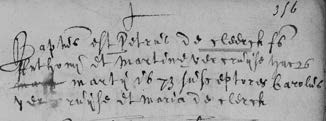
Chapter 38
Pere Declercgz (II) (DC08) & Marie Prienne
38.1 Introduction
His complete name was Don Pere Declercgz de la Cruz (DC08), and he was the first patrilineal ancestor to integrate deeply into the local society. As far as we have studied, the marriage between Pere Declercgz (DC08) and Marie Prienne must indeed have been the first actual consolidation of our patrilineal ancestors in Flanders. Marie Prienne was a member of the Loncke family, who were farmers, and although she may have had some ancestors with roots south of the language border in Flanders, we consider her, by all means, a typical Flemish bride. Their area also became increasingly disconnected from Spain due to France’s imminent threat and the transition toward an Austrian regime.
Pere Declercgz’s (DC08) father’s generation was the last one with close connections to the Spanish military, as was shown earlier.
With Pere (DC08), a new dawn arose for the family, free of military involvement and deeper integration into the local society, one century after the first arrival in Flanders. The couple married almost 100 years after the death of Jeroni (DC05). Therefore, the importance of family history in Spain and the Siege of Ostend were long gone.
Nevertheless, the family preserved the memory and would even a few generations later apply the name ’Hof van Brussel’ to their farm in Wielsbeke, referring to the Spanish seat in Belgium at the Palace of the Koudenberg in Brussels, where, nowadays, the Royal Palace is located, shown in Figure 38.4 on page 677.
We refer to (DC08) as Pere Declercgz, remembering that he descended from that Catalan family in Montblanc, although he probably called himself Pierre or Pieter.
38.2 Don Pere Declercgz (II) (DC08)
Don Pere Declercgz (II) (DC08) was born in 1673 at Deerlijk, Belgium, as the son of Don Antoni Declerque (III) (DC07) and Martina de la Cruz, locally known as Vercruyce, as seen on his baptism in Figure 38.1. He was a Doncel because he was born under the Spanish regime.
He was not named after his Godfather, Charles Vercruysse, but after his father’s brother in the military, Pere Desclergue (DC07d).
The absence of the latter during the baptism of our ancestor Pere Declercgz (DC08) is described in Chapter 36.7.
His godmother was Maria Declerque (DC07b). The latter is significant because she had been married to Rafael Juan de Pedrolo from Valls, Spain, in 1651. She had returned to Flanders due to her husband’s military involvement or because she was already widowed.
Note that on the baptism in Figure 38.1, the priest has used an unusual, for Deerlijk, spelling for Pere Declercgz (DC08): ’De cleerk,’ i.e., somewhat close to ’Desclergue.’ Nobody else at Deerlijk was registered as such. Unlike his father’s generation, firmly embedded in the Spanish regime, Pere Declercgz’s (DC08) generation lived in the Austrian administration period and were civilians who were, as far as we know, no longer involved in any military activity.
38.3 Marie Prienne
She was the wife of Don Pere Declercgz (II) (DC08).
She was born, in Figure 38.2, in 1678 in Harelbeke, Belgium, as a daughter of Pierre Prienne, who died in July 1693 at Harelbeke, and Antonia de Poortere, who was born at Deerlijk in 1645 as the daughter of Renatus de Poortere and Martine Loncke; and who died on January 5, 1710, at Harelbeke.
Her Godfather was Mathias De Poortere, and her Godmother was Maria Gillot, daughter of Arnold Gillot from Harelbeke.
Marie’s brother was Olivier Prienne (1675). She also had sisters Catharina (1673) and Elisabeth (1684).
She was most likely the first bride in the family who may be considered as typically Flemish. From this point forward, the family was more integrated into the local community, involved in education, trade, and farming, and no longer in the military as far as we could figure out.
Interestingly, the family Prienne may have been acquainted with de Montoya, as indicated in Chapter 29.10.12.3.
Figure 38.1: Deerlijk, March 26, 1673,
the baptism of Pere Declercgz (II) (DC08)
(’Petrus De Cleerck’), son of Antoni De-
clerque (III) (DC07) and of Martina de
la Cruz (’Martine Vercruyse’). The god-
father was ’Charles Vercruyse’ , and the
godmother was Maria Declerque (DC07b)
(’Maria De Clerck’).
The Desclergues of la Villa Ducal de Montblanc, 2nd ed., Omn., VOL. II
© 2024 Nico F. Declercq

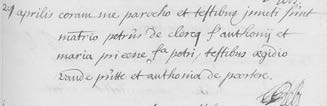
676
CHAPTER 38. PERE DECLERCGZ (II) (DC08) & MARIE PRIENNE
Figure 38.2: 1678, March 13, Harelbeke, the baptism of Marie Prienne, daughter
of Pierre Prienne, son of Jacques; and Antonia de Poortere, daughter of Renatus.
The godfather was Mathias de Poortere, son of Renatus, and Maria Gillot, daughter
of Arnold from Harelbeke.
Figure 38.3: Wedding of Don Pere De-
clercgz (II) (DC08) and Marie Prienne at
Harelbeke in 1703. The father of the groom
was Antoni Desclergue, and the father of
the bride was Petrus Prienne. The wit-
nesses were Antonia Depoortere and Egid-
ius Vandeputte (Du Puich).
38.4 Their Marriage
Their wedding, in Figure 38.3, was in 1703, in Harelbeke, Belgium. The marriage witnesses were Egidius Van de Putte, or Du Puich (the son of Mathias Van de putte and Joanna Van Rumbeke), and Antonia de Poortere, Marie Prienne’s mother.
38.5 Spanish Succession War (1701-1713)
In the introduction of this manuscript, we extensively described the succession problem, namely in Chapter 8.12.2. The wedding between Don Pere Declercgz (II) (DC08) and Marie Prienne occurred at Harelbeke in 1703 amid this war. To get a better idea of the local consequences in the area where they resided, we refer again to André Woestijn’s book1.
The War of the Spanish Succession (1701–1714) began after the death of the Spanish king Charles II on November 1, 1700. Without a direct heir, the Spanish throne was granted to Philip of Anjou, the grandson of Louis XIV of France. This inheritance raised fears among European powers about the potential for a united Franco-Spanish empire that could dominate Europe. On December 4, 1700, Philip placed the Spanish Netherlands under the tutelage of his grandfather, Louis XIV.
Subsequently, on March 9, 1701, Louis XIV concluded a treaty with Elector Maximilian Emmanuel of Bavaria, who ruled the Netherlands for ten years. However, Maximilian left the management to the governor, Marquis de Bedmar.
The war brought immediate demands and disruptions to the local populace. On January 4, 1702, Dela Cubba, Marquis de Bedmar, ordered the Castellany of Kortrijk to supply 370 men for the army before the end of January. The locals, however, were unwilling to become soldiers. On January 14, the commander expressed his concern to Harelbeke that several young men had married to escape conscription. Hence, he determined that all young men married since January 1 be selected, and their wives should not join them. Harelbeke managed to supply two soldiers, Jacobus Vandendriessche and Pieter Loosfelt.
On April 6, Harelbeke and Waregem were again charged with finding one soldier for De la Faille’s battalion. Pieter Herbe was selected, and Harelbeke and Waregem each had to pay half of his salary.
On May 15, 1702, Austria, England, and the United Provinces declared war on France and Spain to prevent the establishment of a Franco-Spanish empire. That same month, 60000 French soldiers crossed the northern border of the Southern Netherlands.
By 1704, English troops were present in Harelbeke, as evidenced by local church death registers. For instance, Catharina Beve-maege, the widow of Simoen Veys, died on October 2, 1704, but was buried only the next day because English soldiers occupied the cemetery.
On May 19, 1706, the Duke of Marlborough, John Churchill, arrived in Flanders. He defeated the French forces under de Villeroy at the Battle of Ramillies and subsequently conquered Ostend, Menen, Dendermonde, and Ath. On June 20, 600 Englishmen led by Cadegan, quartermaster general of Marlborough’s army, camped from Harelbeke to Sint-Eloois-Vijve. The city provided four barrels of wine to the commander, and some soldiers camped near the watermill.
From October 20-31, 1706, eleven Harelbeke pioneers worked on fortifications in Kortrijk, with an additional four from November 10-23. In February 1707, Robert Murray reported that Harelbeke had supplied 2000 palisades, 4185 burgesses, 603 bundles of straw, and 127 pounds of soot candles for fortifying Kortrijk.
The war continued to burden the local population. On November 22, 1706, Harelbeke and ten surrounding municipalities applied for exemption from subsidies due to war-related contributions and exhaustion. By 1707, Harelbeke-Buiten supplied horses, soldiers, forage, and pioneers for various regiments lodged within the city.
In September 1707, Harelbeke was sacked by the Allied armies of Marlborough. A loss statement documented significant theft and damage to property, including linen, meat, grains, tobacco, and furniture. Local authorities, including the monastery superior Mattheus Carpentier and bailiff Pieter vanden Berghe, complained about looting by Marlborough’s troops. They requested protection for the city, church, and monastery.
The winter of 1708-1709 was notably harsh. On October 5, 1708, soldiers camped at the windmill and demolished the De Wolf chapel. That same year, Jacobus Goemaere transported grain to the English army in Lille, and residents assisted with transport and repairs.
On January 20, 1709, the combined armies of Marlborough, Prince Eugene of Savoy, and the Duke of Württemberg set up camp in Harelbeke and the surrounding area for 110000 men. Throughout 1711, various requisitions and contributions were made to support the military efforts.
The protracted conflict concluded with the Peace of Utrecht, signed on April 11, 1713. This treaty ended hostilities between France and the Grand Alliance, which included Britain, the Dutch Republic, and the Holy Roman Empire. The French evacuated Ypres, Veurne, and Diksmuide. Despite the peace, the aftermath of the war included the disadvantageous ’Barelentraktaat’ of 1714, which entailed Dutch military occupation and the economic burdens imposed on the Belgians, including the closure of the Scheldt and 1André Woestijn, ’Harelbeke in de Spaanse tijd, 1585-1713,’ De Roede van Harelbeke (De Leiegouw), nr 14, 1994.
© 2024 Nico F. Declercq
The Desclergues of la Villa Ducal de Montblanc, 2nd ed., Omn., VOL. II
38.6. THEIR OFFSPRING
677
Figure 38.4: The Royal Palace of Brussels, located in the heart of the city, stands on the site of the former Palace on the Coudenberg, which was the residence of the Dukes of Brabant until it was destroyed by fire in 1731. The current palace, constructed between 1820 and 1826 and extensively renovated from 1865 to 1877, was designed by architects Ghislain-Joseph Henry, Charles Vander Straeten, and Tieleman Franciscus Suys. Serving as the official residence for state functions and royal offices, the palace is a key symbol of the Belgian monarchy. The facade, reimagined by King Leopold II, presents a monumental character, blending neoclassical elegance with historical significance. Courtesy of the Belgian Royal Family the allocation of Belgium to Austria. This treaty marked the end of Spanish rule in the region and ushered in a period of Austrian control.
The War of the Spanish Succession profoundly impacted Harelbeke, as documented in various records. From conscription and supply requisitions to occupation and looting by foreign troops, the war brought significant hardships to the local populace. The eventual peace treaties reshaped the political landscape, ending Spanish dominance and imposing new challenges under Austrian rule. These events are crucial for understanding the broader socio-political transformations in Flanders during this turbulent period.
38.6 Their Offspring
Their offspring is shown in Figure 38.5.
The couple had four children: Joan Declercq (II) (DC09), Pere Declercq (DC09c), Adrianus Declercq (DC09b), and Joanna (DC09d).
The baptism of our ancestor Joan Declercq (II) (DC09) is shown in Chapter 39, while the others are shown in Figures 38.6, 38.7
and 38.8.
The Desclergues of la Villa Ducal de Montblanc, 2nd ed., Omn., VOL. II
© 2024 Nico F. Declercq
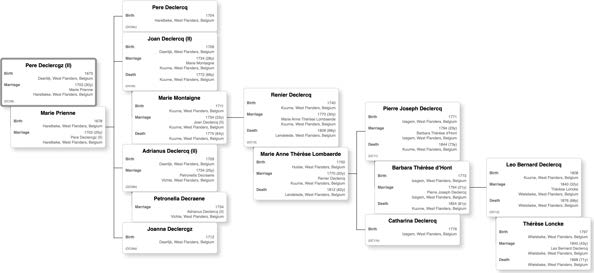
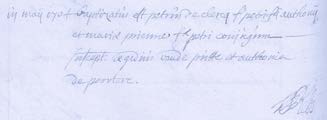


678
CHAPTER 38. PERE DECLERCGZ (II) (DC08) & MARIE PRIENNE
Figure 38.5: Four descending generations of Pere Declercgz (II) (DC08).
Figure 38.6: Harelbeke, May 19, 1704,
the baptism of Pere Declercq (DC09c)
(’Petrus Declercq’), son of Pere Declercgz
(II) (DC08) who was a son of Antoni De-
clerque (III) (DC07), and Marie Prienne
who was a daughter of Pierre Prienne.
The godfather was Egidius Vandeputte (Du
Puich), and the godmother was Anthonia
Depoortere, Marie Prienne’s mother.
Figure 38.7:
Deerlijk, March 9, 1709,
the baptism of Adrianus Declercq (DC09b)
(’Declercq’), son of Pere Declercgz (II)
(DC08) and Marie Prienne. The godfa-
ther was Adrianus Declercq (no relation-
ship found), and the godmother was Maria
Declercgz (DC08d).
Figure 38.8: 1712, October 5, Deerlijk 5,
the baptism of Joanna Declercq (DC09d)
(’Declercq’), daughter of Pere Declercgz
(II) (DC08) and Marie Prienne. The god-
father was Oliverius Prienne, brother of
Marie Prienne, and the godmother was
Joanna De Beyls, wife of Joan Declercgz
(DC08c).
© 2024 Nico F. Declercq
The Desclergues of la Villa Ducal de Montblanc, 2nd ed., Omn., VOL. II
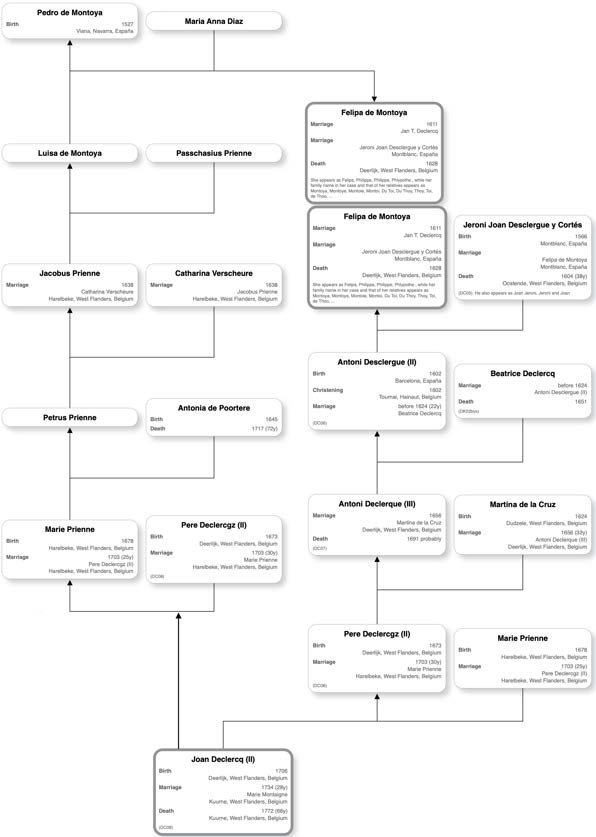
38.6. THEIR OFFSPRING
679
Figure 38.9: Joan Declercq (DC09) was in two ways blood-related to Felipa de Montoya.
The Desclergues of la Villa Ducal de Montblanc, 2nd ed., Omn., VOL. II
© 2024 Nico F. Declercq
CHAPTER 38. PERE DECLERCGZ (II) (DC08) & MARIE PRIENNE
© 2024 Nico F. Declercq
The Desclergues of la Villa Ducal de Montblanc, 2nd ed., Omn., VOL. II
Joan Declercq (II) (DC09) & Marie Montaigne
39.1 Introduction
Joan Declercq (II) (DC09) is a patrilineal ancestor. The river, known as Golden River, used to form a formidable barrier for the citizens of the south of West-Flanders in terms of seeking partners. Joan Declercq (DC09) and Marie Montaigne brought our ancestors across the Leie River to the left banks while they lived on the right bank (Kortrijk-Harelbeke-Deerlijk) before.
The family consequently continued to marry partners and live on the left bank until, in the 20th century, Michel Declercq (DC15), born at Wielsbeke, and Irma Lesage, born in Moorslede, decided to move the family back to Deerlijk.
Joan Declercq (DC09) was blood-related to Felipa de Montoya through his father and his mother, as shown in Figure 38.9.
39.2 Don Joan Declercq (II) (DC09)
He was the last Desclergue born in Belgium during the Spanish Netherlands period. We remind the reader of his ancestors in Figure 39.1. According to Spanish tradition, his complete name was Don Joan Declercq y Prienne (II) (DC09), and he would seize to comport significance as soon as the government changed to Austrian rule. Joan (DC09) was born in 1706, in Deerlijk, Belgium, as the son of Pere Declercq (DC11) and Marie Prienne, as seen in Figure 39.2. His Godfather was Joan Declercq (DC11c), and his Godmother was Elizabeth Prienne.
Joan Declercq (II) (DC09) died in Kuurne in 1772, in Figure 39.3, where the priest indicated that he was born in Deerlijk and exposed his age. Because genealogy is investigated in reverse order, the document was a giant leap forward in our investigation many years ago.
When Joan Declercq (II) (DC09) was eight years old, on September 11, 1714, the link with Catalonia in Spain became definitively broken, and a new world would arise for him and his descendants. During the war of succession in Europe, Catalonia had not chosen the Bourbon side, which led to a disaster for the region and its rights. The Army of Catalonia initially fought in support of the Habsburg dynasty’s claim to the Spanish throne, a decision which, in principle, meant that they were loyal to the noble family that had for a long time ruled Spain. They would finally be defeated at the Siege of Barcelona by the army of the Bourbon King, H.M.
Philip V of Spain, on September 11, 1714, after 14 months of siege. It meant the loss of the Catalan constitutions, the institutional system, and independence within the federation of Aragon and the Principality of Catalonia under the aegis of the Nueva Planta decrees and the realm of Spain. We assume that since then, the Declercq or the Desclergues no longer took any title of nobility, even not the title of Doncel or Mosen, because, with Catalonia, they probably lost all privileges linked to their region of origin.
Don Joan Declercq (II) (DC09) died in 1772 in Kuurne, Belgium.
Joan Declercq (DC12) had a brother, Maximilien Declercq (DC12b), a shop owner at Kuurne, married to Barbara Thérèse Bostoen.
39.3 Marie Montaigne
She was born in 1711 in Kuurne, Belgium, before October 21, as induced from her death certificate in Figure 39.4. She appears on the name list of baptisms in 1711, but the original record (page nr 93) is lost. She died in 1775 at Kuurne, Belgium. Her family name is sometimes spelled as Monteyne.
Marie Montaigne is François Montaigne’s daughter (who died at Kuurne in 1742) and Maria Blomme (’Bloeme’). She had a sister, Godelieve Montaigne (born at Kuurne in 1708), married to Renier Deyghere. Renier was the Godfather of Marie Montaigne’s son Renier Declercq (DC10). Marie Montaigne’s mother, Marie Blomme, died in 1718 in Kuurne, after which Franciscus Montaigne remarried Theresia Amaya in August 1718 at Kuurne. Unfortunately, Franciscus’s wife, Theresia, would die in 1724 in Kuurne.
For her siblings, we find Godfathers Jacques Montaigne, Guillelmus Bossuyt, Guillelmus Tanghe, Gilles Blomme, Jean Montaigne; and as godmothers Marie Michiels, Marina Blomme, Marie de Laere, Petronella Montaigne, Godelieve Montaigne, Jeanne Descamps.
We have not found indications of a foreign origin or links to foreigners in her of previous generations. We may conclude, despite the French family name, that she was a typical Flemish person.
39.4 Their Marriage
Their wedding occurred in 1734 at Kuurne, Belgium, in Figure 39.5.
39.5 Their Offspring
The descendants are shown in Figure 39.7.
Apart from Renier Declercq (DC10), the couple also had a son Petrus Joseph born at Kuurne in 1735, in Figure 39.8. The godfather was Pere Declercgz (DC08), the godmother was Marie Lippens.
The Desclergues of la Villa Ducal de Montblanc, 2nd ed., Omn., VOL. II
© 2024 Nico F. Declercq
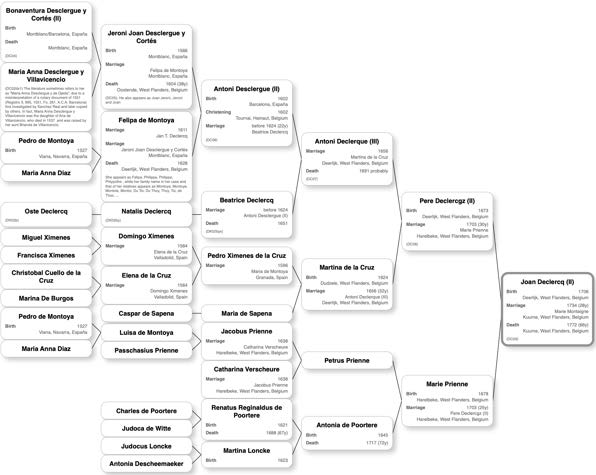

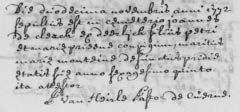
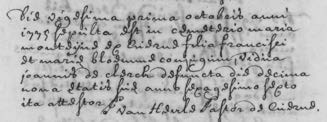

682
CHAPTER 39. JOAN DECLERCQ (II) (DC09) & MARIE MONTAIGNE
Figure 39.1: Five ascending generations of Don Joan Declercq (II) (DC09).
Figure 39.2: 1706, Deerlijk, birth certificate of Don Joan Declercq (II) (DC09),
son of Pere Declercgz (DC08) and Marie Prienne, the godfather was Joan Declerque
(DC08c), and the godmother was Elizabeth Prienne.
Figure 39.3: The death certificate at Kuurne in 1772,
November 12, of Joan Declercq, son of Petrus and Marie
Prienne, husband of Marie Montaigne.
Figure 39.4:
The death at Kuurne in
1775, October 21, of Marie Montaigne, the
widow of Don Joan Declercq (II) (DC09)
and the daughter of Francois Montaigne
and Marie Blomme (’Bloemme’).
The
priest wrote that she was 66 years old (she
had reached the age of 65 and was on the
course of becoming 66). It also means that
she was born before October 21, 1711.
Figure 39.5: Kuurne, shown in Figure 39.6, May 3, 1734, the wedding of Joan Declercq (II) (DC09) and Marie Montaigne. The marriage witnesses were Pere Declercgz (II) (DC08), Roger Coucke and
Marie Lippens.
© 2024 Nico F. Declercq
The Desclergues of la Villa Ducal de Montblanc, 2nd ed., Omn., VOL. II
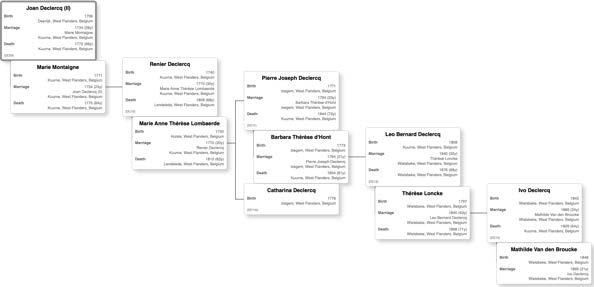

39.5. THEIR OFFSPRING
683
Figure 39.6: Kuurne, a beautiful village
on the left bank of the Leie River.
Figure 39.7: Four descending generations of Don Joan Declercq (II) (DC09) and Marie Montaigne.
Figure 39.8: 1735, Kuurne, the baptism of Petrus Joseph Declercq (DC10b), son of Joan Declercq (II) (DC09) and Marie Montaigne. The godfather was Petrus Declercgz (DC08), and the godmother was Marie Lippens.
Figure 39.9: ’Hof van Brussel’ , the Palace of Coudenberg, by Jan Brueghel the Younger, around 1627. Not only have we found traces of the Desclergues there, but the Desclergues also used to call their farm ’Hof van Brussel’ until the 20th century.
The Desclergues of la Villa Ducal de Montblanc, 2nd ed., Omn., VOL. II
© 2024 Nico F. Declercq
CHAPTER 39. JOAN DECLERCQ (II) (DC09) & MARIE MONTAIGNE
39.6 The Total Destruction of ’Hof van Brussel’ in 1731
The Hof van Brussel, also known as the Palace of Koudenberg or Het Paleis op de Koudenberg, was a prominent palace in Brussels, serving as the seat of Spanish governance. This palace was the last physical link between the Desclergues family and their Spanish heritage, leading them to name their farm Hof van Brussel in remembrance. This farm name persisted in Wielsbeke until the 20th century.
The actual Hof van Brussel was an architectural marvel, depicted in Figure 39.9. Its initial construction began in the 11th and 12th centuries in an area known as Koudenberg, which corresponds to the present-day Koningsplein. Over the centuries, the palace evolved and expanded, becoming the residence of the dukes of Brabant and Burgundy and, later, significant figures such as Emperor Charles V and the Spanish governors Albrecht and Isabella.
The palace holds notable historical significance as the site where Charles V abdicated in favor of his son, Felipe II, who became His Majesty, the King of the Spanish territories and the Netherlands. During Felipe II’s reign, Jeroni Joan Desclergue y Cortés (DC05) was born and eventually migrated to Belgium.
Tragically, the palace was destroyed by a fire in 1731 during the governorship of Maria Elisabeth of Austria. Despite its destruction, the historical footprint of the palace endures. For instance, we have documented the baptism of a daughter of Enric Desclergue (DC05c) at the Church of Saint Jacob at Koudenberg, located on the palace grounds. This event is illustrated in Figure 33.36 on page 517.
The palace’s architectural and political legacy remains vital to Brussels’ rich history, reflecting the intertwined fates of the local nobility and the broader European political landscape.
© 2024 Nico F. Declercq
The Desclergues of la Villa Ducal de Montblanc, 2nd ed., Omn., VOL. II
Renier Declercq (DC10) & Marie Anne Thérèse
Lombaerde
40.1 Introduction
The generation of Renier Declercq is situated in the second half of the 18th century, more than 150 years after our Spanish ancestors arrived in the region along the Leie River. As outlined above, the Desclergues remained in contact with descending Spanish individuals throughout the 17th century.
This chapter describes what we have found about Renier Declercq’s life (DC10), and it turns out that he married a Flemish bride, Marie Anne Thérèse Lombaerde. Her ancestors, however, had valuable contacts with Spanish inhabitants at Harelbeke.
Therefore, the community of Spanish descendants and their connections must have been meaningful realities that influenced the younger generations and their marital choices.
Through Renier (DC10) and Marie Anne Thérèse, the family established ties in Heule, Hulste, and Izegem. The link with Heule would later play a role in the closeness with writers in the 19th and early 20th centuries, mentioned in subsequent chapters.
40.2 Renier Declercq (DC10), Sometimes also Referred to as René Declercq
Renier is a patrilineal ancestor with ancestors shown in Figure 40.1.
Renier Declercq (DC10) was born in 1740 in Kuurne, Belgium, as the son of Joan Declercq (II) (DC09) and Marie Montaigne. His godfather was Renier Deyghere, and his godmother was Petronilla Lamelin, as seen in Figure 40.2. He was married to Marie Anne Thérèse Lombaerde and was a merchant and farmer. He died in 1808 at Lendelede, in Figure 40.3.
Because the Spanish period ended in 1715 and there was opposition from around 1700 related to the Spanish succession wars, we may expect that the family no longer highlighted the Spanish roots. The memory faded away from this generation onward.
Nevertheless, as shown in the introduction, the connections cherished by the family were still somewhat related to their foreign roots. New adaptations are, for instance, reflected in the given name.
Indeed, Renier or Rainer was rather famous in Austria. Therefore, Belgium was already oriented towards the Habsburg reign in Austria instead of Spain.
In this book, to maintain a warm influence by Spain and, in particular, Catalonia, we name Renier’s siblings according to the Catalan version of their names. Renier Declercq (DC10) had a brother, Pere Josep Declercq (DC10b), born at Kuurne in 1735, whose godfather was Pere Declercq (DC09c), and godmother Maria Lippens. His younger brothers were FelipeJaume Declercq (DC10c), born in Kuurne in 1746, and Domènec Declercq (DC10d), born in Kuurne in 1745.
Renier Declercq (DC10) was a farmer and a flax merchant who lived in Kuurne (in the 1740s), Emelgem and Izegem (in the 1770s), and Lendelede (in the 1790s until he died in 1808).
From the author’s viewpoint, his mobility was extraordinary before discovering foreign roots.
Indeed, most bloodlines typically resided for many generations in the same village. Having ancestors who were not sedentary but still relatively wealthy and involved in farming and trade triggered curiosity and resulted in all the previous chapters provided in this book.
40.3 Marie Anne Thérèse Lombaerde
Marie Anne Thérèse Lombaerde was born in 1750 in Hulste, Belgium. Her parents were Pierre Joseph Lombaerde and Brigitte Samyn, as shown in Figure 40.4. She was the wife of Renier Declercq (DC13).
Anyone interested in further investigating the Lombaerde bloodline should be careful. Indeed, another contemporary, Marie Anne Thérèse Lombaerde, lived in Hulste and was baptized in Hulste on December 25, 1749 (daughter of François Lombaerde and Marie Anne Samyn; the godfather was Philippe Charles Lemayeur, and the godmother Josine Vercamen) and who may have been a cousin.
Marie Anne Thérèse Lombaerde remarried after the death of Renier Declercq (DC13), and she died in Lendelede in 1812 in Figure
We can extract some facts about the parents of Marie Anne Thérèse Lombaerde from the certificate of her second marriage, shown in Figure 40.5. On July 27, 1809, at Lendelede, Marie Anne Thérèse Lombaerde, who lived at Lendelede but was born at Hulste on April 8, 1750, widow, married Joseph Vanden Broucke, a widower. He resided at Lendelede but was born in Heule on March 17, 1741. The groom’s parents were Guillaume Vanden Broucke, who died at Lendelede on May 24, 1787, and Elisabeth Deryckere, who died at Lendelede on May 5, 1791. The bride’s parents were Pierre Joseph Lombardi, who died at Kuurne on January 17, 1782, and Brigitte Samyn, who died at Kuurne on January 28, 1776. The groom had previously been married to Marie Jeanne Bossuyt, while the bride had earlier been married to Renier Declercq (’René Declercq’) (DC10).
Interestingly, Marie Anne Thérèse Lombaerde’s grandfather Oliverius Lombaerde, who married in 1747 in Figure 40.7, served as godfather in 1718 to a Spanish roots family in Figure 40.8. Likely, they were ’de Montoya,’ a name which, along with this family, may have transformed into ’Du Mont.’
We have yet to do much research on the Lombaerde branch. Other genealogists, however, were stuck in the first half of the 17th century and did not encounter foreigners in their discoveries. Therefore, the Spanish families mentioned in the record below were probably friends of Lombaerde, not relatives.
The Desclergues of la Villa Ducal de Montblanc, 2nd ed., Omn., VOL. II
© 2024 Nico F. Declercq
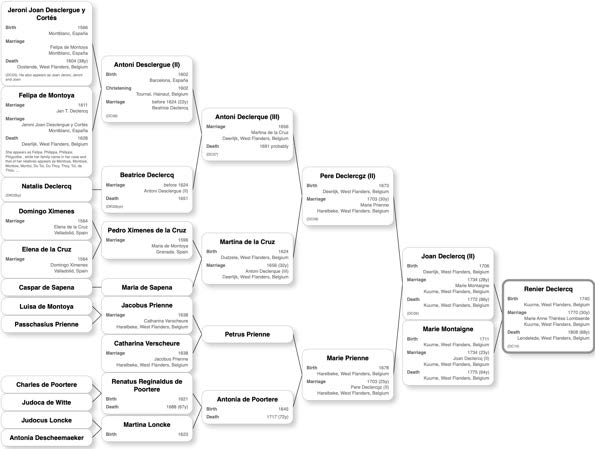

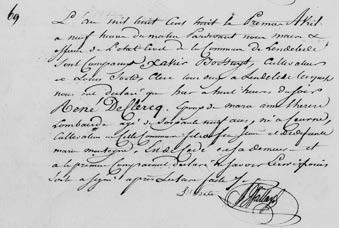
686
CHAPTER 40. RENIER DECLERCQ (DC10) & MARIE ANNE THÉRÈSE LOMBAERDE
Figure 40.1: Five ascending generations of Renier Declercq (DC10).
Figure 40.2: Kuurne, September 17th, 1740, the baptism of Renier Declercq (DC10) (’Reynerius De
Clerq’), son of Joan Declercq (II) (DC09) and Marie Montaigne. The godfather was Reynerius Deyghere,
and the godmother was Petronilla Lammelin.
Figure 40.3: Lendelede, April 1, 1808, the death certificate of Re-
nier Declercq (DC10) (’René Declercq’), husband of Marie Anne Thérèse
Lombaerde, and son of Joan Declercq (II) (DC09) and of Marie Mon-
taigne. The death was declared to the administration by farmer Xavier
Bossuyt and clerk Louis Soete. Renier Declercq (DC10) had died the day
before at 8 pm. He was 69 years old, born in Kuurne, and a farmer at
Lendelede.
© 2024 Nico F. Declercq
The Desclergues of la Villa Ducal de Montblanc, 2nd ed., Omn., VOL. II

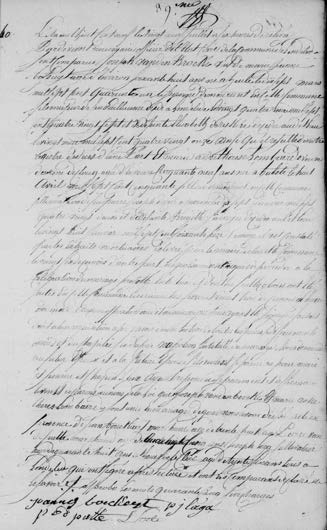
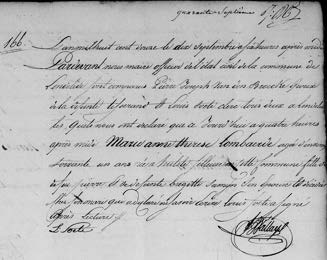
40.3. MARIE ANNE THÉRÈSE LOMBAERDE
687
Figure 40.4: Hulste, April 8, 1750, the baptism of Maria Anna Theresia Lom-
baerde, daughter of Pierre Lombaerde and Brigitte Samyn. The godfather was
Philippe Charles Lemayeur, and the godmother was Maria Anna Eeckhout.
Figure 40.5: Lendelede, July 21, 1809,
the second marriage of Marie Anne
Thérèse Lombaerde. She married Joseph
Vanden Broucke, a 68-year widower of
Marie Jeanne Vanden Broucke, from
Heule and residing in Lendelede.
The
bride, Marie Anne Thérèse Lombaerde,
was the widow of Renier Declercq (DC10),
59 years old and born at Hulste on April
8, 1750, and residing at Lendelede. Joseph
Vanden Broucke was a son of Guillaume
Vanden Broucke and Elisabeth Deryckere.
Marie Anne Thérèse Lombaerde was the
daughter of Pierre Joseph Lombaerde and
Brigitte Samyn. The certificate also men-
tions that the wedding took place under
Napoleon Bonaparte’s blessings, the em-
peror at that time. The witnesses were
merchants Jean Bouckaert and Pierre Van
de Putte (perhaps again a ’du Puich’) and
Joseph Laga, a farmer.
Figure 40.6: Lendelede, September 10,
1812, the death certificate of Marie Anne
Thérèse Lombaerde. The declaration was
made by her second husband Joseph Van
den Broucke, a textile entrepreneur from
Lendelede, and Louis Soete, a clerk,
equally from Lendelede.
Marie Anne
Thérèse Lombaerde was the daughter of
Pierre Lombaerde en Brigitte Samyn.
The Desclergues of la Villa Ducal de Montblanc, 2nd ed., Omn., VOL. II
© 2024 Nico F. Declercq
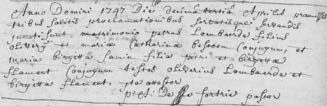
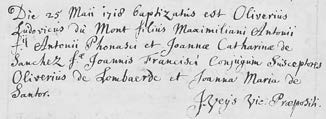
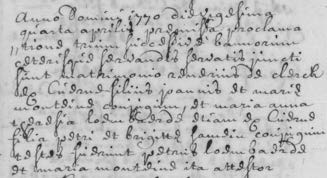
688
CHAPTER 40. RENIER DECLERCQ (DC10) & MARIE ANNE THÉRÈSE LOMBAERDE
Figure 40.7:
Kuurne, June 13, 1747,
the wedding of the parents of Marie Anne
Thérèse Lombaerde, namely Pierre Joseph
Lombaerde, son of Oliverius Lombaerde
and Maria Catharina Bostoen; with Maria
Brigitta Samyn, daughter of Pierre Samyn
and of Brigitte Flament. The witnesses
were Oliverius Lombaerde and Brigitte
Flament.
Figure 40.8: Harelbeke, May 25, 1718,
Marie Anne Thérèse Lombaerde’s grandfa-
ther, Oliverius Lombaerde, served as god-
father to Ludovicus De Montoya (’Du
Mont’), son of Maximilianus Antonius,
son of Antonius Phonascus de Montoya
(’Du Mont’); and Joanna Catharina de
Sanchez, daughter of Joannes Franciscus
de Sanchez. The godmother was Joanna
Maria de Santos.
Oliverius Lombaerde was likely born at Harelbeke in 1659, on March 11, as the son of Bartholomeus Lombaerde and Maria Vanoutryve, with Oliverius Nolf as godfather and Joanna Vanoutryve as godmother.
Indeed, Oliverius Nolf was also godfather to Martina De Vos (Daughter of Carolus De Vos and Judoca De Meester) and probably formed a link with the De Vos (Vosa) family described in the maternal Desclergue branch in Part X.
At the same time, we also know that Maria Declercgz (DC08d) married Egidius Vandeputte (Du Puich), who had first been married to Magdalena Vanoutryve, again possibly a link, seen in Chapter 37.9.2. Maria Vanoutryve and Bartholomeus Lombaerde married at Harelbeke on July 8, 1656; one of their sons was Franciscus Lombaerde (1661).
40.4 Their Marriage
The wedding, shown in Figure 40.9, of Renier Declercq (DC10) and Marie Anne Thérèse Lombaerde occurred in 1770 at Kuurne, Belgium. The marriage witnesses were Pierre Lombaerde, father of the bride, and Marie Montaigne, mother of the groom. The couple would not reside in the same place but move several times, as attested by the certificates on which they appear as parents or godparents.
In the realm of the early family connections with the Bekaert family of Zwevegem, the reader can check Figure 40.13 showing the death of Isabelle Verhaeghe de Nayer, which we have in our archives without further knowledge.
40.5 Their Offspring
Figure 40.10 reveals four descending generations of Renier Declercq (DC10). His daughter’s baptism is shown in Figure 40.11.
Figure 40.9: Kuurne, April 24, the wed-
ding of Renier Declercq (DC10) (’Rener-
ius De Clerck’) from Kuurne, son of Joan
Declercq (DC09) Marie Montaigne, with
Marie Anne Thérèse Lombaerde (’Maria
Anna Theresia Loembaerde’) from Ku-
urne, daughter of Pierre Lombaerde and
Brigitte Samein.
The witnesses were
Pierre Lombaerde and Marie Montaigne.
© 2024 Nico F. Declercq
The Desclergues of la Villa Ducal de Montblanc, 2nd ed., Omn., VOL. II
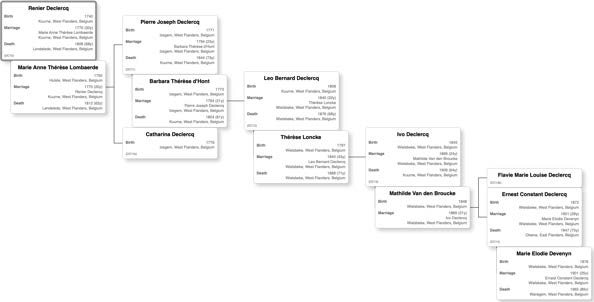

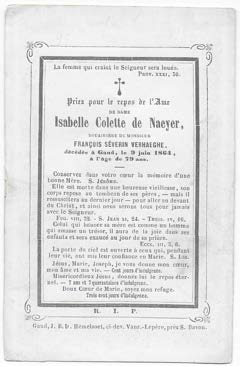
40.5. THEIR OFFSPRING
689
Figure 40.10: Four descending generations of Renier Declercq (DC10).
Figure 40.11: Izegem, shown in Figure 40.12, March 25, 1776, the bap-
tism of Maria Catharina Declercq (DC11b), daughter of Renier Declercq
(DC10) from Kuurne and Marie Anne Thérèse Lombaerde from Hulste.
Her godfather was Maximilien Declercq, and her godmother was Maria
Catharina Lombaerde.
Figure 40.12: Izegem’s market square at the end of the
19th century.
Figure 40.13: The death of Isabelle Colette de Nayer,
wife of François Séverin Verhaeghe, in Ghent, on June
9, 1864. Her descendants played a role in a distant fam-
ily connection with Bekaert, described in a subsequent
chapter.
The Desclergues of la Villa Ducal de Montblanc, 2nd ed., Omn., VOL. II
© 2024 Nico F. Declercq
CHAPTER 40. RENIER DECLERCQ (DC10) & MARIE ANNE THÉRÈSE LOMBAERDE
© 2024 Nico F. Declercq
The Desclergues of la Villa Ducal de Montblanc, 2nd ed., Omn., VOL. III
The Desclergues of la Villa Ducal de Montblanc, 2nd ed., Omn., VOL. III
© 2024 Nico F. Declercq
The Desclergues in Modern Belgium
The Desclergues of la Villa Ducal de Montblanc, 2nd ed., Omn., VOL. III
© 2024 Nico F. Declercq