

The Desclergues of la Villa Ducal de Montblanc, Second Edition Omnibus by Nico Declercq - HTML preview
Download the book in PDF, ePub, Kindle for a complete version.
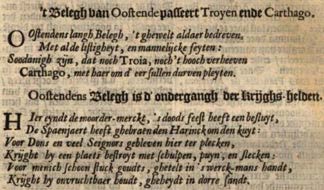
’Merck, toch hoe sterck, Nu int werck, sich al steld!
Die ’t allen ty, Soo ons vryheyt heeft bestreden;
Siet hoe hy slaeft, graeft, en draeft met geweld!
Om onse goet, En ons bloet, En onse steden;
Hoor de Spaensche trommels slaen!
Hoor Maraens trompetten!
Siet, hoe komt hy trecken aen!
Bergen te besetten.
Berg op Zoom, Hout u vroom,
115Archeologienota Bureauonderzoek, Gentsesteenweg (Harelbeke, West Vlaanderen), Projectcode 2017D344, April-mei 2017, written by Clara Thys, Joren De Tollenaere and Aeron Willaert, under the scientific supervision of Dieter Demey.
116Archeo-rapport 50, Het archeologische vooronderzoek aan de Deerlijksesteenweg te Harelbeke, by Studiebureau Archeologie bvba, Kessel-Lo, 2010
117Xander Alma, ’ErfgoedRapport Breda 8. Barakkencomplex Sint-Catharinadal te Breda, Een onderzoek naar 17e eeuwse soldaatbarakken’ , (Breda 2005)
118Evert de Boer and Peter de Boer, ’De Kuinderschans in de 80-jarige oorlog en daarna’
119Jos Vos (s0602396), ’Leermomenten in oorlogstijd - De verdediging van Breda (1581 - 1637) als casus vande militaire hervormingen in de vroegmoderne periode’ , Masterscriptie History: Europe 1000-1800, June 20, 2017, Universiteit Leiden (promotors dr Raymond Fagel and Prof Dr Jeroen Duindam).
120’Rapport over de geschiktheid van enige plaatsen voor de bouw van barakken voor het garnizoen’ (1629). Stadsarchief Breda, afdeling ARC0001, inv.
nr. 2573.
121Inv. nr. 2572 (Stadsarchief Breda, afdeling ARC0001). ’Missive van de procureur G. van Ghilze te Brussel over de waarneming van de belangen der stad inzake de barakken en de Brabantse Landtol’ (1628).
122Inv. nr. 2573 (Stadsarchief Breda, afdeling ARC0001), ’Rapport over de geschiktheid van enige plaatsen voor de bouw van barakken voor het garnizoen’ (1629).
123Alma, Barakkencomplex Sint-Catharinadal, 34. Parker, Army of Flanders, p 140.
© 2024 Nico F. Declercq
The Desclergues of la Villa Ducal de Montblanc, 2nd ed., Omn., VOL. II
29.12. THE SPANISH MILITARY BARRACKS OF HARELBEKE, ADJACENT TO DEERLIJK
459
Stut de Spaensche scharen;
Laet ’sLands boom, End’ syn stroom,
Trouw’ lyck toch bewaren.
’ tMoedige, bloedige, woedige, swaerd
Blonck, en het klonck, dat de voncken daer uyt vlogen.
Beving, En leving, opgeving, der aerd,
Wonder, gedonder, Nu onder was, nu boven,
Door al’ t mijnen en ’t geschut
Dat men daeg’ lycx hoorde;
Menig Spanjaert in zyn hut
In syn bloet versmoorde.
Berg op Zoom Hout sich vroom;
’ tStut de Spaensche scharen;
’ tHeeft ’sLands boom, En syn stroom
Trouw’ lyck doen bewaren.
Die van Oranjen, quam Spanjen aen boord,
Om uyt het velt, als een Helt, ’tgewelt te weeren;
Maer also dra, Spinola ’theeft gehoord,
Treckt hy flocx heen, Op de been met al zyn Heeren.
Cordua kruyd spoedig voort,
Sach daer niet te winnen;
Don Velasco liep gestoort:
’ t Vlas was niet te spinnen.
Berg op Zoom, Hout sich vroom
’ tStut de Spaensche scharen;
’ tHeeft ’sLands boom, En syn stroom
Trouw’ lyck doen bewaren..
In particular, the sentence ’Menig Spanjaert in zyn hut In syn bloet versmoorde’ describes how the Dutch burned the huts of the Spanish and referred to wooden barracks (hut).
The Desclergues of la Villa Ducal de Montblanc, 2nd ed., Omn., VOL. II
© 2024 Nico F. Declercq
CHAPTER 29. JERONI JOAN DESCLERGUE Y CORTÉS (DC05) & FELIPA DE MONTOYA
© 2024 Nico F. Declercq
The Desclergues of la Villa Ducal de Montblanc, 2nd ed., Omn., VOL. II
Overview of Whereabouts of Jeroni Desclergue and
his family in Flanders
30.1 Introduction
Jeroni Joan Desclergue y Cortés (DC05) likely spent his winters in Harelbeke or Deerlijk, near Kortrijk. Here, he or his wife, Felipa de Montoya, acquired a property belonging to Overacker shortly after his death, reserving it for their children’s inheritance. Despite this, Jeroni (DC05) is documented in locations such as Kortrijk, Ghent, Tournai, Lille, Cambrai, and Barcelona. This mobility reflects the demands of his military career.
The presence of Jeroni Desclergue in Flanders in 1587 must be understood within the context of regional events that occurred a few years earlier in the area encompassing Kortrijk, Harelbeke, Deerlijk, Vichte, and Waregem. This region is situated near Cambrai, where Jeroni would participate in the siege of 1595, and Tournai, where he served in the early 17th century.
The mentioned area was part of the castellany of Kortrijk, which included locations closer to Damme and Sluis, such as Wingene and Pittem. This castellany bordered that of Tournai.
To comprehend the geography of Belgium around 1600, one must disregard modern highways and paved roads and instead focus on the rivers, particularly the Leie and Schelde. These rivers, which converge at Ghent, formed a crucial transportation network.
They connected the city to Deerlijk, Harelbeke, Kortrijk, Menen, Oudenaarde, Tournai, Valenciennes, and Cambrai.
The old Roman road from Tournai to Kortrijk, a mere 26 km long, was a crucial route that could be comfortably traversed on foot in under six hours.1 This transportation network, with its rivers and roads, was vital for the movement and strategic positioning of individuals like Jeroni Desclergue during that period, providing a clear picture of the logistical challenges he might have faced.
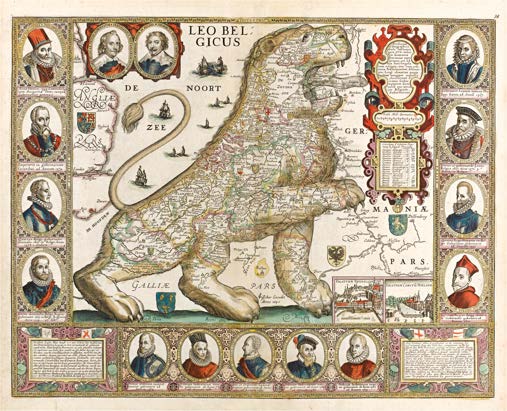
Figure 30.1 helps to visualize the geographical context. The Leie and Schelde Rivers, which joined at Ghent, connected various vital cities and facilitated movement.
30.2 The Spaniard Castle of Ghent
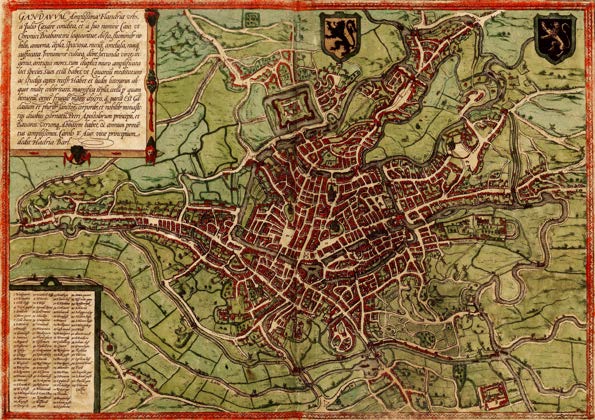
In 1587, Jeroni arrived in Ghent, taking up residence in the Spaniard Castle for two years before relocating to Kortrijk. The Spaniard Castle, a prominent feature on the map of Ghent in 1572 (see Figure 30.2), is identifiable as the square fortification at the top of the plan. Various images throughout this book document the lives of Jeroni Joan Desclergue y Cortés (DC05) and his descendants, providing valuable context and visual references.
Strategically positioned at the confluence of the Leie and Schelde Rivers, the Spaniard Castle played a crucial role in controlling the city of Ghent.
The surrounding wetlands, which could be deliberately flooded, added a defensive advantage to the castle’s location. Although the castle no longer exists, its historical footprint can still be discerned in the modern street layout between Dampoort and Portus Ganda. The area once occupied by the castle is now bordered by Voorhoutkaai, Schoolkaai, Kasteellaan, and Slachthuisstraat, preserving a tangible connection to its past.
30.3 Kortrijk
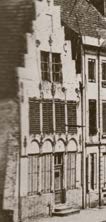
In December 1589, Jeroni arrived in Kortrijk. His residence in Kortrijk was intermittently disrupted due to his military campaigns, yet it is evident that he maintained strong ties with the town until he died in 1604. It is plausible that his home resembled the one depicted in Figure 30.4.
Kortrijk boasts a rich history and was frequently subjected to military campaigns. Nowadays known as the Texas of Flanders due to its thriving economic activities, the town is a historical hub of fashion, textile, and flax industries.
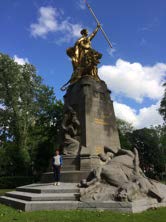
The Battle of the Golden Spurs in 1302, commemorated in Figure 30.3, significantly ties Kortrijk to the origins of modern Belgium.
This battle is a cornerstone of Flemish identity and pride.
The town holds personal significance for the author. He was born in Loofstraat, Kortrijk, and his children were born at Reepkaai and the New Academic Hospital, Kortrijk. Additionally, his two grandmothers and great-grandmother passed away in Kortrijk at the old hospital on Buda.
The emotional bond with Kortrijk traces back to Jeroni Desclergue’s arrival at the end of the 16th century, intertwining personal and historical narratives within the boundaries of this venerable town.
30.4 Cambrai
In 1595, Jeroni participated in the capture of Cambrai, as described in Chapter 29.5.19. He was injured in the face and stayed some time at the hospital. We may, therefore, assume that, very likely, his wife and children also resided a little while at Cambrai. The town served as the governing headquarters for the Spanish in the southern part of Flanders. From a military standpoint, the city 1The author once covered it in 1996, as a student, in less than 6 hours, carrying a 20 kg load on his back as a physical preparation before a journey to the Scottish Highlands.
The Desclergues of la Villa Ducal de Montblanc, 2nd ed., Omn., VOL. II
© 2024 Nico F. Declercq
462
CHAPTER 30. WHEREABOUTS OF JERONI DESCLERGUE AND HIS FAMILY IN FLANDERS
Figure 30.1: Leo Belgicus. This map shows Belgium, also known as ’The Netherlands’ . This area of
Europe consisted of several entities, one of which was Flanders. Around 1600 this was still the official map of Belgium because Spain did not recognise the territories under Nassau’s governance and the Calvinists as an independent state. The plan was drawn by Joannes van Deutecum around 1650 p.
Figure 30.2: Map of Ghent in 1572. Courtesy of the Hebrew University of Jerusalem and the Jewish National & University Library. p
© 2024 Nico F. Declercq
The Desclergues of la Villa Ducal de Montblanc, 2nd ed., Omn., VOL. II
30.5. TOURNAI
463
Figure 30.3: Lambert Declercq at the Groeninge statue of Kortrijk in
June 2018. The statue dated from 1906 and was created by Godfried
Devreese. (Declercq de Silva Archive)
Figure 30.4: This house existed in Kortrijk, in Rijselsestraat 20. The facade was
marked 1573 as the year of construction. The building was converted in 1889 and
now looks completely different. We can assume that ’modern’ homes in the arrival
era of Jeroni Desclergue in Kortrijk looked similar.
was of primordial importance for the defense against the French. Images and explanations concerning Cambrai appear in several chapters in this book.
30.5 Tournai
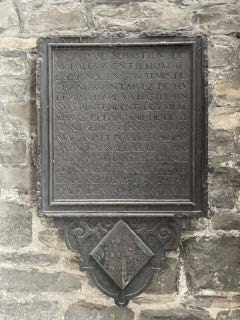
From 1597 and from 1601 until his passing, Tournai and Kortrijk were the primary residence of Jeroni and his family, with a brief interruption due to a temporary return to Spain. The family resided in the Saint Magdalena neighborhood, which was adjacent to the Santiago Neighborhood. The family’s affinity for Maria Magdalena was deeply rooted in the Desclergues’ historical connections with the Knight’s Templars, as evidenced in Chapter 18.11.2. The church of Saint Magdalena, unfortunately, has deteriorated and is no longer accessible, but the nearby Santiago church is. Figure 30.7 depicts a Spanish tomb inside this church. Following Jeroni’s demise, his wife Felipa de Montoya returned to Tournai to give birth to her youngest child, Miguel, and have him baptized there.
She later married Jan Declercq (DK03), a widower from Kortrijk, and they resided together for the rest of her life in Deerlijk, where Jeroni and she also owned property.
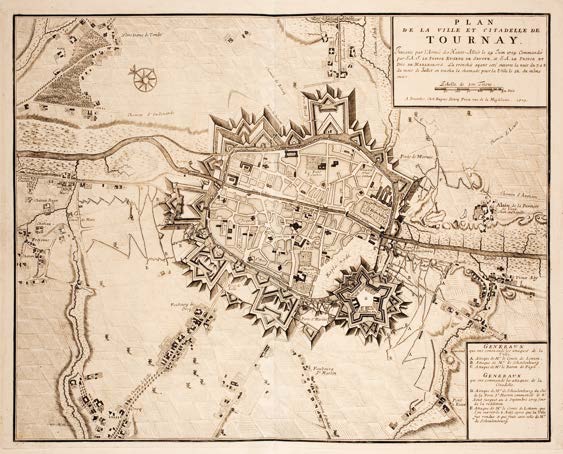
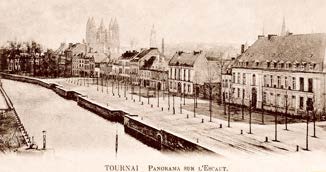
Tournai, shown in Figures 30.5, 30.6, was essential in the time of the Spanish Netherlands. The town served as second-in-rank, after Cambrai, in the governance of the Southern part of Flanders. Besides, it was the capital of the Diocese of Tournai. Therefore, for historical, religious, and governmental reasons, Tournai was more critical than Kortrijk, which also belonged to the diocese of Tournai.
As described above, there were military barracks stretching from Kortrijk Pottelberg to Deerlijk, parallel to the Leie River. This area was connected to Tournai along a vital road, Kortrijk-Bellegem-Kooigem-Dottenijs-Tournai. It was also linked with Oudenaarde along a critical route that nowadays runs through Deerlijk (Stationsstraat) and Sint Lodewijk between Banhout forest and Brandemolen. Near this road, there were several lands of Overacker. However, we need to determine precisely where the Desclergues had property in Deerlijk. Due to the road connections, Tournai was near Deerlijk, Harelbeke, and Kortrijk and was easily reached from Ghent by the Schelde River.
30.6 Ostend
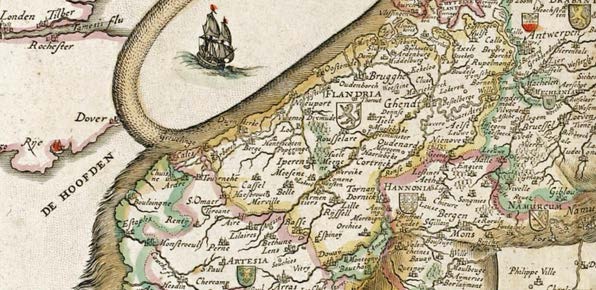
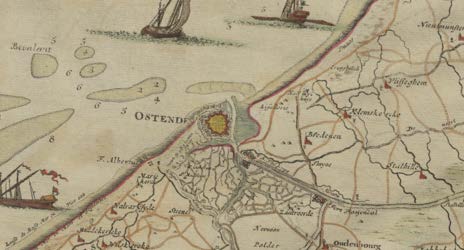
On the map in Figure 30.8, the importance of Ostend is evident. Its central location along the remaining coast of Flanders, on an island on the shore, and its strategic position to control the North Sea’s access in competition with Calais and Dover is prominent.
When the English and the Dutch occupied the city, this was unacceptable for the Spanish and the Catholic Spanish Netherlands.
The stay of the Desclergues in Ostend is extensively described in Chapter 31.
30.7 Overacker in Deerlijk-Harelbeke
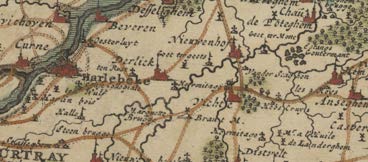
It is challenging to pinpoint the exact location of the Desclergues’ property in Deerlijk or ascertain if they resided there during Jeroni’s lifetime (DC05) or only later. We only know that their property was part of Overacker. Thanks to others’ research and constructive comments from Jan Vanoverbeke, we have identified the lands in modern Deerlijk. Additionally, there are lands in Harelbeke and a few in Vichte. The locations mentioned are illustrated in Figure 30.10.
The Overacker lands in Deerlijk were spread across several areas, particularly between Tapuitstraat and Sint-Elooistraat, where the train station is now located. Other notable regions include Stasegemstraat, Brandstraat, Stationswijk, south of the Saint Columba The Desclergues of la Villa Ducal de Montblanc, 2nd ed., Omn., VOL. II
© 2024 Nico F. Declercq
464
CHAPTER 30. WHEREABOUTS OF JERONI DESCLERGUE AND HIS FAMILY IN FLANDERS
Figure 30.5: A map of Tournai by Eugene Henry Fricx. p
Figure 30.6: For centuries, and even to-
day, the five towers of the Cathedral of
Tournai have been monumental. p
Figure 30.7: The tomb of Sabastien de Morales, a Span-
ish nobleman who died in 1584 at age 57, in the church
of Santiago (Saint Jacques) at Tournai, adjacent to the
Saint Magdalena church. Jeroni Desclergue lived in that
neighborhood. The Santiago Church used to be a stop-
over for pilgrims on their journey to Santiago de Com-
postela in Spain. (Photo taken in 2023) (Declercq de
Silva Archive).
© 2024 Nico F. Declercq
The Desclergues of la Villa Ducal de Montblanc, 2nd ed., Omn., VOL. II
30.7. OVERACKER IN DEERLIJK-HARELBEKE
465
Figure 30.8: Close up on Flanders on the map Leo Belgicus shown above, by Joannes van Deutecum in 1650. p church, and Braamakker. Further, lands between Wafelstraat and Olekenbosstraat and near Vanneste-Verweestraat and Kerkstraat beyond Heestertstraat towards Vichte are also part of this estate. One of these areas is shown in Figure 30.9. The primary reference to Overacker is Marianne Vermeulen’s thesis.2
Upon the Desclergues’ arrival in the area, they encountered a complex system of manors and parishes. Modern villages have evolved due to various mechanisms, including coagulation and inheritance. Typically, they still carry the manor’s name that contained the church or parish. Deerlijk was the name of the manor where the modern Deerlijk church is located, and the parish covered what is now the commune of Deerlijk.
This area included lands owned by the Manor of Overacker. However, the manor was situated in Harelbeke, in the northeast corner, where the Leie River formed, and the Spaniards historically used the Beveren Creek for military barracks. Its location outside the town of Harelbeke means it did not give its name to the town. The manor had judicial headquarters in Harelbeke as well.
According to André Woestijn’s study, "Harelbeke in de Spaanse tijd, 1585-1713," the Vierschaar (place where judges administered justice) of Overacker was located at the junction of Steenputstraat (now Forestierstraat) and the main road in Harelbeke (now Gentsestraat)3. This junction was the old road from Deerlijk to Harelbeke, near the manor. In 1626, an inn called De Bursse was located here, a term typically associated with large cities like Antwerp. The term Bursse or Beurs is believed to originate from the family name Van der Beurse in Bruges, where Joannes Van der Beurse established a regulated marketplace in 1453. The inn De Bursse in Harelbeke was purchased in 1599 or 1600 by Melchior Vanden Berghe from Thomaes De Ceuninck and later held by the heirs of Nicholas Vandeputte, who paid rent to Overacker. Subsequently, Simoen Mahieu paid this rent.
The manor owned lands in other parts of Harelbeke, including within the city borders, with homes and inns. The strategic location of the manor, combined with religious and financial reasons, fostered an alliance with the Spanish military, enabling them to construct military barracks along Beveren Creek and other fields. Jeroni Joan Desclergue y Cortés (DC05) or his widow, Felipa de Montoya, likely found purchasing property in Overacker territory inviting due to this alliance. Their acquaintance with the family of Jan Declercq (DK03) and Isabeau Braye in Kortrijk, who owned land in Deerlijk, may have also influenced their decision to buy property there.
Deerlijk, adjacent to Harelbeke and protected by the Leie River to the north and the Schelde River to the south, with the Gaverbeke Creek surrounding it, was a preferred residence for the Spanish military during inactivity. It was close to the Harelbeke military barracks (on Overacker lands and possibly neighboring fields) along the Beveren Creek. By the late 1500s, Deerlijk’s northern area was agriculturally developed, while the south was made accessible for farming and habitation by the end of the 16th century. The Desclergue family bought property on Overacker lands near their friends, the Declercq family, whom they had known since their arrival in Kortrijk.
Deerlijk gained particular importance for the family after Jeroni’s death when Felipa remarried the widower Jan Declercq (DK03).
Either the property was rented to others, or they lived there or resided there occasionally. Chapter 34.13.7 is devoted to the Jan Declercq family. Thanks to him, Antoni and Miguel were well integrated into the local society despite their Spanish origins. The presence of the Spanish military was crucial from both military and geographical perspectives, especially after local forces reclaimed the area from the Calvinists around 1580. The Spanish troops’ presence was necessary to maintain control and protect against potential threats from the French and Protestant forces.
Deerlijk was administratively part of the roede or ’verge’ of Harelbeke, which was one of the few verges constituting the Castellany of Kortrijk, making Deerlijk an extension of Harelbeke, similar to a modern suburb. During Jeroni Desclergue’s lifetime and his children’s, Harelbeke and likely Deerlijk had inns where people could consume alcoholic beverages, pay bills, and make deals. Besides De Bursse, André Woestijn’s study lists several inns in Harelbeke, including de Coyvot (the crowbar) and de Swaene (the swan), which was destroyed in 1602. Another inn, Den Inghele (the angel), was sold in 1606. Interestingly, an inn called den Rooden Hoet (the red hat) in 1602, later known as de Roose, likely evolved from the Spanish el sombrero rojo or el sombrero rosado.
Within Harelbeke, another inn called de Clocke (the clock) was located near Peperstraatje, owned by the city and sold to Overacker around 1578. Pieter Tytgat paid manor taxation to Harelbeke for owning the place, which was sold again in 1609 to Thomaes Le Mayeur.
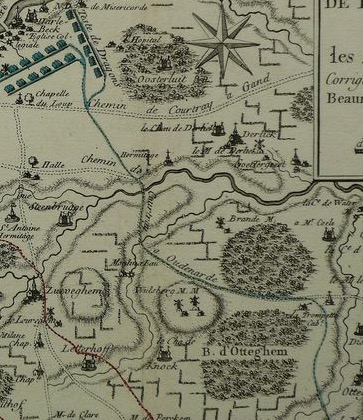
Figure 30.11 shows a 1755 map close-up depicting French barracks on the Manor of Overacker along the Beveren Creek in Harelbeke, extending to Deerlijk’s northwest corner. The Chemin de Courtray à Oudenarde road, shown on the map, illustrates the strategic location of Overacker, providing direct access to military camps. Despite the map being from a later period, it highlights the 2Marianne Vermeulen, ’Het grafelijk leenhof van Harelbeke (1333-1514), Katholieke Universiteit Leuven, 1985.
3André Woestijn, ’Harelbeke in de Spaanse tijd, 1585-1713,’ De Roede van Harelbeke (De Leiegouw), nr 14, 1994.
The Desclergues of la Villa Ducal de Montblanc, 2nd ed., Omn., VOL. II
© 2024 Nico F. Declercq
466
CHAPTER 30. WHEREABOUTS OF JERONI DESCLERGUE AND HIS FAMILY IN FLANDERS
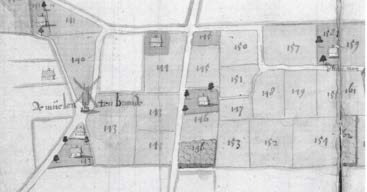
Figure 30.9: According to the reference, this map shows an area of Deer-
lijk in 1607, which also belonged to Overacker. Perhaps the property of the
children of Jeroni Joan Desclergue y Cortés (DC05) was located there, but we
don’t know for sure. On the map, the South is in the right direction, and the
East is up. It shows the area around the mill ’Brande Molen.’ Although it’s
hard to estimate the scale, later maps show a different street plan; one of the
L-shape roads on the right half of the map (grounds 150-157) may be nowadays
’Groenstraat.’ Brande Molen is located at Oudenaardse Heerweg and the mod-
ern street called ’Vanneste Verwee.’ The vertically oriented road in the middle
is ’Oude Heerweg.’ Interestingly, the area is almost adjacent to the current
cemetery of Sint Lodewijk Deerlijk, where the family grave Declercq - de Silva
is located and is the final resting place of three generations of Desclergues.
Interestingly, grounds 158-159 is where Albert Buysschaert’s farm was situated
when this book’s author was a child. He has visited this farm almost weekly
with his father. This may have been where Antoni Desclergue (DC06) spent
some of his youth, imagine! A description is found in Chapter 46. The map
is found in Rijkaarchief Kortrijk, Kerkarchief Harelbeke, nr 15808, f. 41; it
was published by Filip Benoit in ’Deerlijk en zijn inwonders vóór 1600, deel
IV’ , Derlike, 14de jaargang, nr 4, 1992.
enduring strategic importance of Overacker lands, initially chosen by the Spanish and later used by the French. The Chemin de Courtray à Gand road from Harelbeke through Deerlijk to Waregem, known as Waregemstraat, further emphasizes this strategic significance.
© 2024 Nico F. Declercq
The Desclergues of la Villa Ducal de Montblanc, 2nd ed., Omn., VOL. II
30.7. OVERACKER IN DEERLIJK-HARELBEKE
467
Figure 30.10:
1729 Map of Masse (Massekaart, source Geopunt Vlaan-
deren). We identify Curne (Kuurne), Harlebeke (Harelbeke), Derlick (Deer-
lijk), Courtray (Kortrijk), Marquette Bruges (Marquette in Deerlijk), Steen-
Bruges (part of Stasegem), Vichte, Brantmolen (Brandemolen in Deerlijk),
Poteghem (in Waregem) and Nieuwenhof (Niewenhove, in Waregem). Over-
acker was located in Harelbeke, Deerlijk, and Vichte.
Figure 30.11: Jean de Beaurain, Carte des Camps de Pottes et d’
Harlebeck, 1755. Likely, the colored routes connecting the barrack camps
of Harelbeke to Oudenaarde and an area close to the Schelde River were
also connections used earlier in the Spanish era. In particular, the lands
of Overacker were all close to the blue route.
The Desclergues of la Villa Ducal de Montblanc, 2nd ed., Omn., VOL. II
© 2024 Nico F. Declercq
CHAPTER 30. WHEREABOUTS OF JERONI DESCLERGUE AND HIS FAMILY IN FLANDERS
© 2024 Nico F. Declercq
The Desclergues of la Villa Ducal de Montblanc, 2nd ed., Omn., VOL. II
The Desclergues during the Siege of Ostend
31.1 Introduction
The Spanish victory in Ostend is a moment of glory in history, albeit marked by the tragic loss of our paternal ancestor, Jeroni Joan Desclergue y Cortés (DC05). For the occupying Calvinist Dutch and English forces, Ostend was a critical bridgehead for hostile operations in Flanders and served as a strategic point for coastal control. Such a ’Trojan horse’ was intolerable for the Spanish and the Spanish Netherlands (modern-day Belgium). Consequently, the liberation of Ostend became imperative.
Notably, during this period, the Spanish army was considered the foremost modern military force globally. The Dutch, fully aware of Ostend’s strategic importance, even referred to it as Troy.
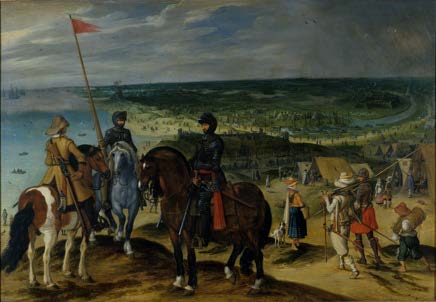
In Figure 31.1, five Spanish soldiers are depicted. This image is also described by Rodríguez Hernández1. The soldier on the right is a piquero, identifiable by his red skirt. Beside him, dressed in white, is an arcabucero. Mounted on horses are three caballeros: on the right is a captain who is also an escopetero, in the center is a hombre de armas, and on the left is an arcabucero a caballo.
Martinez and Sánchez2 note that,
’In principle, the soldiers of the Tercio had no uniform, as we understand the term today, but were required to wear a red band (’la banda roja’) on the shell (’la coraza’), or, if lacking a cover, a cross or a blade was permanently sewn into the doublet. Red was the hallmark of the Catholic King’s army and, consequently, of the Spanish infantry. At least in the first rows, Spanish soldiers’
distinctive garment was a red band, while captains wore a red belt cinched at the waist, also called ’la faja roja.’ For field masters and ’maestros general,’ this band was extensive but still a band, as they were essentially captains.’
Rodríguez Hernández further elaborates that the cavalry was divided into three groups. The first group was the heavy cavalry, which fought with spears and was organized into spear companies. These men were well-protected with metal shields, although their horses were not. The second group comprised the cuirassiers, who used two pistols instead of spears and were followed by men wielding swords or other weapons. The third group consisted of arcabuceros on horseback, utilizing lighter horses and primarily armed with harquebuses that could be fired from horseback. The Spaniards were the first to introduce this light cavalry, which was highly mobile and suitable for special missions or quick interventions, though ineffective against heavily armored enemies.
The spear companies were remnants of the noble medieval world, with only a few such companies in Flanders’ army. They typically served as custodians for dignitaries and military chiefs, composed of the social elite. Despite their instrumental role when deployed, their small numbers rendered them militarily insignificant and obsolete by this period in Flanders.
The most abundant group within the cavalry was the armored companies, akin to the old heavy cavalry. They usually did not charge the enemy but engaged in caracoles, a tactic where the cavalry would shoot at the enemy from a distance, then pull back to reload and return to the front to repeat the shooting. Unlike the infantry, they used short fuses on their guns due to the close-range nature of their combat and the necessity for swift action while on horseback. Over time, their weapons were replaced by more effective carbines, which were still inferior to the long-range and versatile musket.
It is conceivable that some modern Ostend residents may be patriotic, believing their ancestors fought against the Spanish long ago. However, caution is warranted. Current inhabitants of Ostend likely have no ancestors who lived there during that time. Most Ostend inhabitants relocated to Vlissingen in the Netherlands before and during the siege and never returned. Ostend, at that time, was under Protestant control.
The map of the Netherlands still needed to be divided into the Northern Republic and the Southern Spanish Netherlands; it was far more entangled. Some cities and territories were Spanish, while others were under the control of William of Orange. Ostend was one such insular enclave under Orange’s supervision, though only partially. The Queen of England had occupied several towns, including Ostend, to secure military support from England. Thus, from the Spanish perspective, Ostend was held by Orange’s rebels and even occupied by the English.
The city’s strategic significance was due to its harbor, which enabled control of the North Sea and Spain’s route to Antwerp. The Southern Netherlands, or Spanish Netherlands, naturally coveted the city. Indeed, as shown in Figure 31.2, when the Dutch blocked the entrance to Antwerp’s harbor (1587-1795), the Belgians (inhabitants of the Austrian Netherlands) relied solely on Ostend’s harbor for access to the world seas. The famous Ostend Company operated here, establishing trade routes with East India (e.g., Madras). More information on this topic can be found in Chapter 70.6.6.
31.2 The Early Stage of the Battle
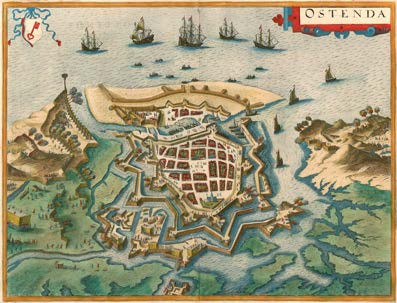
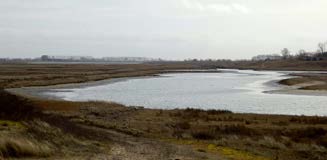
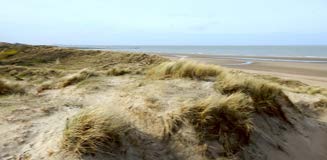
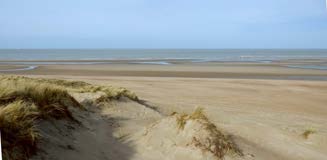
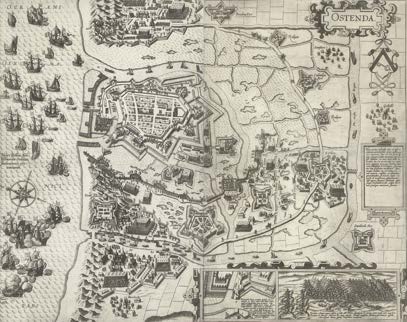
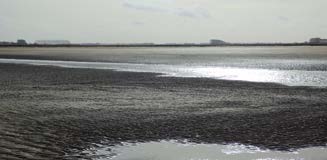
The recapture of Ostend by Spanish forces was a formidable task, primarily due to the city’s natural defenses, as illustrated in Figures 31.3 and 31.4. Philippe Fleming3 noted in 1625 that in 1602, Joan de Ribas (’Johan de Ribas’) was stationed at Ostend but served as the Governor of Cambrai.
Therefore, it is reasonable to assume that Jeroni Joan Desclergue y Cortés (DC05), who had participated in the siege and liberation of Cambrai, arrived in early spring of 1603 to support Joan de Ribas’ efforts in Ostend. His arrival in Flanders after a brief stay in Barcelona is discussed in Chapter 29.5.27.
Besieging activities were typically conducted in the spring or summer. However, the strategic importance of Ostend likely necessitated a continuous effort, with peak activities in the spring and summer. During this period, Jeroni and his family probably 1Antonio José Rodríguez Hernández, ’Breve Historia de los Tercios de Flandes (Spanish Edition),’ published by NowTilus, 2015
2Fernando Martinez and José Maria Sánchez, ’Tercio de España: Una infanteria legendaria’
3Philippe Fleming, ’Ostend, vermaerde, gheweldighe, lanckduyrighe ende bloedighe belegheringhe, bestorminghe ende stoute aenvallen: mitsgaders de manlijcke cloecke ende dappere teghenweer .. by den belegerden .. inde jaren 1601, 1602, 1603 ende 1604. waerachetelick beschreven . . . ’ , 1625, page 288
The Desclergues of la Villa Ducal de Montblanc, 2nd ed., Omn., VOL. II
© 2024 Nico F. Declercq
470
CHAPTER 31. THE SIEGE OF OSTEND
Figure 31.1: Painting by Peter Snayers (1573-1647), dating from 1601-1615, of the Siege
of Ostend p. The original painting is from the Friedenstein Castle collection, inventory
number SG 716. From left to right, we can see the three cavalry types: the light arquebusiers
on horseback, then the heavily armored cavalry with spears, and then the cuirassiers with
their two pistols.
frequently returned to their base in the Kortrijk-Deerlijk-Tournai region. Warfare in the 16th and 17th centuries differed significantly from modern warfare. The Spanish army in Flanders, comprising Spanish, German, Walloon, and Flemish troops, received annual payments for the duration of the war, ensuring a fixed income—contingent upon timely payments. Spanish troops were paid from Spain, while soldiers from Wallonia, Germany, or Flanders were compensated through local treasuries. While the amounts were similar, the sources and procedures differed.
Soldiers were often billeted with locals or, if financially able, purchased property and resided there. The use of barracks became common in the 17th century but was rare in the 16th century. Unmarried soldiers often shared houses or barracks with fellow soldiers. The Catalan term camarada (’comrade’ or kameraad) originated during this period, referring to soldiers sharing the same room. Soldiers generally stayed in cities, towns, and small villages to distribute the burden on locals. Cultural exchange was common, as shown in Figure 31.22. Military campaigns typically began in spring after a winter of rest, often involving the siege and liberation of towns. Sieges usually lasted a few weeks, but if a quick victory was unattainable, the city would be surrounded until the inhabitants starved and surrendered. Assaults were severe and decisive.
Ostend presented unique challenges. The incoming tide flooded the area around the city, and it was rare for the sea to recede enough to provide dry ground between the city and the mainland. Defensive constructions fortified the roads to the town, and canals further complicated assaults.
apturing Ostend was technically challenging, as the Dutch and British navies continuously supplied the city with fresh troops, money, food, beverages, prostitutes, weapons, and soldiers. The Spanish forces faced a relentless struggle, akin to "mopping with the tap open," as the Flemish saying goes.
The British indirectly controlled the city by providing financial and military support to the Dutch, which allowed them to dominate the North Sea. Ostend enabled the Dutch and British to control access routes to Sluis and Antwerp and permitted Dutch rebels to attack Flanders’ mainland.
Consequently, the city was surrounded by small Spanish fortresses to defend against assaults. Conquering Ostend was also a matter of prestige, with all of Europe closely monitoring the seemingly impossible endeavor. The Dutch exacerbated the situation by attacking the Spanish in various locations, such as Sluis and Brabant, to divert Spanish efforts from Ostend.
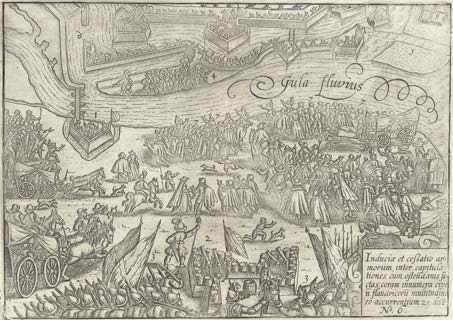
On January 7, 1602, the Spanish launched an assault on Ostend, attempting to capture the city, as depicted in Figures 31.19 and
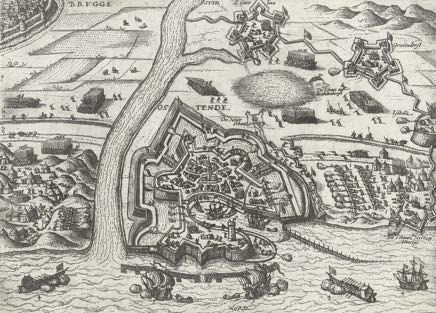
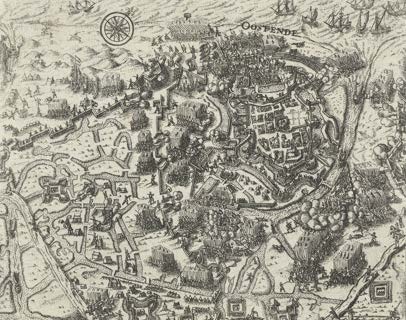
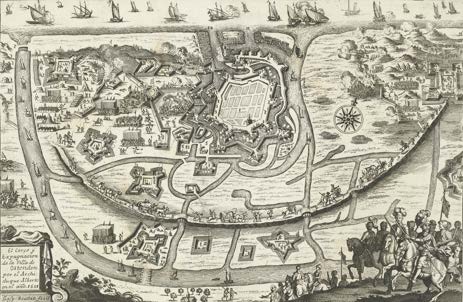
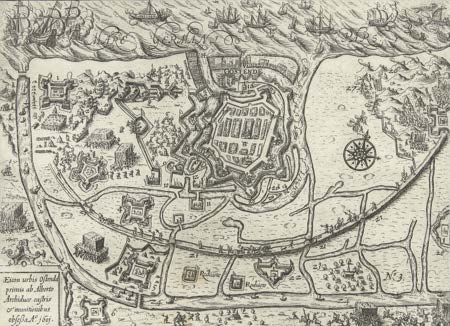
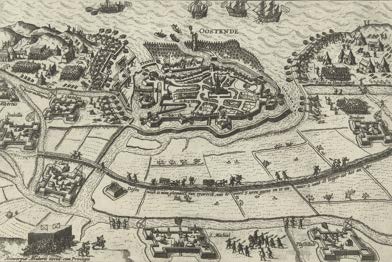
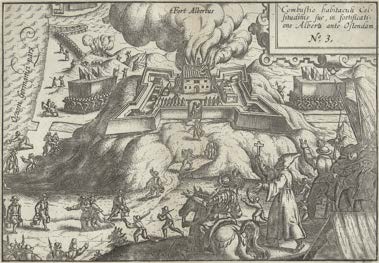
31.20. The attack was partially successful, particularly at the fortification of San Antoni in the northeast of Ostend, near Bredene, which was met with enthusiasm by the Spanish. This event might have inspired the naming of a son, Antoni, who was baptized on June 26, 1602, in Tournai. Maps show that Fort Albertus and Fort Isabella were operational again. The evolution of the battlefield is detailed in Figures 31.5, 31.7, 31.9, 31.10, 31.12, 31.14, 31.16, 31.17, 31.18, and 31.21. Environmental impressions are provided in Figures 31.6, 31.8, 31.11, and 31.15. A depiction of a military camp during the siege of Ostend is shown in Figure 31.13.
31.3 The Late and Final Stages of the Battle and the Death of Jeroni Joan
Desclergue y Cortés (DC05)
For several reasons, the protracted Siege of Ostend ultimately exhausted the Dutch forces, rendering its defense too costly. Firstly, by 1600, the Dutch realized that the Flemish population no longer sympathized with Calvinism and were weary of the constant military threat at the border between the Spanish Netherlands and the Dutch Netherlands. Most Calvinist sympathizers had fled, leaving a predominantly Catholic population with no intention of converting. While the Dutch had the resources to support a liberation effort, they lacked the capacity for a prolonged occupation.
Additionally, the Dutch, in a strategic move, believed that Ostend could be exchanged for Sluis in negotiations with the Spanish.
They prioritized certainty over uncertainty, opting to relinquish Ostend to secure Sluis.
Historical records suggest that the Dutch anticipated the possibility of reclaiming Ostend in the future if necessary. Militarily, the occupying forces in Ostend were in dire straits, having retreated to the inner city and being overwhelmed by Spanish forces. The final stronghold, referred to as ’New Troy,’ alluded to Greek history and the fall of Troy, symbolizing Ostend as a Trojan horse for
© 2024 Nico F. Declercq
The Desclergues of la Villa Ducal de Montblanc, 2nd ed., Omn., VOL. II
31.4. SANDHILL IN OSTEND, WHERE JERONI WAS KILLED
471
Figure 31.2: 1712, Ostend on the Map of Fricx. (Courtesy of Geopunt Vlaanderen - Public
Domain). A hundred years after the Siege of Ostend, the city was still very easy defendable.
attacking Flanders.
Ultimately, the Dutch, after a valiant defense, surrendered and peacefully evacuated Ostend, receiving safe conduct to Sluis and Vlissingen. Remarkably, the Spanish even allowed them to transport their cannons.
With Ostend liberated from the rebels, Spanish forces eliminated the foreign armies, resolving a critical issue symbolized by the
’thorn in the foot of the Leo Belgicus’—a reference to Ostend’s depiction at the time.
The phrase Ostendam initia pacis, meaning ’(only) at Ostend peace could begin,’ underscored Ostend’s significance for both the Spanish and the Belgians.
Numerous books have been written about the Siege of Ostend, including several reliable contemporary sources. A modern, equally reliable work that focuses on the army residing in the city during the conflict is Werner Thomas’s book4. However, it is essential to note that, despite the current inhabitants’ pride, almost no one lived in Ostend during the siege. The population had been evacuated to Vlissingen and never returned. The city was occupied by military personnel and contract workers tasked with repairing damaged installations on a rotational basis. Nonetheless, the siege resulted in significant loss of life, not only due to warfare but also disease.
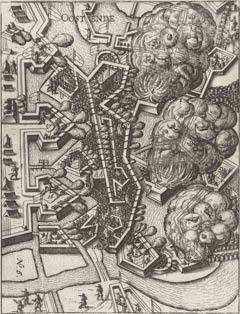
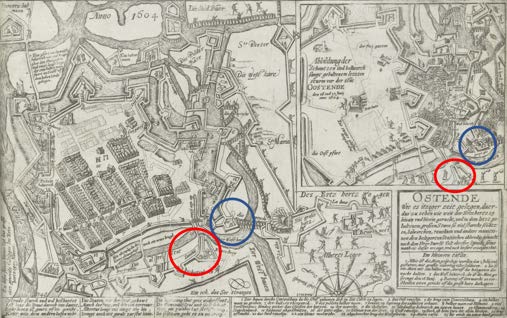
Massive explosions, depicted in Figure 31.30, occurred on the southwest side of Ostend, where Spanish forces concentrated their power. Military operations were launched from the fortresses of Santa Maria, also known as ’Jeronimo de Monroy’ and Rivas. The reader may also refer to Figure 37.55 on page 655. Jeroni Desclergue led attempts to capture Porcopino and Sandhill, where he ultimately perished.
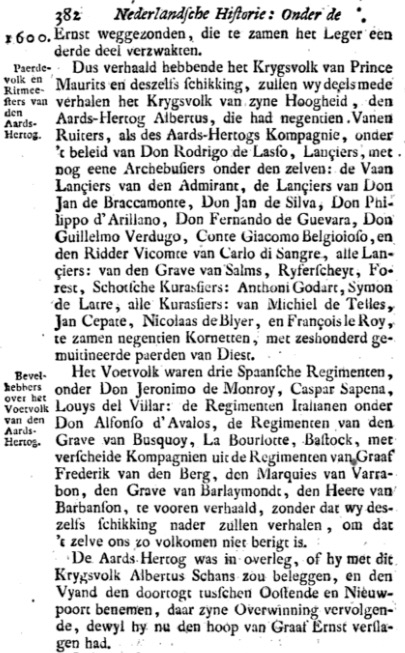
Jeronimo de Monroy, a relative of Jeroni Joan Desclergue y Cortés (DC05), through his biological mother, Maria Ana Cortés de Monroy, also participated in the siege. As noted in Figure 31.31, Jeronimo de Monroy was killed in 16015. Figures 31.23, 31.24,
31.25, 31.26, 31.27, 31.28, and 31.29 present maps and depictions of the ongoing developments of the Siege of Ostend until its conclusion.
31.4 Sandhill in Ostend, where Jeroni was Killed
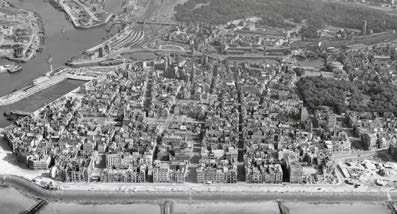
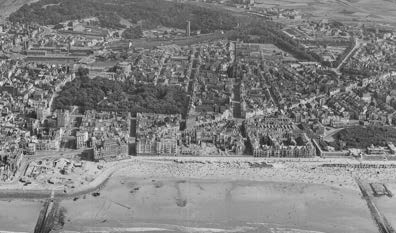
Figures 31.32, 31.33, and 31.34 depict Sandhill in Ostend, the location where Jeroni Joan Desclergue y Cortés (DC05) perished during an assault, which culminated in a Spanish victory. In Christophle de Bonours’ book from 16286, we read at the beginning of Chapter 29 in Figures 29.6 and 29.7 on page 370,
Camp Master Antuñes (who resided at Tournai, like Jeroni Joan Desclergue y Cortés (DC05)), having advanced enormously towards the new fortification of the Besieged, caved a mine, which he opened with fire at the beginning of September. The endeavor was so successful that an enemy English Lieutenant named Benetton, a Sergeant, and about forty Soldiers were buried alive when it was opened. A Spanish Captain named Don Jeronimo Desclergue (DC05) (’Don Ieronimo de Cleriges’) had seen the opening and advanced promptly with his company to fortify it on the breach and followed the order of the Camp Master. However, he reached the breach so soon that the Besieged ignited another explosion, which buried all men alive, namely the Captain, the Ensign, the Sergeant, and all Soldiers.’
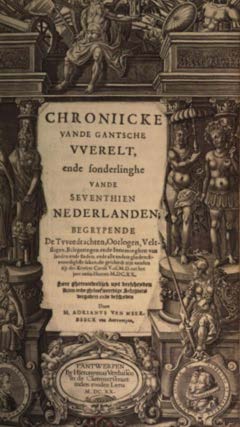
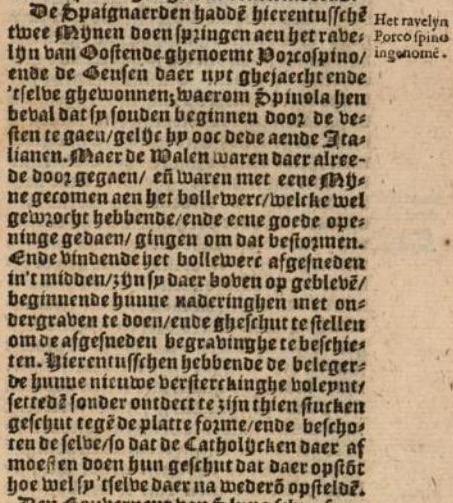
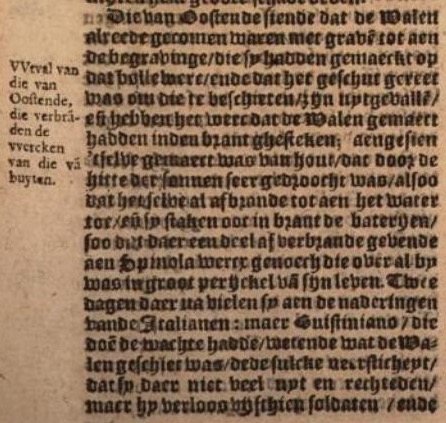
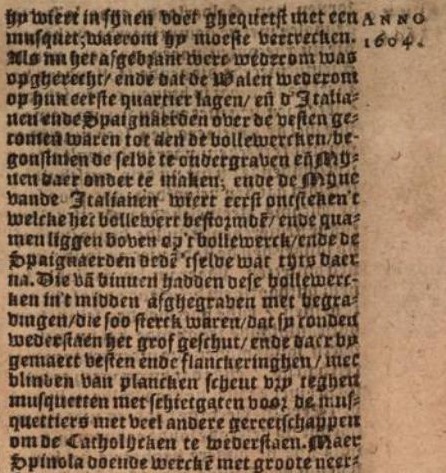
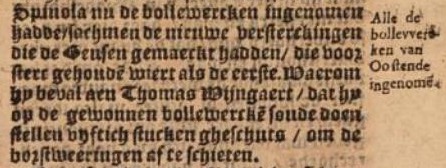
The text does not specify the location of the breach. For further details, we refer to the work of Adrianus van Meerbeeck7, illustrated in Figures 31.35, 31.36, 31.37, 31.38, and 31.39, which states,
’In the meantime, the Spaniards had burst two mines on the Ostend raveline, called Porcospino, and they had chased the ’Geuzen’
out and then taken the raveline.’
The term Porcospino is Italian for Stekelvarken in Dutch or Porcupine in English. This marked the initial phase of a series of Spanish successes, beginning on May 28, 1604. Following this, a diplomatic episode related to Sluis occurred. For details on this event, refer to the career of Enric Desclergue (DC05c) described in Chapter 33.3.6.
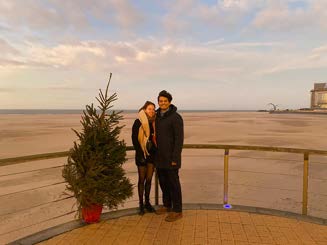
When peace was signed at Sluis, the Spanish feared that the Dutch would reinforce Ostend, prompting them to accelerate their efforts. The next target was Sandhill, located at the West harbor, near the modern-day Casino, as shown in Figure 31.41 on page
4Werner Thomas, ’De val van het nieuwe Troje - Het Beleg van Oostende 1601-1604’ (Davidsfonds, 2004).
5Emmanuel van Meteren, ’Historie van de oorlogen en geschiedenissen der Nederlanderen, Volume 7: Belegeringe van de stadt van Oostende door Albertus Eerts-Hartogh,’ Brugge, 1604.
6Christophle de Bonours, ’Le Memorable Siege D’ Ostende, Décrit, et Divisé en Douze Livres par Christophle de Bonours, du Conseil de Guerre, & Capitaine entretenu de sa Majesté, à Bruxelles, Achevé d’Inprimer chez Jean de Meerbeeck, 1628.,’ Livre douzième, page 585 (1604) 7Adrianus van Meerbeeck, ’Chroniicke vande gantsche vverelt, ende sonderlinghe vande seventhien Nederlanden; Begrypende de Tweedrachten, oorlogen, Veltslagen, Belegeringen ende Innemingen van landen ende steden, ende alle andere ghedenckvveerdighste saken, die geschiedt zijn vanden tijt des Keysers Caroli V, af M.D. tot het jaer onzes Heeren MDCXX.,’ Antwerp, 1620.
The Desclergues of la Villa Ducal de Montblanc, 2nd ed., Omn., VOL. II
© 2024 Nico F. Declercq
472
CHAPTER 31. THE SIEGE OF OSTEND
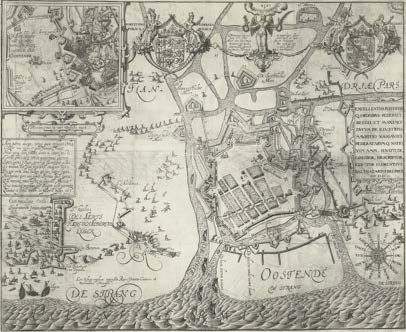
Figure 31.3: 1601, a map of Ostend during the Siege (Braun & Hogenberg, p). It
is clear that the city was very well defended and could quickly acquire support from
the sea.
Jeroni died on September 4, with Sandhill falling on September 13. This breakthrough marked the downfall of Ostend, which completely collapsed by September 19, with the entire city captured. The explosion on September 4 also severely injured Jeroni’s brother, Enric Desclergue (DC05c), as detailed in Chapter 33. Despite severe injuries, including disembowelment, he survived.
Adrianus van Meerbeeck’s work highlights the intense final battles characterized by extensive use of mines and explosives.
31.5 Colombye, San Miguel and the Pregnant Widow
While Jeroni Desclergue, his wife Felipa De Montoya, and their son Antoni Desclergue were in Ostend during the spring, summer, and early fall, they resided in the area controlled by the Kingdom of Spain. Meanwhile, the city was under the control of the States of the Northern Netherlands and the English rebels. The exact location of their residence in Ostend remains to be determined.
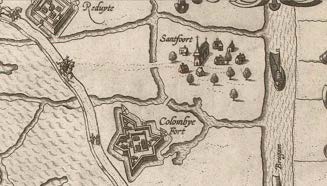
However, likely, the Catalan soldiers of the Spanish army were mainly stationed in and around the inland-directed Spanish fortress of Colom (Fort Colombye), also known as the fortress of San Miguel (Sint Michiel) due to a chapel within the fortress dedicated to San Miguel.
As illustrated in Figure 31.42, the fort was probably named after ’Cristòfor Colom,’ the Catalan version of ’Cristóbal Colón,’ or Christopher Columbus. Nonetheless, we cannot exclude the possibility of a reference to Saint Columba of Sens, depicted in Figure
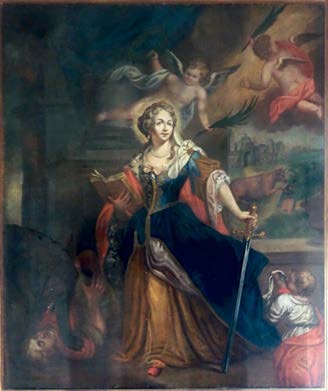
31.43, who was revered in places such as Deerlijk. Analyzing her legend reveals striking parallels that Spanish Catholics may have identified with.
Saint Columba was born in Spain in the 3rd century and fled to Northern France to escape Roman persecution. She was captured and forced to reside in a brothel, where a bear protected her to preserve her purity. This story might have resonated with the Spanish Catholics in Flanders, who likely felt similarly besieged.
Moreover, Santa Coloma was also worshipped in a town near Montblanc in Spain (Santa Coloma de Queralt).
It is likely at Fort Colombye that Miguel Desclergue, Jeroni’s last child, was conceived. Miguel was born posthumously, probably in the spring of 1605, and was baptized in Tournai on September 30, the feast day of Saint Hieronymus (Jeroni).
The fortress of Colombye was constructed by Joan de Ribas, a name still prevalent in modern Catalonia. Ribas later became the governor of Ostend after the Siege. The Spanish erected several small fortresses around Ostend to contain the city, preventing rebel attacks on the mainland and quick reinforcement by Dutch rebel troops from Sluis. Consequently, Ostend was isolated from the land but remained connected to the sea, as previously described. Ostend maintained continuous connections with Vlissingen.
Interestingly, Joan de Ribas is recorded as whose daughter Catalina de Ribas married Pedro Garcia Pie Redonda, son of Andes Garcia Pie Redonda and Maria Gutierrez, on June 8, 1602, in Santander, Spain. The ceremony occurred at the San Miguel Church in San Miguel de Aras, near Santander in Cantabria, Spain. If Joan de Ribas is the same individual, he may have named the chapel at Colombye Fortress after his hometown.
31.6 Legacy of the Siege of Ostend
The book ’La nouvelle Troye ou memorable histoire du siege d’ Ostende leus signalé qu’ on ait veu en l’ Europe .. avec ce qui s’
est passé par chascun jour durant ledit siege depuis le 5 Juin 1601 jusqu’ au 20 Septembre. 1604 qu’ elle fut renduë: recoeuillie des plus asseurés memoires par Henry Haestens,’ meticulously chronicles the siege, detailing events on a month-by-month basis.
It reports that approximately 50000 men perished on each side, with about 500 captains among the casualties. Additionally, the account notes the detonation of roughly 70 mines during the conflict. One of the final mines, which exploded in September 1604, resulted in the death of our paternal ancestor, Jeroni Joan Desclergue y Cortés (DC05).
© 2024 Nico F. Declercq
The Desclergues of la Villa Ducal de Montblanc, 2nd ed., Omn., VOL. II
31.6. LEGACY OF THE SIEGE OF OSTEND
473
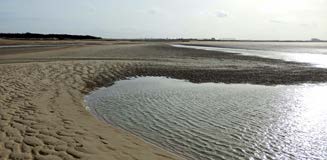
Figure 31.4: ’Het Zwin’ along the Bel-
gian coast, at the border between Flanders
and The Netherlands. The beach there still
looks as it was around Ostend in 1604a.
(Declercq de Silva Archive)
aThe tide significantly impacts coastal veg-
etation, leading to the formation of mud-
flats and salt marshes, known as ’slikken’ and
’schorren’ respectively. Tides are the periodic
changes in water level and the associated tidal
currents that occur on Earth, primarily due
to the gravitational pull of the Moon, with a
lesser contribution from the Sun. This funda-
mental insight was first articulated by Isaac
Newton in 1687.
In 1740, Daniel Bernoulli extended Newton’s
theory to include the concept of the equi-
librium tide, which is often mistakenly at-
tributed to Newton himself.
Pierre-Simon
Laplace made further advancements in 1776,
developing a dynamic approach to under-
standing tides. Subsequent contributions to
tide analysis and forecasting were made by
William Thomson (Lord Kelvin) in 1867,
George Howard Darwin in 1899, and Arthur
Thomas Doodson in 1921.
Tidal variations are influenced by several fac-
tors, including the distance from the equator,
water depth, and the shape of the coastline,
which is particularly significant for Ostend.
Additionally, tides are affected by air pressure
and wind conditions. In Ostend, the average
difference between high and low tide is approx-
imately 5 meters.
Figure 31.5: 1601, the beginning of the Siege of Ostend. One can see the arrival of Spanish
troops and the construction of fortresses. The upper part of the image is Ostend, which was
already highly fortified and defended by Dutch and English troops. (Courtesy of Rijksmuseum
Amsterdam and Europeana - p)
Figure 31.6: ’Het Zwin’ along the Bel-
gian coast, at the border between Flanders
and The Netherlands. The beach there still
looks as it was around Ostend in 1604.
Sandhill must have looked similar. (De-
clercq de Silva Archive)
The Desclergues of la Villa Ducal de Montblanc, 2nd ed., Omn., VOL. II
© 2024 Nico F. Declercq
474
CHAPTER 31. THE SIEGE OF OSTEND
Figure 31.7: 1601, after the Spanish arrival, one still had to close in and establish small
fortresses closer to the city of Ostend. (Courtesy of Rijksmuseum Amsterdam and Europeana
- p)
Figure 31.8: ’Het Zwin’ along the Bel-
gian coast, at the border between Flan-
ders and The Netherlands. The beach
there still looks as it was around Ostend in
1604. During ebb, assaults were possible,
but the flow would wash away the bodies
and destroy any construction. Ostend was
a formidable challenge for the Spaniards.
(Declercq de Silva Archive)
Figure 31.9: 1601, the Spanish are closing in on Ostend. (Courtesy of Rijksmuseum
Amsterdam and Europeana - p)
© 2024 Nico F. Declercq
The Desclergues of la Villa Ducal de Montblanc, 2nd ed., Omn., VOL. II
31.6. LEGACY OF THE SIEGE OF OSTEND
475
Figure 31.10: 1601, the Spanish established several small fortresses around Ostend to strengthen
the Siege. It included Fort Colombye, still having a triangular shape, seen at the bottom of the
image. Later, each fortress would receive the name of a Saint, and a chapel would be built. The
one at Colombye would be San Miguel. (Courtesy of Rijksmuseum Amsterdam and Europeana -
p)
Figure 31.11: ’Het Zwin’ along the Bel-
gian coast, at the border between Flan-
ders and The Netherlands. The beach
there still looks as it was around Ostend in
1604. Ponds and creeks that remain dur-
ing ebb must have hindered assaults by the
Spaniards during Ostend Siege. (Declercq
de Silva Archive)
Figure 31.12: 1601, another map shows that the Spanish established several small fortresses
around Ostend to strengthen the Siege. (Courtesy of Rijksmuseum Amsterdam and Europeana
- p)
The Desclergues of la Villa Ducal de Montblanc, 2nd ed., Omn., VOL. II
© 2024 Nico F. Declercq
476
CHAPTER 31. THE SIEGE OF OSTEND
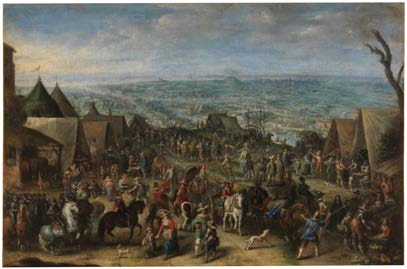
Figure 31.13: Painting by Cornelis de Wael (1592-1662) - a military camp during the
Ostend Siege. Note the shape of the barracks and tents, and their placement in rows.
Such constructions have also been found between Harelbeke and Deerlijk, as described
elsewhere in this book. Tents and barracks were typically 4 m wide. This painting is
found in Museo del Prado, number P001882 p.
Figure 31.14: 1601, Fort Colombye is visible on the map’s right side and is still
triangular. Fort Albertus is visible near the beach. (Courtesy of Rijksmuseum Amster-
dam and Europeana - p)
Figure 31.15: ’Het Zwin’ along the Bel-
gian coast, at the border between Flan-
ders and The Netherlands. The beach
there still looks as it was around Ostend
in 1604. The area was wet, sandy, salty
and changed continuously with a twelve-
hour cycle because of the tide. (Declercq
de Silva Archive)
© 2024 Nico F. Declercq
The Desclergues of la Villa Ducal de Montblanc, 2nd ed., Omn., VOL. II
31.6. LEGACY OF THE SIEGE OF OSTEND
477
Figure 31.16: 1601, Fort Colombye (Sint Michiel) is visible, while Fort Albertus
is still there. Fort Isabella is also clearly visible. (Courtesy of Rijksmuseum Ams-
terdam and Europeana - p)
Figure 31.17: 1601, on November 13, the Spanish fortress of ’Albert’ (fort Al-
bertus) had burned down. Every person visible on this image is Spanish. (Cour-
tesy of Rijksmuseum Amsterdam and Europeana - p)
The Desclergues of la Villa Ducal de Montblanc, 2nd ed., Omn., VOL. II
© 2024 Nico F. Declercq
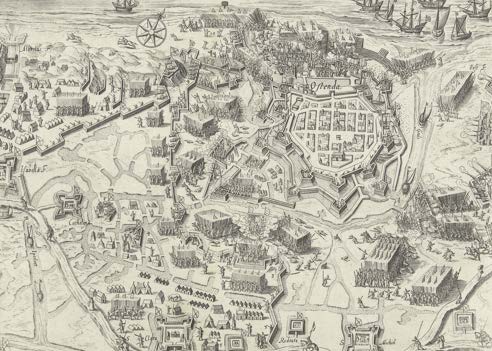
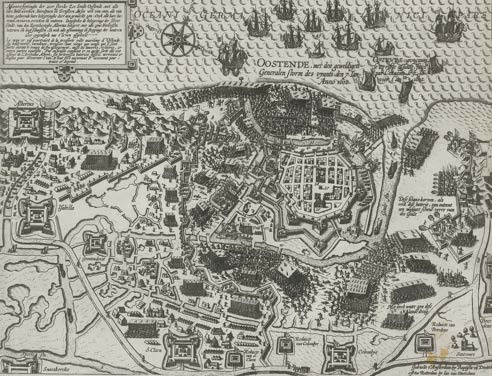
478
CHAPTER 31. THE SIEGE OF OSTEND
Figure 31.18: The end of 1601. Fort Colombye was transformed from triangular to rectangular and
now had a San Miguel chapel (therefore also called Fort Sint Michiel). Fort Albertus had already burned down. (Courtesy of Rijksmuseum Amsterdam and Europeana - p)
Figure 31.19: On January 7, 1602, the Spanish stormed Ostend in an attempt to conquer it. (Courtesy
of Rijksmuseum Amsterdam and Europeana - p)
© 2024 Nico F. Declercq
The Desclergues of la Villa Ducal de Montblanc, 2nd ed., Omn., VOL. II
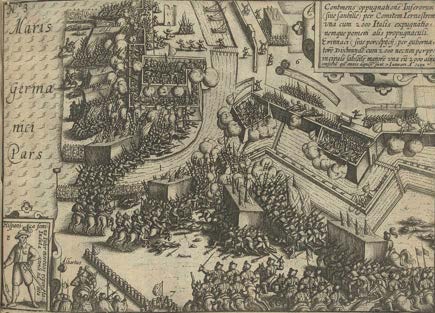
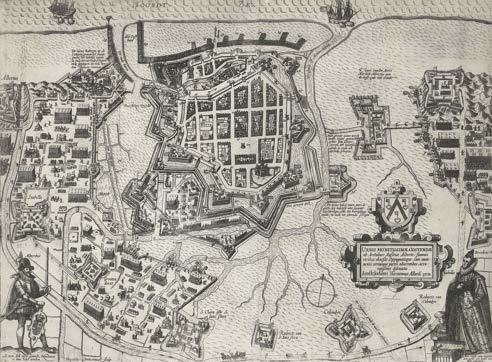
31.6. LEGACY OF THE SIEGE OF OSTEND
479
Figure 31.20: Detailed view on the events of January 7, 1602, when the Spanish stormed
Ostend. (Courtesy of Rijksmuseum Amsterdam and Europeana - p)
Figure 31.21: 1602, end, Spanish troops are more organized and settled. (Courtesy of Rijksmuseum
Amsterdam and Europeana - p)
The Desclergues of la Villa Ducal de Montblanc, 2nd ed., Omn., VOL. II
© 2024 Nico F. Declercq
480
CHAPTER 31. THE SIEGE OF OSTEND
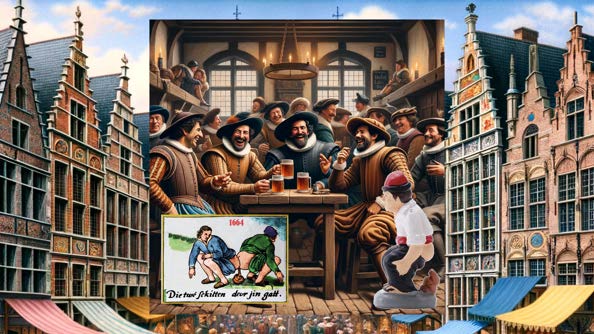
Figure 31.22: In 1960, Luc A. Vandebogaerde published a brief article in ’Het A. B. K. of het Algemeen Beskaaft Kortriks,’
exploring the linguistic history of Kortrijk. In this article, he reproduced a copper engraving from 1664, depicted on the left, bearing the inscription, "Die twè sckitten deur jin gatt," which translates to "those two poop through the same hole." In the Kortrijk dialect, this phrase is equivalent to saying, ’those two share the same opinion.’ Vandebogaerde further noted that the Dutchman Jan van Doetinchem found this Kortrijk saying so intriguing that he created the copper engraving in 1664. Van Doetinchem, born in Zutphen where he served as a town scribe, documented in 1698: "Het Kortriks is eene echte Vlamske taele" (The Kortrijk dialect is a genuine Flemish language).
Evidently, Jan van Doetinchem considered the Kortrijk expression unique. This phrase must have originated in Kortrijk or been introduced there by foreigners, including Catalans.
A ’caganer’ is depicted on the right side, a traditional figure in Catalan nativity scenes. The term ’caganer’ literally translates to ’the defecator’ or ’the pooper.’ The tradition of incorporating a ’caganer’ into nativity scenes dates back to the 18th century and is deeply embedded in Catalan culture. However, the concept of the ’caganer’ and its linguistic applications in Catalan predate the creation of these figurines. For instance, old Catalan expressions such as "són cul I merda" reflect similar ideas and translate to "they are butt and poop," humorously implying that two individuals are inseparable and consistently in agreement, akin to the intrinsic connection between the backside and its product.
Therefore, it is plausible that the 17th-century expression from Kortrijk has Catalan origins. Indeed, this idiom embodies the Catalan inclination for direct, earthy humor and practicality—traits that have long been integral to the culture.
The two background images (DALL·E 2024-06-01 17.33.40 and DALL·E 2024-06-01 17.40.48) were fabricated by AI and show the ambiance in Kortrijk 1587.
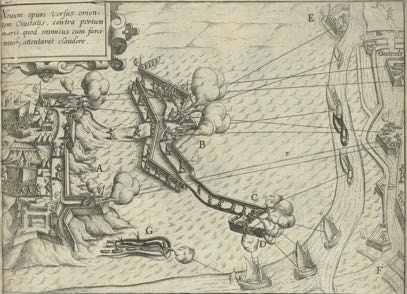
Figure 31.23: February 1603, the Spanish fire on the vessels that support the city.
They do that mainly from Fort San Antoni, where they have a clear view of ’De Geule,’
which is the access from the sea to the city harbor. (Courtesy of Rijksmuseum Ams-
terdam and Europeana - p)
© 2024 Nico F. Declercq
The Desclergues of la Villa Ducal de Montblanc, 2nd ed., Omn., VOL. II
31.6. LEGACY OF THE SIEGE OF OSTEND
481
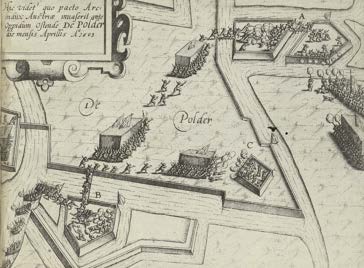
Figure 31.24: April 1603, the Spanish conquered fortresses in the polder
around Ostend. (Courtesy of Rijksmuseum Amsterdam and Europeana - p)
Figure 31.25: On the left of the map, November 1603, it is seen that San Antoni’s
fortress was still essential to attacking Ostend from the Northeast. (Courtesy of Ri-
jksmuseum Amsterdam and Europeana - p)
The Desclergues of la Villa Ducal de Montblanc, 2nd ed., Omn., VOL. II
© 2024 Nico F. Declercq
482
CHAPTER 31. THE SIEGE OF OSTEND
Figure 31.26: In 1603 and 1604, the importance of military engineering became
very apparent. Indeed, attacking a city surrounded by water is a challenging task.
The limited duration of the low tide made it necessary to explore sophisticated
techniques to continue the attack during the high tide, using bridges, floating
cannons, etc. (Courtesy of Rijksmuseum Amsterdam and Europeana p)
Figure 31.27: 1604, this map shows that the Spanish named each fortress
after a saint, a commander, or something else. In that sense, they were
very modern, as it would take until Napoleon before meaningful names for
regiments were used again instead of numbers. To name a few: Jeronimo
de Monroy, San Pedro, Barlamont, Rivas, De Zuidkarre, De Boteram, De
Slimme Halve Maen, De Saucisen, De Batery van Conte Buquoi, De Groote
Katte. The armies at Ostend meanwhile called their remaining haven ’Nova
et parva Troja,’ or ’New Troy.’ (Courtesy of Rijksmuseum Amsterdam and
Europeana p)
Figure 31.28:
The author’s eldest son
Benjamin and daughter Anna-Laura on
the Belgian beach in 2021. (Declercq de
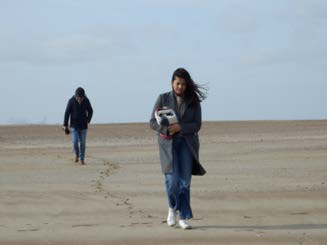
Silva Archive)
© 2024 Nico F. Declercq
The Desclergues of la Villa Ducal de Montblanc, 2nd ed., Omn., VOL. II
31.6. LEGACY OF THE SIEGE OF OSTEND
483
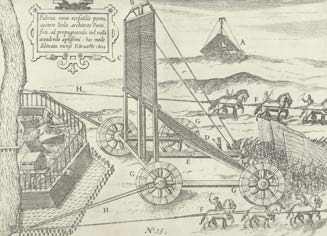
Figure 31.29: 1604, a storm bridge was
developed by Italian engineer Pompeo Tar-
gone. It was used to get over the city walls
but was very large and difficult to maneu-
ver. (Courtesy of Rijksmuseum Amster-
dam and Europeana p)
Figure 31.30: 1604, a close view of the events at the
end of the Siege, with massive explosions visible caused by
mines blasting the walls and other structures. It was dur-
ing one such event that Jeroni Joan Desclergue y Cortés
(DC05) and his men were killed. (Courtesy of Rijksmu-
seum Amsterdam and Europeana p)
The Desclergues of la Villa Ducal de Montblanc, 2nd ed., Omn., VOL. II
© 2024 Nico F. Declercq
484
CHAPTER 31. THE SIEGE OF OSTEND
Figure 31.31: Book fragment mention-
ing the death of Jeronimo de Monroy, in
Emmanuel van Meteren, Historie van de
oorlogen en geschiedenissen der Nederlan-
den, vol 7, p382.
Figure 31.32: An aerial view of Ostend on August 4, 1945. Sandhill is in the lower
right corner, where the casino was under construction. (United States Government
Work)
© 2024 Nico F. Declercq
The Desclergues of la Villa Ducal de Montblanc, 2nd ed., Omn., VOL. II
31.6. LEGACY OF THE SIEGE OF OSTEND
485
Figure 31.33: An aerial view of Ostend on August 4, 1945. Sandhill is in the lower
left corner, where the casino was under construction. (United States Government
Work)
Figure 31.34: Ostend in 1604. The red area is Sandhill, and the blue area is Porcospino. Jeroni (DC05) and his men took the raveline of Porcospino on May 28, 1604, and Sandhill in the weeks until September 13. Jeroni died on Sandhill on September 3. Both locations are near Ostend’s current casino.
The Desclergues of la Villa Ducal de Montblanc, 2nd ed., Omn., VOL. II
© 2024 Nico F. Declercq
486
CHAPTER 31. THE SIEGE OF OSTEND
Figure 31.35: Antwerp, 1620, the front page of the
mentioned book by Adrianus van Meerbeeck.
Figure 31.36: Antwerp, 1620, page 1047
of the mentioned book by Adrianus van
Meerbeeck.
© 2024 Nico F. Declercq
The Desclergues of la Villa Ducal de Montblanc, 2nd ed., Omn., VOL. II
31.6. LEGACY OF THE SIEGE OF OSTEND
487
Figure 31.37: Antwerp, 1620, page 1049
of the mentioned book by Adrianus van
Meerbeeck (part 1/3).
Figure 31.38: Antwerp, 1620, page 1049
of the mentioned book by Adrianus van
Meerbeeck (part 2/3).
Figure 31.39: Antwerp, 1620, page 1049
of the mentioned book by Adrianus van
Meerbeeck (part 3/3).
Figure 31.40:
The author’s youngest
son, Lambert, was on the Belgian beach in
2021. (Declercq de Silva Archive)
The Desclergues of la Villa Ducal de Montblanc, 2nd ed., Omn., VOL. II
© 2024 Nico F. Declercq
488
CHAPTER 31. THE SIEGE OF OSTEND
Figure 31.41:
The Casina Kursaal of
Ostend, Belgium, stands approximately
where ’Sandhill’ once was, where Jeroni
Joan Desclergue (DC05) died in 1604, on a
strategic point where Spanish troops broke
through the defenses of the Dutch and
English-occupied city in 1604 during the
Siege of Ostend. The original casino was
constructed in 1852 as a cultural and so-
cial hub. However, it was demolished and
replaced with the current building, inaugu-
rated in 1953. Designed by architect Léon
Stynen, the modernist structure hosts vari-
ous events, including concerts, exhibitions,
and conferences, continuing Ostend’s tra-
dition of being a vibrant seaside resort and
cultural center. In the photo, we see Ben-
jamin, the author’s eldest son, with his fi-
ancé Michelle, in December 2023. (De-
clercq de Silva Archive)
Figure 31.42:
Fort Colombye, on the
map 1601-1602 Ostend (source Europeana,
p).
Figure 31.43:
Santa Coloma (Saint
Columba) in the church of Deerlijk. (18th
century painting).
© 2024 Nico F. Declercq
The Desclergues of la Villa Ducal de Montblanc, 2nd ed., Omn., VOL. II
31.6. LEGACY OF THE SIEGE OF OSTEND
489
Figure 31.44: 1604, Isabella and Albert were the victors
of Ostend. (Courtesy of Rijksmuseum Amsterdam and
Europeana - p)
Figure 31.45: Two poems about the Siege of Ostend, published by
Isaak Commelin, in ’Wilhelm en Maurits van Nassau, Princen van
Orangien, haer leven en bedrijf, of ’t begin en voortgang der Ned-
erlandsche Oorlogen. Met koopere figueren verciert. En door een
liefhebber der historien uyt verscheyde schriften te samen ghestelt,
Volume 2’ , page 263.
The Desclergues of la Villa Ducal de Montblanc, 2nd ed., Omn., VOL. II
© 2024 Nico F. Declercq
490
CHAPTER 31. THE SIEGE OF OSTEND
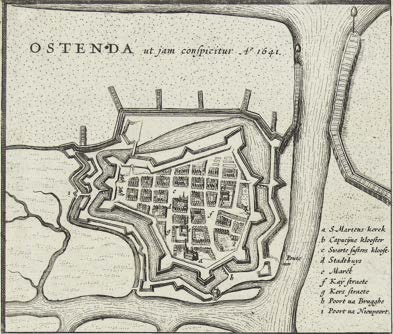
Figure 31.46: 1641, Ostend. Nothing remained of the Siege of the beginning
of the century. The city was rebuilt, repopulated and refortified. (Courtesy of
Rijksmuseum Amsterdam and Europeana - p)
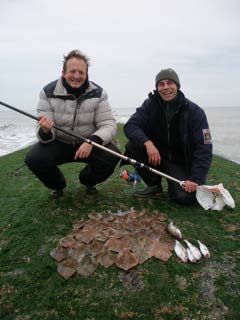
Figure 31.47: On December 27, 2011, Nico F. Declercq
and Filip Windels, Ph.D. in Physics, enjoyed beach fish-
ing in Ostend, catching many delicious Limanda in the
cold weather. Declercq is the godfather to Filip’s daugh-
ter, Sofie. The photo was taken between Mariakerke and
Sandhill in Ostend, near ’de Grote Kat,’ where the Span-
ish fired during the Siege. Limanda, or dab, distinguishes
itself from other flatfish by its curved lateral line above
the pectoral fin and lacks bumps on the head and lateral
line. Its serrated scales give the skin a rough texture like
sandpaper when brushed up. Dab typically measures 30
cm long, schooling and avoiding fresh water at estuaries.
They inhabit depths of 20 to 40 meters, often caught best
from boats but accessible from piers, jetties, and break-
waters during winter when they move to shallow coastal
waters. (Declercq de Silva Archive)
© 2024 Nico F. Declercq
The Desclergues of la Villa Ducal de Montblanc, 2nd ed., Omn., VOL. II
Antoni Desclergue y Ratera (DC05b)
32.1 Introduction
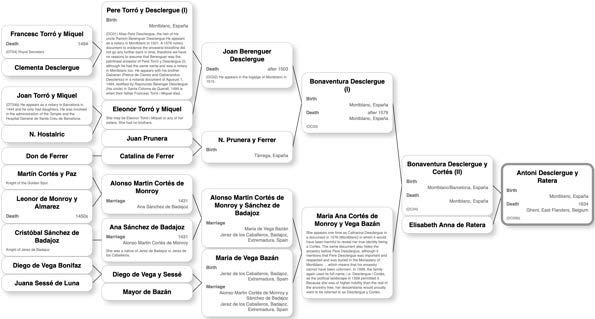
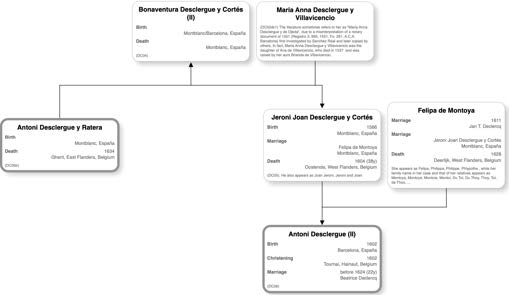
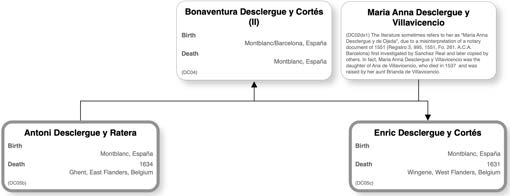
Don Antoni Desclergue y Ratera (DC05b) was the brother of Jeroni Joan Desclergue y Cortés (DC05) and should not be confused with Jeroni’s son, our ancestor, Don Antoni Desclergue (DC06). The ancestral situation and blood-relationship of Antoni Desclergue y Ratera (DC05b) is made clear in Figures 32.1, 32.2 and 32.3.
To a large extent, one should read this chapter together with Chapter 33. The reason is that Antoni Desclergue y Ratera (DC05b) and Enric Desclergue y Cortés (DC05c), two half-brothers, had their careers simultaneously and stayed pretty much together or in the same areas during their time in Flanders until their death. They were brothers of our ancestor Jeroni Joan Desclergue y Cortés (DC05).
Antoni Desclergue (DC05b) y Ratera was a son of Don Bonaventura Desclergue (II) (DC04) and Anna (II) Ratera. He was a half-brother of Jeroni and Enric Desclergue and a brother of Francesc Desclergue (DC05e) y Ratera and Francisca Desclergue (DC05d) y Ratera. On pages 179-180 of URTX índex onomàstic Personatges històrics, we find,
’Desclergue, Antoni (militar): VII, 68 ’1.
32.2 His Career
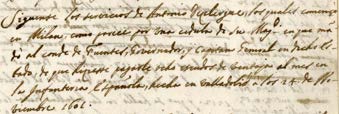
We shall begin with the description of Antoni Desclergue y Ratera (DC05b) by showing handwritten accounts by Francesc de Pedrolo y Desclergue in 1661, in Figures 32.4 and 32.5. Although Antoni Desclergue y Ratera (DC05b) had reached the rank of captain and sometimes served side by side with his brother Enric, there are no indications of particular notable achievements. He had a brief career in Milan, followed by a relatively short career in Flanders, a short career in Barcelona and Gerona afterward, and retired in Flanders. He died in Ghent in 1634.
Of particular note are the two handwritten letters by Infanta Doña Isabel, a testament to the esteem in which Antoni Desclergue was held. One was addressed to his Majesty, and the other to the Duke of Lerma (Francisco Gómez de Sandoval y Rojas, 1st Duke of Lerma, 5th Marquess of Denia, 1st Count of Ampudia, 1552-1625), in which she unequivocally affirmed Antoni Desclergue’s exemplary service to His Majesty. This recognition from such a prominent figure adds a layer of intrigue to his story.
Our journey into Antoni Desclergue’s military career begins in Milan, as evidenced by a certificate issued in Valladolid on November 24, 1602, by His Majesty. This document commanded the Count of Fuentes, Governor and Captain-General in that state, to pay a monthly salary of eight escudos extra to Antoni, who was serving in the Spanish infantry. This early stage of his career piques our curiosity about the experiences and challenges he might have faced.
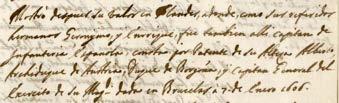
The fragment in Figure 32.7 states that Antoni Desclergue later showed his courage in Flanders, where, like his brothers Jeroni (DC05) and Enric (DC05c), he was also a captain of the Spanish infantry, as stated by a patent of His Highness Alberto Archduke of Austria, the Duke of Burgundy and Captain-General of the army of His Majesty, given in Brussels on January 7, 1606.
32.2.1 Recruitment and service in Milan
The reader may be interested in consulting Figure 28.4 on page 338. Antoni Desclergue y Ratera (DC05b) was born at Montblanc in Spain and died in Ghent. He was a Doncel. Antoni Desclergue (DC05b), just as his brother Jeroni Joan Desclergue y Cortés (DC05), followed a career in the army, which he began in 1601 in Milan.
32.2.2 Ostend
From the Milanesat, he went to Flanders, where he participated in Ostend’s Siege, where he became a lieutenant, as found in Figure
32.2.3 Damme
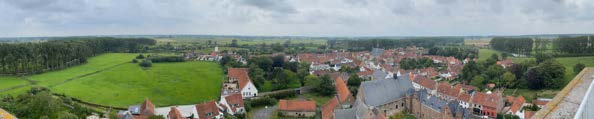
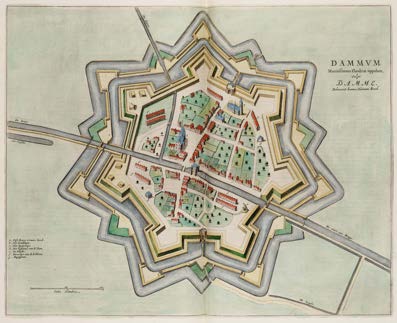
On January 7, 1606, he was appointed captain of a Tercio company of Simón Antúnez2. Antoni Desclergue (I) (DC05b) was located in Damme, shown in Figures 32.9 and 32.10. Simón Antúnez would be, after the truce between Spain and the Northern Netherlands was signed in April 1609, in command of the departmental Tercio of Flanders stationed in Mechelen and surroundings.
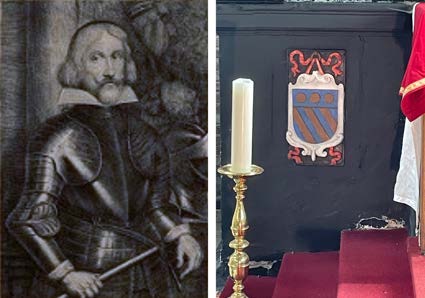
Fuentes, Paul-Bernard de Fontaines (1566 Lorraine - May 19, 1643, Rocroi), also known as Comtefontaine and Conde Fontana, shown in Figure 32.12, was in charge of Damme before and during the truce between the Dutch States and the Spanish Netherlands (1609-1621). He sponsored the installation of a beautiful altar in the church, as seen in Figures 32.12 and 32.13. Fuentes had fought with the three Desclergues years and decades before, especially Jeroni Joan Desclergue y Cortés (DC05), as found in Chapter 29.5.
He transformed Damme into a fortified town to confront the walled Dutch city of Sluis a few km north. While Fuentes was active in Damme, we located Antoni Desclergues in Damme, as found next. Note that Chapter 29 mentions that this Fuentes should not be confused with Pedro Henriquez d’ Azevedo y Alvarez de Toledo, the Count of Fuentes, who was a statesman.
It is also interesting to know that many years later, when Fuentes was already an older man, the son of Antoni’s brother Jeroni, namely Antoni Desclergues (II) (DC06), would be involved, with Fuentes, in military activities against France, such as the battle of 1We are not sure if this reference concerns Antoni Desclergue (I) (DC05b) or Antoni Desclergue (II) (DC06) 2Santiago Alberti, ’Esquema històric del llinatge Pedrolo,’ page 49 – 88 of URTX Revista Cultural de l’ Urgell, Num 7, 1995.
The Desclergues of la Villa Ducal de Montblanc, 2nd ed., Omn., VOL. II
© 2024 Nico F. Declercq
492
CHAPTER 32. ANTONI DESCLERGUE Y RATERA (DC05B)
Figure 32.1: Four ascending generations of Antoni Desclergue y Ratera (DC05b).
Figure 32.2: Blood-relationship between Antoni Desclergue y Ratera (DC05b), Jeroni Joan Desclergue y
Cortés (DC05) and Antoni Desclergue (II) (DC06).
Figure 32.3: Blood-relationship between Antoni Desclergue y Ratera (DC05b) and Enric Desclergue y
Cortés (DC05c).
© 2024 Nico F. Declercq
The Desclergues of la Villa Ducal de Montblanc, 2nd ed., Omn., VOL. II



32.2. HIS CAREER
493
Figure 32.4: This is a fragment of a handwritten ’1661 transcript of
nobility letter Francesc de Pedrolo y Desclergue’ by Francesc de Pedrolo y
Desclergue (born in 1641, son of Jacint de Pedrolo and Isabel Desclergue
y Tous). (Source: Arxiu Comarcal Urgell Desclergues document 3 page
14 view 6; Courtesy of Arxiu Comarcal Urgell and the de Pedrolo family)
Figure 32.5: This is a fragment of a handwritten ’1661 transcript of
nobility letter Francesc de Pedrolo y Desclergue’ by Francesc de Pedrolo y
Desclergue (born in 1641, son of Jacint de Pedrolo and Isabel Desclergue
y Tous). (Source: Arxiu Comarcal Urgell Desclergues document 3 page
15 view 1; Courtesy of Arxiu Comarcal Urgell and the de Pedrolo family)
Figure 32.6: This is a fragment of a handwritten ’1661 transcript of
nobility letter Francesc de Pedrolo y Desclergue’ by Francesc de Pedrolo y
Desclergue (born in 1641, son of Jacint de Pedrolo and Isabel Desclergue
y Tous). (Source: Arxiu Comarcal Urgell Desclergues document 3 page
14 view 4; Courtesy of Arxiu Comarcal Urgell and the de Pedrolo family)
Figure 32.7: This is a fragment of a handwritten ’1661 transcript of
nobility letter Francesc de Pedrolo y Desclergue’ by Francesc de Pedrolo y
Desclergue (born in 1641, son of Jacint de Pedrolo and Isabel Desclergue
y Tous) . (Source: Arxiu Comarcal Urgell Desclergues document 3 page
14 view 5; Courtesy of Arxiu Comarcal Urgell and the de Pedrolo family)
Figure 32.8: This is a fragment of a handwritten text ’Notes relatives
ales gestes militars del llinatge Desclergue’ , by Francesc de Pedrolo y
Desclergue (born in 1641, son of Jacint de Pedrolo and Isabel Desclergue
y Tous) (Source: Arxiu Comarcal Urgell Desclergues document 2 page 3
view 1; Courtesy of Arxiu Comarcal Urgell and the de Pedrolo family)
The Desclergues of la Villa Ducal de Montblanc, 2nd ed., Omn., VOL. II
© 2024 Nico F. Declercq
494
CHAPTER 32. ANTONI DESCLERGUE Y RATERA (DC05B)
Figure 32.9: A panoramic view from the rooftop of the church tower of Onze-Lieve Vrouwekerk (church of Notre Dame).
The Spanish fortifications are still visible as a star-shaped hill surrounded by a creek. From the tower, Bruges and Sluis are visible. When trees would be cut, the sea would be seen as well. (Declercq de Silva Archive)
Figure 32.10: Map of Damme (Atlas van Loon, 1649) on which the result can
be seen of the fortifications made under the governance of Fuentes when Antoni
Desclergue was also in Damme. p
Rocroi in 1643, explained in Chapter 34.6, where the Spanish were defeated and where Fuentes died. The chair on which Fuentes was moved around and on the battlefield can still be seen at the Military Museum at l’ Hotel des Invalides in Paris. The grave of Fuentes was in Bruges in the monastery church of the Order of Friars Minor. The monastery and church were later destroyed during the French occupation.
There is amply evidence of Antoni’s (DC05b) stay at Damme, witnessed by the Spanish and by local ecclesiastical documents as in Figure 32.14. Several certificates in Damme are highly likely linked to the military because it was at the frontier with the Dutch States, who had taken Sluis from the Spanish Netherlands. Some examples are shown in Figures 32.15, 32.16. Another family branch equally passed by Damme, as explained in Chapter 71.
Luis de Zúñiga y Requeséns was born in Barcelona on August 25, 1528, and died in Brussels on March 5, 1576. He was the governor of the Habsburg Netherlands. His descendants were also involved in the governance and military in the Netherlands. One of the descendants, or a relative through his mother Estefania de Requeséns, appears at a baptism in Bruges in 1611, namely Pere Requeséns, whose daughter replaced Juana de Molinero as godmother on the baptism of the child of a Spanish military in Damme, shown in Figure 32.17.
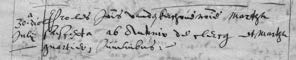
Antoni Desclergue (DC05b) was known in Damme until at least the 1620s. Indeed, he was referred to on Martina de la Cruz’s baptism, to whom Antoni Desclergue (DC06) ’junior’ acted as godfather in 1624. We refer to Chapter 37.4 for more information.
Interestingly, Martina de la Cruz later married Antoni (DC07), Jeroni’s grandson and Antoni’s (DC06) son. The Spanish clan was very tight in the first half of the 17th century.
32.2.4 Barcelona and Gerona
Antoni Desclergue (DC05b) was in Spain in 1615.
A source is found, shown in Figure 32.18, related to Antoni Desclergue (II) (DC06) in Barcelona in the year 1615, written by the Marquis of Almaçán.3
We can cite,
’1615 abril 4. Barcelona. El lloctinent Francesc Hurtado de Mendoza, marquès d’ Almazán, a Antoni Desclergue i Ratera i als oficials de la seva companyia. Els mana que no permetin jugar a la dita companyia fins passat el diumenge de quasimodo i a partir d’ aquesta data només puguin fer-ho els soldats. (Original: AHCG, Lletres Reials (olim Correspondència amb Barcelona). 307—
210 mm. Bifoli en bon estat de conservació. Segell:1 35 mm. Lletra oberta. 2: 1615. Mandato del virrey perquè los soldats de la bandera no pugan jugar fins a Pasquetes y després ells sols entre sí.;’ and
3page 1256 of M. Josepa Arnall I Joan, ’Lletres Raials a la ciutat de Girona’ , 1517-1713’ , published by Fundació Noguera in 2005, ISBN volume III: 84-9779-287-4, Dipòsit legal: L-694-2005, Impressió: Arts Gràfiques Bobalà, S. L.
© 2024 Nico F. Declercq
The Desclergues of la Villa Ducal de Montblanc, 2nd ed., Omn., VOL. II
32.2. HIS CAREER
495
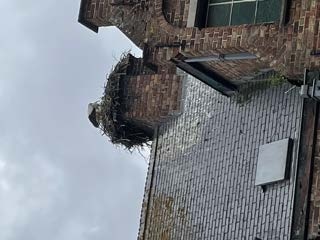
Figure 32.11: Storks (’Ooievaars’) are often spotted in
Spain and are also prevalent in Damme-Sluis in Summer,
as seen on this roof in Damme in 2021. To the Spanish,
the birds must have signalized that this was their territory
to defend. (Declercq de Silva Archive)
Figure 32.12: Left, Paul-Bernard de Fuentes p. Right, Fuentes’ weapon shield can still
be found in the Onze-Lieve Vrouwekerk (church of Notre Dame) in Damme, on the main
altar (2021). (Declercq de Silva Archive)
’Don Françisco Hurtado de Mendoça, marqués de Almaçán, conde de Montagudo, guarda mayor del rey, nuestro señor, su lugarte-niente y capitán general en este Principado de Cattaluña y condados de Rossellón y Çerdaña, et cetera. Por la presente mando a vos, el capitán don Antonio Desclergue y Ratera, y a los offiçiales de vuestra compañía que tienen a cargo levantarla en la çiudad de Girona y su partido que en la bandera y cuerpo de guardia que tenéis en dicha çiudad no juguéis ni consintáis jugar a ningún juego de aquí al domingo de casimodo a los soldados ni a otros particulares en manera alguna y, passado dicho tiempo, puedan sólo jugar los soldados entre sí a juegos acostumbrados, y cumplido assí los unos y los otros con aperçibimiento que haziendo lo contrario seréis castigados. Fecha en Barçelona, a quatro de abril de mill seysçientos y quinze años. El marqués de Almaçán.* (Segell)’
We can translate the text above,
1615 April 4. Barcelona. Lieutenant Francesc Hurtado de Mendoza, Marquis de Almazán, to Antoni Desclergue y Ratera and his company’s officers. He commands them not to allow the company to play until last Sunday on Quasimodo, and from that date, the soldiers can only do so. (Original: AHCG, Letras Reales (Olim Correspondència amb Barcelona) 307 ° - 210 mm. Bifoli in good condition. Seal: 1 35 mm. Open letter 2: 1615. Viceroy’s mandate so that the soldiers of the flag can not play up to Pasquetes and then they alone with each other.) + Don Françisco Hurtado de Mendoza, Marquess of Almaçán, Count of Monteagudo, H.M. the king’s guardian, our lord, his lieutenant and captain-general in this Principality of Cattaluña and counties of Rossellón and Çerdaña, etcetera. Here, I send to you, Captain Don Antonio Desclergue y Ratera, and the officers of your company who are responsible for the city of Girona, that you do not play in the said city, you agree to play no game from here on Sunday of Quasimodo, not by the soldiers nor other individuals in any way and, after that time, the soldiers can only participate to customary games, and if doing otherwise you will be punished. Dated in Barcelona on April 4, 1615. The Marquess of Almaçán. (Seal)
Don Françisco Hurtado de Mendoza (1546-1623) had served in Flanders before, namely from 1596 through 1600, where he was involved as commander in the Battle of Nieuwpoort (1600), Rijnberk and Wesel (1598) (with Jeroni Joan Desclergue y Cortés (DC05)), and Zaltbommel and Schenkenschanz (1599), to name a few.
32.2.5 Antwerp, with his brother Enrique (DC05c) and the onset of the 30-year War
Antoni Desclergue y Ratera (DC05b) and his half-brother, Enric Desclergue y Cortés (DC05c), resided in Antwerp from 1617 to 1618 (see also Chapter 33. The Desclergue brothers and their families relocated to Antwerp to live at the Spanish-held castle amidst escalating tensions in Europe. These tensions stemmed from conflicts over religious liberty in Eastern Europe, guided by the principle that the populace adopted the religion of their ruler. Consequently, some regions adhered to Lutheranism while others remained Catholic.
The Desclergues of la Villa Ducal de Montblanc, 2nd ed., Omn., VOL. II
© 2024 Nico F. Declercq
496
CHAPTER 32. ANTONI DESCLERGUE Y RATERA (DC05B)
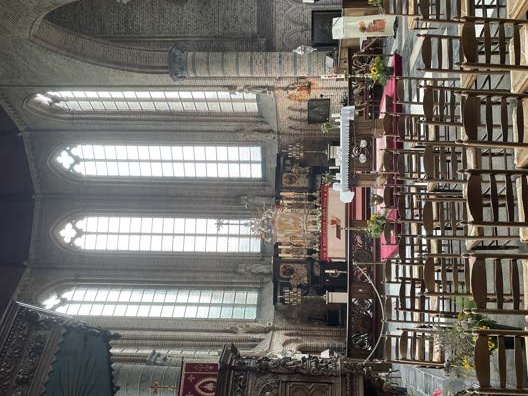
Figure 32.13: The beautiful altar of the ancient Onze-Lieve Vrouwekerk (church
of Notre Dame) in Damme (2021). (Declercq de Silva Archive)
Figure 32.14:
Antoni Desclergue (I) (DC05b) (’Antonio
de clerg’) appears as godfather to Martha Vanden Kerckove,
daughter of Joannes, together with godmother Martha Guartie,
at Damme on July 30, 1607.
Figure 32.15: August 1610, Damme, the baptism of
Christophorus, son of Jacobus, a soldier. The godfa-
ther was Christophorus Marchant, and the godmother
was Martina Caf.
Figure 32.16: September 1610, Damme, the baptism
of Anna Dubozsh, daughter of Joannes Dubozsh, a sol-
dier, the godfather was Joannes Mackent, a soldier, the
godmother was Anna Oocmans.
Figure 32.17: 1611, August 31, Bruges (O.L.Vr.2de),
the baptism of a certain Joanna, daughter of a soldier in
Damme (’filia cuiusdam militis Dammensis’), whose wife
came to Bruges to baptize her daughter. The godmother
Joanna de Muelenare or Juana de Molinero, was replaced
by the daughter of Pere Requésens (’Reeqhfens’), while
the godfather Juan Aquila (’Juan Aucillan’) was replaced
by Elisabeth.
© 2024 Nico F. Declercq
The Desclergues of la Villa Ducal de Montblanc, 2nd ed., Omn., VOL. II
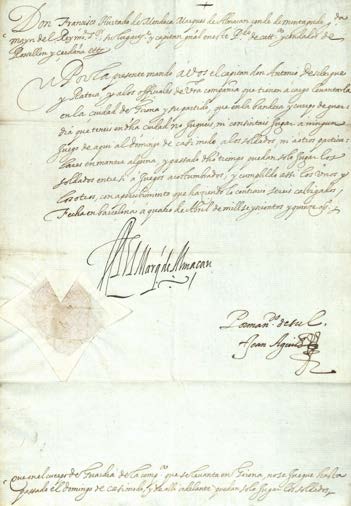
32.3. SPOUSE
497
Figure 32.18: 1615, letter of Francesc Hurtado de Mendoza, marquès d’
Almazán, to Antoni Desclergue i Ratera. We also refer to Chapter 19.22
on page 203
In response to Islam’s growing influence, alliances were formed to consolidate geographical and political power, which heightened tensions. The situation deteriorated significantly when Archduke Ferdinand fought with the Lutherans in Austria around 1609. In 1617, Ferdinand sought to revoke the religious freedoms of the Hussites in Bohemia, a move that precipitated the Thirty Years’
War outbreak in May 1618.
Ferdinand’s election as Emperor Ferdinand II in March 1619 solidified his position as the undisputed leader of the Catholic faction in the war.
Chapter 34.5.6 discusses the roles of Carlos Coloma, Antoni Desclergue y Ratera (DC05b), and Enric Desclergue y Cortés (DC05c) in these events.
32.3 Spouse
Antoni Desclergue lost his wife Ana while they resided in Antwerp in 1618, as shown in Figure 32.19.
32.4 His Death at Ghent
At the end of his career, Antoni Desclergue (DC05b) must have been promoted to a comfortable position as captain at the Spaniard Castle of Ghent. He was hospitalized at the military hospital of Bijloke, where he passed away on June 30, 1634, shown in Figure
32.20, three years after his brother Enric (1631 at Wingene) and 30 years after his brother Jeroni (1604 at Ostend).
32.5 His Offspring
We found no evidence that Antoni Desclergue (DC05b) had offspring that survived after the end of the 17th century.
At the end of his career, Antoni Desclergue possibly settled in Wingene-Tielt, between Damme and Kortrijk-Deerlijk-Tournai, where the descendants of Jeroni (DC05) lived. He was later promoted to a position at the Spaniard Castle of Ghent. It’s only guessing.
The referred area was not strange to the military. In a slightly earlier period, there is, for instance, a military in the Spanish army from Lorraine, reported in the literature,4 describes how a soldier from Lorraine appeared in Wingene around 1600 and stayed there. Lorraine was part of the Spanish Empire.
Antoni’s legacy may have been carried on by his potential children: Pere, Joan, Jose, and Francisca. While we have not delved deeper into their lives, their existence presents an intriguing avenue for further research.
4Valère Arickx, in ’Een Lorreins soldaat bleef plakken in Wingene, ca. 1600’ , published in Biekorf (3), pp 325, 1993.
The Desclergues of la Villa Ducal de Montblanc, 2nd ed., Omn., VOL. II
© 2024 Nico F. Declercq

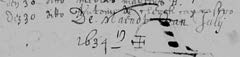
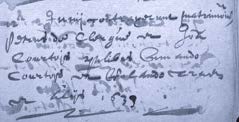
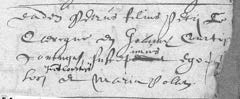
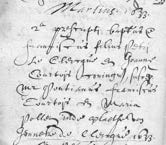
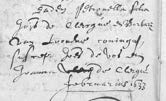

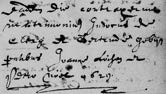
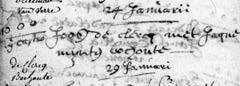
498
CHAPTER 32. ANTONI DESCLERGUE Y RATERA (DC05B)
Figure 32.19: The death of Anna, the wife of Antoni. She died in an explosion,
June 25, 1618, Antwerp - San Felipe de Castile.
Figure 32.20: Ghent, military hospital Bijloke, June
30, 1634, the death of Antoni Desclergue y Ratera
(DC05b) (’Antoniy de Clerck’), captain at the Spaniard
Castle of Ghent (’cap castro’).
Figure 32.21: Marriage, in 1630 (comparison with the
other records on this page prove that the last character
of the year is definitely ’0’ and not ’9’) at Wingene of
Petrus Desclergue (’de Clergue’) with Joanna Jossyna
Courtoys. The witnesses were Ciznando Courtoys and
Rolando Traen.
Figure 32.22: The baptism of Petrus Desclergue, son
of Petrus and Joanna Courtoys, at Wingene on March 9,
1631. The godfather was Judocus Courtoys who was re-
placed by someone else, and godmother was Maria Pollet.
The latter is described in Chapter 32.6.
Figure 32.23: The baptism of Francesc Desclergue, son of Petrus
Desclergue (’Le Clergue’) in Wingene on March 2, 1633. The god-
father was Franciscus Courtoys, and Godmother was Maria Pollet in
replacement of Joana Desclergue (’Janneke De Clergue’).
Figure 32.24: The baptism of Petronella Desclergue (’de clergue’),
1633, Wingene, the daughter of Joan Desclergue and Barbara Lon-
quier (’van lonckiere’). Godfather was Joannes De Vos, godmother
was Joanna Desclergue (’Juanna De Clergue’).
Figure 32.25: 1632, at Tielt, Francisca Desclergue (’De clerc’) marries a sol-
dier’s son, Petrus Bruneel, son of Judocus. Francisca was a daughter of Antoni
Desclergue (DC05b). Witnesses were Hiscardo Bassoene and Henry (’Henricus’)
Guines.
Figure 32.26: 1629 Wingene, the marriage of Jose Desclergue (’Ju-
docus de Clerg’) and Gertrude Cobain (’Gobijn’), who must have been
Irish. The witnesses were Jeanne Louison and Petrus Nuet. The latter
also served as a wedding witness in Damme on August 19, 1635.
Figure 32.27: 1631, January 24, Ghent Saint Jacques, the banns of
Jose Desclergue with Jacomina Bocaute. The record shows that Jose
Desclergue resided at the Spaniard Caste (’in castro’).
© 2024 Nico F. Declercq
The Desclergues of la Villa Ducal de Montblanc, 2nd ed., Omn., VOL. II
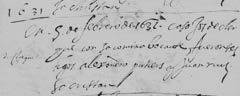
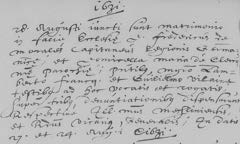
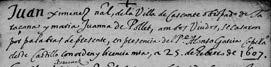
32.6. THE APPEARANCE OF MARIA JUANA POLLET
499
Figure 32.28: 1631, February 24, Ghent Spaniard Cas-
tle, the wedding of Jose Desclergue with Jacomina Bo-
caute, in the presence of Alexandro Putiers and Juan
Ruiz the veguer. (record also shown in Chapter 29.8.3.4)
Figure 32.29: Brussels, Koudenberg, 1631, 28 of Au-
gust, the marriage of Maria Desclergue, probably the
daughter of Antoni Desclergue y Ratera, with Fredericyus
de Morales, an army captain. Guillaume de Villaine was
a witness.
32.5.1 Pere Desclergue
In 1630, we found the wedding, in Figure 32.21, of Petrus Desclergue, who married Joanna Courtoys. Petrus was the son of Antoni Desclergue, although Antoni did not appear to be a witness. There are also interesting baptisms shown in Figures 32.22 and 32.23
32.5.2 Joan Desclergue
About Figure 32.24, Juana De Clergue may have been a daughter or new wife of Antoni Desclergue (DC05b) after the death of his wife Ana in 1618. Note that the ’De Vos (Vosa)’ family also appears in connection to the Desclergues and the Spanish army at Deerlijk; see, for instance, Chapter 29 and Part X. As described in Chapter 36, Joan Desclergue, son of Antoni Desclergue (DC05b), was a witness to a wedding at the Spaniard castle of Ghent in 1674, together with Joan Francesc Declerque (DC07c), son of Antoni Desclergue (DC06). It shows that the different Desclergue branches maintained contacts during the 17th century.
32.5.3 Francisca Desclergue
Earlier, in 1632, at Tielt, we found the wedding, in Figure 32.25, of Petrus Bruneel, son of a soldier Judocus Bruneel, who married Francisca Desclergue, daughter of Antonius Desclergue.
32.5.4 Jose Desclergue
Another son of Antoni Desclergue (DC05b) was Jose. He married first at Wingene in 1629, in Figure 32.26, to an Irish Gertrude Cobain and married, after her death, to Jacomina Bocoute at the Spaniard Castle of Ghent, in Figures 32.27 and 32.28. The residence at the Spaniard Castle, shown in Figure 32.32, is also consistent with the fact that Antoni Desclergue (DC05b) died there in 1634.
32.5.5 Maria Desclergue
We have no evidence, but we cannot exclude either, that Maria Desclergue was the daughter of Antoni Desclergue y Ratera (DC05b).
She married in Brussels in 1631, Fredericus Morales, shown in Figure 32.29 on page 499.
32.6 The appearance of Maria Juana Pollet
In Chapter 32.5.1 about Pere Desclergue, we had referred to Maria Pollet on the baptism of Petrus Desclergue, son of Petrus and Joanna Courtoys, at Wingene on March 9, 1631, when she acted as godmother. Maria Joana Pollet was married at the Spaniard Castle of Ghent in 1607, in Figure 32.30, to Juan Ximenez, possibly related to the Ximenez de la Cruz family of whom a daughter, Martina, would marry Jeroni Desclergues’s grandson Antoni Desclecque (DC07), described in Chapter 37.4. She had a son, Francisco, born the year after, as seen in Figure 32.31.
Figure 32.30: 1607, December 25, Spaniard castle of
Ghent, the wedding of Maria Juana de Pollet with Juan
Ximenes from the town of Cascante in Tarazona (in
Navarra).
The Desclergues of la Villa Ducal de Montblanc, 2nd ed., Omn., VOL. II
© 2024 Nico F. Declercq

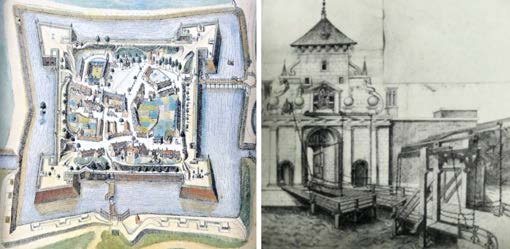
500
CHAPTER 32. ANTONI DESCLERGUE Y RATERA (DC05B)
Figure 32.31: July, 1608, Spaniard castle of Ghent. The
baptism of Francisco Ximenez de Cascante, son of Juan
Ximenez de Cascante and Maria Pollet. The godfather
was Captain Francisco de Guebaro, the godmother was Is-
abel de Aranda.
Figure 32.32: The Spaniard castle in Ghent.
© 2024 Nico F. Declercq
The Desclergues of la Villa Ducal de Montblanc, 2nd ed., Omn., VOL. II
Enric Desclergue y Cortés (DC05c)
33.1 Introduction
Enric Desclergue y Cortés was a brother of Jeroni Joan Desclergue y Cortés (DC05) y Cortés and a half-brother of Antoni Desclergue (DC05b) y Ratera, Francesc Desclergue (DC05e) y Ratera and Francisca Desclergue (DC05d) y Ratera. He was also the uncle of Antoni Desclergue (DC06), the son of Jeroni (DC05). Enric Desclergue y Cortés is also known as Enrique Desclergues. He was born in Montblanc, Spain. He died in 1631 at Wingene in Belgium. To a large extent, one should read this chapter together with Chapter 32. The reason is that Enric Desclergue y Cortés (DC05c) and Antoni Desclergue y Ratera (DC05b), two half-brothers, had their careers simultaneously and stayed pretty much together or in the same areas during their time in Flanders until their death. They were brothers of our ancestor Jeroni Joan Desclergue y Cortés (DC05). Enric Desclergue (DC05c) y Cortés was a son of Don Bonaventura Desclergue (II) (DC04) and Maria Anna Desclergue (DC02dx1), who was a daughter of Galceran Desclergue (I=II) (DC02d), a distant relative of Bonaventura Desclergue (II) (DC04) y Cortés, and Ana de Villavicencio. On pages 179-180 of URTX índex onomàstic Personatges històrics, we find,
’DESCLERGUE, Enric (militar): VII, 67, 68.’
We also find a good description of the life of Enric Desclergue (DC05c) in Santiago Alberti.1
33.2 His Recruitment
The reader may be interested in consulting Figure 28.4 on page 338. He followed in the footsteps of Jeroni Joan Desclergue y Cortés (DC05). On December 1, 1603, he became a soldier in Flanders, where he served in the company of his brother Jeroni.
33.3 His Career
The Arxiu Comarcal Urgell in Spain preserved the archives of the families Desclergue and de Pedrolo. Before we describe the career of Enric Desclergue y Cortés in more detail, we shall first show three such references.
33.3.1 Handwritten reference 1
The fragments in Figures 33.5 and 33.6 describe Enric Desclergue.
He served His Majesty in Flanders from December 11, 1603, onward, when he joined the armed forces in the infantry company of his brother, Captain Jeroni Desclergue, in the tercio of Maestre de Campo Don Iñigo de Borja y Velasco (1575-1622), in which he served until May 4, 1604.
Then, he continued under Captain Don Miguel Valverra of the same Tercio until September 15, 1604. Then, he continued with Don Gaspar de Castello of the same Tercio. His salary was 30 escudos per month. He served until January 15, 1605, and passed to Maestro de Campo Simón Antúnez from January 30, 1605, onward, part of the company of Pedro Medrano of the same Tercio, in which he remained until March 20, 1605.
Consequently, he was promoted to the company of Captain Antonio de Parida of the tercio of Maestro de Campo Don Alonso de Luna. He served until June 1606, when he could form his own company as captain. He received the company that had belonged to Captain Gaspar de Valdés, of the Tercio of Maestre de Campo Simón Antúnez. His salary was then 44 escudos per month with four extra escudos.
The information was found in the books of Gonzalo Guerra de la Paz, the accountant of the Army of Flanders, in Brussels on July 20, 1622.
33.3.2 Handwritten reference 2
This fragment, shown in Figures 33.7 and 33.8, cites a letter by Simón Antúnez, governor and commander of Santa Maria de Arias of the order of Christ, member of the Council of War of His Majesty, and ’Maestro de Campo’ of the Spanish infantry.
Enric Desclergue (’Enrique Desclergue’) came to Flanders to serve His Majesty. He served until 1623 for more than 20 years.
For instance, in the Dutch wars, he was one of the pikes in the squadron in the relief of ’s Hertogenbosch (Balduque). When he was deployed in Ostend, he performed very well and was among those who penetrated the fortification on September 4, 1604. He successfully finished the attack on Ostend in which his brother Jeroni Desclergue was killed. The mine that killed Jeroni and half of the company wounded Enric heavily in the head and the belly. He had to hold his guts in his hand and was seemingly at the end of his life.
In the wars in the Eastern Provinces (Frisa), he successfully captured the towns of Lochem (Locomo) and Groenlo (Grol). Simón Antúnez witnessed his outstanding actions with Captain Manuel Francisco de Vanguardia when he broke the fortification and captured the inner town. From there, he was ordered to capture Rheinberg (Rimberg), where he stormed the fortress with uttermost courage. While the city was besieged, on September 26, 1606, the Germans made a ’sortie’ to the trenches where Enric was, and a pike severely wounded him in his arm and a bullet in the head. He was bandaged but was again seemingly at the end of his life.
Enric also contributed significantly to the Siege of Groenlo (Grol) and, before that, of Sluis (la Esclusa / Enclusa).
1Santiago Alberti, ’Esquema històric del llinatge Pedrolo’ , page 49 – 88 of URTX Revista Cultural de l’ Urgell, Num 7, 1995.
The Desclergues of la Villa Ducal de Montblanc, 2nd ed., Omn., VOL. II
© 2024 Nico F. Declercq
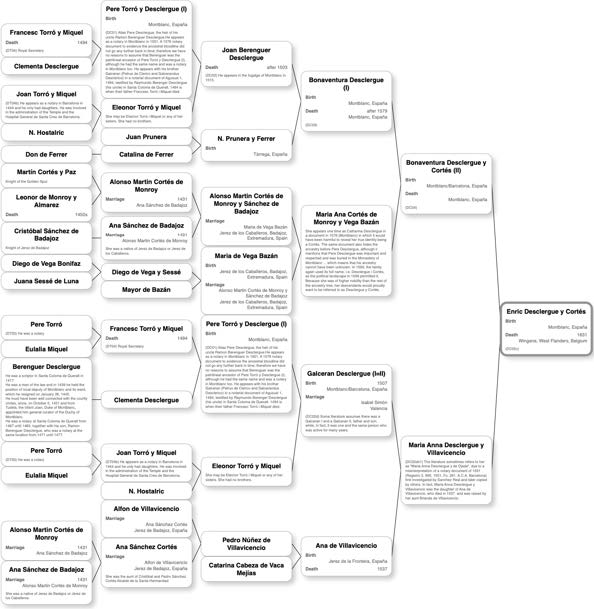
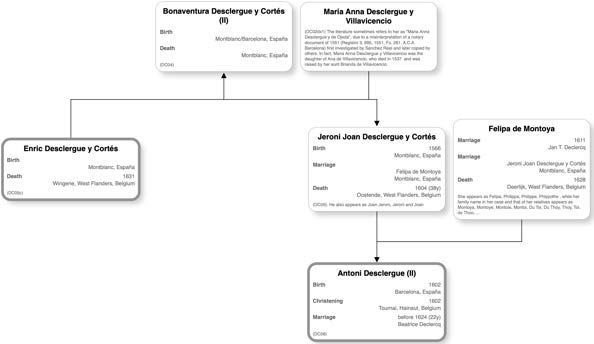
502
CHAPTER 33. ENRIC DESCLERGUE Y CORTÉS (DC05C)
Figure 33.1: Five ascending generations of Enric Desclergue y Cortés (DC05c).
Figure 33.2: Blood-relationship between Enric Desclergue y Cortés (DC05c), Jeroni Joan Desclergue y Cortés (DC05) and Antoni Desclergue (II) (DC06).
© 2024 Nico F. Declercq
The Desclergues of la Villa Ducal de Montblanc, 2nd ed., Omn., VOL. II
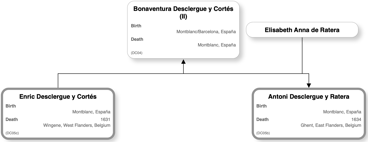
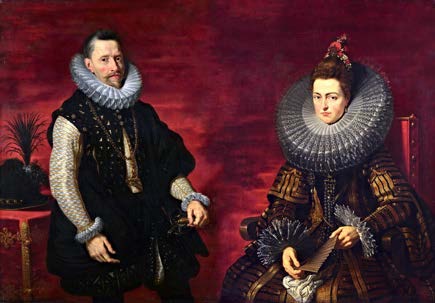
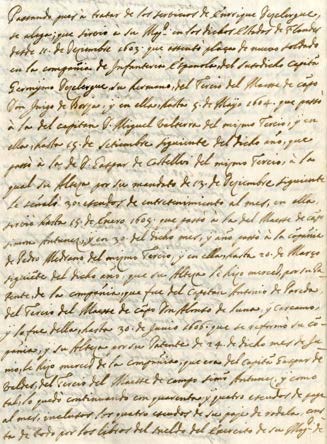
33.3. HIS CAREER
503
Figure 33.3: Blood-relationship between Enric Desclergue y Cortés (DC05c)
and Antoni Desclergue y Ratera (DC05b).
Figure 33.4: The Cardinal Archduke Albert of Austria and infanta Isabella Clara Eugenia,
regent of the Netherlands. Compilation of two portraits by Peter Paul Rubens. Courtesy of
the National Gallery, London.
Figure 33.5:
This is a fragment of a
handwritten ’1661 transcript of nobility
letter Francesc de Pedrolo y Desclergue’
by Francesc de Pedrolo y Desclergue (born
in 1641, son of Jacint de Pedrolo and Is-
abel Desclergue y Tous). (Source: Arxiu
Comarcal Urgell Desclergues document 3
page 13 view 2; Courtesy of Arxiu Comar-
cal Urgell and the de Pedrolo family)
The Desclergues of la Villa Ducal de Montblanc, 2nd ed., Omn., VOL. II
© 2024 Nico F. Declercq