

The Desclergues of la Villa Ducal de Montblanc, Second Edition Omnibus by Nico Declercq - HTML preview
Download the book in PDF, ePub, Kindle for a complete version.
29.8.3.3 The presence of the Du Puich family at the Spaniard Castle of Ghent
We refer first to Chapter 29.8.3 where we explained that the names Putier, Du Puich, and Vandeputte were equivalent in Flanders in the Spanish period.
Below are a couple of church certificates found at the Spaniard Castle of Ghent between 1611 and 1638, which is during the lifetime of Antoni Desclergue (DC06), son of Jeroni (DC05), and father of, among others, Maria Declercgz (DC08d) who would marry Egidius Du Puich (Egidius Vandeputte or Egidius Steenput) at Harelbeke in 1701.
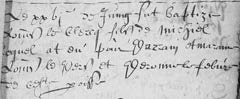
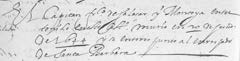
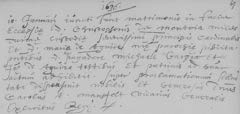
The Putier family must have been Du Puich, which can also be found in the earliest certificate of 1611, in Figure 29.125. It states that on April 17, 1611, at the Spaniard Castle of Ghent, Miguel De Villanueva married Elisabeth Du Puich (’Isabel Putier’). It also says that Miguel was from Alcorissa (200 km South-West of Montblanc) in the archdiocese of Zaragosa and was a son of Bartolome de Villanueva and Leonor Peres; and that Isabel was a daughter of Antoine Du Puich (’Antonio Putier’) and Maria Decorte (’Cortein’) and that she originated from Haubourdin75 (’Aburdin’) ’in the land of Lille’ (Lille = Rijsel in the North of France). No historical records indicate the existence of any ’Putier’ at Haubourdin, but rather ’Du Puich’ (or ’Dupuis’).
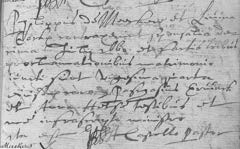
Not all people linked to the Spaniard Castle lived inside its walls at Ghent, as indicated above. Many lived, for instance, in the nearby suburb of Sint Jacob (Gand Saint Jaques, or Santiago de la Villa de Gante) and were buried there, even if the funeral occurred in the Castle. An example is shown in Figure 29.126, of Justina Putier.
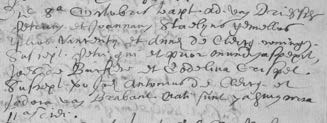
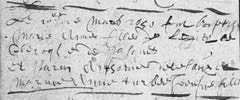
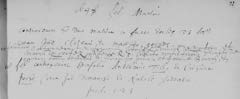
There is also evidence that the Du Puich family married Spaniards and was actively involved in the military at Ghent. Indeed, in Figure 29.127, Alexandre du Puich (’Alexandro Putiers’) was a corporal (’cabo de esquadra’) in charge of a Luxemburg Tercio at the Castle. He was the son of Claude du Puich (’Glaudio Putier’) and Jeanne or Juana. On May 28, 1619, he married Catalina Thomas at the Spaniard Castle of Gent; Lamberto Regi and Mieser Regi were witnesses.
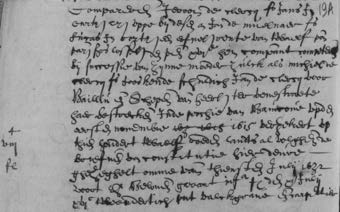
Alexandre du Puich must have long connected with the Spaniard Castle of Gent. In 1631, on February 24, in Figure 29.128, he witnessed Martin Tendero and Catalina Schepens’ wedding. The other witness was Juan Ruis (known to be the church’s verger).
One can find in Figure 29.128 that Alexandre du Puich had witnessed Martin Tendero’s wedding in 1631. In 1635, in Figure 29.129,
he served as a witness on Jusepe Tendero and Isabella Varga’s marriage on October 7. The witnesses were Pedro Ortiz (’Pedro Hortiz’), Alexandre Du Puich (’Alexandro Putiers’), and others.
In 1638, in Figure 29.130, we also found in Ghent at the same Castle the wedding of Francisco Tiry and Bartolomène du Puich (’Bartholomina Putiers’). She may have been Alexandre’s sister.
29.8.3.4 A marriage between de Bucqouy and the Desclergue families, with Du Puich as a witness
Another example of a soldier from the Spaniard castle of Ghent marrying someone from the nearby Santiago de la Villa de Gante (Gent Sint Jacobs) is shown in Figure 29.131. It concerns the wedding of Jose Desclergue and Jacomyne de Bucqouy (spelled as
’Bouchoute’). The banns took place in Santiago, while the wedding followed one month later at the castle. The Conde de Bucquoy led a regiment from Alsace in the Spanish army in the brigade led by the same, in the right-wing division led by Ernst Graf von 74Charles Liagre, ’Annales de Loos jusqu’ au XiXe siècle,’ 1897, page 75
75See also Chapter 49.9.3
© 2024 Nico F. Declercq
The Desclergues of la Villa Ducal de Montblanc, 2nd ed., Omn., VOL. II
29.8. THE EARLY NETWORK OF JERONI DESCLERGUE
429
Isenburg, in the Spanish army ’s artillery Alvaro de Melo under the general command of Captain-General Don Francisco de Melo.
The family probably also appears in Deerlijk in 1650, as shown in Chapter 34.6.3.
In Figures 29.131 and 29.132, on February 24, 1631, which is the same day as a wedding referred to above, where Alexandro Putiers was a witness, we find, again at the Spaniard castle, that the same persons witnessed the marriage of Jose Desclergue and Jacomina de Bucqouy.
Jose was likely a son of Antoni Desclergue (DC05b), brother of Jeroni Joan Desclergue y Cortés (DC05). The referred records are also shown in Chapter 32. Because we have not found later records, we assume that he must have died in battle.
As can be found in Chapter 32, Jose Desclergue had first been married to an Irish Gertrude Cobain in 1629 at Wingene. She must have died soon after they married, perhaps during childbirth.
29.8.3.5 His post-mortem influence on the realization of the Chapel in Deerlijk
Here, we present some globally known facts about the chapel ’Kapel-ter-Ruste’ in Deerlijk that will be extensively outlined in Chapter 34 and Chapter 49. The chapel was constructed in 1639 with the financial support of Marguerite Kelduwier but under the aegis of Antoni Desclergue (DC06), who considered the chapel a tribute to his father, Jeroni Joan Desclergue y Cortés (DC05).
The foundation was based on a miracle in which everyone involved was closely acquainted with Antoni Desclergue (DC06). Antoni also brought a retable from Spain that included a panel showing the Main Square of Montblanc. On another panel, he placed his initials ’Antoni Desclergue, caballero del Rey Felipe,’ and brought a statuette back from Spain, made by Alonso Cano.
Still, the family of Du Puich also appears in the surviving documents of a couple of decades later. Indeed, in the case of the Chapel at Deerlijk, the following patrons have been found in the archives: Eugene Lamoral du Bois (1754), who was the Lord of Chocques (nowadays in Northern France) and was an heir of Marguerite de Le Quellerye (Kelduwier), widow of Jean du Bois who was the great grandfather of Eugene Lamoral du Bois. We have found records in Northern France of Eugene Lamoral du Bois (Seigneur de Chocques et de Sebbe 1659-1702), married to Marie Waresquiel (Dame de Thérissart en Avelin 1651-1719). Their daughter was Marie Eugenie du Bois (Dame de Sebbe et de Chocques), who died on August 28, 1723, at Béthune in Northern France. She married Jacques François Du Puich in 1706, and they had several children, including Antoine François Joseph Du Puich (Ecuyer, seigneur de Mesplau, de Maurepas, 1707-1766). The latter signed the chapel’s patronage in Deerlijk in 1753-1755, which is how the Chapel Patronage arrived in the Du Puich family, which is not surprising, given the known connections between the two families throughout the 17th century. Note, again, that Du Puich is also spelled as Dupuis and, in Flemish, even as Vandeputte. It was in 1701 that Maria Declercgz (DC08d), granddaughter of Antoni Desclergue (II) (DC06), married Egidius Vandeputte (Gilles Du Puich), son of Mathias Vandeputte (Mathieu De Puich) and Joanna Van Rumbeke.
They were related to the above-mentioned Du Puich family and were found in Cambrai (as Bourgeois) in the 1600s. This is important because we know that Antoni Desclergue (DC06), or his brother Jeroni Desclergue (DC06c), described in 29.9.5, donated to the Saint-Jean hospital in 1641. Further links with the Van Rumbeke family are found in Chapter 48.5.2.
29.8.4 The Masse family
On several occasions, there are links with the Masse family. We specifically refer to Part X. Genetic analysis is shown in Chapter
73.10.3.17. The family name Maes is relatively common in Belgium. Therefore, one who has the name Masse will almost automatically be called Maes on church certificates, except perhaps in purely Spanish communities, as shown in Figure 29.133.
Antoni Maz (’Massa’) died at Ostend on January 1, 1702.76 He was a merchant and was also found at Harelbeke in 1613, in Figure
29.134, when his daughter Maria Maz was baptized there.
In the early 18th century, we still find relics of old Maz families with totally transformed family names, such as in Figure 29.135.
29.8.5 The de Vos Family
Several connections have been found between the Desclergues and the family De Vos. Examples are given in Chapter 34.5.13. Late in the 17th century, we find Antoni de Pedrolo (DC05ex1y2y1) of Montblanc in Spain, who married Maria Anna de Poch or De Vos before he married Jerònia de Folcràs in 1693. This Maria Anna de Poch was the daughter of Joan de Poch (Joannes De Vos), who was born in Harelbeke in Belgium in 1633 as the son of Pere Llorenç de Poch (Petrus Laurentius De Vos) and Isabella Verscheure, and who died there in 1708, and of Maria Anna Portea y Roure, his first wife.
Joan De Vos married in a second marriage to Joana Declercgz (DC08b), a union that resulted in the maternal Desclergue branch described in Part X. Joana Declercgz (DC08b) was a daughter of Antoni Declerque (III) (DC07) and Martina Vercruyce (Ximenes de la Cruz) and, therefore, a great-granddaughter of Jeroni Joan Desclergue y Cortés (DC05) and granddaughter of Antoni Desclergue (II) (DC06).
At the Spaniard Castle of Ghent, for instance, we found in 1634 the wedding of Diego de Vossa and Clara de Castro, shown in Figure 29.136. Diego was a ’Sargento’ in the company of Don Gaspar de Valdes. The witnesses were Juan Ruiz and Manriques, also described in Chapter 29.5.4, a ’vaandrig’ (alferez). Manrique’s company had also been the one of Jeroni Joan Desclergue y Cortés (DC05) and Carlos Coloma de Saa.
Note that Sergeant Major Gaspar de Valdés died in the naval ’Battle of the Dunes of Dover’ in 1639. His brother was Captain Baltasar de Valdés, who died in May of 1639, fighting in Flanders against the French. Diego de Vossa, or Jacobus de Poch, may have been Pere Llorenç de Poch’s brother, an ancestor along with our maternal Desclergue ancestry. It is also noteworthy that at Wingene, there was a baptism of Petronella Desclergue, granddaughter of Antoni Desclergue (DC05b) (brother of Jeroni Joan Desclergue y Cortés (DC05)), for whom Joannes de Vos acted as godfather, described in Chapter 32.
Figure 29.137 is the baptism of Anna De Vos at Sint Anna in Bruges on January 6, 1649. Interestingly, this baptism is inserted in Bruges’s ’Spanish Register’ in the transcripts of Belgium’s National Archives and the old parish lists. Further research would be required to understand the latter, but somehow, whoever formed those registers must have associated this family with the Spanish or a separate Spanish record on which baptisms were copied from the Bruges’ Spanish community.
These families probably lived in the city but had not yet become Burghers (Poorters, or Bourgeois). The ’Spanish register’ names are listed in Chapter 71.4.3. They include ’De Vos,’ which possibly means that the ’De Vos’ family indicated, was of Spanish origin (Vossa, e.g.) and had not yet received the city’s burgher (bourgeois) status.
It appears that Gaspar De Vos was a son of Germin De Vos, as found in his marriage in Sint Kruis Bruges (Bruges Santa Cruz) on January 11, 1633, in Figure 29.138.
76page 5398 of the registers
The Desclergues of la Villa Ducal de Montblanc, 2nd ed., Omn., VOL. II
© 2024 Nico F. Declercq



430
CHAPTER 29. JERONI JOAN DESCLERGUE Y CORTÉS (DC05) & FELIPA DE MONTOYA
Figure
29.140:
Spaniard Castle at
Ghent, 1615, the baptism of Joseph Vi-
cente, son of Estaban Vicente, soldier in
the company of Don Diego de Barea, and
of Juana Vanderstrate. The godparents
were Judocus Vanderstrate and Juana De-
sclergue (DC06c) (’de Klerque’).
Figure 29.141: Ghent, Spaniard Castle,
1617, the baptism of Alonso Ximenez de la
Cruz, the son of Juan Ximenez de la Cruz
and Juana Raniera. The godparents were
Don Alonso de Aranda and Juana Descle-
rgue (DC06c) (’Juana Skerkem’).
29.8.6 The de la Cruz Family, related to Jeroni’s Wife
There is an extensive Chapter 37.4, devoted to the family of (Ximenez) de la Cruz when the wife of Antoni Desclergue (DC07) is described in Chapter 37. Antoni (DC07) was a grandson of Jeroni Joan Desclergue y Cortés (DC05) and a son of Antoni Desclergue (DC06).
The links return to around 1600, so they must have originated with Jeroni (DC05). For instance, Martina de la Cruz’s family was related to Felipa de Montoya through marriage between Pedro Ximenez de la Cruz and Maria de Montoya in 1596. We assume that the latter was Felipa de Montoya’s sister and, therefore, sister-in-law of Jeroni Joan Desclergue y Cortés (DC05). We also found, for instance, Jeroni’s daughter Juana Desclergue (DC06c) acting as godmother at the Spaniard Castle to Alonso Ximenez de la Cruz, as shown in Chapter 29.9.1. We also find Maria Juana Pollet appearing several times as a witness in the extended family at weddings and baptisms. She married Juan Ximenes from Cascante in Tarazona at the Spaniard castle of Ghent in 1697 and is described in Chapter 32.6.
29.8.7 The Andries Family
Adriaan Andries who was a bailiff of Kortrijk. We found a church record at Kortrijk in 1591 linking Jeroni Desclergue77 to Laurentia Andries, daughter of the bailiff.
In 1578, for instance, Kortrijk was governed by Jan van Damme (mayor) and bailiffs Joost Van den Berghe, Jan de Bouchengien, Lodewijk van de Gheenste, Jacob van der Varent, Joost van Baelberghe, Oste Beert, Adriaan Andries, Jacob de Wargny, Joost Eelboo and Jan Bogaert.78 This occurred when the town had been occupied by Calvinists, who enforced a local government of notables of the city. Some were Catholics; others were Calvinists and had volunteered to defend the citizens’ rights under the new regime. A grandson, also called Adriaan Andries, would, in 1666, establish a chapel in Deerlijk where we find the parish of Sint Lodewijk (Saint Louis). The chapel was transformed into a church and is located within walking distance from the area where Jeroni’s sons Antoni and Miguel would grow up with their mother after the death of their father. A description is given in Chapter
Adriaan Andries, as referred to in 1578, had been selected from a crowd of electable notables, including Jacob and Jan de Muelenare, Jacob Pollet, Wouter and Frans Waeye, Nicolas van Dale, Pieter de Costere and Denis van der Gracht. The reader who digests the entire book will encounter several names in different chapters related to Benoit, de Patin, and Desclergue.
We can also refer to the baptism in Figure 29.139, in 1593, at Kortrijk, of Joos Andries, for whom Jeroni Desclergue (DC06) served as godfather.
In the 1630s in Kortrijk, the Andries family was well acquainted with the Declercq family of Beatrice Declercq (DK02byx), the wife of Antoni Desclergue (DC06), and also Jan Declercq (DK03), Antoni Desclergue’s (DC06) stepfather. This can be seen in Figure
34.250 on page 609 and Figure 34.251 on page 609 in 1631. More connections are found in Figure 50.3 on page 1037, Figure 50.4
on page 1037, and Figure 50.5 on page 1037. This is of importance in Chapter 50.
29.9 Jeroni’s children
Jeroni Joan Desclergue y Cortés (DC05) and Felipa de Montoya had the following children:
Jeroni Desclergue (DC06d) would become a priest and did not inherit when his mother died in 1628 because he must have received his proper share at the commencement of his priesthood. He is described in Chapter 29.9.5.
Juana Desclergue (DC06c) was born at the Spaniard Castle in Ghent in 1588. She died there in 1622. She is described in Chapter
29.9.1. Maria Desclergue (DC06e) was baptized at Kortrijk on May 29, 1592. She died in childhood. She is described in Chapter
Anna Desclergue (Dc06f), born at Kortrijk in 1595. She married Vincentius Staelens in 1620 at Waregem, had four children, who all died young, and she died in Ostend in 1627. She is described in Chapter 29.9.3.
Antoni Desclergue (DC06) was born in Barcelona and baptized in Tournai in 1602. He married Beatrice Declercq (DK02byx) before 1624 and had five children. He is described in Chapter 34 and Chapter 49.
Figure 29.142: Ghent, March 1, 1622,
the burial of Juana Desclergue (DC06c)
(’De Clerque’). The document tells that
she was born in Ghent and was buried
within the walls of the castle.
77with some uncertainty, which is why we do not show the record
78’Het Belfort,’ jaargang 7, 1892, page 327.
© 2024 Nico F. Declercq
The Desclergues of la Villa Ducal de Montblanc, 2nd ed., Omn., VOL. II




29.9. JERONI’S CHILDREN
431
Figure 29.143: Kortrijk, May 29, 1592, Jeroni Desclergue (’Jeroni
Declercqz’) was the father of Maria; the godfather was ’Guiylen Goethy-
eeure’ or ’Guiylen Goetgebeure’ (possibly Julian Gutierez), the god-
mother was Maria Van der Schelden.
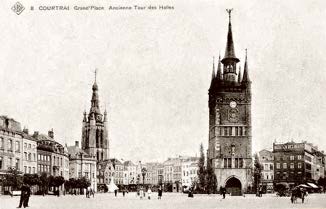
Figure 29.144: Kortrijk, Market Place,
with the Church of Saint Martin in the
background.
Figure 29.145: Kortrijk, January 13, 1595, the baptism of Anna
Desclergue (Anna de clerqz), the daughter of Jeroni (’Gernie /
Jernie’), the godfather was Mallardo Wulput, godmother was Maria
s’ Clerx, likely a descendant of Nicolas Declercq (DK01), described
in Chapter 34.13.3.
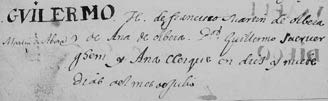
Figure 29.146: Ghent, Spaniard castle,
1614, the baptism of Guilermo Martin de
Abera, son of Francisco Martin de Abera
and Ana de Abera. The godparents were
Guillermo Sacruer and Anna Desclergue
(DC06f) (’Ana Clerque’).
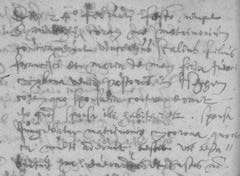
Figure 29.147: Waregem, February 24, 1609, the mar-
riage of Vincent Stalins, son of Franciscus Stalins, and
Marie Deman, daughter of Judocus Deman. The wit-
nesses were chaplain Evrardus and the sexton. The wed-
ding was approved by the priest of Izegem, which in-
dicates that at least one partner must have resided at
Izegem before. The circumstances are consistent with the
assumption that Vincent Stalins was temporary residing
at Waregem and involved with the military.
Figure 29.148: Waregem, September 6, 1620, Anna Declercq’s (’De cler’) mar-
riage to Vincentius Staelens (’Stalins’). Anna’s mother, Felipa De Montoya
(’Philippa du tooi’), was a witness, together with Joannes De Wilde.
Figure 29.149: Waregem, May 25, 1621, the baptism of Franciscus Stalins,
son of Vincent Stalins and Anna Desclergue (DC06f) (’Anne’). The godfather
was Joannes Demets, son of Judocus, and the godmother was Arnolda Benoot.
The Desclergues of la Villa Ducal de Montblanc, 2nd ed., Omn., VOL. II
© 2024 Nico F. Declercq



432
CHAPTER 29. JERONI JOAN DESCLERGUE Y CORTÉS (DC05) & FELIPA DE MONTOYA
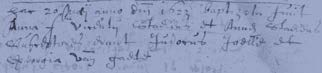
Figure 29.150:
Waregem, May 20, 1623, the baptism of Anna
Stalins, daughter of Vincent Stalins and Anna Desclergue (DC06f)
(’Anne Staelens’). The godfather was Judocus Joelle, and the god-
mother was Georgia Van Gaete.
Figure 29.151:
Waregem, October 8,
1626. The baptism of a twin of Anna De-
sclergue (DC06f) and Vincentius Staelens.
The children were Petrus and Joannes.
The godparents of Petrus were: Jean du
Breucq (’Joannes de Bucker’) and Gode-
liva Crispel. Joanna’s godparents were An-
toni Desclergue (DC06) (Anna’s brother)
and Judoca Van Brabant. The baptism is
also shown in Figure 34.47 on page 543.
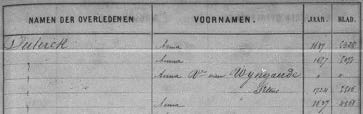
Figure 29.152: 1627, Ostend, the death of Anna Declercq (DC06f ) on the
fatalities list (the record at the bottom).
Figure 29.153: Sint Denijs (Zwevegem),
1648, April, the marriage of Joannes Stal-
ins with Joanna Kelduwier (’Quellerie’).
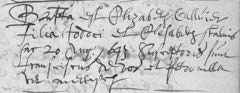
Figure 29.154: Deerlijk, August 20, 1643, the baptism
of Elisabeth Kelduwier (’Calluier’), daughter of Judo-
cus Kelduwier and Elisabeth Stalins. The godfather was
Franciscus de Vos, and the godmother was Petronella
Vermeersch.
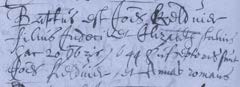
Figure 29.155: 1644, November 20, Deerlijk, the bap-
tism of Jean Kelduwier (’Kelduier’), son of Jose Kel-
duwierand Elisabeth Stalins. The godfather was Joannes
Kelluwier, the godmother was Annabel Roman.
Figure 29.156: Ypres, January 29, 1655, the marriage of Isabella Stalins
and Philippe Albert la Motte Baraffe. Only the lists of that period have
survived WWI; therefore, we cannot access the original record.
Figure 29.157: The baptism of Miguel
Desclergue at Tournai on September 30,
1605 (left column shifted to reduce the
image size, the original is available at
the Belgian Archives of Tournai, Marie-
Magdalena church).
The family chose
September 30 because it is the day of Jeroni
(Saint Hieronymus).
© 2024 Nico F. Declercq
The Desclergues of la Villa Ducal de Montblanc, 2nd ed., Omn., VOL. II


29.9. JERONI’S CHILDREN
433
Figure 29.158: Spaniard Castle of Ghent, May 6, 1642, the
marriage of Miguel DeClercqz (DC06b) (artillerist at the castle
of Ghent) with Levina Cocx. Witnesses were Francisco Tiery and
Pedro Desprets.
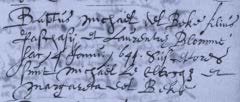
Figure 29.159: Deerlijk, January 4, 1644, the baptism
of Michael Delbeke, son of Pashalius Delbeke and Lau-
rentia Blomme. The godparents were Miguel Desclergue
(DC06b) (’Michael Le Clerqz’) and Margareta Delbeke.
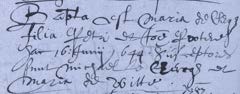
Figure 29.160:
Deerlijk, June 16, 1644, the bap-
tism of Maria Declercq (DK03dybx5) (’De Clerqz’),
daughter of Pieter Declercq (DK03dyb) and Joanna De
Poorter (’Pootere’). The godfather was Miguel Descler-
gue (DC06b) (’Michael Le Clergz’), and the godmother
was Maria de Witte.
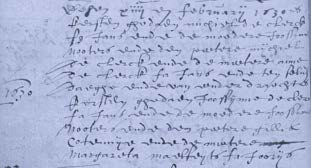
Figure 29.161: 1630, Deerlijk, the baptism of the Nooters twin.
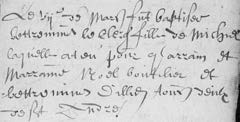
Figure 29.162: Marquette-lez-Lille, March 7, 1635, the
baptism of Bettemina Desclergue (’Le Clerg’), the daugh-
ter of Miguel Desclergue (DC06b) (’Michiel Le Clerg’)
and Maria Anna Louise le Vast. The Godparents were
Noel Boutillier and Bettemina Dillie.
Figure 29.163:
Marquette-lez-Lille, June, 1640, the
baptism of Louis Desclergue (’Le Clercq’), the son of
Miguel Desclergue (DC06b) (’Michiel Le Clercq’) and
Maria Anna Louise le Vast. The Godparents were Louis
le Perc and Peronne Lefebure.
Figure 29.164:
Ghent Sint Pieters, 1660, the new
marriage of Levina Cocx, widow of Miguel Desclergue.
She married on July 24, 1660 to Philippus De Meeckere.
Anna Hetse and Paschasius Ervinck were witnesses.
Figure 29.165: 1634, Miguel Desclergue on the list of ’la bourgeoisie
foraine’ of Kortrijk at Deerlijk.
The Desclergues of la Villa Ducal de Montblanc, 2nd ed., Omn., VOL. II
© 2024 Nico F. Declercq



434
CHAPTER 29. JERONI JOAN DESCLERGUE Y CORTÉS (DC05) & FELIPA DE MONTOYA
Figure 29.166: 1637, Miguel Desclergue on the list of ’la bourgeoisie
foraine’ of Kortrijk at Deerlijk.
Figure 29.167: 1638, Miguel Desclergue on the list of ’la bourgeoisie
foraine’ of Kortrijk at Deerlijk.
After his father’s death, Miguel Desclergue (DC06b), described in Chapter 29.9.6, was baptized at Tournai in 1605 on Saint Hieronymus’s day (Jeroni). Miguel died in 1650.
29.9.1 Juana Desclergue (DC06c), the Daughter of Jeroni Joan Desclergue
Juana Desclergue (DC06c) was born at the Spaniard Castle in Ghent in 1588, at the beginning of Jeroni Joan Desclergue y Cortés (DC05) and Felipa de Montoya’s residence in Flanders. Later, they moved to Kortrijk.
Juana married a Spanish soldier, which must have been why, as an adult, she resided at the place of her birth in Ghent.
Juana (DC06c) visited the Spaniard castle regularly when she was young, together with her parents. There must have been seasons when she lived there with her mother and siblings while Jeroni (DC05) was on a military campaign against the Dutch.
Indeed, Ghent’s Spaniard Castle was located on the strategic outpost where the Leie and Schelde Rivers come together. In the works describing Carlos Coloma’s life, we read that Jeroni should most definitely have resided prolonged times at the castle in the period 1593-1594, and perhaps also in other periods. For instance, in the winter of 1596-1597, after military activities in the south, the focus turned to Hulst, where the Spanish would lay Siege in 1597. The authorities most likely coordinated this in Ghent. During the preparation time, the Desclergues may have stayed there.
Joanna (DC06c) appears as Godmother on baptisms in the period 1614-1617, as in Figures 29.140 and 29.141 on page 430 (or 37.82
on page 659). She died in 1622. Her death, in Figure 29.142, was very likely caused by disease as occurred so often at that time.
Anyways, she had no offspring that survived her and had not been married.
When Alonso Ximenez de la Cruz was baptized at the Spaniard Castle in 1617 in Ghent, in Figure 29.141, his Godmother was Juana Desclergue (DC06c). His godfather was Don Alonso de Aranda. His parents were Juan Ximenez de la Cruz (perhaps an uncle of Martina De la Cruz, who would later marry Jeroni’s grandson Antoni (DC07)) and Juana Mancera.
29.9.2 Maria Desclergue (DC06e), the Daughter of Jeroni Joan Desclergue
Maria Desclergue (DC06e) was the daughter of Jeroni Desclergue and Felipa De Montoya. She was baptized at Kortrijk in 1592 on May 29, as seen in Figure 29.143, at the Church of Saint Martin in Figure 29.144.
Several Gutierez persons were found during that period at San Felipe de Castilla’s parish in Antwerp, seen in Figure 29.173 on page 435. Maria Anna Van der Schelden was the wife of Joannes Duermael or Dormael from Ghent. Duermael - Van der Schelden married at Ghent (Sint Martinus) in 1585 (Reg. 224 f. 14r), and this marriage was a Catholic confirmation of an earlier established Calvinistic marriage. We have found no further trace of Maria Desclergue and therefore assume that she died in childhood.
29.9.3 Anna Desclergue (DC06f), the Daughter of Jeroni Desclergue
Anna Desclergue (DC06f) was the daughter of Jeroni Desclergue and Felipa De Montoya. She was baptized at Kortrijk on January 13, 1595, as shown in Figure 29.145. Her Godmother was a descendant of Nicolas Declercq (DK01), described in Chapter 34.13.3.
When Jeroni (DC05) died in 1604, Anna (DC06f) was nine years old.
At 19, she appeared as Godmother to Guillermo Martin de Abera in Ghent. It means that she was probably already married then; hence, she likely had received, according to Catalan law, a dowry from her mother, which further excluded her from the inheritance of Jeroni Joan Desclergue y Cortés (DC05) and Felipa de Montoya.
She married Vincent Stalins in Waregem in 1620, and her mother, Felipa de Montoya, was a witness. Vincent was a widower of Maria Deman and had been married to her in Waregem in 1609. Because Anna’s (DC06f) related documents hold clues to the story of the chapel’s construction ’Kapel-ter-Ruste’ in Deerlijk, we present everything we found below.
Anna Desclergue (DC06f) appeared as Godmother in 1614 in Ghent at the Spaniard castle, in Figure 29.146.
Her future husband, Vincent Stalins, married first in Waregem on February 24, 1609, to Marie Deman, shown in Figure 29.147.
The couple Vincent Stalins and Marie Deman had children: Francisca, Adriana, and Petra.
Francisca Stalins was born in Waregem on January 26, 1611. Her godfather was Franciscus Stalins, and her Godmother was Beelke Debruine, daughter of Laurentius from Lendelede.
Adriana Stalins was born in Waregem on February 6, 1614. Her godfather was Judocus Putman, son of Judocus, and her Godmother was Adriana Svolders, wife of Oliverius Debels.
Petra Stalins was born in Waregem on August 16, 1617. Her godfather was Petrus Stalins, and her Godmother was Petra Van Lanckere. Marie Deman died between 1617 and 1620.
Vincent Stalins married Anna Desclergue (DC06f) at Waregem in 1620, in Figure 29.148. The couple had the following children: Franciscus, Anna, Joannes, and Petrus, who all died young. When Anna Desclergue (DC06f) married Vincentius Stalins in 1620
at Waregem, the witnesses were Joannes De Wilde and the bride’s mother, Felipa De Montoya (’Philippa du Tooi’). Note that Joannes De Wilde probably also served as godfather 22 years later on the baptism of Florence Vermeersch at Harelbeke on March 20, 1642, together with godmother Florence Decostere.
Franciscus Stalins was baptized, in Figure 29.149, in Waregem on May 25, 1621. His godfather was Joannes Demets, and his Godmother was Arnolda Benoot.
Anna Stalins was baptized, in Figure 29.150, in Waregem on May 20, 1623. Her godfather was Judocus Joelle, and her Godmother was Georgia Van Gaete.
Joannes and Petrus Stalins were twins, born in Waregem on October 8, 1626. Joannes’s godfather was Antoni Desclergue (DC06) Figure 29.168: 1648, Miguel Desclergue on the list of ’la bourgeoisie
foraine’ of Kortrijk at Deerlijk.
© 2024 Nico F. Declercq
The Desclergues of la Villa Ducal de Montblanc, 2nd ed., Omn., VOL. II


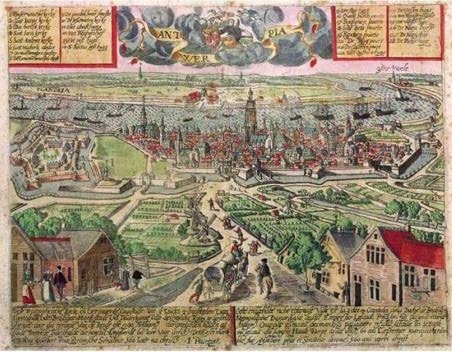
29.9. JERONI’S CHILDREN
435
Figure 29.169: 1649, Miguel Desclergue on the list of ’la bourgeoisie
foraine’ of Kortrijk at Deerlijk.
Figure 29.170: 1650, Miguel Desclergue on the list of ’la bourgeoisie
foraine’ of Kortrijk at Deerlijk.
Figure 29.171: Cambrai, March 20, 1650, the baptism
of Marie Anne Legier, the daughter of Bettemina De-
sclergue (Declercqz) and a certain ’Legier.’ She was born
on Easter. The Godparents were Ares Dausach (’Ares
autre Dausauce’) and Maria Anna Turbee, the daughter
of Francis. The connection between the Desclergues and
Dausach is also highlighted in Chapter 34.8
Figure 29.172: Kortrijk, July 10, 1632. Jeroni Desclergue (DC06d)
(’Jeroon Declercq’), the son of Jeroni Joan Desclergue (DC05) (’Jan J.
Declercq’) transfers an annuity from the succession of Felipa to Jan de
Meulnaere, son of Lucas in Kortrijk de Montoya (’his mother’), inter-
est that Michael Declercq (’Michiel Declercq’), son of Judocus Declercq
(’Joos’), had explored to Jan Declercq (DK03) (’Jan Declercq’) for the
aldermen of Ter Venestraete in Bavikhove on November 1, 1615 and in-
sured on land. Source: Oud Stadsarchief Kortrijk, Akten en Contracten,
5262, 1074484, arch 112, 19A.
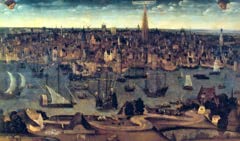
Figure 29.173: The Castle of Antwerp, left-side on this painting, where San Felipe de Castilla
was located and where Spanish troops resided.
The Desclergues of la Villa Ducal de Montblanc, 2nd ed., Omn., VOL. II
© 2024 Nico F. Declercq
CHAPTER 29. JERONI JOAN DESCLERGUE Y CORTÉS (DC05) & FELIPA DE MONTOYA
(Anna’s brother), and his Godmother was Judoca Van Brabant, while Petrus’s godfather was Jean du Breucq (’Joannes de Bucker’), and his Godmother was Godeliva Crispel. The baptism is shown in Figure 29.151 on page 29.151, and also in Figure 34.77 on page
Anna Desclergue (DC06f) survived all her children and died without living offspring in Ostend, in 1627, where we found the burial of an ’Anna Desclergue,’ shown in Figure 29.152. It was the same year and the same town where the marriage took place of Antoni De Pollo (Antonius Depoyo) and Catharina de Montoya, described in Chapter 29.10.12.4. Perhaps they were related.
Interestingly, in particular, in the context of the construction of a chapel at Deerlijk and the connection between the families Desclergue, de la Motte Baraffe, Du Bois, Keluwier, and Stalins, we list several important documents that, together with the ones above, indicate a link between those families.
There is a chance that Joannes Stalins, who married Joanna Keluwier (’Quellerie’) at Sint Denijs (Zwevegem) in 1648, shown in Figure 29.153, was related to Anna Declercq (DC06f) through her husband.
We also retrieved a Judocus Keluwier and Elisabeth Stalins in Deerlijk on baptisms in 1643 and 1644, shown in Figures 29.154 and
Furthermore, we found a marriage, in Figure 29.156, at Templeuve, 8 km South-East of Lille and 10 km South-West of Tournai, on July 22, 1640, between Jean Dubrucq and Catherine du Bois. Perhaps this concerns the same Jean Dubrucq found as godfather in 1626 in Waregem to a son of Anna Desclergue (DC06f) and Vincent Stalins, and possibly Catherine du Bois was related to Jean du Bois, husband of Marguerite Kelduwier. More than one Jean Dubrucq was found at Templeuve. Another one in the first half of the 17th century was Jean, a son of Philippe Dubrucq and married to Françoise du Bois. There is not enough evidence to form a link, though, with the husband of Margriet Keluwier or with the godfather mentioned in 1626.
Interestingly, in 1655, in Figure 29.156, an alliance is found between Isabelle Stalins and Philippe Albert la Motte Baraffe, son of Nicolas de la Motte Baraffe and Anne de Vicq. The latter was a relative of the one in Deerlijk, but we could not link Isabelle Stalins and Vincent Stalins. They may have been related, but we don’t know. The lack of documents referring to Vincent Stalins darkens the obscurity.
Isabelle Stalins was the daughter of Egidius Stalins and Anne Marie de Scheppere, who had married in Oudenaarde on February 28, 1625. Egidius was a son of Egidius Senior, baptized at Ghent on August 31, 1599, as a son of Egidius Stalins and Isabelle Canin.
He had the following siblings: Jacques Stalins, Jean Baptiste Stalins, Jeanne Albertine Stalins, and Catherine Stalins.
29.9.4 Antoni Desclergue (DC06), the Son of Jeroni Desclergue
He is our ancestor. We refer to Chapter 34 and Chapter 49.
29.9.5 Jeroni Desclergue (DC06d), the Son of Jeroni Desclergue
He became a priest before 1611 and received his inheritance from his biological father, Jeroni, before his mother, Felipa de Montoya, remarried. In Figure 29.172 on page 435, we can see that Jeroni Desclergue (DC06d) was the son of Jeroni Joan Desclergue (DC05) and that he was a priest. After the death of his mother, Felipa de Montoya, in 1628, Jeroni Desclergue (DC06d) transferred an annuity to another person on July 10, 1632. That interest originated from a transfer to Jeroni Desclergue’s (Dc06b) stepfather, Jan Declercq (DK03), on November 1, 1615. Unlike Antoni Desclergue (DC06) and Miguel Desclergue (DC06b), Jeroni Desclergue (DC06d) did not inherit the real estate from Felipa when she died in 1628, as he was a priest, who had been paid his legitima according to Spanish customs when he turned priest.
In early modern Catalonia, including Barcelona, around the 1600s, inheritance practices were influenced by regional customs and laws. One significant aspect was the handling of inheritance when a son became a priest. Traditionally, when a son entered the priesthood, he was often provided with a financial settlement or portion of the inheritance at the time of his ordination. This payment, known as a legítima, was a way to ensure that the priestly son would have financial support while also renouncing his claim to the family inheritance upon the parents’ death.
The practice served dual purposes: it provided for the priestly son’s immediate needs and ensured the remaining inheritance could be distributed among the other heirs without complication. This was rooted in the broader principles of inheritance laws in Catalonia, which emphasized equitable distribution among children while accommodating specific circumstances such as religious vocations or the appointment of an heir.
Catalonian inheritance law during this period was codified in the Usatges de Barcelona and later legal texts, which detailed the obligations and rights of heirs, including provisions for those entering religious orders.
29.9.6 Miguel Desclergue (DC06b), the Son of Jeroni Desclergue
One can read in Chapter 29.10.6 and Chapter 29.11 that Miguel’s mother was Felipa De Montoya and that she died early in 1628, leaving Miguel as an orphan. It means that in 1628, Miguel must not have reached the age of 25 and was not yet married. In other words, he was born after 1603. His baptism confirms this.
He was baptized on September 30, 1605, in Figure 29.157. His father, Jeroni, died at Ostend on September 4, 1604. It means that Miguel must have been born before June 1605. His mother Felipa, a widow, however, waited to baptize Miguel until the celebration day of Saint Hieronymus (’Jeroni’), i.e., September 3079.
A baptism a few months after birth was uncommon but also not exceptional. FamilySearch®, a system developed by the Mormons, recommends, for Spain, searching for baptisms between the day of birth and several months later because there are many examples of late Spanish baptisms. In the case of Miguel Desclergue (DC06b), we can see that his mother waited until the day of Saint Hieronymus, but she probably also wanted first to be purified so that, in the absence of the father, she could baptize her child. After childbirth, purification of mothers was a ritual that generally took place around six weeks after delivery but, given the circumstances, may also have occurred later.
There is research done in Spain, for instance, to determine the age of children when they were baptized.80 The work states that, in principle, children were baptized as soon as suitable after birth. It was, however, a vague principle, and children were sometimes baptized months after they were born, for instance, to wait for the godfather’s presence or any other reason, such as the priest’s 79The baptism registers of the Church of Marie-Magdalena at Tournai, page 86.
80Josué Fonseca Montes, ’La prática sacramental en tiempos de la confesionalización: Cantabria, siglos XVII y XVIII’ , Espacio, Tiempo y Forma, Serie IV, Historia Moderna, t. 21, 2008, págs. 27-62.
© 2024 Nico F. Declercq
The Desclergues of la Villa Ducal de Montblanc, 2nd ed., Omn., VOL. II
437
unavailability in some periods.
In Spain, and probably elsewhere in the Spanish Empire, the date of birth was added to the baptism certificate only starting from 1675 and became standard in Spain around 1700. Jean Delumeau81 states the following about the late 17th century, i.e., several decades after Miguel’s baptism in 1605:
The seventeenth century’s synodal statutes tirelessly repeated the obligation to baptize children within three days of birth. If they did not fulfill this obligation, negligent parents could be prohibited from entering the Church. The Church strengthened control over midwives, certainly to limit the number of abortions, but also because of their obligation to baptize every newborn in danger of dying.
The midwife, chosen by the village’s female elite, took an oath before the priest and had to prove that she knew how to administer baptism. During the pastoral or archdeacon inspections, the visitor never failed to question her about it. Consultation of French parish records reveals that negligence in the administration of baptism became increasingly rare from the end of the 17th century. At the same time, the seriousness of the sacred ceremony was emphasized, excluding godfathers and godmothers who had not fulfilled their Easter obligations or who were ’not recommended because of their customs’ and prohibiting the parade of volunteer bell ringers, who traditionally had the right to a small fee offered by the godparents.
Further in the paper by Josué Fonseca Montes, we find that
despite all the attempts by the Church to ensure children were baptized as soon as possible after birth, even halfway through the 18th century, it still took an average of one week and a range from two days to almost three months for ’newborns’ to be baptized, in the investigated villages in Spain. In other words, in 1605, waiting a few months was not dramatic.
It’s also possible that his baptism was a re-baptism if the circumstances of a first baptism were not according to customs.
Miguel Desclergue (DC06b) was named after Saint Michael and was baptized on his father’s name day in 1605. Michael does not only stand as a symbol for having defeated a dragon, comparable to the Spanish who conquered the Dutch at Ostend (September 22, 1604, with celebrations and a formal ceremonial entry by Albrecht and Isabelle on September 25), but we also know that the family lived at Fort Colombye near Ostend during the Siege, also known as the fortress of San Miguel (Sint Michiel) because there was such chapel there. After the Siege in September 1604, special services must have been held to thank Saint Michael in that chapel. For this reason, Felipa decided to name her last son Miguel.
Furthermore, the parish of the Desclergues in Montblanc, famous for the fact that it also served as the Corts location, was that of Saint Michael (San Miguel). When Miguel’s brother Antoni Desclergue (II) (DC06) established the Chapel of Deerlijk, he would ensure that there would appear an image in the chapel of the Main Square of Montblanc, on which not only the Casa Desclergue would be depicted, but also the San Miguel church.
We do not find Miguel Desclergue until 1630, when he serves as Godfather, along with the Godmother Anne Declercq (DK03dyd), for Michael Declercq, son of Jan Declercq (DK03dya) and Jossynne Nooters, at Deerlijk.
Miguel married Maria Anna Louise le Vast, from Marquette near Lille (Marquette-lez-Lille), and the couple had two children, Bettemina and Louis, shown in Figure 29.162 on page 433 and Figure 29.163 on page 433 respectively. No further traces were found of the children, apart from a marriage at a young age of Bettemina in Cambrai in 1650 to a certain Legier, shown in Figure 29.171
on page 435; while Maria Anna Louise le Vast died before 1642.
We assume that Miguel was already in the military in 1635, and his bond with Marquette may have been due to these activities.
Probably, he lived in Deerlijk but remained mobile. Having his children baptized in his wife’s village of origin may be due to that mobility.
We have not found much more about Miguel, except that he became a ’outside burgher’ (’bourgeois forain’ , ’buitenpoorter’) of Kortrijk while living in Deerlijk, in 1635, 1637-1638, 1648-1650, shown in Figures 29.165, 29.166, 29.167, 29.168, 29.169, 29.170.
The gap between 1638 and 1648 was due to his career. His disappearance from 1650 onward may be related to his daughter in Cambrai.
In 1639, he became an artillerist for the Spanish forces at the Spaniard Castle of Ghent. There, he married Levina Cocx on May 6, 1642, in Figure 29.158 on page 433. The witnesses were Francisco Tiery and Pedro Desprets.
We found Miguel Desclergue (DC06b) as godfather on the baptism at Deerlijk in 1644 of Maria Declercq (DK03dybx5), daughter of Pieter Declercq (DK03dyb) and Joanna Depoorter. The priest wrote ’Decleqs’ for Pieter Declercq’s branch, while he wrote ’Michael Le Clercgs’ for Miguel to show a difference.
We found him in 1644, in Figure 29.159 on page 433, as godfather in Deerlijk to Miguel del Beke, son of Paschalius del Beke and Laurentia Blomme, Godmother was Margareta del Beke; and as godfather, in Figure 29.160 on page 433, to Maria Declercq (DK03dybx5), daughter of Pieter Declercq (DK03dyb) and Joanna De Poorter (’Pootere’).
In particular, the baptism in Figure 29.161 on page 433 is thought-provoking. The transcript of Figure 29.161 is as follows:
’Dezen 14den februari 1630 is heffen ghedaen Michael Declercq (DK03dyay3) (’Michael De Clerck, filius Jans’) ende de moedere Jossyne Nooters, end de den peetere Miguel Desclergue (DC06b) (’Michael De Clerck’) ende de meetere Anna Declercq (DK03dyd) (’Anne De Clerck filia (sic) Jans’); ende den selven daeghe ende van den daugter heffen ghedaen Jossina Declercq (DK03dyax2) (’Jossyne Declercq filia Jans’) ende de moedere Jossyne Nooters en de den peetere Gillis Cotenye ende de meetere Margareta Maesseyts filia Joozyns.’
From the transcript, we can extract again that Miguel Desclergue (DC06b) (who serves as godfather) was not the natural son of Jan Declercq (DK03), unlike Anna Declercq (DK03dyd). Indeed, he was Jeroni Joan’s (DC05) son, while Jan (DK03), father of Anna Declercq (DK03dyd), was his stepfather.
We do not know the exact date of the death of Miguel Desclergue (DC06b). However, we know that his widow Livina Cockx remarried, in Figure 29.164 on page 433, at Ghent, Sint Pieters, on July 24, 1660, to Philippus De Meeckere. From an orphan’s deed and the records of ’la bourgeoisie foraine’ of Kortrijk, we know he must have died before 1651.
Like his brother Antoni Desclergue (DC06), Miguel has had access to the status of Bourgeois Forain of Kortrijk. He appears on the list as ’Michael Declercq, filiastrum Jans’ (referring to his stepfather Jan), or ’filius Jans,’ referring to his natural father Jeroni Joan Desclergue y Cortés. Note that a short delay in becoming a Bourgeois Forain was not against the law in Kortrijk. Indeed, he turned 25 in 1629, but that did not strictly mean adulthood immediately. One typically had to marry or emancipate as military, for instance. We can refer to
’Vlaems recht dat is costumen ende wetten ghedecreteert by de graven ende gravinnen van Vlaenderen waer by ghevoeght syn d’
interpretatien, concessien Caroline, ordonnantien politique, hanseryen &c, 1674,’
where we read that in most areas children became automatically adults at the age of 25, except in Kortrijk. Indeed, in Kortrijk, one remained a minor, even after 25, except through emancipation, marriage, or priesthood. The custom states
’Kinderen sijn ende blijven inde macht ende bedwanck van haerlieder vader ende moeder, al waert oock dat sy excedeerden de oudde van vijf-en-twintich jaren, ten ware dat sy by emancipatie, priesterschap, huwelick oft andere staten daert bij men naer rech sijn 81Jean Delumeau, ’El Catolicismo de Luther a Voltaire’ , Barcelona, 1973, p. 238.
The Desclergues of la Villa Ducal de Montblanc, 2nd ed., Omn., VOL. II
© 2024 Nico F. Declercq

438
CHAPTER 29. JERONI JOAN DESCLERGUE Y CORTÉS (DC05) & FELIPA DE MONTOYA
selfs wordt, hun selfs bedeghen. Cortrycke rubrica 12. art. 9.’
Miguel Desclergue disappeared from the records in Deerlijk in 1650, which coincided with the birth of his grandchild in Cambrai from his daughter Bettemina Desclergue, who was underaged then. Indeed, Figure 29.171 on page 435 shows the baptism of Marie Anne Legier, the daughter of Bettemina Desclergue and a certain ’Legier.’
29.10 Felipa de Montoya, the Wife of Jeroni Desclergue, and Her Family.
29.10.1 Etymology of de Montoya
Several theories exist concerning the origin of the name ’de Montoya.’ Only two theories are plausible when compared to the spread of the variants involved in each theory. Many names in Spain have Arabic, Sephardic, or South French origins. In the case of ’de Montoya,’ two plausible origins exist, and, very likely, they are both right and converged into the modern Spanish ’de Montoya.’
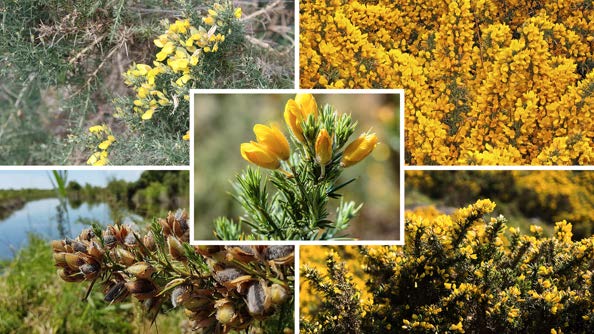
The Sephardic origin is ’De Monte Yah,’ where ’Yah’ is Hebrew for God, so the word means something in the sense of ’from God’s mountain.’ The South French origin is in Occitania and is ’Mont Touya,’ where ’Touya’ is the old European expression, Occitanian in this case, for ’Gorse.’ Gorse, shown in Figure 29.185, is also known as Ulex, Furze, or Whin and is a genus of flowering plants in the family Fabaceae. The genus comprises about 20 species of thorny evergreen shrubs in the subfamily Faboideae of the pea family Fabaceae. The species are native to parts of western Europe and northwest Africa, with most species in Iberia. Therefore,
’de Montoya’ means either ’From God’s Mountain’ or ’From the Gorse Mountain.’
Interestingly, Gorse, known as ’Touya’ in ancient dialects such as Occitanian, is the subject of myths involving the Devil. This is so in areas once influenced by Catharist beliefs but even beyond.
In the region of Brittany, various myths and folklore narratives revolve around the gorse plant, reflecting its significant cultural and symbolic resonance within traditional Breton society. One prevalent myth posits the Gorse’s perpetual flowering as evidence of its divine origin, attributing its existence to a divine compromise. According to this myth, while God crafted the world’s most exquisite flowers, the Devil, driven by malice, fashioned a botanical masterpiece characterized by an abundance of elongated green thorns. In response to such malevolent creativity, the benevolent deity purportedly decreed that this plant would bloom ceaselessly as compensation for its sinister genesis.
Another myth from Cap Sizun in Brittany portrays the Devil’s envy at the prospect of Breton souls ascending to Paradise unabated.
In a ploy to thwart their passage, the Devil beseeches God for an opportunity to claim souls, contingent upon the absence of gorse flowers. Exploiting this opportunity, the Devil strategically delays the blossoming of Gorse by indulging Bretons in earthly pleasures, such as revelry in vineyards and taverns, thereby diverting them from their spiritual trajectory and ensuring their descent into Hell.
A further narrative within Breton folklore introduces the figure of the "Pilour lann," a spectral entity condemned to the eternal task of harvesting and processing gorse to stoke the fires of purgatory. Manifesting on stormy nights through percussive sounds against the gables of antiquated dwellings, the Pilour lann remains invisible to human eyes, contrasting with the conspicuous presence of the Gorse Thief, known as "Al laer lann." The latter, once a mortal akin to ordinary individuals, incurred divine retribution for Gorse theft, consigned to perpetual visibility against the nocturnal sky with a burden of Gorse upon his back.
Moreover, prevailing beliefs among Breton communities depict Gorse with ambivalence, attributing its creation to the Devil’s attempt to mimic the divine craftsmanship exhibited in the broom plant. Consequently, Gorse is imbued with ominous connotations, symbolizing death and misfortune, discouraging its use in household adornments or floral arrangements. Nevertheless, Gorse is also ascribed with protective qualities, mainly when utilized in constructing churn pestles, purportedly thwarting the evil intentions of witches and safeguarding butter from bewitchment.
Additionally, Breton folklore associates Gorse with the penitential realm of purgatory, wherein souls undergo expiatory tribulations amidst its prickly thickets. To avoid offending these ethereal tenants and to maintain their safety, Breton tradition advises individuals to cough audibly when traversing gorse-laden landscapes and refrain from heedlessly despoiling its foliage for frivolous purposes.
Although Gorse has been traditionally associated with the Devil, it has not been universally regarded as evil. For example, according to ancient folklore detailed in "The Secret Power of Plants and Other Secrets of Witches" by Michel Viard (Editions Larousse –
August 22, 2018), Gorse is believed to provide reliable protection against adversaries. It is said that this shrub is considered a sworn enemy of the Devil because its perennial flowering is attributed to a gift from Jesus. A similar legend of Scottish origin also exists, reinforcing this notion of divine favor bestowed upon the Gorse plant.
In the area of Loudun, near Angers in France, we find the Loudunese Legend. In forests such as Scévolles, Gorse tends to thrive following logging activities, capitalizing on the space before new trees take root. This phenomenon, common among forest shrubs, was historically exploited by the inhabitants, who utilized Gorse for various purposes. Traditional practices included bundling dry Gorse, valued for its highly flammable nature, to ignite bread ovens. Additionally, Gorse served as fodder and bedding during times of scarcity when straw was scarce.
The Legend of the Flowering Gorse Forest plants often carried mystical connotations appreciated by past rural communities, a theme co-opted by Christianity to convey theological messages through saintly narratives. The Legend of Sainte-Radegonde and the Gorse, echoing similar tales like that of Avoines, unfolds in the forest of Scévolle near Loudun, a region abundant with Gorse.
Legend has it that during a winter journey from her villa in Saix near Poitiers, Sainte-Radegonde, accompanied by her companions, sought refuge behind a Gorse bush upon learning of her husband King Clotaire’s pursuit. However, the Devil, spying on them, instructed his magpie to expose their hiding place. Just as they were about to be apprehended, the gorse bush miraculously blossomed, deterring Clotaire from further pursuit. As a result, Sainte-Radegonde cursed the magpie, condemning its descendants to wear half-mourning plumage and emit hoarse cries instead of songs.
In Occitania and Gascogne (France), the name Touya remains ’Touya’ and ’Touyarot.’ ’Touyà’ is the Gascon name for a place planted with Gorse.
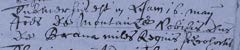
Figure 29.174: 1594 October, Kortrijk, Philippa Montoya (’Phy-
bina Montoye’) is godmother to Felipa Montoya (’Phibina Montoyel’),
daughter of Pedro Montoya. The handwriting is different from the
certificates in the same period, so the priest must have been other.
The godfather was Parys Raes, maybe Peres Ruiz.
© 2024 Nico F. Declercq
The Desclergues of la Villa Ducal de Montblanc, 2nd ed., Omn., VOL. II
29.10. FELIPA DE MONTOYA, THE WIFE OF JERONI DESCLERGUE, AND HER FAMILY.
439
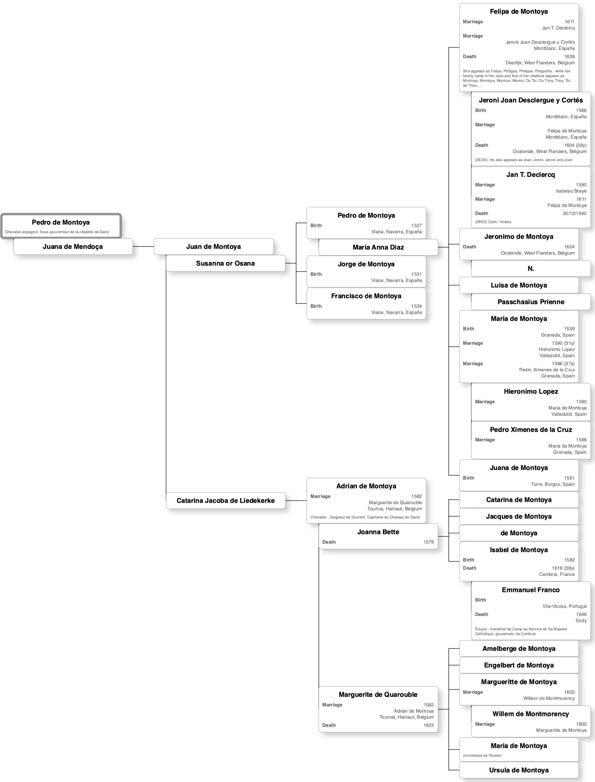
Figure 29.175: Three descendant generations of Pedro de Montoya and Juana de Mendoça, eldest known ancestors of Felipa de Montoya.
Figure 29.176: Antwerp around 1600 p.
The Desclergues of la Villa Ducal de Montblanc, 2nd ed., Omn., VOL. II
© 2024 Nico F. Declercq




440
CHAPTER 29. JERONI JOAN DESCLERGUE Y CORTÉS (DC05) & FELIPA DE MONTOYA
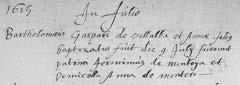
Figure 29.177: Antwerp, 1615, San Felipe de Castilla.
The baptism of Bartholomeo de Villalba, son of Gaspar
de Villalba and Anna Fili, the godfather was Jeronimo de
Montoya junior, and the godmother was Domicella Anna
de Montero.
Figure 29.178: Baptism of Joannes De Vos (De Vos), Harelbeke, Febru-
ary 22, 1633. He was the son of Pere Llorenç De Vos and Elizabeta or
Isabella Verscheure. His godfather was Juan de Montoya (’Joannes De
Montauze’), his godmother was Catarina Gol/Galés/Gals.
Figure 29.179: The death of Juan de Montoya, Sint
Eloois Vijve, May 16, 1678.
Figure 29.180: Harelbeke, 1598, Antonius Montoya’s baptism, child of Jeroni de Mon-
toya (’Hieronimus dú Toÿ’), the brother of Felipa De Montoya. The godfather was Antho-
nius Snel, the godmother was Jossine Le Comte (’Judoca de compt’), the wife of a soldier
(’miles’) Francesco Strobino (’Franciscus Strobynux’). The latter probably had, given his
name, Genoese roots, just like Ambrogio Spinola.
Figure 29.181: Antwerp, November 5, 1623, San Felipe de Castilla. The baptism
of Antonio Davila, son of Juan Davila and Maria, ’his wife’ . The godfather was
Antonio de Montoya, and the godmother was Leonor Melemans. Antonio de Mon-
toya (born in Harelbeke in 1598) was a son of Jeronimo de Montoya, brother of
Felipa de Montoya.
Figure 29.182: Harelbeke, 1624, Maria De Montoya (note that the transcript,
copied by a priest at Harelbeke, contains an erroneous transcription where Maria
Montoya/Montolla has become ’Voyegalla’), niece of Felipa De Montoya, who was
the godmother. The priest indicated that she was from ’Pago de...’ (ex pago de...).
The child was Maria Rapsaet, daughter of Petrus Rapsaet and Marie Mathieu or
Mahiu or Mateo. This Maria Mateo (a common name in Murcia at that time) may
be a relative of the Margarita Mateo we found in 1612 as godmother to a child of a
soldier at Harelbeke. (Note that typos may result from registers having been copied
from older original records, which is the case for Harelbeke). The godfather was
Joanne Cotignie from Deerlijk.
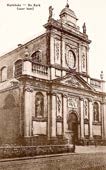
Figure 29.183: The church of Harelbeke p.
© 2024 Nico F. Declercq
The Desclergues of la Villa Ducal de Montblanc, 2nd ed., Omn., VOL. II
29.10. FELIPA DE MONTOYA, THE WIFE OF JERONI DESCLERGUE, AND HER FAMILY.
441
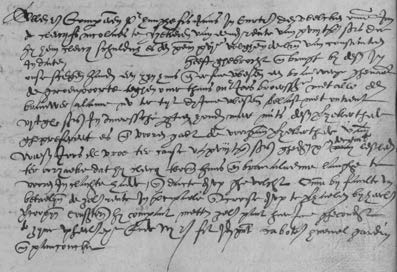
Figure 29.184: Kortrijk, March, 1601, Felipa de Montoya (’Philippa Clercq’) ap-
pears in a warrantee of Jan Declercq (DK03). We do not know if her presence in
Kortrijk was required as she stayed in Barcelona. Source: Oud Stadsarchief Kortrijk,
Akten en Contracten, 107737, arch 96, 103r, folio 81.
Figure 29.185: The name ’de Montoya’ is Sephardic, Occitanian or Gascognian. The word Toya in most of Europe was linked to the plant Touya that, in many tales and legends, was associated with the ’Devil.’ Even today, we find the name
’Duvelsnéigoame’ in the dialect of the Dutch Veluwe area. Gorse is also known as Ulex, Furze, or Whin. Priests and administrators unfamiliar with Spanish names and culture, must have felt hesitant to write ’Demon Toya’ and would prefer a local similar surname, Du Thoo in documents. A study is presented in 29.10.1. The photos are courtesy of Janet Graham, Dominicus Johannes Bergsma, Tim Redmond, Ardfern, and Bray Cliffwalk and were shared by WikiCommons.
Figure 29.186: Ghent, Spaniard Castle, July 20, 1644,
the burial of Francisco De Salazar y Montoya, a military
captain residing at the castle.
Figure 29.187: Brussels, Coudenberg, 1636, January
10, the marriage of Christophoro de Montoya (’de Mon-
toia’), a military, and Maria de Aguire. The witnesses
where Michael Garcia and Joan de Aguire. Carlos Mans-
felt is also mentioned.
The Desclergues of la Villa Ducal de Montblanc, 2nd ed., Omn., VOL. II
© 2024 Nico F. Declercq

442
CHAPTER 29. JERONI JOAN DESCLERGUE Y CORTÉS (DC05) & FELIPA DE MONTOYA
Figure 29.188: Brussels, Saint Jacques op de Couden-
berg, February 10, 1648, the marriage of Pierre Louis
de Montoya with Maria de Cortes. The witnesses were
Joanna Boucoy and Franciscus Prienne (Pinna). The
marriage occurred on the same day as Anselmus Tilly
and Catharina de Poch.
Figure 29.189: Ostend, 1627, the marriage of Antoni De Pollo (Antonius Depoyo)
and Catharina de Montoya.
In Iberia, the Occitan form of ’Touya’ for Gorse has transformed into ’Tojo’ and ’Toxo.’ At the same time, the names ’De Monte Yah’ and ’De Mont Touya’ became ’de Montoya,’ which was, to Iberians, most likely associated with a mountainous origin.
Upon migration to other regions in Europe, Flanders, in particular, a ’De Montoya’ would find his name easily associated with
’Demon Touya,’ meaning ’Devil’s Gorse.’ It’s hard to imagine priests without Spanish roots not feeling some reluctance when writing ’Demon’ in their documents. For this reason, a person carrying the name ’De Montoya’ would rather have his name noted in ecclesiastic documents as the local name ’Du Thoo’ unless the priest was familiar with Spanish names.
Indeed, as in Brittany, in Flanders, and, in fact, everywhere in the low countries, the plant ’Gorse’ was associated with the Devil.
A Devil’s Touya was, for them, a natural connection between two words. In contemporary Dutch, ’Gaspeldoorn’ and ’Brem’ refer to Gorse or Touya. Nevertheless, within the historical context of the Low Countries, alternate designations of ’Touya’ included references to the Devil within the plant’s nomenclature. For instance, in a dialect retained in the Veluwe region of the Netherlands, the term for ’Gaspeldoorn’ is rendered as ’Duvelsnéigoame’ (where ’Duvel’ signifies Devil or Demon).
Presumably influenced by such considerations, Felipa de Montoya and her sister chose to identify themselves by the name ’De Toy’
or ’Du Thoo’ rather than ’De Montoya.’ unless the priest or other official was Spanish or was very familiar with Spanish names and traditions.
It is, therefore, not surprising that we find her in records under Felipa, Philippa, Philippe, Phlypothe, or even ’Pe,’ while her family name in her case and that of her relatives appears as Montoya, Montoye, Montoie, Montoi, but also Du Toi, Du Thoy, Thoy, Toi, de Thoo, ...
During the early 17th century, women were commonly delineated by their marital status, subsuming their individual identities within the context of their husband’s social standing. For instance, Felipa de Montoya habitually denoted herself as Doña Desclergue, underscoring her relational association rather than asserting her personal appellation. Notably, the deployment of her actual name ensued solely when exigencies demanded it, with the chosen format contingent upon prevailing circumstances.
29.10.2 Her Ancestors
Felipa de Montoya descends from Pedro de Montoya and Juana de Mendoça, shown in Figure 29.175.
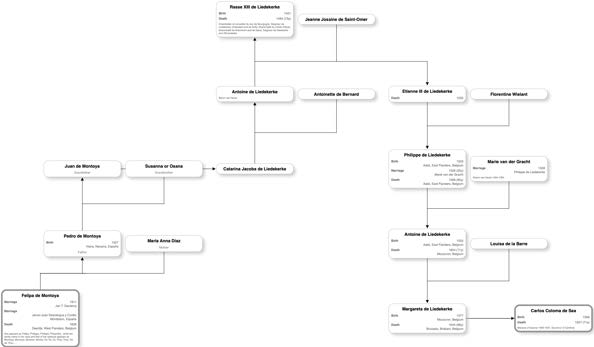
Felipa de Montoya was the daughter of Pedro de Montoya and Maria Anna Diaz (possibly with Portuguese roots). Her grandfather was Juan de Montoya, and her grandmother was Susanna or Osana. Juan de Montoya married twice. His second wife was Catarina Jacoba de Liedekerke. The family originated from the North-West of Spain (Navarra, Galicia, Leon) and was linked to the noble House of Braña. Through the marriage with de Liedekerke, Felipa de Montoya also became related to Carlos Coloma de Saa, as described in Chapter 29.10.11, Jeroni Desclergue’s (DC05) friend.
29.10.3 Her Marriage with Jeroni Joan Desclergue (DC05)
Felipa de Montoya married Jeroni Joan Desclergue (DC05) until he died in 1604. Their children are described in Chapter 29.9.
She married Jan Declercq (DK03) later, as described in Chapter 29.10.5.
29.10.4 Her Acquaintance with the Declercq family in Kortrijk
Jeroni Desclergue (DC05) came from a notable family in Montblanc, most of whom were notaries. Felipa was also from a notable family. When they arrived in Kortrijk, they naturally became friends with people of similar standing. This is how they became acquainted with the Declercqs of Kortrijk, notables, tradespeople, notaries, clerks, and aldermen. This family is described in Chapter 34.13.7. The families were also business partners.
For instance, we found Felipa de Montoya as godmother in Figure 29.174, at Kortrijk in 1594.
In Figure 29.184 on page 441 at Kortrijk, March 1601, we find Felipa de Montoya (’Philippa Clercq’) in a warrantee of Jan Declercq (DK03). Her presence in Kortrijk was most likely optional, as the document was made by Jan Declercq (DK03). Indeed, she resided in Barcelona then with her husband Jeroni Joan Desclergue (DC05), only to return in 1602.
In 1611, after the death of Isabeau Braeye, Jan Declercq (DK03) organized a transfer to Felipa de Montoya in 1611, as can be seen in Figure 34.252 on page 609 and Figure 34.253 on page 610. More details are found in Chapter 34.13.7.2.
29.10.5 Her Marriage with Jan Declercq (DK03)
Isabeau Braye was the first wife of Jan Declercq (DK03). Felipa de Montoya, widowed in 1604, and Jan Declercq (DK03) married in 1611 after the death of Isabeau Braye, as can be inferred from Figure 34.252 on page 609 and Figure 34.253 on page 610.
29.10.6 The Siblings of Felipa de Montoya and the Ximenes de la Cruz Family
Felipa’s siblings were Jerome de Montoya, described in Chapter 29.10.7, Maria de Montoya, and Juana de Montoya.
Maria de Montoya was born on August 15, 1559, at San Gil y Santa Anna in Granada and would later marry first Hieronimo Lopez on February 22, 1590, in Valladolid and, after the husband’s death, Pedro Ximenes de la Cruz. The Spanish records show that
© 2024 Nico F. Declercq
The Desclergues of la Villa Ducal de Montblanc, 2nd ed., Omn., VOL. II
29.10. FELIPA DE MONTOYA, THE WIFE OF JERONI DESCLERGUE, AND HER FAMILY.
443
Figure 29.190: The connection between Felipa de Montoya and Carlos Coloma de Saa
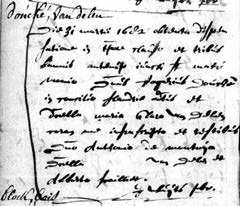
Figure 29.191: Ghent, Sint-Michiels Zuid, March 31,
1682, de wedding of Maria Clara van Delen and Rogerius
Douche (the attorney of the Council of Flanders). The
witnesses were Albertus Scailliet and Antonius de Mon-
toya.
Pedro Ximenez de la Cruz married Maria de Montoya in Granada on May 8, 1596. The document is shown in Chapter 37.4.2.
Pedro would marry Maria de Sopena after the death of Maria de Montoya and have a daughter, Martina de la Cruz, with her, who would later marry a grandson of Felipa de Montoya.
The first marriage of Maria de Montoya resulted in a son, Juan Lopez de Montoya, who married Catharina Ruiz. Interestingly, more than five months after the death of Felipa de Montoya in 1628, the couple Juan Lopez de Montoya and Cathelina Ruiz baptized their daughter in Labastida, Alava, Pais de Vasco in Spain, on May 14, 1628, and named her Felipa (’Philipa’) Lopez de Montoya.
Juana de Montoya was baptized at Torre, in Burgos, Spain in 1561, on the 11th of March at the church La Asuncion.
Jerome de Montoya died during the Siege of Ostend in or before 1604. We also direct the reader to Chapter 34.12.2 to find additional evidence of Felipa de Montoya’s ascendence.
29.10.7 Jeronimo de Montoya, senior
Jeronimo de Montoya was a brother of Felipa de Montoya. He died in Ostend and, therefore, shared the destiny of Felipa’s husband, Jeroni Joan Desclergue y Cortés (DC05). We can refer to Abbé Dehaisnes82, who stastes:
’1615, — « Registre des Chartres de l’ an 1615. » — Lettres des archiducs Albert et Isabelle , princes souverains et gouverneurs généraux des Pays-Bas, Légitimation par les mêmes princes : de Jérôme de Montoya, fils de Jeronimo, soldat en la compaignie d’
infanterie Espaignolle de don Diego Velasquez de la Canal, du tercio du maistre de camp Diego de Durango, mort aux tranchées devant Oostende.’
We have found three children of Jeronimo de Montoya senior, i.e., Jeronimo junior, described in Chapter 29.10.8, Antonio, described in Chapter 29.10.9, and Maria.
29.10.8 Jeronimo de Montoya, junior
Jeronimo de Montoya junior is found in 1615, in Figure 29.177, at Antwerp, as godfather to the son of Gaspar de Villalba, together with the godmother Domicella Anna de Montero. Jeronimo de Montoya junior was a nephew of Felipa de Montoya and son of Jeronimo de Montoya, who died in Ostend in or before 1604, the year that his brother-in-law Jeroni Joan Desclergue y Cortés (DC05) died there too. Jeronimo de Montoya Junior had a son, Juan de Montoya, described in Chapter 29.10.8.1.
82Abbé Dehaisnes, ’Inventaire sommaire AD Nord - série B - Chambre des comptes de Lille - tome 3’ , 1877, B. 480t. (Registre.) — In-folio, parchemin, 146 feuillets.’
The Desclergues of la Villa Ducal de Montblanc, 2nd ed., Omn., VOL. II
© 2024 Nico F. Declercq
CHAPTER 29. JERONI JOAN DESCLERGUE Y CORTÉS (DC05) & FELIPA DE MONTOYA
29.10.8.1 Juan de Montoya
Juan de Montoya was a son of Jeronimo de Montoya junior and was named after Felipa de Montoya’s grandfather. We assume that he must have been born around 1615. He died in 1678 at the age of around 65. He was a senior military member in a Royal Army regiment at the time of his death. He was likely killed and thrown in the Leie River, or he died by drowning at Sint Eloois Vijve during struggles between French and Spanish armies. His first appearance was at the baptism of Joannes De Vos in Harelbeke in 1633, in Figure 29.178. We refer to Chapter 48.4 to read more about Joannes De Vos.
Juan de Montoya is described in more detail on his death certificate in Figure 29.179. The document says:
’Submersus est in Lisa 16 maii Juan de Montoya nobilis dominus de Braña miles regius s(ecund)ae cohortis.’
In other words, Juan de Montoya drowned in the Leie River on May 16, 1678 at Sint Eloois Vijve; he was a nobleman from the house of Braña. The term ’miles regius secundae cohortis’ refers to the second cohort, or in other words, the allied (Spanish) army, because the primary cohort at that time in Sint Eloois Vijve was French since the latter had constructed headquarters in the village (at the tip of the Casselrye of Kortrijk) to attack the neighboring areas to the east, including Ghent. The town was at the junction of the Leie and Mandel Rivers, so perhaps Juan de Montoya drowned when he wanted to cross the river to return to a Spanish-held area.
The house of Braña is the one with which the Montoyas were linked and was found in several places in Spain, including the NorthWest.
In the same period, Pere Declerque (DC07d), a soldier, son of Antoni Desclergue (DC06), had his daughter Juana Felipa baptized upon his passage through Sint Eloois Vijve. The episode is described in Chapter 36.7, where the baptism certificate is shown.
In Chapter 36.7, there is also a baptism delivered of Juan Sanz, son of a Spanish soldier David Sanz, at Waregem (next to Sint Eloois Vijve), on September 5, 1678. The record shows that Spanish troops traversed or occupied the area during the conflict with the French.
29.10.9 Antonio de Montoya
Just as Jeronimo De Montoya in Chapter 29.10.8, Antonio de Montoya was also a son of Jeronimo de Montoya senior. He was baptized at Harelbeke in May of 1598, in Figure 29.180.
We found Antonio de Montoya as a godfather in Antwerp, seen in Figure 29.176, in 1623, shown in Chapter 29.10.10.
29.10.10 Maria de Montoya, junior
As described in the previous section, Maria de Montoya was Antonio de Montoya’s sister. She was married to Juan Davila. When the couple had a son at Antwerp in 1623, in Figure 29.181, Antonio was the godfather and gave his name to the child.
In Spain, Montoya’s name is sometimes written as Montolla, Montollo, or Montoyo; in the Perpignan areas, it is sometimes called Montalla or Motalla.
Maria de Montoya acted as godmother to Maria Rapsaet in Harelbeke, shown in Figure 29.183, in 1624 in Figure 29.182. The priest clearly did not understand the name of the village Maria de Montoya came from; therefore, he wrote ’ex pago de...’ without further specification.
29.10.11 Felipa de Montoya was related to Carlos Coloma de Saa
It is outlined in Chapter 29.5.2 that Carlos Coloma de Saa played a significant role in the life of Jeroni Desclergue (DC05). He also recruited Antoni Desclergue (DC06), described in Chapter 34.5.
Besides friendship and a military bond, Jeroni Desclergue (DC05) also found a liaison with Carlos Coloma de Saa through his wife, Felipa De Montoya. Indeed, she was related to the Coloma family, as shown in Figure 29.190 on page 443.
29.10.12 Other Montoyas in Belgium
29.10.12.1 Francisco De Salazar y Montoya
Francisco De Salazar y Montoya was a military captain residing at the Spaniard castle of Ghent. His burial is shown in Figure
29.186 on page 441. He must have had a father with the name Salazar and a mother with the name Montoya.
29.10.12.2 Christophoro de Montoya
Figure 29.187 on page 441 shows the wedding of Christophoro de Montoya with Maria de Aguire at Koudenberg in Brussels, in 1636.
29.10.12.3 Pierre Louis de Montoya
Pierre Louis de Montoya married Maria de Cortes in Brussels, Koudeberg, in 1648, in Figure 29.188 on page 442. The witnesses, de Bucquoy and Prienne, are families that also appear elsewhere in our ancestry and their relationships, such as in Figure 34.102
on page 557.
29.10.12.4 Catharina de Montoya
Catharina de Montoya married Antoni De Pollo in Ostend in 1627, in Figure 29.189 on page 442. In the same year, Anna Desclergue (DC06f), described in Chapter 29.9.3, who was married to Vincentius Staelens, died in Ostend.
29.10.12.5 Antonius de Montoya
Antonius de Montoya appeared as a witness in Ghent, on a wedding of Maria Clara van Delen and Roger Douche, the attorney of the Council of Flanders, in 1682, in Figure 29.191 on page 443.
© 2024 Nico F. Declercq
The Desclergues of la Villa Ducal de Montblanc, 2nd ed., Omn., VOL. II
29.11. THE ORPHANS OF JERONI DESCLERGUE, IUS INTER GENTES, THEIR INHERITANCE, AND
THE DESTINY OF FELIPA DE MONTOYA
445
29.11 The Orphans of Jeroni Desclergue, Ius Inter Gentes, their Inheritance,
and the Destiny of Felipa de Montoya
The descendants of Jeroni Joan Desclergue y Cortés (DC05) are shown in Figure 29.192. While ’Ius Inter Gentes’ is illustrated in Figure 29.193.
29.11.1 Ius Inter Gentes and Citizen Rights
To fully grasp the treatment of Felipa de Montoya and her children in the aftermath of her husband Jeroni’s (DC05) death in 1604, it is crucial to delve into the international and interregional legal frameworks that shaped their fate.
The Spanish Salamanca School, a towering figure in legal thought during that era, not only laid the groundwork for modern international law, termed ius inter gentes, but also left an indelible mark on it, a testament to the enduring influence of Roman law.838485
Jurisdictional complexities arose due to the varied regional laws governing the lives of Jeroni Joan Desclergue y Cortés (DC05), a Catalan, and his wife, Felipa de Montoya. Following Jeroni’s death, Felipa’s subsequent marriage to Jan Declercq (DK03) in 1611
brought additional legal considerations, particularly concerning inheritance for her children.
While Catalan law initially governed Jeroni and Felipa, inheritance issues for assets acquired during her marriage to Jan Declercq fell under local jurisdiction, specifically the Costumen van Cortryck. Her marriage to Jan was subject to the local laws of Tournai, based on Frankish law.
Crucially, Felipa and her children were entitled to be treated most advantageously according to both legal systems. Their status would adapt to preserve their most favorable legal position wherever they resided.
Jan Declercq’s (DK03) social standing and expertise in legal matters facilitated the integration of Jeroni’s orphans into the Kortrijk bourgeoisie without nuisance. His family’s status as notaries, aldermen, clerks, and landowners was instrumental in this process.
Carolina Obradors Suazo86 provides insight into the acquisition of citizenship in cities such as Barcelona, emphasizing stable residence, marriage, profession, and fiscal contribution as critical criteria. Felipa and her children did not meet these requirements in Barcelona, even not their son Antoni Desclergue (DC06), who had been born in Barcelona. However, after her marriage to Jan Declercq, Felipa fulfilled the requirements applicable to Kortrijk and was thus considered a Bourgeois of Kortrijk under Catalan law, with local laws automatically applying these rights. Local customs stipulated that a foreign woman marrying a local citizen would acquire the same rights as her husband without needing a personal appearance, extending these rights to her children from her previous marriage:
’Elck vremde ende gedijde vrouw-persoon haer beghevende ten huwelik met poorter deser stede, sal de selve met de consummatie van dien, poorteresse bedijden neffens haren man, sonder dat noodich wordt daer toe personelick te compareren, ende de voornomde poorterye inder manieren als vooren an te nemen.’
In the context of Felipa de Montoya’s marriage to Jan Declercq in Tournai, it is essential to delve into the laws of how their union affected the status and rights of their respective children from previous marriages. Under Frankish law, as applied in Tournai, the marriage contract aimed to unify the children from both partners’ prior marriages, ensuring equal status for all offspring.
This legal framework sought to integrate and provide equal standing to all children within the new family structure, thereby acknowledging Jan Declercq as their legal father in most respects.
Conversely, the legal system in Kortrijk did not possess specific provisions for the unification of children from previous marriages.
Thus, the legal mechanisms in Kortrijk had to adapt to accommodate this unique familial situation. The principle guiding the local law in Kortrijk allowed children born out of wedlock or from a previous marriage to inherit their mother’s status. Consequently, Felipa’s children from her marriage to Jeroni were entitled to the same rights recognized under her new marriage.
The children were afforded equal treatment with Jan Declercq’s biological children, a practice reflecting the intention of the Tournai marriage contract. This integration extended to legal recognition for all purposes except inheritance rights. The rationale was that while the local law in Kortrijk could provide Felipa’s children with equivalent civic rights and status, it could not alter the fundamental inheritance entitlements tied to their biological parentage. Each child retained the right to inherit from their respective biological parent, preserving the integrity of their original familial lines.
Thus, in Kortrijk, Felipa’s children were legally acknowledged as Jan Declercq’s civic status and rights per the principles established by their mother’s marriage contract in Tournai. This recognition was essential for ensuring the children enjoyed the same civic privileges and social standing as their step-siblings.
However, the local legal framework required a distinction to be maintained when it came to inheritance. Each child was entitled to inherit assets and properties acquired by their biological parents before the new marriage. This bifurcation ensured that the inheritance rights of each child remained intact, in line with the legal traditions of their biological parentage.
Applying local laws in Kortrijk provided a nuanced approach to integrating the children from Felipa and Jan’s previous marriages.
By granting them equal status and rights under the civic framework, the laws respected the unified family structure envisioned by the Tournai marriage contract. However, the local inheritance laws preserved the individual inheritance rights of each child, maintaining a balance between the unified family structure and the traditional legal entitlements tied to their biological lineage.
This application of international or interregional law demonstrates the interplay between Catalan customs, rooted in Roman 83Wilhelm G. Grewe, ’The Epochs of International Law,’ Walter de Gruyter, 2013
84J. Nisius, ’De jure securitatis, tum inter cives, tum inter gentes,’ 1667
85Ernst Friedrich Schröter, ’Diss. iur inaug. de jure securitatis, tum inter cives, tum inter gentes’ , 1667.
86Carolina Obradors Suazo, ’Immigration and Integration in a Mediterranean City: The Making of the Citizen in Fifteenth-Century Barcelona, ’thesis submitted for assessment to obtain the degree of Doctor of History and Civilisation of the European University Institute Florence, July 2015.
The Desclergues of la Villa Ducal de Montblanc, 2nd ed., Omn., VOL. II
© 2024 Nico F. Declercq
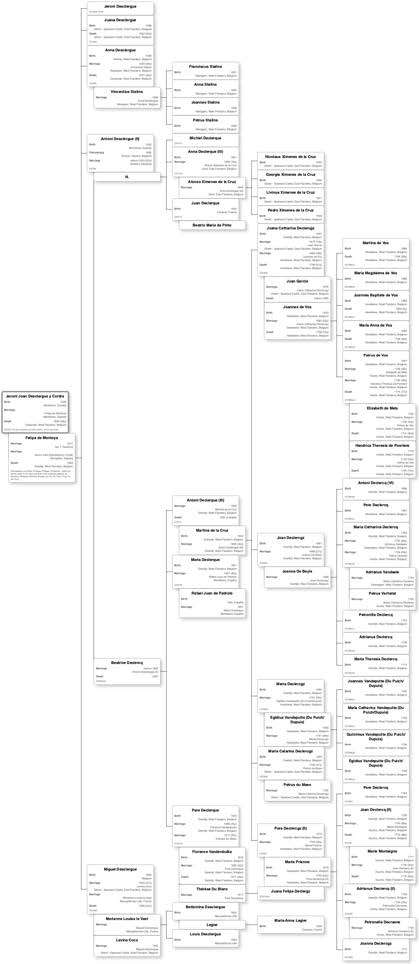
446
CHAPTER 29. JERONI JOAN DESCLERGUE Y CORTÉS (DC05) & FELIPA DE MONTOYA
Figure 29.192: Four descending generations of Don Jeroni Joan Desclergue y Cortés
(DC05).
© 2024 Nico F. Declercq
The Desclergues of la Villa Ducal de Montblanc, 2nd ed., Omn., VOL. II
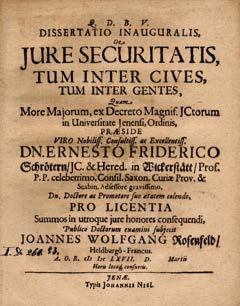
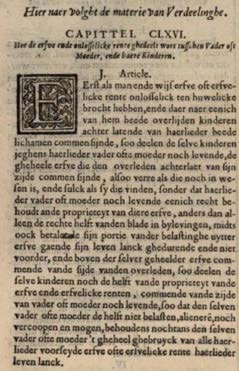
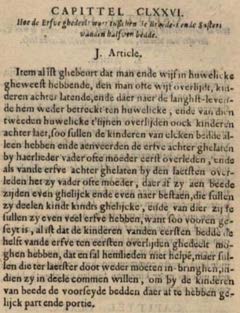
29.11. THE ORPHANS OF JERONI DESCLERGUE, IUS INTER GENTES, THEIR INHERITANCE, AND
THE DESTINY OF FELIPA DE MONTOYA
447
Figure 29.193: Ernst Friedrich Schröter, ’Diss. iur
inaug. de jure securitatis, tum inter cives, tum inter
gentes’ , 1667 (front page)
Figure 29.194:
This article in ’Vlaems recht dat is
Costvmen ende wetten ghedecreteert by de graven ende
gravinnen van Vlaenderen’ , page 804, explains that the
goods and possessions, purchased ’ onlosselijk’ (insepa-
rable) by Jan and Felipa during their marriage, was to
be divided among all children in equal parts, apart from
the fact that Jan reserved the right to keep half. There-
fore each child, hence also Antoni (DC06) and Miguel
(DC06b), would each inherit 1/16 of such property.
Figure 29.195:
This article in ’Vlaems recht dat is
Costvmen ende wetten ghedecreteert by de graven ende
gravinnen van Vlaenderen’ , page 805, explains that, in
the absence of additional children born in the household
of Felipa & Jan, the children of Felipa would inherit what
she possessed before that wedding, while Jan’s children
would inherit what he possessed before the wedding, as
long as these properties still existed.
The Desclergues of la Villa Ducal de Montblanc, 2nd ed., Omn., VOL. II
© 2024 Nico F. Declercq
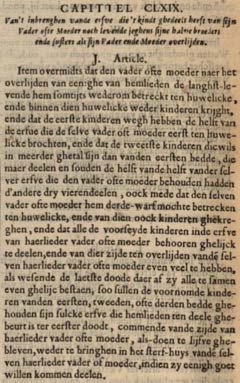
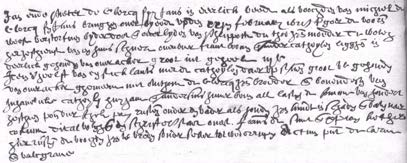
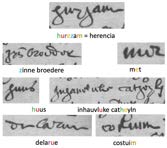
448
CHAPTER 29. JERONI JOAN DESCLERGUE Y CORTÉS (DC05) & FELIPA DE MONTOYA
Figure 29.196:
This article in ’Vlaems recht dat is
Costvmen ende wetten ghedecreteert by de graven ende
gravinnen van Vlaenderen’ , page 804, explains that Fe-
lipa’s inheritance from Jeroni was reserved for her two
children Antoni (DC06) and Miguel (DC06b) and since
there were no newborns, this right was not to be recon-
sidered.
Figure 29.197: ’Wezenakte (Orphan’s deed) from ’Weesboek 73 F 5r (Helkijn), 1628’
, at Rijksarchief Kortrijk. (Den Desserains, Kasselrij, Derlick 5, 1626-1630)
Figure 29.198: The word at the top, coming from the Orphan’s deed
makes little sense at first sight. Character by character comparison
with the rest of the record reveals that the administrator wrote Hurezam,
which is the phonetic spelling of an accusative version stemming from
the Catalan word ’hereu’ or ’hereva’ , meaning ’inherited’ or ’heir’
or ’heiress’ , while ’herencia’ is inheritance, also in Castilian. The
latter is typically pronounced as if the ’ c’ were a ’ z’ . It refers to
a share which belonged to the children as per Catalan, hence Spanish,
inheritance law.
Figure 29.199:
Example of the word Herencia or
Herençia or Herenzia in an old Castilian manuscript.
The inclusion of a ’ z’ by the administration when writ-
ing down the word ’herenziam’ in the Orphan’s deed, is
therefore reasonable. (p. 251 of Pragmaticae, edicta,
decreta, regiaeque sanctiones regni Neapolitani, Volume
2, 1715)
© 2024 Nico F. Declercq
The Desclergues of la Villa Ducal de Montblanc, 2nd ed., Omn., VOL. II
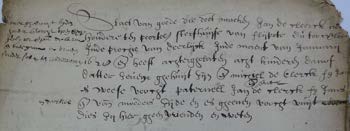
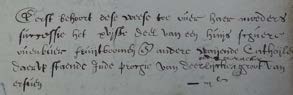
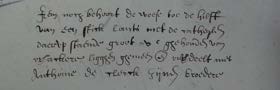
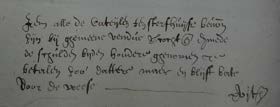
29.11. THE ORPHANS OF JERONI DESCLERGUE, IUS INTER GENTES, THEIR INHERITANCE, AND
THE DESTINY OF FELIPA DE MONTOYA
449
Figure 29.200: January of 1628, part 1 of the property statement for
the underaged child Miguel Desclergue (DC06b), son of Felipa and step-
son (filiastrum) of Jan (Jan Declercq) or son (filius) of Jan (Jeroni Joan
Desclergue y Cortés), upon the death of his mother Felipa de Montoya
(’Phlypothe de thoo’). Courtesy of Filip Benoit.
Figure 29.201:
January of 1628, part 2 of the property
statement for the underaged child Miguel Desclergue (DC06b)
upon the death of his mother Felipa de Montoya (’Phlypothe
de thoo’). Courtesy of Filip Benoit.
Figure 29.202:
January of 1628, part 3 of the prop-
erty statement for the underaged child Miguel Desclergue
(DC06b) upon the death of his mother Felipa de Montoya
(’Phlypothe de thoo’). Courtesy of Filip Benoit. This text
reads ’item noch behoort de weese toe de helft van een stick
lants met de catheylen daarup staende groot 500 ghehouden
van Overackere ligghen ghemeen en de onverdeelt met An-
thoni de Clerck (DC06) zijne broedere’ , or in English:
’Likewise the orphan, Miguel Desclergue (DC06b), also re-
ceives half of a land (500 in size) and its constructions,
belonging to Overackere. The entire property is shared un-
separated with his brother Antoni Desclergue (DC06).’
Figure 29.203:
January of 1628, part 4 of the prop-
erty statement for the underaged child Miguel Desclergue
(DC06b) upon the death of his mother Felipa de Montoya
(’Phlypothe de thoo’). Courtesy of Filip Benoit.
The Desclergues of la Villa Ducal de Montblanc, 2nd ed., Omn., VOL. II
© 2024 Nico F. Declercq
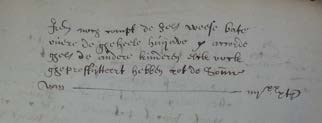
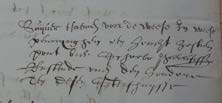
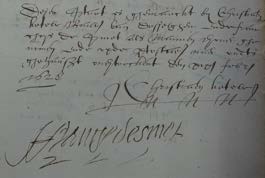
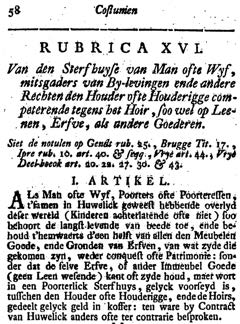
450
CHAPTER 29. JERONI JOAN DESCLERGUE Y CORTÉS (DC05) & FELIPA DE MONTOYA
Figure 29.204: January of 1628, part 5 of the property statement
for the underaged child Miguel Desclergue (DC06b) upon the death
of his mother Felipa de Montoya (’Phlypothe de thoo’). Courtesy of
Filip Benoit.
Figure 29.205: January of 1628, part 6 of
the property statement for the underaged child
Miguel Desclergue (DC06b) upon the death of
his mother Felipa de Montoya (’Phlypothe de
thoo’). Courtesy of Filip Benoit.
Figure 29.206: January of 1628, part 7 of the prop-
erty statement for the underaged child Miguel Desclergue
(DC06b) upon the death of his mother Felipa de Montoya
(’Phlypothe de thoo’). Courtesy of Filip Benoit.
Figure 29.207: Note that in 1772, i.e., 150 years after
Felipa de Montoya died, the laws of Kortrijk were such
that Bourgeois Foraines always split the entire property
in two when one of the partners died. Only exception-
ally, as read in the last sentence of the above article,
this was not done, such as when there was a contract
or when, after a discussion between legal experts, it was
otherwise decided. As shown earlier, we have not re-
trieved the specific ’costumen’ of Kortrijk of 1628 and
rely on the Flemish ones for Ypres. However, we may
induce that dividing common property in two was usance,
or else a specific reason was necessary. After Felipa de
Montoya’s death, one property was reserved for the two
boys, which indicates an exceptional situation. This arti-
cle comes from ’Costumen der Stede ende Casselrye van
Cortrycke; tot Gent, by Petrus de Goesin, Drucker van
Haere Majesteyt voor geheel het Graefschap van Vlaen-
deren, 1772’ .
© 2024 Nico F. Declercq
The Desclergues of la Villa Ducal de Montblanc, 2nd ed., Omn., VOL. II
29.11. THE ORPHANS OF JERONI DESCLERGUE, IUS INTER GENTES, THEIR INHERITANCE, AND
THE DESTINY OF FELIPA DE MONTOYA
451
law,878889909192939495 and local Flemish laws of Kortrijk and Frankish law in Tournai, highlighted in Chapter 29.11.2.
Under Catalan custom, citizenship and rights often followed the father’s condition. However, in this case, local Flemish law allowed the children to inherit their mother’s status and thus be recognized as citizens through their stepfather Jan Declercq.
This is reflected in the Bourgeoisie registry, where the children are identified as Jan’s offspring, granting them citizenship rights as Bourgeois Forains.
’Et an aliquis natus ex comitissima et cive Barchinonae eius viro efficitur cives Barchinonae? Et dic quod licet quam tum ad servitutem, et libertatem filius sequatur conditione matris, videtur tamen quo ad honores et munera et civitatem sequitur patris conditionem’9697. We equally refer to the work of Encarna Roca i Trias98, Pilar Domínguez Lozano99, Montserrat Bajet i Royo100
It states:
’And whether someone born of a countess and a citizen of Barcelona becomes a citizen of Barcelona?’
’And it is said that although a son follows the condition of his mother in terms of servitude and freedom, it seems that regarding honors, duties, and citizenship, he follows the condition of his father.’
The statement begins with a question about the civic status of a child born to a mother of noble rank (a countess) and a father who is a citizen of Barcelona. Specifically, it asks whether such a child becomes a citizen of Barcelona. The first part of the answer acknowledges that the child inherits the mother’s condition regarding servitude and freedom. This means that if the mother is free, the child is free; if the mother is in servitude, the child is also in servitude. This part emphasizes that the fundamental status of freedom or bondage is derived from the mother’s status.
However, the statement clarifies that the child follows the father’s status in terms of honors, duties, and citizenship. This implies that the social rank, civic responsibilities, and the right to be a citizen of Barcelona are inherited from the father. If the father is a citizen, the child inherits the father’s citizenship and associated civic duties and honors.
Had the laws in Barcelona been applied to Kortrijk, the children of Jeroni Joan Desclergue y Cortés would not have become
’bourgeois.’ So, the principles of ius inter gentes played to their advantage.
This legal framework explains why the children are recorded in the Bourgeoisie registry as the offspring of Jan Declercq, from whom they derived their rights to citizenship (Bourgeois Forains, or Burghers). In other documents, which reference their biological father, they are identified as either ’Jeroni’ or ’Joan,’ consistent with the name of their natural father, Jeroni Joan Desclergue y Cortés.
Flemish laws further reinforced the maternal connection, asserting that a mother’s status could legitimize children and confer citizenship rights. Specific statutes declared that all children of citizens, whether legitimate or illegitimate, were considered citizens.
This biological reality was enshrined in local laws, ensuring that Felipa’s children were fully integrated into the citizenry of Kortrijk.
’een moeder maakt geen bastaard,’ and,
’Niemant en sal bastaert weesen van moeder en moederlicke zyde.’
In particular, we can refer to the rule held in towns in Flanders, that
’Alle kinderen van poorters ofte poorteresse der voornomde stede soo wel ghetraude als bastaerde zijn gehouden voor poorters;’ and also,
’Sullen oock met eenen, dit poort-recht vercrijghen, alle hunne minder-jarige kinderen, buyten dese stede gewonnen sijnde, indien sy eenige hebben.’
29.11.2 Unio Prolium, civil and Inheritance Rights
Unio Prolium is what Frankish law in Tournai could provide. The creation of fictitious lineages fills a specific need of human society.
In areas where adoption was unknown, a similar legal form was developed: the ’One-childship.’ This distinct legal creation can be found mainly in Germany but also in the customs of Roermond, Maastricht, Sint-Amands, Bléharis, and Tournai.
Unio Prolium, or Eenkindschap in Dutch, was an agreement between a remarrying man and woman whereby children from a previous marriage become equal to those from the new union under a preset condition or distinction to be determined when the agreement is made. It was similar to a prenup but concerned the children and their decided privileges or equality. Thus, the children from different marriages became, in many ways, full brothers and sisters of each other.101102103104
In other words, the Eenkindtschap aimed to achieve full equality, possibly with a predetermined and chosen offset, of children from a widow’s or widower’s first marriage with those from their second marriage. The agreement was called ’simple’ if only one of the spouses had children from a previous marriage and ’plural’ if both had children from an earlier marriage.
Such a contract of Eenkindschap, Eenzusterschap, or Eenbroederschap had to be executed before a judicial authority and could not be done in all cities. In addition, guardians had to be appointed for the children. The judge ruled in fairness after hearing the 87Johnston, David, ed. 2015. The Cambridge Companion to Roman law. Cambridge, UK: Cambridge Univ. Press.
88Jolowicz, H. F. 1932. A historical introduction to the study of Roman law. Cambridge, UK: Cambridge Univ. Press.
89Maas, Michael, ed. 2005. The Cambridge companion to the age of Justinian. Cambridge, UK: Cambridge Univ. Press.
90Padoa-Schioppa, Antonio. 2018. A history of law in Europe from the early Middle Ages to the twentieth century. Cambridge, UK: Cambridge Univ.
Press.
91Pihlajamäki, Heikki, Markus D. Dubber, and Mark Godfrey, eds. 2018. The Oxford handbook of European legal history. Oxford, UK: Oxford Univ.
Press.
92Robinson, Olivia F. 1997. The sources of Roman law: Problems and methods for ancient historians. London: Routledge.
93Robinson, Olivia F., T. David Fergus, and William M. Gordon. 2000. European legal history: Sources and institutions. 3d ed. New York: Oxford Univ. Press.
94Stein, Peter. 1999. Roman law in European history. New York: Cambridge Univ. Press.
95Tellegen-Couperus, Olga E. 1993. A short history of Roman law. London: Routledge.
96ABL, f. 17v; and also in Roca, ’Unde Cathalanus,’ 28.
97p 178 of work by Carolina Obradors Suazo
98Encarna Roca i Trias, ” Unde Cathalanus quasi in Cathalonia stans,’ La condición de catalán en el derecho histórico,’ Revista Jurídica de Cataluña 77/1, (1978): 7-44.
99Pilar Domínguez Lozano, Las circunstancias personales determinantes de la vinculación con el Derecho Local. Estudio sobre el Derecho Local Altomedieval y el Derecho Local de Aragón, Navarra y Cataluña (siglos IX-XV), (Madrid: Ediciones de la Universidad Autónoma de Madrid, 1986), particularly 174-181.
100Montserrat Bajet i Royo, ’Ciutadans de Barcelona, ciutadans honrats i donzells en l’ obra de Fontanella,’ Barcelona. Quaderns d’ Història 5, (2001):159-170.
101Mrs, drs. J. S. L. A. W. B. Roes, Het naaste bloed erfde het goed - De positie van de langstlevende echtgenoot in het Nederlandse erfrecht bij versterf, Deel I: de periode van het ’oud-vaderlandse’ recht tot 1809, proefschrift 2006
102’De aanneming van een kind en de dienstwillige voogdij.’ Adoptie in België van 1803 tot 1951. (Katrien Nijs) 103Gaspar Du Pree,"Gelresche landt ende stadt-rechten int Over-quartier van Ruremonde", 1665, pages 190-191, Van wettige Successie; Van Eenkindschap van Kinderen van Verscheyden Bedde.
104Oosting, Everhard, Het Eenkindschap, proeve van verklaring van het Drentsche Landregt. Jac. Hazenberg, Corns. Zoon, Leiden, 1868.
The Desclergues of la Villa Ducal de Montblanc, 2nd ed., Omn., VOL. II
© 2024 Nico F. Declercq
CHAPTER 29. JERONI JOAN DESCLERGUE Y CORTÉS (DC05) & FELIPA DE MONTOYA
guardians. Eenkindtschap was accepted as an exception to the principle of Der Erbe wird gebrn, nicht erkoren. Frankish-based law applied in Tournai made it possible to treat all children in the newly composed family completely equally when a widow remarried.
Such did not exist in Kortrijk. In other words, if such a family moved to Kortrijk (or Deerlijk), and the equal rights of the children had to be safeguarded, the stepfather became the legal father according to local law. There was no other option; otherwise, it would have been a breach of contract concluded in Tournai. In addition to creating family unity, the Eenkindtschap undoubtedly had a feudal secondary objective: keeping the property within the family. It should be noted that this extraordinary institution has many similarities with adoption, as we find it in later Belgian legislation. An Eenkindschap agreement was, therefore, a prenuptial agreement considering the involved children. It often included specific property reserved for children in the newly-assembled married.
Other than this, all children were considered equal and treated as if they stem from both marrying parents.
29.11.3 Ius Inter Gentes, Civil and Inheritance Rights
29.11.3.1 Introduction
As mentioned in Chapter 29.11.1, Spanish nationals fell under Spanish jurisdiction. In Jeroni’s case, Catalan laws applied. Catalan inheritance laws were used when Jeroni Joan Desclergue y Cortés (DC05) died. When his wife Felipa de Montoya died, the ius inter gentes applied, which means that her original possessions, shared with her Catalan husband Jeroni (DC05), were inherited differently than the possessions she gathered together with her later husband Jan Declercq (DK03). The marriage of Jan Declercq (DK03) and Felipa de Montoya fell under Frankish law in Tournai.
Consequently, goods obtained after her marriage with Jan Declercq (DK03) would fall under local jurisdiction: Costumen van Cortryck. Additionally, she was privileged with the right to be treated in the most advantageous way of both legal systems, and so were her children with Jeroni. The latter privilege was even further enforced by the fact that the son Antoni Desclergue (DC06) was born in Barcelona, and the ius inter gentes principle of the Salamanca school equally applied to him as an individual.
In the Orphan’s deed in Figure 29.197, after the death of Felipa de Montoya, the Spanish or Catalan word herencia or herençia, as illustrated in Figures 29.198 and 29.199, is used to describe the possessions stemming from Jeroni (DC05), when his children inherited from their mother Felipa. At the same time, the distribution of the inheritance further clarifies the situation, as do other documents. In Chapter 29.9.6, Chapter 34.2, and Chapter 49, there are numerous church certificates shown that distinguish Jeroni’s children from those of Jan Declercq (DK03), sometimes by adding a statement, sometimes by using a different spelling and in the choice of sacrament witnesses.
The inheritance laws of Kortrijk were modern and closer related to the later ones imposed by Napoleon in his Code Civil and those who currently apply in Belgium. However, the Spanish laws differed in the 17th century and deserved a study, as shown below.
We investigated several works, including Angels Torrents105, from whom we cite:
’The predominant household pattern in Catalonia was the patrilocal stem family,.. a pattern in which the eldest son (’hereu’ in Catalan) or, in the absence of a son, the eldest daughter (’pubilla’ in Catalan), inherited all their father’s holdings. The key to the succession was a donation called ’heretament’ in Catalan, made in the marriage contract, whereby the parents promised their estate to their chosen heir(s). The father or the widowed mother fully possessed their own property, which they could administer as they pleased until their death. When death occurred, the parents would usually designate a universal heir. However, almost always in money, a quarter of the total inheritance was shared among all legitimate children (including the primary heir or heiress). The married siblings who were not heirs and had received the dowry (women) or the legitime (men) at their wedding could not contest their parents’ will. When there was no will, the inheritance would be divided into equal shares.’
Torrents also mentions in his footnote 17, although it refers to a later period than the subject of his leading article,
’We have looked at 151 wills, from 1850 to 1899, where more than 95% designated universal heir and only in 5% was the inheritance divided into equal shares.’
29.11.3.2 Felipa de Montoya’s Extended Family
Jan Declercq (DK03), the widower of Isabeau Braye, served as stepfather to the children of Jeroni Joan Desclergue y Cortés (DC05) after his marriage, in 1611, with Felipa de Montoya. He integrated them into the Kortrijk society, allowing them to be Outside Burghers (Bourgeois Foraines, buitenpoorters or citizens) of Kortrijk.
His descendants are described in Chapter 34.13.7, and, in particular, in Chapter 34.13.8. They were Ambrosius Declercq (DK04k) (a presbyter), Jeronimus Joannes Declercq (DK04h), Cathelyne Declercq (DK04j), Nicolas Declercq (DK04g), and Maria Magdalena Declercq (DK04e).
Felipa had the following children, described in Chapter 29.9: Juana Desclergue (DC06c) (she died in 1622), Maria Desclergue (DC06e) (she died in childhood), Anna Desclergue (DC06f) (she died in 1627 and had no surviving children), Antoni Desclergue (DC06), Jeroni Desclergue (DC06d) (he had already received his legitima when he became a priest before 1611), and Miguel Desclergue (DC06b).
It means that, in 1628, only three of Felipa’s biological children received an inheritance from her, one being excluded from the reserved share because he was a priest and had received his legitima before 1611. So, Jeroni Desclergue (DC06d) would only inherit his (1/16th) share from the accumulated wealth of his mother and his stepfather. Additionally, five children of Jan Declercq were also beneficiaries (DK03). Therefore, only Felipa’s two unmarried biological children inherited the share reserved for them when she married Jan Declercq (DK03) in 1611.
Felipa de Montoya, a woman with noble roots and Spanish pride, chose to remain an unmarried widow for almost seven years before remarrying. Her decision, in contrast to the typical practice of Flemish women who remarried promptly following their husband’s death, was a testament to her resilience and determination to protect her rights and familial ties. Unlike Flemish women, who typically remarried promptly following their husband’s death, Spanish widows were generally hesitant to remarry swiftly. This reluctance stemmed from the potential forfeiture of their rights concerning their deceased husband’s estate and familial ties.
Consequently, it is improbable that Felipa de Montoya would have married someone before 1606. In Spain, it was customary, and often legally mandated, for a widow to observe a mourning period of at least one year before entering into another marriage.
Any violation of this customary period would have had significant implications for her financial and legal standing concerning the Desclergues family in Montblanc.106. She waited, indeed, until 1611.
When Jeroni Joan Desclergue (DC05) died in 1604, the authorities arranged his inheritance according to Catalan law. When his 105Angels Torrents, ’Marriage strategies in Catalonia from the seventeenth century: a case study’ , projecte La población de Cataluña, Estudio territorial (DGES PB96-1139), Centre d’ Estudis Demogràfics, 1997.
106Lucy A. Sponsler, ’The Status of Married Women Under the Legal System of Spain,’ Louisiana Law Review, Vol 42, nr 5, Special issue, 1982.
© 2024 Nico F. Declercq
The Desclergues of la Villa Ducal de Montblanc, 2nd ed., Omn., VOL. II
29.11. THE ORPHANS OF JERONI DESCLERGUE, IUS INTER GENTES, THEIR INHERITANCE, AND
THE DESTINY OF FELIPA DE MONTOYA
453
widow died in 1628, her legacy was set according to the local Flemish law. We refer for instance to pages 804-811 of ’Vlaems recht dat is Costvmen ende wetten ghedecreteert by de graven ende gravinnen van Vlaenderen. Waer by ghevoeght syn d’ interpretatien, concessien caroline, ordonnantien politiqve, hanseryen, &c, Volume 2,’ Ghedruckt by Maximiliaen Graet, 1664,’ in particular,
’Costumen vande Casselrye van Ipre’ (as a representative example). The relevant articles are shown in Figures 29.194, 29.195 and
29.196. Comparison with a later document exposing the laws of Kortrijk, in Figure 29.207, shows that Kortrijk must have applied the same.
29.11.3.3 The Inheritance
As elucidated in 29.11.3.2, upon the death of Felipa de Montoya in 1628, her sons Antoni Desclergue (DC06) and Miguel Desclergue (DC06b) became beneficiaries of her estate through two primary avenues. Firstly, they received the portion reserved for them following Felipa’s remarriage to Jan Declercq (DK03) in 1611. Secondly, they acquired their equitable share of the estate among the eight children of the extended family (including Jeroni’s son Jeroni Desclergue (DC06d), who had become a priest before 1611), who were entitled to inherit the wealth accumulated by Felipa and her husband Jan post their 1611 nuptials in Tournai. Moreover, the surviving spouse, Jan Declercq (DK03), was entitled to inherit half of the accumulated wealth.
It means Antoni (DC06) and Miguel (DC06b) received each 1/16 of the accumulated wealth, in addition to their reserved inheritance, which they had to split in two, one share for Antoni and one share for Miguel.
This is why Antoni and Miguel inherited each half of the farmland, and some money, when Felipa died, 500 lands in size, coming from the ’herencia’ originating from their Catalan father, arranged according to Catalan law and made possible through the prenuptial agreement Felipa had made with Jan Declercq when she remarried in Tournai.
The Orphan’s deed at Deerlijk in 1628 after Felipa De Montoya’s death is depicted in Figure 29.197, transcribed and translated below. Note that her name appears in different formats, and we would like to refer the reader in this context also to Chapter
73.10.3.3 and Chapter 29.10.1.
Below is a transcription of the Orphan’s deed in Figure 29.197, lines 1-12.
(line 1) J(o)an ende Pieter Declercq (DK03dyb) filios Jans (DK03dy) in Deerlick, beeden als voochden van Michiel de (line 2) Clercq (DC06b) "filiastrum Jans (DK03)" (referring to the stepfather Jan), or, "filius Jans (DC05)" (referring to the natural father Jeroni Joan Desclergue y Cortés), bringhen over by eedt up den 20 in february 1628 t’ goet de voornomde (line 3) weese verstorfven by der doot ende overlyden van Philipotte du Thou, zynen moeder, te weten
(line 4) het zesthienste van een huus, schuere, ovenbuer fruutboomen ende meerdr catheylen ligghende in (line 5) Deerlick gehouden van over acker, groot int geheele 300.
(line 6) Item, d’ helft van een stick lants met de catheylen daerup staende groot 500 gehouden
(line 7) van Overacker ghemeene met Anthoni Declercq (DC06) zynen broeder ende boven desen van
(line 8) inhavelicke catheylen herençiam, ende andersins zuver boven alle lasten de somme van hondert
(line 9) zesthien ponden bvier schellinghen parisis, rustende onder den vader als houdende zyn kindt in schaden ende baten naer (line 10) costume. Dit al volghende den schriftelicken staet onderteeckent Francois de Smit ende Christiaen Kethele.
(line 11) Hier rustende. De voochden zyn te vreden sonder seker tot weder zyn. Actum present Delarue
(line 12) ende Valcgrave.
Below, we show a modern Flemish interpretation of the Orphan’s deed of Figure 29.197.
Jan (DK03dya) en Pieter (DK03dyb) Declercq, zonen van Jan (DK03dy) in Deerlijk, gezamenlijke voogden van Miguel Desclergue (DC06b), stiefzoon van Jan (DK03) / zoon van Joan (Jeroni Joan Desclergue y Cortés (DC05)), verklaren onder eed op 20 februari 1628, betreffende de goederen van de voornoemde wees die erft door het overlijden van Felipa De Montoya, zijn moeder, meer bepaald:
- één zestiende van een huis, een schuur, een overbuur, fruitbomen en meerdere goederen gelegen te Deerlijk en gehouden van Overacker, in totaal 300 lands groot.
- idem de helft van een stuk land, hun Catalaanse erfenis (herençia), met de daarop staande goederen, ter grootte van 500 lands en gehouden van Overacker, gemeenschappelijk met Antoni Desclergue (DC06), zijn broer, en naast de hier vermelde onroerende goederen ook de naakte som van honderd zestien pond en vier Parijse Shillingen, beheerd en behoorlijk bijgehouden door de (stief)vader voor zijn kind naar gewoonterecht.
Gelezen, goedgekeurd en ondertekend door de aanwezige François de Smet en Christaan Kethele. De voogden van hun kant gaan eveneens akkoord. Akte opgemaakt in aanwezigheid van Delarue en van Valcgrave.
Below is the English translation.
Jan (DK03dya) and Pieter Declercq (DK03dyb), sons of Jan (DK03dy) in Deerlijk, joint guardians of Miguel Desclergue (DC06b), the stepson of Jan (DK03), or the son of Joan (Jeroni Joan Desclergue y Cortés (DC05)), declared under oath on February 20, 1628, concerning the property of the Orphan mentioned above who inherits by the death of Felipa De Montoya, his mother, specifically:
- one-sixteenth of a house, a barn, an oven, fruit trees, and several goods located in Deerlijk and held by Overacker, in total 300
lands.
- idem half of a piece of land from their Catalan inheritance (herençia), with the goods thereon, amounting to 500 lands and held by Overacker, in common with Antoni Desclergue (DC06), his brother, and, in addition also, the bare sum of one hundred and sixteen pounds and four Parisian shillings managed and properly maintained by the (step)father for his child under customary law.
Read, approved, and signed by François de Smet and Christaan Kethele, present. The guardians, on their part, also agree. The statement was made in the presence of Delarue and Valcgrave.
Note that 100 lands (in the area of Kortrijk) corresponds to 885 square meters. Jan Declercq (DK03dya) and Pieter Declercq (DK03dyb) were sons of Jan Declercq (DK03dy), son of Jan Declercq’s (DK03) brother Tomas Declercq (DK03d). Jan Declercq (DK03dy) is described in Chapter 34.13.6.1, Jan Declercq (DK03dya) is described 34.13.8.1, and Chapter 34.13.8.2. Pieter Declercq (DK03dyb) is described in Chapter 34.13.8.3.
In Chapter 29.10.6 we mention that Felipa’s sister’s son Juan Lopez de Montoya was married to Cathelina Ruiz, and they baptized their daughter Felipa Lopez de Montoya on May 14, 1628, i.e. a few months after Felipa de Montoya’s death, at Alava, Pais Vasco, Spain.
Before an orphan’s deed, a property statement is typically made in preparation,107 shown in Figures 29.200, 29.201, 29.202, 29.203,
29.204, 29.205, 29.206. The paper’s contents are identical to the Orphan’s deed. It explicitly states that no guardian was found on the mother’s side because the declarants didn’t know anyone. It means that Felipa de Montoya probably had no contact with her own family, an obvious consequence of her being a Spanish widow in Flanders.
107The author was unable to locate the document until Filip Benoit graciously provided a facsimile.
The Desclergues of la Villa Ducal de Montblanc, 2nd ed., Omn., VOL. II
© 2024 Nico F. Declercq
454
CHAPTER 29. JERONI JOAN DESCLERGUE Y CORTÉS (DC05) & FELIPA DE MONTOYA
Figure 29.208: This is a close-up of Figure 29.32 on page 396. Left is Harelbeke, and right from Harelbeke, we can see the manor of Overacker, the Beveren Creek and a small Creek. This tranquil area was nicknamed ’Ten Rust’ and leading towards a Saint Anne chapel, located in Beveren Leie on the corner of Kleine Heerweg en Grote Heerweg.
In agreement with the property statement, there were eight surviving children involved that determined the share Miguel (DC06b), for whom the document was prepared, would inherit:
Ambrosius Declercq (DK04k), Jeroni Desclergue (DC06d), Jeronimus Joannes Declercq (DK04h), Cathelyne Declercq (DK04j), Nicolas Declercq (DK04g), Maria Magdalena Declercq (DK04e) , Antoni Desclergue (DC06), and Miguel Desclergue (DC06b).
There were six married children involved (dead or alive):
Anna Desclergue (DC06f) (she died in 1627 with no surviving children), Jeronimus Joannes Declercq (DK04h), Cathelyne Declercq (DK04j), Nicolas Declercq (DK04g), Maria Magdalena Declercq (DK04e), and Antoni Desclergue (DC06).
And, two children had died childless and unmarried: Juana Desclergue (DC06c) (she died in 1622), Maria Desclergue (DC06e) (she died at a young age).
29.12 The Spanish Military Barracks of Harelbeke, adjacent to Deerlijk
29.12.1 The Historical Perspective
Harelbeke held significant strategic importance for the Spanish military due to its location along the Leie River and possession of the only bridge between Kortrijk and Deinze. This bridge facilitated crucial crossings, and the surrounding flat, sandy land allowed for the construction of army barracks and the preparation of troops, with access to a quieter part of the Leie River (see Figure
29.208). A more detailed examination of this strategic significance is provided in Chapter 49. The flat area, bordered by the Leie River, Gaverbeek Creek, and Beveren Creek, offered natural protection and fresh drinking water. Hills to the south provided a protective barrier and visibility of Kortrijk.
However, this strategic advantage also made Harelbeke vulnerable to Calvinist filibusters from Ostend, who could attack via the river (’watergeuzen’) and along the bridge (’bosgeuzen’). On October 24, 1590, filibusters from Ostend raided the area, attacking the religious nuns of Harelbeke’s hospital and seizing all archives, valuables, and movable assets. André Woestijn notes that between 1592 and 1597, twelve homes were burned, and twenty people were taken prisoner due to Harelbeke’s refusal to pay the filibusters.
The gangs from Ostend, akin to a mafia, frequently took farmers hostage and plundered homes and churches.110
Given the intermittent presence of Spanish forces in the 16th century, Harelbeke organized its protection force, forming a city army. By 1592, this army comprised sixty soldiers and twenty cavalry, primarily housed at the castle of Sint Eloois Vijve, east of Harelbeke. The protection force, funded by the Castellany of Kortrijk, became a significant local power by 1597, akin to a modern police force rather than a military entity. The Spanish military, engaged in various campaigns, could not consistently protect the region.
Chapter 29.5 discusses the importance of the Manor of Overacker in Harelbeke, located near Deerlijk and Beveren (now Beveren-Leie, part of Waregem). The Beveren Creek, forming the Manor’s border, marked where Spanish barracks were allowed. The Manor owned or rented lands in Deerlijk, Vichte, Harelbeke-Buiten (areas outside Harelbeke), and some properties within city borders.
These lands were used to assemble large troops for significant military operations, such as sieges or the anticipated arrival of the Spanish Armada. The uninhabited flatlands south of Harelbeke and along Beveren Creek were often used for this purpose. The area, surrounded by Gaverbeek, Beverenbeek, and the Leie River, functioned as a military zone with varying levels of troop presence over time.
During peaceful periods, these lands, referred to as ’Gemeene Weeden,’ were used for cattle grazing and taxed by the city of Harelbeke.111 No taxes were charged in times of trouble, such as from 1580 to 1591. Between 1609 and 1625, the area known as
’Doolaeghe’ was rented to the Spanish at a low price in exchange for protection. This period coincided with a truce between the Dutch Republic and the Spanish Netherlands, during which troops were concentrated to defend against French threats. Harelbeke’s strategic location made it ideal for this purpose. The truce ended in 1621, leading to renewed military activity, including the sieges of Gulik, Bergen Op Zoom, Steenbergen, and Breda. After 1625, military demand decreased, and the ’Gemeene Weeden’ was rented out in smaller sections.
Despite the significant presence of Spanish troops between 1609 and 1625, as evidenced in Chapter 34.5.14, no military maps from that period showing Spanish barracks locations have been found. However, it is known that when King Louis XIV of France arrived in the area in 1667, he stayed in the military camps of Harelbeke, indicating the pre-existence of these camps during the Spanish period (see Chapter 34.10). The consistency in the location of these camps over time is illustrated in maps by Beaurain from 1692
and 1755 (Figures 29.209 and 29.210), showing military camps south of the Leie River and along Beveren Creek.
110André Woestijn, ’Harelbeke in de Spaanse tijd, 1585-1713,’ De Roede van Harelbeke (De Leiegouw), nr 14, 1994
111Woestijn, page 36
© 2024 Nico F. Declercq
The Desclergues of la Villa Ducal de Montblanc, 2nd ed., Omn., VOL. II
29.12. THE SPANISH MILITARY BARRACKS OF HARELBEKE, ADJACENT TO DEERLIJK
455
Figure 29.209: Jean de Beaurain, Carte des Camps de Harlebeck et de Courtray, les
27 et 29 Aoust 1692. The baracks along a line in the top-right corner of the map were
located along the Beveren Creek on the Manor of Overacker. The other barracks were
situated in the area currently known as Zandberg. They then bent South-West towards
Capelle ter Bede from where the town of Kortrijk was visible and accessible. Access to
the Leie River was provided along the flat shore at the border between Harelbeke and
Beveren-Leie.
Figure 29.210: Jean de Beaurain, Carte des Camps de Pottes et d’ Harlebeck, 1755. Note the blue road
in the east passes by Deerlijk where the Desclergues had a residence, to the Manor of Overacker in Harelbeke along the Beveren Creek with direct access to the Leie River. The blue road in the west via ’Belleghem’ formed a straight connection with Tournai, where the Desclergues also resided for a while and where two children of Jeroni were baptized. Kortrijk is shown on this map as ’Courtray.’
The Desclergues of la Villa Ducal de Montblanc, 2nd ed., Omn., VOL. II
© 2024 Nico F. Declercq
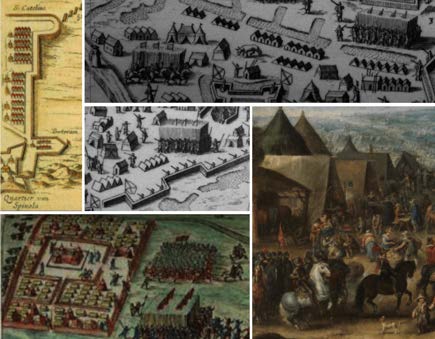
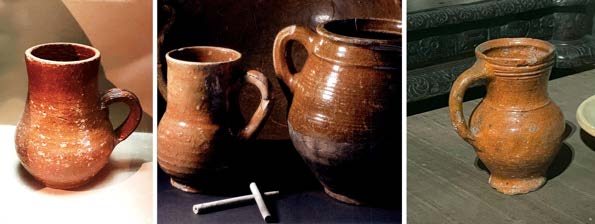
456
CHAPTER 29. JERONI JOAN DESCLERGUE Y CORTÉS (DC05) & FELIPA DE MONTOYA
Figure 29.211: Drawings and paintings of Spanish military barracks. Sometimes they were
tents, sometimes wooden constructions. The size was typically around 4m by 4m, and they
were placed or constructed in rows of 4 or 5. Exceptionally, in particular inside cities, they
were built of bricks. The roofs required drains every 4 m.
Figure 29.212: In the middle photo, there is a dish in the background, with in front of it, on the left, a drinking jug, and on the right, a cooking pot. The remains of two pipes are also visible. These finds come from excavations between the current
’College’ and ’VTI’ in Harelbeke in the ’Collegewijk’ district. The finds were in a pit, and the researchers suspect they are objects from the 17th century, possibly from passing armies (sic). The left photo shows a drinking jug, photographed by the author in Montblanc. Possibly, the objects date from the same period, and the artifacts came from Harelbeke from Spaniards or others who manufactured almost the same pots and jugs in a similar traditional way. It can therefore be pottery from Spain or areas under Spanish rule, such as the west of present-day Germany. Nevertheless, research at the Musée d’Or in Metz, where pottery and kitchenware are exposed from around 1600, the closest similar one shown in the right photo (shown in the section ’vaisselle du XVIe sciecle’ in the museum), has revealed similarities but not as close as between the ones in Spain and Harelbeke. The color of the drinking pot in Metz is more orange, while those in Harelbeke and Spain are more brown.
The decoration also differs. The main difference is the roundness, which is lower in the drinking pots in Harelbeke and Spain and higher in those in Metz. The narrowing in the neck is also absent in the drinking vessels in Spain and Harelbeke. The findings indicate that the pottery found in Harelbeke must be from 1550-1650, but likely not from the area East or South-East of Belgium. It may, therefore, effectively be Spanish or made by the Spanish.108
© 2024 Nico F. Declercq
The Desclergues of la Villa Ducal de Montblanc, 2nd ed., Omn., VOL. II
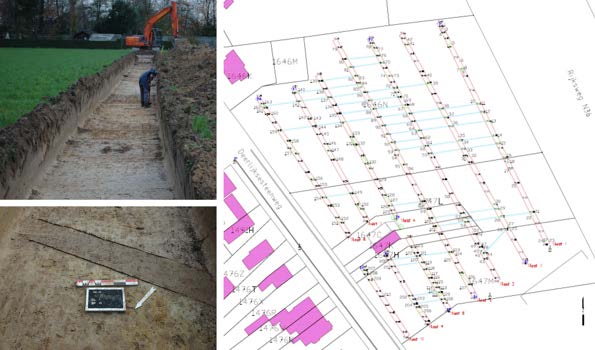
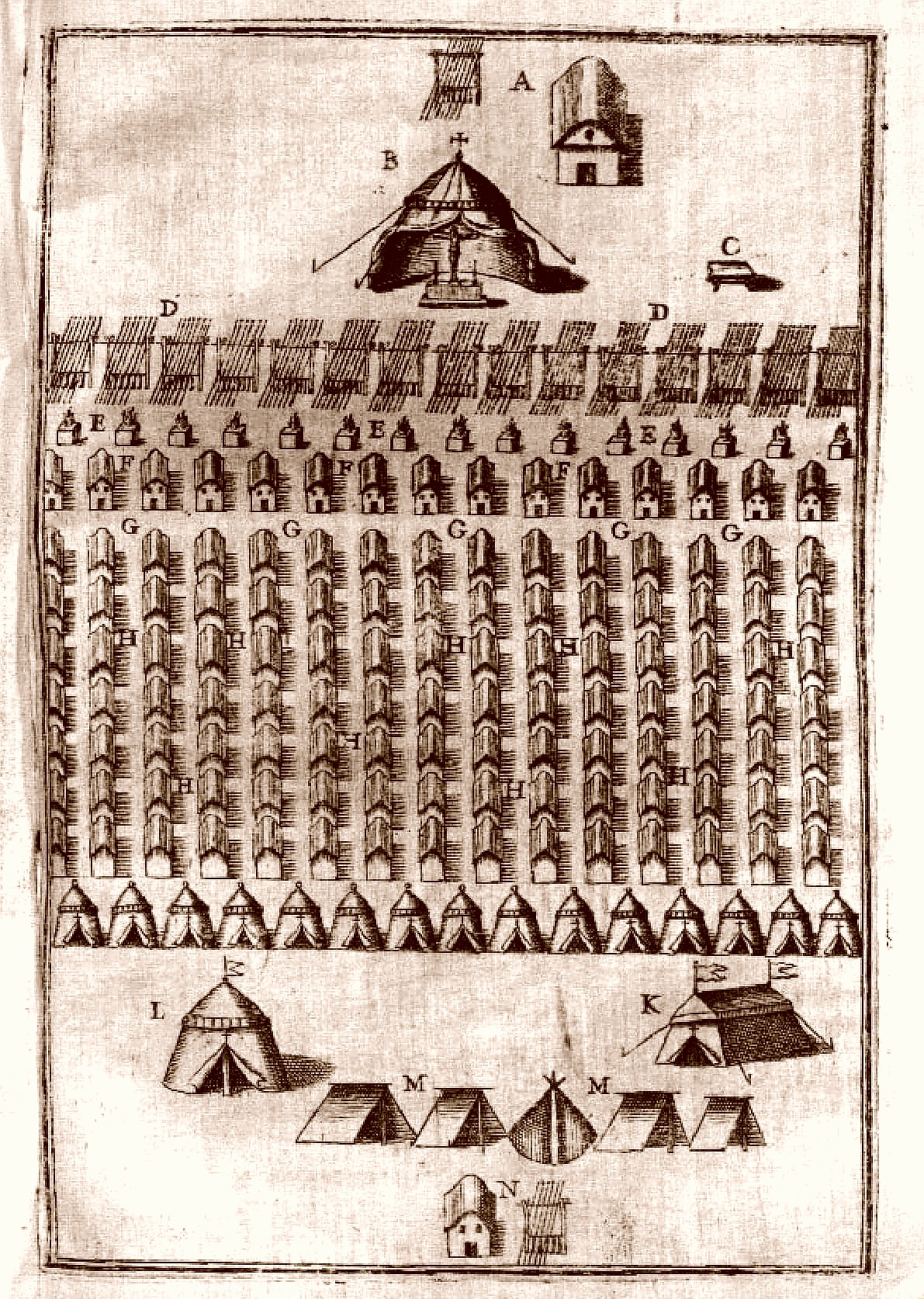
29.12. THE SPANISH MILITARY BARRACKS OF HARELBEKE, ADJACENT TO DEERLIJK
457
Figure 29.213: Fotos109 of the archaeological site in Harelbeke, close to Deerlijk, where numerous artificial ditches were discovered in excavation trenches. The ditches were 4 m separated from each other. One of them is shown in the bottom-left photo. A schematic of the ditches is see as blue lines on the map, shown right, where the excavation trenches are indicated in red. The archaeological discoveries show rows where Spanish barracks used to stand, approximately 4m apart, with a drainage ditch in between. The excavations also revealed 14 artificial piles and 11 non-recent non-natural pits. There were also bomb craters found, but the report does not mention if they are due to recent wars or earlier. Note that the ditches easily fit a camp as shown in Figure 29.214
Figure 29.214: A Camp proposal by the Field Master Francisco Dávila Orejóna Legend: (A) The front guard; (B) The Chapel; (C) The Table of the Game; (D) The Horcones of the weapons; (E) The Stoves of the Companies; (F) The Barracks of the Ensigns; (G) The Streets of each Company; (H) The Soldiers’ Barracks; (Y) The Sergeants’ Barracks; (K) The Field Master’s Shop; (L) That of the Sergeant Major; (M) The Stores of the Vivanderos; (N) The Rear Guard. The outline of this camp fits the one in Figure 29.213.
aFrancisco Dávila Orejón, Política y mecánica Militar para Sergeant Mayor de Tercio, 1684.
The military zone likely extended from Pottelberg in Kortrijk to Deerlijk, along the Leie River, and included areas south of Harelbeke, bending towards Beveren Creek. The eastern boundary of this zone might have been marked by a historical checkpoint, now a pub called ’de barakke.’ This boundary, near Deerlijk, aligns with the demarcation line along Heerbaan and Kortrijkse Heerweg.
The flat, sandy territory was well connected to the Leie River and surrounding areas, facilitating military operations and minimizing resistance from inhabitants. The presence of Spanish troops on the Manor of Overacker lands likely provided steady financial income and political influence for the lords of the Manor.
From 1609 to 1625, Spanish troops were omnipresent in Harelbeke, fluctuating in number. After 1638, Harelbeke was no longer obliged to house soldiers, as noted by Woestijn.112 The Council of Flanders released Harelbeke from this obligation on December 18, 1638. Early on, Spanish soldiers even resided in Harelbeke’s church, as evidenced by Rogaer Deborchgrave’s diary, which records beer deliveries to soldiers residing in the church from July 21, 1595, to July 2, 1596. The church, flourishing again in the early 1600s, was exempt from military contributions after the liberation of Ostend, eliminating the need for its military use.
Despite being an official city, Harelbeke needed more fortifications and was small in size, making it less appealing for housing Spanish troops within city limits. Woestijn’s research indicates that significant military presence within the city was rare. However, soldiers frequently passed through due to Harelbeke’s strategic location along a vital waterway and the main road from Kortrijk to Ghent.
Military passings were particularly notable between 1603 and 1609, with records of numerous German, Irish, Scottish, English, and Italian soldiers passing through or temporarily residing in the city. For instance, on October 9 and 10, 1604, a Sergeant Major of the Tilly regiment113 stayed in the town with sixteen soldiers and their families, requiring financial support from inhabitants. Similar events occurred in 1605 and 1607. The absence of a bridge from February 19, 1610, to November 5, 1612, when a new stone bridge was completed, also impacted troop movements.
Woestijn observed a significant increase in the Spanish military presence in Harelbeke from 1621 onward, following the end of the truce between the Spanish Netherlands and the Dutch Republic. The city hosted soldiers of various nationalities, and during periods of military concentration, barracks outside the town were insufficient, leading to the use of homes within the city. Although the town could refuse entry to soldiers, this often incurred costs and resulted in financial deficits.
The strategic location along Beveren Creek was advantageous for the Spanish and, later, the French, as demonstrated during World War I. On October 20, 1918, British allied forces successfully crossed the Leie River at a point just east of Beveren Creek, a location historically used by Spanish troops. The flat riverbanks facilitated this crossing, in contrast to steeper areas.
Guillermo Duclos Bautista’s work provides a detailed account of Spanish military fortifications and barracks construction.114 Standard living units measured approximately 4 by 4 meters, as depicted in Figure 29.211. Sometimes, these barracks were attached to units designed to hold horses.
112Woestijn, page 32
113Descendants of Tilly equally appear in Figure 34.108 on page 558.
114Guillermo Duclos Bautista, ’La fortificación de un territorio - Arquitectura militar en la raya de Huelva, siglos XVII y XVIII,’ Diputación de Huelva, 2002
The Desclergues of la Villa Ducal de Montblanc, 2nd ed., Omn., VOL. II
© 2024 Nico F. Declercq
CHAPTER 29. JERONI JOAN DESCLERGUE Y CORTÉS (DC05) & FELIPA DE MONTOYA
29.12.2 Archaeological Evidence of the Spanish Barracks
From a local archaeological standpoint, the 16th and 17th centuries are unimportant, as local investigators primarily look for Roman and Germanic relics. Still, from time to time, artifacts are discovered from the Spanish period. One example is shown in Figure
We refer to a report of Ruben Willaert Restauratie & Archeologie, of 2017115.
The report shows interesting maps that clarify that the area where the Spanish barracks supposedly were located, along the Beveren Creek, was situated in a flat area in the valley of the Creek, on moderately dry, loamy, sandy soil. The report also shows a map with several sites in and around Harelbeke, where archaeological research was done in the past. One particular spot on the plane where the barracks were located is of interest to us, CAI number 151737, located east of Harelbeke and rural. Nowadays, it is situated between the suburbs of ’Klein Harelbeke’ and ’Arendswijk’ along the road to Deerlijk (Deerlijksesteenweg), where ’Smeyershof’ is located. We cite the report:
’Centrale Archeologische Inventaris (CAI) number 151737, Mechanische prospectie (2010); NK: 15 meter Onbepaald: Smalle ondiepe greppels met een lichtgrijze tot lichtbruine vulling die ofwel te maken hebben met de ontwatering van het terrein ofwel met land-bouwactiviteit. Ze bevinden zich op een vrij regelmatige afstand van elkaar (meestal ongeveer 4 meter), Bron: Smeets M. 2010: Archeo-rapport 50. Het archeologische vooronderzoek aan de Deerlijksesteenweg te Harelbeke, Studiebureau Archeologie bvba.’
In other words, archaeologists found in that location, in 2010,
’Narrow, shallow ditches with a light grey to light brown fill that is related to the site’s drainage or agricultural activity. They are at a reasonably regular distance from each other (usually about 4 meters).’
The archaeologists could not identify the period nor the identity of the ditches.
These were likely drain ditches of Spanish military barracks (perhaps sewage, perhaps rainwater drains, or else). Indeed, Spanish barracks typically consisted of rooms of approximately 4 m by 4 m and were attached to form large units. One drain per barrack means one ditch every 4 m.
According to the same report, the entire area between Harelbeke and Beveren Creek consists of ’Scc soil’ . The legend describes this soil as
’The soil type Scc is a moderately dry, loamy, sandy soil with strongly spotted, crumbled texture B horizontal. Rust phenomena start between 60 and 90cm.’
When we check the description of the standard ’Scc soil’ , we read the following:
’The soil is a bit too dry in the summer. They are good soils for summer cereals and potatoes, on which a lot of corn is currently grown, not suitable for pasture. The soils are also suitable for intensive horticulture and raw vegetable cultivation.’
In other words, this soil was relatively dry but could have been better for pasture. The ground was very flat, with a creek for drainage and easy access to the Leie River, while it was in an important geographical location.
These must have been the primary reasons this area was attractive for placing temporary barracks. Drainage canals showing the same periodicity as the size of barrack rooms seem very plausible.
Another report exists that shows photos of the discoveries and a comprehensive list of the discoveries.116 The images are shown in Figure 29.213 on page 457. Most archeological relicts are narrow, shallow east-west trenches, 100 in total, with a light gray to light brown infill associated with the site’s drainage. The trenches are spaced at a fairly regular distance from each other, each time at about 4 meters, and have been found in all trenches.
In addition, 14 artificial piles and 11 non-recent, non-natural pits were found.
Several bomb craters were also found with scrap metal, but the report contains insufficient information to determine whether these are craters from a recent war or earlier wars. The ditches fit a Spanish tent camp or a barrack camp, as the one shown in Figure
We can read some interesting information in Xander Alma’s report too.117. The author made the following observations:
’Examples of early seventeenth-century urban barracks in the Netherlands are scarce. It is known that the first barracks that were built on the Spanish side in the Netherlands were in Den Bosch (1609), Dunkirk (1611), Maastricht, and Damme (1616) and that barracks were subsequently built in several Spanish cities and fortresses. These barracks were said to have been constructed of wood and stone and had rooms usually intended for four people (four bachelors or two couples) sleeping in two beds. There were also larger rooms that could accommodate eight people in four beds. The local government had to provide the furnishings of the barracks, such as furniture and beds. A Spanish barracks complex is known from Breda, built in 1630 on Akkerstraat. Another example of a Spanish complex is the barracks of La Petite-Magdalena in Lille. This complex was built in 1620 and consisted of several consecutive rooms with a length of 5.3 meters and a width of 4.5 meters (approximately 24 square meters). Each room had a fireplace, a door, a window on the ground floor courtyard, and two cross windows on the first floor on one side.’
Based on the similarities with the drains found at Harelbeke, these were probably barracks similar to those in Lille.
The reader who is interested in barracks during the Eighty Years War, may read the works of de Boer118, where we cite:
’Bij Slijkenburg had men op een weide buiten het dorp een ondoelmatig, noodzakelijk duur verdedigingswerk aangelegd met barakken voor de verdedigers,’ or in other words,
’At Slijkenburg, on a meadow outside the village, an ineffective, necessarily expensive defense work had been built with barracks for the defenders.,’ or Vos.119 Vos mentions, on page 97, that one particular complex (as an example) was built consisting of rooms of a specific size:
’Each room was 16 feet square (4.5 by 4.5 meters) and featured a corner fireplace, two box beds, a cupboard, a table, and two benches.’
We may also refer to other sources, such as Stadsarchief Breda.120121122, and Alma123
A Dutch song is also found in Adriaen Valerius, Nederlandtsche Gedenck-clanck, 1626. The song, ’Merck toch hoe sterck (1622, A.
Valerius),’ goes as follows: