

The Desclergues of la Villa Ducal de Montblanc, Second Edition Omnibus by Nico Declercq - HTML preview
Download the book in PDF, ePub, Kindle for a complete version.
(DC02d) and Ana de Villavicencio.
Maria Anna Desclergue y Villavicencio, wife of Bonaventura Desclergue, sold, indeed, a vineyard in 1603, as shown in Figure 28.2
on page 336.
Lorenzo de Villavicencio appears as a student on October 15, 1557, in the registers of the Catholic University of Leuven in Figure
28.12 on page 345. He was related to Ana de Villavicencio.
28.4.1 Don Jeroni Joan Desclergue y Cortés (DC05)
He was the third son of Don Bonaventura Desclergue y Cortés (DC04) and the eldest son of Maria Anna Desclergue y Villavicencio (DC02dx1). Jeroni Desclergue was our ancestor and is described in much detail in Chapter 29. He is also known as Geronimo Desclergues or Geronimo Desclergues y Cortés.
28.4.2 Don Enric Desclergue (DC05c) y Cortés
He was the fourth son of Don Bonaventura Desclergue y Cortés (DC04) and the second son of Maria Anna Desclergue y Villavicencio (DC02dx1). He would, just like his brother Jeroni (DC05) and his half-brother Antoni Desclergue y Ratera (DC05b), go to Flanders in the Spanish Army of Flanders. He is also known as Enrique Desclergues and is described in Chapter 33.
28.5 Don Francesc de Pedrolo y Desclergue (DC05ex1y2)
28.5.1 Introduction
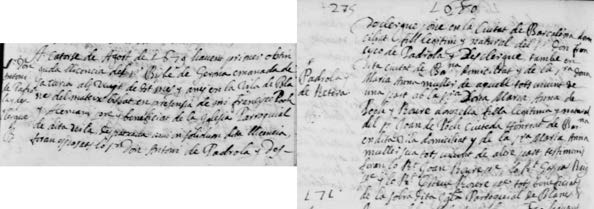
The documents in Figures 28.13 and 28.14 show that Francesc de Pedrolo y Desclergue was the only child of Isabel Desclergue y Tous (DC05ex1) and Jacint de Pedrolo. He was born at the end of January 1640, a few weeks after his father’s death in early January 1640. Jacint de Pedrolo’s brother, Francesc Onoffre de Pedrolo (born in Valls in 1606), had an illustrious military career, serving in Italy from 1635 to 1645, becoming a Knight of Montesa in 1646, a Brother of Montesa in 1650, a servant to Luis de Haro, and an Auditor of the Generalitat from 1659 to 1662. His military exploits extended to Flanders. Several documents show that the ’de Pedrolo’ family was of very high standing. The complete name of Francesc de Pedrolo was Francesc Jacint Josep Antoni de Pedrolo y Desclergue, as can be read in Figure 28.27 on page 361 and Figure 49.38 on page 1004. Jacint was his father, Francesc Onofre de Pedrolo was his father’s brother, Joseph d’Oleina was his father’s uncle77, while Antoni was his mother’s cousin, Antoni Desclergue (DC06), Jeroni Desclergue’s (DC05) son, who visited Montblanc in 1639-1640. All persons involved in the baptism wrote their initials on artwork that Antoni brought back to Deerlijk after 1640, as shown in Figure 49.37 on page 1003.
Rafael Joan Pedrolo was Jacint de Pedrolo’s other son with Maria de Moxó, whom he had married in 1619. Later, Francesc de Pedrolo would name his son Antoni, again after Antoni Desclergue (DC06), in 1659. Francesc de Pedrolo and his son Antoni were both doctors of Law. His importance for the archives merits the respect of genealogists and historians and has been crucial in reconstructing the history of the Desclergues.
Francesc de Pedrolo y Desclergue (DC05ex1y2) was closely influenced by his grandfather, Francesc Desclergue (DC05e), the brother of our ancestor Jeroni Joan Desclergue y Cortés (DC05), given his father’s premature death. Francesc passed the Law faculty at the Concepció College of the University of Lleida. Later, he graduated in Law and obtained a legal adviser position to the lieutenant in Montblanc, under the mayor of Catalonia.
Equally important, Francesc had a good marriage. He married Anna Maria Ratera Riber y Robuster, from a family of Tàrrega with Figure 28.15: Montblanc, Francesc de Pedrolo y Desclergues was godfather on the confirmation of Joan
Bernada, son of Joan Bernada and his wife Teresa.
(Book of confirmations, fol. 15, ’Llibre dels confirmats
entregat a esta plebania per los señors consols de la
present vila de Montblanch. Comensant als 14 de febre
de 1656. En aquest llibre estan al principi tots los que
trobaren despres de la crema del any 1642’)
77Joseph d’Oleina was the son of Caterina de Pedrol, auntie of his father Jacint, and Gabriel d’Oleina
© 2024 Nico F. Declercq
The Desclergues of la Villa Ducal de Montblanc, 2nd ed., Omn., VOL. I
28.5. DON FRANCESC DE PEDROLO Y DESCLERGUE, (DC05EX1Y2)
347
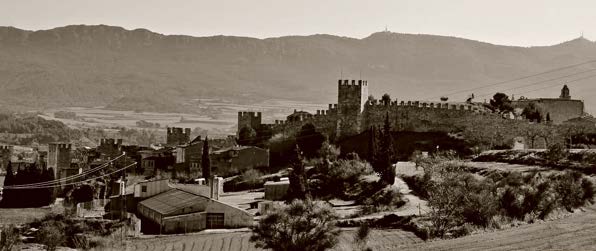
Figure 28.16: Montblanc (2018).
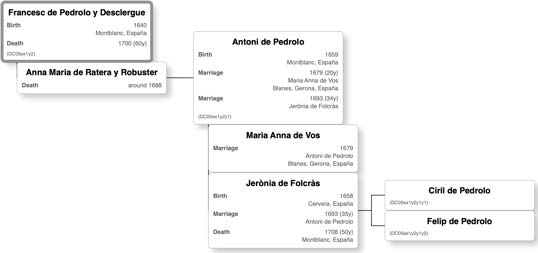
Figure 28.17: Two descending generations of Francesc de Pedrolo y Desclergue
an illustrious ancestor, Francesc Robuster (1544-1607), bishop of Elna and Vic. From this marriage, Antoni de Pedrolo y Robuster (DC05ex1y2y1) was born in Montblanc in 1659. Francesc soon established the important Desclergue archive. At the same time, he was influenced by his uncle Francesc Onofre de Pedrolo and also Antoni Desclergue (II) (DC06), son of his granduncle Jeroni Joan Desclergue y Cortés (DC05), who visited Montblanc a couple of times.
Meanwhile, his son Antoni de Pedrolo (DC05ex1y2y1), who had Antoni Desclergue as godfather, studied at the prestigious College of Cordelles in Barcelona in 1670. For the education and upbringing of Francesc, the executors of the testament of Francesc Desclergue and the relatives Dimas de Llordat and Rafael Juan de Pedrolo were entrusted. This ensured Francesc received a comprehensive education and maintained the family’s distinguished legacy.
Francesc de Pedrolo studied Laws and to defray the expenses of his studies,
’. . . at expense faciendas pro gradu doctoratus quem habere et tenere I hope . . . ,’
he sold in 1659, to the surgeon Antonio Moles, the land he had inherited from his grandfather, located in the Parellada, in the dyad of the Dimecres. The land was adjacent, in the east, to the upper ditch of the said piece.
About Rafael Juan de Pedrolo, we found the following reference in ’enciclopedia dot cat’:
’Pedrolo, originari d’ una nissaga cerverina, pertanyia a la branca familiar de Valls, i era fill de Rafael Joan de Pedrolo, cavaller, natural de Valls, i de Maria Desclugues (o Desclergue), dama de Montblanc.’ in a description of ’Pau d’ àger, comandante de l’
orde de Sant Joan de Jerusalem (1659-1662).’
This reference is consistent with Chapter 36.5 and Chapter 36.5, namely that Rafael Juan de Pedrolo of Valls (Tarragona) had married Maria Declerque (DC07b) around 1651, around the time of the siege of Barcelona, when she visited Spain with her father Antoni Desclergue (II) (DC06) and her mother, Beatrice Declercq (DK02byx).
In 1663, Francesc de Pedrolo y Desclergue (DC05ex1y2) already appeared in the documents as a doctor in Law and was married to Ana Maria Ratera, daughter of Paula Ratera de Riber.
Ana Maria de Pedrolo y Ratera was a very active woman. She often appeared to be caring for the family’s possessions in Montblanc.
In 1677, on a trip Francesc de Pedrolo y Desclergue (DC05ex1y2) made to the town, he leased the following properties for four years: the grounds of the Raft, which was a land located on the irrigation canal of the Parellada, half of the piece that Antonio Moles had in the Parellada, a field on the Valls, in the dyad of Dijous, and a part of the land on the edge of Viñals, behind the convent of Sant Francesc.
The Pedrolo family initially resided in Montblanc, and there is a fact that seems to indicate that their purpose was to remain there indefinitely.
His wife, Anna Maria Ratera, must have died around 1688. At this time, Francesc de Pedrolo served as the veguer of the town and veguería of Montblanc. He appointed Simón Gallart, a notary from Barcelona, as his solicitor to render accounts to the Rational Master for the amounts received during his tenure.
The Desclergues of la Villa Ducal de Montblanc, 2nd ed., Omn., VOL. I
© 2024 Nico F. Declercq
CHAPTER 28. BONAVENTURA DESCLERGUE (DC04) AND HIS FAMILY
Francesc de Pedrolo married Isabel Ana Alba, widow of the notary of Montblanc, Jeronimo Alba, in a second marriage. Both Francesc and Isabel died around 1700. Isabel wrote her testament in 1701.
The son of Francesc de Pedrolo and Ana Maria Ratera was Antoni Pedrolo y Ratera (DC05ex1y2y1), who was born in 1659 and had, as mentioned above, Antoni Desclergue (II) (DC06) as godfather. He married Jerònia de Folcr’as in 1693, who died in 1708.
They had two children: Ciril de Pedrolo (DC05ex1y2y1y1y1) and Felipede Pedrolo (DC05ex1y2y1y2y2). However, it was his second marriage.
Indeed, Antoni de Pedrolo (DC05ex1y2y1) had first married Maria Anna de Poch or De Vos, as shown in Figure 28.28 on page 361,
before he married Jerònia de Folcràs in 1693. This Maria Anna de Poch was the daughter of Joan de Poch (Joannes De Vos), who was born in Harelbeke in Belgium in 1633 as the son of Pere Llorenç de Poch from Barcelona and Isabella Verscheure and who died in Harelbeke in 1708, and of Maria Anna Portea y Roure, his first wife from Blanes, near Barcelona. Joannes de Vos married in a second marriage to Joana Declercgz (DC08b), a union that resulted in the maternal Desclergue branch described in Part X. In his younger years, Joannes de Vos lived in Barcelona, where his father originated.
Joana Declercgz (DC08b) was a daughter of Antoni Declerque (III) (DC07) and Martina Vercruyce (Ximenes de la Cruz) and, therefore, a great-granddaughter of Jeroni Joan Desclergue y Cortés (DC05) and granddaughter of Antoni Desclergue (II) (DC06).
All this is highlighted in the ancestry descriptions in other chapters, in particular in Chapter 48.4.
We can, for instance, also cite here Jose Sanchez Real, who wrote the following.
’Antonio de Pedrolo. En 1680 ya era doctor en Leyes. En 1683 fue veguer de la villa y veguería de Montblanc. En 1698 fue cónsul.
Casó con Maria Ana de Poch y Portea, hija de Juan de Poch, ciudadano honrado de Barcelona en la villa de Blanes. En segundas nupcias se unió con Jerónima de Folcrás hija de Agustín de Folcrás. En 1706 ya había enviudado. Hijo de este matrimonio fue Cirino de Pedrolo y Folcrás.’
Note that Sanchez Real assumes that Maria Ana de Poch had a mother ’Portea,’ while a document found on Geneanet® suggests that her mother’s name was ’Roure.’ One of the two sources likely contains an error, as all other data are consistent. Sanchez Real may also have found other documents supporting his claim. Her full name was indeed Portea y Roure.
This connection means that contact between the Desclergues at Montblanc and the ones in Belgium existed until the end of the 17th century.
It was also in 1679 that Francesc de Pedrolo y Desclergue (DC05ex1y2) received a noble title. As found earlier and in Chapter
28.5, this came after meddling by Antoni Desclergue II (DC06), who came that year from Flanders and would, being a godfather to Antoni (DC05ex1y2y1), son of Francesc de Pedrolo y Desclergue (DC05ex1y2), later also arrange a marriage between this Antoni and a bride the name Maria Anna de Vos.
It is essential, to begin with, to list important dates related to the 17th century and the life of Francesc de Pedrolo y Desclergue: 1604: Death in Flanders of Jeroni Joan Desclergue y Cortés (DC05), his granduncle.
1631: Death in Flanders of Enric Desclergue y Cortés (DC05c), his granduncle.
1634: Death in Flanders of Antoni Desclergue (DC05b), his granduncle.
1640: Birth of Francesc de Pedrolo y Desclergue (DC05ex1y2).
1640–1659 (but ended for Montblanc in 1652): The Reapers’ War, the Separation War, the Catalan Revolt, or the Guerra dels Segadors. After the events, Catalunya’s territory was divided between Spain and France, and the Pyrenees formed the border.
1641: Significant destruction of Montblanc by troops.
1648 (around): Estimated time of death of his grandfather Francesc Desclergue (DC05e).
1651: Visit to Montblanc and Valls by the family of Antoni Desclergue (II) (DC06) and Beatrice Declercq (DK02byx), around the time of the siege of Barcelona.
1652: The big fire of Montblanc.
1656: The first contact of Francesc de Pedrolo y Desclergue with someone from his father’s family.
1659: First diploma in Law.
1659: Marriage with Anna Maria Ratera Riber y Robuster.
1659: Birth of his son Antoni de Pedrolo. It was the year of the Treaty of the Pyrenees between Spain and France. Roussillon and the north of Cerdanya became French and would remain French. Antoni Desclergue II (DC06) visited Montblanc that year again and became godfather to Antoni de Pedrolo. He returned to Belgium in 1660 or 1661.
1669 (after): Diploma as Doctor of Law.
1673: He writes the first document, containing retrieved information about his family.
1679: He receives a noble title when Antoni Desclergue II (DC06) visits Spain after the Peace of Nijmegen. Antoni served as marriage broker for his Godchild Antoni de Pedrolo y Desclergue (born in 1659 at Montblanc as the son of Francesc Jacinto de Pedrolo y Desclergue and Anna Maria de Ratera y Robuster) and Maria Anna de Vos in Blanes, Gerona. See also Chapter 48.4.
Below, one can read notes written by Francesc de Pedrolo y Desclergue about his ancestors. He kept such information in preparation for attempts to receive a nobility title. In this context, it’s understandable that he only mentions achievements and focuses on his ancestors and their siblings, not cousins.
28.5.2 Narrative of His Life
Francesc de Pedrolo y Desclergue (DC05ex1y2) served as the first archivist of the Desclergue family, pivotal in preserving their history in Spain. His contributions are crucial to what is known today about the Desclergue lineage. His grandfather, Francesc Desclergue (DC05e), was part of a generation active in Flanders, Belgium. Despite receiving limited first-hand information from his grandfather, Francesc did gather details from Antoni Desclergue II (DC06).
Francesc de Pedrolo y Desclergue became aware of the significance of his ancestry and pursued a noble title. This pursuit motivated him to collect data about his forebears, an endeavor made challenging by the aftermath of Montblanc’s great fire and the destruction caused by soldiers. Consequently, Francesc had to search through ruins and could not rely on church archives for vital records, making his task monumental.
A detailed account of Francesc de Pedrolo y Desclergue’s life is found in Santiago Alberti’s article,78 which serves as the primary source of information about him. Francesc, the only grandson of Francesc Desclergue (DC05e) and Catalina Tous, was born to Isabel (or Elisabeth) Desclergue y Tous and Jacint de Pedrolo. He was baptized on January 30, 1640, during a visit by Antoni Desclergue II (DC06). At that time, the chapel in Deerlijk had been constructed, as described in Chapter 49.
Francesc’s father, Jacint de Pedrolo, died shortly before Francesc’s birth, leaving him to be raised by his maternal grandfather, Francesc Desclergue (DC05e), who served as his foster father, godfather, and family chief. The godmother was Francisca Desclergue 78Santiago Alberti, "Esquema històric del llinatge Pedrolo," URTX Revista Cultural de l’Urgell, No. 7, 1995, pp. 49-88.
© 2024 Nico F. Declercq
The Desclergues of la Villa Ducal de Montblanc, 2nd ed., Omn., VOL. I
28.5. DON FRANCESC DE PEDROLO Y DESCLERGUE, (DC05EX1Y2)
349
(DC05d). Due to the Separation War, Francesc grew up with limited knowledge about his family, influenced primarily by his grandfather. His mother remarried, but Francesc’s relationship with his stepfather was strained, leading him to be raised entirely by his grandfather in Montblanc.
The Separation War severely damaged the Desclergue house, and Francesc had to relocate. In 1642, Spanish troops burned several houses in Montblanc, and Francesc was likely not well-informed about his granduncles in Flanders, as they were Spanish soldiers.
His knowledge largely came from his later research. The family in Belgium became separated from those in Montblanc during this period. The Spanish soldiers, led by Marquess de Leganés, retreated from Tarragona to Lleida, causing more destruction.
The exact dates of death for Francesc Desclergue (DC05e) and Isabel (or Elisabeth) Desclergue y Tous are unknown. However, it is known that Francesc Desclergue (DC05e) defended Francesc de Pedrolo y Desclergue’s rights in 1646, suggesting an early death might explain the limited knowledge transfer to his grandson. Francesc inherited his grandfather’s properties in Montblanc and funded his education.
During the Siege of Barcelona in 1651, Francesc received a visit from his granduncle’s son, Antoni Desclergue II (DC06), along with other family members. After the Separation War ended in 1652, Francesc visited his paternal relative, Francesc Onofre, in Madrid in 1656. Antoni Desclergue (DC06) revisited him in 1659.
Francesc studied at the Collegi de la Concepció University of Lleida and married Anna Maria Ratera Riber y Robuster from Tàrrega.
They had a son, Antoni Pedrolo, who was baptized on November 20, 1659, with Antoni Desclergue II (DC06) as the godfather.
Francesc became a doctor of Law and began an extensive search for his family’s roots, relying on documents and information from Antoni Desclergue (DC06), as church records were unavailable. His work aimed to secure a noble title, focusing on recent ancestors and potentially selective in his findings to favor his goals.
In 1673, Francesc authored "Essay of the modern services of the houses of Pedrolo, and Desclergue, Catalan Knights, written for His Majesty," emphasizing recent ancestors. He avoided delving into older ancestors, possibly due to a lack of information or strategic selectivity. The family’s name evolved from maternal ancestors, with ancient Desclergue ancestors initially being de Torró and, before them, Du Guesclin and Clergue.
Francesc received a noble title in 1679, coinciding with a visit from Antoni Desclergue II (DC06), who likely influenced this achievement. Santiago Alberti noted instances where Francesc either concealed or emphasized certain information, especially concerning his father’s family, which was crucial for his noble aspirations. Francesc declared himself and his son Antoni as the only known male descendants of the Pedrolo y Desclergue family.
Until his death, Francesc continued collecting information on his ancestors, forming the first Desclergue and Pedrolo archive. Contemporary historians still reference his work as a primary source of knowledge about both families. Carlos II granted him noble privileges for himself and his descendants on December 11, 1679. The last known document of Francesc dates to 1685, with his death presumed a few years later. Additional references to Francesc can be found in Jaume FelipeSánchez’s work79, noting his tax exemption as a noble privilege in 1690 alongside notable figures. This highlights Francesc’s selective documentation, which focuses on paternal lineage, which is important for nobility.
Francesc was alive in 1699, as evidenced by the document in Figure 28.29.
28.5.3 Descendants : de Pedrolo
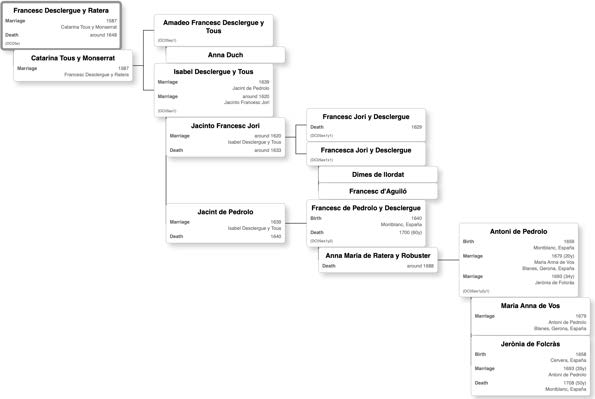
To rephrase the situation, referring to Chapter 28.5, and Figure 28.19, we repeat that Don Francesc Desclergue (DC05e) married Catalina Tous y Monserrat. The couple had the following children: Isabel Desclergue y Tous (DC05ex1) and Amadeo Francesc Desclergue y Tous (DC05ey1).
Isabel Desclergue y Tous (DC05ex1) first married Jacinto Francesc Jori. The couple had two children: Francesc Jacint Jori y Desclergue (DC05ex1y1) and Francesca Jori y Desclergue (DC05ex1x1). The latter married Dimes de Llordat first and then Francesc d’ Aguiló.
Isabel Desclergue y Tous (DC05ex1) remarried Jacint Pedrolo. The couple had one child: Francesc de Pedrolo y Desclergue (DC05ex1y2), described in Chapter 28.5.
Francesc de Pedrolo y Desclergue (DC05ex1y2) married Anna Maria de Ratera y Robuster. The couple had one child, Antoni de Pedrolo (DC05ex1y2y1), and two grandchildren, Ciril de Pedrolo (DCo5ex1y2y1y1) and Felipede Pedrolo (DC05ex1y2y1y2). Their grandchildren’s mother was Jerònia de Folceras.
28.5.4 Manuscripts Authored by Francesc de Pedrolo y Desclergue (DC05ex1y2)
Francesc de Pedrolo y Desclergue (DC05ex1y2) authored the following manuscripts:
’Pro nobilibus Francesc et Antonio de Pedrolo, patre et filio, contra Ioannem de Poch, civem honoratum Barcinonae. Referente nobili Iosepho de Pastor & Mora .. in actis Golorons, Tota difficultas in praesentiatum eo sistit, an nobiles Franciscus de Pedrolo
& .. gaudeant beneficio deducto ne egeant contra repetitione[m] dotis instatae per Ioannem de Poch . . . ,’
authors Francesc de Pedrolo y de Desclergue (DC05ex1y2), Antoni de Pedrolo y Ratera, Josep Pastor and Josep Llopis, Published by Barcin, Ex typ. Iosephi Llopis .., 1686.
’Pro Syndico villae Montisalbi, contra nobil. Domnvm Franciscvm de Pedrolo y Desclergve (DC05ex1y2): referente nob. DD.
Iosepho de Balaguer ...,’
authors: Francesc de Pedrolo y de Desclergue, Carles Prima.80
’Scedula resolutiva o memorial en fet, a favor del batlle, syndich y universitat de Montblanch, contra lo syndich de Royals : a relacio
.. Ioan Baptista Roca y Iulià .., not. Ribes,’
authors: Cristòfor de Patau y d’ Oller, Francesc de Pedrolo y de Desclergue (DC05ex1y2).81
’Pro Francesc de Pedrolo et de Dezclergue V.I.D. contra magnificos Linum Foch-ences V.I.D. et Rosam eius consortem,’
authors: Francesc de Pedrolo y de Desclergue (DC05ex1y2), Linus Fochences, Rosa Fochences, Jacint Andreu.82
79Jaume FelipeSánchez, "L’actual seu console comarcas de la Conca de Barberà a Montblanc: Palau medieval construït per la família Marçal," Aplec de Treballs (Montblanc), No. 20, 2002, pp. 33-50.
80Montblanc. Ajuntament. Síndic., published by [Barcinonae] : [s.n.], [1689 o post.]
81Montblanc. Universitat.; Royals. Síndic., published by [S.l.] : [s.n.], [post. a 1675]
82Barcinone: Ex typographia Hyacinthi Andreu .., 1673.
The Desclergues of la Villa Ducal de Montblanc, 2nd ed., Omn., VOL. I
© 2024 Nico F. Declercq
CHAPTER 28. BONAVENTURA DESCLERGUE (DC04) AND HIS FAMILY
28.5.5 Francesc de Pedrolo y Desclergue (DC05ex1y2) is also found in. . .
Francesc de Pedrolo y Desclergue (DC05ex1y2) is also found in the book ’Médicos y cirujanos de Montblanc, Siglos XV-XVIII, by Jose Sanchez Real,’ in the following paragraphs:
’Antonio Moles (1654-1686), médico. En 1659 compró a Francesc de Pedrolo y Desclergue (DC05ex1y2), bachiller en Leyes, unas tierras en la Parellada, diada del Dimecres (29 noviembre 1656).,’
’Antonio Llort (1663), cirujano. Al limitar unas tierras en la partida deis Vinyols, diada del Dijous, se dice que limita al este con una posesión de Fc° . de Pedrolo y Desclergue (DC05ex1y2), al sur con un huerto de Antonio Llort, cirujano, al oeste con la acequia de la Horta y al norte con el camino que va a la balsa de M o n Mirall (3 marzo 1663) ,’
’Pablo Blet (1663-1689), cirujano. Testigo en 1663, también figura como testigo en el nombramiento de un procurador hecho por Francesc de Pedrolo y Desclergue (DC05ex1y2), en 1664 21 septiembre 1664. Protocolo del año correspondiente. A.P. de Montblanc,’
’Juan Fau (1666-1703), cirujano. En 1666 figura como testigo en la venta de unas tierras que eran de Francesc de Pedrolo y Desclergue (DC05ex1y2) y esposa, que estaban situadas en la parte de Vinyols, diada del Dimecres, y que limitaban: al este con el monasterio de S. Francesc mediado un camino, al sur con el canal que llevaba el agua a la diada del Dimarts y al oeste con una acequia. 10 juni o 1666. Protocolo de Jerónimo Alba (1666) fol. 131. A.P. de Montblanc .’
Francesc de Pedrolo y Desclergue (DC05ex1y2) also appears as
’rector del collegia de la Concepcio,’ in the work of Francesc Esteve y Perendreu.83
One can also find documents of Francesc de Pedrolo y Desclergue in the library of Catalonia:
Biblioteca de Catalunya, archive list of ’Fons del baró de Castellet Arxiu Biblioteca de Catalunya Agost 2011’ , Pedrolo y Desclergue, Francesc de (Montblanc) documents in years 1684, 1686, 1688 (2 cartes), 1689 (5 cartes), 1690 (6 cartes + 1 document), 1691 (2
cartes + 1 document) and 1693.
28.5.6 Francesc de Pedrolo y Desclergue’s Ancestral Highlights
Francesc de Pedrolo y Desclergue’s narrative, in his quest to obtain a title of nobility, emphasizes the significance of his lineage through the Pedrolo branch and highlights his maternal grandfather, Francesc Desclergue (DC05e), father of Isabel Desclergue y Tous. Francesc Desclergue (DC05e) was the brother of our paternal ancestor, Jeroni Joan Desclergue y Cortés (DC05).
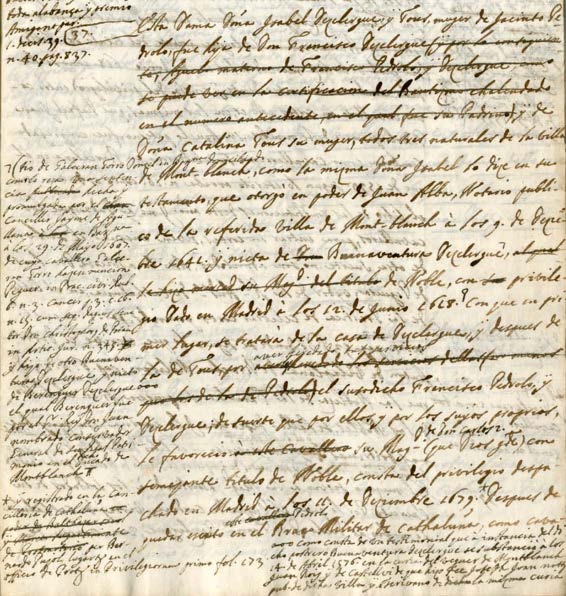
For instance, Figure 28.21 illustrates the documentation he prepared regarding his paternal ancestors from the de Pedrolo family.
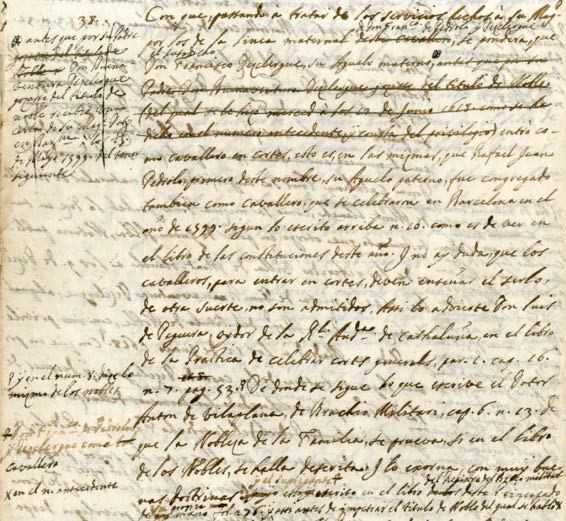
Figure 28.22 indicates that Francesc Desclergue (DC05e) participated in the Corts in 1618, following the tradition of his brother, Jeroni Joan Desclergue y Cortés (DC05), and their father, Bonaventura Desclergue y Cortés (DC04), who had attended in 1599.
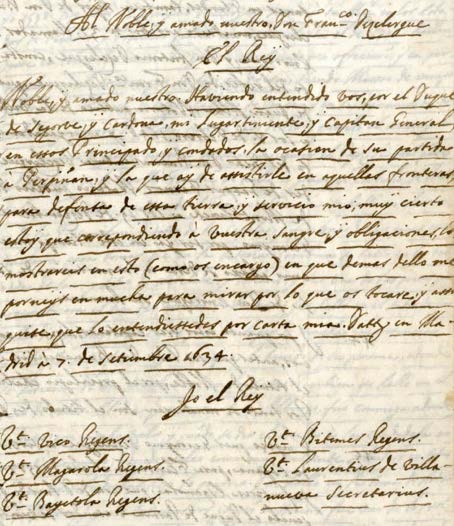
Moreover, Figure 28.23 contains a transcript of the letter of nobility granted by His Majesty the King to Francesc Desclergue (DC05e), the brother of Jeroni (DC05) and the grandfather of Francesc de Pedrolo y Desclergue, on September 7, 1634. This year is particularly notable in the life of Antoni Desclergue (DC06) due to the occurrence of a miracle at Deerlijk in Belgium, which subsequently led to the construction of a chapel around 1639, as detailed in Chapter 49.
The chapters 49.5 and 49.2.2 underscore the coincidence of these events, which may have facilitated the acquisition of a handmade retable from Spanish artisans, depicting a scene from Montblanc. It is plausible that the family adhered to the principle of noblesse oblige in their actions and legacy.
28.5.7 His Paternal Uncle, Francesc Onofre de Pedrolo y Desclergue
Francesc Onofre de Pedrolo y Desclergue should not be confused with Francesc de Pedrolo y Desclergue, as mentioned in Chapter
28.5. Francesc Onofre de Pedrolo y Desclergue was the uncle of the Francesc de Pedrolo y Desclergue referenced in Chapter 28.5;
specifically, he was the brother of Jacint de Pedrolo.
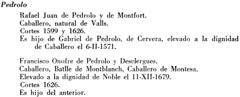
Figure 28.30 on page 362 depicts Francesc Onofre de Pedrolo y Desclergue as a Knight and Alcalde of Montblanc. He was also a Knight of Montesa and served as a Military Auditor in 1659.
Figure 28.31 on page 362 illustrates that by 1679, Francesc Onofre de Pedrolo y Desclergue held the titles of Knight, Alcalde of Montblanc, and Knight of Montesa, and had been granted a nobility title. He participated in the Corts in 1626 and was the son of Rafael Juan de Pedrolo de Montfort, a Knight born in Valls who attended the Corts in 1599 and 1626. Rafael Juan was the son of Gabriel de Pedrolo from Cervera, who had become a Knight in 1571.
Francesc Onofre de Pedrolo y Desclergue was born in 1606. His mother was a member of the Desclergue family, although her specific identity remains unknown.
Further details on the life of Francesc Onofre de Pedrolo y Desclergue are extensively covered in Santiago Alberti’s work.84
28.5.8 Desclergue Documents in Fons documentals de Montblanc a l’ Arxiu comarcal de Tàr-
rega
For reasons of completeness and future reference, we here list the documents concerning Desclergue, as they appear in the article
’Fons documentals de Montblanc a l’ Arxiu comaral de Tàrrega’ of Gener Gonzalvo y Bou:
28.5.8.1 Appointments
a) Nomenament d’ Antoni de Pedrolo y Desclergue com a procurador d’ Antoni Vives, 1687, G., Sig Top. 43.
28.5.8.2 Judicial Documentation of the Patrimony
a) Reclamació de pagament d’ uns censals contra Francesc de Pedrolo y Desclergue, 1687, G, Sig. Top. 43.
83Francesc Esteve y Perendreu, ’Mestrescoles i rectors de l ’Estudi General de Lleida (1597-1717)’ , published by Editions de la University de Lleida, Lleida, 2007, ISBN 978-84-8409-454-8, pages 235-236.
84Santiago Alberti, ’Esquema històric del llinatge Pedrolo,’ pages 49-88 of URTX Revista Cultural de l’Urgell, Num 7, 1995.
© 2024 Nico F. Declercq
The Desclergues of la Villa Ducal de Montblanc, 2nd ed., Omn., VOL. I
28.5. DON FRANCESC DE PEDROLO Y DESCLERGUE, (DC05EX1Y2)
351
28.5.8.3 Personal and Family Documentation - Family History
a) «Libro de familia comprehensivo de las Casas de Pedrolo y Desclergue, y parte de las de Folcràs y Perelló», ss. XVII-XIX, V.
b) Mèrits de Francesc de Pedrolo y Desclergue, cavaller de l’ orde de Montesa, 1659, G, Sig. Top. 52.
c) Epítom dels serveis de Francesc de Pedrolo y Desclergue, s.d., G., Sig. Top. 52.
d)Notes sobre la noblesa de Francesc de Pedrolo y Desclergue, s.d., G, Sig. Top. 52.
28.5.8.4 Personal and family Documentation - Inheritance Documentation
a)Testaments de Pedrolo y Desclergue, 1523-1771, G, Sig. Top. 2.
28.5.8.5 Personal and Family Documentation - Francesc de Pedrolo y Desclergue
a) Nomenament de Francesc de Pedrolo y Desclergue com a jutge de la taula de la vila de Montblanc, 1680, G, Sig. Top. 52.
b) Privilegi de veguer de Montblanc a favor de Francesc de Pedrolo y Desclergue, 1687, G, Sig. Top. 52.
28.5.8.6 Desclergue Family - General Documentation of Assets
a) Nota sobre la documentació del mas Solé, 1633, G, Sig. Top. 43.
28.5.8.7 Desclergue Family - Transfer of Ownership
a) Compra i venda d’ unes cases a Montblanc, 1598-1780, G, Sig. Top. 6.
b) Venda de dues peces de terra del terme de Montblanc, feta per Marianna Tous i Francesc Desclergue, a favor de Pere Moix, 1600, G, Sig. Top. 36.
c) Venda d’ uns olivers del terme de Montblanc, feta per Francesc Desclergue i Caterina, la seva muller, a favor de Joan Tous i Magdalena, la seva muller, 1605, G, Sig. Top. 36.
d) Compra i venda dels masos Solé i Oller, de Rojals, 1615-1739, G, Sig. Top. 6.
e) Venda del mas Porcell, 1633, G., Sig. Top. 43.
f) Establiment de Bonaventura Desclergue d’ una casa de Barcelona, a favor de Miguel Pinyol, 1710, G., Sig. Top. 6.
f) Venda de Ciril de Pedrolo a Josep Cabeça, de diverses peces de terra dins el terme de Montblanc, 1718, G, Sig. Top. 6.
28.5.8.8 Desclergue Family - Accounting
a) Llibre Major de Francesc Desclergue, s. XVI-XVII, V, Sig. Top. 6.
b) Llibre de Rebuts de la casa Desclergue, 1627-1773, V, Sig Top. 7.
c) Memòria de Francesc Desclergue sobre diversos pagaments, 1630, G, Sig Top. 36.
d) Apoca a favor de Francesc Desclergue, feta per les pubilles Jorís, 1640, G, Sig. Top. 36.
28.5.8.9 Desclergue Family - Equity - Debt
a) Creacions de censals i apoques, 1591-1780, G, Sig. Top. 7 1.3.2 Documentació judicial - Fragment d’ una causa de la família Desclergue, 1597, G, Sig. Top. 36.
b) Causa entre l’ Hospital de Montblanc i Francesc Desclergue sobre un censal que afectava al molí de Benaprès, 1624-1625, G., Sig. Top. 6.
c) Fragment de la causa entre Jaume Tost i Francesc Desclergue, 1629, G., Sig. Top. 43.
d) Plet dels jutges de la taula de la vila de Montblanc, 1645, G, Sig. Top. 52.
e) Causa entre Francesc de Pedrolo y Desclergue i Isidre Hospital, 1680- 1684, G., Sig. Top. 36.
f) Causa entre Francesc i Antoni Pedrolo y Desclergue, i Joan de Poch, sobre la restitució d’ un dot, 1684-1688, G., Sig. Top. 6.
g) Causa entre Francesc de Pedrolo y Desclergue i Joan Rovira, 1697, G, Sig. Top. 36.
h) Causa entre Pedrolo i Damià Solanes sobre uns censals que afectaven els molins de Montblanc, 1711-1732, G., Sig. Top. 6.
I)Articulacions sobre la venda a Francesc Jacint Jorís, espòs d’ Isabel Desclergue, del lloc de Pareres i el terme i castell de Bolet [s.
XVII], G, Sig. Top. 36.
j) Plica de testimonis en la causa contra els curadors de les pubilles Jorís, 1634, G., Sig. Top. 36.
k) Citació judicial a Felicià Vives sobre l’ herència de Maria Vives, esposa d’ Antoni de Pedrolo, 1698, G., Sig. Top. 36.
l) Concòrdia entre Caterina Tous, muller de Francesc Desclergue, i Marianna i Elisabet Tous, germanes, 1600, G., Sig. Top. 36.
28.5.8.10 Desclergue Family - Correspondence
a) Trasllat d’ una lletra del rei Pere III sobre els fets d’ armes dels Desclergue, 1383, G, Sig. Top. 52.
b) Despatx reial a favor de Francesc Desclergue, 1634, G., Sig. Top. 52.
28.5.8.11 Desclergue Family - Family History
a) Arbre genealògic del llinatge Desclergue i del seu entroncament amb els Pedrolo, s.d., G, Sig Top. 52.
b) Mèrits del llinatge Desclergue, 1576, G, Sig. Top. 52.
c) Notes relatives a les gestes militars del llinatge Desclergue, s.d., G, Sig Top. 52.
d) Notes de Francesc Desclergue relatives al llinatge Desclergue, s.d., G, Sig. Top. 52.
The Desclergues of la Villa Ducal de Montblanc, 2nd ed., Omn., VOL. I
© 2024 Nico F. Declercq
CHAPTER 28. BONAVENTURA DESCLERGUE (DC04) AND HIS FAMILY
28.5.8.12 Desclergue Family - Inheritance Documentation
a) Capítols matrimonials entre Jacint Francesc Jorí i Isabel Desclergue, 1627, G, Sig. Top. 43.
28.5.8.13 Desclergue Family - School and Academic Documentation
a) Privilegi de doctorat de Francesc Desclergue, 1587, G, Sig. Top. 52 1.3.4.4 Documentació personal.
28.5.8.14 Desclergue Family - Francesc Desclergue
a) Nomenament, per part dels ducs de Cardona, de jutges comptadors a favor de Francesc Desclergue i Miguel Joan Forner, 1598, G, Sig. Top. 52.
b) Rúbrica dels privilegis concedits pels ducs de Cardona a favor del Dr. Francesc Desclergue, s. XVII, G, Sig. Top. 52.
c) Comissió del duc de Cardona a favor del Dr. Francesc Desclergue, 1600, G, Sig. Top. 52.
d) Possessió de les terres dels ducs de Cardona per part de Francesc Desclergue, 1608-1609, G., Sig. Top. 52.
28.5.8.15 Desclergue Family - Bonaventura Desclergue
a) Privilegi de noblesa atorgat a Bonaventura Desclergue, 1618, G, Sig. Top. 52.
b) Rebuts per l’ expedició del privilegi de noblesa de Bonaventura Desclergue, 1618, G, SIg. Top. 38.
28.5.8.16 Desclergue Family - Other documentation
a) Notícia de la venda dels castells i termes de Concabella i Grassa, a Gaspar d’ Omós i Arnau Marçal, 1428, G, Sig. Top. 36.
b) Venda d’ una peça de terra del terme de Tàrrega, feta pels esposos Francesc i Elisabet Jover, a favor de Joan i Tomassa Avisanda, 1583, G, Sig. Top. 36.
c) Notes sobre els béns rebuts per Paula de Ratera, per part de Tecla, la seva mare, 1635, G., Sig. Top. 36.
d) Notes extretes de llibres d’ Antoni Moles, cirurgià, 1659-1674, G., Sig. Top. 36.
e) Memòria del governador de les baronies d’ Entença sobre el lloc de Capçanes, s.d., G, Sig. Top. 36.
28.5.9 Antoni de Pedrolo (DC05ex1y2y1)
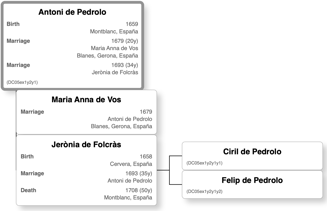
Antoni de Pedrolo (DC05ex1y2y1) was the son of Francesc de Pedrolo y Desclergue (DC05ex1y2) and Anna Maria de Ratera y Robuster. He was married twice. The reader may also check Chapter 48.4 about Joannes de Vos to situate the current section and use Figures 28.24 and 28.25 for guidance. He married first Maria Anna De Vos in 1679, who died in 1684. Later, he married Jerònia de Flocràs in 1693, was born in Cervera in 1658, and died in Montblanc in 1708. Maria Anna De Vos was the daughter of Joannes De Vos (born in Harelbeke in 1633 and dead in Harelbeke in 1708) and Maria Anna Portea y Roure. Joannes De Vos married, in a second marriage, i.e., after Maria Anna Portea died, to Joana Declercgz (DC08b). This marriage in 1685 came after meddling by Antoni Desclergue II (DC06). He would name one of his daughters after his deceased wife, Maria Anna de Vos (DC08bx3), born in 1693 at Harelbeke. Interestingly, in 1686, father and son Francesc de Pedrolo y Desclergue (DC05ex1y2) and Antoni de Pedrolo (DC05ex1y2y1) went to court, as studied by Gener Gonzalvo y Bou85. The document describes how father and son claim a dowry back from Joan de Poch or Joannes De Vos. In Latin, the document86 states:
’Pro nobilibus Francesc et Antonio de Pedrolo, patre et filio, contra Ioannem de Poch, civem honoratum Barcinonae. Referente nobili Iosepho de Pastor & Mora .. in actis Golorons, Tota difficultas in praesentiatum eo sistit, an nobiles Franciscus de Pedrolo
& .. gaudeant beneficio deducto ne egeant contra repetitione[m] dotis instatae per Ioannem de Poch ...’
In English, it says
’The nobles Francesc and Antoni de Pedrolo, father and son, against Joannes de Poch, an honored inhabitant of Barcelona. Regarding the nobles Josephus de Pastor and Mora in the case of Goloron and all the accompanying difficulties that that case involved, the nobles Francesc and Antoni de Pedrolo enjoy the benefit of not having to pay the demand for dowry requested by Joan de Poch.’
Therefore, we conclude that Maria Anna De Vos had died and that her widower claimed an ending of the payment of his dowry to his father-in-law. This decision must have been influenced by the fact that Joannes De Vos had married in 1685 in Harelbeke, in a second marriage to Joana Declercgz (DC08b), and would probably not return to Spain.
Although Joana Declercgz (DC08b) was a blood relative of father and son Francesc Jacinto de Pedrolo y Desclergue (DC05ex1y2) and Antoni de Pedrolo (DC05ex1y2y1), they probably wanted to keep their money and marry again, instead of seeing it disappear in Flanders.
28.5.10 Amadeo Francesc Desclergue y Tous (DC05ey1)
We can cite Josep Maria Grau i Pujol and Francesc Badia i Batalla87:
’Desclergue i Tous, Amadeu de. Doctor en dret per la Universitat de Lleida 1624), i veguer de Montblanc. Fill de Francesc Desclergue i de Caterina Tous.’
He was a brother of Isabel de Desclergue (DC05ex1) and son of Don Francesc Desclergue (DC05e) and Catalina Tous y Monserrat.
Amadeo Desclergue (DC05ey1) was already in 1624 a Doctor in Law and bore the title of Squire88.
He was Veguer of Montblanc. For this reason, he had to appoint a solicitor in Barcelona to act as his agent before the Master 85’1.3.1.2 Transferència de propietat’ in ’Fons Documentals de Montblanc; a l’ arxiu comarcal de Tàrrega’ , the document ’Causa entre Francesc i Antoni Pedrolo y Desclergue, i Joan Poch, sobre la restitució d’ un dot,’ 1684-1688, G., Sig. Top. 6’
86Francesc de Pedrolo i de Desclergue (DC05ex1y2), Antoni de Pedrolo i Ratera, Josep Pastor and Josep Llopis, Published by Barcin, Ex typ. Iosephi Llopis .., 1686.
87Josep Maria Grau i Pujol and Francesc Badia i Batalla, ’Diccionari biogràfic històric de Montblanc (1155-1920), Fundació Martí l’ Humà. Tot Conca.
Carrer Josa, 6, Montblanc, 2008.
88Manual Notarial. 3 514 (1624) 7 marzo. Archivo Histórico Provincial (A.H.P.) Tarragona.
© 2024 Nico F. Declercq
The Desclergues of la Villa Ducal de Montblanc, 2nd ed., Omn., VOL. I
28.6. EARLIER CONNECTION WITH THE DE PEDROLO FAMILY
353
Rational, Lieutenant, and other authorities.89
Amadeo Francesc Desclergue (DC05ey1) would marry Isabel Ana Duch of Montblanc. They had no children.
His choice of liaison in Barcelona confirms his blood relationship with the Barcelona branch of the family. Indeed, the chosen one was Jerónimo Desclergue (DC02dy2), a resident of Barcelona and also, like him, a Squire. This Desclergue of Barcelona belonged to the branch of the same Desclergue family described in this book. Jerónimo Desclergue (DC02dy2) would die in 1633.
Amadeo Francesc Desclergue (DC05ey1) had already died in 1633 and formed the end of the Montblanc branch of Desclergue,90
while the Desclergue line has continued in Flanders through Jeroni Joan Desclergue y Cortés (DC05), his son Antoni Desclergue (II) (DC06) and subsequent bloodline until the present.
28.6 Earlier Connection with the de Pedrolo Family
In the literature, reference is made to another Francesc de Pedrolo y Desclergue who must, given his name, have been the son of a Desclergue and a Pedrolo. He should be distinct from the two persons carrying the same name in the Montblanc branch. We also don’t know if this Pedrolo was related to the Pedrolo who married our branch. It likely concerns a Barcelona branch of the Desclergues. Given the known details about the military career of this Francesc de Pedrolo y Desclergue, he must have been born before 1620. In 1653, he married a certain Sabina Pedrolo from Barcelona at Montesa in Valencia.
The references91 read as follows:
Francesc de Pedrolo y Desclergue was in the ’Companyó del comanador dÓnda (12-III-1657)’ and was ’Capità dÍnfanteria quan se li realitzen les informacions (1644); batlle de Montblanc (MOLAS, 1996, p. 211),’ his wife was Sabina Pedrolo from Barcelona.
89Manual Notarial. 3 514 (1624) 27 sept. Archivo Histórico Provincial (A.H.P.) Tarragona.
90Manual Notarial. 3 518 (1633) 9 nov. Archivo Histórico Provincial (A.H.P.) Tarragona.
91’El 16-VII-1653 se li donà llicència per a casar-se amb Sabina Pedrolo, de Barcelona. Léxpedient en AHN, OOMM, casaments, Montesa, nº 153.’
The Desclergues of la Villa Ducal de Montblanc, 2nd ed., Omn., VOL. I
© 2024 Nico F. Declercq
354
CHAPTER 28. BONAVENTURA DESCLERGUE (DC04) AND HIS FAMILY
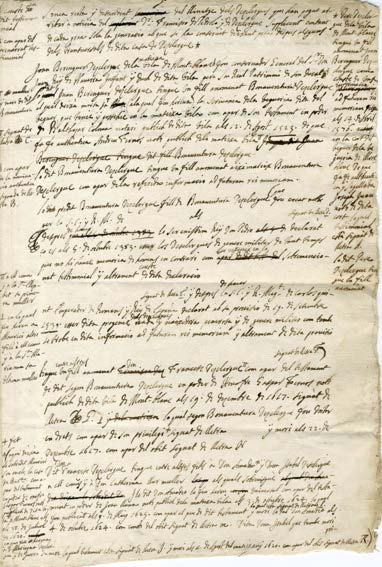
Figure 28.18: This is a fragment of a handwritten text ’De algun transversals
de la casa Desclergue’ , by Francesc de Pedrolo y Desclergue (born in 1641, son of
Jacint de Pedrolo and Isabel Desclergue y Tous) It shows what he knew at the time
of these notes, about his ancestry tree without paying attention to side branches.
(Source: Arxiu Comarcal Urgell Desclergues document 1 page 2; Courtesy of
Arxiu Comarcal Urgell and the de Pedrolo family)
© 2024 Nico F. Declercq
The Desclergues of la Villa Ducal de Montblanc, 2nd ed., Omn., VOL. I
28.6. EARLIER CONNECTION WITH THE DE PEDROLO FAMILY
355
Figure 28.19: Three descending generations of Francesc Desclergue y Ratera (DC05e).
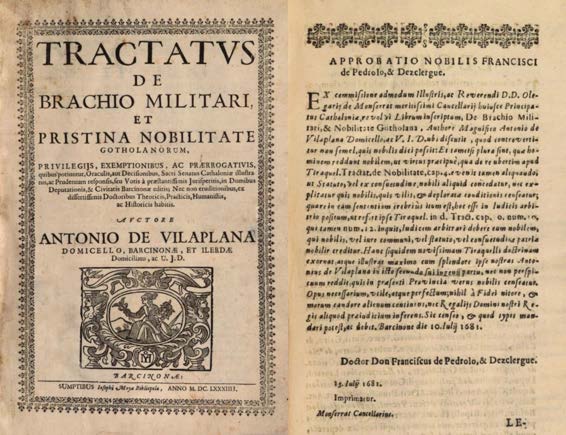
Figure 28.20: July 12, 1681, Doctor Francesc De Pedrolo y Desclergue received his noble title. It can be found in
’Tractatus de brachio militari et pristina nobilitate gotholanorum: privilegis, exemptionibus, ac praertogrativis’ , by Antonio de Vilaplana, domincello Barcinonae et Liierdae, printed by Josephus Moya, 1684. His information letter of 1661 is shown in Chapter 79.
The Desclergues of la Villa Ducal de Montblanc, 2nd ed., Omn., VOL. I
© 2024 Nico F. Declercq
356
CHAPTER 28. BONAVENTURA DESCLERGUE (DC04) AND HIS FAMILY
Figure 28.21: This is a fragment of a handwritten ’1661 transcript of nobility letter Francesc de Pedrolo y Desclergue’
by Francesc de Pedrolo y Desclergue (born in 1641, son of Jacint de Pedrolo and Isabel Desclergue y Tous). It highlights the immediate ancestors of Francesc de Pedrolo y Desclergue. (Source: Arxiu Comarcal Urgell Desclergues document 3
page 9 view 1; Courtesy of Arxiu Comarcal Urgell and the de Pedrolo family)
© 2024 Nico F. Declercq
The Desclergues of la Villa Ducal de Montblanc, 2nd ed., Omn., VOL. I
28.6. EARLIER CONNECTION WITH THE DE PEDROLO FAMILY
357
Figure 28.22: This is a fragment of a handwritten ’1661 transcript of nobility letter Francesc de Pedrolo y Desclergue’
by Francesc de Pedrolo y Desclergue (born in 1641, son of Jacint de Pedrolo and Isabel Desclergue y Tous). It shows that Francesc Desclergue (DC05e), Jeroni Desclergue’s (DC05) brother and Francesc de Pedrolo y Desclergue’s grandfather joined the corts of 1618. (Source: Arxiu Comarcal Urgell Desclergues document 3 page 10 view 1; Courtesy of Arxiu Comarcal Urgell and the de Pedrolo family)
The Desclergues of la Villa Ducal de Montblanc, 2nd ed., Omn., VOL. I
© 2024 Nico F. Declercq
358
CHAPTER 28. BONAVENTURA DESCLERGUE (DC04) AND HIS FAMILY
Figure 28.23: This is a fragment of a handwritten ’1661 transcript of nobility letter Francesc
de Pedrolo y Desclergue’ by Francesc de Pedrolo y Desclergue (born in 1641, son of Jacint de
Pedrolo and Isabel Desclergue y Tous). It is a transcript of the nobility letter addressed to
Francesc Desclergue (DC05e), Jeroni Desclergue’s (DC05) brother and Francesc de Pedrolo y
Desclergue’s grandfather. (Source: Arxiu Comarcal Urgell Desclergues document 3 page 10 view
2; Courtesy of Arxiu Comarcal Urgell and the de Pedrolo family).
© 2024 Nico F. Declercq
The Desclergues of la Villa Ducal de Montblanc, 2nd ed., Omn., VOL. I
28.6. EARLIER CONNECTION WITH THE DE PEDROLO FAMILY
359
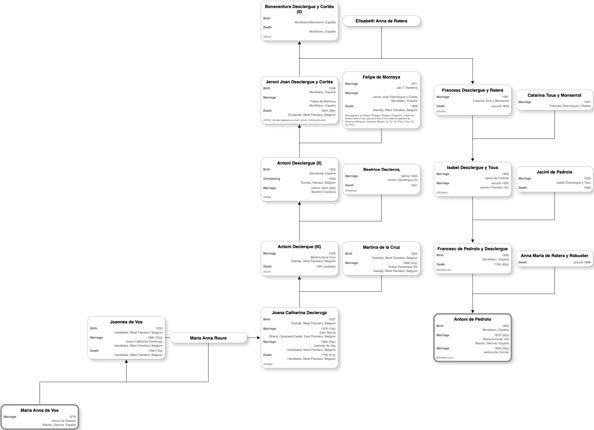
Figure 28.24: Antoni de Pedrolo was a distant relative of his first wife Maria Anna de Vos. How he relates to her is shown in this ancestry relationship chart. Antoni Desclergue (II) (DC06), Maria Anna’s great-grandfather, was a cousin of Isabel Desclergue y Tous, Antoni de Pedrolo’s grandmother. Antoni Desclergue (II) (DC06) was also Antoni de Pedrolo’s godfather.
Figure 28.25: The two marriages of An-
toni de Pedrolo.
The Desclergues of la Villa Ducal de Montblanc, 2nd ed., Omn., VOL. I
© 2024 Nico F. Declercq
360
CHAPTER 28. BONAVENTURA DESCLERGUE (DC04) AND HIS FAMILY
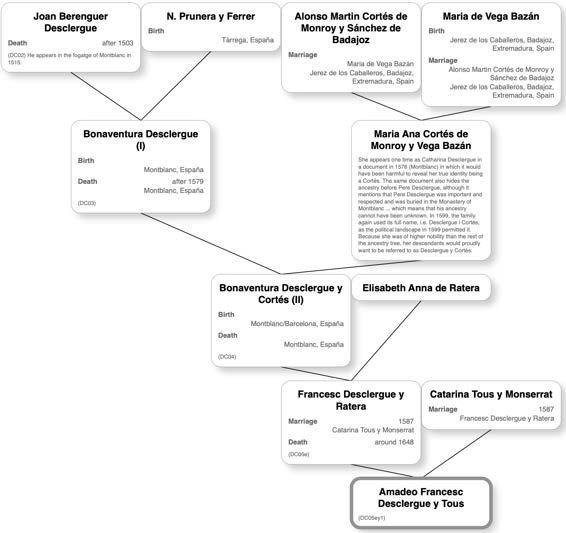
Figure 28.26: The ancestry of Amadeo Amadeo Francesc Desclergue y Tous (DC05ey1). His grandfather Bonaventura Desclergue y Cortés (DC04) is our paternal ancestor.
© 2024 Nico F. Declercq
The Desclergues of la Villa Ducal de Montblanc, 2nd ed., Omn., VOL. I
28.6. EARLIER CONNECTION WITH THE DE PEDROLO FAMILY
361
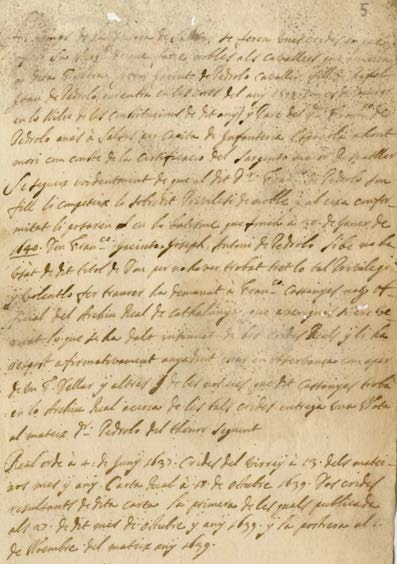
Figure 28.27: This document describes the events in 1637, 1639 and 1640 con-
nected to the noble title of Francesc De Pedrolo after the death of his father Jacinth,
and also shows the complete name of the child and his baptism on January 30 in
1640, in the presence of Antoni Desclergue (DC06). The document is also shown
in Figure 49.38 on page 1004 (Source: Arxiu Comarcal Urgell De Pedrolo document 1640; Courtesy of Arxiu Comarcal Urgell and the de Pedrolo family)
Figure 28.28: The marriage of Antoni de Pedrolo y Desclergue (DC05ex1y2y1) in Blanes, Gerona, Spain on August 14, 1679, with Maria Anna de Vos (de Poch y Roure). The bride was the daughter of Joannes de Vos (Joan de Poch), born in Harelbeke in 1633 of a Barcelonese father, and Maria Anna Roure.
The Desclergues of la Villa Ducal de Montblanc, 2nd ed., Omn., VOL. I
© 2024 Nico F. Declercq

362
CHAPTER 28. BONAVENTURA DESCLERGUE (DC04) AND HIS FAMILY
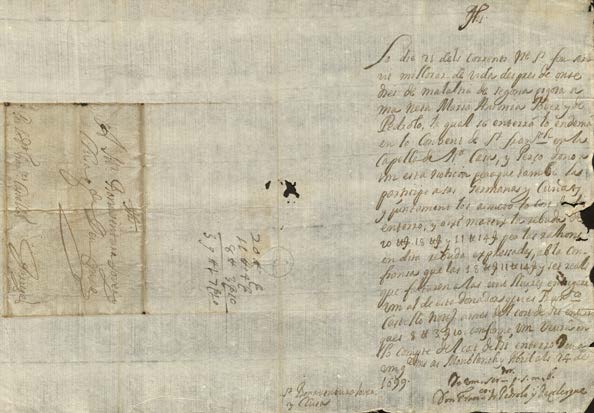
Figure 28.29: Letter from Francesc de Pedrolo i Desclergue to Bonaventura Jover i Clusa, with the notification of the death of his granddaughter Mª Antonia Jover i Pedrolo.76
Figure 28.30: Francesc Onofre de Pedrolo y Desclergue
in Francisco José Morales Roca, "Próceres habilitados en
las Cortes del Principado de Cataluña, siglo XVII (1599-
1713)", Ediciones Hidalguia, 1983, p. 299.
Figure 28.31: Francesc Onofre de Pedrolo y Desclergue
in Francisco José Morales Roca, "Próceres habilitados en
las Cortes del Principado de Cataluña, siglo XVII (1599-
1713)", Ediciones Hidalguia, 1983, p. 28.
© 2024 Nico F. Declercq
The Desclergues of la Villa Ducal de Montblanc, 2nd ed., Omn., VOL. I
The Desclergues of la Villa Ducal de Montblanc, 2nd ed., Omn., VOL. II
© 2024 Nico F. Declercq
The Desclergues in Habsburg Belgium
The Desclergues of la Villa Ducal de Montblanc, 2nd ed., Omn., VOL. II
© 2024 Nico F. Declercq
Jeroni Joan Desclergue y Cortés (DC05) & Felipa de
Montoya
29.1 Jeroni’s complete Name
The complete name of Jeroni Desclergue (DC05) was Jeroni Joan Desclergue y Cortés. The term ’Desclergue’ was his paternal ancestry, while the phrase ’Cortés’ was the ancestry of his grandmother, something he must have been very proud of. Jeroni was his first name, and he used Joan as a second name to distinguish himself clearly from his cousin, who carried the same name. Indeed, there were two Jeroni Desclergues at that time, and both can be found attending the Corts in Barcelona. In the Corts document, our Jeroni is called Jeroni Desclergue y Cortés, while the other is called Jeroni Desclergue. There is no doubt that each used a second name to refer to their respective forefathers from which they descended, namely Joan Desclergue, described in Chapter
26.0.1, or Galceran Desclergue, described in Chapter 25.1.3. Therefore, the complete name of the other Jeroni was Jeroni Galceran Desclergue (DC02dy2), described in Chapter 25.1.3.3.
It means his children could have referred to their father as ’Jeroni,’ ’Jeroni Joan,’ or ’Joan.’
This conclusion is the result of advice given by an expert on Spanish genealogy, Jairo Eduardo Cortés Rosal,12 who also wrote a foreword to the second edition of this book.
Cortés Rosal reached the following conclusion:
He most certainly used a second name to call himself, thus marking the difference with his relative. In this case Joan used ‘Jeroni Joan Desclergue y Cortés’. It reminds me of the case of a Catalan man from 600 years ago called Pere Soler, who added Joan to establish a difference with a distant contemporary cousin. Therefore, he was named Pere Joan Soler. Obviously, your forefather wore the ‘Joan’ of his grandfather Joan Berenguer Desclergue.
Furthermore, Jeroni Joan Desclergue (DC05) served as the godfather of Jeronimus Joannes Declercq (DK04h), the presbyter at Loos, who was the son of Jan Declercq and Isabeau Braye. Jeronimus Joannes Declercq (DK04h) is shown in Figure 34.245 on page
606, Figure 34.249 on page 608 and is described in Chapter 34.13.7, Chapter 34.13.7.2, and Chapter 34.13.8.10.
29.2 Introduction
Jeroni Joan Desclergue y Cortés (DC05) is our patrilineal ancestor who arrived in Flanders, shown in Figure 29.1, from Spain and was married to Felipa de Montoya. Their son, Antoni Desclergue (DC06), is our forefather. Jeroni was likely born in Montblanc, Spain, in 1566. His parents were Bonaventura Desclergue y Cortés and Maria Anna Desclergue y Villavicencio. However, after his mother’s death, he was raised by his stepmother, Elisabeth Anna de Ratera.
The reader may be interested in consulting Figure 28.4 on page 338. We shall show fragments from the Desclergue and de Pedrolo family archives as an introduction and as appropriate.
The fragment in Figure 29.2 says that Jeroni Desclergue belongs to the mother’s side of Francesc de Pedrolo y Desclergue and that he was a brother of Francesc Desclergue (DC05e) and a son of Bonaventura Desclergue (DC04). He was one of the Knights who served in the corts of the year 1599, as found in the books of the constitution, shown in Figure 29.99, on page 415, 29.101, on page
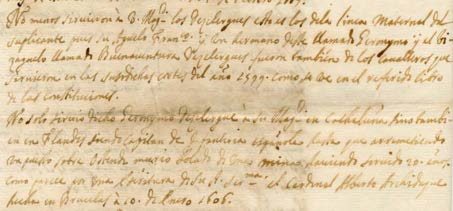
Jeroni Desclergue has assisted the King in Catalonia and Flanders, where he served as the captain of Spanish infantry and took part in the Siege of Ostend, where a mine blast killed him after 20 years of service in the army. Francesc de Pedrolo y Desclergue (DC05ex1y2) found this information in a statement by Archduke Albert, shown in Figure 29.2, written in Brussels on January 10, 1606.
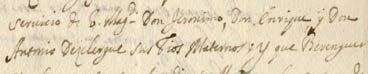
The fragment in Figure 29.3 shows that Jeroni (DC05) and his two brothers Antoni (DC05b) and Enric (DC05c) were designated as ’Don,’ not just ’Mossen,’ and is consistent with the noble titles they have received.
Don Jeroni Joan Desclergue y Cortés (DC05), our ancestor from a Montblanc family, who arrived in Flanders in Belgium, was a Catalan soldier from Spain. His son Antoni (DC06), born in Barcelona but raised in Flanders, was equally a Catalan military and is described in Chapter 34. As described in Part VI and Part VII, and, in particular, Chapter refIII.10.e, they descend from Bertrand Du Guesclin3 and Desclergues. The family inherited the name Desclergues from Pere Torró y Desclergue’s uncle, Ramon Berenguer Desclergue, a notary.
Jeroni Joan’s parents were blood-related and had Regal, Conquistador, and Mercador blood. His mother, Maria Anna Desclergue y Villavicencio, was a daughter of Galceran Desclergue (I=II) (DC02d), described in Chapter 25.1.3. The latter was the son of a Mercador, Galceran Desclergue (I=II) (DC02d), described in Chapter 25.1.3, who has been involved with trade with the territories conquered by his relative Conquistador Hernán Cortés de Monroy in Mexico, Cuba and Hispaniola.
1Jairo Eduardo Cortés Rosal is a Venezuelan-Spanish historian and genealogist who earns all the credit for providing the author with the enormous amount of information about the ancestry of Maria Ana Cortés de Monroy y Vega. During an exchange with Jairo Eduardo Cortés Rosal, he elucidated the requisite skills and methodologies used by historians and genealogists when delving into the investigation of ancestral lineages, namely those delineated throughout the chapters of this literary work, particularly the ancestry of Hernán Cortés. The author made the deliberate choice to communicate Cortés Rosal’s thoughts and ideas to the reader, as they possess a motivational quality that may resonate with those who have an inclination towards this particular field of study or those who want to gain insight into the complexities involved in researching one’s lineage within a historical framework.
2Cortés Rosal created the Santa Fe de Bogotá Genealogy team, led by Fenita Hollman de Villaveces, in Bogotá. He is a descendant of Don Enrique de Guzmán, the Count of Niebla of the Ducal House of Medina-Sidonia. His grandfather is Juan Flórez de Ocariz, a Royal Notary in the Viceroyalty of New Granada in Santa Fe de Bogotá and was a great genealogist. He wrote the excellent work ’Genealogies of the New Kingdom of Granada.
3We have shown that Bertrand Du Guesclin descended from Hakim, who was, in fact, a Desclergue.
The Desclergues of la Villa Ducal de Montblanc, 2nd ed., Omn., VOL. II
© 2024 Nico F. Declercq
368
CHAPTER 29. JERONI JOAN DESCLERGUE Y CORTÉS (DC05) & FELIPA DE MONTOYA
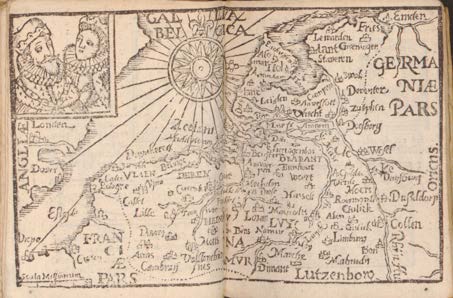
Figure 29.1: A map of the Netherlands that Jeroni Desclergue should have had in his mind when
he came to Flanders. Although it was defacto split into a Spanish-ruled part and an independent
area, the Spanish still saw it as one Spanish area, partially disturbed by rebels. In particular,
Holland is found safely behind a water barrier, while along the Leie and Schelde Rivers, one can
discover Ghent, Kortrijk, Tournai, and Cambrai.
Figure 29.2: This is a fragment of a handwritten text ’Notes relatives ales gestes militars
del llinatge Desclergue’ , by Francesc de Pedrolo y Desclergue (born in 1641, son of Jacint de
Pedrolo and Isabel Desclergue y Tous). (Source: Arxiu Comarcal Urgell Desclergues document
2 page 2 view 1; Courtesy of Arxiu Comarcal Urgell and the de Pedrolo family)
Figure 29.3: This is a fragment of a handwritten ’1659 short description
of the Desclerges by Francesc de Pedrolo y Desclergue’ (born in 1641, son of
Jacint de Pedrolo and Isabel Desclergue y Tous). (Source: Arxiu Comarcal
Urgell Desclergues document 4 page 3 view 1; Courtesy of Arxiu Comarcal
Urgell and the de Pedrolo family)
© 2024 Nico F. Declercq
The Desclergues of la Villa Ducal de Montblanc, 2nd ed., Omn., VOL. II
29.2. INTRODUCTION
369
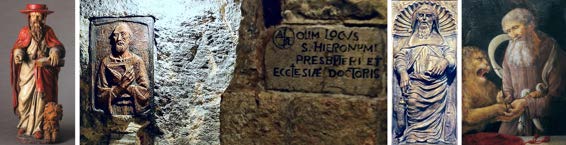
Figure 29.4: From left to right, we show images of Saint Hieronymus. First, a citation is shown from ’Van Patinir tot Ribera, de Heilige Hiëronymus in woord en beeld’ , by ’Het Gulden Cabinet’ , 2014, page 14. It’s a picture of a figurine in polychrome oak, of Saint Hieronymus, made in the 16th century in Brabant. The figure is located at ’Museum M,’
Leuven inventory code C/372, and the citation shows that Saint Jeroni was often depicted with a little lion. The depicted Sant Jeroni initially held a stick in his left hand, which can still be seen in his hand’s posture. He has the script in his left hand. Then, we look inside the cavern in Jerusalem, where Saint Jeroni spent 18 years of his life, around 388 AD, and translated the Old Testament into Latin. The carving depicts him holding the bible close to his heart. Consequently, an image of Saint Jeroni in Rome and Sant Agostino in Campo Marzio depicts a lion holding the bible close to his heart.
Finally, we show Saint Jerome and the Lion, Liberale da Verona (1441-1529). The picture shows how Saint Jerome removes a thorn from a lion’s leg, similar to Jeroni Joan Desclergue y Cortés (DC05), who died to remove the thorn (Protestant held Ostend) from the Leo Belgicus in 1604.
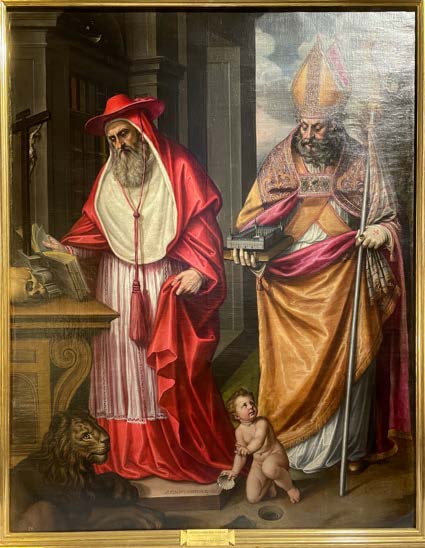
Figure 29.5: San Jeronimo y San Agustin, by Alonso Sánchez Coello, 1531/1532 - 1588,
shown at the chapel of San Lorenzo de El Escorial, 2022. (Declercq de Silva Archive)
The Desclergues of la Villa Ducal de Montblanc, 2nd ed., Omn., VOL. II
© 2024 Nico F. Declercq
370
CHAPTER 29. JERONI JOAN DESCLERGUE Y CORTÉS (DC05) & FELIPA DE MONTOYA
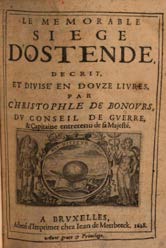
Figure 29.6: Front page of a book about the Siege of Ostend, pub-
lished in 1628. Jeroni Desclergue’s (DC05) death at Ostend in 1604 is
described in this book on page 585.
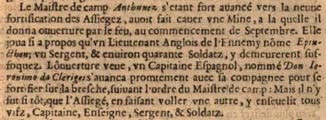
Figure 29.7: Page 585 of the book shown
in Figure 29.6. ’Le Maistre de camp An-
tuñes s’ étant fort avancé vers la neuve
fortification des Assiégés, avoir fait caver
une mine, à laquelle il donna ouverture par
le feu, au commencement de Septembre.
Elle joua si à propos, qu’ un Lieutenant
Anglais de l’ ennemi nommé Benethon, un
Sergent, et environ quarante Soldats, y de-
meureront suffoqués. L’ ouverture vue, un
Capitaine Espagnol, nommé Don Ieronimo
de Cleriges s’ avance promptement avec sa
compagnie pour le fortifier sur la brèche,
suivant l’ ordre de Maistre de camp: Mais
il n’ y fut si tôt, que l’ Assiégé, en faisant
voler une autre, y ensevelit tous vifs, Cap-
itaine, Enseigne, Sergent, et Soldats.’ An-
tuñes resided at Tournai, where Jeroni De-
sclergue resided too. His endorsement can
be found in 29.93 and 29.94 on page 413.
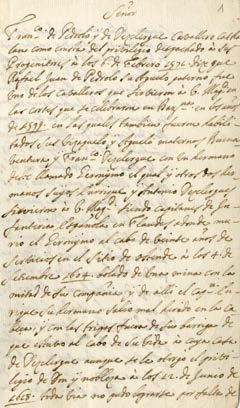
Figure 29.8: This is a fragment of a handwritten ’1659
short description of the Desclerges by Francesc de Pe-
drolo y Desclergue’ (born in 1641, son of Jacint de Pe-
drolo and Isabel Desclergue y Tous). (Source: Arxiu Co-
marcal Urgell Desclergues document 4 page 1; Courtesy
of Arxiu Comarcal Urgell and the de Pedrolo family)
© 2024 Nico F. Declercq
The Desclergues of la Villa Ducal de Montblanc, 2nd ed., Omn., VOL. II
29.2. INTRODUCTION
371
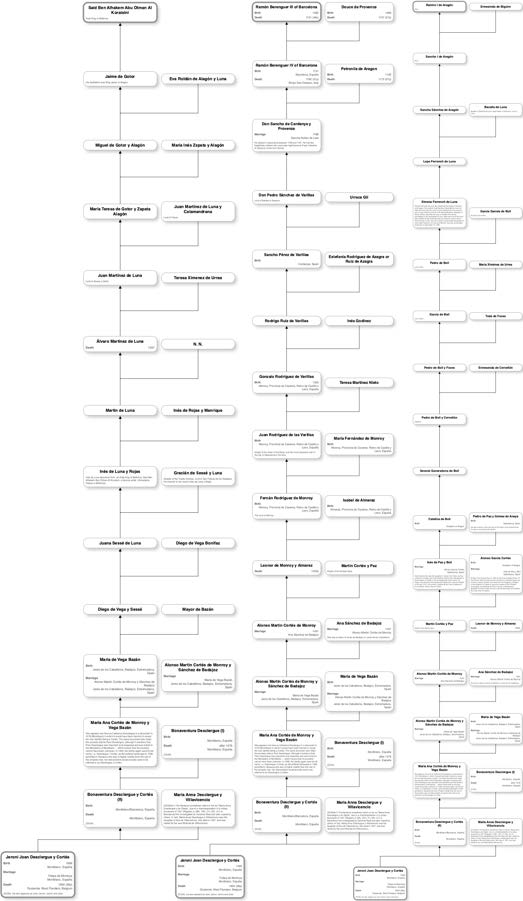
Figure 29.9: Jeroni Jona Desclergue y Cortés, our forefather, descended from royalty through more than one bloodline.
The Desclergues of la Villa Ducal de Montblanc, 2nd ed., Omn., VOL. II
© 2024 Nico F. Declercq
CHAPTER 29. JERONI JOAN DESCLERGUE Y CORTÉS (DC05) & FELIPA DE MONTOYA
Jeroni Joan’s father, described in Chapter 28, was a son of Maria Ana Cortés de Monroy y Vega Bazán, a cousin of Hernán Cortés de Monroy (Medellin 1485 - Castileja de la Cuesta 1547). Jeroni was blood-related to Cortes along two lines, shown in Figure 49.91
on page 1021 and in Figure 49.92 on page 1022.
Jeroni Desclergue was also related to Royalty in Spain, as shown in Figure 29.9 on page 371.
When the author visited Rome for the first time in September 2001 and made his first oral presentation at an International Congress (ICA2001), the first church he visited was the Basilica of Santa Maria Maggiore. Coincidentally, this is the church where the remains of Saint Hieronymus rest. A figurine of the Saint is shown in Figures 29.4 and 29.5. The relics are located under the altar. The cave depicted in Figure 29.4, where Saint Hieronymus resided in Jerusalem for eighteen years to compose his Latin translation of the Old Testament, is adjacent to the Church of the Nativity. The carving depicted in the grotto shows Saint Jeroni holding the bible close to the heart. For instance, Saint Jerome, made by Artus II Quellinus the Younger 1625-1700, a Flemish sculptor, equally carries the script close to the core. Another figurine, in Rome, is shown in Figure 29.4.
Jeroni Joan Desclergue (DC05) was born in 1566 (most likely) and was named after Saint Hieronymus or Eusebius Sophronius Hieronymus, who lived from around 347 until September 30 in 420. Possibly, Jeroni Joan was born on September 30. Saint Jeroni was inspired by Saint Anthony’s works (through ’de vita Antonii’). The association of Saint Jeroni with a miniature lion comes from the ’Legenda Aurea.’ Saint Jeroni removes a thorn from a lion’s leg, shown in Figure 29.4, after which the lion accompanies Jeroni like a pet.
In September 1604, Jeroni Joan Desclergue y Cortés (DC05) initiated the Spanish final success in reconquering Ostend by assaulting Sandhill, where a mine killed him. This event was highly symbolic to the Spanish, as Ostend was considered a thorn in the leg of the Leo Belgicus. Antoni Desclergue (DC06), son of Jeroni Joan Desclergue y Cortés (DC05), must have associated his father’s name with Saint Jeroni and his father’s death in Ostend with the lion myth of Jeroni. The mentioned events related to Jeroni Desclergue and Antoni Desclergue are described in Chapter 29.5.28, Chapter 29.9, Chapter 29.11 and Chapter 34.
Jeroni Joan Desclergue y Cortés (DC05) was married to Felipa de Montoya. Jeroni arrived in Flanders in the year 1587 at the age of 21 and reached Kortrijk in December 1589 with Carlos II Coloma y de Saa.
Before he settled in the area of Kortrijk, he resided with his wife at the Spaniard Castle of Ghent. There, his first child, likely in 1588, Juana Desclergue (DC06c), described in Chapter 29.9.1, was born. She would later marry a Spanish military and died, unfortunately, in 1622 in Ghent.
The passage which describes the death of Jeroni Joan Desclergue y Cortés (DC05) is shown in Figure 29.7 on page 370. It concerns
’Le Memorable Siege D’ Ostende, Décrit, et Divisé en Douze Livres par Christophle de Bonours, du Conseil de Guerre, & Capitaine entretenu de sa Majesté, à Bruxelles, Achevé d’ Inprimer chez Jean de Meerbeeck, 1628.’ , Livre douzième (front page shown in Figure 29.6), page 585 (1604). The text in Figure 29.7 translates as follows.
’The Camp Master Antuñes’ (who resided at Tournai, just like Jeroni Joan Desclergue y Cortés (DC05))’, having advanced enormously towards the new fortification of the Besieged, caved a mine, which he opened with fire at the beginning of September. The endeavor was so successful that an enemy English Lieutenant named Benetton, a Sergeant, and about forty Soldiers were buried alive when the blast opened it. A Spanish captain named Don Ieronimo de Cleriges’ (Don Jeronimo Juan Desclergue of Don Jeroni Joan Desclergue (DC05) ’had seen the opening and advanced promptly with his company to fortify it on the breach, thereby followed the order of the Camp Master. However, he reached the breach so soon that the Besieged ignited another explosion, which buried all men alive, namely the Captain, the Ensign, the Sergeant, and all Soldiers.’
The document given in Figure 29.8 shows that Jeroni Joan Desclergue y Cortés (DC05) and his brothers were knighted and received the title ’Don’ in 1628. In Jeroni’s case, this was posthumus but must have been the reason why his son Antoni Desclergue (DC06), our ancestor, was referred to in the literature as a Catalan knight, as seen in Chapter 34. The posthumous use of the title is confirmed by the reference, shown in Figure 29.7, of Christophe de Bonours, published in the same year, 1628.
From the Urgell archives, the fragment in Figure 29.8 identifies Francesc de Pedrolo y Desclergue (DC05ex1y2) as a Catalan knight.
It refers to noble titles received by his paternal ancestors in 1572 and the participation in the Corts by Rafael Juan de Pedrolo in 1599. It also refers to his maternal ancestors, Francesc Desclergue (DC05e), his grandfather, and Bonaventura Desclergue (DC04), his great-grandfather. It then states that:
’Francesc (DC05e) had three military brothers, Enric (DC05c), Antoni (DC05b), and ’the illustrious’ Jeroni Joan Desclergue y Cortés (DC05). The latter was a captain of His Majesty in Flanders in the Spanish infantry. Jeroni (DC05) died on September 4, 1604, in Ostend after 20 years of service. He was killed by a mine that had exploded and destroyed his company. Enric had been severely wounded during the event but survived. The brothers received the noble title ’Don’ on June 22, 1628.’
29.3 His Roots in Montblanc
Interesting preliminary information can be found in Figures 29.10, 29.11, 29.12, 29.13, 29.14 and 29.15. Jeroni Joan Desclergue y Cortés (DC05) or Gerónimo Desclergues was a son of Don Bonaventura Desclergue y Cortés (II) (DC04) and Maria Anna Desclergue y Villavicencio. In Montblanc, in 1566, he was born in his father’s town, or Barcelona. Nevertheless, he has resided frequently in Barcelona during his youth and early career.
His mother’s name4 was Maria Anna Desclergue y Villavicencio (DC02dx1), daughter of Galceran Desclergue (I=II) (DC02d), a second cousin of Jeroni ’s father, Don Bonaventura Desclergue (II) (DC04). Indeed, both descended from Pere de Torró y Desclergue (DC01).
Due to his familial connections and frequent visits to Barcelona, Jeroni was often considered Barcelonese, especially after he resided there while holding a prominent position in the service of the King, as described in Chapter 29.5.26.
The mother of Maria Anna Desclergue y Villavicencio was Ana de Villavicencio, the daughter of Pedro Núñez de Villavicencio and Catarina Cabeza de Vaca Mejias.
Maria Anna Desclergue y Villavicencio, Jeroni’s mother, was the second wife of his father, Bonaventura Desclergue y Cortés (DC04).
Bonaventura’s first wife had been Elisabeth Anna de Ratera, and she had given birth to Jeroni Joan Desclergue’s elder siblings, Francesc Desclergue y Ratera (DC05e) (the heir of Bonaventura (DC04)), Antoni Desclergue y Ratera (DC05b), and Francisca Desclergue y Ratera (DC05d).
Jeroni Joan’s full sibling was Enric Desclergue y Cortés (DC05c).
Consequently, the family consisted of 4 brothers (Jeroni, Antoni, Enric, and Francesc) and one sister (Francisca) and, after the death of Elisabeth Anna de Ratera, consisted of the two parents, Bonaventura and Maria Anna. The family heir was the eldest 4The literature sometimes refers to her as "Maria Anna Desclergue y de Ojeda", due to a misinterpretation of a notary document of 1551 (Registro 3, 995, 1551, Fo. 261. A.C.A. Barcelona) first investigated by Sanchez Real and later copied by others. In fact, Maria Anna Desclergue y Villavicencio was the daughter of Ana de Villavicencio, who died in 1537 and was raised by her aunt Brianda de Villavicencio.
© 2024 Nico F. Declercq
The Desclergues of la Villa Ducal de Montblanc, 2nd ed., Omn., VOL. II
29.4. THE IMPACT FROM THE DE QUERALT FAMILY
373
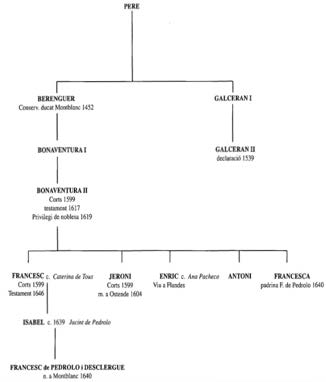
Figure 29.10: Citation, page 71 of Santi-
ago Alberti, ’Esquema històric del llinatge
Pedrolo’ , page 49 – 88 of URTX Revista
Cultural de l’ Urgell, Num 7, 1995.
son, Francesc Desclergue y Ratera (DC05e), described in Chapter 28.3.1.
The reference shown in Figure 29.15, was also found in ’Nobles del Principado de Cataluña,’ 5 where we found
’Desclergues y de Cortés, Gerónimo. Doncell de Barcelona y oriundo de Montblanc (Barcelona, 13-VII -1599).’
Don Jeroni Joan Desclergue y Cortés went to Flanders in the year 1587, five years after the death of Fernando Álvarez de Toledo y Pimentel, 3rd Duke of Alba, and 14 years after he governed the Netherlands. His arrival was actually during the governance of Alexander Farnese, Duke of Parma. His appearance was with the company commanded by the Catalan Lluís de Queralt (this family is mentioned in Chapter 29.4).
Later, he joined the company of Diego de Durango from the Tercio of Luis de Villar.6 He was active in Holland, Flanders, and the North of France. He was wounded in Cambrai and still supported the capture of Amiens and its temporary defense.
Don Jeroni Joan Desclergue y Cortés was granted the privilege of Noble of the Principality of Catalonia on July 13, 1599. This recognition of his status was further solidified when the Brazo Militar authorized him in the Corts of the Principality of Catalonia in the same year. These noble privileges were a testament to his standing and influence in the region.
29.4 The Impact from the de Queralt Family
Santa Coloma de Queralt must be studied in the framework of the Templars. For this description, we first refer to to ’Les ordres religieux militaires dans le Midi (XIIe-XIVe siècle), Cahier de Fanjeaux, Collection d’Histoire religieuse du Languedoc au Moyen Âge, 41..’ Further, we will discuss how the Queralt family played a role in the early military career of Jeroni Joan Desclergue y Cortés (DC05).
Practically all of the Catalan Templar families settled at strategic locations along the traditional routes. Barberà is near the ancient Via Aurelia, which ran between Tarragona and Lerida. Gardeny is on the path that connects Catalonia and Aragon. Miravet and Asco are on the Ebro River communication route between the Mediterranean coast and the peninsula’s interior (Tortosa-Zaragoza).
Asco and Tortosa are on the path that connects Catalonia and Valencia.
Horta is at a crossroads of transhumance routes near the Ebro; Puigreig is on one of the roadways along the Rio Llobregat, which descended from the Pyrenees to Barcelona.
29.4.1
The Horta Commandery (Tarragona)
Santa Maria dels Angels d’Hortad’Horta de Joan is another sanctuary located at a crossroads in the south of Catalonia, through which, legally, a transhumance path connected the lowlands of the Levant coast (Sant Mateu, Castellon) to Aragon. Horta fell wholly under the control of the Temple. The sanctuary and the citadel served as the Commandery’s capital and were situated at the base of an ancient monastic mountain. The sanctuary of Santa Maria dels Angels consists of an abbey and structures constructed between the 11th and 17th centuries. It is an excellent example of a single-nave church with a timber roof supported by diaphragm arches dating back to the Templar era. The apse is semicircular.
Horta had a sanatorium for pilgrims and travelers with a sanctuary dedicated to Saint James in the thirteenth century.
29.4.2 The Commandery of Gardeny (Lerida)
Throughout the Middle Ages, Lerida was a significant stop on the route to Santiago, where Catalan paths from the Pyrenees and the coast converged.7 The pilgrims who disembarked in Tarragona or Barcelona and those who, coming from the Pyrenees, arrived 5F. Xavier Ricomà Vendrell and Salvador-J. Rovira i Gòmez, ’Nobles del Principado de Cataluña’ , in ’Institut d’ estudis Tarraconenses Ramon Berenguer IV, Secció de biografia i bibliografia publicació num 9’ .
6Esquema Històric del llinatge Pedrolo, per Santiago Alberti, page 67.
7M. Delcor, ’Les verges romàniques de la Cerdanya i el Conflent en la Història de l’Art,’ Barcelona, 1970, 73-75. The text discusses the pilgrims who traveled to Santiago de Compostela, Pilar, or Montserrat along the route that began in the Aude and Têt valleys, crossed Cerdanya, and followed the The Desclergues of la Villa Ducal de Montblanc, 2nd ed., Omn., VOL. II
© 2024 Nico F. Declercq
374
CHAPTER 29. JERONI JOAN DESCLERGUE Y CORTÉS (DC05) & FELIPA DE MONTOYA
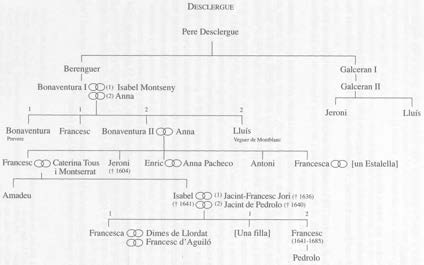
Figure 29.11: Citation, page 80 of ’La baixa noblesa de la Conca de Barberà a l’ edat
moderna’ , written by Salvador J. Rovira i Gómez.
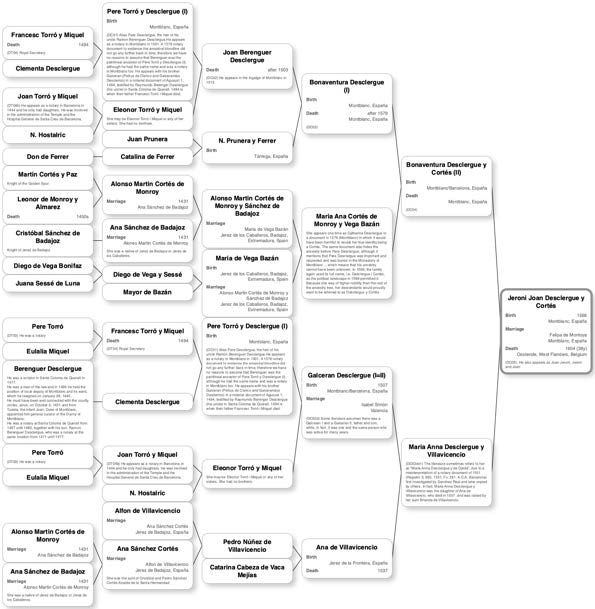
Figure 29.12: Five ascending generations of Jeroni Joan Desclergue y Cortés (DC05)
© 2024 Nico F. Declercq
The Desclergues of la Villa Ducal de Montblanc, 2nd ed., Omn., VOL. II


29.4. THE IMPACT FROM THE DE QUERALT FAMILY
375
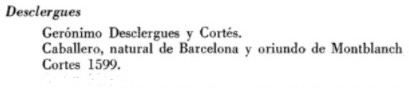
Figure 29.13: When we look at ’Revista Hidalguía número 178-
179. Año 1983’ , we find that this exciting work presents an entire
list of persons who have received a noble title by H.M. King Felipe
II. One example is cited here as a facsimile, namely that of Jeroni
Joan Desclergue y Cortés.
Figure 29.14: Citation from Francisco J. Morales Roca, ’Próceres habilitados
en las Cortes del Principado de Cataluña, siglo XVII: 1599 - 1713, Volume
2’ . (Note: This particular reference must be considered with care because it
mentions family bonds between the Desclergues which are not correct and were
refuted in other works)
Figure 29.15: Citation from page 26 of Bibliografia Historica Tarraconese
VIII, Edicio a cura de F.Xavier Ricomà Vendrell i Salvador-J. Rovira i
Gómez, Institut d’ estudis Tarraconenses Ramon Berenguer IV, Seccio de
biografia I bibliografia, publicacio numero 9.
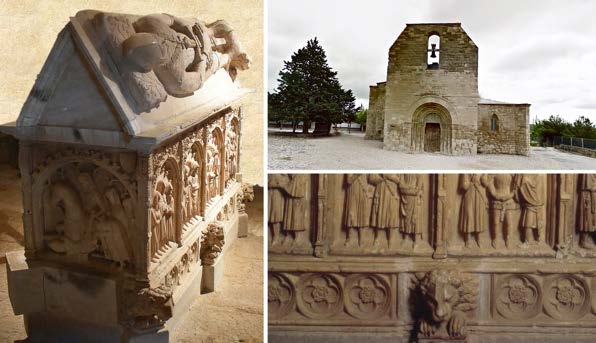
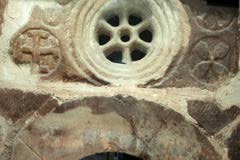
Figure 29.16: The tomb of the Lords of Queralt is in the Santa Maria de Bell-Lloch church. The tomb exposes, among many other symbols, the Templar Flowers that Antoni Desclergue (DC06) also chose as ornaments on the artwork he brought from Montblanc to Deerlijk in 1640, as described in Chapter 49.3.2 on page 985 and shown in Figure 49.33 on page 1001. Similar flowers and more classical Templar Crosses can be found in Figure 29.17 on page 375.
Figure 29.17: The Castle of Santa Coloma de Queralt
in Santa Coloma de Queralt, Conca de Barberà, Tar-
ragona. A heraldic detail is depicted in the main room
(Photography Joan Fuguet. The image was taken from
Joan Fuguet Sans and Carme Plaza Arquéa
aJoan Fuguet Sans y Carme Plaza Arqué, "El linaje
catalán Queralt-Timor y su relación con la Orden del Temple
(siglos XII-XIV)," Medievalista [En línea], 30 | 2021, Publi-
cado el 01 julio 2021, consultado el 22 julio 2021.
The Desclergues of la Villa Ducal de Montblanc, 2nd ed., Omn., VOL. II
© 2024 Nico F. Declercq
CHAPTER 29. JERONI JOAN DESCLERGUE Y CORTÉS (DC05) & FELIPA DE MONTOYA
from Gironde or Ripoll, arrived in Lerida after visiting Montserrat, Santes Creus, or Poblet, and from there continued to Zaragoza by way of Los Monegros. 8
On a hill near the city, close to the Segre and the road to Zaragoza and Huesca, the Temple established the Commandery of Gardeny, one of the most significant Catalan lands. Documents demonstrate that Gardeny had a hospital for pilgrims and that a statue of the Virgin Mary (Saint Mary of Gardeny) was venerated in the convent sanctuary, which pilgrims visited with devotion.
Guerau de Caceola, canon of the cathedral of Lerida, bequeathed a hospital and properties in the city of Segre via his will in 1216.9
Curiously, one of the clauses stipulated that the assets would transfer to the Holy Trinity (Hospital of the Holy Redeemer of Teruel) if the Templars violated their obligation to care for the impoverished and the ill.10
Another charter mentions the ’hostel’ the Templars possessed next to their convent in Gardeny, near the road leading to Zaragoza.
A letter written by King James II of Aragon to the Archbishop of Tarragona in 1314 provides evidence of the number of pilgrims attracted by the Virgin of Gardeny. The king informed the prelate that the many faithful pilgrims who had previously visited Santa Maria de Gardeny no longer did so due to the immoral lifestyle of Berenguer de Bellvis, who lived there with a concubine. 11
29.4.3
The Barberà Commandery (Tarragona)
The first donations received by the Temple in Catalonia were the fortresses of Granyena and Barberà, situated at the limits of the first Catalan march. These two gifts were made possible by the generosity of the counts of Barcelona and Urgell. They were imitated by the nobles who settled on these lands: the Queralt-Timor, the Montargull, the Cervera, and the Aguilo. The territory of the house of Barberà (located at the head of the commarca to which it gave its name, the Conca de Barberà) was historically a passageway with its key communication routes.12
Santa Coloma de Queralt has a Marian sanctuary named Santa Maria de Bell-lloc, whose history is intertwined with the Temple of Barberà and its hospital and devotion.
Santa Coloma was briefly a Templar possession at the beginning of the 13th century due to a mortgage operation conducted by the local landowners, the Queralt-Timor. This noble family of the region supported the Templars, and some of its members joined the order.13 Arnau de Timor, Dalmau de Timor, and Pere de Queralt, three siblings of this family, held significant positions in the second part of the twelfth century.14
The third, whose exploits earned him the appellation ’heart of oak,’ joined the order in 1257. He was successively governor of Monzón, Miravet, and Gardeny and lieutenant of the provincial master. He participated in the subjugation of Murcia alongside King James I.
Santa Maria de Bell-lloc, located at a crossroads, was constructed by the lords of Queralt during the first half of the 13th century as their family pantheon. Pere, ’heart of oak,’ was the first individual to be interred there.
Although there is no direct evidence of the church’s affiliation with the Temple, it seems reasonable to assume that a prominent member of the order would not select a foreign burial site. As Philippe Josserand did for Villasirga (Palencia), we can establish a relationship between a Templar sanctuary and the local aristocracy, strengthened by its allegiance to the Temple.15
Another argument supports the relationship between the sanctuary and the Templars: it was administered by a community of donats placed under the authority of the lord of Queralt, a Templar at the time, as evidenced by documents from the middle of the 13th century.16
Initially, the chapel, which was later altered, had a rectangular layout with a flat chevet. It retains two rib-vaulted chambers on the interior, but the facade is the most significant feature. This wall’s portal is a flamboyant archivolt with three arches supported by capitals and columns. The outer arches are decorated with oriental-inspired tracery, while the inner archivolt features heraldic and symbolic motifs. The Virgin is incorporated into the Annunciation and the Epiphany images on the tympanum. Three scenes on the frieze are particularly captivating: the first depicts a brother in prayer, the second a friar spreading his garment over a prostrate figure, and the third a warrior grappling with a lion. The first two have been interpreted as a ’symbol of the prayer obligations and protection of pilgrims proper to military orders.’17 Similarly, the third, which appears in other portions of the church, depicts a heroic deed performed by Father ’heart of oak.’18
This scene, at the origin of Queralt’s shield (a roaring lion), can likely be interpreted in less romantic terms and linked to the primary function of the Knights Templar: fighting the infidel.19
Due to its location at a crossroads, Bell-lloc was a suitable location for a Marian sanctuary. In this form of the pilgrimage site, a statue of the Virgin Mary was venerated. We are unaware of its fate.
29.4.4 The Recruitment of Jeroni Joan Desclergue y Cortés (DC05)
The Tercio de Queralt was a military unit of the army of Felipe II of Spain, levied in Barcelona in the year 1587 by the Catalan nobleman Don Luis de Queralt y de Icart. The Queralt family is described in Chapter 29.4. It was dissolved in Flanders at the end Segre to Lerida.
8Fernandez, ’Cataluña y el camino’
9Miret, ’Les cases,’ 59
10King Alfonso the Chaste founded the Hospital of the Holy Redeemer of Teruel in 1188 as the home of the Holy Trinity. See, for instance, Miret, ’Les cases,’ 59.
11H. Prutz, ’Entwicklung und Untergang des Templerordens,’ Berlin, 1888, 316, doc. 9. In that article, Berenguer de Bellvis is described as the last commander of the templars of Monzón.
12J. F. Cabestany Fort, ’Vías de communicación medievales en la cuenca del río Francolí (Tarragona),’ in XV Congreso Nacional de Arquelogía, Lugo 1977, Zaragoza, 1979, 1203-1211. Also in J. F. Cabestany Fort, ’La marca de l’Alt Gaià : el castell de Queralt (segles XIII-XII),’ in XV Congreso Nacional de Arquelogía, Lugo 1977, Zaragoza, 1979, 1203-1211. Also in Discurs de recepció de Joan-F. Cabestany i Fort com a membre numerari de la Secció Històrico-Arqueològica, llegit el dia 25 de maig de 2000, Institut d’Estudis Catalans, Barcelona, 2000.
13Fuguet, L’arquitectura, 228-235.
14Forey, The Templars, 421-422.
15Josserand, le Temple et le culte marial, 323.
16Fuguet, L’arquitectura, 228-223.
17Cid, La iglesia, 43.
18This interpretation is found in the panegyric that Father Conill dedicated in the 17th century to the Queralt family : M. Conill, Heroica vida y exemplares virtudes del Venerable Doctor D. Francisco de Queralt, Cervera, 1736.
19The only animal that the rule permitted the Templars to pursue was the lion (article 47). This animal represented the evil (Islam) that needed to be fought. Therefore, this interpretation is more plausible than Father Conill’s (heroic-romantic) interpretation. Furthermore, the lion is frequently depicted as a symbol of evil in Templar iconography (even in the frescoes of the Templar church in San Bevignate, Perugia). See, for instance, M. Roncetti, M.
Scarpellini, F. Tommasi, ’Templari e Ospitalieri in Italia. La chiesa di San Bevignate a Perugia,’ Quaderni Storici del Commune di Perugia, 4, Milan, 1987, 129. See also, G. Gurci, ’La pittura dei templari,’ Milan, 2000, 46-47.
© 2024 Nico F. Declercq
The Desclergues of la Villa Ducal de Montblanc, 2nd ed., Omn., VOL. II
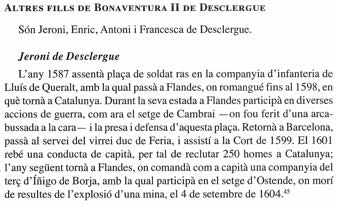
29.5. THE CAREER OF JERONI DESCLERGUE 1587-1604
377
Figure 29.18: Citation of the middle paragraph of page 83, of the book
’La baixa noblesa de la Conca de Barberà a l’ edat moderna’ , written
by Salvador J. Rovira i Gómez. The image shows what he wrote about
Jeroni Desclergue. The book is a fascinating description of several noble
families and their ancestries. The Desclergues are covered in the cited
book from page 75 until page 86.
of 1588, incorporating its companies into other Tercios.
The Tercio was formed on the occasion of the preparation of the invasion of England by Felipe II, who formed the most significant number of Catalan companies to fight in Flanders under the command of Luis de Requesens y Zúñiga.
Alejandro Farnese, who would command the invasion, basically wanted Spanish troops for the campaign. The troops consisted of noblemen and bandits who were pardoned if they joined the armed forces.
A few of these Catalan troops formed the Tercio de don Luis de Queralt and the already existing Tercio de la Diputación de Catalunya and Tercio de la Ciudad de Barcelona.
Luis de Queralt recruited a Tercio of Catalans in 1587. The levy was in Barcelona, but volunteers from all over Catalonia appeared, some of whom were prestigious citizens. They reached Flanders via Italy. As described in Chapter 8.10, the Spanish Road at that time went from Genoa to Milan, Turin, Aiguebelle, Albertville, Annecy, Arinthod, Besançon, Baume-les-Dames, Epinal, Nancy, Metz, Thionville, Luxemburg, Namur, and Brussels.
Of the 18 companies that were created, historians know of 11 captains of the Tercio: Pau Bordoll, Felip Sacosta, Francesc de Cardona, Jeroni Descatllar, Diego Martínez de Guerra, Francesc de Marimon, Francesc Miralles, Bernat de Pinos, Guillermo Ramon de Pons, Rafael Terrades, and Luis de Queralt himself.
The intention was to recruit 2600 troops, which was not reached.
The Catalan soldiers were sometimes called Walloons locally because their languages sounded somewhat similar, unlike Castilian.
Other Spanish soldiers sometimes called them ’Papagayo’ because they sometimes mispronounced Castilian words.
The Tercio de Queralt, together with recruits from the old Tercio of Zamora (or Bobadilla), embarked in Tarragona on October 7, 1587, bound for Lombardy and Milan, to reach Flanders on December 7, 1587, through the Spanish Road, described in Chapter
8.10, in a journey that took almost two months.
Upon their arrival, around 17 or 18 companies and about 1900 soldiers were lodged in Warneton (’Guarneton’) (near Ypres and Lille). Initially, they stayed with the old Tercio of Zamora, but this Tercio would later move elsewhere.
29.5 The Career of Jeroni Desclergue 1587-1604
29.5.1 Introduction
In the context of the lives of the children of Jeroni Desclergue, it is essential to explore the socio-political and religious landscape of Flanders through the example of the village of Deerlijk. The period preceding Jeroni’s arrival in Flanders is marked by the era of Religious Troubles, effectively a civil war between supporters of the Spanish crown, typically Catholics, and those who opposed Spanish rule and Catholicism, known as Protestants or Calvinists.
We can read very interesting information in Filip Benoit, ’Protestantse Burgemeester in Deerlijk’21; and also in Filip Benoit, ’Deerlijk volgens het Twintigste Penningkohier van 157222; and equally in Th. Sevens, ’Handvesten rakende de Wederdoopers en de Calvinisten der XVI-de eeuw in de voormalige kastelein van Kortrijk’23. Yet another reference is Filip Benoit, ’Deerlijk op het einde van de 16de eeuw’24.
On May 19, 1581, Pieter Braet, the bailiff of Deerlijk, was convicted for his Calvinist beliefs. Kortrijk had been under Calvinist rule, orchestrated from Ghent, from February 12, 1578, until February 27, 1580. During this period, Braet supported the Calvinists and was subsequently convicted after the region was liberated from Calvinist control by the ’Malcontenten.’
However, the turmoil persisted in 1580, with Catholic and Protestant armies plundering villages like Harelbeke, Deerlijk, and Waregem. Frightened villagers sought refuge in nearby towns, such as Kortrijk, but urban areas were plagued by disease and hunger, leading to many deaths.
Many Calvinist supporters fled north to the Calvinist Netherlands, with most not returning even during periods of truce between the Dutch States and the Spanish Netherlands.
For Deerlijk, 1586 is mainly remembered as a year of starvation. Post-1586, relative calm returned, but the countryside remained vulnerable to plunder by filibusters and buccaneers, especially from Ostend and Sluis, as previous conflicts had depopulated West Flanders. Farming slowly reestablished, and new family names appeared in records, indicating an influx of immigrants from Wal-21Derlike, 11de jaargang, nr 3, 1989
22Derlike XI, 1, 1988
23Handelingen Geschied- en Oudheidkundige Kring Kortrijk (1921), Rijksarchief Kortrijk, Fonds de Plotho, nr. 548.
24Derlike, 13de jaargang, nr 2, 1990.
The Desclergues of la Villa Ducal de Montblanc, 2nd ed., Omn., VOL. II
© 2024 Nico F. Declercq
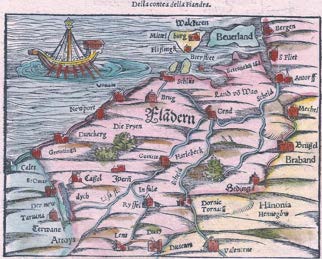
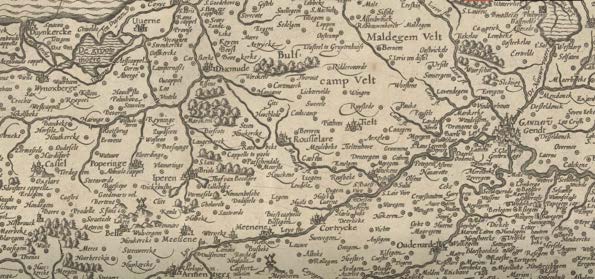
378
CHAPTER 29. JERONI JOAN DESCLERGUE Y CORTÉS (DC05) & FELIPA DE MONTOYA
Figure 29.19: 1580, Flanders or Della Gallia in ’Cosmographia’
of Sebastian Münster. This simplified representation of Flanders
on which Kortrijk (Cortric), Harelbeke (Harlebeck), Calais (Cales),
Ostend (Ostende), Arras (Artoys), Bruges (Brug), Sluis (Schlüs),
Ghent (Gend), Tournai (Dornic / Tornack), Middelberug (Mittel
burg) and Valenciennes (Valencene), to name a few, are depicted,
must have been imprinted in Jeroni’s visual imagination of the place
he was going to after he left Spain.
Figure 29.20: 1600, a map of Flanders by Pieter van der Keere on which several places of interest are visible such as Ghent in the east. Following the Leie River, we can also retrieve Deerlijk, Harelbeke, Kortrijk, Menin. In the West, we can see Ypres, Langemarck and many other sites.
Figure 29.21: Close up of a painting by Peter Snayers (1573-1647),
dating from 1601-1615, of the Siege of Ostend. The original painting is
from the Friedenstein Castle collection, inventory number SG 716 p.
The work offers an impression of how the Spanish military in command
looked.
© 2024 Nico F. Declercq
The Desclergues of la Villa Ducal de Montblanc, 2nd ed., Omn., VOL. II
29.5. THE CAREER OF JERONI DESCLERGUE 1587-1604
379
lonia and other regions of the Spanish Netherlands. Notable new family names in Deerlijk included ’de Bare,’ ’Vienne,’ ’del Mote,’
’Cottenije,’ ’Mahieu,’ ’Morthier,’ ’de le Cluse,’ and others, as documented by E. Ducatteeuw and M. Debrouwere.25 Additionally, names like ’Du Can,’ ’De Cotegnie,’ ’Outliers,’ and ’Sermont’ became common, with estimates suggesting that 40% of Deerlijk’s family names were newcomers from the South of the Spanish Netherlands.
Despite this influx, some families in Deerlijk have roots tracing back to the 15th century, as observed by Filip Benoit.26 Names such as Christiaens, van Wijnsberghe, Vander Cruyssen, and de Muynck may descend from these original inhabitants. Other names that gained popularity before the religious struggles included Vanden Berghe, De Backere, de Meestere, and de Leersnijder. Modern Deerlijk, however, features prevalent names like Vanden Broucke, Bossuyt, Vervaecke, Desmet, De Jaeger, and Vanden Bogaerde, which were less common in the 1600s.
The economic landscape of Deerlijk before the religious conflicts was dominated by wealthy families such as Marie Hameiden (possibly transformed into Ameye), and families like Vander Cruuse, van Windsberge, van Dale, van House, and Variseele.
The impact of the religious conflict on Deerlijk was significant, driven by the influence of powerful figures like Willem de Kettule, Lord of Assche, and his associates François de Hembyse and Philip van der Gracht, who were instrumental in establishing the Calvinist republic in Ghent and had properties in Deerlijk. The inhabitants were likely compelled to support the Calvinist cause when Kortrijk was occupied in the spring of 1578, although most likely remained Catholic, as was common in rural areas.
The repopulation of the area commenced after the Catholics recaptured Antwerp in 1585. Jeroni Joan Desclergue (DC05) arrived in Flanders in 1587 amid relative stabilization. The population began to return to the countryside, resuming agricultural activities.
By the 1590s, a semblance of normalcy had returned, although the devastation of the previous decade meant that farming took time to reestablish.
Many immigrants from the southern Spanish Netherlands contributed to this repopulation, driven by the nobles’ need for agricultural production and rental income. In 1586, the year before Jeroni’s arrival, the region suffered from a wolf plague, poor harvests, and high prices for consumables, with food production in Deerlijk estimated to have fallen to 10% of pre-conflict levels. Robbery gangs ravaged the area, and survival was the primary concern for the roughly 300 inhabitants of Deerlijk. The plague also struck the region, notably from 1579 to 1583 and 1597 to 1599.
As André Woestijn notes,27 from 1584, Spanish troops increased in number in preparation for an invasion of England with the Spanish Armada, planned for 1588.
Around 19 Spanish companies, mostly cavalry, passed through Harelbeke, utilizing its bridge over the Leie River, the only one between Kortrijk and Deinze, making it a strategic point for military and robbers.
In general, military presence was unwelcome in cities, except for protection purposes. Post-16th-century religious troubles, soldiers were primarily housed in barracks outside cities, with only a few privileged military personnel residing within city walls, often purchasing properties nearby.
Jeroni Desclergue’s property acquisition in Deerlijk, likely in the late 1590s, and detailed in Chapter 29.12, aligns with this trend.
His property was part of the Overacker Manor, a strategic base for the military due to its extensive holdings in Harelbeke, Deerlijk, Vichte, and surrounding areas. Jeroni, a military figure documented in sources like Santiago Alberti’s ’Esquema històric del llinatge Pedrolo’28 and Antonio Carnero’s ’Historias de las guerras civiles di Flandes’ (1625), served in Flanders from 1587-1598 and 1601-1604, participating in significant military engagements. He was injured at the Siege of Cambrai but continued to contribute to military efforts despite his wounds.
Jeroni’s departure from Montblanc in 1586 or 1587 brought him to Flanders during the aftermath of the Duke of Alba’s terror and the Dutch Revolt, a period marked by severe reprisals and widespread displacement.
By 1586, the Eighty Years’ War had transitioned into a more structured conflict between the Protestant Dutch States and the Catholic Spanish Netherlands. Jeroni initially operated in eastern regions like Geldern before moving to West Flanders, preparing for the planned but unrealized Spanish Armada invasion of England. He eventually settled into a relatively stable routine, participating in summer military campaigns and spending winters at his base in Kortrijk.
29.5.2 The Influence of Carlos Coloma and Luis del Villar
Jeroni Desclergue’s wife, Felipa de Montoya, was related to Carlos Coloma de Saa, as described in Chapter 29.10.11.
It is relevant to check the document in Figure 29.113 on page 420, dating from 1546, by a relative of Carlos Coloma, notary Bartomeu Joan Coloma of Montblanc. The document refers to Joan Berenguer Desclergue (DC02), the great-grandfather of Jeroni Joan Desclergue y Cortés (DC05), described in Chapter 26.0.1.
The citation shown in Figures 29.24 and 29.25 comes from Luis del Villar, Maestro de Campo, and highlights the most critical military achievements of Jeroni Desclergue until 1598. It was preserved in the handwriting of Francesc de Pedrolo y Desclergue and kept in Urgell’s archives.
It says that Captain Diego de Durango, of the Tercio de Maestre de Campo Luis del Villar, made some honorable remarks about Jeroni Desclergue in his certification made in Brussels on January 14, 1598:
’Don Gerónimo Desclergue served his Majesty in Flanders and France from 1587 to 1598. In particular, he has always been fearless and courageous in the relief of Gelderen in the Eastern Provinces (’Frisa’), which the Spanish captured in 1587. He was a front military in the tercio of Maestro de Campo Manuel de Vega and played an essential role in the Siege of Koevoorden (’Coborde’). He also played a significant role in helping at Alphe (’Alpe’) and in Land van Was (’Pays de Vas’), where the enemy had penetrated the country and slaughtered many of the inhabitants. He also contributed to the capture of the castle of Westerlo (’Betarlo’), Turnhout (’Tornaute’). He equally took part in France’s invasion, particularly the relief of La Ferté-Milon (’Fertimilon’) and the town of La Capelle (’Capela’). He was one of the pikes at the forefront of the assault. Furthermore, he has also been in Laon (’Lan’) and Harelbeke (’Xarbilcke’). During the attack on Doullens (’Dorlans’), he was one of the pikes. In Cambrai (’Cambray’), Jeroni had an essential position in defense of the town because of the great importance that consistently emerged from his person; during the defense, he was wounded by an arcabucoso in the face. He participated equally in the action in Calais (’Cales’). The day Captain Diego de Durango attacked occupied Oudenburg (Alenbruc or ’Alburgo’), Jeroni Desclergue joined him, attacked the citadel like a fearless soldier, and took responsibility at every stage in the assault. Jeroni Desclergue was also in the Siege of Ardres (’Arda’) and Hulst (’Hulte’). When the Spaniards won at Amiens ’Miens,’ Jeroni was one of the militaries who entered the town with Diego de 25E. Ducatteeuw and M. Debrouwere in "Bevernaars en Desselgemnaars in de 16de eeuw" (De Gaverstreke VII, 1979) 26Filip Benoit, in "De bevolking van Deerlijk anno 1440" (Derlike, 12de jaargang, nr 1, 1989) 27André Woestijn in "Harelbeke in de Spaanse tijd, 1585-1713" (De Roede van Harelbeke, De Leiegouw, nr 14, 1994) 28Santiago Alberti, "Esquema històric del llinatge Pedrolo", (URTX Revista Cultural de l’Urgell, Num 7, 1995) The Desclergues of la Villa Ducal de Montblanc, 2nd ed., Omn., VOL. II
© 2024 Nico F. Declercq
CHAPTER 29. JERONI JOAN DESCLERGUE Y CORTÉS (DC05) & FELIPA DE MONTOYA
Durango, and he fought with great courage to further defend the city. Diego de Durango describes how he observed Jeroni Desclergue fighting the enemy.’
He concluded that
’he guarantees to his Majesty that he has always thought very highly of Jeroni Desclergue.’
Don Carlos II Coloma y de Saa, knight of Santiago and 1st Marquess of Espinar (born in Alicante in 1567 – died in Madrid in 1637), was a distinguished Spanish military commander, diplomat, and author, also known for his translation of Tacitus. Coloma was a contemporary of Jeroni Desclergue and descended from Jewish conversos. Although some biographers suggest that he was born on February 9, 1566, this date lacks definitive evidence, as the only document providing his birth date, the Condal file, states
’1567.’
Carlos Coloma was the son of Juan de Coloma y Cardona, 1st Count of Elda and Viceroy of Sardinia, and Isabel de Saa. Juan de Coloma y Cardona, born around 1522 in Elda, Valencia, passed away in 1568. The Coloma family’s roots trace back to France, but they had settled in Catalonia for centuries. The lineage begins with Don Pere de Coloma and his wife, Doña Maria de Cardona. Pere, an esquire of Gaston, Count of Carcassonne, left France for Catalonia, adopting the surname Coloma from the French
’Colombe.’
Carlos Coloma had an elder brother, Alfonso Coloma (1555-1606), who served as the bishop of Barcelona. Some of Carlos Coloma’s descendants resided in Perpignan, still part of Catalonia. The Coloma family established significant branches outside of Spain, particularly in Flanders. Members of the Flemish branch, which emerged during the Farnese era, eventually settled in Bornem, Ghent, Brussels, and Mechelen. They held important positions within the society of the Austrian Empire, though this branch has since become extinct.
Coloma’s life and legacy are emblematic of the intricate interplay of political, military, and cultural forces in early modern Europe.
His contributions as a military leader, diplomat, and scholar underscore the multifaceted roles played by Spanish nobility during this period.
When describing the military career of Jeroni Joan Desclergue y Cortés (DC05), it is impossible to ignore Carlos II Coloma y de Saa, who served with Jeroni in Flanders. Jeroni’s son Antoni Desclergue (II) (DC06) would also operate under Coloma, as found in the literature and further in this book. Besides, Jeroni’s brother Antoni Desclergue (I) (DC05b) and therefore most likely also Enric Desclergue (DC05c) equally served with Coloma.
From 1631 until his return to Spain in 1634, Coloma acted even as commander-in-chief of the Army of Flanders and governor of Cambrai.
Carlos Coloma married Marguerite de Gavere-Liedekercke, the daughter of Antoon van Liedekerke and Louise de la Barre, establishing solid regional connections to the area where Jeroni Desclergue and his descendants would eventually settle in Flanders, specifically around Kortrijk, Harelbeke, Hulste, and Deerlijk. The town of Gavere, for instance, is relatively close to Deerlijk, about a five-hour walk to the East.
Marguerite van Liedekercke was the daughter of Antoine van Liedekercke de Gavere, Count of Bailleul, and Louise de La Barre, Dame of Mouscron. Mouscron is also near Deerlijk, which is an approximately three-hour walk to the southwest. Antoine van Liedekercke de Gavere (born in 1533) was the son of Filips van Gavere, Lord of Nieuwkerke, and Maria van der Gracht. Maria van der Gracht (1494-1562) was the daughter of Diederik van der Gracht, Lord of Kortrijk, and Elisabeth van Gistel. Kortrijk is very close to Deerlijk, about a two-hour walk to the west, and records indicate Jeroni’s presence in Kortrijk through church documents.
Carlos Coloma began his military career in 1581, campaigning first in Portugal and Sicily. In 1588, he went to Flanders as a regular soldier on the Armada. The year before, Jeroni Desclergue had traveled along the Spanish road, as described in Chapter 8.10, in the tercio of Luis de Queralt. Coloma played a vital role in the Siege of Doullens in 1595, where Jeroni was also present, just before the Siege of Cambrai that same year. Later, in 1617, when Jeroni had already been dead for thirteen years, Carlos Coloma became the governor of Cambrai, further advancing in the military ranks until his return to Spain in 1634. During this period, Jeroni’s son Antoni (DC06) became an army officer. He served under the command of Carlos Coloma until he temporarily returned to Spain just before 1640, only to return to Flanders soon after.
Where applicable, the careers of Jeroni (DC05) and his son Antoni (DC06) will include references to Carlos Coloma. For further details, refer to the works of Miguel Angel Guill Ortega,29 J. F. A. F. de Azevedo Coutinho y Bernal,30 and Carlos Coloma.31
Luis del Villar has been less fortunate than Carlos Coloma. We found several sources about his faith in 1600. Maurice de Nassau (Mauritz van Nassau) wrote in a letter on July 2, 1600, that,
’during a fight in Ostend, his forces had killed many Spanish militaries and captured prominent figures, such as the sergeant admiral d’ Aragon Francisco Hurtado de Mendoza (Granada 1546 - Madrid 1623), maestro de campo Don Luis de Villar y Capena, while the count de Busquoy and colonel la Bourlotte were killed.’
The letter was addressed to Count Willem-Louis de Nassau and is found in the book ’Archives ou correspondance de la maison d’
Orange-Nassau,’ 1835.
Note that Francisco Hurtado de Mendoza, shown in Figure 29.23, was a grandchild of Luis Hurtado de Mendoza y Pacheco, son of Francisco Pacheco and Catalina de Mendoza y Zuñiga. His mother’s father was Iñigo López de Mendoza.
We expand further on the role of Carlos Coloma in Chapter 34.5.15. Connections between Desclergue and Pacheco are shown in Chapter 27.2 on page 301, or Chapter 33.4.2 on page 516, or Chapter 19.15.3 on page 188.
29.5.3 The Capture of Geldern 1587
The reference in Figures 29.26 and 29.27 states that:
’Don Gerónimo Desclergues began to serve His Majesty by leaving Spain for Flanders in 1587 in the Spanish infantry company of Don Luis de Queralt. The Duke of Parma designated 8 escudos as a monthly payment on top of his ordinary salary. He kept this salary until H. R. H. the Archduque added another 2 escudos to his salary from November 2, 1596, onwards. It promoted his excellent achievements at the village of Hulst (’Hust’). He continued his military career until December 22, 1597, when he temporarily left the Spanish infantry of Captain Diego de Durango. His leave is certified by a document made in Brussels on December 22, 1597, by the army’s accountant Antonio Carnero.’
We assume that most probably Jeroni Desclergue arrived in the Netherlands along the Spanish road, described in Chapter 8.10,
the year before Carlos Coloma would come on the Armada.
29Miguel Angel Guill Ortega, Carlos Coloma, 1566-1637, ’Espada y pluma de los tercios,’ Madrid, Editorial Club Universitario, 2007
30J. F. A. F. de Azevedo Coutinho y Bernal, Généalogie de la Famille de Coloma, 1777
31Carlos Coloma, De las guerras de los Estados Baxos, desde el año de M.D.LXXXVIII. hasta el de M.D.XC.IX, Cambrai, Jean de la Rivière, 1622, with later editions in Antwerp (1624 and 1635) and Barcelona (1627)
© 2024 Nico F. Declercq
The Desclergues of la Villa Ducal de Montblanc, 2nd ed., Omn., VOL. II
29.5. THE CAREER OF JERONI DESCLERGUE 1587-1604
381
Geldern’s (Germany) capture, shown in Figure 29.28, was the first and perhaps the most effortless achievement in Jeroni’s career.
Indeed, with the tercio of Luis del Villar,32 the city was taken on July 4, 1587. The Spanish army, led by Haultepenne, bribed Artistoteles Patton, who was in charge of the town, and he allowed the Spanish troops to capture the city after a short fight.
Jeroni’s involvement in this event is shown in Captain Diego de Durango’s testimony in Chapter 29.5.2.
29.5.4 The Invasion of England with the Spanish Armada 1588
The first recorded encounter between Carlos Coloma and Jeroni Desclergue occurred during the preparations for the Spanish Armada’s invasion of England in 1588. In the spring of that year, Spanish troops in Flanders were strategically positioned near the coast in anticipation of the invasion, as depicted in Figure 29.29. Among the arrivals to the Flemish coast was Carlos Coloma.
Historical records indicate that the planned invasion could not proceed due to the destruction of the Armada by the English fleet.
Consequently, Jeroni Joan Desclergue y Cortés (DC05) and others found themselves in a state of inactivity, awaiting further orders near the Belgian coast, where Desclergue and Coloma eventually joined the same Tercio.
In June 1588, the Spanish forces were organized into several Tercios, including the Tercio de Bobadilla, the Tercio of Sicily, and the Tercio of Lombardy. These were joined by the Irish regiment under Colonel Guillermo Estanley and the German regiment led by Italian Colonel Ferrante Gonzaga di Bozzolo. Alongside other Walloon, Italian, and Burgundian Tercios, as well as additional German regiments, these units comprised the landing force of the Great Armada intended for the invasion of England. The troops moved to Dunkirk for embarkation, with their assembly point referred to in Spanish literature as ’Bomel’ or ’Bomen,’ possibly identified as Woumen. They marched to Diksmuide, Veurne, and Dunkirk from this location to prepare for embarkation.
The troops initially embarked on August 9, 1588, but disembarked upon receiving news of adverse weather conditions. They attempted to embark again on August 12 but disembarked once more upon learning of the Armada’s defeat. During these intermittent embarkation efforts, their land residence was noted as ’Umen,’ likely Uxem.
With the failed embarkation onto the Armada, the invasion mission was ultimately abandoned, and the troops were redistributed across the region. The Tercios were assigned new missions. The Tercio de Queralt, along with the veteran Tercio of Sicily under Diego Enríquez de Castañeda y Manrique and the German regiment of Ferrante Gonzaga, proceeded to Duffel (referred to by the Spanish as Mantas, a term also associated with Duffle, as in Duffle coats). They arrived in Antwerp on Thursday, August 15, 1588.
This period saw a significant reorganization of the Tercios in Flanders. Specifically, the Catalan troops under Luis de Queralt, which included Jeroni Joan Desclergue y Cortés (DC05), were restructured and integrated into other Tercios, reflecting the broader strategic adjustments necessitated by the failed invasion attempt.
We refer to a specific passage in the book of Carlos Coloma, on page 28, shown in Figure 29.29. The passage reads as follows:
’A few days before the departure of the Duke of Bergas, the veteran general Juan Bautista de Tassis reformed the Tercio he had brought from Catalonia of Luis de Queralt (except for the Company of Don Pedro Pacheco), which was added to the old Tercios of Don Diego de la Guerra, of Don Juan Manrique, of Gabriel Dorti, or that of Don Francisco. The other companies’ men were divided by equal parts, in the remaining three Tercios, so that each Tercio would count 1200 soldiers.’
29.5.5 the Siege of Bergen op Zoom 1588
After a summer of inactivity, the Siege of Bergen op Zoom marked Jeroni Desclergue’s first significant military engagement. The Siege, illustrated in Figure 29.30, commenced on September 23, 1588, and concluded on November 13 of the same year.
The Spanish forces were commanded by Alexander Farnese, the Duke of Parma. At the same time, the States of the Netherlands’
troops were led by Maurits of Nassau, with key commanders Thomas Morgan and Peregrine Bertie.
Under the leadership of Peter Ernst I von Mansfeld (depicted in Figure 29.23 on page 393), Spanish soldiers, including Jeroni Desclergue (DC05), initially attempted to capture the island of Tholen. This strategic location was crucial as it lay on the supply route to Bergen op Zoom. However, the Spanish forces failed, suffering heavy casualties and many soldiers drowning. The assault on Tholen ceased on September 17, and the Spanish redirected their focus, along with the Tercio of Bobadilla, to Bergen op Zoom.
The city was defended by 5000 English and Dutch troops, alongside 3000 inhabitants. As the Spanish troops encircled the town and the Dutch realized the inadequacy of the city walls, the Dutch launched several sorties to repel the Spanish and prevent them from breaching the defenses. A significant attack on the city, led by Sancho de Leyva (Maestre de campo), Juan de Mendoza, and Alonso de Idiaquez, was thwarted by bad weather and an advanced warning to the Dutch, forcing the Spanish to abandon their assault.
Ultimately, on November 13, 1588, Scottish and Dutch forces relieved the city under Maurits of Nassau’s command. The Spanish troops retreated southward, fortifying the cities of Roosendaal, Kalmthout, and Hoogstraten. The modern border between Belgium and the Netherlands traces this historical front line.
The Queralt Tercio was present at the Siege of Bergen op Zoom but did not engage in the actual battle, sparing them from the heavy casualties other units suffered.
Following the Siege, under the orders of Don Juan Bautista de Tassis and Wachtendonk, the Tercio de Queralt was restructured to bolster the depleted Tercios, specifically those of Bobadilla (then commanded by Manuel de Vega Cabeza de Vaca), the veteran troops from Lombardy (commanded by Sancho Martínez de Leyva), and the old Tercio from Sicily (led by Diego Enríquez de Castañeda y Manrique). This reorganization was necessary due to the inexperience of the Catalan recruits compared to the seasoned soldiers of the older Tercios, a common practice in military strategy to integrate and improve the combat effectiveness of less experienced troops.
Manuel de Vega Cabeza de Vaca, a distant cousin of Jeroni Desclergue (DC05), played a notable role during this period. He later testified in 1598, as detailed in Chapter 29.5.25 and depicted in Figures 29.93 on page 413 and 29.94 on page 414.
29.5.6 The Attempt to sack Ostend in Spring 1589
On April 7, 1589, the Spanish companies, including Carlos Coloma and Jeroni Desclergue (DC05), attempted to capture Ostend from the rebel forces. Ostend would later become the site of Jeroni’s death in 1604 during a successful city Siege. However, the 1589 attempt to seize Ostend failed. During the subsequent withdrawal from Oudenburg, Carlos Coloma sustained an accidental hand injury from a bullet.
This event is significant in understanding the military careers of both Coloma and Desclergue, illustrating the persistent yet often 32Colección de documentos inéditos para la historia de España, por M. Fernandez Navarrete, 1842
The Desclergues of la Villa Ducal de Montblanc, 2nd ed., Omn., VOL. II
© 2024 Nico F. Declercq
CHAPTER 29. JERONI JOAN DESCLERGUE Y CORTÉS (DC05) & FELIPA DE MONTOYA
perilous efforts of Spanish forces to reclaim strategic locations from the rebels.
The incident also foreshadows the prolonged conflict and eventual fall of Ostend, a crucial episode in the Eighty Years’ War.
29.5.7 The Siege of Heusden, Heel and Bommelerwaard, 1589
The Siege of Heusden, located in present-day North Brabant, lasted from the summer until October 1589. During this period, the Duque of Parma, Alexander Farnese, was ill, leaving Karel von Mansfeld33 in command of the siege operations. Although the Siege was initially successful, it was ultimately abandoned due to a mutiny among the soldiers, who had not received their salaries. In October, the remaining Spanish forces were outnumbered by the troops of Maurits of Nassau and were compelled to withdraw from the city.
The Siege of Heusden is believed to have been an attempt by Alexander Farnese to avenge his earlier defeat at Bergen op Zoom, severely damaging his reputation. This context is depicted in Figure 29.23 on page 393. During this period, the Spanish Netherlands was experiencing an economic crisis, which led many inhabitants to flee to the Northern Dutch States. This exodus exacerbated the financial difficulties of the Spanish administration, making it challenging to pay the soldiers’ salaries.
Heusden was not the sole location of military engagement for Jeroni Desclergue and Carlos Coloma during this period. Concurrently with the Siege, there were mutinies in Bommelerwaard and Heel. On September 8, 1589, they were dispatched to Heel to quell the insurrection, and on October 13, 1589, they moved to Bommelerwaard to address the unrest there.
29.5.8 The Arrival in Harelbeke and Kortrijk, December 1589
In Montblanc, Tarragona, Catalonia, and possibly across Aragon, a class of fabric was produced in imitation of the fine textiles of Kortrijk in Belgium, known as Contray (also referred to as Cortray, Courtray, or Kortrijk). This fabric, first mentioned in Catalan in 1479, was used to make dresses, bodies, coats, hoses, and cloaks. The term also appears in Valencian. An inventory from 1609, detailed by Joan Yeguas Gassó in Anglesola, approximately 40 km from Montblanc, included references to this fabric.34 This indicates the familiarity of the region with Kortrijk, known to the Spanish as ‘Cortray’, and its products, further evidenced by connections with Jeroni Joan Desclergue y Cortés (DC05).
The arrival of Jeroni Joan Desclergue y Cortés (DC05) in Harelbeke exemplifies the necessity of combining local records with international testimonies to provide a comprehensive historical account. Local historians typically consult town accounts, council reports, and church records, but the presence of a self-sustained and well-behaved army often leaves minimal traces in these documents. This narrative places the arrival of the Spanish in Harelbeke in December 1589 within the context of Belgian local history, Spanish sources from Montblanc, and Carlos Coloma’s writings. Notably, André Wostijn’s chapter on ‘De oorlogen’ in
’Harelbeke in de Spaanse tijd, 1585-1713,’ published in De roede van Harelbeke – de Leiegouw, provides key insights.
On February 28, 1580, Kortrijk was recaptured by Walloon troops under Lieutenant Antoon d’Alennes. The Spanish leveraged this to restore their power in the Netherlands, with Alexander Farnese initiating a reconquest campaign. Farnese established a bridge over the Leie River in Harelbeke, positioning artillery and troops, and implemented strategies to disrupt Calvinist supplies. Despite Kortrijk’s fall in 1580, soldiers continued to traverse villages in search of provisions. The Spanish progressively captured Deinze, Oudenaarde (1582), Bruges, Ypres, Ghent (1584), and Antwerp (1585), regaining the Southern Netherlands except for Sluis and Ostend, which remained under freebooter control.
The Calvinist-Catholic conflict irrevocably separated the northern and southern Netherlands post-1585. In 1585, freebooters from Sluis raided the Kortrijk castellany. By early 1586, Kortrijk established its own militia, which proved ineffective. From 1588, freebooters targeted villages along the Leie River, including Harelbeke, a strategic bridge location.
Following the 1588 defeat of the Spanish Armada, retreating Spanish soldiers inundated the Kortrijk castellany, with large numbers passing through Harelbeke in August and September 1588.
A handwritten account from 1661 by Francesc de Pedrolo y Desclergue details that Jeroni Desclergue, with the Spanish army, occupied Harelbeke. Carlos Coloma’s report corroborates this, detailing the Spanish arrival in Kortrijk on December 5, 1598.
Desclergue and Coloma had traversed the Leie River, encountering picturesque villages like Afsnee, Sint Martens Latem, Deinze, Machelen, and Wielsbeke, finally reaching Harelbeke and Menin. The area around Kortrijk, vital militarily, allowed strategic access to southern territories and Ghent.
The Spanish forces, including Desclergue and Coloma, maintained the area’s security, preventing major attacks until the next century’s French invasions. However, freebooters continued to exploit the Spaniards’ absences. Desclergue participated in the 1590 attacks on Noordam and Oudenburg. In September 1590, Harelbeke and Ingelmunster were raided by Ostend freebooters, disrupting local life. From 1592 to 1597, Harelbeke faced continued assaults, leading to local security measures, including a 1595
weapons inspection of all fit men.
Ph. Despriet’s work indicates that Deerlijk’s church tower was refurbished around this time, reaching a height of 47.26 meters.35
The initial description of Desclergue’s arrival can be found in Coloma’s book, detailing their December 1589 lodging in Kortrijk’s castellany, encompassing Kortrijk, Harelbeke, Deerlijk, Tielt, and Wingene. This region, crucial for Spanish defense against France, remained stable and favorable to Spanish rule, protected by the Leie River and Gaverbeek Creek.
Miguel Ángel Guill Ortega’s work on Carlos Coloma provides further context for the December 1589 arrival. As winter approached, the Spanish Tercios were assigned lodgings, with Desclergue and Coloma’s unit stationed around Kortrijk and Menin, preparing for engagements in France. The Malcontents, discontented local inhabitants, governed Menin, which had experienced shifts in control between the Dutch States, Scottish troops, and Spanish forces.
In early 1590, a mutiny among Spanish troops in Kortrijk, including Desclergue and Coloma’s company, demanded overdue wages.
Negotiations by Alexander Farnese eventually quelled the rebellion. The Walloon Tercios moved to the French border, while Spanish troops, including Desclergue’s unit, remained in Flanders under new command. Coloma’s writings describe the Spanish military’s frustration over unpaid salaries, leading to mutiny. Cardinal Bentivoglio’s book also references this period. By May 1590, many soldiers departed Kortrijk, some traveling to Paris or Brabant for further operations. Baptismal records from Kortrijk during this period indicate the presence of Spanish soldiers and families, with some explicitly noting Hispanic origins.
This detailed analysis underscores the complex interplay of local and international factors influencing the arrival and presence of Spanish forces in Harelbeke and Kortrijk in 1589, reflecting broader historical dynamics during the Eighty Years’ War.
33Karel von Mansfeld should not be confused with Peter Ernst von Mansfeld.
34Joan Yeguas Gassó, “Cinc mules de llaurar, un mapamundi i un diamant fi. inventari de la casa de Mateu Pocurull al palau d’Anglesola (1609)."
35Ph. Despriet, ’De Zuidwestvlaamse parochiekerken, een duizendjarige geschiedenis,’ Kortrijk, 1982, p. 97
© 2024 Nico F. Declercq
The Desclergues of la Villa Ducal de Montblanc, 2nd ed., Omn., VOL. II
29.5. THE CAREER OF JERONI DESCLERGUE 1587-1604
383
29.5.9 Culinary Waffle Traditions in Kortrijk involving Our Family and Antoon Van Dyck
When considering Belgium as a travel destination, many tourists are familiar with its iconic Brussels waffles, with some also indulging in Liège waffles. The origins of Brussels waffles trace back to those of waffles and wafers in Kortrijk, a tradition steeped in historical significance. It is fascinating to note that Jeroni Joan Desclergue (DC05) and his family partook in these Kortrijk waffles while in Flanders. Historical accounts suggest that in 1631, Antoon Van Dyck, a renowned painter, was crafting his masterpiece "The Descent from the Cross," and received a shipment of Kortrijk wafers. The painting would later adorn the walls of the Church of Our Lady in Kortrijk, underscoring the cultural importance of these culinary delights. The roots of Kortrijk waffles and wafers stretch even further back than 1631, as is well documented.
The narrative also intertwines with Hr Haemius, a native of Lille, who led an educational institution in Kortrijk for many years until he died in 1535. His contributions to cultural exchange included sending Latin poetry to the abbot of the Augustinians van Evershem at Stavele, accompanied by wafers highlighting the long-standing tradition of waffle-making in Kortrijk. He affectionately termed these wafers "Flower cookies," crafted from the finest flour.
The certainty that Jeroni Joan Desclergue’s family also enjoyed these cookies stems from their familial ties with the Declercq-Braye family of Kortrijk. Indeed, it was the Venerable Lord Rogier Braye, a canon and pastor at Our Lady in Kortrijk, who dispatched the waffles to the illustrious painter Antoon van Dyck (1599-1641) in 1631, thereby enriching our understanding of the cultural and social exchanges of that era. This underscores the deep historical depth and richness of Kortrijk’s waffle and wafer-making tradition.
The author expresses a profound sense of satisfaction upon uncovering this information, reflecting on a cherished familial tradition.
His father, Maurice Declercq, engaged in the widespread practice observed in numerous households of preparing exceptionally flavorful waffles, mentioned in Chapter 46.2.9, on two significant dates: November 11 and New Year’s Day. This personal connection to the waffle-making tradition adds a layer of familial and historical pride to the narrative, inviting the audience to share this sense of heritage.
29.5.10 Attack on the Fortress of Noordam 1590 near Zevenbergen
In 1590, Karel van Mansfeld’s armed forces took the Meuse River to storm the Noordam fortress near Zevenbergen, shown in Figure
29.54. The fort withstood the attack successfully.
From then onwards, the army focused on Nijmegen, which was vulnerable to a counterattack by the Dutch forces.
29.5.11 The Attack on Occupied Oudenburg 1590
Oudenburg used to be ’Alenbruc’ and was called ’Alburgo’ by the Spaniards. There used to be an abbey in Oudenburg, not far from Ostend, but it was destroyed after the monks’ departure. After the iconoclast in 1566, the church was devastated, and Oudenburg had lost its political and economic importance. The Spaniards built a fort on the site of the abbey in 1585. This fort formed part of a Spanish fortress belt along the Ieperleet River. Nowadays, this river has been replaced by a canal. The Spaniards also built the fortress of Plassendale at that time.
This strategically chosen location was necessary, as the Calvinists occupied nearby Ostend. A citadel at Oudenburg offered sufficient protection for the Spaniards, even when the occupiers of Ostend inundated the area, which they regularly did. When the Siege of Ostend started, Oudenburg became less critical, and the monastery was rebuilt later.
It was in 1590 that the Calvinists of Ostend occupied and even partly destroyed Oudenburg.
In the recapture of the fortress by Captain Diego de Durango, Jeroni Joan Desclergue y Cortés (DC05) was involved. Durango later testified that Jeroni took tremendous responsibility for each attack and behaved like a brave and fearless soldier.The testimony is given in Chapter 29.5.2.
We cannot exclude the possibility that he recaptured the citadel of Plassendale. The Spanish probably remembered both as ’Alburgo.’
Remains of that fortress can still be found on the archaeological site, and there is even still a house called ’Spaans Tolhuis’ next to it, shown in Figure 29.55, that one used around that time to access the fortress.
Traces of troops at Desselgem, near Harelbeke and Deerlijk, in the period December 11-17, 1590, can be found in the archives of Kortrijk36
29.5.12 The Relief of la Ferté-Milon in 1591
In the 16th century, in the troubled context of the wars of religion, the inhabitants of La Ferté-Milon in France sought a protector against the ’brigands,’ i.e., ’freebooters’ as were also found in Flanders. In 1589, they had placed themselves under the protection of the Viscount Antoine de Saint-Chamand, one of the fellows of the Duke of Guise, the leader of the League. The latter was a political party of Catholics hostile to the new French King of Protestant origin, Henri IV, and religion-wise friendly with the Spanish in Flanders. As a result, the city, held by the Leaguers, became a hotbed of resistance to the new royal power.
In 1591, the Duke of Épernon, on behalf of the King, attempted the first Siege to take the city. He failed, thanks to the support of the Spanish military, such as Jeroni Joan Desclergue y Cortés (DC05), shown in Chapter 29.5.2.
In 1594, however, the Duke of Epernon made another attempt, soon joined by the King himself. This time, the French forces were triumphant. They opened a breach in the defensive wall, and the city soon turned indefensible.
King Henri IV decided to negotiate and succeeded in obtaining the place’s surrender by renouncing any prosecution against Saint-Chamand. He even offered a large sum of money.
After negotiation with Saint-Chammand, the city’s defender, the latter withdrew on January 7, 1594.
The King, master of the town, ordered dismantling the fortress later that year. In forty-eight days, Captain La Ruine carried out the order of destruction. Everything was completed on December 25, 1594, and the castle took its modern look of a ruin, shown in Figure 29.56.
1594 was a phenomenal year in France, as will be described further.
36Gemeente Kortrijk, ’Oud Stadsarchief Kortrijk’ (OSAK), Document A0516-109095-107868-DUT-11688: Trial between the baron of Billij, governor and high bailiff of the city and bailiff of Kortrijk, plaintiff, and Geert (also Goris) Schuutkins, from Sittard, Gelderland, imprisoned defendant, before the mayor and aldermen of Kortrijk in a banquet. Subject: murder of the thief of Christiaen Ketele, bailiff of Desselgem, and attempted rape of his wife. The defendant was a Captain Lanchaer’s company soldier who stayed in Desselgem from 11 to 17 December 1590. 1591.1 cover The Desclergues of la Villa Ducal de Montblanc, 2nd ed., Omn., VOL. II
© 2024 Nico F. Declercq
CHAPTER 29. JERONI JOAN DESCLERGUE Y CORTÉS (DC05) & FELIPA DE MONTOYA
29.5.13 The Liberation of the Westerlo Castle in 1591
From 1592 to 1594, a significant historical figure was Peter Ernst I von Mansfeld, rather than Karel von Mansfeld, who had been discussed earlier. Peter Ernst I von Mansfeld, depicted in Figure 29.23 on page 393, was of German origin and served as the governor of the Spanish Netherlands from 1592 until 1594, at which point Archduke Ernest of Austria succeeded him. Born in 1517, Mansfeld died on May 25, 1604, not living to witness Spain’s victory in Ostend.
In 1583, Mansfeld’s troops captured the castle of Westerlo, an event depicted in Figure 29.58 and the castle itself shown in Figure
29.57. This capture was notable as Mansfeld’s forces succeeded by draining the lake surrounding the castle, allowing them access to the occupying forces. This event is regarded as one of the most famous episodes involving the castle during the Eighty Years’ War.
However, in 1591, Dutch forces briefly reoccupied the castle and had to be liberated once again, though this episode is less well-known. The liberation involved Jeroni Joan Desclergue y Cortés (DC05). His account of the events, recorded in Brussels on January 14, 1598, is detailed in Chapter 29.5.2. In this account, Captain Diego de Durango of the Tercio de Maestre de Campo Luis del Villar made honorable remarks about Jeroni Joan Desclergue y Cortés (DC05).
The 1591 liberation is further substantiated by a citation in a 1725 book, shown in Figure 29.59, which corroborates the event.
This citation aligns with the archives of the Pedrolo and Desclergue families, which refer to Westerlo as ’Betarlo,’ confirming the occurrence of the liberation.
29.5.14 The Defence of Nijmegen in 1591
In 1591, from 17 until October 21, the army of Nassau attacked Nijmegen, as shown in Figure 29.60. Maurice of Nassau is shown in Figure 29.105.
The battle was complicated because, on the one hand, there was the city of Nijmegen. On the other hand, the fortress ’Schans Knodsenburg’ was located on the opposite side of the Waal River, which could either be used to defend the city or attack it.
Knodsenburg was Spanish until 1581, then became Dutch and was retaken by the Spanish and later by the Dutch.
The Spanish were attacking Knodsenburg, while the Dutch attacked the city of Nijmegen.
It was a complicated situation. Many Spanish troops, including Jeroni Joan Desclergue y Cortés (DC05), had to leave the city to safeguard Alexander Farnese, who had been visiting Nijmegen and needed an escape route.
Later, on October 20, the remaining Spanish and Nijmegen inhabitants surrendered to the Dutch forces. The foremost reason why Nijmegen had been weakly defended was that many Spanish troops had been sent to France instead to combat the Huguenots.
29.5.15 The Defense of Steenwijk (1592)
Church certificates, shown in Figures 29.61, 29.62, 29.63, 29.64, 29.65, 29.66, and 29.67 still indicate Spanish military presence at Kortrijk. Note that the Esteva family can also be found in Church certificates at the Parish of San Felipe de Castilla in Antwerp at that time.
It is vital to consider mobility along the Leie River and the Schelde River to understand the link between the Montoya family, the de la Cruz family, the Orosco family, and the Desclergue family. The rivers connect Antwerp, Ghent, and Kortrijk, and the lesser military hubs such as Menin and Harelbeke.
Francisco Verdugo had requested Peter Ernst I von Mansfeld,37 to send more troops to Steenwijk because he feared it was in imminent danger of being attacked by the Dutch forces.
Antonio Coquel was in charge of protecting the city. If extra troops have indeed been sent, then very probably Jeroni Joan Desclergue y Cortés (DC05) was amongst them. Otherwise, it would be safe to assume that he was somewhere in Brabant at that time and was not sent to Steenwijk. We do not know for sure.
Nassau’s Dutch forces and Vere attacked the city and sieged it from May 28 until July 5, 1592. The Dutch outnumbered the Spanish by 6000 against 1000. The loss of Steenwijk, shown in Figure 29.68, was rather dramatic for the Spanish because they lost access to the Zuiderzee.
Because Steenwijk had been taken rather quickly, the Dutch forces marched to Coevorden that same year, defended by Frederik van den Bergh. The city was sacked immediately, on September 2, 1592, while support by the troops of Francisco Verdugo and Cristóbal de Mondragón reached it too late.
29.5.16 The Siege of Coevorden in 1593-1594
Early in September of 1592, Verdugo could not avoid Coevorden being taken by Dutch forces. In return, he besieged the town until May 6, 1594, when Maurtis and Willem Lodewijk relieved it, as seen in Figure 29.69.
Their armed forces originated in Zwolle. Coevorden withstood the Spanish Siege for so long because it had been adequately supplied, and the Spanish were hindered by sickness.
In his account of the events, made in Brussels on January 14, 1598, shown in Chapter 29.5.2, Captain Diego de Durango of the Tercio de Maestre de Campo Luis del Villar, made some honorable remarks about Jeroni Desclergue ’s contribution to the Spanish Siege of the Dutch-occupied town.
The blockade, however, was unsuccessful, and Coevorden would never turn to the Spanish again. The city was essential for access to Groningen, which was made impossible by the Dutch taking this spot.
Not so far from Groningen, a beautiful fort was constructed by William of Orange in 1593, Fort Bourtange, and depicted in Figure
29.5.17 The capture of La Capelle and the Loss of Laon in 1594
The period from 1592 to 1594 was marked by significant events in France, culminating in the dramatic capture of La Capelle and the loss of Laon in 1594. In 1593, Mansfeld invaded France with 14000 soldiers, besieging Noyon and advancing as far as Paris with Spanish troops. Following the death of Farnese, Mansfeld assumed interim command, tasked with protecting the States of the League from threats posed by Henri de Navarra, later King Henri IV of France. The Duke of Feria represented King Philip II before this assembly. In contrast, Cardinal Legate Filippo Sega, the Bishop of Plaisance, and Cardinal Nicolas de Pellevé, the Archbishop of Reims, represented the Pope.
Jeroni Joan Desclergue y Cortés (DC05) was not part of Mansfeld’s initial mission due to his service in Coevorden. However, in 1594, 37Peter Ernst I von Mansfeld must not be confused with Karel von Mansfeld
© 2024 Nico F. Declercq
The Desclergues of la Villa Ducal de Montblanc, 2nd ed., Omn., VOL. II
29.5. THE CAREER OF JERONI DESCLERGUE 1587-1604
385
he participated in Mansfeld’s campaign in France with approximately 9000 soldiers. In 1592, while Desclergue y Cortés was active in Steenwijk, Mansfeld invaded France to support the Catholic League. The Catholic towns, such as Soissons, typically welcomed the invading army warmly. This reception is documented in M. Ivan Cloulas’s work, shown in Figure 29.70, ’Un témoignage espagnol sur la League: Los Tres libros de la guerra de Francia de Damián de Armenta y Córdoba (1596).’38
King Henri IV of France, shown in Figure 29.105, a Protestant, faced opposition from the Catholic League, which included Catholics from France and the Spanish. In 1594, as the League began to lose ground, King Henri IV expelled the Spanish from Paris, as seen in Figure 29.71. Henri IV, born in Pau, Navarra (now France) in 1553, died in Paris in 1610. He was King of Navarra (as Henri III) from 1572 to 1610 and King of France from 1589 to 1610, the first French monarch of the House of Bourbon. Baptized as a Catholic, Henri IV converted to Protestantism alongside his mother, Joanna of Albret, Queen of Navarre. He inherited the throne of Navarra in 1572 and was involved in the Huguenot Wars, narrowly escaping an assassination attempt during the St.
Bartholomew’s Day Massacre. He later led Protestant troops against the royal army and, despite being a prominent Huguenot, ascended the French throne in 1589 after the death of his childless cousin, Henry III. Henri IV renounced his Calvinist faith to accept the throne, resulting in a four-year conflict with the Catholic League before gaining acceptance.
Under Mansfeld’s command, Jeroni Joan Desclergue y Cortés (DC05) did not participate in the campaign in Paris. Instead, he played a crucial role in capturing La Capelle, South of Maubeuge, on May 9, 1594, in collaboration with the Catholic League.
Setbacks followed this victory; on May 15, the French under King Henri IV captured Guise. On May 16, the King besieged Laon, shown in Figures 29.74, 29.73 and 29.72, where Charles Mayenne, also known as Charles de Lorraine, was confined. Despite a valiant defense by Mansfeld and 6000 men, including Desclergue y Cortés, the overwhelming force of 20000 French soldiers led to Laon’s fall after a two-month siege.
The Spanish capture of La Capelle in May 1594, shown in Figure 29.75, achieved after a one-month siege, underscores Desclergue y Cortés’s significant contribution, as evidenced by the document referenced in Chapter 29.5.2. Laon, a city of historical importance known for its ties to the Knights Templar, was familiar territory to Desclergue y Cortés and his ancestors, adding a personal dimension to the military campaigns of this period.
Laon was an important city known by Jeroni and his ancestors through its historical bonds with the Knights Templar, as seen in Figure 29.74.
29.5.18 The Capture of Hoei (Huy) in Spring of 1595
Troops of Charles de Héraugière, on behalf of the Dutch States, had taken the city of Hoei on February 6, 1595, as shown in Figure
29.76. The Spanish army, led by Fuentes, launched, under La Motte’s command, a successful assault on the city, which resulted in a victory on March 20.
The location of Hoei was vital as it offered a nexus for the Dutch between their forces in the North and the French troops in the South. While they were in the city, the Dutch soldiers raped the girls and women and plundered and destroyed churches. They had also killed inhabitants who were not willing to give money. The city could have become Spanish in 1595, but H.M. King Felipe II decided to return the town to the diocese and convert to neutral catholic territory again. Note that Fuentes, despite his name, was not Spanish and should not be confused with Pedro Enríquez de Toledo, the Count of Fuentes, a statesman and high commander of the Spanish army.
Indeed, Fuentes was active in Hoei as Paul-Bernard de Fontaines (1566 Lorraine - May 19, 1643, Rocroi), also known as Comtefontaine, Conde Fontana, or Fuentes; he was commander of the Spanish infantry.
He is also described in Chapter 32 and Chapter 33 on Antoni Desclergue (DC05b) and Enric Desclergue (DC05c), the brothers of Jeroni Joan Desclergue y Cortés (DC05) and Fuentes was Vogt of Bruges and governor of Damme. He is probably the reason why the brothers of Jeroni Joan Desclergue y Cortés (DC05), namely Antoni Desclergue (DC05b) and Enric Desclergue (DC05c), would spend time in Damme after 1604. Infantry commander Paul-Bernard de Fontaines had old roots in Spain (a dozen generations back in time), which is probably why he never resisted being called Fuentes.
29.5.19 The Siege of Le Catelet, Doullens, and Cambrai - Summer of 1595
The heroism of Jeroni Joan Desclergue (DC05) in the successes at Le Catelet, Doullens, and Cambrai has been outlined in the eulogy in Chapter 29.5.2, by Diego de Durango.
The Siege of Le Catelet occurred between 20 and 26 June of 1595, as part of the Franco-Spanish War (1595-1598), which in the Netherlands is just considered a paragraph in the long Eighty Years War. The Spanish were commanded by the Spanish Netherlands’
new Governor-General, Don Pedro Henríquez de Acevedo, Conde de Fuentes, shown in Figure 29.23 on page 393.
A few days later, the Count of Fuentes and his forces continued the invasion and took La Capelle. On July 14, they arrived at Doullens and laid Siege to the city.
The Siege of Doullens, shown in Figure 29.77, occurred from July 14 until July 31, 1595. On July 24, the combined forces of Henri de La Tour d’ Auvergne, the Duke of Bouillon, André de Brancas, Amiral de Villars, and François d’Orléans-Longueville tried to relieve the city. Still, they were severely defeated by the Spanish forces of Don Pedro Henríquez de Acevedo, Count of Fuentes, and Don Carlos Coloma.
Villars was imprisoned and executed, and the Duke of Bouillon escaped to Amiens with the rest of the French army. On July 31, the Spanish troops stormed Doullens. It is told that the Spaniards killed everybody in the city, military and civilians alike, shouting
’Recordad Ham’ in retaliation for the massacre against the Spanish garrison of Ham (on the Somme River) by the French and Protestant soldiers under the orders of Bouillon, on June 20, 1595. We can refer to the works of Wernham39, Horne40, Demarsy41,
Knecht42, de La Croix and de Castries43, Elliott44, and Duerloo45.
Pedro Henriquez d’ Azevedo y Alvarez de Toledo, also known as the Count of Fuentes de Valdepero (1525 in Zamora, Spain – July 22, 1610, in Milan, Italy), was a Spanish general and statesman who was one of those people who made decisions which harmed the 38Mélanges de la Casa de Velázquez, tome 2, pp. 129-161, 1966)
39R. B. Wernham, ’The Return of the Armadas: The Last Years of the Elizabethan War against Spain 1595-1603,’ Oxford University Press, 1994.
40Alistair Horne, ’Seven Ages of Paris: Portrait of a City,’ Pan Books, 2003.
41Arthur Demarsy, ’La prise de Doullens par les Espagnols en 1595,’ Paris,1867.
42Robert J. Knecht, ’The French Wars of Religion 1559–1598. Seminar Studies in History (2nd ed.)’ , Longman, New York 1996.
43René de La Croix and Duc de Castries, ’The Lives of the Kings & Queens of France’ , Alfred A. Knopf, New York, 1979.
44John H. Elliott, ’Europa en la época de Felipe II, 1559-1598,’ Barcelona, Editorial Crítica, 2001.
45Luc Duerloo, ’Dynasty and Piety: Archduke Albert (1598-1621) and Habsburg Political Culture in an Age of Religious Wars’ , MPG Books Group, UK.
The Desclergues of la Villa Ducal de Montblanc, 2nd ed., Omn., VOL. II
© 2024 Nico F. Declercq
CHAPTER 29. JERONI JOAN DESCLERGUE Y CORTÉS (DC05) & FELIPA DE MONTOYA
Spanish reputation and was grist to the mill of the propaganda of Nassau. He should not be confused with the above and well-known
’Fuentes,’ i.e., Paul-Bernard de Fontaines (1566, Lorraine - May 19, 1643, Rocroi). The latter is also known as Comtefontaine, Conde Fontana, or Fuentes, a Spanish infantry commander during the Eighty Years War and would become ’Vogt’ of Bruges and governor of Damme.
Pedro Henriquez d’ Azevedo had his training in Naples in 1557 with Fernando Alvarez de Toledo, the 3rd Duke of Alba (1507–1582), the governor of the Duchy of Milan, 1555–1556, the Viceroy of Naples, 1556–1557, the Governor of the Habsburg Netherlands, and the Viceroy of Portugal, 1582–1584. The two men have a nasty reputation in the Netherlands for their relentless behavior and rule by fear rather than control by moral leadership.
D’Azevedo participated in the 1580 campaign in Portugal under the Duke of Alba and, in 1582, was given supreme command over the Spanish troops. In 1589, as Captain-General of Portugal, he successfully defended Lisbon against John Norreys and Francis Drake’s attack.
He was sent to the Netherlands in 1591, where, after the death of Alexander Farnese, he assisted Farnese’s successor, Peter Ernst von Mansfeld and later Ernst of Austria. His excessive severity resulted in a bad reputation for the Spanish, so the circumstances persuaded H.M. King Felipe II to replace him with Albert of Austria, shown in Figure 29.82.
A lot of information about the Siege of Cambrai, shown in Figures 29.78 and 29.79, can be found for instance in Madame Clément’s work46.
The Siege of Cambrai, in which Jeroni Joan Desclergue y Cortés (DC05) was involved and injured in his face by an arrow, occurred from August 11 until October 7, 1595. The French had occupied the city since 1581 when a regiment of Count Fuentes liberated Cambrai.
The attack focussed first on Le Catelet (between Saint Quentin and Cambrai) and Doullens (North of Amiens). The Spanish freed both places.
The French, led by Henri de la Tour d’Auvergne, the Duque of Bouillon, Saint-Paul, and Villars, came to help the French but were defeated, and the Duque was killed on July 24, 1595. When the Siege of Cambrai began on August 11, many French regiments were engaged in Burgundy, fighting the Spanish during the battle of Fontaine-Française of June 6, 1595, and in consecutive struggles.
The French tried hard to help Cambrai but needed more finances to organize an adequate army. Afterward, it was shown that, ultimately, the people of Cambrai, unhappy with Governor Balagny, had opened one of the gates to let the Spanish in. Inside the city, the French garrison retreated into the citadel.
Nevertheless, without supplies, they surrendered on October 9. Cambrai, which was not ’French’ but belonged to Cambresis and was by inheritance part of the Spanish Netherlands, was officially abandoned by the French in the Treaty of Vervins on May 2, 1598; the treaty ended the war between France and Spain.
Jeroni Joan Desclergue y Cortés (DC05) helped further defend the city of Cambrai against the French. Meanwhile, there was still a military presence in Figures 29.80 and 29.81 in Kortrijk. We also found traces of the German military at that time in Kortrijk.
29.5.20 The Hospital of Saint-Jean at Citadel of Cambrai
The Hospital of Saint-Jean at the Citadel of Cambrai is a testament to the enduring legacy of the Knights Templar, an order founded in the early 12th century to protect Christian pilgrims in the Holy Land. In Chapter 17, among others, explanations with evidence are provided about the Desclergues and their role as Knight’s Templars. Though the Templars were disbanded in 1312 by Pope Clement V under pressure from King Philip IV of France, their influence persisted through the institutions they established across Europe. Among these institutions were numerous hospitals and hospices bearing the name of Saint John, a nod to their patron saint, John the Baptist.
The Citadel of Cambrai, strategically situated in northern France, became a focal point of military and humanitarian efforts during the medieval period. The Hospital of Saint-Jean, established by the Templars within the citadel, was initially intended to provide care for sick and wounded pilgrims and soldiers. Despite the dissolution of the Templar Order, the hospital continued to operate under various ecclesiastical and secular authorities, adapting to the changing political and religious landscape of the region.
By the late 16th century, Europe was embroiled in the tumultuous period of the Wars of Religion, with France experiencing significant internal conflict between Catholics and Huguenots (French Protestants). In this context, the Hospital of Saint-Jean at Cambrai remained a crucial site for medical care and refuge, its mission echoing the charitable ideals of its Templar founders.
The year 1596 was particularly notable for Cambrai, as explained in Chapter 29.5.19. The city, which had oscillated between French and Spanish control, was central to a significant military and political event. During this time, the Hospital of Saint-Jean played a critical role in the lives of the inhabitants and the soldiers stationed at the citadel.
Jeroni’s eldest son was Antoni Desclergue (II) (DC06). He went to Spain in 1639 to attend the Corts at Montblanc and returned from Spain in 1640 or 1641.
He made a significant donation to the Saint John Hospital of Cambrai. As already mentioned, his father, Jeroni Joan Desclergue y Cortés (DC05), had been severely injured in the face by an arrow in 1596 during the Siege of Cambrai. Following the injury, he stayed at Cambrai and was treated at the Hospital of Saint-Jean of Cambrai.
For one reason or another, gratitude or moral reasons linked to the narrative above, he must have intended to return a favor. Since he died in 1604, he could not deliver his promise. Therefore, his son Antoni (DC06) would fulfill the pledge in 1641 by donating money to the hospital on his father’s behalf.
Indeed, Wilbert47 shows the list of known persons from whom the Saint-Jean Hospital of Cambrai has received donations: ’Noms des personnes auxquelles l’ hopital Saint-Jean a du sa dotation.’ On page 541, we can read that a gift was given on behalf of Jeroni Desclergue (his name was spelled in French as Jérôme Leclercq) in 1641.
Note that Cambrai belonged to the Spanish Netherlands until it was seized by the French in 1677, during Louis XIV’s regime.
French hostilities at Cambrai retook place from 1672 until 1677.
29.5.21 The Siege of Calais and Ardres in 1596
Although Jeroni Desclergue was active as a military officer in different locations, church certificates clearly show that the area of Kortrijk must still have been a military stronghold.
46Madame Clément née Hémery, ’Retour de la Domination Espagnole à Cambrai, par le Comte de Fuentes, Siège de 1595, Memorial Journalier de ce qui est arrivé tant dans la Ville qu’ au dehors’ , Manuscrit Inédit d’ un moine de l’ abbaye St-Sépulchre, recuilli par Madame Clément née Hémery, Cambrai, Imprimerie et Lithographie de D. Chanson, Libraire, 1840.’
47’Mémoires de la Société d’ Émulation de Cambrai, Tome XXVII - 2ieme partie, Présidence de M. Alc. Wilbert, Cambrai 1862, Imprimerie de Simon, rue St Martin 18.’ , pages 539-543.
© 2024 Nico F. Declercq
The Desclergues of la Villa Ducal de Montblanc, 2nd ed., Omn., VOL. II
29.5. THE CAREER OF JERONI DESCLERGUE 1587-1604
387
The Siege of Calais, shown in Figure 29.83, took place from April 8 until April 1596 and was commanded by Archduke Albert of Austria (Alberto de Austria). He was then the new Governor-General of the Spanish Netherlands. The earlier governor had been the Archduke Ernest of Austria. In between his death and Albert’s appointment, the Spanish army had been commanded by Pedro Henriquez de Acevedo, Count of Fuentes.
Don Luis de Velasco y Velasco, Count of Salzar, married to Anne de Hénin, led the Siege in situ.
More information is given in Chapter 34 on Antoni Desclergue (DC06), Jeroni’s son because he was military at some point under Luis de Velasco’s command.
In fact, in the preceding years, France’s situation had been somewhat similar to that in the Netherlands at the beginning of the religious conflict, i.e., there were rebellions and regular troops, and there were Catholics and Protestants. Some towns took one side; others took the other. During those conflicts, the Spanish supported the Catholics and placed large areas and many cities under their control.
When Henry IV of France, shown in Figure 29.84, came to power, he openly took the Catholics’ side, was crowned in Paris, and consequently wanted the Spanish Catholic territories back. His desire caused conflicts with the Spanish, who decided, through Albert’s leadership, to end the war by forcing a military victory against France.
Therefore, the Spanish troops were gathered in Valenciennes and attacked France, the first city being Calais, to control the coast and the English Channel better. The Dutch, who supported the French in squeezing Belgium and the Spanish, attempted to relieve Calais by sending ships from Zeeland, but they were too late. The French were more successful in providing some assistance overseas but ultimately failed because the Spanish artillery was invincible.
Around 200 Spanish forces were killed or wounded. The French casualties, however, outnumbered the Spanish.
Pictures of the fortifications of Calais are shown in Figures 29.86 and 29.87.
In addition to the references mentioned above, we may add the following: Wagner and Walters48, Campbell et al.49, Whittemore50,
Arnold-Baker51, Giménez Martín52, and McCoog53.
After capturing Calais (’Cales’), the Spanish rushed to Guynes, Ham and Ardres (’Arda’) to capture these fortresses. Ardres, shown in Figure 29.85, near Calais and Saint-Omer in France, fell in Spanish hands on May 26, 1596, and the occupation lasted two years.
The population was promised that they could preserve their property and the city’s privileges. In addition, they were guaranteed that there would be no such social trauma as in Doullens in 1595 and Calais in 1596 or the sack of Amiens in 1597. In Ardres, a convoy comprising more than 1500 French soldiers was authorised to leave the city, eagerly followed by the Bourgeoisie of the town.
We provide evidence of Jeroni playing a significant role in the captures of Calais and Ardres in Chapter 29.5.2. Indeed, in Brussels, Diego de Durango, of the Tercio de Maestre de Campo Luis del Villar, testified on Jeroni ’s actions on January 14, 1598.
29.5.22 The Siege of Hulst in 1596
The Dutch had captured Hulst, shown in Figure 29.88, from the Spanish in 1591, and the Spanish wanted to take it back.
With Bergen Op Zoom and Breda in mind, the Spanish marched through Brabant but decided to take Hulst, an easier target. The assault lasted from the middle of July in 1596 until August 18.
To the surprise of the Spanish, the inhabitants gave up when they realized that the Spanish had been able to dig and mine the city walls. They wanted to avoid unnecessary casualties. The city surrendered on August 18.
Later, Maurice of Nassau attempted to release the town, but by then, the Spanish had reinforced their new positions so much that any such attempt was useless.
Nevertheless, the Spanish victory was achieved at a significant cost. Sixty officers and more than 5000 men were dead, most of them by illness, however.
We refer to the works of Ortega54, Edmundson55, and Fruin56.
Evidence of Jeroni Desclergue’s (DC05) contribution is shown in Chapter 29.5.2.
29.5.23 The Battles of Turnhout, Alphen and Moers in the North-East, in 1597
In the context of the battles of 1597, the involvement of Jeroni Joan Desclergue y Cortés (DC05) is well-documented, as proven in Chapter 29.5.2. These three significant battles occurred in the Northeast, where the Spanish captured Amiens, detailed in Chapter
29.5.24. Desclergue’s involvement in each of these events marks 1597 as his most active year, prompting his subsequent retirement and return to Spain, as noted in Chapter 29.5.26. However, he would later return to military service and was ultimately killed at the Siege of Ostend in 1604, as discussed in Chapter 29.5.27.
Traditionally, battles were organized in the spring. However, in 1597, the Spanish sought to surprise the Dutch States and English forces. The Spanish assault was led by Count Varax and Nicolo Basta, while the defense was headed by Maurice of Nassau (Dutch) and Francis Vere (English). The Battle of Tielenheide on January 24, 1597, exemplifies this strategic surprise. The subsequent surprise capture of Amiens was a retaliation for the Spanish defeat at Turnhout. At Turnhout, depicted in Figure 29.89, the Spanish forces comprised elite troops from the ’Gran Tercio Viejo de Nápoles’ under the command of the Marquis of Treviso, along with five squadrons of Spanish cavalry commanded by Nicolo Basta. The cavalry regiments were led by Juan de Cordova, Alonzo de Mendoza, Juan de Guzmán, and Alonzo Mondragon, supplemented by Walloon, German, and Burgundian regiments. The ’Gran Tercio Viejo de Nápoles’ would later participate in the Siege of Ostend, where Jeroni (DC05) perished in 1604.
The Battle of Turnhout was catastrophic for the Spanish troops, resulting in 2000 casualties (killed or wounded), many captured, and the remainder fleeing with Nicolo Basta. The Spanish faced another defeat at Nieuwpoort in 1600. By then, Jeroni (DC05) was in Barcelona, not Flanders. The 1597 victory at Turnhout significantly boosted Dutch morale, while the capture of Amiens highlighted Spanish resilience. Maurice of Nassau, benefiting from these successes, secured funding for an eastern military campaign.
On August 20, after a ten-day siege, he captured Rheinberg, and his forces moved south, reaching Moers on August 29, as shown 48John A. Wagner, and Susan Walters, ’Encyclopedia of Tudor England’ , Library of Congress Cataloging-in-Publication Data.
49Thomas P. Campbell, Pascal-François Bertrand and Jeri Bapasola, ’Tapestry in the Baroque: Threads of Splendor’ , The Metropolitan Museum of Art, 2008.
50Hank Whittemore, ’The Monument: By Edward de Vere, 17th Earl of Oxford’ , London, 1609.
51Charles, Arnold-Baker, ’The Companion to British History’ , First published 1996.
52Juan, Giménez Martín, ’Tercios de Flandes’ , Ediciones Falcata Ibérica, Madrid, 1999.
53Thomas M. McCoog, ’The Society of Jesus in Ireland, Scotland, and England, 1589-1597’ , Printed in Great Britain, MPG Books Group.
54Miguel Ángel Guill Ortega, ’Carlos Coloma: 1566-1637, espada y pluma de los tercios’ , Editorial Club Universitario, 2007.
55George Edmundson, ’History of Holland’ , Digi-Media-Apps, 2013.
56Robert Jacobus Fruin, ’Tien jaren uit den tachtigjarigen oorlog, 1588-1598’ , Martinus Nijhoff, Den Haag 1899.
The Desclergues of la Villa Ducal de Montblanc, 2nd ed., Omn., VOL. II
© 2024 Nico F. Declercq
CHAPTER 29. JERONI JOAN DESCLERGUE Y CORTÉS (DC05) & FELIPA DE MONTOYA
in Figure 29.90. The Spanish defense at Moers was led by Andreas de Miranda, under the command of Herman van den Bergh, responsible for the Spanish-held Upper-Gelre. The Dutch troops dug trenches and planned an assault, leading to the city’s surrender.
Nassau also captured Grol in the same year.
The Siege of Moers, known as het Beleg van Meurs, saw Dutch troops under Maurice of Nassau capture the city on September 3, 1597. Earlier that year, Nassau had also taken Rheinberg, a city that frequently changed hands during the Dutch-Spanish wars, earning the epithet La puta de la Guerra. In 1598, Francesco de Mendoza led the Spanish to recapture Rheinberg. The siege by the Dutch from August 9 to August 20, 1598, culminated in the Spanish surrender, overwhelmed by the nearly 10000 Dutch troops and their heavy artillery.
29.5.24 Surprise Capture of Amiens in the South, 1597
As with the earlier battles, the involvement of Jeroni Joan Desclergue y Cortés (DC05) is proven in Chapter 29.5.2. For the author, it is interesting that the events in the summer of 1597 took place exactly 400 years before his marriage and adventure in Sri Lanka in 1997.
The Spanish expression, since then rephrased in many languages, ’Mucho ruido y pocas nueces,’ comes from Hernándes Teillo Portocarrero’s capture of Amiens in 1597. It was an alternative form, at the end of the 16th century, of an earlier expression ’más es el ruydo que las nuezes’ used in the book ’Libro de Buen Amor’ by Juan Ruiz in 1330, or the work ’La Celestina’ by Fernando de Rojas in 1499. In English, it’s usually used as ’Much ado about Nothing.’
On March 10, 1597, Jeroni Desclergue captured, with his company, the city of Amiens. The city would, however, be taken back by King Henri IV of France later that summer. The sack served as revenge for the defeat at Turnhout a few months earlier.
The assault was led by Hernándes Teillo Portocarrero and involved 7000 infantry and 700 cavalry. The event is well-described in the literature. Since then, Amiens inhabitants have had the nickname of ’maqueux d’ gueugues’ (walnut eaters).
Note that Portocarero’s (grand)son Gaspar Portocarrero would marry, much later, at Harelbeke in 1643, shown in Figure 34.87 on page 554. Harelbeke is next to Deerlijk, where Jeroni Desclergue ’s descendant, Antoni Desclergue (DC06), would settle.
So, Hernándes Teillo Portocarrero led 7000 infantry and 700 equestrians and advanced in the night of 10 to March 11, 1597, towards Amiens, the capital of Picardy, shown in Figure 29.92.
He placed small squads of soldiers on the road and all the paths leading to the city to arrest everyone they met. Five hundred men had to hide near the town. He also chose 30 soldiers dressed as peasants, with arms under their clothes, hoods, and baskets, like farmers going to the market to trade their goods. With three wagons, they advanced to the city and entered through one of the gates.
Then, they overturned a cart filled with walnuts, shown in Figure 29.91, to create clutter. The inhabitants shouted at the ’peasants’
and took advantage of the situation. They all hamstered as many nuts as possible. Then, the disguised Spanish soldiers took up their weapons and terrified some inhabitants while they opened the gates for the other soldiers to enter the city and take over Amiens.
The event is also known as the ’Surprise of Amiens.’
Juan de Rivas, who would later appear in Ostend, also took part in this capture of Amiens.
29.5.25 A New Career in Tournai in the Spring of 1598
For a person of Jeroni Desclergue’s (DC05) standing, residing in Flanders, would definitely have wanted him to reside in Tournai, with a view of its splendid cathedral, shown in Figure 29.116 on page 422.
Much information about the Spanish period of Tournai before the arrival of Jeroni Joan Desclergue y Cortés (DC05) in Flanders can be read in the work of Manuel Herrero Sanchez from the University of Murcia.57 The following reference comes from the Desclergue and de Pedrolo archive at Urgell and is shown in Figures 29.93 and 29.94. The fragment states that
’His Serene Highness Albert Archduke of Austria, Duke of Burgundy, and Captain-General of his Majesty’s army’ granted Jeroni Desclergue a leave from the army, in Brussels, on December 22, 1597, after which he was able to return to Spain.’
The fragment tells that several important persons endorsed the qualified services of Jeroni Desclergue: Hernán Tello Portocarrero, captain of the Spanish infantry, governor of the castle, and the town of Doullens (’Durlans’), certified it in the court of Doullens on January 8, 1596. Note that a descendant, Gaspar Portocarrero married in Harelbeke on April 11, 1643, as mentioned above and shown in Figure 34.87 on page 554.
Antonio Mosquera (’Masquera’), captain of the Spanish infantry in the Tercio of the field master Don Alonso de Mendoza, certified it in Brussels on January 15, 1596.
Rafael Ruis de Terrades, captain and Sergeant-Major of the Spanish infantry, certified it in Brussels on January 31, 1596.
Andrés Ortiz, Spanish infantry captain of the Tercio of the Field Master (’Maestro de Campo’) Ruis del Villar, certified it in Brussels on January 14, 1598.
From Santiago, Manuel de Vega Cabeza de Vaca certified it in Brussels on January 20, 1598.
Gerónimo Garrafa, Marquis of Monte-Negro, of His Majesty’s council of war in Flanders, certified it also in Brussels on January 20, 1598.
Caspar Sapena, Master of the Spanish infantry field, made his statement in Malines/Mechelen (’Malniase’) on February 1, 1598.
Caspar Sapena, described in Chapter 37.4.2, was the grandfather of Martina de la Cruz, who married Jeroni’s grandson Antoni Declerque (DC07) at Deerlijk in 1656.