

Where Desert Meets the Sea: A Guide to Mexico’s Northwest Pueblos Mágic by Scott Paton - HTML preview
Download the book in PDF, ePub, Kindle for a complete version.
Chapter 1 Sinaloa: A Short History and Its
Pueblos Mágicos
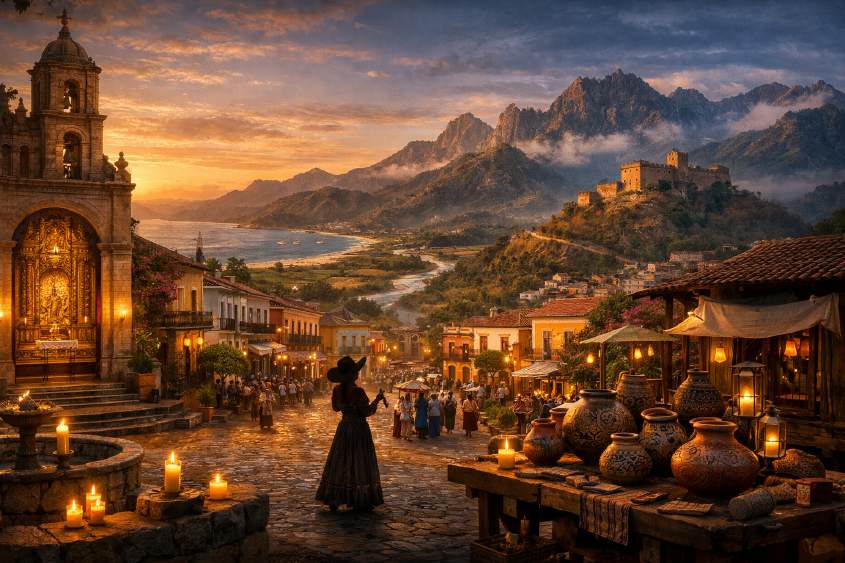
Sinaloa’s story is as layered as its landscapes. From fertile valleys and golden beaches to jagged mountains that rise into the Sierra Madre Occidental, this northwestern state has always been a meeting ground of cultures, a crossroads of trade, and a stage for legends.
Long before the Spanish arrived, indigenous groups such as the Cáhitas, Tahues, and Acaxees thrived here. Their pottery styles—Huatabampo, Serrana, and Aztatlán—still whisper of sophisticated traditions that date back over three thousand years. But history took a dramatic turn in the early 16th century, when conquistadors marched north from Nueva Galicia. By 1531, Culiacán had been founded, soon followed by presidios and mining towns like Sinaloa de Leyva. Colonial wealth, carved from silver and gold, transformed the region and left behind churches, plazas, and haciendas that still stand today.
After Mexico’s independence, Sinaloa joined Sonora to form the Estado de Occidente in 1824, before becoming a state in its own right in 1830, with Culiacán as its capital. Agriculture, mining, and fishing made it one of Mexico’s breadbaskets, feeding the nation with tomatoes, corn, shrimp, and tuna.
Yet Sinaloa’s magic isn’t only written in history books—it lives in its Pueblos Mágicos, those towns officially recognized by Mexico since 2001 for their cultural, historical, and natural significance.
● El Rosario: A town born of silver mines, where a church altar gleams in gold and the
memory of singer Lola Beltrán fills the air.
● Cosalá: The first Sinaloan town to earn the Pueblo Mágico title, famous for its colonial
streets, mining heritage, and the magical glow of the Noche de las Velas.
● Mocorito: The “Atenas de Sinaloa,” birthplace of chilorio and a cradle of poets,
revolutionaries, and traditions that make Fridays in the plaza unforgettable.
● El Fuerte: A riverside town crowned by its colonial fort and legends of Zorro, serving as
the gateway to the Copper Canyon.
Together, these towns capture Sinaloa’s spirit: a blend of resilience and beauty, faith and folklore, history and celebration. To visit them is to step into the living heartbeat of a land that has always been a meeting point of cultures, and to discover the kind of magic that lingers long after the journey ends.
San Ignacio, Sinaloa
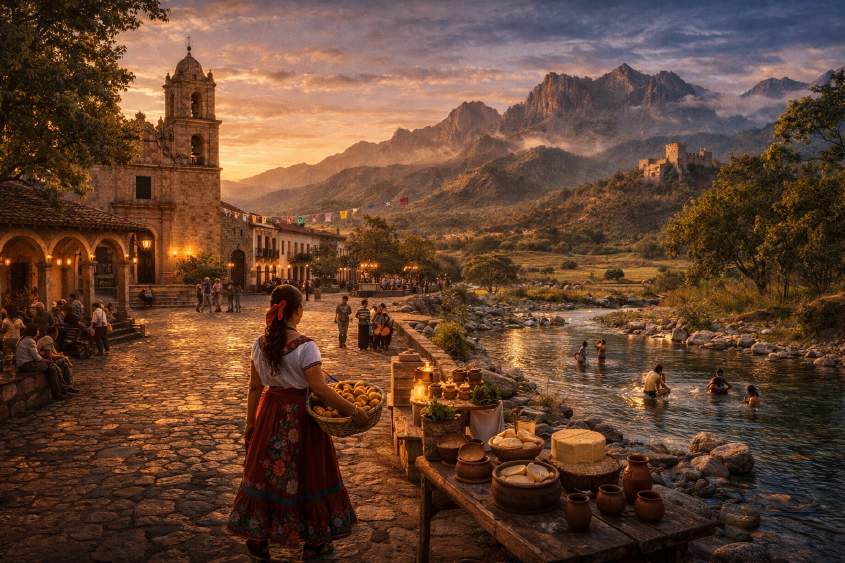
San Ignacio is one of Sinaloa’s most recent additions to Mexico’s prestigious list of Pueblos Mágicos, and for good reason. Nestled between mountains and rivers, this charming town offers a mix of history, culture, and natural beauty that feels both timeless and refreshingly alive. From its cobblestone streets and colonial architecture to its pristine rivers and nearby ranch communities, San Ignacio is the perfect destination for those who want to slow down, connect with tradition, and discover an authentic corner of Mexico.
A Town Steeped in History and Legends
Founded during the colonial era, San Ignacio grew along the Piaxtla River and flourished thanks to agriculture, ranching, and mining. Its historic heart preserves the architecture of old Sinaloa: red-tiled roofs, shady portales, and stone-paved streets.
San Ignacio is perhaps best known for its religious festivities, especially the Fiesta de la Taspana, when locals celebrate with music, dance, and colorful parades. Stories of jaguars roaming the hills and the enduring traditions of ranch life still shape the identity of the town and its surrounding villages.
Getting There
● From Culiacán: San Ignacio lies about 95 kilometers south, an easy 1.5-hour drive
along the México 15 highway. The road is dotted with traditional eateries, perfect for a breakfast stop in El Salado, where handmade tortillas, beans, and fresh cheese accompany hearty ranch-style eggs.
● From Mazatlán: The town is only 80 kilometers north, making it a comfortable day trip or
overnight visit.
Where to Stay
Though smaller than other Pueblos Mágicos, San Ignacio offers a handful of modest accommodations:
● Local guesthouses – Stay in family-run inns for a true taste of hospitality.
● Riverside cabins and eco-lodges – In nearby ranch communities, rustic cabins provide
peaceful stays surrounded by nature.
● For those who prefer city comforts, Mazatlán serves as an excellent base for day trips.
What to See and Do
Stroll the Town Center
The historic core of San Ignacio is compact and walkable. Explore its cobblestone streets, admire colonial façades, and spend time in the plaza where locals gather under the shade of old trees.
Visit San Javier
Just outside San Ignacio, this village is often called one of the prettiest in the municipality. Founded on the banks of the Piaxtla River, it is known for its Taspana festival, beautiful church, and traditional homes with tiled roofs and wide portales.
The Museum of the Jaguar (Cabazán)
Dedicated to the most emblematic animal of the region, this museum showcases the importance of jaguars in local culture and conservation. It’s a reminder that the municipality is home to remarkably well-preserved natural areas where species such as deer, wild boar, foxes, and yes, even jaguars, still roam.
Take a Dip in the River
On hot afternoons, locals head to the Piaxtla River to cool off. The crystal-clear waters are ideal for swimming and picnicking on the riverbanks.
Explore Ranch Communities
Villages such as Camacho de Arriba and others nearby preserve ranching traditions. Expect to see chickens, horses, and the tools of rural life—metates, hornillas, saddles—alongside warm welcomes from the residents.
Food to Try
San Ignacio is a land of ranch flavors:
● Empanadas de calabaza – Sweet pumpkin turnovers, often bought roadside in El
Carmen.
● Homemade cheeses and fresh tortillas – Staples in nearly every household.
● Ice cream from San Javier – A treat for hot days, often enjoyed right outside the
church.
● Traditional Sinaloan dishes such as machaca, beans, and aguachile are widely
available.
Practical Tips
● Best Time to Visit: November to March offers cooler, more pleasant weather. Summers
can be hot but perfect for river swims.
● Clothing: Light, breathable clothing for daytime; bring a hat and sunscreen. Evenings
are cooler, so a light sweater may be useful.
● Festivities: Plan around the Fiesta de la Taspana for a colorful cultural experience. Closing Reflection
San Ignacio is more than a town—it is an embrace. Its people are famously kind, often greeting strangers on the road with a wave or a smile. Its landscapes, both rugged and gentle, remind travelers of Mexico’s enduring natural richness. Whether you’re savoring a handmade empanada, diving into the river on a hot afternoon, or wandering its quiet streets at sunset, San Ignacio leaves you with the feeling that you’ve touched a piece of Mexico still untouched by time.
El Rosario, Sinaloa
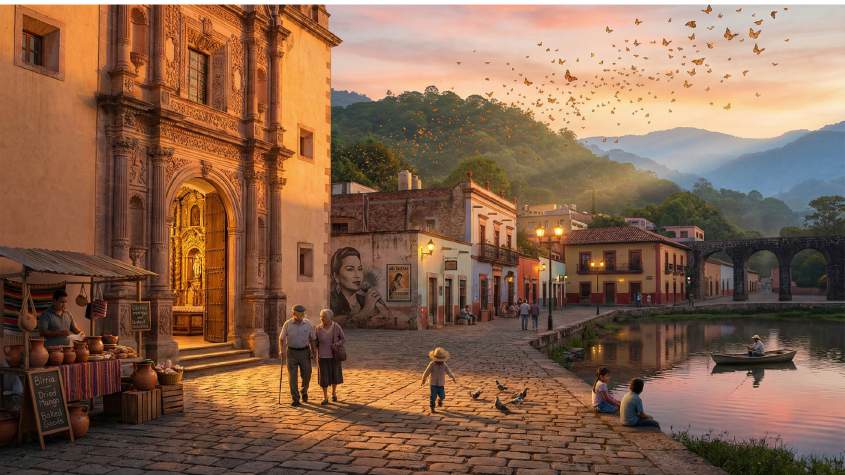
A short drive south of Mazatlán, the road bends into hills and suddenly opens onto El Rosario, a Pueblo Mágico wrapped in stories of silver, saints, and song. Once a prosperous mining hub and home to one of Mexico’s most iconic singers, Lola Beltrán, El Rosario is now a town where cobblestone streets echo with the past, golden altars glow with devotion, and butterflies paint the skies each winter.
This is not the bustle of the beach resorts—it’s slower, softer, more intimate. The kind of place where history lingers in every stone and where travelers quickly discover why El Rosario has been called one of Sinaloa’s cultural jewels.
History & Culture
Founded in 1655, El Rosario rose to fame for its rich silver mines, particularly the Mina del Tajo, which once supplied great wealth to New Spain. Its prosperity left behind architectural treasures, most notably the Santuario de Nuestra Señora del Rosario, a church whose golden altarpiece is among the finest in Mexico.
Legends are woven through the town: stories of the ground collapsing to form the Laguna del Iguanero, or whispers of miners who struck it rich only to lose everything. El Rosario is also forever tied to Lola Beltrán, “La Reina de la Canción Ranchera,” whose voice carried the soul of Mexico to the world. A museum honors her memory, while locals proudly recall her roots.
Getting There
● From Mazatlán: El Rosario is only about 60 kilometers south—just an hour’s drive along
Highway 15. Buses also run regularly, making it a convenient day trip.
● From Culiacán: Expect a longer drive of about four hours, best combined with an
overnight stay.
Where to Stay
Though many travelers come just for the day, staying overnight allows the town’s magic to unfold:
● Hotel Yauco – A traditional option with comfortable rooms.
● Hotel Quinta Refugio – Known for its cozy atmosphere and warm hospitality.
● Vacation rentals – Several family-run guesthouses offer authentic stays with
home-cooked breakfasts.
What to See and Do
Santuario de Nuestra Señora del Rosario
The crown jewel of El Rosario, this church dates to the 18th century. Step inside and you’ll be met by a gilded altarpiece that shimmers with centuries of devotion. The façade itself is a work of art, carved in cantera stone.
Museo de Lola Beltrán
Dedicated to the legendary singer, the museum showcases costumes, photographs, and memorabilia that celebrate her career and her impact on Mexican music.
Laguna del Iguanero
Formed when old mines collapsed, this lagoon has become a serene spot where locals gather. Children play at its edge, and fishermen cast lines in the late afternoon.
The Arcos Virreinales
Remnants of the colonial mining infrastructure, these arches still stand as silent witnesses to El Rosario’s silver boom.
Butterfly Sanctuary
Between November and March, nearby hills transform into a sanctuary for monarch butterflies. Thousands of delicate wings turn the air into a living kaleidoscope—a sight that feels otherworldly.
Stroll the Plaza and Market
The plaza is framed by colorful houses, while the market buzzes with food stalls, huaracherías, and vendors selling mangos, seeds, and sweets.
Food to Try
El Rosario is a delight for food lovers:
● Birria tacos – Slow-cooked and spiced to perfection, often sold from simple street stalls.
● Carnitas estilo Michoacán – A local favorite for midday meals.
● Mariscos (seafood) – Fresh from the nearby Pacific coast. Don’t miss caldo de
camarón or pescado zarandeado.
● Mangues enchilados and dried mango – Sweet, spicy, and quintessentially Sinaloan.
● Pan de queso and empanadas – Traditional baked goods sold in the market.
Practical Tips
● Best Time to Visit: November to April, when the weather is cooler and the butterfly
sanctuary is active.
● Clothing: Comfortable shoes for cobblestone streets; light clothing with a sweater for
cooler evenings.
● Souvenirs: Handcrafted huaraches, local sweets, and Lola Beltrán memorabilia. Cosalá, Sinaloa
● Festivities: The town celebrates its founding each October with music, food, and
processions.
Closing Reflection
El Rosario is a town that wears its history with pride. Its church tells stories in gold leaf, its streets hum with echoes of miners and musicians, and its people still sing Lola Beltrán’s songs as if she never left. This Pueblo Mágico is not just a detour from Mazatlán—it’s a journey into Mexico’s cultural soul.
Stand in the Santuario’s golden glow, wander to the lagoon at sunset, or watch monarch butterflies gather in the trees—you’ll leave knowing why El Rosario has earned its place among Mexico’s most unforgettable towns.
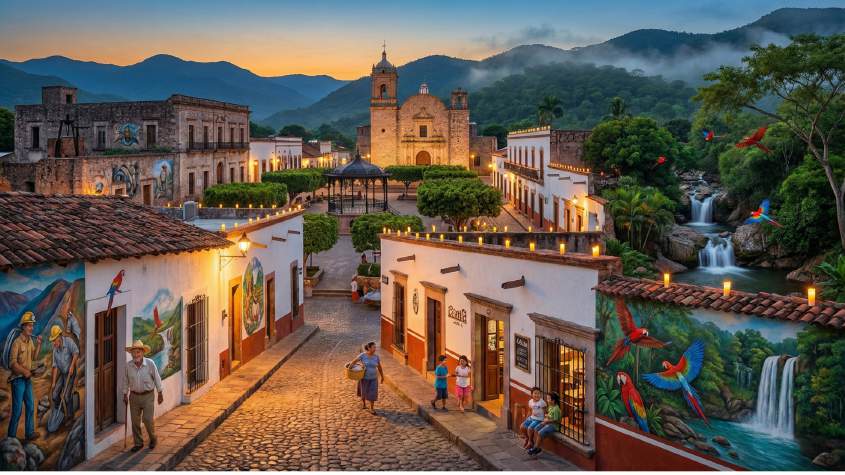
In the mountains of western Sinaloa lies Cosalá, the very first town in the state to be named a Pueblo Mágico. Arriving here feels like stepping into a painting: whitewashed houses with red-tiled roofs, narrow cobblestone alleys adorned with colorful murals, and the sound of birdsong mingling with the chatter of neighbors in the plaza. Tradition is alive in Cosalá—rooted in its mining past, carried by its religious festivities, and celebrated in its nature reserves, where waterfalls and Guacamayas remind visitors of the richness of this land.
Cosalá is not just a stop along the way; it’s a place that invites you to slow down, breathe deeply, and rediscover the rhythm of small-town Mexico.
History & Culture
Cosalá was officially founded in 1562, and its history is steeped in silver and legends. For centuries, it was a bustling mining center that attracted fortune seekers from Spain and beyond. The legacy of that prosperity lingers in the stone mansions, colonial churches, and mining relics scattered around town.
The town’s name is believed to derive from the indigenous word Quetzala, meaning “place of beautiful surroundings.” True to that name, Cosalá is encircled by lush hills, waterfalls, and rivers. Mining shaped its economy, but agriculture and crafts sustained its people. Today, Cosalá is also known for its devotion to the Virgen de Guadalupe, celebrated each December with the famous Noche de las Velas, when the entire town glows with thousands of candles.
Getting There
● From Culiacán: Cosalá is about 160 kilometers away, roughly a two-hour drive south via
Highway 15 before turning inland.
● From Mazatlán: Expect about 2.5 to 3 hours by car, making it perfect for a weekend
getaway.
● By Bus: Public transport connects Culiacán and Mazatlán with Cosalá, though many
travelers prefer renting a car to explore surrounding nature spots.
Where to Stay
Cosalá offers a mix of rustic charm and modern comfort:
● Casa de Adobe Hotel – A boutique stay with a pool and cozy rooms (around 1,000
pesos per night).
● Cabins & Eco-lodges – Several options near rivers and waterfalls, ideal for nature
lovers.
● Guesthouses – Family-run inns provide authentic hospitality and home-style meals.
What to See and Do
Stroll the Plaza Principal
The heart of Cosalá is its plaza, shaded by trees and framed by colonial buildings. The kiosco is a lively spot where music often fills the air.
Iglesia de Santa Úrsula
This 18th-century church is a treasure of colonial architecture, with its stone walls, colorful details, and serene interior. It is surrounded by picturesque alleys lined with cafés and shops. Murals and Callejones
Cosalá’s streets are full of murals, each telling stories of local culture, history, and wildlife. Don’t miss the Callejón de los Gobernadores, decorated with mining motifs, or the Callejón de Luis Pérez Meza, honoring the regional composer.
Museo de Minería e Historia
This museum delves into Cosalá’s mining heritage, with exhibits on local history and a section dedicated to Luis Pérez Meza. It’s a compact but rich stop to understand the town’s past.
Vado Hondo
Just outside town, this natural paradise enchants with waterfalls, ancient sabino trees, and cool streams. It’s a favorite spot for hiking, swimming, and simply listening to the harmony of water and birdsong.
Noche de las Velas (Night of Candles)
Every December 11th, thousands of candles light up the streets in honor of the Virgen de Guadalupe. It’s an otherworldly experience that blends faith, art, and community spirit.
Food to Try
Cosalá is a treat for the palate:
● Tostadas de pulpo or shrimp – Fresh and flavorful, often sold in stalls near the plaza.
● Conservas (candied fruits) – Try papaya or calabaza preserves, a local specialty.
● Traditional sweets and raspados – Found in the market and along the streets.
● Nieve de garrafa – A refreshing artisanal ice cream, perfect after wandering the alleys.
● Machaca and regional stews – Hearty dishes reflecting ranch traditions.
Practical Tips
● Best Time to Visit: November to March for cooler weather. December is particularly
special due to the candlelit festival.
● Clothing: Comfortable walking shoes for cobblestones, light clothing for daytime, and a
sweater for cooler evenings.
● Souvenirs: Handcrafted pottery, preserves, and artwork inspired by guacamayas and
mining heritage.
● Nature Excursions: Bring swimwear and insect repellent if you plan to visit waterfalls
and rivers.
Closing Reflection
Cosalá feels like a town caught between worlds: the elegance of its mining legacy, the intimacy of its narrow streets, and the untamed beauty of its surrounding landscapes. One moment you’re admiring a candlelit alley, the next you’re plunging into a mountain stream.
It’s in these contrasts that Cosalá’s magic shines. Whether you come for its history, its festivals, or its natural wonders, you’ll leave with the memory of a Pueblo Mágico that invites you to linger, to listen, and to fall in love with the quiet beauty of Sinaloa’s heartland.
Mocorito, Sinaloa
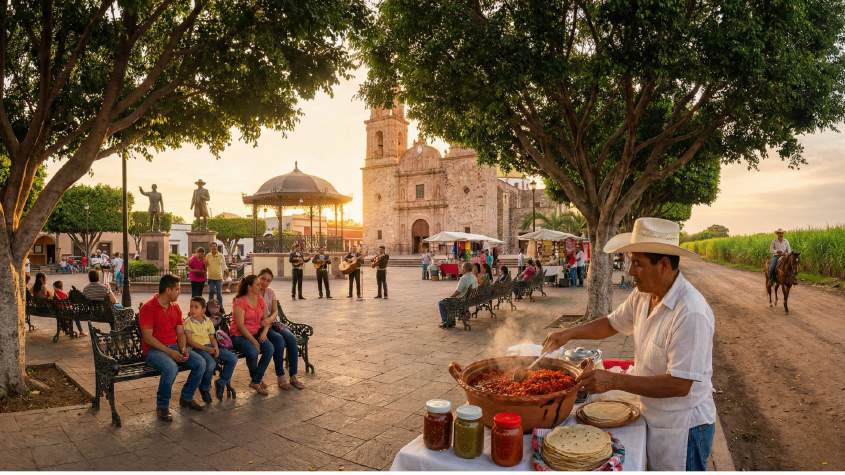
Known as the “Atenas de Sinaloa” (the Athens of Sinaloa) for its cultural and intellectual legacy, Mocorito is a Pueblo Mágico that balances charm with history. Here, the streets still echo with music and poetry, colonial churches stand proudly beside leafy plazas, and the air carries the aroma of chilorio—the town’s most famous culinary gift to Mexico.
Mocorito is not just a destination; it’s an encounter with tradition, artistry, and flavors that have defined the Sinaloan spirit for centuries.
History & Culture
Founded in 1594 by Jesuit missionaries, Mocorito began as a mission town, its name derived from Cahita words meaning “place of people who speak the Cahita tongue.” The Jesuits built the Parroquia de la Inmaculada Concepción, still standing today, its stone walls and carved images dating back to the 17th century.
The town blossomed culturally in the 19th and 20th centuries, earning its title as “Atenas de Sinaloa” thanks to the number of writers, teachers, and musicians it produced. Mocorito honors its heroes in the Plaza de los Tres Grandes, dedicated to historian Eustaquio Buelna, revolutionary general Rafael Buelna, and heroine Agustina Ramírez, who famously sent her 13 sons to defend Mexico against the French.
But beyond monuments, Mocorito lives through its everyday culture—Fridays in the plaza, religious processions, and the laughter of families enjoying ice cream under the trees.
Getting There
● From Culiacán: About 100 kilometers north, a 1.5-hour drive via Highway 15.
● From Los Mochis: Around 160 kilometers south, about two hours by car.
● Buses connect Mocorito with both cities, making it accessible for travelers without a car.
Where to Stay
Mocorito offers simple but charming accommodations:
● Local guesthouses – Family-run inns with authentic hospitality.
● Cabins and vacation rentals – Found in the surrounding countryside for those who
prefer nature.
● Nearby Guamúchil has more hotels if you prefer a wider range of services.
What to See and Do
Plazuela Miguel Hidalgo
The heart of town, inaugurated in 1902, is shaded by trees and surrounded by colonial buildings. It’s the perfect place to people-watch, especially on Fridays when it comes alive with markets and music.
Parroquia de la Inmaculada Concepción
Built by Jesuits in the 17th century, the parish church is both beautiful and historically significant. Inside, you’ll find 14 carved images representing the Stations of the Cross, some over 400 years old.
Museo de Historia Regional
A compact but fascinating museum that traces Mocorito’s past—from indigenous heritage to colonial evangelization and revolutionary struggles.
Plaza de los Tres Grandes
This square honors three of Mocorito’s most famous figures:
● Eustaquio Buelna – 19th-century historian and educator.
● Agustina Ramírez – Heroine of the French Intervention.
● Rafael Buelna – The youngest general of the Mexican Revolution.
Chilorio Express
Hop aboard this tourist train in the plaza to explore the historic center while learning about Mocorito’s stories. It runs daily in the evenings.
Friday Market & Cultural Evenings
On Fridays, the town gathers in the plaza for a traditional tianguis, music, and community life. It’s the best time to feel Mocorito’s heartbeat.
Nearby Ranches and Sugar Mills
Just outside town, old mills and ranch communities preserve Mocorito’s agricultural traditions. You can sample fresh sugarcane products or ride horseback along country roads.
Food to Try
Mocorito is the birthplace of chilorio, a dish of shredded pork cooked in pasilla chili and spices. No visit is complete without tasting it—whether in tacos, tortas, or straight from the pot.
Other must-tries include:
● Menudo and birria – Hearty weekend meals.
● Seafood tostadas – Fresh and loaded with shrimp, octopus, or fish.
● Salsa Miguelera – A spicy local favorite often served with mariscos.
● Artisanal ice cream (nieve de garrafa) – Found in the plaza, with flavors like queso,
vainilla, or Oreo.
● Local sweets and conservas – Perfect souvenirs.
Practical Tips
● Best Time to Visit: November to March for cooler weather. Fridays are especially lively.
● Festivals: The Chilorio Festival is held annually to celebrate the town’s iconic dish,
while religious festivities around the Virgen de la Purísima Concepción fill the streets with music and dance.
● Clothing: Comfortable walking shoes and light clothing for the warm afternoons.
● Souvenirs: Local crafts, salsa bottles, and chilorio to-go packs.
Closing Reflection
Mocorito is a town where history, culture, and flavor converge. You can stand in front of a centuries-old church, taste a dish that has become a national culinary icon, and hear stories of heroes that still inspire local pride—all in a single afternoon.
But Mocorito’s true magic lies in its atmosphere. It’s in the Friday evening laughter in the plaza, the smell of chilorio wafting from a kitchen, and the warmth of neighbors who greet you as if you belong. This Pueblo Mágico doesn’t just share its past—it invites you to be part of its living tradition.
El Fuerte, Sinaloa
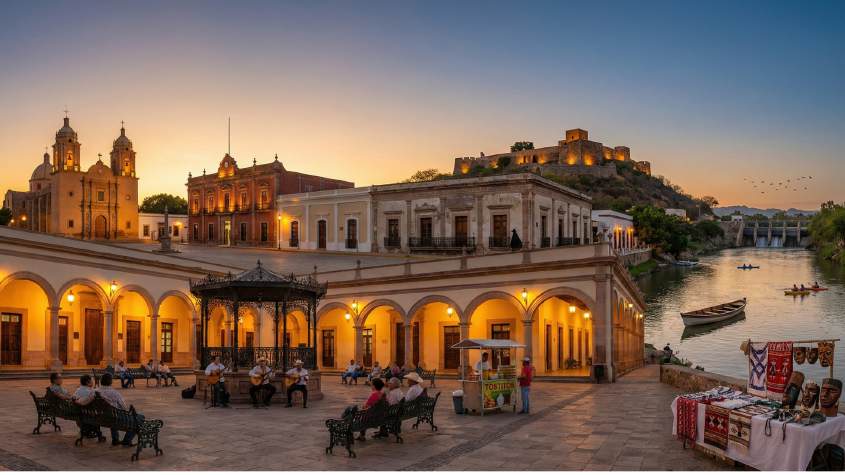
Perched on the banks of the Río Fuerte in northern Sinaloa, El Fuerte is a Pueblo Mágico that feels both timeless and full of life. Its streets are lined with colonial mansions, its plaza hums with music and conversation, and its legends—like those of Zorro, who is said to have been born here—linger in the air.
But El Fuerte is more than stories. It’s the gateway to the Copper Canyon Railway (El Chepe), a blend of history and adventure, and one of the most atmospheric towns in northern Mexico. Whether you come for its architecture, its indigenous traditions, or simply to watch the Río Fuerte sparkle in the evening light, the town promises an experience that stays with you.
History & Culture
Founded in the late 16th century, El Fuerte began as a Spanish fort, built to defend settlers from indigenous resistance. Its strategic location soon made it a hub of trade, mining, and agriculture. The town’s name comes from the Fuerte del Marqués de Montesclaros, a fort built in 1610 to guard against attacks.
The colonial boom left El Fuerte with elegant mansions, arched portales, and shaded plazas. Today, the town embraces both its Spanish and indigenous roots. The surrounding area is home to the Mayo-Yoreme people, who preserve their traditions through ceremonies, dances, and crafts. This blending of cultures gives El Fuerte its unique identity: colonial on the surface, but deeply indigenous at heart.
Getting There
● By Road: El Fuerte is about 90 kilometers inland from Los Mochis (roughly 1.5 hours by
car).
● By Train: The famous Chepe Express passes through El Fuerte on its journey into the
Copper Canyon. Many travelers begin or end their adventure here.
● By Air: The nearest airport is in Los Mochis, with connections to major Mexican cities.
Where to Stay
El Fuerte offers character-filled accommodations:
● Posada del Hidalgo – A colonial mansion turned hotel, famous for its Zorro-themed
shows and lush courtyards.
● Hotel Torres del Fuerte – Elegant and atmospheric, set in a restored 18th-century
building.
● Boutique inns and eco-lodges – Smaller options provide intimate stays with personal
touches.
What to See and Do
Plaza de Armas
The town’s main square, framed by palm trees and arcades, is the perfect place to begin. The Kiosco and surrounding portales are often alive with music and community gatherings.
Templo del Sagrado Corazón de Jesús
This church, with its adobe-colored façade and graceful spire, reflects El Fuerte’s colonial heritage and remains a central landmark.
Palacio Municipal
An impressive red-brick building from the Porfirio Díaz era, with a grand courtyard and a mural depicting the town’s history.
Museo y Mirador del Fuerte
Built on the remains of the original 1610 fort, this museum narrates El Fuerte’s turbulent past. From its walls, panoramic views stretch across the Río Fuerte and surrounding hills.
Casa del Zorro (Casa del Resbalón)
Legend has it that Diego de la Vega, better known as El Zorro, was born here. Whether fact or folklore, the mansion adds an air of mystery and romance to the town.
Indigenous Ceremonies
Nearby villages like Mochicahui and Capomos host traditional Mayo-Yoreme ceremonies—colorful rituals filled with music, dance, and masks. These are not staged for tourists but genuine cultural expressions, best appreciated with respect.
Cerro de la Máscara
An archaeological site just outside town, where more than 300 petroglyphs—spirals, suns, animals, and human figures—are carved into volcanic rock. The site was once a ceremonial center and remains an evocative reminder of the region’s ancient cultures.
Outdoor Adventures
The Río Fuerte offers opportunities for kayaking, fishing, and boat rides, while the nearby Miguel Hidalgo and Josefa Ortiz de Domínguez dams provide excellent spots for camping and birdwatching.
Food to Try
El Fuerte’s cuisine is a delicious fusion of river, ranch, and indigenous flavors:
● Tostitos preparados con coco – Street snacks loaded with fruit, peanuts, spices, and
chips.
● Fresh river shrimp and fish – Often cooked as ceviche or Sarandeado (marinated and
grilled).
● Chilorio and machaca – Traditional Sinaloan pork and beef dishes.
● Tamales and tortillas de harina – Staples of northern Mexico.
● Sweets and raspados – Perfect for hot afternoons in the plaza.
Practical Tips
● Best Time to Visit: November to March offers cooler, more pleasant weather. Summers
can be very hot.
● Clothing: Lightweight clothes for daytime, but bring comfortable shoes for cobblestones
and hikes.
● Souvenirs: Handwoven Mayo-Yoreme crafts, petroglyph-inspired jewelry, and
Zorro-themed keepsakes.
● Chepe Train: If you plan to take the train, book tickets in advance—especially in peak
seasons.
Closing Reflection
El Fuerte is a town of layers: Spanish forts and indigenous ceremonies, legends of Zorro and echoes of real battles, colonial mansions and riverside sunsets. It’s a place where history is not just remembered but lived—where a walk through the plaza can feel like stepping into both a novel and a celebration.
For many, El Fuerte is the prologue to the Copper Canyon journey. Yet even without the train, it stands on its own as one of Mexico’s most enchanting towns. Spend a night here, let the Río Fuerte’s breeze carry stories to your ears, and you’ll understand why this Pueblo Mágico is treasured as both a gateway and a destination.