

Move to Mexico: A Guide For Families by Scott Paton - HTML preview
Download the book in PDF, ePub for a complete version.
Family Life in Mexico: Day-to-Day Culture, Food, and Weekend Adventures
Eating Out and Cooking at Home with Kids in Mexico
One of the first things families notice is how genuinely welcome children are at Mexican restaurants. There's no sense that kids belong only at fast-food counters—toddlers wobble between tables at a Sunday comida, waiters produce crayons and high chairs without being asked, and nobody flinches at a little noise. A sit-down family dinner at a mid-range spot runs about USD 15–40 for four, and you'll often linger for two hours while your kids make friends with the owner's grandchildren.
For picky eaters, the ramp-in is gentle. Quesadillas, arroz con leche, agua de horchata, and plain grilled chicken appear on nearly every menu, so even the most salsa-averse child finds a landing pad. When you want something fast and cheap, a taco al pastor stand delivers a full street meal for USD 5–10—just point your kids toward the trompo and let them watch the spinning pork get carved.
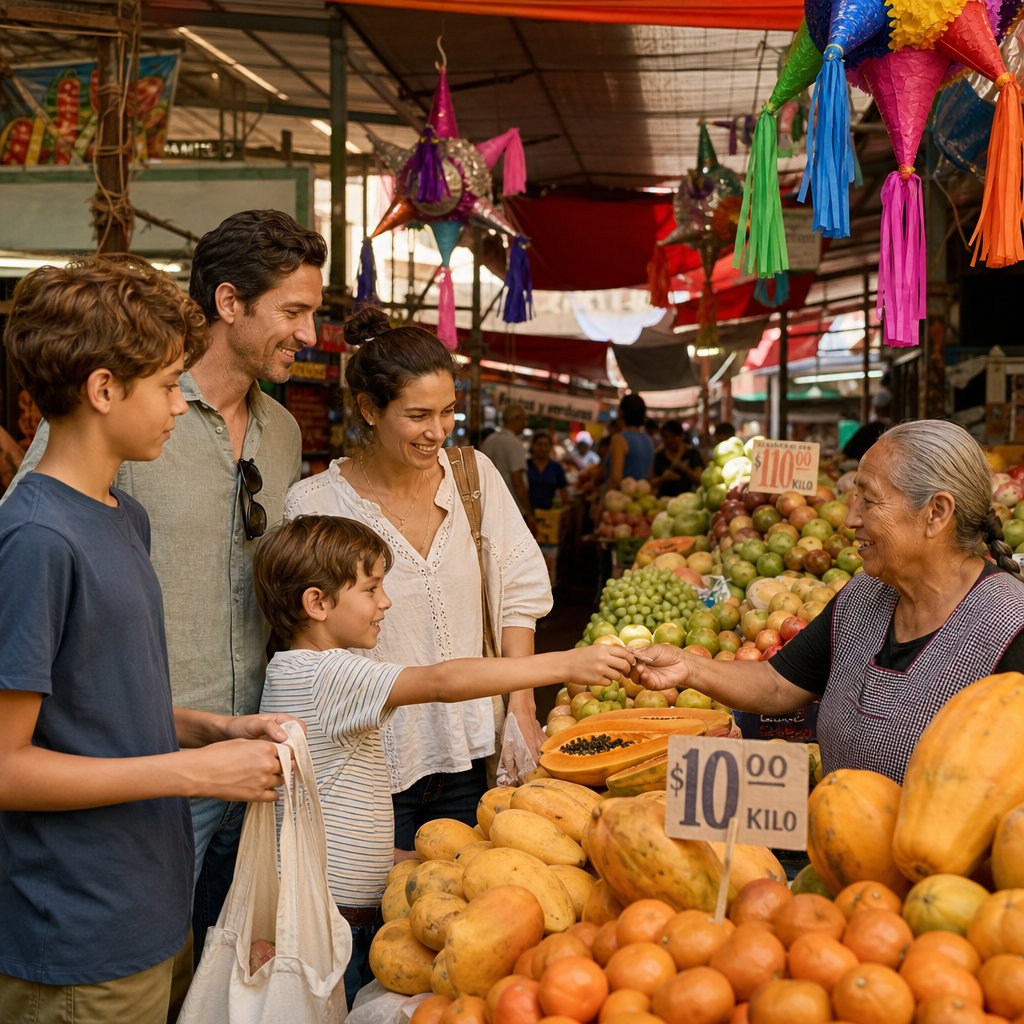
Saturday-morning mercado visits quickly become a family ritual and a quiet Spanish lesson. Mérida's Lucas de Gálvez, Guadalajara's Mercado de San Juan de Dios, Monterrey's Mercado Juárez, and Querétaro's Mercado de la Cruz let kids haggle for mandarinas, sample a slice of papaya, and learn their colors and numbers in pesos. Bring cash in small bills and a cloth bag.
For the familiar-food homesickness that inevitably hits around week three, the big chains have you covered. Walmart, Chedraui, Soriana, and the upscale City Market stock peanut butter, cereal, and international brands; in Monterrey, HEB is the expat favorite for American imports and reliable gringo comfort food. Costco operates in all four cities for bulk staples.
Cooking at home stays cheap and fresh: a week of produce from the mercado often costs less than a single restaurant dinner back home.
Weekend Excursions from Each City
Part of what makes Mexico feel like home rather than a posting is the sense that adventure sits just beyond your doorstep. Each of the four cities anchors a cluster of day trips that turn Saturdays into something kids look forward to all week.
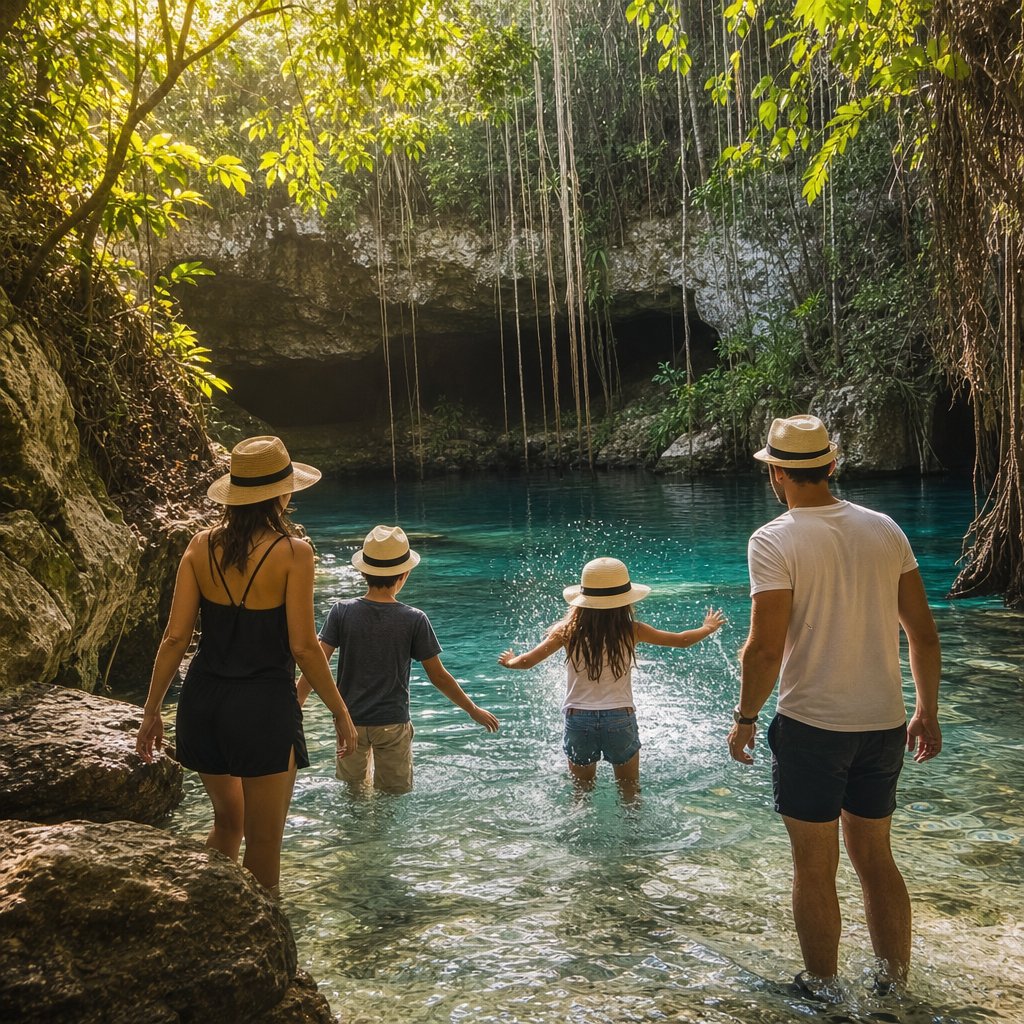
Mérida is cenote country. Within 90 minutes you can swim in the jungle-ringed sinkholes near Cuzamá or Homún—cool, clear, and endlessly fun for confident swimmers. The ruins of Chichén Itzá (about two hours) reward an early start before the heat and crowds, and Celestún's pink flamingo lagoons make for an unforgettable boat ride (roughly MXN 500 per launch, shared among passengers).
Monterrey rewards outdoorsy families. The Grutas de García caves, reached by cable car, feel genuinely otherworldly to a seven-year-old. Cascada Cola de Caballo near Santiago offers an easy waterfall walk and horse rides, while Chipinque's forested trails sit minutes from San Pedro—a quick dose of mountain air without leaving the metro.
Guadalajara families drift south to Lake Chapala and Ajijic for lakeside lunches and a stroll along the malecón. Tequila town (about an hour) runs family-friendly distillery tours and the Jose Cuervo Express train, and the cobbled mountain village of Tapalpa, at altitude, brings pine forests, quesadillas, and cool-weather weekends.
Querétaro punches above its size for day trips. Peña de Bernal, one of the world's tallest monoliths, offers a kid-sized hike and a charming pueblo at its base. Tequisquiapan's thermal spas and spring-water pools make a relaxed family afternoon, and photogenic San Miguel de Allende is under an hour away for art, ice cream, and rooftop dinners.
A practical tip: build these into a rotating menu rather than cramming them in. One excursion a weekend keeps the magic fresh and gives children something regional to claim as their own.
Mexican Holidays, School Events, and Building Community Belonging
The fastest way for your children to stop feeling like visitors is to celebrate alongside everyone else. Mexico's calendar hands you several ready-made entry points, and schools build their year around them.
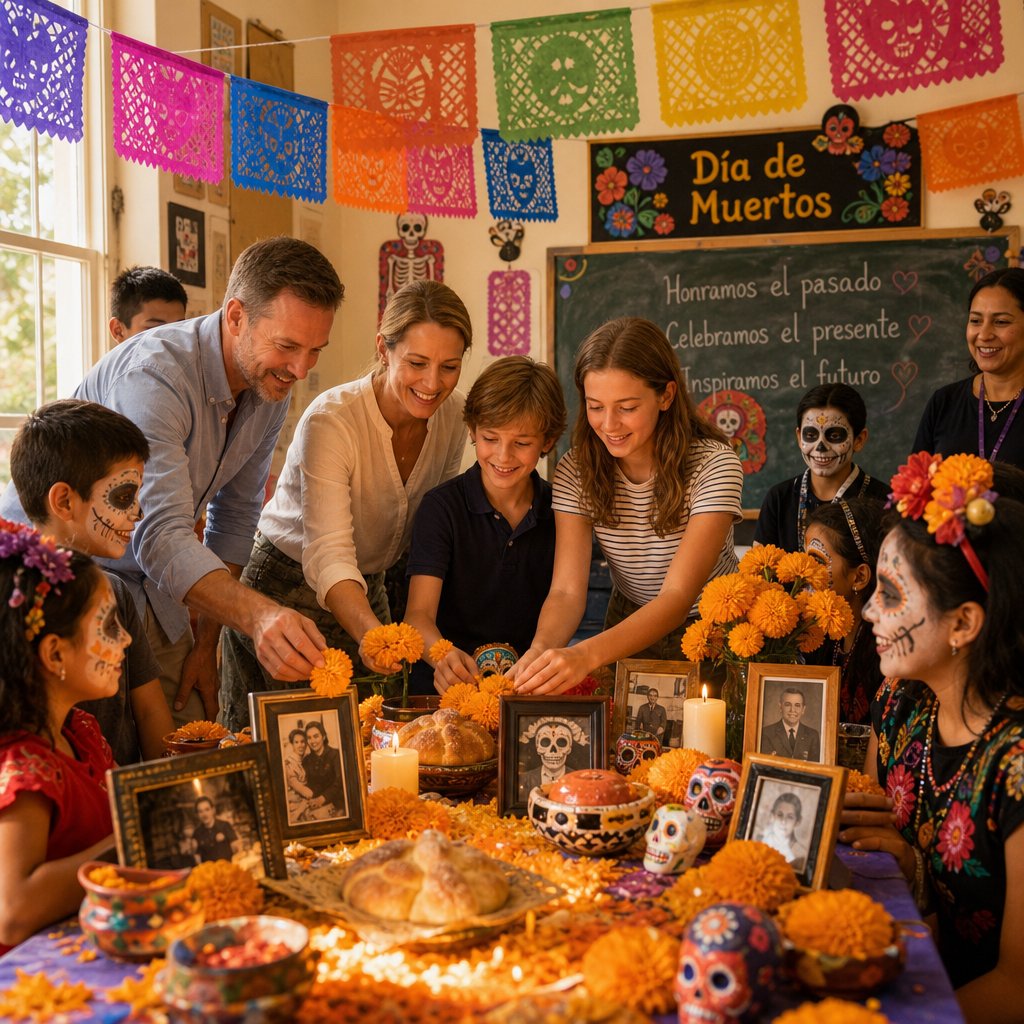
Nothing beats Día de Muertos (November 1–2) as a first immersion. Every colegio in all four cities throws itself into it—children build classroom ofrendas, paint sugar-skull faces, and bring photos of relatives who've passed. Ask your kids to contribute a photo of a grandparent or even a beloved pet; it signals belonging instantly and often moves teachers and classmates alike. Neighborhoods layer on cemetery visits, marigold-strewn altars, and pan de muerto from the corner bakery (MXN 25–40 a loaf).
Independence Day (September 16, with the Grito on the night of the 15th) turns your street into a party. Expect late-night fireworks, pozole, antojitos stalls, and tricolor everything. Centro plazas in Querétaro and Guadalajara host free public celebrations; simply showing up with your kids is a low-effort way to meet the neighbors.
Semana Santa, the two-week spring break, pairs beautifully with a home-country visit or a beach escape—just book flights and coastal rentals months ahead, since all of Mexico travels then and prices spike.
For the adults, the single highest-leverage move is joining your colegio's asociación de padres (parents' association). Volunteering for the kermés food booth, the holiday posada, or a fundraiser plugs you into the exact network of families whose children your kids already know. These parents become your weekend-plan source, your pediatrician recommender, and your emergency pickup list.
A practical rhythm: say yes to every school event your first year, even the ones that feel unfamiliar. Showing up—imperfectly, in broken Spanish—is what converts a foreign posting into a hometown.