

Move to Mexico: A Guide For Families by Scott Paton - HTML preview
Download the book in PDF, ePub for a complete version.
The Family Scouting Trip: Planning and Running Your City Visit
Before You Go: Research, Contacts, and School Appointment Protocols
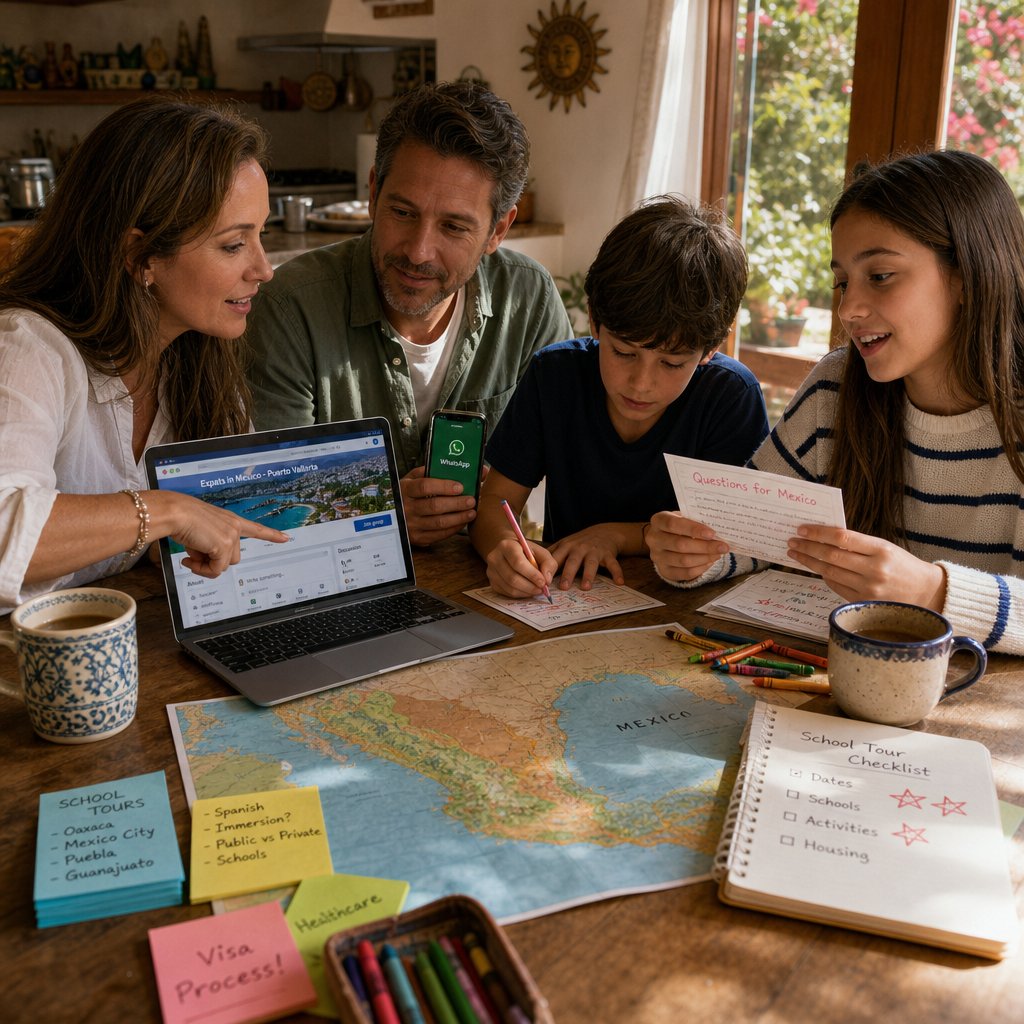
The difference between a scouting trip that answers your questions and one that leaves you more confused is almost entirely in the preparation. A scouting week fills up fast, so the groundwork starts at your kitchen table, weeks before you board the plane.
Start with the schools, because they anchor everything else. Email admissions offices eight to twelve weeks in advance—earlier if you're targeting ASFM, the American School of Yucatán, or Colegio Americano, where tours book up. Be specific: give your children's ages, current grade levels, desired entry date, and request a campus tour plus a sit-down with admissions. Ask whether assessment testing can happen during your visit; doing it in person saves a second trip. Confirm appointments the week before, as Mexican offices sometimes default to WhatsApp over email.
Next, build your local intelligence. Join city-specific expat Facebook groups—"Expats in Mérida," "Guadalajara Expats," "Querétaro Expats & Families"—and the WhatsApp groups members will point you toward. Post a short introduction naming your kids' ages and ask which schools and neighborhoods real families recommend. You'll get honest, current answers no brochure provides.
Book a relocation agent or local guide for at least one half-day of neighborhood tours. A good agent compresses days of wandering into a focused drive through San Pedro, Juriquilla, or the Montejo corridor, and can line up rental viewings on the spot. Expect to pay USD 50–150 for a few hours; it's among the best money you'll spend.
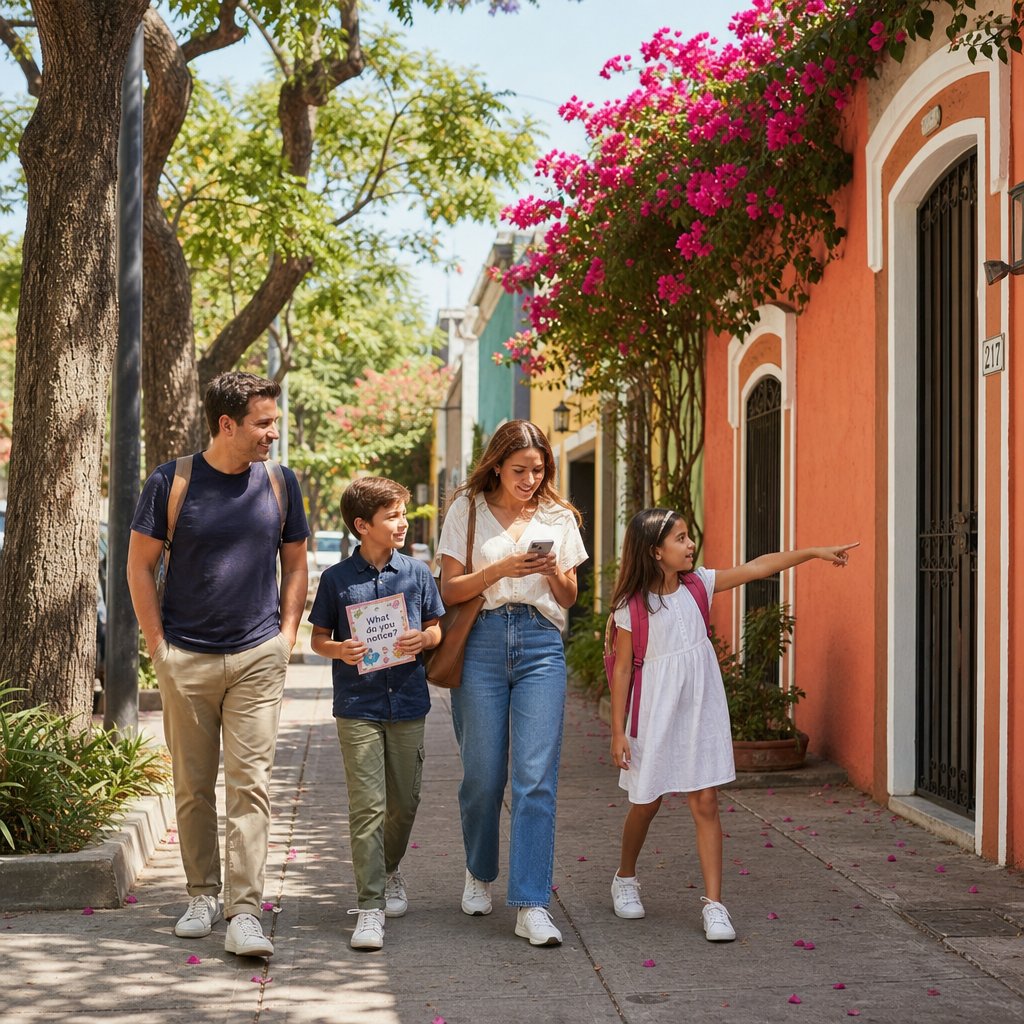
Finally, bring the kids into the process. Make simple "question cards"—index cards with prompts like "Could I walk to a park here?", "Did the school playground look fun?", and "Rate the ice cream (1–5)." Children who feel like investigators rather than luggage notice things you'll miss, and their scorecards become surprisingly useful tiebreakers.
Day-by-Day Scouting Trip Framework
Think of this template as a rhythm, not a rulebook. It assumes one city per visit and roughly a 9 a.m.-to-5 p.m. workday, with jet-lagged mornings and kid-friendly afternoons deliberately baked in.
- Day 1 — Arrive and orient. Land, drop bags, and resist the urge to schedule anything official. Take a slow walk-and-lunch through your top target colonia—Puerta de Hierro in Guadalajara, Juriquilla in Querétaro, San Pedro in Monterrey, or the Montejo corridor in Mérida. Notice sidewalks, traffic, playgrounds, and whether kids are out. Let everyone adjust.
- Days 2–3 — School visits (mornings). Front-load tours before 1 p.m. when campuses are alive. Visit no more than one school per morning so you can observe, not rush. Reserve afternoons for recovery and reward: a park, a museum, or a mercado. Guadalajara's Bosque Los Colomos, Querétaro's centro plazas, and Mérida's Gran Museo del Mundo Maya all work beautifully.
- Day 4 — Healthcare and housing. Walk into your shortlisted hospital (Country 2000, Hospital Ángeles, Christus Muguerza, or Star Médica) to see the pediatric wing and ask about English-speaking staff and insurance. In the afternoon, meet your relocation agent for three to four housing tours clustered near your preferred school.
- Day 5 — Debrief and lifestyle. Over breakfast, run a family debrief—each person, including kids, names one thing they loved and one worry. Then sample the weekend version of the city: a Sunday tianguis, a café district, a lake run to Chapala, or a climb up Chipinque. Depart satisfied, or extend a night if a school or neighborhood still needs a second look.
Keep one buffer afternoon loose. Scouting trips rarely unfold on schedule, and the unplanned hour is often where a city quietly wins your family over.
What to Observe and Ask on School Visits
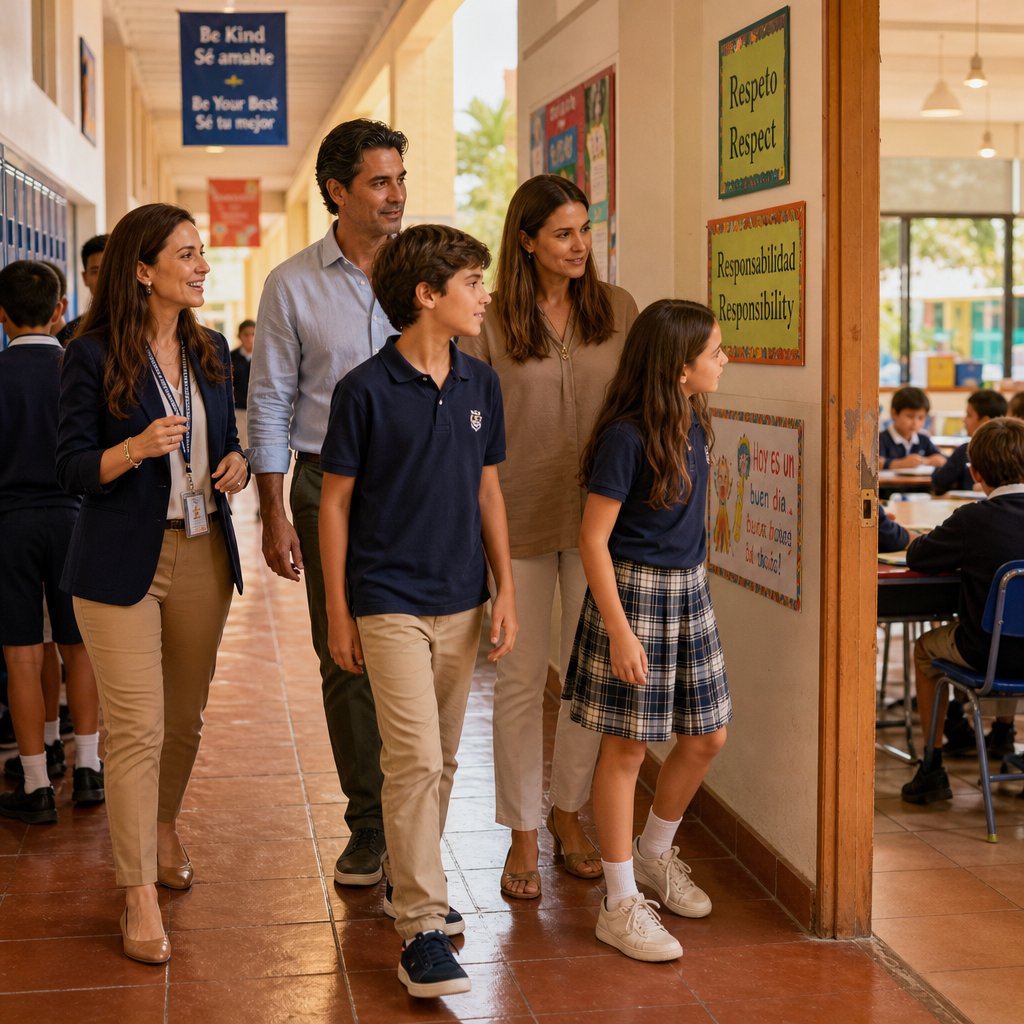
A good tour is choreographed to impress. Your job is to look past the fresh paint and notice how the school actually runs on an ordinary Tuesday. Start with the classrooms themselves. Count heads: a healthy student-to-teacher ratio sits around 20:1 in primary and lower in the early grades. More telling than the number is the energy—are children engaged and talking, or passively copying from a board? Are teachers circulating, or anchored to a desk? A room with a calm hum of activity beats a silent one.
Ask pointed questions about your own child's landing. Does the school run a new-student buddy program that pairs arrivals with a local classmate? What ESL or Spanish-support structure exists for a kid who speaks little Spanish—pull-out tutoring, in-class aides, or simply sink-or-swim? Given that partial Spanish immersion is the single strongest predictor of social integration, a vague answer here is a red flag.
Insist on seeing the unscripted zones. Ask to walk through the cafeteria at lunch and watch recess from a distance. Do kids cluster in cliques or mix freely? Are older students kind to younger ones? Hallway culture—how children greet staff, whether they're rushing or relaxed—reveals the real climate the glossy brochure can't.
Before you leave, request hard evidence:
- Prior-year parent satisfaction survey results, or at least the response themes.
- Alumni outcomes: where graduates go to university, in Mexico and abroad.
- Teacher retention rates—high turnover signals internal problems.
- The current waiting-list length for your child's grade.
Let your kids weigh in that evening using their question cards. Their gut read—whether the recess felt friendly, whether a teacher smiled at them—often captures something your spreadsheet misses.