

Desert Winds & Hidden Legends: Exploring the Pueblos Mágicos of Northeast Mexico by Scott Paton - HTML preview
Download the book in PDF, ePub, Kindle for a complete version.
Chapter 4: Zacatecas
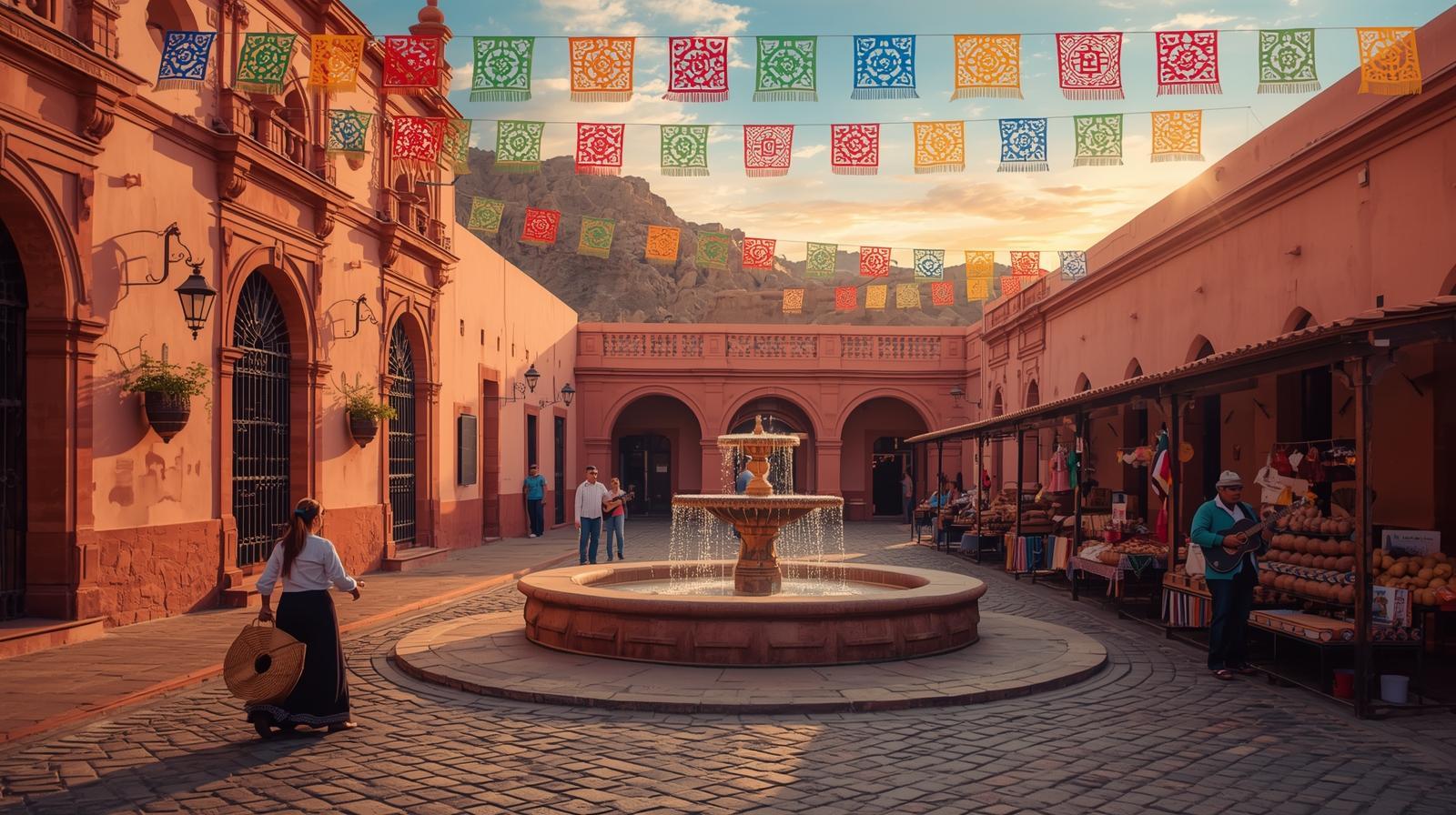
There’s something about Zacatecas that sneaks up on you. At first glance, it’s all pink stone cathedrals, winding alleys, and colonial plazas that seem frozen in time. But take a little detour—step outside the capital—and suddenly you’re in another world. Here, the Pueblos Mágicos of Zacatecas reveal themselves like well-kept secrets: towns wrapped in legends, framed by desert landscapes and silver-stained hills, each with a personality that’s impossible to forget.
Maybe it’s the way Teúl still carries whispers of ancient traditions, or how Jerez greets you with music and poetry around every corner. Maybe it’s Sombrerete, with its rugged sierras and golden sunsets that make you linger longer than planned. Or perhaps it’s Nochistlán, where the roots of Mexico’s cultural identity feel stronger than anywhere else. Each town has its own rhythm, its own story, its own flavor—and together, they create a mosaic of history, faith, rebellion, and celebration.
Traveling through Zacatecas’ Pueblos Mágicos is not just about checking off destinations. It’s about feeling the weight of centuries in a quiet church courtyard, tasting a handmade gordita in the market, or hearing a local tell you a story that isn’t in any guidebook. It’s the kind of journey that mixes the grandeur of colonial architecture with the intimacy of small-town life—an experience both humbling and heart-warming.
Mexico’s Northeast Pueblos Mágicos ©2026 All Rights Reserved. Scott Paton Trust. 51 So pack a little curiosity (and maybe a good pair of walking shoes). Zacatecas is ready to surprise you—not with flashy gestures, but with a kind of magic that feels lived-in, authentic, and deeply human.
Mexico’s Northeast Pueblos Mágicos ©2026 All Rights Reserved. Scott Paton Trust. 52 Jerez de García Salinas, Zacatecas – The Festive
Heart of Zacatecas
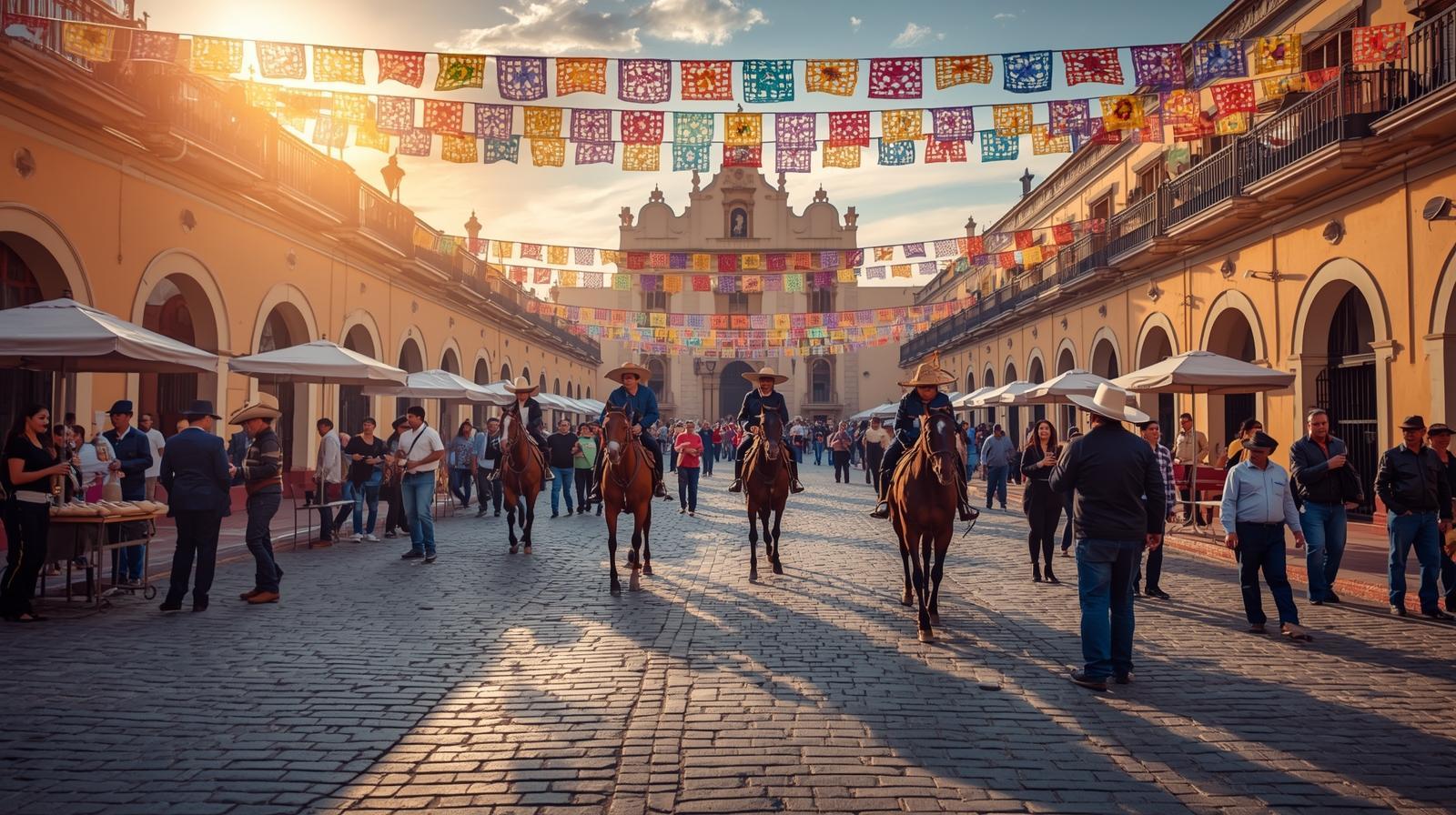
Step into Jerez de García Salinas and you’ll feel like you’ve wandered into a fiesta that never really ends. This Pueblo Mágico in Zacatecas radiates joy—whether it’s through the sound of tamborazo bands echoing across its plazas, the smell of fresh baked bizcochos (sweet bread) drifting from traditional bakeries, or the sight of colorful charros parading through cobblestone streets. It’s a place that insists you slow down, sip a mezcalito, and let yourself get swept into its rhythm.
History & Culture
Jerez isn’t just about celebration—it’s also about deep roots. Founded in the 16th century, this town grew prosperous from agriculture and became one of Zacatecas’ cultural jewels. The name “Jerez” comes from the Arabic word Sherish, meaning “abundant,” and you’ll quickly see why: its fertile valley bursts with orchards, fields, and flowers.
One of Jerez’s proudest sons is Ramón López Velarde, Mexico’s national poet. His words—often describing love, religion, and the Mexican countryside—are stitched into the cultural fabric of the town. Walking past his preserved home-turned-museum, you can almost hear the lines of La Suave Patria whispering through the air.
Mexico’s Northeast Pueblos Mágicos ©2026 All Rights Reserved. Scott Paton Trust. 53 And then there are the traditions: Semana Santa in Jerez is legendary. Picture streets filled with horses, music that makes the cobblestones hum, and the traditional Sábado de Gloria parade where charros ride in full regalia. It’s both wild and beautiful, carrying centuries of pride and identity.
Getting There
Reaching Jerez is easy if you’re already in Zacatecas City—it’s just a 56 km (about a 45-minute drive) southwest. Buses run regularly from Zacatecas’ main terminal, or you can rent a car for more flexibility (which is nice if you want to explore nearby pueblos and vineyards). Taxis and colectivos also make the trip, but nothing beats the freedom of having your own wheels if you’re planning to roam.
Where to Stay
Jerez has a charming mix of accommodations:
● Boutique Comfort – Hotel Mesón de Jobito offers colonial elegance in nearby
Zacatecas, but within Jerez itself you’ll find smaller boutique stays with leafy courtyards and wrought-iron balconies.
● Mid-Range Charm – Look for guesthouses around the historic center; many are
family-run and come with warm hospitality and homemade breakfasts.
● Budget-Friendly – Simple inns and hostales cater to travelers who want clean, central
lodging without frills. Perfect if you plan to spend most of your time outside soaking in the town.
What to See and Do
Jerez is a wanderer’s delight. Start at the Jardín Rafael Páez, the leafy heart of the town, framed by elegant portales where you can sip coffee and people-watch. Nearby stands the Santuario de Nuestra Señora de la Soledad, a neoclassical beauty with soaring columns and golden details.
Don’t miss:
● Teatro Hinojosa – A 19th-century theater that feels like stepping into a European opera
house.
Mexico’s Northeast Pueblos Mágicos ©2026 All Rights Reserved. Scott Paton Trust. 54
● Museo Ramón López Velarde – Dedicated to the poet who gave Mexico its “Suave
Patria.”
● Plaza Tacuba – Known for its music, especially tamborazo bands.
● Charreada & Equestrian Traditions – If you’re lucky, you’ll catch a rodeo-style event or
one of the equestrian parades.
● Street Markets – A swirl of colors, scents, and flavors, from leather goods to sweets.
For something more adventurous, head into the surrounding countryside: the Sierra de los Cardos mountains are ideal for hiking, climbing, and panoramic views.
Food to Try
This is where Jerez really wins hearts. Its gastronomy is rustic, hearty, and just a little indulgent:
● Asado de Boda – A rich, red pork stew spiced with guajillo chile, served at weddings but
found in restaurants year-round.
● Tostadas Jerezanas – Crunchy tortillas layered with beans, lettuce, and a savory meat
topping.
● Queso de Tuna – Not cheese at all, but a sweet made from the prickly pear fruit,
pressed into a block.
● Bizcochos & Pan de Horno – Traditional pastries from century-old bakeries.
● Mezcal & Pulque – Local drinks that carry the earthiness of the region.
And yes, grab a raspado de tuna (shaved ice with cactus fruit syrup) if the sun is strong—it’s a local favorite.
Practical Tips
● Best Time to Visit – Semana Santa (Easter) is unforgettable, but also crowded. If you
want quieter streets, visit in late spring or early fall.
● Weather – Jerez sits in a valley, so expect warm days and cool nights. Pack layers.
Mexico’s Northeast Pueblos Mágicos ©2026 All Rights Reserved. Scott Paton Trust. 55
● Shoes – The cobblestones are charming but unforgiving. Comfortable walking shoes are
essential.
● Souvenirs – Leather goods (belts, boots, saddles) are top-notch here, as are sweets
like ate de membrillo (quince paste) and tuna-based treats.
Jerez de García Salinas is the kind of town that sneaks into your heart without trying too hard. Maybe it’s the sound of brass bands spiraling into the night, or the way locals greet you like an old friend. Maybe it’s the taste of sweet Bizcochos lingering on your tongue or the sight of charros riding proudly under the Zacatecas sun.
Whatever it is, Jerez doesn’t just invite you to visit—it invites you to celebrate life itself. And once you’ve danced in its plazas or sipped mezcal under its portales, you’ll understand why this Pueblo Mágico is considered the festive soul of Zacatecas.
Mexico’s Northeast Pueblos Mágicos ©2026 All Rights Reserved. Scott Paton Trust. 56 Teúl de González Ortega, Zacatecas - A Pueblo Mágico
Wrapped in Sierra Mystique
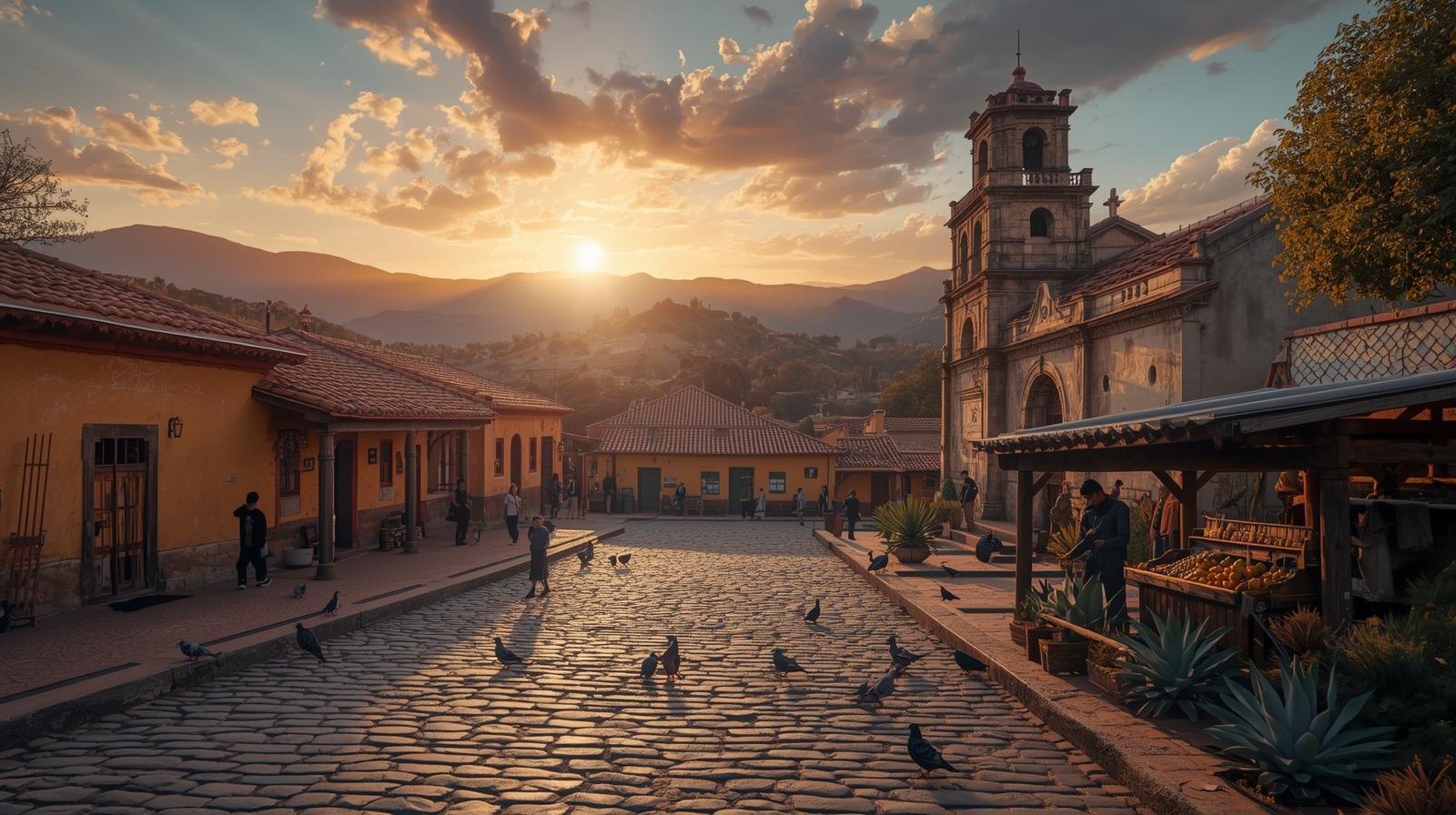
Tucked away in the southern highlands of Zacatecas, Teúl de González Ortega feels like the kind of place you stumble upon when you take the long way instead of the shortcut. It’s the sort of town where church bells echo through narrow cobblestone streets, where adobe houses glow golden in the late-afternoon light, and where traditions are not just remembered but lived. If Mexico’s Pueblos Mágicos are guardians of cultural soul, Teúl is one of the most soulful of them all.
History & Culture
History here isn’t buried under glass cases—it’s stitched into the streets, whispered in legends, and celebrated in music and mezcal. Teúl was once a key Caxcán settlement, part of the indigenous heartland before the Spanish conquest reshaped the land. The Nahuatl name “Teúl” means “place of the gods,” and honestly, standing on a quiet hilltop overlooking the Sierra de Morones, you understand why.
Colonial traces are everywhere: the grand Parroquia de San Juan Bautista, built in the 18th century, anchors the town with its baroque facade. But culture in Teúl is not locked in the past—it’s alive in daily rituals. Townspeople gather in the main plaza not just for festivals but for ordinary evenings. Marimba notes float in the air, children chase pigeons, and abuelas trade recipes handed down for generations.
Mexico’s Northeast Pueblos Mágicos ©2026 All Rights Reserved. Scott Paton Trust. 57 And then, of course, there’s the mezcal tradition. Teúl is one of the few Pueblos Mágicos officially recognized for mezcal production. Walking into a taberna (mezcal distillery) feels like entering a time capsule: copper stills, smoky ovens filled with roasted agave, and mezcaleros who can tell you the plant’s life story from root to bottle.
Getting There
Reaching Teúl requires a bit of patience—and that’s part of its charm. The nearest major hub is Guadalajara, about 3.5 hours by car. From Zacatecas City, expect closer to 4 hours winding through mountain roads. Buses connect from both cities to Tlaltenango, the larger nearby town, from where a short taxi ride completes the journey.
Yes, the trip takes effort, but consider it a slow unfolding. Each curve of the road offers views of valleys, maguey fields, and mountains that make the detour worthwhile.
Where to Stay
Don’t expect skyscraper hotels here—that’s not the vibe. Instead, Teúl offers boutique stays and rustic guesthouses that reflect its personality.
● Hotel Real de Teúl – Cozy rooms with wooden beams, just steps from the plaza.
● Casa Rural Mezcalera – For those who want to wake up to agave fields outside their
window.
● Budget travelers will find family-run posadas where breakfast might come with a side of
local gossip.
The common thread? Warm hospitality. Hosts often double as storytellers, offering tips that no travel app can match.
What to See and Do
Teúl may be small, but it’s layered with things to do if you let curiosity guide you.
● Main Plaza – The social heart, surrounded by colonial buildings, perfect for
people-watching.
● Parroquia de San Juan Bautista – Admire the baroque stonework and climb nearby
viewpoints for town panoramas.
Mexico’s Northeast Pueblos Mágicos ©2026 All Rights Reserved. Scott Paton Trust. 58
● Museo del Mezcal – A compact but fascinating stop to understand the agave-to-glass
journey.
● Archaeological Sites – Just outside town, remnants of Caxcán culture rest quietly in the
hills.
● La Ceja Viewpoint – For sunsets that wash the Sierra de Morones in fiery orange and
purple.
● Festivals – Visit in November for Día de los Muertos, when the town transforms into a
vibrant altar, or during Holy Week when processions fill the streets with reverence and music.
Food to Try
Food here isn’t just nourishment—it’s storytelling through flavor.
● Asado de Boda Zacatecano – Pork in a rich red chile sauce, traditionally served at
weddings.
● Birria de Chivo – Goat stew, slow-cooked until tender, perfect with handmade tortillas.
● Enchiladas Teulenses – Drenched in guajillo sauce and stuffed with local cheese.
● Mezcal – Not just to drink, but to pair with orange slices and worm salt for the full ritual.
● Sweets – Don’t miss cajeta de membrillo (quince paste) or fresh pan de horno baked
in wood-fired ovens.
If you sit at a fonda, chances are you’ll be invited to try something “like mamá makes.” And really, who says no to that?
Practical Tips
● Weather: Expect mild to cool temperatures, especially in the evenings. Pack a light
jacket even in summer.
● Shoes: Cobblestones demand comfortable walking shoes. Your ankles will thank you.
Mexico’s Northeast Pueblos Mágicos ©2026 All Rights Reserved. Scott Paton Trust. 59
● Best Time to Visit: Spring and autumn, when festivals light up the calendar and the
climate is most forgiving.
● Souvenirs: Take home a bottle (or two) of artisanal mezcal. Pottery and embroidered
textiles also make meaningful keepsakes.
Teúl de González Ortega isn’t the kind of place that overwhelms with grand monuments or flashy attractions. Instead, its magic lies in rhythm—the rhythm of bells, of marimba, of mezcal trickling into a glass. It’s a Pueblo Mágico that insists you slow down, listen, and taste. In a world obsessed with speed, Teúl whispers the opposite: linger, connect, remember.
And maybe that’s what makes it unforgettable.
Mexico’s Northeast Pueblos Mágicos ©2026 All Rights Reserved. Scott Paton Trust. 60 Sombrerete, Zacatecas – The Pueblo Mágico of Silver
and Sunsets
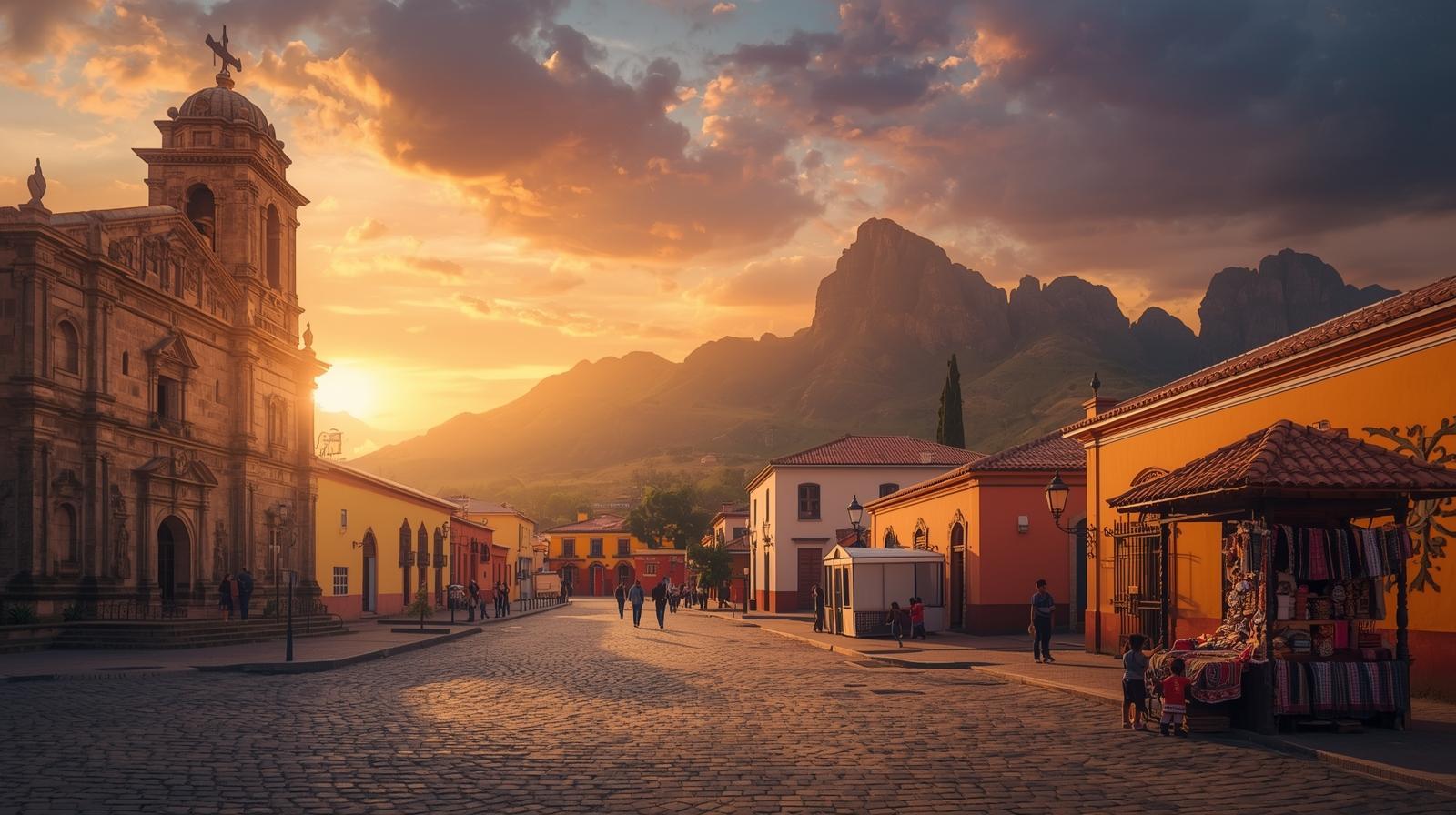
There’s a certain glow to Sombrerete that makes you pause mid-step. Maybe it’s the way the late afternoon sun sets the colonial facades aflame with gold and crimson, or the way the surrounding mountains stand guard like ancient sentinels, their shadows falling across cobblestone streets. Sombrerete is not a town you merely visit—it’s a place that envelops you, weaving its history, legends, and flavors into your memory.
Tucked away in the northwest of Zacatecas, this Pueblo Mágico feels like stepping into a living painting. Narrow alleys reveal sudden plazas, ornate churches catch the light, and every corner whispers stories of miners, revolutionaries, and dreamers. If you’ve ever longed to see a Mexico where time seems to pause, Sombrerete will feel like home.
History & Culture
Sombrerete owes its name to a curious little rock. When Spanish explorers stumbled across the area in 1555, they noticed a hill shaped like a giant sombrero. The name stuck, and so did the Spaniards—because beneath those hills lay silver. And not just a little. For centuries, Sombrerete was one of New Spain’s most important mining towns, its wealth funding baroque temples and mansions that still stand today.
Mexico’s Northeast Pueblos Mágicos ©2026 All Rights Reserved. Scott Paton Trust. 61 Walking through town, you can sense that mix of prosperity and hardship. The miners carved tunnels deep into the earth, chasing veins of silver, while the town above flourished with convents, theaters, and ornate stonework. And yet, Sombrerete isn’t just about colonial grandeur. Indigenous influences remain strong, from traditional crafts to the annual Fiesta de la Candelaria, where faith and community come together in vibrant processions and dances.
Sombrerete also has a revolutionary streak. Benito Juárez himself once found refuge here during the Reform War, and you’ll hear locals proudly recall stories of resistance and resilience. This is a town that remembers its past not with nostalgia, but with a sense of living heritage.
Getting There
Reaching Sombrerete is part of the adventure. The town lies about 170 kilometers northwest of Zacatecas City, a scenic three-hour drive that takes you through rolling hills, cactus-dotted plains, and those endless Zacatecas skies.
● By Car: The most flexible option. From Zacatecas City, take Highway 45 north; the
roads are well maintained, and you’ll pass through small villages where you might want to stop for snacks or photos.
● By Bus: Several lines run daily from Zacatecas City, Durango, and Fresnillo. The bus
station in Sombrerete is centrally located, making it easy to walk or take a short taxi ride to your hotel.
● By Air: The nearest major airport is in Zacatecas City. From there, renting a car or
taking a bus is straightforward.
It’s one of those trips where the journey itself feels like an unfolding prelude to the magic that awaits.
Where to Stay
Sombrerete offers accommodations that match its personality: charming, historic, and quietly surprising.
● Boutique Hotels: Stay in restored colonial mansions where courtyards overflow with
bougainvillea, and balconies overlook the main plaza. Imagine waking up to church bells and the scent of fresh pan dulce.
Mexico’s Northeast Pueblos Mágicos ©2026 All Rights Reserved. Scott Paton Trust. 62
● Budget-Friendly Inns: If you’re traveling on a tighter budget, simple guesthouses offer
clean rooms and warm hospitality—don’t be surprised if the owner shares local tips or invites you for homemade coffee.
● Nearby Nature Lodges: For something different, stay near the Sierra de Órganos
National Park. Rustic cabins offer starlit skies and morning hikes at your doorstep.
Whichever you choose, expect a stay that feels personal, as though the town itself is hosting you.
What to See and Do
Sombrerete is not a checklist town—it’s an experience town. That said, here are highlights you simply cannot miss:
1. Historic Center
○ Wander the cobblestone streets where every turn seems to reveal another
colonial treasure: the baroque Templo de Santo Domingo, the stately San Francisco Convent, and the picturesque Plaza de Armas with its wrought-iron kiosko.
○ At sunset, the golden light transforms the facades into a painter’s dream.
2. Sierra de Órganos National Park
○ Just 5 kilometers from town, this is Sombrerete’s crown jewel. Towering rock
formations rise like organ pipes (hence the name), creating one of Mexico’s most surreal landscapes. Hollywood has filmed westerns here, but hiking among the silent giants is even better in person.
○ Don’t forget your camera—the shapes of the rocks inspire nicknames from “The
Monk” to “The Sphinx.”
3. Temple and Ex-Convent of San Pantaleón
○ Built in the 16th century, this religious complex is both a historical site and a
place of quiet contemplation. Its architecture reflects the wealth of the silver boom, with intricate details carved in pink quarry stone.
4. Fiestas and Traditions
Mexico’s Northeast Pueblos Mágicos ©2026 All Rights Reserved. Scott Paton Trust. 63
○ Visit in February for Fiesta de la Candelaria, a dazzling blend of faith, music,
and dance. Streets fill with pilgrims carrying candles, traditional dances animate the plazas, and local food stalls tempt you with irresistible aromas.
○ Other annual celebrations include Semana Santa (Holy Week) and the Festival
Cultural de la Toma de Zacatecas, which often features performances in Sombrerete.
5. Museo de la Candelaria
○ This small but engaging museum tells the story of Sombrerete’s religious and
cultural traditions. It’s a window into how faith and community shape life here.
6. Natural Wonders Beyond Town
○ Explore caves, hike hillsides, or simply find a quiet spot to watch the stars. With
little light pollution, Sombrerete offers some of the clearest night skies in the region.
Food to Try
Sombrerete is not shy about flavor. Its gastronomy is hearty, soulful, and deeply tied to the land.
● Asado de Boda Zacatecano: A rich, spicy pork stew served at weddings and fiestas.
Even if you’re not getting married, you can still savor it in local restaurants.
● Enchiladas Zacatecanas: Smothered in chile sauce, filled with cheese or beans, and
always topped with a drizzle of crema.
● Birria and Barbacoa: Slow-cooked meats that melt in your mouth, often eaten on
Sundays with family.
● Capirotada: A traditional bread pudding with raisins, cinnamon, and cheese—yes,
cheese! It’s unexpectedly delicious.
● Local Sweets: Try jamoncillo (a type of milk fudge) or cajeta made from goat’s milk.
Perfect souvenirs if they last long enough to make it home.
Wash it all down with mezcal de la región, crafted in nearby communities. It has a smoky, earthy character that pairs perfectly with the highland air.
Mexico’s Northeast Pueblos Mágicos ©2026 All Rights Reserved. Scott Paton Trust. 64
Practical Tips
● Weather: Sombrerete sits at 2,300 meters above sea level, so expect cool nights even
in summer. Winters can be chilly. Bring layers.
● Shoes: Comfortable walking shoes are a must—the cobblestones are charming but not
heel-friendly.
● Best Time to Visit: February for Fiesta de la Candelaria, or October when the weather
is crisp and the cultural calendar is lively.
● Souvenirs: Handwoven textiles, pottery, and locally made mezcal are the most
authentic keepsakes.
● Pace Yourself: The altitude might leave you catching your breath at first. Take it slow,
sip water, and let the rhythm of the town guide you.
Sombrerete is the kind of place that reminds you why travel matters. It’s not about ticking boxes or snapping selfies—it’s about stepping into a story larger than your own. Here, silver shaped fortunes, faith carried communities through centuries, and nature sculpted landscapes that seem born of imagination.
But beyond the history, beyond the photogenic sunsets, Sombrerete is unforgettable because it feels human. It invites you to slow down, to listen, to taste, and to wonder. And when you finally leave—because sadly, you must—you’ll find that the town has tucked a little piece of itself into your heart.
Mexico’s Northeast Pueblos Mágicos ©2026 All Rights Reserved. Scott Paton Trust. 65 Pinos, Zacatecas: The Silver Heart of the Desert
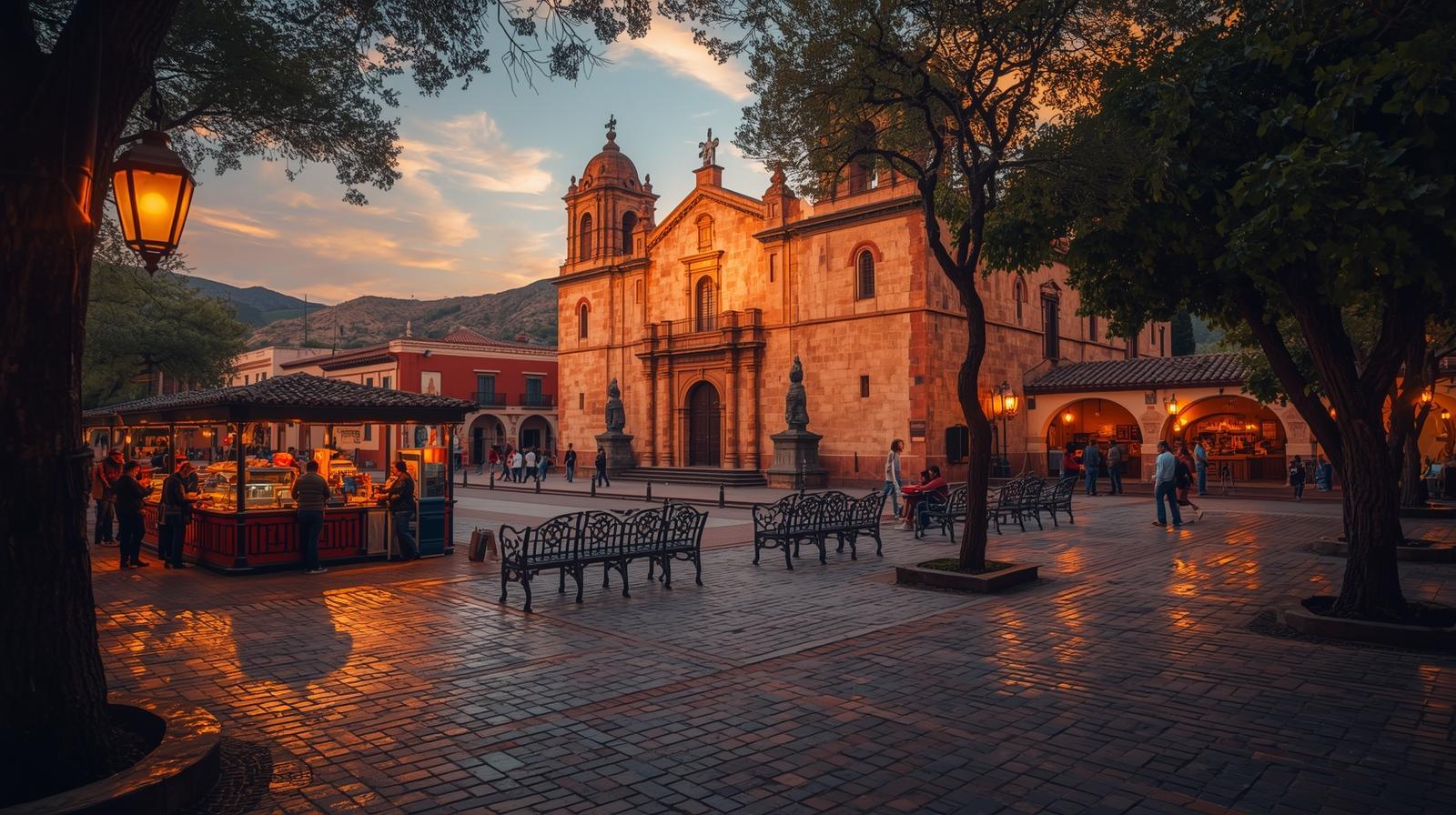
There’s something quietly magical about arriving in Pinos. Maybe it’s the way the desert light hits the reddish stone facades of the old buildings, or how the streets seem to whisper stories of miners, travelers, and revolutionaries who once walked these same cobblestones. Pinos is one of those places that doesn’t overwhelm you with grandeur but rather wins you over with atmosphere—layered history, charming plazas, and the feeling that you’ve stepped into a living museum where time slows down just enough for you to notice the details.
History & Culture
Founded in the 16th century during the silver boom that shaped so much of Zacatecas, Pinos was once an important mining hub. Silver veins brought fortune seekers, traders, and missionaries, all of whom left their mark. You see it in the thick-walled colonial buildings, in the solemn but ornate churches, and even in the town’s name: “Pinos” comes from the pine forests that dot the region, once used to fuel the mines.
But Pinos is more than colonial façades. It’s a place where local traditions still breathe. Every December, the Fiesta de la Purísima Concepción floods the streets with music, dance, and devotion. Religious processions mix with fireworks, folk dances, and food stalls—turning the town into a colorful spectacle of Zacatecan pride. There’s also a strong artisan culture: leatherwork, textiles, and mezcal production (yes, Zacatecas has its own mezcal traditions!) remain cornerstones of community identity.
Mexico’s Northeast Pueblos Mágicos ©2026 All Rights Reserved. Scott Paton Trust. 66 Getting There
Pinos sits in the southeastern corner of Zacatecas state, about two hours from the city of Zacatecas by car. If you’re coming from Aguascalientes, it’s roughly 90 minutes on the highway. Buses do run, but the service can be infrequent, so the best option is to rent a car or arrange a taxi from a nearby hub like Ojocaliente. The drive itself is part of the adventure—rolling desert hills, distant mountains, and the occasional glimpse of wild nopales breaking up the horizon.
Where to Stay
Pinos isn’t overrun with hotels, which is part of its charm. You’ll find boutique-style posadas set in restored colonial homes, often with courtyards filled with flowers and wrought-iron balconies overlooking the plaza. Budget travelers can stay at family-run guesthouses, where you’ll probably end up chatting with the owners about the history of the building. For something more atmospheric, ask around for casas rurales—simple country lodges that let you experience life at the edge of the desert.
What to See and Do
● Plaza Principal – The heart of the town, framed by the Parroquia de San Matías and
arcaded buildings. Sit here in the evening when locals gather, and the air fills with laughter and the smell of roasted Elotes.
● Templo de San Francisco – A striking colonial church with a façade that looks like lace
carved in stone. Inside, the cool air and muted light invite quiet reflection.
● Museo Comunitario – Small but fascinating, this museum tells the mining and
revolutionary story of Pinos, with artifacts that give you a sense of everyday life centuries ago.
● Hacienda Ruins – Around the outskirts, you’ll find crumbling haciendas that once
housed wealthy mine owners. Some have been partially restored, others left to the desert winds.
● Mezcal Tours – Visit local mezcaleros, who will proudly show you their traditional
production methods—stone ovens, wooden presses, copper stills. Tasting is, of course, part of the experience.
● Viewpoints – Climb up to one of the surrounding hills to get a panoramic view of the
town, especially magical at sunset when the buildings glow with warm tones.
Food to Try
Mexico’s Northeast Pueblos Mágicos ©2026 All Rights Reserved. Scott Paton Trust. 67 Zacatecas is hearty, rustic, and flavorful. In Pinos, don’t miss:
● Asado de boda – A rich pork stew with guajillo chiles, often served at weddings but
available year-round in local Fondas.
● Enchiladas Zacatecanas – Fried tortillas stuffed with cheese or beans, drenched in red
chile sauce, and topped with onions and lettuce.
● Gorditas de maíz – Thick corn cakes stuffed with everything from chicharrón prensado
to nopales.
● Mezcal de Pinos – Earthy, smoky, and strong—best enjoyed slowly, perhaps with a slice
of orange dusted in sal de gusano.
● For sweets: buñuelos with piloncillo syrup, especially during festivals.
Practical Tips
● Weather: Expect warm days and cool nights, especially since Pinos sits at over 2,400
meters above sea level. Bring a light jacket.
● Shoes: Cobblestones dominate the streets, so sturdy walking shoes are your best
friend.
● Best Time to Visit: December for the Purísima festivities, or spring when the desert is
speckled with wildflowers.
● Souvenirs: Handcrafted leather belts, mezcal bottles with rustic labels, and embroidered
textiles.
Pinos isn’t a town you rush through. It asks you to slow down, sit in the plaza, listen to church bells echo against adobe walls, and imagine miners and merchants passing through centuries ago. It’s a place that has lived through booms and declines, yet somehow keeps its dignity and magic intact. Visiting Pinos feels like being let in on a secret—an intimate corner of Zacatecas where history, tradition, and everyday life weave seamlessly together. And when you leave, it lingers with you, like the aftertaste of mezcal: smoky, warm, and unforgettable.
Mexico’s Northeast Pueblos Mágicos ©2026 All Rights Reserved. Scott Paton Trust. 68 Nochistlán, Zacatecas – Pueblo Mágico
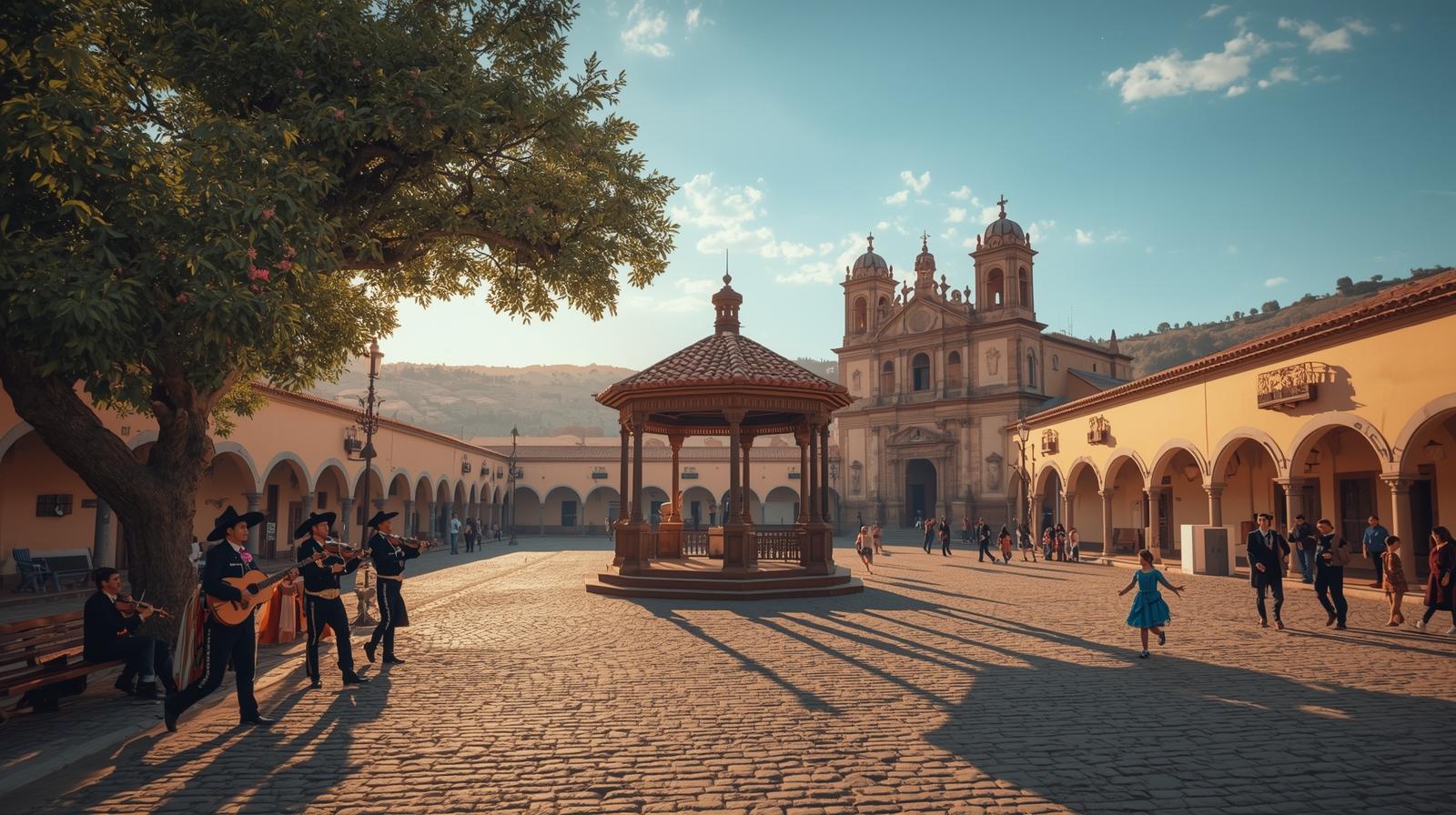
Some towns in Mexico have a way of wrapping visitors in music before they’ve even unpacked their bags. Nochistlán, in the southern reaches of Zacatecas, is one of those places. Known as the “cradle of the Mexican mariachi,” it hums with violins, trumpets, and guitars echoing from plazas and family courtyards. The cobblestone streets are lined with adobe houses topped with red-tiled roofs, and the sunsets—those deep, orange Zacatecas sunsets—bathe the entire valley in a romantic glow.
It’s not just the music or the architecture that makes Nochistlán magical. It’s the sense that tradition is alive and well here. Locals don’t just talk about heritage—they live it daily, whether through serenades, religious celebrations, or simply sitting on the plaza bench sharing gossip over sweet gorditas de nata.
History & Culture
Nochistlán’s story begins long before Spanish conquistadors ever set foot here. Originally inhabited by the Caxcanes, an indigenous group known for their fierce independence, the town became a focal point during the Mixtón War in the 1540s—an indigenous rebellion against Spanish rule. These echoes of resistance still linger in the town’s pride and character.
When the Spanish established settlements, Nochistlán briefly served as the first site of Guadalajara before the city was moved further west. Imagine that—if history had zigged instead
Mexico’s Northeast Pueblos Mágicos ©2026 All Rights Reserved. Scott Paton Trust. 69 of zagged, Guadalajara might have grown from this very plaza. That near-alternate reality is part of Nochistlán’s mystique.
But if history built the walls, music filled the air. This is the birthplace of mariachi, and the town wears that badge with joy. Local families still form their own groups, and on any given night, violins and trumpets spill into the streets, not for tourists but for tradition. During festivals like the Fiesta de Enero, the whole town turns into a living stage, where music, dance, and faith intertwine.
Getting There
Nochistlán sits about 180 kilometers from the city of Zacatecas (roughly a three-hour drive). Most travelers arrive via Guadalajara, which is closer—about 140 kilometers, or a two-hour drive by car. Buses run regularly from both Zacatecas and Guadalajara, making it accessible even if you’re traveling without a car. Once you arrive, taxis and mototaxis are available, though most of the historic center is best explored on foot.
Where to Stay
Though Nochistlán isn’t overflowing with boutique hotels, it has a cozy range of accommodations that reflect the warmth of the town:
● Hotel Plaza Zacatecas – A simple, central option right by the main square, perfect for
soaking in the town’s heartbeat.
● Posadas familiares – Family-run inns that offer the kind of hospitality you can’t buy
elsewhere. You might wake up to homemade café de olla and pan dulce.
● Nearby ranch-style lodges – For those who want a rural feel, some lodgings outside
town give a taste of countryside living, complete with views of rolling hills.
What to See and Do
● Plaza Principal – The core of town life. Picture a traditional kiosk shaded by trees,
surrounded by arcaded buildings and filled with the laughter of families in the evenings.
Mexico’s Northeast Pueblos Mágicos ©2026 All Rights Reserved. Scott Paton Trust. 70
● Templo de San Francisco de Asís – This parish church, dating to the colonial period,
houses beautiful baroque details and is central to town festivities.
● Ruins of the First Guadalajara – A small but historically fascinating site where
Guadalajara was first founded. It’s humbling to stand there and imagine the alternate path Mexico’s history could have taken.
● Aqueduct of Nochistlán – An 18th-century aqueduct with graceful arches, still standing
as testimony to the town’s engineering heritage.
● Miradores (viewpoints) – Several hills surrounding Nochistlán offer panoramic views of
the valley, especially striking at sunrise or sunset.
● Festivals & Music – If possible, time your visit during January’s Fiesta de Enero. The
celebrations last nearly two weeks, with religious processions, bull runs, music, and cultural shows filling every street.
Food to Try
Nochistlán’s kitchens are as musical as its plazas—full of rhythm, spice, and sweetness:
● Birria – A spicy, slow-cooked meat stew that originated in nearby Jalisco but has deep
roots here.
● Gorditas de horno – Thick corn pockets stuffed with beans, cheese, or chicharrón.
Perfect as a street snack.
● Sopa de arroz a la mexicana – Fluffy rice with vegetables and seasoning, served as a
side dish almost everywhere.
● Ponche de frutas – A warm fruit punch, especially during festivals.
● Local sweets – Try cajeta (goat’s milk caramel) or gorditas de nata (sweet cream cakes)
from a market stall. They’re little bites of nostalgia.
Practical Tips
Mexico’s Northeast Pueblos Mágicos ©2026 All Rights Reserved. Scott Paton Trust. 71
● Weather – Days can be hot, but evenings turn refreshingly cool. A light jacket is
recommended, even in summer.
● Shoes – Bring comfortable footwear; cobblestone streets are charming but not friendly
to flimsy sandals.
● Best Time to Visit – January for the Fiesta de Enero or September for Independence
Day celebrations, when the town is at its most alive.
● Souvenirs – Handcrafted textiles, pottery, and musical instruments (yes, tiny violins and
guitars!) make meaningful mementos.
Nochistlán is not just a stop on a travel itinerary—it’s a song. A song carried by trumpets under a starry Zacatecas sky, by families gathered on porches, by history that whispers of battles fought and cultures preserved. It’s the kind of place that reminds you Mexico’s magic isn’t only in famous cities or flashy resorts—it’s here, in the quiet pride of a Pueblo Mágico where music was born and never stopped playing.
Leaving Nochistlán, you don’t just take a memory—you take a melody. And trust me, it stays with you.
Mexico’s Northeast Pueblos Mágicos ©2026 All Rights Reserved. Scott Paton Trust. 72 Guadalupe, Zacatecas: Where Art, Faith, and Tradition
Intertwine
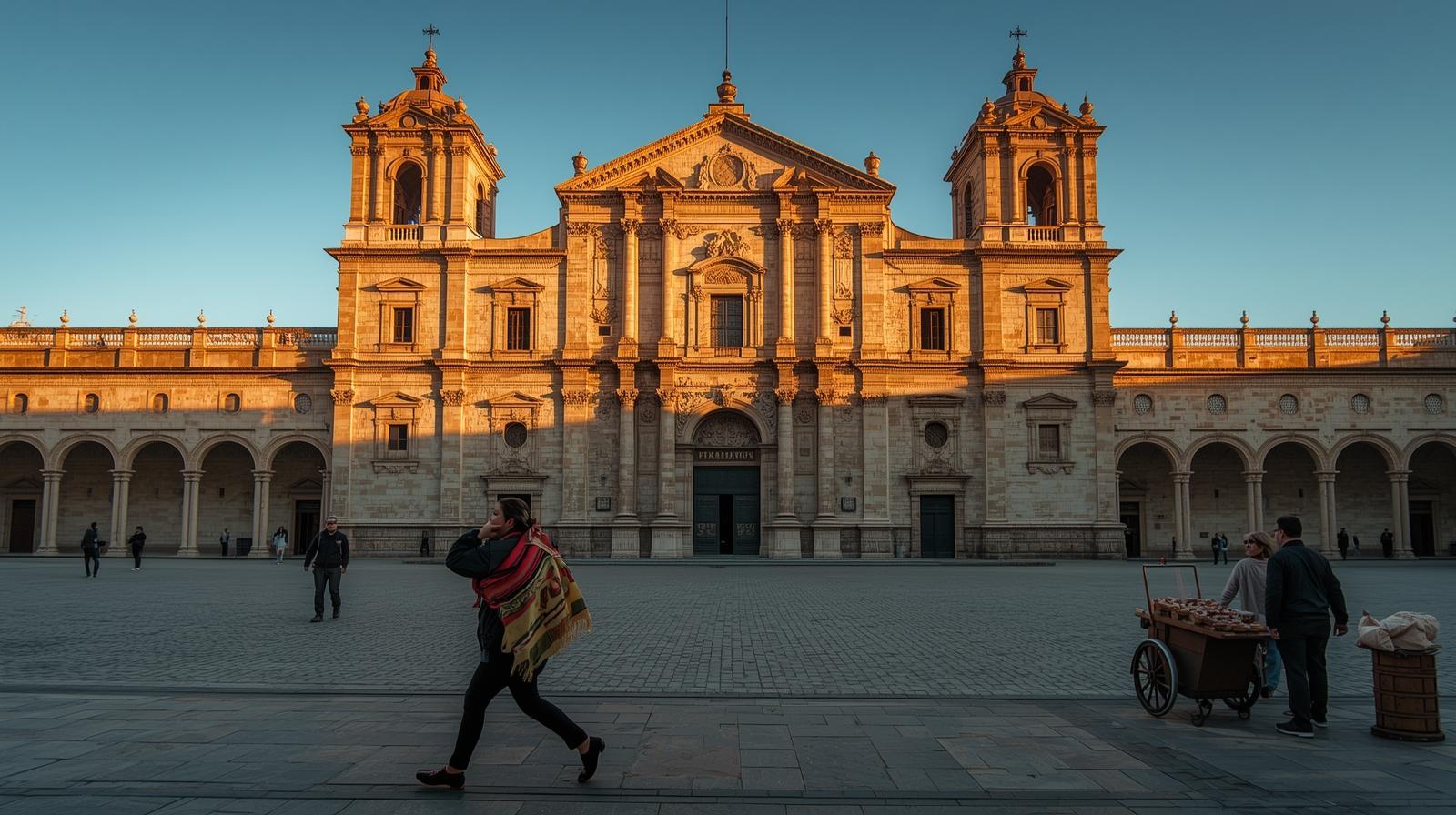
Some towns wear their history like a faint perfume—Guadalupe, Zacatecas wears it like a cloak. Step into its streets and you’re not just walking through a town, you’re brushing against centuries of art, devotion, and culture. It’s one of those places that sneaks up on you—you arrive thinking it’s a quiet suburb outside Zacatecas City, and then suddenly you’re inside a 17th-century convent staring at murals that feel like whispers from the past.
So, what makes Guadalupe magical? Maybe it’s the way faith and artistry converge. Maybe it’s the blend of colonial grandeur and everyday life. Or maybe it’s just the feeling you get sipping café de olla in the shadow of a baroque façade, wondering how many stories these walls have seen.
History & Culture
Guadalupe’s heartbeat has always been faith. Founded in the 16th century, it blossomed around its Franciscan convent, which doubled as a cultural and spiritual center. This wasn’t just a monastery—it was a hub of evangelization where friars taught indigenous peoples not only religion but also arts, crafts, and music.
The Colegio Apostólico de Propaganda Fide (try saying that three times fast) turned Guadalupe into a launchpad for missionaries heading north, carrying both the cross and European art forms into remote territories. Today, that same convent complex houses one of
Mexico’s Northeast Pueblos Mágicos ©2026 All Rights Reserved. Scott Paton Trust. 73 Mexico’s most striking museums: the Museo de Guadalupe, where murals, religious paintings, and cloisters tell stories in oil and pigment.
But Guadalupe isn’t only about Catholic tradition. Its culture is layered—indigenous Nahua influences mix with Spanish baroque, while local artisans keep alive practices of embroidery, pottery, and religious crafts. The result is a town that feels like an open-air gallery, where even the smallest chapel might hold a surprise masterpiece.
Getting There
Guadalupe sits just a 10-minute drive from Zacatecas City, so it’s one of the most accessible Pueblos Mágicos. You can:
● By Air: Fly into Zacatecas International Airport (around 30 minutes away) and grab a
taxi or rental car.
● By Bus: Buses from major Mexican cities like Guadalajara, Monterrey, and Mexico City
stop in Zacatecas, from where a short taxi ride gets you to Guadalupe.
● By Car: The town is right along Federal Highway 45, making it an easy stop on a road
trip through central Mexico.
Honestly, it’s so close to Zacatecas City that many people treat it as part of the metro area—yet it has its own character, quieter and more contemplative.
Where to Stay
Guadalupe isn’t overloaded with hotels, but that’s part of the charm—you get intimate stays rather than tourist-factory resorts.
● Boutique Hotels: Restored colonial houses near the convent offer elegant rooms with
courtyards (perfect for evening wine under the stars).
● Budget Inns: Simple but friendly inns cater to pilgrims and travelers, often located within
walking distance of the town center.
● Nearby Zacatecas: If you crave variety—boutique design hotels, modern chains, or
historic haciendas—Zacatecas City is just minutes away.
What to See and Do
Mexico’s Northeast Pueblos Mágicos ©2026 All Rights Reserved. Scott Paton Trust. 74 Here’s where Guadalupe flexes its muscles:
● Museo de Guadalupe (Former Convent Complex) – A UNESCO-recognized site, it’s
the crown jewel. Walk through its quiet cloisters, admire baroque paintings by artists like Miguel Cabrera, and take in massive murals narrating missionary work.
● Templo de Nuestra Señora de Guadalupe – The town’s parish church, dressed in
neoclassical finery, still serves as a place of devotion.
● Plaza de Armas – The central square, lined with gardens and benches, perfect for
people-watching.
● Craft Workshops – Seek out local embroidery shops and artisan stalls where traditional
religious garments and textiles are still made.
● Festivals – If you visit in December, prepare for the grand feast of Our Lady of
Guadalupe (December 12). Pilgrims flood the town, processions light up the night, and the air vibrates with music, dance, and fireworks.
For something different, combine Guadalupe with nearby Zacatecas—cable car rides over the city, the silver mines, and night tours give a contrast to Guadalupe’s serene vibe.
Food to Try
Hungry? Guadalupe delivers with Zacatecano flavors:
● Asado de boda – A festive pork dish simmered in rich red chile sauce.
● Birria Zacatecana – Spicy, savory goat or beef stew.
● Enchiladas Zacatecanas – Stuffed with cheese or beans, fried and topped with guajillo
sauce.
● Sweet Treats – Don’t skip ate de membrillo (quince paste) and pan de zacatecano (a
local bread often paired with café de olla).
● Mezcal & Local Wines – Zacatecas is an underrated wine region, so you’ll find
vineyards nearby offering tastings.
Practical Tips
Mexico’s Northeast Pueblos Mágicos ©2026 All Rights Reserved. Scott Paton Trust. 75
● Weather: Guadalupe shares Zacatecas’ high-altitude climate—mild days, chilly nights.
Pack a light jacket even in summer.
● Shoes: The town is walkable, but cobblestones demand comfy shoes.
● Best Time to Visit: December for the fiesta, or October when the climate is crisp and
skies turn impossibly blue.
● Souvenirs: Religious art replicas, embroidered cloths, and local ceramics make
meaningful keepsakes.
Guadalupe isn’t the loud, glittery type of Pueblo Mágico. It’s contemplative. It whispers rather than shouts. You come here for art, for faith, for history—and you leave with a sense that you’ve touched something enduring. Standing in the echoing halls of the convent, surrounded by centuries-old paintings, you feel small in the best way.
And maybe that’s the magic of Guadalupe: it doesn’t try to dazzle you with spectacle. Instead, it humbles you, invites you to pause, and reminds you that beauty often lies in devotion, tradition, and quiet endurance.
Mexico’s Northeast Pueblos Mágicos ©2026 All Rights Reserved. Scott Paton Trust. 76 Villanueva, Zacatecas – A Pueblo Mágico of Music,
Faith, and Living Traditions
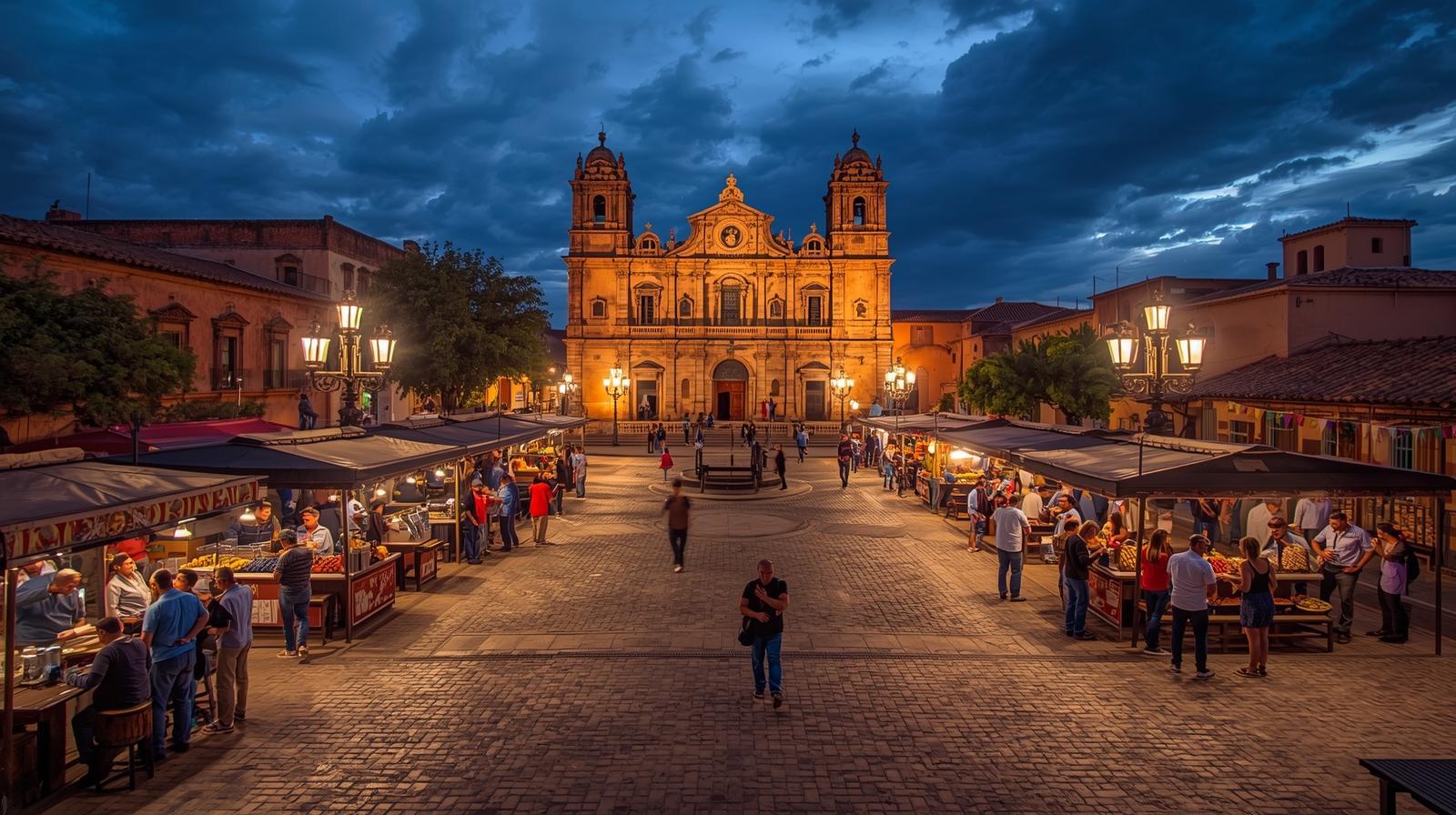
There are towns in Mexico that feel like they are humming with memory, where every street corner seems to echo with a melody or a prayer. Villanueva, nestled in the southern valleys of Zacatecas, is one of those places. It’s not just a Pueblo Mágico in name—it’s a living stage where history, religion, and music come together. And the magic? It’s in the way Villanueva manages to be both festive and contemplative at the same time, a town where you can dance to tamborazo in the plaza one night and stand in awe before a centuries-old chapel the next morning.
History & Culture
Villanueva’s story stretches back to colonial days, when Spanish settlers carved churches and haciendas into the Zacatecas landscape. But underneath the baroque facades, you can still sense the indigenous roots of the region. The town became known for its deep Catholic traditions, with grand celebrations like Semana Santa (Holy Week) and the feast of San Judas Tadeo drawing thousands of pilgrims.
But Villanueva is also the cradle of something quintessentially Mexican: music. The Museo de la Toma de Zacatecas and local bands celebrate the town’s role in shaping tamborazo and banda, the brassy, booming genres that soundtrack fiestas across the state. Walk through the
Mexico’s Northeast Pueblos Mágicos ©2026 All Rights Reserved. Scott Paton Trust. 77 plaza on a weekend evening and you’ll hear it—horns, drums, and clarinets weaving a soundtrack that feels stitched into the town’s identity.
Culture here is communal, embodied in the ferias, the rodeos, the processions where families return year after year to honor their saints and roots. Villanueva isn’t just about looking at history—it’s about living it.
Getting There
Reaching Villanueva is straightforward. The town lies about 60 kilometers south of Zacatecas City, roughly an hour’s drive by car. From Zacatecas’ central bus station, regular buses head toward Villanueva, making it accessible for travelers without a car. Taxis and colectivos are also options for shorter trips, though having your own wheels gives you the freedom to explore the surrounding countryside dotted with ranches and chapels.
Where to Stay
Villanueva doesn’t overwhelm with massive hotels, but that’s part of its charm. Here, you’ll find family-run posadas, small guesthouses, and a handful of boutique options set in restored colonial houses. Some visitors choose to stay in Zacatecas City and make day trips, but spending the night in Villanueva lets you soak up its quieter side after the day-trippers leave. Picture this: sipping café de olla in a courtyard, listening to distant strains of a brass band practicing for the weekend fiesta.
What to See and Do
● Templo de San Judas Tadeo – The spiritual heart of Villanueva. Every October,
thousands flock here for the saint’s feast day, filling the town with devotion and music.
● Museo de la Toma de Zacatecas – While technically a regional museum, it highlights
Villanueva’s role in the Battle of Zacatecas during the Mexican Revolution and the town’s cultural identity.
● Main Plaza (Plaza Principal) – The heartbeat of Villanueva. Lively in the evenings, it’s
where bands play, kids chase balloons, and vendors sell elotes and buñuelos.
● Local Haciendas – Scattered around the countryside, many old haciendas speak to the
wealth of colonial times. Some are in ruins, others restored, each with its own haunting
Mexico’s Northeast Pueblos Mágicos ©2026 All Rights Reserved. Scott Paton Trust. 78
beauty.
● Fiestas and Ferias – If you can, time your visit with the Fiesta de Octubre or Holy
Week. Expect processions, fireworks, live music, and an atmosphere that’s both electric and reverent.
Food to Try
Zacatecas cuisine is hearty, ranch-style, and Villanueva keeps those traditions alive. Don’t miss:
● Asado de boda – A rich pork dish simmered in a thick red chile sauce, usually served at
weddings but found in Fondas year-round.
● Enchiladas Zacatecanas – Rolled tortillas smothered in chile sauce, topped with queso
fresco and lettuce.
● Birria – Slow-cooked goat or beef, seasoned with spices that warm you from the inside
out.
● Local sweets – Try cajeta de leche de cabra (goat’s milk caramel) or candied fruits,
often sold near the plaza.
And of course, pair everything with a shot of mezcal zacatecano—smoky, strong, and unforgettable.
Practical Tips
● Weather: Villanueva enjoys a semi-arid climate. Days can be hot, but evenings cool
down quickly—bring a light jacket.
● Best time to visit: October for San Judas Tadeo’s fiesta, or Easter week for Holy Week
processions.
● Clothing: Comfortable shoes are a must—cobblestone streets and hacienda tours aren’t
sandal-friendly.
● Souvenirs: Handmade textiles, religious folk art, and locally made mezcal are the
perfect take-home pieces of Villanueva.
Mexico’s Northeast Pueblos Mágicos ©2026 All Rights Reserved. Scott Paton Trust. 79 Villanueva is the kind of Pueblo Mágico that reveals its magic slowly. It’s not about jaw-dropping monuments or sweeping vistas (though you’ll find beauty everywhere you turn). It’s about rhythm—of processions, of tamborazo drums, of families gathering in the plaza as dusk paints the sky.
Come here if you want to feel connected: to tradition, to music, to the enduring heartbeat of Zacatecas. Villanueva doesn’t shout its magic—it hums it, and once you hear it, you’ll never forget the sound.
Mexico’s Northeast Pueblos Mágicos ©2026 All Rights Reserved. Scott Paton Trust. 80 About the Author
In 2016, with his youngest son out of the house and a lifetime of responsibilities behind him, Scott Paton made a decision most people only dream about: he left. Not in anger. Not in haste. But in the quiet pursuit of something freer, deeper, and wilder.

He bought a one-way ticket to Morocco — and never really looked back.
For nearly a decade, Scott has lived as a global nomad. From the souks of Marrakesh to the highlands of Colombia, the quiet corners of Portugal, the humid coasts of Southeast Asia, and the rugged heart of Mexico,
he’s followed the unpaved path wherever it led. His story isn’t about running away — it’s about rediscovering what it means to feel alive without needing a fixed address.
A house-sitter by design and wanderer by heart, Alex has found family in the strangers and their pets that he’s cared for, culture in the homes he’s temporarily made his own, and perspective in every border crossing. He calls it: “Living A Life In A Month”.
Today, he calls Mexico home — though his feet still itch for new terrain. He’s a father to two sons, a proud grandfather of three, and a storyteller with a passport full of ink and a heart shaped by the world.
Escape to Mexico Now isn’t just a book — it’s an invitation to reconsider the stories we’re told about aging, freedom, and the meaning of “home.”
We can’t put everything into this book, so we made https://www.EscapeToMexicoNow.com. This is where you can keep up-to-date on all things Mexican.
Considering Residency in Mexico?
We can help. Contact Scott@EscapeToMexicoNow.com. We will set up a time to talk and see how we can support your move to Mexico.
Mexico’s Northeast Pueblos Mágicos ©2026 All Rights Reserved. Scott Paton Trust. 81 Recommended Resources
A great way to travel around Mexico is House Sitting. As more and more people from North America retire to Mexico, the need for house sitters grows. Grandparents want to visit family and friends.
Our two favorite sites are
HouseSitMexico
Visit https://EscapeToMexicoNow.com/HSM
Use your personal coupon code to save 20%: scott6814ebcc66ca0
When you join using your unique coupon code, youy'll get 20% OFF* and we'll receive 2 free months added to our membership!
*(You'll pay just $63.20 USD for a one year membership. 2026 - may change in later years)

TrustedHouseSitters
THS is a very popular house Sitting site.

Mexico’s Northeast Pueblos Mágicos ©2026 All Rights Reserved. Scott Paton Trust. 82
Mexico will never have as many house sitting opportunities as expensive countries.
When a “Doggie hotel” can cost as much as your two week vacation, house sitting becomes an inexpensive option for home owners.
The house host does not pay the house sitter. The house sitter does not pay rent or utilities.
It is a good deal for all, and especially, if you want an experience closer to an ‘authentic’ stay in Mexico.
Trusted House Sitter: https://EscapeToMexicoNow.com/ths
Mexico’s Northeast Pueblos Mágicos ©2026 All Rights Reserved. Scott Paton Trust. 83 Personal Development
Traveling to new places gets you out of your Comfort Zone. This can be unnerving.
We recommend Miind Ttrainer Pro to calm the mind, expand your horizons or just to deal with any issues stopping you from traveling stress free!
MindTrainer PRO™ helps you unlock peak mental performance, reduce stress, and boost productivity using proven neuroscience and proprietary audio-visual technology.
Backed by Research Trusted by Entrepreneurs, Athletes & High-Performers Easy to Use. Powerful Results.
Watch full video: https://youtu.be/n8NedOk9A44
Learn more about Brain Entrainment: https://escapetomexiconow.com/mindtrainerpro
Health
Travelling brings with it health issues from water and different foods.
I use their products every day. Many times i am sure a stomach ‘bug’ was dealt with before it was an issue by a Life Enthusiast product.
For Mexican visits, I recommend Body Biotics:
https://life-enthusiast.com/products/sbo-probiotics-consortia/?ref=scott
I also recommend Nano Soma:
https://life-enthusiast.com/products/nano-soma-liquid/?ref=scott
Coupon Code 5% off: SCOTTPATON165
In 2001 Life Enthusiast launched online. We now offer unique products in many categories made by manufacturers who are dedicated to delivering quality above cost, customer service above bottom line, and passion for life above the numbers on a spreadsheet.
Our Founder and CEO Martin Pytela, CMTA – that’s Certified Metabolic Typing Advisor – offers his Health Coach services based on Metabolic Typing, a method that helps determine which food and supplement combinations will be most appropriate for you, your Biological Individuality. You may already be aware that what heals one person may make another one worse… Martin is supported by a team experienced and dedicated associates that include a holistic nutritionist, a herbalist, and a fitness specialist. We understand humans, and also pets.
We make it our business to help people reverse chronic degenerative, metabolic conditions, the source of aging and pain that plague so many. Especially if you have been frustrated by the medical system, and its symptom-oriented approach, you will find us to be refreshingly
Mexico’s Northeast Pueblos Mágicos ©2026 All Rights Reserved. Scott Paton Trust. 84 different. We believe that emergency room solutions so effective at saving a life are not appropriate for preventing or reversing conditions associated with aging or with system-wide break-downs.
https://life-enthusiast.com/?ref=scott
Coupon Code 5% off: SCOTTPATON165
Work and Income
I am often asked about remote working and building a “Laptop Lifestyle” business.
My friends at the No More 9 to 5 Club are experts at supporting your business and financial goals.
Discover how they can help at https://escapetomexiconow.com/no9-5
###############
NOTE: A few links in this ebook are affiliate links. If you click through and make a purchase, we may receive a small commission—without affecting the price you pay. We only recommend products we genuinely believe in.
###############
Amazon Description
Most people think Northeast Mexico is “just desert.”
But deserts don’t stay empty for long when they’re packed with old missions, vineyard towns, mountain hideaways, and plazas where legends still travel faster than the wind.
Desert Winds & Hidden Legends is Scott Paton’s immersive journey through the Pueblos Mágicos of Northeast Mexico—a region often overlooked, and quietly unforgettable once you step into it. Across Coahuila, Nuevo León, Tamaulipas, and Zacatecas, you’ll find towns that feel like doorways: into another century, another pace of life, and another version of Mexico that rarely makes it into guidebooks.
You’ll discover:
↳ Snow-dusted pine country in Arteaga, the “Switzerland of Mexico”
↳ Desert oases and surreal landscapes in Cuatro Ciénegas ↳ Wine, history, and slow afternoons in Parras de la Fuente ↳ Frontier stories along the Río Grande in Guerrero ↳ Mountain towns like Santiago and General Zaragoza where time seems to soften ↳ Forgotten corners of Zacatecas—silver towns, festival streets, and faith-carved architecture
Mexico’s Northeast Pueblos Mágicos ©2026 All Rights Reserved. Scott Paton Trust. 85 This isn’t a rushed list of attractions. Each chapter blends vivid storytelling with practical travel guidance—how to get there, where to stay, what to eat, and what to notice when the real magic shows up in the details.
If you’re planning a trip, mapping a longer stay in Mexico, or simply want to experience the country beyond the obvious, this book takes you straight to the places that still feel untamed, rooted, and real.
Because in the Northeast, the wind doesn’t just move sand.
It carries stories.
Mexico’s Northeast Pueblos Mágicos ©2026 All Rights Reserved. Scott Paton Trust. 86
You may also like...
-
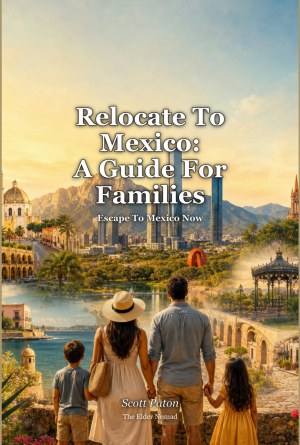
Move to Mexico: A Guide For Families Travel by Scott PatonMove to Mexico: A Guide For Families
Reads:
41Pages:
74Published:
Oct 2026A relocation guide written specifically for families with school-age children who are considering a permanent or long-term move to Mexico, covering the cities...
Formats: PDF, Epub, Kindle, TXT
-
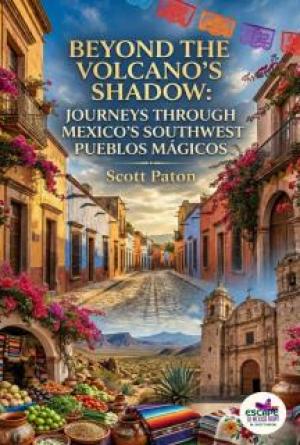
Beyond the Volcano’s Shadow: Journeys Through Mexico’s Southwest Pueblos Mágicos Travel by Scott PatonBeyond the Volcano’s Shadow: Journeys Through Mexico’s Southwest Pueblos Mágicos
Reads:
5Pages:
114Published:
Apr 2026There is a version of Mexico most travelers never see.Beyond the crowded resorts and polished itineraries lies a wilder, deeper rhythm — where volcanoes breat...
Formats: PDF, Epub, Kindle, TXT
-
Whispers of the Tropic Wind: Exploring the Pueblos Mágicos of Mexico’s Southeast Travel by Scott PatonWhispers of the Tropic Wind: Exploring the Pueblos Mágicos of Mexico’s Southeast
Reads:
0Pages:
210Published:
Apr 2026There’s a version of Mexico’s southeast that most travelers miss.Not the resort corridors. Not the “same three stops” itineraries.The real southeast is humid ...
Formats: PDF, Epub, Kindle, TXT
-
Where Desert Meets the Sea: A Guide to Mexico’s Northwest Pueblos Mágic Travel by Scott PatonWhere Desert Meets the Sea: A Guide to Mexico’s Northwest Pueblos Mágic
Reads:
6Pages:
113Published:
Apr 2026Most people come to Mexico’s northwest for the obvious: the coastline, the big-name beaches, the highway routes.But the real story lives in the in-between pla...
Formats: PDF, Epub, Kindle, TXT