

TTC.Exploring Language Teaching Methods, Theories, and the Teacher’s Role by Saeideh Mahrami - HTML preview
Download the book in PDF, ePub, Kindle for a complete version.
4.Behaviorism
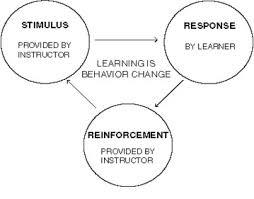
The education landscape is continuously evolving, with various historical and modern psychological theories providing insights into how people learn new things and interact with their environment. Behavioral learning theory stands out as a pivotal framework within educational psychology. Also called “behaviorism,” this theory is concerned with individuals" observable behaviors and responses to external stimuli.
In educational settings, this theory holds significant value as it can provide a structured and quantifiable approach to understanding and influencing student behavior. By focusing on how environment shapes behavior, educators can develop strategies to reinforce positive actions and decrease negative ones, ultimately enhancing the overall learning process.
Two important concepts related to behaviorism are:
Classical conditioning: Developed by Ivan Pavlov, this concept
involves learning through association. An initially neutral stimulus
becomes associated with a meaningful stimulus, eventually eliciting a similar response on its own.
Operant conditioning: Introduced by B.F. Skinner, operant
conditioning focuses on the use of reinforcement and punishment to increase or decrease the likelihood of a behavior. Positive reinforcement involves rewarding desirable behavior, while negative reinforcement involves removing an unpleasant stimulus to encourage behavior.
5.Modularity of Mind by Fodor
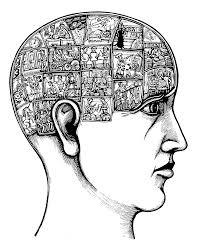
In his classic introduction to modularity, Fodor (1983) lists nine features that collectively characterize the type of system that interests him. In original order of presentation, they are:
1. Domain specificity
2. Mandatory operation
3. Limited central accessibility
4. Fast processing
5. Informational encapsulation
6. „Shallow" outputs
7. Fixed neural architecture
8. Characteristic and specific breakdown patterns
9. Characteristic onto genetic pace and sequencing