

TTC.Exploring Language Teaching Methods, Theories, and the Teacher’s Role by Saeideh Mahrami - HTML preview
Download the book in PDF, ePub, Kindle for a complete version.
LEARNING
THEORIES
1.Connectionism
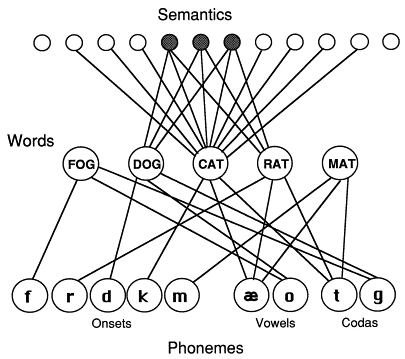
Connectionism is a theory for learning in which knowledge is understood as an association between ideas; making connections of neurons in the brain. Then, learning is just the outcome of modifying the strength of those connections. They form complex networks processing information in parallel rather than serially; if two units are activated at the same time when a task is performed, then the strength of the connection increases.
Connectionism is a cognitive theory that explains language learning as the result of forming and strengthening connections between neurons in the brain. It is inspired by the way neural networks work in biological systems.
Neurons are basic building blocks of the brain, responsible for transmitting information. When a learner encounters a word, phrase, or grammar use, neurons communicate through synaptic connections. Repetition and meaningful use strengthen these connections, making retrieval faster and more accurate.
Key features of connectionism in language learning:
1. Frequency matters: commonly encountered words and patterns are
learned faster because their neural pathways are reinforced repeatedly.
2. Gradual learning: language acquisition occurs step by step, as
connections become stronger and more numerous.
3. Context sensitivity: neural networks adapt to the context in which
words or phrases are used, leading to better comprehension and usage.