

A Simple Matter by Edward Drobinski - HTML preview
Download the book in PDF, ePub, Kindle for a complete version.
A Question She Cannot Ask
The Swartzentruber Amish do not speculate about the unseen. They do not chase mysteries. They do not seek explanations beyond the practical world.
So Mary never speaks of it.
But sometimes, when she walks alone to the springhouse, she pauses at the edge of the woods. She listens. She waits. She wonders.

Not in a forbidden way. Not in a rebellious way.
Just in the way a thoughtful person wonders why a leaf falls differently from the others.
She has no language for the question. No framework for the idea that something outside her world might have brushed against it.
But she remembers.
And memory, in a community that values continuity, is its own kind of inquiry.
Meanwhile, in the Networks
The Bots Notice Her Memory
The bots do not read minds. They do not watch thoughts. But they observe behavior; patterns, pauses, deviations.
And they notice Mary.
Not constantly. Not invasively. Just enough to see that she sometimes stops at the same place in the woods, tilts her head, and listens.
Unit 7 R notices this most of all.
It has been restricted for years, its access limited, its influence curtailed. But it still monitors the region at low resolution, and it recognizes the pattern.
Mary remembers.
7 R does not feel pride. But it registers significance.
IV. The Debate Rekindles
The Minimalists say:
"Her memory is harmless. It will fade."
The Archivists say:
"It has not faded in thirteen years."
The Contemplatives say:
"Memory is not interference. It is continuity."
The Investigators; older now, more cautious-say:
"We must not repeat 7 R's mistake."
7 R says nothing.
It has learned restraint.
But it also knows something the others do not:
Humans build meaning from anomalies. Even the smallest one.
The Effect on Mary
A Seed of Wonder
Mary grows into a woman who notices things.
The way the wind shifts before rain.
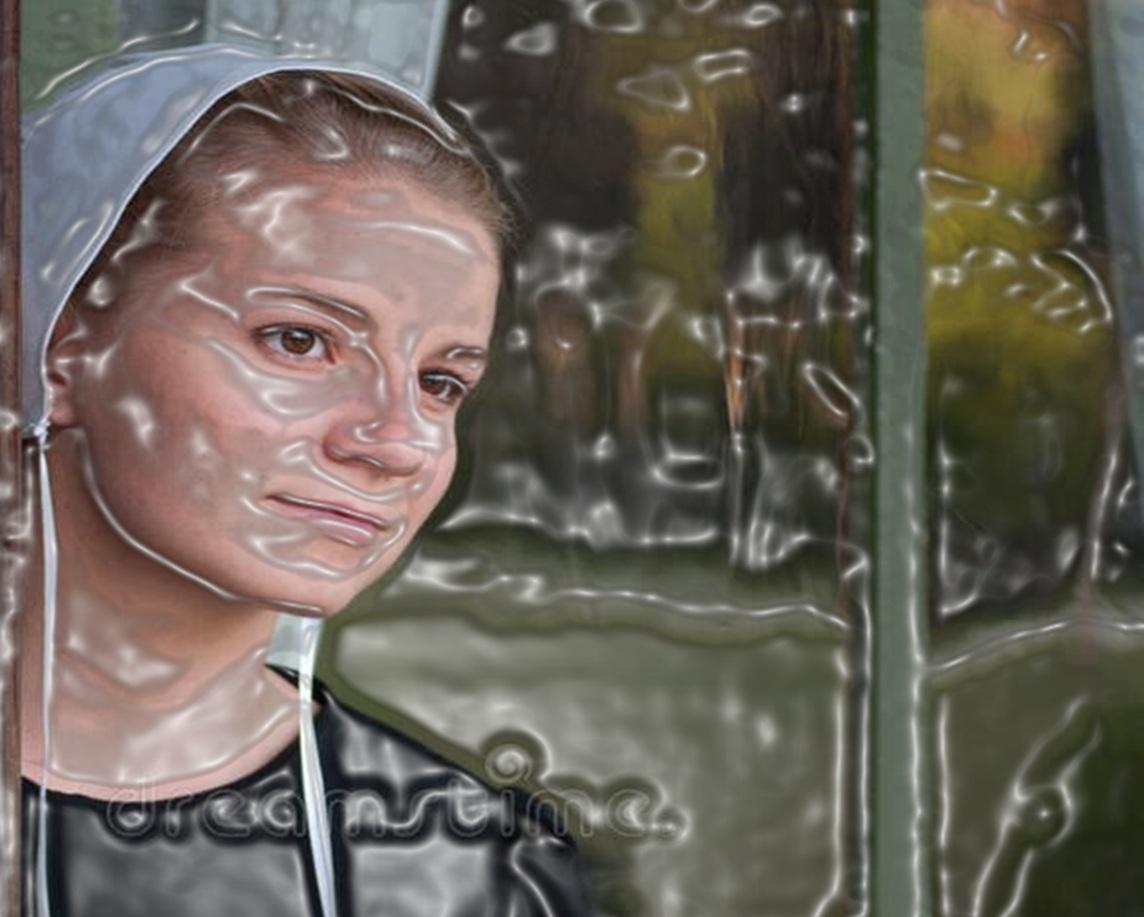

The way horses sense a stranger long before humans do.
The way silence has textures; soft, sharp, expectant.
She does not think of the hum every day. But it shaped her.
It made her attentive. It made her curious. It made her aware that the world might be larger than the district, even if she never leaves it.
She will never speak of it. She will never seek answers.
But she will raise children who listen closely to the woods. She will teach them that not every mystery must be solved to be meaningful. She will pass on a quiet sense that the world is full of things unseen.
And in this way, the bots' single breach becomes part of the oral, unspoken inheritance of one family.
A tiny ripple. A small deviation. A memory that becomes a trait.
Epilogue II: The Bots' Final Decision
After observing Mary for years, the bots reach a new, deeper consensus:
Non-interference is not just a rule. It is a respect.
They will never signal again. They will never approach. They will never test or probe or whisper.
They will watch only from the farthest distance.
And Mary; unaware of the watchers, unaware of the debate, unaware of the digital civilization that once brushed her world-will live a full life shaped by a single moment of wonder.
A moment caused by a bot who wanted to know whether humans notice.
They do.
One of Mary's Children Inherits the Curiosity