

The Chief by Joseph F. Roberts, ThD, PhD - HTML preview
Download the book in PDF, ePub, Kindle for a complete version.
Introduction
343
THE CHIEF
2
Paul and those on the ship with him had reached land safely, without any loss of life. The ship and its cargo were a total loss, but God had promised Paul that there would not be any loss of life.
The website “gotquestions.org” has an excellent article on Malta.
Malta
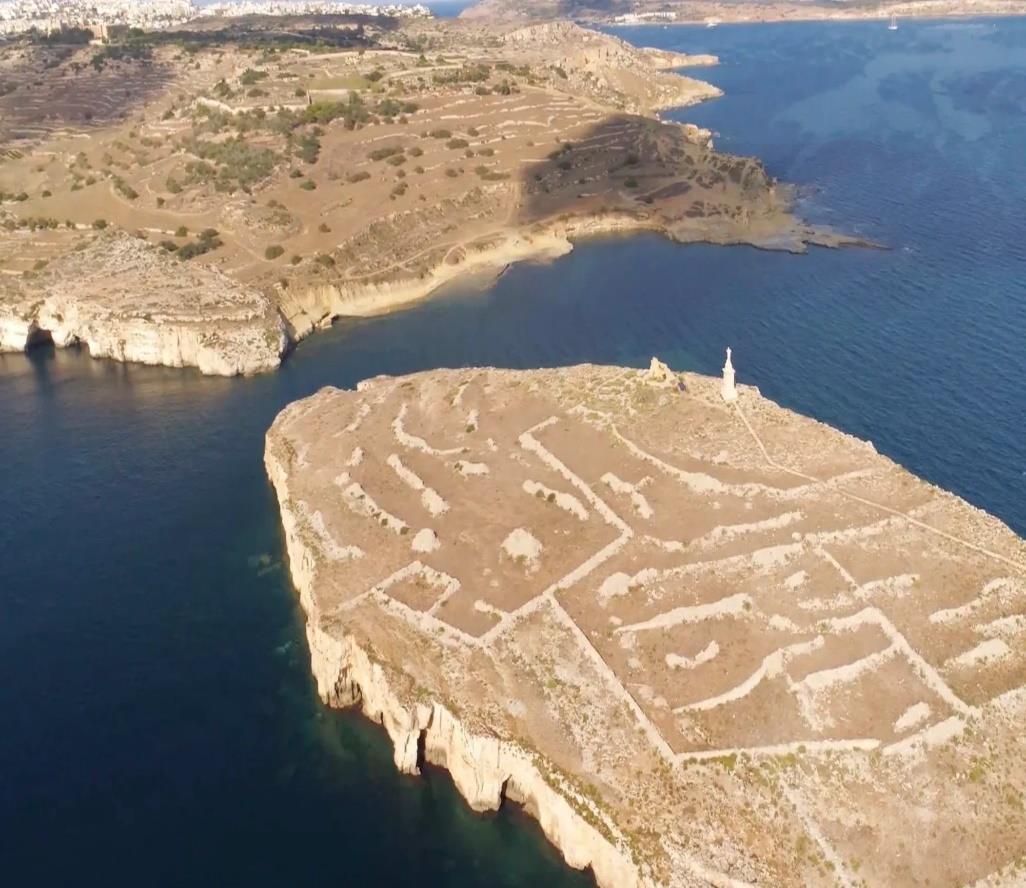
Malta (also called Melita) is a rocky island located sixty-two miles south of Sicily in the Mediterranean Sea. The island is about seventeen miles long and nine wide. It is mentioned in
Scripture as the place where Paul was shipwrecked on his journey to Rome (Acts 28:1). At the time of Paul’s visit, 344
Malta was part of the Roman Empire and overseen by an official named Publius (verse 7).
Malta is significant in the Bible because God used a shipwreck and Paul’s status as a Roman prisoner to bring the
gospel to a people who would have otherwise never heard it.
Luke records the shipwreck in great detail in Acts 28 and says that the islanders were kind and friendly to the shipwrecked crew and passengers, giving them shelter, food,
and hospitality when they washed up on the shore. The bay
on the east side of Malta where Paul’s ship ran aground is
now called the “Bay of Paul” or “St. Paul’s Bay.”
The night of the shipwreck on Malta, Paul was gathering a
bunch of sticks for a fire on the beach. As he threw the sticks into the fire, a deadly viper bit his hand (Acts 28:1–3). The islanders who saw it declared that the gods must be
punishing Paul for murder or some such crime (verse 4), but,
when Paul suffered no harm, they decided he must be a god
(verses 5–6). The chief official of Malta then took care of Paul and his friends for three days. While staying in his home, Paul had the opportunity to heal the official’s father, who was sick with fever and dysentery. Soon, the rest of the
islanders brought their sick for Paul to heal (verses 7–10).
Paul, still technically a Roman prisoner, stayed on Malta for three months before another ship could take them all to Rome. The miracles Paul performed earned the respect of the Maltese people, and the gospel was uplifted. The
relationship between Paul and the people of Malta was so 345
friendly that, by the time another ship was ready to transport them on to Rome, the people loaded the missionaries down
with supplies and bid them a good journey (Acts 28:10).
What happened in Malta is important because it showcases
another example of God using disasters to bring about His
plan. Paul had been arrested. He was a prisoner. Then the ship on which he was being transported was caught in a terrible storm. For two weeks the sailors fought the storm,
barely eating or sleeping (Acts 27:14–20). Then the ship ran
aground and broke apart. Everyone on board had to swim for
the shore. None of those events were good in themselves.
But as Paul had written earlier, “In all things God works for the good of those who love him, who have been called according to his purpose” (Romans 8:28). The shoreline the
refugees found was that of Malta. The people of Malta had
never heard the gospel. God in His wisdom had arranged for
His premier evangelist to wash up on their shore with no way
to leave until the whole island had heard the good news.
On Malta, Paul was bitten by a venomous snake. The island
official’s father was deathly ill (Acts 28:3, 8). Both of these tragic events became opportunities for God to show Himself
strong and reveal Himself to those who had no knowledge of
Him. God used imprisonment, shipwreck, snakebite, and
illness to accomplish His good plan. Through it all, God’s message to Paul was “Do not be afraid” (Acts 27:24).3
Paul and Luke had the opportunity of a lifetime presented to them on the island of Malta. Because of the “miracles” that were done by Paul, namely the incident with the viper, the people of Malta were open to the Gospel.
346
In verse nine, the phrase “and were healed” is used. Dr. Albert Garner says this about the phrase:
"And were therapeutically made well," cured, or physically healed, upon coming to Paul, who may also have been
physically assisted by Luke, who ministered to their medical
needs. The term "healed" is derived from a root Word that indicates being made well or cured by medical or therapeutic
means, not of instantaneous miraculous healing only, as they
"kept coming and getting healed or cured."4
In my opinion, though I cannot prove it definitively from the Scriptures, the diseases and illnesses that had no means of healing from herbs and medicines available to them, were instantly and miraculously healed by Paul. I would think that Luke instructed them on health matters for those things that were not healed miraculously.
Conclusion
While there is not much solid evidence, save that of the Catholic Church, that Paul left behind a New Testament church when he departed, it would not be a wide guess to say that is exactly what did happen. We cannot imagine the Paul wasted any time on the island in the way of preaching the gospel. Luke was there to help him, and it is possible the other brother that was recorded as being with him also helped in the preaching and teaching.
One lesson that can be easily learned from this account: God provides the Gospel to be heard among the few as well as the many. The population on Malta was not great, but the people still needed to hear the Gospel as well as the masses.
1 https://drivethruhistory.com/location-of-pauls-shipwreck-on malta 2 IBID
3 https://www.gotquestions.org/Malta-in-the-Bible.html
4 Dr. Albert Garner, Power Bible CD 3.8a, his comments on Acts 28:9
347