

Islamic Methodologies Made Easy by Ehab Shawky - HTML preview
Download the book in PDF, ePub, Kindle for a complete version.
When Jesus Christ P.B.U.H. was sent as a messenger, the Jews split in to 2 groups.
One group denied his Prophethood, and the other believed in him and started preaching his teachings. “Christians,” was the name given to those who believed in Jesus P.B.U.H.
after his departure, but the name itself was never mentioned or heard by Jesus during his life. After the departure of Jesus, those who believed in him formed a Jewish sect that remained faithful to the rituals practiced in the temple and to the Mosaic Law. In those very early years of Christianity, Judeo-Christianity represented the main stream. The head of community was James, Jesus’s brother. Then came “Saul of Tarsus” A.K.A. “Paul,”
the one to whom Christianity—as it stands today—owns its establishment through his travels, writings, and teachings. Half the books of the New Testament were written by him; most of the Christian dogma—if not all of it—was based on his words and teachings.
When the Gentiles started converting to the new faith, the council of Jerusalem was held in 49 A.C. It discussed issues concerning the new converts. The council decided that Gentile converts were not obliged to keep most of the Mosaic Law, including the circumcision of males. It was Paul’s suggestion that circumcision, Sabbath, and the rituals performed in the temple were old fashion even for the Jews. His opinion was that Christianity should free itself from Judaism. The apostles—according to Paul—did not walk “uprightly” according to the “truth of the Gospel” and he labored more abundantly than they did, (refer to: 1Corinthians 15:10, Galatians 2:13-14). With time, Pauline-Christianity started taking over Judeo-Christianity. The struggle between the two schools continued for the first 100 years after Jesus’s departure.
About the development of the church of Jerusalem, Edward Gibbon wrote in his epic book
“The decline and fall of the Roman empire” the following:
“The history of the church of Jerusalem affords a lively proof of the necessity of those precautions, and of the deep impression which the Jewish religion had made on the minds of its followers. The first fifteen bishops of Jerusalem were all circumcised Jews, and the congregation over which they presided, united the law of Moses with the doctrine of Christ. It was natural that a church founded forty days after the death of Christ, and governed almost as many years under the immediate inspection of his apostles, should be received as the standard of orthodoxy. The distant churches very frequently appealed to the authority of their venerable Parent, and relieved her distresses by a liberal contribution of alms. But when numerous and opulent societies were established in the great cities of the empire, in Antioch, Alexandria, Ephesus, Corinth, and Rome, the reverence which Jerusalem had inspired to all the Christian colonies insensibly diminished. The Jewish converts, or, as they were afterwards called, the Nazarenes, who had laid the foundations of the church, soon found themselves overwhelmed by the increasing multitudes, that from all the various religions of polytheism enlisted under the banner of Christ : and the Gentiles, who, with the approbation of their peculiar apostle, had rejected the intolerable weight of Mosaic ceremonies, at length refused to their more scrupulous brethren the same toleration which at first they had humbly solicited for their own practice. The ruin of the temple, of the city, and of the public religion of the Jews, was severely felt by the Nazarenes, as in their manners, though not in their faith, they maintained so intimate 148
a connection with their impious countrymen, whose misfortunes were attributed by the Pagans to the contempt, and more justly ascribed by the Christians to the wrath, of the Supreme Deity. The Nazarenes retired from the ruins of Jerusalem to the little town of Pella beyond the Jordan, where that ancient church languished above sixty years in solitude and obscurity. They still enjoyed the comfort of making frequent and devout visits to the Holy City, and the hope of being one day restored to those seats which both nature and religion taught them to love as well as to revere.” [DECLINE AND FALL OF
THE ROMAN EMPIRE, Vol. I, The church of Jerusalem – The Ebionites, P.337-338].
Paul never met nor saw Jesus P.B.U.H. Before his conversion, he hated the new faith, persecuted Christians and also wasted the church. From Acts we read: (8:3) As for Saul, he made havock of the church, entering into every house, and haling men and women committed [them] to prison. .........................................
(9:1) And Saul, yet breathing out threatenings and slaughter against the disciples of the Lord, went unto the high priest. (9:2) And desired of him letters to Damascus to the synagogues, that if he found any of this way, whether they were men or women, he might bring them bound unto Jerusalem. ..........................
And he confessed of this in Acts saying: (22:4) And I persecuted this way unto the death, binding and delivering into prisons both men and women.
And from Galatians we read him saying: (1:13) For you have heard of my conversation in time past in the Jews’ religion, how that beyond measure I persecuted the church of God, and wasted it.
After Jesus’s departure, Paul received a vision and was saved! This is mentioned in Acts as follows:
(9:3) And as he journeyed, he came near Damascus: and suddenly there shined round about him a light from heaven: (9:4) And he fell to the earth, and heard a voice saying unto him, Saul, Saul, why do you persecute me? (9:5) And he said, Who are you, Lord?
And the Lord said, I am Jesus whom you persecute: [it is] hard for you to kick against the pricks. (9:6) And he trembling and astonished said, Lord, what do you order me to do?
And the Lord [said] unto him, Arise, and go into the city, and you shall be told what you must do. (9:7) And the men which journeyed with him stood speechless, hearing a voice, but seeing no man. (9:8) And Saul arose from the earth, and when his eyes were opened, he saw no man: but they led him by the hand, and brought [him] into Damascus. (9:9) And he was three days without sight, and neither did eat nor drink.
(9:10) And there was a certain disciple at Damascus, named Ananias, and to him said the Lord in a vision, Ananias. And he said, Behold, I [am here,] Lord. (9:11) And the Lord [said] unto him, Arise, and go into the street which is called Straight, and enquire in the house of Judas for [one] called Saul, of Tarsus: for, behold, he prays, (9:12) And has seen in a vision a man named Ananias coming in, and putting [his] hand on him, that he might receive his sight. (9:13) Then Ananias answered, Lord, I have heard by many of this man, how much evil he has done to your saints at Jerusalem: (9:14) And here he has authority from the chief priests to bind all that call on your name. (9:15) But the Lord said unto him, Go your way: for he is a chosen vessel unto me, to bear my name before the Gentiles, and kings, and the children of Israel: 149
(9:16) For I will show him how great things he must suffer for my name’s sake. (9:17) And Ananias went his way, and entered into the house, and putting his hands on him said, Brother Saul, the Lord, [even] Jesus, that appeared unto you in the way as you came, has sent me, that you might regain your sight, and be filled with the Holy Ghost. (9:18) And immediately there fell from his eyes as it had been scales: and he received sight forthwith, and arose, and was baptized. (9:19) And when he had received meat, he was strengthened. Then was Saul certain days with the disciples which were at Damascus. (9:20) And straightway he preached Christ in the synagogues, that he is the Son of God.
Now read the same story from the same book, chapter 22, where Paul narrates what happened:
(22:6) And it came to pass, that, as I made my journey, and came nigh unto Damascus about noon, suddenly there shone from heaven a great light round about me. (22:7) And I fell unto the ground, and heard a voice saying unto me, Saul, Saul, why do you persecute me? (22:8) And I answered, Who are you, Lord? And he said unto me, I am Jesus of Nazareth, whom you persecute. (22:9) And they that were with me saw indeed the light, and were afraid, but they heard not the voice of him that spoke to me. (:::20) And I said, What shall I do, Lord? And the Lord said unto me, Arise, and go into Damascus, and there you shall be told of all things which are appointed for you to do. (22:11) And when I could not see for the glory of that light, being led by the hand of them that were with me, I came into Damascus. (:::2:) And one Ananias, a devout man according to the law, having a good report of all the Jews which dwelt [there,] (22:13) Came unto me, and stood, and said unto me, Brother Saul, receive your sight. And the same hour I looked up upon him. (22:14) And he said, The God of our fathers has chosen you, that you should know his will, and see that Just One, and should hear the voice of his mouth. (22:15) For you shall be his witness unto all men of what you have seen and heard. (22:16) And now why do you tarry? Arise, and be baptized, and wash away your sins, calling on the name of the Lord.
Please note the contradiction between verses (9:7) and (22:9) of Acts. Did those who witness this incident hear the voice or didn’t they! Did they see anything or didn’t they!
Let’s read the story from another account may it clear the misunderstanding?
Read Galatians where Paul wrote:
(1:15) But when it pleased God, who separated me from my mother’s womb, and called [me] by his grace, (1:16) To reveal his Son in me, that I might preach him among the heathen, immediately I conferred not with flesh and blood: (1:17) Neither went I up to Jerusalem to them which were apostles before me, but I went into Arabia, and returned again unto Damascus. (1:18) Then after three years I went up to Jerusalem to see Peter, and abode with him fifteen days. (1:19) But other of the apostles saw I none, save James the Lord’s brother. (1:20) Now the things which I write unto you, behold, before God, I lie not. (1:21) Afterwards I came into the regions of Syria and Cilicia, (1:22) And was unknown by face unto the churches of Judaea which were in Christ: (1:23) But they had heard only, That he which persecuted us in times past now preaches the faith which once he destroyed. (1:24) And they glorified God in me.
150
Now, this added more troubles to my mind than it resolved. Please note the contradiction between [Acts (9:8-20) and (22:10-13)] on one hand, and [Galatians (1:16-19)] on the other. Did Paul go to Arabia after receiving the vision or did he go to Damascus? Did he receive Ananias at Damascus or did he “immediately confer not with flesh and blood” as he described he did after receiving the vision? Did Paul loose his eyesight or didn’t he?
Did Paul preach boldly in Damascus straightway a few days after receiving the vision or did he travel to Arabia without conferring with anyone? How much time could it have taken him to travel from the road of Damascus to Arabia then to Damascus again back at that time?! I think not less than 4-5 weeks—absolutely not three days or a few days.
Did Paul meet the disciples in Damascus after this incident straightway or didn’t he?!
Also note the contradiction between [Acts (9:6)] and [Galatians (1:16)]: Did the Lord order Paul to enter Damascus where he shall be told by someone there what to do, or did Paul confer with no flesh and blood but went to Arabia then came back to Damascus?!
I can understand the questions that I have raised may have responses that clear up the misunderstanding. For example we can try to combine the different narrations together and assume that the story happened as follows:
1. Paul was on the way to Damascus when he received the vision.
2. Those who were with him did not hear the exact words of the one who spoke to Paul but they heard a sound.
3. They could not see the one who spoke to Paul but they saw light.
4. He saw Jesus who ordered him to go to Damascus where he shall be told what to do.
5. He lost his eyesight so he had to be led by hand to Damascus. He stayed blind for 3 days from this incident until Ananias cured him in Damscus and told him that he shall be filled with the Holy Ghost and preach in Jesus’s name. This needed no conferring whatsoever.
6. He met the disciples who were in Damascus then he started preaching in synagogues that Jesus was the son of God.
7. He didn’t meet the apostles who were in Jerusalem for he traveled to Arabia instead, then he came back to Damascus. Finally, after 3 years from the incident, he traveled to Jerusalem to meet Peter with whom he stayed for 15 days.
8. He didn’t meet any of the apostles during this visit to Jerusalem except Peter, and James, Jesus’s brother.
I guess that now the misconceptions are a bit explained. Let’s continue studying the story of Saul’s conversion. From acts we read the following:
(9:22) But Saul increased the more in strength, and confounded the Jews which dwelt at Damascus, proving that this is very Christ. (9:23) And after that many days were fulfilled, the Jews took counsel to kill him: (9:24) But their laying await was known of Saul. And they watched the gates day and night to kill him. (9:25) Then the disciples took him by night, and let [him] down by the wall in a basket. (9:26) And when Saul was come to Jerusalem, he assayed to join himself to the disciples: but they were all afraid of him, and believed not that he was a disciple. (9:27) But Barnabas took him, and brought [him] to the apostles, and declared unto them how he had seen the Lord in the way, and that he had spoken to him, and how he had preached boldly at Damascus in the name of Jesus. (9:28) And he was with them coming in and going out at Jerusalem.
151
On reading the above verses, there arose a few more questions… Paul himself stated in Galatians that he didn’t travel to Jerusalem except after 3 years from receiving the vision, how come that in Acts it is mentioned that he traveled to it only “after many days were fulfilled”? Could those many days mean 3 years?! How come that in Galatians he stated that he never met any of the apostles in Jerusalem except for Peter and James, while in Acts, it is mentioned that he met all of the apostles, or at least a big number of them as the words say, “Barnabas took him, and brought [him] to the apostles” Could “the apostles” meant in [Acts (9:27)] be referring only to Peter and James?! The more I read in Paul’s writings, the more my confusion increases for his words always carry different contradicting meanings in things that are essential for understanding religion, for example:
In [Galatians (1:20)] Paul states the following, “Now the things which I write unto
you, behold, before God, I lie not.”
While in [Romans (3:7)], he states the following, “For if the truth of God has more
abounded through my lie unto his glory, why yet am I also judged as a sinner?”
So did Paul lie unto God’s glory or didn’t he, which one is it?!
In [Romans (5:12)] he says, “Wherefore, as by one man sin entered into the world, and death by sin, and so death passed upon all men, for that all have sinned.”
While in [1Timothy (2:14)] he says, “And Adam was not deceived, but the woman
being deceived was in the transgression.”
So was the original sin done by Adam or Eve in Paul’s opinion?!
In [2Timothy (3:16)] he says, “All scripture [is] given by inspiration of God, and [is]
profitable for doctrine, for reproof, for correction, for instruction in righteousness.”
While in [Hebrews (7:18)] he says, “For there is verily a disannulling of the
commandment going before for the weakness and unprofitableness thereof. ”
So are the previous commandments and scriptures profitable and important or are they unprofitable and should be neglected?!
Paul endured lots of hardships and went through a lot of dangers according to what’s told in history books. Making up one’s mind regarding his conversion story and teachings is not easy at all. Usually when things are not clear and hazy like this, we need to go back to the beginning, to the pure creed of the early prophets, in order to stick to the right path.
Religion is for all people, all prophets preached worshipping one God, the creator who has created everything including us; to Him belongs all that exists. He sent us many messages and prophets as a guide. He never forsakes us but He is always watching us and knows all that we do, whether it be in public or in secret, or even what we just think of without uttering a word. All prophets taught that life is an exam after which—and according to our deeds—we will be rewarded for abiding by the Almighty’s messages, or punished for forsaking them. Never did any prophet preach the holiness of any entity other than that sole creator, besides whom no god or savior exists. Never did any prophet preach the alleged communion of saints. Never did any prophet teach that God exists in any triune form or that he has a son or a savior beside him. Never had God Almighty revealed to us in his previous messages that he existed in any triune form or that he will send us his son to rescue us from our sins, and consequently, our deeds would be important no more, but only our faith in his sacrifice would be what matters as taught by Paul in Romans (3:21-28)). Never did any prophet preach the atonement of sins through any human sacrifice, not even Jesus himself.
152
Never had any prophet taught that mankind are held responsible for what Christians called in their doctrine “The original sin,” which is a weird concept that only demonstrates that God is unfair and holds people responsible for a sin they never committed, a sin that was committed before any of them was even born. Don’t we all believe that a loving kind father wouldn’t hesitate to sacrifice his own life for his son’s life? In Christianity’s creed of faith, it is believed that God sacrificed his own son and sent him to earth to be tortured to death for the sins of humans whom He Himself has created. Here, a logical question must arise: If a normal human father wouldn’t hesitate to sacrifice his life for his child’s in many ways that we all respect, wouldn’t it be more fitting for the Almighty to do the same for his son? Or else, wouldn’t it be much easier for that loving merciful father to forgive us all instead of sending his own son to get tortured to death for our redemption?!
Think of this example: If your neighbor’s son—whom you love so much—stole from your house. After getting caught red handed, he was condemned for theft and sentenced for prison as a punishment. Would you send your own son to get imprisoned in his stead, or would you just forgive him and drop any charges you’ve raised?!
In Psalms, God’s existence, besides the concept of testing mankind and that their retribution shall be in the hereafter according to both, their faith and their deeds is clearly stated in the following verses:
PSALM I, “1 Blessed is the man that walks not in the counsel of the ungodly, Nor stands in the way of sinners, Nor sits in the seat of the scornful. 2 But his delight is in the law of the Lord , And in his law does he meditate day and night. 3 And he shall be like a tree planted by the rivers of water, that brings forth his fruit in his season, His leaf also shall not wither, And whatsoever he does shall prosper. 4 The ungodly are not so: But are like the chaff which the wind drives away. 5 Therefore the ungodly shall not stand in the judgment, Nor sinners in the congregation of the righteous. 6 For the Lord knows the way of the righteous, But the way of the ungodly shall perish.”
PSALM IX, “17 The wicked shall be turned into hell, And all the nations that forget God.”
PSALM XI, “The Lord is in his holy temple, The Lord’s throne is in heaven: His eyes behold, His eyelids try the children of men. The Lord tries the righteous: But the wicked and him that loves violence, his soul hates.”
PSALM XIV, “1 The fool has said in his heart, There is no God. They are corrupt, they have done abominable works, There is none that does good.2 The Lord looked down from heaven upon the children of men, To see if there were any that did understand, And seek God. ”
Contrary to “Trinity,” the “Oneness of God” was stressed by Moses in the Jewish creed of faith in [Deuteronomy (6:4)], where he said, “Hear, O Israel The Lord our God is one Lord”
And also from [Deuteronomy (4:39)], we read, “Know therefore this day, and consider it in your heart, that the LORD he is God in heaven above, and upon the earth beneath: there is none else. ”
153
From [Isaiah (43:10-11)], “You are my witnesses, says the LORD, and my servant whom I have chosen: that you may know and believe me, and understand that I am he: before me there was no God formed, neither shall there be after me. I, even I, am the LORD, and beside me there is no savior”
[Isaiah (44:5-6)], “Thus says the LORD the King of Israel and his redeemer the LORD of hosts, I am the first, and I am the last, and beside me there is no God”
[Isaiah (45:6)], “I [am] the LORD, and [there is] none else, [there is] no God beside me: I girded you, though you has unknown me: That they may know from the rising of the sun, and from the west, that there is none beside me. I am the LORD, and there is none else.”
[Isaiah (45:18)], “For thus says the LORD that created the heavens, God himself that formed the earth and made it, he has established it, he created it not in vain, he formed it to be inhabited: I am the LORD, and there is none else.”
And from [Isaiah: (45:21-23)], “Declare, and bring [them] near, let them take counsel together: who has declared this from ancient time? [who] has told it from that time? [have]
not I the LORD? and [there is] no God else beside me, a just God and a Saviour,
[there is] none beside me. Look unto me, and be saved, all the ends of the earth: for I [am] God, and [there is] none else. I have sworn by myself, the word is gone out of my mouth [in] righteousness, and shall not return, That unto me every knee shall bow, every tongue shall swear.”
Then from [Jeremiah (10:10)], “But the LORD is the true God, he is the living God, and an everlasting king. ”
So as you can see, all sent prophets were trying to tell us that there is a God, He is the one and only God and there is none else beside him. He watches all of His creation and knows what they do, and He will judge their deeds on the judgment day. Those who were righteous shall rejoice in His mercy and those who were wicked shall be turned in to hell.
Jesus also taught the same thing as came in the gospel of [Mark (12:29-30)], “And Jesus answered him, The first of all the commandments [is,] Hear, O Israel, The Lord our God is one Lord: And you shall love the Lord your God with all your heart, and with all your soul, and with all your mind, and with all your strength: this is the first commandment…”
And he emphasized P.B.U.H. the importance of this concept where he says in [Matthew (5:17-19)], “Think not that I have come to destroy the law, or the prophets: I did not come to destroy, but to fulfill. For verily I say unto you, TILL HEAVEN AND EARTH
PASS, one jot or one tittle shall in no wise pass from the law, till all be fulfilled.
Whosoever therefore shall break one of these least commandments, and shall teach men so, he shall be called the least in the kingdom of heaven: but whosoever shall do and teach them, the same shall be called great in the kingdom of heaven.”
154
Prophet Muhammad came along approximately 600 years after Jesus P.B.U.H., bringing the same message that has been corrupted by Trinitarians:
“And your God is One God: there is no God but He” [The Qur’an (2:163)].
“Allah there is no God but He, the Living the Everlasting. Slumber does not seize Him, neither sleep, to Him belongs all that is in the Heavens and the Earth. Who is there that can intercede with Him except by His permission? He knows what is before them (i.e. what happens to them in this world) and what is behind them (i.e. what happens to them in the hereafter), and they do not encompass anything of His knowledge except what He wills. His Throne extends over the Heavens and the Earth, the preservation of them does not burden Him, He is the Most High, the Greatest.” [The Qur’an (2:255)].
But Christians have broken out of the concept of oneness of God in to a new exaggerated one that was never preached by any of the prophets P.B.U.T., not even Jesus himself.
The trinity— in line with the crucifixion and the sacrifice of the “Son of God”— became the creed in which whomever believes enters heaven and the laws are important no more.
Never had any prophet taught that the Almighty is like man in marrying and begetting children or that He takes wives or that fatherhood could be attributed to Him in any way other than being our Creator and Sustainer. You cannot find the doctrine of the Trinity set out anywhere in the Bible. Even Paul himself, who is the author of half of the books of the new testament, and the one to whom Christianity owns its formation, nowhere does he call Jesus God, nor does Jesus himself anywhere explicitly claim to be the second person in any Trinity, wholly equal to God. On the contrary, he taught that he was God’s messenger or as he himself said in the gospel of John:
“(17:3) And this is life eternal, that they might know You the only true God, and Jesus Christ, whom You have sent. (17:4) I have glorified You on the earth: I have finished the work which You gave me to do.”
Never did a prophet preach that the law and commandments were important no more, not even Jesus himself. Jesus taught his followers to keep the laws as came in [Matthew (5:17-19)], and the commandments as stated in [Matthew (19:16-21)] and [Luke (18:18-22)], but Christians abrogated all this because of what Paul taught them in the verses of
[Romans (3:21-28)].1
The epistle of James, Jesus’s brother and the early leader of the believers—in contrast to the other books of the new testament—does not describe Jesus as a divine entity, but more as a human character blessed by Allah, a teacher of great faith, or in other words, a prophet and a messenger. The epistle of James didn’t mention the crucifixion of Jesus or the forgiving of sins through believing in any savior or “Son of God.” On the contrary, it taught—like Jesus taught—that the laws must be kept. From the epistle of James, we read him describing Jesus’s faith and teachings saying:
(2:1) My brethren, do not have the faith of our Lord Jesus Christ, [the Lord] of glory, with respect of persons. (2:2) For if there come unto your assembly a man with a gold ring, in goodly apparel, and there come in also a poor man in vile raiment, (2:3) And you have respect to him that wears the gay clothing, and say unto him, Sit here in a good place, and say to the poor, Stand there, or sit here under my footstool: (2:4) Are you not then partial in yourselves, and are become judges of evil thoughts?
1: These verses are included in the last chapter of this book, P.401.
155
(2:5) Hearken, my beloved brethren, Has not God chosen the poor of this world rich in faith, and heirs of the kingdom which he has promised to them that love him?
(2:6) But you have despised the poor. Do not rich men oppress you, and draw you before the judgment seats? (2:7) Do not they blaspheme that worthy name by which you are called? (2:8) If you fulfill the royal law according to the scripture, you shall love your neighbour as yourself, you do well: (2:9) But if you have respect to persons, you commit sin, and are convincted by the law as transgressors. (2:10) For whosoever shall keep the whole law, and yet offend in one [point,] he is guilty of all. (2:11) For he that said, Do not commit adultery, said also, Do not kill. Now if you commit no adultery, but yet you kill, you shall become a transgressor of the law. (2:12) So speak, and so do, as they that shall be judged by the law of liberty. (2:13) For he shall have judgment without mercy, that has shewed no mercy, and mercy rejoices against judgment. (2:14) What
[does it] profit, my brethren, though a man say he has faith, and have not works?
can faith save him? (2:15) If a brother or sister be naked, and destitute of daily food, (2:16) And one of you say unto them, Depart in peace, be warmed and filled, notwithstanding you give them not those things which are needful to the body, what [does it] profit? (2:17) Even so faith, if it has not works, is dead, being alone. (2:18) Yea, a man may say, you have faith, and I have works: show me your faith without your works, and I will show you my faith by my works. (2:19) You believe that there is one God, you do well: the devils also believe, and tremble. (2:20) But wilt you know, O vain man, that faith without works is dead? (2:21) Was not Abraham our father justified by works, when he had offered Isaac1 his son upon the altar? (2:22) Do you See how faith wrought with his works, and by works was faith made perfect? (2:23) And the scripture was fulfilled which said, Abraham believed God, and it was imputed unto him for righteousness: and he was called the Friend of God. (2:24) See then how that by works a man is justified, and not by faith only. (2:25) Likewise also was not Rahab the harlot justified by works, when she had received the messengers, and had sent [them] out another way? (2:26) For as the body without the spirit is dead, so faith without works is dead also.
It’s crystal clear from the previous verses that Faith alone cannot save anyone if the person violates God’s laws. The idea of a savior who bears people’s sins is so romantic but it’s also void. Think about it logically, how come that when we speak of “the death of God,”
it is Jesus who is claimed to have died and not God or the “trinity.” How come that God died then resurrected, who resurrected him if he himself were dead? What kind of semi-death is that?! When God is described as having “begotten” a son It is not the “trinity”
nor Jesus who has begotten, but a distinctly separate entity from the other two.
Some Christians explain this by stating that the three different entities merged together after these incidents. To those I ask, from where inside your own holy book did you get this idea?! As a matter of fact, if you ignore any hidden mysterious meanings that are sometimes forced by commentators upon the text, you will find that nowhere in the New Testament is it mentioned clearly at all that God, Jesus, and the Holy Ghost, are the same or have merged together in any way.
1: The Qur’an as previously explained in p. 138-145 teaches that it was Ishmael (Abraham’s first son) who was going to be sacrificed by Abraham.
156
I shall wrap up with one final point. It’s the last words that Jesus—as believed by Christians—is supposed to have said before he gave up the ghost. They are stated in Matthew (27:46) as follows: “And about the ninth hour Jesus cried with a loud voice, saying, “Eli, Eli, lama sabachthani? That is to say, My God, my God, why have you forsaken me?”
If Jesus was as Christians claim, the divine son of God, and he was sent to earth on a mission in a human form to receive the crucifixion as an atonement for mankind’s sins, then how come that he utters these words on the cross, which only indicates that the man on the cross had no advanced knowledge whatsoever of the reason behind what has happened to him. He was asking his lord why he has abandoned him to be tortured and crucified. He is asking this god, “Why have you forsaken me?” If the man on the cross was the son of God or even a prophet with great faith, he would have never uttered those words; his faith in God’s wisdom and plan should be much stronger than to utter such desperate words. These words couldn’t but imply complete despair in God’s support, and total ignorance of why this has happened to him or what was to happen next.
Islam teaches that the person on the cross was not Jesus, but someone the Jews identified mistakenly to be Jesus. This explains the words mentioned up there. Allah protected Jesus and saved him from those who intended to kill him. Allah tells us of the truth about Jesus’s miraculous birth, Prophethood, life, and alleged death, in many locations in the Qur’an.
Read the Qur’an where Allah says:
“O People of the Book [Christians]! Commit no excesses in your religion: Nor say about Allah but the truth. The Messiah Eisa [Jesus] the son of Maryam was [no more than]
a prophet, and His Word which He bestowed on Maryam, and a spirit proceeding from Him: so believe in Allah and His messengers. Say not “Trinity”: better for you to desist
[saying so]. Verily Allah is only one God: Glory be to Him: [far exalted is He] above having a son. To Him belong all things in the heavens and on earth. And enough is Allah as a Disposer of affairs. Neither the Messiah disdains to serve and worship Allah, nor the nearest angels [to Allah]. And whosoever disdains His worship and are arrogant, He will
[surly] gather them all unto Himself [for judgment].” [The Qur’an (4:171-172)].
Allah describes John and Jesus’s miraculous births in the Qur’an where He says:
“Kaf Ha Ya Ayn Sad, [This is] a recital of the mercy of your lord to his servant Zakariya
[Zachariah], Behold he cried to his lord in secret, praying, ‘O Lord, infirm indeed are my bones, and the hair of my head does glisten with grey: but never am I unblest O Lord in my prayer to you, Now I fear [what] my relatives [and colleagues] will do after me but my wife is barren, so give me an heir as from yourself, [One that] will [truly] represent me, and represent the posterity of Jacob, and make him O Lord one with whom you are well-pleased!’ [His prayer was answered]: ‘O Zakariya we give you good news of a son: his name shall be Yahia [John]: on none by that name have we conferred distinction before.’ He said, ‘O Lord! How shall I have a son, when my wife is barren and I have grown quiet decrepit from old age?’ He said, ‘So [it will be] your lord says, “That is easy for me: I did indeed create you before and you had been nothing.” ’ [Zakariya] said,
‘O Lord give me a sign.’ ‘Your sign,’ was the answer, ‘shall be that you shall speak to no man for three nights although you no bodily defects.’ So Zakariya came out to his people from his chamber: He told them by signs to celebrate Allah’s praises in the morning 157
and in the evening. [To his son came the command], ‘O Yhaia take hold of the book with might’: and we gave him wisdom even as youth, and pity [for all creatures] as from us, and purity: he was devout and kind to his parents, and he was not overbearing or rebellious. Peace be upon him the day he was born, the day he dies and the day that he will be raised up to life [again]. And relate [O Muhammad] in the book Maryam
[Mary], when she withdrew from her family to a place eastwards, she veiled herself from them, then we sent to her our angel, and he appeared before her as a man in all respects.
She said, ‘I seek refuge from you at [Allah] the most Gracious, [come not near] if you do fear Allah.’ He said, ‘Nay I am only a messenger from your lord [to announce] to you the gift of a righteous son.’ She said, ‘How shall I have a son, seeing that no man has touched me, and I am not unchaste?’ He said, ‘So [it will be]. Your lord says, “that is easy for me: and [we wish] to appoint him as a sign unto men and a mercy from us, it is a matter
[so] decreed.” ’ So she conceived him, and she retired with him to a remote place.
And the pains of childbirth drove her to the trunk of a palm tree: She cried [in her anguish] ‘Ah would that I have died before this! Would that I have been a thing forgotten and out of sight.’ But a voice cried to her from beneath the [palm tree], ‘Grieve not for your lord has provided a rivulet beneath you, and shake towards yourself the trunk of the palm tree, it will let fall fresh ripe dates upon you. So eat and drink and pleasure [your]
eye and if you see any man, say I have vowed a fast to the Most Gracious, and this day I shall not converse with any human being.’ [Then] she brought the [baby] to her people, carrying him [in her arms], they said, ‘O Maryam truly an amazing thing has you brought! O sister of Haroon [Aaron] your father was not a man of evil, nor was your mother a woman unchaste!’ So she pointed to the babe, they said, ‘How can we talk to one who is a child in the cradle?’ He [the child] said, ‘I am indeed a servant of Allah, he has given me revelations and made me a prophet, and he has made me blessed where so ever I be, and has enjoined upon me prayers and charity as long as I shall live, and [He ordered me to show] kindness to my mother, and never to be overbearing or evildoing, so peace is upon me the day I was born, the day that I die, and the day that I shall be raised up to life [again].’ Such [was] Eisa [Jesus] the son of Maryam, [it is]
a statement of truth about which they [vainly] dispute. It is not befitting for [the majesty of] Allah that he should beget a son. Glory be to him when he determines a matter he only says to it ‘Be,’ and it is. And verily Allah is my lord and your lord. So worship him alone; that is the righteous path. Then the parties differed in between them, so woe unto the deniers [of my words] from the scene of the great day [Judgment day], How clearly will they hear and listen on the day they are brought to us, but the wrongdoers today are in plain error, And warn them [O Muhammad] of the day of regret, when their life has ended and they had spent it in inadvertence and declination, Verily we shall inherit the earth and whatsoever is thereon, and to us they shall return.” [The Qur’an (19:1-40)].
Allah mentions Jesus’s story from birth until saving him from those who didn’t believe in him and wanted to have him crucified. He says:
“[And remember] when the angels said, ‘O Maryam! Allah gives you glad tidings of a word from Him, whose name is the Messiah, Jesus, son of Maryam, illustrious in the world and the Hereafter, and one of those brought near [unto Allah]. He will speak unto mankind in his cradle and in his manhood, and he is of the righteous.’ She said, ‘My Lord!
How can I have a child when no human has touched me?’ He [the angel] said,
‘So [it will be]. Allah creates what He wills, if He decrees a thing, He only says unto it: Be! and it is, And He [Allah] will teach him the Scripture and wisdom, and the Torah 158
and the Injeel [Gospel], and will make him a messenger unto the children of Israel,
[saying], “Lo! I come unto you with a sign from your Lord. Lo! I fashion for you out of clay the likeness of a bird, and I breathe into it and it is a bird by Allah’s leave.
I heal him who was born blind, and the leper, and I raise the dead, by Allah’s leave.
And I announce unto you what you eat and what you store up in your houses. Lo! Herein verily is a sign for you, if you are believers. And [I come] confirming that which was before me of the Torah, and to make lawful some of that which was forbidden unto you.
I come unto you with a sign from your Lord, so keep your duty to Allah and obey me. Lo!
Allah is my Lord and your Lord, so worship Him. That is a straight path.” ’ But when Jesus became conscious of their disbelief, he cried, ‘Who will be my helpers in the cause of Allah?’ The disciples said, ‘We will be Allah’s helpers, We believe in Allah, and bear you witness that we have surrendered [unto Him]. Our Lord! We believe in that which You have revealed and we follow him whom You have sent, Enroll us among those who witness [to the truth].’ And they [the disbelievers] planned and plotted (i.e. To kill Jesus), and Allah planned [against them]: and Allah is the best of planers. [And remember] when Allah said, ‘O Eisa! Lo! I shall take you and raise you unto Me, and I shall cleanse you of those who disbelieve and will make those who follow you above those who disbelieve until the Day of Resurrection. Then unto Me you will [all] return, and I shall judge between you in the matters in which you used to dispute. As for those who disbelieve, I shall chastise them with a heavy chastisement in the worldly life and the Hereafter, and they will have no helpers. And as for those who believe and do good deeds, Allah will pay them their reward in full, And Allah loves not wrongdoers.’ This [which] We recite unto you [O Muhammad] is a revelation and a wise reminder. Verily the likeness of Eisa before Allah is like that of Adam, He created him from dust, then He said to him ‘Be,’
and he was. This is the truth from your lord, so be not of those who doubt. Then whoever disputes in this matter with you, now after [full] knowledge has come to you, say, ‘Come!
Let us gather together, our sons and your sons, our women and your women, ourselves and yourselves: Then let us earnestly pray, and invoke the curse of Allah on those who lie!’ This is the true account: There is no god except Allah. He is indeed the Exalted in Power, the All Wise.” [The Qur’an (3:45-58)].
“And because of their saying (i.e. the Jews), ‘We killed the Messiah Jesus son of Mary, Allah’s messenger.’ They killed him not nor crucified him, but it appeared so unto them,
and lo! Those who disagree concerning it are in doubt thereof, they have no knowledge, they follow nothing but conjecture, and they killed him not for certain, but Allah raised him up unto Himself. Allah is ever All-powerful, All-Wise.” [The Qur’an (4:157-158)].
Allah mentions some of the miracles He gave Jesus to strengthen him on his mission:
“Allah will say [on the day of resurrection], ‘O Jesus, son of Mary! Remember My favor unto you and unto your mother, how I strengthened you with the holy Spirit, so that you spoke unto mankind in the cradle as in maturity, and how I taught you the Scripture and Wisdom and the Torah and the Gospel, and how you did shape of clay the likeness of a bird by My permission, and did blow upon it and it was a bird by My permission, and you did heal him who was born blind and the leper by My permission, and how you did raise the dead, by My permission and how I restrained the Children of Israel from
[harming] you when you came unto them with clear proofs, and those of them who disbelieved exclaimed, “This is naught else than mere magic.” ’.” [The Qur’an (5:110)].
159
These were parts of the Qur’anic narratives about Jesus P.B.U.H. He is not the son of Allah. He was not crucified as Christians claim. He was Allah’s messenger and prophet to the sons of Israel, which is what he himself stated in [Matthew (15:24)] saying,
“I am not sent but unto the lost sheep of the house of Israel,” and confirmed in the Qur’an.
He never claimed that he was sent to receive any punishment for mankind, which is totally illogical and unfair. Imagine that you make sins and a judge ruled someone else to pay for your sins, what kind of judge will that be?! Praise be to Allah for He is Most-Just and Most-Merciful. If He were to treat us with His Justice we would all be doomed to perish for our sins, but He treats us with His Mercy without any need for a crucified son whatsoever. This is what Islam teaches, and what Muslims believe.
Allah says in the Qur’an:
“And from those who said, ‘We are Christians,’ We took their covenant, but they forgot a good part of the message which was sent to them. So we have stirred up enmity and hatred among them till the Day of Resurrection, and Allah will inform them of what they used to do. O people of the book! Now has Our messenger [Muhammad] come to you, explaining to you much of that which you used to hide in the Scripture, and forgiving much. Indeed, there has come to you a light from Allah and a clear Scripture, Wherewith Allah guides him who seeks His good pleasure unto paths of peace. He brings them out of darkness by His will into light, and guides them to a straight path. Indeed they have disbelieved who say: Lo! Allah is the Messiah, son of Maryam. Say: Who then has the least power against Allah, if He had willed to destroy the Messiah son of Maryam, and his mother and everyone on earth? And to Allah belongs the dominion of the heavens and the earth and all that is between them. He creates what He wills. And Allah is Able to do all things. The Jews and Christians say: We are sons of Allah and His loved ones.
Say, Why then does He punish you for your sins? No, you are but mortals of His creation.
He forgives whom He wills, and punishes whom He wills. And to Allah belongs the dominion of the heavens and the earth and all that is between them, and unto Him is the return [of all]. O people of the book! Indeed there has come unto you our messenger
[Muhammad] to make things clear after a break in [the series of] the messengers, lest you should say, ‘There came not unto us a bringer of glad tidings nor any Warner.’
Now has a bringer of glad tidings and a Warner come unto you. Verily, Allah is Able to do all things.” [The Qur’an (5:17-19)].
Regarding the prophets and their messages, and how people have broken out from their teachings, Allah says in the Qur’an:
“Indeed, We gave unto Moses the scripture that they may be guided, and We made the son of Maryam and his mother a sign, and We gave them refuge to a high ground, a place of rest, security and flowing streams. O [you] messengers, eat of the Good [Halal]
food and do righteous deeds, Verily I’m well-acquainted with what you do. And verily this
[religious] nation of yours is one nation, and I’m your God, so keep your duty to me. But
[men] have broken their religion between them in to sects, each group rejoicing in what is with itself. So leave them in their error till an [appointed] time. Do they think that the wealth and sons that We provide to them, [is that] We hasten unto them with good things?
Nay, but they perceive not. Verily! those who live in awe for fear of their Lord, And those who believe in the signs of their Lord, And those who do not associate partners with their Lord, And those who give that which they give with hearts full of fear because they are 160
sure to return unto their Lord, It is these who hasten for the good deeds, and they are foremost in them. And We task not any soul beyond its capacity, and with Us is a Record which speaks the truth, and they will not be wronged. Nay, but their hearts are covered
[blind] of this [Qur’an], and they have other [evil] works, besides, which they are doing.
Until when We grasp those of them who lead a luxurious life with the punishment, behold!
they supplicate loudly. Supplicate not this day! Assuredly you will not be helped by Us.
Indeed, My revelations were recited unto you, but you used to turn back on your heels in arrogance: talking nonsense about the [Qur’an], like one telling fables by night.
Have they not pondered over these words, or has there come to them what hadn’t come to their fathers of old. Or is it that they didn’t recognize their messenger [Muhammad], so they deny him?” [The Qur’an (23:49-69)].
Thirdly, the Muslim nation
Muslims believe that Prophet Muhammad P.B.U.H. is the seal of all prophets. He is the prophet described in the Torah and the Injeel (the Gospel of Jesus) and sent for all people to gather them on one final law. In the Qur’an Allah says:
“Those who follow the apostle, the unlettered Prophet, whom they find mentioned in their own [scriptures], in the Torah and the Injeel, for he commands them with what is [just, good] and forbids to them what is [evil, abominable], he allows them as lawful what is good [and pure] and prohibits them from what is bad [and impure], He releases them from their heavy burdens and from the yokes that are upon them. So it is those who believe in him, honor him, help him, and follow the light which is sent down with him, it is they who will prosper.” [The Qur’an (7:157)].
Many Jews and Christians make fun of this verse without giving themselves any chance whatsoever to look for any of those signs in the holy book they have between their hands.
And here, a common misconception should be cleared first:
People of the book don’t understand why Muslims do not either accept all of their holy Books or reject them totally. They find our attitude towards their holy Books unconvincing. Muslims are told in the Qur’an that Allah has sent down the Torah to Moses, the Psalms to David and the Injeel to Jesus P.B.U.T. The Qur’an then goes on to describe how mankind had made changes in these holy books and corrupted their teachings. For this reason, Prophet Muhammad P.B.U.H. taught that these books should be dealt with respectfully since that they were primarily the true word of Allah.
He explained that if we were to reject them completely then we might be rejecting some verses that remain to be the true words of Allah. This is why the Qur’an had been sent down to correct what has been corrupted in the previous books and reinstate the original teachings. Allah ordered all people in the Qur’an to use their reason and logic in judging all matters. He says in the Qur’an:
“It was We who revealed the Torah [to Moses] therein was guidance and light. By its standard, for the Jews, judged the prophets who submitted to Allah’s will and the rabbis and [those who devoted themselves to Allah]; to them was entrusted the protection of Allah’s book, and they were witnesses thereto: therefore fear not men, but fear me, and sell not my signs for a miserable price. If any do fail to judge by [the light of] what Allah has revealed, they are [no better than] unbelievers. We ordained therein 161
[the Torah] for them, ‘Life for life, eye for eye, nose or nose, ear for ear, tooth for tooth, and wounds equal for equal.’ But if any one remits the retaliation by way of charity, it is an act of atonement for himself. And if any fail to judge by [the light of] what Allah has revealed, they are [No better than] wrong doers. And in their footsteps We sent Jesus son of Mary, confirming the Law that had come before him. We sent him the Gospel; therein was guidance and light, and confirmation of the Law that had come before him, a guidance and an admonition to those who fear Allah. Let the people of the Gospel judge by what Allah has revealed therein. If any do fail to judge by [the light of] what Allah has revealed, they are [no better than] those who rebel. And unto you [Muhammad] We revealed the Scripture [Qur’an] with the truth, confirming whatever Scripture was before it, and a watcher or corrector over it. So judge between them by that which Allah has revealed, and follow not their desires away from the truth which has come to you. To each among you have we prescribed a law and an open way. If Allah had so willed, He would have made all people a single nation, but [His plan is] to test you in what He has given you: so strive as in a race in all virtues. The goal of you all is [the path] to Allah, it is He that will show you the truth of the matters in which you dispute, And so Judge
[Muhammad] between them by what Allah has revealed, and follow not their vain desires, but beware of them lest they beguile you from any of that which Allah has sent down to you. And if they turn away, be assured that for some of their crimes it is Allah’s purpose to punish them. And truly most men are rebellious.” [The Qur’an (5:44-49)].
For this reason, Muslims accept from the previous books only what is verified by the Qur’an or the Sunnah, and reject what contradicts them. We believe that the Qur’an is Allah’s final testament to mankind. He has promised to keep it safe from any distortions unlike the previous messages, which were entrusted to and corrupted by the rabbis and priests of old. Jesus P.B.U.H. said, “Till heaven and earth pass, one jot or one tittle shall in no wise pass from the law, till all be fulfilled.” Muslims believe that the law was fulfilled by Prophet Muhammad, the seal for all messengers, and by The Qur’an, the seal of Allah’s testaments. Allah says in the Qur’an, addressing Prophet Muhammad P.B.U.H., “We have not sent you (O Muhammad) except as a mercy for all creation. ”
[The Qur’an (21:107)].
Allah also addresses the believers in the Qur’an, teaching them about the grace that He has bestowed upon them, in a glorifying wording to his entity, saying:
“It is He (i.e. Allah) Who has sent His messenger (i.e. Muhammad) with Guidance and the Religion of Truth, to make it prevail over all religions: and enough is Allah for a Witness. Muhammad is the prophet, and those who are with him are strong against the Unbelievers, [but] compassionate amongst each other. You see them bow and prostrate themselves [in prayer], seeking Grace from Allah and [His] Good Pleasure. On their faces are their marks, [being] the traces of their prostration. This is their similitude in the Torah, and their similitude in the Gospel is: like a seed which sends forth its blade, then makes it strong, it then becomes thick, and it stands on its own stem, [filling]
the sowers with wonder and delight, so that He may enrage the disbelievers through them.
Allah has promised those among them who believe and do righteous deeds forgiveness and a great Reward.” [The Qur’an (48:28-29)].
162
Muslims believe that Prophet Muhammad’s message is a universal message for all people from their Creator. Allah says that those who believe in it are like those who had believed in it before in the original Torah of Moses and the original Gospel of Jesus. When I first started my research, I was truly surprised to find verses like the following: From the Old Testament, we read:
Genesis: (17:3) And Abram fell on his face: and God talked with him...”
Genesis: (17:17) Then Abraham fell upon his face, and laughed, and said in his heart, Shall a child be born unto him that is an hundred years old? and shall Sarah, that is ninety years old, bear?
Exodus: (34:8) And Moses made haste, and bowed his head toward the earth, and worshipped.
Numbers: (16:20) And the LORD spoke unto Moses and unto Aaron, saying, (16:21) Separate yourselves from among this congregation, that I may consume them in a moment. (16:22) And they fell upon their faces, and said, O God, the God of the spirits of all flesh, shall one man sin, and will You be worth with all the congregation?
Numbers: (20:6) And Moses and Aaron went from the presence of the assembly unto the door of the tabernacle of the congregation, and they fell upon their faces: and the glory of the LORD appeared unto them.
Joshua: (5:14) And he said, Nay, but [as] captain of the host of the LORD am I now come.
And Joshua fell on his face to the earth, and did worship, and said unto him, what said my lord unto his servant?”
1 Samuel: (5:3) “And when they of Ashdod arose early on the morrow, behold, Dagon
[was] fallen upon his face to the earth before the ark of the LORD.”2 chronicles: (7:3) And when all the children of Israel saw how the fire came down, and the glory of the LORD upon the house, they bowed themselves with their faces to the ground upon the pavement, and worshipped, and praised the LORD, [saying,] For [he is] good, for his mercy [endures] forever.”
2 chronicles: (20:18) And Jehoshaphat bowed his head with [his] face to the ground: and all Judah and the inhabitants of Jerusalem fell before the LORD, worshipping the LORD.
Nehemiah: (8:6) And Ezra blessed the LORD, the great God. And all the people answered, Amen, Amen, with lifting up their hands: and they bowed their heads, and worshipped the LORD with [their] faces to the ground.
From the New Testament, we read:
Matthew: (26:39) And he (Jesus) went a little farther, and fell on his face, and prayed, saying, O my Father, if it be possible, let this cup pass from me: nevertheless not as I will, but as thou wilt.
Luke: (17:15) And one of them, when he saw that he was healed, turned back, and with a loud voice glorified God, (17:16) And fell down on [his] face at his feet, giving him thanks: and he was a Samaritan.
Abraham, Moses, Aaron, Jesus, Joshua, the children of Israel, all Judah and the inhabitants of Jerusalem, Ezra, and their followers are being described many times in the Bible as falling on their faces and praying or worshipping God, which is exactly the way we Muslims pray as taught to us by Prophet Muhammad. Have you ever seen 163


a Christian priest or a Jewish rabbi “fall on his face” and pray like any of the prophets and their followers? Amazing how non-Muslims today see this act as something weird!
Apostasy from many of the prophets’ teachings had occurred through history.
The discrepancies found in today’s Bible stand as an irrevocable evidence on this.
All that Muslims can do is to present the evidence on their opinions, then it’s up to the recipients themselves to seek the truth asking Allah to guide them along the way.
The following chapter shall represent some verses from the Old Testament that as a Muslim, I believe to be most identical with Prophet Muhammad P.B.U.H. from his description and his history. In no way could this be 100% proved nor denied, this is purely my opinion and analysis as a Muslim and an Arab researcher, based on my own study in the Qur’an, the Bible and the books written by some Ex-Christian scholars who have embraced Islam, and have pointed out that some of these verses were referring to Prophet Muhammad P.B.U.H. Among those are “Ibrahim Khalil Ahmad,” a former Egyptian priest “Ibrahim Khalil Philips” who preached Christianity and taught Christian theology and dogma in the university of Asyut in Egypt, he converted to Islam back in 1982 at the age of forty, and wrote a book titled, “Muhammad in the Torah, Injeel and Qur’an” in his late fifties. Also “Abdul-Ahad Dawud” who was the former Reverend “David Benjamin Keldani,” a Roman Catholic priest. He was born in 1867, he embraced Islam in the year 1904 when he was 37 years old, and wrote his book “Muhammad in the Bible,” that contained his personal opinion about the Biblical verses which he deemed referring to Prophet Muhammad. Finally, I sought the commentaries written by some Muslim scholars like “Ahmad Deedat” and “Mish‘al Ibn ‘Abdullah Al-Kadhi,” may Allah award them all for their avid search for the truth. I can only hope that the reader here would try to think objectively and reasonably about this subject. Allah says in the Qur’an:
“Indeed We have explained in this Qur’an every subject in various ways for the benefit of the people, but out of all creation, man is most disputing. The only thing that prevented people from believing, even after the guidance had come to them, and from seeking forgiveness from their Lord, is (their demand) that what used to come to the earlier people should come to them as well, or that the punishment should be brought to them face to face. We send the messengers only as bearers of glad tidings and warnings, and those who disbelieve raise disputes on basis of false (arguments), so that they may nullify the truth with it, and they have taken My signs, and the warnings given to them, as mockery.”
[The Qur’an (18:54-58)].
164
2.2
Signs in the previous scriptures
This section shall discuss 4 prophecies and a man’s thorough description mentioned in the Old Testament. The problem with this issue is that it has always been faced with extreme mockery and denial. People of the book never truly try seek the truth and set aside any previous opinions they may have regarding the issue. I hope the reader starts from scratch when reading this analysis. You can grab a pen and a paper, take notes, and then continue digging deeper into each and every point on your own.
Centuries have passed since the times of the old prophets; people have come to build and adopt different understandings of their indecisive prophecies. I believe that if we try to cooperate in interpreting and understanding a certain prophecy, we will reach a more correct result than if every one of us works alone. Indeed, this requires sincere intentions.
As stated above, the next few pages shall concentrate on certain prophecies. They were tackled before by other scholars and are in my opinion the most important ones.
I dug deeper into them hoping to reach a clearer picture, and this is what I found.
1. From Deuteronomy, we read where prophet Moses P.B.U.H. was tells the Jews of a prophet who would be sent to them from among their brethren, and that they must listen to and obey this prophet:
(18:15) The LORD your God will raise up unto you a Prophet from amidst you, of your brethren, like unto me, unto him you shall hearken, (18:17) And the LORD
said unto me, They have well [spoken that] which they have spoken. (18:18) I will raise them up a Prophet from among their brethren, like you, and will put my words in his mouth, and he shall speak unto them all that I shall command him .
In the above verses God promises to raise the Israelite tribes a prophet who is from their BRETHREN. That awaited prophet is not to be from the Israelites or from “among themselves” but rather from “among their brethren.” So who exactly are the brethren of the Israelite tribes?
Israelites are the sons of Jacob (Israel), the son of Isaac, the son of Abraham. There has never been a prophet to the Israelites except from among themselves. And never had a prophet risen from among their brethren from the lineage of Esau (The elder brother of Israel), so who are the ones intended by “their brethren” in the above verses?
“Their Brethren”: Isaac’s older brother was Ishmael, the lesser rejected brother by the Jews, the father of the Arab tribes from whom Prophet Muhammad descended, and the eldest uncle of the Israelites. Thus, the brethren of Isaac’s offspring are the Ishmaelites.
This was confirmed in Genesis where God’s angel told Lady Hagar about her son Ishmael saying, “he shall dwell in the presence of all his brethren.” Of course it is obvious that Ishmael’s brethren are Esau and Isaac. Prophet Muhammad was the only prophet who rose from among the Ishmaelites. The Jews were awaiting that prophet alright, but from among themselves thinking that “brethren” was in reference to the twelve tribes (the sons of Israel), but when Prophet Muhammad came from their brethren (Ishmael’s descendants), they met him with enmity and hatred. They ignored the fact that Arabs are their brethren and kin, and that they are all the descendants of Prophet Abraham P.B.U.H.
165
Remember in Genesis when Allah informed Abraham of Ishmael’s future saying: (17:20) And as for Ishmael, I have heard you: Behold, I have blessed him, and will make him fruitful, and will multiply him exceedingly, twelve princes shall he beget, and I will make him a great nation.
What exactly did Allah bless Ishmael with and where is the greatness in the Ishmaelites’
history? Through all of their history the greatest blessing that was ever bestowed upon Ishmaelites was the coming of Prophet Muhammad from among them. Before him, they were scattered fighting tribes who had different religions. Some embraced Christianity in its Unitarian form, some in its Trinitarian form; few individuals were still following Abraham’s pure creed, but the majority were pagans and idolaters who corrupted Abraham’s religion and worshipped handmade idols claiming that those idols helped them get closer to their creator. After Prophet Muhammad P.B.U.H., Ishmaelites united under the banner of Islam. They returned to Abraham’s pure creed of worshipping the Creator without associating other partners with Him. They fought the tyrant Roman and Persian military empires. Although at most battles Ishmaelites were outnumbered by at least 2-4 times their numbers, and far away from their homelands, they succeeded in breaking the arrogance of the two bitter enemies and conveyed Allah’s final message to far distant countries, which until today, and after centuries of crusades and massacres, are mostly still Islamic countries. After Islam, Ishmaelites developed a great civilization joining the peoples of Spain and North Africa in the west with the peoples of India and China in the east passing by the ancient lands of Egypt, Sham, Mesopotamia and Arabia.
It was Islam that initially brought the people of these countries together, unifying them as one nation with one language and one religion. The 600 years between the 7th and 13th centuries A.D. marked a period in history when culture and learning flourished in Muslims’ lands. The Muslim world developed and enhanced great arts and sciences; new discoveries were made, and the heritage of the past was preserved. During the Dark Ages of Europe, much learning and discoveries were made by Muslim scientists.
Examples of the notable Muslim scientists are the following:
Jabir Ibn Hayyan (721–815 AD): Latinized as Geber “The father of Alchemy.”
He was the student of “Ja‘far Al-Sadeq,” Prophet Muhammad’s grandson. His books strongly influenced the European alchemists and had great contribution in developing the science.
Muhammad Al-Khuwarizmi (780–850 AD): Known as “The father of Algebra.”
He invented Algebra, and contributed by his work in the development of trigonometry and calculus. Algorithm was named after him.
Ahmad Ibn Al-Farghani (died after 861 AD): Latinized as Alfraganus in the West.
He was an astronomer in 9th century. He had many contributions in the measurement of the diameter of the Earth as well as many other planets. His textbook of astronomy on the celestial motions, written about 833 and his calculations were used by astronomers since his time until Copernicus about 600 years later. The crater Alfraganus on the Moon is named after him.
‘Abbās Ibn Firnas (810–887 AD): An inventor and engineer who worked on developing the mechanics of flight even before “Eilmer of Malmesbury” and DaVinci.
His back was hurt badly in his first experiment of flying, but he learned that the tail is very important in steerage while landing. He also built a planetarium.
166
Muhammad Ibn Sinan Al-Battani (858-929 AD): Latinized as Albategnius, was an astronomer and mathematician. He introduced a number of trigonometric relations, which were frequently used and quoted by many medieval astronomers, including Copernicus, Tycho Brahe, Riccioli, among others.
Muhammad Ibn Zakariya Al-Rāzī (865–925 AD): Known as “The father of pediatrics.” He wrote “The Diseases of Children” which is the first book to deal with pediatrics as an independent field.
Abul-Qasim Al-Zahrāwī (936-1013 AD): Latinized as Zahravi, “The father of modern surgery.” He wrote a 30-part medical encyclopedia in Arabic. The last part of the encyclopedia, dealing with surgery, was later translated into Latin. He was the first to describe and prove the hereditary pattern behind hemophilia, and the first to describe ectopic pregnancy and the first to describe stone babies.
Al-Hassan Ibn Al-Haytham (965–1040 AD): Latinized as Alhazen, he was the developer of experimental physics, he discovered the theory of vision and wrote on the science of Optics. He is the author of the “Book of optics” that served as the concrete foundation for most optics' scientists after him.
Muhammad Ibn Ahmad al-Bīrūnī (973–1048 AD): Latinized as Alberonius, he is known to be the father of Indology. He had great contributions in anthropology, geodesy and he also had great contribution in the field of comparative religion.
‘Abdullah Ibn Sina (981-1037 AD): A very well-known physician known as Avicenna in the west. He authored the “Canon of Medicine” and the “Book of Healing.” His writings were considered the authority of medicine in European universities for over 550 years after his departure.
Muhammad Al-Idrisi (1099–1165 AD): He created the most accurate map of the world in pre-modern times, which served as a concrete illustration of his book
“Nuzhat Al-Mushtaq,” or “A Journey for one longing to travel.” His map was copied by geographers for three centuries without alteration. It inspired great Islamic geographers like “Ibn Battuta” and “Ibn Khaldūn,” as well as European ones like
“Christopher Columbus” and “Vasco De Gama.”
‘Abdullah Ibn Al-Baytar (1188-1248 AD): He was a pharmacist and physician.
He is considered one of the greatest pharmacists of the Islamic Golden Age and Muslim Agricultural Revolution. Ibn Al-Baytar’s two books “Al-Jami‘ fil-Adwiya”
and “Al-Mughni fil-Adwiya” were considered the greatest pharmaceutical, botanical and medical compilations in history. They served as botanical authority for centuries.
They described more than 1200 plants and drugs, 300 of which were his own original discoveries. His work was translated into Latin in 1758 and was used in Europe up until the early 19th century. Ibn Al-Baytar also discovered the earliest known herbal treatment for cancer: Al-Hindba’.
There are many other scientists, too many than to be listed here. Though their origins differed, their religion united them and they were all devout Muslims following the teachings of Islam that urges every Muslim to learn, seek after knowledge wherever it is and spread it. They lived and studied during the Islamic golden ages that the west calls the dark ages. They made many great discoveries, and authored many writings in all branches of science, philosophy and literature. Their work affected humanity in all areas of knowledge, and formed the foundation of the west’s renaissance. So Allah’s blessing to Ishmael was fulfilled in raising the awaited prophet from among his offspring and the greatness of his nation was in embracing a religion that urged them to read and learn.
167
Let’s continue analyzing Deuteronomy's verse:
“Like unto me” : Christian scholars say that Jesus P.B.U.H. is a divine facet of God who was sent by the other facet (the father) to save mankind from their sins. He was tortured, crucified, and then resurrected and raised to heaven. However, they claim that both Moses and Jesus are like each other for they had the same mission! Well, all prophets had the same mission which was calling people for worshipping their creator and associating no partners with Him. Hence, their mission could not be the meaning intended by the verse at hand. Besides, the Christian creedal view about Jesus’s mission negates their opinion.
On a closer look, one could easily realize that Muhammad and Moses P.B.U.T. had a lot of things in common that Jesus didn’t share with them. Some of which are the following: Both Muhammad and Moses had normal births. Both were raised as orphans.
Both worked as shepherds for a long time. Both started receiving revelations from Allah over mountains. Both were chased out from their birth lands for preaching their religion.
Both weren’t ordered to fight back their enemies except after their followers were persecuted greatly and they were forced to leave their birth lands. Both were chased after by their persecutors and targeted to be killed. Both were army leaders and ruled over their people after immigration. Both triumphed over their enemies and weren’t killed by them.
Both brought divine laws to their people including obligations, prohibitions and punishments. Both got married and had children. Both conveyed their messages completely to their people. Both died leaving their people at the door steps of a great triumph and establishing a great kingdom built upon faith. Both died of natural causes and weren’t tortured to death as Christians claim for Jesus. Both still lie buried in the ground and weren’t resurrected after death. Both were succeeded by their close ministers (Moses by Joshua, and Muhammad by Abu Bakr). So through all of their life-lines they were much alike, which is not the case with Jesus P.B.U.H., not in the least sense.
“will put my words in his mouth, and he shall speak unto them all that I shall command him” : If you read some of the Qur’an you will instantly understand what is meant by these words and what is meant by “Allah putting His words in the awaited prophet’s mouth,” for the Qur’an is literally the words of Allah, not a narration of someone else like the Bible. Listening to the Qur’an is like listening to the creator speaking. It’s literally the words of Allah coming from someone else’s mouth. This is also an implicit signal that the awaited prophet will be unlettered and couldn’t write what he’s taught nor read a book delivered to him like the preceding prophets. The revelations he receives will be verbally transmitted to him, for he could neither write them down nor read them back. About this, Allah says in the Qur’an:
“Move not your tongue concerning (the Qur’an, O Muhammad) to make haste therewith, it is for us to collect it and give you the ability to recite it. If we recite it to you, then follow its recital. Indeed, it’s for us to make it clear (for the people).” [The Qur’an (75:16-19)].
From Deuteronomy, continue reading the awaited prophet’s description: (18:19) And it shall come to pass, [that] whosoever will not hearken unto my words which he shall speak in my name, I will require [it] of him. (18:20) But the prophet, who shall presume to speak a word in my name, which I have not commanded him to speak, or that shall speak in the name of other gods, even that prophet shall die.
168
Deuteronomy’s verses say that any lying prophet who dares speak in God’s name shall
“die.” In other translations, “shall be put to death.” Meaning that God wouldn’t allow him to speak falsely in his name for long. Hence, if Muhammad was a liar, why didn’t God Almighty kill him?! Why did God allow Muhammad to finish delivering his message?!
About this, Allah says in The Qur’an:
“(This Qur’an) a Message sent down from the Lord of the Worlds. And if he (i.e. Prophet Muhammad) were to invent any sayings in Our name, We would certainly seize him by his right hand, And We would certainly cut off the artery of his heart: None of you could protect him (from Our wrath). Verily, this is a Message for the God fearing.
We certainly know that there are among you those who reject (it). But truly (Revelation) is a cause of sorrow for the disbelievers. Verily, it is Truth of assured certainty. So glorify the name of your Lord, The Most Magnificent.” [The Qur’an, (60:43-52)].
Continue from Deuteronomy:
(18:21) And if you say in your heart, How shall we know the word which the LORD has not spoken? (18:22) When a prophet speaks in the name of the LORD, if the thing follow not, nor come to pass, that [is] the thing which the LORD has not spoken,
[but] the prophet has spoken it presumptuously: you shall not be afraid of him.
Finally, the true prophet of Pharan shall speak of things to come, things revealed to him.
If these things happen, then he is a true prophet. If his predictions do not come true, then he is a lying prophet and people should not believe him nor be afraid of his warnings.
Prophet Muhammad told his companions of many events that were to happen, either during their time or in the far future. Many did happen during his life or shortly after he departed. Some happen in these days we’re living, and some shall happen near the end of time like he said they would. The following are some examples of the miraculous foretelling of future events as came in the Qur’an and Sunnah.
Allah says in The Qur’an, chapter 30:
“The Romans have been defeated, in the Adna (i.e. an Arabic word that means: lowest and nearest) land and they after their defeat will be victorious, within bed‘a (i.e. an Arabic word that means few, used to indicate a value from 3-9) years. The decision of matters before and after [these events] is only for Allah, and on this day the believers will rejoice with Allah’s help, He helps whom he wills, and He is the Almighty, the most merciful. A promise from Allah and Allah fails not his promise but most people do not know.” [The Qur’an (30:2-6)].
The events of these revelations took place in the year 614. Persians battled with, and chased after the Romans all the way from Damascus to Jerusalem. They expelled them from the vicinity of the Dead Sea, which extends for over 150 km in the way towards Jerusalem. They destroyed the Monastery of Martyrius. The monasteries of Jericho were all abandoned in the process. Palaestina Prima and Palaestina Secunda were both conquered by a joint Persian-Jewish army that destroyed their churches and confiscated the true cross. The Persian army continued to triumph until it reached Jerusalem where it camped outside the city walls and besieged the remnants of the Roman army inside and around Jerusalem for 21 days under warfare, after which, the city was captured by the Persians. After the Romans’ defeat, the Persians extended their control to Asia Minor.
169
Muslims were still in Makkah at that time. Arabian merchants returning from Sham, brought the news of the Roman-Persian war back with them. The idolaters wanted the Persian army to win the war, while Muslims wanted the Romans to win for they were people of the book who believed in Allah. When the news of the Romans’ defeat at Jerusalem reached them, Abu Bakr reported the bad news to Prophet Muhammad, so the prophet P.B.U.H. said, “But they (the Romans) will triumph shortly,” and he recited the above verses as was revealed to him by Allah.
On hearing this, Abu Bakr went back to the idolaters and told them that the Romans shall defeat the Persians within a few years. The idolaters challenged him to tell them when exactly; if it happens as he says, then so and so shall be his, and if what he says turns out to be wrong then so and so shall be there’s. Consequently, a bet was raised against the truthfulness of the previous Qur’anic verses. Abu Bakr suggested a period of 6 years, thereafter, he returned to the prophet and told him about his bet with the idolaters.
The prophet told him, “You should have been more careful. You should have said within less than 10 years.” Six years later, in the year 620, the Romans were still defeated and had lost more lands to the Persians, so the idolaters won the bet. Losing the bet was a kind of disciplining from Allah for Muslims. They learned that betting is a kind of gambling, which was totally forbidden later by the Qur’an. Anyway, two years later, in April of the year 622, Heraclius left Constantinople. He led his army in a desperate trial of striking back and retrieving the lands taken by the Persians. In autumn of the year 622, he won his battle against the Persians in the Cappadocian highlands of Issus retrieving Asia Minor and fulfilling exactly what Allah foretold in the Qur’an. Muslims rejoiced when the news reached them later on in Madinah. Regarding this incident the famous historian Edward Gibbon says in his epic work, “The decline and fall of the Roman empire,” in volume No.8 p.94, “At the time when this prediction is said to have been delivered, no prophecy could be more distant from its accomplishment, since the first twelve years of Heraclius announced the approaching dissolution of the empire.”
Another amazing thing is that in the same year 622, the idolaters planned to kill Prophet Muhammad. They plotted that a man from every tribe will contribute in his assassination so that his followers wouldn’t think of avenging him. Allah revealed their plan to his prophet and ordered him to immigrate to Madinah. The idolaters went out chasing after him; they set a huge reward for the one who would help in capturing him.
Muslims at Madinah were awaiting the prophet’s arrival; they were afraid that the idolaters would succeed in killing him. The distance between Makkah and Madinah is about 400 kilometers. The prophet and his companion Abu Bakr were traveling this distance on 2 Camels that Abu Bakr had previously prepared for the journey. Of course, the idolaters’ horsemen chasing after them were much lighter and faster, but Allah is powerful above all; He delivered his prophet in a miraculous way. The prophet and Abu Bakr reached Madinah on Friday the 12th of “Rabi‘ Al-Awwal” (month No.3
on the Hijrah calendar) also in autumn of that year. Calculations found it to be approximately the 23rd or 24th of September (i.e. the exact day couldn’t be known 100%
accurately). Muslims celebrated that day and they described it as the day in which the streets of Madinah were illuminated by Prophet Muhammad’s arrival. That day is considered the real dawn of Islam and the beginning of the Islamic reign. This was the second prophecy in the above verses stating that the believers will rejoice with Allah’s help on the day in which the Romans defeat the Persians.
170
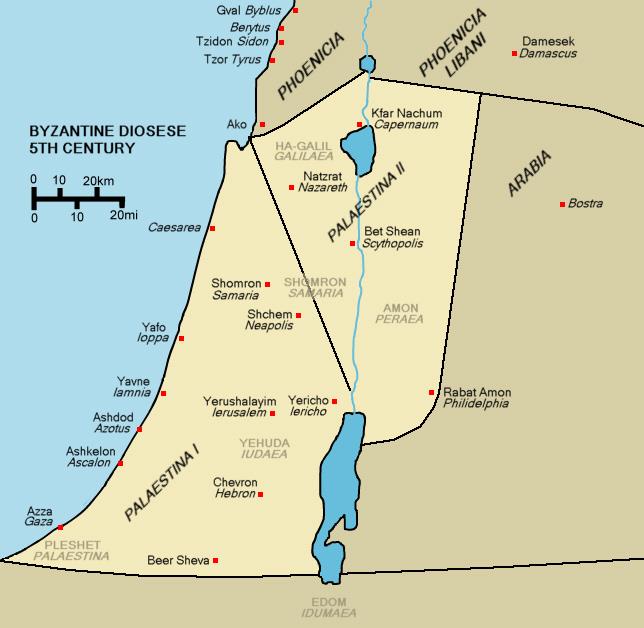
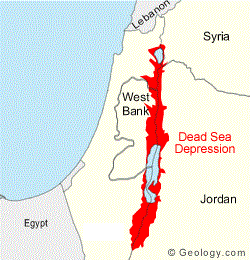

The map on the right shows the
locations of the different cities the
Persians conquered. The map on the
left shows the earth’s lowest dry lands.
Finally, the nearest inhabited lands to Makkah were in Sham and Yemen. The above verses described the Romans defeat stating that they were defeated at the “Adna” lands; so when these verses were revealed, Muslims understood that the word “Adna” was referring to the cities in Sham as the neighboring Northern lands. They never indulged into the issue or ask why Allah added this description (in the adna land) amidst the verse.
Actually, if you remove it, the verse will be understood just fine without any need for this added description. The translations throughout the last two centuries have also translated the word to nearest following the early generations’ interpretation. Amazingly, a stunning scientific fact was stated in these verses more than 1350 years before its discovery.
It wasn’t understood except after the development of satellites. The Dead Sea shores—
marked in red in the picture above—have been recognized with the aid of satellite photographing to be the earth’s lowest dry lands. This precisely fulfilled the meaning of the word “Adna,” and made it manifest that the one-word Qur’anic-description of the place was the most accurate that could ever be given. Now, assuming that the Qur’an was not from the Omniscient Creator, and Prophet Muhammad was making it up, how did the above prophecy, and the scientific fact given in it, turn out to be correct and accurate? I leave the answer for the reader’s judgment.
The prophet P.B.U.H. foretold the Mongols and Tatars’ invasion before it happened by more than 600 years. This invasion occurred at the year 1260. During the early stages of the invasion, Muslims were unable to resist the Tatars. Millions of Muslims were slaughtered and many Islamic lands were occupied. Later on, the Tatarian progress ended with the Muslims’ triumph at “Ain Jalut” battle under the command of the brave Muslim Egyptian Mamluk, Saif Ul-Deen Qutuz, and his fearless banner bearer, Az-Zaher Baibars. The Tatars tasted their very first defeat after many years of victory in which they invaded more than 1/2 of that day’s inhabited world.
Consequently, they were forced to retreat back to their home lands.
171
Abu Hurairah reported that the prophet
P.B.U.H. said, “The judgment day shall
not approach unless Muslims fight
against the Turks, they are people who
have faces like “Mejan Mutraqa” (Arabic
description that means: rough flat faces) ,
they wear hair, and they walk in (foots’
wear) of hair.” [Recorded by Muslim].
And he also reported that the prophet
P.B.U.H. said, “The judgment day shall
not come, unless you fight against people
who take foots’ wear of hair, unless you
fight the Turks who have, small eyes,
red faces, short flat noses and their faces
are like Mejan Mutraqa.” [Recorded
by Bukhari].
Please note that the prophet’s description is an exact description of the Mongol and Tatar soldiers. It was given by Prophet Muhammad P.B.U.H. at a time when no one had heard of the Tatars. They were still scattered fighting tribes and a very minor negligible power in middle Asia drowned in civil war. Their homelands were never visited by the prophet P.B.U.H. during his life nor any of his companions.
Prophet Muhammad’s prophecy about conquering Persia. This prophecy was given at a time when the Persian army was the strongest army in the whole world. Its numbers exceeded 120,000 soldiers and the Persians were triumphant over the Romans and had already invaded most of their lands. Meanwhile there weren’t more than 800 Muslims all over the world including women, old men and children, and only less than 400 of them could fight (The number of Muslims at Badr—the first battle they ever entered—
was 313, which was 1 year after this prophecy). Any observer of the events could unhesitatingly confirm that this prophecy could never happen, and that the prophet would even be killed before reaching Madinah. The incident occurred as follows: Muslims immigrated to Madinah escaping with their lives from the pagan’s persecution except for the prophet and his two companions ‘Ali Ibn Abi-Tālib and Abu Bakr. Quraysh and other Arabian tribes decided to kill the prophet P.B.U.H. They planned that a man from each tribe would contribute in stabbing him so that his blood would be scattered among all tribes. Consequently, his relatives and followers wouldn’t dare avenge him.
Allah revealed to Prophet Muhammad that this was the time for him to immigrate to Madinah for Quraysh had planned to kill him amidst the night while he sleeps. Prophet Muhammad brought his young cousin ‘Ali Ibn Abi-Tālib and asked him to sleep in his bed confirming that the pagans won’t kill him. He ordered ‘Ali to stay behind and return all of the deposited trusts which the pagans of Makkah had entrusted to him. Thereafter,
‘ Ali can catch up with them at Madinah. That night, the prophet went to Abu Bakr’s house and told him that it was time for them to immigrate. They immediately set out towards south Makkah, where they took a temporary refuge in a cave called “Thawr” waiting for Abu Bakr’s son ‘Abdullah to make the necessary preparations for their trip .
172
Finding that it was ‘Ali who was sleeping in the prophet’s bed, the notables of Makkah summoned an emergency meeting. They decided to block all avenues leading out of Makkah. They imposed armed surveillance over all exits and dispatched their horsemen to explore all areas and capture the prophet. A bounty of 100 camels was set for the head of Prophet Muhammad. Horsemen, infantry, and trackers scoured the country. Abu Bakr reported that when the trackers reached the entrance of their cave, he whispered to the Prophet, “O Prophet, if they were to look beneath their feet (into the cave’s entrance), they would see us,” But the Prophet calmed Abu Bakr saying, “What do you think of two men whom Allah watches over them.” And Allah did deliver the prophet and his friend from the pagans.
‘Abdullah Ibn Abu Bakr, hired ‘Abdullah Ibn ‘Uraiqet as a guide for the prophet and his father on their trip. He brought them two camels that were well prepared for the journey, and he also brought them Abu Bakr’s servant to help them. When the news of the hundred camels reached a man named Surāqa Ibn Malik, who was a very skilled tracker, he decided to chase after the prophet. While he sat among the men of his tribe, a man came and said that he saw a couple of riders faraway in the desert heading north towards Madinah a while ago, and that he thinks they were the prophet and his companion. Surāqa, so cunningly, replied in the negative saying that these were so-and-so searching for some lost cattle of theirs. He was hoping to kill the prophet and receive the big prize alone.
When the people resumed their speech ignoring what the man said, Surāqa silently went out to chase after the prophet.
Later on, Surāqa reported what happened to him during the chase saying:
“When I approached the prophet and his companions, suddenly my horse’s front legs sank into the sand throwing me off the saddle. I got up and picked out the divination stones1
from my quiver and threw them; the stones ordered me to go back. I hated that, so I got on my horse disobeying the divination stones and continued chasing after the prophet.
When I approached them, I heard him reciting the Qur’an while riding his camel.
Abu Bakr looked around and saw me approaching. My horse’s front legs sank again into the sand throwing me off its back. I got up in anger swearing at my horse. I was unable to free the horse’s legs. I yelled in fear, “Safety O, Muhammad.” The prophet stopped.
I said to him, “I realize that you have invoked Allah to punish me. Ask Him to set my horse free and save me from this situation, and I promise to distract those who are chasing after you.” The prophet invoked Allah for me and the horse was immediately freed.
I approached him and said warning him, “Your people have placed a big prize on your head, and they are chasing after you.” Then I offered him and his companions what I had from water and food, but they rejected it and said, “Just don’t tell anyone of the way we have taken (to Madinah).” So I asked the prophet to write me a safety pact, and he ordered
“Amer Ibn Fuhairah” (Abu Bakr’s servant) to write it down for me, and Amer wrote on a piece of leather what the prophet dictated. The prophet told me while I was leaving,
“How will you look like Surāqa wearing the armlets of Chosroes?” I said, “Chosroes son of Hormizd?” The prophet said, “Yes, Chosroes son of Hormizd,” and he went on his way with his companions.”
1: 2 stones, on one it is written ‘do’ and on the other it is written ‘don’t do’. Pagans used to throw them thinking that the one that falls closer or is facing upwards while the other faces downwards are telling them what to do as orders from their idols.
173
Surāqa didn’t believe what the prophet told him, and he didn’t embrace Islam or follow Muslims to Madinah. He thought, ‘Where are all Arabs from Chosroes’s big armies, not to mention those few escaping Muslims.’ He went back home fulfilling his promise and distracted whomever he met away from the path which the prophet took to Madinah.
He lived among his tribe near Makkah for the next eight years and kept the safety pact with him. Later on, after the conquest of Makkah, the prophet and his army of ten thousand reached Surāqa’s town. Surāqa asked to meet the prophet. He pushed through the crowds till he reached the prophet and raised the safety pact. The prophet said,
“This is the day of fidelity and kindness. Come closer, Surāqa. There is no faith for him who is not honest, and there is no religion for him who doesn’t keep his promise.”
Surāqa approached the prophet and declared that he believes in his prophethood. Not long after that, the prophet passed away. Surāqa reported that, “When the news of the prophet’s death reached my town, I remembered the day I went out chasing after him hoping to kill him and receive a bounty of 100 camels. When I received news that the prophet passed away, all the camels in this world weren’t even worth a broken piece of the prophet’s nail.” Surāqa always took pride in telling his story to the companions and that the prophet foretold him that one day he would wear Chosroes’s armlets.
A few years passed by. During the reign of the second Caliph ‘Omar Ibn Al-Khattab, the Muslims’ army defeated the Persians. After many battles, they succeeded in freeing the neighboring eastern region from Chosroes’ enslavement for good, and opened it for preaching Islam. The Army brought back to ‘Omar the booty left by the Persian army and their leaders. Among these were Chosroes’ crown that was inlaid with jewels and pearls, Chosroes’ cloak that was sewed with golden threads, and his armlets. ‘Omar stood looking at this treasure with tearful eyes. When his companions asked him about that, he said his famous sentence, “The people who brought this back are surely trustworthy.
Only Chosroes’s crown is worth millions. If him who has brought it had taken it to Antakia (a city in sham), he would have lived there the richest among all people.” Then ‘Omar summoned Surāqa who came hurriedly and ‘Omar dressed him Chosroes’s crown, cloak, and armlets then said, “Praise be to Allah for removing those from Chosroes the tyran and dressing them to Surāqa, a poor Arab from Madlag (Surāqa’s tribe).”
And this was the prophecy given by the prophet 18 years earlier. ‘Omar then lifted his hands up to the sky and said, “O Allah, you have held back this treasure from your messenger, and he was far more beloved to you and more honored by you than I.
You have held it back from Abu Bakr, and he too was more beloved to you and more honored by you than I. Yet, now you have laid this treasure in front of me. I ask your refuge from its seduction.” ‘Omar then didn’t get up until all of the booty was distributed in front of him on the poor and the needy. [Compiled narrations from Bukhari, Ibn Abd Al-bar, Ibn Hagar Al-Asqalany and others].
Prophet Muhammad foretold the great leadership of “Khaled Ibn Al-Walīd,”
nick named, “The drawn sword of Allah.” The prophet prophesized of Khaled’s great leadership as an army general while narrating to his companions what was happening at the battle field of Mu’tah. The narration itself is a prophetic miracle, for the prophet P.B.U.H. was more than 800 kilometers away from the battlefield and he was narrating to his companions what was happening as if he were present there. It was as if Allah wrapped up the earth for him. The story went as follows:
174
The prophet P.B.U.H. dispatched “Al-Hareth Ibn ‘Umair” as an envoy with a letter to the ruler of Busra (A city in Sham). On his way there he was intercepted by “Sharhabeel Al-Ghassani,” the ruler of Al-Balqa’ (A city in the way to Busra) and an ally of Heraclius. Al-Hareth was searched, and finding the letter with him inviting the ruler of Busra to Islam, Sharhabeel ordered him to be beheaded. Killing unarmed peaceful envoys was a crime that amounted to the degree of war declaration.
When the news of beheading Al-Hareth reached the prophet, he ordered that an army must be dispatched immediately to avenge Al-Hareth’s death from this tyrant ruler and show Sharhabeel that Muslims are not sheep to be slaughtered like this.
An army of 3000 soldiers was prepared. The prophet chose for its leadership “Zayd Ibn Al-Hareth,” his beloved adopted orphan. He ordered that if Zayd was wounded, the banner goes to “Ja‘far Ibn Abi-Taleb,” the prophet’s beloved cousin; and if the latter was wounded as well, the banner goes to “‘Abdullah Ibn Rawāha,” one of the prophet’s companions who was known of his poetic responses in defense of the prophet at Makkah.
The prophet then stipulated that if the third leader was wounded too, then Muslims should choose a leader from among themselves. This order, if you think of it properly, was actually an inclusive prophecy of the martyrdom of these three leaders. The Prophet commanded the Muslim army to reach Al-Balqa’, and before fighting Sharhabeel’s army, they should try to invite the people to embrace Islam. Should the latter respond positively, Islam as a start of a new covenant with Allah erases all the sins preceding it, so their crime would be forgiven and the Muslim army would return peacefully. Otherwise, fighting would be the only alternative left in order to seize Sharhabeel and punish him for his crime.
When the Muslims’ army reached a place called Ma‘an, which is a border town of Sham, some news reached them that Heraclius dispatched an army of over 10,000 Roman soldiers to meet them at Mu’tah near Balqa’, and that the Roman allied Arabian tribes of Lakhm, Jutham and Balqain among others had joined Heraclius’ army with about another 10,000 soldiers. Muslims never planned to meet such a huge army on the battlefield. They camped two nights at Ma‘an in consultation. Many of them suggested writing to the prophet and informing him of their situation so that he would either send reinforcements and backup, or order them to withdraw their troops back to Madinah. ‘Abdullah Ibn Rawāha disagreed with this opinion. His companions reported that he stood and said, “O
people, I swear by Allah that this which you hate is what you’ve come asking for, your martyrdom. We do not fight with numbers, muscles or troops; we fight with the faith which Allah has bestowed upon us. So march towards your enemy with no fear, and it shall be one of two, either victory or martyrdom.” After these words, the companions agreed unanimously on advancing towards the enemy.
It was at Mu’tah where the battle started with 3000 soldiers led by their faith stood fast against the attacks of over 20,000 soldiers led by their arrogance and tyranny. Zayd Ibn Al-Hareth kept fighting in matchless spirit of bravery until he was fatally stabbed.
Ja‘far Ibn Abi Taleb then took the banner and gave a peerless example in bravery.
In the crowd of the battle, when any other soldier would have lost control of his anxiety, he dismounted his horse, hamstrung it to prevent it from running in fear causing others to retreat, and then he resumed fighting until his right hand was stricken off. He seized the banner with his left hand to prevent it from falling, but this too was stricken off.
175
He then hugged the banner with both humerals until a strong Byzantine soldier struck his abdomen very hard to the extent that his body was cut in half. ‘Abdullah Ibn ‘Omar reported that he was among those who attended to Ja‘far’s corpse and he counted over fifty wounds in his body, none of which was in his back. May Allah be pleased with him.
It was reported by Anas Ibn Mālek, that while they were sitting with the prophet in Madinah, (i.e. about 800 Km away from Mu’tah), the prophet announced the death of the three leaders. He said, “Zayd took the banner, and he was smitten. Ja‘far took it and he too was smitten, and then Ibn Rawāha took it and he was smitten as well. (He wept a little, then continued), then took the banner a sword from among the swords of Allah, and Allah will grant Muslims a way out.” [Recorded by Bukhari].
This was the first battle attended by Khaled as a Muslim. It took place only a short while after he embraced Islam. When Muslims chose him to lead them, he succeeded in fending off the Byzantines’ attacks for a whole day. At night, he ordered the soldiers to wash their clothes and clean their swords till they shine. He reversed the two wings of the army, and its front and rear as well. He ordered some of the horsemen to retreat and turn in circles a few miles behind the Muslim lines. When the battle was resumed at dawn, the Byzantines saw the shining swords, the different faces, and clean banners. They also noticed the dust cloud a few miles behind the Muslims’ army. The Byzantines thought that Muslims received reinforcements from Madinah, and fear found its way to their hearts. When Khaled started withdrawing the army bit by bit—with the evidence at hand, the Byzantine leader smelled an ambush. He ordered his troops not to follow the Muslims’
army into the desert thinking that Muslims were dragging them in to a trap.
Through this smart military trick, Khaled succeeded in saving the Muslim’s army with the least loses. Most men returned to Madinah safe and sound. When they arrived, the children mocked them saying, “Welcome welcome battle deserters,” but the prophet silenced them saying, “Raiders not deserters.” It was on that day that Muslims nicknamed Khaled Ibn Al-Walīd, “The drawn sword of Allah” as the prophet prophesized for the one who would lead the Muslims’ army to safety.
Later on, Khaled led the Muslims’ army through many battles. In most of which, Muslims were outnumbered and far away from reinforcements and aid. Khaled succeeded in leading them to victory proving the prophet’s prophecy about him to be 100% true.
Though wounded hundreds of times, he was never killed by the enemies. On his death-bed, before he drew his last breath, he wept and said:
“I have witnessed a hundred battles. There isn’t a span of hand on my body except that there is a wound in it from a sword strike, an arrow pierce, or a spear’s stab; yet, here I am dying on my bed naturally like an old camel. May cowards never sleep.” [Recorded by Ibn Qutaybah].
This was Allah’s wisdom and disposal. “The sword of Allah” could never be broken by his enemies nor defeated. May Allah grant Khaled what delights his soul alongside his companions and join all Muslims with them one day, Amen.
176
Miraculous Scientific Statements:
Beside the events which Prophet Muhammad foretold, he also stated many things—
whether in the Qur’an or the Sunnah—that were deemed strange during his time.
They were hard to understand. The disbelievers always accused him of madness because of such statements. Amazingly, these statements were proven later on to have important scientific significances when compared to modern science. These statements stand as solid proof that the Qur’an was truly revealed by the Creator who is All-Knowing.
Voluminous books have been written about such statements; as such, I won’t indulge into this issue here; I will just quote what some of the world’s renowned scientists said about these statements and how they received them. Allah says in the Qur’an:
“We shall show them Our signs on the horizons and within themselves until it will become clear to them that it (i.e. the Qur’an) is the Truth. Does it not suffice that your Lord is Witness over all things?” [The Qur’an (41:53)].
Many verses that discuss “Embryology,” “The Universe’s expansion,” “Water and Life,”
“Creation of the universe,” “Deep sea currents,” etc., were all presented to several world renowned scholars and well known professors, each in his field of expertise; among them are the following ones:
Professor Keith L. Moore: He is one of the greatest scientist in anatomy and genetics in the world if not the greatest of them all. In 1984, he received the most distinguished prize in the field of anatomy in Canada. He was honored by the Canadian Association of Anatomists with the prestigious J.C.B. Grant Award, Jerant Prize from the Canadian Association of Anatomy Specialists. He led several international associations such as Canadian and American Association of Anatomy Specialists and united assembly of virtual science. He was a former President of the Canadian Association of Anatomists, and of the American Association of Clinical Anatomists. He wrote a book that was used for teaching in most medical colleges in the world. This book was translated to more than 10 languages. He is the publisher of the famous book “The Developing Human.” He has published more than 150 research articles, chapters and books in this field. In 1994 he received the Honored Member Award of the American Association of Clinical Anatomists for outstanding contributions to the field of clinical anatomy. In 2007, the American Association of Anatomists awarded him with the first Henry Gray or Elsevier Distinguished Educator Award. Now let’s see what Professor Moore—as one of the most respected knowledgeable persons on earth in the field of Anatomy—had to say.
At a conference in Saudi Arabia, Jeddah, he said, “For the past three years, I have worked with the Embryology Committee of King Abdul-Aziz University in Jeddah, Saudi Arabia, helping them to interpret the many statements in the Qur’an and Sunnah referring to human reproduction and prenatal development. At first I was astonished by the accuracy of the statements that were recorded in the 7th century AD, before the science of embryology was established. Although I was aware of the glorious history of Muslim scientists in the 10th century AD, and some of their contributions to Medicine, I knew nothing about the religious facts and beliefs contained in the Qur’an and Sunnah.”
177
During a conference in Moscow, one of the attending Russian scientists declared embracing Islam because of the scientific facts he found through his studies in the Qur’an, Professor Moore said, “The Qur’anic terms for the development of baby creation in human body reached a level of accuracy and publicity that the modern science has not reached yet. Which means that this Qur’an is impossible to be except the words of God and that Muhammad is his messenger.”
At a conference in Cairo, he presented a research paper and stated, “It has been a great pleasure for me to help clarify statements in the Qur’an about human development. It is clear to me that these statements must have come to Muhammad from God, or Allah, because most of this knowledge was not discovered until many centuries later.
This proves to me that Muhammad must have been a messenger of God, or Allah.”
He also stated that, “Because the staging of human embryos is complex, owing to the continuous process of change during development, it is proposed that a new system of classification could be developed using the terms mentioned in the Qur’an and Sunnah.
The proposed system is simple, comprehensive, and conforms with present embryological knowledge.”
Professor E. Marshall Johnson: Professor and Chairman of the Department of Anatomy and Developmental Biology, and the Director of the Daniel Baugh Institute. He is the author of over 200 publications and the former President of the Teratology Society among other accomplishments. Professor Marshall said:
“In summary, the Qur’an describes not only the development of external form, but emphasizes also the internal stages, the stages inside the embryo, of its creation and development, emphasizing major events recognized by contemporary science…”
“As a scientist, I can only deal with things which I can specifically see. I can understand embryology and developmental biology. I can understand the words that are translated to me from the Qur’an. As I gave the example before, if I were to transpose myself into that era, knowing what I do today and describing things, I could not describe the things that were described…”
“I see no evidence to refute the concept that this individual Muhammad had to be developing this information from some place… so I see nothing here in conflict with the concept that divine intervention was involved in what he was able to write…”
Dr. T.V.N. Persaud: Professor and Head of the Department of Anatomy, Professor of Pediatrics and Child Health, and Associate Professor of Obstetrics, Gynecology and Reproductive Sciences, University of Manitoba, Canada. He is the author and editor of 25 books, has contributed with 31 chapters to published books, and has published over 180 scientific papers. In 1991 he received the most distinguished award presented in the field of anatomy in Canada, the J.C.B. Grant Award from the Canadian Association of Anatomists. Professor Persaud said:
“It seems to me that Muhammad was a very ordinary man, he couldn’t read, didn’t know how to write, in fact he was an illiterate… We’re talking about 1400 years ago, you have some illiterate person making profound statements that are amazingly accurate, of a scientific nature… I personally can’t see how this could be mere chance, there are too many accuracies and like Dr. Moore, I have no difficulty in my mind reconciling that this is a divine inspiration or revelation which lead him to these statements.”
178
Dr. Joe Leigh Simpson: Professor and Chairman of the Department of Obstetrics and Gynecology at Baylor College of Medicine, Houston, Texas. He is the President of the American Fertility Society, and has served in many other national, and international organizations. He has received numerous awards including Association of Professors of Obstetrics and Gynecology Public Recognition Award in 1992. He has published more than 400 chapters and articles in books and journals. Professor Simpson said:
“These Hadiths (sayings of Prophet Muhammad) could not have been obtained on the basis of the scientific knowledge that was available at the time of the ‘writer’… It follows that not only is there no conflict between genetics and religion (Islam) but in fact religion (Islam) may guide science by adding revelation to some of the traditional scientific approaches… There exist statements in the Qur’an shown centuries later to be valid which support knowledge in the Qur’an having been derived from God.”
Dr. Yoshiodi Kozan: director of the observatory of Tokyo, Japan, also said, “I say, I am very much impressed by finding true astronomical facts in Qur’an, and for us modern astronomers have been studying very small piece of the universe. We have concentrated our efforts for understanding of very small part. Because by using telescopes, we can see only very few parts of the sky without thinking about the whole universe. So by reading Qur’an and by answering to the questions, I think I can find my future way for investigation of the universe.”
Dr. Tajatat Tajason: Head of the Department of Anatomy, University of Chiang Mai, Thailand, said, “In the last three years, I became interested in the Qur’an… From my studies and what I have learned throughout this conference, I believe that everything that has been recorded in the Qur’an fourteen hundred years ago must be the truth that can be proved by the scientific means. Since the Prophet Muhammad could neither read nor write, Muhammad must be a messenger who relayed this truth which was revealed to him as an enlightenment by the one who is eligible creator. This creator must be God, or Allah. I think this is the time to say La Alaha illa Allah, there is no god to worship except Allah (God), Muhammad rasulo Allah, Muhammad is the Prophet…The most precious thing I have gained from coming to this conference is La Alaha illa Allah, and to have become Muslim.”
The list goes on and on including many scientists. Some of them embraced Islam.
Others acknowledged the scientific statements in the Qur’an. They agreed that Prophet Muhammad couldn’t have known those facts centuries before their discovery unless they were divine revelations.
Dr. Gary Miller: Now known as “Abdul-Ahad ‘Omar” after embracing Islam. He is a Canadian Mathematician and former Christian Missionary who through his study in the Bible discovered many inconsistencies. In 1978, he happened to read the Qur’an expecting that it, too, would contain a mixture of truth and falsehood. He discovered to his amazement that the message of the Qur’an was precisely the same as the essence of truth that he had distilled from the Bible. Dr. Miller became a Muslim; since then, he has been active in giving public presentations on Islam including radio and television appearances. He is also the author of several articles and publications about Islam.
He gave his wonderful lectures about the Qur’an titled “The amazing Qur’an.”
179
Dr. Maurice Bucaille: author of the best-seller, “The Bible, The Qur’an and Science.”
His classical studies of the scriptural languages, including Arabic, in association with his knowledge of hieroglyphics, allowed him to hold a multidisciplinary inquiry in which his personal contribution as a medical doctor has produced conclusive arguments.
His work, “Mummies of the Pharaohs – Modern Medical Investigations,” (St. Martins Press, 1990), won a History Prize from the Académie Française and another prize from the French National Academy of Medicine. His other works include, “What is the Origin of Man,” (Seghers, 1988), “Moses and Pharaoh, the Hebrews in Egypt,” (NTT
Mediascope Inc., 1994), and “Réflexions sur le Coran” (Mohamed Talbi & Maurice Bucaille, Seghers, 1989). After a study which lasted ten years, Dr. Maurice Bucaille addressed the French Academy of Medicine in 1976 concerning the existence of physiological and reproduction statements in the Qur’an. He said:
“Our knowledge of these disciplines is such that it is impossible to explain how a text produced at the time of the Qur’an could have contained ideas that have only been discovered in modern times.”
“The above observation makes the hypothesis advanced by those who see Muhammad as the author of the Qur’an untenable. How could a man, from being illiterate, become the most important author, in terms of literary merits, in the whole of Arabic literature?”
“How could he then pronounce truths of a scientific nature that no other human-being could possibly have developed at that time, and all this without once making the slightest error in his pronouncement on the subject?”
Dr. Jeffrey Lang: He is an Associate Professor of Mathematics at the University of Kansas. He embraced Islam when he was about to turn 30 at the early 80s. Since then, he has been an active and influential voice in Islamic Circles throughout America.
Professor Arthur Alison: Head of the Department of Electronic Engineering in the University of London. For several years he was the president of the British Society for Psychological and Spiritual Studies. In the course of his study about religions, he got acquainted with Islam. When he compared it with other religions and creeds, it suited his perception more. He was invited to the First Islamic International Conference on the
“Medical Inimitability in the Qur’an” held in Cairo on September 1985 held by the Egyptian Medical Syndicate. In the conference he presented a paper on the psychological and spiritual methods of therapy in the light of The Qur’an, in addition to another paper on sleep and death in the light of Verse 42 of Chapter Az-Zumar (39), which he presented in collaboration with Dr. Mohammed Yahya Sharafi. At the concluding session of the Conference, attended by Sheikh “Jad Al-Haq,” the Egyptian Minister of “Religious consecrations” back then, Professor Alison declared that Islam is the religion of truth and inborn nature with which Allah has created man. He uttered the testimonies and became a Muslim. Regarding this incident he said:
“Therefore, when I studied Islam, I found that it did not conflict with reason and science.
I believe that is the revealed religion from the one and only God. As I witnessed the truth, I uttered the two testimonies. The moment I uttered it, I was overwhelmed by a strange and ineffable feeling mingled with ease, comfort and satisfaction.”
He went on to say that the material world is now in a critical stage. What they say and see, does not explain the facts precisely. Here lies the responsibility of Muslims who could meet the wondering and perplexed humanity.
180

Dimitry Polyakov: An Ukrainian physicist who worked with a team concerned with conducting scientific research in the field of vacuum physics. The team was led by Professor Nikolay Kosinikov, one of the pioneers in the field. He said that they made some globes on which they conducted some experiments in order to test the authenticity of a theory which explains what causes the earth to spin around its axis, and that they succeeded in affirming the theory. It was noticed through their research that the magnetic pole of the Earth was moving only 10 km per year until the year 1970. In the last few years this has increased to 40 km per year and in 2001 the magnetic poles of the Earth moved 200 km in one go. Such is concluded, that under such magnetic forces the two poles of the Earth will swap places which will cause the earth to spin in the opposite direction. Then the sun shall rise from the West. Then while navigating through religions’
teachings he found a tradition reported by Abu Hurayrah that the prophet P.B.U.H. said,
“Whosoever repents (to Allah) before the sun rises from the West shall have his repentance accepted by Allah.” At that moment, there was nothing between Dimitry and accepting Islam except going to the nearest Islamic center and proclaiming the Testimonies, which is what he actually did.
There are many more scientists than could be listed here. I just wanted to give you a quick brief of what some of them said. Their words shall always stand as incontestable evidence proving that what some people say about the Qur’an, and that it’s full of false scientific statements, is all untrue. The opinions of Islam haters are always built upon falsified statements which they misinterpret or mistranslate intentionally. Many non-Muslims are easily misguided by those wretched characters because they disdain to ask Muslim scholars about the intended meanings of what they don’t understand. The findings of scientists did not contradict what Allah has revealed to Prophet Muhammad 14 centuries ago; on the contrary, today’s scientific discoveries prove that the Qur’an is a true message from our Creator. It is really overwhelming that a man speaks about the start of all creation and tells us that this was revealed to him by the Creator himself. Later on, 1400 years later, scientists make discoveries and build theories resembling what this man had said.
Amazingly, all those scientists weren’t Muslims. The question here is, what could have made an unlettered Arab from the desert all of a sudden indulge in such scientific matters after decades of leading a plain simple life! The answer is that he didn’t as he couldn’t; it was something beyond his knowledge and beyond the knowledge of all people at that time. It was The Creator who revealed it to him so that when His message reaches us centuries later, we would believe it and follow its light. Allah says in the Qur’an:
“Neither did you [O Muhammad] read any book before it, nor did you write any book with your hand. In that case, indeed, the followers of falsehood might have doubted, nay, it is but clear signs in the chests of those endowed with knowledge: and none but the unjust reject Our signs.” [The Qur’an (29:48-49)].
“Allah did not create [all] that except in truth. He details the signs [in the Qur’an] for people of knowledge.” [The Qur’an (10:5)].
“And those who were given knowledge see that which was sent down upon you
[Muhammad] by your Lord is the truth and guides to the path of the Exalted (in Might), the worthy of all praise.” [The Qur’an (34:6)].
181
2. From Deuteronomy we read where Moses P.B.U.H. at his death says to his companions some words holding within their meanings signs of a prophet to come: (33:1) And this [is] the blessing, wherewith Moses the man of God blessed the children of Israel before his death. (33:2) And he said, The LORD came from Sinai, and rose up from Seir unto them, he shined forth from mount Paran, and he came with ten thousands of saints: from his right hand [went] a fiery law for them.
Sinai: The place where Moses P.B.U.H. spoke to Allah and received the commandments.
It’s the place where the very first laws were received for the guidance of mankind.
Its exact location is a big dispute among scholars, some say it’s Mount-Moses in Sinai of Egypt, others say it’s Mount-Serbal north west to that, others say that it’s in North Midian in Arabia, east to Aqaba gulf.
Seir: A landmark on the boundary of Judah as testified for in (Josh 15:10), not far from Kiriath-jearim and Chesalon that are districts of Jerusalem. It is also defined as the region containing the chain of mountains extending from the Dead Sea to Aqaba gulf of the red sea, which forms the south west boundary of Judah. Judah, is the place in which Jesus P.B.U.H. lived and taught, and so did many prophets live and teach there till their death.
Some scholars say that “Seir” is a reference to the coming of Jesus and the receipt of a new message, which was the Gospel.
Mount Paran: Or “Pharan” as correctly pronounced and written in Hebrew (ןראפ), is among the mountains around the wilderness where Ishmael lived after prophet Abraham P.B.U.H. took him and his mother Hagar there as testified for in Genesis where it says: (21:20) And God was with the lad, and he grew, and dwelt in the wilderness, and became an archer. (21:21) And he dwelt in the wilderness of Paran. From the biblical verses we can understand that Paran is not a city or town, but a region that contains mountains and a barren valley or waste land. Paran’s location according to most biblical dictionaries is unknown. This was testified for in Hasting’s dictionary of the bible where it says, “The site of Suph is unknown. So is that of Paran.” (p.193 in the definition of the word, “Dizahab”). All we know from the Biblical verses is that Paran is in the south direction from Seir. Hence, to search for its approximate location, we need to connect it to the place where Ishmaelites dwelt. From Genesis, we read: (25:17) And these [are] the years of the life of Ishmael, an hundred and thirty and seven years: and he gave up the ghost and died, and was gathered unto his people. (25:18) And they dwelt from Havilah unto Shur, that [is] before Egypt, as you travel towards Assyria: [and] he died in the presence of all his brethren.
In Smith’s dictionary of the Bible, Shur is identified as follows:
“(a wall), a place just without the eastern border of Egypt. Shur is first mentioned in the narrative of Hagar’s flight from Sarah. (Genesis 16:7) Abraham afterward “dwelled between Kadesh and Shur, and sojourned in Gerar.” (Genesis 20:1) It is also called Ethami. The wilderness of Shur was entered by the Israelites after they had crossed the Red Sea. (Exodus 15:22 Exodus 15:23) It was also called the wilderness of Etham.
(Numbers 33:8) Shur may have been a territory town east of the ancient head of the Red Sea, and from its being spoken of as a limit, it was probably the last Arabian town before entering Egypt.” [Smith’s dictionary 1901].
182
In Hasting’s dictionary of the Bible, Havilah is identified as follows:
“It has been suggested that it formed the NE part of the Syrian Desert, but it may with greater probability be identified with central and north east Arabia.” [Hasting’s dictionary of the Bible, P.333].
And in the definition of the word “Gold,” he says:
“…the main sources of it being Ophir, Tarshish and Sheba. Another Gold producing country was Havilah. Of the localities, Havilah and Sheba were Arabian.” [Hasting’s dictionary of the Bible, P.619].
In Holman’s dictionary of the Bible, Havilah is identified as follows:
“Place name meaning, “sandy stretch.” Biblical name for the sand-dominated region to the south covering what we call Arabia without necessarily designating a particular geographical or political area. The river from Eden is described as flowing “around the whole land of Havilah” (Genesis 2:11), a land noted for gold and other precious stones. The Table of Nations lists Havilah as a son of Cush or Ethiopia, showing Havilah’s political ties (Genesis 10:7). Some Bible students think the name is preserved in modern Haulan in southwest Arabia. Havilah is also mentioned in the table of Nations as a son of Joktan, the grandson of Shem (Genesis 10:29). The descendants of Ishmael, Abraham’s son, lived in Havilah (Genesis 25:18).
Saul defeated the AMālekites from “Havilah as you go to Shur, which is east of Egypt”
(1Samuel 15:7), a description whose meaning Bible students continue to debate.
Some seek to change the Hebrew text slightly. Others look for a Havilah further north and west than Havilah is usually located. Others talk of the fluid boundaries of the area.
Thus Havilah refers to an area or areas in Arabia, but the precise location is unknown.” [Holman’s dictionary of the Bible 1991].
Other sources like (Smith’s dictionary 1901), (Encyclopedia Biblica 1899) and (Easton’s 1897) suggested that there could be more than one place with the name Havilah. Checking old studies by Rev. Archibald Henry Sayce (1846-1933), who was a pioneer British Assyriologist and linguist; he held a chair as Professor of Assyriology at the University of Oxford from 1891 to 1919. In his work, “The races of the old testament” he says:
“The South Arabian tribe of Sheba spread far to the north, through the sandy deserts of Havilah, and founded a kingdom which came into conflict with Assyria in the days of Tiglath-pileser and Sargon.” [A.H.Sayce, Races of the Old Testament, 1891].
“The tribes and districts of South-eastern Arabia traced their descent to Joktan. Among them we find Hazarmaveth, the modern Hadhramaut, Ophir, the famous sea-port and emporium of the goods of the further east, Havilah the sandy region, compassed by the river Pison (Gen. ii.II), and occupied by the sons of Ishmael (Gen. xxv. 18), and AMālek (i Sam. xv. 7), as well as Sheba, the Saba of the native inscriptions, whose ancient capital is now represented by the ruins of Mareb in the south-western corner of Arabia.” [A.H.Sayce - Races of the old testament - P.65].
And he says in his work “Early Israel and the Surrounding Nations” in (1899):
“The Ishmaelites were merchants and traders. They lived on the caravan-road which brought the spices of southern Arabia to Canaan and Egypt, and the trade was largely in their hands.” [A.H.Sayce - Early Israel and the Surrounding Nations – Ch.r III].
183
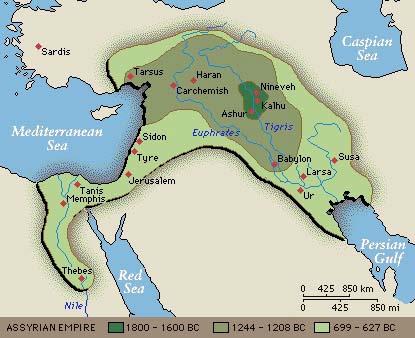
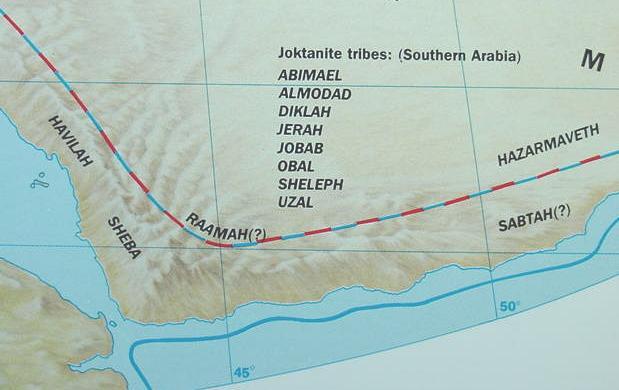
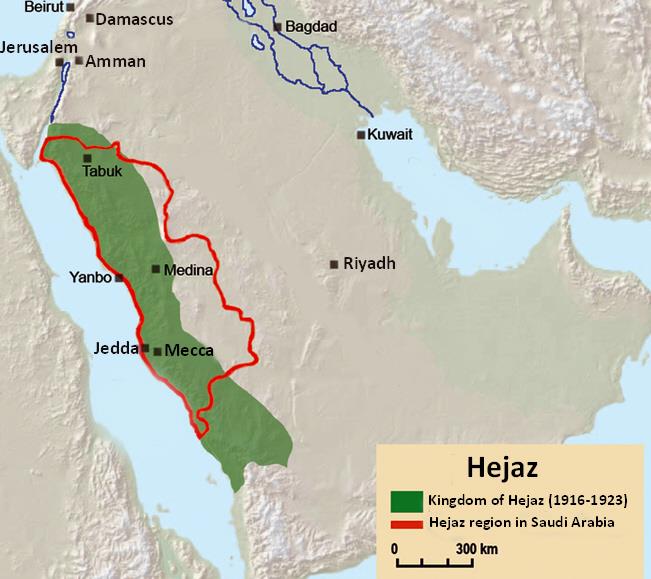
The problem with Sayce’s studies
is that they lacked modern science
elements, like the use of satellites,
underground imaging and tracking
the dried out river valleys. Modern
studies by “Juris Zarins,” who is
an archaeologist and professor at
Missouri
State
University,
specialized in the Middle East.
He has extensive experience in
archaeological fieldwork in Saudi
Arabia, Egypt, Oman, and Yemen,
suggested Hejaz mountains to
meet Havilah’s description. Hejaz
is defined primarily by its western
border on the Red Sea, it extends
from the Gulf of Aqaba to Jizan in
the far south-west of Saudi Arabia
and directly north of the border
with Yemen, as demonstrated on
the second map. This region
includes both the Cradle of Gold at
“Mahd Al-dahab,” which is the
leading gold mining area in the
Arabian Peninsula, located in
Madinah province, and it also
includes a possible source of the
“Pishon River” - that has been
speculated to refer to a now dried-
out river formerly flowing 600
miles (970 km) northeast to the Persian Gulf via “Wadi Al-Batin” system. Archaeological research led by “Farouk El-Baz” of Boston University indicates that the river system, now prospectively known as the Kuwait River, was active 2500–3000 BC. Bdellium plants are also abundant in Hejaz.
This
map
demonstrates
an
approximate location based on the
previous data for the place of
Havilah. The region of South
West Arabia (Yemen today) has
the kingdom of Sheba and the
region
called
Hazarmaveth
(Arabic: Hadhramaut). In Genesis
Havilah is described as a land of
gold, bdellium and precious
stones. The Queen of Sheba
brought Solomon much gold,
spices and incense (resins) and
precious stones (1 Kings 10:1-13).
184
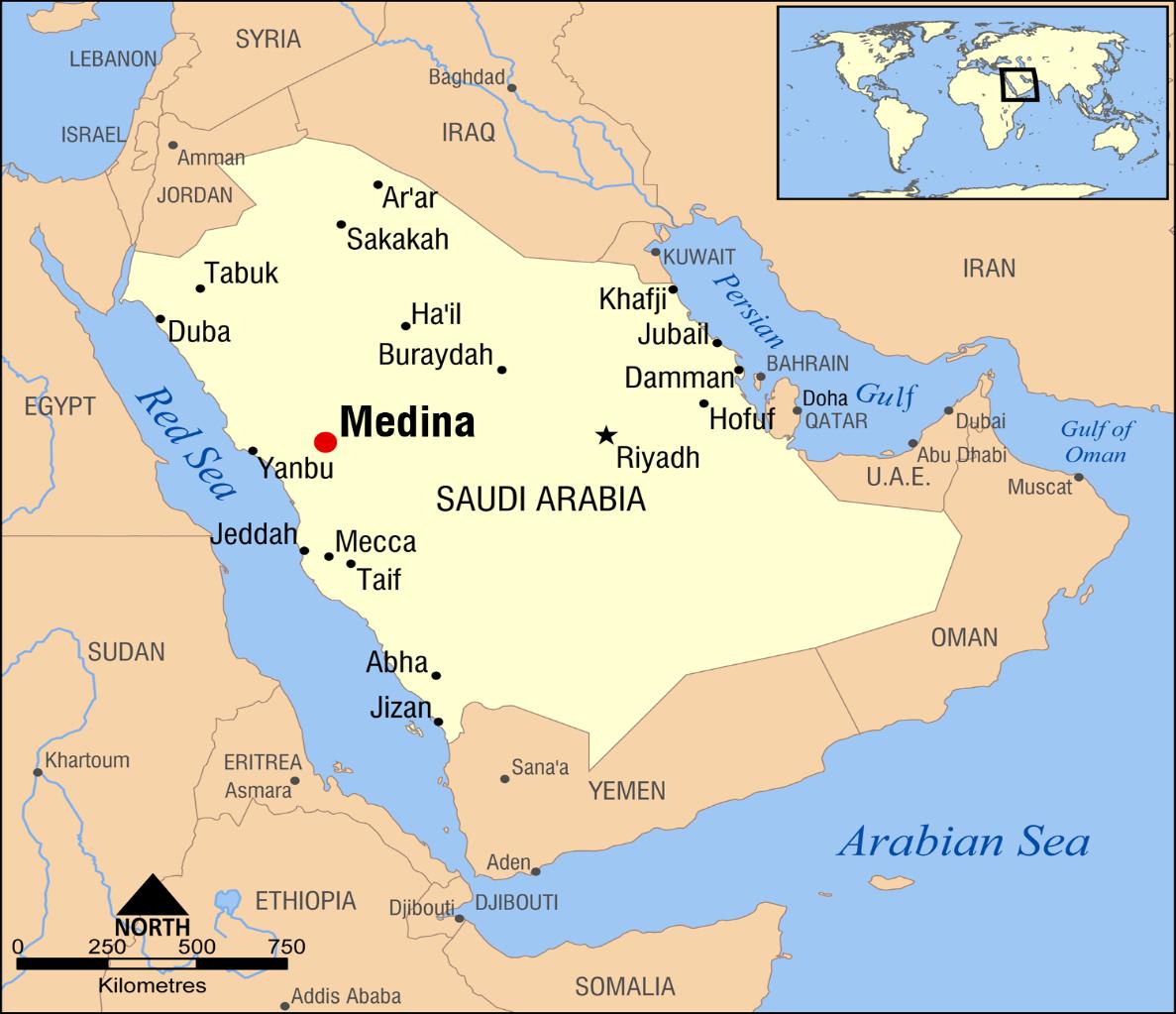










Genesis also mentions that Havilah was a son of Joktan, and his brothers are Sheba and Hazarmaveth (Genesis 10:26-30), which are localities associated with Yemen in south west Arabia. So if Shur is a place between Palestine (Philistia) and Egypt, and if Havilah is a place in Arabia, and most probably from the above descriptions, starts somewhere between the south west corner and central west Arabia, then the area where Ishmael and his offspring dwelt couldn’t be but “Hejaz,” which is the west half of the country called today Saudi-Arabia, and so Paran most probably is a place in this area.
PHILISTIA
Tema
Luxor
Dedan
Al-'Ula
The Egyptian historian “Al-Maqrizi” (1364-1442 A.C.), gave full description for all the places named Pharan in his most important book “Al-Mawaiz Wal-‘i’tibar Fi Dhikr Al-Khitat Wal-’athar” or “Lessons and considerations in mentioning the tracks and signs,” which was translated to French by “Urbain Bouriant” as (Description topographique et historique de l’Égypte – Paris, 1895), he said:
“The city of Pharan: is a city at the shores of Qalzam sea (Red sea) and it’s among the cities of the “Amaleek” (i.e. AMālekites) over a hill between two mountains, and in the two mountains there are a lot of holes, uncountable, filled with dead corpses, and from there to Qalzam sea there is only one station, and it’s called at that place: the shore of Pharan sea. It’s the sea in which God drowned pharaoh, between Pharan city and the
“Israelites’ wanderings in the wilderness” there are two stations. And it is mentioned also that Pharan is the name of the mountains of Makkah or the mountains of Hejaz, and this is the one mentioned in Torah. Verifications show that Pharan and Tor are two towns in Upper Egypt and that they are different from the ones mentioned in the Torah.
185
It is said that Pharan is the son of Amr the son of Amleek (AMālek) and that he’s the one to whom the mountains of Makkah are ascribed. People say: Pharan mountains, and others say: Pheran mountains, and the city of Pharan has been among the cities of Madian until today, it’s full of fruitful palm trees from which I ate and there is a big river in it, and it’s a site of ruins by which the Arabs pass.” [Al-Maqrizi, “Lessons and considerations in mentioning the tracks and signs”].
Some people, in their search for Pharan, claimed that Ishmael lived and died in Egypt.
Others claimed that Arabs are not the descendants of Ishmael. Well, these are the worst claims ever. The Egyptian history is known way far before Abraham through Egyptology, and never was it found mentioned anywhere that Ishmael immigrated and settled in Egypt and formed a nation there, or that Egyptians are his descendants. Remember that Allah promised Abraham to make of Ishmael a great nation in Genesis. Ishmael’s seed multiplied greatly through his twelve sons. The tribes of the two sons, Nebajoth and Kedar, seem to have acquired an ascendancy over the rest. That’s why Arabs are sometimes referred to after one of them. This is exactly like the entire nation of Israel is sometimes designated Judah from the superiority in numbers of this tribe. “Eusebius Sophronius Hieronymus” known as “Jerome” (347-420 AD) who was recognized by both the Catholic and the Eastern Orthodox Churches as a saint, testified for this in his commentary on Jeremiah. He described Kedar as a region of the Arabian Desert where
the Ishmaelites dwelt. And in his commentary on Isaiah, he observed Nebajoth as one
of the sons of Ishmael after whose names the Arabian desert was called.
“Joseph Ibn Matityahu” (37-100 AD), the famous Roman-Jewish historian who lived in Galilee in north Palestine testified for the same truth in his book, “Antiquities of the Jews”
where he says, “Now when Sarah had completed her ninetieth, and Abraham his hundredth year, a son (Isaac) is born unto them, whom they forthwith circumcise on the eighth day, and from him the Jews derive their custom of circumcising children after the same interval. But the Arabians administer circumcision at the close of the thirteenth year, for Ishmael, the founder of their nation, the son of Abraham by his concubine1, was circumcised at that time of life” (Antiquities of the Jews, chapter 12). Ibn Matityahu also said, “That he (i.e. Abraham) left to Ishmael and to his posterity, the country
of Arabia, as also to his sons by Keturah, Troglodytes: and to Isaac, Canaan.”
[Antiquities of the Jews, chapter 9].
Also “Origen Adamantius” (185 – 254 AD) who is regarded as one of the Church Fathers and one of the most distinguished writers of the early Church testified for the same truth in his writings where he says, “The natives of Judea generally circumcise their children on the eighth day, but the Ishmaelites who inhabit Arabia universally practice circumcision in the thirteenth year.” I hope you can see now how some people are twisting the words in their trial to dodge the truth and fabricate in its place what would match their beliefs. It is evident beyond doubt from what the earliest knowledgeable historians and church fathers wrote that Arabs are the descendants of Ishmael, the son of Abraham, and that they have dwelt in Arabia since Ishmael moved with his mother Hagar to Pharan. A historical fact in which there is no doubt except by those who’re contentious.
1: Hagar was not Abraham’s concubine but she was his wife as testified for clearly in Genesis 16:3,
“And Sarai Abram’s wife took Hagar her maid the Egyptian, after Abram had dwelt ten years in the land of Canaan, and gave her to her husband Abram to be his wife.”
186
From the above, we can now understand that the opinion stating that Paran is in Sinai contradicts the historical solid fact that Ishmaelites dwelt in Arabia. Moreover, the verse of Deuteronomy under discussion was obviously referring to three distinct different places (Sinai, Seir and Paran), so it is illogical to say that one of them is located inside the other. This was reassured in Numbers verse (10:12) that says, “And the children
of Israel took their journeys out of the wilderness of Sinai, and the cloud rested
in the wilderness of Paran.” So it doesn’t take a rocket scientist to understand that Paran couldn’t be a place inside Sinai. Furthermore, logically speaking, if I wanted to ask about the place where any famous historical figure lived, the most correct information I shall get would be from this figure’s people and offspring, for they would be the ones most knowing of his history. If I wanted to learn about Queen Elizabeth, where she lived and where she was buried, I would ask the English people, not the Chinese. Since Ishmael P.B.U.H. was the father of the Arabs, and one of the most famous figures in their history, therefore the Arab tribes are the ones who are most knowing of the place where he lived, not anyone else. As inherited by all Arab tribes, even before the advent of Islam, Ishmael lived and died in the place they call “Makkah,” and he built the sacred mosque there with his father Abraham at the sanctuary called “Bakkah.” His grave is next to the sacred mosque. It is defined in some old traditions to be under the place called “Hijr Ishmael”
alongside his mother’s grave. Therefore, if the wilderness of Paran was the name of the place where Ishmael lived, then Mount Paran is one of the mountains surrounding Makkah, which is the place where Prophet Muhammad P.B.U.H. received his very first revelations.
Back to the verses of Deuteronomy:
Reading those verses and pondering over them, one may notice that when Prophet Moses P.B.U.H. said, “The Lord came from Sinai,” this was a reference to the Lord’s guiding message and laws which Moses received there. When he said, “rose up from Seir unto them,” this was a reference to Palestine, the land in which most of the prophets ever since Abraham till Jesus dwelt and taught. It is a special reference to the coming of Jesus P.B.U.H. and the Gospel which he received there. Thirdly, when he said, “he shined forth from mount Paran, and he came with ten thousands of saints: from his right hand [went]
a fiery law for them,” this was a reference to an everlasting message and law that would be revealed to another prophet in Paran. This prophet shall come with ten thousand saints.
And from the message he receives, the Lord’s light of guidance shall shine forth. After Prophet Muhammad P.B.U.H. immigrated to Madinah, he returned to Makkah eight years later and retrieved it from the hands of the polytheists. As reported by the companions and recorded by Muslim historians, the prophet’s army was formed of ten thousand companions, who were all restless devout believers; they were most renouncing to the worldly pleasures and most pious; they strained themselves in worship at night, and in the morning, they strove alongside the prophet in building their community and defending their country. In other words, they never lived for themselves, but they dedicated their lives for serving their Creator. Look at Makkah today, you will see millions of pilgrims traveling to it annually from all over the globe, only for the purpose of worshipping and glorifying Allah in the sacred mosque, which lies between the mountains at the sanctuary of Bakkah. Now I have a question for you: Is there any other place on earth whose description matches the verses under discussion more than Makkah?!
187
The Qur’an—as mentioned previously in verses (5:44-49)—is a confirmation to the Scriptures revealed before it, a watcher over them, and a corrector to whatever had been distorted amidst their lines. Allah ordered the prophet P.B.U.H. in those verses saying:
“So judge between them [Jews and Christians] by that which Allah has revealed, and follow not their desires away from the truth which has come to you.”
Reading the Qur’an only once will help any researcher realize that some of the previous laws in the Torah are confirmed in it and others were abrogated. During the prophet’s life, people of the book resented this too much although the prophecies of a final fiery law are right there inside their own holy books. About this Allah says in the Qur’an:
“Neither the People of the Book who disbelieve nor the idolaters would like anything good to be sent down to you from your Lord, but Allah chooses for His grace whoever He wills: His bounty has no limits. Any revelation We cause to be abrogated or forgotten, We replace it with something better or similar. Do you (O Prophet) not know that Allah has power over everything? Do you not know that control of the heavens and the earth belongs to Him? You (believers) have no protector or helper but Allah. Do you wish to demand of your messenger something similar to what was demanded of Moses?
Whoever exchanges faith for disbelief has strayed far from the righteous path. Even after the truth has become clear to them, many of the People of the Book wish they could turn you back to disbelief after you have believed, out of their selfish envy. Forgive and forbear until Allah gives his command: He has power over all things. Keep up the prayer and pay the prescribed alms. Whatever good you store up for yourselves, you will find it with Allah: He sees everything you do.” [The Qur’an (2:105-110)].
Prophet Muhammad P.B.U.H. said, “I have left with you what if you hold on to, you shall
never go astray, the book of Allah (i.e. the Qur’an) and my teachings. ” [Recorded by Muslim, Tirmidhī and others].
In reference to “the right hand,” in Islam all righteous actions are preferred to be done by the right hand. The left hand gives support if needed. So the right hand is always referred to in connection with pure, pious actions, etc. Muslims never shake hands except using their right hands. When reading the Qur’an they always carry the book with their right hands unless they feel tired. Muslims eat and drink with their right hands.
Lady ‘Āʾishah said, “The prophet P.B.U.H. loved to start any action with his right first, even when combing his hair or wearing his footwear.” [Recorded by Ahmad and others].
Finally, there is a great resemblance between this verse of Deuteronomy and a certain chapter in the Qur’an in which Allah swears by three Holy places identical to the ones mentioned. From the holy Qur’an, we read:
“By the Fig and the Olive, By the Tor Sinin (Mount Tor in Sinai), and By this secured city, Verily We have created man in the best stature, then do We return him into the lowest of the low, except those who believed and did righteous deeds, for them there is a reward never ending. So, what can make you, after all this, deny the Requital? Is Allah not the Greatest of all judges?” [The Qur’an (95)].
188

The fig and the Olive: In reference to the blessed place historically known of planting these two fruits abundantly for over 3000 years, namely “Palestine.” Palestine has been nicknamed for centuries “The land of fig and olives.” Both trees are mentioned extensively in the Bible and taken as symbols of peace and prosperity. They are also especially associated with Palestine. Mount of Olives is a mountain ridge adjacent to ancient Jerusalem. This is the place where Jesus is said to have prayed the last night before Allah saved him and made him rise to heaven in Islam. The place is named for the olive groves that once covered its slopes. Palestine is also the place to which Prophet Abraham immigrated and lived till his death. The place where he was followed by a succession of prophets till Jesus P.B.U.T., and the place where most of them preached their teachings, lived and died. It is also the first Qiblah for Muslims.
Tor Sinin (Mount Tor in Sinin or Sinai): Again, the place where Prophet Moses P.B.U.H.
received the commandments and the tablets.
The Secured City: Referring to Makkah and its sacred valley of Bakkah, where Prophet Abraham built with his son Ishmael the Ka‘bah, or as inherited by all Arabs, “The sacred house of Allah.”
In my opinion, the previous was not a coincidence. The Qur’an is confirming the verse of Deuteronomy as explained, and clarifying the misunderstanding about the place of Pharan. May Allah guide us all to the truth.
189
3. The Song of Songs is a big dispute among scholars. Some argued that it shouldn’t be included in the holy book because of its apparent sexual nature like Rabbi Shammai (50BC–30CE, Hebrew: יאמש יבר) who was an important figure in Judaism’s core work of rabbinic literature, the Mishnah. Others stressed its importance like Rabbi Aqiva (17–137CE, Hebrew: אביקע יבר ) of the Hillal school who said, “The entire universe is not as worthy as the day on which the Song of Songs was given to Israel, for all the Writings are holy, but the Song of Songs is the Holy of Hollies.”
The book was not accepted as part of the Jewish canon and the holy books till the council of Jamnia 90CE.
In short, The “Song of songs” is a book that talks in its clear simple appearance about love using sexual perplexing expressions that are thought of by most rabbis and priests as symbols. On checking some of the writings of eastern orthodox fathers, some of them explained that the feminine character in this book is the church, and the masculine is Jesus P.B.U.H. Others said that the feminine character is the prayers praising Jesus, among other opinions. Likewise, Jews have different opinions. Some explained that the feminine character was a symbol for Jerusalem and the masculine for God. This view was forwarded by the Midrash, Targum, and Medieval Jewish commentators. Finally, some scholars said that it was much simpler than all of the previous; the masculine character is Solomon P.B.U.H., the feminine character is one of his wives, and the whole book is a description for their marriage. This last opinion is the strangest of them all. If this were the case, then why would it be included in the Holy Book?!
The only part of the Songs that really caught my attention as it has done with other researchers before is the paragraph containing seven verses at the end of chapter five.
They are the description of a person, a certain man whose appearance was found so important. This man’s detailed description and appearance has lived through thousands of years preserved between the verses of the songs which say:
(5:10) My beloved [is] white and ruddy, the chiefest among ten thousand. (5:11) His head [is as] the most fine gold, his locks [are] bushy, [and] black as a raven. (5:12) His eyes [are] as [the eyes] of doves by the rivers of waters, washed with milk, [and]
fitly set. (5:13) His cheeks [are] as a bed of spices, [as] sweet flowers: his lips [like]
lilies, dropping sweet smelling myrrh. (5:14) His hands [are as] gold rings set with the beryl: his belly [is as] bright ivory overlaid [with] sapphires. (5:15) His legs [are as] pillars of marble, set upon sockets of fine gold: his countenance [is] as Lebanon, excellent as the cedars. (5:16) His mouth [is] most sweet: yea, he [is] altogether lovely. This [is] my beloved, and this [is] my friend, O daughters of Jerusalem.
The previous verses are describing a man’s appearance, they describe his face, his skin, his hair, his eyes, his scent, his saliva, etc. Now let’s analyze this description bit by bit.
Please note that the descriptions given below in front of each part of the verses under discussion have already been mentioned in details (P.104-106) as given by Prophet Muhammad’s close companions and mostly by his wife Lady ‘Āʾishah.
My beloved [is] white and ruddy: “His face was a little rounded, white with a red tinge”
- “The prophet P.B.U.H. was white imbibed with redness, the sweat (drops) on his face were like pearls, I never saw of his like neither before him nor after him P.B.U.H.”
190

Chiefest among ten thousand: It’s important here to state again the historical fact that when freeing Makkah (The origin of revelations and the land of the first mosque that was ever built for worshipping Allah on earth), the prophet P.B.U.H. was leading ten thousand companions as narrated by historians like Ibn Ishaq, Ibn Hesham, Baihaqy, Waqedy and others.
His head [is as] the most fine gold: “Whenever the prophet P.B.U.H. smiled, sparkles almost reflected on to the walls.” - “The prophet P.B.U.H. had a shining face that shone like the moon, he was the most handsome among all people with the most shining cuticle.”
- “The prophet’s neck was like a jug of silver.” - “Whenever the sun shone on his neck, it sparkled like a silver jug with golden gangues.” - “I never saw anything more beautiful than the prophet P.B.U.H., as if the sun runs in his face.” - “Oh, my son, if you had seen him, it’s as if you saw the sun rise (in his face).”
His locks [are] bushy, [and] black as a raven: “The prophet’s hair was neither straight nor curly and his forelock’s hair reached his earlobes.” - “The prophet P.B.U.H. had extremely black hair.” - “When the prophet P.B.U.H. passed away, there weren’t more than 20 grey hairs in his hair and beard.” - “The prophet’s hair was bushy and wavy.”
His eyes [are] as [the eyes] of doves by the rivers of waters, washed with milk, [and]
fitly set: “The prophet’s eyes were big and beautiful with dark black colored iris.” - “The prophet P.B.U.H. had great eyes with long eye lashes, and the white of his eyes was pervaded with a pale red color.” - “If you were to look at him, you would think that he had kohl in his eyes, which he didn’t P.B.U.H.”
Verse 5:12 says that: (His eyes [are] as [the eyes] of doves by the rivers of waters, washed with milk, [and] fitly set). Doves’ eyes as indicated in the lower pictures mostly have dark colored iris and white mottled with red sclera, but the verse continues saying washed with milk, which is of course white colored. Now what happens if you try to look at a red marble washed with milk, it will appear white with pale red color, which is exactly how the prophet’s eyes were described by his companions. Also note that the dove’s eye is designated from the outside with a thin black line like it has kohl around it, which is also how the prophet’s eyes were described P.B.U.H.
His cheeks [are] as a bed of spices, [as] sweet flowers: “The prophet P.B.U.H. had smooth plain cheeks” - “I never smelled a scent more sweet-smelling than the prophet’s P.B.U.H.” - “This is your sweat prophet, we put it in our perfumes as it is the most sweet smelling among all scents.”
191


His lips are [like] lilies, dropping sweet smelling myrrh.” And later “His mouth [is]
most sweet” : Regarding the prophet’s saliva, there are many narrations that describe its special attributes. Among those that describe its odor are the following: Lady Omaira bint Mas’oud (a woman from Madinah) and her sisters went to visit the prophet and pay homage to him. They were five women. She said that when they entered on him they found him eating jerked meat, he cut a piece of it with his teeth then took it and handed it over to her, she divided it between them and each one of them ate a piece of it. She said, “Eversince that day and t ill my sisters passed away, never did any of them have any bad smell coming out of her mouth.” [Recorded by Tabarāni and Abu Na’eem].
Wael Ibn Hajar, the companion said, “I once pulled up a bucket of water for the prophet P.B.U.H. He drank then he spat back some water in to the well. The odor of Musk exuded from the well.” [Recorded by Ahmad and Tabarāni].
His hands [are as] gold rings set with the beryl: his belly [is as] bright ivory overlaid
[with] sapphires. (5:15) His legs [are as] pillars of marble, set upon sockets of fine gold: his countenance [is] as Lebanon, excellent as the cedars: “The prophet P.B.U.H.
shone as if he was created from silver.” - “What appears to the sun from his neck looked like a silver jug with golden gangues sparkling with the whites of silver and redness of gold, and what’s hidden in his clothes from his neck and beneath it shone like the moon in its full night.” - “The prophet P.B.U.H. had a broad hairless chest, like the mirror in its sternness and flatness, none of his flesh was flabby, and it was as shiny as the moon in its full night.” - “The prophet P.B.U.H. had wide bone structure with broad shoulders.”
- “I looked at the prophet’s legs while he was riding his camel. They were as white as palm pith.”
In case you haven’t seen palm pith before, its picture is on the left. Ivory is on the right:
Finally, Prophet Muhammad’s name is mentioned loud and clear at the end of the description but mistranslated in the English version, which shows the hidden intention of hiding the truth. Names are not translated from one language to another even if they had meanings. If your name is “Armstrong” in English, it is still pronounced “Armstrong”
in Arabic “ تت تتسمرأ” and in Hebrew “גנורטסמרא” as well as in any other language.
We don’t translate it to “Bras forte” in French for instance. If you try to listen to a rabbi reciting this verse in Hebrew you will know that what I’m saying is true. Let’s take a look at this in brief. Please remember that Hebrew is read from right to left: 192
:םלשורי תו
נב י ער הזו
י דוד
ם
הז
ידמ
חמ ולכו ם
יקתממ ו כח
Pronounced as follows, “Hiko mmtakim V’ekhulo Muhammadim zeh dudi vizeh ra’i bnot yurushalem”
Translated in English as, “His mouth [is] most sweet: yea, he [is] altogether lovely.
This [is] my beloved, and this [is] my friend, O daughters of Jerusalem.”
“Lovely” is a mistranslation of the word “םידמחמ” (“דמחמ” in Hebrew is exactly in Arabic
“دمحم” with the exact same 4 letters and pronunciation). Please note that “םי” which is pronounced in English as “im” [ That is used in Hebrew to identify the noun as a masculine plural]1, is added to names in Hebrew as a plural of respect. This stresses the absoluteness of the attribute that stands as the meaning of the name. Like when added to “Aloh” to become “Alohim.” Aloh means, “The one with power,” while Alohim in the Hebrew terminology means, “The one whose powers are absolute.” It doesn’t mean, “These with powers.”
“Muhammad” linguistically means, “The continuously praised one.” The “im” were added in Hebrew to stress the absoluteness of his praise, meaning: “The one whose praise is absolutely continuous.” This shall further be confirmed in the next sign as well.
So the correct translation would be one of the following two:
“His mouth is confectionary and the all of him; Muhammad is my beloved and is my shepherd subsidiaries of Jerusalem.”
“His mouth is confectionary and the all of him; the continuously praised one is my beloved and is my shepherd subsidiaries of Jerusalem.”
The previous verses altogether form a complete description of Prophet Muhammad as was given by his companions, wife, and those who knew him best. Whether the word Muhammadim is his name or the meaning of his name, it is right there, mentioned loud and clear at the end of the description. Again, the one leading ten thousand is mentioned, which reminds us of the previous sign in Deuteronomy and the prophet of Paran. I leave the judgment of the previous for the reader.
1: Remember that God in Hebrew, “Aloh” means “the one with power” is written “Alohim” which is the plural of the attribute, and as we have explained, adding “im” to the attribute implies the continuity and that its boundless, and so stressing its absoluteness. Example as in Deuteronomy 5-7: ינפ-לע םירחא םיהלא ךל-היהי אל
The verse is translated in the English version as, “Thou shalt have none other gods before me.” The shaded word here pronounced “Alohim” means “Gods” as plural but the exact same word with the plural pronunciation is used to refer to the one god in Deuteronomy verse 4-35: ודבלמ דוע ןיא םיהלאה אוה הוהי יכ תעדל תארה התא
Which is translated in English as, “Unto thee it was shewed, that thou mightest know that the LORD he
[is] God, [there is] none else beside him.” The shaded Hebrew word is exactly the same but now it is used to refer to the one and only God, and the
“
ה
”
before “Alohim” in Hebrew means “the.” The word
is originally “Aloh” or ”,
הלא
“ that means “the one with power” used to refer to “God,” but
“
םי
”
or “im”
is added as a plural of respect to the attribute implying its continuity and that its boundless, and so stressing its absoluteness.
193
4. From Habakkuk, we read when Habakkuk P.B.U.H. was invoking Allah for mercy after seeing a vision of the Chaldeans destroying his people’s towns and cities.
Habakkuk then wondered why Allah would allow this to happen to the Israelites.
He was trying to find excuses for their sins, which he knew very well and even spells some of them in verse (1:4). Allah revealed to him that he punishes all spoilers and evildoers for their deeds one by another, and that the Chaldeans shall be punished as well for their evil works. Learning this, Habakkuk prays for Allah to revive His laws and religion after this occurs, and to make it known and clear so that people may follow it. So Allah revealed to him in a vision these signs: (3:3) God came from Teman, and the Holy One from mount Paran. Selah. His glory covered the heavens, and the earth was full of his praise. (3:4) And [his] brightness was as the light, he had horns [coming] out of his hand: and there [was] the hiding of his power. (3:5) Before him went the pestilence, and burning coals went forth at his feet. (3:6) He stood, and measured the earth: he beheld, and drove asunder the nations, and the everlasting mountains were scattered, the perpetual hills did bow: his ways [are]
everlasting.
Again, Paran is mentioned in connection with a holy person and a praised one coming from it. The rest of the verse describes his glory as covering the heavens, which is something that we can never recognize as we are earth inhabitants. But the second half of the verse says that, “the earth is full of his praise.” As stated before, “Muhammad”
means, “The one praised continuously.” Muslims all around the world, never utter the prophet’s name except that they follow it with the sentence, “Peace and Blessings be upon him,” which we interpret as P.B.U.H. Muslims pray five obligatory prayers every day from dawn till night. Before each prayer, the muezzin says during his call, “I bear witness that Muhammad is Allah’s messenger.” Of course, the reader should be able to understand that at every second there is dawn somewhere on earth, there is sunset somewhere else, noon, night, and after-noon, cover the whole earth in continuous succession. This means that in every second there are thousands of muezzins somewhere calling for prayers and raising their voices with the prophet’s praise. Thereafter, Muslims gather for praying. In their prayers they recite what’s called “Tashahud” or “Giving the Testimonies.” Every Muslim says in it “I bear witness that there is no God but Allah and that Muhammad is His messenger,” and then follow these words with the same invocation saying, “O Allah, praise Muhammad and the family of Muhammad as you have praised Abraham and the family of Abraham, and bless Muhammad and the family of Muhammad as you have blessed Abraham and the family of Abraham.” The 5 prayers take place in succession all round the world from one place to the next as the earth rotates around its axis. Do you know that there are over 1.7 billion Muslims living on earth? This means that there isn’t a second in the 24 hours of the day except that somewhere on earth there are millions of people praising Prophet Muhammad’s name? Well, this is what I can absolutely understand as, “the earth is full of his praise.”
Now, to the next verse which says, “And [his] brightness was as the light, he had horns
[coming] out of his hand: and there [was] the hiding of his power,”
Also translated in modern versions as follows:
“(His) radiance is like the sunlight, He has rays (flashing) from His hand, And there
is the hiding of His power.” The New American Standard Version (1995).
194
“And `his’ brightness was as the light, He had rays `coming forth’ from his hand, And
there was the hiding of his power.” The American Standard Version (1901).
“His splendor is like the sunrise. Rays shine from his hand, where his power is hidden.”
The World English Bible.
Again, the holy one’s appearance is alluded to in a way that totally matches Prophet Muhammad’s description as was given by his companions and stated previously.
The verse describes the secret of his power describing as horns or light rays from his hand.
Remember when verse (33:2) of Deuteronomy said, “from his right hand [went] a fiery law for them,” it was also describing the prophet from Paran. These two verses are obviously describing the same prophet from Paran. They fairly complete each other when referring to his hand—or his right hand as more accurately described in Deuteronomy’s verse—from which a fiery law, horns of light, or rays of light as described in Habakkuk, shall come. Inside this law shall the secret of his power lie. This fiery law is the Qur’an, the creator’s final message to all people. All of the pure actions and divine laws mentioned in the Qur’an, or taught by the prophet, are what’s described in the previous verses of Deuteronomy and Habakkuk as “fiery law,” and “horns or rays of light.”
Habakkuk’s verse then continues saying, “Before him went the pestilence” : Before Prophet Muhammad’s immigration to Madinah, the city was known of its pestilence and this pestilence was known all over Hejaz as “Yathreb’s fever.” All Muslims who immigrated caught this fever and fell terribly sick. Lady ‘Āʾishah reported this incident saying, “When the prophet arrived at Madinah, Abu Bakr and Belal1 fell very sick. When I entered on them, I said, ‘How are you father? How are you Belal?’
She continued saying, “Whenever Abu Bakr was in great pain, he would say, ‘Every man wakes up between his family, and death is closer to him than the soles of his footwear.’
Belal was mostly unconscious but whenever he was aware, he would repeat a few poetry lines, ‘Oh my poetry, how I hope to spend a night in a valley surrounded by Ezkhar and Galil2. Oh shall I one day stand by Mganna’s3 waters? Shall I see again Shama and Tophil4.”
Lady ‘Āʾishah then said, “I went to the prophet P.B.U.H. and informed him of their sickness. He said, ‘O Allah, make Madinah beloved to us like Makkah and more. O Allah, bless its Weighs, its Bushels, and move its fever to Jahfa5.’” Lady ‘Āʾishah then commented saying, “We came to Madinah and it was the most pestilential of all lands.”
[Recorded by Bukhari].
All praises be to Allah, the prophet’s blessed invocation was fulfilled and all the companions were cured and the pestilence of Madinah was gone ever since that day without any return. What’s really amazing is the second half of this verse which says,
“and burning coals went forth at his feet,” which is a clear reference to the high fever that infected the companions and was cured by the prophet’s invocation.
1: Belal was a very famous companion originally from Abyssinia. He was the prophet’s muezzin and Abu Bark’s former freed slave.
2: Ezkhar and Galil : Plants that grow in Makkah.
3: Majanna : One of the Arab’s Markets in Makkah.
4: Shama and Tophil : Two of Makkah’s mountains.
5: Jahfa : A desert place far away from Madinah, near Sham.
195

Moreover, if you take a look at the different translations of this verse, you will find it translated as follows:
“Before him went disease, and flames went out at his feet” (The Basic English Bible).
The word under discussion here, which is “ףשר” in Hebrew, has the following meanings,
“flame,” “coal or burning coal” and “Plague or pestilence.” So the verse is implying that this pestilence is like flames or burning coal, or what we know in short as fever.
The verses state that this pestilence shall fade away at the feet of the awaited prophet from Paran. This is more clearly confirmed in King James 2000 Bible translation: “Before him went the pestilence, and burning fever went forth at his feet.”
Finally, the awaited prophet’s description ends with this verse, “He stood, and measured the earth: he beheld, and drove asunder the nations, and the everlasting mountains were scattered, the perpetual hills did bow: his ways [are] everlasting. ”
This verse is clearly stating that this final prophet whose ways are everlasting shall fight and gain triumph over the other nations, which is also the case with Prophet Muhammad.
After his coming and success in delivering Allah’s final message and law, Muslims lead by his companions (i.e. the ones described earlier as saints) triumphed over all of the tyrant military empires that occupied and ruled over the earth during their time. The like of this prophecy is in Daniel’s interpretation of king Nebuchadnezzar’s dream in (2:36-45). Babylon was opened for Islam as was predicted by Prophet Muhammad P.B.U.H., so was Persia and Constantinople, the largest capitals that sent out magnificent armies, occupied the lands, enslaved the people, and monopolized the world’s treasures back then.
Do you know any other person whose life matches the above mentioned verses of Habakkuk more than Prophet Muhammad? I leave the answer for your conscience.
Prophet Muhammad P.B.U.H. said, “My case and the prophets before me is as that of a man who established a building, beautified and adorned it except for one missing corner stone. People kept on wandering around it admiring its beauty and saying, ‘If only the missing stone was put in its place.’ Verily, I am that stone and I am the seal of the prophets.” [Recorded by Bukhari, Ahmad, An-Nasā’ī and others].
May Allah guide us and all people to the truth, Amen.
196
5. Isaiah’s book is full of prophecies about the future of that old era, as Isaiah approximately lived in the 8th century B.C. Many of these prophecies gave signs about prophets who would come in the future. Jesus P.B.U.H. was mentioned in many of them, but others couldn’t in any way match but Prophet Muhammad P.B.U.H.
Let’s take a look at one of these prophecies and analyze it. From the book of Isaiah chapter 21 we read:
(21:1) The burden of the desert of the sea. As whirlwinds in the south pass through, [so]
it cometh from the desert, from a terrible land. (21:2) A grievous vision is declared unto me, the treacherous dealer dealeth treacherously, and the spoiler spoileth. Go up, O Elam: besiege, O Media, all the sighing thereof have I made to cease. (21:3) Therefore are my loins filled with pain: pangs have taken hold upon me, as the pangs of a woman that travaileth: I was bowed down at the hearing [of it,] I was dismayed at the seeing [of it](21:4) My heart panted, fearfulness affrighted me: the night of my pleasure hath he turned into fear unto me. (21:5) Prepare the table, watch in the watchtower, eat, drink: arise, ye princes, [and] anoint the shield. (21:6) For thus hath the Lord said unto me, Go, set a watchman, let him declare what he seeth. (21:7) And he saw a chariot [with] a couple of horsemen, a chariot of asses, [and] a chariot of camels, and he hearkened diligently with much heed: (21:8) And he cried, A lion: My lord, I stand continually upon the watchtower in the daytime, and I am set in my ward whole nights: (21:9) And, behold, here cometh a chariot of men, [with] a couple of horsemen. And he answered and said, Babylon is fallen, is fallen, and all the graven images of her gods he hath broken unto the ground. (21:10) O my threshing, and the corn of my floor: that which I have heard of the LORD of hosts, the God of Israel, have I declared unto you. (21:11) The burden of Dumah. He calleth to me out of Seir, Watchman, what of the night? Watchman, what of the night? (21:12) The watchman said, The morning cometh, and also the night: if ye will enquire, enquire ye: return, come. (21:13) The burden upon Arabia.
In the forest in Arabia shall ye lodge, O ye travelling companies of Dedanim. (21:14) The inhabitants of the land of Tema brought water to him that was thirsty, they prevented with their bread him that fled. (21:15) For they fled from the swords, from the drawn sword, and from the bent bow, and from the grievousness of war. (21:16) For thus hath the Lord said unto me, Within a year, according to the years of an hireling, and all the glory of Kedar shall fail: (21:17) And the residue of the number of archers, the mighty men of the children of Kedar, shall be diminished: for the LORD God of Israel hath spoken [it].
The above vision is talking about three chariots or riders connected respectively with three places at which important events were to take place. Verse (21:7) is accurately translated in other Bible versions as follows:
“And he saw a chariot with two horsemen, a rider upon an ass, and a rider upon a camel: and he beheld them diligently with much heed” (Douay Rheims Bible).