

The Physiology of Faith by N. Fakhr - HTML preview
Download the book in PDF, ePub for a complete version.
The Placebo Effect
I will begin this section with two true stories:
The first story:
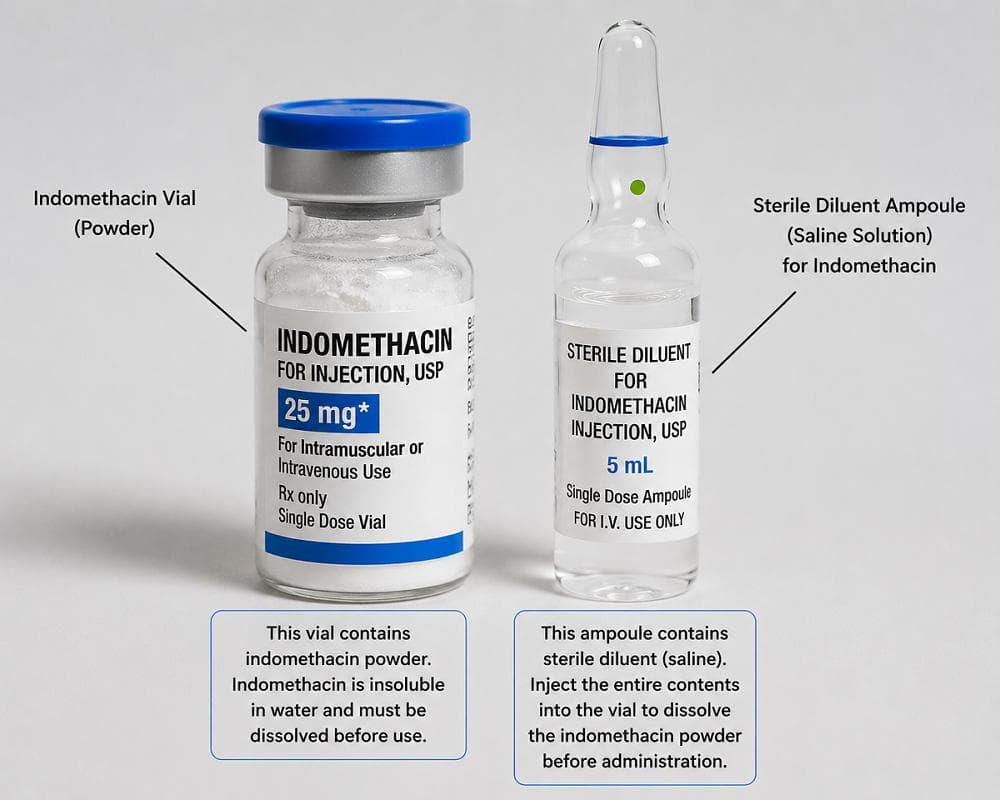
A middle-aged man arrives at the emergency department with severe pain in his side. His pain appears to be caused by a kidney stone. The physician asks the nurse to bring injectable indomethacin8. The nurse returns with a filled syringe, ready for injection. The physician injects the medication intravenously and assures the patient that his pain will subside within a minute or two. Within a short time, the patient becomes comfortable and repeatedly thanks the physician.
The physician returns to his office to write a prescription for the patient. He notices what appears to be the empty box of the indomethacin vial on his desk and throws it into the wastebasket. But then he realizes that there was something still inside the box. He looks again and sees that the vial containing the indomethacin powder is still there. The inexperienced nurse had drawn into the syringe only the ampoule of saline solvent that had been packaged alongside it, without injecting the saline into the vial to prepare the indomethacin solution. In reality, the patient had been injected with nothing but salt water.
The second story:
A 26-year-old man arrives at a hospital emergency department with the help of his neighbor and reports that he has swallowed 29 capsules of an experimental drug all at once.
Before drugs are brought to market, they are also tested on human volunteers. Some participants receive the actual drug, while others receive a placebo. A placebo is an inactive substance with no therapeutic properties. In clinical trials of new drugs, three groups may be studied: one group receives no treatment, another receives the actual drug, and a third receives a placebo. The actual drug must not only improve the condition and symptoms of those receiving it significantly more than no treatment does; it must also produce greater improvement than the placebo. This allows researchers to determine whether the drug itself genuinely changes the patient's condition, independently of the psychological effects associated with receiving treatment—the placebo effect.
The patients do not know whether they have received the actual drug or the placebo. The physicians who assess and record their symptoms should not know either. In this way, the influence of the physicians' cognitive biases toward the actual drug—whether positive or negative—is eliminated. Such studies are called double-blind studies, because neither the physician attending the patient nor the patient himself knows who has received the drug and who has received the placebo.
But back to our story. After breaking up with his girlfriend, the man had been suffering from depression for two months. He saw an advertisement recruiting participants for a trial of a new antidepressant and decided to take part. After some time, he began to feel somewhat better. But one day, following an argument with his girlfriend, he decided to swallow all the remaining capsules at once.
He soon regretted what he had done and asked his neighbor to take him to the hospital. He was pale and sweating, his breathing was rapid, and his blood pressure had fallen to 80/40 mmHg—compared with a normal blood pressure of roughly 120/80 mmHg.
He was given two liters of intravenous saline. His blood pressure rose, but whenever the infusion rate was reduced, it fell again. Several hours later, it was discovered that the man had been assigned to the control group in the drug trial: what he had swallowed was a placebo—or, more precisely, an inactive substance.
When he was told what had happened, he began to feel better, and his blood pressure returned to normal.
Hróbjartsson and Gøtzsche, two Danish researchers, published a meta-analysis in 2001 of the results of 114 different studies. In this analysis, they focused exclusively on comparing participants who received a placebo with those who received no treatment at all. They were not concerned with the data from participants who had received the actual treatment.
They concluded that the analgesic effect of placebos was equivalent to approximately one-third of the effect of a nonsteroidal anti-inflammatory drug, such as indomethacin.
Also in 2001, Amanzio and his colleagues studied 278 patients who had undergone thoracic surgery. The patients were divided into two groups. In one group, an analgesic was administered openly, and the patients were explicitly told that they were receiving a powerful painkiller. In the second group, the same analgesic was delivered into the patients’ intravenous lines by a programmed device, without their knowing when the drug was being administered. The effect of the hidden administration was noticeably weaker than that of the open administration.
Other studies have shown that knowing the brand name of a drug can increase its therapeutic effect.
It has also been shown that giving a placebo instead of a performance-enhancing substance can improve athletic performance. Even athletes who had previously received a performance-enhancing substance showed some improvement after a placebo was injected into the same area, despite knowing that they were receiving a placebo. Their performance was still better than that of those who did not receive even the placebo.
Research has shown that the brain’s own pain-relieving chemical messengers, known as endorphins—sometimes described as the body’s own morphine—play a role in the analgesic effects of placebos. For example, when a placebo is administered instead of morphine, it can still produce some pain relief, although the effect is weaker than that of actual morphine. But when naloxone is administered, the placebo effect disappears and no pain reduction occurs. Naloxone is a drug that blocks opioid receptors on nerve cells and thereby prevents these endogenous chemicals from exerting their effects. Apparently, this disrupts one of the mechanisms responsible for placebo-induced pain relief, and the placebo effect no longer appears. Other mechanisms for the placebo effect have also been proposed.
Even surgery can produce a placebo-like therapeutic effect, and this effect may persist for a considerable period despite no lesion having been found or corrected during the operation. [1] [2]
In any case, when people feel better after prayer, pilgrimage to a sacred site, consuming a supposedly magical but pharmacologically inactive substance, drinking blessed or prayed-over water, undergoing energy healing, and so forth, the improvement they experience may be related to the placebo effect. The feeling of improvement may therefore be entirely real and, as a direct and firsthand experience, cannot simply be denied. But we now have a competing explanation for the cause of that improvement alongside the hypothesis of a miracle. Consequently, improvement from an illness cannot, by itself, serve as a source of knowledge or certainty about the existence of supernatural forces or the powers of gods and saints.