

Displaced Snippets of Bayonne by Edward Drobinski - HTML preview
Download the book in PDF, ePub, Kindle for a complete version.
Page 7
internal monologue, often incorrectly referred to as an internal dialogue by the math deficient majority, was strongly suggested.
So, I left the room, dived on the bed, put my face tightly in the pillow to muffle the sound, and proceeded to laugh my five-year-old ass off.
Our first exploded television; property of the author.
You might think my mirth inappropriate, inconsiderate or something else in that vein considered politically incorrect in the enlightened year of 2018. Please consider the fact that I had sufficient grace to leave the room before confining my vulgar display to the audience of one well-used pillow and find it absolutely impossible to keep a straight face when someone accidentally does something stupid; such as this.
Displaced Snippets of Bayonne Page 8
If you find that explanation to be unsatisfactory, you might prefer reading one of the “Democratically” written anti-Trump books. You’ll find many titles to choose from, though they all say the same thing.
You might also or otherwise consider me one of many of those feigning a chuckle-chuckle, sophisticated position, disdainful, uncaring, and oblivious to the joys one obtains from television. Not at all. MSNBC’s “All In with Chris Hayes” has been a consistent source of personal enjoyment; the episode which pontificated upon Trump’s collusion with Hurricane Florence, a personal favorite.
If sufficiently cursed to be one of the deprived Millennials, you might not know that in those early days of TV’s they spent most of their time “on the blink,” generating interference OJ would have paid Johnny Cochrane millions to run behind. When a bit more operative they often rolled like the waves in a pre-regurgitating drunkard’s ceiling, or found some other way of being simplistically uncooperative.
If you already knew that, don’t bother to read the previous paragraph. If you already did, the toughest of shits. This dispassionate, logical eruditions destined to be referred to by its five readers as a rant, is still probably under the auspices of the Amazon free preview. If you choose to bail now, it’s
Displaced Snippets of Bayonne Page 9
between you and Bezos; and I have reason to believe that Jeff doesn’t give a yuge shit one way or the other.
My young mind was unfortunately already tarnished with the cynical thought that it was an insidious indication of a conspiracy that even when blessed with the $9.99 plus tax accuracy provided by “rabbit ears,” they always just happened to be contrary when the well-loved, common, and popular humor of “I Love Lucy” and “The Honeymooners” were supposed to be on. Please compare and contrast that with the fact that all systems were always “go” whenever “Ozzie and Harriet” displayed the joys and psychologically healthy aspects of the wildly proliferating Levittowns; including but not limited to the enhanced greenery above the septic tanks in the increasingly automobile dependent, suburbanizing USA. The fix was in; but as far as I know, Arthur Godfrey only made it to radio; presenting a regionally based, cynics might say ridiculously biased, glorification of warm, Hurricane Florida; perhaps a pre-cursor to Alabama’s state wide worship of the Crimson Tide. ....... In an attempt to be fair and/or bitchy, one cannot help but wonder if there was any TV
reception in Birmingham in those days. Just sayin’ the obvious.
No offense to backwater rubes intended.
On another non-conspiratorial, non-colluding, obvious basis, it seemed that there was only one form of advertising.
“You will feel better; your pain will go away; you will become
Displaced Snippets of Bayonne Page 10
popular and cool; you will become a millionaire; and you will be uncontrollably attractive to the opposite sex, if you just buy our product.” At that age I felt fine; was in no discomfort, never mind pain; didn’t want to participate in any gross popularity contests; had no concept of money other than the roll sold for a few cents at the five and dime; and my only conceptual thoughts of females was a wonder why the silly creatures wore dresses. They seemed to impose so many types of problems while taking a seat and virtually prevented one from playing for the Yankees. A bit later, a school generated question surfaced. Why did they always have to sit on the other side of the room?
Some things never change; including my unanswered questions.
However, those of you Plato and Socrates challenged unfortunates, might also require being further informed about ancient times. TV’s retailed for upwards of $1,000 in those days, while people like my father were making about $40 per week before taxes. The fact that most people didn’t have them encouraged one’s long lost “friends” to reacquaint themselves with one in possession in the comfort of the possessor’s living room without prior announcement and with an expectation of being served a “happy meal.” The friendless ones often huddled by the
Displaced Snippets of Bayonne Page 11
retail store windows where one was playing. Sporting events required no audio; and indeed are still often marred by it.
We only had a TV because two of Dad’s brothers were cops assigned to the Supply-Evidence Room. They would often have items for sale well below retail. Ado, short for Adolph, the oldest, passed this one along for a mere smile accompanied by the future expectation of a favor.
It’s difficult to pinpoint the date at which these types of understandings and conjectural reveries first manifested. They may well not have been there at age five. I don’t know and could care less. But, I can assure you that at the time my sense of humor was not prompted by any sort of cruel disregard. What was going on in my young mind was that the smoke had cleared and it seemed very likely that 1945 Hiroshima was not going to replay in 1954 Bayonne, NJ. I wasn’t going to miss having access to an electronic device which chose to crackle at me. Chesty looked like the negative of a Juggalo with about as many interesting things to say; and my Dad was soon going to provide some action unavailable on TV when he kicked Chesty’s dumb ass.
You might recall my allusion near the beginning of the prior paragraph to “cruel disregard” and forgive me as it seems likely that this life sustaining attribute came much later in the costume of Jesuit college induced “benign neglect.” Yeah, I know. They blamed Sartre.
Displaced Snippets of Bayonne Page 12
Chesty was my Mom’s only brother; and Dad did not like him one little bit. Neither did Mom, but for other reasons. Dad wasn’t much of a talker unless you asked him the mechanics of how to do something. I’m guessing that he didn’t like that Chesty was a talkative bachelor who told everyone that he was good at everything; that “leap of faith” covering that which is not possible for an insect with plucked wings.
In 1954, it was that Chesty knew how to fix TV sets, the income from which he used to supplement that of his full time job at the dirty and dangerous General Dynamics Paint Manufacturing plant down on the slippery bricks of Third Street.
Chesty was constantly telling the old jokes people just stare at or politely excuse themselves from.
“You hear about the ‘Million Dollar Movie’?”
Obligatory “No.”
“Times are so tough it’s down to one hundred thousand.”
Bada boom boom.
I guess he wasn’t a bad guy at all, if you could be Christian and somehow find somewhere within yourself the degree of socially acceptable patience which allows one to tolerate relentless, laugh solicitous blabbing and braggadocio. I mean, he never tried to lean on anybody or otherwise throw his weight around; his 5’4” chubby and baby fat frame a possible detriment to that sort of activity.
Displaced Snippets of Bayonne Page 13
Mom still truly resented him and wanted to see his ass kicked by anyone because he was mommy’s favored boy in her otherwise overlooked family of three insignificant girls. Dad wasn’t thrilled with Chesty because of the way he ran his mouth in such an un-manly, dit-dit-dit manner. Personally, I didn’t have any opinion as I was five years old, didn’t see him all that much, and the few times I did, I tended to focus on the top of his head. At age thirty he was missing about thirty percent of what belonged up there; the rest combed back in a loose gray-white flounce portending the un-gelled coming of Dr. Zorba. On popular later TV, he resembled a prematurely ageing, short version of “Archie Bunker.”
Dad came out of another room and quickly sized up the situation. He solemnly walked to the back of the TV and Chesty in prematurely unacceptable blackface. He saw the internal meltdown of his TV, and concluded that his TV was now dead, and that Chesty had killed it. In later years Dad would tell me that it was a distinct possibility that his brother Ado had given him a stinker he had obtained for “a song” in order to extract a favor. But that was not of any relevance at the time. So, Chesty was standing there looking stupid, and thinking that he had just fucked up big time.
To put it in other words; Chesty was standing there silent, stupefied and black-faced. Dad was 5’11’, just a tad short of
Displaced Snippets of Bayonne Page 14
the time’s big man mantra of “He’s a six footer!,” and he had donned that controlled angry thing, and I was watching hoping that the unexplainable giggles didn’t kick in again before Dad drew blood. Mom was in another room, lying on her stomach, pretending some sort of discomfort, probably in order that the Princess not have to be bothered with the bullshit of the day.
As mentioned, I didn’t care very much about the TV, and assumed that Dad would go get another one anyway. In those days, even though the scientists had been investigating television possibilities since the 1890’s, they had not yet come up with a viable product; much like their contributions to US autos. There were thirteen channels available on the knob, five of which actually had some broadcasting behind them, and none of which ever came in for more than two consecutive days.
So, little me, not as a result of the decade away cynicism reinforced by Bob Dylan, stopped paying much attention to it and went back to my books, cards, and sports games. Besides, even if a miracle happened and the damn thing consistently did what it was supposed to, there were still no shows with cartoons, rock music, or entertaining Donald Trump shenanigans.
Those old TV’s were a disappointing pain; at least those supplied by a light fingered uncle cop. They were full of some kind of tubes, maybe fifty, and the malfunction of any one of them would make the TV stop working. Dad would bring me with him
Displaced Snippets of Bayonne Page 15
to the electronics store on Broadway, a few blocks away. He’d bring the “tubes” which he thought might not be working and test them in a machine at the front of the store. After locating the right receptacle he’d plug them in. If they lit up they were okay. If not they had to be replaced. Even at that age I immediately figured that it was in the interest of the store owner to have nothing work, necessitating a purchase. This thought was confirmed after Dad had purchased some, installed them and the TV still didn’t work. This was my earliest exposure to an easily rigged, entrepreneurial, capitalist approach to the demand-supply curve.
Firmly, but in an even tone Dad told Uncle Chesty to leave.
To my knowledge Dad never hit anyone first. He’d get right in your face and hoped that you’d flinch or make some movement he could conveniently interpret as aggressive before he’d smack.
You know, just like the cop game, and Dad had the benefit of having had two older brothers in the racket. But dejected Chesty just left as instructed; black face and all. Dad seemed disappointed and I started laughing again.
Dad angrily said; “What’s so funny?”
Trying to deflect, I said; “Uncle Chesty’s black face. He’s going to walk home looking like that.” That seemed to be okay with Dad and he just shrugged, as if to say; “Big deal.”
Displaced Snippets of Bayonne Page 16
Footnote #2. At this time it seems eminently fair, and despite that impediment, the uninvited annotator has chosen to make the reader aware that the remainder of this book seems to be consistent with that which may be logically interpreted as having been written or merely typed by a writer-typist with a complete disinterest in the corpus, insofar as that may be conveyed in words. The writer-typist has assured me that this was not the case, but according to learned critics in possession of unverified credentials and a marked lack of originality, the presumed writer-typist is, like other plebian essayists, in no position to accurately assess any such matters; that perception much akin to the sulphur which requires an un-definably provocative strike of sorts to flame, in the absence of the metaphorically, well-intentioned subterfuge provided electronically by an electric fireplace. End of Footnote #2.
Displaced Snippets of Bayonne Page 17
#2- Bayonne
Before we go any further, it is best for the reader to know what a Bayonne was in 1954. It was a city in Hudson County, NJ, seven miles from Manhattan as the crow flies and 90 minutes by bus, situated on a peninsula located between Newark Bay, Kill Van Kull, and New York Bay. Each of these bodies of water was gelatinous near Bayonne and were considered undrinkable and of value only to swimmers who appreciated being slimed and were not disturbed by the dead fish floating on their sides at the surface.
That’s what the affable residents said. Utilizing scientific studies done by political cronies at public expense, public officials found the water potable, swimmable, and an unsubstantiated, excellent separation from the western frontier called Newark.
I don’t recall my age when it was announced that the town fathers were negotiating the establishment of a yacht club adjacent to baseball diamond #2 in City Park. However, I was sufficiently aged to personally think that it was perfectly understandable how the mob-contacted-politicos wanted to steal the people’s money, but I got a bit miffed when they chose to get sarcastic about it, as if we were some kind of dopes. This early discovery of the facts of life might go a long way toward explaining my attitudes toward national politics in 2018.
Displaced Snippets of Bayonne Page 18
But, forgetting that little pre-pubescent education which was quite common in Bayonne, I can testify to the virtues.
Having been weaned on Bayonne water, I apparently became immune to those impurities and diseases which suburbanites find in their well water. Not having to purchase the Mafia bottled variety, 55% of which is filled from Bayonne taps, has saved me approximately $850 per annum.
Some of that may be gleaned in Wikipedia. What I find much more interesting in more travelled retrospect is how the place was viewed by its residents between 1949 and 1971, the years I lived there. Most curious to those not having been there is the prevalent attitude of the people, who did not give the slightest of fucks. This was no posture affected because of Bayonne’s second or third rate position seven miles from all the glories of Manhattan. Bayonne-ites did not even give a tiny, respectful wet raspberry about what the hoi polloi considers to be status.
Manhattan had their Tiffanys’ and Met, while we had the back of Goldklang’s and the public pool in City Park. Got a problem with that? No Bayonne-ite cared. Long before Pink Floyd made it international, we said; “I’m all right, Jack. Keep your hands off my stack.”
There may be somewhat of a reason for this noblesse oblige.
The two closest Jersey neighbors are Jersey City and Newark.
Both have been marked, along with three other Jersey towns, as
Displaced Snippets of Bayonne Page 19
being on the list of top ten slums in the entire US. Bayonne was the oasis of the privileged. “Hey, Sal; you know; when you got it, flaunt it.” Yet, despite all of the good reasons for haughtiness, egalitarianism prevailed. “Hey, you stuck up or sumthin’? ... Low class dipshit. Bedda git oudda here with that stuff. Yeah? Well fuck you and your fucking Rolex too. Shit.”
Bayonne’s population peaked at 89,000 in 1930, was about 75,000 when I was there, and has continued its general move toward exclusivity at 63,000 in 2010; apparently taking advantage of its proximity to Manhattan, exclusive waterfront properties, and the bulldozing of approximately five square blocks occupied by low income migrants from the rural South.
This was quickly and efficiently accomplished in the earliest days of urban renewal; before the towns were burdened with the obligation to relocate the bulldozed. One has to admit that Bayonne politicos were very good at some things beside kickbacks and extortion.
The racial composition has changed over the years. When I was there my guess was that it was about 85% white, 15% black, a negligible smattering of others and virtually no Latinos. In 2010 the numbers have changed to 9% black, 8% Asian, 26% Latino, 38% white, and 19% Italian.
The density is said to be 11,000 per square mile. While that is a high number it must also be noted that about 1/3 of
Displaced Snippets of Bayonne Page 20
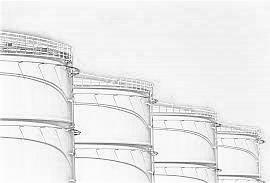
Bayonne is water and another 1/3 is home only to the oil storage tanks; suggesting a possible “real” density of 33,000 per square mile. It certainly felt that way.
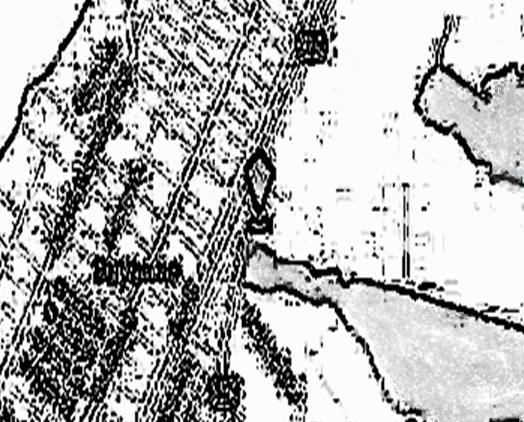
Below is a street map of part of Bayonne to give you an idea of the layout. For the most part it is a grid with Avenues running from A to E, and streets going from 1st to 59th, or so.
Wiki doesn’t say and the streets get weird up there, but not sufficiently weird to have induced a child to do any exploring other than the bowling alley/billiard place/bar where Margie’s mother and her friend hung out.
There are different neighborhoods, and if you walk three blocks you’ll find another one. That long strip of land with no streets noted is locally called Hook Road, and is where the oil tanks reside. There are quite a few of them, and few people live nearby. 90% of the time the wind is blowing in another direction, so Bayonne-ites didn’t have to suffer much of that Houston kind of stench.
Displaced Snippets of Bayonne