

The Politics And Survival, Chronicles of Obunagha Community And Gbarain Kingdom by Anderson Samasi - HTML preview
Download the book in PDF, ePub, Kindle for a complete version.
Part Three: The Creation of Nigeria
(27) The Introduction of British Rule in Nigeria (28) Timeline of Some Events Prior to Nigeria’s Independence (29) The Creation of Bayelsa State
(30) The Creation of Yenagoa Local Government Area (31) Timeline of Events in the History of Nigeria’s Oil and Gas Industry
References
pg. 170
The Introduction of British Rule in Nigeria57
From the 1840's through the 1880’s there was a gradual penetration of Nigeria's interior by the British. Dr. William Baikie's discovery of Quinine contributed in moderating the effects of some of the hazards of Nigeria's severe climate, thus permitting European entry in the African continent. In January, 1852, Lagos was seized as a British sphere of influence to impede the slave trade. A decade later Lagos was annexed and proclaimed a British colony. In the years that followed, surrounding areas were added in order to abolish slavery. During the 187O's attention focused on the resolutions of tribal wars in the interior which had halted the flow of palm oil, benniseed (sesame seed), and ivory to the coast. At the same time British traders tried to break the native middleman's control of this trade with the interior parts of Nigeria. The Berlin Conference of 1884-1885 officially sanctioned British claims to Nigeria. The British declaration of the Oil Rivers Protectorate, (modernly the Niger Delta area), followed immediately in June, 1885, with the creation of the posts of Consul and Vice-Consul for outlying 57 Adapted from Sir Frederick Lugard, World War I and the Amalgamation of Nigeria 1914-1919 by John F. Riddick, 1966, and Lugard and the Amalgamation of Nigeria by A. H. M. Kirk-Greene, 1968
pg. 171
points, and a Commissioner and Consul-General based at the port of Old Calabar. In 1893 by an Order in Council, the territory was expanded to include the immediate hinterland, and was renamed the Niger Coast Protectorate.
The British Government, which had maintained a Consul at Lagos since 1852, officially obtained the cession of the Lagos island in 1861 with the sole object of putting an end to the overseas slave traffic. In the following years the abandonment of all West African settlements was contemplated, and any extension of responsibilities with the interior was vetoed. It was not therefore until the ‘Scramble for Africa’ which followed the Berlin Act of 1885 that any steps were taken to secure the coast line from Lagos to the Cameroons and to establish a claim to the hinterland as a British ‘sphere of influence’. This area was then placed under the Consular jurisdiction of the Foreign Office of Britain (under the name of the Oil Rivers Protectorate; modernly the Niger Delta region). Also the Royal Niger Chartered Company, who were endeavouring to open up the districts bordering the Niger, were responsible. Colonial Office control remained limited to Lagos Colony. It was not until 1893 to 1894 that, in consequence of friction with France, the Foreign Office of Britain was compelled to champion the cause of the Niger Company and to declare a Protectorate over the Niger territories. The Oil Rivers then became the Niger Coast Protectorate (modernly the Niger Delta pg. 172
region). With the advent of Mr. Chamberlain to the Colonial Office in 1895, British West Africa entered on a new era. British influence was extended into the Lagos hinterland. The ‘French crisis’ was brought to a close by the Convention of June, 1898, and steps were taken to buy out the Charter of the Niger Company. This was completed on January 1st, 1900, and the Governments of Northern and Southern Nigeria were created.
From 1886 to 1900 the Royal Niger Company represented the only source of British influence in Nigeria’s interior. The charter granted to Goldie58 called for the abolition of slavery, respect of native customs and laws, freedom of trade, and the collection of duties or taxes to cover the expenses of administrating the natives. To the advantage of the Crown, the use of the charter company (Royal Niger Company formerly National African Company) permitted the spread of British rule without the large accompanying costs. Disregarding the charter’s guarantee or provisions of free trade, the Royal Niger Company monopolies squeezed out the Brassmen (natives), which made its livelihood by transporting goods from the interior to the coast. The embittered tribesmen reflected at their treatment and launched a vicious assault on the company headquarters at Akassa (modernly in Brass, Bayelsa State) in 1895. The attack and 58 Sir George Dashwood Taubman Goldie, owner of the Royal Niger Company formerly National African Company
pg. 173
various malpractices led Salisbury to review the Company’s charter and revoke it in December, 1899. From 1900 to 1906 the most significant development in Nigeria‘s history was Frederick Lugard’s introduction of indirect native rule as means of colonial administration.
pg. 174
Timeline of Some Events Prior to Nigeria’s Independence
Year
Event
Britain annexed Lagos Island as a colony on January 1.
1862
Mr. H.S Freeman became Governor of Lagos
Colony on January 22.
Oil Rivers (now the Niger Delta region)
1893
Protectorate renamed Niger Coast
Protectorate with Calabar as capital.
British reporter Flora Shaw, who later
married Lord Frederick Lugard, suggests that 1890's
the country be named "Nigeria" after the Niger River.
The British overthrew Oba Ovonramwen of
1897
Benin, one of the last independent West
African kings.
The Niger Coast Protectorate, merged with
the colony and protectorate of Lagos, and was 1900
renamed the Protectorate of Southern
Nigeria
1914
The northern and southern protectorates
were amalgamated to form Nigeria. Colonial pg. 175
officer, Frederick Lugard was governor—
general.
Women in the eastern commercial city of Aba held a rowdy but effective and victorious
1929
protest against high taxes and low prices of Nigerian exports in October.
The British decided to grant Nigeria internal self-rule, following an agitation led by the 1951
National Council of Nigeria and the
Cameroons (NCNC).
Nigerian Armed Forces transferred to Federal 1958:
control. The Nigerian Navy was born.
New Nigerian currency, the Pound, was
1959
introduced
Northern Peoples Congress (NPC) and Niger
1959
Delta Congress (NDC) formed an alliance to contest parliamentary elections.
Dr. Nnamdi Azikiwe became Nigeria’s first
indigenous Governor General on October 1.
1960
Nigeria's joined with Liberia and Togo in the
"Monrovia Group", seeking some form of a confederation of African states.
After a plebiscite, the Northern Cameroon, 1961
which before then was administered
separately within Nigeria, voted to join
pg. 176
Nigeria. But Southern Cameroon became part of francophone Cameroon in February.
Northern Cameroon became Sardauna
Province of Nigeria, the thirteenth province of Northern Nigeria as the country’s map
assumed a new shape in June.
Southern Cameroon ceased to be a part of
Nigeria in October.
1960-1966: First Republic of Nigeria under a 1960-British parliamentary system. Abubakar
1966
Tafawa Balewa became the first elected
Prime Minister.
Source: The Amalgamation Of Nigeria Was A Fraud (Akinjide, 2000)
pg. 177
The Creation of Bayelsa State59
At the declaration of independence in 1960, Nigeria was with three regions; Northern, Eastern, and Western. And in 1963, the Mid-Western region was created which brought the number of regions to four until the interference of the military in 1966.
Nigeria became a federation of Thirty-Six states which Bayelsa state is among on October 1, 1996. The struggles and proposals that preceded the creation of Bayelsa state can be divided into five phases: (i) Rivers State Movement, (ii) The Isaac Adaka Boro Armed Resistance, 1966 (iii) The Niger Delta State Movement, (iv) The Abayelsa State Movement, and (v) The Bayelsa State Movement.
Phase I: Rivers State Movement, 1953-1967
The movement for a Rivers State started in the 1950s when minorities in the Eastern and other regions started the demand for separate states as a way of allaying their fears of domination by the majority ethnic groups. After the constitutional conference appointed to review the Richards Constitution, the council of 59 Adapted from The Land and People of Bayelsa: Central Niger Delta by Ebiegberi Joe Alagoa 1999, and Ethnic Self – Determination Protests in the Niger Delta: From Isaac Boro’s ‘12 Day Revolution’ to Contemporary Militancy by Amugo Frank, 2018
pg. 178
Rivers Chiefs prepared a memorandum for the resumed conference of 1954 demanding the creation of Rivers State consisting of the Rivers Province; Brass, Degema, Ogoni, Port Harcourt and Ahoada as well as Western Ijaw Division from the Western Region. The demand for Rivers State was motivated by the fact that "the people in the area shared a way of life dictated by the physical country in which they lived, and that they were united by fear of neglect at the hands of a Government who did not understand their needs and who in any case put the needs of the interior first". In essence the demand was motivated essentially by the fear of economic, cultural and political domination and exclusion from power, opportunities and from administrative policy making roles in the bureaucracy.
The Willink Commission which considered the request for the creation of Rivers State and demands from other minorities did not recommend the creation of Rivers State or any other state but instead recommended a number of safeguards such as designation of special areas, provision in the constitution for the protection of certain fundamental human rights, among others. In 1967 the government of General Yakubu Gowon created Rivers and South Eastern States out of the secessionist Biafra to weaken Ojukwu’s regime, but following the previous demands and pressure from the Rivers State Movement and others such as COR
State (Calabar-Ogoja-Rivers State), Ogoja State, and the Cross pg. 179
River State Movement. The creation of Rivers State put an end for a period to the demand for a new State. It was hoped that Rivers State would satisfy the aspirations of all segments of Rivers State.
It soon became quite clear, that Rivers State benefited mainly the upland areas of the State in terms of infrastructural facilities and social amenities while neglecting the riverine (Bayelsan) areas of the state.
Phase II: The Isaac Adaka Boro Armed Resistance, 1966
Isaac Boro was born on September 10, 1938 at Oloibiri area of Ogbia, where Nigeria’s first petroleum exploration started. Being motivated by the neglect of the Niger Delta communities by the Nigerian government, started an armed resistance against the government of Nigeria by declaring the Nigeria Delta as an independent republic on February 23, 1966. They attacked a police station at Yenagoa, raided their armory and taking some police officers hostage. Also, they attacked oil installation and new pipelines of the oil Multinational companies operating in the Niger Delta. After twelve days, Boro’s militia was defeated by the Nigerian military and he and some of his commanders were arrested, tried, and sentenced.
Before Boro’s declaration of Niger Delta republic and armed resistance against the Nigerian government, his militia camp was pg. 180
set up within Taylor Creek (Gbarain Kingdom)60 where they recruited 150 youths and trained them in the use of fire arms and explosives, as well as in gurella warfare in the creeks and forests of the Niger Delta. The armed resistance led by Isaac Adaka Boro further amplified the neglect of the Niger Delta region to the Nigerian state and the world, emphasizing the need for attention.
Phase III: Niger Delta State Movement, 1979-1983
The second phase in the struggle for Bayelsa State started during the short-lived second Republic from 1979 to 1983. Over the years it became obvious that the benefits of development were concentrated in Port Harcourt and other upland areas to the total neglect of the riverine areas inhabited mainly by the ljaw speaking groups. This realization led to the demand in 1983 for a separate Niger Delta State to be composed of Brass, Yenagoa, and Sagbama LGAs in Rivers state; Bomadi, Barutu LGAs and the ljaw areas of Ward and Ovia LGA in former Bendel State, and the Ijaw areas of Ilaje-Ese-Odo Local Government Area in Ondo State.
In the memorandum submitted by the Chiefs and people of the Niger Delta, three motivating factors were prominent. The first was the desire to have all ijaws constituted into a state, instead of the then arrangement thereby ijaws constitute minorities in 60 Isaac Adaka Boro father was a Head Teacher at the Taylor ,Creek Central School at the time
pg. 181
three states - Rivers, Bendel and Ondo. The second and the most important motivating factor was the neglect of the areas that comprise the Niger Delta State. The third reason was geographical contiguity and linguistic affinity. The proposed Niger Delta State did not materialize. One reason was due to the complicated and cumbersome processes for creating new states under the 1979 constitution. This explains the inability of the civilian regime of President Shehu Shagari to create new states.
The second reason was that the political leadership in the three states Rivers, Bendel, and Ondo State were vehemently opposed to the proposal for a Niger Delta State. The Bendel State government was concerned that the creation of a Niger Delta State would deprive them of oil royalties as most of the oil bearing communities would become part of the proposed Niger Delta State.
Phase IV: Abayelsa State Movement, 1985-1993
The General Badamosi Babangida regime provided another opportunity for Bayelsans to make fresh demands for a state.
This time the demand was for the creation of Abayelsa State comprising the present Bayelsa State and Ahoada Local Government Area. In spite of the hopes raised by the Babangida administration that Rivers State was a 'pregnant woman'
meaning that the state was ripe to be split, Abayelsa State was pg. 182
not created during the two state creation exercises carried out by the regime. One of the reasons for not creating Abayelsa state was partly due to mutual suspicion, opposition and lack of interest on the part of powerful elites on both sides, that is, Ahoada local government area, and the local governments that presently constitute Bayelsa State.
From the point of view of powerful elites in Ahoada LGA, especially Ogba, Egbema, Ndoni and the Ekpeye, the fear and the cause of the opposition was that being in the same state with Bayelsans would place them in a position of perpetual minority.
They feared domination and deprivation by the Ijaw who form the majority ethnic group in the proposed Abayelsa State. On the other hand, the fear of some powerful forces in Bayelsa was that inclusion of Ahoada LGA would reproduce the phenomenon of upland/riverine that characterized Rivers State. As in Rivers State, it was felt that such a dichotomy would work in favour of the upland areas and the riverine would suffer further neglect.
These irreconcilable differences coupled with the fact that the elite in Ahoada saw a brighter future in Orashi State which they proposed and campaigned for, weakened the Abayelsa State Movement.
pg. 183
Phase V: Bayelsa State Movement, 1993-1996
The appointment of the Sir Mbanefo Committee by General Sani Abacha raised fresh hopes for the creation of new states in the country and attracted a flood of requests. Accordingly, the people of Bayelsa presented a memorandum to the Mbanefo Committee to create Bayelsa State, consisting of the following six LGAs in the former Rivers State: Brass, Ekeremor, Ogbia, Sagbama, Southern Ijaw and Yenagoa. The proposed state covered a total geographical area of 11,109km2 and an estimated population of 1,234,656.
The motivating force behind the request for a homogenous Ijaw state was the neglect of the Niger Delta area comprising the present Bayelsa State by past and present state and federal governments, an area that produces over 40% of the nation's wealth. In essence the creation of Rivers State could not provide an answer to the neglect of the area. The neglect is evident in a number of areas. For instance, road projects earmarked for implementation in the 1975-1980 National Development Plan in this area were never executed. The Mbanefo Committee was convinced that Bayelsans deserved a state and accordingly recommended the creation of Bayelsa State. The Provisional Ruling Council approved the recommendation of the Mbanefo pg. 184
Committee. On October 1, 1996 General Sani Abacha announced the creation of Bayelsa State.
The Name BAYELSA: The name is derived from BrAss, YEnagoa, and SAgbama.
pg. 185
The Creation of Yenagoa Local Government Area (1996)
The inhabitants of Yenagoa town were fully involved in the palm oil trade with Europeans in the 19th century. The revocation of the charter of the Royal Niger Company in December, 1899 also resulted from a conflict between the company and Yenagoa traders (the Odiabara war in 1894) preceding the Brassmen assault on their headquarters in 1895. On revocation of the Royal Niger Company charter in 1899 and declaration of protectorate over Southern Nigeria, Yenagoa (then Epie-Attissa residents) was grouped alongside others (including Kolokuma-Opokuma kingdoms) to form the Brass District. Yenagoa District was later created by the admnistration of Chief Alfred Papapreye Diete-Spiff admistration in Rivers State in 1973 from the Brass District.
With reforms of the General Murtala Mohammed administration of Nigeria, Yenagoa District was made Yenagoa Local Government Area in 1976.
Following the creation of Bayelsa state on October 1, 1996
Yenagoa was preferred ahead of Amassoma and Kaiama for the Bayelsa state capital. At creation as the state capital the name Yenagoa came to include all the communities in Epie-Atissa clans, and was named the headquarter of Yenagoa Local Government pg. 186
Area which also include neighboring clans such as Gbarain, Ekpetiama, Okordia, Zarama and Biseni.
pg. 187
Timeline of Events in the History of Nigeria’s Oil and Gas Industry (1908 – 2026)
Year
Description
Nigerian Bitumen Co. & British Colonial 1908
Petroleum commenced operations around
Okitipupa, Ondo State
Shell D' Arcy granted Exploration license to prospect for oil throughout Nigeria. The
1938
Royal Dutch Shell Group established a
Nigerian venture with the precursor company of BP Plc.
Mobil Oil Corporation started operations in 1955
Nigeria
First successful well drilled at Otuabagi, Ogbia currently in Bayelsa State by Shell
1956
D'Arcy. Changed name to Shell-BP Petroleum Development Company of Nigeria Limited
First shipment of oil from Nigeria on
1958
February 17 by Shell
Shell's Bonny Terminal was commissioned.
Shell’s official opening of Port Harcourt office.
1961
Also, Texaco Overseas started operations in Nigeria
pg. 188
Elf started operations in Nigeria as Safrap now Total Energies.
1962
Nigeria Agip Oil Company also started
operations
Elf discovered Obagi field and Ubata gas field in 1963
Rivers State.
Gulf's first production
Agip subsidiary of Elf found its first oil at Ebocha in Rivers State
Phillips Oil Company started operations in 1965
Bendel State now within Delta and Edo States Nigeria’s First Refinery in Port Harcourt (
60,000 bpd) commissioned by Shell-BP
Elf started production in Rivers State with 1966
12,000 b/d
Phillips drilled its first well (Dry) at Osari –I Phillips first oil discovery at Gilli-Gilli –I 1967
Nigerian Civil War begins. This war was also largely on the southern claim of
disenfranchisement owing to the discovery
and potential benefits of the oil industry Mobil Producing Nigeria Limited was formed.
1968
Gulf's Terminal at Escravos was
commissioned
pg. 189
Petroleum Decree gives federal government
ownership and control of all petroleum
resources. This was an act by the government 1969
to systematically exclude the Niger Delta
from decision making regarding the
petroleum deposits in the Niger Delta
Mobil started production from 4 wells at Idoho Field in Rivers State. Agip started production.
1970
Department of Petroleum Resources (DPR)
Inspectorate started until 2021 when PIA was introduced
Shell's Forcados Terminal Commissioned
1971
Mobil's terminal at Qua Iboe commissioned in Akwa Ibom state
First Participation Agreement; Federal
Government acquires 35% shares in the Oil
Companies.
Ashland started PSC with then NNOC (NNPC)
1973
Pan Ocean Corporation drilled its first
discovery well at Ogharefe in Delta State
Nigerian government takes a stake in the
venture. Over the coming years, the
government increases its stake and BP exits 1974
Second Participation Agreement, Federal
Government increases equity to 55%. Elf
pg. 190
formally changed its name from "Safrap"
Ashland's first oil discovery at Ossu –I
First Oil lifting from Brass Terminal by Agip 1975
DPR upgraded to Ministry of Petroleum
Resources
MPE renamed Ministry of Petroleum Resources (MPR)
1976
Pan Ocean commenced production via Shell-BP's pipeline at a rate of 10,800 b/d
Government established Nigerian National
Petroleum Corporation (NNPC) by Decree 33, 1977
(NNOC & MPR extinguished) rebranded to NNPCL on the introduction of PIA in 2021
The Land Use Decree nationalizes all land
under state and local governments. This was 1978
to strengthen the government’s position of the sole management of the Niger Delta
regions’ oil deposits
Third Participation Agreement (throughout
NNPC) increases equity to 60%
Fourth Participation Agreement; BP's
1979
shareholding nationalised, leaving NNPC with 80% equity and Shell 20% in the joint Venture.
Changed name from Shell-BP to the Shell
Petroleum Development Company of Nigeria
pg. 191
(SPDC)
The Shell Petroleum Development Company
of Nigeria (SPDC) is established,
incorporating assets of the older Shell-BP
consortium. Over time, the Nigerian National Petroleum Corporation comes to own 55%,
Shell owns 30%, France's Total owns 10%
and Italy's Eni 5%
Agreement consolidating NNPC/Shel1 joint
1984
Venture signed
Fifth Participation Agreement; NNPC – 60%, Shell – 30%, Elf – 5%, Agip – 5%.
1989
Utorogu Gas Plant Commissioned and LNG
Shareholders Agreement signed
Movement for the Survival of the Ogoni
People (MOSOP) organises protests of around 300,000 Ogoni people against Shell and oil 1993
pollution. Nigeria's military government
occupies the region.
NLNG's First shipment of Gas out of Bonny
Terminal
1999
Fourth Nigerian Republic begins, giving oil producing states 13% of oil revenues.
President Obasanjo serves as head of state until 2007. Niger Delta Development
pg. 192
Commission is created.
New PSCs agreement signed.
2002
Liberalization of the Downstream Oil sector.
NNPC commences retail outlet scheme
Shell signs an agreement to acquire a 40%
stake in oil production licence (OPL) 245, a large offshore field, from local company
2003
Malabu.
Total Liberalization of the Downstream Oil sector. Shell Achievement of one million Barrels per day
Production reached an all-time high of
2005
2,496.000 Barrel/Day in Nov 2005
Militant group MEND (Movement for the
2006
Emancipation of the Niger Delta) emerges
and begins to attack Shell facilities.
In June 2008 MEND reaches a deep offshore
platform at Bonga; in September a MEND ”Oil War” responds to military bombardments in
Rivers State; Elem Tombia and Ogboma were
2008
razed.
Two large spills, a result of operational faults, hit the community of Bodo in Ogoniland,
Rivers State. Tens of thousands of barrels of oil are spilt.
pg. 193
The leak goes on for at least four weeks. Shell says 1,640 barrels of oil were spilled but experts estimate the leak to be nearly three times more – as much as 4,000 barrels
On 15 May the JTF launches a major military operation against MEND in the western Delta in response to killing and kidnapping of
soldiers and foreign sailors; Gbaramatu area, Delta state razed; thousands flee their
2009
villages. Oil production falls to 1.3 mbpd following MEND counter-attacks. An offer of Presidential Amnesty is accepted by most
MEND commanders on October 4, and over
20,000 ex-combatants reportedly disarm
SPDC sells some onshore fields and says it is 2010
no longer looking to Nigeria for growth
Shell and Italy's Eni acquire OPL 245 for $1.1
billion from Malabu
2011
A U.N. report criticises Shell and the Nigerian government for pollution in Ogoniland and a clean-up costing an initial $1 billion and taking up to 30 years.
Shell accepts liability for the Bodo spills, agreeing to pay 55 million pounds ($83
2015
million at the time) to Bodo villagers and to clean up their lands and waterways.
pg. 194
Court case against Shell and Eni over the
2011 OPL 245 acquisition starts in Milan.
Nine current and former executives and
2018
contractors, including Eni Chief Executive Claudio Descalzi, were accused by Italian
prosecutors of paying $1.3 billion in bribes to secure the license.
Shell agrees to pay a Nigerian Community
45.9 billion naira ($111.68 million) to settle a case over an oil spill with the Ejama-Ebubu 2021
Community in Nigeria's Ogoniland.
The Petroleum Industry Act (PIA) was
introduced. A blanket governing law of the oil industry
ExxonMobil announced a $1.28 billion deal to sell Mobil Producing Nigeria Unlimited
2022
(MPNU) to Seplat Energy Offshore Limited
Production reached an all time low of
1,015,000 barrel/day in September, 2022
Eni announced the signing of an agreement
with Oando PLC for the sale of Nigerian Agip Oil Company Ltd (NAOC Ltd)
2023
Equinor announced the signing of an agreement with Chappal Energies to sell Equinor Nigeria Energy Company (ENEC), which holds a 53.85%
ownership in oil and gas lease OML 128, also pg. 195
includes the unitised 20.21% stake in the
Agbami oil field
Shell agrees to sell its onshore Nigerian oil and gas subsidiary to Renaissance Africa
Energy Company Limited for up to $2.4
2024
billion.
Dangote Refinery starts refining operations in January. The refinery was built between 2016
and 2023.
NNPCL announced an agreement with two
Chinese companies in support of the
2026
completion and operation of the Port
Harcourt and Warri Refineries.
Sources: Paul, Deirdre, & Paula, 2011; Saint, 2022; Nigerian National Petroleom Corporation, 2016; Reuters, 2024; NS Energy, 2023; Oladehinde & Ibrahim, 2024; Eni, 2024; Shell Plc, 2024; Usman, 2024; NNPC Ltd, 2026.
pg. 196
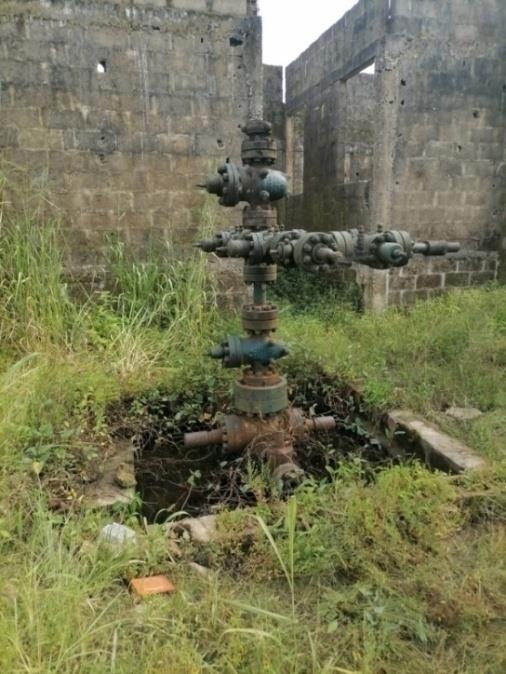

Oil Well 1, at Otuabagi, Ogbia LGA Oil Well 2, at Otuabagi, Ogbia LGA (Photo taken on July 16, 2025) (Photo taken on July 16, 2025)
pg. 197
Reference
1. Ama-Ogbari, O. C. (n.d.). Historical Development Of Yenagoa From Rural Settlement To Urban (State Capital) Centre. Development Studies Round Table , 6(2): 195-202.
2. Anderson, S. (2019). Africa, A First World. Accra: Publish Wiz.
3. Akinjide, R. (2000, July 9). The Amalgamation Of Nigeria Was A Fraud. Retrieved June 16, 2026, from DAWODU.COM: https://www.dawodu.com/akinjid3.htm
4. Eni. (2024, May 20). Our Activities in Nigeria. Retrieved June 29, 2024, from Eni SpA: https://www.eni.com/en-IT/actions/global—
activities/nigeria.html#:~:text=In%20September%20202
3%20Eni%20announces,as%20well%20as%20power%2
0generation.
5. Frank, A. (2018). Ethnic Self – Determination Protests In The Niger Delta: From Isaac Boro’s ‘12 Day Revolution’ To Contemporary Militancy . International Journal of Education and Social Science Research , 1(6): 194-206.
6. Kirk-Greene, A. H. (1968). Lugard and the Amalgamation of Nigeria. London: Frank Cass And Company Limited.
7. Nigerian National Petroleom Corporation. (2016, July 29).
History of the Nigerian Petroleum Industry. Retrieved from Nigerian National Petroleom Corporation:
http://www.nnpcgroup.com/NNPCBusiness/BusinessInfo rmation/OilGasinNigeria/IndustryHistory.aspx pg. 198
8. NNPC Ltd. (2026, May 4). NNPC, Chinese Firms Sign MoU
Towards Restart, Expansion of Warri, Port Harcourt Refineries. Retrieved June 20, 2026, from NNPC: https://nnpcgroup.com/insights/press-release-nnpc-chinese-firms-sign-mo-u-towards-restart-expansion-of-warri-port-harcourt-refineries
9. NS Energy. (2023, December 1). Equinor to divest its Nigerian business to Chappal Energies. Retrieved June 29, 2024, from N S Energy:
https://www.nsenergybusiness.com/deals/equinor-to-divest-nigerian-business-to-chappal—
energies/#:~:text=Equinor%20has%20signed%20an%20
agreement,oil%20and%20gas%20company%20Chevron.
10. Oladehinde, O., & Ibrahim, A. (2024, May 30). NNPC, ExxonMobil settle over $1.2bn divestment deal. Retrieved June 29, 2024, from Business Day:
https://businessday.ng/news/article/nnpc-exxonmobil-settle-over-1-2bn-divestment-deal/
11. Okoko, K. A., & Lazarus, A. (1999). The Creation of Bayelsa State. In E. J. Alagoa, The Land and Peolple of Bayelsa: Central Niger Delta (pp. 251 - 257). Port Harcout: Onyoma Research Publications.
12. Paul, f., Deirdre, l., & Paula, r. (2011). Securing Development and peace in the Niger Delta: A Social and Conflict Analysis for Change. Washington DC : Woodrow Wilson International Center for Scholars .
13. Realfonzo, U. A. (2023, November 18). Today in History: The Brussels Anti-Slavery Conference that shaped European colonialism. Retrieved June 20, 2026, from The Brussels pg. 199
Times: https://www.brusselstimes.com/801229/today-in-history-the-brussels-anti-slavery-conference-that-shaped-european-colonialism
14. Refworld. (n.d.). Convention to Suppress the Slave Trade and Slavery. Retrieved June 20, 2026, from Refworld: https://www.refworld.org/legal/agreements/lon/1926/1
3684
15. Reuters. (2024, January 16). Timeline - Shell in Nigeria.
Retrieved June 16, 2024, from Reuters:
https://www.reuters.com/business/energy/shell-nigeria-2024-01-16/
16. Riddick, J. F. (1966). Sir Frederick Lugard, World War I and the Amalgamation of Nigeria 1914-1919 . Kalamazoo: Western Michigan University.
17. Saint, E. (2022, December 21). Timeline: Half a century of oil spills in Nigeria’s Ogoniland. Retrieved June 8, 2024, from Aljazeera:
https://www.aljazeera.com/features/2022/12/21/timeli ne-oil-spills-in-nigerias-ogoniland
18. Shell Plc. (2024, January 15). Shell agrees to sell Nigerian onshore subsidiary, SPDC. Retrieved June 29, 2024, from Shell Global: https://www.shell.com/news-and-insights/newsroom/news-and-media—
releases/2024/shell-agrees-to-sell-nigerian-onshore-subsidiary-spdc.html
19. Treaty Series, No. 18. (1919). Convention Revising the General Act of Berlin, February 26, 1885, And The General pg. 200
Act and Declaration of Brussels, July 2, 1890. London: His Majesty's Stationery Office.
20. Usman, M. (2024, ,September 3). Dangote refinery begins operation, to supply 25 million litres in September.
Retrieved June 20, 2026, from International Centre for Investigative Reporting:
https://www.icirnigeria.org/dangote-refinery-begins-operation-to-supply-25-million-litres-in-september/
21. Wikipedia. (2026, June 10). Berlin Conference. Retrieved June 20, 2026, from Wikipedia:
https://en.wikipedia.org/wiki/Berlin_Conference 22. Wikipedia. (2026, June 9). Brussels Conference Act of 1890.
Retrieved June 20, 2026, from Wikipedia:
https://en.wikipedia.org/wiki/Brussels_Conference_Act_o f_1890
pg. 201
Appendix One
AN ADDRESS PRESENTED BY H.R.M. MICHAEL AMBI KWOKWO (JP) IBENANAOWEI OF GBARAIN KINGDOM ON
THE OCCASION OF TH ANNUAL NEW YAM "UZI" FESTIVAL
HOLDING AT OKOLOBIRI THIS 21ST DAY OF JULY, 2001.
MR CHAIRMAN,
YOUR EXCELLENCY,
CHIEF DIEPREYE SOLOMON PETER ALAMIEYESEIGHA (JP) FIRST EXECUTIVE GOVERNOR OF BAYFLSA STATE AND YOUR
ENTOURAGE OF CIVIL COMMISSIONERS AND OTHER
GOVERNMENT FUNCTIONARIES HERE PRESENT
YOUR ROYAL MAJESTIES,
YOUR ROYAL HIGHNESSES,
OUR DISTINGUISHED GUESTS "OKRO PERE AGBE", THE PERE OF KABUOWEI KINGDOM,
THE PERE OF KUMBOWEI KINGDOM,
INVITED GUESTS,
GENTLEMEN OF THE PRESS,
DISTINGUISHED LADIES AND GENTLEMEN, OTHER PROTOCOLS
OBSERVED.
pg. 202
It is with infinite pleasure I do send this goodwill message across to you on this unique occasion. I very much regret my absence, which is due to my health condition, which has very rapidly deteriorated since after the festival of last year. This I pray should not disturb you much; because I may recover, or even if the knell knells me to go and rest with my ancestors, my spirit will still linger around to protect you all.
It is a happy welcome to all of you who have defied all odds to find time to come and grace this occasion, which is our annual event in commemoration of our ancestor-Gbarain-owei. I wish you all a happy time here and protection of the divine grace back to your respective homes.
It is my traditional function to admonish all of you, particularly on such a memorable day that has drawn so large a crowd from far and wide, and more particularly, my children from sister clans such as Kolokuma, Atisa, Epie, Ekpetiama, Opokuma etc. I do entreat you to learn to live in harmony with one another and not to engage yourselves in things that will put you in trouble.
With regards to your arduous task which is greater than that of a husband that manages only wives and children in the family, I will advise you my chiefs to be diligent, tolerant, forbearing but firm on anything perfect. You as mantle bearers have to show pg. 203
good examples to your subjects, so that people may see your good works and glorify your creation.
To my women folk I have this to say - You have to respect your husbands and always sit down with them to plan for the well being of your children who will be our future leaders. The English addage goes thus; "Behind every successful man, there is a reasonable housewife". Let your eyes be fixed on your husbands only and do not ha deceived by the fancies of this devilish world.
I have very great concern for my youths who will be leaders of tomorrow. He who does not first learn to obey is not fit to command. You must learn to respect and obey your elders and also prepare your minds to take up the challenges of life.
Education makes a man. If you are an illiterate in this era, then you can be prepared to take up menial jobs such as gateman to watch over your peers' premises while he is enjoying with his family within and you are exposed to cold and mosquitoes - What a hell? Let youths use their leisure hours in doing what will benefit them, their parents and the society in general rather than vilifying, malingering, being truant at school, engaging in acts of hooliganism and all vices that will not bring glory to your families.
I hope you will all feel happy over the presence of the Executive Chairman of Gbarain/Ekpetiama Local Government Area Hon.
pg. 204
Walter Ofonitoru Okpoi who is ready to streamline the "Impact Assessment" of this Local Government Area with reference to the projects he listed in his address last year - How many are completed and how many abandoned. We have seen the chairman effort in the provision of one or two buses for transport and with other achievements he deserves a pat on the shoulder.
May we crave your indulgence Mr. Chairman to close in the big gap between the state government and Gbarain community which has been laying the golden egg for the nation but is left in abject neglect. We also remind you to convey our feelings about the proposed Federal Polytechnic Okoiobiri which take off is yet to materialize. We re-affirm our unflinching support for Chief Alamieyeseigha's administration.
Thanks and God Bless.
pg. 205
Appendix Two
DECISION ON THE NEDUGO – AGBIA CRISIS UNDER THE
CHAIRMANSHIP 0F H.R.H. CHIEF M. A. KWOKWO, IBENANAOVEI 0F GBARAIN CLAN ON SATURDAY 15TH
OCTOBER 1994, AT OGBOLOMA TOWN, GBARAIN CLAN, YELGA.
After adopting the notes taken by Fred Agugu, Esq., Personal Secretary the Clan Head, which ware taken as Minutes of the said sitting on 15th October, 1994, the House went into serious business. Immediately after, Fred Agugu, Esq. Personal Secretary to the Clan Head, who had earlier circulated his personal view and stand, requested the house to use his paper as a working paper, He was allowed to read it and it was read to the house, everybody present in the hall spoke including, the Chairman of the Caretaker Committee of the Yenagoa Local Government Council, Major Chris M. Bipelegha (Rtd.) who advised to be equitable and cautious in arriving at conclusions.
The evidences given by the parties concerned were critically examined and conclusions were drawn based on the following factors:
pg. 206
(1) If the decision to secede was supported by acceptable incidents or whether the causes were well founded, (2) If the demand to secede was supported by majority of indigenes of Nedugo Community.
(3) If the secession will be beneficial or advantageous to both the Nedugo community and her indigenes.
CONCLUSIONS
(1) Evidences of disadvantages of being a minority group suffered by Nedugo people.
Discriminated against in the citing of development projects belonging to both sides.
Suffered human indignation in several ways and cases.
(2) Evidently, it was an overwhelming decision of Nedugo indigenes to secede. For three good months no formal opposition was made in writing by Nedugo indigenes until the 3/10/94
when a letter carrying 99 signatures and thumb impressions with people from both Nedugo and Agbia communities emerged. That letter became belated and lost credence. It therefore made holding of a plebiscite or referendum inexpedient, irrelevant; inmaterial and uncalled for.
pg. 207
(3) It is considered to be beneficial and advantageous both to the Nedugo community and her indigenes, based on already created precedence which are abound even in YELGA A few such cases were cited by members of the 'Panel (Anananaotu), such as: (i) Yenagoa and Ovom in Atissa Clan:
(ii) Yenezue-Egene and Yenezue-Epie in Epie Clan (iii) Seibokorogha and Okoloba from Sabagreia in Kolokuna Clan (iv) Gbaranma and Egbaiwari in Opokuma Olan from Koroama Town in Gbarain Clan,
(v) Okordia and Zarama were in one Clan, but now two Clans in YELGA.
All these changes occured under the existing Chieftaincy Laws of Rivers State, No court case; no chaos; no outbreak of law and order. They are growing, progressing, peaceful, harmonious and viable.
Based on the above factors, the verdict which was unanimous, is as follows:
(1) That Nedugo Community should now be allowed to remain as an autonomous community within the Gbarain Clan and be regarded as such from henceforth. This, now brings the number pg. 208
of villages or towns in Gbarain Clan to EIGHT (8) from this date -
22/12/94, as follows:
(1) Polaku Town
(2) Koroama Town
(3) Obunagha Towa
(4) Okolobiri Town
(5) Okotiana Town
(6) Ogboloma Town
(7) Nedugo Town
(8) Agbia Town
(2) That the so-called Unity Government is unknown in Gbarain Olan and condemned as illegal and cannot be recognised within Gbarain Clan. The so-called Unity Government should cease to exist from now.
(3) That the Primary School MUST continue, to be used by both communities as usual as a common asset.
(4) That a Committee or Panel of three persona, from each Community including Chiefs Awara and Akanze to be set up to work on a peaceful and amicable sharing of common assets.
pg. 209
(5) That copies of this verdict should be forwarded to the following quarters:
(a) The Military Administrator of Rivers State.
(b) The Police Commissioner, Rivers State Police Comma (c) The Area Commander, Police Station Ahoada.
(d) The S.S.S. Boss, Rivers State.
(e) The D. P. 0. YELGA.
(1) The Chairman, Caretaker Committee, YELGA.
(g) The President, YELGA Council of Chiefs.
(h) The Chairman, Rivera State Council of Chiefs.
(i) The Special Adviser, Community Dev., Chieftaincy and Local Govt. Affairs Bureau, P.H.
(4) That we regard Chief N. O. Awara and Chief M.S.Z. Akanza as Heads of Nedugo and Agbia Communities respectively until any changes are being made by the communities themselves in due course.
Finally, we wish to maintain that we have taken this stance in the best interest of Gbarain Clan in general and the two Towns pg. 210
concerned in particular, based on existing precedence all over the place as indicated above. Judging from other areas which such changes occurred, we are optimistic that it would be peace, progress, harmony and development for Nedugo and Agbia.
We therefore wish to urge the Ogboin Comity of Friends, the protagonists of "Unity Government", which has been fanning the flame of lawlessness, chaos, rancor and disorder in the place all through should now desist, or else any untoward events occurring there from now on, they (the leaders of the Ogboin Comity of Friends) WILL be solely and wholely held responsible and be made to face the consequences, as support amongst citizens of Gbarain Clan to allow Nedugo to go is overwhelming including elites.
All other areas such changes occurred are progressing, peaceful, and harmonious and our own shall also be the same as other areas, God helping us.
We therefore wish the Nedugo Community a progressive, peaceful, friendly and viable one amongst the comity of Towns within Gbarain Clan! Amen!!
pg. 211
Stakeholders Present at the Discussions and Decision to Declare Nedugo as an Autonomous Community on October 15, 1994
Name
Portfolio
Chief Michael Ambi
Ibenanaowei of Gbarain
1
Kwokwo
Clan
2
Chief Smart A.
Amananaowei of
Wenigha
Obunagha Community
Chief Judah D.
Amananaowei of Okolobiri
3
Sukuruowei
Community
Chief Seaman
Deputy Amananaowei of
4
Timothy
Ogboloma Community
5
Chief B. P. Saiyou
Amananaowei of Koroama
Community
Amananaowei of Okotiama
6
Chief O. Apinaowei
Community
7
S. S. S. Representative, Yenagoa
Supervisory Counsellor,
8
Mr. L. O. Obireke
Yenagoa L. G. A. Cartaker
Committee
9
Mr. P. Usanga (SP)
D. P. O. Yenagoa
10
Chief Nathan O.
Chairman, Nedugo
Awara
Community
11
Chief C. C. Duba
Member, Nedugo
pg. 212
Community
Member, Nedugo
12
Chief J. T. Ekeren
Community
13
Mr. G. I. Igodo
Member, Nedugo
Community
Member, Nedugo
14
Mr. Obi Otuogha
Community
Secretary, Nedugo
15
Mr. Ebiama Amakuro
Community
16
Mr. Geoffrey Igodo
Member, Nedugo
Community
Member, Agbia
17
Mr. M. M. Jim
Community
Member, Agbia
18
Mr. Baron Kuraiba
Community
19
Mr. Adigima Taylor
Member, Agbia
Community
Mr. Duba Crawther
Secretary, Ogboin
20
Committee of Friends,
Ayiba
Nedugo – Agbia
Mr. Dunowei M.
President, Ogboin
21
Committee of Friends,
Kemebigha
Nedugo – Agbia
22
Chief W. K.
Member, Agbia
Uwoubengha
Community
pg. 213
23
Mr. Frank Anikori
Member, Agbia
Community
Member, Agbia
24
Chief M. S. Z. Akanza
Community
Personal Secretary to the
25
Mr. Fred Agugu
Ibenanaowei of Gbarain
Clan
pg. 214
Appendix Three
A SPEECH BY THE GOVERNOR-GENERAL (SIR F. LUGARD) ON
THE OCCASION OF THE DECLARATION OF THE
CONSTITUTION OF THE COLONY AND PROTECTORATE OF
NIGERIA, JANUARY 1st, 1914
You are all aware that His Majesty’s Government, after long and mature consideration, arrived some time ago at the conclusion that it would be to the great advantage of the countries known as Southern and Northern Nigeria that they should be amalgamated into one Government, conforming to one policy and mutually co-operating for the moral and material advancement of Nigeria as a whole.
This policy had been strongly advocated by Sir William Macgregor as Governor of Lagos, by Sir Ralph Moore as High Commissioner of Southern Nigeria, and by myself as High Commissioner of Northern Nigeria about ten years ago. It has continued to be advocated by Sir Walter Egerton and my successors in Northern Nigeria.
The construction of rival railways in Northern and Southern Nigeria accentuated the necessity of having a single railway policy, with a single administration, and over a year ago the pg. 215
Secretary of State decided that the time had come to give effect to the scheme of constituting a single Government for Nigeria.
Mr. Harcourt was pleased to select me to carry out this difficult task, and he appointed me in the first instance as Governor separately of the two distinct Governments of Northern and Southern Nigeria, with a view to informing myself of local conditions and submitting to him my proposals for Amalgamation.
I had the honour to submit those proposals for his consideration on May 9th last. They were accepted in all essentials, and to-day they are to take effect. I desire therefore as briefly as possible to describe to you, and through you to the official and unofficial community of Nigeria the basis on which this Amalgamation is to be carried out, and the principal changes which will result.
The Colony and Protectorate of Nigeria will be placed under the control of a single officer upon whom His Majesty has been pleased to confer the title of GovernorGeneral, thus indicating the importance of this country among the Crown Colonies and Protectorates of the Empire. That portion which has hitherto been Northern Nigeria will be known in future as the Northern Provinces, while the Protectorate of Southern Nigeria will be known as the Southern Provinces of Nigeria; each will be under the immediate control of a Lieutenant-Governor responsible to pg. 216
the GovernorGeneral. The Colony in view of its separate status and traditions will preserve a separate identity, under an Administrator of its own dealing direct with the GovernorGeneral. For the present, the Central Headquarters will remain at Lagos, and the GovernorGeneral will divide his time between the Headquarter Stations of the Northern and the Southern Provinces.
His Majesty, through the Secretary of State, has been pleased to confer on . me the high honour of appointment as GovernorGeneral, and I humbly hope that I may be enabled to discharge the functions of this office, the great responsibilities of which I deeply appreciate, in such a manner as to deserve His Majesty’s approval, and to the satisfaction and contentment of His Majesty’s loyal subjects and of all the people of Nigeria. To succeed in such a task would be impossible unless I have the goodwill and co-operation of all classes, Official and Unofficial, irrespective of race or creed, and I take this opportunity of earnestly asking for that co-operation and loyal assistance, assuring you at the same time that, so far as in me lies, I shall not spare myself nor find any work too hard or arduous, if I can thereby advance the
true interests of this country and of each individual person in it, whatever his race or creed, or however humble his rank.
pg. 217
For the high and responsible posts of Lieutenant-Governors of the Southern and Northern Provinces His Majesty has selected Mr. A. G. Boyle, C.M.G. and Mr. C. L. Temple, C.M.G., officers in whose loyalty and ability he has the highest confidence, and in whose hands the welfare of the Protectorate is assured. As Administrator of the Colony the Secretary of State has selected Mr. F. S. James, C.M.G., whose long experience in the South mark him out as the most fitting officer for the post. I may be permitted to offer to these officers my congratulations, and to express my deep satisfaction that I am privileged to work with them as my colleagues.
Various schemes for the dividing of Nigeria into many administrations have been put forward in the Press and elsewhere, but it has been considered advisable to retain the old and well-known boundaries, at any rate for the present and until circumstances demand a change, more expecially because the Northern and Southern Provinces are at present under two different sets of laws, the unification of which must necessarily be a task of magnitude which will take time to effect.
I had hoped to be able to recommend to the Secretary of State some scheme for a Legislative Council of Nigeria, but at present and until communications by railway are greatly extended the proposition is physically impossible. The Legislative Council of Nigeria, if it is to represent the public opinion of Nigeria, must pg. 218
draw its Unofficial Members alike from Calabar and Lagos in the South, and from the Minefields and Kano in the North. To no place, however central, could the busy merchants and others find time to come in order to attend the Council’s Meetings. It would be manifestly unjust to place the Mohammedan Emirates of the North and the Mining interests on the Bauchi plateau under a Council sitting on the Coast, in which they could have no representation. The only alternative is that ofthe Legislative Council of the Colony.
And let me here remind you of the enormous extent of Nigeria. Its area comprises over 330,000 square miles—more than 5 times the size of England and Scotland, or one-third the size of British India. The European population is scattered over this area. The largest community is probably at the Minefields in the Bauchi Province, the next largest at Lagos nearly 1,000 miles distant.
There are other centres widely separated from each other at Calabar and other Coast towns, at Zungeru and at Kano, while the Niger Company which has the largest capital of any single firm, has its headquarters at Burutu.
Other means than a single Legislative Council must therefore be sought by which, on the one hand, not only local public opinion but also the opinion of the Principals of the Commercial and Mining Firms, and of other Institutions, which have interests in this country, may be given an opportunity of expressing itself, pg. 219
and, on the other hand, that the officers of the ripest experience and the most proved ability may be consulted regarding proposed Legislation and on affairs of moment. To effect these objects the Secretary of State has approved firstly of an Executive Council for Nigeria which shall consist of the senior officers of the whole Administration, secondly of a deliberative and advisory Council, to be called the Nigerian Council, which shall meet not less often than once a year, and thirdly that all proposed Ordinances with a few necessary exceptions shall be published in the Gazette for two months prior to enactment, so that opinion may be freely expressed before a law is enacted.
The Members of the Executive Council named in the Royal Instructions are:
The Lieutenant-Governors of the Southern and Northern Provinces, the Administrator of the Colony, the Attorney-General, the Director of Railways and Works, the Commandant ofthe Troops, the Director of Medical Services, the Treasurer, the Director of Marine and the Comptroller of Customs.
The Official Members of the Nigerian Council will include the Members of the Executive Council and all 1st Class Residents or Commissioners, the Central Secretary, the Secretaries in the Northern and Southern Provinces and the Political Secretary. The Unofficial Members will include a member of the Lagos Chamber pg. 220
of Commerce and of any Chamber of Commerce which may be established in Calabar, and a Member of the Local Chamber of Mines—all resident in Nigeria and to be nominated by those bodies together with four additional Europeans and six Native gentlemen nominated by the GovernorGeneral. The former to be representative of Commerce, Shipping, Mining and Banking, the latter to be representative of the Native population both of the Coast and of the Interior.
The Official Membership of the Legislative Council of the Colony has been nome what altered by the new Royal Instructions, in order that those officers whose work is especially concerned with the Colony may take part in its deliberations. They will for the present be the Administrator, the Legal Adviser, the Municipal Engineer, the Senior Municipality Sanitary Officer, the Assistant Treasurer, the Harbour Master, the Commissioner of Lands and the Commercial Intelligence Officer.
The Unofficial Members of the old Council have been re-appointed by His Majesty to the new Council with the exception of Mr. Miller and Dr. Johnson who have resigned, and whose places have not yet been filled.
All three Councils will be presided over by the GovernorGeneral.
Southern Nigeria was, as you know, divided into three provinces, the Eastern, Central and Western, each under a Provincial pg. 221
Commissioner. In future the Southern Provinces will be nine in number, each of the old Provinces being divided into three. Each Province will be under a Commissioner or Resident assisted by an adequate staff. Departmental officers will be directly under the Head of their own Department. I come now to the Judiciary, concerning which there has, I think, been some misapprehension.
It was recognised alike by my predecessor and by the Chief Justice that the extension of Supreme Court jurisdiction into the Interior was inadvisable, and, before I came to Nigeria, steps had already been taken to curtail its jurisdiction. Schemes were already under consideration for the creation of separate Courts in the Interior districts. These schemes have now matured.
It is obvious that there can only be one Chief Justice of the Supreme Court of Nigeria, and for this high office the Secretary of State has selected Sir Edwin Speed, who has experience in both Northern and Southern Nigeria and has been much longer in Nigeria than his colleague Mr. Willoughby Osborne, It gives me great regret that, by force of circumstances, the country will lose the valuable services and ripe experience of Mr. Willoughby Osborne, and I am aware of the high estimation in which his services are held both here and at home. In saying good-bye to Nigeria he will have the satisfaction of feeling that he has discharged the functions of his high office with distinguished success. To His Honour Chief Justice Sir Edwin Speed I tender my pg. 222
congratulations on his appointment and I am confident that, while he holds his high office, the proud traditions of British Justice will ever be worthily maintained.
The curtailment of the territorial jurisdiction of the Supreme Court, and the creation of Provincial Courts necessitates some changes in the existing law, and I am indebted to Sir Edwin Speed for the drafts of the new Ordinances which, with slight and unimportant alterations, will be enacted to give effect to his proposals. They will involve for the present some diminution in the powers of the Native Courts, but it is my earnest desire to see those Courts advance in ability and to maintain their prestige under purely Native Judges guided and supervised by the Commissioners of Provinces.
The scheme of Assizes and the method of conducting the business of the Supreme Court are in accordance with the proposals of the new Chief Justice. In future there will be a Court vacation for four months during the rains, and for the remainder of the year the Court will be in Session with its full complement of one Chief Justice and three or more Puisne Judges. The powers of the Provincial Courts are strictly limited, and no sentence of over six months’ imprisonment is operative until it has been confirmed. A Magistracy, whose officers are Commissioners of the Supreme Court, is set up for the Northern and Southern Provinces.
pg. 223
In the sphere of Departmental Administration there are some changes of interest. The Railway, Marine and Customs Departments have already, as you are aware, been centralised as common to both Southern and Northern Nigeria. They remain outside the local administration of the Northern and Southern Provinces. In addition to these three departments the Judicial, the Military, the Treasury and the ‘Posts and Telegraphs’ become Central Departments. The Military Forces are organised into one Regiment with five Battalions and two Batteries under Colonel Carter, C.B., C.M.G., as Commandant, with Lieut.-Colonel Cunliffe as Assistant Commandant. Mr. Dale takes charge of the Treasury, and Mr. Somerville of the Posts and Telegraphs. A Director ofthe Medical Service and an Attorney General will act as Advisers to the GovernorGeneral in their respective Departments. In the former case the Medical Departments of the Northern and Southern Provinces will remain distinct, while two legal Advisers will assist the Lieutenant-Governors who, with the Administrator of the Colony, will have separate Secretariats for the discharge of local business. Mr. Cameron becomes the Secretary for the Central Administration, Major Moor house for the Southern and Mr. Matthews for the Northern Provinces.
His Majesty the King has been pleased to approve of a new Badge for the flag of United Nigeria and of a new Seal. In future there will be only one Official Gazette.
pg. 224
This, in brief outline, is the scheme of Amalgamation which takes effect to-day. The Gazette Extraordinary published this afternoon will to a large extent fill in the details. It is impossible that any scheme which could have been devised should satisfy all the conflicting theories which have been propounded. The proposals I have made have the merit of simplicity. They cause no great dislocation, which would have been most disadvantageous at a moment of transition when divergent policies and methods have to be reconciled.
I take this opportunity of publicly informing you that the Secretary of State has approved the construction of a new railway, which, starting from the head of the Bonny estuary, will run northwards across the Benue river and join the Lagos Kano Railway where it crosses the Kaduna river some 50 miles south of Zaria. This important work will, I am convinced, enormously add to the wealth and prosperity of Nigeria.
Already the benefits of the partial Amalgamation, which has been in operation for the past year, have resulted in increased prosperity. The estimated Revenue of 1914 is almost exactly a million sterling greater than the estimated Revenue for 1912.
When my predecessor from this chair in 1906 announced the Amalgamation of Southern Nigeria and Lagos he stated that the Revenue of Southern Nigeria was just over a million. The estimated Revenue of Nigeria this year stands at 34 millions, and pg. 225
Trade has increased from 5 millions to nearly 15 millions in this period of under 8 years.
If we remember that it is only fourteen years to-day since the King’s Government assumed control of the greater part of the Interior from the Royal Niger Company, the progress which has been made is astonishing.
In maintaining and increasing that progress I look to the co-operation of the European and Native races, who must work together for the good of the country. It is and always has been my policy to support the Native Chiefs, and to work through them. I have not invited any of them from the Interior to be present here because the announcement of the new changes which take place to-day is being made in the capitals of the various Provinces throughout Nigeria.
To-day Nigeria enters on a new stage of its progress, and we all join in the earnest hope that the era now inaugurated will prove, not only a new departure in material prosperity, but also that the coming years will increase the individual happiness and freedom from oppression and raise the standard of civilisation and of comfort of the many millions who inhabit this large country. To these sole ends the efforts of my colleagues and myself, with God’s help, will be devoted.
pg. 226
Appendix Four
POLAKU COMMUNITY
Chief's Palace
Polaku – Town,
Gbarain Clan
Yelga, Rivers State
Date: 14th February, 1994.
Our Ref......................
Your Ref......................
OUR LAST HOPE FROM SHELL AND OMPADEC
Sir,
The present action of the Gbarain Community still, is neither a ploy to bring down your Government nor frustrate Federal Government activities in our Soil. Our still remains the same.
Shell will not tap the Oil Wells in Gbarain Soil, unless the abandoned IGBOGENE – POLAKU ROAD is completed.
To avoid the repeat Occurrence of these ugly incidences, we are now pleading with the appropriate quarter concerned to accept the priority demand of the Gbarain Youths, that is the completion pg. 227
of the abandoned Igbogene – Polaku road. Nothing outside this is acceptable to Gbarain. Failing, the People of Gbarain are poised to donate blood to Shell. Remember the Oil Sea in reserve for Shell in Gbarain Soil, our blood will form an Oil Ocean for Shell to tap without drilling. For the Gbarain People thought that OMPADEC
was formed to alleviate the Suffering of the poor Oil producing Communities.
The time has now come once again for the Youths of Gbarain to tell Shell and OMPADEC that since the Oil that found in Gbarain is nothing to them, we want to stop the Oil operations in Gbarain Soil, unless the rejected Igbogene-Polaku road is completed. You should remember the Number of barrels of oil lifted from Gbarain since from when you starts operation. Therefore our stand is still the same. Please intervene in this Sensitive Matters early as possible in the interest of peace and understanding.
Thank you and God bless.
CC.
The Head Public and Govt. Affairs East.
Shell petroleum Development Company Nig. LTD.
pg. 228
The Administrator D.M KOMO
The Commissioner of Police, Rivers State.
The Chairman, OMPADEC.
The M.D. Homan Engineering Com. LTD.
HIS HIGHNESS CHIEF W. SUWARI
Amananaowei of Polaku
pg. 229
Appendix Five
MINUTES OF MEETING BETWEEN REPRESENTATIVE OF
MILITARY ADMINISTRATOR AND REPRESENTATIVES OF
SHELL PETROLEUM DEVELOPMENT COMPANY OF NIGERIA LIMITED AND REPRESENTATIVES OF GBARAIN CLAN
VENUE: Offices of Projects Monitoring and Implementation Committee 76 Forces Avenue, PORT HARCOURT.
DATE: TUESDAY, APRIL 12, 1994.
TIME: 1.15 p.m.
PRESENT:
1. Major A O Akobundu – Representative of the Military Administrator
2. HRH M. A. Kwokwo – Ibenanaowei of Gbarain 3. Engr. M.K. Amakoromo – Koroama, Gbarain Clan 4. Mr. Banton W. Akpuruku – Ogboloma, Gbarain Clan 5. Mr. Tonye Baraseibai – Gbarain Community pg. 230
6. Mr. Fred Agugu – Gbarain Community
7. Mr. Ebiokpo J. Alafe – Okolobiri, Gbarain Clan 8. Mr. J. A. Olaoye – Shell Petroleum Development Company Nigeria Limited
9. Mr. S.N.B. Menegbo – Shell Petroleum Development Company Nigeria Limited
10. Mr. O. I. Ezenekure – Shell Petroleum Development Company Nigeria Limited
IN ATTENDANCE:
1. Mr. O. J. Oworibo – Secretary, Projects Monitoring and Implementation Committee
OPENING:
The meeting started at 1.15 p.m.
At the instance of Major A O Akobundu, those in attendance introduced themselves. In his opening address, Major Akobundu informed the meeting that he had been to Gbarain but did not meet the Paramount Ruler as no appointment was made earlier.
pg. 231
He said the Military Administrator is concerned that peace should prevail.
Moreover, the Government is aware that the demands are genuine but the problem is the mode of making the demands for amenities. He stated that Government was not only to mediate between the Community and Shell Petroleum Development Company of Nigeria Limited but also to complement the efforts of the latter. He said the whole idea of the meeting is to ensure that the Community received what they were supposed to get.
HRH. M. A. Kwokwo thanked the Representative of the Military Administrator for the meeting which showed that they had not been forgotten inspite of the neglect for so many years.
DELIBERATION:
At the instance of Engr. M. K. Amakoromo, Mr.S.N.B. Menegbo of Shell Petroleum Development Company of Nigeria Limited stated their own side.
He said the issue at stake was the construction of Igbogene-Polaku Road (7.6km). He stated that the contract was awarded by Rivers State Government on 7 December, 1992, to Homan Engineering Company Limited at a contract price of pg. 232
N45,127,380.00 which was to be jointly financed by the Government and Shell Petroleum Development Company of Nigeria Limited. Following further discussions, he continued, Government handed its share to OMPADEC in 1993. The decision of OMPADEC and Shell was to revise the scope of work to include culverts and bridges and Shell to construct the road with a 50%
reimbursement from OMPADEC in due course. He stated further that approval was being awaited from NNPC, Lagos as a Senior Partner and expressed the hope that appreciable job would be done before the heavy rains.
Mr. Menegbo informed the Representative of the Military Administrator that the Community wanted the project to be completed before the rains and had therefore shut-off the flow station since 19 February, 1994. Several dialogues had been held, he concluded, but no result had been achieved. Engr. M. K.
Amakoromo who spoke on behalf of the Community gave a historical account of the road project by successive Governments from the period of Eastern Nigeria. He said with promises that were not fulfilled on the part of Government, the youth took the decision to shut-off the station. He argued that asphalting could be done on areas that had been primed and wondered why the neglect as other road projects were being undertaken by Shell Petroleum Development Company of Nigeria Limited.
pg. 233
Mr. Banton W. Akpuruku added that all the demands of the Community had been centred on the road project. And with its non-execution, the general feeling was that of neglect. He also stated that employment and post graduate scholarships were not extended to indigenes of the Community by Shell and also observed that consideration had not been given them by Government on political appointments, including the Local Government Caretaker Committee membership.
Mr. Fred Agugu stated that it would be appreciated if Okotiama, which is not within the Igbogene-Polaku stretch but part of the area and traditional head town of the Gbarain Clan, was also linked as it was only about 3 kilometers.
Major Austin O Akobundu noted the requests and observations and argued that the most important thing was to get started. He pledged that pressure would be put on Shell and OMPADEC to initiate and implement concrete programmes. He stated further that in due course, a meeting would be arranged where Shell, OMPADEC, Representatives of the Community and Government would meet to discuss further. He called on the Ibenanaowei and the Community Leaders to prevail on the youth to lift the blockages and give peace a chance by entering on a dialogue.
pg. 234
He agreed that there could be administrative bottlenecks but assured the Community that Government was genuinely committed at ensuring that amenities were provided.
HRH. M. A. Kwokwo informed the Representative of the Military Administrator that he could no longer convince the youth to lift the blockages due to the several deceptions from Government over the years. Mr. Tonye Baraseibai, who spoke on behalf of the youth also confirmed that they would not listen due to the unfulfilled promises. Moreover, no contract had been awarded for the road project.
Responding, Major A O Akobundu stated that their refusal to heed the Military Administrator's call through him meant that they had no respect for the Administrator and had disobeyed him.
When Mr. B. W. Akpuruku appealed that violence should not be used as it beget violence and that the blockages should be lifted, Mr. Baraseibai said the blockages could only be lifted if concrete arrangements were initiated.
At the instance of Major Akobundu, Mr. Baraseibai agreed to hold further discussions with his colleagues at home and bring feedback to the Representative of the Military Administrator in due course.
pg. 235
CLOSING:
The meeting rose at 3.05 p.m..
O. J. Oworibo
Recorder
pg. 236
Appendix Six
GBARAIN DEMANDS DURING THE APRIL 12, 1994 MEETING
INITIATED BY THE RIVERS STATE GOVERNMENT
We the people of Gbarain has unanimously agreed to remove the blockade at Etelebou flow station only when all or majority of the following demands are met.
1. Award of contract for the construction of Igboghene-Polaku road project with an access road to Okotiama which is the traditional Headquarters of Gbarain clan.
2. Supply of Electricity to all towns in Gbarain clan through the Kolo-Creek Gas Turbine or if possible from the Etelebou flow station.
3. Bore-Hole Water Supply for all towns in Gbarain clan.
4. Upgrading of the Chieftaincy Stool (The Ibenanaowei of Gbarain) from the present 2nd class status to a first class status.
5. Appointment of Gbarain people as Chairmen and members of Board of Directors of Federal and State Government owned companies and parastatals.
6. Upgrading of the Craft Centre at Polaku to a full fledge Technical College.
7. Ten Million Naira claim from Shell Petroleum Development Company of Nigeria as compensation for loss incured during the pg. 237
three weeks demonstrations which led to the closing of the Etelebou flow station.
In conclusion, the people of Gbarain are once more expressing our appreciation to the Military Administrator for his foresight and gentlemanly behaviour towards our community. The people of Gbarain believe in non-violence and see dialogue as the only alternative in resolving issues. This act is demonstrated in all our public protests. Not even a pin is removed or destroyed.
Long live The Federal Republic of Nigeria!
Long live Rivers State!
Long live the people of Gbarain Clan!
Signed:
Chief Whyte Suwari (HRH )
Mr. Tonye Baraseibai
Mr. Freetown Saiyou
Mr. Ebiokpor Alafe
Chief Ebi Etuale
For and on behalf of Gbarain Community.
pg. 238

About Anderson Samasi
I am Anderson Timifagha Bikpobigha, and I adopted Anderson Samasi as my pen name. I was born on March 10, 1996 in Obunagha Community, Gbarain Kingdom, Yenagoa Local Government Area, Bayelsa State. I currently manage Bulus-Yeke Services, a research consultancy currently located in Yenagoa, Bayelsa State. Here are some of my research experiences among several others,
pg. 239
Project
Role
Period
Organization
Bi-Weekly Security
reportage and
Research
2019—
Control Risk
(West Africa)
Security Studies in
Assistant
2026
Ltd
the Niger Delta
Insecurity in Bayelsa
Academic
State: The Issues,
Research
2020
Associate
Peaceworks
Actors and Solutions
Assistant
(AAP)
Stories that
Climate Change
Research
Inspire
Effects: Nigeria and
Lead
2025
Planetary
Sierra Leone
Consciousness
(SIPC)
‘Oily Lifeworlds’:
Entanglements with
Research
Oil Extraction in the
Assistant
2025
AFREXTRACT
Niger Delta
pg. 240
pg. 241